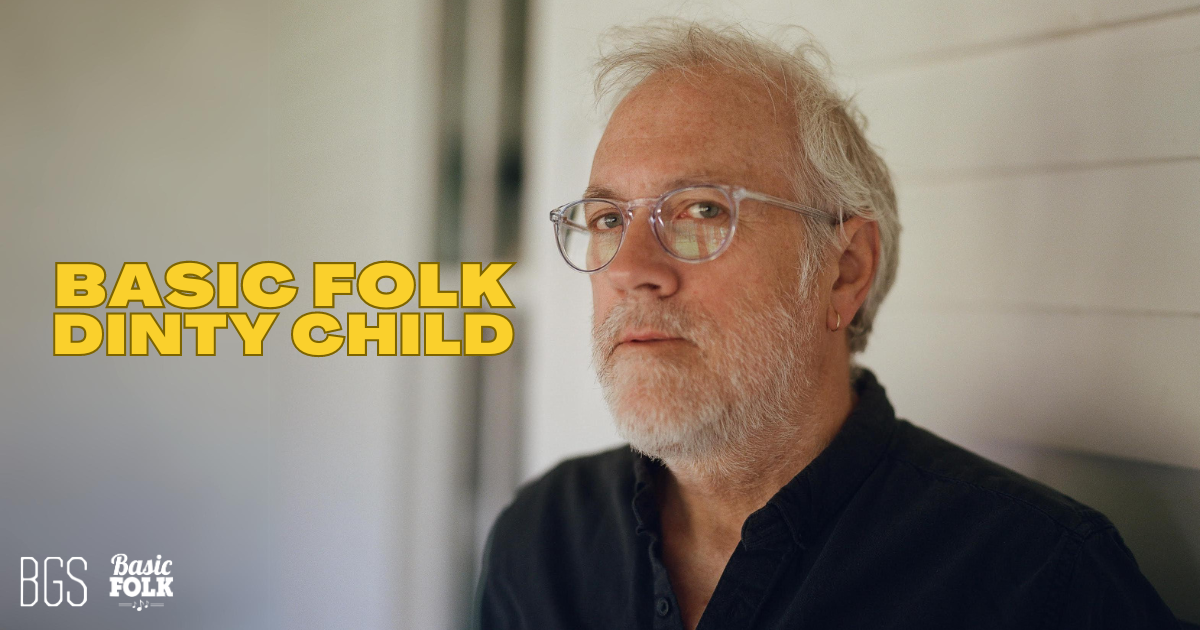
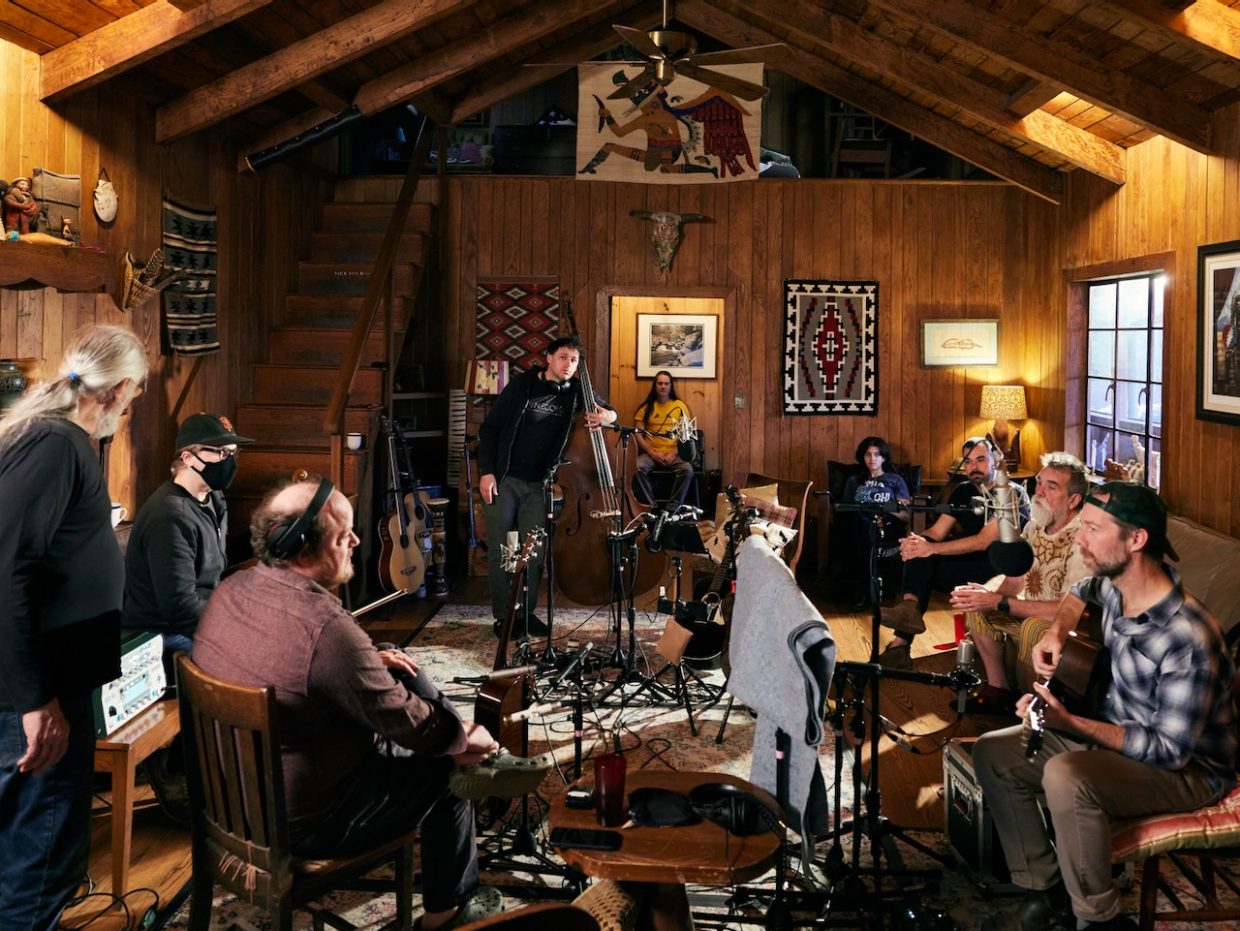
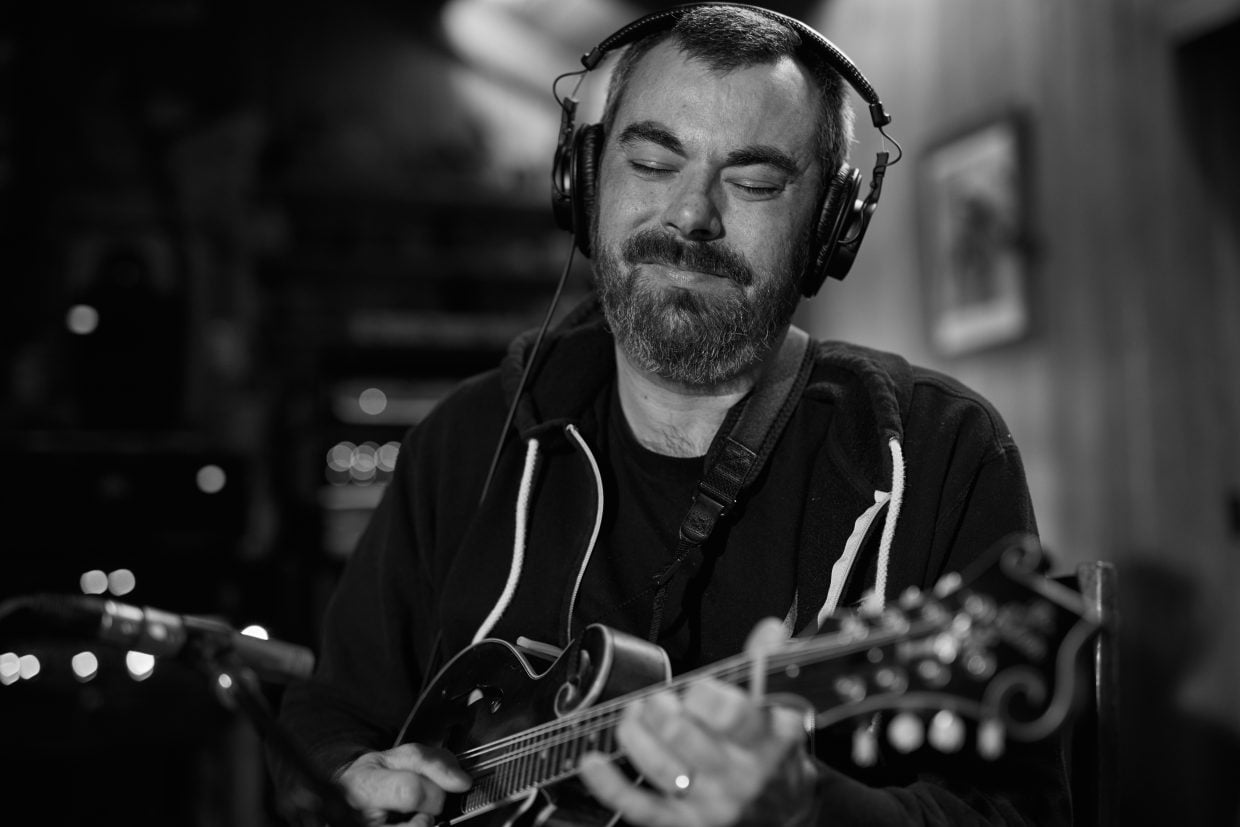
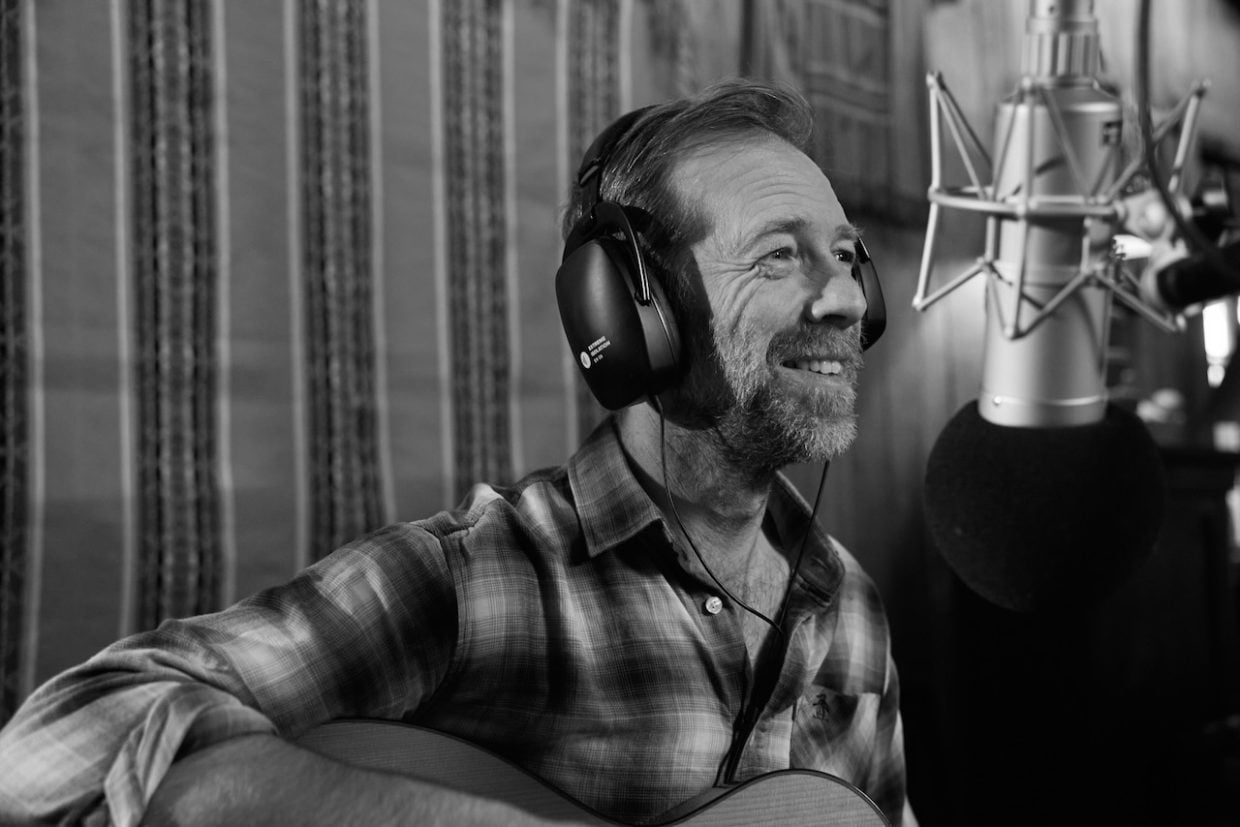
Dinty Child, founding member of Session Americana, the beloved Boston roots music collective who’ve accidentally been a band for 20 years, has just released his second solo album, Letting the Lions In. The new songs feature co-writing on all tracks between Dinty and Boston area songwriters like Mark Erelli, Kris Delmhorst, and Dave Godowsky. A self-proclaimed slow-writer, the majority of these songs were written on the annual Sub Rosa songwriting retreat Dinty runs on Three Mile Island (no, not that Three Mile Island) on Lake Winnipesaukee in New Hampshire. Owned by the Appalachian Mountain Club, Dinty’s family has been working at the island for over 100 years. Dinty currently serves as the off-season manager, putting his musician and carpenter skills to good use hosting songwriter friends at said retreat – like Rose Cousins, Rose Polenzani, Rachael Price, Miss Tess and many more, as well as Miles of Music, a summer camp run by Dinty, Kristin Andreassen, and Laura Cortese.
Letting the Lions In was co-produced by Zachariah Hickman (Josh Ritter, Ray LaMontagne) and recorded at Great North Sound in Parsonsfield, Maine over the course of three days in the spring of 2021. Dinty says, “I often trade construction work for studio time there.”
During our conversation, we dig into why these songs needed to be recorded. Our consensus is that legacy and spreading joy to his community are the top two reasons. Also, Dinty, who says an annoyingly large percentage of his songs start as dreams, talks about what kind of sleeper he is, what’s with the lion, and his thoughts on drinking – thanks to the handful of alcohol songs on the new album. Dinty is a dear friend to the podcast and an important part of the New England musical landscape, we’re thrilled to have him on the show!
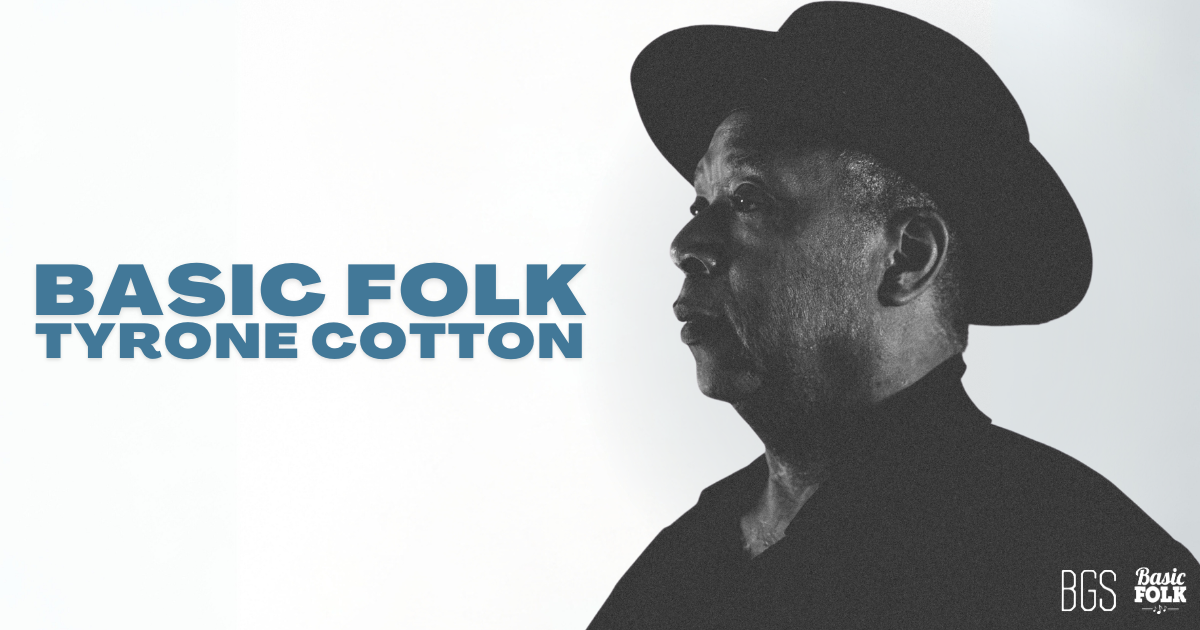
Tyrone Cotton, a decades-long mainstay of the Louisville, Kentucky music scene, just released his debut album, Man Like Me. A quick listen to these songs reveals an artist who has spent decades steeped in roots music. Lizzie No spoke with Tyrone and Ray Rizzo, one of the album’s producers, about Tyrone’s journey as an artist and the making of Man Like Me.
Tyrone grew up listening to his grandfather and his friends in the neighborhood playing guitar. With his $60 guitar in hand, Tyrone headed off to music school, studying classic guitar under David Kelsey. At first a shy performer, he leaned into his craft and into the supportive musical community he found in Louisville. Cotton has become a stalwart of the local music scene, playing club shows and a standing gig at a local senior center where he brings the house down with soul classics.
This is where producer Ray Rizzo enters our story. A Kentuckian since the age of 11, he was well-versed in the Louisville music scene when he came across Tyrone and his music at The Rudyard Kipling, a club in town. Ray’s admiration for Tyrone’s songwriting and musical instincts was a guiding principle as they went into the studio to record Man Like Me. Rizzo had spent years watching Cotton perform and wanted to make sure that he captured the magic he had witnessed so many times. If the confident, eclectic roots of Man Like Me are any indication, Tyrone Cotton has more stories to tell and we will be lucky to listen. What makes this album special is what makes the best Americana albums special: a patchwork of influences and traditions, the best of contemporary recording techniques, and a singular storytelling voice.
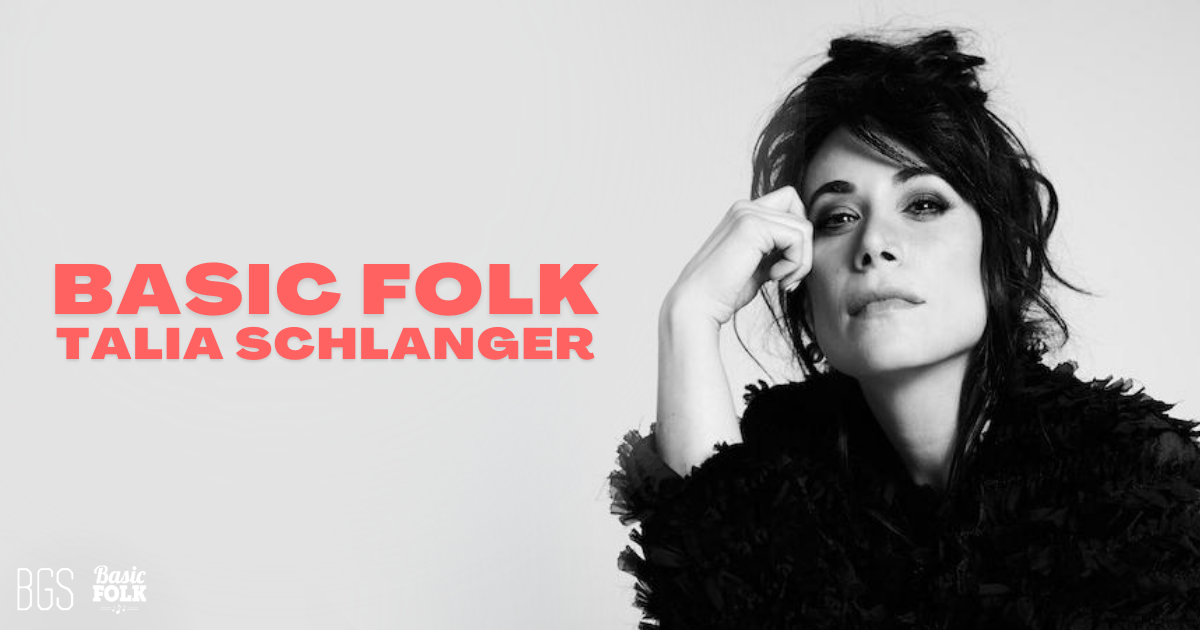
Canada’s Talia Schlanger is best known for her work in broadcasting, guest-hosting Q with Tom Power on CBC and Alec Baldwin’s “Here’s the Thing” podcast, as well as having taken over for David Dye on NPR Music’s World Cafe from WXPN in Philadelphia. Before all that, Schlanger was an actor and singer in many theater productions including Mamma Mia, Queen’s We Will Rock You, and Green Day’s American Idiot. While she has found much success in her two previous careers, something has been pulling on Talia for years. She wanted to write, record, and perform her own music. She had something to say and made the brave leap into the unknown, leaving her coveted role at World Cafe in order to say it. This culmination of events has led Talia to her debut album, Grace for Going.
In our conversation, Schlanger shares insights into her upbringing in Thornhill, Ontario within a Jewish family deeply rooted in faith and family heritage. She reflects on the impact of her grandparents, Holocaust survivors whose stories shaped her childhood. Talia also talks about her unique journey from performing eight shows a week in theater productions to becoming a distinguished radio host. Her evolution as a singer, her bravery and some important boundaries have allowed her to find her authentic voice while maintaining a crucial work-life balance. Throughout the interview, she touches on themes of personal growth, acts of kindness, and her commitment to learning and curiosity, offering a fascinating glimpse into the life and career of this remarkable person.
Dive into the enchanting world of Elise Leavy – who hails from picturesque Monterey, California – through her latest album, A Little Longer. Leavy’s artistic journey is steeped in the influences of her magical childhood surroundings. Her life growing up was filled with music and art, thanks to her mom’s painting and her stepdad’s own musical talents. Growing up with a deep appreciation for nature and a belief in faeries, Leavy shares how these elements shaped her musical perspective.
As we explore Elise’s musical evolution in this episode of Basic Folk, we touch on her experiences with live performances, overcoming stage fright, and the art of songwriting. Her unique approach to music, drawing from her magical way of thinking, is reflected in her exploration of various musical instruments – from accordion to guitar, piano, fiddle, and more. We also uncover the impact of her time at summer camps, which fostered a sense of community that continues to shape her artistic expression to this day.
This episode delves into the intriguing intersection of Leavy’s musical journey with homeschooling, highlighting the unconventional path she took to prioritize her love for songwriting and music making. She left public school in eighth grade to focus on her craft and built her schedule around attending music camps. She would go on to study at New England Conservatory and she lived briefly in New York. After several years in Nashville, she has recently found herself living in Lafayette, Louisiana.
The songs on Leavy’s new album, A Little Longer, were mostly written while she was based in the Northeast. In our conversation, Elise opens up about her connections to music, magical creatures, and the harmonious blend of romance and fantasy in her musical creations.
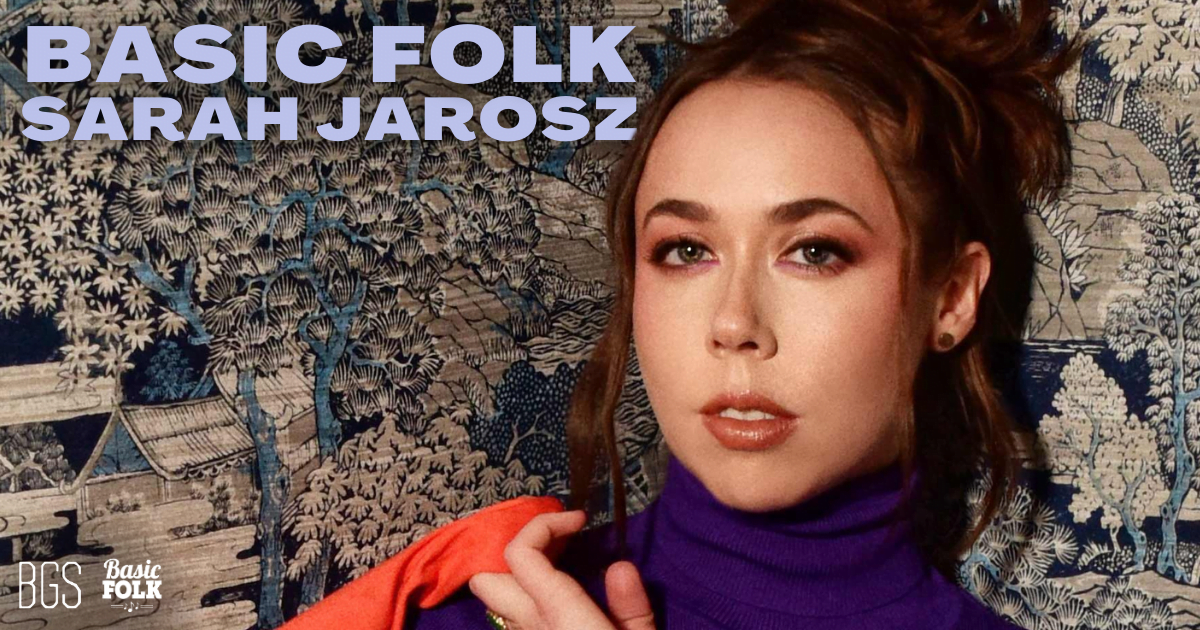
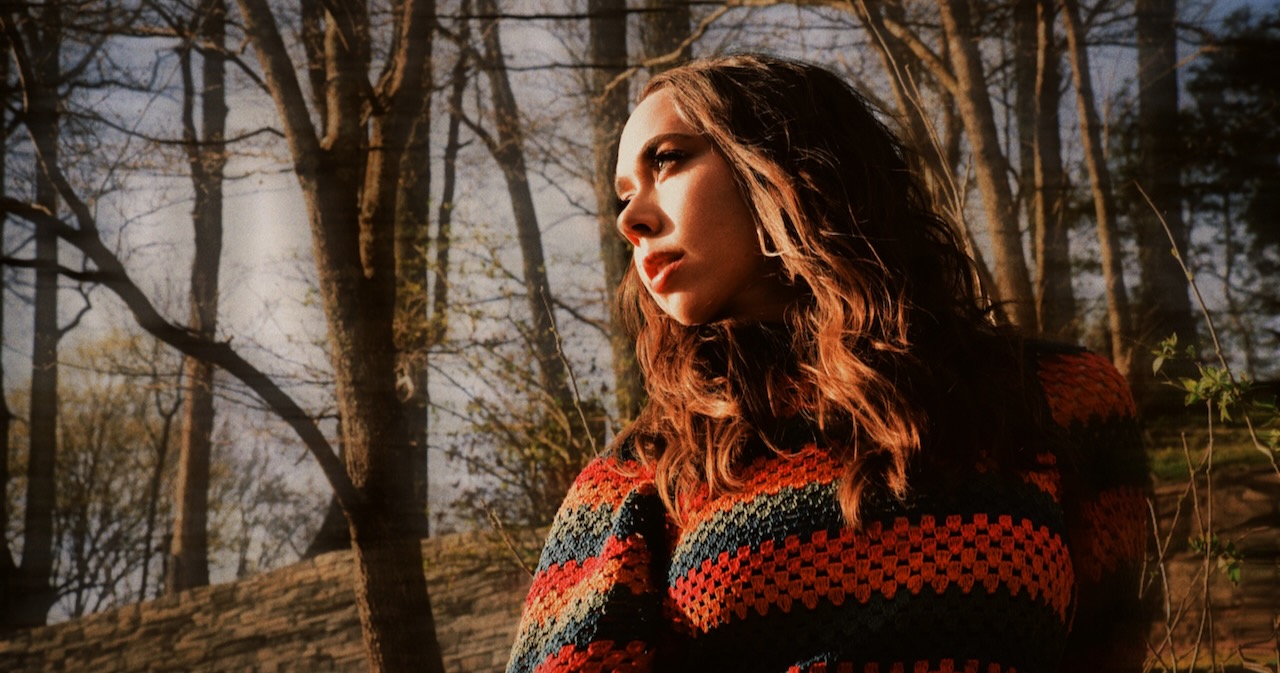
Sarah Jarosz is what happens when young women are taken seriously. A huge part of the mandolinist’s story is that she had supportive male mentors and that has added to her confidence. We all know the age old story of “Young woman shows promise, gets exploited by the patriarchy and it affects her work.” We need to hear stories like this. Starting in her hometown of Wimberley, Texas, just 45 minutes outside of Austin – the live music capital of the world – Sarah found the mandolin at 10 years old. Labeled a prodigy, and thanks to the encouraging spirit of folk music, she found mentorship with seasoned professionals like David Grisman, Ricky Skaggs, Tim O’Brien and Béla Fleck. Following her time at The New England Conservatory of Music, she moved to New York and would go on to collaborate with people like Chris Thile in the Live From Here House Band and her trio I’m With Her, featuring Aoife O’Donovan and Sara Watkins, and won four Grammys.
After making the move to Nashville, on her latest album, the very impressive and sonically expansive Polaroid Lovers, Jarosz collaborated with producer Daniel Tashian, which originally was just a low-stakes co-writing project. The success of her first co-writing experience with Daniel led her to pursue other songwriting sessions with Ruston Kelly and Natalie Hemby. The collaboration found on the record has opened Sarah up to new sounds and new experiences. In our conversation, we talk about Sarah stepping into her own voice with confidence on this record and knowing her musical self enough at this point in her life. She describes her experience with confidence using the Dunning–Kruger effect, in which people with limited competence in a particular domain overestimate their abilities. AKA “fake it till you make it,” AKA “leap and the net will appear.” She also talks about her parents’ influence on her early musicality and how her mom is doing with her cancer remission. An overall theme of this conversation is that Sarah never lost sight of her goal: Keep it all about the music and don’t let noise get in the way of your important work.
Perspective. A universal concept, but also something which bears the potential to be entirely different from one person to the next. How one person views a setting, an experience – or even something as simple and innocent as a Polaroid picture – can set the tone for how they come to hold onto and look back on an entire memory.
The 11 songs on Polaroid Lovers, the seventh album from multi-Grammy-winning singer-songwriter Sarah Jarosz, not only presents the bulk of its musical subjects from a variety of vantage points, but the very making of this record is a story built on a shift in perspective for Jarosz herself.
“World on the Ground was my first traversing into really working on songwriting as more of a storyteller and not necessarily always writing from my own perspective or writing my own story. Or, maybe a better way to say it would be, from a confessional kind of point of view,” says Jarosz. “I think that really carried over into [Polaroid Lovers] and was very much assisted by the people that I was co-writing with,” she adds. “And so I think by co-writing all the songs and by not being in a solitary mindset, I was able to more easily slip into trying to write the songs from a more universal perspective.”
Jarosz is nowhere near a newcomer to the concept of collaboration, both in live performance and in songwriting for studio records. Just ask mandolinist and songwriter Chris Thile, former host of the iconic live performance/radio show Live From Here, or Sara Watkins and Aoife O’Donovan, Jarosz’s creative cohorts in the Grammy-winning roots supergroup I’m With Her. The New York-to-Nashville transplant carved out her place in the musical landscape with an indubitable gift for solo songwriting. This gift propelled Jarosz forward for a host of years, a slew of awards, and an ever-growing body of recorded work. However, staying a self-contained songwriter wasn’t without constraint – a state of affairs Jarosz admits was largely self-imposed through much of her early career, for the sake of her own artistic voice.
“I was very closed off to co-writing especially for my first couple records,” she says. “I had managers and label people always trying to set me up on co-writes and I did a couple, but I just don’t think I knew my voice well enough and I hadn’t had long enough writing on my own, performing on my own, and figuring out my sound. I think I was just worried that my voice would get lost in those [writer] rooms.”
Jarosz’s deliberate decision to not only include co-writing, but make it a dominant pillar of Polaroid Lovers seems entirely understandable as a way to push her own creative boundaries. She isn’t shy about sharing the burst of confidence that also arose within her while writing songs for the album. “I really don’t think I could have made this record even five years ago,” she says. “There were so many moments in the studio that I mean, if I’m being honest, kind of – I hate to use the word scared – but challenged me.”
If it feels strange to envision a creative powerhouse of Jarosz’s caliber struggling to embrace new musical ideas, there are plenty of specific sonic snapshots in the songs of Polaroid Lovers that Jarosz can look at through the lens of her past self and know just how differently things could have gone.
“For instance, the beginning of ‘Jealous Moon’ – when the guitar and the drums come in like right at the top – I was like, ‘Whoa, this is on a new playing field for me and a stretch from what I’ve done before,’ but I loved it,” she says. “At the end of the day, my barometer [is about] if the music is moving me, if I believe in it, and if I can proudly sing every lyric with a stamp of approval. And so I think something like that [style of introduction] – I might have just shut it down. Like, it would have scared me a little too much maybe five or 10 years ago and I would have said, ‘No, that’s not me. So we’re not going to do that.’”
Though “Jealous Moon” starts the music of Polaroid Lovers with an adventurous hook, Jarosz actually made the shift to disregard fear and connect with her inner co-writer in her mind from the very first day she met producer Daniel Tashian, while the two co-wrote “Take the High Road” – an upbeat song about staying true to oneself and not shying back from what feels right. “The thing that’s so refreshing and cool about Daniel [Tashian] is that he’s just so open and so endlessly curious about all things music and I think [he] would just be creating all the time if it were up to him,” Jarosz admits.
A seasoned songwriter and collaborator known for his work on Kacey Musgraves’ Golden Hour, Tashian brought Jarosz out of her comfort zone, often literally, in providing many changes of scenery for their writing sessions. “I met [Daniel] in March of 2022, which was when I started writing for this record, and… he just kind of welcomed me in to his family,” Jarosz says. “I wound up going on these kinds of writing retreats… and that was cool to just, get out of Nashville, shift our perspective, be in a different place, and just be really open to to the muse and to what would come.”
Other times Tashian’s sharing of simple but impactful thoughts and his own decisive opinions helped to nurtured a spirit of open possibility regarding what Jarosz would be able to write, but also ideally what she would find joy in playing for herself, as well.
“Daniel said something when we were in the studio that really resonated [with me]: ‘Why would you just want to make the same record over and over again?’ I love that, because I think you try to find your voice and hone your voice over the course of a career but the fun is in exploration – at least for me. I mean, maybe some people find comfort and repetition and that’s fine but I really love exploring and ultimately seeking what serves the song. I mean, that’s what it comes down to at the end of the day.”
Running parallel to this expanding circle of people, ideas, song forms, and stories that Jarosz was inspired to put into Polaroid Lovers are her personal tools of the trade – particularly her octave mandolin. An instrument Jarosz has grown to appreciate over the years alongside her artistry and proficiency with the mandolin, guitar, and banjo, the octave mandolin is another meaningful element of creative expanse, change, and consistency that’s become integral to who Jarosz is as a musician and what she wants to sound like.
“[Polaroid Lovers] feels more like me than ever before. Even though there might technically be some differences, I feel that it’s very strongly my voice and my sound. I think a huge part of that is my octave mandolin being a prominent texture,” she says. “I’ve gotten to this place where the octave mandolin feels like my sound in a way and I really sort of gravitated towards that instrument over the course of the years.”
A derivation of the mandolin, the octave mandolin is a fitting instrument to feature on an album that reflects new and familiar points of view. “Whenever I play octave [mandolin], I feel like, ‘This is me.’”
Beyond its presence being a defining musical attribute, for this album especially Jarosz says the octave mandolin was also a tool of creative focus amidst everything new and sometimes daunting. “Having [the octave mandolin] sort of be the through-line on this album helped me in those moments where I felt challenged by a sonic thing that felt new,” she says. “The octave mandolin would kind of make me feel like I was grounded.”
Though grounded, one need not mistake Jarosz’s sense of musical stability with any kind of fixation on genre. While there’s almost no escaping others’ archetyping of Jarosz’s work, Polaroid Lovers is neither a show of rebellion against her musical foundations, nor a calculated attempt to partition an exact ratio of familiar stylization with ideas new to her writing process.
“I personally don’t like to think of myself in terms of genre and I never really have,” she says. “It can be frustrating for me when people say, ‘Oh, you’re this, you’re that’ and I feel like, ‘Well, no…’ I think about [music] in terms of if I like it or not.” She adds, “I’ve just always felt that way and I’ve always listened to so many different types of music. It just feels too narrow, too limiting, to have to fit too squarely into a box.”
Despite the fact that the general public can launch a barrage of staunch opinions about the style of Jarosz’s work or what they may perceive is “right” about it, Jarosz says there’s a whole other dimension to Polaroid Lovers yet to be unveiled that won’t come into view until she’s out on the road, playing live, and connecting directly with everyone who’s listening. “The difference between performing a song in the studio versus performing it live in front of an audience is that I think songs sort of start to take their own journey.”
She adds, “I know my story, or I know my part of it. But sometimes, if you can be vague enough, you can almost keep it secret a little bit, where it’s like my story and my feeling about it is my own and then other people get to find their story in it as well. I think something that will be fun in singing these songs over the next however many years is discovering new perspectives with [audiences]. The perspective will really come singing [the songs] over the course of the next year on tour. I’m very excited about getting to do that.”
Ironically, all the talk of a growing compendium of artistic styles, of new collaborators, of new musical techniques, and of new ways to tell new stories truly hammers home the notion that Jarosz’s musical world is an ever transforming space – rather than one made up of experiential snapshots, as Polaroid Lovers is aptly described. Still, Jarosz came up a solo writer and one of the biggest curiosities around potential changes ushered in by this record would be how she views the dynamic of writing music alone versus writing her music with others. Not surprisingly, Jarosz doesn’t see an inner conflict on the horizon. It’s all “the more the merrier.”
“If anything, this [album] just expanded my community, which is a wonderful thing,” Jarosz says. “Especially now living here in Nashville, I think it’s made me feel more a part of this great community. Whereas when I was 18, I think I felt like there was something to lose in writing with people – that being, losing my voice or like kind of losing my way a little bit. Now I don’t feel like that and I think that there’s nothing to lose by sitting down and trying to be creative with with someone else. I think I will always do that from here on out, but it definitely will be simultaneous to me also writing by myself. That’s something that I don’t ever want to lose and that I want to keep doing for as long as I can.”
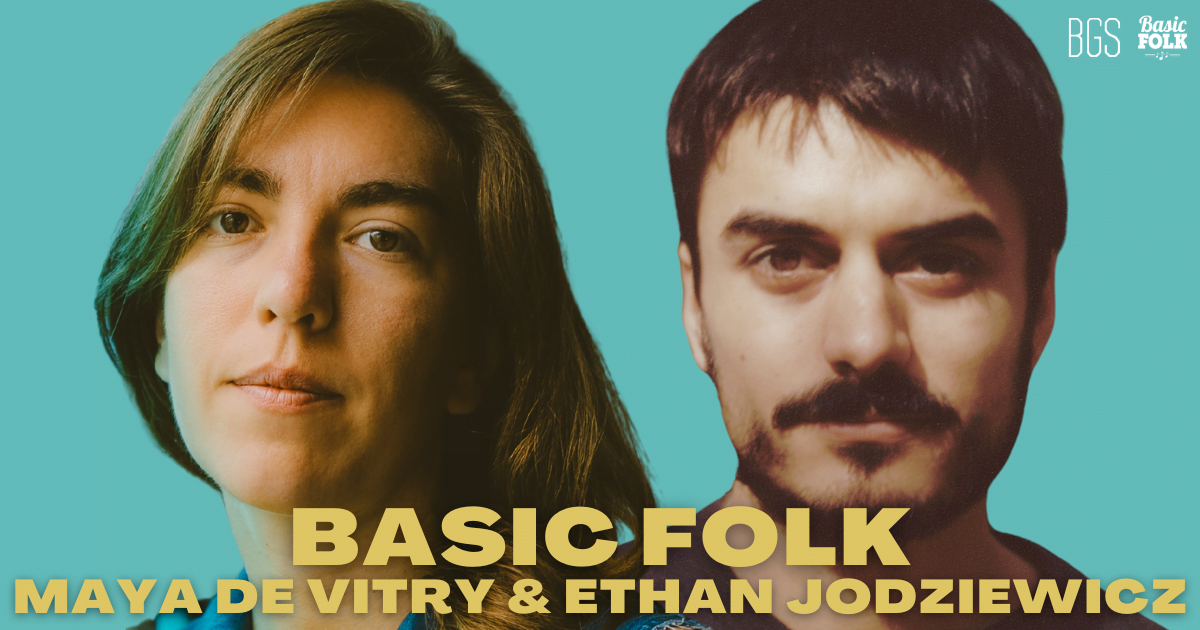
Songwriter Maya de Vitry and bassist Ethan Jodziewicz come to their partnership with an understanding for their chosen lifestyle and a creative playfulness that enhances their connection. While Maya’s roots are firmly planted in folk music, Ethan brings classical music and improvisation to the table. They’ve been collaborating together since Maya’s post-Stray Birds solo career, which launched in early 2019 with her record, Adaptations. Fast forward to 2023, they are back alongside Joel Timmons and Hannah Delynn with the fabulous new EP, Infinite. For the first time in years, Maya is back on the road, while Ethan has been touring basically non-stop with musicians like Aoife O’Donovan, Sierra Hull, and Lindsay Lou. In our conversation, they talk about how it’s helpful to be in a relationship with someone who is also deeply committed to a musician’s lifestyle while understanding when someone needs a break.
Maya also reflects on her current state of being within her body and how she has trouble recognizing physical pain to the point where she can’t move. She talks of the realization that she had the tendency to tense up when picking up a guitar and how that was because she felt like she didn’t belong. Ethan and Maya share their observations on working within a boundary. Ethan laments that he often works within a boundary with improvisation while Maya speaks of placing limitations around touring and performing live shows. We end this insightful interview with Maya revealing celebrity sightings are her Nashville Starbucks and a very fun Lightning Round called “Which One.”
Photo Credit: Maya de Vitry by Kaitlyn Raitz; Ethan Jodziewicz by Lily Smith
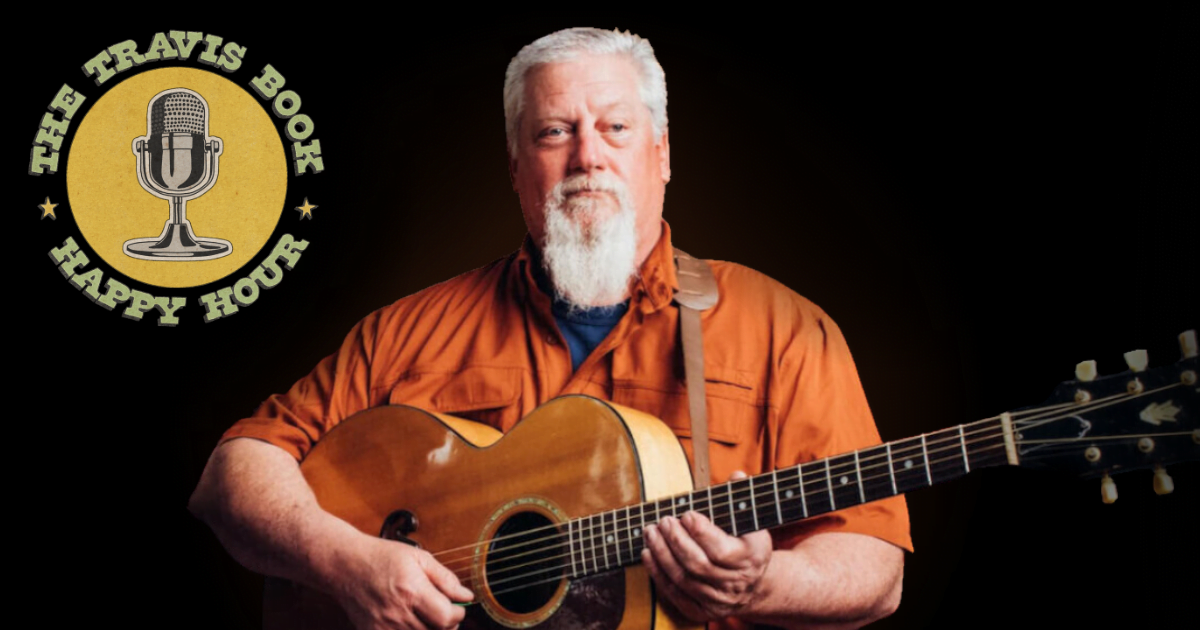
Acoustic Syndicate is one of the best acoustic rock and Americana bands on Earth. Fronted by Steve McMurry, the band’s music leans toward themes of sustainability, social justice and quality of life and they’ve built a loyal following over the last 30 years. Steve takes us on a musical journey filled with inspiration and tradition in this episode, and he is as down-to-earth as they come; he still farms the land his ancestors first tended over 200 years ago near Shelby, North Carolina, and we get together every Thanksgiving for a hometown holiday jam in Brevard where I get absolutely blown away by the gravity of this musical titan. As a third-generation folk performer, Steve, in our interview, reveals the deep-rooted sources of his creativity, from legendary Americana influences to the tight-knit musical family that nurtured his sound. I was honored he agreed to join us for an episode of the Happy Hour and I know you’ll love his story and his insights and humility.
This episode was recorded live at The Grey Eagle in Asheville, North Carolina, on May 19, 2021. Huge thanks to Steve McMurry, Mike Ashworth, and Mike Guggino.
Timestamps:
0:06 – Soundbyte 1:00 – Introduction 2:24 – Bill K. Introduction 4:00 – “I Will Lead You Home” 6:52 – “Beauty In The Ugliest Days” 10:44 – Interview 1 26:45 – “Sweetest Breeze” 33:51 – “Rainbow Rollercoaster” 40:00 – Interview 2 50:25 – “Sunny” 57:18 – “Song For Myself” 1:03:26 – Outro
Editor’s note: The Travis Book Happy Hour is hosted by Travis Book of the GRAMMY Award-winning band, The Infamous Stringdusters. The show’s focus is musical collaboration and conversation around matters of being. The podcast is the best of the interview and music from the live show recorded in Asheville and Brevard, North Carolina.
The Travis Book Happy Hour Podcast is brought to you by Thompson Guitars and is presented by Americana Vibes and The Bluegrass Situation as part of the BGS Podcast Network. You can find the Travis Book Happy Hour on Instagram and Facebook and online at thetravisbookhappyhour.com.
(Editor’s Note: Singer-songwriter and multi-instrumentalist Rachel Baiman is also a BGS contributor. View her author archive here.)
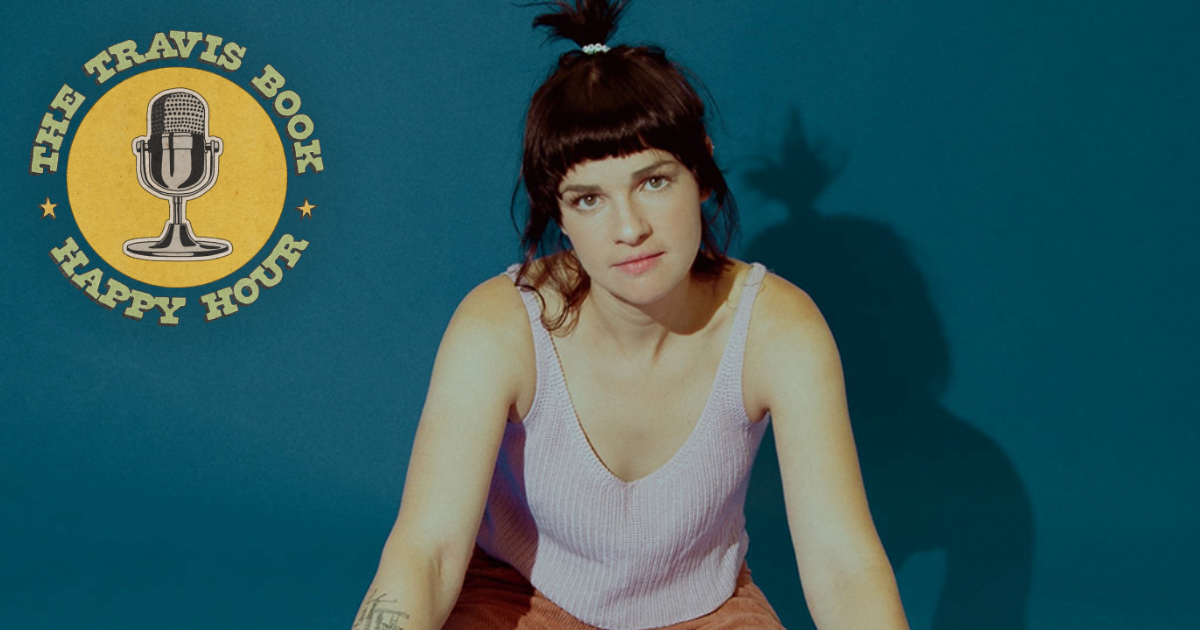
Rachel Baiman’s indie-folk and Americana vibe – rooted in Chicago and rich with fiddle tunes – unfolds as she shares her transition to singer-songwriter. Influences ranging from Courtney Barnett to John Hartford and other roots music make their way into her live performances. Rachel is part of a generational scene in Nashville that I’ve been watching with awe for the last five to 10 years. A unique voice, multi-talented and articulate, she’s not afraid to sing and speak what’s on her mind. She writes semi-regularly for BGS, shining some light into the darker corners of the music industry, addressing inequality, and challenging all of us – creators and fans – to do better, dig deeper, and expect more. In this episode we discussed everything from climate change concerns to hopes for a more equitable future. We had a great time on the happy hour and I’m sure you’ll dig it.
This episode was recorded live at 185 King St. in Brevard, North Carolina, on August 8, 2023. Huge thanks to Rachel Baiman and Riley Calcagno.
Timestamps:
0:06 – Soundbyte 0:57 – Introduction 2:09 – Bill K. introduction 2:57 – Travis introduction 3:33 – On “Bad Debt” 4:52 – “Bad Debt” 9:52 – “Shame” 12:35 – On Mullets 14:24 – “She Don’t Know What to Sing About Anymore” 18:18 – “When You Bloom (Colorado)” 22:25 – “Won’t You Come and Sing for Me” 26:10 – Interview 43:45 – “Twin Fiddles” 47:30 – “Bitter” 51:15 – “In Tall Buildings” 54:53 – Outro
Editor’s note: The Travis Book Happy Hour is hosted by Travis Book of the GRAMMY Award-winning band, The Infamous Stringdusters. The show’s focus is musical collaboration and conversation around matters of being. The podcast is the best of the interview and music from the live show recorded in Asheville and Brevard, North Carolina.
The Travis Book Happy Hour Podcast is brought to you by Thompson Guitars and is presented by Americana Vibes and The Bluegrass Situation as part of the BGS Podcast Network. You can find the Travis Book Happy Hour on Instagram and Facebook and online at thetravisbookhappyhour.com.
It’s a rather warm evening in the mountains of Western North Carolina. With a sweltering sun slowly fading behind the ancient Blue Ridge peaks, Graham Sharp takes a seat at a picnic table underneath the welcoming shade of an old tree.
He takes a sip of a craft ale and gazes out upon the festive meadows of live music and fellowship behind Highland Brewing on the outskirts of Asheville. For Sharp, it’s a rarity these days for him to be able to sit back and enjoy the city he’s called home for the last 22 years.
Co-founder and de facto leader of the Steep Canyon Rangers, Sharp is at the center of one of the most enduring and cherished acts in the realms of Americana, bluegrass, and indie-folk — whether on its own merit or backing Steve Martin and Martin Short.
The Steep Canyon Rangers at the Western North Carolina retreat where they recorded ‘Morning Shift’ with Darrell Scott producing. Photo by Joey Seawell
At 46, Sharp has spent the majority of his adult life either on the road, onstage, or in the studio. And yet, like any endlessly restless and creatively curious musician worth one’s salt, Sharp feels like he’s just getting started.
“I’m the luckiest man on earth to be able to wake up in the morning and think, ‘I want to play banjo and write songs today,’” Sharp says. “Or am I going to get on a bus and go play some shows? That’s a good feeling to be excited about what you do — 25 years from now, I’ll probably be feeling the same way.”
What started as a rag-tag bunch of green horns jamming traditional bluegrass numbers in the dorms at the University of North Carolina at Chapel Hill, has evolved into a bonafide group selling out venues coast-to-coast.
Throughout the Rangers’ history there’ve been awards and accolades, including three Grammy nominations and one win. There’s also been big stages (Red Rocks Amphitheatre, the Ryman Auditorium, Hollywood Bowl) and even bigger crowds (Bonnaroo, MerleFest, Hardly Strictly Bluegrass).
But, the core of the group resides in its unrelenting quest to dig deeper within itself to uncover another layer of sound and sonic possibility. Most recently, the band has gone through its biggest test to date, with the departure last year of founding member and arguably the gravitational center of the act, singer/guitarist Woody Platt, who decided to take a step back from the spotlight and focus on family.
“There’s a lot of things you can’t control and Woody leaving is a pretty good lesson in that fact that there’s only so much that you have influence over,” Sharp says. “And I’ve seen that with everybody [in the Rangers]. Everybody had worked hard, stepped up and defined their roles better in the band — just buckle down and push ahead.”
Fellow Western North Carolina singer-songwriter Aaron Burdett stepped into the fold to not necessarily replace Platt, but give the Rangers a new avenue to stride down, in terms of songwriting approaches and musical interpretations.
“We really tried to bring Aaron in to have another voice in there. I love having him as another writer,” Sharp says. “We both generate our own stuff and bounce ideas off of each other, where some of it feels like going back to the beginning [of the band] in the feeling.”
And with the Rangers’ latest album, Morning Shift, the sextet now finds itself at the dawn of a new, unwritten chapter of its continued trajectory as a group as sonically elusive as it is bountiful in its melodic pursuits.
“I don’t think you’d call it a chip on the shoulder,” Sharp says. “But, it feels like there’s just a drive we all have to just get better, to have more people hear what we’re doing — and we know what it takes to get there at this point.”
Hunkering down for a week in the off-the-beaten-path, unincorporated community of Bat Cave, North Carolina, the Rangers transformed a small mountain getaway into a makeshift studio. They also enlisted the help of Darrell Scott, the musical legend being tapped to produce the record.
“Darrell isn’t going to mince words — he’s pretty decisive,” Sharp says. “And Darrell spans all these [musical] worlds. He’s a monster picker and singer, and a great writer. We felt like he also comes from that bluegrass [scene], but also is outside of it, [like we are].”
What resulted is an album of genuine depth and stoic intent, renewal amid a reinvigorated sense of self. It’s a full-circle kind of thing, with the Steep Canyon Rangers not only reflecting on the past, but, more importantly, still chasing after that unknown horizon of artistic discovery. Our BGS interview with Sharp at Highland Brewing in Asheville continued with a conversation about the group’s changing lineup and dynamic.
It’s been a big year for you guys in a lot of ways — physically, sonically. What’s the dynamic right now? What’s kind of changed?
Graham Sharp: Well, what I’ve noticed is my default method [is] when things go weird, to just work harder.
There’s more of a round-robin feel in the band than before.
GS: Yeah. I get that. That’s what people say, that the dynamic reminds them of The Band, where there’s three or four different singers. And that was part of the deal, part of the thought process of, “Let’s take this role that’s the prototypical lead singer/guitar role and de-emphasize that.” Not totally strip it of everything, but the guitar player’s going to sing 40 or 50 percent of the songs. He’s not going to sing 80 percent of the songs. And part of that plays like a little bit of a safeguard, where if something happens with Aaron two years from now, we don’t want to be back in the same boat, where it’s like we’re losing a big hole out of the middle of the band.
Mandolinist Mike Guggino, in the studio recording the Steep Canyon Rangers’ ‘Morning Shift.’ Shot by Joey Seawell.
Like equally distributed weight now.
GS: Yeah. That’s kind of how we want it. And I think that’s what it needs to be. There’s a lot of talent in [the band] and maybe this is a chance to uncover some of it.
Not to take anything away from Woody and his contributions, but it feels more of a cohesive unit than I’ve ever seen it before.
GS: Isn’t that crazy? And that’s what people have been saying. I don’t know what that is except to say everybody’s stepping up and also making sure everybody else shines a little bit more.
I also wonder if that plays into more camaraderie in the band.
GS: Maybe. I mean, the band is a brotherhood. You couldn’t have more camaraderie than we have. But, that said, if people are feeling like their talents aren’t being put into full use – there’s one thing about being great friends and being brothers, but also on some kind of subconscious level, if you feel like there’s stuff that’s not being utilized, then maybe there’s something else you should be doing, you know?
And there’s maybe a reaffirming of gratitude for how far you guys have come.
GS: No doubt, man. That’s definitely one of the overwhelming things that has come out of this [latest chapter], is just gratitude to still be doing it — just keep going and keep doing it. [With Morning Shift], this record feels like a jumping off point.
The album also reinforces that elusive nature that’s always resided in the Rangers, where the last thing you ever want to be is pigeonholed, musically.
GS: Yeah. But, I love to play the banjo, so I don’t want to grow away from that. And [sometimes] I feel like my writing doesn’t always lend itself to the banjo. So, a lot of my stuff on the banjo ends up being able to figure out how you play to this weird song that doesn’t really call for banjo like a bluegrass song would — that’s part of the fun of [songwriting].
Aaron has now been in the band for a year. What’s surprised you the most about what he’s brought to the Rangers?
GS: We knew he was a great singer when we hired him, so that didn’t come as a surprise. When he sent us his demos, we knew this was our guy. But, the biggest surprise has been just how far apart our musical worlds are. He’s a very different musician than anybody we’ve had in the band. There’s things that he does in his own rhythm. He just has a different touch on the rhythm guitar.
Graham Sharp of the Steep Canyon Rangers recording ‘Morning Shift’ in studio. Photo by Joey Seawell.
There’s definitely a feeling of reinvigoration within the band. Almost 25 years into the Rangers, the band is still at the top of its game. But, playing devil’s advocate, I think there’s now other mountains you can see that you may want to climb?
GS: I think you’re right. I mean, as a band, you only have one introduction to the world. Maybe we were lucky because we got two, the other with Steve Martin. But, right now, it feels more like a collective up onstage. And I think that’s invaluable. Everybody is putting in the work. For example, I’ve always played banjo for a couple hours a day. But, maybe now, I play it for three hours a day. You’re just stepping things up, bringing things up a notch.
What really sticks out when you look back at the early years of the band, this handful of college kids learning to play bluegrass music?
GS: It was 1999. Somewhere in my junior or senior in college. It was myself, [former bassist] Charles [Humphrey] and Woody. Then, [mandolinist] Mike [Guggino] showed up later because he was Woody’s friend from Brevard, [North Carolina]. There was no ambition at the time. The ambition was really, “Let’s learn to play [bluegrass] so it sounds like it does on these records.”
New Grass Revival. [Russell Moore and] IIIrd Tyme Out. We never got to where we sounded like any of those bands. We could never sound like Lonesome River Band. But, take a little bit of this, take a little bit of that and go play onstage at bluegrass festivals. Go to Sears and get some clothes that match. And [a lot of the bluegrass] legends were still around and playing those festivals. Earl [Scruggs] was still around. John Hartford. Jimmy Martin. You know, when you’re young and rising, you’ve got all the momentum, all the buzz. And when you’re established and older, it’s different. Right now, we’re in this in-between period where it’s not newer and it’s not legacy. But, we’re not Billy Strings or Molly Tuttle, either. I still just love going out [there onstage] and proving it every single time — that feeling of doing what it takes to be our best each night.
All photos: Joey Seawell
This website uses cookies to improve your experience. We'll assume you're ok with this, but you can opt-out if you wish.AcceptRejectRead More
Privacy & Cookies Policy
Privacy Overview
This website uses cookies to improve your experience while you navigate through the website. Out of these, the cookies that are categorized as necessary are stored on your browser as they are essential for the working of basic functionalities of the website. We also use third-party cookies that help us analyze and understand how you use this website. These cookies will be stored in your browser only with your consent. You also have the option to opt-out of these cookies. But opting out of some of these cookies may affect your browsing experience.
Necessary cookies are absolutely essential for the website to function properly. This category only includes cookies that ensures basic functionalities and security features of the website. These cookies do not store any personal information.
Any cookies that may not be particularly necessary for the website to function and is used specifically to collect user personal data via analytics, ads, other embedded contents are termed as non-necessary cookies. It is mandatory to procure user consent prior to running these cookies on your website.