Carolina Calling, Asheville: A Retreat for the Creative Spirit

LISTEN: APPLE • SPOTIFY • STITCHERAMAZON • YOUTUBEMP3


Asheville, North Carolina’s history as a music center goes back to the 1920s and string-band troubadours like Lesley Riddle and Bascom Lamar Lunsford, and country-music pioneer Jimmie Rodgers. But there’s always been a lot more to this town than acoustic music and scenic mountain views. From the experimental Black Mountain College that drew a range of minds as diverse as German artist Josef Albers, composer John Cage, and Albert Einstein, Asheville was also the spiritual home for electronic-music pioneer Bob Moog, who invented the Moog synthesizer first popularized by experimental bands like Kraftwerk to giant disco hits like Donna Summer’s “I Feel Love.”

It’s also a town where busking culture ensures that music flows from every street corner, and it’s the adopted hometown of many modern musicians in a multitude of genres, including Pokey LaFarge, who spent his early career busking in Asheville, and Moses Sumney, a musician who’s sonic palette is so broad, it’s all but unclassifiable.

In this premiere episode of Carolina Calling, we wonder and explore what elements of this place of creative retreat have drawn individualist artists for over a century? Perhaps it’s the fact that whatever your style, Asheville is a place that allows creativity to grow and thrive.

Subscribe to Carolina Calling on any and all podcast platforms to follow along as we journey across the Old North State, visiting towns like Shelby, Greensboro, Durham, Wilmington, and more.


Music featured in this episode:

Bascom Lamar Lunsford – “Dry Bones”

Jimmie Rodgers – “My Carolina Sunshine Girl”

Kraftwerk – “Autobahn”

Donna Summer – “I Feel Love”

Pokey LaFarge – “End Of My Rope”

Moses Sumney – “Virile”

Andrew Marlin – “Erie Fiddler (Carolina Calling Theme)”

Moses Sumney – “Me In 20 Years”

Steep Canyon Rangers – “Honey on My Tongue”

Béla Bartók – “Romanian Folk Dances”

New Order – “Blue Monday”

Quindar – “Twin-Pole Sunshade for Rusty Schweickart”

Pokey LaFarge – “Fine To Me”

Bobby Hicks Feat. Del McCoury – “We’re Steppin’ Out”

Squirrel Nut Zippers – “Put A Lid On It”

Jimmie Rodgers – “Daddy and Home”

Lesley Riddle – “John Henry”

Steep Canyon Rangers – “Graveyard Fields”


BGS is proud to produce Carolina Calling in partnership with Come Hear NC, a campaign from the North Carolina Department of Natural & Cultural Resources designed to celebrate North Carolinians’ contribution to the canon of American music.
BGS & Come Hear NC Explore the Musical History of North Carolina in New Podcast ‘Carolina Calling’

The Bluegrass Situation is excited to announce a partnership with Come Hear North Carolina, and the latest addition to the BGS Podcast Network, in Carolina Calling: a podcast exploring the history of North Carolina through its music and the musicians who made it. The state’s rich musical history has influenced the musical styles of the U.S. and beyond, and Carolina Calling aims to connect the roots of these progressions and uncover the spark in these artistic communities. From Asheville to Wilmington, we’ll be diving into the cities and regions that have cultivated decades of talent as diverse as Blind Boy Fuller to the Steep Canyon Rangers, from Robert Moog to James Taylor and Rhiannon Giddens.

The series’ first episode, focusing on the creative spirit of retreat in Asheville, premieres Monday, January 31 and features the likes of Pokey LaFarge, Woody Platt of the Steep Canyon Rangers, Gar Ragland of Citizen Vinyl, and more. Subscribe to the show wherever you listen to podcasts, and be on the lookout for brand new episodes coming soon.

LISTEN: APPLE • SPOTIFY • STITCHERAMAZON • POCKET CASTS • YOUTUBE • MP3

BGS 5+5: Graham Sharp

Artist: Graham Sharp
Hometown: Asheville, North Carolina
Latest Album: Truer Picture

Which artist has influenced you the most … and how?

I think Steve Martin has influenced me more than any other artist. The level of attention and devotion he brings to every project (music, film, books, etc.) is inspiring. I don’t think I know any other artist quite so single-minded as Steve. When we began working together I had no expectations, but could easily picture him resting on his past success and coasting; nothing could be further from the truth. Over and over again he’s shown that to be successful you have to put in the daily work, keep pushing yourself and not be afraid to take chances.

How often do you hide behind a character in a song or use “you” when it’s actually “me”?

I try to keep a few approaches in my toolkit, so if A isn’t happening one day maybe B, C, or D will. Sometimes I’ll try to remove myself completely from a song and let the story unfold. More often I can’t quite get away from myself and a lyric is my way of processing a situation. Likewise, I like to place myself in a more unfamiliar setting and try on a different voice or perspective. I think my songs, in general, have become more personal over the years and they’ve helped me be more empathetic. Often a song can encourage me to say what is otherwise scary or difficult to express.

What’s the toughest time you ever had writing a song?

The toughest time I had writing a song was probably “Honey on My Tongue” from the newest Steep Canyon Rangers album. We were holed up in a hotel in Vancouver for several days with no shows. I wanted to use the time to write a song for my daughter but sat there with paper and pen for hours on end with little or nothing to show for it. At some point I bought a ticket and visited a little Japanese garden nearby. But when we left town I still had nothing to show for it. It was familiar frustration of having something in sight but just out of reach. I try not to let that bother me too much, but it’s often in the background. When we got to the next tour stop, maybe Calgary, I got out my guitar backstage and the first thing that I played was a little melody. After that the whole tune just fell into place. Those are good moments.

Which elements of nature do you spend the most time with and how do those impact your work?

I write directly about nature a lot. The song “Deeper Family” is a good example. I was spending time in the woods hiking and had just read The Overstory by Richard Powers. The book talks about the interconnectedness of the forest and a vast life taking place underground. Other times, the woods is simply a great place to let the mind wander and find itself. The forests feel have the great effect of calming the brain while firing up the senses. After a bike ride I can usually count on a new line or perspective or melody.

What other art forms — literature, film, dance, painting, etc. — inform your music?

I tend to write best and most when I’m reading books, stories, or poems that I love. Short stories especially mirror what a song sets out to do. The scene is set and characters come to life so completely and economically. I think the same about the best songs, where no word is wasted and every line has a purpose.

Terry Allen – “The Beautiful Waitress”

The way he paints a scene, you find yourself sitting there in the booth with your bowl of chili and you can’t help but fall in love with the beautiful waitress. I admire writers who can set you down in a world so completely that you start filling in all the gaps from your own imagination. And the spoken word outro is the maybe the best ever.

Don Williams – “Some Broken Hearts Never Mend”

A perfect country song, outlaw with a soft touch. If I could trade my voice for anyone’s it would be Don Williams.

Nina Simone – “The Assignment Sequence”

The way this song starts in easy and builds to a monumentally intense groove never fails to get my heart pounding. Nina Simone is one of the absolute giants of American music, and she has long held my fascination and admiration.

Steep Canyon Rangers – “Honey on My Tongue”

A little song I wrote for my daughter. It’s hard to encapsulate everything that is the love of a parent but I’m proud of how this one turned out. I love the band’s take on it, from Barrett’s Astral Weeks-style bass to Ashworth (normally our drummer) playing a fantastical bubbly banjo line.

Graham Sharp – “Generation Blues”

When chaos seemed like it would swallow the world back last year, I wrote this while thinking about what we’ve inherited and what we can choose to bring with us or leave behind. Seth Kauffman, who produced the record, must have intuited how much I like The Kinks because the feel on this landed just where I didn’t know I wanted it; it seemed like he did that for every track on the record!


Photo credit: Sandlin Gaither

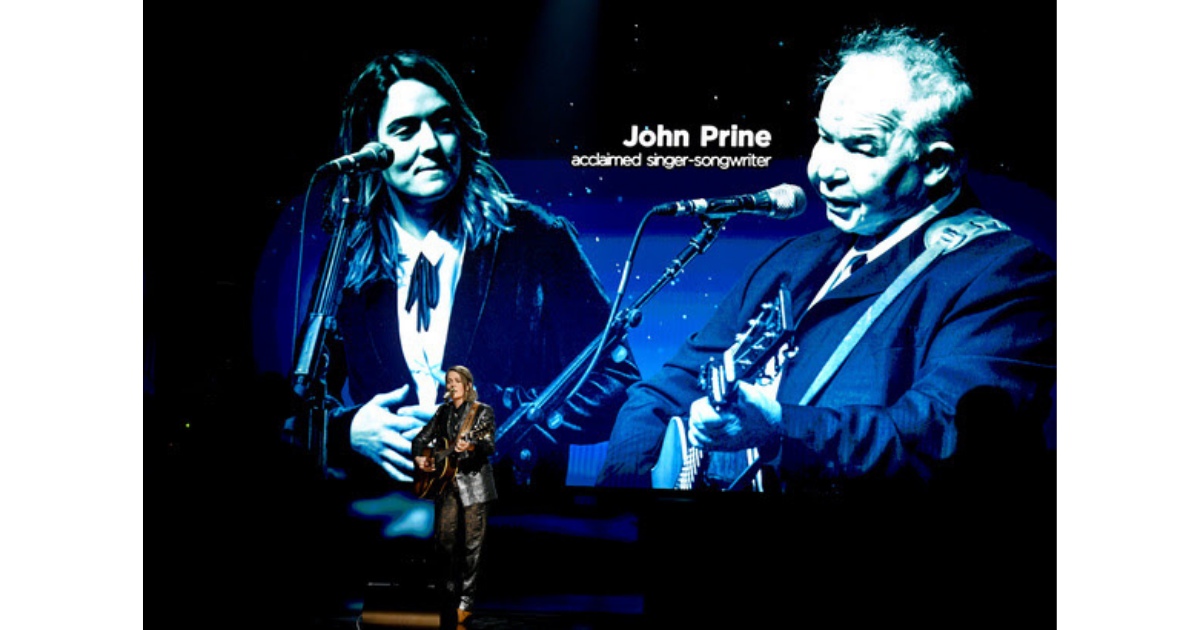
John Prine, Brittany Howard, Sarah Jarosz Among Winners at 63rd Annual Grammy Awards

The 63rd Annual Grammy Awards were held yesterday afternoon and evening, Sunday March 14, 2021. Here are the nominees and winners in the American Roots Music fields:

Best American Roots Performance

Black Pumas, “Colors”

Bonny Light Horseman, “Deep in Love”

Brittany Howard, “Short and Sweet”

Norah Jones & Mavis Staples, “I’ll Be Gone”

John Prine, “I Remember Everything”


Best American Roots Song

“Cabin,” Laura Rogers & Lydia Rogers, songwriters (The Secret Sisters)

“Ceiling to the Floor,” Sierra Hull & Kai Welch, songwriters (Sierra Hull)

“Hometown,” Sarah Jarosz, songwriter (Sarah Jarosz)

“I Remember Everything,” Pat McLaughlin & John Prine, songwriters (John Prine)

“Man Without a Soul,” Tom Overby & Lucinda Williams, songwriters (Lucinda Williams)


Best Americana Album

Courtney Marie Andrews, Old Flowers

Hiss Golden Messenger, Terms of Surrender

Sarah Jarosz, World on the Ground

Marcus King, El Dorado

Lucinda Williams, Good Souls Better Angels


Best Bluegrass Album

Danny Barnes, Man on Fire

Thomm Jutz, To Live in Two Worlds, Vol. 1

Steep Canyon Rangers, North Carolina Songbook

Billy Strings, Home

Various Artists, The John Hartford Fiddle Tune Project, Vol. 1


Best Traditional Blues Album

Frank Bey, All My Dues are Paid

Don Bryant, You Make Me Feel

Robert Cray Band, That’s What I Heard

Jimmy “Duck” Holmes, Cypress Grove

Bobby Rush, Rawer Than Raw


Best Contemporary Blues Album

Fantastic Negrito, Have You Lost Your Mind Yet?

Ruthie Foster Big Band, Live at the Paramount

G. Love, The Juice

Bettye LaVette, Blackbirds

North Mississippi Allstars, Up and Rolling


Best Folk Album

Bonny Light Horseman, Bonny Light Horseman

Leonard Cohen, Thanks for the Dance

Laura Marling, Song for Our Daughter

The Secret Sisters, Saturn Return

Gillian Welch & David Rawlings, All the Good Times


Best Regional Roots Music Album

Black Lodge Singers, My Relatives “Nikso Kowaiks”

Cameron Dupuy and the Cajun Troubadours, Cameron Dupuy and the Cajun Troubadours

Nā Wai ʽEhā, Lovely Sunrise

New Orleans Nightcrawlers, Atmosphere

Sweet Cecilia, A Tribute to Al Berard


Also, note these Americana winners in other categories:

Best Rock Song

“Kyoto,” Phoebe Bridgers, Morgan Nagler & Marshall Vore, songwriters (Phoebe Bridgers)

“Lost in Yesterday,” Kevin Parker, songwriter (Tame Impala)

“Not,” Adrianne Lenker, songwriter (Big Thief)

“Shameika,” Fiona Apple, songwriter (Fiona Apple)

“Stay High,” Brittany Howard, songwriter (Brittany Howard)


Best Country Solo Performance

“Black Like Me,” Mickey Guyton

“Bluebird,” Miranda Lambert

“Stick That In Your Country Song,” Eric Church

“When My Amy Prays,” Vince Gill

“Who You Thought I Was,” Brandy Clark


Best Country Song

“Bluebird,” Luke Dick, Natalie Hemby & Miranda Lambert, songwriters (Miranda Lambert)

“The Bones,” Maren Morris, Jimmy Robbins & Laura Veltz, songwriters (Maren Morris)

“Crowded Table,” Brandi Carlile, Natalie Hemby & Lori McKenna, songwriters (The Highwomen)

“More Hearts Than Mine,” Ingrid Andress, Sam Ellis & Derrick Southerland, songwriters (Ingrid Andress)

“Some People Do,” Jesse Frasure, Shane McAnally, Matthew Ramsey & Thomas Rhett, songwriters (Old Dominion)


Best Roots Gospel Album

Fisk Jubilee Singers, Celebrating Fisk! (The 150th Anniversary Album)

Mark Bishop, Beautiful Day

The Crabb Family, 20/20

The Erwins, What Christmas Really Means

Ernie Haase & Signature Sound, Something Beautiful


Photo by Kevin Winter/Getty Images for The Recording Academy

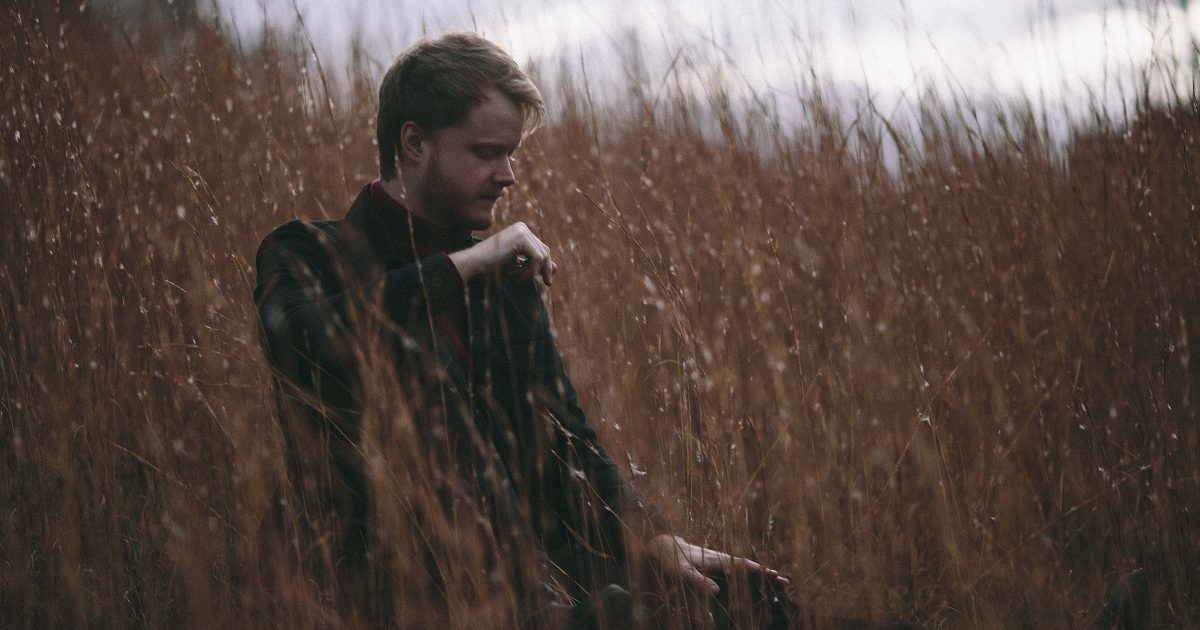
BGS 5+5: Clint Roberts

Artist: Clint Roberts
Hometown: Brevard, North Carolina
Latest album: ROSE SONGS (February 26, 2021)

Which elements of nature do you spend the most time with and how do those impact your work?

I always have been, and probably will always be, a mountain boy. I’ve lived in Western North Carolina for 90% of my life, all of that time between Brevard, Asheville, and Boone. Mountains are deeply inspiring and meditative for me, perfect for stewing lyrical ideas or song narratives in my mind. I trail run a fair amount, and that’s always a good time for me to listen to my demos and do lyrical gymnastics with them, or simply listen to other people’s music and try to get lost in it. I’ll never know to what extent my environment informs my process, but I imagine these mountains give me a lot.

What was the first moment that you knew you wanted to be a musician?

Prior to finding songwriting in early high school, I wasn’t sure what I really wanted to do with my life. I felt like a fish being asked to climb a tree in the areas of school sports, Boy Scouts, and the various other middle school activities that kids are often herded into. The moment I learned four chords on a ukulele in 9th grade, I started writing songs. And soon after I would decide that performing my songs is what I wanted to do with my life. The process was and still is addicting, and at the time it was one of the first times I can remember hearing validation from other people that I was good at something. So between my own love for it and hearing friends and even strangers tell me that I had a shot, I decided to go that route.

What’s the toughest time you ever had writing a song?

There’s a song on my upcoming record (ROSE SONGS) that took roughly five years to finish. That’s not to say that I spent each day of that time slaving away at it, but rather, that I didn’t know what I wanted to do with it until that much time had passed. The first verse and chorus were written in a day, the rest of the song was finished about five years later. It was a song that always hung out in my demos, always reminding me that one day it had to be finished. I’m really glad I did, because it’s one of the songs and recordings on the album that I’m most proud of.

What other art forms — literature, film, dance, painting, etc — inform your music?

Film informs my process a lot. I’ve occasionally written songs from the perspective of different characters in movies that I like. The aesthetic or setting of a given film can very potently reside in my mind, often subconsciously informing my creativity. I particularly like epics that have a lot of different fantastical settings, like The Dark Crystal and The NeverEnding Story. When curating the songs for a record, I try to keep my song choices diverse like the settings of such movies, so that no one given song feels quite like the other.

What’s your favorite memory from being on stage?

This isn’t quite a stage memory but it’s a backstage memory. I’m friends with members of Steep Canyon Rangers, a band that many of your readers are probably aware of. They perform with Steve Martin frequently. My college band had given the guys several copies of our first EP, and it’s now my understanding that they had given Steve one of the copies (maybe they just played it in front of him, I’m not sure). Some months later, our band would be on a festival bill with Steve and the Rangers, and Steve was waiting to shake my hand off stage when we were done performing. “Sounds just like the record,” he said. That was a very confusing and exciting moment for a 19-year-old songwriter.


Photo credit: Daniel Barlow

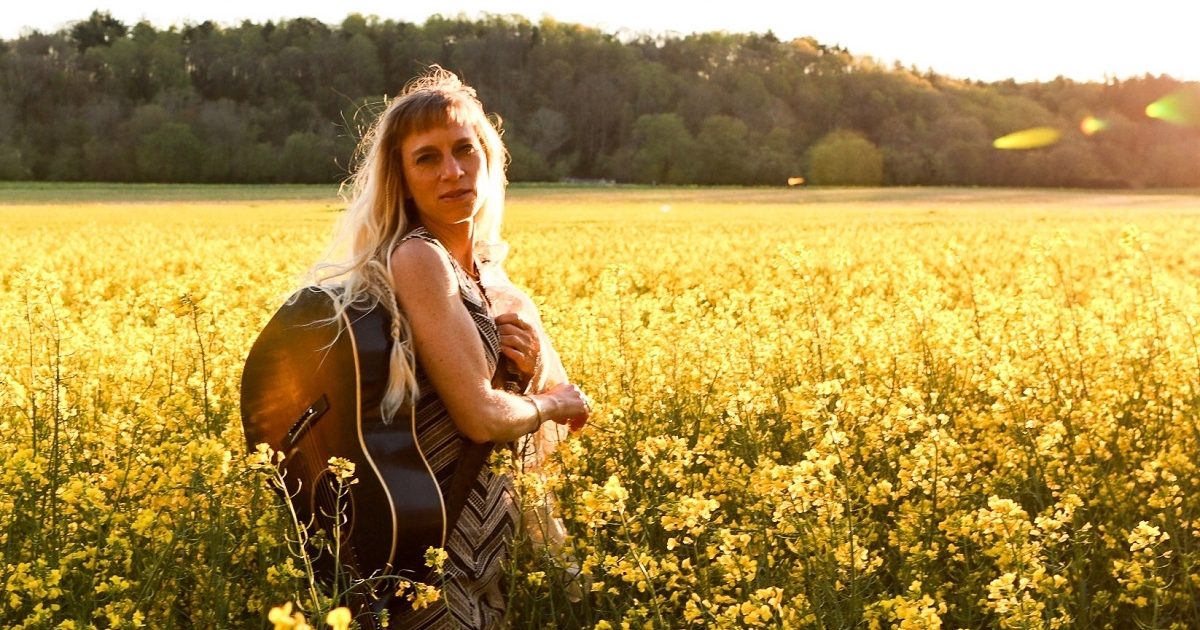
LISTEN: Anya Hinkle (Feat. Graham Sharp), “What’s It Gonna Take”

Artist: Anya Hinkle featuring Graham Sharp
Hometown: Asheville, North Carolina
Song: “What’s It Gonna Take”
Release Date: February 12, 2021
Label: Organic Records

In Their Words: “On May 26th, 2020, my neighbor Graham Sharp and I had planned to get together to do some songwriting. On that day, we had all woken up to the new reality, the first day without George Floyd in this world. ‘What should we write about?’ we asked each other, and we began to process the horror of his death through a song. We asked, what’s it gonna take? How can we speak to the brokenness of our country and our complicity in that? As we watched the nation convulse, we continued to write, trying to comprehend the pain we saw on display in the soul of our country and in ourselves.

“When we went into the studio to cut the single, we asked a master of the sacred steel, DaShawn Hickman, and gospel singer Wendy Hickman to join us in asking ‘what’s it gonna take?’ Bringing in their voices was an important part of processing the difficult summer, building trust and beauty through song. Only by listening to Black voices are we going to know what it is gonna take. We are still so divided and will remain ignorant until we can absorb what it’s like to be Black in America.” — Anya Hinkle


Photo credit: Rose Kaz

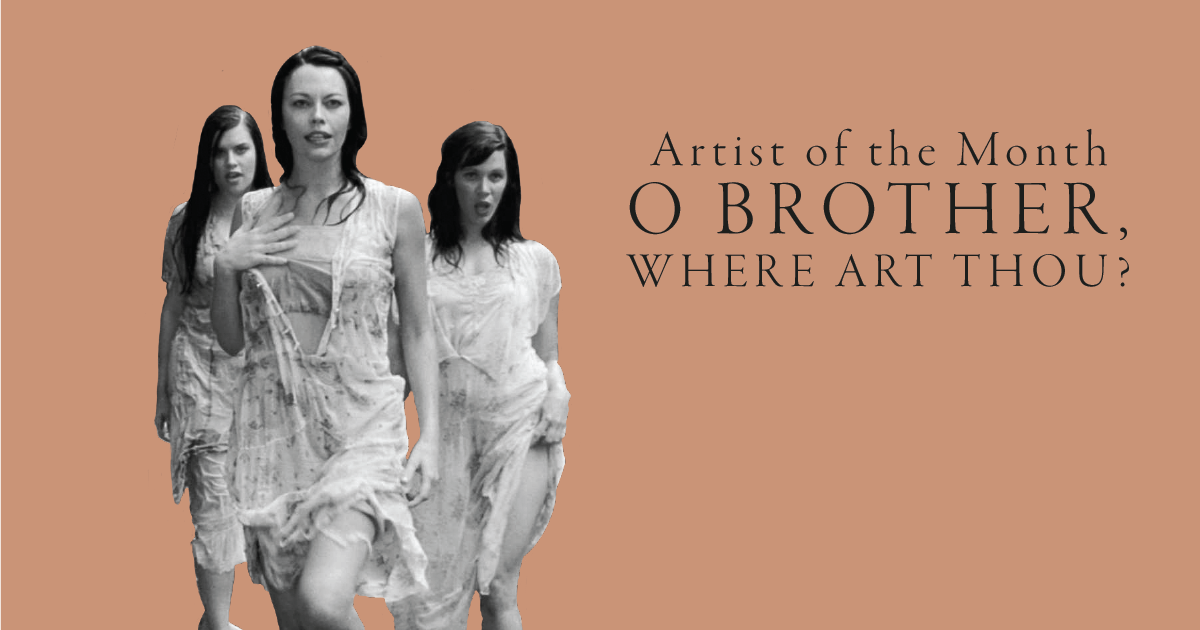
A New Generation of Bluegrass Stars Reflect on ‘O Brother, Where Art Thou?’

The soundtrack to O Brother Where Art Thou? was a phenomenon in the early 2000s, turning bluegrass musicians into superstars and creating an instant mainstream market for old-time music — from folk to gospel to children’s songs to prison chants to blues and everything in between. To celebrate the twentieth anniversary of its astonishing success and to wrap up our Artist of the Month series, we spoke to several musicians about the impact O Brother and its subsequent tours had on their lives and livelihoods.

Sierra Hull: “I grew up in a little town with maybe 900 people, and there used to be a poster section at the Walmart the next town over. You could flip through the posters and there would be pop stars like Britney Spears and Backstreet Boys. I was always convinced that one day I would find an Alison Krauss poster in there. She was as popular in my little kid brain as Britney Spears. So it was cool when O Brother came out and elevated some of those people who were already giants to me, like Alison and Dan Tyminski and Ralph Stanley.

“I was already playing, but I was too young to be touring yet. By the time Cold Mountain came out [in 2003], I was part of that tour. Alison was part of both soundtracks, and she invited my brother and me to go on that tour. So we got to help celebrate that second wave. I was 12, and it was really the first time for me to be out on tour, travel to so many different places, and play Red Rocks and the Beacon Theater in New York. Standing at the side of the stage and listening to Alison sing to hundreds of people every night every night was one of my favorite memories.

“It was amazing to watch people go crazy over Ralph Stanley every night. He had this dazzled suit jacket that he wore every night. Sometimes he would sit his banjo down while his band played and take that jacket off and throw it to me at the side of the stage. I would get to wear that dazzled jacket at the end of the show when everybody came out on stage. It’s one of the most special musical experiences I’ve ever had.”


Sara Watkins: “O Brother was something we somehow became affiliated with. Nickel Creek had just released our band’s first record on Sugar Hill, after years of doing just little homemade projects. Alison Krauss produced it, which had been out maybe a year and a half when O Brother came out. She was a big part of that soundtrack, of course, so our band was gaining a little bit of notoriety. I remember reading a huge New York Times spread, and we were listed among the people on that scene. We were part of that conversation, despite not having been part of the soundtrack in any way. We were just at the right place at the right time, and the awareness of the bluegrass scene just exploded. We were able to reach a different level very quickly. It was a huge advantage to our career. We already had some momentum, but the soundtrack really put the wind in our sails.

“T Bone Burnett [who produced the album], one of his brilliant skills is finding the right people for the right song. He brought in some incredible musicians in a way that really showed the musicianship in our community and made everyone really proud of our scene. We saw our heroes up there, and it was gratifying to see them celebrated by a huge audience. I remember feeling a new respect for Ralph Stanley with that vocal [on ‘Oh Death’]. That actually turned me on to shape-note singing. Someone told me his delivery was reminiscent of those old communities that did shape-note singing and those old preachers who used to sing that way. I’d never heard anything like it. And to this day, whenever I see Dan Tyminski, I make a point to stick around until he plays ‘Man of Constant Sorrow.’ No way I’m leaving before then.”


Dave Wilson (Chatham County Line): “I remember going with our old bass player to see O Brother in the theater. We snuck a bottle of whiskey in and sat in the back row and just laughed and drank. I remember thinking, ‘Bluegrass has arrived!’ We were already a band and playing small gigs around town, but we weren’t at a place where we had dedicated our lives to it. So it was kismet for us. That record came out, and the scene just exploded. Suddenly we had this huge advertisement out there in the world for the style of music we were playing. We definitely noticed a change. There were more strangers coming to see us play gigs, and they were really excited about it. One side effect was people would yell out for us to play ‘Man of Constant Sorrow.’ They did it enough to make me wonder if they had heard the soundtrack or just seen the movie. But we never played it. We didn’t know how! It would have probably shut them up if we had!

“I really got into the record. There are some badass arrangements on there. And it’s not corny. It’s not super traditional. I love that they reached out to the right people. It could have been bad. They could have gotten Toby Keith or someone like that. Oh god, I don’t even want to think about that! One of my favorite parts is that blues song by Chris Thomas King [a cover of Skip James’ ‘Hard Time Killing Floor’]. It makes for such a special moment. Later, they booked that concert film [Down from the Mountain, recorded at the Ryman Auditorium] at our old classic movie theater here in town, and I remember the boys going to see it and we were all just floored. That was almost bigger than the movie as far as having an impact in the folk music scene.”


Sam Amidon: “People in the folk world can be very protective of the music, which I think is valid. But my inclination is that if I find something I’m excited about, I want to share it. I want people to know about it. To have grown up in a world knowing a lot of the corners O Brother explores, it was beautiful to think about how many people all of a sudden were going to discover these field recordings and these great musicians. And I was thankful because until then, portrayals of traditional music in the mass media had just been so bad and so clichéd or so simplistic. Nothing had depicted this stuff on this scale before. Before then, if you told somebody you played banjo, they would think Deliverance. That was their frame of reference.

“For O Brother to do it without messing it up was a miracle. To see these different corners of American music — beyond just blues and bluegrass as the two major industry terms — was a very positive thing, especially because ‘folk music’ can be such a heterogeneous category. Nobody would even really know what you were talking about if it wasn’t bluegrass or blues. O Brother pointed to all of these different areas. It’s singing games and banjo songs and all these different things. O Brother is weirdly inclusive. It cast a wide net. Nowadays it’s easy to go to the soundtrack and hear more problematic elements of the whole Americana genre thing, but I think it’s good to remember that when it first came along, it was much more nuanced compared to what had come before.”


Woody Platt (Steep Canyon Rangers): “It’s interesting that the twentieth anniversary of O Brother is fairly parallel to the twentieth anniversary of our band. We formed in Chapel Hill, North Carolina, when we were seniors in college, right when the movie came out. We all had been exposed to bluegrass and old-time just by being Carolinians. We all had that music around when we were growing up, but none of us in the band really dove into it until we were in college. We’d only been following that music a few years when the movie came out. I’m not sure we were aware at the time of the impact that the movie and the tour had on bluegrass, old-time, string band, mountain music, but we could feel some excitement when we were playing bars on Franklin Street, which is the main drag in Chapel Hill. But we didn’t really have anything to compare it to. There was no before or after. It was just what we were doing, and that’s all we knew.

“I really enjoyed the movie, but I was a big fan of the album. Hearing Ralph Stanley’s voice in a film, or Dan Tyminski’s, or just seeing people I admired in that movie was pretty incredible. Looking back on it, it was good timing for us to be getting off the ground, and we were having so much fun and finding so much joy in it. The music we were playing had been a small niche, but all of a sudden it had this national interest. I have no doubt in my mind that the awareness of the music was fueled by the movie. It’s a fascinating phenomenon to think about, because it wasn’t marketed in any significant way. It just happened. It was just this thing where people were suddenly into this music.”


Molly Tuttle: “The movie came out when I was seven years old, and I remember my dad showing it to me when I was in grade school. I loved it, and the music really stuck with me because I already had an affinity for bluegrass and old-time music. Seeing it performed in a movie was new and exciting. My dad teaches bluegrass for a living, and when the movie came out, he had an influx of new students.

“It’s had a lasting impact on the popularity of bluegrass music. But I was so young that I didn’t know many of the musicians on the soundtrack by name, so it introduced me to a lot of artists who later became my favorites. And the Down from the Mountain documentary further familiarized me with people like Emmylou Harris and Alison Krauss. Many of those artists, like Gillian Welch and John Hartford, have been big influences on me, and that was my introduction to their music. I’ve performed ‘I’ll Fly Away’ and ‘Angel Band’ a number of times, and I got to do ‘Man of Constant Sorrow’ with Dan Tyminski at the IBMA awards one year.”


Dom Flemons: “I actually saw Ralph Stanley on the O Brother tour in Flagstaff, Arizona, in the year 2000. It was at this random high school. I saw the poster on a telephone pole when I was going to college there. I’d started playing the banjo by that point — six-string and four-string banjo, guitar, and harmonica. I remember the place was really packed out, and he gave this amazing performance. I just loved watching the man at work. When he sang ‘Oh Death,’ he pulled this piece of paper out of his pocket, put on his glasses, and made a joke about how old he was. And he just sang it off this piece of paper and blew our minds.

O Brother was very interesting, and I think it’s still a milestone album for several generations. A lot of the old folks who played those old styles and sang those old songs were starting to pass away, so the soundtrack ended up being a perfect vehicle for getting younger people into the music of the ‘20s and ‘30s. It reminded people of the really good old recordings that were available. That’s where I went. I found the old RCA Victor and Columbia recordings, and that was it for me.

“It’s a perfectly structured record, opening with the prisoners on the chain gang and then it goes to that beautiful ‘Big Rock Candy Mountain.’ And then you get into “You Are My Sunshine” with Norman Blake, and then Chris Thomas King presenting ‘Hard Time Killing Floor.’ That in itself was a revival of Skip James. People talk about Ghost World and Devil Got My Woman, but I think O Brother got it going. People just started casually bringing those songs back in at shows and festivals, and it seemed like a lot more people knew them. Of course they would sing them like the recordings on O Brother. Those are just things I observed before I was a professional musician, and it was amazing to see.”


The String – Steep Canyon Rangers

The Steep Canyon Rangers emerged from the collegiate scene in central North Carolina around 2000 with a traditional sound that started winning them awards.


LISTEN: APPLE PODCASTS

Over 20+ years, they’ve broadened and deepened their sound through 13 albums on their own – including a bluegrass Grammy winner – and three with Steve Martin. Now they’ve released three very different albums in a calendar year, displaying range and mastery. In this hour, conversations with singer/guitarist Woody Platt, fiddler Nicky Sanders and banjo player/songwriter Graham Sharp. The new studio album is ‘Arm In Arm.’

BGS & #ComeHearNC Celebrate the Cultural Legacy of North Carolina during #NCMusicMonth

On the national music scene, North Carolina sets itself apart by blending the heritage of traditional roots music with the innovation of modern indie and Americana sounds. The bluegrass canon of North Carolina encompasses pioneers like Charlie Poole and Earl Scruggs, as well as groundbreaking musicians like Elizabeth Cotten, Alice Gerrard, and Doc Watson. Today’s spectrum of talent spans from modern favorites such as Darin & Brooke Aldridge, Balsam Range, and Steep Canyon Rangers, and the progressive perspective of the Avett Brothers, Rhiannon Giddens, Mandolin Orange, Hiss Golden Messenger, Mipso, and many more.

One example of how the state is merging past with present is the recent opening of North Carolina’s only vinyl pressing plant — Citizen Vinyl in Asheville.


View this post on Instagram


Built over 15 months in 1938-1939, The Asheville Citizen Times Building (@citizentimes) was designed by architect Anthony Lord as the grand center for the city’s two newspapers and radio station WWNC. Located at 14 O’Henry Avenue, the massive three-story building of reinforced concrete, granite and limestone, utilizing 20,000 glass bricks, is considered Asheville’s finest example of Art Moderne design. In 2019, Citizen Vinyl claimed the first floor & mezzanine of this iconic landmark as the future home of a vinyl record pressing plant, as well as a café, bar and record store – and is reviving the historic third floor radio station as a modern recording and post-production facility.

A post shared by Citizen Vinyl (@citizenvinyl) on

According to press materials, the building’s third floor played host to Asheville’s historic WWNC (“Wonderful Western North Carolina”) which was once considered the most popular radio station in the United States. In 1927, the station hosted live performances by Jimmie Rodgers and made his first recordings shortly before he went to Bristol, Tennessee.  In 1939, the station featured  the first ever live performance by Bill Monroe and the Bluegrass Boys during its Mountain Music Time segment.  Citizen Vinyl expects to keep the live music tradition alive in this former newspaper building, too.

Here at BGS, we’ve been committed to North Carolina music from our launch, notably with our Merlefest Late Night Jams, which are always worth staying up for. And how much do we love the IBMA World of Bluegrass week in Raleigh? Looking back on our archive, we gathered these songs from the artists we’ve covered over the years — and looking ahead, you’ll see all-new interviews with the Avett Brothers and Mipso, examine the classic country stars with roots in North Carolina, and spotlight some rising talent with video performances at the state’s most scenic destinations.

In the meantime, you can discover more about the North Carolina music scene through their website and on Instagram at @comehearnc


Editor’s note: This content brought to you in part by our partners at Crossroads Label Group.

With ‘Arm in Arm,’ Steep Canyon Rangers Give Everyone Time to Shine (Part 2 of 2)

Steep Canyon RangersArm in Arm, their first collection of all-new material in two years, is a set of highly grown-up songs, some with storylines that you’d expect from the likes of Drive-By Truckers or Bruce Springsteen. It’s more loose-limbed and less traditional than past Rangers albums, with fine ensemble playing throughout.

BGS caught up with co-leaders Woody Platt and Graham Sharp in separate conversations leading up to the release of Arm in Arm. After starting with Platt yesterday, here is the conversation with Sharp.

BGS: With the band off the road, have you been able to do any songwriting during this time?

Sharp: I started off writing on a real tear the first few months. But then I slacked off a bit, in part because that coincided with me starting to make an album of my own. Switching from writing to recording slowed down that end of it, but working on my own stuff is kind of out of necessity. For the band to survive this and come back when it’s time, we’ve all got to look out for ourselves a little more.

It’s a strange new hustle, but we’re holding up pretty good. We’ve all been forced to sort of pivot, after having not stopped moving in 20 years. This is the longest any of us have stayed put that whole time. It takes a moment to settle, but it’s been eye-opening. Forced me into some new directions that have been good and ought to pay dividends once we can get the band back together. I’m trying to pull out as many silver linings as I can.

That’s a bit of news, about the solo album. What can you tell us about that?

I don’t know where or when it will ever come out, but the solo album is close to done. I’ve been working with Seth Kaufman from Floating Action in his little basement studio here in Black Mountain. It’s mostly new songs, and a handful of tunes the Rangers have been kicking around a while without getting to them. Nothing bluegrassy about it, mostly country to country-soul, because I have definite tendencies in that direction and a deep love for country music of the ’60s, ’70s, ’50s. That’s still among my favorites.

After Charles Humphreys III left the Rangers in 2017, this is the first album where you’ve written all the songs, not just most of them. Was there more pressure on you?

Not necessarily. It did not change my process much, anyway. I always just try to compile as much good material as I can. It is neat that with a band as organic as this one, a song can kick around for years where we’ll never find a place for it and then suddenly it’s revived. The last song on the album “Crystal Ship” was like that. I had that one for a long time and then backstage one day, [Mike] Ashworth just started playing that melody because he remembered it from a year or two earlier. It’s cool to have the band’s collective memory to draw on, where everybody is part of the process.

The first song “One Drop of Rain” is another. I probably wrote that one six or seven years ago and I’d just never taken the time to find the right groove and place for it. Then one night Woody and I were backstage, I had this little banjo roll, he had the phrasing to go with that and we put it together. A lot of songs come together over time like that. The process is more cumulative than me bringing something in, “Hey, I’ve got this new song.”

Do you have any particular favorite songs on this one?

Probably “One Drop of Rain” and “Honey on My Tongue,” for different reasons. I can remember exactly where I was and the situation I was trying to capture with “One Drop,” just shortly after my father-in-law had died very unexpectedly — 64 years old. What it gets at for me is, try to love your way through the hardest situations. And “Honey” is one I wrote with my daughter in mind. She was giving me a hard time, saying I never write songs for her — not true! But yeah, okay, that was written specifically for her. There are several songs about resilience, dealing with loss, setbacks. All to different degrees, tied to different moments in time.

This record sounds very, dare I say it, mature and grown up.

Well, we’re all passing into the point in our lives where we see a lot of past decisions come to fruition as everyone’s lives play out, our own as well as others. That perspective figures into it. As a songwriter, I’m maturing and trying to hone in on the emotional center of a song – and trying not to write about fluff. We were all very aware while making this album that a lot of the songs aren’t necessarily sad, but a little bit heavier.

And on this record, you’ve also got the first lead vocal from new bassist Barrett Smith.

It’s been cool, having him take on a bigger vocal role. With Woody or myself, it’s just us singing songs at this point. But with Barrett, there’s this ability to tailor songs to a new voice in the band. The song he sings, “Everything You Know,” we talked through the lyrics and the story. Woody and I have always done that, gone through songs in detail. Although sometimes, I don’t necessarily want to influence the pictures anybody else sees in their head while singing.

Once a song is written and out there, it belongs as much to the listener as the singer or the writer. Sometimes they come up with something different, too. “Can’t Get Home” from the last record, Woody thought I wrote that for soldiers coming home and he wasn’t the only one. I had not necessarily meant it that way, but I talked to enough other people about it that it kind of changed the song’s meaning for me, which was cool.

Did taking on the production yourself make Arm in Arm more collaborative than past albums?

I feel like what we do on stage is try to give everybody in the band moments to shine while keeping things moving. Producing this record ourselves was like that, more so than us playing while someone else producers. There are songs where I remember, so and so arranged this part, so and so suggested this harmony, so and so came up with the idea for this mix. So many different pieces where I can see everybody’s fingerprints. I’m proud of that.

I’m just psyched to have something to roll out into the world, reach out a little bit. You know, it’s not the best time to be releasing a record because we can’t tour. So I hope this will reach and touch people. I’m definitely prouder of this record than anything we’ve ever done.

Read part one of our Steep Canyon Rangers Artist of the Month interviews here.


Editor’s Note: David Menconi’s Step It Up and Go: The Story of North Carolina Popular Music, from Blind Boy Fuller and Doc Watson to Nina Simone and Superchunk will be published in October by University of North Carolina Press.

Photo credit: David Simchock