Your Guide to the Internet’s Essential Bluegrass Content Creators

When I started playing mandolin in 2004, the internet was integral to my experience. I spent countless hours on websites like Mandolin Cafe, used a PayPal account I made when I was 9 to buy albums on eBay, and downloaded countless viruses onto our family computer pirating bluegrass recordings on Limewire. When the internet went public 30 years ago, it immediately changed the world and bluegrass. By the end of the ’90s, blogging had become mainstream and bluegrass had cultivated its own corner of the web with forums and listservs like BGRASS-L. When broadband replaced dial-up, people were able to share large files such as recordings and videos and information sharing exploded.

I grew up in a generation that saw regular people like Justin Kan (who would later go on to co-found Twitch) become celebrities through vlogging and like many people my age, I wanted to be a content creator. “Content” is just the soulless marketing word for the cultural ephemera humans have always created, but in the internet age. When I was in high school, microblogging became popular with platforms like Twitter (now X) while social media sites such as Vine and Snapchat that favored short form content appeared, creating another paradigm shift towards the hyper-specific, unpolished, slice-of-life videos we now see on TikTok and Instagram Reels.

My social media career began in earnest in 2019. I was burned out from touring and was trying to find a way to stay relevant without traveling so much. I started by posting clips of myself playing tunes that I was learning, which eventually morphed into a Patreon page. Patreon became hugely popular with artists after the COVID-19 pandemic hit, but at the time I began using it there were relatively few educational bluegrass pages. I ended up formatting mine in a similar way to podcasts that I subscribed to at the time. I studied up on how the algorithm works and during lockdown began creating and posting fervently.
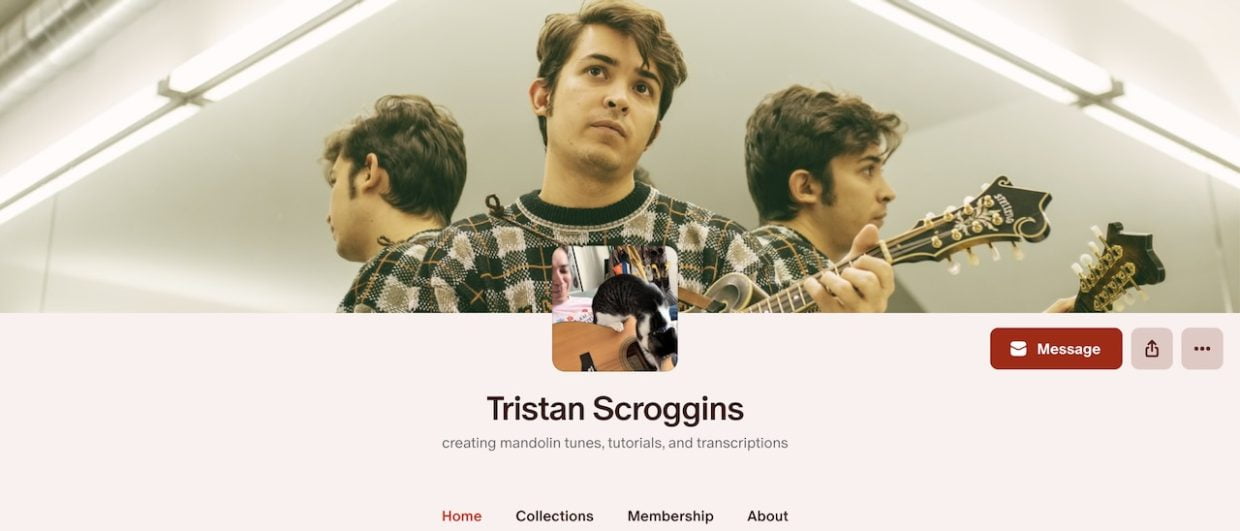
A preview of Tristan Scroggin’s Patreon profile.

Once restrictions were lifted, I found myself drawn back into performing and had less and less time to consistently post. In the ever intensifying war for attention, consistency is key, but I found no satisfaction in churning out things I didn’t care about and the things I do care about take time. So I found myself burned out again, trying to learn how to slow down. It’s a vicious and common cycle.

Ultimately, I love creating new things and sharing them with people. This is true of all of the people on this list, many of whom are friends and part of a community that openly shares tips and tricks on how to navigate the unfiltered digital miasma of social media. For every entry on this list there are a dozen more who I couldn’t include for space. Separating the wheat from the chaff in the world of online bluegrass content can be difficult, but there are many shining beacons that have and will continue to influence those that follow them.

Billy Strings

Billy had a small cult following in his home state of Michigan before videos of him performing at festivals went viral. Videos became an integral part of Billy’s brand with footage from his concerts becoming inescapable for a time. Taping culture, the act of recording a live show and posting it online – an activity with ties to old school tapes of bluegrass shows that David Grisman, Jerry Garcia, and Sandy Rothman created and distributed along the West Coast to help spread bluegrass – had grown with social media and videos of full performances were shared religiously online. This practice has challenged more traditional bluegrass artists who have often relied on physical CD sales and see digital distribution as undermining that effort. Despite that, Billy’s most recent record Me / And / Dad was #1 in pure album sales in country, and #5 in all of music selling more than 15,000 copies upon release.

Billy’s Youtube channel has more than 300,000 subscribers and currently features everything from music videos to full concerts to behind the scenes mini-documentaries. Billy has since partnered with Nugs.net to livestream and host his current shows. Nugs is a livestream website that provides high quality video and audio of concerts, mostly rock and jam bands providing an updated version of the Grateful Dead tapers from days of yore.

Carter Vintage

Since their start nearly a decade ago, Carter Vintage Guitars has posted demonstration videos and in-store performance footage to their YouTube channel, which became a who’s-who collection of Nashville talent. While the videos started out as informal captures from around the store, by the end of 2016 the production quality had increased with Jon Roncolato and Keith Cypert making sure they looked and sounded great. While there are videos from hugely popular rock and Americana artists such as Jason Isbell, the majority of their most popular videos are from Molly Tuttle and Billy Strings from when they had recently moved to Nashville and were still relatively unknown.

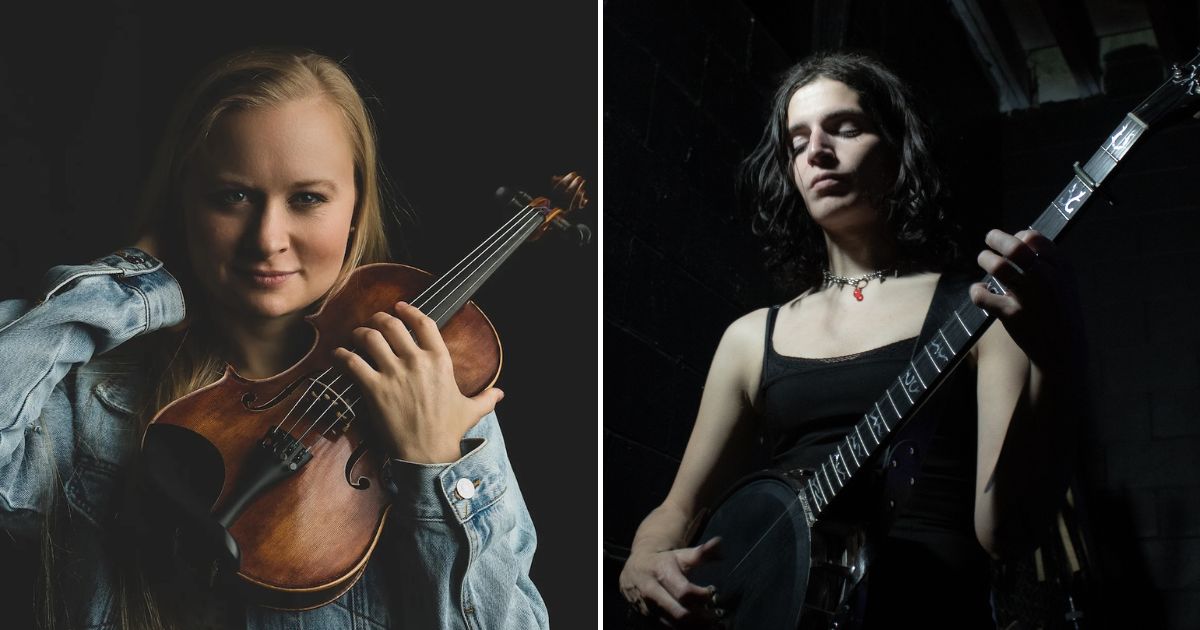
Clover Lynn

@hillbillygothic Heres an old tune called Katey Daley hope yall enjoy #banjo #fyp #bluegrass #appalachia #music ♬ original sound – Clover-Lynn

Clover Lynn, also known as hillbillygothic, is from Southern Appalachia and plays banjo with a dark gothic-esque twist that challenges Steve Martin’s assertion that “you can’t play a sad song on the banjo.” She gained a massive amount of fame on TikTok and later Instagram for dueting posts. (A duet contains two videos in a split screen that play at the same time.) Specifically, she’d duet TikToks featuring men “challenging” feminism, spouting misogyny, or outright supporting violence against women. When they began spewing hate speech, Clover would appear alongside the original video loudly playing tunes like “Foggy Mountain Breakdown” over their bad opinions. This trend was extremely popular; the most popular post I could find had 8.2 million likes. Clover also uses her platform to advocate for the Appalachian region and its often overlooked BIPOC and LGBTQIA+ people, issues, and history.

Dirty Laundry

Marcus Veliz, through his page Dirty Laundry, has created a collection of moments and memories from his travels. Marcus is a wanderer driven by mindfulness. His videos offer short, musical meditations in nature that reflect on the beauty of living in the moment, which then informs his music. It’s all very “carpe banjo.” He has cultivated a following of nearly 40,000 followers on social media, but has deliberately chosen to focus on Instagram, because he values the community that he can build there. When scrolling on an app, these moments can be completely disembodied from the people who made them, but by creating a collection of these moments, Marcus, like a poet’s anthology, has created a digital visage of himself with Dirty Laundry that feels as if Woody Guthrie had an Instagram account. (Read BGS’s 2023 feature on Dirty Laundry here.)

Educational Videos by Eli Gilbert, David Benedict, and Lessons with Marcel

Educational content is hugely popular online. While there are countless pages dedicated to teaching bluegrass, I’ve collected just a few here. All three produce educational content that is supplemented by other work. Eli Gilbert has run his YouTube channel for nearly a decade, growing an audience of people learning the banjo (that included myself). Eli centralized these folks on his Patreon page and Discord server. While he’s not the first to post banjo tutorials or start a banjo Patreon page, he is currently the most popular banjo instructor on Patreon with more than 2,000 subscribers.

David Benedict has been well-known in the mandolin scene for quite some time. He curates a Mandolin Mondays series that’s run continuously since 2016. What started as videos of him playing tunes grew into a collection of over 400 videos in partnership with Mandolin Cafe that feature incredible mandolinists from all over the world. Check out his YouTube channel, too.

Marcel Ardans has over 500 full-length videos on his channel, Lessons with Marcel. Perhaps his most unique contribution to the genre is the bluegrass YouTube video essay. Video essays are exactly what they sound like and in the last decade they’ve gained immense popularity with the general public, especially on YouTube. With educational topics such as A Guide to Bluegrass History by Subgenre to more light hearted ones like The Untold History of Bluegrass Triangle, Marcel is filling a niche in the bluegrass community by providing thoughtful analysis in a style that audiences have become accustomed to. Marcel has also collaborated with many other popular social media pickers in the same sphere such as Jake Eddy and Hayes Griffin.

In 2023, Marcel was an official social media ambassador at IBMA’s World of Bluegrass business conference, where he held a guitar contest in partnership with IBMA and Martin Guitars.

Hillary Klug

Hillary Klug gained international popularity for multiple viral videos featuring her fiddling while buck dancing. In addition to her 100,000 YouTube subscribers, she has more than a million Facebook fans with her most popular video on FB sitting at over 64 million views. Hillary has been able to leverage short form content to reach people all over the world and her frequent collaborators – such as Cristina Vane, Brenna MacMillan, and Bronwyn Keith-Hynes – have also developed substantial followings on these platforms thanks to video creation in this style.

Molly Tuttle

When sites like YouTube and Facebook launched, they created networks that many used to connect with real world friends and family. But videos uploaded to share with distant relatives had the side effect of being visible to the general public. So when Jack Tuttle began filming his children, Michael, Sully, and Molly, to share their musical talent with family back in Illinois, suddenly thousands of people could see their virtuosity. The family formed a band called The Tuttles with AJ Lee, performing regularly and continuing to post videos that would garner hundreds of thousands of views until the oldest, Molly, went to college.

I distinctly remember watching their most popular video dozens of times which featured Michael, the youngest, playing El Cumbanchero. I watched that video over and over again with a sense of both jealousy and admiration. This feeling would become familiar as similar videos – such as a very young Sierra Hull playing with Sam Bush – would also go viral.

Molly has gone on to become one of the most popular bluegrass acts currently touring. She was the first woman to win the IBMA Guitar Player of the Year and she won a Grammy for Best Bluegrass Album in 2022. In that same year, she was nominated for the Best New Artist Grammy alongside hugely popular artists such as Samara Joy and Latto. Molly’s brother Sully also still plays, professionally touring with childhood friend, bandmate, and fellow bluegrass internet child celebrity AJ Lee in her band Blue Summit.

The Petersens

The Petersens are a family band based in/near Branson, Missouri that has played theaters in that area for more than a decade. After their oldest daughter, Ellen, made the top 48 on American Idol (season 16), they began producing videos of themselves performing, which have become extremely popular. A video clip of Ellen’s audition is one of the first videos posted on their YouTube channel and currently sits at over 3 million views. They have since garnered more than 200 million views, which they’ve utilized to gain fans in countries all over the world. This form of vlogging has created an entire ecosystem and a style many other family bands emulate, such as the Sleepy Man Banjo Boys, The Family Sowell, the Cotton Pickin’ Kids, Williamson Branch, and more.

Bluegrass Barbie
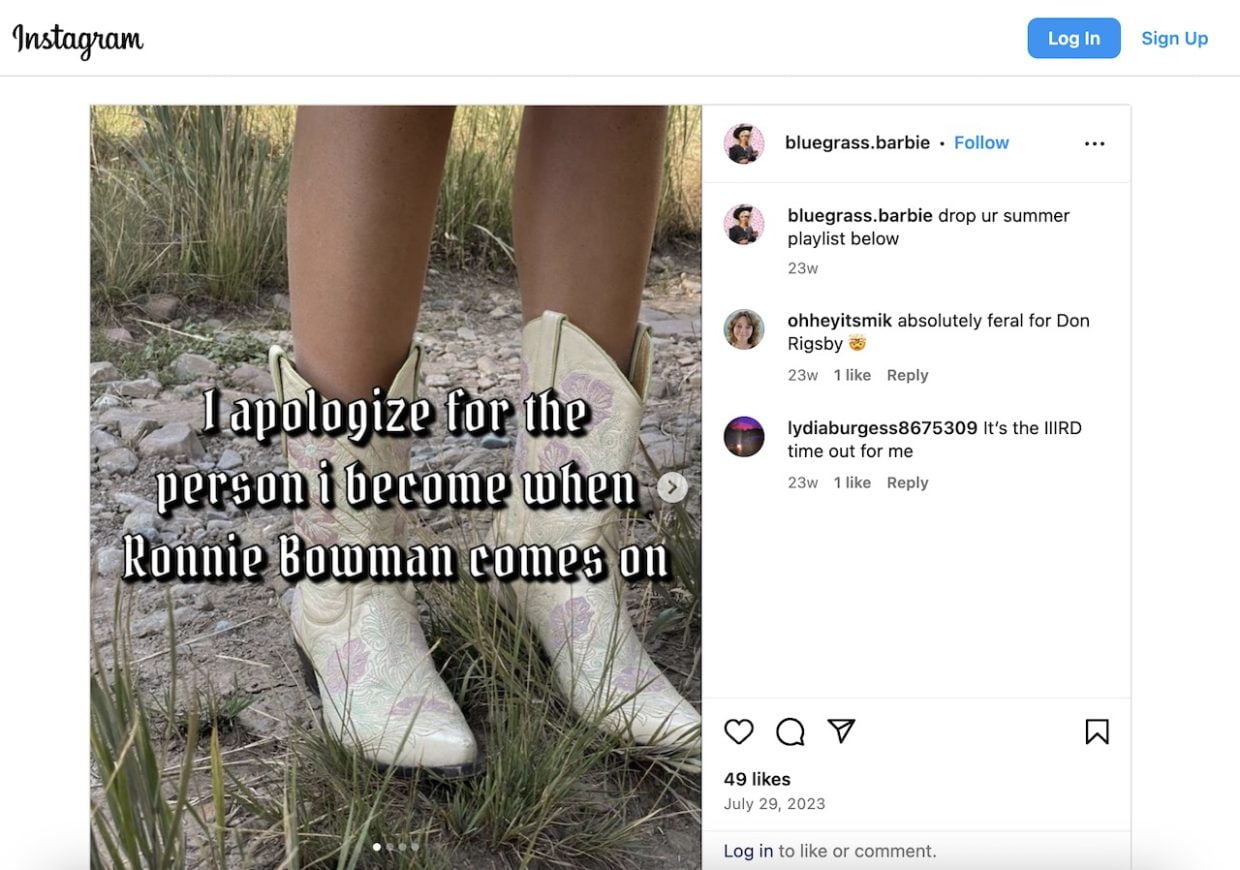
A post by bluegrass.barbie on Instagram.

Bluegrass Barbie may not quite belong on this list, but I absolutely couldn’t write a piece about influential bluegrass social media personalities in the year 2024 without mentioning them.

As a chronically online teen, I watched the birth of internet “memes” – a term originally coined by evolutionary biologist Richard Dawkins in 1976. I very distinctly remember the first time I saw a bluegrass meme. Dread washed over me, as I was struck with a haunting vision of a future full of low effort, bottom text memes misquoting Bill Monroe. I lived in this “No Exit” style social media hellscape for years until 2023, when Bluegrass Barbie appeared.

This Instagram account doesn’t have the numbers (239 followers at the time of writing), but they do have the jokes. Rather than “dunking” on Mark O’Connor or Billy Strings ad nauseam, Bluegrass Barbie presents a look at the humor in growing up as a young woman in bluegrass in a way that is relatable, contemporary, and hilarious. It’s the only good active bluegrass meme account; fight me about it.

Russ Carson

Russ Carson, known as the banjo player for Ricky Skaggs and Kentucky Thunder since 2014, runs 81Crowe, a one stop shop YouTube Channel for banjo nerdery as well as a source of high-quality, behind the scenes footage of both his personal and professional life.

Russ creates more traditional vlog content. Videos of jam sessions have shown up on YouTube since the very beginning, but Russ innovated them by implementing a gopro he would wear on his head to film, simulating a POV experience for the viewer as a participant. In addition to performance and educational videos, Russ provides video content of private jam sessions and conversations with talented friends as well as his off-stage experience touring with one of the most well known bluegrass bands out there. His explanation of his personal thoughts on banjo as well as his other hobbies, including photography, are the kind of personal details that make vlogging what it is.

Take’s Bluegrass Album Channel

Takehiko Saiki’s Take’s Bluegrass Album Channel has an air of mystique about it. Since 2014 it has served as a digital museum where out-of-print vinyl records, albums, and CDs have been sporadically posted by the hundreds. In fact, this channel is no longer active. After posting 1,300 albums, Take started Take’s Bluegrass Album Channel Phase Two, which already has 1,000 more albums. Take is a fan of “roots music” in general and runs additional YouTube channels for folk, blues, jazz, and country music, but he seems to have a particular love for bluegrass. In addition to his album channels he has a channel for recordings of live performances from Bill Monroe to the Flying Burrito Brothers and everything in between.

These channels are a treasure trove for fans of classic bluegrass and an invaluable resource for amateur historians like myself. So much so that I felt conflicted about including it on this list for fear that it might disappear. Take is very clear that he will take down anything, immediately, at the request of the owner and states that the channel’s mission is to “make it possible for bluegrass lovers [all] over the world to have access to as many bluegrass albums not available on CD as possible.”


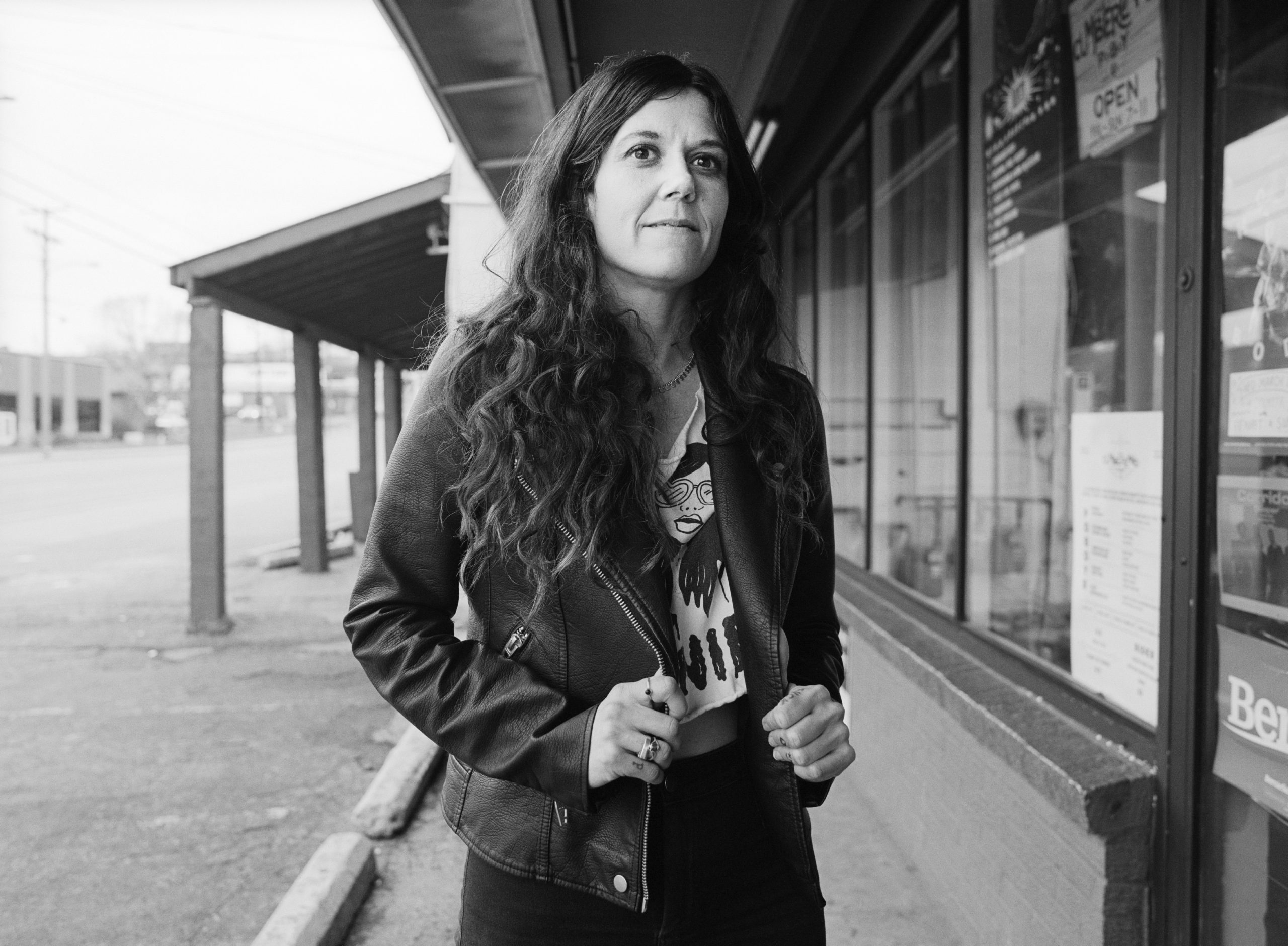
Photo Credit: Hillary Klug courtesy of the artist; Clover Lynn by Madison Tunnicliff.
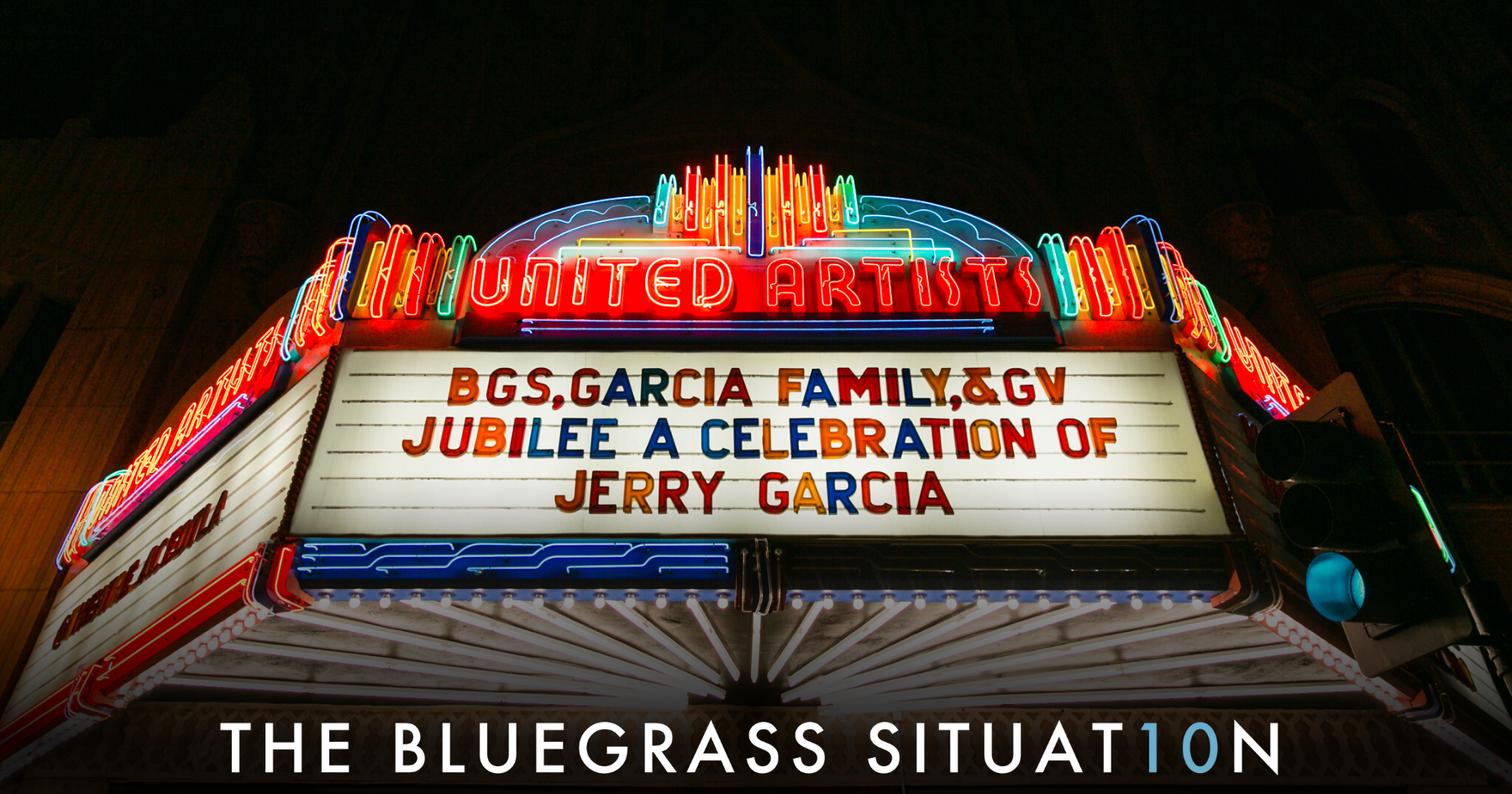
BGS Top 50 Moments: A Tribute to Jerry Garcia


If my words did glow with the gold of sunshine
And my tunes were played on the harp unstrung
Would you hear my voice come through the music?
Would you hold it near as it were your own?

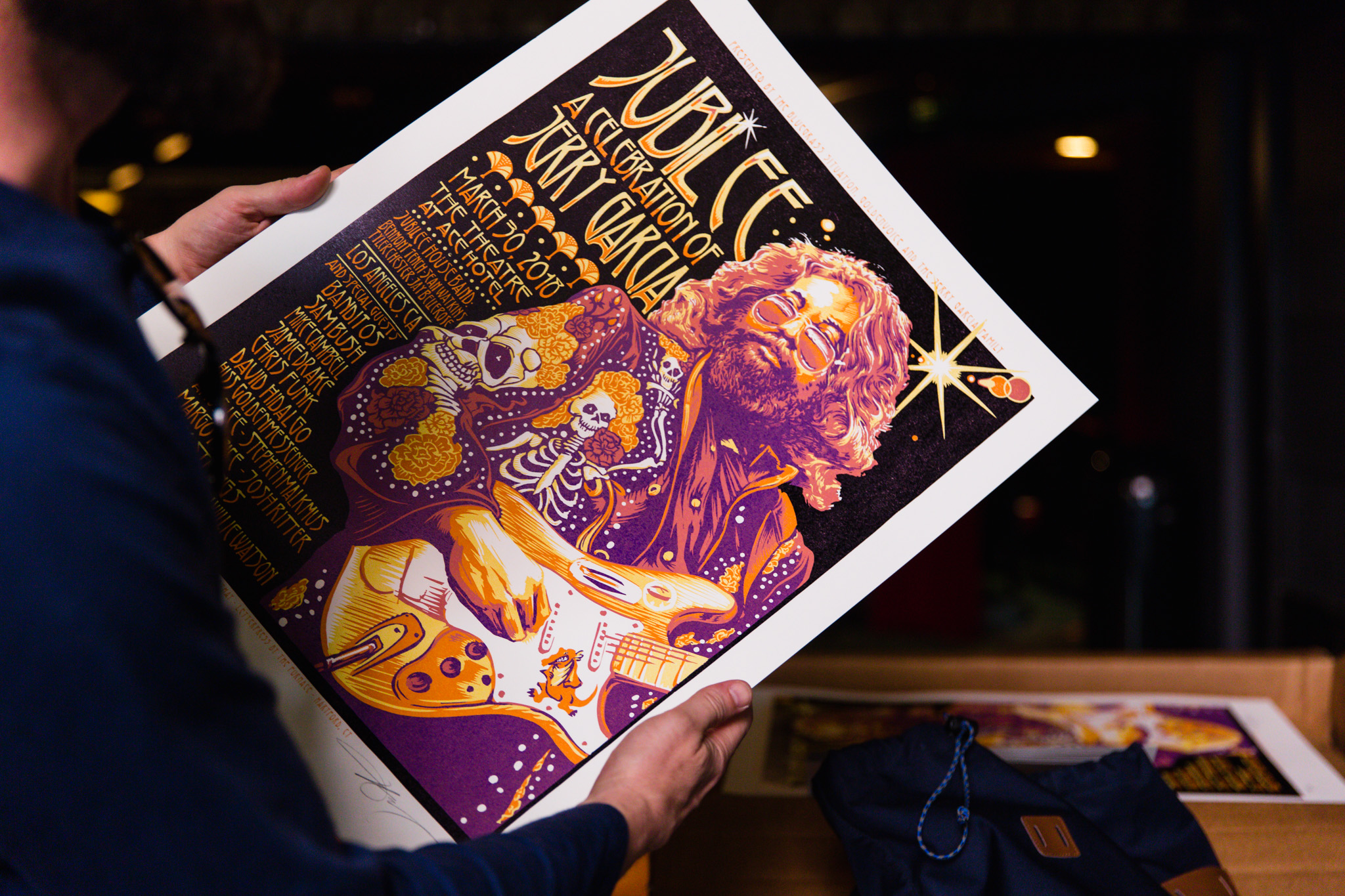
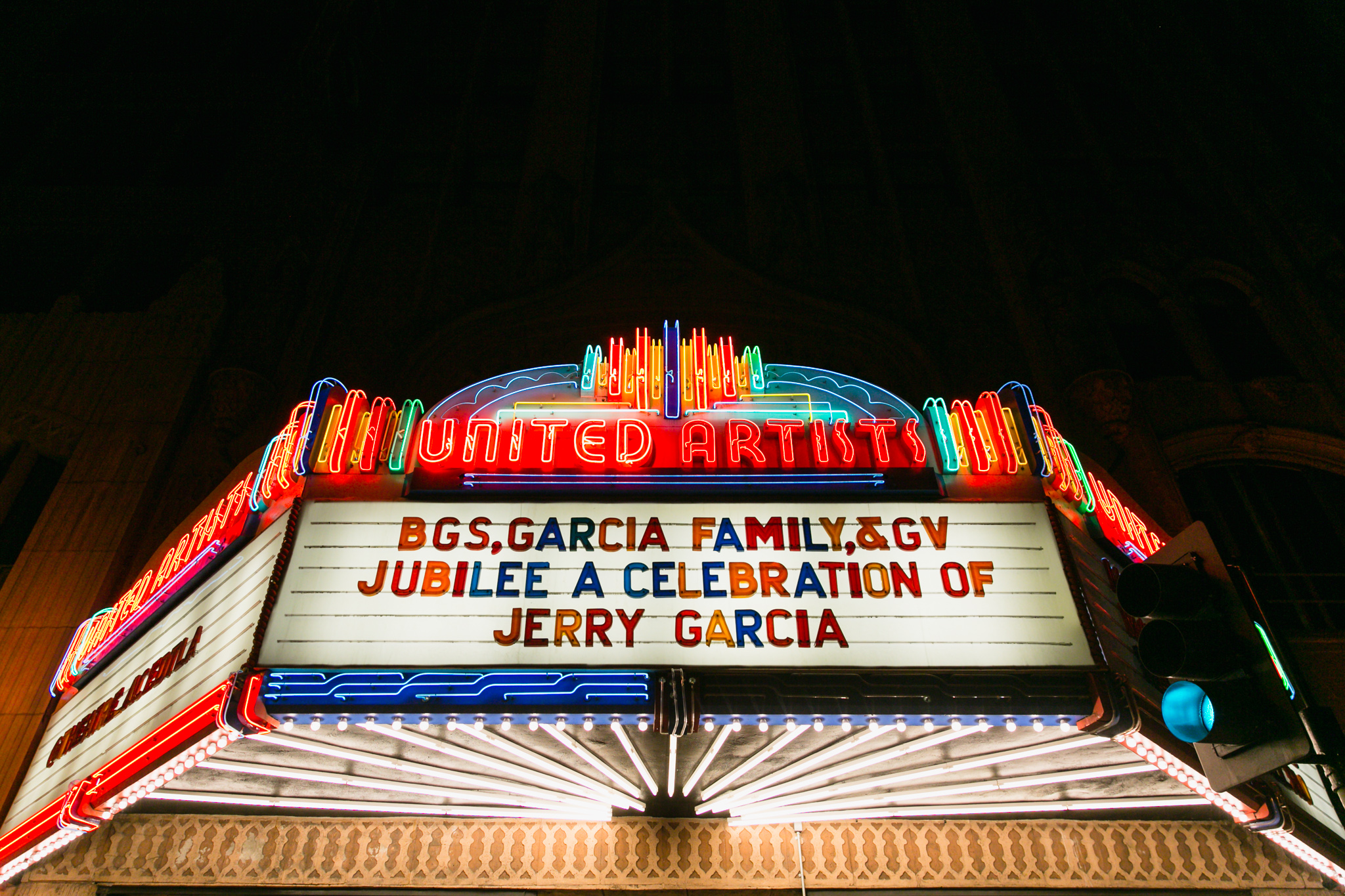
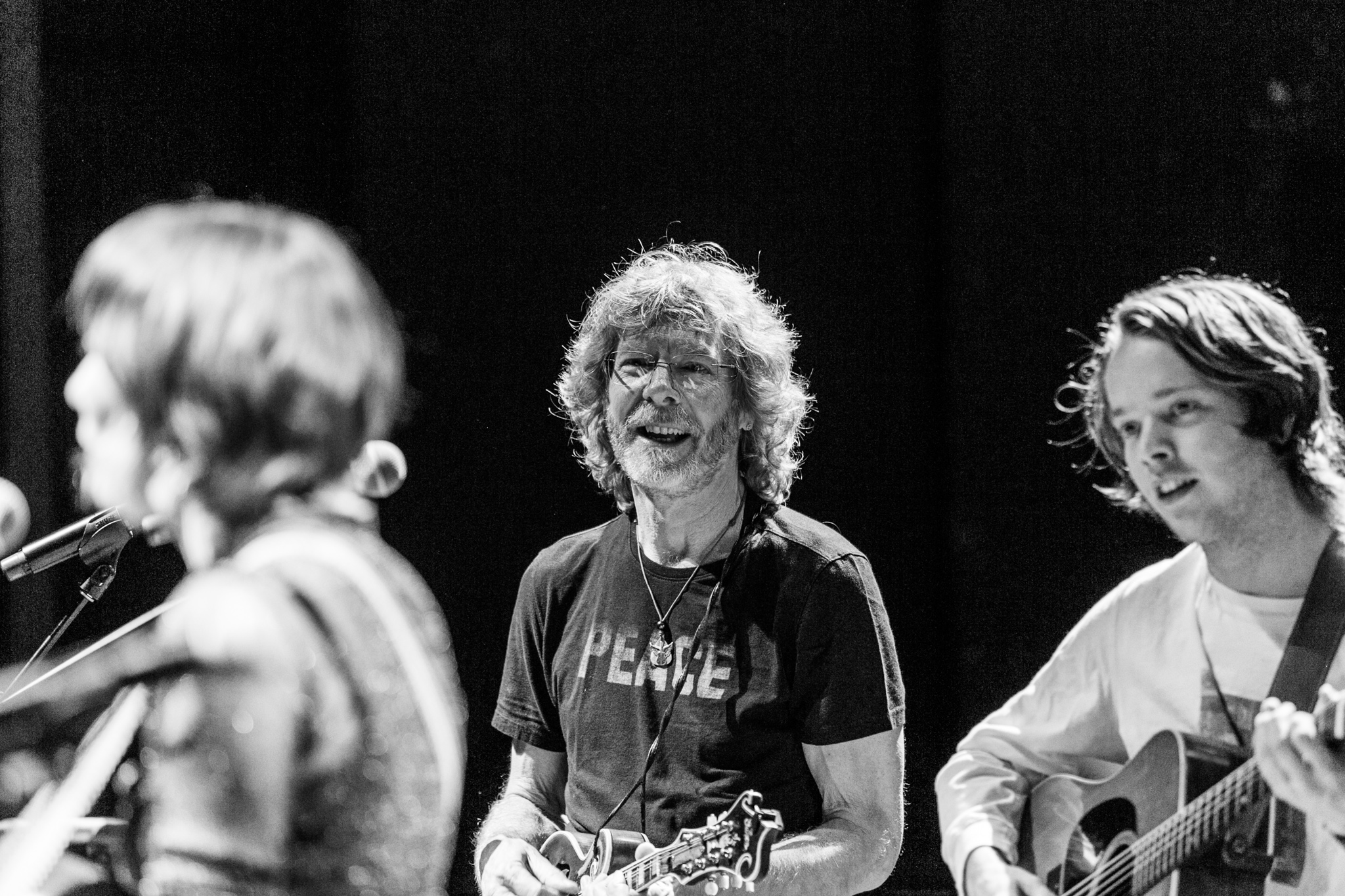
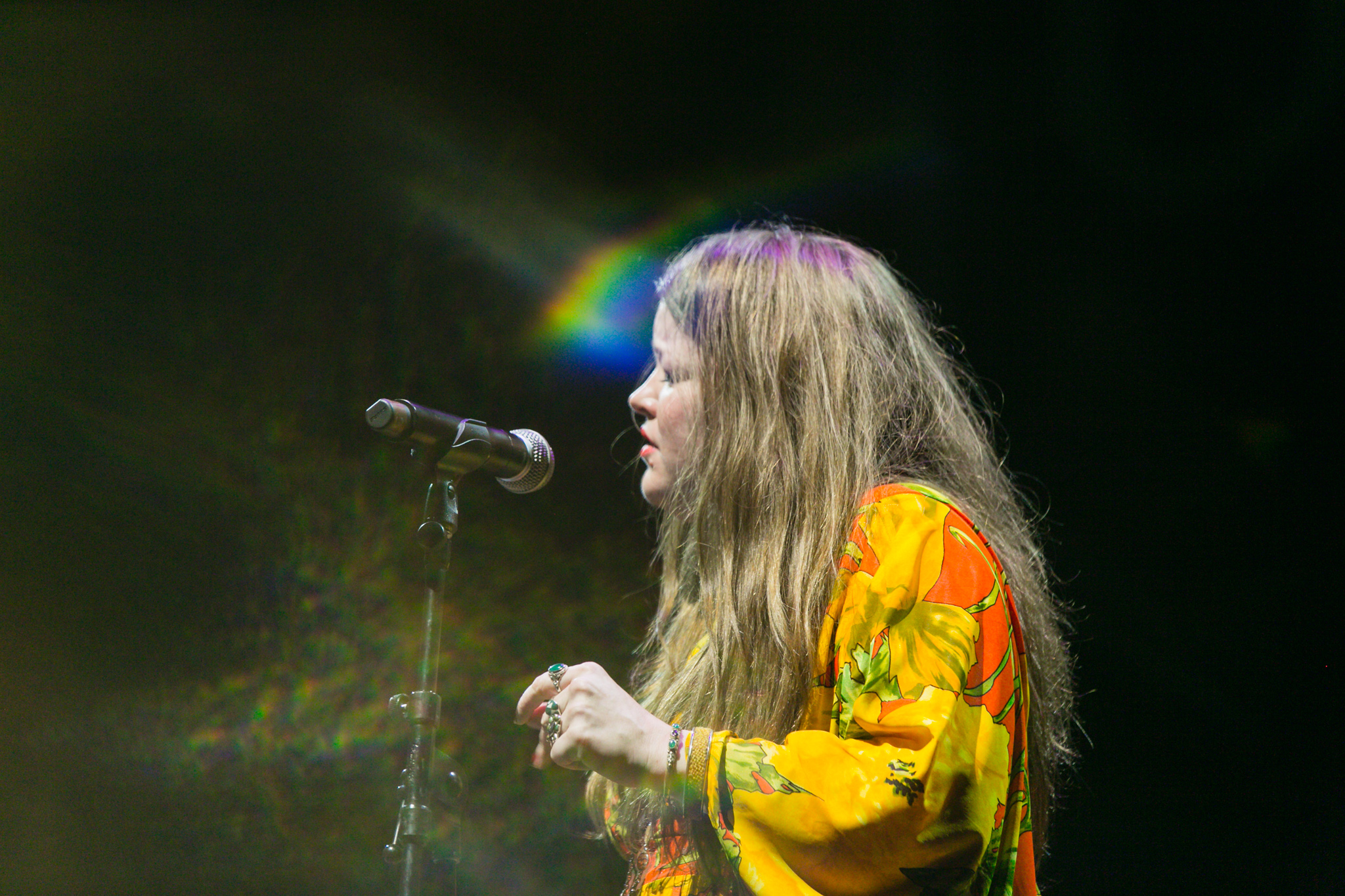
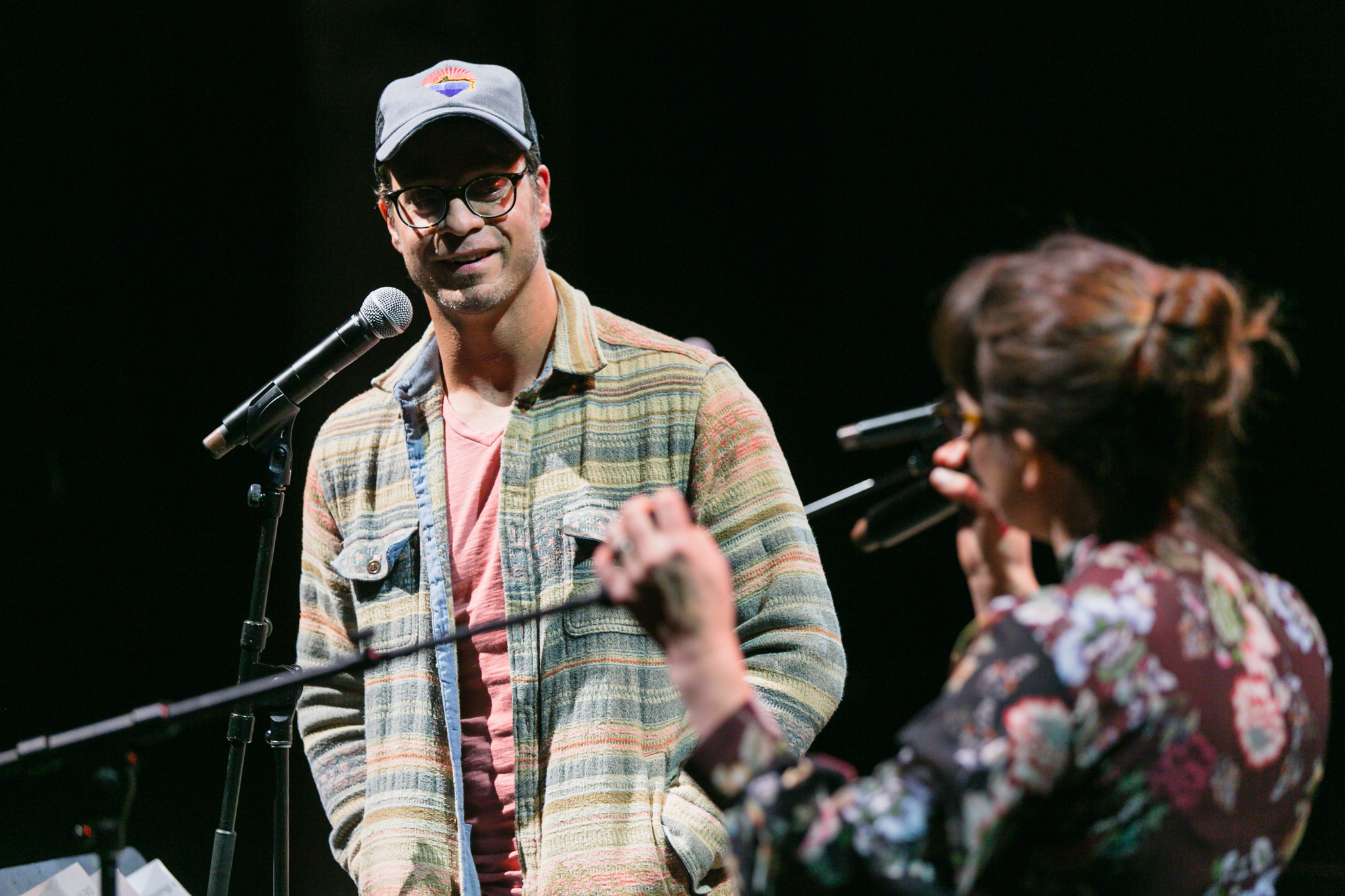
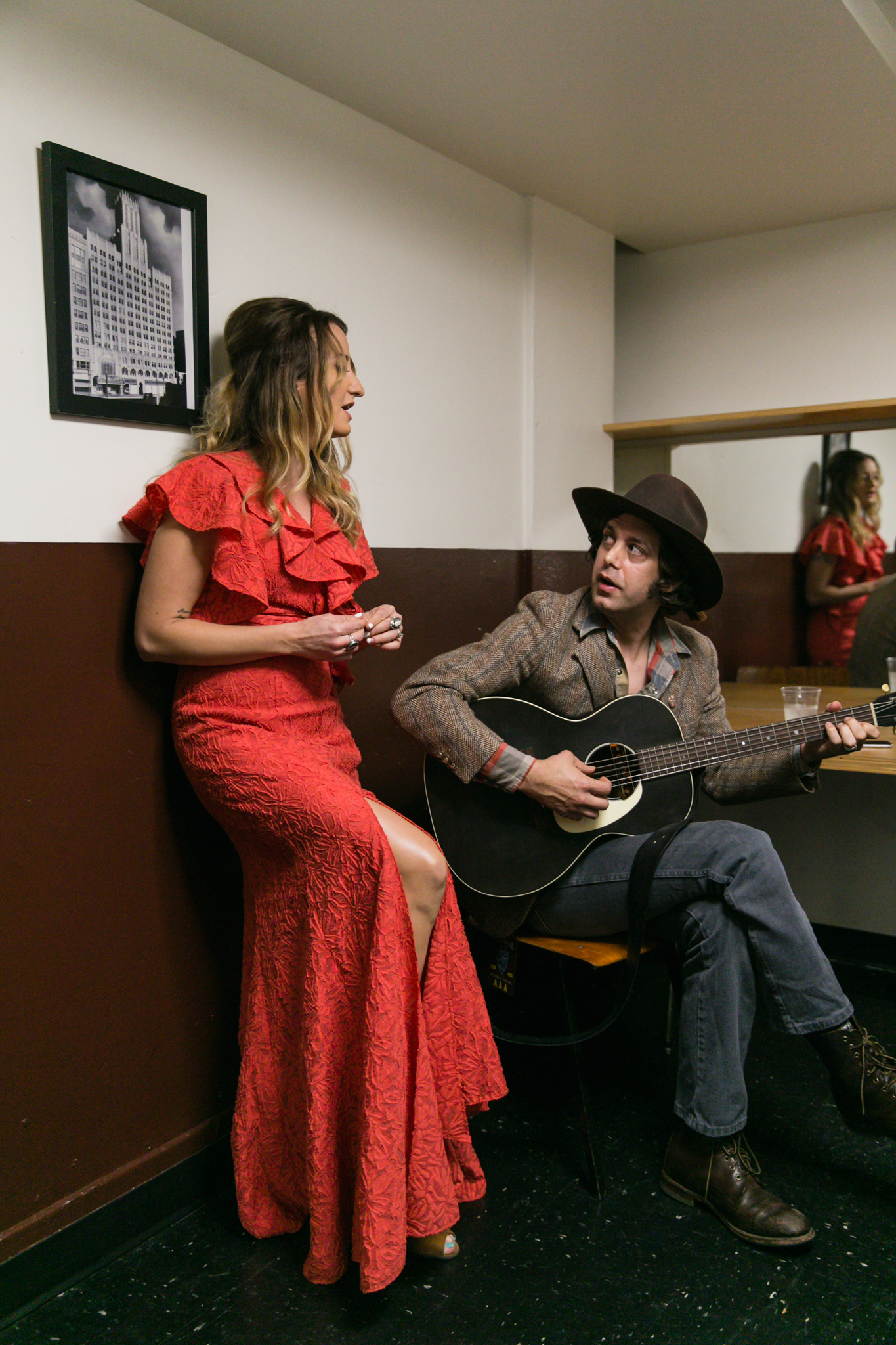
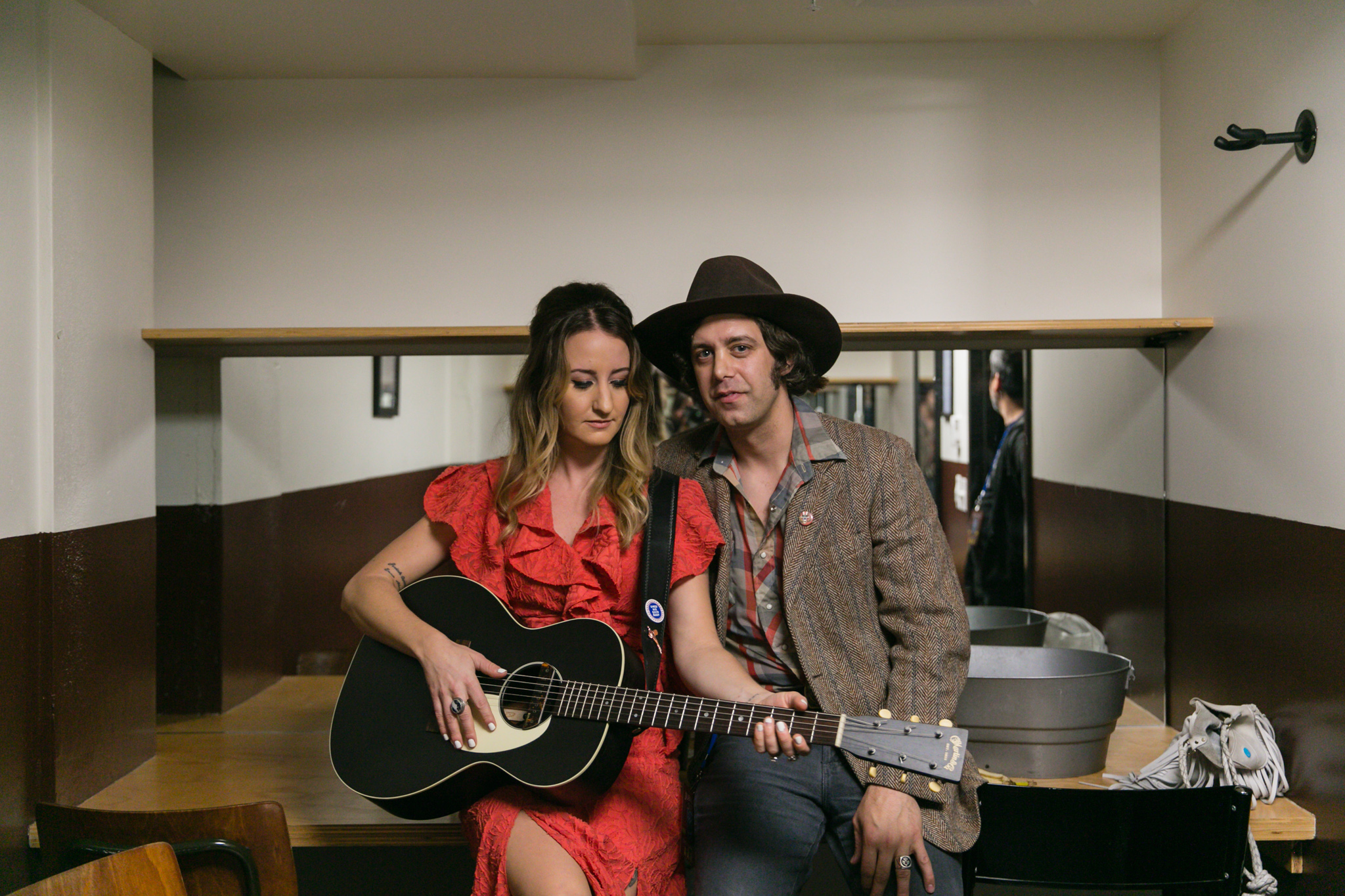
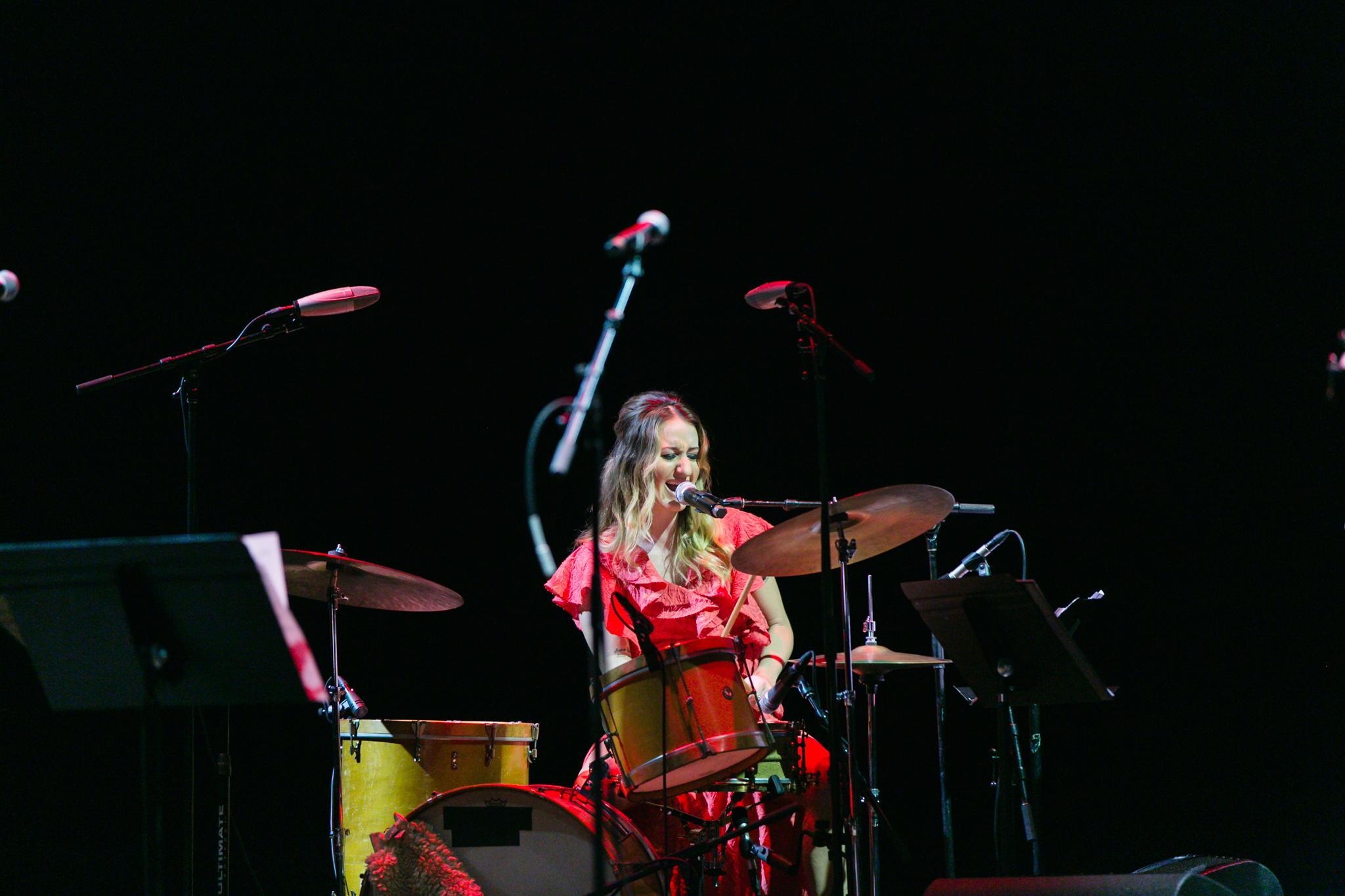
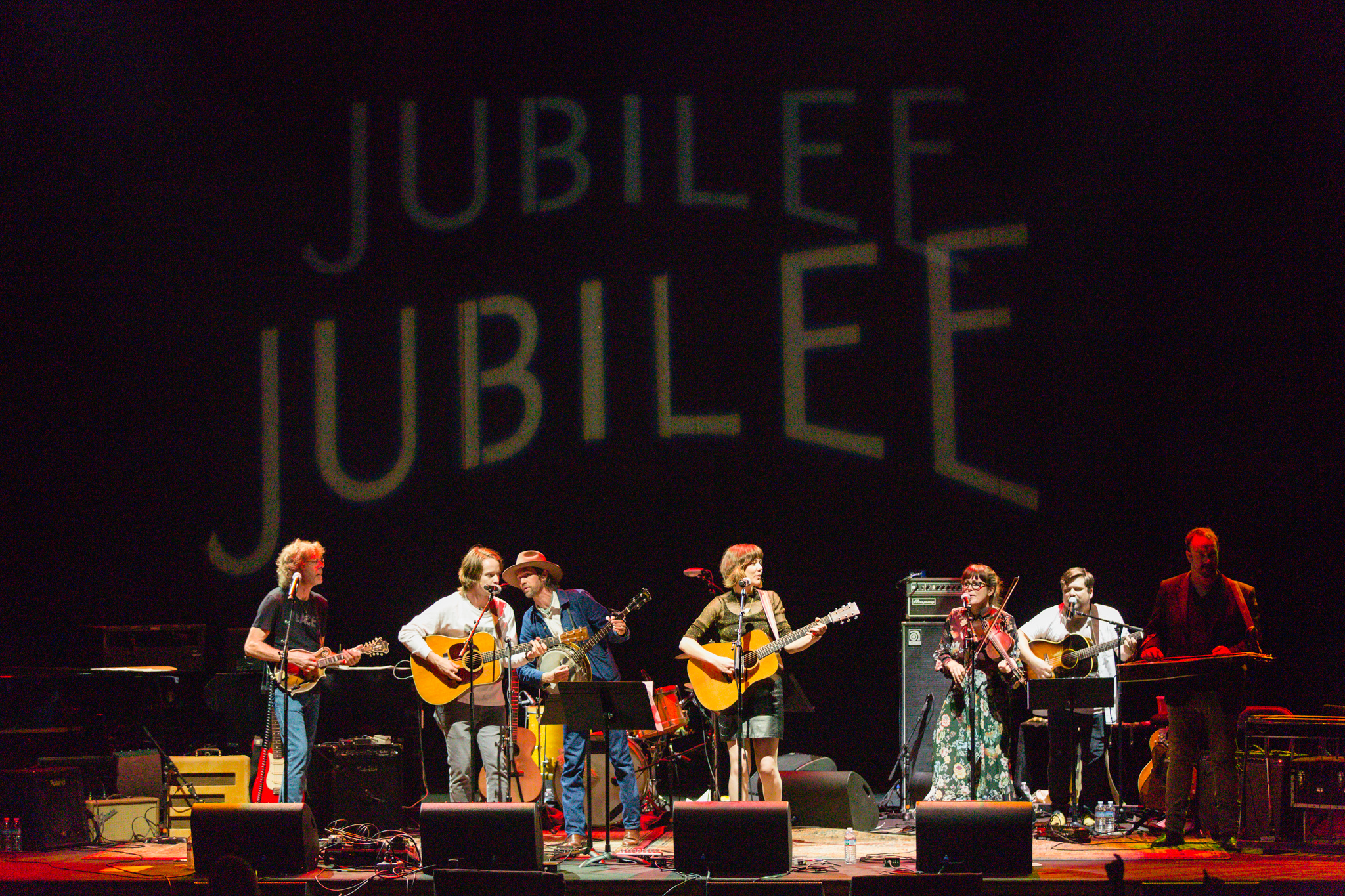
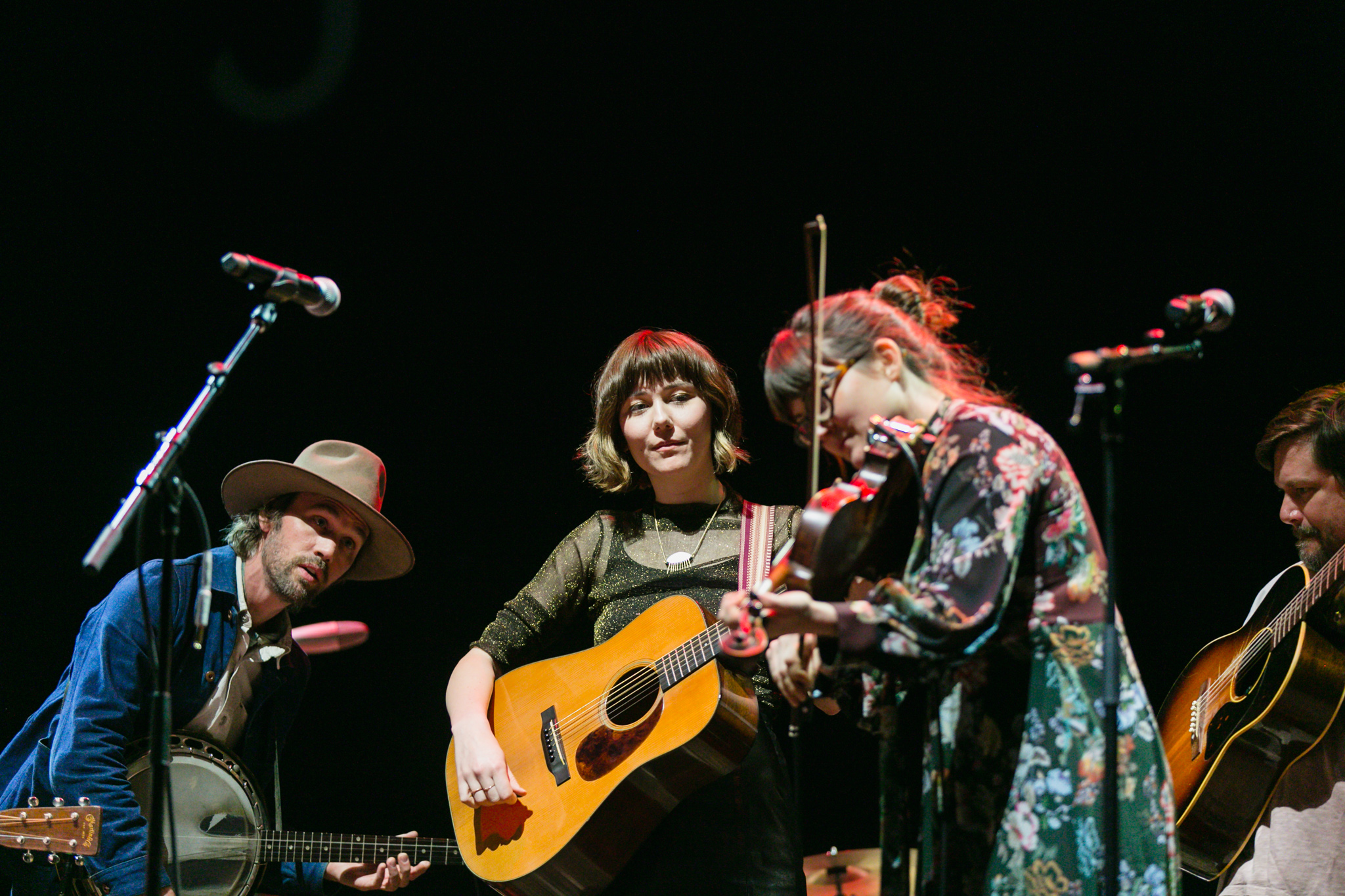
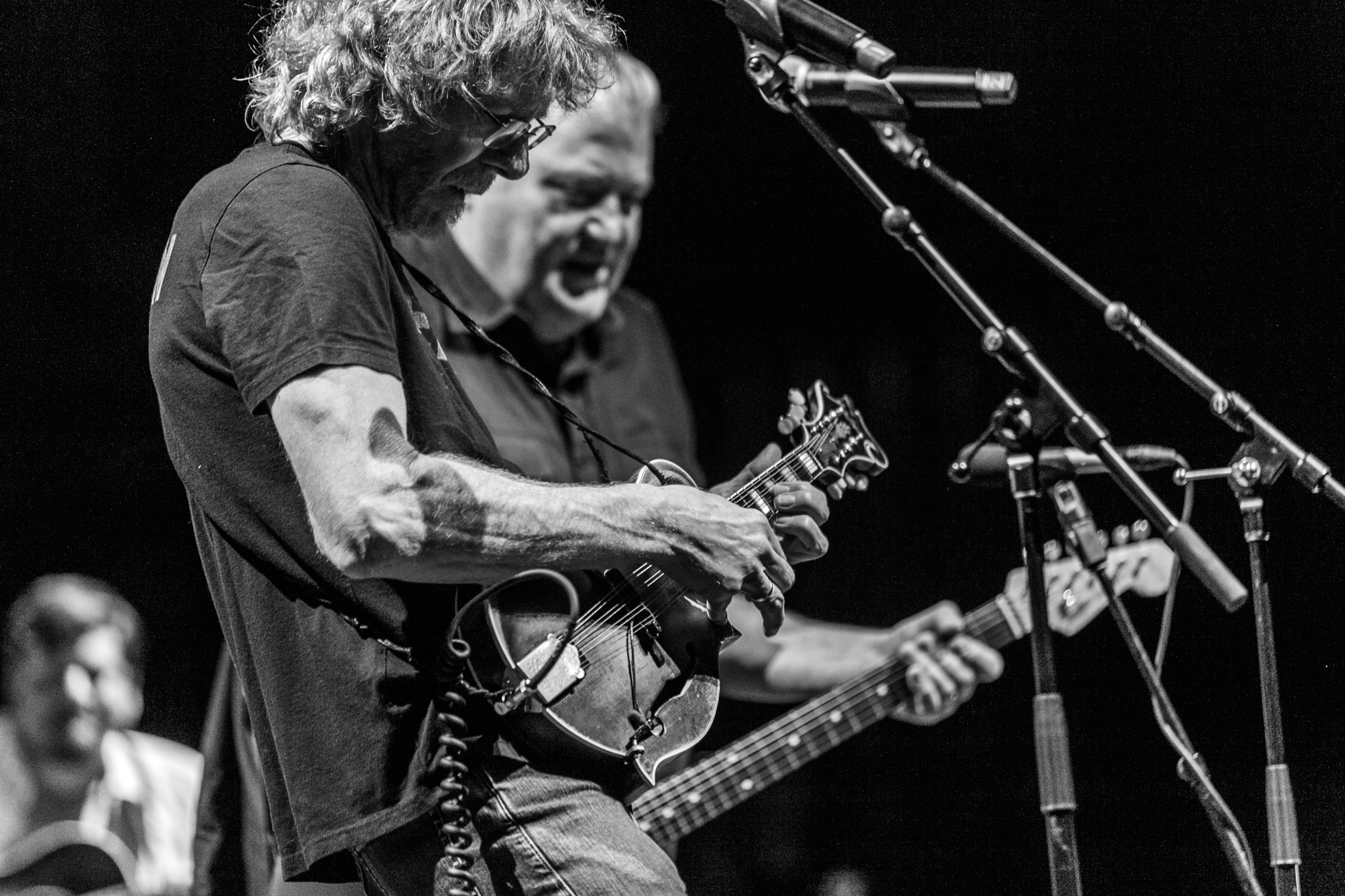
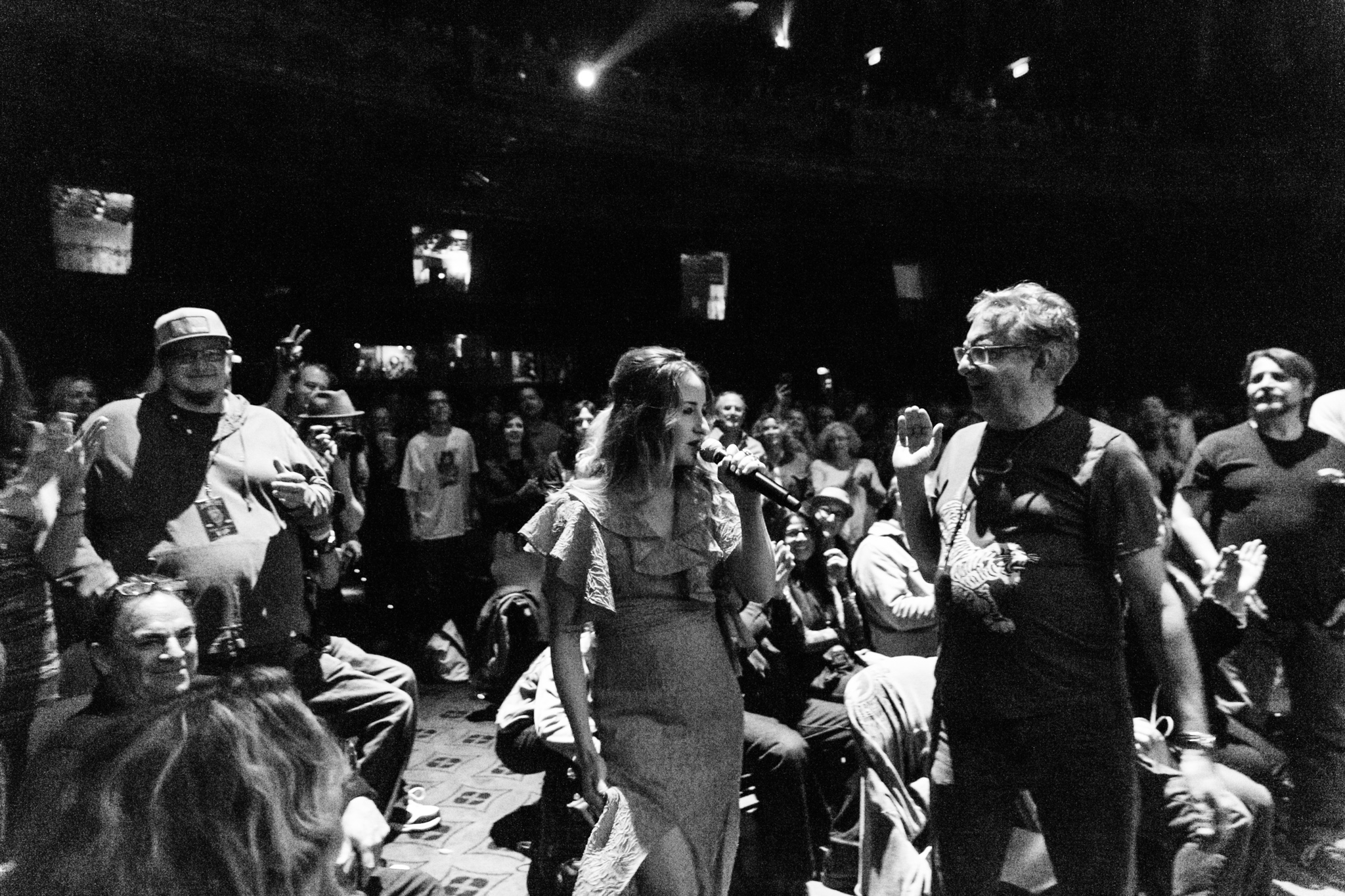
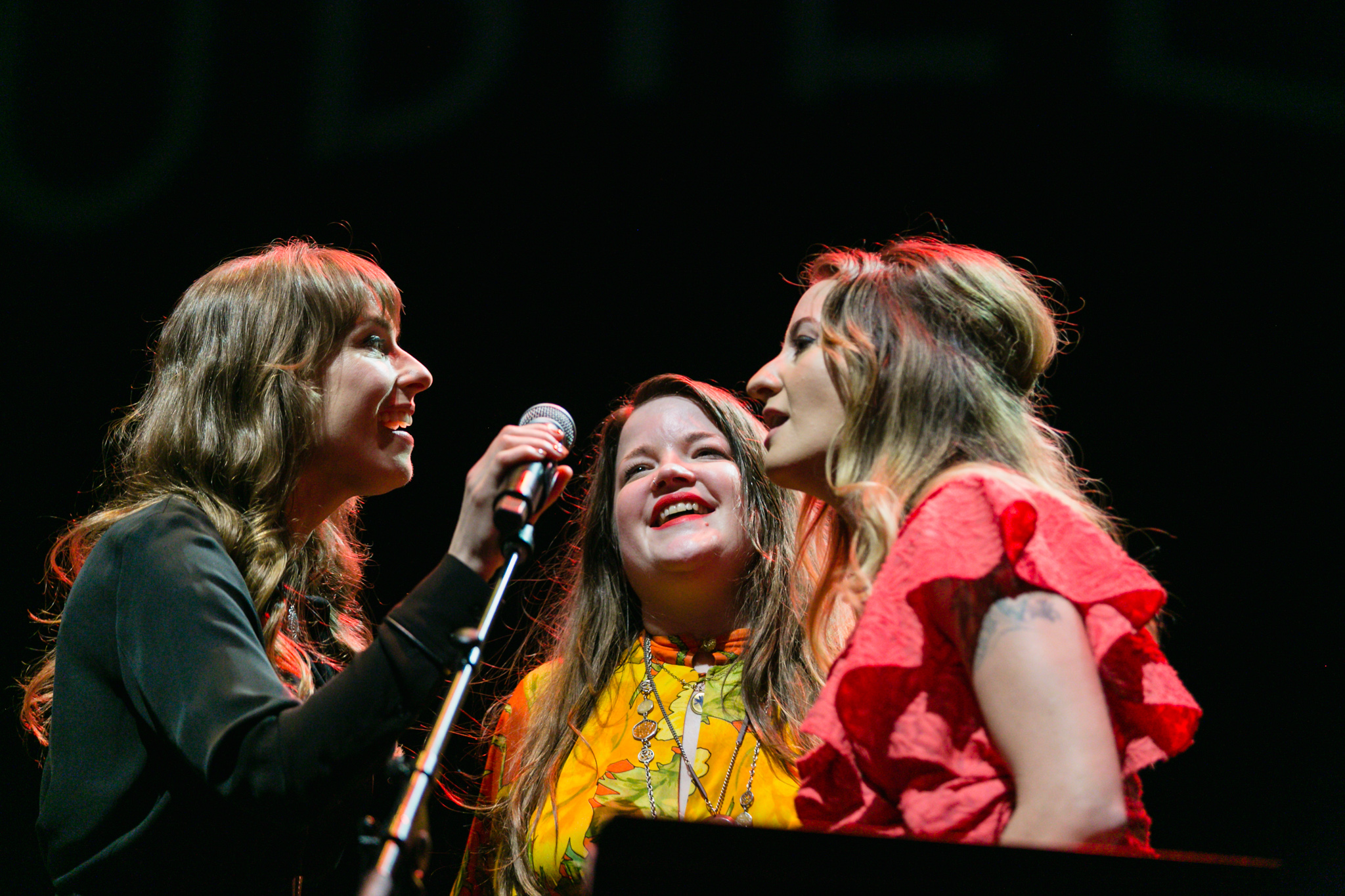
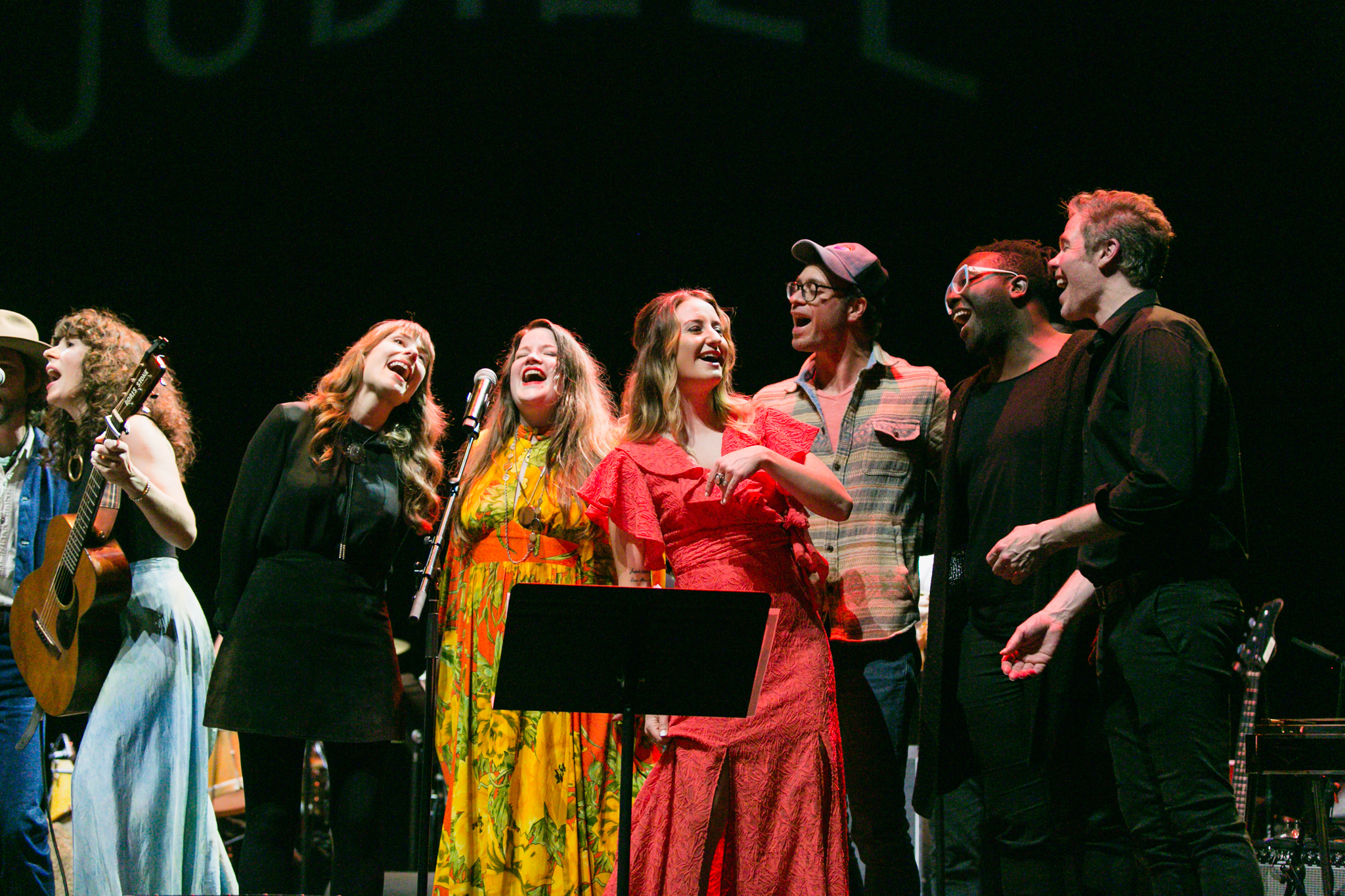
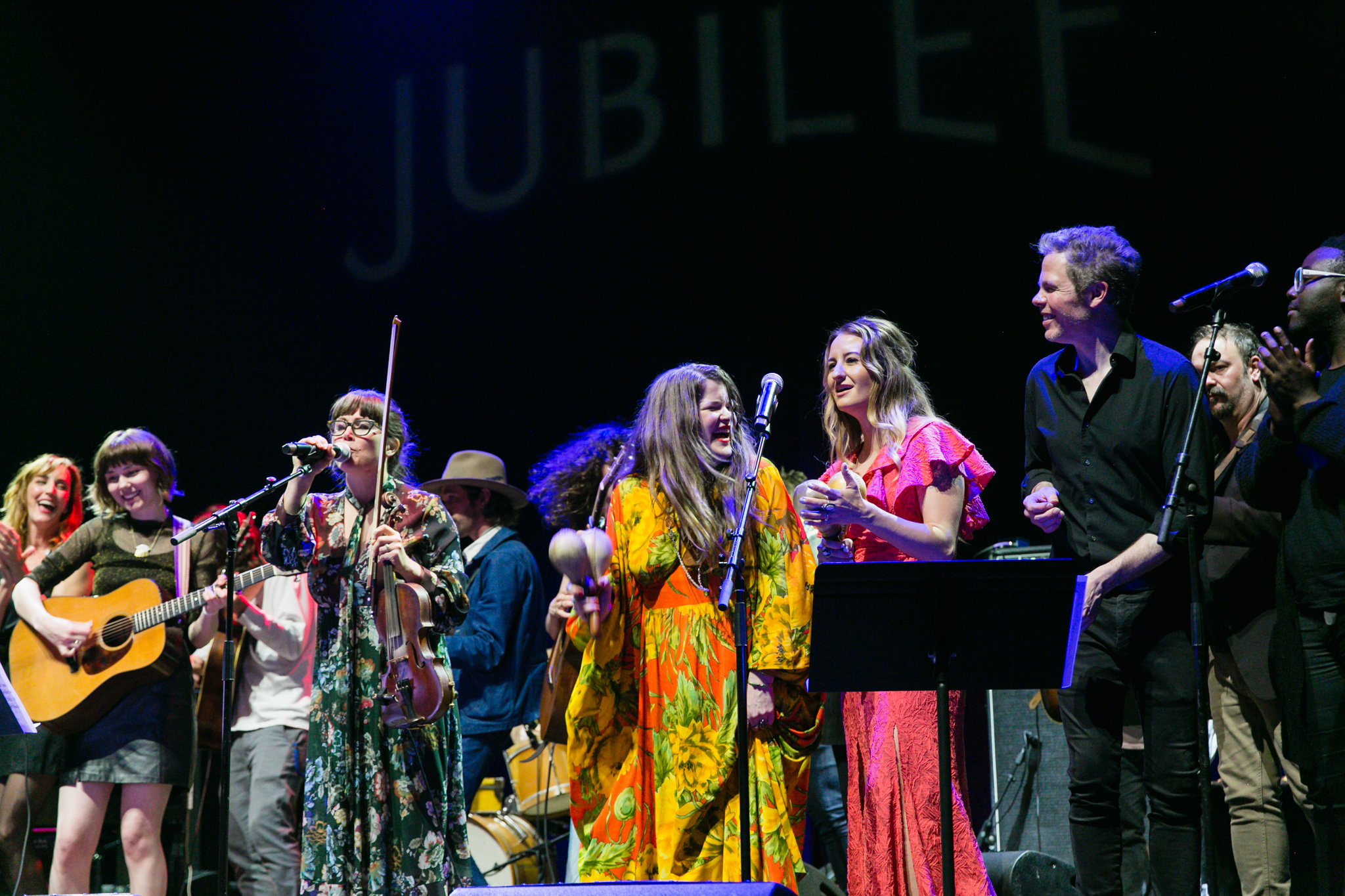
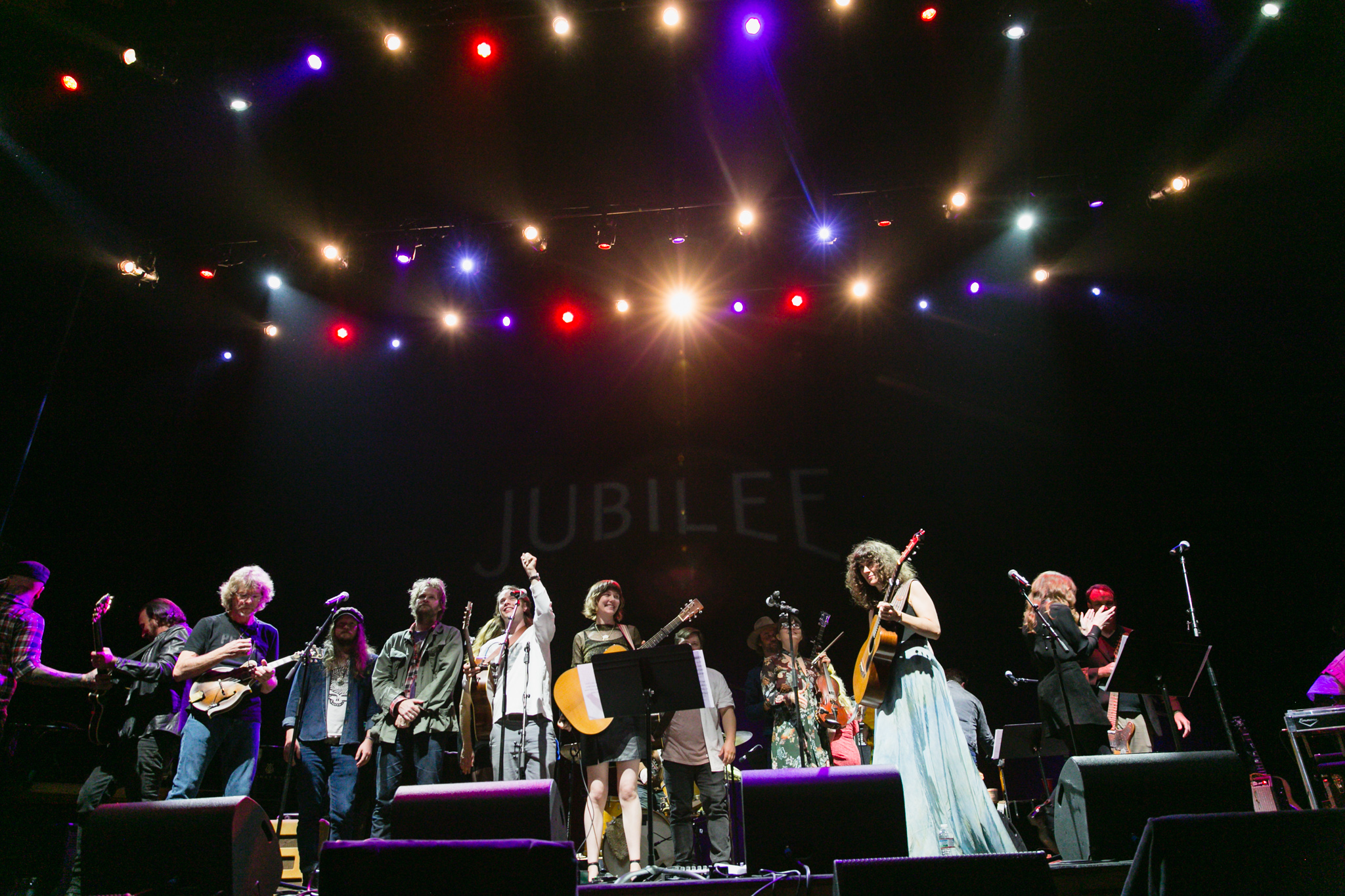
On a warm spring evening in Los Angeles, a revered mix of musicians gathered to lift up the legacy of Jerry Garcia and “to hold the music near as it were their own.”  JUBILEE: A Celebration of Jerry Garcia was a very special, one night only benefit concert paying tribute to his 75th birthday, produced by BGS, Goldenvoice, and the Garcia Family.

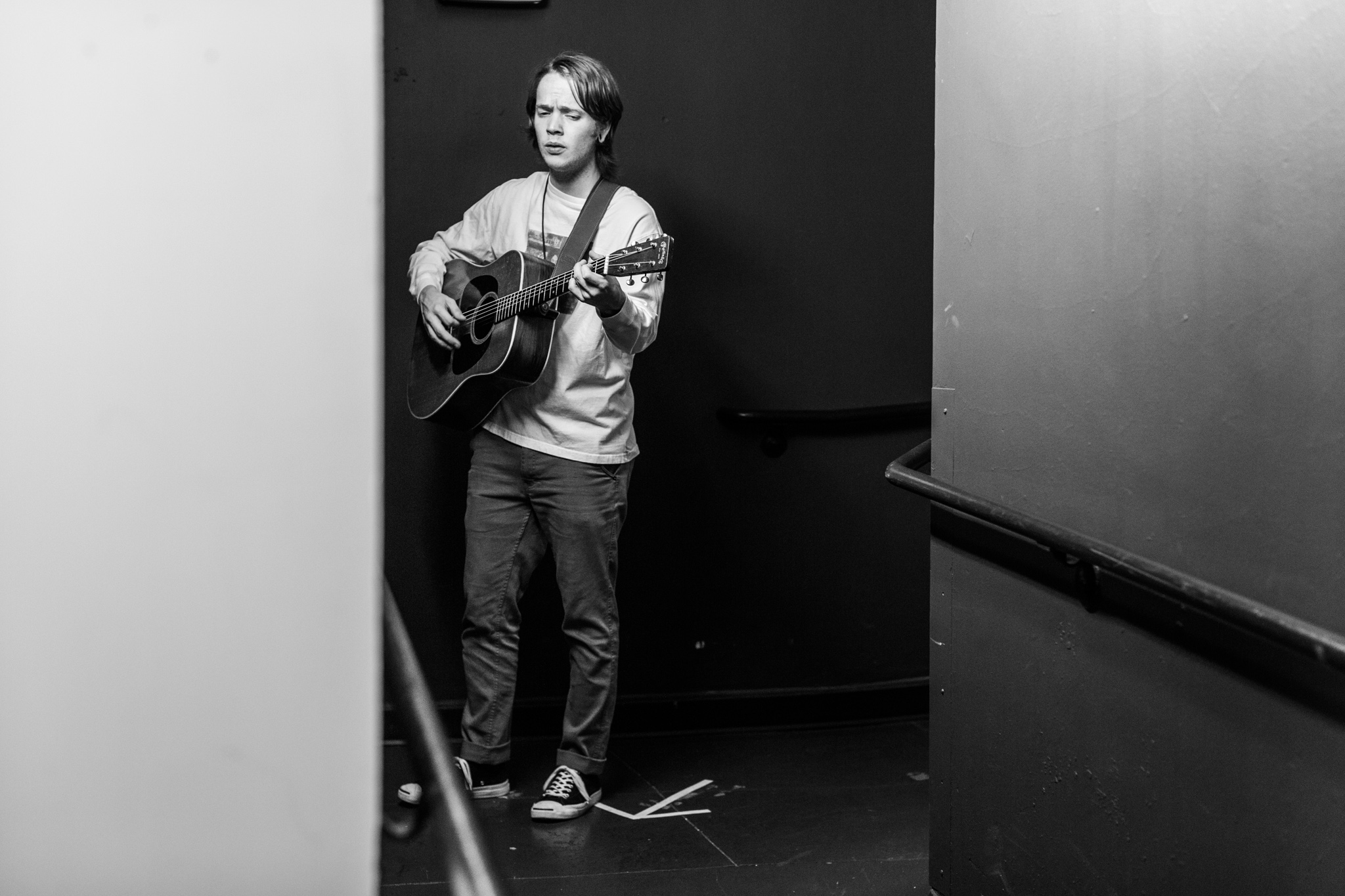
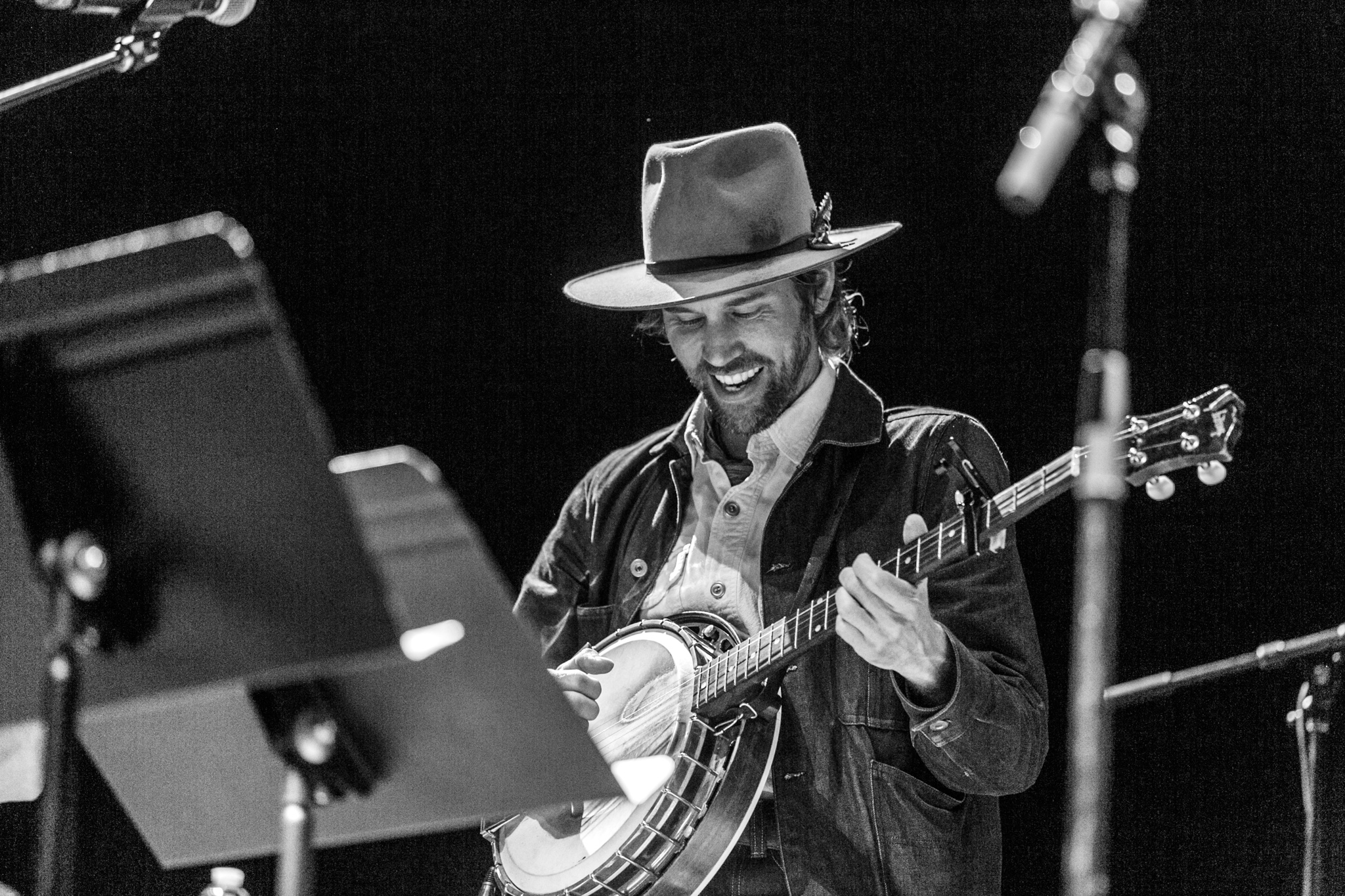
With an all-star lineup that included the likes of Hiss Golden Messenger, Billy Strings, Molly Tuttle, Margo Price, Stephen Malkmus, Chris Funk, Sam Bush, David Hidalgo (Los Lobos), Jamie Drake, Josh Ritter, and Amos Lee, supported by a house band lead by Benmont Tench and Mike Campbell (of Tom Petty & the Heartbreakers) and Sean and Sara Watkins (of Nickel Creek and Watkins Family Hour), the evening was a love letter to the man whose influence has continued to reach far beyond the confines of the Dead.

Relive some of the amazing collaborations in the photo gallery below:


Photo Credit: Elli Lauren

Jim Lauderdale Envisions the “Memory” of Friend and Co-Writer, Robert Hunter

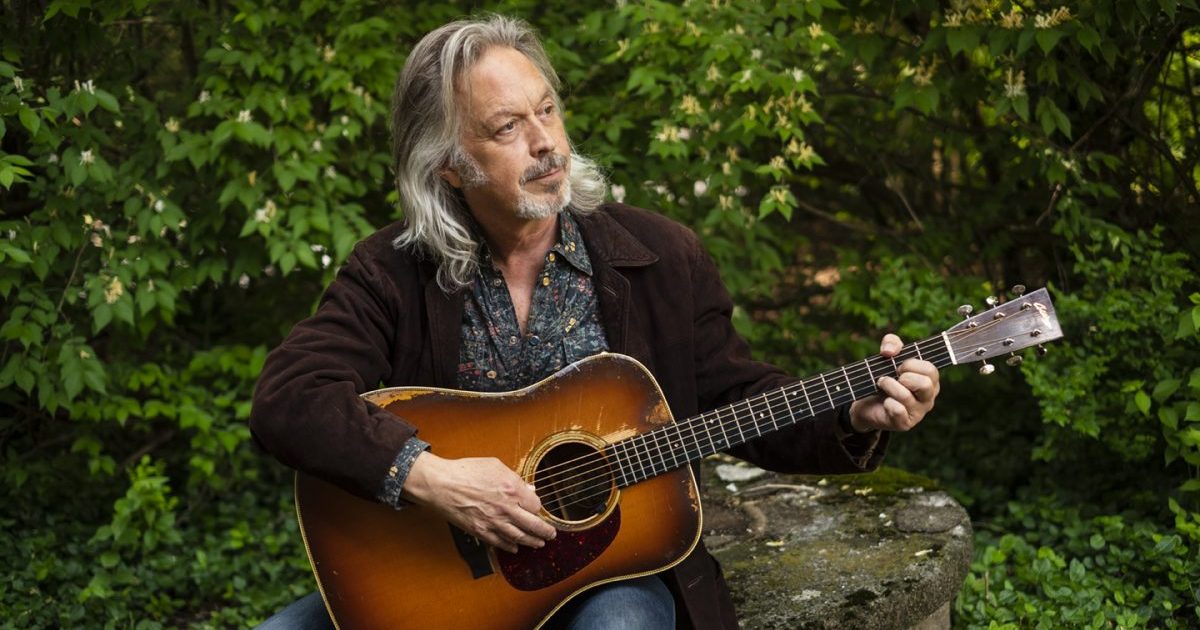
Jim Lauderdale’s new album Hope has a sound reminiscent of dreamy ‘70s folk rock records and largely centers around themes like perseverance, with much of the music bred from his 15-month hiatus from touring and performing. One of its most eloquent tracks celebrates the legendary Grateful Dead lyricist Robert Hunter, a longtime friend and collaborator of Lauderdale’s who died in 2019. As one of the final songs they wrote together, “Memory” arrived on June 22, just one day before what would’ve been Hunter’s 80th birthday. In addition, the album cover and packaging feature paintings by Maureen Hunter, Robert’s wife. About his dear friend, Lauderdale says, “Losing Robert just before the pandemic was so hard, but he left the perfect lyric, to sum up my feelings about him and to honor all the people we’ve lost since.”

In the light of Hunter’s companionship and storied career as a writer and musician, “Memory” is a perfect song to celebrate his life and work. Meanwhile, Hope features a cast of musicians who just get it when it comes to traditional country and folk rock. Chris Scruggs, Russ Pahl, and Kenny Vaughan are just a few who grace the record with their classic sounds. “I wanted to get a musical message out there during this time of what we’ve all been going through, about the hope for better days ahead,” Lauderdale says. “If we can find any glimmers of hope, that really helps get you through another day.”


Photo credit: Scott Simontacchi

The Show on the Road – Mt. Joy

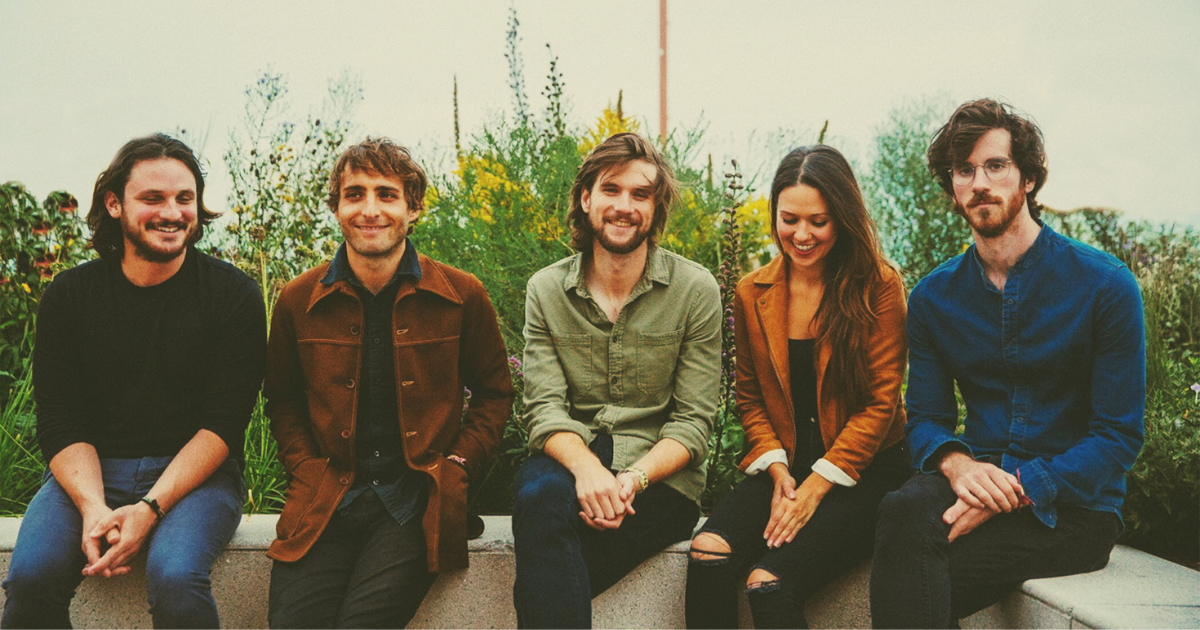
This week we feature a conversation with songwriter and singer Matt Quinn of jangly-pop phenomenons Mt. Joy.

LISTEN: APPLE PODCASTSSTITCHERSPOTIFYMP3

Much like host Z. Lupetin’s group Dustbowl Revival, Mt. Joy began thanks partially to some Craigslist kismet. After Quinn took the leap from PA to LA and reconnected with fellow guitarist Sam Cooper (who he used to jam with at their high school in Philadelphia), the band found their bassist Michael Byrnes, and Byrnes’ flatmate, producer Caleb Nelson, helped create their infectious breakout singles “Astrovan” and “Sheep.”

While most rising bands might shy away from writing extensively about addiction; or describing Jesus as a reborn Grateful Dead-loving stoner; or examining generational violence and brutality in Baltimore; with some deeper listening, it’s not hard to notice that Mt. Joy’s bouncy, arena-friendly sing-alongs are admirably subversive and often quite heavy below the pop shimmer.

A whirlwind of touring on some of America’s biggest stages followed the resounding streaming success of their first homemade singles, bringing the band from tiny rehearsal spaces and obscurity to the most hallowed festivals in America — like Newport Folk and Bonnaroo — and huge white-knuckle tours opening for The Shins, The Head and The Heart, and The Lumineers. By 2018 their joyous, full-throated rock sound had fully gelled with the addition of Sotiris Eliopoulos on drums and Jackie Miclau on keys. Their catchy and confident self-titled record arrived on Dualtone and seemed to go everywhere at once — with the acoustic-guitar led anthem, “Silver Lining,” surprising the band most of all by hitting #1 on the AAA radio charts.

But, as Quinn mentions early on in the talk, by the time the band released their much-hyped sequel record, Rearrange Us, in early 2020, the group of friends and collaborators were fraying at the seams. Relentless time away from loved ones caused breakups that were a long time coming, and trying to match incredibly high expectations had forced the band to ask themselves what they really wanted out of this new nomadic, whiplash life. Thus Rearrange Us dives courageously into darker shadows than its predecessor. In emotional standout songs like “Strangers” Quinn has an achy-voiced knack for pinpointing that exact moment when good love goes wrong — and how feeding off the endless adoring energy of the strangers he meets in every new town can only sustain him for so long.

In a way, the pandemic-forced time off coinciding with their record gaining steam was a blessing in disguise, allowing Quinn and the band to reflect and recharge. But of course, with a feverish fanbase from Philly to LA waiting, Mt. Joy wasn’t about to rest long. If you’re a fan, you may have noticed that they are currently playing safe, sold out drive-in shows across the East coast and Midwest with more on the way.


Photo credit: Matt Everitt

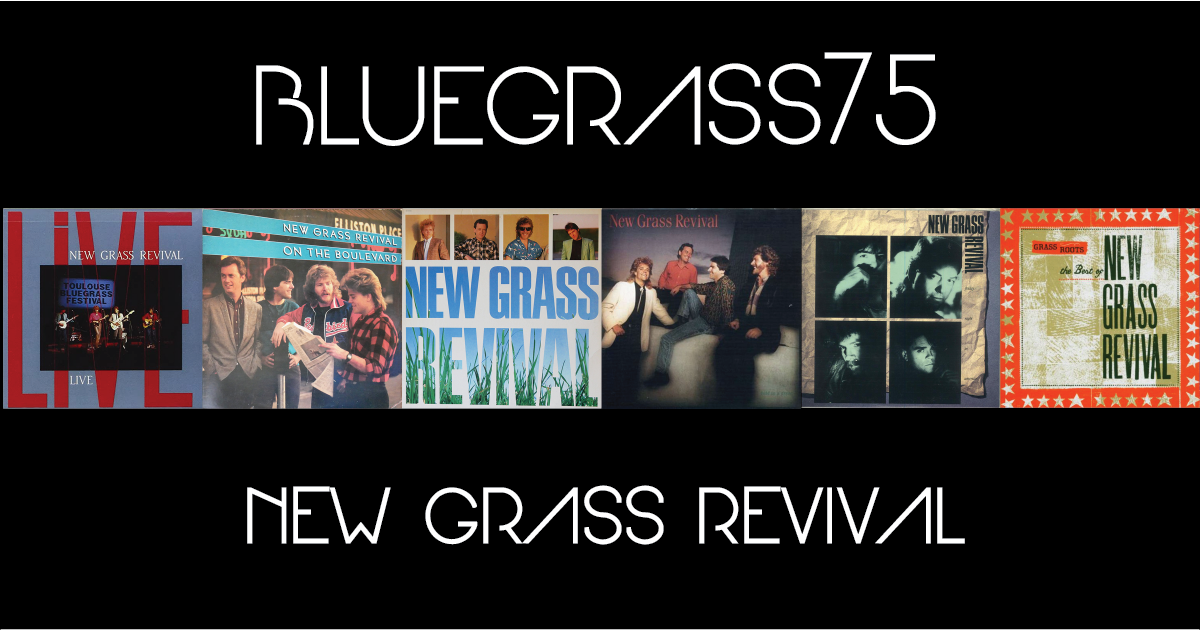
New Grass Revival: Four Members Look Back on Their ’80s Albums (Part 2 of 2)

A beloved band that was perhaps ahead of its time, New Grass Revival will be inducted into the Bluegrass Hall of Fame during the IBMA Bluegrass Music Awards on October 1. In the second half of our oral history with New Grass Revival, we hear from band members Sam Bush, John Cowan, Béla Fleck and Pat Flynn. Read the first half of the interview, which is part of our celebration of the 75th anniversary of bluegrass.

In 1981, founding members Courtney Johnson (who died in 1996) and Curtis Burch left the band after a long tour with rock ‘n’ roll star Leon Russell. As a result, New Grass Revival began its newest incarnation with Béla Fleck and Pat Flynn.

Sam Bush: Courtney and Curtis were older than me and John and they were just burned out. We had worked harder on the road with Leon than we’d ever worked in our lives.

Pat Flynn: New Grass Revival had established a following on the circuit in the late ’70s, but Leon Russell had sucked them into his orbit and taken them away from the bluegrass world. So by the time that band [lineup] broke up, they really had to start over.

SB: I had met Béla in a band he played in called Tasty Licks, and Béla had hired me as the fiddler on his first album, Crossing the Tracks.

PF: Béla was a smart kid. He thought, “If I’m going to come out with a solo album and nobody knows who I am, why don’t I hire high-profile people to play on it?” That’s a smart move!

Béla Fleck: I liked the original band when I heard it, but I admit I was attracted to smoother and jazzier stuff at the time. I have matured a bit since then and now I am a huge fan of the early band, their bravery and iconoclastic spirit, and a poetic expression of their time and place. They were committed to the moment and improvising, and taking the music to a new place that resonated with a lot of folks who loved bluegrass, but it didn’t totally represent them.

SB: Pat and his friend Scott Myers had opened for New Grass Revival on the Colorado tours we did. We loved his guitar playing because it wasn’t like the bluegrass players. He was a rock electric guitar player that could do it on acoustic.

PF: I’d moved from Los Angeles to Aspen, Colorado, and got to know the band at Telluride. Sam had a hand in writing some songs, but they really didn’t have an in-house songwriter. I had always written songs for the bands I was in. And Béla brought a unique and original instrumental vision. So all of a sudden you had two new people that could supply original material.

SB: They were the two musicians who could bring the next step of another sound for us. I called Garth [Fundis, the band’s producer] and said, “You’ve got to come hear these new pickers we’ve got, this is something, this is really good.” I knew it was too hot for me to handle — I didn’t feel I was qualified to produce the four of us. We needed another ear, an outside opinion, because we had so many ideas between the four of us.

PF: On the Boulevard was the first album we released in the US, but we’d done a live album in France almost a full year prior. Technically Live in Toulouse was the first album we made as a new band.

JC: We’re playing like a well-oiled machine; it’s really a good record. It has one of Sam’s instrumentals on there called “Sapporo” that might be 11 minutes long!

SB: The idea of “Sapporo” started when the band went to Japan for the first time. It was my favorite city over there; it was also my favorite beer. A mandolin player over there taught me a five-note Japanese scale and that is a recurring riff you hear us play as we jam.

JC: The first year we were together with Béla and Pat, the energy and the love and everything was way up, confidence was high. And On the Boulevard is one of my favorites. There’s no drums, it’s just the four of us.

PF: It was very fresh. I remember the recording sessions at Jack’s Tracks studio in Nashville. We had a decent budget from Sugar Hill, enough to record comfortably and take our time. I experimented with different guitars and arrangements. We were able to bring the music into the magnifying glass of a studio and really look at it in depth.

JC: The dynamic of the band had changed so much, because Béla was already miles ahead of everybody in terms of his ability to play. He practiced all the time. In the old band, I was in charge of shoveling coal into the engine and Sam was flying around on top painting whatever picture he wanted to paint. Courtney and Curtis, they were kind of like myself, advanced support players. But now you’ve got two other players who can play at the same level of Sam. So we could take this train anywhere. We could get off the tracks.

PF: I had brought some songs with me to the band and I was very happy with “On the Boulevard.” I had written it prior to joining. It was pretty much autobiographical. I’d been living in Thousand Oaks, California, and there’s a boulevard that runs through the middle of the Valley, and as I watched it from the window it was like its own little world, a parade of passing people. It was one of the earliest things we worked out.

SB: My songwriting partner Steve Brines had died a sudden death of a heart ailment he didn’t know he had. So Steve was gone and I was still writing instrumentals, but I lost my enthusiasm for songwriting.

PF: I was especially happy with “One of These Trains,” the way the material came out, and the band took to it so naturally. I was encouraged that I was in the right place with the right people. I loved Sam’s instrumental “Indian Hills,” and John did a great blues number called “Just Is.” We were discovering each other’s powers and personalities as musicians and friends. I remember it very fondly. We were struggling for employment to connect with the old fans and that album was a big help — when it came out, we created a pretty big buzz.

SB: Toni Foglesong told her husband Jim, who was the president of Capitol Records Nashville, “I heard a band that makes a sound like nothing I’ve ever heard before.” So, Jim came to hear us and he said, “I want you guys to record. I don’t know how we’re going to sell you but I want you to be yourselves.”

Two studio albums followed: New Grass Revival in 1986, and Hold to a Dream in 1987.

SB: Every time new people joined, we encouraged them to bring their influences into the music. When Pat joined he was influenced by those Southern Californian songwriters like Jackson Browne, and the country-rock Telecaster picking he knew. One song where I specifically hear Pat’s southern rock influence is “In the Middle of the Night,” on the ’86 album.

PF: I was very involved in the country-rock sound like the Eagles and the Flying Burrito Brothers and the songs I wrote were well-fitted for a bluegrass approach. I didn’t have to make adjustments musically or lyrically, just in the area of arrangements. I had to make sure the songs I wrote had great solo spots for the instrumentalists and I had to fit the songs to whoever was singing, either John or Sam. So I started to instinctively shape my material where there was plenty of room for improvisational playing and also good range of vocals for those two.

BF: This band was full of guys with very different musical influences. If you didn’t want to be challenged, it was the wrong place for you. Some folks surround themselves with people that love all the same stuff they do, and that can work too. But in New Grass Revival, we were all into different stuff, which we brought to the band to see if we could get our favorite stuff included.

SB: Béla is a jazz player and when he came in his favorite musician was Chick Corea. I had his records, but they didn’t make so much sense to me until then.

BF: I think my interest in jazz gave me some cool tools to work with in a bluegrass context. I wrote a tune called “Metric Lips” [on Hold to a Dream], which was partly in jig time. I feel like that main melody had some Chick Corea influence. Sam was highly influenced by John McLaughlin and his great bands. One of them was Shakti, a collaboration with Indian musicians. This seemed to encourage his interest and ability in odd meters, which I also was quite fond of exploring. So if you look at “Metric Lips,” you have Irish music, Indian music, and fusion jazz represented, along with some raging bluegrass. It’s puzzling that it actually works, but in my opinion, it does.

PF: When you’re in a bluegrass band, it’s blend or die! You’re cramped inside a van together and you’re sleeping feet to nose. You’re in a very confined space together more than you are with your significant others back at home.

JC: We called our bus The Bread Truck. We’d bought it from a dry cleaning business. It wasn’t like the 36-footers I had in the Doobie Brothers; it was less than half of that, closer to a van.

PF: John slept half the time, I would be reading a book or writing a song, Sam would be listening to reggae or some weird eclectic thing, Béla was always fiddling with a new tune.

BF: For me it’s the intention and commitment to the ideas that make them work in this band. The same ideas might not work for a band that didn’t play so confidently. Of course we loved bluegrass and that was the common denominator. Each guy also played with a savage fervor or intensity, and perhaps that was another denominator.

PF: We could really charge each other up with the solos. We admired each other, and when somebody threw a flaming ball out there it would be a challenge. And in that exchange, gosh, we became so much better players. I remember listening back to tapes and thinking I lifted myself up and above myself. We all did.

BF: The new band with me and Pat was a somewhat cleaned-up version of the band. We still improvised and pushed hard, but we also were going for a supercharged, seamless tightness.

PF: The thing I remember that we developed between the first two albums was a hardcore consistency. We could turn it on and it would just come on full-bore despite whether or not there was a good sound system or the weather was bad or the crowd was sluggish. We could always count on each other to present a united front. There were no weak links. We just locked into that energy and never lost it.

BF: And we made singles for country radio, which is hard to imagine the early group doing.

SB: We knew we were going into a country market, but I think there’s a misconception that Capitol Records changed us, when in fact the change came from us. We were the ones that said, “We’ll try this song,” and maybe we wouldn’t have tried it in the past.

BF: We were still too out there for it to work, but we were trying to take the music closer into the mainstream, and that was bringing a lot of new people into the scene and showing them what bluegrass could produce.

PF: We would laugh about that in a sad way. The jocks would come to us and say, “I love your stuff, I listen to it at home,” and we’d say, “What about playing it on air?!” They’d say “Yeah, but it’s bluegrass….” We finally got “Callin’ Baton Rouge” into the top 40 which opened up a lot of shows and airplay for us. But we ended up disbanding before we could really bring that home.

SB: For our last album, Friday Night in America, Wendy Waldman became our producer and we really tried all kind of things on that. It’s hard for an athlete to know when to stop, but I really think our last record might be our best one.

PF: I saw a deepening musically. John’s vocals had got better and better, but he also doesn’t get the props for his bass playing. He was a terrific player — listen to his work on Friday Night in America, see how he connected the melodies, the tone he got and the way he tied together the four instruments. They would get noticed, but the glue was John.

SB: John and I had been together 15 years and we were burned out. We lived on the road and I was suffering responsibility overload. And we couldn’t possibly accommodate all that Béla was writing, the type of tunes he was writing. I physically couldn’t play them and neither could the rest of us! We all loved each other, but it was time for him to go on, he needed to express himself. Because at that point it’s not about making money, it’s about musical happiness and your satisfaction.

PF: We’d got together in 1981, and we played our last job as a band on New Year’s Eve, the last day of 1989. We were opening for the Grateful Dead at the Oakland Coliseum, 10,000 people inside and 5,000 outside. That night was particularly memorable — on the right side of the stage sitting nearest Béla was Bonnie Raitt, on the left side, near to me, was Jane Fonda — and I’d always thought what a shame we didn’t release that. Years later someone walked up to me and said, “Remember when you guys opened for the Dead?” I said yes. He said, “Have you got a copy of that set?” I said no. He said, “Do you want one?” A tape of our concert had leaked out among the Dead fans. I contacted a friend at Capitol Records and then that set was remastered and released on a two-CD set called Grass Roots, which has stuff you wouldn’t find on our records. It had its rough spots as a live tape, but you’ll hear that energy and visceral connection we had with each other on stage, you sure will.

(Editor’s note: Read part one of our New Grass Revival Bluegrass 75 feature.)


WATCH: Molly Tuttle, “Standing on the Moon” (Feat. Taylor Goldsmith)

Artist: Molly Tuttle
Hometown: Palo Alto, California / Nashville, Tennessee
Song: “Standing on the Moon” (Feat. Taylor Goldsmith of Dawes)
Album: …but i’d rather be with you
Release Date: August 28, 2020
Record Label: Compass Records

In Their Words: “I didn’t grow up listening to a lot of Grateful Dead music, but being raised in the San Francisco Bay Area, the Dead was part of the mythology of my family and the area I grew up in (kind of how I imagine people who grew up in Tennessee, where I live now, might feel about Dolly Parton). Our specific family lore was that Jerry Garcia had gone to my high school (Palo Alto High) and my mom’s older sister, my Aunt Titia, knew them and used to take guitar lessons from Bob Weir in Menlo Park. That’s a roundabout way of explaining that this song means so much to me, because it brings me back to my roots. Even though I love Nashville, sometimes I do feel like I’m standing on the moon wishing I were with my friends and family in San Francisco. The line, ‘A lovely view of heaven, but I’d rather be with you’ is my favorite and it’s why I named the album …but I’d rather be with you. Life is messy and imperfect but I’d rather be here in it with all of you!” — Molly Tuttle

“One of the greatest feats as a musician, in my opinion, is taking a Grateful Dead song and creating a version of it that goes beyond the stigmatized identity of a ‘Dead Cover.’ It’s hard to do and takes a lot of courage to make it happen. But Molly reached for that brass ring and then somehow even went beyond it. Her version has given the song new parameters, makes me feel new things, and surpasses any sort of referential quality and becomes Molly’s own song. I’m just happy I got to be one small part of bringing it to life.” — Taylor Goldsmith


Photo credit: Zach Pigg

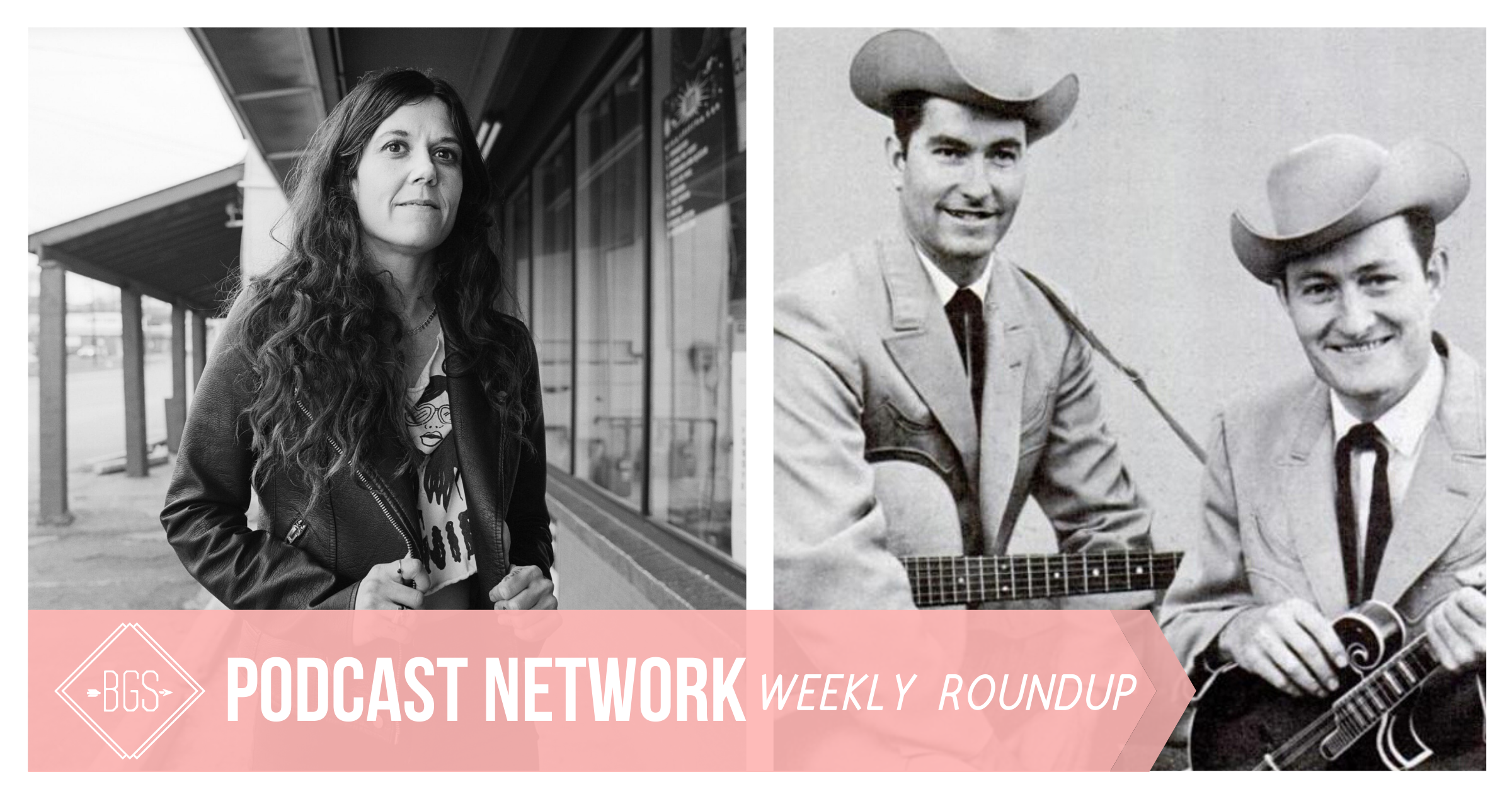
BGS Podcast Roundup // May 22

We’ve got another round of podcasts for you this Friday, with episodes featuring one of the last founding fathers of bluegrass, a delicious Mexican-inspired meal from an award-winning Austin chef (in your home!), a young Nashville phenom’s debut on Rounder Records, and much much more.

Make sure to follow along with the BGS Podcast Network on our social media [Facebook, Twitter, and Instagram] and right here, where we’ll consistently gather our new episodes, as well as some past favorites:

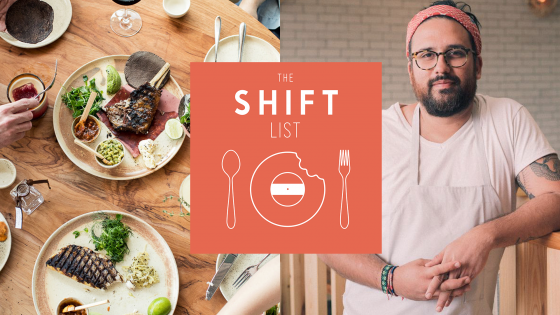
The Shift List – Chef Fermín Núñez (Suerte) – Austin, TX

This week, our first in a series of shows from Austin, Texas, starting off with Fermín Núñez, executive chef of East Austin’s Mexican-inspired restaurant Suerte and Eater Austin’s 2018 chef of the year.

As you’ll soon discover, Chef Fermín is a man with a mission: To create the perfect tortilla, every single day. It’s his attention to detail that has made Suerte one of the most beloved new restaurants in Austin, and Chef Fermín’s love of music is woven into each part of the day, from the making of the masa, to prepping his mise en place, to the entire staff stopping at 4pm to clap to a cover of “Achy Breaky Heart” in Spanish and prepare for the night of service ahead.

Speaking of service, Suerte closed for a few weeks back in early March to regroup and recalibrate as the city of Austin sheltered in place because of the new coronavirus. In mid-March they reemerged with the Suerte Taqueria, providing highlights from Suerte’s menu for takeout — a highlight being the Suadero Taco Meal kit for families to enjoy at home. The kit includes all the ingredients needed to prepare Chef Fermín’s signature dish at home, including confit brisket, avocado crudo, black magic oil, signature tortillas, and sides. In addition to cooking instructions, they rounded out the experience with a video of Chef Fermín cooking along in his own kitchen, and a link to his favorite playlist in an attempt to bring the full Suerte experience into your kitchen.

The kits are still available, so if you live in the Austin area and need some high quality sustenance, head over to Suerteatx.com.


The String – Lilly Hiatt, Gabe Lee

Lilly Hiatt put in a lot of work at the local and regional level, including releasing two albums, before her third, Trinity Lane, met the moment and became a breakout work.

So a lot of ears were lifted toward her 2020 release of Walking Proof, and it was quickly acclaimed as punchy, vivid and memorable. We talk about going on the road with her dad songwriter John Hiatt back in the day, the deserved success of Trinity Lane and new musical directions. Also, a get-acquainted talk with Nashville-born, rocking country songwriter Gabe Lee.


Toy Heart: A Podcast About Bluegrass – Jesse McReynolds

One of the last founding fathers of bluegrass, Jesse McReynold’s story is the story of bluegrass — a music that emerged out of the country, into rural schoolhouses, onto rural radio, finding sponsorship along the way, enmeshing itself into the mainstream of American culture.

McReynolds tells the story of his grandfather, who played in the first recorded country music session, talks about being offered a gig with the Stanley Brothers, serving with the armed forces in Korea and singing alongside Charlie Louvin. He relates hunting down record deals and successes with his brother Jim, starting their own label, being sought out by counter cultural icons like the Grateful Dead and The Doors. Now nearing the age of 91, McReynolds spends some time reflecting as well, on his brother Jim’s death, his own struggles with the Opry, and how he feels about his legacy in the music. This is an icon of American music whose story isn’t often told, and we’re honored to play a part.


The String – Katie Pruitt, Jenee Fleenor

Katie Pruitt has been known as a phenom ready for big things in Nashville for a few years now. With patience and enough maturity to get the music exactly as she intended, Pruitt has now made her debut on Rounder Records.

The album Expectations is a bold, ambitious, and succulent collection, and vividly honest as well, with songs documenting a difficult journey from a conservative family in Georgia to a proud gay woman in Music City. This is a 25-year-old singer, songwriter, and guitarist poised for big things. Also in the hour, the journey of Arkansas born fiddler Jenee Fleenor. She was named CMA Musician of the Year and she’s releasing her first recordings of her own music after years supporting others.


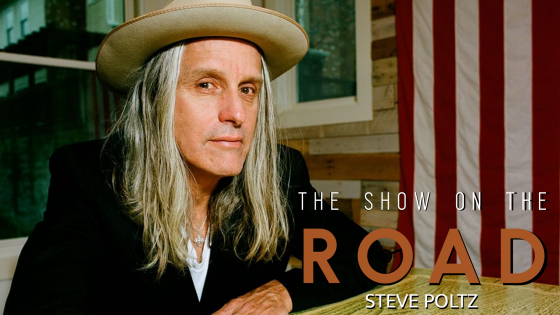
The Show on the Road – Steve Poltz

This week on The Show On The Road, we feature a conversation with a Canadian-born paraparetic prince of pop-folk singers, who has jumped through more gauntlets of the modern music industry than almost anyone in his three plus decades of making records, Steve Poltz.

Poltz first hit the scene with the San Diego-based underground punk-folk favorites The Rugburns, then as an accidental hitmaker and MTV video heartthrob with collaborator and friend Jewel, and then as a wild-haired, two hundred shows a year internationally revered solo act. He’s put out a baker’s dozen of whacked-out, deceptively sensitive, and fearlessly personal albums that have won him devoted audiences from his ancestral home in Nova Scotia to the dance party dives of California to massive festivals across Australia and beyond.

As we are still quite separated during the pandemic, host Z. Lupetin called up Poltz in Nashville to discuss the long and twisty road Poltz has travelled — jumping from his inspired, most-recent album Shine On back to his childhood in swinging Palm Springs (where he met Elvis and Sinatra), to making $100,000 music videos for his ill-fated major label debut in ’98, to nearly dying on stage after substance abuse problems and never-say-no-to-a-gig exhaustion took its toll.

We now find him in a more peaceful, purposeful existence, where he is newly married and enjoying making music at home (government orders!) for the first time in decades.


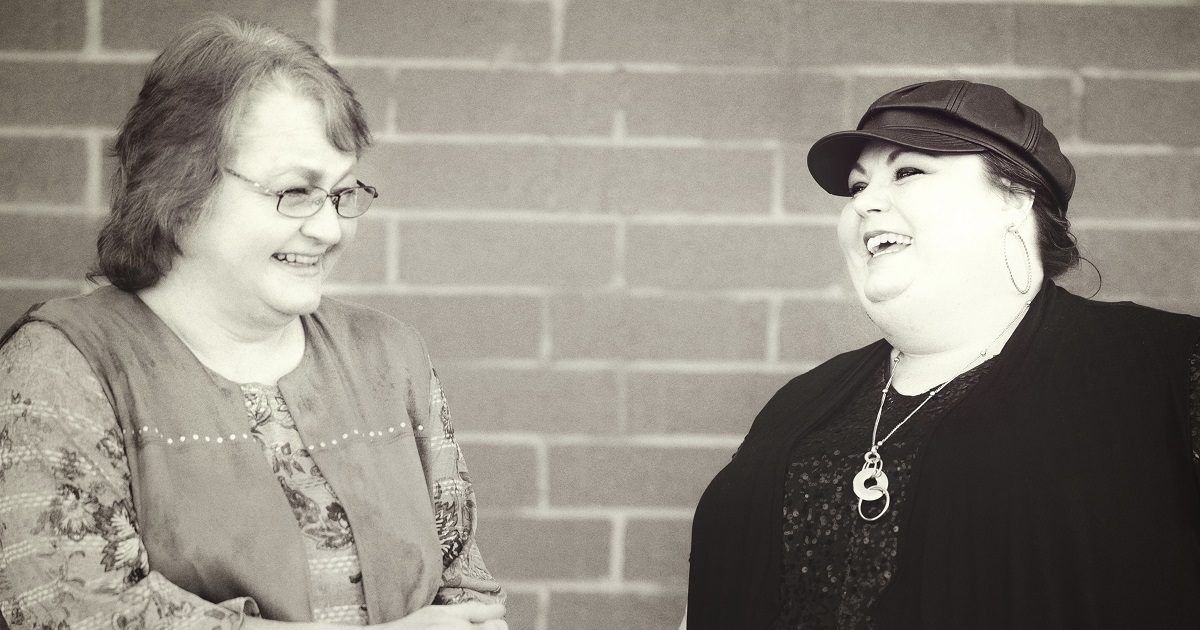
MIXTAPE: Bradley & Adair’s Generations and Inspirations Collide

“We went into the studio and decided to do a whole album of duets. These are old songs, some of them are from the ‘40s, ‘50s, early ‘60s, one from the ‘80s, and a new song. We grew up with these songs and our parents grew up with these songs. Just like our latest record, many of the songs on this playlist are songs we’ve loved all of our lives. At the same time, some of them are newer, or unique takes on previous hits. That’s the great thing about music is the diversity and uniqueness that comes with it. We hope you enjoy some of our picks!” — Dale Ann Bradley and Tina Adair

Jack Greene – “There Goes My Everything”

This was the first song I heard on the radio. – DAB

The Osborne Brothers – “Once More”

I’ve been listening to them my whole life and am a student of their classic and seamless harmonies. This song is an example of that. – Tina

Simon & Garfunkel – “The Sound of Silence”

It’s a prophetic song that is still unraveling today as in the ‘60s. A look at human nature that continues to be so thought-provoking. – DAB

Alison Krauss & Union Station – “So Long, So Wrong”

This song encompasses everything I love about bluegrass. Great playing, fantastic vocals and an absolute amazing production/arrangement. – Tina

Glen Campbell – “Galveston”

It’s just a consummate recording in every way. – DAB

Brandy Clark – “Stripes”

This is one of my favorite written “new” songs. Brandy is one of the most clever songwriters in Nashville right now and this song shows it. Fun fact… I have a version of this recorded. Maybe someday I’ll let everyone hear it. Ha ha! – Tina

The Grateful Dead – “Ripple”

This is a song from The Grateful Dead that so much expresses the way I feel spiritually. – DAB

Blue Öyster Cult – “(Don’t Fear) The Reaper”

Talk about drive and timing with an iconic guitar riff, and one of the best rock bands ever. – DAB

Reba McEntire – “Fancy”

Well I’ve always been a huge fan of Bobbie Gentry’s voice and songwriting; however, one of my heroes in this business has been the one and only Reba McEntire (for her ability to interpret a song, entertain you and her amazing business sense). I admire her on so many levels. Her version of “Fancy” is one that can always entertain a crowd … and I love that. Reba was my first concert I attended outside of local bluegrass festivals. – Tina

The Stanley Brothers – “Jacob’s Vision”

Great writing and singing in pure Appalachian style. This song touched my heart the first time I heard it. – DAB

Harry Chapin – “Cat’s in the Cradle”

This is a song that has taken my breath away. – DAB

Poco – “Crazy Love”

I love the harmonies and guitar fingerpicking and just Poco’s overall laid-back feel with this song. It’s always been a fave of mine. – Tina

Mason Williams – “Classical Gas”

I love the guitar and this is so good! We all wanted and tried to play this. – DAB

Ludwig van Beethoven – “The Moonlight Sonata”

It’s such an emotionally driven piece. I always got lost while listening and felt several different feelings. – DAB

Linda Ronstadt – “Desperado”

Any style, any arrangement… we’ve all been “Desperado.” – DAB


Photo courtesy of Pinecastle Records

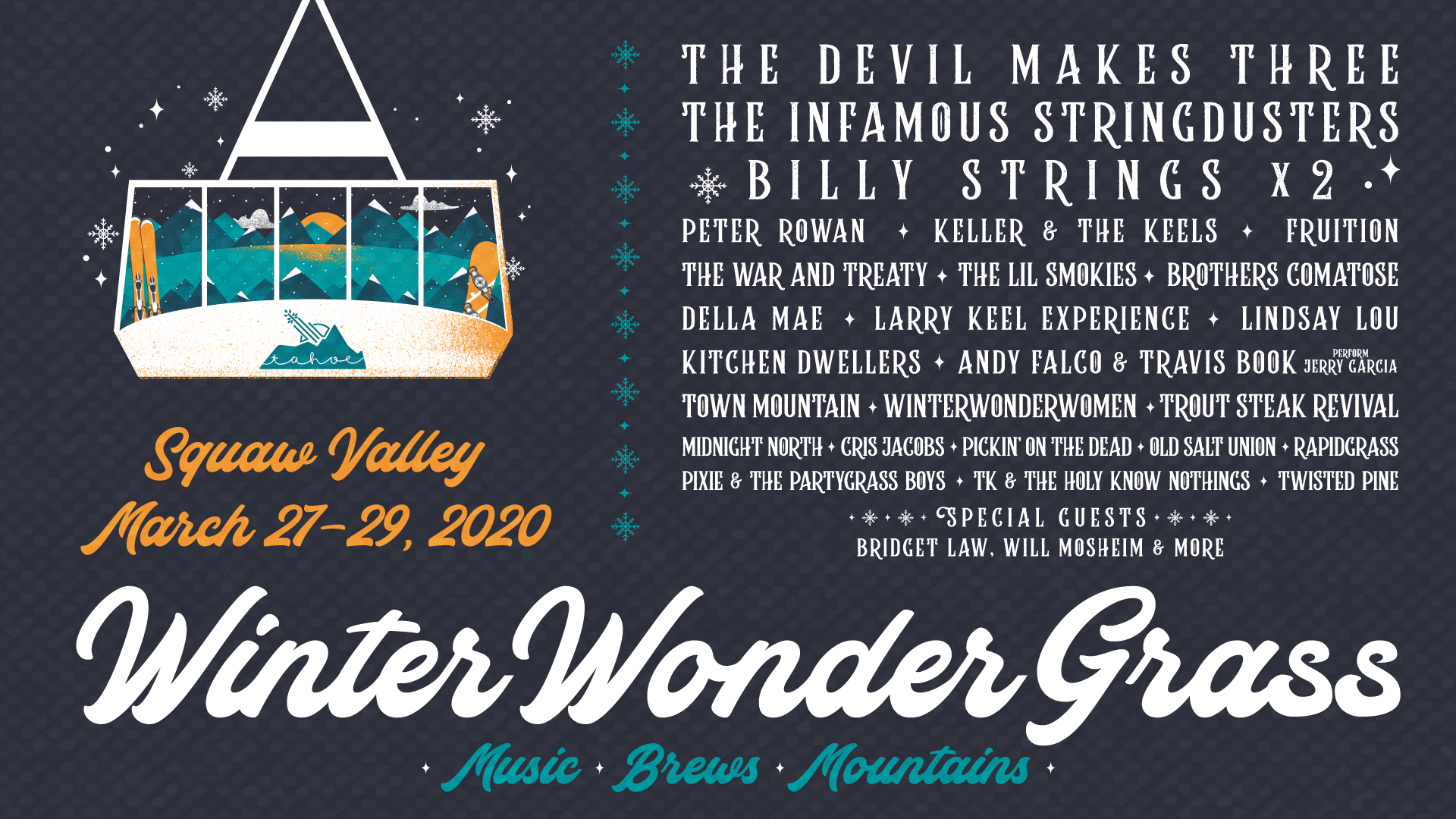
GIVEAWAY: Win tickets to WinterWonderGrass (Squaw Valley, CA) Mar 27-29

GIVEAWAY: Win Tickets to WinterWonderGrass (Steamboat Springs, CO) Feb 21-23