Saddle Up and Get to Know the Artists Behind ‘Cowboy Carter’

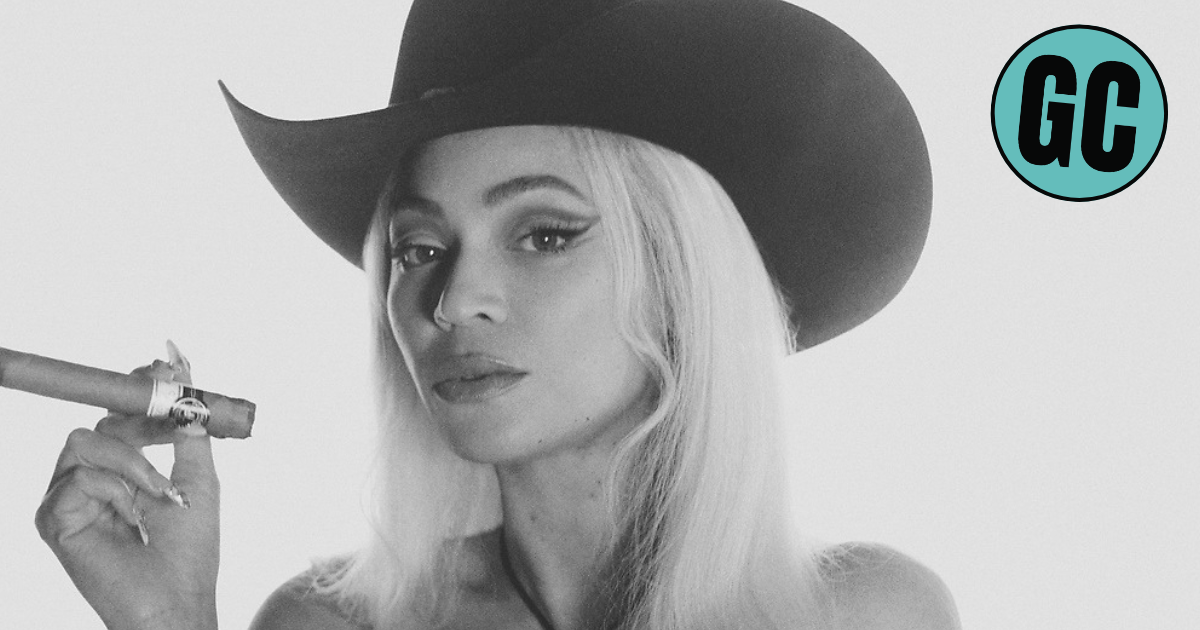
On March 29, Beyoncé rode sidesaddle onto the world stage and took us all by storm with the release of her eighth studio album, Cowboy Carter.

Cowboy Carter arrived as the second installment of a three-act project that commenced with Renaissance in 2022. Renaissance incorporated house, disco, hyperpop, R&B, and funk while reclaiming the Black queer roots of dance music. On Cowboy Carter, she similarly reclaims the Black roots of country, blending it with folk, rock, R&B, hip-hop, classical, house, and gospel throughout.

Prior to the release of Cowboy Carter, country has been a longstanding muse for Beyoncé. While her affiliation with the genre was popularized by Lemonade’s “Daddy Lessons,” her first country-leaning performance dates back to nearly a decade earlier when she performed “Irreplaceable” with Sugarland at the American Music Awards in 2007.

Potent and impeccably saturated, Cowboy Carter makes clear that country is inarguably a huge part of Beyoncé’s creative and cultural identity. However, her presence in the genre has not always been well-received; in an Instagram caption 10 days before the album’s release, Beyoncé revealed that CC was largely inspired by an experience where she “did not feel welcomed” into the country fold. Many speculate that this refers to her appearance at the 2016 CMA Awards. The network received racist backlash after she performed “Daddy Lessons” with the Chicks, prompting the erasure of the song’s video from the show’s website (though a representative from CMA later denied the correlation between those two events).

Of Cowboy Carter Beyoncé writes, “The criticisms I faced when I first entered this genre forced me to propel past the limitations that were put on me.”

Beyoncé alchemizes a multitude of influences and collaborators across the gargantuan album in order to achieve the monumental musical feats of CC. With a credits list that sprawls for seemingly miles, Beyoncé enlists a number of guest artists, co-writers, producers, and musicians. Between them, they represent the Black roots of country, pay tribute to Black Americans’ impact on the genre, include legendary country artists and well-known side musicians and collaborators that assert the project’s roots in country, and represent the bright and diverse present and future of country by featuring several lesser-known Black country artists, many of which are also genre-bending in their own work.

In a list that is by no means comprehensive, here are just a few of the contributors that brought their musical magic to Cowboy Carter.

Rhiannon Giddens

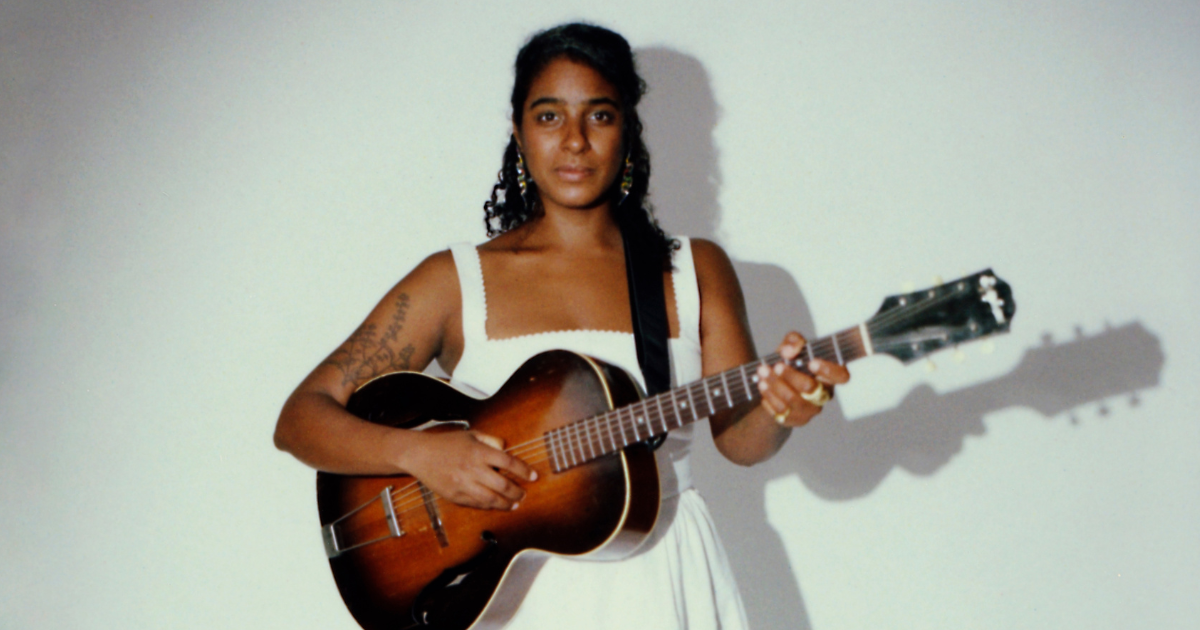
“Texas Hold ‘Em” made history as the first hit single by a solo Black woman to top the Billboard’s Hot Country Songs Chart and 10 weeks later, as of this writing, it maintains its gilded perch. Fittingly, the song opens with the warmth and drive of the legendary Rhiannon Giddens strumming a standalone fretless, clawhammer gourd banjo. The talented multi-instrumentalist, singer, composer of many mediums, and roots scholar also sprinkles notes of viola throughout the track.

It is no coincidence that Giddens’ banjo playing, like much of her work, pays homage to the lineage of Black influence throughout roots music. Referred to by many as a “performing historian,” Giddens has spent her career shedding light upon the cross-cultural interweavings of the genre. Here, in an interview, she details the West African origins of the banjo, an instrument essential to American country music that was initially brought to the Americas by enslaved Black folks who used gourds and other accessible materials to recreate instruments of their homelands. By showcasing Giddens on the track, Beyoncé introduces a sonic representative of overlooked histories while uplifting one of the most celebrated Black musicians in modern day roots music.

Robert Randolph

Raised in a secluded religious community, Robert Randolph grew up without secular music. The renowned pedal steel guitarist heard only the music played within the House of God Church of Orange, New Jersey, for decades. He learned the instrument through Sacred Steel, a Black gospel tradition developed in the ’30s that highlighted the steel guitar during religious services.

During his early adulthood, Randolph became exposed to the world of music beyond; as he absorbed jazz, blues, funk, rock, and soul, he soon set out layering his gorgeous pedal steel tones upon a fusion of genres, particularly alongside his band, Robert Randolph and the Family Band. Across his musical arc, he epitomizes Beyoncé’s philosophy that music is transcendent; “All music is related,” he says. “Gospel is the same as blues. The only thing that changes is hardcore gospel people are singing about God and Jesus and in the blues people are singing about ‘my baby left me’ and whiskey.”

Justin Schipper

Like Robert Randolph, Justin Schipper is also credited for steel guitar on the track “16 Carriages.” A Nashville-based composer, multi-instrumentalist, songwriter, and producer, Schipper is a prominent figure in the current country landscape. His talents have landed him on tour with Josh Turner and Shania Twain (playing pedal steel and dobro), and he has gigged with the likes of Carrie Underwood, Chris Stapleton, Kris Kristofferson, Florida Georgia Line, and more.

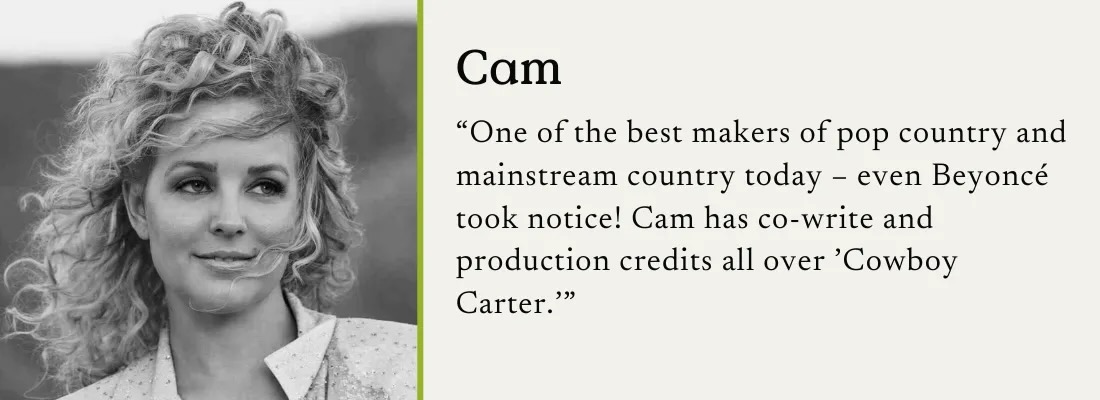
Cam

Cam (given name Camaron Ochs) co-produced and co-wrote five songs on CC. An American country singer and songwriter, Cam began her career songwriting for musical giants in the industry such as Sam Smith and Miley Cyrus. Since then, she’s released three of her own studio albums with songs inspired by the songwriting styles of Patsy Cline, Ray Charles, Bonnie Raitt, Willie Nelson, and Joni Mitchell, amongst others. A prominent figure in the current country landscape, Cam lends crucial insights and layers with each of her contributions.

Sean & Sara Watkins

Renowned in the current bluegrass/newgrass scene, this sibling duo lends guitar (Sean) and fiddle (Sara) to the track “II Most Wanted.” Sean and Sara epitomize the familial quality so integral to bluegrass; their first band, Nickel Creek, was formed in 1989 alongside virtuoso Chris Thile when Sara and Chris were only 8 years old and Sean was 12. The siblings have been playing together ever since; Nickel Creek would go on to release seven albums, the latest of which, Celebrants, was released last year.

In 2002, the pair began The Watkins Family Hour as a monthly musical showcase featuring their friends and other collaborators in Los Angeles. Spanning over 20 years, the WFH has blossomed expansively. In fact, the pair released their third studio album, Vol. II, in 2022, a celebration of the project and the community surrounding it. Similarly to CC, the list of features for Vol. II is extensive, featuring the likes of Madison Cunningham, Willie Watson, Jackson Browne, and Fiona Apple, amongst others.

Stevie Wonder

A child prodigy who became blind shortly after birth, Stevie Wonder is widely regarded as one of the most influential musicians of the 20th century. He makes his contribution to CC by layering tasteful harmonica atop the sonically rich layers of “Jolene,” a reimaginative cover in the shape of Dolly Parton’s 1973 classic. Much like Beyoncé herself, Wonder is a trailblazer who, as Beyoncé stated in her Innovator Award speech at the iHeartRadio Awards, “defied any label placed upon [him].” From jazz to soul to funk to R&B to gospel to pop and beyond, Stevie Wonder has influenced and inspired creators across infinite genres and blendings with his vibrant propensity for experimentation. In the same speech, Beyoncé poured out a fountain of gratitude towards the legend, who presented her award —“Thank you so much Stevie, I love you,” she said. “I love you and I honor you. I want to thank you for making a way for all of us. […] Whenever anyone asks me if there’s anyone I can listen to for the rest of my life, it’s always you. So thank you, God bless you.”

Brittney Spencer, Tanner Adell, Tiera Kennedy, and Reyna Roberts

These four women are responsible for the ethereal background and third verse vocals for “Blackbiird.” Additionally, Spencer, Roberts, and Kennedy also lend background vocals to “Tyrant,” while Adell’s voice is woven into the sweeping harmonies of “Ameriican Requiem.”

Initially released in 1968 on The Beatles’ self-titled album, (colloquially known as “The White Album”), Paul McCartney wrote “Blackbird” in response to witnessing on television the harassment and violence that Black students endured upon attending newly-integrated schools. In 2018, he told GQ that he was particularly influenced by the young women who constituted, in part, the Little Rock Nine in Alabama — a nickname for the first nine Black students to desegregate the formerly all-white Central High School in Little Rock, Arkansas.

As McCartney explained to TODAY, “In England, a ‘bird’ is a girl, so I was thinking of a Black girl going through this; now is your time to arise; set yourself free; take these broken wings.”

Within her illustrious arrangement of the classic, Beyoncé pairs the initial guitar track recorded by McCartney with the vocals of herself and these four Black women whose careers are actively altering the historically whitewashed landscape of country. By including them, Beyoncé nods towards McCartney’s intended meaning of the song while actively uplifting these young women so that they may prosper in a genre that undervalues and mistreats the Black artists who continue to give it wings. Brittney Spencer, Tanner Adell, Tiera Kennedy, and Reyna Roberts each have burgeoning careers in the genre that are largely influenced by traditional country sounds and themes.

Willie Nelson & Dolly Parton

In addition to inviting in many Black artists and roots musicians, Beyoncé strategically inserts more commercially successful country greats whose values align with her own. As Willie Nelson tells his faux-radio station listeners in the track “Smoke Hour II,” “Sometimes you don’t know what you like until someone you trust turns you onto some real good shit. And that, ladies and gentlemen, is why I’m here.” This line candidly demonstrates an awareness of the unfortunate truth that a vast array of today’s country fans are white listeners unlikely to take this music seriously without ample accreditation from respected white artists.

Merely four days after the release of CC, likely due in part to the inclusion of Willie and Dolly, the number of first-time listeners of Beyoncé’s music had increased by 85% on Spotify.

Willie Nelson, who celebrates his 91st birthday this year, is renowned for his left-leaning activism (especially advocating for the legalization of marijuana — hence the nomenclature of his feature tracks “Smoke Hour” and “Smoke Hour II”) and his role in pioneering the Outlaw Country movement. Outlaw Country began in the ’60s as a subgenre to rebel against the conservative suppressions, sonic and otherwise, of the country industry at the time. Willie and his like-minded contemporaries strove to achieve creative freedom beyond the political and sonic standards that dominated Nashville.

Similarly, Dolly Parton has used her platform, influence, and capital to enact social change. In addition to being an advocate for LGBTQ+ rights, she donated $1 million to Vanderbilt University in 2020 to go towards vaccine research amidst the early stages of the COVID-19 pandemic.

As of 2024, Willie Nelson and Dolly Parton are widely regarded as two of the most successful American country artists of all time. Nelson holds 12 Grammys from 57 nominations, and continues to tour (in fact, he is actively on the road again right now). Dolly has accrued a total of 11 Grammys from 50 nominations over the course of her career and recently gave a dazzling performance at the 2023 NFL Thanksgiving Halftime Show. The amount of esteem and respect each has garnered throughout their careers grants Cowboy Carter a certain amount of credibility within the wider country circuit.

However, it is clear that Beyoncé doesn’t just merely use these two for their name recognition. She is, indubitably, a seasoned scholar in the history of American country music and respects the discography of both artists immensely. While both give narrative voice-overs, Dolly also lends background vocals to “Tyrant” and, of course, shares songwriting credits for the innovative cover of her song “Jolene” that appears on the album.

Willie Jones & Shaboozey

Willie Jones joins Beyoncé on CC to lend his resonant, smoky vocals on the duet track, “Just for Fun,” and to “Jolene.” Having gotten his start as a contestant on the X Factor in 2012, Jones is currently making a name for himself as contemporary Black country artist that Grammy.com refers to as a “country-rap iconoclast.” As proves to be a crucial theme throughout Cowboy Carter, Jones galvanizes cross-genre musings to make a sound that is entirely his own.

Similarly, Shaboozey is a rapping Black country artist who represents the future of the genre. Combining hip-hop, rock, country, and Americana, Shaboozey further embodies the blending spirit behind CC. His contributions to the album include rapping verses on both “Spaghettii” and “Sweet Honey Buckiin.”

Linda Martell

Beyoncé ingeniously laced together Cowboy Carter to demonstrate the past, present, and future of Black musicians who have influenced the American roots music; and Linda Martell stands as a crowned example of the past. Martell, now 82, was the first commercially successful Black woman in country. In 1969, she made history as the first Black woman to play the Grand Ole Opry, and she held the status of highest peaking single by a Black woman on Billboard’s Hot Country Singles Chart for her song “Color Him Father” until Beyoncé’s very own “Texas Hold ‘Em” took its place.

However, Martell’s success was short-lived; she left Nashville and country music altogether in 1974 after receiving racist backlash following the release of her first album. Nearly every live show was corroded by racial slurs from belligerent audiences, and her label eventually shelved her music when her single, “Bad Case of the Blues,” failed to do the numbers they were expecting. As Martell postulates on the CC track “Spaghettii,” “Genres are a funny little concept, aren’t they? In theory, they have a simple definition that’s easy to understand. But in practice, well, some may feel confined.”

While Martell’s career arc fell victim to the confines of hegemonic racism within Nashville (and the country at large), her appearance on Cowboy Carter pays tribute to her historical strides for Black artists nevertheless. The track “The Linda Martell Show” (wherein Martell poses as the host of her own radio show) acts as a foil to Willie Nelson’s “Smoke Hour” — Beyoncé here reimagines the career of Martell, granting her the accreditation to host her own show, something history previously never afforded her.

Miley Cyrus & Post Malone

Beyoncé’s respect for innovation rings loud and clear in her inclusion of Miley Cyrus and Post Malone on CC. Each share a vocal duet with Beyoncé on the album — Miley sings “II Most Wanted” and Post Malone contributes to the track “Levii’s Jeans.”

Though both are primarily known as pop artists, each has a career largely informed by their capacity to genrebend. Miley, daughter of country icon Billy Ray Cyrus and God-daugher of Dolly Parton, adds additional credibility to Beyoncé’s country venture. Throughout her career, Miley has traversed country, rock, pop, and R&B.

Similarly, Post Malone has woven together pop, alternative R&B, hip-hop, and indie throughout his career, and many speculate that he will soon release a country album.

It should be noted that both Miley Cyrus and Post Malone have been able to immerse themselves in genres that are historically Black throughout their respective careers. That both have moved between country and R&B without controversy is telling; their capacity to do so seamlessly and successfully demonstrates how white artists are able to express themselves fluidly without systemic repercussions. It is this very ease that Beyoncé wishes to cultivate for artists of every race; in her Instagram post about the release of the album, she writes, “My hope is that years from now, the mention of an artist’s race, as it relates to releasing genres of music, will be irrelevant.”

Raphael Saddiq

Referred to by music critic Robert Chrisgau as the “preeminent R&B artist of the ’90s,” Raphael Saddiq made mark as an American singer, songwriter, record producer, and multi-instrumentalist. He rose to fame in the ’90s with his R&B/soul group, Tony! Toni! Toné!, and went on to have a successful solo career. Additionally, he has produced songs for musical giants such as Erykah Badu, Stevie Wonder, TLC, D’Angelo, Solange Knowles (Beyoncé’s sister), John Legend, and more.

He is credited 18 times over the course of Cowboy Carter for his producing, writing, and instrumental contributions to the tracklist.


Photo Credit: Mason Poole
Katie Pruitt on ‘Mantras’ and Letting Go of Control

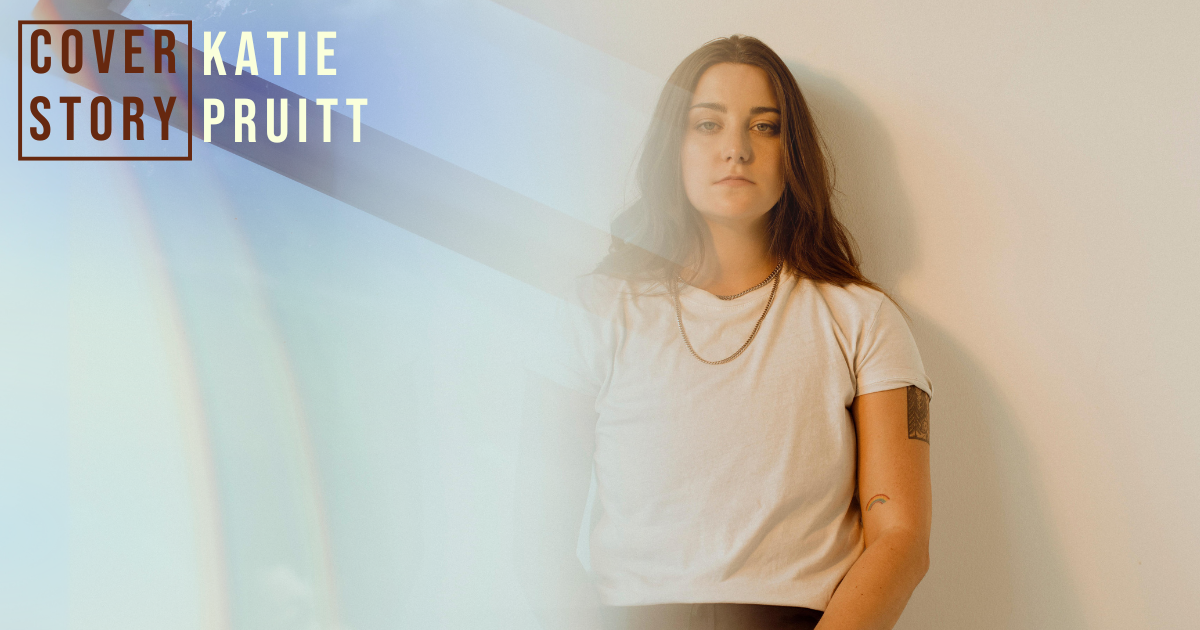
Knowing how 2020 and the years that followed would unfold, the dynamism of Katie Pruitt‘s debut record is even more awe-inspiring. Expectations introduced the Nashville-via-Georgia singer-songwriter alongside her deepest aches and most intimate struggles as an openly queer individual raised as part of a devout Roman Catholic family in the conservative South. It would go on to earn a GRAMMY-nomination and ample praise for her lyricism, empowered performances, arranging, and instinct for production. In short, it’s undeniable that Pruitt set quite the high bar of expectations for herself and the music she would choose to share next.

Four years later, Pruitt has unveiled Mantras. While flashes of brilliance from a familiar autobiographical lens inform and inspire the 11 track recording, these aren’t simply more straightforward, memoir-style anecdotes. The truths and experiences Pruitt shares on Mantras feel more revealing than Expectations, as this time, Pruitt’s lens looks decidedly more inward at what she has lived through, reflected on, and learned from since writing her last album.

Not only is Mantras‘ thought process largely internal in nature, but each song leads to paths, stories, and developments that have yet to be fully resolved – if ever they will. The album showcases a great deal of inspiring perseverance in the self-contained conclusions of songs like “Self-Sabotage” and “Worst Case Scenario” and more generally, it unveils a journey of self-healing from start to finish.

However, while Mantras ultimately provides reassurance, peace, and closure, the takeaway isn’t meant to be one of permanent resolution or rigid perspective around anything Pruitt has seemingly conquered in each song. Like the recapitulating nature of a mantra, she is mindful of being continuously attentive and compassionate towards her inner struggles, rather than seeing them as singular moments of adversity.

Speaking with her by phone, BGS shared an insightful conversation with Pruitt about how her focus on inner-healing shaped the sound of Mantras, how her perspective around disagreement and connection has changed, how she cultivates inner strength, and much more.

How was it navigating the presence of expectations for Mantras, considering your intent to move away from a focus on external validation?

Katie Pruitt: On the first album, I was dodging different expectations, you know? I was dodging expectations of my parents or of how people in my hometown saw me and who I am now. I sort of accidentally set high expectations for this next record. I felt like I was competing against myself in a lot of ways and I really had to find moments to just surrender, come back to center, and just focus on the fun feeling in the present moment and talk about that, instead talking about things that I think people want me to say. I needed to focus on what I needed to say, which is maybe different than what other people expected or wanted to hear on this album.

Knowing this album is an expression of personal growth and a journey of sorts for you, what does it feel like to just now be talking about these songs after holding onto them for so long?

Coincidentally, I feel like everything on Mantras is lining up with my life as it’s coming out.

With me talking about my parents selling my childhood home [in “Naive Again”], yeah, my parents are selling my childhood home as we speak. And when I finished a lot of the songs about my partner slowly checking out and leaving, maybe a week after I turned in the record, we broke up. So I’m still experiencing a lot of these things in my life. It’s kind of a first for me, because when Expectations came out, I had kind of already patched things up with my parents and there were things in my personal life were kind of resolved. But then I was having to dive back into those issues every day on stage or whenever I sang those songs. This is different, honestly. It kind of feels good to be able to deal with what’s going on in my life with the songs in real time.

You’ve talked about building “the tracks from the ground up as opposed to cutting everything live, which gave so much more room to let the songs evolve and become what they needed to be.” What does that mean for you and what did those moments of full realization for the music feel like for you, and producers Collin Pastore and Jake Finch?

Jake and Collin’s workflow is very quick. And that was a challenge for me, but I felt like we challenged each other in the right ways. They move very fast and I was like, “Wait a second. Let’s take a look at this. Let’s sit with it for a second and make sure we like it.”

I think having the option [to record parts individually] instead of having all this pressure to be in the studio with a full band and having everyone play the right parts at the right time, was nice for us – to just build one part at a time and ask ourselves, “Is this correct? Does this fit?” And if it doesn’t, we’d say, “We can always mute it.” … There’s not necessarily a wrong answer. We’re just trying to evoke a feeling and if we feel it then other people will too.

What brought you together with Christian Wiman’s work, ultimately inspiring you to writing the album title track?

I was listening to this poetry podcast, [Poetry Unbound], I was really into that during the pandemic and that was obviously a tough time for a lot of people, [creating] a lot of points of contention, especially around beliefs and belief systems. I just felt like, my parents believe different things than me and my friends started to believe different things than me. So that poem, [“All My Friends,”] just really resonated as this “A-ha!” moment.

At the very end of the poem [Wiman] says something like, “My beautiful, credible friends.” In the first part of the poem, you almost feel like he isn’t mocking them, but like, he’s kind of poking fun at how many rabbit holes there are to go down, as far as spirituality goes or, finding yourself goes. Then at the end, he’s like, “And all of them are credible, all of them are valid.” And that really struck a chord for me and I just think that’s a really powerful statement.

Given the open and accepting mindset you impart through “All My Friends” and its juxtaposition with the piercing, personal insights you share in “White Lies, White Jesus, and You,” where would you say religion, particularly Christianity and Catholicism, exists for you now, compared to when you were writing Expectations?

I really try to make clear to my parents or to some of my friends who are still Christian, that [the song] is talking about people who take the Bible and abuse it for their own benefit – whether that be political or just to justify shitty behavior on their end, like saying, “Oh, well, it says that gay people aren’t allowed in heaven. So I’m allowed to say this.”

That’s the part of [Christianity] that really turns me off to it in general. And that’s a shame, because the dude in the Bible, Jesus, the version that I have kind of come to discover as I’ve gotten older, is a pretty progressive dude. And I don’t mean that in the political sense. I mean, in the sense of he’s accepting of everyone no matter what their background is. Like, Jesus himself never says anything about gay people. He’s friends with kind of some sketchy characters if you were going to look at it through a lens of today. So that’s the Jesus that I wish I were taught more about when I was growing up. I think “White Lies, White Jesus and You” was a way for me to process the [version of] Jesus that I have experienced as a closeted gay kid and how the ways that version hurt me and put that in the past and put that behind me.

In what way would you say your journey of self-healing helped you to stop seeing religion as having the power to dictate your worth?

I let go of religion dictating my self-worth a while ago. But then I let other things [take its place]. I used to seek external validation from the church or from my parents or from older mentors in my life. I let that go as I became a young adult and then I started giving other things power to do that. Like success and relationships. I let those things dictate my worth. But then I started delving into the power that intrinsic happiness has.

We really fully don’t have control over what happens in our life. We have some control, but very little. And if your worth can come from within, then those moving parts of life have less control over you or less effect on you … once I learned that, I was able to focus more heavily on, “Let’s have this voice in my head be kind and then I can go from there.” Just me practicing being kind to myself first kind of put this armor up around me and it helps me navigate the world.

What’s changed about your songwriting process since you’ve taken on more personal strength and inner compassion?

For a long time, when my inner voice was more critical and cutthroat and editorial, I couldn’t really write. I wasn’t able to get the thoughts just out of my head and onto the paper, which is the first step you know? Then you have something to work from when you’re able to just say what you feel. But I was just so scared to write a bad song that I wouldn’t write anything. And I think that’s the worst mistake you can make. There’s no harm in writing a bad song.

I think that it’s just about setting the bar, taking a chill pill and [remembering], “Oh yeah, songwriting is fun, songwriting should be fun.” It should be a way for me to get an outlet, a way for me to get this out of my head and look at it. So removing the critical voice is huge. And that was connected to therapy and to me slowly learning how to be kind to myself and slowly learning how to just enjoy writing songs again.

Where, with whom, or in what, do you find your hope and strength to persevere when life feels overwhelming or your inner reserves are running low?

The past or other people’s experiences really help me. I read a lot of Patti Smith and sometimes I’ll just open to a random page and it’ll be the piece of advice that I needed. So definitely words and art and poetry. Another thing would be when I’m feeling, “Okay, all hope is lost,” I have this urge to just run to nature and I just go to the mountains or go sit by a river for a long amount of time and think and meditate and try to put my problems and my fears and everything into perspective. I think, “Well, I’m on this planet right now and I’m sitting by a river. How cool is that?” Just kind of zooming out and not zooming in so closely – that helps me. And like, just good friends and just laughing and having buddies that you know you have a drink with or dinner with and just fuckin’ laughing about the crazy things that have gone wrong. Like, laughter is huge. I know it’s like, “Oh, laughter is medicine,” but it literally is.


Photo Credit: Alysse Gafkjen

You Gotta Hear This: New Music From Malena Cadiz, the Barefoot Movement, and More

You’ve reached the end of the week and we’ve got your soundtrack to take you into your weekend! This Friday, we’re showcasing premieres from indie folk singer-songwriter Malena Cadiz, from our old friends the Barefoot Movement, and Steven Keene gives a Woody Guthrie classic a new spin. Plus, Norwegian-via-Louisiana country artist Rainy Eyes takes us on a road trip down the “Lonesome Highway” and Darin & Brooke Aldridge bring a new lyric video for “Same Ole New Love.”

Don’t miss the conclusion of our Rootsy Summer Sessions series, too, featuring roots duo Violet Bell and special guest Emily Scott Robinson. Scroll for more, because You Gotta Hear This!


Malena Cadiz, “Getting By”

Artist: Malena Cadiz
Hometown: Los Angeles, California
Song: “Getting By”
Album: Hellbent & Moonbound
Release Date: October 20, 2023

In Their Words: “I think of ‘Getting By’ as a love song for the long haul, appreciating that the highs and lows of life that are all part of the beautiful, messy ride. Getting to move through them with the person I love is something I’m really grateful for. My producer, Andrew Lappin, suggested we bring in Lara Somogyi to play harp on the recording. In the live video, Tyler Cash & Jason Abraham Roberts reinterpret that part on keys and guitar. I love how it elevates and brings magic to the unglamorous, scrappy stories of day to day life – lying on the linoleum floor of my kitchen after a long waitressing shift, buying fancy foods with EBT, getting bit by a chihuahua, voicing the feeling that ‘this isn’t where I thought I’d be.’ This whole record is really about that – learning to let go of the expectations we’ve internalized around what and where we “should” be and instead embrace our own paths and our own unique journeys.” – Malena Cadiz

Track Credits: 

Lead vocals – Malena Cadiz
Bass – Aaron Stern
Electric guitar – Jason Abraham Roberts
Vocals – Leeann Skoda
Drums – Sam Kauffman-Skloff
Keys – Tyler Cash

Producer, Music Director, Mixer – Andrew Lappin
Engineer – Brittney Orinda
Assistant Engineer – Ian Fogarty

Video Credits: Director & Videographer – Audrey McGee
Assistant Camera – Haden Cadiz
Editors – Thaddeus Ruzicka, Casey Jones, Audrey McGee
Hair & Makeup – Bethany Johnson


The Barefoot Movement, “Sarah Jane”

Artist: The Barefoot Movement
Hometown: Raleigh, North Carolina
Song: “Sarah Jane”
Album: Let It Out
Release Date: April 19, 2024
Label: Box Monkey Studios

In Their Words:“One of the last times I saw my great grandmother, I took her out of the nursing home to treat her to a manicure. I started rubbing her back while the technician was working on her nails and it must have felt really good, because she uttered this exclamation I’d never heard before: ‘Jump back Sarah Jane!’ The next time I saw her a few months later, she had had a stroke, she didn’t recognize me, and she died soon thereafter, so the Sarah Jane moment was one of my last memories of our time together.

“To some, she lived a rather ordinary, unremarkable life, but to us she was everything. She had an alcoholic husband, who died from complications of a car accident, leaving her to raise their three boys on her own. She worked at the cotton mill in Roxboro, North Carolina her whole life, until she retired. She loved her children, grandchildren, great grandchildren, and great-great grandchildren fiercely, and she made sure we knew it. She also made legendary biscuits from scratch.

“After she died, I was thinking about the life she lived and the phrase ‘Jump back Sarah Jane’ kept coming back to me. I wondered what it would have been like to raise kids through such tumultuous times in the 1940s, when it probably felt like the world was ending. This song is me imagining what a day in the life would have been like from her point of view, navigating a sense of impending doom while knowing that priority number one had to be showing up for her family. She did it well. And there were always biscuits on the table.” – Noah Wall

Video Credit: Workshop Media


Darin & Brooke Aldridge, “Same Ole New Love”

Artist: Darin & Brooke Aldridge
Hometown: Cherryville, North Carolina
Song: “Same Ole New Love”
Album: Talk of the Town
Release Date: April 19, 2024
Label: Billy Blue Records

In Their Words:“‘Same Ole New Love’ is an original tune co-written with our good friend Dennis Duff. Dennis brought the idea for this song to the table based on the long standing relationship and bond that he’s always shared with his wife after he noticed the same kind of love between Brooke and I. Through all the ups and downs in life, time and time again, love will always conquer and keep coming back around to that same ole love.” – Darin Aldridge

Track Credits:
Brooke Aldridge – Vocal
Darin Aldridge – Vocal, mandolin, guitar
Mark Fain – Acoustic bass
Cody Kilby – Rhythm guitar
Jacob Metz – Dobro
Samantha Snyder – Fiddle
Lynn Williams – Percussion

Video Credit: Shaye Smith / CustomLyricVideos.com


Steven Keene, “This World Is Your World”

Artist: Steven Keene
Hometown: New York City, New York
Song: This World Is Your World
Release Date: April 19, 2024

In Their Words: “As one of the first, if not the first true Americana protest songs ever written, Woody Guthrie’s ‘This Land Is Your Land’ was a landmark song that defined Woody and the genre of folk protest music as a whole. It was all about opening the public mind to what was going on in America at the time from a social and economic perspective. Instead of just talking about how great our country is, it was a call to talk about how divided this nation was with its walls of social division and exploitative economic practices.

“The idea behind ‘This World Is Your World’ was to take that important message and relate it within the context of the modern globalized world and to what we are going through right now as a universal society. In many ways, the world is smaller than it was 50 years ago, so I think it’s a song that has so much importance and relevance to what’s going on in the world today, from the threat of international conflict to the need to collectively address global environmental concerns.

“I’m very thankful to the Guthrie family for allowing me to change up some of the words and music and for granting me a co-write with Woody.” – Steven Keene


Rainy Eyes, “Lonesome Highway”

Artist: Rainy Eyes
Hometown: Lafayette, Louisiana
Song: “Lonesome Highway”
Album: Lonesome Highway
Release Date: July 12, 2024
Label: Royal Potato Family

In Their Words:“‘Lonesome Highway’ was written over the course of several years, and came about as an attempt to write a short movie in song form. Drawing loosely on inspiration from the personal experience of having to sever ties with toxic family members, and knowing that you can’t always help the people you love. Change has to come from within and sometimes you just have to take that lonesome highway and trust that if you take the leap of faith into the unknown, the universe will catch you.” – Rainy Eyes

Track Credits:

Irena Eide – Vocals, acoustic guitar
Dirk Powell – Violin, electric guitar, wurlitzer, accordion
Bill Smith – Drums
Gina Leslie – Background vocals

Video Credits: Honest Art – Production
Syd Horn – Director
Olivia Light – Camera
Emily Istre – Makeup, hair & stylist
Rainey Credeur – Makeup & hair


Rootsy Summer Sessions: Violet Bell

After seven gorgeous and lovely Rootsy Summer Sessions, we’ve reached the final installment of this series with two songs featuring Americana string duo Violet Bell. Shot overlooking the waters of the Kattegat, a bay on the North Sea, you may recognize the golden hour location from our earlier session with Emily Scott Robinson, who makes an appearance with Violet Bell after the North Carolina-rooted band appeared as guests in Robinson’s performances, as well.

Last summer, during Rootsy Summer Fest ’23, the videography team from I Know We Should captured this series of eight sessions in Falkenberg, Sweden featuring more than a dozen performers and nearly twenty individual tracks from Americana, country, and folk artists from across the genre spectrum and from both “sides” of the Atlantic.

Completing the series, Violet Bell – Lizzy Ross and Omar Ruiz-Lopez – first perform “Fisherman’s Daughter,” a fantastic story song from their critically acclaimed 2022 album, Shapeshifter.

Watch both performances and read more here.


Photo Credit: Malena Cadiz by Stefanie Parkinson; Barefoot Movement by K Hammock Photography.

More Than A Trend

(Editor’s Note: Sign up here to receive Good Country issues when they launch, direct to your email inbox via Substack.)

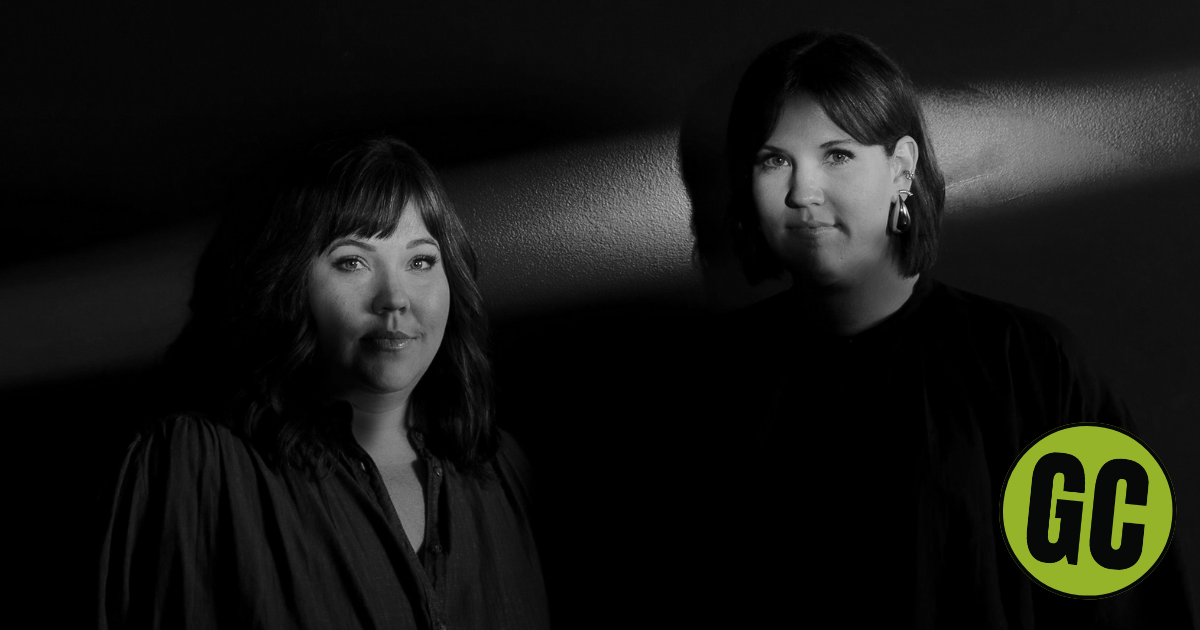
Based in northern Alabama with deep, organic ties to so many sounds and styles of the “Americana Music Triangle,” the Secret Sisters have built a musical brand on a distinct iteration of Southern gothic songwriting steeped in familial harmonies. Their music is grounded, but broad, specific but infinitely relatable.

Over the course of five studio albums released since 2010 – including 2020’s Grammy-nominated Saturn Return, which was produced by Brandi Carlile – the sisters, Laura Rogers and Lydia (Rogers) Slagle, have strayed very little from the sounds that first entranced audiences all across the South and around the country more than 14 years ago. Still, while they occupy a distinct and confident sonic aesthetic, their catalog never reads as tired, weary, or redundant. Mind, Man, Medicine, their latest record, was released on March 29 and while it listens like classic, iconoclastic Secret Sisters, it also registers as brand new, vital, and innovative.

It follows that two women proud to be Southerners and proud to be from Alabama would not feel limited by maintaining a stylistic brand that is rooted in one particular vein. At times, their songs remind of the Civil Wars but without affectation, of Shovels & Rope but with a more quiet and genuine anger, and of so many other Americana duos – Gillian & Dave, the Milk Carton Kids, War & Pierce – where the focal point is two voices and creatives in dialogue, collective music. But the indelible throughline, that centering “vein,” is simply being true to themselves.

Mind, Man, Medicine, among the siblings’ handful of releases, all at once feels like a comforting and cozy continuation of everything we love about the Secret Sisters rooted in northern Alabama, while also demonstrating the dawn of a new era. In our conversation with Laura and Lydia, we chat about the distinctions between style and redundancies, about compassion and community, about grounding and intention. Throughout, it’s clear that the Secret Sisters know exactly who they are, how they sound, and why they do what they do – even, if not especially, when each of those truths becomes clouded by the intricacies and complications of life.

I wanted to start by asking you about your specific brand of country and Americana. You have always made music that’s mindful, connected to the earth, and connected to your community. It often feels a little witchy and a little gothic, but it also feels like musically wandering down a winding garden path.

That style, that y’all have had present in all of your albums, it feels like it’s so “in” right now. From the new Kacey Musgraves album, Deeper Well, to Beyoncé’s Cowboy Carter, there are so many touches in country today that seem like something y’all have been doing for more than a decade. I wanted to see how you felt about this current landscape of Americana and country and how you feel your music relates to or fits into the constellation of this ongoing trend?

Laura Rogers: I have noticed that trend in a lot of ways. It seems like there are artists who are even more successful than we are who reach this point where, like you said, they reground or they just tap into something that’s maybe [been] suppressed by the other music that they’ve made. I don’t necessarily think that that’s a bad thing. I think that every artist has his or her own evolution, as far as what inspires them, whether it’s what they’re listening to or what they’re feeling or just what they want to sing. Some people don’t want to [tap] into their history or their community or their roots in any way.

I can understand that and sympathize with that, it’s just that’s who we are. It isn’t a trend for us. There’s no marketing scheme behind what we’re doing. I’m not implying that other artists who are doing that are just doing it for the moment, but for us, it’s always been [that] we don’t really know any other kind of music to play other than what you hear.

I don’t even know if it’s an intentional mindset. We want to be grounded and rooted and pay tribute to where we’re from. I don’t know if that’s like a conscious decision that we make. I think it just kind of happens naturally for us.

I know what it’s like to go through a journey of growing up and reconnecting to where you’re from and appreciating your history. I think it takes a minute sometimes, as an artist and a writer, to go back to that and see it as a good thing. Maybe other artists who are doing that, it’s probably a sincere moment in their life where they’ve reached a point of, “Hey, I want to go back to something that feels a little more like me.” I love that chapter of certain artists’ careers as much as I love the ones that maybe aren’t as rootsy and connected.

Lydia Slagle: I feel like some of that might be due to the pandemic. I might be taking liberties by saying that, but we were just home for so long and I think that probably grounded a lot of people in that way and made people get more in touch with their roots, musically.

I think you’re right. And you’ve both immediately grabbed onto the thread that I was pulling here, which is that there’s this trajectory that artists really enjoy bringing into their own art of “going back to basics.”

From the beginning of y’all’s career, from the first album, it seems like you always started “back” at the basics. I think what’s so interesting about that is how it never seems limiting to y’all. It feels like there’s always an entire universe for you to explore, even while you’re still remaining so close to that home base. You continue to showcase this sense of grounding and rootedness, highlighting where you’re from and who you are, but there’s still so much to explore.

LS: I think we can’t take credit for a lot of that, because we have had a lot of really great collaborators over the years.

We’ve had really good co-writers and great producers who are willing to stretch our limits of what we knew we were capable of. I think some of it is just our general involvement as artists, but a lot of it is who we work with and the people who play the instruments on the records and who produces them.

LR: I don’t know how Lydia feels, I’m sure she probably feels this to a degree, but it’s an insecurity of mine. I listen to other artists and I think, “Oh, if I could just write a song like that one.” I’m constantly doing that terrible thing that humans do, where I compare what I’m capable of producing to what everyone else is currently producing.

I’m so hard on myself about just wishing that I were better, you know? It’s nice to hear that, even after five records of writing music, that what we [make] is still the essence of who we are, but it isn’t overdone. I think that the fear of mine is like, how many more albums can we do before we have to venture into a crazy genre that we’ve never done before to keep people interested? [Laughs]

Thankfully, five albums in, it seems like people are not weary of what we do. But that is a total insecurity of mine, I hear so many songs and I think, “Man, I’m never going to be able to do that…” But then I also realize that there are people who hear our songs and think that they are works of art in ways that I think that was just a Tuesday afternoon!

LS: It’s also a struggle for me, but when I think of my favorite artists, I don’t get weary of the same stuff. I think of Gillian Welch and Dave Rawlings, they don’t really deviate from their original sound and it is just as fresh and exciting for me. Hopefully some people can see our music in the same way.

I think that if we were to just derail and do something completely different, I’m sure that would be exciting, but I’m also sure there would be a part of us that would be like, “What are we doing? What are we trying to prove?” I don’t even know how to describe it, but it would be very hard for us. So, we do what we know and what we like and hopefully people stay on board.

LR: I do think a huge part of it [is that] we’ve had multiple people who have produced things for us and songwriters that we’ve worked with kind of reassure us in this. But, any time we decide to do anything that’s maybe a little bit out of the box for us and that kind of pushes our limits, they always remind us, “What you are is not the sound that you work within, it’s your harmonies together and it’s the way that your voices blend.”

I do think that anytime I feel nervous about new territory or repetitive territory, I just remind myself we are two sisters who grew up singing together, who harmonize together, and for some reason, people really love the way that our voices blend. That seems to be the crux of it. It’s great if that’s framed with interesting sonic landscapes or up-tempo, energetic songs, or sad minor chords. All of those things are interesting, but at the end of the day, if you don’t have that two-part sibling harmony that we are known for– I do think our sound hinges on that, to me.

I don’t ever foresee us having a record where only one of us sings. Period. There’s always going to be both of us, even if we’re both singing in unison together. There’s just something about that. And it’s so much more than what you hear, it’s an energetic thing. You can hear the shared chemistry and energy that happens when two voices that are really, really connected blend together. It doesn’t have to be people who are related to one another, but I think that there’s some unidentifiable, intangible sauce that comes over everything. It’s almost like hypnosis or something.

I think probably every artist that we admire would be like, “Yeah, I have days where I really don’t know what my sound is. I don’t know what my genre is. I don’t know what my style is. I just make it.”

I’m glad that you mention singing in unison, because it was something that really jumped out at me from this record. There’s some tasty ass unison singing on this record! What’s so interesting to me is that you can hear the space in the room between your mouths and the mics – and you can hear that space almost more than the space between your voices, since you’re singing in unison.

LR: Yeah, unison’s hard. I would say for me unison is harder than harmony, getting that blend and making sure that your voices are not rubbing against each other in a way that’s kind of cringy.

LS: We get some of that on the road, I feel like. When we’re performing live and we do unison, there are times when one of us is just maybe a tad sharp or a tad flat and it does not sound like good tasty unison. So finding that perfect sweet spot is a little trickier than you might think.

Shifting gears, I love how y’all always have such a strong sense of place in your music, drawing from Muscle Shoals, drawing from the “Americana Music Triangle.” And I have been obsessed recently with the idea that music always exists in a space, in relationship with place. It feels a bit “forest for the trees” to say it, but without air we wouldn’t have music – without sound waves, without air, without space.

I thought it was so perfect that you start the album with “Space,” it feels like a beautiful, spiritual moment where you’re asking folks to enter a space with you. You’re holding this space with your voices and with your songs, and inviting all of us to enter that space with you.

So I wanted to ask you about that song, writing it, but also deciding that it would be the first in the sequence.

LR: I didn’t even think about that at all! This is what I love about making records, there are always things that you discover about it after it’s out and you’re like, “Oh, I didn’t even consciously decide to do that.”

But it makes so much sense. I never thought about having that song as the opening track of the record and it being an invitation of, “This is a space for you to enter and and it’s a safe place for you to feel.” I never thought about that and I love that you discovered that for us.

LS: I don’t feel like that was so much a conscious decision to frame it as this invitation into our record, but I love that perspective.

As far as sequencing, I think that it was more the production of that song and the sound that we approached it with that was pretty different for us. So we loved starting the record with a completely different sound for us. To let people know this is a little bit different from what you’ve heard in the past.

LR: We wrote that song with Jessie Baylin and Daniel Tashian, so when we got to Daniel’s studio to write with him, I just remember there being instruments all over the floor, all over the walls. It literally was like, come in and pick what you want to use. I’m not an adventurous instrumentalist at all, but he picked up this little tiny guitar that we plugged into this amp and we put this crazy effect on it. We just started strumming on it, and that was kind of the beginning of the song. I don’t even really remember what started the inspiration for that song, but I really feel like, timing-wise, where it landed was just after we had started writing with people after the pandemic. It was finally safe enough to sit in a co-writing situation in person. Coming from that place of the weird and divisive time of COVID, two songs, “Space” and “If The World Was a House,” were really just trying to capture that feeling that we gotta start being better to each other.

I think that there’s a quality in this album that you’re opening a space, you’re inviting folks into it, and then you’re kind of pointing out, “Hey, if the world was a house and that house was on fire, we would all do something about it, right?” I’m not sure if that message would feel as compassionate or as kind or as open if it didn’t come after this sense that you’re inviting us in, we’re on the same level, we’re in this space together. Then you can talk about these ideas and these songs that are challenging us to be in community, to be with each other, to make a better world. It doesn’t feel like you’re preaching.

LS: I hope people listen from that viewpoint. When we wrote that song with Ruston Kelly in Nashville, I think it was the beginning of 2022 when it was just starting to die down a little bit, but people were still very divided on COVID. It was ever present in our minds, so whenever we started writing “If The World Was a House” that day, it just came out. We could not get the words out quickly enough. I think it could have been a 10 minute song if we let it.

LR: “If The World Was a House,” now that I listen to it and process it as a finished product, I just keep thinking about how if you were passing by a neighborhood and there was a literal home on fire, it would not matter to you if they were Republican or Democrat or gay or straight or Christian or atheist or man or woman. It would not matter, you would do something! You would run in, you would call for help. You would make an effort, right?

When I feel the most dismal and depressed about humankind, I keep coming back to the thought that, if it’s really a matter of life and death, you’re going to step up for people. I do truly believe that most people have that sense of, “I got to do something.” I try to remember that it doesn’t matter that we have differences. The differences are always going to be there, but at the end of the day, would you fight for someone? Would you fight for someone who is different from you?

I like to believe that most people would. Once all the dust settles, of all the things that we bicker and separate ourselves over, I really like to think that everybody has a general sense of kindness that they could tap into. Maybe that’s a little naively optimistic, but…

I think that that message is so impactful coming from y’all, knowing that you place yourselves purposefully in your community in Alabama and in these parts of the country that people tend to write off as being “backwards” and not being capable of nuance. The South and rural places are always a scapegoat for the entire country and all of its problems. So, I think that it makes the message in your music so much more impactful, knowing that. You don’t see yourselves as outliers in the place that you’re from, you don’t see yourselves as exceptions to the rule or like you’re the only ones who think like this, who are “enlightened.”

LS: I think there’s more of us than people realize, there’s a lot of us in Alabama and Tennessee and Mississippi – we’re not the only ones. Hopefully we can represent that community of people a little bit better.

Another song I wanted to ask you about before we close is “Planted.” I love birdwatching, I love gardening and I feel like a lesson I learned – and so many of us learned – from COVID is that we need to have roots. We need to have nourishment and we need to be grounded, planted. I hear that song and I hear the love in it – the romantic partnership and the life partnership – but I also hear so much more. I love that I had already written down in my notes that this album is so “rooted” and then I got to “Planted” and I was like, literally!

LS: I think I wrote Planted in like 2015, a while back, and it had been sitting in my GarageBand for years and years. I think that when I first wrote it, it was about a year after I got married and my husband and I were going through a season where we were both traveling a lot, we’re both in artistic careers. So we were sort of rubbing up against each other, being like, “Whose job is more important? Which is more impactful?” I don’t know, we finally ended up in a place where we were like, it doesn’t matter. We’re in this together. We’re rooted together. It doesn’t matter if somebody is on a different trajectory, we’re in this thing together. I sort of tried to approach that song with that perspective, but yeah, I never thought that it would make it onto the record eight years later.

LR: There are songs you have for years and years that you think maybe there’s just not a place for it, and then all of a sudden it’s like, “This is the place!”

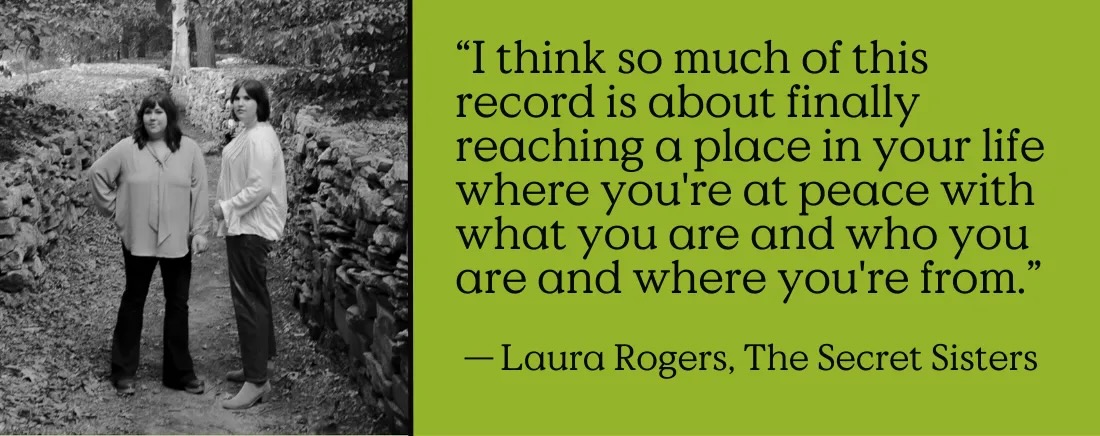
I feel like that song is very true to this record, even though it was written years ago about a romantic relationship, you’re completely right about it fitting into the narrative of this record, because I think so much of this record is about finally reaching a place in your life where you’re at peace with what you are and who you are and where you’re from. And, what your history is and what your sound is.

We have reached this point, hallelujah, where we are like, “What you see is what you get.” We are who we are and all we can really offer the world is a healthy, whole, self-satisfied version of ourselves.

We did the thing in our twenties where we said yes to every show opportunity, every appearance we could make, we said yes to everything. It was good in a lot of ways, but it was also just soul sucking, you know? I think one thing that I’ve really struggled with over the years is how I never thought that I was gonna be a professional musician. I’ve always just loved music for its therapy purposes. So it’s been hard for me to have my favorite hobby become a livelihood, because it feels like a lot of times the magic strips away and the comfort mechanism isn’t there anymore, because it’s your job. It’s like, “Well, this is what I do every day. This is how I keep the lights on.” And then it’s not what I want to do after hours. That’s been a hard thing for me to process.

I think that this record, in a nutshell for me, is about coming to a place of still loving what I do. I still want to make art that matters to me and that people respond to, but I do not have to kill myself in the process.

If I want to be home for someone’s birthday, I can say no to [an opportunity] for that. And, I’m finally at a place where I know I can always make money. I can always find a way to make money. But if I am going to sacrifice being home to watch my kid walk across his pre-k graduation stage, that’s not a fair trade for me anymore. Whereas years ago, in my youth – and I guess you would call it maybe ignorance or just immaturity – I would trade those for things that really mattered. Now I realize what I’m going to look back on in my life when I’m an old lady is not, “Did I play every show? Did I fall in bed exhausted? Did I come home and completely dissociate from everything around me, because I was so overstimulated by life on the road?”

I feel so happy to be in a place where music feels healthy again, because sometimes I think it’s easy for it to not feel healthy.

Sign up here to receive Good Country issues when they launch, direct to your email inbox via Substack.


Photo Credit: David McClister

Cottagecore Country

(Editor’s Note: Sign up here to receive Good Country issues when they launch, direct to your email inbox via Substack.)

You can’t have country music without the country. (Us city slickers belong in the genre as artists and fans, of course, but we’ll get to that later.) There is a fundamental relationship between the natural world and folk music, and the artists featured on our cottagecore playlist demonstrate that. Humans have been mapping their emotions onto nature for as long as we’ve been around: so much of our inner life defies explanation, as does our outer world. And while we may find endless ways to make new environments for ourselves, there are few things as moving as a beautiful sunset or gorgeous vista.

While we can’t create those ourselves, we try to make beautiful – and cozy – spaces for ourselves. In creating our homes the way we like, we try to control the world around us – even though we know we can’t. The songs here look to animals and plants as metaphors for the people and emotions we don’t understand, the ones that got away and are beyond our comprehension – the things we can’t control, but we accept as natural as a bird’s migration.

But even as these songs can be melancholy, they inhabit a place of comfort and tradition – cottagecore. The term reached peak popularity in 2020 to describe a movement that celebrates home, attention to detail, nostalgia, cutesiness. (Back in my day, we called it “twee.”) The aesthetic is largely driven by white women who found comfort in going “back to the land” – but a specific type of return, one that celebrates rural life while sugar-coating the backbreaking labor that is actually involved in homesteading.

Like anything that relies on nostalgia, it’s a double-edged sword. Cottagcore has been claimed by some on the alt-right as the desirable expression for women: tending to the hearth, spending time on making beautiful pies, making everyone else around them feel as snug as a bug in a rug. On the other hand, cottagecore became popular in some queer subcultures precisely as a means of subverting that sort of wisdom. Still, cottagecore assumes that this idyllic lifestyle conforms to Eurocentric views of agrarianism, architecture, and holding oneself separate from nature – and some seek to use cottagecore to question that colonizer logic.

At Good Country, we don’t want to take the easy way out. This playlist is designed to embrace the desire for comfort and retreat, one that is all-too-understandable in a chaotic world. But we would never settle for anything simply reactionary, instead wanting to intentionally offer new ways our society must change for our survival. These are songs about awe, acceptance, change – and regeneration, an aspect of the natural world we would do well to embrace.

Sign up here to receive Good Country issues when they launch, direct to your email inbox via Substack.


Photo Credit: Kacey Musgraves by Kelly Christine Sutton

Boot Scootin’ Country Soul

(Editor’s Note: Sign up here to receive Good Country issues when they launch, direct to your email inbox via Substack.)

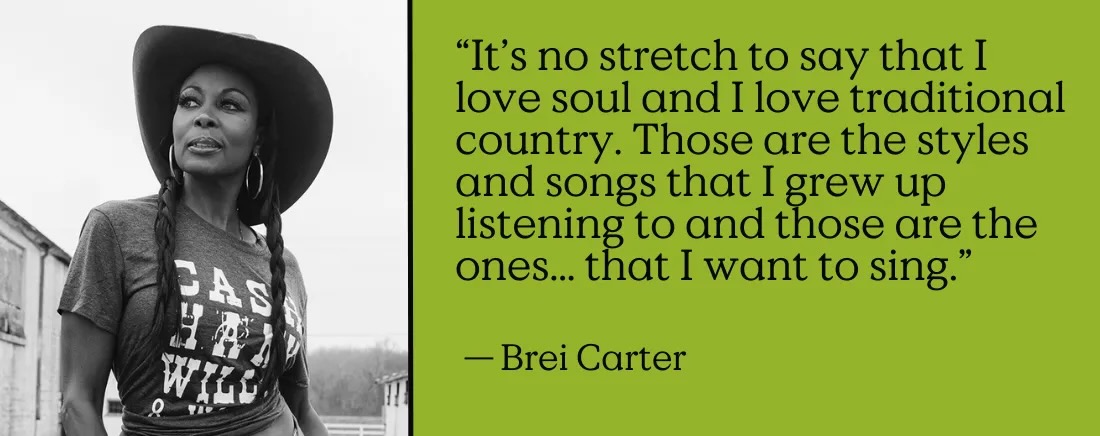
Recording artist Brei Carter is currently enjoying the best of both worlds for any performer. She’s found her niche artistically and is thriving in it, excelling in a hybrid sound she calls “country soul,” one that nicely blends each genre’s special characteristics: soul’s emotional fury and country’s narrative focus. Louisiana born, she relocated to Nashville in 2019 is now working on an upcoming LP that she promises will really show listeners how much these two genres can be combined into her own distinctive style.

“I’ve always kind of gravitated towards all kinds of music, but vocally I’ve found that soul and country are the styles that work best,” Carter said during a recent interview. “For me, it’s no stretch to say that I love soul and I love traditional country. Those are the styles and songs that I grew up listening to and those are the ones that really are suited for the types of things that I want to sing.”

Considering the long history of performers who’ve taken soul tunes and made them into country hits or vice versa, Carter’s certainly in good company.

But, she’s also enjoying commercial success in a different vein. Her single, “Boots Get To Talking,” has quickly become a line dance staple. An energetic, engaging number that’s also a collaboration with the person she calls “my mentor and inspiration,” Elektrohorse, the song has generated its own line dance, something that Carter immediately credits Elektrohorse with enhancing and developing.

“When I first played him the song and told him what I wanted to do, I had my own ideas for how it would work as a line dance,” Carter continued. “He told me, ‘Brei, I’ve got some ideas, too. I think we can really do something with this.’ He took it and did some things with it that I never would have considered and he made it into something huge.”

“Boots Get To Talking” is one of those songs that really has something for every taste. It certainly has a catchy backbeat, equal parts honky-tonk and hip-hop. There’s some underlying blues feel to it as well, but when utilized in the line-dance environment the tune has an added energy and fury. “It’s my new anthem,” Carter adds, “And I’m so happy that it’s getting such a great reaction and response everywhere. It’s also a signal that people will always respond to good music and songs that make them happy and make them feel good.”

That desire, to reach across boundaries and unite people through music, has always been a big part of Carter’s performing mission. Her musical background growing up in Monroe, Louisiana included equal parts Loretta Lynn, Aretha Franklin, Charley Pride, and gospel music: “Plus a healthy dose of Cajun and Zydeco,” Carter adds. “That’s where my love of dance was developed. In those dance halls, no one ever sits down.”

Carter’s earned impressive academic credentials: a Bachelors in Business from University of Louisiana in Monroe, a Masters in International Relations from Webster University, and a Doctorate in Theology from New Foundation Theological Seminary. She’s also a proud U.S. Army veteran, having served as an enlisted soldier and as an officer.

After deciding that music would be her career path, Carter’s been carefully crafting her style. Her first single, “Gave Him A Girl,” got enough positive attention to lead to appearances on RFD-TV, WSMV-TV, WoodSongs’ Old-Time Radio Hour, among others. She made her CMA Fest debut in 2022, and released her debut album, Brand New Country, which featured a fine cover of Charley Pride’s “Kiss an Angel Good Morning,” and the powerful biographical piece, “Stronger Than That.” Carter released her most recent single last year, “Straight Up Country Crazy,” as well as her first Holiday EP, the critically acclaimed Twinkling Tales of Christmas.

Still, she acknowledges it took a while before she really understood exactly what she wanted to do from a technical perspective. “I realize now that my voice really does fall right in that middle area between country and soul,” Carter continued. “That’s a territory where I’m comfortable, and that’s really the area that I want to emphasize now.” With an upcoming series of concert dates set to begin this month, plus her new LP that will be coming later this year, Brei Carter feels really confident about the future.

“I’m really happy about where things are going for me musically, and what the future holds,” Carter concludes. “I’ve found the right mix musically, and the line-dance hit has really been a blessing, as has working with Elektrohorse. I’m very much ready to see what’s coming next.”

Sign up here to receive Good Country issues when they launch, direct to your email inbox via Substack.


Lead Image: Brei Carter by Heather Carpenter.
Inlay Image: Brei Carter by Berlin M.

Ed’s Picks: A Breath of Fresh Air

(Editor’s note: Each issue of Good Country, our co-founder Ed Helms will share a handful of good country artists, albums, and songs direct from his own earphones in Ed’s Picks. 

Sign up here to receive Good Country issues when they launch, direct to your email inbox via Substack.)

Cam

A photo of Cam with the quote: "One of the best makers of pop country and mainstream country today – even Beyoncé took notice! Cam has co-write and production credits all over 'Cowboy Carter.'"

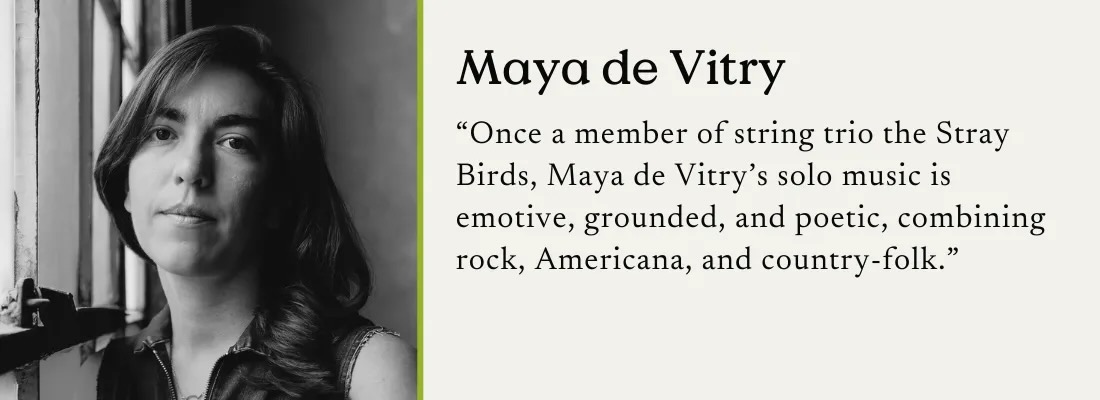
Maya de Vitry

A black and white photo of Maya de Vitry with a text quote: "Once a member of string trio the Stray Birds, Maya de Vitry's solo music is emotive, grounded, and poetic, combining rock, Americana, and country-folk."

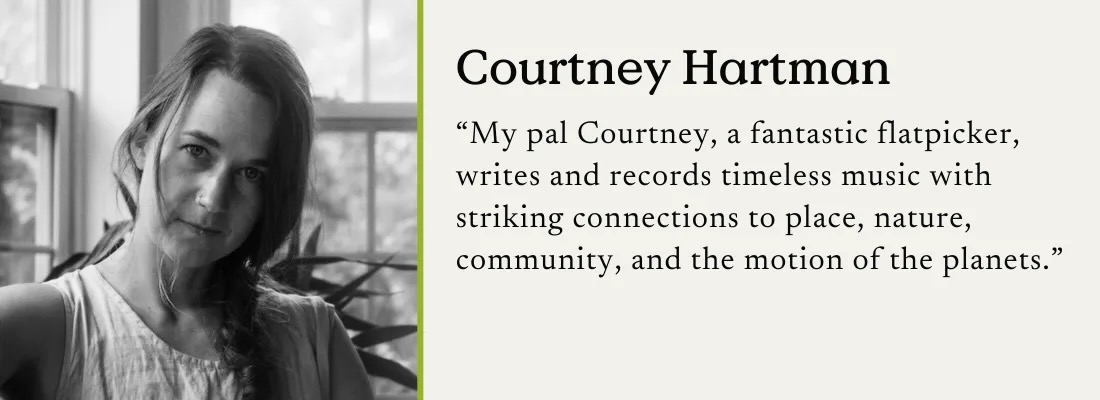
Courtney Hartman

A black and white photo of Courtney Hartman with a text quote: "My pal Courtney, a fantastic flatpicker, writes and records timeless music with striking connections to place, nature, community, and the motion of the planets."

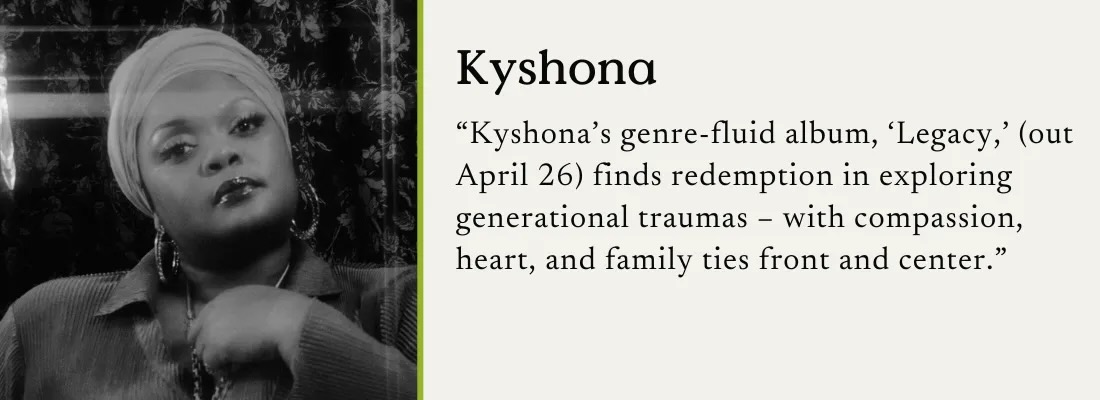
Kyshona

A black and white photo of Kyshona with a text quote: "Kyshona's genre-fluid album, 'Legacy,' (out April 26) finds redemption in exploring generational traumas - with compassion, heart, and family ties front and center."

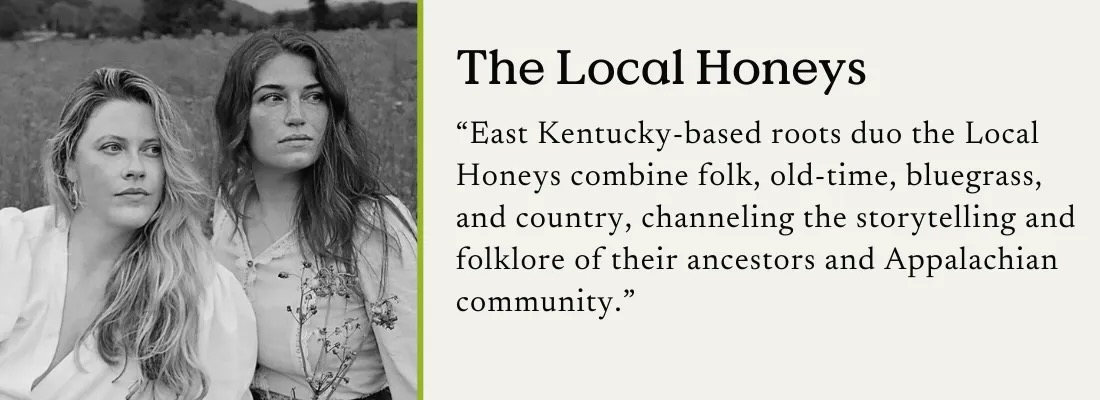
The Local Honeys

A photo of roots duo the Local Honeys in black and white with an accompanying text quote: "East Kentucky-based roots duo the Local Honeys combine folk, old-time, bluegrass, and country, channeling the storytelling and folklore of their ancestors and Appalachian community."

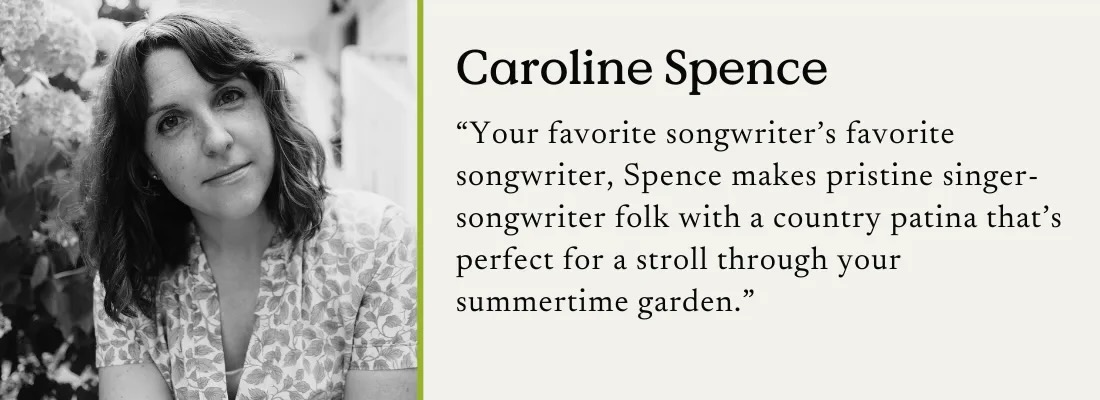
Caroline Spence

A black and white photo of Caroline Spence with a text quote: "Your favorite songwriter's favorite songwriter, Spence makes pristine singer-songwriter folk with a country patina that's perfect for a stroll through your summertime garden."


Photo Credits: Cam by Dennis Leupold; Maya de Vitry by Kaitlyn Raitz; Courtney Hartman by Jo Babb; Kyshona by Anna Haas; The Local Honeys by Erica Chambers; Caroline Spence by Kaitlyn Raitz.

John Smith Explores Life’s Beauty in Tragedy with ‘The Living Kind’

His name might be a little … beige? But those who know John Smith have long loved the vibrant colors of this gifted guitarist and singer-songwriter’s creative palate – especially the serene sophistication at its core. A unique form of meditative propulsion has endeared Smith to heavyweight collaborators like 3-time Grammy winner Joe Henry and his own fans alike, but with his new album, The Living Kind, Smith paints with a new shade of calm, confident, consciousnesses.

Produced by Henry and driven by Smith’s steamroller of a right hand, The Living Kind seems to have a gravity of its own making – a contemporary folk album that is both spartan and lush, modern and timeless, desolate and dense with the movement of life.

Perhaps that’s due to the subject matter, since it was written as Smith grappled with a season of change and an Alzheimer’s diagnosis that impacted not just his father, but the whole family. Or maybe it came down to the recording style, which found the UK native escaping to Maine with a few vintage guitars in the dead of winter, finding new courage in Henry’s home studio. But no matter the reason, the result is a work of deep reflection – and ultimately deep revelation.

Just after The Living Kind’s release, BGS spoke with Smith about the mix of experiences that led to his cathartic new album, a project that helps convey the beautiful tragedy of living itself.

Thank you for making some time for us to connect, John. To start, I just wonder how you’re feeling about the act of making music these days?

John Smith: I mean, I love music. Music is the good bit. I feel like music is the bit I do for free. The music business itself is tough. It’s in a strange place at the moment and everyone I know is working five times harder for half the money. So I feel that going on tour and playing shows cannot be taken for granted, especially since that moment where it all shut down. It feels like a real privilege to be able to go and do live shows. To make this record with my favorite producer was just a dream come true. The whole thing feels completely satisfying and good to me.

Tell me a little about where these songs came from. I understand they came in sort of a creative burst and you had a lot of tumultuous things going on in life at the time before that. Did this music have an impact on you personally – were you using it to process?

I think the album before [2021’s The Fray] was all about that. It was me writing so I didn’t lose my mind. This album feels more about moving through turmoil and looking behind you, looking at the rear view mirror and seeing a part of your life fade into the distance and recognizing it and keeping your eye on the road ahead. I wrote this as I was emerging from a time of tremendous – well, yeah, I say turmoil again, and the songs came very quickly. Once Joe and I had decided to make a record together, I wrote the songs over the course of the winter of 2022 into ‘23, wrote most of the record in about six weeks.

That’s crazy.

I think the thing is, when you’re writing and you put up your aerial, sometimes you catch a good frequency, you get lucky, and you catch something that falls into your lap.

I noticed that you described this project as an actual song cycle, which is not always so common anymore. What’s the story you feel these songs are really taking people through?

Actually, I think that was a journalist who said that, and it kind of hit me that it was not entirely untrue. The album moves through a series of different moods. It starts in a place of despair with “Candle” – a song about Alzheimer’s and looking after someone and feeling burned out. And it ends with this song “Lily,” which is a kind of evergreen love song about hope and being able to get through something, because you’ve got someone to do it with. And I think the album takes you through various situations of grief and longing and love and hope, and then it ends in a very hopeful place.

You mentioned earlier, “Watching the person you were get left behind.” I mean, is that a scary feeling at this point in life?

Yeah, I think I never seem to have any say in it. Things happen and I move around them. What I’m learning as I get older is just to be more malleable, be more subtle. There’s a line in “The World Turns:” “We’ll be stronger if we soften and yield,” and that’s kind of what I learned over the course of the last five years. I was always someone who would attempt to resist the flow, but I’ve learned that just jumping in and seeing if you don’t drown is probably the best way.

I did want to ask you where your sound is landing on this record. It’s got this very peaceful, but sort of propulsive feeling and it puts me in a good place. I like it a lot. I wonder, does that energy show up in your daily life, or were you sort of getting out of yourself to find this mix of calming but also pushing forward?

That’s a really good question. It’s almost as if you’ve done this before. [Laughs] That’s really good, man. I never thought of that. …

Well, I’m a calm person, but I’m always moving. I’m always thinking of the next thing and always planning and always on it, but I’m generally very calm, and maybe that’s a reflection of me. When I went in, I wanted to record something that sounded like me, but also sounded idiosyncratic to this one recording process.

Most of these songs are driven by the right hand. It’s that propulsive groovy right-hand thing that I do, and I’ve been working on my whole life, really. That is at the center of the mix, and Joe wanted to frame that, then just have other actors walk out onto the stage, do their bit, and then walk off. We wanted to put that front-and-center instead of me being part of the ensemble.

Do you think that’s maybe part of why this one was so satisfying feeling?

I think so. I think that’s largely down to Joe and his recording process. He just put a mic up and asks you to play a song. This felt like the record I’ve been trying to make my whole career, just sometimes you need a beautifully gifted Grammy-winning producer to help you get there.

Fortunately, I’ve played on lots of Joe’s records. I’ve played on four or five of his solo records and a bunch of his productions, so I’m used to that way of working – and as soon as I saw him do it the first time like 13 years ago, I just said, “Right, that’s how I want to record.”

He’s always been very encouraging of me, and tried to get me to do my thing without inhibition. And there was a moment when I was singing the song “Silver Mine.” He looked over and he just kind of winked at me and said, “You’ve done it now, son. You’ve done it.” And it was like, “Yeah, I have actually done it. I’ve managed to sing without inhibition on a record,” which I don’t think I’d ever really done before.

How did the setting of Maine – in the winter – impact what you made?

Well, the idea for the album was born there a year previous. I was on tour in New England in February ’22 and then Joe and I wrote this song early after dinner, went upstairs, made a demo, and then Joe just said to me, “There’s no reason why we shouldn’t make a record here in this house.” And so a year later, I was back there and it was the same icy, snowy, frozen situation from the last February, and I’d had it in mind the whole time I was writing. … I always had those frozen finger lakes where he lives in mind.

So, when I went back, it was exactly as I’d remembered it. The songs suited the place, they suited the setting and the weather, and then it happened. On the second day, the temperature plummeted to -25º Celsius. So we just stayed in, man. We stayed in the house. We looked out the window and we cut the record in four days. It brings a closeness that you can’t manufacture. You can hear that on the record.

Tell me about where “Candle” came from. This is the track that starts the record off, and I know it’s kind of a heavy topic, right?

It is a bit heavy. It’s a song about admitting that something is very wrong and that you have to deal with it, and you have to try not to burn out. In this case, my father suffers from Alzheimer’s. We chose to completely change our lives to move around him and his condition and look after him, and it’s a song about that. I felt there was no point in dressing it up and trying to speak of it in broader strokes, because I know a lot of folk whose parents are suffering dementia of some kind. So I just decided, let’s be straight up about it.

Obviously, the visual metaphor is a candle burning out. You, as a carer, will burn out. But actually, I think really the song is about putting your hands around the candle and trying to just stay warm, enjoy that light as long as you can. The relationship with somebody who has Alzheimer’s just changes every day.

You chose “The Living Kind” as the title track. Why did you feel that was the best way to describe the record?

I don’t know, actually. It’s a bit of an anomaly because it’s such an upbeat song. The record isn’t all that upbeat. … I guess I thought “The Living Kind” sums it up. Rather than becoming complacent in the face of great difficulty or becoming stunned into inaction, it’s about getting on with it and trying to live life as best you can. I think that is what a lot of the record is about.

What do you hope people take away from this?

I just hope it makes listeners feel good. I think at the end of the day, that’s all I can hope for. I believe Bob Dylan when he said that once you release music, it is not your business what people think of it. I hope it makes ‘em feel good.


Photo Credit: Phil Fisk

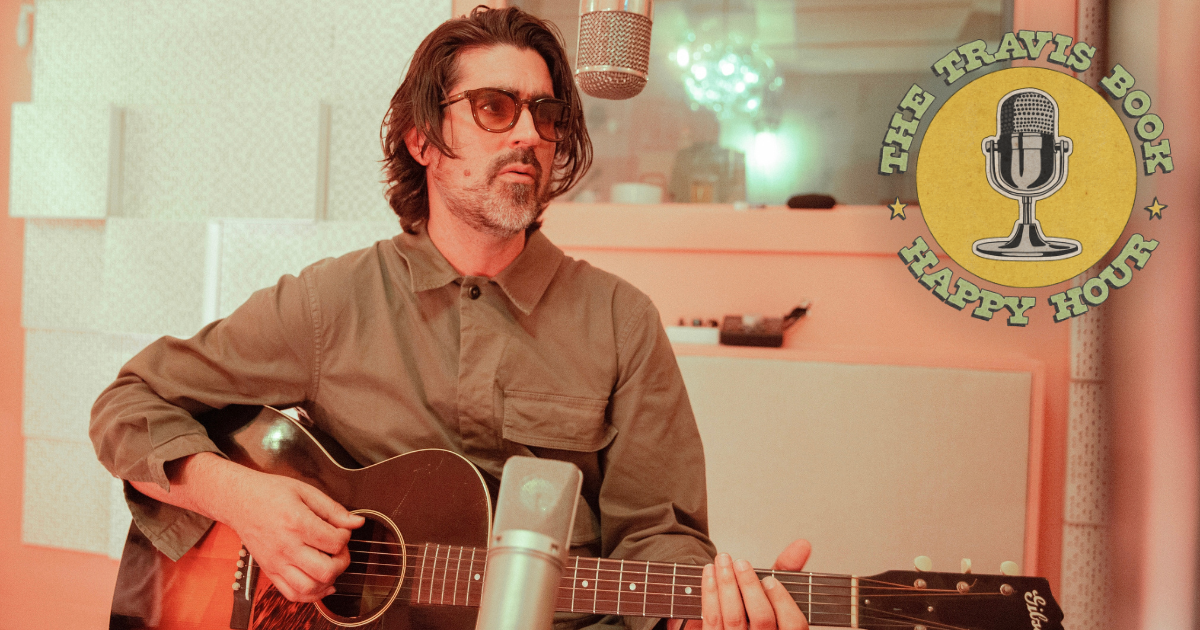
The Travis Book Happy Hour: Ed Jurdi (Band of Heathens)

I met Ed Jurdi at a taping of The Travis Book Happy Hour in March of 2021. Our mutual friend Nicki Bluhm was on the show and she’d invited Ed, who’d recently moved to Asheville, to attend. I was not yet acquainted with Band of Heathens or Ed Jurdi, but when we met after the show I was struck by his warmth and attentiveness. It was a couple years before I would get him to Brevard to join me, but immediately during rehearsals I knew we’d be friends and this would only be the first of many times we’d share a stage. I had a blast on this episode (as evidenced by my over-playing) and I’m happy to share it with you.

LISTEN: APPLE • SPOTIFY • STITCHERAMAZON • MP3

This episode was recorded live at 185 King St. in Brevard, North Carolina on May 30, 2023. Huge thanks to Ed Jurdi and Tommy Maher.

Timestamps:

0:08 – Soundbyte
0:49 – Introduction
2:09 – Bill K’s introduction
2:45 – Travis’ audience greeting
3:31 – “All I’m Asking”
7:33 – “Bumblebee”
12:52 – “What a joy”
13:27 – “Jackson Station”
18:32 – Interview
34:11 – “South By Somewhere”
38:51 – “The Good Doctor”
42:45 – “Walking and Talking”
48:43 – Outro


Editor’s note: The Travis Book Happy Hour is hosted by Travis Book of the GRAMMY Award-winning band, The Infamous Stringdusters. The show’s focus is musical collaboration and conversation around matters of being. The podcast is the best of the interview and music from the live show recorded in Asheville and Brevard, North Carolina.

The Travis Book Happy Hour Podcast is brought to you by Thompson Guitars and is presented by Americana Vibes and The Bluegrass Situation as part of the BGS Podcast Network. You can find the Travis Book Happy Hour on Instagram and Facebook and online at thetravisbookhappyhour.com.

Photo Credit: Alysse Gafkjen

The Creative Freedom Behind Leyla McCalla’s ‘Sun Without the Heat’

Sun Without the Heat is Leyla McCalla’s fifth solo album, but it is different from past efforts and she brings the listener through the transformative process with her. Produced by Maryam Qudus at Dockside Studio in Louisiana, McCalla dug into her personal history, primary sources from Amistad Research Center at Tulane University’s archives, world musical influences, and her creative trust in her long time bandmates to bring forth a bright, kinetic, and meditative project.

The studio, nestled along the Vermilion Bayou, offered an insular, bucolic setting for the nine days McCalla and band were recording; a place where friends and children could visit and local fishermen provided fresh catch for dinner. Qudus’ direction provided McCalla with space and vision to piece together her research and personal edification, while her relationship with her band allowed a deeply creative process to unfold. McCalla spoke wistfully about the experience, “It was very luxurious to have that kind of space. And it’s just really a very nurturing environment.”

Traditionally a cellist, on this project, McCalla explores her relationship with the guitar. She delves into West African and Brazilian polyrhythms flowing underneath lyrics that, at times, feel like a repetitive prayer or mantra. She balances the seemingly unanswerable aspects of life with the sometimes illusive, but simple notion that many contradictory feelings can be true at once.

BGS spoke with McCalla via Zoom from her home in New Orleans earlier this month. McCalla discussed the experience of researching, writing, and recording, her relationship with fans and supporters, creative freedom, and trusting the process.

I’ve been listening to all your music the past couple of days and I’ve noticed that the sonic palette of this album is somewhat of a shift for you. It seems like there’s a transformation theme running through it, both lyrically and musically, and it seems like even in the process of recording it. So I wanna talk about that on multiple levels, but can we start with the process for this? It sounds like you went into the woodshed and didn’t come out until the record was done.

Leyla McCalla: This is an album that was mostly finished in the studio. I had a pre-production session with Maryam Qudus, who produced the record. It was also just this really crazy time in my life. I was on tour a lot and coordinating with kids’ schedules. We really only had 36 hours of workshopping songs. Maryam was really amazing at being like, “Okay, let’s play with this idea, and come up with a verse and a chorus.” So I think we came out of that pre-production session with about 7 different demos that were just these rough sketches and we sent them all around to the band. When we went into the studio, everyone contributed what they were hearing to the songs. I’ve been working with my band now for about six years. I think that we have developed fluidity in our process of coming up with parts and talking about music. And so I knew that I had these sort of vague notions of delving into psychedelia and Afrofuturism and mining, this incredible music from Africa, ultimately. I think that that’s been a consistent through line in all my work is connecting my music through the ancestral lines of the sounds themselves.

I played a lot more guitar on this record than any other record. For me, it was really about delving into the songwriting and figuring out what I wanted to say. I’d been doing a lot of reading of Black feminist thinkers, and contemporary thinkers like Adrienne Maree Brown, Alexis Pauline Gumbs, and Octavia Butler. I think this record for me was really about, “How am I going to survive life? What does it mean to be resilient? What does it mean to transform and change? And give myself the space to grieve and also to hope and to dream.” There are a lot of things that I was meditating on when I wrote these songs.

I remember feeling very vulnerable, because I was really going back into this more beginner’s mind. I’ve never gone into the studio and been like, “I don’t know what it’s gonna sound like on the other side.” I’ve always had the band pretty well rehearsed and gone in. This time it was like, “These are the things that are emerging in real-time.”

Did you feel nervous about it? It seems like you have a lot of trust with your band, which is a great starting point. And you had the 36 hours of workshopping and all the ideas that you came up with. But were there nerves about it walking in to record?

Oh, yeah. It was not nerves about, “Can I trust my bandmates to be awesome?” It was more nerves of, “Do I suck?” Which is classic imposter syndrome that artists have as part of the process of writing. You get an idea. It’s a good idea. You question whether it’s a good idea.

I’m trying to do a new thing. I’m trying to break new ground in my creative life and in my sonic expression. Within that, I think that there’s a lot of room for self-doubt. That’s why for this album it was critical to have the support of my bandmates and of Maryam, who didn’t have that kind of attachment to any of the songs. They were just there to help execute what I wanted.
I think this album really has strengthened my trust in my songwriting and in my creative process. And just knowing that you don’t always have to know what’s gonna happen to know that it’ll be good.

Absolutely. I was just going to say when you said it was a sort of meditative for you, I think that really comes across, lyrically and sonically. There are these phrases that you repeat that are meditative and it seems like you’re asking questions, you’re answering the ones you can, and you’re submitting to the ones that you can’t. What you are saying you wanted to happen comes across.

Yeah, I think so. I think that there is, on a spiritual level, deep healing for me in writing these songs. I was calling that in. I was navigating single motherhood, divorce, breakups, and big deaths in my family. It was like, “How do I call myself back to myself, what is gonna guide me through that?” I think for me, doing a lot of sort of ancestral healing work and meditating on the the gifts and the things that I’ve inherited from my ancestors, those made their way into the songs.

Speaking of process, you mentioned in your liner notes that you are grateful for creative freedom on this project. And I’d love to know what creative freedom looks like for you and how it impacts your work. And maybe what a lack of creative freedom has felt like in the past for you.

I think creative freedom, for me, was kind of twofold. I have a label that is mostly doing stuff outside of the commercial realm. Obviously, we’re part of the music industry, but I never felt like I needed to make a particular album. I felt like the question from the label was, “What kind of album do you want to make? What is coming through right now for you? What do you want to say?” Being able to come from that place is very different than, “Try to take over this part of the market,” or something. It’s a lot more empowering experience. Also, not being afraid to go in different directions. Not being afraid to use weird pedals on my guitars, experiment with synths, have a freaking psychedelic freak out, or have piano on the songs or organ. It was just sort of intuitive, “Yes, this belongs.” And not feeling like anyone was going to disapprove of that.

I never felt that there was a particular agenda outside of the agenda that I wanted to fulfill. That has been a really empowering experience for me, coming off of my previous record where it was like, “Okay, these are these ancient rhythms that are Haitian and African, and this is a mapping of where Haitian people come from.” I felt empowered by that, but in a very different way, almost like I wanted to serve this music. For this record it felt like, “Okay, how can this process really serve me and serve my creative genesis?” Returning back to like a more beginner’s mind, “What are the things that really I love about music? What are the things that make me wanna write songs?”

I didn’t have as much of a mind for that with Breaking the Thermometer, because it had been such a longstanding collaboration that I had been working on for five years with a crew of theater makers and different musicians and then going into the studio.

I always felt like that project was like a garden of weeds that are growing out of control. It could be a book. It could be a theater project. It could be a dance piece. I explored the intersection of all those things together. Whereas this was like, “Okay, I’m just returning back to this one format. We’re making an album.”

It meant connecting with some of my earliest influences. That’s why I went back to listening to a lot of artists from the tropicalismo movement in Brazil, in the ’60s and ’70s. There was all this experimentation with traditional music forms and rock and roll and psychedelia. I love that music. There’s something about it that just really speaks deeply to me. And I think that it’s also because of my generation, who I am, and where I am. I’m drawn to things that are out of the box. And I’m also drawn to really solid groove and feel and deep emotional content. I never had an agenda other than to figure out what I want to sound like and being able to have that space. A lot of these songs were about like, “How do I get out of my own way?”

When you started thinking about making this record did you know that you’d be playing more guitar than cello? Did you write on guitar? What was the relationship with that instrument like?

I was writing a lot on guitar. I wasn’t like, “I’m gonna play guitar and not cello.” I didn’t have an agenda in that way. I really wanted to explore different shapes in my fingers and try different rhythmic structures. Guitar is exciting for me in that way.
I’ve done a lot of finger-picking in my work and there’s plenty of that on this record. But I’m like, “What about this inflection? What about this texture? And what about this feel? What does that conjure?” That was really fun for me.

Fun was also really central to the process. I was like, “I want to heal, I want to be creative, I want to expand my sonic palette, and I also want to have fun.” I do this work to have fun. I don’t do this work to be the “king of the capitalists” or something. I want to have a good experience with it and find it enriching. I feel like the guitar is the ultimate symbol of liberation and freedom. It has a different meaning to me than the cello. With cello, I know the notes. I am thinking about technique and I have to think about how I’m holding my body. Guitar is just like, “This is who I am.”

For sure. Partly because the guitar is so mobile. You can walk off into the woods with it.

Yeah, totally. You should see me walk through an airport. I’m carrying my guitar, my banjo, and my cello, and I’m always like, ”Man, life would be so much easier without this cello.” But it’s such a powerful thing. When I’m playing cello, it feels totally like, “Wow, this is also home.”

Cello moves so much air. It can completely change the vibration of a room.

Totally. I always tell my bandmates, “Oh, we gotta be careful with that cello. It’s like melting a dark piece of chocolate on stage.”

I think a lot about sense of place and how a place can affect the creative process. Since you were sort of in a “lock-in” at Dockside Studio, I want to know if that studio and that place had an effect on this record.

Oh, yeah. Dockside is an incredible place. There’s a house with a pool and then a whole other house with a studio. The grounds are beautiful and well-kept. You’re right by the river.

There was a sense of deep relaxation for me there, because it is kind of separate. If it were in the middle of a city, there would be so much more distraction. But because there isn’t, I felt like it really helped me to focus and to tune in. We burnt candles there every day. We were calling in a lot of spirits and support. I did a lot of just sitting by the river and writing and reading in order to write.

And Maryam is amazing. If it had just been me producing the record, it would have been way more disorganized. Maryam was amazing at being like, “Okay, Leyla, we don’t need you in the studio right now. What we really need from you is to go and write.” I feel like I do best in those sorts of relationships, when someone is gently nudging me in the direction of what’s gonna be most productive for me. I was really able to get to a place of being productive and feeling quiet enough to actually hear whatever was coming through. If we had made the record anywhere else, it would have probably sounded completely different. We are all pretty well versed in the different styles of Louisianan music, so we kept thinking, “What is this sound that we’re coming up with?” And we were like, “This is Louisiana tropicalia.” It’s a fun construct.

Tell me a bit about what your relationship is like with fans and supporters of your music and the impact that they might have on your creations or your career.

For my first record, I did a Kickstarter campaign and I asked for $5,000, because I didn’t know how expensive it is to make albums. I ended up making over $20k. That whole process of doing the Kickstarter was such a boon to my career. At that point, I had been touring with the Carolina Chocolate Drops. No one really knew who I was, but I realized that there was support and space for me to be doing these projects that combine research and intellectual pursuits with making music. That’s the line that I have been toeing this whole time. And it is incredible, over the years, the number of connections that I have made from pursuing two things at once and growing this academic life within my body of work as a recording artist.

People have brought me, over the years, limited edition Langston Hughes, Haitian Creole poetry from the 1800s, translations of Zora Neale Hurston books that are in French or German. Those are the kinds of connections that feel so sustaining creatively for me and really enriching. The music industry is so inundated with artists, and everyone’s trying to stand out. That kind of symbiosis, I think, is really critical not only to me as an artist but to me seeking support.

That’s wonderful. There’s something sort of clinical about the traditional record label rollout of material in the past, but now it feels like, because of social media, because of things like Kickstarter and house shows, a wall has broken down.

Totally. And I feel people really connect to that, even sometimes more than the actual songs. Which may be problematic in one way. Everything is kind of about more of this “cult of personality” thing. Not that I’m super invested in developing that, but I do feel like the fan base is invested in me as a person, and wants to want to support the music as a result of that.

Can you talk a little bit about the collaboration with the Rivers Institute and the Amistad Research Center at Tulane, and how that might have informed this project, or what you’re working on in general?

I was invited by the Rivers Institute to be their first music fellow. They have this incredible artist-in-residence program that is in concert with the Amistad Research Center at Tulane University, which is an incredible archive of stuff from all over the South, particularly Louisiana Black culture. There are so many oral history interviews. I discovered writers that I didn’t know about, particularly a guy named Tom Dent, who feels like he’s kind of like the Langston Hughes of Louisiana.

I’ve always known how important archives and libraries are, but it’s just so much information. There’s a woman named Jade Flint who works there who helped me. She was like, “What are you interested in?” I’m like, “I like poetry. I like organizers. I like movement work.” I found myself down this path of discovering letters that Fannie Lou Hamer had written to her best friend. She was from the Delta in Mississippi and in the ’60s was really active in registering Black voters at the height of Jim Crow. She was attacked. She was beaten really badly for that. She just kept on fighting her whole life for Black people to have the right to vote and for political participation for Black people at a time where that came at a great cost to her mental, emotional, and physical health.

There’s an organization called Core New Orleans, which actually did a lot of COVID testing during the pandemic, but they were also working on voter registrations. I was reading their pamphlets that were like, “This is how you deal with potentially violent situations. This is how you approach people about trying to get them to vote.” I was doing that and concurrently reading things about emergent strategy and pleasure activism and comparing notes like, “These are the activists of yesteryear and the organizing principles.”

And then I was reading Adrienne Maree Brown’s books. She’s like, “You’re gonna need to masturbate before reading this chapter, because otherwise you won’t be connected with your pleasure center. That is essential to this activist work.” You could see this sea change in the attitude about what is actually going to aid our collective liberation the most.

During this time, my grandfather passed away and he [had] started a Socialist Haitian newspaper called Haiti Progress. Both of my parents are activists. I’ve been immersed in a lot organizing and activist stuff my whole life like going to protests throughout my childhood, especially regarding Haitian immigrants and human rights issues in the United States.

All of these things just really filled me with this feeling of, “Wow! It’s taken so much bravery to be able to fight the good fight and keep these conversations moving forward.” I think we still have a long way to go. I did a lot of reflecting on that. And that song, “I Want to Believe,” was written during that residency. It’s a simple song, but I wanted to write something that was almost a song that could be sung at a protest, something that was not quite gospel and not quite protest music, somewhere in the middle.

I love a library, I love an archivist, and I love being in that space and finding things that feel like a secret. How you process that as a person in the present, feeling the history in the present, and how it comes across – that is reflected in your lyrics. We have access to so much information today, but that information is very much filtered by these multinational corporations. There’s search engine optimization and all that, and we can’t really dig down until you go into a place like that where those regional details exist, like in an archive or library.

It just is incredible to me, because there’s so much to keep track of. And you know, even the different categories like oral histories or audio interviews or drafts of books or poems. There are unpublished pieces that may only be read by five people every year.
Those five people then know about this thing and can share it with their community, and make work from it, or include it in their research papers. There’s there’s endless ways to see the world and then filter this information.

I feel like my job as a musician is looking for those bits of information that feel like the diamond in the rough, like the thing that I’ve been looking for my whole life. That’s really the chase. It really keeps me in the archives.

Can you talk specifically about the title track, “Sun Without the Heat?” In your liner notes, you dedicate the song to Susan Raffo and Frederick Douglass. I’d love to know more about that.

Susan Rafo released a book called Liberated to the Bone: Histories. Bodies. Futures. I went down this rabbit hole of progressive thought. Her book is written for healers, people working within the medical industrial complex, and anyone who’s engaged in healing work, whether that be on a community level or on a one-on-one basis. I read that book, and it was really fortifying for me.

She has this theory of the original wounds of our society, which are the genocide of Indigenous peoples and the enslavement of African people through the transatlantic slave trade. It’s about our inability to grapple with the harm that has been perpetuated and is being perpetuated from those original wounds. It is holding us back from larger systemic change. There’s a chapter where she references a speech that Frederick Douglass gave in 1857 to a room full of white abolitionists. He said, “You want the crops without the plow. You want the rain without the thunder. You want the ocean without the roar of its waters.” I was immediately like, “Those are song lyrics.” I just heard it immediately. Those were just such beautiful words and and phrases and concepts, and I kept on singing that.

It occurred to me, “You can’t have the sun without the heat.” I was like, “There are only three phrases, and I need that one other thing.” I was also thinking about how so many of these songs to me are about transformation, and are about what change really requires of us. And it felt like those phrases spoke so well to that theme.

I read a book called Undrowned by Alexis Pauline Ghums. It’s a Black feminist study of marine mammals off the coast of South Carolina and Georgia and the things that we can learn from them about survival, resiliency, living on this planet, and our inherent connection to nature — you know, how to thrive on this seemingly unsustainable planet. It is also about our connections to each other and community.

For a long time, I think in my own personal life I was like, “I just can’t help but feel like I’m drowning.” But I didn’t want to just make a record about that feeling. I wanted to make a record about getting through that feeling: about breaking through the overwhelm.


Photo Credit: Chris Scheurich