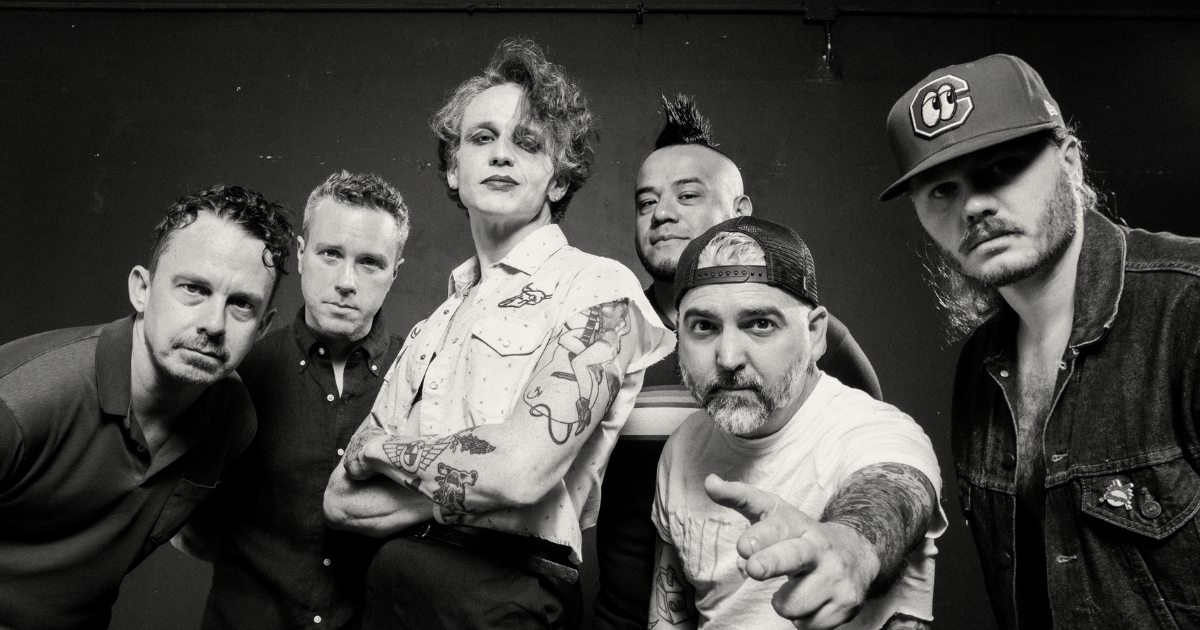
Brent Cobb
Ain’t Rocked In a While

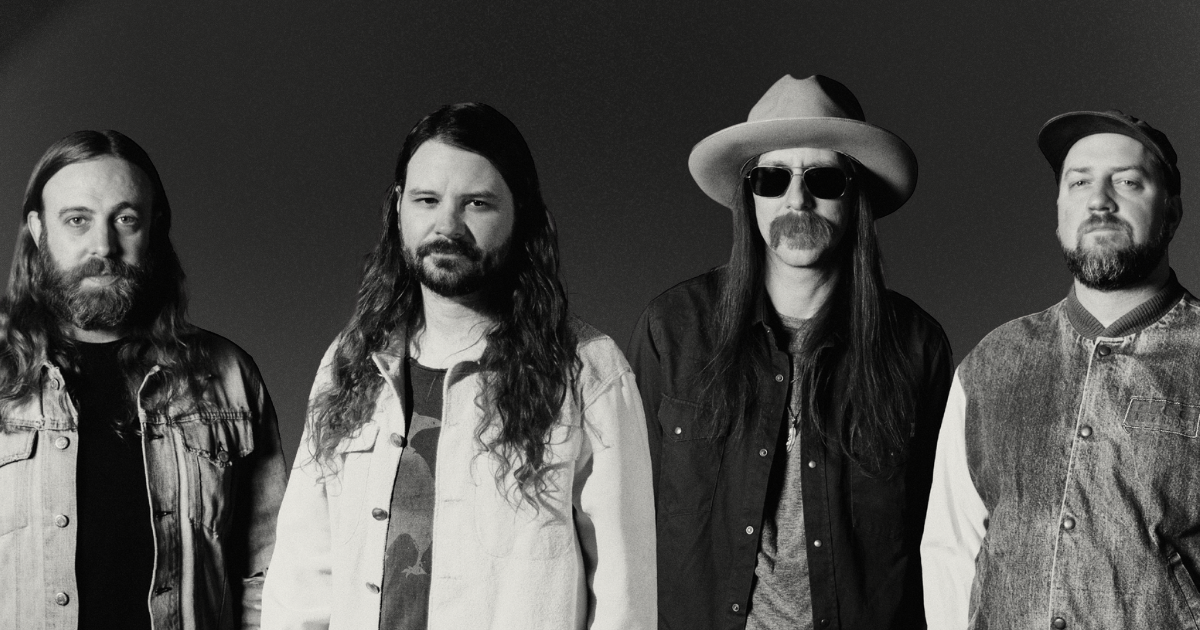
He might be a renowned lyricist and self-proclaimed songwriter-singer (not singer-songwriter). His typical sound may simmer with a supremely chill mix of country, blues, and soul. But Brent Cobb got his start with the crunchy thunder of guitar-driven rock ‘n’ roll and his seventh album takes him back.

Tapping the raw rage of garage rock, the distorted domination of ‘70s proto-metal, and more, Ain’t Rocked In a While finds this GRAMMY-nominated master of phrase returning to a world where the guitar riff is king – his first love as a musician. Co-produced with Oran Thornton and recorded live, 10 songs combine Cobb’s laid-back style with the immortal edge of bands like Black Sabbath, Metallica, and heavier inspirations still. But while old metalheads do tend to get rusty, this project is razor sharp.

Speaking with Good Country, Cobb explains the change of pace, as well as his abiding love for the rock ‘n’ roll spirit and new appreciation for classic-rock lyrics. Plus, the long-haired country boy explains how Ain’t Rocked In a While could fairly be considered “dad rock.”

I want to get the story behind this record. Ain’t Rocked in While is one of those projects that really seems to do what it say it’s going to do. How much of a creative release was this for you?

Brent Cobb: Well, this project was cool because I was focused more on riff and just really digging back into the foundation of what I grew up on. My first band was a rock band with my best friend Justin, who played guitar. He was real into Pink Floyd and AC/DC and Black Sabbath, and had me learning all those songs to sing. So when I was writing riffs and lyrics for this album, I sort of went back and was rediscovering those songs that I grew up learning.

Back then, even though I was learning the lyrics, I was just learning them to sing it. I wasn’t really paying attention to what they were saying and I didn’t think of those songs as very lyrical songs. I just enjoyed the groove. With this go ‘round, it really took all the pressure off of trying to write a lyrical song – which in turn made the lyrics come way easier. It also made me aware of just how lyrical those old classic rock songs were.

Oh, right!

I didn’t notice it or I didn’t appreciate it, but I don’t guess you would as a teenager. So that was the whole process – I was just trying to write a riff album and wanted to rock a little and show the audience a reference for a live show when they came, but wound up writing lyrical songs anyway.

I guess you just can’t help it. You’ve always been known as a storyteller and a songwriter first, and you even did a gospel record just a few cycles ago. Where does hard rock fit into your listening habits?

It all has always coexisted in my little world. My mom’s from Cleveland, Ohio, and my uncles – her brothers – they were all rockers into Led Zeppelin, The Beatles, and just the classic stuff. But then here, my dad was in a band with his brother – my other uncle – and my dad would cover the early ‘50s and ‘60s rock ‘n’ roll and my uncle would do classic country. So I grew up around that, but if you looked at any of my playlists, it’s just always been real eclectic that way for sure. For this album, Master of Reality [by] Black Sabbath was probably the biggest influence and the one that I would keep returning to for inspiration. And not just in riffs, but in the way that they structured that album to ebb and flow.

This might be a hard question to answer, but how heavy do your tastes get? What do you think would be the hardest hitting band in your collection?

Oh man. Well, [for] modern [artists], I’d probably say the band Sleep. Have you ever listened to much of them?

I don’t think so. I’m going to have to check that out right after this.

It’s like stoner metal. That’s probably the hardest stuff that I’ll listen to right now. But I don’t know – I mean, Sabbath is so hard still to this day. Those first five albums are unreal. … With Sleep, that’s some heavy stoner metal.

Yeah, I’m looking on Spotify right now. They’ve got songs like “Marijuanauts’s Theme.” [Laughs] That’s an awesome title.

Dude, I know! But that stuff is like, you can go find sections of old Sabbath songs and it’s kind of like [Sleep] built a whole sound on little sections of Sabbath songs. But then if you go further, it’s all blues – that’s all it is.

For any true rock record, the recording itself is so important – trying to capture the energy. I know you recorded live-to-tape and that seems like the rock ‘n’ roll dream, right? Was that experience different from digital recording?

Well, honestly, each of my albums have always been recorded to tape except Keep ‘Em On They Toes. But with that said, it is a modern world and we still record to tape and then dump all that into Pro Tools to where it’s easier to edit, then take that and dump it all back to tape. You get the original physical, sonic difference that is recording to tape when each tape is completely different, because the needle’s hitting different, the amp was hotter, or whatever. But then we fast forward to the modern world to where we can just really be quicker and more efficient.

I think we had 10 days blocked off to record, and then I got sick on the first two days. And then Oran [Thornton], my co-producer and head engineer, he got sick for two days. And so we wound up recording in seven or eight days.

That is a plus of the modern age for sure. In any case, it came out sounding really tight – you recorded as a band, right?

That’s right. It’s the touring band [The Fixin’s] I’ve had for a while now. … The studio we recorded at in Springfield, Missouri, was this little bitty, almost broom-closet size live room, and they were all in the main live room together. I did want to isolate myself, so I was in an even smaller little isolation booth with a window where we could still see each other. … I obviously am not as experienced in singing those type songs and playing those type riffs at the same time, so I knew I was going to screw up some lyric phrasings and I didn’t want to mess everything else up. So I was the only thing I isolated.

Where’d that title track come from? “Ain’t Rocked In a While” – this definitely has that Black Sabbath feel, stretching out to five minutes.

Straight up. It started because I had bought my son a little drum kit for his fourth birthday a couple years ago. He just loves the drums … and then I would set my amp up and get my guitar out and we’d just be jamming in his room. One day he was like, “Dad, play some rock ‘n’ roll guitar.” And I’d hit a little lick and he’s like, “No, no, rock ‘n’ roll.” I’d play another little lick. And he said, “No, dad, like Mattman” – which is [the Fixin’s guitar player] Matt [McDaniel]. I was doing the best I could, really just trying to prove to him that daddy could rock.

That’s funny!

So I came up with that “Ain’t Rocked In a While” riff and then it turned into me proving to my son, “I have rocked before, boy. It just ain’t been a while.” I thought it would be funny, but I also thought, “Well, all of us are sort of that way.” I’m nearly 40 and a father of two, so you could definitely consider this album Dad Rock, but all our kids don’t know. We all had some rock eras, whether that be in life or musically or whatever it is.

Well, you still got the hair, so I think it’s easier to make that case.

[Laughs] Hell yeah. It’s funny you say that. My mama just yesterday, she used to be a hairdresser and had her own business, and she was like, “You need to let me cut your hair.” And I was like, “Look, I’m going to keep it growing until it don’t grow no more.” I’m barely gray and I ain’t thinning too much yet. Until that happens, I’m going to keep rocking the long hair.

A little earlier you mentioned how [hard rock is] all blues at the bottom, right? I think that really comes through in a song like “Do It All the Time.”

Man, I’m going to have to give my son some co-writing credit on this album, I guess. That riff did come out very Skynyrd-esque, but … I was actually trying to do my best James Gang feel with the riff, the melody, and the double vocals on that chorus. That early James Gang stuff is so badass – but I think Skynyrd also was probably trying to do their best James Gang on some of their stuff.

Anyway, the idea of that song is from when [my son] Tuck was even younger, we’d be like “Oh man. Look dude, you ate all your food!” And he would say, “I did it, and I do it all the time.” So I always had that. I started saying “I do it all the time!” And then I don’t know how much I should say, but sometimes when you’re parents, you and your other half may not be on the same page. … You’re just both sleep-deprived and sometimes it’s hard to see. And so I think we were having a little moment of that and I was going, “I tried then and I try now and I try all the time. I did it and I do it all the time, babe!” So that’s where it came from.

Okay, one more thing here. For fans who come out and see you live, do you think this is going to change the shows? Are you guys going to rock out more or what?

I mean the only way that we’ll rock out more is we just have more songs to rock out to. But no, in every album that I’ve ever put out all the way back to 2006 with No Place Left to Leave, there’ve always been rock leaning songs in my catalog – including songs that others have recorded; some of the Whiskey Myers stuff, or The Steel Woods stuff. For a little bit there seemed like a disconnect, because I don’t think [people at my shows] were aware of that rock stuff, but it’s just a funner show to me and for us especially.

Now we just have more to pull from, and for people who show up, it’s the same show. I try to do songs from every album and I’ll take requests, too. I don’t turn those down. But now, I think people will show up and they won’t be taken by surprise at all if it does drop.


Photo Credit: Jace Kartye
You Gotta Hear This: New Music From Tray Wellington, Dallas Burrow, and More

Country and folk, bluegrass and new acoustic music all come together in this week’s edition of our new music and premiere roundup!

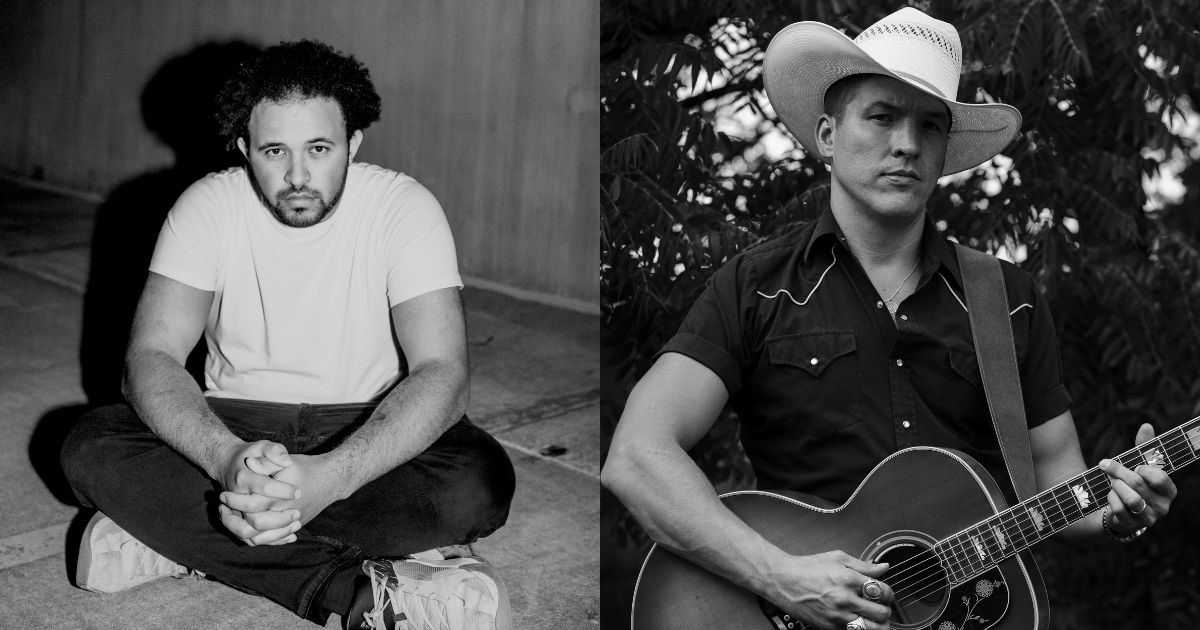
First up, country singer-songwriter Dallas Burrow is joined by Ray Wylie Hubbard on a brand new music video for their duo track, “Read ‘Em and Weep,” from Burrow’s upcoming September release. The song was inspired by classic gambling songs, so of course Ray Wylie was the perfect special guest to tap for the track and the country & western-styled video. Also bringing a new music video this week are Americana/folk trio The Last Revel, of Minneapolis. “Static” is about the overwhelm and confusion of new love.

In bluegrass, Chris Jones & the Night Drivers tap Jim Lauderdale for a new track, “How Small of Me.” Despite knowing each other for decades, it’s the first time Jones and Lauderdale have collaborated in the studio. Jones’ labelmates Deanie Richardson & Kimber Ludiker debut another new twin fiddle tune, this time offering their take on a Frank Wakefield classic, “New Camptown Races,” with a mighty backing band.

From experimental string band fringes we have a few stellar selections, as well. Award-winning banjoist Tray Wellington readies a new EP – set for release August 8 – with a performance video of an original song, “Man on the Moon,” continuing his creative relationship and fascination with the earth’s celestial relative. It’s jammy, expressive, and contemplative and shows a blend of many of the different styles of ‘grass he often employs. Mandolinist and composer Ethan Setiawan has new music on the way, too. His next project, Encyclopedia Mandolinnicaarrives mid-August and to celebrate, he’s shared a track featuring Joe K. Walsh called “Mount Holly.”

Finally, you won’t want to miss the return of Thompson the Fox, Tokyo’s quartet of mind-bending pickers who combine jazz, bebop, new acoustic, bluegrass, and so much more. Volume 2 of The Fox In Tiger’s Clothing – entitled TIGER – drops next month, so we’re sharing “Minute Waltz Rag,” the group’s reimagination of Chopin’s quintessential composition that’s ragtime, bluegrass, classical, and jazz altogether. Still, it’s incredibly easy to listen to – and impressive in technique and artfulness, both.

It’s all right here on BGS and, truly, You Gotta Hear This!

Dallas Burrow, “Read ‘Em and Weep” featuring Ray Wylie Hubbard

Artist: Dallas Burrow
Hometown: New Braunfels, Texas
Song: “Read ‘Em & Weep” featuring Ray Wylie Hubbard
Album: The Way The West Was Won
Release Date: July 18, 2025 (video); September 26, 2025 (album)
Label: Forty Below Records

In Their Words: “This song, which serves as the opening track of the album, is actually a musical sequel to a song I wrote with my good friend Charley Crockett called ‘The Only Game in Town,’ which I wrote all the verses for after he brought me a chorus and a chord progression. In that song’s third verse the narrator tells us, ‘The dealer is [his] friend and the house always wins.’ This song you might say serves as a challenge to its prequel, with the opening verse declaring, ‘I heard the dealer was your friend, I heard you know him well.’ Both, stylistically, were inspired by great gambling songs like ‘Mr. Mudd and Mr. Gold’ by Townes Van Zandt and ‘Dust of the Chase’ by Ray Wylie Hubbard. It was only fitting then that Ray Wylie would sing on this tune. I gave him the whole record to listen to and this was the one he picked out to sing on. It was quite the honor to have him sing the entire second verse, since he’s always been one of my biggest inspirations and heroes. The tune opens with producer Lloyd Maines counting it off and playing a striking harmonic guitar part. As the track continues to build it is further brought to life by Lloyd’s legendary Dobro playing, and Katie Shore’s immaculate fiddle work.” – Dallas Burrow

Track Credits:
Ray Wylie Hubbard – Vocals
Dallas Burrow – Vocals, acoustic guitar, songwriter
Katie Shore – Fiddle
Lloyd Maines – Dobro, bass, acoustic guitar, producer
Pat Manske – percussion


Chris Jones & the Night Drivers, “How Small of Me” featuring Jim Lauderdale

Artist: Chris Jones & The Night Drivers
Hometown: Nashville, Tennessee
Song: “How Small of Me”
Release Date: July 18, 2025
Label: Mountain Home Music Company

In Their Words: “Jim Lauderdale and I have been friends for decades now, but this is the first time we have ever sung together on a recording, so I’m really happy about this. Meanwhile I co-wrote the song with John McCutcheon, somebody I first met when I was a teenager, and though more recently, he’s somebody who the band and I have performed with a few times at the Walnut Valley Festival in Kansas, we had never written a song together until last year, and ‘How Small of Me’ is one of our first results.” – Chris Jones

Track Credits:
Chris Jones – Acoustic guitar, lead vocal
Jim Lauderdale – Harmony vocal
Mark Stoffel – Mandolin
Grace van’t Hof – Ukelele
Jon Weisberger – Bass
Tony Creasman – Drums
Chris Scruggs – Steel guitar


The Last Revel, “Static”

Artist: The Last Revel
Hometown: Minneapolis, Minnesota
Song: “Static”
Album: Gone For Good
Release Date: July 18, 2025
Label: Thirty Tigers

In Their Words: “It’s a simple little song about how overwhelming and confusing love can feel especially in the beginning. It’s about losing yourself and everything you have just to spend time with the only person that seems to be vibrating at the same frantic frequency while everything else seems still and static.” – Lee Henke


Deanie Richardson & Kimber Ludiker, “New Camptown Races”

Artist: Deanie Richardson & Kimber Ludiker
Song: “New Camptown Races”
Release Date: July 18, 2025
Label: Mountain Home Music Company

In Their Words: “‘New Camptown Races’ is a song that Kimber and I played together last year and it went so well we knew it was one we wanted on this record. I went to a recording from one of my fiddle heroes, Randy Howard, on this. I will admit, I did steal a few licks from Randy on this one. Love that my dear friend is with us on this track.” – Deanie Richardson

“We have long loved Frank Wakefield’s great mandolin tune ‘New Camptown Races,’ which quickly became part of the bluegrass canon when he first recorded it in 1957. We set out to create a twin fiddle reimagining of this classic Bb tune with the spirit of a high-energy late-night jam with phenomenal playing by Tristan Scroggins on mandolin, Kristin Scott Benson on banjo, Cody Kilby on guitar, and Hasee Ciaccio on bass.” – Kimber Ludiker

Track Credits:
Deanie Richardson – Fiddle
Kimber Ludiker – Fiddle
Cody Kilby – Acoustic guitar
Hasee Ciaccio – Upright bass
Tristan Scroggins – Mandolin
Kristin Scott Benson – Banjo


Ethan Setiawan, “Mount Holly” featuring Joe K. Walsh

(Click to listen)

Artist name: Ethan Setiawan
Hometown: Cornish, Maine
Song: “Mount Holly” featuring Joe K. Walsh
Album: Encyclopedia Mandolinnica
Release Date: July 23, 2025 (single); August 15, 2025 (album)
Label: Adhyâropa Records

In Their Words: “This one’s for the Fogels, at whose cabin in Vermont I spent a couple of great New Years, and who smoke the most delicious meat at all hours at festivals in the Northeast. I started to work on the tune in 2022 or 2023 up in Vermont and then finished it soon before tracking with Joe in early 2024. I finished it without a mandolin in hand, which lately has been a good exercise in letting my ear rather than my hands guide the composition. I’m playing mandola and Joe is playing octave mandolin, because we had to get in those low mandolins!” – Ethan Setiawan


Thompson the Fox, “Minute Waltz Rag”

Artist: Thompson the Fox
Hometown: Tokyo, Japan
Song: “Minute Waltz Rag”
Album: The Fox In Tiger’s Clothing, Vol.2: TIGER
Release Date: August 9, 2025
Label: Prefab Records

In Their Words: “Following our May release of The Fox In Tiger’s Clothing, Vol.1: FOX, we’re excited to announce the upcoming release of its sister album, Vol.2: TIGER, coming out on August 9.

“The album title is a play on two phrases from different cultures: the Japanese proverb, ‘The fox borrowing the tiger’s authority’ and the English idiom, ‘A wolf in sheep’s clothing.’

“While Vol.1: FOX consisted entirely of our original compositions, Vol.2: TIGER is a collection of cover tunes. Ahead of the album’s release, we’ve just shared a music video for ‘Minute Waltz Rag.’ It’s a reimagining of Chopin’s beautiful waltz, which I arranged in two-time for this quartet. We hope you enjoy it!” – Takumi Kodera

Track Credits:
Rie Koyama – Xylophone
Takumi Kodera – Banjo
Akihide Teshima – Bass
Tomohito Yoshijima – Drums

Video Credit: Takumi Kodera


Tray Wellington, “Man on the Moon”

Artist: Tray Wellington
Hometown: Raleigh, North Carolina
Song: Man on the Moon
Album: Spatial Awareness (EP)
Release Date: July 18, 2025 (single); August 8, 2025 (EP)
Label: Free Dirt Records

In Their Words: “‘Man on the Moon’ is one of the most personal songs I’ve ever written. I wanted to capture how easy it is to hide struggle behind a smile and how many of us carry that weight silently. Writing has always helped me process things I hadn’t fully acknowledged and I hope it can do the same for someone else. This track was also one of my favorites for production as it’s one of the songs I feel like we really captured the feelings of the song throughout.” – Tray Wellington

Video Credit: Rob Laughter


Photo Credit: Tray Wellington by Heidi Holloway; Dallas Burrow by Melissa Payne.

Vandoliers Find Liberation
in Life Behind Bars

Vandoliers are doing their part to keep the spirit of alt-country alive with their raucous blend of punk, country, and mariachi. In other words, they’re the quintessential Texas dive bar band.

They’ve long been outspoken supporters of the queer community, going viral for protesting the Tennessee Drag Band by performing in dresses as a protest; that was when lead singer Jenni Rose realized that she may be a member of the LGBTQIA+ community herself. And so, the band’s fifth and newest album, Life Behind Bars (released June 27), finds the Vandoliers exploring the wild desert landscape of the heart: sobriety, grief, gender dysphoria — and joy in liberation.

Good Country spoke with group members Rose and multi-instrumentalist Cory Graves in early June about collaborating as a six-piece band, working with producer Ted Hutt to push the band to ever-more lyrical honesty and musical proficiency, and the profound impact Jenni’s sobriety and coming out has had on the band.

The album’s title track, “Life Behind Bars,” deals in part with frustrations of life on the road – but Vandoliers are known for bringing the party. How do you balance these two realities?

Jenni Rose: I couldn’t be a lead singer of this band unless I got sober. I tried really hard to be the party person and be the lead singer and be able to do this hundreds of times a year. I just couldn’t do everything. Put the party down for a little bit, and that brought up so much in my life. It made the shows exponentially better. It made me a better singer. On this record, you’re really hearing me processing this new identity, this new life unfolding. It starts with the question, “Why can’t I get sober?” and then it’s like – “Oh my God, I’m in the wrong body.”

I was dealing with a lot. Cory was dealing with a lot, the whole band was dealing with a lot. We have made four records of us asking, “Where am I at in my life? What am I going through?” We’ve been able to conquer the humorous and the serious, so we weren’t really out of our comfort zone by talking about big feelings, but they’re in this album for sure.

The song has four co-writers: you two, Joshua Ray Walker, and John Pedigo – Texas royalty for sure. While it’s common for pop country songs to have many writers, it’s a bit unusual in the Americana world. How did you all even find yourselves in one place together?

JR: Josh Walker and I are really close. I was with him a lot during his cancer diagnosis. We were catching up and we were about to go to Sonic Ranch to record. I suggested we just go write a song and call up John, who used to produce our records. He pretty much has a co-write on every Vandoliers record except for the last one. We love writing together.

Josh Walker brought up the frustrations with touring and we were talking about how we can keep doing it. Then we thought, “Let’s say we didn’t do it. What else are we gonna do? What kind of jobs are hiring 40-year-olds for entry-level positions?” Cory and Josh had been talking about this line “life behind bars” as a double entendre for years. We all related to it and everybody just started throwing out lines. And then by the end of it, we were all screaming the hook and we had a song.

When you began working with producer, Ted Hutt, he said your songs were “superficial” and pushed you to go deeper. How was it to hear that feedback?

JR: It was wonderful. That conversation was like a year before we got to the studio. So I came in with like 40 tunes. Cory came in with like six or seven. Ted really took the time to listen to our writing and pick the songs that were right for the record. He pushed me so hard with my lyric writing and my vocal performance.

I was writing and rewriting things, clarifying, digging deeper into what I was trying to say and that opened me up to a lot of emotions. I knew I was gonna hit gender dysphoria, but I didn’t know I was gonna hit it there. Then [the] Pandora’s Box was completely opened.

Cory Graves: We’ve always craved a producer that would come in and be like a seventh voice in the room, like a tiebreaker voice or someone who could come in with other ideas. We’ve gotten that a little bit here and there in the past, but never as much as I think some of us wanted. He was heavy-handed, like suggesting we change a song from a punk song to a country song or changing the key.

We all knew that we wanted that. Going in, we all agreed that if Ted wanted to try something, everyone would just be happy about it and try it. That’s exactly what happened. It always worked out for the better.

What lessons do you think you’ll bring with you from this process?

JR: I’m already better at being fully vulnerable when I write. Life Behind Bars is me opening up, whereas some of my writing right now is pretty brutal. I’m excited about moving forward being fully aware and shameless in my writing now.

The band itself is so collaborative, by nature of the kinds of sounds you make. How does the band work together?

CG: We all have so many different influences. None of the songs ended up sounding like the demos. They ended up sounding like a piece of everyone. My song, “Thoughts and Prayers,” was more of a punk song, but ended up as a rockabilly song. “Life Behind Bars” started as an emo song while “Bible Belt” was kind of like a Green Day song. Now it’s like The Cars meets, like – I don’t know. So many different things. There’s a twang to it, but also ’80s rock, because Dustin [Fleming], our guitar player, was in a Cars cover band. So he’s got that in his blood.

There are different things that we each bring out from our past into the tunes.

Jenni, it sounds like for a while you isolated yourself socially from the band a bit. How do you both feel things have changed since you’ve come out?

JR: When I was trying to quit drinking, I changed all of my habits just to make sure that I could. It would have jeopardized my career if I kept going the way that I was going. I didn’t wanna do that, ’cause it’s not just my career, it’s everybody’s career. So I started going to the gym after the shows and then journaling during the day, having a ten-minute free write, word-vomit of poetry that I would send to Ted. I would do this every day and that would take me three hours – most of the van ride. So I’d be in my headphones, dead silent with everybody, and I was cocooning. I was going through a lot and I was trying to heal while in motion.

So everybody got to live with a hermit, essentially, for three years. I know it wasn’t cool, but I had to do it. I’m writing these songs. I’m reading every fucking self-help book I can possibly grab to figure out why I’m an addict. The dysphoria is starting to pick up and ramp up, because I’m starting to understand my emotions instead of dull them and ignore them. I am becoming more in tune with my body at the gym and noticing the dysphoria there and starting to understand myself better and better and better. While all of this is happening, I’m on fucking tour all over the world with six other people.

They’re watching somebody change the way that they eat. They’re watching somebody change what they do during the day. They’re watching my social life become pretty much non-existent. … Everybody becomes [at] arm’s-length on the road for a couple years. And then at a Taco Bell, I tell everybody I’m a trans girl and it’s like I’m right back to the party, I can like hang out again, I can go out after the show, or I can skip the gym. … I’m existing as my highest self after years of searching.

It sounds like your coming out has been a fairly positive experience so far.

JR: I saw immediately how quickly my relationships have been healing since coming out. Each person I told – before coming out publicly – it was great. Now I just get to be in a band with my friends again and they get to know me fully without me being scared of rejection.

I can’t manipulate anybody into accepting me. I can’t control how they feel about me. There’s nothing I can say that would make them either love me or not love me. You just kind of get to figure out who’s with you or not. I am so blessed that the people that are around me are at such a high quality. I think it’s a testament to just my exquisite taste in humans. I’ve been so blessed.

Everybody around me loves me and wants me to keep going and wants to keep being in my life, which is not what I thought that they would do. I assumed that I would be abandoned by everybody, because that’s the narrative that we’re all used to, but it’s been really beautiful. I’m really glad I did it.

Your coming out process has been very public. Your band went viral for protesting the Tennessee drag ban the day it was passed by wearing dresses on stage. And now, you’ve come out in Rolling Stone. So, how are you doing?

JR: Wearing the dresses was Cory’s idea. I have worn so many dresses behind closed doors. No one knew this side of me. When we went shopping for dresses, we all were having fun. When I put it on I was so nervous, but I was also really comfortable. And then we went out and played and I twirled. I had a great time. I thought only like 80 people were gonna see this, that I’d wear a dress for this one show and that would be it. Then everybody saw it.

That was kind of when I realized I had this aspect of me. It was the first time anybody had seen it and everybody kind of saw it at once. It made me wanna drink again, ’cause I didn’t want this to keep multiplying because I was scared. It wasn’t the first time I’d worn a dress and I knew that that wasn’t the first time that I felt comfortable doing so. I didn’t know if I wanted to accept that, or think that it was anything more than a kink or whatever. But I was sober and I did have to deal with it, and I did have to talk about it with my family and my wife.

If anybody’s reading this and they’re questioning if they should come out, you should. It’s good for you.

What are you each most excited about getting the album out in the world and touring it?

CG: I’m excited that people are gonna hear a little bit of a different side of us and to see what they think of it. I think more people are gonna be aware of us than ever, and I’m excited to see how people react to that.

Also, I’ve been doing music for, I don’t know, 20-something years. I’m 41 years old. I’ve never sung a lead vocal on any record in my entire life. I’m just excited for that [“Thoughts and Prayers”] to be in the world. That’s a big accomplishment for me, personally.

JR: I’m glad you sang it. You sang it much better than I was singing it!

I am most excited to be seen as 100% me on the road and to see what that does. So far, it’s been really magical. I think it’s been really positive. As I’m out and I’m playing, these bars or venues or theaters or little music series or festivals, they’re gonna see a trans person in a band, maybe at a country festival, maybe in a small town, maybe at a place that they wouldn’t usually see a queer person, and they’re gonna have to figure out how they feel about that.

I think the thing that I’m most excited about is posing that question to people and giving them a chance to react. I have faith in our fans, but I also have faith in our country, too. I don’t think hate has as much of a stronghold as we might think. It’s there for sure, but I think there’s a lot of love too.


Photo Credit: Vincent Monsaint

Planting By The Signs
Is a Way of Life

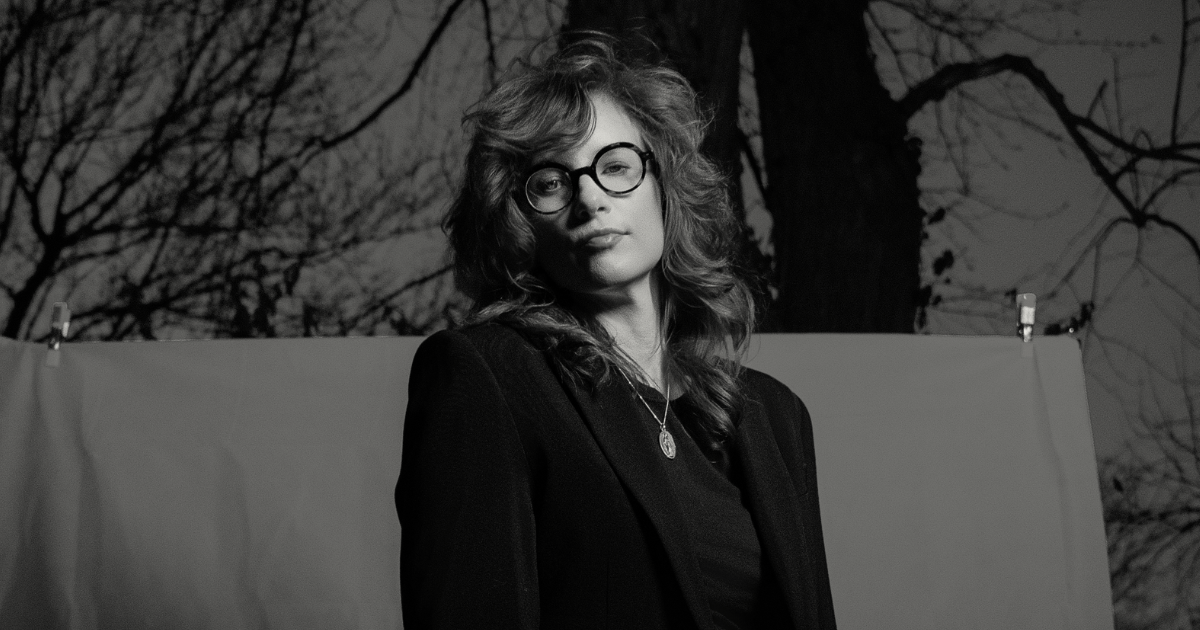
Equal parts old soul and trailblazer, Western Kentucky singer-songwriter S.G. Goodman explores rural belief systems with a forward thinking, synth-heavy, swamp rock aesthetic on Planting By The Signs.

Released June 20, the record is the first for Goodman since 2022’s critically acclaimed Teeth Marks and sees her diving into tales of love, loss, reconciliation, and grief. The ancient Appalachian concept it draws its name from subtlety influences all aspects of rural life from farming to self-grooming. According to Goodman, the idea to center her fourth album around this idea came in late 2022 after stumbling across a section about planting by the signs in Foxfire, a collection of books first published in 1972 that delve into Appalachian philosophy and ways of life.

“When I got to the passage about moon planting or planting by the signs I started having all these memories of hearing about [moon phases and zodiac signs] throughout my childhood,” Goodman tells Good Country. “My family and a lot of the people in rural areas like Western Kentucky have been taught these things but don’t think or talk about them in everyday conversation.

“For instance, my brother cuts his hair by the signs and I remember old people saying to never pull a tooth when the signs are in ‘the head’ [an area of the sky attributed to Aries]. I was weaned by my mother to the signs, potty-trained even. It’s an old belief system that I wound up immersing myself in and felt a responsibility to pass on.”

We spoke with the Americana Music Association’s 2023 Emerging Artist Of The Year ahead of the release of Planting By The Signs via Zoom. Our conversation covered the inspiration for the album’s concept, the themes of grief and reconciliation within its songs, the sonic evolution of the singer’s sound, and more.

What was it like taking the concept of Planting By The Signs and making it a reality? Did it turn out to be everything you envisioned?

S.G. Goodman: There were elements that were given over to studio magic. Sometimes the circumstances of recording force you to try different things you weren’t planning on, but for the most part I had a pretty clear vision of what I wanted this album to sound like before the songs were even written. This project leans toward a rougher sound that really hones in on the human element of the music. I also wanted to push myself sonically and add in new instruments that I normally don’t have in my music just to see what it would feel like.

In terms of trying new things, “Satellite” is a song that stands out. Is that a bunch of synths added to it or something else?

“Satellite” not so much. It sounds like synth, but it’s actually a little $150 makeshift Kent baritone guitar with a really wild, natural sound being played through a Fender Champ amp. There were a lot of synths elsewhere, but I’m just so ignorant when it comes to keys that I couldn’t tell you what they were. [Laughs] But I had [The Alabama Shakes’] Ben Tanner, a wizard on keys, come in to lay down and experiment some on organ, Wurlitzer, and other things.

For instance, because I do like an organic sound from my amps instead of using a bunch of pedals, we wound up playing along with the tremolos on the actual amps and ran the keys through that. But even with that, I’ve never had a record where there’s been keys on the majority of the songs, until now. That’s mostly been for economical reasons – I’ve been just a rock outfit with a lead guitarist, bass, drums and occasionally pedal steel, but it takes a minute before you can afford to not only have another player with you, but also a vehicle big enough to carry another person and their equipment. I was always leery to have songs focused around that, but with this album I was able to do it and shift around what kind of utility musician I wanted on the road with me and I’m really proud of it.

You mentioned working with Ben Tanner on these songs, but you also recorded down in Alabama as well. Tell me about what that experience was like?

Yeah, I was down in the Shoals, specifically the Sheffield area where Jimmy Nutt’s studio, The NuttHouse, is. It operates out of an old converted bank and felt really familiar to the small town I grew up in, where you could stand out in the middle of the road and pretty much bet a million dollars you wouldn’t get run over, because you’d never even see a car.

When you’re in the studio I’m not so big on doing destination recording, because in my opinion you should just be in a room working on music and not out seeing the sights. This was the perfect balance of not feeling like you’re missing something outside the room, but if you did walk out there it would be a calm environment.

Another sonic element on this album I wanted to touch on are the conversational audio recordings interspersed on tracks like “Heat Lightning.” What purpose were you trying to serve with those?

Going back to my mindset heading into this record and my desire to write about planting by the signs, I was really interested in the way that beliefs carry on and evolve over the years. We either accept, adapt to, or even stop telling these stories and letting them die, so [that was] one thing I wanted to showcase, either in a long narrative form or by adding elements you mentioned like the field recordings. I wanted to add those in because it’s another style we’ve used to capture stories and keep them alive. I’m a big fan of Alan Lomax’s field recordings – there’s a massive musical and oral history tied to them – so it was important for me to pay homage to that storytelling medium.

I even sought to do that through the album layout and artwork, too, by incorporating flash tattoos. Tattoos are a way that we have planted stories on ourselves and applied meaning to. Even its color scheme with red, yellow, and black – I don’t know if you’re ever heard this saying, but, “When red touches black you’re OK Jack, but when red touches yellow you’re a dead fellow.” That’s a sign from nature [about venomous snakes], so every element around this album, from allowing myself to write a nearly nine-minute song [with “Heaven Song”] while keeping this cohesive storyline to retelling a story from my youth in “Snapping Turtle.” I really wanted to showcase the history and art of passing down a story and drawing attention to that.

Someone whose memory you’ve preserved within these songs (as well as on older tunes like “Red Bird Morning”) is your longtime mentor and father figure Mike Harmon, who tragically passed away recently during a tree cutting accident. What kind of influence has he had on you, not just with this new record, but also on you as a person?

As far as Mike’s influence on my music goes, he was a huge encourager of me throughout the years going back to my days with The Savage Radley. I also played with him in a local Murray, Kentucky, band called The Kentucky Vultures. He was their bass player and we became fast friends and at one point even neighbors. He served as a father figure that I could bounce ideas off of musically, but more than anything it was his wisdom and support that impacted me most. He was such a go-getter and always an amazing person to have on the road with you.

One time I needed someone to help me get my van back from Boston, Massachusetts, to Western Kentucky, because the band and I had to fly out to Portland or Los Angeles in the middle of our tour before resuming the run a few days later in the Midwest. Mike simply asked when and where he needed to be and followed through. He was always down to help and be a part of things. It’s hard to wrap up exactly how meaningful his presence was during those early years. He was so proud of me and the boys when we were able to do this in a more professional way and regularly flew out to see our shows. In fact, in early 2023, he was supposed to be on tour with me in Austin for a sold-out show that I was particularly excited to have him at because he’d previously lived there for a time before losing his housing, only to die a week and a half later in a tree accident.

I continue to find myself thinking that Mike is still providing me with a lot of gifts and wisdom. When he passed away I was able to reconnect with my longtime friend and music collaborator of over 10 years, Matt Rowan. At that point we had a rupture in our friendship and musical relationship and hadn’t spoken in a couple years, but with Mike being the confidant, he was very aware of Matt and my falling out. [He] was always supportive around that and believed that we’d eventually reconcile with each other.

And that reconciliation is what you’re exploring on the song “Michael Told Me,” correct?

Correct. It’s a song that speaks to both Matt and Mike and kind of gives a snapshot of evolution and the processing of Mike’s death, but also the exact moment that Matt and I spoke after a few years of not.

You’re also singing with Matt on the album’s title track. What was it like getting to reunite in the studio with him for that?

Matt is also a co-producer on this album with me and Drew Vandenberg. He’s obviously been a longtime collaborator, so I thought it’d be interesting if he had an even bigger role on this album. I wasn’t wrong in my expectations of it working out really well.

Circling back to “Satellite” for a moment, lyrically the song seems to talk a lot about modern technology and human connection, or a lack thereof, in modern day society. What inspired you to explore those themes and how do you feel they fit into the record’s larger concept of planting by the signs?

I actually wrote most of the song in the studio. I didn’t start it there, but wasn’t expecting to have it on the album either. It’s something that came to me during the creative process of recording, which is not uncommon. When I was writing it I realized that one important thing for me to tie into talking about an ancient belief system was my curiosity of how that applies to our real, modern world. A lot of questions were coming up for me around that that I also tried to showcase within this album and my approach to talking about it with people. If Planting By The Signs revolves around paying attention to messages from nature, what does it mean for us as a society when we’re putting things between us and being able to see those signs?

For instance, we’re talking to each other right now through Zoom and are living in a world where more and more importance is being put on having more filters between us and nature – and even convoluting it. What are we gonna be [at] when I die, like 20G? [Laughs] How many satellites are going to need to be shot up into the universe to accomplish that?

Right now as a person, I’m in that weird land of [having been] a child in the early days of the world wide web when my parents got their first computer with dial-up internet. I didn’t start texting until I was 18. Nowadays I can pull up a waterfall on YouTube and hear the sounds of it in my living room without ever going somewhere like Cumberland Falls. Or I can go to a bar in public and not talk to a single person, because I’m just staring at my phone. I’m definitely a grandma when it comes to communicating with people.

I’ve noticed in the last 15 years that people are very hesitant to get back to a real human connection. There’s so many barriers nowadays to us having tangible connections with other people and nature. With that comes implications with AI and in the media, so it’s no wonder that a person who’s been watching the same creek bed over the course of 20 years evolve and cut differently and rise and fall may have a better idea that the weather patterns have drastically changed than a person who’s only receiving their information through technology.

Is “Nature’s Child,” which you sing with Bonnie Prince Billy, also touching on those themes?

That’s actually the one song on the album that I didn’t write. It was written by my friend Tyler Ladd. I first came across it over 10 years ago at an open mic in Murray and was floored by its lyrics. Everyone has different opinions on what makes a good song, but for me it’s really simple – a good song is one that you remember after hearing it.

Not long after that night, Tyler took off hitchhiking across the United States. Then years later I got a message from him saying that he was in Europe traveling and was writing to me from a hospital bed in Germany after getting his guitar stolen and beaten up pretty badly. I told him to get on home and about a year after that he showed up on my front porch in late 2016. I had him sit in my living room and play that song to me before asking him if I could start playing that song too and making it my own.

I’ve covered it live for years at this point, so when it came time to begin writing and thinking about this album Tyler’s lyrics and emotion he evoked in that song were a placeholder for me. He was gracious enough to let me record it. The song encapsulates everything this album is about.

Through the process of bringing Planting By The Signs to life, what is something that music taught you about yourself?

With each album you find yourself at a different place in life. I don’t necessarily have a lot of people ask me about my process of writing. It’s not linear and I’ve always held the belief, even though I’ve doubted it at times, that a story’s gonna go about its business. That was told to me years ago by a writing mentor, and a song does the same thing. Through that process one thing I’ve had to come to terms with with the fact that being an artist in 2025 is having pressure to keep churning out content and material, which has never been natural for me. I’ve never written that way, so being OK with and waiting for something to be in place where you feel you’ve said everything you need to say and not just succumbing to the pressures of putting something out while also being genuinely proud of what I created is a testament to the fact that I let this come when it was supposed to.


Photo Credit: Ryan Hartley

Sister Sadie Are
At Their Strongest, Together

The last time BGS spoke at length with Sister Sadie, in December 2020, they were two-time IBMA winners, GRAMMY nominees, and clearly on their trailblazing way with two albums to their credit. Fast-forward five years and the group, now in its thirteenth year, is back as BGS Artist of the Month with their new and fourth album, All Will Be Well, following last year’s No Fear.

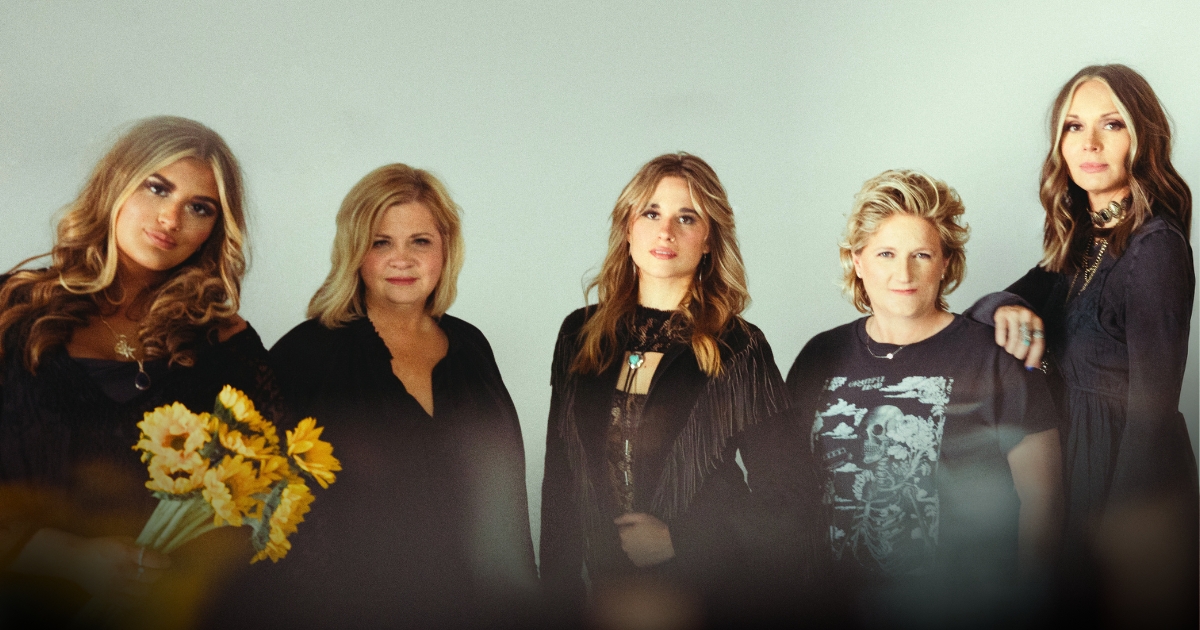
Sister Sadie 2025 includes founding members Gena Britt (banjo, vocals) and Deanie Richardson (fiddle) with Jaelee Roberts (guitar, lead vocals), Dani Flowers (guitar, vocals), Rainy Miatke (mandolin, vocals), and Katie Blomarz-Kimball (bass, vocals). Along the way to solidifying this lineup, the band notched a few more personal and professional milestones. Since becoming the first all-female band to win IBMA Entertainer of the Year in 2020 they’ve won three Vocal Group of the Year awards from the trade organization as well; performed at The Grand Ole Opry numerous times, fulfilled what they describe as “our ongoing bucket list” of goal festivals and other dates they hoped to play; charted several Number One singles; and were among the artists requested to perform at Patty Loveless’s Country Music Hall of Fame induction.

All Will Be Well is the band’s second project for the Mountain Home Music Company label. It was tracked at Crossroads Recording Studios in Arden, North Carolina, with Clay Miller engineering and Richardson producing. While the band did not set out to write a concept album, All Will Be Well is in many ways just that in its explorations of life lessons, experiences gained, and finding closure – the latter powerfully represented in “Let The Circle Be Broken,” a revealing take on ending the cycle of generational trauma.

Sister Sadie gathered together from various points to speak with BGS. Their six-member Artist of the Month interview, following, has been edited for space and clarity.

How have your many accomplishments to date brought the band to this point?

Deanie Richardson: We never intended to be a full-time band. We were friends who played a one-off at the Station Inn. That went so well that we decided to do another one. Gena started getting phone calls from promoters and we thought, “That might be fun. Let’s do it.” From there, we got a call from a record label and it grew organically, doing everything ourselves, because we weren’t looking to do it a hundred percent.

With every person that’s come into Sister Sadie, the whole band has shifted. The energy changes every time you bring in a new vocalist, a new player. You have to just let this thing guide itself. With each personnel change comes a new sound and you have to rebuild and regroup. I feel like that has happened since the last time we spoke with you guys. With Katie and Rainy here now, the energy feels perfect.

We finally have this team around us – booking agents, management, publicists – helping now and we get to focus more on the music and the amazing women in this band. So, for me, it feels like every step led to where we are right now, and it feels so right.

Gena Britt: With these personnel changes we’ve gained some wonderful songwriters, and they bring this creativity to the band. Like Deanie said, we’ve evolved into what we are today and that has a lot to do with being together, being creative together, growing as a band, and Deanie and I growing as businesswomen. It’s incredible to think of where we were when we first started and had no intention of doing this. And here we are. We have an incredible team behind us and it’s working. All the ingredients are here.

Let’s talk about the theme of All Will Be Well and sequencing the songs to tell that story.

Dani Flowers: When we went in to make the record, we definitely did not go, “This is [the title], this is the theme, and this is what it’s going to be about.” But it almost feels like we did.

We all write songs and send them to each other in Dropbox, an Apple Music playlist, and listen to them over and over. We put our opinions in as to what we might want to sing, what we hear other people singing, what songs we think are a good fit for the band, and it comes together into this thing that we almost never could have planned.

I do feel there is an overarching production style, even a theme, throughout the sequencing. But it wasn’t planned, which is the crazy thing. Deanie did the sequencing, and even outside of the band we’ve had so many folks comment on how it’s such a journey. I think the sequencing on this record is really something.

DR: The title No Fear was about Gena and I facing fears of losing some powerful personnel and deciding, “Do we want to quit? Do we want to keep going?” We decided we wanted to be all in, no fear, let’s get a team around us and do this thing. When Dani brought “All Will Be Well,” the Gabe Dixon song, I thought instantly that would be a great title, coming from No Fear: “We’re going all in on this thing, and whatever happens, all will be well.”

Once we finished the record, I started listening to the tunes. I would go on walks around the neighborhood, listen to the record over and over, and it felt like a journey. It felt like you’re taking a trip or a drive, starting with “Winnebago.” Jaelee’s singing is so powerful – that had to be the first song. You step in this Winnebago, you’re going through your drive, and then “I Wish It Would Rain” just felt like the next thing.

I imagined this person going through … call it a trip or just life in general and that being the case with this sequencing. It’s telling a big story. There’s a lot of personal connections in the writing and the song choices, from “Let The Circle Be Broken” to “First Time Liar” to all of it. This record is a representation of the deepest parts of all of us.

DF: Sister Sadie members had a hand in nine out of these thirteen songs. So there’s a lot of originals here, there’s a lot of our personal stories, our personal feelings and experiences, and it’s not perfect. I love that the record is called All Will Be Well. It’s not “all is well at this very moment.” It’s that even when we make mistakes, when we are in good moods, in bad moods, we have this overall feeling that we are going to get where we want to go. It might not be butterflies and daisies right now, but we know we’re going to get there.

Jaelee Roberts: The sequencing really is quite something, because these songs means so much to all of us individually. Even though I didn’t have a hand in writing them, at the time that I was in my life, some of these songs meant so much to me. The fact that I got to sing some of them, that they trust me to sing their songs, is so cool. I was excited when Deanie sent the sequencing to listen to our final mixes in that order, because it really is like going on a journey. The sequencing is absolutely perfect.

Can you select one track and walk us through the recording process?

DR: We all play acoustic instruments, so from sitting in my kitchen with our instruments, working out arrangements, that’s how we walk into the sessions. We recorded at Crossroads and we trust Clay Miller a lot. He’s great. He sets up the mics, we walk in and record. There’s not a lot of discussion as far as gear and mics.

The song lets you know what it needs. It will arrange itself and produce itself. “Winnebago,” for instance, has dissonant chords. I heard right away a B-3 organ accenting that. So on that song there’s electric guitar, steel guitar, the B-3, some piano. We brought things in that add an incredible amount of texture to our bluegrass instrumentation, our acoustic instruments.

GB: When we got to the studio, I had just acquired a baritone banjo that I hadn’t had an opportunity to play very much. It really lent itself to the sound of “Winnebago” and “Do What You Want.” I don’t know how to explain the feel of that song, but it just fit so well. So I played baritone banjo on a couple of tunes, which was great.

How do your playing styles and backgrounds come together to create the band’s sound?

DF: We are all such music fans, and through our upbringings and our own exploration of music, we’ve all been exposed to the best songs. We have pretty high standards when it comes to writing our lyrics and what we want to sing. We love a good lyric. We love creative harmonies. We have great instrumentalists in this band, so we especially love a melody with a really cool hook.
You can find that in any genre. Onstage we quite often cover rock and roll songs, pop songs, old and new country songs. Katie comes from a jazz background. Rainy comes more from West Coast bluegrass. Gena and Jaelee and Deanie all come from traditional bluegrass. I come strictly from a country background. You can find a good song, good lyrics, good melodies, in any genre.

Katie Blomarz-Kimball: My background is in jazz. I didn’t really grow up with country or bluegrass music. Since I’ve lived in Nashville for about ten years now, I’ve definitely dipped my toe into the genres, but it’s hard when you’re playing with some of the best bluegrass musicians on the scene to come in and not be like, “Am I good enough for this? Can I do this?”

One of the very first things Deanie said to me at the rehearsal two hours before the first show I ever played with them was, “I want you to play like you would play it.” That was important to me, because there is a really interesting perspective that can happen when people from different backgrounds come together in one group. And I think it can change, depending on what naturally migrates as a group. Adding some of my quirky bass playing can influence one way or another for things to have a different feel or vibrancy behind it that maybe shifts the music slightly. It’s definitely a fun part of this experience for me.

DR: We all come from different genres of music that we love, but we have country and bluegrass as a deep-rooted passion. That’s basically why we’re here. Because we are so creatively different, I think that’s a plus. Each of us brings something to the situation that changes it, adds to it, and you have to figure out ways to highlight or bring to the table everyone’s strengths. Once you do that, the sound starts coming together.

Deanie, you produced All Will Be Well. What does the term “producer” mean to you? Is it a democratic process?

DR: It is democratic up to pushing the red button. Everybody has input, but there comes a time when you have to call it, when you have to say, “That’s brilliant. I’m sure you think you could do it better, but I don’t need better. I need feel; I need it to feel a certain way.” This is a killer band, and they don’t need me to tell them how to play or sing. But there has to be some person that says, “You just wrecked me, you just turned me into a puddle on the floor, and I’m not going let you do it again because of that.” That’s what a producer is for me.

We all arrange these songs, pick these songs, write these songs, and at the end of the day, we’re making great records that I am so proud of. That’s not because of something I did. That’s because of something this band did. It’s a group effort. It is six very talented, capable women who I respect and value tremendously. It’s just that there has to be someone calling the shots, if you will.

Could we talk about writing “Let The Circle Be Broken” and presenting it to the band?

DR: We spend a lot of time in the car together, riding up and down the road, so we talk about everything. We know each other’s deepest, darkest secrets. We know the pain we’ve been through, the love we’ve been through, the relationships we’ve been in. We know everything about each other. I love being with a group of people you’re that connected to and that close with, and getting to be creative with them and make music together. That’s the ultimate thing for me. That’s honestly why I stay in tears all the time – because I love these women so much.

Dani, Erin Enderlin, and I got together right after my dad died. We were talking about all the shit I went through as a child growing up with him and all that Dani went through having an abusive mother. Each of the women in this band has experienced some form of generational trauma or abuse from someone in our lives. When we brought the song to the band, everyone knew my story and Dani’s, so it wasn’t a surprise.

Everyone was very supportive about telling the story and getting the song out, and it felt like the right time to do it. Once he passed away, I was ready to finally talk about it. It’s a very personal story, but it doesn’t say anything specific about what I went through. The song hopefully relates to anyone who’s experienced any sort of abuse.

We didn’t write it to make a statement. We wrote it because that’s where we all were, having that conversation that day. The more we talked, the more the song came to life. It was a beautiful thing and very therapeutic to write. I am extremely proud of how it came out, what each girl brought to this tune, and how they supported and loved me through it.

How do you protect yourself, mentally and emotionally, when performing the song live?

DR: Sometimes I don’t. Sometimes I cry, sometimes I get upset. I just want to feel the song as I feel it every night. Some nights it’s just a song for me, some nights I just want to get through it, some nights I feel so much peace with it, and some nights I feel like he’s there. We played in Ogden, Utah, recently, and I could feel his presence and I got very upset.

One night in a theater I looked over at the girls while we were playing the song and I thought about each of them individually and how I know all these things about them. I know the struggles they’ve been through, the people who’ve hurt them, all the things they’ve felt, and struggled with, and beat, and have experienced in their lives.

At that moment, the song was theirs too. It was their experience as well. That night, walking across the stage as I’m playing that play-out at the end, I looked at each of them and told them I loved them as I walked by them. I’ve been doing that every night since, because I don’t feel like it’s just my song. I feel like it represents each of us. These are strong, amazing, talented women, and I’m so grateful to be in their presence every day.

DF: For me, this song is about the fact that we are in control now. We have the ability to stop the cycle that’s happened through our families and could very well carry on to our own children, if we didn’t take accountability, stand up, and say, “This goes no further.” So, for me, there’s not really a need for protection. It’s more letting it all out. Watching the crowd’s reaction every time we perform it is so therapeutic because you can tell there’s always somebody that really needed to hear what we had to say.

You both used the word “therapeutic.” What part does music play in your healing, in your mental health?

DR: It’s the only reason I’m still alive.

DF: To put it in perspective, imagine going through one of the worst things a person could go through, then to live your life and get to a place where … like, for Deanie, her dad passing away … to be able to sit down with two other women that are going, “I know almost exactly what you’re talking about. I have been through this as well. We are going to get it all out through the thing we all love the most.” And then to take that song you wrote that’s so honest and so vulnerable, play it for the people you’re in a band with, and have them all react with such compassion, saying, “Yeah, we have to do this.” And not only record the song, but there also was a conversation about how much we’re going to say about what the song is about, because some of us are really ready to talk about the things that happened to us, and we know that affects the entire band.

To have everybody embrace that, and then to get onstage and perform that with those people every night, to look at these women and tell them you love them — I can’t think of anything more therapeutic than to be able to say, “This happened to me,” and have so many people — the people that you wrote the song with, the people in the band with you, the people who made the record with you, and the people in the crowd listening and buying the record and all the comments we get on this song … I cannot think of anything more therapeutic for a person who has gone through something so traumatic. Other than actual therapy — I’m an advocate for actual therapy!

Rainy Miatke: Music plays such a huge role in my mental health and my healing journey. At times in my life when I’m not playing as much music, I can really feel the difference. Since I was a little kid, I’ve used music, writing melodies, writing songs, playing, and singing as a way to process the emotions I was going through. Now, being part of a band that is on a similar journey and path as I am, in my life and musically, and playing these powerful songs that the band has written about very personal subjects, it feels like we’re all in this together and here for each other, and it feels so healing.

When Deanie’s up there playing that part at the end of “Circle,” I sometimes find myself feeling really emotional and having to almost compartmentalize it, but also sometimes just letting it happen and processing some of the things that I’ve been through, too. I’ve found these people that I can do that with, and that I can process that stuff with through music, so it feels really special.


Read more on our Artist of the Month, Sister Sadie, here.

Photos courtesy of the artist.

You Gotta Hear This: New Music From The Brothers Comatose, Goldpine, and More

It’s a golden weekly roundup of new music and premieres! You Gotta Hear This.

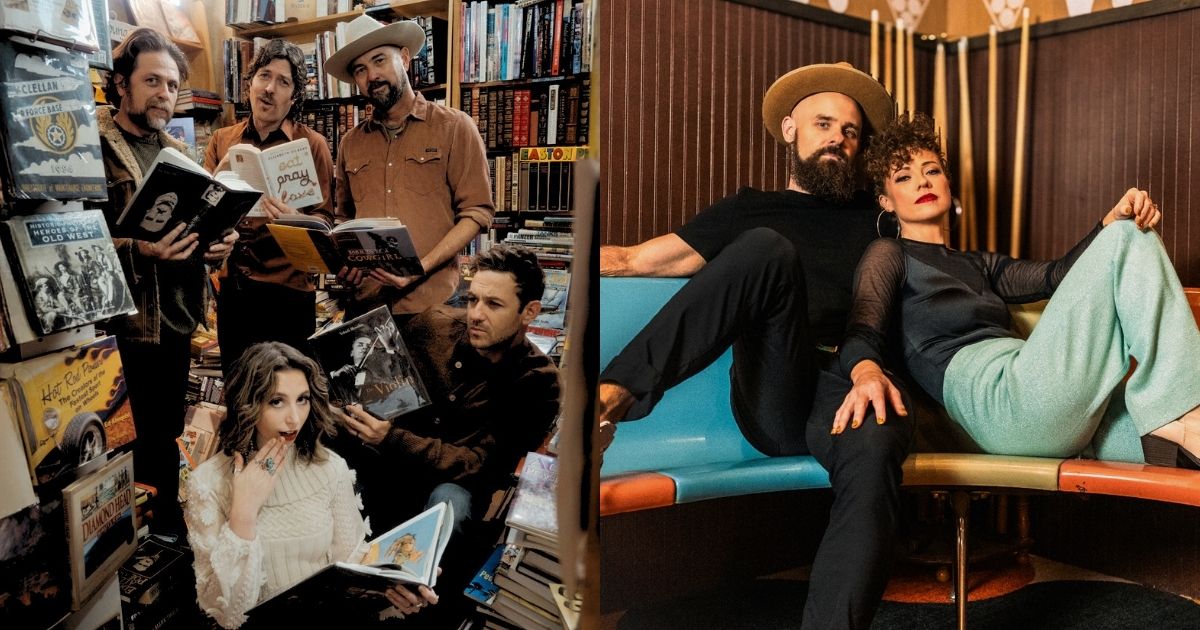
Kicking off the collection, San Francisco-based bluegrassers the Brothers Comatose unveil “25 Miles,” a single from their upcoming album, Golden Grass. The full project arrives in September, but you need not journey that far to hear “25 miles,” which is available everywhere today. Listen below.

Then, Nashville Americana duo Goldpine keep the shimmering, golden aura going with “Space,” a blend of futurism and roots music about craving a break from the rat race and the “real world.” Goldpine’s brand new album, Three – their third, indeed – releases today, so we’re happy to spotlight a track from the project in celebration.

Alaskan bluegrass and country artist Josh Fortenbery shows off his new, expanded sound with “City Lights,” a song – and accompanying music video – about aging, opportunity, and anxiety that’s twangy and danceable even wrapped up in existential pondering. Plus, Mountain Home Music Company recording artist Jesse Smathers declares “If It Ain’t Broke (Don’t Fix It)” in his latest single, a tongue-in-cheek number that you’re sure to find hilarious and top notch.

To close us out on New Music Friday, Duluth, Minnesota’s Ross Thorn brings us “Baby, That’s All I Need.” With a folky sound and backed by lovely finger-picked guitar, the song is about empathy and, as Thorn puts it, “…Seeing the divine in everything, and seeing the divine in yourself.” It’s a perfect bookend for this week’s roundup.

We appreciate you joining us each week for new music. Because you know what we think – You Gotta Hear This!

The Brothers Comatose, “25 Miles”

Artist: The Brother Comatose
Hometown: San Francisco, California
Song: “25 Miles”
Album: Golden Grass
Release Date: July 16, 2025 (single); September 12, 2025 (album)
Label: Swamp Jam Records

In Their Words: “’25 Miles’ was born out of a late-night drive from the SF Bay Area to LA, up and over the Grapevine, and a feeling that most of us know all too well: the weight of the world pressing down as we’re trying to outrun it. It’s about restless energy, being burned out and broke, with only dreams and close friends guiding you to your destination.

“It was written during a time of uncertainty and mental noise, and explores the tension between responsibility and freedom, and momentum and stillness.

“The line, ’25 miles to go and we’re running out of gas,’ is a metaphor for the transitional moments when you’re not quite sure where you’re headed, but you know you can’t turn back. There’s a subtle ache and a longing to escape not just a place, but also pressure, expectation, and the past. It’s about how getting lost is part of the plan, and survival sometimes looks like singing too loud with the windows down.” – Ben Morrison


Josh Fortenbery, “City Lights”

Artist: Josh Fortenbery
Hometown: Juneau, Alaska
Song: “City Lights”
Album: Tidy Memorial
Release Date: July 11, 2025 (single); October 10, 2025 (album)
Label: Muskeg Collective

In Their Words: “This melody has been kicking around since I was in high school and I’ve returned to it and slowly tweaked the lyrics over the years. It definitely captures the expansion in my sound since the last record, but also highlights that internally, I feel as lost as ever. My anxiety around aging is pretty new – I think I’m finally recognizing that some doors are closed or closing, and I’m trying to decide if I’m still having fun.

“I worked with a videographer in Juneau, David Rossow, to visually capture the feeling of standing still in a small town while the world moves rapidly past. We probably weirded out some tourists walking in slow motion while singing the song at .2 speed, but it definitely shows off my local haunts and the local life that sometimes haunts me.” – Josh Fortenbery

Track Credits:
Josh Fortenbery – Vocals, guitar
Erik Clampitt – Pedal Steel
Kat Moore –Fender Rhodes, Hammond B-3
Sam Roberts – Bass
Todd Vierra – Drums
Kennedy Jo Kruchoski – Vocals
Taylor Dallas Vidic – Vocals

Video Credits: Directed by David Rossow.


Goldpine, “Space”

Artist: Goldpine
Hometown: Nashville, Tennessee
Song: “Space”
Album: Three
Release Date: July 11, 2025

In Their Words: “We spend a lot of time on the road these days… it’s just become our regular life now. It seems like we drive so much, and do so much computer work, and are on the move so often that we just really cherish our breaks and time off. ‘Space’ is kind of like a stream of consciousness song about the desire for a break from the real world stuff. It’s a space-aged dreamy Americana tune with futuristic sounds and a rockin’ guitar solo. This tune was recorded from a compilation of live takes from shows on the road last year and mastered by engineer Dave McNair (Shovels & Rope, Brandi Carlile). We really captured the raw live performance feel on this tune, which is what we specialize in.” – Goldpine


Jesse Smathers, “If It Ain’t Broke (Don’t Fix It)”

Artist: Jesse Smathers
Hometown: Floyd, Virginia
Song: “If It Ain’t Broke (Don’t Fix It)”
Release Date: July 11, 2025
Label: Mountain Home Music Company

In Their Words: “This tune was fun as could be to write and record. ‘If It Ain’t Broke (Don’t Fix It)’ is a common saying most folks have heard. I know I’ve heard it my whole life. However, the family in this tune must not be up to speed on the old idiom. This tune is a tongue-in-cheek reminder that if it ain’t broke, don’t fix it – just leave well enough alone.” – Jesse Smathers

Track Credits:
Jesse Smathers – Guitar, lead vocal
Hunter Berry – Fiddle
Corbin Hayslett – Banjo
Nick Goad – Mandolin, harmony vocal
Joe Hannabach – Upright Bass


Ross Thorn, “Baby, That’s All I Need”

Artist: Ross Thorn
Hometown: Duluth, Minnesota
Song: “Baby, That’s All I Need”
Album: Fitting In
Release Date: July 11, 2025 (single); August 8, 2025 (album)

In Their Words: “I began writing this one morning after I went for a walk in the graveyard, a swim in Lake Superior during a storm, and came home to see a robin in the yard. It’s a song about radical empathy, seeing yourself in everything, seeing the divine in everything, and seeing the divine in yourself. We recorded the song live at the fabled Pachyderm Studios in Cannon Falls, Minnesota. To me, the song feels like John Prine collaborated with the rooster from the old Robin Hood cartoon (AKA Roger Miller), with a blend of honesty, humor, and some good old-fashioned whistling.” – Ross Thorn

Track Credits:
Ross Thorn – Vocals, acoustic guitar
Clark Singleton – Bass
Cassandra Sotos – Violin, vocals
Jacob Mahon – Banjo, vocals
Ian Hopp – Drums
Kyle Orla – Acoustic guitar, vocals


Photo Credit: The Brothers Comatose by Jessie McCall; Goldpine by Raechel Curtis.

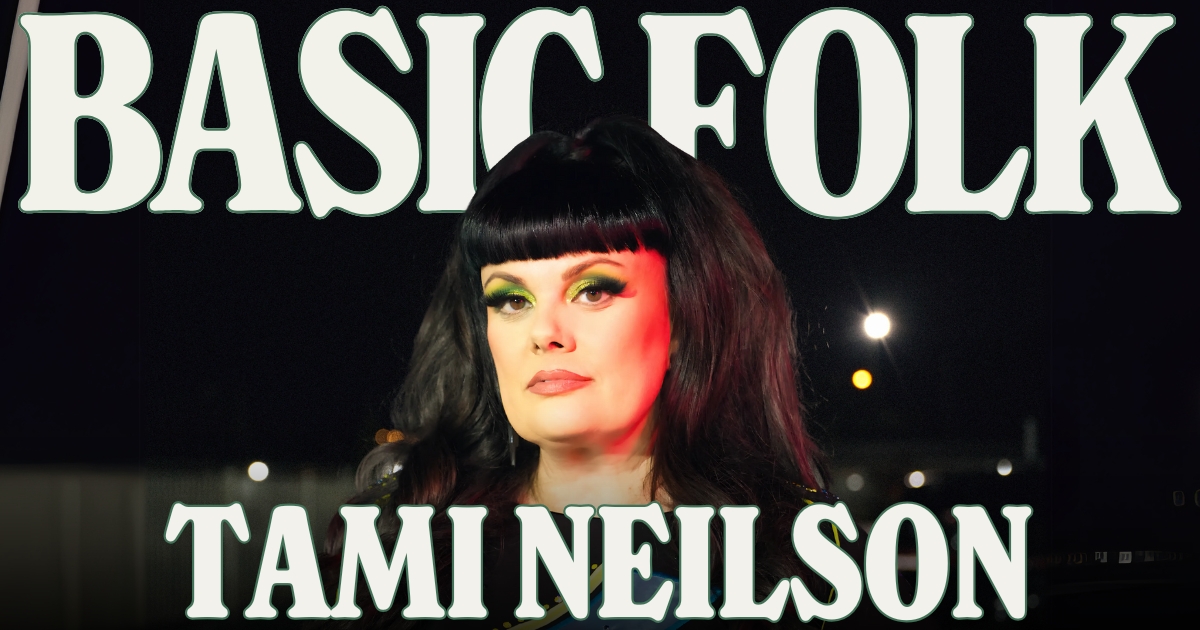
Basic Folk: Tami Neilson

In recent years, Tami Neilson has been learning to carry both great joy and great sorrow simultaneously. The New Zealand-based, Canada-born powerhouse’s new album, Neon Cowgirl, is named after the towering electric figure on a sign that’s overlooked Broadway in Nashville watching over Tami’s career since she was 16 years old. The songs were born from a five-month family road trip combined with a major musical tour that would allow Tami the once-in-a-lifetime chance to really give it her all with her career. It was the chance for her children to experience what her life was like at their age, when she toured the country with her family’s band, led by her eccentric and wildly lovable dreamer-father, Ron Neilson. Before she got the chance to hit the road for that trip, Tami landed in the ICU with sepsis and nearly lost her life. She blessedly recovered, but found that all her priorities centered around trip/tour had changed.

LISTEN: APPLE • SPOTIFY • AMAZON • MP3

In our Basic Folk conversation, we talk about the songs on Neon Cowgirl, her dear friendship and collaborations with Willie Nelson, and Tami’s exciting performances at the Grand Ole Opry. One of the songs on Neon Cowgirl, “Keep On,” was inspired by a cosmic conversation she had with Wynonna Judd. Judd, to her surprise, quoted the same exact phrase – “Keep on, keep on, keep on” – that Tami’s late father had written in one of her most cherished letters. We also talk a lot about her brother, Jay Neilson. For all of her career and life, Jay has been by her side as her guitarist, co-writer, and musical partner. Last July, Jay suffered a rare and debilitating brain injury that he is still recovering from. Tami and Jay have not been able to perform together since that injury. She shares what it’s been like to be without Jay and how it’s been for him to be so public about his condition.

Tami Neilson and I first connected during the pandemic. She was a guest on the podcast after she released her 2020 album, Chickaboom! and again after she released her fifth album, Kingmaker, in 2022. Since those chats, I have loved following her career, listening to her new music, and experiencing her highs and lows with her. She’s one of my favorite guests and I’m thrilled to welcome Tami back to talk about her wonderful new record.


Photo Credit: Alexa King Stone

A Force
To Be Reckoned With

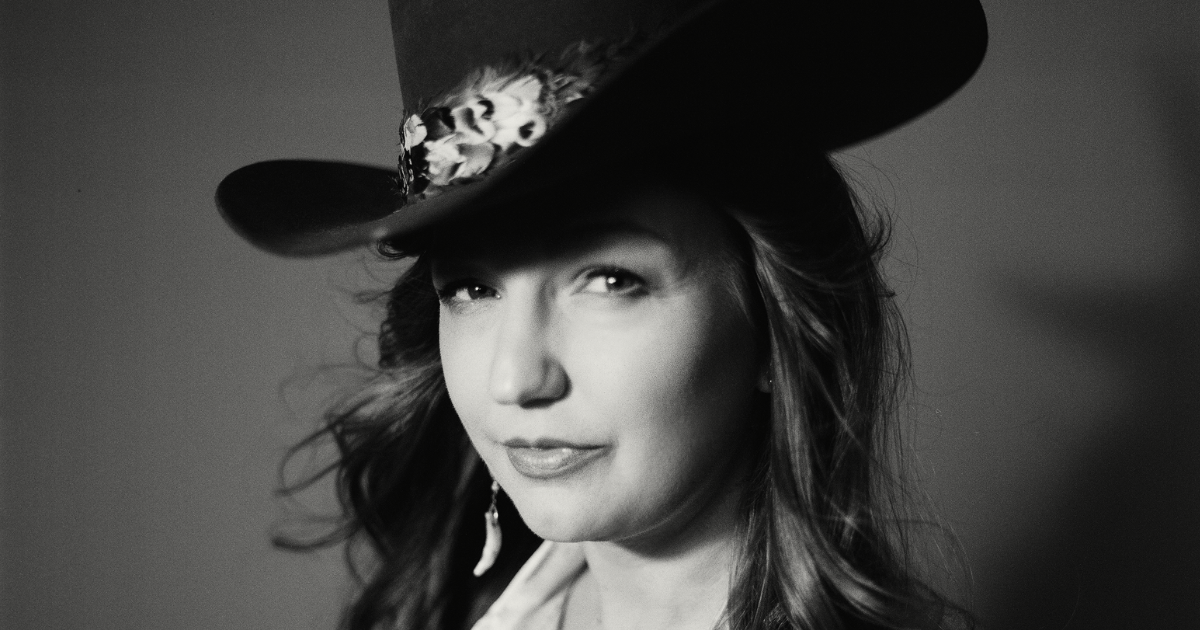
Ghosts are so much more than spooky or goofy animations; they represent lived histories, past selves, and the ever-unfolding work of becoming. With her latest album, Every Ghost, country singer-songwriter Kelsey Waldon gives grace to all the women she’s been along the way, entertaining their urgent lessons as she considers who she is today.

“There’s good ghosts and there’s bad ghosts. Some of them have unfinished business and maybe they feed off fear, or maybe they feed off your happiness. I certainly have them, I have a lot of ghosts,” Waldon says. “It’s those types of ghosts, but also the ghost of every version of yourself that you’ve been and just being proud of where you came from, where you’re going, and honestly, where you’re at; meet yourself there.”

On the album’s first track, “Ghost of Myself,” she lays out how she got here:

I had to get tough so I could get wise
I’ve been a thousand women in my own time
Been a thousand women and I’ve loved them all
I had to get low so I could walk tall

From the album’s first lush, ebullient guitar run, Every Ghost is thick with layers of twang, accompanied by driving fiddle and classic country sounds. Waldon’s velvety voice, which has always been self-assured, sings clear and powerful. She’s standing on her own two feet; this is the album she’s been working toward over the last decade of hard work and meticulous touring.

Modern pop country is rife with men behaving badly or selfishly while extolling the unholy virtue of big truck worship. But long before their unceremonious relegation to the role of disingenuous machines, good for little else than scoring sex and drinking cheap beer, truck songs (usually about big rigs, not pickups) made poetry out of the long haul and produced some of country music’s most interesting characters. Look no further than Red Simpson and C.W. McCall’s catalogues, Jerry Reed’s “East Bound and Down,” Red Sovine’s “Phantom 309,” the Willis Brothers’ “Gimme 40 Acres to Turn this Rig Around,” or Kay Adams’ “Little Pink Mack.”

“Comanche,” track 2 on the new album (named after the 1988 Jeep Comanche Waldon bought recently) joins that lineage. “The rumble of the engine feels like my soul smooth when it’s runnin’/ A little rough when it’s not movin’,” Waldon sings.

Get behind the wheel on the open road, relax, blast some music, sort out your thoughts – there’s nothing like it. “We’ve all got our own amends to make/ We’ve all got our own hearts to break/ That’s the way it is,” Waldon continues, letting go of someone no longer in her life.

Spending time with an old, well-crafted object is a privilege and a joy in a commodified quick-fix world, one which Waldon manifests throughout the album as she tackles lessons and ghosts from a life lived deeply and broadly. The specters of Every Ghost include lost loves, of course; demons and vice; and also loved ones who are no longer earthside.

“Tiger Lilies” was written for her grandmother, whose beloved lilies she now tends in her own garden. Gardening and growth figure heavily in Waldon’s lyrics and worldview (notably “Season’s Ending,” off No Regular Dog and her cover of Jean Ritchie’s “Keep Your Garden Clean” on There’s Always a Song). “I think it’s sexy to know how to feed yourself and grow things,” she says. “What’s more country than that?” Later, she dwells more broadly on what we inherit generationally on “My Kin.”

The ghosts of vice have a particular way of lingering. “Happy new year, I’m scared to death/ My ol’ demons, they give me no rest,” Waldon sings on “Lost in My Idlin’.” Waldon has been, as she puts it “booze sober” for four years, but for her, the allure of letting loose and getting drunk lingers: “Wishin’ I was fucked up in some honky tonk/ Where they let me play my music way up loud.” Beyond an ode to temptation – and in some ways to simpler times – it’s an acknowledgement of those who’ve slipped and the hard work of holding the line. (Not to confuse resisting vice with moral superiority, addiction is a disease.) “I loved getting tore up from the floor up, that’s in my blood,” Waldon says; but staying sober is what’s best for her.

“I don’t wish for pain/ And I don’t dream of war/ When will it all end?? What are we killin’ for?” Waldon demands on the chorus of the wrenching, mournful “Nursery Rhyme.” “I honestly wrote that song after seeing pictures of children being bombed,” she says. Pertinent and direct, Waldon’s premise is simple: please, be kind and decent to each other. “How can you climb when you ain’t got a dime? / Workin’ your life away till you die/ Can’t pay what you owe ‘em, not in this lifetime/ Darlin’, it’s a nursery rhyme,” she continues in the song, lamenting the dissolution of the “American Dream” and economic parity for average people. “I’m a very, very proud American, but I know that sometimes the ‘American Dream’ does feel like a nursery rhyme,” Waldon says.

In 2019, that ability to zero in on the human condition landed Waldon the first new artist slot in 15 years on Oh Boy Records, founded by John Prine, who was likewise rivetingly dialed in to suffering and joy. Waldon’s bona fides include a bevy of appearances with Prine before his death in 2020. Before this she’s released six albums – Every Ghost her seventh – including 2020’s They’ll Never Keep Us Down, a cover album of protest songs including Nina Simone’s “Mississippi Goddam” and Prine’s “Sam Stone.” More recently, she released 2022’s No Regular Dog and 2024’s There’s Always a Song, covering some of her greatest musical influences.

Waldon’s been named a Kentucky Colonel, too. The highest title of honor awarded by the governor of the state, it’s often given to artists who guard Kentucky’s cultural traditions and further their future. She’s toured with Vincent Neil Emerson and 49 Winchester, the latter of whom she will join at the Ryman later in the year. She’s also looking forward to a long list of headlining shows, including at Under the Big Sky and FloydFest.

“That’s the only place that I do feel true freedom, honestly, is in the studio and then on stage doing whatever the fuck I want to, singing my heart out,” Waldon says. “I want the show to be a force to be reckoned with.”

Myriad wonderful songs have been written about ramblin’, but they’re all about men, Waldon says. She ends the album with one of the few exceptions, Hazel Dickens’ “Ramblin’ Woman.” At its release in 1976, the song represented a bold manifesto for female independence. As an album closer for Waldon, it acts as a bookend with “Ghost of Myself.” Waldon started the album telling listeners where she’s been and concludes with where she’s going.

“Hazel’s just saying ‘I got shit to do,’” Waldon says. “Women can ramble, too. I feel like we’re more than a girlfriend, a wife, a mother, even – and all these things that are so beautiful. We know we stand on our own. And we don’t have to explain it to anybody.”


Photo Credit: Alysse Gafkjen

Essential Country Finds

Editor’s Note: Each issue of Good Country, our co-founder Ed Helms will share a handful of good country artists, albums, and songs direct from his own earphones in Ed’s Picks.

Laci Kaye Booth

Couldn’t have said it better, ourselves. GEORGE F****** STRAIT! Good Country song of the season? We think so – and the internet does, too. You don’t wanna miss Laci on tour with Parker McCollum this summer and fall.


Crowe Boys

You’ll find New Orleans-based brothers Wes and Ocie Crowe at the intersection of country, indie, and rowdy millennial alt-folk. Their debut album’s title, Made To Wander, doesn’t just speak to their packed international tour schedule, it draws from their youthful days traveling with their family band, too.


The Kentucky Gentlemen

We’ve been fans of the Kentucky Gentlemen and we remain fans of the Kentucky Gentlemen! The Kentuckian twin brothers’ latest, Rhinestone Revolution, is out now, continuing to bring their energy, sparkle, and fun to mainstream country lovers the world over.


Carín León

From Sonora, Mexico to the GRAMMYs; to CMA Fest; to the cover of Billboard. Carín León exemplifies what we mean when we say “country & western” has always included Latin folk, Mexican music, and all of the roots music traditions of North America, no matter what language or any arbitrary borders. The deluxe version of his most recent smash hit album Palabra De To’s (Seca) is out now – it’s a must-listen.


Maoli

Country soul rooted in Hawaii and the Pacific islands – that’s what Maoli offers on his latest, Last Sip of Summer. You’ll be forgiven for assuming the steel guitar is the only country input offered from the vast Pacific Ocean. Maoli shows island country sounds – his being a bit like Buffett meets Chesney meets reggae – are best when grown directly in volcanic soil.


Ashley McBryde

This fan favorite Ashley McBryde track, “Rattlesnake Preacher,” has been a staple of her live shows for… well, forever. Now, a studio cut is available for the very first time. McBryde worked with producer John Osborne (of Brothers Osborne) to ensure this long-awaited rendition captured the magic of her live performances of the number. It does!


Want more Good Country? Sign up to receive our monthly email newsletter – and much more music! – direct to your inbox.

Photo Credits: Laci Kaye Booth by Natalie Sakstrup; Crowe Boys by Nick Swift; the Kentucky Gentlemen courtesy of the artist; Carín León courtesy of Sacks & Co; Maoli by Reggie Villa; Ashley McBryde by Katie Kauss.

Dallas Ugly’s New Album Is Downright Beautiful

Dallas Ugly is not a country band. Except that they are?

More than a decade ago now, college classmates Eli Broxham, Owen Burton, and Libby Weitnauer began playing together as a new acoustic band, bluegrass and old-time chops combined with jazz and jammy virtuosity. Eventually, via COVID pandemic cloistering together, they crafted a collective identity as Dallas Ugly, a vibey and tight alt-country group built around original songs that made a splash with their 2022 debut, Watch Me Learn.

On that album you can hear bluegrass grit, the tenderness of folk and indie songwriting, influences of Southern rock and pop, and dashes of Texas twang – perhaps supplied by confirmation bias thanks to their moniker. On their latest album, See Me Now (released in April), the trio are abandoning any and all claims to Americana and country. But this collection – one of the best roots albums of the year – still listens like so many classic artists and albums at the intersection of indie, country, and the vast musical horizon.

When you ask the Nashville-based band how they’ve landed in this new, borderless, agnostic genre territory, they seem as surprised by their own chosen style markers and aesthetic vocabulary as their audiences. “It’s an accident,” says Weitnauer – with delight. “We don’t know why we sound this way. We’ve been able to loosen up more, build on the experience we’ve gotten just as musicians. … With this iteration, I feel like it shows a full development of our sound.”

In truth, however See Me Now and Dallas Ugly strike your ears, it’s quite a straightforward task to trace their journey through genres. (Though it’s not the most straightforward to discuss!) The trio simply follows each song down their own individual creative rabbit holes, trusting the music and each other to find or carve out sounds that encapsulate the feelings, textures, and stories that they craft together. They don’t lead the songs, the songs lead them. As a result, Dallas Ugly alchemically transform barn burning old-time fiddle, endless country twang, deep honky-tonkin’ pocket, earnest, sentimental songwriting, and pop-informed sweet tooths into smooth, artful, endlessly interesting indie rock.

Dallas Ugly’s brand of roots music – if you can call it that – is downright beautiful. We spoke to the group via phone between tours in May about making the album, claiming genre (or not), and the sometimes passive, sometimes overwrought process of shepherding these songs into the world.

I wanted to start with getting the genre conversation out of the way, as it were. Y’all have been very forward with communicating that this isn’t really a country album; that you don’t really see yourselves as a country band. You call it indie, indie-pop-rock. I hear you as decidedly Americana and country, personally. Obviously you have those indie-pop touches – plus, we know you have string band bones as well – but can you talk a little bit about your relationship to genre and how you intentionally stepped into this much more free, borderless sonic space with this project?

Libby Weitnauer: It’s funny, because as I’ve had more conversations with people since the album’s come out I’m like, we definitely marketed it wrong. [Laughs] The other way we could’ve gone – everyone is like, “Do you ever listen to Sunbelt?” “Do you ever listen to Wilco?” “What about like The Breeders?”

Everyone says it’s ‘90s alt-country. It’s like, “Damnit… you’re right.” [Laughs]

But you asked what were the intentional steps that we made – and I would say there have been no intentional steps towards any genre. Which is why we are having trouble pinning it down, because I think we decided to market it the indie route. Honestly, the Americana world seemingly wants to have nothing to do with our music. [Laughs] So we were like, “Okay, then, I guess it’s not Americana, I guess it’s not country.” Every time we bring it to those people they turn it away.

I would say our relationship with genre is very passive. When we’re making decisions and writing songs, genre isn’t a consideration. It’s always been that way. When we started playing together as the very goofy band that we were before this band, that was a sort of attempt at new acoustic music. It was the same thing, we just make decisions [based on] things that we like, or think we’re supposed to do sometimes, or sound good. Then it comes through this Dallas Ugly Eli-Libby-Owen filter, no matter what.

We’ve honestly tried so hard to fit into a genre. Where we’re like, “Okay! We’ve done it this time. You guys, we made a song that sounds like something else that exists.” Which is a funny thing to aspire to. Just trying to create stuff that we like and then it’s, “Oh, nope, nevermind. There it is. Just as weird as ever.”

Do you feel like the songs are what’s guiding you in that passive way? That you’re just trying to give the songs the treatment they each want or are asking for or deserve? Do you feel like it’s taste? Or is it just how it ends up is how it ends up? What do you think is the process for how it ends up being borderless and amorphous and not quite any one thing?

Owen Burton: Yeah, I think those are all in there. I think it isn’t as if we’re striving when we’re writing, it’s not like we’re intentionally pointing to a specific genre. There’s just things that we don’t realize are so genre-coded that are kind of inescapable about our musical voices. When we are asking how to start a song it’s, “Let’s do a fiddle kick.” It’s not, “Let’s do a country thing.” It’s just, “I feel like a fiddle kick would make sense.” And then, on the other end of that is people being like, “This is a country record now!”

It’s fair enough. But I think with this record, too, [as] I’ve learned with our first album – which we were like, this is a country record – I feel like we learned, in how it was received, how actually regimented the Americana style is. And how we weren’t within certain signifiers that are pretty regimented. Indie rock is way more broad, in terms of what it tolerates stylistically.

So the next one, this one, certainly can fit in that big tent. Now, the way it’s been perceived that way too, [I’ve realized] indie rock’s pretty regimented in ways that I didn’t understand, too. Mostly about singing. I think just none of us sing like indie boys. [Laughs]

LW: Or country voice. That’s the thing, I think what it comes down to is if different people were singing our songs, maybe it would be clearer. But I think, especially Owen and I, we have acquired taste, stinky cheese voices. [Laughs] It’s definitely not for everybody. Eli, obviously he doesn’t sing quite as much, but weirdly I would say Eli has the most familiar voice.

I happen to love stinky cheese.

LW: Exactly! Me too.

How does Justin Francis play into the genre paradigm here as your producer, as somebody who effortlessly walks between those sonic worlds? Can you talk a little bit about working with him and having him in the control room?

OB: He understood what we were going for. When we started, we intentionally controlled less variables going into the studio for this one. It’s not as if we had a strategy meeting about what kind of album this was gonna be before we started, making creative decisions on it. The songs were vaguely written before we went into the studio, but not arranged and not figured out like across the band ahead of time.

I feel like even just that process– I guess that’s a bit of a question, is that more of an Americana process or more of an indie rock process? I see that as more of a rock process; I feel like rock bands often go into the studio with songs not even written and they just write it in the studio. With [Justin] on board, he had all kinds of ideas when we were writing in the studio, little bits of studio vocab that we don’t have ourselves. [He] pushed and pulled in different genre directions, for sure.

LW: Part of the reason that we worked with him is we did these two singles with him, “Big Signs” and “Born Crying” just to try working with another producer and see what happens. I don’t even know that we were really [thinking] we could make an album with him, because honestly, he’s the real deal! We were like, “He’s famous, so he probably won’t make an album with us, but let’s just see what these things will sound like.” It was so effortless and he let us do our thing on those two. I feel like those [songs] are just as unhinged as anything else that we’ve made and he was right there with us with the ideas.

I would say, generally, working with him was really effortless. That’s the word I would use. The whole time, even the pre-production meetings.

Let’s talk about some of the music. My favorite is “Bad Feeling.” I know the lyric may say, “It’s a bad feeling, I don’t like it at all…” but I do like it. I like “Bad Feeling” a lot. I heard you guys play this song live a bunch before the album, too, but can you talk about the origin of it, its writing, how it came together in the studio?

LW: That’s the one song I think on the whole album that we had been performing [before recording]. Maybe “You Can Leave,” but it changed a lot. “Bad Feeling” we had been performing pretty much as it is, for the most part. I’m glad that you like it, because that was the song I was like… not disappointed in, but I had so much trouble breaking out of the live arrangement that we had. We had played it so much that I felt like the track suffered a little bit from how attached we were to the live arrangement.

But the making and the writing of that song, I feel like I wrote it [because] I’d been listening to a lot of Judee Sill. I guess I was inspired by that and was trying to capture how some of her songs, the chords move with the lyrics a lot. I didn’t end up really sounding like her at all, but some of the original harmonies we had for that song, played [off of] some of the harmonies in her music.

I feel like that song is like the epitome of my writing style, which is pretty autobiographical. Every time I try to write like feathery stuff, it sounds really goofy. And so with lyrics, I just try to find the most straightforward way I can say something. Usually that ends up being the most poetic, from my voice.

How do you know when you have a hook or you have the bit of the song that’s gonna be what everybody shouts along with? To me, it doesn’t feel like any of you are writing songs because you think they’re gonna be a hit. But at the same time, when I hear a really hooky song or a really catchy song – like basically this whole album – whether it’s “Bad Feeling” or “Sugar Crash” or “Circumstances” or “See Me Now,” I can picture a “light bulb moment” when you find that hook or line that ends up being the sing along.

LW: When I’m writing, I don’t really consciously think about hooks like this. That being said, a lot of my songs start with either a phrase or a melody. I’ll be on a walk or doing something in the kitchen just singing little thing. Like “Circumstances” – “I put a letter in the mail…” – that just happened in my brain when I was doing something. Then usually I’ll grab onto that and write the song around whatever little melody piece comes to me. I guess what ends up being the hook, a lot of the time, is what comes to me. And then I find myself singing it and I let it take off and do what it’s gonna do.

Eli Broxham: I feel like something that comes up, a question we end up asking ourselves that I’ve heard Libby ask a bunch of times is, “Is this super cheesy?” [All laugh] Which, we definitely ride the line of cheesiness, but at some point, you have to just be like, “I don’t know. I like it. And that’s good enough.” If it’s borderline to me, maybe it’ll be over the line for somebody else, but clearly, within bounds for another listener.

At some point, trust your instincts and be like, “It might be cheesy, but that’s okay.” And yeah, I think melodically is where I have my surest footing [writing hooks]. I still feel as a songwriter, if I hit the mark, it’s maybe by chance or something.

I also want to talk about “See Me Now,” because it’s the title track, because it’s a great song, but also because I feel like it epitomizes the journey y’all have been on, from Watch Me Learn to this album. Not just musically and creatively, but also genre, and also politically and socially. This song is “of the moment” in a really interesting way, because you can listen to it down and it’s a love song and it’s a song about seeing and being seen, but it’s also about perception and, “Is my existence valid?”

All of that is really deeply resonant, but if you zoom out and view the song in the context of the band, it changes its meaning. If you zoom out yet again and you view it in the context of y’all really coming together during COVID to do this project as Dallas Ugly, being friends for more than a decade, it changes the meaning of the song again. It’s a tesseract of a track where you guys are writing in four dimensions – it’s not too intellectual or conceptual, but it has endless depth. How!?

OB: I actually wrote that very quickly, because Elise Leavy was having like a songwriting circle. I hadn’t written a song terribly recently, so I was just gonna write something real quick for this. That was the song I wrote and at the time – this is years ago – I was very into that Kacey Musgraves album, Golden Hour, and the lead track, [“Slow Burn”]. That acoustic intro thing, I was messing around with that, because the chords are really simple, but the voicings are so interesting.

Those two things – “hurry up and write a song” and the somewhat new vocab I had just learned – came together. That first draft of it was soft, crummy – plus those lyrics, it’s hard to say what they’re about, because I wrote them very quick. Sometimes this spiel I give on stage is:

It’s three people meeting each other after some kind of apocalypse. In the universe of the apocalypse, because nobody has anything anymore, it’s very hard to [determine] what status anyone was before the apocalypse. It’s three different kinds of people with different former social status, wishing that people they interacted with could tell what status they used to have.
People are very comfortable in their status, I feel like whether it’s high status or low status, people find comfort in both. Personal comfort in your own status and the comfort in feeling like you know how to treat people once you derive their status.

I feel like audiences never understand that spiel and it’s maybe too heady to be worth anything. [Laughs] Maybe that’s also why it feels like there’s so many different reads you could have of that song.

I think the most interesting thing about it – and maybe I’m projecting y’all – is the sentiment, “Can’t you see me now? I want you to see me.” Maybe that’s just the millennial condition. All of us having nostalgia for something that never existed, generationally, and being like, “I need you to see me. I need you to perceive me. But also I’d rather you perceive me from the golden era, from the before times. From when things were right.”

Also the “Can you hear me now?” reference of it all feels very millennial, very of the 2000s in a great way. Again, is this cheesy? No, of course not. Listen to it! But also, yes it is.

OB: Yeah, that’s where we live.

LW: That’s where we live! And I would say, before this, before the version that’s on the album, it had a very different flavor. I can’t even remember how it sounded exactly, but it was definitely more country – almost like country rock – and that was over the line. I’m glad we found [this style] and Justin helped us find that. Just pulling it back to the other side a little bit, because yeah, lyrically and melodically, it’s so solid and awesome. But we had to go to the drawing board a few times to get the setting right for it.


@dallasuglymusic Woops! We turned our indie pop song “Circumstances” into an acoustic one 🙊 #bigthief #adriennelenker #mjlenderman #mjlenderman #fiddle #acoustic #uprightbass #arcadianwild #indierock #fleetwoomac #acousticguitar #folkmusic #indierock ♬ original sound – Dallas Ugly

EB: That one is like the musical ideas are blocks that are put in place. I remember when we were doing this – after some of the drawing board stuff that Libby was talking about – but I was listening to that Mac Miller album, Circles – which I think is maybe the best Mac Miller album. I was listening to how the elements didn’t change, they just turned on and off to make the song, which I feel like is pretty common in pop and rap production. But often, especially in this band or in Americana and rock, things tend to sneak in and out and evolve.

But for that song in particular, the bass line just turns on, then turns off for a little part. It turns on and turns off. There’s different parts of different sections, but they are like binary, which I think is an interesting approach – and a first for us, in that sense. Somehow, that takes it out of the realm of cheesy country and accentuates the lyrics in a nice way. Even that final chorus, where it’s just a big pause and then the chorus turns on.

LW: That’s interesting that you say that, ’cause I feel like for my fiddling, that was the approach I took on this whole album. Honestly, until we got to the pre-production meetings I was like, “I don’t even think I’m gonna play fiddle on this album.”

I took more of [an approach like] I’m a sample of a thing, rather than being a fiddle in a band. Like even on “You Can Leave,” which is the more fiddle-y of the tracks, in the verses I’m not doing traditional fills. I’m doing this one rhythmic hook every time this comes around and that’s what I’m playing on this song.

It was the idea of turning things on and off rather than trying to be part of the whole song. And I let myself punctuate things and not feel like I need to play the whole time.


Photos courtesy of the artist.