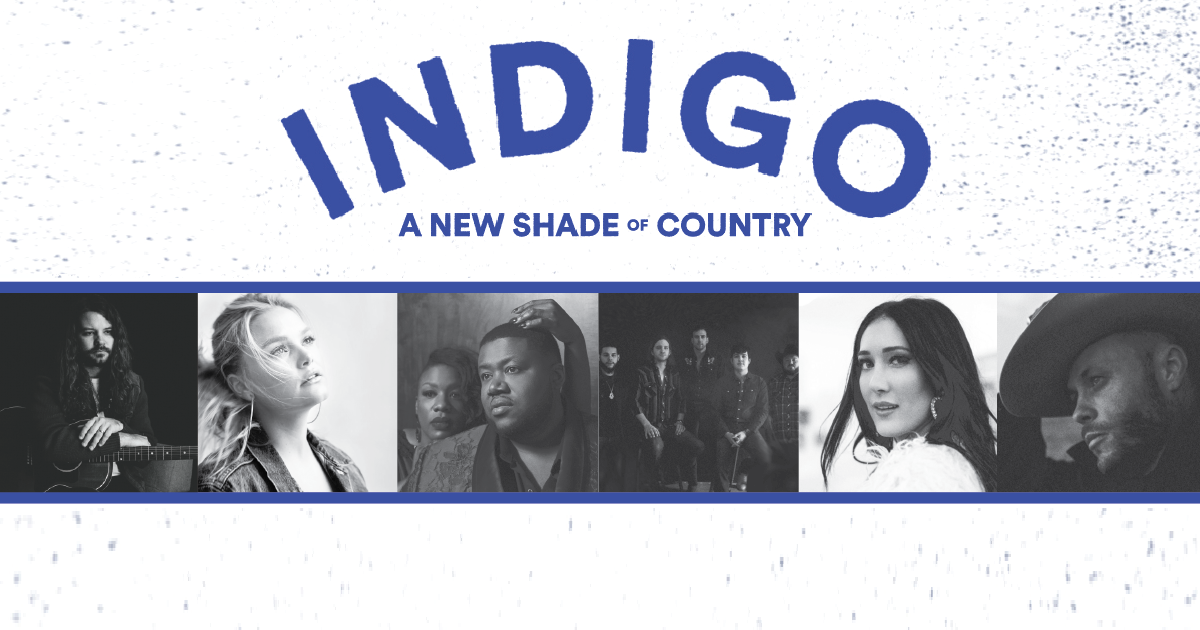
MIXTAPE: An Indigo Takeover by Spotify’s Laura Ohls

“Our Nashville-based team had been having ongoing conversations since early 2019 regarding just how diverse the taste of our country music audience was. It was clear to us that there were many modern songs in the genre, touching on Americana, rock, roots, and bluegrass, that had sonic and thematic throughlines. We were also seeing many of these artists on the road together (Marcus King Band joined Chris Stapleton, Yola toured with Kacey Musgraves), talking to each other on socials, echoing the strong community within the scene. With this in mind, the goal was to create a playlist brand that reflected these intersections and the audience appetite for a playlist of this nature. With the success of the playlist since its launch in March, Indigo has continued to be a priority for us, which is reflected by enthusiastic listening from users. We’re celebrating the playlist this month with a sizzle video, new video playlist formats, artist sharecards, billboards, and more, in hopes of bringing more fans aboard the Indigo train.” — Laura Ohls, Senior Editor, Folk & AAA, Spotify

 (Editor’s note: Listen to Laura Ohls’ Indigo Takeover Mixtape below.)

Zach Bryan – “Heading South”

Twenty-three years old and on active duty in the US Navy, Zach Bryan might not be what one would expect from a country act on the rise. The Oklahoma native’s self-released material from the fall of 2019 is gaining traction on Spotify, creating buzz throughout the Nashville music industry. At the time of its initial release he had no publicist, no manager, no team to speak of whatsoever, yet his live videos sparked the interest of an audience on social media — which ultimately led to the flood of activity on streaming we are seeing today. His biggest song to date, “Heading South,” has been included in our Indigo playlist since its launch in March and remains a consistent tentpole track. Though he hasn’t had the opportunity to tour as a result of deployments and the pandemic, expect crowds of fans when the time comes.

Caylee Hammack – “Small Town Hypocrite”

One of country’s most notable rising stars, Caylee’s powerful and vulnerable ballad proves how strongly personal songwriting still resonates in the genre. A vocal standout in the playlist, you’ll feel her heartbreak and strength throughout the song.

Flatland Cavalry – “War With My Mind”

While the song was not written during the pandemic and this time of quarantine, the Texas band’s newest song lyrics grapple with internal battles we all face due to lack of stability, isolation, or just general disruption, which certainly resonates with listeners today.

Brent Cobb – “Keep ‘Em on They Toes”

A real toe-tapper, this track encourages the listener to follow your own path versus one that has perhaps been laid out for you. The song also suggests taking higher ground when being tested by others, some sage advice we could all use during these stressful times. Cobb’s classic, warm tone shines through this cut.

Hailey Whitters – “Heartland”

The Iowa-native-turned-rising-country-star pays homage to her roots in this nostalgic song about the place she was born and raised. As the saying goes, you can take the girl out of the Heartland…

Cut Worms – “Sold My Soul”

A hint of Neil Young, a splash of Guy Clark, a shake of Gram Parsons, and you get this great tune from Cut Worms, AKA Max Clarke, embodying country-folk storytelling at its finest.

Jonathan Terrell – “Never Makes a Sound”

I have seen Jonathan Terrell’s music described as “Springsteen in a Honky Tonk,” and no song better reflects said description on Terrell’s new record than this one. Passionate and driving, it’s a real rocker on Indigo.

Aubrie Sellers – “Far From Home”

A little bit country, a little bit rock ‘n’ roll, Aubrie makes the kind of gritty Americana that a playlist like Indigo was made for. The title track and opener off her newest album is a more subtle take on her “garage country,” but is exemplary of how dynamic she is as an artist.

The War & Treaty – “Five More Minutes”

The husband-and-wife duo have always written songs that strike a chord and can often bring the listener (me) to tears, but they’ve managed to accomplish this with a song that feels upbeat and… happy? The roots of the song, however, are quite dark. Michael Trotter Jr, after years of mental and financial struggles, contemplated leaving this world. In response his wife, Tanya, pleaded to him, “Just give me five more minutes. Stay with me. Just five more minutes to love you.”

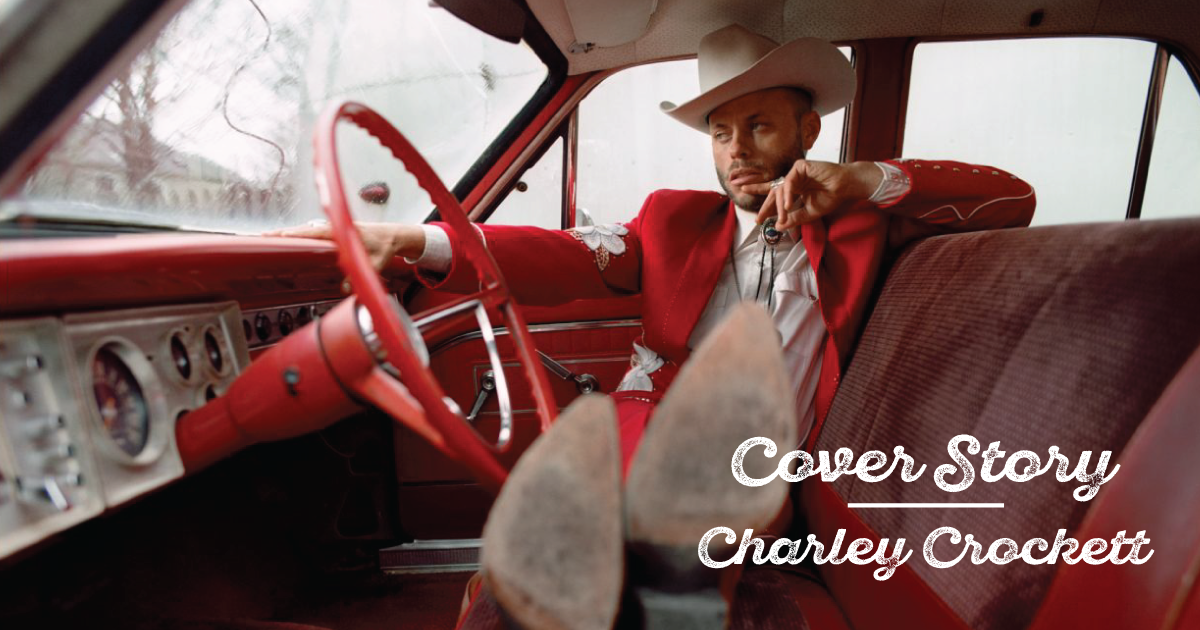
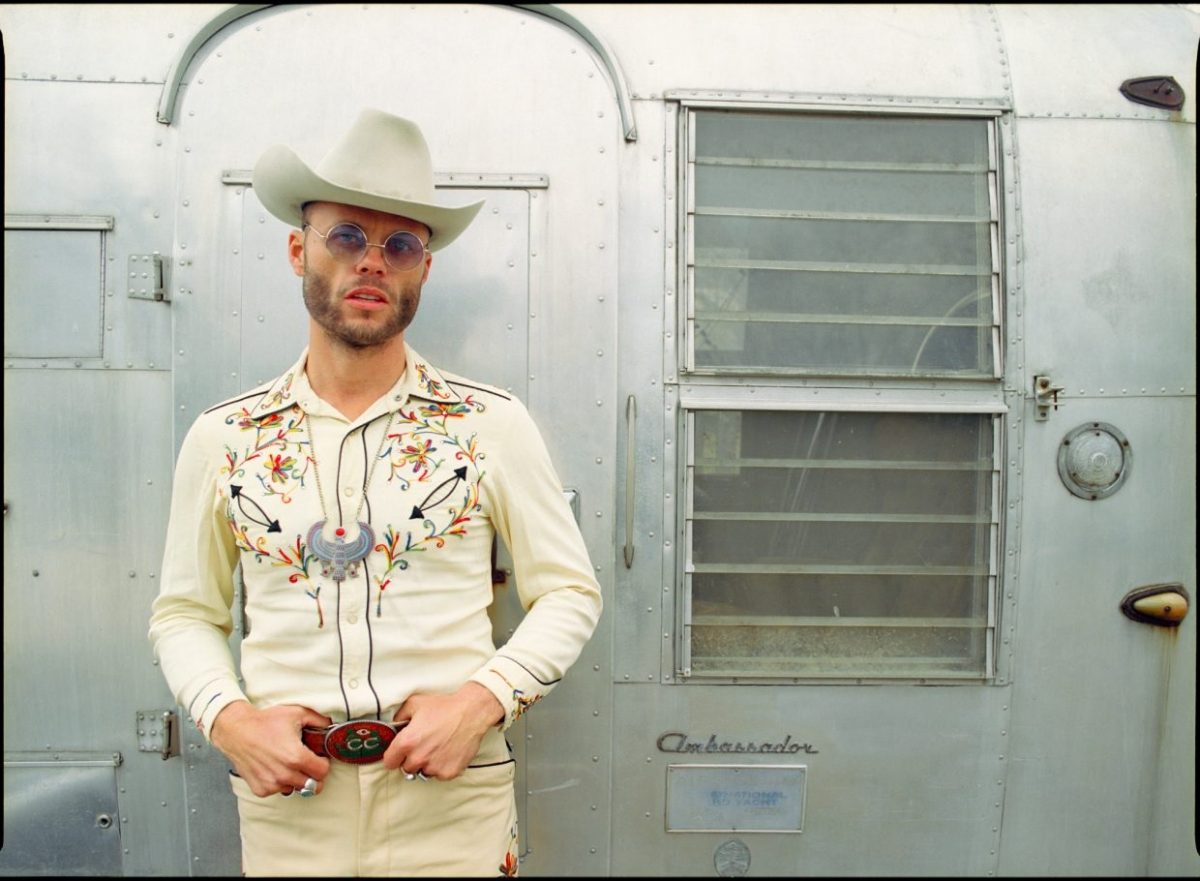
Charley Crockett – “Welcome to Hard Times”

Is there really another song title on this playlist that is more appropriate for our day and age? Following his 2019 album, The Valley, and a severe health scare, Charley’s newest album (and title track) touches on failures and a system that’s rigged for said failures. Crockett is one of those artists that embodies all subgenres and eras under the American roots umbrella, and it’s songs like these that showcase how his art feels old and familiar while simultaneously being new and exciting.


Images and artwork courtesy of Spotify
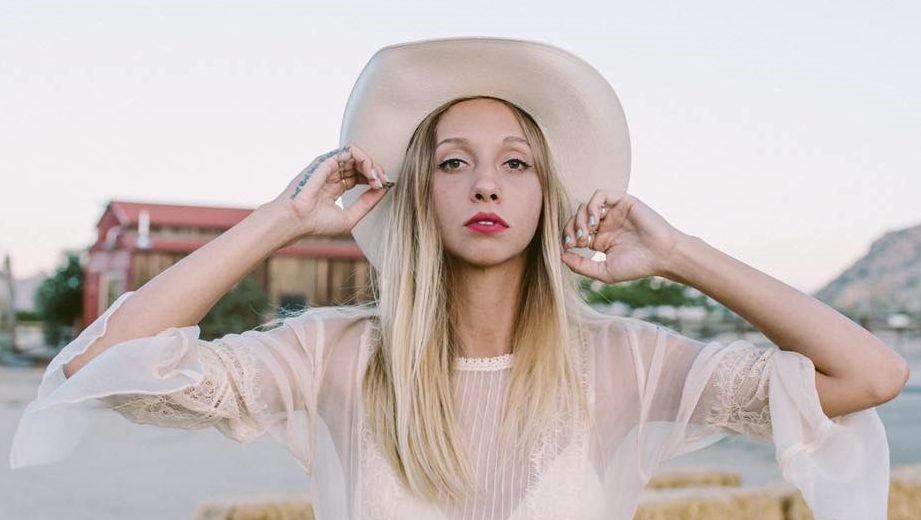
LISTEN: Victoria Bailey, “Tennessee”

Artist: Victoria Bailey
Song: “Tennessee”
Album: Jesus, Red Wine & Patsy Cline
Release Date: September 18, 2020
Label: Rock Ridge Music

In Their Words: “I first heard Johnny Cash’s rendition of this Rick Scott song while driving through snowy Tennessee a few winters back. I was heading down toward Leiper’s Fork in my little rental car, stopping all along the road to pet horses and listening to all my favorite country legends along the way. This song really sums up how I feel about the South and Tennessee as a whole. I love the little pleasures in life that Tennesseeans hold near and dear: family traditions and small town simplicities.

“My favorite verse in the song is, ‘We got a cabin in the country / And a creek that rolls nearby / And a dog that won’t even bark at a firefly.’ That’s exactly what I saw all around me exploring Tennessee on that trip — just a lot of pure joy and friendly folks! Recording this song was SO much fun. My band fell in love with the lyrics as much as I did. We tried to stay pretty true to the sound of Cash’s recording, but we sprinkled a little bit of our own sound into it as well. It was such an honor recording this song, especially because it represents a state I have come to love oh so very much!” — Victoria Bailey


Photo credit: Stefanie Vinsel Johnson

WATCH: Jeremy Ivey, “Things Could Get Much Worse”

Artist: Jeremy Ivey
Hometown: Nashville, Tennessee
Song: “Things Could Get Much Worse”
Album: Waiting Out The Storm
Release Date: October 9, 2020
Label: ANTI-

In Their Words: “I don’t write a whole lot of positive songs, but I try to have one per record at least. So this my positive message for the world. These are the good old days no matter how bad they seem. Just remember, life could suck a lot more. This song was written in about ten minutes, this is our first take in the studio and the video was shot in a couple hours. All in the moment and off the cuff, the way it should be! Also, watch out for Elon, I don’t trust that guy.” — Jeremy Ivey


Photo credit: Alysse Gafkjen

Through His Music, Charley Crockett Speaks to ‘Hard Times’ We’re All Facing

“Welcome to Hard Times,” the opening and title track from country crooner Charley Crockett’s eighth album is Crockett at his finest. He is pensive and pitch perfect, relevant and retro. “The dice are loaded, and everything’s fixed,” he sings. “Even a hobo would tell you this.”

It’s hard to tell if the 36-year-old Crockett is the hobo he references in that line, though it’s entirely plausible. As contemporaries cut their teeth at Belmont and Berklee, Crockett was busking on the streets of New Orleans and New York. While there, he learned how to entertain an audience in pursuit of a tip; perhaps more importantly, he learned the ways of this world, how we’ve all been ushered into a 24/7 casino where the house is telling lies and the gamblers are predestined to sin.

Welcome to Hard Times, comprised of 13 tracks of searing anguish set to slick, ’60s-style, country-western production, culminates with the particularly sorrowful “The Poplar Tree.” It’s a song that Crockett says has been received differently by different audiences, even as he — a man living somewhere between Black and white, privileged and not — feels that his message is obvious. “I have, many times, on this album cycle, said to press folks, ‘Yes, we’re all oppressed folks, but some folks just have it harder,’” he says. “And you have to recognize that.”

By phone, we talked to Crockett about his album, the role of artist as activist, and, of course, these very hard times.

Welcome to Hard Times sounds like you wrote it for this moment — in the midst of a pandemic, with widespread racial unrest — but you actually wrote it before everything went down. What inspired you?

You didn’t need this shit going on this year to know about these problems that we’re talking about. I don’t know how you could travel this world as an artist and not see it. I think that says everything about the nature of people. I recognize people are in different positions, but there are a lot of people who are in positions to not see what’s going on, and there are no consequences for them. Then there’s everybody else who’s forced to see it, who deals with it and suffers for it.

You’ve definitely been vocal in interviews and in your music. But even as you speak now, I get this sense that there’s a push and pull, or a toeing of some line that you’re subconsciously doing.

I’m trying to walk this line that is strange because I have been identified by a lot of my audiences as just a regular white man. Then there are a lot of people that look at me strangely as the complete opposite, as African-American. But I can’t speak for the Black community and I don’t really feel like I’m speaking on behalf of the white community either. I never saw myself as Black but I never liked my whiteness.

What does it mean when you say that you never liked your whiteness?

I dreamt of myself and viewed myself as not white from probably 5 years old. And then I look at myself now in videos and stuff, and I just… I feel like I look strange.

I guess what I’m saying to you is: My issues with my own identity tie to the kind of James Baldwin viewpoint that whiteness is just a metaphor for power, and that my identity as somebody who is uncomfortable in my whiteness says a lot about the relationship between Europeans in America and African-Americans and Natives. The romanticization of genocide is an unbelievable crime, but I think what is probably more savage and brutal is the assimilation through rape, through bondage, through [people like] my grandmother [who was mixed].

The easy thing for somebody to do is say, “Well, you can’t skip white responsibility for institutional and structural privilege.” I see that, so I’m not saying, “Hey, whiteness isn’t real, therefore nothing that’s happening to you is valid.” I’m saying you have to recognize that it’s happening, and then, if you truly wanna change it, at what point in the future do whites need to stop looking at whiteness as meaning anything? That’s the step that I feel is completely absent in the national conversation.

There are conversations happening though, right? And white people, at least some of them, appear to be really listening.

There’s a combination of white consciousness, and then there’s this other, fake, white virtue signaling. I just can’t stand some of that stuff ‘cause I see a lot of these people playing politics with their public image who are not doing anything in their life about shit. It’s whites signaling to other whites, and that’s what Martin Luther King was talking about at the end, you know? He really was. I think Malcolm X saw it at the end; I think James Baldwin, because he was so intellectual, was saying it to everyone, but he managed to get away with it because I think he seemed like he was mostly speaking within that kind of elite, intellectual world.

“Blackjack County Chain” is a song written in the ‘60s about a Black chain gang in Georgia that kills their supervising sheriff. Word on the street is that Red Lane, the writer, offered it to Charley Pride, but he passed on it because he didn’t want to stir up controversy. You covered it on Welcome to Hard Times, and it’s the only song on the album that you didn’t write. Why’d you decide to cut it?

I sung that song mostly ‘cause I listened to the words and identified with it. I feel like I’m dragging chains, you know? I just do. I always have. I think that that’s the other weird thing about America that is really hard to recognize, for a lot of us. It’s, like, no matter how much better a lot of these people have it, the insane thing that I’ve seen about America is, even among all these people in positions of power and privilege, they all view themselves as discriminated against and oppressed.

Your song “Poplar Tree” discusses lynching. Was there a concern about going too far when you wrote it?

I don’t know. I wasn’t thinking a whole lot about where that song was gonna go. It just went there.

Right, because you said this stuff dominates your mind.

It just does. And it’s who I am. I am in the public eye on some level and people got all kinds of crazy shit to say about that. And it is not lost on me that, for whatever reason, these people saying the crazy shit that they’re saying about me, they got nothing like that to say about these people that I’m getting compared to in the independent, Americana country scene. Even if I can sing ‘em under the table, they don’t criticize how they sound, but they criticize me up and down. And I’m not blaming them; I’m not mad at ‘em, I’m asking for it, in a way. I know that I’m asking for it, ‘cause I can just pack up and stop doing this shit.


Like, let’s talk about folk music. Let’s talk about blues, back in the day. When these guys were singing about their situation, it was all code. It had to be code because if it wasn’t, that might mean your life. So I’m stepping up and down to say this shit loudly, but I’m trying to build my audience to a place beyond where it is now. I’m just saying, I don’t exactly know who I’m speaking for, really, because of how completely outside of this society that I feel.

How did playing on the streets for so long shape you as an artist?

To me, that’s the best education I could’ve ever gotten in my life. It was unfortunate circumstances and difficult living that brought me there, but I would never wanna go another direction. It’s informed what I’ve done, and I learned about folk music, hip-hop, and everything else. I just absorbed it all on the street, and I made it into what it is now.

I have people in country who look at me like, “This guy’s an imposter! Look at this video of him on the subway train ten years ago! He’s wearing a beanie and tight pants; he’s not a real cowboy! He’s not country music!” And I’m like, who is more authentic than me? I never got a leg up in the business, period. I never opened up for anybody of note. I built my career out of the most unlikely of circumstances.

Do you think artists have a responsibility to speak up about social issues?

It’s like this: If your art isn’t saying shit, I don’t care about your political opinion. Like, if your art isn’t making an impact, your political opinion, to me, is little more than you trying to get ahead. And I mean that about white people; I mean that about everybody. If the art isn’t doing anything, then what’s the point?


Photo credit: Laura E. Partain. See the full photo story.

BGS 5+5: Zephaniah OHora

Artist: Zephaniah OHora
Hometown: Brooklyn, New York
Latest album: Listening to the Music
Personal nicknames (or rejected band names): Zeph

What was the first moment that you knew you wanted to be a musician?

I must have been 5 or 6 years old the first time I saw a Zildjian cymbal. A drummer named Ed Nicholas who played in the house band on Sundays at the church I grew up in preferred that brand. I was drawn to it because it had a big Z on it. I thought he was just the coolest. He always wore a pressed shirt tucked in and a nice pair of slacks. He had that hip easygoing, cool jazz drummer presence about him, and that’s when I decided that music was it.

What’s your favorite memory from being on stage?

One of the more recent memories on stage is when I performed at Neal Casal’s ‘There’s a Reward’ Memorial show at The Capitol Theatre in Port Chester, N.Y. It’s a stage that so many incredible bands and artists have performed on. Legendary shows that have gone down in history. And it’s a beautiful old theatre. So thinking about all those people who’d been on that stage and singing a tune to honor my friend Neal in front of a packed house was really something else.

What’s the toughest time you ever had writing a song? I’ve had a few tough times.

Some songs just can’t be written down fast enough. And other songs you labor over for weeks or months. In most recent memory is the song “All American Singer” off my new record. It was to me one of the most important songs I’ve written. There’s a couple ways to interpret that tune and it was important to me that it said what I felt needed to be said. Unlike a righteous Twitter post that you often see these days, it’s a recorded song. There’s no way to delete it or alter your ideas. It’s permanent. So it was important to make sure my thoughts were coherent within the song.

Which elements of nature do you spend the most time with and how do those impact your work?

I haven’t been spending a lot of time in nature. Sadly. I live in New York City so nature is scarce. However I am around an incredible amount of architectural history and beauty. There’s so much to see here, and so much you could walk right past and never pay any mind to. And then one day you finally stop to admire something you’ve passed by many times and realize there are so many stories within that building or space. I think that’s also simultaneously an analogy for life. I’m always trying to tap into some collective shared experience in my writing. I think architecture is a reflection or expression of human experiences and history so it directly shapes my work.

If you had to write a mission statement for your career, what would it be?

The mission I’m on is to create those moments in music live or recorded when you get chills or feel as though the narrator in the song is singing about your own life experience. It’s a lofty goal and one that’s pursued by many. That’s part of my greater goal of connecting with people and understanding my own unique experience in this life. And music is a great vehicle for that.


Photo credit: Jammi York

LISTEN: Mandy Barnett, “A Fool Such as I”

Artist: Mandy Barnett
Hometown: Crossville, Tennessee
Song: “A Fool Such as I”
Album: A Nashville Songbook
Release Date: August 21, 2020
Label: Melody Place LLC

In Their Words: “The first time I heard “A Fool Such as I,” I was just a kid. Baillie & the Boys had a big hit on it on the ‘80s. Later on, I became familiar with some of the other great versions by Hank Snow and Elvis Presley. Every year we would play the after party at the BMI Awards and would always include this iconic Nashville song in our set list.” — Mandy Barnett


Photo credit: Jiro Schneider

BGS 5+5: Arlo McKinley

Artist: Arlo McKinley
Hometown: Norwood, Ohio
Latest Album: Die Midwestern (Oh Boy Records)
Rejected Band Names: Hatchet Wounds, Black Locust Inn, Thousand Dollar Car

Which artist has influenced you the most … and how?

With so many influences I could name, I always go back to Blaze Foley. His ability to put so much feeling and emotion into a simple song without ever taking himself so seriously. He always influenced me in my writing, and has been a reminder to always be myself.

What’s your favorite memory from being on stage?

I would have to say that performing and knowing that one of my heroes, John Prine, had taken the time out of his day in the middle of the week to come see me play would probably top the list. He came to watch the band play at the High Watt in Nashville. That was a night I’ll never forget.

What other art forms — literature, film, dance, painting, etc. — inform your music?

I read a lot when not listening to or writing music. Charles Bukowski, Hunter S. Thompson, Greil Marcus, Ted Chiang and many others. Ted Chiang writes very smart, socially-conscious science fiction that really stands out to me. I highly recommend checking him out if you haven’t already.

What was the first moment that you knew you wanted to be a musician?

That would have to be growing up in the Baptist church. Seeing that music could be so much more to people than just a sound and evoke real emotions in people appealed to me in a way that is hard to put into words. Along with that I grew up constantly surrounded by so many kinds of music that my family would be listening to. Country, punk, bluegrass, folk, metal, hip-hop, etc. It’s the only thing that I ever thought that I should be doing so I’d say the simple answer is, from the moment I discovered music I knew that’s what I wanted to do with my life.

If you had to write a mission statement for your career, what would it be?

It would be to keep pushing myself to grow as a musician, always pushing myself to never create the same album twice. It would be to also keep creating music that people can correlate to their own lives in one way or another.


Photo credit: David McClister

Interviewed by His Daughter, Mac McAnally Recounts a ‘Lifetime’ in Music

Mac McAnally is a highly-decorated and prolific multi-instrumentalist, producer, songwriter, and artist. He tours with Jimmy Buffett’s Coral Reefer Band, plays on countless sessions in Nashville and Muscle Shoals, and produces a number of independent artists, too. But more important to me, he’s my dad. And he’s a great one. On the occasion of the release of his new album, Once in a Lifetime, we discuss guitars, bluegrass, moments of social change, why he covered a Beatles song, and the process of making this record amidst a pandemic. And though I get to talk to him most days of my life, it is heartening to hear him put a fine point on his eternal optimism.

BGS: Growing up, music was constant in the house and one of the most pervasive cover songs you played was “Norwegian Wood.” What do you think it is about that song that sticks in your craw and drew you to record it?

Mac McAnally: As you know, I’ve always loved that song. In the very first line, from a lyric standpoint, “I once had a girl/Or should I say/She once had me,” you can tell any story in the world after that. That is something that I subconsciously try to do and have since the beginning.

Specifically, why I recorded it is because I bought an octave mandolin about four years ago. I did a show with Sarah Jarosz and she had one and let me play it and I thought, “I am going to have to get me one of these.” I always feel like I have to do something to justify the purchase so I play it on as many sessions as I can to try to amortize the cost, but I also came up with this new way to play it that is kind of a cool arrangement that I’ve never heard. I don’t in any way challenge the Beatles version and don’t mean any disrespect; I’m trying to find ways to justify the guilt of buying an octave mandolin.

On almost every record that you’ve made there’s a nod to bluegrass, like “Brand New Broken Heart” on this record. Who are some of your biggest bluegrass influences?

I have to preface this by saying I am a bluegrass fan, I am not a bluegrass player. Anything that I might be doing would just be trying to pay homage to what the greats can do. I’ve gotten to play with some of them, which I count high among the blessings of my life. When I wrote “Brand New Broken Heart,” I envisioned I would someday pitch it to Ricky Skaggs or Dailey & Vincent. I recorded it because I was a lazy song plugger who never pitched it to anybody.

Doc Watson was one of mine and my dad’s heroes. He was sort of my intro to real bluegrass. And all the way through my life, Emmylou Harris. We played her songs in bands when I was a teenager. Bryan Sutton is just frighteningly good. I can’t even fathom what he is doing, let alone try to do it myself. He inspires me to go get a pick out and play differently than I play because I love so much of what he does. And I’m crazy about I’m With Her.

What brought about recording “Changing Channels” for this record?

I have always loved that song. It is the second song that Jimmy (Buffett) and I wrote together. We wrote it in one my favorite places I have ever been. He had a spot down in Thomasville, Georgia, with a big porch. As you know I’m a porch guy. We sat out on the porch and wrote that song. He did a great version of it on Off the See the Lizard and I honestly never imagined myself cutting it but I love to play it. It has worked its way into my shows over the last ten years and his fan base will come up after and ask which one of my records the song is on. They had cash out trying to buy it and I don’t have it. You know better than anybody how terrible of a businessman I am, but eventually enough people tried to buy a version of it that I listened.

You have collected a lot of guitars, and in various ways: some saved from landfills, some gifted, some cast for you by friends and colleagues. How do you pick which guitars make your records?

It is certainly not an exact science but sometimes it is the guitar that the song came out of. The main thing that has always made me select guitars is if I think they have songs in them. I would happen to be holding them and a couple of my stories got mashed with them. In more cases than not, if I wrote a song on a guitar, that’s the one I’ll record. You end up learning over the years. In the same way when you are photographing someone, you learn what the best side of their face is. … A Gibson with dead strings is an awesome rock ‘n’ roll rhythm guitar. A Martin with new strings is an awesome fingerpicking guitar.

We are in a moment of social change. Music has the power to both inspire and record change. You moved to the Shoals in the ‘70s. Thinking back on those early days in the studio, what was it like in those moments?

Playing music in Muscle Shoals was extremely encouraging from the standpoint of equality. They didn’t really think of it in terms of race. Music transcended that. And I love that. And I still love that. I’m standing in Muscle Shoals right now proud to be part of that. You can be encouraged on some levels and discouraged on some levels and I am both of those things. I haven’t in my life ever thought that I was better or worse than anybody else and I look forward to that being a more prevalent vantage point for everyone.

I want to challenge you on that a bit. One of your dear friends and longtime collaborators, Ralph MacDonald, told you that he never felt comfortable coming to Muscle Shoals and we’ve heard from more folks that it wasn’t an inviting place to come collaborate, so a lot of those musicians opted for Detroit or Miami. With that added perspective, does it make you feel differently about the time?

Absolutely, it makes me more aware of the context. As I said, Muscle Shoals would have been advanced in terms of racial relations in the music community in the South. As I look back now, I realize that doesn’t mean it was great. It was just better relative to the surroundings.

Ralph and I, we were like brothers. He told me he would’ve been scared to death of a big red-headed dude from Mississippi. And he was a Black man from Harlem. I could not have imagined that we would connect on as many levels as we did. We both had misconceptions that got better. He was one of my heroes. He was one of the best percussionists that ever played. And I loved him. It is hard to get into racial discussions without stirring stuff up. But we made each other better. Music is one of the best ways to bridge across preconceptions. I think it’ll play a big part of getting us the rest of the way home. ‘Cause we ain’t there yet.

Stirring stuff up is the way we make progress.

That’s true and they are not easy discussions. I don’t think of myself as someone with prejudices, but when I think back, some of the things I laughed at growing up as a kid in Mississippi I’m embarrassed of. And I was mainly laughing because everyone around me was laughing, but when I think of what it was we were laughing at, it is embarrassing. I don’t really want to talk about it, I just want to be a better person, because I know it was wrong. But you are right. Talking about it is better. Air it out.

What does it feel like to release an album in a pandemic?

Well, not speaking ill of either thing, but I hope it is a one-time thing. I hope I never have to try to beat a pandemic album with a second pandemic album. My records are normally made in what I call “the cracks of time.” I make them in the cracks of my schedule because I work full-time as a Coral Reefer, a fair amount of time as a session musician for other people, writing songs for other people and producing other folks. But because of the circumstance of this record, it is really special to me because I got to sit and think about what I felt was important and what was not. I wouldn’t wish a pandemic on the world just to get extra time to make my record. I think maybe next time I’ll just take the time on my own.

Even in your darkest lyrics, there is a balance that shows your shining optimism. We are surrounded by a heavy dose of dark right now. Are you feeling optimistic?

Absolutely. I absolutely am. I wish we weren’t where we are right now and that everyone could see that it is better to find a way to coexist than it is to hate one another. I’m not someone who has any room for hate. As you recall, I don’t even like the word. I’ve probably pestered you about it for your entire life. Actual hate hurts me. We’ve been celebrating the life of John Lewis the last few weeks and John is a great example of figuring out a way to make it better by not hating the people who hated him. I think things are going to get better and I intend to try to help.


Erin McAnally is a regular contributor to The Bluegrass Situation

Photo Credit: Jeff Fasano

LISTEN: Rhiannon Giddens, “Don’t Call Me Names”

Artist: Rhiannon Giddens
Hometown: Greensboro, North Carolina
Song: “Don’t Call Me Names”
Release Date: August 23, 2020
Label: Nonesuch

In Their Words: “The framework in the song is a love affair, but it can happen in any kind of connection. The real story was accepting my inner strength and refusing to continue being gaslit and held back; and refusing to keep sacrificing my mental health for the sake of anything or anyone.

“I don’t often write personal songs but this one has stayed with me — it poured out then and has just sat there waiting for the right time. I got a chance to do it with some incredible musicians and a fabulous producer and I’m thrilled it’s going to be out in the world; when I listen to it, the anger that I felt then is the anger I feel [now] at my entire country being gaslit, held back, and sacrificed. We have to keep saying NO to toxic behavior, no matter how small or large the stage, and keep saying it nice and loud.” — Rhiannon Giddens


Photo credit: Ebru Yildiz