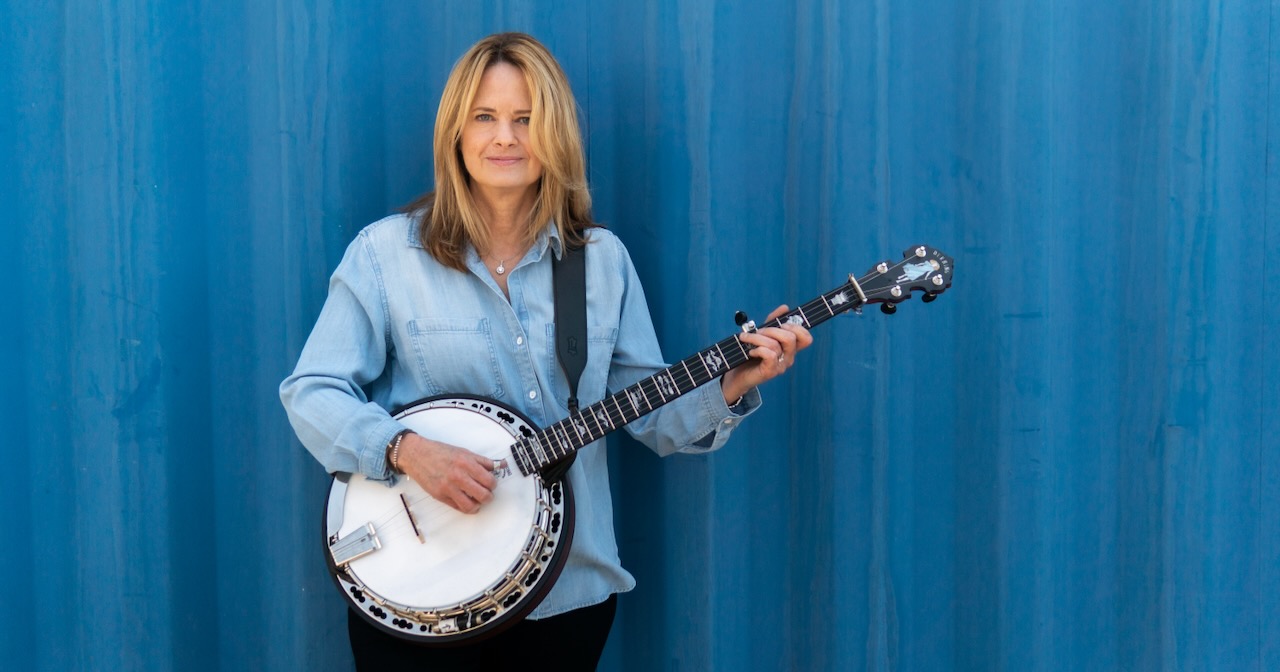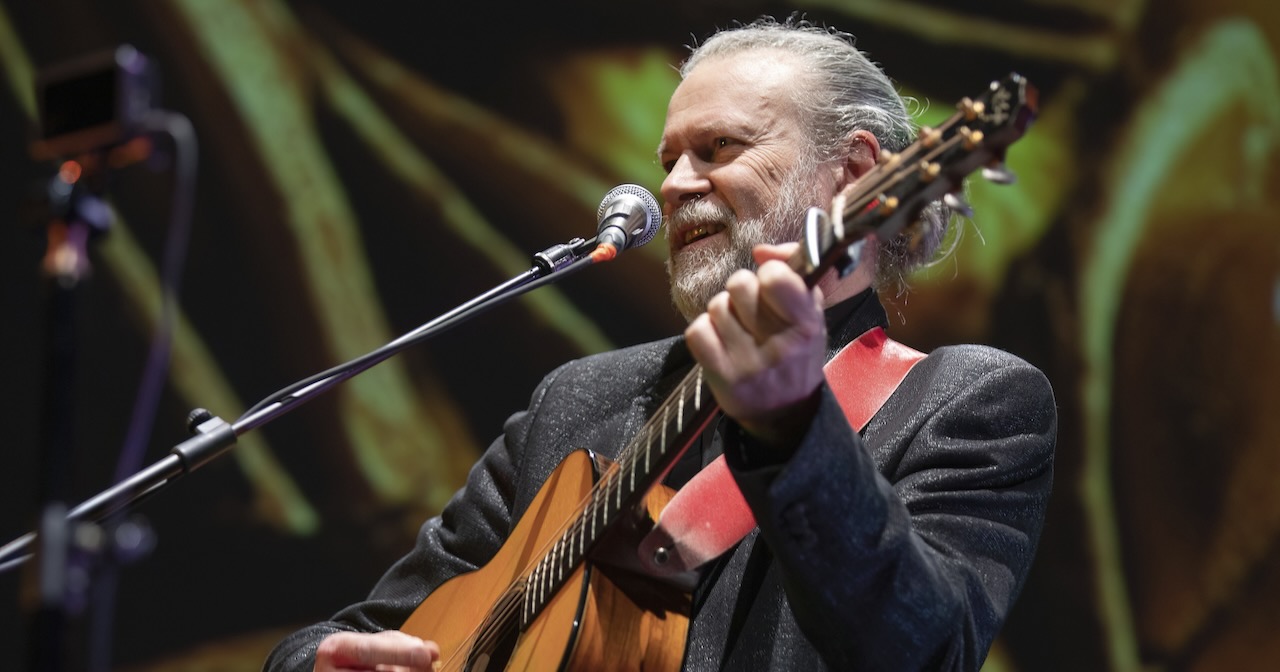
First & Latest: 34 Years Later, Alison Brown Still Finds ‘Simple Pleasures’ on Banjo

In 1990, when banjo player Alison Brown released her debut album, Simple Pleasures, she had no idea where her career could or would lead. GRAMMY nominations, IBMA Awards, touring and performing with Alison Krauss, Michelle Shocked, the Indigo Girls, Steve Martin, and many more, founding a record label that would become a keystone in roots music – none of these impressive accomplishments were on her horizons, literal or hypothetical. Brown just wanted to play the banjo.

She had recently left her job in investment banking and wanted to give her musical career a legitimate go of it. Tasking herself with intentionally writing an album’s worth of original tunes, over the years from 1988 to the project’s release on Vanguard Records in ‘90, Brown pushed herself sonically, aesthetically, and compositionally. The result was demonstrably spectacular and effortlessly cutting-edge.

Simple Pleasures, which was produced by David “Dawg” Grisman and included Alison Krauss, Mike Marshall, Joe Craven, and more among its cast of collaborators, would help launch Brown’s now decades-long career as a bluegrass and roots music multi-hyphenate and business leader. Simple Pleasures broke the ground, fertilized it deeply, and helped cultivate one of the most innovative and forward-looking careers ever accomplished by a five-string picker.

Now, some 34 years after its original release, that debut album has been reissued – on vinyl and digital, with a handful of digital-exclusive bonus tracks recovered from a cassette tape of demos. The project is a delightful time capsule and a perfect representation of the vast and varied musical ground Brown has covered over the intervening years. She may not have known it then – she readily admits, as a picker in her twenties, she was just taking this “banjo thing” day by day – but Simple Pleasures would lay the groundwork for all of her many successes in the music industry and in bluegrass.

For a special edition of First & Latest, we spoke to Alison Brown by phone about her first release and her latest – which just so happen to be the same album, the original and the new reissue. It’s essential listening for bluegrass, banjo, and roots music fans.

Simple Pleasures was originally released in 1990, 34 years ago. I wanted to start by asking you about your frame of mind now versus then, about what’s changed in the interim. What’s changed regarding how you view yourself as a creator and as a banjo player? Looking back, in retrospect, do you recognize the person you were then? What do you remember about your frame of mind when you first put the album out?

Alison Brown: It was this time in my life during which I was writing this music and then trying to get a record deal; I had just left my investment banking job and had taken this bizarre leap of faith, which I didn’t necessarily get a lot of support for. My parents weren’t saying, “Hey, I think you should quit your investment banking job to play banjo.” [Laughs] It really was a leap of faith.

I just couldn’t stop thinking about the banjo. So, I gave myself the challenge of seeing if I could write an album’s worth of music that would hold up and just try to make a record. And then, in the course of working on that, I wrote these tunes and joined Alison Krauss & Union Station. By the time we recorded the tunes, I’d been in her band for a year. I was really at the beginning of what has become my career path since then, but when I was doing it, I didn’t really know how it would be received or if it would get any props or even if it would be any good. All the validation that came on the heels of releasing this, and then everything since then, has made me a much more confident musician than I was when I wrote the music and recorded the record.

Before this album, were you already writing tunes? Was that something that you always did? Or was this an intentional practice shift for you? Was making an album of your own tunes something you had always been working towards or was it part of that purposeful transition from investment banking to banjo?

That is a really good question. I had never written much music up until that point, but I’d always wanted to. Stuart Duncan and I did a record called Pre-sequel. That was like a teen record, but we had a couple original tunes, stuff like “Possum Gravy on Grandma’s Beard” and “The Great Lasagna Rebellion.” It was like teen stuff.

Anyways, I really had wanted to challenge myself to see if I could write some “real music” – that isn’t really quite the right word, but some more substantial tunes and some tunes that really took the instrument maybe to a new place, which took my voice to a new place. That was a lot of this exercise and those 12 tunes. I didn’t know if I could write them or even if they would be any good, but that was like the beginning of this kind of process of self discovery.

When you look at the credits list – Mike Marshall and David Grisman and Alison Krauss and more – you can see some of the fingerprints of you and your community, but it was a kind of a longer process of you writing and getting to the point of recording, right?

I’m trying to remember… yeah, probably from the time I started writing the tunes was maybe middle of 1988 and then we recorded them beginning in 1990. So yeah, there was definitely some time in there–

Was there some extrapolating in your head of, “What are these songs going to sound like? Who is going to play them?” What do you remember about deciding on how you were going to make the tunes and who was going to make them with you? Because I have a feeling that was just as important a part of the process as having the material to record.

Once the door opened for me to work with David Grisman, to produce the record and play on it, then I was pretty much like, “What do you think, David?” But I knew I wanted to have Alison on the record and I knew I wanted to have Mike, ‘cause I love his music no matter what he’s playing. I’m the head of the “Mike Marshall Plays Guitar Fan Club.” [Laughs] I love his guitar playing. And Mike was in the Bay Area, so that made perfect sense.

But then, in terms of bringing in the flute or percussion, I hadn’t really thought about those things. When I listen to this record now, it’s surprising really how much of a footprint the record created for what we’re doing now. ‘Cause we’ve got a rhythm section and flute in the band. In some ways, it feels like after all this time we’ve come full circle, at least back to the seed that record planted, sonically, for the music.

That’s so interesting, to be able to look back and trace that throughline, when at that point it may have felt like a one-off to have those instruments and those styles represented in the music. And now it’s present through lots of your work.

Yeah, it is really interesting. There’s obviously things that weren’t included [on Simple Pleasures]. We’ve had piano in the band pretty much since the beginning and we didn’t have piano on that record, obviously. But I don’t know, somehow that doesn’t seem as much of a template thing, the idea of percussion elements and certainly the flute. David really brought that – and the idea of incorporating cello. I’m not sure I was really thinking about those things. My thinking was probably more in the bluegrass-rooted box.

One of the things that’s definitely changed from the original Simple Pleasures to the reissue over those 30-some years is these bonus tracks that you’ve added – such a time capsule. I wanted to ask you about their… I want to say provenance, but I don’t mean to be that formal. Like, how did you hold onto the demos over time, did you always have them in your back pocket?

You know, as we were working on re-master I kept thinking I knew I had a cassette of the demos. I just dug around and I found it! That’s where the actual takes came from, but that between-take talking, to me, is my favorite part of the whole thing. Just hearing Mike and David and Richard Greene, who produced those demos, talking to each other – I just think that’s the coolest thing. That came off the 2-inch tapes that we had. But the 2-inch tapes, we didn’t have the final mixes of the demos. So, it just worked out that we dumped the cassette tapes into this computer and tried to sweeten it a little bit and that’s what we used.

Looking back, this was a big transition point for you with a GRAMMY nomination, winning IBMA Banjo Player of the Year as the first woman to win an instrumental award. Of course this would end up a seminal album and was a really important kickstart for your incredible career. But at that point, back in 1990, were you worried about it? What was your frame of mind as far as expectations for what this album could do and where it could go?

I’m sure that I had no expectations. [Laughs] It was just something that I really wanted to do myself. I wanted to see, could I write a bunch of music and would it stick together? And, can I get some great people to play on it? I was just happy that all those things came together and I got it on a label.

It was just so cool to be on Vanguard Records. The Welk Music Group had bought that catalog and they had just started signing artists. I was one of the first artists they signed to the Vanguard imprint. All that was enough, but then to get a GRAMMY nomination was completely a surprise. I didn’t expect that at all, or the IBMA recognition. That validation was huge, obviously, and it would be for anybody, but for me it was just so huge. I actually took my parents with me to Radio City Music hall for the GRAMMYs and that went a long way toward them accepting my career 180. [Laughs]

It seems like this was definitely proof of concept for, “I can do this banjo thing. I can make banjo records. I can do this as a career.”

And in retrospect, I completely agree. In the moment, none of those things [were certain]. That’s what they say, “Hindsight’s 20/20.” And that’s so true; when you’re in the moment, you just don’t know how it’s going to turn out. Then it turned out great! I feel so lucky every day that I get to play music or create music or help somebody else create music, all that is just such a gift. Because it was not a foregone conclusion, I could easily have gone back to investment banking or something else with my tail between my legs. I’m just so grateful that isn’t the case.

At this point in your career, people think of you as a multi-hyphenate, as somebody who runs a label, is so active in the industry, and picks a really mean banjo. But this project predated Compass Records by several years. Were you already planning that sort of multi-prong, multi-hyphenate approach then? Or do you think it would be a surprise to 1990 Simple Pleasures Alison that you are the multi-hyphenate you are now?

Yeah no, I did not know it was [in my future], I think I was really just taking it a step at a time. At that particular point in time, my goal was just to write tunes and play in Alison [Krauss’] band. Then, when I left her band, I was really at this juncture again. My parents kept saying, “We really think you’d enjoy going to law school!” I was on the edge of applying to Vanderbilt Law School when I got a call from Michelle Shocked looking for a band leader for her world tour in 1992.

So no, I definitely didn’t have the multi-hyphenate, as you put it, plot hatched at all yet. That’s really something that came during that time that I spent with Michelle and then Garry West, who was playing bass in the band [with her as well]. We connected on a personal level, on a business level, and we started talking about “the good life.” Like, how do you make a life out of music? That’s when we started envisioning the different spokes of the wheel, and one of them was a record label and one of them was playing banjo and touring. That 1990s Alison was really just taking in a day at a time.

There’s this quality that musicians talk about a lot, almost to trope-ish levels, of not liking listening to themselves, not liking going back and hearing their own musical ideas or their own creativity from the past. It can be cringey! When you hear your young adult voice on the banjo now, what’s your reaction? Do you bristle at it? Do you feel inspired by it or do you have a moment where you’re like, “I can’t believe that I played that or I did that”? You’ve been inhabiting these tunes to remix and re-master them, not just rubber stamping a reissue. What does that feel like, to be going back and forth between who you are now and who you were then?

I really thought it was going to be like a lot of cringey stuff, like listening to those tracks and thinking, “Oh god, why did I play that?” Instead, I had a completely different feeling, because I felt like I could hear and really remember both the joy of figuring out that I could do this thing and the uncertainty of, “I don’t know if it’s any good or if it’s going to connect with anybody at all.” I can hear both of those things, but at the end of the day, what I felt most was just wishing I could reach back in time and give myself a pat on the back [and say,] “It’s going to work out okay and you’re on the right path.”

Because I think that’s the thing, we’re all looking for our true path. Sometimes it’s really hard to see, and for me, it was definitely hard to see. I really thought that I would be like a respectable business person and instead – well, I hope I’m a respectable business person, but it’s certainly not what I expected to be! [Laughs] I really thought, banker, lawyer, doctor, that kind of thing.

Your portfolio as a banjo player, label head, and producer is so diverse. And I wondered if you feel that’s directly correlated to being a woman who plays the banjo, or if you think there’s something else that’s driven that or informed that? Because I firmly believe marginalized folks in roots music – really anyone who’s not a straight white man – we often have to have very diverse career paths just to make a living, to make ends meet.

One thing I do notice is that big opportunities that opened up for me early on, they were all created for me by other women. That’s really not lost on me – whether it was Alison Krauss or Michelle Shocked. It wasn’t a male band leaders inviting me in. I think that’s really significant and that’s one of the things that I think is interesting about the times we’re in now, the fact that there’s much more diversity – even though it’s not as much as we would like to see. But there are women peppered throughout the ecosystem of the bluegrass community. We’re really in a position to empower and bring up the next generation, where we weren’t so much before. That makes it a really exciting time. I know that’s something that I love to look for opportunities to do.

If I’m producing a record, I want to bring those other voices into the room and let’s raise the next generation. ‘Cause when you come out of investment banking, you can see how adept the guys are at bringing on the next generation of guys, but women in corporate situations just historically haven’t [had the same access]. There are many reasons, it’s not their shortcoming. I think it’s just the circumstances, but now it doesn’t have to be that way. I find that particularly exciting.

34 years later, these folks who played on Simple Pleasures are still part of your community and are collaborators of yours. Back then, were you thinking, “All right, these are my ride or dies! We’re going to go the distance together.” Or was it like, “I can’t believe I get to be in a room with these folks and I hope we can do it again”? How does it feel now to look back and have decades-long relationships with these folks that you made the album with and to have that community be such a present part of the music that you continue to make and the records that you put out?

It’s amazing to look back and to think about the fact that I’ve known Mike Marshall since, gosh, I think I was a teenager the first time I met Mike? To have 50-year-long relationships with some of these people, it’s an amazing thing and it’s such a gift. I think one of the best things about our community is that people can have careers that extend over decades and you can have friendships with people that extend over half a century or more. I’ve known Stuart Duncan since he was 10, so I’ve known him for half a century. It’s crazy and wonderful too. And it’s such an amazing aspect of our community.

I don’t know if it’s the same in other kinds of music, but I think the intergenerational aspect of bluegrass music and roots music just creates for some amazing lifelong friendships. I think it’s not uncommon for people to start when they’re 10 years old – or, Stuart started playing this music when he was six or seven. When I met him when he was 10, he was already a hotshot fiddle player. The fact that you can get into this music as such a youngster, keep playing it, and there’s room for you even when every hair on your head is gray, it’s just a great thing. I think in popular music the window is more narrow.

But in this music, people want to see you play your music whether you’re six or whatever age. How old was Bobby Osborne? He was 92! The record that I did with Bobby, Original, we was 86/87-years-old when we recorded that record. You wouldn’t see an 87-year-old pop artist probably making a record.


You Gotta Hear This: New Music From Yasmin Williams, Danny Roberts, and More

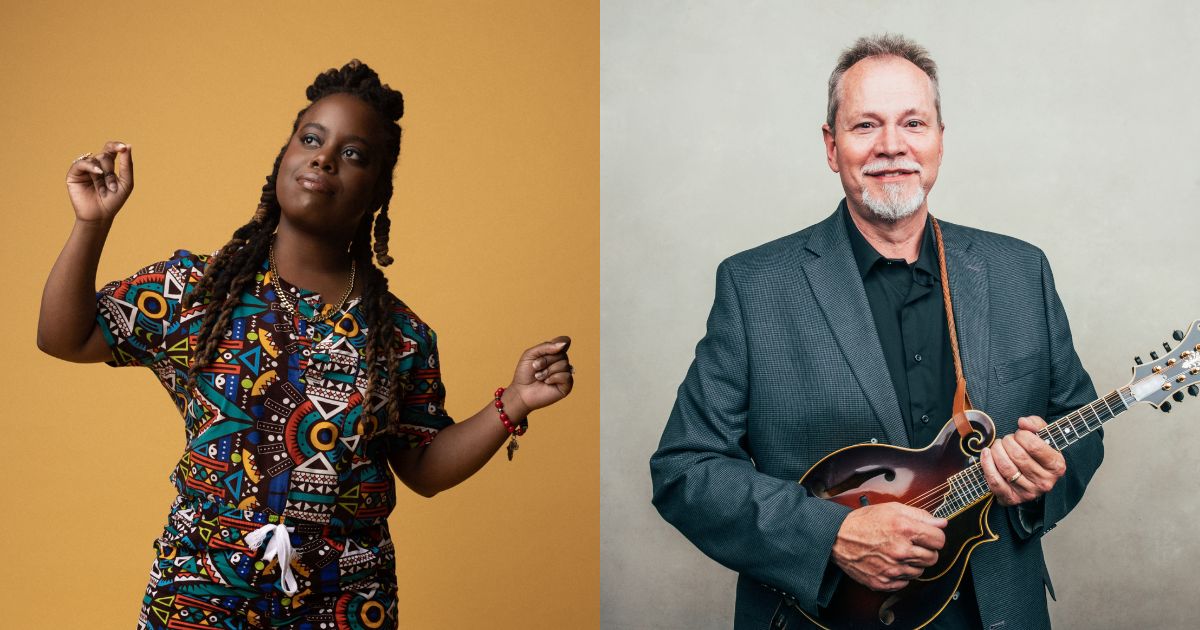
It’s our first New Music Friday of August! This week, we’ve got an excellent handful of tracks you simply gotta hear. First, there’s Paula Fong with a “zippy little tune” that’s delightfully old school country. Plus, Danny Roberts brings us a ramblin’ bluegrass track, “The Drifter,” which pays homage both to David “Dawg” Grisman and Roberts’ late brother-in-law, Mike Mullins.

Our penultimate premiere is the title track for Americana duo – and 2024 AmericanaFest Official Showcase artist – A Tale of Two’s upcoming album, Renegade. To finish us off, the impeccable and mystifying guitarist Yasmin Williams calls on indie folk favs Darlingside for “Virga,” a swirling song from her just-announced upcoming album, Acadia.

Listen below, ’cause You Gotta Hear This!

Paula Fong, “A House Is Not A Home”

Artist: Paula Fong
Hometown: Los Angeles, California
Song: “A House Is Not A Home”
Album: Chestnut Mare
Release Date: September 6, 2024

In Their Words: “This is hands down the fastest I’ve ever written a song. It took me around 15 minutes to write it top to bottom – chords and lyrics – and felt like it just flew out of my head onto the page. I often write about fairly heavy subjects, but in this case I thought I’d just try out a zippy little tune that puts a smile in your heart and makes you want to tap your feet. I often get compliments that it sounds like an effortlessly classic old country tune.

“When I was in my early 20’s I moved from Los Angeles to North Carolina for a time to work at an outdoor Montessori/Quaker farm school that was located in the foothills of the Appalachian Mountains. Life there was full and busy, but in a different way from LA. Many things were clearer, more simple, more joyful in a way. I feel like this song captures one facet of the simplicity of that time (and some specific NC references – traveling across the mountains, chickens in the garden). Generally speaking, I think love is hardly simple, but there are certainly moments that can feel as easy and carefree as this song.” – Paula Fong


Danny Roberts, “The Drifter”

Artist: Danny Roberts
Hometown: Nashville, Tennessee
Song: “The Drifter”
Release Date: August 2, 2024
Label: Mountain Home Music Company

In Their Words: “When I started writing ‘The Drifter,’ I was inspired to compose something to pay tribute to one of my all-time favorite mandolin players, David Grisman. I feel like this song has that vibe, though nobody can play that style like Dawg. The song title is in honor of my late brother-in-law, Mike Mullins, who wrote a book called The Drifter before he passed away; that title just seemed to fit this song. ‘The Drifter’ was so much fun to record, and it’s always great to have my wife Andrea playing bass with me and the solos that Tony Wray (banjo and guitar) and Jimmy Mattingly (fiddle) played on it are magical. I’m blessed to have such great musicians helping me bring my music to life!” – Danny Roberts

Track Credits:
Danny Roberts – Mandolin
Andrea Roberts – Bass
Tony Wray – Acoustic guitar, banjo
Jimmy Mattingly – Fiddle


A Tale of Two, “Renegade”

Artist name: A Tale Of Two
Hometown: Nashville, Tennessee
Song: “Renegade”
Album: Renegade
Release Date: October 4, 2024

In Their Words: “‘Renegade’ is a fitting title for both the record and this song. It represents a shift, a changing of the tide. Our aim is to embody an identity that defies the norms of Nashville. Drawing inspiration from fragments of a previously unreleased track, “Renegade” continues the next chapter of our story, infused with the spirit of the Appalachian terrain we know so well.” – A Tale of Two

Track Credits:
Aaron Lessard – Guitar and vocals
Stephanie Adlington – Vocals
Ross McReynolds – Percussion
Elizabeth Estes – Fiddle
Jon Estes – Bass


Yasmin Williams, “Virga”

Artist: Yasmin Williams
Hometown: Woodbridge, Virginia
Song: “Virga”
Album: Acadia
Release Date: October 4, 2024
Label: Nonesuch Records

In Their Words: “A virga occurs when trails of rainfall from a cloud evaporate before they reach the ground. While virga can be beautiful to look at, it can also cause extreme turbulence for aircrafts. I related this phenomenon to how I feel about participating in the music industry. While it’s so fulfilling to create music that I’m proud of and to be able to travel around the world, the industry itself is dangerous to be a part of and doesn’t always value art or artists.

“Instead, the music industry values metrics and other things that are related to business, not art, forcing most artists to think about hitting their next business target instead of putting their energy into their music. I often feel overwhelmed with all of the expectations that the music business puts on artists and the constant need to move on to the next goal post instead of being able to reflect on, and be grateful for, the things I’ve already achieved.

“While writing ‘Virga,’ I realized that it’s totally fine to feel suspended in time, with my career goals, hopes, and dreams suspended in the atmosphere of an environment I have no control over… and I eventually learned how to thrive “in Virga,” through both the beautiful times and the turbulent ones.” – Yasmin Williams

Track Credits:
Darlingside – Vocals
Rich Ruth – Synth,
Yasmin Williams – Harp guitar
Jeff Gruber – Recording engineer
Mixed by Ken Lewis at thATMOS Studios.


Photo Credit: Yasmin Williams by Ebru Yildiz; Danny Roberts by Sandlin Gaither.

The Travis Book Happy Hour: Wyatt Ellis

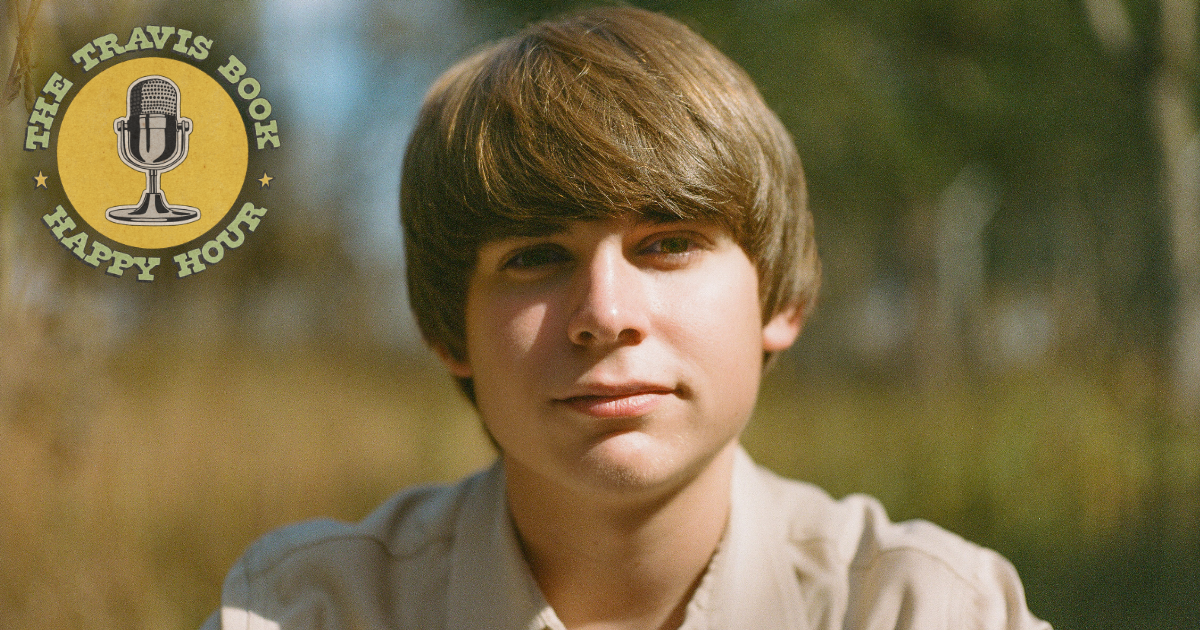
Wyatt Ellis can’t even drive a car, but he’s making waves in the bluegrass community. A prolific tune-writer and a dedicated student of the mandolin, he’s growing and learning at a rate you only find in the under-20 set. I was surprised to find that he’s also humble, articulate, and a total professional. It’s not hard to envision him reaching the highest echelons of acoustic and bluegrass music, and doing it very soon. I was grateful to my friend Jon Stickley for the introduction to this bluegrass wunderkind.

LISTEN: APPLE • SPOTIFY • STITCHERAMAZON • MP3

This episode was recorded live at 185 King Street in Brevard, North Carolina on June 11, 2024.

Timestamps:

0:06 – Soundbyte
0:36 – Intro
1:46 – Live show introduction by Bill K
3:07 – “Blue Smoke”
7:04 – On “Blue Smoke” and “Get Lost”
8:16 – “Get Lost”
13:17 – “When My Blue Moon Turns To Gold Again”
16:58 – “Blue Night”
20:00 – Interview
28:09 – “Watson Blues”
31:38 – “Rabbit In A Log”
34:30 – Interview
40:00 – “Whites Creek”
44:40 – “How old are you?” and JAM
46:17 – “Cold On The Shoulder”
49:17 – “Long Lonesome Day”
54:10 – “Rollin’ In My Sweet Baby’s Arms”
58:29 – Outro


Editor’s Note: The Travis Book Happy Hour is hosted by Travis Book of the GRAMMY Award-winning band, The Infamous Stringdusters. The show’s focus is musical collaboration and conversation around matters of being. The podcast includes highlights from Travis’s interviews and music from each live show recorded in Brevard, North Carolina.

The Travis Book Happy Hour is brought to you by Thompson Guitars and is presented by Americana Vibes and The Bluegrass Situation as part of the BGS Podcast Network. You can find the Travis Book Happy Hour on Instagram and Facebook and online at thetravisbookhappyhour.com.

Photo Credit: Joseph Cash

You Gotta Hear This: New Music From Andy Leftwich, Vestal Brothers, and More

You know we always have your back when you need new music recommendations, right?

This week, we’re sharing premieres from extraordinary bluegrass pickers like fiddler Andy Leftwich and the Vestal Brothers, Curtis and Scott. Plus, singer-songwriters Eden Brent and Annie Bacon each showcase new emotive and moving songs about family, love, and grief. Bacon wrote “Alone With Grief” to be a comfort and a balm to those who have experienced loss, but without sugar-coating or toxic positivity. While Brent’s “You On My Mind” was written by her husband – and collaborator and bandmate – Bob Dowell, about their long distance courtship.

Don’t miss the Faux Paws reprising a song from their 2023 EP, Backburner, with bassist Zoe Guigueno or the final installment of Meadow Mountains SkyTheory Sessions series, which we’ve premiered in four parts over the last few weeks. You can watch “Backburner” and “Count Me In” below and find links to the Faux Paws’ crowdfunding campaign and the preceding three performances from Meadow Mountains video series, as well.

It’s all right here on BGS and You Gotta Hear This!

Andy Leftwich, “R-26”

Artist: Andy Leftwich
Hometown: Carthage, Tennessee
Song: “R-26”
Release Date: May 24, 2024
Label: Mountain Home Music Company

In Their Words: “I’ve always loved the music of Django Reinhardt and Stephane Grappelli. This fun tune was introduced to me by my wife’s cousin, Luke. It’s one that you don’t hear very often, but has a simple and catchy melody that is extremely fun to improvise and solo over. Django and Stephane have inspired so many great musicians and have had a huge impact on bluegrass music. I first heard about Stephane through David Grisman and their record, Live. I instantly fell in love with that style of music and dove head first into their catalog. The art of improvisation is something that makes bluegrass and swing music so unique and I was thrilled to record this one with Cody Kilby on guitar and Byron House on upright bass. I hope it brings a smile to your face as it does for me each time we play it!” – Andy Leftwich


Annie Bacon & her Oshen, “Alone with Grief”

Artist: Annie Bacon & her Oshen
Hometown: Ann Arbor, Michigan
Song: “Alone With Grief”
Album: Storm
Release Date: June 14, 2024

In Their Words: “Before I wrote this song, I knew this was my grief album and it’s deeply personal. But with the recording sessions approaching, I felt this urgency to say something directly to the listeners and not just share my own experience. I wanted to speak to that strange time in early grief when you need so much comfort, but also you kind of need zero bullshit. For example, I wanted the word dead in this song. No euphemisms. Your loved one is dead. They’re dead. That’s what it is. It’s strange how people struggle to say that word. For me there was a lot of comfort in being able to say it that plainly. But I also knew that my nervous system in that period was so dysregulated all the time. I was a disaster: veering between jumpy and catatonic. So when I was writing this song and channeling that time of grief, I wanted to create as much comfort and emotional safety as possible.

“I listen to a really wide variety of music, and while I didn’t make a conscious decision to give this a samba feel when I was first writing it, that’s definitely the kind of music that soothes me. When it was clear that that was what the song was leaning towards, I leaned all the way in. I’m so lucky that the musicians I was working with (Anson, Thomas and Paul) are really versatile and talented across multiple genres. So it wasn’t a stretch or strain. After I’d received the final master, I saw a friend’s post about her Mom dying suddenly, and I recognized the tone of her writing: a distant numbness from shock, matched with a recounting of the details, and then veering into total heartbreak. I sent her the song and she wrote back, ‘I feel like this was made just for me,’ and that’s about the best compliment I could’ve received. I hope that’s how it feels to everyone who hears it.” – Annie Bacon

Track Credits: Written by Annie Bacon.
Performed by Annie Bacon, Paul Defiglia, Thomas Bryan Eaton, and Anson Hohne.

Produced by Annie Bacon and Paul Defiglia.
Recorded by Paul Defiglia with Kate Haldrup and Wil Tsyon at Daylight, Nashville, Tennessee.
Mixed by Mike Clemow and Wade Strange at SeeThruSound, New York.
Mastered by Piper Payne at Neato Mastering, California.


Eden Brent, “You On My Mind”

Artist: Eden Brent
Hometown: Greenville, Mississippi
Song: “You On My Mind”
Album: Getaway Blues
Release Date: June 21, 2024
Label: Yellow Dog Records

In Their Words: “My husband Bob, who produced and plays bass on this recording, wrote this song for me, so it’s very personal. He is from London and I am from the Mississippi Delta, which means that we spent the whole seven years of our courtship across the Atlantic Ocean from each other. This song expresses the love that made our long separation tolerable. The idea is borrowed from Shakespeare’s Sonnet 44, which is a favorite of mine. In those 14 lines the poet declares that despite distance, one’s true love is only a thought away. When Bob was writing this, we discussed how most songs are remembered for the repeated lyrics and not for the meaning of the song in its entirety. We mentioned ‘When a Man Loves a Woman’ and ‘Don’t Worry Be Happy,’ and discussed John Mayer’s ‘Say.’ Melodically and lyrically, Bob wanted a song that was simple and easy to remember. We joke about this popular songwriting style and sing it like this: ‘Say what you need to say. Say what you need to say. Say what you need to say. Say what you need to say, and get out!’

“Musically, Bob originally envisioned a sort of marching gospel, but once the studio session began, my keyboard part sounded more like a country waltz. Here, Bob plays a warm sostenuto bass and asked the guitarist, Rob Updegraff, to, ‘Make it as country as you can.’ When the tape rolls, Rob bends the Telecaster strings making that lovely cry that opens the track. The drummer, Pat Levett, with his love of New Orleans rhythm, adds a triplet undercurrent and brings the song back into the gospel realm. The resulting landscape is unusual yet familiar and lends the perfect accompaniment to the simple, heartfelt lyrics. ‘Everything is easy with you on my mind.'” – Eden Brent

Track Credits: Produced and written by Bob Dowell.
Recorded by Benedic Lamdin at Fish Factory Studio, London.


The Faux Paws, “Backburner” (featuring Zoe Guigueno)

Artist: The Faux Paws
Hometown: Springfield, Vermont
Song: “Backburner”
Album: Backburner EP
Release Date: April 7, 2023
Label: Great Bear Records

In Their Words: “Hey, have you ever had sad feelings? Have you ever tried shoving those feelings deep down and not feeling them and then everything’s great!? That’s what this song is about! It’s a bop and the title track off our 2023 EP. Noah really cuts loose on the fiddle insanity. Lately we’ve been thrilled to tour and record with bassist Zoe Guigueno (Hadestown, Della Mae, Fish & Bird) and will be hitting a slew of festivals with her this summer. We’ve also got a new album in the works right now and are in the midst of a crowdfunding campaign to make it all happen! Check out the details and other fun content here.” – Chris Miller

Video Credit: Directed and Produced by Rebecca Branson Jones. 


The Vestal Brothers, “Let Those Fingers Fly”

Artist: The Vestal Brothers
Hometown: Duncan, Oklahoma
Song: “Let Those Fingers Fly”
Album: Family Ties
Release Date: May 28, 2024
Label: True Lonesome Records

In Their Words: “‘Let Those Fingers Fly’ is a song written in a reflective mindset thinking back to the days Scott and I would head to Oklahoma to stay with our grandparents for the weekend or off to a festival with grandma and grandpa, Famon Self. He was a fiddle player in a country western band and they played local rodeos, nursing homes, and special events local to the community there in Duncan, Oklahoma. I remember seeing him on a tractor-trailer stage in the parking lot at the mall, and he’d get us up to play with them. Good times!

“We had this song recorded and along with Eddie Sanders of True Lonesome Records, decided it was time we went ahead and work on a record that will be released later this year. Be on the lookout for Family Ties.” – Curtis Vestal

Track Credits:
Curtis Vestal – Lead vocal, bass
Scott Vestal – Banjo, harmony vocal
Tim Crouch – Fiddle
Cody Kilby – Guitar, mandolin
Randy Kohers – Resophonic guitar, harmony vocal


Meadow Mountain, “Count Me In”

Artist: Meadow Mountain
Hometown: Denver, Colorado
Song: “Count Me In”
Album: June Nights
Release Date: May 22, 2024

In Their Words: “I originally conceived of this song as a ‘rewriting’ of ‘Rocky Mountain High’ by John Denver. The first lyric from ‘Count Me In’ is: ‘Twenty-seven came and went like a storm, hanging on by the songs I wrote on the day that I was born,’ which is an homage to Denver’s lyrics: ‘He was born in the summer of his 27th year, coming home to a place he’d never been before.’ From there, the song took on its own life. It is a celebration of life in The Rocky Mountains. You want to go play up in the talus fields and by the ice cold mountain lakes? ‘Count Me In.'” – Summers Baker

More here.


Photo Credit: Andy Leftwich by Erick Anderson; Annie Bacon by Cybelle Codish.

New Exhibit, “Jerry Garcia: A Bluegrass Journey,” Opens at Bluegrass Hall of Fame

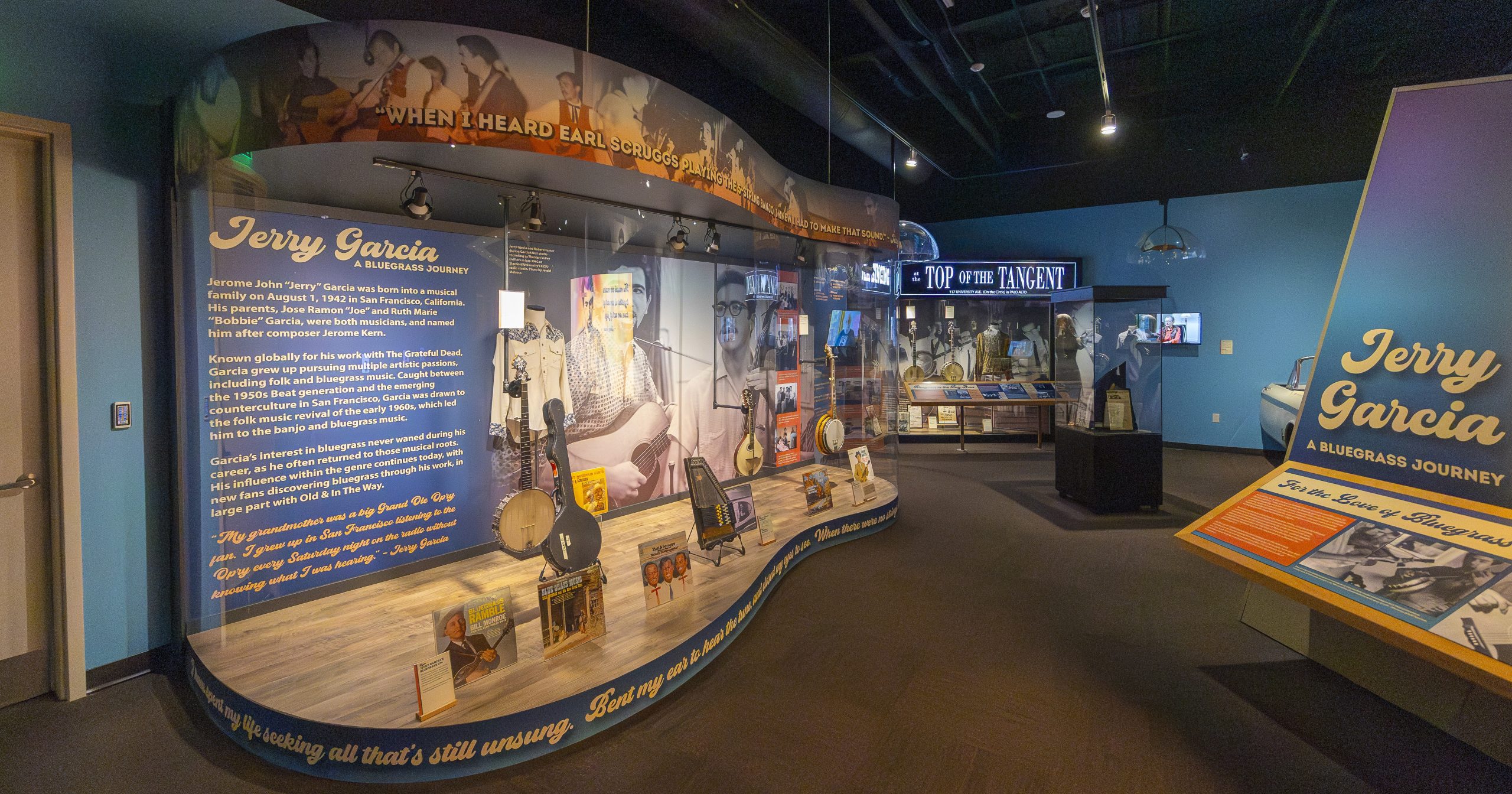
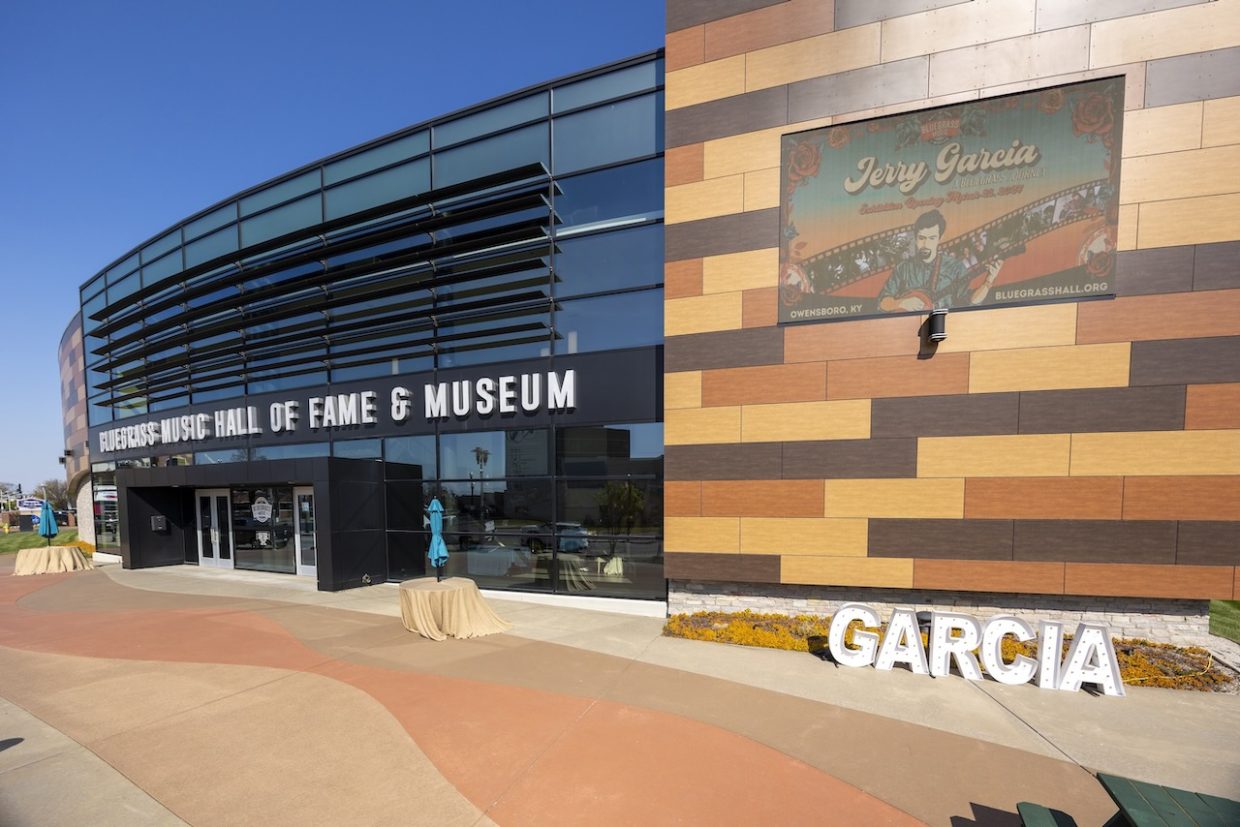
Although it will be showcased for the next two years, the recent grand opening celebration of the “Jerry Garcia: A Bluegrass Journey” exhibition at the Bluegrass Music Hall of Fame & Museum will go down as not only a monumental gathering of musical legends, but also an unforgettable moment in time for all involved.

“This exhibit is coinciding at a great moment for bluegrass,” says Carly Smith, museum curator. “[Jerry] funneled so many people to [bluegrass]. And a lot of present day artists — Billy Strings, Molly Tuttle — are incorporating Jerry’s style into what they’re playing.”

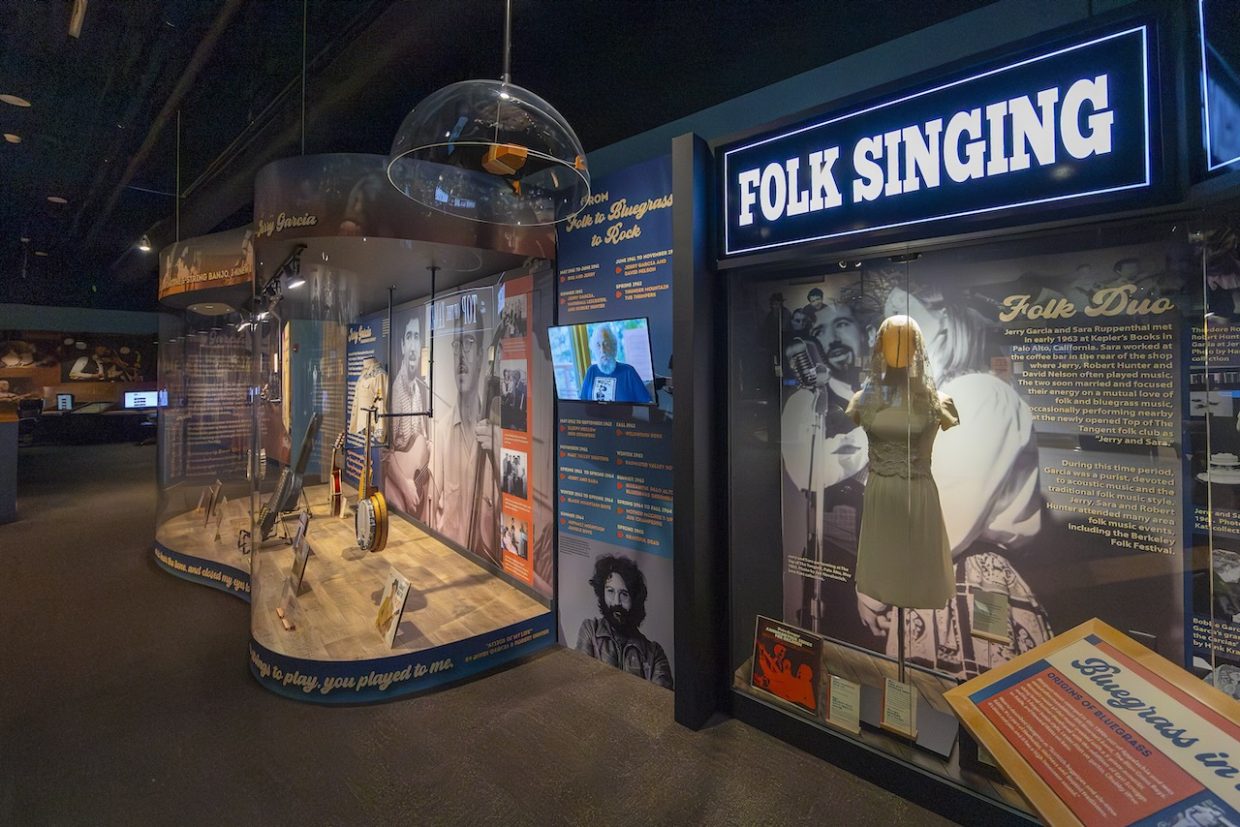
Located in downtown Owensboro, Kentucky, along the mighty Ohio River, the Bluegrass Hall of Fame has created an incredibly impressive and intricate ode to Garcia and his undying love of the “high, lonesome sound,” demonstrating how his indelible fingerprint on the genre is still clearly visible in this current high-water mark moment for bluegrass.

Known as one of the finest electric guitarists to ever pick up the six-string instrument, Garcia, who passed in 1995, is eternally known as the de facto leader and musical zeitgeist at the helm of the Grateful Dead. And yet, the foundation of Garcia’s playing and skillset lies in American roots music — folk, blues, and bluegrass.

Photo by Chris Stegner, courtesy of the Bluegrass Music Hall of Fame & Museum.

The exhibit weaves through Garcia’s early years as a folk musician in the 1950s, his lifelong friendship with musician/lyricist Robert Hunter, his time in a slew of acoustic outfits in the 1960s – including Mother McCree’s Uptown Jug Champions (an early footprint of the Dead) – as well as a keen focus on Garcia’s work in Old & In the Way and New Riders of the Purple Sage.

“I cried through the entire [opening weekend] press conference,” Cliff Seltzer, the exhibit’s creative director, says in a humbled tone. “I’ve been trying to keep my composure for this weekend because it’s overwhelming.”

For Seltzer, the journey to the opening weekend has been five years in the making. A well-known former artist manager, Seltzer was touring the museum in 2019 with one of his friends and clients, Vince Herman of Leftover Salmon. With curator Smith guiding the duo through the building, the group started kicking around ideas for what to put in a then-empty gallery portion of the second floor.

Photo by Chris Stegner, courtesy of the Bluegrass Music Hall of Fame & Museum.

“We’ve always talked about a Jerry Garcia exhibit, and it just kind of snowballed from there,” Smith says. “And it was very unexpected how open Jerry’s family was with [helping] us. What I’ve learned over the last two years, really working with them, is that bluegrass was part of [Jerry] — that’s what he was doing when he wasn’t on the road, that’s what he did at home.”

For the better part of the last half-decade, Smith, Seltzer and a small crew of folks roamed America, not only in search of Garcia artifacts to display (instruments, photographs, family heirlooms), but also numerous interviews with some of the biggest names in bluegrass to share in the exhibit — each talking at-length about Garcia’s cosmic lore, larger-than-life legends, and lasting legacy.

“Every genre of music has to morph and change. New people enter the fold and introduce new things,” Seltzer said. “With Billy [Strings], Molly Tuttle, Sierra Ferrell, and others, bluegrass is bigger [now] than it’s ever been — it’s only going to continue to grow.”

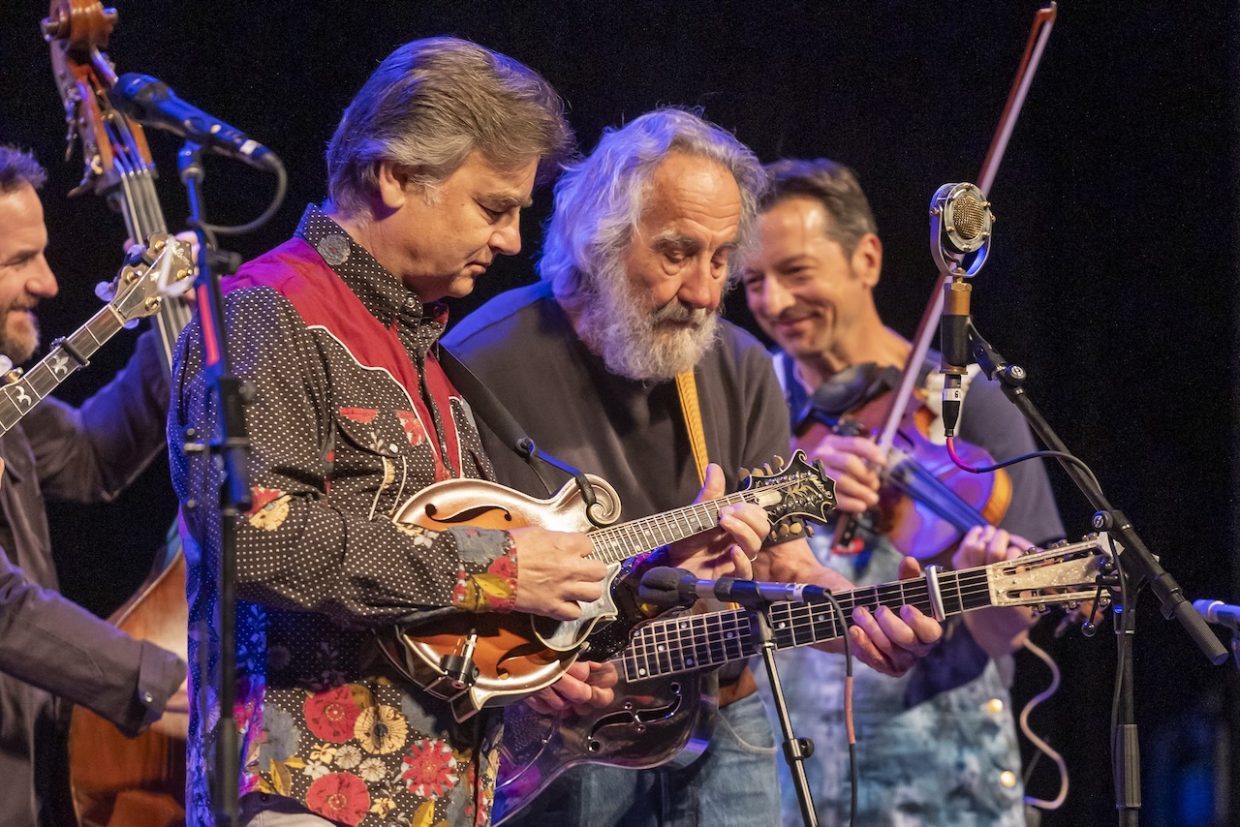
David Nelson joined by Sam Grisman, Ronnie McCoury, and Jason Carter on stage at the Bluegrass Hall of Fame. Photo by Emma McCoury.

Way before the Dead — before any of the melodic chaos and intrinsic beauty of what that band created onstage any given night for its 30-year tenure — there was Garcia himself, simply a huge bluegrass freak who, perhaps someday, would become a member of Bill Monroe & The Blue Grass Boys.

And although Garcia would eventually swerve into the electric sounds of rock and roll and blues, he was never too far from bluegrass. There were always side projects and low-key jam sessions with a bevy of acoustic musicians throughout the early years of the Dead in the 1960s and 1970s.

Most notable of those collaborations was with mandolin virtuoso David Grisman. Through Grisman, Garcia met guitarist Peter Rowan in 1972. A former member of Monroe’s Blue Grass Boys, Rowan found a kindred spirit — in sound and in attitude — with Garcia. The kismet trio would jam often at Garcia’s Stinson Beach, California, home, with Garcia plucking his trusty banjo.

“We started picking every night after supper [at Jerry’s],” Rowan says. “We went through old song books and learned a bunch of material. I remember singing ‘Land of the Navajo’ and looking at Jerry like, ‘This is really weird, isn’t it?’ He goes, ‘Keep going, man.’”

Peter Rowan speaks as Heaven McCoury looks on during the exhibition opening weekend festivities. Photo by Chris Stegner.

What was birthed from those happenstance pickin’ and grinnin’ sessions became bluegrass super group Old & In the Way. Like a shooting star in the tranquil night sky, the band — featuring Garcia, Rowan, Grisman, bassist John Kahn, and a revolving cast of fiddlers (Richard Greene, John Hartford, Vassar Clements) — would only last the better part of two years (1973-1974).

But, in it remains one of the most important and groundbreaking acts to ever emerge in the bluegrass scene. To note, Old & In the Way’s 1975 self-titled debut album went on to become the bestselling bluegrass album of all-time – until it was dethroned by the O Brother, Where Art Thou? soundtrack released in 2000.

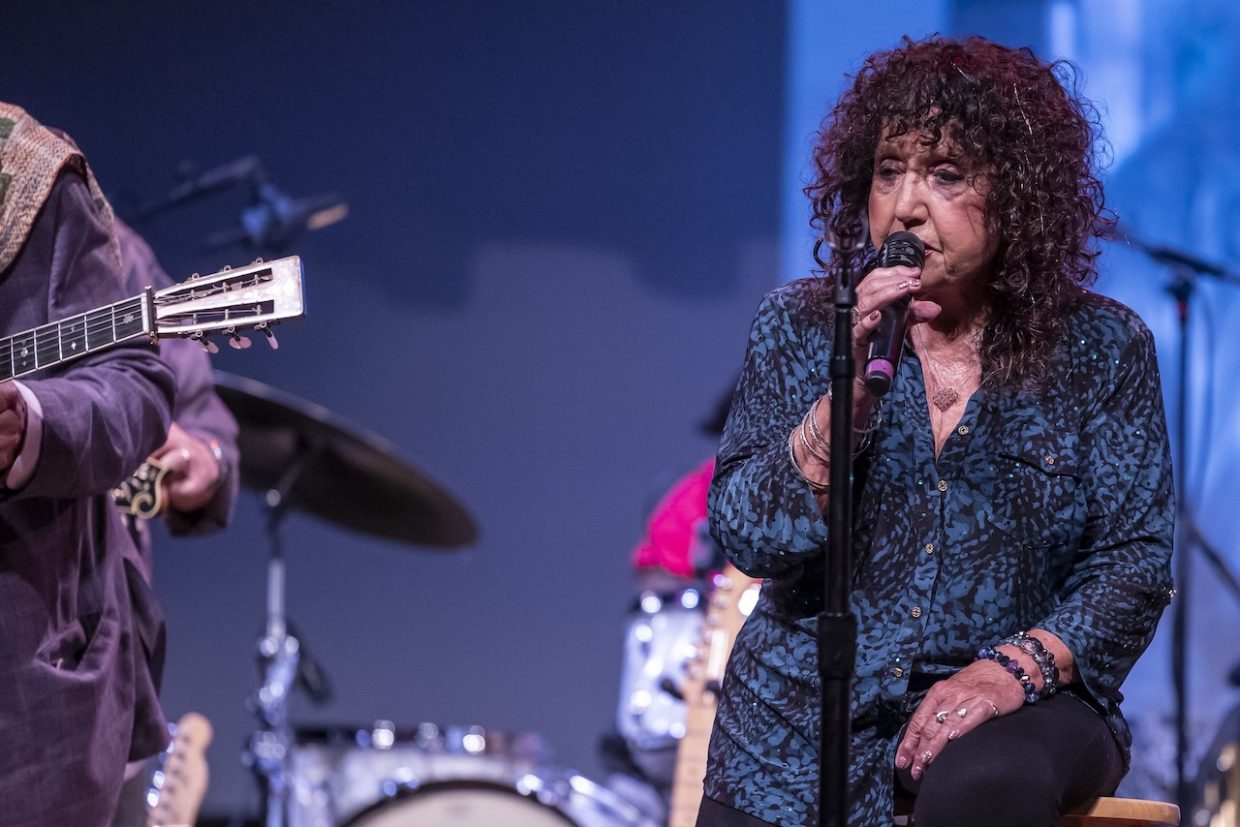
Maria Muldaur performs. Photo by Chris Stegner.

Alongside an onslaught of beautifully touching performances (Leftover Salmon, Maria Muldaur, Jim Lauderdale, Kyle Tuttle, Peter Rowan, Ronnie McCoury, Sam Grisman Project) and poignant gatherings of artists and music lovers throughout the “Jerry Garcia: A Bluegrass Journey” opening weekend, there were also several panels taking place each day at the museum.

Of which, “Garcia: Legend & Lore of a Bluegrass Freak” featured Peter Rowan (Old & In the Way), David Nelson (New Riders of the Purple Sage), Pete Wernick (Hot Rize), Sam Grisman (son of David Grisman) and Eric Thompson (Mother McCree’s Uptown Jug Champions).

“Old & In the Way really helped everything get bigger,” Wernick says. “It was this whole group of material that means so much to all of us in the bluegrass scene — it suddenly became something that people all over the world knew about.”

Greg Garrison, Ronnie McCoury, Eric Thompson, and Jason Carter perform. Photo by Chris Stegner.

Below are a few excerpts for that artist panel conversation:

Eric Thompson: I grew up in Palo Alto, California, kind of the nexus point for the folk world in the early ’60s. Joan Baez was from there. The Kingston Trio was from there. I got into the bluegrass guitar in [1961]. [Jerry] ended up there after he got thrown out of the Army. He got into all kinds of folk music and he would just devour a style. [He’d say], “Oh, I’m going to do that,” then two weeks later he’s got a whole repertoire. I was 15 years old and made friends with Jerry right away — it changed my life.

David Nelson: We’d go down to Kepler’s bookstore, which is an old hangout in Palo Alto. There was a section of it where you could get an espresso, sit down at a picnic table, and read a book. And there’s this guy [there]. It’s summer, so he’s got his shirt open and [big] hair. And he’s playing a 12-string guitar. Somebody comes up and says, “That’s Jerry Garcia.” We went over and pitched the idea [of jamming together]. Sure enough, next Tuesday night, we’re waiting and waiting. Then, all of a sudden, here comes the car and there’s Jerry coming up the stairs with a guitar and some friends. It started off a whole [jamming] thing at the Boar’s Head [Tavern], which just went on for months and years maybe. [Jerry] was interested in bluegrass banjo and I was interested in bluegrass guitar. I got me a banjo. Jerry said, “Oh, man, borrow my guitar. Can I borrow this banjo?” He happened to have a 1940 Martin D-18 [guitar].

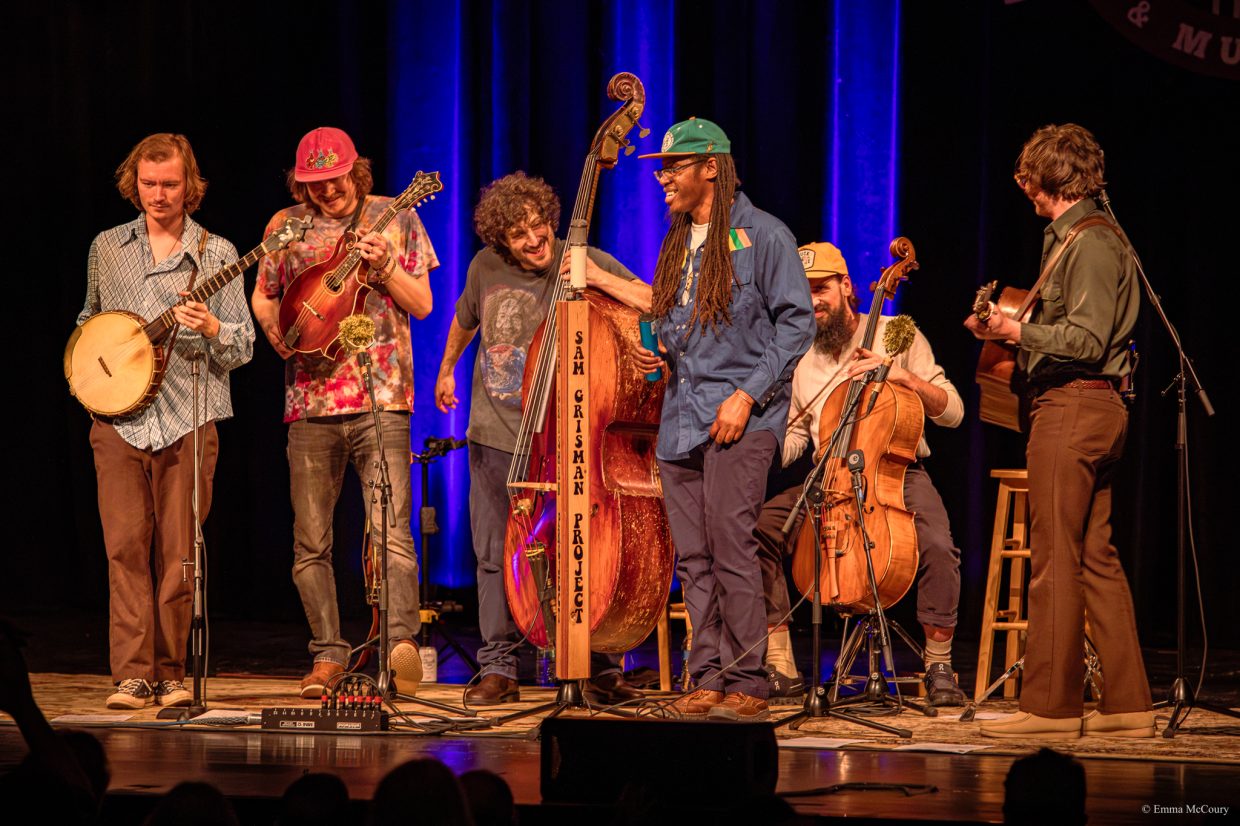
The Sam Grisman Project – featuring Victor Furtado, Logan Ledger, and more – take a bow. Photo by Emma McCoury.

Thompson: [Jerry] brought some openness to the approach [of bluegrass music]. I know [so] many people, who are mostly not bluegrass musicians, who found out about [bluegrass] because of Old & In the Way. It was open and expressive and, at the same time, paid respect to what came before. It was this new, intelligent thing. And intelligence is what Garcia brought to the music, [as well as] imagination, articulation.

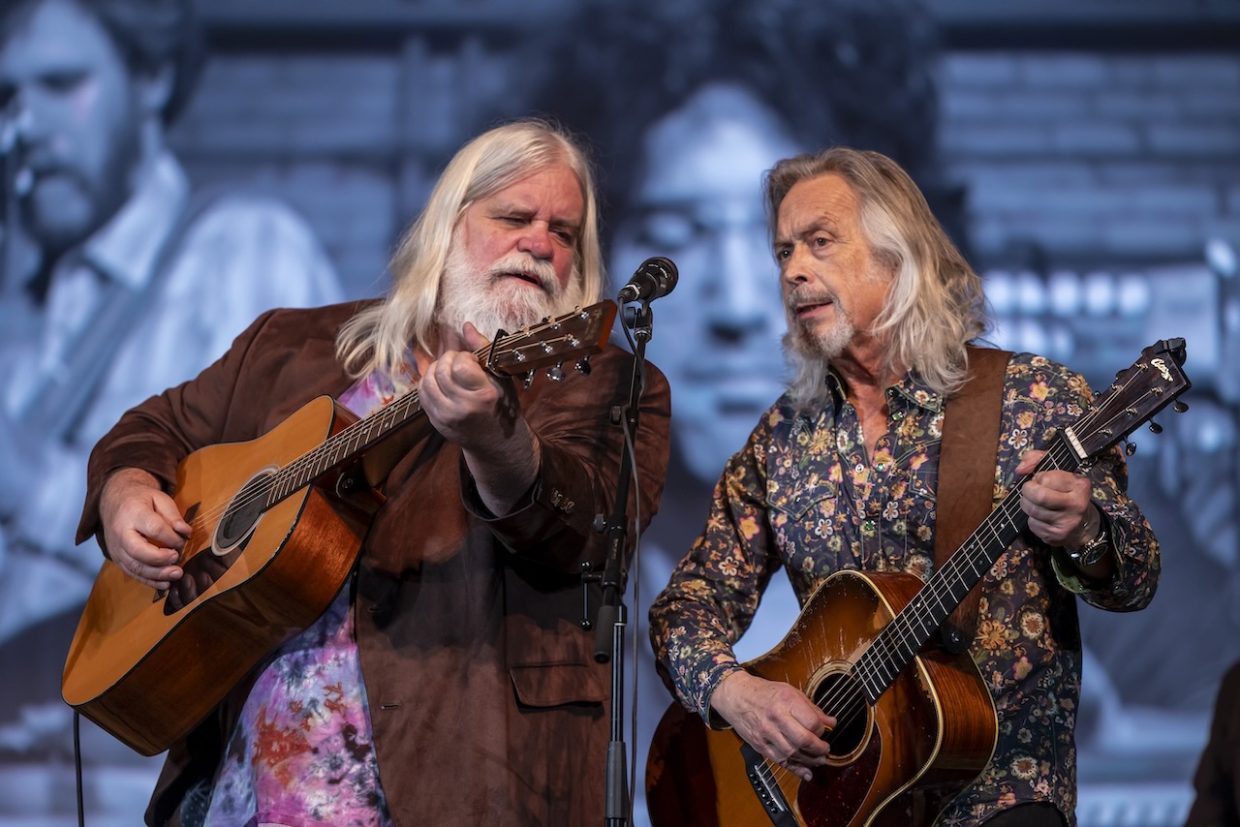
Vince Herman and Jim Lauderdale harmonize. Photo by Chris Stegner.

Get more information on “Jerry Garcia: A Bluegrass Journey” and plan your visit to the Bluegrass Music Hall of Fame & Museum here.


Photo Credit: All photos by Chris Stegner and Emma McCoury, as indicated. Courtesy of the Bluegrass Music Hall of Fame & Museum.

Jody Stecher – Toy Heart: A Podcast About Bluegrass

For the latest episode of Toy Heart, we embark on a journey through the primordial musical ooze that birthed bluegrass, old-time, and country music with the incredible Jody Stecher. A multi-instrumentalist adept in many styles and traditions – he even plays sarod, a Hindustani instrument – Stecher’s entire career is a fascinating case study in the interconnectedness of American folk music styles.

LISTEN: APPLE PODCASTSSPOTIFYMP3

Host Tom Power begins their engaging and philosophical conversation by asking Stecher about his childhood in New York City. A grandchild of Eastern European immigrants, he “discovered” country and bluegrass like many in his generation, listening to the Wheeling Jamboree radio program on WWVA and hearing first generation pickers like the Osborne Brothers and Jimmy Martin & the Sunny Mountain Boys, including “Baby Crowe,” a young, just-hired banjo player who went by “J.D.” Soon after, Stecher replaced mandolinist (and one-day industry power player) Ralph Rinzler in bluegrass band The Greenbriar Boys, before joining another group, the New York Ramblers.

From those early years, cutting his teeth in local, regional, and eventually national outfits to iconic albums like Going Up On The Mountain and his current status as a venerated expert and acclaimed elder in American roots music, Jody Stecher utilizes music and his expertise to demonstrate how blurry the lines really are between these folk genres. Power and Stecher discuss teaching, David Grisman – and collaborating with Jerry Garcia! – meditation and music, early sounds and recordings by folks like Bill Monroe and the Stanley Brothers, being a member of Peter Rowan’s band, his duo with Kate Brislin, Utah Phillips, and so much more.

Whether you’re a lifelong fan of roots music or new to these scenes, Tom Power and Jody Stecher’s Toy Heart episode will inspire, highlighting stories, traditions, and techniques that make bluegrass, old-time, and country music exactly what they are today.


Photo Credit: Eric Thompson

Mike Compton – Toy Heart: A Podcast About Bluegrass

Bluegrass fans know Mike Compton from his long and eclectic resumé, including decades of touring and recording traditional Monroe-style mandolin with greats like John Hartford, Doc Watson, Peter Rowan, Ralph Stanley, Alison Krauss, and David Grisman, as well as venturing into more mainstream music with with Sting, Gregg Allman, Elvis Costello, and many others. He was also heard on the soundtrack for O Brother, Where Art Thou? and traveled with the smash hit tour, Down from the Mountain, which highlighted the artists and musicians on that incredibly popular soundtrack.

But, as Toy Heart host Tom Power points out, it’s not just virtuosity that makes Compton stand out as a mandolinist – it’s just as much about the heart, feel, and grit that he brings to the instrument.

LISTEN: APPLE PODCASTSSPOTIFYMP3

Tom speaks with Compton for over an hour for this exclusive Toy Heart interview, walking through his life and career, from the musical influence of his great grandparents and growing up in Meridian, Mississippi, to the indelible mark left on his own playing style by Bill Monroe. Compton also recalls his childhood, skipping school to hide out in a “dirt pit” to practice all day, his time in Nashville – including a historic visit to China with the Nashville Bluegrass Band – and recounts his collaborations with the legendary John Hartford. You’ll also hear Compton discuss the impact that playing on O Brother, Where Art Thou? had not only on himself and his own career, but on bluegrass as a whole.


Photo Credit: Scott Simontacchi

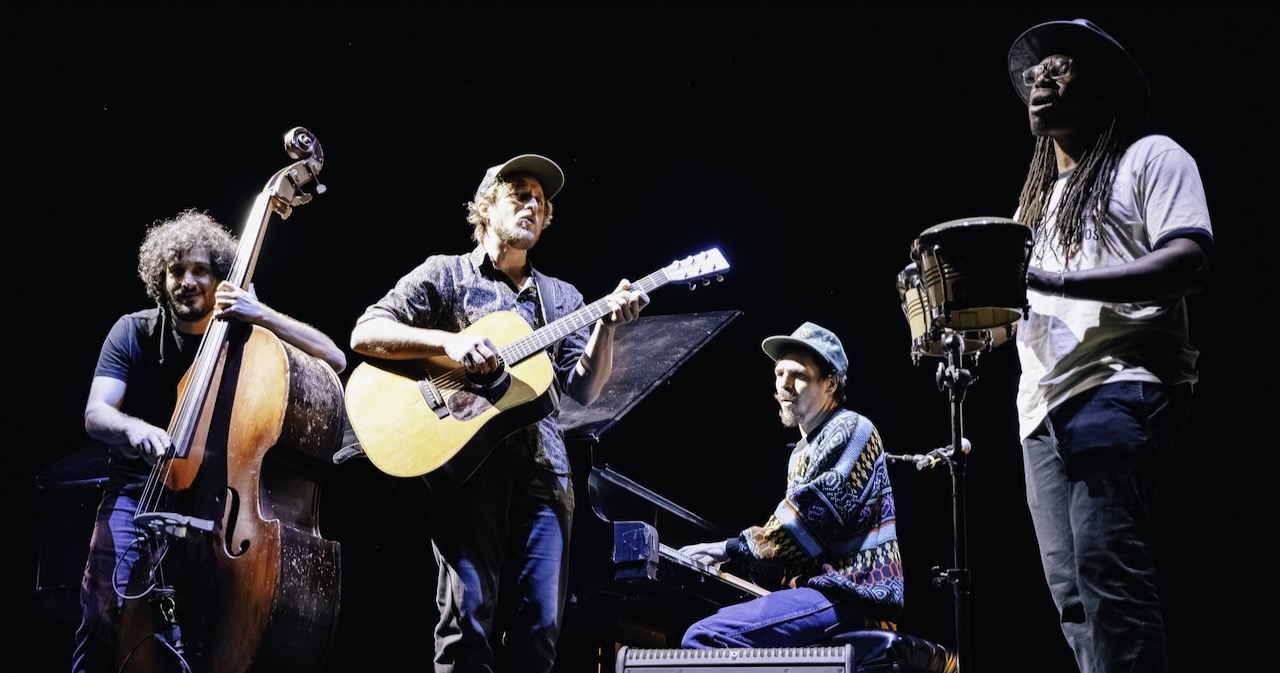
Sam Grisman Project Honor “Dawg Music” In Their Own Way

There’s something special that occurs when music is rooted in friendship and a shared mission. Perhaps no one exemplifies this better than Sam Grisman Project, founded by the youngest son of “Dawg music” pioneer David Grisman. Seeking to honor the likes of his father, Jerry Garcia & the Grateful Dead, and other musical heroes, SGP maintains a singular style and groove.

With its core iteration featuring seasoned multi-instrumentalists and songwriters Ric Robertson, Chris “Hollywood” English, and Aaron Lipp – and often featuring a host of other guests who run the musical gamut – SGP is bringing fresh authenticity, originality, and passion to the roots music and jam band scenes.

BGS spoke with Sam Grisman in early February 2024 about the origins of, inspirations, and plans for this remarkable and rising group.

What are the origins of Sam Grisman Project?

Sam Grisman: Ever since rekindling my musical friendship with the great Ric Robertson, who I’ve known since I was 14, I’ve been wanting to start a band that showcases the impact that the legacy of my dad and Jerry’s music has had on me. Ric and I started scheming on ways to make some music together and what that might look like. I figured we might have a good opportunity to play out in the live touring landscape if we paid tribute to the catalog of music that my dad and Jerry recorded together; that it could create the space for us to really do whatever we might want musically. We’re not limiting ourselves to the catalog of music that my dad and Jerry played together or individually, but we are honoring the spirit of what they did together, which was to dive into great songs that they had a shared love of.

I’ve always had a talented group of friends, going back to the time that I spent growing up at bluegrass festivals, fiddle camps, and the Mandolin Symposium. We have chemistry, and that is irreplaceable. Ric started playing music with Aaron Lipp around the time we turned 20 and he has been a part of my musical reality since then. He and Ric have developed strong chemistry, where they’ve been finishing each other’s musical sentences for years now. Aaron is from Naples, New York, about an hour away from Rochester, New York, which is where the great Chris English hails from. When Ric started making some music with Chris and telling me about what an amazing drummer and human being he is, I knew he would fit into the core of this band perfectly.

Who are you honoring with this project and why?

We’re honoring the musical heroes who influenced us the most. For me, because they provided the soundtrack to most of my earliest musical memories, that’s my dad and a lot of his friends who came through our house in Mill Valley to record. The friend who came around the most was Jerry [Garcia], but also John Hartford, Mike Seeger, Doc Watson, Tony Rice, Del McCoury and Ralph Stanley.

We honor our heroes, not just my dad and Jerry. We play lots of John Hartford music and Townes Van Zandt songs. Lots of Bob Dylan’s music, some Alan Toussaint, Dr. John, John Prine, Warren Zevon, Randy Newman, and Peter Rowan.

Can you describe what Dawg music is and what you’ve learned from your father?

Dawg music is a highly evolved form of acoustic music that is a synthesis of many different genres including old-time, bluegrass, hot club swing, jazz, and funk, with elements of classical music. It’s really a sort of genre-less genre pioneered by my father. It showcases – but is not limited to showcasing – the sound of the mandolin. The instrumentation in his quintet has traditionally been one or two mandolins, guitar, upright bass, and violin, but that’s expanded over the years to include percussion and drums.

That instrumentation of percussion, mandolin, guitar and bass is what I modeled the core of this band after. I’ve learned so much from my father about music and the music business – how to treat your friends and how to honor your elders. I am profoundly grateful to have been born to my particular set of parents and I’m grateful that there are other folks who have a deep appreciation for my dad’s impact on the musical landscape. I’d like for people to also appreciate how wonderful a human he is, so this is a small way that I get to share my dad with other people. He loves everybody, he’s grateful for the support, and he can feel it.

Who are some of the musical guests that have performed with SGP, and what does that mean to SGP?

It means a lot. It’s a representation of the community that we’re a part of. We’ve brought in some of our heroes as guests including dear family friends like Lowell Levenger “Banana” from the Youngbloods, Maria Muldaur, Eric Thompson, and Peter Rowan. We’ve had my dad sit in three times, which has been an absolute honor, and we’ve had a whole slew of our guests who bring different insights and a similar passion to the project: Dominick Leslie, Alex Hargreaves, Roy Williams, Bennett Sullivan, Nathaniel Smith, Phoebe Hunt, Lindsay Lou, my dear friend Tod Patrick Livingston, Mike Witcher, Chad Manning, Wyatt Ellis, Matt Eakle (the great flute alumnus from my dad’s quintet), and more. Eddie Barbash came and played a set with us in New York. Max Flansburg, who has a similar passion for this material and highlights a different corner of the Garcia/Hunter catalog than we do, played two of our New Year’s shows with us. We also had our old-time banjo hero, Richie Stearns, on all of those gigs that weekend. We’re going to have Logan Ledger on some shows coming up, and we’ll have Victor Furtado and Nathaniel Smith in the band.

When did SGP start touring in its current iteration, and how is the experience of touring with your best friends?

We had our first run as a band in January 2023. This conversation with you comes at the end of our longest break as a band, where we’ve had the entire month of January off. We’re starting back up on February 4th in Tucson, at a festival called Gem and Jam. It’s an absolute treat to travel the country with the people I care the most about, and to make great music and memories and friends everywhere we go. It’s important to anchor ourselves and ground ourselves in the music, because there’s a lot of work that goes into being out on the road that can make you lose perspective on how special it is to be doing something that you love for a living and to be able to do it for people who love what you’re doing.

SGP is obviously celebrating and continuing a particular musical legacy, but doing so with your own flavor. What makes SGP unique?

Our branding is our individuality and our honesty. I grew up in the house where my dad and Jerry recorded all of this music and I really do enjoy playing that music with my best friends. It gives me a sense of purpose to be able to play some of that music for folks who are passionate about it. There’s definitely room in the live music space for bands who take a preservationist approach to carrying on the musical traditions and catalogs of artists that came before them. A lot of musicians try to sound like their musical heroes, but that’s not our approach. I hired my friends to participate because I love their individuality and how they play, sing, and write music. I wouldn’t want to steer them towards sounding more like Jerry Garcia or my father.

We have been influenced by listening to tons of great music our entire lives, but we try to stay true to ourselves when we’re playing, so nobody is reaching for a sound that isn’t theirs. We all enjoy injecting our individuality into this music and having the flexibility to take the material in different directions depending on how we’re feeling. It’s amazing to have such versatile friends to work with.

How does original material fit into the broader vibe of SGP?

All three of the core guys – Ric Robertson, Aaron Lipp, and Chris English – are amazing songwriters. All the time I’ve known Ric, since we were teenagers, he’s been writing great songs. He was always a great singer, but he’s become one of my absolute favorite singers on the planet. There’s a lot of his music that lends itself incredibly well to looser, more long-form arrangements, which is something that SGP has become comfortable with.

Aaron Lipp is also an amazing songwriter who writes incredibly poignant music and aphoristic lyrics. Chris English writes amazing, feel-good music – not always overtly happy, but always with a strong message. His tunes add a lot of depth to our sets and take us to a more groove or bassline-oriented place, which is really refreshing for us and our audiences. I think there’s always going to be room for original music in SGP. As much as these guys are inspired to play their own tunes, I want to play them.

You released a great EP in 2023. Is there anything else currently in the works?

We’re gonna make a full length album at some point in 2024. Over the course of the last hundred or so gigs we’ve developed a pretty good repertoire and a strong rapport with each other. I don’t think it would take very long to put some of these tunes down in the studio, but we also multitrack most of our shows and we have an archive of live music to sort through. We’re going to be putting some shows up on Nugs.net pretty soon. We have a pro-taping policy to encourage folks to come and tape the show. I share Jerry [Garcia]’s philosophy that if you bought a ticket to the show, the performance is really yours as long as you’re not charging anybody else for it. Some of those shows have made it to archive.org, which is a free internet resource where folks can listen to live music. At some point we’ll probably put together some compilations of live material and put them up on the streaming services. I think our live show is always going to be the emphasis of what we do, so it’s important to have some recorded examples out there for people to check out.

What’s in store for SGP in 2024, and what does pursuing that mean to you?

We’ve got another solid year shaping up. We played about a hundred gigs in 2023 and we’ll probably make it pretty close to that in 2024. I’m going to expand the cast of characters a little bit in 2024 and bring some other friends into the fold. I’m looking forward to introducing my new friends and audiences to my dear musical compatriots who care about this music as much as I do. I’m grateful and humbled to get to do it. It means a lot to get to honor my father every night by playing his music. We take out the mandola that he gave me for my 21st birthday, the mandola he recorded “Opus 38” on. We get to play “Opus 38” on that very same mandola for people who appreciate what’s happening, and I feel like he and Uncle Jerry are with us every night. It’s a big blessing all around.


Photo courtesy of the artist.

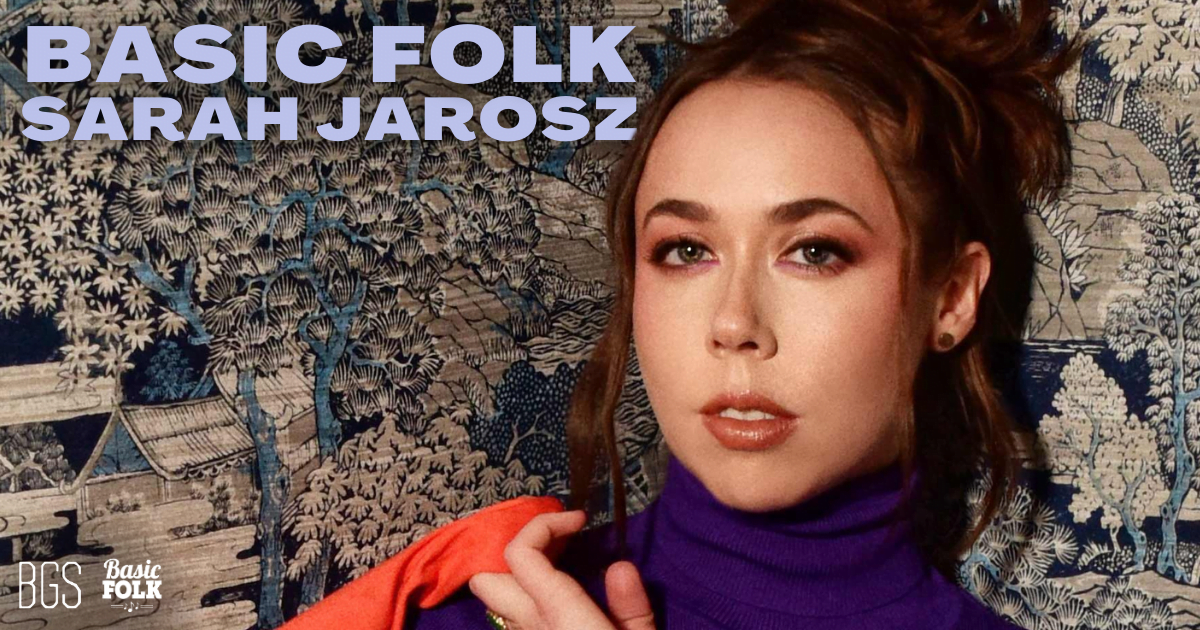
Strings of Support: Sarah Jarosz’s Mentors and Co-Writing Magic

Sarah Jarosz is what happens when young women are taken seriously. A huge part of the mandolinist’s story is that she had supportive male mentors and that has added to her confidence. We all know the age old story of “Young woman shows promise, gets exploited by the patriarchy and it affects her work.” We need to hear stories like this. Starting in her hometown of Wimberley, Texas, just 45 minutes outside of Austin – the live music capital of the world – Sarah found the mandolin at 10 years old. Labeled a prodigy, and thanks to the encouraging spirit of folk music, she found mentorship with seasoned professionals like David Grisman, Ricky Skaggs, Tim O’Brien and Béla Fleck. Following her time at The New England Conservatory of Music, she moved to New York and would go on to collaborate with people like Chris Thile in the Live From Here House Band and her trio I’m With Her, featuring Aoife O’Donovan and Sara Watkins, and won four Grammys.

LISTEN: APPLE • SPOTIFY • STITCHERAMAZON • MP3

After making the move to Nashville, on her latest album, the very impressive and sonically expansive Polaroid Lovers, Jarosz collaborated with producer Daniel Tashian, which originally was just a low-stakes co-writing project. The success of her first co-writing experience with Daniel led her to pursue other songwriting sessions with Ruston Kelly and Natalie Hemby. The collaboration found on the record has opened Sarah up to new sounds and new experiences. In our conversation, we talk about Sarah stepping into her own voice with confidence on this record and knowing her musical self enough at this point in her life. She describes her experience with ​confidence using the ​Dunning–Kruger effect, in which people with limited competence in a particular domain overestimate their abilities. AKA “fake it till you make it,” AKA “leap and the net will appear.” She also talks about her parents’ influence on her early musicality and how her mom is doing with her cancer remission. An overall theme of this conversation is that Sarah never lost sight of her goal: Keep it all about the music and don’t let noise get in the way of your important work.


Photo Credit: Shervin Lainez

Explore the Essential Songs of Sarah Jarosz’s Discography

Stripping away convention, honing in on narrative, and keeping complex melodies afloat with her ethereal vocals, Sarah Jarosz is a superlative presence in the roots music landscape. The daughter of two schoolteachers hailing from Wimberley, Texas, she began learning to play the mandolin at age 9. By the time she turned 12, Sarah was already gracing stages alongside the likes of musical giants David Grisman and Ricky Skaggs.

Her multi-instrumentalist capabilities and songwriting proficiency only grew from there; at the age of 16, Jarosz signed a deal with Sugar Hill Records and released her first album, Song Up in Her Head, in 2009. This critically acclaimed record would be the first of what now surmounts to seven full-length, tremendously lauded projects. Polaroid Lovers, Jarosz’s latest and the muse of her current tour, is set to be released on January 26, 2024.

Over the span of nearly two decades spent recording and touring, Sarah Jarosz has established herself as a foundational thread in the tapestry of modern roots music. From impeccable collaborations (with Punch Brothers, David Grisman, Sierra Ferrell), to forming a supergroup alongside Aoife O’Donovan and Sarah Watkins (I’m With Her), to a whopping 5 hours and 45 minutes of music published under her name, Jarosz stands firmly in her power. As she forges ahead, she only continues to outdo herself.

While her entire catalog is sure to edify any listener, this compilation showcases some of Jarosz’s most essential tracks. Tracing the arc of her musicianship from adolescence to adulthood, the following 17 songs demonstrate the particular sonic maturity, lyrical astuteness, and emotional evocation that span all she creates.

“Mansinneedof”

From Jarosz’s first album, Song Up in Her Head, this indelible instrumental boldly answers the question, “Can a mandolin be a lead instrument?” with a resounding, “Of course!” The first of many Grammy nominations acquired throughout her career, this tune was considered for Best Country Instrumental in 2009. Impossibly advanced beyond her years, Jarosz’s nimble and articulate melody is akin to a sonic coast through star-studded galaxies.

“Come On Up To The House”

In a clear demonstration of the range of her musical influences, the most-streamed song from Sarah’s inaugural album is a cover of Tom Waits’s “Come On Up To The House.” Her cool, slippery voice lends a new angle to the iconic tune. Paired with astute backing vocals from Tim O’Brien and a slick fiddle solo by Alex Hargreaves, this song grooves right along – an ingenious, albeit unlikely, bluegrass cover.

“Annabelle Lee”

Jarosz’s sophomore album, Follow Me Down, is latent with a mystical quality that reaches towards the ethers, shepherded into expansiveness by a creative spectrum of influences. The third track, “Annabelle Lee,” features lyrics adapted from the illustrious Edgar Allen Poe poem of the same name. Jarosz sets the eerie tale against a conglomerate of haunting textures – the heightened pace and drums evoke a sense of urgency while Jerry Douglas makes his lap steel wail, a somber cello moans, and Dan Tyminski’s backing vocals lend fullness to the ravenous depths of this dark tune. It is also worth noting that Jarosz performed and recorded this tune, very fittingly filmed in an old hunting lodge in the Scottish Highlands, for the Transatlantic Sessions in 2011. (Watch above.)

“The Tourist”

Sarah sure knows how to pick a cover. From Prince to the Decemberists to Joanna Newsom, she can masterfully braid her grace and artistry into anything. “The Tourist” offers Jarosz’s take on Radiohead, an influence cited among many of Jarosz’s contemporaries, including Madison Cunningham and Chris Thile. In fact, Punch Brothers provide the musical backdrop on this track, their syncopated rhythms and blustery fills meeting Jarosz and Thile’s airtight harmonies to create a sense of whirling, palpable, delicate angst.

“Build Me Up From Bones”

Off of her Grammy-nominated third album, this titular track received an additional nom for Best American Roots Song of 2014. This song is SJ’s most popular of all time, having racked up a total of 70.7M streams on Spotify. Here, Jarosz’s songwriting forges into new territory; her lyrics are both poetic and measured, imbued with textures of velvety longing. The form matches the content, from Aoife O’Donovan’s dewy harmonies to the pizzicato string section to the gorgeous cello solo. Effectively, listeners are bathed in a most intimate listening experience that beckons infinite re-listens.

“1,000 Things”

In another track off of Build Me Up From Bones, here SJ shares songwriting credits with the legendary Darrell Scott. The result? Pure synastry. Underscored by pulsating Celtic rhythms, this uptempo earworm says 1,000 things despite its brevity.

“House of Mercy”

This tune, along with the album carrying it – Undercurrent – won Sarah her first two Grammys in one night. “House of Mercy” was crowned Best American Roots Performance of 2017, and it was indubitably worthy. Jarosz shares songwriting credits with Australian singer-songwriter Jedd Hughes, and together they achieve a dark story arc as the encumbered narrator addresses an unwanted visitor. Jarosz opens up her sound into cutting, fierce Americana twang – effectively offering audiences a new layer to her multitudes of sound.

“Jacqueline”

The closing track of Undercurrent is stark, honest, and bewildering. The song is named after the Jacqueline Kennedy Onassis Reservoir in New York City where Jarosz, who once lived nearby, would often do her pondering. Accompanied solely by an electric guitar, Jarosz’s voice is agile and glimmering as liquid silver. She muses over the reflective surface and projected companion while disclosing her own state of unease, immersing listeners in an intimate, unyielding pensiveness.

“Your Water” (with Parker Millsap)

The first of a two-single release titled the Luck Mansion Sessions (2017), SJ here collaborates with fellow singer-songwriter and multi-instrumentalist Parker Millsap. The track, written and originally released by Millsap, is delivered as a duet. The groove opens up into a soul-type feel, allowing for Sarah to showcase a more raw, bluesy, unmeasured latitude of her voice.

“See You Around”

“See You Around” is the title track off of supergroup I’m With Her’s first and – to every listener’s chagrin – only full-length album. In 2018, Jarosz linked up with two of the most astounding women in roots music, Aoife O’Donovan and Sara Watkins, to form a trio of unadulterated excellence (it should be noted that that group won Americana Music Association’s Music Duo/Group of the Year). The album waffles between the three songwriters’ contributions, with each vocalist singing lead on an approximately even number of tracks. “See You Around” is driven by Jarosz’s signature poetic lyrics and fluttery melody, elevated to new horizons by the pristine, angelic blend of harmonies from Watkins and O’Donovan. The musical chemistry these women share evokes the divine; every single song on this album delivers listeners into the sublime.

“Johnny”

For her also Grammy-winning fifth studio album, World on the Ground (2020), Sarah Jarosz invites listeners to experience an array of vignettes; her songs on this album, more than ever, become vehicles for potent storytelling.“Johnny” is the second of three tracks on the album named, presumably, for a character the song aims to illustrate. Jarosz has said that during this album, she “[Tried] to take a step back and look out at the world in my songwriting, rather than looking inward,” and spent much time constructing the album as a patchwork of memories from her hometown in Texas, both faithful and fictionalized.

“Johnny” conveys the psychological landscape of a slightly drunk, slightly disillusioned man who is “just waitin’ on the stars/ that will never align.” It’s all slightly devastating, yet the melody latches onto an unforgettable earworm of a hook uplifted by its folk-pop flavor. Jarosz incorporates a strings section alongside drums, electric guitar, and mandolin, seamlessly using the nuances of sound to bolster the complex mundanities of Johnny’s life.

“Pay It No Mind”

Jarosz shares the songwriting credits on “Pay It No Mind” (also off of World on the Ground) with the renowned John Leventhal, who also produced the album and plays a slew of instruments sprinkled throughout. The song begins with just Sarah and a pensive guitar riff, musing upon a bird and her ponderings. The song then builds in dynamics, layering percussion and eventually a full orchestration of instruments and vocals. It’s slick, it’s sly, and it looks at the world with a cool sense of distance.

“I Still Haven’t Found What I’m Looking For” / “my future”

In the midst of quarantine, Sarah Jarosz committed to staying connected with fans by using Garageband and her home microphone to record one cover each week from July to October of 2020. In January 2021, she released two of the covers, U2’s “I Still Haven’t Found What I’m Looking For” and Billie Eilish’s “my future,” on streaming services. These barebones covers are a time capsule of a moment drenched in emotion, isolation, and fear. Catharsis swells through the minimalistic recordings – Jarosz cradles her whole soul into these songs, and the results are absolutely astounding.

“Mama”

For her sixth full-length studio album, Blue Heron Suite (2021), Sarah Jarosz released a song cycle that she first premiered at Freshgrass in 2017, whereupon she was awarded with the Freshgrass Composition Commission. At the time, Sarah was reckoning with her mother’s cancer diagnosis and reflecting upon childhood trips to the town of Port Aransas, Texas, which at that time had recently been severely affected by Hurricane Harvey. Named for the Great Blue Herons she and her mother used to observe along the town’s shore, this album is imbued with love and hope in its deepest forms. “Mama,” the opening track, is an utterly gorgeous, pared-down arrangement of voice and guitar – a most gentle and tender ode to Jarosz’s mother, who is thankfully now in remission.

“For Free” (with David Crosby)

An astonishing songwriter and pioneer of three-part harmony in American roots/folk music as we know it, David Crosby was a long time supporter of Sarah Jarosz’s work up until his passing last January. Sarah graced the title track of Crosby’s final full-length solo album, For Free (2021). The two sing the entirety of this Joni Mitchell cover in tight harmony, their voices mirroring one another perfectly. The pared back solo piano accompaniment highlights the duo’s vocal finesse; every riff is intertwined with precision and elegance.

“Jealous Moon”

“Jealous Moon” was the first of four singles SJ released from her upcoming album, Polaroid Lovers (out this Friday). Co-written alongside Daniel Tashian, the record’s producer, Sarah remarks of the song, “I’m always seeking to push myself into new sonic territory, and this song gave me permission to not hold back.” In this track, she boldly steps away from her traditional acoustic tethers and moves towards a more pop-rock-twang fusion. Jarosz successfully elicits a sense of novelty while still embodying the sense of fullness and depth she puts into all she creates – reminding us that we still have yet to see the full bloom of her artistry.


Photo Credit: Shervin Lainez