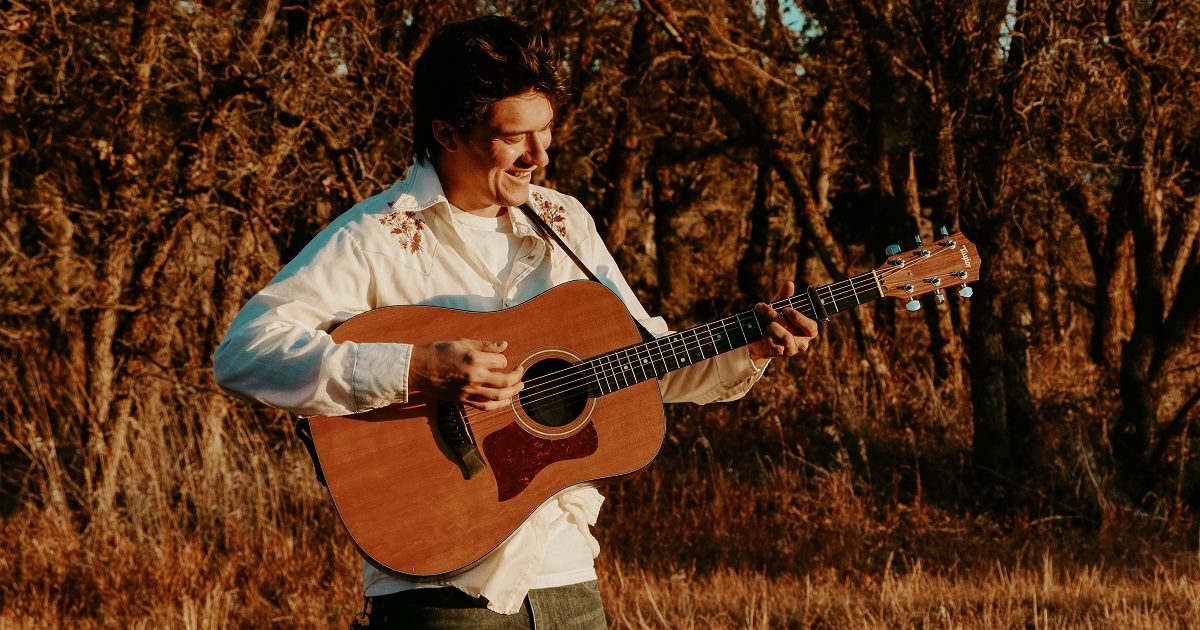
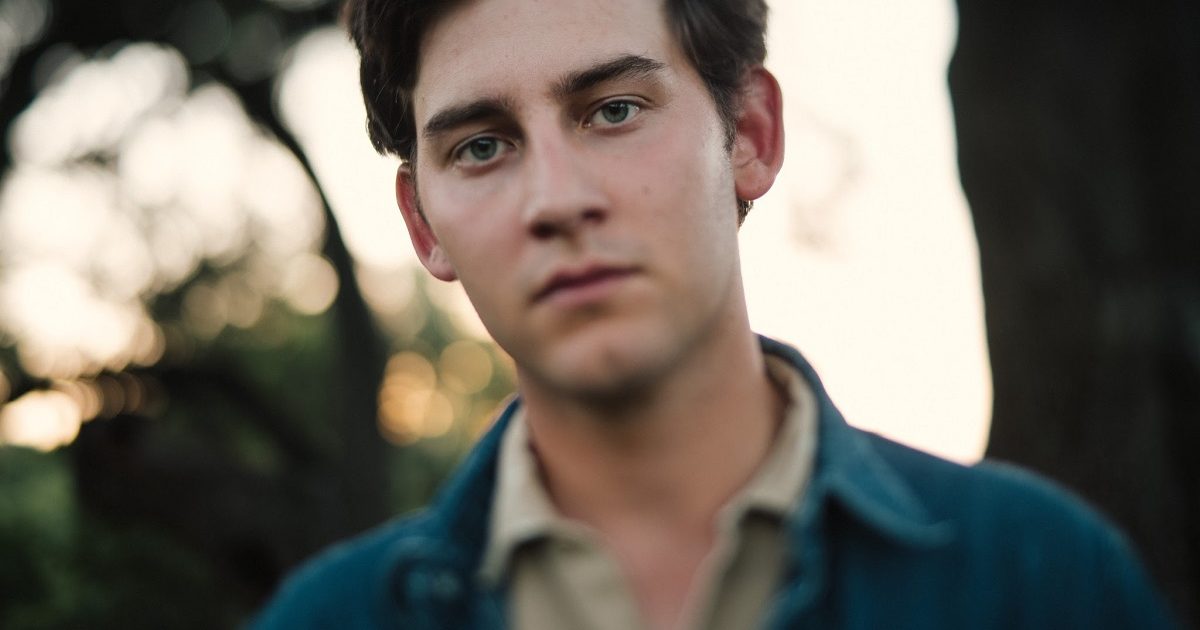
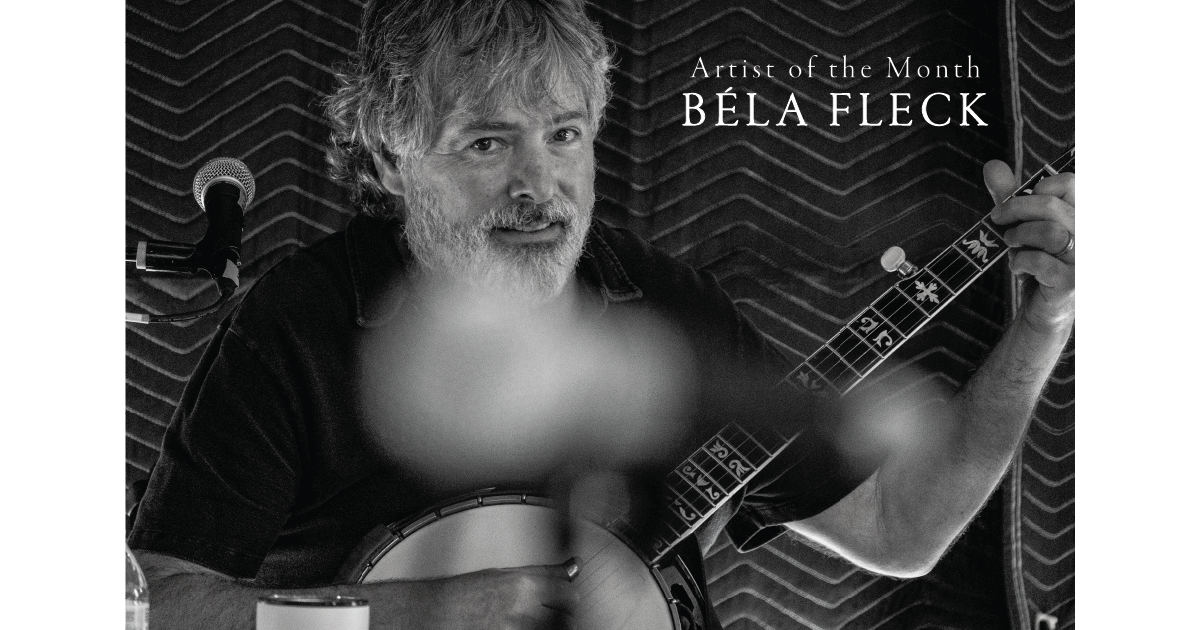
Which artist has influenced you the most … and how?
Obviously as a flatpicker, Tony Rice. But maybe even more so, I’d have to say John Coltrane. For someone who lived such a short life, his trajectory as an artist and as a human is really beyond incredible. His recordings have influenced me in terms of specific language but also just the raw truth and honesty you can hear in the sound he got out of the instrument.
What was the first moment that you knew you wanted to be a musician?
I don’t think of it as just one moment; maybe three vignettes (for brevity). First, watching the Dineh punk band Blackfire play at the Grassroots Festival of Music and Dance when I was 14. The intensity of their performance was electrifying to see as a young person. Second, a few years later, seeing jazz guitarist Pat Martino play at Birdland in NYC. I remember leaving that show with my Dad and feeling like Pat’s 8th note lines had been fused to my brain. Last, my first real jam session and the first time I felt the moment of completely losing myself in the music. It’s an incredible feeling and so many of us are chasing it down!
Which elements of nature do you spend the most time with and how do those impact your work?
I used to be really into the “nature connection” world, animal tracking, bird language, plant identification, etc. At the core of a lot of these skills is a heightened awareness towards the ever-unfolding drama of the “natural” world. For a long time, I had kept the natural world completely separate from my musical world. I felt as though the two were somehow at odds or incompatible. In the last year or so I’ve been starting to realize just how intertwined they truly are. There is no music without nature, no nature without music and it’s a lot more fun like that.
What has been the best advice you’ve received in your career so far?
The best musical advice I ever got was from my grandpa, maybe about 10 years ago, before he passed. He knew I played a lot but that I was mostly keeping the music to myself (it’s always been a deeply personal thing for me). He told me that I needed to share the music, I needed to play WITH people and I needed to play FOR people. After he passed, I realized the value of what he told me and ever since, I’ve been trying to share music with more and more people!
If you had to write a mission statement for your career, what would it be?
I see my musical purpose as expressing myself in the truest way possible. I have this feeling/thing I’m trying to communicate, something I’m unable to say with just words, and each time I play my instrument or sing I’m getting a little closer to really expressing what that is. I think it’s the duty of a musician to try their best to express that mysterious feeling within them and at the same time, transform that feeling into something beautiful for the world to behold and enjoy.
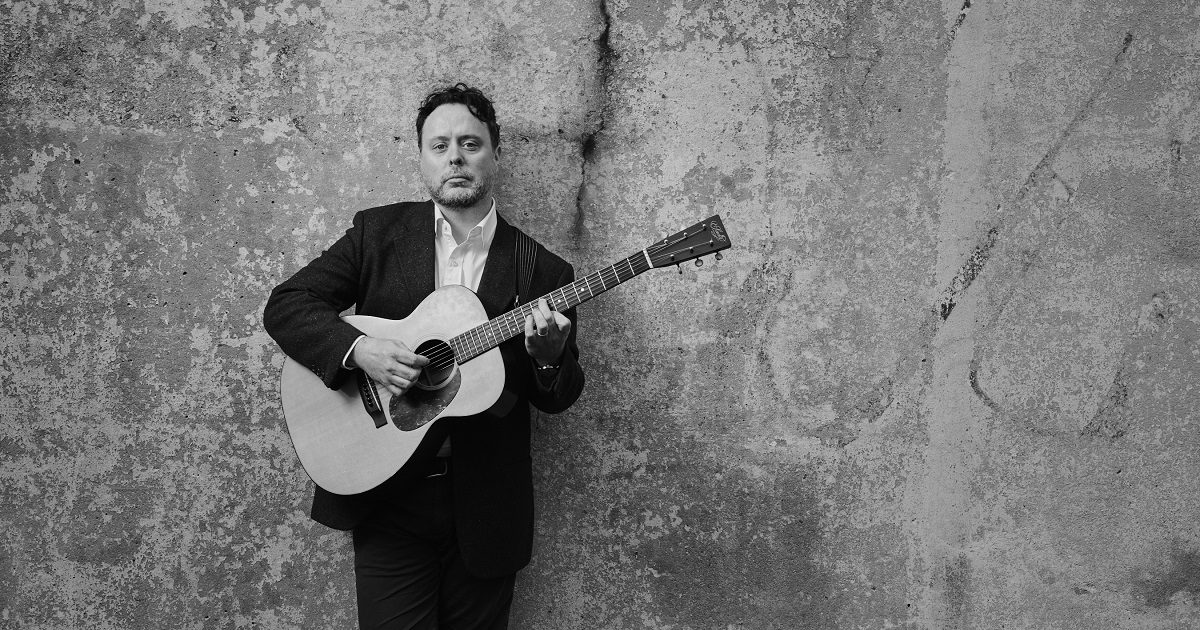
Artist:Grant Gordy Hometown: Brooklyn, New York Song: “Journey to Miniera” Album:Peripheral Visions Release Date: March 3, 2023
In Their Words: “This music has been a long time coming: I made my debut record, Grant Gordy, 14 years ago with much the same band (Alex Hargreaves on violin, and Dominick Leslie on mandolin), and there’s been a small but consistent clamor for another ‘Grant Gordy Quartet’ record in the intervening years. Somehow it just took this long to come around to it. This time, it was us three with the great Aidan O’Donnell on bass — Aidan and I have been working together frequently since meeting here in NYC almost a decade ago, and we play in the band Mr. Sun together. So I have long-standing relationships with all three of these musicians, and I think that though the GGQ isn’t a full-time project (hence, to some degree, the record’s title Peripheral Visions), that spirit of experimentation and camaraderie comes through in the music. I played with the David Grisman Quintet/Sextet for six years and I feel like ‘Journey to Miniera’ displays the most direct connection to Dawg music on the album, though there are other musical inspirations at play here, too. The title is a dedication to some beautiful friends I’ve made working over in Italy, at a music camp called Minieracustica, truly a paradise-on-earth kind of situation. I can’t wait to make the return journey to Miniera.” — Grant Gordy
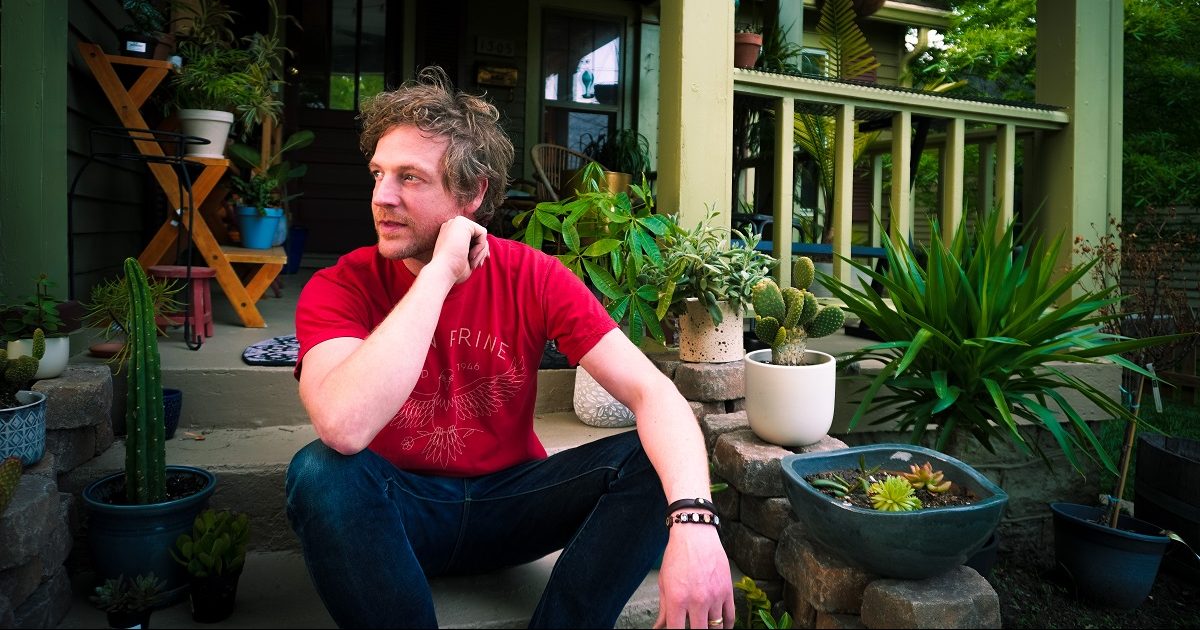
To me, the idea of the joyful contrarian is synonymous with being an artist. Joyful because on some level the creative person’s pursuit is to get high and stay high, to chase the spark that sets your soul on fire; contrarian because artists go their own way. The artist’s work may reinforce or defy social norms but either way the connection is coincidental.
These are a few of the songs, artists, and contrarians who have inspired me. — Korby Lenker
Doc Watson – “Country Blues”
Doc is a reliable tastemaker of enduring songs, but his interpretation of the Dock Boggs classic stands apart. Something uncharacteristically sour in it. Watson usually moves through happier vistas — as in say “Ramblin’ Hobo” or “Froggie Went A-Courtin’.” But here his rueful tenor slaps against a clawhammer banjo and the mood is plaintive, down spirited, and harrowing as shallow grave.
Sierra Ferrell – “Bells of Every Chapel”
In love with this Appalachian Queen of modern yesteryear. She can belt, growl and chuckle inside the same song and still leave you with a lump in your throat. Plus that strong bent of humor and just plain orneriness. Is that a word? Sierra is funny and she’s been doing it her own way since she started. Joyful contrarian incarnate.
Nina Simone – “I Wish I Knew How It Would Feel to Be Free”
I could have chosen a dozen Nina Simone songs. The playfully saccharine “Sugar in My Bowl” might have been a good choice, but there’s a performance from when she was older, well into her activist chapter, where she plays this version of “I Wish I Knew How It Would Feel to Be Free” live at the Montreaux Jazz Festival. It was 1976. The musicianship is effortless, playful even as she sings that lyric of doleful, unfulfilled desire. But the real magic is toward the end. It’s as close as you’ll ever get to watching someone’s spirit wrestle with angels and demons inside. Electrifying.
Bill Miller – “Ghostdance”
I got to know Bill Miller over the last few years, I guess during the pandemic. He sang and played Native American flute on one of my songs. A soft spoken humble man with three Grammys and a life of music behind and in front of him, he is absolutely himself wherever he goes. I’ve watched him bring a room full of Nashville cool kids to tears with his singing. For this studio version of “Ghostdance,” he bussed several members of his tribe down from Wisconsin to a Music Row recording studio. He told me the engineer didn’t know how to mic a tribal drum encircled with elders. It got a little wild. I’m trying to think of a way to put Bill’s relationship with music. Blind to judgment, it’s something like that.
Jerry Garcia and David Grisman – “Teddy Bear Picnic”
Picked this one because it’s an outlier in an outlier’s repertoire. Jerry Garcia did not give a shit who sang what or why. For him a song was good or it wasn’t. “Teddy Bear’s Picnic” from Not for Kids Only is a children’s tune written and originally performed by Henry Hall over a hundred years ago. It’s uplifting and a little sinister at the same time. Plus the chords are magic. I play it sometimes in my own shows.
Robert Ellis – “California”
Writing these blurb things, I notice that most of the artists I’m drawn to are accomplished musicians as well as being great songwriters. Robert Ellis is among the best. He’s like, maybe too good for his own good. At home on piano or guitar, he can reference more musicians and songs than you, and he does this thing I really like with his albums where every song is a moment, its own little movie. This one, “California,” is a slow-motion explosion from the years in his life before he calmed down a little.
Adam Hurt – “Flannery’s Dream”
This was my most listened to album of 2019. Ten tracks of solo gourd banjo, interpreted by a introverted master of the niche. I spend a lot of time with instrumental music. Wordless emotions hit different. I defy you to find anything in the string music lexicon as inventive and emotive as Hurt’s solo music. It’s banjo as high art. Especially this album, Earth Tones.
Anaïs Mitchell – “Brooklyn Bridge”
More widely known as the creator of 2019’s Tony Award-winning musical Hadestown, Anaïs Mitchell has been making the most inventive music in folk for two decades. Her album Young Man In America is my favorite record of the last ten years. I chose this track from her 2022 eponymous release because it’s a perfect example of deep sentiment couched in well-turned phrases matched with one of the more unique singing voices in the business.
Lou Reed – “Perfect Day”
Lou Reed, helming The Velvet Underground in the ’60s, was really the first artist to make music devoid of or without regard to commercial appeal. The original contrarian of art house rock, his songs explored heroin addiction, transgenderism, art for its own sake, and love. During his solo career, collaborations with Andy Warhol and composer John Cage cemented his status as a dissonant God of the avant-garde. “Perfect Day” is from his later catalogue. Sweet and small and sad. You probably know it from the movie Trainspotting.
Randy Newman – “Marie”
Randy Newman is an artist of intimidating powers. Another master musician and songwriter and curmudgeonly iconoclast. Watch his Tiny Desk Concert and see what happens to you. Setting aside his singular piano style with its striding left hand and those constantly tumbling suspensions, the songwriting is pure emotion when he wants it to be, derisive if the mood strikes him, or, in the case of “You’ve Got a Friend in Me” (which he penned), the soundtrack of your childhood. “Marie” is my favorite song of his. Listen to the solo piano version on The Randy Newman Songbook Vol. 1.
Jimmie Rodgers – “Blue Yodel No. 9”
Hard to find a contrarian with more joy than the Singin’ Brakeman, who died from tuberculosis at the height of his fame at the age of 35. I would describe “Blue Yodel No. 9” as charmingly incorrigible. Something that might’ve made a decent Depression-era mother cover her children’s ears. Little known fact: his longtime songwriting partner, who cowrote more than 40 of his songs, was his sister-in-law, Elsie McWilliams.
James McMurtry – “Long Island Sound”
Joyful contrarian or talented asshole? Both probably. I maybe should have selected his paean to North Texas methamphetamine culture, “Choctaw Bingo,” as the most contrarian, but I picked this one, the last track from his fantastic 2016 record, Complicated Game. I like this one best because it’s about making peace with where you’re at in life, maybe even celebrating the spot where you land: “These are the best days / These are the best days / Boys put your money away / I got the round / Here’s to all you strangers / the Mets and the Rangers / Long may we thrive on the Long Island Sound.”
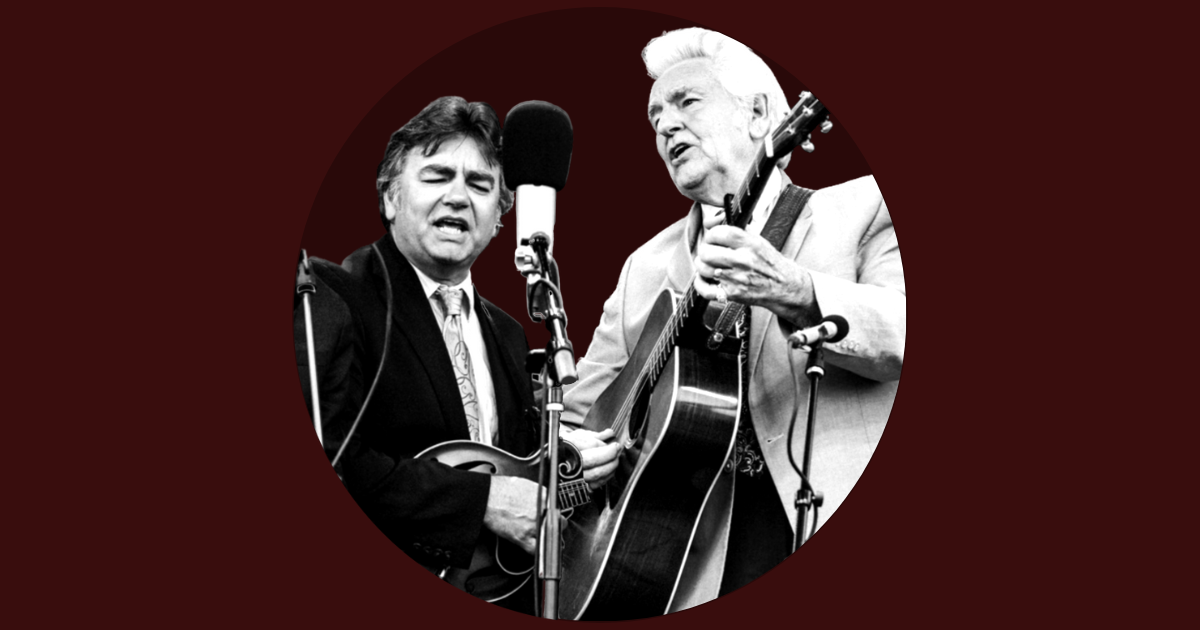
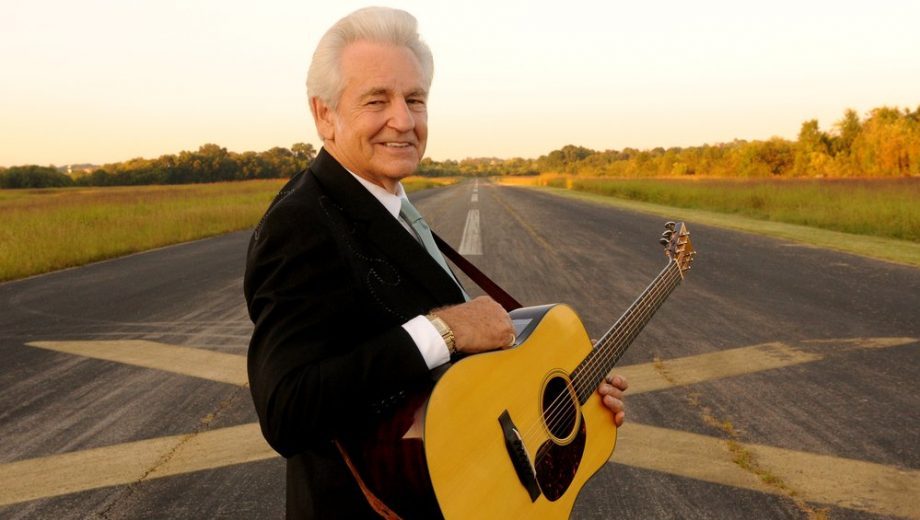
Del McCoury is a legend many times over. A snapshot from any period of his life would be enough to earn him a place in the history books. From his time playing with Bill Monroe in the early ‘60s to fronting his own band with his sons Rob and Ronnie McCoury, Del’s career is a triumph. The Del McCoury Band is the most-awarded band in IBMA history, and Del has been honored with a Grammy Award, induction into the Bluegrass Hall of Fame, and a lifetime achievement award from the National Endowment for the Arts.
Since moving to Nashville in the early ’90s, The Del McCoury Band has recorded more albums than they can remember. (Literally. I asked them and they couldn’t remember. It approaches near two dozen.) Their latest album, Almost Proud, furthers their musical legacy. In a visit with The Bluegrass Situation, Del McCoury and Ronnie McCoury talk about recording it during the pandemic, digging through a big box of submissions for material, and learning a trick from Jerry Douglas that they still use to this day.
BGS: Del, you’ve fronted a band for many decades and this version with your sons has been around since the ’90s. How has the process of picking the material and arranging it changed over that course of time?
Del: Well, I’ll tell you, we used to do a lot of prep before we went in the studio, years ago when it was just me and the band. But now the boys have their own band and they’re a lot busier now. For the last several records, I just kind of picked the material and I’ll try to find the right key and tempo and all those things. And we won’t even have a rehearsal or anything until we get in the studio. We just mainly do all of the hard work in the studio after we’re in there.
I’ve always been in awe of how this band not only picks great material but also plays it in a way that makes it unique and often an instant bluegrass classic, no matter the original genre. What goes into how you pick material?
Ronnie: I still don’t know what Dad’s going to like. I found “1952 Vincent Black Lightning” through a guy named Dick Bowden. He gave me a tape of it after the band had played a show. It was just Richard Thompson playing solo guitar on a radio show. Dick said he thought it’d be a good song to cover and as soon as I heard it and the fingerstyle guitar I thought, “Wow, this could be good.” Well, I took it to Dad, and he passed on it for the record we were making. But then the next record, he pulled it out and said, “You know, I’ve been listening and I think that would make a pretty good song.” So, like I said, I don’t know what’s going to hit him and when it will.
But with my dad, it doesn’t matter what he plays or sings. Number one, it’s going to have strong guitar rhythm. Number two, it’s going to be his voice. Through the years, I figured he can sing about anything. For example, when he played with the Preservation Hall Jazz Band, everybody was like, “I wonder how this is going to work.” Well, he just opens his mouth and does what he does, and it is what it is, and it’s great! People will pigeonhole others for their style of singing. My dad’s got a high lonesome sound, but it always seems to work.
My dad taught us how to have that feel and the elements of first generation bluegrass. The drive, how to play fast and when you need to, how not to overplay, and how to back up behind a singer, things like that. People don’t always have a teacher that really knows that stuff, so it sometimes doesn’t come easily or at all. We were just lucky to have this guy who was so well-rounded. A great guitar player but a banjo player first and such a good singer. He can sing any part, and he loves to sing bass, too.
Those elements are all very present in this band for sure. The fiddle is a very lyrical instrument to begin with but I’ve always particularly considered Ronnie’s mandolin playing and Rob’s banjo playing to be a really interesting combination of melodic/lyrical and still very traditional sounding.
Del: Yeah, I know what you mean. They don’t strictly depend on melodic notes to do something, but they make their style work around the melody that they’re trying to play. They do that. They try to keep it fairly simple.
It’s very masterful, the subtlety of all of it. I imagine you had a hand in guiding them when they were younger.
Del: I tell you, I never even thought about my sons playing music. I don’t know why I didn’t, but I just didn’t. Maybe it’s because when I was learning to play, I had a lot of cousins. They’d hear me and they’d want to learn to play, and I’d show them something. And then, of course, next week they’d be into baseball or something else. They forgot about music that quick. And I guess I thought they might also lose interest in this music. But they never did. Rob started playing banjo when he’s about 9. Of course, I started playing guitar when I was 9, too. My older brother taught me the chords. But I was not really all that interested in playing until I heard Earl Scruggs. I was about 11 then. And that really switched something up in my brain.
But my boys, they were always around music. Ronnie played violin in school when he was really young, but he also was in Little League and he was their star pitcher. And you know what happened? His violin teacher told me, “He’s really doing good on this.” And I said, “Really?” She said, “Yeah, he learned so fast.” Well, it comes to where there is going to be a recital in school at the same time there’s going to be a big Little League baseball game. And he was supposed to be in both of them. He chose the baseball game. And, oh, his teacher called! She was so disheartened because he was one of her finest students. But he kind of forgot about music just for a little while.
And I took him with me to New York City. I was playing a show and Bill Monroe was one of the acts there. It was during Ronnie’s school vacation between Christmas and New Year’s so I brought him with me. Bill took an interest in Ronnie. He put his hat on him and he put his mandolin in his lap and he said, “Now you play me something on this mandolin.” I didn’t think nothing about it at the time. But when we got back home, Ronnie asked if he could have this old mandolin I carried around on the bus. And once Ronnie got that mandolin, he never laid it down.
Well, now those guys, when they did start learning to play on their own, I could hear them in my spare time—I was pretty busy in those days. And I hear them playing and I could tell they were missing a note here and there and I’d just tell them where to find it and then let them go on their own. I just didn’t bother them much. Boy, they learned fast.
That’s great. I think all of that is a big part of the sound but there’s something about the arrangements that has always made you all stand out, I think.
Ronnie: As far as arranging things, when we got to Nashville and did that first record, Jerry Douglas produced it and one of the first things that we did still sticks with me. I wound up singing “A Deeper Shade of Blue.” Flux is the one that gave us the beginning and end of it, this lick. And I was like, “Oh, wow, we can put a lick on tunes.” I was just so straight-ahead that I had never even thought to do that. I credit Flux with opening my ears to that because he’s so musical.
That is interesting because that kind of thing is usually associated with pop-adjacent music. Your music is so traditional but having those hooks does make the songs stick in your mind.
Ronnie: It probably also comes from listening to all kinds of music. I’m a product of the ‘80s. When I was in school I was hearing all of the rock and newer stuff that was being played on the radio. I never gravitated to it as much as I probably did to Southern rock. We loved the twin guitars of the Allman Brothers. What’s interesting is that those guys were listening to this stuff. Dickey Betts was a bluegrass fan and I remember he and Vassar had a duet thing. They used to play together in Florida.
That makes sense. There’s a full-circle element there as well. The Allman Brothers are sort of the prototypical jam band and now you guys are playing shows with Greensky, The String Cheese Incident, Railroad Earth, etc.
Ronnie: You’re right about that. Part of the reason we got into that world we’re in is that there’s already a Del McCoury Band, and we wanted to do something different, but we couldn’t call it the “Del-less McCoury Band.” So we had to do something that was different sounding. When I grew up I had no idea that mandolin players were doing anything but what Bill Monroe did. I was around 15 years old when the Dawg came out with that first record, the David Grisman Quintet album with Tony Rice on it.
The arrangements and playing on there were really influential and all that stuff squeaks into your music. You’re a product of what you hear, I guess. Those guys changed so much. There’s the guys that don’t get credit on the banjo like Bobby Thompson and then the next guy was Bill Keith. From Bill Keith comes [Tony] Trischka and Béla [Fleck], and it just moves on. But the Dawg, man, he was kind of the first one to take the Monroe and Wakefield stuff and stir it up like that. I’m a big proponent for him to be in the Hall of Fame.
The ensemble abilities of this group are some of the best in the business. Having so much family in the band lends itself to that, but Jason Carter and now Alan Bartram have been in the band so long I imagine that you all can anticipate what each other will do next.
Del: That’s true. It makes it easier, because I think we all kind of think alike and are satisfied in what we’re doing. And I’ll tell you something, I think it helps keep them interested. Like on live shows, we never have a set list, and they never know what’s coming next. When we get on stage, we just go up there and do a few tunes. I like to introduce each member of the band. I’ll let them tune or choose a song to sing after I get the four of them introduced. Then a lot of times we just start doing requests from the audience, and all through the set, we’ll try to work in things that we just recorded or had released, whatever. But for the most part, we’re doing requests from the audience. They know that when they go up on stage, they don’t know what’s happening next, and I don’t either, but that’s kind of the fun of it.
You are a link to those older traditions, and those were a lot more about performing than making records and stuff. It seems to me that performing and being an entertainer is what’s important to you.
Del: You know, I think it probably is because that’s what you do most. You’re never in a studio that long but before the pandemic we’d be out every week doing a show. I like talking to the audience. I think they entertain me more than I entertain them. For example, I ask them questions, like, “What would you like to hear next?” And what entertains me is they’ll request a song, but they get one word wrong or two in the title of the song.
For instance, we get a lot of requests for “1952 Vincent Black Lightning,” and what people have problems with is the year. So, I say back to them, “Well, I don’t know that song.” And then it gets real quiet and they’ll think, “Well, I know he knows that song because he’s got it on a record.” I let them wonder for a little bit before I’ll say, “Well, now, look, I know a song entitled ‘1952 Vincent Black Lightning,’” and then they’re relieved and I’ll play it for them. But just little things like that. They’re so funny. People are funny if you listen to them. They will entertain you.
You guys have put out so many records. Is there anything that makes this one stand out or feel special to you?
Ronnie: Well, probably the fact that during a pandemic, my dad worked and he sat down and listened to like 150 songs or something. He didn’t just rest on his laurels. We got him a tape recorder, a nicer one, that he could record his ideas on because he felt more comfortable working with a tape machine.
Del: All through the years, people have sent or given me songs while we were on the road. A lot of the time, I just throw them in a box and say, “Well, when I get time, I’ll listen to them, see what they are.” So, when this pandemic hit that spring, I thought, “Wow, I’ll get all those things out and listen to them.” And then I picked out certain songs and I started to work on them.
Ronnie: During this time, we’re wearing masks and sitting outside doing our radio show six feet apart and not going in the house. Everybody’s worried about my parents so we were careful. But he worked on this stuff and he wrote some songs. So, what’s special to me are just good memories, really. Just being able to be in a studio with Dad in the middle of a pandemic and getting it done and not having so much wasted time. … The hardest thing through the pandemic for me to see, besides the tragedies where people lost their lives to this stuff, was seeing my dad in his golden years, not being able to do what he wanted to do, which is to travel and play for the people. He knocks us all out with how he can play and sing at this age.
Yeah, it’s pretty amazing.
Ronnie: He knocks me out. I can’t get over it. Like I said, it was amazing to be able to go in and do this record through all this and that his health is still with him. So I’m just proud of that. “Almost Proud,” you could say, ha ha.
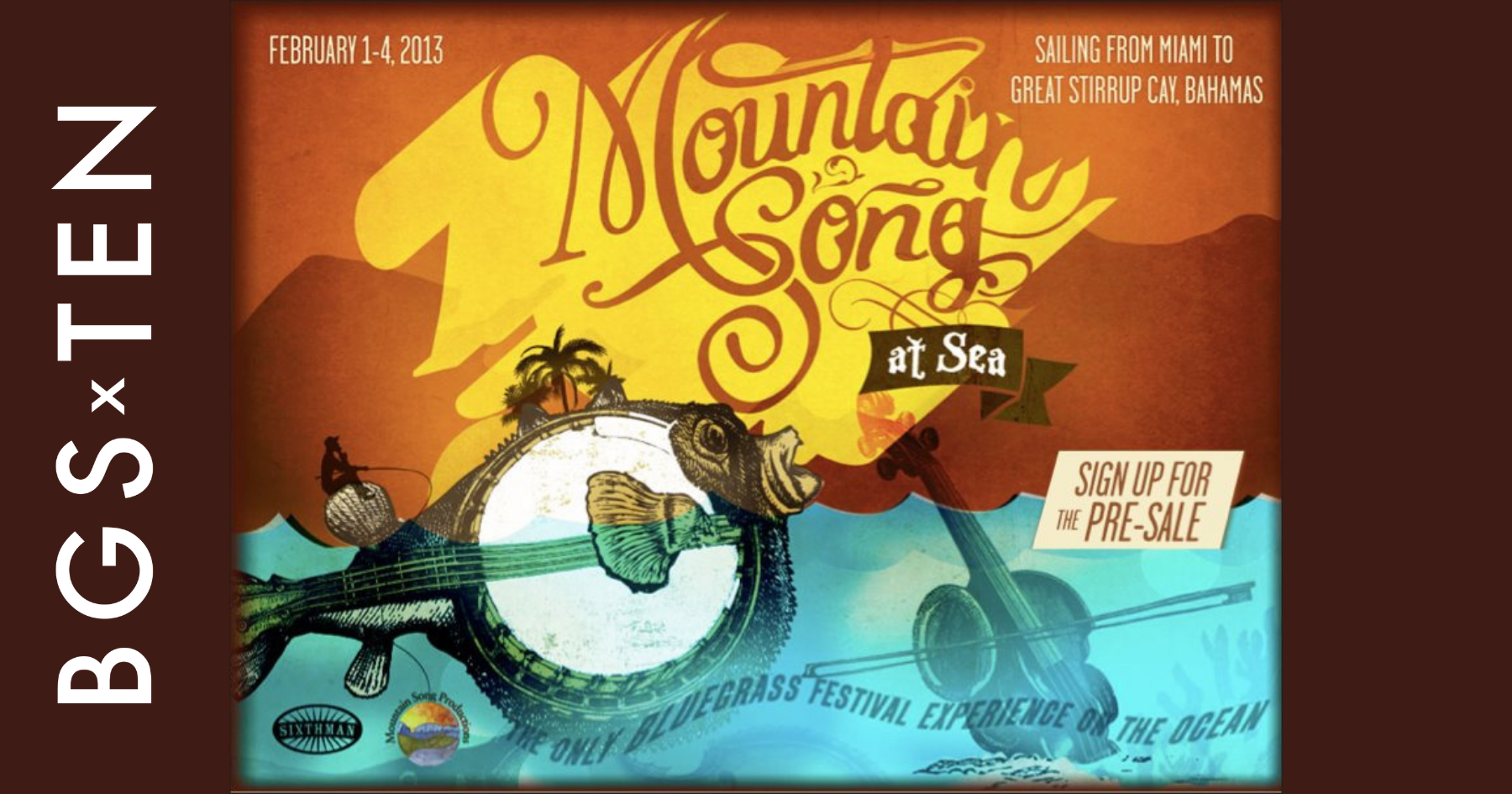
It’s been over nine years since we first boarded the Norwegian Pearl to set sail with some musical friends. Back in 2013, BGS joined the team at Sixthman as well as host band, the Steep Canyon Rangers, on the first Mountain Song at Sea cruise, sailing from Miami to the Bahamas alongside the Punch Brothers, David Grisman, the Del McCoury Band, Tim O’Brien, Della Mae, Bryan Sutton, and Peter Rowan.
You can get a glimpse of the riotous fun that was had onboard that first cruise here.
This month, BGS returns to the high seas on board Sixthman’s Cayamo cruise. While onboard, we’ll be hosting the Party of the Deck-Ade, our kickoff birthday event celebrating ten years of BGS. The jam will be hosted by Sierra Hull and Madison Cunningham, and backed by our house musicians Hogslop String Band.
Get your sunscreen ready, and we hope to see some of you in Miami very soon!
Working on CityFolk’s Dayton Bluegrass Reunion, I heard local terminology for the culture in which this music grew. “Industrial working-class Appalachian migrants” was rarely spoken. “Hillbilly” was said sometimes with disdain, sometimes with pride. The preferred in-group term was “briar.” Briars came from the Appalachian hills, transplants proud of their continuing organic down-home connections. I was told that the call letters of WPFB, where Moon Mullins had represented bluegrass for two and a half decades, stood for “We Play For Briars.”
Don Baker’s introduction to the second act of the reunion framed a dramatic shift of scene from Mullins’ milieu to a younger Dayton band: The Hotmud Family.
Inspired by the New Lost City Ramblers, this band began in 1970 playing old-time music based on pre-war hillbilly recordings. The band included Suzanne Thomas Edmundson, Dave Edmundson, and Rick Good, along with a succession of bassists. Suzanne, born in Dayton of Kentucky parents, was a second-generation briar. According to Jon Hartley Fox the Hotmuds were “perhaps the most significant band to emerge from the vibrant scene of the 1970s in southwestern Ohio” (Industrial Strength Bluegrass, 140-1).
They began including bluegrass in their sound during a 1974 appearance at the Mariposa Folk Festival. In blending old-time and bluegrass, they placed special emphasis on vocal harmonies, something many old-time bands overlooked. Between 1974 and 1981 they made eight albums and appeared widely at bluegrass and folk festivals. Here’s their 1975 bluegrass/old-time blending of “Weary Blues,” a song originally recorded in 1929 in Atlanta by Chattanoogan Jess Young’s Tennessee Band as “Old Weary Blues”:
The Hotmud Family came to be associated with Dayton’s Living Arts Center, described by Hotmud banjoist Rick Good in Industrial Strength Bluegrass (153-57). Established in 1967 by the Dayton Board of Education, this facility offered after-school instruction in the arts for grades 5-12 students in East Dayton.
In 1975 it began providing programs aimed at the local Appalachian-based culture. It turned to the Hotmud Family, now a nationally known band with an enthusiastic local fan base from their weekends at Sam’s Bar and Grill. At the Center, Hotmud gave lessons, ran a song circle, and led informal jam sessions. Once a week they held a live Country Music Jamboree, which was broadcast over WYSO, the Antioch College radio station. The Center closed in 1977, but the Jamboree continued with other performers at other local venues until 1986.
Act Two of the Dayton Bluegrass Reunion opened with a solo rendition of “Red Rocking Chair” by former Hotmud lead vocalist Suzanne Thomas Edmundson. Then came the group’s reunion, when Thomas was joined by the other founding Family members Dave Edmundson and Rick Good along with bassist Gary Hopkins. They did three pieces and an encore. During the 1980s the band gave occasional reunion performances. This was one of their last.
For Act Three, Baker’s stage directions began: “Beer Sign On.”
A borrowed neon sign hung onstage now lit up for the reunion of a band associated with Dayton’s bluegrass bar scene, the Allen Brothers.
Formed in the late ’60s to back their father Red Allen, they began performing without him and were touring in 1974 when brother Neal died. After a brief hiatus, the three other brothers (Harley, Greg, and Ronnie) carried on into the early ’80s, recording Rounder and Folkways albums. The new Smithsonian/Folkways album Industrial Strength Bluegrass — which just won Album of the Year at the 2021 IBMA Bluegrass Music Awards — includes Harley Allen’s “Suzanne,” first recorded by the Allen Brothers in 1982, here recreated by Mo Pitney and Merle Monroe:
They continued to play together in the Dayton area into the mid-’80s, but by then Harley had begun a solo career, first joining banjoist Mike Lilly in a band Jon Hartley Fox calls “one of the best bluegrass acts Dayton ever produced” (Industrial Strength Bluegrass 136). In 1985 the Allen-Lilly Band closed a set at the Berkshire Mountain Bluegrass Festival. Harlan County native Lilly led the way into “Little Maggie” with coon dog and motorcycle as Frank Wakefield watched:
Harley went on to a Nashville career as a singer-songwriter, winning two Grammys and singing on the O Brother, Where Art Thou? soundtrack hit “I Am a Man of Constant Sorrow” before dying at the age of 55.
At the Reunion, the Allen Brothers put together a band with Harley on mandolin, Greg on banjo, and Ronnie on bass, with Wendell Barrett on guitar, and David Harvey on fiddle.
Here’s how they sounded with a similar band (different fiddler and mandolinist), with Monroe’s “Uncle Pen” enlivened by guitarist Harley Allen’s transformation of Jimmy Martin’s “G run” and a fancy ending, followed by a bluegrass trio rendition of the Paul Siebel’s classic “Louise.”
At the Reunion, they did three tunes and an encore. Then it was intermission time.
The second half began with Baker introducing Act Four, the Dry Branch Fire Squad. This band was led by mandolinist Ron Thomason, a Virginian who had migrated to the region as a child. Around since the mid-’70s, it’s still active today. Thomason came up in Dayton’s regional scene in the ’60s, working in bar bands and on the road with Ralph Stanley.
Committed to traditional bluegrass, Thomason, now living in Colorado, has had many talented musicians in his band. He is famous for his emcee work, which regularly grows into humorous monologue. Baker’s directions for this act listed two pieces (including one gospel song), separated by:
“Rap — Ron Thomason”
Here’s a sample of Ron’s “rap” — a comic speech from a 2007 California festival:
At the time of The Dayton Bluegrass Reunion, Dry Branch had four albums on Rounder, the start of a long string with that label. Like the Hotmud Family, they were folk and bluegrass festival regulars.
The band this evening consisted of Ron on mandolin, John Hisey on banjo, Mary Jo Leet on guitar, and Charlie Leet on bass. In 1987 a similar lineup recorded “Aragon Mill,” a Si Kahn song that Ron had learned while working at coal miner’s union rallies with Hazel Dickens:
Act Five brought on another performer still active today, Larry Sparks and the Lonesome Ramblers. Sparks had come up in the Dayton bar scene at about the same time as Ron Thomason. He worked with the Stanley Brothers and Ralph Stanley at the end of the ’60s and made his first album on his own in 1970s. He became a member of the Bluegrass Hall of Fame in 2015 and has a new album out on Rebel.
At this concert his Lonesome Ramblers had a reunion dimension. Mandolinist and singer Wendy Miller, who’d played on Larry’s earliest recordings and was with the band through most of the ’70s, was back for this evening’s concert. Also in the band were banjoist Barry Crabtree and Larry’s son, Larry Dee, on bass.
They did three songs: “Dark Hollow,” “Face in the Crowd,” and “Kentucky Chimes,” all regulars from his albums and concerts. He closed with an eight-tune medley of his other hits. There are many videos of Larry’s great singing and lead guitar work. Here’s one of my favorites:
Acts Six and Seven dramatized the transformations of Dayton’s foundational 1956 band — The Osborne Brothers and Red Allen.
Act Six was all reunion. Red Allen had been officially retired since 1984, although he’d recently recorded four tracks on Home Is Where The Heart Is, David Grisman’s new Rounder album, joined on these tracks by son Harley and banjoist Porter Church, who’d been in his band The Kentuckians.
Red started this band in 1959 with mandolinist Frank Wakefield. In November 1961, in Nashville for the D.J. Convention, they cut six classic tracks at Starday with top bluegrass musicians of the day: Don Reno on banjo; Chubby Wise on fiddle; and John Palmer on bass. The whole great session is on YouTube:
Sierra Hull reprises Wakefield’s “Mountain Strings” on the new Smithsonian/Folkways album Industrial Strength Bluegrass. The track was nominated for IBMA’s 2021 Instrumental Recording of the Year.
In the early ’60s Wakefield and Allen worked out of the D.C. area, with a radio show in Wheaton, Maryland. In 1964 they did a Folkways album in New York, produced by David Grisman and Peter Siegel.
Soon after, Wakefield, whose innovative music is discussed by Ben Krakauer in Industrial Strength Bluegrass (182-183), began working with New York band The Greenbriar Boys and later he relocated to Saratoga Springs, New York. Here’s how he sounded in 2008 — still pushing the boundaries:
Red kept the Kentuckians going in the mid-’60s with a succession of great sidemen, among them banjoist Porter Church and mandolinist Grisman, who produced two albums of the Kentuckians on the County label.
In 1967 Red worked briefly for Bill Monroe and took Lester Flatt’s place in the Foggy Mountain Boys when Flatt had heart surgery. The next year he was in Lexington working with J.D. Crowe and Doyle Lawson.
By the early ’70s he was back in Dayton, working with his sons and playing locally what Rick Good calls “bargrass” (Industrial Strength Bluegrass 156). For tonight’s concert Red and Frank’s Kentuckians included Porter Church on banjo, Buddy Griffin on fiddle, Ron Messing on Dobro, and Larry Nager on bass.
During Red’s four-song set, Red Spurlock and Noah Crase, banjoists who’d played with Red during his early years, sat in for choruses with the band. A reprise of Wakefield’s famous “New Camptown Races” brought guest David Harvey, son of Dorsey Harvey, another influential mandolinist, to play harmony.
The final segment, Act Seven, featured Dayton’s Grand Ole Opry stars, the Osborne Brothers. Two days before the concert the Dayton Daily News said the Osbornes had “achieved the greatest fame of those taking part in this tribute to the flowering of bluegrass music in Dayton.” It would be hard for anyone to follow them. After joining the Opry in 1964 they’d moved from Dayton to Nashville. During the late ’60s and early ’70s, a string of country hits (“Rocky Top” is the best known today) led to industry awards for their vocal work.
With this success the Osbornes’ recordings moved toward a contemporary country radio-friendly sound, mixing pedal steel, piano, fiddle, drums, and electric bass alongside their bluegrass banjo and mandolin. Their live sound also changed. In 1967 they added electric bass; in the early ’70s, a drummer. Next came electric pickups on banjo and mandolin. They did this to make themselves heard in the big country package shows they were playing, where all the other acts were highly amplified. Their “going electric” was viewed with alarm in the acoustic-oriented bluegrass festival world, but it only lasted for a few years.
Throughout these years, their unique vocals remained a constant. They continued to record and tour. Their repertoire drew largely from decades of recordings along with newer material. They now carried a straight-ahead bluegrass band including fiddle and acoustic bass.
This evening, playing with the Osborne Brothers were Paul Brewster on guitar and third voice in the trio, Terry Eldredge on bass, and Steve Thomas on fiddle. They did four songs, all favorites from their earlier recordings, including a version of “Kentucky,” the Blue Sky Boys hit of the ’30s that they’d recorded for Decca in 1964 and which remained in their repertoire right up until Sonny’s 2005 retirement. Here’s an early ’90s Opry performance of it, introduced by Bill Anderson. The band includes future Grascals member Eldredge on guitar and third voice and Terry Smith on bass, along with second guitarist (and bus driver) Raymond Huffmaster, Dobroist Gene Wooten, and fiddler Glen Duncan.
According to Baker’s stage directions, the closing act consisted of:
“Music — Medley”
An earlier draft reads:
“[medley in B natural: each unit from each of the 7 segments chooses a song which they play when their turn comes]”
My memory of this is vague, but I think that’s just how the Dayton Bluegrass Reunion ended, in B natural. But it wasn’t over quite yet. In that day’s Dayton Daily News columnist Nick Weiser had announced:
“Following the Dayton Bluegrass Reunion at Memorial Hall, the Canal Street Tavern, located at 308 E. First St., will have a reception for the audience and the participants of the Bluegrass Reunion Show. Mark Bondurant will open the show at 9:30 with a reception to follow after the show. Many of the musicians from the Memorial Hall show are scheduled to get together and jam at the Canal Street Tavern reception. Admission is $1 at the door.”
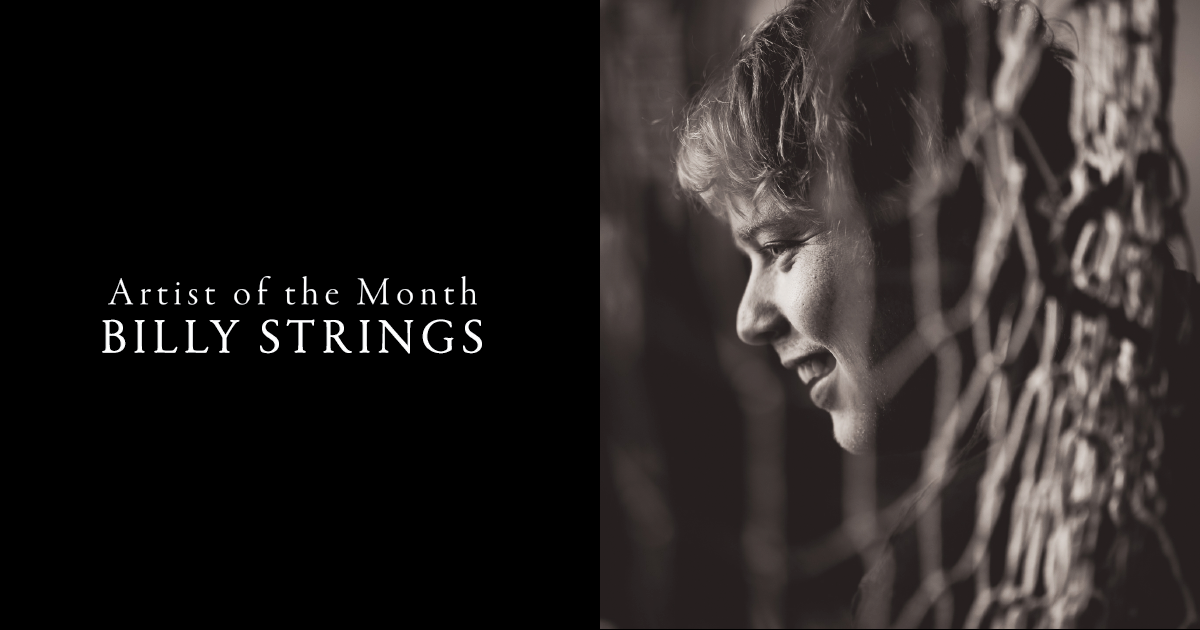
Billy Strings has had his foot on the gas since he was a teenager, bringing his prolific picking to hundreds of shows around the country each year and winning over a throng of devoted fans in the process. His bluegrass bona fides may be obvious from the outset — he’s quick to cite such greats as Bill Monroe, Doc Watson, and the Stanley Brothers as some of his first musical influences, and no honest spectator could deny his talent on the guitar and mandolin — but astute listeners will also note elements of rock, jam bands, and even heavy metal in his performances, especially as Strings bounds around the stage.
The Nashville-based, Michigan-raised musician’s latest album, Renewal, comes on the heels of an exceptional year: His Rounder Records debut, Home, won the 2020 Grammy award for Best Bluegrass Album. And even as much of the music industry was grounded from touring, his innovative approach to livestreams and digital performances moved the Pollstar Awards to dub him the Breakthrough Artist of the Pandemic. But that breakthrough was more than a decade in the making, and the forces that shaped Strings as a prodigious young picker are still at work today, pushing him creatively in the studio and on stage as well as calming him at home between gigs. Here, in the second half of our BGSArtist of the Month interview, Strings tells us about his upbringing, his latest influences, and the way he unwinds between shows.
BGS: Tell me about where you grew up. How do you see its impact on your work today?
Billy Strings: I was born in Lansing, Michigan on October 3, which is my grandpa’s birthday. My mother, who lived in Kentucky at the time, had gone up to Lansing to visit her dad on his birthday, and that’s when I decided to show up. [Laughs] So that’s why I was named Billy as well, because that was my grandpa’s name — I was his little birthday gift.
We lived in Morehead, Kentucky, for a couple of years before coming back home to Michigan, where I really grew up. I grew up in a little town called Muir, population 600. My dad is an incredible guitar player, so he taught me how to play. He was always showing me music when I was a little kid: Doc Watson, Bill Monroe, Lester Flatt, Earl Scruggs, Jimmy Martin, Larry Sparks, and stuff like that — a lot of good bluegrass. We’d hang out at this little campground and play music next to the river by the fire. That was my childhood, man, just sitting there picking by the river.
It was real good until I got to be a teenager and started to turn sour. I had to run off and figure out a new life. I took what my dad taught me when I was a little kid, and all of a sudden I realized that bluegrass is actually pretty sweet and people love this shit — that maybe I could do something with this; that it’s not just something that I do with my dad that I should be halfway embarrassed about.
Who are the artists that you feel really inspired by right now? And are those different than the ones that you feel like you were listening to a lot when you were a kid?
For the most part, it’s still Doc Watson — he’s the main nerve — and Bill Monroe, and Lester Flatt and Earl Scruggs, Ralph Stanley and Carter Stanley, the Stanley Brothers. But I listen to a lot of different shit. I listen to death metal, and lately, I’ve been getting into this music from Mali that Béla Fleck was showing me — some really amazing stuff. And Memphis trap: I’ve been listening to Young Dolph a bunch. There’s just an energy to it. I grew up around crack houses. I’ve seen that shit that they’re rapping about. It just gets me hyped: He’s talking about coming out of nothing and becoming a self-made millionaire. I listen to it before the shows sometimes to get myself hyped up.
You played in rock bands in high school — groups with music that might not sound a lot like what you’re doing today. Is there any lesson or anything from that time that you feel like you still turn to or still apply to the music that you make?
Yeah, performing live. I never learned how to perform in a bluegrass band. I learned how to perform in a metal band. I learned music by playing bluegrass when I was a little kid, but by the time I was doing it on stage it was in a metal band — we were headbanging and running all over the place — and I still can’t help but get into the music like that. I can’t just stand there and play.
You have been in Nashville now for a little while. Has anything that has surprised you about it, good or bad?
I really love Nashville. A lot of your favorite musicians, that’s where they live. You’ll see your favorite singer in the grocery store. I get calls for sessions, and it’s from people who I grew up listening to and who I’ve idolized for my whole life. Like Béla Fleck’s record just came out, and I played a handful of songs on that. I was so honored to play with David Grisman, and Chris Thile, Sam Bush, Stuart Duncan, and Edgar Meyer — all these cats that are just… well, I don’t feel like I’m really in that league. It really was an honor. And there’ve been several things like that! I went from listening to these cats on a record to being on a first-name basis with them… texting and being friends. It’s a trip.
What’s one thing that’s brought you joy recently?
Fishing. I love bass fishing. I grew up doing that with my dad as well, but I didn’t do it for a long time because I was so busy. When the pandemic hit, I started fishing again. I go out there in rain or shine. I just like it for the solitude. Last night, I was in front of thousands of people, and to come home and go out on my boat and be alone in nature — to check out the blue herons and the fucking ospreys, eagles, fish, everything doing its thing — it’s brought me a lot of joy, brought me down to Earth. I put my boat in at 5 o’clock in the morning when the sun is just coming up. I like being out there alone at that time of day. It’s just good for my mind.
And yet it’s so clear from your performances that interacting with listeners gives you a certain joy, too. What are the forms of feedback that you value most from your audience when you’re playing live?
Sometimes when we finish a solo, everybody starts cheering real loud, the whole place gets real loud. That feels good. But sometimes I look out there and I look around and I see individual people and I literally play to them. Last night, we played in Montana and I was looking around and there was this one dude just standing there with his beer just completely still. I didn’t even know if he was enjoying it or not. So I just walked up to the front of the stage and stared directly at him and I just started playing right to him. [Laughs] So he started laughing, and then he took a drink of his beer and started bobbing his head a little bit. I think he just started getting into it by the end of the show.
I’ll look for things like that. The audience is really in control of how I’m feeling up there. Sometimes, when they’re just on fire, I can’t help but have a good time. They feed us the energy, and we give it back to them. It’s reciprocal.
During COVID, I rediscovered my love for waking up, drinking coffee, and listening to the right music in the mornings. This is a playlist for some of my favorite songs to compliment the most sacred time of the day. — Thomas Csorba
JJ Cale – “Cherry”
This is one of my favorite vibes not just of JJ Cale, but of music in general. He finds his groove and stays put. Why fix it if it ain’t broke?
Michael Hurley – “Lush Green Trees”
I’ve been a big fan of this Michael Hurley record for a little while, and it seems that some of the deep cuts strike me differently on the 100th listen. This is one of those songs — a beautiful, simple song with an earnest spirit to it.
Elizabeth Cotten – “Goin’ Down The Road Feelin Bad”
Elizabeth Cotten is one of those artists who I fell in love with at a pretty young age (thanks to a well-informed older brother). Her voice may not be everyone’s taste, but her singing and playing seem to really shine as the sun is just starting to rise.
Yusuf / Cat Stevens – “Father and Son”
This song has a really special place in my heart because it reminds me of my grandfather and his story as a refugee from Hungary in the ‘50s. It’s a wild picture of a conversation between a father and a son in that situation. This song got me thinking about writing my new song “For You” and pairs really nicely with a front porch morning.
Jerry Garcia, David Grisman – “The Thrill is Gone”
Sometimes I’ll wake up in the morning and listen to this record all the way through. Hearing some of these old songs in a new light has really unlocked something for me. This song in particular has a great vibe to it that really draws you in.
Anaïs Mitchell – “Tailor”
I’m obsessed with Anaïs Mitchell. Plain and simple. Her vocal delivery of these lines, and the lyric congruency throughout the song is as good as it gets.
Willis Alan Ramsey – “Muskrat Love (Muskrat Candlelight)”
Name me a sexier song about rodents — I bet you can’t! This song has the perfect cocktail of interesting lyrics and sonic vibe. The vocals are killer and the chord change right after the chorus just make me so happy.
Gillian Welch – “Winter’s Come and Gone”
This is a deep cut from Gillian’s catalog, but I think it’s one of my favorites. There’s a great quick minor 6 chord change that echoes some old-time songs that I love. It’s my favorite Gillian song to drink coffee to.
Big Bill Broonzy – “Glory of Love”
There’s a soft spot in my heart for Big Bill Broonzy. This song has been cut by a bunch of folks, but Big Bill’s version is by far my favorite. Love that he doesn’t start singing until the minute-thirty mark in the song. Effortless vibe and energy here from Big Bill.
Tony Joe White – “Little Green Apples”
I first heard this version of this song from a buddy this past year and I think it’ll end up being one of my most-played songs of the year. Tony Joe’s delivery of these lyrics helps paint the best scene in these verses. I’ll be holding on to this recording for a very, very long time.
Roger Miller – “Where Have all the Average People Gone”
I love Roger Miller’s voice in the morning. There’s something nostalgic to me about it. There’s no song that speaks to me more in this political and social climate than this one. Perhaps, even though we look at things differently, we can be kind to each other.
Banjo maestro Béla Fleck has always followed his muse, jamming with collaborators and crisscrossing continents for decades now. His newest album leads him back to familiar terrain, as My Bluegrass Heart is his first bluegrass record in 20 years. “They nearly always come back,” says Fleck, who composed and produced the album (set for a September 10 release). “All the people that leave bluegrass. I had a strong feeling that I’d be coming back as well.”
The reunion encompasses some of his closest comrades, too, like Sam Bush, Stuart Duncan, Mark Schatz, and Jerry Douglas. As a nod to the newest generation of acoustic all-stars, the project also includes guests such as Chris Thile, Molly Tuttle, Sierra Hull, Billy Strings, and Billy Contreras. Longtime allies like David Grisman, Edgar Meyer, and Tony Trischka get in on the action too.
Speaking from his own bluegrass heart, Billy Strings says, “In my opinion, Béla Fleck is one of the most important musicians of all time. He bridges the gap between bluegrass, classical, jazz, world music, and everything in between. It seems like there’s no limit to what he can achieve on the banjo.”
But as with any project involving Béla Fleck, there’s bound to be some exploration. “This is not a straight bluegrass album, but it’s written for a bluegrass band,” he explains. “I like taking that instrumentation, and seeing what I can do with it — how I can stretch it, what I can take from what I’ve learned from other kinds of music, and what can apply for this combination of musicians, the very particularly ‘bluegrass’ idea of how music works, and what can be accomplished that might be unexpected, but still has deep connections to the origins.”
This month, Fleck will be touring in support of the album with Michael Cleveland, Sierra Hull, Justin Moses, Mark Schatz, and Bryan Sutton, concluding with a festival spot during IBMA World of Bluegrass on October 1. He’ll resume roadwork in late November and December joined by Sam Bush, Jerry Douglas, Stuart Duncan, Edgar Meyer, and Bryan Sutton. And it’s not too early to circle the calendar for January 7, 2022, when he’s headlining the Ryman alongside nearly every musician who makes an appearance on My Bluegrass Heart.
In the meantime, read our two-part Artist of the Month interview feature here and here — and enjoy our BGS Essentials playlist spanning his remarkable career.
My mind has been concentrated on making music for my latest record, Wanderer’s Compass. I let Wanderer’s Compass be a collection of as many influences in music I’ve had as possible. I’ve been playing long enough that I used to learn my fiddle parts from an LP and move the needle back to catch the solo parts. Then of course over time, with the advent of the internet, the influence highway, so to speak, became much wider. I’ve always thought it is hard to put music in a box, since it is art, even though I essentially understand the reason for genres. To me the whole point of art is to let all of your influences and experiences be the palette in which to create your vision. This playlist is really fun for me to listen to, and I hope you enjoy it as well. — Jeremy Garrett
Dire Straits – “Where Do You Think You’re Going?”
This song was off a record that I heard early on in my life and the soul that Mark Knopfler brought to this song continues to influence me to this day.
Larry Sparks – “Blue Virginia Blues”
Larry is a master of song delivery, selection, singing, and incredibly soulful guitar playing that is old school, yet crosses any boundaries from that world into the new because art like that knows no bounds.
Tony Rice – “Urge for Going”
From the album Native American, this track is the epitome of how to produce a song to pull all of the essence from it for the listener to hear. Any bluegrass musician can tell you that Tony Rice is the man to listen to for song production, not to mention his unmatched guitar skills.
Jeremy Garrett – “Wishing Well”
“Wishing Well” is an original and on this track I stretch way out on the fiddle for a jam.
David Grisman – “Fish Scale”
David is one of the best and truest musicians of our time. This is a one-of-a-kind song from a one-of-a-kind artist, David Grisman. I particularly love Tony Rice’s playing on this track.
The Stanley Brothers – “The Lonesome River”
This is one of history’s most eerie and interesting sounding bluegrass duos. Their songs and the way they sing them are my personal favorite sounds of the traditional bluegrass era.
Strength in Numbers – “Blue Men of the Sahara”
This ensemble was one of the most creative in acoustic music. This particular song showcases what happens when you marry music stylings from around the globe, and Mark O’Connor rips a fiddle like nobody’s business.
Merle Haggard and Willie Nelson – “Pancho and Lefty”
This cut is pure magic if you ask me. I love everything about it, from the wacky-sounding synth stuff to the magic that Haggard brings when he comes in for his verse. Sends chills up my spine.
George Jones – “Choices”
There may not be any better country singing than this right here.
Jimi Hendrix – “Red House”
There is perhaps no one more inspiring to a musician who wants to tap into soul and vibe. Hendrix is the one who paved the way for all of us in that regard.
Deep Forest – “Sing with the Birds”
This music was an indicator for me at an early age that I loved world music and the technology that continues to evolve to help create some of it. This is programming at its finest and it’s flowing with creativity.
Jeremy Garrett – “Nevermind”
This is a Dennis Lloyd cover that I love to perform. Dennis is an Israeli pop artist. It’s a culmination of my bluegrass chops on fiddle, guitar, mandolin, along with effects, experimentation, and programmed beats.
Photo credit: J.Mimna Photography
This website uses cookies to improve your experience. We'll assume you're ok with this, but you can opt-out if you wish.AcceptRejectRead More
Privacy & Cookies Policy
Privacy Overview
This website uses cookies to improve your experience while you navigate through the website. Out of these, the cookies that are categorized as necessary are stored on your browser as they are essential for the working of basic functionalities of the website. We also use third-party cookies that help us analyze and understand how you use this website. These cookies will be stored in your browser only with your consent. You also have the option to opt-out of these cookies. But opting out of some of these cookies may affect your browsing experience.
Necessary cookies are absolutely essential for the website to function properly. This category only includes cookies that ensures basic functionalities and security features of the website. These cookies do not store any personal information.
Any cookies that may not be particularly necessary for the website to function and is used specifically to collect user personal data via analytics, ads, other embedded contents are termed as non-necessary cookies. It is mandatory to procure user consent prior to running these cookies on your website.