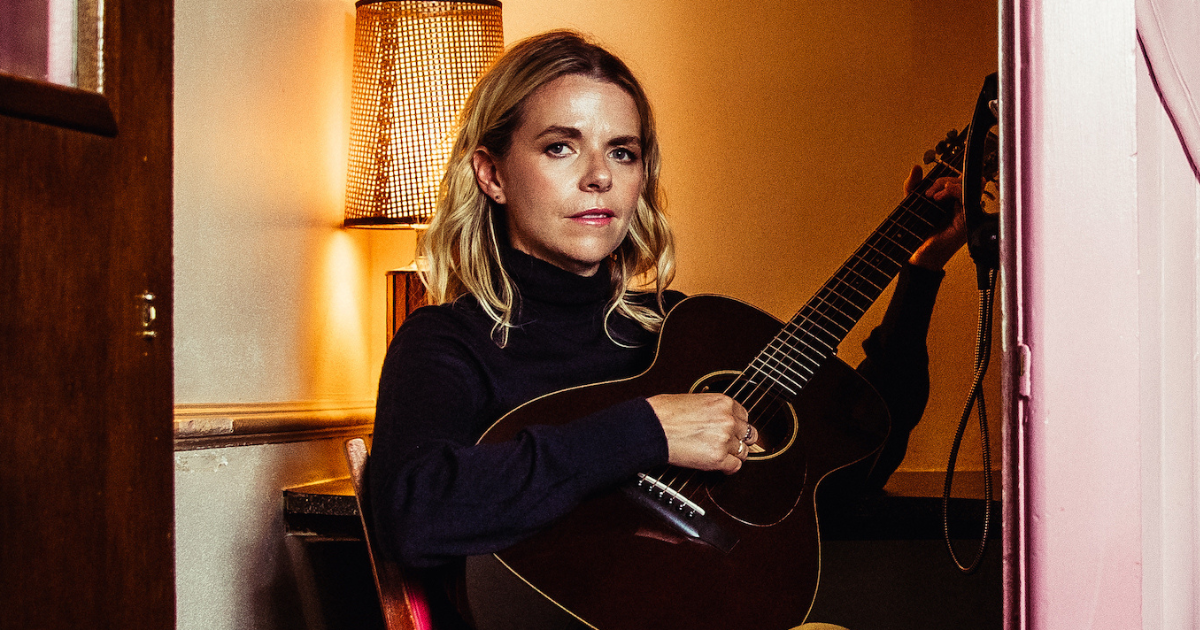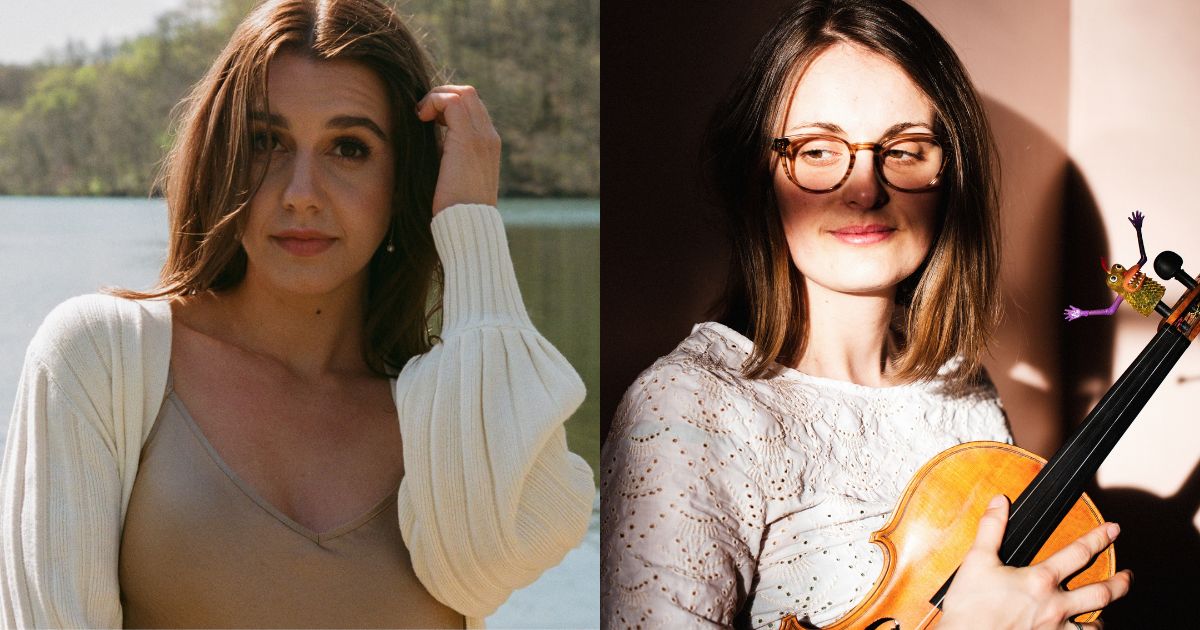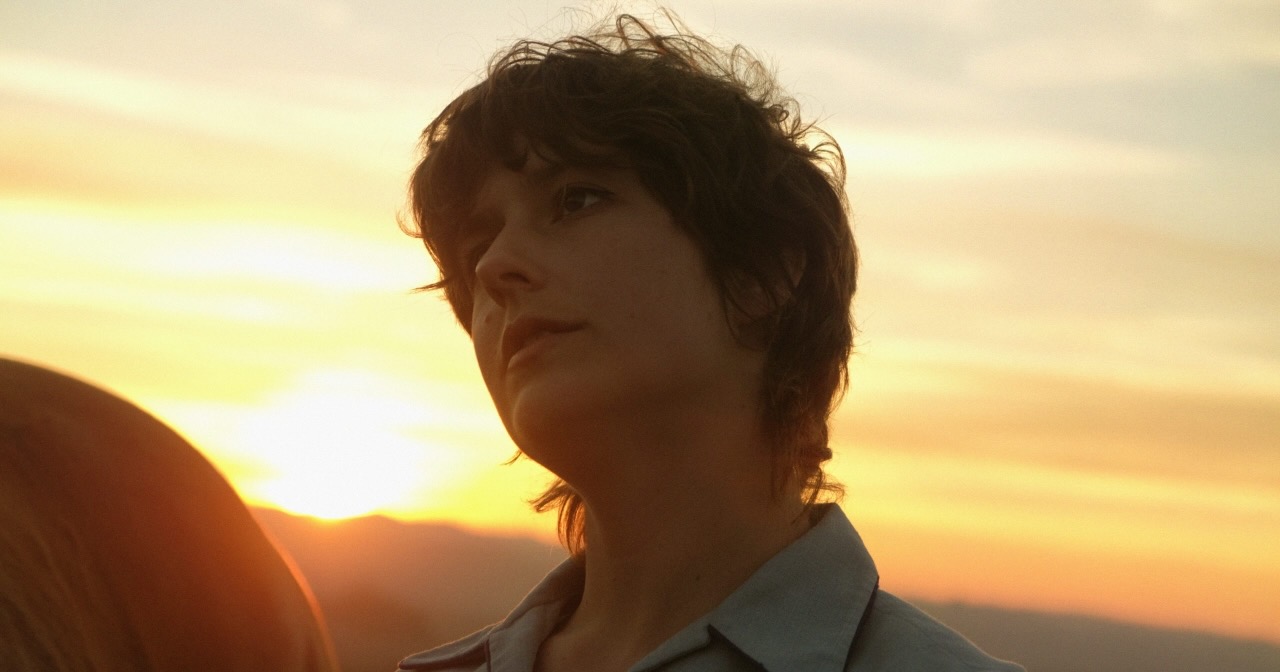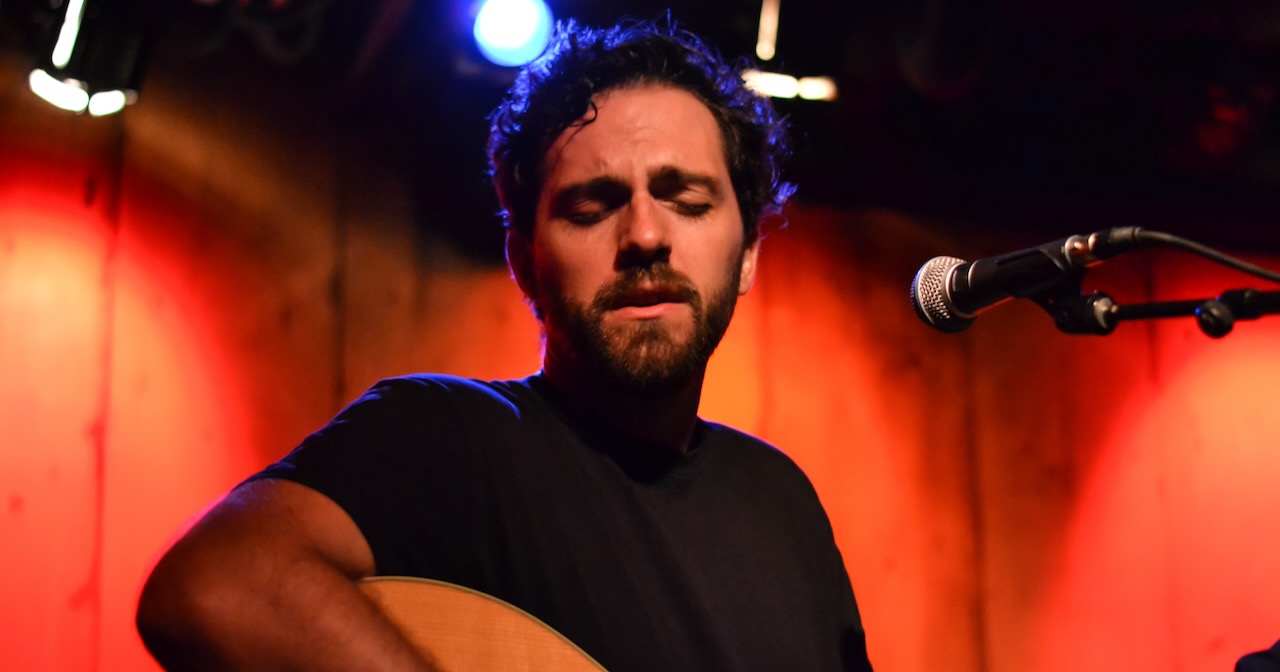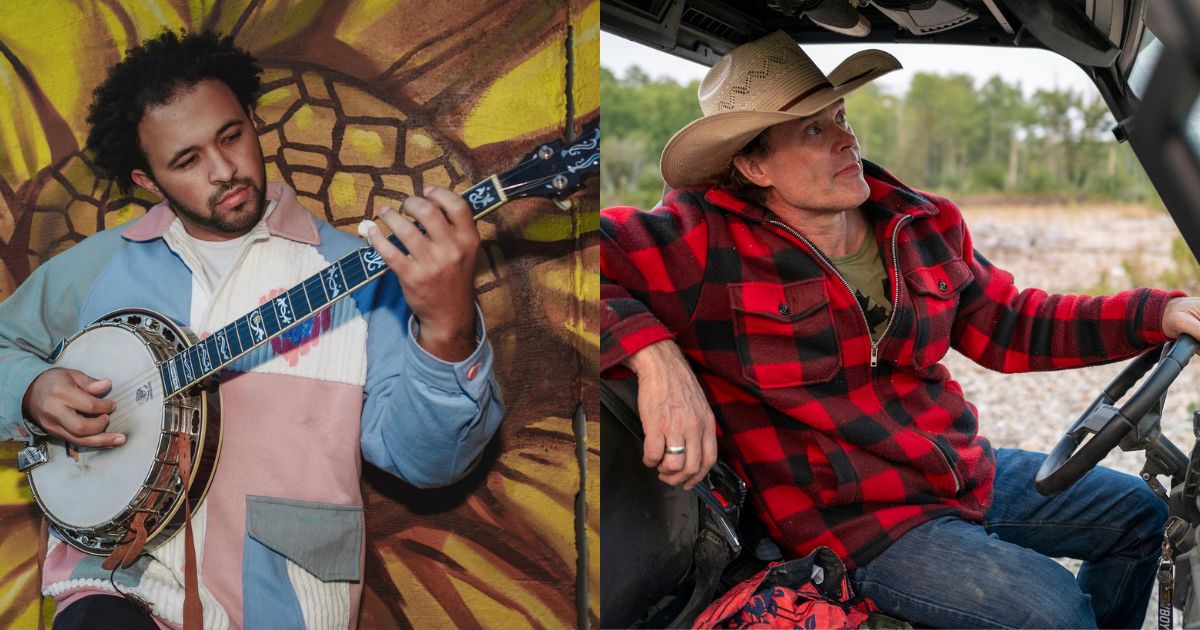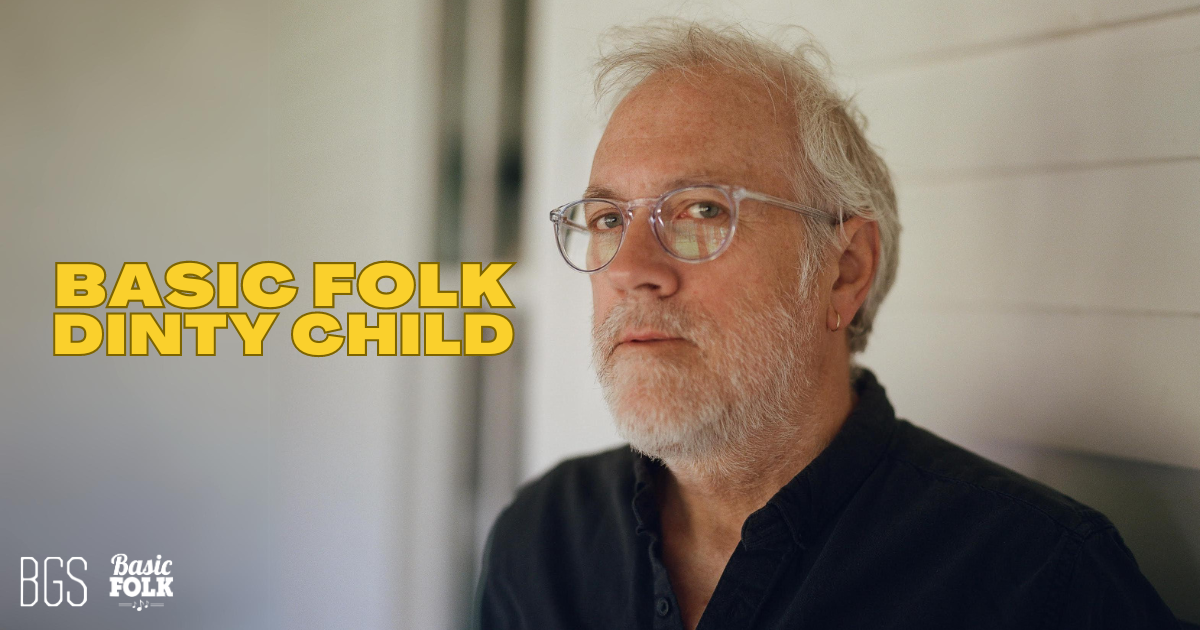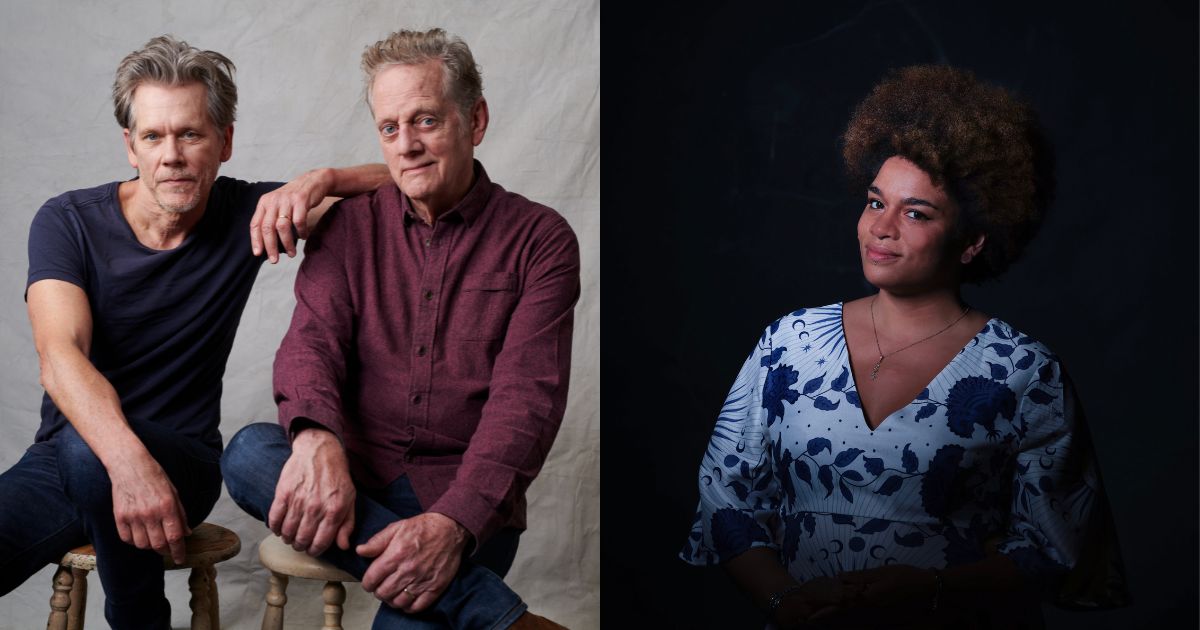
This week, BGS readers were graced by two special, Valentine’s Day-themed premieres from jamgrass supergroup The High Hawks and singer-songwriter Caroline Cotter. Plus, our old friend, Kentucky-based cellist Ben Sollee, brought us a gorgeous new performance video of a John Prine cover shot surrounded by verdant houseplants.
Below, catch up on that new music you might have missed from earlier in the week and discover brand new, exclusive premieres from bluegrass group Sideline and indie/Americana duo the Ballroom Thieves. It’s all right here on BGS and… You Gotta Hear This!
Sideline, “The Lives of the Innocent”
Artist:Sideline Hometown: Raleigh, North Carolina Song: “The Lives of the Innocent” Release Date: February 16, 2024 Label: Mountain Home Music Company
In Their Words: “It was great getting back in the studio after over two years. There was a lot of bottled-up magic that came bursting out when we hit the first downbeat. This song fit the very definition of what Sideline is as a sound and the energy we project. It certainly enters the catalog as a blood-pumping, foot stomping, Sideline hit for the ages.” – Skip Cherryholmes, guitar
“‘The Lives of the Innocent’ was a song that was inspired by the Hibriten Guards during the Civil War that mustered in Alexander County, North Carolina. They saw heavy combat during the war, suffering a high casualty rate, and this tune chronicles what potentially could have been one of the soldiers in those ranks. Steve [Dilling] and the guys bumped the tempo a little and captured the essence of the song and the singing is just top-notch!” – Shannon Slaughter, songwriter
Track Credits: Skip Cherryholmes – Guitar Steve Dilling – Banjo, harmony vocal Matt Flake – Fiddle Nick Goad – Mandolin, harmony vocal Kyle Windbeck – Bass Bailey Coe – Lead vocal
The Ballroom Thieves, “Tender”
Artist:The Ballroom Thieves Hometown: Easton, Massachusetts Song: “Tender” Album:Sundust Release Date: April 12, 2024 Label: Nettwerk Music Group
In Their Words: “We were listening to the band Watchhouse at Newport Folk Festival in 2022 and their sparse instrumentation and fluid melodies inspired us to start writing ‘Tender’ right on the spot. We learn a lot from our peers, and in this case, the lesson was about the importance of creating space for your songs to breathe so you can hear what’s happening between the notes.” – The Ballroom Thieves
In Their Words: “John Prine had a knack for folding mantras in to his songs. This song has a message that resonates deeply with my journey as a creative, father, and husband [and] that is so needed in this fitful world. ‘When love comes your way, you learn to say, I love you!’” – Ben Sollee
Artist:The High Hawks Hometown: Boulder, Colorado and All Points Between, USA Song: “This Is What Love Feels Like” Album:Mother Nature’s Show Release Date: February 16, 2024
In Their Words: “This song sits in a slightly different world than the rest of The High Hawks’ new record. It’s a step into the mind of a hopeless romantic at a show, waiting for the band to come on with his love by his side. Sometimes the world just seems to conspire to make everything just right. This is about one of those nights. The song came out of a co-write with Chris Gelbuda, Shawn Camp, and myself one Nashville summer afternoon. I’m glad it found a home with The High Hawks!” — Vince Herman
Artist:Caroline Cotter Hometown: from Providence, Rhode Island; currently living in Ellsworth, Maine Song: “Do You Love Me?” Album:Gently As I Go Release Date: August 18, 2023
In Their Words: “‘Do You Love Me?’ is a love song, short and sweet and perhaps a bit tongue–in–cheek, echoing desperate and anxious attempts from a hopeless romantic to their new love (and the universe) to get some certainty in very uncertain territory. This anxiety and excitement come together in a fun little package, trading places depending on the day or the moment, and sometimes it’s best to laugh at the silliness of it all, and realize that attempts to know or pretend to know by reading the signs are likely futile, but if nothing else, they’re fun to sing about. I love how Fernando’s illustrations in the video bring out the whimsy, playfulness, and sweetness of the lyrics.” – Caroline Cotter
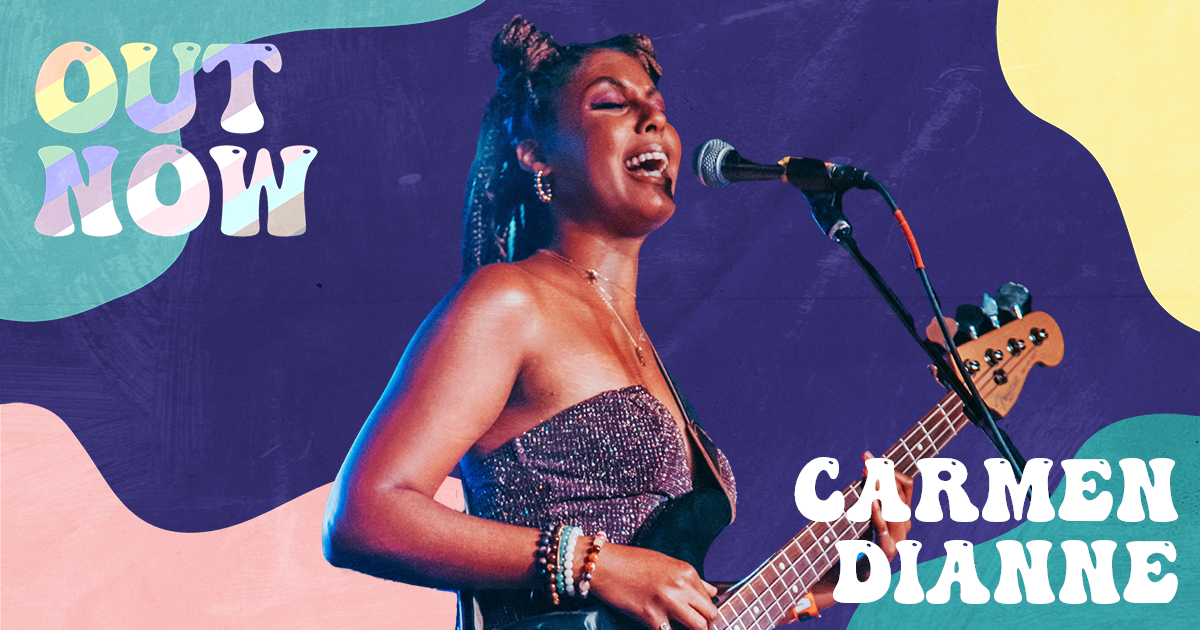
Brittany Ann Tranbaugh is the first artist we’ve featured in Out Now that I have yet to meet. She runs in queer music circles, playing with many LGBTQ+ artists – including Liv Greene and Jobi Riccio, who were featured on this column last year, as well as other queer-identifying artists like Sadie Gustafson-Zook and Mya Byrne.
I’m very much looking forward to hearing Brittany live at our next Queerfest show, also featuring Liv Greene and Carmen Dianne, at Dee’s Country Cocktail Lounge in Nashville on February 24 at 7 pm. Brittany writes with relatable lyrics, warm, inviting sounds, and sings with silky vocals.
Our Out Now conversation covers her upcoming touring plans, her favorite LGBTQ+ artists, and how she balances creativity and business as an independent artist.
What would a “perfect day” look like for you?
Sleeping in, but not too late (9 am is my ideal wake-up time), making a hearty homemade breakfast with a good podcast or record playing, walking my dog in the woods, taking a long shower, then playing a queer country night with my band and a bunch of friends, enjoying some excellent drinks and food together afterward.
Why do you create music? What’s more satisfying to you, the process or the outcome?
I think I’ve spent most of my creative life on the outcome-oriented side of the spectrum, but I’m learning to enjoy the process more. Having a band has taught me to love all of the steps of making a song, because they can evolve a lot when I bring them to the band. My bandmates make arranging and recording extra fun and satisfying. I’ve also begun to open myself up to co-writing, which is a process I enjoy deeply when it’s with the right people.
Do you create music primarily for yourself or for others?
I think above all else, I strive to create music I feel proud of, that effectively and artfully communicates my truth, that feels cathartic to sing and play. I’m incredibly lucky that a large enough number of other people resonate with it, to the point that I get to do it for a living and connect with wonderful folks all over the world.
Who are your favorite LGBTQ+ artists and bands?
Growing up, my favorite out queer artists were Brandi Carlile, Melissa Etheridge, Indigo Girls, Ani DiFranco, and Tegan and Sara. Lately I’m a huge fan of Adrianne Lenker/Big Thief, and honestly a lot of my favorite LGBTQ+ artists are people I consider friends, like Liv Greene and Jobi Riccio. Here’s a link to a Spotify playlist with my Queer Americana faves.
What are your release and touring plans for the next year?
I released an existential lullaby called “For Caroline” in January and in March I’ll be releasing a poignant short-story song called “Bushwick.” This winter I’m spending most of my time home, but doing a few weekend mini tours, going as far away as Nashville. I’ll be solidly on tour all spring and summer: April in the Northeast and New England with Blair Borax, May in the Midwest with Sadie Gustafson-Zook, June and early July on the West Coast with Joh Chase, mid-July in Germany and the UK, then back to the US for some festivals. I haven’t planned much for fall yet. Just leaving it open for magic.
As an independent artist, how do you find the balance between the creation of music and the business of managing, booking, and promoting your work?
It’s tough! I’m still figuring it out. I get easily wrapped up in all the business aspects of the job, because it takes a huge amount of that work just to pay my bills. I know that when I don’t nurture my curiosity and creativity, songwriting begins to feel tedious, then I avoid doing it, then my mental health declines. Recently I started two simple habits that have helped me access my creativity more easily: morning pages (3 pages of free-writing) after waking up and a phone-free bedtime and morning routine.
These habits let my “artist brain” wander, and allow songs to come easier. Another thing that’s been really helpful is scheduling retreats and/or residencies at least twice a year, where I get away and unplug from social media and just focus on songwriting and self care for at least a week. I did a communal retreat in a lake cottage with some songwriter friends last year that was life-changing, and I realized that retreats really work for me, so I made them a priority.
Like you mentioned, you’ve played shows and continue to play shows with other LGBTQ+ artists including Liv Greene, Sadie Gustafson-Zook, Jobi Riccio, and Mya Byrne, what has it been like for you to work with other queer-identifying artists?
I love playing with other queer artists! I definitely seek out fellow queer songwriters. I connected with all of the folks you mentioned on Instagram and now we’re friends in real life who tour and collaborate together. I’ve always been a deeply community-oriented artist. My favorite shows are the ones I play with friends. I think that the love and respect artists have for one another is palpable and sets the tone for everyone in the room. Here in Philly, I’ve been heavily involved with Baby’s First Rodeo Queer Country Night. We’ll be doing our third event in February. Those shows have been bliss for me: to see that many queer folks, who grew up listening to and loving country music, being so authentically themselves in a country music space makes me cry every time.
Tyrone Cotton, a decades-long mainstay of the Louisville, Kentucky music scene, just released his debut album, Man Like Me. A quick listen to these songs reveals an artist who has spent decades steeped in roots music. Lizzie No spoke with Tyrone and Ray Rizzo, one of the album’s producers, about Tyrone’s journey as an artist and the making of Man Like Me.
Tyrone grew up listening to his grandfather and his friends in the neighborhood playing guitar. With his $60 guitar in hand, Tyrone headed off to music school, studying classic guitar under David Kelsey. At first a shy performer, he leaned into his craft and into the supportive musical community he found in Louisville. Cotton has become a stalwart of the local music scene, playing club shows and a standing gig at a local senior center where he brings the house down with soul classics.
This is where producer Ray Rizzo enters our story. A Kentuckian since the age of 11, he was well-versed in the Louisville music scene when he came across Tyrone and his music at The Rudyard Kipling, a club in town. Ray’s admiration for Tyrone’s songwriting and musical instincts was a guiding principle as they went into the studio to record Man Like Me. Rizzo had spent years watching Cotton perform and wanted to make sure that he captured the magic he had witnessed so many times. If the confident, eclectic roots of Man Like Me are any indication, Tyrone Cotton has more stories to tell and we will be lucky to listen. What makes this album special is what makes the best Americana albums special: a patchwork of influences and traditions, the best of contemporary recording techniques, and a singular storytelling voice.
Northern California folk-rock trio Rainbow Girls have always been committed to a grassroots approach to their band. Despite amassing a large community of fans, they remain an entirely independent and self-described mom-and-pop shop. Their new album, Welcome to Whatever (released in early December), spans a broad range of genre references and topics, but is rooted in the trio’s attitude of stubborn tenacity and joyful resilience – in the face of gentrification, capitalism, racism, and a generally challenging world.
In an industry which largely favors solo professional efforts over more complex group dynamics, Rainbow Girls have flourished over more than a decade of playing together and they remain a close-knit family. Most recently, the band has been nominated for Folk Alliance International’s Album of the Year award.
Curious to know more about how they have been able to make their collaboration work for so long and to such a beautiful end, BGS reached Vanessa Wilbourn, Erin Chapin, and Caitlin Gowdey via email to chat about the new album and how they feel about being a hold-out band in Northern California, when a lot of the region’s artistic class has been pushed out due to expense.
I loved reading about how you formed as a band and how long you’ve been playing together. Now that you’ve established yourself as a professional unit, how do you see your different roles in the band musically and personally? Who does what?
Vanessa Wilbourn: In terms of music, for the last few years we have tended to write individually. Once the idea has taken its initial form, its writer will bring the bare song to the collective. At times, the songwriter will have a clear idea for some or all of the vocal and/or instrumental parts. Other times, the song will be shared in its raw form and we as a collective will work to compose instrumental and vocal parts and arrange the song.
In terms of our business, we all play our parts. Our band is in every way a mom-and-pop shop. Mom, who is our best friend/live-in manager [Hannah Spero], keeps all of it together. She does the hard work of making sure we can keep the doors open. Dad, who is Erin, along with the support of mom, makes sure people know that we’re the best place in town for a good laugh and cry. He does Everything Internet plus a billion other things. Sis, Caitlin, does all of the design work; the albums, the merch, the promo material. Bro, Vanessa, runs our store. She makes sure that all of Caitlin’s designs make it on to shirts, hats and LPs so that our fans can have a piece of the pie.
In terms of interpersonal dynamics, we’re a family – so you know how that goes.
Friendships shared over formative years are special. How do you feel that you’ve seen one another grow and change since being students at college together? How has the band unit been there for you as people?
Our sweater game has immensely improved, because we live further north now.
We’re all better at putting on lipstick and I guess we’re also better at writing songs.
Erin used to be the blind one, but now it’s Caitlin.
I read that you have done extensive traveling and touring in Europe. What are some of the main differences you’ve found between touring in Europe versus the U.S.?
Caitlin Gowdey: We love where we come from, but boy howdy it’s wild how much better touring in Europe is. First of all, you can confidently eat any sandwich at any gas station and it’ll be a solidly good sandwich. Secondly, most major cities in Europe have bigger budgets for music and art, because it’s a larger, more embedded part of the culture.
Artists just generally get paid more, no matter where you’re playing. If you play a show at a venue they feed you and give you somewhere to stay as a part of the deal. If you’re a busker playing on the street (which we were for many years), there’s an understanding that you’re adding to the romantic atmosphere for tourists, and a respect that comes with that. More cities are designed for foot traffic, and people are just wandering around looking at giant clocks and waiting to be serenaded. We’ve met dozens of full-time buskers who sign up and clock in to the same couple spots every day and make a good amount of money. It’s kind of mind boggling.
So far, the only thing we’ve found about being a musician in Europe that’s worse is having to pay to use the toilets at a highway rest stop. Outrageous.
The album’s title, Welcome to Whatever, evokes a kind of slacker rock apathy, but there is a lot of thought and compassion behind the songwriting. What do you feel that the album’s title is getting at?
CG: [Laughs] Well, slacker rock is near and dear to my heart after years in the suburbs spent quoting Dazed and Confused and getting high in the Safeway parking lot, but the title is definitely not about apathy. The “whatever” is more an acknowledgement that the world is complicated and messy and we’re here for it. Nothing is guaranteed and nothing is constant, but we have each other and we’re ready to take on whatever might be coming next. Also the songs are definitely heartfelt, but they’re also all over the place in terms of vibe/genre.
I’m glad the rest of the girls liked the name, because the other album title idea I had written down in my notes – which I was gonna go to bat for – was “EAT PREY LOVE” with a bad drawing of a T-Rex.
On “City Slickers,” you sing about your nostalgic love for San Francisco. What is it like being a musician in the Bay Area these days? Are there things you still love about the place?
CG: It’s tough. It’s expensive. A lot of favorite venues have shut down, a lot of friends have moved away. It’s gentrification and technology and capitalism. Rich white people and oat milk and AirBnB are ruining Oakland. Tech companies and tech money could help homelessness, but they don’t because they don’t have to. I don’t even know what to say about it, it’s not a new story.
But cities are made of so many different types of people, shitty and amazing both, you can’t just claim it’s ruined. There’s a cool new punk club called Kilowatt. Hopefully it stays. People are still being weird and funny and queer and proud and making art, hanging on, and working their asses off to stay. There’s still an old guy named “The Professor” who rides around on his bike and hangs out when the shows get out to tell you about what he did yesterday. Scary Gary is working the door at Cornerstone and will buy you Doritos from across the street when the venue doesn’t provide food in the greenroom. At least we can still have abortions.
Artist:Caroline Cotter Hometown: from Providence, Rhode Island; currently living in Ellsworth, Maine Song: “Do You Love Me?” Album:Gently As I Go Release Date: August 18, 2023
In Their Words: “‘Do You Love Me?’ is a love song, short and sweet and perhaps a bit tongue–in–cheek, echoing desperate and anxious attempts from a hopeless romantic to their new love (and the universe) to get some certainty in very uncertain territory. This anxiety and excitement come together in a fun little package, trading places depending on the day or the moment, and sometimes it’s best to laugh at the silliness of it all, and realize that attempts to know or pretend to know by reading the signs are likely futile, but if nothing else, they’re fun to sing about. I love how Fernando’s illustrations in the video bring out the whimsy, playfulness, and sweetness of the lyrics.” – Caroline Cotter
Photo Credit: Katherine Emery Video Credit: Fernando Osuna
During the primetime Grammy Awards broadcast on February 4, country experimenter/challenger and singer-songwriter Kacey Musgraves announced her next full-length album with a 30-second ad that dripped with pastoral, “cottage core” imagery. Among more than a handful of recent, high profile album announcements – Lana Del Rey announced her upcoming country album just prior to the Grammys; Taylor Swift announced her next album during the ceremony; Beyoncé teased and confirmed her own country foray during the Super Bowl – Musgraves’ messaging felt very pointed, direct, and a bit disaffected. Given her track record and the lyrical content of the album’s title track, “Deeper Well,” it’s not surprising that Musgraves continues to follow her own arrow, wherever it points.
“I’m saying goodbye / To the people that I feel / Are real good at wasting my time…” she sings, and yes, it’s another free and unconcerned middle finger to Music Row, Nashville, and their puritanical country gatekeeping, but it’s so much more than that, too.
In the music video for “Deeper Well” (watch above), which seems pulled directly from a recent Star Wars film or a modernist, fantastic adaptation of Brontë or Austen, Musgraves inhabits a cozy and fearsome solitude. It’s reflected in the lyrics, as well, as the notorious stoner speaks of giving up on “wake and bakes” and giving up all of the flotsam and jetsam that’s gathered in her life since her enormously popular and successful album, Golden Hour, her prominent divorce, and the “controversy” that swirled around genre designations for her critically-acclaimed though nearly universally snubbed follow-up to Golden Hour, 2021’s star-crossed.
It seems that Musgraves is making music with even more intention, even more of herself, and even less concern with industry gatekeepers and mile markers. It also seems that, sonically and otherwise, Deeper Well will draw on the devil-may-care attitude of Same Trailer, Different Park and Pageant Material, while still guiding her audience and fans – by reaching them, directly – toward the same redemption and rebirth that she’s clearly found while making these songs. The production here listens like a combination of boygenius, Nickel Creek, and more of East Nashville and Madison than of Music Row and Broadway. But of course! This is Kacey Musgraves, after all.
There’s a slowing down apparent here, not only in the time that’s elapsed since star-crossed, not only in the imagery of the announcement and the first video, but also in Musgraves’ ambitions and how they fit into the overarching constellation of her work. Ambition has never been the focal point of her music, but it’s always been present; Musgraves is as deliberate and strategic as any woman (is required to be) in country music – like Swift, or Brittany Howard, or Ashley Monroe, or Maren Morris – but she’s leveraging her agency and her position as the CEO of her own outfit to continue to step away, bit by bit, block by block, mile by mile, from the parts of the music industry she’s never cared for.
As it turns out, her fans have never cared for the industry either, whether they know it or not. So, Deeper Well, is poised to – yet again – further broaden and expand the universe of Kacey Musgraves, even while her own, personal world seems to have deliberately shrunk… for the time being.
Artist:Abby Hamilton Hometown: Nicholasville, Kentucky Latest Album: #1 Zookeeper (of the San Diego Zoo)
Which artist has influenced you the most?
It’s always been Johnny Cash and June Carter Cash. My mom used to have us stop before a Myrtle Beach or Gatlinburg vacation growing up to have us pick out a book. At 12 years old I resented this greatly. But, as luck would have it, I landed on a June Carter Cash biography, Anchored in Love. Realizing I had known this music my whole life, I saw so much of myself in her story and it led me down one of the richest love affairs of discographies I’ve ever experienced. The music and life stories of Johnny Cash and June Carter have always been a north star for my writing, performing, and presence as a person and a writer. I adore them. It also opened the doors to the world of country and folk music.
What was the first moment that you knew you wanted to be a musician?
Speaking of Johnny Cash, I remember being in college and discovering that Kris Kristofferson had written “Sunday Morning Coming Down,” not Johnny. I had no idea people could be songwriters and not the artist. It was like this huge “aha!” moment in my life. I never really felt like I was good at anything growing up. Not very high achieving in school and not super passionate about anything. Until that moment. I thought to myself, “If I can write songs, I will be happy. No matter who sings them.” And that’s what happened!
When I started writing here in Kentucky, I quickly realized everyone who made music here wrote their songs. A beautiful legacy from these parts, but it made me shift my attention to performing them. Thinking maybe, “If I sing these songs, someone might want to sing them, too.” This lead to a beautiful and unexpected journey with performing and falling in love with singing and my band. Don’t know how I got here really, but that’s the most I know.
Since food and music go so well together, what is your dream pairing of a meal and a musician?
Man, I think I’d take a bowl of Vodka Pasta and Bruce Springsteen. Those two always hit. And make it spicy.
What has been the best advice you’ve received in your career so far?
There’s so many things. I’m lucky to be surrounded by so many friends, family, and influences who know me and tell me the truth. The biggest thing has always been staying true to myself. Protect my tribe and be honest with those closest to me. CLICHES I know. But, it’s true.
Which elements of nature do you spend the most time with and how do those impact your work?
Anytime I’m in Eastern Kentucky on a dewey spring morning, I’m writing like a fiend. TRULY. If I can catch a sunrise and see the spiders making webs in the grass in the morning, I’ve always finished a song. Something that feels like a retreat from the real world always inspires me. No matter the season.
In country and roots music, authenticity is treated like the most valuable currency of all. Maybe that’s because the genre has always been caught between the fiction that this music is frozen in amber and the reality that it has always borrowed liberally from current musical trends in order to have commercial value. The earliest popular country music was an amalgamation of regional music from rural white artists, music stolen wholesale from Black and Indigenous artists, and plenty of nods to prevailing pop (i.e., urban or non-rural) trends – looking back at the places young laborers and listeners that had been drawn to cities came from, and the exciting present and future they found themselves in once they arrived.
Can anyone or anything truly be considered “authentic” in America, a country whose identity is built on masking fundamental historical truths?
While artists like Zach Bryan are hailed for their “authenticity,” the vast majority of the current class of mainstream country and Americana artists grew up in suburbs, in postmodern America, in the internet age, and are graduates of major colleges – like Nashville’s Belmont University or Boston’s Berklee College of Music. Their experiences are also authentic, of course, to each individual artist – just as Bryan’s initial motel room demos are electrifying for the soul he brought to them. But these origins bring up questions around how country and Americana construct “authentic” narratives, especially to market roots music.
Still, it’s noticeable that certain types of creators are automatically considered “authentic” country artists – and they often match the complexion of the first generations of country singers, when “race records” and “hillbilly music” were originally split and whose most famous individuals wore cowboy cosplay on stage.
We want to tip you off to some real Good Country music: Music that portrays life in its complexity and a deep appreciation for one’s roots, whether they lie in the Bronx, rural Arkansas, or anywhere else on this rich blue marble we live on. Because authenticity in country doesn’t necessarily equate to rurality, to back roads and red dirt and farm trucks; real country music is real not because it’s built to be “authentic,” but because it’s honest.
Hurray For the Riff Raff
Hurray For the Riff Raff’s Alynda Segarra is from a little bit of everywhere, but the Bronx is where they grew up and the punk houses of the Lower East Side raised them. Between their jazz artist father and picking up a guitar as they rode the rails, Segarra’s approach to folk music began with a traditional bent and has since exhaled into an expansive approach, as with their astonishing 2022 album Life on Earth. Their upcoming album The Past Is Still Alive finds Segarra focusing more on twang, but their philosophical core has always remained the same: breathing life into unspoken pain and empowering people that society would like us to forget.
Amythyst Kiah
Amythyst Kiah’s music is a powerful force. Inspired by the blues and old time music, Kiah uses her art to prop the furnace doors open to make way for blasts of grief and abandonment. Kiah grew up in Chattanooga, Tennessee and picked up the guitar while attending an arts magnet school. She fell in love with old time music at East Tennessee State University and never looked back.
I first saw Kiah in 2016 at Karen Pittelman’s Queer Country Quarterly, her first show in NYC. Karen introduced her by remarking, “trust me, she’s going to be famous.” When Kiah belted her powerful alto, we all knew we were in the midst of greatness. Kiah’s most recent work on Wary + Strange (2021) takes us in a more experimental direction, but her exploration of alienation – like a toy in her hands – informs her music no matter what she’s plugging into her pedalboard. Kiah’s “Black Myself,” originally recorded with supergroup Our Native Daughters, fiercely proclaims her love for herself and her ancestors.
Willi Carlisle
Willi Carlisle has seen a thing or two in his travels across the lower 48. Carlisle cut his teeth musically in DIY and punk rock, but his search for queer role models and love for poetry drew him to New York City. With disgust for the elitism of the poetry scene there – and their mockery of his roots in the Midwest – Carlisle went searching for a life of words in folk music.
Carlisle has a knack for painting complex portraits of down-and-out characters, refusing to be drawn into simple narratives of left and right, red and blue. His stunning “When the Pills Wear Off” from the upcoming Critterland demonstrates Carlisle’s ability to turn the personal into the political – and back into the personal again. This is not the blind invective of JD Vance, but the realization that only empathy can build bridges between people who think they have nothing in common.
ISMAY (née Avery Hellman) has spent their whole life around folk and bluegrass music – their grandfather is one of the founders of the Hardly Strictly Bluegrass festival. As a contestant on Apple TV+’s short-lived My Kind of Country competition series, ISMAY is very much a representative of roots music’s vanguard. With their sparse arrangements and winsome vocals, ISMAY’s music feels like deconstructed folk music. They understand the core elements of the sound thanks to a lifetime immersed in it, and they create something wholly unique from its constituent parts, as we hear on “Point Reyes.” There, ISMAY’s contemplative vocals are orbited by a gauzy cloud of pedal steel and gentle finger-picking. ISMAY’s upcoming album Desert Pavement speaks to their sense of place: all of their music is enamored by nature. “Golden Palomino” illustrates ISMAY’s love for their rural California upbringing, guiding us to realize how much our natural and inner worlds inform each other.
Buffalo Nichols
You’d be hard-pressed to find a more devastating songwriter or guitar player than Buffalo Nichols. Nichols, like many teenagers before him, picked up a guitar and played his way through the hip-hop and hardcore scenes in his Milwaukee hometown. He found himself drawn to blues music as he began to dig into his mother’s collection and connect with Cream City’s West African community. Nichols and musical partner Joanna Rose made a mark on the Americana scene with their duo Nickel and Rose, shining a harsh light on the ignorance on full display in the community’s supposedly liberal refuge on the song “Americana.”
With his most recent solo album The Fatalist, Nichols brings all of his experience to bear on a remarkable collection of songs that combine elements of all of his musical loves. On his rendition of the classic “You’re Gonna Need Somebody On Your Bond,” Nichols’ guitar becomes an extension of his own body with lightning-fast licks. Buttressed by electronic drum samples and a haze of synths, Nichols shows that music is at its most vital when it is rooted in the past and embraces the future.
Ally Free
Ally Free is one to keep your eye on in 2024. They write in their bio that they see music as the universal language that can bring people together, and that’s clear on their versatile 2019 album Rise. From the nu metal-inspired chugging of “Fool’s Gold” to the craftsman’s approach to “Fast Train,” Free isn’t embarrassed to draw from any inspiration to make a damn good song. Free’s rich alto gives their music depth: from their performances, it’s clear that this is someone who has lived a lot of life. Free is one of the newest members of the Black Opry and has taken a few steps out of their Huntsville, AL hometown to playing more shows around Nashville. Here’s hoping that means the rest of us get to hear more from this remarkable performer soon.
William Prince
William Prince’s voice carries a warm, earthy timbre that is wholly unique. Prince grew up on Peguis First Nation (in what is now Canada) and is well-versed in the travails of people living under oppression. But that experience is translated into patience and warmth, a gentle perseverance that can only come from a keen observer. Prince’s stark breakout album Reliever (2020) has given way to the warm Stand in the Joy (2023), which details the travails and victories we most often find in daily life. “Tanqueray” is a gorgeous example of Prince’s dynamic, a story of two improbable lovers finally coming together to make it work.
Sabine McCalla
Sabine McCalla is readying for a breakout 2024. McCalla’s music is steeped in the sounds of New Orleans, which she has made her home. McCalla has performed with others, but her performance on Offbeat Magazine’s OnBeat Session from September 2023 shows us she’s ready to step out on her own. For now, we have her 2018 EP Folk, which sports arresting songs that feel timeless. Maybe it’s the gentle groove in her music that feels like the stately flow of the Mississippi River – discordant with the immediacy of her lyrics that protest violence and oppression, as demonstrated by “I Went to the Levee.”
Margo Cilker
Look – Margo Cilker is literally a cowboy, okay?? Isn’t that what you imagine when someone mentions “country music” and “authenticity” in the same breath? But Cilker’s music glorifies a life of searching, not a mythologized America of white picket fences, so you can also picture the quintessential Nashville executive saying, “We like cowboys, but no, not like that.”
Cilker’s latest album, critical darling Valley of Heart’s Delight, is nostalgic for her family orchard in California’s Santa Clara Valley – but not without a heavy dose of reality. “Mother Told Her Mother Told Me” caution the listener not to become too attached to any one place – and the cost of leaving it behind. Cilker’s impassioned “With The Middle” cuts to the core of her work – a weighing of the contrasts between pleasure and pain and yearning to find common ground between the two.
Brittany Howard
Brittany Howard transcends pretty much everything – except the act of exploration with wild abandon. Having gained notoriety as the lead singer of the retro soul band the Alabama Shakes, Howard seemingly will not rest until she’s drawn with every musical crayon in the box. In her recent interview with NPR’s Jewly Hight, Howard cracks that she grew up in a trailer and would still be perfectly content to be working the land somewhere. But her music has led her elsewhere, perhaps everywhere. Howard has teased a few songs off her upcoming album, What Now, with the title track featuring hooky grooves and propulsive energy, but it’s “Red Flags” that astounds with its jarring drum loop, woozy vocals, and disorienting production that demonstrates how much mastery Howard has gained in her craft as an artist and storyteller.
Samantha Crain
Few artists in the last decade have shown the same growth and versatility as Samantha Crain. A part of the rich Tulsa music scene that has given us John Moreland, John Calvin Abney, and M Lockwood Porter, Crain follows a road all her own. Under Branch & Thorn & Tree (2015) found Crain exploring the pride and trauma of her Choctaw heritage through folk-inspired music. In 2017, Crain broke her own mold with the quirky indie-pop album You Had Me at Goodbye (2017.) Since her 2020 album, A Small Death, Crain has been playing in the spaces in between, utilizing woodwinds, pedal steel, pianos, and guitar to create a woozy soundscape as her spacious, gravelly voice helps us stay anchored in the real.
Nick Shoulders
Nick Shoulders rounds up the list with his commanding All Bad. While Shoulders’ music leans traditional sonically, it’s anything but. The Fayetteville, Arkansas singer begins his album with phaser blasts and a menacing invitation to a “conversation,” and that conversation is explicitly about all the “country” stylings that deserve to be thrown in the trash heap – and the many, many qualities we need to hold on to and claim for ourselves: grit, honesty, love, and togetherness. “Won’t Fence Us In” and “Appreciate’cha” speak to this theme most clearly, but the way Shoulders approaches the classic country canon with loving irreverence reminds us that we never have to be weighed down by tradition.
(Editor’s note: Each issue of Good Country, our co-founder Ed Helms will share a handful of good country artists, albums, and songs direct from his own earphones in Ed’s Picks.
Eight years ago, in 2016, the harp-playing half of Brooklyn-based folk duo Devil & the Deep Blue Sea, found herself filing away songs for a solo project.
“There were certain songs… [that] would tell me who Lizzie No was going to be,” she explained in a recent phone interview. “There were songs that felt very personal, very femme, and a little more country and a little more pop than would be appropriate in my band. Those songs started getting categorized into the ‘new solo project’ category. And then, I just had to come up with a name, you know. Like, I needed my Sasha Fierce alter ego, to be able to stand in myself.”
The name she landed on, Lizzie No, was a doozy. Considering the femininity she noticed her new songs projecting, the decision to include the word “No” in her name was no small thing. Women, especially feminine women – especially Black feminine women – have a special relationship with the word. It was important to No that her solo singer-songwriter persona reflect the energy she wanted to project, the space she wanted to carve for herself and her songs.
“I think there’s a real difference between singing songs that you wrote in the context of a band versus being a solo artist and having people literally look at you, in your physical body, and associate the songs with you and yourself. So I needed an identity, a performer identity, that would be able to encapsulate the confidence and the directness, and yes the femininity, that I wanted to present with these songs that I was writing.”
The idea of mindfully presenting femininity is nothing new, of course. Women in all professions must decide how they’d like to present; how many minutes or hours they will spend before each workday putting on their face and dressing to impress. But, there is a special place in the history of country music for artists taking the stage while female.
It was far less than a century ago that female country singers were expected to travel with a husband, brother, or other male family member as their escort. Women country singers were expected to eschew ambition and to primarily be a pretty face with a pretty voice.
All that started to shift when Mother Maybelle and the Carter Sisters made their Grand Ole Opry debut in 1950 – the first all-female band on that storied stage. In fact, well aware of how women were perceived and received by the country music establishment, Mother Maybelle nonetheless insisted her daughters become masterful on their instruments, develop independent business acumen, and forge a career on the stage.
For the 74 years hence, women who can and do shred have been of great interest to country music critics and fans alike. Author and critic Marissa A. Moss dove deep into this subject with her 2023 book, Her Country: How the Women of Country Music Busted Up the Old Boys Club. Meanwhile, on social media, fans and artists alike routinely return to the evergreen topic of how much airplay women get (or, rather, don’t) on country radio.
To consider what it means to show up wholly oneself while feminine in country music can feel like engaging with a Groundhog Day loop through tired, generations-old expectations. Granted, the options for women have broadened a bit since the Carter Sisters showed up in their gingham checks and transcended what one might have expected from pretty women who sing and play. (A new documentary by Kristen Vaurio on Paramount+ about the youngest Carter Sister, JUNE, is well worth a stream.)
The modern answer to the Carters’ quietly subversive embodiment is a cadre of demonstrably feminine women like Allison Russell, Margo Price, and Amanda Shires. Recent Grammy winner Russell comes off like a clarinet-wielding, angel-voiced supermodel, self-made from equal parts awful trauma and infectious joy. Price appears as a cross between Willie Nelson and Cher, riding her biting narrative lyricism on the vehicles of magic mushrooms and low-cut, glittery fringe. Shires saunters about in spiked heels and leotards, a finer fiddler/poet than you’ll find anywhere else on God’s green earth.
That each of these women is stunningly talented as a lyricist, multi-instrumentalist, and performer, is inarguably the most important thing. But the messages they convey by leaning hard into how they wear their gender, remind us that women in country music no longer need to amplify the pretty and take the brilliance behind the scenes. There’s more than enough space for both/and.
It wouldn’t be a leap to suggest this is thanks in part to a rising tide of queer country artists. Lizzie No, Russell, and others – Jaimee Harris, Brandy Clark, Jaime Wyatt – prioritize songcraft as equivalent to crafting persona. Other queer artists like Paisley Fields subvert the masculine/feminine binary with candid expressions of personhood that transcend traditional femininity while remaining sonically adherent to traditional country music.
All of this raises numerous questions, including: What does 21st century femininity bring to the cis-het boys’ club of country music? Shouldn’t women get country airplay while also being free to show up as the full human they are?
Lizzie No is a good example of a walking answer to both questions.
A rising country singer whose music lands warmly – a stew of Dolly and Emmylou, a twinge of Kris, just a pinch of Sleater Kinney – her new album, Halfsies, is a mostly-country and occasionally rock and roll rumination on the intersections of love, identity, and freedom. While it may resonate for plenty of men and folks who don’t identify as feminine, it is, in other words, about the numerous conundrums and longing-for-transcendence of womanhood.
“There’s a patriarchal anxiety around performance and illusion, and we associate that with femininity,” No says. “[I’m] actually leaning into that and saying, ‘It’s all a mask. Gender is a mask for me and for you.’ That’s a big part of how I’ve constructed my identity as Lizzie No. I am one thousand different things and [you shouldn’t] try to narrow it down musically, or in terms of gender.”
She goes on to affirm that the way she constructed her performer persona is similar to drag. Considering country music is most often associated with Nashville (where No recently relocated from New York City), it’s worth considering that this new wave of feminine people in country music has risen at the same time as a push-back against drag performers in the same state and across the country. The tension between these two phenomena is mostly political and definitely charged.
When indie band Yo La Tengo played a show in Nashville shortly after the state passed its anti-drag bill, their decision to wear dresses onstage was a funny, tongue-in-cheek protest. An overt resistance, an assertion of allyship. This is different from when someone like nonbinary country singer Paisley Fields steps out in a sheer top and jewelry, or a dress. The former is clowning on politicians; the latter is throwing on something comfortable to engage in vulnerable, intensely personal creative expression. The former is playing to its indie rock audience, replete with left-leaning, ironic hipsters; the latter is forging a path of their own in the country music world, where femininity is a little more… complicated.
“The first thing that comes to mind when it comes to femininity in country music is just how misogynistic of a genre it is,” Fields said in a recent interview.
For example, they added, “The first time I wore a dress [onstage], I noticed the way people treat me is very different. Even if I’m just in a more, like, sort of flamboyant or more feminine look—maybe hot pink pants or something – I’m treated very differently. If I’m wearing a dress, it’s almost a little scary.”
Over the past couple of years, since coming out as nonbinary, Fields has been exploring what it means for a person assigned male at birth to express authentic femininity on a country stage. Indeed, they are just as likely to appear in the jeans-boots-hat costume of a country man as they are in a sparkly net top and purple chaps – an outfit nobody would look twice at, were it donned by Margo Price or Lizzie No. In the process, they’ve firmed up their own convictions around country music’s relationship with femininity.
“It would be better for a woman to be masculine [in country music] than for a man to be feminine,” they say. To clarify: “Some of the most successful women in country music are obviously very feminine and embrace their femininity, like Dolly Parton and [Shania] Twain. But there is this sort of like, tough as nails [persona], which I guess is perceived a lot of times as masculine.” Granted, this tough-as-nails persona is often an outcropping of the mountains these women have needed to climb in order to make it onto the big stage.
In her 2022 memoir, Maybe We’ll Make It, Price detailed a few shady encounters with Nashville songwriters and executives who saw her as a young, hopeful girl who deserved to be exploited. That she survived these instances and earned success with her music on her own terms, in the end, perhaps lends itself to a tough-as-nails persona. But it is one that comes from being a woman with well-marked boundaries in a misogynistic boys club. When she rode into the 2022 Stagecoach Festival in a crop top and glitter skirt, on horseback, she knew she’d earned the right.
This balance of toughness and femininity (often used in a context where it’s synonymous with “weak” or “fragile” or “naïve”) is indeed not a stretch, but rather the innate characteristic of a woman with a strong moral center and the desire to get hers.
Lizzie No explains perhaps better than this writer can.
“I feel my most feminine when I am in some way using my physical body to achieve political ends,” she says. “To me, that’s my ideal of femininity. It’s like the women who lured Nazis to their death by being hot. When I want to post about taking down the government, you know, I will always use a bikini pic. … Because it’s like, hey, look over here, you’re going see my midriff and you’re going to learn about how capitalism has alienated us from ourselves.”
This website uses cookies to improve your experience. We'll assume you're ok with this, but you can opt-out if you wish.AcceptRejectRead More
Privacy & Cookies Policy
Privacy Overview
This website uses cookies to improve your experience while you navigate through the website. Out of these, the cookies that are categorized as necessary are stored on your browser as they are essential for the working of basic functionalities of the website. We also use third-party cookies that help us analyze and understand how you use this website. These cookies will be stored in your browser only with your consent. You also have the option to opt-out of these cookies. But opting out of some of these cookies may affect your browsing experience.
Necessary cookies are absolutely essential for the website to function properly. This category only includes cookies that ensures basic functionalities and security features of the website. These cookies do not store any personal information.
Any cookies that may not be particularly necessary for the website to function and is used specifically to collect user personal data via analytics, ads, other embedded contents are termed as non-necessary cookies. It is mandatory to procure user consent prior to running these cookies on your website.