Moving & Returning

(Editor’s Note: Sign up here to receive Good Country issues when they launch, direct to your email inbox via Substack.)

I bet in the next few years, an expert taxonomist will come by and tell us exactly what country music is – and that this definition will create endless arguments. In the last few months, this argument about what exactly country music is has been growing louder. Jason Isbell has been fucking around with Nashville for decades, playing the field between rock, country, southern rock, country rock, and classic country. (He has recently said that he considers himself a rock singer). Adeem the Artist, the infamous cast iron pansexual, says that they are a folk singer. Willi Carlisle, a folk up-and-comer, has released Critterland, a certainly country album. On the other hand, Maren Morris released two singles last fall which were about burning Nashville to the ground, yet they’re perhaps the most country songs of her career – in terms of how she tells stories, how the bridges work, her vocal tones, and even some of the instrumentation. It seems lately, country is both everything and nothing.

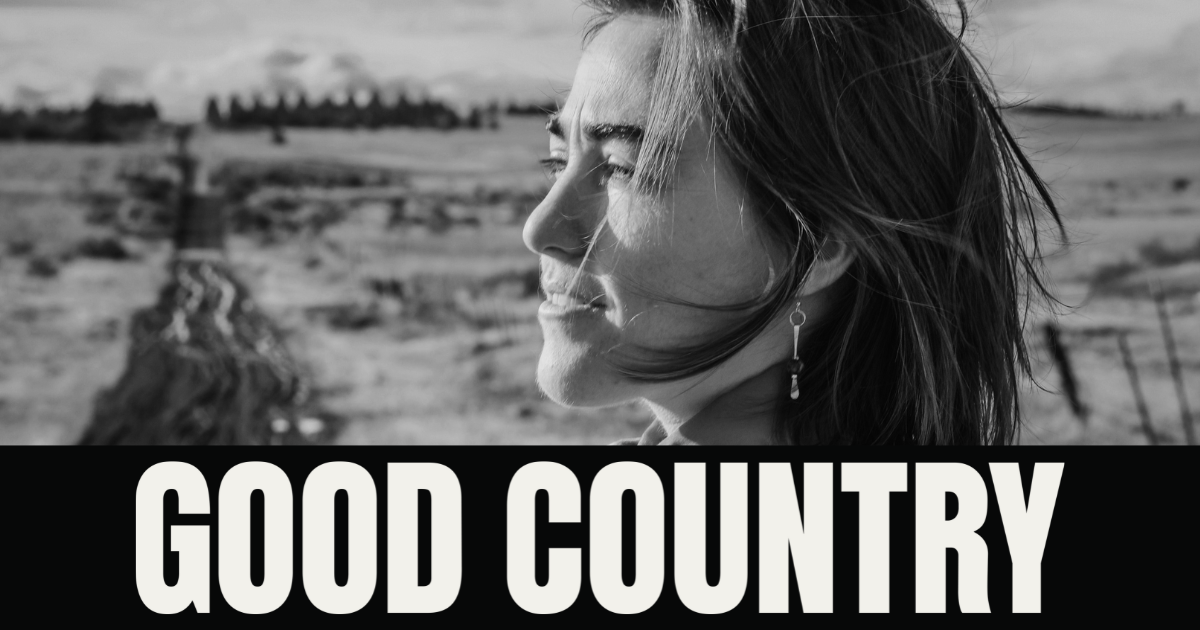
Amanda Fields’ 2023 project deepens this ongoing problem. The album, What, When and Without, is a complex artifact of her own wrestling with genre, history, and biography. It slides into that complex sorting of genre and feeling that is key to Nashville right now. Fields calls this a country album – lushly produced, thick with strings, and dense with vocals, reminding one of an updated countrypolitan record – but sorting out what that means comes with a history of playing and listening.

Fields has a reputation on the bluegrass circuit, often an insular genre with an insistence on a certain kind of purity. She recognized how those questions of purity often don’t pay the bills, and her first major recordings were on a series of bluegrass cover records, called Pickin’ On – recorded by prominent bluegrass studio musicians, there are dozens of them, the artists covered include the expected (Bob Dylan, Johnny Cash), the unusual (Blink 182), to the fully flummoxing (Modest Mouse). Though Fields did not play on all of these records, she talks about them as an integral understanding of herself as part of a musical team: “When I look back on my experience within the ‘genres’ I’ve taken part in, I think about the groups of people I worked with… When I worked on Pickin’ On, I got that gig because of who I was hanging out with and playing music with at the time. I sang ‘gospel’ when I was growing up, because that was the community within my proximity.”

Proximity is a complex question for Fields. She has close ties to the bluegrass community, and there is something intriguing about the idea that genre is a social category – one about who one is near, or what the audience and the performer agrees to participate in. Yet there is a kind of roving that occurs here too; for Fields, roving is both a history of moving around geographically and, as she says here, moving from music that she considers bluegrass or gospel or country.

Fields moved around a lot as a child. Though she was born in Appalachia and currently lives in suburban Nashville (right next to Loretta Lynn’s old house), the line between these two legendary destinations was not direct.

Asking Fields about these roots – expecting a standard line in response – she honestly describes the complexity of her raising: “I’m originally from the mountains and it was my anchor growing up, but my dad moved us around a lot. He was one of those people who felt there was more to life than what was available to us living in that area, so he took job opportunities that carried us away from the mountains. I didn’t like that, because I was always longing to be ‘home’ with the rest of our family. I lived for summers and holidays when I got to be in Virginia and East Tennessee. Playing and listening to country and bluegrass music was my way to experience home when I couldn’t be there physically.”

This moving and returning is a common note for country musicians. Listening to her talk about the juxtaposition of moving, returning, being forced to leave, and finally finding home in an idea more than a place, I am reminded of Tanya Tucker or Merle Haggard. Tucker’s early childhood had a father who moved her from Arizona to Las Vegas to finally Nashville, chasing an acting and singing career. She broke out as a singer who fused a desire for rock and for country. It is similar to Haggard’s talk of moving – to California with his family as a consequence of economic disenfranchisement – and spending the rest of his career chasing economic stability. That idea was perhaps best written about in his tragic ballad “Kern River,” with its opening line, “I grew up in an oil town, but my gusher never came in.” (A Fields original from well before What, When and Without, “Brandywine,” strikes a similar note.)

This connection to Tucker, Haggard, and other classic country singers suggests that Fields landed not necessarily in a place, but as she says, in a music which has tight connections to place. What, When and Without, a classic country album, is infused with this kind of nostalgic listening.

Asked about her relationship to figures like Loretta Lynn or Haggard, she answers carefully: “Most of the music that really stirs my soul is older. I listen to all my friends’ new music and I’m always hunting something fresh to connect with, but on a day-to-day basis, I’m usually listening to the same stuff I’ve always loved. I’m talking Tammy Wynette, Loretta Lynn, Conway Twitty just about everyday. Classic country is what excites me (especially when I discover something I haven’t heard) and those familiar sounds and voices help me regulate my body’s nervous system.”

The album, rooted in those sounds, contains a deep knowledge of genre. Its ability to move between old school country, bluegrass chops, and deep, modern desire is one of its strengths. Figuring out how to sound both modern and historical is something Fields achieves with some skill. If her commitment to genre has a loose, rootless quality – or at least one which floats and lands depending on aesthetic or social need – then how she considers time has a similar quality.

Maybe her early commitment to bluegrass, a genre who remembers more than it forgets, and faces backwards as much as it faces forwards, and which was complicated by how hungry those covers were, suggests one way of bridging eras. But, her recent work, crafting contemporary studio craft with the careful polish of Studio A aesthetics is another. Asking her about memory and nostalgia, she again answers carefully: “One thing that was very intentional with the album was the pace. I think that going slowly is nostalgic in a way, because society and industry move so fast nowadays. I usually walk slowly and I talk slowly compared to most of my peers. My body responds to tempo and dynamics and I wanted to invite the album’s listeners to slow down with me.”

The slowness of the album can be heard in how she starts many of the tracks. There is often an instrumental intro where one waits a significant time for the vocals to be introduced and on occasion there are gaps, where her vocals recede and the band takes over – though the band itself is also quiet. There is a quality, listening to the work, of a kind of courtly two-step, the band asking Fields to dance, and vice versa.

The very first song, “What A Fool,” begins with brushed drums, and has a quite lovely open-ended moment where the pedal steel becomes central. On “I Love You Today,” the old-fashioned cheating song, heartbreak is introduced via an elegant, western swing sound, not outside of Lovett at his best. The last song, “Without You,” plays drums as solid and regular as a heartbeat. It’s another heartbreak song.

The pedal steel is crafted by Russ Pahl, who has been playing for decades. He has been nominated by the Academy of Country Music for his work on the steel guitar three times and for specialty instrument once, between 2004 and 2021. Before that, aside from being an in-demand studio musician, he was part of legendary Great Plains, another band who was excellent at moving between genres, across time, and throughout modes.

Talking to Fields about Pahl, she noted how good he was at not only playing, but matching vibes in the studio: “He came across very quiet and contemplative in the studio and I think he ‘got’ the vibe right away. After a song or two, he said, ‘…this ain’t Zip A dee Doo Dah.’ And it wasn’t. It was an album created in the midst of global pandemic [and] a time of great suffering for society and for myself personally.”

What, When and Without sounds like Fields has had some rough times, even outside of the lockdowns (regardless of how dense the record sounds, there is a yearning in the vocals that have a certain lockdown edge); but there is also an irony in this loneliness. Megan McCormick, who co-wrote on and produced the record and plays in Fields’ band, shows great intimacy throughout the project – there is a reason for this, McCormick and Fields are personal as well as professional partners. They sound good together, and the track where McCormick sings backing vocals, “Moving Mountains,” is the highest energy, most open of the entire record. It’s a great love song – but it’s a love song which calls to Mother Maybelle Carter as an avatar of country music, as a figure outside of space and time, which can tell the narrator how to love after years of heartbreak.

When asked about McCormick, Fields is still a little coy, but her commitment to their lives and sounds is made clear: “She really has a special gift and believing in her as a producer, as well as trusting her intuitions and abilities, has allowed me to grow as an artist. She’s my toughest critic, because that’s what I’ve asked of her. She’s also my constant cheerleader. We thrive when we get to travel together and both enjoy that feeling of being untethered that you get when you’re on the road.”

One can hear some of the untethered quality in Fields’ work, the road as untethering as much as time or genre, but the closeness that she has with McCormick is another kind of tethering, be it a consensual one.

Throughout the album, there is a quality of choosing which traditions are valuable, which are worth keeping, and which ones might have outlived their usefulness. When she talks about her childhood as a Pentecostal, she says: “I am very spiritual, still, and that energy I saw in church growing up is no different than the energy I feel when I’m composing music or playing music with other people with whom I am ‘tuned in.’”

She is definitely tuned with McCormick, their close contribution seen in how they work together – the harmonies without necessarily the negative consequences of some of that church life. She continues: “Those are universal aspects of the human experience that transcend dogma, class, and denomination and that’s what I carry on and value from my experience in church.”

One can see the universal quality in Fields’ work, and it contains interesting juxtapositions. A rootlessness across genre or time, which lands on something contemporary sounding; or a heartbreak record which rests on multiple commitments to one person; or even a religious tradition which widens and deepens.

Maybe we don’t need that taxonomy. An audience knows what a country record is.


Sign up here to receive Good Country issues when they launch, direct to your email inbox via Substack.

Photo Credit: John Brown

You Gotta Hear This: New Music From LULLANAS, Ethan Sherman, and More

New music Friday might just be the best day of the week, right? This week, BGS readers enjoyed an exclusive premiere from Gangstagrass featuring Jerry Douglas and a brand new Rootsy Summer Session with Emily Scott Robinson joined by Violet Bell.

In this week’s edition of You Gotta Hear This, you can check out the new Gangstagrass single, “The Only Way Out Is Through,” and Robinson’s two performances from Falkenberg, Sweden. Plus, don’t miss exclusive premieres from artists and musicians like LULLANAS, Ethan Sherman, Jake Byrne, Bri Bagwell, and Mia Dyson. Also, Angus & Julia Stone at long last release a studio version of “The Wedding Song” – a fan-favorite track and a frequent wedding ceremony and reception playlist choice – for the first time.

It’s all right here on BGS and… You Gotta Hear This!

LULLANAS, “Pretty Lies and Time Machines”

Artist: LULLANAS
Hometown: Philadelphia, Pennsylvania
Song: “Pretty Lies and Time Machines”
Album: Pretty Lies and Time Machines
Release Date: February 9, 2024 (single); June 14, 2024 (album)
Label: Nettwerk Music Group

In Their Words: “Throughout our writing process, Nishita and I almost always envision visuals or a music video concept for each song. If we can’t visualize it, the song isn’t complete yet. ‘Pretty Lies and Time Machines,’ co-written with Jake Etheridge, explores the thoughts that keep us up at night. After finishing the song, we envisioned strolling through a whimsical ghost town, surrounded only by our thoughts. Collaborating closely with our friend and producer, Keith Goodwin (Good Old War), every element added to the track helped tell that story, bringing our vision to life.” – Atisha Lulla


Ethan Sherman, “Lake Aire”

Artist: Ethan Sherman
Hometown: Los Angeles, California
Song: “Lake Aire”
Album: Passages
Release Date: March 8, 2024
Label: Indoor Recordings, distributed by Free Dirt

In Their Words: “This is a new-fangled old-time-adjacent slow-jam-rager of an instrumental. When I first wrote it, it was a lot faster and had a few extra parts. My producer extraordinaire, Wes Corbett, suggested we take out all the filler and slow the tempo down to really make it sing. Like all of the music on Passages, the thing that makes this tune ‘work’ is the way this stellar band played it – with deep interaction and lots of in-the-moment interplay. My favorite parts are Rob Ickes’s beautiful phrasing of the melody on the Dobro and the collective improvised build in the middle of the tune. It was so fun to work this up with these guys.” – Ethan Sherman

Track Credits: Ethan Sherman – guitar
Rob Ickes – Dobro
Wes Corbett – banjo
Thomas Cassell – mandolin
Avery Merritt – fiddle
Ethan Jodziewicz – bass


Jake Byrne, “Robbed A Giving Tree”

Artist: Jake Byrne
Hometown: Lake Ozark, Missouri
Song: “Robbed a Giving Tree”
Release Date: February 9, 2024

In Their Words: “I wrote ‘Robbed a Giving Tree’ when I was transitioning from a very purpose driven career to one working from home that just paid the bills. To emotionally compensate, I became overly generous with my time, talents, and resources with near strangers. I grew symbiotic relationships with some people that have flourished into beautiful friendships, but I also created toxic relationships that, to me, equate to being nothing more than ‘their giving tree.’ I unfortunately learned the difference between being useful versus being used. Ultimately for the sake of self preservation, I had cut off a bit of my generous side that was supposed to bring me a sense of purpose.” – Jake Byrne


Angus & Julia Stone, “The Wedding Song”

Artist: Angus & Julia Stone
Hometown: Sydney, Australia
Song: “The Wedding Song”
Album: Cape Forestier
Release Date: February 9, 2024 (single); May 10, 2024 (album)
Label: Nettwerk Music Group

In Their Words:“We’ve received so many requests from fans for a proper recording to use on their special day, so we decided to make that happen. ‘The Wedding Song’ was originally written for a friend’s wedding years ago. Since then, we’ve been honored to play it at several friends’ and family’s weddings, including our mum’s… We chose it as our first single from our upcoming record because it’s all about love. The song is a celebration of love and human connection. In a world that can feel disconnected and frightening, we want to share something that reflects the beauty of how humans choose to treat each other, love each other, and make promises to build something beautiful together.” – Julia Stone

Video Credits: Directed by Jarrad Seng.
Animation by Johanna Gousset.

Bri Bagwell, “The Rescue”

Artist: Bri Bagwell
Hometown: Grew up in Las Cruces, New Mexico; now New Braunfels, Texas
Song: “The Rescue”
Release Date: February 9, 2024
Label: New Texican Records

In Their Words: “I found my chihuahua, who I named Whiskey, in February of 2019 in the middle of the road, southeast of Austin, Texas. I have always heard the phrase ‘who rescued who,’ but I know in my heart that she rescued me more than I rescued her! I stopped traffic when I saw her in the middle of the road and chased her until she eventually gave in and let me catch her. She was heartworm positive, cold, and dirty; I was in a toxic relationship, sad, and tired. We’ve been inseparable ever since! The only artistic license in the song is finding her at night, when it was actually midday. The rest is our true story!

“I enlisted the help of one of my absolute favorite songwriters and friends, Helene Cronin, to help me write the tune. She is very careful with lyrics and melodies, and I trust her deeply with my important ideas. This one happened rather quickly, but Helene had to sing it for the worktape, because I was sobbing like a baby. The first few times performing it live, I couldn’t get through it… Someone even apologized to me about my dog passing away, which made me laugh with embarrassment. She’s fine and healthy, and my love for her just overflows to tears sometimes.” – Bri Bagwell


Mia Dyson, “Sunny Hills”

Artist: Mia Dyson
Hometown: Torquay, Australia
Song: “Sunny Hills”
Album: Tender Heart
Release Date: February 23, 2024

In Their Words:“My husband and I wrote this song together, thinking of the eternal Sunny Hills that all who have loved before us have played in. When we love, all the lovers from the past are with us. If we listen quietly we can hear them guiding us. Extending this love out to those we disagree with or don’t like is a radical and rebellious thing to try. Hatred and cynicism are easy. Love is difficult. My job is not to get brought down by my fear and hatred and greed. Everything changes when I look through the lens of knowing I have the company of all who have gone before.” – Mia Dyson


Gangstagrass, “The Only Way Out Is Through”

Artist: Gangstagrass
Hometown: All over the USA! Rench: Brooklyn with Oklahoma roots; Dolio the Sleuth: Pensacola, Florida; R-SON the Voice of Reason: Philly; Danjo: Washington, D.C.; Farrow: Omaha; Sleevs: Baltimore.
Song: “The Only Way Out Is Through”
Release Date: February 7, 2024 (video); February 2, 2024 (single)
Label: Rench Audio

In Their Words: “I’m really into how much we played with tension and energy to craft this track, the dynamics came out so powerfully. Especially with the horns! (Provided by Lowdown Brass Band.) We were stunned by the quick ‘yes’ from the one and only Jerry Douglas, who put in a blisteringly intense Dobro solo. I dare you to tell me you’ve heard anything like this before. I feel like this will be a great song for psyching yourself up to kick ass at whatever you are about to do.” – Rench

Read more.


Rootsy Summer Sessions: Emily Scott Robinson

Last summer, the videographers from I Know We Should were on hand for Rootsy Summer Fest ’23 in Falkenberg, Sweden, shooting a series of Rootsy Summer Sessions featuring artists from both sides of the Atlantic. At golden hour one evening during the festival, as the waning sun gleamed over the North Sea and Skrea Strand, Colorado singer-songwriter Emily Scott Robinson performed “Old Gods” and “Landslide” with Nashville-based North Carolinian duo Violet Bell.

Read more and watch both performances.


Photo Credit: LULLANAS by Luda Ronky; Ethan Sherman by Harrison Whitford.

Radio Waves to Musical Bliss: Talia Schlanger’s Harmonious Journey

Canada’s Talia Schlanger is best known for her work in broadcasting, guest-hosting Q with Tom Power on CBC and Alec Baldwin’s “Here’s the Thing” podcast, as well as having taken over for David Dye on NPR Music’s World Cafe from WXPN in Philadelphia. Before all that, Schlanger was an actor and singer in many theater productions including Mamma Mia, Queen’s We Will Rock You, and Green Day’s American Idiot. While she has found much success in her two previous careers, something has been pulling on Talia for years. She wanted to write, record, and perform her own music. She had something to say and made the brave leap into the unknown, leaving her coveted role at World Cafe in order to say it. This culmination of events has led Talia to her debut album, Grace for Going.

LISTEN: APPLE • SPOTIFY • STITCHERAMAZON • MP3

In our conversation, Schlanger shares insights into her upbringing in Thornhill, Ontario within a Jewish family deeply rooted in faith and family heritage. She reflects on the impact of her grandparents, Holocaust survivors whose stories shaped her childhood. Talia also talks about her unique journey from performing eight shows a week in theater productions to becoming a distinguished radio host. Her evolution as a singer, her bravery and some important boundaries have allowed her to find her authentic voice while maintaining a crucial work-life balance. Throughout the interview, she touches on themes of personal growth, acts of kindness, and her commitment to learning and curiosity, offering a fascinating glimpse into the life and career of this remarkable person.


Photo Credit: Katherine Holland

Open Mic: Tommy Prine Finds Artistic Acceptance at the Grand Ole Opry

(Editor’s Note: Open Mic is a new series from BGS with a simple premise – to remove all the filters between artist and audience and give musicians and creatives an Open Mic. With each installment, we’ll hold space for musicians to say whatever they’d like on any topic they like in any format that moves them most. It’s about facilitating real conversations and genuine insight with our roots music community.)

For our first edition of our new series, we set up an Open Mic for Americana newcomer Tommy Prine, an emerging singer-songwriter who walks a unique tightrope. The son of folk legend John Prine and an artist with a creative vision all his own, his work both builds on an established tradition and breaks free from the past – a contrast in full view at his December 2023 Grand Ole Opry debut.

Here, Prine reflects on his winding and not-at-all anticipated path into the artistic world – and into the ability to stand on his own creative feet.

Tommy Prine: “I have learned many things over the last few years, but the most important lesson I have learned is that no one gets anywhere without a lot of support.

“My wife, Savannah, is the embodiment of support. We decided in 2020 that we were going to give this music thing a shot, and by ‘shot’ I mean throwing every ounce of our hearts and spirit into making it work. She has taken on so many roles and worn a thousand hats (still does) during this music journey and it amazes me everyday how graceful and effortlessly she navigates the strange world that we operate in.

“My mom, Fiona, has been the guiding hand through so many new and scary events ultimately enabling me to gain the needed self-confidence to be an artist. She also played that role in raising me, and I owe a whole lot to her for any and all success in my life.

“My dad, John, set a standard of manhood that I will always strive to attain; gentleness, respect, and a lot of listening. As I walk the path that he walked, I learn more about him each day and his lessons unfold time and time again. Thank you for a lifetime of love and teachings, Dad.

“My brothers, Jody and Jack, have seen me in every shape and form I have ever taken on and been nothing but loving and understanding. They both have taught me so much about patience, wisdom and any and all cool music/movies. Without them I would be an entirely different person with different interests, and I couldn’t be prouder to be their little brother.

“My friends, who have been there with me since I was just a kid who played guitar by himself with the doors closed, all of you have influenced me to be a better and smarter man, and have never missed an opportunity to support me. For these reasons, I consider myself the luckiest man alive, and I feel undeserved of such incredible and loving company.

“When I reflect on my Opry debut, the word that comes to mind is acceptance. Acceptance into the community of artists that I admire so much, and acceptance of the life path that I chose which led me to the Grand Ole Opry. Growing up in Nashville, the Grand Ole Opry stage is the stage that you tell yourself, ‘One day, I’ll get there.’ When those thoughts crossed my mind as a teen, all it ever felt like was a dream. An unattainable dream barricaded by years of the most vulnerable and terrifying work I could imagine.

“Part of me knew who I had to be in order to get there, and the other part of me found that to be impossible. My journey in music has provided the personal growth I always wanted – and if all else fails, at least I found out who I really am. When an artist gets the opportunity to step into that circle, they light their own torch. On December 8th, 2023 I lit my own torch, and I intend to carry it to the end of my road.”


Photo Credit: Courtesy of the Grand Ole Opry, shot by Chris Hollo

BGS 5+5: Frontier Ruckus

Artist: Frontier Ruckus
Hometown: Detroit, Michigan
Latest Album: On the Northline (out February 16)

(Editor’s Note: All answers provided by Matthew Milia.)

If you had to write a mission statement for your career, what would it be?

“Celebrate the minutiae.” It’s no secret that that’s what my lyrics are all about. Specificity, specificity, specificity. I truly believe that the universal resides in the particular. And, that by singing about things in extreme detail, enormous truths are unlocked. Hence my apparent mission to name every landmark of my local universe/my personal mythology: The mall where my mom worked when I was a kid, my Catholic grade school, the soccer field where I first experienced the holy human emotion of humiliation.

On the Northline is a continuation of that ongoing catalog of catharsis. Me constantly digging deeper in the junk drawer of memory. You’d think that approach would be an almost unlistenably niche experience for the audience – but I’ve found it to be the opposite. I was so stunned the first time we played in London and kids in the front row were singing lyrics back to me about obscure Michigan towns and situations. They told me after the show that I might as well have been singing about their own towns, that the truths were universal. That was one of the best feelings ever.

What has been the best advice you’ve received in your career so far?

We once opened for blues harmonica legend Charlie Musselwhite in Houston and his parting words for us were: “Remember, the only chords you need are I, IV, and V.” Anyone who’s listened to Frontier Ruckus knows I definitely did not heed that advice, as I’m constantly trying to insert labyrinthine chord progressions and every melodic trick I’ve absorbed from 38 years of listening to pop radio.

Advice that we’ve found more apt came from our first manager, Dolphus Ramseur – an old-school North Carolinian known for discovering the Avett Brothers. He would always say, “Matthew, a career’s not a rocket ship, it’s a balloon ride.” And though we’d often laugh at the down-home, fortune cookie flavor of that mantra, it proved truthful time and again. The little career peaks came and went – playing Bonnaroo, Lollapalooza, whatever. But the thing that really allowed us to build anything of lasting value was the very gradual “one fan at a time” approach. Back-alley performances of the song someone wanted to hear, who drove from another state, sending out lyrics that someone wants tattooed in your handwriting, favoring intimate living room shows over bar gigs. I’m sure my bandmates Davey and Zach would agree, those are the things that have made Frontier Ruckus a glorious balloon ride.

How often do you hide behind a character in a song or use “you” when it’s actually “me?”

Constantly. People think the majority of my songs addressed to a “you” are to a love interest or even an enemy, depending on the song. It’s almost always me speaking to me. Sometimes encouraging myself; sometimes beating myself up. Internal monologues, at least mine, are mercurial and neurotic. Putting them into song really helps me work through some stuff, psychologically. That bit of distance allows me healthy perspective. A chance to pep myself up to fight another day. To quote myself singing to myself: “If only you knew what you are.”

Which artist has influenced you the most – and how?

It’s no doubt cliched, but it has to be Dylan. My dad raised me on him and it’s what activated my love for language. The potential playfulness of words. Their athleticism and malleability. The infinitude of connotation. The element of surprise packed into unexpected metaphor. How a line can be drop-dead-serious and winking at the same time. I also think Dylan is an underrated melodist and chordal architect. Look at all the non-12-bar-blues songs on Blonde on Blonde. The energy is propellent, continually cascading in an amphetamine avalanche. And it’s not just the words, it’s the chords providing the lyrics a perfect vehicle to ride in. The erosion of really intentional chord progressions in modern music is something that worries me quite a bit.

What other art forms – literature, film, dance, painting, etc. – inform your music?

I studied poetry in college under an incredible poet named Diane Wakoski who came out of the New York beat scene. She really informed my fondness for striking images, unexpected metaphor, and surprise revelations. Other than my bandmate David Jones, she was one of the earliest champions of my writing who helped me hone my voice and style.

Sometimes I wanna write songs that feel like a David Lynch film: A shiny Americana veneer on the surface, a severed ear of fractured emotion buried in the grass. I love quaint things with a shady underbelly. I’m obsessed with ’90s sitcoms set in New York, but with obvious LA studio back-lot sunlight. Any art form where sharply antithetical images are juxtaposed in magnetic conflict inspires me. On the Northline hopefully portrays a similar landscape: An insular world where the darkness and light necessitate one another.


Photo Credit: John Mark Hanson

See All of the Roots Music Winners from the 2024 GRAMMY Awards

On Sunday night, the music industry gathered in Los Angeles at the Crypto.com Arena for the 66th Grammy Awards. While Miley Cyrus and Taylor Swift took home the evening’s biggest honors, the primetime broadcast and pre-awards telecast saw many roots musicians honored for their musical achievements.

This year’s Best Bluegrass Album nominees were a stout collection of records including Radio John: Songs of John Hartford by Sam Bush, Lovin’ Of The Game by Michael Cleveland, Mighty Poplar by Mighty Poplar, Bluegrass by Willie Nelson, Me/And/Dad by Billy Strings, and City Of Gold by Molly Tuttle & Golden Highway, who took home the trophy for the second year in a row.

In other categories, Allison Russell took home her first Grammy Award after eight nominations – for Best American Roots Performance for “Eve Was Black.” Lainey Wilson won Best Country Album for Bell Bottom Country, Bobby Rush took home the trophy for Best Traditional Blues Album (his third Grammy), and Joni Mitchell won her tenth Grammy for Best Folk Album. Meanwhile, the number one country song for now more than 17 weeks, “I Remember Everything” by Zach Bryan and featuring Kacey Musgraves, was awarded Best Country Duo/Group Performance.

Below, find a full list of this year’s Grammy Award nominees and winners in the Country & American Roots Music fields, as well as selected categories from the greater nominations list featuring roots musicians within and adjacent to our BGS family.

Record Of The Year

“Worship”
Jon Batiste

“Not Strong Enough”
boygenius

“Flowers”
Miley Cyrus

“What Was I Made For?” [from the motion picture Barbie]
Billie Eilish

“On My Mama”
Victoria Monét

“Vampire”
Olivia Rodrigo

“Anti-Hero”
Taylor Swift

“Kill Bill”
SZA

Album of the Year

World Music Radio
Jon Batiste

the record
boygenius

Endless Summer Vacation
Miley Cyrus

Did You Know That There’s A Tunnel Under Ocean Blvd
Lana Del Rey

The Age Of Pleasure
Janelle Monáe

GUTS
Olivia Rodrigo

Midnights
Taylor Swift

SOS
SZA

Best New Artist

Gracie Abrams
Fred again..
Ice Spice
Jelly Roll
Coco Jones
Noah Kahan
Victoria Monét
The War & Treaty

Best Rock Performance

“Sculptures Of Anything Goes”
Arctic Monkeys

“More Than A Love Song”
Black Pumas

“Not Strong Enough”
boygenius

“Rescued”
Foo Fighters

“Lux Æterna”
Metallica

Best Country Solo Performance

“In Your Love”
Tyler Childers

“Buried”
Brandy Clark

“Fast Car”
Luke Combs

“The Last Thing On My Mind”
Dolly Parton

“White Horse”
Chris Stapleton

Best Country Duo/Group Performance

“High Note”
Dierks Bentley featuring Billy Strings

“Nobody’s Nobody”
Brothers Osborne

“I Remember Everything”
Zach Bryan featuring Kacey Musgraves

“Kissing Your Picture (Is So Cold)”
Vince Gill & Paul Franklin

“Save Me”
Jelly Roll With Lainey Wilson

“We Don’t Fight Anymore”
Carly Pearce featuring Chris Stapleton

Best Country Song

“Buried”
Brandy Clark & Jessie Jo Dillon, songwriters (Brandy Clark)

“I Remember Everything”
Zach Bryan & Kacey Musgraves, songwriters (Zach Bryan featuring Kacey Musgraves)

“In Your Love”
Tyler Childers & Geno Seale, songwriters (Tyler Childers)

“Last Night”
John Byron, Ashley Gorley, Jacob Kasher Hindlin & Ryan Vojtesak, songwriters (Morgan Wallen)

“White Horse”
Chris Stapleton & Dan Wilson, songwriters (Chris Stapleton)

Best Country Album

Rolling Up The Welcome Mat
Kelsea Ballerini

Brothers Osborne
Brothers Osborne

Zach Bryan
Zach Bryan

Rustin’ In The Rain
Tyler Childers

Bell Bottom Country
Lainey Wilson

Best American Roots Performance

“Butterfly”
Jon Batiste

“Heaven Help Us All”
The Blind Boys Of Alabama

“Inventing The Wheel”
Madison Cunningham

“You Louisiana Man”
Rhiannon Giddens

“Eve Was Black”
Allison Russell

Best Americana Performance

“Friendship”
The Blind Boys Of Alabama

“Help Me Make It Through The Night”
Tyler Childers

“Dear Insecurity”
Brandy Clark featuring Brandi Carlile

“King Of Oklahoma”
Jason Isbell And The 400 Unit

“The Returner”
Allison Russell

Best American Roots Song

“Blank Page”
Michael Trotter Jr. & Tanya Trotter, songwriters (The War & Treaty)

“California Sober”
Aaron Allen, William Apostol & Jon Weisberger, songwriters (Billy Strings featuring Willie Nelson)

“Cast Iron Skillet”
Jason Isbell, songwriter (Jason Isbell and the 400 Unit)

“Dear Insecurity”
Brandy Clark & Michael Pollack, songwriters (Brandy Clark featuring Brandi Carlile)

“The Returner”
Drew Lindsay, JT Nero & Allison Russell, songwriters (Allison Russell)

Best Americana Album

Brandy Clark
Brandy Clark

The Chicago Sessions
Rodney Crowell

You’re The One
Rhiannon Giddens

Weathervanes
Jason Isbell and the 400 Unit

The Returner
Allison Russell

Best Bluegrass Album

Radio John: Songs of John Hartford
Sam Bush

Lovin’ Of The Game
Michael Cleveland

Mighty Poplar
Mighty Poplar

Bluegrass
Willie Nelson

Me/And/Dad
Billy Strings

City Of Gold
Molly Tuttle & Golden Highway

Best Traditional Blues Album

Ridin’
Eric Bibb

The Soul Side Of Sipp
Mr. Sipp

Life Don’t Miss Nobody
Tracy Nelson

Teardrops For Magic Slim Live At Rosa’s Lounge
John Primer

All My Love For You
Bobby Rush

Best Contemporary Blues Album

Death Wish Blues
Samantha Fish And Jesse Dayton

Healing Time
Ruthie Foster

Live In London
Christone “Kingfish” Ingram

Blood Harmony
Larkin Poe

LaVette!
Bettye LaVette

Best Folk Album

Traveling Wildfire
Dom Flemons

I Only See The Moon
The Milk Carton Kids

Joni Mitchell At Newport [Live]
Joni Mitchell

Celebrants
Nickel Creek

Jubilee
Old Crow Medicine Show

Seven Psalms
Paul Simon

Folkocracy
Rufus Wainwright

Best Regional Roots Music Album

New Beginnings
Buckwheat Zydeco Jr. & The Legendary Ils Sont Partis Band

Live At The 2023 New Orleans Jazz & Heritage Festival
Dwayne Dopsie & The Zydeco Hellraisers

Live: Orpheum Theater Nola
Lost Bayou Ramblers & Louisiana Philharmonic Orchestra

Made In New Orleans
New Breed Brass Band

Too Much To Hold
New Orleans Nightcrawlers

Live At The Maple Leaf
The Rumble Featuring Chief Joseph Boudreaux Jr.

Best Roots Gospel Album

Tribute To The King
The Blackwood Brothers Quartet

Echoes Of The South
Blind Boys Of Alabama

Songs That Pulled Me Through The Tough Times
Becky Isaacs Bowman

Meet Me At The Cross
Brian Free & Assurance

Shine: The Darker The Night The Brighter The Light
Gaither Vocal Band

Best Global Music Performance

“Shadow Forces”
Arooj Aftab, Vijay Iyer & Shahzad Ismaily

“Alone”
Burna Boy

“FEEL”
Davido

“Milagro Y Disastre”
Silvana Estrada

“Abundance In Millets”
Falu & Gaurav Shah (featuring PM Narendra Modi)

“Pashto”
Béla Fleck, Edgar Meyer & Zakir Hussain Featuring Rakesh Chaurasia

“Todo Colores”
Ibrahim Maalouf Featuring Cimafunk & Tank And The Bangas

Best Music Video

“I’m Only Sleeping”
(The Beatles)

“In Your Love”
Tyler Childers

“What Was I Made For”
Billie Eilish

“Count Me Out”
Kendrick Lamar

“Rush”
Troye Sivan

Best Instrumental Composition

“Amerikkan Skin”
Lakecia Benjamin, composer (Lakecia Benjamin featuring Angela Davis)

“Can You Hear The Music”
Ludwig Göransson, composer (Ludwig Göransson)

“Cutey And The Dragon”
Gordon Goodwin & Raymond Scott, composers (Quartet San Francisco featuring Gordon Goodwin’s Big Phat Band)

“Helena’s Theme”
John Williams, composer (John Williams)

“Motion”
Edgar Meyer, composer (Béla Fleck, Edgar Meyer & Zakir Hussain featuring Rakesh Chaurasia)

Best Arrangement, Instrumental or A Cappella

“Angels We Have Heard On High”
Nkosilathi Emmanuel Sibanda, arranger (Just 6)

“Can You Hear The Music”
Ludwig Göransson, arranger (Ludwig Göransson)

“Folsom Prison Blues”
John Carter Cash, Tommy Emmanuel, Markus Illko, Janet Robin & Roberto Luis Rodriguez, arrangers (The String Revolution featuring Tommy Emmanuel)

“I Remember Mingus”
Hilario Duran, arranger (Hilario Duran And His Latin Jazz Big Band featuring Paquito D’Rivera)

“Paint It Black”
Esin Aydingoz, Chris Bacon & Alana Da Fonseca, arrangers (Wednesday Addams)


Photo: Molly Tuttle & Bronwyn Keith-Hynes via the Recording Academy

You Gotta Hear This: New Music from Caleb Caudle, Zoe Boekbinder, and More

This week, BGS readers enjoyed two brand new, original sessions – one from Jesper Lindell at Rootsy Summer Fest ’23 and the other featuring bluegrass singer-songwriter Theo MacMillan for our latest Yamaha Session.

Now, to wrap up the week, we’re celebrating new releases from a host of roots musicians like Caleb Caudle, Zoe Boekbinder, Eddie Sanders, Denmark-based string band Twang, and fiddler Andy Leftwich.

Of all the new music released this week, you gotta hear this!

Caleb Caudle, “Monte Carlo”

Artist: Caleb Caudle
Hometown: Germanton, North Carolina
Song: “Monte Carlo”
Album: Live From Cash Cabin
Release Date: January 31, 2024 (single); February 29, 2024 (EP)

In Their Words: “We recorded these songs live at Cash Cabin in the spring of 2022 and had such a great time. It was one of my last memories of playing music with my friend, Alex McKinney, who recently passed away after a battle with cancer. His untimely death hit me like a ton of bricks and I wanted to release this now to showcase what an amazing musician he was. I’m so thankful for these recordings that keep his spirit alive.” – Caleb Caudle

Video Credit: Joseph Cash


Zoe Boekbinder, “Hold My Hand”

Artist: Zoe Boekbinder
Hometown: New Orleans, Louisiana
Song: “Hold My Hand”
Album: Wildflower
Release Date: February 2, 2024 (single); April 26, 2024 (album)
Label: Are and Be Recordings

In Their Words: “‘Hold My Hand’ was written on a farm of rescue horses in the mountains in northern Spain. I was there doing a music residency in the summer of 2017. Myself and another songwriter, Dustin Hamman, co-wrote a collection of songs and recorded them all in one week. We also each wrote one song independent of each other. ‘Hold My Hand’ was mine. We slept in the attic of the horse barn, directly above the horse stalls. One of the horses had digestive issues that caused it to fart very loudly and constantly. It was an interesting soundtrack for sleeping. Somehow in that silliness, I wrote this very painful song about my confused heart.” – Zoe Boekbinder


Twang, “Crowdpleaser”

Artist: Twang
Hometown: Copenhagen, Denmark
Song: “Crowdpleaser”
Release Date: February 2, 2024

In Their Words: “The song talks about a musician’s encounter with the audience and the fear that things could go terribly wrong. Despite this fear, the message is to be honest and give everything you have, in order to receive the same honesty and love in return. The chorus goes: ‘Love is honesty, honesty, respect / What you give is what you get.'” – Twang

Video Credit: Hidayet C


Eddie Sanders, “Chasing That Midnight Moon”

Artist: Eddie Sanders
Hometown: McAlester, Oklahoma
Song: “Chasing That Midnight Moon”
Album: Born to Fly
Label: True Lonesome Records

In Their Words: “I really love this new single, ‘Chasing That Midnight Moon,’ a song I co-wrote with my producer and good friend, Glen Duncan. Glen, along with an all-star cast of pickers, found a dynamic studio groove on this one right away. Then, when the great John Cowan added his signature harmony, it immediately became one of my favorites on the forthcoming album and locked it in as the debut single. I can’t wait for everyone to check it out on the new True Lonesome Records label!” – Eddie Sanders

“What a pleasure and pleasant surprise to get to participate on Eddie’s ‘Chasing That Midnight Moon.’ Eddie possesses one of the finest voices and songwriting gifts in contemporary bluegrass music.” – John Cowan


Andy Leftwich, “Behind the 8 Ball”

Artist: Andy Leftwich
Hometown: Carthage, Tennessee
Song: “Behind the 8 Ball”
Release Date: February 2, 2024
Label: Mountain Home Music Company

In Their Words: “The idea of this song was to have an upbeat ‘barn burner’ that could lend itself to some really creative soloing, and I feel like we captured that here. I have to give the credit of the title to my wife, Rachel, who heard me mention this phrase while in the studio recording it. We were moving along, but not at the pace I was hoping, so we were behind on time. At the end of the day, she mentioned naming this song, ‘Behind the 8 Ball.’ I thought it was perfect! It certainly has that anxious spirit we all have from time to time when we get in tough spots, but it’s a fun tune that has great energy and a different sound than you normally hear in bluegrass ‘barn burner’ instrumentals.” – Andy Leftwich


Jesper Lindell, “It Ain’t Easy”

Last summer, on the banks of the Ätran beside Tryckhallen – Rootsy Summer & Winter Fests’ home venue – in Falkenberg, Sweden, Jesper Lindell offered two songs in simple, stripped down, acoustic performances for his Rootsy Summer Session. On a balcony overlooking the rushing water and festival stage, he sings “It Ain’t Easy,” a song of long-suffering and devotion from his 2023 EP, Windows Vol. 1.

Read more and watch the full session here.


Theo MacMillan, “The One That’s Broken”

For our second original session this week, Theo MacMillan (of Theo & Brenna) and his band performed for an exclusive Yamaha Session at Solar Cabin last fall. MacMillan, who brought along Jed Clark (bass), Harry Clark (mandolin), and Cory Walker (banjo), pulled his Yamaha acoustic guitar out of the case and performed two original numbers. The first, “The One That’s Broken,” leans forward at a breakneck pace, channeling the frustration of a messy relationship’s end with cattywampus stops artfully executed by the band, tight and together.

Watch more here.


Photo Credit: Caleb Caudle by Joseph Cash; Zoe Boekbinder by Justin Nunnink.

From China to Appalachia, It’s All About Musical Community

“What do Chinese and Appalachian music have in common?” is not really the central question in the minds of Cathy Fink, Marcy Marxer, and Chao Tian, whose From China to Appalachia concerts may first appear wildly random in their combination of instruments and styles. To these expert folk musicians, the real question is, “What don’t Chinese and Appalachian music have in common?” The latter would have a much shorter answer.

There’s a sense of belonging, of homeyness, of ease to this musical collaboration. With their primary configuration including Chinese hammered dulcimer played by Tian, clawhammer five-string banjo played by Fink, and cello banjo played by Marxer, those overarching moods could feel surprising, but for this trio there is really no such thing as not belonging.

Fink and Marxer have constructed every facet of their lifelong careers with community building centered – that’s how they connected with Tian, after all, when she participated in a fellowship program at Strathmore Arts Center nearby their home in Maryland. Fink & Marxer host their hugely popular UkeFest at Strathmore, and Fink is often a mentor of fellowship artists such as Tian. When the three began making music together, they realized the seamlessness of their musical and cultural vocabularies almost immediately.

@cathybanjo @chaotianmusic #yangqin #fromchinatoappalachia #banjo #clawhammerbanjo #culturaldiplomacy #grammywinners @freshgrassfoundation #hammereddulcimer #cellobanjo #trio #concert ♬ original sound – Cathy Fink

That realization, it turns out, is contagious. Recently, a simple promotional video of the trio performing a song to highlight a slate of performances went viral on TikTok. At the time of this writing, it has gained more than 550,000 views, more than 101,000 likes, and 14,000 saves. (Theirs is a music well worth holding onto for later.) Fink, Marxer, and Tian immediately noticed an impact from the viral video at their shows, with multiple dates selling out and new fans driving hundreds of miles to catch a tour date.

Listening to the three perform, the ease and charm of the music – however disparate its parts may feel – is immediately apparent, whether through a screen, a workshop, a community event, a concert, or a sing along. It’s clear that Cathy, Marcy, and Chao are using their music to teach the world and anyone who will listen that with roots music, there’s no such thing as not belonging.

We spoke to Fink, Marxer, and Tian via FaceTime last month, as they prepared for a short tour in the mid-Atlantic and immediately following their viral TikTok. The trio will continue touring From China to Appalachia throughout 2024 with appearances planned at Wintergrass, in the Northeast with special guest Jake Blount, and beyond.

Let’s start with your recent viral video on TikTok, I wonder what you might think is so exciting about this particular combination of instruments? Because, clearly there is something about this lineup that has resonated with folks! I have a couple of my own ideas about it, but I wonder what you think is particularly electric about banjos and Chinese dulcimer together?

Cathy Fink: Chao, do you want to start?

Chao Tian: Okay! So, I play the Chinese dulcimer, right? The most common question that people ask me in this country is, “What’s the difference between the Chinese one and the American hammered dulcimer?” They share a similar history. The Chinese dulcimer was actually introduced to China by British travelers back more than 500 years ago. And, somehow I have just felt, when I play with Appalachian musicians, or play American Roots music, I feel like I’m home. This instrument actually feels the same way – back home. It just melts into this genre of music smoothly and without any problems. The music languages are quite matchable, perfectly.

I feel like if I try to collaborate with musicians of any other type of genre – like, I play with jazz musicians – I need to learn their language. For Appalachian music, I just feel like I speak it, not the native language, but some kind of accent. But, without any limitations to communicate with those musicians.

I wanted to ask you, also, because one of the first things that came to mind for me when I saw your collaboration is Abigail Washburn collaborating with Wu Fei. Could you talk a little bit about the difference between a guzheng and a dulcimer and about your approaches and how they differ?

CT: Yes, that’s another question that people think about when they see our collaboration. Some of them just bluntly ask us, “What’s the difference?” Instrumentally we have some differences [from Wu and Washburn], because Cathy and Marcy, they are multi-instrumentalists. They can play more [instruments] and our music style is versatile.

The dulcimer’s history and background is quite different from the guzheng, because guzheng is a Chinese instrument traditionally and dulcimer is actually a worldwide instrument. As I said, [the U.S.] is a home country of this instrument.

We have a collaborative vibe and more like a family vibe. Like a family reunion… I define our collaboration as an intercultural collaboration. For most people’s opinions, they see us, too, like an intercultural thing. But when people talk about intercultural collaboration, we somehow initially think about what’s the difference between these two cultures, or three cultures, or among different cultures.

Our collaboration is based on mutual understanding and cultural respect. When we started this collaboration, we noticed there are a lot of commonalities between Chinese traditional music and American roots music. So this intercultural collaboration transformed from, “Let’s just try something” into, “Let’s delve into more about the musical language, the musical form, the scales–”

Because there are similar scales we use – the pentatonic scale, the modes. The format of the folk musics are similar, very similar. I always feel like even though folk music, those little tunes are short, but they can contain very powerful, immense messages that we can deliver to people.

And I really think our title, From China to Appalachia, actually is a very clear description. Yes, literally, but it’s not only that. Some people on TikTok suggested a very interesting idea, that we should replace China with my hometown, Beijing, because Appalachia is a region and China is a country, right? But actually we use that title not to describe the geographic thing, we are talking about music. We’re talking about culture. So from China to Appalachia, there is something that strongly linkages between them. Not only musically, not only culture, but also on a people to people level.

We should try our best to find what our commonalities are, more than trying to show, “I am special! I am special! You should listen to me! You should listen to me more!” So, it’s just musical healing.

That’s such a great answer and it makes me think of, Cathy and Marcy, how you’ve always placed community so central in how you make music. It’s not something that’s an after effect of music making for you. It’s something that’s very present in the beginning stages when you make music. Can you talk about how this project is another example of how you build community with all the music making that you do?

CF: It’s definitely that and I thank you for recognizing that. Right now, we’re in the midst of a tour that is co-sponsored by Mid Atlantic Tours of Mid Atlantic Arts. To our delight, one of the criteria for presenters participating [in the program] is that there be a community outreach event. In each place that we go, that event is different. We’ve performed for some high school kids, and this weekend our outreach was playing music at a Unitarian service. I have to tell you, it was the most beautiful service of community gathering and worship without using two words that you almost always hear in a church – God and Christ. Everyone was included. They didn’t care who you worshiped. They didn’t care who you were. If you wanted to come together and be in community, then please come in the door. For us to play music in that scenario was really amazing.

In Fredonia, [New York], it just so happened that Emily Schaad – a fiddler in the old-time music community, but also a phenomenal conductor and classical musician – had just moved to Fredonia, and we were playing at the Fredonia Opera House. They reached out to Emily and said, “How about putting together a workshop?” So, Emily had her orchestra students come and she reached out to all of the regional youth bluegrass organizations. We had a room of like 75 people – her orchestra students, kids learning bluegrass, Appalachian dulcimer players, tuba players, horn players, you name it. There was an amazing cello player who took over on Marcy’s cello banjo and immediately understood what it was.

We put together an arrangement of a tune and that was meaningful to everybody. Then, we have something coming up this weekend in Martinsville, Virginia at a place called Piedmont Arts and we’re so excited about it. Our first set is going to be based on our repertoire, we’re just going to pick what we want for an hour long set. In our second set, there’s a Chinese watercolor artist, local to that community, who has an exhibit at Piedmont Arts right now, and he’s going to be on stage creating a new watercolor while we play music, much of it improvised.

I think this grant [from Mid Atlantic Arts] has opened the door to more community. I think it will be a centerpiece of every place we go. When this grant is finished and presenters are interested in us, one of the things that we’re going to say is, “What collaborative community thing can we do?” How can we meet more people eye-to-eye, music-to-music, or whatever it may be?

Community is one of the most important things that this show and our collaboration stands for, and we’ve made music with Chao for, I don’t know, six years or so. She did some touring with us and Sam Gleaves, which was really fun. We did a little run out to Ashe County Arts Council there, in our neighborhood. And that was an interesting test for how does this music fly in Appalachia? It was just amazing, the response.

When we started doing more work together, remember that when COVID hit, there was a lot of anti-Asian sentiment in the country. We felt like making this music together was our statement of community and of humanity. We never had to say a thing about it. We just had to all be there together and present a very honest sense of community and love.

It’s perhaps another reason why this TikTok video of yours took off. Because, I think a lot of people, whether consciously or subconsciously, when they see banjos they might not know anything about banjo music besides stereotypes. I think there’s something about this lineup, and in particular the mission that you’re bringing to the music, that makes it so inviting to folks. You’re not just saying, “Come and listen to us.” You’re saying, “Come be a part of this.”

I think that’s part of why people see and hear this music and it might come off as intellectual or cerebral music, but they’re responding to it in a very down to earth way and they feel invited by it.

CF: And it’s very participatory. I will tell you, in Richmond, when we started singing and playing “High on a Mountain,” there were a lot of people there who knew the song. We just said, “Sing it with us!” And my God, did they ever sing it with us. There are several songs in the show full of sing-along participation, and I’m going to guess that a lot of the new fans through TikTok and social media haven’t been to a lot of folk concerts where that’s kind of an expected part of what happens.

But we have a very full circle story with a piece that Chao brought to the group after she heard a recording of Pete Seeger and Arlo Guthrie doing it. It’s a Chinese song called, “Three Rules of Attention and Eight Points of Discipline.” They recorded it in 1975. It’s a really awkward choice in many ways, because it deals specifically with peasants who were leaving Chiang Kai-shek’s army for the Red Army. They used this particular piece of music in the Red Army to teach what I’m going to call, “rules of humanity.” When you hear and read these rules of humanity, and you look at what’s going on in the world today, you go, “Oh my God, 1928, this song?” And Chinese people in the audience feel like we’ve brought them back to their home and their childhood.
It’s a really interesting thing. Pete has, of course, a thousand people whistling on it with him. I can’t whistle worth nothing. Marcy’s pretty good at whistling. but we get the audience singing “La” and taking over the song and we’re all there together

I wanna make a quick point about Abigail and Wu Fei, because so many people make that immediate connection, too. First of all, I wanna say that we’re friends with Abigail and Chao has met Wu Fei, and I find that what we do is, separately, is very complementary. There are some differences – you know, Abby speaks fluent Chinese! Chao’s trying to teach us to sing in Chinese, and we’re working on it every day. That’s a little part of how she’s stretching us in some ways. And then we’re stretching her in some ways.

Additionally, in our show From China to Appalachia, there’s a sort of hidden parentheses: “And beyond.” From China to Appalachia (and Beyond). It’s a big focus of ours to collaborate on Chinese and Appalachian music, but it is also a real joy to pick a Django Reinhardt piece like “Dark Eyes,” which Marcy plays on the mighty ukulele. So then we have ukulele and guitar and Chinese dulcimer. Or, we’ve kind of reinvented Cousin Emmy’s “Ruby.” We have a gourd banjo, Marcy on the doumbek – she’s got a pink Barbie doumbek – and Chao on hammered dulcimer. Chao does things on hammered dulcimer that no one else does. She’s got a slide she uses on it, she’s got all these interesting sounds.

We certainly see what we do as embracing a lot of different world music concepts and basically, we feel like it’s all very complimentary. We’d love nothing better than to share a show and collaborate with Abby and Wu Fei.

That’s perfect as a segue, because I also wanted to talk about sonics and about the music itself. Marcy, I wonder if you could talk a little bit about how as you’re crafting these tunes, how are you thinking about building the ensemble? How do you decide which instruments you’re going to utilize when?

Marcy Marxer: At first, we just try a bit of everything and see what works best. For me personally, the cello banjo is working really well in this group. My main instrument is guitar, of course, and I will be playing more guitar in the future, but I love the high angelic overtones of the hammer dulcimer with Cathy’s banjo ringing and then the cello kind of being, as Chao calls it, the panda of the group. [Laughs] The giant panda. [That combination] is just a sonic sound that I’ve never heard before.

You know, the hammered dulcimer was so popular in the ‘70s and ‘80s in old-time, traditional music. Then it kind of fell out of favor. Much of that had to do with the fact that the hammered dulcimer was hard to tune and the rest of the group would have to tune to the dulcimer. But it’s such an engaging sound. I mean, it really captured my heart ever since I was a little tiny child, listening to my grandma play, and then playing it myself. I think it’s really time for the hammered dulcimer to come back. I mean, we still have a generation or two of hammered dulcimer players who are 60 and over and some younger players, but I’m not so aware of them. But, I’d love to see the hammered dulcimer really come back into American traditional music in a way that younger people can still learn from the masters.

Audiences have always loved the hammered dulcimer. It’s just like old-time festivals and jams where it kind of fell out of favor to a point that some hammered dulcimer players just don’t go.

We need to bring that back, because there’s just a spirit and a liveliness to the dulcimer that nothing else has. You’ve got your percussion, you’ve got your sparkling tones, you’ve got your deep tones. It’s a real joy to play along with, to hear Cathy’s banjo and Chao’s dulcimer together just blows me away sometimes. It’s really stunning. And then to be able to add the lower stuff and take some solos. For me, that’s the comedy part, the cello banjo solos always make people laugh.

CF: Marcy’s kind of like the pinch hitter, right? I do three things: I sing, I play whatever banjo is the best banjo for the moment, and I play rhythm guitar. Like Marcy, I think the unique center of our sound is the cello banjo, the five-string banjo, and the hammered dulcimer. But then Marcy adds ukulele. She adds a mandolin. She adds tin whistle if it’s appropriate. She has percussion things. She plays the doumbek. With each song that we play, Marcy and I are going in our heads, “What does she play that might add something to this, that we don’t mind schlepping on the road?” [Laughs]

Marcy describes this sometimes like you have this box of crayons. Chao’s got a big fat crayon, I have two or three small crayons, and Marcy owns the rest of the box! [Laughs]


Photo Credit: Jeff Fasano

Elise Leavy is the Faerie Kid of Folk

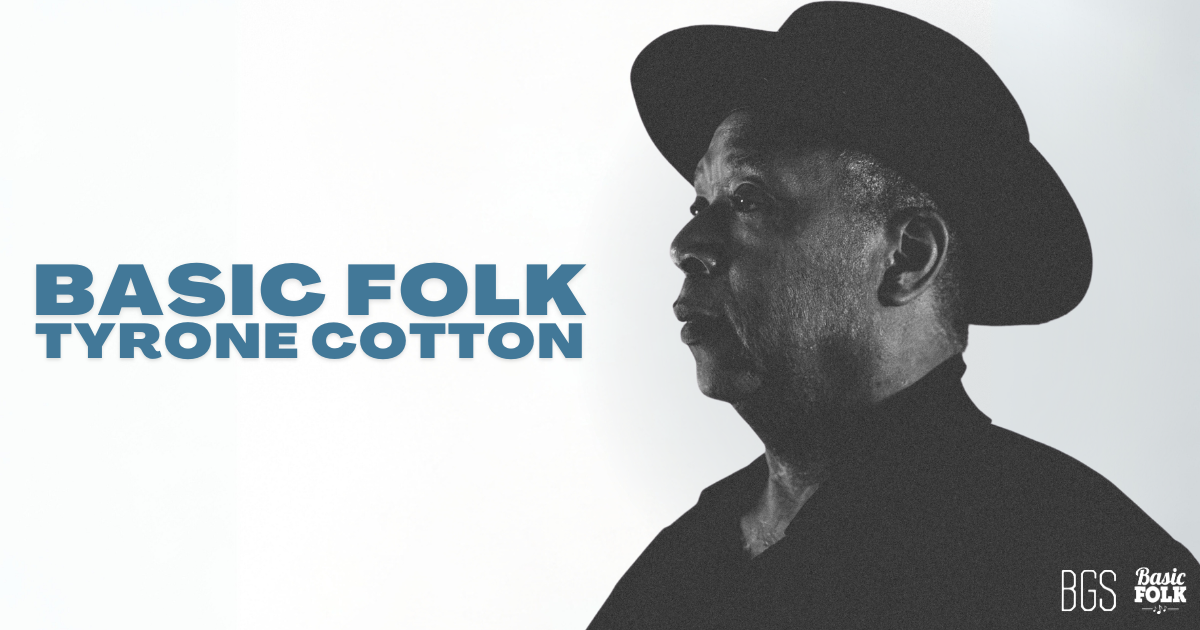
Dive into the enchanting world of Elise Leavy – who hails from picturesque Monterey, California – through her latest album, A Little Longer. Leavy’s artistic journey is steeped in the influences of her magical childhood surroundings. Her life growing up was filled with music and art, thanks to her mom’s painting and her stepdad’s own musical talents. Growing up with a deep appreciation for nature and a belief in faeries, Leavy shares how these elements shaped her musical perspective.

LISTEN: APPLE • SPOTIFY • STITCHERAMAZON • MP3

As we explore Elise’s musical evolution in this episode of Basic Folk, we touch on her experiences with live performances, overcoming stage fright, and the art of songwriting. Her unique approach to music, drawing from her magical way of thinking, is reflected in her exploration of various musical instruments – from accordion to guitar, piano, fiddle, and more. We also uncover the impact of her time at summer camps, which fostered a sense of community that continues to shape her artistic expression to this day.

This episode delves into the intriguing intersection of Leavy’s musical journey with homeschooling, highlighting the unconventional path she took to prioritize her love for songwriting and music making. She left public school in eighth grade to focus on her craft and built her schedule around attending music camps. She would go on to study at New England Conservatory and she lived briefly in New York. After several years in Nashville, she has recently found herself living in Lafayette, Louisiana.

The songs on Leavy’s new album, A Little Longer, were mostly written while she was based in the Northeast. In our conversation, Elise opens up about her connections to music, magical creatures, and the harmonious blend of romance and fantasy in her musical creations.


Photo Credit: Kaitlyn Raitz

Artist of the Month: Willi Carlisle

It’s not hard to imagine Willi Carlisle’s latest album, Critterland, as a decrepit-but-lovable roadside attraction, but here, the side show has decidedly taken center stage. Carlisle, a folksy, pastoral poet and songsmith, has invited all of us inside the big tent he pitched with his last record, Peculiar, Missouri, and to celebrate all of the beautiful ugliness we find in the spotlight. Produced by Darrell Scott, Critterland finds redemption in proudly – and holistically – owning and just as often subverting expectations around rurality, authenticity, community, and belonging. It’s a deft and artful confluence of schtick and performance, vulnerability and obscurity, artifice and genuineness, that could only be accomplished by a creative like Carlisle.

In Ryan Lee Cartwright’s book, Peculiar Places: A Queer Crip History of White Rural Nonconformity, the author and academic makes an astonishing case for the American societal and imperial construction of the “rural idyll,” and thereby, the co-construction of its antonym: the rural “anti-idyll.” The rural idyll is our general understanding of how rurality and the American dream intersect; of goodness and work ethic and respectability, of insiders and good ol’ boys and our kinda folks. The anti-idyll is the amorphous, intangible opposite of those white supremacist and capitalistic constructs.

Critterland is a joyous and liberated inhabitation of the latter concept, reveling in queerness, counter culture, other-hood, and so many kinds of rural, agrarian, and American anti-idylls. What are queer folks, poor folks, Black folks, brown folks, disabled folks in the country – and in country music – besides, first and foremost, antithetical representations of the American dream? The overlooked, enshadowed folks who inhabit the American anti-idyll… who is singing music for them? Who is inviting those very folks to step into the spotlight?

Willi Carlisle is certainly one. Tracks like “When the Pills Wear Off” and “The Money Grows on Trees” synthesize broad, generational, socio-economic realities that are often discussed, understood, and intellectualized – but rarely with their subjects first in mind. Carlisle is clearly making these songs for the people most impacted by their content; any translation they have in more zoomed-out contexts or to wider audiences is simply an added bonus. Others, like “Dry County Dust,” “Two-Headed Lamb,” and the titular “Critterland” seem to wink at the rural cosplay worn by all songwriters and music makers in roots music, but again, winking first to those who already understand it was always cosplay, from the very beginning.

Whether inhabiting the character of his onstage persona, which often but not always aligns with the human himself, or merely reflecting the pantheon of folks in his own life and communities, there’s a quality to Carlisle’s music and to Critterland that’s saying, “This music is for our kind of people.” And in the words of another backwoods poet, Jimmy Martin, “It takes one to know one, and I know you.” That could almost be the entire thesis statement of the album.

Darrell Scott’s production – and his own multi-pronged relationship to the anti-idyll – makes the clumsiness and haphazardness of this set of songs feel fully like a feature and not a bug. This is Critterland, after all, these side show animatronics are on their last legs and that’s why we love them. This sort of charm is certainly carried over from Peculiar, Missouri – which has delightfully variable production styles across the tracks – and really from all of Carlisle’s releases to date. (Including, if not especially, his hugely popular sessions with Western AF.)

Critterland, in the end, may not be the most magical place on earth, but it doesn’t want to be. And, it’s still a place you’ll end up returning to again and again. Because Willi Carlisle’s big tent is really, actually big enough for all of us. On our best and on our worst days and on all of the many days in between.

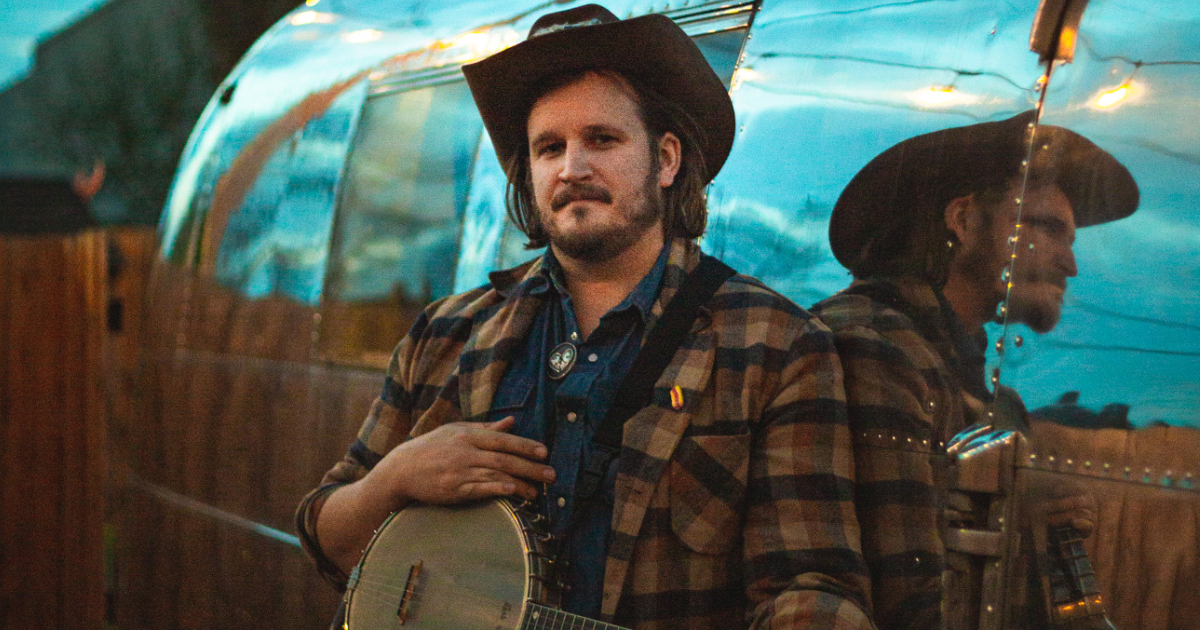
BGS will spend all of February celebrating Willi Carlisle as our Artist of the Month. Watch for an in-depth feature by music journalist and author Steacy Easton coming soon and, for now, enjoy our Essential Willi Carlisle playlist. Plus, don’t miss Willi and Critterland in the debut issue of Good Country, a new bi-weekly email newsletter from BGS.


Photo Credit: Madison Hurley