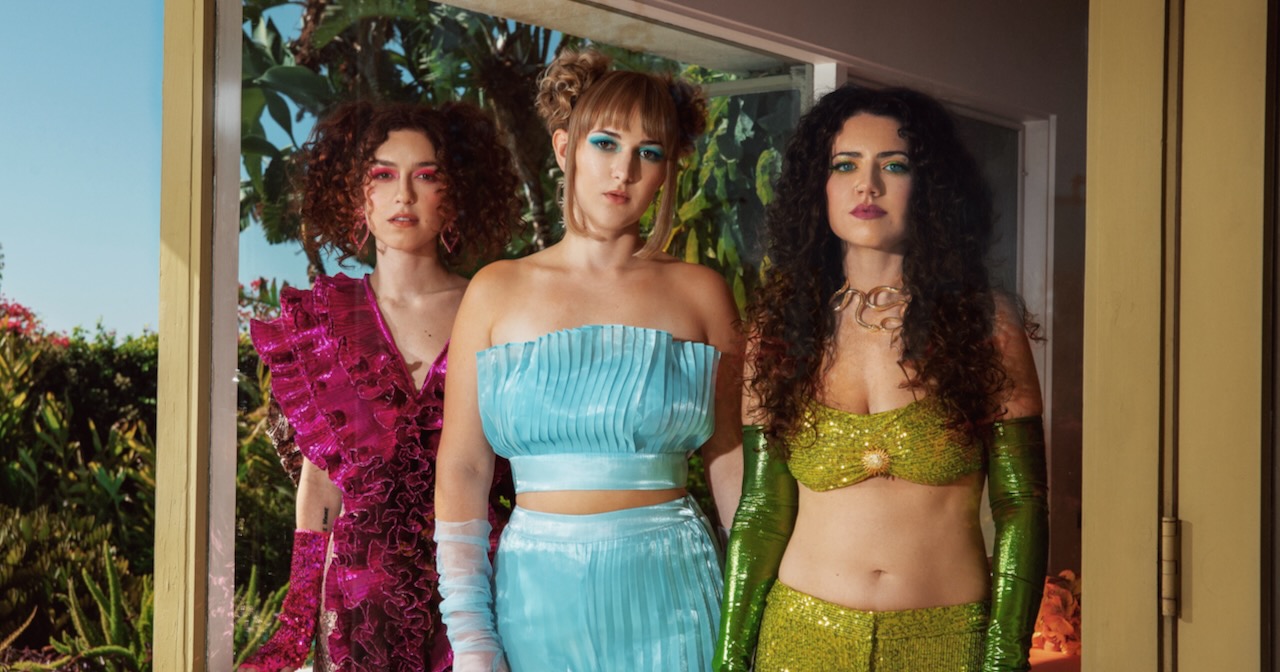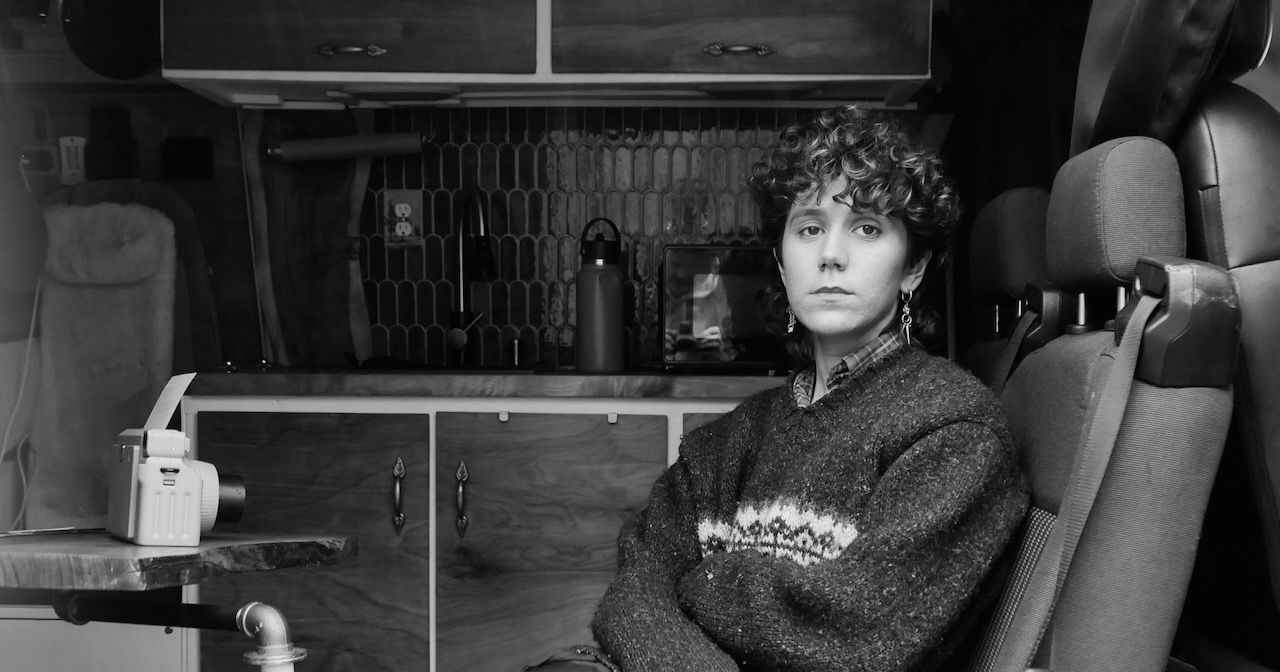
Trousdale’s It’s All Happening Playlist

We’re figuring it out, one day at a time. Sometimes life can go by so fast, one can forget to savor the moment.

These songs keep us present and feeling alive. Our new album, Growing Pains, talks about the highs and lows of life and the emotions that come along with balancing your career and mental health. This collection of songs is what we’re currently listening to as it’s all happening. – Trousdale

“There’s A Rhythm” – Bon Iver

“Can I really still complain” just hits me so hard. The chord progression, the tempo, the production– everything about this song gets me into a meditative zone of presence and reflection. – Georgia Greene

“Sapling” – Foy Vance

“I wished I could go back in time, but all I could do was apologize. Right then, your eyes were healing…” I mean come on. – GG

“Molly I’m Coming Around” – Annika Bennett

This song just feels like a warm blanket of truth – being honest with yourself and others. – GG

“Don’t Stop” – Fleetwood Mac

This one was definitely a sonic inspiration for the album. It has such a positive vibe and message and helps remind us that there’s always another day to try again. – GG, Quinn D’Andrea, Lauren Jones

“Green Light” – Darlingside

This song just feels like a meditation, the chord progression feels like it’s existed forever, and the lyrics feel like they could be spoken as a prayer. Could listen to this song on loop forever. – QD

“Let’s Be Still” – The Head And The Heart

I need a constant reminder to move slower. This song is perfect for that. – LJ

“My Love For You Is A Straight Line” – Ken Yates

This song feels like coming home to myself. – LJ

“Never Been Better” – Ben Abraham

Coming from an artist who also understands the grind of this life we’ve chosen, I feel like Ben puts this feeling perfectly. Sometimes when we’re overwhelmed it’s just helpful to hear that exact feeling validated and put into words. – QD

“Look Up” – Joy Oladokun

I love this song when I need a reminder to zoom out. We can get so caught up in the everyday stress, and the words of this song coupled with the arrangement is the perfect opportunity to remember that this life is so much more than that. – QD

“You Make Me Feel Like Dancing” – Leo Sayer

Listen to this song for an immediate dose of serotonin. – LJ


Photo Credit: Alex Lang

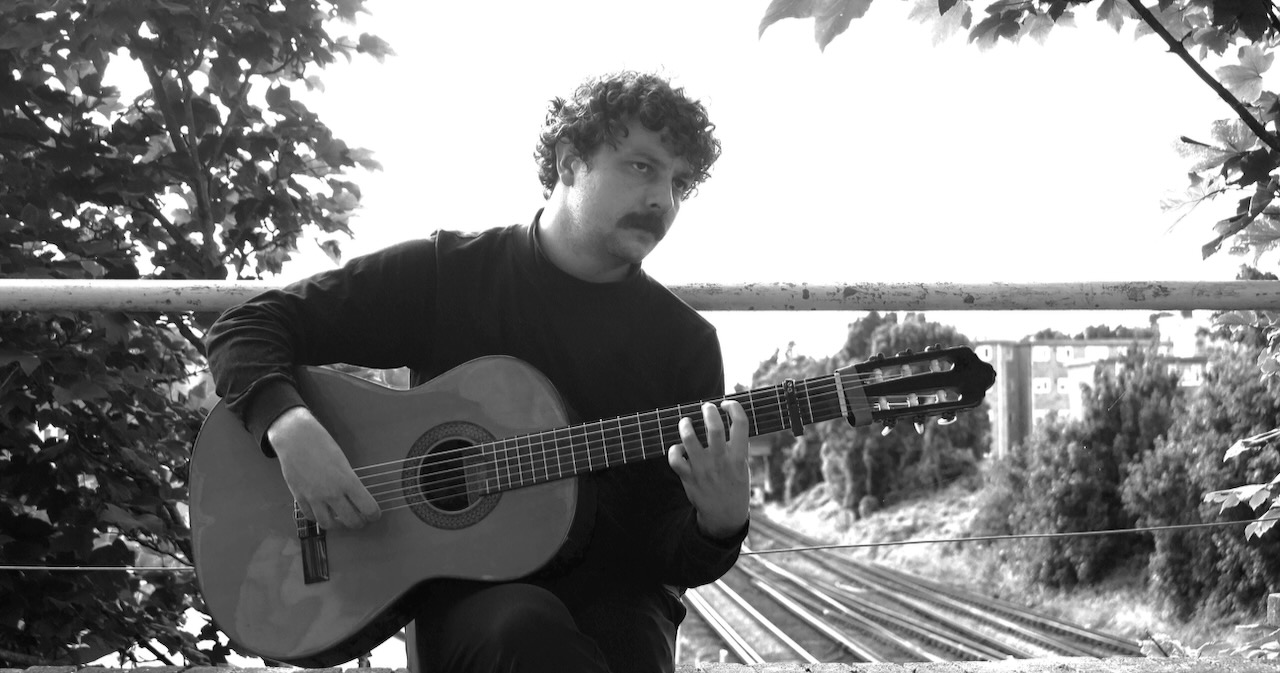
Rapt Reflects On Life’s Many Endings With ‘Until the Light Takes Us’

Jacob Ware is a bit of a weirdo. Known onstage these days as Rapt, the singer-songwriter has a way of coming up with an album title and writing the entire record around a central sentiment. His fifth studio album – titled Until the Light Takes Us – serves as a direct response to a 2008 heavy metal documentary of the same name.

“I just thought, Until the Light Takes Us is such an evocative title. A few people have commented on that over the years as being unhinged – that I come up with the album name first and then write the album,” he says, adding that the documentary details “all the horrible shit in the ’90s of the black metal scene in Norway.”

From the gentle trickle of one-minute opener “Over Aged Borders” to the dreamy “Fields of Juniper,” Rapt’s latest album drenches in the notion of endings and existence. Heartbreak. Death. Suffocating blackness. Each song, as heavy as it might be, seems to coat the album with both dark and light – stemming from his confrontation with the end. 

Rapt’s delicately-spun indie-folk is awash in luminescent piano, aching between flaky layers of acoustic guitar. Ware finds himself scattering like a tumble weed, squeezed somewhere between the throaty ache of Carrie Elkin and scratchy pangs of yearning (akin to Bonny Light Horseman in their rawest form). His head swims in thoughts of death, leading his writing to root around in the afterlife. It’s a far cry from his heavy metal days, a sharp red underline to this chapter of his life. “I’m always slightly aware of mortality because I’ve had a lot of health issues, in my teenage years and early twenties, like epilepsy. It’s wild. It pulls the rug out from under your life daily, and you don’t know when the next seizures come in,” he says.

“I haven’t had a seizure for eight years now, so I’m blessed. But that shapes you on a subconscious level,” he adds. “It sets up your foundation to be ready for the next thing to happen. In a way, the next thing that happens is an end of something, so I think my subconscious has always thought about the finality of things. That’s probably where that sort of writing interest has come from. In a way, every single song I’ve ever written is about that. I don’t really know how to move away from that.”

Hopping on a Zoom call, Ware spoke with BGS about the afterlife, how the album grew, and the varied creative fulfillment compared to heavy metal music.

Does writing around a title help you stay focused on what you want the album to be?

Rapt: I think so. I’ve definitely done this where I write that phrase and put it up around wherever I’m living. Even if I’m not listening to music, I’ll walk past the album title a few times a day. The edge of my wardrobe is visible and the title I’m responding to now is written on it. One of the last things I look at at night and one of the first things I wake up to in the morning is… I don’t want to reveal it.

[Until the Light Takes Us] is not a breakup record by any means. I’ve noticed a few bits of press here and there, which may have lent it to being that, but it absolutely isn’t that. I feel like a completely different person to my music. I don’t relate to my own music. I would say it’s an album of endings, really. More so than a sort of breakup album. By the time I’ve finished one thing, something else is usually well on its way. And it’s always been like that for me.

What is your feeling about the afterlife?

I tried to look into religions a few years ago, but I have no faith system. I was brought up in a house without a faith system. It’s very hard for someone to start to believe in something unless it was in their very formative years from a caregiver. I expressed it in the title track. I’ve always thought that the afterlife is a sort of peaceful black. I have a sneaky suspicion that the afterlife is a hell of a lot like what it was like before we were born. I quite like to imagine this sort of sizzle reel, where you hang out with your highlights. That’s what I hope is going on.

Science doesn’t ask, science doesn’t answer everything. There are things that science gets pretty fucking close. But there are things that science can’t touch. I try and be mindful of that; I would call myself an agnostic. I think being 100 percent atheist is actually ignorant. We don’t know – we’re 99.9 percent sure. There’s just that 0.1 percent that I think is worth thinking about sometimes.

That’s touched on in the title track. I don’t know where I’m going, but I know that I’ll see my neighbor and my loved ones. I like to think that there’s a highlight reel. And that’s it, really. I’m talking about this as if I planned to write it. I didn’t. It’s the only successful time I’ve ever managed to just write something without thinking about it and letting my subconscious go. I cannot just open my subconscious.

I find lyric writing takes me months. The title track probably took a year to write. Very occasionally, I can get half a song written in an afternoon, but that happens about once every three years. The song “Until the Light Takes Us” is quite insular, and it’s almost says everything that you could say within a song about the afterlife.

“Until the Light Takes Us” is one of the seven-minute songs on the album. Did you have that intention or did it sort of grow by itself?

I just think I couldn’t make it any shorter. I don’t think I really tried to fight it being seven minutes, but I’m sure that there’s been a longer version of it. I just whittled it down and down, until I couldn’t whittle it down without doing it disservice. And I knew it would suffer for that. I just think that song is destined to be heard when it’s needed.

With endings, there’s always grief. Does that grief still linger with you or has songwriting helped you exorcise that?

That’s hard to answer for me, because I don’t recognize the human that wrote a lot of the songs. I think it might be an epilepsy thing. The medication I take for epilepsy gives me very odd memory and I remember weird little things. I have no memory of so much of my life, and I mean that in the present, as well. The word “remember,” if I really think about that, it’s just like a blur of things. I don’t remember things vividly.

One big thing for me is I cannot paint images in my head. If I shut my eyes and try and picture my best friend’s facial features or a partner’s facial features, or even a fucking apple, at best it’s a Van Gogh-looking painting, so I think it’s quite hard for me to answer that question.

I’m sure it does happen on a subconscious level. I’m sure I do successfully process things through creativity, but it doesn’t help that much. I’ve still got my shit in my head, but a lot of the record is very positive for me. I had depression up until my mid-twenties. I don’t have it anymore. I just don’t. I think life is a beautiful thing. And I think there’s a lot of positive in the record. I think it’s a very odd record in that it’s not… I don’t think it’s depressing and negative. “Until the Light Takes Us” is a positive song. It starts and ends with a letter to myself.

That song is about growing apart from someone because you bonded with them through a shared depression and when one of you isn’t depressed anymore, that bond breaks. That’s what that song is about. But all of this is hindsight. I wrote this in 2022 to 2023. So this all feels very considered and fucking artistic and it’s not. I’m just looking back and trying to work out what the fuck was I was thinking.

Now that you’ve been sitting with the album for a while, what is your takeaway from the creative process?

I guess, just to trust my instincts. I didn’t write it consciously… I think, in a way, I never cared about this record, because I had a lot of stuff going on in my personal life. This was just me keeping the engine going creatively, and then I turned around one day and had a record done. I didn’t know what it was about at the time. I sat on it for a year until I was ready to release it. My biggest takeaway is probably just I don’t fucking care anymore. Just don’t overthink it. If I had to give a tagline to that question: I’m too old to make it as a fucking fresh-faced person and I’m too young to be wise.

I’m right in the middle and when you’re stuck in the middle, you either quit or you just don’t care anymore. And I think I’m in the “don’t care anymore” phase. I’m not going anywhere. The only other takeaway is that I’m not going to do an album for a while. I never thought I’d say that, but I’m going to just do singles for the next two years. I say that, but I’m excited. It feels liberating. When you’re in album land, you’re there at least a year and a half. It’s interesting. I think that might change my writing a bit because I’m not trying to fit a song into a collection of songs.

With your past work being metal, how does the creative fulfillment differ from your current style?

I think metal is very good for connecting with people’s frustrations in life. And it’s good anger management shit. When you’re playing some real heavy fucking music and you slow it right down and you get a groove going, then you look up and the audience are like throwing each other around the room. There’s something cool about that. I think the biggest difference with metal is that the ceiling is a lot lower and reachable with metal. And I think there’s something really special about that.

My biggest thing I enjoy is my audience is far wider in this genre. Metal is very male-dominated and you get used to just looking up mostly at a room full of dudes, beards, and black shirts head banging long hair. And that’s great. That’s a beautiful thing. But I think I slightly prefer the more diverse crowd that I’ve played to. My last thing is also the age thing. There’s a huge age range in the people that turn up at the shows I play now. And that’s a really beautiful thing as well. In France, I had a very elderly lady come up to me and she said, “‘Fields of Juniper’ made me think about something I’ve not thought about in 50 years.” If there’s a reason to keep going, then that’s it.


Photo Credit: David Nix

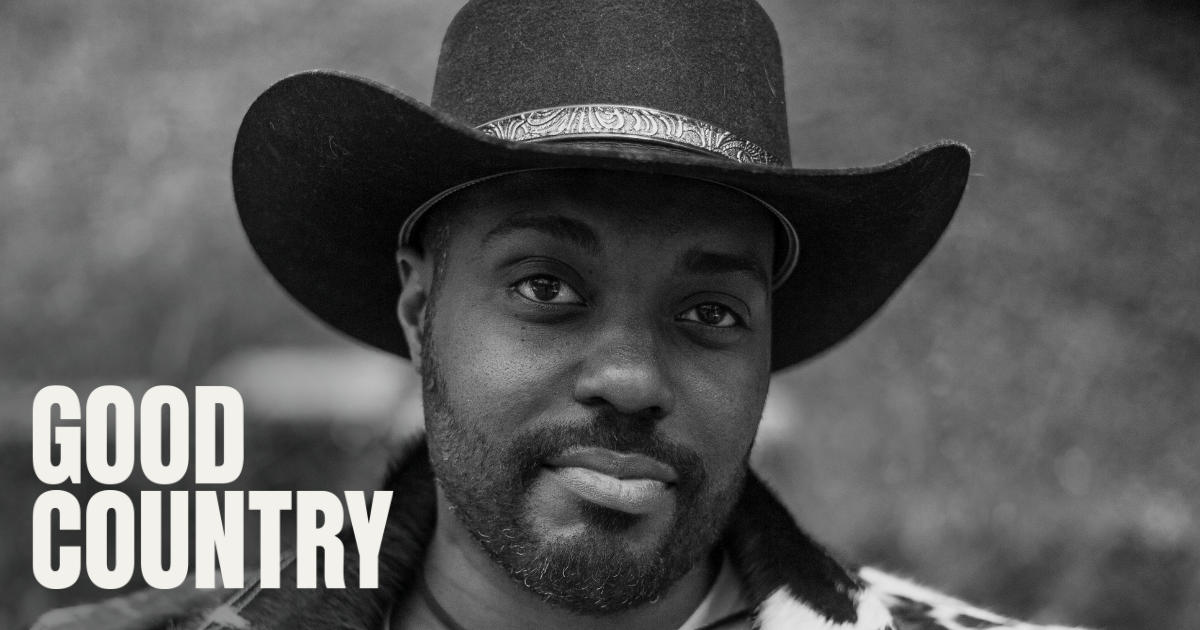
Jett Holden’s Dreams Come to Life on ‘The Phoenix’

For years, Jett Holden dreamt and dreamt about making a living through music, but everywhere he turned he was met with doubt, subtle prejudice, and closeted racism that left him running on empty and searching for something new.

Following a journey to rock bottom, Holden is back stronger than ever on The Phoenix, a 10-song collection that catalogs his rise from the ashes and spotlights the community that embraced him when it seemed nobody else would. Told through a mix of countrypolitan, rock, punk, metal, and R&B sounds, the record is proof that there are no boundaries to who, where, and what good music can come from – and that we all benefit from everyone having a seat at the table, sharing their stories and perspectives.

“This album reflects who I’ve been throughout my entire life,” Holden explains to Good Country. “It’s been really cool to look back on when and where my different influences come from while bringing these songs to life. For example, ‘Karma’ is definitely Paramore meets Stapleton, while ‘West Virginia Sky’ harkens to my Tracy Chapman and Jim Croce influences.”

Fresh off a move to Nashville, Holden spoke with GC over the phone about the doubt and prejudice he’s faced along his musical journey, his work with the Black Opry, using music to heal past trauma, and more.

There’s a lot going on in your song ‘Scarecrow,’ from exploring your family’s reaction to coming out to masking the crippling weight of other’s doubts of what you’re capable of – along with a slew of Wizard of Oz references to the scarecrow, tin man, and cowardly lion. Mind sharing how all those ideas coalesced into one?

Jett Holden: It’s the first song I finished for the album. I wrote it back when I was 25, and at that point my family and I didn’t really have a personal relationship. It had gotten to the point where I came out 10 years earlier and wasn’t sure where I stood with them. I wasn’t disowned, but I also didn’t have anyone to turn to – they all pretty much told me they didn’t want to hear about it. I didn’t want to keep living in limbo, so a few years later I skipped town and moved to East Tennessee, which is where [Black Opry founder Holly G] found me in 2021.

You also had a brief stint living in California around this time that left you on the brink of quitting music for good. What all transpired out there?

I moved out to Long Beach after dropping out of community college. I was in talks about a development deal and during the “get-to-know-you” phase I let it slip that I was gay and they responded by saying that I wasn’t marketable as a Black, gay man doing the kind of music that I wanted to do. Things fell apart from there, which is why I left California and moved back to Virginia before eventually relocating to Tennessee.

Aside from that moment, were there any other circumstances that contributed to you feeling so defeated about your music prospects?

When I first moved out West, there was a very steep trajectory that isn’t common for most people, but it quickly deteriorated after I mentioned being gay, making for a really high peak and a really low low. When I returned to Virginia things got stagnant and didn’t progress at all, even moving backwards at times. It was a frustrating time of trying to figure myself out that culminated in the move to East Tennessee where I was roommates with a close friend before coming home one day after she committed suicide.

Another of my friends got cancer around the same time and just recently passed too, so those were very traumatic years for me.
By 2020, I just couldn’t do it anymore, so I started going to therapy right before the pandemic hit and the world shut down. Suddenly [music] was just too much to deal with, so I stopped making it. Being online was toxic so I shut down, got a stay-at-home job with AT&T, and accepted that as my future, working my way up in the company.

Then Holly — and the Black Opry — came around?

Exactly. I’d already called it quits when she found me on Instagram through a video I’d posted of my song “Taxidermy.” I only had that and a couple other covers posted, but it was enough for her to take interest and slowly pull me back into the industry. A couple months later she launched the Black Opry as a blog and it’s crazy to see where things have gone since then.

Within a year I’d gotten to tour all over the country, appear on The Kelly Clarkson Show, and I recorded my first single and EP through a grant I received from [Rissi Palmer’s] Color Me Country. Holly has made so many things possible that had been unavailable to me for my entire career until then, fighting for me in ways nobody else had before. She took chances because she wasn’t an industry person, but rather a flight attendant who was just a fan of country music and wanted to feel connected to it and the artists she was listening to, which is something a lot of others were in search of as well.

When I went to the first outlaw house she threw at Americanafest in 2021, I was expecting a bunch of Black country fans to show up, but it was also the queer community, the Latin community, and the women in country music that didn’t feel like they were getting a fair shake of things. Everyone who felt “othered” in country music showed up and it felt like immediate family. Seeing the excitement around that is what drew me back in.

Speaking of your song “Taxidermy,” I remember you being brought to tears while singing it during a Black Opry panel at Americanafest that same year. What’s that song meant to you, both in its message and what it’s meant to your career?

That song relaunched my career essentially, because I wasn’t chasing music when I wrote it. In fact, when I posted it online I only had one verse and the chorus. Despite it not being complete, Holly still sent it off to Rissi Palmer and got me the grant and I finished writing it the day we recorded. It’s a song of frustration that I didn’t expect many people to watch when I posted it, but Holly really connected with it, spread it around, and helped it blow up into something bigger than I ever imagined.

I was just singing about my frustrations with what was going on around our country at the time concerning police brutality, which was a big reason why I quit social media and music altogether in 2020. Instagram was the [only] online account I had when Holly found me. That song allowed me to vent about those things, but it also helped me gain the community I needed to break myself out of the news cycle that we were constantly absorbing, because we had nowhere to go. The song came about out of all that negativity, but had a huge positive impact on me that I never expected.

In addition to the support you’ve received from the Black Opry, you’ve also got a helluva team behind you for this record including the folks at Thirty Tigers, [producer] Will Hoge, and collaborators like John Osborne and Charlie Worsham (“Backwoods Proclamation”), Cassadee Pope (“Karma”), and Emily Scott Robinson (“When I’m Gone”). I imagine that, after everything you’ve been through, having folks like that working alongside you is incredibly validating?

Definitely! Emily was the first person I asked, since she was a very early supporter of the Black Opry. We both connected over “When I’m Gone” and our similar stories [around] suicide, so it was a no-brainer to have her sing with me on it. Holly ended up reaching out to Cassadee after I mentioned wanting someone similar to Hayley Williams featured, and she nailed it. It’s very cool seeing all these people I’ve looked up to legitimately wanting to work with me. I still haven’t met Charlie or John, but it’s wild knowing that they’ve heard my song and wanted to be involved in it.

Regarding “When I’m Gone,” is that a reference to your friend in East Tennessee that you walked in on after committing suicide? If so I’m sorry for your loss, but I love how you used the song to memorialize them and bring attention to the plight of suicide. It’s an awful thing to experience, but putting your feelings from it to song is a great way to bring beauty to an otherwise unimaginable situation.

You’re completely right. When I play songs like “When I’m Gone” or “Scarecrow” live I always have people coming up to talk to me about them afterwards, whether it’s someone who’s come out, dealt with religious trauma, or a person who’s just lost somebody close to them. There’s something very cathartic and heavy all at once that’s led to a lot of crying, but more importantly a lot of growth. It’s been great feeling like I’m not going unheard – which I did for over a decade – and having interest in what I’m doing where there wasn’t any before.

We’ve talked about a lot of the trauma captured in these songs, which brings me to the album’s title, The Phoenix. Is that reference meant to reflect how your life — specifically your musical dreams — have been reborn in recent years?

That was the intention. It was about the resurrection of my career, plus I also referenced the phoenix in “West Virginia Sky,” so it felt appropriate. Then, weirdly enough, just after recording the album I had a friend, also named Holly, give me a phoenix bolo tie for Christmas. It was a very kismet occurrence and a sign that that was the correct title to move forward with on the project. It makes for the perfect project, one where I have creative control and wrote every song (besides co-writing “Backwoods Proclamation”). I put my heart and soul into it, and am really excited for people to hear it.

If you could go back in time to speak with yourself when you were about to call it quits, what would you tell them?

Prioritize the relationships you build, because those are the people that will help you get to where you are supposed to be.

(Editor’s Note: Sign up on Substack to receive even more Good Country content direct to your email inbox.)


Photo Credit: Kai Lendzion

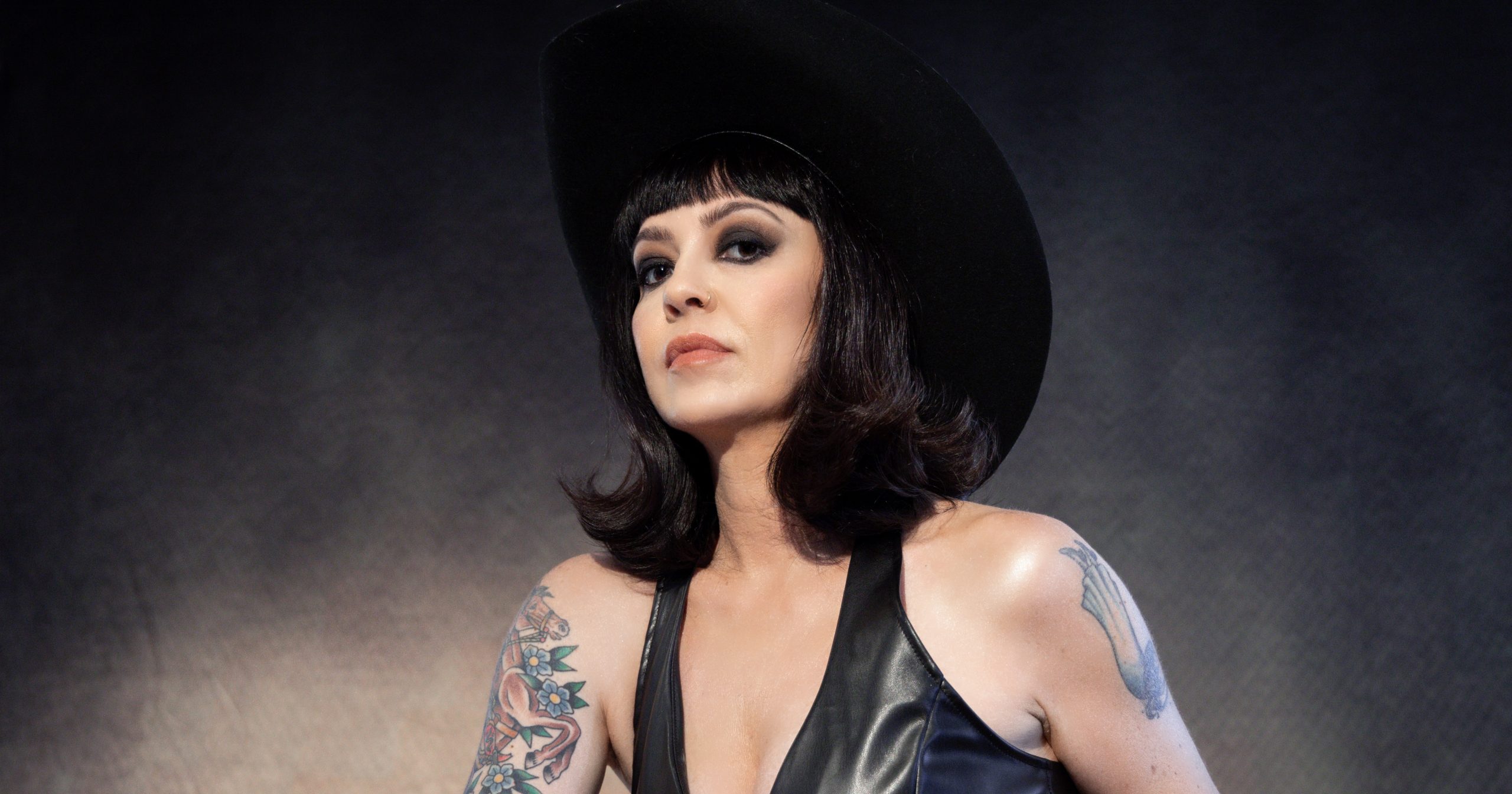
India Ramey Embodies A Phoenix Rising On ‘Baptized By The Blaze’

When life hands you lemons, sometimes it’s better to just burn them and start anew rather than make lemonade. That’s exactly what India Ramey does on Baptized By The Blaze, the singer’s empowering fifth album that sees her shedding the trauma that had haunted her since seeing her father abuse her mother as a child.

For years Ramey tried coping by working as a domestic violence prosecutor, but turned to music when that career fell apart in 2009 with her first album, Junkyard Angel, already in hand. Despite all the pain her father inflicted, she says her first musical memories were with him.

“He’d play Waylon Jennings and Willie Nelson’s Wanted! The Outlaws on repeat,” Ramey tells BGS. “Through that I became obsessed with Jessi Colter. I’d get my mom’s curling iron and sing her songs while standing on our living room ottoman. I always say that my dad was such a bad guy. He never gave me anything except for my love of country music.”

But as Ramey’s own career in music materialized, a 12-year dependence on the daily tranquilizer Klonopin began to rear its head. Taken to quell the panic disorder that’s lingered since first witnessing her abusive father’s actions, Ramey sought to gradually come off the drug during the pandemic before its severe withdrawal symptoms landed her in rehab. There, through stubbornness and self-determination, she was able to reclaim the power over her dependence and the trauma that caused it, vowing to never go back. Baptized By The Blaze is her journey to become a better version of herself.

“I went through a lot of stuff — a metamorphosis if you will,” says Ramey. “It was really hard and really scary, but I got so much personal empowerment out of it. Since then, I’ve been motivated to pass that on to bring folks strength and remind them that the tragedies they’ve faced give you superpowers to handle anything else life throws at you.”

Helping Ramey realize those superpowers was her therapist, a conversation with whom inspired the song “The Mountain.” According to Ramey, it occurred about a year into their sessions after something had left her in a puddle of shame and defeat. She explained how our anxiety attacks are similar to avalanches in that we don’t know the tools needed to combat them until going through it. But every time there is an avalanche you’ll have more tools and awareness to recover because you are the source, you are the mountain.

“It was the most empowering thing anyone had ever said to me in a moment where I was so vulnerable,” admits Ramey. “It left me feeling so powerful and wanted. This song is my way of spreading that beautiful message she gave to me.”

Another metaphor central to the album comes on its title track, on which Ramey compares her journey of redemption to a phoenix rising from the ashes. It was written while she “was thinking about that moment where I decided to burn it all down, to burn all of those defense mechanisms that I’d put in place to avoid confronting my trauma.” Despite its personal and well-meaning message, the song didn’t always resonate with everyone on her team though, with one person even calling the song over-dramatized. This led Ramey to shelve it for a couple years until producer Luke Wooten chose to include it on the new record.

“As artists, we’re always second guessing ourselves, so to have somebody on my own team tell me I should leave the idea behind really hurt,” Ramey confides. “Because of that, I struggled with self doubt for a long time about going all in on it, but in the end I went with my gut and I’m glad I did.”

Another example of being misunderstood and defying the expectations of others comes on “Piece Of My Mind,” a soft but stern ballad about an industry type who found out about her past working in law and said if he’d known he would just assume all her albums were vanity projects. On it, Ramey’s signature sass shines through as she urges the person to tell them their story: “Just a snapshot is all you see, you don’t know shit about me.” Before going on to describe how “I’ve fought wars and still they haunt me” and likening each day to being Halloween.

“It pissed me off, because that judgment he had was denying me my authentic story,” exclaims Ramey. “He was denying me the suffering that my family and I had gone through because of a job, so this song is me telling people exactly who I am, which is a lot more than any article or bio can capture.”

While most of the album is derived directly from Ramey’s own personal experiences, two songs that veer from that path are “Silverado” and “Down For The Count.” Both are stories about badass women living life on their own terms unburdened by the judgment and shame often delivered through patriarchal transgressions. “Silverado” details a one night stand at the motel El Dorado and “Down For The Count” highlights a streak of promiscuity to get over a past lover (“I put ten men between you and me”).

“The women I wrote about in these songs are people I think any woman will resonate with, because they’re about women doing whatever the hell they want,” she asserts. “It’s about doing things that dudes do all the time without the same level of judgment and are unapologetic about it. They’re my way of giving the middle finger to the patriarchy.”

No matter the delivery, Baptized By The Blaze charts out a journey of empowerment and recovery that is sure to provide strength and an upbeat honky-tonk soundtrack to anyone with a listening ear. It’s also proof that Ramey’s best work isn’t behind her and that her renewed focus has her poised for a bright future, despite the scars that once plagued her past.

“The process of making this record has taught me just how strong and powerful that I am, which are both things I was never convinced of beforehand,” Ramey reflects. “My hope is that it does the same for listeners and helps guide them on their own journeys.”


Photo Credit: Stacie Huckeba

Donovan Woods’ Thoughtful New Album Grew Out of a “Midlife Crisis”

Donovan Woods is not really the solid, secure man you might think you know through his thoughtful, deceptively soothing songs.

But he’s working on it.

“A lot of my songs are much more magnanimous than I am in real life,” said Wood, 43. “So I often am wrangling with that feeling of people thinking that I’m a very morally superior person, when in fact, the reality of me is not very close to that.”

Woods, a burly, bearded, soft-spoken Canadian who has been consistently releasing quality albums and touring since 2007 (except for the COVID years), recently released his new album, Things Were Never Good if They’re Not Good Now. It’s a typically solid offering from a writer who writes deeply personal songs, some of which work as mainstream country hits, like “Portland, Maine” for Tim McGraw.

Though modest and self-depreciating, Woods knows he’s come up with something special with “Back for the Funeral,” a song on the new album that captures the stage of life when the only time you see old friends is when one of them has died.

“After the service we’ll all meet up at the bar,” he sings. “Where my dad used to drink, now he just drinks in the yard/ And we’ll laugh about all the young dumb dreams we had/ And we’ll pretend we’re all only sad/ Because we’re back for the funeral.”

The song, written with Lori McKenna, is one of those that doesn’t seem like a new one. It feels familiar, like it’s always been there. McKenna had the title and it turned out Woods lived through the experience a few months earlier, when he returned home to Ontario to attend two funerals.

“Not all those details are exact, but I’m trying to get at that weird feeling of when you go home and you’re able to see it all at 30,000 feet for some reason, because you’re in the throes of grief,” he said.

In our exclusive BGS interview, we spoke about grief and mental health, poetry and Music Row songwriting, and more.

So I understand the new songs were influenced by therapy you underwent for your mental health. Is that true?

Yes. I’m as liberal as they come, but I think I still have this toxic masculinity in me. I do think that expressing need threatens my masculinity and it’s such a deep, ingrained thing in me. It’s embarrassing to admit, but I still do have those hang ups.

What kind of therapy did you have?

I had probably what would be considered a midlife crisis. … I felt like I was losing touch with my life slightly. I was unwell and I could tell [it was true] by the reaction of people in my life who weren’t particularly thrilled with me. I did some addiction therapy, I did some standard stuff and I did some couples therapy with my wife.

Like a lot of men, I wasn’t admitting when I was sad or when I was upset or when I was unhappy, because we love this image of this stoic individual that we’ve all grown up adoring — this unaffected, unflappable man. You’re trying to be that, because you think that’s the right thing to be for your family. I let that get away from me. I had become two guys, my internal self who knew that I was upset or hurt or I need something, and then this forward-facing person that I created, which was sort of a lie. I had to reunite those two things again, and I found it really difficult.

Your rather gentle singing sometimes belies the depth and the hurt in your lyrics. Is that an artistic choice you’re making?

That’s kind of just how my voice is. In the days before microphones, I don’t know that I would have been able to have this job. I don’t talk that loud or sing that loud, either. Singing is more like self-soothing to me than it is communication. I do it because I like it. It makes me feel good. When I’m stressed, I do it. It’s like being nice to myself.

Your lyrics are effective even separated from the music. Have you done any poetry or prose writing?

I appreciate that. My heroes are the people who are actually singing poets, like Paul Simon and John Prine. I feel like that’s what a singer-songwriter is at the core. … I will write poetry for myself now and then. I have tried to write short stories and I’m not good at it. I don’t know how to do long things. The idea that it can be anything is terrifying to me.

You must like Mark Cohn too, based on your cover of his “Don’t Talk to Her at Night” on the new album.

He’s kind of a high-water mark in songwriting for a lot of writers, especially men. There’s an elegance in his writing that is so unreachable to me. His American earnestness is not available to me as a Canadian. I always think I have to be self-deprecating or not showy in my writing. I think it’s just like the mindset of a Canadian. My dad is a big fan, and I have listened to him my whole life.

Do you have a family background that pointed you toward becoming an artist?

I grew up in a really working class town [Sarnia, Ontario], where everybody’s dad works in these petrochemical plants around the border of Michigan. My dad worked in construction estimating jobs. … My friends all work in petrochemical plants, or they work in adjacent fields to those plants. One of them is a chiropractor, which actually is adjacent to the petrochemical plants too, because everybody has a bad back in the entire city. … I was not a wonderfully artistic kid. I was given a guitar by my mom and I took like, four or five months of lessons. I just really enjoyed writing songs, and did it for myself for a decade before I ever did it publicly.

Is it true your dad named you after the folk singer Donovan?

I am. He’s one of my dad’s favorite singer-songwriters, along with Fred Eaglesmith. I got to tell [Donovan] that once, too. I’ve never seen anybody be less interested in something.

Do you still live in Canada with your family, or have you moved to one of the music industry cities in the states?

I have three kids. I have one ex-wife and my wife that I’m married to now. I live in Toronto mostly, and I’m in Nashville sometimes to write.

Do you do the Nashville writing thing where you have appointments and try to write hits with other writers?

I still have a publishing deal in Nashville, so I’m there writing sometimes with other people. I do it less than I used to, but I still enjoy that very much. I love other songwriters. It’s pretty rare that I don’t like a songwriter. So I enjoy that, that afternoon of trying to finish something.

And that’s worked out for you sometimes with hits, right?

There’s a song called “Grew Apart” that was a hit for Logan Mize. When somebody else wants to record one of your songs, that’s about as good of a compliment as you can get as a writer. It’s always really flattering. I hope [more of] that happens. … I mostly fail at writing Nashville songs. I fail like about 95% of the time.

You’ll be heading out on tour this fall to promote the new album. Are you looking forward to that?

I am always on the road more than I would like to be. But I’ve had much worse jobs. I enjoy 85% of it.


Photo Credit: Brittany Farhat

The True Healing Found in Kaia Kater’s ‘Strange Medicine’

A deep reflection born from a time of the extreme silence and noise of the pandemic, Kaïa Kater’s new album, Strange Medicine (out today, May 17), digs into the feelings society tells us not to feel, imagines healing and revenge from abuses, and reckons with themes of racism and sexism of the past and today. While the undercurrents are heavy, the arrangements are gentle and flowing, juxtaposing our expectations of what we think it means to process the darkness in life with the truth that many emotions can exist simultaneously.

Written from home in Montreal, Strange Medicine takes us on a cathartic journey imagining characters interwoven with parts of Kater and parts of the world she observes. Drawing on inspiration from artists like Steve Reich, Brian Blade, and Johnny Greenwood and partnering with Montreal-based producer Joe Grass (The Barr Brothers and Elisapie), she took a different musical path than in the past.

Leaning into her primary instrument, banjo, Grass and Kater built the framework for each of the tracks slowly, starting with bedroom tracks and expanding to include arrangers like Franky Rousseau (Andrew Bird, Chris Thile) and Dominic Mekky (Caroline Shaw, Sara Bareilles) and musicians Rob Moose (Bon Iver, Phoebe Bridgers, Paul Simon), Robbie Kuster (Patrick Watson), and Phil Melanson (Andy Shauf, Sam Gendel). Kater spoke to BGS via Zoom.

Hi! How are you?

Kaia Kater: I’m okay! A couple of days ago I dropped my phone directly onto my laptop screen and it cracked. I had to go to Apple. So I am without a laptop, but thankfully have my 10-year-old iPad, bless her!

Apple is coming in clutch. Also, Apple product destroying Apple product is kind of funny.

Yeah, it’s an Apple-on-Apple hate crime. It’s terrible. I feel so weird about it. But I have AppleCare, which is good.

With the couple of sentences that you just said it’s no wonder the Department of Justice is looking into Apple as a monopoly. Vertical integration. Well, how are things going other than Apple problems?

The record is out in a week, so I’m excited. Thank you for doing this piece. I never take any press for granted, especially after the pandemic, when things were so terrible and hard.

What a weird time. Is that when you started writing this record?

Yeah, pretty much. I wrote my first song in April of 2020. We finished the record in 2023. So I would say like 2020 to 2022, was the writing window.

This album is a pandemic baby!

It is. Yeah, I’m proud of my little pandemic baby. Born out of a lot of feelings of stasis and confusion, but also just so fun to record. I think that there’s a lot of grief in the lyrics. But you can still vibe to sad songs, especially when they feel groovy. So that was the intent.

So when did you start recording it?

Let’s see, we went in to record in October of 2022 but the official recording days were preceded by a ton of demo days. So throughout 2021 and into 2022, I would go to my co-producer Joe’s studio in Montreal. We would just track stuff and either bring people in or ship the songs out to people and pay them a demo fee and have them kind of like splash around and see what their interpretation of the song was. That was kind of like how we selected personnel. I think we had a pretty strong idea of what we wanted to do by the time we got into the studio, which is so different from other projects I’ve been part of and other records I’ve done.

How was it different?

I guess, with the pandemic, I had the blessing of time, which I never had before really. With Nine Pin, I recorded on my winter break from college in my senior year, and then Grenades was done from start to finish in two weeks. And so with Strange Medicine, it was about two years. There are advantages and drawbacks to that. It is very easy to start second guessing some choices that you’d made in the previous calendar year, but I think it was to me such a novelty to be able to write and then listen back, and send the arrangement to someone and have them send their work back. It was so much more thoughtful because we had the time to do that.

That makes total sense. So you started writing it during the pandemic. What was your writing process like? Did you have ideas that you came into the lockdown with, or were you processing things in real time?

Well, originally I was like, “I’m never gonna play banjo again.” I don’t know what I was thinking. I think I was trying, to a certain extent, to escape my roots, transform, or do this phoenix thing. Where people are like, “Whoa! She was a banjo player and now she’s an electronic pop musician.” That was maybe a facet of my mid-20s to late 20s, having that crackling feeling that all the different paths your life can take feel like they’re narrowing. And so you’re kind of like fighting against that and going, “No, I still can transform again, musically.”

Really what led me to write more songs on the banjo, especially for Strange Medicine, was that it was really comforting to me. I think I went back to it after wanting to spread my wings. Once I was alone in a room I was like, “What do I want to do right now? I just wanna play banjo.” And for a long time that’s all I did. I didn’t really write. The songs trickled in bit by bit. But you know I definitely gave up that idea of trying to metamorphosize in the way that I thought I was going to. I think I did it in a different way.

Can you talk a little bit about what it meant to be in Montreal writing this record and just in general? What influence did the town have on this particular record? And how does the music community there influence you?

Well, it’s very experimental there. And there’s a kind of freedom and risk-taking. People are not afraid to have things fail or to have things not quite work. Even now, I’m sort of deconstructing the idea that I grew up with, this idea of what a songwriter is, which is that you work really hard at your craft, you play the song down. And the way that you improve every night is how you perfect and tighten the song as much as possible. I’ve been getting into this idea of improvisation.

I don’t know if it’s because the rent is cheaper there, so you don’t have to hustle as much. I just felt so much more space to play around.

While we’re on the subject of Montreal, you collaborated with Allison Russell on “In Montreal” about your shared hometown. I was curious since Aoife O’Donovan is from Massachusetts and you’re talking about witches on “The Witch” – was that a purposeful choice?

No, but that occurred to me about a week ago. I was making dinner, and I was like, “Wait. Aoife’s from Massachusetts!” It must have been in some way subconscious. I kind of see people as the roots that they’ve grown from. And definitely, when thinking about the features I wanted, I wanted it to make sense with who that person is. For example, with Taj Mahal, he’s who I learned about the black roots of the banjo from first. He was doing that in the ‘60s, and he has a lot of Calypso and Caribbean influences and heritage. Bringing him into a song about a Caribbean revolutionary felt like, “Well, of course.” I even wrote him a little letter explaining the song, because he’s 80. He doesn’t need to be on anybody’s record. And so I was like, “Let me tell you what the song is about, and maybe you’ll want to sing on it.”

That’s so cool. And how did the collaboration on “The Witch” come about?

Aoife has always been really supportive of me as a person and as an artist, going back to 2017. She’s kept me in mind for a lot of things and she’s suggested me for opportunities. She’s also really community-oriented. She’s very cognizant of supporting women musicians and young musicians. I’m a mega fan of hers.

I had written “The Witch” and I thought she would sound great on it. Fast forward to the end of the process, when all we had left to do was harmony vocals and I was really nervous to ask her because I think I was scared to get a no. But I’ve been practicing. You have to ask, because if you don’t ask you don’t receive anything. I texted her, and she immediately responded yes without even hearing the song. Then she laid down all these like really intricate harmony parts. She’s a genius.

Your voices are beautiful together. It works really well. And the Massachusetts thing — it’s perfect. While we’re on the subject of that song, what connects you to the stories of these women who were accused of witchcraft or adultery and were punished for it?

To me, it is the juxtaposition of having this perceived power in the minds of men as being capable of influence, capable of seduction and luring, and superseding a man’s high intelligence and thoughts of himself and overtaking will power. But then, when women were accused of being witches, their already limited power just absolutely disintegrated and they were executed by mobs. I was thinking a lot about these kind of polar ideas of women having so much power over men, but then we’re struggling to be taken seriously in a workplace or struggling to feel like we are on equal footing.

I think sexism and racism today are much more insidious – as are homophobia and transphobia. It’s so palpable. Being able to give voice to someone in history who may meet a different fate; maybe they try to kill her, and she’s like,”Ha! I survived. And now, aren’t you scared of me?”

The influence came from a lot of different places; the witches from Macbeth, and the Roald Dahl witches. They are all in our popular consciousness to a certain extent, and I think we have a fascination with them.

Absolutely. Let’s talk about the song “Floodlights.” It reminded me of Joni Mitchell for two reasons. One is the sonic palette and the orchestration reminded me of her. Second, I saw a video of her recently and she was talking about how a good song should make a listener think of themselves rather than of her. That’s obviously an objective idea, but this song, though focused on a romantic relationship, reminded me of some of my own, but also friendships and working relationships and how the dynamic of one person’s power over another can be so incredibly detrimental. But there is hope and life on the other side of that. It is a special way you tell the story in a cafe where the protagonist is feeling herself rise over a past love for the first time. I was wondering if you find that you have clarity around power dynamics yourself as you grow older as the protagonist does?

I’ve recently turned 30. And to me, that seems to be the absolute blessing of your 30s, that you have this kind of clarity and understanding of who you are and what you are willing and not willing to tolerate. That song itself is about an age-gap relationship that I was in. We had an 11-year age difference. I was super young. I was 18 or 19 when we got together, and this whole conception that I had was, “I’m mature and I’m actually better than the other women my age, because I have someone who is super mature and who thinks that I’m interesting. I’m also better than the women his age. There’s something special about me,” like I felt chosen.

That was such a powerful feeling at that time when so much of my self-esteem was dependent on what other people thought of me. Slowly, through the course of this relationship, I realized that he chose me, but not for the reasons that I thought I had been chosen.

I mean he was a walking red flag and I just did not trust my intuition to understand that. This wasn’t a good scenario, and now, on the other side of it, at 30, I couldn’t imagine dating a 20-year-old. There’s an inherent power dynamic there. I wrote the beginning of the song two years before I finished it, because in the beginning, I couldn’t think of an ending. I couldn’t have seen him at a bar (which really happened) and just been scared and left. I wanted to give the protagonist a better ending than that.

It sounds like you did a lot of processing on this record through your writing, like maybe you released some frozen anger. I think most women can relate to that in general, because we are so often encouraged or told to suppress that emotion. I was wondering how your relationship with anger and revenge evolved and shifted through the creation of this album?

I think therapy seems to be a theme in a lot of artists’ albums these days. I didn’t realize how much anger I carried until I went to therapy. I had always grown up thinking that any kind of anger is debasing yourself. You’re losing power and you’re not being your highest, most evolved self.

Every time I got angry, I felt like I’d failed to access my more evolved emotions. It was through therapy that I learned that anger is, in many ways, necessary. We are refusing to be treated a certain way.

I think adventuring through these ideas of revenge where it’s like, “Well, what if I don’t choose forgiveness? What about that? Why do I have to be the peaceable one? Why do I have to be the one to absorb all of your violence, and then somehow process it out so that we’re good?” I have to say, it was really fun to write these lyrics and not shy away from some more violent imagery, especially in “The Witch.”

I heard someone say something like, “Anything that’s human is mentionable. And anything that’s mentionable is manageable.” I think singing it out is so nice because it’s mentionable. It’s manageable.

Speaking of, this is a great segue. How does it feel to perform these songs live?

It feels really good. It feels vulnerable too, having lived with them so long during the pandemic. It’s interesting to start sharing them with people. I have this ritual where the day before a single comes out, I listen to the song on a walk. And I’m like, “Okay, this is the last time this is gonna be only mine.” I think that ritual has really helped me. It’s a really personal album in a lot of ways for me.

I’m looking forward to trying it out in many different configurations, continuing the idea of play that we started out with this record, and seeing the different ways it can evolve and change.


Photo Credit: Janice Reid

Mental Health, Healing, and Redemption Flow From Becky Buller’s ‘Jubilee’

With her work as a songwriter and as a sidewoman, Becky Buller made a name for herself long before she became a bandleader. In 2015, after becoming a mother, she realized the need to control her own schedule and reluctantly began a touring career under her own name. But for someone more comfortable outside of the spotlight, the pressure and stress of leading her own project took its toll and in 2020 Buller found herself in a mental health crisis.

Her new album, Jubilee (available May 17), chronicles her journey through depression in the form of a song cycle including instrumental interludes. This project was initially commissioned by the FreshGrass Foundation and was recorded almost entirely live with Buller’s band. The music is beautiful and vulnerable – and the group’s chemistry and musicianship shine.

In a BGS interview, Buller opens up about what triggered her mental health breakdown, about the stigma around mental health care, and how she found her way out of the dark through medication, songwriting, therapy, and prayer.

This album was commissioned as a long form composition by the FreshGrass Foundation for debut at their 2023 Bentonville, Arkansas festival. How was your experience as a writer working in a song cycle/conceptual format, versus previous songs and albums that you’ve written?

Becky Buller: I almost always follow the muse where she leads. Having an assignment generally tends to squelch my creativity. I’m so grateful to the FreshGrass Foundation for commissioning me to write this piece, but I’ll admit, after I hung up the phone last fall, I did panic a little bit. But once I settled on the topic for the cycle and decided that the previously unreleased song, “Jubilee” (co-written with Aoife O’Donovan), would be the seed I would plant and water to cultivate the entire project, the rest of the music came to me pretty quickly.

Tell me about your connection with Aoife – how did that come about, and where did it lead the project?

She and I were talking at the 2019 Newport Folk Festival about writing together at some point. She was there touring with I’m With Her, and I was there with the First Ladies of Bluegrass as part of a historic all-female Saturday night headliner set curated by Brandi Carlile, which included folks like Yola, Sheryl Crow, Linda Perry, and Dolly Parton.

Once I got back home, I ended up sending Aoife the first stanza of “Jubilee” and she said the idea of needing a rest resonated with her. We started writing “Jubilee” just before the pandemic shutdown, finishing it in December. Ironic that we were singing about needing a rest… and then we got one! [Laughs]

[Laughs] You manifested it! But the rest for you – it didn’t really help? From your bio it seems like it caused a crumbling of sorts?

No, I don’t know how to rest.

I’m the same. I find that when I have time to think it can be very confronting.

That totally resonates with me, it exposed all the cracks in my foundation.

I was really interested in the line, “She’s been told that she’s absurd,” as a potential crack in the foundation – the idea of the separation between an artist and a human. That one could feel respected as a musician, but not as a person… where is that line coming from for you?

Or not respected as either…

We all have so many voices and opinions whirling around us. Some louder than others. Some speak honey, some poison. Unfortunately, and more often than not, I tend to fall victim to the poison, trying my best to get others to change their opinion of me. Fruitless, I know.

So you’re speaking about personal and professional critics who you feel don’t respect you and your art, that type of chatter, seeing negative feedback or commentary?

I’ve always been more comfortable in the background.

Interesting! So how did you end up leading a band?

I was terrified of leading a band! There were folks that got mad at me, because I wouldn’t start my own band. I didn’t know how I would fund it. I definitely didn’t think I could handle the stress.

What made you decide to do it in the end?

I was a side person for the first half of my professional career. Wrote a lot of songs cut by colleagues and heroes in the bluegrass industry. In 2011, I took a break from the road. In 2012, Jeff and I were expecting [our daughter] Romy. That fall, I joined up with Darin & Brooke Aldridge’s band and toured with them for two seasons… We had our baby girl in March 2013.

I recorded a solo record, my first in 10 tears and my first with Dark Shaddow Recording. It officially came out October of 2014. By that point, Romy had started walking and Jeff and I determined that I needed to be able to create my own schedule. I was under contract to the label to sell a record, so I needed shows…

So I gave my notice to Darin & Brooke, held my nose, and walked out on the water. I’ve had my own band since 2015.

When I started the band, I also started going to a Christian counselor. I knew the stress of running a band would be too much for me… it helps. It helped untie all sorts of knots in my brain. Even after all of these years, I will wind up in situations where I feel myself leaning in a certain negative way and I’m so grateful when I catch myself and say, “No, I don’t have to think that way anymore.” But the counseling wasn’t enough when the world shut down.

I totally understand what you’re saying about the schedule. It’s so interesting how being a mother in some ways necessitates being a band leader rather than a hired gun on tour. It’s something I think about a lot, because you need control. But also, man, that’s a lot to take on at once!

It is. And I’m so grateful for a tight community of touring mamas who get it. My folks are working on moving to Tennessee, but up ‘til now, they’ve been in Minnesota and unable to help us much. I’m so grateful for the beautiful Tennessee family God planted me in. We also have the best neighbors and church family. I couldn’t do what I do without their love and support.

I wanted to thank you for your openness about mental health on this record. I saw in the liner notes that you said medication has been a really helpful part of your healing. I also take medication for mental health and I feel there’s a lot of stigma around it. Often on the road, I’m surrounded by folks self-medicating with drugs and alcohol who are afraid to take prescribed medication for their mental health issues. How has medication helped for you?

The culture I grew up in was very against prescription medication for mental health. More faith and prayer and less self-pity, that was supposed to take care of things. I’m like the fellow in the Gospel of Mark who fell at Jesus’s feet, crying out “I do believe, help my unbelief!”

Like you, I’ve also been around a lot of musicians who are self-medicating with drugs and alcohol. I never want to wake up not knowing where I’ve been, etc. For these reasons, I was afraid to take medication.

But in mid-2020, I literally felt something in my brain pop. I couldn’t make complete sentences. I couldn’t write my own name correctly. I needed the medicine to help me begin climbing out of the hole I was in.

My doctor is also a musician and understood where I was at. He told me to give him a year and we’d get it sorted out. And he was right. In the late summer of 2021, when we found a medicine that I responded to, it felt as if a cinder block was lifted off of my head. I know getting to debut at the Grand Ole Opry on September 3, 2021, was also a huge validation, and part of my healing journey.

Thanks so much for sharing all of this, Becky! You’ve made a beautiful record and one that I think will help a lot of people feel less alone in facing their own mental health journey.


Photo Credit: Shayna Cooley

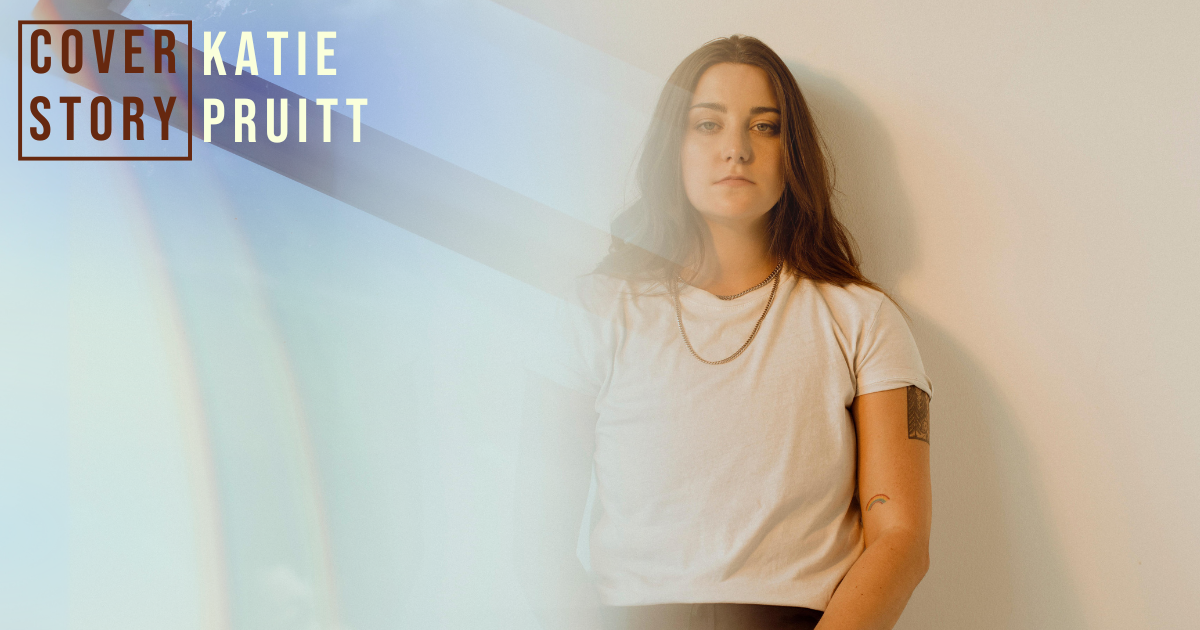
Katie Pruitt on ‘Mantras’ and Letting Go of Control

Knowing how 2020 and the years that followed would unfold, the dynamism of Katie Pruitt‘s debut record is even more awe-inspiring. Expectations introduced the Nashville-via-Georgia singer-songwriter alongside her deepest aches and most intimate struggles as an openly queer individual raised as part of a devout Roman Catholic family in the conservative South. It would go on to earn a GRAMMY-nomination and ample praise for her lyricism, empowered performances, arranging, and instinct for production. In short, it’s undeniable that Pruitt set quite the high bar of expectations for herself and the music she would choose to share next.

Four years later, Pruitt has unveiled Mantras. While flashes of brilliance from a familiar autobiographical lens inform and inspire the 11 track recording, these aren’t simply more straightforward, memoir-style anecdotes. The truths and experiences Pruitt shares on Mantras feel more revealing than Expectations, as this time, Pruitt’s lens looks decidedly more inward at what she has lived through, reflected on, and learned from since writing her last album.

Not only is Mantras‘ thought process largely internal in nature, but each song leads to paths, stories, and developments that have yet to be fully resolved – if ever they will. The album showcases a great deal of inspiring perseverance in the self-contained conclusions of songs like “Self-Sabotage” and “Worst Case Scenario” and more generally, it unveils a journey of self-healing from start to finish.

However, while Mantras ultimately provides reassurance, peace, and closure, the takeaway isn’t meant to be one of permanent resolution or rigid perspective around anything Pruitt has seemingly conquered in each song. Like the recapitulating nature of a mantra, she is mindful of being continuously attentive and compassionate towards her inner struggles, rather than seeing them as singular moments of adversity.

Speaking with her by phone, BGS shared an insightful conversation with Pruitt about how her focus on inner-healing shaped the sound of Mantras, how her perspective around disagreement and connection has changed, how she cultivates inner strength, and much more.

How was it navigating the presence of expectations for Mantras, considering your intent to move away from a focus on external validation?

Katie Pruitt: On the first album, I was dodging different expectations, you know? I was dodging expectations of my parents or of how people in my hometown saw me and who I am now. I sort of accidentally set high expectations for this next record. I felt like I was competing against myself in a lot of ways and I really had to find moments to just surrender, come back to center, and just focus on the fun feeling in the present moment and talk about that, instead talking about things that I think people want me to say. I needed to focus on what I needed to say, which is maybe different than what other people expected or wanted to hear on this album.

Knowing this album is an expression of personal growth and a journey of sorts for you, what does it feel like to just now be talking about these songs after holding onto them for so long?

Coincidentally, I feel like everything on Mantras is lining up with my life as it’s coming out.

With me talking about my parents selling my childhood home [in “Naive Again”], yeah, my parents are selling my childhood home as we speak. And when I finished a lot of the songs about my partner slowly checking out and leaving, maybe a week after I turned in the record, we broke up. So I’m still experiencing a lot of these things in my life. It’s kind of a first for me, because when Expectations came out, I had kind of already patched things up with my parents and there were things in my personal life were kind of resolved. But then I was having to dive back into those issues every day on stage or whenever I sang those songs. This is different, honestly. It kind of feels good to be able to deal with what’s going on in my life with the songs in real time.

You’ve talked about building “the tracks from the ground up as opposed to cutting everything live, which gave so much more room to let the songs evolve and become what they needed to be.” What does that mean for you and what did those moments of full realization for the music feel like for you, and producers Collin Pastore and Jake Finch?

Jake and Collin’s workflow is very quick. And that was a challenge for me, but I felt like we challenged each other in the right ways. They move very fast and I was like, “Wait a second. Let’s take a look at this. Let’s sit with it for a second and make sure we like it.”

I think having the option [to record parts individually] instead of having all this pressure to be in the studio with a full band and having everyone play the right parts at the right time, was nice for us – to just build one part at a time and ask ourselves, “Is this correct? Does this fit?” And if it doesn’t, we’d say, “We can always mute it.” … There’s not necessarily a wrong answer. We’re just trying to evoke a feeling and if we feel it then other people will too.

What brought you together with Christian Wiman’s work, ultimately inspiring you to writing the album title track?

I was listening to this poetry podcast, [Poetry Unbound], I was really into that during the pandemic and that was obviously a tough time for a lot of people, [creating] a lot of points of contention, especially around beliefs and belief systems. I just felt like, my parents believe different things than me and my friends started to believe different things than me. So that poem, [“All My Friends,”] just really resonated as this “A-ha!” moment.

At the very end of the poem [Wiman] says something like, “My beautiful, credible friends.” In the first part of the poem, you almost feel like he isn’t mocking them, but like, he’s kind of poking fun at how many rabbit holes there are to go down, as far as spirituality goes or, finding yourself goes. Then at the end, he’s like, “And all of them are credible, all of them are valid.” And that really struck a chord for me and I just think that’s a really powerful statement.

Given the open and accepting mindset you impart through “All My Friends” and its juxtaposition with the piercing, personal insights you share in “White Lies, White Jesus, and You,” where would you say religion, particularly Christianity and Catholicism, exists for you now, compared to when you were writing Expectations?

I really try to make clear to my parents or to some of my friends who are still Christian, that [the song] is talking about people who take the Bible and abuse it for their own benefit – whether that be political or just to justify shitty behavior on their end, like saying, “Oh, well, it says that gay people aren’t allowed in heaven. So I’m allowed to say this.”

That’s the part of [Christianity] that really turns me off to it in general. And that’s a shame, because the dude in the Bible, Jesus, the version that I have kind of come to discover as I’ve gotten older, is a pretty progressive dude. And I don’t mean that in the political sense. I mean, in the sense of he’s accepting of everyone no matter what their background is. Like, Jesus himself never says anything about gay people. He’s friends with kind of some sketchy characters if you were going to look at it through a lens of today. So that’s the Jesus that I wish I were taught more about when I was growing up. I think “White Lies, White Jesus and You” was a way for me to process the [version of] Jesus that I have experienced as a closeted gay kid and how the ways that version hurt me and put that in the past and put that behind me.

In what way would you say your journey of self-healing helped you to stop seeing religion as having the power to dictate your worth?

I let go of religion dictating my self-worth a while ago. But then I let other things [take its place]. I used to seek external validation from the church or from my parents or from older mentors in my life. I let that go as I became a young adult and then I started giving other things power to do that. Like success and relationships. I let those things dictate my worth. But then I started delving into the power that intrinsic happiness has.

We really fully don’t have control over what happens in our life. We have some control, but very little. And if your worth can come from within, then those moving parts of life have less control over you or less effect on you … once I learned that, I was able to focus more heavily on, “Let’s have this voice in my head be kind and then I can go from there.” Just me practicing being kind to myself first kind of put this armor up around me and it helps me navigate the world.

What’s changed about your songwriting process since you’ve taken on more personal strength and inner compassion?

For a long time, when my inner voice was more critical and cutthroat and editorial, I couldn’t really write. I wasn’t able to get the thoughts just out of my head and onto the paper, which is the first step you know? Then you have something to work from when you’re able to just say what you feel. But I was just so scared to write a bad song that I wouldn’t write anything. And I think that’s the worst mistake you can make. There’s no harm in writing a bad song.

I think that it’s just about setting the bar, taking a chill pill and [remembering], “Oh yeah, songwriting is fun, songwriting should be fun.” It should be a way for me to get an outlet, a way for me to get this out of my head and look at it. So removing the critical voice is huge. And that was connected to therapy and to me slowly learning how to be kind to myself and slowly learning how to just enjoy writing songs again.

Where, with whom, or in what, do you find your hope and strength to persevere when life feels overwhelming or your inner reserves are running low?

The past or other people’s experiences really help me. I read a lot of Patti Smith and sometimes I’ll just open to a random page and it’ll be the piece of advice that I needed. So definitely words and art and poetry. Another thing would be when I’m feeling, “Okay, all hope is lost,” I have this urge to just run to nature and I just go to the mountains or go sit by a river for a long amount of time and think and meditate and try to put my problems and my fears and everything into perspective. I think, “Well, I’m on this planet right now and I’m sitting by a river. How cool is that?” Just kind of zooming out and not zooming in so closely – that helps me. And like, just good friends and just laughing and having buddies that you know you have a drink with or dinner with and just fuckin’ laughing about the crazy things that have gone wrong. Like, laughter is huge. I know it’s like, “Oh, laughter is medicine,” but it literally is.


Photo Credit: Alysse Gafkjen

WATCH: Sully Bright, “Dark” (Live in Appalachia Video Series)

Artist: Sully Bright
Hometown: Forest City, North Carolina; currently lives in Nashville, Tennessee
Song: “Dark”
Album: Darling, Wake Up
Release Date: October 13, 2023

In Their Words: “‘Dark’ is a special song for me. It’s about my struggles with mental health, specifically Obsessive-Compulsive Disorder. The song tells my journey of learning how to see the light shine through the window; how to push past and break through the darkness of your own bedroom.

“In the video, I got the chance to sing it in a dark room with a window.” – Sully Bright


Photo Credit: Wonderfilmco
Video Credit: Seth and Jenna Herlich, Wonderfilmco

WATCH: Steven Gellman, “Little Victories”

Artist: Steven Gellman
Hometown: New Market, Maryland
Song: “Little Victories”
Album: All You Need
Release Date: October 6, 2023
Label: Hidden Poet Music

In Their Words: “Sometimes it’s the little things in life that we need to celebrate. Dedicated to anyone struggling just to get out of bed in the morning, or go about daily activities. ‘Celebrate the small.'” – Steven Gellman


Photo Credit: Renee Ruggles