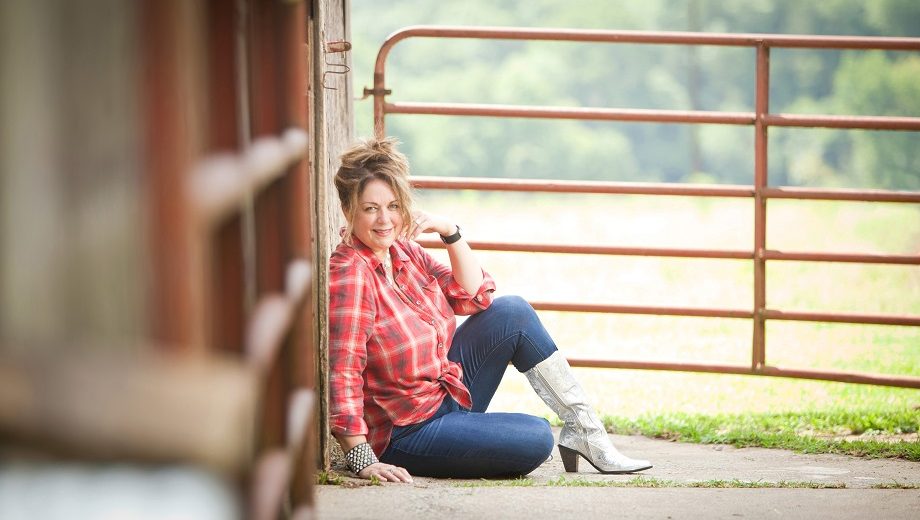
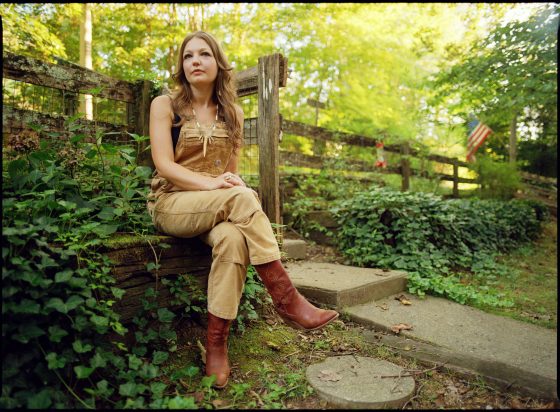
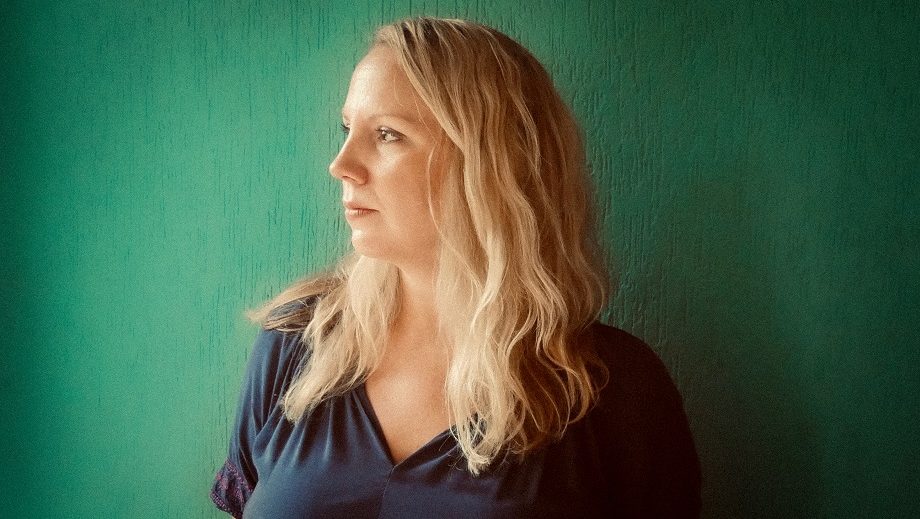
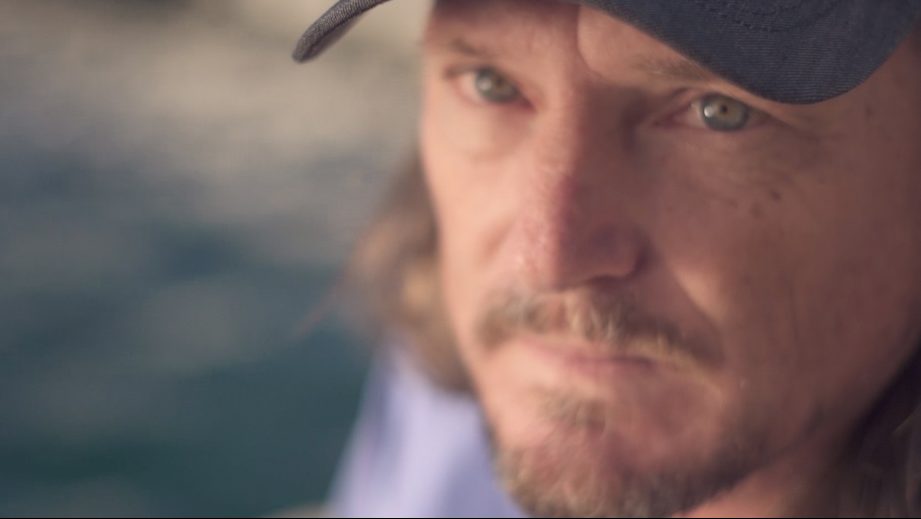
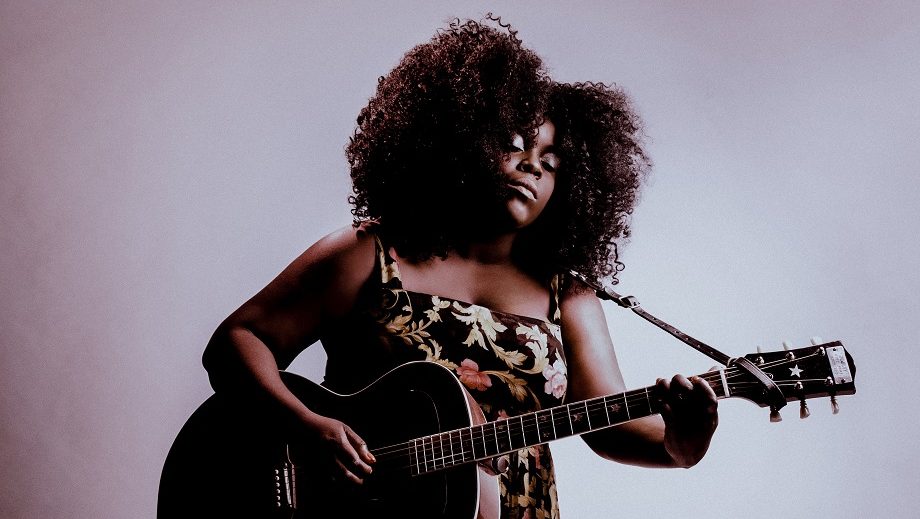
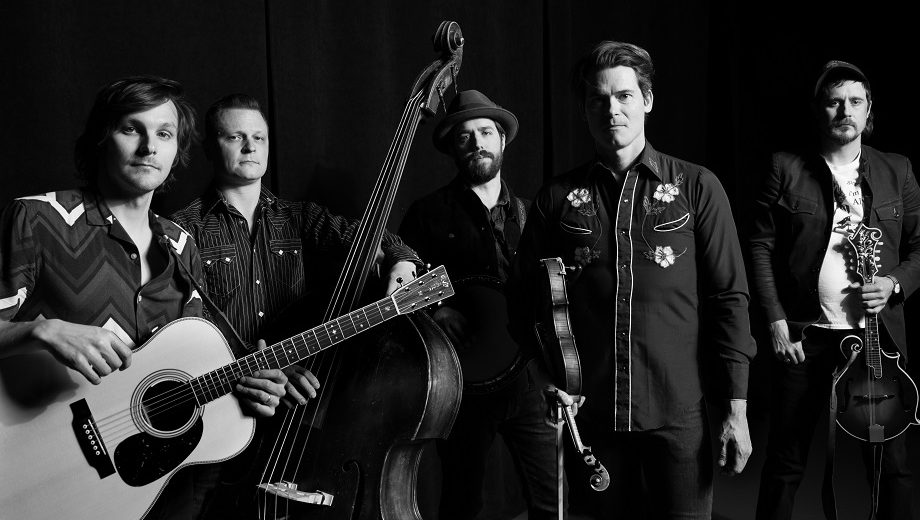
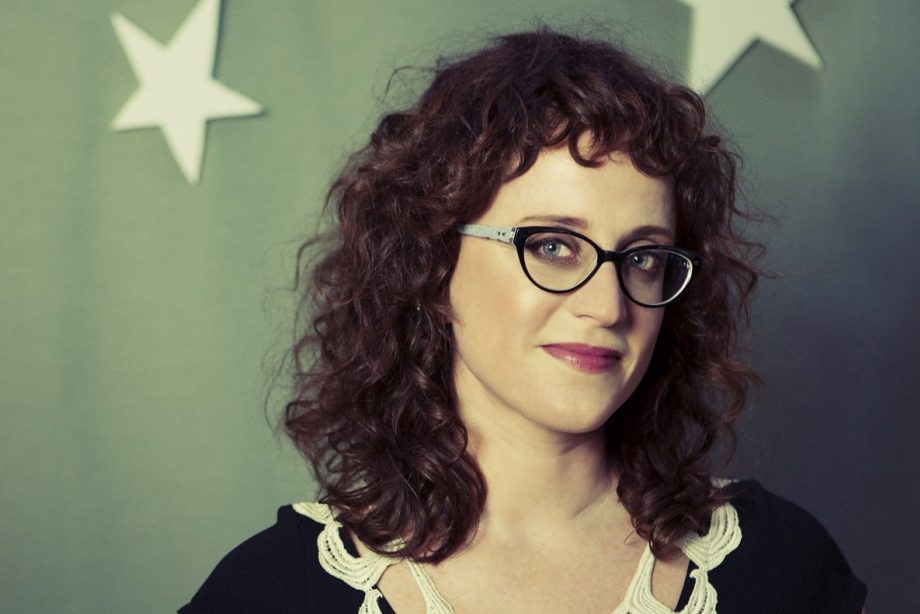
Artist:Donna Ulisse Hometown: Hampton, Virginia Latest album:Time for Love Personal nicknames (or rejected band names): Lots of family and friends just call me “Da”, which didn’t work so well for me when we were in Russia doing some shows because da means yes in their language so I was always turning my head in big crowds, thinking someone was calling me! My band members sometimes call me by my initials: D.U.
Which artist has influenced you the most … and how?
My dad and I have always had a major crush on Loretta Lynn! From as far back as my memory will go, I have admired her sassy songs and her way of delivering them. In my world, she is and will always be the cat’s meow. It took becoming a serious songwriter to realize that I also loved her writing. When I was young I didn’t give much thought to who wrote her songs, I just simply loved them. As I matured in this business I was struck by how many of the artists I adored actually wrote their own songs and Loretta was at the top of the heap.
When I started my journey into the bluegrass genre, my first producer, Keith Sewell, hit the talkback button in the studio after we cut a song I wrote called “When I Look Back” and said he thought I wrote like a mix of Loretta and Dolly. I didn’t touch the ground for two weeks after that. What a wonderful compliment! Loretta’s influence is certainly pronounced throughout my song catalog.
What’s your favorite memory from being on stage?
This one is easy! I was 12 and I was asked to sing one song at a popular venue in Mathews, Virginia, called Donk’s Theater. The show was loosely patterned after the Grand Ole Opry, with a staff band that would help spotlight young talent and I was one of the fortunate recipients. My mom and dad were SO excited! They invited all kinds of family and friends, probably thirty or so. The week before the show dad took me out shopping; I’ll never forget it. He let me buy a Gunne Sax dress that reached the floor. I thought I looked just like Loretta Lynn. I twirled in front of my mirror for hours when I got home and used my hairbrush to practice holding a microphone.
The night of the show is still so clear. The place was packed and the spotlights were incredibly bright. I was given a generous introduction and I walked out and sang a Loretta Lynn song, “Somebody Somewhere,” to the top of my lungs. I loved it, every moment, smell, sight, clap, note… all of it. Years later, my Aunt Helen told me that my mom and dad lost all their color when my name was announced and never blinked or swallowed while I was on stage, bless their hearts. I guess I didn’t have to be nervous, Mom and Dad did that for me.
What was the first moment that you knew you wanted to be a musician?
In all honesty, I knew I would be on stage when I was very young, maybe 5 or 6 years old. I have never dreamed of another career, it was always going to be the stage for me. But if you want to know the exact moment my star was born, it would be that Loretta Lynn song I performed on the Donks stage when I was 12. I owned it and never looked back.
If you had to write a mission statement for your career, what would it be?
I’ve never been good with homework, but I believe the topic of my mission statement would be perseverance! I have never given up on my dream of performing, even through the darkest of times. I was one of the blessed when I was signed to Atlantic Records in the early ’90s. A major country deal is a huge accomplishment and much coveted. I was out in L.A. doing a Dick Clark show when I got the call that I lost my deal. It was brutal, heartbreaking. I was so lost in those days but I knew deep down there was a place for me to sing.
I turned my heart and hopes into songwriting and it saved my music life. Through songwriting I discovered the mountains that lived in my soul and I started writing Appalachian sounding tunes that led me into this warm and wonderful world of bluegrass. I am having success in this business a little late, but so very cherished and appreciated. This is the world I was always meant for and perseverance got me here!
Which elements of nature do you spend the most time with and how do those impact your work?
My husband and I bought a little farm outside of Nashville a few years ago. I’m not your typical farm girl but I love this land. It has a sweeping field that leads down to a creek and I spend lots of time watching goats and cows and all the changes that spread across the field. In the spring, vibrant yellow flowers show off the new season like a Sunday hat. In the summer there is so much purple bursting out all over the tall grasses, reminding me of an Irish hillside. In the fall there are elements that look like a harvest, like a bounty was laid there though we don’t plant anything, and in the winter the field lays there like temptation and whispers for springtime. This is where so much of my inspiration is found these days. I write about the spirit and the glory and the life that I see from my table on the porch.
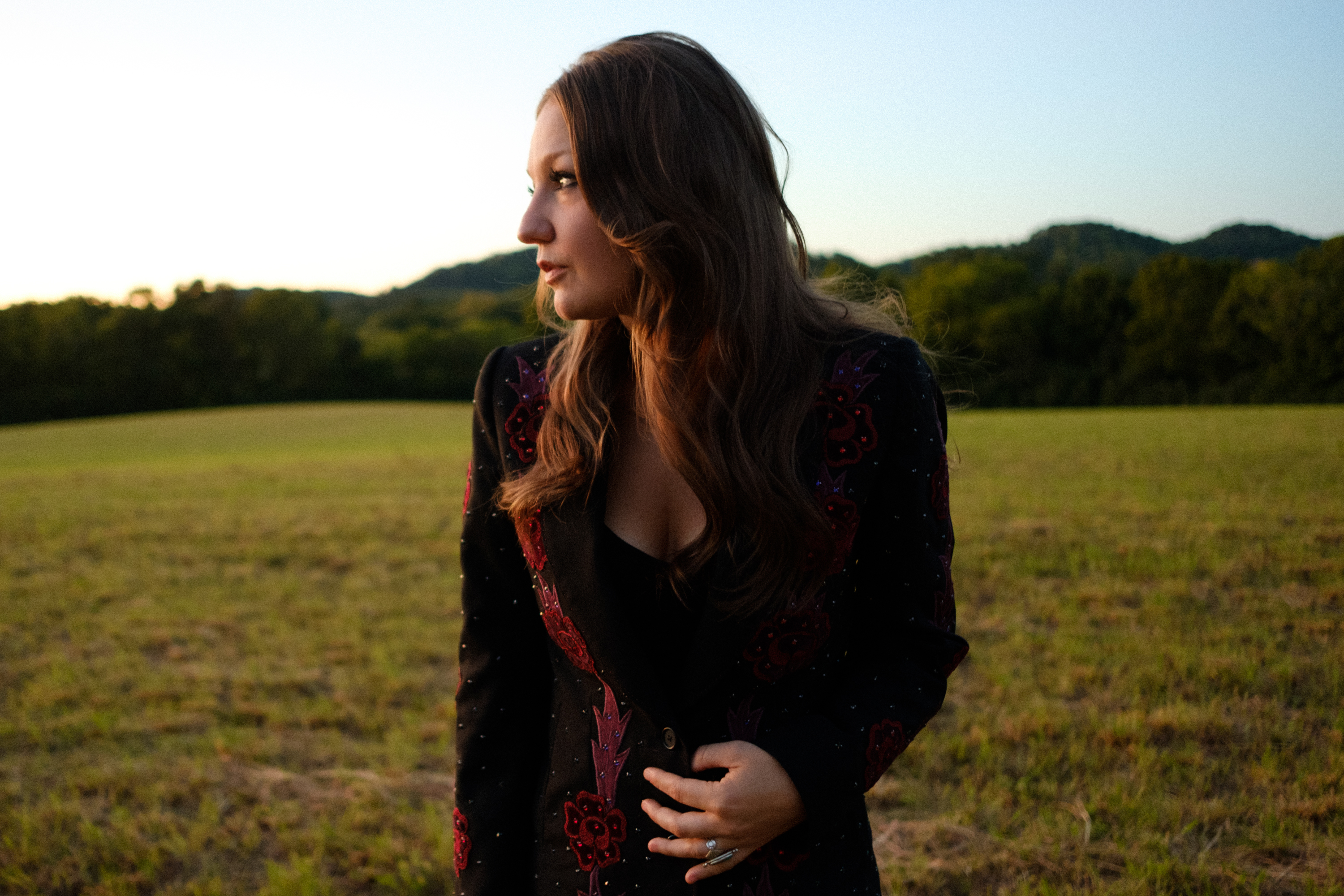
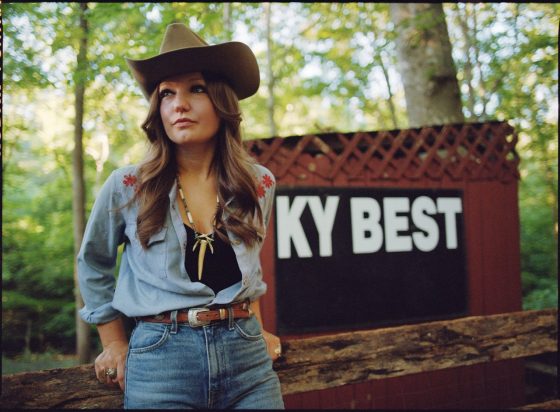
I’ve had the good fortune of knowing Kentuckian country queen-in-waiting Kelsey Waldon for almost the entire time I’ve lived in Nashville — more than eight years at the time of this writing. I’ve stood over her unfathomably enormous cast iron skillet, filled to the brim with bubbling, sizzling battered fish. I’ve sung harmony on one too many choruses of “Smoky Mountain Memories” after perhaps one too many slugs of Kentucky straight bourbon whiskey with her, too.
And yet, in listening to her brand new album, White Noise/White Lines, I still found myself picking up fresh tidbits of her extraordinary yet downright ordinary approach to musicmaking, songwriting, self-expression, and artistic exploration. Waldon, despite limitless comparisons to almost every female country forebear to ever growl through a lyric, remains a paragon unto herself, a true singularity in realms of American roots music.
White Noise/White Lines cements the fact (which has always been plain as day to those who dug deep enough) that Waldon will refuse tidy, one-for-one comparisons to any/all other country stars and writers who have come before her or who count themselves among her contemporaries. Except perhaps two: Loretta Lynn — whose “Coal Miner’s Daughter” inspired Waldon’s own “Kentucky, 1988” — and John Prine. The latter is fitting, in so many ways, now that Waldon makes her label home with Oh Boy Records, label of the denizen of Kentucky songs, meat and threes, and plain spoken oracle-like wisdom through lyrics.
A brief album by many measures, White Noise/White Lines captures technicolor moments of Waldon’s life, her joys, her musings, and her homeplace, encouraging listeners to lean into the record’s brevity and engage wholly with each constituent moment therein. Because truth needs no more than a moment.
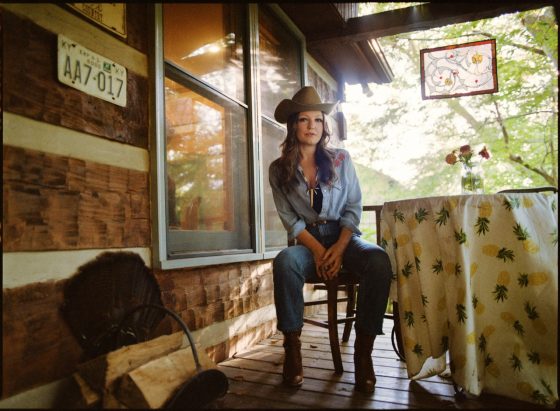
For BGS I made the trek out to Waldon’s cabin outside of Nashville and after a quick stroll around the vegetable gardens and a tour of the many Kentucky-themed decor items imported from one state north, we settled in the kitchen, sipping water out of mason jars, to talk.
People routinely refer to you as being similar to Loretta, similar to Tammy Wynette, Kitty Wells, Patsy Cline. People are constantly making these comparisons to these kind of foremothers of country and I wonder how that makes you feel, to be a bookend against someone like Loretta or Tammy Wynette?
Kelsey Waldon: Honestly, I think that’s an incredible compliment. Those are all, you know, my sisters that have gone before me, women that I’ve looked up to quite a bit. Especially in the country music realm. However, I also kind of feel like, especially with this new record, I think it’s apparent that hopefully I’m also finding quite a bit of my own thing.
Sometimes when people say things like that to me it’s like, well maybe their scope of country music isn’t that wide. When someone would be like, “You sound like Patsy Cline!” I’d be like, “Uh, no I don’t.” [Laughs] I mean, I love Patsy Cline and I hold her up as something sacred, I wouldn’t ever even sing Patsy just because nothing touches that.
I think it can kind of be, dare I say, a lazy comparison to just kind of name [some popular woman country star.] It’s definitely there. Even sonically, I was so inspired by them. Especially Loretta, absolutely.
I hope the new record showcases that with the years we’ve spent on the road — just using even my own touring band. It starts at country with me, I can’t just flip off a light switch and say, “Oh, it’s not country!” I guess some people can do that, but I don’t see it that way. Country is just so much embedded in me. No matter what form my artistic expression comes out, that’s still gonna be there. It just may not be cookie cutter, it may not be formulated. It may not even sound exactly like that. One thing that I think the growth of this record shows, hopefully, is that these are my songs, I’m not a throwback artist. I’m not a retro artist. I am an artist making music in 2019.
I did want to talk about your band, I think it’s remarkable. It’s getting more and more rare that folks tour with the folks who played on the record, because — and it’s not the fault of anybody — they’re trying to make money on the road. So if they stack their record, of course they aren’t bringing those people on tour. Why is it a priority for you to have the same band?
There are obviously all of these amazing musicians out there who are session musicians and a lot of people I’ve been fortunate enough to play with myself. I’ve learned a lot from [them]. This time around, this was always a goal of mine, to have a record that had a band I wanted on it. I worked really hard to find the band to really fit those pieces together. It took me a while… just trying to figure out really what I wanted. My last record, I’ve Got A Way, caused the right people to gravitate towards my music. I mean, I eventually found the band that I have now because they heard those earlier records and they were like, “I would love to be a part of this.”
The band I have now, which is Mike Khalil, Nate Felty, and Alec Newnam — and Brett Resnick played on the record, but he doesn’t get to play with us a lot anymore, he plays with Kacey Musgraves, which is wonderful. But with the band I have now I just knew it. I was like, “I think this is it.” We all knew it. Even Brett. People were like, “We think this is the right combination.”
In that way, too, there’s nothing wrong at all with using session players, I just think, honestly — and I might be a little biased — my band is just as good as any. I think they could, and they will be one day, they will be those session players. They care so much about their craft and they work hard. I’m very lucky.
One of the things that excites me most about this record is that I’ve always heard the bluegrass influences in your music, but they’re really forward in this record. Especially in your rhythm playing, in your rhetorical style in your writing, in your vocal phrasing, even in the arrangements with the twin fiddles and there are a couple of “fast waltzes” on the record. I love that “Lived and Let Go” really could be played on bluegrass radio.
I think that is such a huge compliment, thank you.
It’s bluegrass! I wanted to ask, and not just because we’re The Bluegrass Situation, but in general, because this is a huge part of the canon of music you reference and that you listen to. Who in the bluegrass sphere influences you now and who has in the past — and I’m gathering Ola Belle Reed is at least one of them.
I love Ola Belle, obviously, we did an Ola Belle song on the record. Well, I love that you can pick that out. To me, I feel like it’s plain as day that there’s a bluegrass influence all over it. To some people it’s not as apparent, I guess. I’ve had some people just be like, “What is this thing that you’re doing?” It’s because they don’t listen to bluegrass. I’m like, “I STOLE that!” [Laughs]
I guess I understand now why they don’t put those two together, if you’re talking about mainstream country, because that’s clearly not. But to me, I’m always like, “Of course bluegrass is country.” It’s also bluegrass, but it’s also country. It’s like the OG country music.
I would say one of my favorite influences, one of my favorite singers ever, is Dale Ann Bradley. She’s up there for me. I really think Dale Ann should be a legend, honestly. And Ralph Stanley, and obviously I love Bill [Monroe], and Jim & Jesse, and all those groups. And early Keith Whitley, I’ve been obsessed with that for a long time.
I think it’s interesting that you mention both Ralph and Keith back to back like that, because you can hear elements of both of their vocal phrasing and vocal techniques, in what you do singing-wise.
The same thing with Dale Ann. They have such unique registers of their voices and it’s something that I really relate to. Sometimes I didn’t really know what it was that I was doing. I could kind of hear my own voice in [their vocals]. If that makes sense? I could really relate to that. It’s so soulful.
I feel like Keith could sing on anything. [Laughs]He sounded exactly like Keith. That’s the beautiful thing about a country singer to me, he could sing on an R&B track and it would be sexy as hell. It’s like George Jones — and Dolly can sing on anything, as far as I’m concerned. That’s a great singer, to me. Ralph, I’ve always said that he is like the Pop Staples of mountain music. It’s like he doesn’t even have to be loud, but he is so loud. He’s barely singing. He’s just projecting. I love Flatt & Scruggs as well.
New artists… Molly Tuttle, I love what she’s doing. That new record. She’s really taking a genre and making it her own. Something that’s not worn out or tired. Doing something fresh. She has accomplished making this new for people. In my own way, I hope to do that as well.
I don’t guess there’s anybody else completely new, besides like Sister Sadie, and Dale Ann! [Laughs] They are some BAD girls!! Dale Ann, man. The mark of a true artist is that she can sing all of the covers she does. Like I said, I think Dale Ann should be a legend.
Words are clearly your priority in your songwriting. You’re prioritizing what you’re meaning to say first and foremost, then making the melody and music and everything work around what you’re trying to say. It sounds effortless when you listen to it, but I wonder what kind of intention goes into that?
Songwriting is kind of interesting to me in that way. I’ve actually heard a couple people be like, “It sounds effortless.” Sometimes, it is effortless and you’re just like, “Wow that kind of poured out of me. I didn’t realize it was in there but it poured out of me in like five to ten minutes.” With this record, though, there were definitely a couple of things I had to go back to. I had the meat and taters, but there were a couple of things I rewrote and made sure made exactly the sense I wanted them to make. There’s a balance there, too. You don’t want to kind of go too far, over-analyzing the whole thing.
With “Kentucky, 1988,” I think your songwriting up to this point has felt so personal, and so tightly intertwined with who you are, that I almost didn’t realize that you hadn’t written this exact kind of song, yet. What brought you to the point of wanting to be that direct with telling your origin story? Was it more intuitive or more purposeful?
That was definitely purposeful. That is awesome that you’ve observed that, because I’ve felt the exact same way. I was writing new songs and I felt like, “You know, I haven’t written my ‘Coal Miner’s Daughter.’” I don’t really have something that is kind of like this definitive origin story. I just set out to write it. The title was actually kind of inspired by someone I forgot to mention, Larry Sparks — one of my favorite singers.
Oh my gosh!! “Tennessee, 1949!!”
Yeah! Yeah, it was inspired by that. That and a Tom T. Hall song that has Kentucky and a year in the title, with the comma and everything. In my head all of that sounded so cool. Everything about it, the rhythmic feel, it all rolled right off my tongue great. I just had to write it. People always [say], “That’s very vulnerable and transparent.” Well yeah, isn’t that what we’re supposed to do? [Laughs]
I know a lot of artists say this, but I definitely think this is the most personal thing I’ve done so far. I think all of it has been very transparent, in a way. I want to completely embrace that. I want to be as much of a freak as I want to be. It’s not like I was afraid to before, I just don’t think that I was ready. My mom always said I was a late bloomer, but she said, “When you bloom, baby, you’ll bloom!”
I did want to ask you about the significance of the Chickasaw Nation members singing on the record. We hear them at the end of “White Noise, White Lines.” What’s the personal significance of that for you? And are you a tribal member? Is anybody in your family a tribal member?
No. All of the Rollins side of my family, which is my granny’s side, they were all of French and Native American descent, but I never claimed anything like that. I just think it’s been something that’s been such a part of where I grew up, culturally. Even just hunting for points [arrowheads] and having such a respect for that way of life and culture.
It’s always really hard to keep this story short, when people ask me about the song, because I wrote it right after this amazing experience I had back home in Monkey’s Eyebrow, Kentucky, my hometown. When I went back to watch a ceremonial dance that the Chickasaw from Ada, Oklahoma [performed]. They came to re-bless the Wickliffe Mounds. They ended up lodging at my Dad’s that night, for free, [he was] cooking the food, doing the catering and stuff. I ended up staying down there and visiting.
We just became friends with the members of the tribe. We had so much fun. They’ve kept in touch… My dad took them arrowhead hunting for the first time, and they were doing ceremonial dances out on my dad’s land as well. I think he really really was appreciative of that. We were kind of the only people who ever lived down there in those river bottoms, maybe besides [the Chickasaw]. I mean, it’s the river bottoms. That’s why we find all these artifacts. No one has been down there except us.
I just remember thinking about how awesome the weekend had been and the radio had been on white noise for literally fifteen minutes and I had no idea. I was just in this tranquil moment. The song is just a detail of all these things. The solar eclipse had also blown my mind that weekend. Just realizing how small we actually are, compared to what is even going on in this universe.
Naturally, I included the details. “Chickasaw man got a buffalo skin drum,” because Ace — Ace Greenwood and Jesse Lindsey, that’s who’s on the song — actually did have a buffalo skin drum. It was pretty badass. My dad asked them to sing some songs on the porch. I love Ace’s voice, it reminds me of Ralph Stanley. It’s a voice that just feels like it’s been there for a long time. It’s so pure. I just loved it, I was really touched.
He sang a song that had been in his family for generations. The message of the song was basically, “Though I’m far away I’m still near you. No matter where I am. We are together.” In that moment that really was something I needed to hear. I put that [on the record] not only because I thought it was beautiful, and I wanted people to experience what I felt, but I also wanted the record to feel like an experience.
Ace told me one time when we were down there that the media likes to tell his people who they are and that’s not who they are. I think in a way, perhaps it’s also why I thought it would be really beautiful to have that at the end as well. I hope it doesn’t seem like it was for my own reasons, I guess. I was just writing about that weekend and I felt like it was so beautiful to me I wanted it to be documented.
I think it makes a lot of sense. And I’m not saying it’s not a complicated thing to talk about, or that it doesn’t trip into some territory that we as settlers will never fully understand, but I do think that it follows perfectly with you bringing your whole entire self to your music. So much of what you do is tied to place and is tied to coming from Kentucky.
That was another part of it, showcasing where I’m from. And the cultural background of it.
And not just the colonial background of where you’re from?
No. I mean absolutely not. To me, that’s exactly how I saw it. Nail on the head. It might cause a little bit of question, but I think that’s good. ‘Cause then I’ll get asked about it. And then I’ll tell ‘em. [Laughs]
Artist: Nashville Covers Dylan for SAFPAW Hometown: Nashville, Tennessee Song: “All I Really Want to Do” (Bob Dylan) Release Date: November 18, 2019
In Their Words: “Each person involved with this project donated their time and skills to make this happen. We all see what Laurie Green of Southern Alliance for People and Animal Welfare (SAFPAW) is doing for our community, and we love the spirit and songs of Bob Dylan, so we have merged concepts and talents to raise awareness for something truly worthwhile.” — Tim Easton
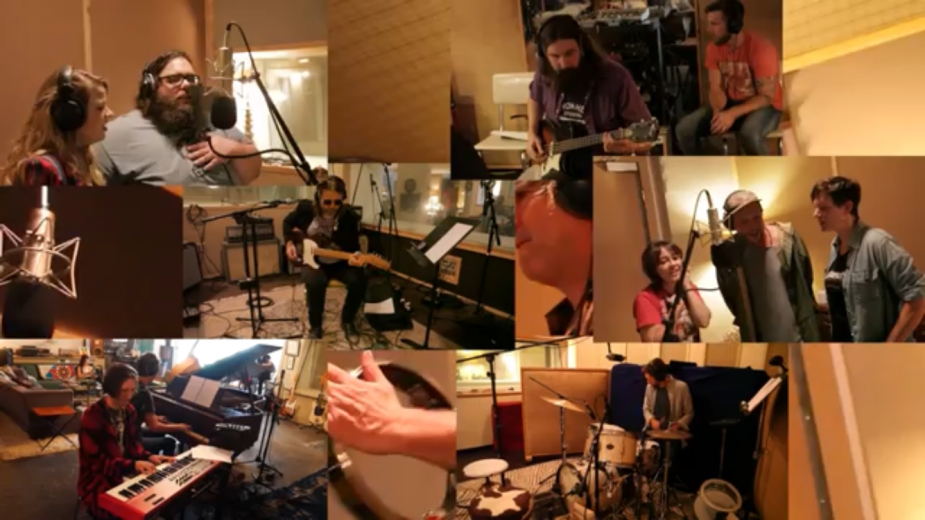
Editor’s Note: New West Records artist Aaron Lee Tasjan, ANTI- artist Darrin Bradbury, Cafe Rooster Records artists Brian Wright, Sally Jaye, Jon Latham, and Nikki Barber of The Minks, spearheaded by Tim Easton and producer Gabe Masterson, gathered at Club Roar Recording studio to record Bob Dylan’s “All I Really Want to Do” to raise awareness for SAFPAW (Southern Alliance of People and Animal Welfare). Directed and edited by Stacie Huckeba, the live video session marks the fifth consecutive year that Easton, Huckeba, and Masterson have partnered to record and film a Bob Dylan cover for a Nashville-based charity.
An expansive generation of simply ludicrous flatpickers has rendered bluegrass, old-time, Americana, and folk replete with acoustic guitar virtuosos. Pickers like Jake Stargel, Molly Tuttle, Presley Barker, and Billy Strings each have in common commanding right hands and withering technique. Others, like Jake Workman, Trey Hensley, and Chris Luquette play at incomprehensible, blistering speeds with pristine precision that defies explanation — down to the most infinitesimal note durations. We can clearly see the shredtastic legacies of Clarence White, Tony Rice, Dan Tyminski, and others living on, even if chiefly through their more mathematical, aggressive, and adventurous methods and tones.
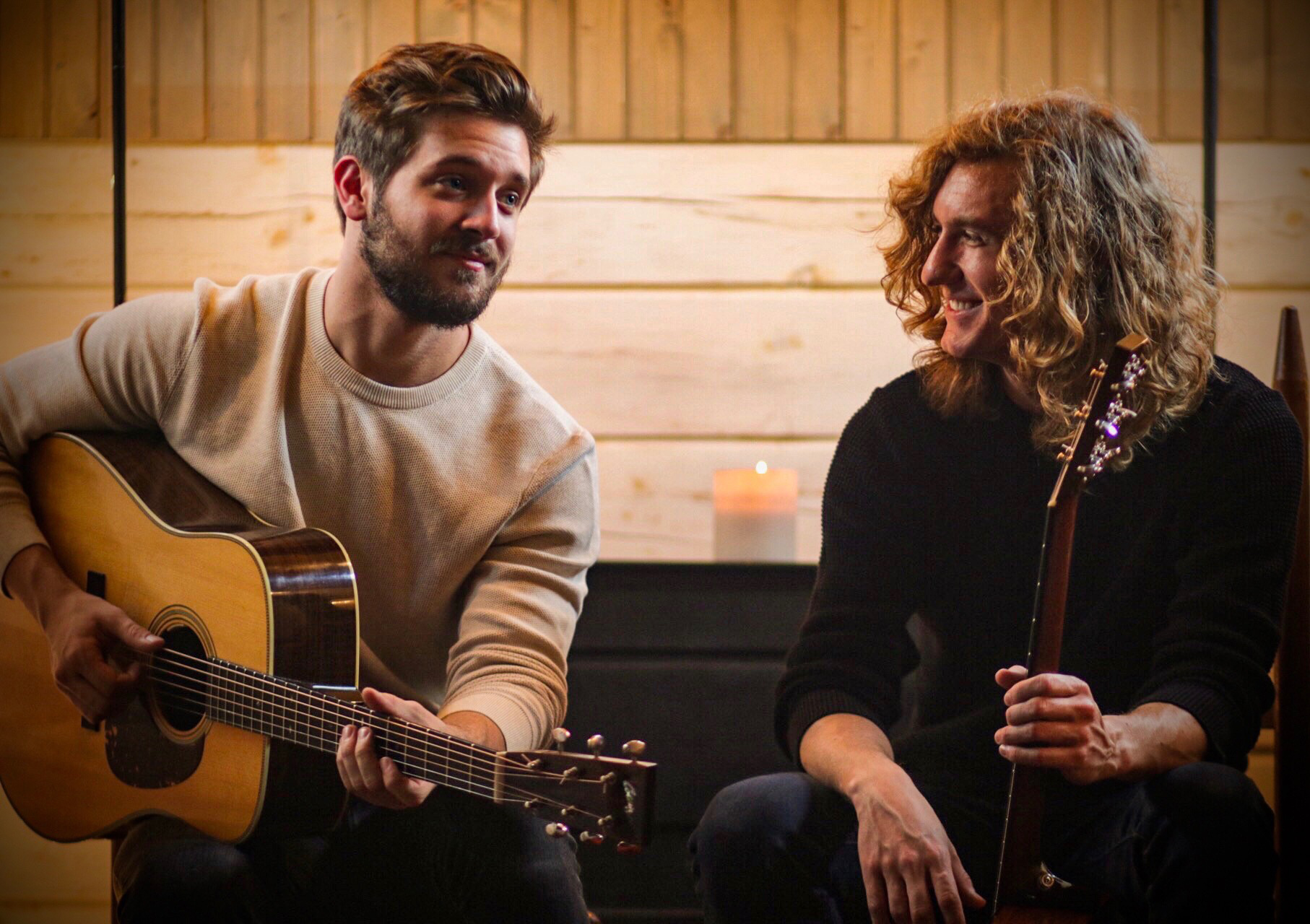
That adventurous aggression might just be why “Chisholm,” a new tune composed by guitarists Shaun Richardson and Seth Taylor, feels like such a calming breath of fresh air. It’s a welcome counterpoint and complement to the repeated face-peeling-off that we all enjoy in this current golden age of flatpicking guitar. Richardson and Taylor are both veterans of Dailey & Vincent’s bluegrass-based rootsy stage show, giving them ample experience in musical code-switching, from fiddle tunes and swinging numbers to country ballads and passionate gospel. Richardson has performed with Michael Martin Murphey as well, and Taylor is a member of the long-running, heady, Americana-tinged bluegrass group Mountain Heart.
The versatility lent by these diverse experiences gives “Chisholm” a well-traveled, though relaxed, voluminous vibe. The melodies are resonant and tactile, conjuring six-string players and composers such as John Carlini and Beppe Gambetta — with just a dash of Tommy Emmanuel. Jazz complexities are utilized here not in a gratuitous way, but rather anchored in expressiveness and musical dialogue. Richardson and Taylor’s expertise is very clearly centered not on simply displaying prowess, but in musicality. In this calmer, more subdued setting, that dynamic is especially refreshing and subtly striking.
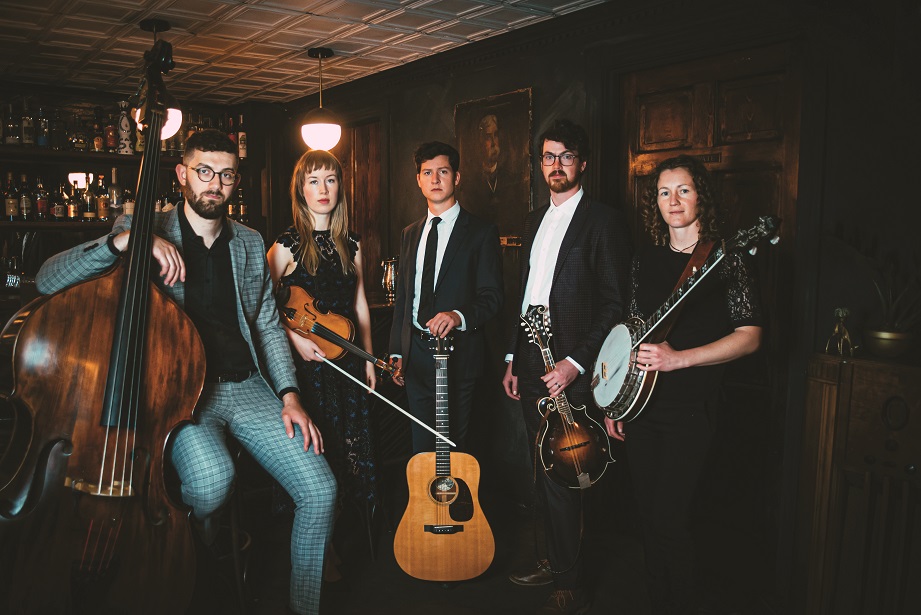
Artist:Mile Twelve Hometown: Boston, Massachusetts Single: “Whiskey Trail” Release Date: November 15, 2019 Label: Delores the Taurus Records
In Their Words: “Our bass player Nate brought this energetic Los Lobos song to the band nearly a year ago, and it has slowly but surely become one of our favorites to perform. Even though originally imagined for electric instruments, we think the bluegrass outfit suits the music well. Now we’re excited to be releasing this song as a studio single! To celebrate the premiere we made this live video of our arrangement performed at the Fox Bar & Cocktail Lounge in Nashville, Tennessee, and filmed by the amazing Alex Chaloff. What better place to film a song about hard liquor than this, right?” — David Benedict, Mile Twelve
Artist:Mary Bragg Hometown: Nashville, Tennessee Song: “Our Lady of the Well” Album:Think About It EP Release Date: March 6, 2020 Label: Mary Bragg Music/Tone Tree Music
In Their Words: “As a writer, one of the things that keeps me sane is that healthy part of the process which is to sometimes get out of your own head and away from your own stories. I’ve started looking for songs to learn that speak to me, and this one in particular, written by the great Jackson Browne, felt painfully timely, as it beautifully expresses some of the feelings I’ve been having about the world we live in, decades after it was written.
“I felt connected to the song after going to Mexico for the first time and experiencing the lovely people and culture there, where, just like in the States, ‘the families work the land as they have always done,’ and ‘your children will be born; you’ll watch them as they run.’ I decided to record it as a creative extension of my new album, Violets as Camouflage, with a similarly simple treatment, musically, with the focus on the story and the voice that’s telling it.” — Mary Bragg
Artist:Charlie Hager Hometown: Las Vegas/Nashville Song: “Never Good” Album:Truth and Love Release Date: November 1, 2019 Label: Flour Sack Cape Records
In Their Words: “I think this song is reflective of what I was feeling at that time in my life. I had recently gone through a divorce and my work was stressful as well. I think my state of mind when I asked myself what ‘I’m good at’ became clear to me that I mess things up a lot. So in a sense, what started out as a narcissistic song actually ended up a little more truthful.” — Charlie Hager
Bold, brilliant, beautiful, and British — these are just a few words that describe the music of singer/songwriter Yola. 2019 has been monumental for the new queen of country soul from across the sea as she collaborated with Black Keys’ founder and Nashville hotshot producer Dan Auerbach to produce her solo debut, Walk Through Fire.
Her powerful voice and old school styling reinvigorate the tradition of combining country and soul music, a classic bridging of two seemingly unrelated musical traditions; and an accomplishment Yola’s musical heroes Charley Pride and Dolly Parton would admire. Among her more recent success, Yola was featured in a song from The Highwomen’s first album and in September, she made her debut on country music’s most famous stage.
Watch as Yola shows us around Nashville and takes us behind the scenes of her Grand Ole Opry debut.
In Ken Burns’ documentary opus Country Music, a weaving path from the hollers of Appalachia to Garth Brooks’ theatrical stadium concerts was laid out for all to see. But mapping that trail has always been a complicated, cumbersome task.
The sheer number of influences at play required 16 hours of footage for Burns to tell the story – and lots of help from the artists themselves. One of those artists was Old Crow Medicine Show’s Ketch Secor, who gladly jumped in to tackle the unwieldy narrative of his favorite subject.
Secor had a two important roles to play in the series. Most obviously, he related a lifetime’s study of country’s earliest touchstones and how they combined into something uniquely American. But the outspoken frontman was also tapped in the beginning of Burns’ process as a behind-the-scenes consultant, helping guide the project’s tone and ultimately delivering one of its final and most powerful lines.
“It’s almost like [country music] needs to be exhumed, and new life breathed into it,” Secor proclaimed. “The part that is the songs of the people, the hopes and aspirations of the people — the pain and suffering of the people — that needs to remain embedded in country music. If it isn’t there, I’m out.”
Backstage at the Grand Ole Opry House on the night the series premiered, Secor explained what the project meant to a history buff like himself, and how Burns unwittingly played a role in Old Crow’s founding.
BGS: Old Crow Medicine Show’s music has always shined a light on the past. What made you interested in that to begin with?
Secor: I was always interested in history, and I really attribute that to Ken Burns – I saw The Civil War when I was 11 years old. I lived in the Shenandoah Valley, and I wondered why the kids went to Robert E. Lee High School and why we played Stonewall Jackson, why the name of the shopping mall and the subdivision and the motel was what it was — it was all the war. It was everywhere, and we took some field trips but I didn’t really understand it. I could feel this echo, though. Seeing that movie on PBS really helped me to take this tour of my own backyard and see how history was alive. I credit that to him.
Knowing how deeply you care about country music’s history, what did you think when you found out Burns was going to present it?
I thought immediately, “Thank God. Finally somebody is going to tell our story and get it right.” I don’t trust any of these people to our story [gestures to photos Opry stars dotting the dressing room walls] because they’re all right in the middle of it. Everyone here has a very, very different story, and everybody has “The True Story” — but only their truth. Country music is richer than any one truth, so it takes an outsider’s perspective because of Nashville’s tendency toward this clan-ishness, the good ol’ boys network and these sorts of forces.
I mean, we’re the genre that has told its own history ever since it started. The radio charts today are full of songs about the good old days — and they’re talking about the ‘90s. That’s the good old days now. But it doesn’t matter, whatever the good old days were, the ethos here is that times ain’t like they used to be, they used to be better. That’s what they’ve been selling from the start, but they can’t tell our history without making it a commodity. So it takes this outsider, and you can’t ask for a better outsider than America’s most beloved documentarian, because he was the outsider who told us how jazz was born and flourished, how baseball was created, the Roosevelts, the National Parks, the Brooklyn Bridge. Country music is just as important as all that.
What did they actually ask of you?
I talked about slavery and the plantation system, the penal system — because incarceration was a great cultural conversationalist. It kept people locked up in isolation, which is one of the keys to making country music so rich. How long did the Scotch-Irish people live in Appalachia before being disturbed? Well, the great disturbance comes in Bristol in 1927. The record companies came in and said “Whaddya got?” And what they had was so specific to one region that it might sound different one holler over.
Then I talked about the Opry, and then I tried to talk about more New Age-y hip-fangled things, but they didn’t use any of that [laughs]. The other way I’ve been involved is by being an advisor to the film, so I read all the early scripts for the past eight years. But it was great, they just asked me, “How would you tell the story? Where was the birth? Who was important to mention?”
This has been in the works for eight years?
Yeah, he conducted like 140 interviews, and of that maybe 50 or 60 of his interviewees have died. See, the other thing about Ken is he knows when it’s time to tell a story, and by doing the story when he did, he was able to get Little Jimmy Dickens, Merle Haggard, numerous artists who wouldn’t be here — George Jones is in this film.
Did you get surprised by anything?
Oh yeah, a trove of knowledge is in this documentary, I learned a ton. And lots of things made me cry. What I learned primarily was a real self-reflective thought of, “Oh my God, this is my life.” I think almost all of these folks on the wall are in the movie, and when they watch they’ll be crying, too, because they’ll see themselves in the Bristol Sessions. They’ll see themselves at the earliest days of the Grand Ole Opry, they’ll compare themselves to the Outlaw movement and the traditional movement of the ‘80s, the development of the star system, and contextualize their own career.
You talked about isolation. We’re in this weird moment where country is more popular than ever, but rural life is changing fast. It’s easy to connect with people all over the world. How does the film address that?
One of the things that’s great about the film is that it stops around 1996, because Ken Burns isn’t a journalist, he’s a documentarian. He’s not making a movie about today, and here’s why: Historians say you’ve gotta have a generation pass before you can tell what happened. I just think it’s gonna go a lot deeper than anybody could say right now.
Like if you told the story of why Randy Travis mattered in 1986, it would be a lot different. And also the forces that are at play in country music, they need time to gestate for us to understand what they’re saying. Who’s gonna last? Who are we going to be talking about in 25 years? Blanco Brown? Chris Stapleton? Who’s gonna have their picture on this wall in 25 years? I don’t know.
Artist:Miss Tess Hometown: Nashville, Tennessee Song: “The Moon Is an Ashtray” Album:The Moon Is an Ashtray Release Date: February 7, 2020 Label: Miss Tess/Tone Tree Music
In Their Words: “This song came out of an experiment with metaphor, smashing two unrelated words together to derive a new meaning. This is one of the few songs in my writing career than just fell out of my brain in about an hour. I grew up with a lot of fairy-tale ideas of how life and love might pan out, but reality can be a harsh mistress. ‘The Moon Is an Ashtray’ is a tongue-in-cheek vintage-kitsch metaphor discussing the idea that romance isn’t real. When you get up close to the moon, you realize it’s not as pretty it seems from a distance, or is just plain fake, or not as it originally appeared. The whole idealism and cruel optimism wrapped up in an image like the moon — or new love — is just an illusion.
“For me, it kind of ties into getting older and realizing some of your childlike views are not what they seem. On a professional level the music industry is really rough when you get up close. Fairy-tale ideas of relationships are never real. I think a lot of the songs on the album speak to that.” — Miss Tess
Photo credit: Gina Binkley
This website uses cookies to improve your experience. We'll assume you're ok with this, but you can opt-out if you wish.AcceptRejectRead More
Privacy & Cookies Policy
Privacy Overview
This website uses cookies to improve your experience while you navigate through the website. Out of these, the cookies that are categorized as necessary are stored on your browser as they are essential for the working of basic functionalities of the website. We also use third-party cookies that help us analyze and understand how you use this website. These cookies will be stored in your browser only with your consent. You also have the option to opt-out of these cookies. But opting out of some of these cookies may affect your browsing experience.
Necessary cookies are absolutely essential for the website to function properly. This category only includes cookies that ensures basic functionalities and security features of the website. These cookies do not store any personal information.
Any cookies that may not be particularly necessary for the website to function and is used specifically to collect user personal data via analytics, ads, other embedded contents are termed as non-necessary cookies. It is mandatory to procure user consent prior to running these cookies on your website.