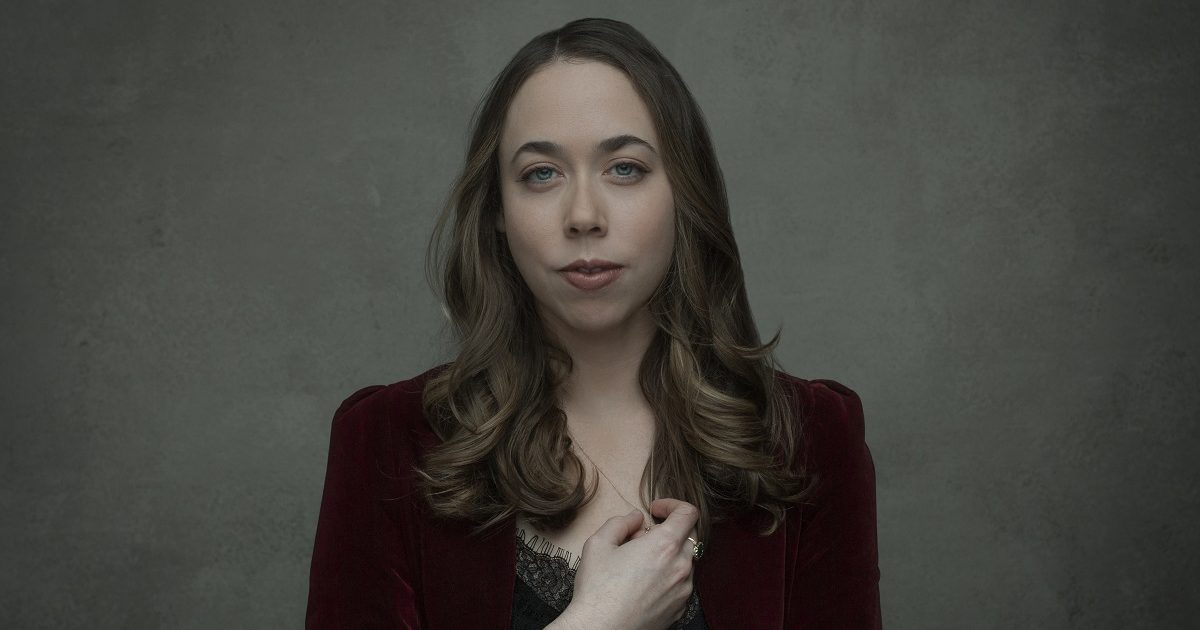
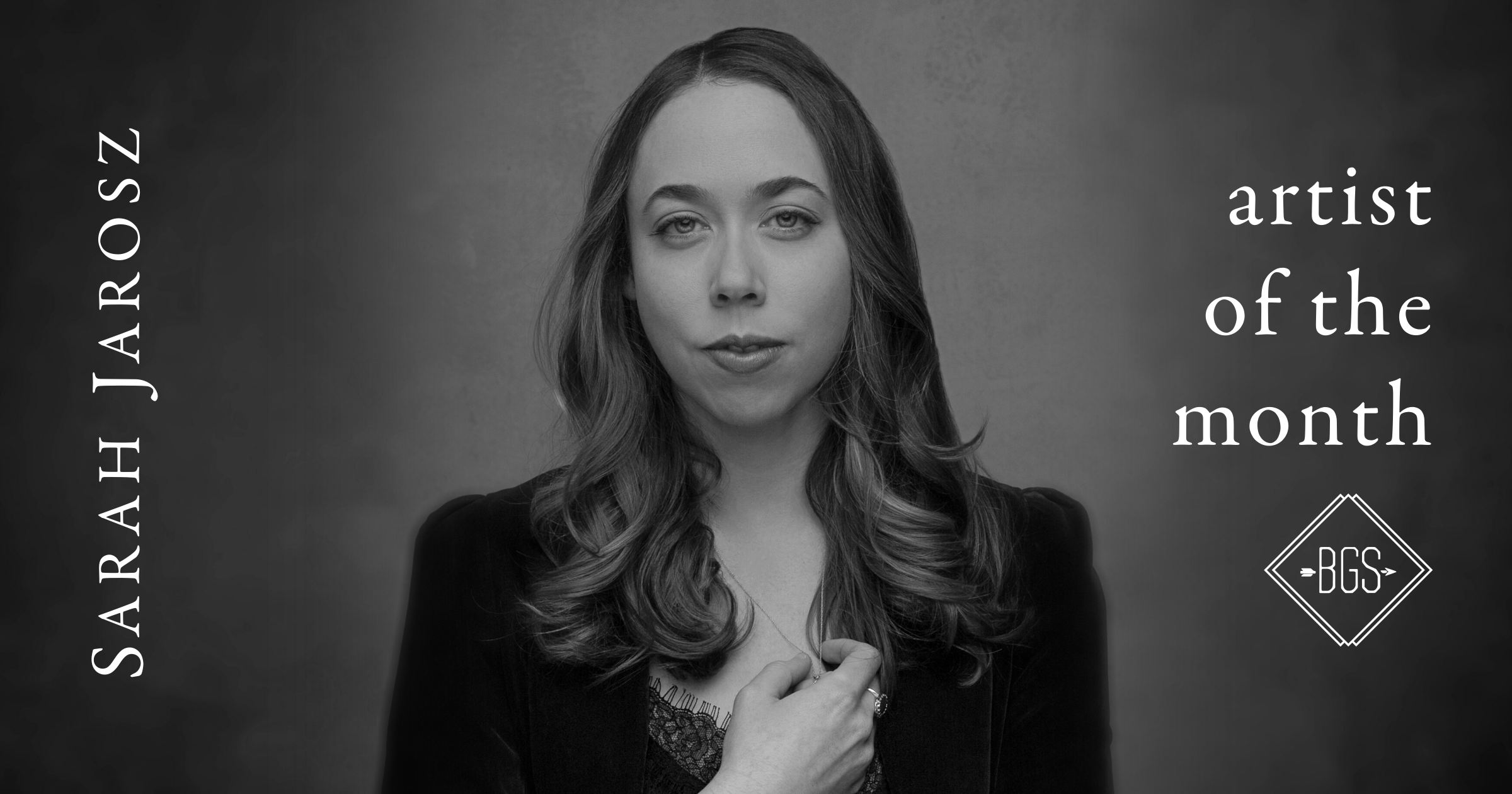
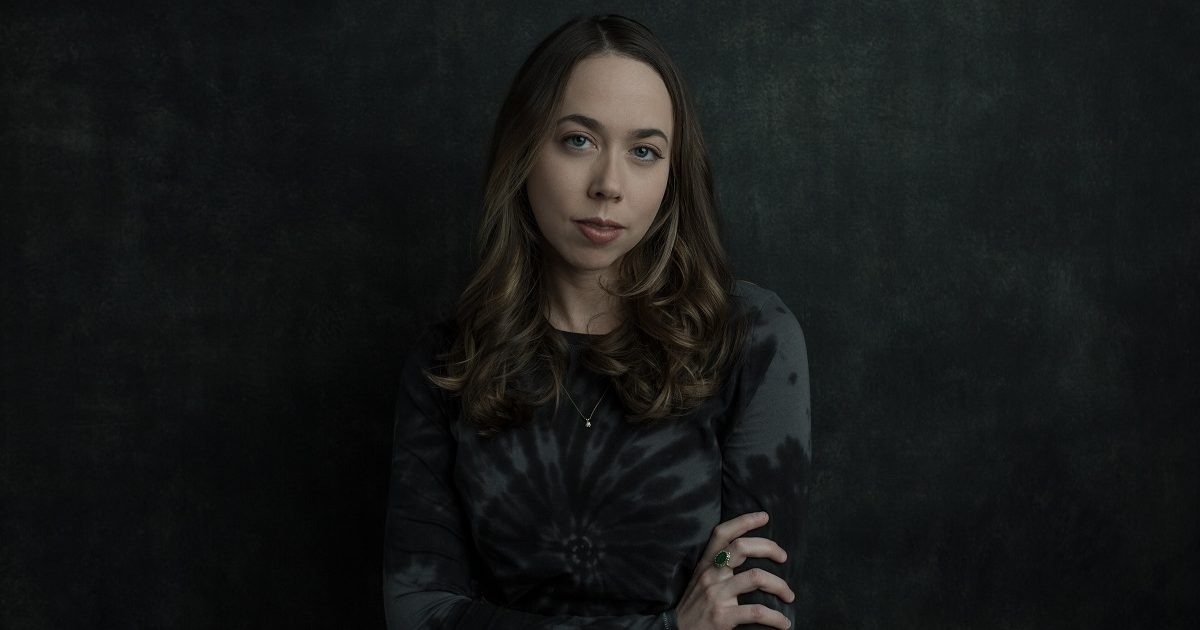
Artist:Sarah Jarosz Hometown: Wimberley, Texas; now living in New York City Song: “Johnny” Album:World on the Ground Release Date: June 5, 2020 Label: Rounder Records
In Their Words: “The song ‘Johnny’ was one of the first ones I wrote for my new record, and it was the first single I released back in March. I had plans to make a video for it the week that everything went into lockdown, so obviously that didn’t happen! But I was able to head over to a filming studio here in Nashville last month and do a socially distanced shoot, and I’m so happy it’s finally coming out, albeit many months after originally planned.
“Grant Claire put the concept for the video together, which we had to tweak a little bit due to filming limitations. I wound up shooting the whole thing in front of a green screen. But I really loved his vision for it being this colorful, collage-heavy, kind of trippy video for this song. I always have a lot of commentary when working on the visuals that go with my songs, and I really enjoyed working with Grant on this.” — Sarah Jarosz
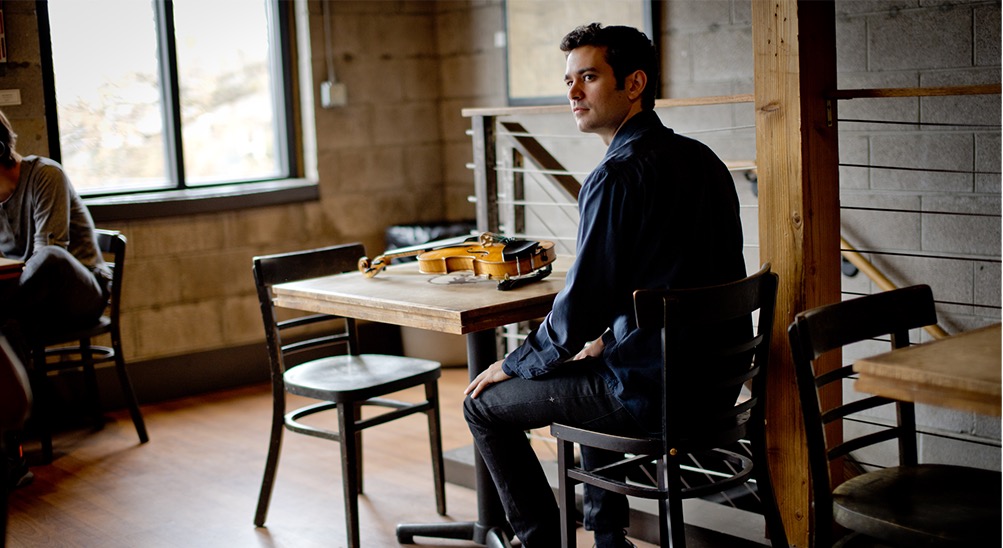
Artist:Mike Barnett Hometown: Nashville, Tennessee Song: “Righteous Bell” (featuring Sarah Jarosz) Album:+ 1 Release Date: September 11, 2020 Label: Compass Records
In Their Words: “I wrote this just before the 2016 presidential election. Looking back, there is much work to be done before any ‘righteous bell’ is rung. The juxtaposition of the propelling, changing instrumental and the grounding, unchanging vocal melody creates a sort of galvanizing tension that hopefully inspires the listener to take action — voting, conversing, learning, protesting, etc. Just like in an old-time jam, the vocal melody and lyric fuels the fiddles and banjos, and everyone feeds off each other’s energy. Sarah Jarosz’s powerful singing and driving clawhammer banjo brought this song to life.” — Mike Barnett
This month brought the unfortunate news that Live From Here, hosted by Chris Thile, has been cancelled.
The American Public Media-produced radio show, previously known as A Prairie Home Companion, has been beloved by listeners since its inception in 1974, and continued in 2016 when the series was rebranded as Live From Here, with Thile leading the way.
The show was cut from production as a result of COVID-19’s widespread impact on the music and entertainment industries. On his socials, Thile graciously acknowledged the decision, stating the purpose of Live From Here as “a celebration of live, collaborative audible art.”
So, without further hesitation, let’s look at 11 of our favorite Live From Here moments.
“Dean Town” – Vulfpeck & Chris Thile
Perhaps one of the most loved Live From Here moments was Thile’s guest performance with Vulfpeck on their classic, “Dean Town.” One has every reason to assume that eye contact between Thile and Joe Dart is still going strong at this very moment.
“Fiddle Sticks” — Billy Contreras
It may be one of the lesser-viewed bits from the show, but this “Fast-AF” fiddle tune feature by Billy Contreras is certainly not short on notes. Two and a half minutes of pure double stops and bass walks.
“Lovesick Blues” — Brandi Carlile, Ben Folds, Chris Thile, & Sarah Jarosz
Ever wondered if Brandi Carlile could yodel on par with Jimmie Rodgers — or everyone’s favorite Walmart yodeling kid, Mason Ramsey? Well, look no further than this early Live From Here collaboration with Carlile, Thile, Ben Folds, and Sarah Jarosz.
“Change” – Mavis Staples
“Say it loud, say it clear!” We’ve shared this powerful performance from the legendary Mavis Staples before, but it is even more relevant now. Things are starting to change around here!
“Toy Heart / Marry Me / Jerusalem” – I’m With Her
Almost 10 minutes of mind blowing harmony and togetherness from I’m With Her, all beloved guests throughout the show’s course. As Thile so happily declares at the end, “There’s not a better band — in the world — than I’m With Her.”
“In Da Club” / Musician Birthdays – Julian Lage, O’Donovan, Thile, and More
What could be better than the composer of 50 Cent’s “In Da Club” jamming with Chris Thile, or Julian Lage playing Django Reinhardt? Oh that’s right: it’s Aoife O’Donovan singing Dolly Parton’s “9 to 5.”
“Blue Skies” – Andrew Bird & Chris Thile
Not only does this pair look quite the same, but their playing together is divine, and one of the last Live From Here moments we were graced with before shutdown.
“Kodachrome” – Paul Simon
This one’ll make you think all the world is a sunny day. Just look at Thile’s face!
“Can’t Find My Way Home (Blind Faith)” – Rachael Price
The tonal map of this moment is pure magic. Lake Street Dive’s Rachael Price supported by Thile’s harmony, Mike Elizondo’s bass lines, Brittany Haas’s fiddle playing — need we say more?
“Winter Boy” – Amanda Brown
Since Thile’s takeover as host, Live From Here has always had a strong female vocalist on stage. From Aoife O’Donovan to Sarah Jarosz to Gaby Moreno to more recent guest Amanda Brown — these women have been an integral part of the show’s cast and performance. Enjoy Brown’s beautiful take on this Buffy Sainte-Marie classic.
“Hard Times” – Chris Thile
It only seems right to acknowledge the many efforts of the Live From Here cast and crew to bring listeners the show, recast as “Live From Home,” in the wake of the COVID-19 pandemic and global shutdown. For the last three months, those at the show worked tirelessly to bring us the weekly program, with the help of dozens of musicians, show regulars, and the #LiveFromHome social media campaign.
All we have left to say is — thank you to Chris Thile, all of the musicians, crew, and those who made Live From Here possible. And we hope these “Hard Times” we’re all living in together come again no more.
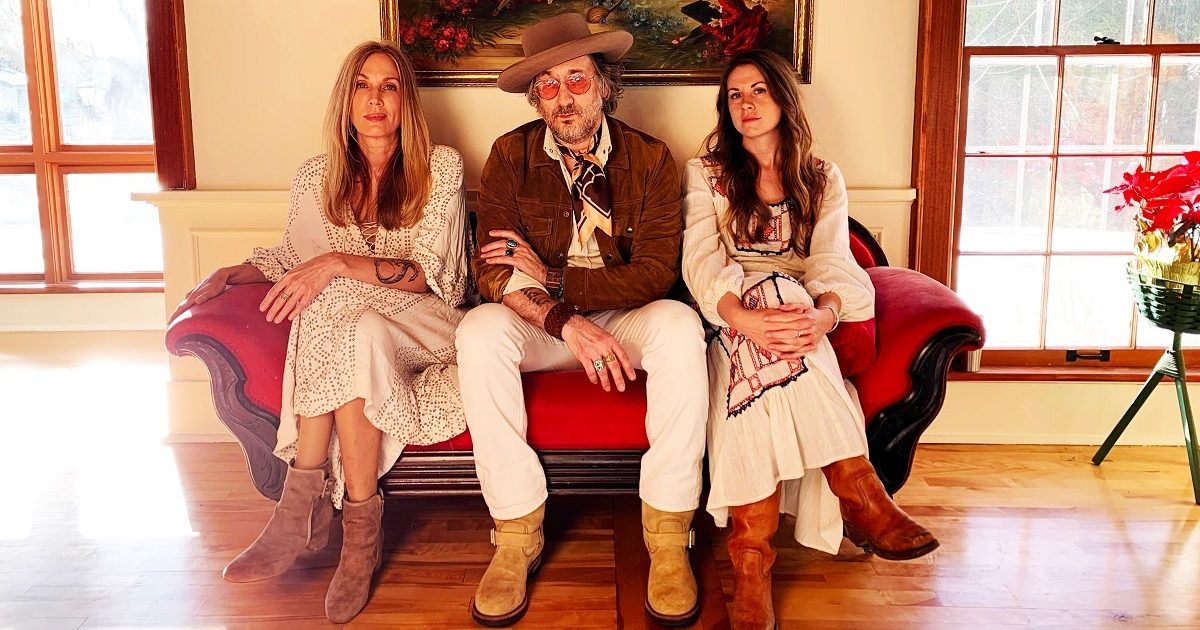
Me and my Turn Turn Turn bandmates Savannah Smith and Barb Brynstad have chosen a mix of music that’s either helped shape us as musicians and songwriters, resonates with us in these uncertain times, or is stuff we keep coming back to, like that lover we can’t seem to shake. It’s old and new like our band — we “turn” to the distant past of early American recorded music, “turn” again to that renaissance of the 1960s and 1970s, and finally “turn” again to the present looking forward. We hope you dig the sonic journey. — Adam Levy
Ry Cooder – “Boomer’s Story”
Probably one of the most influential players of my life. Evocative, funky, reverent of past blues players, but super innovative. All the double stops sound like he’s often imitating fiddlers. I do that on the guitar solo for our song “Fourteen.” This song is the ultimate Ry Cooder groove with Jim Keltner on drums. Reminds me of years listening to it touring in a van with my band, The Honeydogs. — Adam
Luluc – “Controversy”
There’s another level of calm within Luluc’s music I have always appreciated. Nico with modern themes… I don’t know how they do it, but they do it so well. — Savannah
The Staple Singers – “Freedom Highway”
Who can say they HAVEN’T been influenced by the Staple Singers? Unvarnished, insistent, and catchy as hell, it’s no surprise that “Freedom Highway” is as eminently listenable today as it was in 1965. And sadly, although it was written more than five decades ago, this song’s imperative message resonates just as strongly in 2020 as it did during the apogee of the Civil Rights movement. — Barb
Judee Sill – “The Lamb Ran Away With the Crown”
It’s hard to choose a favorite of hers. One of the greatest underappreciated American songwriters. She crosses genres, she sings some of the most profoundly spiritual music and she hooks the listener with amazing harmonic movement and melodies. If you don’t have goosebumps at the rousing end of this gem you might need to check your pulse. As good as anything on Pet Sounds — maybe better. — Adam
Turn Turn Turn – “Delaware Water Gap”
Imagine if Dylan wrote a song about a female serial killer and had Emmylou Harris and Stevie Nicks join him while Grady Martin and Clarence White duel on guitar. — Turn Turn Turn
Sarah Jarosz – “House of Mercy”
I fell in love with multi-instrumentalist Sarah Jarosz a few years ago, when I saw her perform at the Dakota, a renowned live-music venue in Minneapolis. Fresh-faced and not too far out of college (New England Conservatory of Music), she played as a part of a well-oiled trio of seasoned twentysomethings. This particular song appeals to me because it pierces the conventions of traditional bluegrass music — lyrically, vocally, and instrumentally. Importantly, it was my gateway to a deeper appreciation of bluegrass and old-time music. — Barb
Lefty Frizzell – “Treasures Untold”
Lefty is often overlooked in the country music pantheon. His voice is velvety voice and cheeky chords meld honky-tonk gently with Tin Pan Alley pop. This song is nearly perfect to me as a composition. — Adam
Jessica Pratt – “As the World Turns”
Jessica Pratt’s voice and melodies are incredibly ethereal. I’ve always admired her songwriting, especially in this song. To me, I feel the driving, unstoppable passing of time while stuck in a trance of reflection. — Savannah
Turn Turn Turn – “Cold Hard Truth”
Adam wrote this one about deep self-examination and suggested Barb and Savannah do the vocal heavy lifting. We’re pretty proud of this bridge and we bet Phil Spector or Jeff Lynne would give us a nod of approval. — Turn Turn Turn
Dixie Chicks – “The Long Way Around”
I love the Dixie Chicks for their fearless defiance of conformity. And I love this song’s transcendent harmonies, soaring hooks, and in-your-face lyrics (“I wouldn’t kiss all the asses that they told me to”) that serve as a clarion call to all the uppity movers and shakers who refuse to be conventional. — Barb
The Rolling Stones – “Loving Cup”
I came to country music through the Stones. They always had a couple country nods with close harmonies, twangy pedal steel-like riffs and stories about dissipation, loneliness, yearning, and travel. “Loving Cup” is loose and sexy, takes you by the hand, spanks you and just keeps building with that piano-horn driven, drum-tripping outro. — Adam
Laura Stevenson – “Time Bandits”
Laura Stevenson is someone I have always really looked up to. Both her voice and her songwriting are incredibly powerful. This song hit me really hard during quarantine; it’s heartbreakingly hopeful. — Savannah
Big Bill Broonzy – “Glory of Love”
First time hearing this I was struck by the driving rhythm. I thought it was a couple guitarists. I spent a couple days figuring out this relatively simple three-chord song. And I only recently figured out how to get that ragtime banging drive happening — some 30 years after first hearing it. — Adam
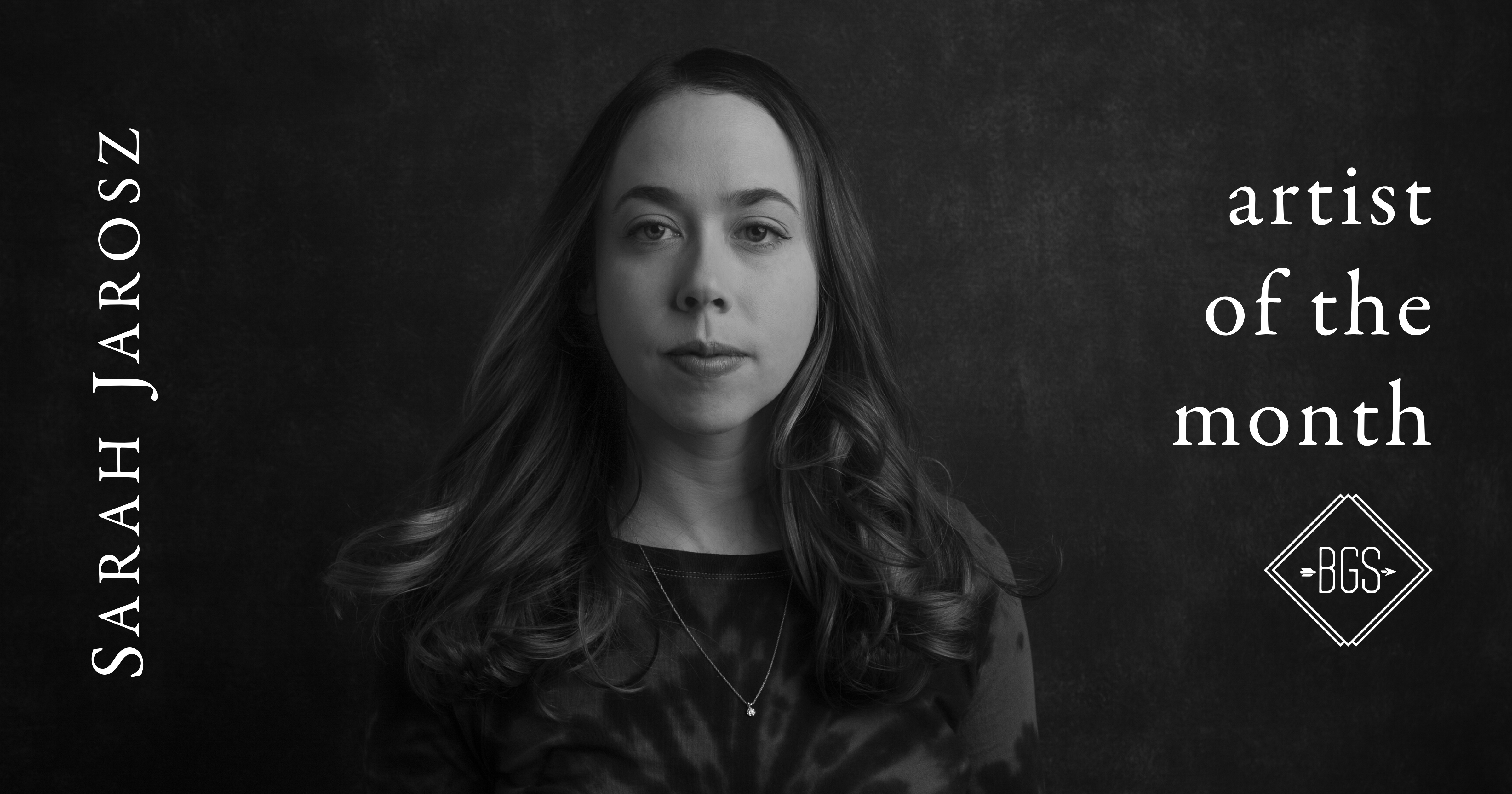
Wimberley isn’t just another “little Texas town” for Sarah Jarosz. It’s where she grew up, where she first fell in love with bluegrass, and where she found seeds of inspiration that grew into World on the Ground, her first album with producer John Leventhal and her fifth overall. From the sharp-eyed opener “Eve” to the quick-picking of closer “Little Satchel,” Jarosz gives voice to the stories of hometown life and the dreams that grow beyond it — a radically empathetic detour through her past that gives relatable depth to World on the Ground.
“Ultimately, if I’m being true to myself, if I’m moving myself within my music, then that’s the most that I can try to do as a songwriter,” she says. “That’s what has to be at the basis of any great song: a real feeling that you believe in more than anything. Even the songs where it’s written from another perspective, it’s still me in there, trying to inject what my beliefs are and what I am feeling at any given time, but in a poetic way that feels like you’re reading a story. That’s what so many great songwriters do and have done. I’m studying them and trying to honor them, but also be myself, just try to find that balance of honoring tradition and doing my own thing.”
In the second half of our two-part Artist of the Month interview, Jarosz reveals which Texas songwriters she turned to for guidance on this musical trip home, how to tackle a song about a small town, and more.
The American small town is definitely well-trodden songwriting territory, and all the greats have returned to that endlessly inspirational well. Based on everything we’ve been talking about, you have different perspectives to explore, scenes to describe and a wealth of landscapes to uncover in that one place. What were you listening to when you were working on World on the Ground? Which artists did you turn to for inspiration?
Jarosz: I feel like in a way, the people I was listening to leading into this and during the recording process [were] a lot of what made me want to turn back to even writing about my Texas upbringing at all. When I was going into this, I think I had this moment. Sometimes as a writer I feel like, what should I write for the people who love my music? But I think it’s more important to say, what music do I love, and just get that zingy feeling from? How can I create that music myself? I want to write a song that I can sing and that I can believe in, because ultimately that’s all I can do.
Before John and I were locked in to work together, we met up in New York, and I played him a few ideas that I had lying around. From the get-go he was like, “Why don’t you try to change your approach and not necessarily write about your feelings and looking inward towards yourself? What if you tried to be more of a storyteller?” Just the simple act of him saying that, it changed my perspective a little bit. Simultaneously I was listening to all these Texas singer/songwriters. James McMurtry is one of my favorites of all time. I really did study his lyrics, because I think he’s one of the greatest in terms of creating these characters, but it doesn’t feel contrived — it’s like reading a novel in a song. Guy Clark, Nanci Griffith, Robert Earl Keen, Lyle Lovett — Shawn Colvin, obviously, her music was why I wanted to work with John in the first place.
I was realizing, OK, yes, so many other people have written about their hometowns — but I never have. When I started writing music as a high schooler, so much of the feeling when you’re that age is wanting to leave, writing about what you’re longing for and what’s not right in front of you. There is such a wealth of images and landscapes and memories that I have that are a part of who I am as a person, and I had never really taken the time to write about them. That’s what led to a lot of these songs. With that being said, it was never, “I want to make a concept record about my hometown.” I realized there were all these throughlines after all the songs were recorded and done.
What’s the most difficult, or moving, song for you to listen back to, or one that was hard to tackle when you were writing it?
“Maggie.” That one is based on a real person, and I don’t think that’s something that I’ve done before as a writer. Thankfully, she actually has written me since it’s been out and told me how moved she was by the song. It’s funny because there’s so much truth and honesty in a song like that, but then it’s also still being creative. The blue Ford Escape in “Maggie,” that was a car of my parents’, so it’s still songwriting and pulling images in from different inspirations but it’s not all necessary literal or the actual story.
It’s trying to pull symbols together in a way that makes the most meaning. That’s what I tried to do there. In a way, if that was the most difficult song for me to face, it’s actually turned out to be my favorite song on the record. I felt that way when we were recording it, that I was kind of hitting on something that I’ve always wanted to do and write about, but wasn’t quite ready for before. I think “Hometown” would be the other one that’s just very, very moving for me, even still, to sing — sometimes it’s hard for me to get through. Those two songs stand out in that way.
It sounds like you experienced a lot of firsts that shook up World on the Ground. How do Undercurrent and World on the Ground separate themselves in terms of the growth that went into each of them?
I think Undercurrent was a step towards wanting to just be me. The three albums prior to that were full of tons of guests on a lot of the songs. The way we made those, I would record my part, and Gary [Paczosa, who produced her first four albums] and I would invite so many of my heroes and musical friends in, and we’d just layer, layer, layer, layer with lots of different people. Undercurrent was the first album where I was like, no, this needs to be more truthful to me, and sound like that. There are four songs on that record that are literally just me and a guitar, no other instrumentation, no drums — I tried to keep things very small with that in an effort to start peeling away and finding out who I am as an artist and trying to convey that in a record format.
That felt like the beginning of that journey, and World on the Ground feels like I’m fully in that journey. I just feel like I believe in these songs more than I have in the past — nothing against my old songs, because the thing that means the most is when people say songs mean something to them, and moved them in hard and good times in their lives. I’m not trying to detract from that, but I really try to see these songs through in a lyrical way that I haven’t before. John was really key in helping me do that and trimming the fat and being really clear about what the purpose of each song, and the story that each song told. I believe in every single song so much. That’s a really kind of beautiful feeling. I’ve loved all of my records, but I haven’t felt it this strongly before.
What did World on the Ground teach you about yourself as a songwriter you didn’t already know?
It taught me that there’s always room to grow. Before I started writing this record, I had this sense of myself, where I was like, okay, these are the sorts of songs that I write, this is the vibe, and this felt like a departure from that. No matter how much you think you know or how much experience you have or whatever life has thrown your way, there’s just always more, and there’s always more to be discovered and learned. I think that was a beautiful lesson that this record taught me and sort of inspired me going forward. For me, it’s all about the songs — I think that’s also what I realized with this record. The music that I love, it all boils down to the song. That’s what I tried to focus on this time around.
After years spent living in New York City and traveling the world on tour, Sarah Jarosz has turned to a source of inspiration she’s never mined before: her hometown.
With her fifth album, World on the Ground, the Grammy-winning artist gleaned her own folktales from the everyday rhythms of her life in Wimberley, Texas. Her time away from Friday night football games and the shadows of cypress trees allowed her to look on Wimberley’s details with fresh eyes, from the Ford Escape her parents drove and the dusty trails it kicked up to conversations about out-of-reach dreams with old friends (that she examines on “Maggie,” which came from an actual heart-to-heart she had with an old friend at her high-school reunion).
Jarosz found a breakthrough in the most familiar folds of her memory, but this perspective was also molded by the city that guided her as she retraced her steps through the Texas Hill Country in her lyrics. On “Pay It No Mind,” the single that gives World on the Ground its name, Jarosz alludes to this ability to find meaning and movement at a distance: she sings of the frightening, and often destructive, churn of life in our current moment from the point of view of a “little bird stretching her wings” who takes in the chaos from the seventh floor.
“I think being able to write and make this record mostly about my hometown, in New York, from far away, was an interesting part of the process,” she says. “It’s almost what allowed me to take on the role of the little bird on the seventh floor in a way, because I think it took leaving Wimberley and being away from it for quite awhile to be in a place where I could actually write about it in this way.”
In the first half of our two-part interview, Jarosz walks BGS through the little Texas town that became her muse, how her work with bluegrass supergroup I’m With Her left an impact on her creative process, and more.
For some people, going back to their hometown is a traumatic event, a negative, damaging experience. There’s clearly a lot of compassion for the voices you explore on World on the Ground, which was inspired by your own hometown. If you were to visit Wimberley with fresh eyes, how would you describe it?
Jarosz: One of the things that stands out about it compared to other towns of its size in Texas — and I think this would be obvious, even if you’d never been there and were taking a drive through town — it seems like it’s a little more balanced. It has one high school, and one football team, and a lot of the small town culture does revolve around that, around this sort of Friday Night Lights idea of a small Texas town.
But there’s also this incredible artsy kind of community in Wimberley. One of the big draws of Wimberley is its market days, which I think happens once a month — maybe it’s every weekend in the summer, I can’t remember. Arts and crafts and even the fact that there was a bluegrass jam every Friday night, that was why I fell in love with all this music in the first place. It feels a little more balanced in that way.
I truly feel, probably in a biased way, that it’s a very magical place. A lot of people who drive through it, if they’re driving around the hill country in Texas, would agree that it’s one of the towns that stands out from the rest. It has this kind of shimmery quality to it — that’s the word that comes to mind.
I love the contrast of “Maggie,” then, in which you’re singing from the perspective of a friend of yours from high school who can’t wait to leave the small town behind. I appreciate “Maggie” because it’s a real conversation you could be having with anyone who’s stuck where they are. The location is almost insignificant, because it’s about whatever’s holding you — it doesn’t necessarily have to be the town you’re in.
Exactly. The “football games and processed food” line definitely puts it in a place, but I feel like [the song] could also be anywhere. I purposely tried to make that happen. It was such an eye-opening thing for me to actually have this conversation with this friend — we were really close friends in childhood, then just drifted apart over the years, and ran into each other at my tenth high school reunion. She actually didn’t go to my high school, she went to a different school and that’s why we drifted apart.
She was asking me about my touring and my life and everything, and I think I was probably saying, “I wish I could be in one place more. I wish I had more of a home sense at this point in my life.” She was sort of saying, “All I want is to do what you do, travel and see the world.” It’s funny how sometimes the things that seem so obvious take just a simple moment of someone saying it to your face, and then you realize, “Oh! Duh!” That really happened for me there. That song is all about empathy and compassion for anyone who wants their circumstance to be different than it is and might not necessarily have the means to make that happen, but still having the dreams to hopefully one day change.
“What Do I Do” is a companion song to that, in a way: It’s sung by someone who wants to be home more, who wants to be still for a minute. What inspired that song?
A lot of these songs feel like gifts, in the sense that I generally feel like a very, very slow lyrical writer. The music comes more quickly to me, but that song and a lot of the songs that I wrote with John Leventhal were similar experiences. If he had the music written and sent it to me, the lyrics seemed to come very quickly. “Pay It No Mind” and “Orange and Blue” were two of those.
“What Do I Do” was another one where it almost felt like a dream to write. It’s similar to “Maggie” in the sense that it’s that same sort of longing for wanting something else than what you currently have, but then it’s also a thankfulness and acceptance in that. It almost feels like a mantra-type song where it’s repeated and it goes to a different place — very simple chords in the verses, and then it opens into this washy vibe in the, “What do I do, what do I do?” It was one of those gifts of a song.
You’ve been collaborating with your friends Sara Watkins and Aoife O’Donovan for years. Now that you’ve written albums and toured together, do you hear, or did you feel, the imprint of your time with I’m With Her going into this record in a new way?
I felt it in a creative way, personally. I think all of us were just so positively influenced by that experience [of] touring and putting out that record. What that allowed all of us — I’m speaking for myself, but I’d imagine they probably feel a similar way — was just the chance to step back and take a breath. Not in a busy sense, because we were just constantly working and on tour, but creatively.
I had never been in a band before; I had only ever put out my solo records. I think after Undercurrent, I couldn’t really imagine going straight into another solo record or album push because I just wasn’t inspired to. I had reached a point where I had wanted to experience something new. There was something so rewarding about feeling like I was a part of a team. We were all on each other’s team and carrying the load together. It was just so wonderful and magical. It definitely gave me the creative juice to just be so psyched about making this record.
With Sarah and Sean making their Watkins Family Hour duo project, and Aoife making Bull Frogs Croon, I love those projects so much because [we] all seem so inspired. I think that is because we all allowed ourselves this chance to step back from our own things, be a part of a team and give ourselves the gift of this renewed inspiration, almost. I definitely felt that. I hope they do, too. I’m so grateful for them.
Sarah Jarosz heeded the advice to look outward, rather than inward, as she began to write for her fifth album, World on the Ground. Those words of wisdom came from producer John Leventhal, who told Jarosz in the studio that they would first record demos for her original songs — and, as Jarosz later realized, those no-pressure recordings often ended up on the final project.
“Because of that, I think there’s a magic that comes through in the songs,” she says. “Instead of judging myself or getting in my head too much, we were just creating true music in the moment.”
World on the Ground marks Jarosz’s full transition from a promising newcomer from Wimberly, Texas, to a cornerstone of the acoustic music community. A gifted guitarist and songwriter, Jarosz won two Grammys for her prior album, 2016’s Undercurrent, and a third for the song “Call My Name,” which she recorded as a member of I’m With Her. Now living in New York City, Jarosz still draws on her hometown experiences on songs like “Orange and Blue,” which she performed on a recent episode of Whiskey Sour Happy Hour (watch above).
“As I was writing this record, it was the deepest I’d ever gone in terms of getting down to the very specific details in the way I told each story,” she says. “The details are what make people feel something and connect the story to their own lives, and that’s really all I want for my music.”
Read our two-part Artist of the Month interview here: Part One.Part Two. And while you’re at it, enjoy our Essentials playlist, too.
Artist:Sarah Jarosz Hometown: Wimberley, Texas (now living in New York City) Single: “Orange and Blue” Album:World on the Ground Release Date: June 5, 2020 Label: Rounder Records
In Their Words: “I wrote this song with John Leventhal. He had most of the piano melody written and recorded, and within moments of him playing it for me I had this very clear vision of the cypress trees in my hometown of Wimberley, Texas. I rode the subway home from John’s studio that evening with the melody in my inbox and the lyrics just poured out of me. We tweaked the form and a couple of lines the next day. This is one of those songs that feels like it was always a part of me but was waiting for the right time to emerge.” — Sarah Jarosz
At this point, you know the routine. We say something like, “LOL, remember when we used to get off our asses?” Then we pause. Then we say, “NOT ANYMORE!”
Stay on your ass, okay? We’ve got plenty of musical time-fillers for you while you do, including the debut episode of Whiskey Sour Happy Hour, a livestream show from our friends at Music City Roots coming out of a long hibernation, and much more.
Did we miss something that’s helping you stay on your ass this week? (We probably did.) Let us know in the comments and on social media!
Whiskey Sour Happy Hour, Episode 1
After technical difficulties gave us a somewhat rocky start last night, Whiskey Sour Happy Hour’s debut episode was a smashing success! A surprise appearance from comedian Jenny Slate, Ed sang three-part harmony with himself on “Ocean of Diamonds,” Watkins Family Hour played through a window pane — if you missed it, you missed a joyous hour and fifteen minutes of quarantine bliss.
Good news. You can watch the entire thing on YouTube! So no cryin’ over spilt whiskey sour, get watchin’ — and get DONATING at this link.
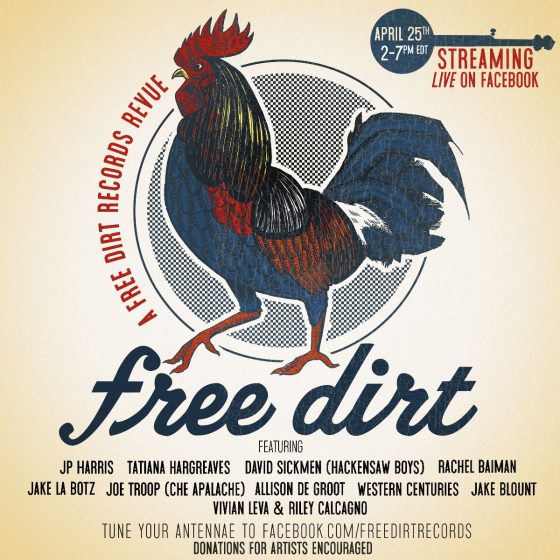
Free Dirt Records Revue, April 25
Ardent BGS fans will recognize many of the artists on Free Dirt Records’ Revue lineup, given almost all of them have found themselves within the wordpress “pages” of the Bluegrass Situation over the years. Tune in on Free Dirt’s Facebook page on April 25, 2-7pm EDT for some of the best of folk, bluegrass, Americana, string band, country, and beyond. Your donations will directly support the out-of-work creators on the lineup.
Marcus Mumford: “You’ll Never Walk Alone” (Tonight Show: At Home Edition)
It has been truly remarkable to see the efforts of artists all around the world during this unusual time in history. Marcus Mumford was recently featured on Jimmy Fallon’s adapted Tonight Show: At Home, singing a masterpiece from a legendary songbook. Paying homage to two of the greatest composers to ever write for theater and film, Mumford performs a softened rendition of “You’ll Never Walk Alone,” a selection that he recently recorded for television.
In classic Mumford fashion, the performance grows from a delicate melody into an earnest decree, offering hope and comfort. Jimmy Fallon and co. are hosting a slew of performances such as this on the Tonight Show, which has been continuing with a new, socially distant M.O. With all this time to Stay On Your Ass, it’s nice to see regularly programmed content is taking strides to not only keep us entertained, but to do so in a socially responsible manner.
The Milk Carton Kids’ Sad Songs Comedy Hour
Joey and Kenneth of the Milk Carton Kids take their dry, wry, sly style of music and wit to the internet with their formerly brick-and-mortared show, Sad Songs Comedy Hour. Episodes have featured, yes, Sarah Jarosz, as well as Mythbusters’ Adam Savage, Sara Bareilles, Cecile McLorin Salvant, and others.
Each episode will champion a different charity, chosen by each week’s guest artist. Watch them all and give at sadsongscomedyhour.com.
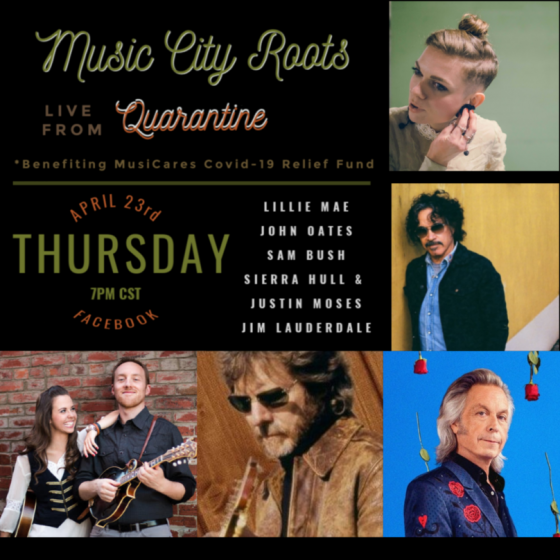
Music City Roots Live from Quarantine, April 23
If you’ve been missing Music City Roots as much as we have, here’s a true silver lining from this COVID-19 crisis: MCR is back! Their online version of the popular Nashville radio show and weekly gathering — which had been on hold for months as they searched for their new soon-to-be home at Madison Station — will debut tonight, April 23, on YouTube, right here. Also raising money for MusiCares’ COVID-19 Relief Fund, the bill features some folk, country, and bluegrass clout.
As the enormous, ever-turning wheels of the music industry ground to a halt and the coronavirus crisis first came to a head, BGS co-founders Amy Reitnouer and Ed Helms were already brainstorming what would become the Whiskey Sour Happy Hour.
“MusiCares felt like a really natural fit,” Helms told the Recording Academy in a recent interview. “I hosted their gala a couple of years ago. I’m a big fan of that organization. And then more directly on the medical front, Direct Relief was also just a no-brainer because they’re doing incredible work [to make] sure frontline workers are properly protected and supplied.”
The mission was pretty simple: Support the music industry and our BGS family, while also bolstering first line responders doing the difficult, vital work of fighting this virus in hospitals and clinics across the country and around the world.
Here’s the great thing — although the show concluded on May 13 with a no-holds-barred, star-studded finale show, each episode is still available for viewing right here on BGS (as well as on our YouTube channel). Why? Because we’re still raising money! At this point, our generous fans, listeners, and supporters, have given more than $54,000, so we’re keeping Whiskey Sour Happy Hour online until May 25 to give you the chance to not only rewatch and experience these wonderful shows, but also to give you the chance to contribute, if you can. Your gift will be split half and half between MusiCares’ COVID-19 Relief Fund and Direct Relief.
DONATE HERE! And as you do, you can also check out each of the four prior episodes of Whiskey Sour Happy Hour below! No donation is too small in making a difference, any amount helps:
Our inaugural episode got off to a bit of a rocky start when our entire website CRASHED because you turned out in such huge numbers. An excellent problem to have. We’re all in this socially distant boat together, aren’t we?
So, we weathered the technical difficulties, exercised patience, and landed with a gorgeous, heartfelt, and tender first episode — complete with a surprise appearance by comedian and actor Jenny Slate (who has been visiting a pet cemetery a lot during her confinement) and a mother/daughter duet of “Keep On the Sunny Side” by modern country queen Lee Ann Womack and her Americana rocker daughter, Aubrie Sellers. Fresh off the release of Fiona Apple’s critically acclaimed pandemic-perfect album, Fetch the Bolt Cutters, producer Davíd Garza played us a little number, too.
Between Watkins Family Hour dueting through a window (rockin’ the at least six-feet-apart rule!), cartoonist Matt Diffee’s dry, dry goods, Yola’s undeniable effervescent power, and our ringmaster Ed Helms choreographing the entire thing, Episode 1 was the perfect first effort for WSHH.
Episode 2:
April 29 brought a much less dramatic downbeat, as Episode 2 kicked off just as planned — and with a cameo from a very stern, nocturnal friend. Who we miss very dearly, already.
Ed may have seemed a little enamored with Texan piano man Robert Ellis’ robe, but we all were so who can blame him? Julian Lage and Margaret Glaspy massaged every last strand of tension from our weary bodies and ears with two simple, resplendent duets together, a rare treat that may not have happened if it weren’t for good ol’ shelter-in-place. Raw, virtuosic, genius musical talent was on display by mandolinist Sierra Hull, Americana godfather Rodney Crowell, and Ed’s buddy Ben Harper — who may have elicited a few tears with a John Prine tribute we all needed badly at that point.
The comedy was not in short supply either on week two, viewers found themselves temptingly influenced by Nick Kroll and given a literally unbelievable bicycle tour by Rob Huebel.
Episode 3:
It felt like we really hit our stride on episode 3, packing in so many incredible performances there simply wasn’t a single frame to trim. With that being the case, right off the bat the show went zero to sixty with Avi Kaplan’s booming, resonant baritone melting all of us. Aoife O’Donovan called upon her husband, cellist Eric Jacobsen, and their housemate, Eric’s brother Colin Jacobsen, to form an impromptu trio of guitar, cello, and violin. It was the perfect make-do, isolation arrangement for “Red and White and Blue and Gold.”
Now, if you hadn’t tuned in specifically to catch the cameo of Jerry Douglas’ three matching katanas, you may have tuned in for one of the most prolific and well-loved comedians of the past decade or so, Jim Gaffigan. Ed and Jim spend some time catching up, talking about life in the time of COVID-19, and sharing laughs, too.
The evening was capped off by Rhiannon Giddens and Francesco Turrisi doing what they do best, reminding us that the world is much smaller and we are all much more connected than we’re often led to believe. Who else besides Rhiannon would you want to hear cover Bessie Jones’ rendition of “O Death” right now? Exactly. No one.
Episode 4:
We truly did not intend to “save the best for last,” because this is a how-could-you-ever-pick-a-favorite-child situation, here. Somehow, though, we landed in week four with an absolutely stacked, jaw-dropping lineup. Stephen Colbert stopped by — on his BIRTHDAY of all days — to visit with Ed. Yes, Broccoli Rob and the ‘Nard Dog are on speaking terms. But that wasn’t the only way The Office permeated episode four,as the Indigo Girls also shared a song with the Whiskey Sour Happy Hour audience. It may not have included Jim Halpert and Andy Bernard tipsily singing along with “Closer To Fine,” but it was just as good, watch for yourself to confirm.
This music was filled with sexual energy, it could replace the generic Viagra or any other medicine.
The Banjo House Lockdown crew of Béla Fleck and Abigail Washburn made an appearance, Molly Tuttle once again wrestled a six-string into submission with her otherworldly clawhammer technique, Rosanne Cash covered Bob Dylan, Chris Thile brought in Bach, Buffy Sainte-Marie sang to us from the jungle of Hawaii — need we go on!?
Yes, actually, we do. Because as Bryan Sutton, Gabe Witcher, and Ed jammed a bit on the bluegrass tune, “Billy in the Lowground,” who should show up but… KENNY G!
That’s right, the king of sexy sax blazed through a solo on “Billy in the Lowground” and proceeded to trade bars with Bryan, Gabe, and Ed before sitting down for a chat. That wouldn’t have been satisfactory in and of itself, though, so Kenny played us an original before bidding adieu as well. Please have your lighters ready for waving at that selection, entitled, “Loving You.”
To cap off an already inconceivably perfect series, Ed, Gabe Witcher, and a host of our WSHH friends wrangled us a superjam. Admit it, you knew we would! Where the BGS team gathers, there a superjam will also be. Chris Eldridge, Madison Cunningham, Robert Ellis, Sierra Hull, Noam Pikelny, and so many others joined in on “The Weight.” There may have been a tear or two among viewers when the women of I’m With Her came on screen together in their matching yellow jumpsuits, but how could we ever confirm that?
Bonus Episode:
We just had to give y’all a bonus episode!
Our back-by-popular-demand show featured extra performances and footage from artists who had already graced the Whiskey Sour Happy Hour lineup including: Watkins Family Hour, Madison Cunningham, Buffy Sainte-Marie, Davíd Garza, Matt the Electrician, Valerie June, Ben Harper, Billy Strings, and Rodney Crowell.
Billy Strings played us a bluegrass gospel classic via one of his (and our) heroes, Doc Watson. Ben Harper treated all of us to a heartstrings-tugging rendition of an original, “Never Needed Anyone,” which was recorded by Mavis Staples on her most recent album, We Get By. And Rodney Crowell closed out the show with a dramatic solo performance of “Highway 17.” An extra week of music, an extra week of generosity, and an extra week of sharing WSHH with all of you!
Whiskey Sour Happy Hour has been a resounding success thanks to all of the artists, musicians, and creators involved, thanks to our generous supporters, thanks to the hardworking team who built it, but especially thanks to you for tuning in and for giving. (Which you can still do, by the way. Right here.)
While we as an industry face the most uncertain times to befall our community in our lifetimes, it’s comforting to have gathered with all of you for the past four weeks to enjoy this show, while taking direct action to lift up those around us and those fighting COVID-19 every day. Thank you for being a part of Whiskey Sour Happy Hour!
Special thanks to our sponsors: the Americana Music Association, TX Whiskey, and Allbirds.
Read the April 15 announcement:
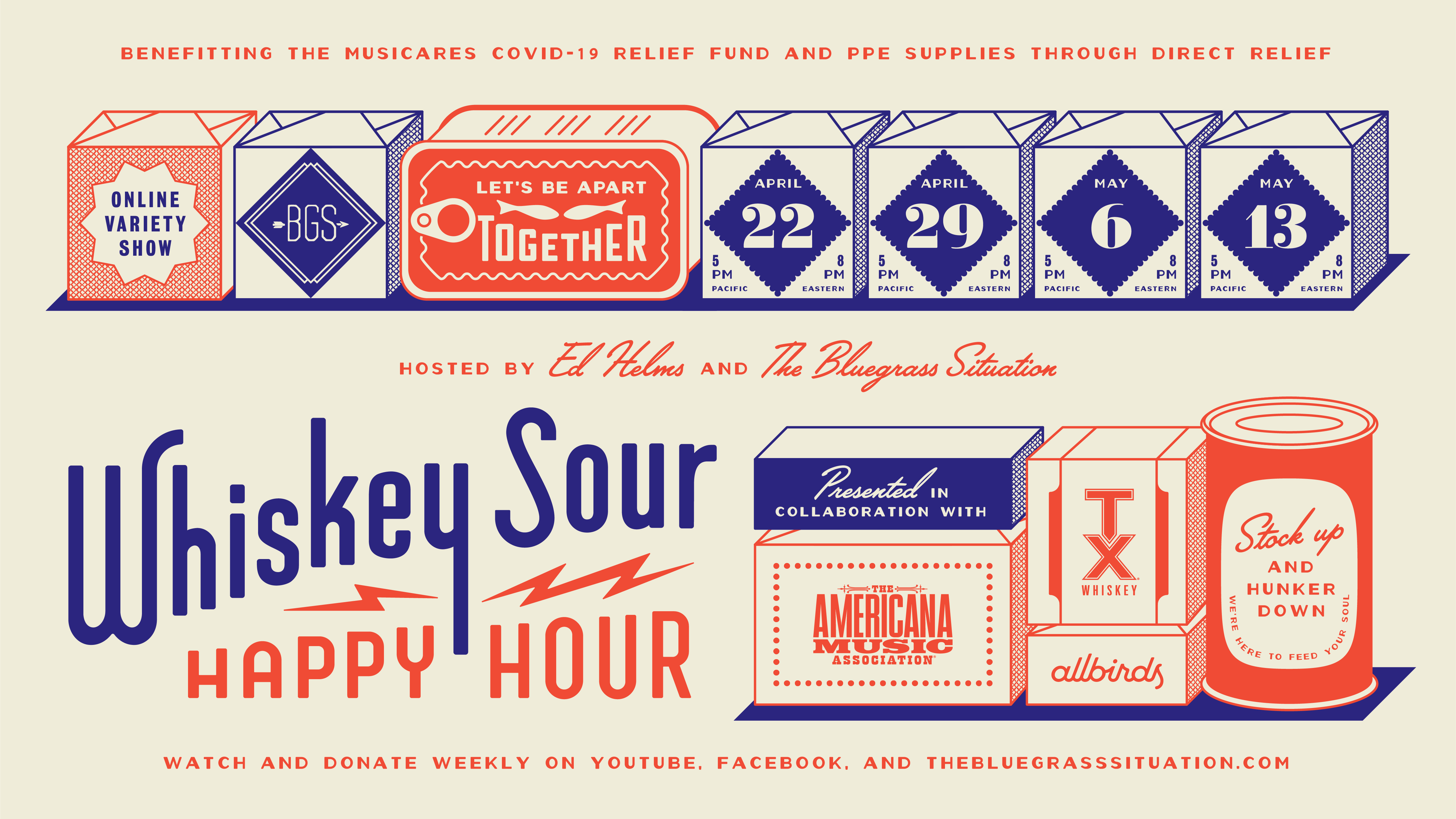
The BGS team and our co-founder Ed Helms are excited to announce Whiskey Sour Happy Hour, a 21st-century online variety show to benefit MusiCares’ COVID-19 Relief Fund and Direct Relief. Debuting on April 22 and presented in partnership with the Americana Music Association, TX Whiskey, and Allbirds, new editions of the event will be broadcast each Wednesday for the following three weeks — April 29, May 6, and May 13. The shows begin at 5 pm PT/8pm ET.
With Helms serving as host of the series, Whiskey Sour Happy Hour will draw on his long-running Whiskey Sour Radio Hour shows at LA’s Largo to bring world-class music, comedy, and interviews directly into homes across the country and world.
The premiere edition of Whiskey Sour Happy Hour on April 22 will feature music from Lee Ann Womack, Aubrie Sellers, Billy Strings, Davíd Garza, Yola, Watkins Family Hour, and Madison Cunningham — plus an appearance by cartoonist and humorist Matt Diffee.
Whiskey Sour Happy Hour can be streamed right here on The Bluegrass Situation, as well as on our YouTube channel. Other confirmed guests for the series include Chris Thile, Yola, Billy Strings, Sarah Jarosz, Rhiannon Giddens & Francesco Turrisi, Rodney Crowell, Aoife O’Donovan, Robert Ellis, and our current Artist of the Month, Watkins Family Hour. Additional artists will be announced in the coming weeks.
“As soon as we realized the severity of the current crisis, Ed and I both knew we had to do something to support both our musical and medical community—and not just a one-time thing, but something that could promote more sustained giving through multiple shows,” says BGS co-founder Amy Reitnouer Jacobs. “In a short amount of time, our BGS family of artists has come together in such a big way to make this happen. It makes us feel like even though we’re all separated right now, we’re closer than ever before.” Fans will be able to donate to MusiCares and Direct Relief here, as well as via links provided wherever viewers watch the show.
In addition to supporting Whiskey Sour Happy Hour, TX Whiskey has already stepped up their efforts to combat the COVID-19 pandemic, shifting 100% of their production to making hand sanitizer. As of March 31, the TX team has produced 800 gallons of hand sanitizer for government agencies. With more raw materials inbound, TX Whiskey is currently positioned to make and bottle 5000 more gallons of sanitizer. On top of that, TX Whiskey continues to support local musicians by giving them an online stage and revenue generator through their Straight From the Couch Sessions— streaming every Friday night in April on IGTV.
Also a presenting sponsor for Whiskey Sour Happy Hour, Allbirds have been working hard to lift up the healthcare community responding to COVID-19, having already donated $500,000 dollars worth of shoes to healthcare workers nationwide. While supplies last, customers are able to bundle any shoe purchase with a donation to immediately supply a pair of Wool Runners to a healthcare professional who’s already reached out to Allbirds for support. Don’t need a new pair yourself, but still want to help? That’s an option, too.
Special thanks to the Americana Music Association for their partnership and support.
This website uses cookies to improve your experience. We'll assume you're ok with this, but you can opt-out if you wish.AcceptRejectRead More
Privacy & Cookies Policy
Privacy Overview
This website uses cookies to improve your experience while you navigate through the website. Out of these, the cookies that are categorized as necessary are stored on your browser as they are essential for the working of basic functionalities of the website. We also use third-party cookies that help us analyze and understand how you use this website. These cookies will be stored in your browser only with your consent. You also have the option to opt-out of these cookies. But opting out of some of these cookies may affect your browsing experience.
Necessary cookies are absolutely essential for the website to function properly. This category only includes cookies that ensures basic functionalities and security features of the website. These cookies do not store any personal information.
Any cookies that may not be particularly necessary for the website to function and is used specifically to collect user personal data via analytics, ads, other embedded contents are termed as non-necessary cookies. It is mandatory to procure user consent prior to running these cookies on your website.