It’s been a year since the music industry slammed to a halt due to Covid-19. Performing artists had to adjust financially, logistically, emotionally and more.
Now with a year’s hindsight, The String sought out a sampling of roots musicians to hear how they coped. Many found unexpected gifts. Some started new businesses. Everybody learned a lot about themselves and their field.
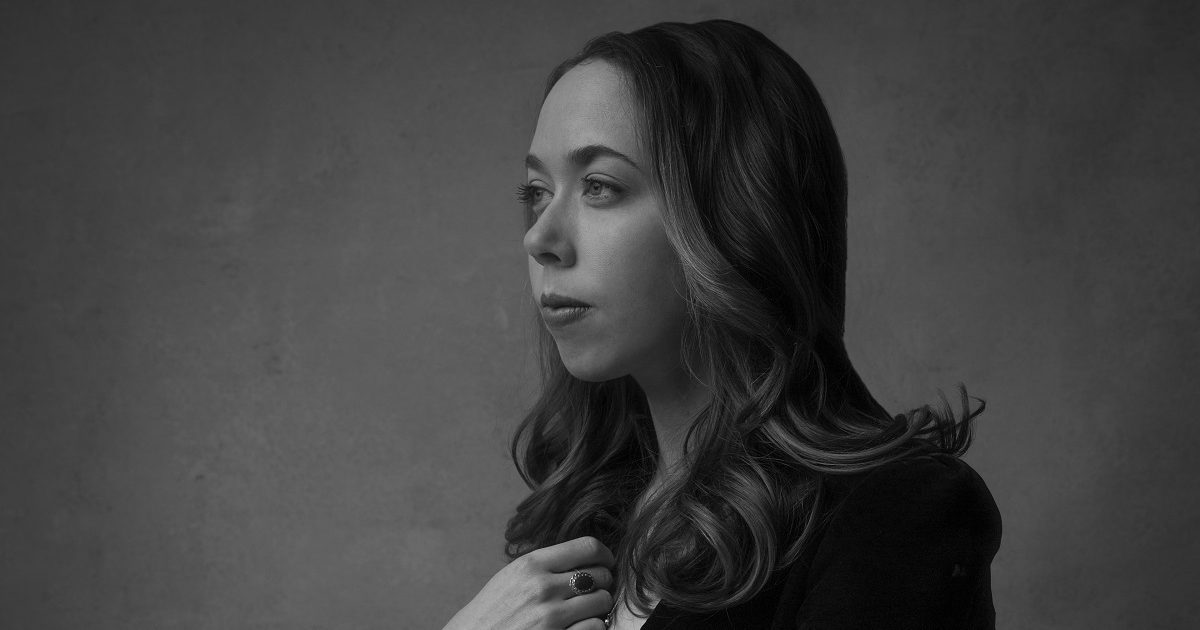
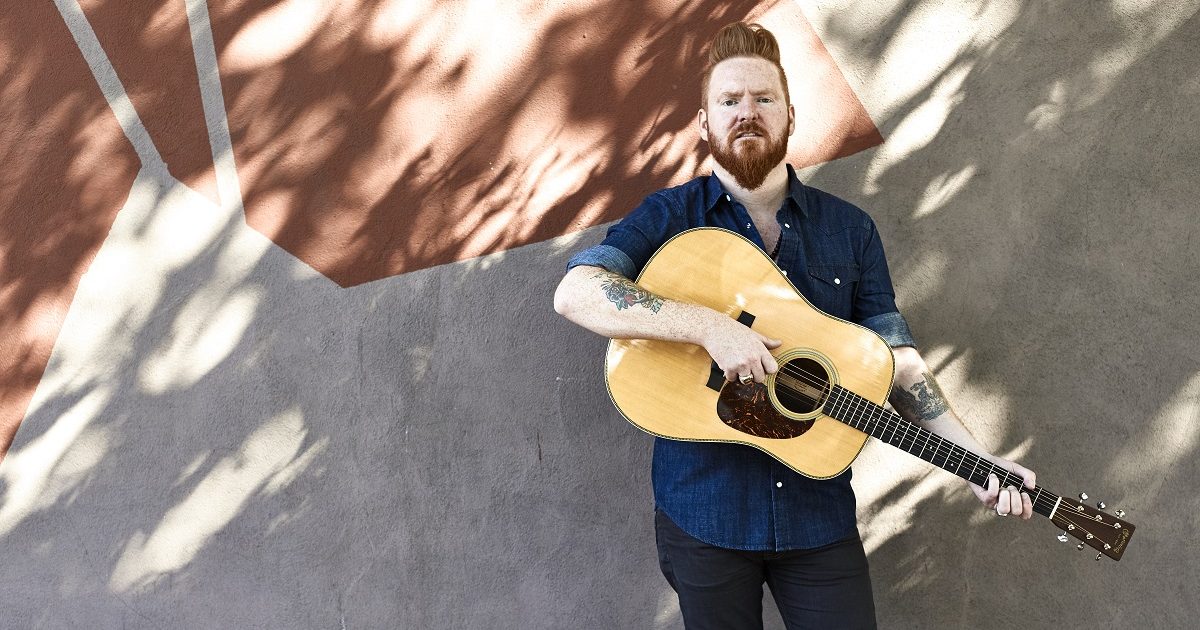
Featured: Kyshona Armstrong, Jill Andrews, Tim Easton, Robert Greer, Molly Tuttle, Rob Ickes, Doug and Telisha Williams, Garrison Starr, Sarah Jarosz, Suzanne Santo and Jerry Pentecost. With music by all.
The 63rd Annual Grammy Awards were held yesterday afternoon and evening, Sunday March 14, 2021. Here are the nominees and winners in the American Roots Music fields:
Best American Roots Performance
Black Pumas, “Colors”
Bonny Light Horseman, “Deep in Love”
Brittany Howard, “Short and Sweet”
Norah Jones & Mavis Staples, “I’ll Be Gone”
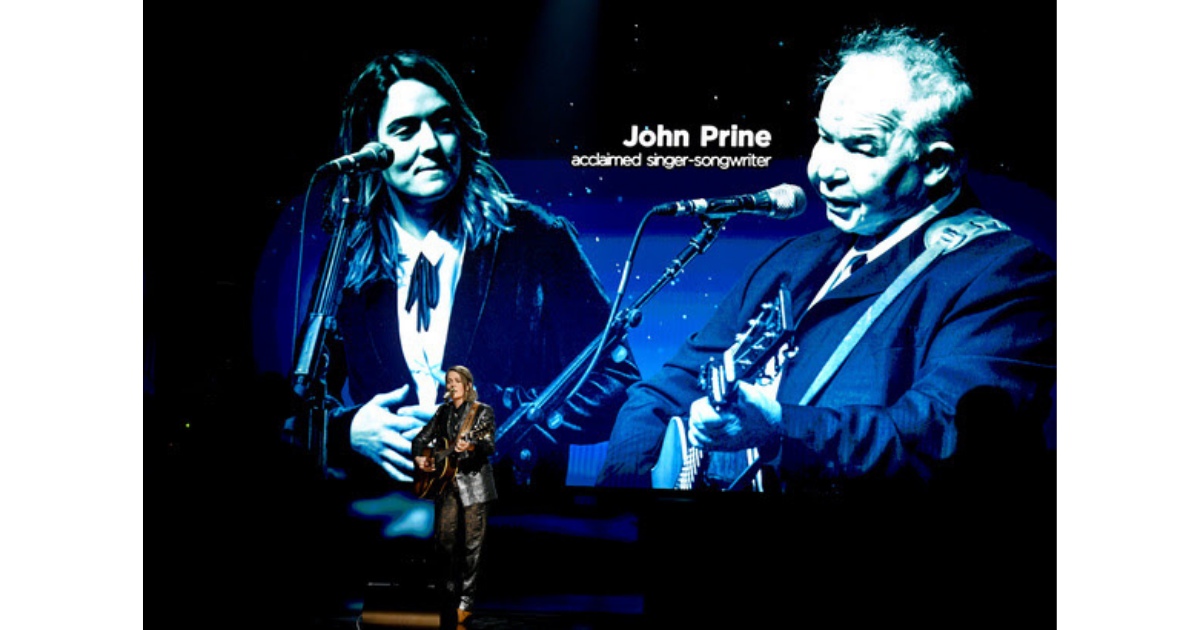
John Prine, “I Remember Everything”
Best American Roots Song
“Cabin,” Laura Rogers & Lydia Rogers, songwriters (The Secret Sisters)
“Ceiling to the Floor,” Sierra Hull & Kai Welch, songwriters (Sierra Hull)
“Hometown,” Sarah Jarosz, songwriter (Sarah Jarosz)
“I Remember Everything,” Pat McLaughlin & John Prine, songwriters (John Prine)
“Man Without a Soul,” Tom Overby & Lucinda Williams, songwriters (Lucinda Williams)
Best Americana Album
Courtney Marie Andrews, Old Flowers
Hiss Golden Messenger, Terms of Surrender
Sarah Jarosz, World on the Ground
Marcus King, El Dorado
Lucinda Williams, Good Souls Better Angels
Best Bluegrass Album
Danny Barnes, Man on Fire
Thomm Jutz, To Live in Two Worlds, Vol. 1
Steep Canyon Rangers, North Carolina Songbook
Billy Strings, Home
Various Artists, The John Hartford Fiddle Tune Project, Vol. 1
Best Traditional Blues Album
Frank Bey, All My Dues are Paid
Don Bryant, You Make Me Feel
Robert Cray Band, That’s What I Heard
Jimmy “Duck” Holmes, Cypress Grove
Bobby Rush, Rawer Than Raw
Best Contemporary Blues Album
Fantastic Negrito, Have You Lost Your Mind Yet?
Ruthie Foster Big Band, Live at the Paramount
G. Love, The Juice
Bettye LaVette, Blackbirds
North Mississippi Allstars, Up and Rolling
Best Folk Album
Bonny Light Horseman, Bonny Light Horseman
Leonard Cohen, Thanks for the Dance
Laura Marling, Song for Our Daughter
The Secret Sisters, Saturn Return
Gillian Welch & David Rawlings, All the Good Times
Best Regional Roots Music Album
Black Lodge Singers, My Relatives “Nikso Kowaiks”
Cameron Dupuy and the Cajun Troubadours, Cameron Dupuy and the Cajun Troubadours
Nā Wai ʽEhā, Lovely Sunrise
New Orleans Nightcrawlers, Atmosphere
Sweet Cecilia, A Tribute to Al Berard
Also, note these Americana winners in other categories:
Sarah Jarosz’s songwriting is otherworldly to begin with, but throw in a finely aged instrument and the wisdom in the wood adds an extra glow to her already shining music. A testament to her timelessness and acumen, Jarosz’s musicianship pairs perfectly here with the round, warm sound of a 1938 Martin 000-45 featured by Carter Vintage Guitars in Nashville.
Since the release of her album World on the Ground back in June, Jarosz has been doing it all, from uploading covers to her YouTube channel to hosting a masterclass for Oregon State University. She also landed a pair of Grammy nominations in 2020, including one for World on the Ground, on the ballot for Best Americana Album. In this particular performance, Sarah sings “I’ll Be Gone” from the new record, and if the song wasn’t striking enough already, the delivery in front of one microphone with such a rich instrument is the icing on the cake. Enjoy this special rendition of “I’ll Be Gone,” live from Carter Vintage Guitars in Nashville.
In the afterglow of acclaim from her latest album, Sarah Jarosz kept her YouTube channel active, another creative COVID outlet for the singer-songwriter and picker. Along with releasing videos for songs from World on the Ground, she also contributed to a charming cover song series throughout 2020. Truly a fan’s artist, Jarosz’s effort to generate a regularly flowing stream of content is one of the many reasons why we at BGS and fans everywhere adore her work. (Read Part 1 and Part 2 of our Artist of the Month interview from June of this year.)
Not only is the Texas native’s talent undeniable and her style unique, but Jarosz enhances our day-to-day experiences with each. Unable to tour, she instead filmed renditions of songs by folks like Kacey Musgraves, Bob Dylan, and Maggie Rogers. Here, Jarosz performs a Frank Sinatra classic on mandocello, alongside bassist Jeff Picker. Beautiful and reminiscent of a bygone era, watch as the two breathe Americana life into this timeless jazz number.
Artist:Danny Burns Hometown: New Orleans, Louisiana Single: “Trouble” featuring Dan Tyminski, Aubrie Sellers & Jerry Douglas Album:Hurricane (coming in early 2021) Nickname: Danny Burns Band / The Red Buck
What’s your favorite memory from being on stage?
Jammin’ with Sam Bush Band at the Birchmere would have to be my favorite stage moment.
What other art forms — literature, film, dance, painting, etc — inform your music?
I would say that film definitely does. When I’m writing, I try to see songs like movies, and concept helps me craft the story. It also helps me make production choices later with instrumentation or arrangements.
What was the first moment that you knew you wanted to be a musician?
After my first paid gig. Ha! Nah kidding around, I think after hearing Willie Nelson for the first time.
Since food and music go so well together, what is your dream pairing of a meal and a musician?
One of my favorite restaurants is La Boca Steakhouse in New Orleans. Hanging with Sturgill and talking Cuttin’ Grass could make for an interesting Monday night in The Crescent City.
If you had to write a mission statement for your career, what would it be?
Keep working, keep learning, keep trying new things, don’t listen or surround yourself by any negative people and never miss an opportunity stop at the Rainforest Cafe at Opry Mills to scare your daughters with that darn hippopotamus. It gets them every time!
At BGS, we seek out roots music from all corners — for those readers encountering us for the first time, we’re not “just bluegrass.” With our annual year-end list, we’ve shaken off the “best of” title and instead gathered 20 recordings that inspired our staff and contributors. For many reasons (but especially the long-awaited return of live music and festivals), we look ahead to 2021, but first… here are the albums and songs that inspired us in 2020.
Courtney Marie Andrews – Old Flowers
Courtney Marie Andrews couldn’t touch my heart deeper. Her music has been the healing salve for the wounds of 2020. To me, she’s the true definition of an artist: A songwriter, a musician, a painter, a writer, a singer, a poet, an activist. My favorite song on her magical 2020 album is “Old Flowers.” It’s the perfect metaphor of resilience and rebirth after suffering, both in love and in life. Becoming whole again. If that ain’t a theme we could all grow from this year, I don’t know what is! – Beth Behrs
Anjimile – “Maker (Acoustic)”
Anjimile’s Giver Taker was the album I can’t stop (and won’t stop) telling people about in 2020. The full version of their single, “Maker” was a beautiful amalgamation of cultures and influences synthesized by an artist not constrained by cultural and creative preconceptions. To me, Anjimile’s acoustic version of the lead single distills the brilliance of their songwriting into its purest form. – Amy Reitnouer Jacobs
Danny Barnes – Man on Fire
Danny Barnes’ Man on Fire was a worthwhile gift to us all this year. Over the last couple of years, I’d heard chatter of a project in the works with names like Dave Matthews, John Paul Jones, and Bill Frisell involved. I am constantly in awe of what Barnes can create using the banjo as a pencil. This record was no exception, combining his unique style and songwriting with an electrified crew. – Thomas Cassell
Bonny Light Horseman – “The Roving”
There’s an odd bit of sorcery in the first measures of “The Roving,” a new version of an old folk tune on this supergroup’s debut. It opens tentatively, the instruments falling into the song like autumn leaves: First an acoustic guitar, then cymbals, then piano, all coalescing into a windblown arrangement that’s both understated and sublime. – Stephen Deusner
Bob Dylan – Rough and Rowdy Ways
Packed with jumbles of historic/cultural references and tall tales, bluesy swagger and prayerful romance, and climaxing with the shattered-mirror JFK assassination epic “Murder Most Foul,” Dylan’s first set of originals in a decade is breathtakingly masterful. It’s also, often, hilarious. Nearing 80, the Bard’s as playful as ever. And as poignant. And, justifiably, as cocky. – Steve Hochman
To me, Bob Dylan’s best era started in 1989 with his 26th studio album, Oh Mercy, and continues to this day with his 39th, Rough and Rowdy Ways. “Murder Most Foul” shows us that the master of his generation is as much in control of his folktale troubadour craft as he’s ever been. – Chris Jacobs
Justin Farren – Pretty Free
Knowing nothing about Justin Farren, I was immediately sucked into his evocatively detailed story-songs that involved returning diapers to Costco, getting a “two-paycheck ticket” while trying to impress a girl, and (in the all-too-appropriately-titled for-2020, “Last Year Was The Best Year”) a wild Disneyland adventure. Full of humor, sorrow, regrets and hope, Pretty Free was a musical world I visited often this year. – Michael Berick
Mickey Guyton – “Black Like Me”
Mickey Guyton’s lyrics illuminate the individuality and dilemma of any non-white vocalist in country music, and in particular the difficult journey of Black women in the field. Her performance is gripping and memorable, paying homage to many others who’ve faced ridicule and questions about why they’re daring to perform in an idiom many still feel isn’t suited for their musical style. – Ron Wynn
Sarah Jarosz – “Pay It No Mind”
Atop a Fleetwood Mac-style groove, Sarah Jarosz imagines the advice a distant bird might offer. But her songbird is no sweet, shallow lover. She comes with the weight and wisdom of something more timeless. Jarosz lets her fly via mandolin-fiddle interplay that personifies the tension between the endless sky and the “world on the ground.” – Kim Ruehl
Lydia Loveless – Daughter
“I’m not a liberated woman,” Lydia Loveless declares on her fifth album, “just a country bumpkin dilettante.” Don’t you believe it. Written in the shadow of her 2016 divorce and beautifully sung in a voice both epic and straightforward, Daughter finds this Americana siren at the height of her formidable powers. – David Menconi
Lori McKenna – The Balladeer
Lori McKenna‘s singular talent for capturing the joy in everyday details is on full display, from the church parking lots and hometown haunts of “This Town Is a Woman” to the stubborn tiffs and make-up kisses on “Good Fight.” But The Balladeer acknowledges the hard-as-hell times, too. With gentle accompaniment, commanding melodies, and McKenna’s signature lyrical wit, The Balladeer showcases a modern songwriting master. – Dacey Orr Sivewright
Jeff Picker – With the Bass in Mind
I love “new acoustic music,” but am often afraid I’ll be disappointed by it. Jeff Picker’s With the Bass in Mind immediately eases those worries by offering music that is creative, thoughtful, unexpected, and virtuosic while still feeling grounded and musical. All while effortlessly answering the once-rhetorical question: “What would a solo bluegrass bass album even sound like?” – Tristan Scroggins
William Prince – Reliever
William Prince‘s Reliever feels like the best pep talk I’ve ever had. In particular, “The Spark” finds him astonished with loving a partner who loves him back, no matter his own perceived flaws. As a whole, the album explores complicated emotions with a comforting arrangement (with duties shared by Dave Cobb and Scott Nolan). Sung with assurance by Prince, almost like he’s confiding in you, Reliever is both encouraging and excellent. – Craig Shelburne
Scott Prouty – Shaking Down the Acorns
We’d be remiss in our jobs as procurers of roots music culture to not include this stoically beautiful record on our year-end list of the very best. A hearty collection of 24 (mostly solo) old-time fiddle and banjo songs, there is something ever-present, comforting, and timeless about Prouty’s playing, and I have no doubt this is a record I’ll be revisiting like an old friend for years to come. – Amy Reitnouer Jacobs
Emily Rockarts – Little Flower
Montreal-based songwriter Emily Rockarts’ debut album Little Flower is one to remember. Produced by Franky Rousseau (Goat Rodeo Sessions), the album features lilting cinematic ballads punctuated with dance-in-your-room indie anthems. Rockarts’ musicianship is undeniable; her stunning melodies and refreshingly earnest lyrics make for a remarkable combination that is unlike anything else I’ve heard. Run, listen to Little Flower now! – Kaia Kater
Sarah Siskind – Modern Appalachia
Sarah Siskind brought her luminous, Nashville-honed songwriting back home to North Carolina a few years ago and let the mountains speak through her. Leading an all-star Asheville band live off the floor at iconic Echo Mountain studio, she’s made a heart-swelling set of songs that gather her special melodic signature, her meticulous craft, and her insight into how a rich musical region is evolving. – Craig Havighurst
Emma Swift – Blonde on the Tracks
Emma Swift reminded the music world of the power that artists have to control their work when she self-released Blonde on the Tracks, an eight-song collection of Bob Dylan covers. Her interpretations are as powerful and innovative as her methodical and thoughtful initial distribution sans streaming services. – Erin McAnally
Julian Taylor – The Ridge
Mohawk singer-songwriter Julian Taylor resides in what is now referred to as Toronto, but his masterful country-folk record, The Ridge, hits your ear as if plucked directly from Taylor’s childhood summers spent on his grandparents’ farm in rural British Columbia. Refracted through Taylor’s crisp, modern arrangements and undiluted emotion, The Ridge seamlessly bridges the elephant-in-the-2020-room chasm between rural and urban — musically, familially, lyrically, and spiritually. – Justin Hiltner
Molly Tuttle, “Standing on the Moon”
2020 has handed us its fair share of cover albums, with stay-at-home orders urging many to reach for the familiar — but none have meshed a variety of musical sources so creatively as Molly Tuttle’s whimsical …but i’d rather be with you. Her version of “Standing on the Moon” is the nostalgic and homesick, Earth-loving galactic trip of my pedal steel-obsessed, Deadhead dreams. – Shelby Williamson
Cory Wong – Trail Songs (Dawn)
A record that I didn’t know I needed came in early August when Vulfpeck guitarist Cory Wong released Trail Songs (Dawn). A change of pace for Wong, it features predominantly acoustic instrumentation and organic sounds. The album kicks off with “Trailhead,” which sounds like a Dan Crary instrumental until the groove drops in the second verse. BGS standbys Chris Thile and Sierra Hull make appearances as an added bonus. – Jonny Therrien
Donovan Woods – “Seeing Other People”
We may seem unsentimental, stoic, unemotional — especially when faced with something like a partner moving on, or a breakup, when it may be easier to seem fine, have a pint, and download Tinder. Donovan’s gift in this song is to show those complicated “yes, and” internal thoughts and emotions. It is beautiful. – Tom Power
J.D. Crowe, Jerry Douglas, Sarah Jarosz, and Ronnie McCoury are just a few of the artists taking part in the IBMA Virtual World of Bluegrass, which begins today, Monday, September 28. Kristin Scott Benson, Doyle Lawson, and Mumford & Sons’ Winston Marshall are also confirmed to participate.
IBMA Virtual World of Bluegrass is an annual bluegrass music homecoming and convention that takes place online this year, encompassing the IBMA Business Conference, IBMA Bluegrass Ramble, the 31st Annual IBMA Bluegrass Music Awards, and music festival IBMA Bluegrass Live! powered by PNC running through October 3. See the full schedule.
Check out our General Information page regarding IBMA Virtual World of Bluegrass. You’ll find our full-week schedule…
Conference registration is available at a lower price point than in years past: $99 for IBMA members, and $149 for non-members. Register here.
To stream the following sessions, as well as many others, IBMA Business Conference registration is required. Business Conference registration also allows access to other valuable content: an online version of the Gig Fair (one of the most popular conference events each year) the Songwriter Showcase, two virtual in-the-round Song Circles, the Annual IBMA Town Hall Meeting, the IBMA Virtual Exhibit Hall, and much more.
As previously announced, Sarah Jarosz will deliver the Keynote Address on Monday, September 28 to kick off this year’s virtual IBMA Business Conference. “Having attended IBMA as a young kid just getting into bluegrass, and having returned more recently as a performer at their Raleigh conference, I’m deeply honored to have been asked to be this year’s keynote speaker. I look forward to helping kick things off!” said Jarosz.
Organizers have added three presentations to lead each day’s conference activities, Tuesday through Thursday:
Tuesday at 11 AM ET: Artist-2-Artist with J.D. Crowe, Winston Marshall, and Jerry Douglas
Hall of Famer J.D. Crowe’s infusion of new ideas into bluegrass banjo took the music to a decidedly younger and more diverse crowd, inspiring a new generation of pickers and fans. His music would influence a young banjo player across the Atlantic named Winston Marshall, who would take the banjo to millions of fans worldwide. As a member of Mumford & Sons, Winston has helped completely transform the image of the banjo in popular culture. Jerry Douglas has used his dobro to build musical bridges throughout his storied career. He has shared both the stage and the studio with J.D. Crowe and Winston Marshall, and he invites you to join him and these two groundbreaking banjo players for a fun conversation about how music unites.
We just announced special feature presentations to kick off each day of the IBMA Business Conference:
Wednesday at 11 AM ET: Artist-2-Artist with Doyle Lawson and Kristin Scott Benson
Doyle Lawson has been a leader in bluegrass music for decades. He and Quicksilver played at a festival in Dahlonega, Georgia in the mid-eighties, and it changed the life of a young girl in the audience named Kristin. Three and a half decades later, Kristin Scott Benson is one the most celebrated banjo players of her generation and is the reigning IBMA Banjo Player of the Year. She sits down with Bluegrass Hall of Fame member, Doyle Lawson, to talk about the impact he and his music have had on her and on the bluegrass community at large.
Thursday at 11 AM ET: From the Bay, to Bean Blossom, and Back
Jerry Garcia is unquestionably a towering figure in American culture, and one of the most influential musicians of the 20th century. He and the Grateful Dead set the template for a new style of music that would inspire generations, much as Bill Monroe, The Father of Bluegrass himself, had done. What’s less known about Jerry, is that long before, during, and after the Grateful Dead, he was a banjo player, a bluegrass musician, even an aspiring Bluegrass Boy. Join Ronnie McCoury, filmmaker Brian Miklis and others in a conversation diving deep into the relationship of a true giant of American music, and the music that inspired him.
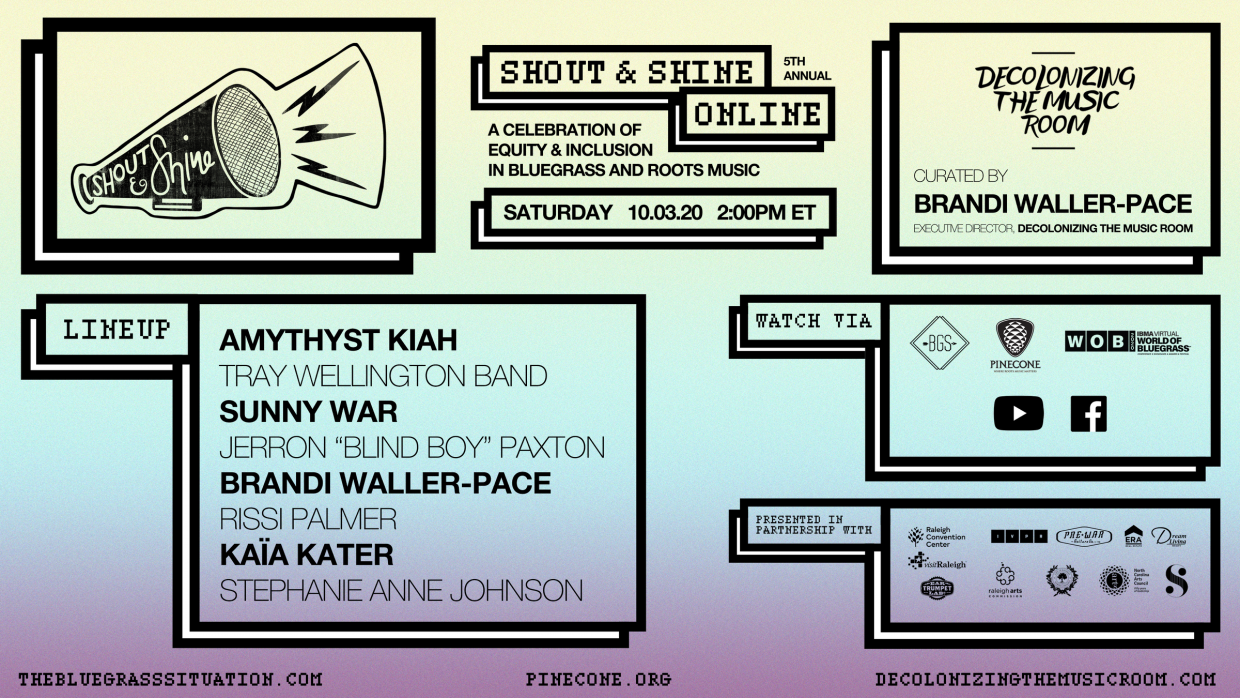
The Bluegrass Situation will proudly present our fifth annual Shout & Shine Online on Saturday, October 3rd at 2pm ET. And at press time, 30 artists have also been confirmed for a series of showcases known as the Bluegrass Ramble.
The virtual music festival IBMA Bluegrass Live! powered by PNC, will take place Oct. 2-3. Special performances by The Travelin’ McCourys with special guest Del McCoury; Steep Canyon Rangers; Jerry Douglas & Odessa Settles; Sierra Hull & Molly Tuttle are just some of the highlights that bluegrass fans can look forward to.
In addition, PNC Bank is boosting its support for the IBMA and bluegrass artists experiencing financial hardship due to pandemic-related performance cancellations. PNC Bank, the presenting sponsor of IBMA Bluegrass Live! powered by PNC, has announced it will match all 2020 donations made to the IBMA organization and the IBMA Trust Fund, for a total up to $50,000. (Donate now.)
IBMA is the nonprofit professional organization for the global bluegrass music community — connecting, educating and empowering bluegrass professionals and enthusiasts while honoring tradition and encouraging innovation worldwide. The organization has suffered financially this year due to pandemic-related health precautions that are preventing the IBMA World of Bluegrass event from being held in Raleigh, N.C. The IBMA Trust Fund, which is administered by IBMA, was established in 1987 as a means to offer emergency financial assistance to bluegrass music professionals. In 2020, requests for assistance have increased tenfold due in large part to COVID-19.
As the presenting sponsor of IBMA Bluegrass Live! powered by PNC since 2013, PNC Bank has helped bring bluegrass music and culture to Raleigh for what has become one of the city’s most beloved live, free events. While IBMA Bluegrass Live! powered by PNC cannot be presented as an in-person event in 2020, PNC remains committed to supporting this event and community tradition by helping deliver bluegrass programming in a virtual setting, Oct. 2-3.
Donations may be made online; additionally, those registering for the free IBMA Virtual World of Bluegrass Music Pass have the opportunity to make a donation during the online registration process. The Music Pass includes access to all music performances during the week, including IBMA Bluegrass Live! powered by PNC, the IBMA Bluegrass Music Awards presented by Count On Me NC, and IBMA Bluegrass Ramble presented by Count On Me NC.
Although in-person plans for Americanafest are on hold this year, fans of roots music can still take part in celebrating the music, no matter where they are.
From September 16th to the 18th, Thriving Roots: A Virtual Community Music Conference will host intimate conversations between pairings you won’t find anywhere else.
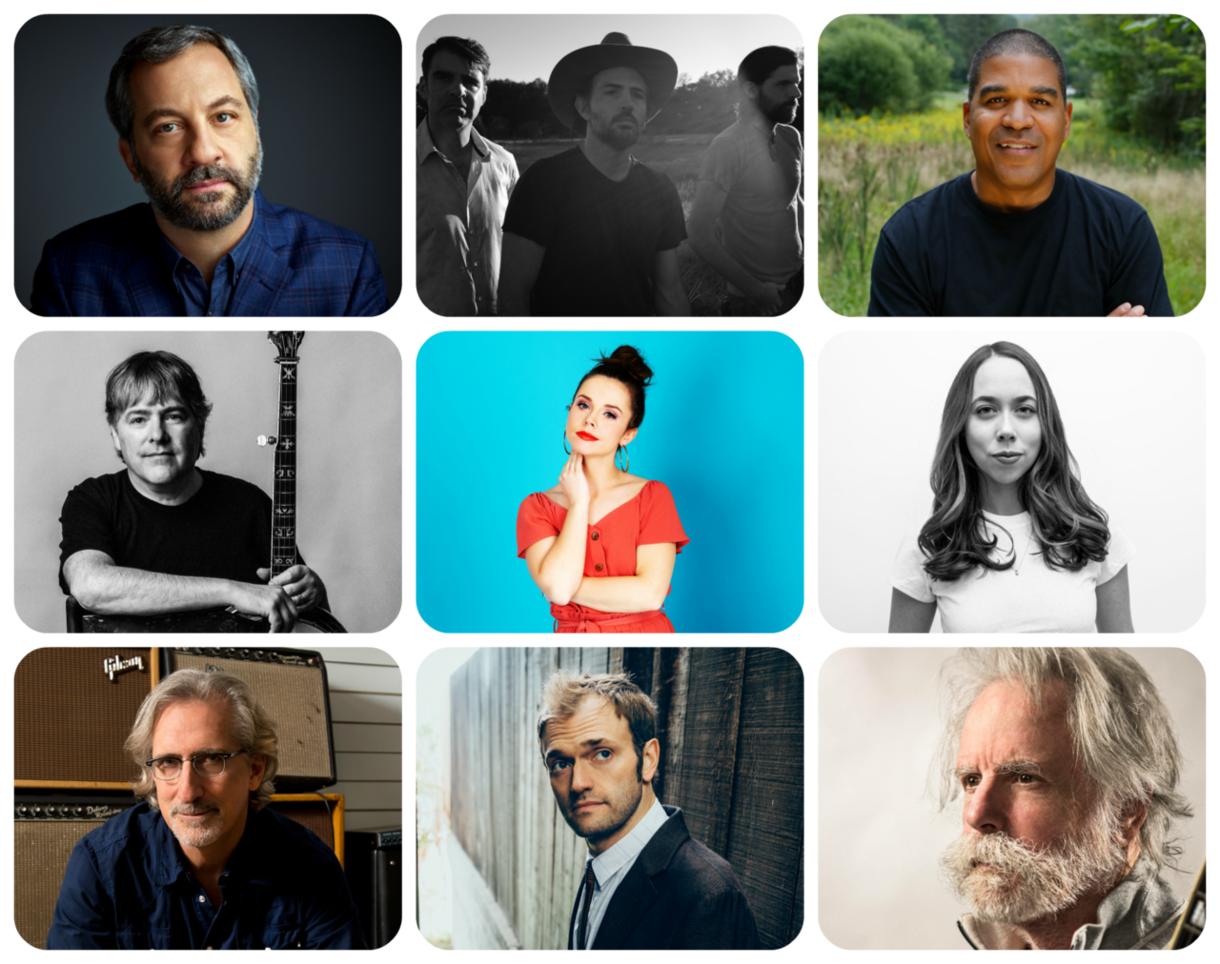
In August, the Americana Music Association Foundation (AMAF) revealed programming featuring director Judd Apatow in conversation with The Avett Brothers; Bob Weir with Oteil Burbridge; Béla Fleck with Sierra Hull; and Sarah Jarosz with John Leventhal and Chris Thile. The latest programming information also includes talks on empowering today’s creatives, developing streaming strategies and musicians in recovery.
https://www.instagram.com/p/CD1R4d_BUzV/
Apatow will sit down with The Avett Brothers to discuss the intersection of film and music, as well as the fine line between fine art and commerce. In 2017, Apatow co-directed the band’s critically acclaimed documentary, May It Last: A Portrait of The Avett Brothers. Since then, The Avett Brothers have released their new album, The Third Gleam.
The music that fans know and love from their favorite artists simply wouldn’t exist without the innovative musicians who came before them. Weir will sit down with fellow Dead & Company member Burbridge as they explore the inspirations and influence Black musicians have had on the Grateful Dead.
Now more than ever, musicians continue to push and blur the confines of genres to create the art they want to make. Fleck and Hull will speak to how roots music transcends and connects with a wide range of audiences during “Music Without Boundaries.” When it comes to creating that art in the studio, a producer’s ability to understand an artist’s vision is an integral part of the creative process. Moderated by Thile, Jarosz and Leventhal will delve into the connections forged between the artist and producer evident on her latest project, World on the Ground.
Additional new programming includes “Independent Control: The Power of Collaboration,” an inside look into how Americana industry professionals are empowering their independent artists to retain full creative control and the benefits of assembling a hand-picked team. Moderated by Jessica Nicholls (Metropolitan Groove Merchants), this discussion will include Blair Clark (Brooklyn Basement Records), Maria Ivey (IVPR) and Michelle Szeto (Paquin Entertainment Group).
In the streaming era, an abundance of digital resources can be found at the fingertips of industry and artist professionals, but how does one optimize those helpful tools? Led by Mike Fabio (New West Records), “Building a Streaming Strategy in 2020” rounds up Charles Alexander (Systemic), Margaret Hart (YouTube), Margaret Jacobi Lee (AMFM Management), Laura Ohls (Spotify) and Amy Wright (DittyTV) for a talk on developing real-world strategies that lead to increasing listenership and growing a solid fanbase.
Presented by Promises Behavioral Health, “The Show Must Go On: Musicians in Recovery” will find artists Phil Bogard and Jaime Wyatt in conversation with Shireen Janti (MusiCares) and Shane Ramer (That Sober Guy Podcast) about the road to recovery while offering how to find treatment and how others can take practical steps toward becoming a sober creator.
https://www.instagram.com/p/CDRhNsvBq-n/
Previously announced Thriving Roots programming includes intimate conversations between Brandi Carlile and Yola; Emmylou Harris and Ken Burns; and Jackson Browne and Mavis Staples. Rosanne Cash will bring together Ry Cooder, Angela Davis, Bonnie Raitt and Alice Randall for “Love and Vigilance,” a look at the history of protest music.
Moreover, RIAA Chairman/CEO Mitch Glazier and COO Michele Ballalynte will share an update on the music industry during “Record Setting” while looking at current trends and sharing their outlook. There will also be artist-friendly songwriting workshops and case studies like Mary Gauthier’s “Accessing the Universal in Your Songs: Mercy Now,” Taj Mahal’s “Music Is the Healing Voice” and an artist development breakdown with Black Pumas.
With over 50 panel discussions and more than 40 special events filled with music, Thriving Roots will bring the Americana music community together from across the world for three full days of engaging insight from its top industry professionals and leading artists.
Adding to the slate of artist conversations music fans won’t want to miss is Linda Ronstadt offering a behind-the-scenes look at Linda and the Mockingbirds, a new documentary that chronicles her 2019 journey with Jackson Browne and Mexican-American song and dance troupe Los Cenzontles to her grandfather’s hometown in Mexico, resulting in a tale of immigration, family and music. Moderated by esteemed journalist Randy Lewis, attendees will be able to watch the film screening and hear insight from the musical icon alongside the doc’s producer/director James Keach and Los Cenzontles founder Eugene Rodriguez.
https://www.instagram.com/p/CE95F1chNOY/
The Lumineers’ Jeremiah Fraites and Wesley Schultz will sit down with renowned filmmaker M. Night Shyamalan for an engaging discussion on the importance of retaining creative control of your art. In addition, Kathleen Edwards will speak with acclaimed Program Director Rita Houston (WFUV) about her new album Total Freedom, which marks her triumphant return to music after an eight-year hiatus from the business.
The common threads and differences of the Americana and country music worlds will be explored during “Ladies, Your Roots Are Showing,” presented by Change the Conversation. Moderated by CTC co-founder Tracy Gershon with freelance music journalist Marissa Moss, this panel session rounds up Brandy Clark, Tanya Tucker and Lee Ann Womack to share how they’ve been able to successfully navigate both worlds while maintaining their artistic integrity. They’ll also reveal the challenges and memorable moments they’ve experienced during their respective careers.
Reigning Legacy of Americana Award (co-presented by the Americana Music Association and the National Museum of African American Music) recipient Rhiannon Giddens joins NPR’s Ann Powers and the legendary Taj Mahal to discuss the theme of “Music is the Healing Voice.”
https://www.instagram.com/p/CEpIcpMhsZ-/
Music buffs should also tune into a special virtual edition of “Songlines Music Meeting,” an Americanafest fan-favorite. Sean Coakley and Leslie Rouffé will once again invite listeners to hear mostly unreleased tunes and score them during the live session, leading to a discussion on how music programmers in various media formats select the songs they feature.
Aside from plenty of educational and networking opportunities, Thriving Roots attendees will have a chance to unwind and recharge with immersive virtual events and lifestyle breaks. Valerie June will walk folks through a guided meditation that explores how to center oneself using ancient teachings. Big Machine Label Group will spotlight The Cadillac Three, Sheryl Crow and Ray Wylie Hubbard with some must-see musical performances.
During “Aw Heck: An Oh Boy Music Break,” join the late John Prine’s own record label Oh Boy Records for a celebration of their talented roster which includes Tré Burt, Arlo McKinley, Dan Reeder and Kelsey Waldon. For “Come Hear NC,” experience the rich music of North Carolina featuring Hiss Golden Messenger, Jim Lauderdale, Mandolin Orange, Steep Canyon Rangers and more.
Pictured above in composite: Top Row (L-R): Judd Apatow, The Avett Brothers, Oteil Burbridge; Middle Row: Béla Fleck, Sierra Hull, Sarah Jarosz; Bottom Row: John Leventhal, Chris Thile, Bob Weir
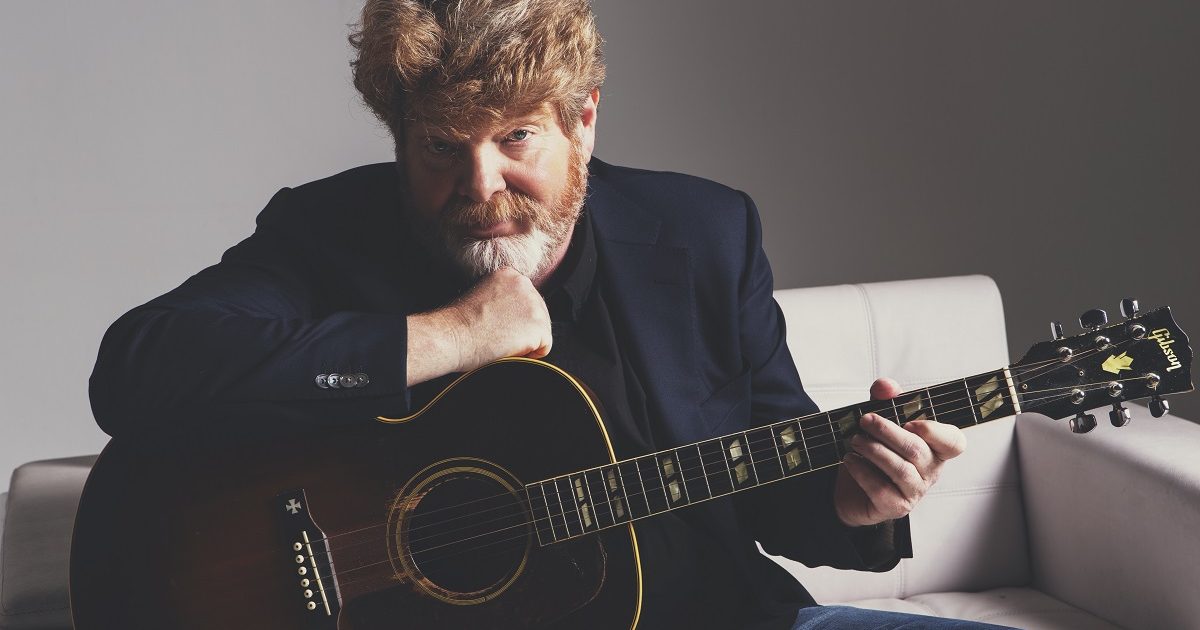
Mac McAnally is a highly-decorated and prolific multi-instrumentalist, producer, songwriter, and artist. He tours with Jimmy Buffett’s Coral Reefer Band, plays on countless sessions in Nashville and Muscle Shoals, and produces a number of independent artists, too. But more important to me, he’s my dad. And he’s a great one. On the occasion of the release of his new album, Once in a Lifetime, we discuss guitars, bluegrass, moments of social change, why he covered a Beatles song, and the process of making this record amidst a pandemic. And though I get to talk to him most days of my life, it is heartening to hear him put a fine point on his eternal optimism.
BGS: Growing up, music was constant in the house and one of the most pervasive cover songs you played was “Norwegian Wood.” What do you think it is about that song that sticks in your craw and drew you to record it?
Mac McAnally: As you know, I’ve always loved that song. In the very first line, from a lyric standpoint, “I once had a girl/Or should I say/She once had me,” you can tell any story in the world after that. That is something that I subconsciously try to do and have since the beginning.
Specifically, why I recorded it is because I bought an octave mandolin about four years ago. I did a show with Sarah Jarosz and she had one and let me play it and I thought, “I am going to have to get me one of these.” I always feel like I have to do something to justify the purchase so I play it on as many sessions as I can to try to amortize the cost, but I also came up with this new way to play it that is kind of a cool arrangement that I’ve never heard. I don’t in any way challenge the Beatles version and don’t mean any disrespect; I’m trying to find ways to justify the guilt of buying an octave mandolin.
On almost every record that you’ve made there’s a nod to bluegrass, like “Brand New Broken Heart” on this record. Who are some of your biggest bluegrass influences?
I have to preface this by saying I am a bluegrass fan, I am not a bluegrass player. Anything that I might be doing would just be trying to pay homage to what the greats can do. I’ve gotten to play with some of them, which I count high among the blessings of my life. When I wrote “Brand New Broken Heart,” I envisioned I would someday pitch it to Ricky Skaggs or Dailey & Vincent. I recorded it because I was a lazy song plugger who never pitched it to anybody.
Doc Watson was one of mine and my dad’s heroes. He was sort of my intro to real bluegrass. And all the way through my life, Emmylou Harris. We played her songs in bands when I was a teenager. Bryan Sutton is just frighteningly good. I can’t even fathom what he is doing, let alone try to do it myself. He inspires me to go get a pick out and play differently than I play because I love so much of what he does. And I’m crazy about I’m With Her.
What brought about recording “Changing Channels” for this record?
I have always loved that song. It is the second song that Jimmy (Buffett) and I wrote together. We wrote it in one my favorite places I have ever been. He had a spot down in Thomasville, Georgia, with a big porch. As you know I’m a porch guy. We sat out on the porch and wrote that song. He did a great version of it on Off the See the Lizard and I honestly never imagined myself cutting it but I love to play it. It has worked its way into my shows over the last ten years and his fan base will come up after and ask which one of my records the song is on. They had cash out trying to buy it and I don’t have it. You know better than anybody how terrible of a businessman I am, but eventually enough people tried to buy a version of it that I listened.
You have collected a lot of guitars, and in various ways: some saved from landfills, some gifted, some cast for you by friends and colleagues. How do you pick which guitars make your records?
It is certainly not an exact science but sometimes it is the guitar that the song came out of. The main thing that has always made me select guitars is if I think they have songs in them. I would happen to be holding them and a couple of my stories got mashed with them. In more cases than not, if I wrote a song on a guitar, that’s the one I’ll record. You end up learning over the years. In the same way when you are photographing someone, you learn what the best side of their face is. … A Gibson with dead strings is an awesome rock ‘n’ roll rhythm guitar. A Martin with new strings is an awesome fingerpicking guitar.
We are in a moment of social change. Music has the power to both inspire and record change. You moved to the Shoals in the ‘70s. Thinking back on those early days in the studio, what was it like in those moments?
Playing music in Muscle Shoals was extremely encouraging from the standpoint of equality. They didn’t really think of it in terms of race. Music transcended that. And I love that. And I still love that. I’m standing in Muscle Shoals right now proud to be part of that. You can be encouraged on some levels and discouraged on some levels and I am both of those things. I haven’t in my life ever thought that I was better or worse than anybody else and I look forward to that being a more prevalent vantage point for everyone.
I want to challenge you on that a bit. One of your dear friends and longtime collaborators, Ralph MacDonald, told you that he never felt comfortable coming to Muscle Shoals and we’ve heard from more folks that it wasn’t an inviting place to come collaborate, so a lot of those musicians opted for Detroit or Miami. With that added perspective, does it make you feel differently about the time?
Absolutely, it makes me more aware of the context. As I said, Muscle Shoals would have been advanced in terms of racial relations in the music community in the South. As I look back now, I realize that doesn’t mean it was great. It was just better relative to the surroundings.
Ralph and I, we were like brothers. He told me he would’ve been scared to death of a big red-headed dude from Mississippi. And he was a Black man from Harlem. I could not have imagined that we would connect on as many levels as we did. We both had misconceptions that got better. He was one of my heroes. He was one of the best percussionists that ever played. And I loved him. It is hard to get into racial discussions without stirring stuff up. But we made each other better. Music is one of the best ways to bridge across preconceptions. I think it’ll play a big part of getting us the rest of the way home. ‘Cause we ain’t there yet.
Stirring stuff up is the way we make progress.
That’s true and they are not easy discussions. I don’t think of myself as someone with prejudices, but when I think back, some of the things I laughed at growing up as a kid in Mississippi I’m embarrassed of. And I was mainly laughing because everyone around me was laughing, but when I think of what it was we were laughing at, it is embarrassing. I don’t really want to talk about it, I just want to be a better person, because I know it was wrong. But you are right. Talking about it is better. Air it out.
What does it feel like to release an album in a pandemic?
Well, not speaking ill of either thing, but I hope it is a one-time thing. I hope I never have to try to beat a pandemic album with a second pandemic album. My records are normally made in what I call “the cracks of time.” I make them in the cracks of my schedule because I work full-time as a Coral Reefer, a fair amount of time as a session musician for other people, writing songs for other people and producing other folks. But because of the circumstance of this record, it is really special to me because I got to sit and think about what I felt was important and what was not. I wouldn’t wish a pandemic on the world just to get extra time to make my record. I think maybe next time I’ll just take the time on my own.
Even in your darkest lyrics, there is a balance that shows your shining optimism. We are surrounded by a heavy dose of dark right now. Are you feeling optimistic?
Absolutely. I absolutely am. I wish we weren’t where we are right now and that everyone could see that it is better to find a way to coexist than it is to hate one another. I’m not someone who has any room for hate. As you recall, I don’t even like the word. I’ve probably pestered you about it for your entire life. Actual hate hurts me. We’ve been celebrating the life of John Lewis the last few weeks and John is a great example of figuring out a way to make it better by not hating the people who hated him. I think things are going to get better and I intend to try to help.
Erin McAnally is a regular contributor to The Bluegrass Situation
Photo Credit: Jeff Fasano
This website uses cookies to improve your experience. We'll assume you're ok with this, but you can opt-out if you wish.AcceptRejectRead More
Privacy & Cookies Policy
Privacy Overview
This website uses cookies to improve your experience while you navigate through the website. Out of these, the cookies that are categorized as necessary are stored on your browser as they are essential for the working of basic functionalities of the website. We also use third-party cookies that help us analyze and understand how you use this website. These cookies will be stored in your browser only with your consent. You also have the option to opt-out of these cookies. But opting out of some of these cookies may affect your browsing experience.
Necessary cookies are absolutely essential for the website to function properly. This category only includes cookies that ensures basic functionalities and security features of the website. These cookies do not store any personal information.
Any cookies that may not be particularly necessary for the website to function and is used specifically to collect user personal data via analytics, ads, other embedded contents are termed as non-necessary cookies. It is mandatory to procure user consent prior to running these cookies on your website.