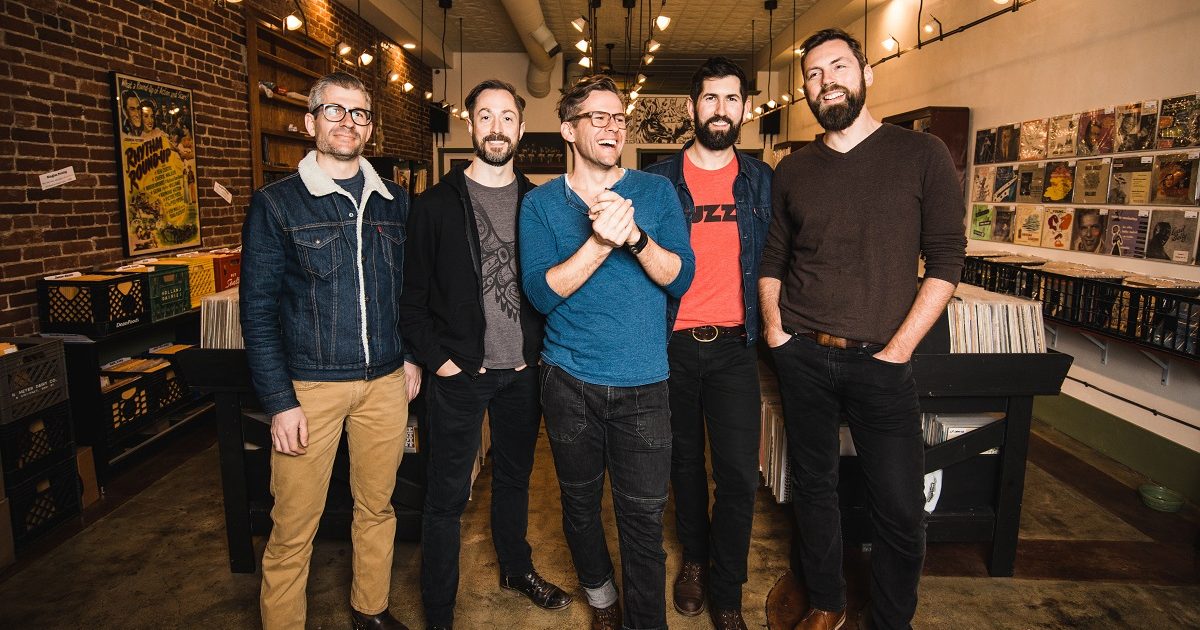
WATCH: Robin and Linda Williams, “Old Lovers Waltz”

Artist: Robin and Linda Williams
Hometown: Staunton, Virginia
Song: “Old Lovers Waltz”
Album: A Better Day A-Coming
Label: Oakenwold Recordings

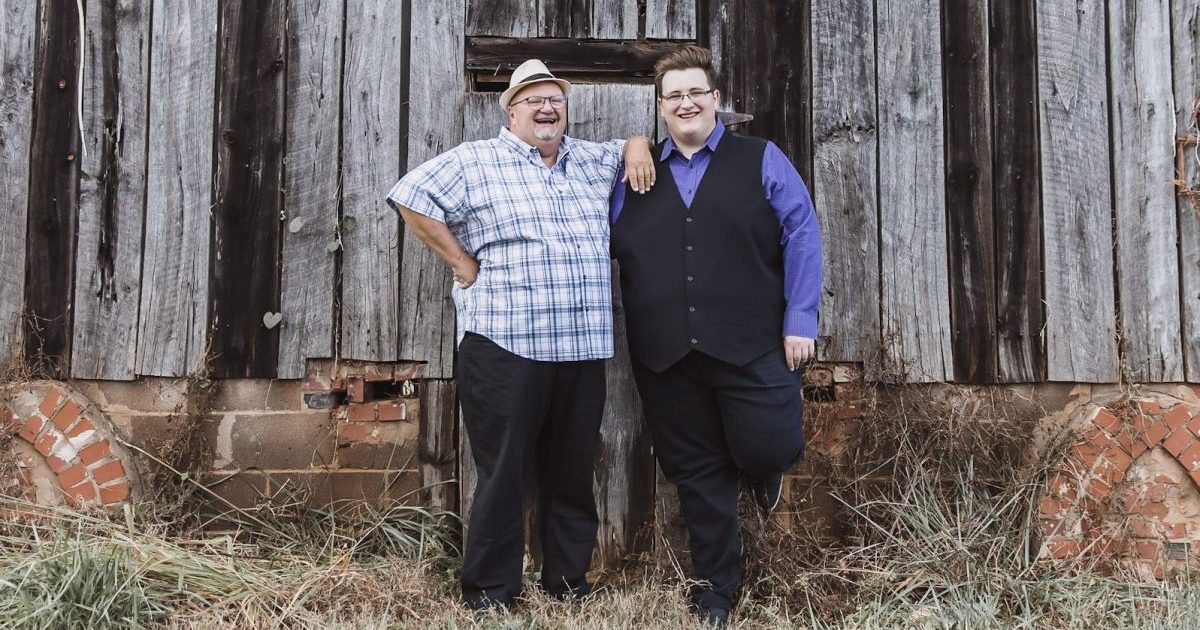
In Their Words: “‘Old Lovers Waltz’ is one of our favorite songs off the A Better Day A-Coming release. It has personal meaning to the two of us, and we think Deep Structure Productions did an excellent job of producing the video. The ‘old Robin and Linda/young Robin and Linda’ idea, based around the banjo painting, was their vision, and they did a great job making the concept of a lifetime partnership come to life in four minutes. Their video captured the essence of our song. We wrote this after being married for 46 years. It’s not essential to be married that long to write such a song. You might be able to do it after only 30 or 35 years. ‘When you’re gliding with ease and stepping light/Then the Old Lovers Waltz, you are doing it right.'” — Robin and Linda Williams


Photo Credit: Jahna A Parker

The Bristol Sessions Get Another Look on ‘We Shall All Be Reunited’ CD

For Dr. Ted Olson, Appalachian music has always been much more than a collection of songs. It’s been nothing short of a passion. The Eastern Tennessee State University professor has spent much of his life writing, researching, and documenting the music that has played and recorded throughout the southeastern United States during the 1920s and 1930s. His respected work on Bear Family Records box sets covering sessions in Bristol, Johnson City, and Knoxville, Tennessee, have brought those long-ago recordings to new generations of listeners. For example, the single-disc set Tell It to Me: Revisiting the Johnson City Sessions, 1928-1929 was named Best Compilation Album of 2019 by the Independent Music Awards.

Now, Olson has teamed up again with Bear Family to release We Shall All Be Reunited: Revisiting the Bristol Sessions, 1927-1928, a single CD distillation of these legendary sessions. Commonly called “the big bang of country music,” the recordings in Bristol by the Carter Family, Jimmie Rodgers, and others became unexpected bestsellers, positioning country music as a viable commercial format. Along with reams of new liner notes, the CD delivers not just those familiar names, but also Ernest Stoneman, Blind Alfred Reed, and more, reminding listeners of the diversity that crowded around producer Ralph Peer’s microphone.

BGS: What inspired you to revisit the music from the original Bristol sessions for this album?

Olson: I found that the story of the Bristol sessions had grown significantly, for me. I’ve changed my interpretation of the Bristol sessions, its historical significance, and how one interprets that legacy. This gave me the opportunity to set the record straight about how that story needed to be told. That new narrative is in the liner notes, which are 44 pages. That is the maximum that can fit in a jewel box. I was pretty adamant that this is the story that needed to be told and this is the length it should be.

We have new documents to learn from, new research that was unavailable to us before. New interviews and new artwork. To me, it’s revisionist history in the best sense of the term. When Sony released a single CD of the Bristol sessions in 2003, they focused solely on the 1927 sessions. To my mind, the 1928 sessions are equal to the sessions of the previous year. With this new CD, we celebrate both of those sessions. We have new masters for the songs as well. An engineer in Germany, Marcus Heumann, produced new masters for this release. They’re very exciting and they sound like they were recorded yesterday.

Dr. Ted Olson

What emerges from listening to both the Bristol and Johnson City collections is that they each demand your attention, albeit with different qualities.

The Johnson City sessions were an essential part of the rest of the story. They were echo sessions, just months after the Bristol sessions. They involved many of the same musicians, and yet the Johnson City sessions explored a different side of the Appalachian music that the Bristol sessions didn’t get to. The Bristol sessions accomplished certain things that are valuable and important, but they didn’t explore other facets that Johnson City was able to get more deeply into, because it had a different producer. It also was a different company, with different priorities and fortunes.

Some people prefer the Johnson City sessions to the Bristol sessions. They find the Johnson City recordings wilder, more exciting. Less controlled by the producer. Ralph Peer was a very controlling producer, very interactive in shaping the sounds, whereas Frank Walker of Columbia had the attitude of anything goes in this music. He was more documentarian, in a way. “What do you have? Let’s hear it.” Rather than shaping something into a package, which is what Ralph Peer’s modus operandi was at the Bristol sessions. I love them both. I’m not going to play favorites, but I’m also not going to acquiesce into the idea that Bristol sessions were more important because they were a year earlier.

How did you come to choose one song from each artist for the new Bristol Sessions album?

I knew that I wanted to match the length of the Johnson City CD, which had 26 recordings. I committed to 26 tracks, because that’s as much as we could fit on a CD, but there was also a licensing limitation. I also wanted a new template, where the ’28 Bristol sessions were as important as the ’27 sessions.

There were 28 artists that performed at the Bristol sessions, which meant that I could include one track from everyone except two. I had committed to including performances that in 2020 would be enjoyable by those who aren’t initiated into the sounds of the 1920s musical world. The stylistic approaches back then have changed over the years. We’ve listened to the Carter Family and Jimmie Rodgers through the years, so they sound familiar to us. Other artists from those sessions were such talented performers that we can still appreciate their recordings for talent alone.

How did you select the song from the Carter Family? All six of the songs that they recorded in Bristol are amazing.

I came to the conclusion that while “Single Girl, Married Girl” or “Bury Me Under the Weeping Willow” had gotten a lot of attention from these sessions, it’s “The Poor Orphan Child” that, for me, is the one that has captured my ears as the definitive Carter Family debut performance. A.P. is part of it. He’s not on “Single Girl, Married Girl.” He was out fixing their car tires that morning. To my mind, his best singing at the Bristol sessions was on “The Poor Orphan Child.”

Jimmie Rodgers’ recordings in Bristol have always suggested to me a person with a distinctive musical identity that is still seeking a comfort level in front of the mic. His two songs seem a bit tentative, a little nervous. Rhythmically, he’s very loose, which was always part of his persona. I think those recordings show his great charisma. He didn’t invent the singing yodel, but he first demonstrated it on the track that’s on this CD, “Sleep Baby Sleep.” Several months later, he records “Blue Yodel No. 1 (T For Texas),” and that was his breakthrough record.

The Bear Family box set about the Bristol Sessions received two Grammy nominations in 2011. It should have been a high point for you. How did you come to realize that you had much more to do?

It was fascinating for me to watch the press reaction to the Grammy nominations as well as the box set itself. I found that the press reactions were a little bit uncertain of what the Bristol sessions were. It was as though they were all falling lockstep into rapt amazement at the mythic importance of this thing called the Bristol sessions. It was obvious to me that people were changed by a myth, which revolved around two notions. One was that the Bristol sessions were “the big bang of country music.” But what does that mean? It was where Jimmie Rodgers and the Carter Family made their first records, but there were many other artists there as well.

The other notion was that Bristol is the birthplace of country music, which has been promoted by both Bristol, and the state of Tennessee, but that statement has often left other important sessions to be overlooked. I came to see that critics didn’t know how to unravel the myth. So, there I was at the Grammys, and as a scholar I felt I had only cracked the surface of what these sessions really were. I, too, was under the spell of the myth. And I needed to get past that. It was quite clear to me that there was more to the story. I remember flying home from that event, thinking that this was a life’s work in front of me.


Photo of Dr. Ted Olson by Charlie Warden

16 Bluegrass Songs for Summer Vacation

It’s summer, our second in the “after times,” where road trips, national parks, and scenic byways are king. As you head off on your COVID-aware vacations this summer, don’t leave all the driving music to indie, easy listening, country & western, or rock ‘n’ roll. The chop of the mandolin, thump of the doghouse bass, and rapid-fire roll of the five-string banjo are just as suited to soundtrack your sunny forays. To prove that point, here are 16 bluegrass songs perfect for inclusion on your summer vacation playlists. (Listen to the full playlist on Spotify below.)

“Highway” – Claire Lynch

Bluegrass being an itinerant livelihood and a nomadic community, traveling songs are just as expected a feature as murder ballads, train tunes (a form of travel song unto themselves!), and moonshine running tales. This modern classic via Claire Lynch — written by Lynch and Irene Kelley — is a perfect example of the form, more ‘90s country offered by a string band than a traditional, four-on-the-F-style grassy track. It’s delightful — and perfectly winsome and longing when you find yourself listening while traveling down the highway.


“Handsome Molly” – Tim O’Brien

Our July 2021 Artist of the Month Tim O’Brien’s rendition of this bluegrass classic is a far cry from, say, a Flatt & Scruggs’ cut. O’Brien’s has a slight transatlantic bent — with a distinct island detour, perhaps through the sunny Caribbean. If you’ve found a craving to set your foot on a steamboat and sail the ocean ‘round deep inside your soul, this one’s for you.


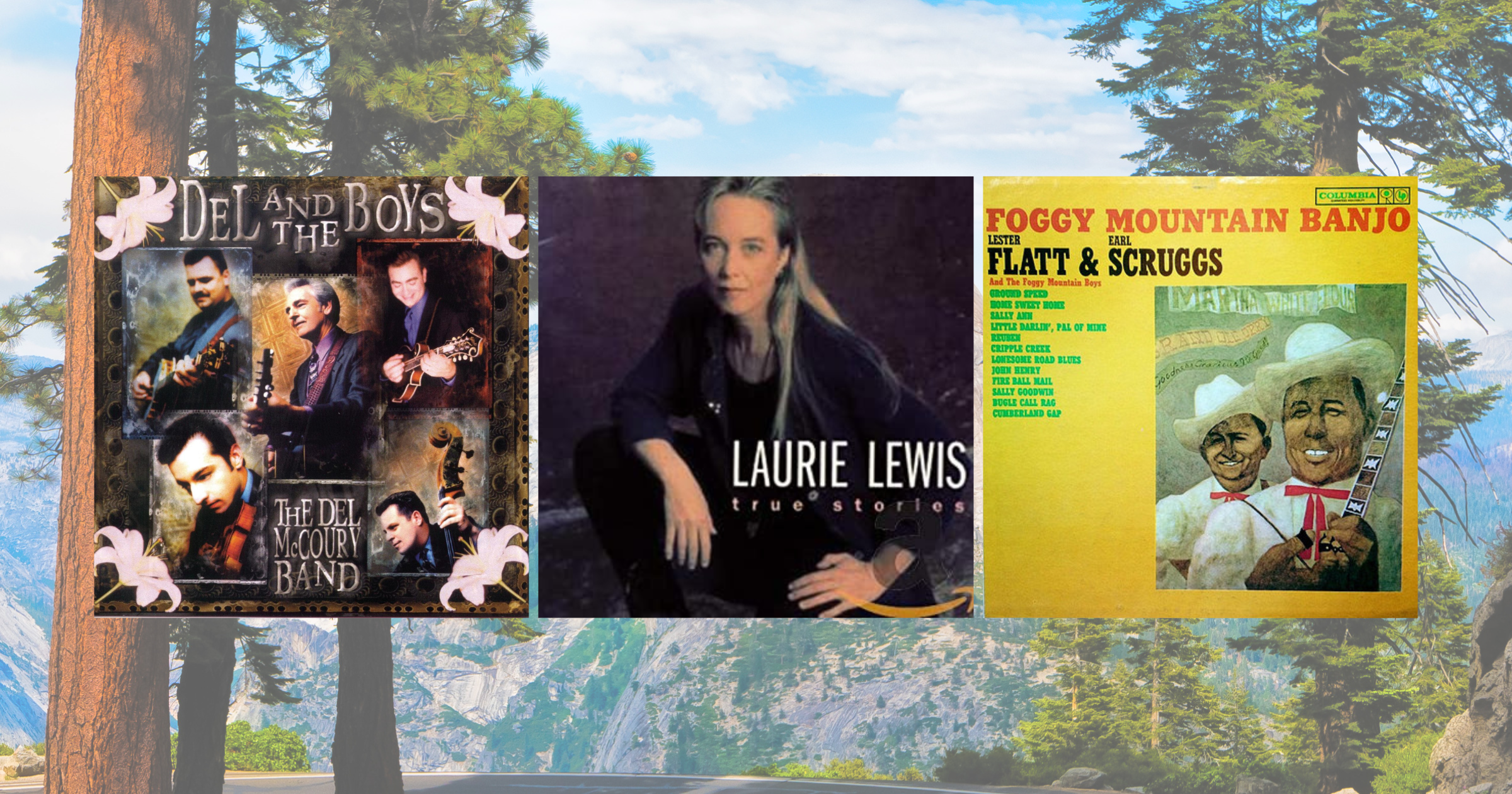
“1952 Vincent Black Lightning” – Del McCoury Band

Another track with a transatlantic story, this ever-popular, most-requested number covered by the Del McCoury Band is a road trip staple — whether you get in or on your vehicle to hit the highway. It would be a sin to make a bluegrass summer vacation playlist and not include “1952 Vincent Black Lightning!”


“Val’s Cabin” – Laurie Lewis

A rare example of a bluegrass song actually about summer vacations, this Laurie Lewis original, “Val’s Cabin,” begins as a simple retelling of childhood memories — nostalgia being a common rhetorical device (and when attempted by many other writers, a well-worn trope) in bluegrass. But Lewis, a veteran through-hiker, wilderness excursioner, and backpacker as well as a Grammy-nominated bluegrass singer and songwriter, tinges the story with melancholy and the existential questions raised by the ever-worsening climate crisis. The song is as evocative as it is gorgeous; though the singer can’t find the way to “Val’s Cabin” any longer, every listener can.


“Paddy on the Turnpike” – Vassar Clements

If you ever happen to find yourself Crossing the Catskills on a summery jaunt, “Paddy on the Turnpike” must be in your listening rotation. Avoid the tolls, but still go for a ride on the turnpike with Vassar Clements’ wild, unpredictable, jaw-dropping, wonky fiddling. “Paddy” is a blank canvas for Clements and a study in bluegrass’ unending affinity for flat seven chords.


“Don’t Give Your Heart to a Rambler” – Tony Rice

A hit in nearly every jam circle that ever circled, “Don’t Give Your Heart to a Rambler” is almost as if “Gentle on My Mind” had been written by a much less kind or compassionate protagonist. Tony’s solo vocal stylings are as iconic as his six-string licks, nearly obliterating any memory of this song ever having been sung by anyone else. What’s more, the titular advice of the track still stands. Just don’t.


“Highway 40 Blues” – Larry Cordle & Lonesome Standard Time

Because “Interstate 70 Blues” just doesn’t roll off the tongue. And that melodic hook should go down in history as one of the best country licks to ever lick! Cordle wrote one built for the long haul with “Highway 40 Blues.” It’ll keep you good company as you go wherever and back.


“Banjo Pickin’ Girl” – Annie Staninec

Is there any better reason to go around this world than being a banjo picker? There are never enough banjo pickin’ girls and this anthem, no matter how many times it’s picked up, studied, and retooled by another banjo pickin’ girl, always SLAPS. (Clawhammer pun intended.) Fiddler and multi-instrumentalist Annie Staninec, who’s traveled around the world making music quite a bit herself, gives an excellent old-time rendition of this favorite.


“A Crooked Road” – Darrell Scott

Darrell Scott turns a literary device pretty common in songwriting on its ear, with a tender eye for detail and emotion that he brings into all of his musicmaking. Life is, after all, about the journey — not the destination. Why not take the crooked, and thereby, the road less traveled? 

Plus, take this song as suggestion: The Crooked Road, Virginia’s Heritage Music Trail, is well worth a visit. Put this song on and take the Crooked Road.


“Up and Down the Mountain” – David Parmley & Continental Divide

Work life doesn’t suit you? Does “paradise” mean a fiddle and the open road? If so, “Up and Down the Mountain” is for you and your road trip playlist. Especially if you’re planning on trekking through the Rockies, Sierras, Ozarks, Applachians, or what-have-you. Turn off cruise control, watch for the runaway truck ramps, and go up and down those mountains! David Parmley & Continental Divide know something about geography and topography, after all…


“Roving Gambler” – The Country Gentlemen


Not sure why you’d be headed to Las Vegas during one of the hottest summers on record, but if you’ve got your sights set on a casino — wherever it may be — crank up “Roving Gambler” and hope your 2 a.m. slot machine binge or your evening “re-learning” blackjack ends more amiably than with gunfire. Speaking of which, perhaps “Blackjack” deserves a slot on this playlist…


“Travelin’ Prayer” – Dolly Parton

The kick-off of one of Dolly Parton’s masterpieces, her 1999 bluegrass album The Grass Is Blue, “Travelin’ Prayer” was actually written by Billy Joel. Yes, that Billy Joel. The original, from 1973’s Piano Man, featured banjo playing by Eric Weissberg and Fred Heilbrun. So of course the tune stands up to the bluegrass treatment and then some, between Stuart Duncan’s haunting fiddle cadenza to begin the track, the rip roarin’ tempo and train whistle harmonies, and the lonesome feeling of being away from your baby while he travels the world. We’re gonna assume Dolly’s blessed pen and ink added the lyric: “And keep him away from planes / cause my baby hates to fly!”


“Road to Columbus” – Kenny Baker

Growing up this writer frequented a bluegrass jam in Granville, Ohio, about 25 miles east of the state’s capital, Columbus. Like clockwork, every week as the jam wound down around noon on Wednesdays, Troy Herdman — a local bluegrass community stalwart, Doc Watson-style flatpicker, and mentor of many who lived in or around Columbus — would call this tune. Everyone would chuckle, and we’d play “Road to Columbus” as everyone, but especially Troy, hit the road to Columbus. 

Herdman passed away last week at the age of 91. I certainly wouldn’t be the musician I was today if it wasn’t for Troy, and I know quite a few others who would say the same. So no matter where I travel, I always keep “Road to Columbus” nearby. Especially when I’m headed home to Ohio.

Many pickers speculate over whether Kenny Baker and Bill Monroe were referencing Columbus, Ohio, or Columbus, Indiana. But, according to Roland White — who introduces the song with an anecdote from his time on the road with Monroe — it’s about Ohio. For this Ohioan, that’s confirmation enough!


“That’s How I Got to Memphis” – Tom T. Hall

His own recording of one of his most popular hits may sound more like straight up and down country than ‘grass, but even the most casual fan of Tom T. Hall knows that this Bluegrass Hall of Famer is bluegrass to his core. If you’re headed down I-40 from Nashville — or, really, towards Memphis from any direction, no matter how direct or circuitous, this song is a must-add for your road trip playlist.


“Where Rainbows Never Die” – The SteelDrivers

This song is about a decidedly different kind of journey, not often referred to as a “vacation,” but even so it’s a poignant, encouraging, and downright delicious song to background any journey. If you’re road weary — or life weary — “Where Rainbows Never Die” is a certified pick-me-up that doesn’t shy away from reality, like the grit and coarseness in Chris Stapleton’s lead vocal wrapping you in its warmth. There’s a comfort in life not being sugar-coated — and in knowing somewhere, west of where the sun sets, rainbows never die.


“Home Sweet Home” – Flatt & Scruggs

Home never feels so sweet as when you’ve just returned after a long, restful, relaxing vacation. So we’ll close our summer vacation playlist with Flatt & Scruggs’ rendition of this tune pulled directly from the American songbook, “Home Sweet Home.” We hope a banjo roll always greets you at your door, and if not, this playlist will at least cover that for you. Wherever you roam, there’s no place like home! And no music like bluegrass.


Editor’s Note: Check out our follow up playlist, Take the Journey: 17 Songs for a Sunny and Warm Summer Vacation

WATCH: Scythian, “Buddy Holly”

Artist: Scythian
Hometown: Front Royal, Virginia
Song: “Buddy Holly” (Weezer cover)
Album: Quaranstream: The Album
Release Date: July 8, 2021
Label: Aerotone Records

In Their Words: “‘Buddy Holly’ was a product of a rabbit trail (no pun intended) while the four of us were practicing for our ill-fated 2020 Roots and Stones CD release tour. We were talking about some adjustments needed in the set when Dan started playing a couple chords, which were the same progression as ‘Buddy Holly.’ We then joked that it would make a rippin’ bluegrass tune, and left it at that. Next thing we knew it was mid 2020 and we had started these online shows that racked up about 30k+ viewers every other week called ‘Quaranstreams.’ We literally survived that whole year off of the amazing goodwill of our fans supporting us and tipping us while we played. The shows were kind of like a reverse SNL, lots of music, and a couple skits featuring a variety of recurring characters, so we thought that this would be a great place to experiment with writing and recording songs to release for our amazing fans.

“We remembered that we wanted to give this song a try, and ended up recording it all in about a day. After it was mixed and mastered, we were racking our brains with how to present this on the stream since we had limited time and wanted to do the song justice, so we took inspiration from the original Spike Jonze-directed video and just added crocheted puppets. We spent a good hour or so cutting out cardboard instruments and making mic stands out of Q-tips, then literally shot the whole thing in about two hours with an iPhone. When we released the video on our live stream for the first time, people were losing their minds, and kept requesting us to play the video every chance they could get. People wanted it so badly that they watched the whole four-hour stream again, just to screen capture the video and bootleg it to other Scythian fans.” — Ethan Dean


Photo credit: Brendan McLean

Danny Paisley & Southern Grass Find a Family Blend on ‘Bluegrass Troubadour’

After nearly 50 years in bluegrass, Danny Paisley has reached something of a breakout moment. He won Male Vocalist of the Year honors at the 2020 IBMA Bluegrass Music Awards — his second time in the past five years and his third IBMA trophy overall.

Paisley started performing bluegrass music as a teenager when he joined the Southern Mountain Boys, a band his father Bob co-founded with Ted Lundy. Lundy’s sons, TJ and Bobby, played in that group too, and now are in Southern Grass, the band Danny now leads. The lineup also features his son, Ryan, giving this traditional bluegrass group a unique two-family, three-generation legacy. Earlier this month, the band released Bluegrass Troubadour, their first album for Pinecastle Records. They recorded it last fall with producer Wes Easter, whom Paisley praises for his good ideas and good vibes, sharing that “after every session we were just happy and couldn’t wait to go back the next day.”

Speaking to BGS from his home in Landenberg, the southeastern Pennsylvania town where the singer-guitarist grew up, Paisley talks about how his not-strictly-traditional sound was shaped by that area’s rich musical history and how the new generation is rethinkng bluegrass.

BGS: You’ve been a bluegrass professional almost your entire life. When did you join your father’s band?

Paisley: I started playing with my father and traveling the rooms around 1974-75. Ted Lundy and my dad had a band for years. Ted’s sons, TJ and Bobby, started playing and I started playing, so we became a family group within the two families. Totally like a big family. Their mom is like my mom. And they call my mom “mom.” We grew up together. Basically all our lives we’ve been playing music together. That pretty much carried all the way through, because the Lundy brothers are back playing with me.

How was it being in a band where your dad was the boss?

Sometimes I would say to my dad, “I have this great idea.” Ever patient as he was, he always knew how to handle every situation. He’d always look at you and go: “That’s great, that’s great, when you get your own band you can try that.” To this day, I laugh about that. And I use that, too, on my son.

Now you have a similar situation with your son Ryan in Southern Grass. Does he bring a different generational perspective?

He wants to do more things [with technology], where I’m still old school and like to do things my way. He has good ideas and it makes me have to rethink… Young minds are sometimes way better than old minds. It’s hard for the younger generation today — for the third generation of bluegrassers to relate to the “Blue Ridge Cabin Home on the Hill.” They love the song, but not that theme of the cabin on the hill and things like that from the old days. I have heard of that from my grandparents. Now with the next generation, it is washed down even more.

The area where you grew up seems to have been a great musical influence.

I was very lucky. I grew up in a place here where there was a country music park, Sunset Park. On Sundays, they would have a major country or bluegrass artist… Bill Monroe, Mac Wiseman, Osborne Brothers… I got to see all of my heroes within five miles of my house. Down the road about 15-20 miles was another park called New River Ranch. It had the Stanley Brothers, Jim & Jesse, Reno & Smiley. Any given Sunday within 20 miles, you could go somewhere and hear some incredible music.

When I was very young, Flatt & Scruggs came and everyone was there to see Earl Scruggs. He was god to every banjo player and rightfully so. I remember that day leaving with this impression of Lester Flatt — just how calm he was and how he talked from the stage. He was in control of the whole thing so easily. … Del McCoury lived the next county over from me, so we often played shows with him. I loved his rhythm guitar playing and his voice. He could play that rhythm guitar and keep that band in time – he’d drive that band with that guitar. There was nothing like hearing him live.

Your music has been associated with “Baltimore Barroom Bluegrass” What was that scene like?

When I got older, there were all these bars and clubs in Baltimore, which is about 30 miles from home. I ended up playing in these clubs, four or five nights a week… you’d played from 9 p.m. to 2 a.m., sometimes four or five sets. You got your chops in. You had a broad repertoire and you were playing to people who knew the music because Baltimore became a hub for Southerners who moved up from Virginia, West Virginia, and Kentucky for work. They were hard-living, hard-drinking, and hard-driving bluegrass fans. There’d be fights. There’d be carrying on, but boy you could have fun!

And another regional musical influence on you was the Galax sound, right?

Galax is a town in southern Virginia, on the state line of North Carolina and Virginia, and the Old Fiddlers Convention there draws thousands from all over the world. The Galax sound features a lot of fiddle — maybe not your standard bluegrass fiddle tunes, but a lot of different fiddle tunes that made their way into bluegrass music. …

Their banjo players had a certain sound to their playing. Ted Lundy had it. He came from Galax and my dad’s family came from over the state line in Ashe County, North Carolina. So naturally they would be drawn together when they got up here. Ola Belle Reed, who wrote “High on a Mountain,” lived a few miles from where I’m at here. She was from that same region. The driving banjo — there is a certain style in their hands and in their noting. You can tell they are from the Galax area. I play [guitar] with a thumb pick where a lot of the bluegrass guys play with a flat pick. That was from my dad also.

So Southern Grass’ driving rhythms are like a handed-down legacy?

Yes, of that area and of our fathers. We keep the rhythm sort of pumping, but you’ve got to play to each song. We’ll work the song. As the singer eases off singing, the rhythm will pull back, too, and then you can build back up. We do a lot of stuff like that dynamic. That’s what I like about my style of music, knowing and feeling the song.

Bobby Lundy used to play the banjo in the band and decided he needed some time off. When he said he was able to play, I needed a bass player. I call him my utility man of bluegrass, like he could play any position on a baseball team — he’s that talented. Because he has known me for so long, he knows what I am going to do on a guitar. He knows what I am going to do singing. He can walk me right into the singing with his bass. He can lead me right into the voice. He can just push the band and keep that timing from not going too fast or too slow. He can just keep it rock steady.

How did you pick songs for your new album?

Two of them [“He Can’t Own Them” and “I Never Was Too Much”] were written by Eric Gibson of the Gibson Brothers. He’s always one of my favorite writers. He sent a gang of songs he had not recorded. Every one of them was a great song. Those were the two that fit my style. Brink Brinkman — another excellent bluegrass songwriter — told me, “I have a song that I’d like you to hear.” As soon as I heard it [“Date With an Angel”], I wrote back: “I want it!”

“May I Sleep in Your Barn, Mister,” I learned from a guy named Cullen Galyean, a banjo picker and a great mountain singer from down in the Galax, Virginia, area. “Eat at the Welcome Table” is an old-timey spiritual song. When my dad moved up here to Pennsylvania, his neighbors were an African-American farming family. They had an old-timey string band and played gospel songs. They would sing that song. We put our own spin on it.

The album has an interesting mix of songs that come from different styles and influences.

That’s how music generally works for me. I love it all, and then I make it my own. My band is rooted in traditional music and traditional ways, but that shouldn’t hamper or restrict you. So, I keep my ears open to all kinds of things. You can sometimes take an idea from a non-bluegrass artist and use it in bluegrass.

It’s that way with my singing. I listen to everything from George Jones, Jerry Lee Lewis and Vince Gill to opera singers like Pavarotti – these guys all amaze me. How they control their voice and present it with such tone. For me that was lacking in my singing and I had to work at that… I learned to sing a little different as I got older – to take the edge off the high tenor part a bit. Things like that, and I noticed that people were responding better.

Congratulations on winning your second IBMA Male Vocalist of the Year win. Was the victory sweeter the second time around?

The first time I was so shocked. Any category when you are up there with Russell Moore, Del McCoury — all these guys that I enjoy. You’re shocked that people would appreciate what you do. The second time, it was like, “Oh my goodness.” It didn’t really set in until the next day or so. I love to go out and play to make people happy. I never thought of being something like Male Vocalist of the Year. It’s always the dream for everybody. It’s always a dream to play the Grand Ole Opry, but you’ve got to keep it realistic. A life lesson early on that I got from my dad: never get to where you think you’re better than anybody else. Because as soon as you do that, you’ll realize that you’re not.


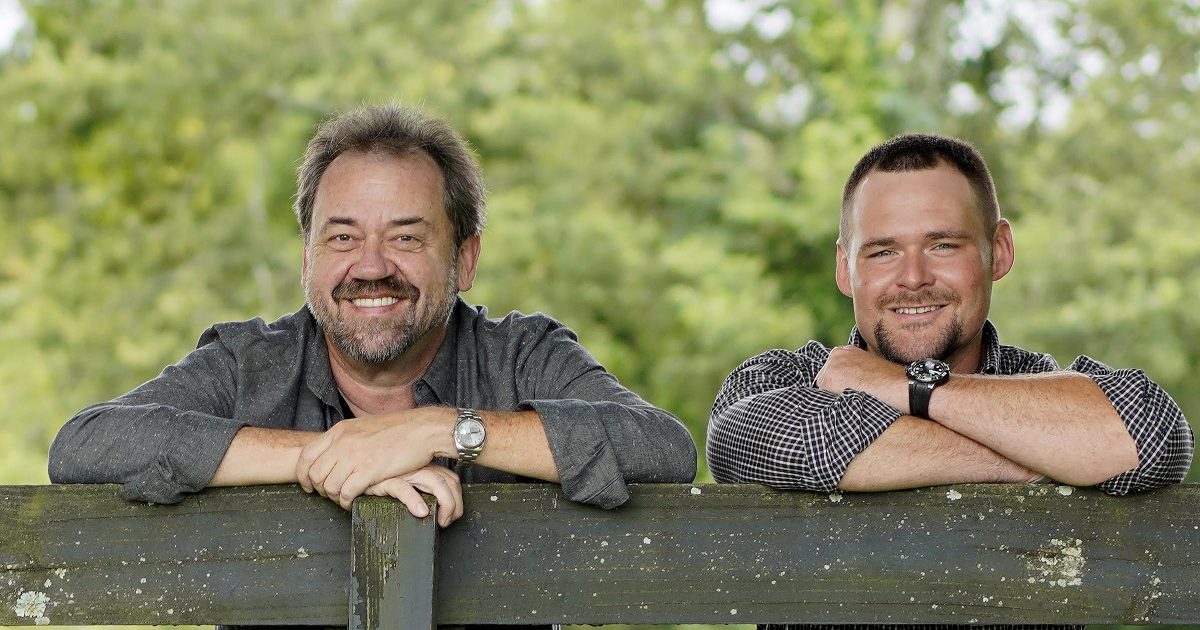
Photo of Danny Paisley and Ryan Paisley courtesy of Pinecastle Records.

LISTEN: Carsie Blanton, “Mercy”

Artist: Carsie Blanton
Hometown: Philly (via New Orleans and Virginia!)
Song: “Mercy”
Album: LOVE & RAGE
Release Date: April 30, 2021
Label: So Ferocious Records

In Their Words: “I wrote ‘Mercy’ for my husband Jon, who I’ve been with for thirteen years. My early experiences of love were a mixed bag; what seemed like love was often more about control. Through Jon, I found out that love can be a gentle force that allows us to become more ourselves. Once I discovered that, I was able to envision a whole world of love; a world that’s less about control and more about compassion.” — Carsie Blanton


Photo credit: Shervin Lainez

LISTEN: Jason Davis, “Modern Day Jezebel” (Feat. Dan Tyminski)

Artist: Jason Davis
Hometown: Galax, Virginia
Song: “Modern Day Jezebel” (Feat. Dan Tyminski)
Release Date: April 13, 2021
Label: Mountain Fever Records

In Their Words: “I first got the demo of this tune four or five years ago from Daniel Salyer. I loved it the first time I heard it and knew I’d like to cut it for my next record. Luckily, nobody had put it out in the meantime. To me it’s a great modern bluegrass tune. I think it’s a cool way of telling the story of a love gone wrong and I really liked the chord progression and melody. Dan played guitar on the session and I was especially excited when he wanted to sing it. It was an honor to get to track with all the guys (and gal). They really knocked it out of the park on this one. They killed it!” — Jason Davis


Photo credit: Donn Jones

BGS 5+5: Amanda Cook

Artist: Amanda Cook
Hometown: Laurel Fork, Virginia; Originally from Jay, Florida
Album: Narrowing the Gap
Nickname: My band members call me Mander

Which artist has influenced you the most … and how?

My dad is the biggest influence on my bluegrass career. Watching my dad over the years play banjo and sing absolutely influenced my love for bluegrass music. The first lesson he gave me was to hand me all the volumes of the Bluegrass Album Band and said, “Sing tenor with every single track.” I love to see him play and sing, he just gives it all he’s got and that inspired me to do the same.

What’s your favorite memory from being on stage?

An incredible moment on stage for me was our first time at the Milan Bluegrass Festival, so far away from my hometown in Florida. When we kicked off “Caleb Meyer” and the crowd just cheered in response, what an incredible feeling. Those folks so far up north had heard my version of that song and that was the moment that I realized that my music had went a lot further than I knew. I’ll never forget that.

If you had to write a mission statement for your career, what would it be?

When I started my career I was trying to find my place in the music world and now that I’ve been at it for a while my mantra is “stay true to yourself.” I want to make good music and just make my own place in the genre. I strive to be original and unique like other artists I admire.

Since food and music go so well together, what is your dream pairing of a meal and a musician?

I would absolutely love to sit down and eat some fried chicken with Dolly Parton. She is just such an incredible artist and human being.

What rituals do you have, either in the studio or before a show?

Before a show a Diet Coke is an absolute must and you will often find me looking for my bag of Fishermen’s Friend cough drops. You’ll always find me on stage with one. It’s a long-running joke the number of times I’ve almost spit my cough drop out when I’m really getting into a song.


Photo credit: Andrew Mingus

LISTEN: Lonesome River Band, “Love Songs”

Artist: Lonesome River Band
Hometown: Floyd, Virginia
Song: “Love Songs”
Release Date: February 19, 2021
Label: Mountain Home Music Company

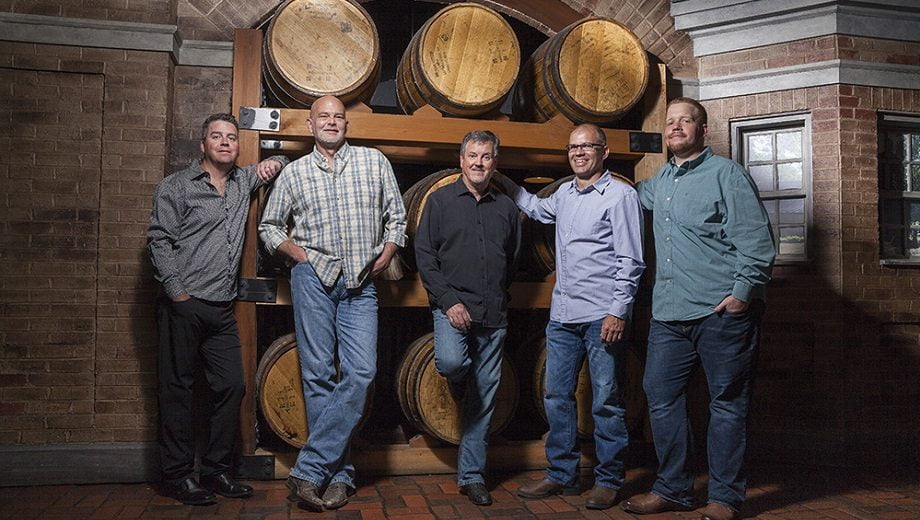
In Their Words: “‘Love Songs’ is another great song written by our friend Adam Wright. It tells the story of a songwriter who has had bad experiences with love and can’t find ways to be positive about it. The lyrics depict the songwriter’s frustration: ‘They say write in what you know / And all I really know is the losin’ and the leavin and the left.’ Adam puts a comedic twist to selling sad songs, and Brandon Rickman, our guitarist and vocalist, portrays it in his unique way.” — Sammy Shelor, Lonesome River Band


Photo credit: Anthony Ladd

BGS 5+5: The Steel Wheels

Artist: The Steel Wheels
Hometown: Harrisonburg, Virginia
Latest album: Everyone a Song, Volume 1
Personal nicknames (or rejected band names): Trent Wagner and The Steel Wagler

Answers by Trent Wagler

What’s your favorite memory from being on stage?

I remember a festival finale performance of “The Weight” in northern Alberta where we were thrust (last minute) into leading the song. Isn’t “The Weight” some sort of Canadian anthem? I don’t know, we felt a little like impostors, but it became even more hilarious when a whole bunch of volunteers and other musicians hopped on stage and we were given conflicting accounts of who was singing what verses. In the end Michael Franti surprised us by appearing on the drum kit and singing a verse that included a little change of lyrics name-checking the festival. It was memorable.

What was the first moment that you knew you wanted to be a musician?

When I was about 9 years old, I played Duffy the Fluffy in a small church Christmas play called Baa, Baa, Bethlehem. I slicked my hair back and wore sunglasses and sang a song that went, “Duffy the Fluffy is who I’m gonna be, come to the city you’ll be waiting to see me.” And the rest of the sheep sang, “Get a job, baa baa baa, baa, baa baa baa baa baa.” But I had a guitar strapped around my neck and I sang with confidence. Wait, maybe THAT was my favorite memory from being on stage!

What rituals do you have, either in the studio or before a show?

In the studio, I always tape a sheet of paper on the wall with the title of each song we are recording. On that paper, we keep a running list of notes, ideas, or whatever that song still needs. It’s helpful to have a visual representation of notes, and when things are dragging along, there’s a sense of accomplishment to crossing off each note. When the song is finished, it’s ceremoniously taped on a different wall.

Which elements of nature do you spend the most time with and how do those impact your work?

I try to ride bike everyday. Recently, I’ve been most excited about gravel road rides, a bit easier than mountain biking, but with a similar feeling of distance from civilization. I love the way riding a bike gives you respect for a mountain. The bicycle also turns you into a different kind of an animal. Sometimes a mule, sometimes a bird, but I usually feel transformed after a good bike ride. And the whole process, of getting away, being in nature, and riding is a great reset for my creativity. I live in the Shenandoah Valley and the beauty of the landscape finds a way into my writing all the time. There is a reason that rivers and mountains are cliché metaphors, because there is an undeniable depth and power to them.

Since food and music go so well together, what is your dream pairing of a meal and a musician?

It seems like I should say I’d eat a fistful of cigarettes and a barrel of red wine and listen to Tom Waits and Leonard Cohen, but I can’t think of a better pairing than Brandi Carlile and some wild-caught salmon. There are musicians that garner praise from critics and others that have an easy-listening popular songs for the masses, but very few thread the needle like Brandi Carlile. She might be the only music my wife, 16-year-old daughter, and I can all passionately agree on. You know how salmon looks like it’s just a layer of pure pink muscle? Brandi’s songs are all muscle.


Photo credit: Josh Saul