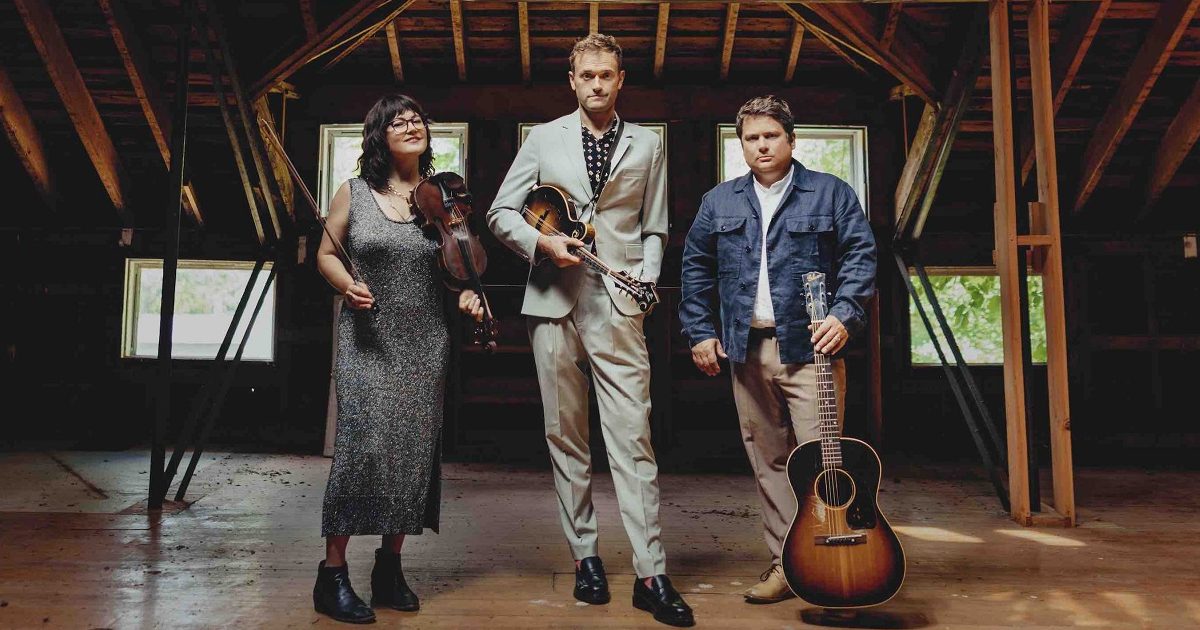
Artist:Nickel Creek Song: “Strangers” Album:Celebrants Release Date: March 24, 2023 Label: Thirty Tigers
Editor’s Note: Recorded at Nashville’s RCA Studio A, Celebrants was produced by longtime collaborator Eric Valentine and features Mike Elizondo on bass. It’s the band’s first album of new material in nine years. Nickel Creek will perform three sold-out shows at the Ryman Auditorium in Nashville on April 27, 28, and 29.
In Their Words: “This song is an exploration of the ostensibly rewarding but often awkward, even excruciating act of catching up with an old friend. Can the connection be reforged? Should it be?” — Chris Thile
“This is a record about embracing the friction inherent in real human connection. We begin the record yearning for and pursuing harmonious connection. We end the record having realized that truly harmonious connection can only be achieved through the dissonance that we’ve spent our entire adult lives trying to avoid.” — Nickel Creek
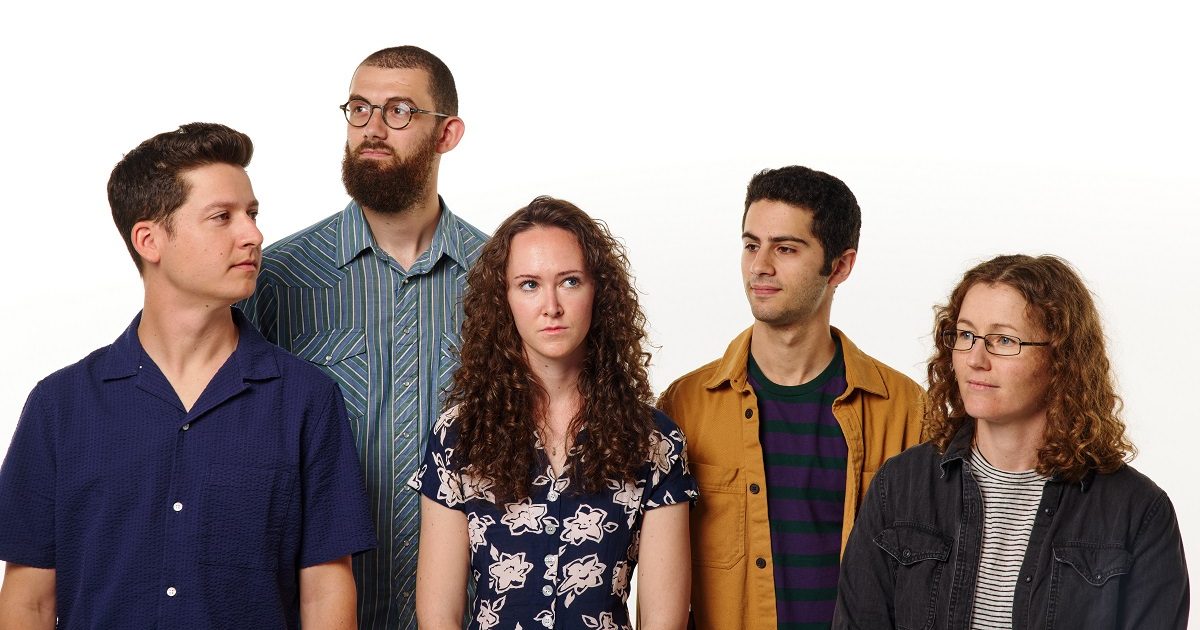
Songs can be truly short short stories. There is so little time, so little space to convey a complete narrative. That challenge has always thrilled us when crafting our music. When we were asked to create a themed playlist for The Bluegrass Situation, I thought through our own songs that formed the new album Close Enough to Hear (out February 3) and wondered what common thread tied them together. Many of them really are conveying a story, something with a beginning, middle and end. We all went back to our favorite short story songs and marveled at the writers’ ability to forge a genuine drama, with a plot and characters, inciting events and climaxes, in just a few short minutes. It’s a high wire act, where every single word counts and nothing can be wasted. Here’s a list of our favorite short story songs. — Evan Murphy (acoustic guitar), Mile Twelve
This song makes me emotional every time I hear it. Bruce delivers this Billy Bragg song so powerfully and honestly, giving it a distinctly American flavor. – Nate Sabat (upright bass)
I was recently turned on to Bobbie Gentry through the Cocaine and Rhinestones podcast by Tyler Mahan Coe (highly recommended) and stumbled on this song while checking out her catalog. She’s done such an incredible job painting a musical representation of that longing, wishing feeling of wanting to be included. And on a dorkier note, listen to how the phrasing of the hook is different on line one of the chorus than it is on line four. So, so good. — Nate
Our good friends of the duo Tattletale Saints are excellent songwriters from New Zealand, now based in Nashville. This song about Little Richard has beautiful, clear imagery that pulls you right into the song. It’s a mellow performance, not trying too hard and resulting in a memorable story about a unique Nashville music legend. – BB Bowness (banjo)
This haunting a cappella song written by Jean Ritchie is sung from the wife’s point of view as she awaits news of her husband’s fate down in the mine. The song captures the anxiety and uncertainty she feels while she imagines a possible future without her husband. — BB
A dozen cheap roses in a shopping cart, veins through the skin like a faded tattoo. Isbell’s tight, sparse images bloom into vignettes which form a complete story by the end of this song. A man has reached the limits of his patience with a stagnant life. His father lays dying in the ICU, he has no prospects, nothing to stay for. After long years, he finally decides to pack it up and break free. When I am in a period of writing I actually can’t listen to songs this good. They torment me with their lean, sinewy perfection. To use Isbell’s own language, there is no fat on these lyrics. Everybody knows you in a speed trap town. — Evan
“My name’s Joe Roberts, I work for the state” might as well be “Call me Ishmael.” For me, this is the quintessential short story song. There are major motion pictures with plots less deep. It’s the struggle between two brothers, Joe and Frankie, one a state trooper and the other a struggling veteran who can’t seem to stay out of trouble. “I got a brother named Frankie, and Frankie ain’t no good,” sings Joe. Maybe it’s the fact that I have two older brothers, but when Joe watches Frankie’s taillights disappear across the border I cry, even after hundreds of listens. “I musta done a 110 through Michigan County that night.” How desperate was Joe to catch Frankie, to save him from himself? This song has taught me so much about musical storytelling. Springsteen is larger than life, for me and so many others. I wish I could open the back of his head and see how he does it. Thank God we have his music, it’s sacred. — Evan
“Caleb Meyer, he lived alone in them hollerin’ pines” opens this exquisitely brutal ghost story. Gillian Welch has reshaped the very structure of modern folk songwriting. She and David Rawlings prove that when the song, the vocals and the playing are flawless you really don’t need anything more. “Caleb Meyer” is a haunting murder ballad. A woman fights for her life, finding a broken bottle to slash the throat of her would-be rapist. I am in that room with her when I listen to this, the hair standing up straight on the back of my neck. It’s a full-fledged Western, and she does it in three damn minutes. She is a force of nature. — Evan
The lives of Prine’s characters are smaller and simpler than the legends of epic folk ballads. There’s no steam drill, no six shooters, no gallows at dawn. It’s just Loretta, Davie and Rudy, a back porch, a TV that plays the same old news. This is Prine’s genius, making the mundane transcendent in its beauty and its tragedy. It’s like watching modern human life itself dancing on top of his gorgeous finger-picked eighth notes. He was one of our great American prophets, observing, critiquing, reflecting, teaching. He is missed so dearly. — Evan
“‘If this was the Cold War, we could keep each other warm,’ I said on the first occasion that I met Marie.” Ritter is a favorite of novelist Stephen King. It’s not surprising, given the literary grandeur of his songwriting. The strange, post-apocalyptic tale of Marie and the missile silo transfixed me when I first heard it. It’s more mesmerizing with each repeat listen. How does someone create a world so fully realized, so convincing, with such simple tools at their disposal? What a gorgeously weird tale. — Evan
When I was younger, I had four or five Bob Wills CDs that were pretty much on repeat for my whole childhood. This Cindy Walker song was on a couple of them, and every time I heard that fiddle intro, it would stop me in my tracks. I’d sit there completely absorbed in the stark, dusty imagery. This song is lyrically and musically as simple as it gets, but it packs a heavy emotional punch. When this song was recorded by Bob in 1941, the Dust Bowl was barely history, and I can feel the pain it caused in every beat. You don’t always need fancy chords and poetry to make a statement—sometimes you just need a semi-natural disaster. — Ella Jordan (fiddle)
How can you have a playlist without a Joni Mitchell song? The oppressively ordinary yet starkly evocative imagery in the second half (only Joni can put a dishwasher in a song) somehow reminds me a little of some of Lucia Berlin’s writing. This is one of those songs that if you had never heard anybody sing it and you just read the lyrics, it would still be a beautiful poem. One that takes you on a journey, and makes you feel things. One that makes you question your life choices. We all hope it’s only a phase, these dark café days…. – Ella
This is one of my favorite songs from Randy Newman. He sings about traveling around the United States as a child of a Jewish immigrant family in an attempt to find a home and live the American Dream. He deals with themes such as privilege and the issue of losing one’s culture while assimilating. This is the story of many families during the end of the 19th century and beginning of the 20th and continues to be a relatable topic today. – Korey Brodsky (mandolin)
Songwriter Unknown, Recorded by Hazel & Alice – “Two Soldiers”
The story of two Union soldiers during the Civil War who promise each other they will bring news back to their families if one of them does not make it through the battle. The imagery of war is vivid and the storytelling is masterful. Hazel & Alice bring this one to life in their incredible version. — Korey
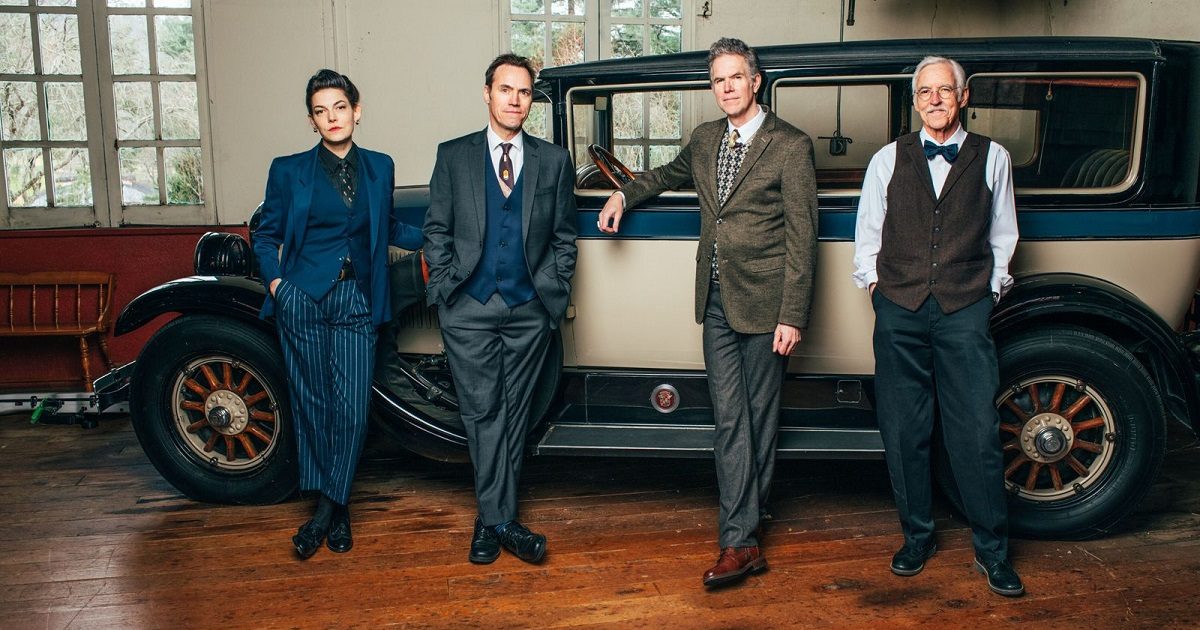
Artist:Chris Jones & The Night Drivers Hometown: Nashville, Tennessee Song: “The Price of Falling” Release Date: January 20, 2023 Label: Mountain Home Music Company
In Their Words: “The addition of Grace van’t Hof and Marshall Wilborn to The Night Drivers started a new era of creativity for the band and for me personally, and our first album together showed the positive results of that. Still, most of it was recorded during the pandemic while we weren’t touring. This is our first single from our not-yet-released second album, which was our first opportunity to record as a band that has grown together, instrumentally and vocally. Everything felt more comfortable and intuitive. ‘The Price of Falling’ is an uptempo song I wrote about the up and down sides of falling in love. The arrangement is designed to highlight the instrumental give and take that feels very easy and natural to us now.” — Chris Jones
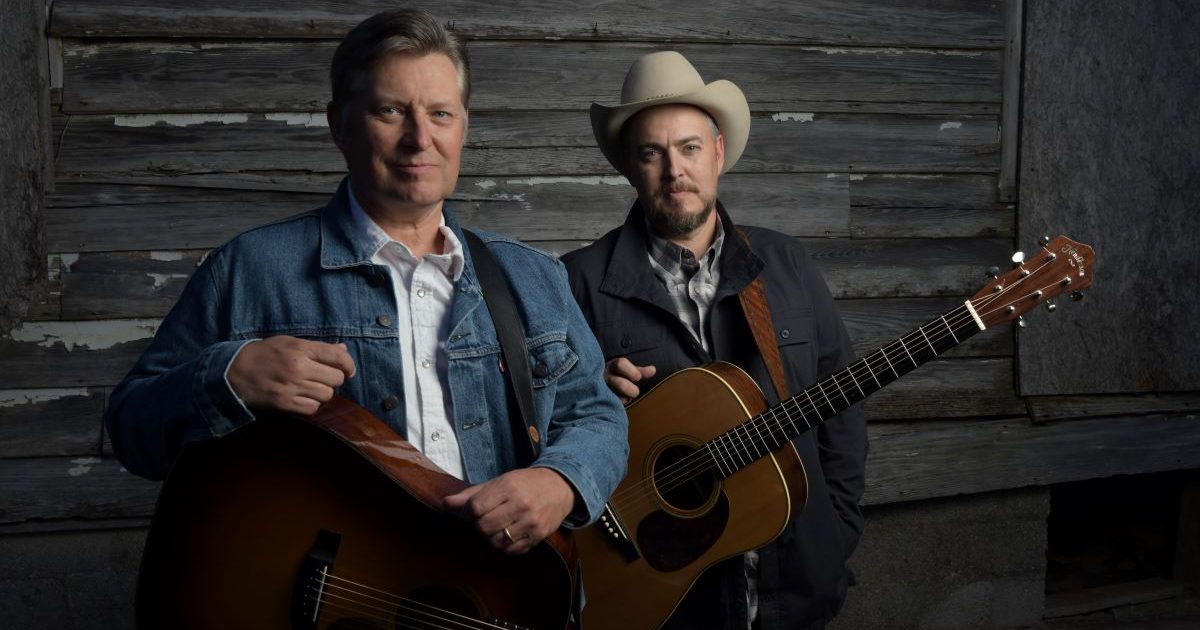
Artist:The Gibson Brothers Hometown: Ellenburg Depot, New York Song: “One Minute of You” Album:Darkest Hour Release Date: January 27, 2023
In Their Words: “I’m the proud father of three kids — Jack, Annie and Joey. They are everything to me. As involved in a family as a dad can be, I guess he can still be surprised by the ones he’s closest to. My daughter Annie is a marvel to me. When she was a little girl, she was one of the shyest kids I’ve ever seen. I never expected her to become so gregarious. And to watch her grow into the active and involved young woman she’s become is such a gift. So here’s my song for Annie Gray. We’ll be playing ‘One Minute of You’ in each of our upcoming shows. It’s quickly become one of my all time favorite songs to sing.” — Leigh Gibson, The Gibson Brothers
On Monday August 7, 1972, with fresh memories of Maritimes old-time and bluegrass, I drove from New Brunswick to New England to join my wife and kids, who were house-sitting for my in-laws in Norwich, Vermont.
On Thursday the 10th I headed south. A fourteen-hour drive brought me to Morgantown, West Virginia, the home of my friend and partner in research, photographer and film-maker Carl Fleischhauer, then employed at West Virginia University. We’d known each other for twelve years. (Our stories are in Bluegrass Odyssey: A Documentary in Pictures and Words, 1966-86 [U of IL Press 2001]). We were about to embark on fieldwork.
During the preceding year, when I began planning for the book Bluegrass: A History, I asked Carl to help me think about photos. In addition to documenting bluegrass festivals and other venues he, with Sandy Rothman, had recently looked for traces of earlier days in a field trip to the old Monroe home in Rosine, Kentucky. Now, we made plans for our own field trip. Carl would take photos. I would make notes and do interviews.
We spent that Friday in Morgantown looking at Carl’s photos and films and listening to LPs as we prepared for the research. At the end of the evening, my notes say,
Did some picking.
Early Saturday morning we piled in my new Toyota with our gear (cameras, tape recorder, axes, tent, sleeping bags) and headed southwest, crossing into Kentucky from Huntington, WV and snaking down through the mountains to Jackson, the seat of Breathitt County. Three hundred miles; we arrived around 2 o’clock.
There we headed just outside of town for Bill Monroe’s Second Annual Kentucky Blue Grass Festival. When I went to Canada in 1968, Bill Monroe had one festival a year at Bean Blossom in Indiana. Now he was running a bunch in other states, as were other artists. Festivals were the big news in bluegrass music in 1972. We sought to document the bluegrass festival experience.
Later others would write about this, like Bob Artis (“An Endless Festival” in Bluegrass [1975]) and Robert Owen Gardner (The Portable Community [2021]). Here’s how my notes from Jackson begin:
West of town on main hwy, down short steep road. Paid camping & Sat. fees, never did pay for Sunday. Parked & walked down to the stage area — tent set up, natural amphitheatre, uncovered stage, bad sound. Lots of cops around on Saturday.
Made contact with Pete & Marion Kuykendall, and agreed to move in next to them to camp. Set up tent, attempted to speak to Monroe but he was busy coping with the Goins Bros. problem of being hassled by the cops for drinking. Later Kuykendall said that cops had asked Monroe for $ (3 or 6 hundred) and he had refused to pay off so they were taking it out in fines. Lots of racing around on Sat. with flashing lights etal, but they stayed away on Sunday.
Listened then to IT’S A CRYING TIME, hot & exciting Japanese bluegrass band. Then back to Kuykendall’s bus/home whatall. Thunderstorm; discovery that cassette recorder didn’t work on batteries because plug distorts switch; got it running eventually. Oldest Kuykendall girl Sam/Ginger comes in with bass player of above-mentioned Japanese band, then leaves. Kuykendalls are a bit worried about this but Carl & I both notice later that a number of young girls (McLain girls, for example) are hanging around, with this group.
Dinner with Kuykendalls. Frank & Marty Godbey come in and are around for the rest of the evening. Mostly we sit & talk, though I went down to the amphitheatre to catch Jim & Jesse and the Japanese bands. Came back, then returned to catch Monroe. Afterwards listened to picking group in tent near us. Did mainly Emerson & Waldron, Newgrass Revival, Bluegrass Alliance, Gentlemen, etc. Chromatic banjo. Noisy night in Carl’s tent, as sessions went on late and busses started early. I got a spider bite.
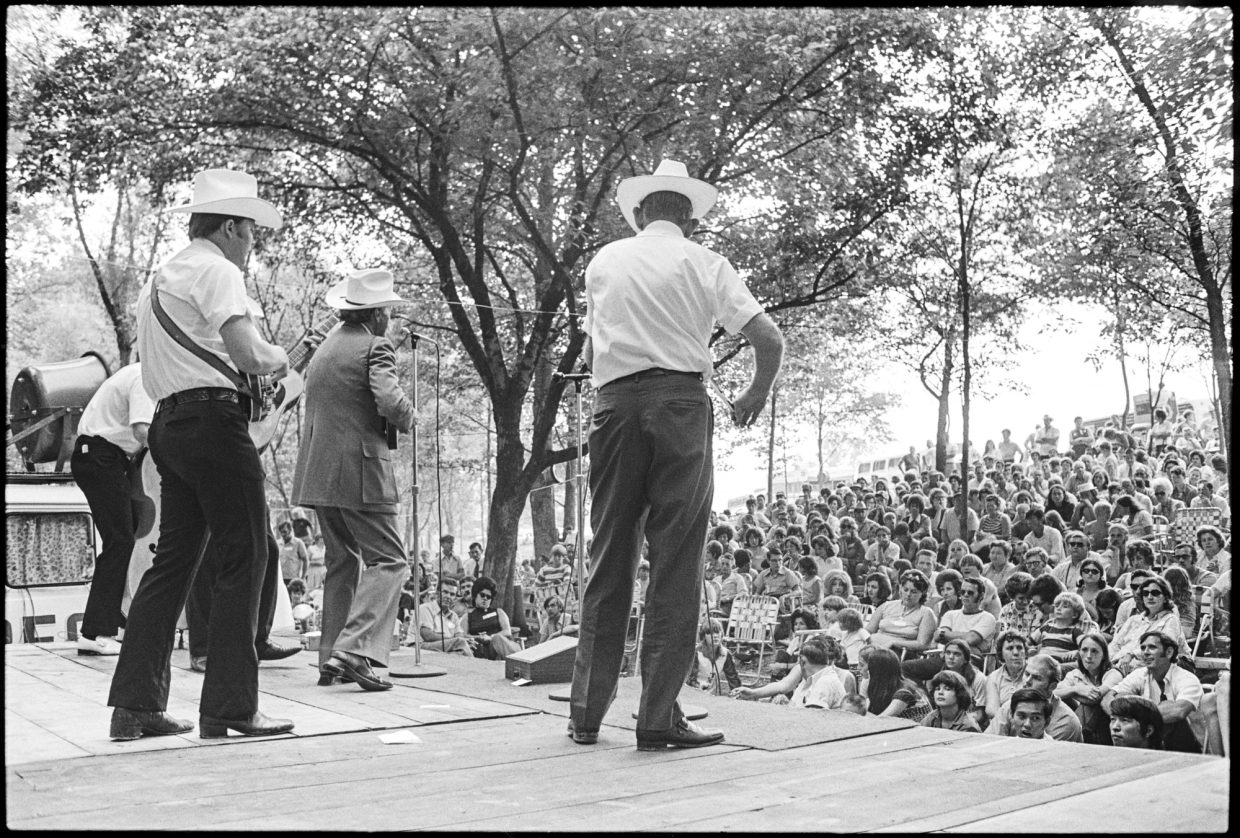
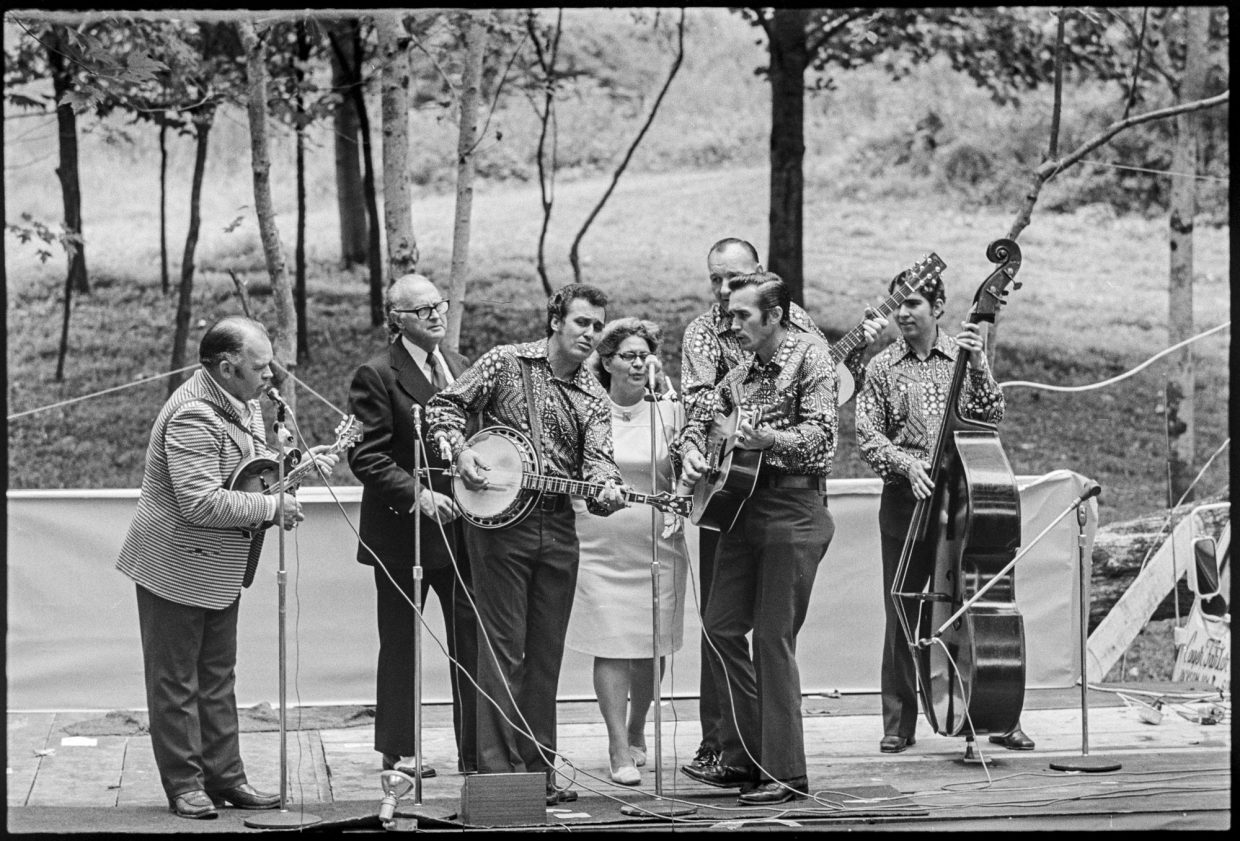
Bill Monroe (center) and the Blue Grass Boys at the Second Annual Kentucky Bluegrass Festival, Jackson KY, Saturday, August 12, 1972. Bandmembers include Monroe Fields, bass; Jack Hicks, banjo; Joe Stuart, guitar (hidden); Monroe, mandolin; and Kenny Baker, fiddle.
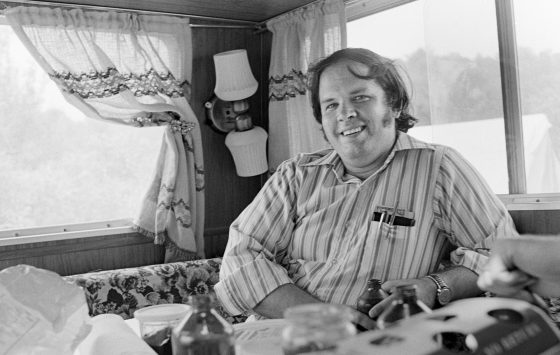
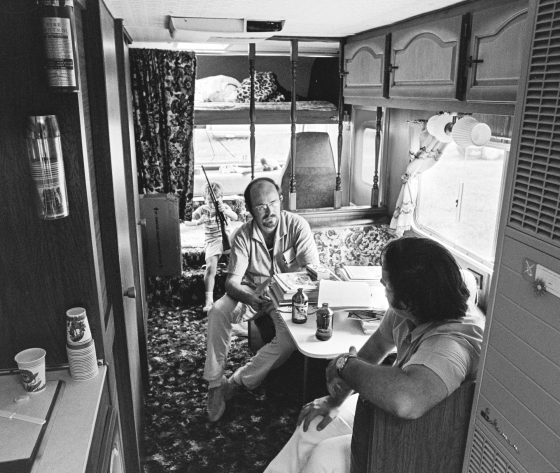
I’d known the Kuykendalls since 1966. Pete, a 1996 inductee to the Bluegrass Hall of Fame, was a musician, record collector, producer, publisher, and, since 1970 owner-editor of the first and leading bluegrass monthly Bluegrass Unlimited.
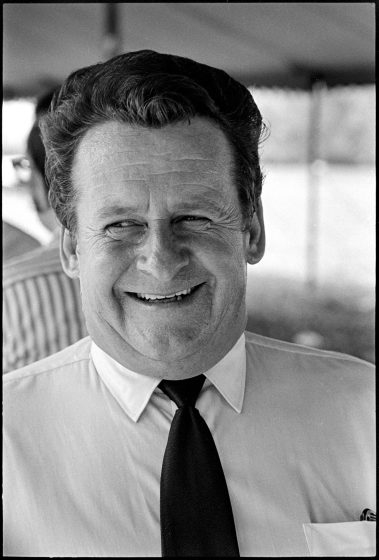
Pete Kuykendall, editor of Bluegrass Unlimited, in his RV parked in the camping area at the Second Annual Kentucky Bluegrass Festival, Jackson KY, Saturday August 12, 1972.
Pete and I had already been corresponding about bluegrass history when we met on Labor Day weekend 1966 at the second Roanoke Bluegrass Festival. Subsequently, I visited the Kuykendalls in Virginia where Pete encouraged me to write for the then all-volunteer magazine he would later own. I began with a review of the festival, published the following January — the first of eight articles I did for BU in 1967.
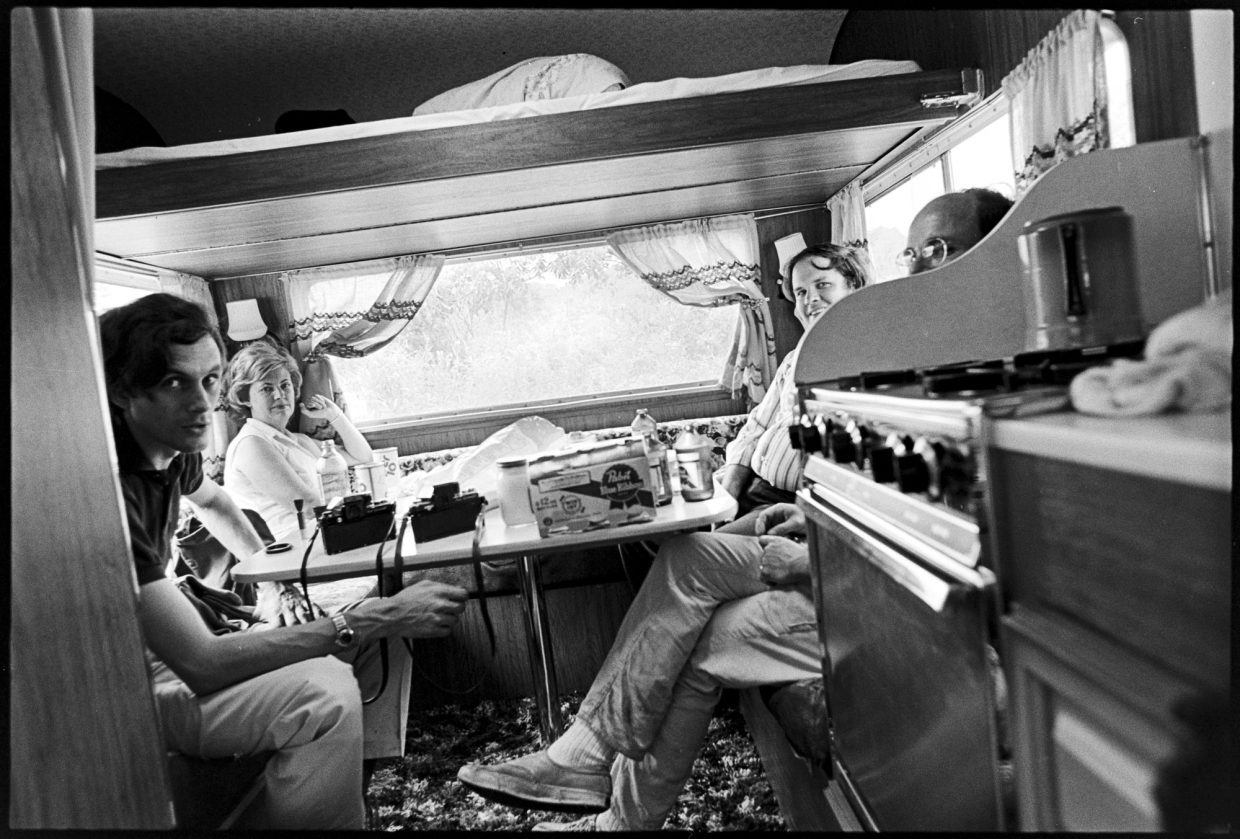
Photo made by Pete Kuykendall’s son Billy with one of Carl Fleischhauer’s cameras. Carl is seated at left with two other cameras on the table. This photo was made at the time of Neil Rosenberg’s (top of head above stove) interview of Pete Kuykendall, editor of Bluegrass Unlimited, in his RV at the Second Annual Kentucky Bluegrass Festival, Jackson KY, Saturday, August 12, 1972. In the background, at left, is Pete’s wife and Bluegrass Unlimited co-manager Marion Kuykendall.
By 1970 Pete and Marion were running BU full-time; I’d done an article for them earlier in 1972 (eventually I would write a monthly column) so we had been in touch recently by mail and phone. Conversations with Pete were never brief! He loved to share the business scuttlebutt and he had plenty since they were selling the magazine at festivals every weekend and had just launched BU’s own annual festival.
I think this may have been the first time I met the Godbeys. From Lexington, and before that, Columbus, Ohio, they had been following the bluegrass scene for a decade. Frank is a musician who is still performing these days. By 1972 he and Marty had begun writing and publishing photos in BU. For them, as for me, hanging out with the Kuykendalls was a good way to keep up on the bluegrass news. People were already talking about starting an industry association, though that — the IBMA — wouldn’t happen until 1986. Pete was one of its founders.
Neil Rosenberg (facing camera) interviewing Pete Kuykendall, editor of Bluegrass Unlimited, in his RV parked in the camping area at the Second Annual Kentucky Bluegrass Festival, Jackson KY, Saturday, August 12, 1972. In the background, with an air rifle, is Pete’s son Billy Kuykendall.
With the growth of the festivals came clubs, newsletters, and magazines. Bluegrass enthusiasts (many of them musicians) followed their favorites to festivals and other venues. Paths crossed; networks grew. The politics of bands was a favorite discussion topic.
Over the course of the festival, I made note of gossip about the always changing bands. Ricky Skaggs had just left Ralph Stanley — there were rumors about where he was headed next. Was Bill working to get Ralph Stanley on the Opry? Some thought so. The II Generation was said to be splitting up. Stories were told of bluegrass festival camp followers.
At this Jackson, Kentucky festival were a bunch of bands that had been appearing at Bill Monroe’s other 1972 festivals — Monroe, Jim & Jesse, Flatt, Reno & Harrell, the Goins, Ralph Stanley — mature musicians who’d been working with this music for a substantial period of time and who stuck close to the early models of which they were, often, the authors. Classic bluegrass, one could say.
What the audience didn’t hear was the kind of stuff we’d heard from the jammers late Saturday night, like “One Tin Soldier,” The Bluegrass Alliance’s cover of a song popularized in the film Billy Jack. Their bluegrass version, with Sam Bush’s lead voice and Tony Rice’s harmonies and guitar work, was a hit, a big step on the road to newgrass.
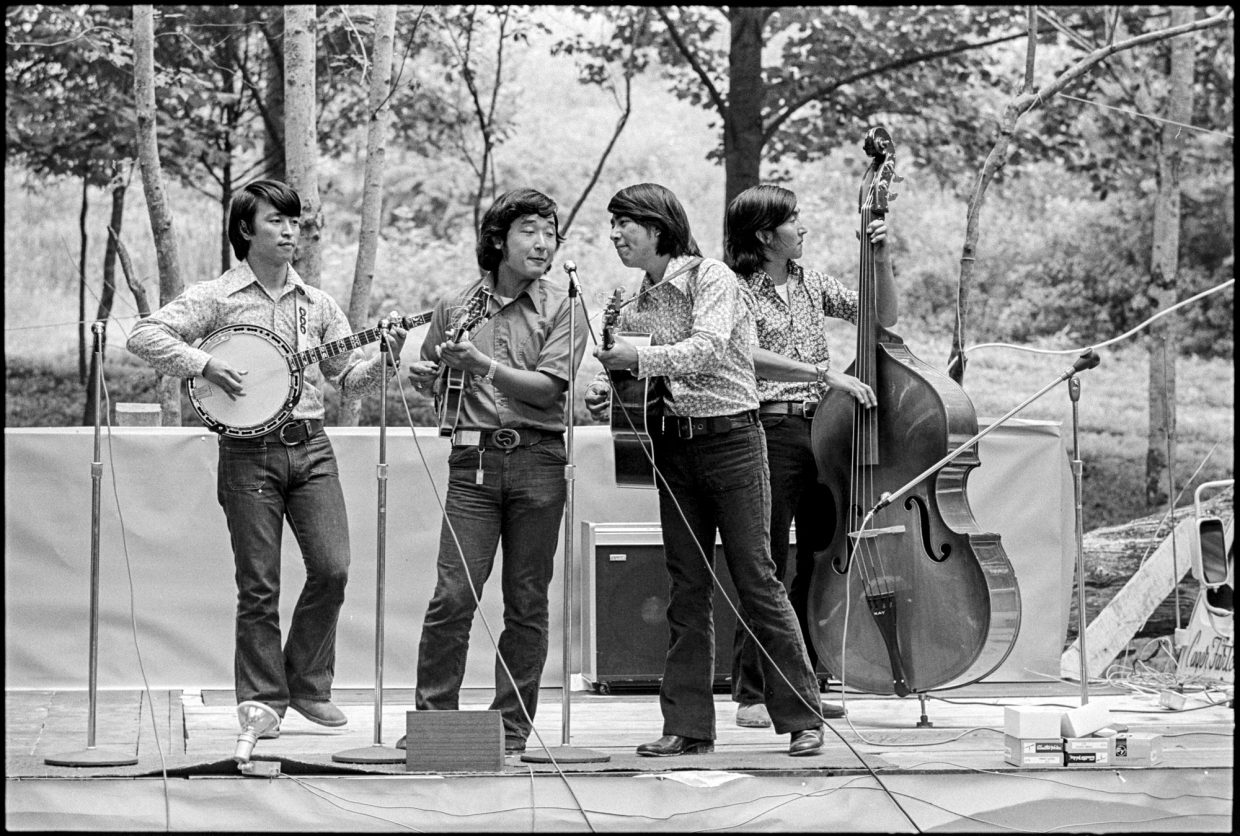
The Japanese bands were new to the scene. Japanese bluegrass began in the early sixties. In 1971, Bluegrass 45 came from Kobe, Japan, with the sponsorship of their label, Rebel, to tour U.S. bluegrass festivals. They made a big hit at Monroe’s Bean Blossom festival with their showmanship and musical savvy. This year they were back, along with another Japanese outfit, It’s A Crying Time.
Visiting from Japan, the band It’s a Crying Time performs at the Second Annual Kentucky Bluegrass Festival, Jackson KY, Saturday, August 12, 1972. Band members include Eiichi “Ei’ Shimizu, banjo; Kazuyoshi “Kazu” Onishi, mandolin; Satoshi “Sato” Yamaguchi, guitar; Akira “May” Katsumi, bass.
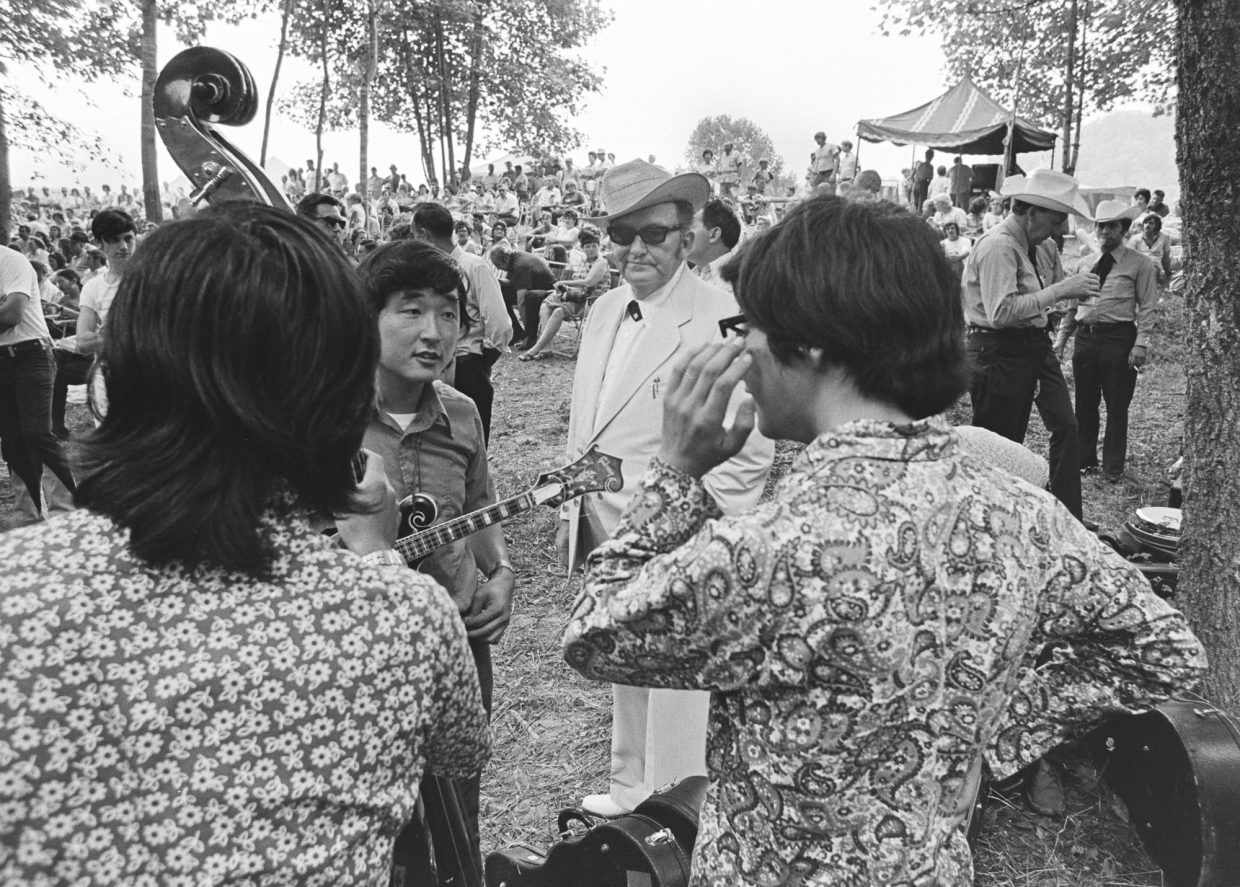
Monroe had booked the Japanese bands as a novelty, something you couldn’t see just anywhere in the bluegrass world. As I mentioned in my field notes, I found It’s A Crying Time’s music “hot & exciting,” and I was not the only one in the audience reacting this way. They came to the attention of Lester Flatt, who, after watching them rehearse, invited mandolinist Kazu Onishi to join him on stage at his final set.
Backstage moment at the Second Annual Kentucky Bluegrass Festival, Jackson KY, Saturday, August 12, 1972. Akira Katsumi, Kazu Onishi, Lester Flatt, and Akira Otsuka. Otsuka was Kazu’s friend from the Japanese scene, a member of the Bluegrass 45.
This video comes from the Bluegrass 45’s appearance at Carlton Haney’s Camp Springs festival:
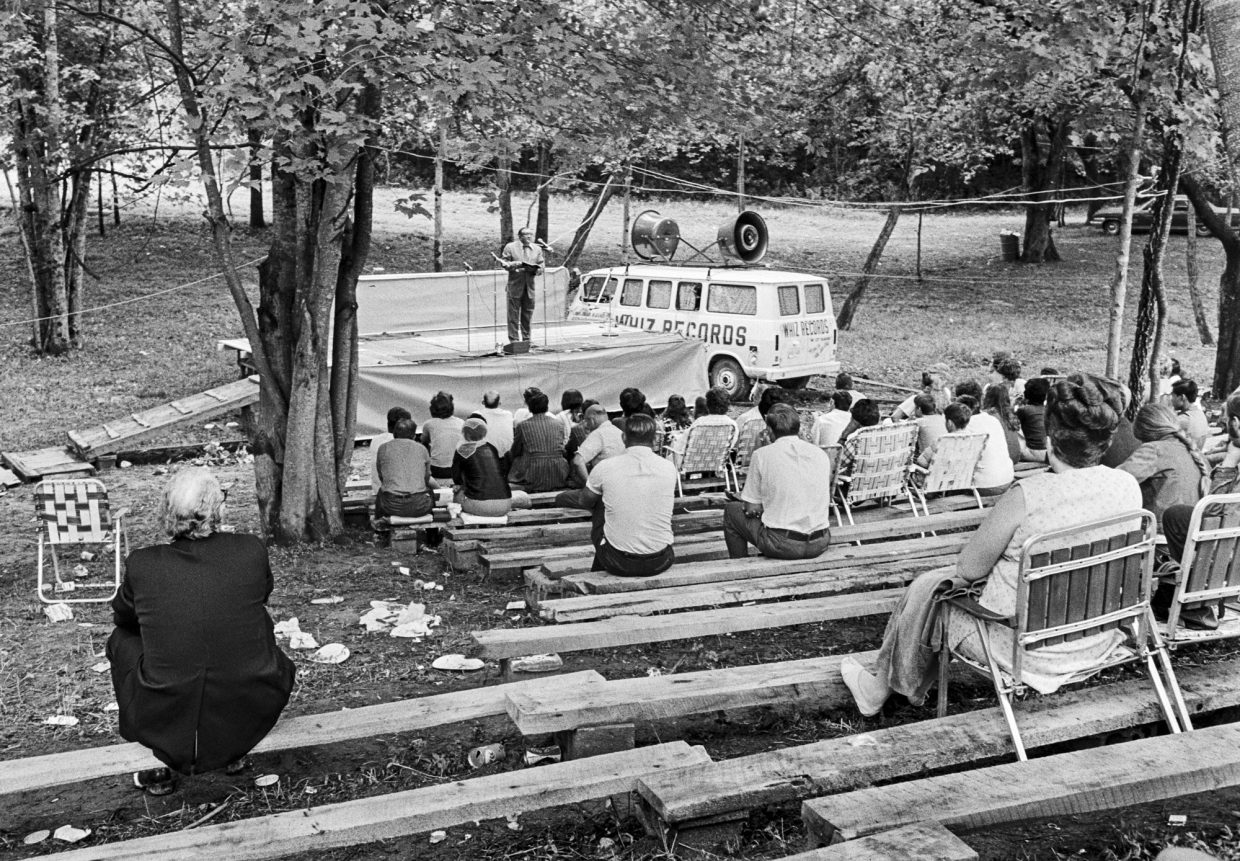
They are announced at the beginning of the video by emcee, writer, and DJ Bill Vernon. Vernon was here at Jackson, as I learned Sunday morning when I went down to the early morning gospel show. Pete Kuykendall introduced me to Bill there, and we had a long chat about the politics of the bluegrass industry. I wrote in my notes:
A very loquacious and complex person.
At that morning’s gospel show, the music came to a stop as a fundamentalist preacher began his sermon. At that point, I noted:
Bill Vernon cut out from the morning sermon, he’d had enough…
During the preacher’s sermon at the gospel program at the Second Annual Kentucky Bluegrass Festival, Jackson KY, Sunday, August 13, 1972. Bill Monroe (wearing a black suit) is seated in the audience area at left.
I stayed and heard some good music, noting:
The gospel section’s high point was when the Goins Bros. did “Somebody Touched Me” and Eleanor Parker came on stage & started clapping hands and singing; Monroe caught on and came up to join in too.
During the gospel program at the Second Annual Kentucky Bluegrass Festival, Jackson KY, Sunday, August 13, 1972. When the Goins Brothers band performed “Somebody Touched Me,” they were joined on stage by Eleanor and Rex Parker and Bill Monroe. Eleanor and Bill joined the Goins trio at the main microphone while Rex sang and played mandolin at the “stage right” microphone.
This kind of spontaneity, which gave festivals their appeal, was not there all the time. Jim & Jesse, I wrote, had:
A good show, with Jim Brock sounding especially good, but … a cut and dried quality to it all.
Describing Lester Flatt and his Nashville Grass, I concluded:
To me the whole band sounded tired, lackluster.
But Flatt’s final set was enlivened when It’s A Crying Time mandolinist and tenor Kazu Onishi came on stage to sing “Salty Dog Blues” with him.
During my times around the stage area, I had a chance to talk with Monroe and with some of the musicians I’d gotten to know during my years as a backstage regular at Bean Blossom, like Birch Monroe, Joe Stuart, and Roland White.
I arranged with Birch, who was busy helping Bill run the festival, for an interview, to take place later in the week at his home in Martinsville, Indiana.
Joe Stuart offstage at the Second Annual Kentucky Bluegrass Festival, Jackson KY, Saturday, August 12, 1972.
Joe told me about his experiences playing bluegrass in Canada with Charlie Bailey. He’d even appeared in Newfoundland.
Roland, whom I’d known since his days as a Blue Grass Boy, was now playing with Lester Flatt. He told me they were working solid, playing festivals every weekend.
Here’s what I wrote about the audience:
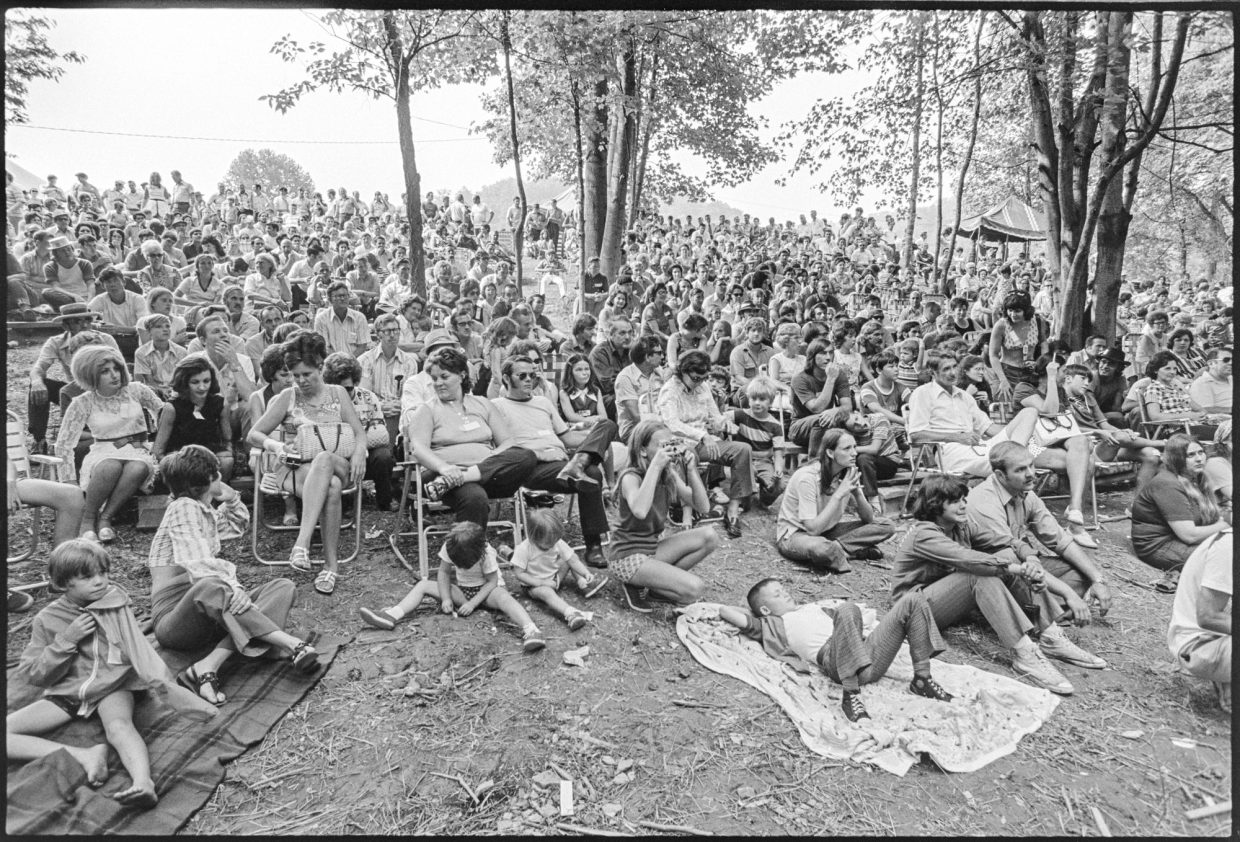
Audience — bluegrass die-hards from Ohio, Ky., D.C., Carolinas. Few freaks. Appear to be about 50% campers, 50% local people. Certainly no more than 1500-2000, on Saturday, though figure of 3000 was bandied about. Bill moved his Ky festival to Jackson from Ashland this year because the turnout at Ashland was dropping. Fact, bluegrass ain’t as popular in Kentucky as it is elsewhere — Ohio, D.C.
Audience on the hillside natural amphitheater at the Second Annual Kentucky Bluegrass Festival, Jackson KY, Saturday, August 12, 1972.
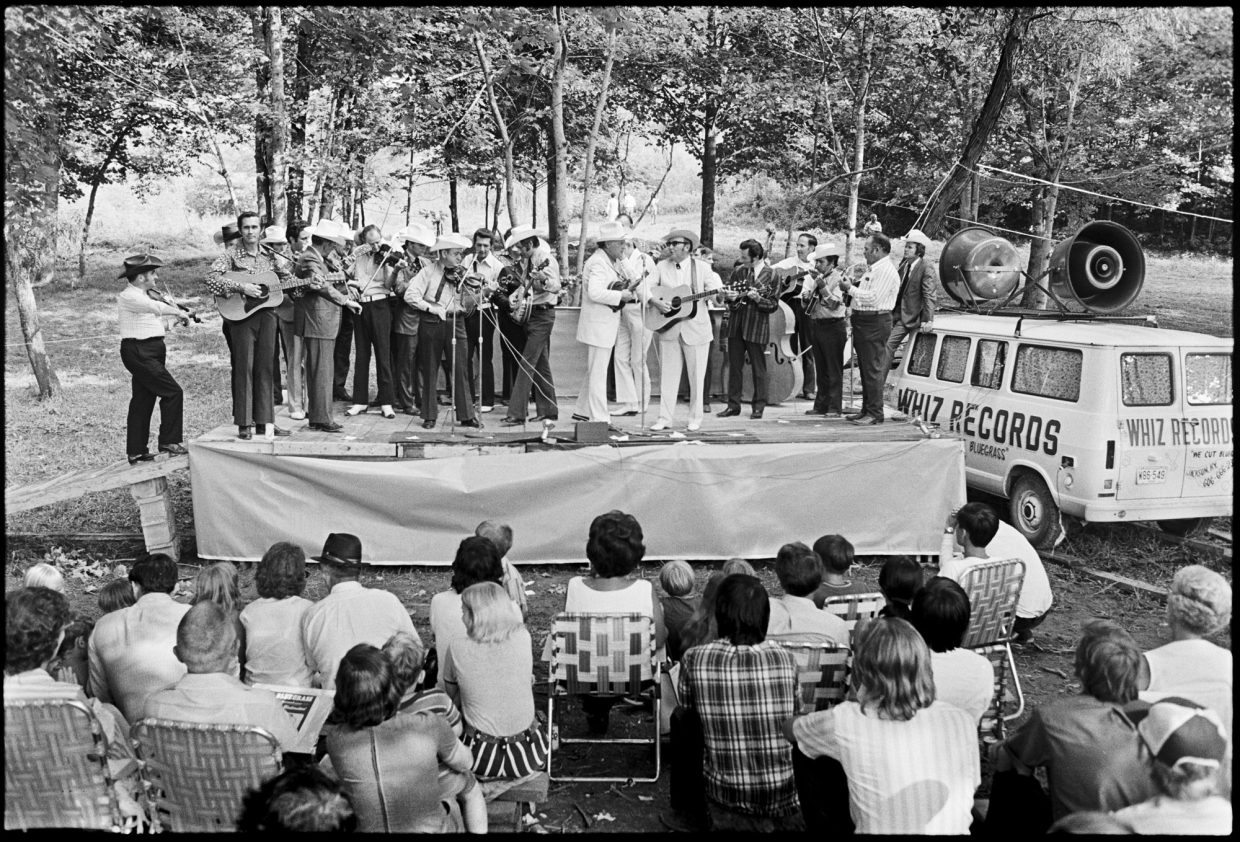
The festival closed with a finale, orchestrated by Monroe. At the first festivals in the mid-60s, which were created to honor Monroe, such events were somewhat spontaneous, but by now, seven years after the first one, these events were highly ritualistic. By the time it happened, I noticed that the Kuykendalls had left. They were not the only ones.
The finale performance at the Second Annual Kentucky Bluegrass Festival, Jackson KY, Sunday, August 13, 1972. At the center, in white suits, are Bill Monroe and Lester Flatt. Here are a few of the other performers, left to right: Curly Ray Cline (on the ramp), Melvin Goins (guitar, facing camera), Kenny Baker (fiddle, white hat, wearing a suit), Joe Stuart (just behind Baker, partly hidden), Buck Ryan (fiddle, white belt), Jack Hicks (banjo, white hat, wearing suit), Paul Warren (fiddle, white hat, at microphone), Vic Jordan (banjo, facing forward), Ralph Stanley (banjo, dark suit, hidden behind McCormick), Haskell McCormick (banjo, in profile), Monroe and Flatt with Don Reno (wearing white) partly hidden behind them, Raymond W. McLain and sister Alice McLain (hidden behind Flatt), Jesse McReynolds (mandolin, wearing striped jacket), Ruth McLain (bass, behind McReynolds), Raymond K. McLain (guitar, no hat), Roland White (mandolin, white hat), Rex Parker (mandolin, striped shirt), and Monroe Fields (leaning on van).
We packed up soon after and headed west for Lexington. I was hoping to interview J.D. Crowe.
Since the beginning, BGS has sought to showcase roots music at every level and to preserve the moments throughout its ever-developing history that make this music so special. One of the simplest ways we’ve been able to do just that has been through our Sitch Sessions — working with new and old friends, up-and-coming artists, and legendary performers, filming musical moments in small, intimate spaces, among expansive, breathtaking landscapes, and just about everywhere in between. But always aiming to capture the communion of these shared moments.
In honor of our 10th year, we’ve gathered 10 of our best sessions — viral videos and fan favorites — from the past decade. We hope you’ll enjoy this trip down memory lane!
Greensky Bluegrass – “Burn Them”
Our most popular video of all time, this Telluride, Colorado session with Greensky Bluegrass is an undeniable favorite, and we just had to include it first.
Rodney Crowell and Emmylou Harris – “The Traveling Kind”
What more could you ask for than two old friends and legends of country music reminiscing on travels and songs passed and yet to come, in an intimate space like this? “We’re members of an elite group because we’re still around, we’re still traveling,” Emmylou Harris jokes. To which Rodney Crowell adds with a laugh, “We traveled so far, it became a song.” The flowers were even specifically chosen and arranged “to represent a celestial great-beyond and provide a welcoming otherworldly quality … a resting place for the traveling kind.” Another heartwarming touch for an unforgettable moment.
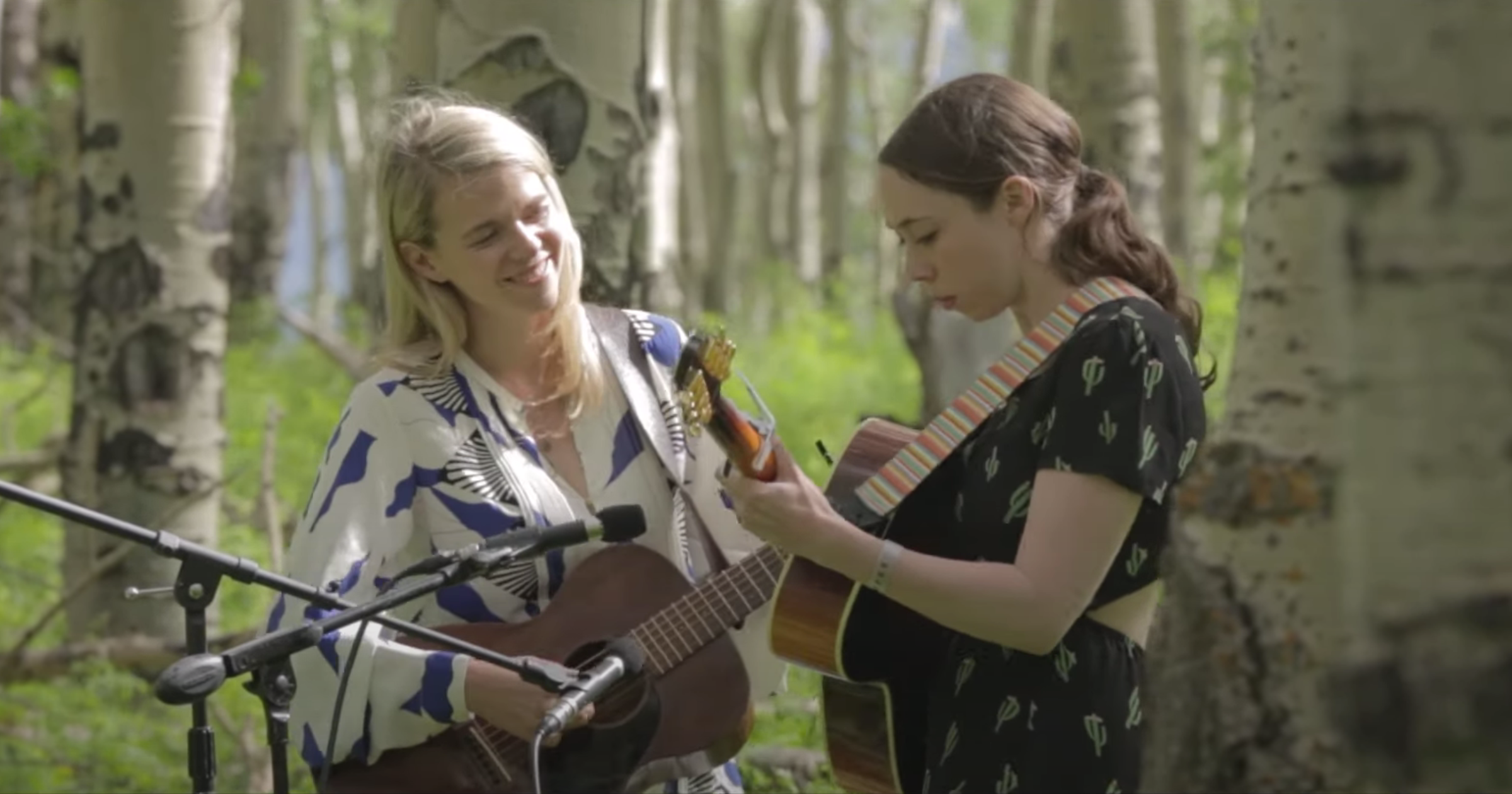
Sarah Jarosz and Aoife O’Donovan – “Some Tyrant”
In the summer of 2014, during the Telluride Bluegrass Festival we had the distinct pleasure of capturing Sarah Jarosz and Aoife O’Donovan’s perfectly bucolic version of “Some Tyrant” among the aspens. While out on this jaunt into the woods, we also caught a performance of the loveliest ode to summertime from Kristin Andreassen, joined by Aoife and Sarah.
Rhiannon Giddens – “Mal Hombre”
Rhiannon Giddens once again proves that she can sing just about anything she wants to — and really well — with this gorgeously painful and moving version of “Mal Hombre.”
Tim O’Brien – “You Were on My Mind”
Is this our favorite Sitch Session of all time? Probably. Do we dream of having the good fortune of running into Tim O’Brien playing the banjo on a dusty road outside of Telluride like the truck driver in this video? Definitely.
Enjoy one of our most popular Sitch Sessions of all time, featuring O’Brien’s pure, unfiltered magic in a solo performance of an original, modern classic.
Gregory Alan Isakov – “Saint Valentine”
Being lucky in love is great work, if you can find it. But, for the rest of us, it’s a hard row to hoe. For this 2017 Sitch Session at the York Manor in our home base of Los Angeles, Gregory Alan Isakov teamed up with the Ghost Orchestra to perform “Saint Valentine.”
The Earls of Leicester – “The Train That Carried My Girl From Town”
In this rollicking session, the Earls of Leicester gather round some Ear Trumpet Labs mics to bring their traditional flair to a modern audience, and they all seem to be having a helluva time!
Sara and Sean Watkins – “You and Me”
For this Telluride session, Sara and Sean Watkins toted their fiddle and guitar up the mountain to give us a performance of “You and Me” from a gondola flying high above the canyon.
Punch Brothers – “My Oh My / Boll Weevil”
The Punch Brothers — along with Dawes, The Lone Bellow, and Gregory Alan Isakov — headlined the 2015 LA Bluegrass Situation festival at the Greek Theatre (a party all on its own), and in anticipation, the group shared a performance of “My Oh My” into “Boll Weevil” from on top of the Fonda Theatre in Hollywood.
Caitlin Canty feat. Noam Pikelny – “I Want To Be With You Always”
We’ll send you off with this delicate moment. Released on Valentine’s Day, Caitlin Canty and Noam Pikelny offered their tender acoustic rendition of Lefty Frizzell’s 1951 country classic love song, “I Want to Be With You Always.”
Dive into 8 of our favorite underrated Sitch Sessions here.
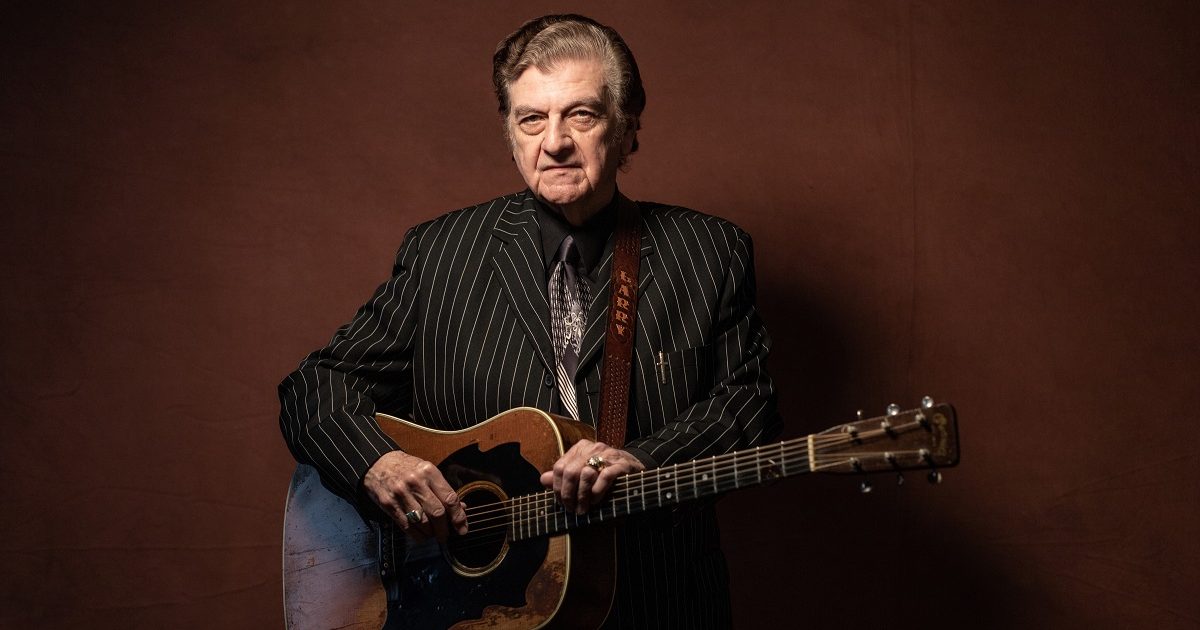
Artist:Larry Sparks Hometown: Lebanon, Ohio Song: “Mama’s Apron Strings” Album:It’s Just Me Release Date: March 31, 2023 Label: Rebel Records
In Their Words: “‘Mama’s Apron Strings’ was a way of life back in the day. Women used them for working in the home and yet sometimes they would also offer up something sweet in their pockets for the children. This generation of folks were great people. Their first love was caring for their family and providing for their needs. It reminds me of my own mom and the ways she cared for our family. When it came time to make a video for ‘Mama’s Apron Strings’ it seemed right to film it at my house. I guess I am a ‘kinda back in the day’ person: my home is 145 years old and I have a few old cars including the 1950 Dodge used in the video. God has been good to me through the years and I hope everyone will enjoy this video for my current single ‘Mama’s Apron Strings.’” — Larry Sparks
There might not be a more universally beloved figure in the bluegrass world than Del McCoury. Offstage as well as on, he carries himself with a self-assured grace that is both regal and welcoming — bluegrass royalty in every sense. We talked to three of the people he’s closest to about the experience of really knowing Del McCoury up close.
Alan Bartram, bassist in The Del McCoury Band
“Joining the Del McCoury Band was one of those fortuitous right-place-right-time things, and they made it so easy. He’s as laid-back as you imagine. The same happy-go-lucky guy you see on stage is like that all day. There’s no ‘stage persona’ he changes into, and he’s not strict about anything so long as you’re taking care of business. Just do your thing and everything’s cool. I couldn’t think of a better boss.
“If he ever gets mad, it’s real subtle. Unless you’re around him a lot, you’d never even know it. There are days when he might not be in the best mood, but there’s never an outburst or a rampage. You’d have to know him to pick up signs he’s annoyed about something. Going on 84 years old, he can still get up at 4:30 a.m., fly somewhere, drive a rental van to the gig, soundcheck, go through the whole day and then get onstage at 9 p.m. and just kill it for two hours. I’ll be just whupped, but he’s still crushin’ it. And the longer he sings, the stronger he gets. God, I hope I have that stamina at his age. He hasn’t lost anything, even after we were shut down for most of 2020. Taking a lot of time off at his age, you can lose a step. I swear he didn’t.
“I’ll tell an embarrassing story on myself to show how cool he is. A few weeks ago, there was a Grand Ole Opry show on a weeknight – and I somehow forgot all about it. Had it on my calendar but just completely spaced it. So I get a call: ‘Hey, man, you playing with us tonight?’ And you know that feeling when your heart just drops? Oh my God. At that point, there was no way I could get there in time. I’m 40 minutes away, they’re on in 10. Mark Fain from the Opry house band had to fill in for me that night. I still can’t believe I did that.
“Now Del does not really use a cellphone, so I had to wait until he got home to call him. So I call, Jean answers: ‘Alan, is something wrong?’ ‘Nothing’s wrong,’ I said, ‘except I forgot I was supposed to be at the Opry tonight.’ And she giggles just as Del walks in. ‘You wanna talk to him?’ ‘Oh yeah, I need to.’ So he gets on the phone and I say, ‘Del, I am so sorry. There’s no excuse. I really blew it, just completely spaced on it.’ And he says, ‘Oh, that’s all right. If I didn’t have Jean telling me when to be down there, I’d have probably missed it, too.’ He could not have been sweeter, which was a relief. I was able to sleep that night. That’s a pretty good picture of who Del is.”
Rhonda McCoury, daughter of Del and Jean McCoury
“I don’t play music, no. Dad showed me a few things when I was a kid. But then I realized I didn’t want to get on stage and do that: ‘If I learn this, I’ll have to get on stage like Dad does! Uh uh, not for me.’
“Mom handled most of the discipline, while Dad was very easygoing. He was the one who’d help us with homework after dinner. If mom ever said, ‘Wait ’til your father gets home,’ we’d just get talked to. And we’d rather have taken a beating, we never wanted to disappoint Dad.
“He’s the epitome of greatest father in the world. Patient, working his tail off all the time. If someone’s car wasn’t running, he would fix it. If there was some math we didn’t understand, he would explain it. Back then we had to put covers on our school books, and he’d help do that.
“He had the logging day job for a long time but didn’t seem frustrated by that. He’d grown up on a farm, working from the time he was a kid. I never heard him complain. He worked for our uncle’s company and could take any time off he needed. But over time, he did realize, ‘This is a little dangerous and maybe I should not do it for the rest of my life.’ Then when the boys started playing, too, that’s when he really got focused on music more.
“He’s not really different, offstage or on. What you see is what you get. He’s always been laid-back and funny, loves to tell stories. He doesn’t change much – except for his suit. There’s no grey area, this is him and it’s the way he’s always been. Like anybody else, you don’t want to make him mad. But 99 percent of the time he’s calm and mild-mannered. About all he does is think about music.
“About the only time he ever gets nervous before a show is when it’s the Opry – especially at the Ryman, where he played with Bill Monroe. But mostly, he never gets too nervous. Maybe a little frustrated if allergies kick up and affect him, not that anyone else would notice the way he does. ‘I’m not of right voice today.’ He just enjoys music so much, nerves never boil to the surface. It became even more enjoyable when the boys started playing, and they’ve just gotten better and better over the years. That’s the most fun for him, onstage with them.
“Mom and Dad have a pool, which Dad loves. He’ll be tinkering with the bus and jump in the pool to cool off. Deer and turkeys are always around the house; he’ll feed them, and he likes to deer-watch. You’ll wonder where he is and then see him standing in the pool watching the deer or turkey walk by, and all you see is his head.
“When we were kids, Dad was just our dad and music was what he did for a living, no different from anyone else’s dad’s job. Ours plays music and sings. But he’s always loved it so much. He had music on all the time, the band guys were over to rehearse inside and outside the house. School nights, we’d go to sleep hearing the band play downstairs.”
Dierks Bentley, Country Artist and Friend
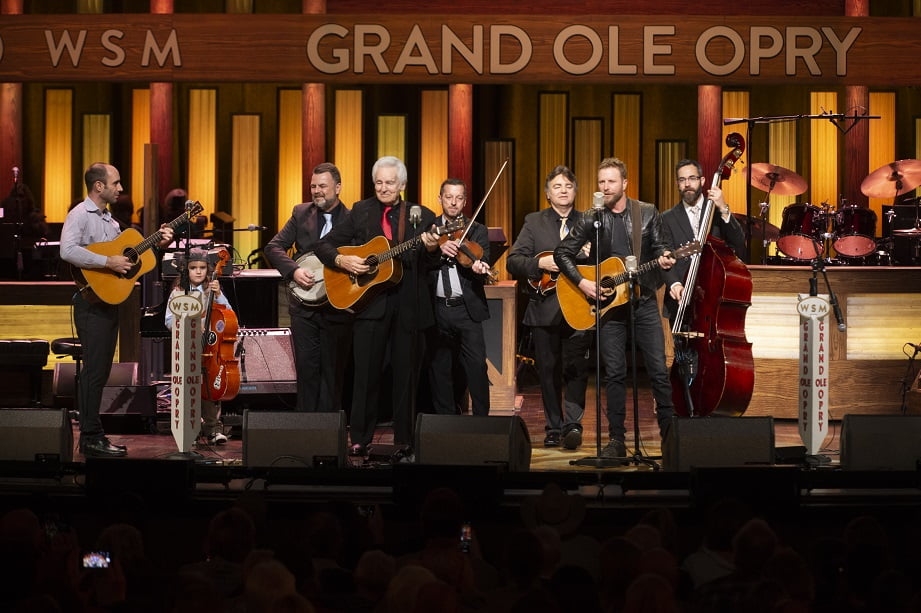
Photo by Chris Hollo, Courtesy of the Grand Ole Opry
“I moved to Nashville in 1994 to be a country singer and was really disillusioned with the scene at the time. It just did not feel authentic and I didn’t know how it would fit for me. I was having a hard time until I randomly went to the Station Inn on a Tuesday night. Walked in and saw these guys wearing loose, baggy clothes and playing bluegrass. I just fell in love with it on the spot. Jason Carter, who was the fiddler for Del McCoury Band, became one of my best friends and turned me on to a lot of bluegrass. It quickly became my favorite genre.
“That’s how I got to know Del’s band. I drove with Jason out to the Telluride Bluegrass Festival in 1997, which is where I finally met Del himself. Nicest guy ever, always with a big smile. Del just is who he is. Driving back cross-country in my truck afterward, we got pulled over by the Arkansas State Police, who claimed they smelled marijuana as we drove by at 75 miles per hour. They had the dogs out sniffing the tires, doing the big search. ‘Man,’ I said, ‘we’re just going back from the Telluride Bluegrass Festival.’ To them that meant we were a bunch of hippies. But they finally let us go and I got Jason back in time for the Tuesday night gig at the Station Inn.
“They say Nashville’s a 10-year town, and it took me almost that long to get a record deal. That was 2002. My first record, I brought the Del McCoury Band in to cut a song for it. Second record, too. I also suggested to Del that he cut Sinatra’s ‘Learnin’ the Blues’ and got a credit in the liner notes, which was about the biggest moment of my fledgling career up to that point. I have yet to get my own Del McCoury Band cut, but it’s on my wish list. Some songwriters want a George Strait cut, but I want the Del McCoury Band – and I’ve made enough money that it’s actually true! As you know, there’s no money in bluegrass. I’d like to do a Del & Dierks album at some point, too.
“I tell people all the time that Del McCoury really is responsible for the success I’ve had in country music. His work ethic is something everybody can learn from, and also the way he doesn’t compete with anybody else. That’s why he and the band are always laughing, having fun, in a good mood. The only person you’re competing with is yourself from the day before, trying to get better. In a town where everybody else talks shit all the time, they all enjoy what they’re doing because they’re not looking at what others are doing. Sure, Del looks back to Bill Monroe. But as far as contemporaries go, I’ve never seen a group of guys more present and having more fun. That’s an approach I’ve taken with country music, just trying to compete with myself. Whatever success I’ve had, it’s because of that.”
Artist:Rob Ickes & Trey Hensley Hometown: Nashville, Tennessee Song: “Living In a Song” Album:Living In a Song Release Date: February 10, 2023 Label: Compass Records
In Their Words: “This is a song that Trey started after a long weekend of touring. Our producer Brent Maher and I finished it with him, and I just love it. I like the way Trey sings the first verse. It kills me every time! I guess one of the things that’s different on this album is that I’m singing a lot more of the harmonies. I’ve always sung a little bit, but I’ve definitely dug into it more lately. I love the tenor harmony part, and I love the sound of duets, so it’s been fun to take over more of that role in our group.” — Rob Ickes
“This song just appeared one day when we had a particularly long leg of a tour, and we were having a particularly long drive through Ohio. I’ve always loved sad songs and traveling songs, so this one just felt natural. I wrote a big chunk of this song in just a few minutes in a hotel room on that previously mentioned trip and finished it up with Rob and Brent Maher. Like a lot of other songs, this one is partly fact and partly fiction…you can decide which is which.” — Trey Hensley
Artist:Williamson Branch Hometown: Nashville, Tennessee Song: “Joy to the World” Album:Very Merry Christmas Label: Pinecastle Records
In Their Words: “Christmas time has always been the most joyful of celebrations for our family. We love the silliness of claymation cartoons, as well as the gifts under a festive Christmas tree. But ultimately, we celebrate the time when God came to dwell among us. Very Merry Christmas is our musical expression of the joy that we experience in every aspect of the holiday season. ‘Joy to the World’ the Lord is come! That’s a great reason for celebration. And what better way to celebrate than with banjos, fiddles and voices raised in praise?” — Kevin Williamson, Williamson Branch
This website uses cookies to improve your experience. We'll assume you're ok with this, but you can opt-out if you wish.AcceptRejectRead More
Privacy & Cookies Policy
Privacy Overview
This website uses cookies to improve your experience while you navigate through the website. Out of these, the cookies that are categorized as necessary are stored on your browser as they are essential for the working of basic functionalities of the website. We also use third-party cookies that help us analyze and understand how you use this website. These cookies will be stored in your browser only with your consent. You also have the option to opt-out of these cookies. But opting out of some of these cookies may affect your browsing experience.
Necessary cookies are absolutely essential for the website to function properly. This category only includes cookies that ensures basic functionalities and security features of the website. These cookies do not store any personal information.
Any cookies that may not be particularly necessary for the website to function and is used specifically to collect user personal data via analytics, ads, other embedded contents are termed as non-necessary cookies. It is mandatory to procure user consent prior to running these cookies on your website.