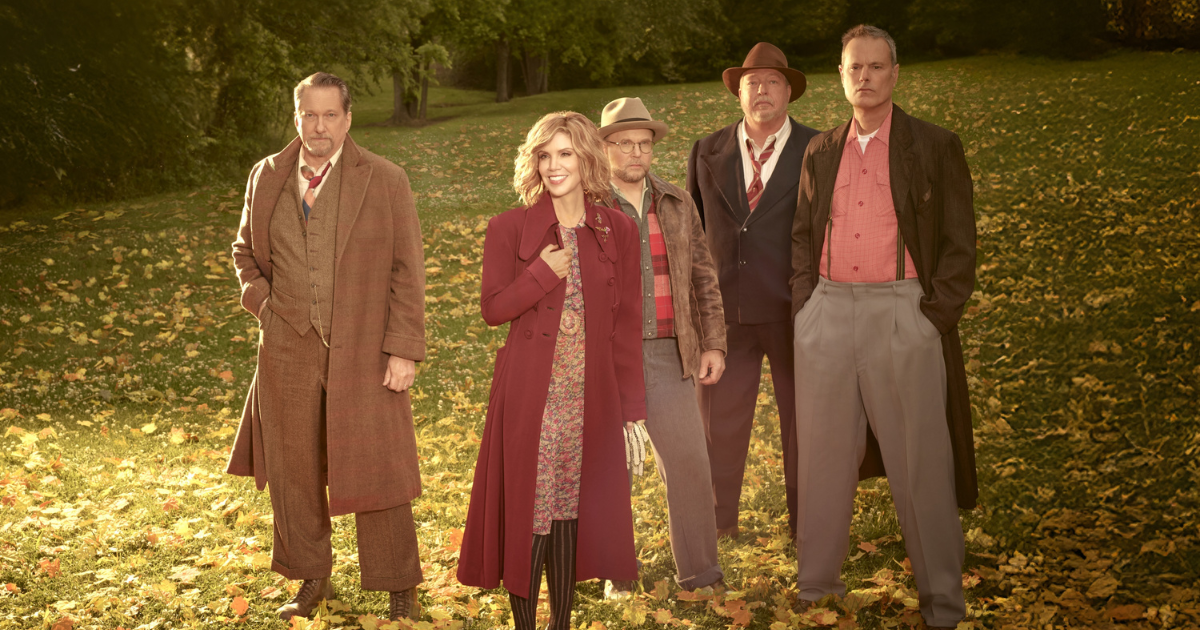
While you know better, there’s a wide swath of the music-listening world in which Alison Krauss is best known as former Led Zeppelin golden god Robert Plant’s duet partner. Yet, Krauss has had a wholly remarkable career going back nearly 40 years, in which she has exhibited profound collaborative instincts and abilities.
On the occasion of the release of Arcadia, her first album with Union Station in 14 years (as well as a reunion with the founders of her former longtime label, Rounder Records), we look back at some of Krauss’ career highlights in and out of Union Station.
“Cluck Old Hen” (traditional; 1992-2007)
We begin with a literal oldie, “Cluck Old Hen,” from the pre-bluegrass era, which demonstrates two things – that Alison Krauss has always revered the history, roots, and traditions of bluegrass; and that Union Station is one incredible ensemble. Recordings of this Appalachian fiddle tune go back more than a century, to country music forefather Fiddlin’ John Carson in the 1920s.
Krauss first released an instrumental version of the tune on 1992’s Everytime You Say Goodbye (her second LP with Union Station), and won a GRAMMY with the onstage version on 2002’s AKUS album, Live. But feast your ears and eyes on this 2007 performance at the Grand Ole Opry, with a pre-teen Sierra Hull sitting in.
1992 studio version:
2002 live version:
“When You Say Nothing At All” (Paul Overstreet & Don Schlitz; 1994)
After a decade of steadily accelerating momentum, Krauss had her big commercial breakout with this AKUS cover of the late Keith Whitley’s 1988 country chart-topper. Krauss sang it on 1994’s Keith Whitley: A Tribute Album and it served as centerpiece of her own 1995 album, Now That I’ve Found You: A Collection. It reached No. 3 on the country singles chart and went on to win the Country Music Association’s single of the year plus a GRAMMY Award. You can hear why.
Whitley’s version:
“I Can Let Go Now” (Michael McDonald; 1997)
For any interpretive singer, the choice of material is key. And if the singer in question has Krauss’ range and chops and vision, some truly unlikely alchemy is possible. Among the best examples from the AKUS repertoire is “I Can Let Go Now,” a deep cut on Doobie Brothers frontman Michael McDonald’s 1982 solo album, If That’s What It Takes. Another amazing Krauss vocal in a career full of them.
McDonald’s version:
“Man of Constant Sorrow” (traditional; 2000-2002)
Before O Brother, Where Art Thou?, you wouldn’t have called singer-guitarist Dan Tyminski the unheralded “secret weapon” of AKUS. Nevertheless, he didn’t become a star in his own right until serving as movie star George Clooney’s singing voice in the Coen Brothers loopy, Odyssey-inspired farce. “Man of Constant Sorrow” was the hit in the movie and also on the radio, launching Tyminski to solo stardom.
Resonator guitarist Jerry Douglas especially shines on this version from 2002’s Live, recorded in Louisville – you can just tell everyone in the crowd was waiting for the “I bid farewell to old Kentucky” line so they could go nuts. Tyminski would have another unlikely hit in 2013, singing on Swedish deejay Avicii’s “Hey Brother.”
O Brother version:
“New Favorite” (Gillian Welch & David Rawlings; 2001)
Kraus sang on the GRAMMY-winning O Brother soundtrack, too, alongside Gillian Welch. It will come as no surprise that the Welch/Rawlings catalog has been a recurrent favorite song source for her. One of Krauss’ best Welch/Rawlings selections is “New Favorite,” title track of the thrice-GRAMMY-winning 2001 AKUS album. Though it’s edited out in this video, the album-closing version concluded with a rare in-the-studio instrumental flub, followed by sheepish laughter to end the record. Perhaps the AKUS crew is human after all?
“Borderline” (Sidney & Suzanne Cox; 2004)
The story goes that the first time Krauss was on the summer touring circuit, she’d go around knocking on camper doors at bluegrass festivals to ask whoever answered, “Are you the Cox Family?” Once she found them, she didn’t let go, and the Coxes became some of the best of her collaborators and song providers. Along with producing their albums, Krauss covered Cox compositions frequently; “Borderline” appeared on 2004’s Lonely Runs Both Ways, another triple GRAMMY winner.
When Krauss first sang with Robert Plant at a Leadbelly tribute concert in November 2004, it seemed like the unlikeliest of pairings. But here’s proof that they had more in common than you’d expect, with Krauss covering a solo Plant hit from 1983. She sang “Big Log” on her brother Victor Krauss’ album, Far From Enough, which was released earlier in 2004.
This video pairs the Krauss siblings’ version with Plant’s original 1983 video, directed by Storm Thorgerson.
“Dimming of the Day” (Richard & Linda Thompson; 2011)
Fairport Convention guitarist Richard Thompson is one of the finest instrumentalists of his generation as well as a brilliant songwriter, especially with his former wife and collaborator Linda Thompson. This stately, bittersweet love song dates back to their 1975 duo LP, Pour Down Like Silver, and Linda sets the bar high with a stoic yet emotional vocal. Krauss more than lives up to it on the 2011 AKUS album Paper Airplane, which also offers another great showcase for resonator guitarist Douglas.
Richard & Linda’s version:
“Your Long Journey” (Doc & Rosa Lee Watson; 2007)
Krauss isn’t just a spectacular lead vocalist, but also an amazing harmony singer, one of the few who can hold a candle to Emmylou Harris. Retitled from the Doc/Rosa Lee Watson original, “Your Lone Journey,” this closing track to 2007’s grand-slam GRAMMY winner Raising Sand has Krauss’ most emotional vocal harmonies with Plant on either of their two albums together.
Doc Watson’s version:
“Heaven’s Bright Shore” (A. Kennedy; 1989, 2015)
All that, and she’s an incredible backup vocalist to boot. “Heaven’s Bright Shore” is a gospel song Krauss first recorded as a teenager on 1989’s Two Highways, her first album billed as Alison Krauss & Union Station (and also her first to receive a GRAMMY nomination). It’s great, but an even better version is this 2015 recording in which she’s backing up bluegrass patriarch Ralph Stanley alongside Judy Marshall.
AKUS version:
“The Captain’s Daughter” (Johnny Cash & Robert Lee Castleman; 2018)
The late great Johnny Cash left behind a lot of writings after he died in 2003, some of which were turned into songs for the 2018 tribute album, Forever Words: The Music. None of his songs ever had it so good as “The Captain’s Daughter.” This superlative AKUS version fits Cash’s words like a glove.
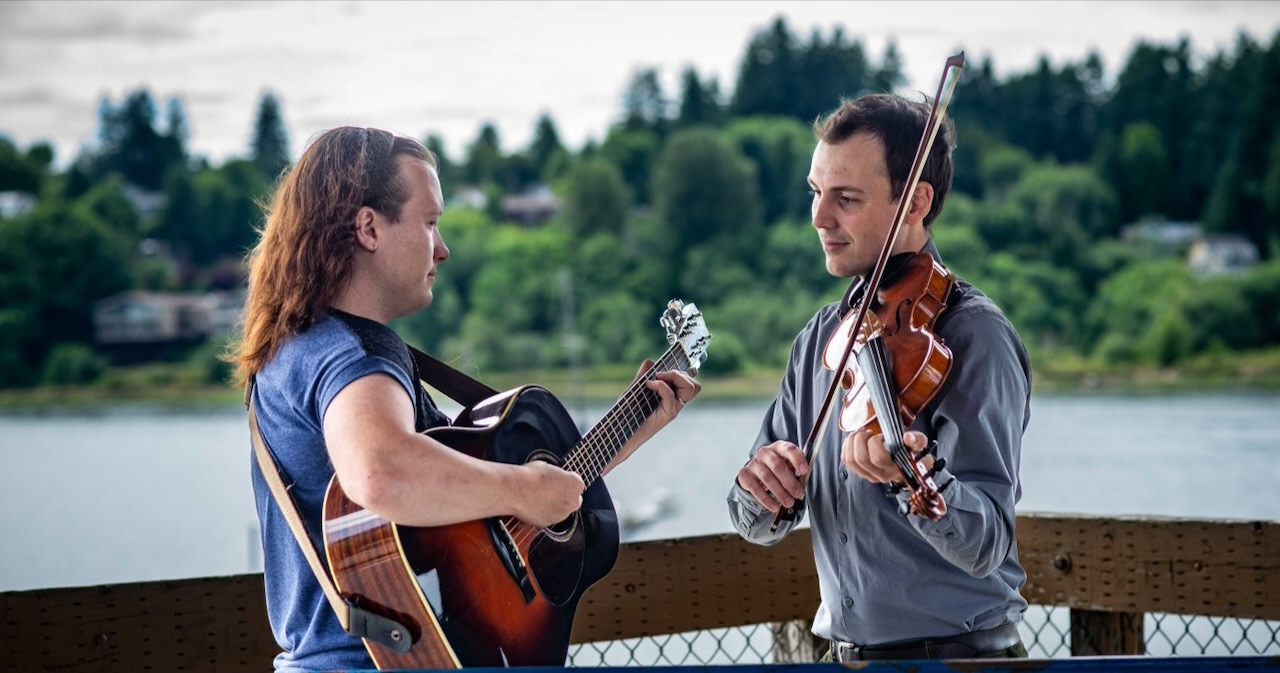
Artist:Countercurrent (Brian Lindsay and Alex Sturbaum) Hometown: Olympia, Washington Latest Album:Flow (released March 3, 2025)
Which artist has influenced you the most – and how?
It’s a three-way tie for me between Great Big Sea (gateway drug into trad music, consummate performers, wonderful harmonies), early Solas (dazzling musicianship, tight arrangements, and an unmistakable guitar style) and the Grateful Dead (fearless improvisation, and pushing the boundaries of what is possible while keeping one foot firmly in folk). – Alex Sturbaum
Chicago fiddler Liz Carroll has probably had the most comprehensive influence on me – she is a master of creative interpretations of traditional fiddle tunes and composing new tunes in a trad idiom. Much of how I think about melodic improvisation and variation around a melody is influenced by her playing. Her recordings over the years showcase some incredible arrangements and beautiful production, ranging from very minimal, traditional-sounding, to lush and modern tracks. – Brian Lindsay
If you had to write a mission statement for your career, what would it be?
“Play ’em happy, sing ’em angry.” We want our music to inspire joy and resilience and to generally make folks feel good. However, we also want to call out the injustice we see in the world every day and use our music to aid the fight against fascism in whatever way we can. – AS
“Every tradition is a living tradition, if we participate.” Musical traditions don’t thrive when we only admire them inside a glass case, they benefit from curating the archives of the past, honoring the figures who have shaped it today, and welcoming new contributions that reflect today’s influences (cultural, political, technological, etc.). Most importantly, music communities thrive when we make music that we really love to listen and move to. – BL
Genre is dead (long live genre!), but how would you describe the genres and styles your music inhabits?
We draw from a lot of different folk traditions – Celtic, old-time, maritime, jam-band music, and more – but fundamentally, Countercurrent is a dance band. We cut our teeth playing for contra dancing, that’s still the main thing we do, and everything we play is built around groove and drive. One of our favorite things in the world is bringing our music to venues outside of folk communities and getting an audience to unironically throw ass to fiddle tunes. – AS
In a nutshell, “modern fiddle tune dance jams.” Our focus is to create music that moves people, both physically and emotionally, and our vocabulary comes from the genres of Irish, American old-time, and adjacent fiddle and song traditions. We add our own compositions using that vocabulary, but incorporating our musical influences from genres like jam bands, funk, electronic, and rock that we love. – BL
What is a genre, album, artist, musician, or song that you adore that would surprise people?
We both really enjoy the offbeat songwriter Dan Reeder. We had the pleasure of getting to see him and his daughter Peggy in Seattle recently – one of their rare tours from Germany – and we have been enjoying singing his songs together in green rooms and tour vehicles. I also have a sizable soft spot for Owl City. – AS
I’m very fond of the music of blues singer and instrumentalist Taj Mahal. I got some of his recordings when I was quite young and got to see him live near my home when I was in high school. I also love Moon Hooch, who essentially make saxophone-based EDM with live drums (I have an unabashed love for the saxophone, and brass instruments in general, though I don’t play any). – BL
Since food and music go so well together, what is your dream pairing of a meal and a musician?
I once had a Thai meal with roasted coconut and pork belly right before seeing Gillian Welch perform The Harrow and the Harvest in its entirety, and to be honest I have been thinking about both ever since. – AS
A meal consisting entirely of East Asian dumplings of every variety, with Kishi Bashi, whose music I adore and also appears to be an incredibly interesting and kind person. – BL
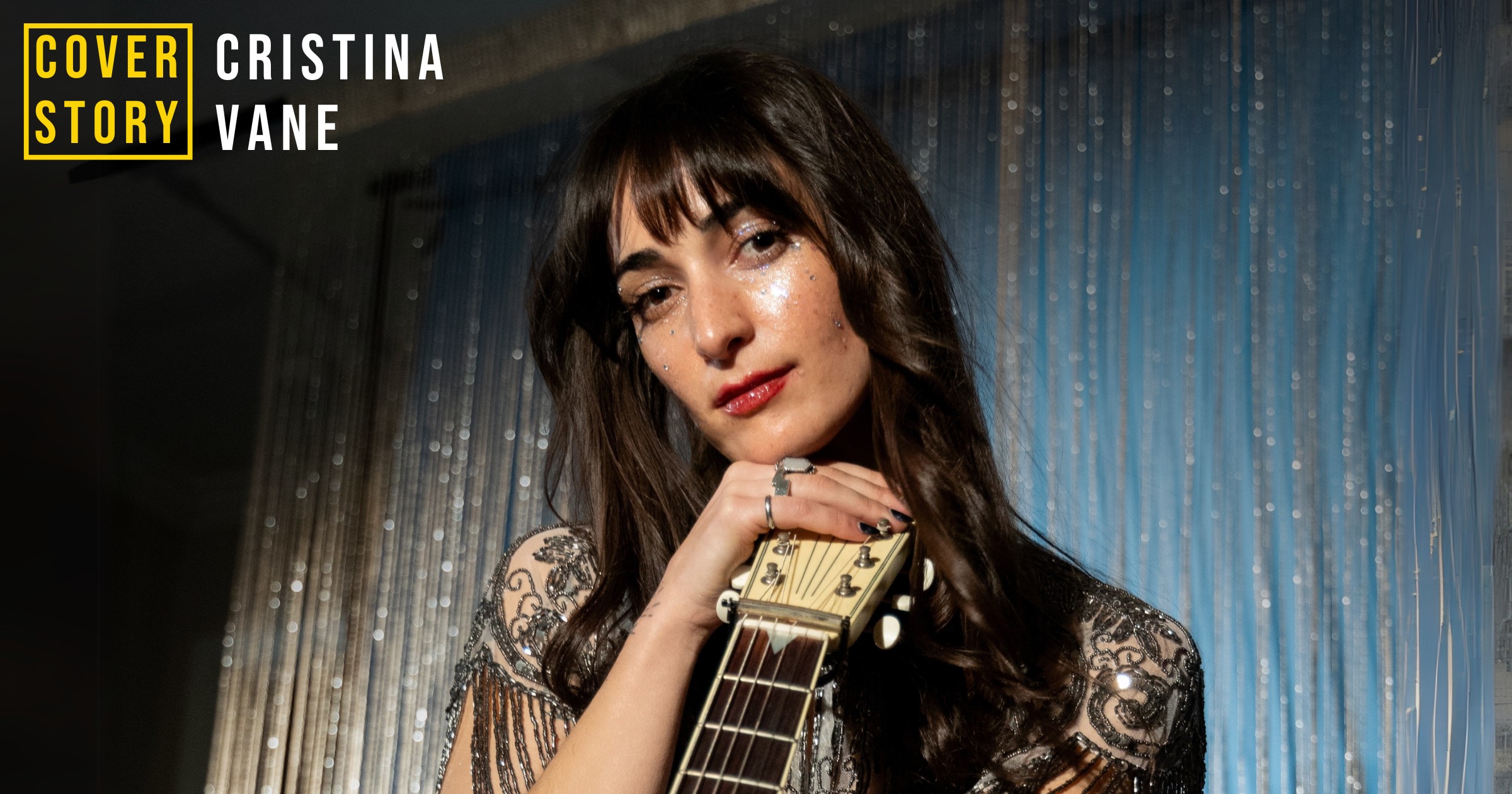
A blues, old-time, and Americana alchemist, singer-songwriter-instrumentalist Cristina Vane has just released a striking new album, Hear My Call, a collection that defies categorization and tidy genre labels.
Something of a roots music influencer – though she perhaps would never self ascribe that title – Vane has built a remarkable following around her agnostic approach to borderless, post-genre roots music that effortlessly calls back to eras before all of these styles were stratified and separated.
Vane’s Americana agnosticism stems from a variety of inspirations and inputs, but is largely derived from circumstances, taste, and whim. On the seventh track of Hear My Call, “My Mountain,” she sings along with loping frailed banjo:
I was born across the sea At the feet of the mountain I left young and it left me Lost a piece of my grounding I watch you and how you speak Belonging is astounding I watch you, but what of me? The history that I’m bound to…
She’s referencing her upbringing in Europe, born at the foot of the Alps and raised in Paris before moving to the U.S. in her youth. What does it mean to be a purveyor of “mountain music” when the mountains you claim are not Appalachia or the Ozarks or even Celtic highlands? How can you be an expert and interpreter of these art forms, while ultimately sensing – consciously and subconsciously – that your identity is not or cannot be interwoven with them? Perhaps it brings a certain unbridled freedom and ease? Or perhaps it means your entire relationship to the musics you love will be informed by this kind of daunting existential question: Can you belong?
For Vane, it’s clearly a smattering of many factors that has led her to this delicious and carefree combination of styles, sonics, and songs. She is truly an expert on blues, bluegrass, old-time, and beyond, spurred to excellence on one hand by her feeling of imposing in these traditions and on the other by a devout love and gratitude for the people who also inhabit these spaces and who passed the art along to her.
Cristina Vane may have not felt truly at home in the roots music scenes that claim her until recently or maybe she needed to still grow, easing into her current confident, unapologetic sense of self. At any rate, she’s ready for the world to hear her call – and to understand that she alone decides who she is, how she sounds, and where she belongs. Whether “her mountain” is found in the Alps, in the southeastern United States, in Los Angeles, Music City, or anywhere else. Vane knows that she, too, is a part of these timeless traditions and that, above all else, could be the primary reason she moves between these folkways so gracefully and entrancingly.
Your sound feels like it hearkens back to a time before roots music was split up into all of these different genres, when blues and folk and old-time and bluegrass and country were all technically considered the same thing. I feel like you combine sounds in a really similar way. How do you approach your sound? To me it feels like you’re pretty agnostic, you are very fluid in the way you approach genre. Especially with this album, as it feels so fully fleshed out, built up, and lush.
Cristina Vane: It is a really fine line to walk and I’ve had this struggle since forever where I just don’t want to choose. I don’t feel like I should have to really, either, and I do think that’s what I was hoping would come across in all my albums. Specifically this one in many areas of my life, includes this question of, “Who am I?” “Where am I from?” “Who am I in my community?”
“Who am I” applies to genre as well. Every time I feel this voice of self-doubt that’s like, “It’s just too confusing. If you wanna be appealing to more people and get better opportunities and festivals, they have to know what you are.”
Every time that comes up it’s a difficult feeling, but I ultimately always just say “fuck you!” [Laughs] It’s really affirming that you feel positively about that because I also agree, in the sense that I come from the ‘90s and 2000s, listening to different music and genre was important, but not in the way that I feel like it can get tiresome in Americana music. Where there’s this legacy and tradition that you have to uphold if you’re gonna fit within the parameters of a genre. Whereas, in indie music you can do whatever you want and if it sounds kind of like the other bands in the genre, then I guess you’re indie!
I guess I approached the older traditions with some hesitancy, because I knew that traditional-leaning people are [going to question me]. “You’re not really a blues woman” and “You’re not really a bluegrass artist” and “You’re not really an old-time player.”
Honestly, I think one of the people that, in a lot of ways inspired me on my first album to just stay the course, was Sarah Jarosz. It was more than the fact that she played different instruments and didn’t feel bound to be just a mandolin player. She’s just so talented, obviously, and I think it was very full circle when her last album came out and it was a completely different world than the string band sound stuff. I was like, “See? We all have it in us to want to explore different things.”
To answer your question a little more directly, I don’t worry about genre. If I wrote this song and I am proud of the song, I want to flesh it out in a way that just intuitively feels good to me. That being said, there are some songs where I lean towards more bluegrass, but there’s also a song like “Storm Brewing,” where it’s a clawhammer song. I wrote it on the banjo and then when we dressed it up, it just felt really good to put some electric guitar in there. I’ve added drums to everything because that’s how I wanna play my live show.
I love that you mention Sarah Jarosz, because that’s definitely an artist that this album reminds me of, but also Larkin Poe, Bonnie Raitt and Susan Tedeschi specifically, because you have these big bluesy modern tracks, but you’re a picker as well. I think that changes the music, when the bones of it or the origins of it are coming from someone who’s an instrumentalist-performer-songwriter-vocalist.
I also think that’s part of why the music, even though it comes from a variety of genre backgrounds, feels so engaging and charming, because you can play around with those sounds freely. Even if you were just playing the songs solo, just you, yourself, and your instrument – whatever instrument that may be – they would still work, but they also work fully realized.
Can you talk a little bit about how being a picker informs you and inspires you as a songwriter and as a frontwoman?
You kind of already hit on it. From the outset every song starts with me and my instrument – and they usually start either like “Storm Brewing” in a tent in Utah or like “Getting High in Hotel Rooms” getting high in hotel rooms in Las Vegas. I sit down with an instrument and the music always comes first.
“Everything Is Fine” actually started as a more fingerstyle thing on my resonator [guitar]. I wrote the words and then I was feeling the chorus. The vibe is more rock, and I wanted a strumming electric guitar. So it can be malleable, but pretty much [most of the time] it’s like, “I wrote this riff on this instrument and now I’m gonna write some words to it.” Then, in the case of this album, I bring it to my touring band, who I trust immensely and we can collaboratively work, play around with it, and they give their input as well.
Let’s talk about the title track. “Hear My Call” is like Ola Belle Reed meets Gillian Welch meets modern, head-bobbing bluegrass mash. I love that. I thought it was interesting to pick this one as the title track, given that it’s one of a handful of string band songs on the record among many much “harder” sounding tracks. I wanted to know more about the inspiration behind it, choosing it as the title track, and having it be the keystone of the project. How did you write it and how did it all come together?
You know, I’m actually deeply dismayed to say that I don’t even remember when exactly I wrote this riff! I think I was on a very long, grueling West Coast tour, but you know the West Coast is also always filled with magic. I’m very partial to the nature and landscape out West. I would’ve definitely written the riff first and then I started just hearing this chorus over and over. I was playing it at soundchecks.
I guess I didn’t even think about choosing a song that best represents the album. I was struggling to name the album, just because it’s hard to do that. Do I choose another title or do I do a title track? But I actually chose it because this whole album [is about] the way I was mentally, the way I still am feeling about my place in music, my place in the world, and the general sort of comfort level I have with being exactly who I am.
I’m in a time of changing my energy from being an observer and a student of a lot of different cultures and musics, from looking at other people and taking all of that with deep gratitude, realizing that I have a story as well. The unique blend of things that make up my cultural history, and geographical history – all of those things I should be proud of and not uncomfortable with. Until the last couple of years, I was just uncomfortable with how complicated everything is in my my personal history and my musical influences and not knowing how to marry being a girl from Paris that went to Princeton with being someone who loves down-home music. I just spent [a lot of] time almost apologizing for things that I really can’t change [about myself].
“Hear My Call” is reflective of the shift that happened. Maybe it’s just growing into yourself and realizing I’m actually proud of where I’m from and I’m happy to have had the experiences I have. I have learned a lot from other people, but other people can maybe also learn from me. It’s not all just “take take take.” I can give something back. It’s an assertion of reclaiming space. That’s really what this song is about.
It’s interesting to hear you say that you’re giving yourself permission to be exactly who you are and love the music you love and make the music you make, because I think part of the “trad” music world is that we’re all policing ourselves all the time.
I actually didn’t realize it, but I think a lot of what influenced how I went into the studio [for this album] was that, around that time and a little before, I was delving deep back into the music I listened to when I was, let’s say, 11 to 18. After so many years of being a true student of the blues and then old-time – like, “I have to learn every tune and I have to read all the books!” Well, I wanted to. I went back into this music that felt so familiar and not being stupid and young anymore thinking, “I can’t listen to Blink-182, ‘cause it’s not cool.” I missed The Strokes and Bon Iver and Elliott Smith and all these things that, while I’ve always loved them, I kind of pushed to the wayside as all this new music came in, which is natural.
I loved this feeling around the time of doing this album of just reconnecting with my teenage self and remembering that that [music] has [also] informed the way I write. I want it to be just as present as someone that I discovered much later, like Gillian Welch. I’m hoping that mix comes across, to some extent.
I also wanted to ask about your “online community.” You have a huge social media following and you have so many amazing collaborators that you make content with. Personally, I think part of why you’re able to approach genre without being contained by categories is because you have built this direct-to-consumer business model. You’re directly interfacing with so many of your listeners, so none of them are gonna be surprised to see you code-switch on a project, genre-wise or sonically.
It jumped out at me that the way that you operate online – creating on your own terms with the door open and the window shades up so that everybody can be part of that process and also take ownership of it – must somewhat allow you to do what you want. You aren’t beholden to anybody but yourself, especially given that you’ve created this ecosystem and this community for yourself and your fans already know that’s what to expect from you.
Wow, I just love doing interviews, ‘cause I feel like when they’re insightful people like you they’re telling me things about myself! Because that’s so, so insightful and I have never thought about it that way!
So much has been dictated by circumstance or necessity – and partially just me being batshit crazy and honestly not scared of anything. [Laughs] Like, I would go on the beach in Venice, [California] when I lived there and busk. Instead of playing songs that would make me a lot of money, I played my own songs over and over and over, because I was like, “I’m playing my guitar. I need to get good at it. I think it’s cool and they’ll think it’s cool, too.”
When I first went on the road, I was like, “Well, I’m gonna bring my electric guitar, because my acoustic is gonna explode when I’m in Zion and Moab and all these crazy places.” I was on the road for six months in a tent, mostly. That was a big factor in choosing why a lot of my songs are performed on electric. Then I brought my banjo, ‘cause I liked it and I was like, “I don’t really care if it’s confusing, but I’m gonna like play my blues stuff.”
This is actually going to offend people if you print this, but I would play through my [Fender] Blues Junior and then I would just plug my banjo into it, because, “It’s an amplifier and it fucking works, so…” [Laughs] It didn’t sound that bad actually, to be honest with you, but yeah, I would be playing some random brewery somewhere that I’ve never been and I would go from playing Son House to “Angeline the Baker,” because that’s what I was learning at the time.
I guess in some ways, of course I’m like everyone else and I worry deeply about what people think of me and how I am perceived, but in other ways, I just don’t care. That can be really freeing. I think that’s carried over a little bit. I had experimented with paring myself down – “OK, I need to just be a blues player” and then I would show up to the gig and there would always be one or two people that were disappointed I didn’t bring the banjo. And vice versa when I just did the string band stuff, it felt like I was missing a huge part.
I mean there was no way I was gonna not play my guitar. That’s like my main instrument, but there was a time in Nashville where I was just playing with a string band and I didn’t ever play my resonator. I just played acoustic and the banjo. It didn’t feel complete. I don’t have it figured out. I don’t know that there is a “figuring out” that’s going to happen. I’m just gonna play what I like.
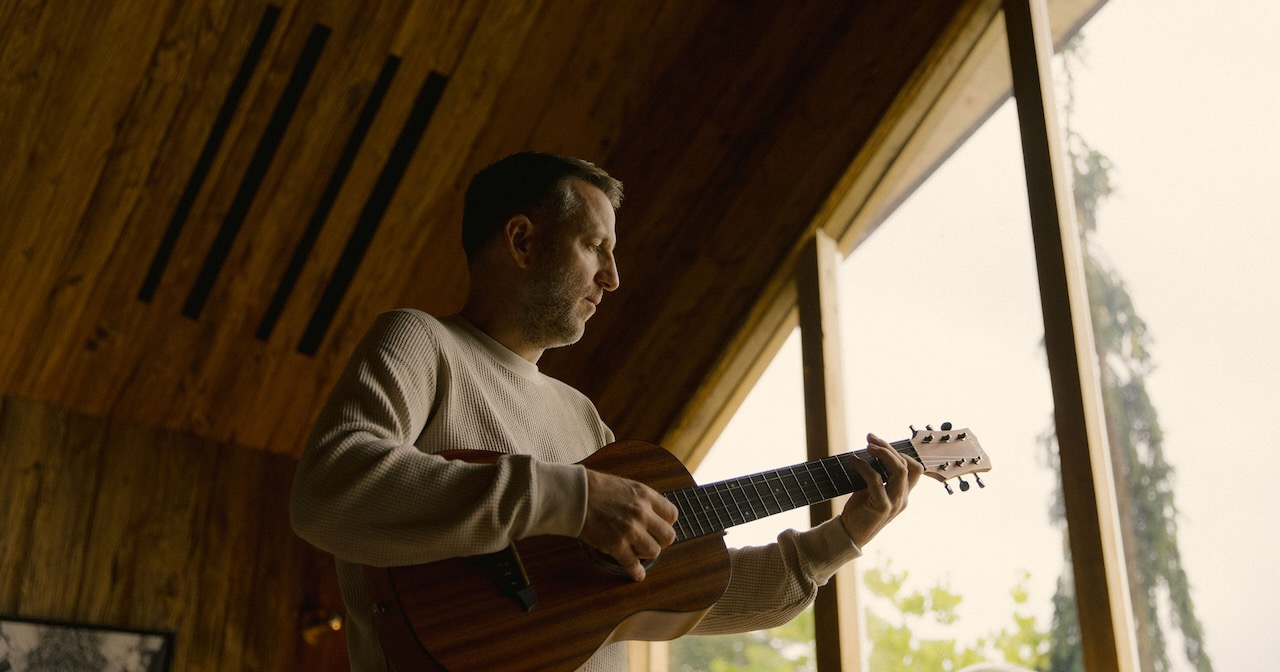
Answering this question became one of the main themes in my lyrics over the last several years – especially on my new album, Anything At All. After touring consistently for the first 15-20 years of my music career, I finally bought a house in South Philadelphia. Ten years later, my family and I relocated to my hometown, Lancaster, Pennsylvania. Before moving back to Lancaster, most of the places I lived felt kind of like a coat rack. Sure, most of my belongings were there, but I knew I’d be traveling again soon – things that felt centering or “home-like” to me existed outside of the confines of a space.
My current life is a lot different than that time. Now I am a husband, a dad of two young kids, a carpenter, and a part of my local community. I spend a lot of time trying to build a comfortable and consistent home life for myself and my family. My idea of what a home means is changing yet again. I’ve compiled a few songs that encompass the various meanings of “home” to me. – Denison Witmer
“Homesick” – Kings of Convenience
I think this is one of the best opening tracks on any album. The way the two guitars immediately start walking down the scale is captivating. My favorite lyrics are the last few: “A song for someone who needs somewhere to long for/ Homesick because I no longer know where home is…” It makes me think about the many days I’ve spent in headphones traveling in trains or tour vans, leaning my head against the window and listening to music that made me feel at home.
“Rene And Georgette Magritte With Their Dog After The War” (Original Acoustic Demo) – Paul Simon
I put this song on almost every mix I make. This is Paul Simon at his finest – just him and a guitar. In this story we follow Rene and Georgette Magritte as they reflect on the differences between their time in New York City and their lives in Europe during WWII. Ordinary moments like opening dresser drawers or window-shopping trigger memories of home.
“Just A Song Before I Go” – Crosby, Stills, & Nash
Starting with a crash cymbal and leading right into a fuzzy guitar riff, this song has an instant warm vibe. I’ve always loved the way Graham Nash leans into writing about his life as a musician/songwriter. There’s a risk that it might not be relatable to a wider audience, yet he always finds a way to make the feeling universal. The lyrics “When the shows were over/ We had to get back home/ When we opened up the door/ I had to be alone…” connect deeply with me.
There were a lot of times on tour that I felt like I was turning into a ghost – passing through towns and people with no real sense of deeper connection or longevity. No real sense of home. Sometimes weeks would pass with mostly small talk and I would lose sight of who I was. Finally getting home, dropping my bags, closing a door behind me, and spending a week alone in silence was just what I needed to recoup.
“In Tall Buildings” (Live) – Gillian Welch
A lovely song written about returning to and centering your life around the things that really matter to you. I love the lyrics “When I’m retired/ My life is my own/ I made all the payments/ It’s time to go home/ And wonder what happened/ Betwixt and between/ When I went to work in tall buildings.” It’s a beautiful reflection on the things that we leave behind either knowingly or unknowingly when we get swept up in the paths our lives take. Gillian Welch’s vocal delivery is always beautiful. The way she can take any song and filter it through her own style with honesty and sincerity is incredible.
“A House With” – Denison Witmer
Yes, adding one of my own songs here. It fits with the theme. Mid-COVID lockdown, my wife and I got really into two things: birding and plants. We did everything we could to get birds to visit our yard. We did everything we could to green the outside and inside of our house. This led to hanging bird feeders all over the place and planting everything from shrubs to trees to lots (and I mean lots) of indoor plants.
This song started as kind of a joke. I often walk around my house playing a small classical guitar and making up goofy songs to make my wife and kids laugh. This song started that way — I was watching the birds on our feeder and naming them as I saw them, then I went from room to room naming the plants we have in our window sills. I recorded an iPhone voice memo and forgot about it. I’m not sure what motivated me to share it with Sufjan (who produced my new album and this track), but I think it was because I knew he is a fan of concrete nouns and words that are interesting phonetically. He ended up choosing this from the batch of demos I presented to him. I am glad he did, because it’s one of my favorite songs on the album.
Sufjan didn’t like the original lyrics of the last verse… I remember him saying, “In the first two verses you are telling us what you are doing and how it fills your heart, but you never tell us why. You should try to answer that question for yourself.” I rewrote the ending and it was at that moment that things clicked into place for me.
“Take Me Home, Country Roads” – John Denver
You can’t really go wrong with the earnest nature of John Denver. I love the lilting quality of this song – lyrics about longing juxtaposed against the happy upbeat sound. It’s a love song to a place. I have a lot of respect for John Denver, because he was always unapologetically himself. He talked about how he wanted to not just entertain people, but also touch them. I think he understood the magic of music and connection. Listening to John Denver also makes me think about my dad because he was his favorite musician.
Yesterday, the 67th Annual GRAMMY Awards show was held in Los Angeles, handing out dozens of awards across the primetime broadcast and premiere ceremony while highlighting the city’s ongoing response to last month’s extreme wildfires, which displaced hundreds of musicians, artists, industry professionals, and creatives. The marquee event was kicked off by Dawes – whose sibling frontmen, Taylor and Griffin Goldsmith, had homes, their studio, and countless instruments and equipment destroyed in the blazes. They performed a moving rendition of “I Love L.A.” with a host of special guests.
Throughout the show, audience members were encouraged to support MusiCares Fire Relief, a collaborative fundraiser launched by the Recording Academy and MusiCares in partnership with Direct Relief, the California Community Foundation, and the Pasadena Community Foundation to help expand wildfire relief efforts across the broader Los Angeles community. Despite the somber shadow cast by the disaster over LA and its creative community, the show was convivial, joyous, and restorative – and included more than a few show-stopping and jaw-dropping moments.
As usual, the crème de la crème of roots musicians could be found across both the pre-telecast and primetime awards, scooping up golden gramophones in seemingly endless varieties of categories. The evening’s big winners in the Country & American Roots Music categories included superstar Beyoncé, who finally picked up her first Album of the Year win, as well as becoming the first Black woman to ever win Best Country Album. She also won the trophy for Best Country Duo Performance with Miley Cyrus for “II Most Wanted,” bringing her GRAMMY Awards totals to 99 nominations and 35 wins – the most wins of any recipient in the history of the awards.
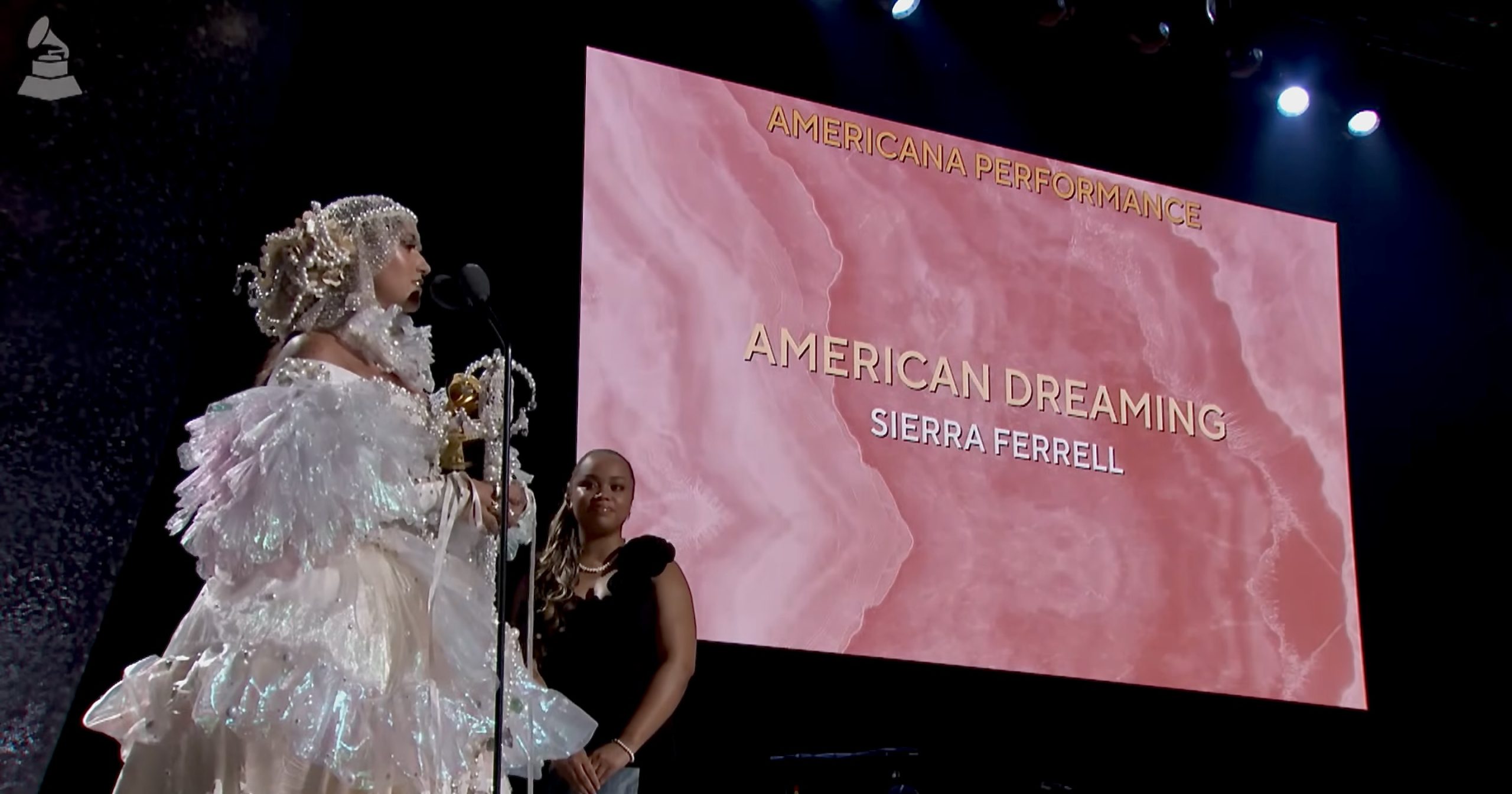
Sierra Ferrell, a West Virginia native and firebrand bluegrass and country starlet quickly on the rise these past handful of years, was indisputably the day’s other big winner, scoring in each of the four categories in which she was nominated. She quickly followed her very first GRAMMY win with three more, landing awards for Best Americana Album, Best American Roots Performance, Best Americana Performance, and Best American Roots Song – an honor she shares with her co-writer, musician, songwriter, and vocalist Melody Walker (Front Country, BERTHA: Grateful Drag).
The award for Best Bluegrass Album was yet again snatched by the world’s premier flatpicker, Billy Strings, for Live Vol. 1, logging his second win at the GRAMMYs after seven nominations over the last five years.
Pop phenom Chappell Roan won Best New Artist, Kacey Musgraves took home Best Country Song for “The Architect,” Chris Stapleton racked up his 11th GRAMMY win for Best Country Solo Performance, and Woodland, the latest album by Gillian Welch & David Rawlings, was recognized as Best Folk Album. Chick Corea won a posthumous award – Best Jazz Instrumental Album – for Remembrance, a duo project helmed by banjoist Béla Fleck that was released in honor of his hero, friend, and collaborator.
The GRAMMYs yet again demonstrate that the impact of bluegrass, folk, Americana, and country on the mainstream music industry cannot be overstated. Congratulations to all of the winners and nominees for the 67th GRAMMY Awards!
“16 CARRIAGES” – Beyoncé “I Am Not Okay” – Jelly Roll “The Architect” – Kacey Musgraves “A Bar Song (Tipsy)” – Shaboozey “It Takes A Woman” – Chris Stapleton
Best Country Duo/Group Performance
“Cowboys Cry Too” – Kelsea Ballerini with Noah Kahan “II MOST WANTED” – Beyoncé featuring Miley Cyrus “Break Mine” – Brothers Osborne “Bigger Houses” – Dan + Shay “I Had Some Help” – Post Malone featuring Morgan Wallen
Best Country Song
“The Architect” – Shane McAnally, Kacey Musgraves & Josh Osborne, songwriters (Kacey Musgraves) “A Bar Song (Tipsy)” – Sean Cook, Jerrel Jones, Joe Kent, Chibueze Collins Obinna, Nevin Sastry & Mark Williams, songwriters (Shaboozey) “I Am Not Okay” – Casey Brown, Jason DeFord, Ashley Gorley & Taylor Phillips, songwriters (Jelly Roll) “I Had Some Help” – Louis Bell, Ashley Gorley, Hoskins, Austin Post, Ernest Smith, Ryan Vojtesak, Morgan Wallen & Chandler Paul Walters, songwriters (Post Malone Featuring Morgan Wallen) “TEXAS HOLD ‘EM”– Brian Bates, Beyoncé, Elizabeth Lowell Boland, Megan Bülow, Nate Ferraro & Raphael Saadiq, songwriters (Beyoncé)
Best Country Album
COWBOY CARTER – Beyoncé F-1 Trillion – Post Malone Deeper Well – Kacey Musgraves Higher – Chris Stapleton Whirlwind – Lainey Wilson
Best American Roots Performance
“Blame It On Eve” – Shemekia Copeland “Nothing In Rambling” – The Fabulous Thunderbirds featuring Bonnie Raitt, Keb’ Mo’, Taj Mahal, & Mick Fleetwood “Lighthouse” – Sierra Ferrell “The Ballad Of Sally Anne” – Rhiannon Giddens
Best Americana Performance
“YA YA” – Beyoncé “Subtitles” – Madison Cunningham “Don’t Do Me Good” – Madi Diaz featuring Kacey Musgraves “American Dreaming” – Sierra Ferrell “Runaway Train” – Sarah Jarosz “Empty Trainload Of Sky” – Gillian Welch & David Rawlings
Best American Roots Song
“Ahead Of The Game” – Mark Knopfler, songwriter (Mark Knopfler) “All In Good Time” – Sam Beam, songwriter (Iron & Wine featuring Fiona Apple) “All My Friends” – Aoife O’Donovan, songwriter (Aoife O’Donovan) “American Dreaming” – Sierra Ferrell & Melody Walker, songwriters (Sierra Ferrell) “Blame It On Eve” – John Hahn & Will Kimbrough, songwriters (Shemekia Copeland)
Best Americana Album
The Other Side – T Bone Burnett $10 Cowboy – Charley Crockett Trail Of Flowers – Sierra Ferrell Polaroid Lovers – Sarah Jarosz No One Gets Out Alive – Maggie Rose Tigers Blood – Waxahatchee
Best Bluegrass Album
I Built A World – Bronwyn Keith-Hynes Songs Of Love And Life – The Del McCoury Band No Fear – Sister Sadie Live Vol. 1 – Billy Strings Earl Jam – Tony Trischka Dan Tyminski: Live From The Ryman – Dan Tyminski
Best Traditional Blues Album
Hill Country Love – Cedric Burnside Struck Down – The Fabulous Thunderbirds One Guitar Woman – Sue Foley Sam’s Place – Little Feat Swingin’ Live At The Church In Tulsa – The Taj Mahal Sextet
Best Contemporary Blues Album
Blues Deluxe Vol. 2 – Joe Bonamassa Blame It On Eve – Shemekia Copeland Friendlytown – Steve Cropper & The Midnight Hour Mileage – Ruthie Foster The Fury – Antonio Vergara
Best Folk Album
American Patchwork Quartet – American Patchwork Quartet Weird Faith – Madi Diaz Bright Future – Adrianne Lenker All My Friends – Aoife O’Donovan Woodland – Gillian Welch & David Rawlings
Best Regional Roots Music Album
25 Back To My Roots – Sean Ardoin And Kreole Rock And Soul Live At The 2024 New Orleans Jazz & Heritage Festival – Big Chief Monk Boudreaux & The Golden Eagles featuring J’Wan Boudreaux Live At The 2024 New Orleans Jazz & Heritage Festival – New Breed Brass Band featuring Trombone Shorty Kuini – Kalani Pe’a Stories From The Battlefield – The Rumble Featuring Chief Joseph Boudreaux Jr.
Best Roots Gospel Album
The Gospel Sessions, Vol 2 – Authentic Unlimited The Gospel According To Mark – Mark D. Conklin Rhapsody – The Harlem Gospel Travelers Church – Cory Henry Loving You – The Nelons
Best Jazz Performance
“Walk With Me, Lord (SOUND | SPIRIT)” – The Baylor Project “Phoenix Reimagined (Live)” – Lakecia Benjamin featuring Randy Brecker, Jeff “Tain” Watts & John Scofield “Juno” – Chick Corea & Béla Fleck “Twinkle Twinkle Little Me” – Samara Joy featuring Sullivan Fortner “Little Fears” – Dan Pugach Big Band featuring Nicole Zuraitis & Troy Roberts
Best Jazz Instrumental Album
Owl Song – Ambrose Akinmusire featuring Bill Frisell & Herlin Riley Beyond This Place – Kenny Barron featuring Kiyoshi Kitagawa, Johnathan Blake, Immanuel Wilkins & Steve Nelson Phoenix Reimagined (Live) – Lakecia Benjamin Remembrance – Chick Corea & Béla Fleck Solo Game – Sullivan Fortner
Best Traditional Pop Vocal Album
À Fleur De Peau – Cyrille Aimée Visions – Norah Jones Good Together – Lake Street Dive Impossible Dream – Aaron Lazar Christmas Wish – Gregory Porter
Best Contemporary Instrumental Album
Plot Armor – Taylor Eigsti Rhapsody In Blue – Béla Fleck Orchestras (Live) – Bill Frisell featuring Alexander Hanson, Brussels Philharmonic, Rudy Royston & Thomas Morgan Mark – Mark Guiliana Speak To Me – Julian Lage
Best Instrumental Composition
“At Last” – Shelton G. Berg, composer (Shelly Berg) “Communion” – Christopher Zuar, composer (Christopher Zuar Orchestra) “I Swear, I Really Wanted To Make A “Rap” Album But This Is Literally The Way The Wind Blew Me This Time” – André 3000, Surya Botofasina, Nate Mercereau & Carlos Niño, composers (André 3000) “Remembrance” – Chick Corea, composer (Chick Corea & Béla Fleck) “Strands” – Pascal Le Boeuf, composer (Akropolis Reed Quintet, Pascal Le Boeuf & Christian Euman)
Best Arrangement, Instrumental or A Cappella
“Baby Elephant Walk” – Encore, Michael League, arranger (Snarky Puppy) “Bridge Over Troubled Water” – Jacob Collier, Tori Kelly & John Legend, arrangers (Jacob Collier Featuring John Legend & Tori Kelly) “Rhapsody In Blue(Grass)” – Béla Fleck & Ferde Grofé, arrangers (Béla Fleck featuring Michael Cleveland, Sierra Hull, Justin Moses, Mark Schatz & Bryan Sutton) “Rose Without The Thorns” – Erin Bentlage, Alexander Lloyd Blake, Scott Hoying, A.J. Sealy & Amanda Taylor, arrangers (Scott Hoying featuring säje & Tonality) “Silent Night” – Erin Bentlage, Sara Gazarek, Johnaye Kendrick & Amanda Taylor, arrangers (säje)
Notable General Field Categories:
Record Of The Year
“Now And Then” – The Beatles “TEXAS HOLD ‘EM” – Beyoncé “Espresso” – Sabrina Carpenter “360” – Charli XCX “BIRDS OF A FEATHER” – Billie Eilish “Not Like Us” – Kendrick Lamar “Good Luck, Babe!” – Chappell Roan “Fortnight” – Taylor Swift featuring Post Malone
Album Of The Year
New Blue Sun – André 3000 COWBOY CARTER – Beyoncé Short n’ Sweet – Sabrina Carpenter BRAT – Charli XCX Djesse Vol. 4 – Jacob Collier HIT ME HARD AND SOFT – Billie Eilish Chappell Roan The Rise And Fall Of A Midwest Princess – Chappell Roan THE TORTURED POETS DEPARTMENT – Taylor Swift
Song Of The Year
“A Bar Song (Tipsy)” – Sean Cook, Jerrel Jones, Joe Kent, Chibueze Collins Obinna, Nevin Sastry & Mark Williams, songwriters (Shaboozey) “BIRDS OF A FEATHER” – Billie Eilish O’Connell & FINNEAS, songwriters (Billie Eilish) “Die With A Smile” – Dernst Emile II, James Fauntleroy, Lady Gaga, Bruno Mars & Andrew Watt, songwriters (Lady Gaga & Bruno Mars) “Fortnight” – Jack Antonoff, Austin Post & Taylor Swift, songwriters (Taylor Swift Featuring Post Malone) “Good Luck, Babe!” – Kayleigh Rose Amstutz, Daniel Nigro & Justin Tranter, songwriters (Chappell Roan) “Not Like Us” – Kendrick Lamar, songwriter (Kendrick Lamar) “Please Please Please” – Amy Allen, Jack Antonoff & Sabrina Carpenter, songwriters (Sabrina Carpenter) “TEXAS HOLD ‘EM” – Brian Bates, Beyoncé, Elizabeth Lowell Boland, Megan Bülow, Nate Ferraro & Raphael Saadiq, songwriters (Beyoncé)
Which artist has influenced you the most – and how?
Gillian Welch. She has shown me that lyrics can be both beautiful and dark, honest and true. Her instrumentation is brilliantly simple and to see her play live is to transcend to a different plane.
What’s your favorite memory from being on stage?
We played “The Wild” in Seattle, and I asked if anybody had gone fishing that day. A fella had been out that morning and caught three coho salmon. When the song started he closed his eyes and I knew he was back on the ocean in the breeze and the water. I love to see other people getting to escape through my music.
What other art forms – literature, film, dance, painting, etc. – inform your music?
Photography, antiquing and home décor design, cooking, and hosting friends.
What is a genre, album, artist, musician, or song that you adore that would surprise people?
I love Daft Punk. Especially their song “Something About Us.” They influenced a lot of the cosmic aspect of my album and I greatly admire their lyrics and musicality.
If you didn’t work in music, what would you do instead?
There is nothing I could do instead, I am married to the music.
This morning, Friday, November 8, the Recording Academy announced the nominees for the 67th GRAMMY Awards, to be held in Los Angeles on February 2 at the Crypto.com Arena. Roots musicians can be found at all levels and across all fields of the buzzworthy awards, which are voted on by the vast Recording Academy membership of music makers, artists, and creatives.
Notably, Beyoncé, her groundbreaking country fusion album COWBOY CARTER, and its tracks can be found throughout the general field and American Roots categories, including landing nominations for Best Country Album, Best Country Song, Best Americana Performance, Album of the Year, Record of the Year, and more. Banjoist and composer Béla Fleck collected more than a handful of nominations for his work with Chick Corea – released posthumously – and Rhapsody in Blue, as well.
The Best Bluegrass Album category this year includes releases from Bronwyn Keith-Hynes, the Del McCoury Band, Sister Sadie, Billy Strings, Tony Trischka, and Dan Tyminski, making for an incredibly stout and superlative lineup.
From Kacey Musgraves to Shemekia Copeland, Aoife O’Donovan to Lake Street Dive, below we’ve collected all of the nominees in the Country & American Roots Music fields, plus we feature select categories from across the many fields, genres, and communities that also include roots musicians and our BGS friends and neighbors. Check out the list and mark your calendars for the 67th GRAMMY Awards, Sunday, February 2, 2025.
Best Country Solo Performance
“16 CARRIAGES” – Beyoncé “I Am Not Okay” – Jelly Roll “The Architect” – Kacey Musgraves “A Bar Song (Tipsy)” – Shaboozey “It Takes A Woman” – Chris Stapleton
Best Country Duo/Group Performance
“Cowboys Cry Too” – Kelsea Ballerini with Noah Kahan “II MOST WANTED” – Beyoncé featuring Miley Cyrus “Break Mine” – Brothers Osborne “Bigger Houses” – Dan + Shay “I Had Some Help” – Post Malone featuring Morgan Wallen
Best Country Song
“The Architect” – Shane McAnally, Kacey Musgraves & Josh Osborne, songwriters (Kacey Musgraves) “A Bar Song (Tipsy)” – Sean Cook, Jerrel Jones, Joe Kent, Chibueze Collins Obinna, Nevin Sastry & Mark Williams, songwriters (Shaboozey) “I Am Not Okay” – Casey Brown, Jason DeFord, Ashley Gorley & Taylor Phillips, songwriters (Jelly Roll) “I Had Some Help” – Louis Bell, Ashley Gorley, Hoskins, Austin Post, Ernest Smith, Ryan Vojtesak, Morgan Wallen & Chandler Paul Walters, songwriters (Post Malone Featuring Morgan Wallen) “TEXAS HOLD ‘EM”– Brian Bates, Beyoncé, Elizabeth Lowell Boland, Megan Bülow, Nate Ferraro & Raphael Saadiq, songwriters (Beyoncé)
Best Country Album
COWBOY CARTER – Beyoncé F-1 Trillion – Post Malone Deeper Well – Kacey Musgraves Higher – Chris Stapleton Whirlwind – Lainey Wilson
Best American Roots Performance
“Blame It On Eve” – Shemekia Copeland “Nothing In Rambling” – The Fabulous Thunderbirds featuring Bonnie Raitt, Keb’ Mo’, Taj Mahal, & Mick Fleetwood “Lighthouse” – Sierra Ferrell “The Ballad Of Sally Anne” – Rhiannon Giddens
Best Americana Performance
“YA YA” – Beyoncé “Subtitles” – Madison Cunningham “Don’t Do Me Good” – Madi Diaz featuring Kacey Musgraves “American Dreaming” – Sierra Ferrell “Runaway Train” – Sarah Jarosz “Empty Trainload Of Sky” – Gillian Welch & David Rawlings
Best American Roots Song
“Ahead Of The Game” – Mark Knopfler, songwriter (Mark Knopfler) “All In Good Time” – Sam Beam, songwriter (Iron & Wine featuring Fiona Apple) “All My Friends” – Aoife O’Donovan, songwriter (Aoife O’Donovan) “American Dreaming” – Sierra Ferrell & Melody Walker, songwriters (Sierra Ferrell) “Blame It On Eve” – John Hahn & Will Kimbrough, songwriters (Shemekia Copeland)
Best Americana Album
The Other Side – T Bone Burnett $10 Cowboy – Charley Crockett Trail Of Flowers – Sierra Ferrell Polaroid Lovers – Sarah Jarosz No One Gets Out Alive – Maggie Rose Tigers Blood – Waxahatchee
Best Bluegrass Album
I Built A World – Bronwyn Keith-Hynes Songs Of Love And Life – The Del McCoury Band No Fear – Sister Sadie Live Vol. 1 – Billy Strings Earl Jam – Tony Trischka Dan Tyminski: Live From The Ryman – Dan Tyminski
Best Traditional Blues Album
Hill Country Love – Cedric Burnside Struck Down – The Fabulous Thunderbirds One Guitar Woman – Sue Foley Sam’s Place – Little Feat Swingin’ Live At The Church In Tulsa – The Taj Mahal Sextet
Best Contemporary Blues Album
Blues Deluxe Vol. 2 – Joe Bonamassa Blame It On Eve – Shemekia Copeland Friendlytown – Steve Cropper & The Midnight Hour Mileage – Ruthie Foster The Fury – Antonio Vergara
Best Folk Album
American Patchwork Quartet – American Patchwork Quartet Weird Faith – Madi Diaz Bright Future – Adrianne Lenker All My Friends – Aoife O’Donovan Woodland – Gillian Welch & David Rawlings
Best Regional Roots Music Album
25 Back To My Roots – Sean Ardoin And Kreole Rock And Soul Live At The 2024 New Orleans Jazz & Heritage Festival – Big Chief Monk Boudreaux & The Golden Eagles featuring J’Wan Boudreaux Live At The 2024 New Orleans Jazz & Heritage Festival – New Breed Brass Band featuring Trombone Shorty Kuini – Kalani Pe’a Stories From The Battlefield – The Rumble Featuring Chief Joseph Boudreaux Jr.
Best Roots Gospel Album
The Gospel Sessions, Vol 2 – Authentic Unlimited The Gospel According To Mark – Mark D. Conklin Rhapsody – The Harlem Gospel Travelers Church – Cory Henry Loving You – The Nelons
Best Jazz Performance
“Walk With Me, Lord (SOUND | SPIRIT)” – The Baylor Project “Phoenix Reimagined (Live)” – Lakecia Benjamin featuring Randy Brecker, Jeff “Tain” Watts & John Scofield “Juno” – Chick Corea & Béla Fleck “Twinkle Twinkle Little Me” – Samara Joy featuring Sullivan Fortner “Little Fears” – Dan Pugach Big Band featuring Nicole Zuraitis & Troy Roberts
Best Jazz Instrumental Album
Owl Song – Ambrose Akinmusire featuring Bill Frisell & Herlin Riley Beyond This Place – Kenny Barron featuring Kiyoshi Kitagawa, Johnathan Blake, Immanuel Wilkins & Steve Nelson Phoenix Reimagined (Live) – Lakecia Benjamin Remembrance – Chick Corea & Béla Fleck Solo Game – Sullivan Fortner
Best Traditional Pop Vocal Album
À Fleur De Peau – Cyrille Aimée Visions – Norah Jones Good Together – Lake Street Dive Impossible Dream – Aaron Lazar Christmas Wish – Gregory Porter
Best Contemporary Instrumental Album
Plot Armor – Taylor Eigsti Rhapsody In Blue – Béla Fleck Orchestras (Live) – Bill Frisell featuring Alexander Hanson, Brussels Philharmonic, Rudy Royston & Thomas Morgan Mark – Mark Guiliana Speak To Me – Julian Lage
Best Instrumental Composition
“At Last” – Shelton G. Berg, composer (Shelly Berg) “Communion” – Christopher Zuar, composer (Christopher Zuar Orchestra) “I Swear, I Really Wanted To Make A “Rap” Album But This Is Literally The Way The Wind Blew Me This Time” – André 3000, Surya Botofasina, Nate Mercereau & Carlos Niño, composers (André 3000) “Remembrance” – Chick Corea, composer (Chick Corea & Béla Fleck) “Strands” – Pascal Le Boeuf, composer (Akropolis Reed Quintet, Pascal Le Boeuf & Christian Euman)
Best Arrangement, Instrumental or A Cappella
“Baby Elephant Walk” – Encore, Michael League, arranger (Snarky Puppy) “Bridge Over Troubled Water” – Jacob Collier, Tori Kelly & John Legend, arrangers (Jacob Collier Featuring John Legend & Tori Kelly) “Rhapsody In Blue(Grass)” – Béla Fleck & Ferde Grofé, arrangers (Béla Fleck featuring Michael Cleveland, Sierra Hull, Justin Moses, Mark Schatz & Bryan Sutton) “Rose Without The Thorns” – Erin Bentlage, Alexander Lloyd Blake, Scott Hoying, A.J. Sealy & Amanda Taylor, arrangers (Scott Hoying featuring säje & Tonality) “Silent Night” – Erin Bentlage, Sara Gazarek, Johnaye Kendrick & Amanda Taylor, arrangers (säje)
General Field:
Record Of The Year
“Now And Then” – The Beatles “TEXAS HOLD ‘EM” – Beyoncé “Espresso” – Sabrina Carpenter “360” – Charli XCX “BIRDS OF A FEATHER” – Billie Eilish “Not Like Us” – Kendrick Lamar “Good Luck, Babe!” – Chappell Roan “Fortnight” – Taylor Swift featuring Post Malone
Album Of The Year
New Blue Sun – André 3000 COWBOY CARTER – Beyoncé Short n’ Sweet – Sabrina Carpenter BRAT – Charli XCX Djesse Vol. 4 – Jacob Collier HIT ME HARD AND SOFT – Billie Eilish Chappell Roan The Rise And Fall Of A Midwest Princess – Chappell Roan THE TORTURED POETS DEPARTMENT – Taylor Swift
Song Of The Year
“A Bar Song (Tipsy)” – Sean Cook, Jerrel Jones, Joe Kent, Chibueze Collins Obinna, Nevin Sastry & Mark Williams, songwriters (Shaboozey) “BIRDS OF A FEATHER” – Billie Eilish O’Connell & FINNEAS, songwriters (Billie Eilish) “Die With A Smile” – Dernst Emile II, James Fauntleroy, Lady Gaga, Bruno Mars & Andrew Watt, songwriters (Lady Gaga & Bruno Mars) “Fortnight” – Jack Antonoff, Austin Post & Taylor Swift, songwriters (Taylor Swift Featuring Post Malone) “Good Luck, Babe!” – Kayleigh Rose Amstutz, Daniel Nigro & Justin Tranter, songwriters (Chappell Roan) “Not Like Us” – Kendrick Lamar, songwriter (Kendrick Lamar) “Please Please Please” – Amy Allen, Jack Antonoff & Sabrina Carpenter, songwriters (Sabrina Carpenter) “TEXAS HOLD ‘EM” – Brian Bates, Beyoncé, Elizabeth Lowell Boland, Megan Bülow, Nate Ferraro & Raphael Saadiq, songwriters (Beyoncé)
Welcome to my Mixtape of loss and love! I hope you don’t need it right now, but if you do, it’s here to bring you a little comfort. When I was making it, I started out trying to make the most devastating playlist I could make, but then halfway through I decided to make something I’d actually enjoy listening to. Something that mimics the way we process loss and love– yes, there’s a lot of time spent in really dark places, but there’s also so much humor in the face of everything and a lot of reluctant joy, showing its light despite our best efforts to draw the curtains and hide.
That dialogue between loss and joy is at the heart of my EP, Bloodlust, which just came out on October 24. I wrote this project coming out of a period of life that was marred by grief, death, and illness, so naturally I had a lot of heavy stuff on my mind, but I felt this overwhelming need to write some of the most upbeat and energetic songs I’ve ever written.
Sometimes it helps to grieve and sulk and sometimes you want to just roll down the windows and feel your pain casually, communally, and maybe even with the last laugh. I think there’s room on this Mixtape to do both. – Melanie MacLaren
“Wayside/Back in Time” – Gillian Welch
We like to think of a loss as these finite events, but sometimes it’s a long, steady process, the passing of time and dissolution of relationships, a slow decline of health. Loss can sometimes simply be the progression of time, and Gillian Welch’s writing is so timeless, too, that it strengthens that feeling – she could be singing from any time about any time, as long as it’s gone.
“Change” – Big Thief
Thinking of loss as simply “change” is really difficult, but at its core that’s what it is.
“Flirted With You All My Life” – Vic Chesnutt
This song is wild. I remember the first time someone played this for me on a road trip, I was smiling thinking, “Oh man, he really likes me,” and then that guitar comes in and the lyrics change tone completely and you realize the whole song is about death. It’s a funny phenomenon. You can feel the sky darkening at that moment. But then you listen to the song again with all that in mind and you still feel happy in the first half of the song. I think that’s part of the beauty of it too– knowing the ending and still being receptive to joy.
“beachball” – Dan Reeder
This is a 90-second song about a beachball that makes me bawl my eyes out. I love Dan Reeder.
“Buffalo” – Hurray for the Riff Raff
I have a soft spot for songs that talk about animals (I guess that’s why I wrote a song about Laika for my EP). I think we can talk about them in a way that we’re afraid to talk about ourselves. Their fear is our fear, but it’s hard for us to think of it that way. Asking if the love we share with each other as humans will last forever or if it will go extinct the way that some animals have, at our hands, feels really bold.
“Bloodlust” – Melanie MacLaren
This is the title track off my new EP. This whole project is me trying to make peace with the constant cycles of loss and love we all inevitably experience in our lives. They’re natural like the seasons, but they still feel so overwhelming and unnatural. It was also my attempt to experience moments of joy while not shutting out my grief and anger.
“Random Rules” – Silver Jews
Love and loss are so incredibly random that it would be funny if it didn’t matter so much to us. I always laugh a little at the first line and feel really nonchalant in a dumb way. It sounds like wearing sunglasses inside to me. But then, by the second verse, I’m fully feeling my feelings and replaying every little thing that’s gone wrong between me and every person I’ve ever cared about.
“New Partner” – Palace Music
I like to listen to this song when I’m driving alone and see who I picture in the passenger seat beside me. It changes a lot. That’s probably a good thing.
“I’ve Got a Darkness” – Mick Flannery
Mick Flannery writes the best songs. This song is such a devastating portrait of generational pain and an ode to the fact that we can feel the effects of loss and love that we’ve never experienced in our own lifetime. We carry so much with us that we’re not even aware of.
“Lake Charles” – Lucinda Williams
I love how the verses are just memories, snapshots of life, and all questions and talk of death is reserved for the chorus. It’s such a beautiful homage that way, letting someone still be alive in the song and just describing things as they were, but then still asking those bigger questions because you can’t help but ask when you’ve lost someone you love. You just hope they’re ok.
“The Arrangements” – Willi Carlisle
I love the line, “It’s still sad when bad love dies.” Amazing album with lots of songs about animals.
“Whatever Happened to Us” – Loudon Wainwright III
I love how blunt this song is and how it relies on humor in the face of loss. I heard it for the first time this summer, after I had recorded my song “Get It Back.” I immediately resonated with its matter-of-fact nature. I also love the wordplay in it; I think having fun with language is a way we as humans maintain a little bit of control of the narrative of things we don’t really have much actual agency over.
“Donut Seam” – Adrianne Lenker
There’s so much off this album that could be on this playlist. I almost went with “Sadness as a Gift,” but I really loved the way this song intertwines a dying love with the feeling that the world is dying. Even if that isn’t literal, it often feels literal. The harmony on “what it means to walk that line” makes me feel human.
“Days of the Years” – The Felice Brothers
I love how loss is naturally integrated with the mundane and the beautiful: “These are the days, of the years, of my life.” What else is there?
“Don’t Let Us Get Sick” Solo Acoustic – Warren Zevon
The simplicity of this song is so overwhelming, especially from a writer who can obviously complicate things lyrically and musically when he wants to. He just stays in this sort of The MuppetChristmas Carol arena (compliment!) and it’s so effective, because what he’s asking for is so simple. It sounds like a child’s prayer.
Artist:Noeline Hofmann Hometown: Bow Island, Alberta, Canada Latest Album:Purple Gas EP
What’s your favorite memory from being on stage?
It’s nearly impossible to narrow down, but one of my favorite memories from the stage happened this October while on tour with Colter Wall. For the better part of the tour, Corb Lund – a fellow Western Canadian (like Colter and I) – was also on the road with us. I grew up listening to Corb on the radio back home and later discovered Colter as a teenager. Their songwriting resonated with and influenced me deeply as a young writer and continues to today.
Colter kindly invited us to join him in singing “Summer Wages” by Albertan cowboy legend, Ian Tyson, for his encore during tour. The first night that Corb joined us on stage, he took me by the arm for a two-step during the instrumental – much to mine and the crowd’s surprise. (Sorry about scuffing up your boots with my two left feet, Corb.) It was such a wonderful, full circle moment to be on stage beside two artists from home who had such a huge impact on me and singing a song together by a late legend from home who has impacted all of us.
Further, Patrick Lyons, the producer of my EP, Purple Gas, plays guitar in Colter’s band. Another reason that made these memories of singing “Summer Wages” special was it being the first time(s) I was lucky enough to share a stage with Pat as well as all of the other boys in the band, who I’ve come to know and love not only as musicians, but as friends.
Which elements of nature do you spend the most time with and how do those impact your work?
I love to spend time out on the prairie. It has an understated beauty that with every passing year becomes more and more striking to me. It is unforgiving. Seemingly never-ending. In tune and knowing. It’s seen my own blood, sweat, and tears and that of generations of people that I love, alike. I’ve never felt closer to God than I have out there, all alone. Being raised in a prairie town, around prairie people, the landscape and all that results due in part to it, has defined my life experience thus far in an immeasurable way – and consequently, impacted my work just as deeply.
What’s the most difficult creative transformation you’ve ever undertaken?
While I’ve been feeling incredibly inspired to write in the wake of releasing my first recording project, I think I am simultaneously in the midst of one of the most difficult creative transformations I’ve faced so far.
All of the songs on my debut EP were written during a very different time in my life; before I’d ever been on tour, or set foot in a studio, or before the music industry began revealing itself to me behind the thick veil of mystery that once clouded it from my gaze. I was working blue- and pink-collar jobs such as bartending and doing farm labor before eventually putting all of my cards on the table and giving a career in music an all-or-nothing go, starting with the regional music scene in Alberta. Those years, age 18 to 20, were raw and electric, reckless, trial by fire. I was full of piss and vinegar, stubbornly tuning out the expectations others had of me and striking out into the world for the very first times to try forging a path towards something more for myself in life. I confronted some shocking losses and also experienced those first great formative loves you do at that age. Environments and emotions that are natural recipes for songs.
My day-to-day life has pulled a complete 180 since those songs were written. I have a lot of writing to do from my new pair of boots. I haven’t been able to take them for many test drives behind the pencil while on tour this spring and summer and am waiting with bated breath for the winter, when I’ll get to sit down and really dig into writing and processing the last year. It’s in my nature to always want to step above the bar I last set for myself – it’s as nerve-wracking as it is exciting to be starting to write for the next project. Especially now that most of the surroundings and life circumstances that inspired the songs on my first project are no longer part of my daily life on the road and there is now a recorded precedent set that didn’t exist at the time I wrote the songs on my first body of work.
What is a genre, album, artist, musician, or song that you adore that would surprise people?
“Good Luck, Babe!” by Chappell Roan (of course!)
If you didn’t work in music, what would you do instead?
I would probably be a ranch hand. Ranching is humbling, creative, and requires your all – mind, body, and soul. You have to live and breathe it. I can’t do anything halfway. For two jobs that, on the outside, look as though they couldn’t be any more different from each other, I’ve found a surprising number of parallels between my experiences working on a ranch to working as an artist.
(Editor’s Note: Sign up to receive even more Good Country direct to your email inbox.)
Here’s a flock of brand new songs and videos you gotta hear! This week, our premiere round-up includes Americana, fiddle tunes, percussive dance, good country, string band excellence, and more.
Don’t miss new tracks like “Second Best,” from Americana singer-songwriter and Steep Canyon Rangers vocalist Aaron Burdett, and “China Camp,” a fiddle tune written by Paul Shelasky and performed by Amy Kassir with Jake Eddy and more. Also, Wisconsin’s own Them Coulee Boys drop “I Am Not Sad,” a song that grapples with mental health from their upcoming 2025 album, No Fun In The Chrysalis.
We’ve got some superlative videos this week, as well! Percussive dancer and folk musician Nic Gareiss dances us through a gorgeous, queer rendition of a Gillian Welch song, “Back Turn and Swing,” and alt-folk trio Palmyra have brought a live field recording of “Fried,” a song from their brand new EP, Surprise #1. Meanwhile, Eilen Jewell pays tribute to Loretta Lynn and spotlights the progress and regression of the last 50 years of reproductive rights activism with a cover of “The Pill.”
To wrap us up, we don’t want you to miss the latest AEA Session, premiered in partnership with AEA Ribbon Mics on BGS earlier this week. This edition of the series features Brit Taylor & Adam Chaffins, performing live at Americanafest last month.
It’s all right here on BGS and, certainly, You Gotta Hear This!
Aaron Burdett, “Second Best”
Artist:Aaron Burdett Hometown: Saluda, North Carolina Song: “Second Best” Release Date: October 25, 2024 Label: Organic Records
In Their Words: “You might say ‘Second Best’ was a song 30 years in the making. I’ve had this line from an old David Wilcox song rattling around in my head since the ’90s. It always struck me as a phrase that could be interpreted in many different ways. So I eventually started playing with that idea and bouncing it off various scenes and situations. A year or so ago I landed on the one (or two) that ended up in the recording, along with the original Wilcox line that inspired the chorus. Some songs arrive quickly, and some arrive much more slowly!” – Aaron Burdett
Artist:Nic Gareiss Hometown: Lansing, Michigan Song: “Back Turn and Swing” Release Date: October 25, 2024
In Their Words: “When I heard Gillian Welch’s song ‘Back Turn and Swing,’ I was immediately drawn to the way it brings the listener into the scene of a dance event: musicians tuning up, someone cooking potluck food to pass around, the excitement in the air, folks eager to get up onto the floor. The lyrics evoke the feeling of the square and contra dances I grew up attending in the rural Midwest. At the same time, as a non-binary queer person, I feel bodily unease around how the song sets up the dualistic gender of the attendees.
“Many folk dances these days have adopted expansive and inclusive dance calls, like using ‘larks and robins,’ ‘lefts and rights,’ etc. (shoutout to Michigan’s Looking Glass and Ten Pound Fiddle contra dances, Detroit’s queer square dance, Asheville’s Old Farmer’s Ball, and Brooklyn’s Gayli). Yet I’m still compelled to check beforehand that the caller – the authoritarian voice at the front of the hall telling people what to do with their bodies – is onboard with same-sex couples dancing together or trans and genderqueer people expanding these roles. This past summer a partner and I were at a dance when someone in their 20s asked us mid-set, ‘Who is the man?’ This reminded me that there’s still work to do; inclusivity still requires advocacy and allyship to help all feel welcome in the dynamism of the dance floor.
“Speaking of dynamic, as a child I saw John Hartford and was both astonished and inspired by the soundscapes he could create; dance, music, and song all embodied in one person. I aspire towards that dance-as-music in this video, where I added a few lyrics to the last verse.” – Nic Gareiss
Video Credits: Filmed by Blake Hannahson. Audio mixed by Jaron Freeman-Fox.
Eilen Jewell, “The Pill”
Artist:Eilen Jewell Hometown: Boise, Idaho Song: “The Pill” Album:Butcher Holler: A Tribute To Loretta Lynn Release Date: October 22, 2024 (single); November 15, 2024 (album) Label: Signature Sounds
In Their Words: “The amazing thing about ‘The Pill’ is that it still feels edgy today, nearly 50 years after its original release. Loretta infused it with so much sassy defiance that, even now, when I sing it live and reach the phrase ‘now I’ve got the pill,’ some fans pump their fists while others clutch their pearls. It still strikes a nerve, a testament both to how effective this song is and how little progress we’ve made in this country in terms of reproductive rights.
“Loretta still holds the prestigious record for the singer of more banned radio hits than all other male country artists in the twentieth century combined. And ‘The Pill’ was the most banned of all of her songs, which is saying a lot. By recording and performing it live, I hope to do my part to spread the word about the importance of public access to family planning as an integral part of a woman’s right to the pursuit of happiness. It’s hard to believe this fight is still going on, but until it’s over I’ll be here for it.” – Eilen Jewell
A note from the artist: A percentage of sales from “The Pill” will be donated to Planned Parenthood.
Video Credits: Bill Hurley at The Fallout Shelter in Norwood, Massachusetts
Amy Kassir, “China Camp”
Artist:Amy Kassir Hometown: Durham, North Carolina. Currently lives in San Rafael, California. Song: “China Camp” Album:Bread and Butter Release Date: October 25, 2024
In Their Words: “‘China Camp’ is a great tune by the legendary California fiddler Paul Shelasky. I first heard it on the 1983 Good Ol’ Persons record, I Can’t Stand to Ramble, and I’ve been obsessed ever since. While so many tunes on my album are ‘bread and butter’ fiddle tunes I grew up playing in North Carolina, I wanted to include a tune that represents the rich musical legacy of California, which has been my home for the last 10 years. I’m so thankful Paul gave me his blessing to record this tune.
“This recording features Jake Eddy on guitar and banjo, Korey Kassir on mandolin, and Carter Eddy on bass. It’s such an exciting tune to play, and we had a lot of fun bringing it to life.” – Amy Kassir
Palmyra, “Fried”
Artist:Palmyra Hometown: Richmond, Virginia Song: “Fried” Album:Surprise #1 (EP) Release Date: October 24, 2024 Label: Oh Boy Records
In Their Words: “As we have ventured into playing bigger stages and festivals, our sound has expanded significantly. While the core of Palmyra remains the three of us, we’ve been experimenting with a larger four-piece sound, as heard on the recorded version of ‘Fried’ on our new EP, Surprise #1, with Oh Boy Records. ‘Fried’ is our most ambitious acoustic experiment, starting with a drum set and a hypnotic repetitive guitar lick. Recording the song acoustically with one microphone in a field was a fun way for us to find the core of the tune. It was a challenge to see how many elements we could strip away and still keep the groove. We like to call ‘Fried’ our ‘jam band’ song, and we hope even this field recording gets you on your feet.” – Palmyra
Track Credits: Written by Sasha Landon, Mānoa Lewis Bell, and Teddy Chipouras. Sasha Landon – Mandocello, voice Teddy Chipouras – Guitar, voice Mānoa Bell – Upright bass, voice Jake Cochran – Drums
Video Credit: Elliott Crotteau
Them Coulee Boys, “I Am Not Sad”
Artist:Them Coulee Boys Hometown: Eau Claire, Wisconsin Song: “I Am Not Sad” Album:No Fun In The Chrysalis Release Date: October 29, 2024 (single); February 28, 2025 (album) Label: Some Fun Records
In Their Words: “‘I Am Not Sad‘ is the last song on the record and captures the theme of accepting change this record focuses on. I’ve struggled with my mental health my whole life, dealing with depression, anxiety, and issues with self worth. I’ve embraced those issues in my songwriting, hoping to shine a light on things that we all go through from time to time. We have plenty of songs that talk about these issues, but this one is the first that accepts them.
“The song is built around the phrase ‘I am not sad anymore, at least not today.’ It’s a celebration of the happiness in the moment, while acknowledging that there’s times when it’s harder. It’s about being thankful for the good times, and letting them stack up on one another for when the bad times come. It’s a declaration, a moment of catharsis, while knowing that it won’t always be like that.
“Sonically it starts sparsely, with elements of the band being added with each verse, like confidence growing in one’s self as you begin to believe. It’s self-assured, with strummed mandolin and piano a backdrop for growth. When the bridge lyrically introduces the idea that these positive feelings might not last, the musical interlude represents the choice to embrace that realization. An ethereal, almost dream-like backdrop sets up the catharsis of the last verse. When the last verse hits, it invites all the good feelings back for a triumphant jam. It’s loud and snarls in the face of the hard times. It’s meant to soar and it does.” – Soren Staff
AEA Sessions: Brit Taylor & Adam Chaffins, Live at AmericanaFest 2024
Artist: Brit Taylor & Adam Chaffins Hometown: Hindman, Kentucky (Brit), Louisa, Kentucky (Adam); now, both call Nashville home. Songs: “Little Bit at a Time,” “Holding On Holding Out,” “Trailer Trash,” “The Best We Can Do Is Love,” and “Saint Anthony”
In Their Words: “It was fun playing and talking about new songs on some incredible sounding AEA gear with Brit Taylor on the Bell tone sessions!” – Adam Chaffins
“Brit and Adam’s songs are personal, yet universal. They are warm in person and it’s clear they spend a lot of time together singing, playing, and writing. Their vocals weave and intertwine so effortlessly.” – Julie Tan, AEA Ribbon Mics
Photo Credit: Aaron Burdett by Mike Duncan; Nic Gareiss by Blake Hannahson.
This website uses cookies to improve your experience. We'll assume you're ok with this, but you can opt-out if you wish.AcceptRejectRead More
Privacy & Cookies Policy
Privacy Overview
This website uses cookies to improve your experience while you navigate through the website. Out of these, the cookies that are categorized as necessary are stored on your browser as they are essential for the working of basic functionalities of the website. We also use third-party cookies that help us analyze and understand how you use this website. These cookies will be stored in your browser only with your consent. You also have the option to opt-out of these cookies. But opting out of some of these cookies may affect your browsing experience.
Necessary cookies are absolutely essential for the website to function properly. This category only includes cookies that ensures basic functionalities and security features of the website. These cookies do not store any personal information.
Any cookies that may not be particularly necessary for the website to function and is used specifically to collect user personal data via analytics, ads, other embedded contents are termed as non-necessary cookies. It is mandatory to procure user consent prior to running these cookies on your website.