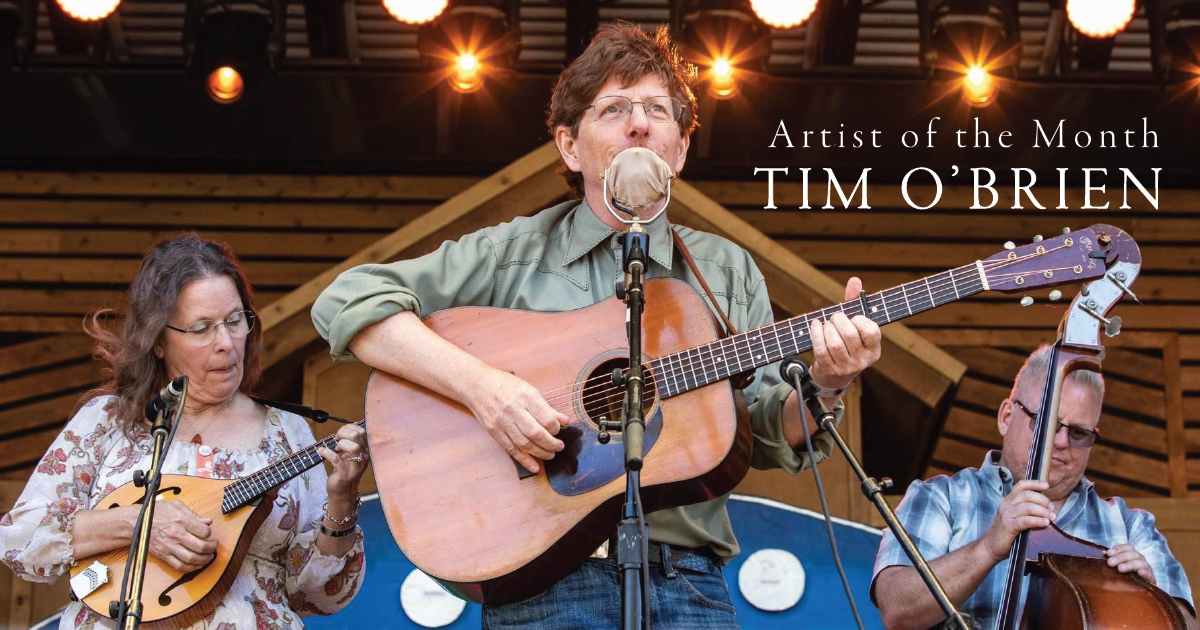
Tim O’Brien Sings of American Life, Then and Now, on ‘He Walked On’ (Part 1 of 2)

Tim O’Brien’s latest album, He Walked On, explores the many realities and histories of what it means and what it has meant to be American. With his well-known ability to tell a story through song and his less recognized, but equally powerful ability to pick and perform covers, O’Brien shares intimate and intriguing stories including the traditions of the Irish Travellers living in the U.S., Volga German immigrants turned sodbusters, or Thomas Jefferson’s children birthed by his slave, Sally Hemings.

Such stories and topics are not uncommon for O’Brien to write about, but in the wake of the murder of George Floyd and the protests that followed, as well as the Black Lives Matter movement, these songs feel even more topical and personal. His music is often presented with a lightheartedness that settles the listener and reminds them not to take themselves too seriously. And while some of that can still be found here, there is a somber tone that reflects the state of the country today. He’s joined on the album by bassist Mike Bub, drummer Pete Abbott, fiddler Shad Cobb, and vocalist (and fiancée) Jan Fabricius.

In the first of a two-part interview, BGS catches up with O’Brien, our Artist of the Month for July, to discuss the songs from He Walked On. (Editor’s note: Read part two here.)

BGS: The songs on this album speak to a lot of current events and the theme is more “political” than some of your previous work — although I don’t like thinking of human rights issues as being political.

TO: Yeah, they are politics nowadays. I think that the artist’s job is to reflect and respond to what’s going on around you and in your life. I don’t know anybody that creates original stuff who’s not doing that. Of course, this is an exceptional year for that. There’s a lot of things going on that were highly, highly provocative such as the Black Lives Matter movement and the pandemic itself and the way the politics entered into that, which was unfortunate. And then related to that is paying attention to history, the developments of technology, and how it affects society. That’s where songs like “Nervous” came from and they’re not “political,” but they’re kind of a report on the state of humanity.

You’ve often written about your experience in the modern world and talked about technology before but usually with a humorous tone. When I heard “Nervous” and “Pushing on Buttons,” it made me think of “Phantom Phone Call” from Chameleon.

You know, actually, I think one of the saddest things I’ve ever written is “Pushing on Buttons.”

Yeah, that’s what I was getting at. There’s usually a lot of whimsy when you’re talking about modern stuff, but “Pushing on Buttons” is pretty somber.

Yeah, I almost left it off because I thought, “Nobody wants to hear how sad this is.” But I was able to get Chris Scruggs in the studio and said, “I ought to cut this song so let’s make it like a Hank Williams number, if I can.”

The tone on the album felt more serious, in general, than your previous work. Do you feel that way?

Yeah, I suppose so. I don’t know how it will ring with everybody, but I felt like this was the thing to do. The Black Lives Matter movement is another step on a long road of reckoning with our history and the racial divide in this country. When stuff gets thrown up in the air like it did with George Floyd it’s time to look at all that’s been going on from day one and try to make sense of it. I could have written these songs like “When You Pray” and “Can You See Me, Sister?” any time. But it was staring me in the face much more so this year. Whimsy is good and all, but I couldn’t ignore these things.

But, in general, I try to stay light on my feet and that’s more of the tone of “When You Pray, Move Your Feet” which is a pretty happy song in a lot of ways. And I hope that means something. “He Walked On” is like, well, the only way to really get through this is just to try and notice the good. Notice when it’s really good and when you don’t just keep going and try to find it again. So it is sort of a mission statement for living in the United States. You have people doing their various jobs — farming, or trading mules, or coal mining, or looking at a computer — and we’re all kind of looking for the same things. It’s nice to have somebody to share your love with and a roof over your head. It’s nice to help other people find that as you’re going along to help yourself.

Songs like “He Walked On” or “Can You See Me, Sister?” — like a lot of songs that you’ve written — are told from a different perspective than your own life experience. How do you approach writing those stories in particular?

I don’t know. Maybe my age is telling me to look at it in different ways. But I don’t know that I was conscious about trying to write differently. Back working with Darrell Scott, I realized that he had so much personal detail in his songs and it made them more universal. Which is counterintuitive, but I’ve noticed that that’s the case. So, “He Walked On” is about changing your perspective and getting a glimpse of the divine. We’re not always paying attention but about one percent of my time, I wake up and go “gee, look at that” and really appreciate it and really be present and in the moment.

In the case of “Can You See Me, Sister?” it was such a fascinating story. I kind of knew about Sally Hemings and Thomas Jefferson because in the early days of Hot Rize, we played in Charlottesville, Virginia. A bluegrass fan brought us around to Monticello and took us on a personal tour. Jefferson is a really interesting character in American history in so many ways, but you and I can relate to him in that he was a fiddler. He was really interested in old-time fiddling. He played tunes like “Money Musk” and they have his handwritten transcriptions of some of these tunes at Monticello. He was a renaissance man — an artist, a writer — and apparently he carried a pocket fiddle around with him. He had a little mini-fiddle you could put in your overcoat pocket.

So I had known some about him but I recently learned more about the children he had with Sally Hemings. It was a great loss for him when his wife [Martha Jefferson] died. He promised her he wouldn’t get remarried and he didn’t. But he turned to Sally Hemings, who had been a slave at Monticello and was brought to France to nanny his daughter. She birthed at least six of Jefferson’s children and I hadn’t realized until recently that a couple of them passed as white and lived their adult lives in white society.

The decision to have a spoken word introduction to “Can You See Me, Sister?” was interesting. I don’t remember ever hearing one in any of your other songs.

Mike Bub brought it up because when I sent the demos around he heard it and liked it, and then I told him what it was about. He said, “Wow, there’s a lot more punch to it when you know what it’s about.” He said most of the radio listeners wouldn’t know that so he recommended having some kind of explanation. It was a conscious choice and it was interesting to write. I don’t usually  write stage dialogue. I guess I hone it as I go and I get more succinct and more pointed and more efficient with it as I learn. But this was before I ever performed it on stage. I wanted to have the right introduction that would say what needed to be said; no more and no less.

What inspired you to write “See You at the Funeral?”

“See You at the Funeral” is kind of an odd one. It’s about Irish Travellers in America, which is a subset of American society that’s kind of unknown. The song is about the once-yearly reunion in Nashville of the greater clan of the Sherlocks families and their relatives. They have all their funerals and weddings for the year in one week so everybody can be there and then they scatter and go do their own thing. … It’s all the happy parts and the sad parts and the big ball of wax. By the end of that week, you would have a sense of where you come from, who you are, and what’s next. Those rituals are part of what helps us get by. That’s Americana. It’s from a lesser-known part of our history and our society. That is the part that I’m interested in. And if it means something to me, maybe I can make it into something to someone else.

What about some of the covers like “Sod Buster”?

Jan’s family is from western Kansas and her great-grandfather was another type of migrant. Their background is what they call Volga German; they were German farmers that got recruited by Catherine the Great of Russia to farm wheat on the Volga River. Then the politics changed and they were going to have to serve in the Russian army. That’s when everybody started coming to the American plains. The railroads had started and they were advertising for people to move. Her great-grandfather was one of the earliest sodbusters in the late 1800s.

It’s a Bill Caswell song that I just love and I ended up talking to him about it and he said, “Oh, yeah, that’s about my grandfather. He was out there at that time and plowed with a team of horses.” I love Bill Caswell and I love this song. And I wondered why nobody had yet recorded it. So we worked it up and it means something because of Jan’s connection. We go out there sometimes and I really love being out in someplace exotic like that. I grew up where there’s hills everywhere and being on an absolute flat plain with the sky and the grass is an amazing thing.

I’ve always admired how much of a personal connection to all of your music that you have. It all feels very intentional.

John Hartford gave good advice to Hot Rize one time. He said, “You don’t want to get famous doing something you don’t like doing.” So I want to try to aim for the intersection of what people might enjoy and what I’m interested in and it ends up attracting people that think like me. I’m a bit of a bleeding heart liberal, if we got down to it. But I try to mostly put something out that people could enjoy and then maybe give them something to think about and maybe they’ll think poorly of it, or maybe they’ll change. You know, that’s a Buddhist thing. You work towards conscious change. Change and betterment and creativity. You just try to find your opening and hopefully I’ve found a few here.

(Editor’s Note: Read the second half of our interview with Tim O’Brien here.)


Photo courtesy of Tim O’Brien
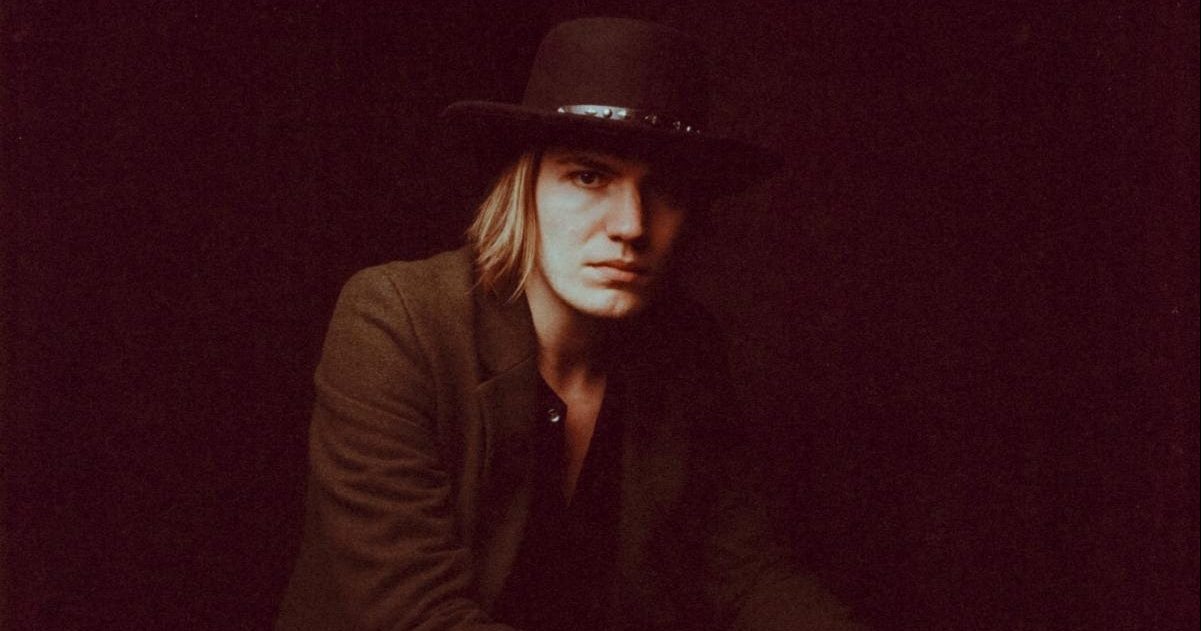
WATCH: Dylan LeBlanc, “Gentle on My Mind”

Artist: Dylan LeBlanc
Hometown: Muscle Shoals, Alabama
Song: “Gentle on My Mind”
Album: Pastimes EP
Release Date: June 18, 2021
Label: ATO Records

In Their Words: “I come from a heavy country music background. My father made his living as a writer for the Nashville Machine growing up. My grandfather in the early ’70s in his early thirties was convinced to make payments on a Gibson guitar on consignment at the local music store along with a songbook with the scales and chords and hit songs of the era inside with directions on how to play them. He loved this song and it was heavily played around the house and passed and sang at gatherings and parties where everyone was drinking and laughing and feeling no pain as they say. I love the story of this song about a drifter roaming from place untethered to anyone or anything therefore making the moment of missing his muse more pure. I can relate as I have naturally always wanted to roam from place to place and be free. I love this song so much and it holds a nostalgic and wonderful place in my heart.” — Dylan LeBlanc


Photo credit: Alysse Gafkjen

I Guess I’ll Go Get Stoned: 16 Roots Songs for 4/20

It’s a national holiday. Patron saint, Willie Nelson. And perhaps his heir would be Kacey Musgraves? Or Billy Strings. Or Margo Price. Or Snoop Dogg. We’ve got options. 

Bluegrass and country may be upheld as the pinnacles of wholesome, “American values” music, but in reality artists have been putting the GRASS into bluegrass since as long as that term has been in popular usage. (And damn, does it look good on a sweatshirt, too.)

We hope you ascend to new heights this 4/20, and while we’re at it we hope you enjoy these 16 high lonesome roots songs perfect for the occasion. 

Roland White – “Why You Been Gone So Long”

Roland White, his late brother Clarence, and the Kentucky Colonels are known for “Why You Been Gone So Long,” and in 2018 Roland re-recorded the number on his IBMA Award-nominated album, A Tribute to the Kentucky Colonels, with a star-studded cast of friends. 

Also known for his monthly shows at the World Famous Station Inn in Nashville (pre-COVID), every time Roland sings the line, “Nothing left to do, lord, so I guess I’ll go get stoned,” the crowd erupts with laughter. To this writer, though, that line feels less like a hilarious non-sequitur from a septuagenarian bluegrasser and more like sage wisdom. I guess I will go get stoned!


Selwyn Birchwood – “I Got Drunk, Laid & Stoned”

As modern bluesman Selwyn Birchwood put it in our premiere of this track, “This song proves that you can party to blues music.” That may seem like an obvious fact to a blues fan, but the uninitiated deserve to know the blues isn’t just about what you’ve lost, it’s about what you gain – through the music and otherwise. As Birchwood concludes, “‘I Got Drunk, Laid and Stoned’ is the epitome of what I feel is missing in a lot of blues music right now. You’ll find all of the rawness, edginess, and boundary pushing that I love…” That is the blues. 


Ashley Monroe – “Weed Instead of Roses”

No matter the occasion, when you’re reaching for flower… buds – reach for weed. Ashley Monroe makes a compelling case that men are certainly not the only ones in country who can live up to the outlaw moniker. Guthrie Trapp chicken pickin’ along is the cherry on top of this cannabis bop.


John Hartford – “Granny Wontcha Smoke Some Marijuana” 

For all those who’ve ever imagined hotboxing a steam-powered aereo plane, here’s a lazy, loping sing-along that kicks into barn-burning — or, grass burning? — country meets honky-tonk meets bluegrass. You’ll be calling it “mary-joo-wanna” now too. 


David Grisman & Tommy Emmanuel – “Cinderella’s Fella”

If you’re here, you must be celebrating 4/20, so you might know about Cinderella – a potent, hazy strain that Dawg attributes to his late friend Jerome Schwartz in Petaluma, California. If Cinderella were a princess instead of a strain of cannabis, Grisman would certainly arrive at her door with glass slipper in hand. Instead, we assume he fits her with a glass bowl instead? This performance by Grisman and Tommy Emmanuel is sweet, tender, and jaw-dropping. Classic “Dawg music.”


Courtney Marie Andrews – “Table For One”

Everyone self medicates, whether they’re aware of it or not, it’s just that touring musicians — by the very nature of their jobs — face their self medications, “crutches,” and vices everywhere they go. Courtney Marie Andrews, a lifelong Americana nomad, captures the depression and melancholy of touring perfectly in this haunting song, which reminds the listener that you don’t really want the life of the person on stage, no matter how glamorous it might seem. If the sometimes foggy dissociation of weed smoking were bottled and infused into a song, it would be this track.


New Lost City Ramblers – “Wildwood Weed”

Have you ever asked yourself the question, “What if Mother Maybelle smoked pot?” With this song — a Jim Stafford hit — The New Lost City Ramblers kinda did! 

New life side quest unlocked: smoke weed from a corncob pipe. 


Kacey Musgraves – “Follow Your Arrow”

It’s April 20th and your arrow is pointing directly at your bong. F*CK, water pipe. Follow that arrow, babies! Do you! Light up a joint. (Or don’t.) 

Nah, do. 


Charlie Worsham feat. Old Crow Medicine Show – “I Hope I’m Stoned (When Jesus Takes Me Home)”

We’ve loved Charlie Worsham and the bluegrass bona fides underpinning his brand of modern country for quite a while, but it’s extra perfect when he sits in and otherwise collaborates with the fellas in Old Crow Medicine Show. Heaven’s golden streets? Overrated. What about its fields of pot?! I mean… it will have amber waves of cannabis, will it not? It’s called “heaven.” 


Margo Price “WAP”

She’s partnered with Willie’s Reserve to release her own branded strain of weed, “All American Made,” and she’s infamous for smokin’ and tokin’. But in this Daily Show with Trevor Noah spot featuring comedian Dulce Sloan, Price is called upon to prove the point that if “WAP” were a country song, the universe would still be as upset at its radical centering of female pleasure and agency. (She’s right, of course.) Thank GOD for Sloan and Noah making this point, because it’s given us this country-rendition of Price singin’ “Need a hard hitter, a deep stroker/ a Henny drinker, need a weed smoker.” Perfection. 


Chris Stapleton – “Might As Well Get Stoned”

Look, you can’t mess with the hits. This list wouldn’t/shouldn’t exist without this song on it. Chris Stapleton, perhaps the biggest crossover artist — crossing over from bluegrass to mainstream, of course — in roots music since Alison Krauss proves his allegiance to whiskey and weed in this jam from his smash major label debut, Traveller

It’s like he took Roland’s advice! Might as well…


Peter Rowan – “Panama Red” 

Peter Rowan’s career has been well-peppered with southwestern and Latin folk-flavored bluegrass, but did you know he wrote “Panama Red”? This live recording is suitably trippy for 4/20, with a slight atonal warble as if the record were slightly warped on the turntable and the pickers holding on for dear life to Peter’s delightfully languid phrasing — that somehow drives as much as it lays down for a weed-induced siesta. Everybody’s acting lazy…


Billy Strings – “Dust In A Baggie”

He means kief, right? Right?? 


Guy Clark – “Worry B Gone” 

How every “worried man” in Americana, country, and the blues still has a job when “worry B gone” exists is perplexing, isn’t it? Granted he was not a medical professional, but Guy Clark’s endorsement surely must stand for something. Don’t give me no guff, give me a puff!


Willie Nelson – “Roll Me Up and Smoke Me When I Die”

Did you know that funerary and embalming processes are actually incredibly harmful to the environment and often non-sustainable? But this style of cremation must be ideal. Do it for the earth. Think green. HaHA!


John Prine – “Illegal Smile” 

Love that plant peeking from behind John Prine like a shoulder angel. Let’s all do Prine proud and don illegal smiles today, how about it? 

With that in mind, let’s not celebrate today without also striving towards decriminalization, decarceration, and the expungement of criminal records for anyone currently imprisoned on marijuana charges. Illegal smiles no more!


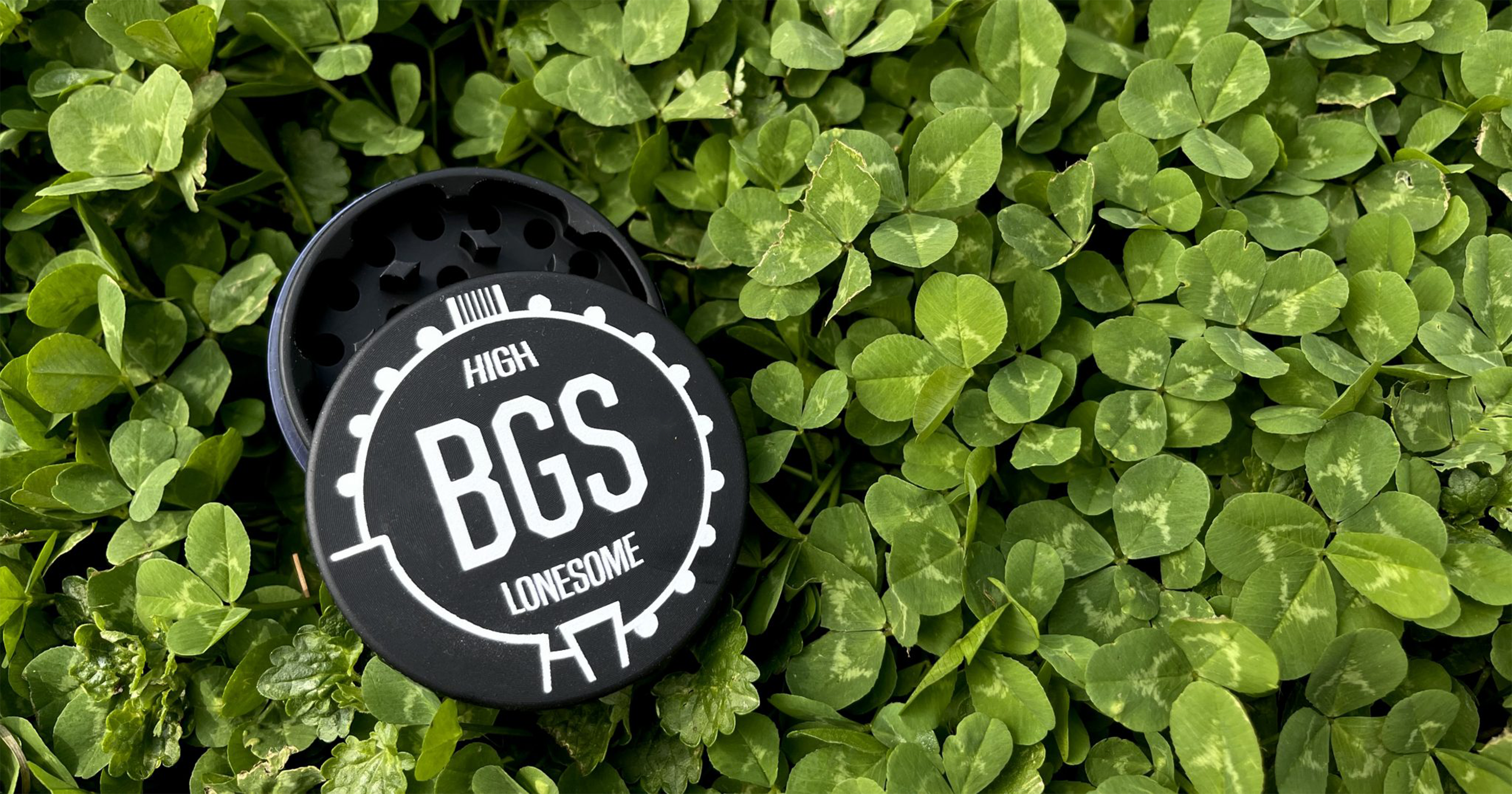
Pictured: Limited edition BGS herb grinder. Want one? Let us know in the comments and we might add them to the BGS Mercantile!

BGS 5+5: The Brother Brothers

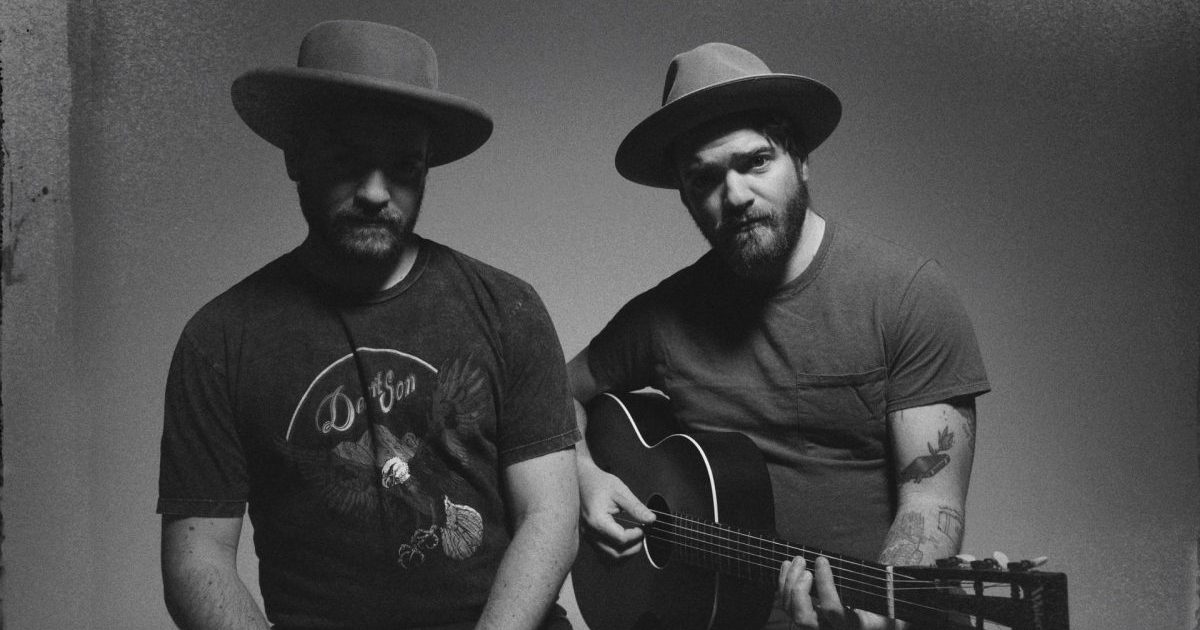
Artist: The Brother Brothers (Adam and David Moss)
Hometown: Peoria, Illinois
Latest Album: Calla Lily (out April 16, 2021, on Compass Records)

Which artist has influenced you the most … and how?

If I have to pick one, which is quite difficult, I’d have to pick John Hartford. I constantly admire, rediscover, and celebrate the effortlessness with which music and words flow out of him. When he writes, he writes about what he knows, and we are convinced to join him in his love of steamboats, old time Nashville, and so many other things that I’d normally walk on by. His musicality is so honest and of himself, and damn, it just sounds so good. He doesn’t subscribe to any “rules” and yet he’s so completely inside a style. — Adam

What other art forms — literature, film, dance, painting, etc. — inform your music?

I have done a fair share of composition for dance, which has opened a whole new universe of creativity to me — the idea that movement, once catalogued, becomes an intentional means of expression has such a real and vibrant quality that no other art form can ever hope to encapsulate. Working with ballet dancers is amazing because the rigid tradition and pure athleticism of the art form creates an amazing palette that can really get inside different kinds of music, and the creativity flowing from choreographers of modern dance in NYC and around the world is just something so otherworldly but yet incredibly accessible. For some reference, I would recommend Batsheva Dance Company and the surrounding tradition of Gaga, and Nederlands Dance Theater. And of course the ever famous and incredible stewards of George Balanchine, the New York City Ballet. — David

Which elements of nature do you spend the most time with and how do those impact your work?

This last year we’ve both been displaced by the pandemic and as a result have continuously traveled. Now, David is living with his fiancée and their dog in a scamp trailer, spending every day entirely surrounded by nature. I’m currently living in California and surfing every day. When you make your life in nature, you can’t help but let the waves and your wetsuit influence your rhythm and rhyme. The sunset is an impossible thing to describe, but we can keep trying. — Adam

What’s the toughest time you ever had writing a song?

There isn’t really such a thing as “a tough time writing a song,” in my experience. Songs, for me, are things found and worked out. If the process feels difficult, it usually requires waiting and trying different avenues. If you asked, “What is the longest it’s taken to write a song?” The answer would be a very very long time. — David

Since food and music go so well together, what is your dream pairing of a meal and a musician?

Honestly, I can’t imagine a better pairing than Russ & Daughters’ smoked fish spread and dancing to one of the hottest klezmer bands in NYC. Second only to that would be another trip to Lafayette, Louisiana, to spend another weekend at Blackpot Festival, hanging with our Cajun friends down there, playing music and eating the contest-winning gumbo, jambalaya, and gravies of the year. — Adam


Photo credit: Shervin Lainez

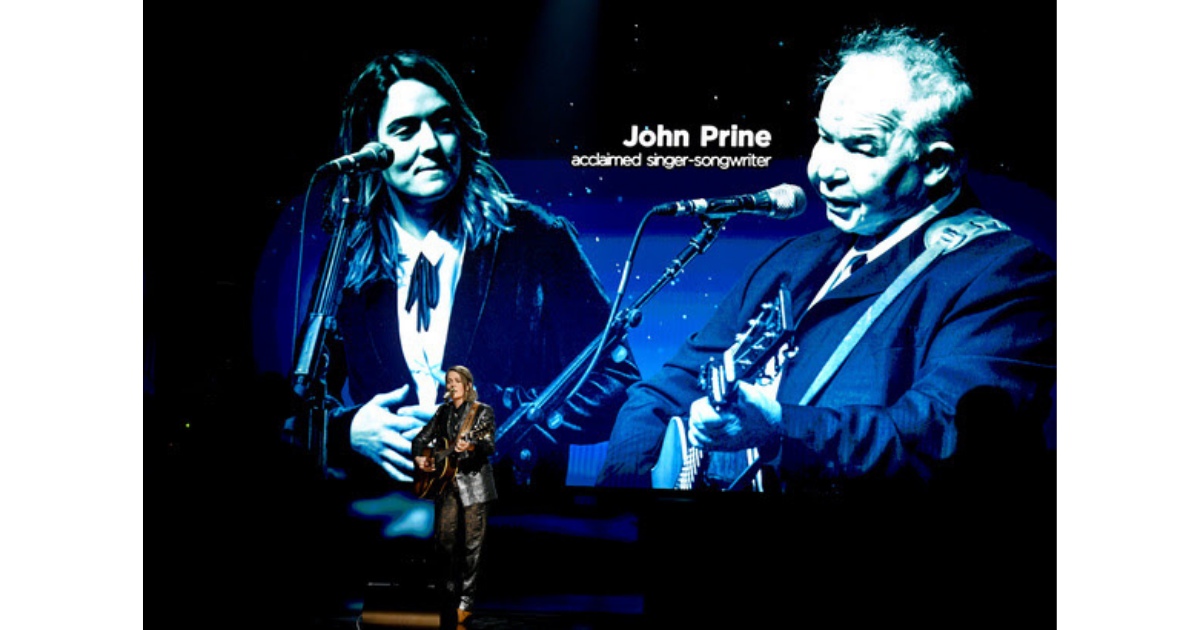
John Prine, Brittany Howard, Sarah Jarosz Among Winners at 63rd Annual Grammy Awards

The 63rd Annual Grammy Awards were held yesterday afternoon and evening, Sunday March 14, 2021. Here are the nominees and winners in the American Roots Music fields:

Best American Roots Performance

Black Pumas, “Colors”

Bonny Light Horseman, “Deep in Love”

Brittany Howard, “Short and Sweet”

Norah Jones & Mavis Staples, “I’ll Be Gone”

John Prine, “I Remember Everything”


Best American Roots Song

“Cabin,” Laura Rogers & Lydia Rogers, songwriters (The Secret Sisters)

“Ceiling to the Floor,” Sierra Hull & Kai Welch, songwriters (Sierra Hull)

“Hometown,” Sarah Jarosz, songwriter (Sarah Jarosz)

“I Remember Everything,” Pat McLaughlin & John Prine, songwriters (John Prine)

“Man Without a Soul,” Tom Overby & Lucinda Williams, songwriters (Lucinda Williams)


Best Americana Album

Courtney Marie Andrews, Old Flowers

Hiss Golden Messenger, Terms of Surrender

Sarah Jarosz, World on the Ground

Marcus King, El Dorado

Lucinda Williams, Good Souls Better Angels


Best Bluegrass Album

Danny Barnes, Man on Fire

Thomm Jutz, To Live in Two Worlds, Vol. 1

Steep Canyon Rangers, North Carolina Songbook

Billy Strings, Home

Various Artists, The John Hartford Fiddle Tune Project, Vol. 1


Best Traditional Blues Album

Frank Bey, All My Dues are Paid

Don Bryant, You Make Me Feel

Robert Cray Band, That’s What I Heard

Jimmy “Duck” Holmes, Cypress Grove

Bobby Rush, Rawer Than Raw


Best Contemporary Blues Album

Fantastic Negrito, Have You Lost Your Mind Yet?

Ruthie Foster Big Band, Live at the Paramount

G. Love, The Juice

Bettye LaVette, Blackbirds

North Mississippi Allstars, Up and Rolling


Best Folk Album

Bonny Light Horseman, Bonny Light Horseman

Leonard Cohen, Thanks for the Dance

Laura Marling, Song for Our Daughter

The Secret Sisters, Saturn Return

Gillian Welch & David Rawlings, All the Good Times


Best Regional Roots Music Album

Black Lodge Singers, My Relatives “Nikso Kowaiks”

Cameron Dupuy and the Cajun Troubadours, Cameron Dupuy and the Cajun Troubadours

Nā Wai ʽEhā, Lovely Sunrise

New Orleans Nightcrawlers, Atmosphere

Sweet Cecilia, A Tribute to Al Berard


Also, note these Americana winners in other categories:

Best Rock Song

“Kyoto,” Phoebe Bridgers, Morgan Nagler & Marshall Vore, songwriters (Phoebe Bridgers)

“Lost in Yesterday,” Kevin Parker, songwriter (Tame Impala)

“Not,” Adrianne Lenker, songwriter (Big Thief)

“Shameika,” Fiona Apple, songwriter (Fiona Apple)

“Stay High,” Brittany Howard, songwriter (Brittany Howard)


Best Country Solo Performance

“Black Like Me,” Mickey Guyton

“Bluebird,” Miranda Lambert

“Stick That In Your Country Song,” Eric Church

“When My Amy Prays,” Vince Gill

“Who You Thought I Was,” Brandy Clark


Best Country Song

“Bluebird,” Luke Dick, Natalie Hemby & Miranda Lambert, songwriters (Miranda Lambert)

“The Bones,” Maren Morris, Jimmy Robbins & Laura Veltz, songwriters (Maren Morris)

“Crowded Table,” Brandi Carlile, Natalie Hemby & Lori McKenna, songwriters (The Highwomen)

“More Hearts Than Mine,” Ingrid Andress, Sam Ellis & Derrick Southerland, songwriters (Ingrid Andress)

“Some People Do,” Jesse Frasure, Shane McAnally, Matthew Ramsey & Thomas Rhett, songwriters (Old Dominion)


Best Roots Gospel Album

Fisk Jubilee Singers, Celebrating Fisk! (The 150th Anniversary Album)

Mark Bishop, Beautiful Day

The Crabb Family, 20/20

The Erwins, What Christmas Really Means

Ernie Haase & Signature Sound, Something Beautiful


Photo by Kevin Winter/Getty Images for The Recording Academy

Banjo Innovator Danny Barnes Lands a Grammy Nomination With ‘Man on Fire’

The spring is often the peak time for artists to drop a new release — the festival season is just warming up, and a new album can bring about immense plans for an exciting year on the road. But for many road warriors like Danny Barnes, who released a new album in March 2020, release tours were turned upside down by the pandemic. Fortunately, in his true spirit, Barnes has managed to stay as creative as ever.

Man on Fire is Barnes’ 10th major solo release, not to mention his ‘barnyard electronic’ Bandcamp work, and an extensive collaborative discography including the likes of Bad Livers and David Grisman’s Dawg Trio. Though he often utilizes taste over flash, Barnes has been long recognized among the top banjo players — for example, he was the 2015 recipient of the Steve Martin Prize for Excellence in Banjo and Bluegrass. The new record, though released during an unprecedented time, garnered a Grammy nomination for Best Bluegrass Album.

BGS caught up with Barnes to talk about recording Man on Fire, how he’s filled his time during the pandemic at home in Washington, and his major creative methods, from finding the right collaborators to populating his songs with characters who will surprise you.

BGS: With the release of Man on Fire last March, how have you managed to best stay creative during the pandemic?

Barnes: One great thing is not spending so much time in transit. I was flying three weekends a month for decades, really. The amount of time I spent in a hotel, rental car, or airplane was astronomical. So when you pull all that out of the equation, I can just make stuff like crazy. I’ve been writing a bunch of songs, studying music like crazy, studying art, I just make things like crazy. I have a lot of ideas, you know.

I’ve heard you talk about using the banjo as a pencil. Can you explain that idea, and how it informs your creative process?

If you’re trying to play an instrument, say if you take up the saxophone or something like that, you spend a lot of years just chasing the instrument. I’m in my 50th year of playing [the banjo], and after a few years of working on it, it sort of gets where you can go the other way with it, where you’re expressing things through it. It’s like a different operating system; typically it takes a lot of years to get that familiarity with something. Over time, you develop this atomic understanding of things, a really good objective look, you know. I use the banjo to get ideas out. 

There’s so much music in the banjo itself that’s untapped… In the traditional styles it has a certain role, like the shortstop on the baseball team. There’s a lot of guys like John Hartford that pointed the way before me. My experience was, I spent a lot of years just trying to wrench something out of it. With a pencil too, it’s a really simple thing, but you can do incredibly complex things with it. Similar to a 5-string banjo, it’s real simple in a certain way. Spending time figuring out how to play the banjo gives you a way of putting energy out the other way. 

You’ve done a lot of collaborating with folks throughout the years. Can you tell me about some of the friendships that went into Man on Fire?

A lot of those guys I’ve known for a long time. I guess I met Bill [Frisell] right when I first got up [to the Pacific Northwest], I met Dave [Matthews] shortly after that, and I’ve known John Paul Jones since around there too as a matter of fact, early 2000s. I’d never met Geoff [Stanfield], who produced the record. I was talking about making a record and Dave suggested Geoff, who’s a friend of his. He’s a Seattle guy, so I could work here, I wouldn’t have to fly to L.A. or something like that. 

I’m really blessed to have really close friends that care about me, and are super-elevated in the art where they really have another way of looking at things. It’s been a real honor to be able to work with those guys, I’ll tell you that. It’s tough when you’re in the music world, because everybody is involved in it. There are certain subjects that people just in general don’t have opinions about, say for instance like microscopes or something. Music though, people are so used to manning the ship as it were. I’m talking about the audience, people that would potentially listen. So you’ve really gotta think about how you want to stage things and get things out.

The trick about music is that it’s tough to get really really good opinions about stuff. Sometimes guys will make criticisms about stuff just because they want to work on it, you know what I mean? So you still don’t know anything. There’s a lot of ego. What I’ve found is that you have people that know you really well — I’ve been really blessed to work with a lot of what I call true masters of music, guys who are super elevated in my field. Those guys, when they have something to say, you can really count on it. Especially if they love you and care about you. If you know them and their kids, you know… it’s relationships. It’s not like you met them at Folk Alliance or somewhere and you’re just gonna make a record with this guy. 

You have one of the most unique songwriting styles, between the vastness of your characters from beautiful love songs (“Fun” off of Rocket) and angry men mad at the world (“Bone” from Pizza Box). What is your inspiration behind creating the characters and stories surrounding them?

It’s really like being a poet or something like that. I feel like there’s something that happens to you, I’m not trying to brag on myself, but when you put out a lot of records over the years, there’s a place where you kind of meet yourself. And you go, “Oh, there I am, this is what I do.” If I wanna deviate from this, I now have something to deviate from. I figured out from my poetry that it’s sort of this southern outsider art, like art brut, the French saying for raw art. Kinda like Reverend Howard Finster, Flannery O’Connor, Walker Percy, sort of southern gothic, bleak but funny at the same time. And that’s who populates a lot of my little movies. I find it fascinating, when you can make all these characters, and they can do all of these things and have all these experiences.

The video for “Hey Man” is one of my favorite pieces from the new album. What was your inspiration behind that song, as well as creating the video?

I got this idea from a friend of mine, who went out to his garage, whipped the door open, and there was a dude living in his garage. I just use stuff like that for songs. I thought about telling the story from the homeless guy’s view, and he’s trying to explain why he’s in there as he’s getting all his stuff and getting out of there. Like on that show Cops, they’re stuffing a guy in a car and he’s trying to explain how he got into this situation, and no one is really listening. 

David (Dave Matthews) really liked that song, and he’s got this guy Fenton, his lighting guy, who’s really smart about imagery, along with a couple dudes from the DMB crew who are really into editing. We storyboarded the whole thing, shot it in a couple of days over in Seattle. We put a lot of work and time into it. I’m really proud of it. I’ve never been able to do a budgeted video before. It was a real honor to get that out. 

Any major plans you’re looking forward to when things resume?

I’m always doing stuff with David Grisman. He and I have a record that we put out a year or so ago, and a whole new record written, just waiting for a good time to record it. The Bad Livers, we’re kinda working on a record. I’m working on this music for tuba and banjo, kind want to make a record build around that. I’ve been writing a bunch of music for the 12-string guitar. I kinda want to make another ambient record. I’ve always got a lot of ideas.


Photo by Sarah Cass

The Station Inn Earns an Exhibit at the Country Music Hall of Fame and Museum

The humble appearance of the Station Inn could never give away the enormity of its legacy and importance to bluegrass music. Nestled between skyscrapers in an ever-growing city, a single story cinder-block building with its windows painted shut sticks out as a relic from the past — when the Urban Outfitters across the street used to be an empty field of waist-high grass.

For nearly 50 years “the World Famous” Station Inn has played a pivotal role in bluegrass as both a venue and community hub, drawing people to Nashville and making connections that had a major impact on the music. Through the rest of 2021, The Country Music Hall of Fame and Museum will honor and present the history and legacy of the venue in their exhibit The Station Inn: Bluegrass Beacon.

“The main reason that we wanted to do this exhibit is because the Station is such a vital and important part of not just Nashville music history, but of American music history,” says Peter Cooper, one of the curators of the new exhibit. The Station Inn has a larger-than-life reputation in the bluegrass community, but this new exhibit endeavors to highlight both the importance of the venue’s history and its welcoming atmosphere.

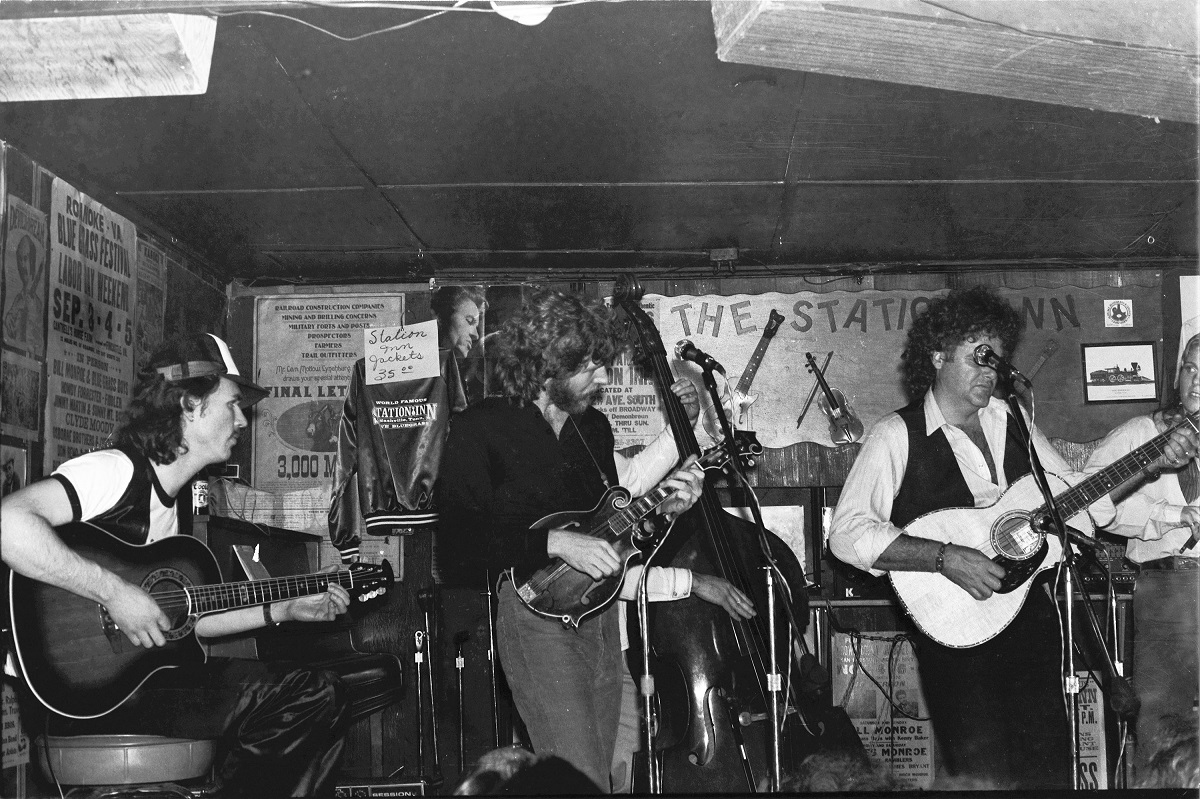
During the mid-1980s, adventurous singer-songwriter and musician Peter Rowan assembled all-star groups he dubbed “Crucial Country” for a series of shows that created a buzz amongst progressive roots music fans and players. In this photo, Rowan (right) is joined by Mark O’Connor on guitar and Sam Bush on mandolin. Photo: Charmaine Latham

It was founded in 1974 by a group of bluegrass musicians and singers — Bob and Ingrid Fowler, Marty and Charmaine Lanham, Jim Bornstein, and Red and Bird Lee Smith — who wanted to provide their fellow musicians and fans with a venue where they could play and hear bluegrass music. At that time the Station was more of a clubhouse where the owners functioned as the house band and guests would come up to jam. They moved to the current location in 1978; three years later, the club was bought by J.T. Gray, who at the time was driving Jimmy Martin’s tour bus.

Gray, who would go on to be inducted into the Bluegrass Hall of Fame in 2020 and was given a lifetime achievement award by the Southeast Regional Folk Alliance, began booking national touring acts to perform. It would be easy and accurate to show why the Inn is significant by pointing to the artists who have played there, including Bill Monroe, the Stanley Brothers, Vince Gill, Alison Krauss, and essentially any other important name in bluegrass. But the clubhouse atmosphere always remained. Countless (as in absolutely too many to count) threads of bluegrass history, both well-known and overlooked, can all be traced back to chance meetings at the Station Inn. J.T. Gray fostered a welcoming atmosphere that led to many locals and visitors from out of town to meet there, including mandolinist Mike Compton.

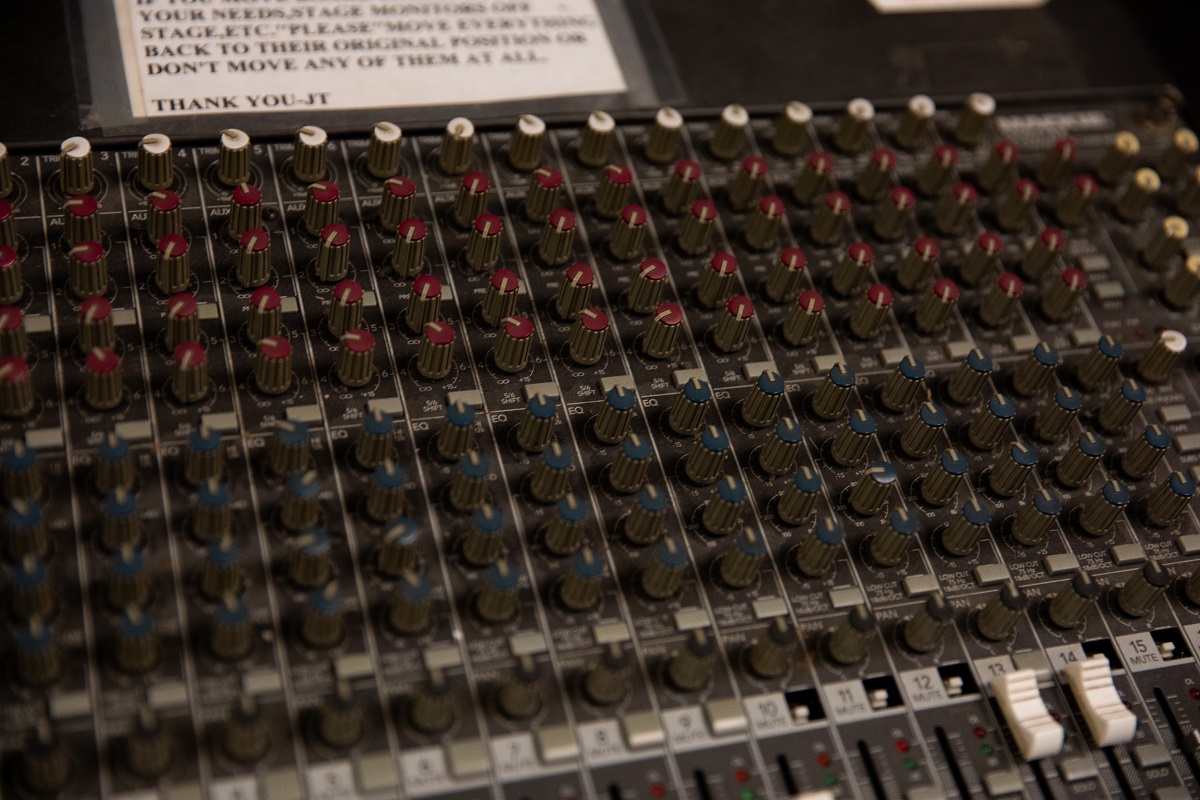
The venue’s sound-mixing console described by Gray as “the first piece of modern sound equipment we ever bought”

“I rode up [to Nashville] with Raymond Huffmaster, a bluegrass guy from Meridian, Mississippi, where I’m from, because I’d been hanging around him trying to learn how to play,” Compton says. They visited the bluegrass spots in town including the Station Inn, and Compton recalls after heading home, “Pat Enright got in touch with me and said they were starting a band and asked if I wanted to join. So I moved [to Nashville] in 1977 and moved in with J.T. Gray.”

Mike and Pat would continue playing together and later go on to form the legendary Nashville Bluegrass Band, which became a staple act at the Station Inn. A predecessor to that award-winning band was performing at the Station the first time future bluegrass star, Kathy Chiavola, came to town in 1979.

“When that door opened, the room was packed and I saw a vision of heaven,” she says, recalling that first night. “I heard these two voices, Alan [O’Bryant] and Pat [Enright], in their prime. And I lost it. I said, ‘OK. I’m moving here.’ There was a notice on the Station Inn bulletin board that a band of women playing bluegrass were looking for a roommate.” That band turned out to be the Bushwhackers, which featured bluegrass pioneers Susie Monick and Ginger Boatwright. Chiavola eventually joined the Bushwhackers playing bass and singing lead and harmony until Doug Dillard moved to Nashville. As the banjo player from the Dillards (who were famous for playing the Darlings on The Andy Griffith Show), Dillard put a band together and asked Ginger Boatwright to join, and about a year later asked Chiavola, too. Both the Bushwhackers and the Doug Dillard Band would frequently perform at the Station.

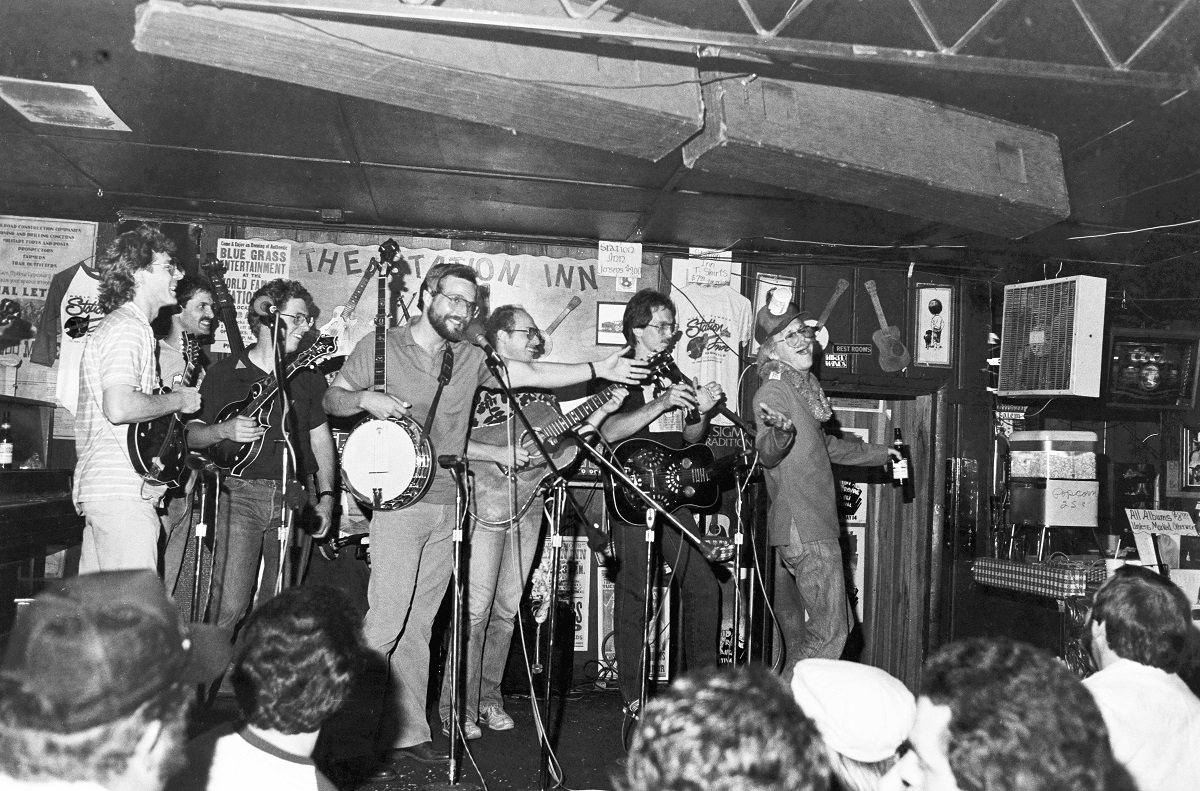
Vocalist, bones player, and madcap entertainer Ed Dye (far right) was a colorful presence at the Station Inn during the 1980s and early 90s. He assembled the Nashville Jug Band with a cast of stellar Nashville musicians from rock, jazz, and bluegrass backgrounds, and hosted wildly unpredictable shows. In this photo, he takes the stage with (from left): Sam Bush, Mark Schatz, Tim O’Brien, Alan O’Bryant, David Grier, and Jerry Douglas. Photo: Charmaine Lanham

Chiavola eventually moved into a duplex next to bluegrass bassist Mark Schatz. Together, they would often play the Station Inn with Charlie Cushman, Stuart Duncan, and Bobby Clark as part of a band called The Satellites. Other times, Chiavola would perform at the Inn with an ensemble called the Lucky Dogs which featured Jerry Douglas, Béla Fleck, Edgar Meyer (who had just moved to town), and sometimes Sam Bush or Mark O’Connor.

“It was beyond belief,” she says. “Sometimes I remember being on stage at the Station and listening to those guys play. I thought it was the most heavenly sound — I can’t even describe it to you. It was perfect music with so much feeling. You could hear a pin drop. It was so beautiful.”

Schatz, on the other hand, often performed at the Station with Mike Compton as part of John Hartford’s band. Hartford had moved back to Nashville to form a string band after a successful songwriting career in L.A. That California connection later landed him the contract to help with the music for the Coen Brothers’ massively successful O Brother, Where Art Thou? Compton’s 1927 Gibson A-Jr. model mandolin, which he played with the Nashville Bluegrass Band, in John Hartford’s string band, and on the O Brother soundtrack, is included in the new exhibit.

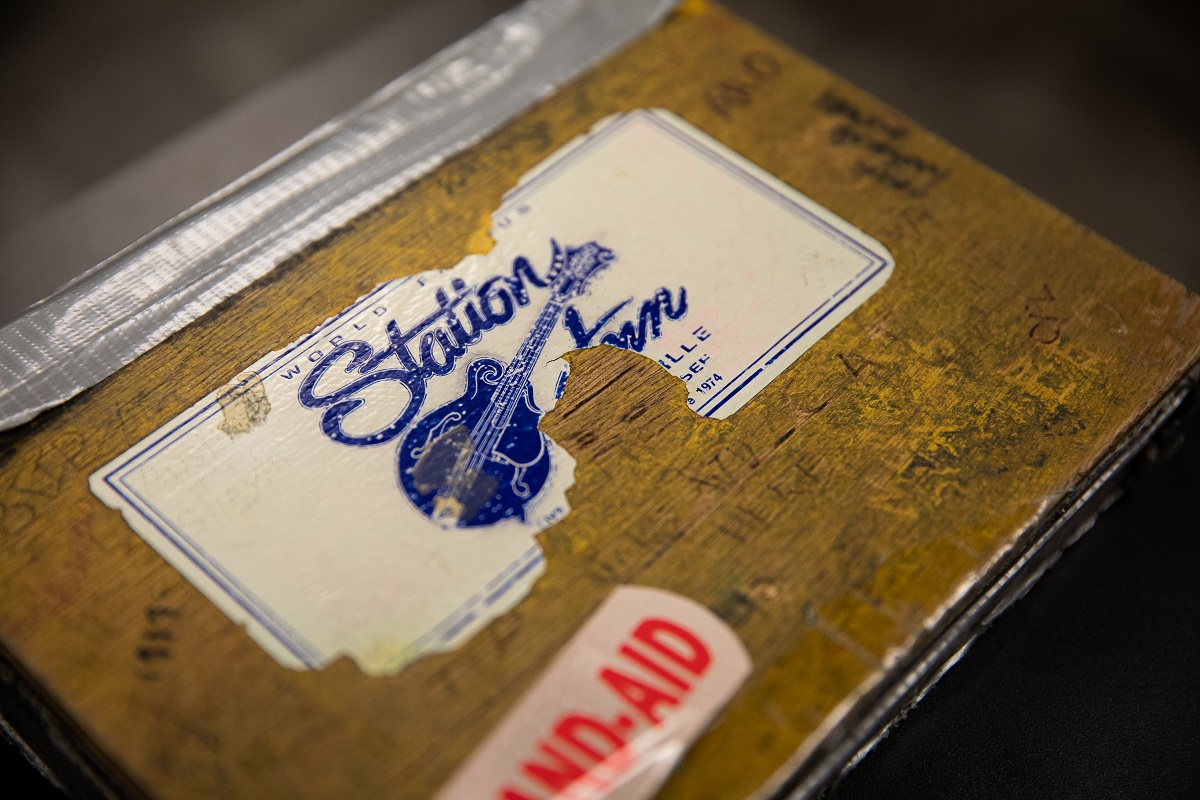
A cigar box used for many years to collect admission fees at the club entrance

Also on display is a small wooden box that was used to collect admission for years, along with some history about former Station Inn employee and local folk icon, Ann Soyars. “Ann embodied what the Station is about,” Cooper says. Soyars worked the door and was “small but fierce.” She was known to throw out rowdy college football players for being too loud, but also welcome regulars and newcomers alike. “Ann’s inclusion in the exhibit is indicative of what we’re trying to do, which is to help people understand not just the facts of the matter, but the spirit of the matter. The Station Inn is an example of musical community building in the most positive way. It’s like Cheers for ‘grassers.”

In addition, the exhibit features other artifacts from both the building and the musicians who have performed there including a fiddle played extensively by Tammy Rogers with the SteelDrivers, Mike Bub’s Kay M-1 double bass, which he played with many groups at The Station Inn — including Weary Hearts (Chris Jones, Butch Baldassari, Ron Block), the Del McCoury Band, and the Sidemen (Terry Eldridge, Jimmy Campbell, Ronnie McCoury, Gene Wooten, Ed Dye, Kristin Scott Benson, and Larry Perkins). Seats from a tour bus used by Lester Flatt, which serve as seating in the venue, are on view as well.

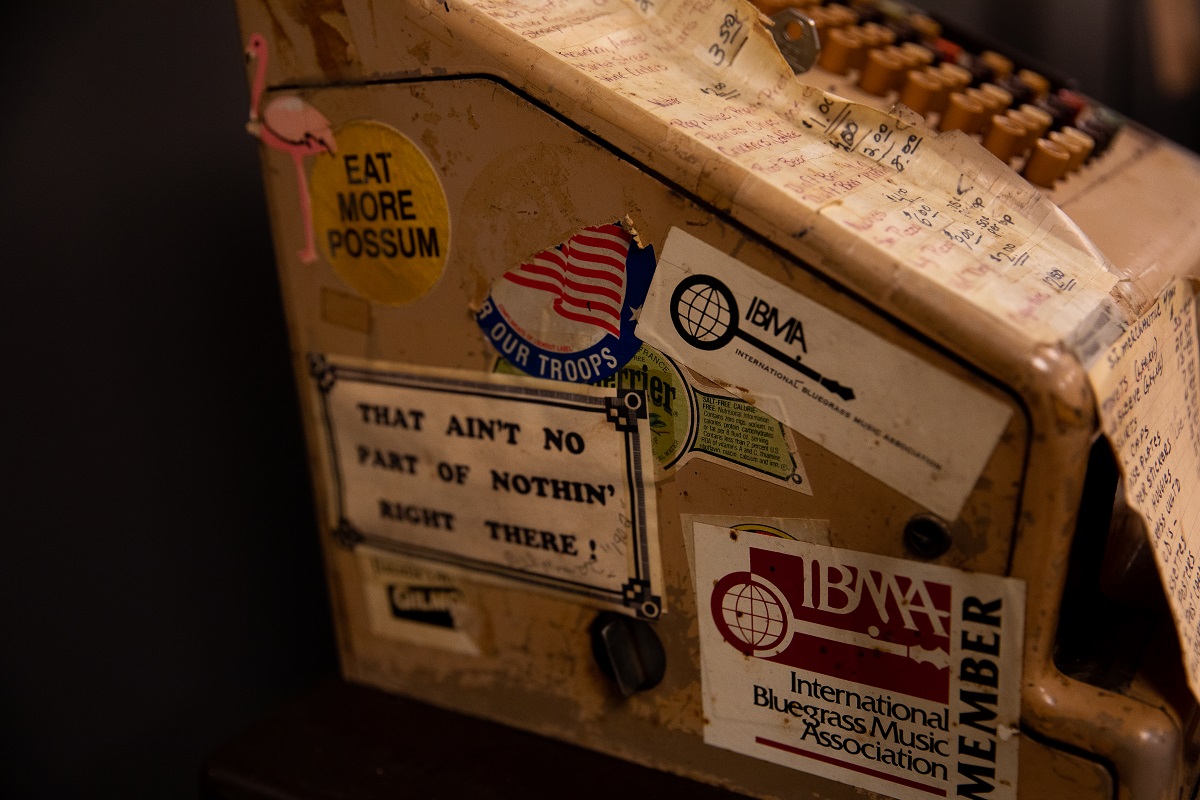
The Station Inn’s cash register

Generations of performers’ children have grown up in the Station’s green room and backstage and have gone on to perform on stage as adults. Newspaper has been put down on the bar to admire someone’s new puppies. Great care has been taken to lovingly craft the perfectly reheated pizza. Beers are shared by locals and honored guests after the doors are closed to the public. (And I have hidden fancy decaf coffee and a pour-over in the back that I take out when I visit.) To this day the Station Inn is a community gathering place where friendships, bands, and lifelong loves of bluegrass are formed. It embodies not only the authenticity of the music but of the community. And often, everyone knows your name.


Editor’s Notes: The Station Inn has endeavored to safely present live music throughout the pandemic. They have reopened to live audiences at a limited capacity and live stream performances through their web portal stationinntv.com.

The Country Music Hall of Fame and Museum will present The Station Inn: Bluegrass Beacon until January 2, 2022. The museum is currently open to the public at a limited capacity.

Photo of Station Inn and artifacts: Emma Delevante for the Country Music Hall of Fame and Museum
Other photos: Charmaine Lanham

A New Generation of Bluegrass Stars Reflect on ‘O Brother, Where Art Thou?’

The soundtrack to O Brother Where Art Thou? was a phenomenon in the early 2000s, turning bluegrass musicians into superstars and creating an instant mainstream market for old-time music — from folk to gospel to children’s songs to prison chants to blues and everything in between. To celebrate the twentieth anniversary of its astonishing success and to wrap up our Artist of the Month series, we spoke to several musicians about the impact O Brother and its subsequent tours had on their lives and livelihoods.

Sierra Hull: “I grew up in a little town with maybe 900 people, and there used to be a poster section at the Walmart the next town over. You could flip through the posters and there would be pop stars like Britney Spears and Backstreet Boys. I was always convinced that one day I would find an Alison Krauss poster in there. She was as popular in my little kid brain as Britney Spears. So it was cool when O Brother came out and elevated some of those people who were already giants to me, like Alison and Dan Tyminski and Ralph Stanley.

“I was already playing, but I was too young to be touring yet. By the time Cold Mountain came out [in 2003], I was part of that tour. Alison was part of both soundtracks, and she invited my brother and me to go on that tour. So we got to help celebrate that second wave. I was 12, and it was really the first time for me to be out on tour, travel to so many different places, and play Red Rocks and the Beacon Theater in New York. Standing at the side of the stage and listening to Alison sing to hundreds of people every night every night was one of my favorite memories.

“It was amazing to watch people go crazy over Ralph Stanley every night. He had this dazzled suit jacket that he wore every night. Sometimes he would sit his banjo down while his band played and take that jacket off and throw it to me at the side of the stage. I would get to wear that dazzled jacket at the end of the show when everybody came out on stage. It’s one of the most special musical experiences I’ve ever had.”


Sara Watkins: “O Brother was something we somehow became affiliated with. Nickel Creek had just released our band’s first record on Sugar Hill, after years of doing just little homemade projects. Alison Krauss produced it, which had been out maybe a year and a half when O Brother came out. She was a big part of that soundtrack, of course, so our band was gaining a little bit of notoriety. I remember reading a huge New York Times spread, and we were listed among the people on that scene. We were part of that conversation, despite not having been part of the soundtrack in any way. We were just at the right place at the right time, and the awareness of the bluegrass scene just exploded. We were able to reach a different level very quickly. It was a huge advantage to our career. We already had some momentum, but the soundtrack really put the wind in our sails.

“T Bone Burnett [who produced the album], one of his brilliant skills is finding the right people for the right song. He brought in some incredible musicians in a way that really showed the musicianship in our community and made everyone really proud of our scene. We saw our heroes up there, and it was gratifying to see them celebrated by a huge audience. I remember feeling a new respect for Ralph Stanley with that vocal [on ‘Oh Death’]. That actually turned me on to shape-note singing. Someone told me his delivery was reminiscent of those old communities that did shape-note singing and those old preachers who used to sing that way. I’d never heard anything like it. And to this day, whenever I see Dan Tyminski, I make a point to stick around until he plays ‘Man of Constant Sorrow.’ No way I’m leaving before then.”


Dave Wilson (Chatham County Line): “I remember going with our old bass player to see O Brother in the theater. We snuck a bottle of whiskey in and sat in the back row and just laughed and drank. I remember thinking, ‘Bluegrass has arrived!’ We were already a band and playing small gigs around town, but we weren’t at a place where we had dedicated our lives to it. So it was kismet for us. That record came out, and the scene just exploded. Suddenly we had this huge advertisement out there in the world for the style of music we were playing. We definitely noticed a change. There were more strangers coming to see us play gigs, and they were really excited about it. One side effect was people would yell out for us to play ‘Man of Constant Sorrow.’ They did it enough to make me wonder if they had heard the soundtrack or just seen the movie. But we never played it. We didn’t know how! It would have probably shut them up if we had!

“I really got into the record. There are some badass arrangements on there. And it’s not corny. It’s not super traditional. I love that they reached out to the right people. It could have been bad. They could have gotten Toby Keith or someone like that. Oh god, I don’t even want to think about that! One of my favorite parts is that blues song by Chris Thomas King [a cover of Skip James’ ‘Hard Time Killing Floor’]. It makes for such a special moment. Later, they booked that concert film [Down from the Mountain, recorded at the Ryman Auditorium] at our old classic movie theater here in town, and I remember the boys going to see it and we were all just floored. That was almost bigger than the movie as far as having an impact in the folk music scene.”


Sam Amidon: “People in the folk world can be very protective of the music, which I think is valid. But my inclination is that if I find something I’m excited about, I want to share it. I want people to know about it. To have grown up in a world knowing a lot of the corners O Brother explores, it was beautiful to think about how many people all of a sudden were going to discover these field recordings and these great musicians. And I was thankful because until then, portrayals of traditional music in the mass media had just been so bad and so clichéd or so simplistic. Nothing had depicted this stuff on this scale before. Before then, if you told somebody you played banjo, they would think Deliverance. That was their frame of reference.

“For O Brother to do it without messing it up was a miracle. To see these different corners of American music — beyond just blues and bluegrass as the two major industry terms — was a very positive thing, especially because ‘folk music’ can be such a heterogeneous category. Nobody would even really know what you were talking about if it wasn’t bluegrass or blues. O Brother pointed to all of these different areas. It’s singing games and banjo songs and all these different things. O Brother is weirdly inclusive. It cast a wide net. Nowadays it’s easy to go to the soundtrack and hear more problematic elements of the whole Americana genre thing, but I think it’s good to remember that when it first came along, it was much more nuanced compared to what had come before.”


Woody Platt (Steep Canyon Rangers): “It’s interesting that the twentieth anniversary of O Brother is fairly parallel to the twentieth anniversary of our band. We formed in Chapel Hill, North Carolina, when we were seniors in college, right when the movie came out. We all had been exposed to bluegrass and old-time just by being Carolinians. We all had that music around when we were growing up, but none of us in the band really dove into it until we were in college. We’d only been following that music a few years when the movie came out. I’m not sure we were aware at the time of the impact that the movie and the tour had on bluegrass, old-time, string band, mountain music, but we could feel some excitement when we were playing bars on Franklin Street, which is the main drag in Chapel Hill. But we didn’t really have anything to compare it to. There was no before or after. It was just what we were doing, and that’s all we knew.

“I really enjoyed the movie, but I was a big fan of the album. Hearing Ralph Stanley’s voice in a film, or Dan Tyminski’s, or just seeing people I admired in that movie was pretty incredible. Looking back on it, it was good timing for us to be getting off the ground, and we were having so much fun and finding so much joy in it. The music we were playing had been a small niche, but all of a sudden it had this national interest. I have no doubt in my mind that the awareness of the music was fueled by the movie. It’s a fascinating phenomenon to think about, because it wasn’t marketed in any significant way. It just happened. It was just this thing where people were suddenly into this music.”


Molly Tuttle: “The movie came out when I was seven years old, and I remember my dad showing it to me when I was in grade school. I loved it, and the music really stuck with me because I already had an affinity for bluegrass and old-time music. Seeing it performed in a movie was new and exciting. My dad teaches bluegrass for a living, and when the movie came out, he had an influx of new students.

“It’s had a lasting impact on the popularity of bluegrass music. But I was so young that I didn’t know many of the musicians on the soundtrack by name, so it introduced me to a lot of artists who later became my favorites. And the Down from the Mountain documentary further familiarized me with people like Emmylou Harris and Alison Krauss. Many of those artists, like Gillian Welch and John Hartford, have been big influences on me, and that was my introduction to their music. I’ve performed ‘I’ll Fly Away’ and ‘Angel Band’ a number of times, and I got to do ‘Man of Constant Sorrow’ with Dan Tyminski at the IBMA awards one year.”


Dom Flemons: “I actually saw Ralph Stanley on the O Brother tour in Flagstaff, Arizona, in the year 2000. It was at this random high school. I saw the poster on a telephone pole when I was going to college there. I’d started playing the banjo by that point — six-string and four-string banjo, guitar, and harmonica. I remember the place was really packed out, and he gave this amazing performance. I just loved watching the man at work. When he sang ‘Oh Death,’ he pulled this piece of paper out of his pocket, put on his glasses, and made a joke about how old he was. And he just sang it off this piece of paper and blew our minds.

O Brother was very interesting, and I think it’s still a milestone album for several generations. A lot of the old folks who played those old styles and sang those old songs were starting to pass away, so the soundtrack ended up being a perfect vehicle for getting younger people into the music of the ‘20s and ‘30s. It reminded people of the really good old recordings that were available. That’s where I went. I found the old RCA Victor and Columbia recordings, and that was it for me.

“It’s a perfectly structured record, opening with the prisoners on the chain gang and then it goes to that beautiful ‘Big Rock Candy Mountain.’ And then you get into “You Are My Sunshine” with Norman Blake, and then Chris Thomas King presenting ‘Hard Time Killing Floor.’ That in itself was a revival of Skip James. People talk about Ghost World and Devil Got My Woman, but I think O Brother got it going. People just started casually bringing those songs back in at shows and festivals, and it seemed like a lot more people knew them. Of course they would sing them like the recordings on O Brother. Those are just things I observed before I was a professional musician, and it was amazing to see.”


‘O Brother, Where Art Thou?’ Created an Instant Audience for Old-Time Music

The O Brother, Where Art Thou? soundtrack, which was just starting to pick up momentum twenty years ago this winter, was both a forethought and an afterthought. The Coen Brothers had an idea for a film and even a title borrowed from Preston Sturges’ 1940 comedy, Sullivan’s Travels, but no screenplay. They commissioned T Bone Burnett to assemble a sprawling playlist of old-time music for them to use as writing prompts — original recordings from the first half of the twentieth century as well as new recordings of old songs. He gathered some of the finest vocalists and players, including Emmylou Harris, Gillian Welch, Alison Krauss, and members of Union Station, as well as Norman Blake, Sam Bush, and John Hartford. In various combinations they produced around sixty tracks covering hillbilly plaints, gospel numbers, Protestant hymns, children’s songs, labor songs, even prison songs.

From that pool the Coens selected a handful of tracks that served as the skeleton for their screenplay, which became a Deep South retelling of The Odyssey. As three yokel chain-gang fugitives wander the backwoods and cotton fields and gravel roads of Depression-era Mississippi, they inadvertently become country stars thanks to a hasty version of “Man of Constant Sorrow,” originally recorded in 1917 by Dick Burnett and re-recorded for the film by Dan Tyminski. Along the way they encounter a parade of white-clad Christians singing “Down to the River to Pray,” a blues singer who regales them with a campfire rendition of Skip James’ “Hard Time Killing Floor,” and a KKK klavern performing a Busby Berkley routine in white sheets and hoods.

Whittled down to eighteen tracks, the soundtrack hit stores just a few weeks before the film, and it seemed designed to stand alone as an upscale release. As Luke Lewis, formerly chairman/CEO of Universal Nashville, told Billboard in 2015: “When we were putting it together, a bunch of us said, ‘This is probably going to be a coffee table kind of a CD, where people will leave it around and be proud to have it.’ That turned out to be pretty much true… A lot of people that don’t buy records at all, or buy one a year, bought that record.”

Still, no one figured it would sell any more copies than your typical soundtrack, and certainly no one predicted it would so completely eclipse the film. Its success has been astounding: It has sold nearly 9 million copies, hung around the upper reaches of the Billboard Top 200 for several years, won the Grammy for Album of the Year (beating out Bob Dylan and Outkast, among others), spun off a sequel, inspired a series of tours and live albums, and redefined a massive market for traditional music in America.

Twenty years later, the gulf separating film and soundtrack remains remarkably wide. The former is glib to the point of nihilism, as though every line of dialogue and every camera angle is surrounded by quote marks. The soundtrack, by contrast, is sincere to the point of evangelism, as though these old songs were pieces of secular scripture. The music plays everything straight, while the film can’t keep a straight face. The soundtrack became a phenomenon, while the film sits in the lower tiers of its auteurs’ sprawling catalog.

Both are products of a very particular time: They were released during that short window between two defining events — the hand-wringing spectacle of Y2K and the horrific televised tragedy of 9/11. With the benefit of twenty years’ hindsight, they represent a pop-cultural pivot from the irony that defined the 1990s and much of the Coens’ output to the “New Sincerity” that defined the 2000s.

Why did this niche soundtrack become such a massive hit? Some have credited the popularity of O Brother to fin de siècle jitters and a desire to return to a rosier, more comfortable American past (never mind that the past, especially the 1930s, was never rosy or comfortable). Others have chalked it up to a rejection of the late ’90s pop music excess embodied by Britney Spears and the Backstreet Boys.

Perhaps the best reason for its success is also the most obvious: This is a good album, and an accessible one. It’s a well-curated tour through old-time music, a sampler of rural American traditions that serves as a primer on the subject without sounding like a textbook. All of these different styles are presented with an eloquence that is homespun yet modern: a balance that highlights rather than dampens their charms.

Burnett puts such an emphasis on the human voice that even the instrumental tracks sound a cappella. He wants you to hear the exquisite grain in the voices of Emmylou Harris, Gillian Welch, and Alison Krauss on “Didn’t Leave Nobody But the Baby” as well as the weight pressing on Chris Thomas King as he moans through “Hard Time Killing Floor.” Curiously, Dr. Ralph Stanley had to convince the producer to let him sing “Oh Death” without banjo, which was absolutely the right call. His voice is high and keening, a serious a death, shaken by the very subject he’s singing about.

If there’s a breakout song on O Brother — something resembling a hit — it was this very intense performance, which remains one of the finest renditions of this very odd and oft-covered song. Stanley was 73 years old when the album was released, had been playing since 1946, and was already celebrated as one of the fathers of bluegrass, but O Brother gave his career a considerable boost, introducing him to a significantly wider audience. (That said, it always struck me as deeply disrespectful that the Coens have a Klansman lip-synching Stanley’s performance in the film, as though they feared the words might actually mean something.)

Stanley performed the song a cappella at the 2002 Grammys — imagine anything a cappella at such a glitz-bound ceremony — not long before the soundtrack won Album of the Year. It might have been the climax of the soundtrack’s shelf life, but it kept selling and kept selling. It created an instant audience for old-time music, and upstart string-bands found themselves with readymade audiences, many of them shouting “Man of Constant Sorrow” the way they once might have yelled “Free Bird!” Every artist on the album got a boost, especially Alison Krauss & Union Station, who crossed over from bluegrass to pop and launched a series of hit records with the aptly titled New Favorite in August 2001. Similarly, Welch, Harris, and even Stanley enjoyed boosts in album and ticket sales in the wake of O Brother.

As with any sweeping change, there are new opportunities as well as new losses. The alt-country acts of the 1990s had already lost much of their luster, but roots suddenly had no room for punk anymore. Gone were the dark, twangy experiments like Daniel Lanois’s Americana trilogy — Harris’ Wrecking Ball in 1996, followed by Bob Dylan’s Time Out of Mind the next year and Willie Nelson’s Teatro the year after that. All three proved that roots music could accommodate new sounds, that it could look to the future without completely letting go of the past, and all three stand among the best entries in their artists’ remarkable catalogs.

But O Brother seemed to wipe most of those new avenues away, turning roots music into something largely acoustic, uniform, polite, conservative — beholden to the past and largely dismissive of the present. Watching certain acts riding that wave was like watching Civil War reenactors march on a makeshift battlefield, and ten years later groups like Mumford & Sons and the Lumineers were using roots music to sell arena-size sentiments.

Another aspect of old-time lost in the O Brother wave: politics. Previous folk revivals had a populist bent, extolling the music as the sound of the people and as an expression of a specifically American community. Woody Guthrie and Pete Seeger were branded subversives and communists, while Dylan and his early ‘60s cohort found radical possibilities in Harry Smith’s legendary Anthology of American Folk Music. But no one on O Brother is in any danger of being branded a pinko. The film itself nods to issues of race and class, but without really commenting on them in any serious or specific way. The soundtrack, by contrast, foregrounds songs about yearning, about breaking free of turmoil and hardship to find peace and contentment. Often that can be humorous, as on Harry McClintock’s fantastical “Big Rock Candy Mountain,” but more often it’s poignant, as on Krauss and Welch’s “I’ll Fly Away.” It’s a collection more concerned with needs of the spirit than of the flesh, so any earthly implications are largely ignored.

The roots market that sprang up in the soundtrack’s wake was consequently blanched of anything resembling social commentary, despite there being so much to comment on. That wave of bands might have provided a counterpart to the entrenched political conservatism that defined mainstream country music of the early 2000s, but instead it offered merely escapism.

A few artists did manage to question this rosy thinking about the past, in particular the Carolina Chocolate Drops. They traced strains of Black influence, craft, and contribution to old-time music, which is generally considered to be white, and therefore expanded its historical scope and current impact. As players, however, they injected their songs with no small amount of joy, as though taking great delight in what these old forms allowed them to express. The group’s three primary players — Dom Flemons, Rhiannon Giddens, and Justin Robinson — have carried that particular balance into their solo careers.

Any of the soundtrack’s shortcomings weren’t the fault of the musicians, who play and sing these songs much more beautifully and sympathetically than the film ever demanded. Nor is it the fault of the songs themselves, which obviously spoke to people as clearly in 2001 as they did in 1937. And it continues to speak loudly in 2021: The coffee table product wasn’t designed to bear the burden of the market it created, but the songs still inspire subsequent generations well into a new century, with its own tribulations and hardships.


The BGS Radio Hour – Episode 194

Welcome to the BGS Radio Hour! Since 2017, the show has been a weekly recap of all the great music, new and old, featured on BGS. This week we bring you music to provide a fresh start in 2021 and to celebrate the many roots artists nominated for Grammy Awards this year. Remember to check back every Monday for a new episode.

APPLE PODCASTS, SPOTIFY
The John Hartford Fiddle Tune Project – “Little Country Town”

20 years following his death, John Hartford is still being honored by a whole world of roots musicians. The John Hartford Fiddle Tune Project, Vol. 1 just happens to be the most recent, an album of songs Hartford composed but never recorded, only to be found later by his family when sifting through his archival collection. A collaborative recording, this track is performed by Alison Brown and Hawktail (Brittany Haas, Paul Kowert, Jordan Tice, and Dominick Leslie) — and the album is up for a Grammy!

Carl Anderson – “Damn Thing”

From Nashville, Carl Anderson brings us a co-write this week from his upcoming Taking Off and Landing. The single is about vulnerability, forgiving and becoming comfortable with yourself, and embracing your inescapable imperfections.

Luke LeBlanc – “All My Love”

Minnesota-based singer and songwriter Luke LeBlanc brings us a new song this week! From his Better Now EP, “All My Love” is a resurrected voice memo, one that took some time to navigate but is undeniably better with age.

Ben Harper – “Black Beauty”

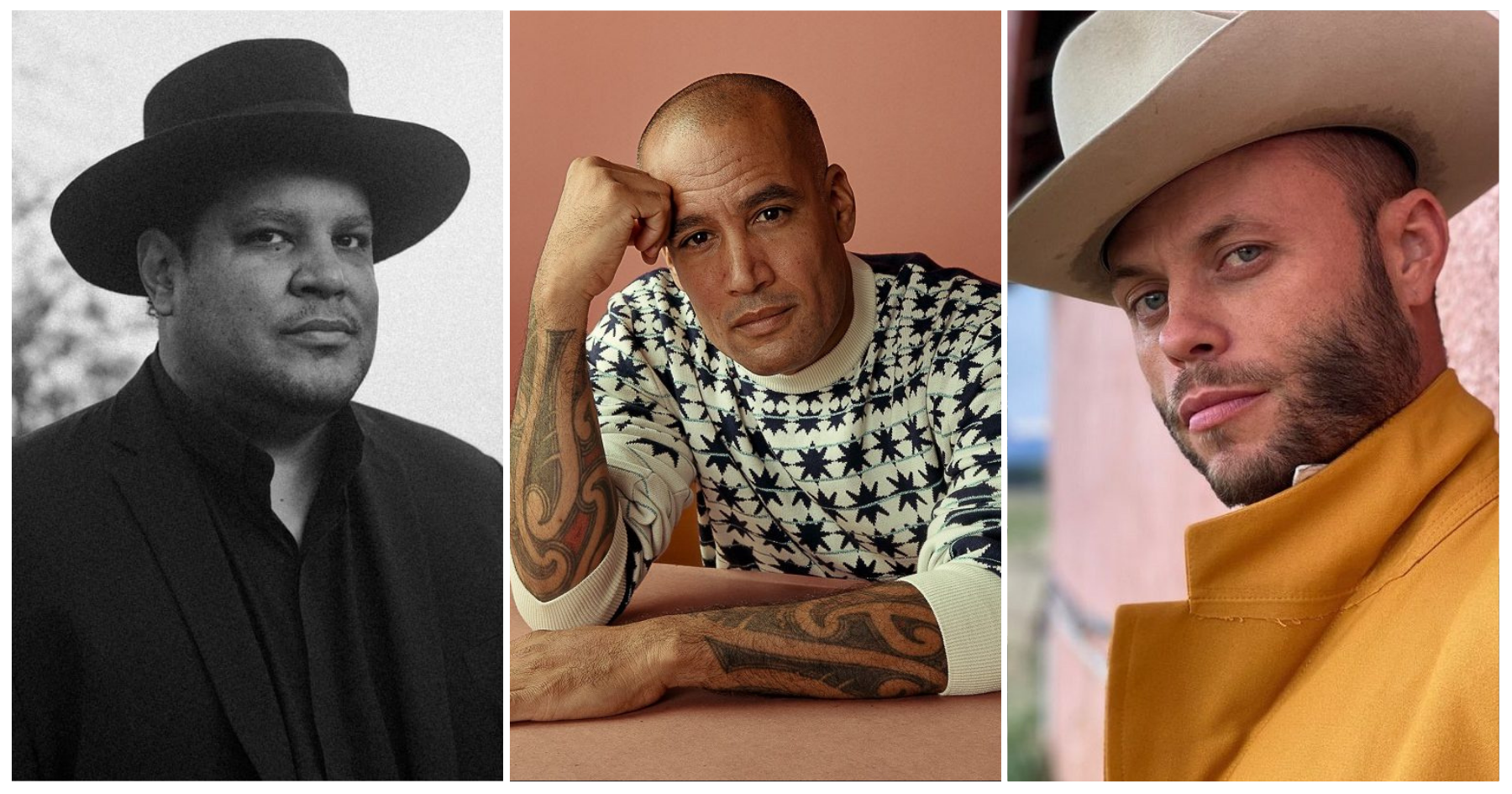
From the 2020 film Black Boys, Ben Harper brings us a song this week which he composed for the cultural documentary. The film is a timely reckoning on Black, male identity in America, through sports, education, and our broken criminal justice system.

Charley Crockett – “I Can Help”

Frequent visitor of our pages here at BGS, Texas-based Charley Crockett brings us a new single this week from The Next Waltz, Vol. 3. “I Can Help” is a Billy Swan number, one in which recording was not planned, yet somehow nailed in one take by Crockett and his band.

Beta Radio – “Afraid of Love”

From Wilmington, NC, Brent and Ben of Beta Radio bring us the title track from their Afraid of Love EP. The pair sat down with BGS for a 5+5 — that is, five questions and five songs — where we went over influences, how different types of art relate to their music, and the toughest go at songwriting they’ve ever had.

Loretta Lynn – “Coal Miner’s Daughter (Recitation)”

An undeniable legend, Loretta Lynn brings to us this week a mountain-style recitation on her famous song (and film title) “Coal Miner’s Daughter.” The new release commemorates the 50th anniversary of the original song, as well as being part of her upcoming Still Woman Enough — Lynn’s 50th studio album.

Hiss Golden Messenger – “Sanctuary”

Durham’s M.C. Taylor of Hiss Golden Messenger is back with a new single, following 2020’s Terms of Surrender, which is nominated for a Grammy. “Sanctuary” is a reflection on the past year, and the way in which we care for ourselves and those around us. Bidding farewell to John Prine — “Handsome Johnny” — who was lost in the storm of 2020, Taylor finds shelter within it.

The Rough & Tumble – “You’re Not Going Alone”

After the collapse of their family, the Rough & Tumble borrowed a Michigan kitchen and worked through the darkness. But, the Nashville-based-but always on the road duo realized not everything had to be lost, telling BGS, “We have as much right to a family to call our own as the family that won’t call us their own, anymore.”

Chris Pierce – “American Silence”

Silence is perhaps the most detrimental plague to justice. Los Angeles-based Chris Pierce brings us a song this week on silence, striking that if we smile and applaud for people different than us, we are responsible to fight for them too.

Balsam Range – “Rivers, Rains, and Runaway Trains”

No matter how much we prepare in life, there is always someone or something that will catch us by surprise. From Haywood County, NC, Balsam Range brings us a song this week about stumbling, being unable to speak, completely taken by surprise when that someone comes around.

Marcus King – “Wildflowers and Wine”

The great fall of gigs in 2020 hit young performers hard — especially those who had just broken through and had rarely seen momentum, like 24-year-old Marcus King. After his January 2020 release El Dorado, King was poised for a busy year that slowly unraveled, turning his attention to songwriting, drive-in concerts, and a performance on the Tonight Show With Jimmy Fallon. This January, King has reclaimed that momentum with a GRAMMY nomination for El Dorado!

Cole Scheifele – “All the While”

From Boulder, CO, Cole Scheifele brings to us this week a song about chasing what invigorates you. For many, including Scheifele, 2020 was a year to revisit old ideas, providing us with a stagnant, neutral state of stillness, and giving Scheifele the answers to this previously begun, for years unfinished song.

Chris Thomas King – “Hard Time Killing Floor Blues”

2021 celebrates the 20th anniversary of O Brother, Where Art Thou?, the Coen Brothers’ film which ignited a modern revival of roots music. This month, we’re celebrating by making the entire soundtrack our January Artist of the Month, where all month long we’re featuring music from the film. This week’s selection is brought to us by artist Chris Thomas King, aka Tommy Johnson, the blues man that we meet at the crossroads early in the film, just after his soul was sold to the devil.


Photo credit: (L to R) Chris Pierce by Ross Kolton; Ben Harper by Jacob Boll; Charley Crockett by Taylor Grace