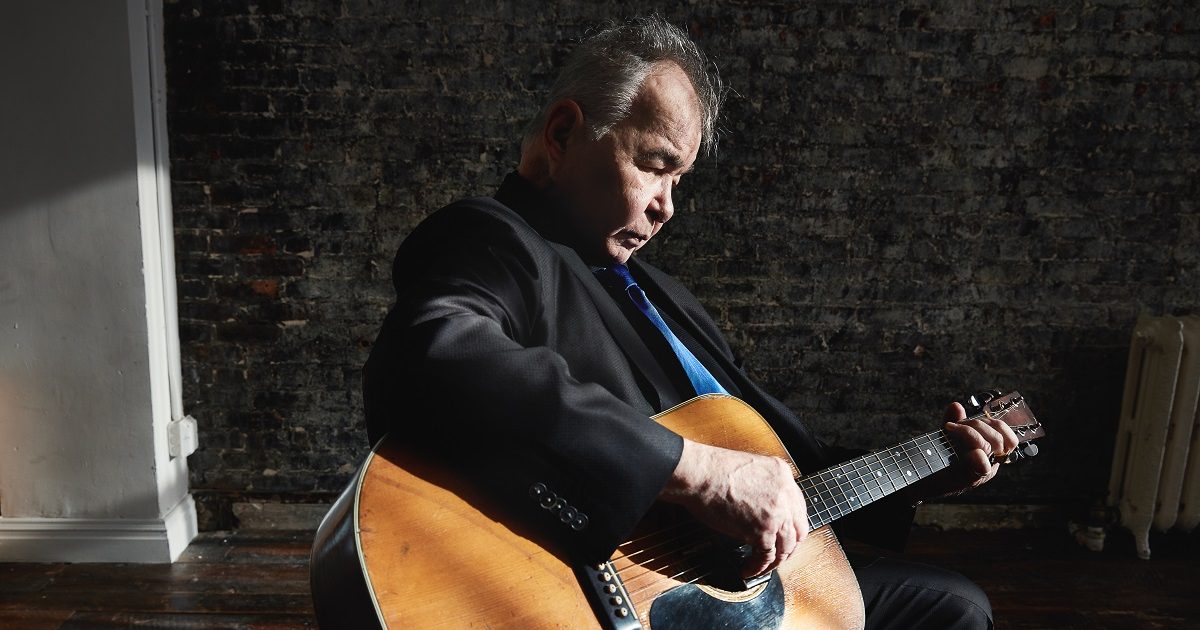
Twenty Years After ‘O Brother,’ John Hartford Gets Grammy Attention Again

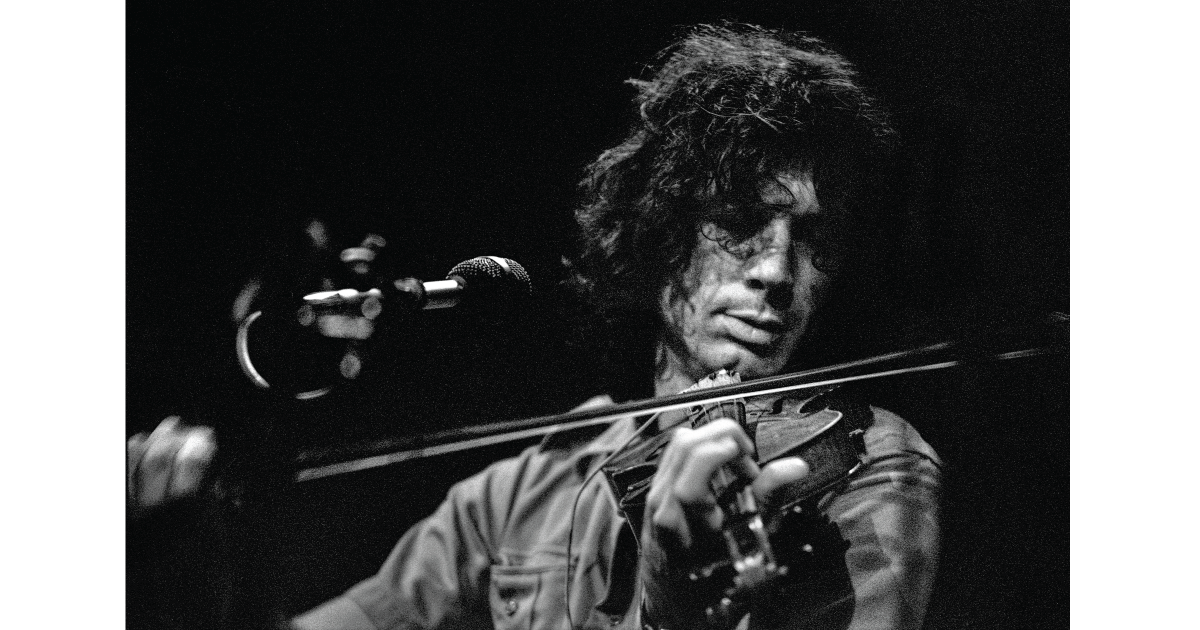
Some years after the late great John Hartford passed on, his daughter Katie Harford Hogue wound up with his archival material in her basement in Nashville. It was a huge collection, a lifetime’s worth of recordings, books, instruments, notes, stage outfits and all the rest. So she dutifully began wading through everything to sort, organize and catalog it all. And she would come across notebooks with numbers on the cover, which she set aside – 68 of them all together.

“It can be a pretty heavy task to go through someone else’s things like that,” Hogue says now. “And I was not sure what they were at first. But we were able to piece together the puzzle and figure out what these were: They had been his creative journals.”

Representing decades’ worth of raw material, the journals contained nuggets straight out of Hartford’s musical mind. There were some transcriptions of old tunes by other artists, but the vast majority of it represented original music composed by Hartford himself, amounting to several thousand tunes. It was a trove that yielded up a couple of projects that have returned Hartford to widespread attention coming up on two decades after his death.

First came a 2018 book, John Hartford’s Mammoth Collection of Fiddle Tunes, featuring transcriptions of 176 compositions from the journals as well as Hartford’s own illustrations plus writings from Hogue, musicologist Dr. Greg Reish and others.

That led to an accompanying album, The John Hartford Fiddle Tune Project, Vol. 1, featuring an all-star cast of players recording 17 of the archival Hartford songs.

Even though it was independently released, The John Hartford Fiddle Tune Project is up for a Grammy Award in the category of Best Bluegrass Album, alongside Billy Strings, Danny Barnes, Steep Canyon Rangers, and Thomm Jutz.

“Winning would mean a lot,” says Hogue, who is credited as co-producer with Matt Combs. “But I certainly feel honored to be considered, especially in a field like that. The fact that there’s something new that has people paying attention to my dad’s work again is wonderful. Mind-blowing, even. It’s a side of him that a lot of people did not know about, another dimension. I love being a part of that.”

Hartford was no stranger to Grammy Awards, going all the way back to his mainstream breakthrough with “Gentle on My Mind.” Reputedly inspired by the 1965 romantic epic Doctor Zhivago, Hartford wrote and recorded the first version of “Gentle on My Mind” for his 1967 album, Earthwords & Music.

Yet it was Glen Campbell’s version from later that year that put “Gentle on My Mind” on the map. Industry lore has it that Campbell made what he thought was a demo, complete with yelled instructions to the Wrecking Crew studio musicians. Campbell’s producer Al De Lory cleaned it up enough to release as-was. And even though it barely cracked the pop Top 40, “Gentle on My Mind” never left the radio. In 1990, BMI rated it as the fourth-most played song in radio history.

Along with setting Hartford up financially, Campbell’s “Gentle on My Mind” cover won Hartford his first two Grammy Awards. He won another for 1976’s Mark Twang, an album inspired by Hartford’s riverboat experiences on his beloved Mississippi River. And his final Grammy was awarded posthumously, for his contributions to the landmark soundtrack for the 2000 Coen Brothers slapstick epic, O Brother, Where Art Thou?

O Brother’s surprising popularity launched a bluegrass revival and also put a luminous bookend on Hartford’s career. He emceed the Down From the Mountain show at Nashville’s Ryman Auditorium on May 24, 2000 (filmed by D.A. Pennebaker for the concert film of the same name), in which Emmylou Harris, Alison Krauss, Ralph Stanley and other stars from the soundtrack performed. The soundtrack was just starting to take off a year later, on its way to topping the charts and winning a Grammy for Album of the Year, when Hartford succumbed to cancer on June 4, 2001, at age 63.

“He didn’t get to see all of that, but he would have told you that the coolest part of that movie being popular was that it put an old Ed Haley tune in the forefront,” Hogue says. “There’s a campfire scene with a lonesome fiddle playing, and that was my dad playing the Ed Haley tune, ‘I Am a Man of Constant Sorrow.’ That was always his goal, to highlight the old-time music and fiddle players he loved so much. I don’t think he would have taken any of the accolades for himself.”

The Fiddle Tune Project album liner notes include a quote from Hartford himself, something he told Matt Combs once: “If we play our cards right, we can fiddle all day and on through the night.” That play-all-night-play-a-little-longer spirit animates the album, as played an all-star cast including Sierra Hull, Ronnie McCoury, Alison Brown, Tim O’Brien, Brittany Haas, Noam Pikelny and Chris Eldridge from Punch Brothers and Hartford’s old bandmate Mike Compton.

However, Hartford himself is the real star, in absentia, via the 17 songs pulled from the 2,000-plus in his journals. Hogue calls it a celebration of his creative process.

“Creativity with him was like a faucet he could never turn off,” Hogue says. “His journals are full of weird late-night thoughts and ideas he’d jot down, and then go back and try to work into something. He was very prolific and would go down rabbit holes very quickly. His journals have a lot of stream-of-consciousness writing where he was looking for different ways to come up with songs. He was a very open free-thinker.”

Combs oversaw recording at Cowboy Arms Hotel and Recording Spa, a Nashville studio formerly operated by Jack Clement. It is the studio Hartford used to make his 1984 album, Gum Tree Canoe. The project was funded by a Kickstarter campaign that raised more than $33,000 from 468 contributors. As the Vol. 1 in the title implies, there will be future volumes if only because more musicians wanted in on it than they had room to accommodate on just one record.

Indeed, tending to her father’s posthumous legacy has turned into quite an ongoing project for Hogue. Hartford left behind so much material in so many wide-ranging areas that the family donated parts of it to four different institutions. The Herman T. Pott National Inland Waterways Library at the St. Louis Mercantile Library is where Hartford’s photos, journals and research pertaining to the Mississippi River wound up.

“That’s where the papers of all the river people and mentors my dad grew up with are, so it already looked like his office on steroids,” Hogue says. “So that was a no-brainer for everything of his related to the river, from when he had his pilot’s license. Had he not been a musician, he would have been a boat pilot up and down the river. That’s what he really loved. It was his passion.”

Putting together these projects has been therapeutic for Hogue, who was raised by her mother after her parents split when she was very young. She didn’t see much of her father during her childhood, and there were long stretches when she mostly heard from him when he’d mail her copies of his latest album.

“I still remember opening the mailbox one day and finding Aereo-Plain,” she says, referring to Hartford’s 1971 hippie-bluegrass classic.

For all Hartford’s success, his daughter still didn’t realize his stature until relatively late in his life — especially from all the visitors who came to see him at the end. That carried over to when she was dealing with the archive that yielded up the book and the album.

“There’s a lot to sift through in a process like that,” Hogue says. “The public sees the figure and the persona and hears the music, but there’s so many different dynamics behind that for friends and family. When you lose a parent, it’s like the world comes to a stop and there’s suddenly a period at the end of everything they were. There’s so much joy, anger, frustration, confusion. Going through all his things this way made me able to see the human side of him, which was healing. It’s been a way to say, ‘Hey, Dad, we’re good. I did this because I love you.’ There’s a lot of joy in these songs. They just make you want to dance, and his spirit comes through. I love that. I’m thrilled to be able to have this with him, even though it’s posthumous. A father-daughter project, where he’s here in spirit.”


Photo credit: Charles Seton
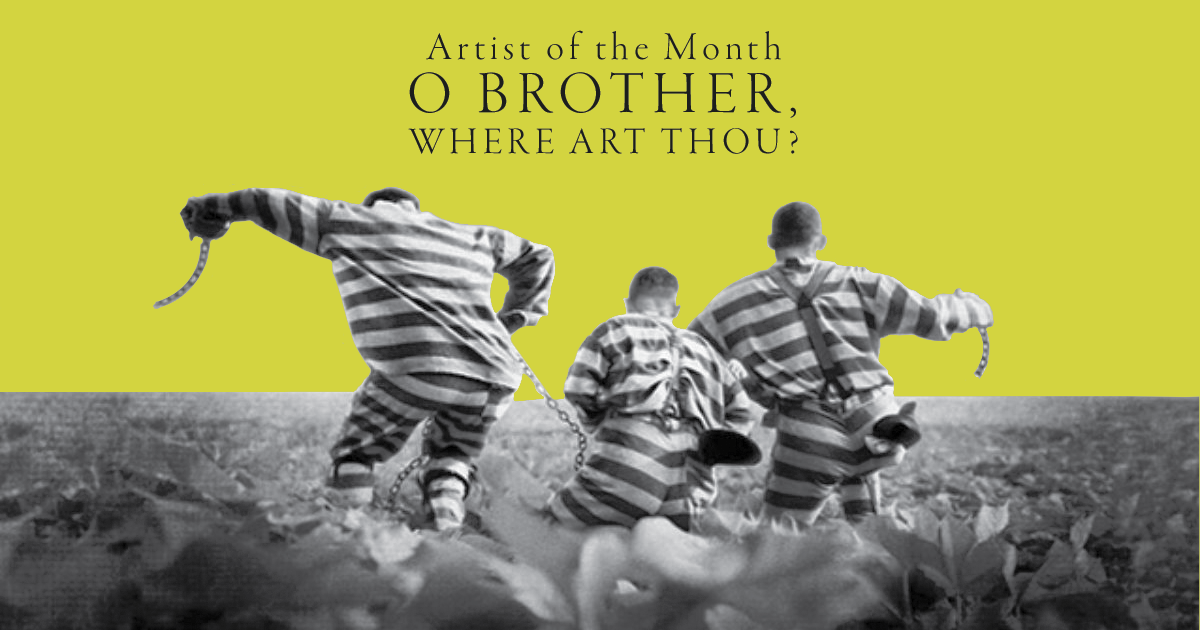
Artist of the Month: ‘O Brother, Where Art Thou?’

Twenty years ago, in 2001, the music of O Brother, Where Art Thou? captivated America and, suddenly, bluegrass appealed to pretty much everybody. We could all sing at least a few words of “I Am a Man of Constant Sorrow,” though admittedly not sound as good as Dan Tyminski or the Soggy Bottom Boys. Roots music heroes Emmylou Harris, Alison Krauss, and Gillian Welch added more positive press to their résumés, and before it was all over, the generation-spanning collection won multiple industry accolades, inspired a national tour, and even led to the first-ever Grammy Award for Dr. Ralph Stanley.

The song choices were largely well-known to dedicated bluegrass listeners, but even so, chestnuts like “I’ll Fly Away” don’t routinely end up on albums that sell eight million copies. Legends like Norman Blake and The Fairfield Four shared the spotlight with rising talent such as Chris Thomas King and The Peasall Sisters. Two decades later, The Whites still perform their version of “Keep on the Sunny Side” on the Grand Ole Opry at nearly every appearance, and to be sure, the audience smiles and applauds to hear it again.

This month, we’ll look at the legacy of that landmark album as an inspiration to a new generation of acoustic musicians, along with an interview with family members of John Hartford, whose name is back on the Grammy ballot this year for the collaborative album, The John Hartford Fiddle Tune Project, Vol 1. We’ll also have a special edition of our Roots On Screen feature about the film. Plus, check out a special IBMA Awards show performance of “Down In the River To Pray” and an archive edition of The Breakdown. And to finish out the month, we asked a crew of young bluegrass and Americana stars what the film means to them. While you’re at it, put down the Dapper Dan and turn up the O Brother, Where Art Thou? soundtrack below.


2021 Grammy Awards: See Nominees in American Roots Field

The 2021 Grammy Awards finalists were revealed on Thursday, November 24. Here are the nominations in the American Roots field:


Best American Roots Performance

Black Pumas, “Colors”

Bonny Light Horseman, “Deep in Love”

Brittany Howard, “Short and Sweet”

Norah Jones & Mavis Staples, “I’ll Be Gone”

John Prine, “I Remember Everything”


Best American Roots Song

“Cabin,” Laura Rogers & Lydia Rogers, songwriters (The Secret Sisters)

“Ceiling to the Floor,” Sierra Hull & Kai Welch, songwriters (Sierra Hull)

“Hometown,” Sarah Jarosz, songwriter (Sarah Jarosz)

“I Remember Everything,” Pat McLaughlin & John Prine, songwriters (John Prine)

“Man Without a Soul,” Tom Overby & Lucinda Williams, songwriters (Lucinda Williams)


Best Americana Album

Courtney Marie Andrews, Old Flowers

Hiss Golden Messenger, Terms of Surrender

Sarah Jarosz, World on the Ground

Marcus King, El Dorado

Lucinda Williams, Good Souls Better Angels


Best Bluegrass Album

Danny Barnes, Man on Fire

Thomm Jutz, To Live in Two Worlds, Vol. 1

Steep Canyon Rangers, North Carolina Songbook

Billy Strings, Home

Various Artists, The John Hartford Fiddle Tune Project, Vol. 1


Best Traditional Blues Album

Frank Bey, All My Dues are Paid

Don Bryant, You Make Me Feel

Robert Cray Band, That’s What I Heard

Jimmy “Duck” Holmes, Cypress Grove

Bobby Rush, Rawer Than Raw


Best Contemporary Blues Album

Fantastic Negrito, Have You Lost Your Mind Yet?

Ruthie Foster Big Band, Live at the Paramount

G. Love, The Juice

Bettye LaVette, Blackbirds

North Mississippi Allstars, Up and Rolling


Best Folk Album

Bonny Light Horseman, Bonny Light Horseman

Leonard Cohen, Thanks for the Dance

Laura Marling, Song for Our Daughter

The Secret Sisters, Saturn Return

Gillian Welch & David Rawlings, All the Good Times


Best Regional Roots Music Album

Black Lodge Singers, My Relatives “Nikso Kowaiks”

Cameron Dupuy and the Cajun Troubadours, Cameron Dupuy and the Cajun Troubadours

Nā Wai ʽEhā, Lovely Sunrise

New Orleans Nightcrawlers, Atmosphere

Sweet Cecilia, A Tribute to Al Berard


Photo of John Prine by Danny Clinch

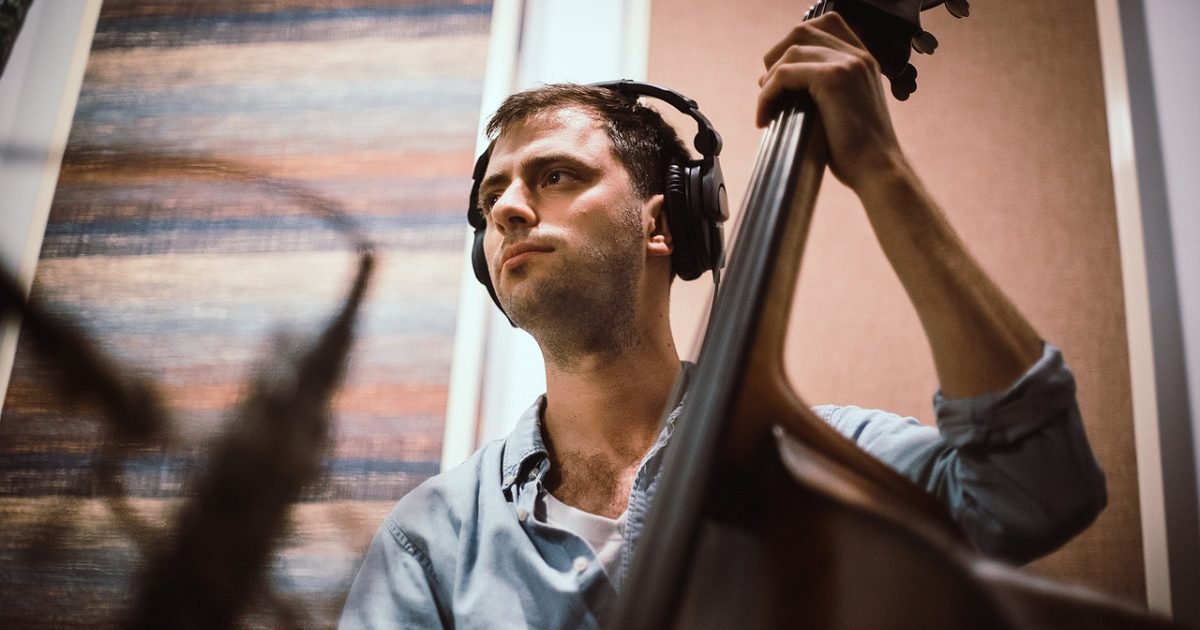
MIXTAPE: Jeff Picker’s Low End Rumblings on the Bass in Bluegrass

Maybe I’m biased*, but I’ve always felt that the bass is the most important instrument in the bluegrass band. It might not immediately draw your ear, but a bassist’s interpretation of the groove and harmony of a song holds substantial power over how the song is ultimately felt by the listener. Without a great bassist, a band full of shredders can sound anemic and sad; a heartfelt lyric can seem tedious and derivative. But add some tasty low end, and the same band will soar; the lyric will swell with passion! (Attention sound engineers: simply cranking the subs won’t cut it.) As such, the bassist’s importance in a bluegrass band is considerable.

Even so, great bassists are rarely given their due, unless they also happen to be virtuosic melodic players. Well, that ends today! Here are some examples of masterful low end artistry from some of my favorite denizens of the doghouse. Please excuse the shameless inclusion of one of my own tracks, because, well… I have an album to promote. Enjoy! — Jeff Picker

*I’m definitely biased.

Tony Rice – “Shadows” (Mark Schatz, bass)

Mark is one of my favorite bluegrass bassists. His tone is huge and clear, and his bass lines are subtly creative. On this track, listen to the fluid transitions back and forth between standard bluegrass time and a more open feel. Also note his slick fills and voice leading throughout.

Nashville Bluegrass Band – “Happy on the Mississippi Shores” (Gene Libbea, bass)

If aliens came to earth, demanded to know what bluegrass bass sounded like, and stipulated that I had only one song with which to demonstrate it, I’d play this. Gene Libbea’s feel is perfect; his note choices are just varied enough to add a bit of intrigue to the basic harmony of the song, while never sacrificing the pendulum effect that drives the bluegrass bus. The occasional unison fill with the banjo adds to the fun.

Ralph Stanley and the Clinch Mountain Boys – “Loving You Too Well” (Jack Cooke, bass)

I love this approach to the bluegrass waltz. Jack Cooke’s playing here is busier than what you might hear from many bluegrass bassists these days, and there’s a certain playful and casual quality to it, which I find refreshing. He bounces around between octaves, and between full walking lines and half-notes. Old-school, “open air” bass playing.

Matt Flinner – “Nowthen” (Todd Phillips, bass)

This song may sound slow and simple, but make no mistake: to groove like this, at this tempo, in this exposed instrumentation, is HARD. Todd Phillips demonstrates his mastery here: clear tone, impressive intonation, and intentional, direct timing. I also love how softly Todd plays — at times, he seems to barely touch the bass. To me, that conveys maturity and experience.

Patty Loveless – “Daniel Prayed” (Clarence “Tater” Tate, bass)

I had fun studying the bass playing on this track when I got to perform it with Patty and Ricky Skaggs a few years back. Clarence “Tater” Tate played both bass and fiddle for Bill Monroe’s Blue Grass Boys over the years, and had about as much pedigree in bluegrass as can be achieved. I dig the playing here, because it feels like an old-school, 1950s approach (bouncy, busy, slightly loose bass playing), but with contemporary recording quality. If you focus on the bass, you can tell how much fun he’s having with the slightly crooked form and joyous lyric — it sounds like a musical smile.

Anaïs Mitchell and Jefferson Hamer – “Clyde Waters (Child 216)” (Viktor Krauss, bass)

The first time I heard this song, I didn’t even realize there was bass on it. But I found myself coming back to it, drawn by the story-like quality of the musical arrangement, and I realized that the bass plays a major part in that dynamism. Viktor Krauss displays impeccable taste in his musical choices here. He knows when to play, when not to, when to articulate an additional note, when to sustain. For a player as technically proficient as Viktor, such restraint is impressive. His playing serves the song, first and foremost.

Del McCoury Band – “Learnin’ the Blues” (Mike Bub, bass)

As everybody in Nashville knows, when Mike Bub and his Kay bass show up at a gig, a fat groove is imminent. This track showcases Bub’s rock solid hybrid feel — he bounces between 4/4 walking and half-time, triplet and ghost note fills, and even has a little two-bar break in the middle. This is the type of bass playing that makes it virtually impossible to sound bad (not that Del and the boys needed any help in that department). Bub is also a great guy with a sense of humor and tons of knowledge and stories about Nashville’s music history.

John Hartford – “Howard Hughes’ Blues” (Dave Holland, bass)

Bluegrass as a musical style is pretty specific — there’s room for a wide variety of personal voices, of course, but there are definitely some foundational qualities and vernacular that indicate whether a player is truly versed in the style. On this track, jazz legend Dave Holland sounds like exactly what he is: a jazz musician playing bluegrass. Normally a recipe for disaster, here somehow it works. His tone, feel, note choice, and general approach sound foreign in the style, but they actually mesh with Hartford’s loose and jovial manner quite well. A slightly bizarre but enjoyable approach to bluegrass bass.

Ricky Skaggs – “Walls of Time” (Mark Fain, bass)

I’ve spent a lot of time studying Mark Fain’s playing for my job with Ricky Skaggs, and I’m always finding subtle little musical gems in his bass parts. It’s Mark’s tone, taste, and timing that anchor most of the canonical Kentucky Thunder recordings that we all love. This track showcases his mastery of the bluegrass groove at a slow tempo — listen to the way he spruces up what could be a one-and-five-fest with ghost notes, fills, and syncopation.

Jeff Picker – “Rooster in the Tire Well” (Jeff Picker, bass)

When I was making my new record, With the Bass in Mind, one of my musical goals was to find some space for the bass to shine and for me to use some of the technique I don’t use very often as a sideman. As such, the record has many bass solos. This song has no bass solo, however, since this Mixtape isn’t about bass solos! There are some cool bass lines in it, though (if I do say so myself). I tried to choose my notes carefully, to help anchor the band through the song’s many metric changes.

Robert Plant and Alison Krauss – “Let Your Loss Be Your Lesson” (Dennis Crouch, bass)

This track is not exactly bluegrass, but what an incredibly grooving bass part. Here is a rare example of a time when slap bass was musically appropriate! Dennis is a friend of mine and a great guy and bassist. He plays with gut strings, punchy tone, and undeniably solid time. He’s also the master of throwing in a couple creative measures of voice leading at exactly the right moment in the song. I try to catch Dennis out playing in Nashville whenever I can.

Stan Getz and the Oscar Peterson Trio – “I Want To Be Happy” (Ray Brown, bass)

This is obviously not bluegrass, but no bass-centric mixtape would be complete without tipping the hat to King Ray. His half-time feel throughout the melody is flawless, and just listen to that crushing avalanche of groove beginning around 00:37. Ray is a bluegrasser’s jazz bassist because he plays on top of the beat, and his playing has a relentless forward motion, like the banjo playing of Earl Scruggs. I’ve loved this recording since I was 15 — you won’t find better bass playing anywhere.


Photo credit: Kaitlyn Raitz

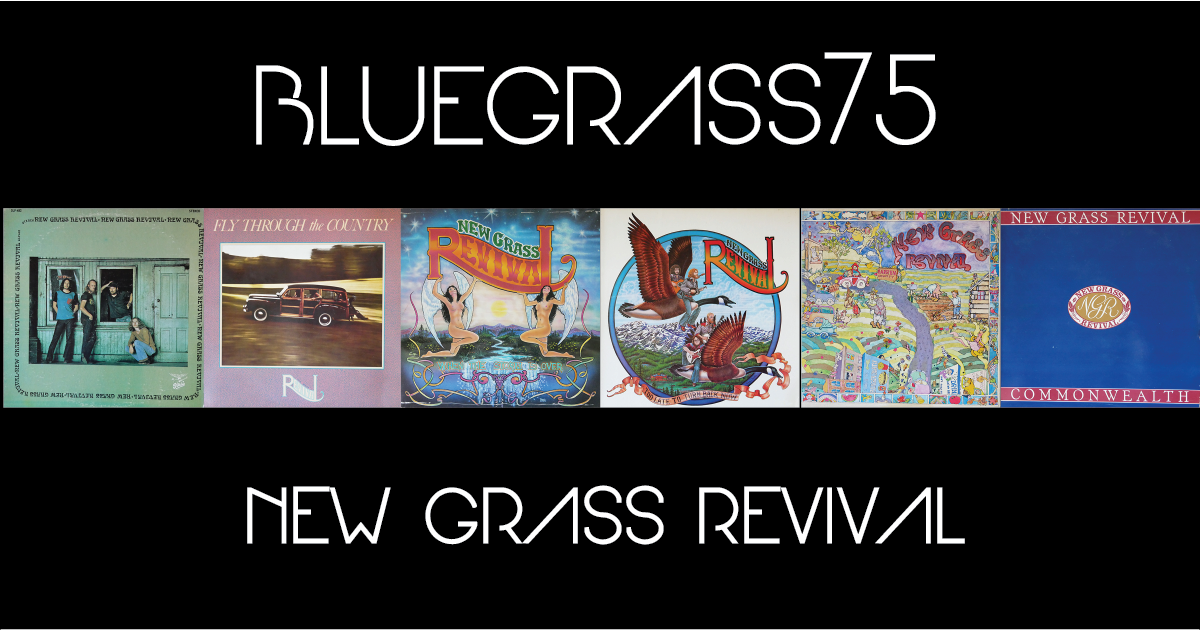
New Grass Revival: Sam Bush and John Cowan on the Early Years (Part 1 of 2)

One of the most celebrated and innovative bands of the 1980s, New Grass Revival will be inducted into the Bluegrass Music Hall of Fame during the IBMA Bluegrass Music Awards on October 1. As part of our coverage of the 75th anniversary of bluegrass music, BGS caught up with founding member Sam Bush and vocalist/bass player John Cowan to talk about the early years in this first of two stories exploring their remarkable discography. Read part two of the story here, featuring insight from Béla Fleck and Pat Flynn, as well as Bush and Cowan.

The four founding members of New Grass Revival are Curtis Burch on guitar and Dobro, Courtney Johnson on banjo, Ebo Walker on bass, and Sam Bush on mandolin. They had all played together in the five-piece band, Bluegrass Alliance.

Sam Bush: We wanted to fire our [Bluegrass Alliance] fiddle player Lonnie Peerce, and when we told him this he said, “You can’t fire me, I own the name of the band.” So we said, “Let us put it this way: we quit.” We were already influenced by the Country Gentlemen and the Osborne Brothers and Jim & Jesse and the Greenbriar Boys and a really great record by the Charles River Valley Boys called Beatle Country. That’s one of the reasons we called ourselves New Grass Revival — we were trying to point out that we were reviving a new bluegrass that had already been invented by those people. We were only hoping to further the progressiveness we already dug.

Bush had been friends with Courtney since he was a teenager, when the banjo player was lead singer in a band playing Stanley Brothers tunes.

SB: We had no particular plan to play differently but our very first practice I remember Ebo hitting a bass lick in D minor that we later discovered he got from Dolly Parton’s “Jolene.” We played licks back and forth over it and all of a sudden Courtney went into the melody of “Lonesome Fiddle Blues” by Vassar Clements. That’s how we came to work up “Lonesome Fiddle Blues” for our first album. It was like a band epiphany, that we could improvise over a riff the way rock ‘n’ roll bands did. We were just playing it the way we felt it.

Courtney and Curtis were steeped in traditional bluegrass, but Bush was a musical sponge, soaking up everything from Homer and Jethro to Jefferson Airplane to the Rolling Stones to French jazz violinist Jean-Luc Ponty. The band’s first, self-titled album, from 1972, included covers of Leon Russell’s “Prince of Peace” and Jerry Lee Lewis’s “Great Balls of Fire.

SB: This is the days before cars had cassette players, so Ebo had a tiny cassette player we took with us on the road, and we’d made a tape we could listen to. One side was John Hartford’s Aereo-Plain. And on the other side we had Leon Russell and the Shelter People. Without John Hartford there would be no newgrass. Growing up close to Nashville, I would watch him on local TV, and one night he did a bluegrass version of “Great Balls of Fire” on the Glen Campbell show, and I recorded it from the TV — that was the one we learned. Courtney even played his chromatic run the same way John did it.

While making their first album Bush encountered the man who would be his songwriting partner, Steve Brines.

SB: We lost our Louisville club gig when we ended Bluegrass Alliance, so in order to make a living that first winter in ’70-’71 I ended up playing electric bass with a folk group called the Cumberlands: Harold Thom and his wife Betty, and a banjo player called Jim Smoak. Jim had co-written a couple of songs with this poet-lyricist over in Lexington called Steve Brines and we played one on that early album — “Cold Sailor.” After I made his acquaintance Steve and I started trying to write together. Steve lived up in Lexington and I lived down in Barren County, and he’d send me five to ten sets of lyrics in the mail and I’d make up music, put it on a cassette and send them back. Our rule was I wouldn’t change one word, if he didn’t change one note.

It was a productive partnership – Bush and Brines wrote half the songs on their second album, Fly Through the Country. By then, Walker had left the band and they had gained a new player: John Cowan.

John Cowan: I joined in 1974. I did not grow up in bluegrass. I was a rock ‘n’ roll kid playing in local garage bands. But I had an awareness of New Grass Revival because I lived in Louisville, which was their home, and the woman who became my wife once dragged me to go see them. I didn’t want to go, but I was blown away. Six months later I got a phone call from Sam living down in Western Kentucky with Courtney and Curtis and he said he got my number from this guy, and would I be willing to come down and audition for us?

SB: He was a city guy, and when he pulled up and saw us, it was like “Oh my god what have I got myself into?”

JC: Courtney and Curtis were truly unique individuals. They were from South Georgia, super country dudes, born and raised playing bluegrass. I was wild-eyed and “What is all this stuff?” To their credit they welcomed me with open arms.

SB: We played some tunes together and asked him to join the band and he said, “I sing too — do you mind if I sing a song?” And in the tradition of Barney Fife I puffed up my chest and said, “Well, I’m the lead singer but yeah, go ahead.” And he sang “Some Old Day” in the same key as John Duffey did it in, only with this powerful voice and this beautiful vibrato. At the end of it I said, “John, I used to be the lead singer, now you are.”

JC: The day they hired me we rehearsed with the drummer. The next morning I got up and he was gone! I was like, “Where did Michael go?” Courtney said, “Oh hell, we fired him. We don’t need him with you!” I felt kind of bad about it, he was a really nice guy.

Soon the band’s rock ‘n’ roll influences were coming to the fore.

JC: They were already experimenting with jamming on traditional instruments over songs and it was right up my alley, because I was also a big prog rock fan. I was obsessed with Yes. On the title track of Fly Through the Country, Sam played this little thing that looked like a can of Spam — it was a resophonic mandolin, he played slide on it. When Béla joined, he said the big joke was that you could listen to the first part of the song, go out for lunch, come back, and you’d still be playing it.

SB: People would call us “The Grateful Dead of Bluegrass” because of our long tunes and our experimentation. We had to put it in our contract that we wouldn’t be billed like that, because then we had Deadheads coming expecting us to play their songs, and we didn’t do any.

JC: Our touchstone was the Allman Brothers. Their live album At Fillmore East came out three years before and we both knew it by heart; to this day I could sing every note and every solo. So that was a crucial record for our band. Sam exposed me to Jack Casady’s [of Jefferson Airplane] bass playing. When I joined the band I was 21, and Courtney was already 38, I was so out of my element. I’d only ever played with guitars and keyboards and drums, and I was smart enough to at least say, “I don’t know what I’m doing, you guys have to help me.” They’d give me a joint and say, “Go listen to this stuff — here’s John Hartford, here’s Norman Blake, here’s the Dillards….” It was so foreign and beautiful to me.

SB: One of the first songs John taught us was “These Days.” He sang like Gregg Allman when he first arrived, and his voice and vocal style changed to fit into what he had joined.

JC: I would imitate him [Gregg Allman], Lowell George, Stevie Wonder. But when I got in that band, now what do I do? I was smart enough to realize it wasn’t going to work for me to try and sing like Ricky Skaggs or Bill Monroe, that’s not in me. But Sam was very encouraging to me and the more I sang the more I developed my own voice.

SB: Garth [Fundis, the band’s producer] had introduced me to a piano player, Chuck Cochran, and Chuck played electric piano with us on “These Days” at the end of the Fly Through the Country. It was the last song we recorded, and we went, “Huh… We can make this fusion of more instruments into our sound.”

Their next album, When The Storm Is Over, went further, incorporating more of Cochran’s keyboards, as well as drums and percussion.

SB: We wanted to augment our sound and appeal to a wider audience, and Chuck and Garth introduced us to the great drummer Kenny Malone. He played on our next three records and I started producing the records myself. Stephen and I continued to write. The subject matter of our songs was totally different than bluegrass-style songs. I’ve always just said newgrass music is contemporary music played on bluegrass instruments.

JC: Sam’s going to solo for eight minutes, then he’s going to toss it to Courtney, then Curtis, and I’m the guy who’s in charge of keeping the train on the tracks and keeping the coal in the engine. That was my job and I loved it. To this day, when you’re playing that kind of music and all the players are in sync spiritually and musically and emotionally there’s nothing like it. To me that’s what punk music is: just this tremendous energy of people.

In 1977 their first live album, Too Late to Turn Back Now, was recorded at the Telluride Bluegrass Festival.

JC: It was such a fruitful time for music and we were in the middle of it. Jackson Browne, Miles Davis, the Mahavishnu Orchestra, John Coltrane, Little Feat…. Those people were our models, we listened and listened and it came out in our music. At Telluride we took this Willis Alan Ramsey track off this one solo album he made, the song “Watermelon Man,” and to me that was us doing Little Feat. That’s “Dixie Chicken.” That’s “Fat Man in the Bathtub.” There was a lot of Little Feat groove in what we were doing.

SB: We were trippier on stage than on most of our records, but you can hear it on that live record. Our association with Leon Russell — we’d opened for him in 1973 — had opened the doors. I don’t know that we were psychedelic exactly, but I was trying a phase shifter on my fiddle, like Jean-Luc Ponty, and Curtis would play lap steel with distortion.

JC: We had all grown together. Sam and I were fixated with Delaney & Bonnie at the time. We played “Lonesome and a Long Way from Home,” which Delaney co-wrote with Leon Russell, and we were so obsessed with them vocally that we talked about this: “I’m going to do Bonnie, you’re going to be Delaney.”

The band’s popularity was growing and they were finding their audience, thanks to the support of fellow musicians like the Dillards and Nitty Gritty Dirt Band. In 1979, Leon Russell had dropped in on the band’s soundcheck when they played at the Apollo Delman Theatre in his hometown of Tulsa, Oklahoma. The band released the album Barren County that same year.

SB: Leon saw our name on the marquee and hadn’t seen us for years so he stopped by. We went back to his house that night, we jammed all night, and then we went and recorded with him in Nashville and in Hollywood where his studio was. It was really cool. We were teaching Leon bluegrass songs.

The result was the album Rhythm and Bluegrass, Vol 4, which Russell recorded in 1980 under his country alter ego, Hank Wilson. However, the project stayed unreleased until 2001.

SB: We were always most proud of that record. I co-produced it, I just didn’t know that’s what you called it. Leon had a bluegrass songbook and he’d say, “What do you think, should we do this one?” And I’d say, “Nah, let’s try this one.” So that’s how we started as his backup band. For two years! John and I had so much fun singing harmony with him. I love singing baritone, and vocally we were glued to him. And the way John and I did call-and-response in our singing was very influenced by the way Leon and Mary [his wife] did it on their records.

A live album, recorded in 1981, captures the spirit of their collaboration with Leon Russell.

SB: There were shows where you’d see him bounce up and down on his piano stool and that’s when we knew we were going to go into this Pentecostal church service with him, and the songs would just keep speeding up and speeding up and the audience was getting more and more excited. It was amazing, the rock ‘n’ roll hysteria. We learned a lot about show business from him.

Russell played keyboards on Commonwealth, which was Johnson and Burch’s last album with the band.

SB: Listening to the solo that I played on “Deeper and Deeper” [on Commonwealth], having not heard it for years, that one I managed to go to place I hadn’t planned on. Of course you have a game plan and an outline of what you want to achieve with a solo, but that solo was one of the happiest surprises.

(Editor’s note: Read part two of our oral history of New Grass Revival.)


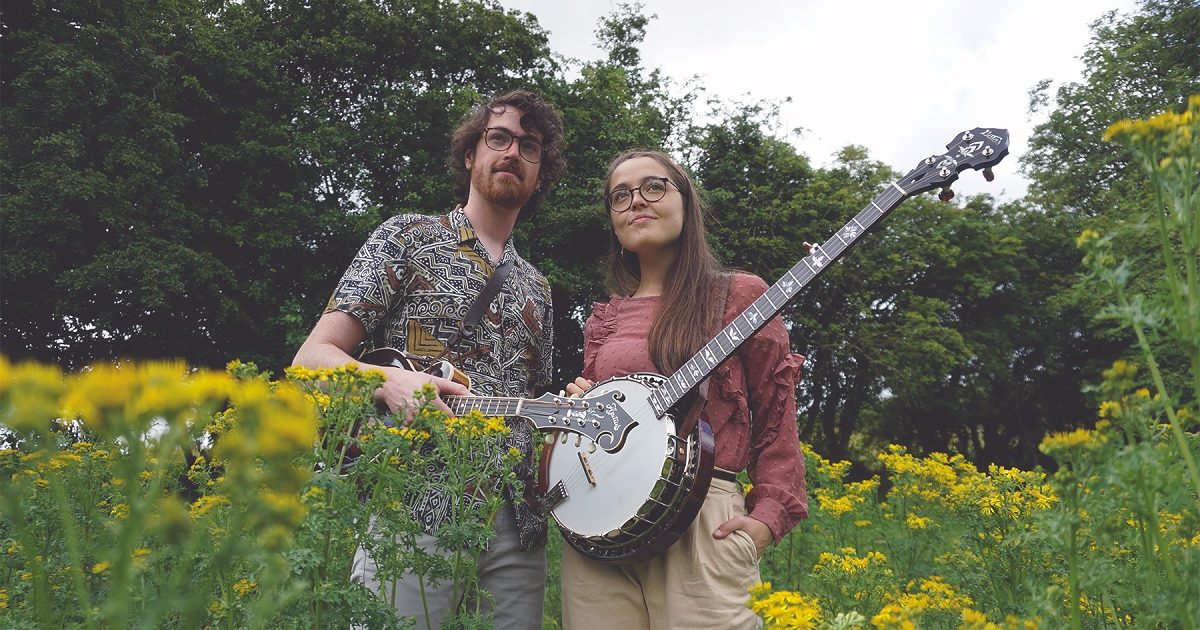
WATCH: The Foreign Landers, “Put All Your Troubles Away”

Artist: The Foreign Landers
Hometown: Split between Co. Armagh in Northern Ireland and South Carolina at the moment.
Single: “Put All Your Troubles Away”
Release Date: August 24, 2020

In Their Words: “Since we’ve known each other, Tabitha and I have had a foot in two different worlds — Tabitha being from Northern Ireland and myself having grown up in the States. During the past five months we’ve finally had the time and space to make some music together and to try to combine our backgrounds to create something different. The result is a new project that we’re calling The Foreign Landers. This is a song with a very timely message from John Hartford, and it will be the title track from our forthcoming EP to be released later this year. Be on the lookout for more singles soon.” — Tabitha and David Benedict, The Foreign Landers


Photo credit: Tabitha and David Benedict

BGS Launches Shout & Shine Video Series with Black Harpist & Songwriter Lizzie No

Like many of us, Lizzie No is weary of quarantine. Yet as the New York City musician and harpist joins BGS on the phone to talk about her life in pandemic isolation, her songwriting, her creative processes, and the growing pains intrinsic to all of the above, the joy in her voice cracks through the fatigued outer layers we all wear right now. A Black creator in traditionally white genres, No brings a distinct and important perspective to help guide longtime BGS column Shout & Shine into a new era.

In 2017, Shout & Shine began as an interview series dedicated to exploring identity, advocacy, and marginalization, along with the ways these paradigms filter into music and art, especially of roots varieties. Taking today’s civil unrest and righteous rebellions into account, we’ve purposefully refocused this column’s mission with the hope of giving a platform to Black musicians in roots music specifically, because these spaces too often relegate Black, Brown, Indigenous, and Asian voices to the sidelines.

Now, in addition to interviews and an upcoming podcast, BGS is proud to announce Shout & Shine will be moving to video! Lizzie No is our debut guest for the livestream version of Shout & Shine, which comprises short-form, intimate video performances by underrepresented and marginalized artists in Americana, folk, and bluegrass.

Lizzie No’s Shout & Shine set, presented by Preston Thompson Guitars, will feature a brand new song, “Mourning Dove Waltz,” and will be streamed live on BGS, our YouTube channel, and Facebook page on August 5 at 4pm PT / 7pm ET. In the meantime, read a little more about No’s songwriting, her approach to roots-driven harp, and her thoughts on tokenism — and why white folks perhaps shouldn’t feel free to lead that kind of conversation.

Editor’s Note: You can watch Lizzie No’s Shout & Shine performance in full below:

BGS: I wanted to start — and this is a little selfish — with “Mourning Dove Waltz,” because I’m an avid birdwatcher and in shelter-in-place everyone is watching birds! This song is not only about quarantine, but also the idea of being in an old space, but with new intention. Can you tell us a little bit about that song, through the lens of isolation, and creativity in isolation?

Lizzie No: That’s a brand new song and I think you can tell I wrote it during quarantine. I was never terribly interested in birds before March of this year. My mom always loved and delighted in them and I always thought it was very cute, but they never captured my attention. Right as we were truly locked down here in New York and a lot of people were making the decision to try to go somewhere else, it felt like there weren’t any rules anymore. I decided to stay here in my apartment and I ended up having so many hours, especially first thing in the morning, where I would just sit and try to make the day’s activities stretch out over the longest period of time possible so I wouldn’t go insane. 

That’s when I started to notice a couple of Mourning Doves had nested in my plant boxes on my balcony. It felt miraculous to get to watch them every single day through the balcony door. [They] laid two eggs, we watched them hatch, we posted about them on Instagram, we took name suggestions. It was this unfolding thing I didn’t think I cared about until I had this uninterrupted time where I didn’t need to be doing anything other than staying calm. I was pretty much on these birds’ schedule. I noticed when they took their breaks in the middle of the day and when mom and dad would switch places. Of course, this is so cheesy, but I felt a real loss when the babies grew up and flew away. As a songwriter, it led me to thinking about losing people. About losing a sense of connection. That’s what led to that song. 

The harp is one of my favorite instruments, but through no fault of its own — besides maybe its complexity — it’s not common in roots genres. How did you find it, and how did you infuse it into your songwriting and artistry?

After giving up on violin as a kid [Laughs] I thought harp was one of the biggest and weirdest and coolest-looking instruments. I took lessons for all of elementary, middle, and high schools and then I hit the point in high school where friends were starting bands and I wanted to be part of it. I wanted to be able to sing and play and strum along while singing, but I didn’t play guitar and I didn’t play piano; I played harp. Basically the harp just had to catch up with my evolving interests in the Indigo Girls and Brandi Carlile. That’s where I was at when I was 16. 

I didn’t really see any examples of people who were doing that — though now I know that there are. I think I saw videos of people like Joanna Newsom and Edmar Castañeda, people who weren’t playing the classical music that I was used to. Then I tried to just treat it like a bass, then trying to pick out a few chords. The motto being, “Nothing too fancy.” I wanted to get to a point where I could play and sing at the same time. That’s when I was first starting to write songs, so the skills developed together. 

I can notice that! I notice mainly because I play banjo and songwrite on banjo, and it’s such a different beast than writing on piano or guitar. There are so many similarities in the way you’re writing and backing yourself up. Especially in the way you’re comping on harp, it reminds me so much of banjo rolls — how John Hartford or Ashley Campbell or Béla Fleck, banjoists that might have more “composed” songs, might play. Do you see those similarities? 

That’s a very kind comparison! That’s the kind of music I listen to, but it’s funny because I don’t feel like I really have any harp inspirations to my playing — which is not to say I’m not inspired by great harpists, because of course I am, but that’s not really what influences me when I’m writing songs and figuring out how the harp is going to fit into the songwriting. Someone like Béla Fleck especially, I listen to his playing a lot and those are the types of textures and rhythms that I’m hearing when I’m writing on harp. Rather than something that actually contains a harp. [Laughs]

For the remainder of the year, our Shout & Shine series will be devoted to Black artists and part of that is in response to the current rebellion against racial injustice and police brutality — and also due to the heightened awareness of how Black voices and forebears in country and roots music have been erased for so long. Do you worry about this sudden uptick in enthusiasm and awareness resulting in more tokenization of Black artists? And I have to add a quick aside, because it is intrinsically tokenizing for me to ask that question, right? It’s a hard thing to unpack, so I’d love to hear your perspective on it. 

I really appreciate that and I appreciate you acknowledging that it’s difficult to talk about. Even assuming that it’s OK to have the conversation between a white person or a white journalist or a white audience or a white editor — whomever is doing the asking — and a Black artist is one of the problems. That being said, I’m happy to have it right now because I knew we were going to come into this conversation and talk about a whole bunch of topics. I’m happy to give my two cents: I think if non-Black listeners and fans and enthusiasts of the genre are thinking about [these issues], just know that those of us who deal with this day in and day out are going to be exhausted and aren’t going to be the best people to always go to. That’s a great place to start, knowing it’s so much heavier. It’s not intellectual, for us. It’s a lived reality. 

As far as tokenization goes, I do worry about it and I worry about it because I remember when I was in high school — I went to a really competitive boarding school — college acceptance letters were coming out and everyone was on edge. This is a time when we had Honesty Box on Facebook, where you could send an anonymous message — which, in retrospect, what a horrible way to let people bully each other. I remember getting a message that just said, “Affirmative Action” after I got into Stanford. It was so hurtful to me. Intellectually I knew that Affirmative Action is a wonderful program and it helps deserving people get into schools they deserve to get into. (I also had excellent grades and, you know, I’m smart as shit. So go away!) But it was hurtful to think that my peers didn’t see that in me and what they saw was my skin color. 

That’s such a trite way of putting it, but I think a lot of people maybe subconsciously think about Black artists in Americana, in spaces where Black people are not the standard, as “diversity hires.” They may even be for that. Like, “It’s great that we have these diverse perspectives!” They don’t realize that we are a fundamental part of these spaces and we deserve to be here. Just as much as everybody else. We have roots in these geographical regions and these genres that go just as deep as white artists. We shouldn’t have to rattle off our qualifications. 

There have been so many movements of Black artists who didn’t want to be called “Black artists” for this reason. They didn’t want to be put on the “Black Feminists” bookshelf and be marginalized [further] in that way. I definitely identify with that. I’m Black and I’m proud, in a very 1970s way, so I am proud to have the label of a “Black Americana artist.” I think my Blackness informs my work just as much as my hometown, my feminism, etc. 

I do worry about the swingback of resentment! That anonymous message of, “OK, when are we going to be done giving these people a hand?” Meanwhile, [Black folks] have been working twice as much for all of our careers. If anyone was wondering, we’re not going to stop asking for the door to be opened and we’re not going to stop kicking the door down just because people get tired of the trends. If people are about to get sick of it, well… you can leave. [Laughs] 

Who would you like to see on Shout & Shine? And maybe, beyond that, who are some artists or creators right now that you’re gaining inspiration, or joy, or energy from right now?

Lately I have been listening to mostly rock and I think it has changed how I think about my folk writing, so if I could be allowed to go a little bit outside of the genre…

I have been listening to The Beths a lot. They have a great new album out, [Jump Rope Gazers], and the lyrics are fantastic and their melodies are so fantastic, I’m probably going to try to cover one of their songs. I love catchy melodies — like, I love Carly Rae Jepsen, I listen to her constantly. 

A former bandmate opened my ears to new types, new ways of being a singer/songwriter. I don’t know if you know Bartees Strange but he used to play guitar for me. He does a really good combo of like, doing a really great solo show and he’ll do a full post-punk, indie-rock show. He and all of his collaborators are great. He just invited me and another New York artist, Oceanator, onto a live stream — she’s fantastic. She also plays solo and with a full rock band. Those are New York homies I listen to a ton. 

I love Sunny War’s playing. She’s a friend and she’s the best. Her live shows are the most mesmerizing thing ever. I’ve been loving listening to her as well. 

(Editor’s note: Tune in on August 5, 2020 at 4pm PT / 7pm ET for Lizzie No’s debut performance for Shout & Shine. On BGS, our YouTube channel, and/or Facebook.)


All photos: Gabriel Barreto

Billy Strings Brings Nine Shows from Five Nashville Venues to Your Screen

It’s rare for Billy Strings to play a show in Nashville. This month, he’s doing nine of them.

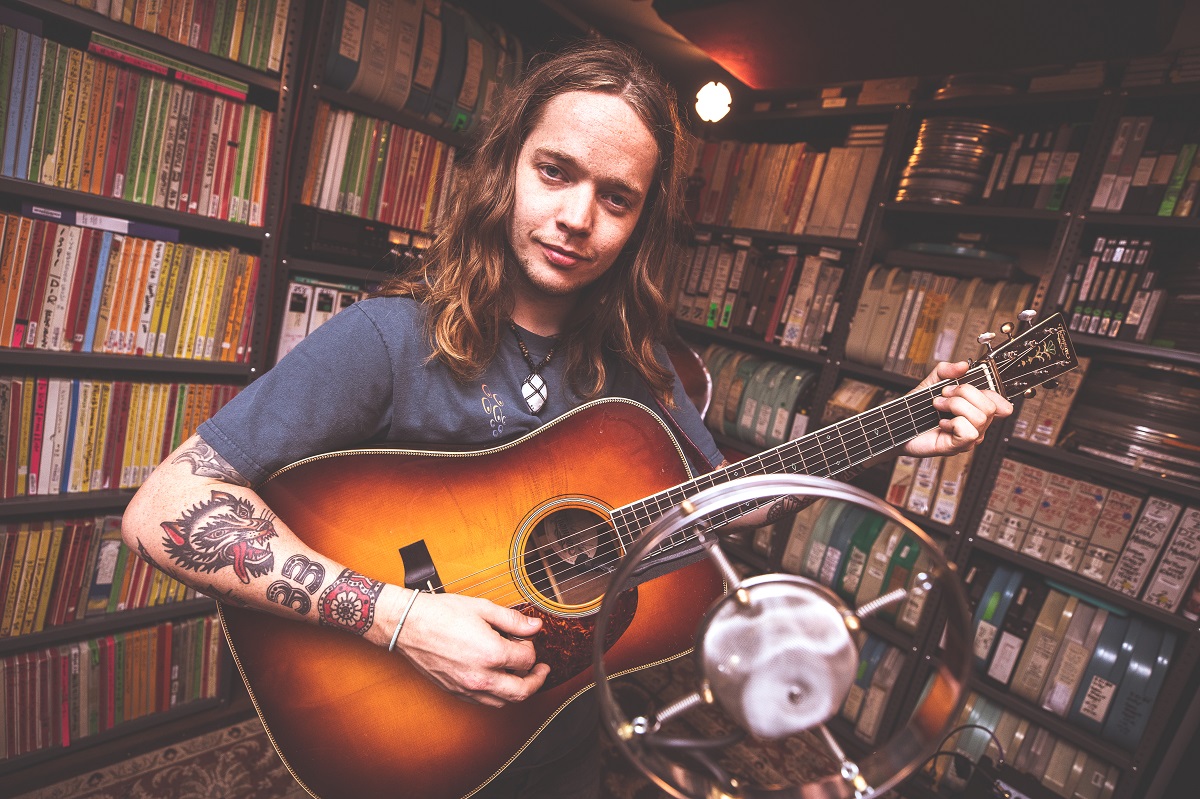
The reigning IBMA Guitar Player of the Year will be hopping from venue to venue as part of a livestream series that serves as a fundraiser for important organizations, as well as a reunion with his band. He’ll launch the series at Nashville’s newest venue, Brooklyn Bowl, for a pair of shows on July 16 and 17. The run concludes on July 26 at 3rd & Lindsley. (Get the details.)

“Those are my boys and I’m just lucky to play with them,” he says of mandolinist Jarrod Walker, banjo player Billy Failing, and bassist Royal Masat. “I haven’t been able to hang with them a bunch. We went from being around each other 24/7, for months and months and months on end, to never seeing each other, period. So I’m just excited to get back together with my band, and not only play music, but just to be with them, and hang out, and make jokes. I just love those guys, you know?”

With time off the road, Billy Strings says he’s been redirecting his attention to his other hobbies, including fishing and hot rods. Looking ahead, he’ll also compete for IBMA’s 2020 Entertainer of the Year – his first time nominated in that category. (He’s also the reigning champ in the New Artist category, as well as Guitar Player of the Year.) In between visits to the lake and the garage, he called in to BGS.

BGS: Do you think you’ll approach each of these nine shows differently?

Billy Strings: Yeah, we usually try to do that anyway with the set lists. Each show has its own set list and its own vibe. It depends on where we are and where we’re playing. When I write the set list, a lot of times I take into consideration geographic locations or famous people that may have lived around there. Anything like that I can throw into the set to make it relevant. So, yeah, for each show, we’re going to approach them just like we would in that way.

Also, we might cater to the specific venues. We’re playing the Station Inn and that’s a classic bluegrass place, so we might play a bunch of bluegrass that night. We’re playing Exit/In and City Winery and those are different vibes. City Winery can be our real classy, Frank Sinatra show, and at Exit/In we can get really psychedelic and rock out.

You’ll have an international audience tuning into these shows, so this is a chance for people who have never been to Nashville to see what it’s like. For those who may not understand the diversity of the music community here, how would you describe it to them?

It’s a big melting pot. Like you said, it’s very diverse. And there’s a lot of younger musicians that are on fire! Marcus King and Molly Tuttle and Sierra Hull… just so many people that are killing it. They all live around there. It’s a really great place to be as a musician. There are always people to make music with, and to pick with, and write music with. We’ll see if we can get a couple of guests to come down. Yeah, Nashville’s just crazy, man. You walk into the grocery store and you run into your favorite musician.

There’s money being raised through these concerts, and one of the beneficiaries is Backline, which supports mental health in the music industry. What is it about Backline that made you want to include them?

I, myself, personally have struggled with anxiety and panic attacks on tour, on the bus, on stage, and there’s a lot of people in the industry that suffer with the same shit. A lot of people may not speak out about it, or try to hide it, or don’t know who to look to for help. We just lost Jeff Austin and we just lost Neal Casal. There are a couple of other folks that are good friends of mine, that are traveling musicians that have been working so hard, and I think that has a huge deal to do with anxiety and depression.

I mean, when you’re in the limelight and you’re on stage and everybody wants to take your picture all the time, a lot of times it almost can be lonely. You never get any alone time and it can get weird. I know Jeff probably struggled with that. He told me about how he struggled being in the limelight and everybody critiquing his every move and everything he does is under scrutiny. That’s not a good place to be. …

The music industry can be really tough, believe it or not, for people who are on the stage and for people who are in the crews. There are plenty of organizations that help with that, whether it’s getting musicians health insurance or dental work or finding somebody a therapist. Backline is a huge, generalized hub where you can research and find all those different organizations and read about what is the right direction for you. You can even get with somebody on Backline and they’ll help you figure it out.

You also have the ACLU and the NAACP Legal Defense and Educational Fund as beneficiaries of this event. Why was it important for you to include them?

Well, because there’s a huge movement happening right now that I think is very important. Black people have been treated like shit, a lot, for a long time. And I just want to be on the side of history that is not an asshole. I got a lot of Black friends and my niece is Black. I’ve got family and friends and people that I love — and it shouldn’t even matter. …There’s a lot of miscommunication, a lot of divide, a lot of crazy shit going on in the country right now. I’m just all for love, man. I’m all for equality, I’m all for peace, so I wanted to donate a portion of the proceeds from these events to those organizations, just to help out.

Who are some Black musicians that influenced you?

Jimi Hendrix, definitely. Right off the bat. That’s the first guy I think of. He was amazing. Mississippi John Hurt, you know, he was a huge influence on Merle and Doc Watson. That’s who I grew up listening to, and I heard all that Mississippi John Hurt flavor in Merle Watson’s playing. That comes from the blues, the Delta blues. It goes on to Muddy Waters, B.B. King, all those cats. James Brown, come on!

I mean, without Black music, would there even be rock ‘n’ roll? I don’t even know if there would be bluegrass! Bill Monroe learned the blues from Arnold Schultz, a Black man who got him his first job. If you think about “bluegrass” – the word “blue” is in there from the blues. It’s got blues notes in it. A lot of bluegrass is just fast blues. And that’s Black music. Arnold Schultz taught Bill Monroe about that, and then he incorporated it into his music. All the music that we’re all inspired by has roots in Black music.

You mentioned Doc Watson, and of course he was loved by the folk community and the bluegrass community. Did folk music influence you, coming up?

Yeah, I think there was a point where I really got turned onto Bob Dylan and his lyrics. A lot of the old songs that I grew up playing is considered folk music. The Carter Family stuff and a lot of the Doc Watson stuff. …My friend Benji’s family used to have these gatherings, like family reunions, where they would all play bingo. I went to one of those and won a bingo, so I got to go up to the table and pick a prize. And I picked Blonde on Blonde. …I started really getting into those lyrics and all of those words.

That’s where I started realizing, OK, I like Doc Watson a bunch because he’s such a beautiful guitar player and singer, among many other reasons. Bob Dylan does what Doc Watson does on his guitar with his words. … And then I got into John Hartford really heavy, and if you listen to John Hartford’s early music, man, it is some of the most lyrically proficient stuff you’re ever going to hear! It’s amazing! There’s that old saying, “Three chords and the truth.” I really think there’s something to that. A lot of those old folk songs are so simple, but what they’re saying is so real that it cuts you.


Photo credit: Jesse Faatz

MIXTAPE: Kyle Nix’s Fiddle Tunes & Bluegrass Songs That Inspire

Hey everyone! My name is Kyle Nix and I fiddle for the Turnpike Troubadours. I’m also a solo artist and have a record coming out June 26 called Lightning on the Mountain & Other Short Stories. As a bluegrass fiddler and songwriter, I’ve put together a list of fiddle tunes and bluegrass songs from artists that have inspired me through my journey and continue to do so every time I hear them play. Hope ya enjoy these ditties! — Kyle Nix

Michael Cleveland – “Lee Highway Blues”

Michael is the most dynamic fiddler I’ve ever seen and perhaps the most dynamic musician. Incredible player.

Sara Watkins – “Long Hot Summer Days”

Sara and I are close to the same age and I’d see her at bluegrass festivals from time to time. I think it’s pretty neat that my band (Turnpike Troubadours) and Sara both recorded John Hartford’s “Long Hot Summer Days” around the same time. Love her version!

Byron Berline – “Flyin’ Fingers”

Byron’s a friend and a hero of mine. I’m always learning from him and he’s still got a fire in his belly. He composed and recorded “Flyin’ Fingers” a few short years ago and it’s a fine example of how he’s still “got it.”

Sierra Hull – “From Now On”

Sierra is one of the virtuosos. She makes it look easy. Big fan right here! Dig the tune “From Now On.”

Chance McCoy and the Appalachian String Band – “Yew Piney Mountain”

Love this version of “Yew Piney Mountain” by Chance McCoy. Chance is a real talent, from The Appalachian String Band to Old Crow Medicine Show.

Kenny Baker “First Day in Town”

Huge fan of Kenny Baker’s fiddling and his melodies abound. “First Day in Town” is a mean one!

John Hartford – “Steamboat Whistle Blues”

John Hartford’s Aereo-Plain is one of my favorite albums and “Steamboat Whistle Blues” is one of my faves on the record.

Aubrey Haynie – “Bill Cheathem”

A stellar version of “Bill Cheathem” here by Aubrey Haynie — a fantastic, killer fiddler!

Alison Krauss & Union Station – “Man of Constant Sorrow”

This is the one that kicked off the bluegrass craze of the early 2000s. Each member of this band, a Giant.

Ricky Skaggs & Kentucky Thunder – “Shady Grove”

I remember the first time I heard this version…. My eyes about bugged out! Blisteringly fast, clean as a whistle. Outrageously good!

Byron Berline – “Sally Goodin”

Byron’s version of Sally Goodin is the quintessential version of the song. Here, he’s joined by Bill Monroe and Earl Scruggs… and it’s beautiful, man!


Photo Credit: Amber Watson

BGS Long Reads of the Week // June 12

Don’t look now, but we’re approaching the mid-point of June and another week has passed us by. YIKES! Luckily, we have another week’s worth of long reads for you, too!

The long-winding catacombs of the BGS annals and archives have so much to offer. As we share our favorite longer, more in-depth articles, stories, and features to help you pass the time, take a minute to follow us on social media [on FacebookTwitter, and Instagram] so you don’t miss a single #longreadoftheday pick!

This week’s long reads travel from the canyon drives above Hollywood to Pavement to a former Oregon poet laureate to everyone’s favorite five-stringed instrument. Check ’em out.

Stephen Malkmus of Pavement Ventures Down Acoustic Road on New Album

Stephen Malkmus, of the bristly, brainy 1990s indie rock band Pavement, joins a host of fellow alt-rockers in dabbling with folk and acoustic sounds. On a brand new album, Traditional Techniques, which was produced by Chris Funk of the Decemberists, Malkmus expands on the flickers of folk interest that have permeated his career, though he may not claim mastery of any of them. [Read our #CoverStory interview]


Sara Watkins Wants Us to Ride Along on Watkins Family Hour’s brother sister

Earlier this week we celebrated Sara Watkins’ birthday (June 8, for the record) with a revisit to our recent Artist of the Month interview where she walked us through her recent Watkins Family Hour album, brother sister. For the first time in their lifelong musical careers, Sara and her brother Sean focused on creating music centered on their own duo. brother sister was the result. [Celebrate Sara’s birthday with a read]


Aoife O’Donovan Finds Her Heart in the Verse of Others

Aoife O’Donovan’s latest EP, Bull Frogs Croon (And Other Songs), arrived in March. Our Cover Story unspooled the inspiration she gained via poet Peter Sears, the former poet laureate of Oregon, whose verse is utilized in three songs O’Donovan wrote and arranged with Teddy Abrams and Jeremy Kittel. The project is rounded out by a Hazel Dickens cover and a classic folk song, giving listeners a sampling of each of O’Donovan’s folky expertises. [Read the interview]


The Byrds’ Chris Hillman Reflects on Laurel Canyon and Why He Had to Leave

A new, two-part documentary, Laurel Canyon, traces the comings and goings of several generations of folk rockers down Sunset Boulevard and up into the hills. Chris Hillman (The Byrds, The Flying Burrito Brothers), one of the canyon’s earliest and most famous residents, about the new film, the community, the music, the neighborhood, and why he had to leave. [Read the full story]


Mixtape: Ashley Campbell’s Banjo Basics

With her classic 2018 Mixtape banjoist and singer/songwriter Ashley Campbell reinforced the deeply held BGS belief that– MORE!! BANJOS!! From songs by her late, legendary father Glen and her godfather Carl Jackson to classics from folks like J.D. Crowe, John Hartford, and the Dixie Chicks, this mix has a little bit of everything and a whole lot of five-string. [Read & listen]