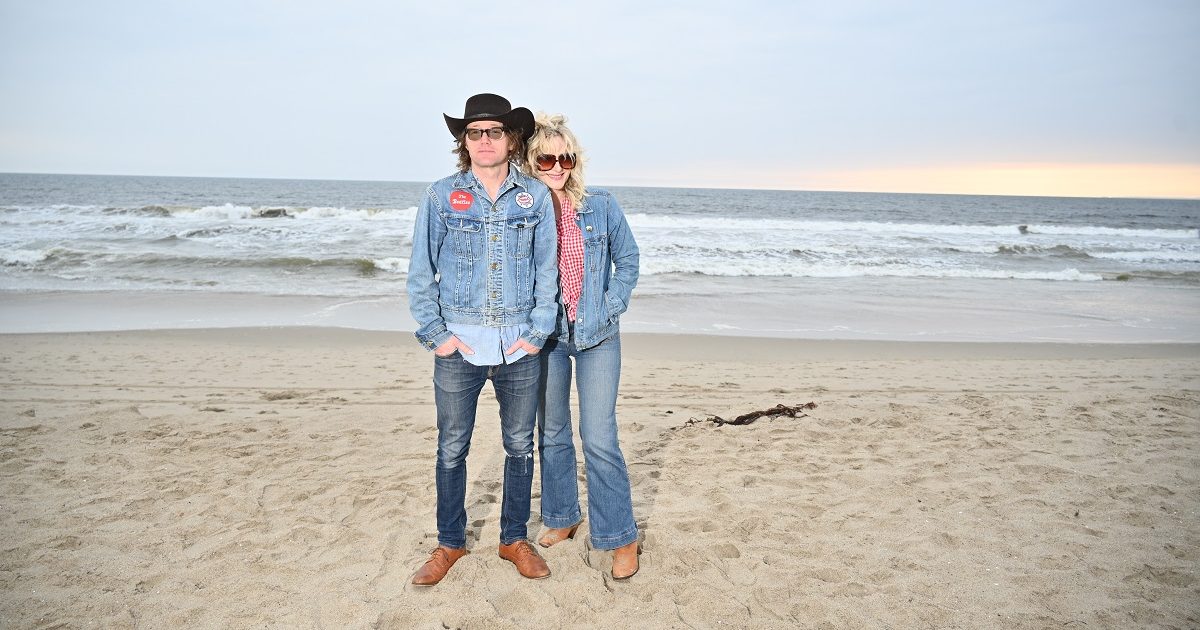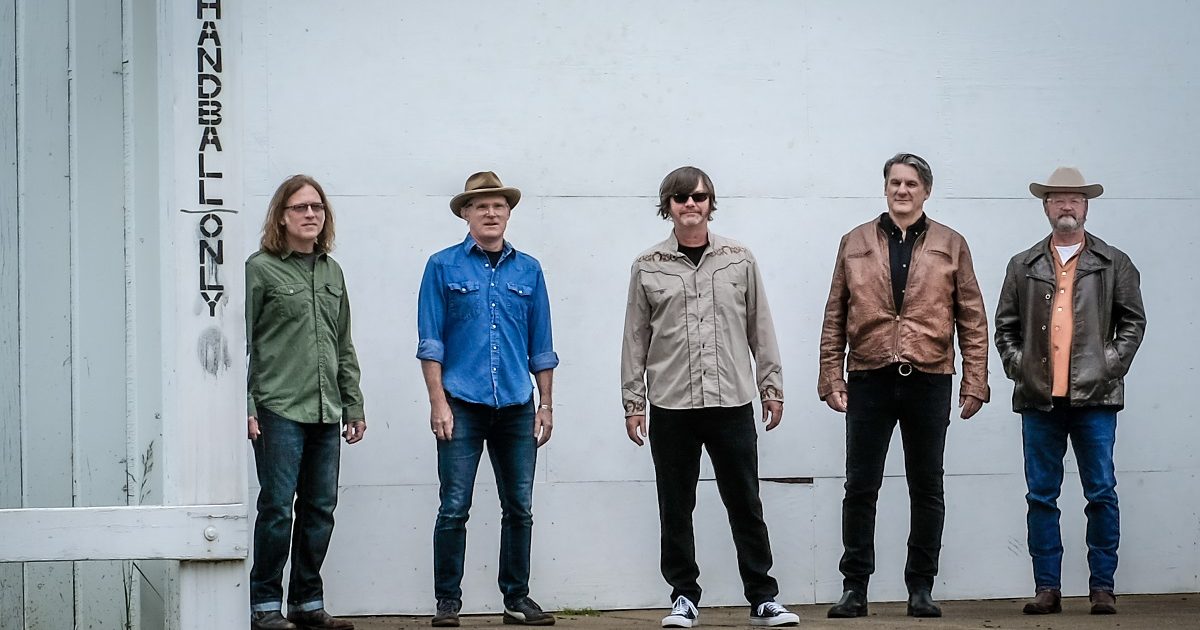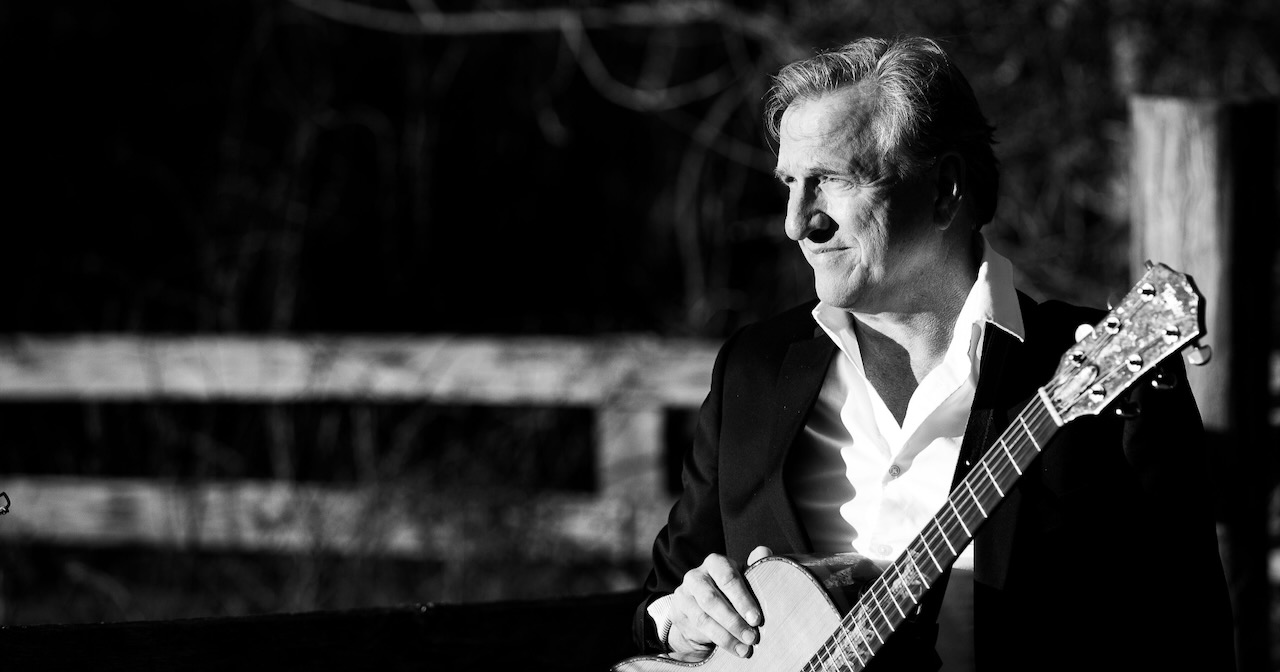
Artist:Whitehorse (Luke Doucet and Melissa McClelland) Hometown: Toronto, although the band was conceived while we were living in Hamilton, Ontario — and we’re temporarily living in Winnipeg, Manitoba, for a year. I know… simple question; complicated answer. Latest Album:I’m Not Crying, You’re Crying (out January 13, 2023) Rejected Band Names: Yellowknife (also a city in the north of Canada)
Which artist has influenced you the most … and how?
Our band and this record in particular (I’m Not Crying, You’re Crying) was really informed and inspired by our long love affair with Gram Parsons and Emmylou Harris, which began in earnest when we were living in Nashville over a decade ago. We’ve made lots of detours into different corners of the Americana landscape since then, and now maybe for the first time, we’re tying ourselves back to that time and place. There’s a sort of Beauty and the Beast element to Gram and Emmylou that we have always related to — or sought solace in. His vulnerable warble and her impossible majesty bring the songs to life in a way that is hard to define but there’s something beautiful in that juxtaposition. We’ve gleaned a lot from them over the years.
What rituals do you have, either in the studio or before a show?
We have a fairly simple pre-show ritual and that is: one drink; no more, no less. There’s a sweet spot where you’re just loose enough to get lost in the songs and make brave choices but not so loose your playing stinks. And yeah, maybe bring one on stage with you…
Which elements of nature do you spend the most time with and how do those impact your work?
We are spending a year living in Winnipeg, Manitoba, or “Winter-Peg, Man-it’s-cold-out” where as I write, the temperature is a frosty -20°C. We are a walking family — we don’t own a car — so we all have excellent winter parkas and boots to trundle across the frozen prairie city. Manitoba is also a sun bathed province so a blanket of snow and a vast bright blue prairie sky can make for a rare kind of beauty and mystery. We find ourselves leaning on that big sky ambience in the production choices we employ in the studio. Reverb-drenched guitars, midtempos and big spaces are all tributes to the Canadian winter. You hear them in records by Joni Mitchell, Neil Young, Blue Rodeo, k.d. lang, Colter Wall and The Sadies, too. Coincidence? Dunno.
What has been the best advice you’ve received in your career so far?
The best career advice actually came from a running coach on the eve of my (Luke’s) 2013 Boston Marathon race: “The hay is in the barn” is what my coach Tanya Jones offered me when I called her in a panic over my impending pre-race insomnia. She reminded me that the work had been done, the miles had been logged, and that the difference between success and failure would come down to training and hard work — which I had done. Add a dollop of adrenaline and a sleepless night won’t matter, since “the hay is in the barn,” i.e., the harvest had been collected. She was right (2:55:11, meaning I finished my race a full hour before the horrifying detonation of the two bombs that marred the event that year) and that advice has helped me (and us) ever since.
If you had to write a mission statement for your career, what would it be?
Follow the muse wherever she wanders, know that this game is a long one, spend more time on the finer points than you think you need to, assume your fans to be smarter than you and never forget that if you’re lucky, the very act of playing the show is tantamount to stopping to smell the roses.
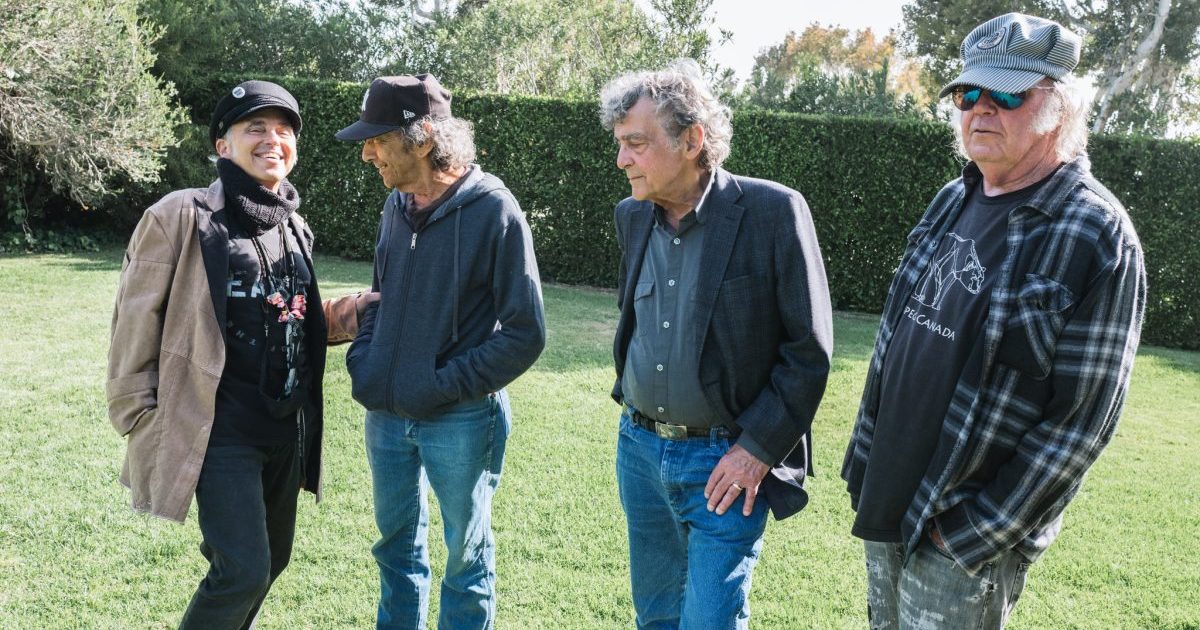
Artist:Neil Young with Crazy Horse Song: “Love Earth” Album:World Record Release Date: November 18, 2022 Label: Reprise Records
In Their Words: “The reason I wrote ‘Love Earth’ is because I see it as a simple message. If you do good things to Earth and try to keep the planet clean and taken care of, she will take care of you and your grandchildren in return. It’s a positive way to look at climate change. Do what you can. Try not to support factory farms. Try always getting clean food. Organic is clean. Local usually is clean. Remember the animals piled on top of one another in the factory sheds where they live their sad lives to make the hotdogs you get in the big stores. Don’t support that. Learn what you are eating. Remember climate change started years ago with factory farms’ destructive practices. Try to remember family farms with green fields and cows grazing peacefully. Strive for clean food. Learn the source. Think about the cost to Earth as well as the cost to your wallet. It’s not easy or convenient to do but it’s good for your grandchildren’s future.”
The image of bluegrass is mountain music played and heard at high altitudes and towns like Deep Gap and remote mountain hollers across the Appalachians. But the earliest form of the music originated at lower elevations, in textile towns across the North Carolina Piedmont. As far back as the 1920s, old-time string bands like Charlie Poole’s North Carolina Ramblers were playing an early form of the music in textile towns, like Gastonia, Spray, and Shelby – in Cleveland County west of Charlotte.
In this second episode of Carolina Calling, a podcast exploring the history of North Carolina through its music and the musicians who made it, we visit the small town of Shelby: a seemingly quiet place, like most small Southern towns one might pass by in their travels. Until you see the signs for the likes of the Don Gibson Theatre and the Earl Scruggs Center, you wouldn’t guess that it was the town that raised two of the most influential musicians and songwriters in bluegrass and country music: Earl Scruggs, one of the most important musicians in the birth of bluegrass, whose banjo playing was so innovative that it still bears his name, “Scruggs style,” and Don Gibson, one of the greatest songwriters in the pop & country pantheon, who wrote “I Can’t Stop Loving You,” “Sweet Dreams,” and other songs you know by heart. For both Don Gibson and Earl Scruggs, Shelby is where it all began.
Subscribe to Carolina Calling on any and all podcast platforms to follow along as we journey across the Old North State, visiting towns like Greensboro, Durham, Wilmington, Asheville, and more.
Music featured in this episode:
Charlie Poole & The North Carolina Ramblers – “Take a Drink On Me” Flatt & Scruggs – “Ground Speed” Don Gibson – “I Can’t Stop Loving You” Andrew Marlin – “Erie Fiddler” (Carolina Calling Theme) Hedy West – “Cotton Mill Girl” Blind Boy Fuller – “Rag Mama, Rag” Don Gibson – “Sea Of Heartbreak” Patsy Cline – “Sweet Dreams ” Ray Charles – “I Can’t Stop Loving You” Ronnie Milsap – “(I’d Be) A Legend In My Time” Elvis Presley – “Crying In The Chapel” Hank Snow – “Oh Lonesome Me” Don Gibson – “Sweet Dreams” Don Gibson – “Oh Lonesome Me” Chet Atkins – “Oh Lonesome Me” Johnny Cash – “Oh, Lonesome Me” The Everly Brothers – “Oh Lonesome Me” Neil Young – “Oh Lonesome Me” Flatt & Scruggs – “Foggy Mountain Breakdown” Bill Preston – “Holy, Holy, Holy” Flat & Scruggs – “We’ll Meet Again Sweetheart” Snuffy Jenkins – “Careless Love” Bill Monroe – “Uncle Pen” Bill Monroe – “It’s Mighty Dark To Travel” The Earl Scruggs Revue – “I Shall Be Released” The Band – “I Shall Be Released” Nitty Gritty Dirt Band – “Will The Circle Be Unbroken” The Country Gentlemen – “Fox On The Run” Sonny Terry – “Whoopin’ The Blues” Sonny Terry & Brownie McGee – “Born With The Blues (Live)” Nina Simone – “I Wish I Knew How It Would Feel To Be Free”
BGS is proud to produce Carolina Calling in partnership with Come Hear NC, a campaign from the North Carolina Department of Natural & Cultural Resources designed to celebrate North Carolinians’ contribution to the canon of American music.
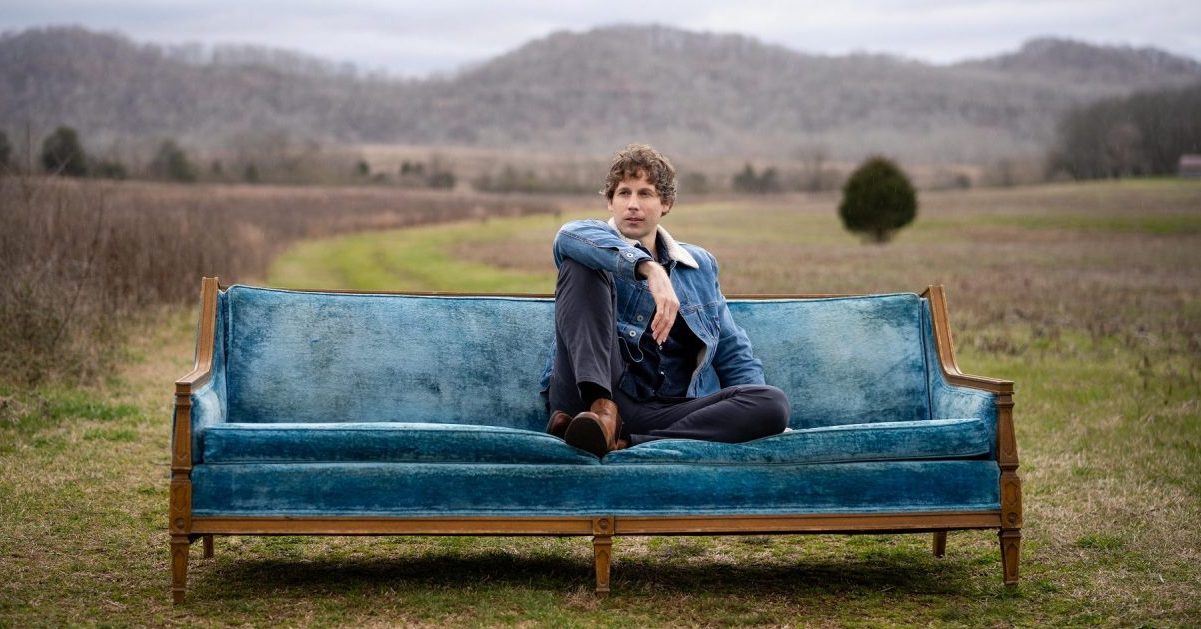
I’m not sure what it is about this era that has permanently ensnared my soul. Perhaps the raw, confessional nature of the troubadour has always reassured me that I am not alone. These are the songs that made me abandon my fine art career at the age of 18 and embark on a lifelong quest to appease the songwriting gods. The fact that all of these songs can be fully delivered with one instrument and one voice has always amazed and inspired me. It was wonderful to record a few of these classics on my current EP, Seventies Roots, part of a double album of covers that I’m releasing in February 2022 called Forget-Me-Nots. — Jesse Terry
Joni Mitchell – “A Case of You”
Was there any doubt it would start with Joni and a song off her masterpiece, Blue? I put Joni in a Jimi Hendrix-type category, where it feels like the artist was transported from outer space, in perfect revolutionary form. Her songs, chord progressions, lyrics and vocals have always been otherworldly to me. It was thrilling to record this song on my Seventies Roots EP. Actually it was intimidating, but in the end I love the song too much not to do it.
James Taylor – “Fire and Rain”
The blueprint for confessional, honest songwriting. It’s awesome to hear JT tell the story behind the song and know that he put every last personal detail into his lyrics. This inspired me to be vulnerable and completely open in my writing. Nobody sings or plays like JT. And to this day, if I’m having a rough go of it, I blast his records and let that warm voice console me.
Jackson Browne – “For a Dancer”
Another true original with an unmatched voice and sense of melody. I think Jackson is without a doubt one of the best lyricists of all time. His lyrics and melodies flow effortlessly off the tongue and never tire.
Bruce Springsteen – “Growin’ Up”
Springsteen is a legendary rocker and performer. But what really impresses me about the Boss is his songwriting. All of his anthems can be stripped down to an acoustic guitar and still deliver with the same emotion. There aren’t many songwriters that can paint pictures like Springsteen. With him, you’re not just listening to the song, you’re IN the song or maybe even one of the characters.
Carole King – “Will You Love Me Tomorrow”?
Like all of the truly great songwriters, her songs transcend and feel universal and timeless. This song feels perfect, whether you’re listening to Carole’s version or The Shirelles.
Tom Waits – “Shiver Me Timbers”
A truly masterful and utterly unique songwriter. Waits writes about characters and tells stories better than anyone. His lyrics and penchant for perfect timing are well-known, but I also adore Tom Waits’ gift for melody and harmony. His melodies break my heart and are married flawlessly to the lyrics.
Paul Simon – “American Tune”
If you created a singer-songwriter in a lab it would be Paul Simon. Some of the most endearing lyrics and melodies of all time. His songs are so perfect, it’s easy to overlook his guitar playing and singing, which are equally remarkable. Music schools often try to dissect his songs to display the craft of songwriting, but I get the sense that this magic simply flowed out of him.
Elton John – “Mona Lisas and Mad Hatters”
Over the years, some very talented folks have sent me lyrics and poetry to set to music and I’ve always been disappointed with my results. That makes me even more knocked out by Elton John’s ability to marry Bernie Taupin’s lyrics to the most perfect melodies, tempos and chord progressions. I recorded “Goodbye Yellow Brick Road” on my Seventies Roots EP, but I easily could have chosen “Mona Lisas and Mad Hatters,” or any number of tunes. Way too many great options to choose from.
Neil Young – “Comes a Time”
What songwriter list would be complete without Neil Young? Neil is raw unfiltered emotion, live to analog tape with no rewriting or editing. That makes him so special. I can’t think of another songwriter that can cover so much ground with such authenticity.
Randy Newman – “Marie”
Randy Newman is a genius. His character-based songs are on the same level as Tom Waits and his lyrics are just as evocative, biting and unique. It’s impossibly rare to find Newman’s talents as an orchestrator and arranger in the body of a singer-songwriter. “Marie” especially breaks my heart. I believe every word Randy Newman sings.
Townes Van Zandt – “No Place to Fall”
A mythical figure in songwriting, Townes wrote some of the most beautiful and enduring songs of all time. “No Place to Fall” has always spoken to me and broken my heart. Was an honor to record this one.
Bob Dylan – “Simple Twist of Fate”
I admit, as a young kid I was more seduced by the “singers” in this group — artists like Joni, James and Jackson that could sing the phone book. But eventually I became spellbound by Dylan and my affection for him has never waned since. And as I listened more in my life, I realized what an amazing singer and communicator he was. His phrasing, his lyrics, his melodies and his hooks convey the lyrics perfectly. There will never be another Dylan.
Loggins & Messina – “Danny’s Song”
Kenny Loggins went on to have a huge solo career, but the music that he released in the ‘70s with Jim Messina in Loggins & Messina will always be my favorite work. My father used to sing this song to me when I was a kid and it felt like he wrote it for me.
Stevie Wonder – “Love’s in Need of Love Today”
Admittedly my playlist is Laurel Canyon-heavy and that’s what inspired me the most. But I also remember Stevie blaring through speakers as I was growing up. Again, one of the classic singer-songwriters that will never be replaced nor imitated. One in a billion. And on top of that, one of the best, most flexible voices of all time.
Crosby, Stills, Nash & Young – “Our House”
I’ll end my playlist with this classic song that transports you to another time and place. You can almost smell the flowers blooming in this song.
Artist:Son Volt Hometown: St. Louis, Missouri Song: “Livin’ in the USA” Album:Electro Melodier Release Date: July 30, 2021 Label: Thirty Tigers
In Their Words: “The song didn’t start out as an intentional homage thing, but in retrospect I see it as a nod to Springsteen’s ‘Born in the USA’ or Neil Young’s ‘Rockin in the Free World.’ Those songs established a thematic tradition. I’m just updating and asking similar questions. How can so much wrong happen in this country that’s held up as an example of what’s righteous? Is America the healthiest or happiest country? Democratic Darwinism is the brutal American reality……” — Jay Farrar, Son Volt
Artist:Mara Connor Hometown: Los Angeles, California Song: “Old Man” (Neil Young cover) Album:Decades EP Release Date: May 20, 2021 Label: Side Hustle Records
In Their Words: “I recorded this with Jon Estes in Nashville at the same age Neil Young was when he wrote it (’24 and there’s so much more’) about a caretaker who lived on his ranch. When I first heard the song I was struck by the empathy exhibited by such a young songwriter. I’m also impressed by his economy of language, how in so few words he conveys so much: that as humans, we’re more alike than we are different, and at our core, we all just want to be loved. It’s an affirmation that if we took the time to really look into each other’s eyes and see the humanity there, the world would be far better for it. Can you imagine an insightful folk rock song about an elderly ranch foreman charting on the Billboard Hot 100 today? Me neither, and that’s a shame.” — Mara Connor
Since our first excursion to Bonnaroo in 2013 BGS has been filming, crafting, and releasing Sitch Sessions with the absolute best and brightest musicians and artists in roots music. We’ve been so fortunate to work with new and old friends, freshly discovered and up-and-coming artists, and legendary performers with enormous legacies. After nearly eight years, we’ve amassed quite an archive of sessions, and within that archive more than a few stellar songs and performances have seemingly fallen to the wayside.
These 8 Sitch Sessions from the BGS archives are a few of our most favorite, underrated moments from our years of shooting sessions. We hope you’ll enjoy a few of these “reruns” — and take a deep dive into our past featured videos yourself!
Nathan Bowles – “Burnt Ends Rag”
One of our favorite shooting locations is a rooftop in downtown Los Angeles, where countless BGS Friends & Neighbors have taped their Sitch Sessions over the years. One of our favorites is this clawhammer banjo performance by Nathan Bowles, which demonstrates that old-time music and its trappings can be perfectly at home in modernity — and in urban settings, too. More banjos in DTLA, please and thank you!
Andrew Combs – “Firestarter”
One fine AmericanaFest week in Nashville in September a few years back we partnered with Crowell Floral, Jacob Blumberg, and Dan Knobler on The Silverstreak Sessions, a series of Sitch Sessions set in a vintage Airstream and flanked by gorgeous flowers and verdant foliage. At the time, “Firestarter” had not yet been released — now you can hear it on Combs’ 2019 release, Ideal Man. For this session all Combs needed was his guitar, this heartfelt song, and that honey sweet, aching voice.
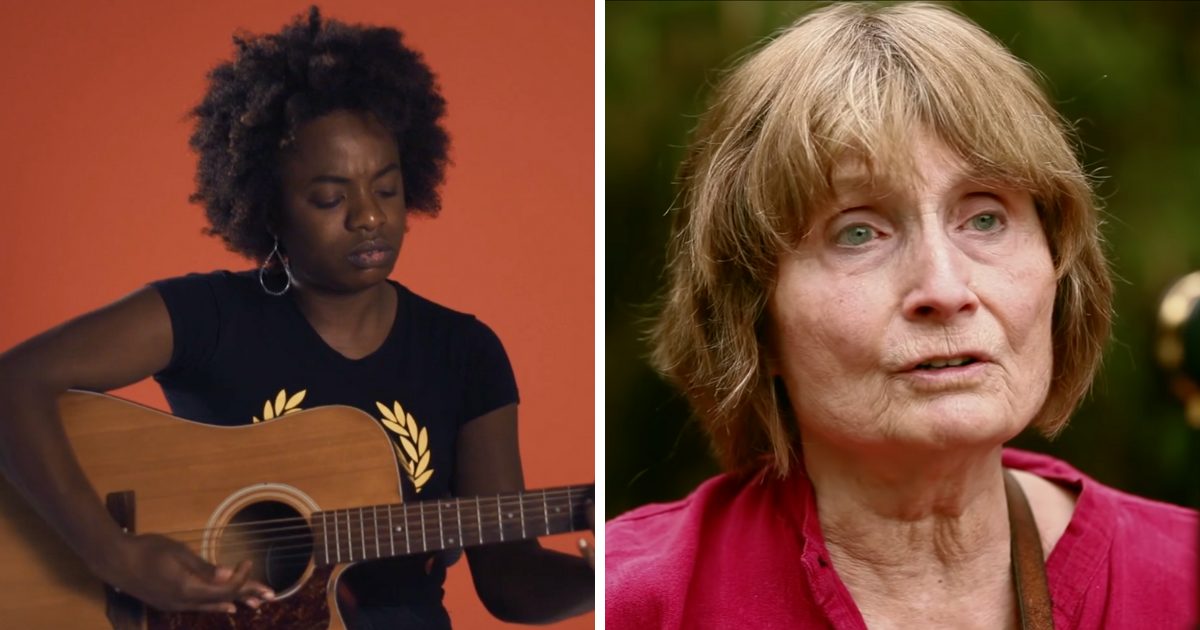
Alice Gerrard – “Maybe This Time”
Every opportunity we’ve had to collaborate or speak with Bluegrass Hall of Famer and living legend Alice Gerrard, we’ve taken it! This session is two of a pair we shot with Gerrard, the other a stark, awe-inspiring a capella number that was quite popular on our channels. This Alice original, “Maybe This Time,” is cheerier, lighter, and has that charming old-time bounce in its bluegrass bones.
With a new documentary film available, You Gave Me a Song, perhaps it’s about time for another session with this hero of ours!
Ben Sollee – “Pretend”
Maybe you’ve seen Mark O’Connor play fiddle while skateboarding, or Rushad Eggleston performing all manner of acrobatics and avant garde silliness with his cello, but do you remember when Ben Sollee toured America by bicycle? In this 2016 session, Sollee demonstrates his cello-while-pedaling chops.
We’re firm believers that the world needs more bluegrass, old-time, and Americana cello and we’re happy to return to this archived Sitch Session for that reminder!
Caroline Spence – “Mint Condition”
Another session filmed on our home turf in Los Angeles, Nashville-based singer-songwriter Caroline Spence brought “Mint Condition” to her taping fresh off her debut, eponymous release on Rounder Records in 2019. “Mint Condition” displays Spence’s unique skill for writing strong, unassailable hooks that on almost any other songwriter’s page might trend cheesy or trite. Spence instead displays the simple profundity in her lyrics, a skill evidenced plainly in this session.
Laura Veirs – “July Flame”
Over the years, we’ve partnered with festivals, companies, and brands on tailor-made sessions — like our Portland series, where we partnered with our friends at Ear Trumpet Labs on some of our most popular, most viral Sitch Sessions ever! This beautiful, sunny, summery rendition of “July Flame” by Laura Veirs certainly deserves a re-up.
In 2016, after this session was published, Veirs went on to release case/lang/veirs with Neko Case and k.d. lang. Remember that!?
Kelsey Waldon – “Powderfinger”
We first filmed a Sitch Session with Kentuckian country singer and songwriter Kelsey Waldon in 2015 — after the release of her debut album, The Goldmine, in 2014. In the time that’s elapsed since, Waldon has followed her golden debut with two more impeccable studio albums, the latest being White Noise / White Lines, which was released on the late John Prine’s Oh Boy Records in 2019. On the tail of White Noise / White Lines, Waldon gave us this gorgeous cover of Neil Young’s “Powderfinger” displaying her talent for cover song interpretations as well as original song sculpting.
Sunny War – “He Is My Cell”
Guitarist and singer-songwriter Sunny War has just released a brand new album, Simple Syrup, as charming and entrancing as ever and built firmly, yet again, upon her unique and idiosyncratic guitar picking style. In 2018 she released With the Sun, an album that included “He Is My Cell,” which ended up featured in a Sitch Session in early 2019 on BGS.
War recently appeared as a guest on our Shout & Shine series – read our interview here.
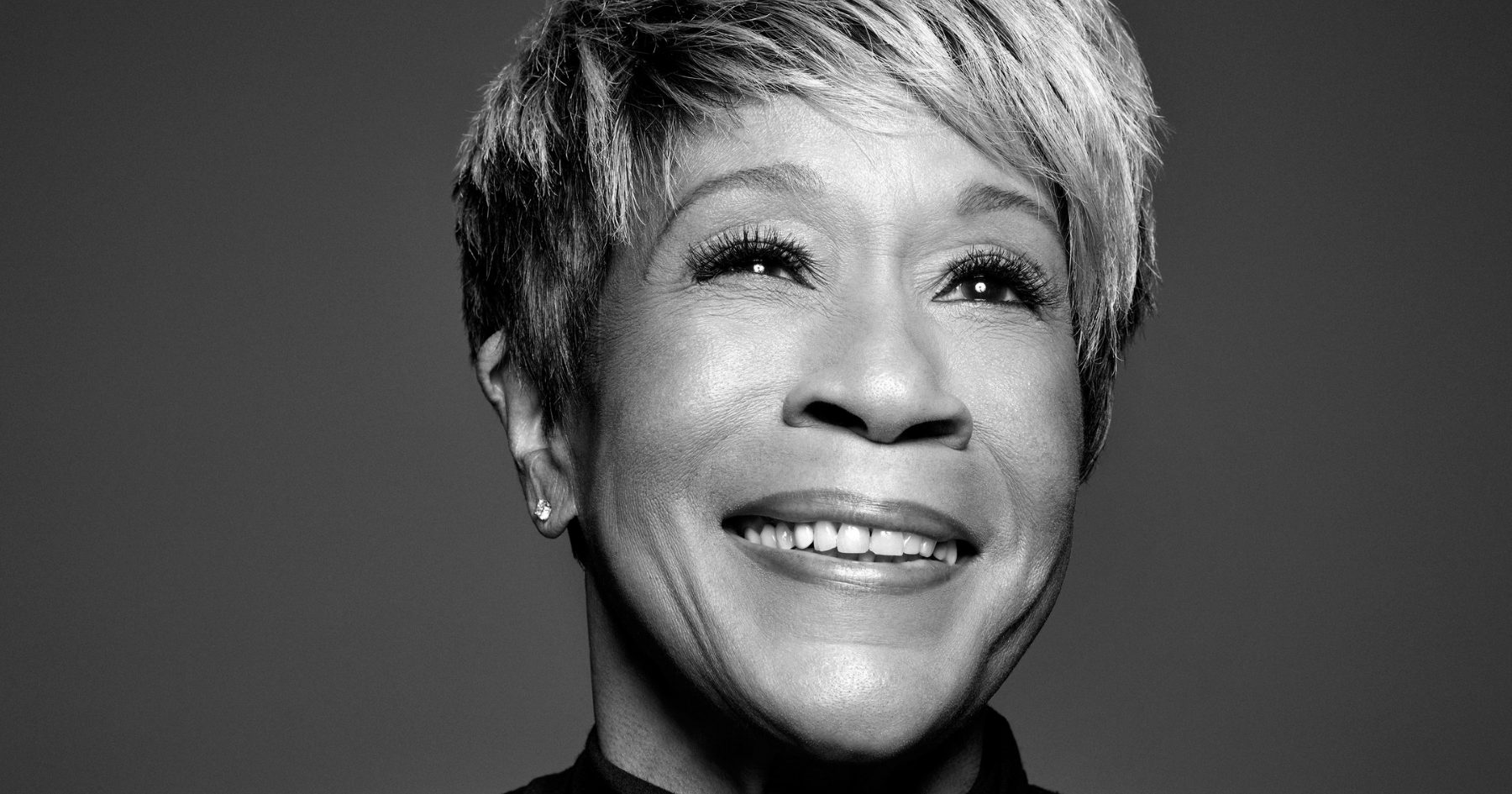
Covering her remarkable six decades in show-business, we dive deep into LaVette‘s beginnings as a Detroit hit-making teenager during Motown’s heyday (her neighbor was Smokey Robinson), to her early career touring with Otis Redding and James Brown, and the hard times that followed, as a music industry steeped in racist and sexist traditions largely turned its back on her.
While other soulful song stylists like Sharon Jones, Tina Turner, Mavis Staples and others saw their status and popularity rise with time, LaVette remains an underrated, best kept secret on the Americana circuit, with younger listeners just discovering her remarkable work covering anyone and everyone from The Beatles to Neil Young to Billie Holiday.
After nearly dropping out of music, her remarkable comeback began in 2005 with a string of acclaimed records — bringing her from half-filled bars to singing “Blackbird” at The Hollywood Bowl with a 32-piece orchestra, being nominated for five Grammy awards, and being inducted into the Blues Hall of Fame.
One thing you’ll notice immediately is her fiery laugh, which punctuates the episode — even when telling the darkest stories, like her early manager getting shot and her 1960s hits being recorded by white artists, leaving her versions largely forgotten. Her Grammy-nominated newest LP Blackbirds, produced by legendary drummer Steve Jordan, shows her at her most vulnerable best.
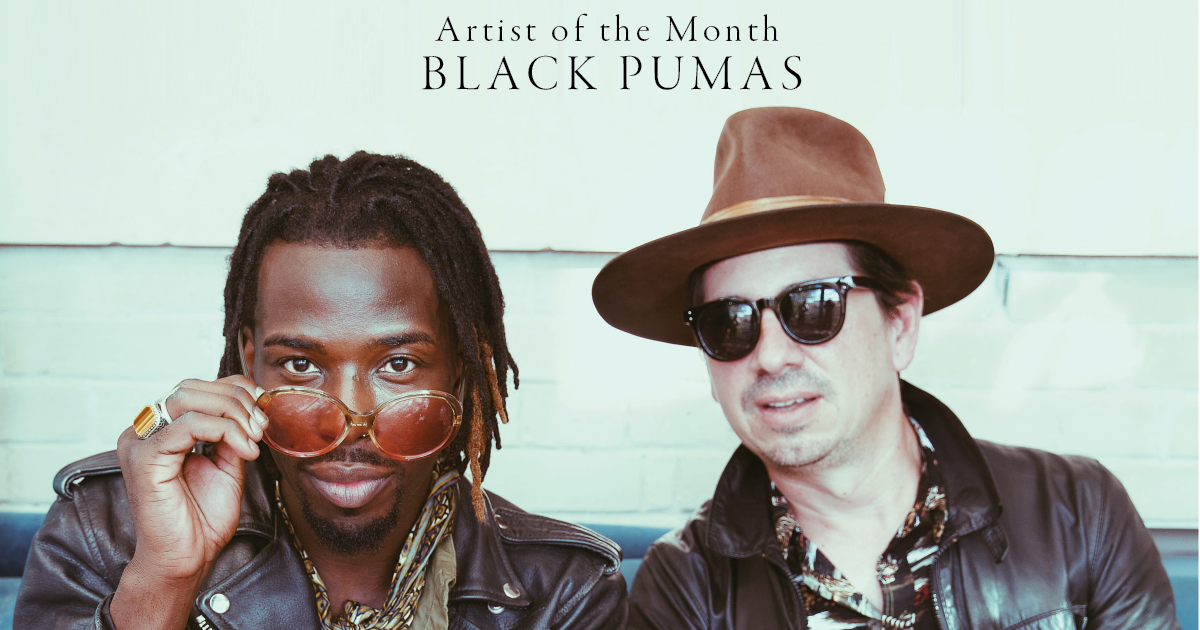
About four years ago in Austin, Texas, Eric Burton and Adrian Quesada were recommended to one another through a mutual friend — someone who could imagine the inevitable magic of pairing Burton’s magnificent singing to Quesada’s cool, pulsating productions. Although these two musicians didn’t know each other, they somehow needed each other. As a songwriter inspired by folk music and soul music alike, Burton sought a vehicle to carry him from busking to the bigger stage, while Quesada — already a Grammy winner for his work with Grupo Fantasma — sought that voice to flesh out the instrumental tracks he’d crafted in his studio, Electric Deluxe Recorders.
Nobody could accuse them of rushing it, as phone calls turned into studio collaborations, and ultimately a few gigs at the South Austin venue, C-Boy’s, just to show their friends what they were working on. However, once the secret was out, the lines to see them perform stretched around the block and Black Pumas promptly landed a recording contract, with a self-titled debut album landing in 2019. Since then, their partnership has led to four Grammy nominations, a trophy for Emerging Act of the Year from the Americana Music Association, an invitation to perform a song for the Biden-Harris inauguration, and even a Super Bowl commercial. In conversation, they are quick to credit each other with the sonic touches that have turned this intriguing duo into an international draw.
For the first part of our two-part Artist of the Month interview with Black Pumas, Burton and Quesada chatted with BGS about the roots of “Colors,” their first show together, and what the Austin music community is really like.
BGS: Finding the acoustic version of “Colors” was such a nice surprise. What kind of vibe were you going for when you recorded that version?
Eric: I think that the first time Adrian heard “Colors” was when I brought the guitar to the studio. I had been trying to record that song with different engineers and producers, and a lot of my friends would reflect that, “Man, the acoustic version has always been my favorite!” When I finally met Adrian, who was equally moved by the song, we were able to not necessarily think about it, really. Adrian started with a palette of sound that went hand in hand with the way that I write music as well. We just did it together and it came out how it did. We have amazing band members and we were able to just press record and do the thing.
Adrian: We recorded quite a few acoustic things, and as much as “Colors” is a Black Pumas performance, at the core it’s something that Eric wrote on acoustic guitar. So whenever you get to hear it like that, it’s more from the source.
I love the acoustic version of “Fast Car,” too. What was going through your mind when you heard that on playback for the first time?
Eric: You know, any time I play that song, a tear comes to my eye because it is one of a few covers that I knew when I was busking. It was a song that would move people to stick around, or tip, or want to engage after the song. So, it was an interesting feeling listening back to that song as a Black Puma, with Adrian Quesada, because I could feel how far I’d come from busking on the Santa Monica Pier to recording at Electric Deluxe.
Is there a lyric in that song that still tugs at your heart when you sing it?
Eric: The lyric that I really attach to is “You’ve got a fast car and I want a ticket to anywhere.” The first lyric is one of the most powerful lyrics. It sets the emotional canvas for the rest of the song. It’s just reflective of the strong desire in many people who start off in the troubadour style of playing and performing, a presentation to passersby.
Adrian, how did you approach that session, being a classic song that everybody knows?
Adrian: Oh man, I just tried to stay out of the way, honestly. Eric’s played it for so long and so well. We were going to work up an arrangement for the band to start playing it at our shows, but we didn’t get it together in time, so he just did it himself as an encore one night. All of us were watching from the side of the stage. It was like, man, why would we try to reinvent the wheel? I just try to complement the song, and the way that Eric emotes it is something that doesn’t need a lot. You don’t need to overthink it.
I love the falsetto on songs like “OCT 33.” It’s effective because you don’t use it all the time. Did you have to figure that out naturally? Or was there ever a conversation like, “Whoa, too much falsetto”? Or, “I think we need more”?
Eric: Honestly I come from playing folk music. I love Neil Young and Bob Dylan and dig on the Beatles — so when I first started playing music, I was playing acoustic folk soul music. When I got Adrian some tracks, I was living with a roommate and he was saying, “Hey man, I think you’re singing a little bit soft on these songs.” I said, “What do you mean?” And he’s like, “Just go back and listen to Wilson Pickett and Marvin Gaye and Otis Redding,” and when I did that, I was able to kind of integrate the way Marvin Gaye did that head voice, like, “Oooh!” That’s kind of his move. So, I was able to borrow some of the razor-sharp vocal sounds that you hear in these individuals to make some better paints for the canvas that was Adrian’s awesome production.
Adrian, you have a great vocal range to work with. What is that like for you as a producer, knowing you could take these arrangements anywhere?
Adrian: Yeah, I’m a big fan of the falsetto, but I was digging everything he was throwing out. So, when he goes falsetto, I go for it. When it’s not falsetto, unless I feel like it doesn’t work, I just let Eric’s instincts guide him, and what he feels like singing.
What do you remember about the first show you played together?
Eric: It was amazing, right? It was rad.
Adrian: We didn’t even rehearse a lot. We threw it together in a couple of days and we didn’t know what we were getting into. I remember thinking, like, “All right, this should be fun. Worst case scenario, we could drink some liquid courage before the show and have fun. But it completely surpassed my expectations and it was a blast, man. Those early shows we did at C-Boys still live in my memory as some of the best times.
Why did C-Boys seem like a good place to kick this off?
Adrian: It feels like a cool, downhome, neighborhood bar that has amazing music. Steve Wertheimer, who’s the owner, really believed in myself and Eric early on. It’s a competitive town for live music and he’s always been a huge supporter. We just sent him a song and he dug it, and gave us a residency. It was pretty amazing that he took a chance on it. Eric did a solo residency for a while at one of his other venues. He was always a big supporter.
Tell me what you mean when you say that the Austin music scene is competitive.
Adrian: I would say “competitive” in the way that there’s a lot of talented people, but not “competitive” in a way that’s cutthroat, you know what I mean? I feel like there’s a good support system, where everybody’s supportive of people. It’s not competitive in that way. It’s like, you better bring something to the table because there are a lot of people that play and are very talented.
So when this was all happening, were you thinking of a record deal and management and all that? Or was it more about just getting together to play?
Eric: I think we were just both stoked to get on a stage. At that point, we had spent a few months together in the studio. Adrian presented some instrumentals that he was working on, for me to then write songs over. And then I was introducing myself to Adrian through my songwriting and sharing some of the music that I came up with, for him to arrange around. We were having so much fun that we were saying, “Well, we should take this to the stage, just to see what our friends think about it. I don’t think either of us invited too many people to the show, or promoted it, or anything big like that. We were just curious about how it would go over with the people that we know.
Adrian: We just played and we weren’t thinking industry. We were just going to have fun. Originally we thought we would maybe play for a month or two. We didn’t have a big plan other than to play music. We didn’t think that far into the future. We thought, “We’ll do this until it’s not fun.” There wasn’t a detailed, long-term plan for anything. One thing was just leading to another.
Artist:Kandle and Kendel Carson Hometown: Vancouver, British Columbia Song: “Only Love Can Break Your Heart” Album:Birds EP Release Date: January 1, 2021
In Their Words: “As a ’90s kid surrounded by rock ‘n’ roll, I couldn’t help but fall in love with Neil Young. Many of his songs were the first I ever learned to play on guitar and his influence has always been a little bit present in my songwriting. Kendel Carson and I set out to do this project simply to bring a little joy into our lives and to those who choose to listen. These are dark times and often on a hard day, all I need to lift me up is a beautiful melody and a lyric I can relate to.” — Kandle
Photo credit: Jeff Mitchell
This website uses cookies to improve your experience. We'll assume you're ok with this, but you can opt-out if you wish.AcceptRejectRead More
Privacy & Cookies Policy
Privacy Overview
This website uses cookies to improve your experience while you navigate through the website. Out of these, the cookies that are categorized as necessary are stored on your browser as they are essential for the working of basic functionalities of the website. We also use third-party cookies that help us analyze and understand how you use this website. These cookies will be stored in your browser only with your consent. You also have the option to opt-out of these cookies. But opting out of some of these cookies may affect your browsing experience.
Necessary cookies are absolutely essential for the website to function properly. This category only includes cookies that ensures basic functionalities and security features of the website. These cookies do not store any personal information.
Any cookies that may not be particularly necessary for the website to function and is used specifically to collect user personal data via analytics, ads, other embedded contents are termed as non-necessary cookies. It is mandatory to procure user consent prior to running these cookies on your website.