You Gotta Hear This: New Music From Nefesh Mountain, Juliet Lloyd, and More

Quality over quantity is sometimes what it’s all about. This week’s edition of our premiere round-up is small but mighty, with brand new tracks and videos from a stellar collection of roots musicians.

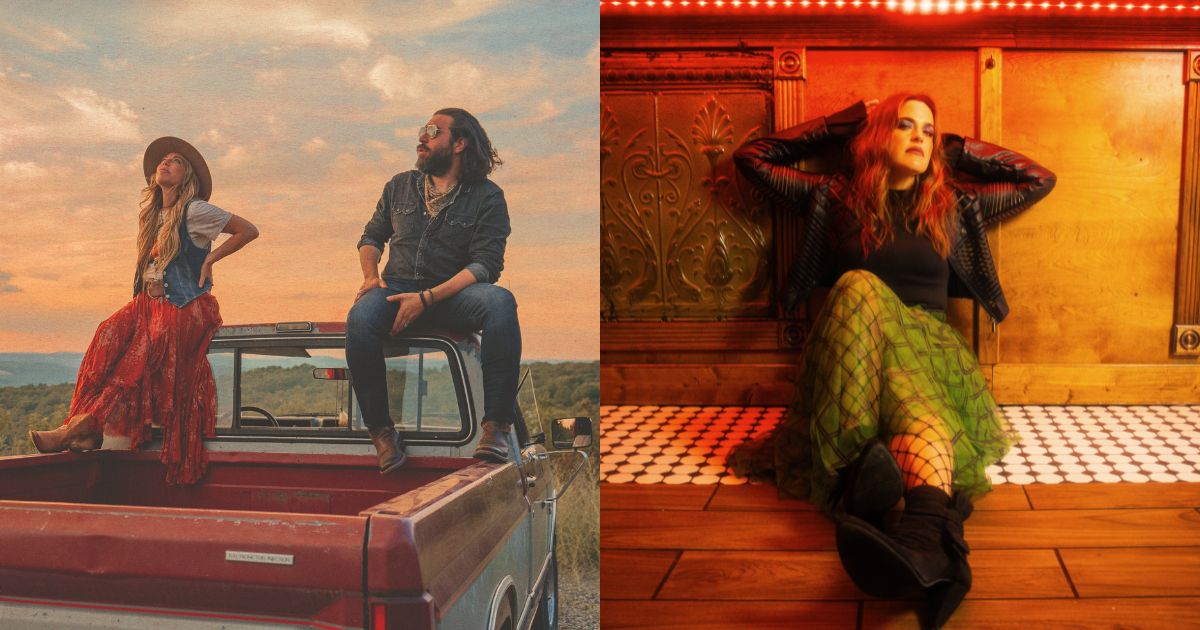
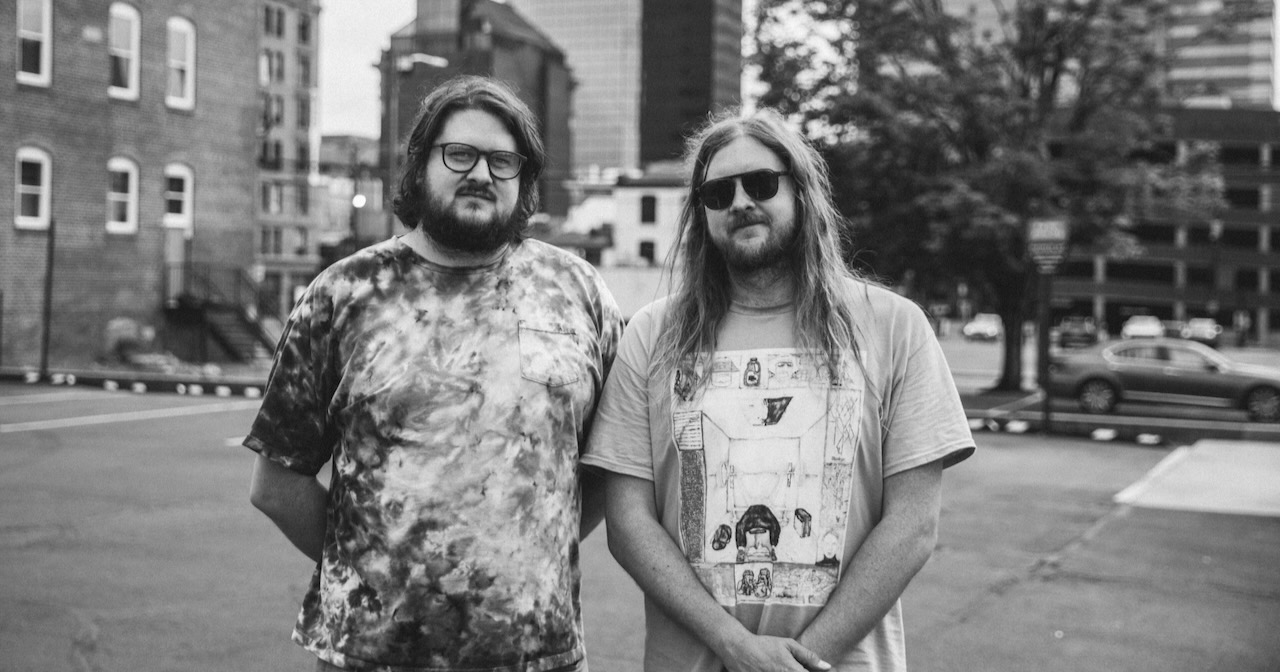
To kick us off, singer-songwriter Juliet Lloyd brings us a properly spooky video for her track, “Call Your Wife,” which was filmed at an abandoned amusement park in West Virginia. The song is about anger and shame, growth and change, running away and getting caught back up in it again, too. It’s an excellent lead in to spooky and scary season, that’s for sure.

Next, our friends Nefesh Mountain have a gorgeous new fall-tinged video for an original song, “Regrets In The Rearview,” that features an all-star lineup of bluegrass legends. It’s a paean to gratitude, to living life for the moment, and celebrates finding peace – and a home – in movement and change. We think it’s the perfect song to put on for your drive to the pumpkin patch or apple orchard.

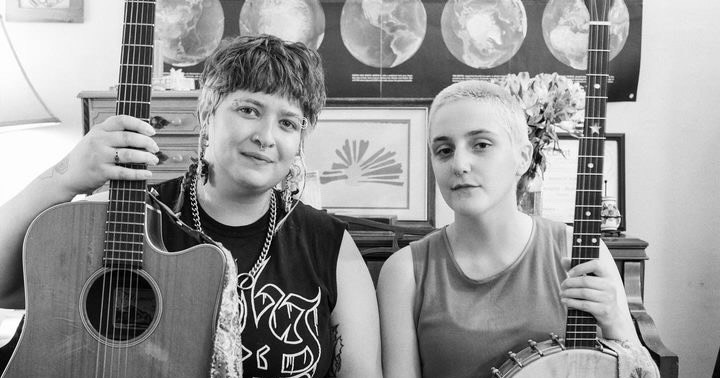
To wrap us up, California roots duo Two Runner – made up of Paige Anderson and Emilie Rose – perform “Late Dinner” live from a cozy front porch. They combine old-time, bluegrass, Americana, folk, and more into their own exemplary sound, which highlights the slightly melancholy story just perfectly.

It’s an apropos musical triptych for fall, for golden hour, for sipping some hot cider or cozying up beneath a blanket as the autumn rain falls outside. And, you know what we think… You Gotta Hear This!


Juliet Lloyd, “Call Your Wife”

Artist: Juliet Lloyd
Hometown: Washington, D.C.
Song: “Call Your Wife”
Album: Carnival
Release Date: October 25, 2024

In Their Words: “It’s funny to me that the most carnival-sounding song on the entire album is not the title track – it’s this one. ‘Call Your Wife’ was inspired by an anonymous text message that I got in the middle of the night. I had released another single from the album, ‘Pretty,’ a few weeks before, and it was a really personal song that parsed through my complicated feelings about an old relationship that I’ve mostly run from in the 20 years since. The text message said I wasn’t being fair to the guy in the song– and all of a sudden I was 18 again, feeling afraid and ashamed. And then I got angry.

“Todd Wright (who co-wrote and produced) and I managed to channel those feelings into a track that goes to a really unexpected place. It starts sweetly threatening and builds to a really satisfying, vengeful final chorus. I love the unhinged banjo and bass lines that kick in in the second verse. After we finished the track, I knew I wanted a video to match the vibe. The song and video for me are really about using art to process, to heal, and to connect with anyone else who has ever felt like they couldn’t speak up and confront their gaslighters and abusers.” – Juliet Lloyd

Track Credits:
Written by Juliet Lloyd & Todd Wright.

Video Credits: Produced by Mind in Motion.
Directed by Joshua Land and Victor Fink.
Featuring Todd Wright and Steve Quintilian.
Colleen Laffey, Zachary Buckley, Abigail Sussman – Production assistants
Shot at Lake Shawnee Abandoned Amusement Park in Rock, West Virginia.


Nefesh Mountain, “Regrets In The Rearview”

Artist: Nefesh Mountain
Hometown: New York, New York
Song: “Regrets In The Rearview”
Album: Beacons
Release Date: September 25, 2024 (single); January 2025 (album)
Label: Eden Sky Records

In Their Words: “We’ve spent the last number of years on the road, getting the band out there as much as possible, all with our now 3-year-old daughter, Willow! Needless to say, it can be hard to balance touring with writing sometimes, but when we finally sat down in early 2024 to write new material, dozens of songs just poured out of us. We spent those early months feverishly creating, composing, and refining our vision and voice for this next iteration of the band. The result of this musical alchemy is Beacons; our new double LP containing eight Americana songs with our electric band on disc one, and 10 more on the bluegrass-oriented disc two.

“We feel eternally grateful and beyond lucky to have become close with our heroes over the years and while our own band makes up much of the two discs, we also called on our friends Sam Bush, Jerry Douglas, Stuart Duncan, Rob McCoury and Mark Schatz to bring this song to life! This particular song also marks an incredibly special first for us – our older daughter Millie is on it, beautifully singing the third part in the chorus and duetting with mom on verse four.” – Eric Lindberg

“‘Regrets In The Rearview’ kicks off the bluegrass half of Beacons and is a tune all about gratitude and living in the moment. It’s our own personal reminder to stay present and keep moving forward instead of dwelling too much on the past. It’s about finding some peace with the struggles we have, and we wanted to channel the blissful freedom we feel when we’re out there hitting the road.” – Doni Zasloff

Track Credits:
Written by Eric Lindberg and Doni Zasloff.
Doni Zasloff – Vocals
Eric Lindberg – Vocals, guitar
Stuart Duncan – Fiddle
Jerry Douglas – Dobro
Sam Bush – Mandolin
Rob McCoury – Banjo
Mark Schatz – Bass

Video Credits:
Shot in and around the communities surrounding Woodstock, New York.
Directed and conceptualized by Lindberg and Zasloff along with Rafael Roy & Kelin Verrette with All Solid Things.


Two Runner, “Late Dinner”

Artist: Two Runner
Hometown: Nevada City, California
Song: “Late Dinner”
Album: Late Dinner
Release Date: September 13, 2024
Label: Gar Hole Records

In Their Words: “‘Late Dinner’ is a song for all the people who have been ghosted and let down. That feeling of yearning for the perfect relationship dinner where everything feels glowy-warm amongst the candle light. I was cheated on/ghosted in a somewhat new relationship and cooked dinner that night yearning for the person to be there and wishing things were different. This song is a reminiscence about that time and hopefully relates to those who have made the ‘late dinner’ without the person ever showing up.” – Two Runner, Paige Anderson and Emilie Rose

Track Credits: Written by Paige Anderson.
Performed by Paige Anderson and Emilie Rose.
Video Credits: Filmed, recorded, mixed, and edited by Nick Futch.


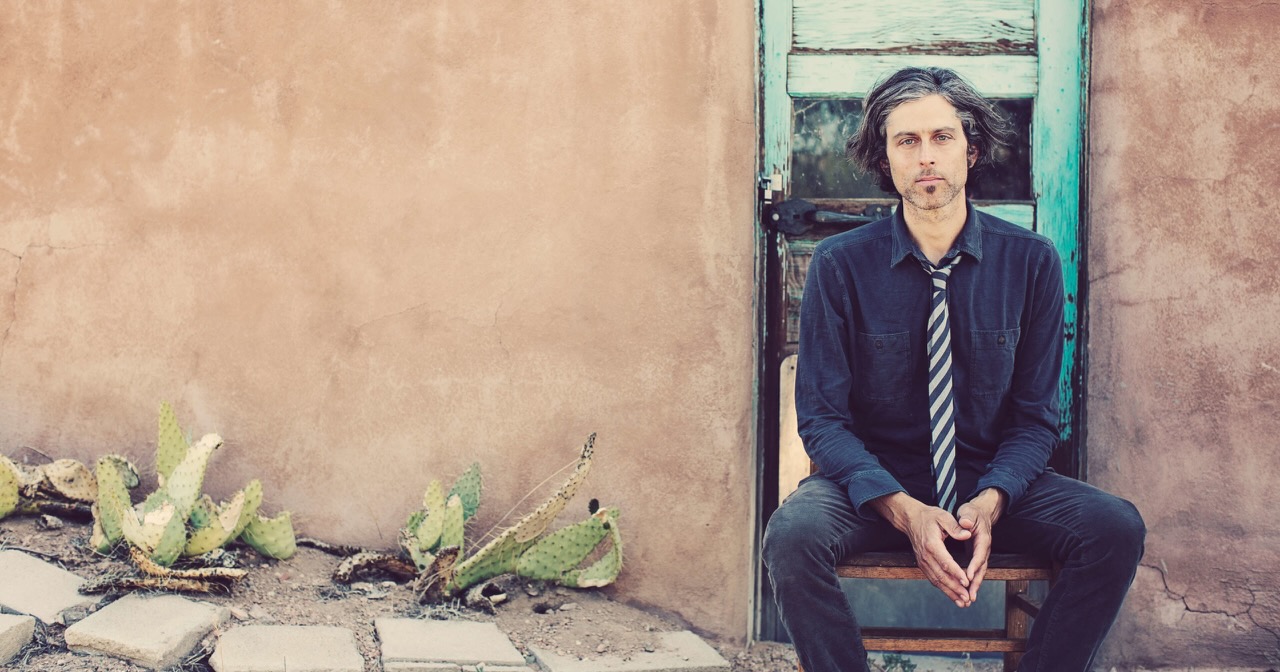
Photo Credit: Nefesh Mountain by Rafael Roy & Kelin Verrette; Juliet Lloyd by Anna Haas.

BGS 5+5: Wayne Graham

Artist: Wayne Graham
Hometown: Whitesburg, Kentucky
Latest Album: Bastion

What’s the toughest time you ever had writing a song?

The enemy of creation, for me, is judgment. I often superimpose other peoples’ suspected judgments onto something I’m working on, before I’ve written anything down. The true work is in letting go of that fear. When I am in a good flow, I am like a child. I am totally swept up in imagining the possibilities and that ride feels like communion with something much bigger than myself. I hope that doesn’t sound grandiose, I am just left feeling very grateful.

What has been the best advice you’ve received in your career so far?

Dave Prince – or Laid Back Country Picker – told me once that, “The world is real big, and real cool.” Trusting this to be true leaves a lot of room for pretty much everything to be OK. Not that there aren’t horrendous things happening everyday, but maybe most people are on the side of wanting things to be good and they’re just doing the best they know how at any given point. Maybe it’s naive, but it’s definitely not cynical.

Genre is dead (long live genre!), but how would you describe the genres and styles your music inhabits?

Genres are great if we’re looking to make broad categories that point to a recognizable aspect of a piece of work, but they start to lose their meaning when they come with their own dogmas. In other words, a genre should be used to contextualize a work, not as a frame to create a work within. That being said, we don’t discriminate along genre lines in what we listen to and draw from. We also hope our music is infused with the best parts of what we listen to, so hopefully we end up in a place we couldn’t have planned to go.

How often do you hide behind a character in a song or use “you” when it’s actually “me”?

I think the songs that make the cut for us are the songs where we’re not hiding. But that doesn’t mean the “you” or “I” is always used in a first person way. Oftentimes the “you” in my songs is “me” and the narrator is someone with a helpful perspective. Sometimes we put on characters to inhabit a lesser known part of ourselves that may have something cool to say, sometimes we just write what’s on our mind without needing it to mean anything.

If you didn’t work in music, what would you do instead?

Our mom retired a few years ago from teaching at a public school. It’s a job that has so much impact, and is so thankless, and I have so much respect for the people who do it for the right reasons. Our mom took the job very seriously, and so I saw what a struggle it could be at times, but it is really the only other job I’ve ever considered.


Photo Credit: Hunter Way, Impact Media

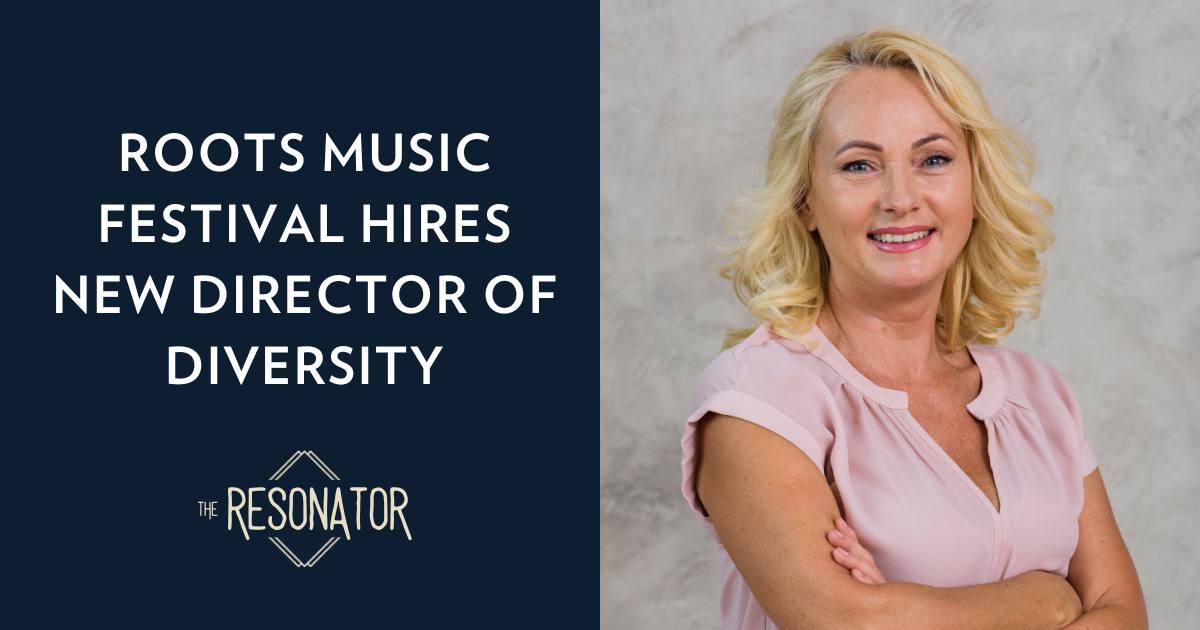
Roots Music Festival Hires New Director of Diversity

DAVENPORT, IOWA – The Quad Cities Roots Festival announced today that it has hired its first-ever Director of Diversity, 55-year-old Karen Van der Sloot.

“I’m absolutely over the moon,” Van der Sloot said, stirring a pot of her famous chili in her suburban kitchen. “Diversity needs a facelift. Because every face is beautiful, especially when it’s smiling!”

While many DEI programs across the country have seen funding cut or been permanently shuttered, the Quad Cities Roots Music Festival is doubling down on its commitment to diversity with this groundbreaking hire.

“Karen is someone who makes everyone feel included. Even people who were already included feel more included because of Karen’s relentless inclusivity,” said a festival spokesperson.

Despite having no background in roots music or diversity initiatives, Van der Sloot believes her experience as a mother of four will offer a fresh perspective to a festival often criticized for its homogeneity.

“Listen, if you’ve ever tried to get a teenager to put down their phone and eat the same thing as the rest of the family, you know that’s the real diversity work,” she smiled. “I always say, ‘We tried democracy, but I’m not gonna make a whole new meal for one person who suddenly says they’re vegan. Mama bear don’t play that game!’”

Her vision for diversity in roots music? “Instead of diversity, I’ve been saying we need melange-ity – a little mix of everything. Like a good chili. Melange-ity means more than just one flavor. We need the full ‘thang’ – beans, hamburger, chili powder, maybe even a little corn if you’re feeling wild!”

For Van der Sloot, that even means getting a mix of ideas, like soliciting programming feedback from her assistant, Dr. Akilah Jessup-Moore. “Did you know she has a doctorate in ethnomusicology from Duke? Such a smart cookie.” Moore could not be reached for comment.

Festival Executive Director – and Karen’s husband – Kevin Van der Sloot also chimed in. “Karen’s been a real trooper. She’s thrown herself into this role 100%. Plus, I think she needed something to do after our oldest left for college.”

Though music acts are still being confirmed, festival headliners will include the Bettendorf Boys Choir, pop-reggae group UB40, and local favorites The Muddy Walters, a blues band comprised entirely of retired dentists.


Greg Hess is a comedy writer and performer in Los Angeles. His work has been featured in The American Bystander, The Onion, Shouts & Murmurs, Points in Case, and he cohosts the hit satirical podcast MEGA.

These Berklee Students Helped Create Ensembles for Women and Non-Binary Folks

“Bluegrass music is a truly American artform. It reflects the culture and the time in which it’s created, and as with many traditional artforms, a preservationist stance is held on a pedestal. Bluegrass music’s history is very gendered, and when this happens, the music can’t reach its full potential.”

My teacher Laura Orshaw told me this.

There has been no shortage of amazing women bluegrass musicians to come out of the roots department at Berklee College of Music. Gillian Welch, Sierra Hull, Molly Tuttle, Bronwyn Keith-Hynes, and on and on. I’m going into my senior year at Berklee this fall as a mandolin principle, and one of the reasons I went to Berklee was how inspired I was by these women and their music.

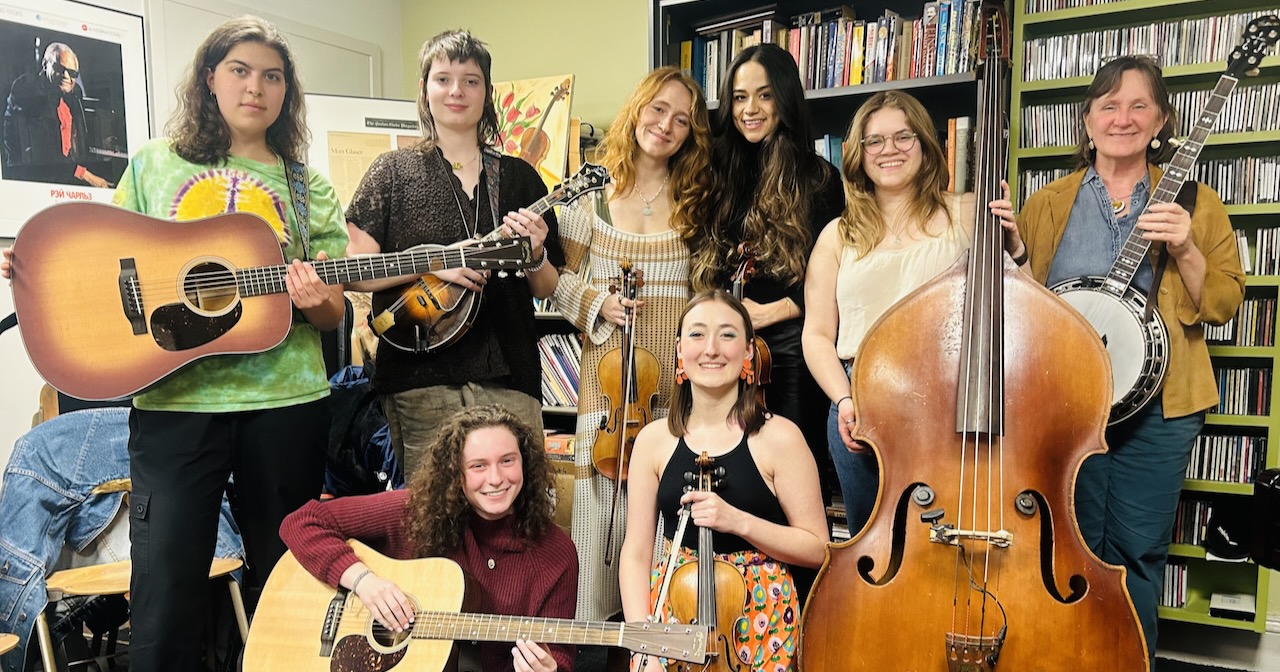
Towards the end of my sophomore year, my friend Katelynn Casper – a brilliant bluegrass fiddler – came up with an idea. She wanted to start a bluegrass ensemble of all women and non-binary folks. Katelynn approached Matt Glaser, the artistic director of the American Roots Music Program, about helping us create a class in which we would study and perform in a group. Excited by the prospect, he brought in Laura Orshaw (the Po’ Ramblin’ Boys) to be our mentor. In the past few years, there had been a strong influx of women who came to Berklee and wanted to play roots music, so it didn’t take us long to find people who wanted to join the project.

The ensemble started in October of 2023 with about 12 members, enough for us to break into two ensembles. I got to be in both groups, in one as mandolinist and the other as bassist. Our focus between both groups was to play music mostly written by women who we looked up to and were maybe overlooked.

Through the course of our year together, we moved through a catalog of songs and tunes written by our heroes and then delved into original material. We wrote songs and tunes together and on our own and fleshed them out as a band. It was an empowering experience to be a part of and it was beautiful to watch my friends explore a new kind of confidence in their music.

This past April, the American Roots Music Program sent all of us down to Washington, D.C. In June of 2022, the Smithsonian Center for Folklife and Cultural Heritage opened up an exhibit entitled Music HerStory: Women and Music of Social Change. Laura had caught wind of the exhibit and wanted us to visit, so we could witness its content and impact. The exhibit explored many women who were significantly overlooked in music, but yet the world would have been drastically different had their music not been a part of it.

We heard and read stories of when Loretta Lynn put out “The Pill” and how much of an uproar it caused; stories of how Elizabeth Cotten had to put her music on hold to raise her children and didn’t come back to it until she was in her 60s, putting out “Freight Train” and “Oh Babe It Ain’t No Lie” and still was not given much credit.

Walking through the exhibit, I couldn’t help but think about all the different musical influences I have and how so many of those influences were inspired by these women, but how that was never really talked about.

On the same trip, we also got the privilege of going to Smithsonian Folkways Recordings and learning about some of the history of their record label and how it came to be. When we were checking it out, both ensemble bands did a little recording in the archives to commemorate the trip. Playing our originals and covers written by powerful women was an incredible experience. We were surrounded by original recordings and records that made bluegrass and old-time what it is now and some of the music that brought each of us to the genres to begin with.

While we were down in D.C., we also got the chance to hang out with Kimber Ludiker (fiddle) and Avril Smith (guitar), two members of Della Mae. In both groups, the inspiration from Della Mae was so apparent – we all learned many of their songs. Getting to stand up and play their songs with them was a mind-blowing experience.

Taking part in this project has been such an inspiring experience. As a kid who grew up in the bluegrass and old-time world, there weren’t always a lot of women to play music with, so to get the opportunity to dedicate time each week to just sit down with a group of deeply passionate women and non-binary folks who are also such remarkable roots musicians was an indescribably moving experience.

A common conversation amongst us during that time was how freeing and comfortable it felt to play music in a setting like this. Whether or not you think about it, music as a whole is an intensely male dominated world – and bluegrass isn’t any different.

“Here’s a question that crossed our minds every week,” Laura said. “‘What would bluegrass be like without patriarchy or bias?’ The answer comes through music, not essays, and this project certainly chipped away at our goal.”

Being in this ensemble, I learned a lot about myself. Being surrounded by a community of women and non-binary folks playing music taught me a lot about my confidence as both a person and a musician. Being in that environment gave me an amazing place to explore.

“When Matt [Glaser] asked me to be the curator of this project, I couldn’t have guessed how impactful and enlightening it would be for me. Working in an all-women and non-binary band filled a void for all of us – creatively, academically, and socially,” Laura continued. “Students shared experiences of the not-so-glamorous parts of working in a male-dominated field. They studied the music and songs of their heroes, who sometimes got overlooked in other classes and ensembles. They wrote songs, arranged music, and tried on different leadership roles in the band.

“But most of all, they encouraged and inspired each other to be better musicians. The mutual dedication and enthusiasm were palpable in every rehearsal.”

It’s been an experience of a lifetime to learn the music I love with a group of women who want to push the boundaries of the genre. To sit with a group of people who understand the intricacies of being a woman or gender non-confirming person playing bluegrass – or even music in general – was a very comforting experience. We all grew so much as people and musicians.


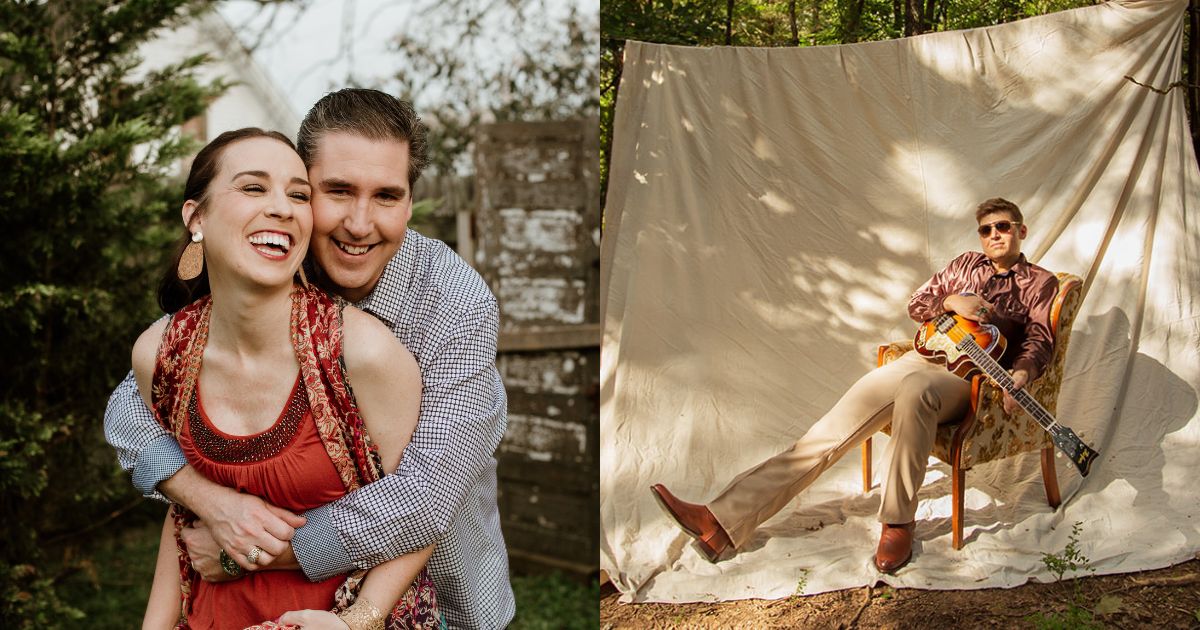
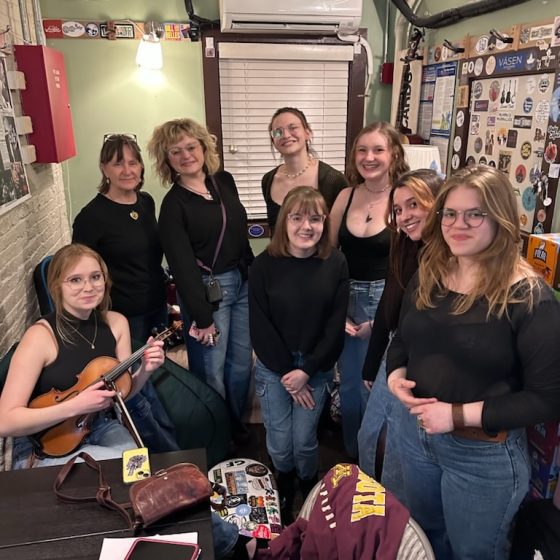
Photos courtesy of Emma Turoff. Lead image: Ensemble, No Man’s Land. Inset image: Ensemble, Ain’t That Just Like A Man.

One to Watch: Boston-Based Alt Folk Duo Sweet Petunia

From the crosshairs of the Boston folk community and punk/DIY scene emerges Sweet Petunia, an innovative duo consisting of multi-instrumentalist songwriters Maddy Simpson and Mairead Guy. A synthesis of banjos, queerness, emotive lyricism, and life-affirming harmonies, the pair’s music explores the fluidity of futurity, even when anchored in centuries of tradition.

With two EPs and several singles under their belt, Sweet Petunia graces the ears of multitudes with an active touring schedule and their vigorous participation in the Boston music scene. The queer alt folk duo’s commitment to community and uplifting overlooked histories only deepen the resounding impact that their music inspires.

So, to start things off, how did the two of you first meet?

Maddy Simpson: We both went to Berklee College of Music and we got placed into the same ensemble, 21st Century String Band, taught by Greg Liszt, who is an incredible banjo player. One day we were supposed to have an additional rehearsal with another guy that was in the ensemble, but he stood us up (shoutout Rob with your Legends of Zelda beanie with a brim!) The two of us showed up for the rehearsal and he never came. So we just had 45 minutes to talk to each other. We ended up talking about our goals, the music we liked, and found out that we had a lot of similar likes and plans for the future. So we decided to get together and play some music. When we did, immediately we were like, “Okay, let’s be in a band.”

What does your musical chemistry with one another feel like?

MS: Well, we always joke that we’re related. I mean, we do sound very similar when we sing together. So it kind of feels like we’re like a family band even though we’re not related.

Mairead Guy: Yeah, I mean it just works – really well. Obviously we put in a lot of work into what we do. But a lot of it feels very easy when we’re playing and arranging together. We have similar intuitions about the way things should go, and that makes it really fun and special to play together.

What is your process like when you songwrite and arrange together? And what’s it like arranging with two banjos?

MG: Most of the time we come to each other with an almost-completed song. Sometimes we write together, but usually we come together once the song is pretty much finished and arrange it from there. And that’s just a lot of playing it over and over and over and over, trying different things and seeing what sticks and what pops out.

That works! How did each of you come to the genre and/or the banjo?

MS: I came to folk music through the folk revival of the ’60s. I listened to a lot of Simon & Garfunkel growing up and then when I was a little bit older, I got into the folk revival revival, so like Mumford & Sons, The Head and the Heart, The Lumineers, and that kind of stuff. I had no idea that was just the tip of a really big iceberg – I didn’t really discover true traditional music until college, when I got really into old-time music and ’50s country blues and that kind of thing.

The reason I started playing banjo is that obviously it was pretty present in the music that I was listening to like all throughout high school and my childhood, but when I got to college I had a dorm-mate who played banjo. He was a banjo principal and he would play banjo in the lounge and the laundry room – just everywhere. One day I told him that I was interested and he said, “If you buy a banjo, I’ll give you lessons.” So over Thanksgiving break I went home, bought a banjo, came back, and started taking lessons with him. And then I started taking lessons with other people at Berklee and that was it for me – it became my primary instrument.

MG: So, I grew up in Virginia. There’s a lot of traditional, old-time bluegrass around in that area and a lot of my family is pretty musical – my uncle and aunt and my great uncle and his longtime partner. We’re are all professional musicians and my great uncle was a phenomenal clawhammer banjo player. My brother plays the banjo and I’d always wanted to play it, because it’s such a beautiful instrument. When Maddy and I first started playing together, we had a lot of songs where we would trade our instruments around. When she switched to banjo I thought it was the perfect time to finally sink my teeth in and do it. Similarly to her, once I picked one up I was like, “Oh my God, why haven’t I been doing this the whole time?” Yeah, it’s an addictive instrument to play.

I noticed that the stylization of a lot of your lyrics is super unique and you have several songs with strong narratives. Can you talk a bit about the song “Quilt Too Big to Fold”? I’ve had it on repeat for weeks.

MS: Thank you. Yeah, I wrote that song for a class. We were given this assignment to write a story song. And I was thinking a lot and sort of had this refrain in my head, “All you do is sit all day and sew.” So I did some journaling about all of the things that you can sit and sew. Fiber arts are really important to me and at the time of writing that song I was really into embroidery and I was getting really into visible mending – dabbling in this world of fiber arts.

I started thinking about all of the different fiber mediums you can have. And I started to think about quotes. And then, obviously, I’m also gay. I had already seen the AIDS Memorial Quilt, so I began to look into it more deeply. The quilt was started by a lesbian and was just one of the many forms of activism that came out of the AIDS crisis. The song sort of formed around that pretty quickly. It was easy to write given the fact that I’m queer and then just creating this work of fiction where I did a lot of thinking about what it would be like to go through that, taking my own passions and interests in sort of like translating them into a historical lens. And it was really an interesting process.

Really, really amazing stuff. I also saw that you both played an integral part in Club Passim’s inaugural Pride show? Can you talk a little bit about that and what that was like?

MG: Oh it was all Maddie! Well, we played it together, but it was all Maddie.

MS: Mairead kept me sane – I was freaking out the whole time. I was given the opportunity to curate Club Passim’s first ever truly Pride-themed show. We’ve done Pride open mics and once we had a queer festival, but that was during COVID, so it was all online. So we’ve had some queer-centered events before, but this was the first ever show specifically dedicated to Pride Month.

I was given this opportunity through The Folk Collective, which is an initiative that Passim is spearheading right now. Basically, it’s a cohort of 12 artists and cultural thought leaders that live in and around Boston. Passim has invited them into the club to synthesize what the future of folk music could be like, since folk music has, in the cultural narrative, been seen as a really white-washed and male-centric genre. So it’s 12 people of varying marginalized identities and people of all ages and races and gender identities and sexual identities coming together to talk about what the future of folk music could look like.

I was given an opportunity through the Folk Collective to bring together six queer acts who are making music either directly inspired by or within the traditional genre. We had several performers who played super traditional instruments – I mean, we both played banjo and we had somebody who plays the mountain dulcimer, which was really cool. We had somebody else who did country blues and talked about gender non-conforming people in the genre. And we also had some incredible singer-songwriters as well. It ended up being a crazy night of celebrating queer identities and also celebrating the traditional music that everybody at Club Passim loves so much. It was very, very awesome.

MG: Hell yeah. Beautiful night – Maddie put so much time and effort and care into curating all of these artists and making this happen in such an important and cognitive way, and it was just such an incredible thing to ride along the coattails of.

Hopefully there are many more! In general, what does the community feel like in Boston, within the folk scene, and how do you see Sweet Petunia fitting into it?

MG: I think that Maddie and I have a particular perspective on it just because we work at Club Passim, so we see all the musicians that pass through. But I mean, as is evidenced by the event that we just had, there is a pretty wide community of queer and trans folk musicians who are drawing inspiration from traditional roots music. And even beyond tradition, things like the pedal or lap steel are becoming super popular in different genres of music. Even the banjo people are using electric banjo to get a super sick like electric guitar tone and that sort of thing.

MS: Yeah, I was just gonna say that we sit in a really weird intersection, because we’re not quite in the traditional folk scene. We’re also really established within the DIY scene as well, which is primarily indie rock and hardcore music in Boston. But because we exist in both circles we get the best of both worlds. Sometimes we get asked to play punk shows, but we also can play listening room venues like Passim.

Outside of the folk and Americana scene, what are your biggest influences right now?

MS: I love slowcore and also the huge bootgaze thing that’s happening right now. I feel like I exist in the perfect time to be 25 and into DIY music, because most of the music being made around here at this point has some bootgaze element.

Could you define bootgaze?

MS: It’s like shoegaze-inspired country music. Or country-inspired shoegaze music. Some blur into indie rock, some are just shoegaze bands that use country instrumentation or come from a place where country music is the main genre. The band Wednesday is probably the biggest right now. They sort of pioneered the genre. MJ Lenderman, Florry – there’s lots to explore if you look up bootgaze or countrygaze.

What about you, Mariead?

MG: I mean, definitely same. I’ve also really been loving a lot of hyperpop and pop music recently. Just like the energy in songs like that is so interesting. I’ve been thinking a lot about the banjo as a similar percussion to a drum machine in a super fast hyperpop song. I’ve been trying to think about ways to incorporate that because most of the songs that I write make you feel kind of bad, but I think it’d be kind of fun to write songs that made you feel kinda good.

I think you’re onto something! Do you two have any fun projects coming up?

MG: We’re working on a Dolly Parton cover EP. Every year for Halloween since 2019 (except for 2020 because of COVID) we have done a Dolly Parton cover set. And so this will be our fifth year of Dolly Parton cover sets. So we wanted to do a little something to commemorate it.

MS: Yeah, it’s gonna be really fun. That’s coming in October. There will be a bill for a cover show. So if people are local to Boston, they can come to that.

That is so exciting! So you’re our One to Watch, but who are you watching? Are there any artists, creatives, musicians, etc. that you’re appreciating especially right now?

MS: I think that my one to watch is Roman Barten-Sherman, the person from Passim’s Pride show who does traditional country blues. She’s incredible. She’s so good. She is so smart. And so well-read and knowledgeable about early American country blues. During her shows she’ll introduce every song with so much knowledge about the genre and people who play it. She knows so much about gender-nonconforming and trans individuals and Black women who have contributed to the genre. She knows everything – it’s crazy. And then she’ll play the song and it’s the best fucking thing you’ve ever heard. She’s just so good. I think she’s going to take over the world. She’s my one to watch.

MD: I definitely second that – she’s one of the people I was thinking of. I would also say Jarsch. Just absolutely incredible, visceral songwriting. Beautiful lyricism relating to both the pain and joy of queerness and gender and life itself – religious trauma, all sorts of things. Everytime I see her play I literally just cry and cry. It’s so beautiful. She’s the only person I’ve seen able to yield a guitjo in an appropriate manner, and she just has so much love for what she’s doing and the community she’s in. I feel very lucky to know her. Definitely a one to watch.


Photo Credit: Barry Schneier

First & Latest: 34 Years Later, Alison Brown Still Finds ‘Simple Pleasures’ on Banjo

In 1990, when banjo player Alison Brown released her debut album, Simple Pleasures, she had no idea where her career could or would lead. GRAMMY nominations, IBMA Awards, touring and performing with Alison Krauss, Michelle Shocked, the Indigo Girls, Steve Martin, and many more, founding a record label that would become a keystone in roots music – none of these impressive accomplishments were on her horizons, literal or hypothetical. Brown just wanted to play the banjo.

She had recently left her job in investment banking and wanted to give her musical career a legitimate go of it. Tasking herself with intentionally writing an album’s worth of original tunes, over the years from 1988 to the project’s release on Vanguard Records in ‘90, Brown pushed herself sonically, aesthetically, and compositionally. The result was demonstrably spectacular and effortlessly cutting-edge.

Simple Pleasures, which was produced by David “Dawg” Grisman and included Alison Krauss, Mike Marshall, Joe Craven, and more among its cast of collaborators, would help launch Brown’s now decades-long career as a bluegrass and roots music multi-hyphenate and business leader. Simple Pleasures broke the ground, fertilized it deeply, and helped cultivate one of the most innovative and forward-looking careers ever accomplished by a five-string picker.

Now, some 34 years after its original release, that debut album has been reissued – on vinyl and digital, with a handful of digital-exclusive bonus tracks recovered from a cassette tape of demos. The project is a delightful time capsule and a perfect representation of the vast and varied musical ground Brown has covered over the intervening years. She may not have known it then – she readily admits, as a picker in her twenties, she was just taking this “banjo thing” day by day – but Simple Pleasures would lay the groundwork for all of her many successes in the music industry and in bluegrass.

For a special edition of First & Latest, we spoke to Alison Brown by phone about her first release and her latest – which just so happen to be the same album, the original and the new reissue. It’s essential listening for bluegrass, banjo, and roots music fans.

Simple Pleasures was originally released in 1990, 34 years ago. I wanted to start by asking you about your frame of mind now versus then, about what’s changed in the interim. What’s changed regarding how you view yourself as a creator and as a banjo player? Looking back, in retrospect, do you recognize the person you were then? What do you remember about your frame of mind when you first put the album out?

Alison Brown: It was this time in my life during which I was writing this music and then trying to get a record deal; I had just left my investment banking job and had taken this bizarre leap of faith, which I didn’t necessarily get a lot of support for. My parents weren’t saying, “Hey, I think you should quit your investment banking job to play banjo.” [Laughs] It really was a leap of faith.

I just couldn’t stop thinking about the banjo. So, I gave myself the challenge of seeing if I could write an album’s worth of music that would hold up and just try to make a record. And then, in the course of working on that, I wrote these tunes and joined Alison Krauss & Union Station. By the time we recorded the tunes, I’d been in her band for a year. I was really at the beginning of what has become my career path since then, but when I was doing it, I didn’t really know how it would be received or if it would get any props or even if it would be any good. All the validation that came on the heels of releasing this, and then everything since then, has made me a much more confident musician than I was when I wrote the music and recorded the record.

Before this album, were you already writing tunes? Was that something that you always did? Or was this an intentional practice shift for you? Was making an album of your own tunes something you had always been working towards or was it part of that purposeful transition from investment banking to banjo?

That is a really good question. I had never written much music up until that point, but I’d always wanted to. Stuart Duncan and I did a record called Pre-sequel. That was like a teen record, but we had a couple original tunes, stuff like “Possum Gravy on Grandma’s Beard” and “The Great Lasagna Rebellion.” It was like teen stuff.

Anyways, I really had wanted to challenge myself to see if I could write some “real music” – that isn’t really quite the right word, but some more substantial tunes and some tunes that really took the instrument maybe to a new place, which took my voice to a new place. That was a lot of this exercise and those 12 tunes. I didn’t know if I could write them or even if they would be any good, but that was like the beginning of this kind of process of self discovery.

When you look at the credits list – Mike Marshall and David Grisman and Alison Krauss and more – you can see some of the fingerprints of you and your community, but it was a kind of a longer process of you writing and getting to the point of recording, right?

I’m trying to remember… yeah, probably from the time I started writing the tunes was maybe middle of 1988 and then we recorded them beginning in 1990. So yeah, there was definitely some time in there–

Was there some extrapolating in your head of, “What are these songs going to sound like? Who is going to play them?” What do you remember about deciding on how you were going to make the tunes and who was going to make them with you? Because I have a feeling that was just as important a part of the process as having the material to record.

Once the door opened for me to work with David Grisman, to produce the record and play on it, then I was pretty much like, “What do you think, David?” But I knew I wanted to have Alison on the record and I knew I wanted to have Mike, ‘cause I love his music no matter what he’s playing. I’m the head of the “Mike Marshall Plays Guitar Fan Club.” [Laughs] I love his guitar playing. And Mike was in the Bay Area, so that made perfect sense.

But then, in terms of bringing in the flute or percussion, I hadn’t really thought about those things. When I listen to this record now, it’s surprising really how much of a footprint the record created for what we’re doing now. ‘Cause we’ve got a rhythm section and flute in the band. In some ways, it feels like after all this time we’ve come full circle, at least back to the seed that record planted, sonically, for the music.

That’s so interesting, to be able to look back and trace that throughline, when at that point it may have felt like a one-off to have those instruments and those styles represented in the music. And now it’s present through lots of your work.

Yeah, it is really interesting. There’s obviously things that weren’t included [on Simple Pleasures]. We’ve had piano in the band pretty much since the beginning and we didn’t have piano on that record, obviously. But I don’t know, somehow that doesn’t seem as much of a template thing, the idea of percussion elements and certainly the flute. David really brought that – and the idea of incorporating cello. I’m not sure I was really thinking about those things. My thinking was probably more in the bluegrass-rooted box.

One of the things that’s definitely changed from the original Simple Pleasures to the reissue over those 30-some years is these bonus tracks that you’ve added – such a time capsule. I wanted to ask you about their… I want to say provenance, but I don’t mean to be that formal. Like, how did you hold onto the demos over time, did you always have them in your back pocket?

You know, as we were working on re-master I kept thinking I knew I had a cassette of the demos. I just dug around and I found it! That’s where the actual takes came from, but that between-take talking, to me, is my favorite part of the whole thing. Just hearing Mike and David and Richard Greene, who produced those demos, talking to each other – I just think that’s the coolest thing. That came off the 2-inch tapes that we had. But the 2-inch tapes, we didn’t have the final mixes of the demos. So, it just worked out that we dumped the cassette tapes into this computer and tried to sweeten it a little bit and that’s what we used.

Looking back, this was a big transition point for you with a GRAMMY nomination, winning IBMA Banjo Player of the Year as the first woman to win an instrumental award. Of course this would end up a seminal album and was a really important kickstart for your incredible career. But at that point, back in 1990, were you worried about it? What was your frame of mind as far as expectations for what this album could do and where it could go?

I’m sure that I had no expectations. [Laughs] It was just something that I really wanted to do myself. I wanted to see, could I write a bunch of music and would it stick together? And, can I get some great people to play on it? I was just happy that all those things came together and I got it on a label.

It was just so cool to be on Vanguard Records. The Welk Music Group had bought that catalog and they had just started signing artists. I was one of the first artists they signed to the Vanguard imprint. All that was enough, but then to get a GRAMMY nomination was completely a surprise. I didn’t expect that at all, or the IBMA recognition. That validation was huge, obviously, and it would be for anybody, but for me it was just so huge. I actually took my parents with me to Radio City Music hall for the GRAMMYs and that went a long way toward them accepting my career 180. [Laughs]

It seems like this was definitely proof of concept for, “I can do this banjo thing. I can make banjo records. I can do this as a career.”

And in retrospect, I completely agree. In the moment, none of those things [were certain]. That’s what they say, “Hindsight’s 20/20.” And that’s so true; when you’re in the moment, you just don’t know how it’s going to turn out. Then it turned out great! I feel so lucky every day that I get to play music or create music or help somebody else create music, all that is just such a gift. Because it was not a foregone conclusion, I could easily have gone back to investment banking or something else with my tail between my legs. I’m just so grateful that isn’t the case.

At this point in your career, people think of you as a multi-hyphenate, as somebody who runs a label, is so active in the industry, and picks a really mean banjo. But this project predated Compass Records by several years. Were you already planning that sort of multi-prong, multi-hyphenate approach then? Or do you think it would be a surprise to 1990 Simple Pleasures Alison that you are the multi-hyphenate you are now?

Yeah no, I did not know it was [in my future], I think I was really just taking it a step at a time. At that particular point in time, my goal was just to write tunes and play in Alison [Krauss’] band. Then, when I left her band, I was really at this juncture again. My parents kept saying, “We really think you’d enjoy going to law school!” I was on the edge of applying to Vanderbilt Law School when I got a call from Michelle Shocked looking for a band leader for her world tour in 1992.

So no, I definitely didn’t have the multi-hyphenate, as you put it, plot hatched at all yet. That’s really something that came during that time that I spent with Michelle and then Garry West, who was playing bass in the band [with her as well]. We connected on a personal level, on a business level, and we started talking about “the good life.” Like, how do you make a life out of music? That’s when we started envisioning the different spokes of the wheel, and one of them was a record label and one of them was playing banjo and touring. That 1990s Alison was really just taking in a day at a time.

There’s this quality that musicians talk about a lot, almost to trope-ish levels, of not liking listening to themselves, not liking going back and hearing their own musical ideas or their own creativity from the past. It can be cringey! When you hear your young adult voice on the banjo now, what’s your reaction? Do you bristle at it? Do you feel inspired by it or do you have a moment where you’re like, “I can’t believe that I played that or I did that”? You’ve been inhabiting these tunes to remix and re-master them, not just rubber stamping a reissue. What does that feel like, to be going back and forth between who you are now and who you were then?

I really thought it was going to be like a lot of cringey stuff, like listening to those tracks and thinking, “Oh god, why did I play that?” Instead, I had a completely different feeling, because I felt like I could hear and really remember both the joy of figuring out that I could do this thing and the uncertainty of, “I don’t know if it’s any good or if it’s going to connect with anybody at all.” I can hear both of those things, but at the end of the day, what I felt most was just wishing I could reach back in time and give myself a pat on the back [and say,] “It’s going to work out okay and you’re on the right path.”

Because I think that’s the thing, we’re all looking for our true path. Sometimes it’s really hard to see, and for me, it was definitely hard to see. I really thought that I would be like a respectable business person and instead – well, I hope I’m a respectable business person, but it’s certainly not what I expected to be! [Laughs] I really thought, banker, lawyer, doctor, that kind of thing.

Your portfolio as a banjo player, label head, and producer is so diverse. And I wondered if you feel that’s directly correlated to being a woman who plays the banjo, or if you think there’s something else that’s driven that or informed that? Because I firmly believe marginalized folks in roots music – really anyone who’s not a straight white man – we often have to have very diverse career paths just to make a living, to make ends meet.

One thing I do notice is that big opportunities that opened up for me early on, they were all created for me by other women. That’s really not lost on me – whether it was Alison Krauss or Michelle Shocked. It wasn’t a male band leaders inviting me in. I think that’s really significant and that’s one of the things that I think is interesting about the times we’re in now, the fact that there’s much more diversity – even though it’s not as much as we would like to see. But there are women peppered throughout the ecosystem of the bluegrass community. We’re really in a position to empower and bring up the next generation, where we weren’t so much before. That makes it a really exciting time. I know that’s something that I love to look for opportunities to do.

If I’m producing a record, I want to bring those other voices into the room and let’s raise the next generation. ‘Cause when you come out of investment banking, you can see how adept the guys are at bringing on the next generation of guys, but women in corporate situations just historically haven’t [had the same access]. There are many reasons, it’s not their shortcoming. I think it’s just the circumstances, but now it doesn’t have to be that way. I find that particularly exciting.

34 years later, these folks who played on Simple Pleasures are still part of your community and are collaborators of yours. Back then, were you thinking, “All right, these are my ride or dies! We’re going to go the distance together.” Or was it like, “I can’t believe I get to be in a room with these folks and I hope we can do it again”? How does it feel now to look back and have decades-long relationships with these folks that you made the album with and to have that community be such a present part of the music that you continue to make and the records that you put out?

It’s amazing to look back and to think about the fact that I’ve known Mike Marshall since, gosh, I think I was a teenager the first time I met Mike? To have 50-year-long relationships with some of these people, it’s an amazing thing and it’s such a gift. I think one of the best things about our community is that people can have careers that extend over decades and you can have friendships with people that extend over half a century or more. I’ve known Stuart Duncan since he was 10, so I’ve known him for half a century. It’s crazy and wonderful too. And it’s such an amazing aspect of our community.

I don’t know if it’s the same in other kinds of music, but I think the intergenerational aspect of bluegrass music and roots music just creates for some amazing lifelong friendships. I think it’s not uncommon for people to start when they’re 10 years old – or, Stuart started playing this music when he was six or seven. When I met him when he was 10, he was already a hotshot fiddle player. The fact that you can get into this music as such a youngster, keep playing it, and there’s room for you even when every hair on your head is gray, it’s just a great thing. I think in popular music the window is more narrow.

But in this music, people want to see you play your music whether you’re six or whatever age. How old was Bobby Osborne? He was 92! The record that I did with Bobby, Original, we was 86/87-years-old when we recorded that record. You wouldn’t see an 87-year-old pop artist probably making a record.


You Gotta Hear This: New Music From Julian Taylor, the Grascals, and More

We’ve got a fine collection of new tracks, videos, and performances for you this week in our premiere round-up, You Gotta Hear This!

Don’t miss some stellar bluegrass from genre staples – and labelmates – the Grascals, who are celebrating their 20-year anniversary, and Chris Jones & the Night Drivers. The former celebrate their heroes, the Osborne Brothers, with a cover of “Georgia Pineywoods” while the latter get topical while poking fun at doomsday rhetoric on “What If You’re Wrong.”

Jazzy roots duo Winterlark bring us a charming number with a somewhat unlikely subject– emojis. Well, and love gone not-so-right, too. Felled Oak, AKA Brian Carroll, also debuts “Taplines,” a track written while he worked the maple syrup season in Vermont. Singer-songwriter Amy Speace considers the construction of “The American Dream” with a brand new, summery music video and Spooky Mansion performs the title track from his upcoming album, What About You?, live outdoors on the ranch.

Don’t miss Julian Taylor’s debut of a brand new music video for “Pathways,” a song released earlier this week about family, connection, and inter-generational perspective that features the one and only Allison Russell.

To cap it all off, we’ve got an exclusive Yamaha Session from flatpicker Trey Hensley that posted to BGS earlier this week, too. It’s all right here and, we’ve said it before and we’ll say it again, but You Gotta Hear This!

Felled Oak, “Taplines”

Artist: Felled Oak
Hometown: Corinth, Vermont
Song: “Taplines”
Album: Smoke on the Hillside
Release Date: September 30, 2024

In Their Words: “All of the tunes on this project were birthed from time tapping trees in the sugarbush this past January here in Vermont. In the dead silence of winter, alone in a cluster of skeletal maples hiking uphill, I found myself humming and whistling melodies to keep myself (and the winter birds) company. Some of those melodies stuck and I’d pull out my phone, make a quick voice recording then when I got home transcribe them on the mandolin and octave mandolin.

“‘Taplines’ was a melody that fell beneath my own fingers effortlessly and when I brought it to good friend and musical partner, Mark Burds, a smile crept across his face as we played it together for the first time. All of these tunes were recorded in luthier workshops and small, personal spaces around central Vermont and featuring my closest musical friends. It’s music to be shared and played together, to connect. Intimate, organic, and honest.” – Brian Carroll, Felled Oak

“‘Taplines’ was really fun to put clawhammer on, because it’s one of those simple yet beautiful melodies that falls so nicely on banjo and it’s so satisfying to groove on.” – Mark Burds, banjo

Track Credits:
Brian Carroll – Octave mandolin, mandolin, upright bass, acoustic guitar
Mark Burds – Banjo


The Grascals, “Georgia Pineywoods”

Artist: The Grascals
Hometown: Nashville, Tennessee
Song: “Georgia Pineywoods”
Album: 20
Release Date: August 23, 2024
Label: Mountain Home Music Company

In Their Words: “I don’t believe The Grascals would be in existence without The Osborne Brothers. Their heavy impact and influence on us is one of the main reasons we all love bluegrass music so much. ‘Georgia Pineywoods’ is a classic Boudleaux and Felice Bryant song originally recorded by The Osborne Brothers and it just felt very fitting for us to include it on this album celebrating our 20th band anniversary. We will always salute The Osborne Brothers’ music and their continued inspiration to The Grascals!” – Jamie Johnson

Track Credits:
Kristin Scott Benson – Banjo
Danny Roberts – Mandolin
Jamie Johnson – Guitar, lead vocals
Terry Smith – Bass, baritone vocals
John Bryan – Guitar, tenor vocals
Jamie Harper – Fiddle, vocals


Chris Jones & the Night Drivers, “What If You’re Wrong”

Artist: Chris Jones & The Night Drivers
Hometown: Nashville, Tennessee
Song: “What If You’re Wrong”
Release Date: August 23, 2024
Label: Mountain Home Music Company

In Their Words: “Jon Weisberger and I co-wrote the song as a conversation with a conspiracy theorist. It’s meant to be a light-hearted look at the subject – I’m pretty sure it’s the first bluegrass song to mention chem trails! – but it does ask a serious question: When something earth-shaking is predicted, whether it’s the end of the world, a change of government, or just the results of a major ballgame, what do you do when it doesn’t happen? Do you question your sources or double down? We have so much of this in the era of social media and different realities we live with, it seemed pretty timely, and we had fun with it.” – Chris Jones


Amy Speace, “The American Dream”

Artist: Amy Speace
Hometown: Nashville, Tennessee
Song: “The American Dream”
Album: The American Dream
Release Date: October 18, 2024
Label: Wind Bone Records

In Their Words: “I’ve worked with Neilson Hubbard and Joshua Britt (their production company is Neighborhoods Apart) on a bunch of videos, so I trusted them to get the vibe of the song. Also, Neilson produced the record and Josh played on it, so I knew they got it. We all wanted to capture that feeling of the freedom of the end of summer. I grew up mostly in a small town with rural countryside all around it and we’d take long drives through the cornfields as the sun set. We shot this on a country drive and an abandoned cabin (also used in the album art) near Franklin, Tennessee. The appearance of the tractor and the train are coincidences.” – Amy Speace

Video Credit: Neighborhoods Apart, Neilson Hubbard and Joshua Britt


Spooky Mansion, “What About You?”

Artist: Spooky Mansion
Hometown: San Francisco, California / Bay Area
Song: “What About You?”
Album: What About You?
Release Date: August 22, 2024 (song); October 31, 2024 (album)

In Their Words: “I wrote ‘What About You?’ with the intention of painting a picture of my life through different stories. The places I’ve been and the people I come from have all made me who I am. In those early days of a relationship, when you’re getting to know someone, there are certain memories that you retell to explain who you are.

“The verses are meant to be quiet, subdued, and more introspective as I try to describe myself. The chorus is bigger and joyful as I turn the attention to the person I’m talking to. In all my experiences, ‘I didn’t even know that I was looking for you.’ It culminates in a repeated anthem at the end as a reminder that despite what you’ve already lived through, there is more in life that will keep changing you and continuously creating you into the person you are. In this case, it was a beautiful woman I’d recently met who is now my wife and love of my life.” – Grayson Converse, Spooky Mansion

Video Credit: Directed by Jacob Butler.


Julian Taylor, “Pathways” (Featuring Allison Russell)

Artist: Julian Taylor
Hometown: Toronto, Ontario, Canada
Song: “Pathways”
Album: Pathways
Release Date: August 21, 2024 (song); September 27, 2024 (album)
Label: Howling Turtle Inc.

In Their Words: “I remember sitting in my living room when the melody and chord patterns just came to me. Often, when I sit down to write music, it’s the first thing that I start playing that sticks, because it’s raw and honest. I worked the progression in several different ways. First on the acoustic guitar and then on the piano. I still have probably upwards of seven or eight takes of it somewhere on my voice notes. Some were quite punk sounding, while others were quite folk sounding. Ultimately, the sound of the melody and progression in 6/8 time seemed to have the most impact on me.

“This song became a lyrical collaboration between two friends of mine that are also neighbors. I was invited to hang out and write with my pals Robert Priest and Rosanne Baker Thornley, who has a studio down the road from me. When I arrived, I showed them what I had been working on and they loved it. We ultimately wanted to write a hopeful song that spoke to our next of kin, and since we all have children who are the most important people in the world to us, we followed that inspiration. I performed with my friend Allison Russell at the Juno Awards this year and asked her if should be interested in collaborating on the song seeing as she is a mother as well and I am so honored that she said yes and brought yet another magical spark to our creation.” – Julian Taylor

Track Credits:
Julian Taylor – Vocal, guitar
Allison Russell – Duet vocal
Colin Linden – Electric Dobro, mandotar, bass, harmony vocal
Gary Craig – Drums, percussion
Jim Hoke – Saxophones
Janice Powers – B3 organ


Winterlark, “Ending With Heart Heart Heart”

Artist: Winterlark
Hometown: Santa Cruz, California
Song: “Ending With Heart Heart Heart”
Album: Sing To Me About Tomorrow (EP)
Release Date: August 23, 2024 (song); September 20, 2024 (EP)
Label: Squink Records

In Their Words: “It seemed that the world was ready for a song about the insidiousness of emojis, so I tried to write a modern-day song about a poorly communicated break-up, like the one in Elvis Presley’s rock-n-roll classic ‘Return to Sender.’ One of the keys to the song is the pairing of the sad lyrics with the happy, infectious beat driven by Kristin and drummer Chris Haskett. They make everything swing.” – Sweeney Schragg

“When Sweeney shared the core idea of this song, I do believe I laughed – uncomfortably. Aren’t we all guilty of throwing emojis at people instead of real words? Sweeney left six spots open for bass fills, a better gift than a box of black licorice (my favorite).” – Kristin Olson

Track Credits:
Sweeney Schragg – Guitar, vocals
Kristin Olson – Upright bass, vocals
Chris Haskett – Drums


Yamaha Sessions: Trey Hensley, “Hold What You Got”

On a sunny Sunday afternoon just outside of Nashville, Tennessee earlier this summer, BGS linked up with award-winning guitarist, songwriter, and jaw-dropping flatpicker Trey Hensley to kick off a new series of Yamaha Sessions. Hensley, a GRAMMY nominee and the reigning IBMA Guitar Player of the year, pulled his custom Yamaha FG9 R out of its road case to shred through a cover of a classic Jimmy Martin number, “Hold What You Got.”

Hensley is a picture perfect modern demonstration of how bluegrass trailblazers, like Martin, blurred the lines between country, old-time, bluegrass, and beyond. His voice reminds of honeyed country singers like Randy Travis, while his blisteringly quick picking and remarkable articulation are built on Tony Rice and Clarence White building blocks – but simultaneously, those techniques are as forward-looking and contemporary as his peers, Billy Strings, Jake Workman, and others. Hensley pulls limitless tone and warmness from his Yamaha FG9 R, even while approaching the song with near-aggression, ripping through acrobatic triplet licks and leaning into ugly delicious chromaticism in every solo.

More here.


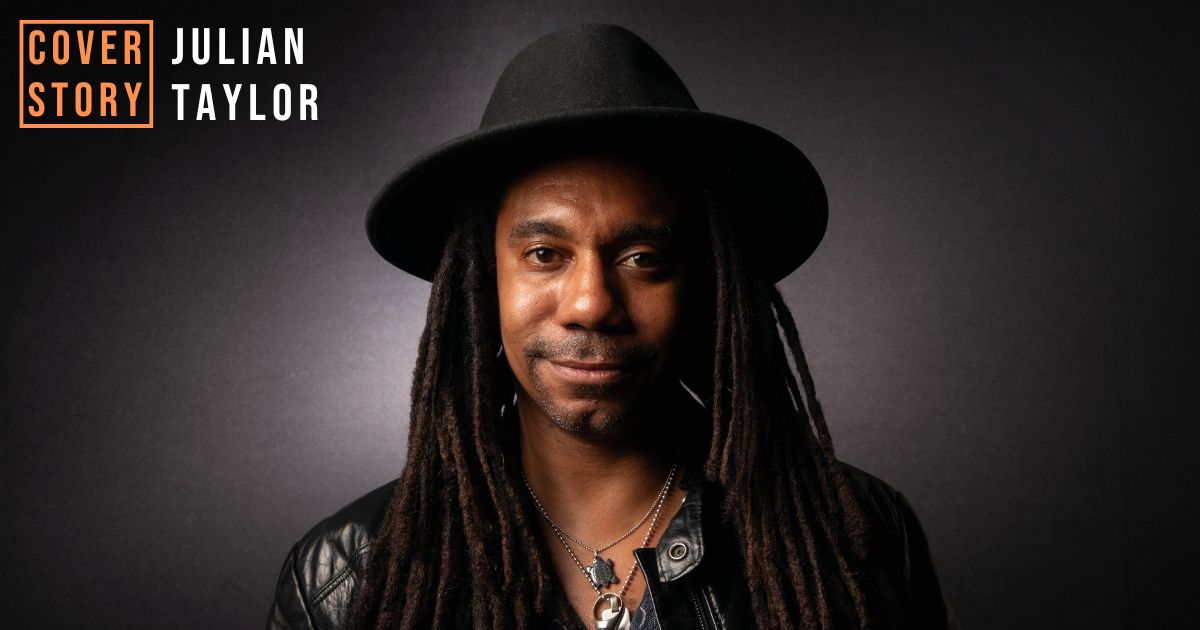
Photo Credit: Julian Taylor by Robert Georgeff; the Grascals by Laci Mack.

Out Now: Wild Ponies

Wild Ponies is a country-folk duo composed of Doug and Telisha Williams. As partners in music and life, they have developed a cohesive and refined sound. Their album, Dreamers, is out August 23, 2024. The album is an exploration of life, love, and loss, covering joy and grief, queerness and polyamory, and their journey pursuing fertility treatments. It’s a beautiful and touching collection of songs.

Before crafting Dreamers, the duo were asked by a fan where their dreams were. They reflected on the idea of where, not what, their dreams were and their response was, “Our dreams are everywhere, buzzing around like energetic bees… At times, our dreams are hard to wrangle – a wild pony…”

This idea of dreams set the concept for the new album. We are excited to dive into Dreamers and Doug and Telisha’s experiences as touring musicians in a queer, polyamorous family.

What does the album Dreamers mean to you personally? What excites you the most about sharing this release?

Telisha Williams: This record is very personal. We talk about becoming a polyamorous triad, being queer foster parents in the state of Tennessee, struggling with fertility issues, working on being more mindful. It’s basically a peak into our home, hearts, and heads. I’m excited about the way it sounds. Brandy ZDAN did a beautiful job producing this record. The band is amazing, and we couldn’t be more proud.

Doug Williams: Dreamers is the story of who we are. It’s not all easy and it’s not all pretty, but it’s all true. I love this record. Maybe that’s not something I should say about our own work but it’s true – I’m really proud of it.

Your song “Heartbeat” touches on your experience with fetal embryo transfer and even includes your child’s in-utero heartbeat. Is there anything you’d like to share about your journey with fertility treatments?

TW: Doug actually wrote that one after we thought that we had lost our pregnancy. We had a pretty traumatic “episode” when I was at about 5 weeks and we were sure that she was gone. The next morning, we went in for an ultrasound and there was her sweet little heartbeat on the screen. Strong and healthy. My process to becoming a mother was challenging and worth it. Our first embryo was a gift from a dear friend and we were so excited about the possibility of raising our genetic siblings together. Unfortunately, that one didn’t take and we didn’t know how to move forward. Our implications counselor connected us with another woman wanting to do an open embryo adoption. We met over zoom and now, we’re family. She has 2 boys that are the genetic siblings of our daughter. They live nearby and we all get to spend time together. It’s been an incredibly generous journey.

DW: This one was tough to write. We were sure we had lost another embryo. Sure of it. It was pretty difficult. So, we scheduled an emergency ultrasound, but we weren’t feeling good. The joy and tears when we saw that heartbeat on the screen is something that I just can’t describe. I tried to describe it in the song. Just pure joy and gratitude.

How do you balance a career in the music industry and touring with your roles as parents? How does polyamory play a role in this for you?

TW: We’re still figuring that part out. There are some advantages of being a three-parent household. Our partner Laura also travels for work as a photographer and we’re able to help each other as the parents that are holding down the homefront from time to time. We also enjoy traveling all together as a family of 5, but it’s hard to find room for the bass. [Laughs]

DW: I don’t know that there is really a good balance. Accepting that makes it easier, maybe? When you know it’s just going to be a little fucked from time to time, it’s just not as much of a surprise. But we’ve got to prioritize what’s best for the kiddos. And, I do think it’s good for them to see the possibility of living life on your own terms. That’s what we want for them, so we try to model it.

Is there anything you’d like to share with our audience about queerness, polyamory, and love, and how these experiences can vary for different people?

TW: We didn’t necessarily seek out polyamory. Doug and I are both bi/pansexual and have had an ethically non-monogamous relationship for a long time. When we met Laura and started spending time together as friends, we started having “more than friends” feelings for each other. We realized that it didn’t divide or diminish our experience as a couple. If anything, we felt stronger and more connected with each other and Laura. That realization that love was not a finite resource changed everything for us. We know that this relationship model is not for everyone. It requires a great deal of communication and intentionality, but we couldn’t be happier or more proud with this dream that we’re creating.

DW: Yeah, it takes a lot of communicating. A lot of talking. Check-ins. Podcasts. Books. Like Telisha said, we kept a lot of our identity fairly quiet for most of our career. It feels really good to be able to completely live our lives out in the open now. It can be a little scary in the state of Tennessee at times, but at this point it feels like the right thing to do is stay and fight to make it better here. Hopefully we’ll be able to continue to do that and make is safer not only for us, but for the rest of the queer community as well.

For anyone reading this who might not be out of the closet, were there any specific people, musicians, or resources that helped you find yourself as a queer individual?

TW: I can’t name anyone specifically, but I will say that when folks from the LGBTQ+ community show up at our shows or events we’re hosting, it means the world. Feeling seen and supported by this community has transformed me as a human and helped me to be more open and available to support others in and out of the community.

DW: That is a good question. Honestly, just our community. For us, or for me, it just took a lot of talking and a lot of checking in with folks we know. Friends who were already out and very public.

Who are your favorite LGBTQ+ artists and bands?

TW: I mean, we have to acknowledge what Brandi Carlile has done for our community, right?! She’s really elevated and supported the LGBTQ+ community in so many ways. From there, I’d say my friends, Heather Mae and Crys Matthews. I’m inspired by the music of Adeem the Artist. The community is strong and talented, y’all.

DW: Oh yeah, all of the above – I was so blown away by Adeem The Artist! Such amazing songs. And Crys and Heather both have killer new projects. I also love Ana Egge, Anne McCue, Amelia White, Aaron Lee Tasjan… just all of our friends, I guess.

What does it mean to you to be an LGBTQ+ musician?

TW: It means that I can sing about all of it. I don’t have to hide in the stories and the pronouns. I can share the beauty of the love I am so lucky to have in my life. I can share it out loud, and I dress in way more colors than I used to. Taste the Rainbow, people!

DW: [Laughs] I love T’s answer. Yeah, it’s new for us to be so public about our identities. We were mostly closeted for a long time. Definitely publicly [closeted]. It feels so good to live our authentic life in front of people now. There’s so much joy in it. So much love. It’s a powerful and beautiful thing that we weren’t sure we’d ever feel comfortable sharing so openly and now I wish we’d done that a long time ago. It took us a while and it was a slow coming out even when we started the process.

What’s your ideal vision for your future?

TW: We want to keep making art and connecting with people. That’s been our drive all along. That connection and building community. We plan to tour more intentionally in the coming years, because home has a bit more of a pull with the kiddos and family, these days. We also plan to travel with them, introduce them to the amazing community of music fans, and show them that families are made, not just born.

DW: Yeah, the ideal vision would be a life where our family and our career work together. We’re definitely finding ways to do that. It’s difficult, but I don’t think it’s impossible.

What is your greatest fear?

TW: I guess, since the pandemic, I’ve been a bit afraid of losing myself as an artist. When we couldn’t get out and “do what we do,” we weren’t exactly sure who we were anymore. It turns out that we’re still as connected to those fans and friends as we’ve always been, it just looks a little different now.

DW: Woof. You mean other than a second Donald Trump presidency? I don’t know – I think again, honestly, it has to do with identity. I love my new role as “Daddy.” I just want to do a good job and take care of these kids. I also really want them to see that it’s possible to live an artistic life. I guess my greatest fear is failing them in some way.

What would a “perfect day” look like for you?

TW: Oooo! I’d get to sleep until the big number is on the 7, then I’d have a fun morning with the kiddos, take them to their amazing daycare, come back for a walk/workout, morning pages and some time to write or play music. Then, the afternoon, I’d intentionally filter through some emails, pick the kiddos up, play, play, play, throw in a dance party and a jam walk, and sing them to sleep. Then, I’d have a little connected time with my partners and hit the hay. Throw in a coffee, walk, or cocktail date with a friend a few times a week, and that sounds pretty great to me!

DW: A perfect day… High of 82 and sunny. Like T said, sleeping a little late would be such a luxury. Then a little morning time with the kiddos before diving into work. Do a little writing, play some guitar? Then around lunch time take a nice twisty motorcycle ride to a great taco truck about 45 minutes away. Come home, get a little more work done, hang with the family and have a great dinner together. After the kids go to bed, maybe read a little while or listen to some vinyl and enjoy a drink or two. And if we’re really talking about a perfect day, there’s a little more… but we’ll stop there.

Why do you create music? What’s more satisfying to you, the process or the outcome?

TW: I think the outcome is more satisfying to me, but I also love the process and I believe to my core that the process is more important than the product. I know that music has healing powers. I have experienced that first hand, so that’s why I create music. To heal and experience joy, share or release sorrow, express disappointment or hope. Music and emotions are directly related, in my mind, so in order for me to be healthy and happy and present, I need to be creating.

DW: We talk about this all the time! Yeah, we’re huge believers in the process being more important than the product. But, still, it’s such a great feeling to have a new little song and watch it go out into the world and connect with people! I think that’s why most artists create – the desire to connect, to say something. The good that the process is doing in our lives and in our heads is something we usually discover later. Sometimes that even happens with songs no one else will ever hear.

What are your release and touring plans for the next year?

TW: Dreamers will be released on August 23. We’re touring very intentionally for the remainder of the year with shows in the Southeast and Midwest, mainly. We’ll continue to tour in support of the record in 2025, balancing our time at home with our family and out on the road. We’re excited to see where this new record takes us!

DW: Yeah, intentional touring is the main thing, I think. We won’t play as many shows, so if you see us coming to your town, get tickets! We’re just going to be a little more precious with our family time. But, still creating art, still connecting, still holding community events. We’re so excited to get this record out. I’m really proud of it.


Photo Credit: Laura Schneider

MIXTAPE: Bob Sumner’s Intro to Canadiana

What a joy to be asked to create a playlist for the Bluegrass Situation. It did not take long to land on the theme of Canadian music. The only difficult part was keeping it short. We have such a deep well of incredible Americana – or as some call it up here, ‘Canadiana’ – to pull from north of the border.

I struggled leaving out Neil Young, Joni Mitchell, and Gordon Lightfoot. But I hope to introduce BGS’s fine readership to some new music they might not already be hip to. I had to flex a little muscle and throw in a tune (a very Canadian one at that) by The Band. I would hope that a fair few of the folks digging into this playlist might be familiar with Ian Tyson, if only from his biggest number, “Four Strong Winds.” However, some might not be as acquainted with his cowboy records, the greatest of which is arguably Cowboyography.

Some of these folks you’ll find here are dear friends, others acquaintances, one is my big brother, a few are my heroes, all of them are among the finest songwriters on the planet. I hope that you will discover something new that you will love and cherish for years to come. What a pleasure it is to share the gift of music. – Bob Sumner

“Wide Open Plain” – Doug Paisley

Doug Paisley is a national treasure. A marvelous flatpicker. A songwriter’s songwriter. It is rare that I care to hear one of my favorite songs by an artist re-recorded. With “Wide Open Plain,” Doug takes a classic and reinvents it without losing the meat that made the original such a mainstay.

“Acadian Driftwood” – The Band

We here in Canada are very proud of the 4/5ths Canadian membership of one of the greatest bands to grace the airwaves. We love Levon, too, of course. A lot.

“Trucker Speed” – Fred Eaglesmith 

Fred Eaglesmith at his finest here in all of his ragged glory. When Fred sings you believe him.

“Cut Fence (Let God Sort Em Out)” – Richard Inman

Inman is a remarkable songwriter. Here he is telling the story of a ranch fire. “Cut fence, let God sort em out, let them horses all run free.”

“All I Know” – Elliot C Way

Recorded in a tiny farm house. With intention Elliot captured the loose groove of Link Wray’s self titled record. Fiddle, acoustic guitar, steel and poetry.

“Dayton” – Fiver 

Fiver (Simone Schmidt) is a terrifying artist. An artist whom every time I listen to her music I am reminded of why I began writing songs. For the songs themselves. Art for art’s sake. Purity.

“That Sweet Orchestra Song” – Kacy & Clayton

Pure joy, this track. Kacy’s soaring, meandering, frankly perfect vocal dancing atop cousin Clayton’s singular virtuosic guitar work.

“Lonnie’s on rhythm, Bud Romanski’s on bass/
McGlynn plays the steel guitar/
Commence with a four-count and the crack of a drum/
Turn around at the end of the bar…”

What fun.

“Empty Husk” – Daniel Romano 

Exquisitely beautiful. Bold. I have a hunch if we opened up and had a peek inside Daniel Romano we might find an alien being, or a cyborg. It just doesn’t track that one man could be so incredibly exceptional at whatever it is he sets his heart and mind to.

“Born in Spring” – Chaya Harvey

You heard her here first. Bask in the joy of being in the club. Chaya won’t be underground for long. Soon she will be breaking hearts the world over with her tender and vulnerable voice of an angel.

“The Place I Left Behind” – The Deep Dark Woods

If you know, then you know. If The Woods are new to you, then boy are you in for a treat. A deep discography lay before you full of sonic riches.

“Summer Wages” – Ian Tyson

A finer cowboy singer you won’t find the world over. The author of “Four Strong Winds.” Here he is with “Summer Wages,” a gem of a song. Bobby Bare recorded an excellent version of this one on his 1981 record, As Is.

“For a Long While” – Colter Wall

It seems the more the world asks of Colter Wall, the more he would prefer to retreat to cowboy work on his Canadian prairie ranch. This one is from his latest record of cowboy songs, Little Songs. A beauty of a tune.

“Too Late” – Ben Arsenault

Ben Arsenault has just released a masterclass of a classic country record. These songs have it all. One after the other. The refrain, “It’s too late now, it was too late then/ it’s too late, it’s always been’/” will roll around in your head long after the needle leaves the vinyl. A shiny little nugget of country gold.

“Motel Room” – Bob Sumner 

People seem to be diggin’ this one. It grooves. It hooks. Dobro, fiddle, telecaster. If words are your thing, they’re here too. An old friendship trying to survive the wilds of alcoholism. Nostalgia. Reminiscing.

“Bad Habits” – Johnny 99

Vibes. Johnny 99 gets the vibes. This one goes well with a late night toke. Only Johnny 99 (well, maybe Snoop) could get away with the lyric, “Yeah, I’m talking ’bout that weed smoke.”

“Born to Lose” – Brian Sumner 

My big brother Brian. Years ago, his wife from his first marriage left quite suddenly. Brian holed up in their empty apartment and wrote a record. The songs run the gamut of the mourning process. Anger, sadness, forgiveness, understanding. Finally this incredible collection of songs has seen the light of day with Brian’s quiet little release of the demo’s from that time.


Photo Credit: Tianna Franks

You Gotta Hear This: New Music From Flamy Grant, the Wildwoods, and More

To close out the week and celebrate New Music Friday, we’ve got an excellent assortment of track premieres from artists working in Americana, bluegrass, folk, and beyond.

Singer-songwriter Brendan Forrest has brought us “Lowdown Stray Dog Blues,” which features bluegrass and old-time favorites Dominick Leslie and George Jackson backing him up. Plus, the groundbreaking and buzz-worthy queer artist Flamy Grant shares her new track, “If You Ever Leave,” about faith and healing, growth and redemption.

Fiery bluegrass fiddler Andy Leftwich debuts a new, musically acrobatic instrumental single, “Aced,” which boasts an ace backing band of Matt Menefee, Byron House, and Cody Kilby. And, to finish us off strong, Nebraska-based Americana trio The Wildwoods have unveiled “There Goes the Neighborhood,” a contemplative track that explores ideas and feelings around gentrification and transformation.

It’s all right here on BGS and you know what we think… You Gotta Hear This!

Brendan Forrest, “Lowdown Stray Dog Blues”

Artist: Brendan Forrest
Hometown: Chicago, Illinois
Song: “Lowdown Stray Dog Blues”
Album: Daydreaming Music Fiend
Release Date: September 27, 2024

In Their Words: “I collaborated on this song with Dominick Leslie – IBMA winner and two-time GRAMMY Award Winner for Best Bluegrass Album with Molly Tuttle & Golden Highway – and George Jackson – Australian American fiddler and IBMA winner who plays in the Jacob Jolliff Band, with Jake Blount, and countless other prominent groups. The collaboration with Dominick was the crux of the record and the reason I went to Nashville to record it in the first place. I’m a huge fan of his band, Hawktail, which is why I hit him up, and he said yes after listening to my demos. I knew at the time it was the only chance I’d have to work with him, because the pandemic had still held touring back (later that year, things blew up). Now he’s touring non-stop with Molly after their 2 GRAMMYs, and it’d be impossible to get him in the studio the way we did it.

“The recording session was lock and step, even though I’d never met George in person until he rang the doorbell moments before we recorded (nor had he heard any of the songs prior). He was informally invited to the session to ‘see what happens,’ and we knocked it out in just 2 or 3 takes. I think the instant success in the take was 50% the Nashville magic musicians and 50% the song speaking so effortlessly to us cats who have spent much of our lives dedicated to bridging the past Americana music spirit into the present.” – Brendan Forrest


Flamy Grant, “If You Ever Leave”

Artist: Flamy Grant
Hometown: Asheville, NC
Song: “If You Ever Leave”
Album: CHURCH
Release Date: September 27, 2024
Label: Glam & Glory Records

In Their Words: “It’s hard to heal where you’re being harmed. Sometimes, maybe even most times, the best thing a person can do to save themselves from a toxic place is to leave it. For queer folks and many others, church can be a place of real damage, and until the broader American church — and its God — have figured out how to love queer people properly, I intend to stick around and show them how it’s done. But I’ll also be pointing the way to the exits.” – Flamy Grant

Track Credits: Written by Flamy Grant.
Produced by Ben Grace.
Engineered by Charlie Chamberlain at Forty-one Fifteen Studio, Nashville.
Mixed by Latifah Alattas.
Mastered by David Wilton.

Flamy Grant – Acoustic guitar
Megan McCormick – Electric guitars
Juan Solorzano – Pedal steel
Will Honaker – Bass
Megan Jane – Drums
Andy Sydow – String arrangement
Sav Madigan – Violin and viola
Katie Larson – Cello


Andy Leftwich, “Aced”

Artist: Andy Leftwich
Hometown: Carthage, Tennessee
Song: “Aced”
Release Date: August 16, 2024
Label: Mountain Home Music Company

In Their Words: “As musicians, we know that the journey never ends. You’re always trying to be better at your craft, always exploring new ways to approach certain things in music, and forever growing and learning. Every once in a while, you begin to see results of your hard work and it begins to pay off. When you get pickers like Cody Kilby, Byron House, and Matt Menefee together, good things happen. These guys are ‘Aces’ at their craft, and I’m honored they would pick with me on this song!” – Andy Leftwich

Track Credits:
Andy Leftwich – Fiddle, mandolin
Byron House – Upright bass
Cody Kilby – Acoustic guitar
Matt Menefee – Banjo


The Wildwoods, “There Goes the Neighborhood”

Artist: The Wildwoods
Hometown: Lincoln, Nebraska
Song: “There Goes the Neighborhood”
Release Date: August 16, 2024

In Their Words: “The song ‘There Goes the Neighborhood’ was written as a tribute to our hometown of Lincoln, NE and the gradual transformation of the familiar places we think of as ‘home,’ evolving from charming old buildings to modern structures that feel unfamiliar.

“Noah sparked the idea for the song and had been singing the chorus hook, ‘…there goes the neighborhood…’ for months just around the house. One rainy Tuesday afternoon back at home, while reminiscing about our old favorite local sandwich shop that had been transformed into a bank, we finished the rest of the song together in one sitting.

“This transformation from recognizable to unknown mirrors our own growth as a band and as individuals, reflecting the changes we’ve experienced over time. The lyrics and melody perfectly capture the bittersweet essence of these changes. The ending line of the chorus, ‘There goes the neighborhood, gone with the echoes of time,’ blends a sense of melancholy with acceptance and hope, enhanced by the lighthearted melody of the chorus. It’s a heartfelt tribute to the past while embracing the possibilities of the future, resonating deeply with anyone who has felt the inevitable passage of time and the shifts it brings to our surroundings and ourselves.” – The Wildwoods

Track Credits: Written by The Wildwoods.
Chloe Gose – Vocals, violin
Noah Gose – Vocals, acoustic guitar, percussion
Andrew Vaggalis – Vocals, upright bass
Engineered and mixed by Noah Gose at The Goosenest Studio in Lincoln, NE.


Photo Credit: Flamy Grant by Ash Perlberg; the Wildwoods by Sarah and Jeanne Vaggalis (S+J Photography).