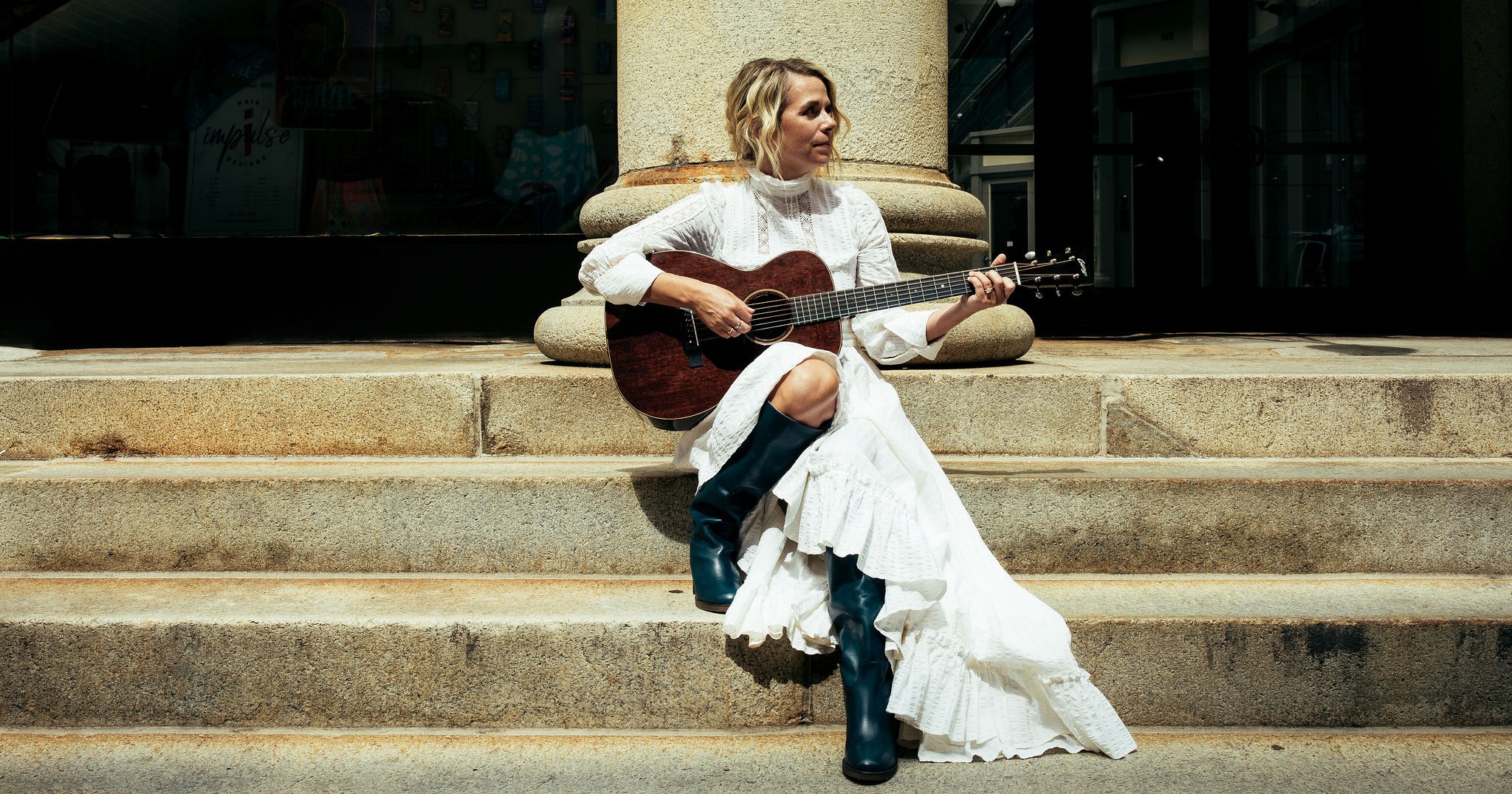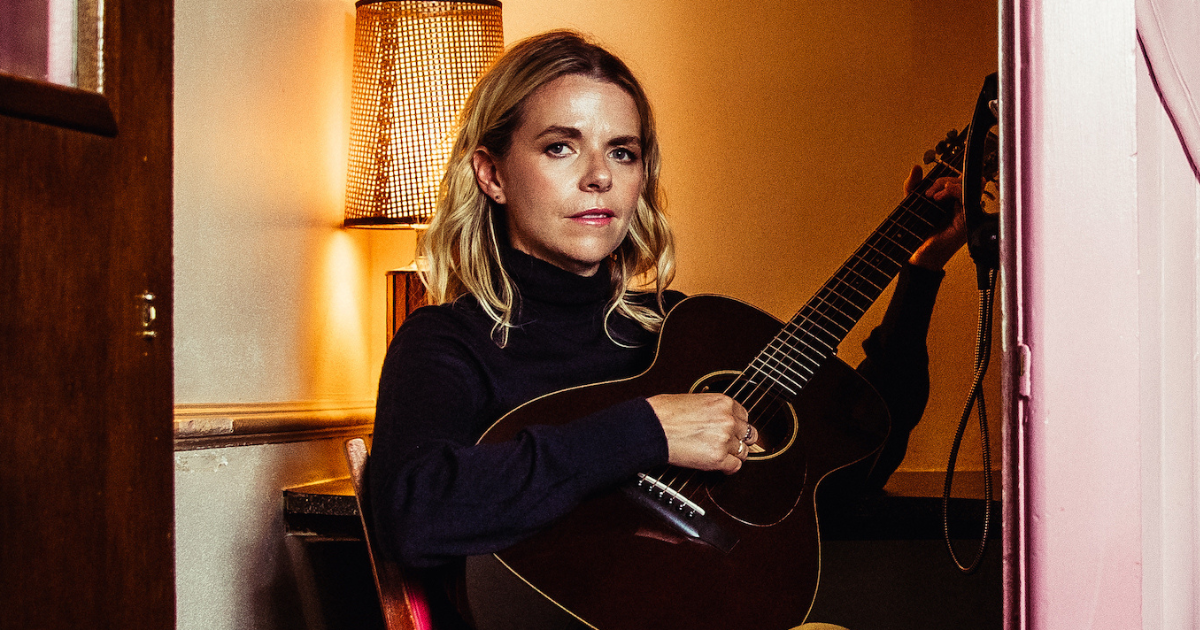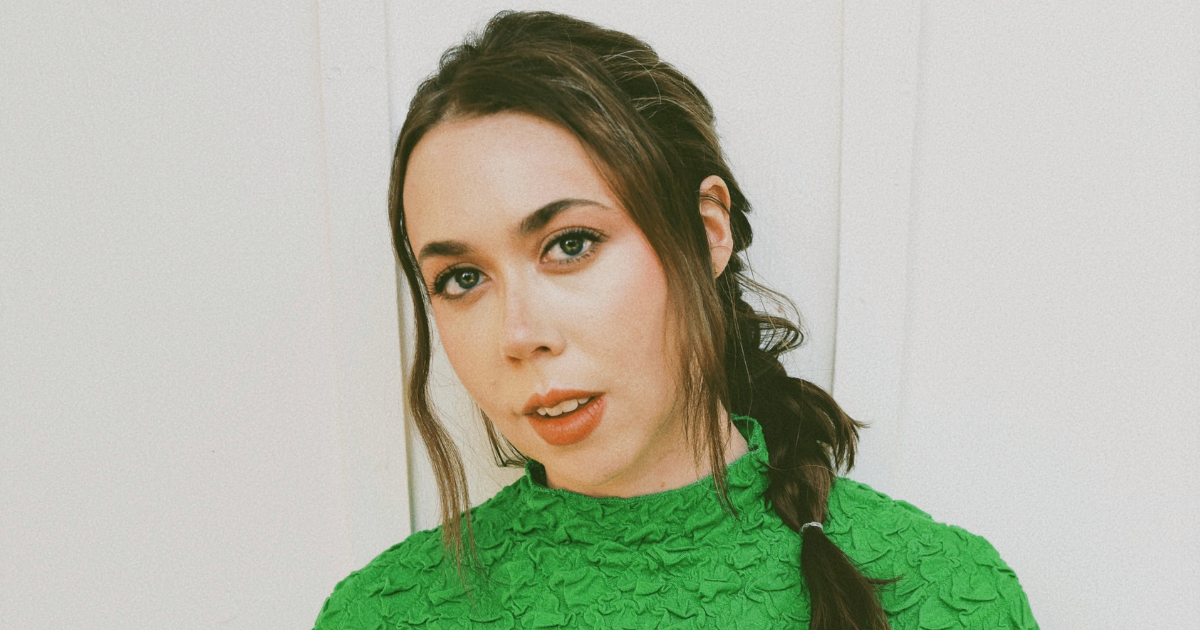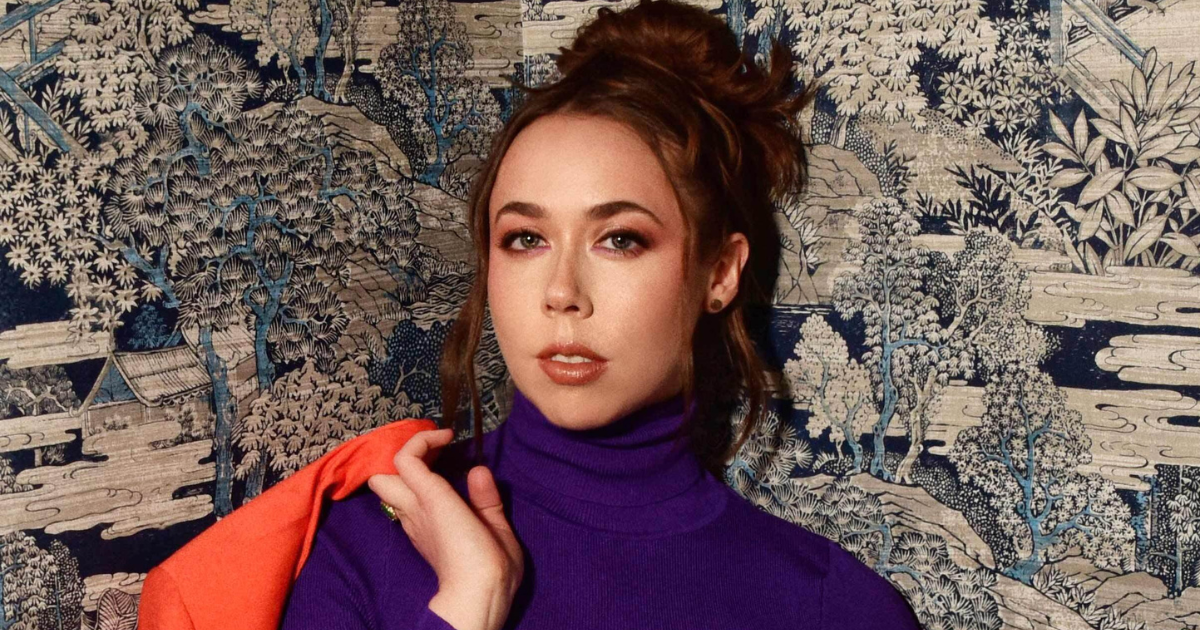
On Her Debut Solo Album, MUNA’s Katie Gavin Searches for Connection and Finds It

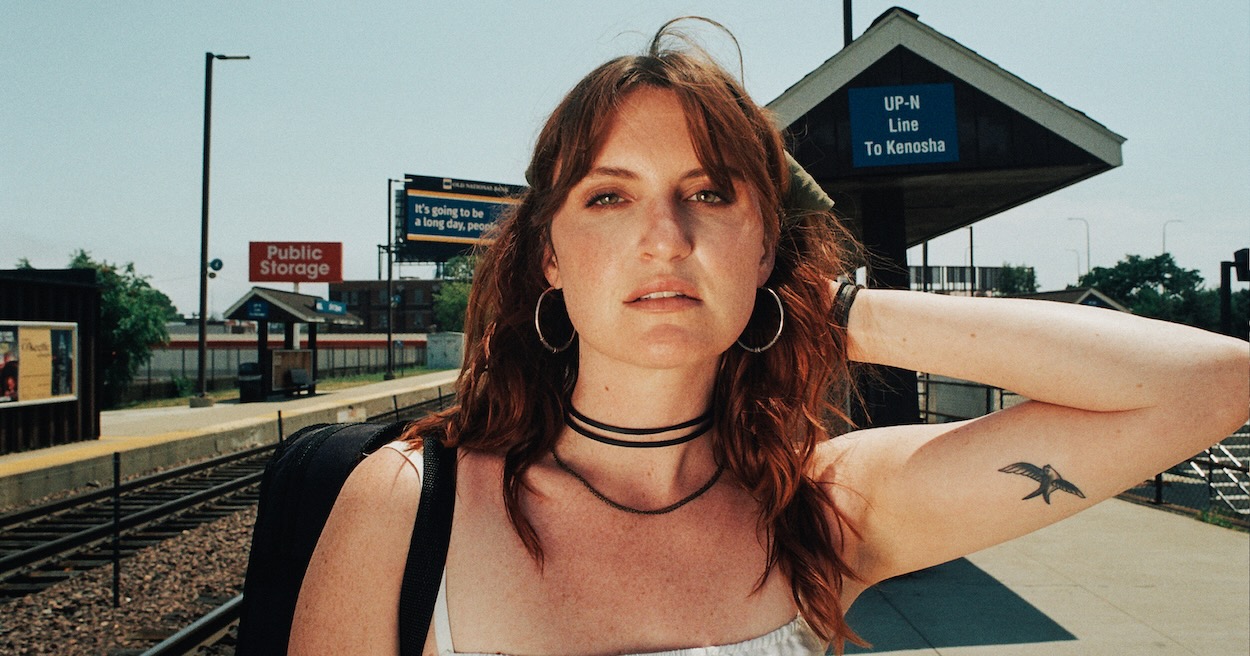
On the album cover for singer-songwriter Katie Gavin’s solo debut album, What A Relief, she sits half-dressed in the middle of her shiny, sage-green bedspread with various clothes and possessions strewn around her and the floor; even the cat stands awkwardly mid-sit or stand, it’s hard to tell. The immediacy of this messy in-between moment conveys the intimacy Gavin reaches to again and again on the album.

I want you to see me
When you’re not looking
I want you to fuck me
When we’re not touching

The album’s opening track, “I Want It All,” exhumes a lust for connection so all-consuming she knows already, “I’m gonna lose my mind / I’m gonna lose…” But it’s also Gavin’s thirst for and attention to these acutely relatable moments of humanity that render the album enticing.

“I’m really hungry for connection. And I think that in putting out songs that express that, or putting out images that express that, and having it met with understanding gives me that experience of like ‘we’re all humans having a human experience,’” Gavin says. “I want to push myself in terms of what I allow other people to see.”

Much of Gavin’s career has been with pop band MUNA (who opened for Taylor Swift’s Eras Tour earlier this year). Solo, Gavin sheds her dazzling pop-star persona and the trappings of MUNA’s spectacular auditory and stage presence, retaining their honesty and emotional precision. What A Relief, which was produced by Tony Berg, is a collection of 12 songs Gavin wrote on the side over the past seven years. With them, and a clarity born of self-assurance and yearning for connection, Gavin pulls up a chair to settle in for a heart-to-heart with her audience.

“Some days you do your best / Some days you do what gets you out of bed…” Gavin sings on “Casual Drug Use,” possessing an inscrutable ability to pinpoint reality neatly and poignantly. That realism remains throughout the album, which unfolds as a masterful look at the human condition through the micro view of Gavin’s relationships with the world, herself, and others. Many times, she sounds so thrillingly close to the microphone it’s as if she’s singing right into your ear.

As she winnows down her experiences to a few kernels of truth, Gavin deliberately and deftly seeks accessibility and relatability without catering to weirdness or discomfort simply to make a point. “I am pleased with the same chords, over and over, as long as there’s a story and someone is saying something compelling,” she explains.

Her lack of pretense serves as shorthand for her palpably raw portraits of life: “But I think this is as good as it gets, my love/ I think this is as good as it gets/ Pray to god that you think that it is enough…” she sings in “As Good As It Gets” – which features guest vocals by Mitski – about a relationship that is not always a fairy tale. It’s an acknowledgement that you can both love someone and be underwhelmed by them, at least some of the time.

“‘As Good As It Gets’ reflects this big question that I’ve had for a long time, and I still have about what is reasonable to expect from a romantic relationship. And how good is it supposed to feel?” she says.

Elsewhere on the album, in “Sanitized,” Gavin carefully takes a wet washcloth to the bottoms of her dirty feet, afraid to stain her lover’s clean bed (“I lie perfectly still so I don’t mess up my hair/ I’m a sanitized girl, I clean up for you my dear”); or promises not to stalk her ex online, except “once in a while I’ll wanna know if you’ve died,” as she muses in “Keep Walking.”

Growing up in Illinois, Gavin’s parents gave her free reign to explore music and she gravitated unsurprisingly to pop music, entertaining preteen love for the Spice Girls and Samantha Mumba, and teen obsessions with Riot Grrrl, Gravy Train, and the Weepies’ “Gotta Have You.” She also gravitated toward queer, explicit music (Gavin is queer, but was in the closet at the time). When she started writing her own music as a teenager, her mother introduced her to Imogen Heap and her father stoked her folkie music interests with Jackson Browne and Jim Croce.

Gavin’s broad musical tastes inform her writing of course. In the case of What A Relief, she draws particularly on her love for John Prine’s flawed, human characters, and perverse, weirdo songster Loudon Wainwright III whose Attempted Mustache remains one of Gavin’s favorite albums.

“It’s the same magic that’s in a lot of John Prine songs, where these people aren’t afraid to talk about what real people experience in their real lives, even if it’s really silly, and then really mixing that with the profound.”

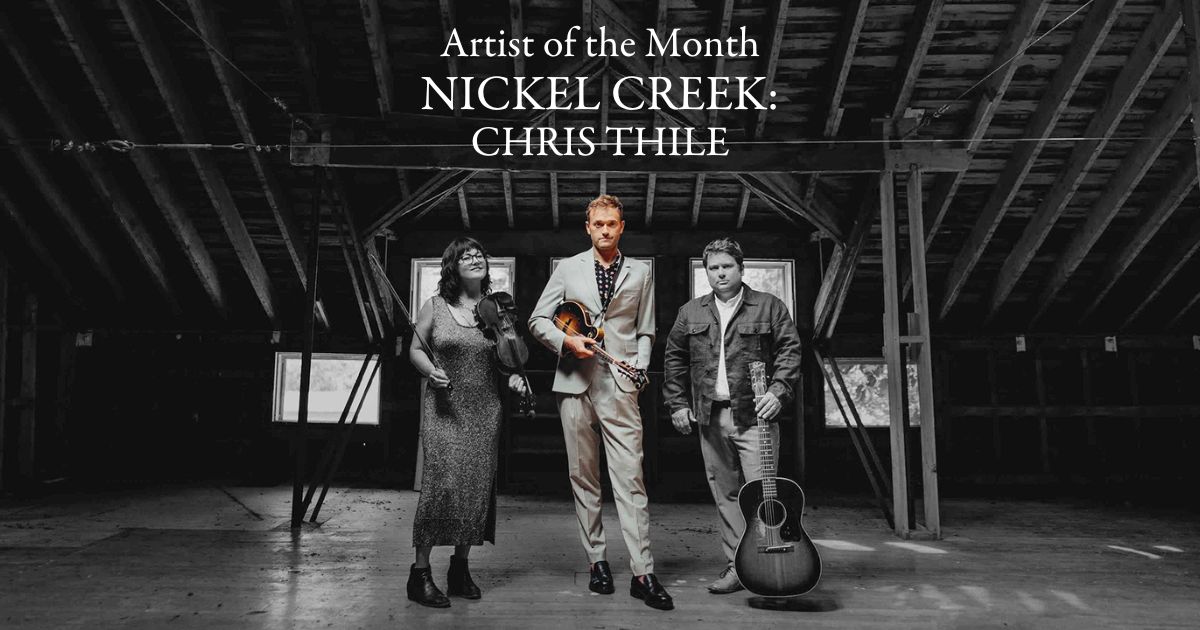
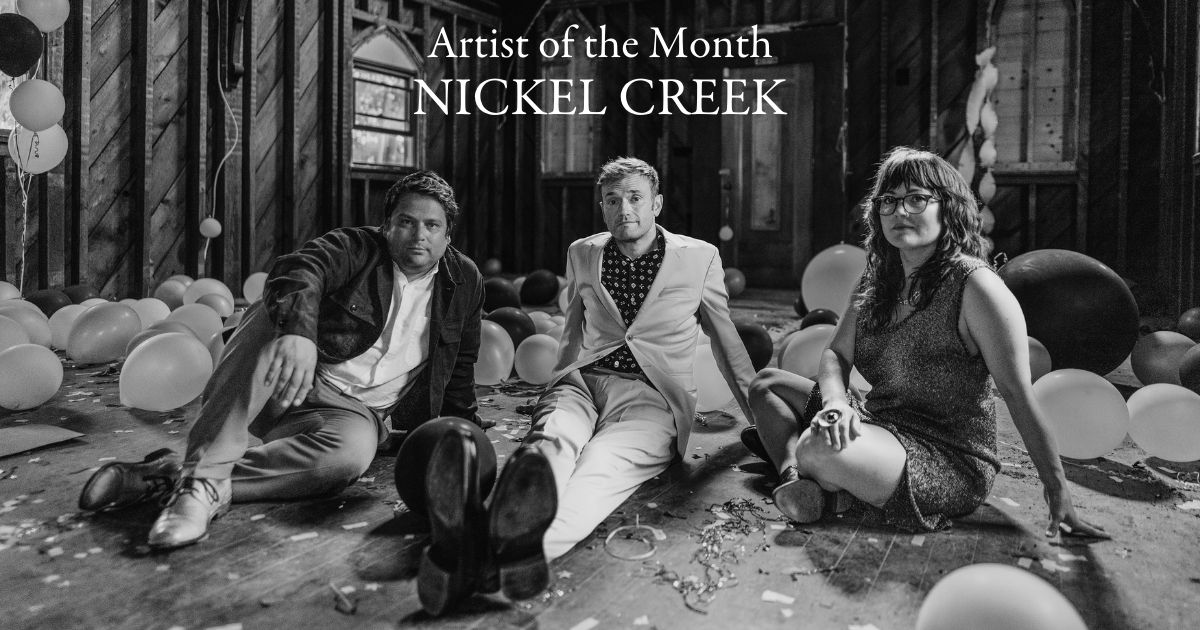
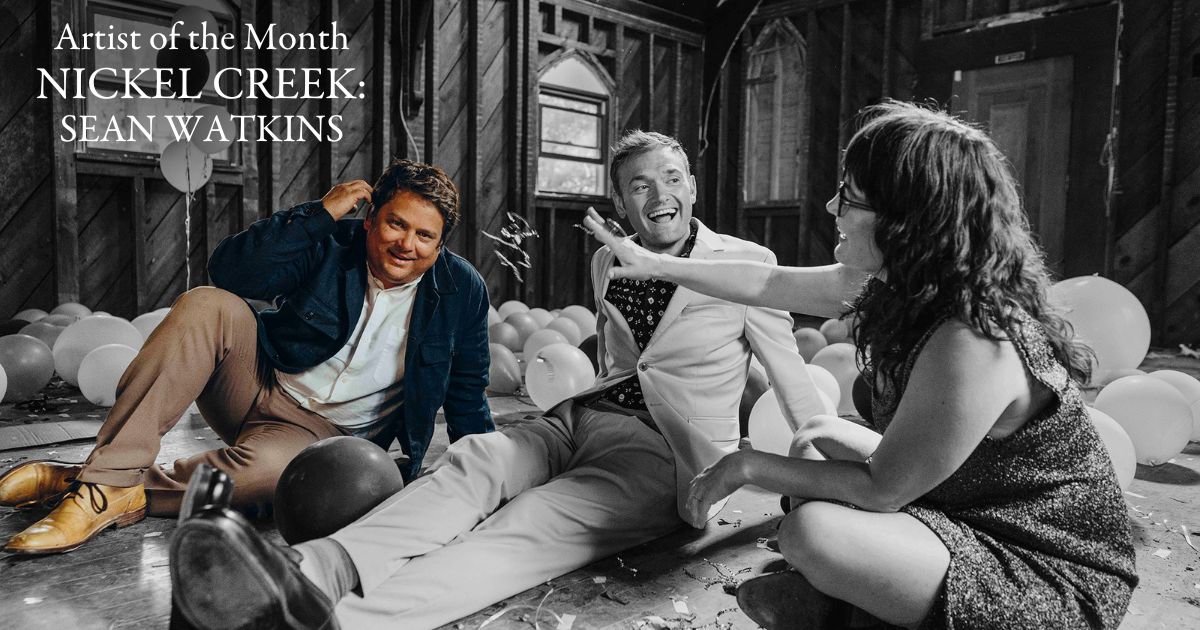
Silly mixed with the profound is perhaps the best possible description of Gavin’s own music. In the middle of the album, Gavin drops the bluegrass-folk portrait “Inconsolable,” about generational baggage’s impact on our well-being. Wrapped around a divinely-gratifying fiddle melody (she brought in Nickel Creek’s Sara and Sean Watkins to add a little extra bluegrass cred to the track) the song is first and foremost a reflection on learning to be vulnerable while falling in love.

It’s an experience that feels every bit as familiar as Gavin’s messy bed, but in a way that seems to make sense for the very first time – the gift of a stellar songwriter. More than that though, “Inconsolable” is a study in the way tiny moments elevate Gavin’s songs through her allegiance to the balance between silly and unvarnished experiences. We’ve all curled up on the couch hesitant to show how we’re really feeling.

But I’ve seen baby lizards running in the river
When they open their eyes
Even though no one taught them how or why
So maybe when you kiss me I can let you
See me cry
And if we keep going by the feeling
We can get by

Mid-verse, Gavin pivots from the endearing image of baby lizards learning to swim to emotional vulnerability in a fledgling relationship with the blockbuster realization that salvation and connection again might just come from that blind leap of trust.

Gavin’s quest for an honest examination of emotional intelligence stems in part from time spent with her grandparents, two of whom she lost in the last few years. Soaking up their stories, she thought about how much they endured and how many times older generations weren’t afforded a chance to be heard, or to feel their feelings.

Elders teach both by omission and by passing the torch. In “The Baton,” What A Relief’s anthemic third track, dedicated to the lineage of socially and generationally inherited womanhood, Gavin outlines her understanding of resilience as it passes from mother to daughter. Imagining what she’d say to her own daughter, Gavin also reaches to the wisdom from generations before her:

I’d pass her the baton and
I’d say you better run
‘Cause this thing has been going
For many generations
But there is so much healing
That still needs to be done

Not for rebellious reasons, but rather to instill a deep love of self, by the end of the song, Gavin’s come out the other side as her own mother.

“It’s a sense of learning, a sense of ownership and agency and learning to really listen to myself and trust myself, like if I’m going into a situation that I’m nervous about,” she explains. That’s a transformation not unlike her experiences writing the album, which she started when she was 24 and concluded at the age of 31: “You’re kind of moving from this archetype of maiden to mother.”

“I’m aware of a younger part of me that might be nervous and might have needs,” she says. “I often talk to her and say, ‘I got you, you’re coming home with me.’ And, ‘You don’t need to worry that I’m gonna forget about you or give you away to somebody else, or make you tap dance for somebody else.’”

Part of mothering yourself is finding your pitfalls and learning to prevent them. For Gavin, that includes thinking about addiction a lot, well beyond drug use.

“I can get addicted to a lot of different things; I can get addicted to different processes; I can get addicted to people; and I can get addicted to looking at furniture on Facebook marketplace,” she says. “I was thinking about this idea that when we as humans get stuck in the process of addiction, the things that make us feel good, and our actual relationship with the world gets smaller and smaller.”

That idea became the song “Sketches,” wherein Gavin distills addiction into a two-dimensional study of self reduction. In a simple acoustic guitar and cello-accompanied track, she imagines her character reduced to a sketch by an overbearing relationship: “That the deeper I’d go/ The smaller I’d get…” until she takes back control, painting herself back to size.

“The process of recovery has been really one of expansion, learning that I can feel intimacy and connection and pleasure and joy from so many different experiences in life and from so many different people,” Gavin says. “And there’s something that just feels very profound about that for me in this time.”

Even when it comes to writing about climate change, Gavin filters her stories through our relationships to one another. It feels more effective than shaming people for not recycling, she says. In “Sparrow,” she ruminates on the dangers of the quick fix, hoping in vain for the song of a sparrow in spring, only to discover that the tree it would perch on has died of a cure applied rashly and without thinking.

But perhaps Gavin’s most profound relationship moment on the album comes when she eulogizes her dog in “Sweet Abby Girl.”

“She’s taking up most of the mattress/ Can’t imagine being so un-self conscious/ She’s pushing her back up against my legs…” Abby becomes a foil for Gavin’s insecurities, as throughout the song she considers the vulnerability within unqualified love for another being.

Buried late in the album, “Keep Walking,” its penultimate track, reveals Gavin’s raison d’être: “What a relief / To know that some of this was my fault.” Superficially, it’s a breakup song. But it’s also a relief for Gavin’s to put these songs into the world, to share another side of herself, and forge new connections with listeners.

Fundamentally, we get through hard times by laughing with our friends, Gavin says. As she’s matured as a songwriter, she’s been drawn to including those moments of levity in her songs. Invariably, they feel like the best of conversations with friends and lend themselves well to What A Relief’s stripped-down, singer-songwriter format.

“There was just something funny about this idea of putting out this part of me that had up until this point been unexpressed; it does feel like a relief to just let it out,” Gavin says. “I like the sentiment in the song … ‘what a relief to know that some of this was my fault,’ which is just agency. I haven’t behaved perfectly, and that gives me some space to have compassion and forgiveness for you.”

“Real life” is such a tired phrase. Gavin’s version, though, feels scintillatingly, comfortingly relatable, and like her messy bedroom, gives the listener agency to let go and just be, too. What a relief.


Photo Credit: Alexa Viscius
Saddle Up and Get to Know the Artists Behind ‘Cowboy Carter’

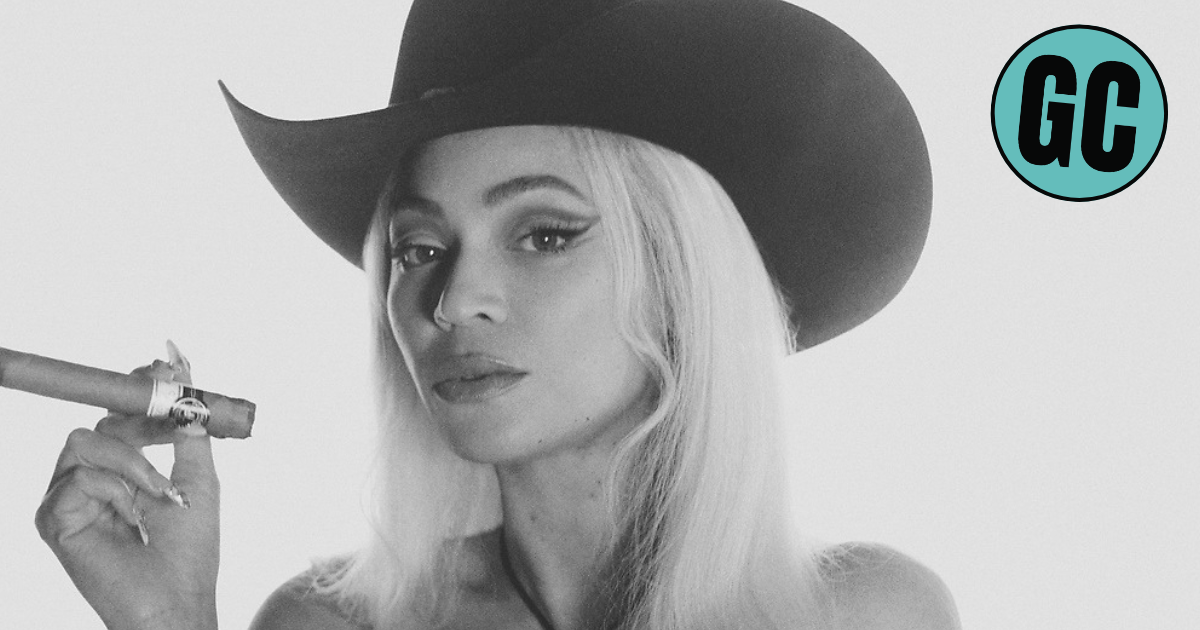
On March 29, Beyoncé rode sidesaddle onto the world stage and took us all by storm with the release of her eighth studio album, Cowboy Carter.

Cowboy Carter arrived as the second installment of a three-act project that commenced with Renaissance in 2022. Renaissance incorporated house, disco, hyperpop, R&B, and funk while reclaiming the Black queer roots of dance music. On Cowboy Carter, she similarly reclaims the Black roots of country, blending it with folk, rock, R&B, hip-hop, classical, house, and gospel throughout.

Prior to the release of Cowboy Carter, country has been a longstanding muse for Beyoncé. While her affiliation with the genre was popularized by Lemonade’s “Daddy Lessons,” her first country-leaning performance dates back to nearly a decade earlier when she performed “Irreplaceable” with Sugarland at the American Music Awards in 2007.

Potent and impeccably saturated, Cowboy Carter makes clear that country is inarguably a huge part of Beyoncé’s creative and cultural identity. However, her presence in the genre has not always been well-received; in an Instagram caption 10 days before the album’s release, Beyoncé revealed that CC was largely inspired by an experience where she “did not feel welcomed” into the country fold. Many speculate that this refers to her appearance at the 2016 CMA Awards. The network received racist backlash after she performed “Daddy Lessons” with the Chicks, prompting the erasure of the song’s video from the show’s website (though a representative from CMA later denied the correlation between those two events).

Of Cowboy Carter Beyoncé writes, “The criticisms I faced when I first entered this genre forced me to propel past the limitations that were put on me.”

Beyoncé alchemizes a multitude of influences and collaborators across the gargantuan album in order to achieve the monumental musical feats of CC. With a credits list that sprawls for seemingly miles, Beyoncé enlists a number of guest artists, co-writers, producers, and musicians. Between them, they represent the Black roots of country, pay tribute to Black Americans’ impact on the genre, include legendary country artists and well-known side musicians and collaborators that assert the project’s roots in country, and represent the bright and diverse present and future of country by featuring several lesser-known Black country artists, many of which are also genre-bending in their own work.

In a list that is by no means comprehensive, here are just a few of the contributors that brought their musical magic to Cowboy Carter.

Rhiannon Giddens

“Texas Hold ‘Em” made history as the first hit single by a solo Black woman to top the Billboard’s Hot Country Songs Chart and 10 weeks later, as of this writing, it maintains its gilded perch. Fittingly, the song opens with the warmth and drive of the legendary Rhiannon Giddens strumming a standalone fretless, clawhammer gourd banjo. The talented multi-instrumentalist, singer, composer of many mediums, and roots scholar also sprinkles notes of viola throughout the track.

It is no coincidence that Giddens’ banjo playing, like much of her work, pays homage to the lineage of Black influence throughout roots music. Referred to by many as a “performing historian,” Giddens has spent her career shedding light upon the cross-cultural interweavings of the genre. Here, in an interview, she details the West African origins of the banjo, an instrument essential to American country music that was initially brought to the Americas by enslaved Black folks who used gourds and other accessible materials to recreate instruments of their homelands. By showcasing Giddens on the track, Beyoncé introduces a sonic representative of overlooked histories while uplifting one of the most celebrated Black musicians in modern day roots music.

Robert Randolph

Raised in a secluded religious community, Robert Randolph grew up without secular music. The renowned pedal steel guitarist heard only the music played within the House of God Church of Orange, New Jersey, for decades. He learned the instrument through Sacred Steel, a Black gospel tradition developed in the ’30s that highlighted the steel guitar during religious services.

During his early adulthood, Randolph became exposed to the world of music beyond; as he absorbed jazz, blues, funk, rock, and soul, he soon set out layering his gorgeous pedal steel tones upon a fusion of genres, particularly alongside his band, Robert Randolph and the Family Band. Across his musical arc, he epitomizes Beyoncé’s philosophy that music is transcendent; “All music is related,” he says. “Gospel is the same as blues. The only thing that changes is hardcore gospel people are singing about God and Jesus and in the blues people are singing about ‘my baby left me’ and whiskey.”

Justin Schipper

Like Robert Randolph, Justin Schipper is also credited for steel guitar on the track “16 Carriages.” A Nashville-based composer, multi-instrumentalist, songwriter, and producer, Schipper is a prominent figure in the current country landscape. His talents have landed him on tour with Josh Turner and Shania Twain (playing pedal steel and dobro), and he has gigged with the likes of Carrie Underwood, Chris Stapleton, Kris Kristofferson, Florida Georgia Line, and more.

Cam

Cam (given name Camaron Ochs) co-produced and co-wrote five songs on CC. An American country singer and songwriter, Cam began her career songwriting for musical giants in the industry such as Sam Smith and Miley Cyrus. Since then, she’s released three of her own studio albums with songs inspired by the songwriting styles of Patsy Cline, Ray Charles, Bonnie Raitt, Willie Nelson, and Joni Mitchell, amongst others. A prominent figure in the current country landscape, Cam lends crucial insights and layers with each of her contributions.

Sean & Sara Watkins

Renowned in the current bluegrass/newgrass scene, this sibling duo lends guitar (Sean) and fiddle (Sara) to the track “II Most Wanted.” Sean and Sara epitomize the familial quality so integral to bluegrass; their first band, Nickel Creek, was formed in 1989 alongside virtuoso Chris Thile when Sara and Chris were only 8 years old and Sean was 12. The siblings have been playing together ever since; Nickel Creek would go on to release seven albums, the latest of which, Celebrants, was released last year.

In 2002, the pair began The Watkins Family Hour as a monthly musical showcase featuring their friends and other collaborators in Los Angeles. Spanning over 20 years, the WFH has blossomed expansively. In fact, the pair released their third studio album, Vol. II, in 2022, a celebration of the project and the community surrounding it. Similarly to CC, the list of features for Vol. II is extensive, featuring the likes of Madison Cunningham, Willie Watson, Jackson Browne, and Fiona Apple, amongst others.

Stevie Wonder

A child prodigy who became blind shortly after birth, Stevie Wonder is widely regarded as one of the most influential musicians of the 20th century. He makes his contribution to CC by layering tasteful harmonica atop the sonically rich layers of “Jolene,” a reimaginative cover in the shape of Dolly Parton’s 1973 classic. Much like Beyoncé herself, Wonder is a trailblazer who, as Beyoncé stated in her Innovator Award speech at the iHeartRadio Awards, “defied any label placed upon [him].” From jazz to soul to funk to R&B to gospel to pop and beyond, Stevie Wonder has influenced and inspired creators across infinite genres and blendings with his vibrant propensity for experimentation. In the same speech, Beyoncé poured out a fountain of gratitude towards the legend, who presented her award —“Thank you so much Stevie, I love you,” she said. “I love you and I honor you. I want to thank you for making a way for all of us. […] Whenever anyone asks me if there’s anyone I can listen to for the rest of my life, it’s always you. So thank you, God bless you.”

Brittney Spencer, Tanner Adell, Tiera Kennedy, and Reyna Roberts

These four women are responsible for the ethereal background and third verse vocals for “Blackbiird.” Additionally, Spencer, Roberts, and Kennedy also lend background vocals to “Tyrant,” while Adell’s voice is woven into the sweeping harmonies of “Ameriican Requiem.”

Initially released in 1968 on The Beatles’ self-titled album, (colloquially known as “The White Album”), Paul McCartney wrote “Blackbird” in response to witnessing on television the harassment and violence that Black students endured upon attending newly-integrated schools. In 2018, he told GQ that he was particularly influenced by the young women who constituted, in part, the Little Rock Nine in Alabama — a nickname for the first nine Black students to desegregate the formerly all-white Central High School in Little Rock, Arkansas.

As McCartney explained to TODAY, “In England, a ‘bird’ is a girl, so I was thinking of a Black girl going through this; now is your time to arise; set yourself free; take these broken wings.”

Within her illustrious arrangement of the classic, Beyoncé pairs the initial guitar track recorded by McCartney with the vocals of herself and these four Black women whose careers are actively altering the historically whitewashed landscape of country. By including them, Beyoncé nods towards McCartney’s intended meaning of the song while actively uplifting these young women so that they may prosper in a genre that undervalues and mistreats the Black artists who continue to give it wings. Brittney Spencer, Tanner Adell, Tiera Kennedy, and Reyna Roberts each have burgeoning careers in the genre that are largely influenced by traditional country sounds and themes.

Willie Nelson & Dolly Parton

In addition to inviting in many Black artists and roots musicians, Beyoncé strategically inserts more commercially successful country greats whose values align with her own. As Willie Nelson tells his faux-radio station listeners in the track “Smoke Hour II,” “Sometimes you don’t know what you like until someone you trust turns you onto some real good shit. And that, ladies and gentlemen, is why I’m here.” This line candidly demonstrates an awareness of the unfortunate truth that a vast array of today’s country fans are white listeners unlikely to take this music seriously without ample accreditation from respected white artists.

Merely four days after the release of CC, likely due in part to the inclusion of Willie and Dolly, the number of first-time listeners of Beyoncé’s music had increased by 85% on Spotify.

Willie Nelson, who celebrates his 91st birthday this year, is renowned for his left-leaning activism (especially advocating for the legalization of marijuana — hence the nomenclature of his feature tracks “Smoke Hour” and “Smoke Hour II”) and his role in pioneering the Outlaw Country movement. Outlaw Country began in the ’60s as a subgenre to rebel against the conservative suppressions, sonic and otherwise, of the country industry at the time. Willie and his like-minded contemporaries strove to achieve creative freedom beyond the political and sonic standards that dominated Nashville.

Similarly, Dolly Parton has used her platform, influence, and capital to enact social change. In addition to being an advocate for LGBTQ+ rights, she donated $1 million to Vanderbilt University in 2020 to go towards vaccine research amidst the early stages of the COVID-19 pandemic.

As of 2024, Willie Nelson and Dolly Parton are widely regarded as two of the most successful American country artists of all time. Nelson holds 12 Grammys from 57 nominations, and continues to tour (in fact, he is actively on the road again right now). Dolly has accrued a total of 11 Grammys from 50 nominations over the course of her career and recently gave a dazzling performance at the 2023 NFL Thanksgiving Halftime Show. The amount of esteem and respect each has garnered throughout their careers grants Cowboy Carter a certain amount of credibility within the wider country circuit.

However, it is clear that Beyoncé doesn’t just merely use these two for their name recognition. She is, indubitably, a seasoned scholar in the history of American country music and respects the discography of both artists immensely. While both give narrative voice-overs, Dolly also lends background vocals to “Tyrant” and, of course, shares songwriting credits for the innovative cover of her song “Jolene” that appears on the album.

Willie Jones & Shaboozey

Willie Jones joins Beyoncé on CC to lend his resonant, smoky vocals on the duet track, “Just for Fun,” and to “Jolene.” Having gotten his start as a contestant on the X Factor in 2012, Jones is currently making a name for himself as contemporary Black country artist that Grammy.com refers to as a “country-rap iconoclast.” As proves to be a crucial theme throughout Cowboy Carter, Jones galvanizes cross-genre musings to make a sound that is entirely his own.

Similarly, Shaboozey is a rapping Black country artist who represents the future of the genre. Combining hip-hop, rock, country, and Americana, Shaboozey further embodies the blending spirit behind CC. His contributions to the album include rapping verses on both “Spaghettii” and “Sweet Honey Buckiin.”

Linda Martell

Beyoncé ingeniously laced together Cowboy Carter to demonstrate the past, present, and future of Black musicians who have influenced the American roots music; and Linda Martell stands as a crowned example of the past. Martell, now 82, was the first commercially successful Black woman in country. In 1969, she made history as the first Black woman to play the Grand Ole Opry, and she held the status of highest peaking single by a Black woman on Billboard’s Hot Country Singles Chart for her song “Color Him Father” until Beyoncé’s very own “Texas Hold ‘Em” took its place.

However, Martell’s success was short-lived; she left Nashville and country music altogether in 1974 after receiving racist backlash following the release of her first album. Nearly every live show was corroded by racial slurs from belligerent audiences, and her label eventually shelved her music when her single, “Bad Case of the Blues,” failed to do the numbers they were expecting. As Martell postulates on the CC track “Spaghettii,” “Genres are a funny little concept, aren’t they? In theory, they have a simple definition that’s easy to understand. But in practice, well, some may feel confined.”

While Martell’s career arc fell victim to the confines of hegemonic racism within Nashville (and the country at large), her appearance on Cowboy Carter pays tribute to her historical strides for Black artists nevertheless. The track “The Linda Martell Show” (wherein Martell poses as the host of her own radio show) acts as a foil to Willie Nelson’s “Smoke Hour” — Beyoncé here reimagines the career of Martell, granting her the accreditation to host her own show, something history previously never afforded her.

Miley Cyrus & Post Malone

Beyoncé’s respect for innovation rings loud and clear in her inclusion of Miley Cyrus and Post Malone on CC. Each share a vocal duet with Beyoncé on the album — Miley sings “II Most Wanted” and Post Malone contributes to the track “Levii’s Jeans.”

Though both are primarily known as pop artists, each has a career largely informed by their capacity to genrebend. Miley, daughter of country icon Billy Ray Cyrus and God-daugher of Dolly Parton, adds additional credibility to Beyoncé’s country venture. Throughout her career, Miley has traversed country, rock, pop, and R&B.

Similarly, Post Malone has woven together pop, alternative R&B, hip-hop, and indie throughout his career, and many speculate that he will soon release a country album.

It should be noted that both Miley Cyrus and Post Malone have been able to immerse themselves in genres that are historically Black throughout their respective careers. That both have moved between country and R&B without controversy is telling; their capacity to do so seamlessly and successfully demonstrates how white artists are able to express themselves fluidly without systemic repercussions. It is this very ease that Beyoncé wishes to cultivate for artists of every race; in her Instagram post about the release of the album, she writes, “My hope is that years from now, the mention of an artist’s race, as it relates to releasing genres of music, will be irrelevant.”

Raphael Saddiq

Referred to by music critic Robert Chrisgau as the “preeminent R&B artist of the ’90s,” Raphael Saddiq made mark as an American singer, songwriter, record producer, and multi-instrumentalist. He rose to fame in the ’90s with his R&B/soul group, Tony! Toni! Toné!, and went on to have a successful solo career. Additionally, he has produced songs for musical giants such as Erykah Badu, Stevie Wonder, TLC, D’Angelo, Solange Knowles (Beyoncé’s sister), John Legend, and more.

He is credited 18 times over the course of Cowboy Carter for his producing, writing, and instrumental contributions to the tracklist.


Photo Credit: Mason Poole

Aoife O’Donovan and Sara Watkins Discuss the Making and Meaning of ‘All My Friends’

Bearing witness to friends and collaborators Aoife O’Donovan and Sara Watkins in conversation is reminiscent of listening to their frequent musical partnerships, like their trio I’m With Her (with Sarah Jarosz). In moments, they blend perfectly, finishing each other’s sentences. They dance around each other, giving space for thoughtful responses and further questions.

In an artful, deeply reverent, and candid conversation, they delved into the intricacies of creating O’Donovan’s new release, All My Friends. The project originated from a commission by the Orlando Philharmonic Orchestra in 2019 and blossomed into what O’Donovan refers to as a “song burst,” inspired by the life and work of American Suffragette, Carrie Chapman Catt, and the centennial of the 19th Amendment.

The project propelled O’Donovan into unfamiliar territory as a songwriter and what emerged is a beautiful elegy to the women of the past who fought for the right to vote. It’s an homage to women of today – and future generations.

BGS spoke via Zoom with Artist of the Month O’Donovan from her home in Orlando and with Watkins joining from her home in Los Angeles.

Aoife O’Donovan: Hey! How are you?

Sara Watkins: I’m good. How are you doing?

AO: I’m so good. I love that I’m having an official conversation with one of my best friends. It’s sort of weird.

SW: When they called me to ask if I would be interested in interviewing you, it was an hour after I had just sent you that raving text about how much I adore the album and the music. I’m so blown away by it.

AO: Oh, my gosh! You’re so sweet! I love you!

SW: I’m not sweet, and you know that.

AO: You are. You’re a nice person. You just sometimes don’t hug strangers. That’s like your only quirk.

SW: I’ve been listening to the record since you sent it to me. But this week, I’ve been getting to really dive in and have the fun of trying to get inside your head a little bit. From that opening line, from the opening gesture at the beginning of the album, it’s just this gorgeous way of encompassing the whole record so beautifully. But it’s also so open. It’s not a thesis statement, but it powerfully contains the whole album. And I just wonder, where did that particular thing come from? And when did you know that that was going to be the way to start?

AO: It’s funny, that opening phrase, just the idea of “All my friends, all my friends,” that idea came to me many years ago, like maybe in 2018. I just had the melody and the chords and I kind of sat with it. It never was anything except for that. When I started working on the idea of this record, when Orlando (Philharmonic Orchestra) asked me to write 5 songs to commemorate the centennial of the 19th Amendment, I didn’t even go back to that tiny phrase immediately. I started elsewhere.

I started to write this other music, and then I remember sitting at the piano, actually at Full Sail, in the studio that I worked at here and I remember those words, “All my friends,” that was all that it was. I started thinking about what that meant, as even just a very simple, very kind of trite, almost overused lyric. There are tons of songs called “All My Friends.” There are movies called All My Friends. There’s a book that I just read called All My Friends Are Going to Be Strangers. It’s not a very original 3-word statement. But there was something about those words together with those chords, that all of a sudden felt like they belonged in this project. This is about the women who were before and the women who are yet to be born. It felt like this big circle all of a sudden of humanity and womanhood.

SW: It’s powerful on its own and then also with the context of the movement. I don’t often think of movements like that with friends. We think about it for younger generations. Let’s change policies to help younger generations, or to help the American people, but to put the word “friends” on it just makes it so heartbreaking. I just get sisterhood through this whole record in the most powerful way.

In “Daughters,” I have these 2 different visions of what’s happening in that song. With the way the band and the orchestration wrap around your guitar playing – the band does such a great job. You’ve played with Griffin Goldsmith, and with Alan Hampton a ton. The trio entity is so complete and so complementary to the songs and then to add to it, the way that you have the orchestration coming into play and the choir in such supportive ways. I had two images. One was this vision of a battlefield. Like when we were in grade school, where we talked about Gettysburg, or these legendary Revolutionary War battle sites and you see that field where the people are, and then you see these flanks coming in from the sides. That’s how that song feels to me.

AO: That’s like exactly what I was imagining when I wrote it. I’m not joking; that exact image of just being on a battlefield. And then, like the other voices coming in, or like the other people coming in to sort of fill the ranks. That’s exactly what I was envisioning. That’s so funny.

SW: It’s incredible.

AO: I’m so glad that that came across.

SW: It does. And it’s a credit to the arrangement, where you have the choir come in and there’s this rumbling support, or this foundational support from the orchestration before. When that chorus comes in, it just feels like you’re surrounded by kinship or by the sisterhood of support. And then the next verse opens up, and you’re alone again, or like fairly alone and you have to carry this battle by yourself, for yourself. It’s an individual fight. But then, going back to that “all my friends” lyric, it just feels like all of those entities are your friends coming to support you in your time of need.

AO: Exactly. That’s it exactly it. I feel like for me, when I made this record, and even now getting ready to put it out, it’s so specific and it’s so deeply personal. And it’s so not a record of like, “Check out this jam!” It’s just not that kind of record at all. And it’s not meant to be. I’m so glad that you listened to it in this way. This is what my hope for this record is, that people will be able to have the time to sort of process what it is. And these images and that exact thing of going into a battlefield. But then, there are moments when everything is stripped back, and you are sort of alone. But you’re also singing for your friends and for your community and for your mothers and your grandmothers and their mothers and their grandmothers. But also for the daughters of the daughters of the daughters. It just feels like this circle keeps on going.

In that song, specifically having the girl’s chorus, and on the whole record it was such an important thing for me to have the voices of young women, and not necessarily harmony vocals by my peers. I just felt there was something about the innocence of this young voice. The experience of getting to do it live with the Brooklyn Youth Chorus, and in Massachusetts, and even getting to do it in Glasgow with the girls’ chorus, it’s really powerful. It’s hard not to cry, even as a performer. It’s something about seeing young girls up on a stage, ready to give something. It just feels deeply emotional.

SW: And they are giving to you and you are getting to experience that support literally. Being on stage can feel very alienating and very vulnerable. It is a little bit of a fight sometimes within yourself if nothing else.

I feel like this is just such a powerful statement: grappling with change and growth. And obviously, that’s something that needs to be continually grappled with. It’s not like, “Oh, the change happens, and now we’re done. Check it off the list.” It’s a continual engagement, and it’s hard.

With “America Come,” when you get to that point in the album, it feels like the industrial revolution to me.

AO: Yes. I love that.

SW: Especially because you’re singing the words, “manpower, womanpower.” I feel like the machine is running.

AO: Right. I feel like that song with the, “dun, dun, dun, dun, dun, dun,” it becomes very steady. It is like the machine is running. That’s one of the songs on the record that really is so much about Carrie Chapman Catt, the suffragist who I was inspired to write about and write from the perspective of. That song is really heavily lifted from an actual speech that she gave. Some of those phrases are verbatim from her speeches.

That idea of this question, “What is this democracy for which the world is battling?” I feel like that’s a question that we can still ask ourselves. What are we doing here? What does this mean? What is America? I feel like that’s just such a deep question, and to be asking that in 1919 or 1918, or whenever that speech was from, and then to still feel it in 2022 – when I was writing this, it felt so relevant I feel like it’s almost eerie. We can’t give up the fight. We can’t stop. You don’t just check something off the list. As you said, it just kind of keeps going.

SW: And in that way, the album encompasses all the humanity, the micro versions of this, where for instance, in the institution of marriage, or a long-term relationship, or friendships, family, or whatever, it is about checking in every so often: “Wait! Life is running away with us. What do we want? What do we want in choosing this city, this school, this town, this job, this house?”

And that happens on individual levels. Like in my own life, I think, “Have I gotten away from this thing that I cared about five years ago? Have I checked in about this?” I feel like with the content of this album, I found myself thinking about the country, and I found myself thinking about me. Especially, with the more introspective song “The Right Time.” That’s the one where she talks to herself a little bit?

AO: Yeah, exactly. She’s like, “Don’t give them anything to laugh about.”

SW: Like a pep talk.

AO: Yeah, exactly that. It is a pep talk. That’s kind of my idea, about what she or anybody in her position would be going through as a woman with so much to offer, such a big brain, and so much potential. But, what do you have to climb over when you’re living in a time where you’re not valued and the only jobs available are to be a teacher in a one-room school house, or to leave the town that you grew up in? And people are going to look at you. People are gonna make fun of you if you’re a smart woman. People still make fun of smart women. It’s so weird.

Sara, we’ve talked about this a lot, being women in music, about how I feel like I’ve been so lucky and so respected throughout my career as a musician. You know I’ve always felt very valued and have very rarely been made to feel “less than” due to my gender. I feel so lucky that I’ve been in a community of musicians who have really supported me. But I know that that’s not the case for many musicians, and across other fields it is absolutely not the case.

SW: Yeah. I feel I have had a similar experience with that support. I can only imagine that in that era, when community really was the people around you – not people somewhere on the internet, in a town across the country that you can kind of connect with. She could physically rally the people in her region by convincing newspapers to publish things.

AO: By like getting up on stage and giving speeches or by writing a letter to the President and getting responses. Obviously, she’s not the only one. There were many women who were powerful and were doing amazing things. They just had to try so much harder, and that is what’s interesting. I think having a daughter in this time of life, in the 2020s, you want to give them the tools to always feel that they have the confidence and awareness to think of themselves as equal and powerful.

SW: Tell me about the research you did for this. So, the idea was presented to you and commissioned by The Orlando Philharmonic. Is that right?

AO: By the Orlando Phil, yep! So the OPO asked me in 2019. They said, “It’s the centennial of the passage of the 19th Amendment.” A lot of orchestras in the U.S. were asking female composers to write music for concerts they were doing. They were trying to diversify their programming. And when OPO asked me to do a piece, I was sort of like, “Why me?” That’s something I’ve never done before, writing an orchestral piece to be performed as a commission. It just felt like, that’s not how I operate. You know what I mean, I’m a songwriter. But I said, “Yes, that would be a good challenge.”

I didn’t think about it for a while, and then COVID happened, and everything kind of got crazy. I was like, “I’m never gonna write another song again, maybe this is it, maybe I’m done making music.” And then when I got down here to Florida, I started to regain some sense of artistic confidence and inspiration. I started to write a little bit of Age of Apathy that fall and then started to work on this 20- to 25-minute piece of music. So I went into the studio and really started to write it. But without text. I didn’t really even know what the text was going to be about yet. I wrote all the music first, because I had to get it to the orchestrator, Tanner Porter, who orchestrated all the charts for me. That was gonna take a lot of time.

That was November and the concert was supposed to be in May. I needed to get her the music. So I was working, working, working, and didn’t have any text. I wrote all the vocal parts and all the music sketched out to what I wanted it to be. We talked a ton about, “Hey, I want this to open with brass, and I want strings to come in here, and I want this line to be played on cello, and these are the brass lines that I want.” I would make these demos where I would play all that stuff for her, and then she orchestrated it. She also put together all the interludes that sort of stitch the songs together, which are so cool.

It was really fun to have this blank slate without any lyric goal or hesitancy to hold me back. I had simultaneously been doing research, reading, and figuring out what I wanted it to be. “All My Friends” is really just an imagining of the moment when these movements met up in Tennessee to get these votes ratified. And they did march. And they did plead their case and were ultimately successful. But those images are from my own head, like a reimagining of vague historical events.

SW: Let me just jump in really fast just to say that I love how much space you gave for yourself in imagining that imagery. I feel like my own temptation would be to report and do the research and make it rhyme. I feel like you’re the perfect artist for this kind of commission, because of the way that your melodies can float above or without the constraints of rigid time that a lot of us songwriters are tempted to do. The way you carry a line – I don’t think you always realize how extraordinarily unique it is. I think that because of the way that you do music like that, it lends itself to an orchestral project where we’re not dealing with 8-bar phrases and the occasional extra 2 bars and things.

I feel like you are the perfect singer-songwriter to receive this kind of commission. I am so happy that you indulged in that vision of the world, of the people descending into Tennessee, and what the fog was like and what the air was like. Because that is what the feeling was like and that’s the story. It’s not just, “on this date this happened.” I’m glad that you put yourself in the story, because that gave so much room for the arc and the heart of the thing and makes me wanna listen. If I had done this, it would sound like an eighth-grade book report.

AO: No, come on, give yourself more credit, Sara! I don’t have any idea what Carrie Chapman Catt was like personally, because I didn’t know her, but I felt like I could give her dialogue. You can make her personality be whatever it is that you want her to be.

I just read this amazing book called Wolf Hall. I was so fascinated by how the writer, [Hilary Mantel], makes Thomas Cromwell, this character, from the 1500s, feel like this modern, empathetic, shrewd, conniving, and complicated character. That also could have felt like an eighth-grade book report about Thomas Cromwell, but the author injected life into him. That’s the cool thing when you are an artist and when you are a writer, that’s what we do for people who were real or people who we’re making up. You’re taking these embellishments, and you’re telling a story with them.

With the song “Crisis,” [Carrie Chapman Catt] gave a speech called “Crisis” in 1916, and I read that speech and thought, “Oh, my God! This!” Yes, she’s using archaic language, and nobody speaks like this, but how can I imagine her as almost like a bluegrass singer getting up there and saying, “Alright, gather around girls. I’m gonna tell you about what’s going on and what we’re gonna do about it.”

Once I realized I could make it my own because this is my piece, it sort of like set me free into this new creative territory.

SW: And the way that you’re talking about “Crisis,” just the word itself makes you think of ominous minor chords and tension. And with those beautiful horns and flutes, it is just this wonderful, hopeful dawn of a movement. The dawn of a new time is here while you’re singing about the crisis. I love the optimism that’s contained in that and how you acknowledge that everything is all together.

AO: Exactly. One of my favorite things about “Crisis” is I really wanted there to be mandolin on it. It just has that folky feel to it. I had connected with Sierra Hull, who obviously, I’ve known for years and years, but we hadn’t really played that much music together, and I remember being on Cayamo in 2022, and really jamming with her for the first time. And then, you know, fast forward to eight months later I was like, “Oh, I think Sierra would totally kill this song.” I love her playing on it. It just has the right amount of weight to it.

SW: On “War Measure,” I’ve never heard you sing like you do on that chorus. The way you pull down those notes!

AO: It’s hard. It’s actually really hard for me to sing like that. It hurts my voice. But that’s actually my favorite one to do live, because there’s something about singing those lines, “If they pass this amendment to our constitution, we are gonna be talking about revolution.” That’s funny, because I had written that song without the lyrics. And then when I put the lyrics in, I was like, “Oh, this is actually, really rad.” It made it fun.

SW: I bet that was really fun. It makes sense that you wrote the lyrics after a lot of the music, because you get so much in there. It feels like you have room to expand the lines in ways that you might not if you’re writing it down on paper, right? And you get to really chew on certain lines for longer. I feel like there are some lines that get the time that they want to have rather than the time that might have been allotted to them.

AO: Exactly. It was odd, but I’m really glad that it worked out like that.

SW: I love “Over the Finish Line.”

AO: With Anaïs [Mitchell], who is a genius.

SW: And such a wonderful voice to have on here, both in terms of tonality – because you sound amazing together – but also because her songwriting voice has been a voice of movement, a voice of awareness. I love that choice.

AO: The idea kind of came after the fact. I recorded the song and I wanted there to be another voice. I didn’t want it to be me singing harmony with myself. I wanted something starkly different, tonally, from my voice. I’ve known Anaïs for almost 20 years. We’ve been in this same scene and the same world, but we’ve never really done anything together. It worked out so well. I love what she did and how she moves around through the melody and the unison part at the end of the song. I felt connected to her.

SW: I love how it is not the kind of harmony part where you are trying to blend them together. It is very much two individuals choosing to sing together. There are places where your phrasing is different and you’re shortening different lines. It is a perfect example of what you have throughout this record with the children’s choir and the orchestration. To have this lovely duet moment is another version of the sisterhood of letting everyone be themselves rather than needing to have it all looking so pretty and clean and tidy. It is like, “We are existing together, and it’s a beautiful thing.”

AO: Exactly.

SW: It is so well done.

AO: Thank you so much, Sara.


Photo Credit: Sasha Israel

Artist of the Month: Aoife O’Donovan

There’s a confidence and ease to Aoife O’Donovan‘s music making, brought forward throughout her career by her languid, tender, and emotive voice. Just as striking and crystalline as it is cozy and comforting, her voice is a truly iconic instrument in Americana, bluegrass, and new acoustic music. Still, as she readies her new solo album, All My Friends (out March 22 on Yep Roc), it feels as though O’Donovan is decidedly stepping into a new era of confidence and self-assuredness, devoid of any sense of desperation or flightiness or unfettered ambitions. There’s a steady, intentional march to the blossoming of her catalog and her artistry and it’s on full display on All My Friends.

The album was conceived as a sort of tribute to or reckoning with the cross-generational struggle for women’s rights, highlighting the passage of the 19th Amendment over 100 years ago and picking up that timeless mantle of ever-striding towards justice. It’s a perfect project to highlight during Women’s History Month; the intellectual and political messages within it are softened – though never outright whitewashed, revised, or sanitized – by O’Donovan’s perspective as a mother of a young daughter. With All My Friends, she is continuing her journey with another timeless tradition in string band music: the role of mother-activist-songwriter-composer.

One of the record’s lead singles, “Daughters,” was heralded in a press releases as “a meditation on the eternal quest for women’s rights and equality.” Meditative qualities might be the most tangible and original through line of O’Donovan’s songwriting, song collection, composition, and her vocal affectations – from as far back as her days with Crooked Still, or evidenced by the songs she brought to her supergroup trio, I’m With Her, with Sara Watkins and Sarah Jarosz. As on “Daughters,” O’Donovan more often than not opts for quiet-and-impassioned, subdued-while-soaring vocals. She’ll wrap you in the gauze and glitter of her one of a kind voice and, in doing so, prepare you ever so gently and kindly to receive the messages in her lyrics – however demonstrative or abstract they may be.

O’Donovan’s latest era of confidence is also well marked by her vast and varied resume of musical collaborations. Besides Crooked Still and I’m With Her, she’s released music with Goat Rodeo (Stuart Duncan, Yo-Yo Ma, Edgar Meyer, Chris Thile), Noam Pikelny, the Milk Carton Kids, Taylor Ashton, Donovan Woods, and so many more. In more recent months and years, she’s featured Allison Russell on a track (on 2022’s Age of Apathy), collaborated with mind-boggling guitarist Yasmin Williams and step-dancer Nic Gareiss on a stunning number entitled “Dawning,” and even “came back” to straight ahead bluegrass with a recent single feature on a Becky Buller track, “Jubilee.”

Her output is ceaseless, her art is prolific, but here – as in the new album, and across her discography – the hallmark of O’Donovan’s work isn’t volume, but intention. This is not breakneck, music industry ladder climbing, this is an artist deliberately expanding the universe of her music bit by bit, voice by voice, collaboration by collaboration. It’s part of why she’s such an effective voice and influence in control rooms, too. (Though her production credits are relatively few, they are mighty.) And it’s part of why, as you scroll through our Essential Aoife O’Donovan playlist, you’ll find as many surprising and eyebrow-raising selections as you will her mighty, familiar modern classics.

All My Friends – with appearances by The Knights, The Westerlies, Anaïs Mitchell, Sierra Hull, Pikelny, and more – is yet another demonstration of O’Donovan’s community, her central role within it, and her confidence in inhabiting that role wholly and completely. This is meditation without stagnation, orchestration without machinations, softness and tenderness, but with a steel spine. These are challenges to the status quo while knowing real progress is made with one foot placed in front of the other – and with many other footsteps following her own.

Throughout the month of March, as we highlight Women’s History Month, we’ll be celebrating the new album, All My Friends, and Aoife O’Donovan as our Artist of the Month. Stay tuned for a special “In Conversation” Artist of the Month feature to come later in March featuring an amazing artist and collaborator of O’Donovan, and we’ll also be dipping back into the BGS archives to resurface so many amazing songs, videos, articles, and stories that highlight the incredible music of Aoife O’Donovan.


Photo Credit: Sasha Israel

Explore the Essential Songs of Sarah Jarosz’s Discography

Stripping away convention, honing in on narrative, and keeping complex melodies afloat with her ethereal vocals, Sarah Jarosz is a superlative presence in the roots music landscape. The daughter of two schoolteachers hailing from Wimberley, Texas, she began learning to play the mandolin at age 9. By the time she turned 12, Sarah was already gracing stages alongside the likes of musical giants David Grisman and Ricky Skaggs.

Her multi-instrumentalist capabilities and songwriting proficiency only grew from there; at the age of 16, Jarosz signed a deal with Sugar Hill Records and released her first album, Song Up in Her Head, in 2009. This critically acclaimed record would be the first of what now surmounts to seven full-length, tremendously lauded projects. Polaroid Lovers, Jarosz’s latest and the muse of her current tour, is set to be released on January 26, 2024.

Over the span of nearly two decades spent recording and touring, Sarah Jarosz has established herself as a foundational thread in the tapestry of modern roots music. From impeccable collaborations (with Punch Brothers, David Grisman, Sierra Ferrell), to forming a supergroup alongside Aoife O’Donovan and Sarah Watkins (I’m With Her), to a whopping 5 hours and 45 minutes of music published under her name, Jarosz stands firmly in her power. As she forges ahead, she only continues to outdo herself.

While her entire catalog is sure to edify any listener, this compilation showcases some of Jarosz’s most essential tracks. Tracing the arc of her musicianship from adolescence to adulthood, the following 17 songs demonstrate the particular sonic maturity, lyrical astuteness, and emotional evocation that span all she creates.

“Mansinneedof”

From Jarosz’s first album, Song Up in Her Head, this indelible instrumental boldly answers the question, “Can a mandolin be a lead instrument?” with a resounding, “Of course!” The first of many Grammy nominations acquired throughout her career, this tune was considered for Best Country Instrumental in 2009. Impossibly advanced beyond her years, Jarosz’s nimble and articulate melody is akin to a sonic coast through star-studded galaxies.

“Come On Up To The House”

In a clear demonstration of the range of her musical influences, the most-streamed song from Sarah’s inaugural album is a cover of Tom Waits’s “Come On Up To The House.” Her cool, slippery voice lends a new angle to the iconic tune. Paired with astute backing vocals from Tim O’Brien and a slick fiddle solo by Alex Hargreaves, this song grooves right along – an ingenious, albeit unlikely, bluegrass cover.

“Annabelle Lee”

Jarosz’s sophomore album, Follow Me Down, is latent with a mystical quality that reaches towards the ethers, shepherded into expansiveness by a creative spectrum of influences. The third track, “Annabelle Lee,” features lyrics adapted from the illustrious Edgar Allen Poe poem of the same name. Jarosz sets the eerie tale against a conglomerate of haunting textures – the heightened pace and drums evoke a sense of urgency while Jerry Douglas makes his lap steel wail, a somber cello moans, and Dan Tyminski’s backing vocals lend fullness to the ravenous depths of this dark tune. It is also worth noting that Jarosz performed and recorded this tune, very fittingly filmed in an old hunting lodge in the Scottish Highlands, for the Transatlantic Sessions in 2011. (Watch above.)

“The Tourist”

Sarah sure knows how to pick a cover. From Prince to the Decemberists to Joanna Newsom, she can masterfully braid her grace and artistry into anything. “The Tourist” offers Jarosz’s take on Radiohead, an influence cited among many of Jarosz’s contemporaries, including Madison Cunningham and Chris Thile. In fact, Punch Brothers provide the musical backdrop on this track, their syncopated rhythms and blustery fills meeting Jarosz and Thile’s airtight harmonies to create a sense of whirling, palpable, delicate angst.

“Build Me Up From Bones”

Off of her Grammy-nominated third album, this titular track received an additional nom for Best American Roots Song of 2014. This song is SJ’s most popular of all time, having racked up a total of 70.7M streams on Spotify. Here, Jarosz’s songwriting forges into new territory; her lyrics are both poetic and measured, imbued with textures of velvety longing. The form matches the content, from Aoife O’Donovan’s dewy harmonies to the pizzicato string section to the gorgeous cello solo. Effectively, listeners are bathed in a most intimate listening experience that beckons infinite re-listens.

“1,000 Things”

In another track off of Build Me Up From Bones, here SJ shares songwriting credits with the legendary Darrell Scott. The result? Pure synastry. Underscored by pulsating Celtic rhythms, this uptempo earworm says 1,000 things despite its brevity.

“House of Mercy”

This tune, along with the album carrying it – Undercurrent – won Sarah her first two Grammys in one night. “House of Mercy” was crowned Best American Roots Performance of 2017, and it was indubitably worthy. Jarosz shares songwriting credits with Australian singer-songwriter Jedd Hughes, and together they achieve a dark story arc as the encumbered narrator addresses an unwanted visitor. Jarosz opens up her sound into cutting, fierce Americana twang – effectively offering audiences a new layer to her multitudes of sound.

“Jacqueline”

The closing track of Undercurrent is stark, honest, and bewildering. The song is named after the Jacqueline Kennedy Onassis Reservoir in New York City where Jarosz, who once lived nearby, would often do her pondering. Accompanied solely by an electric guitar, Jarosz’s voice is agile and glimmering as liquid silver. She muses over the reflective surface and projected companion while disclosing her own state of unease, immersing listeners in an intimate, unyielding pensiveness.

“Your Water” (with Parker Millsap)

The first of a two-single release titled the Luck Mansion Sessions (2017), SJ here collaborates with fellow singer-songwriter and multi-instrumentalist Parker Millsap. The track, written and originally released by Millsap, is delivered as a duet. The groove opens up into a soul-type feel, allowing for Sarah to showcase a more raw, bluesy, unmeasured latitude of her voice.

“See You Around”

“See You Around” is the title track off of supergroup I’m With Her’s first and – to every listener’s chagrin – only full-length album. In 2018, Jarosz linked up with two of the most astounding women in roots music, Aoife O’Donovan and Sara Watkins, to form a trio of unadulterated excellence (it should be noted that that group won Americana Music Association’s Music Duo/Group of the Year). The album waffles between the three songwriters’ contributions, with each vocalist singing lead on an approximately even number of tracks. “See You Around” is driven by Jarosz’s signature poetic lyrics and fluttery melody, elevated to new horizons by the pristine, angelic blend of harmonies from Watkins and O’Donovan. The musical chemistry these women share evokes the divine; every single song on this album delivers listeners into the sublime.

“Johnny”

For her also Grammy-winning fifth studio album, World on the Ground (2020), Sarah Jarosz invites listeners to experience an array of vignettes; her songs on this album, more than ever, become vehicles for potent storytelling.“Johnny” is the second of three tracks on the album named, presumably, for a character the song aims to illustrate. Jarosz has said that during this album, she “[Tried] to take a step back and look out at the world in my songwriting, rather than looking inward,” and spent much time constructing the album as a patchwork of memories from her hometown in Texas, both faithful and fictionalized.

“Johnny” conveys the psychological landscape of a slightly drunk, slightly disillusioned man who is “just waitin’ on the stars/ that will never align.” It’s all slightly devastating, yet the melody latches onto an unforgettable earworm of a hook uplifted by its folk-pop flavor. Jarosz incorporates a strings section alongside drums, electric guitar, and mandolin, seamlessly using the nuances of sound to bolster the complex mundanities of Johnny’s life.

“Pay It No Mind”

Jarosz shares the songwriting credits on “Pay It No Mind” (also off of World on the Ground) with the renowned John Leventhal, who also produced the album and plays a slew of instruments sprinkled throughout. The song begins with just Sarah and a pensive guitar riff, musing upon a bird and her ponderings. The song then builds in dynamics, layering percussion and eventually a full orchestration of instruments and vocals. It’s slick, it’s sly, and it looks at the world with a cool sense of distance.

“I Still Haven’t Found What I’m Looking For” / “my future”

In the midst of quarantine, Sarah Jarosz committed to staying connected with fans by using Garageband and her home microphone to record one cover each week from July to October of 2020. In January 2021, she released two of the covers, U2’s “I Still Haven’t Found What I’m Looking For” and Billie Eilish’s “my future,” on streaming services. These barebones covers are a time capsule of a moment drenched in emotion, isolation, and fear. Catharsis swells through the minimalistic recordings – Jarosz cradles her whole soul into these songs, and the results are absolutely astounding.

“Mama”

For her sixth full-length studio album, Blue Heron Suite (2021), Sarah Jarosz released a song cycle that she first premiered at Freshgrass in 2017, whereupon she was awarded with the Freshgrass Composition Commission. At the time, Sarah was reckoning with her mother’s cancer diagnosis and reflecting upon childhood trips to the town of Port Aransas, Texas, which at that time had recently been severely affected by Hurricane Harvey. Named for the Great Blue Herons she and her mother used to observe along the town’s shore, this album is imbued with love and hope in its deepest forms. “Mama,” the opening track, is an utterly gorgeous, pared-down arrangement of voice and guitar – a most gentle and tender ode to Jarosz’s mother, who is thankfully now in remission.

“For Free” (with David Crosby)

An astonishing songwriter and pioneer of three-part harmony in American roots/folk music as we know it, David Crosby was a long time supporter of Sarah Jarosz’s work up until his passing last January. Sarah graced the title track of Crosby’s final full-length solo album, For Free (2021). The two sing the entirety of this Joni Mitchell cover in tight harmony, their voices mirroring one another perfectly. The pared back solo piano accompaniment highlights the duo’s vocal finesse; every riff is intertwined with precision and elegance.

“Jealous Moon”

“Jealous Moon” was the first of four singles SJ released from her upcoming album, Polaroid Lovers (out this Friday). Co-written alongside Daniel Tashian, the record’s producer, Sarah remarks of the song, “I’m always seeking to push myself into new sonic territory, and this song gave me permission to not hold back.” In this track, she boldly steps away from her traditional acoustic tethers and moves towards a more pop-rock-twang fusion. Jarosz successfully elicits a sense of novelty while still embodying the sense of fullness and depth she puts into all she creates – reminding us that we still have yet to see the full bloom of her artistry.


Photo Credit: Shervin Lainez

Artist of the Month: Sarah Jarosz

The songs of Sarah Jarosz have always been snapshots. Each, whether literally or obliquely, is a tableau – a window into a moment in time, an attempt to capture but never contain the intangible present. Whether demonstrable story songs or abstract, poetic text paintings, Jarosz’s catalog of material shows a ubiquitous skill – a writerly athleticism – for ushering her listeners into the scenes she inhabits or constructs. From her earliest release to her newest, Polaroid Lovers (out January 26 on Rounder Records), Jarosz’s point of view has been confident, relatable, and inviting.

Simultaneously, the expansive body of work she’s produced since her 2009 Sugar Hill debut, Song Up in Her Head, tells a tale as much of uncertainty as of skill and finesse and, within that uncertainty, a commitment to relishing the journey – rather than rushing toward an arbitrary destination.

A teenager when she first gained national notoriety, Jarosz was often compared to her mentor-peer-friend Chris Thile and her contemporary, Sierra Hull. While child bluegrass, Americana, and string band stars – proverbial and oft-mythologized prodigies – have a much more gentle route to adulthood than say, their Hollywood counterparts, it’s still a time hallmarked by experimentation, growing pains, exploration, and a prerequisite amount of floundering. Musically, Jarosz may have “floundered” a bit less than say, Hull or Thile or any kid whose teen years may have had a recorded, audio history. Nevertheless, you can trace a through line of angst, introspection, and finding oneself underlying the precocious self confidence of her early albums.

By the time Jarosz reached 2013’s Build Me Up From Bones, which gained her her first Best Folk Album Grammy nomination, that uncertainty was no longer an undertone, but a focal point in her music. On both Bones and the follow up full-length, Undercurrent, which then won the Grammy for Best Folk Album, Jarosz picks up and runs with those musical expectations, whether overt or projected. She plays with the dichotomy between the public nature of her growing up a heart-on-her-sleeve songwriter and bluegrass picker and the individual, private nature of seeking and finding her own agency within those paradigms. She purposefully built broad and appealing, commercial songs that are both assured in their sincerity and unconcerned with virtuosity or authenticity for their own sakes. She knows exactly what she’s doing, even – if not especially – when she does not.

Needless to say, the following projects World On The Ground and Blue Heron Suite feel like they are both indelible home bases built on the steady foundation of the albums that led to them. Each are distillations of Jarosz’s musical commitment to bringing her audience inside the turmoil and delight, growth and doubt, beauty and bittersweetness of life and song. Jarosz had arrived at her destination, hadn’t she? In her beloved New York City, a Grammy winning artist, picker, and songwriter who knows who she is and why she does what she does.

Ah, but remember, it’s the journey Sarah Jarosz is after and not the destination. Polaroid Lovers is a lens into the new growing pains, the new uncertainty, the new uprooting and, eventually, re-rooting Jarosz finds herself in the middle of now. She recently moved to Nashville, building a life with her new husband, bassist Jeff Picker. Polaroid Lovers, like its predecessors, brings the listener into how living in Nashville has reshaped Jarosz’s songwriting and creative and recording processes.

It may not sound like a Music Row album – it sounds, as all of her work does, exactly like Sarah Jarosz. Whatever that sounds like! – but it’s a collection that has the Row tangled among its roots and certainly in the water. Polaroid Lovers was recorded at Sound Emporium and produced by Daniel Tashian, plus it has many a credited co-writer, a bit of a departure for the songwriter who, besides in her work with Aoife O’Donovan and Sara Watkins in I’m With Her, rarely co-writes material for her own albums, preferring to pen most lyrics and tunes herself. Music Row and Americana hit writers like Ruston Kelly, Natalie Hemby, Jon Randall, Gordie Sampson, Tashian, and others each lent their own fingerprints and touches to this set of song snapshots.

Does Polaroid Lovers sound new? Does it sound like Nashville? Yes, it certainly does, but it doesn’t sound instant or ready-made either, and it always sounds like quintessential Jarosz. This is evidenced nowhere on the record as strongly as one of its lead singles, “Columbus & 89th.” Among more than a few masterworks in Jarosz’s catalog that center on her beloved, transplanted (former) hometown, New York City, “Columbus & 89th” is perhaps the best example of the form. Wistful and hopeful, with a tinge of bittersweetness from the wisdom that comes with age, it paints such a specific picture – of a literal street corner – but, as in all of her snapshots, this polaroid is not confining or finite, it’s resplendent and limitless. Following the photography metaphor one step further, it’s not difficult to see how the perspective Jarosz has gained by moving away from the city might have enabled her to render such a picture perfect homage to New York.

This is a vibrant, animated collection of Polaroid Lovers. This is Sarah Jarosz at her best– for now.

Watch for our Artist of the Month interview feature with Jarosz to come later this month, plus we’ll do a catalog deep dive and showcase plenty more content pulled from the BGS archives. For now, enjoy our Essential Sarah Jarosz Playlist:


Photo Credit: Shervin Lainez

WATCH: The Lowlies, “Simple Reminder” (feat. Sara Watkins)

Artist: The Lowlies
Hometown: Delevan, New York
Song: “Simple Reminder” (feat. Sara Watkins)
Album: The Lowlies
Release Date: October 6, 2023
Label: Airloom

In Their Words: “Maybe the most hope-filled tune I’ve written. There’s something simple and obvious, but somehow deep and mysterious about how uplifting a springtime morning with birds singing hits me every year. And I used those images to portray the new life I felt actually one day in the dead of winter, a season of depression and addiction. A friend called me out of the blue from across the hemisphere to tell me hi and say my work was inspiring him that day. He doesn’t know it, but that call somehow sparked a springtime in my life. It was the simplest thing, but also the truer thing… more true than the thoughts swirling in my head.” – Caleb Spaulding


Photo Credit: Brian and Christina Shaw

If You Love Boygenius, You’ll Love These 18 Folk Bands

Can’t get enough of the record by boygenius? We understand and empathize. Did your ears perk up immediately when you heard the twinkle of the banjo on “Cool About It?” Do you rewatch the video of Julien Baker, Lucy Dacus, and Phoebe Bridgers performing The Chicks’ “Cowboy, Take Me Away” over and over and over again? If so, this list is for you. 

It’s not hard to place boygenius within the universe of folk music and its endless variations, with their perfectly blended, nearly familial harmonies, their lyrics and song structures that are so singable, cyclical, and relatable, and the way, together, they exceed the sum of their individual parts by leaps and bound. Comparisons to other iconic supergroups – Dolly, Linda, and Emmylou’s Trio, or Crosby, Stills, Nash, & Young – illustrate further that boygenius are often a string band and always a folk group. 

We’ve collected songs from 18 other folk groups that also center female and femme friendship, slippery harmonies, and egalitarian ensemble arrangements in their music. If you adore boygenius, these acoustic bands are for you. 

(Editor’s Note: Scroll for the playlist version of this collection.)

JOSEPH

The band JOSEPH’s latest release, The Sun, is perhaps their furthest foray into pop- and indie-folk, with a sound that’s not just adjacent to “the boys” of boygenius, but often parallels the genre and aesthetic territories explored by the latter trio. These songs are rich and fully realized, from the tender and contemplative to full-bore rock and roll. Remind you of anyone? 

Rainbow Girls

We’ve loved watching this California-based group grow and expand their listenership across the country and around the world, from the Bay Area to Cayamo and beyond. Like boygenius, Rainbow Girls have quite a few joyous, smile-inducing cover videos that are wildly popular on the internet, but the group really shines while singing sad, introspective songs that still make you feel so good. 

The Wailin’ Jennys

Since their first studio album in 2004, the Wailin’ Jennys have become one of the most beloved vocal trios in bluegrass, old-time, and folk music, with a robust, devoted international fan base. Perhaps best known for their appearances on public radio, the Juno Award-winning ensemble is in a phase of part-time, infrequent touring while balancing motherhood and solo projects, too. Their cover of “Wildflowers” remains one of the most popular BGS posts in the history of the site. 

The Chicks

An important addition to this list – the aforementioned “Cowboy, Take Me Away” cover by the boys notwithstanding – the similarities between the Chicks and boygenius are many. Righteous anger, agency, and collective rebellion, flouting gender roles, “tradition,” and industry norms – the list could go on and on. But perhaps the most striking throughline between both trios are their evident prowess as instrumentalists, whether guitar, fiddle, banjo, or voice. And there’s a tambour to Phoebe and Julien’s vocals that certainly conjures the crystalline, one of a kind singing of Natalie Maines. 

Mountain Man

What would boygenius be, together or separately, without longing? Without lost or waning or fading or burning or lustful or ethereal love? Love that’s sexual and romantic and hungry, but love that’s tender, platonic, and eternal, too. Mountain Man, who describe themselves as a “trio of devoted friends,” conjure all of the above within their catalog and certainly on “Baby Where You Are,” with a vocal arrangement that could have been pulled right from the record. 

Plains

Country-folk duo Plains, a duo made up of Katie Crutchfield (Waxahatchee) and Jess Williamson, could be described, in a boygenius-centric way, as sounding like that band dragged through… well, the plains. There’s an agnostic, informal country aesthetic here that sounds just like the prairie of which they sing on “Abilene.” And, their origin story matches the boys’, as well, with Crutchfield and Williamson first admiring each other’s music before joining forces. There are far worse impetuses to start a band than mutual admiration.

I’m With Her

Does the transitive property apply to trio supergroups? Because, if I’m With Her is a band of bona fide bluegrassers playing delicious indie-folk and folk-rock, then that makes boygenius, a delicious indie-folk and folk-rock band that much closer to being bluegrass, right? Right? Okay, it’s nonsense, but genre is dead. (Long live genre!) We love how our friends in I’m With Her, Sarah Jarosz, Aoife O’Donovan, and Sara Watkins have colored outside the genre lines across their entire careers, not just in their collaborations together. Now, for a collaboration between I’m With Her and boygenius. Please.

 Trio 

While Dolly Parton, Emmylou Harris, and Linda Ronstadt collaborated on Trio and Trio II at the heights of their careers, boygenius came together as a supergroup when each of its members were on steep ascents, launching into the stratosphere. Somehow, as with Trio, the collective art boygenius has created supersedes even their heightening fame, not just as artists and musicians but as celebrities, too. These are just some of the reasons Trio comes to mind in the same train of musical thought as boygenius. Another is the “True Blue” friendships underpinning both groups.

case/lang/veirs

Our hearts, be still, because a few short days ago kd lang shared a photo on Instagram with Laura Veirs captioned: “Waiting on Mr. @nekocaseofficial to bring the love…” Whatever they’re working on, it will be must-listen and anxiously awaited! There are so many connection points between this incredible assemblage of musicians and the boys. Queerness; ethereal production; poetic lyrics; swapped lead vocals; oh-so-much text painting. If you’ve never given case/lang/veirs’ 2016 self-titled album an in-depth listen, there’s no better time. But the lead track, “Atomic Number” is an excellent audio swatch for the entire record.

Lula Wiles

Though on indefinite hiatus, Lula Wiles remains one of BGS’ favorite folk groups to emerge from the New England / northeast string band scene in the 2010s. Like boygenius, Isa Burke, Eleanor Buckland, and Mali Obamsawin each have vibrant and widely variable (while interconnected) solo careers, so despite their music making as a group being on pause, there’s a wealth of music in their combined and individual catalogs to binge your way through. We suggest starting with “Hometown,” a track that’s stuck with us since its release on What Will We Do in 2019. 

Lucius

One in the solidly pop/pop-rock category, Lucius still have dabbled often and intentionally in Americana, folk, and country, as demonstrated by this track from their latest album, Second Nature, which features their friend and tourmate Brandi Carlile and country star Sheryl Crow. It listens more similar to Phoebe Bridgers’ or Lucy Dacus’ genre aesthetics overall, but still calls on two roots musicians and vocalists, highlighting the mainstream success such cross pollinations attract.

Kate & Anna McGarrigle

Known for their iconic, self-titled 1975 album Kate & Anna McGarrigle, often referred to as the McGarrigles or the McGarrigle Sisters, epitomized the post-folk revival appetite for sincerity, authenticity, and literature in song, but their music never felt trope-ish, cheesy, or painfully earnest at the same time. Instead, its impact comes from its vulnerability and raw emotion, as in “Go Leave,” a song written by Kate for her unfaithful husband (Loudon Wainwright III). The lyrics drip with an indelible pain, reminding of Lucy, Julien, and Phoebe all, who for ours and hopefully their own benefit, often bare their entire souls in song.

Our Native Daughters

There’s a quality to boygenius’ music that reminds of church, of songs intentionally crafted for group singing and raising our voices up together. Perhaps it’s their bond as friends or their love of seamlessly blended harmonies and unisons, perhaps it’s their own histories with and upbringings in/around the church, perhaps it’s the relatability of their lyrics, but whatever it is their music begs to be joined. The same is true for Songs of Our Native Daughters, by roots music allstars Rhiannon Giddens, Leyla McCalla, Amythyst Kiah, and Allison Russell. You can hear their voices twining not only in sound, but in message and mission, and listeners can’t help but feel the urge to sing along. Music by community and for community, that centers and celebrates the friendships of those creating it. 

The Secret Sisters

 The Secret Sisters have a penchant for the macabre, the spooky, the longest shadows and the darkest nights, often sung to a gritty minor key. They highlight the classic Southern Gothic aesthetics of their Alabama homeland with a groundedness and hair-raising realism. It’s not difficult to picture them, say, wearing rhinestoned skeleton suits. This collaboration with their friend and (sometimes) producer Brandi Carlile soars, highlighting the similarities between Laura Rogers’ and Lydia (Rogers) Slagle’s and Lucy Dacus’ voices. 

Larkin Poe

Now, from which folk and acoustic group can you get the rock and roll, shredding guitar solo, writhing on the ground, leaping into the crowd, pyrotechnic, Julien Baker-sprinting-across-the-stage, grand finale level energy for which boygenius is becoming known as they tour the record? It’s that caricature of a caricature of rockism that boygenius do so well. Look no further than blues duo Larkin Poe, made up of sisters Rebecca and Megan Lovell (who, the diehard fans will remember, began their careers as a family bluegrass band). Every song on their albums or in their live sets is dialed to eleven on the face-melting meter. They skewer the performative masculinity of the genres they inhabit – just like boygenius – not by mocking, but by doing it better. And we love the genderfuckery and queerness they bring performing a lyric like “She’s a Self Made Man.” Again, just like boygenius.

The Roches

What could be more archetypically boygenius than exploring familial trauma? A gutting hook standalone, taken in this context sung by sisters Maggie, Terre, and Suzzy Roche, “Runs in the Family” is jaw-dropping. Another group lauded and adored for their releases in ‘70s and into the ‘80s. Their music runs in the family, too, with Lucy Wainwright Roche (daughter of Suzzy), who is an accomplished singer-songwriter. Keep Dacus’ “Thumbs” and the record’s “Without You Without Them” in mind as you listen.

The Burney Sisters

Fuzzy, full, and angry guitar is the sound bed for this, the title track from The Burney Sisters’ latest album, Then We’ll Talk. One of the hallmarks of boygenius’ generation of women and femme rockers is that their expressions of anger, justice, agency, and self advocacy feel real, not just like costuming for a genre that prides itself on counterculture and middle fingers literal and proverbial. When you hear women express anger in rock and roll, it doesn’t feel affected or constructed, and that’s one of the main reasons why women continue to lead – and revive – the genre.

Shook Twins

Part of the appeal of a group like boygenius, and Shook Twins as well, is the beauty in lyrics simply stating exactly what they mean. These songs are accessible, listenable, resonant, and thereby incredibly impactful. “Safe” by Portland, Oregon-based twin sisters Katelyn Shook and Laurie Shook is one of their most popular numbers – especially their acoustic version. The singer cries out to be seen, heard, and loved. A common refrain for Phoebe, Lucy, and Julien as well. 


Photo Credit: Matt Grubb

Chris Thile Envisions Nickel Creek’s ‘Celebrants’ as One Epic LEGO Set

Nickel Creek’s Celebrants is a richly textured, musically audacious, thematically knotty album, as ambitious as anything the trio have ever recorded together, but they still have time to make pleasantries. “It’s been too long, strangers,” they sing on their second song, “Strangers,” a racing roundelay of instrumental runs and overlapping vocals that plays off the old traditional “Hello Stranger” and possibly even a Who song. “Are you hanging in there? Are the kids alright?”

They’re checking in with each other, with you the listener, not out of idle curiosity or social ritual, but active concern. They want you to feel welcome in their album, invested in their comeback.

The three members of Nickel Creek—fiddler Sara Watkins, guitarist Sean Watkins, mandolinist Chris Thile, all singers and writers and co-producers as well—have not been idle during their not-quite-a-decade apart. Thile has released three albums with his other band Punch Brothers, as well as a handful of solo and collaborative albums, including one with jazz pianist Brad Mehldau, a series of Bach trios with Yo-Yo Ma and Edgar Meyer and a reunion project with Goat Rodeo. He had also kept busy hosting the radio program Live From Here. But Nickel Creek remains an active and special outlet for the instrumentalist, precisely because it’s less a band than a friendship. He’s been playing with the Watkins siblings since he was eight years old. They’ve grown up together, but haven’t exactly grown up. They still play around when they play together, which is reflected in the dizzying and ingenious Celebrants.

In the third and final of our series of interviews with the band members, Thile talked to the Bluegrass Situation about hiding easter eggs throughout Celebrants, finding a wormhole in Central Park, and finding musical inspiration in Richard Powers’ doorstop novel The Overstory.

Editor’s Note: Read our BGS interviews with Sara Watkins and with Sean Watkins.

BGS: To start with the same question I asked them, how did you know it was time to get back together with them and make something?

Thile: There’s that annoying phenomenon that we all experience with our closest friends: As adults we don’t prioritize hanging out with them because we know they’re gonna be there. They’re not going anywhere. We’re not going anywhere. Then, the next thing you know, it’s been six months or a year since you talked with them, much less had a real heart-to-heart with your best friend. Because life! Then you finally do, because you’re starting to feel a kind of ache inside. You finally make time. You both do. And you realize what’s been missing in your life. You realize there’s been this gaping best-friend-size hole in your life.

It’s the same for us in Nickel Creek. We’ve been doing this since I was eight years old. Sean was 12. There was a period right after we made Why Should the Fire Die? when we thought we might not come back to the band. We were proud of that record, but we were just fried, you know. We needed to go off and become individuals. But we do keep coming back to Nickel Creek. And after A Dotted Line there was no real need for the space that we accidentally gave ourselves. We had a great time making that album and touring and even had some writing sessions scheduled shortly thereafter. But life, you know. They have their things that they do. I have the things that I do. Hosting Live From Here takes up a gargantuan amount of time. I’ve got Punch Brothers, too, which is still a very important project to me.

Did anything come out of those early songwriting sessions?

We got some starts, including the song that eventually became “Strangers.” But that can just kept getting kicked down the sidewalk. Then the pandemic was just horrific and traumatic for everyone, although we did end up asking ourselves some questions that needed to be asked, in terms of what we’re prioritizing in our lives. Are we making decisions that lead to the most happiness that we can muster? A lot of times the answer was no. It would set off a round of soul-searching. And I think that’s what led us back to each other.

It sounds like this band has become a project that you know is there, you can dip in and out as needed. You can go nine years without making a record and it might not seem unusual. It’s there when you need it.

Yes. But in a way, I think it made this record feel very urgent to us. When I listen back to it now, there’s an urgency that speaks to a buildup of ideas that we had collectively. It wasn’t a slow, steady stream. The dam just broke. That’s how it felt. And that’s fun. It wasn’t really hard work to make this record. Well, making records is always hard work, but this one… as much time as we gave it, it gave back tenfold. It never felt like we were having to mine for stuff. It just felt like we were harvesting it. That made it feel fresh. And by no means did we harvest everything that we could have. There’s room for another one in the next couple of years, for sure.

One thing that I’ve mentioned to the other two is the way the album opens. It takes as its subject that nine years between albums, and then explores what it means to come back together, to make music together, and perform it in front a crowd.

We took that as a jumping off point—our own reconnection—but I think we recognized that we were barreling toward a period where that was going to be a pretty universal experience. Everyone was going to finally be getting back together with the people they hold nearest and dearest. The more we thought about it, we thought that might encompass a lot of interactions between people right now. That’s not even necessarily a pandemic thing, though that did change how we interact with people. We barely have to interact at all anymore.

And when we do, we’re not even interacting as humans. We’re interacting as avatars online. It’s easy to make caricatures of other people when that’s how you relate to them. It’s easy to dehumanize them because they don’t seem as human that way. It’s this two-dimensional world that we’ve created. Gone are the days when you would sit at a barbershop and argue with someone about politics or sit down and have a beer and watch a game together, where you’re pulling for the same cause as someone who might not share any beliefs with you beyond the mutual affinity for the local sports team.

Those things are sacred, but we’ve lost them for the most part. The pandemic didn’t help, but it did bring up these questions that we were all asking ourselves. This record started with our reunion, but we quickly realized that that was by no means an isolated experience. It wasn’t unique to us. That realization opened up all these avenues of thought for what Celebrants could be.

The record has this novelistic quality, with all these themes and subplots running through it. It reminded me a little bit of House of Leaves in its self-referentiality.

I have that book in the bedroom right now. I haven’t tucked in yet, but I know enough that if the album in any way reminds you of that book, I deeply thank you. I think we were trying to make a record that felt like its own little world. It’s its own thing. The art that Sara and Sean and I all gravitate toward is art that engages you, art that makes you part of the creative process. As opposed to art that just shows you some cool thing somebody found. Instead of saying, “Hey, here’s some stuff we wanted to say. Hey, what can you do with all this stuff?” We find it all very stimulating to our minds and hearts and souls, and we’re curious if it’s stimulating to yours as well. It’s a record full of questions, and questions are just so much more engaging than answers. And more sincere. Answers strike me as being insincere. Or maybe just naïve.

How so?

Every time I think I’ve got something that’s like an answer and I write it down, the next day it just sounds so ridiculous. There’s more meaning in pondering it. There’s meaning in staying quizzical. Maybe that comes from hanging out with a seven-and-a-half-year-old, who seems so wise. That’s the state he’s in. On one hand, he’s growing up so fast and his awareness of the world is changing so fast, because he’s not approaching anything thinking that he has any answers. Rather, he’s approaching everything because it has something to show him. That’s a state I want to get back to. The best art lives in that childlike space.

So your son is younger than the last Nickel Creek album? Realizing that makes me realize how much happens in nine years that changes you as a person. Did you see that in yourself or in Sean and Sara?

I’m sure they both told you how it all started, how we all shacked up in this big house in Santa Barbara with our families—our partners and our children and dogs. Getting to see them again in that little microcosm was so inspiring. I’ve known them since I was eight, which is a crazy thing. My little boy is maybe six months younger than we were when we started hanging out and playing together. And now our kids are hanging out. It’s very special. And getting to know Sara and Sean’s spouses, respectively, and them getting to hang out with my wife Claire, and all of us just having dinner together and talking about stuff and getting to see all the things that they’re going through. It’s just crazy. So many of these songs are in direct observation of the various interpersonal dynamics between us all.

We started thinking about the benefits of leaning into the friction of our respective domestic lives. When you commit to another human being and live in close quarters with them for a long period of time, you have to commit to embracing the friction between you. You’re not always going to be in lockstep. There’s a lot of friction, but the sparks from that friction can generate a lot of productivity. We see it in our own lives, and we watch it changing. We watch those sparks light fires. But we all have more than we can handle at home, so much so that we don’t have anything left for the rest of the world. But the world needs that friction as well. Otherwise, we’ll only sit here and agree with the people we agree with. We have to engage with people we might not agree with. We have to respect them, and we have to believe they might have something to show us. If we don’t, they’ll never be able to believe that we have something to show them. Find the commonalities between you and just hang out. It’s hard, but it’s the best work we can do.

Sean mentioned that you all had hidden easter eggs on the album, and Sara mentioned that every song has at least one reference to another song. It feels like you were all writing a full album rather than just a collection of songs.

I think it’s helpful to think of the album as a song and the songs as verses. They’re just part of the song that is the album. There are all these instrumental and lyrical themes that come back. There’s no song that isn’t connected to the whole in some very tangible way. We didn’t want to hit people over the head with it. You don’t want to build something that has to be experienced all at once or not at all. You don’t want people to feel like they have to listen to it in one go or it has nothing to offer them. We wanted it to be like some epic LEGO set, one that’s made out of ten different LEGO sets. You can put them all together to form this gigantic space station, or you can have fun playing with them by themselves. That’s the idea. But if you do play with them together, you get to know the record more and you start making all these connections. Oh, the bridge of this song is the verse of this other song!

Can you give an example?

One example would be in the instrumental song “Going Out…” when Sean is playing the melody, I play this sort of ping-pongy thing that is actually the verse of “New Blood.” There’s stuff like that all throughout the record. The instrumental melody of “Holding Pattern” is the chorus of “To the Airport.” There are so many of them. The rhythm of the accompaniment in the chorus of “Celebrants” is the same rhythm accompaniment in the chorus of “Strangers.” Point and counterpoint. But those are just the musical ones. There are lyrical and thematic ones as well. The line “Look at us trying to move” in “To the Airport” becomes “Listen to us trying to listen in” on “Water Under the Bridge Pt. 2.” “Failure Isn’t Forever” mentions both “Hollywood Ending” and “The Meadow.” Everything is inextricably linked.

One thing that was super inspiring to me in regards to this record is Richard Powers’ book The Overstory. It’s an incredible, incredible novel. It might be 200 pages before he starts connecting these various avenues of thought, but as soon as they start connecting, you’re like, “Oh my god!” We really wanted to try to tap into that. Those connections are there if you want them to be, but it was a huge concern not to think ourselves into oblivion. First and foremost it has to be listenable. But if you’re going to make an album in this day and age, there has to be a good reason for it, because that’s not how people consume music. It’s really us geeky people who still listen to records all the way through. We gotta give each other a reason to keep doing it.


Photo Credit: Josh Goleman

Sean Watkins Says ‘Celebrants’ Feels Like Nickel Creek’s Most Complete Album Yet

It’s been nine years since Nickel Creek’s last album, and the band will remind you of that at the very start of their new one, Celebrants. “My God it’s good to see you, right here in the flesh,” they sing on the title track. Of course, they can’t actually see you through your turntable or car stereo, and you weren’t actually there in the flesh when the trio recorded the song, but that doesn’t decrease the joy and intimacy they bring to that hearty welcome. It’s a gambit both clever and joyful, not only ushering the listener back into their world but implying there is no Nickel Creek without an audience.

Or, perhaps, they’re singing those lines to each other. Maybe it has nothing to do with us and everything to do with these three remarkable musicians who’ve been playing together for nearly forty years and recording together for more than twenty. They’ve spent most of those decades apart, however, so maybe they’re just happy to be in the same room together again.

Such ambiguity is fascinating, lingering in your mind as they lay out the stakes and the mechanics of Celebrants: “We can turn the stuff we need to get off of our chests into something we can sing through.” This is a heady album, full of big ideas, strewn with easter eggs, erected with repeated lyrical and musical motifs. It’s rich, complex, self-referential, immersive — less like a short-story collection and more like one of those big postmodern novels/doorstops, like House of Leaves or Underworld. It’s the kind of the album you could map out on a large whiteboard and then alienate friends with your wild theories about who exactly they’re canonizing on “Goddamned Saint.” Or you could let all that slide right off you and just revel in the virtuoso playing, the intimate harmonies, the rousing choruses.

“Right up to the last minute,” says guitarist Sean Watkins, “we were still adding things and connecting dots and trying to have as much sharing as possible between the songs. That’s very different from the way we usually write.”

In the second of our Artist of the Month interview series with Nickel Creek, Sean talked to the Bluegrass Situation about loving The Smile Sessions and Kendrick Lamar, trusting his bandmates, and making an album like a video game. Look for our conversation with Chris Thile in the weeks ahead and enjoy our Q&A with Sara Watkins.

BGS: What sparked the desire to sort of rekindle Nickel Creek at this particular time?

Sean Watkins: It’s a few things. Our life schedules opened up, for one thing. But the instigating moment was in 2020, early in lockdown, when we were asked to do a group interview with NPR. They were putting out a story about the 20th anniversary of our first album. We hadn’t realized it had been so long. We got on this group call and waxed nostalgic. And it was really fun. Sara, Chris, and I are so close. Obviously Sara and I are siblings, but we all have one of those relationships where you tend to not prioritize the thing you assume will always happen, like us getting back together. And so you don’t really focus on communicating and talking all the time. But when we do get back together, it’s like no time has passed. It’s like we just saw each other last night. During that phone call, we realized how much chemistry is there, how much we all love each other.

At that time we all had a lot of free time because of Covid. We decided that when we could, we wanted to spend a lot of time writing and dreaming up the biggest, most ambitious project we could. We ended up getting together to write in February of 2021 at a friend’s vacation house in Santa Barbara. Chris drove cross-country with his family and dog. We were there for two weeks, then we were at Sara’s house for another two weeks. So we did a solid month of writing. We’ve never spent that much time writing. After that we’d do a week here, a week there, five days here, five days there, some in LA and some in New York. I think I counted up 75-80 days total that we were together. We were able to really hunker down with each other and figure out where we are musically and personally. And we were able to reconnect. That became one of the central themes of the album — reconnection.

That’s grounded in the very first song, where you could be talking to the audience or to each other. It’s very poignant way to start your first album in nine years.

We were celebrating the reopening of… well, life. But it’s also a celebration of our reconvening as a band. It’s been so long. At that point it had been seven years since we’d toured together. And now it’s been nine! “Celebrants” was actually one of the first songs we worked. On the first day we had that lyric, “My god, it’s good to see you!” From the get-go, we wanted that to be the opening line on the opening song of the record.

It sounds like you weren’t writing songs so much as you were writing a whole album.

All of the songs we wrote point to other songs. They’re all related. They have counterparts. The first night we got together, it was my birthday, and Chris’s birthday is two days later. We always have a joint birthday party. So we convened at the house in Santa Barbara, and after the kids and significant others went to bed, the three of us stayed up with cocktails and just mused about what we want to do. We all wanted to take a big swing, but we needed a direction. One of the albums that we’ve always loved and been inspired by is The Smile Sessions, which would have been a Beach Boys album but Brian Wilson never finished it. We’ve all loved it for so long. It’s been part of our shared musical folklore.

How did that play into Celebrants?

One thing we love about it is its unfinishedness. It points to some great mystery about what it could have been. It’s like a Choose Your Own Adventure book. He’s mixing up themes, and some songs are borrowing from other songs thematically and lyrically. That was something that we really wanted to try. All of these songs have some element of some other song.

Such as?

One example would be “Failure Isn’t Forever,” the last song on the album. There’s this ghostly vocal that’s kinda in the background. That’s the first song popping back up again. There’s a lot of that. We tried to do it as much as we could on this album.

I feel like you’d need a spreadsheet to track it all.

Ha. We did have a group note going, a shared note with all the lyrics. It still exists somewhere. We could be constantly working on it and updating it and talking about it. And at the top of it was a mission statement, which is printed on the album. I can’t recite it word for word, but it’s about embracing the friction inherent in any meaningful relationship. That idea was a thematic arrow pointing us to what we wanted to explore.

But it was definitely a lot to keep track of. Right up to the last minute we were still adding things and connecting dots and trying to have as much sharing as possible between the songs. That’s very different from the way we usually write. What you want to avoid when you’re making an album is copying yourself. Instead of avoiding that, we leaned into the idea. We leaned into repeating themes and melodies and lyrics. Once we decided to do that, it opened up a whole world of possibilities for us.

It makes for an interesting listening experience. You can’t really take it all in with one spin. You need to spend time with it and let it reveal itself over time.

That’s the dream. It’s going to hit everyone differently, but we really wanted there to be a lot of depth to it, a lot of easter eggs. We tried to create a video game where you have a whole world to explore. You can wander around and look under rocks and see what’s over that next hill. There’s always new things you can find and characters that relate to each other differently. I’m not a gamer, but that metaphor makes the most sense to me.

Were there any moments where the album revealed things to you that you didn’t intend or maybe didn’t catch the first time around?

There’s a moment on “Failure Isn’t Forever.” My wife had the album on in our house. This would have been a couple of months ago. That song played, and I’d forgotten that we’d added that line from the first song to the last song. There were just so many different ideas flying around. And there were so many different versions of these songs that we recorded. We did an early version of the song in front of one mike with Mike Elizondo, who played bass on the album. We were writing and recording, and the songs were very rough when we first put them in order to see if they would work. It was our proof of concept.

Then we came back again with our producer Eric Valentine a few months later, and we did another practice swing. We tried out some different ways of recording, with some different gear and microphones. Eric figured out that he wanted to make this album mostly on ribbon mikes, and he used his old RCA console that had a very particular sound that was really, really cool. So we made the album all the way through, ended up cutting one song, and replaced it with another instrumental. Then we had a framework, a blueprint. Then we went into RCA Studio A in Nashville and made the bulk of the album there. That was a year ago last April or May.

It sounds like this could have turned out very differently. This is just one iteration of a million different outcomes. I guess that’s true of any album, but it seems more dramatic in this case.

There’s a ton of moving parts. Usually the thing that holds us back from letting a project be what it wants to be is time. You don’t always have the time to keep whittling away at it, and at a certain point you just have to stop. Inevitably you’ll find some things you wish you’d done differently or hadn’t done at all. But because we had all that time and the ability to record these songs and hear how they came out of the speakers and how they sat in sequence, we were able get it as close as possible to what we wanted. No project is ever going to be perfect, but this is the closest we’ve ever come to putting out something that just feels complete.

Aside from playing different instruments, what is your working relationship with Sara and Chris? What’s the breakdown of labor?

There are no set roles. We all play different parts. It’s like a marriage. It’s like any relationship. Sometimes one person is directing traffic on a project, and the others take a more supportive or editing role. And sometimes you go back and forth, because no one person can do everything all the time. There are a few songs on Celebrants where one of us had a start. Like “Holding Pattern.” I had the two guitar parts and some lyrics that I wasn’t super proud of. I played it for Sara and Chris, who were throwing out ideas. And I remember this little song start that I had on a voice memo, and they both loved it as a chorus. Chris had an idea for a lyric, and he said he would love to sing it. It was great. It became one of the more obvious songs about Covid, where we’re all holding each other through this long slog. It was completely different from the original idea that I had. And it was so much better.

That’s the beauty of a band — especially a band you can trust. We all come from similar places, and there’s so much we have in common, but no one has the same musical experiences as the others. That’s always been a fun part about writing in this band. You can be surprised by new ideas that the other two will have. It’s very gratifying. It comes down to being around people you love and trust.

There’s such a wide variety of sounds on this record. Certain songs sound almost psychedelic, while others have something like a hip-hop vibe in the way the words and melodies are delivered.

I know what you mean. I hesitate to use the word “rap,” but there are interesting ways that people phrase lyrics. Kendrick Lamar really phrases his stuff in a particular way that’s really exciting. I will say that the ways these words were put together was very much a part of the writing process. It wasn’t like, “Oh, we’ll figure out how to phrase that later.” It was like, “Here’s how it’s going to work with the timing of this song and the timing of the lyric, with us singing harmony counter to the rhythm.”

As an instrumentalist, how do you keep challenging yourself without making chops the whole point of it?

When you first start out playing bluegrass, it’s all just about chops and flashiness and playing fast and clean. That’s great. But as you grow older, that becomes less interesting. What becomes more interesting is how the song makes you feel. You want to keep those abilities, but you realize that it can be a little surface-y. There’s a time and a place for raging, and I think the two instrumentals on the album have a fair amount of that. But sometimes you want more feeling and nuance, so you have to do different things. Sometimes that means playing very few notes, like in “Holding Pattern.” That mandola… it’s not even a solo. It’s just a melody that happens in the instrumental section of the song. It’s the melody from “To the Airport.” It’s very sparse, yet it’s got a modal quality that reminds me of an old English folk tune. That song required very, very few notes, and that’s what conveys the feeling.


Photo Credit: Josh Goleman