Vince Gill Lets New Songs Stand Out on ‘Okie’ (Part 1 of 2)

Regarded as one of the good guys in country music, Vince Gill has hosted countless Grand Ole Opry segments and awards shows, and he’s just as welcoming off stage, too. He generously invited the Bluegrass Situation to his Nashville home for a visit about his new album, Okie, as well as his roots in bluegrass music.

In the first part of our Artist of the Month interview, the Country Music Hall of Fame member pulls back the curtain on some of the key tracks on Okie, and explains how artists like Guy Clark, Amy Grant, and Willie Nelson influenced the album.

BGS: I’ve heard you describe this as a songwriter record, but you’ve written a lot of your hits. What do you mean when you describe this as a songwriter record?

VG: Well, I don’t think the intention of any of these songs is thinking they’ll be hits. I think that in the way of production and the instrumentation, the intent is really to never get in the way of the song. I don’t play any electric guitar on this record. I only played one or two solos on the entire record.

The rest of it is just kind of moody, ethereal, all of us playing together, and nobody stepping out so much in a big way of, “Now it’s your break, it’s time for you to play the big ripping solo.” There’s one instance of that. I think the point of it was, hopefully, that nothing ever got in the way of the song.

And there’s not big choruses with lots of harmonies. I liked Red Headed Stranger by Willie Nelson, and how sparse it was and simple. That’s what I wanted, something with a lot of space.

Did you know that going into it or did that reveal itself?

Yeah, that was the intent. I had this collection of songs. I said this would make a pretty neat, demure kind of record of not trying too hard, I guess. I mean, not singing hard and a lot of licks. Once again, there’s only one song on this record where I really cut loose and sang, and that was “When My Amy Prays.” The rest of it is just telling the story.

I even did a recitation on “Nothing Like a Guy Clark Song,” which scared the crap out of me. I don’t like the sound of my speaking voice very much. I like my singing voice just fine. But I’d only done one other kind of recitation recording in my life and that was tribute to Guy with his song, “The Randall Knife.” It always sounded bizarre to me to hear myself just talking, talking blues kinda stuff.

How did you choose the guitar for that song? Do you have a certain guitar you use?

Yeah, I think I used my guitar or Sparky’s — a friend of mine, Harry Sparks. He’s got a great old 1942 D-45. He lets me keep it here and play it a lot. It’s a long history of a story of our friendship. It’s probably the holy grail of all acoustic guitars and there’s only a few of them made and they sell for many, many, many dollars. And he had it.

I was living in Kentucky at the same time, when I was 18, and we were big buddies. Couple of years later I moved out to California and he called me up when I got out there and said, “Hey, I got to sell my D-45. I’m in trouble.” I bought it from him and told him I’d keep it for him. If he ever wanted it back, I’d sell it back to him for what I paid for it. At the time he finally called, it was worth about 10 times what I paid for it. And I said, “Yeah, I’ll sell it back to you for what I said I would.”

It’s a great story to remind yourself of how important friendship is, and your word. A few years ago we were doing a record here at my house and he brought his D-45 and we played it on a bunch in the record. He was leaving, and he had the case, and he looked at me and just handed to me. He said, “Here. You need to keep this for a while.” So it’s been a neat piece of the puzzle of our friendship.

It sounds beautiful. too, on top of that.

Amazing. It’s one of the best-sounding guitars I’ve ever heard in my life.

You write about race relations on this record a couple of times, particularly on “The Price of Regret.” I was curious if something specific inspired you to explore that topic.

It starts out as basically owning up to, we all have to have some regrets in life, and what they are can be any number of things. But what I’ve always been surprised by is how our eyes fail us. Sometimes when we see something and we look at it, we judge it. It’s the first thing we do is prejudge. Whether someone’s heavy, whether someone’s slovenly-looking, or poor or rich or white or black, and we just have this thing come to us to tell us what we think it is.

If we would honestly receive someone, not seeing them, I think you’d be much more honest in acceptance of one another. That’s what it says in that song: “You’re black and I’m white. We’re blinded by sight. Close your eyes and tell me the color of my skin.” And you couldn’t. Which would be a good thing for us.

At your Ryman show, you spoke about watching the Ken Burns documentary about country music, and you mentioned the fact that AP Carter’s sidekick was a black man, and Hank Williams learned to play guitar from a black man.

Yeah, and DeFord Bailey was one of the first great stars of the Opry and Jimmie Rodgers learned all those songs from black fieldworkers. It goes on and on and it never stops. Ray Charles taught us how much soul our music had. Charley Pride showed you how country somebody could be that was African American. It was powerful to see that we never bought into any of that mess, to some degree. And it is a mess. It’s embarrassing how we’ve handled all that.

The song I keep coming back to on here is “What Choice Will You Make.” I feel like I’m the best friend in the car, hearing that conversation. That first line puts you in the song right away, or at least it did for me.

My favorite part of that song is that it’s a song without judgment, and it happens every day. Young kids wind up, somebody gets pregnant and, “Hey, I’m 16. Look, I wasn’t prepared for this.” And all it says is, “What choice will you make? Whose heart will you break?” It doesn’t say what you should or shouldn’t do. To me, that’s a kinder way to go about tackling the subject of this matter.

The woman I wrote it with, Leslie Satcher, we’ve got a long history of writing really neat songs together. She’s tremendously talented. It was important to me that it not get to that place where we were saying what should or shouldn’t happen. That’s nobody’s place. It’s sort of like “Ode to Billie Joe.” You don’t really know what happens. It starts in that moment of sitting on the edge of town with such a worried mind, and it ends with still sitting there on the edge of town, not sure what to do.

On this record, I hear references to Amy [his wife, Amy Grant] a couple of times, on “Honest Man” and “When My Amy Prays,” of course.  What’s that experience like, playing her a song you’ve written about her?

It’s a running gag. You know you live in Nashville when you write your girl a love song and she tells you the third verse could use a little work. [Laughs] It’s really great to have a friend that does tell you what’s right and what’s not and what’s good and what isn’t. It’s easy to be inspired by her because she’s so gracious with people. She’s the most welcoming person I’ve ever seen in my whole life. Hands down. Nobody I ever seen better at that than her.

And non-judgment. No harsh words about anybody and it’s just beautiful in the way she receives. It’s kind of easy to write songs about her. If they’re songs that are faith-based, everybody assumes that I’m as a big of a church guy as she is. And the truth is, I wasn’t that much of a church kid. So I have to go to her every now and then and say, “Is this kind of close to what happens?” [Laughs] She’ll say, “You’re right on track. You’re OK.”

Read the second half of our Artist of the Month interview with Vince Gill.


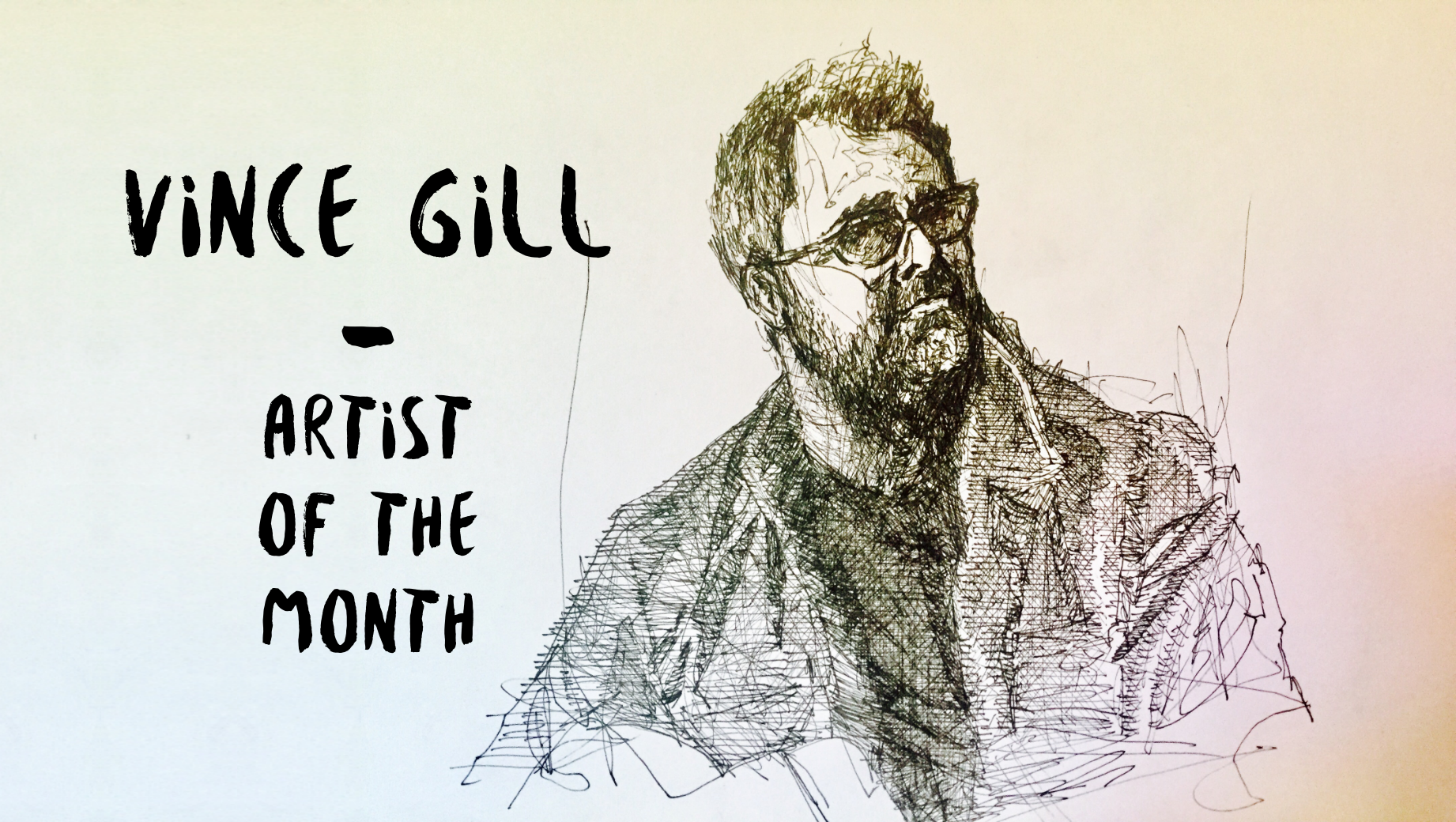
Illustration: Zachary Johnson
Artist of the Month: Vince Gill

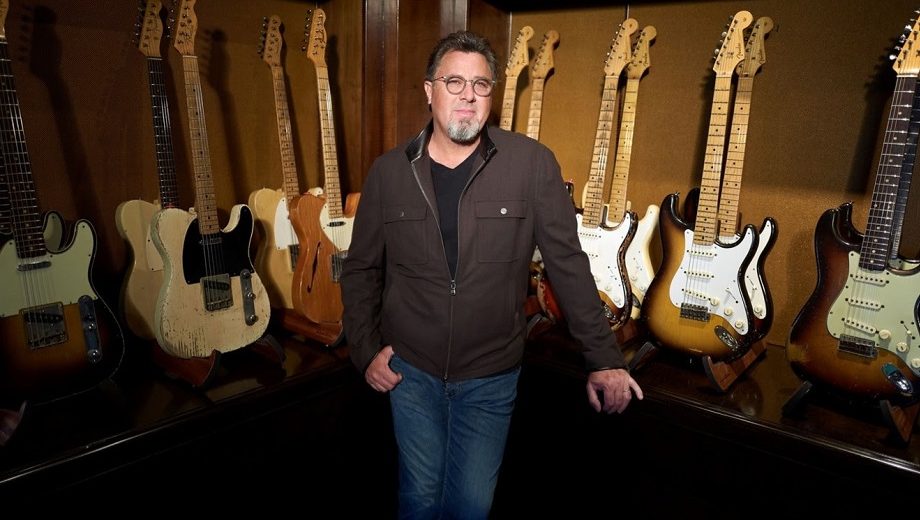
Who doesn’t love Vince Gill? His pristine tenor fits beautifully into bluegrass, country, Western Swing, and even classic rock, as he tours as a member of the Eagles. Still, the good-natured Opry star tells BGS that bluegrass remains close to his heart.

“You get the right band, the right drive and the right thing — I tell people it rocks as hard as the Rolling Stones. When it’s right — it’s really, really right — it’s like a freight train coming at you,” he observed during a visit in his Nashville home, just a few days after his annual summer appearance at Bluegrass Nights at the Ryman.

He continues, “It’s awesome — even in the middle of it. I don’t know that it translates far away like it does in a circle of it. We practiced over here the other night, and just being in this room and being this close to everybody was so much fun.”

Gill’s childhood memories shape a large part of Okie, his exquisite new album — an acoustic-oriented project that puts his voice and songwriting at the forefront. Look for our two-part interview this month with this member of the Country Music Hall of Fame, and in the meantime, enjoy our Essentials playlist.


Photo credit: John Shearer

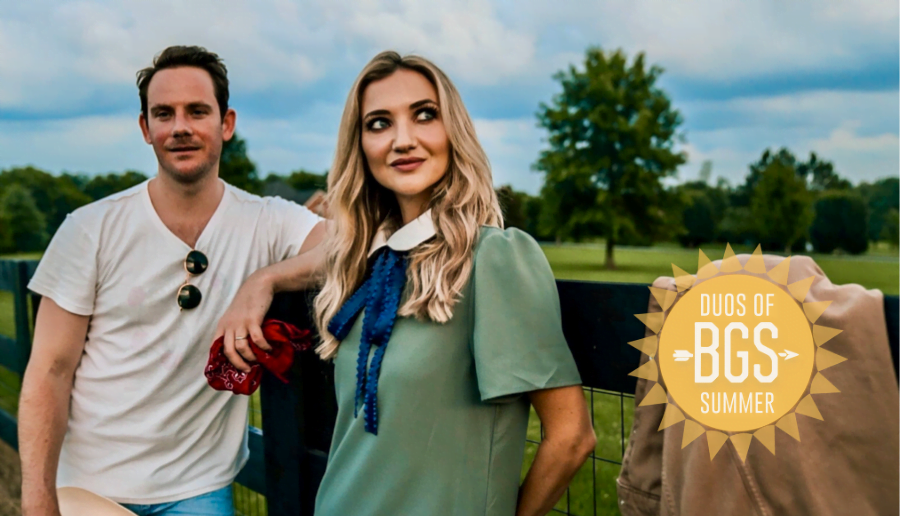
LISTEN: Darin & Brooke Aldridge, “I Found Love”

Artist: Darin & Brooke Aldridge
Hometown: Shelby, North Carolina
Song: “I Found Love”
Album: Inner Journey
Release Date: October 18, 2019
Label: Rounder Records

In Their Words: “‘I Found Love’ is a wonderful Vince Gill, Randy Scruggs, and Earl Scruggs song that we first heard on Earl Scruggs’ Family and Friends album. Working closely with the great Earl Scruggs Center in Shelby, North Carolina, we were excited to stumble across this upbeat tune that Earl had a co-write on. It also takes us back to a memory of when Darin and I had the honor to open for the legendary Earl Scruggs in some of D&B’s first few years as a band. This well-written tune leads off our CD, describing perfectly what Darin and I found in each other 11 years ago…life, love and a career that’s taken us to places that we only once dreamed of.” — Brooke Aldridge


Photo credit: Patrick Sheehan

22 Top Country Duos

Country music was made for duets. Not only because those tight, tasty harmonies are a foundational aspect of the music, but also because country accomplishes heartbreak — and every other make and model of love song — better than almost any other genre. (Thought quite possibly better than all other genres.) It just makes sense to have two singers, one to play each role in a lost, soon-to-be-lost, or (rarely) divine, never-perishing romance. But the format isn’t restricted to lovers or their placeholders, it can just as seamlessly fit heroes and acolytes, parents and children, siblings, peers, fellow pot smokers, and on and on.

Take a scroll through these twenty-two country twosomes:

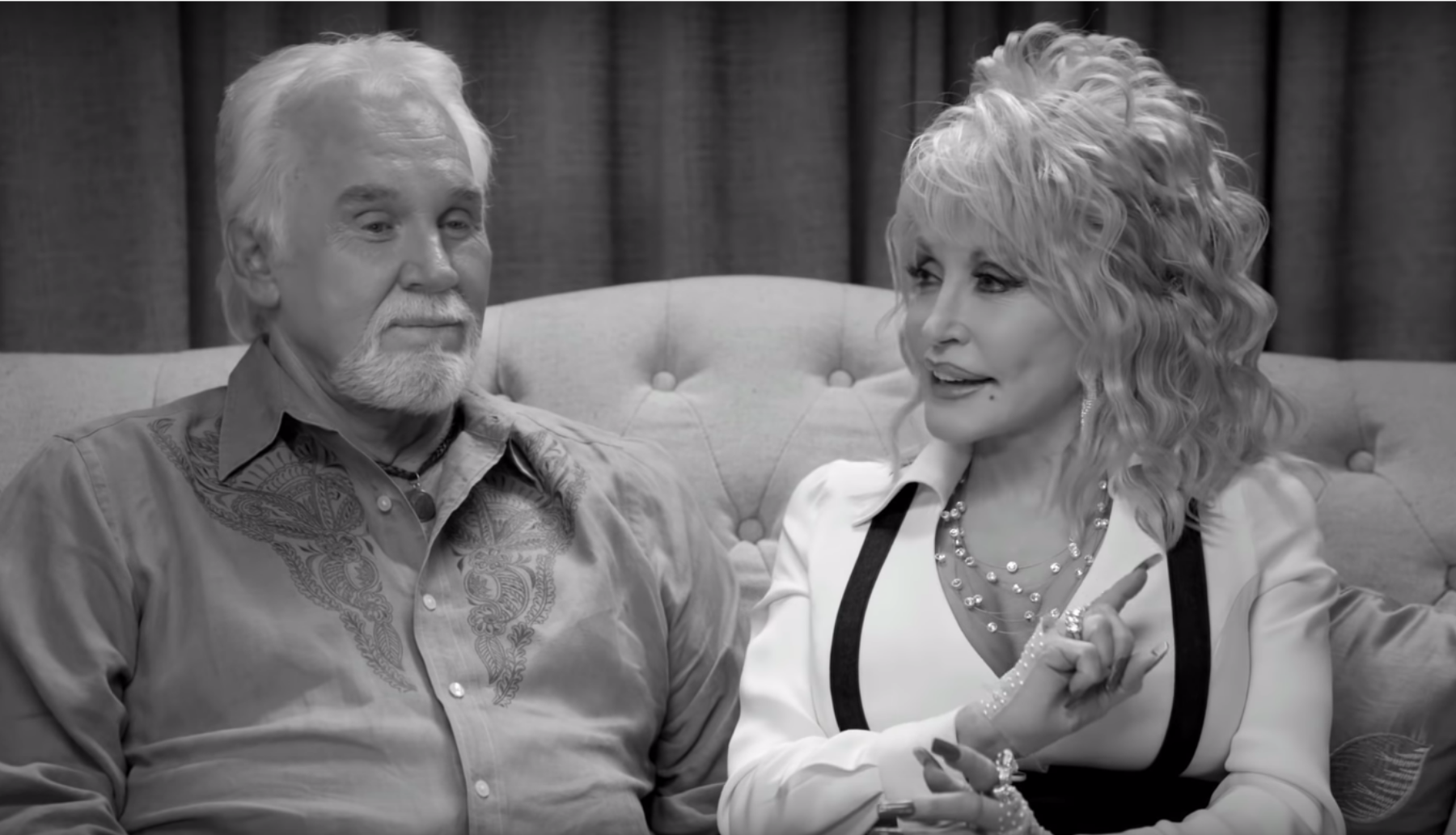
Kenny Rogers & Dolly Parton

We couldn’t have this list without these two. They should be the start, middle, and end of any definitive list of country duos. So we’ll just make the easy choice and kick it all off with Kenny and Dolly — that extra intro about their friendship and the years they’ve known each other? Swoon.

Loretta Lynn & Conway Twitty

After saying what we did about Kenny & Dolly we knew this pair needed to come next — so as to not rile anyone. Out of countless duets we could have chosen, how could any top “You’re The Reason Our Kids Are Ugly?”

Willie Nelson & Ray Charles

For inexplicable reasons people tend to forget Ray Charles’ incredible forays into country. His collaborations with Willie are stunning for the extreme juxtaposition of their voices and styles — they feel and swing so distinctly and differently, but all while perfectly complementary. “Seven Spanish Angels” ranked a very close second to this number in our selection process.

Glen Campbell & John Hartford

The most-recorded song in the history of recording? It’s said “Gentle On My Mind” holds that honor. And goodness gracious of course it does. Here’s its writer and its popularizer and hitmaker together.

Lee Ann Womack & George Strait

Together, Lee Ann and George were beacons of the trad country duet form, especially in the ’90s and early 2000s. This one from the jewel in the crown of Lee Ann’s discography, Call Me Crazy, is crisply modern, but with decidedly timeless vocals.

George Jones & Tammy Wynette

A broken, country fairy tale of a love story, George and Tammy’s relationship was infamously fraught, but damn if that didn’t just make their duets ever more… ethereal. Which doesn’t justify that Tammy Wynette kinda pain, to be sure, but it does remind us that if country can do anything better than all other genres, it can be sad.

Reba McEntire & Linda Davis

One of the best country songs, duets, and music videos EVER MADE. Theatrical and epic and a little silly and downright catchy and Rob Reiner and… we could go on forever.

Tanya Tucker & Delbert McClinton

Tanya is back with a brand new album and its well-deserved level of attention has been helping to re-shine the spotlight on her expansive career. Forty top ten hits across three decades. Who does that? Here she duets with Delbert McClinton on their 1993 hit, “Tell Me About It.”

Alan Jackson & Jimmy Buffett

Hey, if this has to be stuck in our heads for the rest of the month, it should be stuck in yours, too. Fair’s fair. It’s only half past [whatever time it is], but we don’t care.

Johnny Cash & June Carter Cash

One of the most recognizable duos in the history of the genre, immortalized not only in their discography but in a film adaptation of their love as well, Walk the Line. We all know “Jackson” as familiarly as the ABC’s, so here’s a slightly lesser-known beaut. (Keep watching til the last verse for an adorable bit from June.)

Eric Church & Rhiannon Giddens

Country is at its best when it surprises us. This collaboration is certainly, on the surface, unexpected, but the message of the song isn’t the only way these two artists can relate to each other. Over the course of their careers they’ve both fought their way from the fringes to the centers of their respective scenes. More of this, please.

Dolly Parton & Porter Wagoner

Dolly got her start with Porter Wagoner on his television show in the 1960s. They can certainly be credited with pioneering, popularizing, and epitomizing the country duet format. One of her most famous hits, “I Will Always Love You,” was written for Porter as she lamented leaving their act to go totally solo. (We’re a little glad she did.) You can tell they sang this song just a few gajillion times together, give or take.

Pam Tillis & Mel Tillis

Father/daughter duos in country aren’t as common, but they certainly aren’t unheard of. Pam and Mel are a perfect example. (The Kendalls are another.)

Patty Loveless & Ralph Stanley

Patty Loveless received the first ever Ralph Stanley Mountain Music Memorial Legacy Award in 2017 at Ralph’s home festival, Hills of Home, in Wise County, Virginia. Patty and Ralph were longtime friends and collaborators during his lifetime and even through her mainstream country success she referenced bluegrass and Ralph as influences — and she cut a few bluegrass records as well.

Alison Krauss & James Taylor

It’s. Just. Too. Good. Like butter. Like a warm bubble bath. Like floating on a cloud. Two voices that were meant to intertwine.

Charley Pride & Glen Campbell

These two were made to sing Latin-inflected harmonies together, weren’t they? Charley Pride gets overlooked by these sorts of lists all too often. But dang if he didn’t crank out some stellar collaborations, too!

Gram Parsons & Emmylou Harris

“Love Hurts” and boy, if Gram and Emmylou don’t make you believe it heart and soul and body and being. The definitive version of this Boudleaux Bryant song? Perhaps.

Willie Nelson & Merle Haggard

Icons being icons. And friends. And amazingly talented, ceaselessly musical comrades. You love to see it. (We could’ve/should’ve chosen “Pancho & Lefty.” We did not.)

Vince Gill & Amy Grant

There are quite a few reasons why the Ryman Auditorium basically hands this husband and wife duo the keys to the place each December. Basically all of those reasons are evident in this one. It’s fitting that this video came from one of those Christmas shows, too.

Dolly Parton & Sia

Dolly literally outdoes herself, re-recording “Here I Am” for the original soundtrack for her Netflix film, Dumplin’, after she first cut the Top 40 country single in 1971. Clearly she and Sia have much more in common than an affinity for wigs; their soaring, acrobatic voices seem so disparate in style and form until you hear them together. Listen on repeat for the best therapeutic results.

Robert Plant & Alison Krauss

[Insert entire Raising Sand album here, because how could we ever choose?] Lol jk, here’s “Killing the Blues.”

Carrie Underwood & Randy Travis

Cross-generational, meet-your-hero magic right here. Little did we know what was in store for Carrie Underwood then. But the way Randy looks at her up there, you can tell he knows she’s goin’ places.

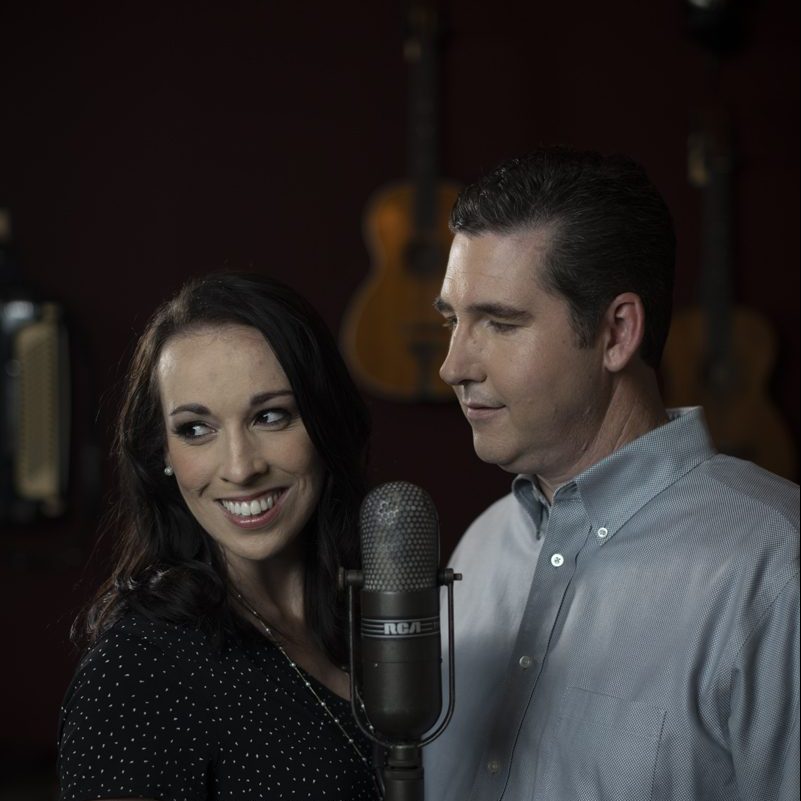
MIXTAPE: Sam Outlaw & Sarah Darling’s (Just) Love Songs

Our duet, “Forever and Always,” is a sweet and simple love song about dedication and commitment. It’s devoid of any cynicism or irony and there are no strings attached. Hence the (Just) Love Songs distinction. While we all know that the reality of love is filled with shadows, I think it’s OK to occasionally revel in the parts of life that still resemble the bright fantasy — and to take a walk in the sun. — Sam Outlaw & Sarah Darling

Sam’s picks…

The Everly Brothers – “Devoted to You”

This is the song my wife and I chose to play for our wedding ceremony when she walked down the aisle. From the opening chimes of the electric guitar to the unflinching Disney-esque lyrics, this is one of the sweetest love songs I’ve ever heard. And while the singer seems to be promising a perfect world that is completely at odds with the harsher realities of love, the sentiment is pure and the delivery is flawless.

Gerry Rafferty – “Right Down the Line”

This is the song I most associate with my relationship with my wife and also a song that we included in our wedding ceremony. You could call it “our” song. The laid-back instrumentation and the humility of the lyrics best describe how I feel about my love for Andie. “The brightest light that shines. It’s been you, woman. Right down the line.” Damn, Gerry.

Don Williams – “We’ve Got a Good Fire Goin’”

I love adult contemporary and easy listening, and this song quadruples down on everything I love about it. And while one could argue the dangers of objectifying one’s partner I think the writer is simply making associations between his beloved and the elements that bring him the most peace. Fire in the fireplace and rain falling outside. Coffee in the cup. All is well. And please God why can’t I have just one billionth of the vocal charm present in every syllable of a Don Williams song?? PLEASE GIVE ME HIS VOICE LIKE IN THE LITTLE MERMAID. Ugh.

John Berry – “She’s Taken a Shine”

Not sure a song like this would even be ‘allowed’ in our present culture. The subject is a stereotype of a woman who is essentially being “saved” by a man. To put it bluntly — she’s finally getting laid and it’s completely changed her whole vibe and everyone’s noticing it. But what a great pop song. And while it might not have hit as big as some of the other country hits from the ‘90s I doubt you can find me a sweeter chorus. John Berry’s voice makes you absolutely believe every word of the story and if you love a good bridge as much as I do look no further.

Dolly Parton – “Think About Love”

Dolly. Is. The. Absolute. Ultimate. And EIGHTIES Dolly is one of her best eras. She coolly pivots to full blown Pop Star and Movie Star in the ‘80s and has a bunch of hits while other “traditional” country singers were getting lost to the discount cassette bin. I love every gated snare crack and every goofy synth punch in the production and I love the grandiose bridge. Repeat after me: We don’t deserve Dolly. We don’t deserve Dolly.

Randy Travis – “Deeper than the Holler”

George Jones said his favorite singer is Randy Travis. So combine one of the best voices of all time (across any genre) with a song that is so catchy you could tow a small planet on the hook and you end up with “Deeper than the Holler.” But what exactly is a “Holler”? Well I can tell you it DOESN’T MATTER when the song is this good. Again, we’re not talking about “real life” love here with all its heartaches and rough edges and nuance. We’re talking about good-ole-boy lovey dovey ooshy gushy love love love love. Fuck yeah.

Vince Gill – “Whenever You Come Around”

Vince famously wrote this song for his wife, Amy Grant, but he wrote it before they got married at a time when he couldn’t just come right out and tell her of his love. One time my wife and I had the pleasure of seeing the Western Swing band The Time Jumpers play a rare ‘on tour’ show in San Diego. Vince, who is a member of the band, opened the show with a solo acoustic set and when he played this song there was not a dry eye in the room. In fact I’m pretty sure I just cried his entire set so. Lastly — the BEE GEE VEES in this production are the gold standard of ‘90s smooth and Vince’s guitar solo is expert level.

Handing it off to Sarah…

Alison Krauss – “When You Say Nothing at All”

Not only is this song featured in my favorite movie Notting Hill, but it’s simply just so beautiful. When you are with your mirror soul, you don’t have to say anything. They already know what your heart is thinking and that’s true love. It’s also one of my favorite cover songs to play live.

George Strait – “I Cross My Heart”

There’s a theme of me loving songs from movies on this list! I first heard this track in Pure Country and absolutely was head over. That moment in the movie when George’s character Dusty goes after his girl at the end while being serenaded by this beautiful one made all us country girls swoon.

Louis Armstrong – “What a Wonderful World”

I literally cry every time I hear this track. It’s probably in my top five songs I love of all time. Isn’t it true how love makes you feel? Music and everything around you seems to have a different glow. I believe Louis when he’s saying these sweet words. Also, audio/visually, it’s stunning to hear the imagery. I think to myself, what a wonderful world.

Michael Bublé – “Home”

This one made my list because it tugs the heartstrings. As a traveling musician, I get homesick often and find myself daydreaming about sitting on my front porch with my husband and looking at the sunset. I have the most panoramic view of the Tennessee sky. Home is where the heart is.

Lady Antebellum – “Need You Now”

This is my favorite slightly scandalous love song. I like it because we’ve all been there. We’ve had that person we know we shouldn’t call but we need to have that fix. Love can make you think you’ve completely lost your mind and do crazy things.

Willie Nelson – “Always on My Mind

Isn’t it true that there’s always that person you can’t ever shake or get out of your mind? I feel like this song allows us to know we aren’t alone. Maybe the timing wasn’t right or simply not meant to be, but you learned something from each other. Some people stick forever and they become part of us.


Photo credit: Sean McGee

WATCH: Vince Gill, “I Don’t Wanna Ride the Rails No More”

Vince Gill makes a mighty lonesome sound in his newest single, “I Don’t Wanna Ride the Rails No More.” His voice carries the experiences of his decades in country music — and it’s so satisyfing to hear it again.

Enjoy the lyric video for “I Don’t Wanna Ride the Rails No More,” from his upcoming album, OKIE. Here’s hoping he’ll play the new tunes for his July 25 appearance at Bluegrass Nights at the Ryman.


Photo credit: John Shearer

Like Father, Like Sons: Del McCoury & The Travelin’ McCourys

Even after five decades in the bluegrass business, the McCoury family is having a banner year in 2019. In February, Del McCoury turned 80 years old and shared the Grand Ole Opry stage with some of his most famous admirers. That same month, the Travelin’ McCourys – fronted by Del’s sons Rob and Ronnie McCoury — picked up a Grammy award in Los Angeles for their self-titled, debut album. And looking ahead, the 12th annual DelFest music festival in Cumberland, Maryland is slated for May, with performances by both bands on the schedule.

In person and off stage, Del McCoury is as polite and warm as one would expect. Smiling broadly as he enters the Opry dressing room, he’s wearing a Hawaiian shirt, his pompadour is on point (as always), and he seems unfazed by the fact that show time is less than 30 minutes away. To paraphrase another Opry star, he’s just so proud to be here.

“I’ve been listening to the Grand Ole Opry since I was at least 10 years old,” he says. “My brother and my dad would listen because it was before TV, you know? Especially out in the country where we lived. People had TVs, but I don’t remember anybody who did out in the country. We grew up on a farm. Like I said, I’ve been listening to the Grand Ole Opry since then and I’ve always looked up to all the acts on here. Especially the bluegrass acts, like Bill Monroe and Flatt & Scruggs. It’s a big show in my mind! Still is!”

Though the time set aside for the interview is somewhat brief, Del conjures up stories about everything from crusty club owners to playing Carnegie Hall. He cracks up at a memory of Bill Monroe flat-out telling festival promoter Carlton Haney that a bluegrass festival would never work. Thinking even further back to his childhood, he reminisces about being fascinated by Earl Scruggs’ banjo on “Rollin’ in My Sweet Baby’s Arms” when he was around 11 years old.

“Something hit me here,” Del says, touching his heart. “That banjo behind the lead singer was so good. And so I learned how to play that. I was already a guitar player but I heard this record and I thought, ‘Wow, that’s what I want to do!’ So, when I could get a banjo, I started learning it. Just take the record, pick the needle up and put it over, and try to play what Earl was doing. It was not simple!”

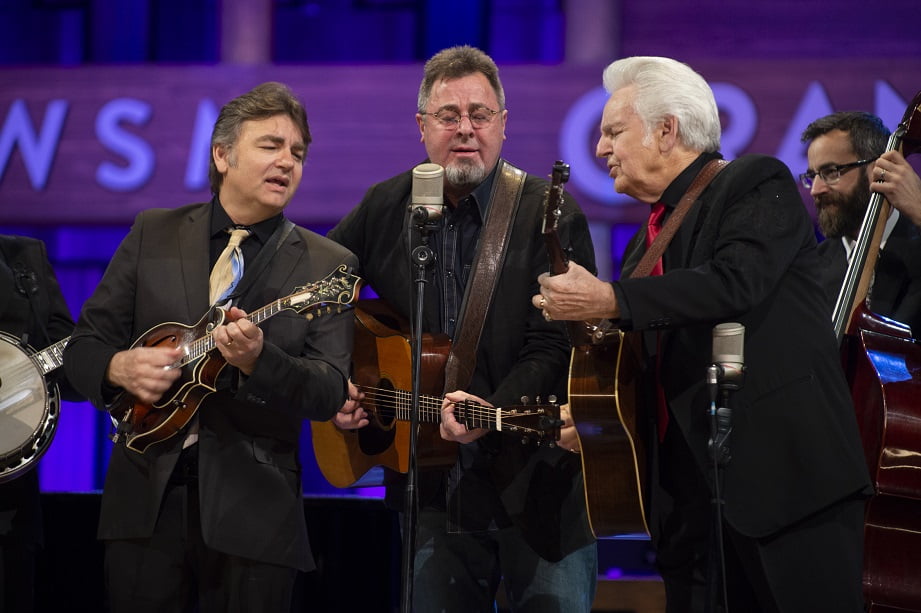
Ronnie McCoury, Vince Gill, Del McCoury
Asked about the decision to spin off a group from The Del McCoury Band, employing everybody except himself, Del says he conferred with manager Stan Strickland about how to make it work.

“I got to an age where I thought, you know, I’m [not] gonna be around here forever,” he noted, just before breaking into his trademark laugh. “I felt good, and I still feel good, but you never know. When you get to 70, you don’t know how many days you got left. I thought, these guys depend on me. My wife and I talked to Stan and I said, ‘You know, if we get them something going on their own, and if something happens to me, then by that time they might be established.’ So we got them a different booking agent than I had, and it seemed like right from the start they were starting to do good already! And I thought, ‘Wait a minute now, I wonder if I should have done that…’”

He breaks into laughter again, before adding, “Especially when they start winning Grammys! And they don’t take me with them!”

Loyal bluegrass fans know that for decades the Del McCoury Band has done its own share of travelin’ – not to mention winning two Grammy awards of their own. Led by Del on lead vocals and guitar, the good-natured group includes Ronnie on mandolin, Rob on banjo, Jason Carter on fiddle and Alan Bartram on bass. Cody Kilby assumes Del’s role as a guitarist in The Travelin’ McCourys, while the vocals in that ensemble are handled in equal share by Ronnie, Rob, Jason, and Alan.

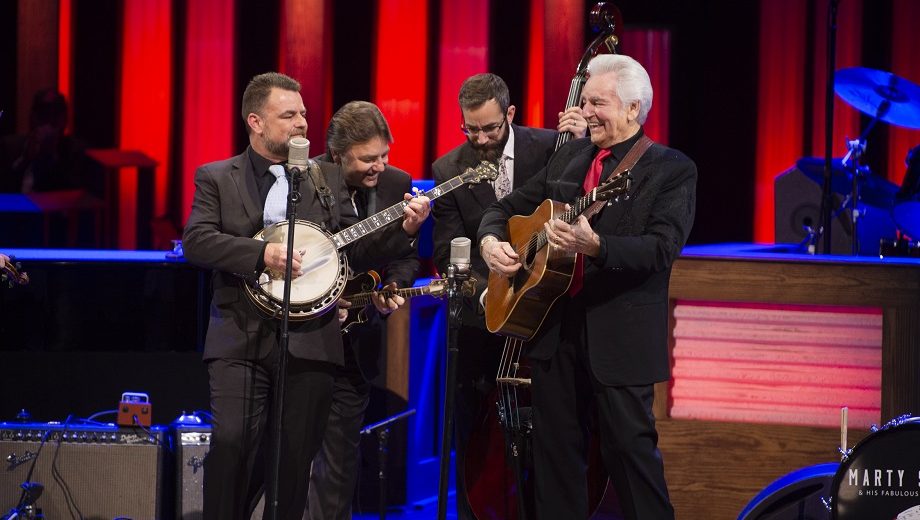
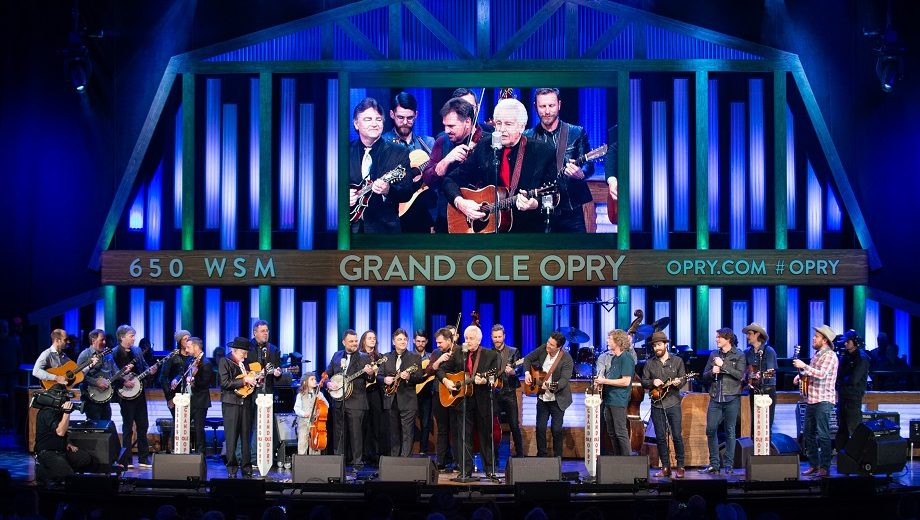
Three days after their Grammy win, the Travelin’ McCourys regrouped with Del when the Opry curated a special show called the Grand Del Opry, in order to commemorate McCoury’s milestone birthday as well as his 15th anniversary as an Opry member. Friends like Sam Bush, Bela Fleck and Abigail Washburn, Vince Gill, Old Crow Medicine Show, Jesse McReynolds, Ricky Skaggs, Marty Stuart, and of course Travelin’ McCourys jammed with the man himself.

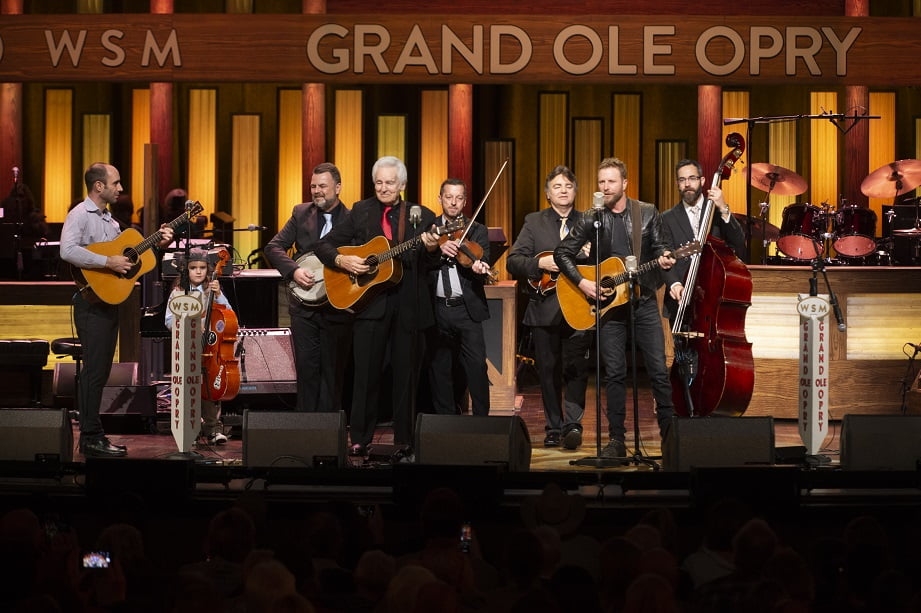
The finale of the Grand Del Opry

In an interview a few weeks after the show, Rob says, “One of the biggest things for me was the finale, and looking at all these people on stage to help Dad celebrate his birthday. And also looking out to see nearly a full house in honor of my father. It made me very proud to see all these folks that have such respect for my dad and the music, and they all took the time to come out to the Opry that night and put on a show in honor of my father.”

Del McCoury made his first appearance on the Grand Ole Opry as Bill Monroe’s guitarist in 1963 – and that performance was only McCoury’s second gig with the esteemed Father of Bluegrass. The first was not long before that, when McCoury subbed for Monroe’s banjo player at a New York show. Although McCoury still preferred playing banjo, Monroe offered him a spot as a guitarist and lead singer – a job he kept for a year. “He’s the reason I’m doing that now,” Del says with a chuckle. “I didn’t think I would be, but once I started playing guitar and singing, I liked it.”

Obviously he still does. McCoury has played a staggering number of festivals over the years, including a few of those seminal Carlton Haney bluegrass festivals of the 1960s. Still he needed some persuasion to launch his own music festival. He recalls, “My manager said to me, ‘Did you ever think about having your own festival?’ And I said, ‘Yeah, I’ve always wanted to, but I don’t want the headache! What a headache that’s got to be!’”

But with persistence, the right location, and a diverse lineup, DelFest has become a major player on the folk festival circuit. This year’s roster includes The String Cheese Incident, Trampled by Turtles, Tyler Childers, Railroad Earth, and more than a dozen bluegrass artists, including Billy Strings, Sam Bush, the Gibson Brothers, Sierra Hull, and the SteelDrivers.

Sam Bush and Del McCoury

“Attendance is staying up there good, and it’s fun,” Del says. “It’s not a bluegrass festival, it’s just a music festival. We have a lot of bluegrass bands there, you know, but we have jam bands, and we have country acts, man, you name it. We had jazz bands, we had a mixture of music, and I like a variety of music my own self. I figured, if we have a variety of bands, some folks will come to see one band, then these folks will come to see another band, and that’s how you get your fans.”

Rob McCoury adds, “I thought having the festival was a great idea. We’ve played hundreds if not thousands of festivals through the years. So I think it was just the natural progression to have a festival of our own. I guess the most surprising thing is, the small details that add up to big things, that no one realizes is going on behind the scenes.”

Asked about the reward of all that work, he answers, “The fans, no doubt about it. All those folks come to DelFest, and anytime dad walks on stage at his own festival he’s a rock star. To me, it’s just the coolest thing.”

Rock star. Bluegrass Hall of Fame member. A nine-time IBMA Entertainer of the Year. Dad. These are just some of the ways you can describe Del McCoury. Winding down the interview backstage at the Opry, he pauses for a moment when he’s asked how he’d like the Opry family to remember him.

Finally, he says, “You know, I guess I’d want ‘em to remember me like a guy that never expected to be an Opry member. I knew I would play music, for years and years, but I thought, ‘The Opry is something is really special and I don’t know if they’d want me there.’ I was fortunate that they did, and I’m just so grateful. I hope they just remember a country guy that really loves the Grand Ole Opry and loves music.”

The Travelin’ McCourys, Vassar McCoury, Del McCoury, and Dierks Bentley


Photo credit: Chris Hollo / The Grand Ole Opry

Del McCoury’s 80th Birthday at the Grand Ole Opry in Photographs

As bluegrass fans know, Del McCoury is kind of a big deal — in fact, the Grand Ole Opry briefly renamed itself on Wednesday (February 13) in his honor when the “Grand Del Opry” event gathered good friends like Dierks Bentley, Sam Bush, Béla Fleck & Abigail Washburn, Vince Gill, Jesse McReynolds, Old Crow Medicine Show, Marty Stuart, and the Travelin’ McCourys to celebrate the legendary musician’s 80th birthday. Happy birthday, Del!


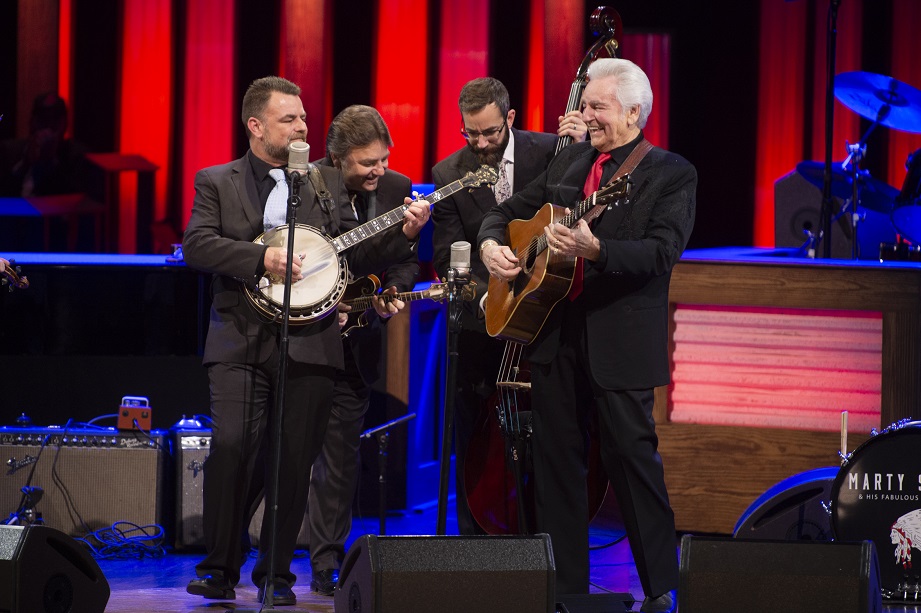
The Travelin’ McCourys’ Ronnie McCoury, Rob McCoury and Alan Bartram with Del McCoury


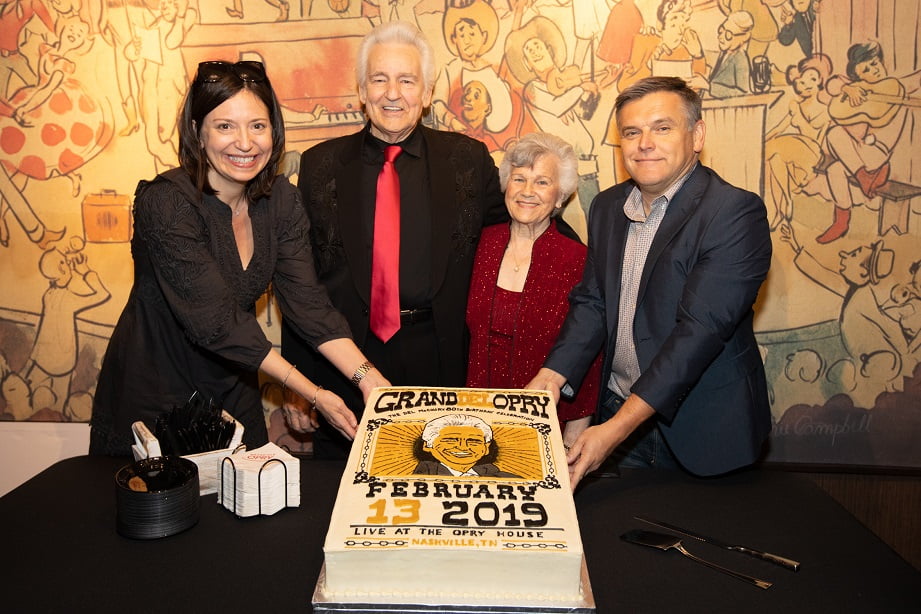
Sally Williams, Grand Ole Opry; Del and Jean McCoury; Dan Rogers, Grand Ole Opry


Del McCoury Band with Dierks Bentley and special guest Vassar McCoury on “upright bass.” 


Sam Bush and Del McCoury


The finale of the Grand Del Opry
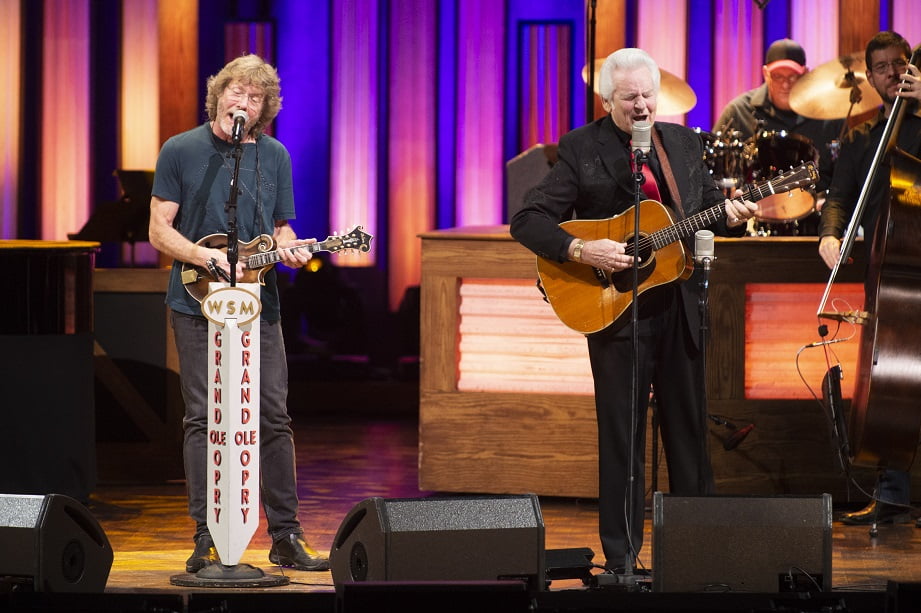

Photo credit: Chris Hollo, The Grand Ole Opry

Deanie Richardson, “Soppin’ the Gravy”

Nashville often feels like a town simply saturated by fiddlers. It is Music City USA, after all, and of that music, most is centered on the pop country machine, which thankfully still sees fiddles as prerequisites for most of the music being fashioned, manicured, produced, and cranked out by this city writ large. In and amongst the myriad fiddles and bows it takes a singular musical voice to stand out.

Deanie Richardson has just such a voice. Her fiddlin’ is just as fiery and unyielding as any other fiddler on the scene, but without ever being overbearing or cliche. She balances Texas influences and contest styles with her immaculate bluegrass chops — and that balance makes her the perfect shoulder to tap for all manner gigs, from house fiddler at the Grand Ole Opry, to touring with Vince Gill or Patty Loveless, or decidedly less normative-country acts like the Chieftains and Bob Seger.

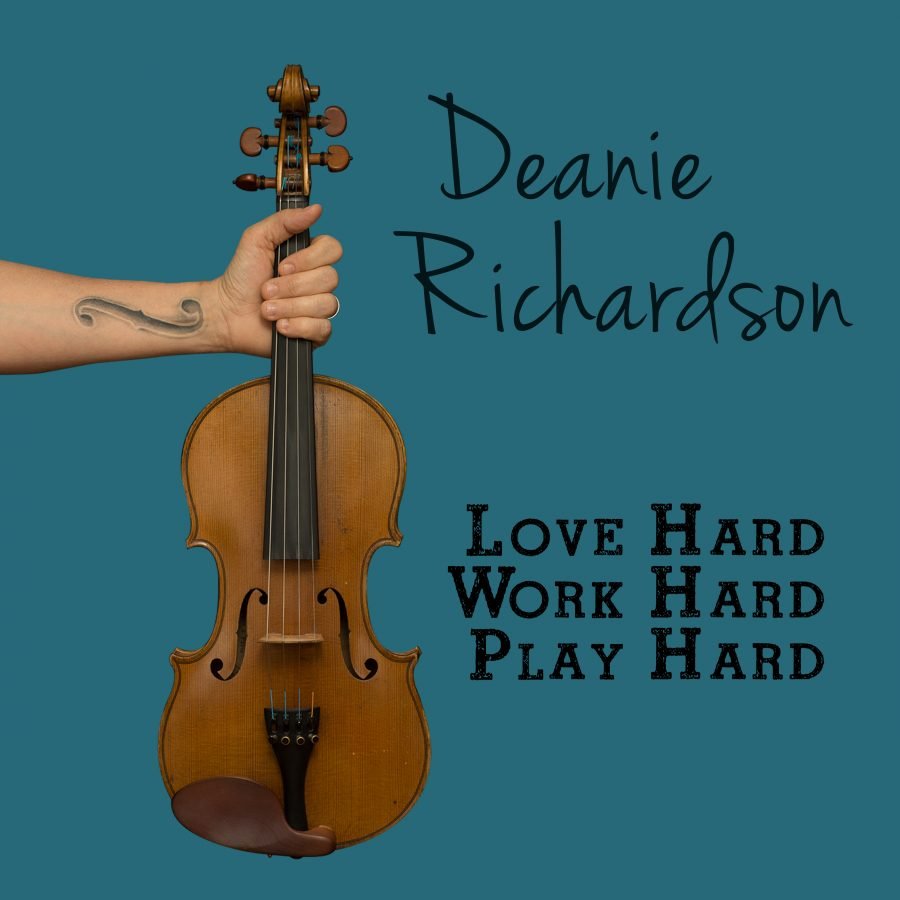
Her anchor though, has always been bluegrass, and when she isn’t out cutting up and bringing slap-happy joy to the people with her currently Grammy-nominated ensemble, Sister Sadie, she’s making bluegrass/fiddle records like Love Hard, Work Hard, Play Hard (available now on Pinecastle records). Close friends and musical compatriots like guitarist Brandon Bostic (Patty Loveless, Blue Moon Rising), mandolinist Ashby Frank (Special Consensus, Earls of Leicester) and banjoist Gena Britt (Sister Sadie) round out the band du jour on “Soppin’ the Gravy.”

It’s a tasty barnburner that’s as precise as it is breakneck fast, with Deanie’s endless embellishments demonstrating that a) she has the listener exactly where she wants them and b) she’s having a whole lot of fun with it. If you’re craving a fiddler that stands out, grab a biscuit and hit play, because there’s plenty of deliciousness to sop up with “Soppin’ the Gravy” and we ought not waste a drop.

The Golden Age of Bluegrass… The ’90s?!

With the following eleven songs, we will convince you, the bluegrass jury, that neither the ‘40s, the ‘50s, the ‘60s, nor the ‘70s were the golden age of ‘grass. Before the bluegrass gods and all these gathered here today we unabashedly assert: the ‘90s were the absolute best years for bluegrass!! Consider the following evidence:

Lonesome River Band – “Long Gone”

Remember the days when LRB was a quartet and there was a critical mass of mullets among their members? Such a small lineup and still somehow a supergroup: Dan Tyminski and Ronnie Bowman dueting the life out of it, Sammy Shelor pulling for his life, and Tim Austin demolishing the flat-top. Woof.

J.D. Crowe – “Blackjack”

The ‘90s were the golden age of bluegrass and the bluegrass supergroup. The TV show American Music Shop, which ran for three years starting in 1990, often amassed the best star-studded lineups of the time period – like this one: J.D. Crowe, Mark O’Connor, David Grisman, Tony Rice, Jerry Douglas, and Glen Worf.

Laurie Lewis & Friends – “Texas Bluebonnets”

Laurie Lewis won Female Vocalist of the Year from the International Bluegrass Music Association only twice — once in 1992 and again in 1994. We could rest our ‘90s-bluegrass-is-best case on that fact alone, but we’ll let Laurie (and Tom Rozum, Sally Van Meter, Peter Rowan, Alan Munde, et. al.) convince you with this Texas swing-flavored masterpiece.

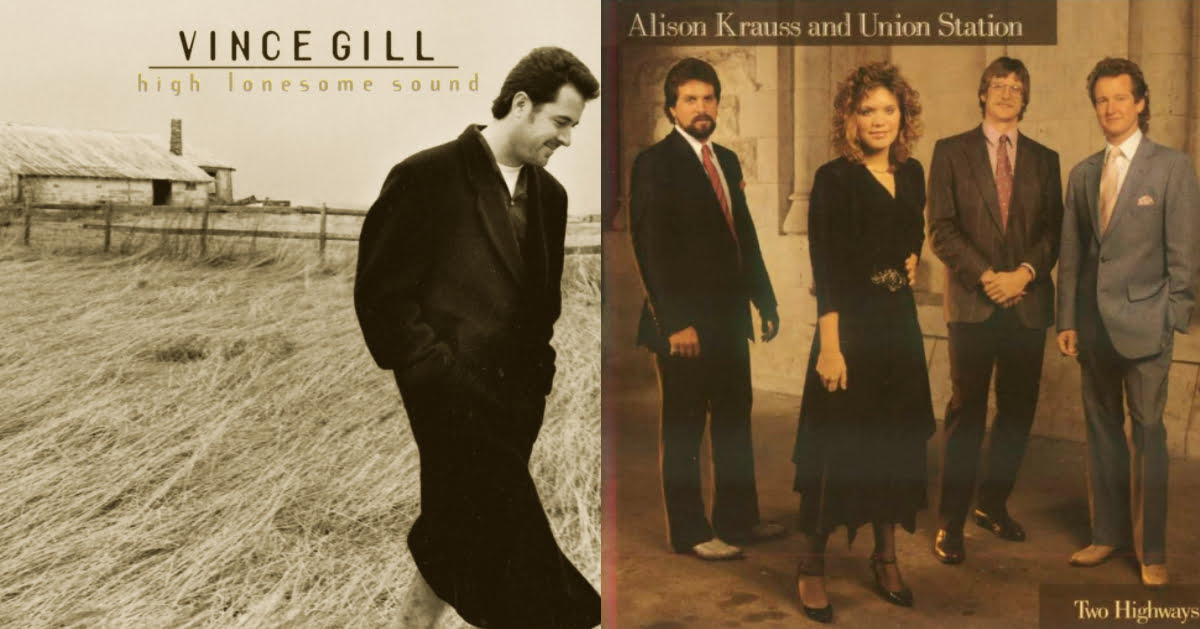
Alison Krauss & Union Station – “Two Highways”

I mean… do we even need to contextualize this one with a blurb? Alison Krauss — before she became the winningest woman in GRAMMY history — with Adam Steffey, Barry Bales, Tim Stafford, and Alison Brown (no, they aren’t sisters, even if they do have the same name) is exactly why ‘90s bluegrass never fails us. If you happened to forget that AK is a ruthless fiddler, too, just listen to any of her stuff from this decade for a reminder.

Strength in Numbers – “Slopes”

We continue with supergroups, for a moment, this time regaling in the new acoustic, esoteric instrumental, 1990s beauty of “Slopes” played by a group of folks you may know: Béla Fleck, Mark O’Connor, Sam Bush, Jerry Douglas, and Edgar Meyer. Makes you wanna time travel, doesn’t it?

Dolly Parton – “Train Train”

Everyone’s favorite songwriter, actor, country star, business mogul, theme park owner, and literacy advocate made one of the best bluegrass records in the history of the genre in 1999 — and of course the world went crazy for it. She took bluegrass places it too-rarely appears with a band that could’ve sold out a nationwide tour themselves. Iconic.

Ricky Skaggs & Kentucky Thunder with the Del McCoury Band – “Rawhide”

Del and the boys cleaned up on the IBMA Entertainer of the Year awards between 1990 and 2000, winning the organization’s top honor a total of five times during that span. Ricky never truly left, but he visibly returned to dominating bluegrass in the 1990s, touring with Kentucky Thunder. Talk about a golden age!

Emmylou Harris, Ralph Stanley, Dwight Yoakam – “The Darkest Hour”

Once again, we thank American Music Shop for bringing together a seemingly disparate yet totally seamless power collab. One of the best things about bluegrass is the shared vocabulary, the commonality of the songs. Just throw a bunch of folks up on stage and have ‘em sing one together!

Nashville Bluegrass Band – “On Again Off Again”

Best decade for bluegrass = best decade for bluegrass music videos, too. (Sure, all music videos, but especially bluegrass ones!) This one is just deliciously retro and it doesn’t hurt that the Nashville Bluegrass Band is not only freakin’ stacked with talent, but they knock out these mid-tempo, sultry, vocal-centered songs better than anybody else.

Lynn Morris Band – “Love Grown Cold”

Lynn Morris has been unconscionably underrated for her entire career. Just listen to this. She had her heyday as an artist and band leader in the ‘90s, winning multiple Female Vocalist of the Year awards and even a Song of the Year, too. That banjo pickin’ definitely deserved better recognition, though. Hell, the whole kit-and-caboodle deserved more recognition. If you take away anything from our journey back through this bygone era of great hair choices and clothes that go zip-zop it should be a never ending love and appreciation for Lynn Morris.

Vince Gill, Alison Krauss – “High Lonesome Sound”

Two roots music icons of the decade, collaborating on a song that tributes the father of bluegrass himself, it’s just too perfect. We rest our case. May 1990s bluegrass live on forever in our hearts, our ears, and our mullets.