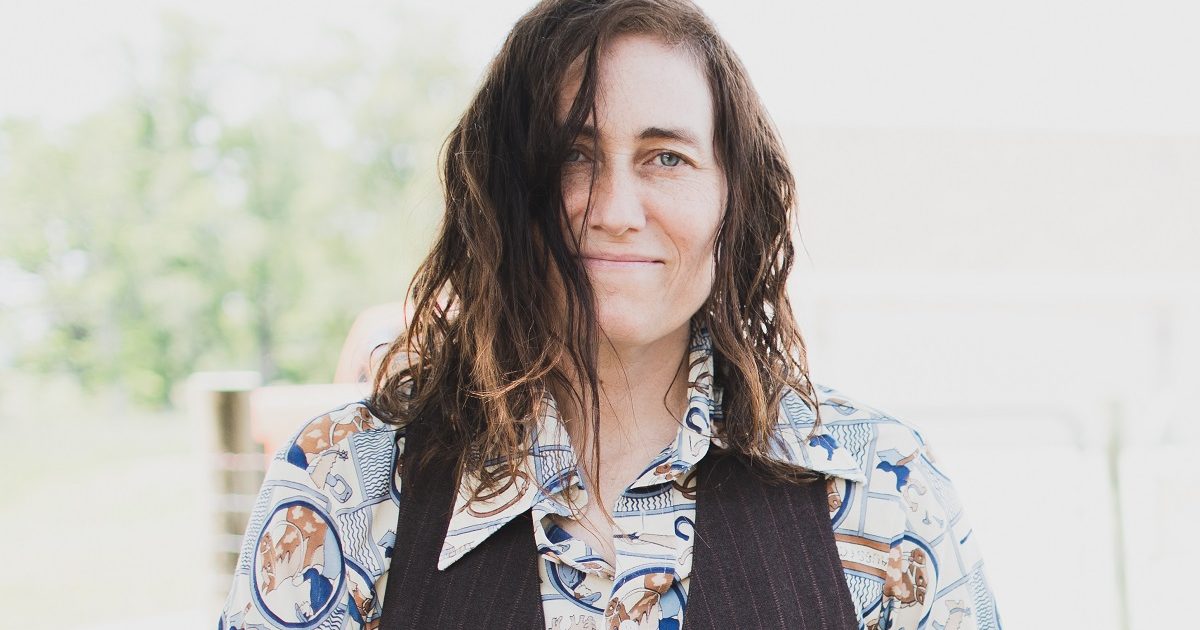
BGS 5+5: Melissa Carper

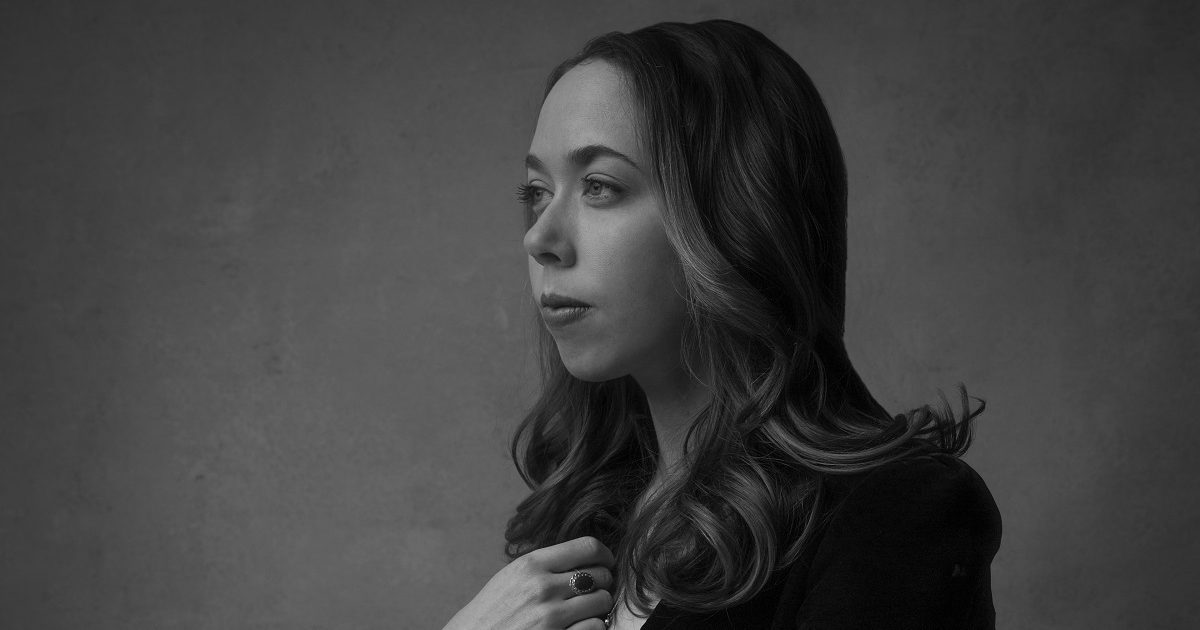
Artist: Melissa Carper
Hometown: Bastrop, Texas (outside of Austin)
Latest album: Daddy’s Country Gold (out March 19)
Personal nicknames: Daddy

Which artist has influenced you the most … and how?

I’d have to say Jimmie Rodgers, the Father of Country Music, has influenced me the most. My dad gave me the full collection of Jimmie Rodgers on tape when I was about 20 years old. I had grown up listening to Hank Williams, but I’d never heard anything like Jimmie Rodgers. The quality of the recording was raw and initially harder to listen to, but I became addicted and listened over and over to these tapes. When I first started trying to write country songs I would copy the formula in Jimmie Rodgers songs, or rather they had become such a part of me that I couldn’t help but write something similar. Come to find out years later, a lady name Elsie McWilliams co-wrote on many of Jimmie’s songs, so I guess I have been copying her as well. Jimmie Rodgers combined blues and jazz into his country songs and even had horn sections and collaborated with Louis Armstrong on some recordings. Hank Williams and so many country artists coming after Jimmie Rodgers were influenced by his style.

What’s your favorite memory from being on stage?

I have many great memories on stage. One of my favorites is playing a farm party and the stage was a trailer bed and one of their goats jumped up on the stage while we were playing. Also, a fun memory is performing at NYC’s Town Hall for Prairie Home Companion‘s Talent in Towns Under 2000 Contest. At the time I lived in a town that was just under a population of 2000 — Eureka Springs, Arkansas. This was in the year 2000, and back then my band, the Camptown Ladies, auditioned by leaving a song on their answering machine — this was one of the ways you could audition! We were one of six finalists chosen and they flew us to Manhattan for the contest. I think the contrast of living in a small town and then being brought to this grand theater in NYC is an amazing memory for me. We won the toolbox prize — which was the staff’s vote for their favorite band.

Which elements of nature do you spend the most time with and how do those impact your work?

I love to meditate sitting under trees and listening to the birds. I don’t know that this exactly impacts my work directly. I also just enjoy being in the country where there is space and plenty of nature around. I have noticed that if I spend time in nature I will write a different type of song. I moved from Austin, Texas, to the middle of nowhere in Arkansas in 2014 and rented a cabin in the woods. I felt like I was decompressing from being in a city and I had several old-time songs come out that were nature-oriented. I enjoy writing about birds, trees, flowers, seasons, moons, stars. If I spend a lot of time alone my creativity will open up. Also, I often write when I am driving on a road trip or going for a walk. I almost always write a melody and words first without an instrument, and then I’ll go back with a guitar and figure out what chords go with the melody.

What’s the toughest time you ever had writing a song?

When I have to try too hard to write something it usually doesn’t turn out to be as good of a song. There have been several times I’ve rehashed a song over and over and am still not satisfied with the outcome. Sometimes I’ll try a song out at a performance and if it feels good and resonates with people then I know I’ve got a good song. I love it when I’m writing and a song just flows right out almost seamlessly as if the universe is helping. Usually, I’ll know right away if I’ve got one of those magic songs happening. I don’t like to force myself to write but I have had long dry spells in which I have tried to do this and sometimes I have some success by just trying to be more aware of ideas and inspiration that is coming in.

What was the first moment that you knew you wanted to be a musician?

I had no choice. We had a family band growing up, and I was probably 5 when we started playing gospel music at churches and retirement homes. Then when I was 12 years old we started the family country band and we would play four-hour shows in the American Legions, Eagles, Elks and Moose clubs around our area. I did enjoy it and the siblings that didn’t enjoy it did get to drop out of the band. The four-hour-long shows were a bit long but my dad bought us as many Shirley Temples as we wanted and they paid us for the gigs as well. I was one of the few kids that had their own money at the age of 12 and I would take my friends out for pizza. My mom and dad wanted all their kids to be musicians and I am glad they encouraged and supported us in this.

I received a scholarship for studying music, upright bass, at the University of Nebraska in Lincoln. I had been considering being an English major also, but I chose music. I dropped out of college after two and half years and didn’t play music for maybe a year or so, but I just kept coming back to music and eventually realized I could make a living playing all sorts of styles. I also realized that my choice of upright bass as my instrument was a smart choice as I was able to join bluegrass and old-time bands, country bands, blues and jazz, just about anything and everyone always needed a bass player.


Photo credit: Aisha Golliher

The String Cheese Incident Salute Tony Rice on This ‘Manzanita’ Favorite

The amount of love and respect that has poured out of the music community around the country and the globe for the loss of Tony Rice has been breathtaking to say the least. The breadth of Rice’s legacy cannot be understated as he pioneered not only the guitar’s role in a bluegrass band, but also created a new sound previously unexplored by acoustic musicians. A seminal flatpicker, his touch, timing, and taste are unmatched to this day, and there’s the separate matter of his beautifully rich voice. Here at BGS, we’ve shared Tony Rice memories and stories from the likes of Ricky Skaggs, Todd Phillips & Robbie Fulks, Sam Bush, Jerry Douglas, and David Grisman, and many others.

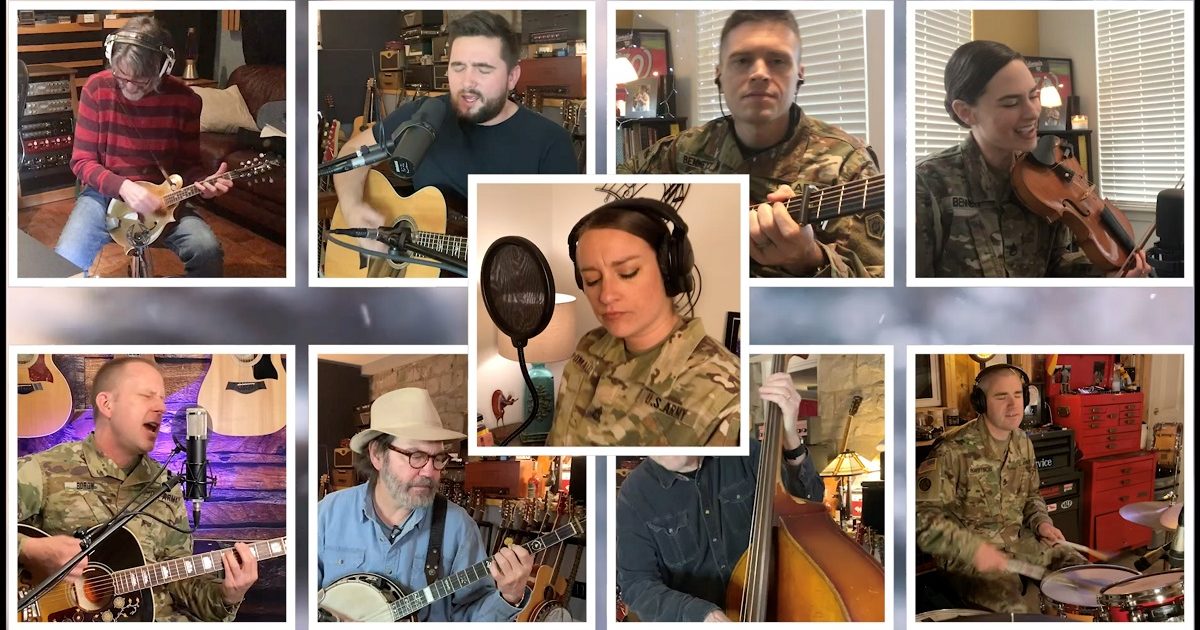
The latest contributors to our collective debt of gratitude to Tony is the String Cheese Incident, collaborating virtually to cover “Old Train,” the lead track on what many consider his magnum opus, Manzanita. The String Cheese Incident is known for being a genre-bending group, but founding member Bill Nershi had this to say about their bluegrass roots and Rice’s artistry: “Tony Rice’s guitar playing shaped a generation of musicians. His impeccable tone, taste, and timing were unmatched and highly regarded by players and listeners alike. We are very fortunate to have so many great recordings of his life’s work. If you haven’t had the pleasure of hearing him perform, check out The Tony Rice Unit and David Grisman Quintet albums. I recommend you start with Manzanita. We’ll never forget you, Tony!”

Watch the String Cheese Incident perform “Old Train:”


Photo credit: Scott McCormick

LISTEN: Liz Simmons, “This Old Heart of Mine”

Artist: Liz Simmons
Hometown: Brattleboro, Vermont
Song: “This Old Heart of Mine”
Album: Poets
Release Date: March 1, 2021
Label: Morgana Music

In Their Words: “Growing up with musician parents, I was exposed to many different musical styles — Motown being an important one. I loved Diana Ross and the Supremes, and we had the album A’ Go-Go on vinyl and I remember dancing to it as a child in our living room. I started to work up a bluegrass-inspired cover of ‘This Old Heart of Mine’ a couple years ago — I thought the song would work well with a string band treatment, which is provided courtesy of Wes Corbett on banjo, Flynn Cohen on mandolin and guitar, and Corey DiMario on double bass. I arranged the ’60s-style backing vocals as a loving nod to the era as well, provided by ska singer Dunia Best and jazz singer Nicole Zuraitis. Composed by Motown’s songwriting team of Holland-Dozier-Holland alongside Sylvia Moy, it is a great example of classic Motown, and I cover it with the greatest respect.” — Liz Simmons


Photo credit: Sid Ceaser
Graphic design: Jeremy John Parker

Dive Into California Bluegrass Association’s 50-Hour Live Stream

Among the many reasons why we love bluegrass is the innate sense of community and wholesomeness that the music carries. The California Bluegrass Association (CBA) has taken immense strides to foster that kinship and community over the years by investing in programs and opportunities for young bluegrass musicians to learn and perform. Perhaps their biggest endeavor is the Youth Academy, a four-day camp that takes place during their annual Father’s Day Bluegrass Festival. Due to COVID-19, the event has been canceled for the second year in a row. In response, the CBA hosted a 50-hour livestream event last month that featured more than 100 musicians from around the world and raised more than $25,000 in donations.

The livestream event was hosted in the format of a telethon and aptly named “Jam-a-Thon.” The funds raised were split between the participating artists and an effort by the CBA to build an educational website for young learners interested in bluegrass. Joining the event were many big names in bluegrass, including Sierra Hull, Béla Fleck and Abigail Washburn, and even BGS contributor Tristan Scroggins. If you missed the event, fret not, as there is still ample opportunity to donate and to watch the stream, which was conveniently archived into eight portions on YouTube. Peruse through the many highlights from the stream below and celebrate a noble cause!

Editor’s Note: View streams 3 through 8 on the CBA’s YouTube Channel.


Bluegrass is Trance (And Old-Time, Too)

Bluegrass is trance. Old-time, too. 

With a slightly more zoomed out perspective, this fact comes into focus pretty quickly. American roots music and its precursors, especially their string band forms, have been interwoven with dance for eons. Before the advent of recorded music, when the popular musics of the day could often only be consumed by upper classes, dancing and other social group activities were the center places music inhabited. Before radio shaved popular music down into bite-sized, three-minute chunks, the tunes would last as long as necessary to provide a backdrop for a reel, a hornpipe, or a square dance, extending fiddle tunes into ten- to twenty-minute, cyclical, musical meditations. “Turkey in the Straw” as mantra, “Chicken Reel” as a slightly wonky, onomatopoeic sound bed.

Detached from dance, it’s easy to forget that string band music has been designed with trance embedded within its structures. Chris Pandolfi is a banjo player who’s explored quite a bit in trance and trance-adjacent music with the Infamous Stringdusters, a seminal jamgrass band with a level of bluegrass’s technical virtuosity that’s unmatched in all but a select few ensembles in a similar vein. Pandolfi’s new record, Trance Banjo, which was released under his solo stage name, Trad Plus, moves further and further beyond American roots aesthetics, cementing the banjo and its musical vernacular within trance – the electronica variety as well as the age-old, human kind.

Trance Banjo, and tracks such as “Wallfacer” — whose trippy visualizer music video almost cements this article’s central argument — recalls albums by Scott Vestal, or live shows by post-metal shredders like Billy Strings, or experimental, avant garde compositions by cattywompus flattop mashers like Stash Wyslouch. It’s not just a simple coincidence that so many players from bluegrass and old-time backgrounds find themselves dabbling with trance.

John Mailander, a fiddler who’s toured with Molly Tuttle and Bruce Hornsby and has been hired as a side-musician with many a jamgrass-leaning band, is comfortably uncomfortable in a very similar musical realm as Trance Banjo. On an EP of sketches and improvisations released last summer (from the same sessions and experimentations that became his upcoming album, Forecast) Mailander and his bluegrass-veteran backing band play with trance centered on sparseness, vacancy, and negative space in a way that’s engaging and baffling, both. Mailander’s rubric of vulnerable, emotive, and transparent expression as a foundation for improv is key here.

That personal touch, the personality endemic in these trance experimentations, is certainly what makes them most compelling and it must be, at least in part, what ties these songs to the centuries-old tradition of music as meditation. Rhiannon Giddens and Francesco Turrisi make more than just a musical brand of showcasing their personalities and identities in the music they create, it’s more like a mission statement. Giddens has an incredible aptitude for writing and composing music based on empathy and human connection and Turrisi holds expansive knowledge of world folk music and percussion.

Their compositions and collaborations illustrate that, when we connect our music to dance, percussion, and trance, we’re connecting it to thousands and thousands of years of history — of humans of all ethnicities, cultures, backgrounds, and identities, gathering, connecting, sharing, and loving through music, dance, and trance. On stage, Turrisi and Giddens deliberately connect these dots as well, utilizing stage banter to educate their audiences about these exact connections.

While old-time has held onto its penchant for movement and choreography through the generations, bluegrass continues to grow distant from this and many of the other cultural phenomena that gave rise to it. Trance Banjo, and projects like it, while they seem to gleefully run away from what we perceive as “traditional” aspects of these genres, are in many ways guiding us right back to the very folkways that birthed them. 


Photo credit: Chris Pandolfi by Chris Pandolfi

The BGS Radio Hour – Episode 199

Welcome to the BGS Radio Hour! Since 2017, the show has been a weekly recap of all the great music, new and old, featured on BGS. This week we’ve got everything from quirky pop hooks by Aaron Lee Tasjan to outcries about workers’ rights by the Local Honeys. Remember to check back every Monday for a new episode of the BGS Radio Hour. 

APPLE PODCASTS, SPOTIFY

Black Pumas – “Black Moon Rising”

As we welcome the spring, we bid farewell to our February Artist of the Month – Black Pumas. The duo, up for a total of three Grammy Awards this March with their breakout album, sat down with BGS this month to talk about Black Pumas (Deluxe Edition), and the influences that brought them together.

Terrible Sons – “What A Friend”

From Christchurch, New Zealand, Terrible Sons brings us a song this week from their newly released Mass EP. “The song looks into a life that is unravelling internally and externally, a character who struggles to communicate, someone who’s on the edge,” the duo tells BGS. “We’re really singing about being a failure as a friend, about not being there.”

Aaron Espe – “Take You Home”

February brought many great releases; Aaron Espe’s Rock & Roll Man EP is certainly no exception. As the Nashville-based songwriter told BGS, songs can mean many things to many people, all of which are valid, and shouldn’t be ruined by the songwriter explaining it to them – so best for us not to spoil this one!

Lonesome River Band – “Love Songs”

Steve Martin used to tell a joke about how no one could be sad while playing the banjo. And while the banjo strikes a happy tone, songs from the bluegrass repertoire just aren’t the most optimistic – often, they are about heartbreak, loneliness, or death. In their new single, the Lonesome River Band recognizes that we have to write about what we know – and it ain’t always love songs.

Judith Hill – “Baby, I’m Hollywood!”

For Judith Hill, “Baby, I’m Hollywood!” is a defining statement, summing up the drama, love, and pain that surrounds her life as an entertainer in an epic performance and video.

Cristina Vane – “Prayer For the Blind”

From her upcoming Nowhere Sounds Lovely, Italy-born and Nashville-based Cristina Vane brings us an old-time banjo meditation on finding levity in heavy situations, and the bonds and intergenerational burdens shared between mothers and daughters.

The Wild West – “Better Way”

Women-led upergroup The Wild West strike on uniting us all amongst the differences that divide us – touching the idea of being born with love and without hate, and calling us to find our way back to innocence, understanding, and compassion.

Aaron Lee Tasjan – “Up All Night”

This Nashville artist is no stranger to BGS. Tasjan is his own producer on his newest release Tasjan! Tasjan! Tasjan!, the most-Tasjan album that he’s released so far — quite literally. From deep personal experiences in his writing to silly pop hooks, Tasjan’s newest album is one worth hearing.

Lily B Moonflower – “Midnight Song”

One thing we’re all surely missing is community, be it local jams, concerts, or just visiting with your neighbors. From Lawrence, Kansas, Lily B Moonflower brings us a song inspired by her community coming together through music and love, and the magic that follows on the honky-tonk floor.

Spencer Burton – “Memories We Won’t Soon Forget”

From Ontario, singer-songwriter Spencer Burton joins us for a 5+5 this week – that is, five questions, five songs to go along. From favorite stage memories to a dream musician and meal pairing, our conversation with Burton is one we won’t soon forget.

The Local Honeys – “Dying to Make a Living”

Even while they’re stuck at home like the rest of us, the Local Honeys continue to get their message out to the world. While in past times they’d be touring Europe with Colter Wall or Tyler Childers, the Kentucky-based duet now sit down with BGS to talk about the problems created by extractive industries like coal mining in Appalachia, reflected in their new two-song release.

Chris Pandolfi – “Astral Plane”

From Grammy Award-winning band the Infamous Stringdusters, ‘Panda’ joins us this week on a 5+5 in celebration of his latest album, Trad Plus Presents Trance Banjo. What’s better than banjos, beats, and Stuart Duncan?

Moira Smiley – “Days of War” (feat. Sam Amidon and Seamus Egan)

With the accompaniment of Sam Amidon and Seamus Egan, Moira Smiley brings us “Days of War,” a song written after yet another shockwave of white supremacy in 2017. While Amidon sings the ‘human’ voice in this song, Smiley is the ‘bird,’ who flies and sings in spite of all.


Photos: (L to R) Black Pumas; The Local Honeys by Melissa Stilwell; Aaron Lee Tasjan by Curtis Wayne

WATCH: Rhiannon Giddens with Francesco Turrisi, “Calling Me Home”

Artists: Rhiannon Giddens with Francesco Turrisi
Single: “Calling Me Home” (written by Alice Gerrard)
Album: They’re Calling Me Home
Release Date: April 9, 2021
Label: Nonesuch Records

In Their Words: “Some people just know how to tap into a tradition and an emotion so deep that it sounds like a song that has always been around — Alice Gerrard is one of those rarities; ‘Calling Me Home’ struck me forcefully and deeply the first time I heard it, and every time since. This song just wanted to be sung and so I listened.” — Rhiannon Giddens


Photo credit: Karen Cox

BGS Celebrates Black History Month (Part 2 of 2)

We invite our readers to celebrate Black History Month as we always do, by denoting that celebrating Black contributions in bluegrass, country, and old-time — and roots music as a whole — requires centering Black creators, artists, musicians, and perspectives in our community daily, not just in February.

Over the past year we’ve recommitted ourselves to fully incorporating Black Voices into everything we do and we hope that our readers and listeners, our followers and fans, and our family of artists constantly celebrate, acknowledge, and pay credit to Blackness and Black folks, who we have to thank for everything we love about American roots music.

Following a look back on our BGS Artists of the Month, Cover Story, and Shout & Shine subjects, we close our listicle celebration of Black History Month this year with a sampling of some of the most popular features, premieres, music videos, Friends & Neighbors posts, and 5+5 interviews that have featured Black, African American, and otherwise Afro-centric music. We are so grateful for the ongoing, vital contributions of Black artists, writers, creators, and journalists to American roots music and we’re proud to pay credit exactly where it’s due, in this small way.

Black history is American roots music history and all of these incredible folks certainly prove that point.

An edition of our Roots on Screen column featured an interview with Branford Marsalis and dove into his soundtrack for the new Netflix film based on August Wilson’s 1982 play, Ma Rainey’s Black Bottom.

Bona fide soul man Jerry “Swamp Dogg” Williams took us behind the scenes of his album, Sorry You Couldn’t Make It, showing humorous, casual, candid moments from the project’s creation — and giving us all the opportunity to be there, even though we “couldn’t make it.”

Sabine McCalla simply blew us away with her Western AF video session of an original, “Baby, Please Don’t Go,” last year, and we were ecstatic to include her on the BGS Stage lineup for Cabin Fever Fest last weekend, too.

Joy Oladokun’s vision and determination, and her unrelenting trust in both, paid off on a texturally varied second album, in defense of my own happiness (vol. 1), a self-produced exercise in vulnerability and subject of a feature interview. Oladokun will perform a few of her folk-pop songs as part of our Yamaha Guitars + BGS Spotlight Showcase during Folk Alliance’s virtual Folk Unlocked conference this week, as well.

The preeminent hip-hop-meets-bluegrass band, Gangstagrass, stopped by for a 5+5 and to plug their latest, No Time for Enemies. Gangstagrass were another excellent addition to our Cabin Fever Fest lineup and we look forward to being able to catch them in-person again, soon.

To mark Juneteenth 2020, we published a thoughtful round up of new movement music, a sort of patchwork soundtrack for protest, struggle, civil rights, and progress including songs by Leon Bridges, Chastity Brown, Kam Franklin (listen above), and more.

We were ecstatic to feature Valerie June, Rhiannon Giddens & Francesco Turrisi, Ben Harper, and Yola during our five-episode virtual online variety show, Whiskey Sour Happy Hour, last spring. The show raised over $50,000 for COVID-19 relief — through MusiCares and personal protective equipment via Direct Relief. WSHH season 2? We want that to happen, too! Stay tuned.

Pianist Matt Rollings’ collaboration with Americana-soul duo The War & Treaty was — UNDERSTANDABLY — a mini viral hit, taking off on our social media channels.

Rhiannon Giddens also powerfully and captivatingly warned all of us not to call her names with a new song recently: “The framework in the song is a love affair, but it can happen in any kind of connection,” she explained in a press release. “The real story was accepting my inner strength and refusing to continue being gaslit and held back; and refusing to keep sacrificing my mental health for the sake of anything or anyone.”

We visited once again with now mononymous Kenyan songwriter, Ondara, whose pandemic album, Folk n’ Roll Vol. 1: Tales of Isolation, kept many of us company during sheltering in place.

Speaking of which, Crys Matthews and Heather Mae didn’t let guidelines around social distancing keep them down, as evidenced on “Six Feet Apart.

Our country-soul queen, Yola, wowed all of us with a Tiny Desk (Home) Concert and some acoustic renderings of her resplendent countrypolitan songs.

As did veteran bluesman Don Bryant, who after a lifelong career writing and recording earned his first Grammy nomination in 2020 for You Make Me Feel, a record that is nothing less than a physical incarnation of rhythm and blues. His Tiny Desk (Home) Concert is entrancing.

Selwyn Birchwood rightly reminded blues fans that it isn’t all sad; in fact, if you aren’t partying to the blues you’re doing it wrong. Just listen to “I Got Drunk, Laid and Stoned” to find out.

Leigh Nash and Ruby Amanfu joined forces on a Congressman John Lewis-inspired number entitled “Good Trouble” just last week, a perfect song to mark Black History Month.

Last year, to mark Women’s History Month (coming up again in March!) we spotlighted the huge influence and contributions of Elizabeth “Libba” Cotten, a folk singer and picker famous for playing her guitar left-handed — and upside down and “backwards!” Though Cotten spent most of her adult life working as a housekeeper, her original folksongs and her idiosyncratic picking style still inspire bluegrass, old-time, and blues musicians alike.

Country singer-songwriter Miko Marks returns this year with new music for the first time in thirteen years, after effectively being shut out of Music City and its country music machine because of her Blackness. A recent single release reclaims “Hard Times,” a song composed by Stephen Foster, who was an American songbook stalwart and folk music legend who performed in minstrel shows and in blackface.

Chris Pierce challenges his listeners with a new song this month, “American Silence,” because as he puts it, “It’s important to not give up on reaching out to those who have stayed silent for too long about the issues that affect those around us all.” A timely reminder to all of us — especially those of us who are allies and accomplices — as we approach the one-year anniversary of this most recent racial reckoning in the United States.

And finally, to close this gargantuan list — which is still just the tip of the iceberg of Black music in bluegrass, country, and Americana — we’ll leave you with a relative newcomer in country-soul and Americana, Annie Mack. Mack’s gorgeous blend of genres and styles is anchored by her powerful and tender voice and we were glad to be stopped in our tracks by her debut EP, Testify. 

Editor’s Note: Read part one of our Black History Month collection here.


Photo credit (L to R): Chris Pierce by Mathieu Bitton; Elizabeth Cotten; Annie Mack by Shelly Mosman.

WATCH: Mipso Get Experimental With “Let a Little Light In”

Mipso’s sixth full-length release, simply called Mipso, marks an adventurous, exploratory turn for the group’s sound. Up until their most recent couple of projects the North Carolina four-piece’s music usually dwelt in the string band realm, but as this music video for “Let a Little Light In” will attest, the new self-titled album features more experimental textures and atmospheres. In the video, the members of Mipso revisit nostalgic memories that have a marked fuzziness and that strange cocktail of joy and sadness about them.

On YouTube, singer-fiddler Libby Rodenbough posted, “It was really tempting to take this song in a kind of familiar bluesy direction, but we fought the temptation and tried to take into a weirder, quirkier zone.” Mipso is a unique step for the group, following very much in the footsteps of this single. In a press release, the band calls it their “most sonically adventurous and lyrically rich work to date, each moment charged with the tension between textural effervescence and an underlying despair about the modern world.” Watch “Let a Little Light In” below.


Photo credit: D.L. Anderson

LISTEN: Simon Flory, “Have Your Adventure”

Artist: Simon Flory
Hometown: Virgie, Indiana
Song: “Have Your Adventure”
Album: Haul These Blues Away
Release Date: February 26, 2021

In Their Words: “‘Have Your Adventure’ was a saying of my late Granny, Mariel Mae Summers Flory of Catlett, Virginia. It was a reminder to get out and see the world, make up my own mind about it, and also her way of saying I could always come home. It was the kind of knowledge gleaned from a life tethered to the seasons on our family farm for 91 years. I wrote this song as a mantra of sorts — we haven’t had a shortage of hardship in America lately, or opportunities for an adventure. My Granny would hope you’ve found your own.” — Simon Flory


Photo credit: Brooks Burris