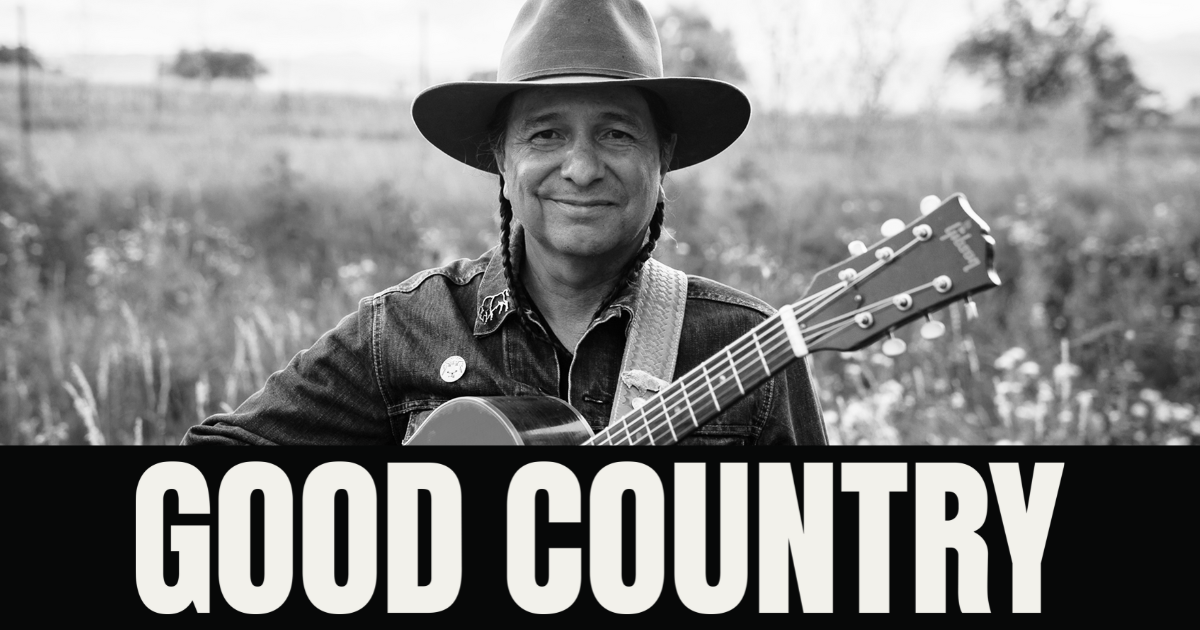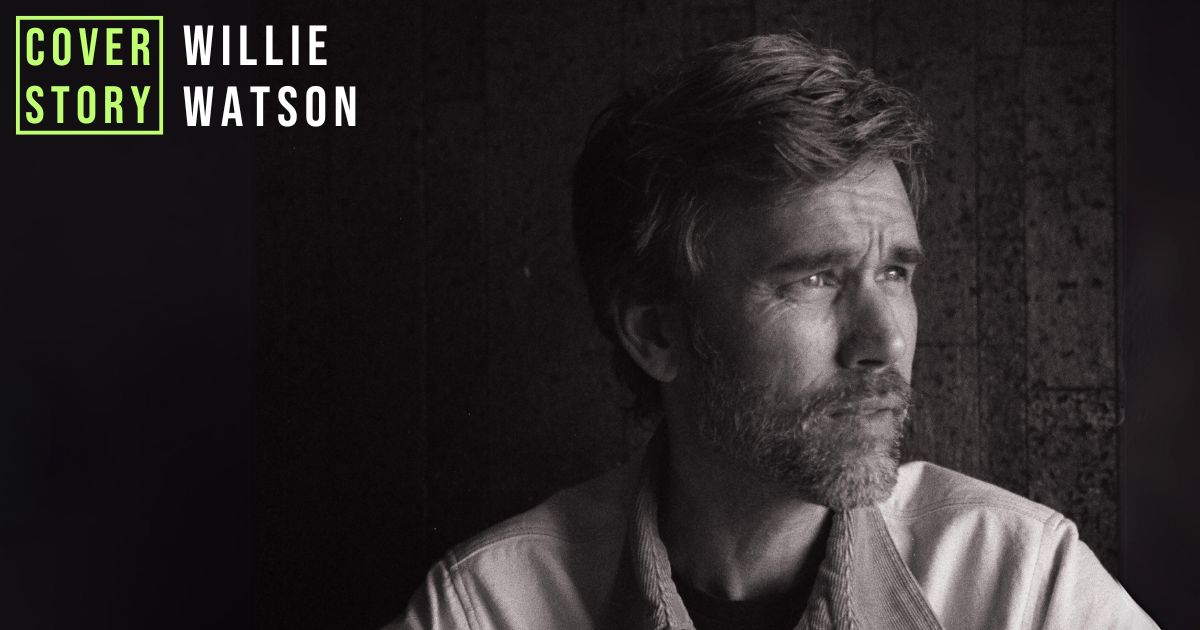
For the First Time, Willie Watson Uses Original Songs to Tell His Own Stories

Willie Watson has been a solo act for well over a decade, since leaving Old Crow Medicine Show way back in 2011. And while he’s put out records since then, in many ways his self-titled third release marks a new beginning. A lot of that comes from the fact that it’s Watson’s first solo work with original material, following two volumes of Folk Singer albums drawing from The Great American Folk Song book.

Watson worked with a co-writer on the original songs on Willie Watson, Morgan Nagler from Whispertown 2000, and the results sound like the sort of songs you’ll hear traded around folk festival campfires for years to come. The co-production team of former Punch Brothers fiddler Gabe Witcher and Milk Carton Kids guitarist Kenneth Pattengale capture the tracks in spare, elegantly understated arrangements with the spotlight firmly on Watson’s voice.

The album begins with a literal trip down to hell on “Slim and The Devil” (inspired by 2017’s white supremacist riots in Charlottesville, Virginia) and ends with “Reap ’em in the Valley,” an autobiographical talking gospel about Watson’s own long, strange trip. In between are songs about love, fear, the occasional murder. One of them is another cover, Canadian folkie Stan Rogers’ stately “Harris and the Mare,” and you’ve never heard a song that’s both so beautiful and so horrific.

BGS caught up with Watson on the eve of his album’s release.

So after so many years playing old folk songs, what got you into writing your own?

Willie Watson: I’ve always written songs, but never thought of myself as a “real” songwriter, like Gillian Welch or Dylan or Ketch [Secor]. That just didn’t seem like what I was engineered toward. I wanted to be that kind of songwriter, but told myself I didn’t measure up. So I got into traditional music. When I’d get together with friends at parties, I’d be more likely to sing songs that were traditional or someone else’s. Being in Old Crow was great, because I got to write with other people, mostly Ketch. Co-writing was easier on me.

Once I found myself on my own, I was very scared to write by myself. Being completely responsible for everything is scary and for whatever reason I could not bring myself to do that. Now I understand that no matter how simple, complicated, mature, childish or anything else I put into a song might be, it’s okay. I don’t have to tear apart and criticize, say terrible things about it before I’ve even written it down on the page. Left on my own, that’s typically what I’d do. It’s only now at age 44 that I can get past that. What a long road.

Do you remember the first song you ever wrote?

“Roll On” when I was 15 or 16. It was wintertime at my house in Watkins Glen, late one night when everybody else was asleep. I went out to smoke in the back yard and it was quiet. As I looked at the nighttime winter sky, I had this story come into my head about a cowboy in an old town. I wrote the words out quick, almost as I would have been playing it. Just looked up at the sky and thought of it and it washed over me fast. It was a pretty powerful first song, but I ignored it and have the most regret about that. For whatever reason, there was something in my life that made me not give it enough credit.

How did you connect with your co-writer, Morgan Nagler?

She’s a great songwriter who has made a few records, does a lot of co-writing with people you know. You’ve heard songs on the radio that she co-wrote. I was afraid to sit down on my own and write, and Dave Rawlings said I should call her. I was apprehensive about presenting ideas and words and parts of myself to a person I didn’t know, but it was immediately fruitful. The first day, four hours later we had a song I really liked, “One To Fall” – it’s on this record. That we came up with something I felt strongly about right a way got me fired up, so we kept going. Every time we got together we wrote a good song.

What was it like to appear in the Coen Brothers movie, The Ballad of Buster Scruggs?

It was amazing. They had me audition for another movie I did not get the part for, but they already had me in mind for the one after that. But it was terrifying. Little cameras scare me enough and the big gigantic ones are even scarier. Like a gigantic eye and you’re not supposed to look at them even when they’re right in your face. I’m no actor. I knew my lines, but did not know what to do. I called Joel [Coen] a month before to ask if there was anything he could tell me to prepare me. “The only thing I’ll tell you is your first instinct is probably right,” he said. Which didn’t help at all. On-set, I was still scared. I had to learn to get on the wrong side of the horse because of the camera shoot, which was awkward. So I was not knowing what to do until they took me to wardrobe. Once I had on the costume and the hat and looked in the mirror, I suddenly knew exactly what to do. When I saw how I looked, it all made sense: Just go out and be Clint Eastwood.

Fear, even terror, seems like a recurrent theme in your life as well as your work.

It’s a recurring thing for every human, if they’ll admit it. It’s so freeing to admit I don’t know what’s going on, I’m scared, I need help. So much of the time I’ve done the opposite and gotten nowhere. The only person making my life hard was me. Touring with different people, I see them get into stressful situations and I think, “It must be hard to be them today.” I was just like that for a long time, tearing through things everywhere I went. I was afraid and my way of dealing with that was to try and control things. A lifetime of that proved disastrous.

I got to the point of trying other things and eventually learned about humility. That started me changing and growing and recognizing that the only reason I made my life so hard was being afraid of everything. It’s so risky doing this and I am scared of it. I’m apprehensive about even saying that. The public wants you to be confident onstage and I am that. Sometimes not, though. It’s hard to put it out there and not be afraid. I’m gonna cry a lot in front of people onstage, and that’s brave and good for me. This record is me understanding that there’s power in those uncomfortable moments, and embracing them. There’s a lot of healing in being able to go ahead and do that.

Who are you dancing with in the video to “Real Love”?

That’s my wife Mindy and the song’s about her. Once we got together, it went quick with us. But there was not romantic interest when we met, we were just working together. She’d quit her job as a fast fashion designer wanting to do something fun, cool, more fulfilling. A mutual friend was trying to get us together, knowing she was interested in getting into denim work and that’s what I do. The friend knew I needed help. So she started as an apprentice, got good fast, and we ended up working together. For a year we sat and sewed together and became best friends, she’s the best I ever had.

I was careful about that relationship, didn’t want to ruin it. So that song’s about how it started and what it meant, how true our love feels. It outdid everything else I’ve experienced my whole life. It shows how every other relationship I’ve ever had, I wanted the wrong things and, I daresay, they all wanted the wrong things from me, too. It went both ways. I’m not even talking about romantic love. It ends up being about everyone in my life. The story of my love life is the story of my life, love in all its forms. It’s a bold statement that she is the only real love in my life so far.

How did you come to know Stan Rogers’ “Harris and the Mare”?

I’m a Stan Rogers fan and that song comes from Between The Breaks, a live album recorded at McCabe’s in Santa Monica. I was thinking, “Do I want to put this on a record with my songs?” I’d written simple rhymes, couplets that are almost kinda childish – and I’m gonna put them next to a well-crafted song by a master songwriter? But Kenneth and Gabe had heard me sing that one at shows for a while and really wanted it on tape, and I guess I did, too. And after the recording came out so awesome, how could it not be on the record? I found out it did tie into my life. We made this record and I was unsure if any of it made any sense. Once it was sequenced and I lived with it for a month or two, it came into focus. That’s a violent song about a man who doesn’t want to be angry and violent. And I’ve been that man in my life. I relate to this guy.

The other cover, “Mole in the Ground” – did you know that one from Anthology of American Folk Music?

Yes. I love Bascom Lamar Lunsford, he’s so weird and interesting to listen to. Those old recordings, I can’t listen to a lot of Carter Family or Blind Willie McTell. Three or four songs and I don’t want to hear more. But Bascom, I can listen to a good 30 minutes and that says a lot. Like “Harris,” that was a big puzzle piece where I was unsure how it would fit. What made it were the string arrangements. That tied it in with “Harris” and “Play It One More Time.” Gabe directed the string arrangement, but let them find their own way. It was a cool every-man-for-himself arrangement.

The closing song, “Reap ’em in the Valley,” really tells a lot about how you came to be who and where you are, describing an early encounter with a singer named Ruby Love.

I’ve always talked too much at my shows. But being alone onstage, I had to find ways to make it more interesting. Switching from guitar to banjo is a great tool in the arsenal, but people still got bored of that. Folk singers traditionally tell stories and lead sing-alongs. So I learned how to talk to people in a real personal way about mundane things, relating our lives to find common ground rather than tear each other apart. Just me up there, whether it’s in front of 15 or 50 or 1,500 people, it becomes a battle if it’s not working. Me against them. Sometimes it was a disaster, when I was not speaking from experience or the heart, places I knew. But once I started telling stories about me simply walking down a country road, they’d perk up and listen. So I became a storyteller. I figured I’d put one on this record, and that was one Kenneth and Gabe really wanted me to do.

I hope it translates. It’s my experience of looking back at evidence of what I call God in my life, how you can’t deny it. What I am now, Mr. Folksinger. That’s what people recognized me as, the place I ended up. It could have gone differently, but this is what I’m here for. Those impactful moments. I didn’t think much about Ruby Love over the years, until I started thinking more realistically and honestly the further I got from it. Meeting Ruby Love when my heart was so broken and how that felt, that’s what I never forgot about that night.

That’s the thing that stayed with the picture of it all, like a scene in a movie. That’s what vivid memories look like, movies. All that imagery rattling around my head. I relate a lot of that to the nature of God and God’s power in my head. It goes hand in hand with the moon and lake and sky, and how the moon affected Ruby Love. What Ruby Love did for that party and what the orchard did for his guitar.


Photo Credit: Hayden Shiebler
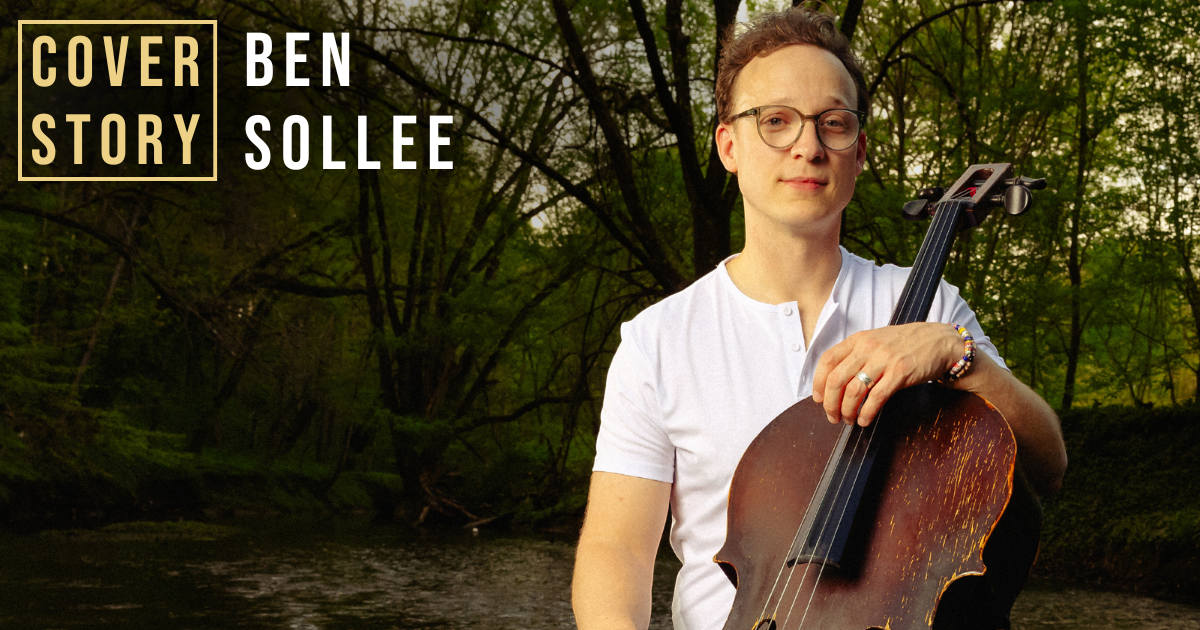
Ben Sollee’s Renewed ‘Long Haul’ Perspective on Earth, Life, and Music

Seven years have elapsed between Ben Sollee’s last studio release, his 2017 album with Kentucky Native, and his new one, Long Haul (arriving August 16). Much has happened in Sollee’s life since ‘17. His family has grown by two children. He worked on a number of soundtracks, even winning an Emmy Award in 2018 for his score on the ABC special, Base Ballet. The Kentucky born and based singer/songwriter/cellist, who has long been an advocate for environmental and other social causes, also helped launch a nonprofit named Canopy, which helps businesses in his home state positively impact people, the planet, and the future.

When COVID hit, it hit Sollee hard. “I was one of the early folks to get COVID in fall of 2020 and it stuck with me in a way that didn’t stick with other people.” During his prolonged recovery, he had to change how he ate, what he drank, how he slept, and how he exercised. “It turned into a journey of inward exploration and changing my external life. I really changed pretty much everything… It wasn’t until I started emerging from long haul [COVID], I was like, ‘Oh, I think I’ve got something to say about this.’”

While this album grew out of Sollee’s personal health crisis, it also was greatly affected by the death of his close friend and long-time collaborator, Jordon Ellis, who died by suicide in early 2023.

Always ready to blur genres, Sollee felt more free to expand his sonic palette on Long Haul, which includes a gospel-style choir, a Little Richard-inspired rock ‘n’ roll rave-up, West African rhythms, and Caribbean grooves. He purposely wanted to have lively, rhythmic melodies to balance deeply thoughtful lyrics.

“The same way,” he explained, “That Michael Jackson would have these big statements in the middle of these dance songs.” Sollee also recorded a special Dolby ATMOS Spatial Audio version for this album – a first for him – to underscore Long Haul’s immersive sound quality.

Part of what the title Long Haul refers to is your serious battle with long COVID and it also addresses life as being a long haul. How did the two interrelate for you, personally?

Ben Sollee: [COVID] definitely put me in relationship with my body in a way that I had never been before and once you start that relationship with your body, you realize just how interconnected everything is. I mean, we’re all on this long haul together… and I realized that maybe the most radical thing that I could do was to care for myself. That really shifted how I think of my live performances and really my purpose for being out on the road, [which] is to help people connect with themselves. Because once they connect with themselves, then they can have the capacity to be in relationship with nature, other people, animals, you name it. How I be in the world has shifted. It’s subtle from an external view, but internally it’s pretty profound.

How did this all affect your approach in making this album?

I realized that I had a very exploitative relationship with my creativity over the years, where it was just like: Here’s a project, just make stuff. And that was just really eye-opening.

I took a couple of different approaches in the making of this record. The passing of my friend and musical collaborator, Jordon, in the process of writing this record was really profound, because he was such a keystone to my creative process. It kind of forced me to think about how I was approaching music-making in the record without him.

So, I tried a couple different mantras, and one of them was “follow the resonance.” If it said something to me, I didn’t need to figure out why it said something to me, even if that is Polynesian flute playing or this sort of strange Tejano Caribbean groove – just follow it. In the past, I would kind of hedge; like I would hear something, I’d be really into that sound, but I wouldn’t feel like I could, for whatever reason. Like it’s not part of my cultural heritage. I would come up with a reason to be like, I shouldn’t make music with that sound or influence.

Another mantra was “show our fingerprints.” The way that we recorded the record – it was about hearing the hands and the strings and hearing the breath. I chose instruments that would really feature those human aspects of breath and touch. We incorporated woodwinds, which you can hear prominently on the first single, “Misty Miles.” We incorporated choirs in this record for the first time, because I really wanted that breath and sound. Much of the percussion is hand percussion. It’s a very tactile record… very high touch record.

You produced Long Haul. What was the recording process like?

It was a very intuitive, collective approach, and it meant that not only did the music turn out as a surprise to me and others, but it also meant that it was a very engaged, emotional journey. Adrienne Maree Brown [author of the book, Emergent Strategy] is really the inspiration for this – instead of having a singular artist’s vision, you really bring together a group of people in a facilitated way.

It made me maybe a little bit more brave and confident that wherever things went, we could execute that… I mean, musicians left the sessions crying, because they had such a good time and they felt seen and heard. And that, to me, means as much as the music that came out.

Did your experiences composing film soundtracks serve at all as an influence?

[Film work] also inspired me to explore Atmos. I really wanted this record to be an immersive experience, kind of like a sonic film. In keeping with that, there are a few songs that actually have sound design incorporated into them. It’s the first time I’ve done it in such an intentional and immersive way where we’ve got cars driving by with “Hawk and Crows.”

There is a real stylistic diversity to the sound of this album, like “Under The Spell” is one song with a funky dance groove to it.

[Laughs] I wasn’t trying to make a dance track. It started with that cello lick that you hear at the beginning. And it’s sort of this hypnotic West African loop of a lick that really began as kind of me trying to figure out some old-time banjo, like clawhammer music, on the cello.

The words are referencing this kind of duality… dealing with identity and self and how often we are under the influence of the stories that people tell of us. Every time I have this ambition, desire, and even just like the idea of me having something, it sets me down a path of being unsatisfied, which causes a lot of harm to other people and myself in the world. So, the words can go as deep as somebody wants to, but it’s also if people just want to release and have some sort of existential-like dance experience – then let’s go, let’s dance!

It touches on an evolution that I don’t expect anybody to notice in my music and career. My early records had a lot of direct social and political statements in the song. I realized that they were a little bit superficial and surface-y. They weren’t really getting it to the core of those issues. So, I’ve kind of moved into, I guess what I would call like a “post-activist” stance. My music has moved away from direct political commentary most of the time to more of a foundational, fundamental idea of togetherness, of connectedness.

“One More Day” stands out as a key song too.

I guess the original seed of that song emerged as I was beginning to travel again after Jordon had passed away – to places where he and I had traveled so many times. I started thinking about what would I have said had he called me in that moment of decision before he took his life? But the only thing that I would have really said to him is, “Listen, I hear you, I respect your decision, but what’s the rush? Like, if you’re going to do it, you’re going to do it, but you don’t have to do it right now. Just give it one more day, give it one more sunrise. Just get one last look.”

I think that’s what I would have said to him. And the song makes that case through different vignettes of our time together on the road. And, it does it over this Caribbean, Tejano groove that must have come from some jams that he and I did together. It must have. It just feels like a very Jordon groove. What I love about that is it has this real joyous, almost like early Police kind of vibe to it. There’s some really tough content in there and I just love the idea of people dancing at a festival – and just saying, “Give it one more day.”

The closing song, “When You Gonna Learn,” features a rousing gospel-style choir and addresses following your inner voice. It launches the listener out of the album and into the world in a very uplifting way.

I wanted to end with that message, because as a father I watch my four- and six-year-old who have yet to really settle into a sense of self or identity, and they are just so connected to their world and just basic truths about caring for things and protecting things and love and justice. And I think that it’s just more proof to me that there are things we know that get taught out of us. This song just is like: When are you going to learn that you already know?

You address a lot of tough issues on the album, but do so with a sense of humanism and spirited music that offer a hopeful way out of these challenging times.

I often reflect on that “Pale Blue Dot” image that Voyager took looking back at Earth and it’s just black and there’s just one little, tiny dot. And that dot really says it all, because it’s all there, as Carl Sagan says: every love, every heartbreak, every war, every church, it’s all on that one little dot.

So, we got to make it work here. And I think that’s the biggest challenge that we have right now. How do we make this work? I get that we’re going to make some big mistakes along the way. I sure have in my life. That’s where the grace comes in, but we got to make it work here. We don’t have another spot.


Photos courtesy of Big Hassle.

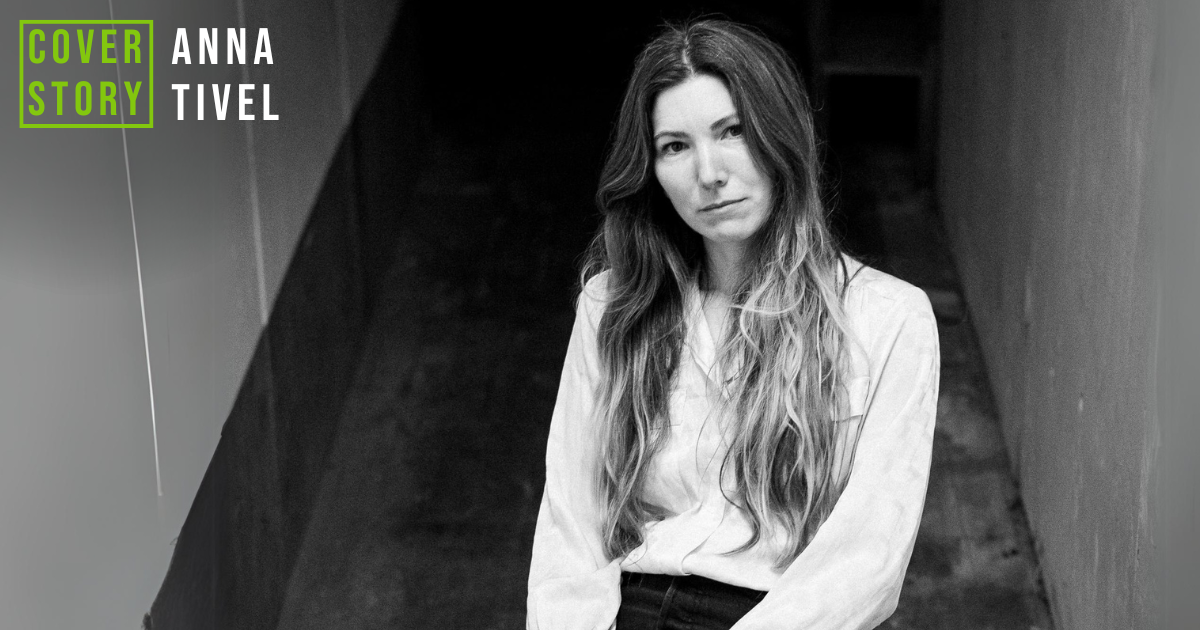
Nobody Tells It Like It Is, Except Perhaps Anna Tivel

“Nobody tells it like it is,” Anna Tivel sings on “Disposable Camera,” the first single from her new album, Living Thing. The song radiates with the joy and pain of reality, climaxing with the lines:

That big black train is rolling
And that deep down scream is growing
A hurricane come howling
A shot heard from the mountain
A blessing and a burden
I swear this will be worth it…

Which are followed by a melodic and cathartic yell. I don’t know how I first came across Tivel’s music, but when I found the song “Blue World,” I got stuck on it. I listened to it over and over, trying to take in every aspect of it, break it into pieces, open it up like a watch so that I could understand how this perfect song ticked. It is still the most beautiful meditation on dying that I’ve ever heard. “You come to the heavy gate and you open it all alone…” is a line I think about often. To me, it sounded like she herself was telling it like it is.

A few weeks after discovering “Blue World,” I was on tour with Kris Drever, who is one of my favorite folk musicians from Scotland. We were trading new music discoveries and I played him that song, after which he became obsessed with it. We traveled around listening to “Blue World” and talking about death for the rest of the tour. Giving someone a new song to love is a special kind of transaction. It’s a gift for the new listener, but also a point of pride to have found something that someone else also finds meaning in – especially when the recipient of said gift is a musician you admire. New song discoveries are an unmatchable currency, a communication beyond words.

“Blue World” sent me on a journey through Tivel’s catalogue, with hours spent listening to Small Believer, The Question, and Outsiders, before the release of her latest record on March 31. With Tivel’s latest collection, I have to come to the conclusion that someone does tell it like it is and that person is Anna Tivel. I spoke with her over the phone for BGS about the inspiration behind her songs and the unique circumstances that led to her production choices on Living Thing.

I’ve been a fan of your work for a long time and I’m curious to know what feels new and different about this record than your past work?

Anna Tivel: I think there are two main things. I’ve worked with Shane Leonard before [who produced Outsiders and The Question], but this is the deepest collaboration we’ve ever done. There is so much of his heart and his sonic experimentation in these songs.

We made this squarely in the pandemic years, so there was no way to call upon a band for live tracking. It was just me and him in his studio. He went insane trying all kinds of sounds, playing all different instruments, and I scribbled extra verses on napkins as I heard what he was coming up with. We worked all day, every day and I slept on his couch for a month. I tried to say yes to everything and I learned so much. I really feel like the sounds feel different than what we’ve worked on before.

The other thing is that going through that year, I was craving soaring choruses… more melody and rise and rhythmic happenings that I normally do. Maybe it was a result of just sitting and looking at the same window for so long. I usually write long and dark monotonous stories with no chorus at all, but I think I craved a little more hope and joy. In general I feel like less people died on this album than usually die my albums… it’s still melancholy as fuck though.

Knowing that these songs were written and recorded during that very existential time, and now that they are being released into a different time, do these songs feel different to you than they once did?

Yeah, it’s interesting, the whole process of putting out a record. I really got stuck in the machine for a little while so it took quite a long time for this album to come out.

They are older songs now in my soul, but the project still feels really fresh. I think because Shane drew them into this more alive, sonic world. It was really exciting and fun to explore joy and rhythm and movement, especially in that isolated time. It felt good to have some hope and just wiggle around and try to feel the good parts of being a human.

So coming back to it now, it feels new and exciting to take them out on the road with a band. It’s making me realize it’s fun to have some songs that we can really move into, rather than building up from the ground.

One of my favorite tracks from your new record is “Desperation” – “Real life is far from fair, you tried and tried and got nowhere/ It’s like somebody rigged the whole damn thing/ Bloody knuckles, empty hands, you want to fight, but all you ever had/ Is desperation.” Can you tell me a little about what led to that song?

I think that one came out of the heart of that pandemic time, watching people, and having an awareness of how close many folks are to the edge, simultaneously knowing how the people pulling the strings aren’t the ones close to the edge.

Maybe your kid gets sick, and you miss work, and then that’s that, you’re evicted, and into the car. You don’t choose what you’re born into and if you’re born with the short end of the stick, it’s so hard to imagine anything but that reality.

You can see getting stuck, because that imagination isn’t generously shared by the people that own it. But if people that are living in a different world reach out to help it can really change the situation. Sometimes that means helping people believe that a different reality is possible. You have to go into your mind to create what you need. It’s sort of the same idea as representation, in the sense that if you’ve seen people that feel like you in very different situations than you, you can imagine yourself into a different situation.

I want to work on making that imagination more widely available.

That’s an amazing point, and a great one to keep in mind especially for artists. Artists can and have played that role for people, I believe. Does this same idea carry through for the song, “Disposable Camera?”

I like songwriting because you’re sort of always looking inward… You think you’re reflecting the world, but so much of yourself gets in there and the things that you’re learning into. A lot of this album is about getting free, getting loose of the way that you’ve  taken in that it “should be,” the way that you should express yourself or the way you should move…

A lot of friends in the pandemic were having kids or trying to have kids and I was thinking about how, when we were all born, our parents were these people. [I was] realizing that everyone making babies has no idea what is going [to happen] and it’s kind of beautiful that it’s this big wheel of nobody knowing what they’re doing. Everyone is kinda hoping that someone else will be like “this is what it is,” but maybe the not knowing is actually a freedom. It feels scary to think you’re supposed to be certain, but you aren’t yet. The freedom is that nobody actually is certain and that’s not going to change.

I was listening to your song “Kindness of a Liar” and thinking about how important escapism was in 2020 and 2021. How badly I needed books and TV shows to get lost in so that I could come back to the present and have energy to cope with what was happening. Is that what this song is about to you?

In this batch of songs I was thinking a lot about what is truth, what is honest, what is listening, and what is being able to have nuance in all of those realms. You don’t just stay certain. To be able to move and shift and read situations and try to be learning in real time, messily, is very different from saying, “This is a fact and I’m going to hit everyone over the head with it until I’m proven wrong, and then I’m going to pretend I never said it.”

To try and tell stories to one another that are compassionate and messy – sometimes telling a story that might not be true is the most gentle and kind thing you can do while something hard is happening.

I think it’s about recognizing how much we crave each other’s stories and being really aware of how we paint the world for each other. The more artfully and more compassionately we tell each other’s stories the more we connect, and it’s not about trying to prove our point.

The most loving thing you can do is to share your mind and heart with people in the most nuanced way. And maybe there’s some fiction and lore in that.


Photo Credit: Kale Chesney

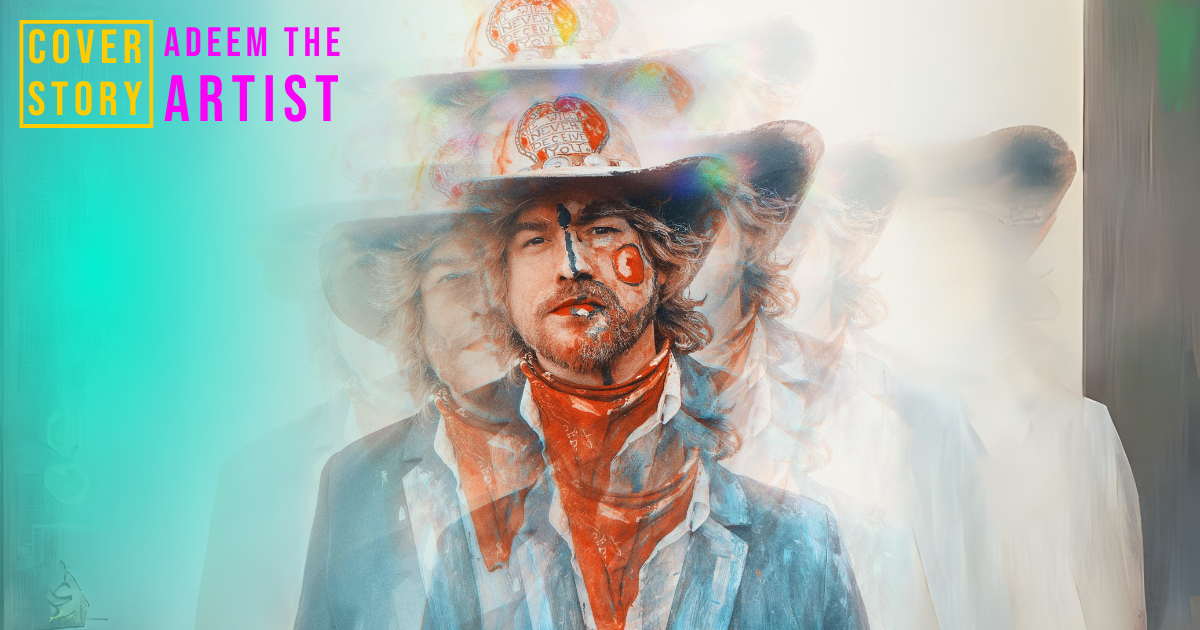
Adeem the Artist’s ‘Anniversary’ is a Complex, Deeply Moving Homecoming

In the press release for their 2024 album Anniversary, Adeem the Artist, the non-binary, self-described “cast iron pansexual” singer-songwriter, mentions that the album is queer country – as a genre, not simply as music made by queer people, but as a whole new thing. They also mention recording and creating with their child, their partner, and their tour manager, in a week off from touring in semi-rural Texas. The album is a deeply moving, hauntingly specific, and profoundly sophisticated look at the interweavings of family and a (literally) hostile landscape.

This is queer country – queer as a sexuality and gender and musical identity, but also as an indication of being a little askew, not really fitting plumb, as a political and personal identity. Here, a genre, Adeem notes, is a way of working against expectations or histories:

“Country music is important to me, because it’s so much tied into the dirt of where I grew up. It feels like a place I can comfortably speak from, in the authority of my testimony as a Southerner and a child of Confederates. That’s my responsibility, my calling. That’s why I’m making country records right now. It’s where I need to be, to be processing the things I’m processing.”

One of the ways of keeping safe in this landscape, while acknowledging and trying to make amends, is to move inwards, to lean on the “cast iron” of “cast iron pansexual.” This album moves from the outside – a world that is toxic and violent – toward one that is domestic. In the coruscating rock breakdown of “Plot of Land,” with its minute-long, Tom Petty quoting coda, Adeem sings:

And the politicians cast their lies like street craps,
And they sweep up every time
So baby I’m gonna find us a plot of land
With a little home to put a family in …

The plot of land is a long term plan, but there are moments in this record where you can see possibilities – of a loving home, of a rock and roll life, of a genderqueer Southern utopia, of the perfect dive bar meetup – falling out of an ambitious set of recordings. The too muchness of the album can be understood given it was made in a week, in a hostile place.

Adeem talks about how they made “Nightmare” in Texas, incorporating all the elements in their surroundings including “Isley’s laughter [their daughter], Kyle’s gentle presence [their tour manager], Hannah’s bouncing energy [their wife] as she pitche[d] hymns we could reference irreverently. That week away from the internet and the news cycle was a little insulation bubble that gave us so much room to breathe and feel safe. I don’t think this song could’ve been delivered with a different midwife.”

The midwife analogy is especially relevant to understanding some of these songs, particularly “Carry You Down,” where Adeem writes gorgeously about having and raising babies. The song is so gentle, so respectful of the autonomy of the child, but also filled with the details of domestic life that have become rare in country lately. In an album about adult pleasures and pains, it is a rest song, about carrying a child down the stairs when they ask to be carried, even if that interrupts “chorin’,” doing dishes or work in the garden.

If “Carry You Down” is a waltz, then “The Socialite Blues” is a romp about “staying up to the break of dawn/ making out of tune songs with you” – another kind of domestic, with “out of tune” its own kind of queerness. These songs have a sweetness, a refuge from harm, a way to escape not outside, but within.

The invocation of “out of tune songs” is a euphemism, but there are spaces on the album where Adeem is explicit about desire, as explicit as a country song has ever been, like in “Nancy,” which expresses exactly how difficult it is to fuck while on pharmaceuticals; or “One Night Stand,” about relationships that happen between last call and sunrise, but whose memory might, out of mercy and grace, stay on for “a lifetime of nights with him;” or “Part and Parcel,” where they sing, in gentle but urgent tones:

Take it all apart, it’s part & parcel
I came here with a strange and honest feeling
Chase all of these contradicting versions
Childhood perversions, & dreams that never steered
Let them drive a little while so that I can disappear

Those “contradicting versions” include being a child from the South, so the history here is not only personal, but social and political. There is a cluster of artists working out the history of the South right now – Justin Hiltner’s “1992,” Miko Marks’ Race Records, Willi Carlisle’s recitations of the failures of Appalachian and rural drug work, the entire career of Jake Xerxes Fussell, all of the ancestor work in Beyoncé’s Cowboy Carter. It might seem like Adeem’s work is personal, but all of this historical work flows from the personal to the corporate, an understanding of history that includes both last week and last century, trauma and joy twisting into a complex homecoming.

Homecoming for Adeem also includes the history of Knoxville, Tennessee; on the album’s last song “White Mule, Black Man,” they begin by asking if it’s too much to do one more, but after the end of the track, it’s clear that nothing could be more proper. Here, Adeem telling stories of the South, from Confederation onward, means taking racial politics seriously.

In almost exactly three minutes, they tell the story of a white mob rioting after a foiled lynching, the eventual coverup of that lynching, and the layers of myth-making and storytelling to prevent the truth from being revealed. Moving from talking to singing, somewhere between Peggy Lee’s “Is That All There Is” and Dylan’s “The Lonesome Death of Hattie Carroll,” the story in this final song laments, “But if the Tennessee River runs red with blood/ ‘Til the city runs white again/ Well, a white mule’s curse means more round here/ Than the last words muttered by murdered Black men.”

Adeem has been blunt like this before, tearing down the charnel houses of violent American racism and its myths, and this song is a deepening and extending of that practice. By ending the album on this note of violence, not as a lecture but as a moral accounting, that history work is ensuring that everyone is seen and known, their family is known, and the origins of their family’s prosperity is known.

Such knowledge is the necessary, sometimes haunting, sometimes delightful, attraction of Adeem as a person and “the Artist” – earning that sobriquet.


Photo Credit: Hannah Bingham

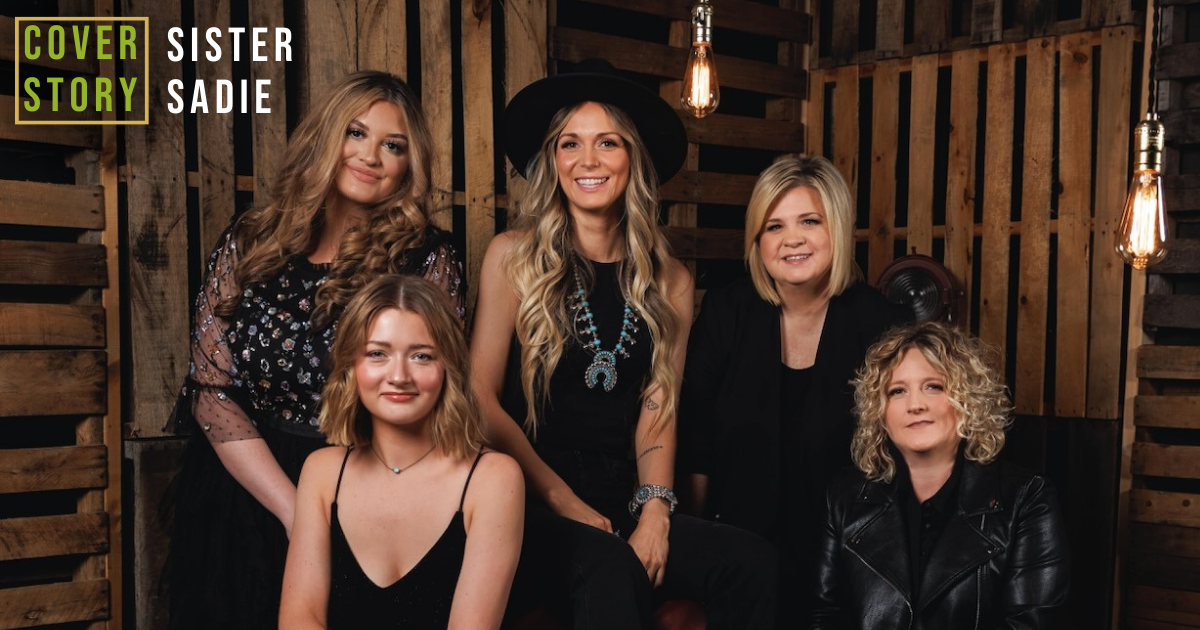
With a New Album, ‘No Fear,’ Sister Sadie Once Again Go “All In”

Last month, Sister Sadie took the stage at Nashville’s Station Inn to showcase and celebrate their latest album, No Fear. And although the title itself could be an ode to the group’s unrelenting urge to hop genre fences – from bluegrass to country to pop and back again – it’s also a nod to the resiliency of the band itself.

With No Fear, Sister Sadie showcase three-part, songbird harmonies backed by a keen musical aptitude that’s equally distributed throughout the quintet. The 13-song LP combines the “high, lonesome sound” of bluegrass with a blend of country and pop sensibilities a la The Chicks, Little Big Town, or Pistol Annies.

“There’s a space for bluegrass meets Americana meets country meets pop — that’s what I’m manifesting,” says fiddler and de facto band leader, Deanie Richardson.

To note, the Station Inn appearance was a full-circle sort of thing for the ensemble. First coming together at the storied venue by pure happenstance in December 2012, Richardson, banjoist Gena Britt, and former members guitarist Dale Ann Bradley, bassist Beth Lawrence, and mandolinist Tina Adair were simply a collection of pickers and singers from different circles in Music City.

That initial gig went extremely well, so much so that more shows were booked and things started to unfold into a full-fledged band – albeit one where the members still held day jobs and were raising families. But, the music felt right and so did the performances, so why not tempt fate and see where this ride may go?

Well, what a ride it has been thus far. Appearances on the Grand Ole Opry. Three IBMA awards for Vocal Group of the Year (2019, 2020, 2021) and one for Entertainer of the Year (2020), with Richardson taking home Fiddle Player of the Year in 2020. And a Grammy nomination for Best Bluegrass Album for the 2018 release, Sister Sadie II.

But, in recent years, three of those founding members — Bradley, Lawrence, and Adair — left to pursue other projects, which, in turn, posed one lingering question to Richardson and Britt — where to from here?

“When we started 12 years ago, when we hit that first note at the Station Inn, we felt this magical chemistry in the band,” Richardson says. “Somehow, every time we reinvent this [band], I still feel that magical chemistry when we play music.”

Instead of throwing in the towel and saying it was good while it lasted, Richardson and Britt forged ahead, come hell or high water. They regrouped and reemerged into this next, unknown chapter. Soon, Jaelee Roberts and Dani Flowers came into the fold, both bringing songwriting prowess as well as providing guitar and vocal harmonies to ideally complement Britt. Then, in 2023, bassist Maddie Dalton hopped onboard.

“It’s an eclectic group of ladies and of musical tastes,” Richardson says. “Our home, our hearts and our souls are in bluegrass music. That’s what we love, that’s our passion, but there’s a lot of room for growth there.”

The new album, it’s not bluegrass. It’s not country. It’s just good music. In my opinion, it would be a shame to pigeonhole your music.

Deanie Richardson: Well, that would be our dream, Garret, for someone to not try to put some sort of label or pigeonhole it into somewhere. But, unfortunately, it happens. We went in there with great tunes and just let them arrange themselves, let them work themselves out in the studio. And this is what we got. So, I didn’t go in with bluegrass in mind. I didn’t go in with country in mind. I just went in with all my pals, people I love — great players and great songs.

Is that more by design or just how things have evolved?

DR: I think that’s how it’s evolved. That was not the original [Sister] Sadie. That’s this combination of girls right here. When you have personnel changes like we’ve have along the way, the energy changes — everything shifts.

Gena Britt: You have to reinvent yourself.

DR: You’ve got to figure out where you land when Jaelee Roberts comes in and changes everything. And then you’ve got to figure out where you land when Dani Flowers comes in. And Maddie Dalton. We’ve had three new members. That changes the energy. It changes the vibe. It changes the feel. It changes the vocals. It changes everything. This whole band has grown organically over the last 12 years. This is just where it is right now. We’re about to go in and record a new one and, shoot, it may sound like ZZ Top. I don’t know — you never know.

And I have a lot of solidarity with that, the attitude of just go in and see what happens, see what sticks and see what works.

Dani Flowers: Every single person in this band is a big fan of good writing and good songs. Just trying to serve the song and make sure it had what it needed rather than trying to put any one certain song in a box that it might not fit in.

How does that play into personal goals with the band’s expectations? There’s a lot of a crossover factor in the music. I hear just as much country as I do bluegrass in there.

GB: We’re just going for what we feel. We want to be excited about the song as we want everybody that’s listening to be excited. When we’re in the studio, these songs were brought to life in such a great way.

With the new members, what was kind of the intent coming into the group?

Jaelee Roberts: When I was asked to audition, I was kind of flabbergasted, because I looked up to Sister Sadie. These are all my heroes playing together in a band. And I had grown up around them. It was such a surreal feeling to get to audition. I get to not only learn more from them than I was already learning from them, but I get to part of that and grow with them, bring my spin on stuff.

DF: It was definitely a no-brainer for me when it came to joining the band. I’ve known Deanie since I was 16 or 17, Gena since I was 19 or 20. I’ve always admired them both. They’re incredible at what they do. It was really great for me. I was in the music industry for a while. I had a record deal. I wrote for a publishing company. And then, I had a kid and kind of stopped doing it all for a while. So, to join a band full of women that I already love was a great way to get back into playing music.

And with founding members of a band leaving, there’s this creative vacuum that can occur, where maybe there are more opportunities for other people to step up.

DR: Oh, that’s so great, because it’s true. With the personnel changes we’ve had, there’s been more opportunities for different styles, different vocalists, different everything. It’s crazy how that energy shift just redirects everything. You find a new tunnel or rabbit hole to go down or a new vision. It’s super fun to hear those potential songs and figure out whose voice is going to work. If you listen to a song, it actually tells you where it wants to go.

GB: This band is kind of a melting pot. We all bring such different things to the band. And then, when you put it all together and mix it all together, it’s this great recipe for things that are magical. It’s just heartwarming, too. We actually hangout together when we’re not playing on the road — not a lot of bands do that.

With the band shakeup and everything that’s happened to Sister Sadie in recent years — winning the IBMA for Entertainer of the Year, switching record labels to Mountain Home — what made you decide to keep it going? Was there a moment of maybe shutting it down and doing something else?

DR: One hundred percent. You’re on it. With the last personnel change, Gena and I were on the phone like, “We’re 10 years into this thing. Is it time to call it? Maybe it’s just time.” This band happened by just a group of friends getting together and playing the Station Inn. Then, “Hey, that went really well. Let’s playing the Station Inn again.” Then, Gena starts getting calls from promoters. Do a few shows. Then, Pinecastle says, “Hey, let’s do a record.” We do a record. We do another record. We get nominated for a Grammy.

But, we’ve never really gone in 100 percent. It’s just been organic. I’ve got a ton of things going on. I’ve got a seven-year-old. Gena’s got a job and two kids. It’s never like, “Let’s form a band and let’s go do this.” It was always sort of The Seldom Scene thing — we’ll play when it makes sense. And then, I was like, “What if we give this thing everything we’ve got? What if we put in one 110 percent? What if we got a team? What if we got a manager? What if we got a new record label? What if we got a booking agent? Let’s devote one year to this 110 percent and see what happens” — that’s where we are.

I’m 52 years old. I’ve been doing this and on the road since I was 15. This is the best record we’ve ever done. Going all in was the best choice that we could’ve made.


Photo Credit: Eric Ahlgrim

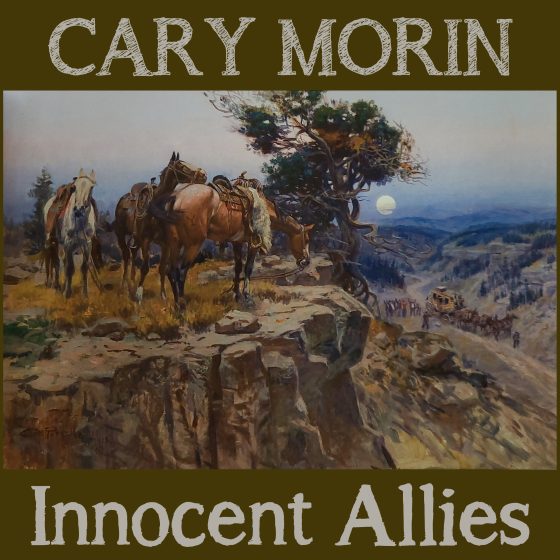
Cary Morin’s ‘Innocent Allies’ is An Unfiltered Palette of the American West

Guitarist Cary Morin’s (Crow/Assiniboine) new album, Innocent Allies, includes a striking painting on its cover created by renowned Western painter/sculptor Charles M. Russell (1864-1926), who spent his formative years as an artist in Morin’s home state, Montana. Innocent Allies, Russell’s work, depicts horses, cowboys, and settlers, routine subjects for the visual artist. The piece references how the iconic beasts of burden, who helped build the American West, were often innocent partakers in the violence, imperialism, and White Supremacy of American empire advancing across the rural, montane, wide expanses of the West.

For the new record, Morin leverages his expansive musical vocabulary – flatpicking, fingerstyle guitar, blues, folk, singer-songwriter, rock and roll and pop textures, and instrumental lyricism – to synthesize more than a dozen of Russell’s paintings and works into songs and tunes. The result is pastoral, evocative, and certainly cinematic. But these songs, as Russell’s body of work, are not sanitizations of the past or representations of American mythmaking and revisionism.

Morin views these paintings with a hefty dose of nostalgia, mentioning throughout our telephone conversation how this art was ubiquitous throughout his youth, his life in Montana, and its influence reaches well into his present, while he tours the country playing guitar from his new home base in Colorado. But that nostalgia isn’t predicated upon turning blind eyes to the atrocities endemic to Americana imaginations of “cowboys and indians,” Manifest Destiny, and the genocide and displacement of Native peoples.

The cover art for Cary Morin’s ‘Innocent Allies,’ including Charles M. Russell’s visual work by the same title.

Like Russell before him, Morin offers a grounded, realistic, and eyes-wide-open perspective not only on Russell’s body of work and those iconic images, but on the entire American societal construction of the West, as well. He does so with a formless and gorgeous genre fluidity and with playing styles entirely his own. Each track is stunning and expansive, even in their moments of intimacy and coziness.

Innocent Allies is a delicious record, made ever more fascinating by its unique concept, its nuanced inspirations and influences, and Morin’s one-of-a-kind voice on guitar. We began our interview chatting about the album’s conception before discussing Montana bluegrass, the constructive uses of genre, Beyoncé’s impeccable choice in Rhiannon Giddens’ banjo playing, and so much more.

I wanted to begin by asking you about the art of Charles M. Russell and how it inspired the new album, Innocent Allies – not only is his work on the cover, but it’s also very clear that these are cinematic and very artful songs. They’re very evocative. How did you take a different medium than your own and translate it into your own art?

Cary Morin: The album and the artwork all comes from my upbringing in Montana in the ‘70s. People from Montana all know that Charlie Russell is our most famous artist that ever came out of Montana. There have been a bunch of [artists] actually, but he’s kind of the top of the pile. When I was a kid – probably even today, too – anywhere in the state, you’re gonna be surrounded by his paintings or his sculptures.

He moved from St. Louis, Missouri when he was, I think 16? His parents gave him a train ticket to go out [West] and they wanted him to work on a sheep ranch owned by a friend of theirs for a while to get this fascination that he had with Montana out of his system. But it kind of backfired. He ended up living out his days there, for the most part. He gradually became a really advanced sculptor and painter, eventually getting to the point where he could really [demonstrate] action in the things that he created. He could [depict] minute muscles and forces and accurate movement – same in his paintings.

He ended up doing thousands of paintings and sculptures. They’re in collections all over the world now. Not only in Montana, but there are some museums around the U.S. that have huge bodies of work from him. When I was a kid, the coffee table books that were soon to follow his work, my dad and my mom ended up having all of them. My dad was a huge fan of his books, his writing, his stories, the letters that he wrote to everybody, the paintings, the sculptures.

With that stuff just always laying around when I was a kid, I became pretty familiar with it. I’m by no means an expert at that, but I just grew up around it all and know it pretty well. With this album, originally I was going to do a tribute album. It was going to be as country as I could make it. I’m not really a country player, I grew up in Montana. I can understand how it’s put together, and I could play some pedal steel. I’m pretty much a novice, but I know enough to get by, at least in the studio. So, [originally], it was all going to be all written by another artist.

After a while, I just couldn’t get my head around putting out an album where I didn’t write a single song on it. I think we were at home listening to Red Headed Stranger and I thought, “Man, I really love the production on this.” That was another favorite of my dad’s. He loved Willie Nelson.

I thought the production feel of [that record] would go along with the paintings in the coffee table book that was sitting right in front of us. It was kind of like a moment and a suggestion. The more I thought about it, the more I was like, “This takes care of everything.” I know a fair bit about Charlie Russell and his paintings are so accurate, they all tell stories. So I just started writing stories about the paintings. Looking at them and trying to imagine that scene and that moment of time that he captured. I wondered what happened before that moment and maybe what happened after that moment. Pretty soon we had a good pile of songs. It was a really fun process. At the time, we didn’t know what we were going to do with it. I mean, maybe I felt like it was a good idea, but after if it ever got done, then what?

Well, it definitely sounds like your own kind of sculptural process to get to this album. Carving something and then seeing where it leads you; starting with an idea, but then following the art wherever it goes.

I want to ask you about genre, because we’re having this conversation in “the zeitgeist” right now with Beyoncé and with Lana Del Rey and other people “going country.” On one hand, genre feels so important in this moment and on the other hand, it feels like we are accelerating ever faster toward being in a post-genre world. When I listen to this album, like you’re saying, it does remind me of Red Headed Stranger. It is straight up and down country to me.

But I wonder how you view genre, yourself? Is identifying with genre useful to you? Do you think it’s kind of a vestige of the past? How do you identify with genre at this point and with this record?

Well, with me in particular, that’s a pretty interesting question, because in the early ‘70s, when I was starting to play music and get interested in music, I lived in Montana. With my dad being a military guy, I didn’t really have access to a lot of albums of a wide, eclectic variety of genres and of sounds. But I did end up listening to classical music and my folks were big country fans. My oldest brother was a rock fan. I would stumble across things. I became a bluegrass fan from the influence of my best friends.

I didn’t really understand genres. I just heard music and I liked it. I didn’t really know how to put labels on it. I wasn’t aware of publications that would outline where the boundaries are on music. I didn’t think of things as a specific genre – although, you know, I sure liked the way that Doug Kershaw played fiddle, however I came across that! Or, I really appreciated the way Chubby Checkers played piano. That was all from Louisiana, but I had no idea what Louisiana was, or what Canadian music was, or any of that. It was all just music that I liked.

Having grown up without all that knowledge, I think it did have an effect on how I play music, because I would kind of bounce from genre to genre. I played with a band for 20 years, and we would play like the way Stevie Ray Vaughan played blues guitar. I didn’t really understand that much about blues music, but I thought what he did on David Bowie’s album was amazing. And so that had an influence on the way I play guitar. I really love Pat Metheny, and that had an influence on how I play guitar. I really love Mark Knopfler. It’s like all these genres couldn’t be any farther apart, but they all had a place in my mind. I maybe didn’t realize it at the time, but all those little influences would end up having an effect on how I make albums.

Genres now, that I hear on the radio – which is really only when I drive around – that’s [usually] like a public station, a community radio station, so I don’t really hear pop music. But, everything’s kind of starting to sound the same. I don’t know why that is. I think that maybe money has something to do with it. You know, “What sells?” What the buying public listens to, in order for advertising to be sold. I guess I don’t really pay attention to it too much. But I think that a lot of it’s driven by money.

You know, I can’t understand why Beyoncé would shout out to the world, “I’m gonna face country music!” and have that feel [like a] benefit. I think that she would only do that if she was motivated by something other than her love of Hank Williams. [Laughs] You know what I mean?

[Laughs] it’s hard to imagine! And then, at the same time, in the 100-ish years country music has been around, this seems to be a routine move. There’s always this moment where the people on the inside aren’t making that much money, or feel like they aren’t making much money, and you see someone like Lana or Beyoncé coming and you think, “Wait… There’s money to be made here? What? Tell me more about this!!”

Exactly!

From listening to your music, I think I would describe you as “genre agnostic.”

But I was curious what your feeling was on the Beyoncé announcement and the press coming out on that.

I found it really interesting, because I’ve known Rhiannon [Giddens] for years. She played with Pura Fé an artist/group that I played with in Europe for like five years. To hear her pick up a fretless banjo and just beat it into submission, I was like, “Holy God!” I had never heard anybody play a fretless banjo before, let alone like that. What a perfect choice for Beyoncé. She picked one of the best banjo players that I’ve ever met. I was surprised and impressed.

Yeah, me too. And also to have Robert Randolph playing steel on the tracks. Beyoncé and her team very clearly knew that she couldn’t appear like a “carpetbagger.” It’s not the most perfect term in this context, you know what I mean. She didn’t want to be viewed as somebody who was interloping – she did a good job at that “authenticity signaling” for sure.

It’s a wild thing to watch happen and to watch the discourse, in the wake of the two tracks, half of the people being like, “That’s not country” and half of the people being like, “Black folks invented country music, Indigenous folks invented country music, this is nothing new.” To watch those factions bump up against each other again, it’s kind of endlessly fascinating to me.

Like John Travolta having a hand in the revival of Texas music! Some idea that somebody somewhere along the line has and it catches on and takes off. I like it, too. I think culturally, I love it when things evolve. I do remember when I was a kid that I would hear on the radio what people call “country music” and go, “Boy, isn’t this happening in what is called Southern rock already?” There’s always players borrowing from other players.

And then it’s the studio musicians that played in that stuff. They may have showed up on a Bob Marley album somewhere along the line, too, because they played in a studio. Hell, man, when I was a kid I didn’t even know who Bob Marley was. I think it’s great that people learn from each other.

I wanted to ask you about bluegrass. You talked a little bit about what bluegrass means to you earlier in our conversation, but also when we premiered your track, “Whiskey Before Breakfast,” but I wanted to give you a chance to talk about your bluegrass influence again – we are the Bluegrass Situation, after all. What does bluegrass mean to you as a genre, as a picker?

That also goes back to the ‘70s. When I was talking about all the music that I either got from my family or from older brothers and my best buddies – bluegrass was a pretty big deal in Montana back in those days. I remember early on listening to these albums that didn’t exist in my friends’ houses. Hearing about Flatt & Scruggs and maybe I heard it on TV. I’d see things on Hee Haw
And it definitely piqued my interest.

But the stuff that was going on in Montana, there was a band called Live Wire String Choir, which was a Montana bluegrass band. There was another one called Lost Highway Band that was a little bit electrified, but still bluegrass. And then there was the Mission Mountain Wood Band, which was kind of the king of all of them. They were straight ahead bluegrass, but from around Missoula. They actually appeared on Hee Haw one time, although I never saw that episode. They had an album called In Without Knocking back in the day and I was maybe around 12 years old, something like that. Everybody was buying that album. We had a copy of it, so I was learning those songs.

I think there was a plane accident and a lot of the band didn’t survive, but there’s one guy, his name is Rob Quist, who was one of the founders of the band. He still plays shows in Montana. His music and that band’s music turned me on to bluegrass. Through investigation and through the help of friends, I learned more and more about it. I got way into flatpicking. I never had an American-made guitar when I was a kid. I didn’t really realize the importance of that.

I was still fascinated with Tony Rice, and still fascinated with the crazy melodies that David Bromberg pumped out. I love John Hartford – so it was, I guess, a personal quest of mine. I have some friends that are pretty good bluegrass players. But I left Montana when I was 18 and I kind of pursued bluegrass for a while, but then I kind of got back into fingerpicking and fingerstyle guitar and eventually electric guitar.

And all that Clarence White stuff that I had heard and the Will the Circle Be Unbroken album, a lot of those artists that were kind of starting to press the boundaries of bluegrass music caught my attention. Eventually, I just abandoned that piece of guitar [playing] altogether and got really into playing electric guitar for many years. It wasn’t until maybe 20 years ago that I started really getting back into playing acoustic guitar. I never really abandoned electric, but I started playing fingerstyle guitar and pursuing it. I’d play for five, ten hours a day, daily. I just couldn’t get it out of my mind, largely thanks to Kelly Joe Phelps.

The early acoustic experiences that I had never really went away and I was really interested in creating music based on all of those influences throughout my life.That’s where the fingerstyle thing came back in.


I think the tune that I like the best on the album is “Bullhead Lodge.” And I love the Charles Russell painting that inspired it. I wondered if you could take us into your composition process for “Bowhead Lodge” and specifically, how you were synthesizing those related paintings while you were improvising, composing the tune – because I think that’s really fascinating.

Well, thank you. I’m glad that that song resonates with you. First of all, Charlie’s painting of his cabin on Lake McDonald – Charlie painted from memory, he’s not a guy that you would see sitting out in the middle of the fields with an easel, as romantic as that looks, he wasn’t that guy. He ended up painting a lot of depictions of his view of the lake from Bullhead Lodge. There are so many of them and they’re all just serene.

I was playing a show with Phil Cook in North Carolina and at sound check, he said, “Cary, we could just play this thing…” and he played this short, open-tuning melody. “We could play this thing for 10 minutes and people would love it,” he said.

We just kind of sat there and tweaked it for a little while. I don’t remember the melody he played. We didn’t do that during the show. But, I always remember him saying, “Play the simple thing and people will love it.” When I was looking at those paintings of Lake McDonald, I just started playing this melody. It wasn’t really written on the spot, I suppose. I goofed around with it for a couple of hours, but then I came up with sort of four variations of a similar melody. I started with a simple one and then changed it and changed it and changed it until the chords finally changed into what tags the song.

Because of that process, I like that song too, because it’s a great memory. I was glad that it made it onto the album. People have been talking about that recording, it seems like it’s resonated with folks.


Photo Credit: Grayson Reed

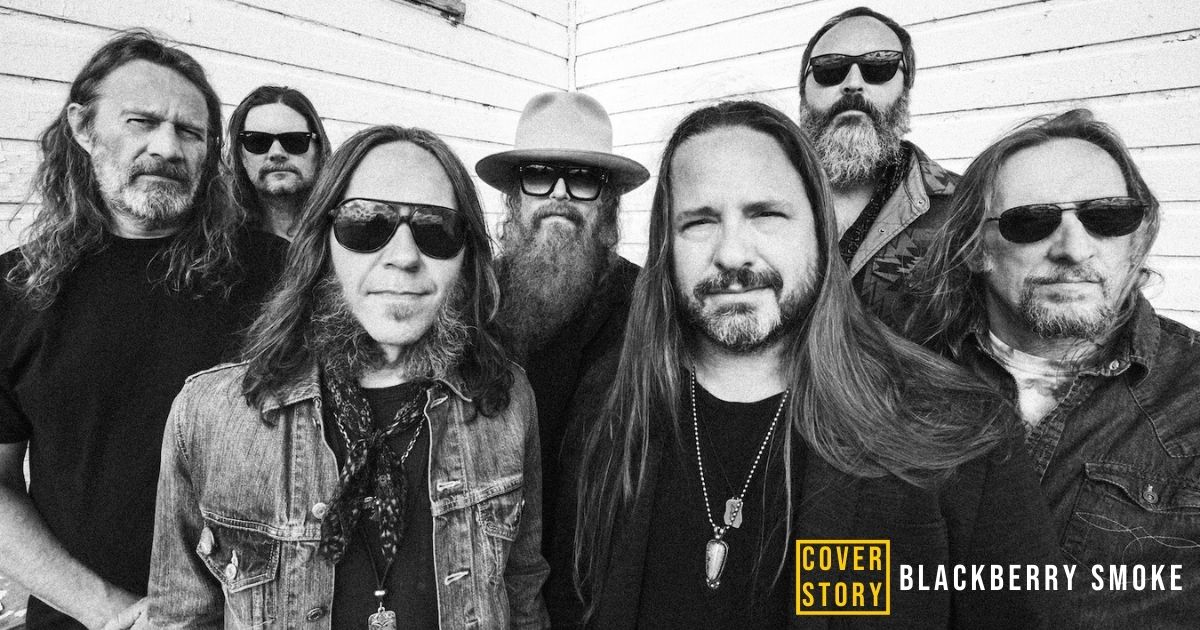
Blackberry Smoke’s New Album Offers a Crunchy Continuation of String Band Traditions

With 23 years behind them, Blackberry Smoke are still one of the best examples of Southern rock in the modern era – but what does that even mean, right?

Led by singer, guitarist, and primary songwriter Charlie Starr, the band does indeed have roots pointing straight to hard-driving ‘70s icons like Lynyrd Skynyrd, the Allman Brothers Band, and more. That’s true, but they also pull inspirations from farther back. And to Starr, Southern rock, at its core, is a continuation of the Appalachian tradition: “String band music and storytelling.”

With their latest album, Be Right Here, some of that old-time tradition shines through the cracks of a warm, distorted wall of sound, with heartfelt song craft and acoustic-guitar melodies front and center. Meanwhile, the band continue to prove crunchy, doubled guitar solos, thundering drums, and anthemic vocals never go out of style.

BGS spoke with Starr before Be Right Here was released, to see what has changed (and what will always stay the same) for one of the most dynamic Southern rock bands in history – a history they know all too well.

I thought I’d kind of start just seeing how you’re feeling at this point. You’ve been burning up the road for over two decades now, which seems crazy to me. How do you feel about where you’ve have been, and where you are now?

Charlie Starr: I mean, I’m tired. [Laughs] No, I feel good. We all do. It doesn’t seem like it’s been that long. It’s surreal to think it’s been 23 years. I don’t feel like I’m old enough to say that I’ve been doing anything for 23 years other than breathing, but I’m proud of what we’ve accomplished. It feels good.

Blackberry Smoke is one of the best pieces of evidence that Southern rock is still alive and well. But I was just wondering, do you think there’s still more to say in that? Is the form still inspiring to you?

Totally. Just listen to any song from those amazing early Skynyrd records or Allman Brothers or Marshall Tucker Band records, Blackfoot – all those bands are so different, and it really was just geography that tied ‘em all together. They all had their own fingerprint. And I think that we do, too.

I was listening to Patty Loveless in an interview and she was talking about bluegrass – which I grew up playing and I dearly love also – and she was talking about how those first generation bluegrass bands, like Bill Monroe and the Blue Grass Boys, Flatt & Scruggs, and the Stanley Brothers, they came from this rich musical heritage of the mountains where they grew up in Kentucky, Virginia, Tennessee, North Carolina. And what they were drawing from was acoustic string band music and storytelling.

Well, now, fast forward all this time, and modern bluegrass musicians not only have that, but they also have Led Zeppelin and the Beatles and the Rolling Stones and all this. There’s so much more. So I kind of look at it in a similar fashion with “Southern rock” bands, because those guys were listening to not only what I just mentioned, with the hillbilly country music and string band music, but also the British invasion and then traditional country and the Beach Boys. As time moves along, there’s just more and more that gets poured into the soup. So to answer your question in a very long-winded way, I think that it can go on forever.

So you’re kind of the third wave of popular Southern music, taking all that was done before and adding in the new influence, too.

Yeah, if we were a tribute band that just dressed up like some old ‘70s band and played their songs, then it would suck. But since we have the freedom to explore our own musicality, it can never end.

The new album is called Be Right Here. What was the spark that got this one going?

In my case, it’ll usually be a little explosion of songs. I’ll know that album time is coming, and so I’ll get to work on writing a batch of songs. It doesn’t always come quickly but it usually seems to work out, which I’m happy to say, because it kind of falls on me – which I don’t complain about that at all. I dearly love to write songs and I’m glad that it’s my job. There are worse jobs to have. Writing songs for Blackberry Smoke is much easier than working in a body shop, which I did for years.

At this point, 23 years on, are you still writing about the same stuff?

Well, I guess stories can all be new, stories of love and loss and frustration and women and men and drinking – or not – whatever. But if you look at popular music as a whole, there are new subjects that enter our culture, like cell phones and the internet and Facebook. I don’t know if I’ve ever used the word Facebook in a song. I probably won’t. But no matter what comes along technology wise, time stays the same. It’s still moving at 60 seconds per minute, and that’s not going to ever change. And human beings behave really the same way.

That said, the internet’s changed everything really. Not entirely, but it’s added a new accent to everything we do. I think John Mellencamp said it best, he goes, “I’m not sure if we’re supposed to hear this many voices at all at once.” That complicates life, really. It might push me back into my hermit hole a little more. As a songwriter even, it pushes me to the old ways more, melodically and musically. I don’t think anything really new can be said. We’re just trying to find an interesting slant on the way we say it.

You teamed up with Grammy-winning producer Dave Cobb for the second time, and he’s famous for live recording and loving first takes. Does that work well for a band like you guys, who are very live-show oriented?

It does. And in this case, it’s very interesting. We went back to RCA Studio A again, and he said, “This time I’m going to put the drums and amps and you guys all in the big room, so we’re all going to be in a little cluster.” And I was like, “Really?” As soon as we started playing together, it was like, “Oh man, okay, this is working. We don’t necessarily need all the separation.”

Some producers would be like, “Hell no. There’s no way I’d ever make a record like that.” It can be too sloppy. But Dave was like, “Well, we’re capturing this one sound. Let’s capture it all in the room, like a ‘60s record or even a ‘50s record.” So that’s what we did.

Tell me a little bit about “Dig a Hole.” It was the first track written, the first track on the album and the first one released, with a theme of choosing your own path – for better or worse. Is that kind of what you have done as a band?

We have. It’s been our only choice, really, because nobody’s ever come around with a different idea. [Laughs] It’s funny, I put together a [track list] and sent it to Dave, and I had “Hammer at the Nail” first. And Dave goes, “Are you insane? ‘Dig a Hole’ is first. Why would you think that ‘Hammer at the Nail’ should be first?” I said, “Because it’s faster.” And he said, “I don’t give a shit about fast. ‘Dig a Hole’ is like you guys are winding up to kick somebody’s ass!”

Azalea” leans more into the folky aspect of what Blackberry Smoke does. It’s got that acoustic shimmer of a classic-rock ballad. Where does that come from for you?

Man, I just love that kind of acoustic music. Again, that kind of stuff was my upbringing, and I’ll never turn it loose. That song lyrically was about fatherhood, because here we are now, our children are all growing up. I’ve already seen one go to college, graduate, now get married, so it’s like, “Well you hold on tight, but you don’t want to smother ‘em.” They have their own path to forge, so all you can do is try to be there for ‘em.

I’ll leave you with the big picture. After 23 years, what you hope people take away from this particular record?

I just hope they dig it. I mean, I don’t know if I expect people to experience it in a different way than I do or not. I don’t know. But I do get a lot of enjoyment right now listening to it.


Photo Credit: Andy Sapp

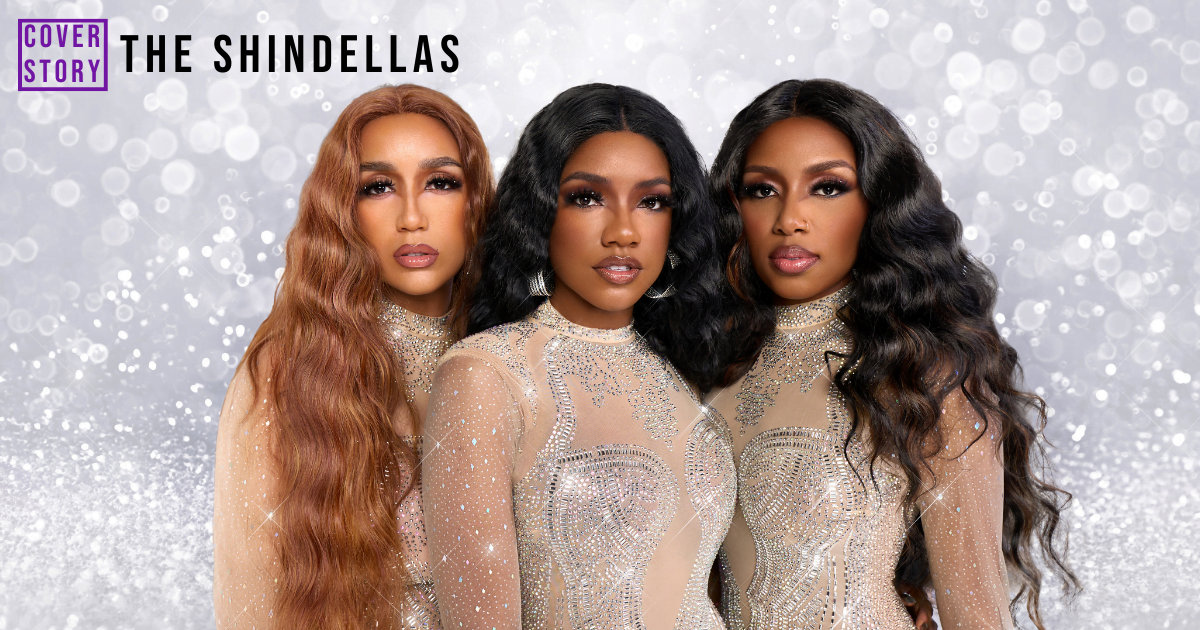
Roots R&B Group The Shindellas Blend Innovation and Tradition

There’s no group around who either looks or sounds like The Shindellas, a trio who’ve shown they can charm audiences in every setting – from a New Year’s Eve party hosted by Nashville’s top urban contemporary radio station, 92Q, to a Grand Ole Opry crowd on a Tuesday night. Kasi Jones, Tamara Chauniece, and Stacy Johnson exude confidence, charm, and poise with very specific and thoughtful outlooks not only about their music, but also the messages they want their fans to get from their songs.

“We embrace the term girl group,” Kasi said, when asked if they found the term outdated or demeaning when used in 21st century conversation. “We’re always been about empowering women and girls, expressing strength and unity in our songs about love and life, and telling the truth. We view ourselves as expressing the term in every positive sense.”

They’ve been operating since 2017 in the town of Franklin, 20 miles south of Nashville. The trio arrived to become part of Weirdo Workshop, a company started by the writing/production duo of Claude Kelly and Chuck Harmony, Louis York. Their versatility and flexibility in working with artists – such as Mary J. Blige, Miley Cyrus, and Bruno Mars – and in particular women artists, all who come from vastly different places, has worked well. The Shindellas credit Kelly and Harmony with, among other things, providing them their unique name.

“It was definitely Claude and Chuck’s idea,” added Tamara. “We wanted a name that sounded fresh and generated excitement, as well as one that didn’t sound like anything else out there at the time.”

The Shindellas also emphasize and celebrate the collective, both as performers and songwriters. There is no lead vocalist by definition and each one doesn’t even consider that possibility. This is the ultimate trio, one whose harmonies and polish are pinpoint, yet there’s no hint of the tedium or boredom that might come from a group who’s overly rehearsed. The emphasis and focus on originality in performance, ethos, look, and viewpoint is also a reflection of the fact that all three have their own backstories of dissatisfaction – with things that they’ve witnessed and/or encountered, in terms of the music business. Stacy Johnson once worked with a family-operated music company in Chicago, before moving on to doing vocals on dance tracks, plus a brief tenure in a girl group where she quickly departed over concerns about how she was being asked to present herself. She was intrigued by Harmony’s idea of creating a trio whose members valued respect in every aspect of their treatment and presentation.

Jones had seen some of the worse aspects of predator behavior in Los Angeles after she’d previously done musical theater and booked her own overseas tours as a contemporary soul artist. When she made a visit to the Workshop and was impressed by the treatment and attitudes, she knew she’d found what she wanted. Chauniece had been a child gospel singer working on the Texas circuit with her mother managing her. She got a temporary boost in exposure and stature from being on the fifth season of The Voice, but was uncomfortable with the notion of getting lost on a major label. Both the Workshop and the trio’s other two members proved an ideal fit.

The Shindellas have definitely been expanding their fan base and earning more acclaim over the past few years. Their 2019 EP Genesis created some buzz and more followed their 2021 full-length debut, Hits That Stick Like Grits. In addition, their elegant and elaborate stage shows drew raves for being classy, yet also enticing. But their latest, Shindo, which was released in October, has given them the industry boost always vital for acts that are still building a base. It’s given them their first radio hit with “Last Night Was Good For My Soul,” an energetic, superbly sung party tune that reached the Top 10 on the Billboard Adult R&B airplay chart. It was also the first one where they got an assist from an outside partner, as the Nashville indie label Thirty Tigers helped propel the single forward.

Shindo is also a great spotlight for the group’s stylistic versatility. While their links to such vintage girl groups as The Supremes and The Pointer Sisters can clearly be heard, they’ve also got their own vibrant, engaging, and special sound.

For instance, the single “Up 2 You” demonstrates their ability to excel within a groove-dominated work, while “Kiss N’ Tell” has an edge in its discretion-demanding narrative, and “Juicy” has a sassy, naughty tone. The “Juicy” video also generated plenty of attention for its inclusion of Kasi Jones reading Angela Davis’ volume, Women, Race & Class.

Still, while they never expressly embrace the notion of a lead or front vocalist, at times, some songs do spotlight individual members talents. Jones’ facility with verbal improvisation emerges in “Last Night Was Good For My Soul” as one example. Yet, the notion of any one vocalist exiting the unit – in the manner that Diana Ross did the Supremes or like Bonnie Pointer departing her sisters – doesn’t seem on the horizon.

While Nashville has long had a reputation for not exactly welcoming artists of color that don’t fit into very specific genres or formats, the Shindellas are quick to praise Music City as being highly supportive of their music. “Nashville has welcomed us with open arms,” Johnson says. “We’ve never been treated with anything other than warmth and respect, and that’s whether we’re talking about the Opry, urban contemporary radio, fans, it’s just been wonderful.”

The trio has some ambitious plans and hopes for 2024 and beyond, our interview being completed just before the end of 2023. Most notably, they have some potential European and international tours upcoming. “I’d love to see us get some of our music into some films down the line,” Johnson continues. “We’d love to do more shows around Nashville,” chimes in Tamara. “Especially the Ryman, and we’re also thrilled to be appearing at the New Year’s Eve Party sponsored by 92Q!”

“We also are going to be doing more songwriting and collaborating [in 2024],” concluded Jones. “We really want to not only build a lasting legacy as performers, but also contribute as songwriters. We’ve all got backgrounds in other styles and we bring those influences into our performances. We’ve also got ideas for songs that we’ve been working on. I predict that people are really going to be pleased with what they hear from us, and we’re determined to make 2024 an even bigger year for the Shindellas.”


Photo Credit: Ezelle Franklin

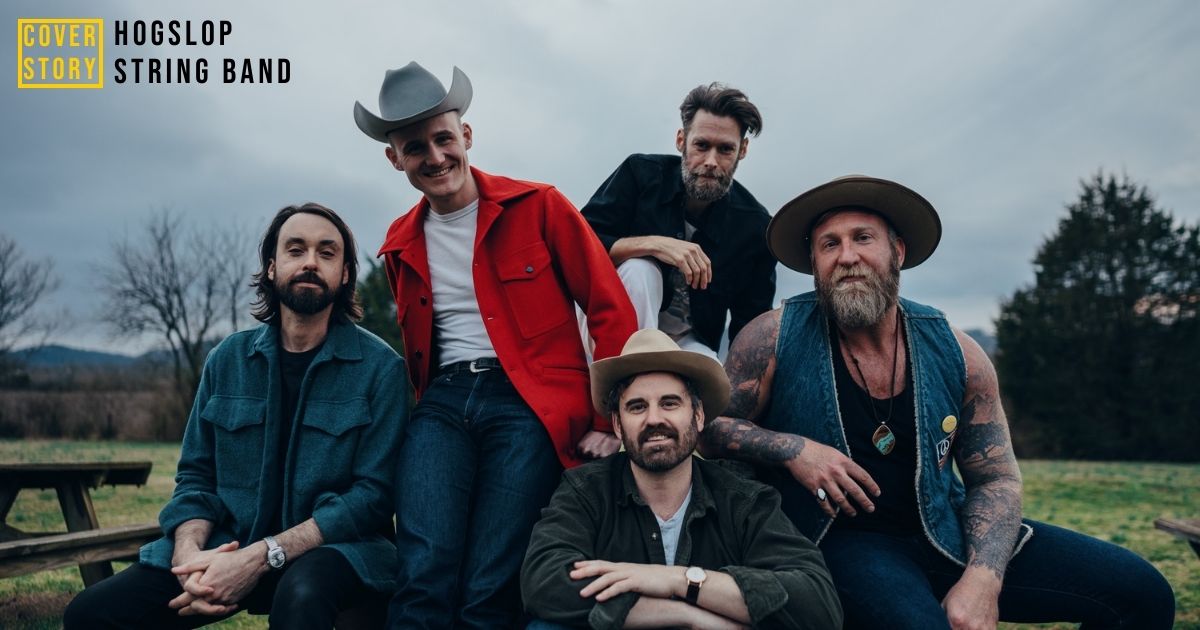
Cover Story: Hogslop String Band Went From “We Are Not A Band” To the Opry

Few bands have benefitted from the same type of steady, organic growth as the Hogslop String Band. Originally formed in 2009 as a pickup band for a square dance, the group played together for 10 years before releasing their first album. In that time, their camaraderie strengthened – as did their songwriting, performance style, and fanbase.

Following their 2019 self-titled album, the group – Gabriel Kelley, Daniel Binkley, Kevin Martin, Will Harrison, and Pickle – has been hard at work on their next record (expected spring 2024). Produced by Kelley at his own Mobile Traveler Studios in Bells Bend, 10 miles west of Nashville, the record illuminates the purely original sound that the Hogslop String Band has found over nearly 15 years of making music together.

BGS caught up with Gabriel Kelley and Daniel Binkley to talk about the new music, the formations of the band, and where it’s all headed.

You formed in 2009, but it was 10 more years before your first album came out. What has the journey been like, coming from such casual origins to debuting on the Opry in 2022 and looking ahead to releasing your sophomore record?

Gabriel Kelley: We sure did. We were, to be honest, just a rag-tag bunch of buddies. Most of us had grown up playing old-time music or found it in our early years. For a very long time, our motto was a little more on the punk rock side: “We are not a band” is what we said for the first 10 years of the band. It was just a way to get together and have a good time. It wasn’t until a few years ago that we started taking it more seriously. One thing that’s cool about our Opry debut – and Binkley can fill you in – is that his family has been a part of the Opry since the ’20s.

Daniel Binkley: My family has been in Nashville forever – my great-grandfather, Amos, he had a band called the Binkley Brothers’ Dixie Cloghoppers, and they were a part of the very first Opry cast in 1926. Backstage they have a placard for every member and I found my family back there. That was a very special moment for me. They mentioned it during the broadcast, and we actually ended up playing one of the Binkley Brothers’ songs on the Opry.

For a band with a foundation in traditional music, i.e, fiddle tunes, where do you find the balance between introducing your own original material and digging from the old-time repertoire?

DB: Old-time music is sort of the school that we come from. So when we write original stuff, it’s gonna come through that lens. Once you run it through the “hogslop filter,” it’s gonna sound like hogslop. There’s just something about that foundation, and our knowledge of each other as musicians, that makes it come together – whether it’s traditional tunes or original material.

GK: We absolutely don’t ever want to lose the component of old-time string music and we’re currently in a time where that music seems a lot more accessible and is getting thrown under the big umbrella that everyone is calling Americana. We don’t do a show without old-time tunes in there. A lot of the other music we take influence from – blues, rock and roll – they were actually getting inspiration from early country and old-time music. So for us, it all goes in the same bucket.

You’re definitely known for that high energy string band sound, but this new album has quite a range of pace. How do you stay true to that sound while incorporating softer material like “Mississippi Queen?”

GK: We’re very much a live band and in that setting it’s about that high energy, rowdy thing. We love that, but amongst us in the band, three to four of us are songwriters and have very different approaches to songwriting. We’re very lucky to have Daniel in the band, he’s one of my favorite songwriters and has an ability to write some of that intimate, close to the chest material, like “Mississippi Queen.” And you need that delicate stuff just as much as you need the fast, hard hitting, and fun stuff. We feel that it’s very important to show audiences (and ourselves) that we have those dynamics.

DB: A lot of our shows at festivals are late night, midnight shows and it’s almost more like a punk-rock show. But there are also theaters or other venues where you can really showcase more of that dynamic. Kevin Martin has a few tunes on the album and he writes totally different that I do. He’s more rock and roll and I guess I’m the softy. It’s nice to have a little variety – especially on a record.

What’s special to you about this upcoming album, compared to music you’ve released in the past?

GK: Personally, watching this band shift and develop over 15 years has been pretty wild. This is the first record of the band’s that I’ve produced, and what’s special to me is (and I’m not saying that we’re reinventing the wheel), I’ve never heard quite the blend of genres that we’ve thrown together. It’s cool that Hogslop is still shifting and mutating and we’re still discovering that. And that we’re embracing our songwriting – everything on this record is our own material, and I’m really proud of that.

DB: I agree with all of that! One thing I’ll add that was a major game changer – and this is thanks to Gabe – was the ability to take our time in the studio and not be under the time constraints that’d you’d be under paying for studio time somewhere.

What else is on the horizon with the release in 2024?

GK: We’ll be in the studio most of November, and then we’ve got the Ryman show [supporting the Mavericks] on December 1. As different as this new music is, we’re really woodshedding and figuring out our live show. It sounds like our ‘24 is gonna be busy – we’re mainly a festival band, so that’s where we’re headed.


Photo Credit: Josh Goleman

Cover Story: Brittany and Natalie Haas on Sharing Melody, Rhythm, and Space

What changes about the oft championed phenomenon of “family harmonies” when the voices entwined together are not voices at all, but strings, plucked and bowed and fingered? It’s a question that immediately comes to mind as you hear the first notes of Haas, the recent duo album released by sisters, fiddler Brittany Haas and cellist Natalie Haas. It’s also a question that immediately came to mind as we chatted via Zoom last month.

“I feel like I connect more deeply with Brittany than anyone else from a rhythmic standpoint,” Natalie responds after a thoughtful pause. “That’s not so much the family harmony thing, but it does play into everything.”

The familial blend they’ve established as adults – in many ways, Haas is their first deliberate and intentional music making as a pair since their teen years – defies any and all boundaries and language, as they swap melodic hooks and call and respond and toggle between accompanying and leading, adding texture and tenderness or vigor and enthusiasm. Their interplay is as comfortable and cozy as you would expect these two sibling virtuosos to be together, their reunion the not-so-subtle underpinning that makes the entire collection of tunes and sets sparkle.

This is family harmony – and family rhythm – but unspooled, complicated, and set to a new acoustic, Celtic, chambergrass sound that defies categorization. Haas also gently and kindly stands in implied opposition to more masculine, performative, and competitive musicians and groups in similar spaces. It’s a brilliant, crave-able album that showcases how much can be accomplished musically when one’s goal isn’t just the cooperative music one creates, but the space one opens up with another in which you cultivate that cooperative music.

I wanted to start by just asking y’all how long it’s been since you put out music together, or since you’ve been in like a creative space together? How does it feel to be “reunited” in this way?

Natalie Haas: We sort of played together as kids in chamber music groups and youth symphony together. And we went to fiddle camps together – that was how we got excited about maybe doing music as a career. That would sort of continue throughout the year, because the way for us to continue all that excitement and motivation that we got at fiddle camps was for us to play together.

We did the odd gig together as teenagers, like farmers markets, school performances, and that kind of thing. Then we sort of went our separate ways and we’re both very busy doing our own thing, but we took every chance we got when other people would hire both of us to be on their gigs. We always said yes because we just wanted to hang out with each other. So this is like the first time that we’ve done anything like this and it’s pretty exciting.

The way that your musical paths have diverged, they don’t feel like they’re that separate from each other. It feels like the vocabulary that you both draw from is very similar. When you started sitting down to think about doing an album together, what changed about the way that you thought about music separately or together? 

Brittany Haas: That’s a cool question. I think, it all felt kind of new in a way, but also so familiar, you know? Because it’s us. We have made a lot of music together. I think on my side, it was really cool because Nat already had a bunch of tunes. So some of [our collaboration] was just like, schedule based, it was like, “Okay, we know we want to do this thing, because we’ve been getting odd gigs.” It was really like motivated by the fact that we had shows coming up, and that was a reason to be like, “Let’s have new material for that.”

Then we were like, “Here’s our days when we can put together material.” Nat had just done a writing session where she had all this new stuff ready to go. These are the tunes that she’s cranking out and they feel very much like they come from something or some place that is like so near and dear to me, because it’s from our shared fiddle-camp upbringing. That’s like the source, the well, where the tunes come from, even though they’re new and different. It feels like very homey, I guess? The kind of tunes. And then I think we’ve just both grown a lot over the decades as musicians and as arrangers. We like bring more stuff to the table than when we were teenagers.

NH: I should certainly hope so! [Laughs]

That is the goal. [Laughs] That leads really naturally to my next question, which was going to be about material curation, especially because you both have demanding schedules that kept you apart, I’m sure, during the album creation to some degree. What was it actually like when you were like setting aside that time, like you’re talking about, to get together to make the music? What was the curation process like? It’s all originals, but one, yes?

NH: Yes. And yeah, that’s the nice thing about us both being busy is when you set aside a block of time, that’s all you are focused on. Brittany had all these amazing musical ideas and made all of my tunes better the minute she got her hands on them. The arranging process, it was pretty easy, because we’re both, comfortable switching back and forth between roles. I was just amazed at how much we got done in such a short amount of time, both in the arranging process and in the recording process. It all felt very easy. [Laughs]

BH: We did the bulk of it together, I think we had like a week or maybe slightly under a week when we first met to gather the material. And wasn’t that before we even knew we were making a record then?

NH: Oh yeah, that was preparing for a tour. Our first adult sister tour.

BH: No, no, no – second.

NH: Oh, second. Yeah! Because we toured Ireland. Right. We were playing all of these trad tunes, our shared repertoire from our of teenage years. And then for [Haas], we decided to make it all original. For the most part.

BH: Do you remember the moment when we actually said, “Let’s record this”?

NH: Uh… well, I think we toured it first. Then Brittany brings her handheld recorder to all of those gigs and recorded everything. We listened back to it and decided that it was actually pretty good and that we should make something of it. I think we had another tour coming up, of Australia, and we decided it would be fun to have something for people to take away with them.

BH: At that point, we didn’t meet again until a few days before the studio. We had arranged the material and toured it, so we kind of had it under our hands pretty good. And then a long amount of time passed, but during that time it was good to listen back to stuff and decide what we wanted to change.

We had like a couple days of rehearsals and revisions. That was from listening and emailing and saying like, “I have this idea about this. What do you think of that?” Then we had like three days in the studio before it went back to email, because Natalie lives in Spain and we’re also both busy doing stuff. So it was emailing like, “Do you like this take?” and, “Is it okay if I edit out the second B part on this?”

Did you trip into or over any sort of feeling like, “This reminds me of when we were playing together as kids” or did it feel like you were getting back on the bicycle in a way?

BH: I’d say mostly yes. It’s just really easy. I think in other collaborations, people aren’t always so willing to just try anything. We have this basis of, “I love you no matter what, and even though you’re being really annoying and you’re asking me to do something I don’t want to do, I’m still going to do it, because might as well.” It’s an ease of communication, which I think mostly comes from family. [Laughs]

NH: We were never really a band as kids. We did the odd gig, but it was always just for fun. Our parents weren’t pushing us into performing together. So yeah, no bad memories, really, associated with playing together as kids. But we do have the ease of having this shared history of fiddle camps and learning from the same kind of mentors.

BH: Since we’re both like primarily collaborators, this project was like running our own band. As adults we’ve both come into our own and we’ve probably become more opinionated about musical things as a result of that. So it’s fun to meet again where there’s a lot of give and take.

What do you think of the term, “chambergrass?” Is this album chambergrass? Is that even a thing?

BH: I like the term, but I’m not sure it applies here. I also don’t mind it applying here. I guess maybe that wouldn’t have been what I would have gone to, because from my perspective, it just feels so much more Celtic. It’s still in that sort of “past of American music,” that’s more over there in the Celtic Isles. It doesn’t feel very grassy, but I mean, that’s a part of me as a musician. So, it’s not like it’s not in there.

NH: It does feel like chamber music to me. Yeah… I’m not familiar with all of the myriad grass terms. [Laughs]

BH: We grew up going to Valley of the Moon Fiddle Camp, where there were a lot of genres meeting. So the boundaries were very blurred, and both of us having worked with Darol [Anger] from a young age, he’s all about blurring and negating the idea of boundaries. It’s everything, it’s all of that, it’s all the influences and where they’re going. I know the current Celtic world less than Nat does, but it seems like a lot of the forward-thinking, new tunes on stringed instruments are happening in chambergrass, the new acoustic realm, so it’s definitely an influence on both of us.

NH: It does have a Celtic bent, but it is Celtic from an American perspective – because we’re American. I’ve listened to a lot of stuff in the new acoustic realm – like Brittany said, all of our influences are coming out, and it’s hard to define a genre.

BH: I think Nat, for all of her “I don’t totally play bluegrass” sense of self, she can and she does sometimes. Some of the bluesier tunes that she writes lend themselves to that area.

You make very in-the-moment music, there’s a lot of improvisation, there’s a lot of dialogue, and this kind of music can often feel very – it’s silly to say this cause you’re literally performers – but it can often feel very performative and like there’s a lot of hubris in it. I also feel like new acoustic music, newgrass, jamgrass, and that sort of “Let’s jam out together, let’s be in the moment together!” music, it can often feel really masculine and toxic. How do you go about creating this space you’ve made together, to have those moments, to be together and present and making music, but it doesn’t feel like you’re being self-absorbed or self important?

BH: That is something I think about when I’m listening to music – and sometimes when I’m playing it. Sometimes I do feel like I’m uncomfortable, like that’s not something that I want to do. Even though you think that that’s what the music calls for in this moment, it can feel a little bit too masculine.

It’s like, “No, I don’t want to take a really long solo there.” I think I’m embracing that it’s okay to say, “No, I’m not gonna do that.” It’s a tricky one, because a lot of our heroes in that realm of creating this newer music, they’re men, and that nature is informing the music that they’re making and the way that they’re arranging it. It does have that hubris thing built into it. On some level, that is important and it does work well, for stepping into the moment and taking a great solo. You kind of have to have that attitude. But, it’s not necessarily masculine or feminine. Like it doesn’t have to be either one. It could be both.

What we’re trying to do, it’s a little more tune- or melody-based than based on soloing, so it lends itself well to a tight arrangement. That may not be the right term, because it still is loose, there still is a conversation going on. But, if there is a solo it’s pretty short, it’s this little thing we’re going to do to give a breath of fresh air here. It’s not like, “And now, we will rip for 50 more bars!”

“And now everybody look at me!”

BH: Yeah! I think in a duo especially, because we’re very equal and we like sharing, that’s just kind of part of the vibe. Even when Natalie’s filling more of an accompanist role, it’s still such a powerful, interesting sound. It’s so varied that it doesn’t fade into the background. It’s super interesting all the time. It’s like both voices are very equal, even if mine is higher.

NH: It’s interesting because, like Brittany said, a lot of our heroes are men. That’s definitely a generational thing in the Celtic music world, because like, the people that we grew up sort of – I don’t want to use a phrase like “hero worshipping” – that we admired and wanted to copy were mostly men, with a couple very key exceptions. But then, my generation in the Celtic music world is almost exclusively women. There are some men doing it, but it’s very different than the bluegrass thing.

Also like Brittany said, soloing is not as much a part of it. That changes the dynamic a little bit. But it is kind of a melody>accompaniment hierarchy going on. But I wouldn’t say that that’s necessarily a male thing, I don’t know.

As Brittany said before – and I hate to associate this with just feminine energy – but both of us coming from being collaborators in our other projects rather than soloists, per se, you could say that that is the more feminine approach, maybe, to music making. It does feel very equal because the melody playing is getting passed back and forth all the time. And it does feel very conversational, even though the soloing thing is not as prominent as it might be in some other genres.


I think that’s part of why you can listen through y’all’s entire album and it doesn’t feel stale, it doesn’t feel boring, while it also doesn’t feel like it’s trying too hard. It doesn’t feel like you guys have something to prove.

NH: That’s part of the thing with having done it at this point in our lives, it doesn’t feel like we have anything to prove anymore. We’re doing it because we want to, not because we’re trying to prove anything to the world.


Photo Credit: Irene Young