Two Decades of ‘Dusters Discography

With over a dozen studio credits and even more EPs and live albums to their name, the Infamous Stringdusters have been one of the most persistent forces in bluegrass and roots music ever since staking their claim with 2007’s Fork In The Road.

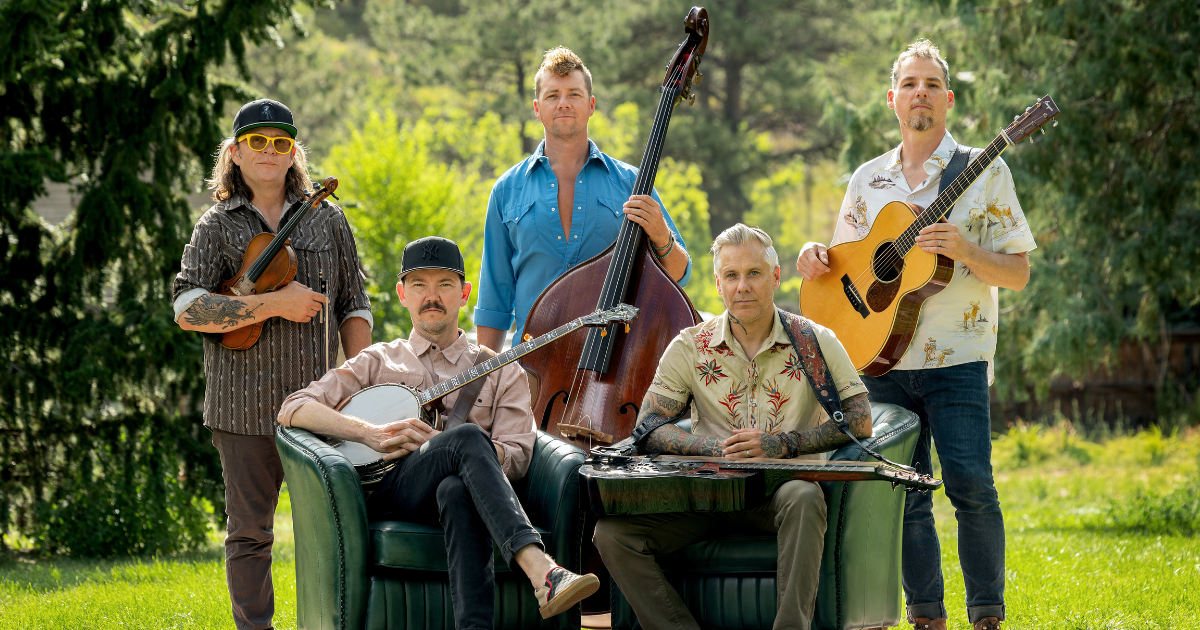
Even as members changed in those early years, the band quickly found its core – Andy Hall (Dobro), Andy Falco (guitar), Jeremy Garrett (fiddle), Chris Pandolfi (banjo) and Travis Book (bass) – and rapidly began homing in on a sound that’s equal parts traditional and progressive bluegrass with a touch of country, jam, and other influences along the way. That variance has led to each of the band’s recordings having a distinctly different flavor than its predecessors, from the harmonious bluegrass symphony of Silver Sky to the feature-rich Ladies & Gentlemen, hope-fueled Laws of Gravity and Rise Sun to the somber Toward the Fray.

“Making a record that sounds like the Stringdusters isn’t the challenge,” Book told me in 2022 for No Depression. “The challenge is seeing just how deep we can get on each song in order to make it the best, most authentic version of itself it can be. This requires us all setting aside our egos, being open to suggestions, and trusting one another to create the best music as possible.”

In celebration of our Artist of the Month, we take a look back on the Stringdusters’ sonic evolution and essential tracks from their two decades in service of bluegrass and the song.

“Fork In The Road” – Fork In The Road (2007)

On their emphatic 2007 debut, Fork In The Road, the band – then comprised of eventual Punch Brother Chris Eldridge (guitar) and Jesse Cobb (mandolin) alongside Book, Garrett, Hall, and Pandolfi – quickly struck a chord with bluegrass aficionados on songs like “No More to Leave You Behind” and the album’s title track. The latter of which positions the band’s fiddle maestro front and center as his high-pitch croon carries the weight of being at a crossroads. Whether it’s a hypothetical take or one rooted in the group’s own musical experiences, it’s safe to say the path the ‘Dusters have taken since has more than paid off with a legacy 20 years strong and counting.

“Magic #9” – Things That Fly (2010)

The band show off their picking prowess on the whimsical “Magic #9,” a track that resulted in their first-ever GRAMMY nomination at the 53rd annual awards in 2011. While the ‘Dusters can thrash and sing bluegrass harmonies with the best of them, songs like this also showcase the group’s knack for crafting their own instrumental compositions. Their tunes pack just as much story and emotion – if not more – into a three-and-a-half minute burst than most of their counterparts with vocalized accompaniment. Coincidentally, the GRAMMY the song was up for was not in a bluegrass category, but rather for Best Country Instrumental Performance. Given the band’s penchant for string music, unreal levels of improvisation, and the consistently inconsistent award nominations process, it’s the least bit surprising, if not even a bit fitting.

“Rockets” – Silver Sky (2012)

The song that first unlocked my captivation for the Infamous Stringdusters (and still my favorite to this day) is “Rockets.” It was around the time the album it’s included on, Silver Sky, dropped that I began seeing the band in concert for the first time and this song was always a staple. The uplifting temperament and optimistic nature of Book’s vocals combined with the meticulous instrumental timing – from Garrett’s fiddle interjections to Pandolfi’s hard-driving banjo backbeat and Hall’s slick Dobro tones – culminate in a joyous, borderline spiritual experience every time I hear it.

Because of this and other tracks on Silver Sky like “Fire,” “Night On The River” and “Walking On The Moon” I consider the record without a doubt their most essential project to date. Although, as you’ll see, the great tunes haven’t slowed down in the years since.

“Still the One” (featuring Nicki Bluhm) – Ladies & Gentlemen (2016)

The ‘Dusters’ 2016 effort Ladies & Gentlemen stood out for many reasons – most notably its more folk-leaning bluegrass numbers and star-studded list of collaborators ranging from Mary Chapin Carpenter and Lee Ann Womack to Sara Watkins and Jennifer Hartswick (Trey Anastasio Band). However, the most frequent collaborator from the record was Nicki Bluhm. Her contribution on “Still The One” blossomed into frequent support songs on the road performing not only that track, but several other cuts from the breakthrough album. It wound up taking the band’s already spectacular knack for partnering with others to another level. As for the song itself, “Still the One” is a powerful rallying cry about a love that persists even when heavy rain, or life’s difficult moments, try to get in between and tear you apart.

“Gravity” – Laws Of Gravity (2017)

After a decade of slinging bluegrass, country, and roots-adjacent bangers, the ‘Dusters finally reached the musical mountaintop with their 2017 album, Laws of Gravity, which earned them their second GRAMMY nomination and first-ever win for Best Bluegrass Album. Central to that accomplishment was the album’s de facto title track “Gravity,” an anthemic adventure.

Similar to the aforementioned “Still the One,” the song focuses on the story of two inseparable lovebirds charting out a future life of memories together, even if they don’t know exactly when, how or why it will all happen. Most important to them though is the memories being made in the current moment, whether that be together, at a Stringdusters show, or something entirely different.

“Rise Sun” – Rise Sun (2019)

With the lead and title track to their 2019 album Rise Sun, the Infamous Stringdusters make a late entry to folk music’s stomp-clap party, combining the early 2010s trend with heated string music like few 2010s contemporaries could muster. The track also features a noticeably hopeful hue set in motion by the metaphor of a rising sun not only spawning a new day, but bringing change and the opportunity for a fresh start, as well. In that sense, the band had no idea how much hope people would need the following year, when COVID shut down the world. The result of which inspired the band’s next original entry to this list. But first, the ‘Dusters pay homage to the father of bluegrass…

“My Sweet Blue Eyed Darling” – A Tribute to Bill Monroe (2021)

The bluegrass ballad in pole position on Bill Monroe’s 1977 album Sings Bluegrass, Body And Soul, was “My Sweet Blue Eyed Darling,” a track that holds the same spot on the Stringdusters’ 2021 recording, A Tribute to Bill Monroe. On it, Pandolfi leads the way with his steady, blistering banjo while Garrett and the others hit home on the signature high and lonesome harmonies that Monroe is legendary for.

Fittingly, this collective album honoring the bluegrass legend wound up earning the ‘Dusters their third GRAMMY nomination in 2022, though they came up short to Béla Fleck’s My Bluegrass Heart. Their foray into recording covers isn’t anything new for the band, who later went on to record a Flatt & Scruggs tribute along with a series of Undercover EPs (more on that later) in addition to weaving other folks’ material into their live sets on a nightly basis.

“Pearl Of Carolina” – Toward the Fray (2022)

While the Stringdusters’ members call many places home, there may not be a more appropriate individual place with which to associate the band than Western North Carolina. Touching on that connection to the Old North State, Book sings about love and longing to return home on “Pearl of Carolina.” The song’s title stems from an intro script he was crafting for his musical talk show podcast, The Travis Book Happy Hour, as a way to describe the region.

In addition to being grounded in a person or place, similar to “Gravity” or “Still the One,” “Pearl of Carolina” is also a reminder to search for the places and small things in life that bring you joy. While much of Toward the Fray takes on a darker tone, “Pearl” stands out as a burst of much-needed normalcy on a project otherwise finding inspiration in a world of disarray.

“Touch Of Grey” – Undercover, Vol. 3 EP (2024)

The band has covered a bevy of artists on their Undercover series of EPs, from Tom Petty to The Highwaymen, The Cure, and ZZ Top, but none fit the band’s style and sound (with the exception of the Monroe and Flatt & Scruggs stuff, perhaps) than their rendition of The Grateful Dead’s “Touch of Grey” on Undercover, Vol. 3. Released in 2024, the ‘Dusters’ take on the Dead’s most commercially successful hit combines the best of both groups, further adding to the song’s timeless nature – a message that, 40 years after its original release, feels just as relatable and relevant as ever.

“Working Man Blues” – 20/20 (2026)

Much of the Infamous Stringdusters’ journey over the past two decades has been inhabiting the role of blue-collar road warriors playing anywhere for anyone who would have them. With that in mind, there’s no more fitting song to kick off their next album, 20/20, than “Working Man Blues.” The band sings about a man clocking in before sunrise and doing hard labor all day before clocking out and heading to the bar in search of fun. It’s a combination of rugged, resistant, and rowdy that embodies the Stringdusters’ entire sound and ethos for 20 years now – and, if we’re lucky, will continue for another 20 more (and then some).


Continue exploring our Artist of the Month coverage of the Infamous Stringdusters here.

Photo Credit: Daniel Milchev
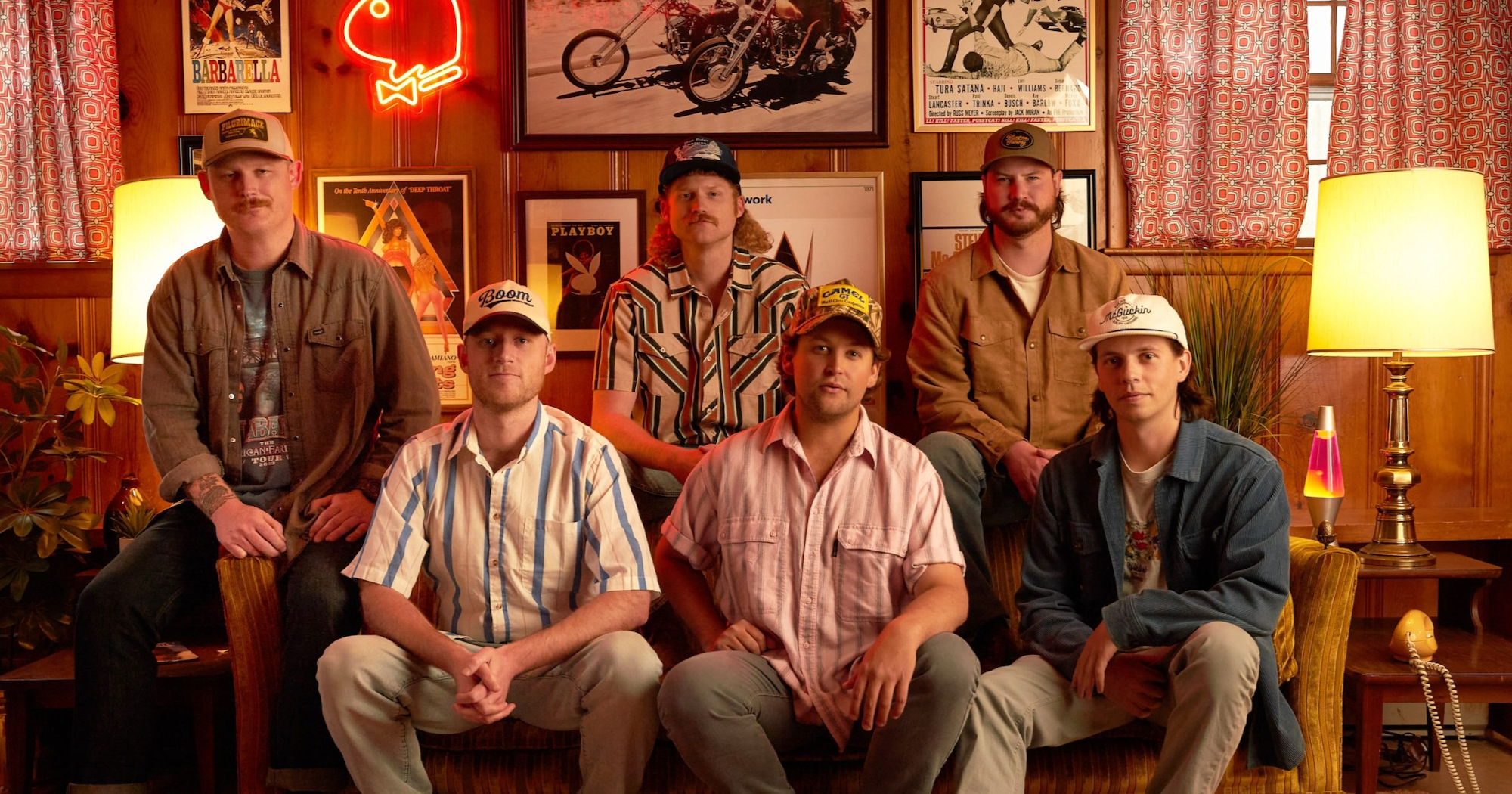
Clay Street Unit Chat Sin & Squalor and Excitement for the Future

Since their inception in 2021, Clay Street Unit has quickly risen into the national spotlight. The rollicking Americana string band is garnering the frequent tag of “must-see” by their rapidly growing fanbase.

Formed in Denver, Colorado, the sextet is unique in sight and in sound. With a foundation soaked in bluegrass, the ensemble also includes a drummer and a pedal steel player – which often kicks the act into the realms of indie folk and honky-tonk. Ultimately, this lends them to a wildin’ out scene when placed in a packed room of fans and the curious alike, something that has become commonplace as of late.

It’s at this exact juncture – of deeply held dreams and aspirations coming to fruition – that Clay Street Unit will finally release their debut album, Sin & Squalor (out February 13 via Leo33). The 11-song LP is a perfect introduction to this band of melodic pirates as they currently navigate the high seas of the music industry. The record not only captures the essence of the outfit, it’s also impressive in nature, showcasing the vibrant energy of the group’s live show via the studio.

Produced by the Infamous Stringdusters’ Chris Pandolfi, Sin & Squalor is a sonic roadmap to the here and now of where jamgrass stands in the modern era. With members of Clay Street Unit hailing from a variety of places in the U.S. (Alabama, Virginia, Colorado, Pennsylvania, Georgia, Illinois), their multilayered influences lead to traditional acoustic aspects mirrored by modern sounds. Each texture a product of the unique environments from which these musicians proudly emerged.

Catching up with mandolinist Scottie Bolin and guitarist Sam Walker, the duo spoke at length with BGS about the group’s origin, how their sound came to be, and what’s in store for Clay Street Unit. The road seems to be wide open as this troupe has created quite a buzz, coast to coast, coming into 2026.

I was kind of curious about how 2025 wrapped up for y’all.

Sam Walker: I think 2025 was probably the most important year we’ve had yet. It was a huge year for us, as far as crossing off a bunch of big local goals and national goals. We got to play Red Rocks with some of our heroes and buddies, Leftover Salmon and Kitchen Dwellers. We got to play [our] biggest hometown show in Denver at the Ogden Theatre, and had the privilege of selling that place out and playing with our good buddies, Andy Hall and Chris Pandolfi from the Stringdusters. And then, we signed our record deal [with Leo33] and got to plan the rollout for this record and finally get it released.

I would surmise last year will really be setting the pace for 2026, justifying all the blood, sweat, and tears going into this.

Scottie Bolin: Yeah, absolutely. A ton of work went into making the album and getting the songs where you wanted them to be. And finally getting to tour a bunch last year has been really rewarding, getting to play these songs to live crowds and really hitting the road hard.

You guys have had a pretty fast trajectory for five years together. And I was wondering about the background of how the band formed and the timeline of how it all came together.

SW: Our former banjo player, Jack Klein, and I met one night at a brewery in Denver, a couple blocks from Clay Street and the house I was living in at the time. I played some guitar, picked tunes all night at my house, and ended up booking a gig over at that same brewery. It all happened really organically. We weren’t really trying to start a band. It just felt like the right people, right place, right time to try to get something going. We ended up meeting our former drummer and bass player, and then everything kind of picked up steam a little bit quicker than we thought.

We were playing The Patio [at Sloan’s], then [Cervantes’] Other Side, then the [Cervantes Masterpiece] Ballroom. People kept buying tickets, listening, and supporting the music. As things grew, some people weren’t really dedicated to being lifelong musicians in the band. I ended up going on tour and playing with Colorado [jamgrass] band Morsel that our bass player [Jack Kotarba] and Scottie had started. We all became really close buddies over that tour. And things kind of naturally shifted in a different direction for some members. We all kind of crossed paths at the right time.

SB: At the end of the day, we were all just kind of playing music with various groups and side projects in Denver, playing a lot of bluegrass. And things just clicked. Everyone got along really well. The band, at its core, is a group of good friends. And it just snowballed and grew from there.

SW: I moved out here to Colorado eight or nine years ago. And we had this big 4,000-square-foot party house. There were four or five guys living in it at any given time. It was just where everyone would kind of come through and hang, and we would play music all night. It felt like a revolving door of people in there. That house was kind of where everything started.

We got the band going and rehearsed. It felt like the origin of the band. We were listening to a ton of Tony Rice at the time. I kind of came into bluegrass the long way. I didn’t grow up being a huge disciple or anything like that. But, obviously, moving out to Colorado, I got a class in bluegrass culture pretty quick. We were just obsessed with that Tony Rice record, Manzanita.

Was playing in a band something you each wanted to do or is it just the way everything unfolded?

SB: I’m from Charlottesville, Virginia. I started [playing] in college [at the University of Colorado Boulder with] Morsel. We tried to make a go of it. We did a couple tours. [But], the touring lifestyle is hard and takes full dedication from the whole group. Some of the guys [in Morsel] didn’t wanna do that. So, I stepped away from that. Luckily, right around that time, I met Sam and all the Clay Street guys.

SW: I grew up down south in Montgomery, Alabama. I kind of came into it the opposite way. I played in a Widespread Panic/Grateful Dead cover band in college and just sang. Then, I moved out to Colorado and picked up the guitar. I’d always sang and written a few songs and loved live music. But, I really kind of fell into it. It wasn’t something necessarily in my early twenties I expected to be doing for a living.

All the dominoes fell in the right places and I was around the right people that gave me a lot of confidence to push the boundaries of what I was comfortable with. Playing in some side bluegrass bands around town really helped me feel more comfortable about being a part of the Denver music scene. Everything happened step by step. I wasn’t really trying to make it a career, but a few years later, it felt like something that made sense – to take the leap and try to push it as far as we can.

Your band is a huge melting pot of sound. Is that by design or just how it all just came together?

SW: I feel like it’s a little bit of both. We definitely didn’t set out or want to be a traditional bluegrass band. Obviously, when we added the drums and pedal steel and electric bass that decision was kind of made for us. It’s kind of a melting pot of everything we listen to and the music we like.

When Scottie and I go to write a song, we don’t think, “This is a bluegrass tune,” “This is a folk tune,” “This has an indie feel.” We let the music and everybody’s kind of flavor and influence on how the song’s going to sound. We don’t really try to have those guardrails of how it needs to sound or what vibe it needs to be.

When I was listening to the album, I kept thinking how I really want to see you guys live. And I think that’s a real testament to the band, to have that kind of sound radiating out of an album that encourages you to go to the live show, which I think is probably the endgame for you.

SW: Absolutely. At the core of our band, we’re a live band. It’s where we really shine through, and you can just feel the energy up there. We always try to say, “There are only so many Thursday, Friday, Saturday nights,” and we want to elevate that and bring the energy and the emotion and let [the audience] loose – life’s too short to not go out and enjoy live music. We want to make sure at every show we’re bringing that to the table, our full attention to the energy and making sure that everyone’s having as good a time as they can.

Is there any kind of ethos behind the title of the album?

SW: It’s our origin story. [When we started], we didn’t know how to do it or if we were doing it right, and we weren’t doing it with much, just trying to put it together piece by piece. It sounds a little heavy, but it’s more about the beauty of humanity, the nature of [life] we have all been through, and it’s a commonality of everybody. It’s the nature of our music and string instrument music – music that has a little more “down in the holler” feel. It all felt aligned with what we were trying to get out for the first record.

Why was Chris Pandolfi the guy you wanted to produce this?

SB: I had the opportunity to work with Chris before with Morsel, which was a little bit more of an electric rock jam with some bluegrass elements in there. He produced a few albums for [Morsel]. So, I knew what it was like to work with him. I knew that he was just a musical genius and the right guy for setting the vibe and making sure we were comfortable in the studio.

[Chris was] coming in with great arrangement ideas for our band, specifically, and being a great mentor all-around. [Clay Street Unit] actually had the pleasure of being his wedding band this last summer, which was awesome. I feel like the Infamous Stringdusters, Greensky Bluegrass, a lot of those Colorado bands, Leftover Salmon, have really kind of set the tone of what is “allowed” in that genre and for pushing the boundaries of what people want to hear. With the Stringdusters, I’ve seen them live for 10-15 years and they’ve really made a mark on the bluegrass scene, the Colorado music scene, and definitely a big impact on us.

You’re currently hitting the five-year mark together. What does that milestone mean to you right now?

SW: The last five years have been so much of a learning curve and going through so many different stages of figuring out who we are and how we want to operate. I feel like now we’re really starting to get a grasp of what we want to do and who we want to be as musicians, as a band, and as people. The last five years were such a blessing and such a great learning experience, but I think we’re just so excited for the next five years of just pushing this thing to the limit and, and trying to, to make the best music we can and, and really just enjoy every step of it together.

SB: It just takes a long time to get a group of people on a mission aligned and I think we’re finally there. Everyone’s on the same wavelength of what we want to get done and what we want to accomplish. We’ve got a really busy year ahead of us, and it’s kind of the culmination of the last five years of hard work that’s been coming to fruition – we’re pretty excited.


Photo Credit: Lead image by Robert Chavers. Alternate image by Tobin Voggesser.

Artist of the Month: The Infamous Stringdusters

During the Infamous Stringdusters’ recent holiday gig at The Orange Peel in Asheville, North Carolina, the storied venue was packed out with jamgrass freaks, the performance itself a kickoff of sorts for the band’s 20th anniversary in 2026. I found myself standing sidestage when show opener Bronwyn Keith-Hynes came up next to me. A smile emerged on her face taking in the band and the audience.

“The Stringdusters made me want to start a band,” the GRAMMY-winning fiddler said, turning to me. “The Fork In The Road album was the most influential modern bluegrass album for me when I was at Berklee.”

Keith Hynes’ sentiment conjured numerous memories and moments I’ve been lucky enough to be a part of when it comes to the ‘Dusters. The first time I ever laid eyes and ears on them, it was the 2008 Targhee Bluegrass Festival in Alta, Wyoming. I was 23 years old and a rookie reporter for the Teton Valley News, based just down the mountain in Driggs, Idaho. By that point in my life, both personally and professionally, I was diving deep into the jamgrass world – the intersection of ancient tones, psychedelia, improvisation, and a collective love of the Grateful Dead.

The initial spark of the modern jamgrass movement was lit by Yonder Mountain String Band, Leftover Salmon, and the String Cheese Incident, all three acts coming into the national spotlight by the end of the 1990s. A musical template had been formed, and the ‘Dusters would emerge in the early 2000s to throw gasoline onto that melodic fire, ultimately becoming a missing link (alongside Greensky Bluegrass) between jamgrass originators, those ‘90s propagators, and folks currently carrying the torch into new, exciting realms: Billy Strings, Sierra Ferrell, Molly Tuttle, Sierra Hull, and more.

“That’s what’s so beautiful about bluegrass music, in particular,” Stringdusters fiddler Jeremy Garrett told me recently. “You pass it on to the next generation and they take it and they do their thing with it. Luckily for us, we were around at a time that [that] was very important, and a transitional time in the industry.”

In 2010, a couple of years after my introduction to the band at Targhee, when I returned to my native North Country of Upstate New York, I found myself covering a show at the intimate Showcase Lounge at Higher Ground in Burlington, Vermont. I was there to see the ‘Dusters once again. Their sound and energy immediately transported me back to the Rocky Mountains that I missed dearly. (Sharing the bill was another rising jamgrass act, Trampled by Turtles.)

I remember walking away from that gig feeling in awe and refreshed with a genuine feeling that something was happening. Something was on the horizon when it came to bluegrass and string band music. This wasn’t a traditional bluegrass band in matching suits, standing like statues. It was a rock show with acoustic instruments. Baseball caps and long hair, grins ear-to-ear. More provocative than standstill, more vibrant than just going through the motions of what past generations were instructed to do.

“Being able to showcase our own songs, in our own way, [our] writing skills, and making the decisions on what was chosen to play and how to play it [were] foremost for most of us at the beginning,” Garrett says. “Over time, we realized that we were actually growing a community. And after all these years, that honestly has become the most important part, the most important thing that we could possibly do.”

What I witnessed in Wyoming and Vermont years ago is what I’ve continued to experience with the Infamous Stringdusters, in person and in method, from Florida to Colorado and beyond. They set the pace then for where we stand with jamgrass right now, built on a full-throttle approach, one which remains sonically elusive as well as paying homage to the architects of bluegrass and those who broke from the pack and made something all their own.

Aside from the talents of the Stringdusters, either as individuals or the sum of their parts, you also have a unique setup. Alongside founding members, banjoist Chris Pandolfi and Dobroist Andy Hall, who emerged from the prestigious Berklee College of Music in Boston, you have the tradgrass pedigree of Garrett, who was born and raised in a traveling family bluegrass band hailing from Idaho. This fusing of road-tested grit and grace with conservatory-style techniques is at the heart of what this group does best: jam.

All of which circles back to the Asheville Orange Peel performance in late 2025. There were tightly knit melodies and freewheelin’ improvisational explorations. They broke down the invisible walls between themselves and the audience, maintaining a two-way street of momentum, energy, and inspiration from both sides of the microphone – a vortex of sound and scope, all revolving around a deep sense of community.

“The band is stronger than ever and making some of the best music we’ve ever made,” Garrett says. “But, the thing I see that is the most important being carried on is that community factor. We certainly didn’t invent that, but we took note and applied the philosophy to our scene, and hopefully the next generation realizes how important that piece is.”

Ultimately, this 20th anniversary celebration for the Infamous Stringdusters is a culmination of a tried-and-true effort to bring this hallowed music into the unknown and unfolding musical landscape of the 21st century. With their upcoming album, 20/20 (out February 13 via Ameriana Vibes) they continue their efforts to break new ground and forge ahead, together, whatever the next 20 years hold for jamgrass and the ‘Dusters.

The Infamous Stringdusters are our Artist of the Month. Below, enjoy our Essential Infamous Stringdusters playlist and stay tuned as we share brand new and archive content on the ‘Dusters throughout the month of February here on BGS – and across our social media channels. Like our exploration of their 20-year discography or our oral history of the band featuring all five members in conversation.


Photo Credit: Daniel Milchev

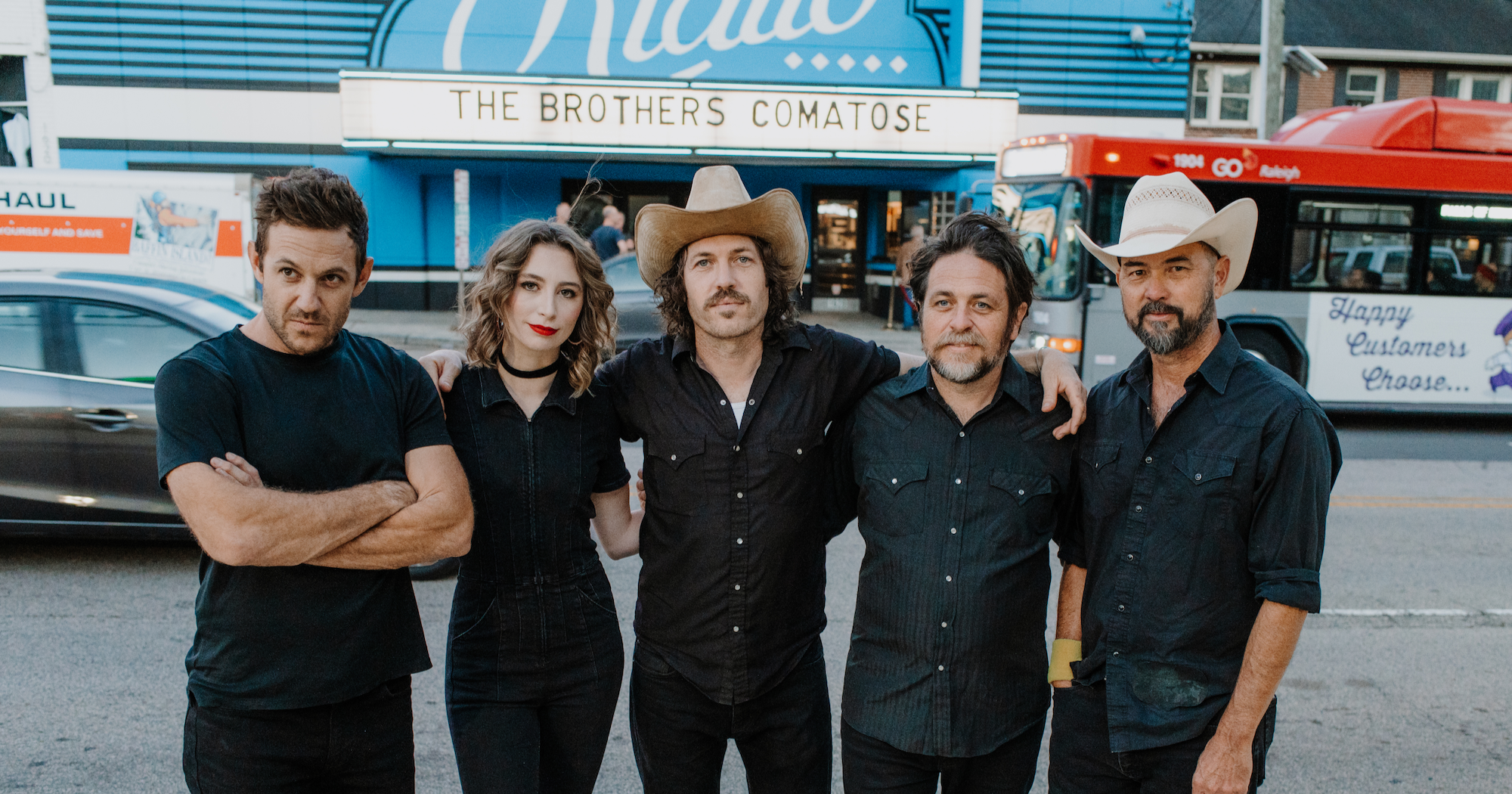
The Glittering Golden Grass of The Brothers Comatose

Bay Area five-piece The Brothers Comatose were actually founded by the brothers Morrison: that would be Ben on guitar and lead vocals and his brother Alex on banjo. The Morrisons came from a musical family and were influenced as much by classic rock as they were by country and bluegrass – their first album, Songs from the Stoop (2010), even contains a cover of The Rolling Stones’ “Dead Flowers.” Initially, the band’s lineup included bassist Steve Height, fiddler Phil Brezina, and mandolin player Greg Fleischut.

In the 15 years since, they have stayed busy both in the studio and on the road. As anyone who has seen the band’s concerts can attest, The Brothers Comatose are anything but… comatose. Their live performances are known to be high energy and often include audience participation. They have supported everyone from Gillian Welch & David Rawlings to Yonder Mountain String Band to Trampled By Turtles. In addition, the group has played festivals like Hardly Strictly Bluegrass and Outside Lands.

The Brothers Comatose returned at the end of July with their fifth studio outing, Golden Grass. The title track, which also opens the album, came from an unlikely source. “A fan started calling our sound ‘golden grass,’” explains Ben Morrison. “And the phrase just felt right.”

Golden Grass arrives three years after the band’s prior album and continues their mix of traditional bluegrass and rock. But behind the scenes, there have been some changes. The Brothers recorded Golden Grass in two separate installments with two different producers, Greg Holden and Tim Bluhm. While they were making the disc, mandolin player Greg Fleischut decided to leave the group. His replacement, Addie Levy, is the first woman in the band and, at just 23, significantly younger than her fellow members. “We always thought it would be cool to have a female voice to hit those high harmonies,” says Morrison. “Addie’s such an incredible mandolin and fiddle player, but she’s also a great singer and songwriter in her own right.”

Golden Grass is probably a bit more diverse than the band’s previous albums. Beyond being their first release to include a woman singer and mandolin player, it’s more collaborative in general. Ben wrote several songs, of course, but other tracks were penned by Levy, Brezina, and Alex Morrison. Still, Golden Grass maintains a pretty consistent sound over its 10 songs. The title track sounds like a lost Allman Brothers tune from back in the day and other highlights include lovely ballads like “Home Again” (featuring Lindsay Lou on guest vocals) and “My Friend” as well as the funny, rollicking “The IPA Song.”

I recently had the pleasure of catching up with Ben Morrison and Addie Levy for BGS.

To start with, tell me a little about the making of Golden Grass. I understand there were some changes between your last album and this one. Addie obviously is the new addition. And I guess Greg was the guy who left?

Ben Morrison: Yeah, Greg was in the band before. He left like halfway through the album. We recorded it in chunks. So we recorded half the album, we were working through the rest of the songs, and in that process, he left the band. Addie joined and recorded the second half of the album with us. But it’s funny. There are four mandolin players on [Golden Grass]. We had a couple of guest mandolin players on the album before Addie joined. Ronnie McCoury’s on there. It’s a good variety, I guess. [Laughs]

Tell me about the title track, which is also the first song on the album.

BM: That’s a good question. It started out with us trying to identify ourselves – that age-old question when you ask a musician what kind of music they play. “Well, it’s kind of hard to define. We’re jazz and pop and metal and boy band!” [Laughs] You know, it’s definitely pulling a lot from the bluegrass world. But also from a bunch of other influences.

We kept posting these things on Facebook and there’s this guy, Cyrus Clark, I believe his name is. He kept commenting about a lot of music coming from California – string band music specifically – going back to Old & In the Way. He kept saying, “Golden Grass! Brothers Comatose, Molly Tuttle, and AJ Lee.” We thought that was really cool.

I think I had just written it down in a notebook one day. And we did a cowrite – myself, our fiddle player Phil, and the guy that produced the second half of the record, Tim Bluhm. I was like, “What if we called it Golden Grass?” We started name-dropping different bands in the lyrics and kind of giving them a little shout out. We had fun with that and went with it.

“Home Again” – reading the press release, I know what inspired it. But just listening to the lyrics, I [probably] would have known anyway. For those of us on the East Coast, tell me a bit more about what [the wildfires] were like and how it affected the song.

BM: That wasn’t a personal story; it was about good friends of ours who lost their house in the Santa Cruz Mountains fires a few years back. For those of you not in California, there’s a fire season [here] where fires can just rip through and destroy communities. It’s pretty messed up and now it’s literally close to home. Some good friends of ours – all their property and their house got destroyed. I think it was during the pandemic and it hit me pretty hard. I was just really feeling for them and that song kinda came pretty quickly.

We had the song and thought about getting somebody to help sing it with us. Lindsay Lou’s been a friend for a long, long time and she’s such a great singer. We sent it to her and she was on it. It’s about a couple losing their house and building back together. So it made more sense to me as a duet.

I like the ballads on the album. Addie, I think you were the one who wrote “Blue Mountain?”

Addie Levy: I am.

Tell me a bit about the inspiration for that song.

AL: I’m from the Blue Ridge Mountains of Virginia. I grew up in Appalachia my whole life. [The mountains] have always been a very big inspiration for my writing and who I am as a person.

I was driving to work one day and was listening to the Infamous Stringdusters’ [version of the Cure’s] “Just Like Heaven” and got really inspired by having a keen lick throughout the whole song. I was like, “I need to write a song like that.” It all came to me within the drive to work. I showed it to my mom when I got home and she kind of looked at me with concern. She was like “Are you and your boyfriend okay?” I was like, “What does that have to do with the song I just played you?” I accidentally wrote the entire thing about him – which is bad ‘cause he cheats on me in the song! But he doesn’t in real life! [Laughs]

There were all these little pieces. Like, I pass his exit to work every day. He knows my Starbucks order. I painted the walls blue in his bedroom in one of our first months of dating. I pulled all these little things I didn’t mean to. Then I had to show it to him. I was like, “I am so sorry I wrote this song about you!” But when you’re in a nice, healthy relationship – I don’t have that much stuff to complain about so I can’t really write about it!

“The IPA Song” is a fun track. Anything either of you want to share with me about that?

BM: When we play shows, we like to get people onstage to help us out – you know, for sing-alongs or whatever it might be. I think we’ve had more children onstage for “The IPA Song” than any other song, which is ridiculous. But they make signs and stuff – like the IPA circled with a line through it. We had a 15-year-old last night playing mandolin with us for that song! I mean, the lyrics are goofy, but I guess it’s a catchy one. It’s been a fun song to play live.

Going back to the Bay Area music scene. In the late ‘60s, it was known for bands like The Grateful Dead, Jefferson Airplane, and the whole psychedelic thing. And in the late ‘70s, there was something of a punk scene. Even in the ‘90s, there were bands like Counting Crows that recorded in San Francisco.

What is the scene like now? And with all these different musical sounds that have come from the city, how did you settle on more of an Americana/bluegrass sound?

BM: The band got its start in 2008 in San Francisco. My brother and I were living in a house on Haight Street – right in the thick of it. Phil lived a few blocks down, so he would come over. We continued to live in the city for a long time and there was a bustling scene. With bluegrass too – like this [past] weekend was the Hardly Strictly Bluegrass Festival. I kind of credit that festival with my direct interest with this kind of music. It’s massive, three-quarters of a million people throughout the weekend. It’s all free. Huge headliners. It’s not all bluegrass but it definitely leans in that direction.

It was so cool being exposed to different kinds of music that I hadn’t really listened to before. What was also cool was watching artists play – Del McCoury, John Prine, Emmylou Harris – all these players that were older. It seemed like the older you get, the more respect you get in this world. [That] was interesting, because I felt like in the rock world there was sort of a shelf life. Like “Oh, you’re in your late 20s in a rock band? Give it up, kid.” That kind of thing. But in this world, when you’re 70, you’re doing it! That was always so cool to me.

So San Francisco does have a pretty cool scene. Probably 10 years ago, a lot of people started moving out because tech started moving in [and it became] more expensive. But I’ve heard that it’s getting cool again. I don’t hang out there as much anymore ‘cause we’re on the road a lot and I’ve got two kids. I mean, Addie probably hangs out there more than I do.

AL: Anytime I’m in town, I try to find a bluegrass gang. There’s a couple of bars [where] I’ve made some good friends. Sometimes there are jams, sometimes they’re just drinking. But there are some really cool musicians in town.

Ben, I know your brother is also in the band. Tell me what Alex brings to The Brothers Comatose that is unique.

BM: Alex has swagger beyond belief. [Laughs] Is that what you would call it?

AL: Yeah. [He’s] the most photogenic, most in the vibe of every situation.

BM: And the way he plays, too. To me, he plays banjo like Keith Richards plays guitar. You know, he’s not trying to be the Yngwie Malmsteen of the banjo or anything. He’s just trying to make it groovy, stanky, in the pocket. It’s just got such good feel to it. And also, he’s a great songwriter and singer. But a lot of his influences come from [bands like] The Rolling Stones, Led Zeppelin. We used to listen to a lot of classic rock when we were kids.

Addie, I guess I wanted to ask you what it’s like so far as the new member of the band and also the first woman. Crashing the boys’ club, as it were.

AL: My very first show with them was in Idaho. I had never met any of them, I had one phone call with them and I had never been west of Nashville! You know, I grew up traveling up and down the East Coast and never really left. I remember touching down in Sun Valley and the realization hit that I knew two people there and they were leaving the next day. And I was like, “I’m gonna get murdered. I am gonna die out here!” [Laughs] I never heard of the festival, it was in the mountains somewhere… I was like, “This is the end.”

[I was] super anxious to start. I mean, our first show was a headlining slot that Sunday. That was terrifying. But [the Brothers Comatose are] just the greatest people. They’re so welcoming. And I’m an only child. So they’re really the siblings [I never had]… They’re the best.


Photo Credits: Lead image courtesy of Burning House Management. Alternate image by Jessie McCall.

25 Years of Greensky Bluegrass Connecting the Dots

On a recent afternoon, Paul Hoffman is standing in a parking lot in Harrisburg, Pennsylvania. Lead singer/mandolinist for Greensky Bluegrass, Hoffman is pacing around the backstage lot before the gig at XL Live that evening deep in reflection about questions posed over the phone – the core of which focus on the upcoming 25th anniversary of the groundbreaking jamgrass outfit. A while back, in the depths of rural New Hampshire, I interviewed Hoffman for another project and I asked him just what the original intent was behind Greensky Bluegrass.

“To play heavy metal music on acoustic instruments,” he replied, a sly grin emerging across his face.

Now, 25 years since its inception, Greensky Bluegrass has adhered directly to Hoffman’s sentiments. These days, the group has become a marquee live act, one which uses its string instruments to transcend all genres of music, whether bluegrass or blues, rock or country, funk or soul – or even heavy metal.

Case-in-point, the ensemble’s latest album, XXV, is not only an ode to a quarter-century of passion, purpose, and performance, but also a mile marker by which Greensky Bluegrass can measure their own road to the “here and now” – this realm where the passage of time doesn’t necessarily matter, only fleeting moments onstage with the ones you love do.

XXV brings together many of those dear friends and collaborators of Greensky – Sam Bush, Billy Strings, Lindsay Lou, Nathaniel Rateliff, Aoife O’Donovan, Holly Bowling, Ivan Neville, Natalie Cressman, and Jennifer Hartswick. Each of these special guests represent chapters of the band’s continued journey to something – somewhere, anywhere – that kind and curious folks congregate in the name of fellowship, compassion, and sonic joy.

With the starting line of Greensky Bluegrass being an impromptu Halloween gig in 2000 in Kalamazoo, Michigan, other pivotal dots pop up quickly along the way. Like the inevitable camaraderie between the group and other Michigan artists like Strings and Lou, who came up in the same scene and have supported each other ever since. Or, like Sam Bush himself – Bluegrass Hall of Famer and the symbolic face of the Telluride Bluegrass Festival – being featured on the project, reminding how the Telluride stage brought Greensky Bluegrass into the national spotlight when they won its famed band contest in 2006.

For Greensky, the friendships made along the way brought endless opportunities to play alongside one another at a show, a festival, or late-night jam. Opportunities that would always be too good to pass up – don’t forget, fun is the original point, and should remain so.

XXV is also a fresh snapshot of Greensky Bluegrass. The songs are pulled from across the entire timeline of the outfit, from their early days in Kalamazoo to the mountains of Colorado. From the bright lights of Nashville to the backroads of Southern Appalachia. From the blue skies of Anytown, U.S.A., to the sandy beaches of some international destination.

After 25 years, what remains is a band of genuine souls where gratitude is only matched by hunger and curiosity for what resides just around the next corner. Greensky Bluegrass, decades later, remain ready to surprise the listener and to carry on the pure intent that emerged those many years ago.

Now that this album’s coming out, whether consciously or subconsciously, the celebration of 25 years is currently underway. What’s been kind of rolling through your mind?

Hoffman: Primarily gratitude. I’d be remiss to not be grateful that we’ve been able to [do this for 25 years]. It’s a celebration, truly. It feels so cool. We’re doing [the anniversary shows] in our hometown and playing the [Wings Event Center in Kalamazoo] for the first time, which we’ve talked about since we were a very young band. And, you know, something interesting I’ve learned is how excited people are about this retrospective project. In true Greensky fashion, it’s this unique, hybrid idea. Like, “What if we did this? What if it took this turn? What if we recorded this and revamped this?”

We didn’t just make a new record, we stopped to reflect and commemorate in a way that was meaningful to us. And it seems like it’s translating. It’s not even out yet. It’s a unique perspective on gratitude that maybe I didn’t expect. [For XXV], I don’t want to say that it was easy or something. Because we did it pretty quickly and we didn’t have to write any material and we didn’t have to make huge choices about how to present it, because there already is an arrangement and an idea. But, in some cases, we did things differently because we could and we were not beholden to some authority on how it needs to go.

[The recording process] was so casual and creative in this really innocent way – “Let’s just record this and see what happens.” And we just kept recording stuff. We didn’t even know what we were going to do next. Every moment is monumental in some way or another, but 25 years is nothing to scoff at. And this all was birthed from, “What could we do?” With making new music and new albums, there’s a pressure to create something better than we’ve ever done. Or genuine to the brand we’ve created and to ourselves, but also exploratory enough [and] a departure from the norm enough that it’s new and exciting. It feels like such a relief to do [XXV], to approach creating new material from a different perspective.

How did you decide on the guests?

I wanted to find guests that celebrate our story, that are close to us and collaborators and such, but also elevated the material in some meaningful way. And there were real pleasant surprises along the way there.

What did it mean to have Billy and Lindsay on the record, seeing as all of you emerged from the same scene in Kalamazoo and have always supported each other?

I mean, to say that it was sort of obvious and natural is probably an understatement. We joked about why we chose “Reverend,” because Billy plays it [live]. But, I also feel it’s an important song. And for me as a writer, it’s kind of a landmark in my journey as a creative. But again, even though I knew [Billy] would crush it on the guitar solo, some of the phrasing choices he makes are subtly different than mine – I love it. And, man, I can’t stress enough, what a gift [“Reverend” is]. I wrote that song almost 20 years ago. It means something different to me now, and it has throughout my life singing that song.

You’ve always been a very sonically elusive band. Was that by design or just how things evolved?

I think that we just have a spirit to not be limited. So, if we want to emulate all the things we love – and we’d love a diverse amount of things, musical things – we honor the acoustic nature of our heritage as a band, but we want so much more. We want [things] to keep us interested and engaged. We’ve allowed ourselves that creative freedom to try anything. And we think we’ve jumped the shark many times. [Laughs]

With getting older, you also start having different perspectives on what you were creating and how you want to present it.

Yeah. You know, art is timeless in some ways, because you can change your opinion about it or the way you relate to it as you mature.

When you had mentioned that you guys “jumped the shark many times,” I think that’s one of the things I appreciate about Greensky – you’re not afraid to just take a leap.

It’s one of my favorite things about musicians I admire, too, are the ones that I watch struggle to either challenge themselves, push themselves, push their boundaries, or convey a message with emotion that’s challenging, you know? If you’re willing to make a mistake, if you’re willing to truly find the line of your capacity, you have to be willing to cross it to know where it is. I’ve always said – in my later maturity – that I wonder if I’ve crossed it too many times, and in sort of a noble quest with noble intentions. [Laughs]

That’s something I love about Billy’s playing a lot. Despite being one of the greatest guitar players I’ve ever seen, I’ve watched him up there grasping for things and struggling. Struggle doesn’t always have to have a negative [connotation]. To not struggle would be complicit and boring.

The upcoming Halloween shows in Kalamazoo are the official 25th anniversary of when the stars aligned, when you, Mike [Bont], and Dave [Bruzza] played together as Greensky for the first time.

When you started asking the question, my brain went to right about now, [25 years ago]. We met [a few] weeks before Halloween. I was a college freshman and I went to this bar called the Blue Dolphin, where there was a bluegrass open mic. I saw Dave and Bont play and approached them after the thing and was like, “Hey, I just bought a mandolin,” that I’d gotten in late August before moving to college. So, I’d only had it for four or five weeks.

I didn’t know what the hell I was doing at all or what bluegrass even was. I bought the mandolin because of David Grisman, who’s so bluegrass-adjacent that I didn’t know who Bill Monroe was. I knew “Shady Grove.” [All of] which is still just a remarkable thing for me to think about. Like, what hell would my life have been had I not made that choice [to play mandolin]? What a bizarre twist of fate and then here we are 25 years later.

So, you guys met and you said, “Let’s jam”?

Yeah. A couple days later, I showed up at Bont’s house for a rehearsal. Him and Dave would just get together and pick. They were both learning bluegrass. Everything was so casual and just for fun. They would have band practices where we would get together and learn songs and stuff. And I just showed up for the next one and then didn’t go away.

What was the name of that [open mic] band?

Greensky Bluegrass. They were already playing as Greensky Bluegrass, which was named by a friend of Dave’s that played mandolin with him a little bit for fun. It was a joke in jest, “Wouldn’t it be funny to have a bluegrass band named Greensky Bluegrass?”

I don’t think I ever knew that you guys were called Greensky before the official [2000] Halloween show.

Well, I mean, what is “official” is interesting to think about. They were already [Greensky]. It wasn’t their first open mic, either. So, the first time the three of us [“officially”] played was the Halloween show. But, I think I joined them at open mics for a week or two or something [before Halloween]. And Halloween was a party. There was a poster made for fun or something. We were on the bill. Dave was in another band called Seeds & Stems. It was a house party in a house that Dave lived in. [Laughs] A pretty wild party, if I may say so.

So, it was billed as Greensky Bluegrass?

“Billed” is still kind of generous. But, yeah, we played a set in the basement and in the living room. I think the living room upstairs was just acoustic and then the jam band played downstairs in the basement, like colleges do, you know? A couple days later, we played a show at a venue in town, Club Soda in Kalamazoo, that was kind of a legendary rock club through the ‘90s and stuff. It was small, but we played there on a triple bill November 5 or something, [just] days later. And that one, I [still] have the poster. I think that was our first paid show.

Were you doing covers or did [Dave and Mike] have originals, too?

They were playing just bluegrass standards for the most part. It’s funny, that [first] night [I met] Dave, he gave me CDs – Seldom Scene, Live at The Cellar Door, a Rounder Records bluegrass compilation, and a Bill Monroe live show. And [he] was like, “Listen to these. See you on Tuesday at Bont’s house.”

In hindsight, man, to be 18 and have that kind of freedom, you know what I mean? I’ve been recently jamming on electric guitar at my house by myself for fun. And I’ve been thinking, “I wonder if I could find some dads around to start a band with for just fun.” And that experience is so foreign to me now, because I’m so immersed in this thing that’s become my life.

Looking back on it, you kind of jumped into the deep end pretty quickly.

I didn’t take a mandolin lesson until COVID. [Laughs] I was self-taught, because I already knew how to play the guitar – “knew how to,” I use that a little loosely, too. Took some [music theory] classes in high school and college and I’m sort of classically trained. But, I was able to teach myself my own instrument for a really long time. I should have sooner harnessed the strength of learning from another, because when I took a lesson during COVID from a friend, I was like, “I should’ve done this a lot sooner.” [Laughs]

You know, so much of what I was learning in those early days was how to express myself as a writer and find my voice. That stuff always superseded my need for technical prowess. I think we all kind of share that sentiment, all five of us – how to present this passion piece is more important than how to do it. We took on this every-other-week gig and stuff like that [in Kalamazoo]. And the commitment to go play shows for the same crowd every other week inspired us to grow, because we needed to. We had that jam band sensibility of satiating the fans. What can we do next week that’ll keep people excited? What can we do that’s new? How can we make this better?

When you look back, you can see where the dots connect. But, when it’s happening in real time, you don’t realize what the domino effect is, where all of a sudden you’ve found yourself in this band that you’re still in 25 years later.

Yeah. I was 18 [when we started the band]. I’ve lived with Dave and Bont for 25 years of my life. I didn’t even live with my parents that long. [Laughs] I’ve spent 200+ days of [every] year of my life with those two guys for 25 years, and the other ones for many years, as well. It’s kind of wild. It’s so cool that we created this project, [which has become] just a celebration of our relationship and that’s so much more important than what it has become. We care about each other and we genuinely have a lot of aligned goals, artistically and personally. We’re still grinding for it, and I’m grateful for what we have.

I think we’ve been very successful. I feel less “grinding” now and more, “Let’s just go and have some fun and play some shows.” Play where people want us to play and not measure our success by how many tickets we sell. And I’m starting to learn that more now. It took 25 years for me to figure out that what we have is great. We’ve got something cool, let’s just keep doing it.

And that’s got to be a nice place to get to, because you don’t get to 25 years by accident. The fact the original three members are still there is amazing, because that story is not that common in the grand scheme of things in this industry.

Even in our culture. It’s not even [common] in business partnerships, families, friendships. And the reality of that – that I’m learning with age – is that relationships change and everything shouldn’t be measured by the testament of time. I want to find value in a moment that is for the sake of “now” and not some transactional [thing]. Like, if I’m nice to you “now,” then we’ll have this friendship that serves us both and we’ll be there for each other. All that kind of stuff is great, but I want to live in the moment.

I think what’s remarkable is that we’ve stayed together, because we’ve all grown and changed in similar ways and our journeys have aligned the whole time, or for the most of the time. We’ve veered away from each other and back to each other many times. But, when one of us has wanted something different, we’ve all kind of shared that desire. In a way, we’ve been able to all be very sincere to ourselves and grow and change together.

I don’t mean to speculate what other bands are like or anything like that, but I don’t have a lot of relationships in my life that have lasted this long. And not just people, but to things like food or activities I enjoy. The only thing maybe is the way I’ve worn my hair for 30 years. [Laughs] When we grow, our tastes change for all things. But, my [creative, intrinsic] tastes for these four other men have not changed.


Continue to explore our Artist of the Month content on Greensky Bluegrass here.

Photo Credit: Dylan Langille

Artist of the Month:
Greensky Bluegrass

Michigan music isn’t just Motown or the MC5, Bob Seger or (ugh) Kid Rock. While it’s seldom mentioned as a modern bluegrass hotbed, the Wolverine State has become an unlikely 21st century hub of the latter-day bluegrass offshoot jamgrass. And at the center of this upland strain of music is where you’ll find Greensky Bluegrass, a quintet that is our Artist of the Month for October.

The roots of jamgrass go back to the 1970s, when New Grass Revival took inspiration from the bluegrass adjacency of the Grateful Dead and other proto-Americana rock acts, injecting rock and roll overtones into their music. It was also during this period that Dead guitarist Jerry Garcia went back to his original folkie roots with 1975’s Old & In the Way, a super-session album that would stand as the top-selling bluegrass LP of all time until O Brother, Where Art Thou? a quarter-century later.

Fast-forward to the 1980s, when New Grass Revival banjo maestro Béla Fleck went in some truly idiosyncratic and worldly directions with his new group The Flecktones. Then came the 1990s-vintage H.O.R.D.E. Festival and a generation of bands like String Cheese Incident, Leftover Salmon, and Phish that further obliterated whatever boundary remained between bluegrass and rock.

That set the stage for Greensky Bluegrass, whose emergence in 2000 cued up another chapter of combining traditional bluegrass with rock-band theatrics (to the point of even including a bitchin’ onstage light show). Greensky originally formed as a trio of mandolinist/frontman Paul Hoffman, guitarist Dave Bruzza and banjo player Michael Arlen Bont, convening in the fall of 2000 after meeting at an open-mic show in Kalamazoo, Michigan.

Greensky had plenty of traditionalist bona fides, covering classic bluegrass pantheon cuts by the likes of Stanley Brothers, Charlie Poole, and Bill Monroe. But they’d cover the likes of Pink Floyd, Bruce Springsteen, Prince, Talking Heads, and (yes) the Grateful Dead, too. That has continued over the years as their lineup expanded to a quintet with the addition of resonator guitarist Anders Beck and bassist Michael Devol. As an indicator of their eclectic tendencies, one of the studio producers Greensky has worked with is Steve Berlin (who handled 2016’s Shouted, Written Down & Quoted), best-known as saxophonist of the acclaimed Latino rock band Los Lobos.

One big milestone of Greensky’s first decade came at Telluride, the storied annual bluegrass festival in Colorado, where they won the band contest in 2006. They’ve steadily built themselves up as a live draw playing bigger venues, becoming a major presence at Red Rocks, the Colorado amphitheater that is the high church of jamgrass. This September, Greensky played the 20th headlining show of their career at Red Rocks.

As they progressed, Greensky provided an inspirational example for younger acts following in their wake, most notably a young guitarist from their home state of Michigan. Born William Apostol in 1992 in the college town of Lansing, he adopted the stage name Billy Strings as a teenager. Greensky was well-established by then and served as Strings’ mentors, collaborating frequently and giving him a choice opening-act slot on a 2018 tour. Strings has gone on to become a worldwide arena-level star, something like the jamgrass genre’s Nirvana equivalent to Greensky’s Sonic Youth.

Fittingly, Strings is one of the cameo guests appearing on the new Greensky album, XXV, which marks the group’s 25-year anniversary with all kinds of star power. Nine of the album’s 13 tracks feature guest appearances from some of the top names in the field.

Sam Bush, a co-founder of the previously mentioned jamgrass pioneers New Grass Revival, opens the first track “Can’t Stop Now” with one of his trademark lightning-speed mandolin runs. Americana stars Nathaniel Rateliff and Aoife O’Donovan turn up to provide lead vocals on a couple of songs. Other tracks feature String Cheese Incident drummer Jason Hann, New Orleans scion Ivan Neville and, from Trey Anastasio Band’s horn section, trumpeter Jennifer Hartswick and trombonist Natalie Cressman. Among the guests with Michigan ties are Phil Lesh & Friends pianist Holly Bowling and, from the Great Lakes State supergroup Sweet Water Warblers, vocalist Lindsay Lou.

Greensky has always been more than willing to expand tunes out to epic, near-galactic dimensions, and XXV has more than enough sprawling solos to satisfy the pickiest of jamgrass fans. Most notable is the 14-plus minutes of “Last Winter in the Copper Country,” on which Bowling’s rippling piano takes center-stage. Bowling also stars on “Windshield,” a longtime Greensky favorite that appeared on the band’s 2014 album If Sorrows Swim in an arrangement of just her piano and Hoffman’s powerful bellow – the closest thing to operatic bluegrass this side of The Hillbenders’ bluegrass take on The Who’s Tommy. That’s only one of the songs from throughout the Greensky discography that they reprise in (sometimes drastically) rearranged form for XXV.

In anticipation of the new album’s release date, which is set for Halloween, check out our Essential Greensky Bluegrass playlist below. Plenty of further Greensky content is also on the way, including a feature interview with the group and plenty of excellent picks from the archives, as well. Follow along all month here on BGS and on our social media pages as we celebrate Greensky Bluegrass as our Artist of the Month.


Photo Credit: Dylan Langille

Daniel Donato Has Many Horizons in Sight, Literal and Metaphorical

Although names like Billy Strings and Sturgill Simpson currently corner the market at the intersection of country, jam bands, and bluegrass, rising star Daniel Donato has emerged in recent years with an out-of-this-world sound – and his newest project may be his best yet.

On Horizons (which released in August) the prodigy who as a child honed his skills on Guitar Hero and Nashville’s Lower Broadway turns a new page with an 11-song, hour-long compilation that brings his live and studio sounds together with drawn-out jams conjured up by his longtime bandmates from Cosmic Country – a moniker that describes both the group’s sonic and spiritual ethos.

“I want there to be a Cosmic Country sound where you can hear it right away, you can hear the first eight bars of any song and say, ‘That’s it!'” says Donato.

“Some of it is technical, like using the same microphones and the same studio as the last record. And some of it’s just in the way we approach it – and that’s something we get better at every time.”

Sitting on the back of his month-old tour bus affectionately referred to as “The Snowman” prior to a recent show in Lexington, Kentucky, Donato spoke to BGS about his Lower Broadway roots, creative freedom and restraints, and the catalysts for Cosmic Country.

We already touched upon your similarities with Billy Strings, but what about your parents’ influence – I know they played a big role in your musical foundation as well?

Daniel Donato: Everything when I was younger came from my parents. My father had a certain disposition for great rock and roll music like Pink Floyd, Stevie Ray Vaughan, and Led Zeppelin. But to be honest, I really don’t know where all of it comes from, because if you and I listen to a record we’re both going to hear it in different ways. For that reason I think a lot of this just comes from something that’s already dwelling within us and we’re just expressing from within that place.

For example, when I first heard Marty Robbins, I loved all the great guitar on it. And when I heard the Grateful Dead play “Big River” and make it eight minutes long in a really artistic and authentic way, I love that too. They’re all influences, but they start externally and creep inside you to the point that you take them with you everywhere you go and create from that place of soul, which is a combination of the body, the mind and the spirit.

Ever since I started playing guitar, I’ve always felt like I sounded like me and that “me” is constantly changing and revealing itself more and more. It’s like what Bob Dylan said – “I contain multitudes” – and it’s true. There are multitudes of self that just keep getting revealed through this authentic expression.

Was there a specific moment that served as the catalyst for you picking up the guitar and pursuing a career in music?

There have been many, but arguably the biggest was when I first saw the Don Kelley Band at Robert’s Western World and was in a state of shock – I’m getting goosebumps just thinking about it. That moment of hearing them and seeing how they interacted was amazing and was a big motivator in me wanting to do that too. It was a call to adventure and a reminder to believe I’m capable of anything, which is what ties all of these moments together.

That is not a self-assertive belief, that is a belief grounded in an authentic desire to make something beautiful so I can be of service. It was a big turning point in my life when I first started conceptualizing and receiving that, because then you can give it and then it turns into the cosmic circle of all things.

Some might perceive it as arrogance, but I think there’s a lot to be said for having the confidence to know what you’re doing is worthwhile and constantly chipping away to get better and reach your goals, whether that’s in a musical sense or wherever else life takes you.

I had already tried other forms of expression in my life before it, like sports. I also tried skateboarding and really loved video games like RuneScape, World of Warcraft, and chess. Even so, there were so many things I was bad at and I didn’t have beliefs that I could do them. But with music and the guitar, I could intuitively feel the potential I had with it and immediately locked in.

Artistry nowadays is parasocial on a lot of levels because of this immense amount of connectivity that we have on the various social platforms. [They] make it so anyone can get into the business of needing the world to give them permission to say something or express something real, when in reality the world does not need to give you permission for any of that. I’m not saying you should participate in any of the unspeakable, ungodly things we see happening to humans around the world, but if you want to express something artistically and you feel it’s true to you, then why should you need to get someone else’s approval to do that?

That idea to the mind is [like a] letter to the Pony Express – it needs to be delivered and it needs us to exist in flesh so we can externalize these internal values and expressions. It doesn’t need other people, it needs you, but at the same time it does bring people together – it’s so strange. It’s the thing that comes from most within an individual, but it’s also the thing that is the most unifying to an external community. It’s this weird “as above, so below” reflection that is purely righteous, so as I get older I feel I have more grace in relation to that particular part of existence.

The communal element seems to be a huge driving force behind not only your live show and fans, but this new record as well. Whereas some artists opt for a more straightforward studio approach, what made you want to emulate the energy from a gig on Horizons?

Cosmic Country records, to me, are like movies. The most enduring elements of certain movies that I love are the really long ones that have a very dynamic and rich storyline with a lot of drama and comedy in an attempt to scale the human experience. Like in A Fistful of Dollars, Django Unchained, or The Hateful Eight. The art is asking a lot of you during these three hour-long films, but it’ll give you a lot, too. There’s reciprocity there and our community is always willing to take the trip, which is equal parts liberating and terrifying. [Laughs]

If you were asked to write the score for a film, what would you want it to look like?

It would have to be a very truthful opportunity for me. I have always wanted to do that, even when I was really young. I always wondered where music and movies came from. But for now, we put out our records, and we play a lot of shows.

Speaking of the new album, you’ve been playing most of the songs on it live for a while now. What kept you from holding some or all of these songs back until the project’s official release, which it seems more and more singers are doing nowadays?

I like to look at our music as living music. It’s liberating in potential, but it’s also liberating because it gives you a framework to operate and create within. Every day of your life is different, so why wouldn’t the music that accommodates your life every day be different? These new songs are no different than a young child – they do better when they get to go out and be around people so they can grow spiritually.

That’s why it’s also important to share stories that everyone knows, which is why we incorporate a lot of covers into our shows and even recorded a volume called Cosmic Country & Western Songs in 2021. It gives people context and I love doing that. My favorite part of playing at Robert’s was we only played covers all those years so I’ve always loved making other’s songs my own – because if a song is good enough, you can play it with an original feeling.

But with Horizons every song I had my hand to the pen, even “Hangman’s Reel” – a traditional Celtic fiddle tune that the band and I fit into the Cosmic Country framework.

You’ve mentioned Robert’s Western World a couple times now. A couple weeks ago you returned there after making your headlining debut at the Ryman. What was that like?

We’ve done what’s never been done down on Broadway – going from cutting your teeth on the street corners and at places like Robert’s to topping a bill at the Ryman. It’s a common storyline for folks in Nashville to get their starts down here. Some go on to become songwriters, others become singers on stage and some become session musicians, but it all starts down on Broadway.

What I learned down there led me to getting in the door at Robert’s and leaving my blood and sweat on that floor there – like a dojo – before carrying us all the way to the Ryman. It was incredible getting to do a full headlining set up there and then going back home to where it all began at Robert’s and doing another set of music for their fans. We’re actually planning to release both soon as live recordings, so stay tuned!

With Horizons you placed parameters on how many times you’d go back to record and work on each song. With how open-ended so much of your creative process seems to be, what made you opt to place constraints there?

If your personality has a disposition for conscientiousness and open mindedness, it becomes that individual’s responsibility to see the trends of that because it can help optimize the way you engage with human relationships when creating projects. When we went and did Reflector we spent a lot of time on things we didn’t need to because I didn’t know better at the time.

When it came time to record Horizons I knew we could take half the amount of time to make it because we play it every night and shouldn’t need a bunch of tries to get it right. So I decided we’d just aim for three takes of a song to be more efficient. There’s a liberating faith that comes with knowing that’s good enough. If you know you have seven chances, you’re probably going to take seven – but we’re trying to work to ensure it only takes one.

You were talking earlier about creating living music, and stuff like this seems like it helps to keep what you do in the studio just as fresh as what you’re doing out on the road.

They’re two very different things. One’s a picture of a person and the other one’s a person. A picture can do a lot, but it’s not that person, especially when it comes to thinking about a picture of someone that you love who is no longer alive. Even then it’s not the same as them being in the room with you again to hug you.

For instance, I know that there will be a day where I have a gig and I won’t be able to call my dad to debrief – that’s gonna be a tough one. So the live thing is almost like a conveyor belt trying to make it an exact replica of what’s going on on the albums. There are people I see do that and I really respect how they do it because it’s authentic to them, but it was never for me.

How did your approach to bringing Horizons to life differ from how you tackled Reflector and other projects previously?

We had two years of intense experience constantly working on these songs between albums. It made me a different person on some level because I had a better idea of what to aim for and what not to aim that really allowed us to hit the bullseye this time compared to Reflector. And I’ll probably be saying the same thing again when the next record comes around, which will be a lot different than Horizons.

You just alluded to going a different direction with your next album. Someone else known for that who I know has heavily impacted your musical trajectory is Sturgill Simpson. How’d you get sent down the rabbit hole of his music?

Man, I remember when Sturgill Simpson worked at the Turnip Truck in the Gulch in Nashville, I would always see him there and thought nothing of it until one night when I was at The 5 Spot and heard him on stage singing for the first time. Then when Metamodern Sounds In Country Music came out I was in my friend Harrison’s basement. We had gone to Grimey’s to buy the record, we smoked some weed, turned it on, and listened with headphones on. It was and still is a defining moment in my listening experience of music – that record is so special.

Looking back I can see why Sturgill wanted to make a bunch of 180s, because from SOUND & FURY to Sailor’s Guide each album is its own thing. Most successful artists have one signature piece of work, like Tyler Childers’ Purgatory, Chris Stapleton’s Traveller, Tom Petty’s Wildflowers, the Grateful Dead’s Workingman’s Dead, or Neil Young’s Harvest. Unless you’re someone like Bob Dylan or Willie Nelson where you have over 100 albums out. There’s usually one record where you’re like, “that’s the one.” With cosmic country we don’t have that album yet, but I think Horizons could be it.

What has the process of bringing Horizons to life taught you about yourself?

The concept of a Horizons is two-fold. There’s a literal, geographical, physical, material horizon where the land meets the heavens. Then there’s the metaphorical one, and we’re always pushing the cosmic country horizon. But there’s also a psychological horizon where you’re meeting your potential that the sky is symbolic of.

As Alan Watts would say, “there’s a dance to those things,” and I feel that since we put out Horizons that the band and I are on the verge of new horizons. It truly is the dawn of a new day.


Photo Credit: Jason Stoltzfus

You Gotta Hear This: New Music From Jade Jackson, Wyatt Ellis, and More

Bidding farewell to May already? It seems impossible, but somehow we’ve quickly reached our final collection of premieres and new music for the month. You Gotta Hear This!

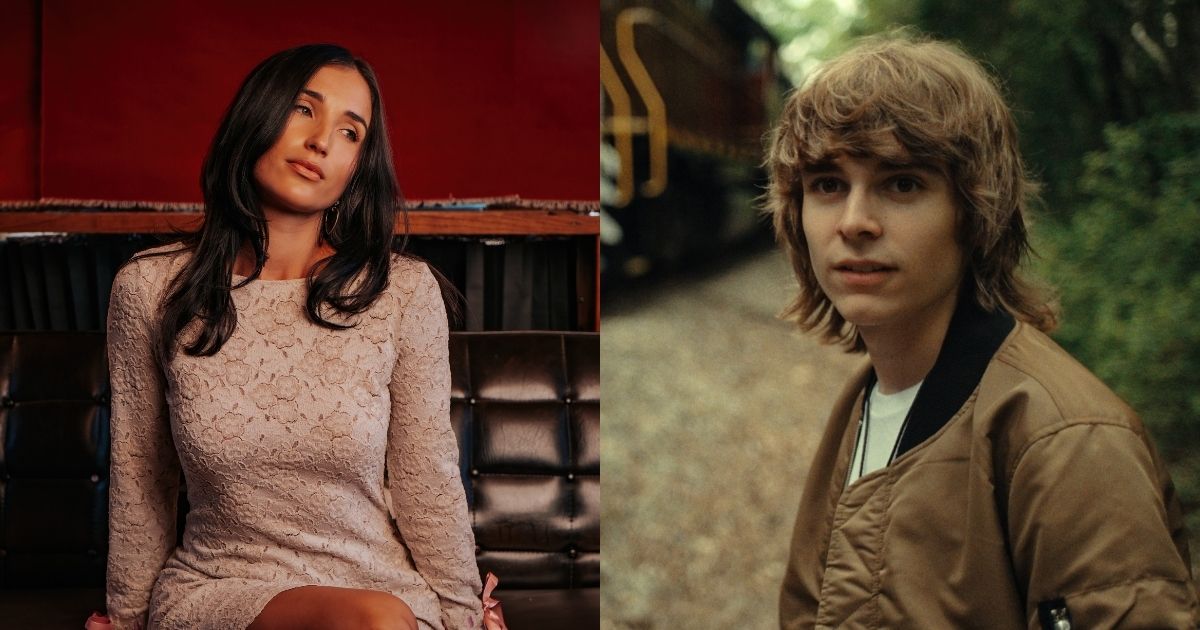
We’ve got bluegrass to get you moving this week, with North Carolina’s Balsam Range kicking us off with a dark and gritty story song of a shipwreck and the sea, “The Pacific,” their latest single dropping today. Then, prodigious young mandolinist Wyatt Ellis takes us from ocean to land with a classic, “Choo Choo Coming.” We’re sharing the brand new video for Ellis’ hit track.

There’s plenty more bluegrass to be enjoyed, too. Caroline Owens has just dropped a new music video for her March-released single, “You’ve Still Got It,” a song about the tight hold love can have on one’s heart and soul that highlights Owens’ bright, sparkling vocals. Plus, Kansas-based group MoonShroom take us into raucous, lovable jamgrass territory with “Somewhere On A Mountain” set to a fun and trippy lyric video. Exile – whether externally or self-imposed – sure can be enjoyable with the right soundtrack and a gorgeous view.

Don’t miss Maygen & the Birdwatcher included below, as well. Their brand new single, “Feel Good,” was released yesterday and will remind you of well executed country-string band-grass from artists like the Chicks, Darrell Scott, or Hailey Whitters. You’ll be feelin’ good, for sure.

For an alt-folk, indie-Americana counterpoint, singer-songwriter Jade Jackson shares “Pretending” in recognition of the conclusion of Mental Health Awareness Month. Brooding, vibey, and ravishing, Jackson’s beautiful voice cuts through the dark and stirring bed of sounds and synths before being joined by a broad, pocketed country-tinged back beat.

We hope you enjoy this week’s assemblage of excellent new music. You Gotta Hear This:

Balsam Range, “The Pacific”

Artist: Balsam Range
Hometown: Haywood County, North Carolina
Song: “The Pacific”
Release Date: May 30, 2025

In Their Words: “This song has everything I like. A great story, great melody and chord progressions, and a great delivery by Caleb and Don. Just a great song. It’s kind of a bluegrass version of ‘The Wreck of the Edmund Fitzgerald.’ This was a song that just seemed to musically fit everybody in the band all at once. Caleb especially has a real gift for a delivery on a song like this. The depth of story was really appealing, too – you could almost make a movie out of it.” – Tim Surrett

Track Credits:
Caleb Smith – Acoustic guitar, lead vocal
Tim Surrett – Bass, harmony vocal
Marc Pruett – Banjo
Don Rigsby – Fiddle, harmony vocal
Alan Bibey – Mandolin


Wyatt Ellis, “Choo Choo Coming”

Artist: Wyatt Ellis
Hometown: Maryville, Tennessee
Song: “Choo Choo Coming”
Release Date: May 16, 2025
Label: Knee High Records

In Their Words: “‘Choo Choo Coming’ was one of the first songs my band and I started playing together and it’s always had a certain kind of electricity to it – it just moves. We’ve played it live so many times, including during our first Grand Ole Opry band performance, and it never fails to light up the stage. It’s one of those songs Keith Whitley and Ralph Stanley used to tear into and I’ve always loved how raw and driving their versions was. That sound – gritty, tight, and right in the pocket – is what we’ve worked hard to capture as a band. When we sing together, I like to think we land somewhere between a freight train and a church choir barreling through the mountains. This single really shows who we are: young, rooted in tradition, but not afraid to push the tempo and let it roar. I’m proud of how far we’ve come and excited for folks to finally hear my band’s first recording. It’s the sound of where we started – and where we’re headed.” – Wyatt Ellis

Video Credits: Directed, filmed, and edited by Joseph Cash.
Styled by Bonny Mary Green.
Shot at the Tennessee Valley Railway, Hiwassee, Tennessee.


Jade Jackson, “Pretending”

Artist: Jade Jackson
Hometown: Santa Margarita, California
Song: “Pretending”
Release Date: May 30, 2025
Label: Jackson Star Records (Independent)

In Their Words: “‘Pretending’ was written during a season when I was going through the motions, but felt completely lost inside. It was meant for a record that never came out and, for a long time, I thought it might never be heard. I’m sharing it now, for Mental Health Awareness Month, in hopes it reaches someone who needs to feel less alone in what they’re carrying. Releasing it now feels like closing a chapter, so I can fully step into the new music I’ve been creating.” – Jade Jackson


Maygen & the Birdwatcher, “Feel Good”

Artist: Maygen & The Birdwatcher
Hometown: Minneapolis, Minnesota
Song: “Feel Good”
Release Date: May 29, 2025
Label: Yellow House Music Collective/Missing Piece Records

In Their Words: “Although we’re just now coming out with the studio recording of the song, ‘Feel Good’ is one that we’ve played live for a while now. It’s definitely one of my very favorite parts of our set, because it gets me right into the moment on the stage where it always ‘feels good’ to be.” – Maygen Lacey, vocals, acoustic guitar

“I’m really satisfied with how both Jesse’s mandolin and my banjo part line up/dance around Maygen’s vocal delivery throughout the song, especially on the line ‘mama’s cookin’ in the kitchen.’ Also props to Noah for the tasteful major 2 chord in the chorus. Chef’s kiss.” – Nik Pellinen, banjo

“I’d agree with what Nik said on ‘Feel Good.’ It’s really impressive how each instrument has a unique part yet still all feel like they’re pulling in the same direction! Also love that we got to include a little of our drummer Peter’s infectious laugh in the intro.” – Noah Neumann, acoustic guitar, background vocals

“To me, the song ‘Feel Good’ represents a lot in a Maygen & The Birdwatcher set, because it truly highlights the optimistic and empowering nature of the band in one single moment. It was an honor to be a part of capturing that feeling for the studio recording with such a stellar cast and crew.” – Joe Barron, bass

“I love the bluegrass feel in the chorus. I grew up listening to and playing bluegrass, so this makes the music along with the lyrics feel like home for me.” – Jesse Moravec, mandolin


MoonShroom, “Somewhere On A Mountain”

Artist: MoonShroom
Hometown: Kansas City, Kansas
Song: “Somewhere On a Mountain”
Album: Take a Trip
Release Date: May 30, 2025 (single); June 27, 2025 (album)

In Their Words: “No matter what walk of life you are in, everybody is on a journey of their own. The path to success is not always linear and, for most people, the road to where you want to be is riddled with hurdles, adversity, and setbacks. Sometimes you pour your heart and your soul into something, only to watch it crumble in an instant.

“I wrote ‘Somewhere On A Mountain’ amidst a past musical project of mine falling apart during the COVID pandemic. We had hit the road hard for five years building, only for it to end abruptly due to several factors out of our control. I felt like I had been climbing for years trying to reach an unknown peak, only to have the whole mountain give out from under me. Although it was unfortunate that the project had to come to an end, I realized that it was just a stepping stone leading to where I was headed. I learned a lot touring with my past band, but it was a lesson that sometimes your expectations are subverted and you have to rebuild.

“Ultimately, the universe had a weird way of shaking up my life in order to make way for the new. Now, I couldn’t be happier with the music we are creating with MoonShroom, and the progress we are making. I’m still somewhere on a mountain, just in it for the view.” – Jake Keegan

Track Credits:
Jake Keegan – Vocals, Dobro, songwriting
Lily B Moonflower – Harmony vocals, acoustic guitar
Colby Allen Walter – Harmony vocals, mandolin
Zach Bozeman – Upright bass
Staś Heaney – Fiddle
Nate Deel – Drums


Caroline Owens, “You’ve Still Got It”

Artist: Caroline Owens
Hometown: Denton, North Carolina
Song: “You’ve Still Got It”
Release Date: March 7, 2025
Label: Billy Blue Records

In Their Words: “‘You’ve Still Got It!’ This song, this video, this moment – what a true labor of love.

“I’m completely overjoyed and filled with gratitude for the support this song has received from the bluegrass community, and I’m so incredibly thankful for the help from our team at Billy Blue Records.

“From sunrise to sunset, every single detail of this video just fell right into place, and we can’t wait to share it with the world.” – Caroline Owens


Photo Credit: Jade Jackson by Lauren Farrah; Wyatt Ellis by Joseph Cash.

You Gotta Hear This: New Music From EZRA, Lonesome River Band, and More

Okay, we say it every week, but really– You Gotta Hear This! Our weekly premiere and new music roundup includes bluegrass, the blues, Americana, indie, bebop influences, and so much more.

LA’s American Mile kick us off with a music video for “Waiting on a Sunday,” which is equal parts roots rock and alt country – into Tom Petty vibes? This one’s for you! The song was inspired by a mundane gas station encounter on a silent pandemic Sunday. Singer-songwriter Meir Levine also launches “I Wish It Was Over,” an indie rock-tinged Americana track with poppy textures that considers closure, moving on, and looking ahead.

Unfortunately, two of our string bands below have the blues this week! EZRA, a talented new acoustic quartet with bluegrass roots and a stacked roster of pickers, bring us a performance video for “Basically a Blues,” where they turn a typical 12-bar blues progression inside out and upside down with acrobatic, virtuosic picking. Plus, Lonesome River Band’s new single, “Blues,” is an Adam Wright-written song featuring Rod Riley on Telecaster. That track is from their upcoming project, Telegrass, and we’re receiving the message loud and clear.

Singer-songwriter Mac Cornish covers Danny O’Keefe’s “The Road” with a deliciously retro, twangy ’70s sound that’s appropriately melancholic and full of life, too. Elsewhere in our roundup, you’ll hear Julia Sanders, who’s also inhabiting grief, sadness, and nostalgia in a video for her new single, “Star Stickers,” during which her listeners will certainly be able to picture glow-in-the-dark decorations stuck haphazardly to their childhood ceilings.

Make sure to scroll all the way to the bottom, though, as you won’t want to miss “Foxology” from Tokyo’s Thompson the Fox, an exciting newgrass quartet with an uncommon lineup: banjo, bass, drums, and xylophone. It’s fantastic music, bebop and jazz influences leading to sonic surprises around every twist and turn of the original melody. When this one arrived in our inboxes, we were immediately charmed and entranced. You will be, too.

It’s all right here on BGS and, simply– You Gotta Hear This!

American Mile, “Waiting on a Sunday”

Artist: American Mile
Hometown: Los Angeles, California
Song: “Waiting on a Sunday”
Album: American Dream
Release Date: May 2, 2025 (single); June 6, 2025 (album)

In Their Words: “When I was writing ‘Waiting on a Sunday,’ I was on a couch in Vermont. It was silent and my thoughts were the only thing around. It was 2020, in the middle of the pandemic, and I walked to the gas station up the street, ’cause nothing was coming to me in that silence. There was a lady at the gas pump trying to wrestle her kids into the car and pump gas at the same time. I thought I recognized her from high school, so I helped her pump her gas while she dealt with her kids. She told me a little bit about her life and the struggles of being a single mom; she was heading to church that morning. It all kind of flooded into my mind at that point and I wrote most of the lyrics that day. I thought to myself, ‘We’re all in a way waiting for a Sunday,’ whatever that means to us.” – Eugene Rice


Mac Cornish, “The Road”

Artist: Mac Cornish
Hometown: Nashville, Tennessee
Song: “The Road”
Release Date: May 1, 2025

In Their Words: “‘The Road’ by Danny O’Keefe has been one of my favorite songs for years, because of Danny’s melancholic but beautiful lyrics about life on the road. Danny’s writing in general has always been important to me, but as time has passed and I’ve toured more, this song keeps resonating with me more. I started covering it with my backing band about a year ago and it quickly became a staple in our set and a favorite of our audiences. This past December we went into the studio and recorded the whole thing to tape, really trying to emulate the early ’70s sounds of this song, but also give our own spin on it. Our two acoustic guitars lay as the foundation for our version of the song. The bass and drums drive the song forward, but never distract from the delicate Travis picking. The pedal steel weeps through the whole song, emphasizing certain lyrics and complementing the vocal melody. I’m proud of my take on this ’70s classic and am excited to add my name to the list of artists who have covered this song.” – Mac Cornish

Track Credits:
Mac Cornish – Acoustic guitar, vocals
Bailey Warren – Acoustic guitar, backing vocals
Trevor Stellflug – Pedal steel
Jacob Miller – Bass
Hunter Maxson – Drums


EZRA, “Basically a Blues”

Artist: EZRA
Hometown: Oberlin, Ohio
Song: “Basically a Blues”
Album: Froggy’s Demise
Release Date: May 9, 2025
Label: Adhyâropa Records

In Their Words: “‘Basically a Blues’ takes the standard chords used in a 12-bar blues and flips them upside down. All the well-known bluesy harmonies become diminished when doing this, and I found the sound to be fairly intriguing. I especially love the solos and trades that Max [Allard] and Jake [Jolliff] take over this quirky tune and have to give major kudos to Craig [Butterfield] who burns constant 8th notes for the duration.” – Jesse Jones, guitar

Track Credits:
Jacob Jolliff – Mandolin
Max Allard – Banjo
Jesse Jones – Guitar, composer
Craig Butterfield – Double bass


Meir Levine, “I Wish It Was Over”

Artist: Meir Levine
Hometown: Upstate & Brooklyn, New York
Song: “I Wish It Was Over”
Album: Long & Lonely Highway
Release Date: June 6, 2025
Label: First City Artists

In Their Words: “‘I Wish It Was Over’ came in one of those exceedingly rare moments, where I woke up one morning and the song was already fully formed in my head. The song covers a pretty simple message I think, about the things that we can’t seem to let go of, that we seek out just to feel something – even if it’s bad or harmful to us.” – Meir Levine

Track Credits:
Meir Levine – Songwriter, vocals, guitars
Andrew Freedman – Producer, piano, keyboards
Will Graefe – Electric guitars, acoustic guitars
Jeremy McDonald – Bass
Mike Robinson – Pedal steel, guitars
Jordan Rose – Drums


Lonesome River Band, “Blues”

Artist: Lonesome River Band
Hometown: Floyd, Virginia
Song: “Blues”
Release Date: May 2, 2025
Label: Mountain Home Music Company

In Their Words: “We’ve all had the ‘Blues’ in our lives, but this Adam Wright song sees the ‘Blues’ in a whole different light. It’s a lighthearted break from the sad songs – one that we have a ton of fun with. Featuring our good friend Rod Riley on the Telecaster, it comes from our upcoming Telegrass project.” – Sammy Shelor

Track Credits:
Sammy Shelor – Banjo, harmony vocal
Jesse Smathers – Acoustic guitar, harmony vocal
Mike Hartgrove – Fiddle
Adam Miller – Mandolin, lead vocal
Kameron Keller – Upright bass
Rod Riley – Electric guitar


Julia Sanders, “Star Stickers”

Artist: Julia Sanders
Hometown: Asheville, North Carolina
Song: “Star Stickers”
Album: Dark Matter
Release Date: May 16, 2025

In Their Words: “Usually my songwriting process is the same. I start with a melody and then lyrics start to unfold as the idea of the song becomes more distilled. With this one, the chorus came lyrics, melody, and all, as I was laying in bed getting my daughter to sleep one night. I had been asking myself, ‘What am I avoiding writing about?’ and maybe more than any other theme, was my challenging and painful relationship with my own mother. My mother struggled with mental health her whole life and in her own pain, she hurt those around her. Just before I started working on this album, she was diagnosed with ALS. Her physical decline was very quick and heartbreaking. The grief was heavy, complicated, and messy. Lying in my daughter’s bed that night, watching the yellow-green glow of star stickers on the ceiling, I felt like I was time-traveling – to my own childhood bedroom, needing my mother to be different than she could be, then back to this room, trying hard to be a different kind of mother for my own children, and then to the future, where nothing is known except that none of this lasts.” – Julia Sanders

Track Credits:
Julia Sanders – Vocals, songwriter
John James Tourville – Guitar
Steve Earnest – Baritone guitar
Landon George – Bass
Bryce Alberghini – Drums

Video Credit: Ashlyn McKibben


Thompson the Fox, “Foxology”

Artist: Thompson the Fox
Hometown: Tokyo, Japan
Song: “Foxology”
Album: The Fox In Tiger’s Clothing, vol. 1: FOX
Release Date: May 3, 2025
Label: Prefab Records

In Their Words: “We’re a Tokyo-based instrumental quartet with a unique lineup – xylophone, banjo, bass, and drums. Each member comes from a different musical background: Rie Koyama (xylophone) from classical music, Tomohito Yoshijima (drums) from jazz, and Akihide Teshima (bass) and I (banjo) from bluegrass.

“Writing tunes for such an unconventional instrumentation always feels like an experiment. I’ve long had the idea that the rapid melodic lines and complex syncopation of bebop would suit the xylophone and banjo. So I wrote this tune with strong influences from Charlie Parker – which is why I named it ‘Foxology.’

“It was a lot of fun coming up with the A section melody that can be played in melodic style on the banjo, so is the B section featuring a double-stop chromatic scale played on the xylophone with four mallets. We hope you enjoy our new album!” – Takumi Kodera, banjo

Track Credits:
Rie Koyama – Xylophone
Takumi Kodera – Banjo, composer
Akihide Teshima – Bass
Tomohito Yoshijima – Drums


Photo Credit: EZRA by Tanya Rosen-Jones; Lonesome River Band by Sandlin Gaither.

The Lil Smokies’ Matthew “Rev” Reiger on Slowing Down for Their New Album, ‘Break Of The Tide’

They may be called The Lil Smokies, but the bluegrass bangers birthed by the band originating from Big Sky country are anything but small.

Formed in the late 2000s when the group’s current sole remaining original member, Andy Dunnigan, began bringing his Dobro to picking parties during his college days in Missoula, Montana, the Smokies have gone on to become one of the West’s most captivating modern-day string bands, as they release their fourth studio album, Break Of The Tide.

Out April 4, the album is the Smokies’ first since 2021’s critically acclaimed Tornillo and features new band members, bassist Jean Luc Davis and banjoist Sam Armstrong-Zickefoose, for the first time. They’re joined by the core of Dunnigan, fiddler Jake Simpson, and guitarist “Rev” Matthew Reiger. According to Reiger, who joined the Smokies in 2015, his nickname stems from a life changing trip to California’s High Sierra Festival in 2007, where he earned the label for his love of the Stanley Brothers and gospel music. When he later joined the band, the name stuck, due to him sharing first names with their banjo player at the time, Matt Cornette.

“High Sierra changed the whole course of my life,” Reiger tells BGS. “It was at that festival that I made the decision to drop out of music school, grow out a band, get a band and most importantly, set out on a path to create a life where I really enjoyed the music I played instead of the academic pursuits. We made it back to the festival 10 years later to play it for the first time in 2017, so it’ll always have a special place in my heart.”

Ahead of the release of Break Of The Tide we caught up with Reiger to talk about the four-year process of bringing the album to life, recording in Texas, and the band’s separate lives while not together on the road.

What’s it been like for you, first joining an already well-established band and then welcoming two new members into the fold in recent years now with plenty of experience with the Smokies under your belt?

Matthew Reiger: It was a fast moving train when I jumped into the band. I had a decent place in Seattle at the time that I sublet to abandon everything I had and jump aboard. At the time we played and moved a lot faster. It was an incredible ride at the beginning and has been the whole way through, but what I love is the steady progression from runaway train to a rowboat on a gentle pond, which musically is more of where we’re at right now. This new record is as honest as anything we’ve ever recorded. Most of the songs were slowed down a bit, which is a good metaphor for how we are as people now.

Right now is about as introspective and pensive a time that I’ve ever experienced. A lot of people are making changes and finding a new path forward after COVID and the instability that ensued. For example, I recently started practicing with a metronome, not trying to play faster, but rather to see how slowly I could play a song. I want to see just how slow and deliberate I can play the song of my life. When you do that you find some challenging points where it’s not all bouncy, happy, and driving forward. The stillness is sometimes unnerving, but I’m happy we’re going through it on this record.

In that regard, [producer] Robert Ellis played a big role in slowing things down, especially on my songs. The way he heard the songs was perhaps even more honest than I heard them. It was quite a display of skill and artfulness on his behalf.

This was the second album in a row you’ve gone to Texas to record, following 2021’s Tornillo with Bill Reynolds at Sonic Ranch. What made y’all want to head back there to record with Robert at Niles City Sound this go around?

It was all for Robert. I’d fly anywhere in the world for the opportunity to work with him. He likes to produce the records he works on in Texas and I don’t blame him. We also recognized the impact of using a familiar place and equipment to a producer. On Break Of The Tide I probably played four guitars and there were a couple more involved beyond that. I think there’s a special alignment between instruments and the places where they live – they’re all there for a reason. It could be a big deal or seemingly innocuous, but there’s a reason they’re in that space and I think you can create some really cool things in those environments. That really came through on this record.

As we mentioned previously, Break Of The Tide is the Smokies’ first record since 2021. Was that four-year gap intentional and a byproduct of what you said earlier about slowing down, or is it due to something entirely different?

COVID, the resulting instabilities, and the band’s general desire to slow down were all factors, but if I had to pick a standout factor it’d be all the uncertainty within the touring music world. Just finding the time, money, and other resources necessary to continue doing that in the midst of a global shakeup was on our minds. It has taken every bit of determination and willpower I can muster – and I’m sure the rest of the guys would agree, too – to keep playing and stay together as a group. Adding an album to that was too much for us for several years and once you summon the courage to go do that you have the arduous process of working through the business side of things and everything that goes into making a record that’s non-musical.

You just touched on some of the struggles and the grind of being a touring musician, especially these last few years. Are those things y’all are singing about on songs like “Lately” and “Keep Me Down” from this new record?

You’re spot-on. I don’t think there’s any way to explain how challenging it is to juggle one’s personal life and touring. It is something I didn’t understand until I did it. The size and shape of the pieces you have to make the puzzle are always changing. It takes a radical toll on who you are at home, even when you’re not touring. You have this recovery period, you have this social adjustment, you have this relationship adjustment, and it’s sort of like you’re always jumping onto or off of a moving treadmill. Going on tour is like jumping on the moving treadmill since you often stumble because everything’s moving so fast, but then when you return home you have to slow down that uncomfortable pace and hop off the treadmill, which feels weird at first even though you’re hopping back onto stable ground since you’re so conditioned to running at full speed. Because of that there’s a lot of picking yourself up each time you go on tour and each time you come home, which is something both those songs touch on.

Similar to what we just talked about with “Lately” and “Keep Me Down,” it seems like “Break Of The Tide” and “Bad News Babe” are sister songs about being there for people you love while also knowing when to cut them off. Your thoughts?

I love the term “sister songs!” Like we talked earlier, touring takes a huge toll on personal relationships. I’ve said before that my first marriage isn’t to the Smokies or touring, but to music in general. It’s my first partner and has been for a long time. It takes a very special person to be in a relationship with someone who already has a partner, though it’s all very trendy in the coastal areas. [Laughs]

“Break Of The Tide” in particular is a song about feeling powerless, which is one of the biggest struggles we can face, and how it’s difficult to help those you love and even harder to walk away and recognize you can’t save them when those situations arise. Sometimes you just have to walk away to protect everyone involved, including yourself, which is oftentimes easier said than done.

We’ve been talking about the sacrifices of being a touring musician, but I’m also curious about your sacrifices within the band, particularly the miles between y’all being spread out in Seattle, Montana, Oklahoma, and Colorado. How has that affected how you operate together as a group?

It certainly makes it harder to get together and practice. [Laughs] I live just west of Seattle on Vashon Island, which is a 24-mile existence with a lot of retired folks. Everything’s a little slower than you expect and there’s a lot of hippie stuff going on – like I have a shower in my backyard. It’s super rural with a lot of farms, but it’s also just outside Seattle. Driving my car there is a little tricky, because I have to hop on a boat, but there’s ways to cross on a ferry and get to the city in 45 minutes to an hour. You have to put in some work to get there, which is what I love not only about this island, but the band as well.

It’s important for us all to feel like ourselves when we’re not on tour, because it’s a lot of costume-wearing when we are out on the road. Having that separation makes it easier to go back out on tour with more energy once it’s time to throw the costumes back on and jump in the van with a bunch of crazies for a while.

From the title of this record, Break Of The Tide, to songs like “Sycamore Dreams,” nature’s influence can be heard throughout the project. How would you say the outdoors informs The Smokies’ sound?

In some ways I think you could argue that nature is the only muse. There’s something so powerful about the ocean that I love. It’s the biggest thing in the world and connects nearly every point in it. In order to write in the way that I want to I have to be able to feel small and insignificant, and there’s nothing quite like an ocean to remind us just how small we all are and to be grateful for that. Because of that I’ve written very few songs that didn’t mention water.

What has music, specifically the process of bringing this new record to life, taught you about yourself?

I’ve spent most of my life trying to write music, but something that I’ve come to see – especially these past few years and what I hear on this record – is that the best art is not so much written, it is captured, and in order to do that you have to practice your listening. Writing and working on things is great, but in the end you have to turn off the metronome, stop thinking and just listen. That’s where you’ll find the beauty in every facet of life, not just in music.


Photo Credit: Glenn Ross