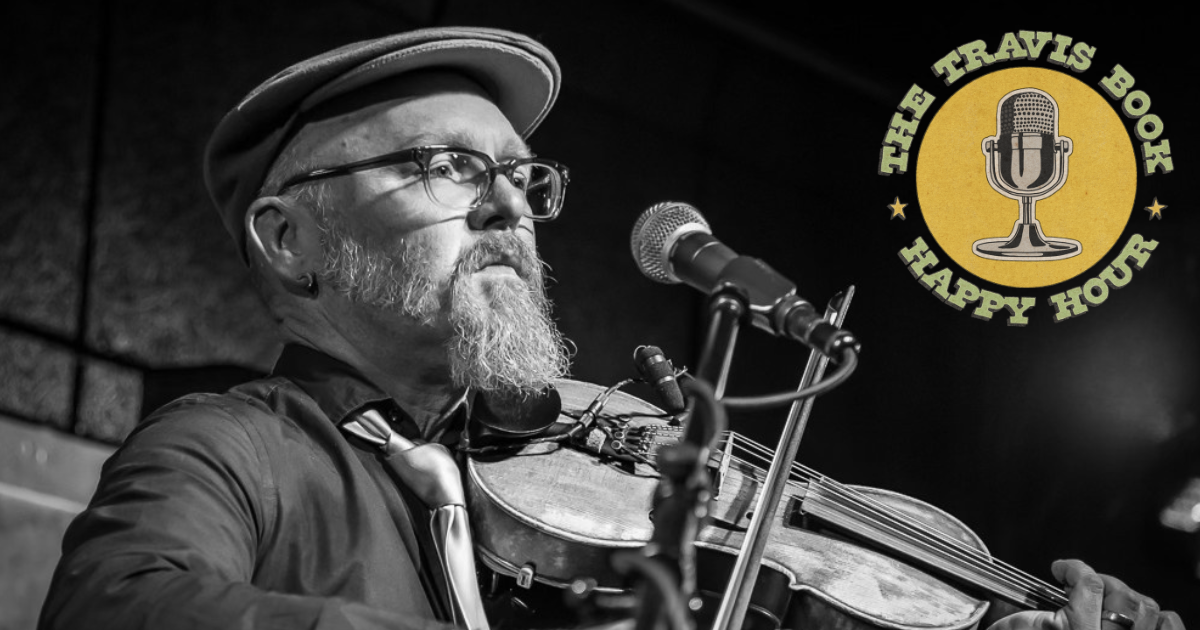
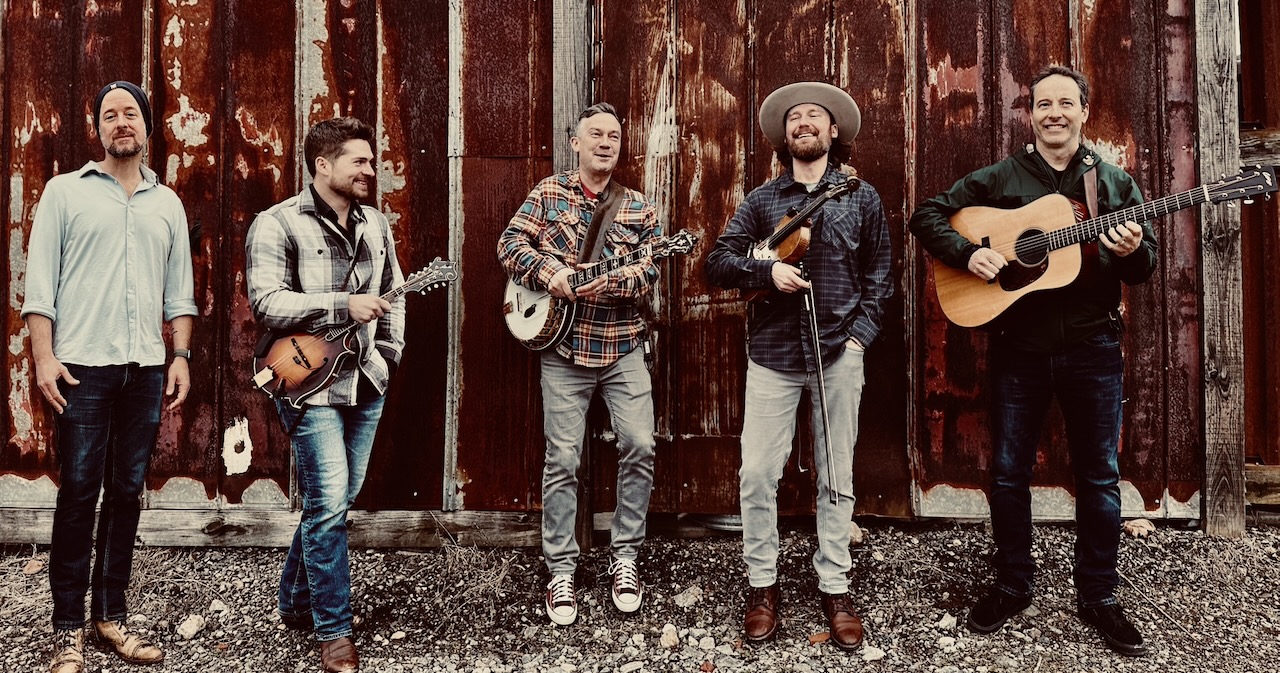
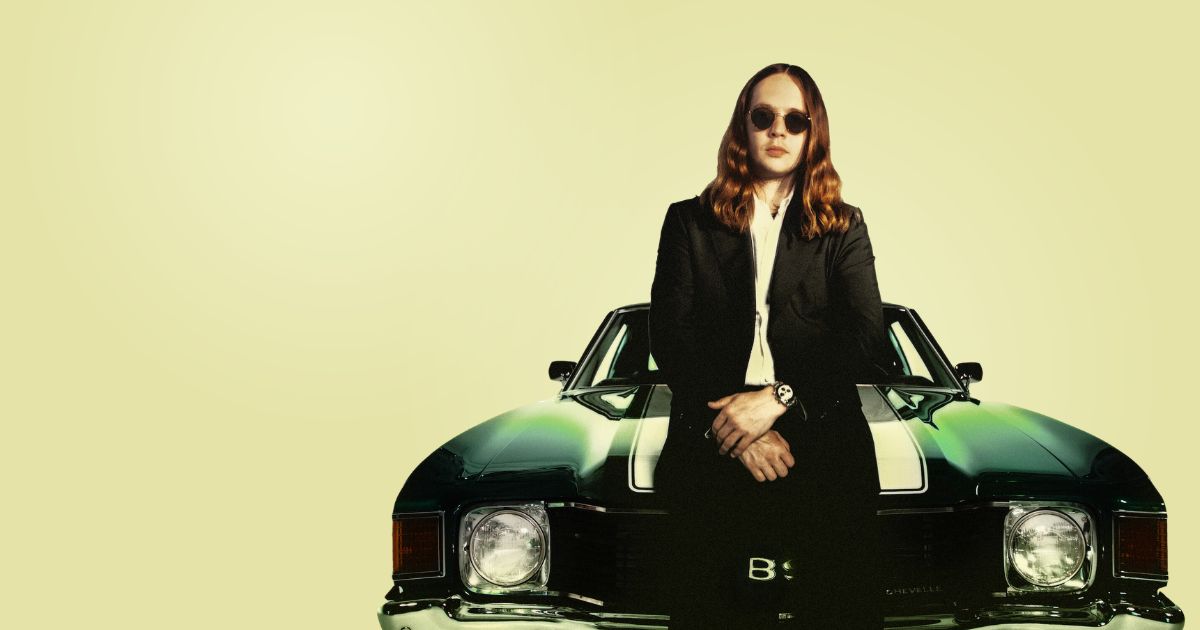
Casey Driessen is simply one of the most inventive fiddlers on planet earth. I first saw him perform in his trademark red shoes with Tim O’Brien and have had the honor of performing with him in Woody Platt’s backing ensemble, The Bluegrass Gentlemen.
Casey is friendly and open-minded, but I get the sense he doesn’t suffer fools and I was admittedly a little intimidated going into this session. I knew that I’d be stretched musically and I really was. However, he and River cultivated a musical situation where presence and attention were all that was needed. We shared an unforgettable night of music that reminded me what Tuesday’s at 185 King Street are all about.
This episode was recorded live at 185 King Street in Brevard, North Carolina, on December 3, 2024.
Photo Credit: Ken Voltz
Editor’s Note: The Travis Book Happy Hour is hosted by Travis Book of the GRAMMY Award-winning band, The Infamous Stringdusters. The show’s focus is musical collaboration and conversation around matters of being. The podcast includes highlights from Travis’s interviews and music from each live show recorded in Brevard, North Carolina.
The Travis Book Happy Hour is brought to you by Thompson Guitars and is presented by Americana Vibes and The Bluegrass Situation as part of the BGS Podcast Network. You can find the Travis Book Happy Hour on Instagram and Facebook and online at thetravisbookhappyhour.com.
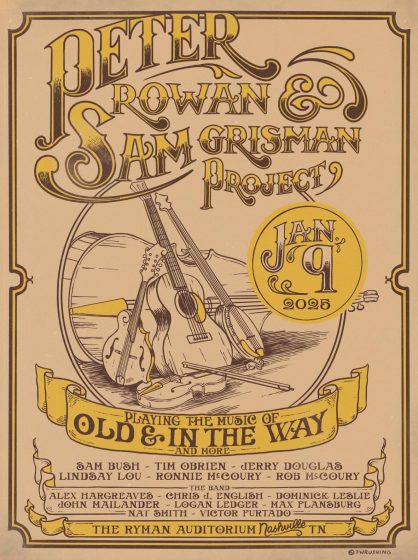
On January 9, 2025, there will be a special performance – more so a once-in-a-lifetime celebration – of the groundbreaking music of Old & In the Way at Nashville’s famed Ryman Auditorium.
Led by the “Bluegrass Buddha” himself, Peter Rowan, the legendary singer-songwriter and founding member of the group will be backed by the Sam Grisman Project. The gathering will also feature a murderers’ row of talent: Sam Bush, Tim O’Brien, Lindsay Lou, Ronnie & Rob McCoury, and more.
“In bluegrass, you just do the beautiful grace of presenting the music, being good neighbors and all that stuff,” Rowan told BGS in an exclusive 2022 interview. “But you could hear us in the band going, ‘go, man, go.’ Go for it, that’s where we came from. That’s what Old & In the Way was – the ‘go for it’ signal to everybody.”
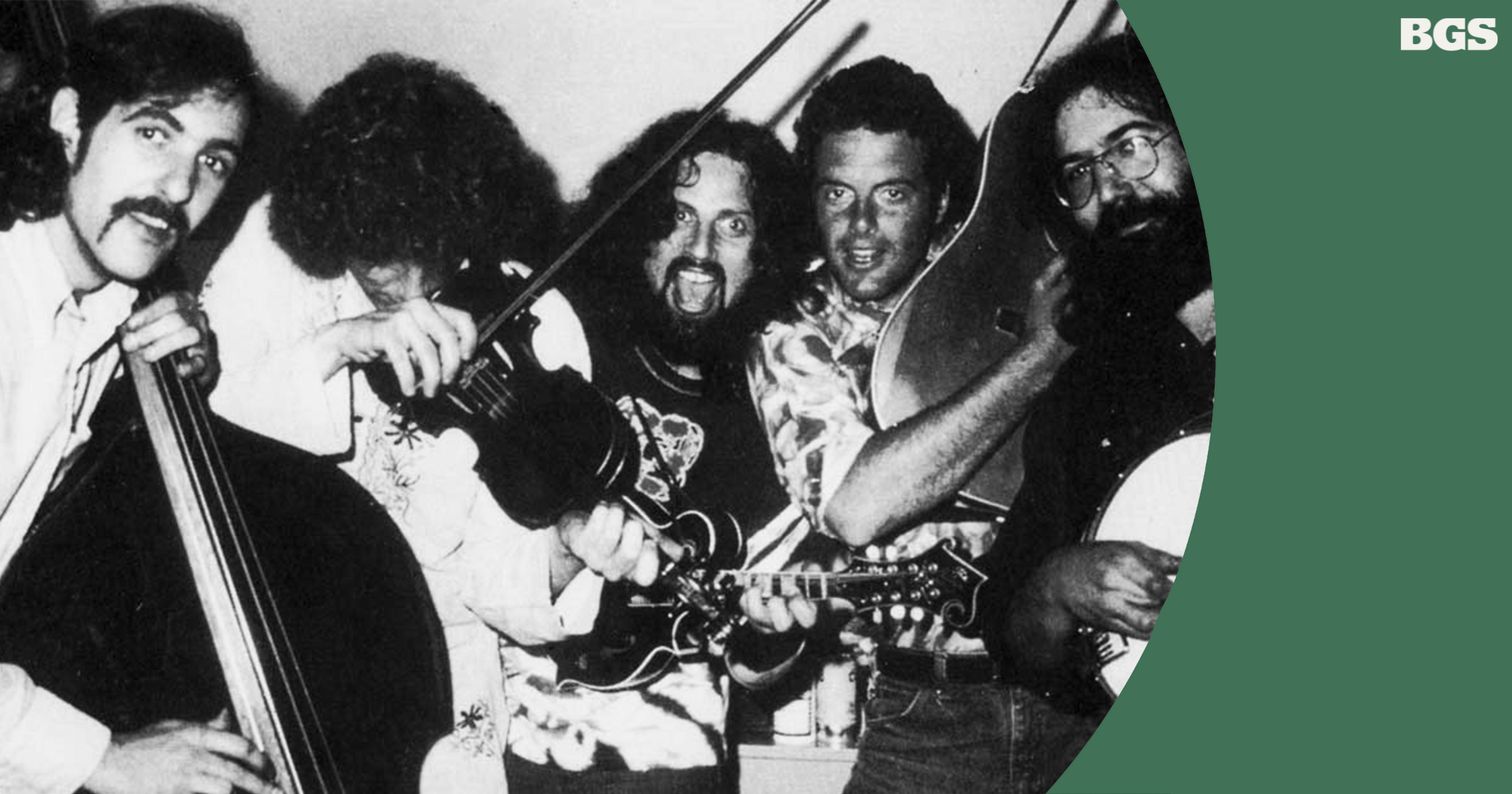
To preface, Old & In the Way started as impromptu pickin’-n-grinnin’ sessions in the early 1970s between Rowan, his longtime friend, mandolin guru David Grisman, and Jerry Garcia, iconic guitarist for the Grateful Dead, who reached for his trusty banjo during the gatherings at Garcia’s home in Stinson Beach, California.
“We started picking every night after supper [at Jerry’s],” Rowan remembers. “We went through old song books and learned a bunch of material.”
At the time, Garcia was searching for new avenues of creative exploration, seeing as the Dead were in the midst of taking a much-needed hiatus after years of relentless touring and recording. He was also, perhaps subconsciously, trying to tap back into his roots before the Dead, this landscape of the late 1950s/early 1960s where Garcia was heavily involved in the San Francisco Bay Area folk scene.
“And you realized that Jerry was an intergalactic traveler, just dropping in on the Earth scene for a little while, but he was totally at home,” Rowan says of Garcia’s restless penchant and lifelong thirst for acoustic music.
When Old & In the Way formed in 1973, the trio recruited bassist John Kahn, as well as a revolving cast of fiddlers (Richard Greene, John Hartford, Vassar Clements). Sporadic gigs were booked around the Bay Area, with the vibe of the whole affair casual in nature – the ethos one of camaraderie and collaboration, but without expectations or boundaries.
“I remember singing the ending of ‘Land of the Navajo’ at the first rehearsal and I looked over at Jerry,” Rowan recalls. “He kept nodding his head like, ‘go.’ It was like Jack Kerouac at Allen Ginsberg’s poetry reading at City Lights Bookstore – ‘go, man, go.’ Encouragement, encouragement.”
By 1974, Old & In the Way simply vanished into the cosmic ether, but not before capturing a handful of live performances that have become melodic sacred texts of a crucial crossroads for acoustic music. To note, Old & In the Way’s 1975 self-titled debut album went on to become the bestselling bluegrass album of all-time – until it was dethroned by the O Brother, Where Art Thou? soundtrack released in 2000.
As it stands today, Rowan, now 82 years old, is the only remaining member of Old & In the Way still actively performing. Garcia, Clements, Kahn, and Hartford have all sadly passed on, with the elder Grisman and Greene retired from touring. Grisman’s son, standup bassist Sam Grisman, is now carrying his father’s bright torch.
And although the tenure of the Old & In the Way was short-lived, the ripple effects of the band’s ongoing influence and enduring legacy remains as vibrant and vital as it was those many years ago, when a handful of shaggy music freaks kicked off a jam that will perpetuate for eternity.
In preparation for the upcoming Old & In the Way showcase at the Ryman on January 9, BGS recently spoke with Sam Grisman, who talked at-length not only about his continued work with Peter Rowan and the intricacies of Jerry Garcia, but also why a band Grisman’s father started over a half-century ago still captivates the hearts and minds of music lovers the world over.
You were five years old when Jerry Garcia passed away. You were really young, but do you remember anything that you hold onto?
Sam Grisman: Yeah, I have a very vivid memory of what our house felt like, smelled like, and just what the energy was like when Jerry was around. And I remember that sort of ease, just the way that he made people feel. It seemed like my parents were at ease when he was around.
And he probably felt at ease being around them. It was probably a safe haven at that house.
Definitely. And, you know, my parents smoked weed in the house. But, my mom was pretty strict about cigarettes. [She] wouldn’t let anybody smoke cigarettes in the house. But, when Jerry was around, he smoked cigarettes in the house. So, part of this smell in my blurry five-year-old memory is the smell of cigarettes. And Jerry would sometimes wear a leather jacket, maybe the smell of leather.
I remember the sound of his laugh. I remember all that music, and some of it I remember so vividly that I just know that part of that memory is reinforced by being there as a little toddler when they were working up [music]. Because they would often work on tunes upstairs in the living room and then take them down to the studio, put them on the mics and pull them.
You just wanted to be around it all and soak it all in.
I was a really curious kid.
With the Ryman show coming up, there’s been a lot of celebration of Old & In the Way as of late, especially with you touring with Peter Rowan and the current Jerry Garcia exhibit at the Bluegrass Hall of Fame & Museum. You’ve been around those songs your whole life. But, when you think about the context of Old & In the Way, and what you’re doing at the Ryman, what really sticks out with why that was such a special time in not only bluegrass, but in the lives of those people?
I mean, what a lightning-in-the-bottle chapter of all those people’s lives, you know? I think 1973, ’73/’74, was a particularly fertile time for Jerry. He was playing a full schedule with the Dead. He had Jerry Garcia Band stuff. He was playing in Old & In the Way. He was playing pedal steel with the New Riders of the Purple Sage. It seemed like he really had an itch to go back to where his roots were, especially when you look at [the Grateful Dead album] Workingman’s Dead [that was released a] couple years prior.
For all of us, who are looking back on it 50 years in the future, it seems like this momentous, heady time that was just meant to be. But, for those guys in the moment, it was just total serendipity. And the quintessence of just going with the flow – Stinson Beach, California, vibes. They just kind of stumbled into this reality.
“Y’all wanna play?” “Sure, why not.”
Yeah, where it would just be really fun to have this bluegrass band that they didn’t take super seriously, which I think really comes across in the recordings, you know? Because there’s all this joy in that music that might not necessarily have been there if those guys were taking it super seriously or if they needed it to pay their bills. It was a very interesting circumstance.
And for them to call their hero Vassar Clements into the mix, on a sort of whim because Peter found his number on a card in his wallet. It was sort of like a fantasy camp for these guys. Like a bunch of hippies sitting around on the beach, smoking a joint, thinking: “Wouldn’t it be great if we had the world’s greatest fiddle player just show up?” “I bet you we could book a gig.” “Hey Jerry, you got these legions of people following you around, you could probably get us a gig, right?”
And that’s kind of how it happened. Those gigs were so magical, because they happened mostly for all of these Deadheads in Marin [County, California], for like 16 months or something.
So, if you really had your finger on the pulse of it and you were going to the Keystone [music club in Berkeley, California], to see [the Jerry Garcia Band] and you loved what the Dead were doing, you knew that they were going to take this time off, but you just saw Jerry the week before and he never took his guitar off. He just finished the [Jerry Garcia Band] set and walked backstage with his guitar on and was smoking a cigarette, and then you saw him 30 minutes later talking to somebody off the side of stage, still had his guitar on — you’re thinking, “Gee, this guy’s not going to stop playing music this year, so I better keep my eyes peeled for what’s next.” And they played all these little gigs mostly around the Bay Area — they kind of captured some lightning in a bottle.
With playing these Old & In the Way melodies not only throughout your life, but also extensively nowadays with Peter Rowan, what’s been your biggest takeaway on what makes those songs and the ethos/history behind them so special to you? What about in terms of musicality, technique, and approach?
It’s hard to articulate how special it is to be exploring these beloved songs that mean so much to so many folks, myself included, with Peter and a cast of some of my best friends and favorite musicians. It’s a catalog that’s got a lot of depth.
Old & In the Way would play anything from songs by bluegrass heroes like Bill Monroe, The Stanley Brothers, Reno & Smiley, and Jim & Jesse to Vassar [Clements], Jerry [Garcia], and my pop’s instrumentals, to the tunes that Peter was writing at the time, which are some of my absolute favorite songs ever written.
Songs like “Midnight Moonlight,” “High Lonesome Sound,” and “Panama Red.” Playing these tunes with Uncle Peter makes me feel connected to the times he spent with David and Jerry in Stinson Beach in the early ’70s.
I grew up in Mill Valley and loved going to Stinson Beach with my friends, so I have a pretty vivid image in my mind’s eye. They played tunes, hung out, relaxed, took in the sea breeze, smoked a bunch of great weed, and developed a highly individuated “West Coast” approach to playing and singing this bluegrass music that they all loved and respected so much.
And then, they called one of my bass heroes, John Kahn, and their fiddle hero, the inimitable Vassar Clements and gave the world about one glorious year – I think around 50 shows – of a rare and lovable breed of bluegrass.
So much of everyone’s personality comes through in the music, and you can hear their camaraderie in the recordings. I guess my biggest take away from getting to play this music with Peter is how important it is to bring your own approach to these timeless songs that we love, while still honoring what it is that makes us love them in the first place.
You’ve known Peter Rowan since you were born. But, what has this latest endeavor together meant to you, to play the Old & In the Way catalog to not only lifelong fans, but also a whole new generation of acoustic music fans and bluegrass freaks?
It means the world to me to get to spend some time out on the road sharing space and time in service of this music with Uncle Peter. Getting to meet all of these folks who care so much about this music and feeling their appreciation and gratitude for Pete has been truly special.
There are so many people from so many different ages and different walks of life for whom this music has been the soundtrack to many fond memories, and I’m honored to be one of them. It’s also been a joy to see fresh faces in the audience and some folks taking in this music with a new perspective.
In your honest opinion, what is the legacy of Old & In the Way when you place it through the prism of the history of bluegrass and the road to the here and now, especially this current juncture where the torchbearers are selling out arenas and creating this high-water mark for acoustic, traditional and bluegrass music?
For many folks who know and love the music of Jerry Garcia and the Grateful Dead, Old & In the Way has been their first exposure to bluegrass. So many people over the years have told me how listening to Old & In the Way led them to further explore bluegrass music and its roots and branches. And others have told me how it inspired them to become pickers and start bands of their own.
I think Old & In the Way has been pivotal in bringing a wider audience with a more adventurous musical palette into the bluegrass universe. The legacy of Old & In the Way is one of exploration and preservation, and they certainly paved the way for many of us to walk a similar path — honoring the music that we love, while exploring its boundaries and finding our own voices and approaches.
It’s wonderful to see my friend Billy Strings out there playing for so many folks on such a big scale simply being himself, playing his own songs with a great group of friends, and also honoring the material that made him the musician that he is — maybe that’s a part of the legacy of Old & In the Way.
Photo Credit: Elliot Siff Poster Credit: Taylor Rushing
It’s certainly true that the Grateful Dead were never a bluegrass band, starting with the fact that their lineup had not just one drummer, but two. And yet it also can’t be denied that the group’s musical DNA has a wide streak of bluegrass deep within, both in terms of licks and improvisational flair.
In large part, that’s due to the late Jerry Garcia – “Captain Trips” – who started out as a banjo player before finding his most famous calling as the Grateful Dead’s lead guitarist. Before that, Garcia played in folk circles for years, and his many extracurricular collaborators included David Grisman, Peter Rowan, Don Reno, Chubby Wise and other titans of the genre. More than a quarter-century before O Brother, Where Art Thou? took bluegrass to the top of the charts, Garcia’s 1973 side project, Old & In the Way, stood as the top-selling bluegrass album of all time.
Garcia and the Dead’s bluegrass bona fides are solid indeed, as shown by artifacts like the Pickin’ on the Grateful Dead series (not to mention Grass Is Dead, a tribute act). But maybe the strongest testament to the strength of the Dead’s bluegrass-adjacent side is what other artists have made of their catalog. Countless bluegrass musicians have covered Dead songs in ways that would appeal to even the staunchest chair-snapping purists. Here are some of the best.
“Friend of the Devil” – The Travelin’ McCourys (2019)
This rounder’s tale is the granddaddy of ’em all, a bluegrass staple from almost the moment it appeared on the Dead’s 1970 proto-Americana classic, American Beauty. Long a picking-circle staple at festivals, it’s been covered by everybody from Tony Rice to Elvis Costello. But here is a fantastic cover by one of the finest family bands in all of bluegrass, captured onstage at the Grey Fox Bluegrass Festival in 2019. In contrast to the manic pace of the original, this version proceeds at more of an elegant glide. But it’s still got plenty of get-up-and-go, with killer solos over walking bass and a great Ronnie McCoury lead vocal.
“Dire Wolf” – Molly Tuttle (2022)
Among the most acclaimed young artists in bluegrass, Molly Tuttle is a two-time Guitar Player of the Year winner from the International Bluegrass Music Association. She also won IBMA’s Album of the Year trophy for 2022’s Crooked Tree, which included the 1970 Workingman’s Dead standard “Dire Wolf” as a bonus track. Equal parts folk fable and murder ballad, it’s something like “Little Red Riding Hood” with an unhappy ending. And Tuttle’s vocal is even more striking than her guitar-playing.
“Wharf Rat” – Billy Strings (2020)
Possibly even more acclaimed as a guitarist is William “Billy Strings” Apostol, another IBMA Awards fixture (and multiple Entertainer of the Year winner) who is frequently likened to Doc Watson. But few guitarists have ever conjured up Garcia’s sound, spirit, and all-around vibe as effectively as Strings. A song about a lost soul in a seaside town, “Wharf Rat” first came out on the Dead’s eponymous 1971 live album. Strings’ 2020 live version from the Capitol Theatre in Port Chester, New York, is amazing, as Strings doesn’t sing it so much as inhabit it. The money shot is his guitar solo that begins just after the five-minute mark.
“Scarlet Begonias” – The Infamous Stringdusters (2020)
Gambling is one of the Dead’s recurrent tropes and “Scarlet Begonias” gives it a playful spin with a loping guitar riff. The original dates back to 1974’s From the Mars Hotel and it’s been widely covered in oddball styles by the likes of electronic duo Thievery Corporation and the ska band Sublime. But “Scarlet Begonias” has never had it so well as in this excellent bluegrass version by The Infamous Stringdusters, shot onstage at Seattle’s Showbox just ahead of the pandemic in early 2020.
“Ripple” – Dale Ann Bradley (2019)
More often than not, vocals tended to be the Dead’s weak link. But that is not a problem for Kentucky Music Hall of Famer and five-time IBMA Female Vocalist of the Year Dale Ann Bradley. The elegiac “Ripple” began life as the B-side to the “Truckin’” single and was also a show-stopper on the Dead’s 1981 acoustic live album, Reckoning. Bradley covered it on her 2019 LP, The Hard Way, with Tina Adair providing truly lovely vocal harmonies.
“Uncle John’s Band” – Fireside Collective (2022)
One of the Dead’s folksiest numbers, “Uncle John’s Band” kicked off Workingman’s Dead at an easy-going amble – a clear departure from the psychedelic excursions of the Dead’s earliest work. This live version by the young Asheville, North Carolina, band Fireside Collective reimagines “Uncle John’s Band” as sprawling jam-band fodder.
“Cassidy” – Greensky Bluegrass (2007)
“Cassidy” first appeared on-record as a Bob Weir solo tune on his 1972 side-project album, Ace, but it’s been on multiple Dead live albums over the years. It’s always been something of an enigma, inspired by a young girl as well as Neal Cassady. Michigan jamgrass ensemble Greensky Bluegrass gets to its beat-poet heart on this version from 2007’s Live at Bell’s.
“Tennessee Jed” – Front Country (2018)
A frequent theme for the Dead was being in motion, whether traveling toward something or running away from it. So it follows that homesickness would be an aspect of their music, perhaps most overtly on this wistful song from the double-live LP, Europe ’72. California’s Front Country put “Tennessee Jed” through its paces in this 2018 version from their “Kitchen Covers” series.
“Touch of Grey” – Love Canon (2014)
If the Dead wasn’t a bluegrass band, they most definitely weren’t a pop band, either. But the group had occasional brushes with the Hot 100, most famously with the 1970 statement of purpose “Truckin’” and its “what a long strange trip it’s been” tagline (even though the group had only been together about five years by then). “Truckin’” stalled out at No. 64 and was later eclipsed by its 1987 sequel “Touch of Grey” – an actual Top 10 hit with its bittersweet conclusion, “We will get by, we will survive.”
From Charlottesville, Virginia, Love Canon strips away the ’80s pop keyboards and covers the song well as straight-up bluegrass on 2014’s “Dead Covers Project.”
Photo Credit: Old & In the Way, courtesy of Acoustic Disc.
For a quarter century Yonder Mountain String Band has inspired a generation of bluegrass fans with its fusion of traditional sounds and intricate jams. That trend continues on Nowhere Next. The band’s first full-length album since 2022, it showcases the abilities of its two newest members – mandolinist and vocalist Nick Piccininni and fiddler Coleman Smith – front and center.
Piccininni connected with the group in January 2020 and Smith was added earlier this year, joining the band’s longtime core of bassist Ben Kaufmann, guitarist Adam Aijala, and banjo player Dave Johnston, collectively bringing a new energy to the band that harkens back to its early days – when they also consisted of the frenetic and oftentimes unpredictable Jeff Austin. Despite being in the band for nearly five years now and co-writing nine of the album’s 11 songs, Piccininni says that joining up with such an established collective was intimidating at first.
“It’s definitely daunting when you come into something that’s been around as long as these guys have,” Piccininni admits to BGS. “But working with Adam, Ben, and Dave has actually come very naturally. They’ve made me comfortable in expressing opinions about the music and giving my two cents. They’ve not once made me feel like I was an outsider.”
In our latest installment of First & Latest, we chart the band’s evolution and trailblazing nature from their 1999 debut, Elevation, all the way to their brand new album, Nowhere Next, a collection that features old favorites familiar to longtime fans alongside new songs sure to make you fall in love with them all over again.
Two songs on this record – “Didn’t Go Wrong” and “River” – have been a part of your live show for years, even making it on to different iterations of your Mountain Tracks compilations. What made y’all want to finally give them a proper studio treatment?
Adam Aijala: Ben sings on and had been pushing both of those. We have about 30 songs we’ve written over the years that aren’t on a formal record yet. Even before Nick joined the band, we’d been thinking about getting into the studio and recording some of them. That being said, I still prefer to write new stuff. When people ask me how you keep going after a quarter century, I always say that if we weren’t writing new material I don’t know that we would still be around. You’ve got to keep things fresh, whether that’s learning new covers or having your own new stuff to perform.
Given the mix of new and old on this record, both in terms of the song selection and rotation of band members, what are your thoughts on where Nowhere Next stacks up with the rest of the Yonder catalog?
AA: When Get Yourself Outside came out, I thought that was our best record, but now I think this one is. I still hold an affinity for albums like Elevation and Town by Town, but I’m really happy with Nowhere Next and what we were able to do on it. It’s still bluegrass, maybe not the traditional kind, but Yonder Mountain’s bluegrass with varied rhythms, tempos, and styles.
One of our biggest influences is The Grateful Dead, and they’re the same way. In the years between their albums – from their self-titled first album to their Skulls & Roses live album, Wake of the Flood, Terrapin Station, and Workingman’s Dead – they evolved in different ways, but always stuck to a similar blueprint no matter what musicians happened to be around them. Similarly, you can still hear elements of what we did on our first few albums today, which songs like “Didn’t Go Wrong” and “River” further help bridge the gap to.
One song that I feel ties together all of the elements that make up “Yonder Mountain’s bluegrass,” that you just spoke of really well, is Nick’s song, “Secondhand Smoke.” Mind sharing a bit about how that one came to be?
Nick Piccininni: The basis of that is that I went through a divorce and when I separated from my wife the first apartment I got had my landlord living downstairs. He was unfortunately confined to a wheelchair and just sat there chain-smoking cigarettes one after the other. I only lasted a month there before I went out and found a new place. In that sense the song was very literal, but there was also the aspect of going through a big change in your life while living in a small town and feeling like everyone is watching you and talking behind your back.
Interesting. I picked up on the themes of deceit, but the literal reference to secondhand smoke is a nice touch. What does the band’s songwriting process look like as a whole, especially with Nick and Coleman now part of the band?
AA: Everybody in this band has written songs that I really like. With that in mind, I don’t think it’s a “too many cooks in the kitchen” kind of situation. It’s more like, I trust that we’re going to get the best song by letting everyone have a listen, peek at it, and hear what they have to say, whether it’s with one of my songs or someone else’s. I’m not someone to hold my ideas close. It’s better not to be married to them, for me at least. For instance, when Dave tells me he doesn’t like something of mine, it doesn’t bother me because he’s not saying it to be hurtful, he’s just giving his opinion and I trust him when it comes to that.
For me most of my songwriting ideas start with music first. I don’t have a great writing regimen or practice, I just wait for something to spark interest and roll with it. But if it’s music first and I don’t really have an idea on what it would be about, I think on the mood of the music and what those chords and potential melody makes me feel and go from there.
What about you, Nick? And has your process changed at all since joining Yonder?
NP: Historically, for me, I’ve been a music-driven ideas guy too. On most days I’ll sit down at home, pick up my guitar and record or work on a few voice memos. Lately I’ve also gotten into a better habit of working on a lyric while on an airplane or sitting at a hotel because we have so much downtime with all of our travel. At the same time, things have changed a lot in the last four and a half years of being with Yonder though. Prior to joining them I’d never co-written. Getting that outside perspective on my songwriting is something I’d not experienced before and has been incredibly beneficial to me.
Although it’s not Nowhere Next or new songs, I wanted to briefly discuss your I’d Like Off EP, a previously unreleased project from 2010 featuring former member, Jeff Austin, that dropped earlier this year. What was the motivation behind finally sharing those recordings?
AA: When we recorded it our intent was to do a full album. We recorded about 13 tracks for it in pre-production at my house, some of which ended up on the EP and others that were never recorded. We’ve had a couple projects like this that we’ve sat on so long that we didn’t see much of a point in releasing so far down the road, but with this one we decided to move forward since everything was done aside from it being mixed and mastered. We’ve been playing “What the Night Brings” and other songs from it live regularly, as well. It helps to keep us interested, which in turn keeps the crowd interested and connected to what we’re doing as well.
What has your time with Yonder Mountain String Band taught you about yourself?
AA: It’s helped to hone my social interactions. If there’s one thing in life I’ve learned it’s that the world doesn’t revolve around you, especially when you’re a traveling outfit with multiple people. You’ve got to learn to roll with things and when we first started the band I wasn’t like that. Before I joined the band, I traveled all over the country in my own vehicle by myself. I got so used to going where I wanted when I wanted, but in a band it’s the exact opposite.
NP: It’s taught me how impatient I can be. Musically, it’s been cool because I’ve usually played banjo, fiddle, and more melodic instruments, but stepping into a mandolin role has taught me just how much of the snare drum of bluegrass it really is and learning to just do one very simple thing repeatedly and lock in on it. It’s been one of the most challenging things I’ve had to take on and pushing myself to do it to the best of my ability has been neat.
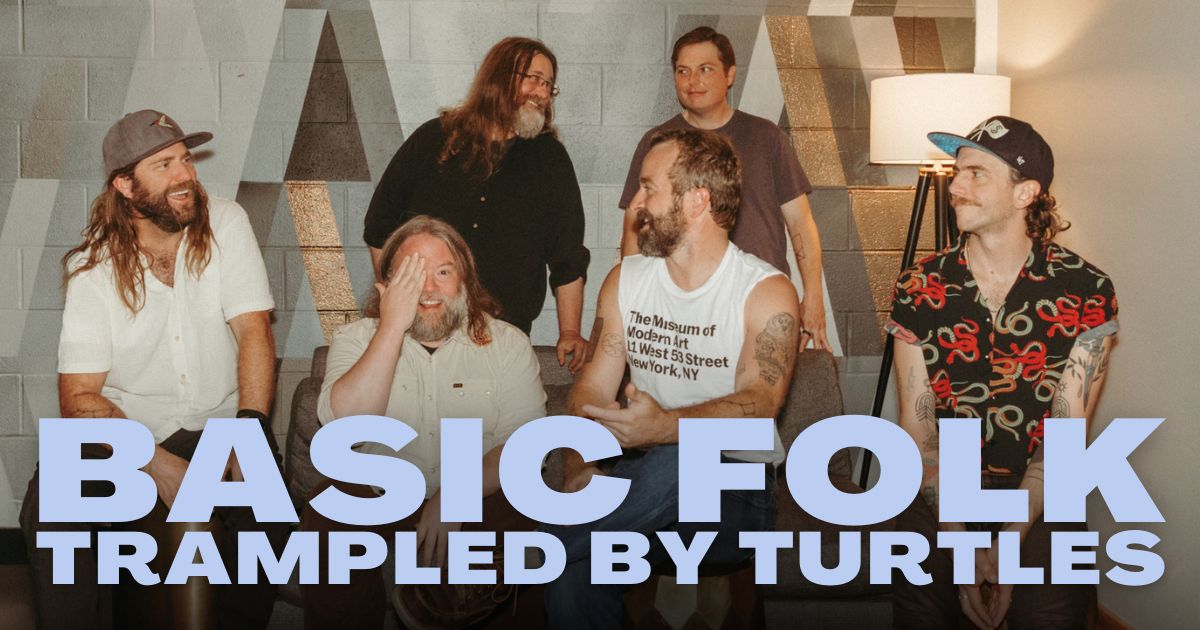
Lead singer and songwriter of the bluegrass adjacent Trampled by Turtles, Dave Simonett is a talented musician and a great outdoorsman. From the small town of Mankato, Minnesota, to the vibrant music scenes of Duluth and Minneapolis, Dave shares his upbringing in a musically inclined, nature-loving family shaped by the sounds of church hymns and classic rock. He opens up about his dual passions for music and the great outdoors, recounting his experiences with pheasant hunting and conservation efforts in Minnesota. He also reflects on the parallels between the camaraderie found in hunting and playing music, emphasizing the importance of trying new things and embracing the unknown. Follow as we delve into the evolution of Trampled by Turtles’ unique sound, described as a “butterfly’s heartbeat,” and trace the band’s journey from traditional bluegrass to their own distinct style.
In our Basic Folk conversation, Dave also talks about the challenges and rewards of maintaining artistic integrity in the music industry while balancing creative growth with commercial pressures. He shares insights on his band’s latest project Always Here, Always Now, a dual EP featuring recordings by both Trampled by Turtles (Always Here) and his solo project, Dead Man Winter (Always Now). He wrote five songs and instead of picking a band to record the tracks, he handed them over to both bands to do what they will to the music. The results are very cool to listen to side by side. The episode wraps up with a fun lightning round, where Dave reveals his dream supergroup and favorite hunter orange accessory (gotta be safe out there!).
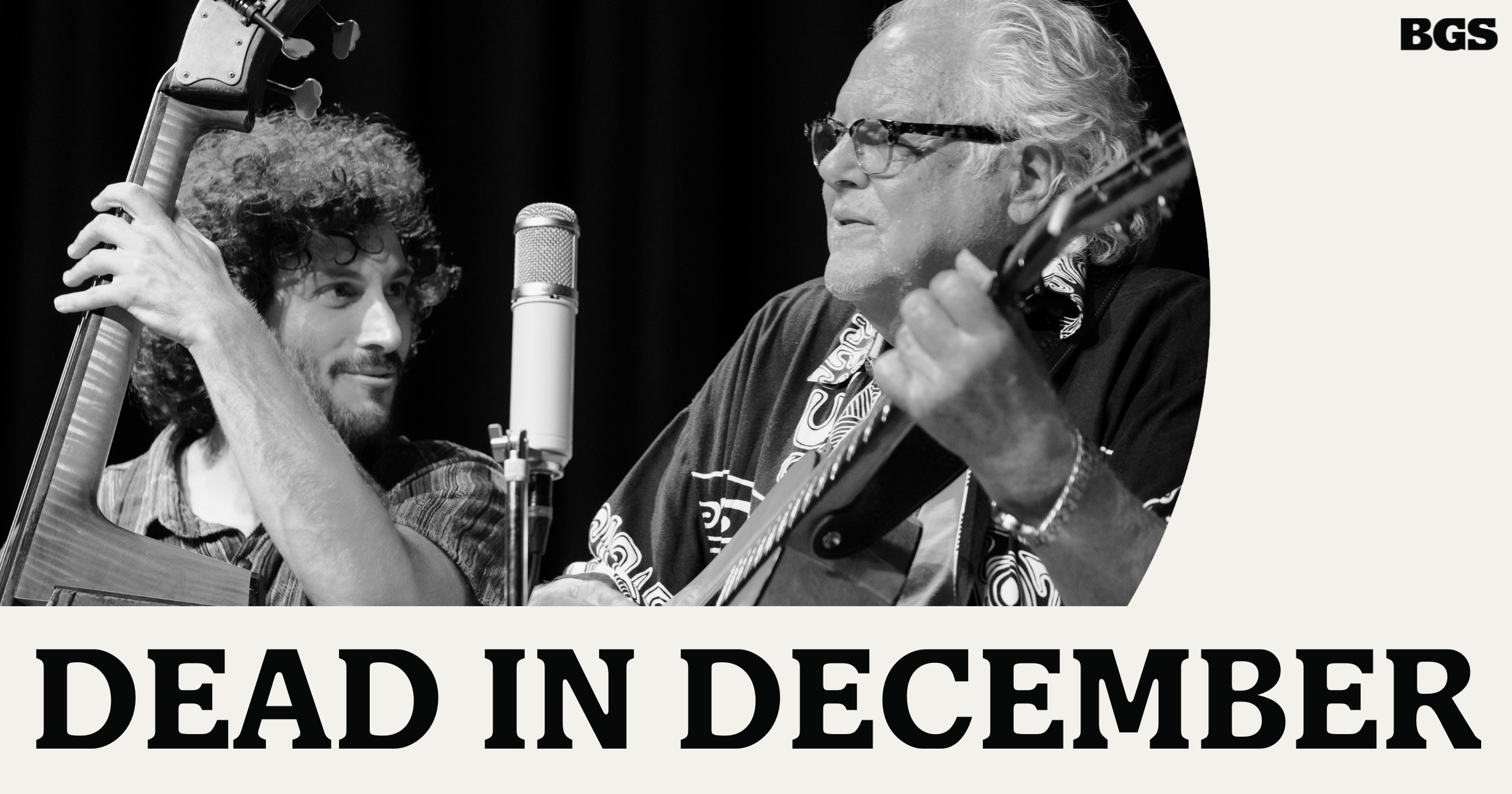
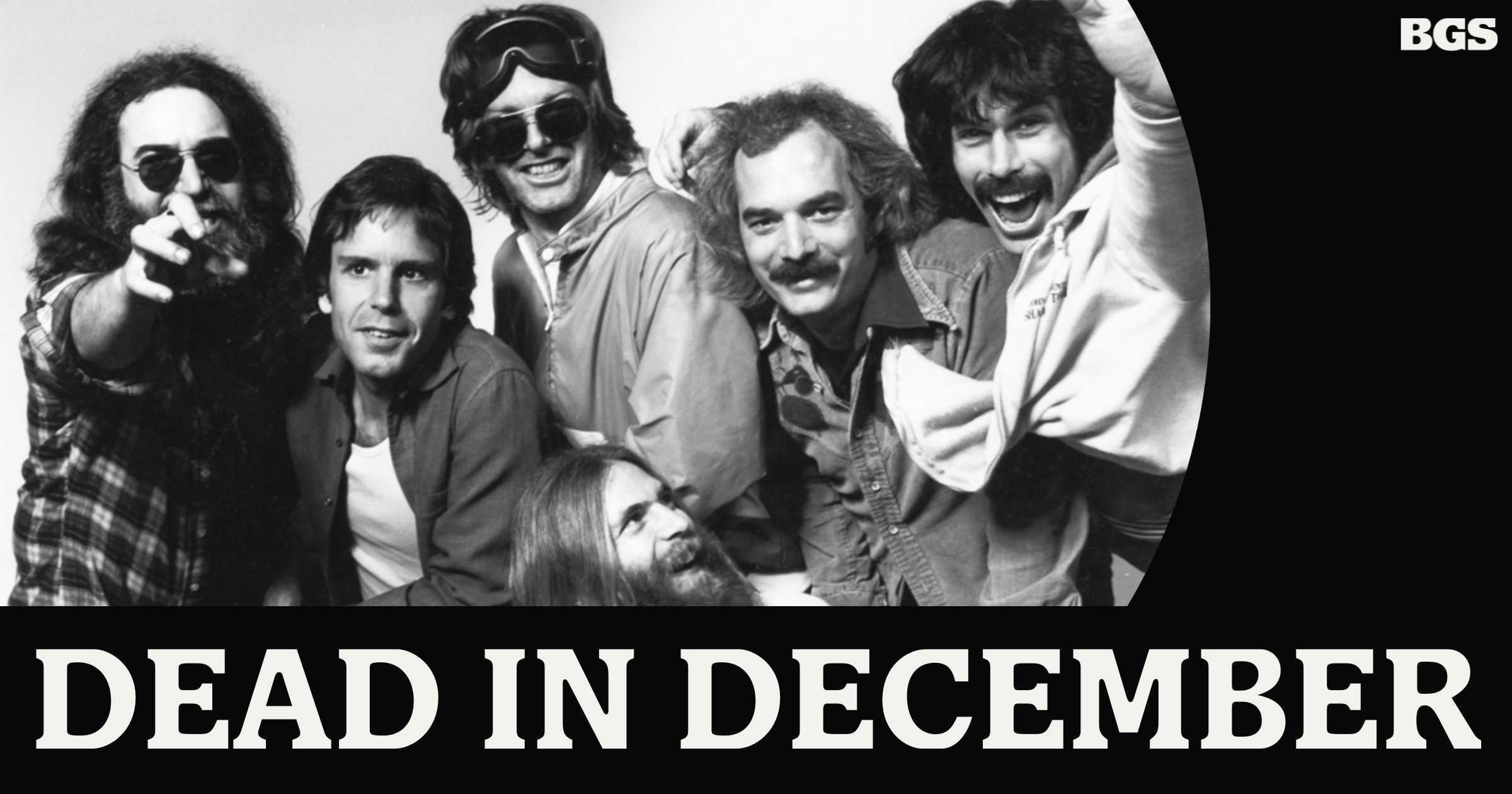
(Editor’s Note: This December, we continue our annual series – see also: Dolly in December, Dawg in December, Dylan in December, and Del in December – by celebrating the iconic, trailblazing jam band, the Grateful Dead, all month long! We’ll be featuring the Grateful Dead as our Artist of the Month, celebrating their enormous impact on bluegrass and roots music over the next few weeks.
To kick off our coverage, BGS contributor Garret Woodward pens a heartfelt and personal AOTM reveal. Plus, don’t miss our exhaustive Essential Grateful Dead Playlist below.)
The single most profound moment within my 39 years of existence (thus far) is the first time I heard the Grateful Dead. Not far behind that life-altering experience were my initial encounter with LSD (in high school) and finally cracking open Jack Kerouac’s seminal 1957 novel, On the Road (in college).
Summer 1994. I was nine years old and living a simple, yet happily mischievous childhood in the small North Country community of Rouses Point, New York. One mile from the Canadian Border. One mile from the state line of Vermont. Solitude. Desolation. Rural America. Mornings spent building tree forts and wandering vast cornfields surrounding my childhood home. Afternoons jumping off the dock into nearby Lake Champlain.
Even at that time, I was a bona fide music freak. Whether it was Top 40 radio (Gin Blossoms, Melissa Etheridge, Collective Soul, Sheryl Crow) blasting out of the small boom box in my bedroom or whatever my parents shoved into the cassette deck in the family minivan (Willie Nelson, Beatles, Rolling Stones, Nat King Cole, George Jones), I was in search of “the sound.”
But, everything in my existence changed one evening that summer at a family cookout at our camp on the lake. Sitting at the picnic table — chowing down on some burgers, beans and potato salad — I noticed a hat my aunt’s boyfriend was wearing. The logo on the front was of a dancing bear, with the back featuring a skull with a lightning bolt. I inquired.
“It’s the Grateful Dead,” he replied with a Cheshire Cat grin emerging from a bushy beard. “Have you ever listened to the Dead, man?” No, I replied. After dinner, he walked me over to his early 1990s Volkswagen Jetta. He hopped in, rolled the windows down and turned on the stereo. Again, with a grin, as if he knew what was going to happen once he pressed play and cranked the volume.
It was the Skeletons from the Closet album. The opening tune, “The Golden Road (To Unlimited Devotion),” hit me like an undulating series of waves in some endless ocean of melodic tones and lyrical truths. It was just like when Dorothy Gale entered the world of color in The Wizard of Oz.
Nothing really was ever the same after that moment. It was not only the first music I’d discovered on my own – without the radio or my parents’ influence – the Dead, for some unexplained reason at the time, immediately became “my band.” Something clicked deeply inside of me. I awoke. And I had arrived.
Soon, a seismic shift occurred in my adolescent life. I wore Dead shirts to my Catholic elementary school to the dismay of the nuns. Tacked up Jerry Garcia posters on my bedroom wall. The swirling sensation of “Sugar Magnolia” or “St. Stephen” echoing from the boom-box. Incense burning on the windowsill overlooking the cornfields and unknown horizon of my intent. I even had a small shrine to Jerry on my bookshelf for several years after he died. I was all-in.
Musically, the Dead were a bunch of incredibly talented bluegrass, folk, and jazz freaks, who were inspired by the onslaught of the Beatles to plug in and go electric. The band itself was this massive sponge, one which soaked in any and all influences it crossed paths with — either onstage or merely wandering down the road of life. That authentic sense of curiosity and discovery is key to the Dead’s magic throughout its decades of improvisational splendor.
At its core, the Dead’s message resonated within my often-bullied and ignored self as a kid. If you like the Dead, you’ll always find a friend out there in the universe to connect with. The band’s symbols are beacons of love, compassion, and acceptance once you walk out the front door. In essence, I’d found my tribe, this wild-‘n’-wondrous ensemble of loving oddballs, eccentric weirdos, and all-around jovial folk. My kind of people, who remain so to this day.
The Dead is about personal freedom. To not only be yourself, but to also seek out the intrinsic beauty of people, places and things in this big ol’ world of ours. Have adventures. Pursue wisdom. Radiate love. Be kind. Damnit, be kind. All of these things offered from the music and its followers were placed in my emotional and spiritual toolbox as I began to wander the planet on my own following high school, college and impending adulthood.
And here I stand. Age 39. That nine-year-old discovering the Dead is still inside of me somewhere, still burning incense and blasting “St. Stephen.” That youngster’s excitement for all things music (especially live), endless curiosity for what lies just around the corner, and running with a reckless abandon towards the unknowns of tomorrow are as strong and vibrant as ever — especially through this ongoing catalyst that is my career in the written word.
Case in point, I recently headed to the Bluegrass Music Hall of Fame & Museum in Owensboro, Kentucky, for another celebratory weekend for its current exhibit: “Jerry Garcia: A Bluegrass Journey,” on assignment and on the ground covering the festivities. An incredibly curated collection of rare Garcia artifacts and wisdom, the showcase will run onsite until next spring.
Before the inception of the Grateful Dead, Garcia was completely immersed in the bluegrass and folk scenes in the San Francisco Bay area in the late 1950s and early 1960s. He was part of numerous acoustic acts and ensembles throughout the bountiful period — the culmination of that vast knowledge and in-depth experience being poured into the Dead’s formation in 1965.
To note, there’s a lot to be said about Garcia’s talents on the banjo being applied to what would become his signature tone on the electric guitar. And to that notion, add in the sheer lyrical aptitude of Robert Hunter, who not only penned many of the Dead’s iconic melodies, but was also on a parallel journey to Garcia’s early on and throughout the band’s 30-year trajectory.
And there I was in Owensboro, some 400 miles from my current home in Western North Carolina. Traveling for hours just to arrive on the mighty Ohio River – the state line of Kentucky and Indiana, this crossroads of the Southeast and Midwest. And for what? To push further and farther down the cosmic rabbit hole that is Jerry Garcia, the Grateful Dead, and those who follow.
The next 48 hours were a whirlwind of sound and scope. Seemingly endless tribute sets to Garcia and the Dead at the Woodward Theater inside the museum from the Kitchen Dwellers, Lindsay Lou, Fireside Collective, and members of the Infamous Stringdusters to late-night jam sessions in hotel rooms next door.
The Grateful Dead are arguably the only musical entity to exist that – regardless of who or what genre is being represented – once one of their tunes is placed into a performance, folks either show up in droves or are already present with ears perked up to what’s radiating out from the stage. It’s a fact that no matter what style of music you play, if it involves the Dead in some form or fashion, Deadheads are game to check it out. You could be a polka group and we’ll be right there, standing front row, the second you roll into “Althea” or “Shakedown Street.” The music provides, always and forever.
Before I left Owensboro and the Garcia celebration at the museum, I found myself on a bourbon distillery tour on Saturday afternoon. I walked into the enormous facility and checked in with the host. All by myself and waiting for the tour to start, the host tapped me on the shoulder.
“You like the Dead?” his face lit up, pointing to the Dead stealie tattoo on the back of my right leg. “Sure do, my brother,” I shot back with a smile of solidarity. We talked about our favorite live Dead recordings and where we’ve caught Dead & Company in concert recently, kindred spirits now eternally connected by this band of roving musical pirates. It’s a genuine interaction that happens often to Deadheads and something I don’t ever take for granted.
Even as we stand in this uncertain time in American history – where nothing is the same, everything is the same – the Grateful Dead remain this portal to escape, to purposely choose compassion, camaraderie, and community. It’s about cultivation of one’s self and of the sheer magnitude and gratitude of daily life, so long as you stroll this earth with the pure and honest intent to connect, to listen, and to understand.
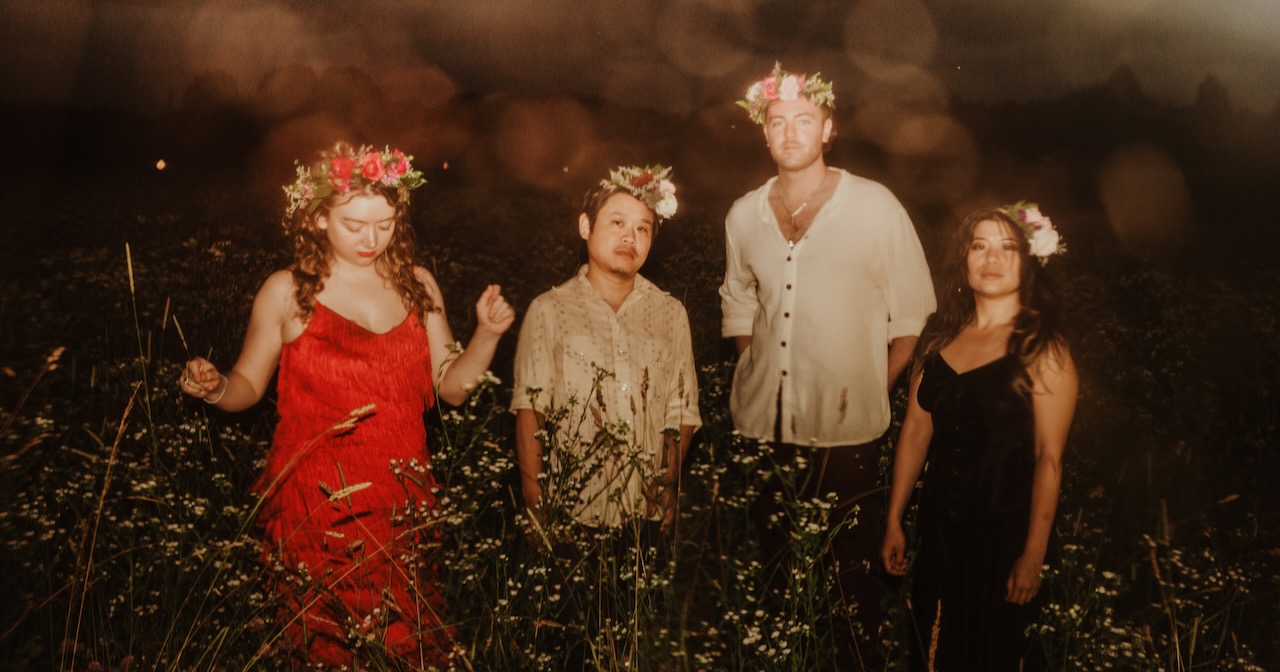
Love Your Mind, the new album from Boston/Toronto-based band Twisted Pine, is a delicious exploration of joy, growth, and self-love, packaged into tight grooves and soulful vocals. The quartet – which features Dan Bui, Kathleen Parks, Anh Phung, and Chris Sartori – is beloved for its genre-bending approach to acoustic music; they continue to defy expectations with their mandolin, fiddle, flute, and bass instrumentation.
What I noticed most about this new record, besides its refreshing positivity (in this economy?!), was the seamlessly collaborative sound. In discussing this in a BGS interview with the entire band, they explained that they’ve taken these past years to hone their collective voice as a group. With this new album, they felt that they had found that voice.
Together, we all agreed that the name “Twisted Mind(s)” might be more appropriate for the band at this point. Below is our conversation, where we cover Love Your Mind and the joy within it, the inspirations found in jamming, how flute fits in at bluegrass festivals, and so much more.
I love the amount of joy and uplift that comes through this album; it’s rare among Americana albums in this day and age. Is that feeling something that the band gravitates to organically? Or was it a choice you made specifically about this project?
Kathleen Parks: I think that happened pretty organically. Some of the songs started coming out of the post-COVID era. “After Midnight,” for example, was written after the first Ossipee [Valley Music] Festival in person after the pandemic and I tried to capture the joyful feeling of being around each other again. … Some of the album started in that appreciative state.
Dan Bui: I would add that throughout the album some subjects are a little bit more somber – there’s a theme of personal growth and learning through hardship and dealing with things like anxiety, making mistakes, and learning from them – but it’s always viewed through a positive lens, and musically, certainly, it is more of an upbeat fun vibe. That’s what we try to put out into the world and bring to our shows in general.
I love that song, “After Midnight (Nothing Good Happens).” Can you tell me more about that one?
KP: I was deciding not to party one night and [was] walking to my tent … listening to the roar of fiddle tunes and good times being had. I was like, “Oh my god that sounds so fun, but I also have two sets to play tomorrow.” My dad used to say that title phrase to me as a kid. He was also a musician who toured a lot so I always thought, “Cool people stay up super late.” My dad was like, “No, nothing good happens after midnight.”
Your fans have been starving for a new Twisted Pine record. What have you all been working on in the four years since your last release?
DB: Releasing our last record [Right Now] in 2020 was a huge challenge. We had to pivot and we weren’t able to do what we wanted to do, performance-wise, for a couple of years. So by the time we were able to get out there, we kind of went “all in” on touring and working on our live show. Before the pandemic, we had only really been playing with Anh for a short time, about six months. Since she lives in Canada, it was impossible to get together in person for a very long time.
Chris Sartori: Even getting into the studio with Anh for Right Now, it felt like we were just starting to figure out how that might work. These past couple of years have been really about ironing out the sound we had envisioned as a quartet and getting it to a place where we could write for that sound.
Anh Phung: It felt like with the 2020 record I was injected into a band that already existed, but Love Your Mind came from a place of more foundational collaboration. I was truly a part of the band before we got in there and recorded.
KP: I also feel like on this new album we had more time to discuss, “How do we want this song to sound?” We brought in players like Ethan Robbins, Ali McGuirk – just because we could. We had time and space and we weren’t being rushed into anything.
I also wanted to ask you about the “A Beautiful Phase (90’s Song).” Is it a ’90s song to you? Or is it just referencing nostalgia for the ’90s as “a beautiful phase”?
KP: For some reason, it ended up in the voice memos with that title. For me sonically, it very much has a “Bitter Sweet Symphony” vibe and I always see chrome when I sing it – that really, really specific blue chrome color, which I remember as a child.
Yes! I had that nail polish!
KP: Yep. It’s kind of looking back on a younger self, talking to a younger self. … For me, it’s about the missed opportunities with being a musician. You miss a lot of time with your family or family events [and] the song is almost apologizing for that.
DB: That song was one of the more collaborative ones. We had these early writing sessions at Kathleen’s where we got together and just jammed to see what came out. … There was this one section that turned into the chorus of that song. At one point, Chris and I were sitting around and decided, “Let’s just build this around this moody section.” We worked with that and kind of introduced a verse and this idea of having it modulate to a bunch of different keys. We roughed out a structure and that was what the lyrics were written over. When we went into the studio it was fresh – a lot of choices were happening in real time. It was cool to have it just come together like that.
Do you write a lot from jamming?
KP: It is a mix of jamming and melodic ideas. The final product is usually the outcome of playing the song down with a lot of different grooves and ideas, seeing what fits, and what we can pull off.
DB: One example is “Green Flash.” Kathleen was playing this 12-string electric guitar and this melodic idea kind of popped out and we decided to make something out of that sound.
That song also features Jerry Douglas. How did that happen?
KP: We had seen him at Earl Scruggs Music Festival and he said, “If there’s any way I can help, just let me know…” So, when that song started coming together, we were like, “We should ask Jerry to be on this!” In the studio we made this video asking if he would play on this song and sent it to him – and he said sure!
AP: Jerry has the exact style for it. I feel like the tune has the vibe of Strength In Numbers, so he fits perfectly.
OK, this question is specifically for Anh: What has your experience been like being the “flutist at the bluegrass festival?”
AP: Honestly, by the time I was playing with Twisted Pine, it was a pretty soft landing, because a lot of the work building my credibility in the scene came before that. Even going to IBMA, I was expecting a lot of pushback, but it has been pretty shocking how welcoming people have been. I think the initial expectation was pretty low. People were skeptical of how I, playing a flute, would work within this band, so when they hear it and it’s going well, it has even more of an effect!
Can you tell me about the actual recording of the album?
DB: I think a big part of the sound of the record should be credited to our co-producer, Dan Cardinal. We have worked with Dan on every record that we’ve done and he’s just someone who understands what we’re going for. He does a great job at capturing the organic sound of our instruments, but is also very creative and able to augment the sounds of our band … subtly and sometimes not so subtly. His choices make the recording sound a little bit bigger, wider and deeper. He was really valuable in that way. A lot of the songs were new, still being worked out, and he had some great third party observations.
KP: He’s good at placing sounds so that you feel them, but you’re not suddenly met with this random out-of-place soundscape in an otherwise acoustic recording.
That’s something I loved about the record. Even though you’re genre-bending, the sound is still so acoustic, where I imagine it would have been easy to add drums and synths, etc. Were there specific records you were referencing for production?
CS: I think each track has its own inspiration. Like “Start/Stop” is very Motown, “Chanel Perfume” is going more for an Aretha “Rock Steady” thing; each track we approached as kind of its own world.
Okay, last question, what does the title, Love Your Mind, mean to you?
CS: That sort of reared its head after we were finished recording and [after] looking back at what themes had emerged. We kind of identified that as a common thread that ties the record together, even though sonically it goes in all of these directions.
KP: For me, it means that whatever state you’re in – dark or frantic – you have to just try to look at yourself from someone else’s point of view and love yourself completely through all the stages.
AP: This is kind of riffing on a different idea, but I also think of Love Your Mind as – it’s common knowledge that our band has been hard to identify genre-wise, and I think that even though this album has a mixture of genres the sound that came out of this album is kind of unified in the way that the four of us play together. Twisted Pine is the four of our minds together, so the magical chemistry is loving our minds.
(Editor’s Note: Want more Twisted Pine? Check out our Basic Folk episode on the group featuring an exclusive interview with fiddler Kathleen Parks. Listen and subscribe here.)
In our last Bluegrass Memoir, “Beginnings,” I described David Hoffman’s documentary, Earl Scruggs with his Family and Friends. By the time NET aired it, the Revue was already off and rolling with Earl’s new music.
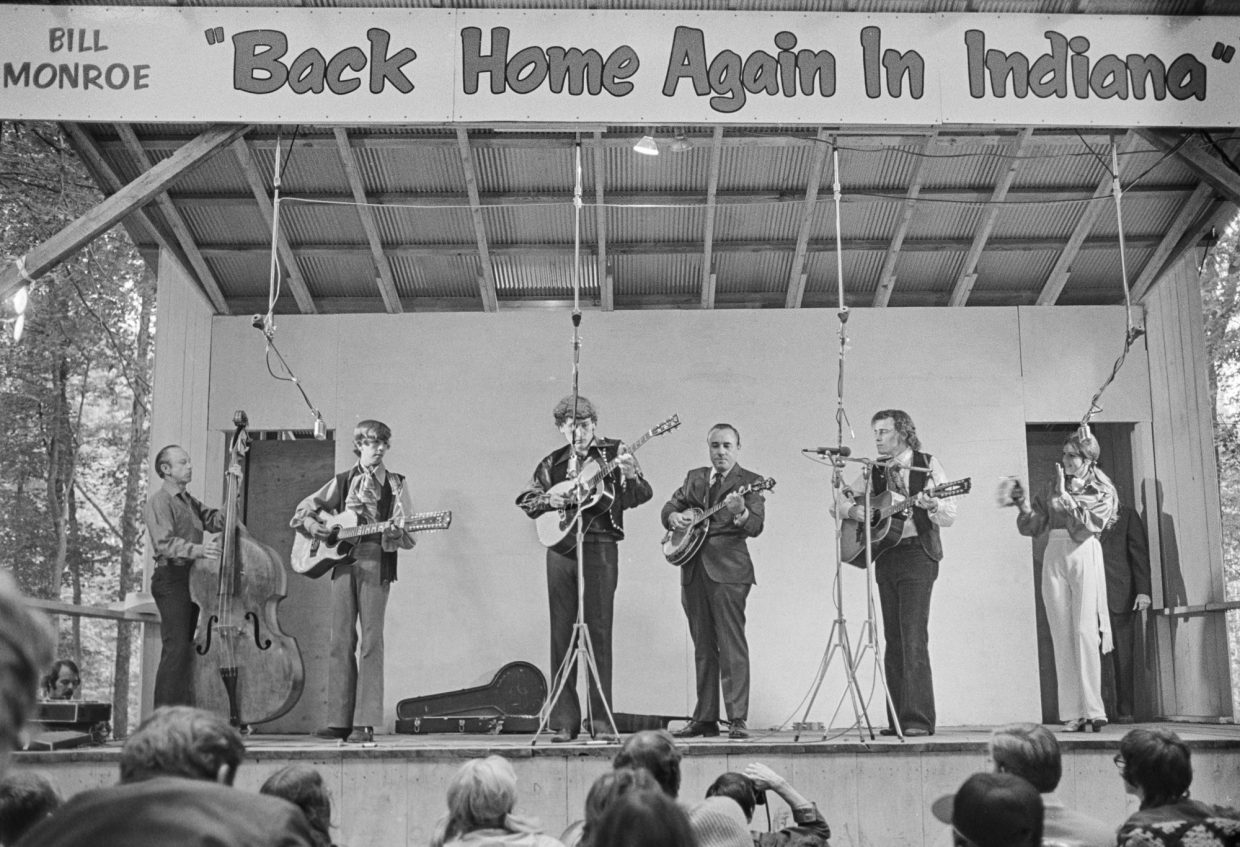
In 1970, bluegrass festivals – the first was in 1965 – were becoming quite popular. The music’s supporters had discovered that such events could present their favorite music to broader, younger, urban audiences. These larger crowds brought their tastes and preferences with them. At these booming festivals, new acts like the Earl Scruggs Revue spoke to musical perspectives shaped by contemporary popular music.
The Revue played to large numbers at Monroe’s Bean Blossom Festival that spring and to Carlton Haney’s Camp Springs Festival on Labor Day weekend. Earl’s solo album, Nashville’s Rock, and Randy and Gary’s solo album, All the Way Home, were released that year.
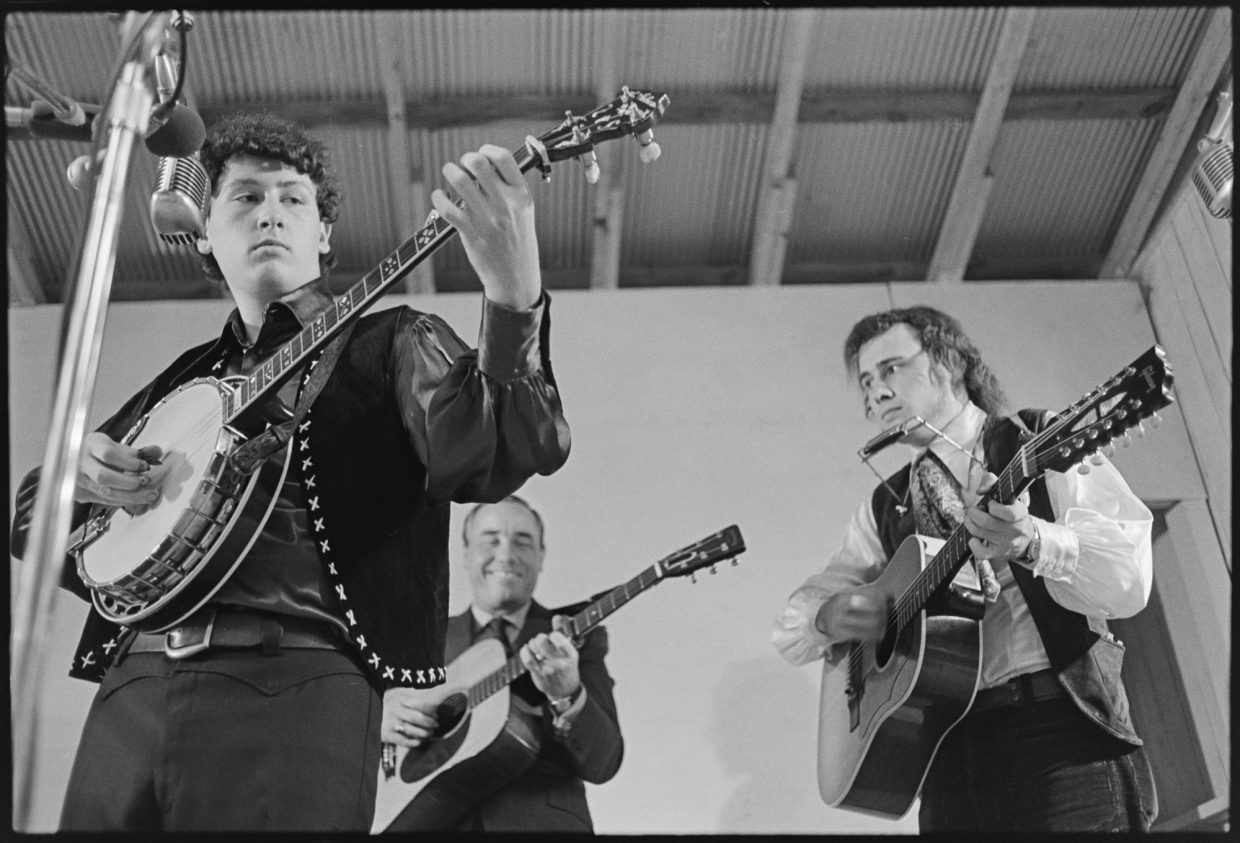
The Earl Scruggs Revue at Bill Monroe’s annual Bean Blossom festival, Bean Blossom, Indiana, June 1970. (L-R) Unidentified bassist, Jody Maphis, Randy Scruggs, Earl Scruggs, Gary Scruggs, and Leah Jane Berinati. Photo by Carl Fleischhauer.
In 1971, Columbia released Earl Scruggs: His Family and Friends (C 30584), a soundtrack album that included much of the content of Hoffman’s documentary along with two additional fine vocals by Doc Watson. In its liner notes, Don DeVito characterized the show’s topic:
Earl Scruggs is a man who has paid his dues. You can forget the generation gap … Earl has always been an innovator and an adventurer…
Also in 1971, newgrass music emerged. Its key figure at that time was singer-songwriter and banjoist John Hartford, whose “Gentle on My Mind” had been a 1967 Glen Campbell hit. John had flourished in the LA television business as a writer for The Smothers Brothers Comedy Hour and a performer on The Glen Campbell Goodtime Hour.
Hartford and Scruggs – they’d met in 1953 – had developed what Bob Carlin, in My Memories of John Hartford (University Press of Mississippi) calls “a deep friendship.” When Hartford returned to Nashville in 1971, he recorded what is now considered the first newgrass album, Aereo-Plain. The Revue’s Randy Scruggs played bass on this ground-breaking disc alongside Tut Taylor, Vassar Clements, and Norman Blake.
The Revue and Hartford were at the center of Nashville’s jam-based music, which embraced musicians from new scenes blending rock and older genres – folk, bluegrass, and country. Both bands appeared at a number of bluegrass festivals in 1971 and the Revue was busy recording in Nashville.
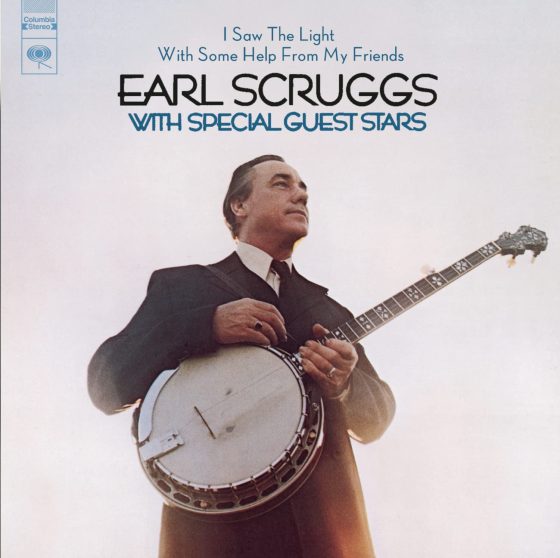
I Saw The Light With Some Help From My Friends(1972)
Earl was working on his next album, I Saw The Light With Some Help From My Friends: Earl Scruggs with Special Guest Stars. The back liners of the album (Columbia KC31354) described it as “Earl Scruggs and The Earl Scruggs Revue in performances with Linda Ronstadt/The Nitty Gritty Dirt Band/Stacey Belson and Arloff Boguslavaki.”
Stacey Belson was a pseudonym for blues singer Tracy Nelson, then with the band Mother Earth. Arloff Boguslavaki was Bob Dylan’s pseudonym.
Bill Williams’ liner notes describe the fabulous jam sessions that were happening at the Scruggs family house – hence the album’s concept:
Picture, if you will, the group sitting around together at the Scruggs home (although the actual locale was shifted to Columbia Studios) …
For this album, the studio became the living room and the producer was Don Law, the Nashville vet who’d worked in the ’30s with blues legend Robert Johnson and western swing pioneer Bob Wills and in the ’50s with Flatt & Scruggs.
At this Scruggs family jam session were Earl and sons along with their Madison High School contemporary, drummer Jody Maphis. Also in the room were fiddler Vassar Clements, in the process of moving from Hartford’s band to join the Revue, and several others who’d later join the Revue, including pianist Bob Wilson, a Detroit R&B musician who’d moved to Nashville and subsequently recorded with Bob Dylan.
Each of the featured star guests are heard in solo, sometimes singing in harmony with each other. Earl plays on every cut. Great to hear his backup work with all its nuances! Randy’s lead guitar and Vassar’s fiddling appear throughout.
It was as if these people had showed up at the Scruggs home one evening to play for and with each other – an old-fashioned domestic music session, with the host going around the room inviting each to perform and providing musical backups for all. The evening’s repertoire was the kind of stuff you might expect at such an event: mostly recent country, folk, blues and rock – things you might have heard on the radio lately in 1971.
The sound was that of contemporary popular music, suggesting that this was what you’d hear if the Earl Scruggs Revue came to your living room, festival, or auditorium.
The album’s first side opens with an LA country soul rock tune, Bonnie and Delaney’s “Lonesome and a Long Way From Home.” Gary is singing lead and playing bass; Nelson adds harmony. This is rocking R&B – Wilson’s piano opens the break and, with fiddle and drums, keeps it rocking to the end. Earl’s banjo is out front throughout.
Next comes Merle Haggard’s “Silver Wings,” sung by Linda Ronstadt with harmony by Nelson. The backup piano and Dobro are joined by a fiddle break. Straight-ahead Nashville country.
Track three features “Boguslavaki” (Dylan) singing Charles E. Baer’s 1896 hit, “It’s a Picture From Life’s Other Side,” a song that had gone into the folk tradition and been frequently recorded by hillbilly and gospel singers in the ’20s and ’30s. The laid-back fiddle, bass, and drums, along with Nelson’s harmony on the chorus, mark this as a parlor folksong.
It’s followed by Nelson’s performance of “Motherless Child Blues,” where accompanying musicians Earl, Norman Blake, Randy, and Vassar stretch out with some nice blues breaks.
This side closes with Mike Nesmith’s “Some of Shelley’s Blues,” performed with members of the Nitty Gritty Dirt Band, with Gary Scruggs and Jeff Hanna doing the singing and Earl and Randy both taking instrumental breaks.
The second side of the album opens with a vocal by Gary on another Bonnie and Delaney cover, “Never Ending Song of Love.” Ronstadt sings a county cover, Cash’s “Ring of Fire.”
Dylan brings out another pre-war country folk oldie, a great “Banks of the Ohio.” While Nelson is featured singing folksinger Bruce “Utah” Phillips’ “Rock Salt and Nails,” a song first recorded by Flatt & Scruggs in 1965, with Ronstadt adding harmony on the chorus.
The Nitty Gritty Dirt Band contributes another Nesmith song, “Propinquity.” The side closes with the album’s title track, a sing-along for everyone, “I Saw the Light.” The album was released in 1972.
Will the Circle Be Unbroken (1972)
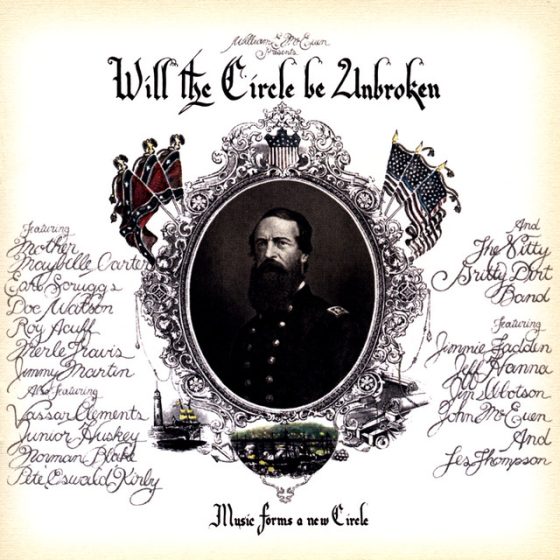
Around the same time as I Saw The Light was made, banjoist John McEuen of the Nitty Gritty Dirt Band asked Earl to be on their new three-LP concept album, Will The Circle Be Unbroken. Scruggs was playing in Denver with the Revue when he and McEuen met. The Dirt Band’s sound, with McEuen’s skilled Scruggs-style banjo, appealed to him, as did their project to honor and make music with the earlier generation’s pioneers. That had been his own goal in bringing Maybelle Carter into the studio to record with Flatt & Scruggs back in 1961.
Earl, well-connected in Nashville as an Opry star with record, television, and movie hits, helped bring a number of his country music friends into the project. Both Gary and Randy were also involved, as were several of Hartford’s Aereo-Plain band members, notably fiddler Vassar Clements and Dobro player Norman Blake.
Unlike Earl’s Nashville’s Rock album, which covered recent rock and pop hits on the banjo with Nashville studio backing including electric instruments and, on several cuts, a soulful female vocal trio and a string section, this album had completely acoustic backup by the Dirt Band as they covered legacy hits by country, bluegrass and folk pioneers like Roy Acuff, Maybelle Carter, Doc Watson, and Jimmy Martin.
Earl played a pivotal role in the making of these recordings, playing guitar or banjo on sixteen tracks. The whole Scruggs family can be heard: Randy contributed guitar, autoharp, or voice on eleven tracks, Gary sang on eight, and Louise and Steve sang on one track.
Of the many interesting performances on this award-winning album, Randy Scruggs’ acoustic guitar version of “Both Sides Now” was perhaps the most remarkable; the final selection in the set, it followed a group sing-along of the title track, similar to the closing on the Earl’s I Saw The Light, in which all of the Scruggses sang. These recordings, released in 1972, were made in August 1971.
The Scruggs Brothers (1972)
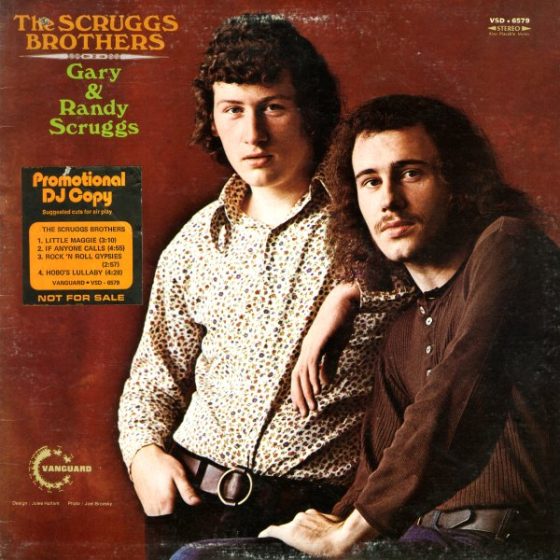
Also recorded in 1971 was Gary and Randy’s second Vanguard album, The Scruggs Brothers (Vanguard VSD 6579). Some of the same musicians who played on I Saw The Light performed here, like Tracy Nelson, the Dirt Band’s Jeff Hanna and John McEuen, pianist Bob Wilson, and drummer Karl Himmel; but the album had more of a country rock sound. It opened with “Little Maggie,” a song Flatt & Scruggs had recorded at Carnegie Hall in 1962. With Gary’s bass and Jody Maphis’ drums leading the way, it sounded something like the Nashville studio A-listers Area Code 615’s 1969 version.
Throughout the album, Randy played a majority of the solo breaks, some on acoustic guitar but most on electric, in a heavy metal style similar to what I heard him playing in Maine in 1975. Four tracks were their own compositions, two by Gary and two collaborations.
On one, the instrumental “Trousdale Ferry Rag,” Earl played banjo. This up-tempo, bluegrass-style piece has an unusual ending, shifting to a slow blues beat. Most notable is Gary’s “Lowlands,” a great ballad set to the tune of Earl’s “Sally Ann,” which both brothers had been hearing at home all of their lives (Flatt & Scruggs recorded it in 1960). Gary plays guitar, Randy picks banjo.
Covers of older (dare we say traditional?) material includes a rocking version of Jimmie Rodgers’ “T for Texas,” and the other cut on which Earl played banjo, “Hobo’s Lullaby,” which features a sing-along chorus similar to that on the closing of the I Saw The Light and Will The Circle Be Unbroken albums. Another older piece was “The Johnson Boys” (Flatt & Scruggs did it 1962) on which John McEuen’s frailed banjo created the album’s most old-timey sound.
The Earl Scruggs Revue at Bill Monroe’s annual Bean Blossom festival, Bean Blossom, Indiana, June 1970. Randy Scruggs, Earl Scruggs, and Gary Scruggs. Photo by Carl Fleischhauer.
The boys’ continuing involvement with country rock is reflected in two songs that originated in 1967 with the LA band Hearts and Flowers. “Rock and Roll Gypsies,” which closes the first side of the album, seems to have been an attempt to garner radio play – it’s the only track on the record to include string section backup. The other Hearts and Flowers-connected track, “Bugler,” a sad song about the death of a dog, had recently been covered by Clarence White with the Byrds.
Live at Kansas State (1972)
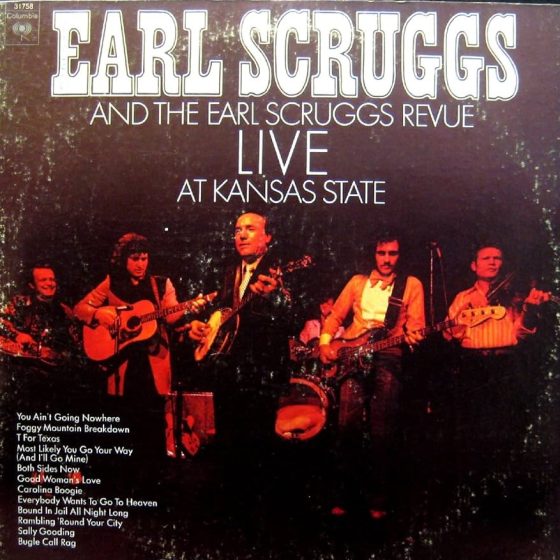
During this year of extensive studio recording, the Revue was also out playing on the road. Although Earl Scruggs: His Family and Friends included a few examples of the group in action outside the studio, Live at Kansas State (Columbia KC 31758) was their first full show album.
Many of the songs the Revue did at this 1972 concert remained in the band’s regular repertoire and showed up, for example, at the 1975 Maine concert, including “T for Texas,” “Paul and Silas” (they titled it “Bound in Jail All Night Long”), “Sally Goodin[g],” “Carolina Boogie,” “Everybody Wants to Go to Heaven,” and “Foggy Mountain Breakdown.”
Several were on their recent albums, like “You Ain’t Going Nowhere” and “Both Sides Now.” Bluegrass classics included “Good Woman’s Love” and “Bugle Call Rag.”
In 1998, a reviewer for No Depression wrote that Live at Kansas State was “probably their album most deserving of a full reissue … a surprisingly cohesive ‘bluegrass-rock’ blend, the likes of which has seldom been heard since.”
In 1972, the band included fiddler Vassar Clements and Dobroist Josh Graves, a bluegrass icon who’d just left Lester Flatt’s band. The album package has several photos of the band; these are notable in that they include everyone but pianist Bob Wilson, who is very much present in the album’s audio.
Wilson had moved to Nashville from Detroit’s R&B scene. His first years in Nashville were slow going, but that changed when Bob Dylan came to town to record Nashville Skyline and wanted “a funkier piano sound than the usual Nashville cat could produce.” The success of his work on Dylan’s album gave him plenty of studio work and he also found time to go on the road with Scruggs.
“When I was with the Earl Scruggs Revue,” he recalled, “Earl always introduced the band, and when he came to me, he always told the crowd, ‘And this is the man who played piano on Nashville Skyline, Bob Wilson.’ I must admit the applause felt really good.”
In his memoir, Bluegrass Bluesman, Graves spoke of the challenges he enjoyed while rocking with the Revue: “Earl and that bunch forced you to work up new licks. You had to come in there on the stuff they were playing. It was so loud I couldn’t hardly stand it, but I really enjoyed it. It opened a lot of doors for me. They were into a lot of things. …”
“Earl was doing the same old tunes with a little modern touch. Earl got bored with bluegrass – I’ll tell you that. He just didn’t want to play it anymore. They had that big beat, that sound behind it, and that’s what he liked.”
“He’d play ‘Foggy Mountain Breakdown’ with that band and people would go wild.”
The Revue carried on into the early ‘80s, with albums that drew from contemporary pop music and brought younger country, folk, and rock stars in as guest artists. We’ll touch on a few of these next time.
The first time I heard Billy Strings’ name was in 2014, from a guitar picking pilot friend of mine from northern Kentucky who was working up in Michigan. I first met him at the Frankfort Bluegrass Festival in Illinois two or three years later, by which time I’d played a song or two from the Fiddle Tune X album on the satellite radio show I was hosting with Del McCoury. Billy had either recently gotten or was about to get his first IBMA Award for Momentum Instrumentalist of the Year (his then-roommate, Molly Tuttle, got one at the same time).
After that, I’d see him from time to time – I was already writing songs with fellow Michigander and Billy’s across-the-street neighbor Lindsay Lou – but it wasn’t until June 18, 2018, that we got together to write our first song, “Love Like Me.” We wrote a few more after that, he went into the studio, and put most of them on 2019’s Home. Since then, working as a team with another Michigander, Aaron Allen, we’ve written many more, for Renewal and now for Highway Prayers, too. To be honest, it’s been a little life-changing – a taste, at least, of what it must have been like for Music Row songwriters back in the day.
One striking feature of Billy’s trajectory has been his ability to keep the enthusiasm of the normative bluegrass industry and community that the IBMA generally represents; my social media feeds regularly remind me that most of the stalwart traditionalists among my friends – people who grew up immersed in scenes that trace back to the music’s earliest days – aren’t dissing Billy Strings. They’re cheering him on. That hasn’t always been the case with bluegrass artists bringing the sound and the songs to larger-than-usual audiences, but it’s indisputable here, as three successive IBMA Entertainer of the Year awards (finally supplanted this year by Del, another traditionalist admirer) demonstrate.
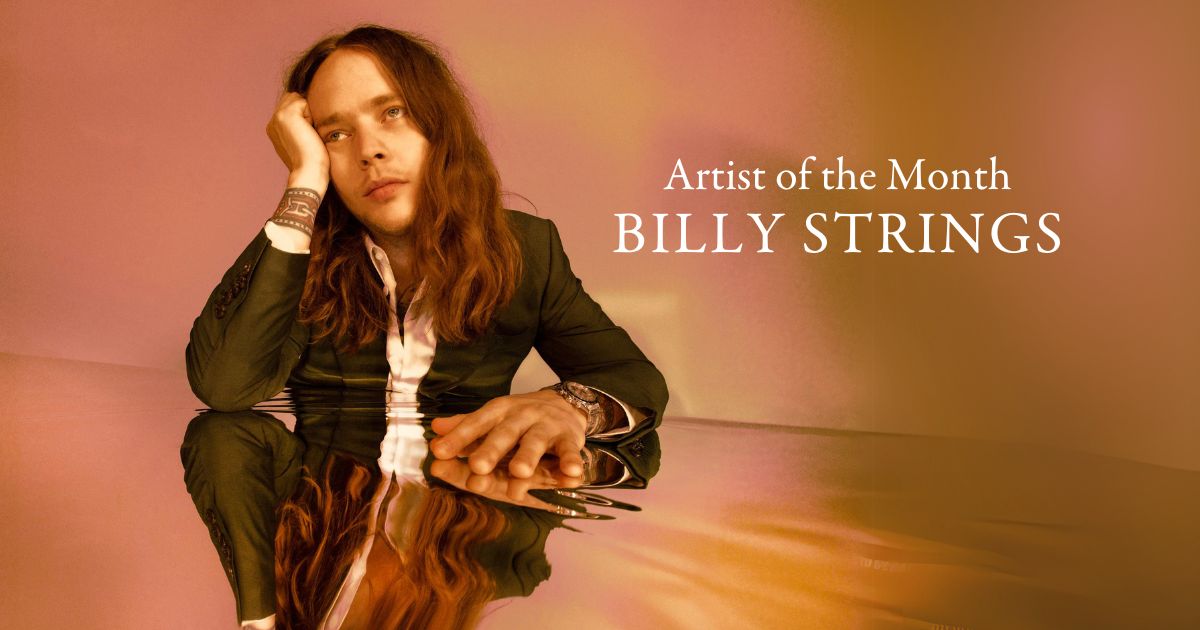
The reason, I think, is that, as BGS Editor Justin Hiltner puts it in his Artist of the Month reveal essay, “the most innovative and revolutionary aspects of Billy Strings and his version of bluegrass are not what he’s changed, but what has stayed the same.” When the BGS team invited me to have a chat with Billy for Artist of the Month, I figured it was, among other things, an opportunity to dig deeper into that idea – and so I did.
Together, we talked about recording Highway Prayers, about working in a band, about writing songs and making set lists. We talked about a number of things, but somehow always wound back up, again and again, at the endlessly rewarding music of Mac Wiseman and Larry Sparks, “Riding That Midnight Train” and “Cumberland Gap,” “Uncle Pen” and more.
Does it get any more bluegrass than that?
You didn’t record Highway Prayers all at once, did you? Wasn’t it recorded over a while?
Billy Strings: Right. We started in January out in LA at EastWest Studios, with Jon Brion the producer and Greg Koller at the helm as engineer. We recorded a few tunes out there. I really love what we got sonically, but I just don’t know if being in LA while trying to make a record was right for us – we were right downtown in freaking LA, man. I felt like, “What the hell am I doing out here in this big city where all these movie stars are, trying make a record?” I was working with Jon [Brion], who is a genius, that’s where he likes to work and the sounds we were getting were awesome and everything was cool, but I think it was also at a time where I was wanting to get the guys together without a producer and just throw stuff at the wall.
So we threw a makeshift little studio together and brought in Brandon Bell, and that’s where we recorded a good bulk of it – just threw up a couple of mics with a little lunch box of pre-amps and went for it. We would sit there and work a song out and then go upstairs and cut it. The great thing about being at my house was, it’s like there’s no authority figure there and it doesn’t feel like a studio – it just feels like we’re at band practice. And if you wanted, while somebody’s trying to do a overdub or something, you could go for a bike ride. Just that in itself was mentally freeing.
I will say that the tones we were getting out there with Jon were unquestionably better to me. But I’m kind of in the spot where I’m just, like, “Does it really matter?” Well, even if most people listen to music on their damn phone, it does matter. That’s how you make a sound that can evoke emotion. But also, as a bluegrass musician, any time we get with somebody or something, it’s like, “We should record you guys on these old ribbon mics and straight to tape with no edits,” and it’s just like, “Well, dude, it’s 2024.”
I feel like in some ways when people do that, they’re kind of privileging the process over the result, when the result is what people are gonna hear and what they’re gonna relate to.
Yeah, I’m just chasing something and I’m not trying to think about it too much. I read something in a book the other day, it’s called Blues and Trouble, by Tom Piazza. He says that sometimes you can push an idea up a hill, and you gotta push and push to get it to the top of the hill, but sometimes an idea gets going and you have to run to keep up. That’s where I like to be – you know what I’m talking about as a songwriter – when it just kind of falls out. Those are the best ones, you know, and quite a few of these songs just rolled off the page. Like “Be Your Man,” for instance, I wrote it in 20 minutes; it just came out. Of course there are other ones you have to work hard on, but, man, those – I just love when they show up like that, it almost feels like you just siphoned it out of the ether. Who wrote the song, you know?
That’s something that I’ve heard a lot over the years from a lot of great songwriters: it’s just like pulling it out of the air, and it kind of falls right in there. When you’re in that zone, you can’t hardly beat that.
No, you gotta keep going with it, you know. It’s hard to get in that zone, and like I said, it’s rare for me, it might only happen a couple of times a year that I write a song like that. That’s how “Dust In a Baggie” was. I wrote it in 30 minutes at work – I didn’t even have a guitar, I just had the melody in my head and a little notepad. I was cleaning rooms at the hotel and I sat there and wrote that. That’s still how the song is today, you know, it was just… it was done. Finished.
Let me ask you a little bit more about your process more generally. What’s the role of the guys in the band? You know, in the bluegrass world, at one extreme you’ve got the Jimmy Martin style of bandleader, which is, you know, “This is my sound, and this is how you’re gonna do it, and I will tell you what you need to do and show you what you need to do.” Then, on the other end, you’ve got somebody like Bill Monroe or J.D. Crowe, who says, “I brought you in to do your thing and let’s see how it fits together with everything else going on there.”
I very much lean towards the latter. I’ve got such amazing musicians that I’d be stupid not to listen to what they’ve got to say, you know? They’re so amazing and each one of them has their own strengths. So it’s a good mixture of like, I’m the band leader, kinda what I say goes, but I also take into consideration everything that the guys say. Sometimes I really need their advice and ask for it– like, for instance, most of the time I write the set list, but sometimes … I’ll go to the front lounge and say, “Hey, what do you guys wanna play tonight?” And then some ideas will come at me.
They’re there when I need them and they also don’t take anything personally when I say, “Hey, no.” It just depends, because sometimes it’s touchy when you write a song and somebody else wants to try to change it. But sometimes, if you hear them out, the idea that they come up with is way better. It just takes you a second to see what they’re talking about.
What you said about Crowe, bringing people in to do their thing, that’s really what I want. I don’t wanna be the dictator. I wanna be somebody who’s in a band. My whole life, my friends have been my family, especially when I was a teenager and started playing in bands. The word “band” means a lot to me. It means my brotherhood, you know, my closest friends and family.
That leads me to something that I don’t know if I’ve ever seen anybody else talk to you about this. You’re constantly bringing new material into the band – not originals, but older songs, old bluegrass songs. You’re always refreshing the repertoire. Are you just listening to old stuff all the time and hear something and say, “Man, that’s cool, let’s start doing that”? How does it work?
There’s a lot of songs in my head just from growing up playing bluegrass and we still haven’t scratched the surface of it. You know what I mean? Like, one night I’ll just be thinking of my dad in the old days, how we used to pick down around Barkus Park, and I get feeling sentimental or something and all of a sudden we’re gonna play “Letter Edged in Black” or whatever.
There’s just a whole well of tunes to pull from the bluegrass songbook and I like to mix it up. Like, if we did “Cumberland Gap” last time, then let’s do “Ground Speed” this time and if we did “Ground Speed” this time, next time let’s do “Clinch Mountain Backstep.” And then sometimes you play a tune and it feels good, so then it will stick around – like we’ve been playing “Baltimore Johnny.”
I guess having the guys in the band that you do helps, because a lot of them already know those tunes – or at least have some idea how they go, so you can work something up pretty quick.
Yeah, and they’re quick learners. Most of the time I wake up at the hotel and I’m stressing until I can write a set list, until it’s finished. Otherwise I can’t take a nap, because it’s a puzzle every day. There’s so many people that come to every single show of ours and we see the same people in the front row every night. I just don’t wanna feed them the same thing for dinner. I wanna mix it up.
Sometimes it takes two or three hours to make a set list. I’m doing it all on my iPad, so I’m not actually crumpling up paper and throwing it in the waste basket, but that’s what I’m doing. I’ll make a set list and I’ll go, “Oh, fuck that, that’s garbage.” And then eventually I’ll land on something that I feel is suitable or whatever. But it’s a puzzle every day. And then usually there will be a song or two on there– back in ’23, or maybe ’22, we played a new song every single show of the entire year. Every set that we played, we debuted a new cover. That was a task; once we got halfway through the year, it was like, “We gotta keep it going.”
So these days, it might not be every single show that we’re having to learn a new song, but we’re definitely having to refresh on things and arrangements and stuff. Every day before a gig, if we go out on stage at 8:00, then 6:45 or so we’re getting our instruments and sitting down and we’re starting to talk through some shit. Sometimes we’re learning these songs. And then sometimes we go out there and wing it. I like to be in that space, too. A lot of times, if we over rehearse things and think about it too much, somebody will fuck it up. But if we just get the basic idea down and go out there and somehow believe in ourselves, then we get through these songs.
Leaving the covers aside, I was reading a review of Highway Prayers and the guy who wrote it seemed almost baffled by the fact that it’s really a bluegrass album. And it is, from “Richard Petty” to the opening song that you wrote with Thomm [Jutz], to “Happy Hollow” and even “Leadfoot.” These are songs that, to me, are almost super-traditional in the forms that they use and the melodies.
Do you feel like your ear is kind of trained enough to feel comfortable with reusing folk materials, for lack of a better term? Like “Leadfoot” has this “Lonesome Reuben” kind of sound to it – but it’s not “Lonesome Reuben,” either. That’s gotta enter into your process a lot, I would think.
Not consciously. I grew up playing bluegrass and sometimes when I’m trying to write a song, that’s just how I think about it. When I first started writing, back when I was 16 years old, I would just rewrite “Riding That Midnight Train” or something. Not trying to, I would just write a song and then I would be like, “Oh, fuck, this is just ‘Riding That Midnight Train,’ it’s just the same melody. I can’t even call this my own song. But now, with a song, I show it to the band guys and they’ll say, “I don’t know, I think it’s your tune.”
I’m just trying to chase the idea, and not get in its way, and not let anything – especially from the outside world – into my brain to influence my direction. When I’m writing something good, it’s like I’m trying to write in my diary or something – or like I’m trying to write a bluegrass song that is [reflective] of my childhood and my love for the music. It’s that sentimental feeling that I get when I hear bluegrass music, that I love it so much, that it reminds me of my childhood. That before I knew anything dirty about the world, there was this love for bluegrass music and that’s the kind of music I wanna make.
I’m a bluegrass man. You know, we do all this other stuff, and I write other songs too, but at the core of it all is a bluegrass musician who was fed Doc Watson and Bill Monroe and Larry Sparks. So that’s the stuff that I like. I’m still listening to the Stanley Brothers all the time. I’ve listened to this shit my whole life and I still haven’t heard it all, you know?
You could do pretty much whatever you wanted, and yet you are still, at the core, playing bluegrass music.
What’s authentic? You know? I’m trying to not lose myself to this fucking big monster, you know what I mean? Because, yeah, I could get a drummer and pick up my electric guitar. I could put on a cowboy hat and join that whole bandwagon, too. But that’s not me and it’s not true. I don’t care about that shit. The more that I’m in this industry, the more that I’m just trying to stay true to myself and my music, because I see past all the bullshit and see past the glam of it. And I’m so grateful – so, so grateful – to have a fan base that will allow me to just wear a pair of blue jeans on stage and play three chords and the truth at them.
I feel like if I went and changed it up too much, then I might lose a bunch of those folks. And that’s hard, too, because sometimes I feel like we need a drummer. We’re in these giant arenas, it’s like, “Man, if I had a drummer and I could pick up the Les Paul, we could just fucking chop heads.” And I do enjoy that, too, because that is part of who I am. When I got out of playing bluegrass so much, when I was a kid, I played some electric and some Black Sabbath and shit – so there’s some of that in there.
But what I play is what’s in my heart, man. And that’s why I’m still playing Mac Wiseman songs, and there’s something – it’s almost like a freaking kink or something. I just love it so much. I love playing “It Rains Just the Same in Missouri” to a big crowd of people, or “I Wonder How the Old Folks Are at Home, or “The Baggage Coach Ahead,” or any of these old [songs].
You get out on the big arena stage like that and you play “Uncle Pen,” it’s like, “Fuck, yeah!” It’s kind of like just force-feeding these people bluegrass, and I love it, you know.
We’ve been covering our friend, GRAMMY Award winner and physics-defying flatpicker Billy Strings for now almost ten years. In that relatively short period of time, he and his band have revolutionized the bluegrass, jamgrass, and acoustic guitar scenes. Way back in 2014 and 2015, when the local Michigan guitarist with generational talent first started appearing on our site and in our Sitch Sessions, and making his mark on the national bluegrass scene, almost no one would have predicted he would be selling out arenas less than a decade later. And yet– there were always signs.
Indeed, BGS’ first viral content was a Sitch Session performance by Strings and former duo partner Don Julin, performing what would eventually become a “hit” for Billy, “Meet Me at the Creek.” The video spread like wildfire on BGS, Facebook, YouTube, Reddit, and beyond – rapidly garnering more than a million views. It was just one of the many early inflection points that would occur over Strings’ stratospheric rise.
Strings’ jaw-dropping picking, gritty and heartfelt vocals, mystifying jams, and virtuosic, tradition-steeped aggression are all at once charming and hypnotizing. Given a platform, of any size or reach in his early career, his performances, songs, and live shows were an unstoppable force. Audience members and fans could hardly look away.
His personal narrative, of hardship and bootstraps and holding onto a childhood dream of playing bluegrass for a living, of road-dogging and paying dues and “god-given” talent, bolstered his trad bona fides when his metal and rock background, long hair, and drug-infused stories might have undercut his appeal to bluegrass and old-time audiences. Strings was – and is – obviously, a real human being; despite what supernatural touches are evident in his music, here is a guitar hero embodied. And, for hundreds of thousands of roots music fans, diehard and uninitiated, that brand has been limitlessly resonant and relatable. Plus… there’s that picking!
It’s no wonder, merely four solo studio albums into his career, Strings has gone from touring 250+ days a year at every mom-and-pop bluegrass festival, rock club, coffee shop, and barbeque restaurant in the U.S. and Canada to selling out enormous arenas, auditoriums, and amphitheaters for multi-night runs all around the world. Billy Strings, as an artist, a brand, and an individual, was always made to go the distance.
His newest album, Highway Prayers, which released September 27 on Reprise Records, finds Billy and band putting even more miles under their well-worn, veteran tires. A long form, 20-track album, the project includes breakneck instrumentals, many a live show and fan favorite, and plenty of that Billy Strings magic that only he and his cohort could bring to such a record. But, despite the fact that Billy has guested on dozens of projects as a track feature in the past few years – from Post Malone to Zach Top to Sierra Ferrell to Willie Nelson to Luke Combs to Ringo Starr – Highway Prayers has not a single credited celebrity feature.
Which brings us to a point that, forest for the trees style, seems to go missing from considerations of Billy Strings, his music, and his impact. Yes, Strings is defining and redefining bluegrass in the modern era and in the 2000s. Yes, Strings is perhaps the most important bluegrass artist of his generation, if not of all time. Yes, Strings has illustrated there truly is no ceiling for bluegrass music, commercially and otherwise. And yes, he and his band are revolutionizing the very landscape on which this music is built, offered, and examined.
Still, as Highway Prayers – as well as his live shows and his entire discography – demonstrates, the most innovative and revolutionary aspects of Billy Strings and his version of bluegrass are not what he’s changed, but what has stayed the same.
Even Alison Krauss & Union Station at their very peak were only performing true bluegrass for a portion of their live shows. The Chicks, for all of their international touring and arena sell-out shows, would often only have four or five string band songs set aside in a special mini-set during their performances. Billy Strings and his band are not only raising the bar for bluegrass and its marketability and sale-ability in an era where nearly all music businesses are floundering and struggling, they’re doing it all as a simple, five-piece bluegrass band across the front of the stage.
Sure, there are pedal boards and LED screens and smoke machines and delay, and WAH, and distortion – plenty of “no part of nothin'” moments, of course. But at the beginning and end of the day, whether touring in a Ford Econoline or with dozens of road crew and buses and tractor trailers, Billy Strings is a bluegrass musician, playing bluegrass songs, birthing thousands of new bluegrass fans, and doing all of it at the largest scale we’ve ever seen as a community and as an industry.
There’s much (well-deserved) noise to be made about all of the strange and unique ways Strings and his team have accomplished this, but even more noise ought to be generated. For the most remarkable impact of Billy Strings is that he’s shown everyone, all across the globe, that bluegrass doesn’t need to fundamentally change to be something everybody can love.
This website uses cookies to improve your experience. We'll assume you're ok with this, but you can opt-out if you wish.AcceptRejectRead More
Privacy & Cookies Policy
Privacy Overview
This website uses cookies to improve your experience while you navigate through the website. Out of these, the cookies that are categorized as necessary are stored on your browser as they are essential for the working of basic functionalities of the website. We also use third-party cookies that help us analyze and understand how you use this website. These cookies will be stored in your browser only with your consent. You also have the option to opt-out of these cookies. But opting out of some of these cookies may affect your browsing experience.
Necessary cookies are absolutely essential for the website to function properly. This category only includes cookies that ensures basic functionalities and security features of the website. These cookies do not store any personal information.
Any cookies that may not be particularly necessary for the website to function and is used specifically to collect user personal data via analytics, ads, other embedded contents are termed as non-necessary cookies. It is mandatory to procure user consent prior to running these cookies on your website.