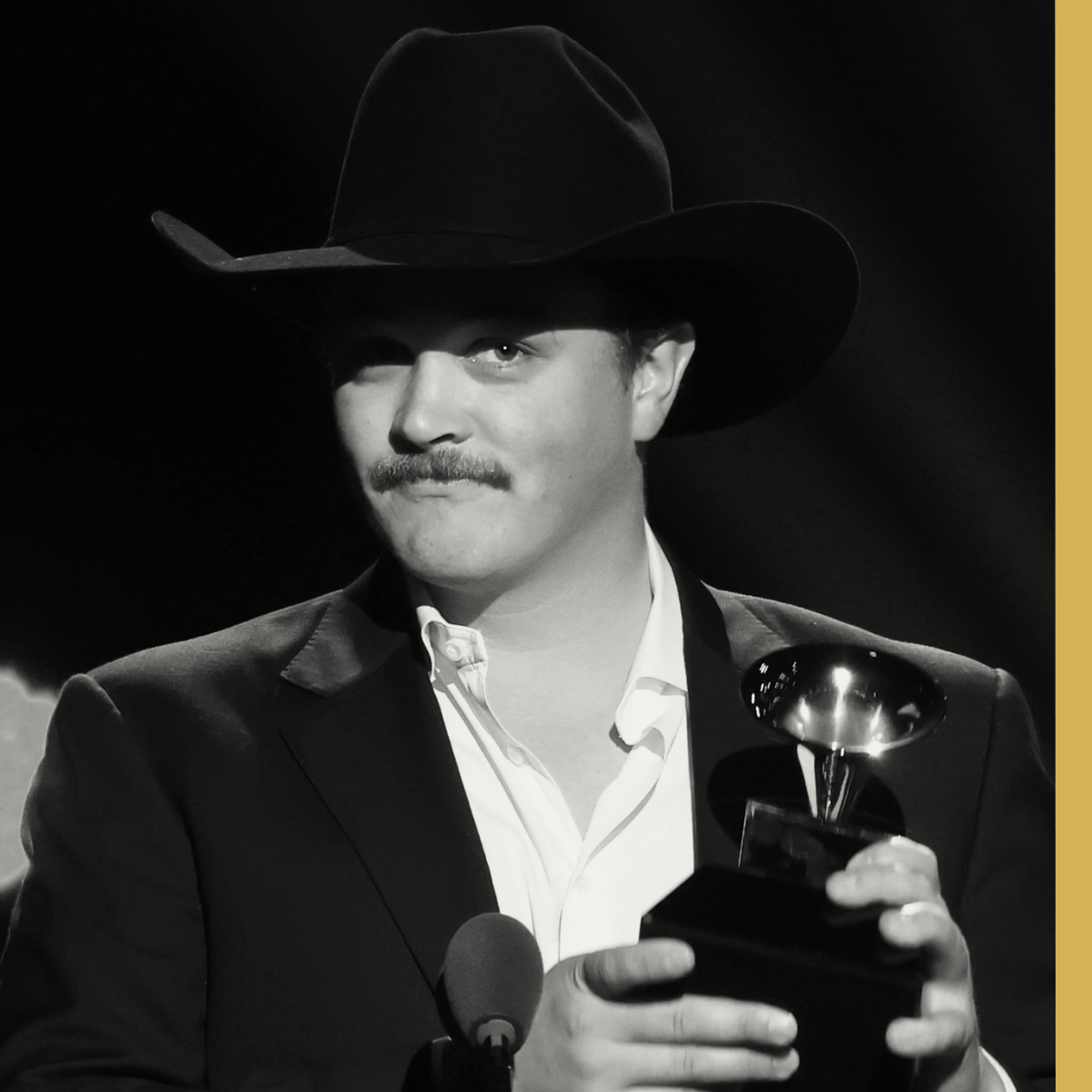
BGS 5+5: Luca Fogale

Artist: Luca Fogale
Hometown: Vancouver, British Columbia, Canada
Latest Album: Challenger (out January 30, 2026)

What other art forms – literature, film, dance, painting, etc. – inform your music?

I’m really inspired by cinema and have loved movies ever since I was young. As someone with a very limited set of creative skills outside of music, I find so many elements of the craft of filmmaking so impressive. I am very grateful for how many beautiful films I’ve been able to watch in my life; to see our humanity reflected in such a diverse and dynamic way.

Whether intentional or not, I know that there are always a handful of movies that have inspired songs and albums of mine (It’s a Wonderful Life was one of the starting points for my song “Youth,” about recognizing the passage of time and having dreams of life turning out differently. And Arrival [informed] my song and album Nothing is Lost, in beginning, thinking about time and language not as linear, but circular.)

Which elements of nature do you spend the most time with and how do they impact your work?

Water seems to always be what I’m called towards. I’ve spent a lot of my life near lakes and the ocean, and I recognize how much peace and solace I feel near bodies of water; to be able to watch the world flow and breathe through the rivers and tides. I think it has informed my process in the slow intentionality with which I try to work, as well as given me a deep reverence for the natural world.

How often do you hide behind a character in a song or use “you” when it’s actually “me”?

While I don’t know for certain if I hide behind the characters in my songs, I definitely step outside of myself often and view myself in the third person in order to try to get a glimpse of something objective; to look at my life from a bit of a wider angle. I spend so much of my time inside my own head that when I can use music and lyrics to see myself and my current reality from another vantage point, it always helps me to understand myself a bit better.

If you didn’t work in music, what would you do instead?

At this moment, fueled by my current obsession with chairs, if I wasn’t working in music I would love to take a swing at designing and building furniture. I often crave work that is more physical, while still being creative, and the time I spend as a hobbyist carpenter making (very crude) prototypes of chairs and tables has been some of the deepest peace I’ve felt, and something that feels separate but parallel to making music, resulting in a tactile and immediately useful outcome of time spent.

What would a perfect day as an artist and creator look like to you?

I feel lucky to have experienced a couple of different versions of answers to this question. As a songwriter, I would spend some time reading, followed by having a friend come over to my little home studio to write some music, share a meal afterwards, and perhaps some time spent writing solo afterwards.

As a touring artist, it would look like the day I had today as I type this. My band and crew and I had some breakfast together after a day of rehearsal yesterday, got on a flight to LA, arrived, had a beautiful dinner, and are now heading to bed at the hotel before our show here in town tomorrow. All I could ever ask for.


Photo Credit: Brandon Artis

Kashus Culpepper Dreams Big on Act I

Elton John described him as “if Bill Withers made country music,” but for Kashus Culpepper that only scratches the surface of his unique sound, the multitudes of which are displayed in full force on his full-length debut Act I, which was released January 23.

Growing up in Alexander City, Alabama, the singer was always around music, whether it be in church or in the car, but aspirations for a career performing didn’t materialize for the former firefighter and EMT until he found himself stationed in Spain as a Navy corpsman during the pandemic.

“I wasn’t much of a player, but I was listening to so much music growing up,” recalls Culpepper. “I had headphones on all day, even at school, which caused me to get in trouble quite a bit. I would’ve loved to play back then too, but garage bands weren’t really a thing in our town when I was growing up. If they were, I would’ve tried jumping in with folks in a flash.”

During his period of isolation abroad, Culpepper was gifted a guitar, leading him to learn how to play and to eventually post cover songs online. After leaving the Navy in 2022, he returned stateside and began booking cover act shows at honky-tonks and dive bars across the Mississippi Gulf Coast. Although he immediately loved what he was doing, he also noticed that only playing other people’s material would have a short shelf life.

“Once I realized the cover thing would run its course, I knew in order to make a career in music that I needed to start writing my own songs,” he explains. “For so long the thought of writing my own songs and having people sing them back to me was just a silly dream, but now, less than three years later, I’m releasing an 18-track album I helped write the entirety of.”

Ranging from country to blues, rock and roll, pop, and soul, Act I is a full-on musical onslaught that caps off an amazing five-year journey for Culpepper, setting the stage for a continued meteoric rise in the years to come. On the album he’s joined by fellow stars-on-the-rise Marcus King (“Southern Man”) and Sierra Ferrell (“Broken Wing Bird”). But where the compilation really shines is on the tracks in between, like “Alabama Beauty Queen” and “Break Like Me,” that see Culpepper not only pouring his heart out, but doing so with catchy hooks and differentiating styles while remaining fully authentic to who he is – a Southern man making Southern music.

Less than two weeks before Act I’s arrival, Culpepper spoke with Good Country over the phone about his love for Tyler Childers, the importance of co-writing all the album’s material, what it was like earning the support of Samuel L. Jackson, how his collaboration with Sierra Ferrell on “Broken Wing Bird” came about, and more.

How far back do the origins of these 18 songs go? Are most from those early days of writing in 2023 or more recently as you’ve refined your voice?

Kashus Culpepper: Well, the ones that’s already been out [as singles], they’re definitely from around the same time that I was starting out writing. But a lot of songs that haven’t been put out yet, aside from “In Her Eyes” and “Mean To Me,” are all a little more recent.

In reality, none of these songs are that old if you didn’t start writing until 2023!

Exactly! When you think about it, none of these are that old. There’s so many artists who’ve been holding on to songs for years and years – like Chris Stapleton, who just won a GRAMMY for “White Horse” over a decade after first writing it.

Why was it important for you to have a hand in writing all 18 of these songs?

I’m all about developing myself as a songwriter, because it’s something that I can do for the rest of my life even after all the performance stuff is done. Songwriting is something that I truly believe in and love, so I want to be the best at it that I possibly can be. And to be the best at what you’re trying to do, you have to do it all the time and you have to write with people that are way better than you. That’s what I’ve been able to do with this record. I’ve been writing with people that are way better at writing than me. It’s been amazing.

The record is called Act I. Does that mean it’s part of a larger body of music to come?

At the moment, I don’t really know. I called it Act I not as an introduction to who I am, but because I’m a big movie guy. I love theater, movies, dramatics, all of it.

With that in mind, I know you had a run-in with A-list movie star and one of your biggest heroes, Samuel L. Jackson. What was that like?

Samuel L. Jackson is one of my favorite actors of all time. I got a connection with him when “After Me?” was coming out. It definitely makes the world feel a lot smaller when some of your favorite actors or your favorite artists know who you are. A lot of times growing up you think you will never be in connection with your idols, so it really was a humbling experience. It made me realize that anything is possible.

If you have a dream, you can do it. If one day you want to talk to Oprah Winfrey, you can. Don’t take your foot off the pedal just yet!

Has that one happened for you?

No, I have not talked to Oprah Winfrey, but I would like to! And you get a car! And you get a car! [Laughs]

With regard to “After Me?,” wasn’t that one of your first original songs to gain traction online?

My first big song on socials was “Who Hurt You,” but following that I posted a clip of “After Me?” and everything just went crazy. I’m really glad I put it up on socials after writing it with my boy Mark Addison. We didn’t think anything of it at the time – we were just writing. It’s been insane seeing what the song has turned into since then, especially live.

That’s another thing – it’s been cool to see all the new songs develop their own personality with the crowd. For a while, “After Me?” was people’s favorite song, but now it’s been overthrown by some of the newer ones, which I like because it tells me that I’m continuing to write new songs that people want to hear.

Was it always your vision for your debut project to be this massive or did it unknowingly balloon to 18 songs while in the studio?

I think it was the fact that I had so many great songs in my brain that showed the timestamp of a point in my music career and what I’m doing as an artist. Also, I didn’t want to hold back songs that I thought would be cool for my next project – I needed to put them out right now. When people listen to it, I want them to know exactly what was in my head at the moment I was creating it. That way it and everything I do that comes after it can always stand on its own.

You mentioning a desire to curate a specific moment in time reminds me of the intro track that kicks off Act I, where you’re playing the role of a radio DJ on KC 97 FM. Was that intentional on your part?

That’s exactly where I was trying to go with it. I was just trying to show people what it’s like in my head and trying to transport them to a new world as soon as the record starts. If you listen to it start to finish it feels like a radio station tailored by me. My goal is to bring listeners into my world. I hope people don’t skip it, because if they listen to it top to bottom, they’ll understand. It’s like, “Okay, Kash is curating a playlist with all kinds of influences, because he is a man with different sides to him as a person and musically.” I don’t really care about this or that in terms of genre, so long as the song makes me feel something.

And who knows… maybe someday Apple Music or iHeartRadio will come calling and give you the keys to your own real-life KC 97 FM?!

Don’t tempt me! [Laughs] I would love to do something like that. I don’t have time for it right now, but I would make time!

@kashculpeppermusic Messed up kid- Tyler Childers #tylerchilders #countrymusic #fypシ ♬ original sound – Kashus Culpepper

I know the church was a large part of your early musical upbringing, but what role did the radio play in all of it, if any?

For sure. I don’t remember the name of the radio stations, but there was something about summertime in small town ‘Bama, driving around with the windows down that was so freeing. And country music has always given me that same type of feeling. At the same time, I have so many memories not only with country, but also with soul and pop records. I remember a time when I’d even go around singing along to Lady Gaga.

Then when I was in the military and I found out about guys like Tyler Childers, Sturgill Simpson, and Kolton Moore, they turned into my backroad jams and even went on to inspire me to eventually start writing songs myself.

Speaking of Tyler Childers, didn’t you have a moment with his song “Messed Up Kid”?

Yeah, that was one of the first ones that really started popping off for me. Since then I’ve also done “Lady May” – which got a good response, too. I just love Tyler’s music. He’s got one of the most soulful voices I’ve heard in a long time. It reminds me of people I was in church with. In a way, I feel like Tyler and I probably went to the same church growing up. I’ve just connected with his music so much. Not just Tyler, but a lot of other people in Kentucky, too, now that I think about it. One thing musicians from there have in common is they love singing from their soul and being authentic.

Since you were just speaking about soul, one of the most soulful songs on Act I from my perspective is “Break Me Like.” Mind telling me about it?

That song definitely draws from the fact that I am with someone that I should not be with, but it’s okay because we’re in this moment and I know what she’s gonna do to me and it’s fine since right now I need to be with somebody. “Break Like Me” started with that idea in mind, then I had these really weird chords that I came up with while writing with Grady [Block] and Hank [Compton] over at Big Loud. After fumbling around with the lyrics that I had in my head, I came up with something that had a real funky, low-fi kind of vibe. We wanted it to tell a story and be relatively heavy, but while giving it production worthy of cruising to and vibing out with.

What about “Broken Wing Bird” with Sierra Ferrell. How did you bring her aboard, and did you always envision the song as a duet?

I wrote that song with my producer, Brian Elmquist, and at the time wasn’t thinking about it as a duet. We’re both lovers of Willie Nelson and wanted a song that felt like you could be on your back porch and listen to it morning, afternoon, or night with a drink in hand and not have to think about it too much. It’s a song that makes you feel warm and feel at home, but it wasn’t until the production of it when we thought about doing it as a duet.

Once the idea got brought up, one of us made the comment that whoever it is, it would have to be someone that has a voice that feels like it’s not from this time. Eventually Sierra’s name came up and it was like a lightbulb going off. She’s literally the first person that I would want in the whole world to be on this record, but I wasn’t sure if she’d be available to do it. Once we got the green light my excitement went through the roof. I’m so proud that she’s on this record, because she’s an artist that I truly love. I’m hoping somewhere down the line we might have something in the works that’s a bit longer of a project too.

I (and most other people) would not be against that one bit!

Looking back over the past five years, what has your musical journey thus far and bringing Act I to life taught you about yourself?

For so long, I thought I didn’t belong in places, that I wasn’t able to do this or that. The biggest thing I’ve learned is to just dream big because you never know what could happen. You just have to believe in yourself and you can do anything, no matter how crazy it sounds. For the longest time, I didn’t have a dream of doing music because I just thought I couldn’t do it. I thought I wasn’t the kind of person to be singing songs on stage, but look at me now!

With you referencing dreaming big I have to ask, what’s next on your musical bucket list?

My goal is to just keep creating, growing as a songwriter and learning more about myself along the way. If I do that I feel like everything else will follow and I’ll keep growing as a songwriter and as a promoter.


Photo Credit: Cedrick Jones

Artist of the Month: The Infamous Stringdusters

During the Infamous Stringdusters’ recent holiday gig at The Orange Peel in Asheville, North Carolina, the storied venue was packed out with jamgrass freaks, the performance itself a kickoff of sorts for the band’s 20th anniversary in 2026. I found myself standing sidestage when show opener Bronwyn Keith-Hynes came up next to me. A smile emerged on her face taking in the band and the audience.

“The Stringdusters made me want to start a band,” the GRAMMY-winning fiddler said, turning to me. “The Fork In The Road album was the most influential modern bluegrass album for me when I was at Berklee.”

Keith Hynes’ sentiment conjured numerous memories and moments I’ve been lucky enough to be a part of when it comes to the ‘Dusters. The first time I ever laid eyes and ears on them, it was the 2008 Targhee Bluegrass Festival in Alta, Wyoming. I was 23 years old and a rookie reporter for the Teton Valley News, based just down the mountain in Driggs, Idaho. By that point in my life, both personally and professionally, I was diving deep into the jamgrass world – the intersection of ancient tones, psychedelia, improvisation, and a collective love of the Grateful Dead.

The initial spark of the modern jamgrass movement was lit by Yonder Mountain String Band, Leftover Salmon, and the String Cheese Incident, all three acts coming into the national spotlight by the end of the 1990s. A musical template had been formed, and the ‘Dusters would emerge in the early 2000s to throw gasoline onto that melodic fire, ultimately becoming a missing link (alongside Greensky Bluegrass) between jamgrass originators, those ‘90s propagators, and folks currently carrying the torch into new, exciting realms: Billy Strings, Sierra Ferrell, Molly Tuttle, Sierra Hull, and more.

“That’s what’s so beautiful about bluegrass music, in particular,” Stringdusters fiddler Jeremy Garrett told me recently. “You pass it on to the next generation and they take it and they do their thing with it. Luckily for us, we were around at a time that [that] was very important, and a transitional time in the industry.”

In 2010, a couple of years after my introduction to the band at Targhee, when I returned to my native North Country of Upstate New York, I found myself covering a show at the intimate Showcase Lounge at Higher Ground in Burlington, Vermont. I was there to see the ‘Dusters once again. Their sound and energy immediately transported me back to the Rocky Mountains that I missed dearly. (Sharing the bill was another rising jamgrass act, Trampled by Turtles.)

I remember walking away from that gig feeling in awe and refreshed with a genuine feeling that something was happening. Something was on the horizon when it came to bluegrass and string band music. This wasn’t a traditional bluegrass band in matching suits, standing like statues. It was a rock show with acoustic instruments. Baseball caps and long hair, grins ear-to-ear. More provocative than standstill, more vibrant than just going through the motions of what past generations were instructed to do.

“Being able to showcase our own songs, in our own way, [our] writing skills, and making the decisions on what was chosen to play and how to play it [were] foremost for most of us at the beginning,” Garrett says. “Over time, we realized that we were actually growing a community. And after all these years, that honestly has become the most important part, the most important thing that we could possibly do.”

What I witnessed in Wyoming and Vermont years ago is what I’ve continued to experience with the Infamous Stringdusters, in person and in method, from Florida to Colorado and beyond. They set the pace then for where we stand with jamgrass right now, built on a full-throttle approach, one which remains sonically elusive as well as paying homage to the architects of bluegrass and those who broke from the pack and made something all their own.

Aside from the talents of the Stringdusters, either as individuals or the sum of their parts, you also have a unique setup. Alongside founding members, banjoist Chris Pandolfi and Dobroist Andy Hall, who emerged from the prestigious Berklee College of Music in Boston, you have the tradgrass pedigree of Garrett, who was born and raised in a traveling family bluegrass band hailing from Idaho. This fusing of road-tested grit and grace with conservatory-style techniques is at the heart of what this group does best: jam.

All of which circles back to the Asheville Orange Peel performance in late 2025. There were tightly knit melodies and freewheelin’ improvisational explorations. They broke down the invisible walls between themselves and the audience, maintaining a two-way street of momentum, energy, and inspiration from both sides of the microphone – a vortex of sound and scope, all revolving around a deep sense of community.

“The band is stronger than ever and making some of the best music we’ve ever made,” Garrett says. “But, the thing I see that is the most important being carried on is that community factor. We certainly didn’t invent that, but we took note and applied the philosophy to our scene, and hopefully the next generation realizes how important that piece is.”

Ultimately, this 20th anniversary celebration for the Infamous Stringdusters is a culmination of a tried-and-true effort to bring this hallowed music into the unknown and unfolding musical landscape of the 21st century. With their upcoming album, 20/20 (out February 13 via Ameriana Vibes) they continue their efforts to break new ground and forge ahead, together, whatever the next 20 years hold for jamgrass and the ‘Dusters.

The Infamous Stringdusters are our Artist of the Month. Below, enjoy our Essential Infamous Stringdusters playlist and stay tuned as we share brand new and archive content on the ‘Dusters throughout the month of February here on BGS – and across our social media channels. Like our exploration of their 20-year discography or our oral history of the band featuring all five members in conversation.


Photo Credit: Daniel Milchev

See the Winners from the 2026 GRAMMY Awards

The 2026 GRAMMY Awards were handed out on February 1, 2026, by the Recording Academy at the Crypto.com Arena in Los Angeles, California. Broadcast live on CBS, the primetime awards show is now viewable on demand on Paramount+. Earlier in the afternoon, the GRAMMY Premiere Ceremony, which was streamed via the GRAMMYs website and on YouTube, was held at the Peacock Theater, handing out dozens and dozens of additional awards across fields and categories.

Best Bluegrass Album was announced during the Premiere Ceremony. This year, nominees included Michael Cleveland & Jason Carter (Carter & Cleveland), Sierra Hull (A Tip Toe High Wire), Alison Krauss & Union Station (Arcadia), the SteelDrivers (Outrun), and Billy Strings (Highway Prayers). Strings took home the award, racking up his third gramophone in the category. While Hull, who was nominated in four categories, including Best Bluegrass Album, did not take home any GRAMMY Awards yesterday, she was featured during the Premiere Ceremony as a presenter and she made an appearance on the red carpet for the primetime awards show. Roots/bluegrass/folk supergroup I’m With Her – featuring Sarah Jarosz, Aoife O’Donovan, and Sara Watkins – were nominated and won twice, taking home the Best Folk Album trophy for Wild and Clear and Blue and the award for Best American Roots Song for “Ancient Light.”

Tyler Childers, who was nominated in four categories this year, received his first-ever GRAMMY Award for Best Country Song for “Bitin’ List,” a viral sensation from his critically acclaimed 2025 album, Snipe Hunter. The LP had been nominated for Best Contemporary Country Album – in one of the much buzzed-about split categories of Best Contemporary Country Album and Best Traditional Country Album – but the trophy went to Jelly Roll’s Beautifully Broken instead. In the other split category, upstart fan favorite Zach Top took home the Traditional Country honor for his sophomore release, Ain’t In It For My Health. It marks Top’s first GRAMMY Award.

Of course, beyond the Country & American Roots Music field, folk and roots music were represented in peak form across the many genres and categories of the 68th Annual GRAMMY Awards. Album of the Year was awarded to Bad Bunny’s DeBÍ TiRAR MáS FOToS, one of the best roots projects of last year as selected by the BGS Class of 2025. From the Premiere Ceremony and Best Bluegrass Album to the primetime broadcast and Album of the Year, roots music is and always has been a keystone of the biggest night in music.

Below, find the complete list of winners (in bold) from the Country & American Roots Music field, plus select categories featuring roots musicians, artists, and projects from across the various other GRAMMY fields and categories.

Country & American Roots Music

Best Country Solo Performance

“Nose On The Grindstone” – Tyler Childers
“Good News” – Shaboozey
“Bad As I Used To Be” – Chris Stapleton
“I Never Lie” – Zach Top
“Somewhere Over Laredo” – Lainey Wilson

Best Country Duo/Group Performance

“A Song To Sing” – Miranda Lambert, Chris Stapleton
“Trailblazer” – Reba McEntire, Miranda Lambert, Lainey Wilson
“Love Me Like You Used To Do” – Margo Price, Tyler Childers
“Amen” – Shaboozey, Jelly Roll
“Honky Tonk Hall Of Fame” – George Strait, Chris Stapleton

Best Country Song

“Bitin’ List” – Tyler Childers, songwriter. (Tyler Childers)
“Good News” –  Michael Ross Pollack, Sam Elliot Roman, Jacob Torrey, songwriters. (Shaboozey)
“I Never Lie” – Carson Chamberlain, Tim Nichols, Zach Top, songwriters. (Zach Top)
“Somewhere Over Laredo” – Andy Albert, Trannie Anderson, Dallas Wilson, Lainey Wilson, songwriters. (Lainey Wilson)
“A Song To Sing” – Jenee Fleenor, Jesse Frasure, Miranda Lambert, Chris Stapleton, songwriters. (Miranda Lambert, Chris Stapleton)

Best Traditional Country Album

Dollar A Day – Charley Crockett
American Romance – Lukas Nelson
Oh What A Beautiful World – Willie Nelson
Hard Headed Woman – Margo Price
Ain’t In It For My Health – Zach Top

Zach Top accepts the Best Traditional Country Album award for ‘Ain’t In It For My Health’ during the 68th GRAMMY Awards Premiere Ceremony. (Photo by Matt Winkelmeyer/Getty Images for The Recording Academy.)

Best Contemporary Country Album

Patterns – Kelsea Ballerini
Snipe Hunter – Tyler Childers
Evangeline Vs. The Machine – Eric Church
Beautifully Broken – Jelly Roll
Postcards From Texas – Miranda Lambert

Best American Roots Performance

“LONELY AVENUE” – Jon Batiste, Featuring Randy Newman
“Ancient Light” – I’m With Her
“Crimson And Clay” – Jason Isbell
“Richmond On The James” – Alison Krauss & Union Station
“Beautiful Strangers” – Mavis Staples

Best Americana Performance

“Boom” – Sierra Hull
“Poison In My Well” – Maggie Rose, Grace Potter
“Godspeed” – Mavis Staples
“That’s Gonna Leave A Mark” – Molly Tuttle
“Horses” – Jesse Welles

Best American Roots Song

“Ancient Light” – Sarah Jarosz, Aoife O’Donovan, Sara Watkins, songwriters. (I’m With Her)
“BIG MONEY” – Jon Batiste, Mike Elizondo, Steve McEwan, songwriters. (Jon Batiste)
“Foxes In The Snow” – Jason Isbell, songwriter. (Jason Isbell)
“Middle” – Jesse Welles, songwriter. (Jesse Welles)
“Spitfire” – Sierra Hull, songwriter. (Sierra Hull)

Best Americana Album

BIG MONEY – Jon Batiste
Bloom – Larkin Poe
Last Leaf On The Tree – Willie Nelson
So Long Little Miss Sunshine – Molly Tuttle
Middle – Jesse Welles

Best Bluegrass Album

Carter & Cleveland – Michael Cleveland & Jason Carter
A Tip Toe High Wire – Sierra Hull
Arcadia – Alison Krauss & Union Station
Outrun – The SteelDrivers
Highway Prayers – Billy Strings

(L-R) Brandy Clark, Reba McEntire, and Lukas Nelson perform onstage during the 68th GRAMMY Awards. (Photo by Kevin Winter/Getty Images for The Recording Academy.)

Best Traditional Blues Album

Ain’t Done With The Blues – Buddy Guy
Room On The Porch – Taj Mahal & Keb’ Mo’
One Hour Mama: The Blues Of Victoria Spivey – Maria Muldaur
Look Out Highway – Charlie Musselwhite
Young Fashioned Ways – Kenny Wayne Shepherd & Bobby Rush

Best Contemporary Blues Album

Breakthrough – Joe Bonamassa
Paper Doll – Samantha Fish
A Tribute To LJK – Eric Gales
Preacher Kids – Robert Randolph
Family – Southern Avenue

Best Folk Album

What Did The Blackbird Say To The Crow – Rhiannon Giddens & Justin Robinson
Crown Of Roses – Patty Griffin
Wild And Clear And Blue – I’m With Her
Foxes In The Snow – Jason Isbell
Under The Powerlines (April 24 – September 24) – Jesse Welles

Best Regional Roots Music Album

Live At Vaughan’s – Corey Henry & The Treme Funktet
For Fat Man – Preservation Brass & Preservation Hall Jazz Band
Church Of New Orleans – Kyle Roussel
Second Line Sunday – Trombone Shorty And New Breed Brass Band
A Tribute To The King Of Zydeco – Various Artists

Molly Tuttle walks the red carpet at the 68th GRAMMY Awards. (Photo by John Shearer/Getty Images for The Recording Academy.)

General Field

Producer of the Year (Non-Classical)

Dan Auerbach
Cirkut
Dijon
Blake Mills
Sounwave

Jazz, Traditional Pop, Contemporary Instrumental & Musical Theater

Best Jazz Performance

“Noble Rise” – Lakecia Benjamin, Featuring Immanuel Wilkins & Mark Whitfield
“Windows – Live” – Chick Corea, Christian McBride & Brian Blade
“Peace Of Mind / Dreams Come True” – Samara Joy
“Four” – Michael Mayo
“All Stars Lead To You – Live” –  Nicole Zuraitis, Dan Pugach, Tom Scott, Idan Morim, Keyon Harrold & Rachel Eckroth

Best Jazz Instrumental Album

Trilogy 3 (Live) – Chick Corea, Christian McBride & Brian Blade
Southern Nights – Sullivan Fortner, Featuring Peter Washington & Marcus Gilmore
Belonging – Branford Marsalis Quartet
Spirit Fall – John Patitucci, Featuring Chris Potter & Brian Blade
Fasten Up – Yellowjackets

Best Alternative Jazz Album

honey from a winter stone – Ambrose Akinmusire
Keys To The City Volume One – Robert Glasper
Ride into the Sun – Brad Mehldau
LIVE-ACTION – Nate Smith
Blues Blood – Immanuel Wilkins

Best Traditional Pop Vocal Album

Wintersongs – Laila Biali
The Gift Of Love – Jennifer Hudson
Who Believes In Angels? – Elton John & Brandi Carlile
Harlequin – Lady Gaga
A Matter Of Time – Laufey
The Secret Of Life: Partners, Volume 2 – Barbra Streisand

Best Contemporary Instrumental Album

Brightside – ARKAI
Ones & Twos – Gerald Clayton
BEATrio – Béla Fleck, Edmar Castañeda, Antonio Sánchez
Just Us – Bob James & Dave Koz
Shayan – Charu Suri

Sierra Hull speaks on stage during the 68th GRAMMY Awards Premiere Ceremony. (Photo by Matt Winkelmeyer/Getty Images for The Recording Academy.)

Gospel & Contemporary Christian Music

Best Roots Gospel Album

I Will Not Be Moved (Live) – The Brooklyn Tabernacle Choir
Then Came The Morning – Gaither Vocal Band
Praise & Worship: More Than A Hollow Hallelujah – The Isaacs
Good Answers – Karen Peck & New River
Back To My Roots – Candi Staton

Latin, Global, Reggae & New Age, Ambient, or Chant

Best Música Mexicana Album (Including Tejano)

MALA MÍA – Fuerza Regida, Grupo Frontera
Y Lo Que Viene – Grupo Frontera
Sin Rodeos – Paola Jara
Palabra De To’s (Seca) – Carín León
Bobby Pulido & Friends Una Tuya Y Una Mía – Por La Puerta Grande (En Vivo) – Bobby Pulido

Best Global Music Performance

“EoO” – Bad Bunny
“Cantando en el Camino” – Ciro Hurtado
“JERUSALEMA” – Angélique Kidjo
“Inmigrante Y Que?” – Yeisy Rojas
“Shrini’s Dream (Live)” – Shakti
“Daybreak” – Anoushka Shankar, Featuring Alam Khan, Sarathy Korwar

Children’s, Comedy, Audio Books, Visual Media & Music Video/Film

Best Song Written For Visual Media

“As Alive As You Need Me To Be” [From TRON: Ares] – Trent Reznor & Atticus Ross, songwriters. (Nine Inch Nails)
“Golden” [From KPop Demon Hunters] – EJAE & Mark Sonnenblick, songwriters. (HUNTR/X: EJAE, Audrey Nuna, REI AMI)
“I Lied to You” [From Sinners] – Ludwig Göransson & Raphael Saadiq, songwriters. (Miles Caton)
“Never Too Late” [From Elton John: Never Too Late] – Brandi Carlile, Elton John, Bernie Taupin & Andrew Watt, songwriters. (Elton John, Brandi Carlile)
“Pale, Pale Moon” [From Sinners] – Ludwig Göransson & Brittany Howard, songwriters. (Jayme Lawson)
“Sinners” [From Sinners] – Leonard Denisenko, Rodarius Green, Travis Harrington, Tarkan Kozluklu, Kyris Mingo & Darius
Povilinus, songwriters. (Rod Wave)

Production, Engineering, Composition & Arrangement

Best Instrumental Composition

“First Snow” – Remy Le Boeuf, composer. (Nordkraft Big Band, Remy Le Boeuf & Danielle Wertz)
“Live Life This Day: Movement I” – Miho Hazama, composer. (Miho Hazama, Danish Radio Big Band & Danish National Symphony Orchestra)
“Lord, That’s A Long Way” – Sierra Hull, composer. (Sierra Hull)
“Opening” – Zain Effendi, composer. (Zain Effendi)
“Train To Emerald City” – John Powell & Stephen Schwartz, composers (John Powell & Stephen Schwartz)
“Why You Here / Before The Sun Went Down” – Ludwig Göransson, composer. (Ludwig Göransson, Featuring Miles Caton)


Photo Credit: All photos by Getty Images for the Recording Academy, courtesy of the Recording Academy. Photographer credits as marked.

Lead and Alternate Images: I’m With Her, (L to R) Sara Watkins, Aoife O’Donovan, and Sarah Jarosz, accept the GRAMMY for Best Folk Album. Shot by Matt Winkelmeyer/Getty Images for the Recording Academy.

The Foreign Landers Celebrate the Banjo in Ireland & Northern Ireland

The five-string banjo is often associated with Appalachian music, but its reach has always extended beyond one place. In Ireland, the banjo is traditionally heard as the four-string tenor banjo, a cornerstone of Irish folk music. This playlist celebrates the banjo in Ireland and Northern Ireland, but focuses instead on five-string banjo players, highlighting Irish and Northern Irish artists who are bringing bluegrass banjo into folk, Americana, and contemporary acoustic settings. The tracks here feature musicians working across traditions and genres, using the banjo as a bridge rather than a boundary.

For us, The Foreign Landers, this playlist is closely tied to our own story. Our songs, woven throughout the playlist, reflect life lived between Northern Ireland and the U.S., and the relationships, faith, and sense of distance that shape that experience. In a small way, that mirrors the five-string banjo’s own journey across time and place. Our new album, Made to Wonder, is our expression of these ideas; including our music alongside these other innovative artists helps frame our transatlantic sound within a much larger conversation.

Alongside our music, you’ll hear boundary-pushing banjo work from artists like Flook, JigJam, Damien O’Kane, Ron Block, I Draw Slow, Brian Finnegan, and NÁVA, each offering a different answer to the same question: What does bluegrass banjo become when it’s rooted in Irish soil?

The result is a playlist that honors tradition while continuing to move forward. We hope you enjoy. – The Foreign Landers

“Made to Wonder” – The Foreign Landers

The title track from our new album, this banjo-centric song is about stepping away from noise and busy-ness to find true rest and belonging in Christ, whose yoke is easy and burden light. Featuring Tristan Clarridge (Crooked Still) on cello, adding depth and resonance.

“Road to Errogie” – Flook

There’s something infectious about Flook’s craftsmanship and energy – especially when five-string banjo enters the mix, played by the incredible Leon Hunt of the UK. A major influence on our sound.

“Gold Mine” – I Draw Slow

Irish-based and deeply rooted in both Appalachian and Irish traditions, this clawhammer-driven track blends heritage with heart.

“Johnny’s Peacock / The Red-Tailed Hawk” – The Foreign Landers

Two original tunes deeply informed by Tabitha’s heritage, joined by John Doyle, Brian Finnegan, and Cathal Murphy, bringing Irish tradition and bluegrass energy together.

“John D. McGurk’s (The Heartbeat of St. Louis)” – JigJam

JigJam seamlessly bridge U.S. and Irish folk scenes. Irish banjoist Daithí Melia delivers powerful five-string work on this fun, high-energy track.

“Mario Kart Rides Again” – Ron Block & Damien O’Kane

Two banjos – five-string and four-string – done right. Ron Block of Alison Krauss & Union Station and Damien O’Kane of the Kate Rusby band make for an unxpected delightful pairing. Here is a playful, virtuosic track from their album Banjovial that’s near to Mario Kart-loving hearts.

“Pictures” – The Foreign Landers

Led vocally by David with Tabitha on banjo, this original song draws on our own experience of long-distance dating. “Pictures” captures the quiet weight of distance – and how old photographs can briefly collapse time and place. The unconventional role of banjo on this track is one of our favorite sounds on the new album.

“Marga’s” – Brian Finnegan

A must-include from the County Armagh master himself, featuring Crooked Still with Greg Lizst on five-string banjo. Both four-string and five-string banjo shine in this expansive, genre-blurring piece.

“The Thrifty Wife” – Ron Block & Damien O’Kane

Another Ron and Damien double-banjo banger. Their three collaboration albums are essential listening when talking about banjo in Irish music. Bonus mando moments from Sierra Hull seal the deal.

“Traveler”– The Foreign Landers

Narrated from the perspective of Tabitha’s parents back in Northern Ireland, “Traveler” reflects on growing older, separation, and the tenderness of loving someone from afar. Another unconventional banjo track that we loved making.

“Magic Box” – Nava

Irish Americana and folk meet Persian influences, led by Ireland’s Paddy Kiernan on five-string banjo. A rich example of cross-cultural musical exploration.

“Hope” – Cup O’Joe

Featuring Tabitha’s two brothers (alongside David and Tabitha), this title track from Why Live Without blends Northern Irish roots with progressive Americana.


Photo Credit: Nicole Davis, Storied Artisan Photography

You Gotta Hear This: New Music From Dailey & Vincent, Lily Meola, and More

For a week of wintry weather over much of the U.S., here’s some brand new music to keep you warm.

To kick us off, singer-songwriter Karen Dahlstrom calls on the Milk Carton Kids’ Kenneth Pattengale for a new single, “The Last of My Line.” Finger-picked acoustic guitar scores a contemplative and devastating “hobo song” about lineage, family, and circumstance – and the existential feelings surrounding being the last in your family line. Ohioan alt-Americana trio Oliver Hazard have a new song out today, as well. “Hold On” is infused with folk-rock sounds of the ’70s and built around a catchy guitar riff brought to the band by picker Devin East. It’s one of those songs that just “poured out.”

In bluegrass, country-grass superstars Dailey & Vincent return to their roots as only they could, with a rip-roaring and stratospheric rendition of a classic, “Ruby.” With an all-star cast of players behind them, the duo blazes through the iconic old-time song made popular in bluegrass by the Osborne Brothers. The D&V rendition is spotless; we hope it’s a harbinger of more bluegrass to come from their camp. Plus, Ashby Frank gives the bluegrass treatment to Dave Grohl and the Foo Fighters with “The Pretender.” Out today, it combines style points from both bluegrass and grunge in a deep and lush sonic swirl. Whatever your opinion about what is or is not “no part a nothin’,” the energies of both rock and string band are surprisingly well-matched.

You won’t want to miss Lily Meola’s new song, e8ther. Born in Hawaii, Meola makes modern, crisp country music that’s still rich in rootsy tradition and outlaw textures. “Never Kissed a Cowboy” celebrates that, as she puts it, “chivalry ain’t dead, I guess,” and the fun that can be found when doing a romantic dance with a gentleman instead of, well, a loser. It’s a dreamy country waltz that, while contemporary, seems like it could’ve been plucked from just about any decade in the genre’s history.

There’s certainly plenty to love and enjoy this week! You Gotta Hear This…

Karen Dahlstrom, “The Last of My Line” (featuring Kenneth Pattengale)

Artist: Karen Dahlstrom
Hometown: Brooklyn, New York
Song: “The Last of My Line” featuring Kenneth Pattengale
Album: Love These Days
Release Date: January 29, 2026 (single); March 27, 2026 (album)

In Their Words: “I’d never really thought about having children – I just assumed I would have them someday. But as the years went on, biology and circumstance made the decision for me. In working through my feelings about being – literally – the last of my family line (my dad was an only child, neither I nor my sisters have biological children), this song started to form. In the back of my mind, I held this idea of a simple, Woody Guthrie-style hobo song with a dash of Lyle Lovett’s ‘Family Reserve.’ I wrote the song I needed when I needed it, without any idea of whether it would resonate with anyone else. To my surprise, it’s one of the songs people say they connect with most.” – Karen Dahlstrom


Dailey & Vincent, “Ruby”

Artist: Dailey & Vincent
Hometown: Nashville, Tennessee
Song: “Ruby”
Release Date: January 30, 2026

In Their Words: “We’ve never believed bluegrass had to live in a box, but with ‘Ruby,’ we felt a strong pull to strip things back. It’s a reminder that even as you grow and experiment, you never forget your roots. This song reconnects us with that energy and joy that made us want to do this in the first place.” – Jamie Dailey and Darrin Vincent

Track Credits:
Bryan Sutton – Acoustic guitar
Darrin Vincent – Bass
Russell Carson – Banjo
Andy Leftwich – Fiddle
Dominick Leslie – Mandolin
Jamie Dailey – Vocals


Ashby Frank, “The Pretender”

Artist: Ashby Frank
Hometown: Nashville, Tennessee
Song: “The Pretender”
Release Date: January 30, 2026
Label: Mountain Home Music Company

In Their Words: “Bluegrass and hard rock often have a similar feeling of ‘drive’ to them; I guess it’s no surprise that many pickers that grew up listening to the shredding instrumentals of bluegrass also have a deep appreciation for great rock musicians. I’ve been a fan of Dave Grohl and the Foo Fighters since I was a teenager. I decided to take a giant leap that I’m not sure anyone’s ever made before and cover one of their most iconic songs with a bluegrass-meets-grunge treatment. I really had no idea what the final product would be when I made the decision to record ‘The Pretender,’ but I couldn’t be more proud of what we came up with.” – Ashby Frank

Track Credits:
Ashby Frank – Mandolin, lead vocal, harmony vocal
Seth Taylor – Acoustic guitar
Travis Anderson – Bass
Matt Menefee – Banjo
Tony Creasman – Drums


Oliver Hazard, “Hold On”

Artist: Oliver Hazard
Hometown: Waterville, Ohio
Song: “Hold On”
Release Date: January 30, 2026
Label: Nettwerk Music Group

In Their Words: “‘Hold On’ sounds like home to us. Devin came over one afternoon with a guitar riff he’d just written, and we sat down at the piano and the song just kind of poured out. It felt like the old ’70s records we loved listening to. It felt like growing up where we did – feeling the change of seasons, spending time in the local dives, that urge to leave town, but not wanting to let it go.” – Oliver Hazard


Lily Meola, “Never Kissed a Cowboy”

Artist: Lily Meola
Hometown: Nashville, Tennessee
Song: “Never Kissed A Cowboy”
Release Date: January 30, 2026
Label: Nettwerk Music Group

In Their Words: “My picker really did me dirty for a while, so when I experienced good ol’ fashioned gentleman behavior for the first time, it honestly threw me for a loop. I didn’t know how to receive it. I was like, ‘I can open my own door!?’ Then I started to see it from another perspective: having someone treat you like that is honestly really sweet. It might not be the most logical or efficient way of doing things, but damn, being treated like a princess is kinda fun, and being a gentleman is hot. So this is a love song honoring the men who go the extra mile.” – Lily Meola


Photo Credit: Dailey & Vincent by Greg Roth; Lily Meola by Jo Anna Edmison.

Emily Scott Robinson Stays Hopeful Through the Thick of It

Before embarking on a music career, Emily Scott Robinson worked as a social worker. The two occupations, she says, really overlap with who she is as a person. Talking from her home outside of Telluride, Colorado, Robinson shares that being a performing artist and playing shows has “a similar quality of service to it and connection that being a social worker did…”

“One of the things I loved about being a social worker is being able to help people,” she continues. “[Music] brings me a lot of joy and purpose. I get so much feedback from people that my songs help them. That’s the most important and meaningful thing that my music could do in this lifetime.”

On January 30, Robinson will launch Appalachia, her third release on Oh Boy Records and her fifth album overall. Its 10 tracks reveal her uncanny knack for conveying empathy, comfort, and compassion through a set of songs that explore topics such as a friend’s suicide, a grandparent’s death, her own divorce, and the destructive effects of Hurricane Helene on her home state of North Carolina.

Robinson recorded Appalachia with producer/musician Josh Kaufman (Bonny Light Horsemen, Josh Ritter) in late April and early May of 2025 at his Dreamland Recording Studios, near Woodstock, New York. Having loved his production work on Anaïs Mitchell’s 2022 self-titled album, Robinson wanted to work with him. “I want to make my version of what [Mitchell’s] record is,” she explains. She was thrilled that Kaufman not only was available to produce the album, but was also very excited about working with her.

Robinson’s road to becoming a singer-songwriter began when she was 14, when she went to a “super hippie summer camp,” as she describes it, in northern Michigan. There she fell in love with acoustic music she heard the counselors play at night during “mellow time” – songs by folks like Cat Stevens, Joni Mitchell, Dar Williams, and Ani DiFranco. After camp ended, she learned to play her mother’s old classical Yamaha guitar. Robinson loved to sing, but only played cover tunes whenever she would perform at coffee houses and open mic nights.

Her life changed, in many ways, when she took a Planet Bluegrass Song School workshop in 2014 while working as a social worker in Colorado. Besides learning about the art of songwriting, Robinson also discovered how to make a living as a musician. She quit her social worker job the next year and didn’t look back. “I felt such a strong sense of connection and purpose when I sang for people. Their response was so powerful, and I just thought this really feels like something I should pursue.”

That Robinson has a gift for words feels like a genetic inevitability. Her mother worked as a journalist and her father taught English. As she describes it, Robinson learned how to tell and edit a story from her mother, and how to write in a direct and active style from her father. “My parents taught me how to write… that stuff is burned into my brain,” she states. “I’m my parents’ child.”

2026 represents a significant career moment for Robinson with the new album arriving in January and tours crisscrossing the U.S. throughout the year. She took time out from a snowy winter morning to speak with BGS about Appalachia and the roads she took to make her album.

It has been several years since your last full-length album, 2021’s American Siren. How did this album come into being?

Emily Scott Robinson: It took me about four years to write this record. These are the songs written in the aftermath of a lot of upheaval and change in my life. I went through a divorce in 2021 and then moved away from Telluride the next year. And even though I didn’t move that far – I moved about an hour away – I left the only community that had really been home for me for about a decade.

And there were a lot of endings that felt really sad. Both my grandmothers passed away. [But] I also became a parent. I am now engaged to my partner, who has a nine-year-old son. And that has been amazing. So, my life kind of completely changed. These are all songs written in the thick of that – and [the] surrender and joy and grief all happening at once.

Was there a song that really kickstarted this album?

The first song I wrote for this album – and then it was the only one I had written for like a year and a half – was “Hymn for the Unholy,” which is, of course, the opening track. And that felt like my anthem. I wrote that song [when] I was going through this divorce. It was New Year’s Eve and I just couldn’t even fathom this whole movement of setting plans and goals for the new year when so many things felt like they were ending or becoming really unsure for me. It was the only new song I had for quite a while. And then, in about the last year and a half, I wrote almost all of the rest of the songs.

“Appalachia” I wrote right after Hurricane Helene hit Western Carolina. There were a couple songs that I wrote at a writer’s residency in Texas, [including] “Time Traveler” about my grandmother who passed away. I wrote “Cast Iron Heart” on another songwriting retreat. “And Bless It All” was really one of these songs that emerged that I wrote really quickly, like an homage to this chapter of life [about] raising a kid [and having] parents aging – like my generation is now doing the same.

“The Time For Flowers” is a song that you had for a while. How did that find its way on the album?

“Time For Flowers” is on here because it’s a song that has never lived on a full album. A lot of my fans would come up to me after shows and go, “Which record is ‘Time for Flowers’ on?’” … I released it in 2020 in the summer [during the pandemic as a single] and it grew legs and traveled far and wide. People started to perform it at funerals and with their choral groups and they started to sing it in church and ask for arrangements. It became a song that meant a tremendous amount to a lot of people.

I put a lot of heart and a lot of craft into that song. But the song has taken on its own life and that’s really beautiful for me to be a part of. And it means a lot again in 2025, to people who are living in what feels like an increasingly dark time. I wanted to put that on the album and to sing it in the way that I perform it at my shows, which is just acoustic.

I felt like, on this album, there was a feeling of expressing compassion and forgiveness and reassurance. A message of “finding a sense of strength” not only for yourself, but for listeners as well.

The one cover on the album is “The Water Is Wide” and I was wondering why you chose that old folk song to include.

I love that you wondered that because, to be quite honest, I felt a very strong instinct to put this song on here and I didn’t really know why. Sometimes I just feel a deep sense that needs to happen and so I just trust it and do it. I love that song and I had planned on putting it on there. I think, if I were to explain it on a more logical or grounded level, I would say that I felt that song – as old as it was – still speaks in both a deep and a fresh way. The lyrics strike me as being fresh and a little unusual every time. And it felt very timeless but also fresh, and so I just was drawn to it.

Sometimes I write a song, or I put a song on the record, and I just go, “I will find out later why I had to do this.” But, genuinely, I’ll find out along the way why it is that that song begs to be on this record. Also, Josh Kaufman, my producer, was so excited when I told him I wanted to put that song on there. He loves old folk songs and making them feel a little bit new or breaking them down a little bit and rebuilding them. And so do I, so it just kind of felt like it fit.

“The Fairest View,” which follows “The Water Is Wide,” closes the album. It holds an old folk song vibe although listening to it, you realize that it’s not.

“The Fairest View” was actually not a song that even existed until the last 24 hours that we were in the studio. My friend [songwriter Lizzie Ross] and I have a mutual friend who died before we were in the studio together. He really loved music and had grown up in Western North Carolina. He died by suicide and we were really writing this song for him, and to him. … We finished it the night before the final day. We were in such a great groove of creative flow that this just made total sense

I sent [Josh Kaufman] this voice memo. I think it was like 11:30 at night. I was like, “What do you think about putting this on the album tomorrow?” And he goes, “I dig it. Let’s do it!” He said that there was nothing really like this on the record, but it felt like it still fit sonically, lyrically, and melodically.

What were the important contributions that Josh Kaufman brought to the recording process?

Really the magic of working with Josh – the thing I love the most – is when we first had our first conversation. We were talking about how we work in the studio and he said something along the lines of, “You know, you play the song and we all start just kind of experimenting and playing around on instruments. We’ll know it when we find it, because you can hear it and you can feel it in your body when you have found the thing.” And that for me is exactly how I work creatively and in the studio. I’m comfortable with that kind of workflow and so I was like, “Yep, that’s exactly how I want to work.”

There is a wonderful intimacy to your vocals. I got the feeling I was sitting on a couch and there you were singing from just across the room.

D. James Goodwin, who is the [album’s] recording engineer and who mixed the record, created a specific reverb treatment based on the room in Dreamland, based on the actual recording space. … He started to measure the exact EQ and decay of all these different points in the room and then created his own reverb setting that he calls “the Dreamland reverb setting,” which is just meant to sound exactly how it sounds in the room.

You do a great duet with John Paul White on the track “Cast Iron Heart.” How did he get involved on this project?

John Paul White is a great interpreter of songs, because he doesn’t put too much on them. This is like an acting principle, which is “the more you’re trying to act, the worse it is.” But if you’re allowing the song to come through you, and you’re not getting in the way of that and you’re being honest to that song, then that’s when the powerful performance really happens. And John Paul is experienced enough to really know that.

I knew that I couldn’t have somebody with a fully polished country voice singing this. I wanted it to sound like somebody who had lived. I know John Paul and I know that he has lived and he has a family and he’s been making music for years. He embodies the person singing the song – the actual voice of the narrator of the song – and it was such a gift that he said yes to this. He’s the sweetest, most generous artist and human, so that’s how he got involved.

This is your third release for Oh Boy Records – how did you get involved with them?

I got a message from Jody Whelan [head of Oh Boy Records and John Prine’s son] and he said, “We’re really big fans of yours at Oh Boy and if we can ever help you in any way let us know – we’d love to work with you.” And I was like, “Did I just get offered a record?”

I reached out to Jody and I said, “I would love to talk to you. I have a record that I’m about to make and we should connect.” I’m a huge fan of Oh Boy and John Prine. I signed a fantastically supportive and artist-friendly record deal with Oh Boy. And I go on the record to say that as often [as I can]. … I genuinely hit the jackpot when I signed the deal with Oh Boy. I love working with them. Their heart has been, and always will be, in the right place. I’m really, really lucky.

Are there things you hope listeners take away from the new album, or from your live performances as well?

I hope that people do feel fortified, encouraged, and hopeful when they listen to these songs because this record is about finding those bright spots and finding that hope in the thick of all the other parts of being a human. It’s about leaning on other people and finding that in relationships and in community. I also hope that this record will comfort people who’ve lost somebody they loved recently.

I want this record to be of service to people. I want it to reach them in ways that they need to be reached. I don’t want people to give up hope in this time in history or this time in our country. I don’t want them to give up hope in themselves and each other.

I think we’re increasingly in a corporate media landscape and a very engineered social media landscape that has a lot of voices that say there’s no hope; there’s no reason to fight, it’s too late. And I think the social worker in me and the political activist in me wants to yell, “That’s fucking bullshit!”


Photo Credit: Angelina Castillo

Becoming Himself, Mon Rovîa Helps Us All on Our Journeys of Becoming

Mon Rovîa has kind eyes. Unassuming and watchful, he’s spent a lifetime reading the room and taking the temperature of the situations he’s found himself in. As a child, he was quiet. These days, he exudes calm. When he speaks or sings, people listen closely. If his eyes are kind, his voice is empathetic. Soft and soothing, it embraces the listener like a warm hug from somebody who knows how it feels to be lonesome and wouldn’t wish it on another. Only a fool would take this kindness for weakness. It’s a vulnerable strength, tempered over time in the fires of resilience.

By now, Mon Rovîa’s backstory almost feels etched into stone. Born in Liberia, on the Atlantic Coast of West Africa, he was adopted by Christian missionaries during the violent bloodshed of the Second Liberian Civil War. He traveled with his new family through the Bahamas, Montana, and Florida, before settling by the grandeur of the Appalachian Mountains in East Tennessee. From a young age, he has lived in complexity, contrast, and displacement, a questing soul searching for meaning, purpose, and his place in this world.

As he reveals in our Cover Story interview, he still hasn’t found what he’s looking for. However, through music, Mon Rovîa has uncovered a trail to walk along. In recent years, his distinctive Afro-Appalachian folk music sensibilities have earned him a devoted audience through social media, regular releases, and touring.

Across his debut album, Bloodline, he offers memoir and testimony, sharing yet more chapters from his remarkable story. Written and recorded in Los Angeles with producer Cooper Holzman, the album crystallizes his early promise into something timeless, sublime, and deeply needed. In late December, he made some time to reconnect with BGS.

This is more of a provocation than a question, but the highest compliment I could give your music is that it makes me feel that if we all listened more closely, there would be less need for questions.

Mon Rovîa: Thank you very much. That is beautiful. I’ll have to dwell on that.

When was the last time you cried?

I cried this year. That’s a crazy question, because I ask my friends at least once a year, “When was the last time you cried?” or “Have you cried this year?” What made you ask me that?

You seem like an emotional guy.

I guess I am. I’ve cried a couple of times this year.

It’s been a big year. How has your life changed over the last 12 months?

It’s interesting. From the outside, your friends and family see your life changing in a lot of different ways as they watch. Going through it as the artist, many things remain the same for me. I still spend a lot of time trying to reach something, and only I know where that satisfaction lies.

People can look at [what’s] outward and say, “Oh, he’s reached something.” The hard part, probably many artists go through this as well, is that deep down, the search always continues for something that hasn’t been answered. I couldn’t tell you what this is.

There’s the question of ego as well. I always think about these people, like Bill Withers, who were able to do what they needed to do before stepping away from the spotlight.

I hope I’m more of a Bill Withers. My personality leans towards silence and not being seen in general. I could see myself disappearing at a certain point. That would be nice.

Do you think there’s an inevitability to the pathway you’re on, or could you have become someone else?

I definitely think there are other things I could have been. I look back at the circle. The start of coming from Liberia as a young kid, surviving the war, being adopted and taken to the States. From there, I could have become many people. Perhaps it would have been sports, or a person who was not well-known, working a 9-to-5 job, clocking in and out. I also think about the choices I made. You could look at some of them and say, “Those were really bad choices,” but each thing is a step, a piece of this road we walk.

In the end, all of it became the better choice, because everything – the good and bad choices on the journey – led me to where I am now.

It’s great to spend a lot of time making and playing music, but everything that happens in between writing or recording songs is just as important.

You’re right. I did odd jobs. I worked the grounds, mowing lawns. I made flower beds. I was in tech recruitment. I worked at restaurants. Getting paid nothing. Getting yelled at more than getting paid. I took it in. I learned. All of these things became different parts of the story. They became different chapters of songs and elements.

I was thinking about what André 3000 said when OutKast were inducted into the Rock & Roll Hall of Fame: “Great things start in little rooms.” I agree with that, but I also think great things start as a response to big expanses.

I spend a lot of time in a little room with a ukulele, just singing into the ether, but I need both: the silence of a little space, the expansiveness of the world, and the opening of that as well.

19th-century Dutch painter Vincent van Gogh had this thing about bringing permanence to the impermanent. A flower will last for a season, but his paintings of those flowers still endure with us today. We can immortalise something through painting, or do the same with song.

I find from the artist’s standpoint that is, perhaps, the goal: to make something that is immortalized, that surpasses your own life, and carries on when you’re no longer here or present. I think that would be the greatest achievement. If there were an end goal to make something that lives on longer than I do, that would probably be the biggest joy of my life as an artist.

What does water mean to your music, and could a river be considered a bloodline?

Water is the source of all things. Rivers remember where the headwaters lie. They know where they come from. They never forget, no matter how far they come from the source. Bloodline for me is exactly that. It’s a reclaiming of remembering. A lot of the time in the States, I tried to forget. I wanted to assimilate into an American way of life that is built on forgetting. Over time, music brought me back to remembering the cornerstone of my life, the headwaters – which are Liberia, West Africa – and the gift of being able to make something out of a lot of pain, turmoil, and uncertainty. So water is crucial.

When I think about your story, how and why you left Liberia, and what has happened since you arrived in the United States, I think about how this was all preceded by an even more complicated story. As you’re reminding us, it goes deeper and deeper.

There’s truth there, and it’s crazy to me, too. I love that you brought this up, because there are a lot of people who live on the land here in America who don’t even have that in their consciousness, don’t even understand the relationship between the two countries in a way that isn’t talked about. It’s complex. The Back-to-Africa movement. Monrovia after President [James] Monroe. It’s embedded in the very fabric of the country of Liberia. A lot of Liberians feel a kinship to America, but they don’t understand that America doesn’t think one bit about that.

A fascinating thing about cultural exchange is how, through the good and the bad, it can create new cultures. It’s so deeply woven into the foundations of country, folk, and bluegrass: the musical techniques, the instruments, everything. I imagine you often meet people who are excited to tell you about different musicians, scenes, and eras from the past.

Yeah, people have. Growing up, I was pretty locked into a religious space. I listened to a lot of Christian music, but I had no idea about mainstream anything. That wasn’t based on living in Liberia either; it was just the family I was adopted into. I’ve been enlightened by things in the past, and people have referred to music. More importantly, I’ve learned some things on my own from Appalachia and folk music. As a Black man, one of the things that kept me away from the [folk music] space for a long time was feeling like it wasn’t mine.

The truth of the matter, as you have brought out so well, is that a lot of these things do come from cultures that have mixed over time. Slaves were brought over from West Africa, but they brought those instruments, sounds, and sang those songs. That’s another thing that has been stolen along the path, whitewashed, you could say. It’s been beautiful to reclaim things as they’ve found me unknowingly. I’ve learned a lot by looking back on that. It’s been super special to know that I do have a heritage in this space. It’s a beautiful thing.

How important is food to your music?

Food? How important is food to my music? Well, as someone who doesn’t eat that much food, I tend to be quite empty when I make songs, play shows and stuff. I don’t know why.

Do you think you fast for your art?

Yeah, I fast for my art. Perhaps I’m more filled by what music brings to me lyrically and sonically. Food, I guess, is a necessity to live, but for the soul, it’s music. You’ve got your body, but then the soul has to be higher. What’s filling that for you? People have to ask themselves that question.

Something I notice everywhere is people looking to country music and the culture that surrounds it for some form of direction. We’re two and a half decades into the 21st century, living in what used to be considered the future, and yet so many people are looking backwards through rose-tinted lenses.

If we look closely, the rose is very much withered. You can look back and romanticize the South, and its culture, as everyone in the States is doing; they love to be cowboys and farmers, but you know the hardships and the pain that this land has brought, right? Let’s look back on that, if we’re also going to look back and romanticize this. The piece of clarity people often miss in the whole system is the truth, the full truth.

The truth is ugly.

The truth is ugly, but I’m wondering, though– at least for me, there was a time when it was ugly, but the acceptance of it in my own life has brought some sense of beauty at the same time. Once you see the truth – which you know well – it will never leave you. That’s why people are afraid of it. That’s why they never look at it. They don’t want that thing to haunt them through time.

You give a lot of yourself through your music. How do you fill your own cup?

Honestly, being in nature. Being back home in Chatt[anooga], and also being very far away from music. That’s how I refill, 100%. When I’m back home, I do little things, like going back to where I started, which is being on TikTok, playing for these people. I didn’t know them. They didn’t know me. But they raised me up. So I give back that time. I’ll never stop doing that. No matter how big Mon Rovîa gets, I’ll always go back to the people in that space. That fills my cup.

Also, playing soccer. I play tons of soccer. Outside of music, it’s my favourite thing in the world. I would probably drop everything to be a professional soccer player.

If you’ve spent time in Europe, Latin America or Africa, you know what time it is. For many people in many parts of the world, soccer is more important than life or death. It is the game.

I never get tired of playing soccer. I play all the time. It’s my favorite thing and a big part of my joy. Also, my community here has been so beautiful to me. Whenever I get to be home for a long time, I’m just preparing to be filled, and then hopefully ready to pour it out when the road calls again.

It’s important for an artist to have a relationship with a place and its people. There is a value in being accountable to a community, and having a community that is accountable to you.

I would agree. They get to ask me questions about things I struggle with on the daily, and how I’m actually doing as an artist. People who don’t know me might say, “Man, touring must be the best thing in the world?” They’ll want to see if it’s just parties and going out every night in big cities. It’s not like that for me, but maybe it is for some artists.

How many years do you think it takes to become an overnight success?

I don’t know. Nobody knows the years someone has been working towards something like this. What’s your answer?

Five to ten, but people won’t always be transparent with you about how long they’ve been trying to get there for.

That’s a good point.

@mon_rovia_boy WBU?! This is “heavy foot,” from my debut album “bloodline” which is finally OUT NOW 🫂 #folkmusic ♬ Heavy Foot – Mon Rovîa

The other thing about being a musician or an entertainer is you’re operating in a space where you can easily spend 25 years being 25.

Yeah, and for some reason, it’s allowed. Maybe that’s why people don’t take musicians too seriously until they become really big. It always just seems like a hobby, or like you’re trying to stay young. I’ve always wondered about that. Even with my work, some people don’t understand that it’s my job. I’ve been fortunate enough to be able to pay some bills and live okay, but they’ll still talk to me as if I’m still looking for the dream. Like, “How’s that going? Are you doing okay?”

But maybe there’s a point: so many people grow older, but their mind and spirit stay the same age. I’m not sure whether our dreams should be all-encompassing. I think it’s good to dream, but when you have that big dream, you need to have little dreams as well, things that can come alongside the bigger picture and also bring life to you, because everything is fleeting, right?

Before we wrap up, I wanted to ask you something. When you think about everything that had to happen for you to arrive at this moment, how does it make you feel?

I’ve actually been thinking about this a lot, the feeling of it. Everyone around me is very happy about the things that have come to pass, but a lot of the time, I still feel a very great loss. I think about my mother, my father, my siblings, whom I have not seen, and everything that had to happen for me to come here, and come to it. I often wonder if I would trade all of that, perhaps, to look at my mother’s face, hear her voice, or remember what she looked like. I think all I can say is that it’s a beautiful sadness I’ll carry forever.

The late French illustrator Jean “Mœbius” Giraud loved to tell these stories that were essentially the same story. They’re all about someone who wants something more than anything, and, upon obtaining it, realizes they don’t want it at all.

I have had many thoughts of laying down the pen in that way. It’s a difficult thing. Joy for me is very elusive. I call it the elusive flower. In moments, I feel it, and it is amazing. A lot of the time, it’s very far from me.

I think that was how Mon Rovîa came to be, through my search for joy in all of these things that have happened. Really, happiness has been the connection with people. Having them relate to the songs, and the songs helping them on their journey to becoming.

My purpose is to focus on the human condition and the realities we all live day in, day out. I’m here to tell that story because it is the only one that is truthful currently. I’ll accept wherever that takes me. If it makes me super poor, great. If it makes me able to live a life aloof in the woods with some land and animals, great. At the end of the day, my path is set, and I walk it the way I must.


Photo Credit: Carter Howe

BGS 5+5: Sophie Gault

Artist: Sophie Gault
Hometown: Temple Hills, Maryland; now Nashville, Tennessee
Latest Album: UNHINGED (released January 23)
Personal Nicknames (or rejected band names): Soph, SMFG, Dimples

Which artist has influenced you the most – and how?

Gurf Morlix has been my biggest influence since I was a teenager. I used to spend hours late at night in the barn behind our house with my guitar, playing along to records and trying to figure out his parts by ear — not just the notes, but the feel of them. His sense of space and restraint really shaped how I think about music.

Before that, I was listening to a lot of pop-punk like Green Day. I loved that raw energy, but Gurf’s playing opened up a different emotional world for me. It showed me that subtlety can be just as powerful as volume, and that sometimes what you leave out is what makes a song linger. That influence never really left me–it’s still part of how I write, arrange, and listen today.

What’s your favorite memory from being on stage?

Recently, I played a show in Dallas celebrating Twangville’s 20-year anniversary and it ended up being one of those nights that reminds you why you do this. I hired a pickup band, and we had no rehearsals, but they absolutely knocked it out of the park. It was Louis Balderas on drums, Emsy Robsinson Jr. on bass, and Michal Witek on guitar. There was this instant trust and musical conversation onstage, and it felt special.

The whole night felt meaningful, because it was such a strong bill. I was opening for Lydia Loveless, and J. Isaiah Evans & the Boss Tweed, and that hit me in a very full-circle way. When I was in my first year of college, I became a huge fan of Lydia’s album Indestructible Machine. Her songwriting – that raw, gritty honesty – really shaped what I thought was possible in songs. I’ve always looked up to her as one of the great voices of my generation, so seeing my name on a poster with hers felt like one of those milestones you don’t forget.

What other art forms – literature, film, dance, painting, etc. – inform your music?

I’m drawn to short stories and mystical realism. Lately, I’ve been reading Haruki Murakami and Raymond Carver. There is a book called Kafka on the Shore by Murakami that is beautiful and strange and otherworldly. Ideally, that’s how I want my music to sound—like its own universe that doesn’t follow any set of rules.

Does pineapple belong on pizza?

Absolutely, yes. I’ve always ordered pineapple and black olives together. There is no other acceptable answer!

If you didn’t work in music, what would you do instead?

I love the idea of owning a wine shop with a carefully curated selection from all over the world. There is a great one already in Five Points in East Nashville called the Woodland Wine Merchant. They’re great.


Photo Credit: Sam Wiseman

Life Is a Magic Accident and Della Mae Say Make the Best of It

Fifteen years ago, bluegrass band Della Mae’s vocalist Celia Woodsmith wrote her future self a letter. She was 25 years old, burned out on trying to make it in Boston’s rock scene, and reeling from the loss of her father.

“If you can just die, why would you be doing something that you didn’t love to do?” she asked.

Her answer – and her hopes for her future self, which Woodsmith wrote into that letter – inspired the title track and underlying message of the band’s new album, Magic Accident, which marvels at the improbability of existence. As Woodsmith sings on “Magic Accident”:

We all start with something
No one comes from nothing
It took a millennia to get you here
You’re a magic accident, the way that fate bent
With a little carbon and gravity
Carbon and gravity

“Our life is just a series of these little accidents – my parents meeting, their parents meeting. And it’s a beautiful and magical thing that we’re all here right now. It’s a beautiful and magical thing that Della Mae is here,” Woodsmith says. “That’s the basis behind that song, and it’s the basis behind how I think about a lot of my life. It’s just a beautiful accident that I’m here at all. So I might as well enjoy it and do the best thing, the best that I can, while I can.”

Magic Accident, as an album, a song, a concept, and a band ethos, celebrates following one’s own path. All four members of Della Mae – Woodsmith, founder and fiddler Kimber Ludiker, guitarist Avril Smith, and bassist Vickie Vaughn – lost their fathers prematurely, which bonds them as a band and altered how each woman sees the world. And making it as one of the few all-women bluegrass bands inherently required the Dellas to push boundaries and carve out space for their lives and stories.

“If I could talk to the little girl inside of me/ I’d let her know the world ain’t what it seems/ And if she would listen/ Could I keep her safe from making my mistakes?” the band wonders on “My Own Highway,” the album’s second track. Later, they remind the next generation of the same sentiment in “Out Run ‘Em,” written by Smith (co-written with Caroline Spence) for her pre-teen daughter, advising, “If you go with the crowd, you can’t out run ‘em.”

Indeed, all of Magic Accident listens like a set of love and advice letters to the band’s younger and current selves.

“I don’t think we could have written this album as young women. This is an older, wiser woman sort of thing,” Woodsmith says.

Elsewhere on Magic Accident, the band appreciates life’s small, sweet, desperately important moments. “Nothing at All,” which Woodsmith wrote with Spence, is a gentle appreciation of love that’s aged comfortably, while “Little Bird,” which the pair also wrote, relishes slow days and simple life joys.

“What do they say? One of the biggest forms of revolution is having joy in spite of what’s going on around you,” says Vaughn, about including these kinds of emotional interludes on the album. “And sometimes, the little things are all we have right now, whenever all this bullshit is happening.”

These songs would not be confused with light subject fare, though. The weight and wisdom of lived experience grounds Magic Accident in conviction and clarity, even when it may appear uncomfortable. “Family Tree,” a furious track driven by producer Alison Brown’s banjo picking and Ludiker’s fiddle, explores what it takes to break harmful generational cycles. “What You’re Looking For” ends a relationship that no longer serves the narrator. On the album’s only cover, Bruce Robison’s “Lifeline,” Vaughn on vocals (with Mary Bragg on harmony), reaches a hand down to anyone struggling to find their footing in the buffeting of life.

“The weight has become unbearable,” Woodsmith says. “We speak our minds and we fight for the things that we think are right; we all feel strongly about a lot of the same things, like women’s rights. But that can be a heavy load to bear and to sing constantly night after night.

“Sometimes we choose not to sing some of these songs that we believe so strongly, just because it’s become hard to bear that weight. I think this album lets us see the light a little bit.”

Though it’s full of interpersonal songs, on the final track of Magic Accident Della Mae zooms out to consider the state of the world. Sonically bluegrass and lyrically a protest, “Takes All Kinds” – co-written by Vaughn and singer/songwriter Melody Walker – asks the world to consider its future, as well:

Oh, the politicians who write the laws
(Oh, lord it takes all kinds)
They say they stand for the underdog
(Oh, lord it takes all kinds)

But then they take my rights away
(Oh, lord it takes all kinds)
For a greenback dollar at the end of the day
(Oh, lord it takes all kinds)

Ludiker started Della Mae in part out of frustration with how few women she saw on concert bills and in bluegrass bands. “After talking with a lot of people, it was pretty clear that maybe those bands also wouldn’t hire women for various reasons; I eventually got the idea to start my own band,” she says.

“My brain just wouldn’t accept the fact that [otherwise] maybe I wouldn’t have some of the [same] opportunities that I would have if I was a boy.”

To that end, Della Mae has been part of building a more inclusive, supportive community in bluegrass. Indeed, Woodsmith joined the band soon after writing herself the letter that inspired “Magic Accident.” At the time, she planned to quit music and join the Peace Corps. Instead, 15 years on, Della Mae has produced six studio albums (including their GRAMMY-nominated This World Oft Can Be on Rounder Records) and toured over 30 countries with the U.S. State Department music diplomacy program.

Della Mae is, by their own estimation, the longest-touring all-woman bluegrass band. Which would prove, as they put it on their website, “once and for all, that a band of all women is not, nor has ever been, a mere novelty.”

“Hopefully we can inspire other little magic accidents,” Woodsmith says. “Like other women or other young people who want to play, who see us at the right time in their lives to push them forward to playing music, and to step outside of their comfort zones and do something they thought might be impossible.”


Photo Credit: Laura Schneider