Somewhere Out There, These 9 Songs from Cartoons Stand on Their Own

Adults who have happened to spend any amount of time watching children’s TV and cartoons – say Winnie the Pooh, or Looney Tunes, or The Amazing World of Gumball – know that plenty of jokes and gags aren’t written for the kids tuning in at all. Certainly the same fact is true of many soundtracks and scores. Originally intended for younger audiences, these nine songs from popular cartoons supersede their animated film origins. Some have gone on to become modern classics, others popular karaoke anthems, Americana covers, and even a drag queen number or two. No matter the context, each of these songs stands on their own.

Bonnie Raitt: “Will the Sun Ever Shine Again,” Home On the Range

A ragtag group of livestock must save their family farm, “Patch of Heaven,” from a thieving-cowboy-would-be-rancher-and-real-estate-magnate. Along their journey, quite a few problems arise for the cows and crew, and right when you realize all hope is lost, Bonnie Raitt’s voice comes wafting on the Western wind. A nearly perfect, succinct package at 2:30 long, “Will the Sun Ever Shine Again” deserves a spot in the modern country canon. Instead, it’s nearly hidden away on this 2004 Disney release.


Linda Ronstadt: “Somewhere Out There,” An American Tail

Immigrant mice find themselves journeying to America in this 1986 Steven Spielberg-produced classic cartoon, which was so popular a sequel was released in 1991. (Hear a track from its soundtrack later in this list.) The main character Fievel’s sister, Tonya, has designs on starhood, singing “Somewhere Out There” exquisitely and mournfully — and apparently poorly by mouse standards. But her family uses the tomatoes flung at her for dinner. Linda Ronstadt reprises the track on the soundtrack, belting the epic arrangement as only she can.


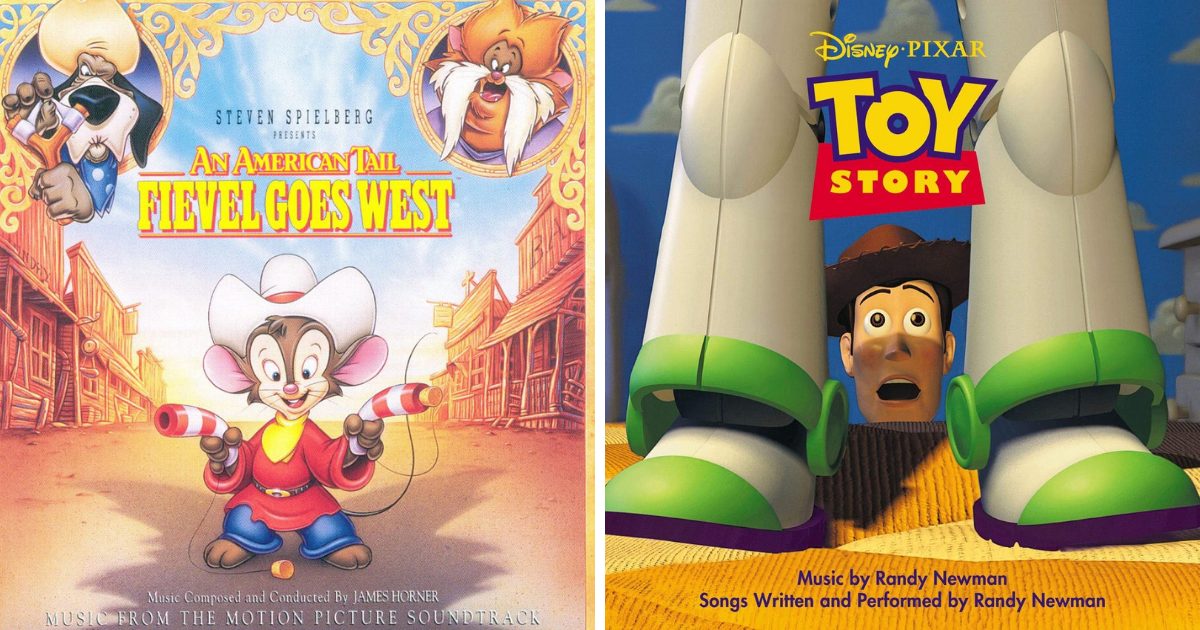
Randy Newman: “You’ve Got a Friend in Me,” Toy Story

Randy Newman’s soundtrack offerings for all of the Toy Story movies epitomize the central concept of this list: Songs that are just good, whether they’re from an animated film or not. Other soundtracks from the franchise feature Riders in the Sky, Sarah McLachlan, Judas Priest, and Chris Stapleton. All are fantastic, but “You’ve Got a Friend in Me” is certainly the piece de resistance.


Shelby Flint: “Someone’s Waiting for You,” The Rescuers

A haunting, morose, nightmarish — and hilariously entertaining — tale of an orphan kidnapped by treasure hunters, The Rescuers follows two mice from the Rescue Aid Society as they join an albatross to attempt… well, a rescue. “Someone’s Waiting for You” captures the melancholy of loneliness and isolation so well, with a tinge of solemn hope. The classic Disney animation style and southern bayou setting are simply gorgeous and the Golden Age of Hollywood orchestration is decadently nostalgic.


Helen Reddy & Sean Marshall: “It’s Not Easy,” Pete’s Dragon

A groundbreaking film for its time, 1977’s Pete’s Dragon combined live action and animation — so we’re sneaking it onto this list on that technicality. Another song from the film, “Candle on the Water,” was nominated for an Academy Award for Best Original Song, but “It’s Not Easy” might be the movie’s best. Helen Reddy, who passed away in September of 2020, had multiple Top 10 hits in adult contemporary and pop. Her performance — on this song and throughout the film — certainly sell it.


Bryan Adams: “Get Off of My Back,” Spirit: Stallion of the Cimarron

Spirit: Stallion of the Cimarron was one of the first feature-length animated films to effectively and seamlessly combine traditional animation with more modern, computer-generated 3D animation. It’s a hugely popular film, but somehow still grossly underrated, and Bryan Adams’ deliciously early 2000s soundtrack is still impeccable. Several songs could’ve made the cut for this list, but we’ve gone with the high-energy, joyfully defiant “Get Off of My Back.”


Lea Salonga: “Reflection,” Mulan

A ballad and anthem that’s something of a queer rite of passage for Disney millennials: “If I were truly to be myself/ I would break my family’s heart….” This rendition of “Reflection” is a rare instance of the score version being better than the credits version. (No shade to Christina Aguilera.) Lea Salonga so relatably embodies Mulan’s longing to live her truth. Just try not to sob-shout along.


Whitney Houston & Mariah Carey: “When You Believe,” The Prince of Egypt

All epic cartoon powerhouse ballad duets must be second to this one, a smash hit from Dreamworks Picture’s The Prince of Egypt. How blessed are we to have Whitney and Mariah trading runs on this loosely Bible-themed melodrama-via-song? If you didn’t start out at the beginning of the song as a believer in miracles, by the end you will. “When You Believe” reached number 13 on Billboard’s Hot 100 chart and was released by Carey on her Number 1’s compilation album.


Linda Ronstadt: “Dreams to Dream,” An American Tail: Fievel Goes West

We simply had to include Linda Ronstadt — and the An American Tail franchise — twice. “Dreams to Dream,” another credits reprise by Ronstadt, nearly blows the doors off “Somewhere Out There” with its soaring modulations and Ronstadt pulling out all of the stops. How one voice, one woman, could out-power an entire orchestra and rock band combined defies reason. Except, with Linda, that level of energy, charisma, and raw presence is the norm rather than the exception. Try to listen through to this song just once. It almost begs being played on repeat.


The Show On The Road – Blind Boys of Alabama

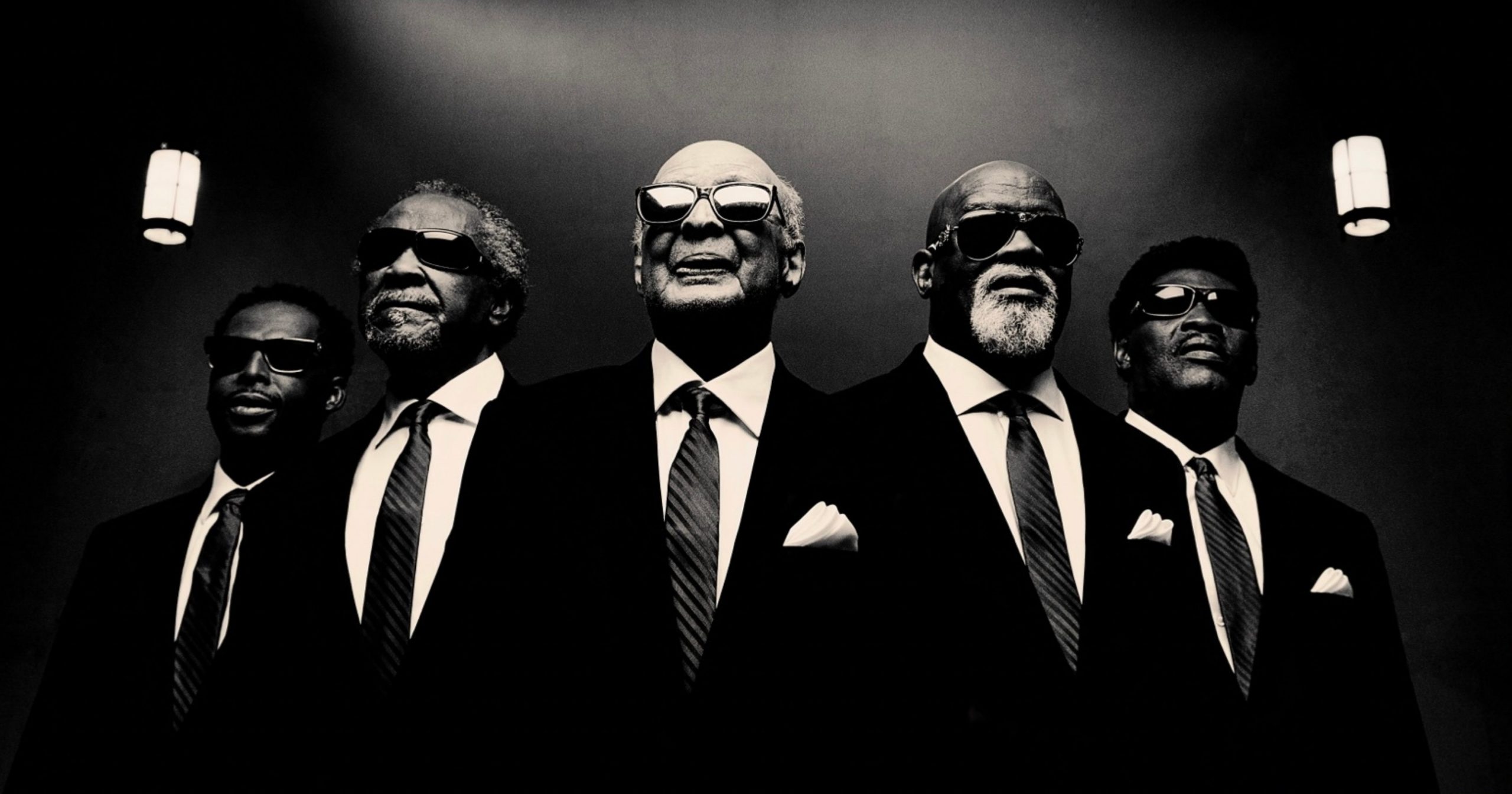
This week on The Show On The Road, in honor of Black History Month, we bring you a conversation with members of foundational gospel group, The Blind Boys Of Alabama, including longtime singer Ricky McKinnie and beloved senior member Jimmy Carter, who has been with the group for four decades.

LISTEN: APPLE PODCASTSSPOTIFYSTITCHER

Formed in the late 1930s with talent discovered at the Alabama Institute For The Negro Blind, the Blind Boys of Alabama have superseded limitations to bring their own high-spirited version of jubilee gospel throughout the world. Their music was often the backdrop to the Civil Rights Movement as Martin Luther King Jr. toured the south, and Jimmy and Ricky are both amazed and grateful that their message is still ringing true throughout the latest iteration Black Lives Matter movement that grew during the tumultuous last year.

While the members of the band have changed through time, the group has stayed steadfast to preserving a kinetic, church-based music that doesn’t seek to evangelize, but can bring people of all faiths together. Indeed, watching Jimmy and the other bespectacled members walk with hands on each other’s shoulders into the youthful crowds of adoring festival-goers, from Bonnaroo to Jazzfest, is really something to behold.

The Blind Boys’ body of work continues to grow. In the last few decades they’ve gamely collaborated with a wide range of secular artists from Peter Gabriel to Ben Harper to Bonnie Raitt, they made an album produced by Justin Vernon, AKA Bon Iver (2013’s stellar I’ll Find A Way), and they shrewdly reworked the ominous Tom Waits classic, “Way Down In The Hole,” which became the theme for HBO’s The Wire.

Their newest full length album, Almost Home, is a particularly moving treatise on morality and mortality. It features songs written by Marc Cohn, Valerie June, The North Mississippi All Stars and many others and was the last record that longtime member and bandleader Clarence Fountain was a part of before he passed away. He was a member of the Blind Boys of Alabama for nearly sixty years.

As Jimmy playfully mentions throughout our conversation, the Blind Boys of Alabama never let being blind stand in the way of doing what they do best: putting on a show. They’re entertainers at heart and it’s no small feat that they’ve brought a nearly lost form of swinging, soulful (and expertly arranged) gospel from the small southern towns where they grew up, all the way to the White House, where they’ve held court for three different presidents. And they’ve won five Grammy Awards along the way.

Stick around to the end of the episode hear their rich cover of Bob Dylan’s “I Shall Be Released.”


Photo credit: Jim Herrington

BGS 5+5: Anna Rose

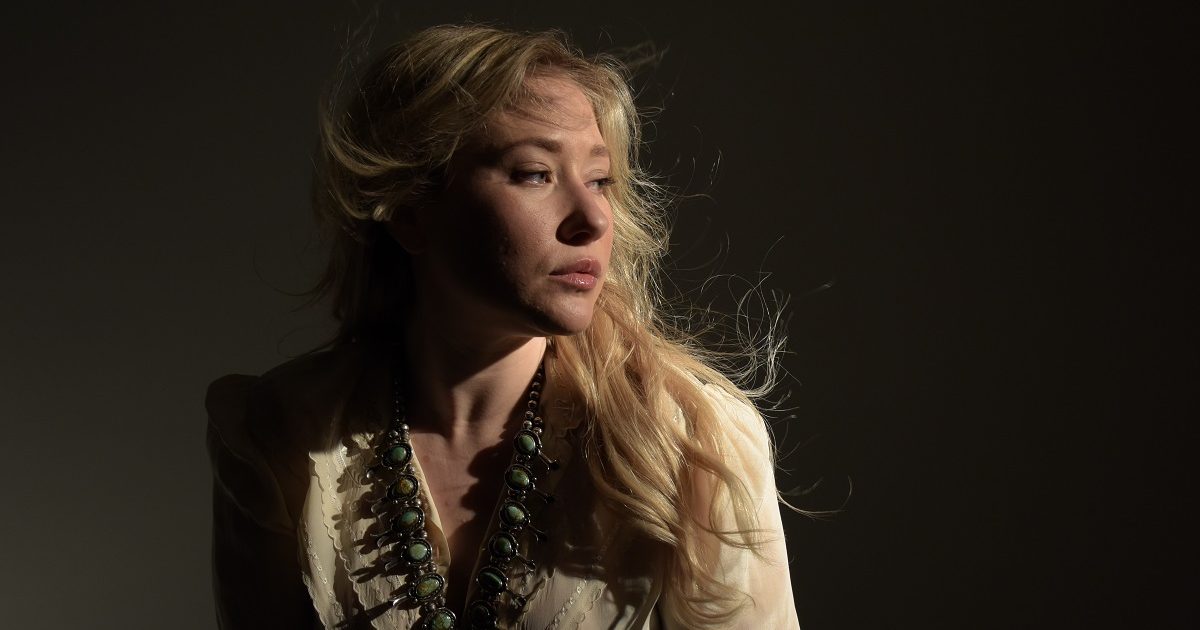
Artist: Anna Rose
Hometown: New York, New York
Latest album: In the Flesh: Side A & Side B
Personal nicknames (or rejected band names): The Electric Child, AR

Which artist has influenced you the most … and how?

It’s impossibly hard to pick just one, as so much of my love for the creation of music has to do with the understanding of its history and the shoulders I stand upon. I’ve looked a lot to The Beatles, Joni Mitchell, Tom Petty, Kurt Cobain, Warren Zevon, Sheryl Crow, Jackson Browne, and Dolly Parton as songwriters, though again I feel like it’s almost criminal to stop there. As a guitarist, I’ve idolized Jimi Hendrix, Tom Morello, Jimmy Page, Jack White, Son House, Muddy Waters, Sister Rosetta Tharpe and Bonnie Raitt. As a vocalist and as a performer, Robert Plant, Prince, Janis Joplin, Stevie Nicks & Fleetwood Mac as a whole, Alison Mosshart / The Kills, Tina Turner, Debby Harry, Stevie Wonder … again, these lists are endless and only speak to the tiniest tip of the iceberg. A mentor of mine once told me that there can never be too much good music in the world and I believe that to be true, now more than ever.

Which elements of nature do you spend the most time with and how do those impact your work?

The woods and the water — I can survive without both if I’m on the road or stuck in a city, but I think I am the best version of myself when I’m in nature. I’m a more present person when I can go for walk in the woods or sit by a river or swim in the ocean and I think that helps my writing. Taking care of animals is also a big part of my connection to the natural world, as well as riding horses.

What’s your favorite memory from being on stage?

I’ve been touring for a long time and so much of my life has been lived out on stage, the good moments, and the darker ones. I don’t often get to perform with my dad and those shows hold a special place in my heart, for sure. Many years ago, I got to open for Jackson Browne … I’ve been thinking a lot about that show lately. I was so young and completely in awe of him.

I guess recently the most precious memory I’m holding onto, though, is one from my last tour before quarantine at the beginning of March with the late, great Justin Townes Earle. Our last show of the run was in Asheville, North Carolina, at Salvage Station and Justin came out during my set, sat down on stage, and just listened to me. When I finished the song he stood up, got on the mic and said, “Girl’s got balls like church bells.” For him to come out and hype me up to the crowd like that meant a lot and I hold that tour very close to my heart. He was a truly brilliant artist and songwriter.


View this post on Instagram


A post shared by Anna Rose (@annarosemusic)

What other art forms — literature, film, dance, painting, etc — inform your music?

I really try to experience many different forms of art pretty often, but I find myself most inspired by dance, film, poetry, and theater. I was a professional dancer and choreographer for a long time and my mom was a dancer, as well, so if I’m writing and I can picture movement it informs the direction of a song a lot. It’s sort of ingrained in my spirit.

I also grew up around film and theater and work in those fields currently, so I find myself influenced a lot by strong, captivating characters on screen/stage and wanting to write songs for them. On the poetry front, I circle back to the beat poets all the time — Jack Kerouac and Allen Ginsberg have always been two of my favorites.

How often do you hide behind a character in a song or use “you” when it’s actually “me”?

I think writing for a character is not hiding, first of all. Assuming a character can be a really powerful way of working and getting outside of your own perspective, or expressing certain parts that might not come out when thinking of yourself in the most habitual context. It can be like wearing a costume on Halloween. So, I guess the answer is that I write for characters all the time but those characters often have aspects of my own personality and I’m not trying to “hide” any of that. Some dream experts believe that you are everyone in your dreams and I think of it that way, sometimes.


Photo credit: Shervin Lainez

Americanafest Prepares Thriving Roots: A Virtual Community Music Conference

Although in-person plans for Americanafest are on hold this year, fans of roots music can still take part in celebrating the music, no matter where they are.

From September 16th to the 18th, Thriving Roots: A Virtual Community Music Conference will host intimate conversations between pairings you won’t find anywhere else.

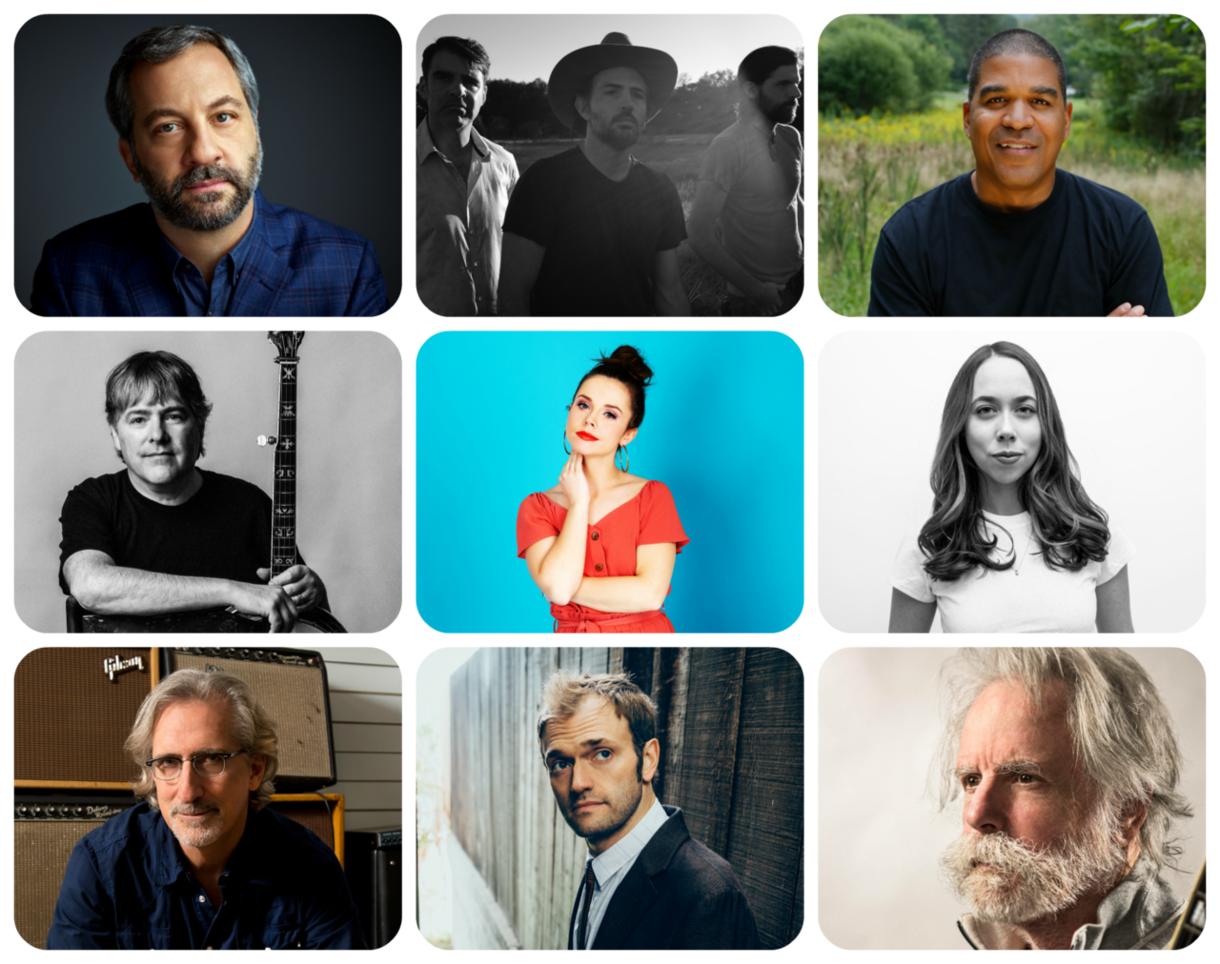
In August, the Americana Music Association Foundation (AMAF) revealed programming featuring director Judd Apatow in conversation with The Avett Brothers; Bob Weir with Oteil Burbridge; Béla Fleck with Sierra Hull; and Sarah Jarosz with John Leventhal and Chris Thile. The latest programming information also includes talks on empowering today’s creatives, developing streaming strategies and musicians in recovery.

https://www.instagram.com/p/CD1R4d_BUzV/

Apatow will sit down with The Avett Brothers to discuss the intersection of film and music, as well as the fine line between fine art and commerce. In 2017, Apatow co-directed the band’s critically acclaimed documentary, May It Last: A Portrait of The Avett Brothers. Since then, The Avett Brothers have released their new album, The Third Gleam.

The music that fans know and love from their favorite artists simply wouldn’t exist without the innovative musicians who came before them. Weir will sit down with fellow Dead & Company member Burbridge as they explore the inspirations and influence Black musicians have had on the Grateful Dead.

Now more than ever, musicians continue to push and blur the confines of genres to create the art they want to make. Fleck and Hull will speak to how roots music transcends and connects with a wide range of audiences during “Music Without Boundaries.” When it comes to creating that art in the studio, a producer’s ability to understand an artist’s vision is an integral part of the creative process. Moderated by Thile, Jarosz and Leventhal will delve into the connections forged between the artist and producer evident on her latest project, World on the Ground.

Additional new programming includes “Independent Control: The Power of Collaboration,” an inside look into how Americana industry professionals are empowering their independent artists to retain full creative control and the benefits of assembling a hand-picked team. Moderated by Jessica Nicholls (Metropolitan Groove Merchants), this discussion will include Blair Clark (Brooklyn Basement Records), Maria Ivey (IVPR) and Michelle Szeto (Paquin Entertainment Group).

In the streaming era, an abundance of digital resources can be found at the fingertips of industry and artist professionals, but how does one optimize those helpful tools? Led by Mike Fabio (New West Records), “Building a Streaming Strategy in 2020” rounds up Charles Alexander (Systemic), Margaret Hart (YouTube), Margaret Jacobi Lee (AMFM Management), Laura Ohls (Spotify) and Amy Wright (DittyTV) for a talk on developing real-world strategies that lead to increasing listenership and growing a solid fanbase.

Presented by Promises Behavioral Health, “The Show Must Go On: Musicians in Recovery” will find artists Phil Bogard and Jaime Wyatt in conversation with Shireen Janti (MusiCares) and Shane Ramer (That Sober Guy Podcast) about the road to recovery while offering how to find treatment and how others can take practical steps toward becoming a sober creator.

https://www.instagram.com/p/CDRhNsvBq-n/

Previously announced Thriving Roots programming includes intimate conversations between Brandi Carlile and Yola; Emmylou Harris and Ken Burns; and Jackson Browne and Mavis Staples. Rosanne Cash will bring together Ry Cooder, Angela Davis, Bonnie Raitt and Alice Randall for “Love and Vigilance,” a look at the history of protest music.

Moreover, RIAA Chairman/CEO Mitch Glazier and COO Michele Ballalynte will share an update on the music industry during “Record Setting” while looking at current trends and sharing their outlook. There will also be artist-friendly songwriting workshops and case studies like Mary Gauthier’s “Accessing the Universal in Your Songs: Mercy Now,” Taj Mahal’s “Music Is the Healing Voice” and an artist development breakdown with Black Pumas.

With over 50 panel discussions and more than 40 special events filled with music, Thriving Roots will bring the Americana music community together from across the world for three full days of engaging insight from its top industry professionals and leading artists.

Adding to the slate of artist conversations music fans won’t want to miss is Linda Ronstadt offering a behind-the-scenes look at Linda and the Mockingbirds, a new documentary that chronicles her 2019 journey with Jackson Browne and Mexican-American song and dance troupe Los Cenzontles to her grandfather’s hometown in Mexico, resulting in a tale of immigration, family and music. Moderated by esteemed journalist Randy Lewis, attendees will be able to watch the film screening and hear insight from the musical icon alongside the doc’s producer/director James Keach and Los Cenzontles founder Eugene Rodriguez.

https://www.instagram.com/p/CE95F1chNOY/

The Lumineers’ Jeremiah Fraites and Wesley Schultz will sit down with renowned filmmaker M. Night Shyamalan for an engaging discussion on the importance of retaining creative control of your art. In addition, Kathleen Edwards will speak with acclaimed Program Director Rita Houston (WFUV) about her new album Total Freedom, which marks her triumphant return to music after an eight-year hiatus from the business.

The common threads and differences of the Americana and country music worlds will be explored during “Ladies, Your Roots Are Showing,” presented by Change the Conversation. Moderated by CTC co-founder Tracy Gershon with freelance music journalist Marissa Moss, this panel session rounds up Brandy Clark, Tanya Tucker and Lee Ann Womack to share how they’ve been able to successfully navigate both worlds while maintaining their artistic integrity. They’ll also reveal the challenges and memorable moments they’ve experienced during their respective careers.

Reigning Legacy of Americana Award (co-presented by the Americana Music Association and the National Museum of African American Music) recipient Rhiannon Giddens joins NPR’s Ann Powers and the legendary Taj Mahal to discuss the theme of “Music is the Healing Voice.”

https://www.instagram.com/p/CEpIcpMhsZ-/

Music buffs should also tune into a special virtual edition of “Songlines Music Meeting,” an Americanafest fan-favorite. Sean Coakley and Leslie Rouffé will once again invite listeners to hear mostly unreleased tunes and score them during the live session, leading to a discussion on how music programmers in various media formats select the songs they feature.

Aside from plenty of educational and networking opportunities, Thriving Roots attendees will have a chance to unwind and recharge with immersive virtual events and lifestyle breaks. Valerie June will walk folks through a guided meditation that explores how to center oneself using ancient teachings. Big Machine Label Group will spotlight The Cadillac Three, Sheryl Crow and Ray Wylie Hubbard with some must-see musical performances.

During “Aw Heck: An Oh Boy Music Break,” join the late John Prine’s own record label Oh Boy Records for a celebration of their talented roster which includes Tré Burt, Arlo McKinley, Dan Reeder and Kelsey Waldon. For “Come Hear NC,” experience the rich music of North Carolina featuring Hiss Golden Messenger, Jim Lauderdale, Mandolin Orange, Steep Canyon Rangers and more.


Pictured above in composite: Top Row (L-R): Judd Apatow, The Avett Brothers, Oteil Burbridge; Middle Row: Béla Fleck, Sierra Hull, Sarah Jarosz; Bottom Row: John Leventhal, Chris Thile, Bob Weir

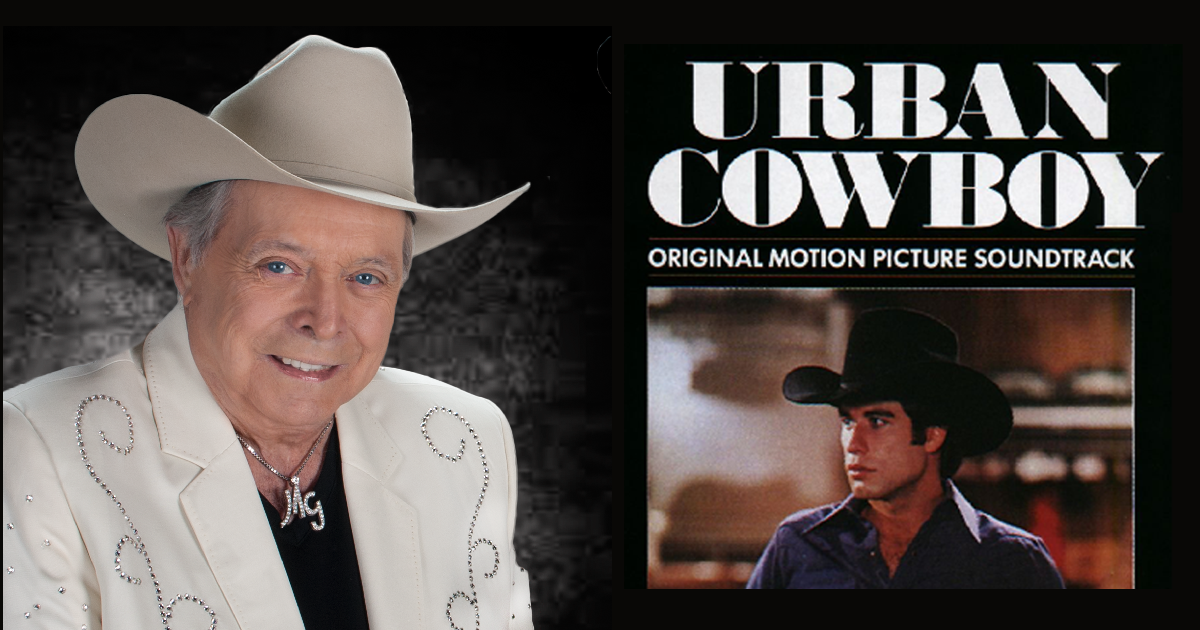
‘Urban Cowboy’ at 40: How a Mechanical Bull Changed Mickey Gilley’s Life

Mickey Gilley admits he wasn’t keen on the idea of installing a mechanical bull at his namesake honky-tonk on the outskirts of Houston, Texas. Nor is he shy about admitting just how wrong he was. That rodeo training device transformed Gilley’s Club into a cultural force. “The mechanical bull was never meant to be in an entertainment establishment like ours,” says the 84-year-old country star. “I thought it was a mistake, but it turned out to be a blessing. Without the mechanical bull, we never would have gotten that film with John Travolta.”

Every night there was a line for the mechanical bull. Demand was so high they installed a second bull and briefly considered buying the rights to the device in order to market it to honky-tonks around the country. Those would-be cowboys — called Gilleyrats after their favorite gathering spot — would compete to see who could stay on the bucking bull the longest, and that contest became the centerpiece of James Bridges’ 1980 film Urban Cowboy, featuring John Travolta in his follow-up to Saturday Night Fever. Exchanging the New York City discos for this dusty, Lone Star honky-tonk, he stars as Bud Davis, a small-town kid who moves to the big city and becomes a master of the mechanical bull.

The film culminates in a showdown with his nemesis, played by Scott Glenn, over the affections of a scene-stealing Debra Winger. As drama goes, this test of saddle skill is anticlimactic, as there is nothing at stake beyond macho pride. Bud isn’t fighting to escape his life (as his character in Fever did) nor to stay at Gilley’s. He’s just fighting. Though never quite satisfying as drama, Urban Cowboy is still fascinating 40 years later as a documentary about Gilley’s and the particular culture that grew up around it.

Gilley and his business partner, Sherwood Cryer, opened the place in 1970. At the time Gilley was only a regional star, with his own TV show in Houston and enough name recognition to open a club. (Being cousins with both Jerry Lee Lewis and Jimmy Swaggart didn’t hurt, either.) In 1974 he had a surprise hit with “Room Full of Roses,” which only brought more attention to his honky-tonk. He played there regularly and invited friends to fill in for him when he was on the road. The place grew into something like a theme park, with a dance floor roughly the size of a football field, several bars, tons of games, even a rodeo arena. “This place is bigger than my whole hometown,” Travolta’s character says when he first steps foot in the place.

Urban Cowboy captures the energy of Gilley’s Club in frenetic long takes that put you right at the bar or out on the dance floor. You can almost smell the sawdust and beer. Gilley even performs during a couple of scenes, as does Charlie Daniels, and the shots of couples shuffling across the floor in tight, fluid choreography are among the film’s highlights.

By the time a suspicious fire destroyed Gilley’s in 1990, the place and the film had already left a deep impression in popular culture. It introduced western wear as high fashion: tight jeans and big hats worn by guys who never rode the range (or a bull, for that matter), but still bought into the mythos of the American cowboy. And its soundtrack, featuring Bonnie Raitt, Boz Scaggs, and Kenny Rogers, peaked at No. 3 on the Billboard Hot 100 and produced chart-topping country singles such as “Lookin’ for Love” by Johnny Lee, “Could I Have This Dance” by Anne Murray, and “Stand by Me” by Gilley himself.

For our latest Roots on Screen column, we chatted with the club’s namesake about accidentally recording a hit single, flying with Travolta, and assaulting the sausage king.

BGS: How did you get to a point where you could open a massive honky-tonk with your name on it?

Gilley: I grew up in Louisiana and got two famous cousins, Jerry Lee Lewis and Rev. Jimmy Swaggart. Jerry Lee was my hero, because without him I probably wouldn’t have gotten in the music business. He came to Houston in ’57 and I saw how well he was doing. I was working construction making $1.25 an hour and that’s when I threw my hat in the ring. Seventeen years later I cut “Room Full of Roses” by mistake and it turned out to be my first No. 1 song. After that I got to tour with Conway and Loretta and next thing I knew John Travolta came knocking on my door. Everything broke loose.

How does somebody cut a hit single by accident?

I had a little TV show in the Houston market. One night I walked into Gilley’s and the lady who had the jukebox called me over and says, “Today on your TV show you did my favorite song, ‘She Called Me Baby All Night Long.’” It’s a Harlan Howard tune. She told me she’s in the jukebox business and if I would record that song, she’d put it on every one of her jukeboxes. I said, “Ma’am, I ain’t made a record in probably three years. The show is doing well. The club is doing well. I don’t really make records anymore.” She said, “Just make that one song for me.”

Well, as you know, back then they had 45s and you had to have an A side and a B side. I went in to cut “She Called Me Baby All Night Long” and for the flip side, I picked “Room Full of Roses.” It’s an old George Morgan song from the late ‘40s or early ‘50s. Lorrie Morgan’s father. I started the arpeggio on the piano and got maybe 30 seconds into it and then stopped. My bass guitar player looked over and said, “What’d you quit for?” I told him it sounded too much like Jerry Lee. And he says, “Who cares? Nobody’s going to hear it. It’s a B side!” So I recorded it. Didn’t think anything about it.

I took the record around to radio stations where we were buying time to advertise the club — “Gilley’s! 4500 Spencer Highway! Pasadena, Texas!” — and I asked if they would play the record when they did the spot on the club. I remember Bruce Nelson at WKNR asked me which side I wanted him to play. I said, “Either side you want. Doesn’t matter to me.” He looked at both sides and said, “I think I like that flower song.” He played it and it shot up the charts. Playboy Records picked it up and took it national for me in 1974.

What was a typical night like at Gilley’s during its heyday?

After the film Urban Cowboy came out, it was packed every night. I never seen anything like it in my life. It went on for about three and a half years. It was totally jam-packed, seven nights a week. People wanted to be a part of what it was all about. They just came out to have a good time. We had a lot of things in the club you could do, too. We had the two mechanical bulls, plus we had quite a few pool tables spread out through the club. Pinball. Punching bags… you know, things of that nature that people would get a kick out of.

How many stages did you have?

We had just the one big stage for music. Of course, my business partner built a rodeo arena back in ’85 or ’86 and hitched it onto the club, because he wanted to stay ahead of Billy Bob’s down in Fort Worth. The concerts we had in there worked out pretty good, because we had Willie Nelson, Waylon Jennings, George Jones, George Strait. People like that do real good in a rodeo arena, but other than that, it was just a big building that we didn’t need.

How often were you playing the regular stage?

I worked the club up until 1985. But I got into a squabble with him about the way the club was running and what was going on, and we got in a lawsuit. I got the club closed down, I got my name off of it, and later it was set on fire and burned. It was arson, but I don’t know who did it, you know? It went up in flames and no more Gilley’s in Pasadena, Texas. But we have a Gilley’s in Treasure Island in Vegas. We have two in Oklahoma and one in Dallas.

What do you remember about filming at Gilley’s?

The main thing I remember was that we had to do it during the day, daylight hours, because we operated the club at night as the regular nightclub. They closed all the doors and tried to make it as dark as they could. I remember the director hollering, “More smoke! More smoke!” to make it look more like a night at the club. They’d start early in the morning and go all day, shooting the parts they had to have. I never had been in a film of that caliber before, so it was different for me. But it was fun.

Was the Urban Cowboy Band something you put together especially for the film?

We had a band there that was playing the club, but I took them on the road with me and renamed them the Urban Cowboy Band when the film came out. Paramount Pictures told me it was OK to use it, so that’s what we did. We were awarded a Grammy for the song “Orange Blossom Special,” which I played piano on. But there were some great songs in the film. “Hello Texas” was written by a Texas guy by the name of Brian Collins and sung by Jimmy Buffett. That’s a great song. We also had Charlie Daniels doing “The Devil Went Down to Georgia” in the film.

Your version of “Stand by Me” was a big hit as well.

It was originally recorded by Ben E. King and written by Leiber and Stoller. The song was brought in by the producer, who was wanting to do what he called a “grudge dance” in the film. They picked “Stand by Me” and asked me to do the song. I was a little reluctant but the arrangement they put on it made it a different song than the Ben E. King version. When we got the song recorded, people were raving about it, and it turned out to be a hit. Now I close my shows with it.

What was it like having someone like John Travolta in your club every day? What was he like to work with?

Well, the one thing that John and I had in common was we both loved aviation. At the time, he was working on his pilot’s license, and I got to fly with him. I was so excited about the fact that I was getting to fly with the star of Urban Cowboy. He had just come off of Saturday Night Fever and Grease, so I’m in awe. I’m just an old country boy that’s had quite a few No. 1 songs, but I never had the popularity John Travolta had. He was working on his pilot’s license at the time, so I went up with him a few times. He went on to fly the big jets, which I’m sure is exciting for him. I never got that far in my career. I got to fly some jets, but they were like the LearJet and the Citation — nothing like the 747 he was flying.

How did the success of that movie and the soundtrack change your career?

It changed my life, because the record company put me with a different producer and he started picking songs like “You Don’t Know Me,” “That’s All That Matters to Me,” “Headache Tomorrow (Heartache Tonight),” and “Put Your Dreams Away.” They were all hits for me and opened more doors for me, as far as casino dates in Reno, Vegas, and Atlantic City. I wasn’t just known as a honky-tonk piano player anymore. I was known as a country performer and it gave me a little more clout. I got to play for two presidents. They gave me a star on the Hollywood Walk of Fame, invited me to come to Hollywood and do some acting roles, and I did The Fall Guy, Fantasy Island, The Dukes of Hazzard, and Murder, She Wrote. I had a scene in Murder, She Wrote where I grab Jimmy Dean, the sausage king! I grab him by the collar and shake him. Sometimes I show that clip in my show and say, “Look at that! I’m trying to shake the sausage out of Jimmy Dean!”

You’re still playing a lot of those songs from Urban Cowboy on tour, right?

Johnny Lee and I have done well by doing the music from that soundtrack and we called it the Urban Cowboy Reunion Tour. I wish we could have gotten more people involved, maybe Charlie Daniels or Bonnie Raitt. But we did pretty good just the two of us. I remember playing a casino down in Louisiana, and at the end of the show I looked at Johnny and said, “Do you realize those people out there dancing wasn’t even born when we did the film?” I think they come out here to see if we’re still alive!


Photo credit: Courtesy of 117 Entertainment
BGS 5+5: Sarah Siskind

Artist: Sarah Siskind
Hometown: Brevard, North Carolina
Latest album: Modern Appalachia

Which artist has influenced you the most … and how?

I would say my biggest overall influence is The Story, which was an alt-folk duo out of Cambridge, Massachusetts in the ‘90s consisting of Jonatha Brooke and Jennifer Kimball. My dad used to bring cassettes home from the library of albums he would read reviews about and pass along ones to me he thought I’d like.

At the time I was way into Indigo Girls and Tracy Chapman (about age 13 or so), so when he first gave me Grace in Gravity by The Story, it unnerved me a little. But, then I woke up one morning and had to listen to it on repeat or I thought I’d die! So I listened to it on repeat. For years. The songs on that album are ingrained in me now. Dissonant harmonies. Bold chord changes. Strong female perspectives.

What’s your favorite memory from being on stage?

My favorite memory on-stage is when Bonnie Raitt asked me to sing “Angel From Montgomery” with her as a duet for the first time… and then after… she handed her guitar to me and said, “Play one of yours.” I’ll never forget that feeling. I felt like I was flying.

What rituals do you have, either in the studio or before a show?

The most effective ritual for me is to straight up pray. I ask God for peace of mind and for blessings over every note that comes out of my mouth. For Him to guide the show and for me to be a vessel. I also do some floor stretches if I can. When I toured with Paul Brady, I had a mix on my phone I would listen to before every show and it was Snatum Kaur, Lauryn Hill, and Mahalia Jackson; I would do stretches as I sang along.

Which elements of nature do you spend the most time with and how do those impact your work?

Water, definitely. The county where I live in North Carolina has the most waterfalls per capita in the country. However, I absolutely love rivers. When I’m really stuck, or having a rough day, I go to either the Davidson or French Broad River in Brevard, North Carolina, and trail run or just sit and pontificate. Watching the movement of water brings me back to center. The sound even more so. It reminds me how ultimately small we are in the big picture and that this vast earth was created through suffering way bigger than mine.

Since food and music go so well together, what is your dream pairing of a meal and a musician?

I love this question. I’m a closet chef. If I could have dinner with any musician, I would have a big southern meal of pulled pork, greens, and pintos with Danny Barnes.


Photo credit: Brian Boskind

MIXTAPE: Penny & Sparrow’s Songs Begging to Be Covered

From Joe Cocker covering The Beatles, Bon Iver covering Bonnie Raitt, Glen Hansard covering The Pixies, and many, many more, WE LOVE COVER SONGS. In fact, one of the most commonly had tour van conversations is “What should we cover next?” (And we deliberate that almost daily.) The art of taking someone else’s song and making it your own is difficult and praise-worthy. … THUS, when The Bluegrass Situation asked us to cultivate a playlist, we knew exactly where to go. So here it is, dear friend!! A list of songs — in our opinion — that are begging to be covered.” — Andy Baxter and Kyle Jahnke, Penny and Sparrow

Eagles – “New Kid in Town”

Like a lot of Eagles tunes, “New Kid in Town” manages to have emotional depth WITH a hook that’s catchy as hell. Not a lot of folks can do that. They did it over and over again. It reminds me of “Fun Times in Babylon” and for that reason I must have Father John Misty cover this as soon as possible. Please make that happen for me, FJM. You would sound delightful. (Andy)

Willie Nelson – “Buddy”

This song was on Parks and Recreation and it made the reconciliation of Leslie and Ron one of the most iconic scenes in TV history. For the month after, I listened to it over and over and over again. After 30 days of it I started to imagine who I wanted to hear cover it. I landed on one of two extremely recognizable (and lovely) voices: Ashley Monroe or Anaïs Mitchell. Please Universe, hear my cry. (Andy)

John Denver – “Sunshine on My Shoulders”

I would love to hear this covered by someone like Daniel Caesar. The melody with some R&B voicing would sound insane. (Kyle)

Miya Folick – “Thingamajig”

This song is admittedly new for me and (before it came along) it had been more than a year since a song made me cry on first listen. This one undid me. Eight straight listens and now I might die unless I hear I’M WITH HER cover this damn song in three-part harmony. (Andy)

Ace of Base – “Don’t Turn Around”

I love a good ‘80s/’90s jam saddened by some sad indie folk. Thinking if James Vincent McMorrow took this and pitched it to his gorgeous falsetto I would listen on every rainy morning and cry just a little. Maybe give it to Jason Isbell and let him turn it into an Americana masterpiece. (Kyle)

Alvvays – “Archie, Marry Me”

A friend of ours called this song a “We’ll be young forever” anthem. It toes some strange line between the grunge pop of “Cherry Bomb” and the new age sad rock of Phoebe Bridgers. I love it and really really wanna hear a slickly crooned version by Sam Smith. Take all my money Sam, just get it done. (Andy)

George Strait – “Lovesick Blues”

I love the yodeling in this one. Basically I want Miley Cyrus to imitate Dolly Parton imitating a ‘90s George Strait. I love this track. (Kyle)

Slim Whitman – “Rose Marie”

This one feels unfairly unknown. How this song got lost in the shuffle of history is beyond us but I damn sure wanna hear The Kernal or Robert Ellis do a version! (Andy)

All-4-One – “So Much in Love”

This could either be an Ariana Grande acapella jam, or in my wildest dreams a Simon & Garfunkel reunion where they folk harmonize it to perfection and the world is happy since they are friends again and that’s all I really want. (Kyle)

Anaïs Mitchell – “He Did”

Lyrically this song is masterful and angst ridden and haunting. As I think about it now, it would be an incredibly tall order to cover this monster, but I genuinely think a blues/soul rendition could be badass. The lyrics of the song mourn and bleed and I kinda wanna hear Cedric Burnside or Leon Bridges take it on. (Andy)

Cutting Crew – “(I Just) Died In Your Arms”

GIVE ME HAIM SINGING THIS SONG AND IT WILL BE THE RESURRECTION OF AN ‘80S POP RELIC!!!! It would also stream millions of times in a matter of days. It’s a jam and they’re the maestros I wanna hear introduce it to the next generation. (Andy)


Photo credit: Noah Tidmore

Baylen’s Brit Pick: Elles Bailey

Artist: Elles Bailey
Hometown: Bristol, England
Latest Album: Wildfire

Sounds Like: Mollie Marriott, Jo Harman, Bonnies Tyler and Raitt, with a touch of Amy Winehouse.

Why You Should Listen: I love a husky voice and Elles Bailey has it in spades. Of course a voice that sounds like it’s had more nights out than me and smoked more cigarettes than Maggi Hambling (art school reference for you there) isn’t enough to make a great album, as wonderful as that voice may be.

So it’s good news that Elles combines that voice with sharp-edged lyrics, a soulful bluesy sound, country roots sensibilities, and top notch musicianship. Combine all that with a contemporary edge and you’ve got yourself a great new hope of British music. The smokey voice, by the way, doesn’t come from either cigarettes or art school; it’s the result of a stint in hospital when she was a child. Elles doesn’t dwell on that though and neither should we. It’s just another reminder of how sometimes light comes from darkness; she’s embraced it, turned it to her advantage.

I’d known of Elles for awhile and played her on my radio shows plenty but I only got to catch her live at the opening party for last month’s Nashville Meets London festival, and she blew the roof off the place. She has an easy, engaging stage presence and is the only artist in three years of the festival to start her set at a grand piano. A grand piano always adds a bit of oomph doesn’t it? She’s also a dab hand at a self-deprecating story, which makes you love her all the more.

All that aside, she could just stand stock still centre stage and sing her songs and that would be plenty, they are that good. Her latest album Wildfire was produced by Brad Nowell, tracked in Nashville, and features Grammy Award-winning guitarist Brent Mason and Musicians Hall of Fame keyboard player Bobby Wood, so all the boxes are checked in the Real Deal category. She’s appearing at The Long Road festival in England in September, thank God it’s an outdoor festival, I don’t think the insurance would cover another roof blown off by Elles Bailey.

As a radio and TV host, Baylen Leonard has presented country and Americana shows, specials, and commentary for BBC Radio 2, Chris Country Radio, BBC Radio London, BBC Radio 2 Country, BBC Radio 4, BBC Scotland, Monocle 24, and British Airways, as well as promoting artists through his work with the Americana Music Association UK, the Nashville Meets London Festival, and the Long Road (the UK’s newest outdoor country, Americana, and roots festival). Follow him on Twitter: @HeyBaylen


Photo credit: Alex Berger

BGS 5+5: Dharmasoul

Artist: Dharmasoul (Jonah Tolchin & Kevin Clifford)
Hometown: Princeton, NJ
Latest Album: Lightning Kid 
Rejected Band Names: Dankasaurus

What’s your favorite memory from being on stage?

Kevin: My favorite memory from being onstage is a tie between playing New Orleans Jazz Fest with the Loyola Jazz Band in 2012 and when an entire audience sang happy birthday to my mom at a show in New Orleans.

Jonah: One of my favorite memories of being on stage was on a tour with Chuck Prophet in Europe a few years ago. We were playing a small festival in Belgrade, Serbia. I was playing a song that’s on our new record solo acoustic (“Addiction”), and the audience was more enthusiastic than I had ever experienced in a room of strangers. It was moving to me to feel that kind of love in a foreign land.

If you had to write a mission statement for your career, what would it be?

Kevin: Since you can fail at what you don’t love to do, you might as well try doing what you love to. If I can’t dance to my own groove, no one is going to be dancing. Serve the music!

Jonah: I resonate with the concept of the Bodhisattva. It is my intention to bring this principle of serving my community and all people and life everywhere so that we — myself included — can wake up from forgetfulness and create a better world for all life forms generations to come. I think music has the power to do that.

If you could spend 10 minutes with John Lennon, Dolly Parton, Hank Williams, Joni Mitchell, Sister Rosetta, or Merle Haggard how would it go?

Kevin: I would try desperately to record a jam session with Sister Rosetta.

Jonah: Definitely John Lennon. I’d like to write a song with him … or maybe play a game. Like ping pong.

Since food and music go so well together, what would be your dream pairing of a meal and a musician?

Kevin: Fried oyster and shrimp po-boy with a hurricane and the Soul Rebels Brass Band

Jonah: I’m gonna go with something I’m looking forward to, which is being at Jazz Fest in NOLA next month eating gumbo and watching three of the most badass women known to music all on the same day — Aretha Franklin, Bonnie Raitt, and Lucinda Williams.

What was the first moment that you knew you wanted to be a musician?

Kevin: It had to have been when I saw School of Rock and became obsessed with all the music from that movie. Also, when my Uncle Bill in Chicago gave me my first drum lesson and taught me some Joe Morello licks and a 4/4 Beatles rock beat.

Jonah: I’m honestly not quite sure. As soon as I started playing, at around 13, I don’t think there were any other options for me. Two years later, when I was 15, I met Ronnie Earl at a music store, and he invited me to play on stage with him at the Tupelo Music Hall in New Hampshire. That was a big, reinforcing moment. I didn’t take the SAT in high school because I knew this was my path … I’ve been doing it ever since.

MIXTAPE: Janiva Magness’s Folk Is a Four-Letter Word

I have long known that I am, at times, a highly emotional creature. I’m good with that and ever grateful I have the music to help sooth me through it. Folk music has always been a part of that balm and always had a quiet place in me. Although, over time, the definition of what folk music is has changed, depending in part on its popularity. For me, this is a beginning of some of my always and all-time favorite folk music. These tunes contain both comfort and melancholy — for me, two of the “absolute musts” to great folk songs by great artists. — Janiva Magness

Bob Dylan — “If You See Her, Say Hello”

How is it possible to not love this track? Besides, there is no one who can turn a phrase like Mr. Zimmerman. No one!

Blackie and the Rodeo Kings — “Brave”

Steven Fearing of B.A.R.K. has such a soulful voice and tone, then add Holly Cole’s vocal with him, and I find it a haunting tale of deep and abiding love born of infidelity. It is both comforting and stunning.

Joni Mitchell — “Both Sides Now”

An epic song written by a then very fresh Joni Mitchell with so much wisdom, it seemed impossible to come from such a young woman.

Joan Baez — “Diamonds and Rust”

This classic — and at the time controversial — track about Joan and one other very famous folk singer and their love affair remembered.

Gillian Welch — “Look at Miss Ohio”

Just love this song and, though it’s not one of Gillian’s most played tracks, I have worn this out at home, in the car, and everywhere. I love it because it’s about a beauty queen being herself behind the scenes, and doing wrong — grinnin’ all the while.

Taj Mahal — “Corinna”

I have loved this track since first laying my ears on it in the ’70s. Simple folk blues. It don’t get any better than Taj.

Ry Cooder — “That’s the Way Love Turned Out for Me”

A haunting song originally recorded by James Carr, I believe, and then adapted by Ry Cooder. I just love this version because of its fractured vulnerability.

Bonnie Raitt — “Love Has No Pride”

A song penned by Libby Titus and portrayed by Bonnie. Her early ’70s material is incomparable for me really. This tune is a heart broken in two and laying on the floor right in front of you.

Zachary Richard — “No French, No More”

A haunting and, as I understand it, true tale written by Zachary Richard about his upbringing as a young Acadian boy in the swamps and woods of Louisiana, where his native language was French but, once placed in public school, the children were forced to abandon their language and culture for English.

Bobbie Gentry — “Ode to Billie Joe”

A captivating tale of love gone wrong with two teenagers in the rural South. Bobbie Gentry’s painful and almost detached vocal track make it all the more mysterious

Jackson Browne — “My Opening Farewell”

One of the most beautiful and lonesome songs of all time to me. Love and grief. Nuff said.