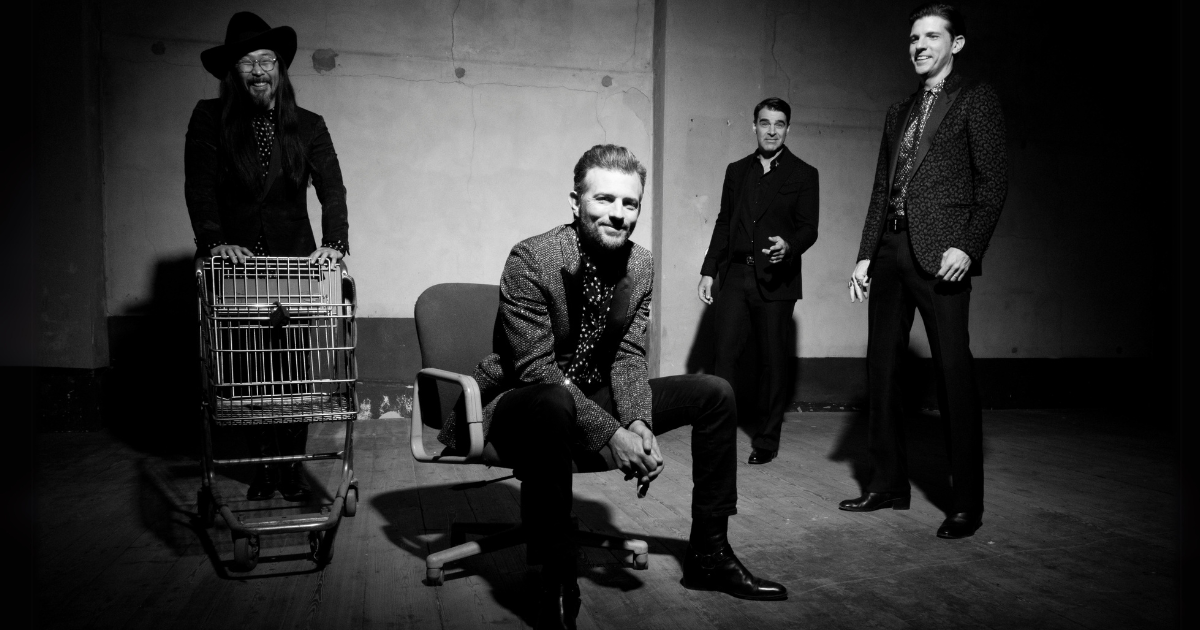
Over the nearly two-and-a-half decades since their debut, the Avett Brothers have constructed their own creative universe.
They’ve released 11 studio albums, earned a Grammy award (plus three more noms), and bounded around stages for countless tour dates and festivals the world over. May It Last, a documentary film about the influential North Carolina group, offered a glimpse at the band’s dynamic through big and small screens.
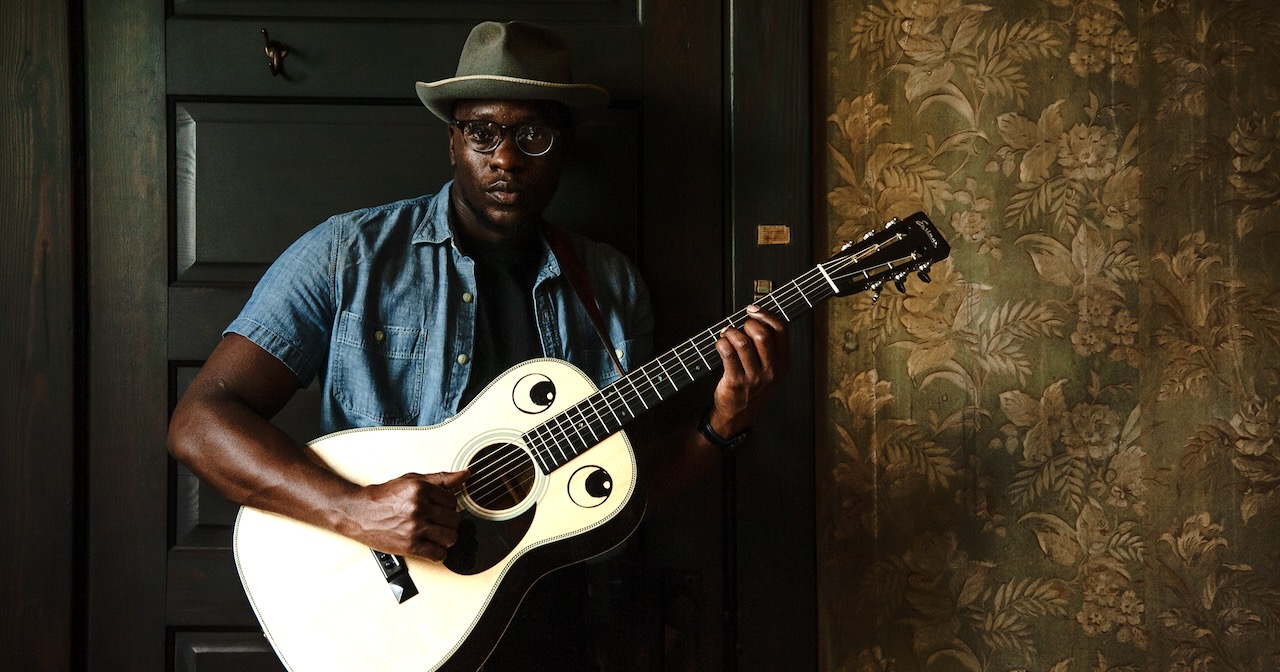
Scott has also been a working visual artist since before The Avett Brothers as a band even entered the public consciousness, earning a BFA in studio art from East Carolina University in 2000 and depicting Southern family life through paintings and sculptures that would go on to make moving exhibitions—all while he also created stunning album cover imagery (for his own band as well as the great Brandi Carlile) or provided the visuals for such epic music videos as “Head Full of Doubt / Road Full of Promise.”
Musical theater, too, has been touched by the Avetts: Their musical, Swept Away, will make its mark on Broadway this fall. But the band’s eleventh album, The Avett Brothers, feels less like a charge into new creative territory and more like a reflection on the other things that have sustained them over the years.
“There’s certainly an unsettling feeling in that shadowy twenties and thirties where you get trapped into thinking that you are what you make,” Scott told Holler Country last year. “I’m settling into a season of life where I’m welcoming the reality that I am because I am, not I am because I do.”
That realization gets top billing on The Avett Brothers. Classic ballad “2020 Regret” sounds so quintessentially Avetts that it could have easily appeared just about anywhere in their catalog, if not for the veiled references to the year. It, too, embraces the idea that a life without regrets is less about what you do than it is about the people you do it alongside.
“Life cannot be written,” read the lyrics on album standout “Never Apart.” “It can only be lived.” The song muses on a long-term relationship; it’s presumably a romantic one, but would it be so crazy to listen to it through the lens of the band and its legacy?
Most bands don’t wait twenty-plus years into their trajectory to release a self-titled album — in large part because a lot of them simply don’t last that long. It’s a banner accomplishment to forge a musical path that sustains itself in any capacity for multiple decades; it’s entirely another to push forward with nearly the exact same cast of characters you started with, still collaborating and creating with the same heart and satisfaction as before.
“It’s trust. It’s a trust that’s built in,” explained Seth to NPR last month when asked about the secret to the band’s longevity. “My trust in that Scott has my best interests in mind is something that it would never occur to me to question.” He may be referring specifically to the lifelong brotherly bond he shares with the other Avett in the group, but certainly the larger band has formed a different kind of family.
Bob Crawford, who has been playing upright bass (among other instruments) with the band since 2001, took a year off to support his daughter’s battle with cancer and Avett fans followed and supported the journey at every turn. Cellist Joe Kwon, too, has an immovable fixture in the band since 2007; crowds go wild for him at every show. “We’ve been lucky and blessed to transform with each other,” added Scott, “to change with each other and watch this happening to us.”
“Cheap Coffee,” one of the album’s underrated masterpieces, makes great fodder for the idea of a group that constantly evolves and grows together. Producer Rick Rubin, who has been with the band since their major label debut, I and Love and You, apparently cut all the lights out and had them record the song entirely in the dark. The story holds up well for a song that engages so many senses: the distant smell of coffee, the feel of an outgrown apartment, the sound of a kid imagining the very highest number they possibly can. “Didn’t know how, didn’t know how good it was,” the group sings, lyrically balancing major milestones with the types of tiny details in a memory that feel insignificant at the time, but become the stuff of nostalgia decades on.
“We’ve always had this quasi-fatalist attitude, like oh, this might be the last time we ever do it,” joked Seth in an interview between their tenth and eleventh albums. “Now we’re really like, okay, we’re probably only gonna do this one more time.” In the interview, this line reads as a joke, but fans have speculated the same thing many times, too, cobbling together similar statements from the documentary film and various other interviews to try and guess how many more albums they might get.
Regardless of the band’s plans for the future, this eleventh album embraces plenty that fans love about the past. “For the Love of a Girl” is the jump-around number you can’t wait to hear live. And “Country Kid” offers an ambling glimpse at a rural North Carolina upbringing, with a heavy twang and plenty of backwoods imagery to match.
Taken altogether, The Avett Brothers feels like a worthy prize for the five-year wait between releases. “We’re not in the same hurry we used to be,” Scott explains. “Our home lives are super busy. We’re teaching kids things.”
In a way, maybe the greater message of The Avett Brothers is that the work will always be there — the opportunity to create, to explore, to have some kind of output. So maybe it’s really not so surprising that the band would wait to release an eponymous album so many years into their career, or that they might take five years since their last full-length to release it, or that they might not make promises about the future. As their influence has grown, so have the demands for their time and the expectations around what they make — not just how much of it there should be, but what it should sound like and how it should reflect the world around them.
What a beautiful thing to ignore those voices, to be enlightened by the past without being imprisoned by it; to turn off all the lights and sing in the dark.
(Editor’s Note: Read more about our selection of the Avett Brothers as Artist of the Month, explore their discography, and check out our Essentials Playlist here.)
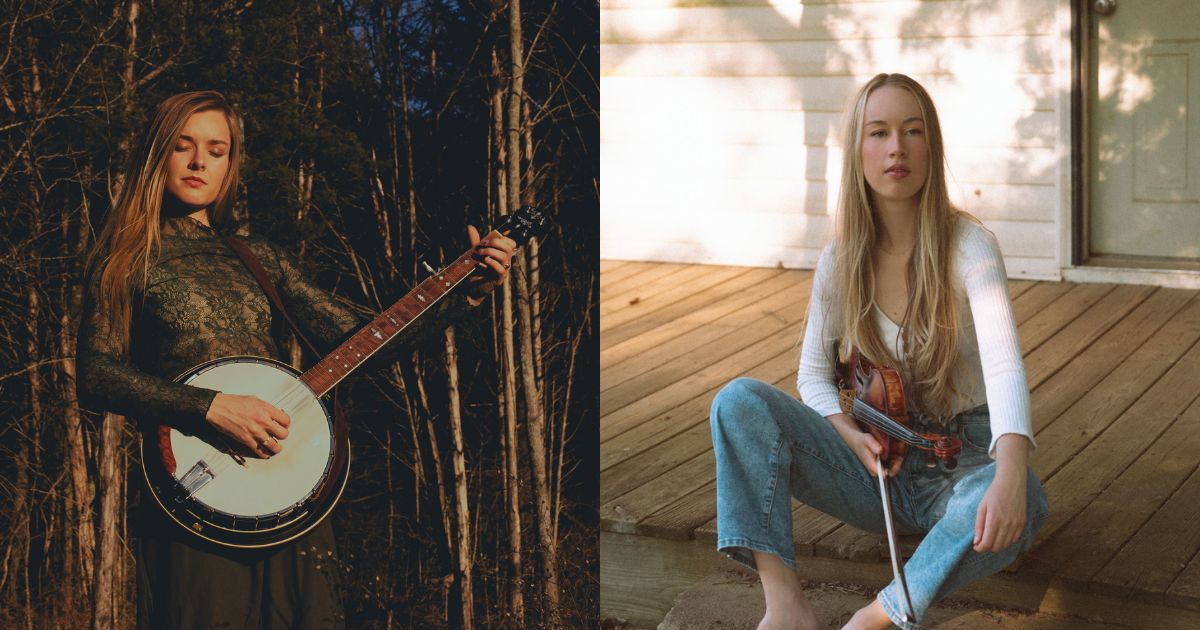
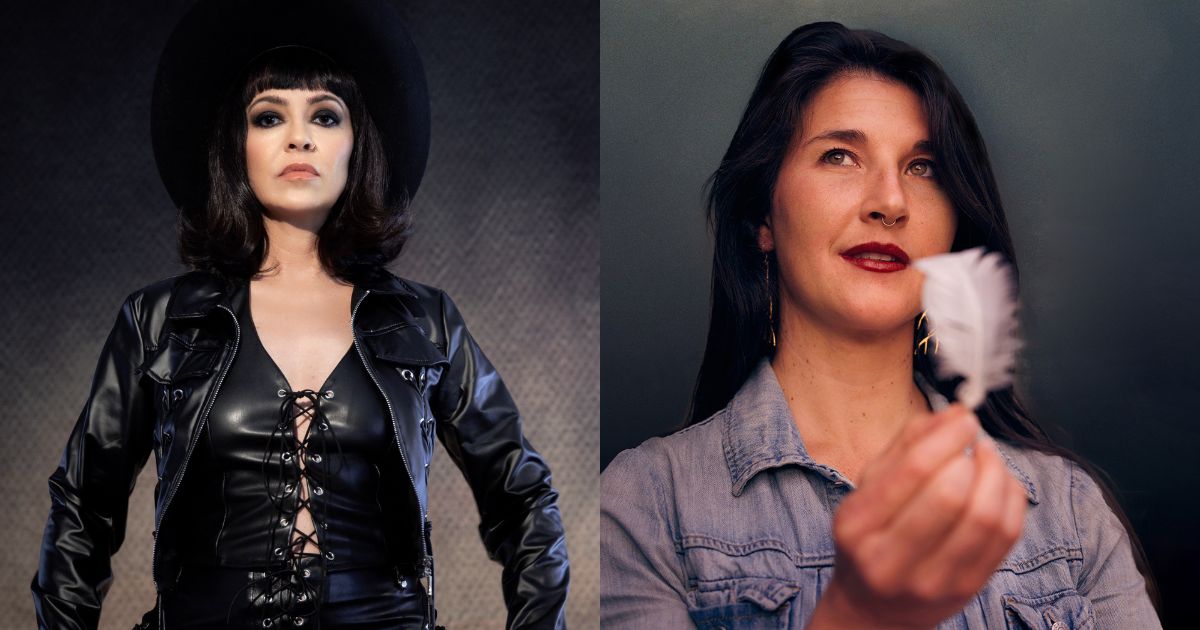
At whatever level you may be plugged into the online bluegrass scene, you have surely heard, seen, or scrolled into content by Bronwyn Keith-Hynes and Brenna MacMillan. These two young, talented pickers are part of a vibrant and blossoming community of traditional musicians and folk artists that includes folks like Cristina Vane, Victor Furtado, Hilary Klug, Wyatt Ellis, and many more.
What makes these creators stand apart, especially Keith-Hynes and MacMillan, is that they aren’t just shoehorning social media into their art-making and creative processes to move up Music City ladders and check abstract music industry boxes. Instead, they’ve intentionally demonstrated how powerful, engaging, and charming content can be when it’s made with art, creativity, tradition, and joyful, cooperative generation as its focal points. Instead of bending over backward to construct virality and lean into transient socials trends, they let their talent, their songs, and their communities do all the talking.
In May, Keith-Hynes released her second solo album, I Built a World, her first project to center songs and her recently-developed, impressive vocals. Drawing on musicians and pickers from her immediate circle and her main gig – Molly Tuttle & Golden Highway – as well as tapping notable country stars and bluegrass legends, the project finds Keith-Hynes at her most confident and unbothered. This is a fiddler-singer-front woman who has found her voice – literally, through work, practice, and vocal lessons as well as figuratively, not satisfied to craft a career on bowing the fiddle alone.
Later this year, MacMillan will release her debut solo album. Its lead single, “What’s to Come,” features Ronnie McCoury and is indeed a harbinger for the superb album to follow. This project, which highlights MacMillan’s prolific songwriting and features her musical community fleshing out the band, is built directly upon the successes she, Keith-Hynes, and others have found on the internet. Eschewing labels, management, or traditional roll outs, MacMillan will release the project herself, with funds raised on GoFundMe, bringing the music directly to her consumers on her own website and socials channels without “middle men.”
So, not only are MacMillan and Keith-Hynes innovating on ideas around what it means to be a side person, a career picker, and multi-hyphenate, professional traditional musicians, they’re taking all of their expertise as online brands and businesswomen to find success for themselves, on their own terms. They’re focusing on what matters, centering their communities, and making incredible, superlative music at the same time.
BGS connected with MacMillan and Keith-Hynes together via video chat to talk about their unique approaches to making albums, content, and music, while highlighting the deep and tight-knit “bluegrass influencer” circle they’ve each helped create since moving to Nashville and putting their all into bluegrass.
I wanted to start by talking about community and musical community – one of the reasons why I wanted to have you both in conversation with each other is how you each rely on, draw from, and center your musical communities in what you create. It may look like these are solo projects that you’re making, but they’re clearly not solitary projects – and they don’t really feel like vanity projects, either. from the outside looking in either. It really feels you’re making music with other people so you can make music with other people. Could you talk about your work, your solo albums, and working in your communities?
Bronwyn Keith-Hynes: Yeah, I think first and foremost, me and Brenna are good friends and we just ended up being drawn together. We both moved to Nashville around the same time and ended up doing a lot of things together and had a lot of similar interests. That’s cool to find. I haven’t found that many women who have my same interests until I moved to Nashville and then all of a sudden I felt like there was a whole bunch. It’s been really awesome to find that.
First of all, I’m just such a fan of so many people, and I wouldn’t want to make music any other way. My project was based around songs from my community, which was really special to me. It was like a little nerve wracking reaching out to friends and people I respected to be like, “Do you have a song that you’re not going to record that I could record?” But, thankfully, a lot of people did – including Brenna – and I ended up recording one of her songs. And, she sang on it and it was awesome!
I feel like I couldn’t do it alone. I know my strengths and then I know other people’s strengths and I want to make sure we’re all [drawing on our strenghts]. I don’t know if singing is my strength, but it’s something I feel passionate about and feel driven to do for whatever reason. I know the things that I want to put out in the world; I want to make sure the music I’m making has the best parts of myself, but then the best parts of everyone else who’s playing on it.
I think that folks who aren’t just straight white men in this industry, we realize from the get-go that we have to have others with us. We have to do it together. Otherwise we’re not going to go the distance. I feel that in both of your music, as well. But Brenna, I wonder what that question brings up for you, as you’re thinking about and positioning your album to release as well?
Brenna MacMillan: It’s funny, because when Bronwyn asked about songs that I had, I had like a bunch and at that time I wasn’t even thinking about [making] an album at all. I think it was maybe like a couple months later that I decided, based on my friends that kept being like, “You should record some of these songs!” And I was like, “I guess…” I wasn’t thinking about it at all whatsoever.
Then that’s another way like to get my songwriting out there, too. And why wait for someone to come to me for songs if they don’t even know that there are songs? Besides my friends, which is who I first would want to do my songs anyway. It’s funny, because obviously it’s really cool putting out your own music, but I still get more excited when “Riddle” comes on than when “What’s to Come” comes on. [Laughs] That is so cool!
Someone else’s vision for your song, it’s like the coolest thing ever to me. Because, I know what my brain comes up with so it’s not shocking, but someone else’s ideas around something that you wrote – it’s like the coolest thing ever, and I guess that’s why I love the community. I feel like community is like the word that I say way too much, but I do I love it. For Bronwyn, Cristina [Vane], Hilary [Klug], Emily, and Mallory, to some extent back in 2018, we all were moving to town around that time and then 2020 hit and I think that’s when we all got a little closer, because we were all bored and wandering around. I took a lot of walks with my friends, individually, we tried to stay across the path from each other, but I think those bonding moments brought us closer. We were like, “Let’s get coffee” or “let’s get dinner,” and then we ended up making a video or something and it all evolved into great friendship, plus people online being like, “Oh, we like to hear you guys play together!”
One of the things I love most about that whole community of content creators – you’re talking about Cristina Vane and a lot of these other folks you create with here in Nashville – it never feels like you’re trying to shoehorn bluegrass into contemporary content creation. It really seems that making bluegrass music and making roots music with your friends is the impetus, and then you made it fit into social media – instead of vice versa. Like, it’s happened organically and from a community standpoint first, and not just from “I have a social strategy. I have a five year plan.” Do you agree or disagree?
BM: Oh yeah, I agree. There’s not much strategy that’s happened in here. There’s not a lot of that going on. [Laughs]
And yet, I can tell you objectively from the outside looking in, y’all are still operating with 110% more strategy in mind than most of bluegrass. [Laughs]
BKH: I feel like Brenna and I have both talked about – correct me if I’m not saying this right, Brenna – wanting social media to serve us, rather than for us to serve social media. The end goal, for at least for both of us, is not like to become a social media star, it’s to have it serve us, to get our names and our music out to more people.
BM: Yeah! And it felt like it was very random that social media took off for me. I was just like, “Where are you guys coming from? Why do you want to hear me kick off a J.D. Crowe song like every day?” But at the same time, it has its own frustrations and that’s when me – and I think a bunch of the other girls that do this side by side with their music careers – we’re like, “We’re going to have this, but only if it makes sense for helping promote our live gigs and any projects we’re doing.” But as soon as I get nasty comments, or this, or that I’m like, “Oh, I will literally just get off of this app if it’s going to go this direction.” I just block people and then keep going.
I want an audience who will appreciate the things that I want them to appreciate. I think that I’ve trained my audience, too. Basically I shoved it in there, “You are going to listen to this slow song and try to enjoy that. And if you don’t, then I’m going to take you [out of my following]…” Because there have been some people who think that I am a content creator on there, and I’m like, “No, I play music and I took an hour out of my day and posted this video and we’re lucky that happened. Now I’m on my way to a gig and I don’t need some [negative] comment.” But you could come to a live gig and request a song!
Brenna, one of the things I love about your upcoming album and the messaging around it is that you’re really doing a direct-to-consumer business model and roll out. You’re being like, “Y’all can come to me. You already know how to find me, so this is where you can find the music, too.” I think it’s amazing and again, it’s the cutting edge of what the future of bluegrass will be while it’s also so fucking trad. It’s like back in the day, when bluegrass music required taking the car battery out of the car to play a show in the high school auditorium and then putting the battery back in to drive to the next high school auditorium.
It’s like you’re doing that in the 21st century. You’re being a DIY bluegrass musician, but in 2024. Can you talk a little bit about the direct to consumer model you’re using with your album roll out?
BM: I was like, I need to build a website so that there’s everything in one place – I remember why I did it, too, because there are a bunch of fake accounts. I knew I needed something out there to be authentic and to have all of my official links. That was literally my number one goal with the website. So now, here’s the link to my website, you can find my YouTube channel, my Facebook, my Instagram, my TikTok from there. And you’re going to know you’re in the right place. I’ve basically just started to try to push everything to my website and go from there to everything else, even if it’s taking you back to Instagram. Because [the website is] where everything’s going to happen, so that you know that it’s me instead of some person scamming you. I guess with that in mind, I started trying to link everything, like in my stories, when I’m talking about anything coming up, I just say, “Go to my website!”
Bronwyn, I wanted to ask you again about community and about bringing your circle, your scene into your album. I love all of the features on your album and I also love that it doesn’t just feel like you’re reaching for a Collaborative Recording of the Year nomination.
[All laugh]
But I wanted to know how it felt to you, as you were thinking about who you wanted to have on the record and why you wanted to have them on the record?
BKH: I’m glad to hear you say that it feels like it’s in service of the music, because that was definitely my intent. It was the funnest part of [recording the album], for me. I did kind of make those decisions after the tracks were done and I’d done my vocals. I just didn’t know how it was going to turn out until I heard it. Then I would brainstorm with Brent [Truitt], and Jason [Carter], and whoever about who to get on it. Dudley Connell was somebody I was really excited about and I’d never met him. I didn’t know him. Someone just gave me his number, I called him up and left him a nervous voicemail. But yeah, he turned out to be the sweetest guy ever – and he’s a bluegrass hero, I love all those Johnson Mountain Boys records.
It’s crazy especially being a new singer, I haven’t heard my voice recorded much ever. Then to hear my voice with all these other voices that I know and I’ve heard a lot – to hear like that combination for the first time – it was like very surreal!
What was it like working with Dierks [Bentley]? We all know his bluegrass pedigree and his connections to the Station Inn and to the McCourys and that he’s always had one foot so solidly in bluegrass, but y’all would have gotten to know him and got to spend some time with him on the road with Molly Tuttle & Golden Highway, too. I wondered how how that conversation happened and also what it felt like to you to have someone who has gold records and platinum records collaborating with you on your record?
BKH: I grew with his Up On The Ridge album, it was literally one of the first bluegrass albums I heard around my college years. I was obsessed with it and I thought it was so cool. It got me into listening to the more trad stuff, but I’d always loved his music and then being Jason [Carter’s] partner, and Jason and he were friends even before he was famous. So they’ve been friends from the get go.
I’d met him a few times through Jason and then again when we were on tour [opening for him], that was cool. ‘Cause I felt like we could meet [more as peers], not just because I’m somebody’s partner. But now, this is my gig and this is your gig. And you’re asking us to sit in every night. I felt a little bit more comfortable to make that ask. He just came into Brent’s studio one day and tracked it in under an hour. He’s great! Very quick.
Brenna, talk to me a little bit and if you have features on your upcoming album – and if you can’t talk about them yet, that’s totally fine.
BM: I know, I was trying to think of what I should say – I don’t know, I’m the one in charge! But let me check, I don’t know if Brenna wants to tell all that yet. [Laughs]
At the very least, we can talk about Ronnie [McCoury] and “What’s to Come.” Ronnie’s one of my favorites. Talk a bit about, again, bringing in community and bringing in the scene that already surrounds you.
BM: The core band in the studio was [Mike] Bub on bass and Jake Stargel on guitar. Me, I played banjo on four or five of the tracks, but I have been writing a lot on clawhammer lately and I know that I’m not good at it, so I had Frank Evans come in for those and then I had Cory [Walker] play on a couple very last minute. I was thinking, it’s just going to be better if he does it.
When the special guests ideas popped in my brain, I was thinking, “Do I want special guests to be like my friends, my age, or like people that I really are like heroes of mine? Is this the time to ask them? I don’t know.” Nobody knows who I am, but that’s okay. I had met Ronnie a handful of times in kind of settings where it was like, “I’m here with so and so” and I’m just a little curmudgeon. [Laughs]
“What’s to Come,” it’s like a reflective life song. I know that I sound like a small baby when I sing, and I was thinking of someone with an older sounding voice. Like wanting ancient, lonesome vibes so that there could be old and young together, pondering about life. If you’re young or if you’re old, you still ask all the same questions about life.
Also, [Ronnie’s] gritty mandolin playing. I love it so much. Jarrod Walker played on most of the core mandolin stuff, but he happened to be out of the country that session. I was like, this is perfect! But it’s funny, because I didn’t even know if Ronnie was going to bring his mandolin! [Laughs]
To wrap up, here’s a question I had for both of you, because you’re both musical shape shifters. You move in and out of musical contexts so easily; you’re both side people, you’re both front people, you’re both social media brands. How do you maintain your senses of self?
BKH: I feel like I can’t get away from myself! I don’t feel like I ever even think about that. The only way I’ve struggled with that a little bit, or thought about that more, is doing the solo projects. That’s where I’m like, “Wow. OK. What would Bronwyn do next?” But I think I know what I like and I know what I want to do. I’m just like, “How am I going to do that? I need to figure that out.
BM: I think similarly, I don’t really think about it that much. I think I know what I like, too. And I know what I don’t like. From the get go, I’ve very much just been myself online. I come home from the lab job and do a video with dark circles [under my eyes] and grunge and smelling like hemp trash. That’s what I established from the beginning. So now, I feel comfortable being myself.
Pretty much everything has been my own ideas and, it’s funny, because ten of my eleven songs are originals on the album, three of which are co writes, but hearing it come to life in the studio with other people, it still ended up being what I thought it should be. Which is weird, because there’s no way that I could bring some of these musicians into the studio who are eons beyond what I could imagine, but they knew exactly what the track needed. It does sound like me still and what my vision would have been if I had expressed it [all myself].
BKH: I feel like I’m like more myself these days than I’ve ever been. I feel like for a while, starting out in bluegrass, I had a lot of ideas of what a woman in bluegrass needed to look like, or be, or act like. In the last couple years, maybe inspired by being with Molly in Golden Highway, I feel like I’ve been able to let a lot of that stuff go – about how I should dress and whatever. Now, I embrace the things I actually like.
Photo Credit: Brenna MacMillan by Sophie Clark; Bronwyn Keith-Hynes by Alexa King Stone.
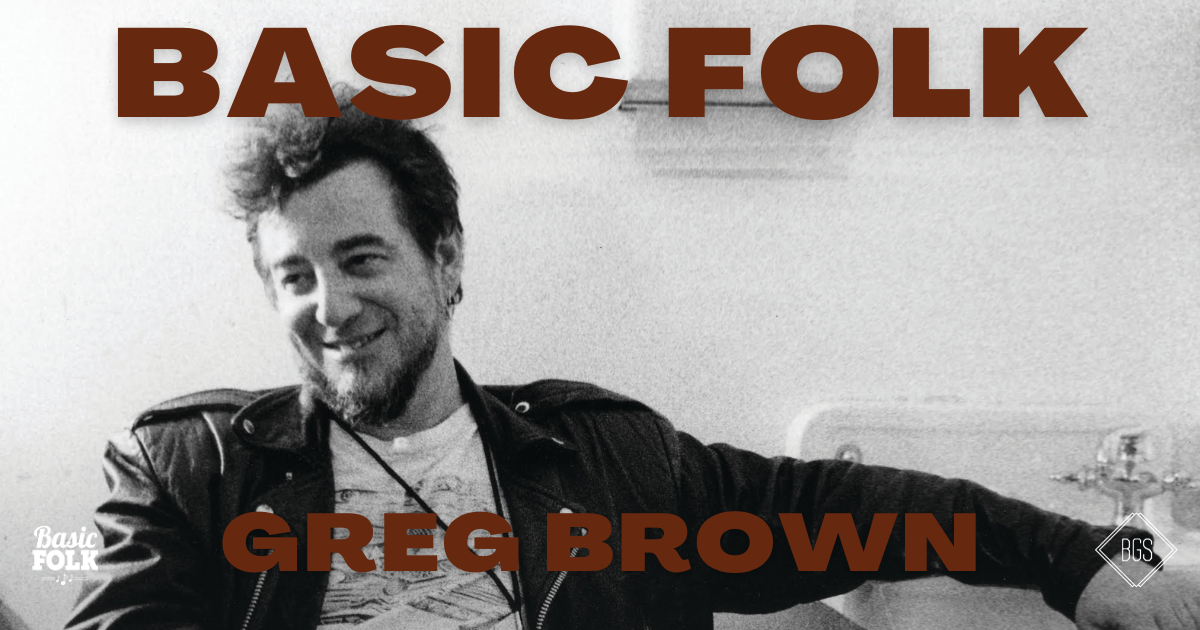
Iowa folk music icon Greg Brown is living that retired life. After playing his farewell retirement concert in 2023, he’s returned with a new book: Ring Around The Moon: A Songbook, which highlights a song selection personally picked by the songwriter himself, as well as family photos, personal anecdotes and self-penned drawings. The book features a foreword by Seth Avett (The Avett Brothers) who calls Brown’s songs “plain spoken expression of the nearly inexpressible.” In our conversation, we touch on topics like inner peace, happiness, personal growth and self-acceptance.
He speaks of how art has impacted him in ways the artist will never understand. He talks about what it’s like to be on both the receiving and sending end of this exchange. It especially impacted him when he learned the poet Allen Ginsberg listened to an album of his while he was dying. I asked him about his music archives, which he calls “a bunch of old notebooks on a shelf” and “a couple boxes of old photos,” which assisted him in recalling family connections for the songbook. Going through the photos and old songs instilled a sense of music nostalgia, including collaboration with Iowa musicians at the Wednesday Night Jam at The Mill. Music nostalgia surfaces several times through the pages like his incredible story of founding the successful and beloved Red House Records.
There’s also discussion on a few choice Greg Brown songs like “If You Don’t Get it at Home,” addressing replacing love for materialism and drug use. We talk about “Brand New ’64 Dodge,” chronicling Brown’s personal experience with JFK’s assassination in 1963 and “Two Little Feet,” written in Alaska where he was inspired by Native American myths he heard and felt in the area. Greg Brown’s songbook was an awesome trip down memory lane for some of the best folk songs ever written from one very serious, yet very silly songwriter. It was an honor to dig in with one of the best to do it!
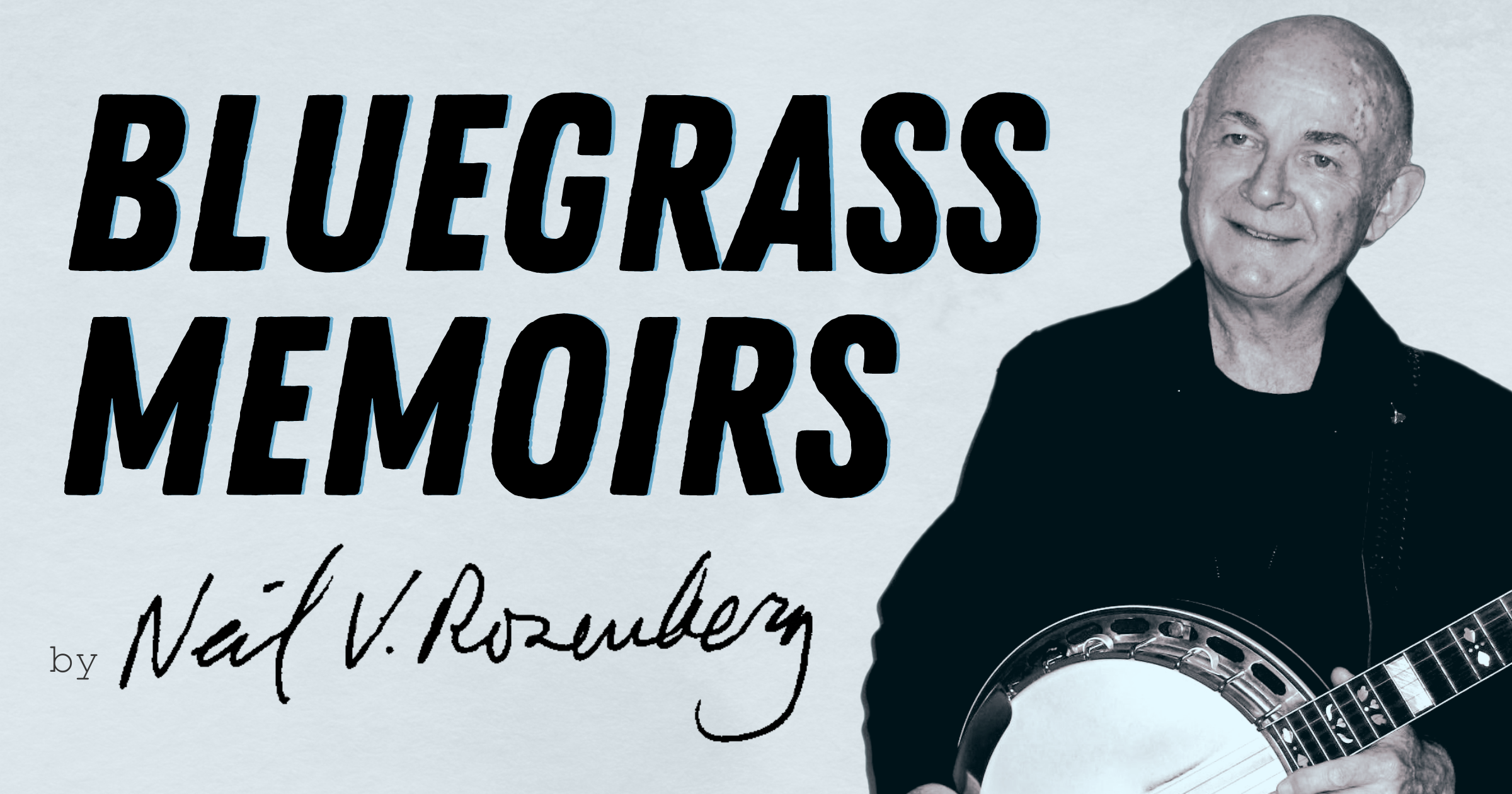
Soon after Earl Scruggs and Lester Flatt ended their partnership and their band The Foggy Mountain Boys in 1969, Earl created The Earl Scruggs Revue with his sons. They recorded for a major label, Columbia, and toured regularly until 1980, disbanding in 1982. This is the story of how I came to see, hear and take extensive notes about their 1975 concert at the University of Maine.
In 1969 I was living in St. John’s, Newfoundland, working at Memorial University’s folklore department where I taught a yearly course, Introduction to Folk Song. I knew that bluegrass drew from folk traditions in the U.S. Southeast, for I had been playing bluegrass and writing about it for a decade. But I could tell my students little about the Canadian milieu. So, in the early ‘70s I began research in Canada’s Maritime provinces of Nova Scotia, Prince Edward Island, and New Brunswick
In August 1974, I moved to New Brunswick for a year’s sabbatical. My research project was a study of regional and local relationships between country music and folk music traditions. I did extensive fieldwork – interviews and documenting events, collecting music.
That fall, I met a singer-collector of country records and song folios, a perfect example of the kind of folk-country connection I was studying. I recorded several hours of his songs and began contemplating publishing them in an album.
I thought at once of Rounder, a new record company that had been publishing innovative roots albums. I’d met the Rounders – Ken Irwin, Bill Nowlin and Marian Leighton, a music collective – at an American Folklore Society meeting. They knew me as a writer about and collector of bluegrass.
Early in the new year I arranged to visit them. In February 1975, I set out in the family pickup with my ten-year-old daughter Lisa from our farmhouse in Pleasant Villa, New Brunswick to Brooksville, Maine, where we visited relatives. Lisa stayed with them while I drove further south to Somerville, Massachusetts, to visit the Rounders.
David Menconi, in his new book, Oh, Didn’t They Ramble (U of NC Press), describes well the scene at the Rounder collective’s big old Somerville house, with their newly flourishing roots music record company. We discussed projects, they took me down to the basement to see their mail order records inventory, and I came back to Brooksville with a load of LPs and lots of news about the contemporary bluegrass world.
Brooksville is a little over an hour away from Orono, site of the University of Maine, where my friend, Edward D. “Sandy” Ives, lived. Sandy was a great writer, a folklorist who’d studied and published books about 19th century singer-songmakers in Maine and the Maritimes. I was looking forward to discussing my ongoing research with him. After I returned from visiting the Rounders, we drove up to Orono to see Sandy and his wife, Bobby.
When we got to Orono, a young friend and former student of mine at Memorial, Lisa Feldman, was staying with the Ives. It was she who alerted us about the Earl Scruggs Revue concert and went along with us to it.
In St. John’s, I regularly bought new bluegrass albums by mail order from County Sales. I don’t recall paying much attention to the Revue then. County didn’t carry their albums.
Revue albums were not easy to find in Newfoundland. Working on a Flatt & Scruggs discography and, admiring Scruggs’ banjo artistry, I wanted to hear his contemporary work. I bought all the Revue albums I could find. By the fall of 1974, when I moved to New Brunswick for the sabbatical, I’d gotten seven.
Those records were in storage back in Newfoundland for the year, but I’d brought my stereo set along and by December I’d found a new Revue album, Rocking Across the Country (Columbia KC 32943). There was nice Dobro on it by Josh Graves and one great instrumental composed by Earl, “Silver Eagle” – named, presumably, for the band’s bus.
During that year I was doing field research at music events and venues – bars, jamborees, concerts, jams – and had developed a system of documenting them. I carried a 3″ by 5″ notebook (spiral binding, ruled pages) and took notes. This was with me all the time and so it just seemed like an easy thing to take notes as usual at this concert.
What follows are my notes from that February 7, 1975, concert, written up from my notebook when I returned to Pleasant Villa the following week.
Friday, February 7, 1975 Orono, Maine Report on Earl Scruggs Revue Concert at the University of Maine, Orono.
Tickets were $3.50. I went with Sandy Ives, and we were joined at the concert by Lisa Feldman and by [Sandy’s wife] Bobby and [their daughter] Sarah Ives and [my daughter] Lisa R., who had all gone to see a Robin Hood movie. The concert was sponsored by the student union and represented a slight departure from previous concerts of this type in that instead of bringing high-powered “name” outfits on which a lot of money had been lost, they were now trying slightly less expensive acts. The concert committee was dominated by frat boys who didn’t know about music, according to Lisa [F.].
Site of the event was the basketball gym. Folding chairs were placed on the court, and wooden bleachers were placed around the side (these might have been permanent, but seemed moveable… small point). There were balcony seats on both sides and at one end, the end over the doors through which we entered. At the other end a stage was set up. Dominated by big columns and horns on either side – your typical rock concert setup. Sandy and I took seats on the left side of the bleachers (as you face the stage), about three rows up and we were about 2/3 to 3/4 of the way back from the stage toward the entry doors. Directly ahead of us in the middle of the floor was a raised platform on which the controls for the sound were set, along with a chair or two for the operator(s?). Behind this, higher and close to the back, was another platform with the lights. During the concert the colors were constantly being changed and moved about from tune to tune by a light man who must have known something about the Scruggs show in advance.
The audience consisted of college students almost exclusively. I didn’t see any old-time Martha White fans or country music types. Dress was Levi’s and hippie mufti – knit caps, ragged but interesting coats, vests, long dresses, patches, etc. There was a lot of smoking going on and some drinking. Before the show a long-haired young man who represented the powers that be got up and told the audience that there was no smoking and no drinking and that if they were caught, they would be ejected from the show by the campus police. In addition he said that, if you must smoke, then don’t get caught. But also, he said, please don’t put out your butts on the floor of the basketball court – a lot were last time, and the University is threatening to not let them have concerts if this continues. Burden of the speech: Here are the ground rules, don’t get caught, play it cool.
The campus police were cruising up and down the aisles dressed in dark blue uniforms with dark blue shirts and black ties with dark blue Stetsons. Something like Civil War Union Army officers in movies. And they were looking very serious and hawk-like.
The warm-up act was introduced, as a group from Boston, “Beckett.” The group consisted of Phil B. (missed his last name, [Buller]), who came on playing a D28 guitar and a harmonica, Steve Delaney, playing an electric bass, and Jaime Michaels, who played a D18 Martin guitar and did the emcee and lead singing in the first few numbers. Later they all switched around, with each doing some lead singing and some emceeing. I took notes in the darkened auditorium with a fancy movie critic’s pen that [then wife] Ann had given me — lights up in the dark, illuminating one’s pad. As it were.
The first song was “CLEAR BLUE SKY.” There were a few catcalls from the balcony and a rather tentative feeling from the audience. A whiff of authentic marijuana smoke drifted my way during this (and subsequent songs), and I could see people lighting up in various places. Later, the folks next to me surreptitiously passed a bottle (beer, I think) around. At the end of the first song, the Beckett emcee made a sly crack about “Maine Mounties” and from there the show built — they had the audience with them.
Next song was “SOMETHING NEW.” As all this was going on, the cops were cruising up and down the aisles, occasionally throwing people out, but generally arriving on the scene after the cigarette had been extinguished. They were on the lookout for tell-tale lights, and one time one went by us while I was jotting down a note with my fancy pen. He gave me a hard look and some of the people around me had a good giggle about that.
Next song, [“WE ARE FREE”]. These guys weren’t musically bad, but I could not really get into their music. The harmony singing was kind of Crosby/Stills/Nash and actually a bit weak; the instrumental aspect of it was bland. A note here says “harelip,” but when you wait ten days before writing up your notes you forget the jokes, I guess. Next one of the boys took up an Ovation guitar – this was Phil B., and the song was “LAST TUESDAY MORNING.” Then Jaimie mentioned that they were from Virginia and that they considered it an honor to be appearing with the Earl Scruggs Revue. Then they did “TENNESSEE.” Next, “I’LL TRY IF YOU’LL TRY.” Most of their songs were their own compositions, I guess. I didn’t recognize any of the above; the names in brackets are ones they didn’t announce that I guessed at from the words. Now Phil took up the Ovation again Steve took an electric guitar and they did a song they had written while in Pittsburgh, [“STOLE AWAY”]. Using the same instrumentation, which, incidentally, sounded better than the acoustics – that is, the electric came over with much more tone – they did “PERFECT HONEY.”
Now another instrument switch with Phil taking up an old Gibson J50 guitar and Steve going back to the bass. The song was introduced as a “folk song” for reasons which eluded me at the time. It was “SEARCHING,” but not the Coasters’ smash hit. With the same instrumentation, they then launched into a song written either by or about some friends in Boston, “COUNTY LINE.” Then, as their final tune, a song they introduced as being by Joni Mitchell and needing no introduction (?). It was well received by the audience, and they got an encore.
They came on and did a song which they introduced as a real old one by that old bluesman Eric Von Schmidt (time flies – I remember Rolf Cahn telling me in 1959 that he’d been picking with a really good kid in Boston who even did some slide guitar, a kid named Rick Von Schmidt). Song was “AIN’T NOBODY’S BUSINESS BUT YOU OWN,” and they did it well. Kids in the front of the audience got up and started waving their hands in the air, literally surrendering to the music. For the second encore, it was another Von Schmidt tune, “GRIZZLY BEAR (SOLID GONE).”
Another intermission, punctuated by further entreaties by the same fellow. By this point, the cops were less in evidence although during the second half they did eject several people sitting around me.
Enter the Earl Scruggs Revue, who plug in and pick away at once on “NASHVILLE SKYLINE RAG.” Across the front of the stage are three microphones; at my left stands Stevie Scruggs, who plays rhythm guitar (a Gallagher) most of the evening, except for one banjo tune. Next to him is Randy, who is bent over his Gallagher guitar, doing the lead work. Characteristically I guess you never see his face when he’s picking, he’s looking at the fingers and anyhow is surrounded by hair. Later, in various numbers which I didn’t note, he plays a bright red Gibson electric with twin cutouts and a thin (hollow?) body, which has a very mellow tone.
Next to him, in stage center, is Earl. Earl’s Mastertone is electrified with some sort of pickup inside, a Barkus-Berry or FRAP of some kind I guess. This surprised me, as did the fact that he was wearing the instrument much lower than when he played with Flatt. He was not bopping around as much as the boys (who, in turn, were not bopping around as much as many or most rock groups), but he was looking very relaxed, had the old smile of yore, and did move when he played more than I remember from the Martha White days. On the right and, rather standing back was poker-faced Gary, who played bass and did the lead singing. When there was any part singing done, Earl and Randy took the center mic, Steve the left-hand one, and, behind them Jody Maphis took his vocal parts on a separate mike over the drums. To my right behind and to the right of Gary, was a piano where Jack Lee the pianist sat. This is the same guy on the cover of the Rockin’ Across the Country album. [This is not correct. The guy on the cover of Rockin’ is Shane Keister, who is listed on the album cover as “keyboard instruments.”]
My first impression was one of tightness, in the sense that the band was really together and tight. And although I can’t say I like Earl’s banjo sound as well with the volts surging through it, it was sounding like a banjo and Earl did get quite a few tonal nuances from it without the visible aid of a tone control. Randy was as good as the recordings led me to expect, however, he frequently seemed to be “grandstanding” it, by playing freak-out type rock licks way up the neck which were spectacular and, effective in terms of inciting the audience, but which were as far as I was concerned not as nice musically as the well thought out stuff he did or does on record. So I was a bit disappointed in Randy.
My reaction to Earl was just the opposite. He has sounded a bit stiff and mechanical on the records I have heard (and I got ‘em all, Jack), but tonight he was nicely in the groove and seemed to have some very interesting new ideas, especially rhythmic variations, which I hadn’t heard before. He really seemed to be enjoying himself, too. After this tune, the members were introduced and they went right into “I SHALL BE RELEASED,” following which, Earl introduced the next song as an old “shouting type number,” “PAUL AND SILAS.”
Gary’s singing is o.k., it fits the music and sells the songs to the rock programmed audience. Doesn’t bother me, doesn’t excite me; seems to be better in person than on record, and better on recent record than on older records. Earl next says this is an old number he used to play at square dances back when they only had one instrument, and he says, “We’ll show you what it was like to do it alone and then we’ll show you why I was so glad when someone else came by with their instruments to help me out.” He doesn’t announce it, but it’s “SALLY GOODIN.” Intro and arrangement are as on the Kansas State album. They really get rolling (and rocking) on this one, with Earl and Randy engaging in some nice banjo-guitar call-response stuff. The audience responds here as it does again and again later on to the faster tunes, by standing up and waving their hands, shouting, etc. Following this, Earl mentions the Kansas State album by saying that the next tune is on it, an old Jimmie Rodgers tune, “T FOR TEXAS.” Next, Randy is to pick a fiddle tune on the guitar, and it turns out to be “BLACK MOUNTAIN BLUES.”
The next tune, an instrumental, was a [Blues in F] and then, coming without an announcement was “MOST LIKELY YOU GO YOUR WAY (AND I’LL GO MINE),” which has a nice arrangement with some good banjo work by Earl. The next song is introduced by Gary as one which dad wrote about the place in North Carolina where he grew up, “FLINT HILL SPECIAL.” Gary takes a harmonica break on this one.
Then, a novelty item — Randy and Jody play a tune written by Elizabeth Cotten (Earl is talking – I was gassed that he gave the tune proper credit, this really shows the kind of considerate and thoughtful person I like to think he is), on one guitar! Here Jody gets up front, from behind his drums, and he & Randy stand near the center of the stage and Randy does the right hand (the guitar, a Gallagher is hung from around his neck) and Jody does the left. Then, while Jody does the simple left hand, Randy does some fancy up the neck left hand stuff too, making it into a very interesting and rather complex piece of music. They also gag it up a bit, swinging the guitar back and forth at the end, in time to a leg-swinging rock dance step thing. Nice job, boys. “FREIGHT TRAIN” was the tune, of course.
Now one of the boys (Gary?) introduces Earl doing an old Carter Family tune on the guitar. This is “YOU ARE MY FLOWER,” which Gary sings and my impression was that the sound not as nice and delicate as on the recordings of that that Earl did a few years back. Next it’s Stevie’s turn – he does “EARL’S BREAKDOWN” on Earl’s banjo and it’s very hard to hear, giving me the impression that he hasn’t mastered the tune that well or that in any case hasn’t worked out tone production and control on the electrified instrument the way his father has. The next tune I noted only as [“FATHER TOLD ME”] and I’m at a loss to identify it from their recordings. Then, of course, the song which “Daddy wrote for a television series,” “THE BALLAD OF JED CLAMPETT” done as an instrumental. Followed by Randy’s guitar version of “ORANGE BLOSSOM SPECIAL,” which is a crowd rouser/etc.
Next comes Gary’s interesting song “EVERYBODY WANTS TO GO TO HEAVEN (NOBODY WANTS TO DIE),” which features in this performance a slide banjo sequence by Earl, in which he’s picking along, then takes his left hand off the fingerboard, reaching into his pocket (I think, what?!) and pulling out a slide and doing a couple bars of that kinda stuff. Grandstanding, but fun, and the audience can’t miss it. “STEP IT UP AND GO” is next and then “one that Dad wrote in 1949 and in 1968 they used it for the theme to a movie called Bonnie and Clyde,” “FOGGY MOUNTAIN BREAKDOWN,” which is the final number and leaves ‘em screaming for more so they do: “CAROLINA BOOGIE,” which has some nice call-response parts and leads to a second encore in which they do “BUGLE CALL RAG,” “LITTLE MAGGIE” (bless her soul).
The audience wants more but the lights are turned on.
(Editor’s Note: Neil Rosenberg’s Bluegrass Memoirs on the Earl Scruggs Revue will be continued.)
Author’s Note: For a contrasting review see Hub Nitchie, “Pull the Plug, Earl” in Banjo Newsletter II:6 (April 1975), p. 13.
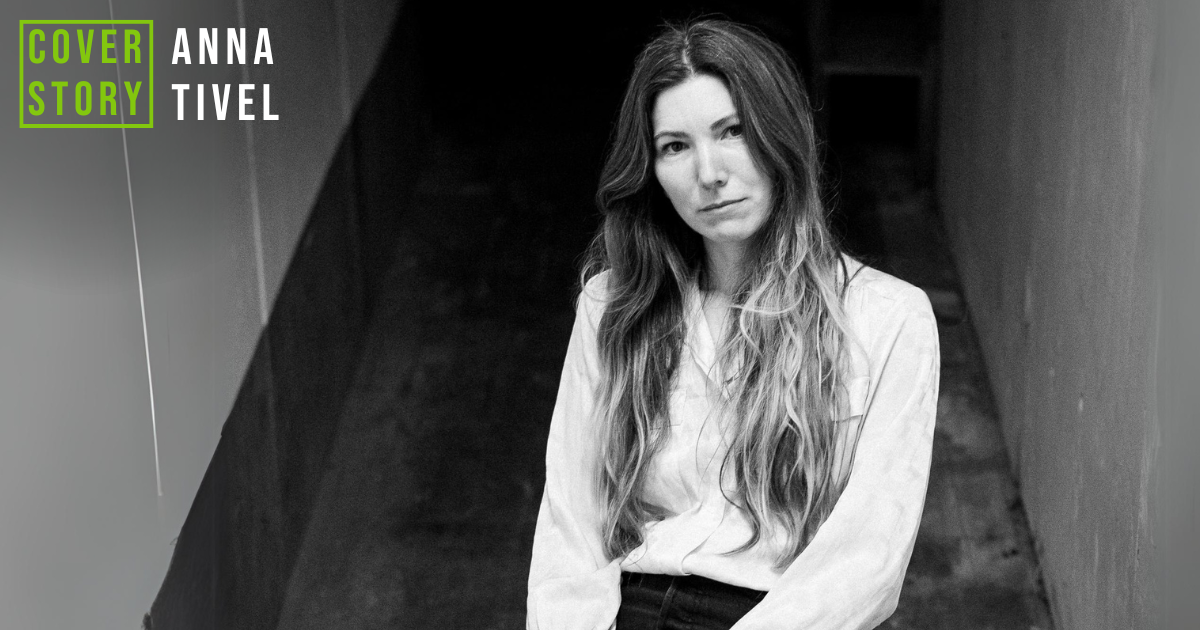
“Nobody tells it like it is,” Anna Tivel sings on “Disposable Camera,” the first single from her new album, Living Thing. The song radiates with the joy and pain of reality, climaxing with the lines:
That big black train is rolling And that deep down scream is growing A hurricane come howling A shot heard from the mountain A blessing and a burden I swear this will be worth it…
Which are followed by a melodic and cathartic yell. I don’t know how I first came across Tivel’s music, but when I found the song “Blue World,” I got stuck on it. I listened to it over and over, trying to take in every aspect of it, break it into pieces, open it up like a watch so that I could understand how this perfect song ticked. It is still the most beautiful meditation on dying that I’ve ever heard. “You come to the heavy gate and you open it all alone…” is a line I think about often. To me, it sounded like she herself was telling it like it is.
A few weeks after discovering “Blue World,” I was on tour with Kris Drever, who is one of my favorite folk musicians from Scotland. We were trading new music discoveries and I played him that song, after which he became obsessed with it. We traveled around listening to “Blue World” and talking about death for the rest of the tour. Giving someone a new song to love is a special kind of transaction. It’s a gift for the new listener, but also a point of pride to have found something that someone else also finds meaning in – especially when the recipient of said gift is a musician you admire. New song discoveries are an unmatchable currency, a communication beyond words.
“Blue World” sent me on a journey through Tivel’s catalogue, with hours spent listening to Small Believer, The Question, and Outsiders, before the release of her latest record on March 31. With Tivel’s latest collection, I have to come to the conclusion that someone does tell it like it is and that person is Anna Tivel. I spoke with her over the phone for BGS about the inspiration behind her songs and the unique circumstances that led to her production choices on Living Thing.
I’ve been a fan of your work for a long time and I’m curious to know what feels new and different about this record than your past work?
Anna Tivel: I think there are two main things. I’ve worked with Shane Leonard before [who produced Outsiders and The Question], but this is the deepest collaboration we’ve ever done. There is so much of his heart and his sonic experimentation in these songs.
We made this squarely in the pandemic years, so there was no way to call upon a band for live tracking. It was just me and him in his studio. He went insane trying all kinds of sounds, playing all different instruments, and I scribbled extra verses on napkins as I heard what he was coming up with. We worked all day, every day and I slept on his couch for a month. I tried to say yes to everything and I learned so much. I really feel like the sounds feel different than what we’ve worked on before.
The other thing is that going through that year, I was craving soaring choruses… more melody and rise and rhythmic happenings that I normally do. Maybe it was a result of just sitting and looking at the same window for so long. I usually write long and dark monotonous stories with no chorus at all, but I think I craved a little more hope and joy. In general I feel like less people died on this album than usually die my albums… it’s still melancholy as fuck though.
Knowing that these songs were written and recorded during that very existential time, and now that they are being released into a different time, do these songs feel different to you than they once did?
Yeah, it’s interesting, the whole process of putting out a record. I really got stuck in the machine for a little while so it took quite a long time for this album to come out.
They are older songs now in my soul, but the project still feels really fresh. I think because Shane drew them into this more alive, sonic world. It was really exciting and fun to explore joy and rhythm and movement, especially in that isolated time. It felt good to have some hope and just wiggle around and try to feel the good parts of being a human.
So coming back to it now, it feels new and exciting to take them out on the road with a band. It’s making me realize it’s fun to have some songs that we can really move into, rather than building up from the ground.
One of my favorite tracks from your new record is “Desperation” – “Real life is far from fair, you tried and tried and got nowhere/ It’s like somebody rigged the whole damn thing/ Bloody knuckles, empty hands, you want to fight, but all you ever had/ Is desperation.” Can you tell me a little about what led to that song?
I think that one came out of the heart of that pandemic time, watching people, and having an awareness of how close many folks are to the edge, simultaneously knowing how the people pulling the strings aren’t the ones close to the edge.
Maybe your kid gets sick, and you miss work, and then that’s that, you’re evicted, and into the car. You don’t choose what you’re born into and if you’re born with the short end of the stick, it’s so hard to imagine anything but that reality.
You can see getting stuck, because that imagination isn’t generously shared by the people that own it. But if people that are living in a different world reach out to help it can really change the situation. Sometimes that means helping people believe that a different reality is possible. You have to go into your mind to create what you need. It’s sort of the same idea as representation, in the sense that if you’ve seen people that feel like you in very different situations than you, you can imagine yourself into a different situation.
I want to work on making that imagination more widely available.
That’s an amazing point, and a great one to keep in mind especially for artists. Artists can and have played that role for people, I believe. Does this same idea carry through for the song, “Disposable Camera?”
I like songwriting because you’re sort of always looking inward… You think you’re reflecting the world, but so much of yourself gets in there and the things that you’re learning into. A lot of this album is about getting free, getting loose of the way that you’ve taken in that it “should be,” the way that you should express yourself or the way you should move…
A lot of friends in the pandemic were having kids or trying to have kids and I was thinking about how, when we were all born, our parents were these people. [I was] realizing that everyone making babies has no idea what is going [to happen] and it’s kind of beautiful that it’s this big wheel of nobody knowing what they’re doing. Everyone is kinda hoping that someone else will be like “this is what it is,” but maybe the not knowing is actually a freedom. It feels scary to think you’re supposed to be certain, but you aren’t yet. The freedom is that nobody actually is certain and that’s not going to change.
I was listening to your song “Kindness of a Liar” and thinking about how important escapism was in 2020 and 2021. How badly I needed books and TV shows to get lost in so that I could come back to the present and have energy to cope with what was happening. Is that what this song is about to you?
In this batch of songs I was thinking a lot about what is truth, what is honest, what is listening, and what is being able to have nuance in all of those realms. You don’t just stay certain. To be able to move and shift and read situations and try to be learning in real time, messily, is very different from saying, “This is a fact and I’m going to hit everyone over the head with it until I’m proven wrong, and then I’m going to pretend I never said it.”
To try and tell stories to one another that are compassionate and messy – sometimes telling a story that might not be true is the most gentle and kind thing you can do while something hard is happening.
I think it’s about recognizing how much we crave each other’s stories and being really aware of how we paint the world for each other. The more artfully and more compassionately we tell each other’s stories the more we connect, and it’s not about trying to prove our point.
The most loving thing you can do is to share your mind and heart with people in the most nuanced way. And maybe there’s some fiction and lore in that.
If you didn’t work in music, what would you do instead?
I would work in construction or be a lawyer or a therapist.
If you were a color, what shade would you be – and why?
I would be green – green represents plants and herbs that heal us. I’d like to be the person that saves a person’s day
What would a perfect day as an artist and creator look like to you?
Cooking and having good healthy meal, editing projects I produce for friends, playing soccer with friends, having a cocktail in a dive bar watching a local band perform.
What was the first moment that you knew you wanted to be a musician?
It was when I was like 12, I went to this school that had a choir and when I listened to them sing, it was amazing then I knew I have to try singing. That’s where singing starts for me, but wanting to be a musician was never a plan, I just went with the flow of life and ended up being one… none of my friends even believe I sing.
Which elements of nature do you spend the most time with and how do those impact your work?
Gardening and soccer always reminds me that life is not all about just work, it calms my mind; when I get back to work I feel less pressured by the whole work system and pace.
You Gotta Hear This! We’ve got an excellent collection of premieres for you today on BGS, including two new music videos and a new tribute track, too.
Check out a brand new video for “Homeward” by Natalie Spears, off her upcoming album, Hymn of Wild Things, which is set for release June 28. Also, don’t miss a fiery, Tarantino-esque video from India Ramey for “Baptized By the Blaze,” the title track of her new record coming in August.
To round us out, bluegrass singer-songwriter and radio personality Chris Jones pays tribute to iconic folk songwriter Tom Paxton with a rendition of “The Last Hobo” from the stacked Bluegrass Sings Paxton project.
It’s all right here on BGS and You Gotta Hear This!
Natalie Spears, “Homeward”
Artist:Natalie Spears Hometown: Carbondale, Colorado Song: “Homeward” Album:Hymn of Wild Things Release Date: June 28, 2024 (album) Label: SleeLee
In Their Words: “‘Homeward’ is a soulful manifesto about returning to oneself. It can be so easy to lose ourselves in relationships and this song is about coming home to our own being. I left Colorado during the pandemic to be with my partner on the East Coast. When things hit rock bottom, I packed the car and headed west. Miles of empty flatlands, cornfields, and numbing road noise only made my static mind chatter louder, constantly questioning, ruminating in self doubt. When the Rocky Mountains finally came into view, my whole body let go. I pulled into a McDonald’s parking lot to write these words, ‘That muddy road was getting old and keeping on just kept me down, I was one step forward, two steps back, now I’m heading homeward bound.'” – Natalie Spears
Track Credits: Natalie Spears – Vocals and keys Bradley Morse – Bass Kevin Matthews – Drums Eric Wiggs – Audio engineering and mixing
Video Credit:Erik Fellenstein Payden Winner and Eric Fellenstein – Camera operators
Chris Jones, “The Last Hobo” (From Bluegrass Sings Paxton)
Artist:Chris Jones Song: “The Last Hobo” Album:Bluegrass Sings Paxton Release Date: June 14, 2024 (single) Label: Mountain Home Music Company
In Their Words: “It was such an honor to get to participate in the Bluegrass Sings Paxton project as both studio guitarist and as a vocalist on ‘The Last Hobo.’ I was immediately drawn to this song, which struck me as a classic Tom Paxton story song of travel and love lost. It’s the kind of song that pretty much sings itself. Plus, I’ve just always wanted to sing a song that mentions Tucumcari, New Mexico.” – Chris Jones
Track Credits: Chris Jones – Acoustic guitar, vocals Darren Nicholson –Mandolin Deanie Richardson – Fiddle Kristin Scott Benson – Banjo Nelson Williams – Upright bass
India Ramey, “Baptized By the Blaze”
Artist:India Ramey Hometown: Nashville, Tennessee (by way of Birmingham, Alabama) Song: “Baptized By the Blaze” Album:Baptized By the Blaze Release Date: June 14, 2024 (single); August 23, 2024 (album) Label: Mule Kick Records
In Their Words: “This is a song about how I made the choice to put myself through the pain of getting off an anxiety drug that I was seemingly hopelessly addicted to, going through excruciating withdrawals, confronting my childhood trauma, and starting my healing journey in order to step into my personal power and become a better version of myself. It’s about phoenix energy. It’s about the death of the old me that was a slave to my trauma and the birth of the new me who is living a full and happy life without fear.
“My healing journey felt like a phoenix building its own funeral pyre, setting itself on fire, and being reborn as a more powerful version of itself in the flames. I took that myth and put it in a sort of Tarantino-esque, Faster Pussycat vibe, because that’s what I like, and made the car the ‘pyre.’ Alan Collins, my friend of over 15 years, is a VFX genius and he shot and edited the video.” – India Ramey
Track Credits: Produced, mixed and mastered by Luke Wooten at Station West Studios. India Ramey – Lead vocal Seth Taylor – Acoustic guitars Tommy Hardin – Drums Alyson Prestwood – Bass guitar Scotty Sanders – Pedal steel James Mitchell – Electric guitars
Photo Credit: India Ramey by Stacie Huckeba; Natalie Spears by Emily Teague.
Sage Christie (formerly known as Siena Christie), is a modern folk artist known for their pure voice and captivating story songs. In both 2022 and 2023, Sage was a finalist at the Kerrville New Folk Songwriting Contest. They also won a handful of other songwriting contests including the Great River Folk Festival songwriting contest in 2021, Portlands Folk Fest Song Contest in 2022, and the Walnut Valley Festival NewSong Showcase in 2023.
Sage has spent much of their time in the past year touring the Southeast, Midwest, and Pacific Northwest. When they’re not on the road, they’re now based in Asheville, North Carolina. They moved to Asheville last year, eager to connect with Appalachian music, folk traditions, and the vibrant local arts community.
Our interview covers their dreams to tour full time and their ideal day on the road filled with beautiful landscapes, new towns, and deep connections with both good friends and strangers. We also explore their passion for music, their favorite LGBTQ+ artists, and their experience as a nonbinary artist navigating a recent name change.
Why do you create music?
Sage Christie: I don’t. Music creates me.
Okay, but for serious, I don’t really know; I just always have. I can’t go a day without making up pieces of songs in my head. That’s been true since I was 5 years old.
Who are your favorite LGBTQ+ artists and bands?
I might be slightly biased, because I’ve seen these people in person (and they absolutely wowed me off my feet), but I would definitely include Olive Klug, Emily the Band, Spencer LaJoye, and Flamy Grant on that list.
For anyone reading this who might not be out of the closet, were there any specific people, musicians, or resources that helped you find yourself as a queer individual?
Listening to Jimmy Somerville, the Communards, and Bronski Beat helped me get through high school. I was deeply moved by Jimmy’s heartbreaking songs about searching for belonging as a queer person. But I couldn’t explain why I was so particularly entranced and comforted by the music of a gay man, since, at the time, I thought I was a bisexual cis girl. The better I get to know myself, as a masc-leaning enby, the more sense it makes. To anyone who’s in the closet or questioning: you don’t have to know who you are today. You don’t have to tell anyone if you don’t feel safe. Your feelings are a hundred percent valid and okay. You matter, and you are enough.
What are your release and touring plans for the next year?
In September, I plan to release an LP called Little Deaths, a storybook concept album that traces the arc of a short-lived romance from start to finish. I have always been fascinated with fairytales, so I decided to write one myself. I feel like I grew up a lot while writing it. This album is basically me trying to explain love and death to myself like I’m in kindergarten. Once Little Deaths comes out, I’ll be celebrating its release with a two-week tour, visiting Chicago, Eureka Springs, Arkansas, St. Louis, and some other cool places as well.
You’ve been touring all over the Southeast, the Midwest, and the Pacific Northwest. What’s that been like for you to organize these tours and be on the road so much as an independent artist?
Touring is my favorite thing ever. I love traveling, seeing new places, making new friends and fans, and playing shows night after night. Booking tours is a lot of work – from researching and contacting venues, to planning safe tour routes and lodging, to promoting the shows and practicing for them – but the payoff so far has been amazing. If I could tour full time, I would. That’s a dream for the future.
Tell us about your recent move to Asheville, North Carolina. What drew you there and how are you liking it so far?
I knew I wanted to move to the southeast U.S. because of the rich Appalachian music heritage and continuing folk traditions here. Leaving the Northwest was tough emotionally, because most of my family and friends still live there, but luckily, they’ve all been supportive of my decision to chase my own adventure. Now that I’m in Asheville, I’m inspired by the community of songwriters, poets, and visual artists that has welcomed me with open arms. To be fair, I’ve only been here half a year, but so far, as a creative person and as a queer person, I feel like Appalachia is a good home for me.
How has your recent name change influenced your personal and professional identity?
I changed my name to Sage recently. I was born with the first name Siena, and it always felt like someone else’s beautiful name. Naming myself Sage has felt like an empowering step in my journey as a queer and self-defining person. Many fans and venues still know me as Siena Christie, so I’m doing my best to spread the message about my new name.
What would a “perfect day” look like for you?
Being on tour with dear friends and partners. Driving through gorgeous natural areas and towns I’ve never been in. Playing a backyard concert with string lights and fireflies and stars and lemonade. Getting to cry and laugh with people I’ve just met because of music. Staying up late with friends eating chilaquiles while watching planes go by. Seeing my loved ones’ shoulders relax and eyes sparkle.
What’s the best advice you’ve ever gotten?
A year ago, a good friend said, “You’re kind, to a fault. You should be more mean to people.” That might sound weird, but it’s helped me realize that failing to put on my own “oxygen mask” first actually hurts people – not just myself, but ones I love. Listening more closely to my own suffering has made me a better listener in general.
No matter where you look in the history of country music, you’ll find some common themes – working-class stories, banjos, an appreciation for the simple life. But there’s something else fans of country music then and now all seem to love, and that’s a deep, rich singing voice.
In this roundup, we’ve gathered just 10 of the all-time best deep voices in country music, from smooth baritones to booming basses. Whether you’re a fan of outlaw country, pop country, or something a bit more classic, there’s a voice for you on this list.
Amythyst Kiah
Combining elements of Americana, old-time, folk, and country, Amythyst Kiah has spent the past decade proving she has one of the most powerful deep voices in roots music. Whether she’s sharing an arrangement of a traditional ballad or innovating Americana, Kiah brings her unique, rich, and haunting voice to everything she does. Her song “Black Myself” even earned her a Grammy nomination in 2020 for “Best American Roots Song.”
Accompanied only by banjo, Kiah’s take on the traditional ballad “Darlin’ Cory” highlights the literal and emotional depth of her one-of-a-kind voice.
Waylon Jennings
Known as a pioneer of outlaw country, Waylon Jennings got his start in country music when he was just a 14-year-old kid in Texas. He then spent six decades gracing the world with his soothing baritone voice, earning himself a permanent place in country music history – and the Country Music Hall of Fame. Alongside frequent collaborators Willie Nelson, Kris Kristofferson, and Johnny Cash, Jennings recorded some of the most legendary songs in the modern country canon, including “Highwayman” and “Mammas Don’t Let Your Babies Grow Up to Be Cowboys.” Jennings passed away in 2002, but his deep and powerful voice remains one of the most recognizable sounds in country music.
Scotty McCreery
Newer to the scene, North Carolina-born Scotty McCreery got his industry start in 2011 after winning the 10th season of American Idol. Since then, he’s enjoyed a successful career as a country singer-songwriter – he even became a Grand Ole Opry member earlier this year – thanks largely to his smooth, deep vocals. Fitting in perfectly with the modern Nashville sound, McCreery’s most recent single, “Cab in a Solo,” showcases this young country star’s keen skill as a baritone crooner.
Orville Peck
A mysterious character in the alt-country realm, Orville Peck has one of the most stunning deep voices in country music, genre-wide. Boasting an impressive vocal range (baritone to falsetto), Peck is best known for his resounding lower register. Teaming up with country stars like Midland and Sheryl Crow, Peck has quickly made a name for himself since the release of his debut album, Pony, just five years ago. Inspired by ’60s- and ’70s country (à la Jennings and his collaborator, Willie Nelson), Peck’s brooding, emotive, and theatrical voice is a must-hear for appreciators of high-quality baritone country singers.
Trace Adkins
First rising to fame in the mid-’90s, Trace Adkins continues to reign as a big name in pop country. His gruff-yet-soothing voice sounds like a day on the farm in the hot sun — and that’s exactly why he’s on this list. A songwriter, singer, and dynamic performer, Adkins wields an unmistakable baritone voice that helped shape the sound and direction of Nashville in recent decades. If you’re looking for a chance to relive the glory days of early pop country, Adkins has the voice you’re looking for.
Randy Travis
One of the most popular country singers of all time, Randy Travis is known for his earnest songwriting style and velvet-smooth baritone voice. After getting his start in the 1980s, Travis recorded over 20 albums and charted on the Billboard Hot Country Songs chart over 50 times. In 2013, he experienced a tragic, life-altering stroke, affecting his ability to sing and perform. With the help of AI, producers recently teamed up with Travis to record and release his first new single in over a decade, “Where That Came From.” Using AI to combine past existing recordings of Travis’s vocals with contributions from another singer, James Dupre, the new single captures the singer’s spirit and depth, giving listeners a newfound opportunity to appreciate a living legend.
Johnny Cash
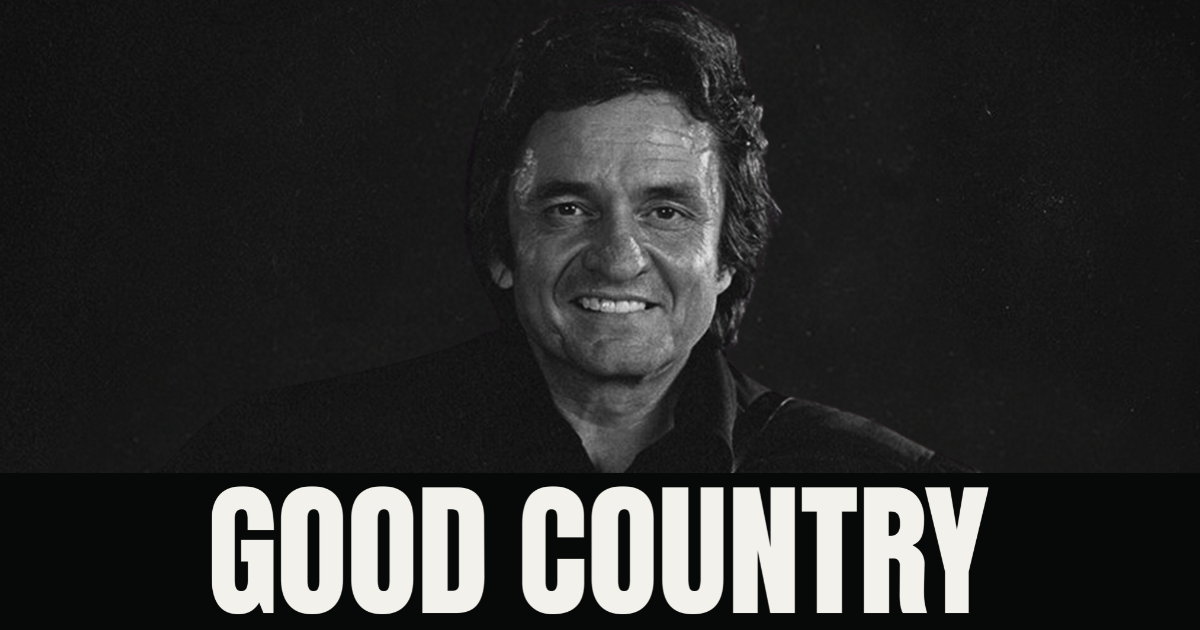
Let’s be real: This list would not be complete without Johnny Cash. Arguably the most famous country music star to ever live, Johnny Cash is known near and far for his deep, rich voice that straddled the border between baritone and bass. Cash had a storyteller’s voice, and he used it proudly to tell the stories others weren’t telling. As time went on, Cash’s voice settled into its lower register, which can be heard on his final non-posthumous album American IV: The Man Comes Around. But there’s no better way to showcase the rumbling voice of Johnny Cash than through his infamous recording of “Folsom Prison Blues,” recorded live at Folsom State Prison in 1968.
Jim Reeves
One of the forefathers of country music, Jim Reeves wielded one of the most beautiful baritone voices in the genre. A true crooner and country & western artist, Jim Reeves’s voice is smooth, deep, and unforgettable. Arguably the most technically accomplished singer on this list, Reeves topped the country charts throughout the ’50s, ’60s, ’70s, and ’80s. A dynamic and masterful baritone with a gentle stage presence, Reeves played a huge role in shaping the sound of Nashville and his influence is still felt today.
Colter Wall
Canadian singer-songwriter Colter Wall released his first single, “The Devil Wears a Suit and Tie,” in 2015 when he was just 20 years old. Showcasing Wall’s impossibly deep and weathered voice, the single swiftly launched the young artist into the limelight, mostly via a live performance video on YouTube. Treading the country and Americana borderlands, Wall has one of those voices that makes you think, “How is that sound coming out of that person?”
Since his debut, Wall has released five full-length albums, including his 2023 release, Little Songs. Throughout his catalogue, Wall never misses a beat or fails to remind us that he has one of the deepest and richest bass voices in country.
Josh Turner
For Josh Turner, bass singing is old hat. He grew up singing bass parts in church choirs and gospel quartets, then debuting at the Grand Ole Opry when he was just 24. Now in his 40s, Turner has spent over half his life making waves in the industry as one of the only true bass singers in the genre — and a top-notch one at that. In May 2024, Turner released a brand-new single, “Heatin’ Things Up,” proving he still deserves the title of the man with the most satisfying deep voice in country.
Photo Credit: Johnny Cash courtesy of JohnnyCash.com.
Utter the phrase “Broadway musical” and most folks are likely to assume you’re referring to the jazz-hands-inspiring works of Richard Rodgers and Oscar Hammerstein; the emotionally manipulative drama of Andrew Lloyd Weber; or the inventive playfulness of Steven Sondheim. But folk and roots music have a long legacy on the great white way — and a bit of a folk boom has been happening in those storied theaters lately.
Granted, Broadway producers have long presented shows that pull in the music of roots-informed artists. Folk-pop singer-songwriter Duncan Sheik delivered a stunning musical score for the groundbreaking Spring Awakening, cementing the careers of Broadway stars Lea Michelle and Jonathan Groff back in 2006. Let’s not forget brief runs of musicals that pulled from the catalogs of Dolly Parton (2009’s stage adaptation of 9 to 5) and Bob Dylan (Girl from the North Country, which debuted in 2020).
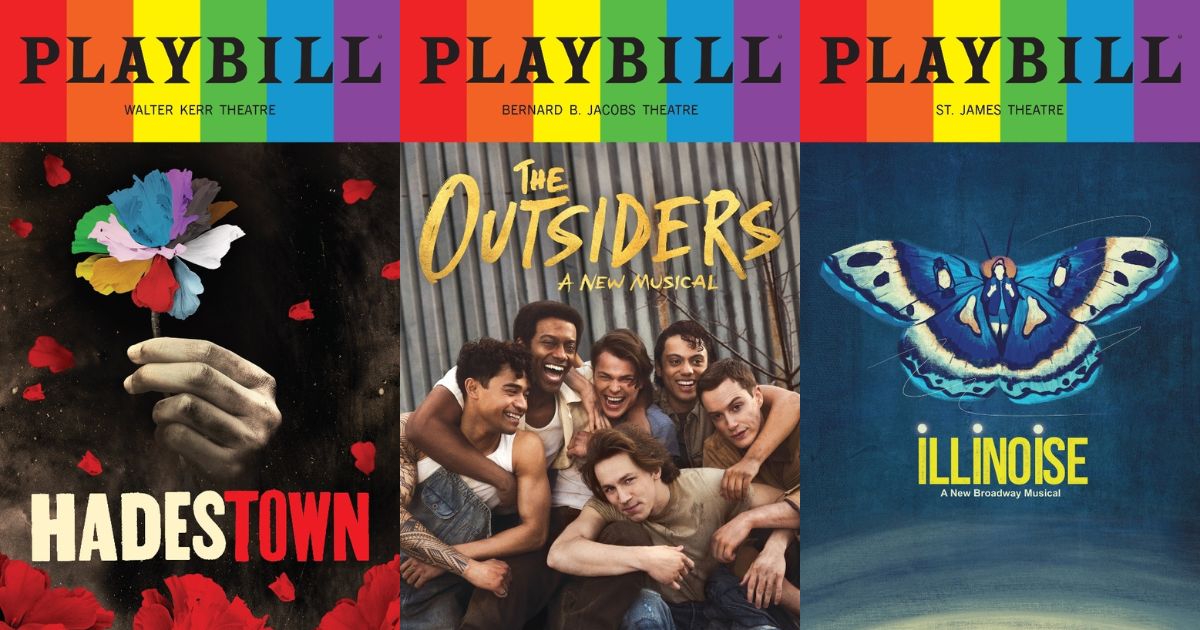
Of the shows currently occupying midtown theaters, Anaïs Mitchell’s Hadestown has run the longest, having just passed its five-year mark. With eight Tony Awards from its 2019 debut, the musical pairs the Greek myth of Orpheus and Eurydice with that of Hades and Persephone. Though its original cast has scattered to other projects, beloved folksinger Ani DiFranco spent a bit of her winter and spring this year offering a stunning run as Persephone.
Ani DiFranco and Anaïs Mitchell outside the Walter Kerr Theater in New York City. Photo by Matthew Murphy.
Fans may know DiFranco trained for many years as a dancer, even as she was building her singer-songwriter street cred. She proves to be a triple threat in the role, embodying the storied arbiter of summertime with a deeply rooted, empathic swagger. And though her June 30 departure feels like the end of an era for the musical, her latest album Unprecedented Sh!t (released May 17 on Righteous Babe Records) charts some new sonic territory via her political POVs.
Further, it’s hard to mourn DiFranco moving on when it was recently announced that British country favorite Yola will replace her in the role of Persephone, beginning July 2.
Hadestown was briefly joined last year by fellow roots musical Shucked, which came and went too soon. Awash in silly corn puns and Tampa-centric storyline, its earworm score was penned by Nashville mainstays — and Grammy darlings — Brandy Clark and Shane McAnally.
Last month, Illinoise opened at the St. James Theater on 44th St. Pulling tracks from Sufjan Stevens’s sprawling, ambitious 2006 album of the same name, the show reorders the songs to depict a group of friends sharing stories around a campfire. There is no dialogue. Instead, a 12-piece band and a trio of vocalists in magical butterfly wings perform the music in the background.
Upstage, Illinoise tells its stories through exquisite choreography that runs the gambit from lyrical contemporary to hip-hop, some sweet Broadway jazz, and even one number (“Jacksonville”) with a lightning-fast tapper in pinstripes. Dancers touch on love and loss, fear and transcendence.
“Zombies” becomes a scene about the immigrant experience, as dancer Jeanette Delgado (“Jo”) tries to outrun the ghosts of America’s founders, whose complex legacies still haunt the present day. “The Man of Metropolis” becomes a comical superhero-themed character romp. And former Billy Elliot star Ben Cook (“Carl”) delivers a heartbreaking and inspired series in Act II to track an emotionally complex love triangle.
By show’s end, there is a pervasive sense of the opportunity art grants us to transcend our selves and build a better world together. It’s no wonder the show was nominated for four Tony Awards, including Best Musical. If it wins, it will be the first time a dance musical has won the prestigious award.
The Outsiders, meanwhile, is running now just one block away, at the Bernard B. Jacobs Theater. It sets to music the novel by S.E. Hinton, which was immortalized in a 1980s film by Francis Ford Coppola. Produced in part by Angelina Jolie, with a book by New York theater fixture Adam Rapp (Wolf in the River, The Sound Outside) and music by Americana mainstays Jamestown Revival, this musical version unfortunately doesn’t measure up to the other two roots musicals in the neighborhood.
Granted, perhaps it doesn’t have to. The Broadway League and American Theater Wing don’t seem to be anything less than impressed, having nominated the musical for a whopping 12 Tonys this year. It may not translate seamlessly to the Broadway stage, but The Outsiders is a story that has been beloved by numerous generations. It was a treat to witness members of Generation Alpha giddy with excitement to take in the narrative arc of Ponyboy and the other Curtis brothers — a story that feels to this writer as though it’s rooted in Gen X sensibilities, despite being set in the 1960s.
Choreography by Rick and Jeff Kuperman was athletic and stunning — plenty of leaps and jumps and long, denim-clad legs spinning in the air like human helicopters. The Kuperman brothers’ martial arts background comes through even beyond the inventive dance-fight scenes. There is water on the stage, somehow, and it splashes up from time to time, for some reason. It doesn’t matter why. The effect is properly dramatic.
Brent Comer, who plays “Darryl,” steals the show with his powerful Zac Brown-reminiscent twang. He has some of the most compelling solos, embodying the exhaustion of a stay-at-home-mom as he folds clothes and laments his lot in life, “somewhere between brother and father” since their parents died. Jason Schmidt as “Sodapop” matched his rootsy musicality with the second-act heart grabber, “Throw in the Towel.”
But it is Joshua Boone’s “Dallas” who is perhaps the show’s greatest revelation, with his Bill Withers-esque vocals on solos like “Little Brother.” Brody Grant as Ponyboy seemed a bit lacking during the matinee performance this writer recently caught, but it could have been an off moment. Eight shows a week requires almost superhuman amounts of energy reserve.
Or perhaps it was a side effect of Grant being in his 20s while his character is supposed to be 14. Indeed, despite the electricity of The Outsiders’ score and choreography, the script doesn’t feel as authentic as its emotional realities demand. Hinton’s book offered readers a revolutionary view of teen struggles, written by a teenager. Perhaps the Broadway show should have brought in some teenagers to consult.
Regardless, both Grant and Boone were nominated for Tonys (as was Sky Lakota-Lynch, who delivers a haunting performance as Johnny). For folks just interested in what Jamestown Revival did for the show’s score, an Original Broadway Cast Recording is available now.
All told, there is no indication Broadway is going to break its love affair with roots music anytime soon. The Avett Brothers are set to make their Broadway debut with shipwreck-themed musical Swept Away this fall. The show has previewed in California and Washington, D.C., and has received critical praise already. Swept Away’s score is drawn from the Avetts’ 2004 album, Mignonette, plus four other songs from their canon — a treat for the band’s incredibly loyal fanbase and Broadway subscribers alike.
Further on the horizon is an adaptation of the classic labor movement-inspired film Norma Rae, with music by Rosanne Cash. In an email, her manager indicated a possible 2025 opening. One can only hope. And, just last week, Dolly Parton announced an upcoming original musical, Hello, I’m Dolly, set to arrive on Broadway in 2026.
The 77th Tony Awards will be held on Sunday, June 16, 2024 and will air on CBS. Find out how to watch here.
Playbill images courtesy of Playbill.com
This website uses cookies to improve your experience. We'll assume you're ok with this, but you can opt-out if you wish.AcceptRejectRead More
Privacy & Cookies Policy
Privacy Overview
This website uses cookies to improve your experience while you navigate through the website. Out of these, the cookies that are categorized as necessary are stored on your browser as they are essential for the working of basic functionalities of the website. We also use third-party cookies that help us analyze and understand how you use this website. These cookies will be stored in your browser only with your consent. You also have the option to opt-out of these cookies. But opting out of some of these cookies may affect your browsing experience.
Necessary cookies are absolutely essential for the website to function properly. This category only includes cookies that ensures basic functionalities and security features of the website. These cookies do not store any personal information.
Any cookies that may not be particularly necessary for the website to function and is used specifically to collect user personal data via analytics, ads, other embedded contents are termed as non-necessary cookies. It is mandatory to procure user consent prior to running these cookies on your website.