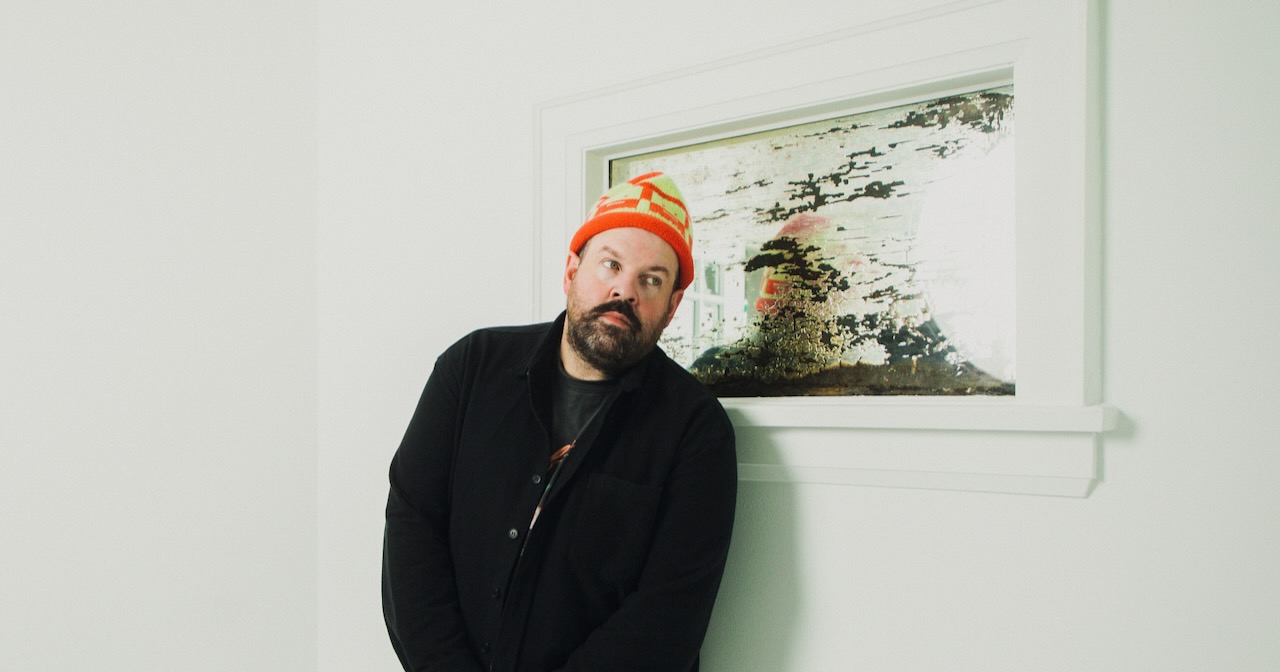
Donovan Woods is not really the solid, secure man you might think you know through his thoughtful, deceptively soothing songs.
But he’s working on it.
“A lot of my songs are much more magnanimous than I am in real life,” said Wood, 43. “So I often am wrangling with that feeling of people thinking that I’m a very morally superior person, when in fact, the reality of me is not very close to that.”
Woods, a burly, bearded, soft-spoken Canadian who has been consistently releasing quality albums and touring since 2007 (except for the COVID years), recently released his new album, Things Were Never Good if They’re Not Good Now. It’s a typically solid offering from a writer who writes deeply personal songs, some of which work as mainstream country hits, like “Portland, Maine” for Tim McGraw.
Though modest and self-depreciating, Woods knows he’s come up with something special with “Back for the Funeral,” a song on the new album that captures the stage of life when the only time you see old friends is when one of them has died.
“After the service we’ll all meet up at the bar,” he sings. “Where my dad used to drink, now he just drinks in the yard/ And we’ll laugh about all the young dumb dreams we had/ And we’ll pretend we’re all only sad/ Because we’re back for the funeral.”
The song, written with Lori McKenna, is one of those that doesn’t seem like a new one. It feels familiar, like it’s always been there. McKenna had the title and it turned out Woods lived through the experience a few months earlier, when he returned home to Ontario to attend two funerals.
“Not all those details are exact, but I’m trying to get at that weird feeling of when you go home and you’re able to see it all at 30,000 feet for some reason, because you’re in the throes of grief,” he said.
In our exclusive BGS interview, we spoke about grief and mental health, poetry and Music Row songwriting, and more.
So I understand the new songs were influenced by therapy you underwent for your mental health. Is that true?
Yes. I’m as liberal as they come, but I think I still have this toxic masculinity in me. I do think that expressing need threatens my masculinity and it’s such a deep, ingrained thing in me. It’s embarrassing to admit, but I still do have those hang ups.
What kind of therapy did you have?
I had probably what would be considered a midlife crisis. … I felt like I was losing touch with my life slightly. I was unwell and I could tell [it was true] by the reaction of people in my life who weren’t particularly thrilled with me. I did some addiction therapy, I did some standard stuff and I did some couples therapy with my wife.
Like a lot of men, I wasn’t admitting when I was sad or when I was upset or when I was unhappy, because we love this image of this stoic individual that we’ve all grown up adoring — this unaffected, unflappable man. You’re trying to be that, because you think that’s the right thing to be for your family. I let that get away from me. I had become two guys, my internal self who knew that I was upset or hurt or I need something, and then this forward-facing person that I created, which was sort of a lie. I had to reunite those two things again, and I found it really difficult.
Your rather gentle singing sometimes belies the depth and the hurt in your lyrics. Is that an artistic choice you’re making?
That’s kind of just how my voice is. In the days before microphones, I don’t know that I would have been able to have this job. I don’t talk that loud or sing that loud, either. Singing is more like self-soothing to me than it is communication. I do it because I like it. It makes me feel good. When I’m stressed, I do it. It’s like being nice to myself.
Your lyrics are effective even separated from the music. Have you done any poetry or prose writing?
I appreciate that. My heroes are the people who are actually singing poets, like Paul Simon and John Prine. I feel like that’s what a singer-songwriter is at the core. … I will write poetry for myself now and then. I have tried to write short stories and I’m not good at it. I don’t know how to do long things. The idea that it can be anything is terrifying to me.
You must like Mark Cohn too, based on your cover of his “Don’t Talk to Her at Night” on the new album.
He’s kind of a high-water mark in songwriting for a lot of writers, especially men. There’s an elegance in his writing that is so unreachable to me. His American earnestness is not available to me as a Canadian. I always think I have to be self-deprecating or not showy in my writing. I think it’s just like the mindset of a Canadian. My dad is a big fan, and I have listened to him my whole life.
Do you have a family background that pointed you toward becoming an artist?
I grew up in a really working class town [Sarnia, Ontario], where everybody’s dad works in these petrochemical plants around the border of Michigan. My dad worked in construction estimating jobs. … My friends all work in petrochemical plants, or they work in adjacent fields to those plants. One of them is a chiropractor, which actually is adjacent to the petrochemical plants too, because everybody has a bad back in the entire city. … I was not a wonderfully artistic kid. I was given a guitar by my mom and I took like, four or five months of lessons. I just really enjoyed writing songs, and did it for myself for a decade before I ever did it publicly.
Is it true your dad named you after the folk singer Donovan?
I am. He’s one of my dad’s favorite singer-songwriters, along with Fred Eaglesmith. I got to tell [Donovan] that once, too. I’ve never seen anybody be less interested in something.
Do you still live in Canada with your family, or have you moved to one of the music industry cities in the states?
I have three kids. I have one ex-wife and my wife that I’m married to now. I live in Toronto mostly, and I’m in Nashville sometimes to write.
Do you do the Nashville writing thing where you have appointments and try to write hits with other writers?
I still have a publishing deal in Nashville, so I’m there writing sometimes with other people. I do it less than I used to, but I still enjoy that very much. I love other songwriters. It’s pretty rare that I don’t like a songwriter. So I enjoy that, that afternoon of trying to finish something.
And that’s worked out for you sometimes with hits, right?
There’s a song called “Grew Apart” that was a hit for Logan Mize. When somebody else wants to record one of your songs, that’s about as good of a compliment as you can get as a writer. It’s always really flattering. I hope [more of] that happens. … I mostly fail at writing Nashville songs. I fail like about 95% of the time.
You’ll be heading out on tour this fall to promote the new album. Are you looking forward to that?
I am always on the road more than I would like to be. But I’ve had much worse jobs. I enjoy 85% of it.
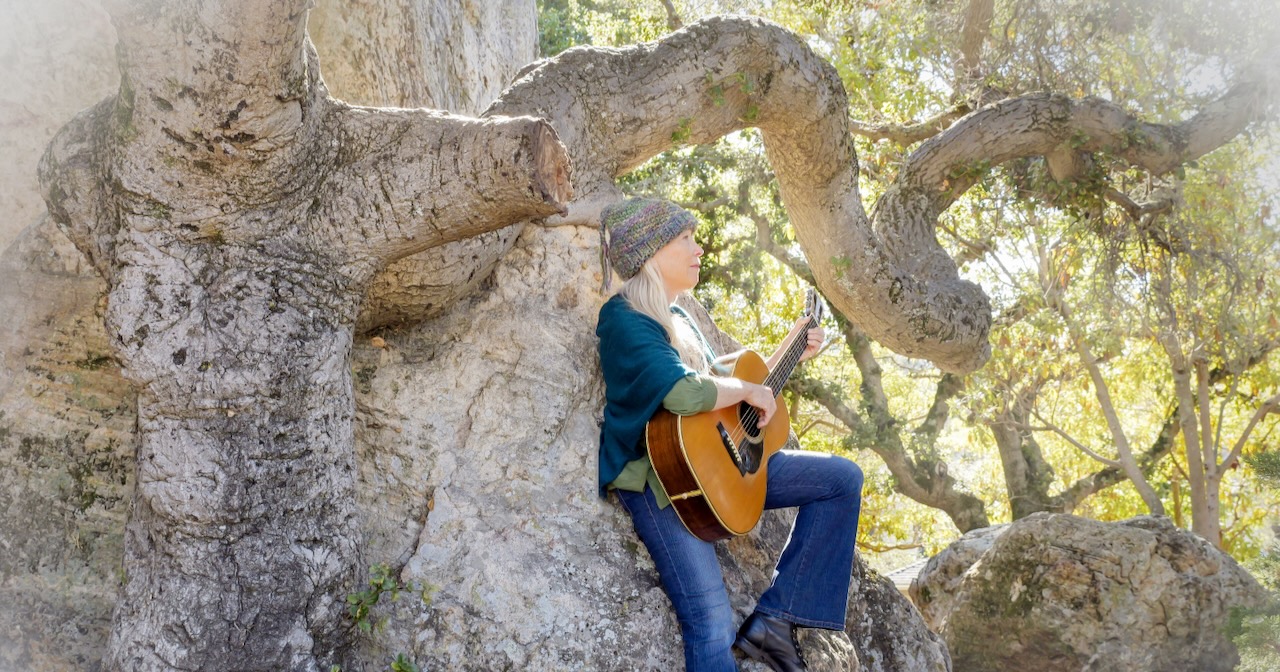
Counting John Prine, Linda Ronstadt, and Wendell Berry among her fans, Laurie Lewis is arguably one of the most diversely influential figures in American roots music culture. She’s a songwriter, fiddler, frontwoman, performer, producer, teacher, and mentor. She’s been nominated for multiple Grammy awards and graced the stage at the Grand Ole Opry. The International Bluegrass Music Association has twice named Lewis Female Vocalist of the Year, and the association’s former executive director, Dan Hays, once called her “one of the preeminent bluegrass and Americana artists of our time and one of the top five female artists of the last 30 years.”
Lewis’s latest release — her 24th full-length record — pairs the artist’s musical mastery with her willingness and courage to face the full spectrum of life’s experiences. From personal grief to environmental despair, Lewis does not shield her eyes from difficult truths. In many ways, the album pays homage to its namesake, trees. When asked why, Lewis notes their tenacity. When something is tenacious, it grips firmly, with determination and persistence. Even in the face of immense challenge and uncertainty, trees abide in their purpose and work — and so does Laurie Lewis.
TREES is a long-play collection of songs that tenderly, earnestly, and sometimes joyfully explore what it means to exist on a vulnerable planet through times of loss and love. Supported by a band of masterful collaborators — Haselden Ciaccio (bass, vocals), Brandon Godman (fiddle, vocals), Patrick Sauber (banjo, vocals), George Guthrie (banjo, vocals, guitar), Tom Rozum (vocals, cover art), Andrew Marlin (mandolin), Sam Reider (accordion), and Nina Gerber (guitar) — Lewis dives into the deep end of sorrow and change with tenderness, authenticity, and Americana storytelling prowess.
In the album’s liner notes, Lewis shares that TREES is the first project she’s made in nearly 30 years without the mandolin accompaniment of her partner Tom Rozum, who recently developed Parkinson’s disease. “This collection represents a difficult transition in my musical life,” Lewis shares. “Think of it as ‘Music Minus One.’”
From bright bluegrass tracks like “Just a Little Ways Down the Road” to the somber invocations of “Enough” and “The Banks Are Covered in Blue,” this album is intricate and complex, much like a healthy forest. The album brings us “Quaking Aspen,” showcasing Lewis’s characteristic lyrical fiddle style, and title track “Trees,” an a cappella bluegrass-gospel ballad that gently yet hauntingly denounces the violence of industrial civilization.
Always looking to the natural world for strength and guidance, TREES is about love — for life, for land, and for people. But love isn’t a purely hopeful or romantic thing; it encompasses both loss and pain, and Lewis gracefully and vulnerably reckons with both on this album.
You just returned from a string of shows playing songs from the new album. Where did you go?
Laurie Lewis: My string of shows was actually mostly a river trip. So I did play every night, but I was mostly spending the days in the canyons… On the Yampa River, which starts in Colorado and goes into Utah and flows into the Green River. It’s a really, really beautiful canyon.
I love that. When you were playing shows, how did it feel to share these new songs with the world?
I’ve been doing a lot of songs from the new album, yeah, and I’m really enjoying that. But also, in any of our sets with my band, we pull out the old ones, too.
Speaking of the older stuff, I listened to your first solo record, Restless Rambling Heart, directly after listening to your newest record from start to finish. The first thing I noticed was that the tempo has downshifted quite a bit from that first release. Does TREES feel more introspective to you than other records you’ve made?
Oh yeah, it definitely does — especially compared to Restless Rambling Heart.
You’ve collaborated with the great poet, writer, and activist Wendell Berry — he asked you to set some of his poems to music. What was that experience like?
It was really fantastic. I’m such a fan of Wendell Berry’s writing. It came about because I was putting out a songbook and the publisher said, “Well, you need to get some blurbs for the back.” I happened to be at a writing workshop and one of the writers there said, “Hey, do you know Wendell Berry?” And I said no, and he said, “Well, he’s a big fan of yours.” [He had been] at a writing conference with Wendell and Wendell asked if he knew me and, you know, small world sort of thing.
So I thought, Well, how do I get in touch with him? Maybe he could write me a blurb, who knows? But [Wendell] famously doesn’t do e-mail or anything like that, so I got his mailing address and wrote him a long-hand letter on one of those yellow legal pads, you know, and I sent it off to him. And lo and behold, he wrote back. He said, “Well, I really don’t know anything about music, and my wife says I can’t carry a tune in a bucket, so hadn’t I better say no to writing a blurb?” And I thought, Well… that’s a question, so it deserves to be answered. So I wrote back and said, “Of course you should say yes, because really, the only prerequisite for saying you like something is that you actually like it. It doesn’t matter that you don’t have a background in music. It’s a personal response.”
And he said, “Well yeah, okay. I’ve been telling people I’m not writing blurbs anymore because too many people ask me, but didn’t I write something in that first letter that you could take out [and use]?” And there was this really nice thing…
So we just ended up having this back-and-forth conversation. He sent me some books. I sent him some CDs. I finally got a chance to meet him, but eventually I just felt like this is a person who is so conscientious, he’s going to respond to whatever I write. And he’s so busy, and he’s got so much stuff to do, I don’t want to bother him anymore. So I kind of dropped the correspondence. I wish I hadn’t, but it felt like the right thing to do. I just didn’t want to be that pestering voice that he felt he had to write back to.
Did he get back in touch with you at some point? Is that how his request came to light?
In the midst of all our back and forth, he sent me a poem in the mail and asked if I wouldn’t mind terribly trying to put it to music. So I did. That was “Burley Coulter’s Song for Kate Helen Branch.” It was quite a puzzle, because it’s not a standard rhyme scheme or anything. I had to make it loop around like a little crooked fiddle tune to make it really work.
Trees aren’t just the theme of this album — they’re growing all over your creative imprint. Your label is called Spruce and Maple Music, for example. What is it about trees specifically that inspires you?
I love the tenacity of trees — the way they just wait ‘til you get out of the way and then come back. … There are too many humans on the earth. We take up way too much space and way too many resources and we’re crowding everybody else out. And by “everybody else” I mean all the animals and plants and everything that also shares our earth. I just feel that, you know, trees are these beneficent beings that just wait and take their time and come back whenever they’re given a chance. They’re responsible for the oxygen we breathe and for taking in the CO2 we release. They’re sort of purifying everything. So it makes me feel very hopeful… If we just get out of the way a little bit, trees can come in and help set the planet right again.
Speaking of trees, the title track on this album is written from such a unique perspective. You literally embody the voice of the trees. How did this idea come about? Had you written from the perspective of the natural world before?
Well actually, “The Maple’s Lament” … I think that was the first time I tried to embody a tree. But I’ve done a few songs like that since. “American Chestnuts,” from my Skippin’ and Flyin’ album is from the voice of the American chestnut trees, which were the main tree along the Appalachian Mountains before the Chinese chestnut blight.
You know, I have, and I thought, Well, this is my song! [Laughs] But I wasn’t inspired by the book.
I personally take comfort in the knowledge that the world will go on spinning without us, despite how powerful we imagine ourselves to be. What sustains you as a sensitive person who feels the weight of what’s happening in and to the world? What carries you through?
Well, that’s that hope – [in] the other beings on the earth, their ability to repair the damage we’re doing. But I don’t hold out a lot of hope for human beings to rein in our excesses. I just don’t. I unfortunately do not see that happening in a timely enough manner to prevent, for instance, desertification of much of the earth’s crust. I’ve never said this stuff in an interview before, but yeah– I do not hold out a lot of hope.
I really appreciate you saying that. I feel like we’re often pressured to feel hopeful, but sometimes it feels more important to just be present with our grief about what’s happening to the world. Where did your deep relationship with and love for the natural world begin?
Oh boy, well, lots and lots of places. From ages three to eight, I lived in Ann Arbor, Michigan, in this new subdivision a block from the country. I loved to ramble in the woods and just see the farms and stuff like that. When my family [moved to] Berkeley, California, it was really a shock for me, and I have to say, Tilden Park probably saved my life. It’s a big regional park that’s up over at the top of the Berkeley Hills. It’s a huge park — you could get lost in it for days. Being able to take the bus to the top of the hill and disappear into Tilden Park when I was a kid was the best thing ever, and it really helped me through a lot. So I would say Tilden was maybe the first place where I really sought refuge in the natural world.
In addition to environmental grief, you’ve spoken about the role personal grief played in the creation of this album, and the presence of these feelings is very tangible throughout. Has some part of you had to practice becoming more vulnerable as an artist over time, or did the process of sharing your pain through your songwriting come naturally?
I have been accused throughout my career of writing songs that are a little bit too easy to figure out, you know, where they’re from. They’re personal songs — people have noted that. [But] maybe they’re putting stuff in them that’s not actually there, and I believe that to be the case on some of the stuff. Writing has always been my best source of communication with the world and I think I’ve always just written from an emotional place. If my songs are deeper now, it’s because events in life are a lot harder when you’re 73 than when you’re 23 or 33 or 43.
One of the more uncommon forms of grief is the grief over the loss of one’s own voice. A few years ago, you lost your singing voice for six months. What was that experience like for you, as someone who’s spent so much of your life using your voice to connect with the world?
It was terrible. It was paresis, [so] the right side of my neck muscles were paralyzed, and I couldn’t move my larynx on the right side. It made singing very, very difficult, until it got to a point where my voice just quit. And I thought, I’m not gonna sing anymore. It took about six months to recover, and it hasn’t completely recovered. My voice is different now.
It was a very difficult time. I went to many doctors, and one said, “Well, you have about a 50/50 chance of getting your voice back.” And I’m going, “Those odds are just not good, you know? It could happen or not — it’s a coin toss.” That freaked me out.
But some amazing things happened in that time. I have an annual gig, the concert I do at the Freight & Salvage here in Berkeley, my hometown, over Thanksgiving weekend. When I had no voice, I didn’t want to give up my night, so I asked my friends to come and sing my songs. I put together a folder of tons of songs and nobody picked the same song. It was amazing. It was the most incredible healing night of music for me. I mean, it was really the best Laurie Lewis show ever and I never opened my mouth except to speak a little bit. It was really lovely. Out of anything, I think that helped me get my voice back.
I’m honestly tearing up a little hearing you talk about that. It really speaks to the power of community. Speaking of community and audiences, who do you write music for? When you’re writing a song or recording an album, do you have a particular listener or audience in mind?
Just myself, really. It’s very selfish. [Laughs] I mean, I just write for myself, what I’m feeling or what I’m observing. … That’s always the starting point. If I think up a story, it’s because I want to tell the story, you know? I want to hear the story. If it’s an emotional thing, it’s because it’s something I’m dealing with or going through. But after the initial thought, I try and use my craft to make the songs better so that somebody can actually understand what I’m singing about and talking about in my music. And that’s really the most gratifying thing, when a listener really responds. It’s just great.
You’ve described your music, particularly on this album, as a way of interpreting the voices of the landscapes you adore. How do you experience or receive the voices of the natural world? How did you learn to listen for these much-needed voices?
I’ve always been a fairly quiet person. I listen more than I speak. I’ve had to actually learn to speak, you know, out loud. But I think I just have an observational approach to the world. I would rather listen and observe people talking to me than jump in and add my own spin or make a lot of noise myself. The same thing is true in my relationship with the natural world. I’m an avid walker and I find that walking and listening and looking in the natural world is my favorite thing to do.
Do you have a favorite song on the album?
I like a lot of them actually. You know, they’re different moods. Speaking of walking, “Just a Little Ways Down the Road” I find to be just so fun to sing and play. And of course, “Enough.” It’s heart-wrenching for me. It’s still hard for me to play that song in public. It requires a really different audience. It’s not a festival song. It’s much quieter, so I hold it back a lot. I just love the sound of the instruments on that cut. But I really like them all, from “Just a Little Ways Down the Road” to “Rock the Pain Away.”
It depends on the mood too. If I talk about John Prine and I sing that song [“Why’d You Have to Break My Heart?”], that really goes over well with audiences. I truly appreciate that people connect with that song.
Do you have a favorite tree?
[Laughs] No. I do not have a favorite tree.
Fair enough. [Laughs]
The California buckeye – I think it’s the prettiest little tree ever. But then I see another, you know? I was just out in Colorado among the junipers. That was the main tree alongside the river, junipers and cottonwoods. Every one of those trees was astoundingly beautiful – and so tenacious.
Is there somewhere special close to home where you’ve been going recently to be with the trees?
Well, yes. I stick around home quite a bit, because I have a lot of caregiving to do with my partner. We had to cut down a tree in our yard a couple of years ago and I was very, very sad about cutting down this great big old blackwood acacia. But we had to do it – it was gonna fall over and wreak havoc. But it cleared the way for me to view these two enormous birch trees that are like four-stories high in the neighbors’ yard. Those two trees are just remarkable, through all the seasons. They’re so graceful, and they change so much. I’ve been enjoying those trees a lot from the kitchen.
And Tilden Park is still my go-to. It’s five minutes up the road, so I can get out and walk amongst the oaks and the laurels and, unfortunately, eucalyptus, which is an invasive fire-hazard tree around here, but they’re still beautiful.
It’s so special that you still get to spend time in the same place that meant so much to you as a kid. There’s really so much we could talk about, but is there anything else you’d like to share about the album?
I did it mostly with a very small group of fantastic musicians – my bandmates Hasee Ciaccio on bass, Brandon Godman on fiddle, Patrick Sauber on banjo, and then George Guthrie also on banjo and some guitar. It’s just been really great working with these wonderful people. What they bring to the songs and how they help shape the music, they really are part of the fabric of what makes this album what it is, and it feels important to me to share that.
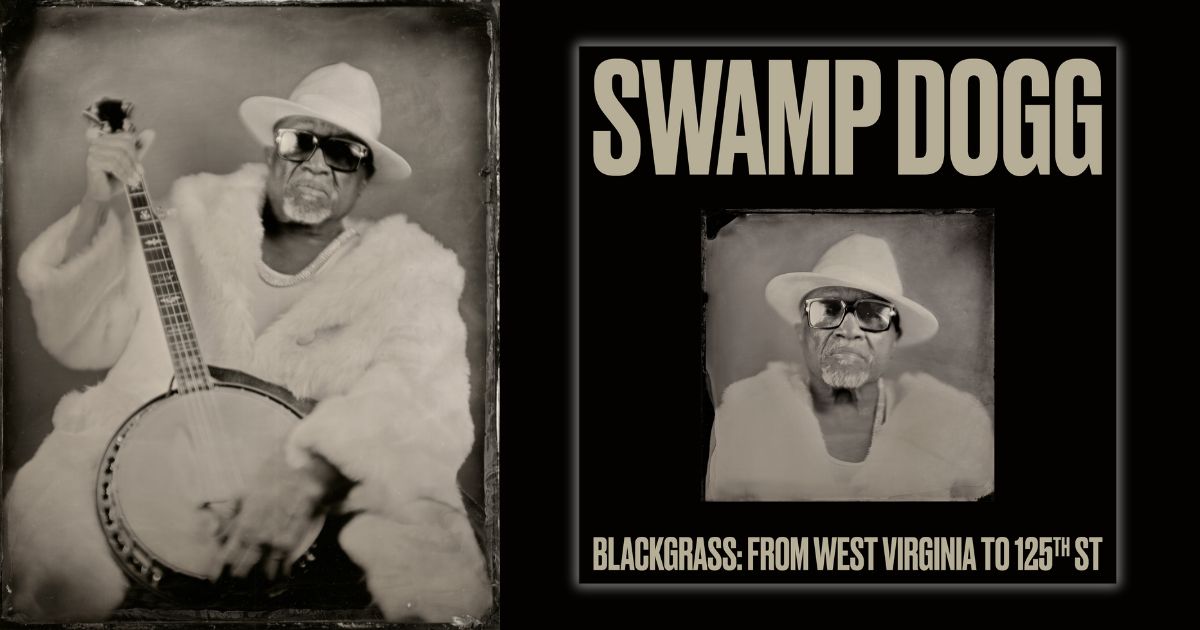
Early in my recent interview with Swamp Dogg, the iconoclastic singer-songwriter and producer makes a self-aware confession: “I have read columns about Swamp Dogg and so forth, and I try to find out what they classify me as,” referring to the veritable grab-bag of hyphenated micro genres that music writers use to classify him. We connected a few days out from the release of his latest album, Blackgrass: From West Virginia to 125th St, and the artist, born Jerry Williams Jr., seems unbothered. Later he adds, “When I do the Swamp Dogg albums, I really don’t try to please anybody but myself.”
He has known from the jump that the music industry doesn’t know what to do with him. Working as a singer and songwriter under the name Little Jerry Williams, Swamp enjoyed some success with his 1964 soul 7 inch, “I’m The Lover Man,” and was subsequently invited to perform at clubs in the Midwest. As Swamp remembers, “When I showed up they found out I was Black and the audience was lily white. They were good about it, they paid me and said I didn’t have to do a second show.” The small-mindedness of industry gatekeepers would follow him into his first musical steps as Swamp Dogg.
In 1971, Swamp released his second album, Rat On!, on Elektra Records. He was dropped from the label immediately after the release. At issue was the provocatively titled, “God Bless America For What,” track six on the album, which Elektra had pressured Swamp to leave on the cutting room floor. He kept the song, and his brief stint with Elektra was over. (The album cover, featuring Swamp in a victory pose astride an enormous white rat, might also have earned him some detractors in the office.) Asked if he considered caving to the label’s demands, he quickly sets me straight. “No! No. Nuh-uh. I’m dealing in truth!”
The controversy surrounding Rat On! did nothing to slow Swamp’s momentum as a creative force and in the years since its release, has proven itself a classic of left-of-center soul. He produced artists like Patti LaBelle, Z.Z. Hill, and Irma Thomas. Swamp also continued working in A&R. He signed a still-mostly-unknown John Prine to Atlantic Records in 1968, later reuniting with Prine for what would turn out to be the final recording made by the legendary storyteller. Swamp built a cult following among indie music fans in the know, collaborating with artist-tastemakers Justin Vernon and Jenny Lewis – the latter of whom returns as a guest on Blackgrass, as well. He dunked on the snobbier side of the mainstream with albums like Love, Loss, and Auto-Tune, and I Need A Job… So I Can Buy More Autotune.
A list of Swamp’s credits tells the story of one of the most fascinating music careers of the last century, but he himself tells an even deeper one. He speaks about painful failures, like when he became a millionaire in the 1970s and the sudden reality of wealth gutted his mental health. “The right word is obnoxious, I really became obnoxious, my wife pointed out to me. I was running so much that I would run in my sleep and run out of the bed.”
When the nine cars in the family garage proved insufficiently curative, she got him to see a therapist, a “who’s who psychiatrist” in Swamp’s words. He tells me so many sweet things about the great love of his life, Yvonne Williams. “My wife, she was a Leo. She was a strong Leo, she was a leader. Everybody loved her. Everybody feared her when it came to brain-to-brain. She could knock your shit right out the box. She was the reason I made a little money. Her name was Yvonne and I still think about her.” Subsequent girlfriends have told him he is still in mourning, and a second marriage was short-lived.
Discussing his musical roots, Swamp lists “blues, soul, R&B, pop, just about everything except classical and polka, and gotta add country there, cause country is what I was listening to growing up as a kid.”
His brand new record, Blackgrass, released May 31 on Oh Boy Records, is an inventive, often moving exploration of the genre. Sensitive instrumentation by Jerry Douglas, Sierra Hull, Chris Scruggs, and Noam Pikelny, among others, pairs beautifully with Swamp’s varied vocal performances across all 12 tracks. “The Other Woman,” featuring Margo Price, is an elegant update of the classic written by Swamp and first performed by Doris Duke. And Swamp himself is at home as a country vocalist, playing characters like the neighborhood ne’er-do-well on “Mess Under That Dress,” the lovelorn crooner on “Gotta Have My Baby Back,” and delivering a breathtaking country gospel performance on “This Is My Dream.”
Even as Blackgrass offers country music moments that should please even the most determined traditionalists, Swamp Dogg remains committed to surprising his listeners. “Rise Up,” for example, a Swamp original first recorded by the Commodores – “Atlantic didn’t know what to do with them!”– is reincarnated as a country-meets-alternative rock and roll foot stomper, with a guitar solo by Living Colour’s Vernon Reid, which readers should listen to in a safe and seated position.
One of the great rebellions of Blackgrass is the singer’s assumption, on an album that is being marketed to country and roots media, of a Black audience. He explains, “I’m calling it Blackgrass … mainly because of the banjo. When I was coming up the minute somebody said ‘country music’ or ‘banjo’ … we turned our nose up at it, way up until Charley Pride came along.”
As Black listeners, we are being made to understand that this record is for us, decades of deliberate exclusion from the genre be damned. Its creator is equanimous about how the art will be received. “If this one sells enough, there will be a next record. If it doesn’t, there will still be a next record. I’ll put it out myself.”
Fifty years since “I’m The Lover Man,” Swamp Dogg remains curious about, and frequently explodes, the boxes into which small-minded gatekeepers of popular music have attempted to place him. As he recalls some of the more colorful antagonists along his musical journey, Swamp is gracious in the knowledge that he has had the last laugh. He speaks with refreshing pettiness about his early critics, reasoning, “The people that I dealt with back in the day are either dead or don’t know who they are. And I know I’m in line for that, but I keep jumping out of line. When I see myself getting near the front of the line I jump out and go to the end of the line.”
As usual, Swamp Dogg plays in his own time. He has finally outlived the haters.
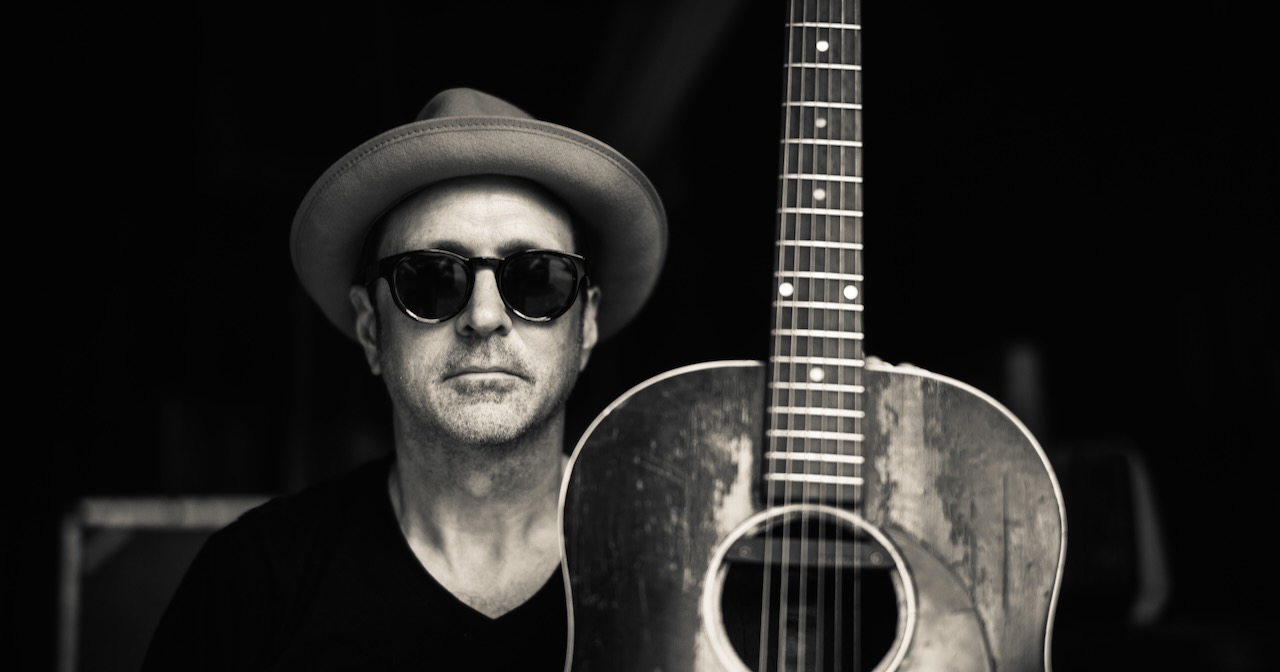
When I was asked to put together a Mixtape for BGS, I was on my way from Jazz Fest in New Orleans to a Warrior PATHH/Songwriting With Soldiers post-traumatic growth trip to Southwest Missouri. My mind was making the transition from pure pleasure and celebrating the life of Jimmy Buffett, who was not only universally loved, but was also personally very good to me. He was my songwriting partner for 20 years. My mind was switching from that to creating a blank slate, so that I could listen to six women who served in combat and one woman who served in law-enforcement – and listen to their stories without judgment.
My involvement with Songwriting With Soldiers, and now their affiliate post-traumatic growth program, Warrior PATHH, really comes out of simply being asked to do it. Then once I had done it, I fell in love with the people– the combat veterans, the first responders, men and women. I am most interested in the human connection, the connection between communities who may not run into one another on a day-to-day basis. Being around people who are struggling with trauma and doing everything they can to get better for themselves, their families, their careers, and their friends, it’s nothing short of pure inspiration.
I understand Memorial Day is to honor those who have fallen in the line of duty, specifically in war. But after all these years of working with the people who survived, I cannot help but think of them as well. We also work with the families of the fallen, so I think Memorial Day for me is first and foremost about the fallen, but also about the families left behind and the soldiers who survived, but who were left with the mark of trauma.
This playlist is not a journey through a literal Memorial Day. Study some history, some first-hand reports about the mayhem of war. I could not make a playlist only about those who gave all. In my work and journey through listening and writing with veterans and first responders, I am learning so much about human beings struggling to be better.
That’s what this is about. And that’s how I would like to honor the fallen this Memorial Day: We promise you we are trying to get better. You did not die in vain. I have been given the opportunity to leave myself behind a bit, listen to other people’s stories, and use the gift I have of songwriting for a whole new purpose. And that’s my angle on this playlist. – Will Kimbrough
“Walking in the Valley of the Shadow” – Will Kimbrough
Sometimes we have to carry on, even though holes in our shoes and our clothes are torn. Even though someone doesn’t want us to be here. Sometimes we have to carry on.
“The Ballad of Ira Hayes” – Kate Campbell
Johnny Cash may have the definitive version, of course, but I love Kate’s version so much. She has so much heart.
“The Ballad of Cape Henry” – Todd Snider
This is one that I helped write. Sometimes paying attention to what surrounds you while you’re on the road is real important. Read the historical marker. Look at the land around it. We made this up on that old Virginia shore.
“The War After the War” – Mary Gauthier
Just a perfect song about an imperfect world. People struggling. I played on this record and Mary got me involved with Songwriting With Soldiers. Changed my life. Full stop.
“Buffalo Soldiers” – Bob Marley
As I write this, I’m getting ready to write a song with women combat veterans at a retreat center, in a building named after the Tuskegee Airmen.
“Bubbles Up” – Jimmy Buffett
I cowrote this, using experience I’ve had with combat veterans and first responders. Thinking about post-traumatic growth. And Jimmy brought his experience taking the Navy Diving Course. We wanted to help someone find the surface, the plot, the purpose… when the journey gets long.
“Sam Stone” – John Prine
You have to include “Sam Stone” by John Prine on Memorial Day.
“Bang the Drum Slowly” – Emmylou Harris
Emmylou wrote this for her Dad – a Marine and a POW during the Korean War – with Guy Clark.
“Still Learning How to Fly” – Rodney Crowell
For all the vets I’ve written with!
“Gimme Shelter” – The Rolling Stones
Just saw the Stones at Jazz Fest in New Orleans! Still powerful after 55 years.
“Uncivil War” – Shemekia Copeland
Just a reminder that veterans fought for our freedom to disagree. That’s a big part of our American story. This song, which I cowrote with John Hahn for the great Shemekia Copeland, mourns the divide in our culture. Peace, y’all!
“Anything Helps” – Dean Owens
I wrote this with my friend Dean. He had played a songwriter show at an Austin homeless shelter that was full of veterans. I had bought an American flag lapel pin from a homeless veteran in Nashville. We put our heads together. Sometimes the sacrifice of war comes later, when the veteran is unhoused.
“Angel Flight” – Darden Smith
A great Memorial Day song by the cofounder of Songwriting With Soldiers. Written with the amazing Radney Foster.
“Isolation” – Will Kimbrough
Isolation is a word I hear every time I write with veterans.
“America the Beautiful” – Ray Charles
It really is beautiful. I need to get to work now, but as I look out on the Ozark Mountains in the Tuskegee Airmen building, I can hear Brother Ray Charles sing. And I believe him.
Born out of humble beginnings in 1983, Mountain Stage has blossomed to become not just one of Appalachia’s most sought after musical platforms, but one of all of Americana and roots music’s most cherished stages. Broadcasting bi-monthly to nearly 300 NPR stations nationwide, the program has welcomed everyone from John Prine to Wilco, Wynonna Judd, and even Widespread Panic during its historic 40-year run. To celebrate the achievement, Mountain Stage and Oh Boy Records have partnered to release the 21-song Live On Mountain Stage: Outlaws and Outliers (released April 19).
According to Larry Groce — Mountain Stage host from 1983 to 2021 and one of the compilation’s curators — distilling 40 years of music into one album was quite the task. Deliberations began with a list of over 150 songs before landing on the 21 that made the album.
“At first we just looked at the artist named and began to narrow it down from there,” Groce describes the process to BGS. “After several narrowings we began listening to some of them, getting the list down to about 30 before cutting it further down to the 21 that made the album.”
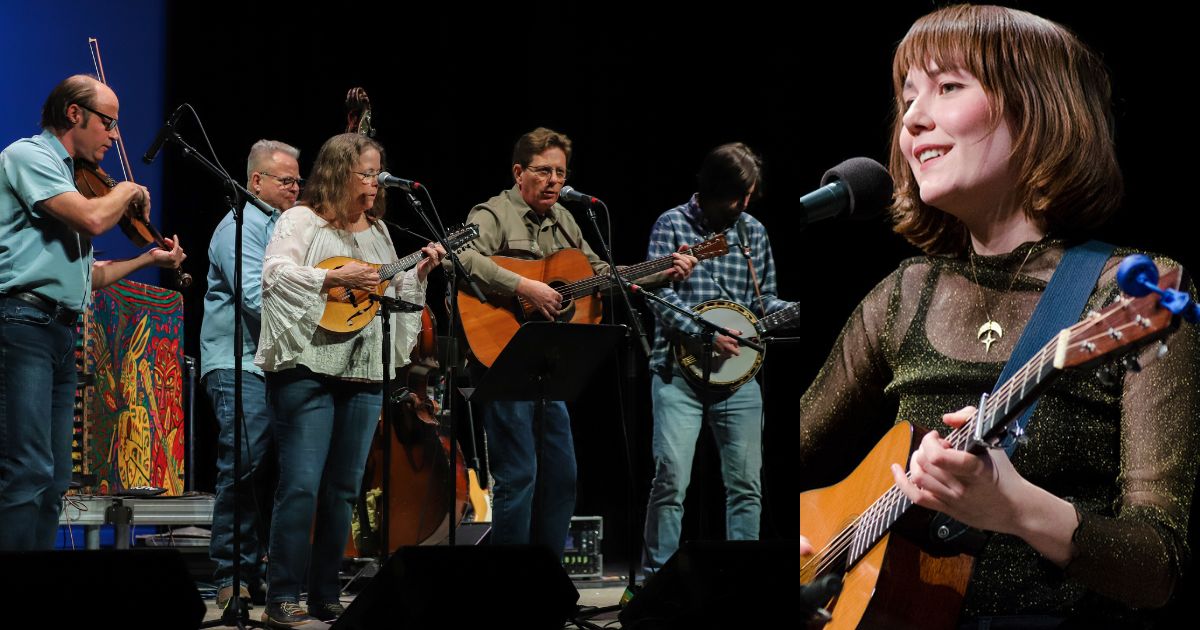
Sticking close to the country, folk, and bluegrass sounds of the show’s West Virginia home, the album includes performances from Appalachia’s own – like current Mountain Stage host Kathy Mattea, Tyler Childers, Sierra Ferrell, and Tim O’Brien alongside A-listers like Prine, Eric Church, Alison Krauss, and Jason Isbell. Helping to attract and keep such a diverse array of talent returning has been the program’s artist-first approach, which caters to the performers and platforms great songs over all else.
“We’re not trying to be trendsetters and we aren’t trying to be hip,” asserts Groce, who broke onto the scene as a singer-songwriter with his song “Junk Food Junkie” in 1976. “We try to look at things in the long run by booking talent we think will last. Our goal has always been to put the artist at the center of the show rather than myself, the program, or anyone else. There’s people that would argue that we should always be pushing the brand, but that’s not the way we — or anyone else — operates in West Virginia.”
One of the many artists appreciative of that approach is Molly Tuttle, who last appeared on Mountain Stage in 2023 to support her album City Of Gold, which has since earned her a second Grammy win for Best Bluegrass Album. Born in California, Tuttle didn’t become aware of the show until moving to Nashville in 2015. She’s gone on to play the show three times, the first being a visit in 2018 that provided the performance of “You Didn’t Call My Name” that made the compilation.
Of the show, Tuttle says what she’s cherished most about her time on it is the chance to collaborate and catch up with her colleagues.
“It’s one of the few places where you get to meet, converse and collaborate with other musicians, which typically only happens for us on the road at music festivals,” explains Tuttle. “That really speaks to the trust Larry Groce and the entire Mountain Stage team have in giving the artists freedom to do what they want. What results is a well curated show that’s become one of the most important showcases around for this kind of music.”
In agreement with Tuttle is Tim O’Brien, a native West Virginian who made his Mountain Stage debut in the late ’80s with Hot Rize, an occasion he credits to his mother that has sparked too many follow-up visits to count.
“She called my sister and I — who were living in Colorado at the time — to tell us about it after hearing about it on the local radio back home,” recalls O’Brien, whose song “Cup Of Sugar” from a 2021 appearance is featured on the record. “She immediately thought we’d be a good fit for it, so she wrote them a postcard one day asking when they were going to get Hot Rize on. It was a good fit the first time, and always has been.”
“I remember writing her back saying ‘Your son’s band is much more famous than we are,” Groce jokes as he looks back on the moment. “The question is, does he want to go on the show, not whether we’ll have him or not. And sure enough, we booked Hot Rize shortly thereafter.”
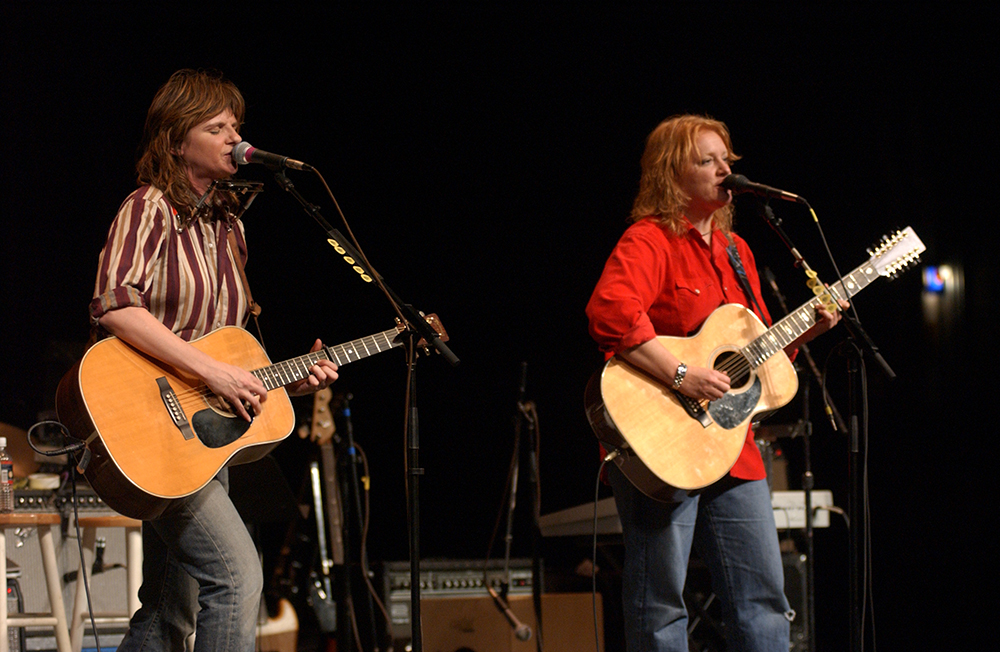
The Indigo Girls perform on Mountain Stage. Photo by Brian Blauser.
It’s that attitude of never feeling above anyone or anything that has helped Mountain Stage to excel and have the lasting legacy that it does. It captures its home region of West Virginia and Appalachia better than most any other music-related program does, both in sound and in sentiment. It’s the latter that’s arguably been the biggest asset in attracting bigger names as the show taps into the majestic mountains around them.
“There’s many different kinds of people that live in Appalachia, but one thing that’s really bedrock is supporting one another, and that shows with Mountain Stage and how they put the program on,” reflects O’Brien. “It’s intimate and friendly, just like the state.”
Photo Credit: Tim O’Brien Band performing on Mountain Stage by Chris Morris; Molly Tuttle performs on Mountain Stage by Josh Saul.
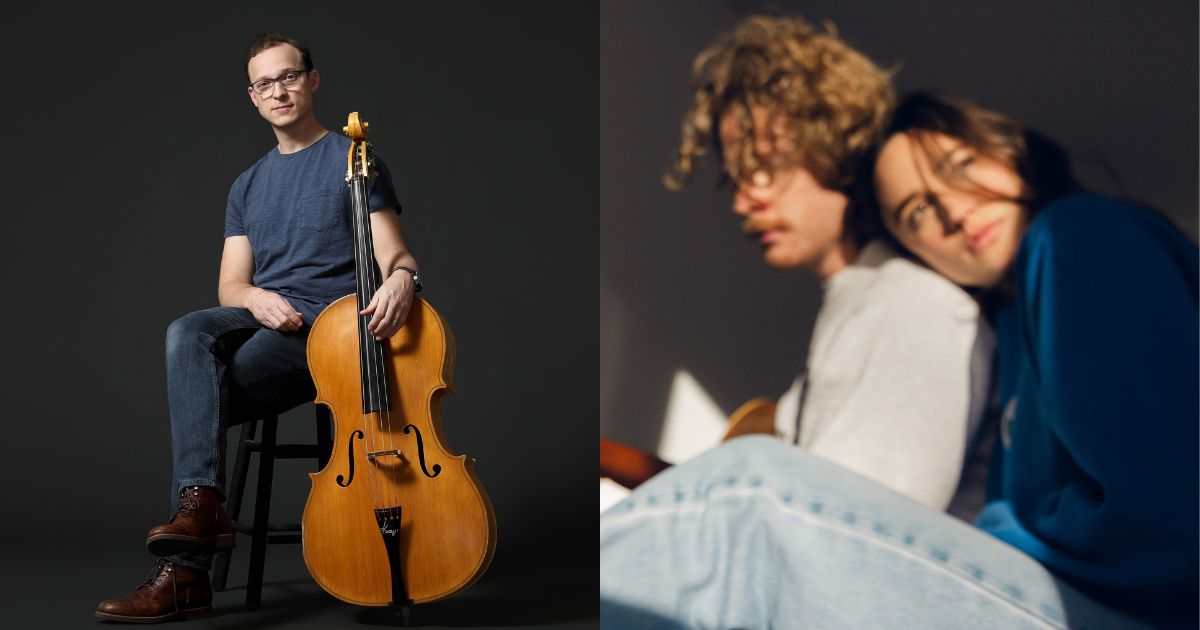
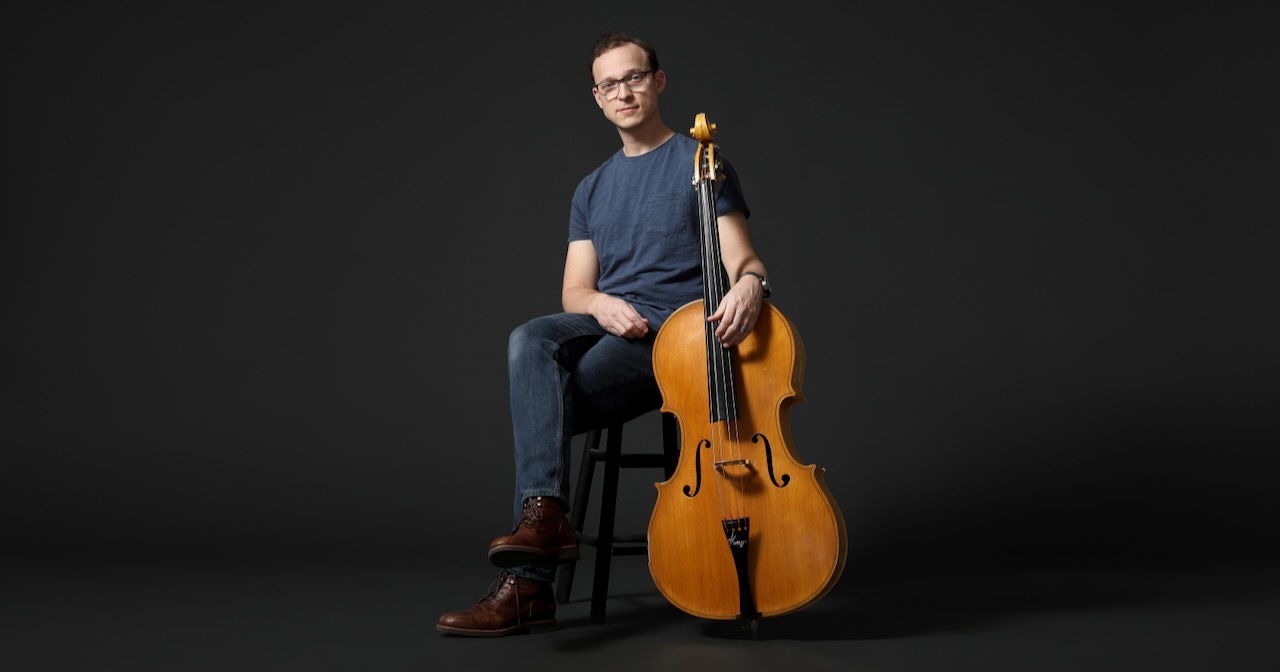
This week, BGS readers were graced by two special, Valentine’s Day-themed premieres from jamgrass supergroup The High Hawks and singer-songwriter Caroline Cotter. Plus, our old friend, Kentucky-based cellist Ben Sollee, brought us a gorgeous new performance video of a John Prine cover shot surrounded by verdant houseplants.
Below, catch up on that new music you might have missed from earlier in the week and discover brand new, exclusive premieres from bluegrass group Sideline and indie/Americana duo the Ballroom Thieves. It’s all right here on BGS and… You Gotta Hear This!
Sideline, “The Lives of the Innocent”
Artist:Sideline Hometown: Raleigh, North Carolina Song: “The Lives of the Innocent” Release Date: February 16, 2024 Label: Mountain Home Music Company
In Their Words: “It was great getting back in the studio after over two years. There was a lot of bottled-up magic that came bursting out when we hit the first downbeat. This song fit the very definition of what Sideline is as a sound and the energy we project. It certainly enters the catalog as a blood-pumping, foot stomping, Sideline hit for the ages.” – Skip Cherryholmes, guitar
“‘The Lives of the Innocent’ was a song that was inspired by the Hibriten Guards during the Civil War that mustered in Alexander County, North Carolina. They saw heavy combat during the war, suffering a high casualty rate, and this tune chronicles what potentially could have been one of the soldiers in those ranks. Steve [Dilling] and the guys bumped the tempo a little and captured the essence of the song and the singing is just top-notch!” – Shannon Slaughter, songwriter
Track Credits: Skip Cherryholmes – Guitar Steve Dilling – Banjo, harmony vocal Matt Flake – Fiddle Nick Goad – Mandolin, harmony vocal Kyle Windbeck – Bass Bailey Coe – Lead vocal
The Ballroom Thieves, “Tender”
Artist:The Ballroom Thieves Hometown: Easton, Massachusetts Song: “Tender” Album:Sundust Release Date: April 12, 2024 Label: Nettwerk Music Group
In Their Words: “We were listening to the band Watchhouse at Newport Folk Festival in 2022 and their sparse instrumentation and fluid melodies inspired us to start writing ‘Tender’ right on the spot. We learn a lot from our peers, and in this case, the lesson was about the importance of creating space for your songs to breathe so you can hear what’s happening between the notes.” – The Ballroom Thieves
In Their Words: “John Prine had a knack for folding mantras in to his songs. This song has a message that resonates deeply with my journey as a creative, father, and husband [and] that is so needed in this fitful world. ‘When love comes your way, you learn to say, I love you!’” – Ben Sollee
Artist:The High Hawks Hometown: Boulder, Colorado and All Points Between, USA Song: “This Is What Love Feels Like” Album:Mother Nature’s Show Release Date: February 16, 2024
In Their Words: “This song sits in a slightly different world than the rest of The High Hawks’ new record. It’s a step into the mind of a hopeless romantic at a show, waiting for the band to come on with his love by his side. Sometimes the world just seems to conspire to make everything just right. This is about one of those nights. The song came out of a co-write with Chris Gelbuda, Shawn Camp, and myself one Nashville summer afternoon. I’m glad it found a home with The High Hawks!” — Vince Herman
Artist:Caroline Cotter Hometown: from Providence, Rhode Island; currently living in Ellsworth, Maine Song: “Do You Love Me?” Album:Gently As I Go Release Date: August 18, 2023
In Their Words: “‘Do You Love Me?’ is a love song, short and sweet and perhaps a bit tongue–in–cheek, echoing desperate and anxious attempts from a hopeless romantic to their new love (and the universe) to get some certainty in very uncertain territory. This anxiety and excitement come together in a fun little package, trading places depending on the day or the moment, and sometimes it’s best to laugh at the silliness of it all, and realize that attempts to know or pretend to know by reading the signs are likely futile, but if nothing else, they’re fun to sing about. I love how Fernando’s illustrations in the video bring out the whimsy, playfulness, and sweetness of the lyrics.” – Caroline Cotter
In Their Words: “John Prine had a knack for folding mantras in to his songs. This song has a message that resonates deeply with my journey as a creative, father, and husband [and] that is so needed in this fitful world. ‘When love comes your way, you learn to say, I love you!'” – Ben Sollee
Photo Credit: Jessica Ebelhar Video Credit: Created by Josh Ford, FordFoto. Recorded at Mahonia Studios, Louisville, Kentucky.
(Editor’s Note:Open Mic is a new series from BGS with a simple premise – to remove all the filters between artist and audience and give musicians and creatives an Open Mic. With each installment, we’ll hold space for musicians to say whatever they’d like on any topic they like in any format that moves them most. It’s about facilitating real conversations and genuine insight with our roots music community.)
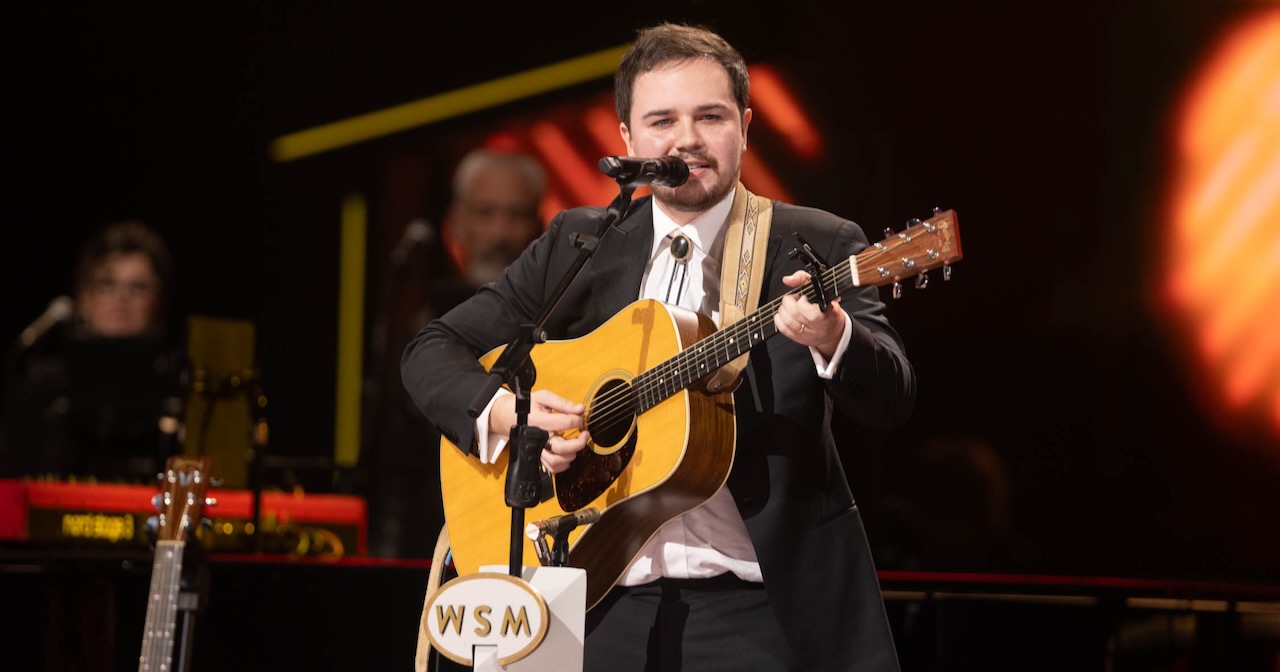
For our first edition of our new series, we set up an Open Mic for Americana newcomer Tommy Prine, an emerging singer-songwriter who walks a unique tightrope. The son of folk legend John Prine and an artist with a creative vision all his own, his work both builds on an established tradition and breaks free from the past – a contrast in full view at his December 2023 Grand Ole Opry debut.
Here, Prine reflects on his winding and not-at-all anticipated path into the artistic world – and into the ability to stand on his own creative feet.
Tommy Prine: “I have learned many things over the last few years, but the most important lesson I have learned is that no one gets anywhere without a lot of support.
“My wife, Savannah, is the embodiment of support. We decided in 2020 that we were going to give this music thing a shot, and by ‘shot’ I mean throwing every ounce of our hearts and spirit into making it work. She has taken on so many roles and worn a thousand hats (still does) during this music journey and it amazes me everyday how graceful and effortlessly she navigates the strange world that we operate in.
“My mom, Fiona, has been the guiding hand through so many new and scary events ultimately enabling me to gain the needed self-confidence to be an artist. She also played that role in raising me, and I owe a whole lot to her for any and all success in my life.
“My dad, John, set a standard of manhood that I will always strive to attain; gentleness, respect, and a lot of listening. As I walk the path that he walked, I learn more about him each day and his lessons unfold time and time again. Thank you for a lifetime of love and teachings, Dad.
“My brothers, Jody and Jack, have seen me in every shape and form I have ever taken on and been nothing but loving and understanding. They both have taught me so much about patience, wisdom and any and all cool music/movies. Without them I would be an entirely different person with different interests, and I couldn’t be prouder to be their little brother.
“My friends, who have been there with me since I was just a kid who played guitar by himself with the doors closed, all of you have influenced me to be a better and smarter man, and have never missed an opportunity to support me. For these reasons, I consider myself the luckiest man alive, and I feel undeserved of such incredible and loving company.
“When I reflect on my Opry debut, the word that comes to mind is acceptance. Acceptance into the community of artists that I admire so much, and acceptance of the life path that I chose which led me to the Grand Ole Opry. Growing up in Nashville, the Grand Ole Opry stage is the stage that you tell yourself, ‘One day, I’ll get there.’ When those thoughts crossed my mind as a teen, all it ever felt like was a dream. An unattainable dream barricaded by years of the most vulnerable and terrifying work I could imagine.
“Part of me knew who I had to be in order to get there, and the other part of me found that to be impossible. My journey in music has provided the personal growth I always wanted – and if all else fails, at least I found out who I really am. When an artist gets the opportunity to step into that circle, they light their own torch. On December 8th, 2023 I lit my own torch, and I intend to carry it to the end of my road.”
Photo Credit: Courtesy of the Grand Ole Opry, shot by Chris Hollo
Hanukkah has begun, advent calendars have barely three weeks left, and days will start getting longer when we reach winter solstice in merely 13 days – but who’s counting? As we lean further and further into the coziest, roots music-iest time of year, we’re rounding up our favorite seasonal and holiday albums, tracks, and shows each week on BGS Wraps. Scroll to find this list in playlist form, plus don’t miss our Classic Holiday Album Recommendation of the week.
We’ll be back next Friday with more BGS Wraps! Until then enjoy some hot cider or some eggnog and some delightfully festive bluegrass, country, and roots music.
Hayes Carll and Melissa Carper, “Christmas in Prison”
A perennial favorite penned by none other than John Prine, “Christmas in Prison” is a rare country Christmas song that can be sung year-round. Like your favorite holiday movie that’s actually not specifically a holiday movie – Die Hard? Little Women? – this is a song so classic, so iconic, that it demands recognition across the calendar and not merely in December. Hayes Carll and Melissa Carper join together on this brand new rendition and they do the song justice, for sure.
Joy Clark, “Gumbo Christmas”
As most holidays are, Christmas is its own familial and cultural melting pot, and guitarist and singer-songwriter Joy Clark highlights her own New Orleans traditions with “Gumbo Christmas.” It’s a song with a recipe both literal and figurative, a combination all of the best holiday dishes know intimately. That Big Easy horn section is fit to carry us into 2024.
CMA Country Christmas (December 14, ABC; December 15, Hulu and Disney+)
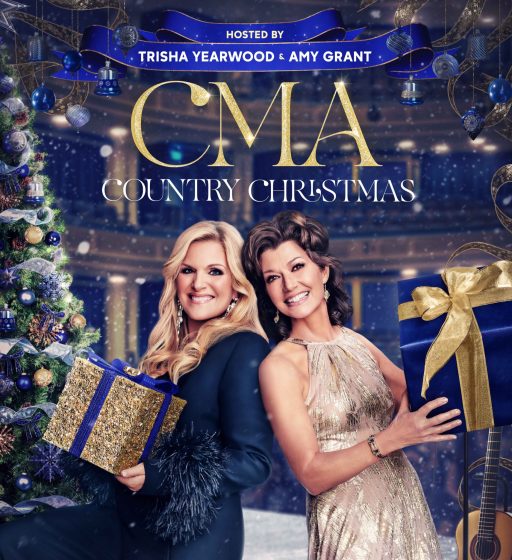
The queen of Christmas in Nashville, Amy Grant, is co-hosting this year’s CMA Country Christmas TV special on ABC with none other than Trisha Yearwood. With performances by The War & Treaty, Ashley McBryde, Jon Pardi, reigning CMA Entertainer of the Year Lainey Wilson, and more. Tune in on Thursday, December 14 for the live program, or watch the following day – and throughout the season – on Hulu and Disney+. For those of us who won’t make Vince Gill and Grant’s annual holiday residency at the Ryman in Nashville, this show will be an excellent consolation prize.
Rose Cousins, “I’ve Got My Love to Keep Me Warm”
There’s almost no better artist to turn to for delicious melancholia than Rose Cousins. Her new holiday single, “I’ve Got My Love to Keep Me Warm,” demonstrates this fact and then some. Winter songs without a specific religious or traditional bent are too rare, so we especially love this track for its “agnosticism” and relatability. Why care how much it may storm, if you’ve got your love to keep you warm? We hope you are surrounded by love this holiday season, and however lonesome or joyous you’re feeling this year, Cousins’ voice will envelope you like a toasty hug.
Bridget Kearney, “Don’t Think About the Polar Bear”
A vibey and meditative new track from Lake Street Dive bassist Bridget Kearney is another holiday track of the Die Hard sort – not demonstrably seasonal, but it works so we’re accepting it with open arms into our wintry celebration. The accompanying animated music video is whimsical enough to be a fitting addition to any lineup with The Grinch, Rudolph, and all of your other favorite Christmas animated TV specials. If your intention is to not think about someone this holiday season, you might just find them wandering across your mind – so don’t think about the polar bear, instead.
The Kody Norris Show, “Mountain City Christmas”
The territory surrounding Mountain City, Tennessee, in the Blue Ridge Mountains of East Tennessee, Western North Carolina, and Southwest Virginia is home to most of the farms that grow most of the Christmas trees for the eastern seaboard of the United States. It’s more than fitting, then, to take this nostalgic and magical Kody Norris Show-led journey through the picturesque counties they call home. What’s more bluegrass than singing about snow, home, family, faith, and rhyming “there” with “Christmas carol”?
Larry & Joe, “Mi Burrito Sabanero”
Bluegrass banjo player and fiddler Joe Troop and harpist, multi-instrumentalist Larry Bellorín are Larry & Joe. Their new holiday single, “Mi Burrito Sabanero,” is a funny, raucous, and enjoyable version of a quintessential Latin American holiday tune written by Venezuelan harpist and composer Hugo Blanco. Much of Troop’s work connects the dots between Latin folk music and American roots music, crafting idiosyncratic amalgamations often expected to be more disparate and dissonant than they really are. For this track, Bellorín set aside the harp and picked up the cuatro, with Troop adding twin fiddles and banjo in another instance of remarkable latingrass fusion.
Maddie & Tae, We Need Christmas
Maddie & Tae, of “Girl in a Country Song” fame, recently released an extended cut of their 2020 holiday EP, We Need Christmas, adding three new tracks – each classic Christmas carols – to the fan favorite collection. Both women are now married and starting families and there’s a confidence and ease they’ve grown into at this phase of their careers. Easily some of the most interesting pop country being made, and certainly an excellent holiday manifestation of the form.
Brenda Lee, “Rockin’ Around the Christmas Tree”
For the first time in her 60+ year career Brenda Lee has scored a Number 1 hit on Billboard’s Hot 100 chart with her truly unforgettable holiday single, “Rockin’ Around the Christmas Tree.” How she supplanted Mariah Carey’s “All I Want for Christmas,” we’ll never know, but we are so glad for Lee that she’s notched this incredible milestone even at this late stage in her lifelong music-making. She first recorded the iconic track as a thirteen-year-old and in an emotional video posted by Billboard and to her social media, you can tell she never imagined this song would be the gem it is in the crown of her music career. Congratulations, Brenda Lee!
Kaitlyn Raitz, “River”
Cellist, composer, and arranger Kaitlyn Raitz released a stunning, instrumental string-centered cover of Joni Mitchell’s “River” a handful of weeks ago, a timely tune drop for those of us struggling to navigate the holidays without Mitchell’s catalog available on a certain streaming service. Lush and romantic, Raitz’s cut of the track is high concept while down to earth, like a perfect Christmas Eve program at a local church, stained glass bookended by poinsettias and candles. A must-add for your instrumental holiday playlists or perfect to soundtrack your cookie icing party or frenzied gift swaps.
Matt Rogers, Have You Heard of Christmas?
BGS Wraps would be simply incomplete without a laugh-so-hard-you’re-crying option, supplied here by comedian Matt Rogers’ holiday outting, Have You Heard of Christmas? With guests such as Muna (swoon-a), Bowen Yang (Rogers’ co-host of the hit podcast, Las Culturistas, known from SNL), and Leland, Have You Heard of Christmas is pure chaos, absolutely unhinged. Melodrama meets the chronically online. Joe’s Pub, dragged through 54 Below. When you’re offered aux this year at your holiday gatherings, put this one on. We dare you.
Andy Thorn, High Country Holiday
Banjoist Andy Thorn was known as Leftover Salmon’s banjo player, before a video of him serenading a wild fox went mega viral and eclipsed all other entries on his resumé. Thorn – who is a self-professed Christmas fanatic – has recently released a brand new holiday album, High Country Holiday, drawing on inspiration from his Colorado backyard and his musical community to put together a bevy of carols and one bespoke original, “The Bells of Boulder.” Add it to your stack of bluegrass Christmas records! It’s destined to become a classic in that category.
Tim and James, A Tim and James Christmas
Los Angeles-based string duo Tim and James – Tim Reynolds and James Spaite – have followed up their popular debut, Lemon Tree, with a holiday EP, A Tim and James Christmas and it’s already a favorite of ours. These simple duets feel fully realized, even while they remain contained, and draw on folk, new acoustic, and chambergrass influences. The kernel within Tim and James’ music – that took their songs from beginning as a regular Tuesday collaboration to tens of thousands of streams – is on full display. There’s something entrancing about this bare bones, four-song collection.
Our Classic Holiday Album Recommendation of the Week: Béla Fleck & the Flecktones, Jingle All the Way
Each year we are reminded of the sheer genius of Béla Fleck & the Flecktones’ Jingle All the Way. It’s a Christmas album we return to again and again and we know we aren’t the only ones – it was chosen by O magazine (yes, Oprah’s publication) as 2008’s Best Christmas Album and it peaked at Number 1 on the contemporary jazz charts. Béla and the Flecktones’ cultural impact was certainly solidified by the time Jingle All the Way had released, but this album – perhaps more than any other music by the group in the 21st Century – cemented their broad, far-reaching influence.
Photo Credit: Joy Clark by Nkechi Chibueze; Rose Cousins by Lindsay Duncan; Andy Thorn courtesy of the artist.
In advance of the release of Vincent Neil Emerson’s latest, critically-acclaimed album, The Golden Crystal Kingdom – which dropped on November 10 – BGS moderated a conversation between VNE and his friend and peer, country & western singer-songwriter and song-interpreter Charley Crockett.
Both artists cut their teeth in music venues in Texas a decade ago. In our conversation, they tell the story of how they came to know each other and discuss ways they protect each other within the business. They talk about covering and cutting each other’s songs and the importance of telling their truths.
Emerson’s new album, produced by Shooter Jennings, veers his sound toward warm ’60s rock and folk influences. He opens up to Charley and BGS about its creation process and what is on the horizon for him.
Charley Crockett: What’s up, Vincent?
Vincent Neil Emerson: What’s up, my boy?
CC: Another day, another dollar.
BGS: Tell me where you both are in the world right now.
VNE: I’m in Asheville, North Carolina, right now, at an Airbnb.
CC: I’m up here in San Luis Valley in Southern Colorado.
Both really nice places to be in the fall.
VNE: You ain’t wrong.
Can you give us a little bit of context about your relationship, where you know each other from, and how long you have been working together?
VNE: Charley, you wanna go?
CC: Oh man, I always tell that story; I wanna hear it from you.
VNE: I met Charley in Deep Ellum. We were playing around town, playing a lot of shows around there and Fort Worth. That was over 10 years ago, maybe?
CC: I was trying to think about it this morning. I think it had to be ’13 or ’14.
VNE: That’s crazy, man.
CC: He remembers it being at Adair Saloon; I remember it being at the Freeman. It really don’t matter, ’cause I’m sure it was both places.
VNE: I’m sure we went and had a drink at Adairs or something like that.
CC: I remember I walked up on him and said, “I like all them Justin Townes Earle songs.” And he said, “I only played one.” I always liked what he was doing, and he used to play solo and do the guitar pools up at Magnolia Motor Lounge all the time. He’d be up there smoking a cigarette, picking through them songs like Townes Van Zandt, and I thought, “Oh lord have mercy, this boy is a force to be reckoned with.”
VNE: Man, I felt the same way as soon as I heard you, brother. I remember a couple of nights I saw you at the Freeman with this band. You had a bunch of guys up on that tiny little stage, and you were just ripping through all these songs, taking all these old honky tonk songs and flipping them on their head and turning them into blues and vice versa. I always thought that was so cool, man.
CC: I don’t remember that well, but I guess you’re right. In those days, every gig we played for both me and Vincent, we ended up getting booked by the same folks, or they were all standing together in some bar, no matter if it was Ft. Worth or Nashville or Los Angeles. One way or another, all them same business folks been standing pretty close to me and Vincent. And that’s the truth.
Well, that’s convenient if you like to work together, I guess. Charley, do you have questions you want to dig in on?
CC: You know, Erin, I don’t even know what the hell we are doing?
Let’s talk about the release of Vincent’s new album.
CC: Well, let me just do this then. Everything he’s been putting out with Shooter [Jennings], like everything else he’s ever done…If you sit there looking at Vincent and he surprises you, it’s like, “Oh damn, I didn’t know old boy was gonna do that.” The very next thing he does, it just happens again — every single time. I remember when he was playing “7 Come 11” way before anybody gave a damn about him and was looking out for his interests or his career. He had all them songs in his pocket way before anybody had ideas or designs on him and his business. I’ve said for a long time that “7 Come 11” is one of the best folk songs written out of Texas in 20 years. Remember Central Track, Vincent?
VNE: Yeah, they did a lot of write-ups on music.
CC: I will never forget that stuff when you did that record and what you were doing live. Erin, he was playing for 50 bucks and a case of Lone Star in them dive bars in Fort Worth, you know? He was living in a 10×10 room. He was hardly ever even standing inside of the damn joint.
A handful of us showed up at the same time, and we are all moving on our own paths, but we’ve all stayed pretty close, or we damn sure weave it together quite a bit even if we get way out there, you know, in the territories, we always come back to each other. I think I met Leon Bridges right around the same time that I met Vincent. I met him in Deep Ellum, too. There is a guy who plays guitar with me now named Alexis Sanchez. He had a band back then, and he was playing at Club Dada there for some little festival, and Leon Bridges was standing there in a trench coat and a bowler hat. I venture to guess that me and Leon and Vincent met each other damn near about the same time. There were a lot of other folks like that. Ten years later, especially for some Texas guys, you know, we’ve all grown a lot, and I think we have always supported each other and loved each others’ music. That’s only grown, and Vincent is standing there as one of the premier, original, authentic talents to come out of Texas since the turn of the damn century. I’m not blowing smoke. I’m just stating what is already happening.
VNE: Man, that is high praise. I appreciate you sayin’ that, Charley.
CC: Well, they want all this shit to write about it, but that’s just the truth. He was playing in Fort Worth and like I said, playing for all that low money. They were calling him Lefty. Why did they call you Lefty? I figured it was because you had a black eye or something.
VNE: Yeah, I had my left eye knocked out of the socket one time, and the nickname stuck for a while.
CC: I remember they wrote about you pretty salaciously there in the Fort Worth Weekly. I know a thing or two about that myself.
VNE: I would say it was because they were trying to sell papers, but it was a free publication.
CC: Shit, they are selling advertisements. I think the Dallas Observer is still doing that to me.
He was playing them bars, we were playing them bars. I don’t know which one of us is which, but more often than not, he sure seems like if I’m Waylon, he’s Willie. I have felt like that for a long time. You could change the names. I think about this stuff a lot. The business folks, it is always hard to tell what they are doing, but you can be sure they are rolling dice and betting and gambling on folks. It ends up being, a guy like Vincent that somebody like me can lean on a lot more. We can trust those guys, and I’m real happy with who I’m working with, and I’m sure Vincent is, too. It is the other artists living life for the song that gets us through. I know I feel like that about Vincent, and I feel like that about a lot of other guys I don’t know as well as him.
Kind of like Johnny Cash said, “We are all family, even though some of us barely know each other.” I think it is because we can see each other and know we are in the same boat and in that way, care more for each other than other people would. I think it is pretty serious. It is life and death.
VNE: That’s a good feeling to not feel so alone in that way and have people out there and doing things similar to you. They probably think a lot of the same thoughts. Me and you are good buddies, Charley, and I feel that way, too. I feel like some guys out there like Tyler Childers – I really respect him, and I feel like he is in the same boat as us. I’m not as well known as you guys, but I think none of that really matters. I think what it comes down to is that we are all songwriters trying to make our own stories happen and be true to ourselves and honest to the world. I think that the reason we can relate to each other is the same reason the fans can relate. Honesty will cut through anything and bring people together.
CC: One way or another, them folks we are selling tickets to, they know.
VNE: You can’t fake the funk, I guess.
CC: Eventually, it comes through. Speaking of Tyler Childers, we ended up on the same plane flying from Nashville to Austin recently… I was there for the Country Music Hall of Fame induction and I didn’t want to go. I get real antisocial and want to hide out from everybody and shit, and I went to Nashville kicking and screaming. Tanya Tucker was getting inducted to the Hall of Fame with a couple of other people. Patty Loveless and Bob McDill, who I wasn’t that familiar with. I had thought that he’d written the Jimmy C. Newman song, “Louisiana Saturday Night”, which I know real well. To be honest with you, it is the only reason I agreed to go out there, ’cause I love singing that song. I made a lot of money writing songs off of that song, so I figured I owed whoever the songwriter was. Long story short, there in the last week, I found out it was a different “Louisiana Saturday Night,” regularly mistakenly attributed to Bob McDill cause he wrote a totally separate song called “Louisiana Saturday Night” that Mel McDaniel had a big hit with, and that’s the one that goes,
“Well, you get down the fiddle and you get down the bow Kick off your shoes and you throw ’em on the floor Dance in the kitchen ’til the mornin’ light Louisiana Saturday night”
That was a big ol hit, right Vincent? He did “Baby’s Got Her Blue Jeans On,” and a bunch of shit like that that I just didn’t realize. My naive, ignorant ass goes up there to Nashville kicking and screaming, and that’s how I feel. A horse gets led to water or something like that. I saw Tanya get inducted. I damn near built my career off of my version of “Jamestown Ferry” when I was younger, and I realized that she had blazed that trail for me, and I had not shown her enough respect. I really hadn’t. Same thing with Bob McDill. All those songs he wrote and the advice he gave in his speech, and my dumbass could really shut up and pay attention to these folks.
Then I ran into Tyler going from there. He was flying to Austin to do a John Prine tribute. That’s how it is. When I see Tyler, I’m on a plane. When I see Vincent, it is at Monterey Fairgrounds. We are ships passing in the night. All these guys like Tyler, Colter [Wall], Leon, Vincent. Whenever I see them, they got a big light around them, and it is shining. You just want it to keep shining for them, and for myself, to keep it going,
I don’t know exactly where you want to go with this, Erin, but I’m excited about this record. Shooter was telling me about your songs and offered to send them and I was like, “No, I ain’t gonna do that. I wanna be like everyone else.” I wanna watch this thing get rolled out, and I wanna be excited. I’m looking forward to going through the songs.
Vincent, can you tell us about working with Shooter on this record?
VNE: I met Shooter a few times. Me and Charley were at this festival in Iowa hanging out, and Shooter came up to me and tapped me on the shoulder. I’d met him before at another festival but I’d never talked to him. He turned me around and said, “Hey man, I really like that thing you did with Rodney Crowell.” He paid me a lot of compliments, and since then, we talked, and when it came time to make another record, Shooter was the first guy I thought of. I thought it would be such a cool idea to work with him on an album. One thing about him is he really is one of the nicest people I’ve ever met, and he is a genuine fan of music. He’s trying to make cool things happen. I’m so lucky I got to work with him on it. That is the big takeaway from the whole thing for me was making a real good friend like that and meeting someone who gets me excited about songwriting and about making an album and making music in general.
Since Charley cut “7 Come 11” and you cut one of Charley’s songs for this record, can you talk about what prompted “Time of the Cottonwood Trees” winding up in this pile of songs?
VNE: Oh man – that song. Me and you were on tour together for three months, was it last summer? We did a bunch of dates, and we were on the road a long time, and I was listening to Charley do that song every night. It was a brand new song that hadn’t come out on his record yet. I got to hear him sing that song every night by himself, and I just think it is one of the best songs I’ve ever heard. It is one of my favorites from you, Charley. I think it is a fine example of songwriting. When it came time to make this album, I always wanted to pay tribute to you and cut one of your songs on a record because you cut “7 Come 11.” That really ties back into that whole Willie and Waylon and all those old timers who cut each others’ songs and lifted each other up like that. I just wanted to pay tribute to you, and that’s why I put it on the album.
CC: Shit, I appreciate it. I’ll be excited to get the check in the mail. You surprised the hell out of me with that one, you really did. I’ve always wanted people to cut my songs. Sometimes, I think I’d be better off that way. I have so many. I’ve always cut a lot of songs that weren’t mine, probably about half of them. And I got about a 250-song catalog of published shit. I would guess about 40-50% are songs I didn’t write. I feel like I’ve caught a lot of heat for that. People have an idea about me that I never wrote a single song. I think that’s because we live in an era where, like what Vincent was talking about, where all those folks back in the day, across genres, and it wasn’t just country it was pop, folk, soul, R&B. It was everything. Everyone was cutting each other’s songs. I just really think that to write a great song, you have to learn great songs from other people.
You have to watch out for these publishers these days. They’ll just put any piece of junk out as long as they’ve got control over it. They figured out they can make money selling junk. If you can make more money than ever before selling junk and you aren’t principled, and you aren’t that close to the music, well, they don’t see the reason not to do it that way. I think it feels like a renaissance.
VNE: Specifically in the genre of country music, there is a lot of junk out there. I don’t want to put anyone down. Most of the time, I just try to ignore whatever I don’t like. I think that’s the best way to go about it. I think there is room at the table for everybody, whatever you are into. I just think it is so cool that Sturgill and Charley and Colter and Tyler, all these other guys that are out here putting out real, honest-to-goodness songwriter songs. And not just that, but real country music. It doesn’t matter if it is your song or someone else’s; if you are telling that story honestly, I think that’s great. I’ve always appreciated you for that, Charley. I think you are a great interpreter of songs, and I think you are an even better songwriter, man.
CC: Damn, I’m glad I talked to y’all this morning. I feel better.
I’m glad that we are talking about cutting songs because that is such a huge part of country music, interpreting other people’s songs or reinterpreting a song. It feels like that art was lost in the past 20 years or so and it is having a resurgence. I’m excited that you guys are at the forefront of that, because great songs have more than one life. And it is an opportunity for songwriters to make more money.
VNE: I think it is one of the greatest compliments that a songwriter could receive – to have an artist who they love and respect cut one of their songs.
CC: There is no question about that. That is the best feeling.
VNE: It is, cause you know that your songs has legs and can go places that you can’t, which is a great feeling.
CC: It really is. It is such a political world, and it is so divided. There is a lot of pressure on people that you step out there into the great mirror of society, and the more out there in front of the public that you get, there is a mirror that starts projecting on you, and it is tough to deal with. It is hard to know what to do, but the thing about it is – being able to write honest songs and tell the truth in your writing; that is the most rewarding feeling. That is why I always look forward to what Vincent is doing. There aren’t a whole lot of people that I anticipate their new works as much as him, if anybody really. That’s the whole deal. You look over, and he’s writing better and better, and it makes me want to write better, too.
Speaking of, Vincent, can you talk a bit about your writing process for this record?
VNE: I kind of pieced together songs over time. Sometimes they jump out real fast; sometimes it takes a while. And thanks for saying that Charley, brother. Damn.
CC: I’ve been saying it for 10 years.
VNE: That’s kept me going a lot of times and I don’t think you realize that. These songs – damn, what was I saying?
CC: You were saying sometimes they come quick, sometimes they come slow.
VNE: I’m very influenced by the music that I’m listening to and that is why I try to be real careful about what I listen to. I think it is like if I’m making a smoothie. I gotta put certain ingredients in my brain, and it comes out me on the other end, hopefully. I was listening to a lot of Neil Young and Steven Stills and David Crosby. A lot of the ’60s rock and roll and a lot of Bob Dylan stuff. That’s just where I was in my headspace, so I was taking in all that. I try to put it all together to make it my own. That’s where I was at when I was making this album.
By the way, I’m excited about this rodeo we are playing together, Charley.
CC: Oh shit yeah! At the Virgin Theater there? Yeah man, I’m excited about it, too. Thanks for doing it.
VNE: Thanks for having me on.
CC: When it comes to money and shit like that, just any time, whatever you gotta do to make it work cause I wanna keep playing with you as much as we can and build up. I’ve played in some arenas recently, and I really don’t like it. I don’t know if country music belongs in arenas. And I just mean opening. I can’t sell tickets to no damn arena. And I take a cue from Colter cause he and Tyler and them boys, they could be in arenas all day long if they wanted to be. I would rather play rodeos and municipal auditoriums and really special theaters and stack ‘em up. I think we need to get a goddamned Dripping Springs reunion tour going. A real one.
VNE: Man, that’d be great.
CC: You know what I mean, just do some of our own shit. My aunt and uncle and a bunch of people who haven’t been out to see me play in a long time are coming out to Vegas. I used to live with my uncle when I was a kid in Louisiana and Mississippi and shit. He’s gonna flip his shit when he sees you.
VNE: I can’t wait, man, I’ve heard so many stories about him.
CC: He’s wild. We gonna show these folks what country music actually sounds like. They might not be able to tell who is left or right. Nahhh I’m just kidding it is a bunch of cool people.
Thank y’all for letting me be a part of this. I’m just happy to help out or talk about this. I’m real excited about the album for real. The imagery in your writing, man, it’s like everything you write is getting more and more vivid. You paint such a picture. I’ll stop blowing smoke up your ass.
I’m gonna get back on the trail and Vincent, I’ll talk to you soon.
VNE: Thank you for doing this brother, I appreciate you.
Photo Credit: Vincent Neil Emerson by Thomas Crabtree; Charley Crockett by Bobby Cochran
This website uses cookies to improve your experience. We'll assume you're ok with this, but you can opt-out if you wish.AcceptRejectRead More
Privacy & Cookies Policy
Privacy Overview
This website uses cookies to improve your experience while you navigate through the website. Out of these, the cookies that are categorized as necessary are stored on your browser as they are essential for the working of basic functionalities of the website. We also use third-party cookies that help us analyze and understand how you use this website. These cookies will be stored in your browser only with your consent. You also have the option to opt-out of these cookies. But opting out of some of these cookies may affect your browsing experience.
Necessary cookies are absolutely essential for the website to function properly. This category only includes cookies that ensures basic functionalities and security features of the website. These cookies do not store any personal information.
Any cookies that may not be particularly necessary for the website to function and is used specifically to collect user personal data via analytics, ads, other embedded contents are termed as non-necessary cookies. It is mandatory to procure user consent prior to running these cookies on your website.