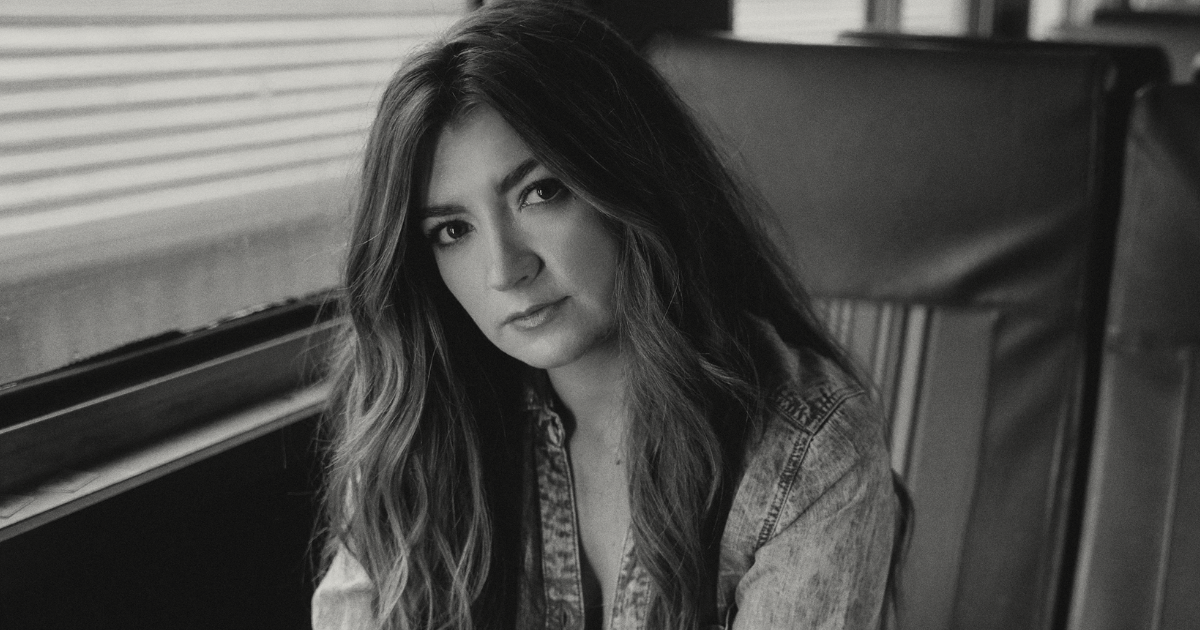
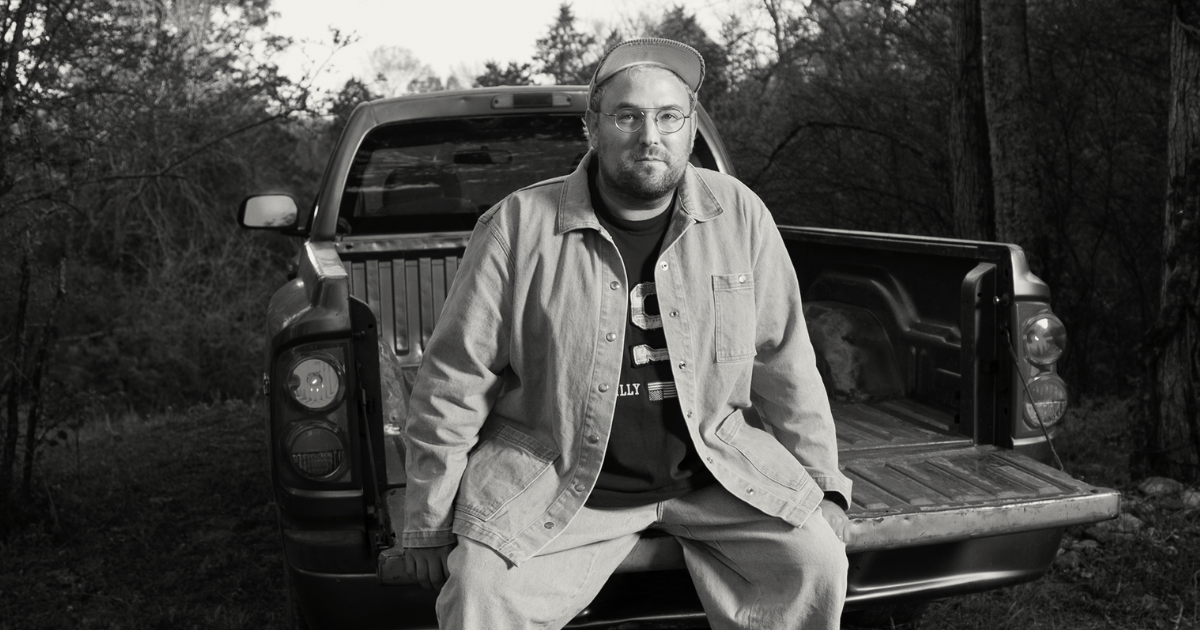
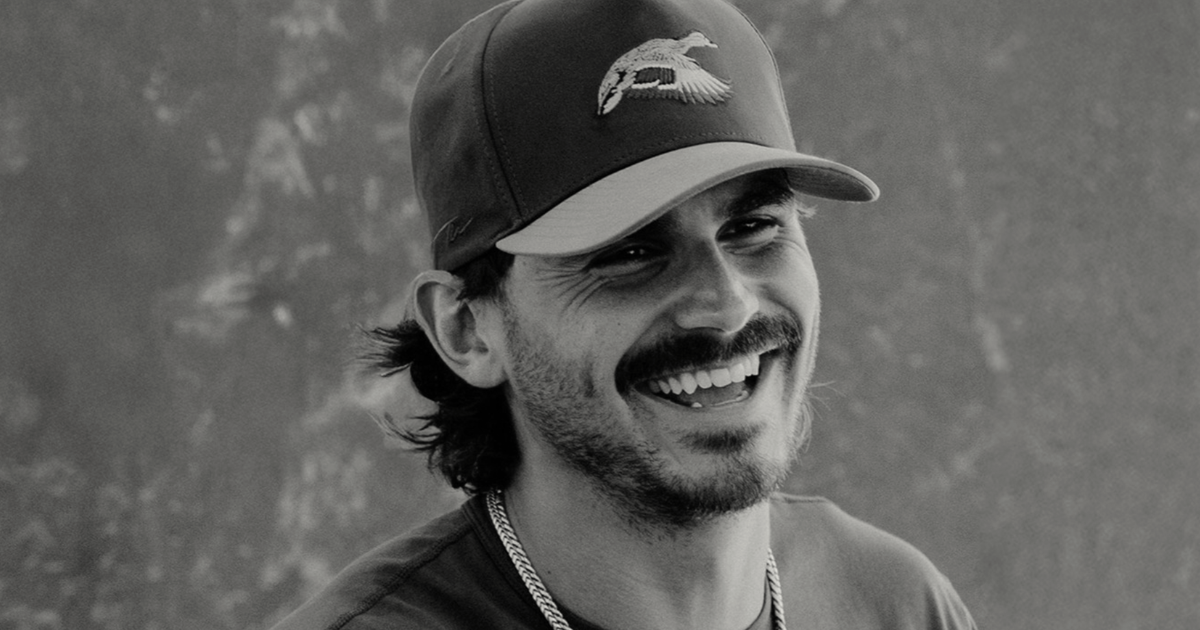
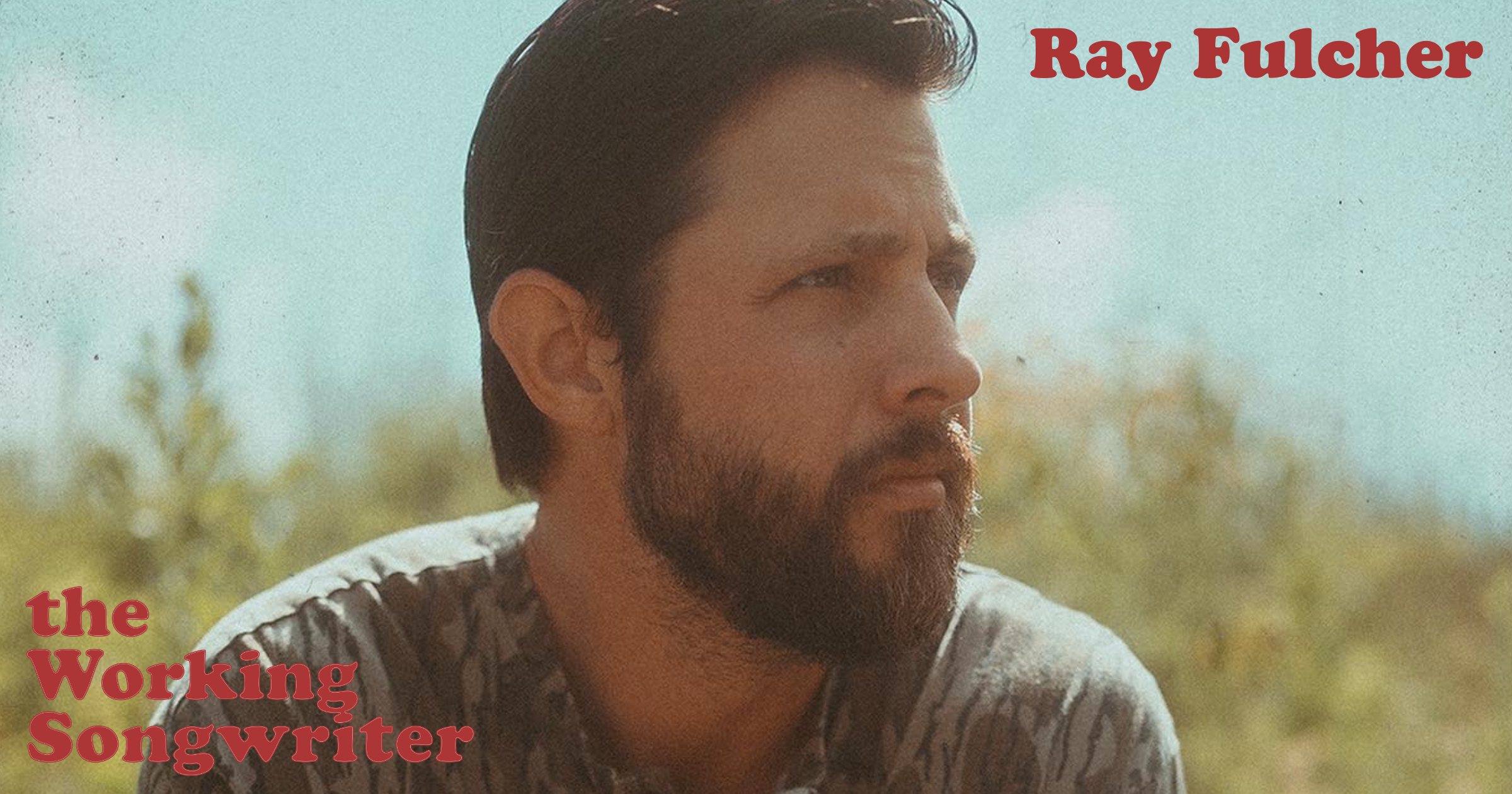
MORGXN: Home Is Where Your Heart Hangs Its Hat

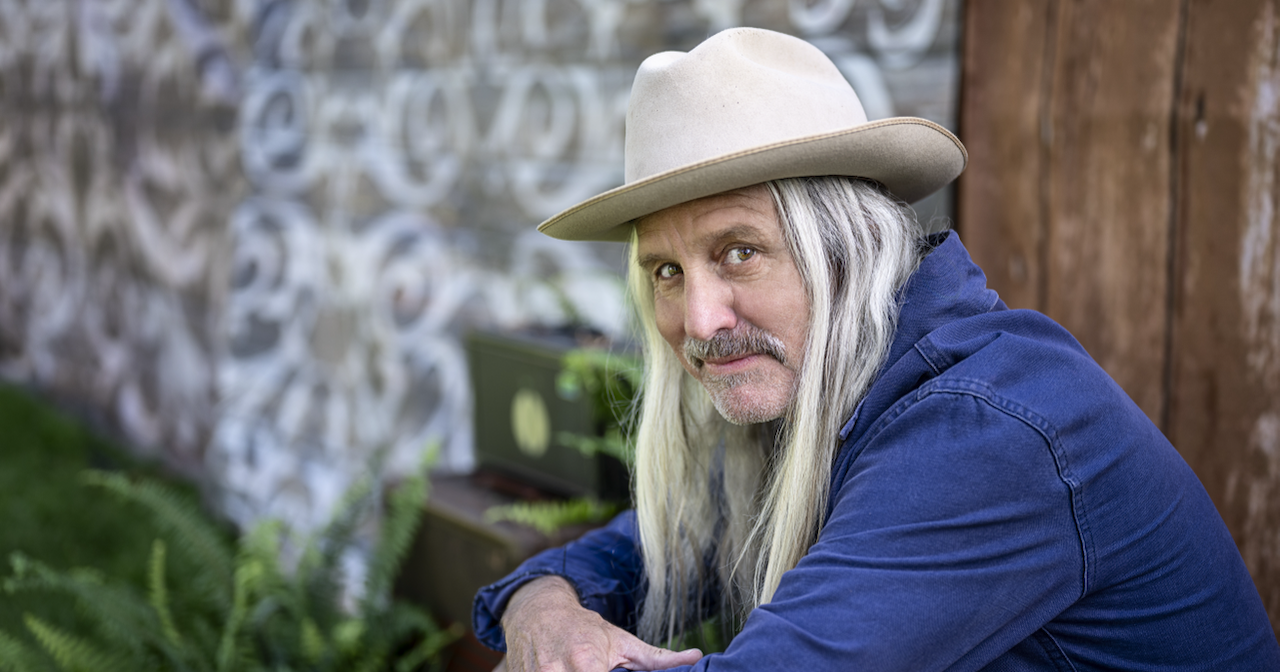
“I don’t know when I became an activist,” MORGXN admits. “I’m just a human being who sings from the heart, but my heart is very broken by the world that we are currently living in.”

The singer-songwriter lived in Los Angeles for 10 years before moving back home to Nashville in 2022. “The minute I came back to Nashville, I ran into a guy once. He was like, ‘I only see you at the Capitol singing,’” he recalls. “When I moved back, they were trying to ban drag queens. They were trying to ban women’s access to health care.”

Most recently, he took to the Tennessee State Capitol to protest bills against same-sex marriage. “This is how rights get tested: one state, one bill, one ‘exception,’ and suddenly the floor moves under all of us,” he wrote on Instagram.

“I don’t even think about it as activism. I think about it as humanity. We are more alike as human beings than the media, the news, and politicians would want you to believe,” he explains. “It breaks my heart. If you have listened to this album, there are songs about love and the human experience. The album is for anybody bold enough to live as who they are in the middle of the heartland.

“That is what I hope people get from this album. I hope they feel less alone in their activism… I wouldn’t even use the word activism. I hope they feel less alone in their humanity, period.”

On March 6, MORGXN released a deluxe edition of his album, HEARTLAND, and while it pulls from country music, he wouldn’t exactly label it as such. “I don’t care what genre you tell me it is. I care that I’m speaking something that is true to me, and that’s how I make music,” he says. “I don’t make music outside in.

“I make music inside out. I find what’s inside, and I try to bring it outside,” he continues. “And the heartland is a place that is normally not reserved for people like me and you. And yet, living in the heartland, I see that everyone belongs in the heartland. The heartland is a space for everybody, and I want to reclaim the heartland for everybody.”

Good Country hopped on a Zoom call with MORGXN a week before the album’s release and chatted about collaborations with Tenille Townes and Maggie Rose, the meaning of community, the political divide in country, and the hardest lessons he’s learned since coming out as gay at 19 years old.

What are some of your favorite lyrics on the album?

MORGXN: “GOD CODED” is maybe the most important song I’ve ever written, whether or not most people hear the song – it’s not a radio song. But it is probably the most important song I’ve ever ushered into being. I have no problem with god or religion. I have a huge problem when people use god and religion as a weapon of their hate.

“WILLOW” I wrote for my friend’s daughter who has cerebral palsy, so that she knows that she is a bright light. Already that song has inspired other people, which really means that she has inspired other people. It’s hard for me to choose… “MIGRATION” is about losing my dog. I don’t have a favorite lyric – it’s like choosing a child. [Laughs]

Okay, here’s my funniest favorite line, “EVERGREENS.” The first line: “Tell me your sign/ And I’ll tell you mine/ And I’ll tell you if we’ll be okay.” I think that’s funny, because if I’m dating somebody, I will be like, “What is your sign?” And I’m going to decide right away if we’re even going to be compatible, which is maybe absolutely chaotic, but I love it.

With the deluxe edition of HEARTLAND you have several collaborators, including Tenille Townes, Ruby Amanfu, and Maggie Rose. How did you choose who you wanted, and what did they bring to the table?

Collaboration is like water to me. You know, I have many liquids here on my table. I am a gay man, so I have tons of liquid everywhere around – iced coffee is always a yes. Collaboration is also like breathing to me. When I think about making music, “the bible” to me is Willie Nelson and “On the Road Again.” The life I love is making music with my friends, and I can’t wait to get on the road again. That is how I think about music.

When I moved to Nashville, there were voices that I saw popping up that were saying really important things, like [Tenille Townes’] “Jersey on the Wall.” They were saying messages that really resonated with me inside of a space that is still not reserved for people like me.

I came here in 2022, which was 11 years after this manager told me I would never make it in music as an openly gay person. In Nashville, there was a thing bubbling up, but it was like you were reserved for this sideshow experience. You can be gay, but only during June, only when there’s a tent for you to stand under. That’s not how I believe in love or life or humanity. I reached out to several people wanting to create. Truth be told, I have people in my DMs who are massive artists, who love what I’m doing, but who can’t align with who I am because it will hurt their fan base. That’s insane. That’s 2026 for you.

But artists like Tenille Townes, Maggie Rose, Ruby Amanfu, Katie Pruitt – who’s obviously a queer beacon – and Langhorne Slim, they were people who were brave enough to collaborate outside of what is the norm for them. I’m really honored that they’re helping me create this version of the heartland where everyone gets to live.

With Tenille, “HEAVEN KNOWS” was the first song we ever wrote together. It was actually the day we met. The song has this sort of inner child: Why do we even keep trying in a world that feels so hard? Why do you love when your heart has been broken so many times? Why do you keep making music when it feels like the music industry is as crazy as ever? And why do you keep being a good person in a world that is hell-bent on trying to make you feel like you are an abomination? I try because I care. I love so deeply, you know.

Having grown up in Nashville, what did community mean to you then, before you came out at 19?

The one thing I’ll say about being queer in America – maybe anywhere in the world – is you’re forced to create community, and sometimes family, when that is not a given for you. I was very lucky that my family was… more confused and scared than they were not accepting. But my husband’s journey with his community – he grew up evangelical and his community kicked him out. He was going to be a pastor, going to seminary, and once he came out, he was kicked out of the church. I didn’t have that experience … but family to me widened the moment I came out. The idea that family was not just the people you were born into, but it is the people and friends and lovers who you collect along the way that were missing for me as a kid. Growing up here, I had a hard time fitting in, because everything I did stood out.

I played the Bluebird [Cafe] last night with Molly Tuttle, Maggie Rose, Liz Longley, and Ketch [Secor] from Old Crow Medicine Show. I’m sitting there singing “MY REVIVAL” – and I’ll cry thinking about this, but it’s like I’m sitting there singing [that song]. My husband is over here and the whole room is singing along with me. I have painted nails, singing my song at the Bluebird with legends. I’m the co-chair of the diversity committee for the Recording Academy in the Nashville chapter. I don’t know if I’ve “made it,” because I don’t think making it is even like the goal here. I want a career and a life, not a moment in time. That’s “making it” to me. For the closeted gay boy who was scared to ever reveal who he truly is, that’s my revival. There’s retribution. There’s deep healing, and there’s tons of gratitude, as well.

The divide in country music right now between people who are willing to sacrifice a fan base and those who aren’t is always widening. It’s cool to see who has come forward to make their voices heard.

Country music is three chords and the truth. That’s still the bible, but it has lost its way. There is a real ricochet happening where people are afraid to be truthful, because truth can sear and truth can be very quiet but very powerful. Nashville is at a breaking point. It’s a small town. We are growing by leaps and bounds. There’s a real deciding line between: do we make this a city for everybody or do we make this a city for the select few? That’s the same for country music, folk, Americana, and gospel.

“HEARTLAND,” the song, definitely pulls on gospel, folk, Americana, and pop, for sure, but it also pulls on country because it’s a story. I thought I’d see my name in lights. I thought that my life would be this flashy thing. It’s not. I fell in love with a man, and we have a farm, and we’re building a life together. That’s love to me. It’s a story. It’s my story. It’s real. So, it’s country; it’s folk; it’s Americana; it’s gospel. Now, will any of those genres accept me? I have no idea.

But the people on my album have accepted me for who I am and love me for who I am. And that, I think, is what the heartland is all about. You know, love thy neighbor. What happened to that?

You turn 39 this year, which happens to be 20 years since you came out. Was there any significance in releasing HEARTLAND (Deluxe Version) this year?

It’s funny. Titles of an album are like mystery buckets. I actually have a title for my next album and I’m so excited about it. Prince once said that he’s like two albums ahead of whatever’s commercially released. And I love that for him. I’m one album ahead of what is commercially released. Album titles visit me like a fever dream. Even HEARTLAND – the song, I gotta call out Josh Dorr, the co-writer on that song, who had a number one with Blake Shelton this year with “Texas.” He’s a legitimate country songwriter. Not even legitimate country songwriters would take a session with somebody like me and it takes guts to do that.

I haven’t thought about how it’s 20 years since I came out, but it makes a lot of sense. I have a song called “home.” When people were like, “Where is home?” I would be like, “Well, anywhere but Nashville, Tennessee, because that place would never accept a person like me.” Now, to be making a life here, building a farm, hosting Pride on our farm, there is something beautiful in that. It may have taken 20 years, but I’m home. It’s beautiful. I hadn’t really thought about time like that.

When we wrote “HEARTLAND,” I wrote it on the piano that I grew up on. There’s always ghosts in the bones of old instruments, but it’s safe where my heart lands. It’s the heartland, but it’s also where my heart gets to land safely. That’s the kind of love and belonging I wish for everybody. I’m not somebody who believes that you have to be in a relationship to be happy, or that you have to be married to be happy. That’s bullshit. That’s heteronormative, capitalist nonsense. You can find belonging amongst community, friends, and lovers. Does your heart have a place to hang its hat? That’s home.

What have been the hardest lessons you’ve learned over two decades?

The thing that comes up in my head is: it’s not over ‘til the fat lady sings. I’ve been a fat lady so… [Laughs] It will fall apart, and that’s okay. The true story is what happens when you pick yourself back up and keep going.

I’m far less interested in talking to somebody who’s never moved across the country once. I can’t really relate to you. If you’ve never sold all your belongings and moved somewhere at least twice, we might not have a lot of similar things to relate to. It doesn’t have to be grand moves. My husband has lived in a bunch of places in Nashville, has not left Nashville, but he’s lived a lot of life. You have to have lost everything once, probably twice, and hopefully that’s it. But it’s really about how you pick yourself back up at the bottom, and keep trying again.

Whether you think it’s good or not, it won’t last, and that’s okay. There’s beauty and grace in that. I have a friend, Kristen Griffith[-VanderYacht], who’s a [floral designer] – I think he’s now in Detroit – and he’s gone through a lot. He was on the Drew Barrymore Show, and the guest host was asking, “How do you keep flowers alive for longer?” Kristen grabbed his hand and he was like, “Here’s the thing, lean in close, I want you to hear this: they’re not meant to last. They’re meant to be beautiful for the moment that they’re there, and you’re meant to appreciate them in all their glory, and then you’re meant to let it go.”

That is really hard. That is maybe [informing] some of the themes about my next album, actually. It’s loving and letting go. Life is not linear. It’s not meant to be. Cherish all of the beauty, because nothing lasts forever. And there’s a ton of freedom in that sentence.


Photo Credit: Gabriel Starner

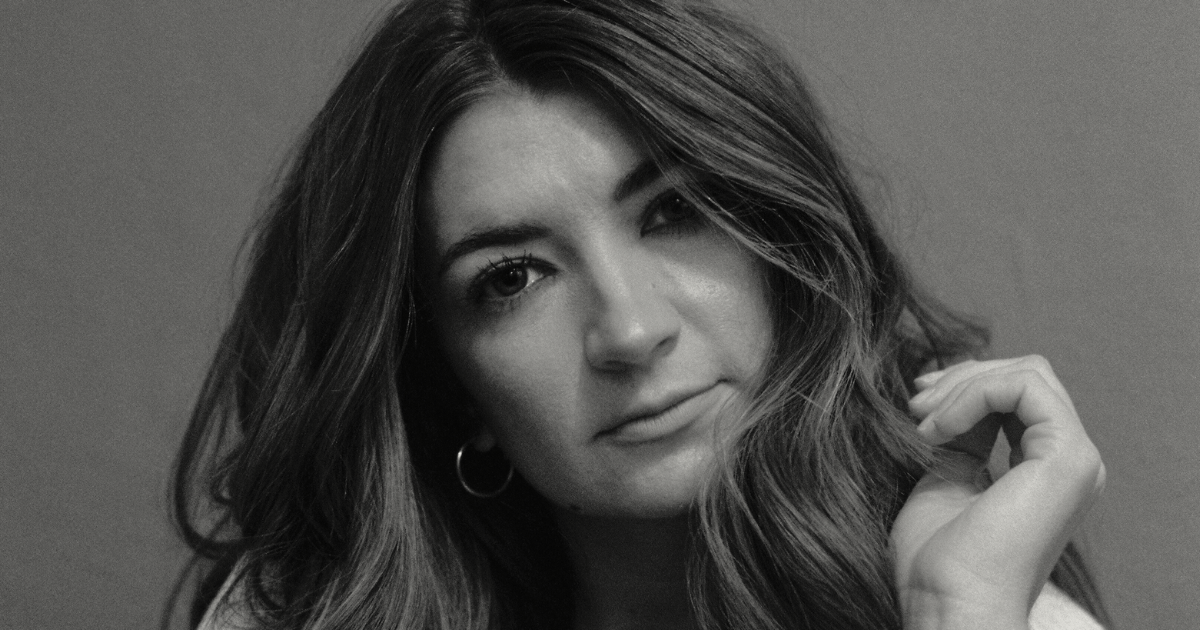
With The Acrobat, Tenille Townes Has Reached the Other Side

When Good Country spoke with award-winning singer-songwriter Tenille Townes in 2024, she had severed ties with Columbia Nashville and claimed her autonomy as a recording artist. It was a tremendous, liberating step into the unknown.

This month, Townes releases her first independent project, The Acrobat. Over the course of its 10 songs, she transparently and hauntingly channels the healing journey of the past two years – one that intertwined heartache, isolation, a plunge into depression, and the long road back.

She recorded The Acrobat at home, in the company of her beloved dog Sam, played all the instruments, and produced and mixed the tracks. This wasn’t the original plan, but as the work tapes progressed, she found catharsis in the honesty of the stripped-down vocals and guitar. This, she decided, was the album, and the best way to bring it to audiences was to perform it the way it was recorded.

She is now on The Living Room Tour, again with just her vocals and guitar, for intimate performances across the U.S. and her native Canada – with one exception: two dates with the Calgary Philharmonic Orchestra on April 23 and 25.

“I’m working with Dave Pierce, who’s arranging the shows,” she says. “He has written musical interludes between the songs that will accompany the storytelling pieces of what I’m doing and connect it all together. Hearing these songs in a completely different light has inspired me. Thinking about the magnitude of that many people onstage, it’s going to be emotional hearing that wall of sound all around me. It’s unlike anything I’ve ever done.”

You moved from Alberta to Nashville in 2013. Who were you then and who are you now? How has Nashville changed over 13 years and how has Nashville changed you?

Tenille Townes: I still feel that the spark for music, the love for it, the complete joy is intact, and I’m grateful for that. Nashville, as a community, has obviously grown so much and taken on lots of different lives in those 13 years, but the heart of the community feels the same to me.

What drew me to Nashville initially was the creative community, the writers, the songs that are created there every day, and this group of people that creatively have each other’s backs. I still love the heartbeat of that town so much. It’s a little harder to get in to see rounds at the Bluebird [Cafe] these days, or things like that, but the spirit’s the same.

When I first got to town, I was so wide-eyed and just [full of] complete optimism. I had this belief that anything’s possible, everything to prove and nothing to lose, and that tenacious… maybe naivete helped me kick down some doors and get things going.

A lot of the dreamer’s expectation is to show up in town, get the deal, and try to find a tribe of people who believe in what you’re doing. I had such an amazing experience finding wonderful people who believed in it with me, and we had a great run. But the deal is not the finish line. It’s where the whole new page of the dream begins, and I feel like a different person now experiencing the other side of that.

There were a lot of beautiful highs and a lot of hard parts in that journey and losing myself for a while. I feel this return to that same “everything to prove, nothing to lose” situation I started with 13 years ago. So it feels good to be getting back to that feisty energy.

How did the cumulative effect of those years and experiences bring you to this point professionally and personally?

I think it’s just life lived. It’s the experiences of finding out that sometimes the picture we paint in our minds of how we think it’s going to be is completely different than how it turns out. Sometimes that’s for the better and sometimes that’s way harder.

Also I think about cumulative experiences, and about the places I got to travel because of music. Touring around the world, playing shows for people in the U.K. and Australia, and they know the second verses to songs I’ve written. That’s such a crazy thing to think about. My experiences on the road have definitely grown my capacity for seeing a community of music that’s bigger than your own backyard, and I love looking at music like that. It makes the world feel smaller in the best way.

It’s been a lot of experiences. It shaped this record I’ve just made, because for a while I lost my footing a little bit in going, “What artistically is my vision, and what do I want to say in these songs and talk about?” I had certain expectations that were like a moving bull’s-eye, and I got a little lost for a while. When I let that rest, I got back to the art of the truth of the matter, just songs I love that tell stories that are important to me.

I ended up making this record sitting in this spare room of my house, next to my dog. It’s this return to creatively tuning out all the noise around me and getting back to the truth underneath. All the experiences led to my hunger for that sparseness and return to self and that feels good.

You pursued every artist’s dream of a record deal, captured the dream, and walked away from the dream – which can be done in this DIY era. Still, it’s a breakup of sorts. Two years later, what are the lessons learned from being signed and from now being independent?

It really is a breakup of sorts. It’s this group of people that were working towards the same common goal beside me. We had such great experiences together and we moved a lot of mountains in our time together. But it got to this point of, “I think I’m losing myself in this.” It is such a unique opportunity right now, the power being back to the people, and being able to post something and have people get excited about it. There is the opportunity to have that freedom to make my own green lights for releasing music anytime it feels creatively right for me.

It took me a few years of unwinding from that structure and that system of how things used to be. There was a lot of heartache in that, a lot of feelings of failure for a while, and eventually busting out of that. I feel like I’ve gotten to this other side, where it is freedom and liberation and, “I get to do whatever I want now.”

With the label, we’d done vinyl before, but never this way. We launched this album online and I had this feeling in my gut that it needed to be a vinyl project. People got excited about it and it blew past all my expectations. I had planned to try to sell 300, which would have beaten my past goals. We launched it and I told the fans, “I’m doing this independently. Make this leap with me. You guys have been believing beside me for so long.” They totally embraced it. They took the leap and we sold over a thousand copies in one weekend of announcing the record. Feeling that support, I was like, “Wow, I feel so much more capable and able to take the leap into the unknown without the safety net of that system.” Feeling this supportive community behind what I’m doing, it was incredibly encouraging.

The Acrobat is obviously a deeply personal album, as are all your albums. You’ve spoken openly about your battles with mental health challenges, but as relates to this album, how was your mental health going into the creative process, during the process, and now?

I made this record in the heart of the mess and a lot of these songs were written in a really dark place. But I do feel, even though it’s a cliché to say this, the more I worked on this project, and the more I felt the liberating side of the freedom coming back to me, the better my mental health got.

This record was quite healing for me and the fact that I produced this myself and played everything on it was a moment of going, “I’m capable of doing this. I got this.” That feeling was really helpful in my mental health space. I didn’t seek out producing my own record and doing it this way. I started just making guitar vocals of some of my favorite songs that had never seen the light of day, so I could decide which ones to take into the studio for the next record. I got a handful done and I was like, “Wait. I really love these just like this. What if I did this myself? What if I recorded it here and made a record that’s really sparse and vulnerable and messy?”

I’ve never done that before. I’m not a master engineer of any sorts. A lot of the imperfections of this record, the truth that people can hear through it, are due to my limitations. None of these vocals are tuned, because I don’t know how to do that. It was a lesson in letting things be not perfect and that was helpful for my mental health, too. Coming to this place of, “I like this as it is,” and finding that strength on my own two feet again to be okay with that.

All in all, this record was a healing experience. I finished it and had this feeling of an exhale. So much of what I’ve walked through in the past few years is very much in the theme of these songs. There’s also this passage of time that I have a new appreciation for. Stepping back and looking at things from a different way and getting back to more vulnerability helped me see. I think that through line thematically is connected to being in a better state of mind as well.

Whatever happens to this record, I’m excited that people will get to hear it, and hopefully these songs will take on entirely different lives and meanings to other people. What I love about music is it’s so open for everyone’s own experiences, but the thread of emotion that runs through them is the same, and that’s something we can all hold on to together. I’m excited for the invitation of that, and whatever life it takes on beyond is great, but just the experience of making this record was so healing for me. That is a victory in itself, and I’m really grateful for that.

Is it paramount to find co-writers who understand your work from lived experience? What is your vetting process for opening up this way to someone who is going to have their input in your material?

Lived experience is so much a part of that, but also I have to feel safe around those people, to show up and be exactly who I am. There’s something disarming about a great co-writer who’s happy to sit with you in whatever you’re processing, and vice versa. Being a good co-writer means being a great listener. A lot of empathy has to be present, to me, in co-writers.

I’ve gotten to write songs with so many people through the years, and I’ve learned something new from every person. I’m always trying to be a sponge and soak in what somebody’s habits are, how they get past the little blocks that pop up in your mind, or how they keep diving in and not settling until you have complete peace about a line. Everybody’s got their own ways of doing that.

But, to me, it’s just feeling safe to really share the truth. That’s the vetting process. Sometimes that takes a few times and sometimes it happens on the first time. Music is such a magical mystery to me. I could sit with someone I’ve never had a conversation with before, but there’s something unspoken in the room, where you’re like, “Here’s what I’m going through,” and the other person is like, “Yeah, I’ve been there. Let’s talk about this. How can we unpack it?”

The song has its own agenda in the room, too. It’s this thing you can’t quite articulate, but when a song is supposed to be written, I believe it will be. I love getting to find out the characters that will help me pull out those songs. Sometimes it’s trusted friends and sometimes it’s complete strangers. It’s all such a magical thing.

On the Bobby Bones Show in 2024, you said every full record gets a new “time capsule” guitar. What’s your newest?

This album is an LG-2, and I love it. I’ve not had a Gibson before and it’s been so fun to play. I got this guitar a couple years ago, thinking that new music was a lot closer than it ended up being, so this guitar has been waiting in the wings for its moment. I wrote a lot of these songs on this guitar because it was on standby.

After I got to the point of “I think this is an album,” I was like, “I need to tattoo this guitar. It’s a match.” I met up with my friend Lewis Lavoie, who’s an incredible muralist painter in Alberta. I brought it to him and shared the different symbols and themes of the record. It was like, “There needs to be hands letting go.” There’s some azaleas from one of the lyric lines. “The Acrobat” is represented by a petal that turns into a bird, and that leads into “In Love With The Sky.” Every song has its moment on the guitar canvas. It’s a trilogy of the guitar time capsules I’ve made. I’m excited to take that one on the road.

How many guitars do you have?

I have two Martins that are tattooed as well. One was for The Lemonade Stand and one was for Masquerades, and the back was for Train Track Worktapes. I also have a Gibson electric that I love to play, an old D-28 that I love playing at home, and a Taylor 912ce that I got for my high school graduation. My family all wrote their names on little pieces of paper and tucked them into the case and I felt like I headed out into the world with this guitar in hand and all their love and support with it. My grandparents bought me my first guitar. It was a parlor size, not a Sears catalog guitar, but something close to that. It’s at my parents’ place in Canada. That was the first guitar I ever played. The stories that come with the guitars mean so much to me.

Does the guitar play as much a part as the lyrics in terms of expression and what you need to say?

Yeah. It’s really hard for me to separate the two. A lot of people will write the music and then write the lyrics. I respect that process, and I’ve written a couple songs that way, but to me, they really feed each other. I can’t hear the space for the melody and how many words need to make sense for it without the guitar laying that out. They’re like threads completely woven together. I enjoy taking away all the noise to leave space to hear how the guitar and vocal would interpret a song. That’s always the truest form to me. That’s the way I started as a kid, just playing songs in my room.

How do you protect yourself mentally and emotionally when you perform these songs?

There’s an exhale once the song has been recorded, and in the live experience it becomes so much more communal. I feel like my job up there is to hold open doors. Songs have ways of helping us sit inside the rooms in our hearts that are terrifying to go into alone, and the live experience is very much part of the exhale. It doesn’t hurt to relive it onstage as much as I might think it would, because it’s a part of something bigger.

I’m very nervous for these shows because there’s nothing else to fall back on. I’ll miss my band very much. I love those guys, so it’s going to be very different. But it feels timely for this creative season I’m in right now, and I think it will help me continue to build that intuition back even stronger. These shows are more of a living, breathing thing because it is just me up there. It’s going to be a two-way street with the audience and it will be a way for us to maybe chat a little bit, take some requests, and be less locked to a grid that five or six people are working towards the same goal on. It’s just me and the audience, so I’m pretty excited for that.

You posted a video last year in tandem with Mental Health Awareness Month, in which you said that you “came to a whole different low” the previous year and “depression doesn’t care how much you had a grip on positivity and gratitude.” What was different about that low, and how did you claw your way out?

It’s a process. There were a lot of personal changes in relationships for me, career shifts, and feeling a different kind of alone. The unending joy that music has always given me – it was such an indication that something was off, because that light was really dimmed. That was scary, because that has never gone away.

I consider myself a pretty positive person. I grew up learning tools of how to stay looking on the sunny side and all those things. But there’s also an avoidance of the truth that builds up over time, and that all caught up to me in that space, a lot of the people-pleasing tendencies and this realization that I was taking matters into my own hands again.

There’s such waves to it. Everybody’s experience with depression is different, but it’s this big scary thing to talk about because it is really scary. It’s dark. It’s so lonely and isolating and hard. I love when I see other people talk about it. It’s like, “Oh, I’m not the only one. Okay, good.” This is a part of the human experience, and we have to lean on each other to be able to know that it’s okay to feel that low sometimes and you’re not the only one.

I tried medication that helped and got me to a base level where I could go, “How else can I keep chipping away at this?” It’s not easy. It was an incredibly slow return of every day waking up and trying to have the right intention to take a step in a better direction for myself. So going for walks, trying to hit a certain amount of steps every day to keep my body moving, eating healthier foods, and being able to have friends that I force myself to check in with and be honest with.

Those things are not easy for me at all, but it’s part of the process and it definitely helps get me to this place. At that time I wasn’t creatively doing anything. Once I got a little bit better, I was able to start working on this record, and that really helped me continue the mental health journey.

How long were you in that dark place?

It was probably six to eight months of really dark. But I think it had been brewing for a long time and I had been denying its existence and covering it up. So it was a buildup, and then a slow, gradual return from there.

Was this your first experience with depression?

It was my first time acknowledging it for what it was. I think I’d experienced it before, but I hadn’t given myself permission for that to be okay, to be the truth.

Was it tough to record that video and say it publicly?

It was tough, for sure, but it also was part of the exhale. It was scary to make the video and press the button to post it. I didn’t want to do that, but after I did, the encouragement from the community and people reaching out going, “I have dealt with the same thing,” or “This helped me because I have been feeling the same way,” or whatever the responses, it’s like we give each other permission, and that encouraged me to do it, because I do love the community of people. It’s been a long ride, and I felt like I needed to be honest with what I was dealing with. It was powerful and encouraging to see that other people felt the same. It made a really lonely and isolating time feel a little less lonely.

Your awareness of and empathy for youth shelters, food banks, homelessness, the ills of the world, and now mental health, goes back to your school days, when you wrote a song from the perspective of a daughter whose father was in Afghanistan. Feeling so deeply for so many about so much, it’s easy to overload and spiral when you’re carrying everybody else’s struggles along with your own. How do you take care of yourself and find balance?

I don’t think I balance that very well at all, which is why I struggled for a long time. To me, it’s always keeping a connection to something greater than all of us. There’s different phases of what that’s looked like in my life, but that is what intuition is, just listening to that guiding force. If I keep that in check, then my compass tells me what to hold on to and what to let go of. When that “check engine” light is on, I know I’ve got to pay attention and get back to that.

I’m still learning what that balance is, and I don’t have all the answers at all, because I do feel things quite deeply. Maybe that’s an empath thing. I think that’s also part of being a creative and part of being a writer. You have to soak things in and feel them to a certain degree for it to become real in your own interpretation, so that you can write about it. Keeping those channels open is important to me, but I’m still learning ways to protect my own heart in that process.

Music is a big part of your healing, but dog lovers also understand canine therapy. Tell us about Sam.

Sam is 6. He is a pandemic baby. I found him on Petfinder and got him from a rescue in Illinois. He’s been my buddy ever since. He’s coming with me on tour. Because it’s an acoustic show, it’s a smaller crew – just my tour manager, my sound guy, and Sam and I – so Sam’s able to come on his first tour. I’m pretty excited about it.

Sam gets an unwritten executive producer role on this project, for sure, an emotional support credit. I’d be lost without this little guy. He brings me so much joy, but also a dog will force you to be present and in the moment. They need to go outside right now. They need to go for a walk. They need to get out of bed in the morning because they’re hungry. This beautiful creature is a constant reminder of showing up as your most authentic self in every moment. Sam is the perfect example of that.

They’re also such intuitive creatures. In some of those really dark times, he just knew. He would come snuggle right up beside me and put his little chin on my knee like, “Hey, I got you.” I’m so grateful to know and experience that kind of unconditional love from this beautiful little guy. There’s nothing like it.

When people listen to The Acrobat, what do you hope they learn about you, and maybe also about themselves, through your songs?

I hope they hear the courage it took to get to this sort of honesty, and that they feel permission to stand on their own two feet as well. This returning to autonomy, and this ability to let things go and embrace change, even when it’s hard and feels like the worst thing in the world, I hope they feel comforted that somebody else knows what that feels like and that they’re not alone.

That’s always the greatest mission of my music. I hope it helps people feel a little less alone, and that’s definitely one of my hopes with this record. I think there’s a lot more humanness when we talk about these things. That’s what I love about music. It opens the door for those conversations.


Continue exploring our Artist of the Month coverage of Tenille Townes here.

Photo Credit: Madison Rensing.
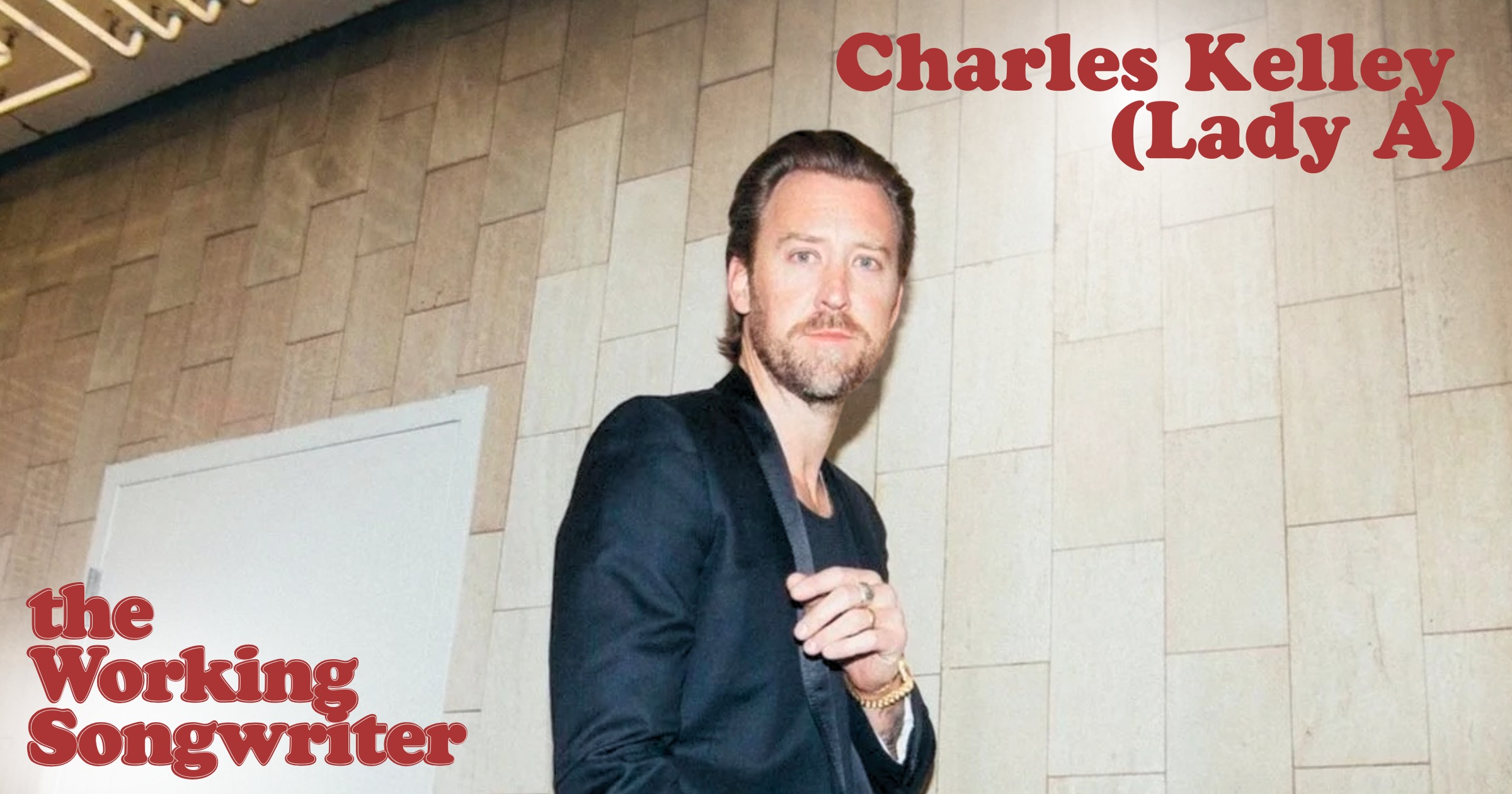
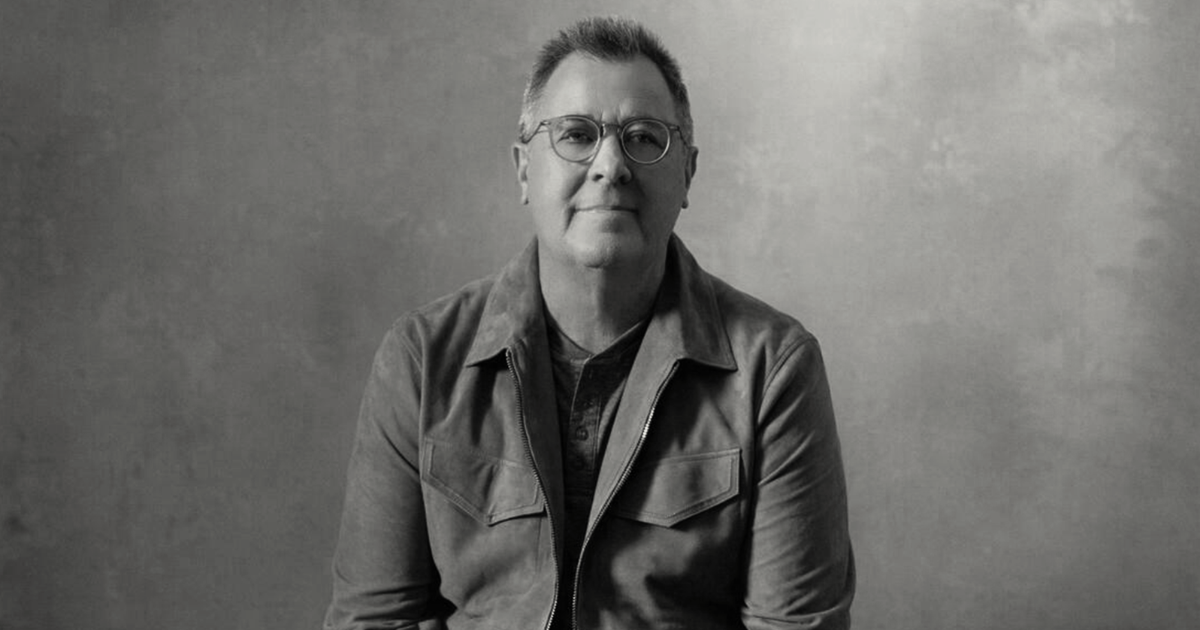
Vince Gill Has Done It All (Part 2)

Poaching from Elvis, well over 50,000,000 Vince Gill fans can’t be wrong.

The longevity Gill discussed in Part 1 of this interview has taken him from bluegrass beginnings to a genre-inclusive 50 years as one of country’s most beloved and sought-after artists.

It’s not always been easy, however. No one, regardless of talent or fan loyalty, is immune from freedom of the keyboard and Gill is no stranger to the highs and lows of public opinion. Mostly it’s outpourings of gratitude from the millions whose lives his music touches. Sometimes it’s claptrap about his now decade-long tenure in the Eagles, or venomous spewing over songs like “March On, March On,” from Secondhand Smoke, the second in his series of retrospective EPs being released monthly.

In Part 2 of his conversation with Good Country, Gill discusses, among other things, the aforementioned decade-long tenure with the Eagles, bullying – with a few choice words for those who inflict it – his scrolling habits, and he indulges us in a rapid-fire round of closing questions.

In the arc of this 50-year project, it is not unnoticed that Hotel California turns 50 this year. Do you have memories of listening to that album as a young man, as you now find yourself onstage playing those songs?

Vince Gill: I had all the Eagles records. We did a lot of their songs in my bluegrass days, and it’s completely surreal. I’m starting my tenth year of being in that band and continuing that legacy of songs. What I value most about getting to play with these guys, what I’ve learned most, is how important songs are – all the notes, all the licks, all the riffs, all that stuff. Getting to relearn that at this stage of life has been pretty profound in the way that I’m trying to write songs. I’m patient in the way I write. I’m patient to wait for it to come – the right words, to not settle on anything, and really edit and work and edit and work and continue to try to be mindful of how important the song is.

What I’m mindful of with the Eagles is the tragedy. More important than the fact that I get to do it is that if Glenn had not passed away, I would not have gotten to do this and I’m grateful I’m the one they called. I met all those guys in, I think, 1980, when I was living [in California]. In a million years, would I have ever thought this would have happened? No. But I am careful of how I couch everything, because it came from something tragic and I am respectful of that.

Glenn was a really good friend of mine, actually, and his son Deacon is doing a great job up there of carrying on his dad’s tradition. I think I’m a great fit for them in the way I play guitar and sing, and sing harmony, and play all the instruments I do. I’m not saying I’m better than anybody else they could have gotten. I’m just saying what I do suits them really well.

Jedd Hughes described you as “one of the greatest band leaders I’ve ever worked with. He’s listening to everything and everyone, always, so you can read his cues pretty easily.” First part of the question: Where did you learn to lead?

Because I’m a musician, I think I come at it different and I operate under the mindset that every note is equal. You’re not more important because you’re the lead singer. You’re not more important because you play the lead solo in the song. I value every note the same. Spending my life in the studio like I have, knowing what you play and do has to sit well and play well with others, you have to listen to everybody else.

It’s amazing what you can accomplish if you don’t care who gets the credit. Sometimes people play only to be noticed and that doesn’t necessarily constitute the right thing for the song. They say in Nashville all the time, “Just serve the song.” That’s all I’ve ever tried to do. If someone’s playing something and doing something, don’t do something to distract it. Do something to enhance it, to support it.

Second part: How does that translate to arrangements and contributions from the musicians you work with?

Great players all listen to each other and you’re dealing with a caliber of musicians that already know what not to do, so you don’t have to waste time going, “Hey, don’t play that, that’s too much, that’s not necessary.” Every time I’m in there playing, I take every note, examine it, and make it move me, make it sit just right.

Once again, if you’re playing with that caliber of people, which I fortunately am – my band is usually made up of a lot of studio musicians and amazing players – they like playing with me because I’m a player, too. I’m not just someone up there singing the songs. So I think I have their respect, and that points you once again towards, “What’s the best thing for the song? What’s the best arrangement idea? What’s the best part to play? What’s the best part not to play?” That’s it in a nutshell.

I’m surrounded by musicians that can all play me under the table, straight up. That’s the truth. I’m grateful to have them, grateful to get to play with them, and it makes for a very democratic spirit. Even in the way we record, I’m not heavy-handed. I’m not telling people what to play. Oftentimes we’ll be in there and they’ll say, “Do you like this?” I go, “I don’t have any idea. I’ve never even heard this song before. I know I wrote it, but we’re in here trying to figure it out, so we’re just going to figure it out all together.”

It creates a great spirit in there if everybody feels like they’re all walking on equal ground, everybody has a right to an opinion, everybody has a right to try something, nobody gets shut down, nobody gets put off. It’s an amazing experience. I don’t ever do demos with my songs. I just write them and then I show them to the guys on the floor. I go, “This is how it goes. Let’s figure it out.” They naturally gravitate towards something great and you just follow them off the cliff! It’s wonderful to watch other people’s gifts.

Earlier you described yourself as “the happiest son of a bitch in the world” who just loves sad songs. In that happiness, however, you have experienced much grief. Your faith is strong. Have you ever lost or questioned it during times of loss?

When I think about faith, I don’t think of it so much [from] the religious point of view. I think faith in humanity – more than Baptist or Methodist, or heaven or hell, or any of that stuff. None of these questions have ever been answered, so to pretend you know the answers seems a little, I don’t know, pretentious almost. That might not be a good word. But, no. It all comes from loving deep. The people I love, I love them deeply. They matter to me.

Music is where I go to grieve. It’s where I go to get through loss. It’s where all those things are. I tell everybody it’s cheaper than therapy. I just write about it.

I never feel the need to fix everything in my life. My relationship with my dad, if it was funky or whatever, I said, “It’s not my place to change him. It’s my job to accept him.” Once I could do that, we had a great relationship. You don’t have to be like me for me to like you. You don’t have to think like I do for me to like you.

I’ve been told more often than not, “Why I like your songs is you are able to say what I wish I could say. You are able to express feelings I have that I don’t know how to.” Maya Angelou sought me out and asked me to come and meet her when she was in Nashville years ago. She told me, “‘Go Rest High’ was a lifesaver to me. It helped me get through the loss of my brother.” Those kinds of things make you go, “I’m going to try to find a way to be emotional about things and not only help myself, but help other people too.” I think if you can portray in a story what someone’s going through, you have a chance to make people feel better.

You can’t name-drop Maya Angelou and just go on to the next question! We need to back up a little bit.

She was speaking at Vanderbilt and wanted to meet. [My wife] Amy [Grant] and I went and afterward we got to go back and say hi. She said, “You mean a lot to me, because your song helped me get through one of the hardest times of my life.” It was a great visit.

You’ve released the fourth EP in your series. Which chapter is this and do you know what’s to follow?

It’s uptempo-y and groove-y, kind of like “Liza Jane” and “One More Last Chance” and some of those fun songs. Each record is, on purpose, similar-driven. The record after this fourth one will be a lot of real country-country stuff, real traditional stuff. The one after that is going to be more like “I Still Believe In You” and “Don’t Let Our Love Start Slippin’ Away,” from a more rocking side. I don’t want to say the word “pop,” but it is. It feels like an Eagles record or a Fleetwood Mac record at times. The inspirations are all in there.

The one after that is real bluesy R&B-ish. Are you hip to Lamont Landers? He’s a soul singer from Alabama. You look at him and go, “There’s no way this voice is coming out of that dude.” He does all these really cool things. I found him and I got him to come and sing on one of my songs that’s coming out later in the year. He’s just such a cool dude. I’ve been trying to turn people on to him.

How did you find him?

Scrolling.

You’re a scroller!

Oh, heavily guilty. I tell Amy it’s my TV now instead of channel surfing. Once in a while you’ll come upon a great young musician, or a great young singer, or a great comedian. There’s so many options, and if you stop on something, it’ll start giving you hundreds of things just like that.

The algorithm gets you.

Yeah, exactly. But it’s entertaining, and I found a couple of people to track down and
have them sing on my record because I like what they do.

What do you scroll?

YouTube, Facebook, Instagram. Most of the stuff is pointless, but there’s a nugget once in a while.

How do you handle the cruelty of social media? It can get to anyone, especially when it’s directed toward you.

It can, if you let it. That’s the life we live in now. You can’t go perform and not have everybody have a camera out and put it up and showing it and seeing it. You have a bad night and everybody’s going to rip you for it. It’s like, “How much negativity can you continue putting out there, saying negative things?” It’s never going to stop, you know that, but it’s still entertaining to read.

I read it to be informed and I don’t mind taking it. I’ve lived with critics being critical of everything I’ve ever done. It comes with the territory. If you’re brave enough to stand up there and speak through a microphone, you know you’re going to get judged to some degree. Once in a while, somebody will say something and I say, “That’s fair. That’s truthful.” Other people will say things and I go, “You don’t even know what the hell you’re talking about, but you have an opinion that’s inflammatory towards me, and you couldn’t be more wrong.” I know that, so it doesn’t have an impact.

Sadly, people have to get on there, the keyboard warriors. They think they finally have a voice. Being able to post and have an opinion, they think that gives them a voice. But in the grand scheme of things, it doesn’t. I know that, so I just take it with a grain of salt and move on.

Perhaps being 68 years old with experience and success makes that easier than for a young person just starting out.

People are still critical of me being in the Eagles. They say, “Now it’s a cover band and you shouldn’t be there,” blah, blah, blah. You know it’s coming, so press on. Say whatever you want. Say it to my face and see what happens to you!

I can’t control any of it. I can control me. I can control my heart, what my heart thinks, what my heart feels. If you hate what I do, that’s okay. A lot of people don’t like what I do. I’m used to that. You’re not going to stop me.

Earlier we talked about hope. I just hope people respond. I don’t mind if they respond negatively. You don’t want that, you’d rather not, but it’s funny how you can get a hundred good reviews on a record and one bad and you only remember the bad one. That’s human nature. It’s not a weakness. It just goes to show how being cruel and negative towards someone has an impact.

I think about the times I was in school and was talked to in a negative way, and how it lasted. I remembered it forever. There was a girl I was in a band with for a little bit. She sang in this choir at the school that was really well thought of, and the choir director told her, “You are wasting your time with that guy and his banjo and bluegrass. He’s a fool.” And I just want to go, “Na-na-na-na-na!” But you remember it. And an English teacher that kicked me out of the class for saying something she didn’t like and painted me a certain way. You remember it.

My own kids, one teacher said to my youngest daughter, “My dog has more manners than you.” Things like that … my hundred-year-old mother is still pissed off about that! She’s still, “I’d like to get my hands on that teacher!” We’ve got a good bit of redneck in us!

I watch my sweet wife take slings and arrows all the time and the way she handles it is so beautiful to watch and so inspiring. It’s helped me do the same thing.

Can you play everything you hear in your head?

Probably. I hope so! It’s funny you brought that up, because being a musician and a singer, people say, “How do you get inspired to sing?” or “How do you get inspired to play?” Well, before I play something, in my head, I’m saying, “How would you sing this?” And when I’m getting ready to sing something, I ask myself, “How would you play this? What kind of rhythm? What kind of phrasing?” All those things.

I think the real difference [between] a good singer and a great singer is the way they phrase. Ray Charles could phrase like nobody’s business. Jerry Lee Lewis, when he sang country songs, could phrase like nobody else. George Jones could phrase like nobody else. You go on and on and look at all the greatest singers, and they’re unique because more so the way they phrased than how many notes they sang.

What is the difference between playing guitar and being a guitarist?

Oh, man. I don’t know if there is. I think it’s the same thing. It all comes from the same heart. It all comes from the same ears. I just play what I think fits. I think that’s what being a great guitarist is – playing what fits.

I saw something the other day that said, “I refuse to name who I think the greatest guitar player is,” and it makes sense to me because there’s no such thing. Everybody goes at it in a different way and has a different spirit about it, has a different way they want to play and statement they want to make. Then it becomes a matter of your preference, of what you like best, that defines what the best guitar player is.

I just like people that are gifted, and people that are musical, and they play what’s in their hearts and what they feel. If you feel it like they do, game over. If you don’t, you move on. Not every great guitar player moves me. It might move you. I think we’re lucky that we can be subjective and not have to all feel the same way about the same things.

Let’s close with a lightning round. Anything goes, whatever comes to mind. An album you wish you had played on.

Hotel California.

A song you wish you had written.

’Till I Gain Control Again” by Rodney Crowell.

A session in which you wish you could have been a fly on the wall.

Together Again” by Buck Owens.

A concert you attended that made your head spin.

Paul McCartney.

A guitar solo you wish you could claim as your own.

Oh, gosh. I might have to go with a Chet Atkins solo, because he’s the first person I ever saw play live when I was a little boy.


Editor’s Note: Check out part one of our Good Country conversation with Vince Gill here.

Want more Good Country? Sign up to receive our monthly email newsletter – and much more music! – direct to your inbox.

Photo Credit: David McClister

Tucker Wetmore Is Buckled Up for the Ride

If you’ve read about Tucker Wetmore or listened to one of his many interviews, chances are the following subjects were lobbed his way: women, whiskey, blondes versus brunettes.

When the “star-maker machinery” that is the business of music collides with media outlets in search of headlines and algorithm rankings, it can make or break a promising new artist by reducing them to a pretty face with a clickbait story angle, the whole time steamrolling over the singer-songwriter at the core.

Tucker Wetmore is keenly aware of this and proceeds with caution. He’s affable enough to play along and astute enough to know the game. Peel back the layers and you’ll find a thoughtful, hard-working artist rooted deeply in faith and family and with a sense of public image versus personal values, carefully monitoring how and what he presents.

With multiple hit singles, award nominations, over a billion streams, product endorsements and campaigns, television appearances, endless interviews, the 2024 breakout Waves on a Sunset EP, and 2025’s unstoppable nineteen-track What Not To, Wetmore is taking it all in with cautious abandon, savoring the wins as they come.

It’s been a long, hard-fought road in a story now told countless times: he grew up in a small town, was raised in the church, brought up by his mother when his father walked out on the family. Music became vital at a young age, athletic prowess and four state titles led him to college, a severe football injury sidelined his career goals. Back home, he again threw himself into music, moved to Nashville in 2020, and pursued his dream.

On January 25, 2026, Wetmore added another victory to his timeline – this one particularly special, as it brought with it a lifetime of memories. He performed the National Anthem at Lumen Field during the halftime show at a Seattle Seahawks game, in front of a stadium filled with cheering fans.

He was still on that high when he spoke with Good Country only days after – and days before the launch of his Brunette World Tour. “It felt like a full circle moment,” he says of the halftime show. “I’ve been to Seahawks games growing up. I’ve been in that stadium, screaming my face off, cheering for the ‘Hawks. But to be on the field and playing my songs in front of thousands and thousands of people was absolutely surreal, especially for something as big as the NFC Championship. I’ve pretty much seen every NFC Championship since I was born. I was super nervous, but we got through it and we didn’t mess up too bad, so it was a good time.”

You have the biggest country debut album from a new artist in 2025. When did you realize that things were really taking off and it was time to “buckle your seatbelt, because this is happening”?

Tucker Wetmore: I’d say even before the album. The first time I felt like that was when Kameron Marlowe was nice enough to bring me on tour. I had one song out and I hadn’t even dropped “Wind Up Missin’ You” yet. I remember getting onstage at that first show and people screaming my songs back to me, singing every word to the songs I had teased [online]. It was absolutely insane. I was like, “I should probably buckle up. This is getting pretty real.” That’s when I knew I might have a chance to do this.

Can you ever be truly prepared for this level of success?

There’s definitely ways to prepare for certain situations, but there’s curveballs thrown at you every single day, so there’s no way to prepare for that. To put it in sports terms, learning how to sit back on the curve, wait for it to cross the plate, swing, and hopefully hit it.

We know about fan reactions to “What Not To,” and people relating to it from the perspective in which you wrote it. Have you also heard from fathers whom that song is hitting as hard because of what they didn’t do?

I’ve heard stories at meet-and-greets, people spending a little extra time telling me about how much that song has helped them cope. But I don’t think I’ve heard anything from fathers having that realization. That’s a touchy subject, and I hope it moves some fathers to want to be better.

All I can do with my music is write what I’m feeling, produce it the way I think it should sound, and put it out to the world for people to do what they will with it. One of my goals with that song was hopefully this changes some viewpoints on some fathers, and hopefully it helps people learn. It’s a “glass half full” kind of song. It’s saying, “Even though these things happened to me in my life, I can learn from this and use everything as a lesson,” instead of, “Oh, poor me.”

Have you ever fallen into that mindset?

I think we’re all human and we all do it. Not in a really long time, though.

I look at life as an opportunity. Whether it’s good or bad, it’s always an opportunity to learn and grow. I don’t [fall into it] so much anymore, but I remember being young and being pretty upset about some of the cards I was dealt. Luckily, my mom’s great and my family’s super supportive, I’ve got the best friends in the world that think the world of me, and I do the same for them. So I’ve got good people around me to keep my head on straight.

You had to grow up early when your dad left. What are some life lessons you took from those years that apply to your life and career now?

Growing up, I had four sisters and a beautiful mother, so it was a lot of women in the house, but it taught me a lot of things and I wouldn’t have changed it for the world.

There’s definitely times where I thought, “It’d be really nice to go out with another male and throw the ball out in the yard.” But looking back at it now, I learned so much about how to care for women, and how to be a provider, at a really young age, even though there wasn’t much I could do back then. Now I’m taking all those lessons and putting them into real life, like providing for my family, taking care of them, making sure they’re good mentally and financially.

A lot of things I learned at a young age are translating into my life now. Down the road, when I do find that special someone, I want kids someday. I want to build a family and do it right. And so I’d say I’m prepared for when that day comes because I know what to do and what not to do.

In an interview with Billboard, you said about music, “It saved me. It helped me. It was my therapy.” Let’s talk about how music helped you and how it continues to do so.

Music is, in my opinion, the best form of therapy. I think it’s God’s gift to us to be able to create and sing along, or dance, or whatever it is, to a tune. Music has shaped my mindset so much. I started playing when I was 10 or 11 years old and it shaped the way I cope with things. Instead of getting angry or upset or sad or frustrated, whatever the emotion is, I sit down at my piano and I just play for 30 minutes to an hour.

Being creative and having that creative mind, it runs fast and it runs 24/7. It’s … not a double-edged sword, but there’s a yin-yang to it. Music is the thing that drives me crazy because my mind can’t shut up and stop. But at the same time, I was in a write yesterday and the energy in the room was so great for four or five hours straight. We were smiling and laughing and creating the song. So music is my escape from what music does to my brain, if that makes any sense. It helps me ease the craziness of my mind.

During those earlier periods, when music, as you said, saved you, how dark was the darkness?

I lean very strongly on my faith, even during the dark times, and we all get them. I’m the happiest man in the world most days, but I still have days where the weight of the world feels like it’s compressing my spine, in a sense. It’s definitely been dark at times, but I lean on faith and I lean on God, and I lean on my music and other people’s music. It’s easy to snap out of when you have those avenues that are so moving to the soul or the mind.

Has there ever been a time when your faith wavered, or when you questioned it?

Yes. In college … it sounds wrong, and I don’t mean it in this way, but I kind of put my faith on the back burner. I was focusing on other things instead of the most important thing. I was playing football, I was partying a lot with my buddies, I was drinking every weekend to escape whatever it is. I still drink, but I do it with a solid conscience and it’s more celebratory now. There’s a fine line of focusing on worldly things and keeping your eye on the bigger picture of faith and the blessings that God has for us, because there’s so many.

You are giving a portion of ticket sales from this tour to Face The Fight, supporting suicide prevention and mental health treatment for veterans. Why is this the organization you selected to promote and help?

The first time meeting them, I turned to my manager and I was like, “I want a part of this. Let’s find a way to do something.” We put our minds together and it was, “What if we do ticket sales?” I was like, “Yes, a hundred percent.” It’s a huge thing for me because I’ve got a lot of veterans in my family, a lot of men that served and that have given their life on the battlefield.

My grandpa was like my father figure a lot growing up. He ended up taking his life five years ago. He was a very decorated veteran and one of the best people I’ve ever met, but even though it was so many years later, he couldn’t win that battle in his mind.

I think it’s super important to not just shine a light on it, these people that have given so much for our country and the people in it. It is such a selfless act, especially in the heat of war, when you’re fighting for people that you don’t even know, and doing things that no human should do, in my opinion. And then to come home, and 20 or 30 years down the road you’re still thinking about it, and still in that mental space of, “I can’t escape my mind.”

What [Face The Fight] is doing is amazing. It’s a blessing to be a part of. I think if my grandpa had an avenue like that, or knew of an avenue like that, maybe he’d still be here.

In an interview or podcast, you mentioned that you read the comments–

Sometimes.

You must have a really thick skin, because that can wear a person down.

There’s a lot of keyboard warriors out there. I can read the worst comment in the world and it doesn’t get under my skin at all. At the end of the day, I know who I am. The irony behind it is most of the people saying heinous and nasty things online have never created a song. They’ve never sung a tune. They’ve never sat in a room at 3 a.m. because they can’t sleep and put all their feelings on a piece of paper and tried to put a melody behind it. They don’t get it. They see things at surface level. I’m not going to bash on them or say it’s their fault for that. There’s irony behind it and that’s all I take it as. It’s funny to me. It’s almost comical at times.

@tuckerwetmore This one is getting loud live.. #songofthesummer ♬ Brunette – Tuck

I heard you use the words “build your brand” during a podcast. There’s a lot of image in this industry: wear the tight jeans, pose with your shirt up – you know what I’m talking about. How do you make sure this doesn’t overshadow the craft? As a new artist, do you have the autonomy to say no, to not answer a question, to stop an interview, to not want to take this picture?

While building a brand, and while creating something that is larger than yourself, it is more important to say no than it is to say yes. I definitely have the autonomy of saying no, and I do say no to a lot of things that come across the table. It’s saying yes to the correct things that align with not just the goal of what we’re trying to build, or the pillars that we are building it on, but morally. I account for my faith in pretty much all the decisions I make.

If I could give advice to any artist coming up – and I’m still making my way there – my biggest piece of advice is, “Say no to things that don’t feel right or don’t make you look like you.” I think I’ve done that pretty decently. At the beginning it’s really hard to say no to things, because you want every opportunity there is. But now I’m saying no to a lot more, saying yes to the correct things, and trusting my people. They know who I am and what we all want to build together, and it makes it a little easier.

Earlier you mentioned people reacting to song teasers. Before this career explosion, was there pressure to keep up when “everyone” is teasing songs on social media and the algorithm is bombarding people? It can turn into artists chasing numbers, which can also affect your mental health. How did you ride that storm without falling victim to it?

The grace of God, honestly. That’s a tough thing. It’s easy to compare yourself to others, based on a numerical scale of, “This got a million views, and I just posted one that’s got 150,000, it’s not being shared.” It’s very easy to get into that comparison mindset, but I do think it’s important to keep posting your stuff. Luckily, I’m getting to the point where I don’t have to post all the time. Posting is one of the most taxing things to my brain. I can’t stand just sitting there and making TikToks or taking photos or whatnot.

I realize the weight that a viral video can hold to your career and to a certain song or a project. It’s an easy way for millions of people to engage with what you’re trying to create. It’s a great tool. That’s the word I’ll use for it: social media is a tool. Some people idolize it and can’t go through their day without it. I look at it as a tool for people to share my music and hear my music and get excited about the things I’m trying to do.

We can’t do this without talking about your mother. She is such an integral part of your life and your career. Without her support, how different would your trajectory have been?

I don’t think there would be any trajectory at all, honestly. After I got injured playing football and dropped out of college, I was living back home. I remember having that conversation with her. I was like, “Mom, I really want to chase this music thing.” It was like a sigh of relief from her, in a sense. Her shoulders went down, she took a deep breath, she goes, “Finally. Finally. I’ve been telling you this for years now.”

She helped me pack up all my stuff and move, and she supported me financially the first couple years of me moving to Nashville. I would be living on the street if it weren’t for her – metaphorically living on the street, because she would never let me do that. She believed in me before I even had good songs. She believed in my work ethic and my mind and my creativity. One of the biggest blessings God has given me is a mother who cares and wants to see her kids succeed in whatever dream they have.

And now she’s doing podcasts and talking about your childhood.

Yeah. Somebody needs to rein her back a little bit!

You love being on the lake. Is water also a form of therapy for you?

Oh, a hundred percent. I grew up in a super small town, Kalama, Washington. Because it’s built up on a hill, pretty much wherever you are, you can see the Columbia River. I spent so much time on that river, or on the Kalama River, or at the lakes surrounding. I feel happiest when I’m at the ocean or at the islands.

I’ve got a lake house in Nashville and it’s a great escape for me to go back home and be able to sit there and look at the water. It helps not just my creative mind, but [also] my mental health. Another thing God has given us as natural therapy is the beauty of a body of water. It’s the most simple thing in the world, but I do not take it for granted.

Is it a spiritual place for you as well, a natural church?

Yeah. Anything can be a church, as long as you’ve got the spirit in it!

What’s on your heart as you’re getting ready for this tour?

Excitement. It’s been a couple months since I’ve toured and I’m itching and eager to get back to it. I’ve had a great break. I’ve had a very creative break. I finished writing my second album yesterday. Obviously, things change and I get new thoughts or whatever, but right now I feel pretty confident in the songs we got, and I’m excited to get back on the road and maybe tease or play some of these new ones and see how people like them.

And I’m excited to just be on the road. I feel most alive when I’m in the craziness of it all. It does get taxing at times, but it’s truly a drug to not just me, but pretty much all my artist buddies. It’s a feeling you can’t really explain, getting up on a stage in front of thousands and having people scream your creations back to you. It’s the coolest thing in the world. I’m excited to see the fans and be with my band, my crew, and my team. It’s a family that we’ve built, and it’s going to be cool. I’m excited.

Since you brought it up, before we close, what can you tell us about the next album?

It is sonically one of the coolest things I’ve heard in a long time. I don’t want to give too much away. I’ve been doing a lot of thinking about what I want this next record to be for the last year already. I think about what I get in my truck and listen to, and I’m kind of an older soul. So it’s very ‘70s-influenced and early ‘80s, with the guitar tones and drums and weird, synth-y sounding steel guitar licks. It’s really cool and it’s fresh, and I don’t think anybody’s really doing it right now, which I’m excited about but which is also scary, because I don’t know how people are going to feel about it because it is different.

I was thinking about this yesterday, actually: “Proving Me Right” is the perfect bridge into this next chapter, sonically. It’s not too far leaning over there, but it’s still got the old tendencies in it. If you were to listen to anything that gets you excited about this next record, I’d say “Proving Me Right” is a great start.


Want more Good Country? Sign up to receive our monthly email newsletter – and much more music! – direct to your inbox.

Photo Credit: Chase Foster

An Opry Celebration of the O Brother, Where Art Thou? Soundtrack

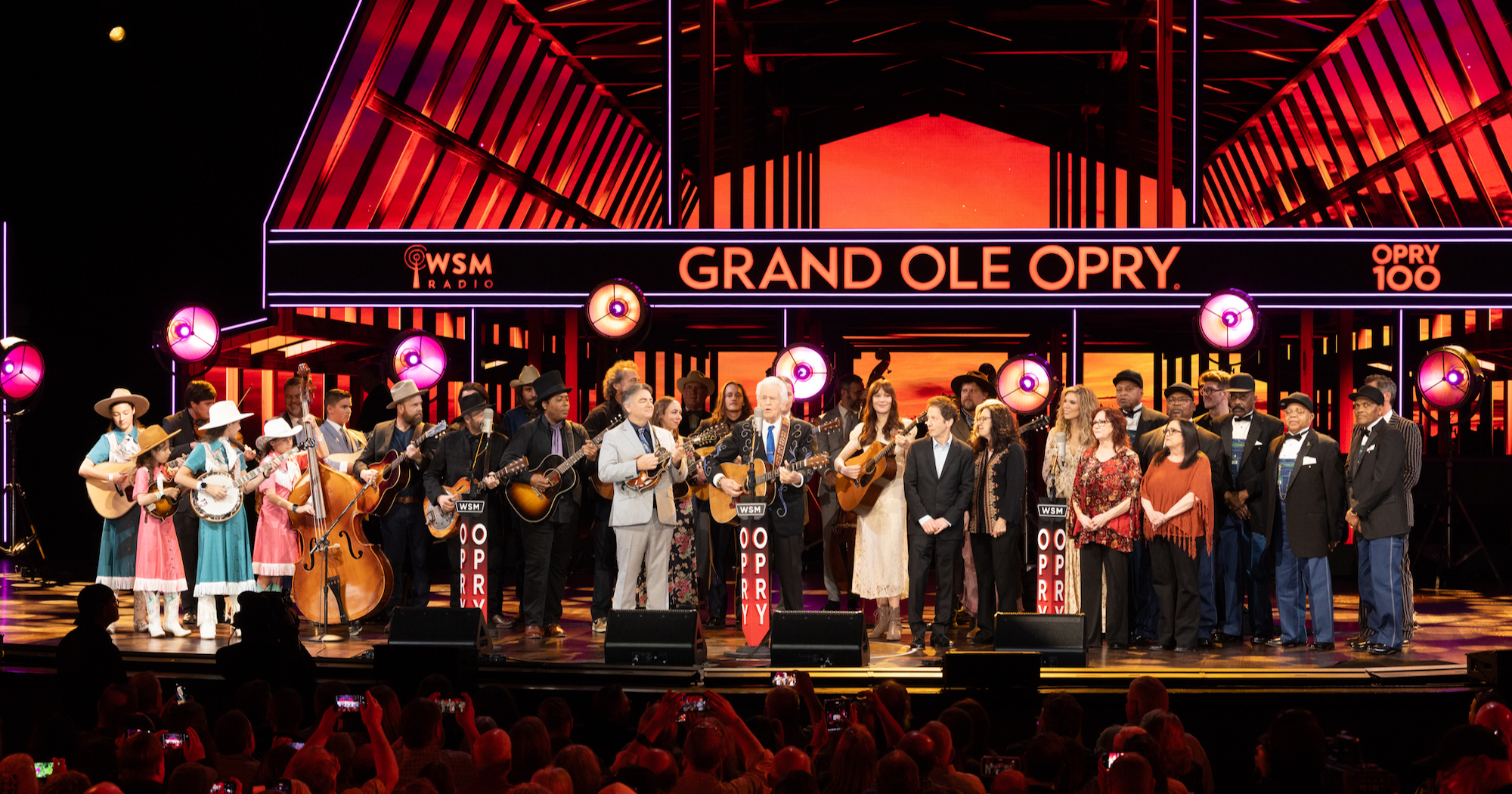
In an all-star acoustic tribute, the timeless music of O Brother, Where Art Thou? rambled across the Grand Ole Opry airwaves for a 25th anniversary celebration on Saturday, February 28.

In some ways, this night in Nashville felt different from a typical Opry show – no drum kit, no square dancers, and not a lot of commercials. On the other hand, it would be hard to find a more suitable place to stage a salute to O Brother than on the world’s longest-running radio show.

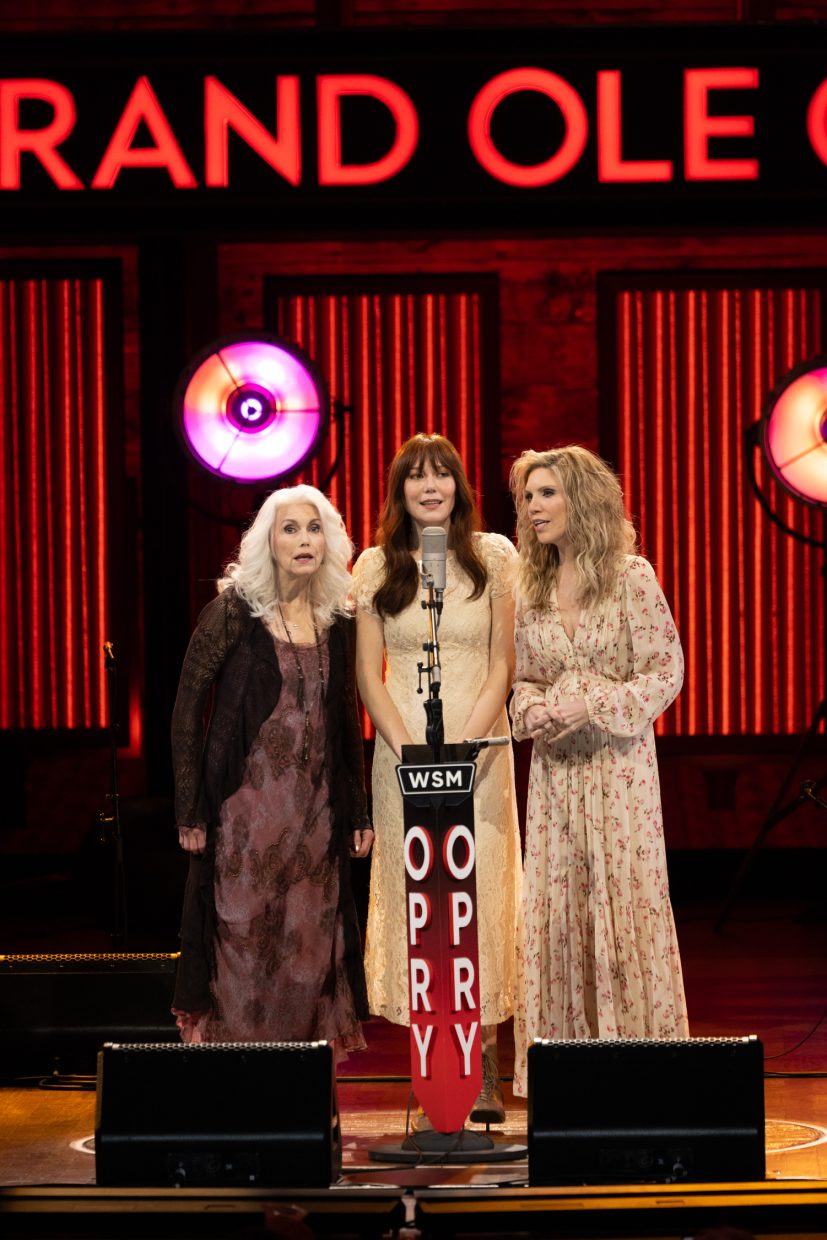
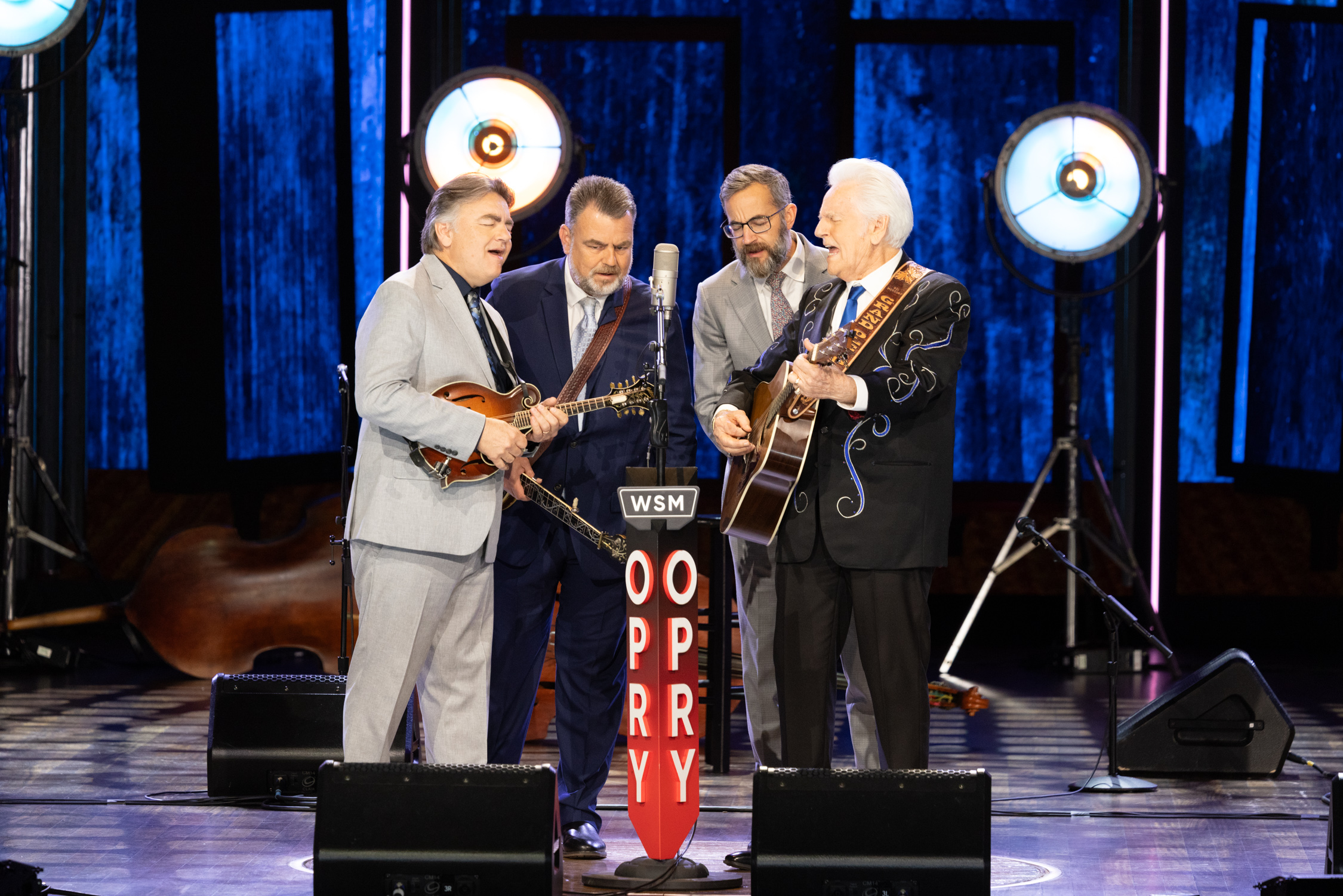
The GRAMMY-winning, 8-times platinum soundtrack was performed in its entirety by Opry stars such Alison Krauss, Emmylou Harris, Del McCoury, Old Crow Medicine Show, and the Whites, as well as guest performers like the Alaskan Sunnyside Sisters, the Fairfield Four, the Fisk Jubilee Singers, and Colin Linden alongside contemporary masters like Sarah Jarosz, Billy Strings, and Molly Tuttle. (To put the time frame in perspective, Jarosz was 9 years old when the soundtrack was released, Strings was 8, and Tuttle was 7.)

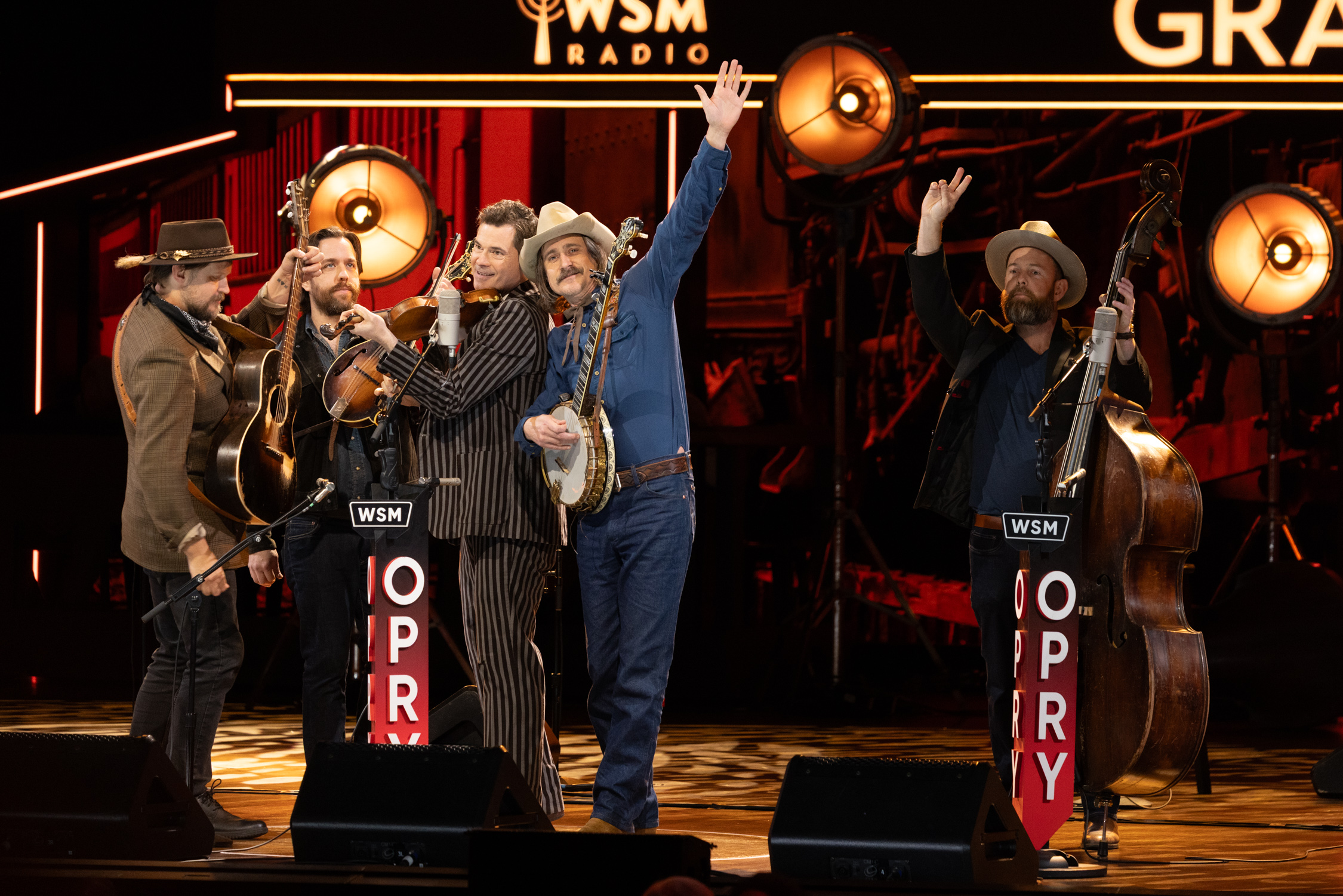
Old Crow Medicine Show perform during the Opry’s tribute to ‘O Brother, Where Art Thou?’

In addition, Chris Thomas King and Tim Blake Nelson also reprised their performances from the film, while the A-list house band was composed of Mike Compton on mandolin, Dennis Crouch on bass, Jerry Douglas on Dobro, Stuart Duncan on fiddle. And what O Brother tribute would be complete without Dan Tyminski delivering “I Am a Man of Constant Sorrow”?

As a bonus selection not included on the landmark collection, Krauss and the Fairfield Four opened the special evening with a lively rendition of “Every Time I Feel the Spirit,” which immediately immersed the audience in that same spirit. After Krauss stepped away, the Fairfield Four performed the soundtrack’s original opener, “Po’ Lazarus,” accompanied only by hand claps. Old Crow Medicine Show roused the crowd with “Big Rock Candy Mountain,” an enthusiastic choice that fit their high-energy demeanor. Bandleader Ketch Secor also co-hosted the event alongside Opry announcers Bill Cody and Mike Terry.

Dan Tyminski sings “I Am a Man of Constant Sorrow” with the evening’s house band.

Backed by the house band, Jarosz engaged the audience to sing along with a perennial favorite, “You Are My Sunshine,” and the sold-out Opry House was happy to oblige. Krauss returned with the Fisk Jubilee Singers for a sterling performance of “Down in the River to Pray,” where the audience sat almost perfectly still in reverent silence. Following the song, Krauss was presented with a commemorative scarf designed by the famed clothier Manuel; all Opry members are receiving the scarf as part of the Opry 100 celebration. The house band then shared an instrumental version of “A Man of Constant Sorrow,” which was a nice touch referencing the handful of variations of the song on the soundtrack.

That soundtrack practically came to life with Colin Linden and Chris Thomas King’s “Hard Time Killing Floor Blues” and The Whites’ “Keep on the Sunny Side.” Jarosz  on mandocello and Molly Tuttle on guitar teamed with the house band for a wonderful take on “I’ll Fly Away.” Emmylou Harris and Alison Krauss then stood on either side of Tuttle for a trio rendering of “Nobody But the Baby.” (Gillian Welch, who sang with Harris and Krauss on the original album, was unable to participate in the show.)

Emmylou Harris and Alison Krauss, both of whom appeared on the soundtrack, are joined by Molly Tuttle for an a capella rendition of “Nobody But the Baby.”

Folks, that’s only the first half!

After decades away from the spotlight, the Peasall Sisters returned to the stage to introduce “In the Highways,” the song they recorded as children; on this night, it was sung by an endearing kid quartet – and viral internet sensations – the Alaskan Sunnyside Sisters. Molly Tuttle returned for the emotional “I Am Weary (Let Me Rest),” which led into bluegrass phenomenon Billy Strings singing “Wild Bill Jones,” which appeared on the 2000 O Brother concert album, Down From the Mountain. Strings then welcomed Dan Tyminski for a duet of “O Death,” which was sung by the late Doctor Ralph Stanley on the soundtrack. (Incidentally, Stanley joined the Opry cast the same year the O Brother soundtrack was released on Lost Highway Records. The newly resurrected label co-presented the show with the album’s award-winning producer, T Bone Burnett.)

Billy Strings takes the stage to sing “Wild Bill Jones” with the house band.

The audience especially loved seeing and hearing one of the film’s stars, Tim Blake Nelson, revive “In the Jailhouse Now” on the Opry stage. Tyminski (who voiced George Clooney’s singing in the film) naturally brought the house down with “I Am a Man of Constant Sorrow,” then Old Crow Medicine Show offered the vivacious “Indian War Whoop,” recorded by John Hartford for the original project. The Fairfield Four also returned to the stage to sing “Lonesome Valley” just ahead of Del McCoury Band’s performance of “Get Down on Your Knees and Pray.” (That one’s not in the film, but it was a terrific addition.)

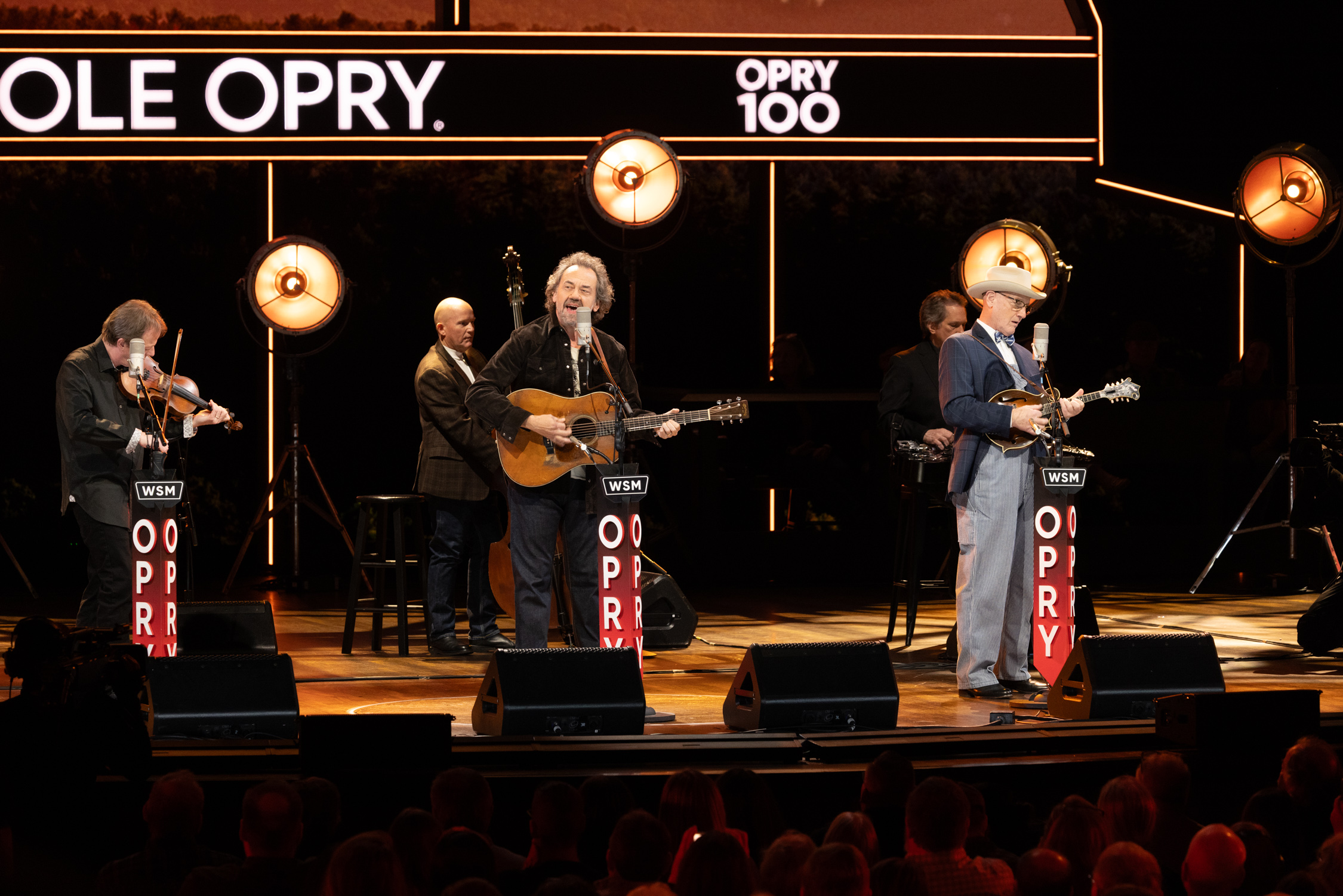
The Del McCoury Band sing “Get Down on Your Knees and Pray” before leading a sing along with the entire cast of performers.

In his brief remarks, Burnett took a moment during a brief speech to acknowledge Denise Stiff, a visionary Nashville manager who recruited many of the musicians for the soundtrack back in the day. But of course, it wouldn’t be a tribute without everyone coming back on stage and singing at the end – in this case, “Angel Band” and a reprise of “I’ll Fly Away.”

Twenty-five years ago, the O Brother soundtrack brought old-time and bluegrass music into the national spotlight. This long-awaited encore underscored the staying power of this classic album.


Photo Credit: All photos by Chris Hollo for the Grand Ole Opry.

Lead Image: The entire cast of the Opry’s O Brother, Where Art Thou? tribute show take the stage to sing “Angel Band” and “I’ll Fly Away” to conclude the evening.

An Oral History of the Infamous Stringdusters

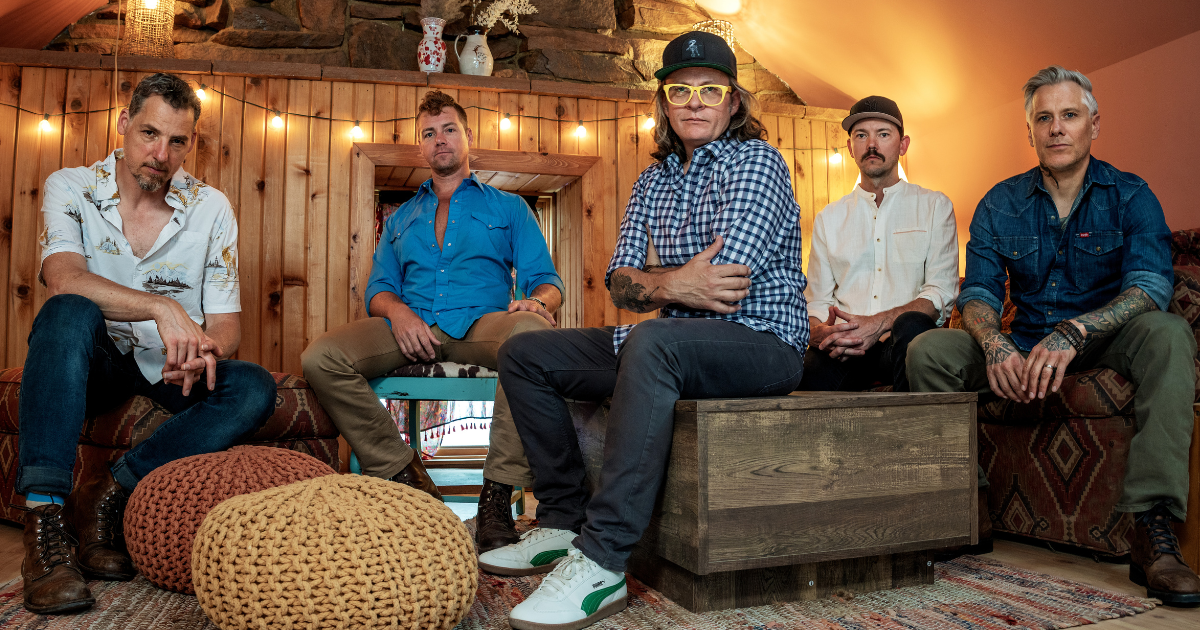
BGS was founded 14 years ago and from the very beginning, we’ve been covering, collaborating with, and cheering on the Infamous Stringdusters. Our first posts about the group published to our site in 2013 – not even a year after our launch – spotlighting banjoist Chris Pandolfi’s Bluegrass Manifesto, the band’s only-four-years-old marquee event The Festy Experience, and their most recent album at that time, Silver Sky. Now, in 2026, they’re not only our Artist of the Month for the second time, they’ll be headlining our stage at Bourbon & Beyond this September, too. But, our love for the band – and the many partnerships we’ve built together – began, like most, back in 2007 with their now iconic debut album Fork in the Road and a banner year for the group at IBMA’s World of Bluegrass and the IBMA Awards.

Back then, when the Stringdusters took home trophies for Song of the Year (“Fork in the Road”), New Artist of the Year, and Album of the Year, perhaps no one – not even the band themselves – would have predicted the seismic, existential impact they would end up having on bluegrass and the as-yet-unnamed subgenre thereof: jamgrass. Twenty years on, the Stringdusters celebrate their duo of decades with 20/20, an album of 20 songs celebrating 20 years of defining and redefining bluegrass and jamgrass.

For our Artist of the Month coverage, BGS and Good Country co-founder Amy Reitnouer Jacobs sat down with all five members the Infamous Stringdusters for a wide-ranging conversation of a band that epitomizes bluegrass, jamgrass, and psychedelic string band music in the 2000s.

First of all, again, I wanna just thank you for doing this. We are so thrilled to have you guys as our Artist of the Month and congratulations on 20 years of the ‘Dusters.

I wanna start this with Panda actually, and this is not gonna be just an oral history interview, but I think, looking back on 20 years, it feels appropriate to start from the beginning. So let’s talk about origins and start back at Berklee [College of Music], if that’s cool. Tell us a little bit about the beginning of the band.

Chris Pandolfi: I arrived at Berklee in 2001, which was the year that Andy [Hall] had just left Boston for Nashville. I first met Critter [Chris Eldridge] through Zach Hickman, who was playing in Josh Ritter’s band. He went to Oberlin [University] with Critter. We got together and we were playing, and Zach had some free studio time at a spot in New Hampshire and we were gonna go record some music, just for fun. Our careers were not underway in any way, shape, or form. We didn’t have any grand designs here. We were just gonna go record some music and have some fun.

Then, on the precipice of this recording, we went down to the Cantab Lounge to meet this guy named Andy Hall. We went there and–

Andy Hall: [It was] The Plough and Stars.

CP: The Plough and Stars! Andy was playing–

AH: I don’t remember exactly if I was playing or if you were playing.

CP: And the next day we were in New Hampshire at this recording studio and we made this EP called Stable Horse. Essentially, Andy was already living in Nashville, so around that same time, he had met Jeremy [Garrett] and they were playing together. It was that recording session that got the wheels turning for me. Like, “Oh, we could do this thing with other people our age,” and not fall into the very sort of common thing in bluegrass where you get hired by someone else and you’re essentially a sideman.

We were recording and teeing things up, and we all had other gigs at that time. It was me, Andy, Jesse [Cobb], Critter, and Alan Bartram from the Del McCoury Band. But that was my earliest memory of “We could start a band with our contemporaries.” And Zach Hickman, I give him credit, he facilitated that.

I don’t even think we had the name “Stringdusters” yet. Alan got the offer to go play with Del McCoury and we had met Travis [Book] at IBMA, so we called him up and he came and lived in my driveway for a few months. True story.

Travis Book: You can really get away with a lot if you park your car in someone’s driveway and then try to stay outta the way.

So Andy and Jeremy, what are the origins of you guys starting to play together?

AH: Was it Ronnie Bowman? Was that the first time? I was in Ronnie Bowman’s band and the fiddle player and Ronnie had a bit of a falling out while we were on the road and–

CP: We were all at a festival, so we scooped up Jeremy and he got on the bus with Ronnie Bowman!

Jeremy Garrett: Yeah, I definitely knew about you two beforehand. And, of course, in bluegrass everyone’s a fan of Ronnie Bowman. He’s such a crooner and such a cool cat. I definitely had plenty of experience before, but this was like one of my first major Nashville gigs. And it was eye-opening very quickly that, as a sideman, it’s pretty limiting.

The conversations I remember started happening pretty fast in the back rooms: “Hey, let’s maybe consider doing something of our own. Long-term, how can we make this happen?” But it was just like whispers. I remember going to IBMA – that’s where I met Chris Pandolfi and he blew me away with his melodic banjo playing style and this futuristic sound that he had. I’d really never played with that before, because I came from a very traditional side of bluegrass.

CP: Didn’t I give you a copy of my record? I remember you telling me that.

JG: Yeah. And I listened to that record all the way home from IBMA – I’ll never forget – and my dad was riding with me. I was just like, “This guy’s awesome.” Overall, it felt like all of us coming together through our connection in Nashville and these music parties that used to happen on the reg. I don’t know if they still do. We would have huge jam sessions, especially at Panda’s Pad. There’d be 20-30 people all gathered up in somebody’s backyard, picking. And it was almost every night. So you can’t help but get tight and start seeing the writing on the wall, the possibilities, through those kind of connections.

CP: These days in Nashville are so different. It’s so much “cooler” now. There’s so many young people playing bluegrass and when you hear about a lot of the socializing in Nashville, it’s a lot of young musicians. When we were having these parties, it was a real diverse mix of ages. You had Sam Bush there, you had Scott Vestal, you had Ronnie Bowman, and the McCourys. We were the young cats around and there wasn’t a very vibrant young scene. We were intermingling with a lot of the elder statesmen of bluegrass.

That’s a really special time in Nashville. I can remember that’s when I started hanging out in town and there was like a magic in the air. That intergenerational mix doesn’t organically seem to be happening as much, but maybe it is and I’m just not invited to parties anymore.

So Travis, were you coming to Nashville from Colorado? Where were you before then?

TB: Yeah, I was living in Durango and Anders Beck from Greensky [Bluegrass] and I started playing music together in maybe 2002. There were gigs and we were learning this music and then Andy Thorn and some other friends – that’s Leftover Salmon – they just showed up in a music store one day. Andy was probably 19 on college break and we hung out with him for three days straight. When he went back to North Carolina, we called him up. We’re like, “Dude, you gotta come back! We gotta make a band! We’ll play RockyGrass, you’ll win the banjo contest, we’ll win the band contest.” Anders and I were like, “We can see the future, but we need Andy Thorn,” because he was such a compelling musician and just such a natural. Still is.

We started this band called the Broke Mountain Bluegrass Band with Jon Stickley, who’s also a visionary in our music. We were all picking and almost entering that same path as Leftover Salmon or Yonder [Mountain String Band]. We were already doing this like hippie bro band, just loving playing music and camping and playing festivals and going to hot springs and just fucking around. It was brilliant.

But then we went to IBMA, which at the time was the best way to show off your band and position yourself in the context of the larger [bluegrass] world. Try to get some gigs and go party your absolute brains out for a week. We were pretty rough around the edges, but one night I stepped off an elevator and Chris Eldridge came around the corner. [He] was like, “We need a bass player for this jam. Will you come jam with us?” I went into this little alcove and it was essentially the Stringdusters. It was Critter and Pandolfi and Andy Hall and Jeremy and Jesse Brock. I was just hanging out, holding on for dear life. I’m partying, I have a backpack full of beer, I have no shoes on, and I looked around and all my band mates were just there sitting along the hallway floor listening to the jam.

Andy’s partner at the time, Janice, said, ” Do you ever think about moving to Nashville?” I just laughed. Absolutely not. But I had fixed myself in their mind and once they exhausted all the possibilities of people who could play bass in Nashville – at least this is my understanding – they dug into their collective consciousness and called me up to audition. They’re like, “We think you’re the guy. When can you move to Nashville?” So I went out there to work on Fork in the Road that summer. What was this, 2004? Am I right, guys?

AH: I think that would’ve been 2005.

TB: Yeah, you’re right. 2005. [I] moved out there in September and lived in this guy’s driveway. It was kinda wild.

Falco, I promise we’re getting to you. We’re almost there!

In pretty quick succession though, you’ve got the core crew with Critter and Jesse [Cobb] at that time, you record the album, and get signed to Sugar Hill. And then things just start happening! Can you walk me through the time between recording and the IBMA Awards in ’07?

CP: There’s a lot of extremely disorganized touring. We’re driving around in two cars. I still have the notebook from the gigs – we were getting paid a few hundred bucks a night, maybe a thousand on a good night. Doing everything that we could.

We didn’t have grand designs on anything. The IBMA Awards was a really big moment for our band. Thinking back, it was a moment of legitimacy, of just getting [to] one of the hardest things as a band, which is the collective feeling that this thing is gonna stick together. That’s the peril of starting a band with players who you think are really good: at any time anyone could get hired away for something. But we were playing gigs, we were loving life, we were working on our music, and we were poor as could possibly be. I just remember the IBMA Awards as a big moment of solidity, of that feeling like we could really do this, we could really be in this for a long time.

TB: There was that first summer we had a couple of big anchor gigs, but a lot of it was really just driving around and killing time in between these anchors and hoping that we could reach the right audiences. I think that the big bluegrass scene was ripe for some young pickers who were taking it seriously and committed to each other.

JG: Yeah, getting gas in the tank right off the bat was huge for us, that’s for sure. And we spent a lot of time in between those gigs just going to be in the wilderness and spending time together. I don’t know, for lack of a better way of explaining it, [we were] bonding like a band.

But man, when you’re a real band and you’re not just like a frontman or whatever, you’ve got a real synergy with other guys in a group. It’s special. And I feel like a lot of what brought us together and [what] makes us as tight as we are now was those off times where we were discovering our lives and just doing cool stuff like that. Creating this thing together.

I do need to know who came up with the name. Where did the name come from?

CP: Ben Eldridge.

AH: Yeah!

CP: We were working with a list of pretty mediocre names and Ben came up with “Stringdusters.” After 20 years, I can say there’s a lot of bad band names out there, but the Stringdusters – I think it’s a cool band name and it suits us.

All right. Now we bring Falco into the mix. So how did you get mixed up in all this? Tell us your origin story.

Andy Falco: So, Critter fell off the back of a truck and I got picked up – no! What happened was, I’d known Pandolfi and Andy Hall from the Northeast bluegrass scene. I was playing with this guy, Buddy Miriam, who’s on Long Island, and who actually was friends with Bill Monroe because he got struck by lightning at the Berkshire Mountain Bluegrass Festival, which of course was Grey Fox. And Monroe found out about it and reached out and they became friends. So he learned a lot of mandolin directly from Monroe.

My brother was getting into bluegrass and was like, “You should come to this bluegrass festival.” I went up there and saw Doc Watson and really got into playing bluegrass. ​I moved to Nashville maybe a year after Panda and Critter did. Andy Hall was already playing in Dolly Parton’s band. And I had met Jeremy, actually by accident, at SPBGMA. My first time in Nashville, some guy came up to me and said, “Hey man, how are you doing? How’s everything been?” I was like, “Great. This is my first time in Nashville. Everything’s been great.” Then he stopped and said, “Man, I thought you were someone else.” And he says, “Come meet my son.” That was Jeremy’s dad, and that’s the first time I met Jeremy.

When I moved to Nashville, these guys were starting the band. I was watching them doing their sets at IBMA. It was killer. Then when Critter left, they asked if I’d be in. I wasn’t gonna start until September and one month later was the IBMA Awards. So I just joined the band and here they are, winning all these awards.

JG: I would like to say, I’ll never forget your first gig. You killed it harder than literally anybody I’ve ever worked with to this day. Absolutely stepped into the role and blew it away. And it was very obvious at that moment that he was the right man for the job, for the Stringdusters.

AF: I had big shoes to fill with Critter – and Critter and I were friends. In fact, I knew Critter before I met anybody in the Stringdusters. We met at seven o’clock in the morning on the last day of IBMA, when we’d pick all night and our door was open. And here comes Critter with his guitar.

CP: Critter introduced us.

AF: Yeah.

CP: He said to me, “Do you want to go hear the fastest guitar player alive?” And I said yes.

AF: I worked with Critter, too. Critter was very supportive of coming over when I was preparing to join the band, showing me the parts that he played on the record. So I had a really good foundation, thanks to Critter, of what he had done. Then I was able to put my stamp on it.

So what is that pivot then? You all mentioned the kind of shift that occurred, moving you away from traditional bluegrass and more towards jamgrass. How did you find your own sound? What was the decision to pivot?

AH: I remember a specific show where we decided we were gonna try and extend some [of the] set. I think it was the Animus Theater in Durango and it was a Colorado bluegrass crowd, which was more of a dancing crowd. They were used to more diverse sounds. I don’t remember, we were just like, “Let’s try and put a jam in this one song,” or whatever. So we’re playing, we’re jamming, and we’re extending whatever song it was. The whole crowd was just dancing. The energy was feeding back and forth and it was like, “Whoa! This is so much more exciting,” in contrast to everyone sitting silently and clapping in between songs. We made a choice one night and we saw the crowd just light up and dance and lose themselves in the music, and that fed our energy.

CP: Also, we were into that stuff.

AH: Yeah.

CP: But we hadn’t really made that connection yet. The real moment that I remember is we opened three shows for Railroad Earth. We played the 9:30 Club. We played Theater of the Living Arts and, I think, and we played Burg Williamsburg, when our van broke down and we showed up last minute. Those are the gigs that I referenced in the Bluegrass Manifesto. When I did the IBMA keynote that grew out of that, it really referenced those. I remember a few shows, too, where we would come off stage and we’re like, “Oh my god, that jam. Let’s do that again.”

We played these shows with Railroad Earth and it connected some dots that didn’t connect automatically, even though we had Grateful Dead, Phish, playing all the time. We were really coming from that IBMA buzz and awards. And, like anything, it took some time to discover, [it took] some experience. That was when some real change started happening around our business. Then the music really followed that trend.

JG: I’ll say, you guys, don’t forget about the Zeltfestivals. They were beyond anything that I personally had ever experienced. We went out and these people were going absolutely bonkers for our music – they had barricades out there and stuff. I’d never seen any of that at a bluegrass show. To me, that was fire in the tank.

AF: I think that also a big part of that is just, I know for myself, not growing up playing bluegrass music and then getting turned onto it by Garcia and Grisman and people like that. But I think it was just like when I started learning bluegrass. There’s a way that you have to do it and then, finally, you get to a certain point where all these dots are being connected, where you start to let these other influences come out, because you start to get more comfortable as a band. You start to allow that like, “Yeah, why can’t we do it? Why can’t we mix these things?” Even just as individual players. Why can’t you play this style? Blending these kind of jammy elements and these rock elements and then seeing how it worked.

You all have such varied individual projects and influences. Do you still think that you’re shifting your sound? What are you listening to and is that influencing what you’re doing?

AH: It’s definitely influencing what we’re doing. I think, to Falco’s point, I feel like I’m allowing [in] more and more of my original influences that I grew up with. I was a metal dude in high school. I think the older I get, the more I enjoy letting in who I am.

AF: Getting away from the “that ain’t a part of nothing” bullshit, right? Like, what? Who’s to say, right?

JG: Yeah, at the end of the day it’s art and you gotta let that lead itself, if you’re a true artist. Otherwise, you’re doing a preservation society kind of thing in the bluegrass world. For the longest time, I felt we were all paying homage to this awesome music, but we’re not letting it breathe like it should sometimes. It’s very fun to be an artist and be able to have the permission to just kinda let it flow, which is what we let ourselves do. We let the art dictate what we did, and we were true to ourselves in that way. That was something that served us very well. Still does.

You all live in different places now. I know the band is not as centered in Nashville as it used to be, but you did talk about the off-times and how that bonded the group early on. How do you stay bonded as a band now? How have things shifted? Being a decentralized band, how has the writing recording process changed for y’all over the last 20 years?

JG: I think that’s an important point. Yes, we’ve changed a lot over the years, but we’ve been able to stay tight because of those early formative years when we were all just broke traveling around in a band. I didn’t have any brothers growing up, but these guys are definitely my brothers and they know more about me than anybody else in this world. To allow each one of us to have the freedom to live where we wanna live and come together the way that we want to come together, I think that has been really one of the main things that have kept us together.

Over the years we’ve all developed little side things outside of the band. I think that’s been healthy. For me, I like to do my own solo music, music that I write and I like to perform – and stuff that wouldn’t necessarily fit within the confines of the Stringdusters. But I still want to get that art out there. We continue to challenge each other. Music can be competitive in a not-healthy way. But I feel like we do it in a healthy way, in the sense that we drive each other to just be the best that we can be at what we do.

CP: I got married last fall and in the run up to my wedding, one of my aunts asked me, “Are all your bandmates gonna be there?” In my mind I had this moment where I was like, “Are my band mates gonna be there?” You might as well ask me if my family is gonna be there! It’s just life at this point. After 20 years, it’s cool to observe the level to which you become each other’s family.

That’s the definition of community and you don’t think about these things when you’re going into this life, but there are some incredible unintended consequences. That informs the music and that informs all the life experiences too.

And here we are, 20 years later. That’s pretty cool.


Explore more of our Artist of the Month coverage of the Infamous Stringdusters here.

Photo Credit: Daniel Milchev

Steve Poltz Loves a Tangent

Steve Poltz has built a career by following each song wherever it wants to go. Sometimes that means a meticulously fingerpicked melody. Sometimes it means a story that veers off into comedy, confession, or absurdity before circling back to the heart of the matter. That tangential nature – equal parts songwriter, raconteur, and road-tested troubadour – has become his signature, especially onstage, where no two of his shows are ever the same.

Poltz’s new album, JoyRide (released January 30, 2026), reflects that same restless curiosity. Trim, deliberate, and capped at 10 songs, it distills decades of touring, collaboration, and lived experience into a tightly sequenced record designed to be heard in one sitting. From satirical observations about modern life to deeply personal reflections shaped by years on the road, JoyRide captures Poltz at a moment of clarity – still chasing the perfect song, still trusting instinct over plan, and still finding meaning in the long way around.

Long before JoyRide, Poltz earned his reputation the slow way – by logging miles, swapping verses with fellow songwriters, and learning how a room breathes. Founder of the San Diego-based rock band the Rugburns and co-writer of Jewel’s breakthrough “You Were Meant for Me,” he has never been defined by that early success, instead carving out a singular path marked by humor, humility, and an almost reckless openness.

In a conversation with BGS, we spoke with Poltz about the making of JoyRide, the longtime relationships that have sustained him, and the zany, unpredictable ride that has been his career. Whether sharing a bill with old friends or holding a crowd rapt with nothing more than a guitar and an improvised aside, Poltz approaches music less as a performance than as a conversation – one where the destination matters less than the unexpected connections made along the way.

Let’s start with early memories. Was there a moment when music really clicked for you?

Steve Poltz: I remember when I was in second or third grade, I stuttered, had asthma, eczema, and I didn’t hang out with many people. I started playing guitar when I was six. So I brought the guitar to school for show and tell. And I sang the song “Sloop John B” in class. And other kids brought snakes, brought their moms who were nurses or doctors or firemen, and their dads and stuff. I sang a song on guitar. I went out and sat alone. I remember I opened my lunch and I looked up and there were six girls around me. I thought, “This is all I have to do!” That was it. That was the plan.

I had a friend who was a DJ at San Diego State University [radio station] KCR, and she moved in with these roommates. They had brought this record by that had just come out by this woman named Rickie Lee Jones. It was her eponymous debut LP. And, oh my God, I listened to that record nonstop. There was a song called “On Saturday Afternoons in 1963,” which is still one of my favorite songs. It was in the movie Stripes with Bill Murray.

Man, two years ago I played Byron Bay Bluesfest in Australia and Rickie Lee Jones was on after me. Just the way the world works and the universe works, I knew her percussionist who plays the vibes, Mike Dillon. He sees me, and he’s sitting with Rickie Lee Jones, who’s like my hero. She’s one of my favorite lyricists ever. I’m a Dylanologist, and still, Rickie Lee Jones – those first two records especially – her poetry, the way she puts the songs together, I put it at the top of my whole pyramid.

[At Bluesfest] I told her I’d do a cover of “On Saturday Afternoons in 1963” and I segue into it from John Hartford’s “Presbyterian Guitar.” She loved John Hartford, too. She comes out during the song in front of 5,000 people, sings the second verse, and I just started crying. It was one of those full circle moments. These are the people that are my heroes.

You’ve become very deliberate about keeping your albums, like JoyRide, short and sweet. Why?

We’re just in such a quick world, where people don’t have the attention span. I’ve come to this conclusion that 10 songs is the perfect amount of songs to have on a record. Leave all these other ones on the cutting room floor. Put them out later on B-side compilations or something. Keep it under 33 minutes. It fits on vinyl perfectly. It doesn’t lose any of the resolution. If people are into you, it’s not too hard to give 32 minutes of your time. My hope is they go, “Let’s hear it again.” That’s my fantasy. One day I’ll get it right.

You’re known as a road warrior. What still thrills you about touring?

I feel like I’m kind of like the Grateful Dead in that I’m better experienced live than on record. Live, there’s magic. I’m still looking to make the perfect record. Maybe when I’m 80. I can’t believe Bob Weir just died, I mean he’s so young, 78. I’m like, “God, that’s like 12 years older than I am, I better get my shit together.”

I love it when things don’t work on the road. When something goes wrong, when animals attack. It took me a lot of years to get there, but sometimes things are really good when they don’t work. It messes with the audience. It’s like mental jiu jitsu.

Perhaps not surprisingly, you often reference comedy as an influence. How important is humor to your music?

I loved Andy Kaufman. I loved Richard Pryor. The early Steve Martin albums, Cheech and Chong – I memorized all that stuff. When I heard Allan Sherman sing “Hello Muddah, Hello Faddah!” I remember thinking, “Why can’t every song be like this?” Same thing with listening to the Dr. Demento [radio] show. Dr. Demento was huge. He played the Rugburns [on his show]. “Weird Al” Yankovic used to come to our shows and loved [our 1995 record] Dick’s Automotive. Because of that song, he wrote “Albuquerque.”

What are some of your earliest musical memories? You mentioned Rickie Lee Jones earlier. What are some other early prominent memories of being moved or touched by a song? Where were your first performances?

My uncle took me to see Julian Bream at the Hollywood Bowl. Classical guitar. That was it. I wanted to learn classical guitar. You know, with my left foot up on a stool, with a nylon string guitar, the way you hold it all in the proper classical way. I learned to read music. Fernando Sor’s etudes. My first gigs were in Mexican restaurants in San Diego. Four hours of classical guitar. Free meals. One night I got the courage to sing “Time in a Bottle.” The waitress said, “I didn’t know you could sing.” That night ended with me running out a window and leaving my left shoe behind. I never went back to that restaurant.

And then there was another one in El Cajon and it was called El Amigo. The El Amigo Ballroom. Then I got a job at Round Table Pizza in La Mesa. I got fired because I sang on the mic and I sang “The Rodeo Song.” One night, I got really drunk with the manager and I didn’t know the owner was in the audience. That was where I kind of learned mic control, because the manager was like, “Man, you’ve got a good voice for speaking. I want you to be the guy who says, ‘McDonald, party of four, you’ve got a large pepperoni pizza.’”

One night the manager got me really drunk. He was a younger guy. I started singing “The Rodeo Song,” which was this Canadian song that went, “Well, it’s 40 below and I don’t give a fuck, got a heater in my truck and I’m off to the rodeo.” And the chorus goes, “You piss me off, you fucking jerk, you get on my nerves.” It’s like a really juvenile song that was played on the radio in the late ‘70s. They would have all these bleeps where the cuss words were. And I sang it on the mic. Then the next morning I got a call from the manager. He’s like, “You need to come in and pick up your check.” I said, “We’re getting paid early.” And he goes, “No, you’re fired. We need pizza makers, not entertainers.”

Let’s talk about JoyRide. Tell us about the opening song, “If It Bleeds, It Leads.”

It started with a guitar riff. A major seventh chord. Then the melody. Then the words came. And the next morning when I woke up, I was kind of laughing. I always saved ideas, it’s like a junkyard of melodies, words, everything in my iPhone on my notes page, and then also in my voice memos. And I went, “Oh, this fits.” [Quotes:]

I can never watch the news with you because you yell back
You scream like they can hear you in the television set
What am I to do when all you’re doing is yelling at the top of your lungs?
You’re even scaring all the pets.
You’re scaring all, you’re scaring all, you’re scaring all the pets.

And it just worked out perfectly. You just kind of shave off syllables and fit it into this sort of Sudoku puzzle or something.

And next thing you know, it’s like you’re fishing and you have this song on the line. Like, where do I want it to go next? You can say, “I remember one time when you went and grabbed your pistol.” And so that harkens back to Elvis Presley, who I was lucky enough to meet when I was nine years old. He put me on his shoulders. I’m like, “I gotta name check Elvis in this.”

The songs comprising JoyRide seem especially quirky, even by your standards. Can you tell us about some of the ones that you have the most affection for?

“Petrichor,” which is track two, I really love because it’s really fast fingerpicking. I wrote that with Gary Nicholson, who wrote a bunch with John Prine and toured with Guy Clark. He’s just a wonderful songwriter. I went over to his house and I was like, “I have this idea for this song called ‘Petrichor.” I showed him the guitar riff, we wrote that song, and it’s a banger. I love playing that live. There’s one called “At It Again” that I wrote with Jim Lauderdale that I love playing live, and I love playing “Love a Little Bigger.”

There’s a song called “Hair Lift,” where I learned a tuning from Richard Thompson. It’s just my E string goes down to C and my A string goes down to G, and everything else is the same. He uses that tuning in “1952 Vincent Black Lightning,” but he capos it up. So I took that tuning and wrote this song called “Hair Lift.” I love singing that song because it’s got lines in it that are just so goofy, they still make me laugh. Stuff that I find funny, not everybody else does, which makes me laugh even harder.

My favorite one to do live is called “The Son of God,” and that’s because I get to play myself and Jesus. I’m having a conversation with Jesus, and that whole song came about because when I was a kid – it’s one of my fondest memories – [there] was this door-to-door salesman [that] came to our house. He was selling Funk & Wagnalls encyclopedias. Dude, it was like a new iPhone. All the answers to everything were in this set of encyclopedias, and I begged my parents to get them. I begged them and they got the Funk & Wagnalls encyclopedias for me.

My mom said, “You gotta read every one of them cover to cover.” And I did. Every day I would just read the encyclopedia, because I found all this knowledge so fascinating about everything. Words I’d never heard of and countries I’d never heard of. Niger! I mean, come on. And I’d want to read everything about it. So I was thinking when I made up this song, “The Son of God,” like, “Hey, whatever happened to all those Funk & Wagnalls encyclopedias?” I had this fantasy that Jesus called me up and he was trying to get rid of them, because you have to have a storage unit in heaven.

What came together perfectly on this record?

It’s hard to get me into the studio, so just that it happened is like a dream. I’m always on the road. But I recorded at this guy’s house in Nashville. The vibe was good. That’s everything to me. I wrote songs with Jim Lauderdale. One with Vince Herman. It all came together naturally.

You spent ten years in Nashville before returning to San Diego. What did that city give you?

From the moment I got there, it was where I was meant to be. Everywhere you go, you’re making contacts. Coffeehouses are where everything happens. People are polite. You don’t know who anyone is. Your Uber driver might get you a record deal. I remember I was at this coffeehouse and I looked over and there was Lisa Loeb, who I hadn’t seen in years because I toured and opened for her back in the ‘90s. I hadn’t seen her since that tour and she just happened to be in town and I was in this coffeehouse and she was like, “Steve?” “Lisa?” And she said, “You know, I always come here to write and hang out.” Then, the same coffeehouse, there is another amazing person just a week later. And then at a different coffeehouse, Jim Lauderdale. Then me and Jim became really close – and must have like 30 songs [written together] – and it just went on and on and on. Like wherever I went, I was just making contacts.

Circling back to where we started our conversation, some people don’t want humor or irony or banter in their music, staples and bedrocks of JoyRide and perhaps your entire career. How do you continue to approach and navigate those variables?

Luckily, there are hundreds and thousands of artists for everything. Some people want to slam dance or listen to really serious bluegrass. Some want to cry. My audience wants stories. They want to laugh and to cry. They want to hear some guitar playing. In today’s world, part of the whole thing is you got to be consistent, you’ve got to get out there, and you got to keep doing it, because nobody’s going to just tap you on the shoulder and say, “Hey, kid, I’m going to make you a star.” It just really doesn’t happen.

I like small rooms. Low ceilings. Shoulder to shoulder. Quiet listening rooms. Tangents. That’s the ultimate job.


Photo Credit: Jay Blakesburg

The Working Songwriter: Ray Fulcher

Welcome to The Working Songwriter, the show where today’s best songwriters come to talk shop. Each episode we host a distinguished guest and we ask them to go deep on their inspiration, their process, and the general ups and downs of making a life in music. Whether you’re a grizzled veteran picking out custom chrome trim for your tour bus or a scrappy upstart, trying to determine whether your Toyota Tercel can make it through a three thousand mile tour, this is your show. Because, ultimately, it is what every writer seeks most. An ironclad excuse to put off actually writing.

Our guest this week hails from Harlem, Georgia. Ray Fulcher is one of Nashville’s most sought-after modern country songwriters. He first broke through co-writing a string of chart-topping hits for Luke Combs – including the multi-platinum “When It Rains It Pours” – before stepping into the spotlight with his own recordings on his 2022 debut album, Spray Painted Line.

LISTEN: APPLE • SPOTIFY • LIBSYN • MP3

Fulcher has toured extensively, sharing stages with Luke Combs, Ashley McBryde, and Matt Stell, and his songs have been streamed hundreds of millions of times across platforms. He has written for artists like Riley Green and Cody Johnson, including Johnson’s recent hit “The Fall.” Billboard highlights his “unmistakable narrative grit,” while Holler celebrates his “clean-cut melodies and lived-in honesty.” Taste of Country notes his “ability to turn small-town details into widescreen emotion.” I caught up with him recently on The Working Songwriter to hear about his musical journey so far.


Kashus Culpepper Dreams Big on Act I

Elton John described him as “if Bill Withers made country music,” but for Kashus Culpepper that only scratches the surface of his unique sound, the multitudes of which are displayed in full force on his full-length debut Act I, which was released January 23.

Growing up in Alexander City, Alabama, the singer was always around music, whether it be in church or in the car, but aspirations for a career performing didn’t materialize for the former firefighter and EMT until he found himself stationed in Spain as a Navy corpsman during the pandemic.

“I wasn’t much of a player, but I was listening to so much music growing up,” recalls Culpepper. “I had headphones on all day, even at school, which caused me to get in trouble quite a bit. I would’ve loved to play back then too, but garage bands weren’t really a thing in our town when I was growing up. If they were, I would’ve tried jumping in with folks in a flash.”

During his period of isolation abroad, Culpepper was gifted a guitar, leading him to learn how to play and to eventually post cover songs online. After leaving the Navy in 2022, he returned stateside and began booking cover act shows at honky-tonks and dive bars across the Mississippi Gulf Coast. Although he immediately loved what he was doing, he also noticed that only playing other people’s material would have a short shelf life.

“Once I realized the cover thing would run its course, I knew in order to make a career in music that I needed to start writing my own songs,” he explains. “For so long the thought of writing my own songs and having people sing them back to me was just a silly dream, but now, less than three years later, I’m releasing an 18-track album I helped write the entirety of.”

Ranging from country to blues, rock and roll, pop, and soul, Act I is a full-on musical onslaught that caps off an amazing five-year journey for Culpepper, setting the stage for a continued meteoric rise in the years to come. On the album he’s joined by fellow stars-on-the-rise Marcus King (“Southern Man”) and Sierra Ferrell (“Broken Wing Bird”). But where the compilation really shines is on the tracks in between, like “Alabama Beauty Queen” and “Break Like Me,” that see Culpepper not only pouring his heart out, but doing so with catchy hooks and differentiating styles while remaining fully authentic to who he is – a Southern man making Southern music.

Less than two weeks before Act I’s arrival, Culpepper spoke with Good Country over the phone about his love for Tyler Childers, the importance of co-writing all the album’s material, what it was like earning the support of Samuel L. Jackson, how his collaboration with Sierra Ferrell on “Broken Wing Bird” came about, and more.

How far back do the origins of these 18 songs go? Are most from those early days of writing in 2023 or more recently as you’ve refined your voice?

Kashus Culpepper: Well, the ones that’s already been out [as singles], they’re definitely from around the same time that I was starting out writing. But a lot of songs that haven’t been put out yet, aside from “In Her Eyes” and “Mean To Me,” are all a little more recent.

In reality, none of these songs are that old if you didn’t start writing until 2023!

Exactly! When you think about it, none of these are that old. There’s so many artists who’ve been holding on to songs for years and years – like Chris Stapleton, who just won a GRAMMY for “White Horse” over a decade after first writing it.

Why was it important for you to have a hand in writing all 18 of these songs?

I’m all about developing myself as a songwriter, because it’s something that I can do for the rest of my life even after all the performance stuff is done. Songwriting is something that I truly believe in and love, so I want to be the best at it that I possibly can be. And to be the best at what you’re trying to do, you have to do it all the time and you have to write with people that are way better than you. That’s what I’ve been able to do with this record. I’ve been writing with people that are way better at writing than me. It’s been amazing.

The record is called Act I. Does that mean it’s part of a larger body of music to come?

At the moment, I don’t really know. I called it Act I not as an introduction to who I am, but because I’m a big movie guy. I love theater, movies, dramatics, all of it.

With that in mind, I know you had a run-in with A-list movie star and one of your biggest heroes, Samuel L. Jackson. What was that like?

Samuel L. Jackson is one of my favorite actors of all time. I got a connection with him when “After Me?” was coming out. It definitely makes the world feel a lot smaller when some of your favorite actors or your favorite artists know who you are. A lot of times growing up you think you will never be in connection with your idols, so it really was a humbling experience. It made me realize that anything is possible.

If you have a dream, you can do it. If one day you want to talk to Oprah Winfrey, you can. Don’t take your foot off the pedal just yet!

Has that one happened for you?

No, I have not talked to Oprah Winfrey, but I would like to! And you get a car! And you get a car! [Laughs]

With regard to “After Me?,” wasn’t that one of your first original songs to gain traction online?

My first big song on socials was “Who Hurt You,” but following that I posted a clip of “After Me?” and everything just went crazy. I’m really glad I put it up on socials after writing it with my boy Mark Addison. We didn’t think anything of it at the time – we were just writing. It’s been insane seeing what the song has turned into since then, especially live.

That’s another thing – it’s been cool to see all the new songs develop their own personality with the crowd. For a while, “After Me?” was people’s favorite song, but now it’s been overthrown by some of the newer ones, which I like because it tells me that I’m continuing to write new songs that people want to hear.

Was it always your vision for your debut project to be this massive or did it unknowingly balloon to 18 songs while in the studio?

I think it was the fact that I had so many great songs in my brain that showed the timestamp of a point in my music career and what I’m doing as an artist. Also, I didn’t want to hold back songs that I thought would be cool for my next project – I needed to put them out right now. When people listen to it, I want them to know exactly what was in my head at the moment I was creating it. That way it and everything I do that comes after it can always stand on its own.

You mentioning a desire to curate a specific moment in time reminds me of the intro track that kicks off Act I, where you’re playing the role of a radio DJ on KC 97 FM. Was that intentional on your part?

That’s exactly where I was trying to go with it. I was just trying to show people what it’s like in my head and trying to transport them to a new world as soon as the record starts. If you listen to it start to finish it feels like a radio station tailored by me. My goal is to bring listeners into my world. I hope people don’t skip it, because if they listen to it top to bottom, they’ll understand. It’s like, “Okay, Kash is curating a playlist with all kinds of influences, because he is a man with different sides to him as a person and musically.” I don’t really care about this or that in terms of genre, so long as the song makes me feel something.

And who knows… maybe someday Apple Music or iHeartRadio will come calling and give you the keys to your own real-life KC 97 FM?!

Don’t tempt me! [Laughs] I would love to do something like that. I don’t have time for it right now, but I would make time!

@kashculpeppermusic Messed up kid- Tyler Childers #tylerchilders #countrymusic #fypシ ♬ original sound – Kashus Culpepper

I know the church was a large part of your early musical upbringing, but what role did the radio play in all of it, if any?

For sure. I don’t remember the name of the radio stations, but there was something about summertime in small town ‘Bama, driving around with the windows down that was so freeing. And country music has always given me that same type of feeling. At the same time, I have so many memories not only with country, but also with soul and pop records. I remember a time when I’d even go around singing along to Lady Gaga.

Then when I was in the military and I found out about guys like Tyler Childers, Sturgill Simpson, and Kolton Moore, they turned into my backroad jams and even went on to inspire me to eventually start writing songs myself.

Speaking of Tyler Childers, didn’t you have a moment with his song “Messed Up Kid”?

Yeah, that was one of the first ones that really started popping off for me. Since then I’ve also done “Lady May” – which got a good response, too. I just love Tyler’s music. He’s got one of the most soulful voices I’ve heard in a long time. It reminds me of people I was in church with. In a way, I feel like Tyler and I probably went to the same church growing up. I’ve just connected with his music so much. Not just Tyler, but a lot of other people in Kentucky, too, now that I think about it. One thing musicians from there have in common is they love singing from their soul and being authentic.

Since you were just speaking about soul, one of the most soulful songs on Act I from my perspective is “Break Me Like.” Mind telling me about it?

That song definitely draws from the fact that I am with someone that I should not be with, but it’s okay because we’re in this moment and I know what she’s gonna do to me and it’s fine since right now I need to be with somebody. “Break Like Me” started with that idea in mind, then I had these really weird chords that I came up with while writing with Grady [Block] and Hank [Compton] over at Big Loud. After fumbling around with the lyrics that I had in my head, I came up with something that had a real funky, low-fi kind of vibe. We wanted it to tell a story and be relatively heavy, but while giving it production worthy of cruising to and vibing out with.

What about “Broken Wing Bird” with Sierra Ferrell. How did you bring her aboard, and did you always envision the song as a duet?

I wrote that song with my producer, Brian Elmquist, and at the time wasn’t thinking about it as a duet. We’re both lovers of Willie Nelson and wanted a song that felt like you could be on your back porch and listen to it morning, afternoon, or night with a drink in hand and not have to think about it too much. It’s a song that makes you feel warm and feel at home, but it wasn’t until the production of it when we thought about doing it as a duet.

Once the idea got brought up, one of us made the comment that whoever it is, it would have to be someone that has a voice that feels like it’s not from this time. Eventually Sierra’s name came up and it was like a lightbulb going off. She’s literally the first person that I would want in the whole world to be on this record, but I wasn’t sure if she’d be available to do it. Once we got the green light my excitement went through the roof. I’m so proud that she’s on this record, because she’s an artist that I truly love. I’m hoping somewhere down the line we might have something in the works that’s a bit longer of a project too.

I (and most other people) would not be against that one bit!

Looking back over the past five years, what has your musical journey thus far and bringing Act I to life taught you about yourself?

For so long, I thought I didn’t belong in places, that I wasn’t able to do this or that. The biggest thing I’ve learned is to just dream big because you never know what could happen. You just have to believe in yourself and you can do anything, no matter how crazy it sounds. For the longest time, I didn’t have a dream of doing music because I just thought I couldn’t do it. I thought I wasn’t the kind of person to be singing songs on stage, but look at me now!

With you referencing dreaming big I have to ask, what’s next on your musical bucket list?

My goal is to just keep creating, growing as a songwriter and learning more about myself along the way. If I do that I feel like everything else will follow and I’ll keep growing as a songwriter and as a promoter.


Photo Credit: Cedrick Jones

Your Roots Are Showing Conference Unites Nashville and Northern Ireland

Always in search of a balance between the traditional and the contemporary, the official Sister Cities of Nashville, Tennessee, and Belfast, Northern Ireland, shared the spotlight in a special conference called Your Roots Are Showing, held January 13-18, 2026 in Belfast. Across six days, music industry leaders and artists from both countries mingled at panels and showcases – and perhaps an Irish pub or two. Immediate friendships were formed throughout the event, proving that folk music still has the power to bring strangers together.

Nashville Songwriters Hall of Fame members Amy Grant, Jim Lauderdale, and Mac McAnally led the impressive list of Nashville artists at the Folk iN Fusion concert event at Waterfront Hall on opening night, alongside Irish performers such as Wallis Bird, David Keenan, and Lorraine Nash. Other American roots artists taking the stage included Ron Block, Wyatt Ellis, Jessica Willis Fisher, Rissi Palmer, and Dee White, while Lorraine Nash, harpist Niamn Noade, Gerry O’Connor, and Clare Sands represented the Emerald Isle with their folk songs.

In addition, Paddy Keenan of the Bothy Band was recognized with the Anam Award at the opening night concert, with lifelong friend Paddy Glackin accepting on his behalf. Irish music icon Sandy Kelly performed and co-hosted Folk iN Fusion with Brenda Willis. The all-star evening concluded with a group performance of “Nashville Blues,” “People Get Ready,” and “We All Shall Be Reunited.”


Through a wide variety of panels, leading industry figures shared their knowledge and experiences with an audience of aspiring artists and others in the international roots music community. The Lord Mayor of Belfast, Tracy Kelly, personally welcomed attendees to a panel discussion about the 100-year history of the Grand Ole Opry, moderated by author Craig Shelburne with panelists such as former Opry GM Pete Fisher and performers Amy Grant, Rissi Palmer, Jessica Willis Fisher, and Brenda Willis.

Conference producers Charlene Sloan and Brendan McCreanor, Lord Mayor of Belfast Tracy Kelly, and Amy Grant pose for a photo at Your Roots Are Showing. Photo by Colin Gillen.

Other panels offered insight on booking agencies, contracts, distribution, publicity, publishing and social media, among many other topics. Wyatt Ellis led a mandolin workshop, songwriters and producers Kristian Bush and Brandon Bush hosted a conversation about the role of rules in the creative process, and music supervisor Andrea von Foerster of Firestarter Music shared stories about placing music in TV series such as Yellowstone and Landman. On Friday afternoon, Amy Grant discussed the origins of her career in a keynote interview before taking questions from captivated audience members.

While many of the showcasing artists are based in Ireland and Northern Ireland, listeners were also treated to showcases by performers from Australia, Canada, Czech Republic, England, France, Italy, the Netherlands, Norway, Scotland, Spain, Sweden, the United States, and Wales. During programming breaks, some attendees ventured into Belfast for a visit to the Titanic Museum, St. George’s Market, or a Black Taxi Tour. Others simply explored the streets of the city center, taking photos of the architecture or seeking out a perfectly poured Guinness. BGS staff strolled the picturesque city taking photos on our Camp Snap camera.


Photo Credit: All photos from Your Roots Are Showing and Folk iN Fusion by Colin Gillen, courtesy of Your Roots Are Showing.
Lead image: The entire lineup of Folk iN Fusion join each other on stage for a concert finale.

Camp Snap photographs shot by BGS Staff.