Whether Your Dream Is Big or Small, Valerie June Dedicates This Song to You

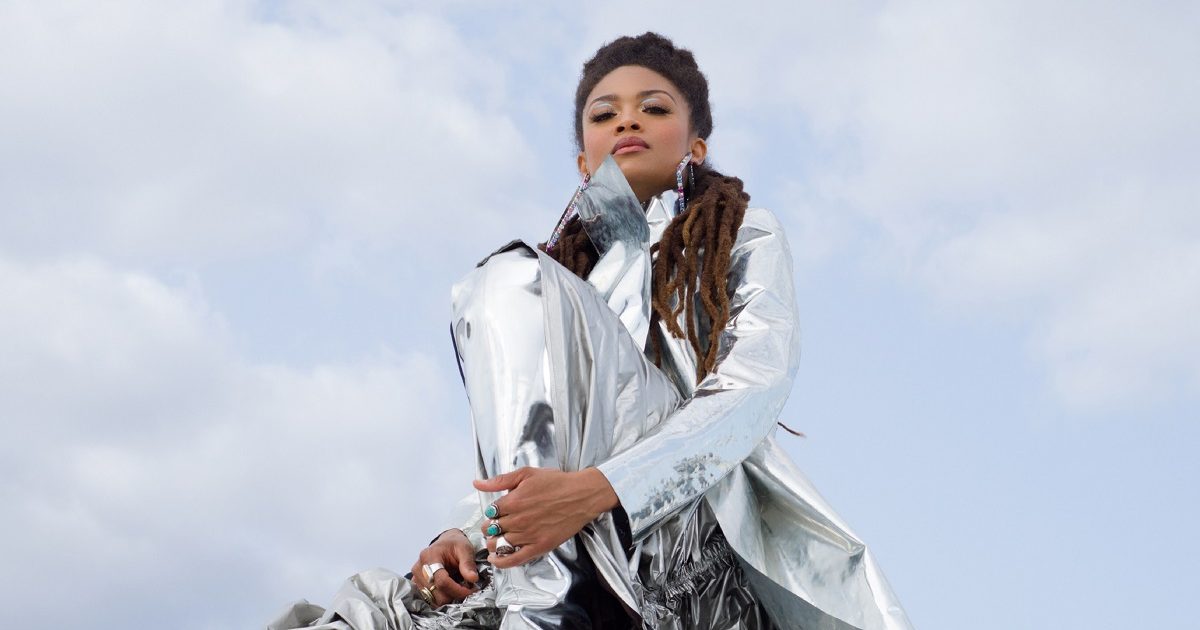
Valerie June blends her roots writing and singing styles with a markedly modern production quality in her new single, “Call Me a Fool,” giving the music a fresh yet familiar feeling. The upcoming album, titled The Moon and Stars: Prescriptions for Dreamers, was produced by June and Jack Splash, whose resume includes powerhouse names like Kendrick Lamar, Alicia Keys, and John Legend.

“With this record, it finally became clear why I have this dream of making music,” says June, who was raised in Tennessee and now lives in Brooklyn. “It’s not for earthly reasons of wanting to be awarded or to win anybody’s love — it’s because dreaming keeps me inquisitive and keeps me on that path of learning what I have to share with the world. When we allow ourselves to dream like we did when we were kids, it ignites the light that we all have within us and helps us to have a sort of magic about the way we live.”

Embracing an experimental approach, Valerie June and Jack Splash recorded the project at Los Angeles and Miami studios. She notes, “For this album I wanted to see how we could bring some modern elements into that band-in-the-room approach I’ve taken with my records in the past.” To compound that marriage between old school and new, “Call Me a Fool” features none other than the Queen of Memphis Soul, Stax legend Carla Thomas. Crisp yet warm, sleek yet comfortable, Valerie June’s new music is everything we’ve been waiting for and then some. The Moon and Stars: Prescriptions for Dreamers will be available on March 12 on Fantasy Records.

Upon releasing the video, she wrote on Instagram, “Have you ever been a fool for a dream? It might have been a little dream like a kiss from a lover or a big one like the dream of peace that Dr. King, John Lennon, and so many others have had for humanity. No matter how big or how small your dream may be, keep believing, and let the world call you a fool!”


Photo credit: Renata Raksha

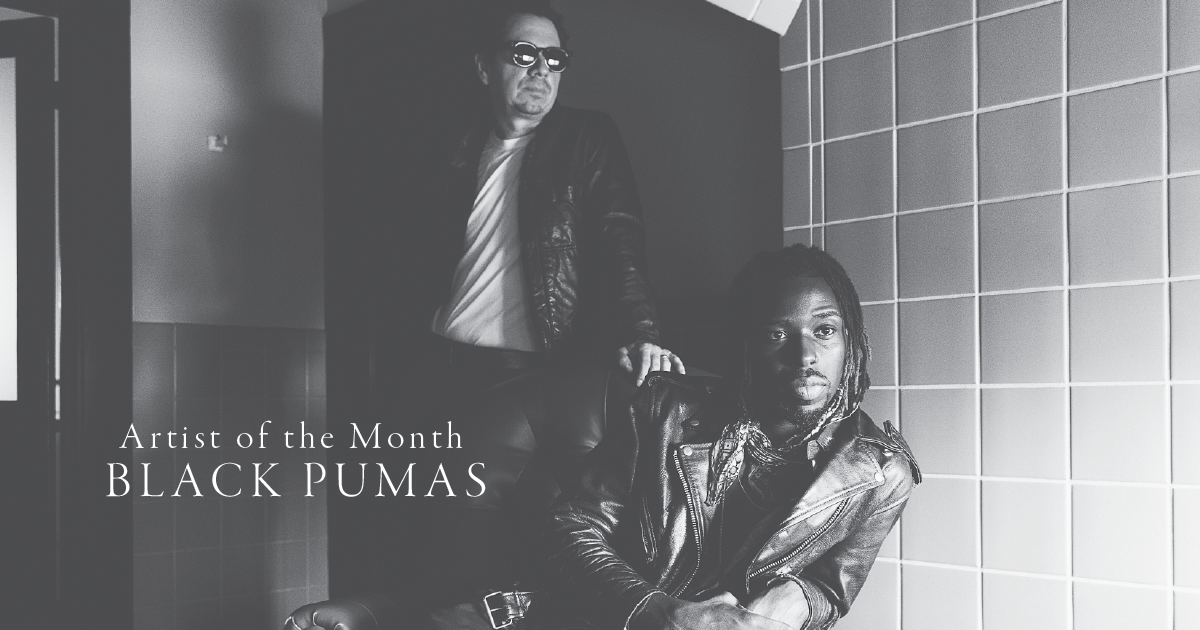
Artist of the Month: Black Pumas

Even without continuing to tour the world, Black Pumas have lost very little momentum since the arrival of breakout singles like “Black Moon Rising,” “Fire,” and “Colors.” The duo of Eric Burton and Adrian Quesada were shocked to land on the 2019 Grammy ballot as a contender for Best New Artist, and in 2020, they picked up nominations in three more categories: Best American Roots Performance and Record of the Year for the irresistible “Colors,” and overall Album of the Year for Black Pumas (Deluxe Edition). That expanded edition collects several new tracks, a few live versions of familiar favorites, and a must-hear cover of Tracy Chapman’s “Fast Car” — a favorite song of Burton’s to sing while he was busking on the Santa Monica Pier, and later in Austin, Texas.

Drawing on folk songwriting as much as soul groove, both men agree that the term American Roots fits their sound well. The Americana Music Association seconds that notion, as Black Pumas picked up that organization’s Emerging Act of the Year in late 2020. And in January, the band performed a dazzling and powerful rendition of “Colors” on the soundstage of Austin City Limits in recognition of the historic win of President Joe Biden and Vice President Kamala Harris.

“The first thing people think of when they say ‘Americana’ is not always music that’s influenced by soul music, but it’s great to be recognized by people that are open-minded music fans,” Quesada tells BGS. “This is every bit as much American music as country music, you know?” Burton adds, “Soul music is just as a part of American music as folk music and country music. This country is a massive melting pot of the different cultures… so we’re honored to be a part of the conversation as we make music in America.”

The two musicians met through a mutual friend as Quesada sought an exceptional singer to add lyrics and a voice to the instrumental tracks he was creating. Little did he know that Burton was around the corner, literally, where Sixth Street meets Congress Avenue. In our two-part interview (Read part one here. Read part two here.), they shared their influences, their first impressions of each other’s talent, and their hopes for the year ahead as our Artist of the Month. Meanwhile, enjoy our BGS Essentials playlist below.


Photo credit: Jackie Lee Young

Meet the Full Lineup of Shout & Shine Online

The entire BGS team is pretty stoked for our fifth year of Shout & Shine performances! In 2016 we partnered with PineCone Piedmont Council of Traditional Music in Raleigh, NC to showcase diversity in bluegrass and roots music at IBMA’s World of Bluegrass business conference and festival. In doing so, a wonderful platform has been provided to artists so often overlooked, as well as those just starting their journeys in the music industry.

Things are a bit different this go ‘round, and we’ll be celebrating equity and inclusion in a more pandemic-suited way this year with Shout & Shine Online! The showcase will take place Saturday, October 3rd at 2pm ET — viewers can tune in right here on BGS, or on our Facebook page or YouTube channel, as well as via PineCone’s channels, and IBMA’s conference platform, Swapcard (free music pass registration available here).


In celebration, we’ve put together a preview of what you can look forward to during Shout & Shine Online.

Brandi Waller-Pace

BGS joined hands with Decolonizing the Music Room’s founder Brandi Waller-Pace to curate 2020’s lineup. “The mission of Decolonizing the Music Room is to center Black, Brown, Indigenous, and Asian voices, knowledge, and experiences within the field of music education,” says Waller-Pace. “In addition to that, it is part of DTMR’s core values that we are an openly LGBTQ+ affirming non-profit organization. I am honored to have served as curator for this year’s Shout & Shine and to have had this opportunity to partner with BGS and PineCone on work that highlights a convergence of our values.”

Here you can see Waller-Pace along with Caitlin Hearn playing an old-time standard, “Five Miles From Town.” Waller-Pace’s music is dripping with that sweet, old-timey-ness.


Rissi Palmer

The IBMA isn’t the only thing we love in Raleigh — there’s also Rissi Palmer. In 2007 she released “Country Girl,” making her the first African American woman on the country charts in over 20 years. She’s been releasing consistently powerful music since, leading all the way up to her most recent album, Revival. On top of all of this, Palmer hosts the new Apple Music Country radio show, Color Me Countrya conversation between herself and various Black and Brown women in country/Americana/roots music. We can’t wait to have her right here on BGS!


Sunny War

You may have already seen our friend Sunny War’s episode 2 of our monthly Shout & Shine series. In our interview that came out earlier this month, War speaks about her current outlook on the music scene and how it feels to be surrounded by new “activist” musicians who weren’t doing it before, as well as her incredibly unique guitar style.


Kaïa Kater

Kaïa Kater is no stranger at BGS. She has been featuring in a Cover Story, she’s written an op-ed, and she’s had some important conversations with other musicians. Needless to stay, we’re ecstatic to have this Afro-Caribbean-Canadian songwriter and Appalachian musician back for Shout & Shine Online!


Stephanie Anne Johnson

While Stephanie Anne Johnson’s music is often rooted in America’s painful past, it’s always got down home roots. Maybe that’s why they’ve got the “American Blues.” A veteran of NBC’s The Voice, Johnson is the leader of Tacoma-based band The Hidogs, whose most recent album is entitled Take This Love.


Jerron “Blind Boy” Paxton

Blind Boy Paxton’s music is something of a journey back in time. But his songs and stories aren’t from dusty old books or archives — they are the soundtrack of his growing up in south-central Los Angeles, among the largest Creole and Cajun population outside of Louisiana. Our friend Paxton has been featured in our Shout & Shine column before, but Shout & Shine Online is his appearance on the showcase. We couldn’t be more excited!


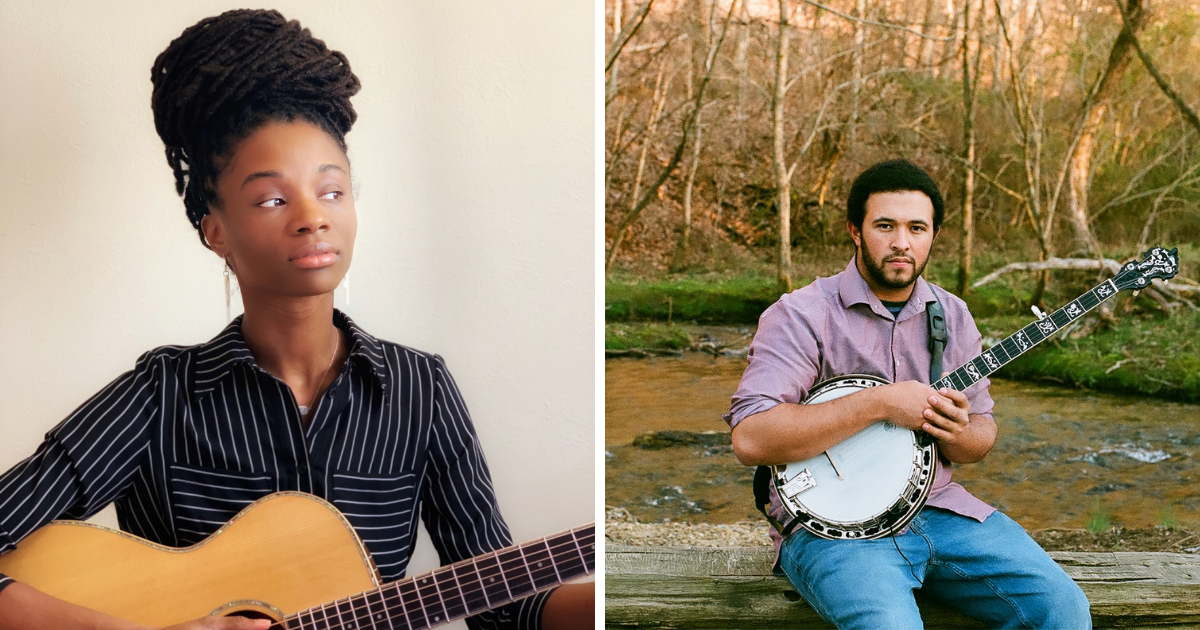
Tray Wellington Band

North Carolina’s Tray Wellington is an acclaimed progressive banjo player — and he’s only 21. From his 2019 IBMA awards — one for Momentum Instrumentalist of the Year and another for Momentum Band of the Year with his former group Cane Mill Road — it’s easy to tell what a bright future he’s got in the world of bluegrass and beyond. He’ll be joining us with his whole band!


Amythyst Kiah

You may know her from Our Native Daughters, or our BGS Class of 2019  — either way, Amythyst Kiah is one of the most powerful, raw, and soulful singers and songwriters the roots music scene has today. We’re beyond thrilled that she’ll be joining us to anchor the Shout & Shine Online lineup!


Photos courtesy of the artists
Poster design by Grant Prettyman, Belhum

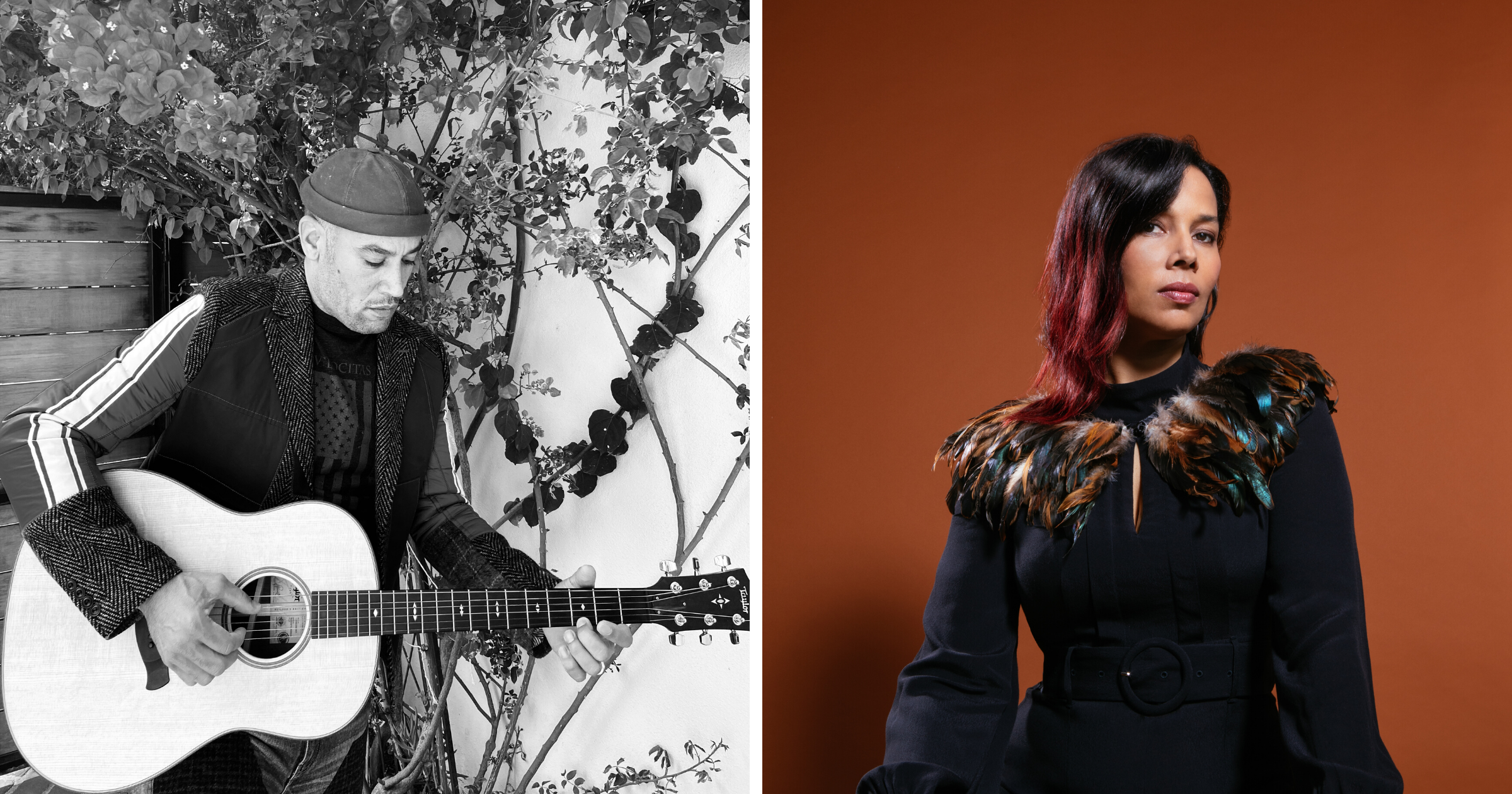
LISTEN: Ben Harper & Rhiannon Giddens, “Black Eyed Dog”

Artists: Ben Harper and Rhiannon Giddens
Single: “Black Eyed Dog” (by Nick Drake)
Release Date: July 21, 2020
Record Label: ANTI-

In Their Words: “Rhiannon and I are both black purveyors of American roots music, and while this is not an anomaly, it is an exception within a subculture. We have unquestionably tapped into the same creative well of influence, carrying on the tradition through our own individual instincts and perspectives. … I’ve always wanted to cover ‘Black Eyed Dog,’ but the song was intimidating in its haunted perfection. Only through collaborating with Rhiannon would I have ever attempted it. When I step back from it, this collaboration should’ve happened long ago, but I’m thrilled that it’s finally here.” — Ben Harper

“I’ve been hearing and hearing about Ben Harper for a long time, but had never gotten to meet him until recently at an event in LA and I was immediately struck by a kindred spirit. Didn’t have as much to do with the kind of music we play, although we share many, many commonalities as black folk playing roots music, but more to do with the spirit that we access when we play it. I felt that spirit in him right off and knew if we ever got the chance, we could make something beautiful together.” — Rhiannon Giddens


Photo of Ben Harper: courtesy of the artist.
Photo of Rhiannon Giddens: Ebru Yildiz

WATCH: The Avett Brothers, “Victory”

Artist: The Avett Brothers
Hometown: Concord, North Carolina
Song: “Victory”
Album: The Third Gleam
Release Date: August 28, 2020
Label: Loma Vista Recordings

In Their Words:The Third Gleam was finished before a virus and its carnage swept through humankind in the spring of 2020. It was finished before the most recent injustices against Black lives inspired outrage and a much-needed call for social reform and revolution. Through the fever pitch of fear over the pandemic, outcry in the wake of widely observable bigotry, and mourning over the death caused by both, we are united in conflict… put to task in the arenas of our fortitude, our morality, indeed the strength of our own souls, individually and collectively. It is a time of heightened experience; heightened response; heightened resolve. If you are reading or hearing this statement now, you are a part of it.

(Editor’s Note: Read more from their statement below.)

“And yet, neither of these massive fundamental concerns are entirely new to us. Sickness… in body and in mind are old news for our species, and in truth have found us susceptible throughout our complex history. And so our plagues, biological, behavioral and systemic, are intrinsically a part of us. We navigate them poorly at times and heroically at others.

“To the point of this writing, as it pertains to the announcement of a record release, it barely warrants mentioning that an eight-song collection is a whisper of an offering in a time of blaring considerations. As I mentioned before, Scott and I finished this album just before these two fundamental concerns overtook nearly the entire planet. Consequently, as the timeline goes, the songs were not informed specifically by the urgent and pivotal concepts which are now center stage. However, as these factors have been and will remain a part of us as a whole, independent of a specific moment in history, the songs of this particular piece do connect somehow to this particular time. Our personal perspectives and experiences are inherently the common thread, which is an element we have found to be imperative in our process of making art. Even so, there are themes which have made their way into this chapter of songs that are undeniably universal, and anchored in our current world…

“Isolation, resilience, frustration, confusion, contemplation and hope are here, both in regards to our own lives and as a consideration of the human experience in general. There is humor and love, both for life itself and as it binds a pairing of people. We touch on historical prejudice, faith, economic disparity, gun violence, incarceration, redemption, and as is increasingly standard with our records, stark mortality. This is by no means a record defined by any specific social or cultural goal, nor is it informed by a singular challenge posed to humanity. It is merely the sound of my brother and I in a room, singing about what is on our minds and in our hearts at the time…sharing it now is about what sharing art is always about: another chance that we may partake in connecting with our brothers and sisters of this world, and hopefully joining you in noticing a speck of light gleaming in what appears to be a relatively long and dark night.” — The Avett Brothers


Photo credit: Crackerfarm

The String – David Bromberg

David Bromberg is one of the most fascinating and multi-faceted figures in roots music, a pioneer of the Americana idea decades before the term came into being.

LISTEN: APPLE PODCASTS

In the 1960s New York folk revival, he was a guitar player and multi-instrumental sideman who specialized in the blues. Then as an artist on Columbia Records, he made dazzling varied roots albums while supporting stars like Bob Dylan and Jerry Jeff Walker. He took nearly 20 years off the road to become the nation’s pre-eminent expert on American violins, and now at 74 he divides his time between his Wilmington, DE violin shop and recording and touring. We complete our hour of blues with Clarksdale, MS phenomenon Christone Kingfish Ingram.

Sara Watkins Wants Us to Ride Along on Watkins Family Hour’s ‘brother sister’

Sara Watkins is up to something — or at least, there’s a pretty good chance she’s up to something. The singer/songwriter and fiddler first found international recognition with Nickel Creek, but these days she stays busy with a rotating lineup of other creative outlets, from her solo work (three albums and counting) to her harmony-singing supergroup, I’m With Her. Oh, and then there’s the raucous Watkins Family Hour, an act with her brother, Sean, that holds regular residencies at LA’s Largo with a delightfully irregular cast of collaborators liable to join them.

This time, though, they wanted to focus on the core of the group. Their new album, brother sister, marks the first time that the siblings have sat down to write together. “We were both in a place where we wanted to focus on the potential of the Family Hour in a different way, a totally new approach than what we’d done before,” says Sara. “Apart from a few shows every year, we had never really focused on just us — particularly in writing.”

BGS caught up with Sean and Sara individually to hear more about how brother sister came together. Read the interview with Sara below, and take a look at Sean’s interview from earlier this week.

BGS: This is your first album as Watkins Family Hour in five years. What made you decide to prioritize this particular project again?

Sara Watkins: The first record that we did was sort of an accident. We made it when our friend offered us some free studio time, just to document what we’d been doing for a while. That record was very natural arrangements to songs that we’d been playing for a long time, cover songs. It was about a year and a half ago when we started talking about doing this record. We were catching up on what we’d each been up to, and as we were talking — I don’t remember who suggested it first — it became clear that we were both really interested in digging into the potential of the Family Hour, but focusing on the core element that’s always been there, which is my brother and me. This record is the first example of our collaboration as co-writers outside of a band format. Maybe as a reaction to the first Family Hour album, but also as a reaction to being in the projects that we’ve been a part of, we wanted to really focus on the potential of this combination.

Is there something specific about writing with a sibling that is either a positive that can’t be replicated, or an obstacle you don’t face with other people?

I think that any time you can be completely honest or you communicate well, it plays to your advantage. I don’t know if it’s sibling-related. For the first twenty-seven years of my life, which was the first twenty years of my musical existence, we shared our musical experience pretty closely. Sean and I have the advantage of a shared foundation — a shared musical foundation, a shared personal foundation — but I think at this point in our lives, what made writing together intriguing is actually how much time we’ve spent apart.

Instrumental tracks are rarely the ones held up as singles or played on the radio, but they’re a huge part of the bluegrass tradition — and something you and Sean do really well. In the writing and recording process, where do you begin in expressing a feeling without lyrics?

Playing instrumentals scratches a specific itch for me. It’s less guaranteed [with an instrumental song] that someone’s gonna get the gist of what you’re saying, but I don’t know that that matters. Even with lyrics, Sean and I have found that we get different things out of the same song — more cynical for him and more optimistic for me, or vice versa. People might hear a lyric completely differently, and that doesn’t make it a failure of expression. Maybe that’s a success.

When I listen to instrumentals, I really enjoy things that I can grab hold of. I enjoy a melody or a hook that comes back around. And I enjoy feeling like I’m along for the ride as a listener: that the person who’s playing is taking me with them. Sometimes you can sense, when someone’s soloing, that they’re also along for the ride — that maybe they don’t know where it’s going. I think a lot of us get that from like a Dave Rawlings solo. That’s really exciting.

So I think that’s the goal, for me: to take the listener, give them enough to hold onto, and invite them along for the ride. When we’re writing an instrumental, we want to try and take somebody’s hand and bring them with us. Otherwise, they’re just listening to a flurry of notes.

The melody and cadence on “Fake Badge, Real Gun” could be just as at home in a pop song. What were you going for when you sat down to record?

Sean has a real knack for melodies that have a pop sensibility. He has a really great way of blending and marrying that with the foundation and the scope of his bluegrass background. I think he’s uniquely good at that. This song is really hard to sing. [Laughs] It’s probably the most challenging song that I sing. Because of where the melody goes in my register, I’m always just singing it with my fingers crossed.

We were consciously trying to satisfy what the song wanted, which was percussion and some low end, but we wanted to give that to the song in a way that didn’t make it feel detached from the record. We kept the drums tight and to one side, and gave it bass that wasn’t too percussive. Then, when we recorded some of the other songs on the record that are much quieter — like the Warren Zevon song, “Accidentally Like a Martyr” — we recorded to tape, and Clay [Blair], who was our mix engineer, hit the take really hard. That means there’s some distortion on the tape, but it gives it a presence that I think matches the intensity of the songs that have a bigger instrumentation.

“Neighborhood Name,” a song about gentrification by Courtney Hartman and Taylor Ashton, is a newer number that you decided to cover on this album. What drew you to it?

It speaks to what a lot of people are aware of and sensitive to right now, as the world is changing and neighborhoods are changing. Some of us don’t know what our place is in that and others are being pretty directly affected. It’s also something that has happened for generations. This song doesn’t put an ethical stamp on it, to my ear, as much as it just speaks to the relatability of the sadness of being displaced. In addition to that, it speaks to the question of wondering if anybody’s gonna remember you — if you made a mark at all. And that’s something that’s always relatable, to everyone.

The song I’ve listened to the most is “The Cure.” What does that song mean to you, specifically the phrase “I avoided the cure, but it found me anyway”? Does it have any special meaning?

Life has a way of being persistent in the lessons that you need to learn. We might procrastinate on things that we know are going to be valuable for us or to start things that might be beneficial. Life pokes and prods in a way that often will bring you to those places, whether you like it or not. It’s a funny thing that a lot of us are so reluctant to do the thing that we know is going to bring us the outcome we’re looking for. It’s a strange but calming phenomenon that I think a lot of us can relate to.

Absolutely. It’s kind of a hopeful message. What’s one thing that has made you feel hopeful recently?

That’s a hard question, not because I’m devoid of hope, but because you could be so pessimistic in so many ways: The resilience of nature gives me hope, but we’re also being so mean to nature, and maybe it’s not going to be resilient forever. One thing that I have been enjoying is a lot of family time lately. I think digging into relationships and feeling the invaluable place that relationships should have in our lives, remembering that, feeling attached to that in a new way has made me hopeful. I feel that there are a lot of people realizing that again, and I think that’s really good for the world.

(Read our interview with Sean Watkins here.)


Photo credit: Jacob Boll

The Show On The Road – The Wood Brothers

Right before the whole world as we know it shut down and they shortened their West Coast tour due to COVID-19, host Z. Lupetin spoke to Oliver and Chris Wood — Americana pioneers The Wood Brothers — about their renewed musical bond, how they grew up in Colorado jamming with their biology professor dad, and how they just barely missed the great East Nashville tornado earlier this month. When it rains it does pour, it seems.


LISTEN: APPLE PODCASTS • MP3

The Wood Brothers’ brand new record, Kingdom in My Mind, is a sweetly funky, ballsy, bluesy, booty-shaking, and romantic improvisational masterwork. Do yourself a favor and turn it up loud and proud — it will help you groove through the lockdown. If there is anything that’s clear in this deeply strange and unsettling time, it’s that we need music more than ever.

The Show On The Road – Dustbowl Revival

This week on the show, a very special finale to our winter season, featuring a group of world-traveling, folk-funk adventurers that have been catapulting American roots music into the 21st century with their exuberant melding of string and brass band traditions and their white knuckle, award-winning live shows. It’s Dustbowl Revival.

LISTEN: APPLE PODCASTS • MP3

To say today’s episode is personal would be an understatement. Your host Z. Lupetin founded Dustbowl Revival in Venice Beach, CA over ten years ago with a lucky Craigslist ad that started it all. What began as a clandestine jam group with as many as ten instruments going full blast at an after-hours advertising office soon moved to speakeasies and small venues around LA, with the band eventually recording their beloved live album With A Lampshade On at the famed Troubadour in LA and the Great American Music Hall in San Francisco.

In 2013 Liz Beebe joined the group as they began touring full time, becoming a powerhouse eight-piece band that wowed festivals and stages in over a dozen countries, playing over a hundred and fifty shows a year. They’ve released a total of seven full-length records along the way, including their soul-dipped, self-titled work from 2017, which was produced by Grammy-winner Ted Hutt, co-founder of Flogging Molly.

This week celebrates the release of their most daring work to date, Is It You, Is It Me, produced by Sam Kassirer (Lake Street Dive, Josh Ritter) and engineered by Brian Joseph (Bon Iver, Sufjan Stevens). Z. was able to gather the whole band around the mic while on the road in New Hampshire. Make sure you stick around to the end of the episode as the band shares their intimate acoustic single “Let It Go.”

WATCH: Alison Krauss’ Unforgettable Performance of “Amazing Grace”

As one year leads into the next, it’s worth a few minutes to pause and enjoy one of 2019’s most breathtaking performances from a legendary performer in bluegrass, country, and acoustic music.

In this emotional video, Alison Krauss performs “Amazing Grace” on the West Lawn of the U.S. Capitol for the 30th National Memorial Day Concert. She returned to Washington six months later to accept a much-deserved National Medal of Arts and Humanities at the White House.

On behalf of the Bluegrass Situation, best wishes for 2020.


Photo Credit: Universal