WATCH: Timothy Howls, “The Rubble”

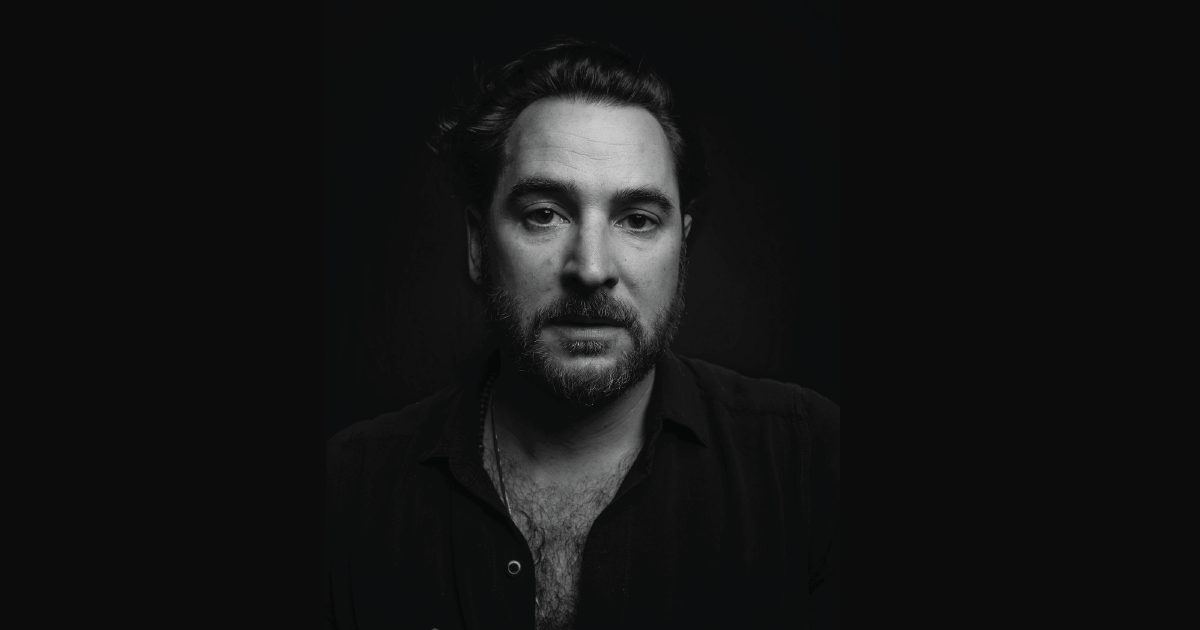
Artist: Timothy Howls
Hometown: Austin, Texas, by way of Santa Barbara, California
Song: “The Rubble”
Album: The Rubble EP
Release Date: May 21, 2021

In Their Words: “‘The Rubble’ is a broken-hearted love song about a relationship hanging by a thread. It was an introspective outpouring about my own inability to commit fully to someone else and realizing how that was hurting the woman I was with. I wrote it at a low point and thankfully we fought through and came out stronger on the other side. The video was shot in a desolate mining town called Terlingua, Texas, with more scenic shots from Marfa. The dilapidated landscapes perfectly fall in line with the sentiment I was attempting to convey in the lyrics. Thanks for checking it out!” — Timothy Howls


Photo credit: Garrett Porter

LISTEN: Nick Africano, “Heavy to Hold”

Artist: Nick Africano
Hometown: Brooklyn, New York
Song: “Heavy to Hold”
Album: Gossip of Flames
Release Date: June 18, 2021

In Their Words: “This is a song about not having a chance to say goodbye, and living with that lack of closure and guilt. Sometimes, all we want to do is hold on: to pain, to sadness, to grief, to guilt…because, if we can’t have the person or thing we lost, at least we have the pain, the sadness, the guilt still; the loss isn’t as final, we convince ourselves. Letting go is a risk…an ultimate act of trust…trust that perhaps we won’t be forever cut off from what we let go of, but, rather, even closer. When I went to my mother’s house after we lost her, her bible was open to a passage that read, ‘Do not let your hearts be troubled, don’t be afraid.’ It sent chills through me. But I don’t think I listened. Hahaha. Maybe in this song I’m trying to say, ‘I’m listening now.'” — Nick Africano


Photo credit: Owen Donovan

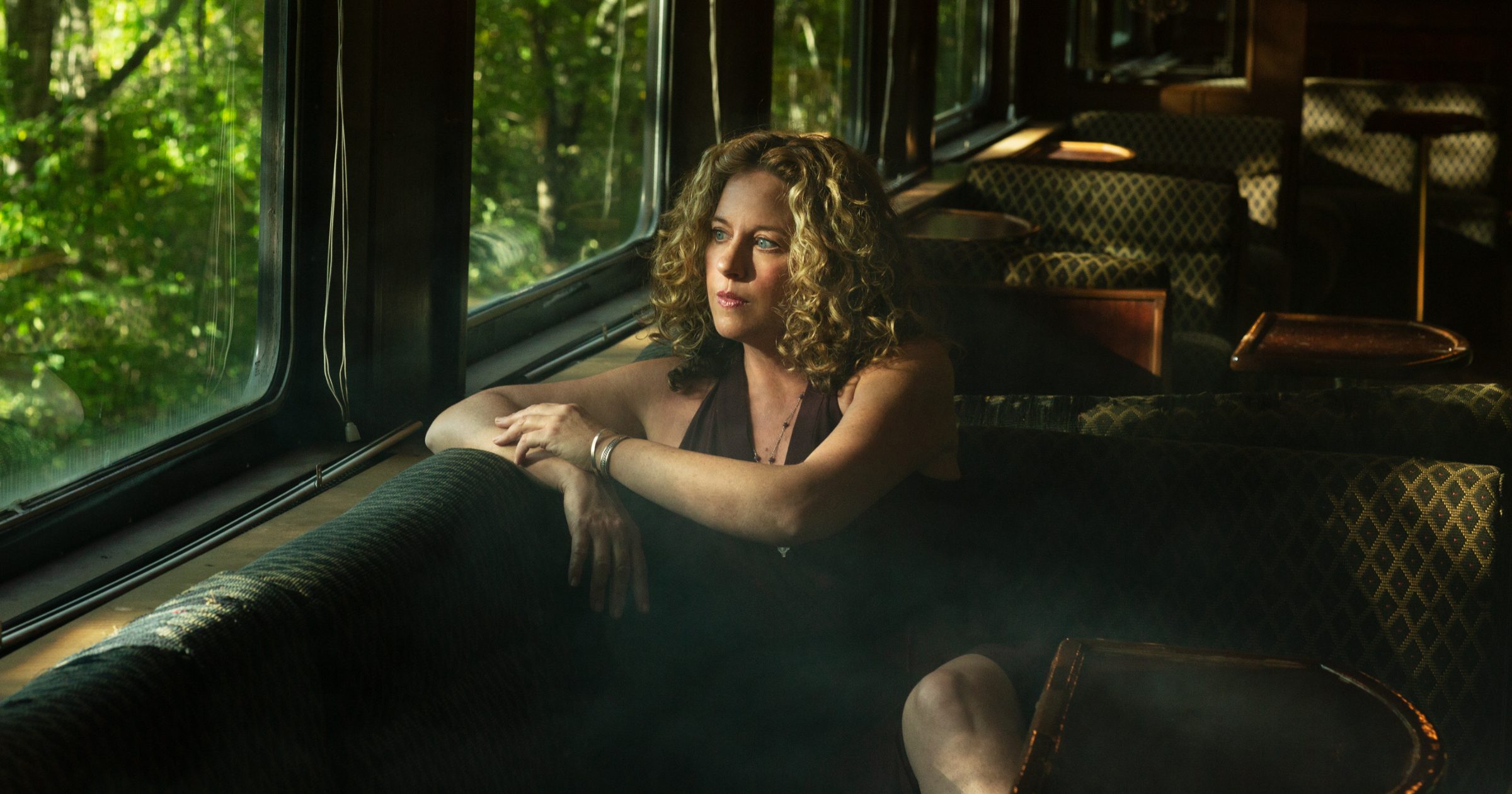
MIXTAPE: Lowland Hum’s Songs for Dusk

We’ve put together a group of songs that feel related to dusk: the transition moments between day and night. Included in our thinking about dusk are the days in between each season.. winter to spring, spring to summer, summer to fall and fall to winter days. We all need help in our times of transition, as we are being stretched, strained, or pressed between what was and what is to come. The songs that assist us in these travels seem to have an unplaceable quality, both disorienting and comforting like a sweet, warm drink with salt scattered on its surface.

The unique combination of anticipation and farewell allows these songs to occupy paradoxical thematic and sonic space. We need songs like these so we can bring more of ourselves into the present. So, we humbly offer this grouping of songs to accompany you in transitions of all kinds, whether they be literal dusks, the days between seasons, or simply moments where this particular tone may be soothing, cathartic, comforting or augmenting. To paraphrase something we read on The Milk Carton Kids’ Mixtape… “we include our songs aspirationally and for self-promotion here.” — Lowland Hum 

Aldous Harding – “Zoo Eyes”

We love Aldous Harding’s ability to shapeshift, morph, and play in her music while remaining vulnerable and human. It reminds us that those are all options we can choose as well when creating. Her most recent album, Designer, is delicious.

Bob Dylan – “He Was a Friend of Mine”

This song has always stood out to us as a deeply compassionate and humanizing song that packs so much into its few and deceptively simple words. It reminds me of the wordlessness that comes with deep grief. At the anniversary of George Floyd’s death I think of the great losses our nation has experienced this year and the way all words felt clumsy and insufficiently small in the face of such dumbfounding, dark and evil things.

Big Thief – “Open Desert”

We’re having a hard time finding what’s not to like about anything and everything coming from Adrianne Lenker (and her band) these days.

The Beatles – “Julia”

This melody is so wistful, dreamlike, sad, and lovely. “When I cannot sing my heart I can only speak my mind, Julia, sleeping sand, silent cloud, touch me so I sing a song of love, Julia.”

Radiohead – “You and Whose Army?”

The beginning of this song makes us feel like we are suspended in shimmering stardust thick enough to hold a person’s weight. The arrangement blooms so patiently until you suddenly tumble down a flight of stairs. That a recording can do that is one of the main reasons we organize our life around music.

Antonio Carlos Jobim – “Look to the Sky”

I mean, are you not slow dancing by yourself on a terra cotta tile patio, barefoot, with a cocktail in hand when you hear this?

Labi Siffre – “Cannock Chase”

The combination of this picked guitar and gently shuffling percussion sounds like being in the car at dusk with the windows down, scenery flying by.

The Zombies – “Beechwood Park”

We’ve listened to this album so much in the past few years, but somehow only really noticed this song and its magnificence in the past week. Now we are obsessed.

Nick Drake – “Free Ride”

To us Nick Drake always sounds like sunlight filtering through the leaves of trees. Although this one carries a bit more urgency and pep than some of his other songs, this one is no exception.

Myriam Gendron – “Solace”

This song comes from an album of Dorothy Parker poems put to music by Myriam Gendron. The whole album is like a friend sitting silently beside you when you’re feeling a lot. You probably need it in your life.

Keur Mossa – “Quand le fils de l’homme viendra”

This song comes from an album that has been an immense comfort to us in times of transition. When far from home, while working on building our studio in early morning light, while in labor with our first child… It’s a beautiful treasure of humanity reaching toward divinity.

Tiny Ruins – “One Million Flowers (solo)”

This album is all solo guitar and voice versions of Tiny Ruins’ full-band album Olympic Girls. Hearing these songs stripped to their skeletons showcases how strong her songwriting and voice are. Though we were fans of the full-band album first, we prefer these versions hands down. We aspire to make songs that can stand on their own naked or dressed up.

Lowland Hum –”We Do What We’re Told (Milgram’s 37)”

This is our cover of Peter Gabriel’s “We Do What We’re Told (Milgram’s 37)” from his album, So. We covered that album in its entirety, calling our version So Low. Our version came out on the 35th anniversary of the original’s release.

Lou Reed – “Perfect Day”

This song is a cocktail of equal parts bummed-out and triumphant. How he does it we don’t know, but we love it.

Frank Sinatra – “Mood Indigo”

The strings and reeds in this song are like sitting on a fire escape in the warm balmy breeze of a summer evening. Sinatra’s delivery is so subtle and masterful. You can’t go wrong with any song on In the Wee Small Hours.

The Weather Station – “Trust”

We have long been fans of Tamara Lindeman. Her songwriting is like a window into the unspoken dialogue of real relationships.

Arthur Russell – “Close My Eyes”

This song is so visual to me (Lauren). It reads in the mind like a bedtime story complete with dark oil pastel illustrations. I dare you to close your eyes and not see it all.

Gold Connections –”Confession”

Will Marsh of Gold Connections is a dear friend of ours but we promise we aren’t biased. They just released this single and we can’t get enough of it. This song has it all: city and desert; neon signage and the kind of starry sky that can only be seen when you are far from civilization.

Bruce Springsteen – “Nebraska”

Tragic, startling, beautiful. Daniel always says he believes in this album because it gave him compassion for a mass murderer. That’s some power right there.

Paul Simon – “Night Game”

What a stunning and mournful number. Who knew a song about baseball could feel so mystical? Hold out for the otherworldly harmonica solo by Jean-Baptiste Frédéric Isidor. This one has comforted us on many a late-night drive.

Adrianne Lenker – “forwards beckon rebound”

This whole album is a treasure. This song has such a great momentum while remaining quiet.

Martin Denny – “Trade Winds”

This exotica album is a staple in our household during our newborn son’s bathtimes. But we find it perfectly appropriate for listeners of all ages and stages. It is perfectly campy and yet transportive.

Lowland Hum – “Waite”

We felt that we needed to include at least one original Lowland Hum song, so here’s our duskiest. This song was written while on tour in Europe in 2017. We were playing a house concert in a landscape painter’s home studio and gallery (Andy Waite is the name of the painter and now friend) and the guitar part mysteriously came to Daniel while we were setting up in the space. Something about being in a home so steeped in one person’s creative life and flow was magical. There was a very real substance in the air that mysteriously found its way into Daniel’s fingertips as he was messing around on guitar.


Photo credit: Tristan Williams

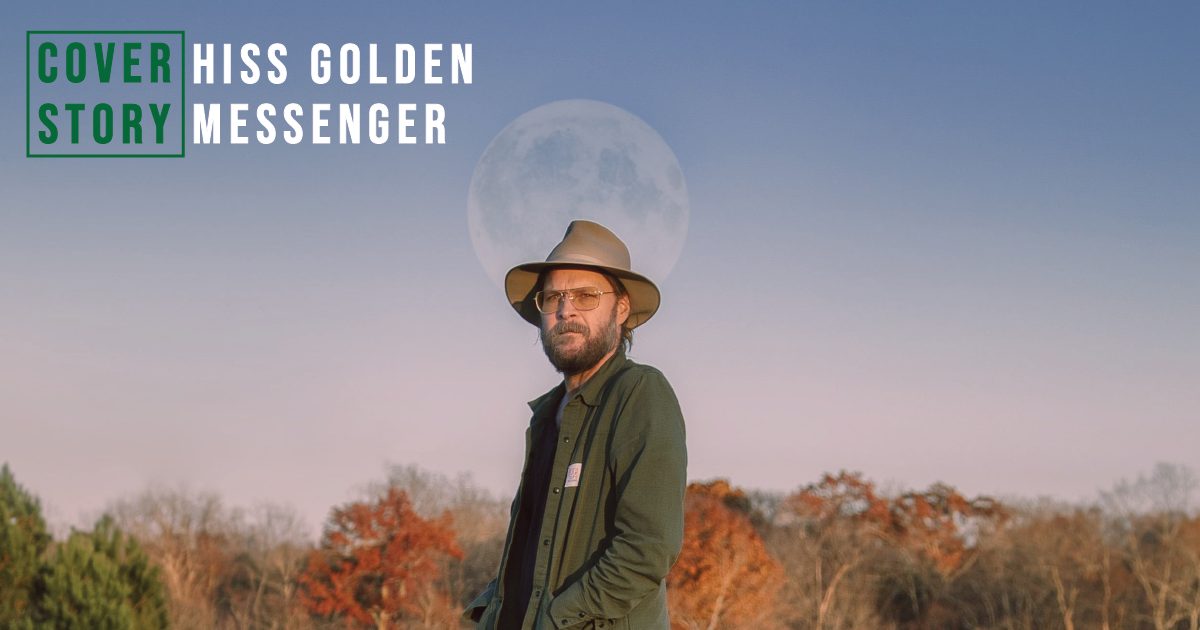
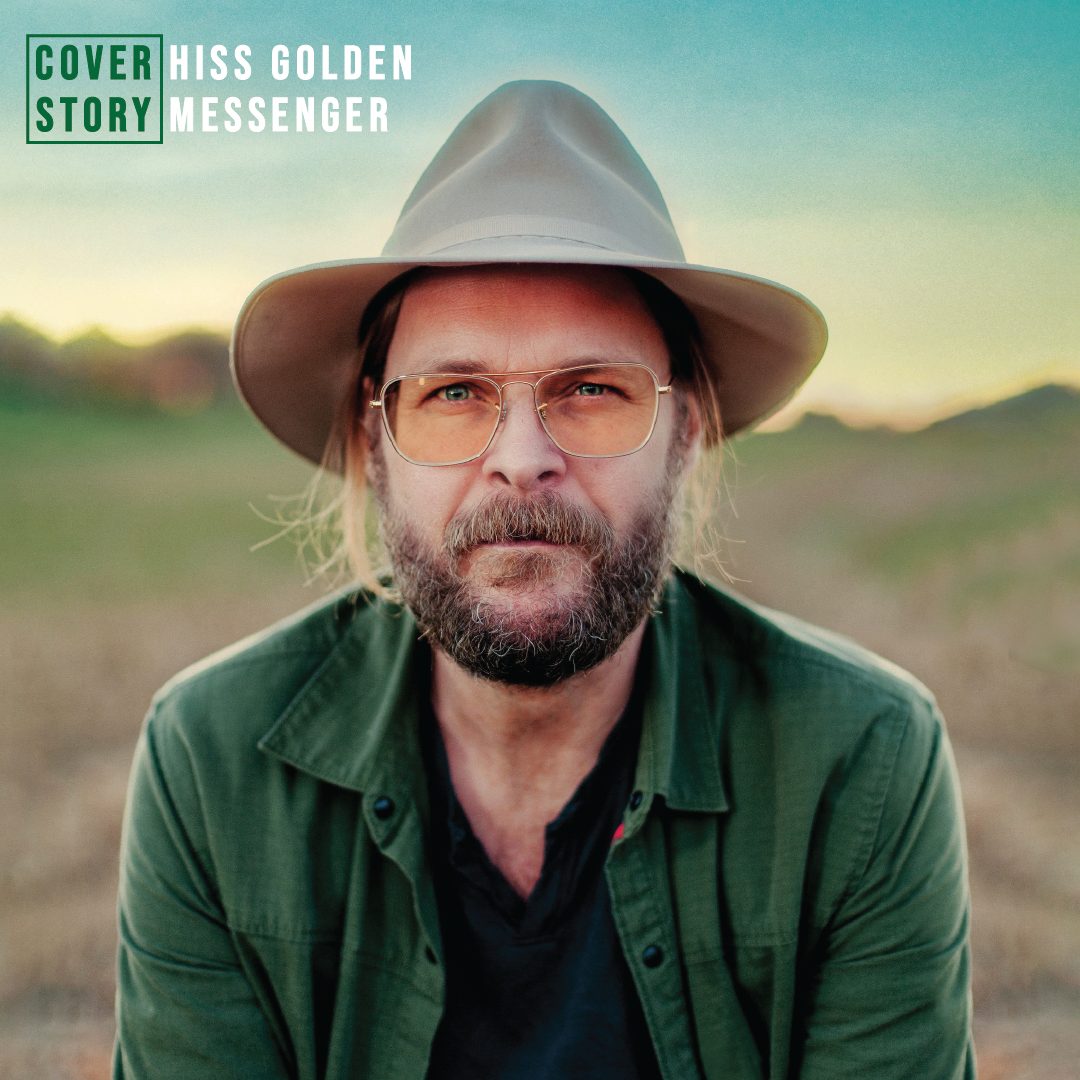
Hiss Golden Messenger’s ‘Quietly Blowing It’ Blends N.C. Warmth With L.A. Glow

When M.C. Taylor decided to make another Hiss Golden Messenger album, he instinctively knew it needed to be done in real time, in an actual studio, in his adopted hometown of Durham, North Carolina. Recorded in the summer of 2020, Quietly Blowing It reflects a joyful spirit even as a fog of anxiety hung over the sessions. And in some ways, Taylor believes that a sense of tension is what this album is all about.

But in contrast to the image of making a million minor mistakes, Quietly Blowing It may be his most accessible album yet. (His prior effort, 2019’s Terms of Surrender, landed a Grammy nomination for Best Americana Album.) As he’s done for years, Taylor asks a lot of questions in his lyrics without filling in the answer. One could say that he positions himself as a moderator who introduces a conversation, rather than an expert who knows everything about everything.

“That’s always been the way that I write,” he tells BGS. “I’ve been talking for many years about this idea of making an album that’s full of questions with no answers. In a lot of ways, I’m less interested in the answer than I am in the question, if that makes sense. Because the answer might change from day to day. I find the question often to be the thing remains steady, more or less.”

Not long before heading back to his native California to finally visit his family there, Taylor caught up with BGS by phone about Quietly Blowing It, releasing June 25.

BGS: One of the reasons I like listening to “Sanctuary” is because you can hear the band in the groove, in the space between the verses. It makes it feel like a band record.

Taylor: I think for the type of music that I make, the best light that it can be shown in is when you can hear everybody working together. The music is a collective music and it thrives on the collective energy of the players. That’s why I was hesitant to jump into making anything totally remotely. If my options were to either record remotely or do nothing, I would have chosen not to make a record because that collective energy feels really important to this music.

The second time I listened to this album all the way through, I really noticed the drums. It’s like its own energy coming through. Did you feel that too?

Yeah, in a lot of ways the record was written around the drum parts. I spent a lot of time coming up with the way I wanted the drums to work, at home, and sketching out drum patterns and drum parts, and layering different percussive elements over that. Then I brought those ideas to the two people that played all that stuff: Matt McCaughan played the drum kit and a friend of mine named Brevan Hampden played a lot of the percussion. It was meant to feel like this churning machine, almost. You know what I mean? A lot of the parts are pretty simple, but they’re sympathetic to the songs. Simple in theory, but very hard to play in a way that swings as hard as Matt and Brevan do.

To me, “Hardlytown” is about people who are staying the course against a world that’s pushing back against them. Is that pretty close to what that song is about?

Yeah, that song is addressing this idea of the way that we set up the systems in order to live our lives the way we think we want to. And how, so often, what we give feels like more than what we get back. There are many ways to do that math, of course. When I started out being a musician, I spent way more than I made back. That was like the first 15 years of my life as a musician, playing out in public.

However, there’s the whole existential math. [Laughs] Where you start to factor in joy and spiritual payoff, and that becomes another set of equations that start to figure into it all. I was trying to work my way through that, “Hardlytown” being the place where maybe you don’t get back what you put into it, but you keep at it anyway. It’s meant to be a little salty around the edges but it’s meant to be a song of hope. It may not be unqualified hope, but I think the heart of that song is a certain kind of hope.

There’s a line in that song that says, “People, get ready / There’s a big ship coming,” and that reminded me of your love of Curtis Mayfield. Why does his music resonate with you?

He’s the whole package to me. He has an absolute command of groove. His arrangements are so elegant and affecting. He really knew how to make you feel something, and his writing is second to none, in terms of finding that sweet spot between the sacred and the everyday. I’ve said this a lot lately, but he was really good about singing about the potential of hope. You think about the time during which songs like “People Get Ready” were written. It’s hard to imagine there was an abundance of hope for him and the communities that he moved through. But they somehow continued to write these songs that feel anthemic, in the way that they talk about the potential of hope, and how important hope is to carry, even if you can’t fly the flag at the particular hope at that moment.

In the video for “If It Comes in the Morning,” you have Mike Wiley, a Black actor, lip-syncing to your track. Why did that treatment appeal to you?

It’s been interesting to hear certain reactions to that video. First of all, Mike Wiley is a friend of mine that I’ve been doing work with, off and on, for over a decade. He’s an incredible stage actor. And I knew that I wanted somebody to be looking directly into a camera as they lip-synced the words. So, my thought was, who can stare into a camera for the duration of the song without flinching? And not have crazy camera eyes? I can’t do that, I don’t have that skill set. You put a camera on me for more than three minutes and I start to look like George Jones or something. [Laughs]

So, my intuition was to get in touch with Mike Wiley. He’s an expert at that. It certainly was not lost on me that Mike Wiley is a Black actor, so there was going to be added layers of information with that video. And heightened interpretations because of the moments we are living through collectively. I’ve heard some people say, “I don’t get this video. What is this video trying to say or do?” And plenty of people have not commented either way, whatever, they like the song. Other people have been angry about it. But when I see the video, I see my buddy Mike Wiley lip-syncing the words and Mike happens to be an extremely gifted actor who is Black.

What does the word “it” represent in that title, “If It Comes in the Morning”?

I mean, it depends. “It” could be victory, defeat. If things go my way in the morning, how am I going to behave to people that were on my side, or people who were on the other side? If defeat arrives in the morning, how am I going to behave to people that I was working with, or to people who were working against me? I was thinking about how I might behave to someone that might be my adversary in some situation. Would I behave with respect? Or would I kick sand in their face? I like to think the former, but sometimes I think the latter. And that’s a “quietly blowing it” moment. [Laughs]

How would you describe the room where you wrote these songs?

It’s about 10 feet by 12 or 14 feet. It’s pretty small and it’s full of guitars, books, records, and sometimes a drum kit and amplifiers. Depending on my mood, it can feel like an oasis or like a prison cell. [Laughs]

During that time when we were all staying home, I spent a lot of time on the greenway. Did you get a chance to get outside, too?

Yeah, we got outside a fair bit. We have a pretty big backyard. Durham is full of green spaces, so yeah, I found the outdoors to be a balm over this past year. No question about that. We did a lot of camping this year, and that was fun also.

How did you wind up in Durham?

Many years ago, I went to grad school at UNC. This was back in 2007 and my wife and I just ended up staying. I don’t even remember what our intention was, whether we thought we were going to stay for a long time or move somewhere else. But this was pre-kids and over time North Carolina just started to feel like home. We bounced around this region a lot. We lived in Chapel Hill first and we lived outside of a small town called Pittsboro. Then we gravitated towards Durham. It’s a perfect-sized down in my opinion. Lots of incredible food, art, music, so this is where we ended up and it feels like home.

Before this band took off, I’m sure you were doing a lot of odd jobs. I think I read at some point that you were selling swimsuits over the phone?

Yeah, I did. That was a long time ago, back in college in California. I didn’t last. I was selling women’s swimsuits over the phone. Like, I was a 22-year-old guy and didn’t know the first thing about anything about that. [Laughs] I had no business answering those telephones. They should not have had me there. They didn’t have me there for long. They fired me after two weeks. They could tell I was the wrong person for the job.

You’ve said elsewhere that you still feel the pull of California. Is that why the video for “Glory Strums” looks the way it does?

Yes, it is. In normal times I would be in California many times a year. California is where most of my family still lives. Like many people, I haven’t seen them since this all started and my kids haven’t seen my parents in almost two years. I’m really pining for California in a way that I haven’t before. Because I’ve traveled to California so frequently, I’ve kept that homesickness at bay. It never affected me because I knew that within the next month or two months I would be out there again. I haven’t been out there for a year and a half and I can really feel it.

It made me think about this article in the New Yorker in 1998 called L.A. Glows. It’s about a native Californian meditating on the light in Southern California. I remember reading it at the time and thinking it was interesting. I understood this theory that different places could have different qualities of light that would affect people that knew that place. But now I can feel that on an emotional level.

How did that video come together?

Vikesh Kapoor is the director and he is someone I have known for many years. Back in 2013 or 2014, I was playing in Portland, Oregon, opening up for Justin Townes Earle, and I was traveling alone. I was looking for someone to sell merch for me, so I put out a call on social media, I think. Vikesh volunteered to do it and we met that night at the merch table, where he sold my stuff. We kept in touch after that. He’s a songwriter himself and he’s made a few great records. And he’s a pretty respected photographer.

I knew that he was living in Los Angeles now and I got this wild hair that I thought Vikesh could make a video. We talked a lot about the light – the hazy, Southern California quality of light that I was missing. I asked him whether he thought he could get that into the video and he did, to his great credit. He didn’t have a whole lot to go on. [Laughs] He made something that is really beautiful and it does speak to the place where the video was made.

During that time when you were touring solo, what did you like most about just you and the road?

I still do that kind of touring once in a while, just to get that feeling again. I mean, there’s something about being footloose out on the road that can be really exhilarating, even still. I’m one of those people that picked up Jack Kerouac’s On the Road and Desolation Angels when I was 17 years old and read them. I was just like, yep, this is the life for me. And the older I get, it’s a complex life, living your life on the road. You’ve got to work to take care of yourself, which I don’t think a lot of those Beat Generation writers did very well. But there remains a romance of just traveling through.

One thing I’ve noticed about this record, though, is that there’s a lot of other voices singing with you. What do you like about that?

I love the human voice as an instrument. Just like instruments, every human voice is different and resonates differently. It affects a microphone differently. I think that voices singing in harmony can really elevate a melody. It adds a very important color to a record, for me. We did have a bunch of voices on this record. It’s a pretty magical sensation to be able to sing in harmony with someone. It’s like an electric jolt is running through you.


Photo credit: Chris Frisina
The Show On The Road – Amy Helm

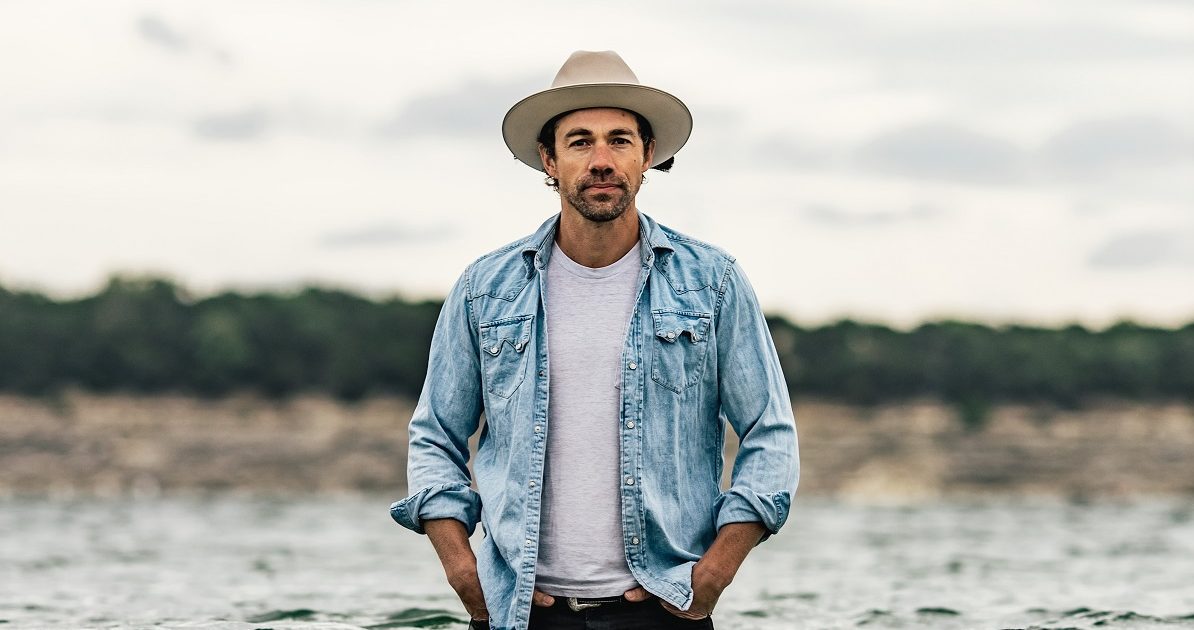
This week, The Show On The Road places a call into Woodstock, NY, where we speak to a respected singer, songwriter, and sometimes drummer Amy Helm, beloved daughter of Levon Helm of The Band.

LISTEN: APPLE PODCASTSSPOTIFYSTITCHER


Growing up in the home of two working performers (her mother is singer Libby Titus, who wrote songs covered by Bonnie Raitt and Linda Ronstadt) wasn’t always the easiest for the introspective Helm, but it gave her a fertile proving ground to begin exploring creating her own soaring songs in the folk, blues, and soul traditions. She waited until she was forty-four to release her acclaimed first solo record, Didn’t It Rain, with her father lending his signature earthy drums on several tracks — and this year, she teamed up with multi-instrumentalist and producer Josh Kaufman (Taylor Swift, Bonny Light Horseman) to create What The Flood Leaves Behind, her most emotive and lushly-realized project yet.

With her dogs often joining the conversation from her upstate home, Helm dives into her early years trying her hand at singing in New York City cafes, having folks walk out of her folk fest shows because her band was too loud, founding the band Ollabelle, joining her stepdad Donald Fagen’s group Steely Dan onstage, backing up legends like Stax soul artist William Bell and finally reconnecting with her dad in her mid-thirties as he began his late life renaissance, hosting his epic Americana throwdowns called “The Midnight Rambles.” It was being a member of that crack “ramble band” that gave Amy the final push to pursue her own lead voice.

While Levon famously struggled with heroine addiction and the foibles of post-Bob Dylan and The Band fame fallout, it was when he got clean and took Amy under his wing that both of their stars began to rise again. You can hear Amy singing on his gorgeous return in 2017’s Dirt Farmer. Becoming more ambitious, Amy laid down her upbeat rock-n-soul-tinged second album with producer Joe Henry in LA with notable players like Doyle Bramhall II, Tyler Chester, and a vocal choir of Allison Russell and JT Nero (Birds of Chicago) and Adam Minkoff. This Too Shall Light was released in 2018 on Yep Roc Records and Amy began to be recognized as one of the most powerful singers touring the Americana circuit. Her newest record was recorded at her spiritual home, Levon Helm Studios, where each ramble still takes place on the weekends.

During the pandemic, Helm had a unique idea to keep her creative muscles strong, even when live music gatherings were not technically allowed in public. She began setting up “curbside concerts” for her friends and any curious fans who missed her songs, touring around Woodstock with her guitar, bringing a little joy to her shut-in listeners during New York’s darkest hours.

Stick around to the end of the episode to hear Helm introduce the spiritual opening track of What The Flood Leaves Behind, “Verse 23.”


Photo credit: Ebru Yildiz

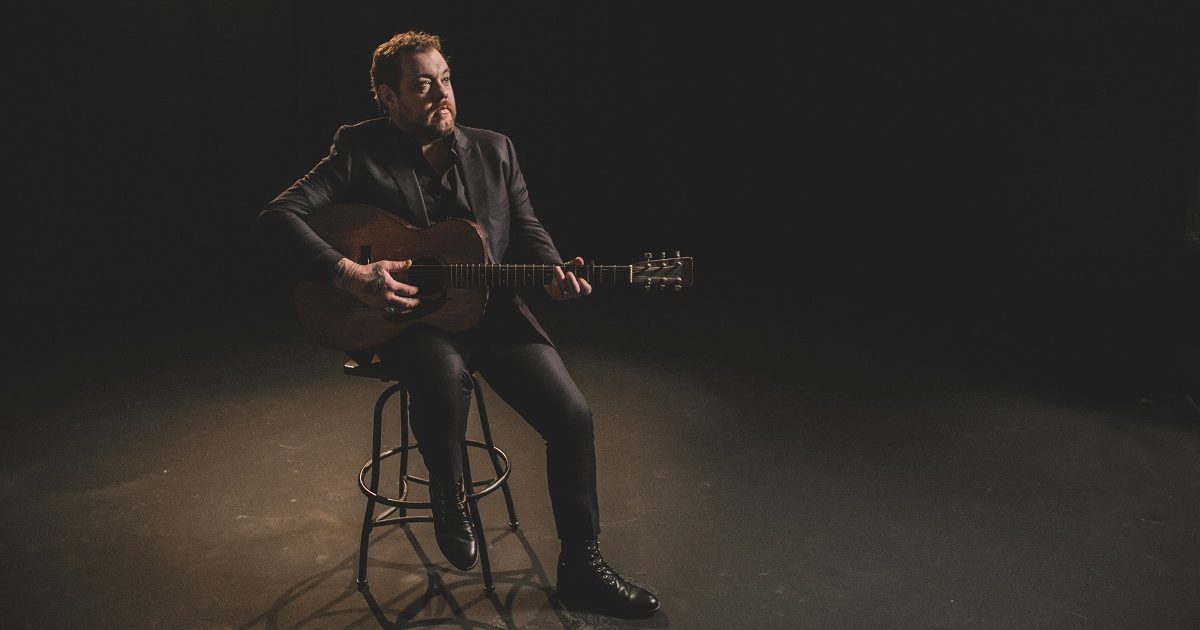
WATCH: Nathaniel Rateliff Adds a String Quartet to “And It’s Still Alright”

Nathaniel Rateliff’s And It’s Still Alright album is the product of a tumultuous time in the writer’s life, but such are the circumstances that yield the most compelling songs, records, and artistic expressions. In this NPR Tiny Desk (Home) Concert filmed at the Mercury Café in Denver, Rateliff performs several songs from the 2020 record, including the title track and “All or Nothing,” a more wistful selection. Since the Tiny Desk shows have reformatted to accommodate for safety, the features have frequently been scaled-back performances, often filmed in the homes of the artists, but in this case, Rateliff adds his band and a string quartet to the studio-like space. The surroundings may not be as iconic as the actual Tiny Desk, but we’re thankful that artists are going above and beyond to give us outstanding mini concerts. This Tiny Desk set is no different, and like the album, it crescendos gradually from an atmospheric, ponderous beginning to a triumphant, boisterous finale with the songs “Redemption” and “Mavis.”


Photo credit: Rett Rogers

WATCH: Jeremy Squires, “Fade”

Artist: Jeremy Squires
Hometown: New Bern, North Carolina
Song: “Fade”
Album: UNRAVEL
Release Date: July 30, 2021
Label: Blackbird Record Label

In Their Words: “‘Fade’ is about facing yourself and revisiting memories and/or demons and coming to terms with them. There were so many things going through my head when I wrote this song. My grandmother had passed and my life was changing and the people around me were changing and spiraling. I was faced with difficult life choices I had to make and this song was an outlet.

“The video for ‘Fade’ was filmed at various locations in my hometown and in a small neighboring town. I filmed multiple scenes in my granny’s old home that she left to me. I feel the lyrics reflect the imagery in the video. I filmed a specific scene as I burned a life’s worth of papers and collected memories outside in her yard one night with an old crutch and it was cathartic. ‘Fade’ is one of my favorite videos and I feel that it is one of the best songs on the album. It is definitely one that I am connected to.” — Jeremy Squires


Photo credit: Shelley Ann Squires

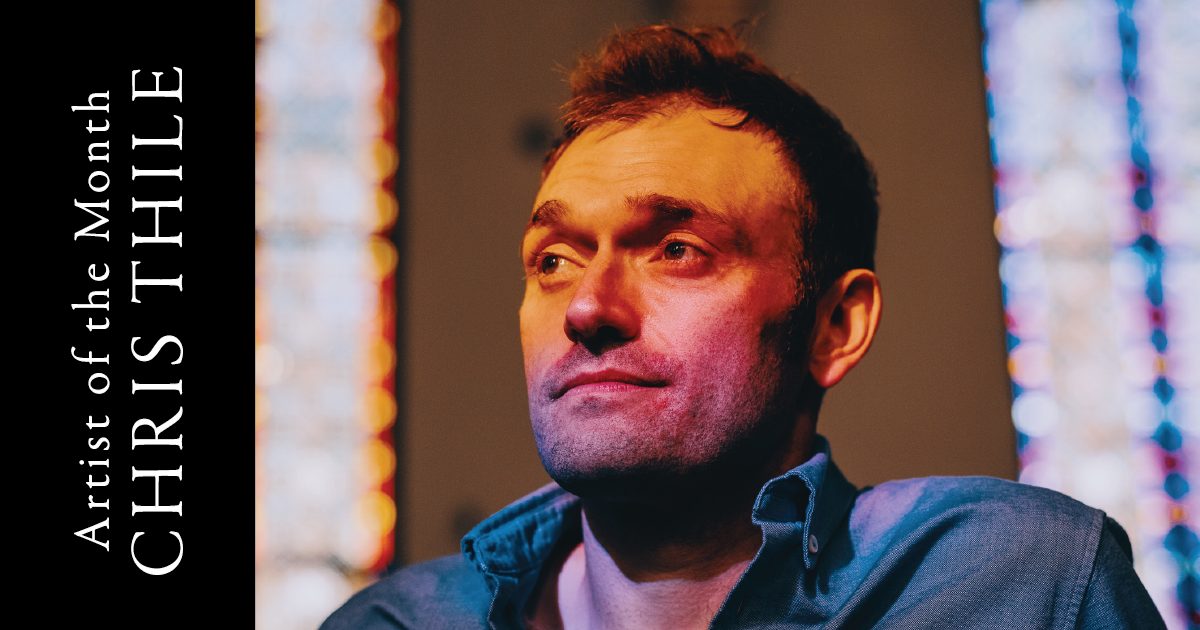
Chris Thile Considers His Community and Christian Upbringing in ‘Laysongs’ (1 of 2)

For a while, Chris Thile might have been the busiest man in bluegrass. The former public radio host has snagged four Grammy awards and a prestigious MacArthur “Genius Grant,” all the while maintaining his status as a founding member of Punch Brothers, the Goat Rodeo Sessions, and Nickel Creek, collaborating with plenty of other Americana firebrands along the way. But on his latest album, Laysongs, Thile slowed down.

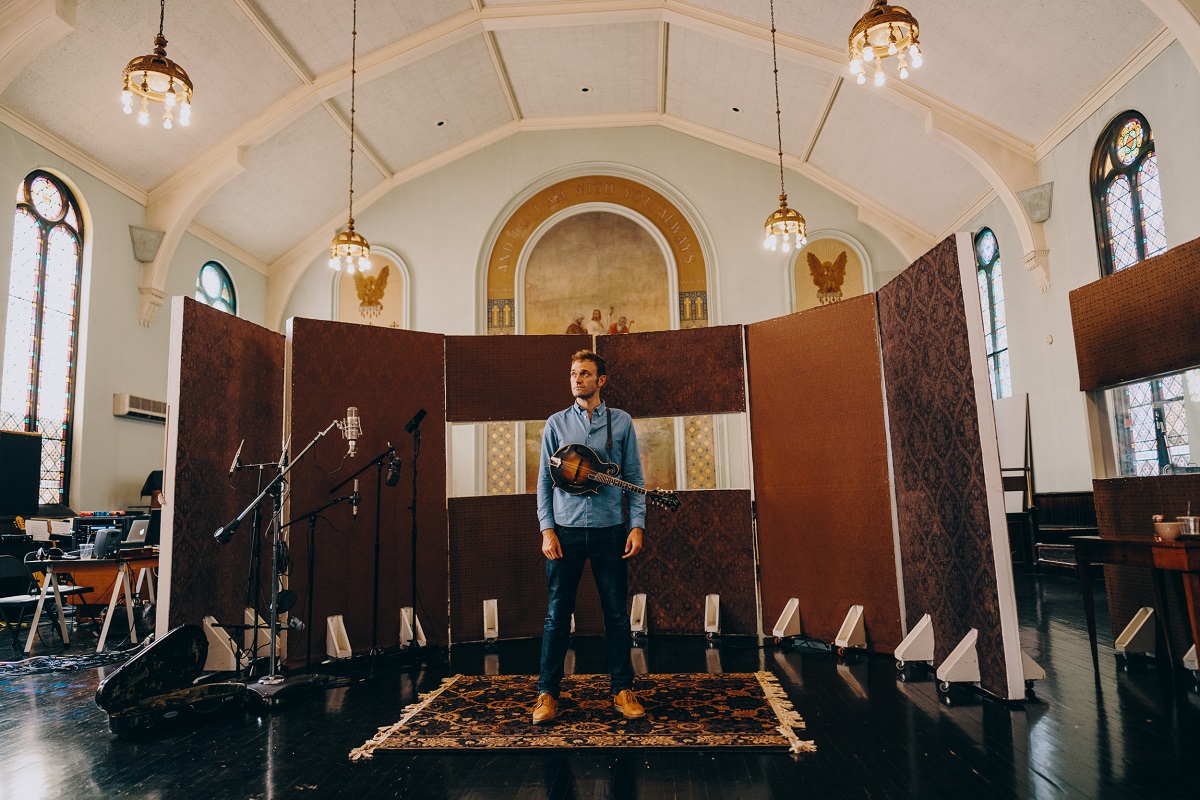
A solo album in the truest sense — it’s just Thile and a mandolin, after all — the album was recorded by engineer Jody Elff at Future-Past, a studio housed in an old church in Hudson, New York. The setting was a perfect match for the religion-influenced album, which ranges from the biblical passages of Thile’s Christian upbringing to mythological ideas about gods and gathering from the Greeks and the Romans. Below, in the first of a two-part interview, BGS caught up with Thile about recording the new album, finding inspiration in memories from his adolescence, and the dearly missed joy of a packed concert hall.

BGS: You recorded this album in a church in upstate New York. What did that atmosphere lend to the album, whether purely sonically to the recording or more generally as inspiration?

Thile: That was such a stroke of luck in a time that felt like it was a little thin on luck overall. [Laughs] We were weathering the earlier stages of the pandemic in Hudson, New York, and someone told me about a church right in the middle of town that had been converted into a studio. I went and checked it out and played a few notes in there and absolutely loved it. It’s not the most awe-inspiring church, but there were stain-glassed windows and very odd paintings that all brought me right back to my childhood.

I never attended a grand, elegant church growing up. This was still a beautiful church, but it was helpful that it wasn’t, y’know, St. Patrick’s in downtown New York — that it had a whole lot of that whole human-beings-just-trying-to-do-the-best-with-what-they-have kind of a vibe. Getting to be there was really helpful in terms of getting into character for the songs that I was recording. So much of the record comes from solitude… Actually, the solitude of the pandemic felt a lot like the solitude of spending one’s adolescence in a church pew.

What do you mean by that?

I spent so much of my adolescent time in church wondering if I was the only person there who was doubting the existence of God, or who couldn’t not think about how attractive the girl two pews over was. “Wait, I’m going to hell now probably, right?” Or, “Wait, is there hell? What is going on?” The pandemic thrust me and a lot of other people that I know back into that sort of lonesome, existential monologue: “Has every single choice I’ve made up to this point been wrong, perhaps?”

The sort of strange dialogue that we have with ourselves late at night started reminding me of those weird dialogues I would have with myself in church. I could well imagine at 16 years old sitting in this pew at Christian Community Church in Kentucky. I could well imagine there was a little angel and devil on my shoulder kind of duking it out. The centerpiece of the record, “Salt (in the Wounds) of the Earth” is very much a grown-up version of that feeling—but you know, also, how grown-up, really? I’m 40 now, and so much of the time, this felt like a rebirth right back into adolescence, smack in the middle of the most awkward period of our lives.

I loved being in that church for all those reasons. It was so easy to put myself in the headspace I was in when I had written the lyrics or when I discovered the power of those songs that I didn’t write that are on the record. It just lent a certain weight to those performances.

Why did it feel like the right time to approach religion specifically here? Was there anything you felt you had to tread carefully around?

If there’s a silver lining of this whole incredibly disorienting and distressing affair, it’s the chance to gain a little context: to have been forced to take a massive step back and to take a look at our lives, whether we wanted to or not. One of the things I saw, in the midst of missing the community that I’d inserted myself into, was that community often ends up acting in ways that are similar to my experience of organized religion.

How so?

A lot of people who grow up with religion and veer away from it at a certain point are veering away from what they — what we — perceive to be a poisonous exclusivity, or habitual exclusionism. I think that’s one of the main turn-offs for my generation on organized religion. You start meeting people who aren’t welcome in the flock, and you start wondering why. Having taken a step back, I see the same kind of exclusionary behavior in my current community. If you take a look at your own community, it’s probably full of people who think a lot like you do, and who feel very similar to the way that you do about whatever’s going on right now, and who live in a very similar way. I worry that we, as human beings, are trading one messed-up thing for another messed-up thing.

I adore community. I love it so, so much. For instance, the Telluride Bluegrass Festival: I feel like those are the high holy days of my acoustic music-making community, and to be deprived of them is so painful. You feel cast adrift, untethered. I can’t wait to get back and I’ll never take that for granted again. But I also want to go back there with my eyes wide open as to whom I have habitually not welcomed into that community. What barriers am I being a part of unknowingly placing between people and that community that I love so much? And what harm is that doing that community?

Tell me about how that harm appears on the record.

There’s a lot in the record about coming together, but there’s also a lot in the record about our compulsive need to compare ourselves favorably to other people. In an effort to feel better about ourselves, we look for someone to feel better than. That’s what “Salt (in the Wounds) of the Earth” is about. I took a look at this thing that had been a big deal for me in my adolescence, The Screwtape Letters by C.S. Lewis, and I was wondering: What would those demons be up to with me, right now? They would be preying on this compulsive desire to feel good about myself. One of the easiest, dirtiest ways to feel better about yourself is by looking at someone else and going, “Well, I’m better than that guy.”

In “Laysong,” the lyrics mention “drown[ing] out the enemy.” It made me wonder what it is that you consider the enemy — maybe it’s this comparison trap, maybe not — and how you drown it out.

When I wrote that lyric, the enemy was he or they that would talk loudest regardless of whether they had the best idea. “I’m gonna say whatever I have to say louder than anyone is saying anything else, and therefore it will be all that’s heard, and the discussion will be on my terms.” That felt like the enemy. And at that moment, in that lyric, I had to write it. It fit with the shape of the melody. The idea of drowning out the enemy — I couldn’t shake it, even though it’s not what I believe to be right. [Laughs] Hopefully you can get a sense of that in the performance, that it’s coming from an angry and not altogether balanced place. In that moment, I was pursuing the idea of drowning out the enemy with beauty, with restructuring, with anything, really. Let’s get a love song, let’s get a hard-times song, anything but a song about the front page of the newspaper.

The record starts there and ends with the Hazel Dickens song, “Won’t you come and sing for me.” When I get back into the concert hall, there’s no way I’m not ending my solo set with that song, the performance is going to be sincere—especially at the end of all this solitary music-making. [Laughs] But “Laysong” is very much like an altar call for the record. “Here’s what we’re gonna discuss.” Who knows where we’re gonna come out? I know that when I listen to a record, there’s a collaboration that starts there. I would love to imagine that happens when people listen to my records, too—that it starts a conversation. I can’t wait to feel that in the concert hall. No piece of music is done until you [the audience] hear it. And I am so dearly looking forward to that completion of this little bit of work.

Editor’s Note: Read the second half of the BGS Artist of the Month interview with Chris Thile.


Photos: Josh Goleman

MIXTAPE: The Foreign Landers’ Transatlantic Story

Each of us having grown up on either side of the Atlantic, our common interests and musical influences could not have been more similar. All of these tracks hold sweet memories in our years of being a couple, and each artist has definitely influenced our sound as The Foreign Landers. David and I thought we’d share some of our transatlantic story together through a few of our favorite songs. — Tabitha Benedict, The Foreign Landers

Paul Brady – “The Lakes of Pontchartrain”

This is one of our favorite tracks of all time. This version of the popular ballad is from Paul’s album Nobody Knows: The Best of Paul Brady rereleased in 2002. With Paul’s flawless storytelling ability and tasteful guitar playing, it makes it a joy to come back for a re-listen.

Crooked Still – “It’ll End Too Soon”

David and I have been big Crooked Still fans for a long time and they will often be our first choice of car music on any long journeys. Here’s a beautiful song written by banjoist Greg Liszt for Aoife O’Donovan that is just so sweet to the ears. This was one of the last songs they recorded before the band stopped touring in 2012 and it appears on their EP Friends of Fall.

Tatiana Hargreaves – “Foreign Lander”

This is where the inspiration for our band name “The Foreign Landers” was drawn from. Aside from having more of a story behind our name than just that, we both love this old song and especially love this version from Tatiana Hargreaves debut album Started to Ramble released back in 2009.

Alison Brown – “Fair Weather”

This title track of Alison Brown’s album Fair Weather released back in 2000 is a common favorite of ours. Vince Gill features on lead vocals and guitar, Alison on banjo, Stuart Duncan on fiddle, mandolin, and vocals and Gene Libbea on Bass and vocals.

Ron Block – “Ivy”

Well, we knew we had to involve some of Ron’s writing and performing in this mixtape. We love this track, “Ivy,” off his album Walking Song. This is a perfect album for all year round, with guest appearances from a host of our favorite players.

The Weepies – “I Was Made for Sunny Days”

I first was introduced to The Weepies through hearing them on the radio back in Northern Ireland many years ago. My family instantly fell in love with their songs and sound, so I was so delighted to introduce David to their catalog when we were dating. Another favorite for long drives and singing along in the car. Here’s a real feel good song of theirs called “I Was Made for Sunny Days” from their album Be My Thrill released back in 2010.

The Boxcars – “You Took All the Ramblin’ Out of Me”

We just had to stick some good bluegrass in this mix of songs, and we’re so glad we chose this one. When David and I started dating, we would sing this to each other, and it has to be one of our favorites from the Boxcars album It’s Just a Road released in 2013.

Hot Rize – “You Were on My Mind This Morning”

At one of our first-ever performances about three years ago at the well-loved Cantab Lounge in Cambridge, Massachussetts, David sang lead vocals on this track written by Hot Rize. They recorded this on their 2014 release When I’m Free.

Dori Freeman – “If I Could Make You My Own”

We are big fans of Virginia-based singer-songwriter Dori Freeman, and especially love this track of hers from her 2017 release Letters Never Read. We recorded a cover of this song on our honeymoon on the Isle of Skye about two years ago now, so it holds a sweet spot in our relationship!

John Reischman – “Little Pine Siskin”

One of our favorite tunes off John’s album Walk Along John! John had been touring with the wonderful Greg Blake in Ireland back in January/February 2018, right when David took his first visit to Northern Ireland, and right when we started dating. We went to see them at a wonderful show at the Red Room in Cookstown. It was just a couple of days prior to making things “official.” I remember David playing this tune on that visit and it brings back happy memories!

The Foreign Landers – “I’m Not Sayin’”

We discovered this Gordon Lightfoot song from the late great Tony Rice on his album Tony Rice Sings Gordon Lightfoot. We have both loved this song for many years, and knew that when he would start a duo we would definitely be covering this one. We recorded this version on our EP Put All Your Troubles Away that we released in May 2021. We’re so thankful we did and hope you enjoy it!

David Benedict – “Colonna & Smalls”

David released this tune on his solo project The Golden Angle in 2018, named after the specialty coffee shop in Bath, England, back when we were dating. He has the amazing David Grier and Mike Barnett playing on this track with him.

Cup O’Joe – “Till I Met You”

David and I also tour and record with my two brothers in Cup O’Joe, our band based out of Northern Ireland. I wrote this song back in 2018, and recorded it on Cup O’Joe’s most recent album, In the Parting. I wrote this one with David in mind, not thinking that he would be playing mandolin on it a few months later!


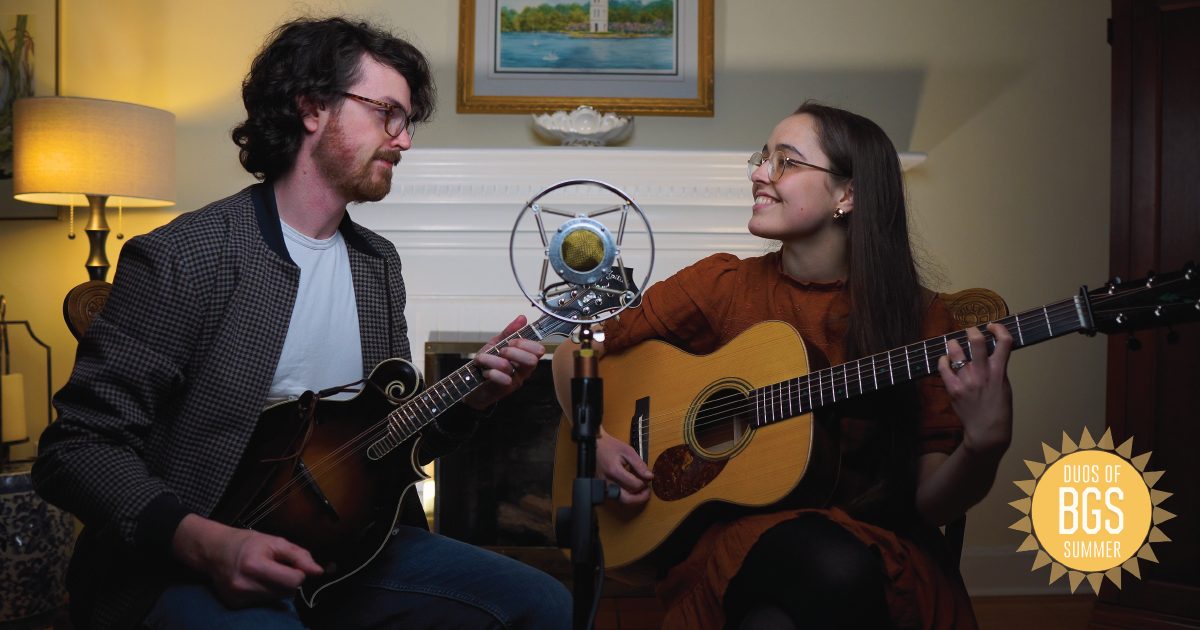
Photo courtesy of The Foreign Landers

LISTEN: Hannah Juanita, “Hard Hearted Woman”

Artist: Hannah Juanita
Hometown: Chattanooga, Tennessee
Song: “Hard Hearted Woman”
Album: Hardliner
Release Date: June 11, 2021

In Their Words: “Well, I’m glad I don’t feel like a ‘Hard Hearted Woman’ anymore! But that is how I felt coming out of my last relationship. Turning 30, moving back to Tennessee, and leaving the life I had built out West behind definitely had me feeling alone… but it was the good kind of alone. I may have felt hardened to love, but I was so ready and excited to do my own thing and make music. I remember well the night I wrote this song. All my friends were out honky-tonkin’ around Nashville, but I felt heavy-hearted and went home because it was time to sit down with my guitar and get this song written. It had been rolling around in my head for too long.” — Hannah Juanita


Photo credit: Jody Domingue