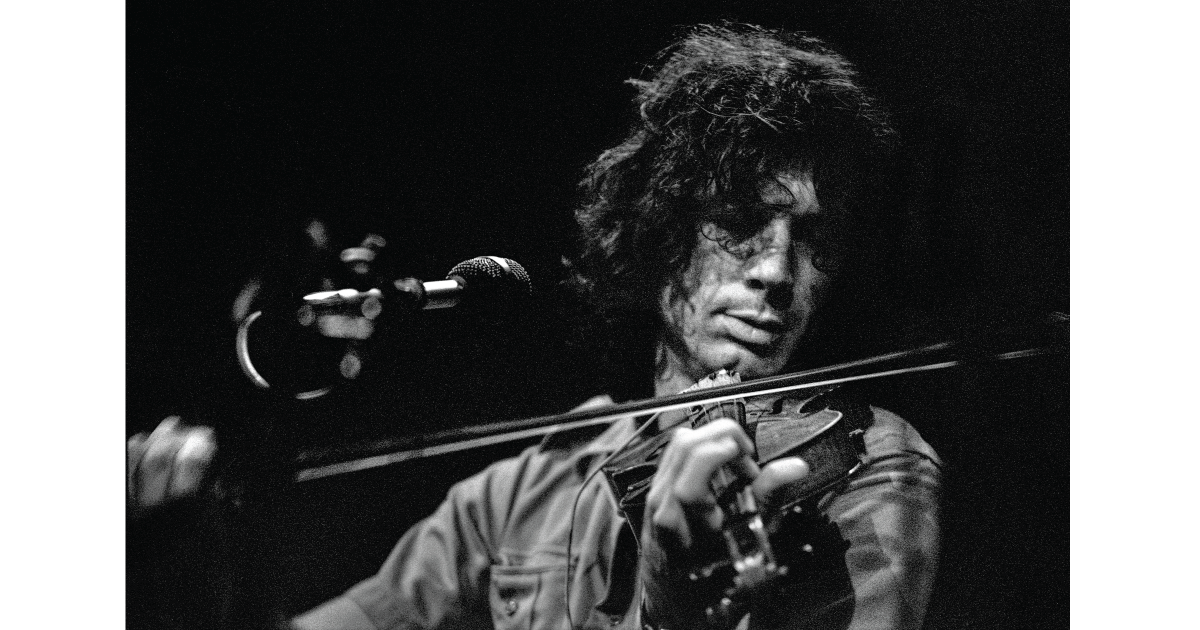
Twenty Years After ‘O Brother,’ John Hartford Gets Grammy Attention Again

Some years after the late great John Hartford passed on, his daughter Katie Harford Hogue wound up with his archival material in her basement in Nashville. It was a huge collection, a lifetime’s worth of recordings, books, instruments, notes, stage outfits and all the rest. So she dutifully began wading through everything to sort, organize and catalog it all. And she would come across notebooks with numbers on the cover, which she set aside – 68 of them all together.

“It can be a pretty heavy task to go through someone else’s things like that,” Hogue says now. “And I was not sure what they were at first. But we were able to piece together the puzzle and figure out what these were: They had been his creative journals.”

Representing decades’ worth of raw material, the journals contained nuggets straight out of Hartford’s musical mind. There were some transcriptions of old tunes by other artists, but the vast majority of it represented original music composed by Hartford himself, amounting to several thousand tunes. It was a trove that yielded up a couple of projects that have returned Hartford to widespread attention coming up on two decades after his death.

First came a 2018 book, John Hartford’s Mammoth Collection of Fiddle Tunes, featuring transcriptions of 176 compositions from the journals as well as Hartford’s own illustrations plus writings from Hogue, musicologist Dr. Greg Reish and others.

That led to an accompanying album, The John Hartford Fiddle Tune Project, Vol. 1, featuring an all-star cast of players recording 17 of the archival Hartford songs.

Even though it was independently released, The John Hartford Fiddle Tune Project is up for a Grammy Award in the category of Best Bluegrass Album, alongside Billy Strings, Danny Barnes, Steep Canyon Rangers, and Thomm Jutz.

“Winning would mean a lot,” says Hogue, who is credited as co-producer with Matt Combs. “But I certainly feel honored to be considered, especially in a field like that. The fact that there’s something new that has people paying attention to my dad’s work again is wonderful. Mind-blowing, even. It’s a side of him that a lot of people did not know about, another dimension. I love being a part of that.”

Hartford was no stranger to Grammy Awards, going all the way back to his mainstream breakthrough with “Gentle on My Mind.” Reputedly inspired by the 1965 romantic epic Doctor Zhivago, Hartford wrote and recorded the first version of “Gentle on My Mind” for his 1967 album, Earthwords & Music.

Yet it was Glen Campbell’s version from later that year that put “Gentle on My Mind” on the map. Industry lore has it that Campbell made what he thought was a demo, complete with yelled instructions to the Wrecking Crew studio musicians. Campbell’s producer Al De Lory cleaned it up enough to release as-was. And even though it barely cracked the pop Top 40, “Gentle on My Mind” never left the radio. In 1990, BMI rated it as the fourth-most played song in radio history.

Along with setting Hartford up financially, Campbell’s “Gentle on My Mind” cover won Hartford his first two Grammy Awards. He won another for 1976’s Mark Twang, an album inspired by Hartford’s riverboat experiences on his beloved Mississippi River. And his final Grammy was awarded posthumously, for his contributions to the landmark soundtrack for the 2000 Coen Brothers slapstick epic, O Brother, Where Art Thou?

O Brother’s surprising popularity launched a bluegrass revival and also put a luminous bookend on Hartford’s career. He emceed the Down From the Mountain show at Nashville’s Ryman Auditorium on May 24, 2000 (filmed by D.A. Pennebaker for the concert film of the same name), in which Emmylou Harris, Alison Krauss, Ralph Stanley and other stars from the soundtrack performed. The soundtrack was just starting to take off a year later, on its way to topping the charts and winning a Grammy for Album of the Year, when Hartford succumbed to cancer on June 4, 2001, at age 63.

“He didn’t get to see all of that, but he would have told you that the coolest part of that movie being popular was that it put an old Ed Haley tune in the forefront,” Hogue says. “There’s a campfire scene with a lonesome fiddle playing, and that was my dad playing the Ed Haley tune, ‘I Am a Man of Constant Sorrow.’ That was always his goal, to highlight the old-time music and fiddle players he loved so much. I don’t think he would have taken any of the accolades for himself.”

The Fiddle Tune Project album liner notes include a quote from Hartford himself, something he told Matt Combs once: “If we play our cards right, we can fiddle all day and on through the night.” That play-all-night-play-a-little-longer spirit animates the album, as played an all-star cast including Sierra Hull, Ronnie McCoury, Alison Brown, Tim O’Brien, Brittany Haas, Noam Pikelny and Chris Eldridge from Punch Brothers and Hartford’s old bandmate Mike Compton.

However, Hartford himself is the real star, in absentia, via the 17 songs pulled from the 2,000-plus in his journals. Hogue calls it a celebration of his creative process.

“Creativity with him was like a faucet he could never turn off,” Hogue says. “His journals are full of weird late-night thoughts and ideas he’d jot down, and then go back and try to work into something. He was very prolific and would go down rabbit holes very quickly. His journals have a lot of stream-of-consciousness writing where he was looking for different ways to come up with songs. He was a very open free-thinker.”

Combs oversaw recording at Cowboy Arms Hotel and Recording Spa, a Nashville studio formerly operated by Jack Clement. It is the studio Hartford used to make his 1984 album, Gum Tree Canoe. The project was funded by a Kickstarter campaign that raised more than $33,000 from 468 contributors. As the Vol. 1 in the title implies, there will be future volumes if only because more musicians wanted in on it than they had room to accommodate on just one record.

Indeed, tending to her father’s posthumous legacy has turned into quite an ongoing project for Hogue. Hartford left behind so much material in so many wide-ranging areas that the family donated parts of it to four different institutions. The Herman T. Pott National Inland Waterways Library at the St. Louis Mercantile Library is where Hartford’s photos, journals and research pertaining to the Mississippi River wound up.

“That’s where the papers of all the river people and mentors my dad grew up with are, so it already looked like his office on steroids,” Hogue says. “So that was a no-brainer for everything of his related to the river, from when he had his pilot’s license. Had he not been a musician, he would have been a boat pilot up and down the river. That’s what he really loved. It was his passion.”

Putting together these projects has been therapeutic for Hogue, who was raised by her mother after her parents split when she was very young. She didn’t see much of her father during her childhood, and there were long stretches when she mostly heard from him when he’d mail her copies of his latest album.

“I still remember opening the mailbox one day and finding Aereo-Plain,” she says, referring to Hartford’s 1971 hippie-bluegrass classic.

For all Hartford’s success, his daughter still didn’t realize his stature until relatively late in his life — especially from all the visitors who came to see him at the end. That carried over to when she was dealing with the archive that yielded up the book and the album.

“There’s a lot to sift through in a process like that,” Hogue says. “The public sees the figure and the persona and hears the music, but there’s so many different dynamics behind that for friends and family. When you lose a parent, it’s like the world comes to a stop and there’s suddenly a period at the end of everything they were. There’s so much joy, anger, frustration, confusion. Going through all his things this way made me able to see the human side of him, which was healing. It’s been a way to say, ‘Hey, Dad, we’re good. I did this because I love you.’ There’s a lot of joy in these songs. They just make you want to dance, and his spirit comes through. I love that. I’m thrilled to be able to have this with him, even though it’s posthumous. A father-daughter project, where he’s here in spirit.”


Photo credit: Charles Seton
At the Ryman, Four of Bluegrass’ Finest Sing “Down in the River to Pray”

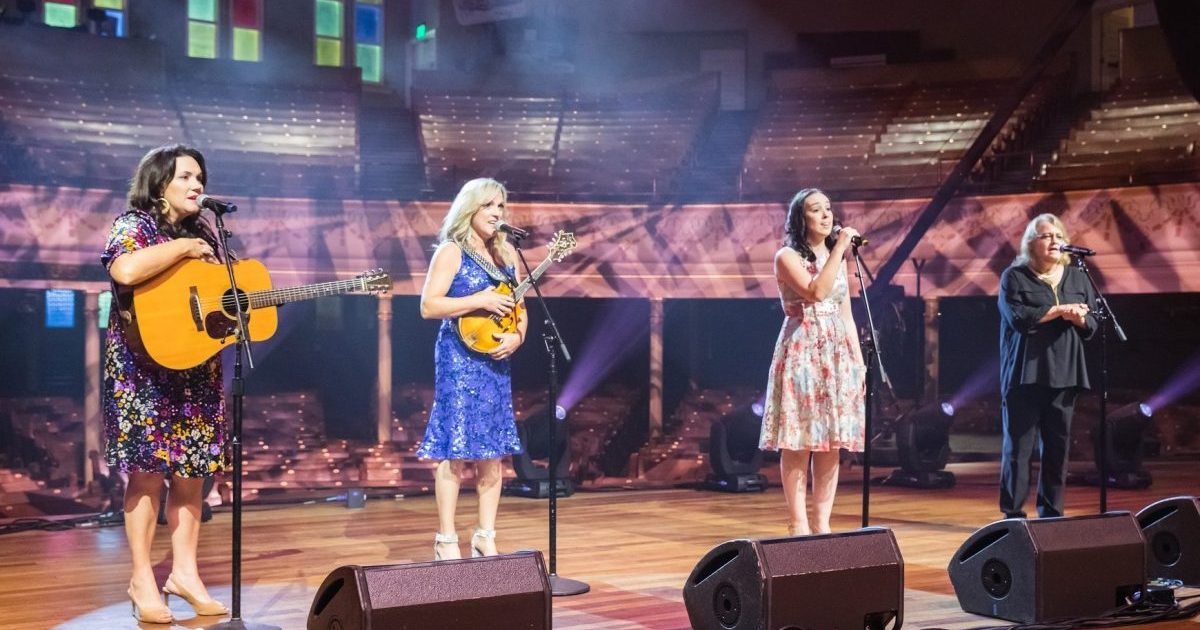
In our celebration of the movie that returned bluegrass to the spotlight of pop culture, we’re throwing it back to the 31st Annual IBMA Awards from October 2020. During the ceremony, four of the five women nominated for Female Vocalist of the Year banded their angelic voices together to pay tribute to the 2000 landmark film O Brother, Where Art Thou? In the video below, Amanda Smith, Rhonda Vincent, Brooke Aldridge, and Dale Ann Bradley stand stoically on the stage of the famed Ryman Auditorium to deliver a brilliant rendition of “Down in the River to Pray.”

This a capella performance is a reminder of not only the music featured in the film, but also the unique characteristic that bluegrass and old-time music can have, feeling simultaneously nostalgic and modern. The women’s gentle voices are wonders to behold in their own rights, but sparks fly when they harmonize, emanating a warmth and life into the historic venue where bluegrass was born. Watch these four eminent women of modern bluegrass interpret an all-time classic recording from our BGS Artist of the Month, O Brother, Where Art Thou?

Editor’s Note: The 2020 IBMA Bluegrass Music Awards will air on Circle TV on Monday, January 18 at 8pm ET / 7pm CT. The ceremony will be broadcast on Circle and Gray TV stations and can also be seen on DISH Studio Channel 102, Sling TV, and other TV affiliates. Circle TV is also available on 275 million smartphones and tablets via the Roku Channel and XUMO apps in addition to a companion livestream on Circle All Access Facebook, YouTube and Twitter.


Photo credit: Shelley Swanger. Pictured L-R: Amanda Smith, Rhonda Vincent, Brooke Aldridge, Dale Ann Bradley

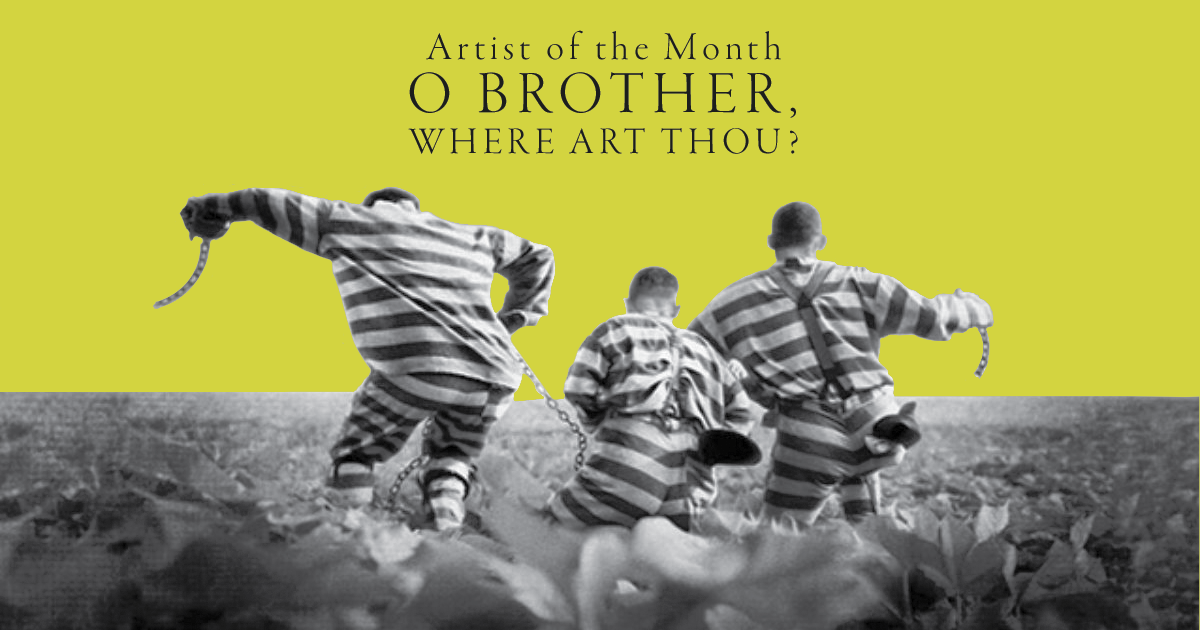
Artist of the Month: ‘O Brother, Where Art Thou?’

Twenty years ago, in 2001, the music of O Brother, Where Art Thou? captivated America and, suddenly, bluegrass appealed to pretty much everybody. We could all sing at least a few words of “I Am a Man of Constant Sorrow,” though admittedly not sound as good as Dan Tyminski or the Soggy Bottom Boys. Roots music heroes Emmylou Harris, Alison Krauss, and Gillian Welch added more positive press to their résumés, and before it was all over, the generation-spanning collection won multiple industry accolades, inspired a national tour, and even led to the first-ever Grammy Award for Dr. Ralph Stanley.

The song choices were largely well-known to dedicated bluegrass listeners, but even so, chestnuts like “I’ll Fly Away” don’t routinely end up on albums that sell eight million copies. Legends like Norman Blake and The Fairfield Four shared the spotlight with rising talent such as Chris Thomas King and The Peasall Sisters. Two decades later, The Whites still perform their version of “Keep on the Sunny Side” on the Grand Ole Opry at nearly every appearance, and to be sure, the audience smiles and applauds to hear it again.

This month, we’ll look at the legacy of that landmark album as an inspiration to a new generation of acoustic musicians, along with an interview with family members of John Hartford, whose name is back on the Grammy ballot this year for the collaborative album, The John Hartford Fiddle Tune Project, Vol 1. We’ll also have a special edition of our Roots On Screen feature about the film. Plus, check out a special IBMA Awards show performance of “Down In the River To Pray” and an archive edition of The Breakdown. And to finish out the month, we asked a crew of young bluegrass and Americana stars what the film means to them. While you’re at it, put down the Dapper Dan and turn up the O Brother, Where Art Thou? soundtrack below.


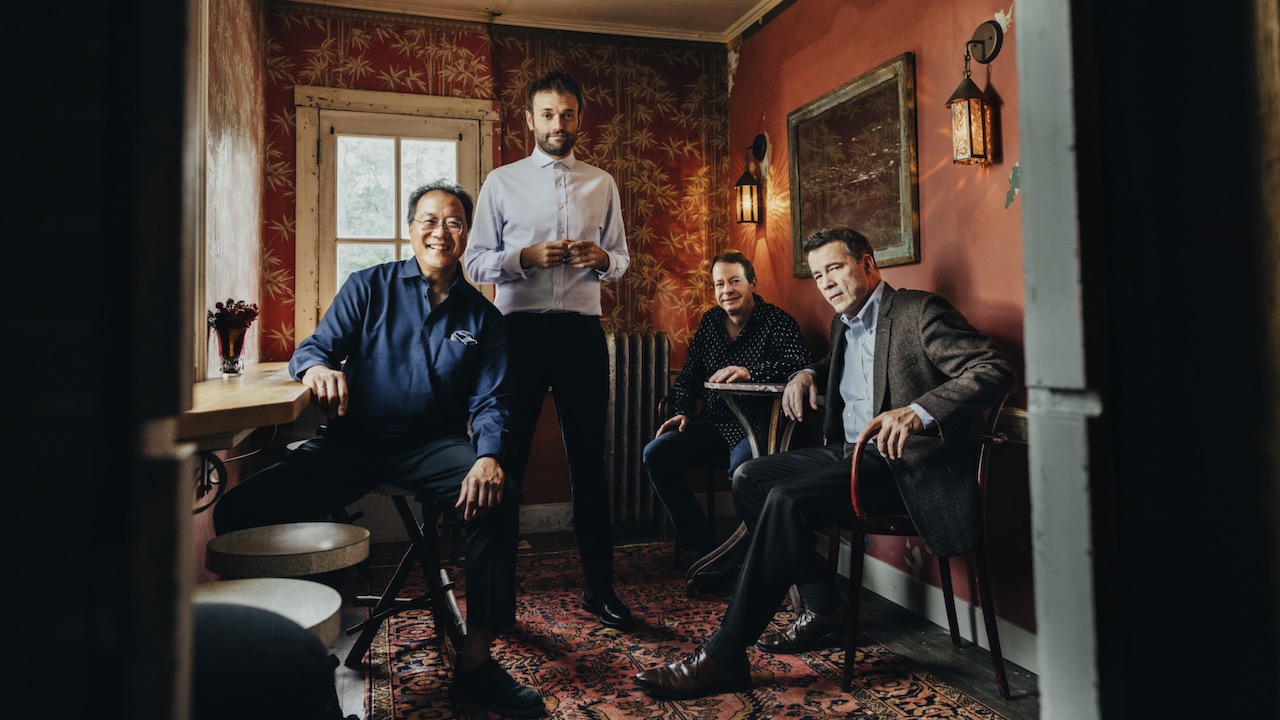
WATCH: Goat Rodeo Returns for a Tiny Desk (Home) Concert

The Goat Rodeo was back in town in 2020, and while their stay was short, they left behind a new record for us to enjoy until their next visit. The all-star string quartet (no, not literally a rodeo) released their second album Not Our First Goat Rodeo in June, and much like the passing of a comet, audiences everywhere took it in with wonder and awe. The four visionaries that constitute the Goat Rodeo have each accomplished many incredible, out-of-this world feats, but when Yo-Yo Ma, Edgar Meyer, Chris Thile, and Stuart Duncan join forces, the music made feels less like an album and more like a rare phenomenon you’re lucky to see even once in a lifetime.

This fall, NPR’s Tiny Desk (Home) concert series shared music from their sophomore release. Chris Thile acts as an emcee sharing backgrounds and insights between the three songs featured, all of which can be found on Not Our First Goat Rodeo. As in the 2011 release, the rodeo’s second coming features the beautiful vocal presence of Aoife O’Donovan on the song “The Trappings” (as well as on two other tracks not performed for NPR). Despite their brief reunion, Not Our First Goat Rodeo will surely be considered as one of the highlights of 2020. Watch the Tiny Desk performance here – and read our BGS Artist of the Month interviews with Stuart Duncan, Edgar Meyer, Chris Thile, and Yo-Yo Ma.


Photo credit: Josh Goleman

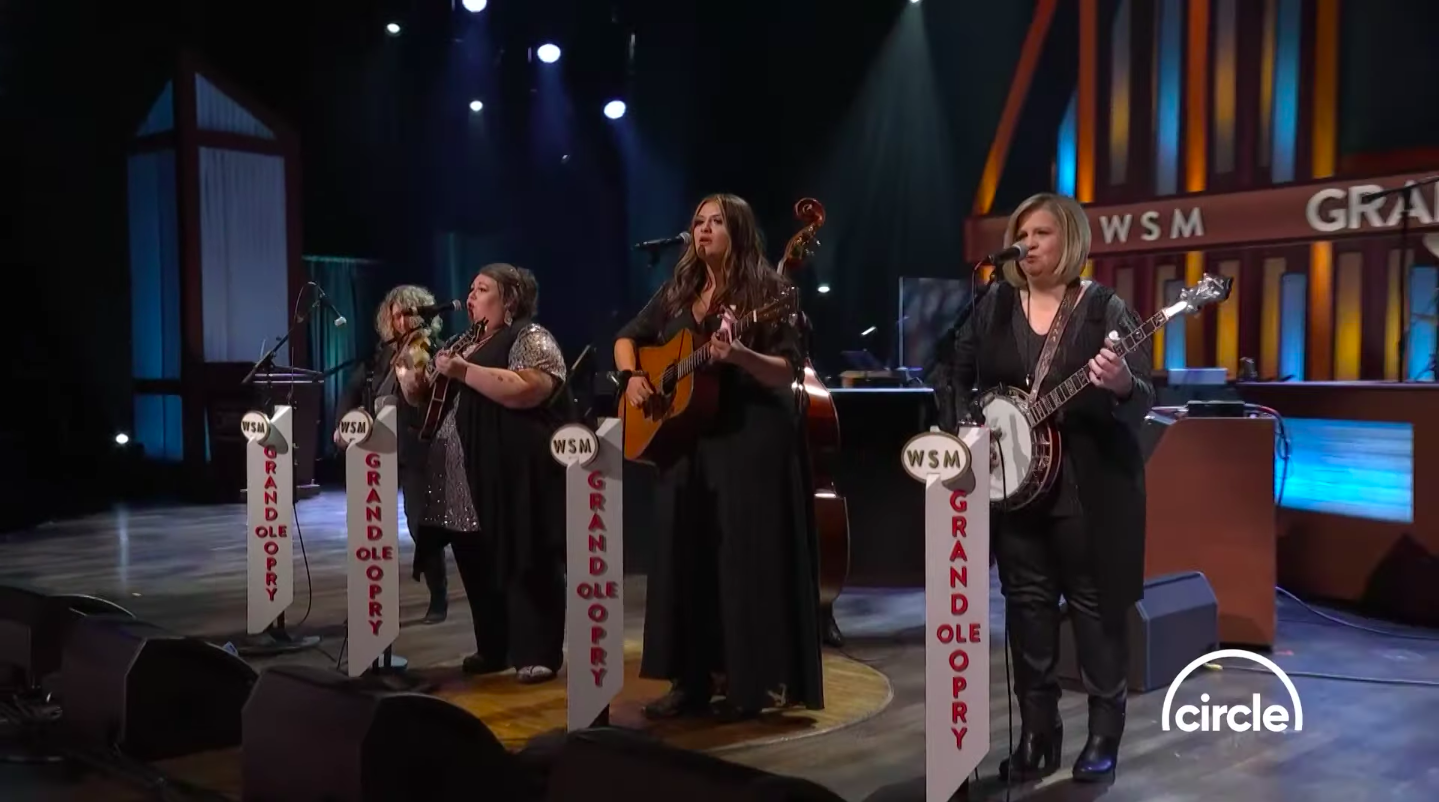
WATCH: Sister Sadie Sing “Since I Laid My Burden Down” On the Opry

Sister Sadie, our BGS Artist of the Month in December, got a strong start to closing out 2020. The trailblazing all-female powerhouse performed on the Grand Ole Opry on December 5 and left the audience in ashes after performing a scorching rendition of “Since I Laid My Burden Down.” Folks and fans are wising up to the group since their recent successes at both the IBMA Awards and the Grammys, winning three awards in the last two years from the IBMA and earning their first Grammy nomination in 2018.

For those who might still be new to the band, check out our Artist of the Month interview to gain a deeper appreciation for the incredible music that has arisen so naturally from the tight bonds of friendship and out of the hard-worked hands of these all-stars in the acoustic community. Tina Adair sings and picks mean mandolin over the roaring undercurrent of Gena Britt’s rolling banjo and Deanie Richardson’s screaming fiddle. They’re joined in this performance by singer-guitarist Jaelee Roberts and bassist Hasee Ciaccio. From the famed Opry stage, watch the reigning IBMA Entertainers of the Year tear up some old-fashioned bluegrass.


Sister Sadie: Bluegrass Entertainers, Teachers, and Most of All, Friends

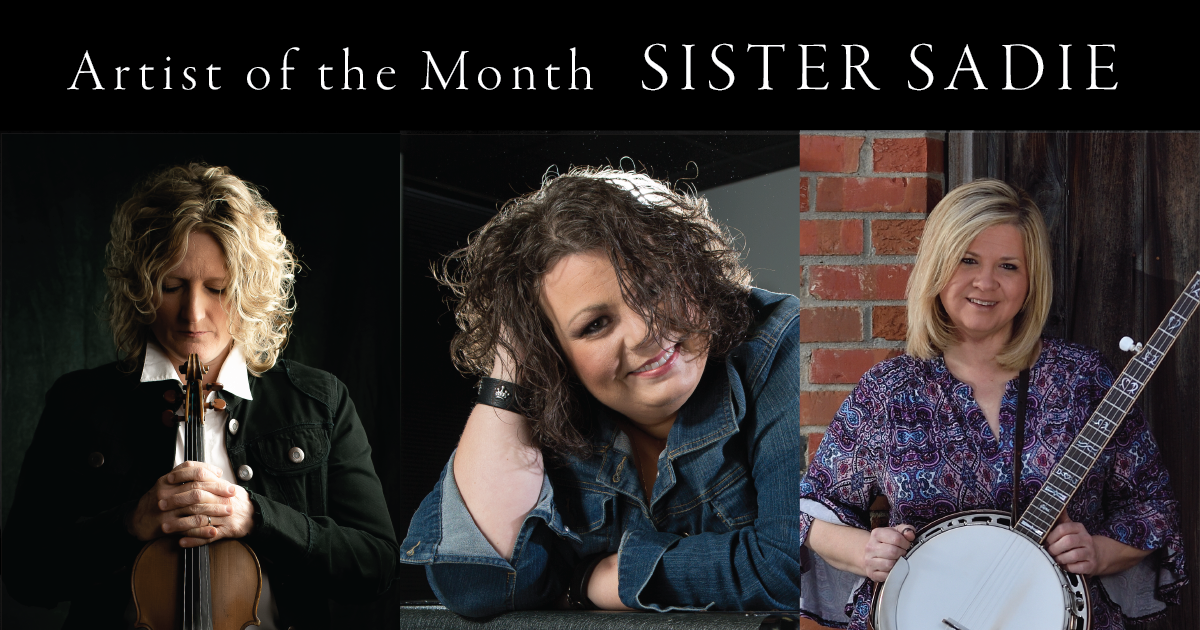
Sister Sadie is a bluegrass supergroup featuring no-holds-barred instrumental and vocal talent presented as world-class entertainment. To list each member’s history in bluegrass and their accomplishments would take up more space than this entire interview, but their music speaks for itself. These women have spent their lives perfecting their craft. The band originally formed to play a one-off show at the historic Station Inn in Nashville. Once they started playing, they knew that they had found something special.

Since that night they have gone on to perform on the Grand Ole Opry, receive a Grammy nomination, and rack up two historic awards from the International Bluegrass Music Association. In 2019 they were the first all-female group to win IBMA Vocal Group of the Year and in 2020 they became the first all-female group to win IBMA Entertainer of the Year. These awards represent not only their individual lifetimes’ worth of hard work and passion, but also the work and love that they put into their music and each other.

BGS caught up with three of the band’s founding members — Tina Adair (mandolin, vocals), Gena Britt (banjo, vocals), and Deanie Richardson (fiddle) — for our Artist of the Month interview.

BGS: Since IBMA was virtual this year I haven’t gotten to see any of y’all in person to congratulate you on your award. I imagine this recognition must feel exciting since you’ve all been playing for your entire lives. Does winning Entertainer of the Year hold any special significance to you?

Tina Adair: I’ve been singing on stage since I was 3 years old. As big of a ham as I am now, I was as big a ham back then, too. I’ve always loved the stage and I love entertaining people and making people feel good and having a good time. I think people go out to see shows to get a break from the everyday world and to enjoy music because music is very therapeutic. It’s always been a goal of mine to make sure that people leave smiling bigger than they did coming into the show and feeling like they’re part of something. I know that Gena and Deanie are the same, all we’ve ever known has been music, you know? It’s not just a part of our lives — it is our life. So to get to do this as a profession, just makes us even luckier. And then to be recognized by your peers. Entertainer of the Year has always been something that I’ve dreamed about all my life. It’s been very special and we’re very honored and grateful.

Gena Britt: That’s pretty much everything I would’ve said.

Deanie Richardson: Yeah, that was pretty good. I’d say we’ve all been going to IBMA since we were teenagers. We all dreamed of being nominated for awards, but I don’t know if we ever thought it would happen. And like Tina said, that Entertainer of the Year category is special for some reason, so winning is just the icing on the cake. It means that we’ve not only gone out and played our best, but entertained them. Tina’s a great entertainer. She can grab that crowd and take them on a big journey. They’ll laugh and cry and anything they need to feel emotionally she can do that with an audience. To pull this off, to experience these awards and what we’ve accomplished together as five friends who have grown up knowing each other and going to IBMA that’s the really special part for me.

You all have this connection to mentoring the next generation, which is such a big part of the bluegrass tradition. How do you feel about being able to influence the generation of bluegrass in general and of women and bluegrass?

TA: Each of us has had such a lifelong journey, and we’re not old, but we’re middle aged now. So we’ve got some experiences to share. With age comes wisdom. I’ve been [working] at Belmont [University] for 20 years now. Personally I love that college age, because it’s such a transitional period in a person’s life. That’s the age where you’re coming into being a young adult and learning to make decisions. I love to be involved in lives at that point in time. I love to be able to provide advice to the kids and share any kind of tips. One of the best pieces of advice I always give to my students that I learned from one of my mentors is to do something every day to help forward yourself towards a goal or the career that you want to go after. Whether you spend five minutes on it or 10 hours that day on it, do something every single day.

And then, as far as influencing women and everything, I hope I can be an influence to a female that doesn’t fit the typical mold of what people think you’re supposed to look like in society. You know what I mean? People who need to be encouraged to get on stage or find the courage to want to learn how to play something even if they’re just sitting in their living room. I think that’s important — having that self-confidence and awareness of knowing who you are and knowing what you stand for. And being okay with yourself. Lord knows I’m not a size four, but it doesn’t matter. I’ve got the confidence of a size two. I love people. And I think if you give love to people then they’re gonna give back to you. I really feed off the energy of an audience because if I’m interacting with them and they’re interacting with me, then they’re invested just as much as I’m invested in them, you know? If I can influence one person that may have thought they couldn’t do something but changed their mind after seeing a Sister Sadie show, then that’s made our journey worth it.

DR: We’re not ones to harp on this whole “We’re women, blah, blah, blah.” But there are lots of women out there who paved the way for us like Laurie Lewis, Lynn Morris, and Kathy Kallick. We look up to them and they made it possible for us to win these awards. Somebody said the other day in an interview, “No woman has ever won this award” or all-female band or whatever. It is a male-dominated business, but there have always been women in this genre. There have been women always working towards what we just accomplished and they helped us get to where we are. And I hope that we’re paving the way for the next group of women to come right behind us. I think we’re working past saying, “Here are some women, and they just did this.” Because, you know what? We’re freaking good. And we just did this. Eighty percent of my roster that I teach is young girls playing fiddle and I want them to not have to worry about being a man or a woman. I want them to just want to be good, or to be the best, and to get out there and do this because that’s their goal.

Gena, I had a question for you because you played in Petticoat Junction, which is another historically significant, all-female group. Do you feel like there’s much of a difference performing in an all-female group now versus back then?

GB: Back then, there were a few other all-female bands, and at the time, if you called a promoter to book a show or something, they would say, “Well, we’ve already got a female band that weekend. We don’t need another female band.” I think we’ve grown so much since then. It hasn’t completely gone away, but we have stepped away from that. Yes, we are women, we are in our 40s, we all have these jobs that we’re doing, like, I have a day job and everything. But people are recognizing our music and we’ve been given these awards, because we’re carrying our own and we’re doing as best we can as musicians.

It’s great to see all of that progress. Bluegrass has this thing where men age into reverence, kind of no matter how talented they are. If you’ve been around for long enough, then people recognize that you have some wisdom which is turned into social capital. But women don’t seem to get that same treatment. It seems like it’s much harder for them to age into legends. You just stop hearing about them as much. It’s a really unsettling phenomenon. So I think it’s doubly exciting for you all to, uh, as… I’m trying so hard to not say, and I’m not saying at all that you guys are —

TA: Just say it, Tristan!

You’re only older than me! You’re not old, I’m just a baby.

TA: I mean, we’re all one step away from menopause. At least I really hope I am, because if I’m not, there’s something else wrong with me. [Laughs]

GB: I was 18 when I joined Petticoat Junction. That was 30 years ago. I’m 48. That gives some perspective on how long we’ve been out here doing this.

You’ve been doing this your entire lives and have been actively involved in the scene the entire time and I think it’s reflected in your music. You’re all talented musicians. The music that you play has its own sound, but clearly has a lot of different influences. How do you bridge the gap between bluegrass and folk and country and blues?

DR: Going into the studio and picking material is a hard thing for five people to do, and as women who all have different tastes and different senses of artistic creativity, it’s a challenge. Everybody brings songs to the table and then we choose as a unit what we think works as a band. That’s a hard process for us, but I feel like, at the end of the day, we work really well through our differences. Hell, we’re probably gonna break into a fight, but it’s gonna be alright. We’re gonna make it through it. And at the end of the day, there’s gonna be 12 songs on the record that we can kick ass on. Part of it comes down to Tina has a singing style that works for her, Gena has a singing style, and Dale Ann had one as well. So that brings in the blues, the hardcore traditional, the folky, from each of us.

GB: It’s all those influences. The East Kentucky, Alabama and the blues from Tina, I’m straight-ahead, traditional bluegrass from here in the heart of North Carolina. And it’s like you said, it is a cohesive sound. We’re all together. All those influences do help create our sound.

TA: It’s what brings it together.

You all clearly put a lot of work and love into your music and it’s really paid off.

DR: The one thing I am most proud of about this band is that we started as five friends played that show at the Station Inn. It went from there to another show, to another show, to a record to another record, to a Grammy nomination, to the Opry, to Vocal Group of the Year, to Fiddle Player and Entertainer of the Year. I wouldn’t have won that Fiddle Player or the Year award without this band so I’m truly grateful for all of that. But we’ve done this all by ourselves. We are five women who love each other, who work through our differences, and who have worked hard together.

We’ve done the booking, we’ve done the managing, we’ve done the publicity — it’s all been organic. It’s not something we’ve gone out and pushed, it’s not something we’ve gone out and publicized a great deal. It’s just all happened organically. It took on its own life. Everything that has happened with Sister Sadie has happened because it was meant to happen. And it’s just out of our love for this music and for each other. That is what I’m most proud of. Five women who raise kids, who work day jobs, who teach, who play professionally. Five women who have done this together. I’m super, super proud of that.

TA: Me, too. I want to piggyback off of that because that’s an important point. We didn’t start off to make it big or anything. We just wanted to play music together and instead of doing it in our living room, we thought, “Well, we could do it at the Station Inn, and that would be fun.” Because Station Inn is like all of our home away from home. So that’s how it all started. I think everything has a time and a place and everything happens the way it’s supposed to happen. I think that night at the Station Inn was supposed to happen. That is what led us down this road to accomplishing and achieving some things that have been lifelong dreams of ours that may not have ever come true had Sister Sadie not been formed. We just love each other dearly and hopefully that comes across. I hope the concept of Sister Sadie comes across as nothing more than we’re trying to love. I love people, we love each other, and love making music. We love bluegrass.


Photo credits: Deanie Richardson by Kerrie Richardson; Tina Adair by John Dorton; Gena Britt by Mike Carter

Artist of the Month: Sister Sadie

Stepping out with a number of the most talented women in bluegrass, Sister Sadie made an impressive showing in 2020, with a first-ever win as IBMA Entertainer of the Year and a repeat for Vocal Group of the Year. Plus, their fiddler Deanie Richardson picked up two more trophies as Fiddle Player of the Year and Collaborative Recording of the Year (for her appearance on Becky Buller’s “The Barber’s Fiddle.”) The accolades confirm what bluegrass fans have long known: There is room for everyone in the genre, regardless of gender. In fact, Sister Sadie is the only all-female group to win bluegrass’ top award.

“Bluegrass is traditionally viewed as a male-centric genre, but a genre that is rooted in the Appalachian sounds of Mother Maybelle Carter,” says Tina Adair, the band’s vocalist and mandolin player. “We’re proud of this honor. There’s a lot of purity and traditionalism in this genre, but a lot of progressivism, too. We love getting to contribute new perspectives to a style of music that has shaped us all.”

“We’re all over 40 and proud to be on the front lines to show other women that they can also achieve their dreams,” Richardson says. “We’re proud to expand the ways people hear and view bluegrass, too. To us, it’s a musical national treasure that can be traced back to the foundation of our country, and it tells a story of a landscape, a culture, a mindset, and a struggle to overcome the odds. It’s in our blood.”

All three members of Sister Sadie are accomplished recording artists in their own right. In 2019, Deanie Richardson issued a solo album (Love Hard, Work Hard, Play Hard) as well as a lively record with a side project known as The Likely Culprits. IBMA Award-nominated Banjo player Gena Britt also submitted an excellent collaborative record in 2019, titled Chronicle: Friends and Music, while Tina Adair continues to record as a compelling solo artist.

In 2020, Adair also partnered for a wonderful covers album with Dale Ann Bradley, who departed Sister Sadie in November to travel with her band exclusively in 2021. The sisterhood remains, though. A recent Instagram post by the band concludes, “Because our friendship takes precedent to our musical goals, we celebrate each other in every way possible whether it’s tied to Sister Sadie or any of our other efforts. We’re beyond thrilled for Dale Ann as she charges forward with her solo career and are equally excited to see what unfolds for Sister Sadie.”

Sister Sadie has already contributed to the modern bluegrass canon with 2016’s self-titled album, followed by 2018’s Sister Sadie II. Read an interview by Tristan Scroggins with the band’s three members here. While you’re at it, check out the breadth of Sister Sadie’s catalog in our Essentials playlist.


Photo credits: Deanie Richardson by Kerrie Richardson; Tina Adair by John Dorton; Gena Britt by Mike Carter

How Shemekia Copeland Found Fans Beyond the Blues (Part 2 of 2)

Over the last 10 years, in a series of albums recorded with producers Oliver Wood and Will Kimbrough, Shemekia Copeland has progressed from a first-class blues belter into a wider-ranging, more nuanced artist whose music touches on Americana, rock, and country — and she’s still a first-class blues belter.

In addition to working with Kimbrough on her new album Uncivil War and 2018’s America’s Child, Copeland has recorded with artists like John Prine, Emmylou Harris, and ZZ Top’s Billy Gibbons. In part two of our interview with Copeland, whose father is the late Texas blues great, Johnny Clyde Copeland, we discuss her musical development and the lessons she learned while teaming with these and other unlikely collaborators.

Editor’s Note: Read the first part of our two-part interview with Shemekia Copeland.

BGS: Over your last four albums, you’ve worked with producers Oliver Wood and Will Kimbrough, mostly in Nashville, and really started to open up the instrumentation and type of songs you’ve recorded. So I have a chicken and the egg question: did you start working differently because you wanted to change, or did you change because you worked with different people in different places?

SC: It happened organically. The first record with Oliver was in Atlanta and then he moved to Nashville, because everybody moves to Nashville, because that’s where musicians and studios are, and it’s inexpensive to work there. Oliver had Will Kimbrough come in and play and I was a big fan of his. When he played on my record, it was love at first note, because he’s just a musical genius.

We did our last record America’s Child with him and he just knows everyone. Nashville is such a small town in that way. All the musicians know, respect, and love each other. Will would say, “So-and-so would sound good on this. Let’s call him,” and within a day they’d have these guys in the studio that you couldn’t imagine working with as a blues artist, because you don’t know them. The gates of Heaven opened up being in Nashville because that’s where everybody is.

How about Oliver Wood?

I love him. He’s a very talented player and writer, and the best thing about him was that he really encouraged me to think about how I sing. I came from the blues shouter way of singing, and from him I learned that you don’t have to do that to move people. That was huge for me, to learn that you can capture people with subtlety just as much as you can capture them with the hugeness of your voice. We had that conversation and I took that away from working with him and have carried it on.

“Uncivil War” is a perfect example. I did not want to sing that song. I thought it was is a pretty song for somebody with a pretty voice to sing. I wanted the world to hear it and figured they would not if it was coming from me, because I don’t have a pretty voice. That’s when they all yelled at me and said I was being completely ridiculous and to just sing the damn song. But I still struggle with thinking that the subtleties of my voice work. I was just using the power of my voice more like a Koko Taylor, or Etta James.

Let’s talk about some of these people you’ve worked with. You did a duet with John Prine on his lesser-known blues song “Great Rain.” Tell me about that.

That happened completely organically, but here in Chicago, though he lived in Nashville. He’s originally from Illinois and we were both on a concert called Voices of Chicago. I was there to represent blues and John was there to represent the fact that he’s just frickin’ amazing. We were backstage and I’m standing there looking at John Prine thinking, “Oh my God, I’m standing here looking at John Prine.” And he looked down at my feet and said, “I love your shoes!” We started talking and I fell in love with his wife, Fiona. Amazing people. We got to talkin’, started working on projects together, and the rest is history. People like him know how to break the ice with people when they’re nervous around them.

How about Emmylou Harris?

That was just a Will Kimbrough connection. I met her a couple times, like in passing at festivals, but her being on “America’s Child” was Will. He plays with her. She heard the song, loved it, and wanted to sing on it, which was beautiful.

Steve Cropper, who produced The Soul Truth (2005), also plays on the new one.

Who doesn’t love Steve Cropper? He wrote all the hit songs that you can think of. I love working with him, loved his energy. We wanted to do something different after the Dr. John record [2002’s Talking to Strangers], so we thought, why not try to get a soulful record? And who better to make a soulful record than Steve Cropper? He also played on all the songs and Steve Cropper plays like Steve Cropper. He has a sound all his own. You know when you’re listening to him.

What about Billy Gibbons?

Billy was a big fan of Johnny Copeland; he went and saw my dad perform all the time when he was a kid. I was hanging out with him in India [at the 2017 Mahindra Blues Festival in Mumbai] and we were talking about all that. I wanted to do “Jesus Just Left Chicago” and John [Hahn, Copeland’s manager] had the bright idea to ask him. I never would have been ballsy enough to do that. Thank God for managers and producers.

I love Rhiannon Giddens on “Smoked Ham and Peaches.”

Yeah, and she sounded amazing on it. Oh, my gosh. I was a big fan of her and Dom Flemons and the Carolina Chocolate Drops! Just a group of interesting, amazing, talented people. But then I saw her perform as a headliner of the Chicago Blues Festival and she was just incredible. I really wanted to work on it and was so happy when she said she was aware of me, and would love to do it.

It’s probably the most acoustic, downhome song you’ve done and a good example of why some people started talking about you and Americana and not just blues.

I’ve always listened to country and bluegrass, even if I didn’t know who I was listening to. I just liked the instrumentation of it and the singers and lyrics. Americana was not on my radar, but I grew up listening to country music because my dad grew up in Texas and loved it. I’d walk around the house singing Patsy Cline and Hank Williams songs that my dad loved, but I hadn’t really even heard anything about the blend of country and roots music until a few years ago, so I think it’s kind of hilarious that people are saying I’m crossing over to Americana. But I welcome all listeners!

Has your audience changed over the course of these last few albums?

Yes, especially since America’s Child, but even going back to [2009’s] Never Going Back, I started getting people at my shows saying stuff like, “You know, I’m not really into blues, but I love what you do.” And I’m like, “Well, if you’re listening to me, then you could probably say you’re into blues. I think you’re more into the blues than you think you are!” I always hoped that I was getting fans that weren’t just blues fans, and I think the audience is growing a little bit for me — at least I hope so!

(Editor’s Note: Read the first part of our two-part interview with Shemekia Copeland.)


Photo credit: Mike White

Shaped by Blues and Country, Shemekia Copeland Launches ‘Uncivil War’ (Part 1 of 2)

At just 41 years old, Shemekia Copeland is already an established multi-decade blues veteran. That’s what happens when you start performing as a pre-teen with your blues legend father Johnny Clyde Copeland and make your recorded debut at 18. As one of the primary hosts on SiriusXM’s BB King’s Bluesville channel, she’s also one of the genre’s highest-profile artists. A recent series of albums have both underlined Copeland as a star of the blues and pushed her beyond the walls of the genre, further into Americana and socially conscious commentary.

Her latest, Uncivil War, is another bold step forward. Recorded in Nashville with producer Will Kimbrough, the album features a wide range of guest performers, including Jason Isbell, Christone “Kingfish” Ingram, Steve Cropper, Duane Eddy, Webb Wilder and bluegrass legends Sam Bush and Jerry Douglas. She pushes boundaries not just with the instrumentation but the topics she covers, including “Clotilda’s on Fire,” which tells the story of the last slave ship to come to the U.S., and the title track, “Uncivil War,” is a plea for healing in our increasingly divided nation.

“Americana was not on my radar, but I grew up listening to country music because my dad grew up in Texas and loved it,” Copeland tells BGS. “I’d walk around the house singing Patsy Cline and Hank Williams songs that my dad loved, but I hadn’t really even heard anything about the blend of country and roots music until a few years ago, so I think it’s kind of hilarious that people are saying I’m crossing over to Americana. But I welcome all listeners!”

Editor’s Note: Read the second half of our interview with Shemekia Copeland here.

BGS: Over the past few albums, you’ve really stretched out musically and part of that is working with a wide range of musicians, many from outside the blues world. Let’s talk about a few of them on the new record, starting with two bluegrass greats, Sam Bush and Jerry Douglas.

SC: Oh my gosh! They are just really talented guys who make anything better. I just love those guys! I think my favorite part about them is that they exemplify something I love about Nashville: nobody cares about genre. It’s all about just whether or not it’s a good song and whether they want to play on it. And that’s it.

You think that’s notably different than other places? Do you find that not to be the case in New York or Chicago, for instance?

I have to say yes to that. I think it’s different in Nashville. People just want to play music. Down there, nobody ever even asks, “How much does it pay?” They’re just like, “What time do I need to show up?” It’s really about the music and Will Kimbrough, who produced the last two records, knows everyone in town and has played with most of them.

Jason Isbell is another great guest on this album and plays a great solo on “Clotilda’s on Fire.”

Yes, that one was a little different. We did a show at the Grand Ole Opry together, so Jason knew who I was when Will called and asked him to play on this song, and he was ready to do it. “Clotilda’s on Fire” is about the slave ship that they found off the coast of Alabama, and he’s from Alabama and we wanted him to play lead guitar on it. It just felt natural. It’s amazing how organically these things happen.

That song is really powerful and it’s just one of several very topical tunes on this record. That’s something different that you’ve really established. The first four songs are not about personal things like heartbreak, but heavy topics addressed in interesting ways. You have “Clotilda’s on Fire,” about the last slave ship; “Walk Until I Ride,” a modern-day Civil Rights anthem; and “Uncivil War” and “Money Makes You Ugly,” whose titles speak for themselves. Did you make a very conscious decision to do this?

Absolutely! I’ve been doing it for several records now. And I think the more confident I get, the better I get at it, and the more comfortable I get with saying what’s on my mind. Like on America’s Child, I did “Would You Take My Blood?” which was the first time I ever tackled a song about racism. On previous records, I did songs about domestic violence, date rape, things like that. But it feels more imperative than ever with everything that’s going on in this country now — and this was before COVID-19. This record was finished when all of this crap happened.

I was struck by the story about the Clotilda ever since the ship was found off the coast of Alabama. My ancestors came over here on one of those ships. I did my DNA and I’m 87 percent African, so I was very interested in that story. I wanted people to know about it and, more importantly, to understand why it still matters so much. The line in that song that’s one of the most important to me is “We’re still living with her ghost.” I want people to know that it hasn’t ended, that we’re still going through the same stuff and it’s very, very saddening. Heartbreaking, really.

Have you had any backlash to being more outspoken?

Oh, of course.

Do you care?

Not at all. You can’t satisfy everyone. The one thing that I’ve learned in my career is you’re going to piss somebody off. Not everybody’s gonna be happy with you. It’s just that simple, and it’s okay. Nobody wants their difficult history dredged up and put out in front of their face, but I’m good as long as I can look at myself in the mirror every day and be happy with myself.

Amidst all the great new original songs is a cool cover of The Rolling Stones’ “Under My Thumb.” How did you choose that one?

Doing that song was, for me, turning the tables on men. In fact, I actually hate it as a Stones song. I don’t want a man talking about a woman in that way — but it’s a great song! I don’t want to think of a woman being under anyone’s thumb, so the tables were turned… but one critic listened to it and said, “She’s talking about Black women being oppressed in this country.” I thought, “They’re making me sound so smart!” Same thing with “No Heart at All,” which a lot of people have read a lot into and interpreted as being about the president. Okay, but that goes for anyone who doesn’t have one.

That’s interesting about “Under My Thumb.” There’s a power to a woman flipping a song as Aretha did with Otis Redding’s “Respect.” That’s a completely different song sung from a woman’s perspective.

Yeah, to me, a guy singing that is just not right. Doesn’t work. Like, I couldn’t do some standard songs, as much as I love them. I would never want to sing things like “I’d Rather Go Blind” because, shit, I don’t want to go blind. You want to go? Get to steppin’! I don’t need you here. You know what I mean? It’s like this great love song but it leaves me saying, screw that. Peace out.

And you’d never think of Etta James as a pushover in any way! You were close with Koko Taylor, who turned some songs around as well.

She did! “I’m a Woman” was her turning the tables on men. I was devastated when we lost her [in 2009] because she always checked on me. She was so worried about me being in this business because of what she went through with her musicians and managers. Meanwhile, I’m out on the road with all these square guys that only drink herbal tea and don’t even smoke cigarettes. This was not her experience at all! I don’t think that she realized that it was just a different time. She had managers stealing money and disappearing into crack dens. She went through some stuff and wanted to make sure that I could avoid them.

You have a very interesting relationship with your manager, John Hahn, who is also your primary songwriter. How did that develop?

I met John when I was 8 years old. When my friends came around, I’d say, “This is Mr. John Hahn and he’s my manager.” Really, he was working with my father and I was just a little kid talking shit. But when I was about 12, he wrote me a song called “Daddy’s Little Girl” for fun. I started to go sit in with my dad. Now fast forward 33 years or so, and John and I talk every day on the phone, about everything. Having someone who knows me so well write songs is like having a tailor make you a suit. These songs are tailor-made to me, and I’m very fortunate to have that.

Your father was a great songwriter who wrote simple but profound lyrics that really resonated with me. Obviously you agree because almost every album you do one of his tunes, this time “Love Song.”

Yes, thank you! People have suggested I could do a whole record of my daddy’s songs, but this is my subtle way of doing it. I’ve already done ten of them. And, I got to tell you, I do believe that my little boy Johnny is my father reincarnated. He acts just like him. He’s three-and-a-half years old, and is so damn sure of himself. This kid knows who he is. He is arrogant in his confidence, and I always felt my father to be that way. Kind and sweet, but definitely sure of himself. You couldn’t tell him who he was, because he knew. And this little boy is all that and a bag of chips. By the way, my dad knew that I was going to be a singer the second that I came out of the womb.

That’s amazing. How?

I don’t know, but he told my mother when she was holding me in her arms, “She’s going to be a singer.”

And you always feel that way?

No! I did not have the confidence to be a singer. I never wanted to be in front of people. Audiences scared me. I’d always ask my dad how he could get up there in front of all those people and perform. That was always a problem for me.

But you did it from such a young age. I saw you when you were about 12!

I did, but I never was comfortable with it. And it’s now my favorite part. The music business sucks, but performing in front of people is the most amazing feeling in the world. That didn’t come to me until I got older, and became more confident in myself. I had to grow up. Eventually I realized this is who I am.

When was that? You put out your first record at 19.

It’s gotten better over the years. You’re always a work in progress. I started out as a child, and a certain confidence comes in when you’ve been doing it a couple of decades! You never ever stop paying your dues, but I’ve now accepted me wholeheartedly.

(Editor’s Note: Read the second half of our interview with Shemekia Copeland here.)


Photo credit: Mike White

Artist of the Month: Shemekia Copeland

When it comes to modern blues, Shemekia Copeland is at the top of her game. Uncivil War, her newest release on Alligator Records, offers a number of topical songs, ranging from gun rights (“Apple Pie and a .45”) to LGBT affirmation (“She Don’t Wear Pink”). Yet as the album progresses, she delivers a few straight-up blues songs like “No Heart at All” and “In the Dark” that could have fallen anywhere in her decades-long career — or found a home with the generation of blues artists that inspired her. Throughout, her voice is strong, drawing you in to hear firsthand what’s on her mind.

Recorded in Nashville with producer Will Kimbrough, Uncivil War gives Copeland a chance to clearly speak her truth. From the historical narrative of “Clotilda’s on Fire” (with an electrifying guitar solo from Jason Isbell) to the philosophical title track (which features acoustic all-stars Sam Bush and Jerry Douglas), Copeland consistently comes across as persuasive, but not abrasive. The message of one of the album’s finest moments, “Walk Until I Ride,” is indeed empowering — but the fact that she needs to walk in the first place is not lost on the listener.

“You know, being angry doesn’t do us any justice,” Copeland told NPR in October. “I spent my time being angry and pissed off and mad about it. But at the end of the day, you know, that just doesn’t help anything.” That determination to channel her emotions into her music paid off in 2019 as she picked up multiple wins in the Blues Music Awards and Living Blues Critic’s Poll on the strength of her prior release, America’s Child. Since 2000, three of her albums have also received Grammy nominations.

In the weeks ahead, BGS will feature a two-part interview with Shemekia Copeland, where she reflects on the influence of her blues musician father, Texas legend Johnny Copeland, as well as the statement she’s making with Uncivil War. (Read part one here. Read part two here.) Author and journalist Alan Paul, who conducted these interviews, also provides us with the BGS Essentials playlist for November Artist of the Month, Shemekia Copeland.


Photo credit: Mike White