With ‘Arm in Arm,’ Steep Canyon Rangers Give Everyone Time to Shine (Part 2 of 2)

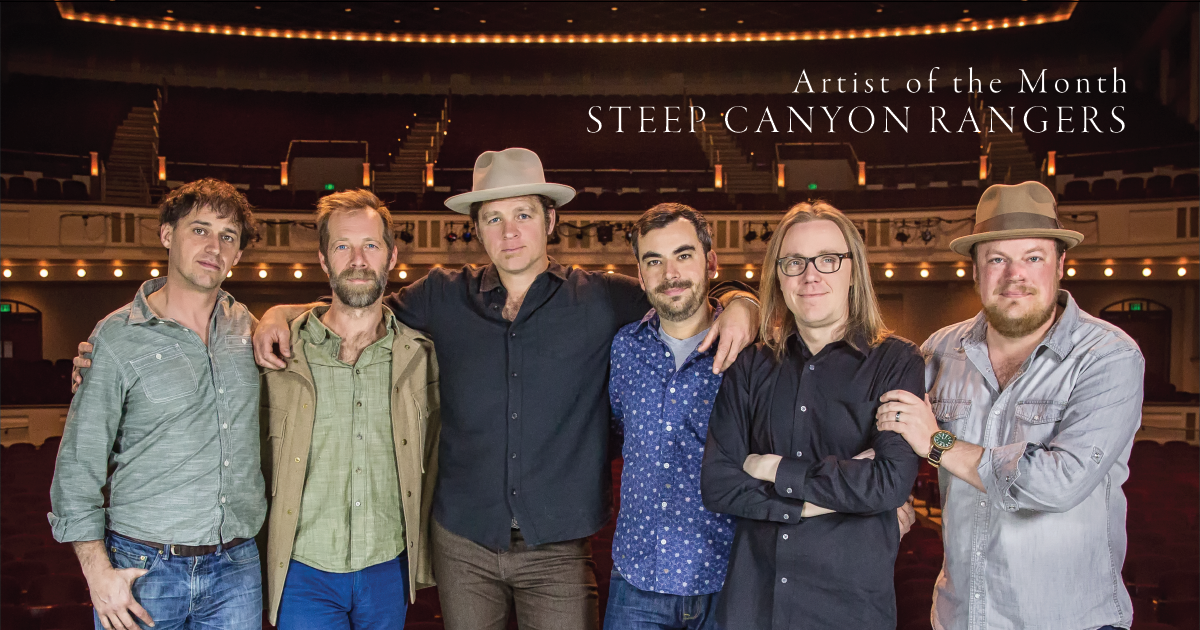
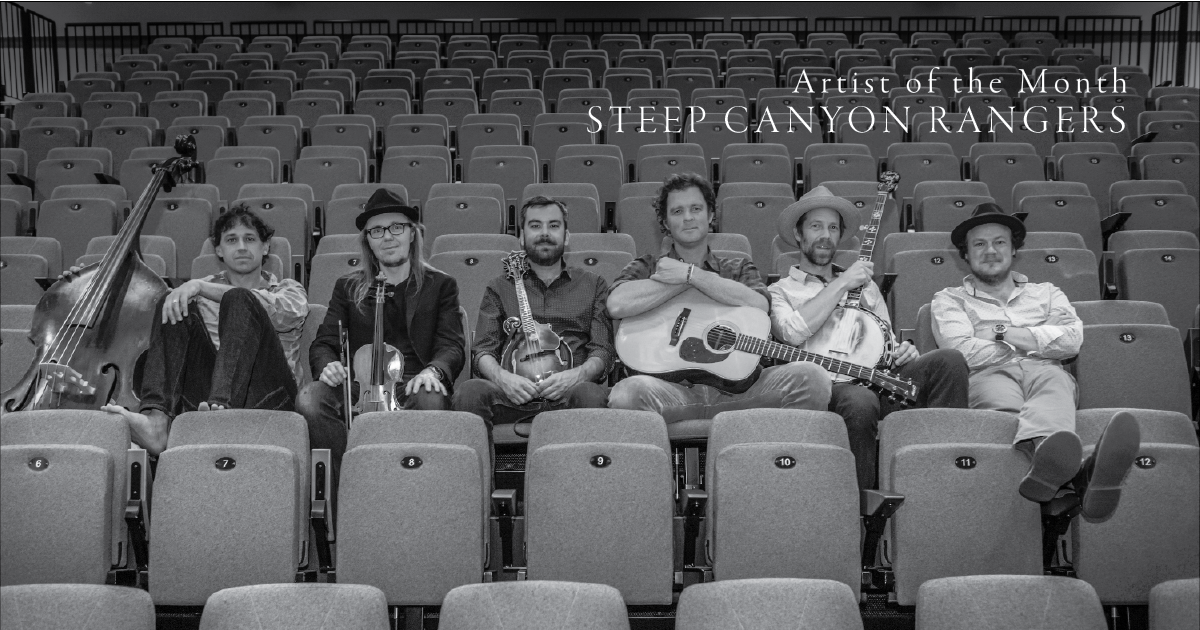
Steep Canyon RangersArm in Arm, their first collection of all-new material in two years, is a set of highly grown-up songs, some with storylines that you’d expect from the likes of Drive-By Truckers or Bruce Springsteen. It’s more loose-limbed and less traditional than past Rangers albums, with fine ensemble playing throughout.

BGS caught up with co-leaders Woody Platt and Graham Sharp in separate conversations leading up to the release of Arm in Arm. After starting with Platt yesterday, here is the conversation with Sharp.

BGS: With the band off the road, have you been able to do any songwriting during this time?

Sharp: I started off writing on a real tear the first few months. But then I slacked off a bit, in part because that coincided with me starting to make an album of my own. Switching from writing to recording slowed down that end of it, but working on my own stuff is kind of out of necessity. For the band to survive this and come back when it’s time, we’ve all got to look out for ourselves a little more.

It’s a strange new hustle, but we’re holding up pretty good. We’ve all been forced to sort of pivot, after having not stopped moving in 20 years. This is the longest any of us have stayed put that whole time. It takes a moment to settle, but it’s been eye-opening. Forced me into some new directions that have been good and ought to pay dividends once we can get the band back together. I’m trying to pull out as many silver linings as I can.

That’s a bit of news, about the solo album. What can you tell us about that?

I don’t know where or when it will ever come out, but the solo album is close to done. I’ve been working with Seth Kaufman from Floating Action in his little basement studio here in Black Mountain. It’s mostly new songs, and a handful of tunes the Rangers have been kicking around a while without getting to them. Nothing bluegrassy about it, mostly country to country-soul, because I have definite tendencies in that direction and a deep love for country music of the ’60s, ’70s, ’50s. That’s still among my favorites.

After Charles Humphreys III left the Rangers in 2017, this is the first album where you’ve written all the songs, not just most of them. Was there more pressure on you?

Not necessarily. It did not change my process much, anyway. I always just try to compile as much good material as I can. It is neat that with a band as organic as this one, a song can kick around for years where we’ll never find a place for it and then suddenly it’s revived. The last song on the album “Crystal Ship” was like that. I had that one for a long time and then backstage one day, [Mike] Ashworth just started playing that melody because he remembered it from a year or two earlier. It’s cool to have the band’s collective memory to draw on, where everybody is part of the process.

The first song “One Drop of Rain” is another. I probably wrote that one six or seven years ago and I’d just never taken the time to find the right groove and place for it. Then one night Woody and I were backstage, I had this little banjo roll, he had the phrasing to go with that and we put it together. A lot of songs come together over time like that. The process is more cumulative than me bringing something in, “Hey, I’ve got this new song.”

Do you have any particular favorite songs on this one?

Probably “One Drop of Rain” and “Honey on My Tongue,” for different reasons. I can remember exactly where I was and the situation I was trying to capture with “One Drop,” just shortly after my father-in-law had died very unexpectedly — 64 years old. What it gets at for me is, try to love your way through the hardest situations. And “Honey” is one I wrote with my daughter in mind. She was giving me a hard time, saying I never write songs for her — not true! But yeah, okay, that was written specifically for her. There are several songs about resilience, dealing with loss, setbacks. All to different degrees, tied to different moments in time.

This record sounds very, dare I say it, mature and grown up.

Well, we’re all passing into the point in our lives where we see a lot of past decisions come to fruition as everyone’s lives play out, our own as well as others. That perspective figures into it. As a songwriter, I’m maturing and trying to hone in on the emotional center of a song – and trying not to write about fluff. We were all very aware while making this album that a lot of the songs aren’t necessarily sad, but a little bit heavier.

And on this record, you’ve also got the first lead vocal from new bassist Barrett Smith.

It’s been cool, having him take on a bigger vocal role. With Woody or myself, it’s just us singing songs at this point. But with Barrett, there’s this ability to tailor songs to a new voice in the band. The song he sings, “Everything You Know,” we talked through the lyrics and the story. Woody and I have always done that, gone through songs in detail. Although sometimes, I don’t necessarily want to influence the pictures anybody else sees in their head while singing.

Once a song is written and out there, it belongs as much to the listener as the singer or the writer. Sometimes they come up with something different, too. “Can’t Get Home” from the last record, Woody thought I wrote that for soldiers coming home and he wasn’t the only one. I had not necessarily meant it that way, but I talked to enough other people about it that it kind of changed the song’s meaning for me, which was cool.

Did taking on the production yourself make Arm in Arm more collaborative than past albums?

I feel like what we do on stage is try to give everybody in the band moments to shine while keeping things moving. Producing this record ourselves was like that, more so than us playing while someone else producers. There are songs where I remember, so and so arranged this part, so and so suggested this harmony, so and so came up with the idea for this mix. So many different pieces where I can see everybody’s fingerprints. I’m proud of that.

I’m just psyched to have something to roll out into the world, reach out a little bit. You know, it’s not the best time to be releasing a record because we can’t tour. So I hope this will reach and touch people. I’m definitely prouder of this record than anything we’ve ever done.

Read part one of our Steep Canyon Rangers Artist of the Month interviews here.


Editor’s Note: David Menconi’s Step It Up and Go: The Story of North Carolina Popular Music, from Blind Boy Fuller and Doc Watson to Nina Simone and Superchunk will be published in October by University of North Carolina Press.

Photo credit: David Simchock

Steep Canyon Rangers Carry On, Without the Suits, ‘Arm in Arm’ (Part 1 of 2)

The COVID-19 virus has pretty much shut down the music industry, with nightclubs and concert venues shuttered across the world. And yet the Steep Canyon Rangers have had their most productive year ever in the midst of it all. October will see the release of their new studio album, Arm in Arm, the Rangers’ third record in less than a year.

Arm in Arm follows last December’s North Carolina Songbook, a live recording taped on the main Watson Stage at the 2019 MerleFest and featuring iconic North Carolina songs by Elizabeth Cotten, James Taylor, Ben E. King, Ola Belle Reed and even jazzman Thelonious Monk. And then early in 2020 came Be Still Moses, another quirky live recording — this one with the Rangers’ hometown Asheville Symphony Orchestra, featuring a memorable vocal cameo from Boyz II Men.

BGS caught up with co-leaders Woody Platt and Graham Sharp (Read part two here.) in separate conversations leading up to the release of Arm in Arm, starting with Platt.

BGS: Since touring can’t happen these days, you’ve had to make do with livestreams and also drive-in shows around your home territory. How have those gone?

Platt: The drive-in shows went great, but they were a lot of work for us. It’s not like there’s a model or handbook: “Here’s what you do for live music in the middle of a pandemic.” So we tried to keep it simple. Since we really wanted people to stay in their cars, we had a short-range FM transmitter and no live PA, trying to keep everybody tethered to their cars.

We were lucky that, through our work with Steve Martin, we know someone who is a leading AV guy. He developed a truck with stage bolts, transmitter and LED screen popped out the top — a mobile rig he’ll keep using all over the country. Sonically, it was like being in the studio. And instead of applause, there’s horns and windshield wipers and headlights, which was amusing. For the encore, they called us back with horns. Ultimately, I think it was joyful — a unique bit of fun for an audience that hadn’t experienced any live music for a long time.

It also appears you’ve had a change in direction, not musically so much as in terms of style. You’re not wearing suits on stage anymore?

I don’t know how to explain that other than that the music evolved, so we did, too. Presentation has always been a constantly evolving thing. We didn’t wear suits at the beginning, then we did for a long time in the middle — and we still do when we work with Steve Martin. But hey, we’re the Rangers and we’re still looking nice even if we don’t regularly dress up in suits anymore. And much like the music, it’s an evolution that was not calculated or contrived. We’ve kind of gone more upper-casual, I guess. Bluegrass business casual.

Was putting out three albums in less than a year part of a master plan?

We never would have planned anything like that, but these three records were all basically done not too far apart. Arm in Arm was all but mixed when the shutdown hit, and that part of it was something we didn’t have to get together for. We could send that around, work on tracks remotely and share them back and forth. The other two were both already in the can, fortunately.

Watching all this come out, you’d almost think it’s just life as usual. If nothing else, it’s been great to be able to continue sharing music with the world. And it’s also kept us productive and in touch with each other and also the idea of pushing forward. Without these projects to focus on, we could have drifted away from each other. But we’ve had things to focus on day in and day out, to stay creative and in communication.

How did you wind up collaborating with Boyz II Men on the Be Still Moses title track?

All credit for that goes to our producer Michael Selverne, a cat from New York who is also an attorney and musician himself. He’s got a lot of connections and he works them all. He called me up one day and said, “You guys are an all-male singing quartet, and I consider you a vocal group. Well, I know another great vocal group for this song, too.” “Oh yeah,” I said, “who?” He said Boyz II Men and my jaw just dropped. But I never want to discourage or squash any idea that seems unobtainable, so all I said was, “Sounds great. If you can pull that off, we’re game.”

He not only pulled it off, he incorporated them and our band and the symphony in a way that worked. It was pretty unusual company for us, but we’re used to that. First time we met, we were set up onstage with the symphony at Schermerhorn [Symphony Center] in Nashville, just milling around, and here they come. Once we started, I had to kick that song off with a little guitar run and sing the first verse — a tall order when a bunch of singers like that are staring at you. But it turned out great.

Since Arm in Arm was the first album you guys produced yourself, without an outside producer, what was that like?

There are a lot of good reasons for using a producer, especially the fact that we’re a democracy and everybody in the band has equal weight in discussions and decisions. I love that, but it can take longer to get from point A to point B while keeping everybody happy. It can help to have an outside person to mediate and help with decisions when time is of the essence. But this record came together very quickly, and we had a lot of faith in our engineer’s skill and his ear.

What’s next after this? Are more live dates with Steve Martin and Martin Short on the docket?

I was talking to Steve recently and he told me they have picked up every date that was on the books. All the shows that were canceled, they’re already rescheduled. We were overseas when the lights went out from the pandemic, supposed to play in London, and it’s been a day-by-day experience ever since. So there’s a lot of optimism in rebooking everything and I hope it all turns out. But I have to admit, I kind of chuckled to myself about already rescheduling. I just don’t know.

It’s been more than 20 years since you guys first got together at the University of North Carolina. Ever think Steep Canyon Rangers would still be going two decades later?

Since we’ve been around for so long, it’s easy to think we should be bigger or more successful by now. But taking a step back and looking at the things we’ve actually accomplished, it all adds up. We’ve had a lot of good things happen, good music and shows and records, and we’ve been recognized in some great ways. I never thought we’d win a Grammy award!

Read part two of our Steep Canyon Rangers Artist of the Month interviews here.


Editor’s Note: David Menconi’s book, Step It Up and Go: The Story of North Carolina Popular Music, from Blind Boy Fuller and Doc Watson to Nina Simone and Superchunk, will be published in October by University of North Carolina Press.

Photo credit: Shelly Swanger

Artist of the Month: Steep Canyon Rangers

In a state with no shortage of bluegrass bands, North Carolina’s Steep Canyon Rangers have always set themselves apart with compelling songwriting and a camaraderie that feels authentic, whether they’re up on stage headlining Merlefest or at a performing arts center supporting Steve Martin. (The band shared IBMA Entertainer off the Year honors with Martin in 2011.) These guys have integrity, sure, but they also have an adventurous spirit, a subtle sense of humor, and a keen perspective that reflects where they are in life.

On their upcoming album, Arm in Arm, bluegrass fans will find a lot to like, but so will those listeners who pay attention to songwriting. It happens to be the first time they’ve recorded an album outside of North Carolina, opting to work at Southern Ground studio in Nashville, and to produce the album with Brandon Bell. Some of the sonic textures may sound different, but the emotions in their music remain intact.

“We’re not trying to sound like a style or genre,” says Graham Sharp, the band’s banjo player, frequent songwriter, and occasional lead singer. “We’re not trying to fit into a certain mold. For a long time, we were a traditional bluegrass band, and that meant the themes would have to fit into that mold: work songs, heartbreak songs, train songs. But we’ve evolved to play any groove, any style, and it has opened us up to so many more possibilities.”

BGS will spotlight Steep Canyon Rangers as our Artist of the Month with back-to-back interviews with two of its founding band members, Woody Platt and Graham Sharp, conducted by noted North Carolina author and journalist David Menconi. (Read part one with Woody Platt here. Read part two with Graham Sharp here.) Arm in Arm arrives on October 16, but we’ve include a few of its early tracks below in our BGS Essentials Playlist for Steep Canyon Rangers.


Photo credit: David Simchock

In the ’80s and ’90s, These 10 Women Made Bluegrass Better

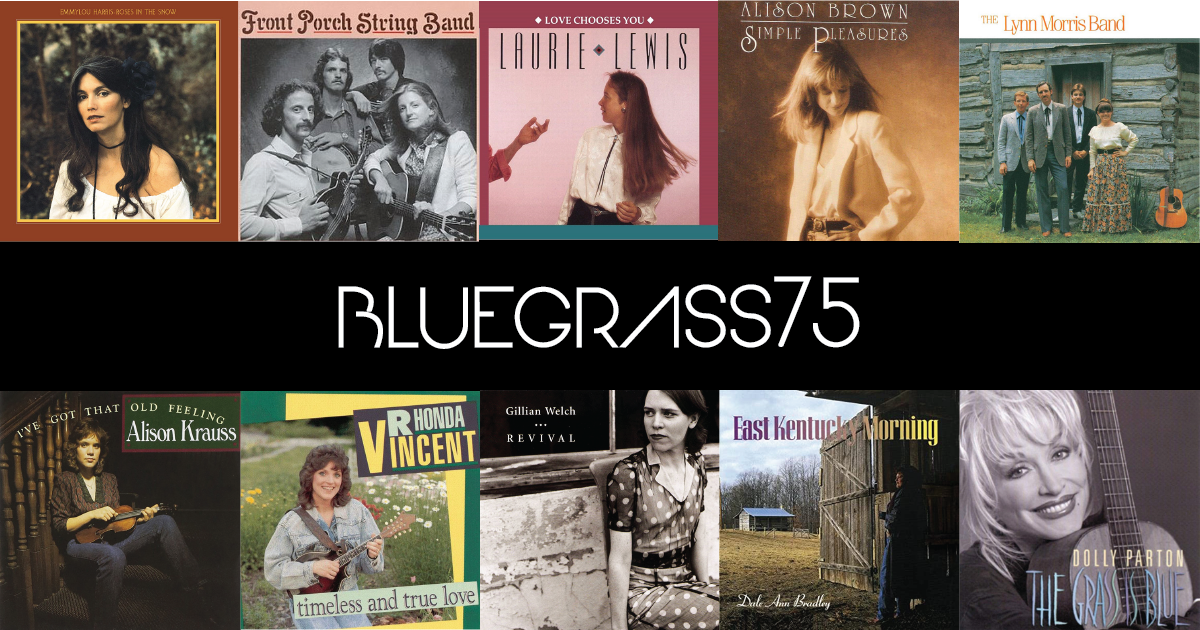
With this year marking the 75th anniversary of bluegrass, it’s remarkable to note that women emerged as a creative force at roughly the halfway point between then and now. Of course, female musicians have been part of the fabric of bluegrass from the start, with Mother Maybelle Carter, Sally Ann Forrester, and Hazel & Alice among those serving as inspirations through the decades.

However, the role of women as bandleaders, rather than in a supporting role, began to change in the ’80s and flourished in the ’90s. As part of our Bluegrass 75 series, BGS commends these 10 women who carried bluegrass forward with a combination of undeniable talent, strong material, and a refreshing new perspective.

Emmylou Harris

One of the most visible country artists of the ’70s turned her attention to bluegrass, with a support team she deserves (Ricky Skaggs, Jerry Douglas, Dolly Parton, etc.) Her material ranges from the Louvin Brothers to Paul Simon, though that exquisite voice makes the album seamless. It’s one of her finest albums in a brilliant catalog.


Claire Lynch

With a crystalline soprano, Claire Lynch first gained notice as a lead vocalist and guitarist with Front Porch String Band, which released an indie album in 1980 that was picked up by Rebel Records in 1983. The poignant track, “Hills of Alabam,” which she co-wrote, shows her gift for melody and her ability to sing with sincerity.


Laurie Lewis

A key figure of the West Coast bluegrass scene, Laurie Lewis can fiddle with the traditionalists, then hush a crowd with a beautiful acoustic ballad like “Love Chooses You.” As the acolyte of a generation before her, Lewis actively takes an interest in the bluegrass scene’s rising talent, as evidenced on her latest work, an album of duets entitled and Laurie Lewis.


Alison Brown

As a picker, Alison Brown has made her mark on countless recordings and won the 1991 IBMA Award for Banjo Player of the Year. She’s also a co-founder of Compass Records, a producer, and a Grammy-winning artist. At times blazing, and other times mellow, Brown consistently finds just the right tone on her albums’ instrumentals.


Lynn Morris

Blessed with a sweet but persuasive voice, Lynn Morris knew how to get the storyline across, whether she’s reminiscing about “Mama’s Hand” or laying down the law in “You’ll Get No More of Me.” As a banjo player, she had incredible chops, and her grace on stage (and off) has made her one of the bluegrass family’s most beloved figures.


Alison Krauss

A gifted vocalist, bandleader, and fiddler, Alison Krauss kept her early career focused on bluegrass, though her material would soon find its way to millions of country listeners, too. Being a former child prodigy herself, she served as a role model for a generation of younger pickers, while showing traditionalists that bluegrass is indeed in good hands.


Rhonda Vincent

Coming up in a family band, singer and mandolin picker Rhonda Vincent has been working in bluegrass for decades, though she’s always finding ways to keep things fresh. Still, her early albums remain some of her most satisfying work. As a bandleader, she keeps the energy up on stage, and her outgoing personality makes her a true entertainer.


Gillian Welch

While few would consider her albums to be bluegrass proper, Gillian Welch has exerted tremendous influence on its community. A 1993 winner of Merlefest’s Chris Austin Songwriting Contest, Welch has seen originals like “By the Mark” and “Caleb Meyer” become standards, and though she didn’t grow up in Appalachia, her songs somehow embody its heritage.


Dale Ann Bradley

A sterling discovery from the New Coon Creek Girls lineup, Dale Ann Bradley launched her solo career by selecting relatable material along with a surprise or two (including a U2 cover). It’s a template that still serves her well. The title track of East Kentucky Morning captures the mood and melancholy that she continues to convey so well.


Dolly Parton

It’s hard to imagine now, but Dolly Parton had dropped off the mainstream radar in the mid ’90s. Then her first bluegrass album proved what her fans knew all along — she represents her mountain people well. A wonderful mix of familiar favorites and new material, The Grass Is Blue solidified her reputation as one of music’s most important voices.

(Editor’s note: Explore more of our Bluegrass 75 Artist of the Month coverage.)


New Grass Revival: Four Members Look Back on Their ’80s Albums (Part 2 of 2)

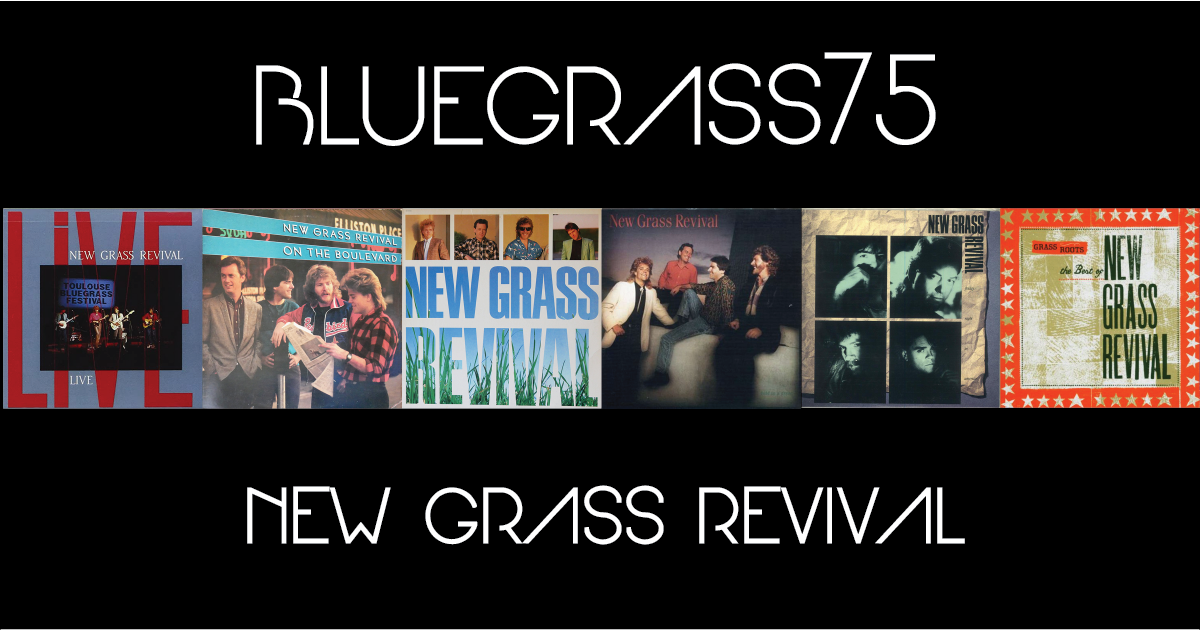
A beloved band that was perhaps ahead of its time, New Grass Revival will be inducted into the Bluegrass Hall of Fame during the IBMA Bluegrass Music Awards on October 1. In the second half of our oral history with New Grass Revival, we hear from band members Sam Bush, John Cowan, Béla Fleck and Pat Flynn. Read the first half of the interview, which is part of our celebration of the 75th anniversary of bluegrass.

In 1981, founding members Courtney Johnson (who died in 1996) and Curtis Burch left the band after a long tour with rock ‘n’ roll star Leon Russell. As a result, New Grass Revival began its newest incarnation with Béla Fleck and Pat Flynn.

Sam Bush: Courtney and Curtis were older than me and John and they were just burned out. We had worked harder on the road with Leon than we’d ever worked in our lives.

Pat Flynn: New Grass Revival had established a following on the circuit in the late ’70s, but Leon Russell had sucked them into his orbit and taken them away from the bluegrass world. So by the time that band [lineup] broke up, they really had to start over.

SB: I had met Béla in a band he played in called Tasty Licks, and Béla had hired me as the fiddler on his first album, Crossing the Tracks.

PF: Béla was a smart kid. He thought, “If I’m going to come out with a solo album and nobody knows who I am, why don’t I hire high-profile people to play on it?” That’s a smart move!

Béla Fleck: I liked the original band when I heard it, but I admit I was attracted to smoother and jazzier stuff at the time. I have matured a bit since then and now I am a huge fan of the early band, their bravery and iconoclastic spirit, and a poetic expression of their time and place. They were committed to the moment and improvising, and taking the music to a new place that resonated with a lot of folks who loved bluegrass, but it didn’t totally represent them.

SB: Pat and his friend Scott Myers had opened for New Grass Revival on the Colorado tours we did. We loved his guitar playing because it wasn’t like the bluegrass players. He was a rock electric guitar player that could do it on acoustic.

PF: I’d moved from Los Angeles to Aspen, Colorado, and got to know the band at Telluride. Sam had a hand in writing some songs, but they really didn’t have an in-house songwriter. I had always written songs for the bands I was in. And Béla brought a unique and original instrumental vision. So all of a sudden you had two new people that could supply original material.

SB: They were the two musicians who could bring the next step of another sound for us. I called Garth [Fundis, the band’s producer] and said, “You’ve got to come hear these new pickers we’ve got, this is something, this is really good.” I knew it was too hot for me to handle — I didn’t feel I was qualified to produce the four of us. We needed another ear, an outside opinion, because we had so many ideas between the four of us.

PF: On the Boulevard was the first album we released in the US, but we’d done a live album in France almost a full year prior. Technically Live in Toulouse was the first album we made as a new band.

JC: We’re playing like a well-oiled machine; it’s really a good record. It has one of Sam’s instrumentals on there called “Sapporo” that might be 11 minutes long!

SB: The idea of “Sapporo” started when the band went to Japan for the first time. It was my favorite city over there; it was also my favorite beer. A mandolin player over there taught me a five-note Japanese scale and that is a recurring riff you hear us play as we jam.

JC: The first year we were together with Béla and Pat, the energy and the love and everything was way up, confidence was high. And On the Boulevard is one of my favorites. There’s no drums, it’s just the four of us.

PF: It was very fresh. I remember the recording sessions at Jack’s Tracks studio in Nashville. We had a decent budget from Sugar Hill, enough to record comfortably and take our time. I experimented with different guitars and arrangements. We were able to bring the music into the magnifying glass of a studio and really look at it in depth.

JC: The dynamic of the band had changed so much, because Béla was already miles ahead of everybody in terms of his ability to play. He practiced all the time. In the old band, I was in charge of shoveling coal into the engine and Sam was flying around on top painting whatever picture he wanted to paint. Courtney and Curtis, they were kind of like myself, advanced support players. But now you’ve got two other players who can play at the same level of Sam. So we could take this train anywhere. We could get off the tracks.

PF: I had brought some songs with me to the band and I was very happy with “On the Boulevard.” I had written it prior to joining. It was pretty much autobiographical. I’d been living in Thousand Oaks, California, and there’s a boulevard that runs through the middle of the Valley, and as I watched it from the window it was like its own little world, a parade of passing people. It was one of the earliest things we worked out.

SB: My songwriting partner Steve Brines had died a sudden death of a heart ailment he didn’t know he had. So Steve was gone and I was still writing instrumentals, but I lost my enthusiasm for songwriting.

PF: I was especially happy with “One of These Trains,” the way the material came out, and the band took to it so naturally. I was encouraged that I was in the right place with the right people. I loved Sam’s instrumental “Indian Hills,” and John did a great blues number called “Just Is.” We were discovering each other’s powers and personalities as musicians and friends. I remember it very fondly. We were struggling for employment to connect with the old fans and that album was a big help — when it came out, we created a pretty big buzz.

SB: Toni Foglesong told her husband Jim, who was the president of Capitol Records Nashville, “I heard a band that makes a sound like nothing I’ve ever heard before.” So, Jim came to hear us and he said, “I want you guys to record. I don’t know how we’re going to sell you but I want you to be yourselves.”

Two studio albums followed: New Grass Revival in 1986, and Hold to a Dream in 1987.

SB: Every time new people joined, we encouraged them to bring their influences into the music. When Pat joined he was influenced by those Southern Californian songwriters like Jackson Browne, and the country-rock Telecaster picking he knew. One song where I specifically hear Pat’s southern rock influence is “In the Middle of the Night,” on the ’86 album.

PF: I was very involved in the country-rock sound like the Eagles and the Flying Burrito Brothers and the songs I wrote were well-fitted for a bluegrass approach. I didn’t have to make adjustments musically or lyrically, just in the area of arrangements. I had to make sure the songs I wrote had great solo spots for the instrumentalists and I had to fit the songs to whoever was singing, either John or Sam. So I started to instinctively shape my material where there was plenty of room for improvisational playing and also good range of vocals for those two.

BF: This band was full of guys with very different musical influences. If you didn’t want to be challenged, it was the wrong place for you. Some folks surround themselves with people that love all the same stuff they do, and that can work too. But in New Grass Revival, we were all into different stuff, which we brought to the band to see if we could get our favorite stuff included.

SB: Béla is a jazz player and when he came in his favorite musician was Chick Corea. I had his records, but they didn’t make so much sense to me until then.

BF: I think my interest in jazz gave me some cool tools to work with in a bluegrass context. I wrote a tune called “Metric Lips” [on Hold to a Dream], which was partly in jig time. I feel like that main melody had some Chick Corea influence. Sam was highly influenced by John McLaughlin and his great bands. One of them was Shakti, a collaboration with Indian musicians. This seemed to encourage his interest and ability in odd meters, which I also was quite fond of exploring. So if you look at “Metric Lips,” you have Irish music, Indian music, and fusion jazz represented, along with some raging bluegrass. It’s puzzling that it actually works, but in my opinion, it does.

PF: When you’re in a bluegrass band, it’s blend or die! You’re cramped inside a van together and you’re sleeping feet to nose. You’re in a very confined space together more than you are with your significant others back at home.

JC: We called our bus The Bread Truck. We’d bought it from a dry cleaning business. It wasn’t like the 36-footers I had in the Doobie Brothers; it was less than half of that, closer to a van.

PF: John slept half the time, I would be reading a book or writing a song, Sam would be listening to reggae or some weird eclectic thing, Béla was always fiddling with a new tune.

BF: For me it’s the intention and commitment to the ideas that make them work in this band. The same ideas might not work for a band that didn’t play so confidently. Of course we loved bluegrass and that was the common denominator. Each guy also played with a savage fervor or intensity, and perhaps that was another denominator.

PF: We could really charge each other up with the solos. We admired each other, and when somebody threw a flaming ball out there it would be a challenge. And in that exchange, gosh, we became so much better players. I remember listening back to tapes and thinking I lifted myself up and above myself. We all did.

BF: The new band with me and Pat was a somewhat cleaned-up version of the band. We still improvised and pushed hard, but we also were going for a supercharged, seamless tightness.

PF: The thing I remember that we developed between the first two albums was a hardcore consistency. We could turn it on and it would just come on full-bore despite whether or not there was a good sound system or the weather was bad or the crowd was sluggish. We could always count on each other to present a united front. There were no weak links. We just locked into that energy and never lost it.

BF: And we made singles for country radio, which is hard to imagine the early group doing.

SB: We knew we were going into a country market, but I think there’s a misconception that Capitol Records changed us, when in fact the change came from us. We were the ones that said, “We’ll try this song,” and maybe we wouldn’t have tried it in the past.

BF: We were still too out there for it to work, but we were trying to take the music closer into the mainstream, and that was bringing a lot of new people into the scene and showing them what bluegrass could produce.

PF: We would laugh about that in a sad way. The jocks would come to us and say, “I love your stuff, I listen to it at home,” and we’d say, “What about playing it on air?!” They’d say “Yeah, but it’s bluegrass….” We finally got “Callin’ Baton Rouge” into the top 40 which opened up a lot of shows and airplay for us. But we ended up disbanding before we could really bring that home.

SB: For our last album, Friday Night in America, Wendy Waldman became our producer and we really tried all kind of things on that. It’s hard for an athlete to know when to stop, but I really think our last record might be our best one.

PF: I saw a deepening musically. John’s vocals had got better and better, but he also doesn’t get the props for his bass playing. He was a terrific player — listen to his work on Friday Night in America, see how he connected the melodies, the tone he got and the way he tied together the four instruments. They would get noticed, but the glue was John.

SB: John and I had been together 15 years and we were burned out. We lived on the road and I was suffering responsibility overload. And we couldn’t possibly accommodate all that Béla was writing, the type of tunes he was writing. I physically couldn’t play them and neither could the rest of us! We all loved each other, but it was time for him to go on, he needed to express himself. Because at that point it’s not about making money, it’s about musical happiness and your satisfaction.

PF: We’d got together in 1981, and we played our last job as a band on New Year’s Eve, the last day of 1989. We were opening for the Grateful Dead at the Oakland Coliseum, 10,000 people inside and 5,000 outside. That night was particularly memorable — on the right side of the stage sitting nearest Béla was Bonnie Raitt, on the left side, near to me, was Jane Fonda — and I’d always thought what a shame we didn’t release that. Years later someone walked up to me and said, “Remember when you guys opened for the Dead?” I said yes. He said, “Have you got a copy of that set?” I said no. He said, “Do you want one?” A tape of our concert had leaked out among the Dead fans. I contacted a friend at Capitol Records and then that set was remastered and released on a two-CD set called Grass Roots, which has stuff you wouldn’t find on our records. It had its rough spots as a live tape, but you’ll hear that energy and visceral connection we had with each other on stage, you sure will.

(Editor’s note: Read part one of our New Grass Revival Bluegrass 75 feature.)


Bluegrass Turns 75

We’re taking a different approach to the Artist of the Month concept this September, as we acknowledge the upcoming 75th anniversary of bluegrass music. Many historians consider its origin to be that December night in 1945, as bandleader and mandolin master Bill Monroe established guitarist Lester Flatt and banjo picker Earl Scruggs as part of the Blue Grass Boys lineup during a Grand Ole Opry show at the Ryman Auditorium. At that pivotal moment, a new American art form was born.

https://www.instagram.com/p/BzLtd0NAoJE/

Although bluegrass is unquestionably rich in history, it is still evolving to this day. In an effort to cover all the decades since then, BGS will offer five posts this month about the evolution of bluegrass, from that indispensable first generation to the newest class of talented pickers. [Read about the first generation.] [Read about Rodney Dillard and the Dillards.] [Read part one of our New Grass Revival oral history. Read part two here.] [Read about 10 women who made bluegrass better in the ’80s and ’90s.] [Listen to our 21st Century Bluegrass playlist.]

Our staff has also collected our personal favorites from the immense bluegrass canon in the playlist below. We owe a lot to Monroe, Flatt & Scruggs, and all the musicians who have led us to this milestone, and we’re proud to reveal our theme this month as Bluegrass 75.


On ‘Blackbirds,’ Bettye LaVette Honors Black Women Who Inspire Her (Part 2 of 2)

When Bettye LaVette sings “I Hold No Grudge,” she brings the weight of all her years to it. The 74-year-old vocalist draws out certain notes, delivers certain lines almost in a speaking voice, as though she wants to show us how difficult, but also how essential, it can be to let things go. “Deep inside me there ain’t no regrets,” she declares, “but a woman who’s been forgotten may forgive but never, never forget.” She draws out that second “never” to underscore its harsh finality, to remind you that she’ll live with the memory of this slighting forever.

“I Hold No Grudge” has never been merely a song about romantic betrayal — not when Nina Simone recorded it for her landmark 1967 album, High Priestess of Soul, and not when LaVette recorded it more than sixty years later. This new version sounds like it’s addressed to anyone who stood in LaVette’s way so many years ago, in particular those executives at Atlantic Records who saw fit to shelve her debut album in 1972 without so much as explanation, much less an apology. That decision crushed her and thwarted her promising career. “That’s exactly what it is,” says LaVette. “I probably have some grudges, but they aren’t big enough to make me stop. I’ve not been defeated. I’m extending the olive branch once again.”

“I Hold No Grudge” opens her latest album, Blackbirds, which collects her interpretations of songs made famous by Black women in the 1940s and 1950s, including Dinah Washington, Ruth Brown, Nancy Wilson, and Billie Holiday. She calls them “the bridge I came across on,” referring to that era between big band blues of the 1940s and rhythm & blues of the 1960s, when these artists were pushing popular music in new directions.

With a small band led by producer-arranger Steve Jordan, LaVette runs through deep cuts like “Blues for the Weepers,” a song first sung by Ruth Brown (and later made famous by Lou Rawls). It’s a song dedicated to “all the soft-singing sisters and torch-bearing misters,” she sings. “They just come to listen and dream.” She understands that we go to songs now for the same reasons we did sixty or seventy years ago: to find sympathy and solace, but also to find a way forward, perhaps some promise of a better life.

The most familiar tune on Blackbirds is likely “Strange Fruit,” popularized by Billie Holiday ninety years ago at Café Society in New York City and covered by countless singers ever since. As a result it’s difficult to make the song sound new and urgent, yet LaVette manages to do just that. Against her band’s dolefully trudging rhythm, she tilts the melody forward just slightly, as though pulling us toward some horrific destination, and she shreds the syllables of the song’s climactic declaration: “Here is a strange and bitter crop.”

That middle word is frayed almost beyond recognition – “stra-ya-ange” – to make the song’s metaphor sound tragically real. LaVette recorded it nearly a year ago and was startled when it became so heavily relevant again. To hear her sing “Strange Fruit” in 2020 is to be reminded that the injustices so many Americans are protesting — the murders of George Floyd, Breonna Taylor, and too many other Black men and women — are not new or specific to the current era.

In the second installment of our Artist of the Month coverage, LaVette talks about growing up with a jukebox in her living room, giving these formative artists their due, and how Paul McCartney fits into all this.

(Editor’s note: Read part one of our Artist of the Month interview here.)

BGS: This record is rooted in the history of popular music. Can you tell me about this particular period and what it means to you?

LaVette: People — especially white people — they throw “rhythm and blues” and “blues” together a lot. And now today, they’re throwing “rhythm and blues” toward young blacks and young whites who want to sound black. When people talk about rhythm and blues, they go back about as far as Etta James, but these women are the bridge that Etta came across on as well. Rhythm and blues was a music that came from blues, of course, and from gospel. When people ask me the difference between “blues” and “rhythm and blues,” I always tell them that you can cry to blues, but you can dance and cry to rhythm and blues.

It’s a short bridge, from about 1948 or ’49 to the burgeoning of Atlantic and Motown’s rhythm and blues, which was about ’61 or ’62. That’s when I came along. We took away the saxophones and added more guitars. We took the blues guitar and sped it up and put it in our tunes. The people who took us from the late ‘40s into the early ‘60s are rarely mentioned, and that’s why I chose this group of women.

I didn’t even know there were Black women who sang, other than Lena Horne and Dorothy Dandridge. And then, hearing LaVern Baker and Ruth Brown and Little Esther, I don’t know whether it gave me hope or whatever, but it really surprised me. I didn’t know that women who sung in such a bawdy way even existed.

When did you first hear these women?

When rhythm and blues came about, that was when I was young and I was dancing. That was when I was coming up and my sister was a teenager. We had a jukebox in our living room in Muskegon, Michigan, which is where I was born, and it had all the current tunes of the day, which my sister played daily when she got out of school. They were all rhythm and blues songs. You know, they weren’t into jazz — they were either blues or rhythm and blues songs on the jukebox. And gospel and country-western, no less. At one point, my favorite singers used to be Doris Day and Dale Evans.

Wait, you had a jukebox in your living room?

My parents sold corn liquor in the ‘40s and ‘50s. Muskegon was extremely segregated, so if you wanted a drink after dinner or after work, you had to come by my house. These were homes that had been built for the soldiers returning from the Second World War. So they were theoretically projects, but they hadn’t started making them out of brick yet. They looked more like barracks, and everybody’s house was just alike.

It was living room, dining room, small kitchen, two bedrooms, and a bathroom. My parents sold corn liquor and chicken sandwiches and barbeque sandwiches. There was no gambling. Nobody could cuss but my mother. But they could get shots and pints and half pints. And the jukebox was there in the living room where most people’s couch probably was. I was about 18 months old when I learned all the songs on the jukebox — all of them.

How did you choose the songs for this record?

I keep several files. Or, I should say, my husband keeps them for me. I’ve got all kinds of files. I’ve got a country and western file. I’ve got a strictly George Jones file. What I do is, I offer my label two or three ideas based on these files, and they tell me which one they like best. So I have some ideas that I like, and that way I don’t have to take their suggestions. If they find one they believe in and are willing to spend money on, I’ve got the songs already in.

I had this file here of standards, some of which I had done when I did little gigs in places around, just me and a keyboard player. Some of them, like Nancy Wilson’s “Save Your Love for Me,” I had done in other venues that most people haven’t seen me in, because they didn’t come where I was. A song like “I Hold No Grudge, which I heard eighteen years ago, it’s been in my file since then. I thought, if I ever get a chance to do that kind of album, I will do that tune. I wasn’t going to throw it away.

When did you discover that song?

I was living in Detroit, and I was getting my hair done. Usually in Black salons, there’s a radio on that plays Black music, and this song came on. I had never heard it before! And because Detroit is one of the places where I can pick up the phone and call whoever is playing whatever it is and I’ll know them, I called them up and she told me it was Nina Simone. And I said, well, if I ever get the chance, I’m gonna record that tune. That was eighteen years ago.

Just a few years ago I performed at a party for David Lynch, the movie producer, and this gentleman came up to me and said, “I loved your performance. My name is Angelo Badalamenti, and I do all the music for David Lynch’s films.” My husband, who loves David Lynch’s films, was ecstatic. Angelo says, “I have a tune. Years ago, I used to work with Nina Simone, and I wrote this tune for her that I think would be perfect for you.” I said, “What’s the name of it?” “‘I Hold No Grudge.’” I said, “I know you aren’t going to believe this, but I’ve had plans to do that tune for the last fifteen years!” So when I got the opportunity to do this album for Verve, I got in touch with Angelo and sent it to him, and he said he could hear Nina listening to it, closing her eyes, and saying, “Yeah, she got it.” Of course that made me feel very good.

Another song I wanted to ask you about is “Strange Fruit,” which seems sadly very timely right now.

But it just became timely! When we recorded it back in August, it was one of the oldest tunes on the album. And then all of this mess broke out, and the tune became timely! But all of this wasn’t going on when we recorded it. That’s not why we recorded it. We recorded it to fill in the Billie Holiday slot. While we were waiting for the album to come out, all of this happened. And it was just timely — as if we went to look for a tune to describe what’s going on now. So it’s bad that it’s timely — it’s awful that it’s timely — but it’s timely.

I knew the tune had not lost any of its power, and I knew I had to do it completely different from Billie. I’m blessed to work with Steve Jordan because he doesn’t hear these songs the way they were originally recorded. He hears them the way I sing them, because his age is closer to mine. He was born and raised in Harlem, and he grew up with these rhythm and blues tunes. He knew that I wanted “Strange Fruit” to be terse and sad and black and dark, and when we finished recording the music, I said, “Steve! I didn’t want it to sound exactly like they’re standing by the tree playing this song,” but it does. It’s just haunting. That’s the thing that makes Steve so important to me.

The outlier on the album is your interpretation of the Beatles’ “Blackbird.” What made that song fit this project?

The reason that I chose it — and I chose it for the title — is because many Americans don’t know that Brits call their women birds, and Paul is talking about a Black girl that he saw standing up on a picnic table singing one night in a park. He’s talking about a Black girl singing and I thought that that would just be perfect for it.

(Editor’s note: Read the first half of our Artist of the Month interview with Bettye LaVette.)


Photo credit: Joseph A. Rosen


LISTEN: Bettye LaVette, “Blues for the Weepers”

Artist: Bettye LaVette
Hometown: Detroit, Michigan; now lives in West Orange, New Jersey
Song: “Blues for the Weepers” (originally sung by Della Reese in 1965)
Album: Blackbirds
Release Date: August 28, 2020
Label: Verve Records

In Their Words: “I’ve performed at a lot of places. I’ve sung at all types of venues, but I’ve also sung at a bingo game and a Chinese restaurant and performed for all types of people. But I’ve been one of the weeping ones because of the career and ups and downs. But I’m still here.” — Bettye LaVette


Photo credit: Joseph A. Rosen

Artist of the Month: Bettye LaVette

The very definition of persistence, Bettye LaVette is among the newest inductees into the Blues Music Hall of Fame, yet she pulls her material from nearly every imaginable corner of music. In addition to her distinguished R&B output that dates to the 1960s, she has interpreted the greats of folk and country music, ranging from Bob Dylan and Patty Griffin to George Jones and Dolly Parton. Now the five-time Grammy nominee is honoring many of the Black women who inspire her with Blackbirds, a collection that takes its name from the Beatles standard. However, as LaVette has stated before, Paul McCartney wrote the song about a Black woman (as British slang refers to a girl as a “bird”). In LaVette’s rendition, though, she is the one who’s been waiting… and waiting… and waiting for this moment to arrive. And, in a specific allusion to this moment in history, to be free.

Set for release on the venerated Verve label, Blackbirds alights on August 28, though the Detroit-raised diva has already issued a stunning rendition of Billie Holiday’s “Strange Fruit,” as well as Nina Simone’s “I Hold No Grudge” and Sharon Robinson’s “One More Song.” (Songs recorded by Ruth Brown, Lou Rawls, Dinah Washington, and jazz vocalist Nancy Wilson are featured on the album, too.) Read our two-part interview — part one here, part two here — with this candid and compelling entertainer, who’s now based in New Jersey and enjoy our BGS Essentials playlist of August’s Artist of the Month, Bettye LaVette.


Chris Thile Keeps His Goat Rodeo Bandmates From Falling Out of Trees

For more than a quarter of a century, Chris Thile has been constant force in the American music scene — and he’s still shy of 40. The musical polymath always seems to have some project going on: whether as a duo (pairing most prominently with both Michael Daves and Edgar Meyer), a trio (Nickel Creek), quartet (Goat Rodeo), and quintet (Punch Brothers). And he has won Grammys in all of those groupings.

Last summer, Thile rendezvoused with his Goat Rodeo brethren — fiddler Stuart Duncan, cellist Yo-Yo Ma, and bassist (and fellow MacArthur “Genius Grant” honoree) Edgar Meyer — to record their long-anticipated sophomore effort, Not Our First Goat Rodeo, which came out in June. What Thile finds is so special about this collaboration is that it features musicians who are, he says, “excited by, and invigorated by, discomfort. Like a good stretch. I think this project is defined by the willingness of its participants to stretch outside of their perceived comfort zones.”

This Artist of the Month interview is the third of four installments as BGS salutes the incredible and iconic musicians of Not Our First Goat Rodeo.

In a BGS interview a couple years back, you said, “I think any album worth listening to is a concept record.” Was there a concept or an overarching theme behind the new album?

Thile: I don’t know if I would, at this point in my life, back myself up on that no worthwhile album has been made without a concept. If indeed I said that I would walk that back just a touch. But the vast majority of records that have made a serious impact on me have had some sort of perceptible topics of conversations, governing principles, or thematic glue. With instrumental records, the themes start to become the play of contrasts and similarities between the individual participants, and the characteristics they assume in concert with one another.

The two actual lyrical vocal songs [on Not Our First Goat Rodeo] — there’s one other vocal song that has no lyrics — are both meditations on work/life balance. They both zoom the lenses in on the less-written-about parts of the relationships. We tend to write songs about the beginnings and ends of relationships, but we don’t necessarily write songs about the middle. Because the beginnings and ends can be so explosive. Hopefully, if your relationship is successful, your relationship will be in the middle until one of you dies.

Certainly the five of us together often talk about work/life balance. How our families are. How we are doing in context of our families, and how our families are doing in the context of our various endeavors. Lyrically that was something that Aoife and I talked about writing in the midst of those kinds of discussions and thoughts. Instrumentally, the themes are more abstract, but no less present. This project has a built-in [structure] of Stuart, Yo-Yo, Edgar, and me bouncing off of each other. Like, what’s it going to sound like when you smear those four people together? And when you get Aoife into the mix, it becomes a whole other thing.

Is writing lyrical songs for Goat Rodeo different compositionally than in other songwriting situations?

It is different. Since the project is so instrumentally focused, it’s ultimately an instrumental project that happens to have a couple of vocal moments in there. We came up with the music together, then Aoife [O’Donovan] and I went off, having discussed the various things we wanted to write about. But when we are writing that music, it is still kind of like instrumental music that happens to have some vocals on it. “The Trappings” being slightly more like you might expect a vocal song to be. “We Were Animals” came right in sort of the middle.

“Every Note a Pearl” was very much an instrumental, then we wanted some more instruments that could slide around. Also, we wanted some more stuff [happening] while Edgar was pizzicato and Stuart playing tenor banjo and me on the mandolin. We wanted Yo-Yo to have some friends in Sustaining Instrument-land. So, we felt, “OK, Aoife and I can help with that.” But we were never tempted to add words to that one. Because the project is driven by instrumentalizing, the vocals are more balanced in terms of where the interest is coming from. Often, if there are vocals in a piece of music, we are focusing on the vocals, and in this music we are not necessarily playing to those expectations.

The voices then are like fellow instruments?

Yes, absolutely. And they’re not given a place of greater prominence than any one instrumentalist is.

Can you talk about Aoife’s unique contributions to Goat Rodeo projects?

When we first did the project, it was an all-instrumental project. And then, I think it was Yo-Yo’s idea. During our practice, he said, “Chris, you sing. Why don’t you sing a little bit?” And I said, “OK.” It was pretty organic. It was like, “Wouldn’t it be lovely to have another singer on these ‘singing songs’?” Aoife and I had never done anything officially together. It had always been at music festivals. Late-night jam sessions. Those type of things. I think both of us had so much fun singing together that I instantly thought of Aoife and I sent everybody recordings of her. Everyone was into it and off we went. It was still with the full knowing that it was an instrumental record.

That fits in with the group’s general philosophy of not conforming to any genre or expectations — to include anything into the music that makes it work.

That’s absolutely right. Nothing’s off limits. If one of us is interested in something, then it’s like, “Hell yeah!” I love that this record can go from something like “Every Note a Pearl” to “Not for Lack of Trying,” and the idea we’re going to be playing around with sliding slowly from one diatonic chord that is well within diatonic harmony to another — but we’re going to pass through all the points along the way, just very slowly. As if the music is melting/spontaneously generating.

And that’s a thing we’re going to pursue — we’re going to see what happens when we chase a thought. More so [on this album] than the first one, actually. This time through the composition process, more was on the table. We had already pursued our first instincts. It was time to really open up to what the possibilities were — having a foundation to begin with in the form of the first record.

Goat Rodeo features four exceptional musicians and it feels like you all try to bring out more in each other.

I love the ways in which it challenges me. I think it challenges each one of us. Maybe the defining characteristic of this ensemble is that what might stretch one of its members might be the absolute comfort zone of another. What might stretch Stuart as far as he’s ever been in one direction is a walk in the park for Yo-Yo. And vice versa. What might be absolutely stretching Yo-Yo to the point the farthest reaches of his exploration is like falling off a log for Stuart.

I love that aspect of this project. Something that’s super easy for me would be hard for Edgar. And something that’s super easy for Edgar would be hard for me. It runs through the whole ensemble like that. So you always have a guide. One of us can always teach the rest of the class about stretching ourselves as musicians.

Even within a piece.

Oh absolutely. Who’s the master of a given concept can switch throughout the course of a piece. And the learner can instantly become the master. And the master can become the learner, with the idea that we all get better at it as we go along. I love hearing the sound of when one of us is out on the limb right now but one of us totally has it. Don’t worry, that person is going to make sure you don’t fall out of the tree. Because you know that they will return the favor.

What is one recording that ranks as a G.O.A.T. (greatest of all time) for you?

My world was totally blown open by Kendrick Lamar by How to Pimp a Butterfly. I think that is an extraordinary work. Talk about an album hanging together structurally. I think that is just a master class in developing one theme. I still have so much to learn from that record. That’s on the list. That’s definitely up there with the greatest records ever. It’s still opening my ears. The way I understood it when I first heard it is completely different from how I understand it now. One of the big differences is that I understand how little I understand about it. I think the best records do that. They open up your worldview — not just your musical view.

(Editor’s note: Read the remaining installments of our Artist of the Month interview series here.)


Photo credit: Josh Goleman