With These Women Inducted Into the Bluegrass Music Hall of Fame, Who Should Be Next?

For the first time in the thirty year history of the International Bluegrass Music Association a class of Bluegrass Music Hall of Fame inductees includes a woman in every act. The Hall of Fame, helmed by the IBMA and housed inside the Bluegrass Music Museum in Owensboro, Kentucky, infamously lacks women. Before this year’s class it included ten women, total, and only one woman — Louise Scruggs — had ever been inducted as an individual. All others had been inducted as members of bands, duos, or organizations. 

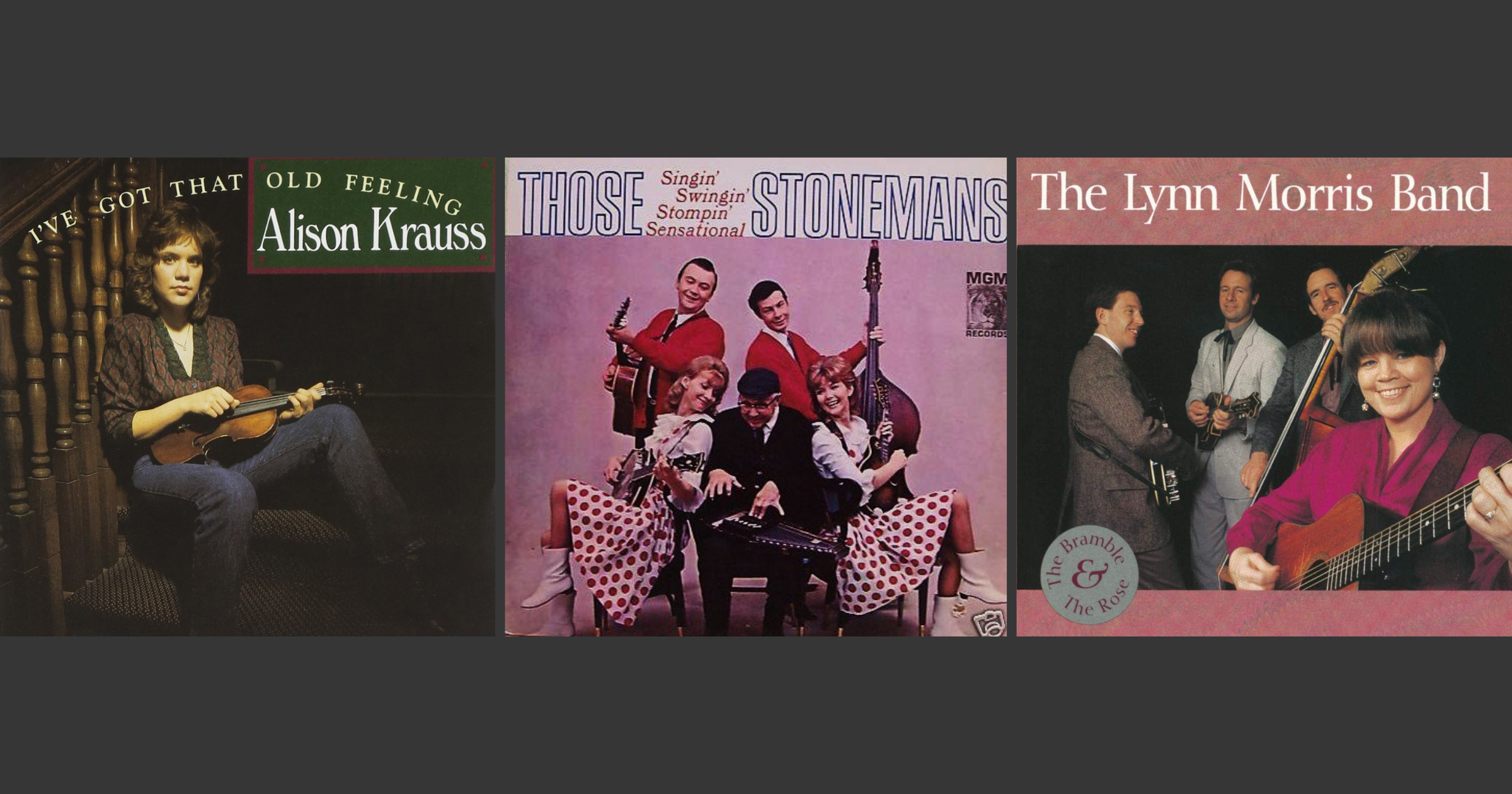
This year Alison Krauss and Lynn Morris join the rarest rank of individual female inductees, alongside influential manager Louise Scruggs. The Stonemans — including Patti, Donna, and Roni — join the likes of songwriter Dixie Hall, who was inducted with her husband, Tom T.; Polly, Miggie, and Janis of the Lewis Family; Marion Leighton Levy of the Rounder Records founders; Sara and Maybelle of the Carter Family; and Hazel Dickens & Alice Gerrard.

To mark the occasion, we’re celebrating women in bluegrass who certainly deserve induction into the Bluegrass Music Hall of Fame, beginning with this year’s inductees. The point is, there is no dearth of women in bluegrass, from way back in its earliest days before the genre even had a name to the big-tent-bluegrass present, and many of whom are more than qualified for inclusion in this hall of honor — as innovators, ambassadors, creators, pickers, and forebears, all.

Alison Krauss 

Arguably the most well-known bluegrass musician to achieve mainstream success, Alison Krauss is a no-brainer addition to the Bluegrass Music Hall of Fame. With her stellar collaborations — with Robert Plant, James Taylor, T Bone Burnett, and so many others — her bluegrass bona fides, her technical prowess as a fiddler, her crystalline and influential vocals, and her unparalleled skill for song interpretation she’s the perfect multi-hyphenate bluegrasser to demonstrate to veteran fans or the uninitiated passers-by what the Hall of Fame is all about. Because, no matter how far Alison Krauss may stray from bluegrass, everything she does remains firmly rooted in her ‘grassy foundations.


Lynn Morris

Lynn Morris remains a criminally underappreciated figure in bluegrass, partly due to her career being prematurely ended by a near-fatal stroke in the late 1990s. In the decades prior, this IBMA Award winner was a powerful and influential banjo player, bandleader, and community-builder, carving out a pathway to success in roots music for herself — given that no pathways were being made available to women like her. Morris’ brand of bluegrass was unflinching, driving, and gritty, and to this day it continues to defy stereotypes about what women can contribute to a music that often holds up maleness and horse race-style competition as currency. While at the same time, she retained a level of tenderness and openness rare in masculine-centered bluegrass. Hopefully this induction will spotlight Morris’ important role in bluegrass’ golden age during the ‘80s and ‘90s. “Love Grown Cold,” a semi-viral hit for Morris on many a bluegrass social media page, is merely the tip of the iceberg of what will be this Hall of Famer’s long-lasting legacy in this music.


The Stoneman Family

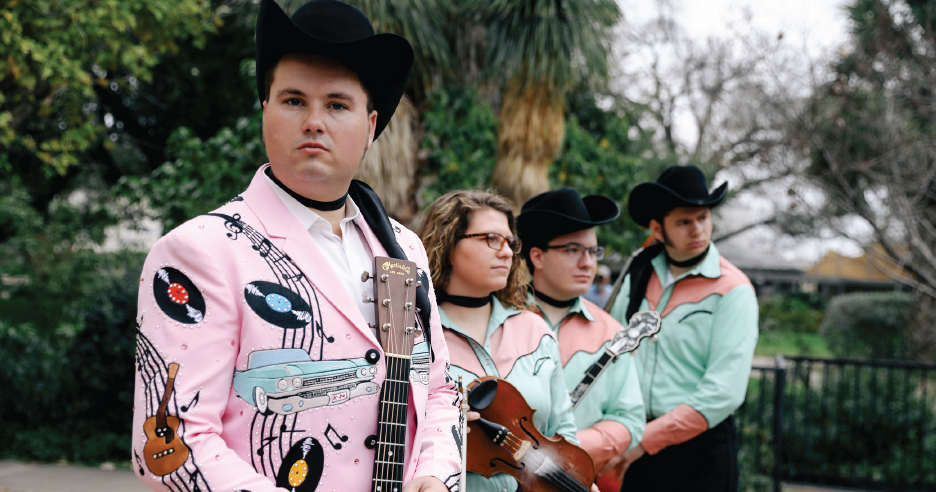
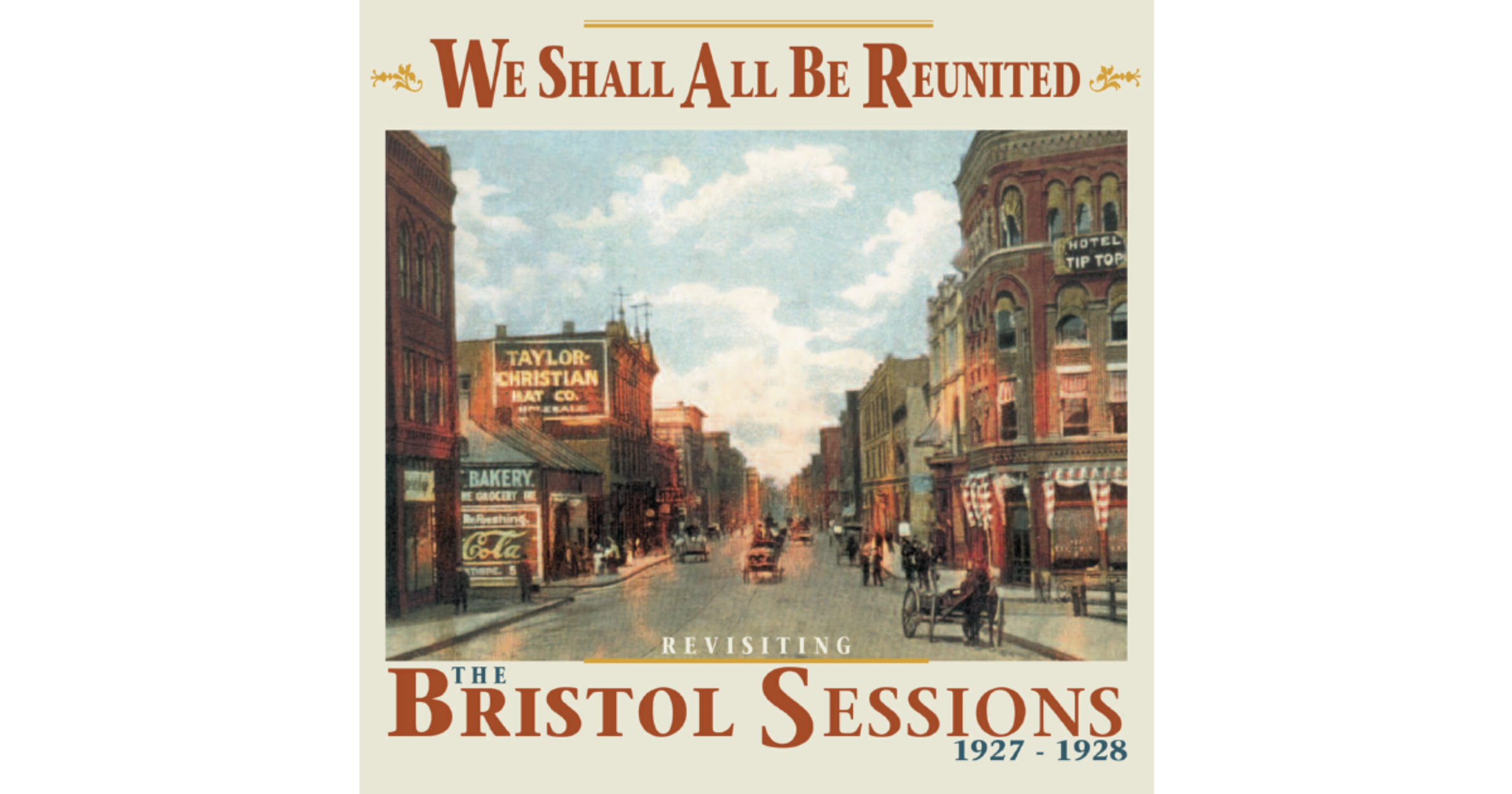
Ernest “Pop” Stoneman, father and figurehead of country’s legendary Stoneman family, was the man who started it all. No, literally. Pop is credited with being a keystone picker, performer, and pseudo-producer of 1927’s Bristol sessions, which later came to be considered as the “big bang of country music,” the beginning of the genre’s commercial fortunes. His family of pickers, including Donna, Roni, and Patti, became stars of stage and screen thanks to their showmanship, homespun vibes, and blistering-fast picking. The impact of this musical family on country, bluegrass, and Americana music — as a unit and as individuals — can simply not be overstated. From Hee Haw to the Grand Ole Opry to winning a CMA Award to international tours with their own group and as side musicians, the fingerprints of the Stoneman Family are all over American roots music across the globe.


Wilma Lee & Stoney Cooper

At one point, Wilma Lee & Stoney Cooper were perhaps the most famous bluegrass act in the world, landing several singles and tracks in Billboard’s Hot Country Chart in the ‘50s and ‘60s — notably landing four songs in the Top 10. Not on a bluegrass chart, because such a thing did not yet exist, but on the country chart! Granted, at that time bluegrass was still considered simply a subgenre of country and hillbilly music, but imagine not just one “Wagon Wheel”-level hit to their name, but a handful! And somehow, in modern times, Wilma Lee & Stoney are at best relegated to footnotes and asides. Bluegrass has always been a commercial genre and the commercial success of this pair is alone worth induction into the Bluegrass Music Hall of Fame, all their other achievements and accolades notwithstanding.


Ola Belle Reed

Ola Belle Reed is more than “I’ve Endured” and more than “High on the Mountain.” A Western North Carolina songwriter and picker, Reed typified the politically- and environmentally-conscious, subversive, and grounded style of musicmaking by Appalachian women who lived through the many upheavals and uncertainties within the region and around the world during the twentieth century. Her songs, like “Tear Down the Fences,” highlight that the south, Appalachia, and the people who live there are not monoliths. Just as Reed’s catalog of influential music is not a monolith, either. Truly a glaring omission from Bluegrass’s hall of honor.


Sally Ann Forrester

Born Wilene Russell, “Sally Ann” or “Billie” Forrester — wife of fiddler Howdy Forrester — was one of only two women to have ever been members of Bill Monroe’s Blue Grass Boys. (The other being Bessie Lee Maudlin, another prime candidate for Hall of Fame induction and inclusion in this list.) With the band, Forrester played accordion and sang as well as “keeping the books.” Inducting the women who were Blue Grass Boys, members of THE titular band of bluegrass, just makes sense! But with Forrester, it also represents an all-too-rare opportunity to canonize a bluegrass accordionist for the ages. Why wouldn’t we want to do that!? Take a listen to her accordion fills on “Rocky Road Blues” and just try to come up with a reason why bluegrass accordion isn’t more popular nowadays. Besides the obvious reasons.


Rose Maddox

Rose Maddox is traditionally credited as the first woman to cut a bluegrass album, recording Rose Maddox Sings Bluegrass in 1962 for Capitol Records and including many a bluegrass hit, like “Footprints in the Snow.” Maddox also marked the beginning of a series of women vocalists and musicians in bluegrass who could accomplish the high lonesome sound for which men like Bill Monroe, the Stanley Brothers, the Osborne Brothers, and others were famous. Women who sang old-time and country up to this point often had rounder, more full, resonant, and rich voices, where men in bluegrass were seemingly attempting to shout tenor to dog whistles. Sexists weren’t sure women could replicate that testicles-in-a-vise-grip sound, but Maddox’s powerful voice immediately commands the same attention – and respect – of the highest and most lonesome. To think there used to be a time when people actually thought (or pretended to think) women couldn’t sing bluegrass!


Elizabeth Cotten

A pillar of American folk music, Elizabeth Cotten’s influence and impact knows no bounds, reaching far from downhome blues, ragtime, and old-time and into bluegrass, folk, Americana, rock, pop, and beyond. Her songs and her playing style continue to influence bluegrass today, but Cotten’s true legacy, one that will stretch on into infinity, is that her existence stands as permission for the Other – for marginalized folks like herself, a Black, working class artisan and musician from the South – to exist and to take up space within these historically white and often forbidding and exclusive roots music communities. Elizabeth Cotten is proof positive that the contributions of Black folks to American roots musics, including if not especially bluegrass, were truly seminal, essential, and vital to the music growing and developing into the entity we all love today. Elizabeth Cotten would be an excellent and unimpeachable first Black and African American inductee into the Bluegrass Hall of Fame. Let’s make it happen.


Buffalo Gals

In the 1970s the group considered to be the first bluegrass lineup of all women was Buffalo Gals, including Martha Trachtenberg, Susie Monick, Carol Siegel, Sue Raines, and Nancy Josephson. Their first and only record, First Borne, is finally available digitally and via online streaming platforms, but up until recently was largely forgotten. We featured First Borne in our list of the 50 Greatest Bluegrass Albums by women and retold a now-infamous story about the Buffalo Gals performing in their sleeping bags when a festival promoter gave them a set early in the morning because, you guessed it, who would want to see women perform bluegrass!? Hearing this whimsical, zany mash-up of “Foggy Mountain Breakdown” and “Loco-motion” we’d make this group headline. Just sayin’. With bands like Della Mae and Sister Sadie enjoying success and acclaim at all levels of the IBMA, perhaps it’s time to pay tribute to the all-women lineups like the Buffalo Gals who came before and blazed the trail.


Gloria Belle

A woman for a Sunny Mountain Boy! Gloria Belle is most famous as a member of Jimmy Martin’s backing band, but it would almost be an insult to reduce her career to having spent time in the shadow of the King of Bluegrass. She was a fantastic picker, multi-instrumentalist, and singer and the first woman to ever release an album on longtime bluegrass label Rebel Records. In 1999 she received IBMA’s Distinguished Achievement Award after a handful of decades of nonstop recording, touring, and performing in bluegrass. She even made an appearance on the Nitty Gritty Dirt Band’s fantastically popular Will the Circle Be Unbroken album. Another case of an underrated woman who is constantly referred to on the back end of an ampersand after a man or men, Gloria Belle is a perfect example of a woman who deserves induction into the Bluegrass Music Hall of Fame on her own merits first and foremost.


Dolly Parton

Though she’ll often refer to it simply as “mountain music,” Dolly Parton is as bluegrass as they come. Albums like The Grass Is Blue, Heartsongs, and Trio demonstrate this fact to an obvious degree, but it’s worth pointing out — especially within the context of the Bluegrass Music Hall of Fame — that Parton’s bluegrass runs deeper than just being an offshoot of her musical expression. With the shows and festivals at Dollywood, her collaborations with artists like the Grascals, Rhonda Vincent, and Alison Krauss, and her longtime commitment to philanthropy in her home region of East Tennessee and abroad, Dolly is the perfect example the Hall of Fame could utilize to communicate the importance and value of taking bluegrass ideals and spreading them around the world. Plus, who wouldn’t want a ticket to the IBMA Awards show at which Dolly Parton would be inducted? (Pro tip: Dolly has actually attended the IBMA Awards and performed once before, when The Grass Is Blue was nominated in 2000 and Marty Stuart hosted. Let’s please recreate that show. Please.)

We could continue this list into infinity, and that’s exactly the point. Artists and bands like Alison Brown, Laurie Lewis, Missy Raines, Kathy Kallick, Blue Rose, Emmylou Harris, The Whites, Patty Loveless, and so many others are waiting in the wings, qualified, ready, and willing to step up and thrive under the mantle of Bluegrass Hall of Fame induction. And plenty of young women, femmes, and non-binary folks are waiting to have examples to look up to, to signal to them that bluegrass can be a place where they can also make a home. The concept of a Hall of Fame may seem like an unimportant or inconsequential or self-serving enterprise at times, but it can be so much more than that! We can supply those examples. Let’s do it.

WATCH: Jaelee Roberts, “Think Again”

Artist: Jaelee Roberts
Hometown: Nashville, Tennessee
Song: “Think Again”
Label: Mountain Home Music Company

In Their Words: “I heard ‘Think Again’ for the first time a couple of years ago and I knew immediately that I had to record it! I love how the songwriters (Marla Cannon-Goodman and Shane Stockton) told such a vivid story… songs that you can ‘see’ and ‘feel’ are my favorite! I had so much fun during the filming (I really loved driving the convertible and the drone was awesome) and I am SO excited to be able to bring this song to life in my very first music video. There are a couple of lines in the lyrics where the video and the song really connected: ‘If you’re standin’ at the screen door, heart laid open out in your hand’ and ‘I’m gonna find a spot to pull off on the shoulder’ — watch for those scenes in the video. I’m just really thankful I got to record ‘Think Again’ and I sure hope everyone enjoys the video for it!” — Jaelee Roberts


Photo credit: Sandlin Gaither

Andrew Marlin Reveals the Observations and Explorations Behind ‘Watchhouse’

When you’re the child of musicians, you get to see the world. By the time Andrew Marlin and Emily Frantz’s daughter Ruby was one year old, she had been to 34 US states and nine different countries. “She was on a bus when she was three months old,” says Marlin. “She loves traveling.”

After a year of hiatus, the family of three is back on the road again as the duo formerly known as Mandolin Orange tour their new self-titled album, Watchhouse. And Ruby, now a toddler, has transitioned back to road life more smoothly than her father, who admits he’s still “struggling to find my sea legs.”

But then this has an unarguably big summer. Performing as Watchhouse, after more than a decade as Mandolin Orange, was no small change. A year of lockdown had given the couple space to reflect on a name change that they’d wanted for a while, but resisted, concerned at how any reinvention would affect their devoted following.

Their latest project proves that their fans have nothing to fear: a medley of richly intimate songs and beautiful vocal harmonies that’s as identifiably them as anything they’ve ever made. Marlin, who writes the songs and plays mandolin to Frantz’s acoustic guitar, spoke to BGS about the new album from their North Carolina home, where they were enjoying a short pause between gigs.

BGS: Your current tour’s taking you coast to coast, from the Newport Folk Festival in Rhode Island to Redmond, Washington and all points between…

Marlin: It’s all over the map, literally. We’re out for three or four days at a time and I’m enjoying being back on tour but it’s kind of difficult to get in the groove. After we’ve been moving at a snail’s pace at home this past year, this all feels so fast-paced, so much to keep up with!

How do you feel about touring in this age of COVID. Does it feel safe yet?

I was one of the naive ones who thought we were nearly done with this thing, but we’re really not. There is a vaccine but people just aren’t taking it. So no, I don’t feel safe at all. But it’s a balancing act: we need to make money because we haven’t worked in 18 months, and we want to play shows, because that’s what we’re driven to do. Everybody wants to get back to their lives, everybody needs purpose to stay sane. To feel like there’s a reason to get up in the morning.

Was a year of lockdown hard as a new parent?

It’s all relative. Emily and I travel so much that we wouldn’t have spent so much time home as full-time parents otherwise. Eighteen months ago you would have been talking to a different person, but now I just try to live day to day, and write a little here and there. It was really difficult to write at the beginning of the pandemic, though. As a songwriter I try to latch onto things that not many people are writing about and with so many people thinking about the same thing it was hard to separate myself from it and find a way to write about it that didn’t seem unoriginal. I wrote a lot of instrumentals so I could explore how I was feeling without having to put it in words.

Have you discovered some good tunes for getting Ruby to sleep?

Pretty much anything by Paul Brady. She loves him, especially that album he did with Andy Irvine. I put that on and she’ll start talking to Paul and Andy. And because she’s been around our music since she was in the womb, if I sit down and play mandolin very quietly that’ll chill her out. I’ll sit in her room and play and she’ll doze off.

There are a lot of songs sung from a parent’s viewpoint on this new album: “Upside Down,” “New Star,” and “Lonely Love Affair.” Has becoming a father changed your perspective as a songwriter?

Passively, yes. I think the change is that I would love to help pave a safe path for my daughter and hopefully inspire some of our listeners to be kind and open up a kind world for her to go into. And that’s made my its way into my perspective even in songs where I’m not talking about it.

That’s very much the message of “Better Way,” which is about online trolling. Was that inspired by a specific incident?

A number of incidents. It isn’t unique. Every time somebody puts themselves out there on social media you have the people who love to drum up negative energy. And I can’t wrap my head around it because that’s not how I was brought up. I rarely meet people who would do that when they’re talking to you face to face. So I don’t understand why those people feel compelled to sit at their computer or pick up their phone and try to rip others apart. It’s a weird way to live.

Emily says it’s one of the favorite tracks you’ve ever laid down together.

Yeah, I love the sound of that tune. It’s a gentle drive to it, the way the groove is so set. It has this steady pulse that fits with the whole idea of the tune, this nagging thing in the back of my head: why do people feel compelled to be such assholes?

These songs were recorded all the way back in February 2020. Where did you decide to record them?

We did it right outside of Roanoke, Virginia. It’s not quite in the mountains, but it was in the hills for sure, a very peaceful place on a lake. I like making records in places that aren’t studios. It feels a little more free, to just go sit in a living room and to turn that space into a very positive musical environment is way more appealing to me than a studio where you’re watching the clock and every time you hear it tick that signifies a certain amount of money. I think you feel that relaxed energy. There’s no trying to beat the clock on this record. It’s exploring all the directions we could go as a band.

The sound of the album is certainly more exploratory than previous ones — a little richer in texture, a little less acoustic, even a touch psychedelic at times…

There are a lot of sounds we’ve used in the past but on this one we didn’t try to hide them. In the past we’ve tried to keep the simplicity of what Emily and I do in the forefront and have all these light textures around that. I think of it as a mountain peak. We’d be up at the top singing our songs and beneath us is this luscious forest, a lot of organ songs, electric guitar, drums, bass. Well, on this record we brought all the sounds up to the same level.

We’d been touring with many of these musicians since 2016 and so we were already thinking about arrangements that worked for the band and it’s a good representation of what we can do live, as a unit. A lot of people think of Emily and I as a folk duo but we have a lot of music in us! It felt nice to change the name and feel we can do whatever we want to and not limit ourselves to any idea of who people think we are.

The new name, Watchhouse, seems to be a good choice to reflect the observational world of your songwriting.

One of the most important things you can do as an artist is observe the world around you and I’ve always sought out those little peaceful places I can let my mind wander. I don’t do well in chaotic situations. I’m not the one to be right up the front by the stage in a show. I’ll usually go hang out in a corner and close my eyes and listen. I just like to find those places wherever we are, whether we’re on tour, in our neighborhood, or at home.

It makes you sound like a pretty chilled person to live with.

I play music a lot, so if you don’t like to hear constant music then probably not… in lockdown there was a lot of noodling, a lot of searching. A lot of aggression being taken out on an instrument too.

Fair point, I can see Emily needing an occasional break from that.

Oh yeah, all the time! She’d send me out of the room, or she’d go out herself…

You’ve been in a band together for 12 years, and all that time you’ve been a couple too. How do you manage to spend so much time together without driving each other crazy?

We’ve talked about that sometimes, especially with Emily’s parents. They can’t seem to wrap their head around it. I guess we just like each other!

One song on the album that seems especially raw is “Belly of the Beast.” Can you tell me the inspiration behind that?

I wrote that tune after Jeff Austin committed suicide. I didn’t know him super well, but we had a lot of mutual friends and had crossed paths through the years and it woke me up in a scary way. Being a full-time musician you have to continually find new ways to stay relevant and interesting to people, and you have to deal with real bouts of anxiety and self-consciousness. Is this good enough? Am I good enough? Writing and playing is something I’m extremely driven to do for myself, but I also have to do it for others, and I throw my music out in the world to be judged by other people. It’s a weird process that I’ve found is extremely helped by therapy!

So is that what performing is for you: “Hiding from the monsters in the belly of the beast”?

Yes — I love that line. When people talk about being nervous to perform, for me it’s not wondering whether I’m able to perform well, it’s more that when I step out on stage I don’t know what that crowd’s energy is going to be, how receptive they’re going to be. Are these people going to allow me to be myself tonight or am I going to have to put on a hat? For the most part our fans are really receptive and I can be myself. That’s when it feels like things are right.

“Beautiful Flowers” is one of the more cryptic songs on the album. It starts with a tiny flash of color and ends with some powerful images about the climate crisis. How did you get from one to the other?

I hit a butterfly when I was driving down the road and it really bummed me out. Animals have no ideas what cars are. For something to come out of nowhere at 70 miles per hour has got to be the weirdest thing in the world. And that got me thinking about who had made the first car, and it turned out it was this guy, Karl Benz. And when he made this car he had no idea where it was going to lead and how terrible it was going to be for the environment.

For our own convenience we destroy a lot of this world and don’t give a lot back as humans. And my car hitting that butterfly felt like a really strong metaphor for what we’re doing to the earth. It’s a very delicate ecosystem and we’re killing all its intricate little working parts.

Is that a challenge for you, too, with your own carbon footprint as a touring musician?

Our carbon footprint is massive, riding on buses and planes and cars… going to a festival and them using generators to supply all the power. We all see all the problems but how to step outside of your own daily needs and confront them is the conundrum, and I’m as guilty as anyone. How do you inconvenience yourself to make positive change in this world? We’re asking ourselves that right now in terms of racism, climate change, housing inequality, you name it.

Given how personal the songs are, and the fact they’re drawn from your shared life, do you ask for Emily’s input or approval as you’re writing them?

No, not really. The way I write I’ll take a specific idea and continue to break it apart until it’s more universal. I don’t want to reveal too much of myself in any given tune. I’m not laying out a bullet point retelling of my life, just musing on how I felt in a given situation — or maybe how Emily felt, or maybe a friend of ours. In fact sometimes I’ll play a new song for Emily and I’ll tell her what it’s about and she’ll say, “Huh, I thought it was about this.” And you know what? She’s not wrong.


Watchhouse is coming to the Theatre at the Ace Hotel in Los Angeles on Saturday, February 19th 2022 – grab your tickets here.

Photo credit: Shervin Lainez

LISTEN: Birds of Play, “Not Alone”

Artist: Birds of Play
Hometown: Ophir, Colorado
Song: “Not Alone”
Album: Murmurations Vol. 1
Release Date: September 3, 2021

In Their Words: “‘Not Alone’ was written in the thick of lockdown, early April 2020. I was sitting down to read a book when I found out that John Prine had died. I put my book down and picked up my guitar and played his songs for a couple hours. Somewhere in the midst of that celebration and mourning this song appeared. I wrote it over the course of that night and the next morning as a bit of a reflection on our shared lot. It feels cathartic to sing and still unfortunately relevant.” — Alex Paul, Birds of Play


Photo credit: Sarah Schwab

What Amythyst Kiah Is Really Singing About in “Black Myself” (Part 2 of 2)

When Amythyst Kiah was a teenager in the suburbs of Chattanooga, Tennessee, she wanted to be “the guitar-playing version of Tori Amos.” Locked away in her room with her headphones pulled over her ears, poring over liner notes and listening intently for every nuance in her favorite records, she found solace in the way Amos told her darkest secrets in her songs and how she turned that vulnerability into something like a superpower. It made her feel less alone, especially as a young, closeted Black girl in a largely white suburb. Tori Amos helped her survive adolescence.

Kiah didn’t grow up to become any version of her hero. Instead, she simply became herself. Her new solo album, Wary + Strange, ingeniously mixes blues and folk with alternative and indie rock, devising a vivid palette to soundtrack her own songs that tell dark secrets. It’s one of the most bracing albums of the year, grappling with matters both personal (her mother’s suicide) and public (the struggles of Black Americans). “Now, when I’m in my mid-thirties,” says Kiah, “it’s amazing to make a vulnerable record and then have people at my shows tell me that my music helped them heal, helped them get through some hard times. To have someone connect with my music is really powerful.”

Editor’s Note: Read the first half of our BGS Artist of the Month interview with Amythyst Kiah here.

BGS: These songs are rooted in your own life and your own experiences, but they do seem like there is something universally relatable in them. Is that something you were thinking about or striving for?

Kiah: Yeah. To have someone connect with my music is really powerful. But that’s been hard to process that idea, because for the longest time I had so much social anxiety and depression and low self-esteem. I didn’t think that much of myself and couldn’t imagine that anybody really cared about me. It’s all stuff related to mental health. Obviously there are people who cared about me. I just couldn’t see it. Now, I’ve come around and maybe fully grasped my value as a person and what I have to offer the world, and that has been very reaffirming. I have a better sense of who I am and why I’m here. And it feels good to make music that helps people get through hard times.

What is it like to revisit the tough times in these songs night after night?

I’ve spent some time thinking about that, and I don’t really know how I’m doing it, to be perfectly honest. A big part of it is that I spent a really long time repressing my emotions and keeping my feelings to myself. So writing a song about how I’m feeling is a sign that I’ve processed it. Not that I’m moving on or I’m done with it, whatever I might be writing about. But I’ve confronted it. I’ve learned from it. And now I can continue with my life and move forward.

A big part of my life has been living in the past and not being fully present in the moment. In order to be present, you have to be able to process stuff that’s happening to you in that moment. Otherwise, you make decisions based on something that happened before. So, a song is a representation of me processing something and understanding what happened to me. Singing that song night after night, it doesn’t feel like I’m necessarily reliving it every time. Because I’ve already processed it. That’s my working theory right now. It might change.

That’s something I think about a lot, because as a listener I can play a song based on the mood I’m in. But as an artist, you’re locked into these songs. You can’t not play them.

I get what you’re saying. The way people listen to music is really fascinating to me. My partner and I, we approach music very differently. My approach has always been to listen to things that reflect my mood. When I was younger, that meant listening to a lot of really sad, depressing songs. Somehow that made me feel good. I’m a very critical listener of music and I like to listen to all the different intricacies. I’m not someone who has a vast library of music, but I’m obsessed with certain sounds and ideas so I will listen to an album and pick apart every detail.

But my partner listens to music to shut her brain off. Her favorite artists are very different from mine. She loves a lot of pop music, like Taylor Swift. To her it’s feel-good music. You break it out and sing along. But she also listens to a lot of classical music, too. She’s got that ability to go back and forth with her listening vibe. That was surprising to me at first, because I used think, “How can people listen to happy music? Don’t they know what’s happening in the world?” I would deliberately avoid happy music because I was personally insulted by it. But thanks to my partner, I can totally see that perspective where you’re listening to music that doesn’t reflect the mood you’re in because you’re trying to snap out of it.

Did that change how you listened to music?

As I’ve gotten older and my mental health has gotten a lot better, I can appreciate listening to something that is just meant to be fun. It doesn’t have to be a super serious moment. I think I learned how to be a lot less pretentious about what I listened to and why I listened to it, and I learned to be a lot less judgmental about other people’s listening habits.

Some lines in these songs sound very defiant of religion — like in “Black Myself,” when you sing, “Your precious God ain’t gonna bless me.” Can you talk about that aspect of your songwriting?

With “Black Myself,” the idea was that each verse would be from the perspective of a specific type of person. So the first verse with that line is from the perspective of an enslaved person. They’re singing about wanting to jump the fence, wanting to be free, wanting to be with the one they love. If an enslaved person had a relationship or a marriage, it was never legally recognized. There was always a chance that they might get sold to different people and they’d never see each other again. Whatever bonds they had could be broken, like they were just cattle. The line about “Your precious God ain’t gonna bless me,” that’s a direct reference to the way that pro-slavery people used Christianity as a way to justify enslaving people.

There was a Bible specifically written for enslaved people — it was even called the Slave Bible — and the people who edited it made sure to only leave in the verses that talk about being obedient. All the verses that talk about autonomy and freedom were removed. The sole purpose was to get enslaved people to be content being slaves, so they wouldn’t revolt. But they were basically saying, “God wants you to be enslaved. He wants you to serve your master. He wants you to be treated like a subhuman.” That is not a God that I would ever want to believe in or ascribe to. That line is that character saying that’s wrong.

I’ve had one or two instances where someone got upset at that line, because they felt like I was being disrespectful to God without really understanding the context in which it’s being said. But I don’t agree with that. There are people all over the world with different belief systems, and at the end of the day, if what you believe in makes you a better person and makes you have respect for humanity, that’s wonderful. If you believe in humanity, that’s what important to me. But why would God be OK with telling someone they have no freedom? But any time you make art, there’s always going to be people who see one thing but not everything else surrounding it. And they base an opinion on that. Not everybody’s going to understand the whole picture.

I read about your performances in Europe, where the crowd would sing “Black Myself” back to you. It definitely seems to reinforce that idea of having a conversation with the song.

I was at the Cambridge Folk Festival with Rhiannon [Giddens], Yola, and Kaïa Kater. We put together a set where we’re singing our own songs and then singing harmonies for everybody else’s. There had to be 500 or 600 English white people in this tent, and it was the first time I’d really noticed other people singing the song or singing that line, “I’m black myself.” I remember thinking, “What planet are we on?” One of my biggest reservations about that song was that people would hear it and think, “Oh, that’s just for black people.” But to me, when someone’s telling a story, it’s meant for everyone to hear. Systemic racism is something that affects everybody in different ways, so we all need to be part of the conversation if we’re going to make things better and look out for each other.

Did you get any other negative responses to the song?

My big concern was that there would be some backlash from white people who weren’t really listening to the song or thinking about it. I was afraid they’d try to make a point like, “If this was called ‘White Myself,’ you’d be canceled.” And there have actually been some comments like that, which completely disregards the fact that the song is about Blacks. It’s about overcoming adversity despite being Black. So if someone can’t hear the words of the song and actually understand what’s happen, that says more about them than it does about me or the song. So I have no apologies for it.

But there are white people who understand what the song is about and they’re singing in solidarity. They know that it’s about human experience. And just because you didn’t personally experience some of this stuff doesn’t mean you’re not allowed to sing along with it. I had a similar conversation the other day with somebody about the song “Coal Miner’s Daughter” by Loretta Lynn. I’m not a coal miner’s daughter. I didn’t grow up in the coal mines. But I love that song and I love to sing that song. It’s a great song about someone else’s experiences. Empathy is such an important quality in that regard and we need allyship in order for things to get better.

Editor’s Note: Read the first half of our BGS Artist of the Month interview with Amythyst Kiah here.


Photo credit: Sandlin Gaither

WATCH: George Jackson Feat. Wes Corbett, “Mississippi Sawyer”

Artist: George Jackson featuring Wes Corbett
Hometown: Christchurch, New Zealand
Song: “Mississippi Sawyer”
Album: Hair & Hide
Release Date: Single, August 25; Album, October 29
Label: George Jackson Records

In Their Words: “I live just up the road from the house where the legendary musician John Hartford once lived, on the edge of the Cumberland River in Madison, Tennessee, and for this live video we had the amazing opportunity to record the take in the crow’s nest on top of Hartford’s old riverside home. The current owners were very generous to let us film in that space and they even keep John’s old chair up there, a nod to when he used to sit in that same room overlooking the river and play banjo himself. It was magical to get to play in that room!

“Wes Corbett and I played a version of ‘Mississippi Sawyer’ together while we were warming up together one afternoon by jamming on some fiddle tunes in preparation for arranging some music to record on my banjo and fiddle duets album, Hair & Hide. It was immediately so much fun and had such a great energy to it that I decided then and there that I wanted to record it with Wes for the album. This tune lends itself really well as a way to bring together elements of old-time fiddling that I bring to the table and of virtuosic bluegrass banjo playing from Wes, as well as being a great vehicle to muddle the lines of both genres as we play it together.

“I ended up taking a deep dive on some old recorded versions of ‘Mississippi Sawyer’ from various old-time fiddlers after that initial jam, and came across two really unique versions that I loved from a couple of legendary West Virginia old-time fiddlers, Ernie Carpenter and Edden Hammons. I liked elements of both of their versions so I decided to take inspiration from Ernie’s A part and Edden’s B part to create this really fun and unique take on this great old chestnut fiddle tune that’s endlessly fun to play. Wes is one of our generation’s great picking banjo players and it was so fun to get to work on this tune with him and hear how he improvises around the melody so fluidly. I hope you all enjoy this!” — George Jackson


Photo credit: Natia Cinco

The BGS Radio Hour – Episode 216

Welcome to the BGS Radio Hour! Since 2017, this weekly radio show and podcast has been a recap of all the great music, new and old, featured on the digital pages of BGS. This week, David Crosby and Sarah Jarosz join up for a Joni Mitchell number, husband-and-wife duo Darin and Brooke Aldridge bring us some beautiful bluegrass harmonies, LA’s own Los Lobos share their rendition of a favorite Jackson Browne tune, and much more.

APPLE PODCASTS, SPOTIFY

The Wallflowers – “Maybe Your Heart’s Not In It Anymore”

25 years after their breakout hit and almost a decade after their most recent release, The Wallflowers are back with a new album, Exit Wounds. In our interview with Jakob Dylan we talk about the project, singing with Shelby Lynne, the documentary Dylan executive produced, Echo in the Canyon, and more.

Ric Robertson – “Carolina Child”

We spoke with Ric Robertson about playing a popcorn kernel in a musical as a kid, his kite surfing aspirations, his new album Carolina Child, and more in a recent edition of 5+5.

Amy Ray Band – “Chuck Will’s Widow”

Amy Ray of The Indigo Girls finds herself often haunted by the song of the nocturnal songbird, the Chuck-will’s-widow: “I find that I witness the most profound moments in the midst of their songs, when everyone else is asleep. While I am often in need of rest, the respite I find in being awake under a miraculous and melodic night sky is too tempting for me to sleep. It’s a conundrum that inspires me, but also leaves me bleary-eyed.”

Darin and Brooke Aldridge – “Once In A While”

Bluegrass husband-and-wife duo Darin & Brooke Aldridge hope that every aspect of their music makes you smile — even more than “Once in a While!”

Matt the Electrician – “Home Again”

Folk singer-songwriter Matt The Electrician will return with a new album called We Imagined an Ending in November. A new track, “Home Again,” takes inspiration from the point of view of his teenage daughter. “The conundrum of parenthood, that as you finally start to figure some things out, and try to pass along some of that hard won wisdom, you’re greeted with your own teenage face staring balefully back at you.”

Tobacco City – “AA Blues”

Says Chris Coleslaw of Tobacco City’s latest single, “The character in the song is trapped between working in a brewery and staring at beers all day and trying to walk a sober line. I think regardless of your sobriety status we can all relate to those kind of blues.”

Jesse Daniel – “Clayton Was A Cowboy”

Jesse Daniel spoke with us about his new album, Beyond These Walls, about growing up catching crawdads and fishing, the chills-inducing feeling when a crowd sings along with his lyrics, and more in a recent 5+5.

Joy Oladokun – “Judas”

Joy Oladokun is able to do more with just an acoustic guitar and her voice than many artists can in an entire discography of work. And going from Arizona to L.A. then across country to Nashville with a new outlook and perspective, her music stands on a plane with a unique vantage point.

Luke LeBlanc – “Same Blues”

A new video for Luke LeBlanc’s co-written tune with Roy August, “Same Blues,” attempts to capture what the song is about: the tug of war between the status quo and what you’re currently doing versus that thing you really want to do.

Midnight North – “Silent Lonely Drifter”

“Silent Lonely Drifter” is an original folk melody reminiscent of timeless Appalachian string band music. Each verse references a different full moon, speaking to the natural balance that exists in the universe.

Los Lobos – “Jamaica Say You Will”

The Jackson Browne tune “Jamaica Say You Will” always resonated for the fellas of Los Lobos and the narrative and storytelling were attractive, too. So, they recorded their own rendition of the track on their latest project, Native Sons.

Aoife O’Donovan ft. Milk Carton Kids – “More Than We Know”

New music from Aoife O’Donovan is here and we’re loving it! Hear tracks created with Joe Henry and the Milk Carton Kids — one inspired by the modern classic re-telling of Peter Pan, the movie Hook.

John R. Miller – “Shenandoah Shakedown”

Depreciated, the new Rounder Records release from singer-songwriter John R. Miller, combines many of his string band and bluegrass influences with a satisfyingly melancholy and dark mood — plus plenty of fiddle.

David Crosby ft. Sarah Jarosz – “For Free”

Legendary singer, guitar picker, and songwriter David Crosby keeps his love for collaboration alive on his new album, For Free, which features guests and co-writers such as Sarah Jarosz, Michael McDonald, his son James Raymond, and more.


Photos: (L to R) Joy Oladokun by Nolan Knight; Aoife O’Donovan courtesy of Shorefire Media; David Crosby by Anna Webber

LISTEN: Seth Mulder & Midnight Run, “Carolina Line”

Artist: Seth Mulder & Midnight Run
Hometown: Gatlinburg, Tennessee
Song: “Carolina Line”
Release Date: August 24, 2021
Label: Mountain Fever Records

In Their Words: “We’re so excited for everyone to hear our new single, ‘Carolina Line.’ It features our guitar player Ben Watlington singing lead in a Osborne Brothers-inspired arrangement that we had fun coming up with. Ben really connected with the song vocally and personally and always finds a way to make each song he sings his own. ‘Carolina Line’ was brought to us by our good friend Jerry Salley, and we feel that it represents our various musical influences. We hope everyone enjoys it as much as we enjoyed recording it.” — Seth Mulder


Photo credit: Miranda Goff

LISTEN: The Grascals, “Maybelle”

Artist: The Grascals
Hometown: Nashville, Tennessee
Song: “Maybelle”
Album: Up All Night
Release Date: August 27, 2021
Label: Mountain Home Music Company

In Their Words: “It’s very rare when looking for a song that you find exactly what you’re looking for. This was the case with ‘Maybelle!’ The song sounds like it came from deep within the mountains. From the haunting words to the clawhammer banjo and fiddle, this song will grab your attention.” — John Bryan, The Grascals


Photo credit: Sandlin Gaither

Guided by Acoustic Demos, Paul Thorn’s New Album Finds Magic in Memphis

For years, you could always count on a Paul Thorn record for songs about insatiable lust and desire. That’s still true on his newest release, It’s Never Too Late to Call, although that carnal urgency has been overtaken by… yes, actual love. The long-awaited album isn’t exactly sentimental, as “What I Could Do” details the ways his life would be more productive without still being in love with somebody. There’s also “Goodbye Is the Last Word,” an aching slow song that basically offers advice on how to leave a relationship that’s turned toxic. Even the duet with his wife, Heather, is titled “Breaking Up for Good Again.”

Still, on the boisterous “Here We Go,” he sings, “I feel good about what the future holds.” As he should.

“I like to think I’ve just matured a little bit,” Thorn tells BGS. “I’m 57 years old and the way I looked at things 10 years ago ain’t the way I look at them now. If you’re still the same person you were 10 years ago, you wasted 10 years.”

On It’s Never Too Late to Call, there’s not a minute wasted. Thorn can still crank up that R&B groove that’s made him a must-see artist for decades. Meanwhile, “Sapphire Dream” – a duet with his daughter Kitty Jones — stands among his most evocative performances on any of his records. Here, the Mississippi musician tells BGS about how the acoustic guitar shaped these sessions, the bluegrass bands he admires, and what “Sapalo” really means.

BGS: Why was it appealing for you to make this album in Memphis?

Thorn: Sam Phillips Recording Studio in Memphis has a lot of vintage equipment and recording technology that kinda doesn’t exist anymore. The way that Elvis Presley’s records sounded, and the way that Johnny Cash’s records sounded, and many other great artists sounded — in addition to their talent, it was the way they were recorded and the sound that they caught from that studio.

And it’s not Sun Studios. Let me clarify that – Sam Phillips didn’t own Sun. He rented it, but then when he got successful he built another studio two blocks down called Sam Phillips Recording Studio. That’s the studio I’m talking about. A lot of magic was created in there for a lot of reasons. It’s an hour from where I live, so why not?

Did you have an idea of how you wanted this record to sound before you went in?

I really did, yeah. The producer of this record is Matt Ross-Spang. He’s a Grammy Award winner. He’s very good. I was sending him iPhone demos of me just singing with my acoustic guitar on all these songs. We both decided, after talking a few times, that this record should be built around those acoustic demos. I play rhythm guitar on every song, which is something that I used to not do. I used to not play on my records at all. I would just sing it once with my acoustic guitar and the band would play it.

Although that sounds good and it has its place, I think what we captured on this record more defines what I actually sound like and what I do best. It’s a lot more stripped down and it’s not like a jammy record. There are very few solos on any instrument. This record is all about showcasing the songs. I haven’t put a record out of original material in six years and there are a lot of reasons for that, some good, some bad. But I feel like over those years, these songs that I did get are my best work ever. I really feel that way.

Are there any acoustic guitarists that you really look up to?

I know two people who, in my opinion, are the greatest acoustic guitar players. One is Mac McAnally and the other one is Tommy Emmanuel. They’re not only great guitar players but I’m friends with both of them and I know them personally. They’re the monsters! And I mean that as a compliment. I’m not really a great guitar player but I do a thing that’s unique to me. Tommy and Mac, they can sit down and play with anybody. I can play good with myself but I don’t know how to follow other people. These guys are on another planet, as far as guitar players.

Are you a bluegrass listener?

I grew up around two types of music as a child. My dad was a preacher so I grew up around black gospel music and white bluegrass gospel music. You know, there’s a group named Balsam Range who recorded a song I wrote called “Angel Too Soon.” They had a No. 1 on the bluegrass charts and it stayed there a long time. I’m clearly not a bluegrass artist, but I have had songs covered by a top bluegrass artist. So, I have that in me. And when it’s done right, I love it Another group that I’m a big fan of — and in my opinion they do it as good as anybody — is The Isaacs. They do bluegrass gospel and when I watch them, I’m looking at excellence.

On this record, you start out with a couple of mellow songs but then you hit that R&B groove on “Sapalo.” So, I have to ask, what does that title mean?

I was watching a video on YouTube of James Brown, and before I clicked on it, the description said “James Brown High on PCP.” The premise of the video is that he’d just gotten out of jail and he was being interviewed by a very straight-laced lady, a local news anchor. It was clear from the get-go that he was high on drugs while he was doing the interview. She said, “Mr. Brown, how are things now that you’re out of jail?” She said, “How do you feel now?” And he goes, “I feel good! I look good! I smell good! It’s all good! I make love good!” He was saying all this off-the-wall stuff. Then she said, “What are your upcoming plans?” And he said, “Well, I’m going to Brazil. I’m going to São Paulo!” He said, “We’re going to JAM!”

So I was just writing down all of this stuff he was saying, and the song wound up being a song about redemption. At least in that moment, he was claiming that he had put his life back together, which he was lying to himself because he was on TV high on PCP. But I tried to spin it as everyone needs a shot at redemption. It’s about being optimistic with whatever time you’ve got left.

Listening to “You Mess Around & Get a Buzz,” I caught that Clarksdale reference right off. I know that being from Mississippi is a big part of your story, and I’m curious if you ever feel like you’re an ambassador for the state.

Well, I would only say this because you brought it up but I guess I am in some way. When I use the word “ambassador,” to me that means somebody who goes abroad and tells other people about how good it is where he lives. So, in that way I guess I am. I was very flattered a few years ago when the state of Mississippi invited me down to the capitol and they declared March 27 as Paul Thorn Day. So, I got a day! You know, most times you gotta die before you get a day.

You’ve got the same hometown as Elvis. I’m wondering, if you could have pitched him any of the songs you’ve written, which one would you pick?

That’s a hard question, man. I tell you, I wrote a song called “That’s Life.” All the words in that song were words my mother has said throughout my life. I’ve played it a lot and people like the song. If I could get one song recorded by Elvis, it would probably be “That’s Life.”

Your fans often become characters in your songs, too. It happens on this album on “Sapalo” and “Holy Hottie Toddy.” You’ve cultivated one of the most loyal fan bases that I’ve seen. What are some of the things you’ve done right, to keep people invested in you and your career?

That’s a hard question but if I had to answer, I think to get down to the brass nuts of it, they know I love them. You can say that, but a lot of artists will do their show and they walk off the stage and they’re ready to get to the hotel room. I understand that. I feel that way sometimes myself, but at every show – prior to the pandemic – on the last song I always go out into the crowd. And while I’m singing I’m hugging people and shaking people’s hands. And when that’s done I go out in the front and sign CDs and take pictures. I’ll stand there until the last one’s gone.

I don’t do it as a career strategy. I do it because those people got off work, got a babysitter, took a shower, bought a ticket, and they’re going to spend their whole evening with me. And my job is to give them my whole evening. That’s what I try to do. I think that’s why they stay with me, and I think that’s why they’re loyal. They’re loyal to me because I’m loyal to them.


Photo credit: Steve Roberts