The BGS Radio Hour – Episode 215

Welcome to the BGS Radio Hour! Since 2017, this weekly radio show and podcast has been a recap of all the great music, new and old, featured on the digital pages of BGS. This week, the Radio Hour features a song that reclaims the image of the magnolia tree, we enjoy some blues and southern rock from folks like Charlie Parr, Christone “Kingfish” Ingram, and Larkin Poe, plus hear a “Wichita Lineman” cover by Colin Hay, and much more.

APPLE PODCASTS, SPOTIFY

Gregory Alan Isakov – “Salt And The Sea”

To celebrate the birthday of Dualtone Music Group, Gregory Alan Isakov covers The Lumineers’ “Salt And The Sea” on a new compilation record, Amerikinda: 20 Years of Dualtone, which features many of Dualtone’s artists from the past and the present performing each other’s songs in a whimsical, jovial tribute to the work and achievements of this beloved record company.


Adia Victoria – “Magnolia Blues”

On a new track inspired by the last year and its intentional pausing, Adia Victoria explores the magnolia as a symbol of the South: “The magnolia has stood as an integral symbol of Southern myth making, romanticism, the Lost Cause of the Confederates and the white washing of Southern memory. ‘Magnolia Blues’ is a reclaiming of the magnolia…”

Jim Lauderdale – “Memory”

One of the most eloquent tracks on Jim Lauderdale’s new album Hope — a collection reminiscent of dreamy ‘70s folk rock records — celebrates the legendary Grateful Dead lyricist Robert Hunter, a longtime friend and collaborator of Lauderdale’s who died in 2019. As one of the final songs they wrote together, “Memory” arrived on June 22, just one day before what would’ve been Hunter’s 80th birthday.

Carrie Newcomer – “A Long Way Up”

We caught up with singer-songwriter Carrie Newcomer for a 5+5 — that’s five questions and five songs — on growing up creative, writing stories, poetry, and essays, taking comfort in nature and its imagery, and more.

Larkin Poe & Nu Deco Ensemble – “Every Bird That Flies”

Larkin Poe grew up drawing inspiration from a wide range of genres, so they always dreamt of honoring their classical upbringing with orchestral arrangements of their music. Their first ever live album features Nu Deco Ensemble combining those classical elements with Larkin Poe’s Americana, blues, and Southern rock songs.”In hearing our Roots Rock ‘n’ Roll repertoire reinterpreted through an orchestral lens, it felt like a creative circle was being completed.”

Christone “Kingfish” Ingram – “Too Young to Remember”

Christone “Kingfish” Ingram seemed to come out of nowhere with his 2019 Alligator Records debut, Kingfish. At 20 years old, the native of Clarksdale, Mississippi, emerged as a fully-formed guitarist, vocalist, and songwriter and was quickly hailed as a defining blues voice of his generation. Now his new record, 662, pays tribute to his upbringing and his home turf.

Jesse Lynn Madera – “Revel”

Jesse Lynn Madera has written a lot of sad, emotional songs, but writing “Revel” changed the way she approaches songwriting, recognizing the opportunity artists have to positively impact a person. She reflects, “Being human is rollercoaster enough without a pandemic to further complicate the experience. We’ve all suffered through our share, and hopefully we’ve all experienced the sun coming up over the horizon of despair. This will be no exception. The glow shall return, and we’ll all be reveling in it.”

Charlie Parr – “Last of the Better Days Ahead”

Blues picker Charlie Parr reflects on the days he’s currently living in on “Last of the Better Days Ahead.” As he tells us: “I’m getting on in years, experiencing a shift in perspective that was once described by my mom as ‘a time when we turn from gazing into the future to gazing back at the past…'”

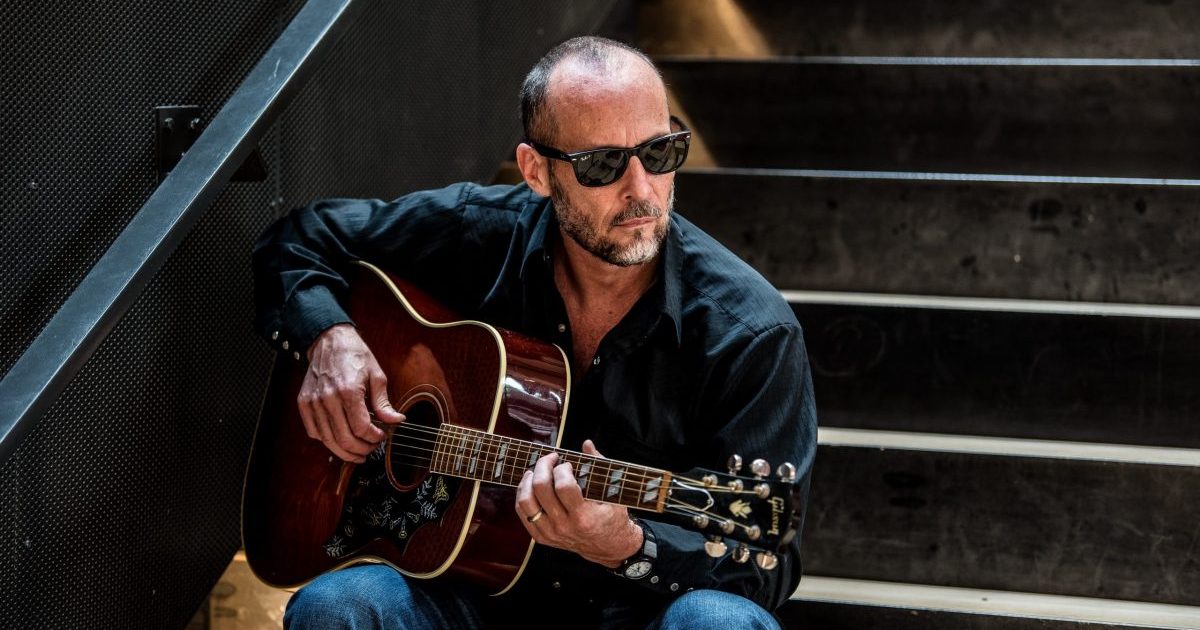
Colin Hay – “Wichita Lineman”

“Wichita Lineman” was the first song where Colin Hay (of Men at Work) realized the importance of the written song, in and of itself. He tells us the song “spoke of things I could only wonder at. The geographical vastness of the land, the hopes and dreams of the man working the line, and indeed of all people who inhabit this country. And, a love story contained within achingly beautiful music and melody. I can’t think of a better song.”

Dillbilly – “Countries”

For a big part of their life, Dillbilly grew up feeling like country and bluegrass were genres that they could never be a part of even though the music has always felt like home. But in writing “Countries,” it felt so good for them to lean into those roots.

The Isaacs – “Turn, Turn, Turn”

Powerhouse bluegrass (and beyond) family The Isaacs have returned with new music, including their rendition of a Pete Seeger classic that Lily Isaacs recalls from her days of growing up as a folk music fan in 1960s New York City.


Photos: (L to R) Larkin Poe by Josh Kranich; Charlie Parr by Shelly Mosman; Adia Victoria by Huy Nguyen

LISTEN: The Way Down Wanderers, “Everything’s Made Out of Sand”

Artist: The Way Down Wanderers
Hometown: Peoria, Illinois
Song: “Everything’s Made Out of Sand”
Album: More Like Tomorrow
Release Date: September 10, 2021
Label: Soundly Music

In Their Words: “‘Everything’s Made Out of Sand’ was written to create a dialogue on the temporary nature of all things: one day everything here will to turn to dust. I was inspired in the writing process while struggling to feel like I was using my short time here wisely. Humans are connected by our perception of time and the understanding of our own mortality. Through this mutual connection that we share as neighbors, I feel that a certain amount of accountability exists between us to try and live our best life for each other. We captured this tune with the band belting and stomping into a single antique microphone. By recording the song in just one take, it is set aside from the rest of the album and meant to capture the idea behind the track itself in a sonic way: we have a short time to live the most impactful and fulfilling life we can, so let’s try our best.” – Collin Krauss, The Way Down Wanderers


Photo credit: Keith Cotton

WATCH: Bobby & Teddi Cyrus and Billy Ray Cyrus, “Roll That Rock”

Artists: Bobby & Teddi Cyrus and Billy Ray Cyrus
Hometowns: Louisa, Drift, and Flatwoods, Kentucky
Song: “Roll That Rock”
Release Date: August 13, 2021
Label: Pinecastle Records

In Their Words: “‘Roll That Rock’ started as a collaboration between Billy Ray and I as writers. Then it became a collaboration of my wife Teddi Cyrus’ powerful vocals, Billy Ray’s undeniable sound, and me.” — Bobby Cyrus

“‘Roll That Rock’ is an inspiring and beautifully written song about the sacrifices Jesus made for us to have eternal life. This song is powerful and will move your soul. I pray that it blesses all listeners as much as it has me.” — Teddi Cyrus

“I always prayed for purpose through the music. Started a band for that reason. When I started singing ‘Roll That Rock’ my inner spirit said Bobby Cyrus will know exactly what to do with this. He did. He wrote the Gospel truth and then sang the daylights out of it with Teddi and a killer bluegrass band reminiscent of Earl Scruggs and Bill Monroe.” — Billy Ray Cyrus


Photo credit: Christopher Michael Images

LISTEN: AJ Lee & Blue Summit, “Monongah Mine”

Artist: AJ Lee & Blue Summit
Hometown: The Bay Area
Song: “Monongah Mine”
Album: I’ll Come Back
Release Date: August 20, 2021

In Their Words: “In my teen years, I went through a phase where I would Google historic events and I came across the Monongah mining accident from 1907 in [West] Virginia. There’s a line in the first verse, ‘where darkness down below is lit by wicks,’ that I wrote because an open flame or spark is what most likely caused an explosion, trapping the immigrant miners inside. The second verse starts with ‘wives and daughters and mothers gathered around, to sing to all the souls trapped underground’ — all true, according to the story. The workers’ loved ones tried to offer whatever comfort they could in such a hopeless time. Eventually ‘came the U.S. Bureau of Mines in 1910’ to provide thorough investigations in areas including the mining process and safety regulations. I’m no history buff by any means, but this story is so powerful I had to write about it.” — AJ Lee


Photo credit: Hannah Ballinger

WATCH: Aaron Lipp, “They Say I’ve Been Lonely”

Artist: Aaron Lipp
Hometown: Naples, New York
Song: “They Say I’ve Been Lonely”
Release Date: June 26, 2021
Label: Temple Cabin Studios

In Their Words: “This song is inspired by some classic small-town lovers quarreling in the local bars and the misunderstandings we are all a part of in the human experience. The way gossip can make one feel passionate and fierce — thus being inspired to sing a fiery bluegrass tune about it. It’s like… everyone in town thinks you’re all torn up about someone but really you’ve moved on. It’s a beautiful sentiment and this song is for anyone who needs to share with the world their truth, especially if they’ve been portrayed in the wrong light. In the end, classically enough, the new lover is… you guessed it… the bottle!” — Aaron Lipp


Photo courtesy of the Artist

Jeremy Stephens’ Old School Banjo Approach Is Made for the Present

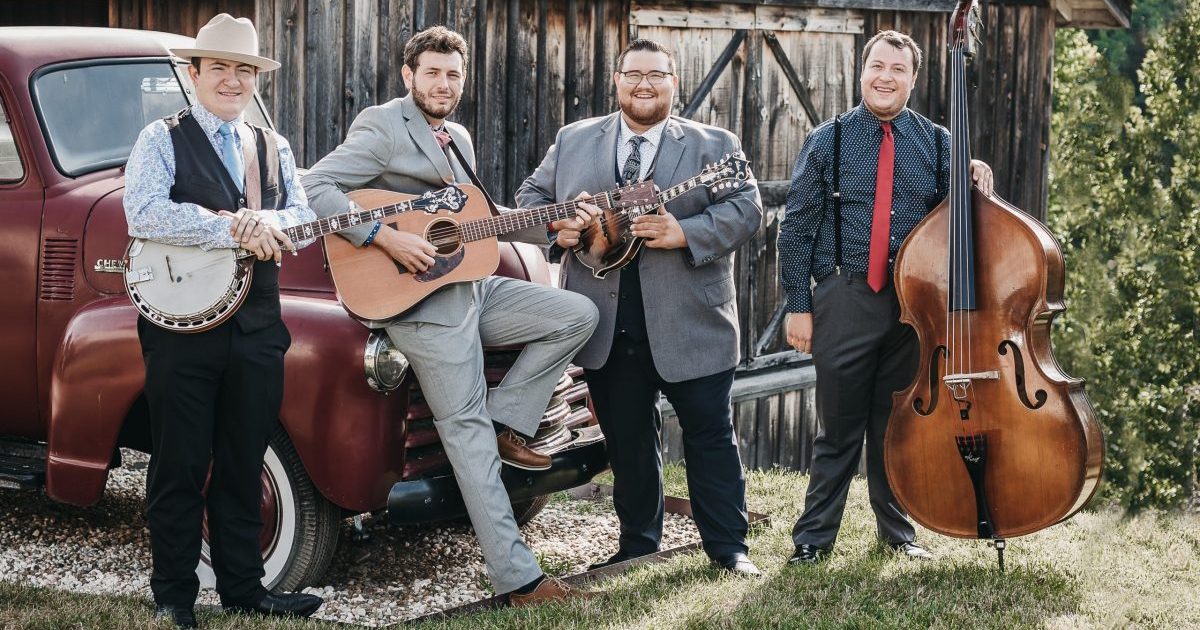
Jeremy Stephens might be the most-featured musician in the history of this column. We’ve featured his band High Fidelity, IBMA Best New Artist nominees once again in 2021, twice over the past few years. Now he’s released a solo project entitled How I Hear It on Rebel Records.

How he hears it is how he plays it. Stephens’ banjo playing – and for that matter, his flattop guitar, archtop guitar, mandolin, bass, and beyond – is all at once effortlessly timeless and firmly grounded in the present. With acts like High Fidelity (which he founded with his wife and musical collaborator Corrina Rose Logston), the Chuck Wagon Gang, Jesse McReynolds, the Lilly Brothers, and others Stephens continually demonstrates a commitment to traditional bluegrass from long before the Bluegrass Album Band, Tony Rice, the Country Gentlemen, and other second- and third-generation groups began to eclipse their more old-timey, homespun, and gritty forebears. He has a penchant for Don Reno’s outside-the-box pickin’, and the chord-based licks, steel guitar phrases, and electric guitar back-up that were Reno’s signatures. 

Even with this perspective on the music — the earliest days of bluegrass being the string band aesthetic that resonates with him the most — his playing is neither antiquated nor backwards. At times, the most striking quality of his approach to the instrument is how in-the-moment it is. His techniques and musical vocabulary are couched so firmly in the past, yet never feel as if he isn’t expressing himself wholly in each and every musical and creative decision he makes. This fact remains true whether he’s playing something well-rehearsed, replicable, and measured or something purely improvisational. 

Though this column does focus on instrumental music — there are several astounding, hoot-worthy, slapdash, and gorgeous tunes on How I Hear It — it should be noted that Stephens can be just as present and in-the-moment with his banjo playing and improvisation instrumentally as when he’s singing harmony or lead, often a rare skill in banjo players. Anyone who’s enjoyed a performance by Stephens, the duo with his wife (billed tongue-in-cheek as The Stephens Brothers), High Fidelity, or any of the many bands that have featured Stephens as a sideman, will know just how jaw-dropping this talent of his can be. Acrobatic, nearly impossible Don Reno licks spat out rapid fire from his fingers while singing or playing syncopated against himself – it’s a sight and sound to behold. 

How I Hear It tracks “Sockeye,” “Lady Hamilton,” “The Old Spinning Wheel,” and “The Bells of St. Mary’s” perfectly capture the energy and ethereal quality of Stephens’ live playing in a way many more sterile bluegrass albums, and purposefully more modern sounding records, can only aspire to. With backing musicians such as Logston, David Grier, Mike Bub, Hunter Berry, and more, the entire project is the perfect vehicle to highlight and showcase this truly idiosyncratic — yet diversely and expertly pedigreed — style of banjo playing that’s all at both unapologetically old school and well-suited for a long, long lifespan into the future.


Photo credit: Amy Richmond

MIXTAPE: Jeremy Garrett’s Melting Pot of Influential Music

My mind has been concentrated on making music for my latest record, Wanderer’s Compass. I let Wanderer’s Compass be a collection of as many influences in music I’ve had as possible. I’ve been playing long enough that I used to learn my fiddle parts from an LP and move the needle back to catch the solo parts. Then of course over time, with the advent of the internet, the influence highway, so to speak, became much wider. I’ve always thought it is hard to put music in a box, since it is art, even though I essentially understand the reason for genres. To me the whole point of art is to let all of your influences and experiences be the palette in which to create your vision. This playlist is really fun for me to listen to, and I hope you enjoy it as well. — Jeremy Garrett

Dire Straits – “Where Do You Think You’re Going?”

This song was off a record that I heard early on in my life and the soul that Mark Knopfler brought to this song continues to influence me to this day.

Larry Sparks – “Blue Virginia Blues”

Larry is a master of song delivery, selection, singing, and incredibly soulful guitar playing that is old school, yet crosses any boundaries from that world into the new because art like that knows no bounds.

Tony Rice – “Urge for Going”

From the album Native American, this track is the epitome of how to produce a song to pull all of the essence from it for the listener to hear. Any bluegrass musician can tell you that Tony Rice is the man to listen to for song production, not to mention his unmatched guitar skills.

Jeremy Garrett – “Wishing Well”

“Wishing Well” is an original and on this track I stretch way out on the fiddle for a jam.

David Grisman – “Fish Scale”

David is one of the best and truest musicians of our time. This is a one-of-a-kind song from a one-of-a-kind artist, David Grisman. I particularly love Tony Rice’s playing on this track.

The Stanley Brothers – “The Lonesome River”

This is one of history’s most eerie and interesting sounding bluegrass duos. Their songs and the way they sing them are my personal favorite sounds of the traditional bluegrass era.

Strength in Numbers – “Blue Men of the Sahara”

This ensemble was one of the most creative in acoustic music. This particular song showcases what happens when you marry music stylings from around the globe, and Mark O’Connor rips a fiddle like nobody’s business.

Merle Haggard and Willie Nelson – “Pancho and Lefty”

This cut is pure magic if you ask me. I love everything about it, from the wacky-sounding synth stuff to the magic that Haggard brings when he comes in for his verse. Sends chills up my spine.

George Jones – “Choices”

There may not be any better country singing than this right here.

Jimi Hendrix – “Red House”

There is perhaps no one more inspiring to a musician who wants to tap into soul and vibe. Hendrix is the one who paved the way for all of us in that regard.

Deep Forest – “Sing with the Birds”

This music was an indicator for me at an early age that I loved world music and the technology that continues to evolve to help create some of it. This is programming at its finest and it’s flowing with creativity.

Jeremy Garrett – “Nevermind”

This is a Dennis Lloyd cover that I love to perform. Dennis is an Israeli pop artist. It’s a culmination of my bluegrass chops on fiddle, guitar, mandolin, along with effects, experimentation, and programmed beats.


Photo credit: J.Mimna Photography

WATCH: The New Acoustic Collective, “Old Gray Coat” Feat. Wyatt Rice

Artist: The New Acoustic Collective
Hometown: San Jose/San Francisco Bay Area
Song: “Old Gray Coat” Featuring Wyatt Rice
Album: Art of Acoustics
Release Date: September 20, 2021

In Their Words: “Tony Rice’s ‘Old Gray Coat’ has a special place in The NAC’s repertoire. This specific project came about when artistic director of Bay Area nonprofit Music in Place, Aaron Lington, contacted us and wanted to include us in the list of amazing musicians featured in a remotely-filmed music video production during the COVID-19 pandemic. I began to give Aaron some suggestions on song ideas and he really enjoyed ‘Old Gray Coat’ by Tony Rice. I thought if The NAC was going to record ‘Old Gray Coat,’ I’d like to feature a special guest, Tony’s brother Wyatt Rice. To have the opportunity to collaborate closely with both our NAC members and Wyatt Rice as a special guest was a dream come true!

“The fun and challenging part of this project was that it was all distanced and used with a click track, which started with me tracking my rhythm guitar part. Afterwards, Wyatt recorded his parts and then The NAC featuring Alonso Sanchez (double bass), David Boyden (fiddle), and Nathaniel Grohmann (cello) layered their parts and solos from there. Overall, the creative partnership between The NAC and Wyatt Rice was particularly rewarding and we are all grateful to work with him along with Music in Place, a nonprofit with an amazing mission!” — Jason Keiser, The New Acoustic Collective


Photo credit: Music in Place

Bluegrass Memoirs: ‘Industrial Strength Bluegrass’ and the Dayton Bluegrass Reunion (Part 2)

Editor’s note: Read part one of Industrial Strength Bluegrass and the Dayton Bluegrass Reunion here

In 1987 I became involved with CityFolk’s Dayton Bluegrass Reunion, “An All-Star Salute to Dayton’s 40 Year Bluegrass History.” Between October 1987 and March 1989, I worked by mail and telephone to help shape the Reunion, planned for April 1989. 

While this was to be called a “concert,” executive producer Phyllis Brzozowska envisioned it from the start as musical theater. I liked her idea — I’d long thought of bluegrass that way. My experience on the stage started at age 12, in a little theater company production of Our Town, Thornton Wilder’s 1938 Pulitzer Prize-winning play about a small community in the early 20th century. Wikipedia describes the play this way:

“Wilder uses metatheatrical devices, setting the play in the actual theatre where it is being performed. The main character is the stage manager of the theatre who directly addresses the audience.”

In Dayton, playwright Don Baker would have a role like that of the stage manager in Our Town, acting the part of a loquacious emcee, telling the story of the Dayton bluegrass community. He would work from a script that Larry Nager was writing. As he spoke, a screen behind him would show slides relating to the narrative’s cultural and historical points.

The concert was divided into seven acts, “Segment/Settings” of 12 to 15 minutes. Each featured a different group of musicians and had room for three to five songs and an encore. Don’s narrations opened each act. Planning reflected concerns about the content and sequence of the acts. How was forty years of artistic ferment to be represented? 

When I spoke of the project to my bluegrass buddies, the first question was always “Will the Osborne Brothers reunite with Red Allen?” This 1957 show gives a good portrait of the band’s sound and repertoire — cutting-edge bluegrass of its era:

As the bluegrass festival movement ramped up in the ’70s, Allen and the Osbornes occasionally crossed paths. The Osbornes were doing well on the country charts with songs like “Rocky Top” that featured Bobby’s solo and trio high lead:

Allen, considered one of the classic bluegrass lead singers, had gone on to work in several good bands. He still approached audiences as he had in Dayton bars. Larry Nager explains: “Red loved the spotlight, making the crowds laugh (often at jokes more fitting for a stag party than a bluegrass club)” (Industrial Strength Bluegrass p.89). An on-stage festival reunion with the Osbornes had been tried, didn’t work out, and was now out of the question. 

Who else would be in the concert? At the start planners thought in terms of contrasts in categories like venues (working-class bars; upscale nightspots, colleges), audiences (industrial working-class Appalachian migrants, yuppies, college kids), and radio (country, folk).

As we’ll see later, these categories overlapped; that’s what gave the region’s bluegrass such vibrancy. Beyond categories lay personal dimensions: certain bands and musicians were like oil and water. The production committee faced artists’ and fans’ differing perspectives, values, and priorities. Terms bandied about during production meetings included “First Generation, Second Generation, Urban” and so on. 

Another planning challenge: the concert featured some working bands, each on their own professional trajectory. But as a reunion it also featured retired individuals and groups. 

The final concert performance sequence reflected our work to keep tension levels low, make things flow, and illustrate the artistic collaborations that had come out of this cultural scene. 

My primary task was writing the introduction for the program, seeking to explain why CityFolk was presenting hillbilly music as heritage.

I was assisted by Barb Kuhns and Larry Nager, who were writing artist bios and gathering illustrations for the program. Musician and producer Nager knew the history from the inside, as his chapter, “Sing Me Back Home: Early Bluegrass Venues in Southwestern Ohio” in Industrial Strength Bluegrass (pp. 77-100) attests. Kuhns, professional librarian and fiddler with the Corndrinkers, an old-time group, had been active in promoting the music of some of the lesser-known pioneers in the local scene of which she’d been part for many years. 

With just over a month to go until the show in April, I spent a March weekend in Dayton helping the planning production staff finalize concert details.

In early April CityFolk sent news to the press of the coming event. “Dayton show will reflect Kentucky bluegrass roots” was the title of a 12-paragraph story in Sunday’s Louisville Courier-Journal, Kentucky’s equivalent of the New York Times. On Wednesday, the Dayton Downtowner, a weekly, carried two stories, and on Friday the Dayton Daily News (a supporter of the event) ran two generous stories.

On Friday night April 22, 1989, each of the concert goers who filled Memorial Hall a Beaux-art national historic site (1907) of 2500 seats in downtown Dayton — received a 16-page 8 ½ x 11 program. Its cover duplicated the concert’s posters.

On the first page was Phyllis Brzozowka’s introduction. Next, an essay by former Dayton newspaperman Tom Teepen, who told the evocative story of his experiences with the music in Dayton. 

My piece, “Industrial Strength Bluegrass,” filled the next four pages. Then came seven photo-packed pages devoted to “The Artists”: Paul “Moon” Mullins and Traditional Grass, Noah Crase and the Valley Ramblers, The Hotmud Family, The Allen Brothers, Red Allen, The Dry Branch Fire Squad, Larry Sparks and Wendy Miller, Frank Wakefield, David Harvey, and the Osborne Brothers. 

The booklet closed with several pages of lists: a “Selected Discography” including addresses for local and national retailers; planning production staff; thanks for assistance; CityFolk staff; board of trustees. Its endpapers were a map of southern Ohio, with portions of Indiana, Kentucky, and West Virginia. A lot to look at while waiting for the curtain to rise!

Behind the curtain, Baker’s Lime Kiln workers provided lighting and a stage manager. I was part of the backstage crew. And the sound was something else! Afterwards Phyllis wrote:

Pete Reineger, from the National Council for the Traditional Arts and a local crew…ran an equivalent of 4 stages with 36 open microphones throughout the performance.

I have been unable to locate any recordings of this event — no tape, no video. I saved a copy of Baker’s stage directions, which lay out the concert’s sequence. But Larry Nager’s script for his narrative, which told the history of Dayton bluegrass in seven segments, one for each act, no longer exists. In it, he recalled, Don’s role was that of “the omniscient voice of the hillbilly diaspora.” 

Though the Dayton Bluegrass Reunion is now a lost play, its structure can be seen from Baker’s stage directions. However, because I was busy bustling around backstage, I didn’t know how the concert was going over with the audience until later. 

The reunion began with an introduction by Phyllis, following that came sounds from offstage, described in the stage directions as:

Halsey & Meyers Commercial 

Radio Rap — Moon Mullins.

Halsey Myers is still a going concern. Joe Mullins says that the Traditional Grass, the band he worked in with his father Moon from 1983 to 1995, recorded a radio commercial for this Middletown hardware store. It was so popular they got requests for it at personal appearances. Joe and his son Daniel found an old cassette recording of the ad followed by an example of Moon’s colorful on-air WPFB persona:

These radio clips would have been familiar to many in the audience who knew the local bluegrass scene. Paul “Moon” Mullins was the true loquacious voice of Appalachian migrant music — bluegrass — in southwest Ohio. 

As the curtains opened Baker took the stage to tell the story of Mullins and the music. Photos synced to the script appeared on a screen behind him. Some were of Dayton musicians and venues, while others evoked a variety of historical and geographical milieus ranging from Dayton to national and international.

Baker’s light dimmed and focus shifted to the other side of the stage, where Mullins and his band, The Traditional Grass, were highlighted. Mullins had come to Dayton from Kentucky in 1964 to take a job as a DJ at WPFB, a Middletown country station that had been a bluegrass center in the 40s and 50s. Jimmy Martin, the Osborne Brothers and many others had performed there. The short-lived Martin-Osborne band’s hit trio “20/20 Vision” from those days is recreated by Dan Tyminski on the new Smithsonian Folkways album, Industrial Strength Bluegrass

In the mid-’60s WPFB had dropped bluegrass but Mullins brought it back. He’d started his radio and musical careers (he’d fiddled with the Stanley Brothers) in eastern Kentucky. Migrant audiences in southwestern Ohio bonded with him. He revitalized the music at WPFB and began playing with local bands. 

I first saw his name in June 1968 when we were both on the flyer for Bill Monroe’s Blue Grass Festival at Bean Blossom, Indiana. I was in the banjo workshop (with Ralph Stanley, Dave Garrett, Bobby Thompson, Vic Jordan, and Larry Sparks); “Paul Mullins, WPFB Radio, Middletown, Ohio” was emcee for the Saturday shows, co-hosting on Sunday with Grant Turner of the Grand Ole Opry.

Twenty-one years later, on the evening of the Reunion, Mullins had recently left WPFB. He’d started The Traditional Grass in 1983 (they would continue until 1995); it included his son Joe, who was singing tenor, picking banjo, and following his dad’s footsteps in radio. Guitarist Mark Rader was the lead singer, and Glenn “Cookie” Inman, bassist. They opened with “Weary Lonesome Blues,” a popular Delmore Brothers song from 1937:

After three more songs, everyone except Moon left the stage and he was joined by members of The Valley Ramblers, a band he’d co-founded with Noah Crase in the late ’60s. Crase was a highly respected banjo player, a former Blue Grass Boy best-known for “Noah’s Breakdown,” the tune that started Bill Keith on his exploration of melodic banjo. 

Editor’s note: Read part one of Industrial Strength Bluegrass and the Dayton Bluegrass Reunion here


Neil V. Rosenberg would like to thank Barb Kuhns, Daniel and Joe Mullins, and Larry Nager

Rosenberg is an author, scholar, historian, banjo player, Bluegrass Music Hall of Fame inductee, and co-chair of the IBMA Foundation’s Arnold Shultz Fund.

Photo of Rosenberg: Terri Thomson Rosenberg

WATCH: Liam Purcell & Cane Mill Road, “I’m a Ramblin’ Rolling Stone” (Live)

Artist: Liam Purcell & Cane Mill Road
Hometown: Deep Gap, North Carolina
Song: “I’m a Ramblin’ Rolling Stone” (Live)
Label: Trailhead Records

In Their Words: “This song was originally a deep cut off a Phil Leadbetter album featuring guest vocals by John Cowan. With a powerhouse vocalist like Jacob Smith and the instrumental prowess of Colton Kerchner and Rob McCormac, I knew we could make it our own and create a killer opener. I love this song and the way it showcases the traditional and progressive aspects of our sound. When we had the chance to film with Rob Laughter, I knew this number would fit perfectly! We filmed this live performance video in the historic Orion Schoolhouse, nestled back in the hills of Ashe County, North Carolina. The wooden interior of the building gives a spectacular natural reverb and is home to a fast-growing series of acoustic concerts!” — Liam Purcell


Photo credit: Rob Laughter