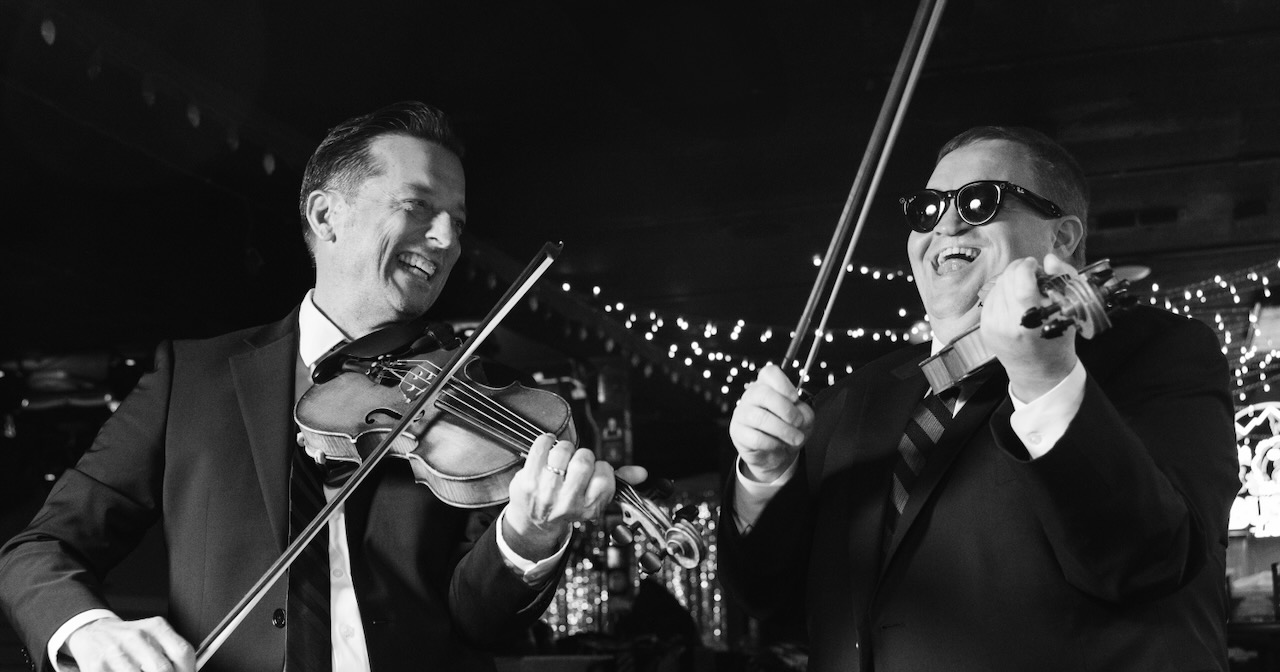
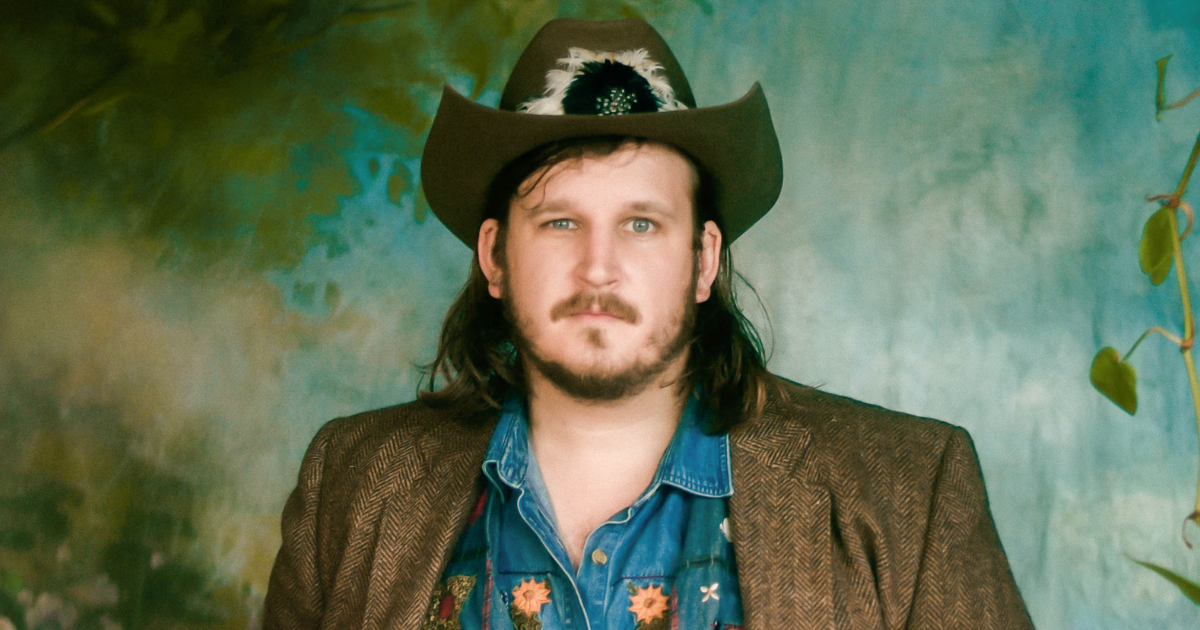
(Editor’s Note: Today, award winning fiddlers Jason Carter and Michael Cleveland announce their upcoming debut duo album, Carter & Cleveland, out March 14. To celebrate the announcement and the project’s lead single, we’re premiering a special live performance of the track, “With A Vamp In The Middle,” from the fabled stage of the Grand Ole Opry.)
Artist:Jason Carter & Michael Cleveland Hometown: Nashville, Tennessee and Charlestown, Indiana Song: “With A Vamp In The Middle” Album:Carter & Cleveland Release Date: February 5, 2025 (single); March 14, 2025 (album) Label: Fiddle Man Records
In Their Words: “This song has always felt like a national anthem for fiddle players and it’s our tribute to the legendary John Hartford and Vassar Clements. It’s long been a favorite for Michael and me to jam on – perfect for twin fiddles and a blast to improvise and trade licks on. Having Darrell Scott’s harmony vocals on [the studio version of] this track was an absolute honor, and his contribution took it to another level. I hope y’all enjoy it!” – Jason Carter
Credits: Jason Carter – Fiddle, vocals Michael Cleveland – Fiddle Alan Bartram – Bass, harmony vocals Cory Walker – Banjo Bryan Sutton – Guitar Harry Clark – Mandolin
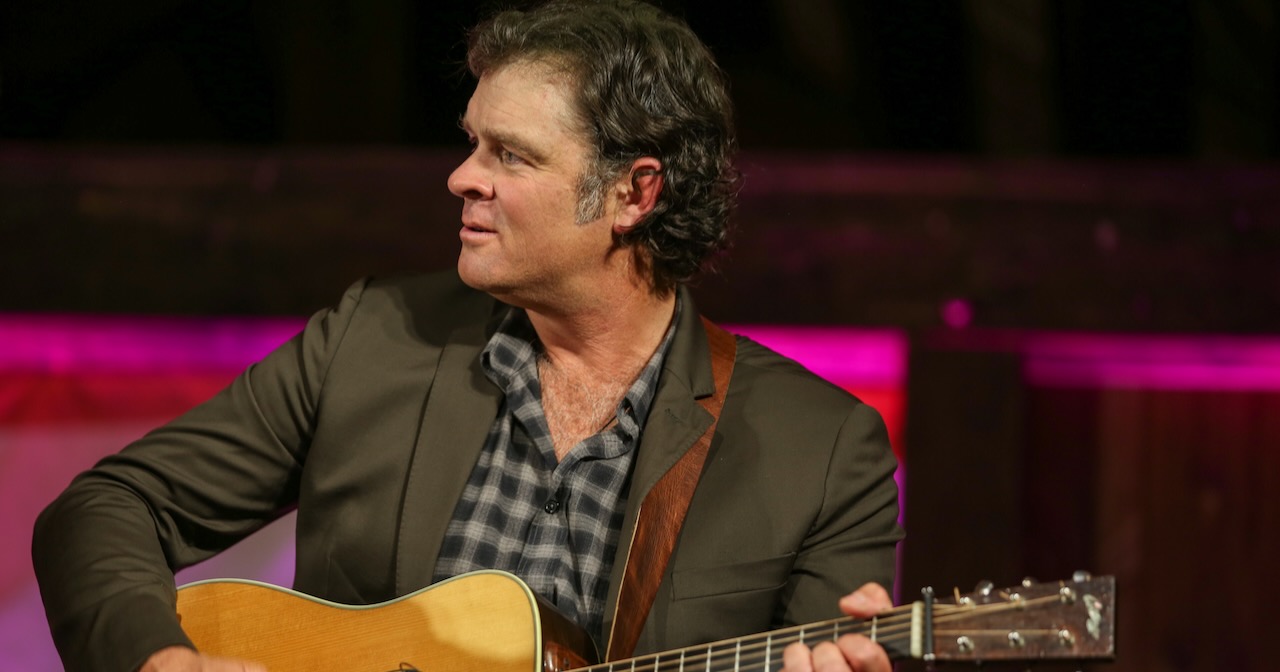
After over 20 years behind the wheel of Western North Carolina-based bluegrass and roots band Steep Canyon Rangers, founding member Woody Platt is forging a new path ahead as a solo artist with his debut album, Far Away With You.
Released on October 11, the 10-song project sees the GRAMMY and IBMA Award winner teaming up with a variety of collaborators – from the North Carolina writers whose songs litter the collection to guest spots from legends like Del McCoury, Tim O’Brien, Sam Bush, and Darrell Scott. The album also showcases covers from Georgia bluesman Blind Willie McTell (“Broke Down Engine”) and rockers Kings of Leon (“Beautiful War”) that showcase Platt’s ability to take songs from far outside the bluegrass space and capture them within it, casting these familiar tales in an entirely new light and making them new all over again.
“This album is a big step for me,” Platt tells BGS. “When I left the Steep Canyon Rangers, it was only to slow down and be home more. I didn’t really have a plan to make a record or to have any sort of solo career, but when you spend half your life on the road and playing music, it just becomes a little bit of who you are.”
That big step has come with even bigger adversity in recent weeks as Platt has joined others in recovery efforts after Hurricane Helene pounded his home region. While his property and most of the city of Brevard were spared catastrophic damage, countless other communities nearby were not. Though recovery will likely take years, Platt is determined to help for the long haul with both power tools and his baritone bluegrass bops.
During a break from hacking away at a fallen tree with his chainsaw to get a neighbor’s bridge reopened, Platt spoke with BGS about the mixed emotions leading up the release of Far Away With You, how Western Carolina informs his music, his song selection process, and how fatherhood has impacted his outlook on music.
What’s it been like for you balancing promoting and preparing for an album release while simultaneously helping your community recover from Hurricane Helene?
Woody Platt: I’m not going to lie to you, I’m conflicted. This is the first time I’ve ever focused on a record that is a solo project with my name on it. With that comes a general sort of concern, anxiety, and excitement, and I’m proud of it, but at the same time I’ve been conflicted about trying to promote something that’s so singular and personal during this huge storm event that’s got so many people in such a bad situation.
Originally, I thought there’s no way the album release show can go on, but when you think about it a little bit more, you realize that music is a great way to bring people together, create a healing environment, and use it as a platform to continue to create awareness and raise money. There’s so many benefit concerts and there always has been, but that just gave me some peace of mind that if we can transition this into being less about the album and more about the community at large and the health of the community, these two things can coexist in a really good way. Being further and further away from the storm and as more people are getting power back, I think it’s a good chance for people to come together and contribute to a greater sort of healing process.
Aside from the pivot to the release show turning into a benefit, what do you hope to accomplish with Far Away With You?
The reason I first started playing music was to play bluegrass music, so this album for me represents a return to my roots. I never stopped playing bluegrass music, but when I was with the Steep Canyon Rangers we evolved and developed more of an Americana sound, so this [album] has been a good way for me to get back to basics and playing the music that originally got me fired up about creating a band and performing in the first place. Also, there’s a lot of great songwriters here in my home community, including my wife Shannon [Whitworth], which has allowed me to tap into some of the local talent to put a spotlight on them as well.
Do you see yourself getting back on the road for any tours or solo runs in support of this record or anything else you may do in the future?
I see shows always on my calendar, but tours, not so much. I don’t envision long runs of shows, but I do see myself playing a festival here, a concert there. I’m also doing a fair amount of work with Shannon, which is sort of separate from this. Between the two, I feel like I’m actually playing more music than I thought it would be. I didn’t have any expectations of what was next after years of touring, but every time I look at my calendar I have some work to do. It’s all been really organic. I’m not out there chasing it or pushing it very hard, but if an opportunity presents itself then I’m usually pretty willing to take part in it.
As you just mentioned, most of the songs on the album are penned by other songwriters. How do you go about deciding what work from others to incorporate into your shows, or in this case, an album?
I’m really drawn to songs, melodies, and just the feel of a composition. I didn’t start this project with a goal to find the songs just within this community, but when a song speaks to you, it speaks to you. Because of that, there was no real roadmap of what the final 10 songs would be. I just went with my gut and the songs that meant something to me or moved me for one reason or another, and this is where I ended up. It was only when looking back on them at the end that I realized that most of them came right out of Brevard.
I was so lucky when I was with Steep Canyon Rangers to be in a band with some really great songwriters. It set the bar pretty high for what I look for in a song, leading to this album where every song is one that I love to play and sing.
From songwriters to nature, how do the mountains of Western North Carolina inspire and inform your music?
We live in such a beautiful place. One of my favorite things about it is all the water. It’s no secret that I’m a lifelong, serious fly fishing angler and I get in the river a lot, like more than most. There’s a real sort of music to the river, so when I’m in the water there’s a lot of inspiration that washes over me. There’s a lot of sounds and what you see is not what you hear and the way it surrounds you is all very inspiring and helps to clear my mind. It’s always been a way for me to reset, which leads to loads of creativity and inspiration.
That’s interesting you bringing up water, because I agree it can be peaceful and relaxing, but as we’ve seen it can also be powerful, destructive, and deadly. Quite the duality.
That’s very true. I just spent the morning in the river with some other guys trying to clear a neighbor’s bridge. Right now the rivers don’t feel as peaceful as they have. There’s a lot to be done, but it’s amazing how rivers can heal themselves and how water can be healing in general.
Sticking with that concept of duality, I can’t help but get a similar sentiment from the song “Like the Rain Does,” which lyrically plays out like a love story (“you’ve got me falling like the rain does”), but is also flexible and ambiguous enough to tie into the recent storms y’all have experienced.
I absolutely love that about music. A song might be written for one particular perspective, but the listener might take it in a totally different direction based on personal experience or, like you said, a recent natural disaster that can sort of change what a song means to you. I’ve always liked that about songs and feel that many of the songs on this record have that sort of ambiguity and openness to interpretation while others are more direct.
Another song I’ve really enjoyed is “Walk Along With Me,” an original of yours that combines your life at home as a father with your love of music. How did it come about?
“Walk Along With Me” was one I wrote in 2015 shortly after our son was born. Shannon and I would work different shifts and I would put our little boy in a Moby [Baby] Wrap on my chest, staying up real late with him while she got some uninterrupted sleep, sort of like a night shift. I wound up writing a lot of songs with this classical guitar nestled against his back, which was really inspiring, because I’d never really thought of myself as a songwriter. I was a part of a lot of song creation, but not as a first writer of songs.
With this one in particular, I was emotional about all of the sudden becoming a father, so I thought about my life and the experiences that I’ve had and how that translated into how I would be as a father. And, how close I would keep my child or how far I would let them go, the ebb and flow of wanting to keep your arms around them and be by their side while also realizing that they’ve got to blaze their own trail. Being a father is ultimately what led me to slowing down my touring. It really changed my whole life, having a son and starting a family and that song is just one example of how I felt about it at that time.
Given that your son is eight years old now, has he started catching the musical bug himself yet?
He really is. Just this morning he was getting ready for school and he had his own music on in his room. He’s also been singing a lot and is getting quite good on the drums. He takes drum lessons from [Aquarium Rescue Unit and Leftover Salmon’s] Jeff Sipe here in town. We were at a little jam not too long ago and he found a cajon and next thing I knew he was a part of the jam and was holding it down pretty well. We’ve tried not to push music on him, but I think just being around these rehearsals at the house and these shows that we play is causing it to seep into his bones.
You’ve mentioned your wife Shannon a couple of times now. What does it mean to you to not only have her by your side for encouragement, but also to lean on as a songwriting partner?
It’s wonderful. She’s super creative [and] also a painter in addition to being a multi-instrumentalist, a songwriter, and a great singer. We play and write a lot together now, but when she was touring with her solo band or with The Biscuit Burners and I was touring with Steep Canyon Rangers we’d oftentimes just put our instruments by the door and not get them out when we got home. We were working so hard with our other groups that when we got together, we were just hanging out. Now that we’re both not playing as much we’re doing a lot more together. It’s been a lot of fun to write together and have her as a good sounding board, and vice versa. We’ve come to a really good place of musical compatibility and creativity.
What has music taught you about yourself?
I was never naturally made for this type of thing. For a long time I didn’t even realize that I had the talent and the capability to carry a show. Because of that, I usually show up over-prepared – I’m not the kind of guy that can just show up and jump on a show, I have to be studied and be ready. That preparation and drive to be good has helped to keep me humble and honest about it. I’ve always felt like at any minute this could all go away. It’s not only aided in keeping my head down and staying focused, but it’s also kept me playing and enjoying music for all the right reasons.
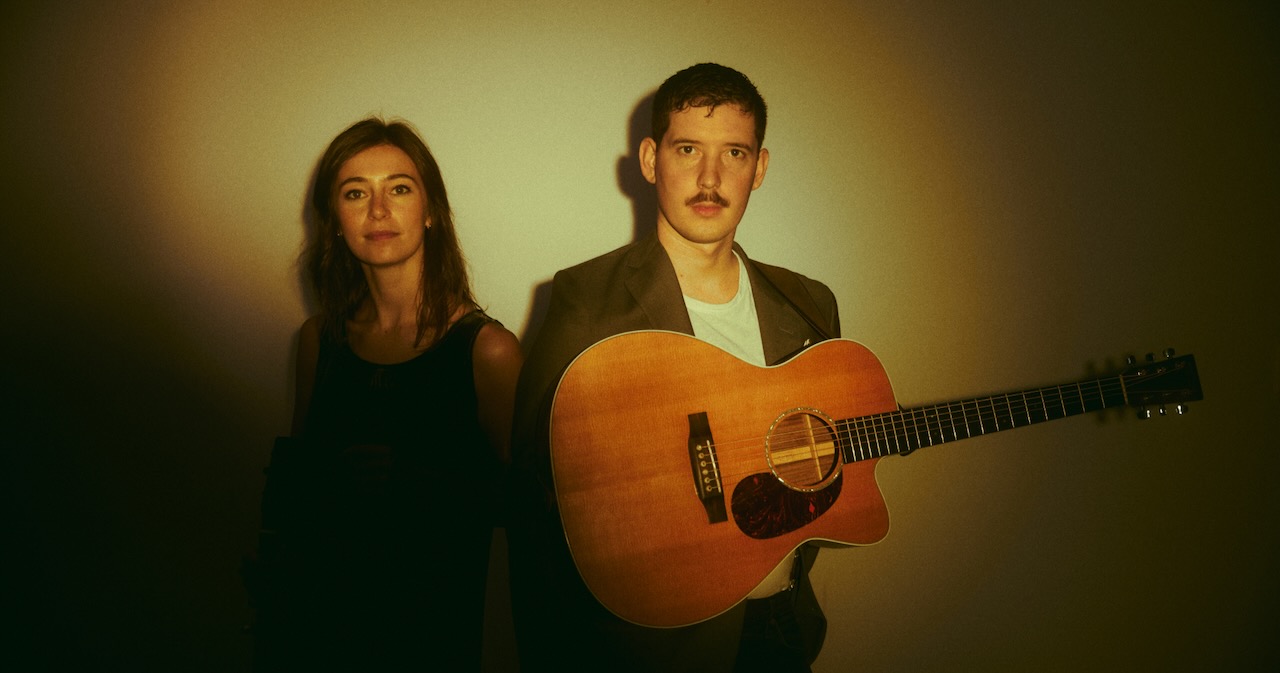
As a duo rooted in both Celtic and American traditions, we find the intersection of these worlds to be a rich and endlessly inspiring place. From the rhythmic drive of Irish & Scottish reels to the melodic storytelling of ballads, we’ve always been captivated by how these two traditions speak to one another. They each carry a sense of community and history, and both offer the chance to push boundaries and explore something new.
Our latest album, Now, O Now, wants to embrace this duality. It’s a reflection of our love for these traditions, but also a hope to continually reinterpret them. This Mixtape is a collection of the kinds of tunes and songs that have shaped our journey – music that evokes both the wild energy of a late-night session and the quiet contemplation of a solo walk through the woods.
These tracks are selected from the voices of friends, mentors, and heroes who have inspired our original music along the way. We hope you enjoy the mix! – Rakish
“6 Then 5” – Seamus Egan
We love to put this track on at the beginning of a long drive. Seamus continues to be a master of bringing together composition, sound design, and groove.
“Goodbye” – Sean Watkins & The Bee Eaters
This whole record is great; it combines Sean Watkins’ brilliance with the thoughtfulness of The Bee Eaters, who happen to be some of our favorite musicians in the world.
“765” – Rakish, Jamie Oshima
We composed these tunes and had the idea of having our good friend Jamie Oshima produce/remix the track. He’s an incredibly thoughtful and agile musician and brings such a unique aesthetic to new fiddle music. Thanks Jamie!
“Hidden Love/Sheila Coyles” – Four Men & A Dog
We listened to this album in the car recently and this track was so good that Conor had an epiphany about how it brought together all the elements of arranging music that inspire him: highly poetic language, mystery, and an excellent Irish tune.
“City In the North” – Maeve Gilchrist
Maeve is remarkable at seemingly everything she puts her hands to; this song highlights not only her virtuosity and inventive harmony, but also her narrative ability to weave melancholy and joy.
“Bull Frogs Croon (Suite)” – Aoife O’Donovan
This whole record is potent for so many reasons. Aoife’s setting of Peter Sears’ poems is a reminder of her singular gift for putting melody to text, and Jeremy Kittel’s string arrangements are some of the best we’ve ever heard!
“Jack Dolan” – John Doyle
Just of the grooviest versions of a ballad ever from the preeminent master of Irish guitar in the modern era.
“Imaginary People” – Viv & Riley
Viv & Riley are at the forefront of writing incredible original music inspired by their traditional music backgrounds. We’ve admired them for a long time and they always blow us away.
“6 O’Clock in the Morning” – Darrell Scott
Tristan Clarridge, who always has the best listening recommendations, turned us onto this album. This track stands out with its intense lyricism and amazing instrumental orchestration.
“Turn the Page Again” – Tim O’Brien
We’ve loved this song for so long. This whole album is incredible, but this track in particular has been a source of inspiration by bringing together Tim’s songwriting, John Doyle’s groove, and Casey Driessen’s improvisational style.
“We’ve Got Our Friends” – Maura Shawn Scanlin
Maura’s solo record impeccably brings together the many things she excels at (and some of the things this playlist hopes to demonstrate): instrumental acuity, lyrical thoughtfulness, and masterful arranging.
“Strange Vessels” – Caoimhin Ó Raghallaigh & Thomas Bartlett
Conor listens to this album all the time. It’s a source of inspiration and a reminder to make music that feels relaxed and to not use too many notes.
“Dear Starling” – Pumpkin Bread
This is a favorite tune from a band with some of our best friends we were a part of in our college days. Thanks for listening!
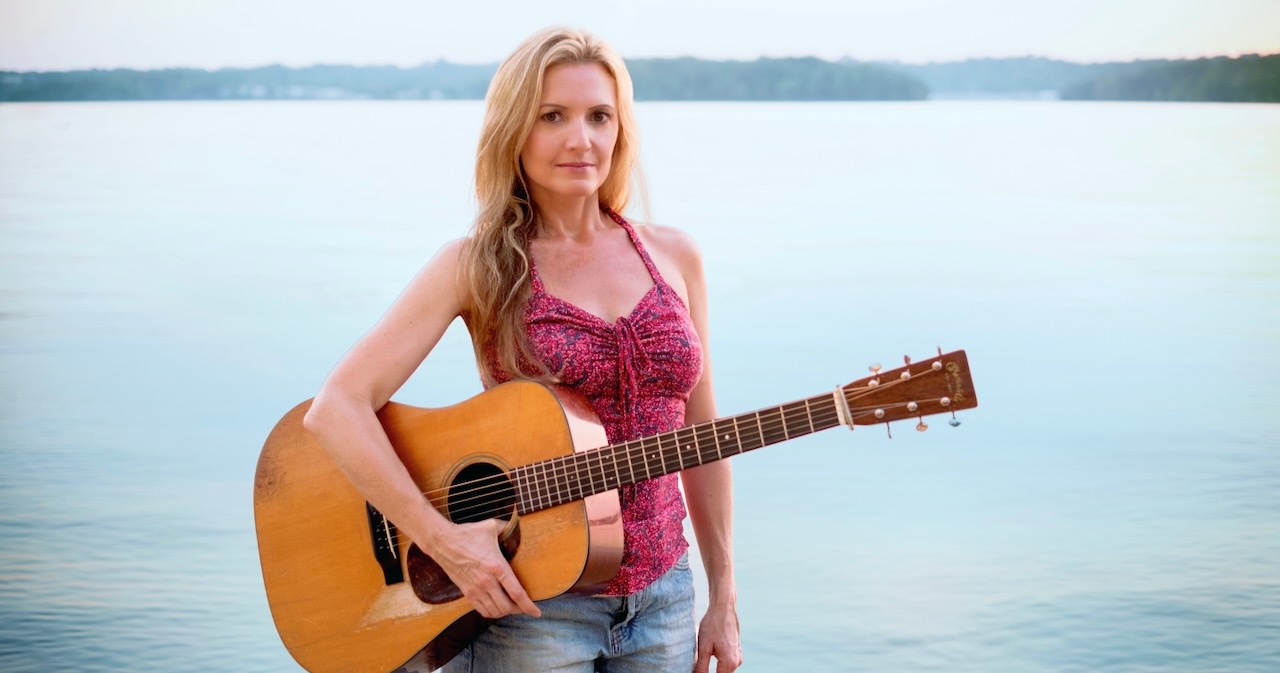
I’m honored to create a playlist for BGS. I’ll share a Mixtape inspired by the theme of time and celebrating the here and now. I grew up in Virginia by the water and my musical life has been influenced by the seasons and the tides. Life (so far) has been a counterpoint of going with my gut and enjoying the moment while also considering intention and the bigger picture. But I’ve learned that I am more in touch with myself as an artist when I can remain in the present. The songs I’ve selected tend to resonate with my intuitive sense of joy and unconditional love – that deeply rooted part of ourselves that is free and unburdened.
It’s celebratory for me to share two tracks from my new album, Boarding Windows in Paradise, out now via Compass Records. Produced by Bill Wolf – who’s known for his work with Tony Rice and Grateful Dead – the album features the talents of Béla Fleck, Sam Bush, Stuart Duncan, Barry Bales, Ron Block, and a constellation of other bluegrass stars. The writing and recording process for the album brought me to a place of learning to create my own paradise through daily intention and action, and I’m grateful for this experience. – Rebecca Frazier
“High Country Road Trip” – Rebecca Frazier
I grew up on the water, so I love going with the flow and being taken for a ride. But I’ve got that philosophical side, where I’m also asking, “Where is this leading?” This song is meant to capture that moment of joy somewhere in the middle; that elevated feeling of loving the lightness of not knowing what’s around the bend and not necessarily trying to create a specific outcome.
“It’s a Great Day to Be Alive” – Darrell Scott
This song brings back great memories of living in Colorado and seeing Darrell Scott singing this one at music festivals out west. His song quickly became an anthem for savoring the present: “It’s a great day to be alive, the sun’s still shining when I close my eyes.”
“Sailin’ Shoes” – Sam Bush
This one is another anthem on the bluegrass festival scene. It’s about cutting loose and feeling liberated. When Sam Bush goes into his signature chop to kick it off, fans start to cheer like wild and dance in recognition. The freeing and soaring feeling of sailing – we definitely feel that when John Cowan joins in with his soaring vocals. As the lyric expresses, “Everyone will clap and cheer when you put on your sailing shoes…” Sam sings and plays it with abandon and you can’t help it but smile (or dance!) when you listen to this classic Little Feat cover.
“All I Want” – Joni Mitchell
“Applause applause, life is our cause.” Joni’s lyric speaks volumes about her expression of letting go. She sings about that feeling of dancing and unleashing herself in a dive bar, falling in love, and letting the best in herself emerge by forgetting about herself for a moment. “I want to have fun, I want to shine like the sun… I want to make you feel free.”
“Time in a Bottle” – Jim Croce
“I’d save every day like a treasure and then, again I would spend them with you.” This classic is a poignant reminder about the essence of time and what seems to have mattered most at the end. Croce sings about savoring time with a loved one and realizing that the metaphorical box of wishes and dreams can only be answered by memories of time spent with a loved one.
“Nick Of Time” – Bonnie Raitt
This song brings back powerful memories from the ’90s, when Bonnie Raitt received well-deserved acclaim as an artist after years of hard work as a blues musician. The message of time passing and realizing that we have almost missed a great life experience-but found that fruition in the nick of time-resonated with a wider audience. Her relaxed and soulful vocals portray the hopeful message in a calming way.
“Days Like This” – Van Morrison
In his relaxed and soulful way, Morrison sings about those rare worry-free days when the pieces effortlessly come together in a satisfying way: “When all the parts of the puzzle start to look like they fit, there’ll be days like this.”
“Cat’s in the Cradle” – Harry Chapin
This classic may be a tear-jerker, but it’s also a celebration of time. We’re reminded by Chapin to spend meaningful time with our loved ones now and not to wait for a speculative future time when our “schedule” is free. The lasting image of an adult son who’s now too busy for his dad – after spending years as a small child asking his dad to spend time together – is a powerful reminder about life’s priorities.
“Thunderclouds Of Love” – Tony Rice
Classic, powerful Tony Rice at his finest. This description of a thunderbolt moment can light up any heart, and Tony’s guitar solo takes us there with flashy, bluesy fireworks. Jimmy Headrick’s lyrics set the scene for Tony’s soulful and punchy baritone vocals: “I have been praying four nights on end for someone who could make me live again, and all at once from the darkness of my heart they came to light.”
“Alabama Pines” – Jason Isbell
This one snuck onto this list, because it always brings me into the present moment. Isbell’s writing and singing is just that good. Whatever you were thinking about or worrying about, it all tends to go out the window. Suddenly you’re driving in Alabama and seeing all of the imagery he describes, feeling all of the emotions he expresses.
“Help Me Make It Through the Night” – Kris Kristofferson
Kristofferson’s is my favorite version of this classic and I’ll admit that he also happens to be my celebrity crush. While he’s portraying relishing this moment, this night, I think many women are wondering if he really needs to ask for help with that cause? In all seriousness, he does pull us into the present with his poignant lyric: “Yesterday is dead and gone, and tomorrow’s out of sight.”
“Duck’s Eye” – Charles Butler
Banjoist Charles Butler is one of my favorite composers and this tune pulls me into an effortless feeling of gliding over an oceanic vastness. The call and response melodies bring the listener into a trance-like state, and the simple melody pulls the listener to that perfectly placed “eye” of the composition, echoing the David Lynch reference of Butler’s inspiration.
“Make Hay While the Moon Shines” – Rebecca Frazier
When I wrote this song with Bob Minner and Jon Weisberger, we wanted to express the feeling of unleashing ourselves and savoring the moment once the moon rises. We’ve all been told to “make hay while the sun shines,” but it’s just as important to put down our work and allow ourselves to be free and true to our inner selves.
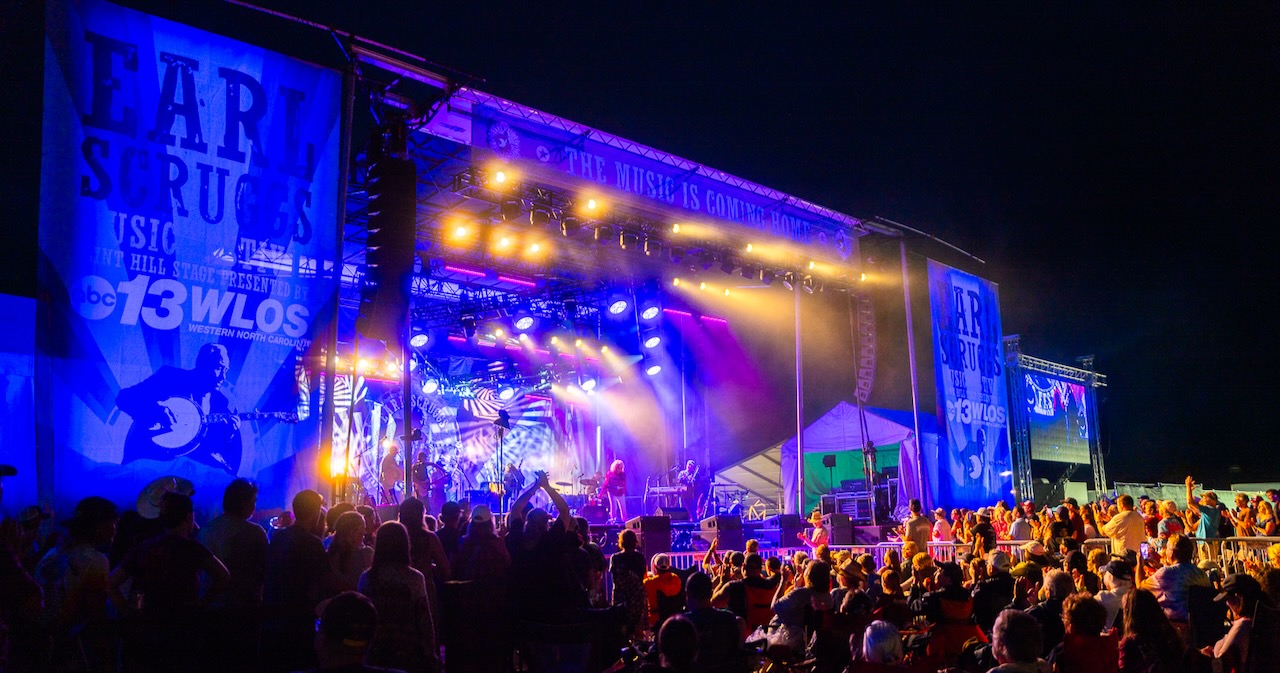
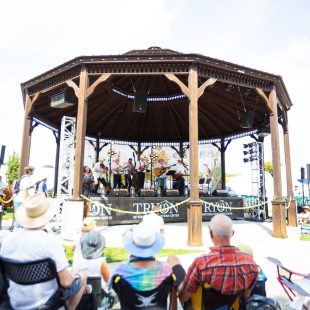
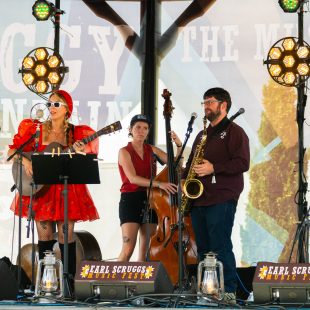
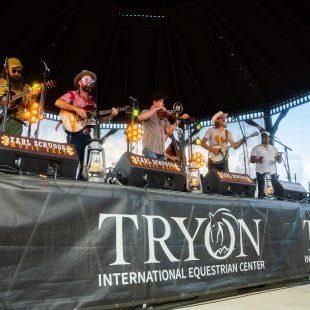
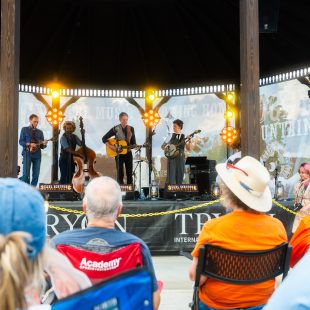
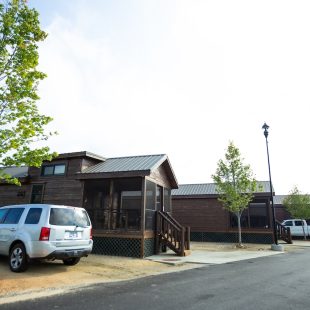
The 3rd Annual Earl Scruggs Music Festival was a smash hit! Held over Labor Day weekend at the stunning, luxurious grounds of the Tryon International Equestrian Center in Mill Spring, North Carolina – a short drive from Scruggs’ hometown of Shelby and the small crossroads of Flint Hill, where he was born and raised – the event featured bluegrass, old-time, country, and Americana made at the highest levels on three stages. Featuring brick-and-mortar restaurants, a shaded grandstand, dozens of vendors and boutiques, a large campground, posh tiny home cabin stays, and so much more, this is not your standard flatbed-trailer-in-a-hay-field festival. It’s so much more.
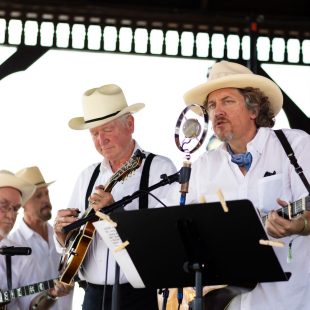
BGS was on hand at this year’s event to once again co-present a special tribute set, renamed The Scruggs Sessions and paying tribute to Flatt & Scruggs’ iconic live album, At Carnegie Hall! Festival hosts Jerry Douglas and the Earls of Leicester helmed the special show on the Foggy Mountain Stage, a crowd favorite in years past that formerly highlighted the Earl Scruggs Revue. This year, artists and bands like Shadowgrass, Wyatt Ellis, Lindsay Lou, Chris Jones & the Night Drivers, Twisted Pine, the Faux Paws, Old Crow Medicine Show, and more played selections from Flatt & Scruggs’ legendary performance at Carnegie Hall in 1962. The ESMF crowd delighted in note-for-note replications alongside brand new reimaginations of the album’s essential songs and tunes – complete with a rendering of “Martha White” that elicited plenty of raucous singing along.
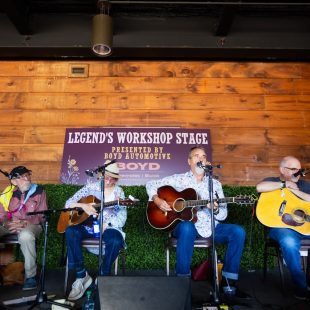
Horse jumping demonstrations were held nearby the Legend’s Workshop Stage, where artists from the lineup told stories, shared songwriting pointers, talked about banjo techniques, and so much more. Fine spirits and wines were available for sale at the Spirits of Bluegrass stands and the Earl Scruggs Center – a fantastic museum focused on Scruggs that calls the former courthouse in Shelby its home – sold their Scruggs-ian wares and passed out hand fans to festival goers throughout the weekend.
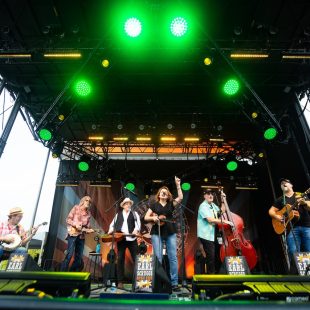
It was a perfect festival to mark the 100th year since Scruggs’ birth, with artists, bands, and musicians from across the musical spectrum demonstrating the wide scope of the innovative banjo picker’s impact and legacy. On the Flint Hill Stage, headliners like Marty Stuart & His Fabulous Superlatives – featuring Chris Scruggs, who received multiple standing ovations from the audience – Mighty Poplar, Yonder Mountain String Band, Old Crow Medicine Show, and Tanya Tucker illustrated that bluegrass is certainly not a monolith. And, that traditional-leaning festivals such as ESMF can be just as expansive and broad as their more Americana-geared or rootsy competitors.
Though Friday and Saturday were blisteringly hot and Sunday saw more than one weather delay while lightning storms rolled out of the Appalachians and over the foothills, the crowds were resilient and energized and the festival showed, yet again, that this event is being built for the long haul. Conveniently located a short drive from Greenville, SC, Asheville and Charlotte, NC and a mere five hour drive from Nashville, ESMF is a must-visit destination festival where everything you could ever need – from banjos to horse jumping to wood-fired pizza to glamorous camping to high-quality interviews and workshops to international superstars – are all combined in one convenient, luxurious location.
Below, check out select photos from the 2024 edition of the Earl Scruggs Music Festival – and make plans to join us next year over Labor Day weekend in 2025! Tickets are on sale now.
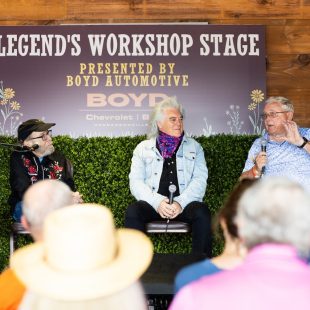
A Friday songwriting workshop featured Louisa Branscomb, Darrell Scott, and Jon Weisberger with moderator Tommy Goldsmith. Photo by Cora Wagoner.
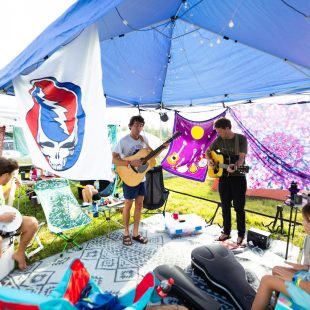
Campers jam during the day throughout the Earl Scruggs Music Festival campground. Photo by Cora Wagoner.
Festival host Jerry Douglas kicks off The Scruggs Sessions tribute to 'Flatt & Scruggs At Carnegie Hall!' Photo by Jess Maples.
Wyatt Ellis and band pose backstage during the Scruggs Sessions. Photo by Cora Wagoner.
Festival hosts Jerry Douglas and the Earls of Leicester helmed the Scruggs Sessions presented by BGS. Photo by Cora Wagoner.
Ketch Secor of Old Crow Medicine Show wound up the crowd during the Scruggs Sessions. Photo by Cora Wagoner.
Lindsay Lou joined by the Faux Paws for the Scruggs Sessions on the Foggy Mountain Stage. Photo by Jess Maples.
Old Crow Medicine Show brought down the house paying tribute to 'Flatt & Scruggs At Carnegie Hall!' Photo by Jess Maples.
Chris Jones & the Night Drivers also made an appearance for the Scruggs Sessions, presented by BGS. Photo by Jess Maples.
Shawn Camp, Jeff White, Charlie Cushman, and Johnny Warren of the Earls of Leicester perform at The Scruggs Sessions. Photo by Cora Wagoner
The Tryon International Equestrian Center has fabulous amenities, including tiny home "Getaway Cabins." Photo by Cora Wagoner.
Journalist and BGS Contributor Tommy Goldsmith moderated the Legend's Workshop Stage each day, including a session featuring Marty Stuart and JT Scruggs sharing stories about Earl. Photo by Cora Wagoner.
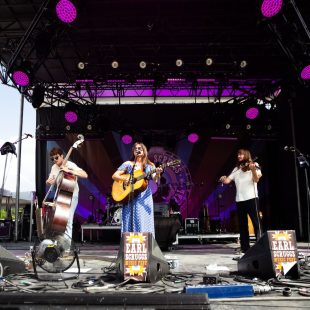
AJ Lee & Blue Summit perform on the Flint Hill Stage on Saturday at Earl Scruggs Music Festival. Photo by Cora Wagoner.
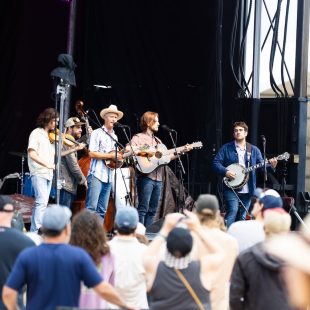
Mighty Poplar, with special guest Caleb Klauder, were a Sunday afternoon main stage treat. Photo by Cora Wagoner.
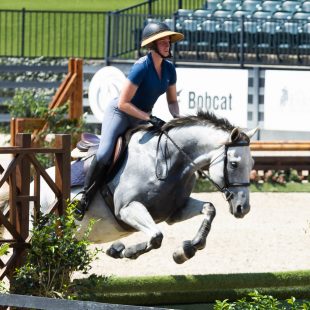
Horse jumping demonstrations were held each day during the festival. Photo by Cora Wagoner.
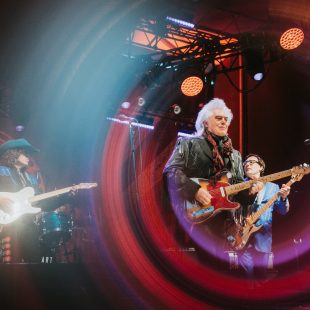
Marty Stuart and His Fabulous Superlatives gave an incredible Flint Hill Stage performance on Saturday evening. Photo by Cora Wagoner.
The SteelDrivers brought their bluesy bluegrass – that they call "uneasy listening" – to ESMF. Photo by Cora Wagoner.
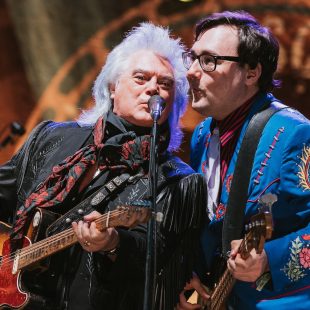
Marty Stuart and Chris Scruggs sing in duet on the Flint Hill Stage. Photo by Cora Wagoner.
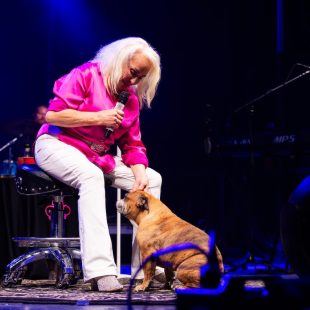
Tanya Tucker brought out her bulldog, Stella, for a cameo at ESMF. Photo by Cora Wagoner.
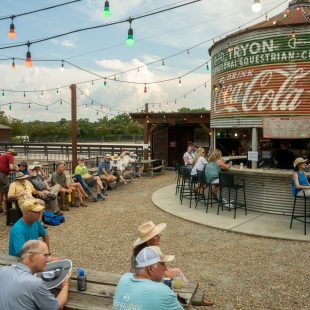
The Silo Bar, home to the brand new Silo Sessions hosted by Craig Havighurst. Photo by Jess Maples.
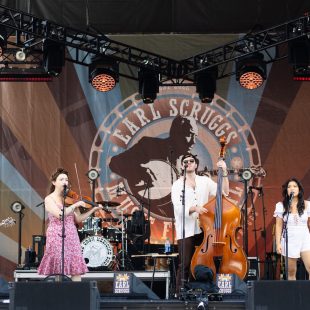
Twisted Pine returned to ESMF for the second year in a row, performing several times. Photo by Cora Wagoner.
Tanya Tucker and her band gave an excellent final performance on the Flint Hill Stage Sunday Night. Photo by Cora Wagoner.
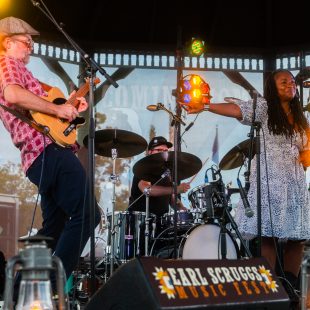
Miko Marks delighted the crowd with her soulful and divine Americana. Photo by Jess Maples.
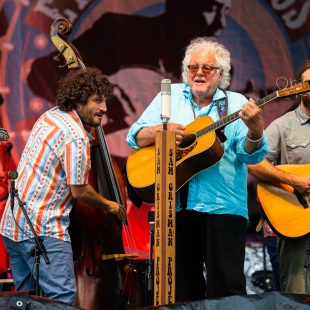
Peter Rowan joined the Sam Grisman Project for a main stage set that was sadly interrupted by weather. Photo by Jess Maples.
Tanya Tucker brought down the house with her Sunday night set on the Flint Hill Stage. Photo by Cora Wagoner.
The crowd packs in for Casey Driessen's Red Shoestring Jam, the festival's final performance. Photo by Jess Maples.
Tickets for Earl Scruggs Music Festival 2025 are on sale now.
All photos courtesy of Earl Scruggs Music Festival and shot by Cora Wagoner and Jess Maples, as marked. Lead Image: Tanya Tucker performs on the Flint Hill Stage, photo by Jess Maples.
There’s something in the water in Kentucky that’s conducive to making great songwriters, and the second annual Sleeping In The Woods Festival — held May 17-19 in Monticello — was no exception.
Hosted by artist and songwriter Nicholas Jamerson, the gathering has quickly become a can’t-miss attraction featuring a mix of the Commonwealth’s most revered songwriters, as well as the ones they’ll eventually be handing the reins off to. The setting of Hidden Ridge camping — a birch tree-covered campground nestled along Lake Cumberland — further elevated its intimate feeling (in addition to providing a canopy of shade during a deluge of rain Friday).
However, despite Mother Nature’s best efforts on day one, the few hundred in attendance didn’t have their spirits dampened by the soggy forecast, instead filling out a massive tent by the festival’s second stage for a songwriter round to open things up. Featuring Ryan Anderson of Louisville rock band Bendigo Fletcher alongside Jamerson, in a last minute change of plans, the two opted to debut entirely new and unrecorded music during the hour-long round, further putting a microscope on their superb songwriting, the stories behind them, and the creative process at an event built for exactly that. Outside of rain pattering on the tent above, you could hear a pin drop. Even though fans weren’t familiar with these songs, it was obvious they were captivated by the occasion, a sign of the duo’s songwriting prowess and power of getting caught up in the moment.
Nicholas Jamerson and Ryan Anderson (Bendigo Fletcher) open Sleeping In The Woods festival with a songwriter round.
“Getting to play all new songs with Ryan Anderson felt like the perfect way to set the tone for the festival,” Jamerson tells BGS. “I’ve admired him so getting to share that space meant a lot.”
Following the round of new material was one of the festival’s few non-Kentucky acts, Cristina Vane. As a result I found myself talking with countless folks as she set up about what to expect from the electrifying slide guitar and banjo picker, but even my best of introductions couldn’t have prepared them for the show she gave them.
Working as a trio with drums and bass guitar, Vane tore through originals like “Blueberry Hill” and “Small Town Nashville Blues” alongside new songs like “You Ain’t Special” and sweltering covers like James McMurtry’s “Choctaw Bingo.” Through it all, she had the crowd at her will, seemingly unaware of the rain falling around them, including myself.
Cristina Vane performs at Sleeping In The Woods.
Although I’ve seen Vane perform several times, each occasion always feels like a first due to the versatility of her band setups. I’ve seen her play solo, with a full electric band, a full bluegrass band, and now as an electric three-piece; each show feels so different. Her songwriting is built for a festival like Sleeping In The Woods, but how she’s able to plug and play, presenting her music in many different ways is what truly sets her apart. Fans on Friday seemed to agree, giving Vane a ferocious standing ovation at her set’s conclusion, something that even she didn’t seem to expect.
“It was cool seeing people react to acts they hadn’t seen,” shares Jamerson. “I felt like Cristina Vane, The Dick and Tammy Show (Justin Clyde Williams and Tyler Hatley), and Josh Slone all made really huge impressions on people.”
Another out-of-state act integral to the weekend was Rachel Baiman. The Nashville-based multi-instrumentalist was everywhere over the three-day event, starting with a songwriter workshop she led to begin Saturday’s musical menu. Attended by around 50 under the tent that Cristina Vane rocked out the night prior, the croissant-fueled workshop saw Baiman working with fellow songwriters and aspiring ones alike to take internal conflicts and turn them into external ones via song.
This drew a mix of interesting inspiration from the heavy — a man trying to fit in with his different groups of friends and a mom and pop trying everything to keep their small business afloat — to tongue-in-cheek ones, like a prompt about how losing your Chapstick makes you feel like an inadequate lover.
“The songwriting workshop was both a complete joy and completely terrifying,” recalls Baiman. “Trying to ‘teach’ songwriting to some of my favorite songwriters felt a little crazy, but I think it really contributed to the class, because we could hear ideas from newcomers and seasoned professionals side by side.”
Rachel Baiman leads a songwriting workshop on day 2 of Sleeping In The Woods festival.
Outside of the workshop, Baiman also led a songwriter round of her own on Sunday afternoon that she used to showcase recent co-writes with Pony Bradshaw (“Equine Elvis”), Caroline Spence (“Throw Away The Moon”), and Jamerson, who joined her for a performance of their song, “The Vine That Ate The South,” due out next month. Additionally, she took to the stage with Leah Blevins, an Eastern Kentucky singer by way of Nashville, prior to Sunday’s round, fiddling with the Sandy Hook native on a selection of songs including the nostalgic “First Time Feeling.”
The set was a grounding one for Blevins, who expressed a longing to return home from Nashville in recent months even as she’s hit a breakthrough, signing a publishing and management deal with Major Bob Music in April. She expects to begin recording a new album soon.
“Any opportunity to be back home in Kentucky is a true sense of comfort,” says Blevins. “There are so many unbelievably talented artists there and this weekend was a true representation of that. It’s inspiring and always humbling to share the stage with folks that you genuinely respect like Nicholas. He’s always made me feel welcomed and his kindness alone is influential on a human level.”
Other Kentucky luminaries that stood out included Somerset’s Cody Lee Meece, brothers Wes and Aaron Smith — who were joined by Anderson on synth for an intriguing acousti-tronic sound — along with Ryan Allen & Maggie Noëlle’s stripped down versions of songs from their band, Magnolia Boulevard, and a Saturday evening round featuring three of the state’s stars of tomorrow: Salyersville native Zoe Howard, Hindman’s Josh Slone, and Central Kentucky’s Ireland Owens.
But it was Hunter Flynn, one of the state’s other promising young talents, that garnered the most attention. A local boy from just up the road in Somerset, Flynn’s Sunday afternoon set showcased the singer’s sensational songwriting and holler yell on cuts like “Spanish Street Signs” and “Fucked Up Brain” that have earned him recent gigs on the road with Zach Top and Ian Munsick, among others.
Hunter Flynn performs Sunday afternoon at Sleeping In The Woods festival.
In a pay-it-forward fashion similar to how Jamerson is platforming new artists with the festival, Flynn — who won a recording package from festival sponsor Jamm Nation during the event — plans to serve up his studio time to young artists in need on a collaborative EP that Jamerson will produce. According to Flynn, he wouldn’t be where he is today without Jamerson’s music and guidance.
“Before I knew Childers, before I knew Sturgill, before I knew Stapleton; I knew Nicholas Jamerson,” explains Flynn. “He might not have been the first to do it, but he was the first person that I knew from the Appalachian region that was writing songs and playing them for a living. Now I don’t know a single singer/songwriter from this region who doesn’t cover at least one of his songs. He could win six Grammys next year and it wouldn’t be as much recognition as he deserves.”
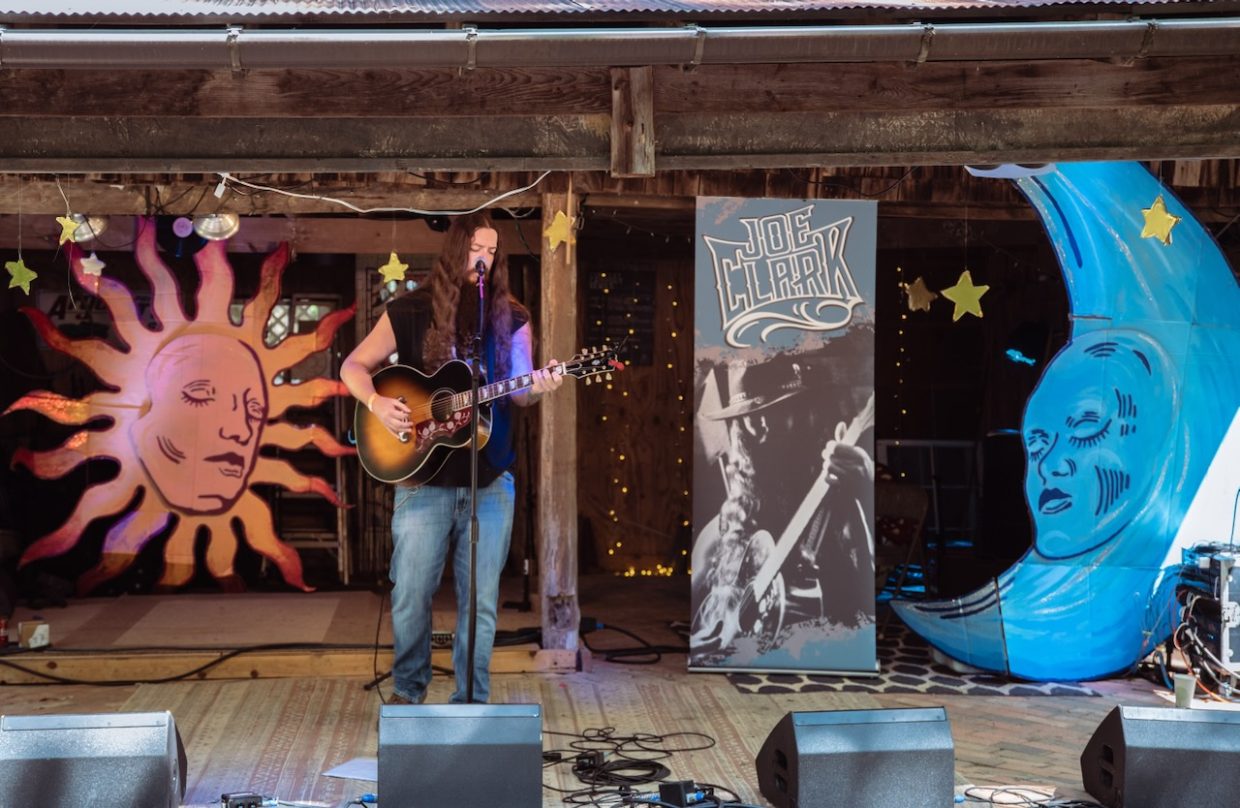
A more seasoned Kentucky artist that also turned heads was Henry County’s Joe Clark, who pulled back the curtain on songs typically backed by his country rock band, The Peacemakers, that touch on everything from drug addiction to the love he has for his father. Clark was hard to miss all weekend due to his towering presence, but heartfelt songs like “Wishin’ Well” and “Battlefield” showed a soft side to counter his hard exterior, one of the many things a powerful song can do.
Joe Clark takes the stage at Sleeping In The Woods festival.
“Music is my therapist. Along with my children and family it’s kept me sober and alive for years,” confides Clark. “I owe my life to songwriting. It is a power greater than me and I’m honored to put pen to paper each time a lyric comes to me. My biggest hope is to be able to take my real life experience and translate it through song in a way that someone else can take it and make it theirs and use it in a healing way for themselves. Music is medicine, and I believe everyone needs a daily dose to stay healthy.”
Closing out Sleeping In The Woods was one of the most iconic and influential Kentucky songwriters ever – Darrell Scott. For nearly two hours on Sunday afternoon the trailblazer showed off his fiery picking skills on iconic songs like “Never Leave Harlan Alive” and “It’s A Great Day To Be Alive,” giving all of the artists and fans in attendance something to look up to and aspire to in the process. The performance also left many in the audience visibly emotional including Jamerson, who could be seen tearing up throughout it.
“Having Darrell there really meant a lot,” reflects Jamerson. “It felt like we had the full spectrum of musicians, from green, next generation, seasoned vets and a master in Darrell. We are hoping to expose the youngins to a sustainable path in this industry, so having someone like Darrell was really validating for me.”
Darrell Scott headlines Kentucky’s Sleeping In The Woods festival.
From vets like Darrell Scott to youngins like Josh Slone, Zoe Howard, and Hunter Flynn, and present day stars like Nicholas Jamerson, Sleeping In The Woods was proof of many things — that Kentucky music is in as good a place it’s ever been, that smaller, niche festivals do have a place in today’s music landscape, and that great songwriting will never go out of style.
“It feels like the best way to kick off the year,” describes Jamerson, who’d been laying low since his two-night Hollerday Gitdown in December. “It’s such a great group of people that makes it all happen. It’s also really grounding, inspiring and a nice reminder of the community of people that I’m a part of, which is uplifting and gives me life going into the busy season.”
All photos by Joe Wilkins, courtesy of Sleeping In The Woods festival.
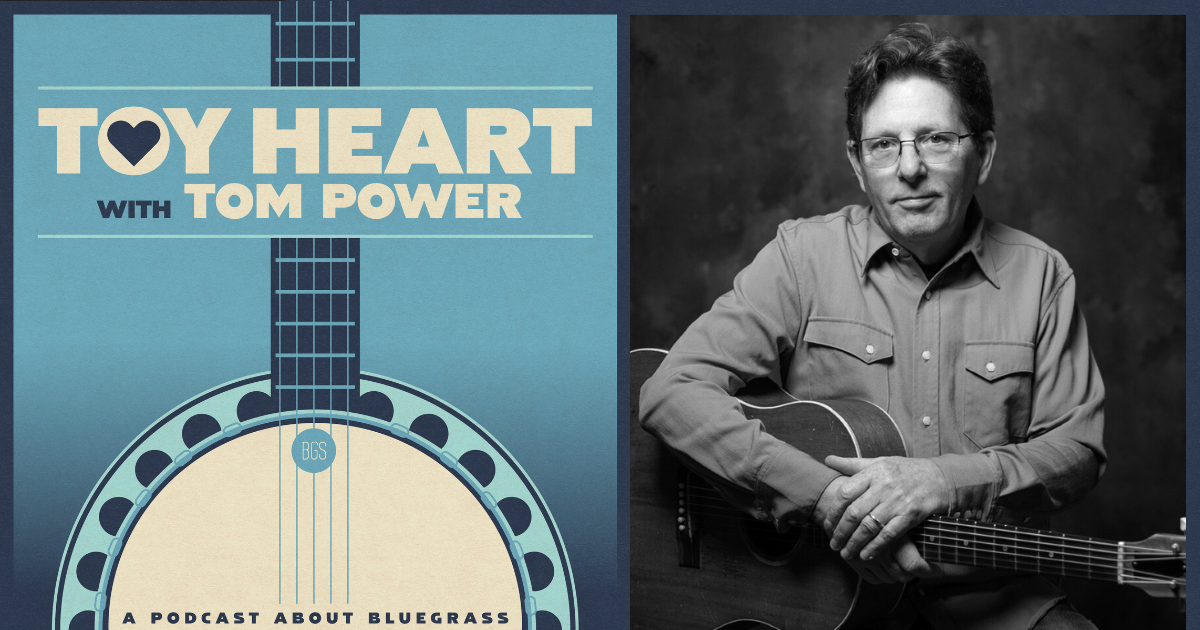
Our latest guest on Toy Heart is bluegrasser, multi-instrumentalist, and songwriter Tim O’Brien. His conversation with host Tom Power begins by remembering the music of his childhood, growing up in Wheeling, West Virginia listening to Chubby Checker on his crystal radio set and attending the nationally renowned country variety show and radio broadcast, the Wheeling Jamboree. Encountering the music of Merle Haggard and Doc Watson via local radio and television, he fell in love with music as a kid before a few friends introduced him to Bill Monroe’s mandolin playing while smoking a post-gig joint as a teen.
After dropping out of college, O’Brien hitchhiked west to Wyoming, before landing in Colorado and eventually founding Hot Rize in the mid to late ‘70s with newly married and relocated Dr. Banjo himself, Pete Wernick. Over the course of their winding and dense conversation, Power and O’Brien chat about Gibson mandolins, the burgeoning Colorado string band scene, working with Bill Monroe, and the strange, circuitous story of his fiddle’s provenance.
O’Brien’s career, as multifaceted as it has been, is a wellspring of stories, anecdotes, and yarns about the bluegrass scene of the ‘80s and ‘90s, Irish music, writing hit country songs, working with and alongside so many first generation bluegrass legends, and the inception of Hot Rize’s alter ego band, Red Knuckles & the Trailblazers. Having recorded and performed with the Chieftains, Darrell Scott, the Transatlantic Sessions, and so many others, Tim O’Brien’s career is a melting pot of styles and sounds with one primary throughline: the true originality of his own musical vocabulary. As Power puts it, “I couldn’t tell you what Tim O’Brien sounds like, but I know Tim O’Brien when I hear it.”
Our Toy Heart episode examines O’Brien’s expansive and impressive career at a fascinating juncture in its span, as he shifts from being a bluegrass and Americana workhorse to a forebear, mentor, and roots music elder to entire generations of young musicians.
The first time I saw Willi Carlisle was in Buffalo, New York, in the tiny basement of an old protestant church that Ani DiFranco bought. There couldn’t have been more than thirty or so people there – a queer couple or two holding hands, a mom and a dad plus their kid, a cluster of 20-year-olds too hip for their own good. I see twenty or so shows a year – neighborhood guitar pulls, little club gigs, shows in big theaters, and every so often an arena. Willi was world class, one of the best I’ve seen. He told stories in between the songs, tracing an anti-Vietnam song well into the 17th century, or talking about Mexican ballads and the power of the concertina, or about how a hometown story is both archetypal and plain, universal and contained to a very specific time and place.
As the Buffalo concert suggested, Carlisle is at his best when limning complex networks of historical figures, news, what is called “traditional music,” contemporary poetics, and the natural world. He is a lyric poet, in the most classical sense.
This fact could be seen especially in a track from his new album Critterland, “Two-Headed Lamb.” It’s an adaptation of a Laura Gilpin poem, which Carlisle translates and extends. I’ve always thought that the poem was a bit too glib, a bit too self-assured of its own moral ending.
Carlisle talks about the whole cycle of growth, how it is not a singular freak birth in a generic field, but how the freakish quality of a two-headed calf and the weirdness of that birth functions within a cycle: The farmer who finds it, persimmons growing out of season, a coyote picking at the corpse of a ewe, even “robins singing in an old growth tree.” As a creator, the song becomes an act of interpretation – a poem becomes a song, a song not quite a cover, a critique of a poem that might not work, but the working of the poem depends on an audience.
When asked about the poem, Carlisle responds:
As I explored Gilpin’s poem with friends and strangers, it’s been no surprise that “Two-Headed Calf” seems well-known in both rural and trans communities and their significant cross-section. And why not? It’s a poem about a creature too beautiful for this world, [whose] magisterial dimorphism and tragic death conjures real-world magic. Someone born feeling as if they have no gender, two genders, the wrong gender, might feel this magic themselves. So would someone who’s pulled an ailing calf from the womb of their beloved milk cow with a rope or their bare hands.
That’s a generous reading, a reading done in community – one that expands what an audience could mean, one that is as cyclical and as wide as open as could be. It’s generous to Gilpin, as well.
This whole act of semi-translation also explains the concept of Critterland, which Carlisle describes in our wide ranging conversation as a place where “…we have to dismantle the house, make something different. I think what we inherit (our bodies, songs, tools, houses) makes us the living proof of the suffering of our forebears. We’ve got their noses, their colonial holdings, their drinking problems.”
In a culture, we take and hold onto what is useful for us and the results of that taking we try to build more carefully.
In the list of animals that Willi names in the title track – “Yeah, the sparrow on the wing taught mе to find you/ And the opossum knows his own mind more than I do” – there is hope in being able to craft houses and buildings like the scuttling of everyday creatures. If the possum and the sparrow can (and may I add, the racoon, the crow, the squirrel, every city or country creature) then we can, too. Which is why the best of Carlisle’s songs are ones which mention small spaces – a mother singing “In the Sweet By and By” in the kitchen, or the devastating song “The Arrangements,” with its complex, sometimes compassionate, sometimes ruthless processing of a father who drank too much and loved too little, or in “The Great Depression,” a verse that limns Carlisle’s ancestors:
From the needle-prickin’ mothers who were never taught to read To the barefoot hungry soldiers that enlisted at 16 Oh in my dumb debasement, I still find great relief That on the lam and on the dole they counted themselves free…
Those are local examples, small, and there is some argument within them. Like some great folk singers, Carlisle’s sense of local spaces, his skill at deep readings of landscape, is a primary example of his excellence. I think of him as an Arkansas singer, but he has to earn a living – part of that possum life. Carlisle travels constantly, touring half the year or more to make enough money to be somewhere he feels home.
He explains it thusly: “One of the hard facts about touring so hard is that I haven’t really lived in Arkansas for more than a few months a year in six or seven years now. Hell, currently I’m living in southwest Missouri, just over the border. I don’t feel excluded from my life back home, usually, when I’m on tour. “
It’s another network, a cycle of creation, and intimacy. In a song called “Higher Lonesome,” is there something monastic there? Setting up lonely feelings to a higher power? Is he quoting the 1950s Texas technicolor film? Is it a song about drinking?
It’s all of those things and none of those things. He mentions his community and where they are in the world:
…By the time the ride is over, I’m sure I’ll ask to ride again See the snowfall in Wyoming, strung out on Johno’s coke Keep a mailbox in Nebraska, so I know the Lord knows She can write a letter once a year and say that we’re still close I can put my cents on Benjamin hear the songs he wrote…
The privacy of this song marks the depth and complexity of another, the last work on the record “The Money Grows On Trees.” It’s a 10-minute recitation, a story told in intense, Appalachian Gothic detail, about corruption and a young drug dealer gone wrong.
If any texts could be considered lonely, even in the midst of Carlisle’s careful noting of connections, these are. For example, when in another song, he sings to a “Jaybird” – another of those scuttering creatures, that eats off what is left. He says to the jaybird, that “he’s doing just fine, his head is a wreck and his chest is on fire.” This line, with neither denial nor irony, is a kind of Beckettian notice about continuing on despite the ongoing, struggling moments.
The whole album speaks of a (dis)regulation of feelings, slipping into the natural ebbs and flows of the titular Critterland so the work can continue. In the album, and in his live shows, a cobbling together happens as a kind of hope, but a hard-won kind.
Or, to give Carlisle the last word:
I don’t believe in despair – it would make me hate things, and I cannot bear to do that. So, alas, that means the only other option is the hard one: hope. Here in the first world we have unimaginable resources and power, so much more than we need. We could, realistically, reduce climate change, enshrine human dignity, end global poverty, and celebrate untold freedoms in our lifetimes. Why wouldn’t we? I’m naive, surely. Maybe I’m an idiot, and maybe I’m just obsessed with getting “what’s mine.” Music is a business, after all.
The work is the thing – to pay the mortgage, to tell stories that need to be told, to adapt stories that have been forgotten, to cry or laugh, to mourn, to change people’s minds politically, to seduce or to be seduced.
Carlisle’s practice, in an aching two-step, does this with tradition. There’s a reason why he’s a square dance caller, and there’s a reason why, for him, the dance goes on.
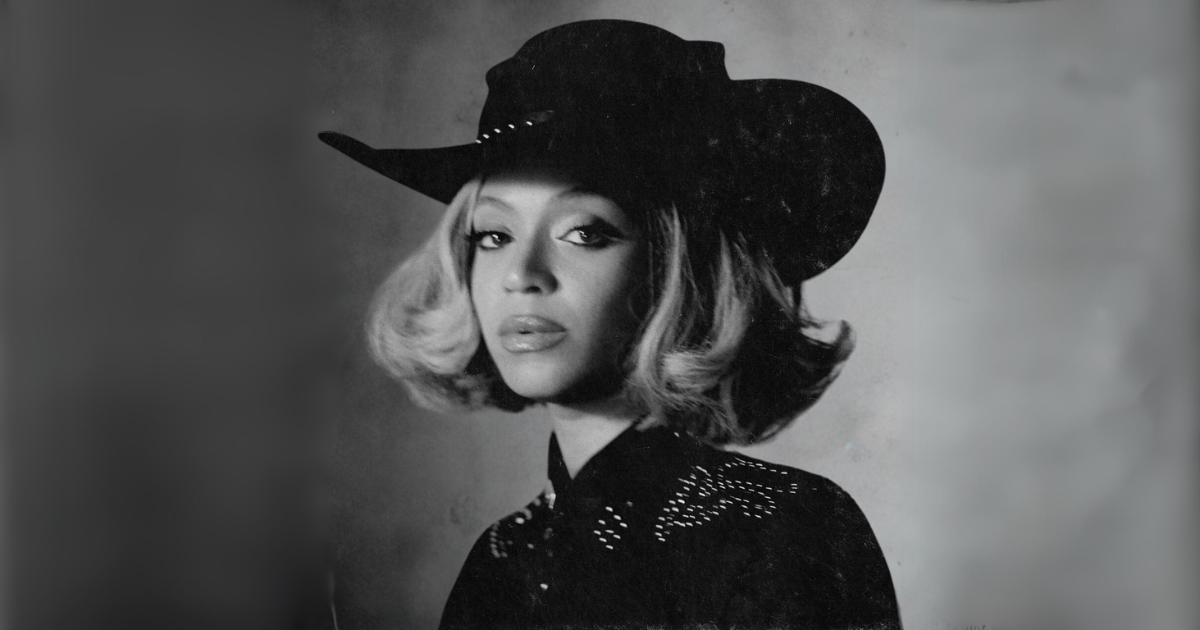
During a series of high profile Verizon ads during yesterday’s Super Bowl, Beyoncé announced that her upcoming Act II following 2022’s incredibly popular dance album, Renaissance, will find the globe-crossing singer/creative powerhouse returning to country. As music journalist Marissa Moss points out in a brand new post for the country newsletter she co-founded, Don’t Rock the Inbox, Beyoncé Knowles-Carter’s relationship to the genre is nothing new – as far back as 2007 the Texas born-and-raised artist rode a horse as she entered the iconic Houston Rodeo, an internationally known, marquis event in her hometown. Across the decades, Knowles-Carter has constantly utilized her music to remind her audience of her Americana roots, with songs, tracks, and production values that regularly reference country and roots music idioms. At the Grammy Awards on February 4, she wore a modernist couture cowgirl get up – a motif that has been peppered throughout the visuals for Renaissance and its world tour. As Lana Del Rey had just announced her next album, Lasso, would be country, the world wondered – why is Beyoncé wearing a cowboy hat?
But Beyoncé’s relationship to country goes deeper, still. In 2016, as Moss and many other journalists and industry insiders pointed out in reaction to last night’s announcement, Knowles-Carter appeared with The Chicks (at that time still referred to as The Dixie Chicks) in a fiery medley performance during the CMA Awards. The trio joined Beyoncé on her countryfied Lemonade track, “Daddy Lessons,” before morphing into a barn burning all-skate on the Chicks’ Darrell Scott-written hit, “Long Time Gone.”
These new songs, which were initially unveiled exclusively on the streaming service Tidal, are built on the “Texas Bama” terroir that all of Knowles-Carter’s music is intentionally rooted within. “Texas Hold ‘Em” begins with a full, warm, fretless old-time banjo, playing a looped, intricate melodic hook. If your ears perked up during Act II‘s teaser video upon hearing the five-string, you are correct – the banjo and viola on the track were performed by the one and only Rhiannon Giddens and were tracked with Demeanor, Giddens’ nephew, another roots music innovator and genre blender, acting as engineer.
It is beyond apropos for Beyoncé and her team to tap Giddens here, someone who has also built a career and prolific musical output on holding together seemingly disparate influences, textures, tones, and styles. It speaks to Knowles-Carter’s aptitude for not only trying on and exploring new or relatively unfamiliar idioms, but also inhabiting them wholly, intricately, and intuitively. It seems obvious to state, but Beyoncé is no roots music carpet-bagger or opportunist putting on “poverty tour” cosplay just to bolster her bottom line.
Though the production style and arrangements here are decidedly interconnected with Renaissance, the beats and underscoring beneath and around the clawhammer banjo and finger-picked acoustic guitar don’t feel entirely like Avicii’s “Hey Brother” or similar, more heavy-handed attempts to intermingle string band music with house, disco, and dance. Ultimately, these two tracks feel less like a “stomp & holler” money-grab/chart-grab and more like post-modernist line dancing music, carrying forward the placemaking and space-holding of her 2022 album. This is music about gathering, moving, and polishing the floorboards with a pair of cowboy boots.
As MacArthur “Genius” and New York Times columnist Tressie McMillan Cottom points out in a NYT blog entry on the new tracks, the most country-sounding aspects here don’t originally stem from “country” at all: “‘Texas Hold ’Em’ sounds like a Maren Morris-style bop, with many of country-pop’s current themes,” says Cottom. “There is a good reason for that. Those themes are very R&B and hip-hop coded: harmonies, danceable hooks, trap percussion and call-and-response.”
In the mind of this writer, though, “16 Carriages,” the proverbial B-side to the more glitzy and grabby “Texas Hold ‘Em,” is the most remarkable of the two singles currently available from Act II. It’s a Beyoncé train song, one that straddles the divide between urban and rural, city folk and country folk, hillbilly music and rhythm and blues. This is a deft balancing act, one that collectives like the Black Opry and artists like Mickey Guyton, Brittney Spencer, Black Pumas, Buffalo Nichols, Julie Williams, and yes, Giddens, have been demonstrating to the roots music industry and its fans for years and years, now. Such a balance can easily go awry, but as we know, Beyoncé so rarely goes awry – even in a would-be treacherous foray into this well-guarded and gatekept genre.
These two songs, but “16 Carriages” especially, illustrate how important it is to view music such as this not as aberrations from a country music norm, but as distillations and representations of what has always been possible in country. Especially if we let arbitrary, moralistic, and bigoted “rules” and expectations fall away and we let artists – whether the most famous in the world or the busker on the street corner – be who they are, unencumbered and empowered by their identities, in all of their idiosyncrasies and complications. Beyoncé’s Act II will showcase that we really do all belong in country, whether your hat and boots are literal shit kickers or are overlaid in hundreds of disco ball mirrors.
It’s not hard to imagine Willi Carlisle’s latest album, Critterland, as a decrepit-but-lovable roadside attraction, but here, the side show has decidedly taken center stage. Carlisle, a folksy, pastoral poet and songsmith, has invited all of us inside the big tent he pitched with his last record, Peculiar, Missouri, and to celebrate all of the beautiful ugliness we find in the spotlight. Produced by Darrell Scott, Critterland finds redemption in proudly – and holistically – owning and just as often subverting expectations around rurality, authenticity, community, and belonging. It’s a deft and artful confluence of schtick and performance, vulnerability and obscurity, artifice and genuineness, that could only be accomplished by a creative like Carlisle.
In Ryan Lee Cartwright’s book, Peculiar Places: A Queer Crip History of White Rural Nonconformity, the author and academic makes an astonishing case for the American societal and imperial construction of the “rural idyll,” and thereby, the co-construction of its antonym: the rural “anti-idyll.” The rural idyll is our general understanding of how rurality and the American dream intersect; of goodness and work ethic and respectability, of insiders and good ol’ boys and our kinda folks. The anti-idyll is the amorphous, intangible opposite of those white supremacist and capitalistic constructs.
Critterland is a joyous and liberated inhabitation of the latter concept, reveling in queerness, counter culture, other-hood, and so many kinds of rural, agrarian, and American anti-idylls. What are queer folks, poor folks, Black folks, brown folks, disabled folks in the country – and in country music – besides, first and foremost, antithetical representations of the American dream? The overlooked, enshadowed folks who inhabit the American anti-idyll… who is singing music for them? Who is inviting those very folks to step into the spotlight?
Willi Carlisle is certainly one. Tracks like “When the Pills Wear Off” and “The Money Grows on Trees” synthesize broad, generational, socio-economic realities that are often discussed, understood, and intellectualized – but rarely with their subjects first in mind. Carlisle is clearly making these songs for the people most impacted by their content; any translation they have in more zoomed-out contexts or to wider audiences is simply an added bonus. Others, like “Dry County Dust,” “Two-Headed Lamb,” and the titular “Critterland” seem to wink at the rural cosplay worn by all songwriters and music makers in roots music, but again, winking first to those who already understand it was always cosplay, from the very beginning.
Whether inhabiting the character of his onstage persona, which often but not always aligns with the human himself, or merely reflecting the pantheon of folks in his own life and communities, there’s a quality to Carlisle’s music and to Critterland that’s saying, “This music is for our kind of people.” And in the words of another backwoods poet, Jimmy Martin, “It takes one to know one, and I know you.” That could almost be the entire thesis statement of the album.
Darrell Scott’s production – and his own multi-pronged relationship to the anti-idyll – makes the clumsiness and haphazardness of this set of songs feel fully like a feature and not a bug. This is Critterland, after all, these side show animatronics are on their last legs and that’s why we love them. This sort of charm is certainly carried over from Peculiar, Missouri – which has delightfully variable production styles across the tracks – and really from all of Carlisle’s releases to date. (Including, if not especially, his hugely popularsessionswithWestern AF.)
Critterland, in the end, may not be the most magical place on earth, but it doesn’t want to be. And, it’s still a place you’ll end up returning to again and again. Because Willi Carlisle’s big tent is really, actually big enough for all of us. On our best and on our worst days and on all of the many days in between.
BGS will spend all of February celebrating Willi Carlisle as our Artist of the Month. Watch for an in-depth feature by music journalist and author Steacy Easton coming soon and, for now, enjoy our Essential Willi Carlisle playlist. Plus, don’t miss Willi and Critterlandin the debut issue of Good Country, a new bi-weekly email newsletter from BGS.
Photo Credit: Madison Hurley
This website uses cookies to improve your experience. We'll assume you're ok with this, but you can opt-out if you wish.AcceptRejectRead More
Privacy & Cookies Policy
Privacy Overview
This website uses cookies to improve your experience while you navigate through the website. Out of these, the cookies that are categorized as necessary are stored on your browser as they are essential for the working of basic functionalities of the website. We also use third-party cookies that help us analyze and understand how you use this website. These cookies will be stored in your browser only with your consent. You also have the option to opt-out of these cookies. But opting out of some of these cookies may affect your browsing experience.
Necessary cookies are absolutely essential for the website to function properly. This category only includes cookies that ensures basic functionalities and security features of the website. These cookies do not store any personal information.
Any cookies that may not be particularly necessary for the website to function and is used specifically to collect user personal data via analytics, ads, other embedded contents are termed as non-necessary cookies. It is mandatory to procure user consent prior to running these cookies on your website.