Women’s History Spotlight: Ola Belle Reed, Loretta Lynn, and More

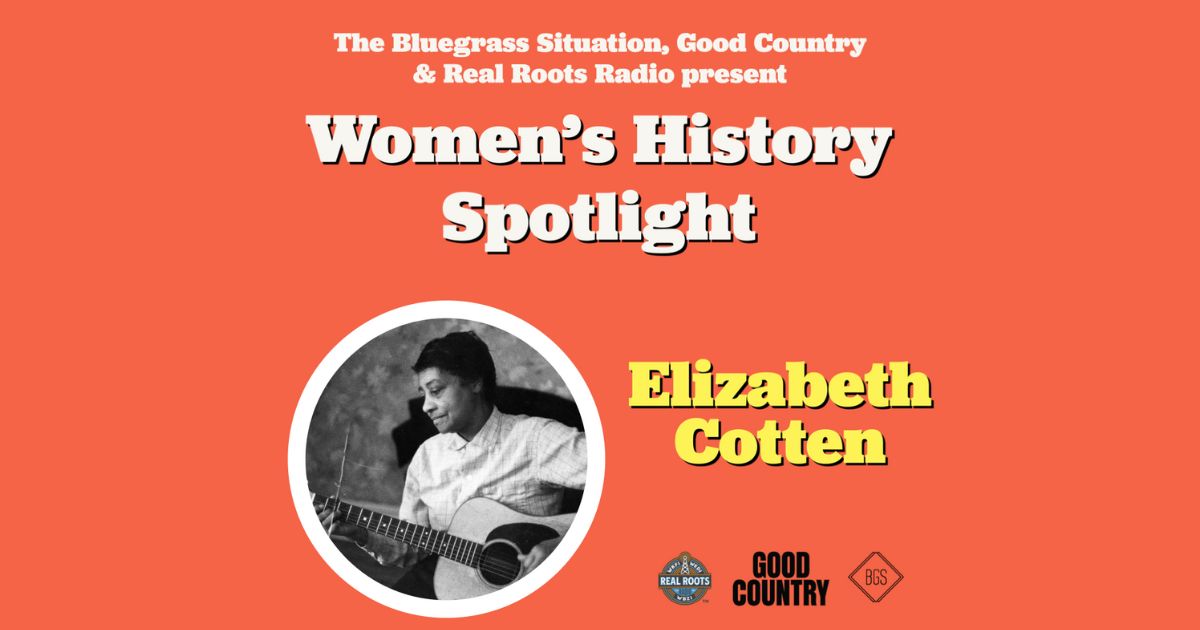
Each year, March is Women’s History Month, and BGS, Good Country, and Real Roots Radio partnered all last month to highlight a variety of our favorite women in country, bluegrass, and roots music with our Women’s History Spotlight.

Each weekday in March at 11AM Eastern (8AM Pacific) on Real Roots Radio, host Daniel Mullins has been celebrating a powerful woman in roots music during the Women’s History Spotlight segment of The Daniel Mullins Midday Music Spectacular. You can listen to Real Roots Radio online 24/7 or via their FREE app for smartphones or tablets.

Then, each Friday we’ve hosted a recap here on BGS featuring the artists highlighted throughout the previous week. No list is comprehensive, but we hope to feature some familiar favorites as well as some trailblazers whose music and impact might not be as familiar to you.

Let’s look back at March and the vibrant history of women in roots music with our final edition of our Women’s History Spotlight, featuring Elizabeth Cotten, Patty Loveless, Ola Belle Reed, Alison Krauss, and Loretta Lynn.

Elizabeth Cotten
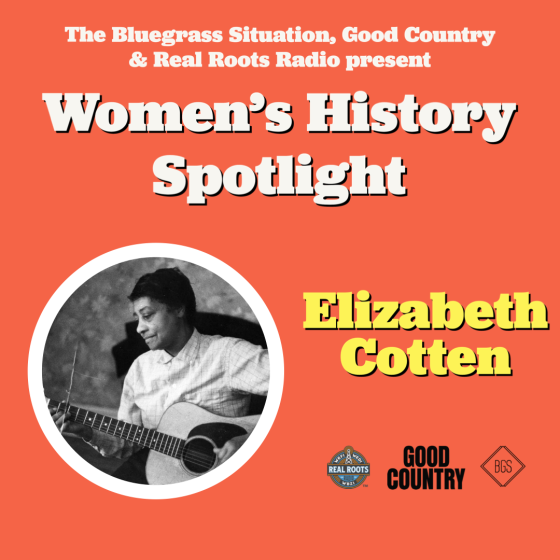
Born in 1893, this North Carolina native had a profound impact on American roots music. While she learned how to play the guitar as a child, and even then began writing songs, she shelved her musical dreams and became a domestic worker, but fate had other plans for Elizabeth Cotten. Decades later (in her sixties), she became a housekeeper for the Seeger family following a chance encounter at a department store. The Seegers, of course, are known through roots music circles for the family’s reputation as talented musicians and respected musicologists, featuring Mike Seeger of the Bluegrass Music Hall of Fame, Peggy Seeger, their half-brother Pete Seeger, and more. With the family’s love for music, Elizabeth dusted off her guitar, which she hadn’t touched in decades.

The Seeger family was blown away by Elizabeth’s talent. She had a unique approach to the instrument, due to her being left-handed she would play the instrument upside-down, resulting in the strings being inverted, and allowing her to play the melody with her thumb and the bass lines with her fingers. Additionally, her signature style including some unique alternating bass lines, a technique which is now referred to as “Cotten-style.” Mike Seeger would record Elizabeth for Smithsonian Folkways, introducing her music to the world, including her original composition, “Freight Train,” which has been covered countless times, including by Bob Dylan, Joan Baez, Mac Wiseman, Jim & Jesse, Doc Watson, and more! Other hits of Elizabeth’s include “Shake Suagree” and “Oh Babe It Ain’t No Lie,” which have been recorded numerous times throughout roots music. With the popularity of the Folk Revival, Elizabeth would perform with acts such as Muddy Waters and Mississippi John Hurt, and would eventually win a Grammy in 1984, before passing away at the age of 94 in 1987.


Patty Loveless
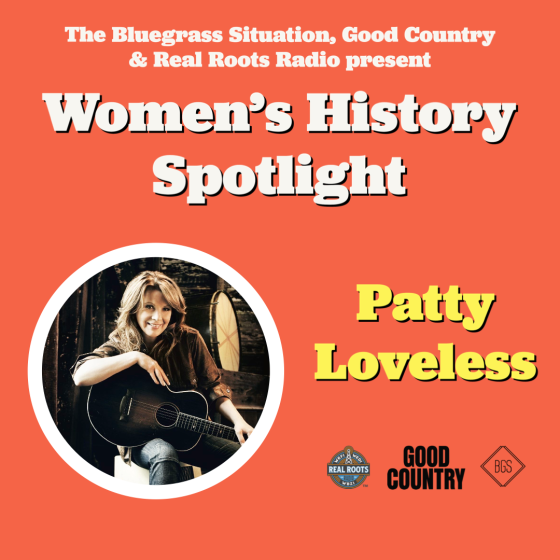
The pride of Elkhorn City, Kentucky and a 2023 inductee into the Country Music Hall of Fame, Patty Loveless was a leader of country music’s new traditionalist movement of the ’80s and ’90s, which also saw many successes for fellow Kentuckians Ricky Skaggs, Dwight Yoakam, The Judds, and Keith Whitley. The daughter of a coal miner, Patty’s neo-traditional sound was mixed with rock and roll attitude and plenty of mountain soul. Over 40 of her singles reached the Billboard Country Singles charts, including “On Down The Line,” “Timber, I’m Falling In Love,” “I’m That Kind of Girl,” “Blame It On Your Heart,” “Here I Am,” and dozens of others.

Like many country artists (especially women), Patty’s commercial success declined at a time when the artistic quality of her music did not. Her stunning rendition of Shawn Camp’s “The Grandpa That I Know” from On Your Way Home moved my father to tears for years, and I know that he was not alone in that. For many, her pair of Mountain Soul albums are still essential listening. On these projects, she celebrates her Kentucky roots with bluegrass-flavored albums littered with special guests including Earl Scruggs, Del McCoury, Travis Tritt, Ricky Skaggs, and more. Patty’s six minute-plus interpretation of the Darrell Scott-penned hit, “You’ll Never Leave Harlan Alive,” has haunted listeners for over 20 years. Even if it never tickled the Billboard Country Singles chart, there’s a reason Chris Stapleton recruited Loveless to perform the anthem with him during the 2022 CMA Awards — because it still showcases her mountain soul at its finest.


Ola Belle Reed
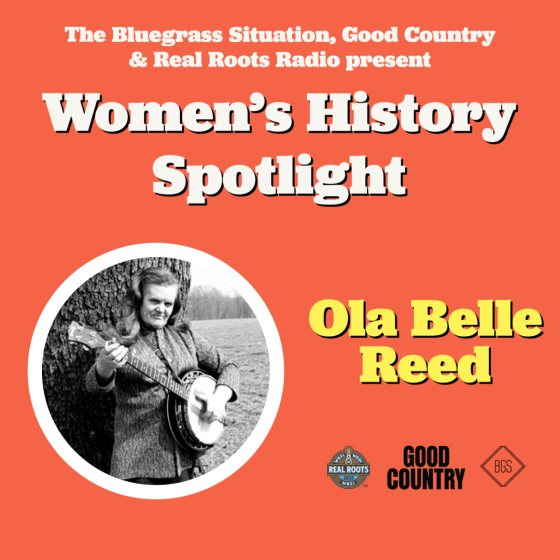
Picking up the clawhammer banjo as a youngster, Ola Belle Reed brought the music she heard growing up in Grassy Creek, North Carolina with her when her family migrated to the Maryland-Delaware-Pennsylvania area. Ola Belle Reed would entertain Appalachian migrants in the region with various bands, winning them over with her powerful mountain music. (She even turned down an offer to join Roy Acuff’s Smoky Mountain Boys!) The region’s Appalachian population supported Ola Belle, founding a few of the region’s more popular music parks over the ensuing decades, including New River Ranch in Rising Sun, Maryland and Sunset Park in West Grove, Pennsylvania.

Ola Belle Reed would find a new audience on Wheeling, West Virginia’s WWVA in the 1960s. In addition to presenting Appalachian music to new audiences, her legacy includes many original songs that sound as old as the hills. Songs like “High On A Mountain,” “I’ve Endured,” and “You Led Me To The Wrong” have been recorded by Del McCoury, Marty Stuart, Tim O’Brien, Robert Plant & Alison Krauss, Jason Carter, and more! Ola Belle Reed suffered a stroke in 1987. The following year, she became the first woman to be recognized with a Distinguished Achievement Award by the International Bluegrass Music Association. She passed away in 2002.


Alison Krauss
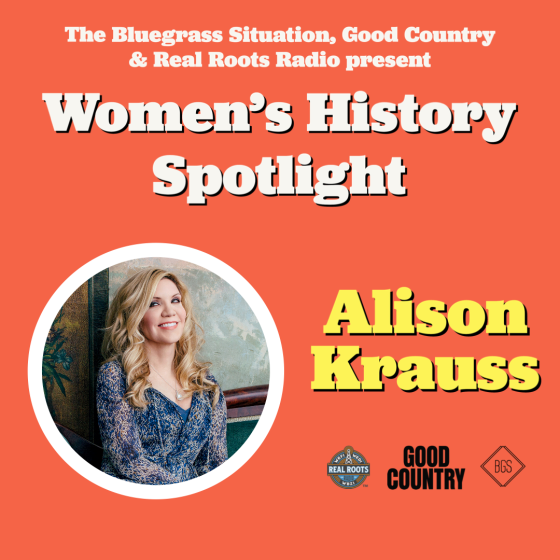
One of the most Grammy-awarded artists of all time (27 trophies and counting), Alison Krauss’s angelic voice has taken bluegrass to new heights, while she has become one of the most transcendent vocalists of her generation, branching into country, Americana, adult contemporary, rock, and more. A member of the Grand Ole Opry (the historic radio program’s youngest cast member at the time of her membership) and the Bluegrass Music Hall of Fame (currently the youngest Hall of Famer), Alison was a bit of a violin prodigy as a youngster, becoming enamored with bluegrass when she was exposed to bands like J.D. Crowe & The New South and The Bluegrass Album Band under the tutelage of John Pennell.

She recorded her debut album for Rounder Records when she was just a teenager and by the time she reached adulthood, she blossomed into a full-blown roots music star. The success of her solo albums and records with Union Station returned bluegrass to mainstream country circles at a time when it was desperately needed, providing a shot in the arm for the genre and introducing legions of new fans to the music. Krauss joins names like Flatt & Scruggs and The Osborne Brothers as some of the handful of artists to take bluegrass into the mainstream consciousness. Her ethereal voice has also resulted in highly touted collaborations with Robert Plant, James Taylor, Kenny Rogers, Brad Paisley, Shenandoah, Don Williams, and more.


Loretta Lynn
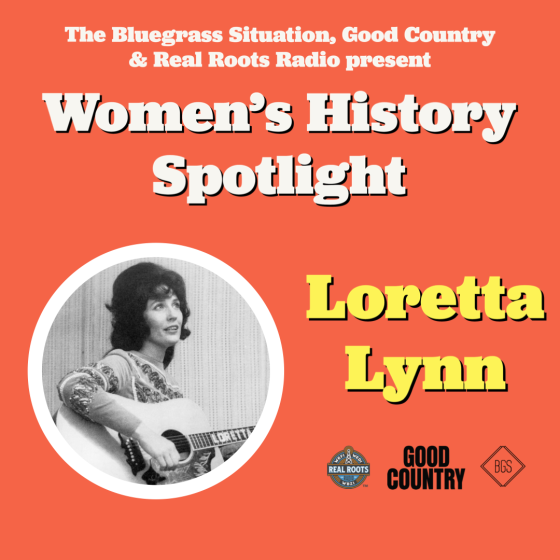
Country music’s most awarded woman artist, Loretta Lynn completely broke the mold. Nashville had had “girl singers” before, and there had even been female artists singing songs about women’s issues, but often they had been written by men (a la “It Wasn’t God Who Made Honky Tonk Angels.”) To have a woman artist singing songs about women’s issues written by a woman was absolutely groundbreaking, and frankly, it intimidated many men in the industry. While now beloved country standards, Loretta sang controversial songs about a wife’s right to say “no” (“Don’t Come Home A Drinkin’ (With Lovin’ On Your Mind)”), birth control (“The Pill”), the stigma attached to divorced women (“Rated X”), beating the tar out of women chasing after her husband (“Fist City”), and more. Coincidentally, all of the songs I just mentioned hit number one even though they were banned by some country radios stations – except “The Pill” which peaked at number five.

In addition to songs that connected to women, her heartfelt numbers about growing up in poverty in Butcher Hollow, Kentucky endeared her to fans as well and instilled a sense of pride in folks with similar backgrounds — “They Don’t Make ‘Em Like My Daddy Anymore,” “You’re Looking At Country,” and the autobiographical “Coal Miner’s Daughter.” Her vulnerability in not only openly dealing with issues in her own marriage, but unpacking her own mental health on the big screen with the Coal Miner’s Daughter biopic opened the country music industry’s eyes to so many issues that women were wrestling with behind closed doors until Loretta Lynn. Loretta continued making fabulous music late in life (check out “Miss Being Mrs,” where she sings about being a widow), until her passing at the age of 90 in 2022. For these reasons and more – and with all due respect to Kitty Wells – there’s a reason that many country music enthusiasts view the late Loretta Lynn as the Queen of Country Music (myself included).

For our final bonus video as we conclude this fun series, here is the story behind Loretta writing “You Ain’t Woman Enough.” Loretta was as real as it gets!
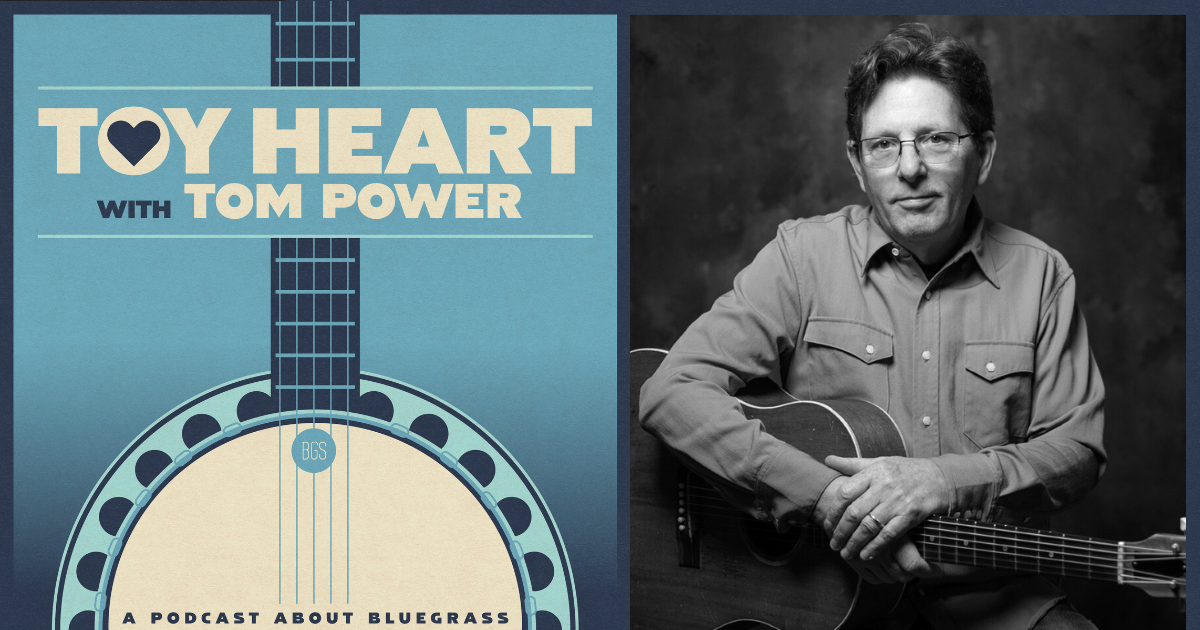
 

Tim O’Brien – Toy Heart: A Podcast About Bluegrass

Our latest guest on Toy Heart is bluegrasser, multi-instrumentalist, and songwriter Tim O’Brien. His conversation with host Tom Power begins by remembering the music of his childhood, growing up in Wheeling, West Virginia listening to Chubby Checker on his crystal radio set and attending the nationally renowned country variety show and radio broadcast, the Wheeling Jamboree. Encountering the music of Merle Haggard and Doc Watson via local radio and television, he fell in love with music as a kid before a few friends introduced him to Bill Monroe’s mandolin playing while smoking a post-gig joint as a teen.

After dropping out of college, O’Brien hitchhiked west to Wyoming, before landing in Colorado and eventually founding Hot Rize in the mid to late ‘70s with newly married and relocated Dr. Banjo himself, Pete Wernick. Over the course of their winding and dense conversation, Power and O’Brien chat about Gibson mandolins, the burgeoning Colorado string band scene, working with Bill Monroe, and the strange, circuitous story of his fiddle’s provenance.

LISTEN: APPLE PODCASTSSPOTIFYMP3

O’Brien’s career, as multifaceted as it has been, is a wellspring of stories, anecdotes, and yarns about the bluegrass scene of the ‘80s and ‘90s, Irish music, writing hit country songs, working with and alongside so many first generation bluegrass legends, and the inception of Hot Rize’s alter ego band, Red Knuckles & the Trailblazers. Having recorded and performed with the Chieftains, Darrell Scott, the Transatlantic Sessions, and so many others, Tim O’Brien’s career is a melting pot of styles and sounds with one primary throughline: the true originality of his own musical vocabulary. As Power puts it, “I ​couldn’t ​tell ​you ​what ​Tim ​O’Brien ​sounds ​like, ​but ​I ​know ​Tim ​O’Brien ​when ​I ​hear ​it.”

Our Toy Heart episode examines O’Brien’s expansive and impressive career at a fascinating juncture in its span, as he shifts from being a bluegrass and Americana workhorse to a forebear, mentor, and roots music elder to entire generations of young musicians.


Photo Credit: Scott Simontacchi

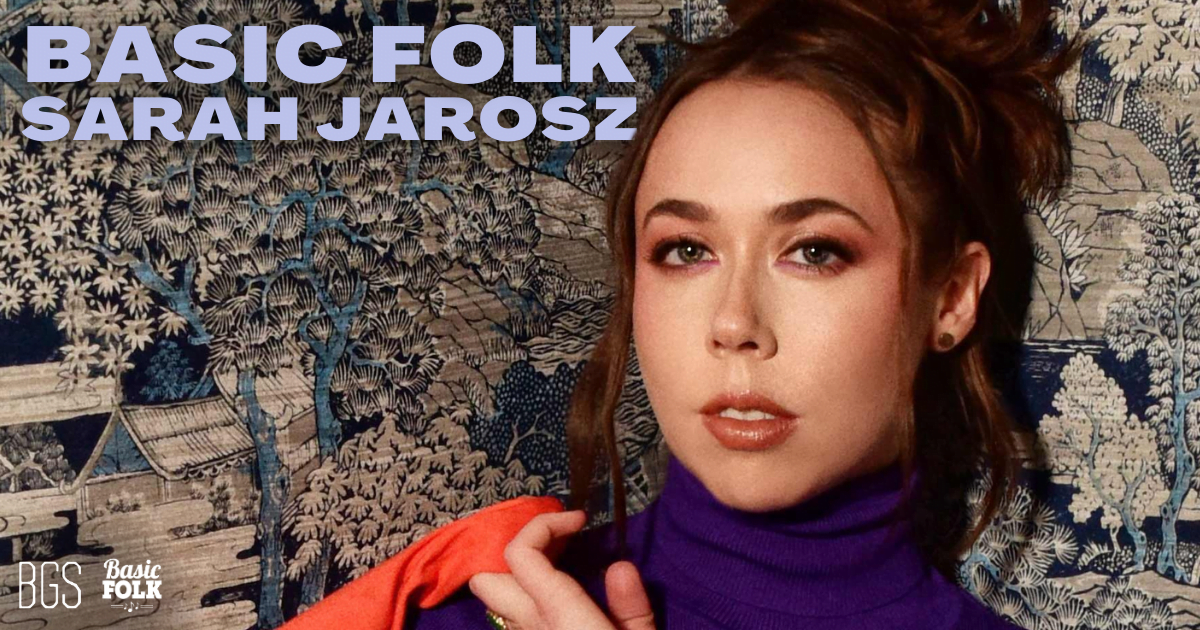
Strings of Support: Sarah Jarosz’s Mentors and Co-Writing Magic

Sarah Jarosz is what happens when young women are taken seriously. A huge part of the mandolinist’s story is that she had supportive male mentors and that has added to her confidence. We all know the age old story of “Young woman shows promise, gets exploited by the patriarchy and it affects her work.” We need to hear stories like this. Starting in her hometown of Wimberley, Texas, just 45 minutes outside of Austin – the live music capital of the world – Sarah found the mandolin at 10 years old. Labeled a prodigy, and thanks to the encouraging spirit of folk music, she found mentorship with seasoned professionals like David Grisman, Ricky Skaggs, Tim O’Brien and Béla Fleck. Following her time at The New England Conservatory of Music, she moved to New York and would go on to collaborate with people like Chris Thile in the Live From Here House Band and her trio I’m With Her, featuring Aoife O’Donovan and Sara Watkins, and won four Grammys.

LISTEN: APPLE • SPOTIFY • STITCHERAMAZON • MP3

After making the move to Nashville, on her latest album, the very impressive and sonically expansive Polaroid Lovers, Jarosz collaborated with producer Daniel Tashian, which originally was just a low-stakes co-writing project. The success of her first co-writing experience with Daniel led her to pursue other songwriting sessions with Ruston Kelly and Natalie Hemby. The collaboration found on the record has opened Sarah up to new sounds and new experiences. In our conversation, we talk about Sarah stepping into her own voice with confidence on this record and knowing her musical self enough at this point in her life. She describes her experience with ​confidence using the ​Dunning–Kruger effect, in which people with limited competence in a particular domain overestimate their abilities. AKA “fake it till you make it,” AKA “leap and the net will appear.” She also talks about her parents’ influence on her early musicality and how her mom is doing with her cancer remission. An overall theme of this conversation is that Sarah never lost sight of her goal: Keep it all about the music and don’t let noise get in the way of your important work.


Photo Credit: Shervin Lainez

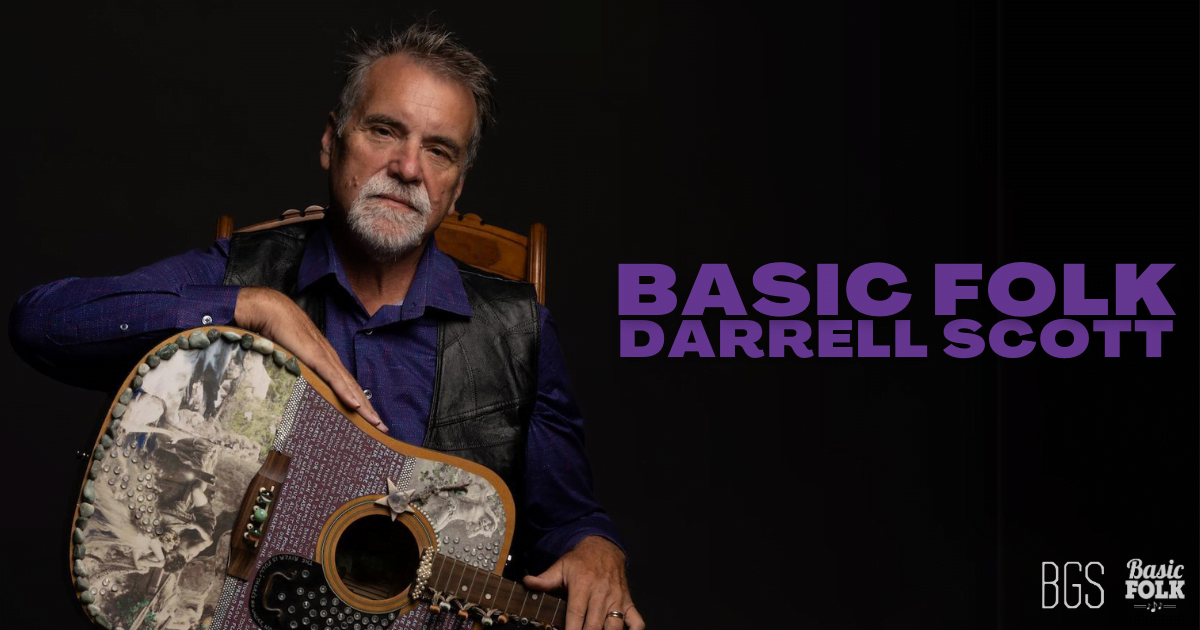
Crying in Music: Darrell Scott’s Honest Artistry

The cover of Darrell Scott’s latest album, Old Cane Back Rocker, immediately sets the tone for your listening experience. The inclusion of the names of the Darrell Scott String Band (Bryn Davies, Matt Flinner, and Shad Cobb) lets you know right off the bat that this recording is a band effort. The photo on the album cover gives a visual of Scott’s family roots in rural Kentucky. His cousin Dwight Messer is standing in front of his former childhood home, now abandoned on the family land. The music reflects his family’s story: some, like Dwight, stayed behind and some, like Darrell’s father, Wayne Scott, moved up North to find work. Despite being raised in the North, Darrell’s home has always felt like Kentucky and the traditional music learned from there. These songs showcase those roots.

LISTEN: APPLE • SPOTIFY • STITCHERAMAZON • MP3

In our conversation, Darrell digs into the darkness that can be heard in his music, even if it’s not a sad song. He talks about his friend and frequent collaborator, Tim O’Brien, and how his performance and writing has allowed Scott to level up. Darrell also speaks to leaning into emotional songwriting and trusting his tears during the creative process. He shares the emotional account of rerecording his father’s song “This Weary Way” and how he used to think Hank Williams had actually written it.

Immediately after we finished our interview, Lizzie texted me, “What a cool eccentric intellectual dude.” Couldn’t have said it better myself. This episode honestly discovers the true essence of Darrell Scott — an artist whose music resonates with the soul, rooted in the traditions of Kentucky.


Photo Credit: Michael Weintrob

BGS Wraps: Ruby Amanfu, Billy Strings, Old Crow Medicine Show, and More

Farewell 2023 and hello 2024! While we all relish the week that doesn’t exist – that delightful no-man’s-land between Christmas and New Year’s Day – there’s perhaps just one activity beyond abject laziness that’s appropriate for the turning of the year: Music! Whether you’re still in “pajamas hermit” mode or you’re antsy and ready to go back out into the world, we’ve got songs and shows to recommend for your New Year’s Eve/New Year’s Day festivities in this special edition, final week of BGS Wraps.

Thank you for spending another stellar year with BGS! We can’t wait to enjoy all that 2024 has in store with all of you. Celebrate safely and enjoy the holiday, we’ll see you in the new year.

92Q & Analog Soul 2024 New Year Bash, Hutton Hotel, Nashville, TN, December 31

There are seemingly wall-to-wall parties, concerts, and happenings in Music City for NYE, and one certainly worth spotlighting is 92Q & Analog Soul’s 2024 New Year Bash, happening December 31 at Analog at the Hutton Hotel. From 8pm to 2am, guests will hear production, songwriting, and music-making duo Louis York, roots-tinged girl group The Shindellas, Shae Nycole, and more ring in the new year with performances, DJ sets, food and drink, and a champagne toast at midnight. Tickets are available here.


Ruby Amanfu, “Winter”

A dreamy and gauzy neo-folk song from singer-songwriter Ruby Amanfu feels frosty and magical, but warm and enveloping, too. It finds joy in often gray and bleak winter landscapes and vignettes we all know so well. The pulsing piano gives the track a forward-leaning energy, even while it relaxes into its groove and builds to a tender, energetic and lush sound.


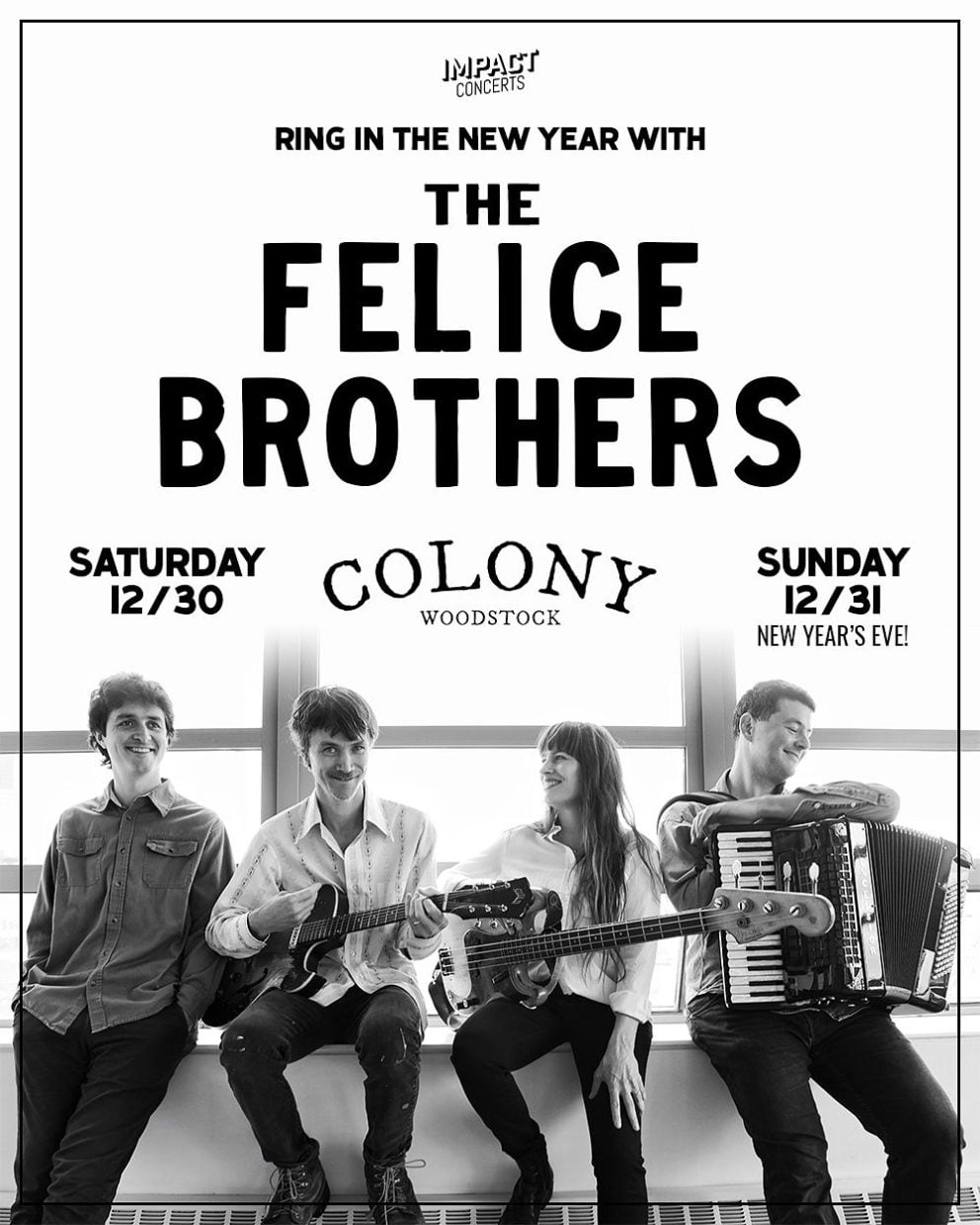
The Felice Brothers at Colony, Woodstock, NY December 30 & 31

Spending your New Year’s Eve in upstate New York? Don’t miss the Felice Brothers’ two year-end shows at Colony in Woodstock! Both dates appear to be sold out, but you can join the wait list here. Based in the Catskills – so this is something of a holiday homecoming for the group – the Felice Brothers put out a Bandcamp-exclusive album, Asylum on the Hill, earlier this month. Celebrate ushering out the old and in the new with the Felice Brothers in Woodstock.


McKowski, “Auld Lang Syne”

Mark McCausland – AKA McKowski, also of The Lost Brothers and formerly of The Basement – released an album of ethereal and contemplative holiday instrumentals for guitar this month that features a gorgeous rendition of “Auld Lang Syne” that’s perfect for your NYE playlists. The album, Winter Guitar Hymnals from the Boneyard, certainly listens as a kind of guitar-centered ecclesiastical service, featuring a handful of Christmas carols alongside original arrangements and compositions, too. It’s a lovely collection, one we just had to spotlight for this final BGS Wraps.


Nashville’s Big Bash on CBS and Paramount+, Nashville, TN December 31

If you love big crowds, bright lights, and stunning pyrotechnics, Nashville’s Big Bash is for you! Or, stay home and avoid the crowds by streaming the show on CBS and Paramount+. See and hear Parker McCollum, Brothers Osborne with Trombone Shorty, Jon Pardi, Carly Pearce, Kane Brown, and many more. Hosted by Elle King and Rachel Smith, the five-hour production will feature more than fifty artists, bands, and performances. Oh and of course there will be the music note drop – Nashville’s version of the famous ball drop – over the stage at the Bicentennial Mall at midnight! More info available here.


Nefesh Mountain, “More Love”

What better to take with us into the new year than “More Love”? A Tim O’Brien cover by Jewish bluegrass string band Nefesh Mountain, the track was released with a mission of supporting organizations working to end the violence and ongoing war in Israel, Gaza, and Palestine while supporting Palestinians and Israelis impacted by the conflict. In a press release, Nefesh Mountain made a commitment to “donate a quarter of proceeds from ‘More Love,’ the ‘Love and Light’ Tour, and their forthcoming EP to charities and foundations that are dedicated to promoting peace, coexistence, and a way forward for Israelis and Palestinians.”

With more than 20,000 killed in Gaza and hundreds and hundreds more killed in Israel, the West Bank, and the greater region, we certainly believe the world could use “More Love” – and far, far less war – in 2024.


The Nields, “New Year’s Day”

We’ve been “saving” “New Year’s Day” from the Nields’ new album, Circle of Days – which was released in June – for more than half a year, just for this moment! It’s a truly perfect song for this point of transition. The feeling of helplessness we all feel at the inevitable march of time is captured like lightning in a bottle, with feelings of regret, despair, and exhaustion. But ultimately, they find hope in these lyrics, even while they explore emotions often opposed to hope and its regeneration.


Old Crow Medicine Show at The Ryman, Nashville, TN December 30 & 31

It wouldn’t be New Year’s Eve without Old Crow Medicine Show at the Ryman! It’s a long tradition, this year bolstered by supporting acts like former Old Crow member Willie Watson (30th & 31st) and Kasey Tyndall (30th) and Harper O’Neill (31st). Tickets are somehow still available – so grab yours while you can! You never know what special guests Old Crow will trot out at these rollicking, rowdy, joyous shows. Though it’s probably safe to bet there won’t be a Belle Meade Cockfight either night, don’t rule it out entirely.


Portland Cello Project, “What Are You Doing for New Years?”

The Portland Cello Project is joined by soloist, vocalist Saeeda Wright, for an epic, jazzy rendition of “What Are You Doing for New Years?”, perhaps the only generally accepted New Year’s “carol” besides “Auld Lang Syne.” (We’re open to argument on that point, of course.) The track is from their holiday EP, Under the Mistletoe, a collaboration with Wright and drummer Tyrone Hendrix. It certainly demonstrates the broad contexts in which chamber music such as this can thrive.


Amanda Stewart, “One Hell of a Year”

A thought we have had every year since 2020 – and, honestly, since long before, too – is this: That was one hell of a year. If you’re feeling that same exasperation, mixed with fatigue and pride and a sense of finality, as we turn the page on the calendar, Amanda Stewart has a bluegrassy send off to 2023 and the holiday season just for you.


Billy Strings at Lakefront Arena, New Orleans, LA December 29, 30, 31


View this post on Instagram


A post shared by Billy Strings (@billystrings)

A New Orleans New Year’s extravaganza helmed by bluegrass shredder Billy Strings feels like an apropos way to ring out the old and ring in the new. For the past few years Strings has defined bluegrass music, with his skyrocketing fame, mass appeal, and ever-growing fan base. During that time, his shows around New Year’s Eve have been unparalleled. Now, they have grown into multi-night runs in arenas and stadiums – like the Big Easy’s Lakefront Arena. As is usual for Billy’s shows, there are no openers, so buckle up for nothing but rip-roarin’ Billy Strings each night as we say a final goodbye to 2023 and bid good morning and good day to 2024! Tickets here.


Photo Credit: Billy Strings by Christopher Morley; Ruby Amanfu courtesy of the artist; Old Crow Medicine Show by Joshua Black Wilkins.

MIXTAPE: Bertolf’s Dutch Bluegrass & Newgrass

My name is Bertolf Lentink, I was born in 1980 and I’m from the Netherlands. I was spoon-fed bluegrass music by my father, who endlessly played his records by the likes of Doc Watson, Tony Rice, and Tim O’Brien in my parental home. At a young age, I learned to play both from and with him.

I have released six albums here in the Netherlands and they were more in the singer-songwriter/pop style. But for my seventh album, I decided to return to my roots and my first love: bluegrass. I had the chance to record an album of my own material with some of my favorite musicians of all time, such as Jerry Douglas, Stuart Duncan, and Mark Schatz – guys I’ve been listening to and admiring since I was like 6 years old. The band was completed by two fantastic instrumentalists of the younger generation: Wes Corbett and David Benedict. The album was recorded and mixed by David Sinko in the Sound Emporium Studio in Nashville. I really had the best week of my life recording it; it was everything I hoped for and more.

The album is called Bluefinger because residents of Zwolle, the city I live in, are called Bluefingers. But it’s also a reference to bluegrass and getting blue fingers from studying so hard on the guitar trying to be good enough to record with my heroes.

Bluegrass music has surely travelled all around the world. It even made its way to the Netherlands and continues to inspire young people here. This is a mixtape of the stuff that inspired me and that’s going on in the blue- and newgrass department here right now. Dutch Grass! – Bertolf

“Before The Storm” – Bertolf featuring Ilse DeLange 

It was quite a surreal experience to record with my heroes, but at the same time it felt really familiar when I heard those guys’ instruments coming through my headphones. Like I was coming home somewhere I’d never been before.

“Uncle Pen” – Bill Monroe

Bill Monroe learned to play from his Uncle Pen. Full name: Pendleton Vandiver. Uncle Pen’s great-great grandfather was Bill Vandiver, an immigrant from the Netherlands. Vandiver is actually derived from the Dutch Name “van de Veer.” So if Bill Monroe is the Father of Bluegrass and Uncle Pen is the uncle of bluegrass, then Bill van de Veer is the great-great uncle of bluegrass. So there’s the Dutch connection with bluegrass for ya! 

“Keep on Pushing” – Country Gazette

My love of bluegrass music is entirely my father’s fault. In 1972, when he was 16 years old, he heard a song on the radio: “Keep on Pushing,” by Country Gazette. That song was actually on the Dutch pop charts at that time! My father was completely blown away and it was the start of his love of this kind of music. And when I grew up, he played nothing else but bluegrass, so I couldn’t help but to fall in love with it, too. (The original ’70s recording of “Keep on Pushing” is not on Spotify, so here is the ’90s remake.)

“Amsterdam” – Douwe Bob

Douwe Bob is a famous artist here in the Netherlands. I wrote this song with him and we thought it was nice to try and write a bluegrass song not about the hills of Kentucky or something, or to once again pretend to be American, but to write a bluegrass song about the city we know, Amsterdam. 

“Crying Shame” – Blue Grass Boogiemen & Tim Knol

Blue Grass Boogiemen are a great high-energy bluegrass band from the Netherlands who have been on the scene for a long time now. Here’s a song from an album they made with the great singer-songwriter Tim Knol (who happens to sing a nice harmony vocal on my album Bluefinger as well)

“Fallin’” – Nathalíe

Here in the Netherlands, I’m playing live with a great band of musicians who also happen to have their own bluegrass bands. This song is from the band Nathalíe, that feature my band members Nathalie Schaap on vocals and double bass, Jos van Ringen on banjo, and Janos Koolen on mandolin. I really love what they’re doing.

“The Bipolar Bear” – The Charivari Trio with Janos Koolen

Janos Koolen is the mandolin player in my band. He’s a fantastic multi-instrumentalist and composer as well. Here’s his beautiful composition, “The Bipolar Bear,” with the Charivari Trio.

“Tapdancing on the Highwire” – Ilse DeLange

My career in music started by playing in Ilse DeLange’s band. She’s a big country/pop star here in the Netherlands, and she’s very fond of bluegrass music as well. Here’s one of her songs that I really love from a live album we did back in 2007. 

“One Tear” – 4 Wheel Drive

4 Wheel Drive is probably my favorite Dutch bluegrass band. The band also features Joost van Es on fiddle, who’s playing live with me right now. I went to see them live a lot as a kid, and I was always left really impressed and wanting to learn to play, too. I also need to mention the bands The Country Ramblers and Groundspeed, who were from the city of Kampen (which was jokingly called the “Nashville by the Ijssel”), but sadly their albums are not on Spotify. 

“Deeper Than the Holler” – G-runs ‘n Roses.

G-runs ‘n Roses is a band from the Czech Republic, with two Dutch guys playing in it: Ralph Schut on guitar, banjo, and vocals and his brother Christopher Schut on bass.

“Till I Found Someone” – The Bluebirds

The Bluebirds are a band that do great and heartfelt three-part harmony. Here’s a song that I wrote with them, with J.B Meijers on dobro.

“Team Hoover” – Bertolf

I’d like to end this mixtape with an instrumental that I’m really proud of, once again from my album, Bluefinger.

I hope you enjoy it and thanks for listening! Cheers from The Netherlands.


Photo Credit: Dirk Schreuders

Basic Folk – Tim O’Brien

Tim O’Brien is one of bluegrass’ beloved players, from his work with the innovative Hot Rize to his yearly appearances at the Telluride Bluegrass Festival. He’s just released his first album of all-original material, which is something to be said for his 50-year career. At 69 years old, it’s no surprise that the theme of aging pops up on quite a few of his new songs. He opens up about his perspective on aging and what it has looked like for his predecessors in bluegrass. He reflects on his history, from choosing Colorado over New York or LA, to being very aware of how hard it was for his sister, Mollie O’Brien, to have a solo career and be a parent.

LISTEN: APPLE • SPOTIFY • STITCHERAMAZON • MP3

Nicknamed “Red,” Tim O’Brien serves as hero and mentor to many of today’s finest players in the genre, including Sarah Jarosz and Chris Thile. He recognizes the importance of allowing younger generations to step into the spotlight, while still being ready to honor his own bluegrass heroes. In our conversation, Tim gets into things he’s noticed changing for the better in his scene and also talks about how technology is both a good and challenging thing. For instance, in-ear monitors are great, however, they really isolate the players instead of really feeling like they are playing together. Thanks, Tim O’Brien!


Editor’s Note: Read our interview feature with Tim O’Brien here.

Photo Credit: Scott Simontacchi

After Nearly 50 Years in Music, Tim O’Brien Is More Comfortable With Himself

Over his celebrated career, which has now spanned nearly half a century, Tim O’Brien has gained notoriety as an instrumentalist and singer with the bluegrass band Hot Rize, and for his original songs, which have been recorded by Garth Brooks, The Chicks, Nickel Creek, and many more. In recent decades, the Grammy Award-winner has recorded as a solo artist and in collaboration with Darrell Scott, Dirk Powell, Sturgill Simpson, and most recently with his wife, Jan Fabricius. 

We caught up with O’Brien on the heels of his annual trip to the Telluride Bluegrass Festival, where he is considered an institution, to discuss his new record Cup of Sugar, which sees him taking on the role of a societal elder. Throughout the collection of songs, O’Brien takes on the perspectives of several different animals as a way of learning from the natural world, as well as characters such as Walter Cronkite. In our conversation, O’Brien explores what it means to be comfortable with your role and direction as an artist, and clarifies his artistic goal – to continue being more and more himself.

BGS: You have a lot of animal references on this album, what do you think is bringing you to those themes right now? 

Tim O’Brien: You know, it’s funny, I had actually written a song with Thomm Jutz called “Old Christmas Day” on January 6th.  January 6th was Christmas in the Julien Calendar before they changed it to be more in line with the solar system. Anyway, the legend was that on Old Christmas Day, the animals all talk to each other. After writing that song I was actually thinking about trying to do a whole record of animal songs… but I went to a bunch of stuff I had already, so I decided to split it up. I think that’s what inspired the direction.

I love “Shout LuLu,” the song about the Tennessee border collie, who inherited the wealth of her owner Bill Dorris. Dorris was the subject of controversy because of the statue of Nathan Bedford Forrest, Confederate general and leader of the KKK, which was displayed prominently on his land facing the highway. How does the story of Lulu relate to the story of the KKK statue in your mind? 

Well, a dog probably doesn’t see black or white, or understand discrimination. It’s just a dog, and maybe we all wish we could be that way… it’s hard to be innocent in this world, but a dog doesn’t care, and that’s what’s great about it. 

The natural world can teach us a few lessons, that’s kind of like a running message through time. Human beings, since the first cave paintings, have commented on animals; they are interesting to us, and they represent different things. We study them and try to learn from them. I like what Lulu teaches us about the beliefs of her owner. 

“Took Lulu to Hogan Road where Nathan Forrest’s statue stood/
She didn’t shout she didn’t beg, stood next to Forrest with lifted leg/
Statue covered with paintball pink, now it has a Lulu stink/
Don’t know from white supremacy, just knows a place she likes to pee/
” – “Shout Lulu” excerpt

You talk in your record notes about having the perspective of an elder who has seen a lot of changes both in the world at large and in the music business, can you talk about this viewpoint and what you’re trying to say in these songs with regards to that specifically? 

I’m closing in on 50 years doing this, I’m about to turn 70 this year, and so many things have changed. But the music still goes on, and people still make it for the same reasons; they want to express something, they want to tell a story, they want to connect with people… but the changes get harder and harder to adapt to as you get older.

Social media is so important now and it’s something I don’t really interact with at all. I’m lucky that Jan [Fabricius] does all of that, but it just doesn’t really occur to me. I probably won’t ever do it. These days you’re in charge of promoting your shows, because the clubs are kind of cutting corners, and they’re hurting financially, and that’s just the way it is. I’m just watching all of those changes and I’m kind of indifferent to them mostly. I try to keep my head down and just try to make my music.

Being an elder, well we lost two great mandolin elders this week, Bobby Osborne, and Jessie McReynolds. You just realize how much our music helps us define our lives.

Nancy Blake said once, “Ya know, people wonder why we sit around and practice our own material, but it’s kind of the way we define our lives.” I feel like that is true for me. 

But you see these guys going, and it’s the last of the first and second generation going away… and you wonder who else is going away… I go watch Chris Thile and I say, “Take that baton and run with it, I’ll follow up on the rear!” I like to learn new things all the time, but mostly I’m trying to do the best I can in the direction I’ve already established and faithfully follow that.

I love the song “The Anchor,” which is told from the perspective of Walter Cronkite. What made you want to write about him? What does he represent for you?

Well, the way that the news is disseminated today is in a million ways. They shape it to a certain audience, and they shape the news to that, so you get a million different versions of the news. If you get happy with a certain outlet, maybe you don’t notice a lot of things going on… I think the same thing happened back when there were only three news outlet. But they weren’t selling it, they were propped up by other shows. They weren’t really competing for advertising dollars in the same way, mostly the networks realized they had to have a news thing. I was just thinking about that difference. 

Cronkite was the trusted guy and when he made a telecast one night and said, “It looks to me like this Vietnam conflict, we can’t win it.” President Johnson said, “If I’ve lost Cronkite then I’ve lost the nation… I won’t run for president again.” Cronkite had a lot of power, but he was trying to remain neutral. It’s really hard, it’s hard to remain neutral about the news, and if there’s a truth in the news, it’s hard to reach it. 

I’m addicted to the New York Times and I read it every day, so I’m just as much a part of this as anyone. I have my one outlet and I stick to it. 

There are a lot of songs on this album told from a perspective that is not your own, was that intentional? 

Actually, Danny Barnes brought it up to me, he said, “Do you ever write a song that’s not from your own perspective?” It was helpful to aim from that direction, but I think your own perspective kind of comes through regardless. It’s just the reverse of reading a novel and identifying with one of the characters, you kind of bring some of your own personality into it. Sometimes you have to trick yourself into writing songs, and I think trying for a perspective other than your own is one technique that helps.

How have you seen your songwriting or approach to songwriting change throughout your career? 

When I first started writing, I was at sea about what to start writing about, and what’s good and what’s not good. Do you imitate others? Then you get some experience, and you get some good reactions, and you trust yourself more.

One thing that’s kind of more true for me now, in the last 10 years. I realize that in a certain way, I kind of write about the same things over and over, just different versions. Like, I’m always talking about, or trying to get people to see, the bigger picture and include everyone in my world. I used to worry that writing the same songs, [topically], was a problem, that I need to break it apart and start over… but then I realized that everyone I admire has their own thing that they do, and you just get better at it. Maybe you just continue to go deeper…

Thelonious Monk said that the genius is the one who is most like himself.  That’s hard to find. I think maybe I found it and I don’t like it…

Just kidding.

Was there anything important about this record that was different from the way you’ve worked in the past? 

Jan [Fabricius] and I have a cottage industry here, we have a cottage, and an industry. [Laughs] We’ve also been writing songs together. I think one of them is one of the better ones on this release, “She Can’t, He Won’t and They’ll Never.”

We also have a record label… and for the last record and this one, I’ve used artwork that I’ve drawn myself. I showed something I drew to [Danny] Barnes and he told me, “That’s so much better than anybody else could do it.” That kind of inspired me to do more of my own drawings. A lot of this is just continually becoming more and more comfortable with yourself.

LISTEN: APPLE • SPOTIFY • STITCHERAMAZON • MP3

(See our full post on Tim O’Brien’s episode of Basic Folk here.) 


Photo Credit: Scott Simontacchi

The Travis Book Happy Hour: Tim O’Brien

Editor’s note: The Travis Book Happy Hour is hosted by Travis Book of the GRAMMY Award-winning band, The Infamous Stringdusters. The show’s focus is musical collaboration and conversation around matters of being. The podcast is the best of the interview and music from the live show recorded in Brevard, NC, and is brought to you by Americana Vibes and The Bluegrass Situation.

Tim O’Brien has always been one of my biggest influences. I love his voice, his playing, and his writing. His album Red On Blonde was his tribute to Bob Dylan and it scored him a Grammy nomination. As a member of the legendary bluegrass band Hot Rize, he spent the 80’s traveling and playing, honing his craft. His record Fiddler’s Green is one of my favorites. I was humbled when he agreed to join me for the happy hour and the show was a career highlight for me. I hope you enjoy it. Huge thanks to Tim O’Brien, Jan Fabricius, Tommy Maher, Thompson Guitars, Americana Vibes, and The Bluegrass Situation.

LISTEN: APPLE • SPOTIFY • STITCHERAMAZON • MP3

Timestamps:

0:06 – Soundbyte
1:00 – Introduction
2:55 – “Rise Sun”
5:38 – “Monologue”
8:58 – “I’m Not Alone”
15:00 – Interview 1
31:42 – “Workin’ On A Building”
35:25 – “Untold Stories”
38:40 – “More Love”
44:07 – “Brother Wind”
48:38 – Interview 2
1:06:26 – “When You Pray Move Your Feet”
1:11:11 – “I’m Nervous”
1:14:30 – “I’m Not Afraid of Dying”
1:19:32 – Outro


The Travis Book Happy Hour Podcast is brought to you by Thompson Guitars and is presented by Americana Vibes and The Bluegrass Situation as part of the BGS Podcast Network. You can find the Travis Book Happy Hour on Instagram and Facebook and online at thetravisbookhappyhour.com.

Photo Credit: Scott Simontacchi

WATCH: Tim O’Brien, “Little Lamb Little Lamb”

Artist: Tim O’Brien
Hometown: Wheeling, West Virginia
Song: “Little Lamb Little Lamb”
Album: Cup of Sugar
Release Date: April 7, 2023 (single); June 16, 2023 (album)
Label: Howdy Skies Records

In Their Words: “Nothing says spring like newborn lambs jumping up and down. It’s just encouraging, reassuring like the song says. In May of 2017, Jan [Tim’s wife and bandmate, Jan Fabricius] and I rambled up a country road southwest of Bonane in County Kerry and these lambs were everywhere, testing their legs. The video includes clips from that trip as well as clips from a recent Mountain Stage taping. We’d played at the Fiddle Fair in Baltimore, West County Cork, and that’s a chill little spot, but we wanted even more chill so we booked three or four nights by a lake below a mountain pass there near Bonane. There was really nothing going on except grass growing and sheep grazing. We asked the older woman who ran a cafe by the B&B if she was local. She said, ‘Oh no.’ I asked her where she was from, and she said, ‘I’m from three miles away. My husband’s from here, but people will never accept me as a local.’ Needless to say, we had some good quiet time.” — Tim O’Brien


Photo Credit:Scott Simontacchi