On ‘Lovin’ Of The Game’ Michael Cleveland Brings His Bluegrass Community to the World

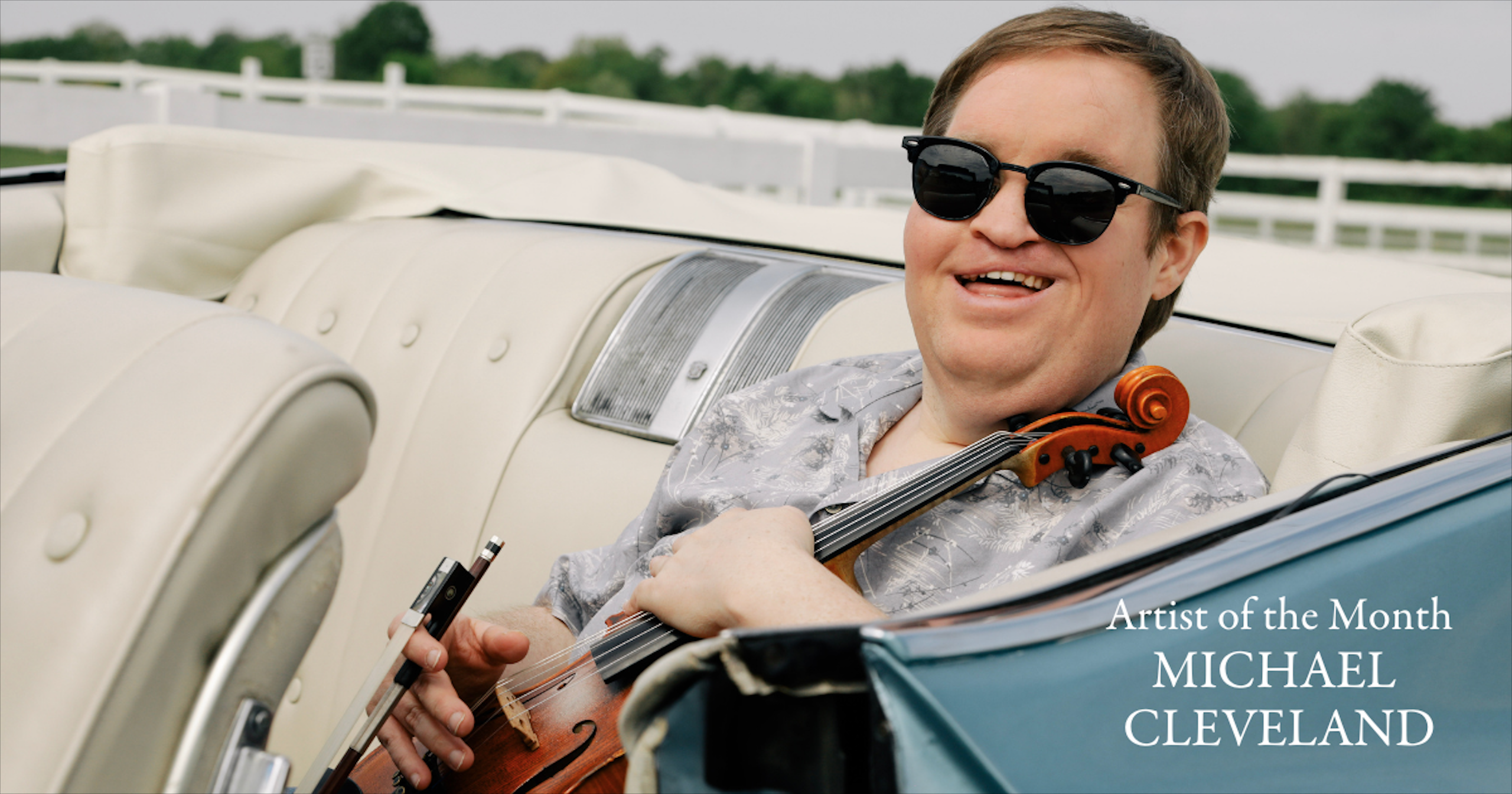
The entire world is learning what the bluegrass community has always known: Michael Cleveland is a once-in-a-lifetime talent. Cleveland has long enjoyed critical acclaim inside the bluegrass circles he grew up in – he is a 10-time winner of the IBMA Fiddle Player of the Year Award – but, given this genre’s inward-facing bent, his fiery, impassioned playing has most often reached listeners and fans who are already diehard acolytes. 

Now, with his sixth studio release, Lovin’ Of The Game, Cleveland’s star is objectively rising. Recent collaborations with stratospherically famous pickers like Béla Fleck and Billy Strings – both of whom appear on the new project – along with several jaw-dropping viral videos have demonstrated to the world beyond bluegrass conferences and festivals that Cleveland is worth paying attention to. 

And it’s all thanks to his truly unique voice on his instrument. The American public, and roots music fans across the globe, understand rip-roaring fiddle just as well as they relate to a speedy banjo breakdown or a screaming, arena rock guitar solo. With every note Cleveland pulls from his fiddle, there’s a grit, an ease, endless emotion, and a winking sparkle that all at once conjure the aggression of Charlie Daniels and the tenderness of “Ashokan Farewell.” It’s infinitely appealing, even to uninitiated fans, and it’s a delectable gateway drug, a window into a vibrant instrumental tradition that most folks only interact with casually. With Cleveland’s playing, every listener is given permission to love the most elemental parts of bluegrass, old-time, and country music – and to feel like it’s something they discovered for themselves. 

They are certainly discovering it. Six albums down and Cleveland is continuing to put one foot in front of the other, with constant innovation and enthusiasm, and a long view that envisions endless opportunities for new albums, new collaborations, and new music to be made. All the while, he’s bringing hundreds and thousands of new fans into these rootsy genres. Michael Cleveland shows all of us how much joy – and fire – can be found in the Lovin’ Of The Game

This is your sixth studio release – it’s not a “sophomore album” or a third or fourth record, even – you’ve got quite a lot of miles under your feet at this point and have made quite a few albums. What’s your perspective at this point, looking back and looking ahead? 

MC: What I wanted to show with this album and with [the last album,] Tall Fiddler, is that I still love and will always play traditional bluegrass, but I can and like to do a lot more than that. I wanted to definitely show that on this record, because a couple of people that I talked to recently – Béla Fleck being one of them, I heard Béla say in an interview, “I wasn’t really sure if Michael would want to play with me.” And I thought, “Who wouldn’t want to play with Béla Fleck!?” It’s kind of a no-brainer! I get what he’s saying, though, in the sense that a lot of people are comfortable in what they do, they’re happy doing that, and they might not want to stray too far from that. That’s not necessarily the case with me. I wanted to have some different stuff on this record, a lot of traditional bluegrass, but some things that push the envelope a little bit and let people know that I do like to do more than just straight-ahead bluegrass.

As far as straight-ahead bluegrass albums, to be quite honest with you, the albums that I did early on – like Flamekeeper and Let ‘Er Go, Boys! – as far as straight-ahead bluegrass goes, those would be my favorite albums. Not because of anything that I did on those albums, but because of the band. The bands on those albums and the groove that they play is like no other. Audie Blaylock, Jesse Brock, Jason Moore, who we recently lost last year, Tom Adams, Charlie Cushman, and people like that – I dunno if there’s a way to top those albums. We could do different material, but the groove and the feel that those guys played is like no other. So, the thing is to do something that’s a little different from that.

I view your fiddling as so innovative and cutting edge; when we hear you play, we’re hearing your musical thoughts just pouring out on your instrument. You can be couched so firmly in “tradition” and still be innovative, but then on the outside looking in, when a listener isn’t necessarily a diehard bluegrass fan, your playing can feel just traditional. Now that you’re getting well-deserved notoriety not just in bluegrass, but further afield too, how does it feel to try to show people your musical perspective when traditional bluegrass means different things to different people? 

You know, that’s my favorite audience, and I think a favorite audience of my band, to play to. We like to play bluegrass festivals and we always hope to play bluegrass festivals, but man, I like to play bluegrass for people that have never heard it before. Any time I’ve ever done that it’s been well received. If it’s put in the right situation, like seeing what Billy Strings is doing now. He’s playing traditional bluegrass and thousands and thousands of people are hearing that that have never heard it before or would have never paid attention to bluegrass. 

We did a couple of shows with the Louisville Orchestra here. We’re talking the Kentucky Center for the Arts’ Whitney Hall. I think it held like, 2,400 people. And it was a full house! Some of them probably knew what bluegrass was, some of them were there to see us, but I would guess that a far larger number of people were there and probably didn’t know what bluegrass was or what to expect. It went like gangbusters! [Laughs] It really did. Any time I’ve been in a situation like that where bluegrass is presented to an audience that isn’t familiar with it, it’s great. That’s what I like to do more than anything these days. 

It’s hard to look at it objectively, given that it’s me, but it gives me hope that there’s a future for bluegrass. And that it’s not just the stereotype that people think of – that it’s Deliverance. I think mainly, it’s encouraging to see new people getting into it, whether it’s me or Billy Strings or anybody else. I think that’s a good thing. 

Bluegrass is so much about community, it feels like a family. Your albums are so collaborative, whether they’re centered on your band Flamekeeper or not. I sense your community represented so strongly on this record, you’re working with Jeff White producing again, you’ve got old and new friends on the record. But I also wanted to give you a chance to talk about Bill Wolf and Eddie Wells, friends of yours in music who recently passed on and you dedicated the album to.

For records like this, it’s so fun for me to not only get to collaborate with people that I’ve worked with in recent years, but to find the right song that would suit these situations. It’s one thing to have Billy Strings or somebody come in and sing something, and they could sing anything and it would be good, but to find a song that they can actually own and it sounds like something they do, that’s a little harder. My producer, Jeff White, he’s a huge help in picking songs. I have to say this time, we had a lot of good songs to choose from. 

The community thing– number one, I like to get my favorite players, people that I really enjoy playing with whether they’re a “name” or not. My buddy Cody Looper, he played on “Five Points.” I love playing with Cody. He played in my band for about a year or so and he has a job where all of a sudden he wasn’t able to get time off so he had to leave the band. We all hated it, and we still keep in touch and get together to play every once in a while. Anytime I can have him on something I like to do that, because he’s just so fun to play with. Like Lloyd Douglas on Fiddler’s Dream, he played banjo on that album. Lloyd is another one of those guys that maybe not a lot of people are aware of, but he’s just as good as a lot of the people out here killing it.

It’s about who will fit the song. That’s very important to me. It’s got to fit, whoever you get on it has gotta be somebody who can contribute to the song – not just a name. 

And you mentioned Bill Wolf and Eddie Wells, they’re two guys who I’ve probably known since I was really little. Oddly enough, I didn’t really get to know them until I was older. Then Bill, I think, retired from Ford around ‘96 or ‘97 when I had my local band and we started playing together. Those two guys, when I wasn’t on the road, through high school and even up until a couple of years ago, if I was hanging out and jamming at a festival or doing some local gig or having a jam at the house, those two guys would be there. I learned more about music, dynamics as a band, how to play together as a band, and singing trios from those two – Bill Wolf and Eddie Wells and my other friend Cecil Jackson, those three guys singing together was the best. They’d sing Country Gentlemen stuff like no other. I learned a lot and played a lot of music over the years with those two guys and they passed away really not too far apart from each other. I miss them a lot and I wanted to do this album in memory of them and as a way to say thanks for all I learned being around them and all the good times we had together. 

One song that really jumped out at me on the record is a special version of “Temperance Reel,” which I’ve heard Luke Bulla perform over the years. I love how Luke and Tim O’Brien’s voices are blending together on the track – I love how stripped down it is. Can you talk about recording that one? 

I had heard Luke Bulla sing that song a few years ago, I think it was in 2017. Jeff White and Laura White were married and Jeff asked me to be the best man at his wedding. I went down there for that and they had a rehearsal and the night of the rehearsal it was also Ronnie McCoury’s birthday, so there was a big picking party over at this house. Everybody was there. Just about everybody you can think of in Nashville who played bluegrass was there. Luke sang this song and I remember hearing it and really liking it. While working on the album, Jeff was doing a bunch of dates with Lyle Lovett and Luke was in the band. Jeff mentioned that Luke was singing “Temperance Reel” and I happened to ask, “Has he ever recorded that?” Jeff said yes, but he hadn’t released it or something like that. I knew it would sound good with three fiddles and it was my idea to keep it to just the fiddles, we just had to see if we could make it sound full enough to work. 

There’s something about Luke and Tim’s voices, they’re so reedy that they really sound like they’re blending with the fiddles and the bowing. 

It’s wild! I couldn’t be happier with how it turned out. I love not only Tim’s singing, but the part that he plays, the third part on the fiddle. It’s got this Celtic thing to it, too, that really added a lot to the whole track. 

What’s next? What are you excited for? I know you’re deep in the throes of releasing this album, and you’re gaining so much momentum and getting great national press …

Man, I don’t know what’s going to come of this but we’ve never had so much go on at the time of an album release. [Laughs] I’m thrilled about what’s happening so far. It’s already so much more than we would have dreamed of. It will be cool to see what happens. 

I do a lot of session work here at the house, people hire me to work on tracks and I’ve got a studio at home, so I record pretty much every day that I’m home. And the band has a pretty busy summer lined up and I’ve got some more dates with Béla Fleck and My Bluegrass Heart coming. Lots of stuff going on! And I’m working on some new projects that hopefully we’ll be able to tell you about pretty soon. 


Photo credit: Amy Richmond
Top 10 Sitch Sessions of the Past 10 Years

Since the beginning, BGS has sought to showcase roots music at every level and to preserve the moments throughout its ever-developing history that make this music so special. One of the simplest ways we’ve been able to do just that has been through our Sitch Sessions — working with new and old friends, up-and-coming artists, and legendary performers, filming musical moments in small, intimate spaces, among expansive, breathtaking landscapes, and just about everywhere in between. But always aiming to capture the communion of these shared moments.

In honor of our 10th year, we’ve gathered 10 of our best sessions — viral videos and fan favorites — from the past decade. We hope you’ll enjoy this trip down memory lane!

Greensky Bluegrass – “Burn Them”

Our most popular video of all time, this Telluride, Colorado session with Greensky Bluegrass is an undeniable favorite, and we just had to include it first.


Rodney Crowell and Emmylou Harris – “The Traveling Kind”

What more could you ask for than two old friends and legends of country music reminiscing on travels and songs passed and yet to come, in an intimate space like this? “We’re members of an elite group because we’re still around, we’re still traveling,” Emmylou Harris jokes. To which Rodney Crowell adds with a laugh, “We traveled so far, it became a song.” The flowers were even specifically chosen and arranged “to represent a celestial great-beyond and provide a welcoming otherworldly quality … a resting place for the traveling kind.” Another heartwarming touch for an unforgettable moment.


Sarah Jarosz and Aoife O’Donovan – “Some Tyrant” 

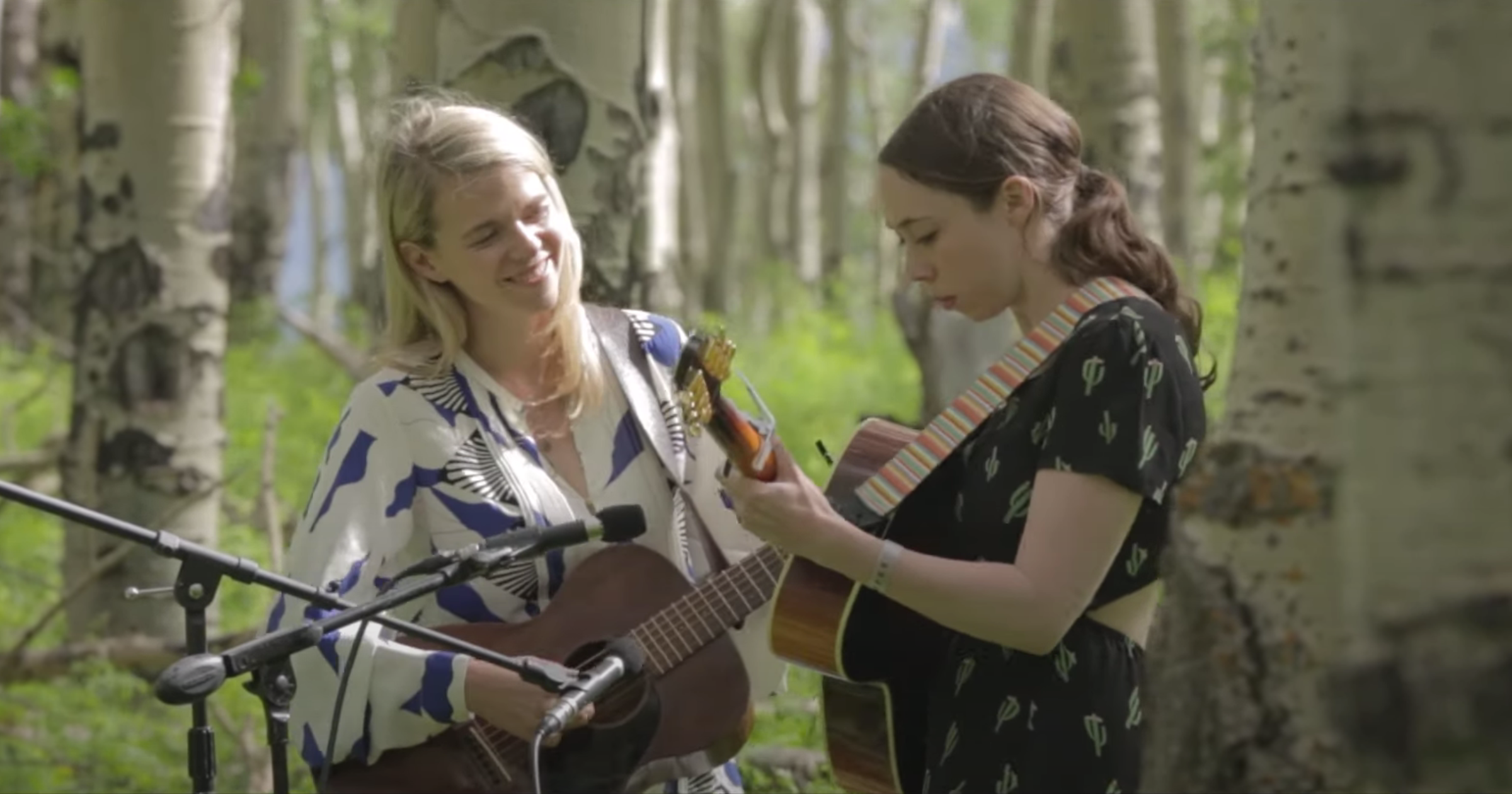
In the summer of 2014, during the Telluride Bluegrass Festival we had the distinct pleasure of capturing Sarah Jarosz and Aoife O’Donovan’s perfectly bucolic version of “Some Tyrant” among the aspens. While out on this jaunt into the woods, we also caught a performance of the loveliest ode to summertime from Kristin Andreassen, joined by Aoife and Sarah.


Rhiannon Giddens – “Mal Hombre”

Rhiannon Giddens once again proves that she can sing just about anything she wants to — and really well — with this gorgeously painful and moving version of “Mal Hombre.”


Tim O’Brien – “You Were on My Mind”

Is this our favorite Sitch Session of all time? Probably. Do we dream of having the good fortune of running into Tim O’Brien playing the banjo on a dusty road outside of Telluride like the truck driver in this video? Definitely.

Enjoy one of our most popular Sitch Sessions of all time, featuring O’Brien’s pure, unfiltered magic in a solo performance of an original, modern classic.


Gregory Alan Isakov – “Saint Valentine”

Being lucky in love is great work, if you can find it. But, for the rest of us, it’s a hard row to hoe. For this 2017 Sitch Session at the York Manor in our home base of Los Angeles, Gregory Alan Isakov teamed up with the Ghost Orchestra to perform “Saint Valentine.”


The Earls of Leicester – “The Train That Carried My Girl From Town”

In this rollicking session, the Earls of Leicester gather round some Ear Trumpet Labs mics to bring their traditional flair to a modern audience, and they all seem to be having a helluva time!


Sara and Sean Watkins – “You and Me”

For this Telluride session, Sara and Sean Watkins toted their fiddle and guitar up the mountain to give us a performance of “You and Me” from a gondola flying high above the canyon.


Punch Brothers – “My Oh My / Boll Weevil”

The Punch Brothers — along with Dawes, The Lone Bellow, and Gregory Alan Isakov — headlined the 2015 LA Bluegrass Situation festival at the Greek Theatre (a party all on its own), and in anticipation, the group shared a performance of “My Oh My” into “Boll Weevil” from on top of the Fonda Theatre in Hollywood.


Caitlin Canty feat. Noam Pikelny – “I Want To Be With You Always”

We’ll send you off with this delicate moment. Released on Valentine’s Day, Caitlin Canty and Noam Pikelny offered their tender acoustic rendition of Lefty Frizzell’s 1951 country classic love song, “I Want to Be With You Always.”


Dive into 8 of our favorite underrated Sitch Sessions here.

BGS 5+5: Cahalen Morrison

Artist: Cahalen Morrison
Hometown: Tierra Amarilla, New Mexico
Latest Album: Wealth of Sorrow
Personal Nicknames: Hank

Which artist has influenced you the most … and how?

Probably Tim O’Brien. My dad was a big Hot Rize fan when I was a kid, so that’s the one voice that I really grew up on. Later on in my musical life I found myself doing a lot of things that at least reminded me of Tim. His loose and expressive touch on all the instruments he plays, and he really just lets his voice ring out of his head like a bell. So I think I had subconsciously been modeling a lot of what I did on a lot that he does.

What other art forms — literature, film, dance, painting, etc. — inform your music?

Literature is a big one for me. Both poetry and prose. I guess I’ve even ‘borrowed’ lines from movies, too. When I’m reading a book by a great writer, I love the way it feels to live inside their language. Not only the story, but the rhythm and the tone of their prose as well. It has really helped me craft songs the way that I want to, and find my own, comfortable voice for getting ideas and images out that I want to.

What’s the toughest time you ever had writing a song?

I recently wrote a story song about someone, which I haven’t actually ever done. I really wanted to get the story across, all the darkness and the beauty, but I don’t like to put people in the spotlight. So, I worked on it for quite a while, trying to highlight all that is human about it without having it be too on the nose, and I think I got somewhere that worked. But I guess there’s only one person who can tell me, so we’ll see.

What has been the best advice you’ve received in your career so far?

The late, great Kelly Joe Phelps was a great mentor to me and my career. He always was pushing me to just do what I actually wanted to do, not to do what I think people want from me. Maybe not the best advice to hit the Billboard charts (which I actually did, because I think my record was the only “bluegrass” record to come out for a week during Covid…), but damn good advice for keeping yourself motivated and happy about the work that you’re creating and performing.

Which elements of nature do you spend the most time with and how do those impact your work?

I spend a lot of time walking and hiking, and it certainly has had a big impact on what I write. And it really is all the cliché stuff that people say about it. Noticing the small things, the interconnectedness of all the elements no matter how big or small, and what effects we and all that surrounds us has on it. And plus, what greater source of beautiful and poignant metaphor could there be?


Photo Credit: Archie MacFarlane

July is BANJO MONTH at BGS: Here’s 25 of our Best Banjo Sitch Sessions

It’s somehow already July (where is this year going?), so what’s better to pass those hot and lazy days than some sweet sweet banjo music? All month long, BGS will be featuring some of the very best players of the instrument, plus some special interviews, videos, and playlists.  From Scruggs-style to clawhammer, whatever you want, we’ve probably got it covered.

To kick things off, we’ve assembled a playlist of our twenty-five very favorite banjo-centric SITCH SESSIONS, including Abigail Washburn & Bela Fleck, Valerie June, Joe Mullins, Noam Pikelny, Rhiannon Giddens, Tim O’Brien, and Greensky Bluegrass, with a video so epic, it deserves to be in the canon of one of our TOP 50 MOMENTS.

It was Telluride 2014, and the BGS team was on the road with the guys from Mason Jar Music to record some friends in picture-perfect settings nestled amongst the San Juan Mountains.  The Greensky band was down for anything, so the whole crew shlepped up to Mountain Village and found an empty platform – typically used for weddings and the like – and started recording guerrilla style.  The result is one of the most memorable – and most watched – moments we’ve ever captured.  Relive it at the video link below.

Check out the full BGS Banjo Month video playlist here.

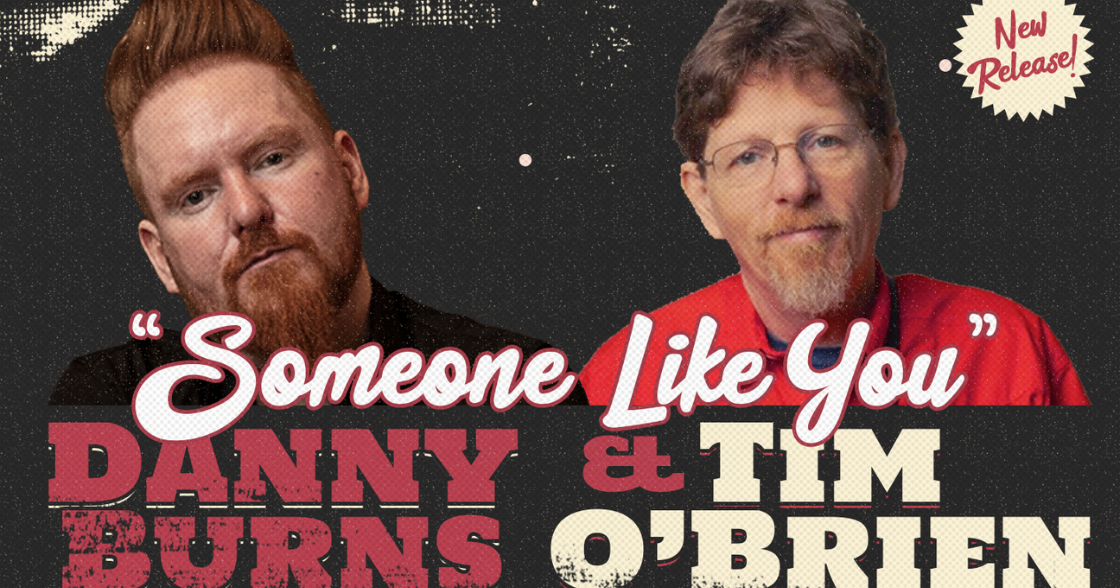
LISTEN: Danny Burns Ft. Tim O’Brien, “Someone Like You” (Adele Cover)

Artist: Danny Burns
Hometown: Residing in Nashville, TN
Song: “Someone Like You” feat. Tim O’Brien
Album: Promised Land
Release Date: October 21, 2020
Label: Bonfire Music Group

In Their Words: “The idea to record Adele’s ‘Someone Like You’ came from a conversation when we were down in Mexico chatting with Ethan from the label. At that point we were about to go back into the studio in Nashville to track a full grass record live. I’ve always loved this Adele song, too. Fast forward, and things were starting to get back to normal, so we began recording. I got in touch with Tim who is one of my favorite singers and musicians, ran the tune by him, and he sang on it beautifully. It’s always a great honor to work with Tim. We also got Scott Vestal on banjo, Billy Contreras on fiddle, Ethan Burkhardt on upright bass, Matt Menefee on mandolin and Tony Wray on guitar.” — Danny Burns


Image courtesy of Bonfire Music Group

BGS Top 50 Moments: BGS On Deck – Our First Music Cruise

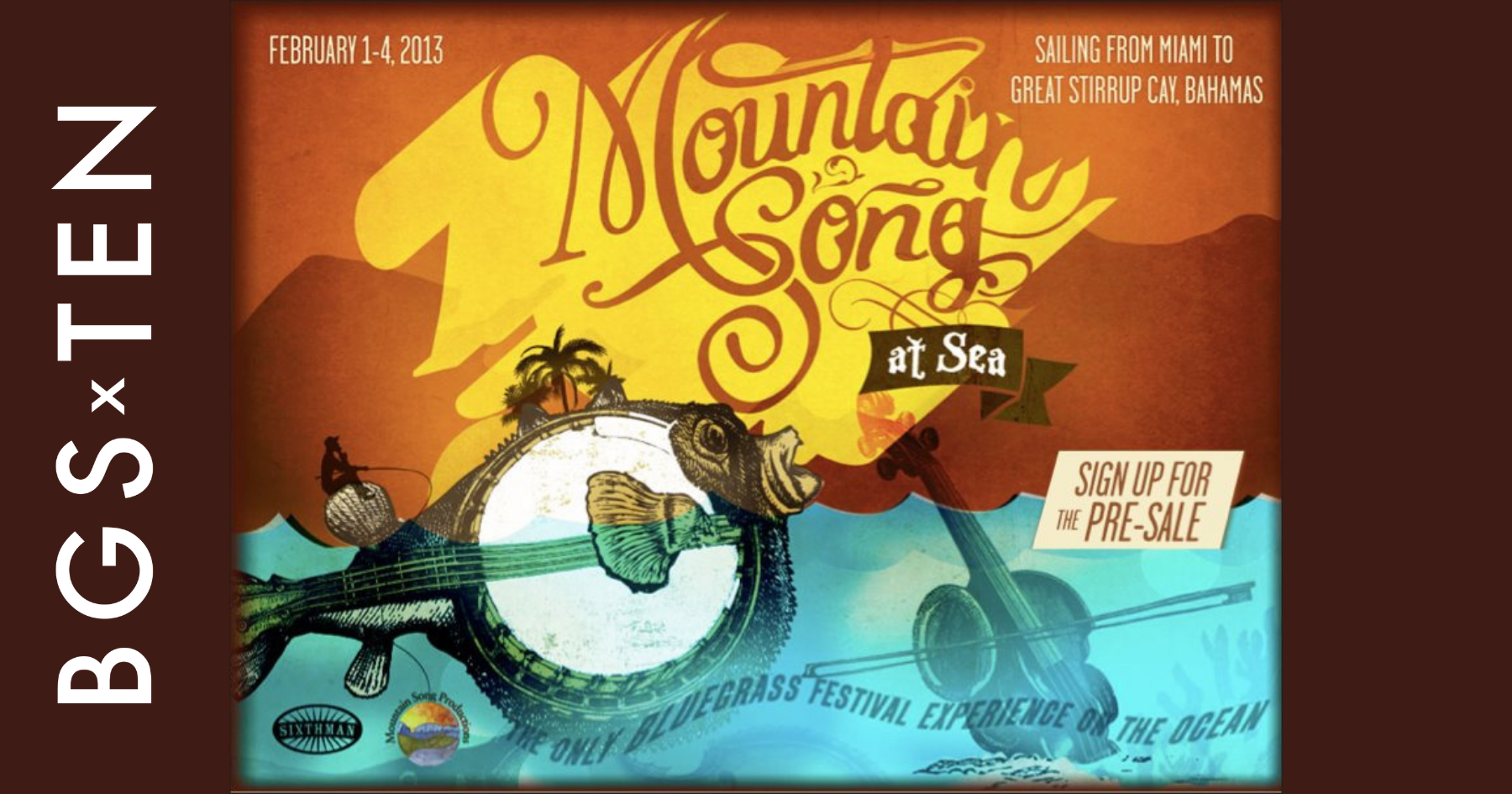
It’s been over nine years since we first boarded the Norwegian Pearl to set sail with some musical friends. Back in 2013, BGS joined the team at Sixthman as well as host band, the Steep Canyon Rangers, on the first Mountain Song at Sea cruise, sailing from Miami to the Bahamas alongside the Punch Brothers, David Grisman, the Del McCoury Band, Tim O’Brien, Della Mae, Bryan Sutton, and Peter Rowan.

You can get a glimpse of the riotous fun that was had onboard that first cruise here.

This month, BGS returns to the high seas on board Sixthman’s Cayamo cruise. While onboard, we’ll be hosting the Party of the Deck-Ade, our kickoff birthday event celebrating ten years of BGS. The jam will be hosted by Sierra Hull and Madison Cunningham, and backed by our house musicians Hogslop String Band.

Get your sunscreen ready, and we hope to see some of you in Miami very soon!

Better Late Than Never, David “Ferg” Ferguson Debuts ‘Nashville No More’

As the go-to producer for some of Nashville’s most enigmatic roots talents, David Ferguson is what you’d call a behind-the-board legend. The studio savant known simply as “Ferg” started out as a protégé of producer and eccentric tape-splicer Cowboy Jack Clement and went on to become Johnny Cash’s favored engineer during his late-career resurgence. More recently, Ferguson has been imparting his old-school wisdom on tastemakers like Sturgill Simpson and Margo Price, while on his own debut album Nashville No More, he puts decades of knowledge to work once more.

With 10 songs full of classic charm and creative whimsy, it’s a loose-feeling project of tunes Ferg’s been falling in love with (and recording for himself) for years, molded into an album during the pandemic doldrums. A rotating cast of Nashville A-listers like Kenny Vaughan, Sierra Hull, Justin Moses, Jerry Douglas, Stuart Duncan, Béla Fleck and Tim O’Brien helped him flesh it out, presenting gruff vocals with tender, honest reverence for the lost art of record-making. In the end, it sounds like a love letter to his life’s work – and maybe the last hurrah of a creative culture.

BGS: So we’ll start with obvious question: Why did you want to make your own record, after so many years of helping others make theirs?

David Ferguson: Well, I’ve really always been a musician at heart. But this one fell into my lap over the pandemic. I had to shut down my studio, the Butcher Shoppe, in Nashville because they sold the buildings. So I set up a control room and an overdub room at my house, then the pandemic came along and there wasn’t much work. I started digging around in my recordings from over the years, got ‘em out and started seeing what I could do. That’s kind of how it came together. I really was just putting it together for family. Like, I was just gonna give it to my mom.

That’s interesting, because I think some people might assume you’ve been wanting to do this your whole life, but it sounds more spur of the moment.

Yeah, it’s a little late in life for me to be launching a solo career. [Laughs] But it’s fun to have one coming out and I’ve got a lot of time on my hands.

It might be late to get started, but you’ve had good teachers. Working with people like Cowboy Jack and Johnny Cash, and more recently Sturgill and Margo, what have you learned about being an artist?

To try to be humble. Even doing interviews, it’s hard to talk about yourself. Somebody who enjoys sitting and talking about themselves, there’s something a little bit wrong with them. I think being humble is a great lesson. Johnny Cash was a very humble man, very humble. So I think that — and trying to be kind to people. And don’t take it for granted, because even if something does happen, it may never happen again. You gotta appreciate what you’ve got.

The people you’ve been known for working with, they’re all artists of very strong vision – ones who didn’t compromise their art. Why are you drawn to people like that?

That’s a good question. I don’t know that I am particularly drawn there, maybe it’s just kind of the way it happened. Stuff comes your way and you have to grab the opportunity if it comes. You’ve gotta be ready to make a fool of yourself if you have to, and learn to grow from mistakes. I made a whole lot of records on a whole lot of people that weren’t any good – tons of them! Not everything you’re gonna do is good. But you do your best for the amount of time or money you have.

I always tried to do my very best. I was a fast engineer and got it going quick, because I didn’t want to waste people’s money. It’s hard to come by, and to get to make a record in a studio is a special thing. It used to be a really special thing. Now anybody can make a record. You can make one in your own house. But back in the day when I started, being able to have the money and resources to go in and record an album was a big deal. I still look at it as a big deal.

I think that comes through on your record.

Thank you, man, I tried not to cut any corners. I could have, and used keyboard strings, things like that. But I had real ones. I tried to do it as real as I could do it.

Did you record this the way you would have back in the day?

Yeah. Everybody’s recording on the Pro Tools format, but I can still fire up a tape machine, I’m not afraid of it. It’s just not economically feasible anymore. And plus, people don’t realize, they always used to say, ‘Oh, tape machines sounded great.’ And it’s true. They did and they still do, but you still wind up with a 16-bit CD. Unless you’re listening to it off the tape machine or on a vinyl record, or some super high resolution format, it’s just not gonna make very much difference.

Tell me about the title you chose. You’re from Nashville and have seen how it’s changed. How did you end up with the title Nashville No More? The whole thing has a kind of weary feel to it.

[Laughs] You know it’s not really a bummer. A lot of them are actually love songs. Like “Chardonnay” is a love song to wine. And then “Looking for Rainbows,” it’s kind of a sad song about love. … Nashville No More means a lot to me, because the Nashville that I used to know is no more. I’m not saying that’s a bad thing, it’s just that things evolve, and Nashville has really evolved. The music has evolved into an unlistenable thing to me. Modern country music, to me, is really difficult to listen to. Top 10 radio, it’s not for me. And I know some of those people who are on those channels, those singers, and I really like ‘em. I’m not saying anything bad about their music or anything … I’m really happy for their success, but it’s not the kind of stuff I’m gonna listen to.

Margo Price is featured on “Chardonnay,” and that has such a lovely sway to it. Where did that track come from?

That was written by my friend Roger Cook, and some years ago I made a demo of him doing the song, and I found it like ‘Jeez, where has this song been? I love this!’ … I finished it up with some real players on it, re-sung a couple of lines here and there and then sent it to Margo, and she said, ‘God, I love that song so much.’ She graciously came over and hung out for the afternoon and sung on that and “Looking for Rainbows.” Margo’s a real sweetheart and she doesn’t live far from me. The other person on there is Harry Stinson. He sings harmony, too, and Harry is in the Fabulous Superlatives. Harry’s singing on “Four Strong Winds,” too. He can blend right in there.

I love that you start off with “Four Strong Winds,” which is such a tender song. The first thing you hear is this gentle piano and a loping drum beat. Why start with that sound?

The album was totally sequenced … and it started off just exactly the opposite of what it is now. It started off with number six being number one, and we swapped the A side and B side.

Really?

That’s an old record trick I learned from Jack Clement and Johnny Cash.

What’s the benefit there?

It just kind of takes the obvious away, and that’s good. I’ve done that on more than one record for the years, and I’ve seen Jack Clement do it a few times. It’s a strange thing, but I mentioned to the guys, “Jack used to sequence it out A and B, then a couple of days later he’d be like, ‘You know, B oughta be A, I think.'” And it works!

You end on “Hard Times Come Again No More.” What’s the message in that ending?

Like I said before, that would have been number five, and we swapped it around. But it just seemed like a natural song to go out with. Sierra and Justin were kind enough to show up on that, and I think she’s just a major talent. Probably one of the most talented people I’ve ever met. She’s got the touch, and she’s not one to nitpick stuff. If you say you’re happy, she says, “OK, let’s move on.” She won’t just wear you out with it.

What was it like trying to produce your own songs, though? Is it hard to be critical of yourself?

It’s nearly impossible. Anybody you talk to who sings or even talks for a living, there’s hardly anything more painful than listening to yourself back. It’s as painful to a singer and artist as it is to anybody — unless they have an ego the size of [spreads his arms wide]. But you get in a situation where you have to be critical, so I learned how to do it on this record. I figured it out.


Photo credit: Scott Simontacchi

The BGS Radio Hour – Episode 214

Welcome to the BGS Radio Hour! Since 2017, this weekly radio show and podcast has been a recap of all the great music, new and old, featured on the digital pages of BGS. This week, we bring you a modern classic instrumental bluegrass tune, new music from Tim O’Brien, and much more! Remember to check back every week for a new episode of the BGS Radio Hour.

APPLE PODCASTS, SPOTIFY

Amanda Anne Platt & The Honeycutters – “New York”

“New York” a song Amanda Anne Platt wrote about leaving the house that she grew up in, and kind of saying goodbye to that younger version of herself. We recently premiered a video for the track.


Rachel Sumner – “Lose My Love”

Singer-songwriter Rachel Sumner first wrote and recorded “Lose My Love” for the bluegrass group Twisted Pine, but now that she’s branched out as a solo artist she decided to reclaim and reimagine the tune in this new context.

Cameron Knowler – “Done Gone”

“Done Gone” is something like a mission statement for musician Cameron Knowler’s album, Places of Consequence. It’s an example of how he examines fiddle music thoughtfully and renders it meditatively — while paying homage to his hero Norman Blake, too.

Aaron Burdett – “Hard Hand”

We sat down with singer-songwriter Aaron Burdett for a 5+5 — that’s five questions and five songs — about his inspirations, his mission statement, and more.

Brad Reid – “Northumberland Shores”

For Cape Breton fiddler Brad Reid, “Northumberland Shores” has become almost a meditation, bringing a sense of calm and grounding while symbolizing Reid’s Scottish ancestors’ journey to America.

Son Volt – “Living in the USA”

This song didn’t start out as an homage to Springsteen’s “Born in the USA” or Neil Young’s “Rockin in the Free World,” but in retrospect Son Volt see the track as a nod to both — while questioning the mythology of the American dream.

Tim O’Brien – “I Breathe In”

Tim O’Brien’s latest album, He Walked On, explores the many realities and histories of what it means to be American. With his well-known ability to tell a story through song he shares intimate and intriguing tales that reflect on the political turmoil of the past few years through both modern and historical lenses. O’Brien was our Artist of the Month for July of this year, and we spoke to him in a two-part interview.

John Reischman – Salt Spring

Mandolinist John Reischman wrote a modern classic instrumental tune, “Salt Spring,” which is now available for the first time digitally and streaming. The track features a roster of young pickers who grew up playing the song in jams and on stage.

Margo Cilker – “Tehachapi”

Singer-songwriter Margo Cilker didn’t write “Tehachapi” to be an exuberant song, but it certainly became one — both in her live shows and on her upcoming, Sera Cahoone-produced album, Pohorylle.

Pat Byrne – “I Woulda Done It For You”

The quirky, upbeat energy of the latest single from Austin-based Irish singer-songwriter Pat Byrne belies the song’s tragic content, which is all about a breakup and a plea for one more chance.

Grayson Jenkins – “Mockingbird”

Grayson Jenkins wrote “Mockingbird” inspired by a noisy, singing songbird and a recent break-up: “When a bird was chirping nonstop by my van while I was trying to sleep. I couldn’t get it to leave, kind of like her memory.”

Tylor & the Train Robbers – “Lemonade”

Everyone has heard the saying, “When life gives you lemons, make lemonade.” Tylor & the Train Robbers turn this phrase on its head, because when you don’t find a way to bring some good out of the bad, you’re just stuck with the same old lemons.


Photos: (L to R) Rachel Sumner by Hannah Cohen; Margo Cilker by Matthew W. Kennelly; John Reischman, courtesy of the artist.

16 Bluegrass Songs for Summer Vacation

It’s summer, our second in the “after times,” where road trips, national parks, and scenic byways are king. As you head off on your COVID-aware vacations this summer, don’t leave all the driving music to indie, easy listening, country & western, or rock ‘n’ roll. The chop of the mandolin, thump of the doghouse bass, and rapid-fire roll of the five-string banjo are just as suited to soundtrack your sunny forays. To prove that point, here are 16 bluegrass songs perfect for inclusion on your summer vacation playlists. (Listen to the full playlist on Spotify below.)

“Highway” – Claire Lynch

Bluegrass being an itinerant livelihood and a nomadic community, traveling songs are just as expected a feature as murder ballads, train tunes (a form of travel song unto themselves!), and moonshine running tales. This modern classic via Claire Lynch — written by Lynch and Irene Kelley — is a perfect example of the form, more ‘90s country offered by a string band than a traditional, four-on-the-F-style grassy track. It’s delightful — and perfectly winsome and longing when you find yourself listening while traveling down the highway.


“Handsome Molly” – Tim O’Brien

Our July 2021 Artist of the Month Tim O’Brien’s rendition of this bluegrass classic is a far cry from, say, a Flatt & Scruggs’ cut. O’Brien’s has a slight transatlantic bent — with a distinct island detour, perhaps through the sunny Caribbean. If you’ve found a craving to set your foot on a steamboat and sail the ocean ‘round deep inside your soul, this one’s for you.


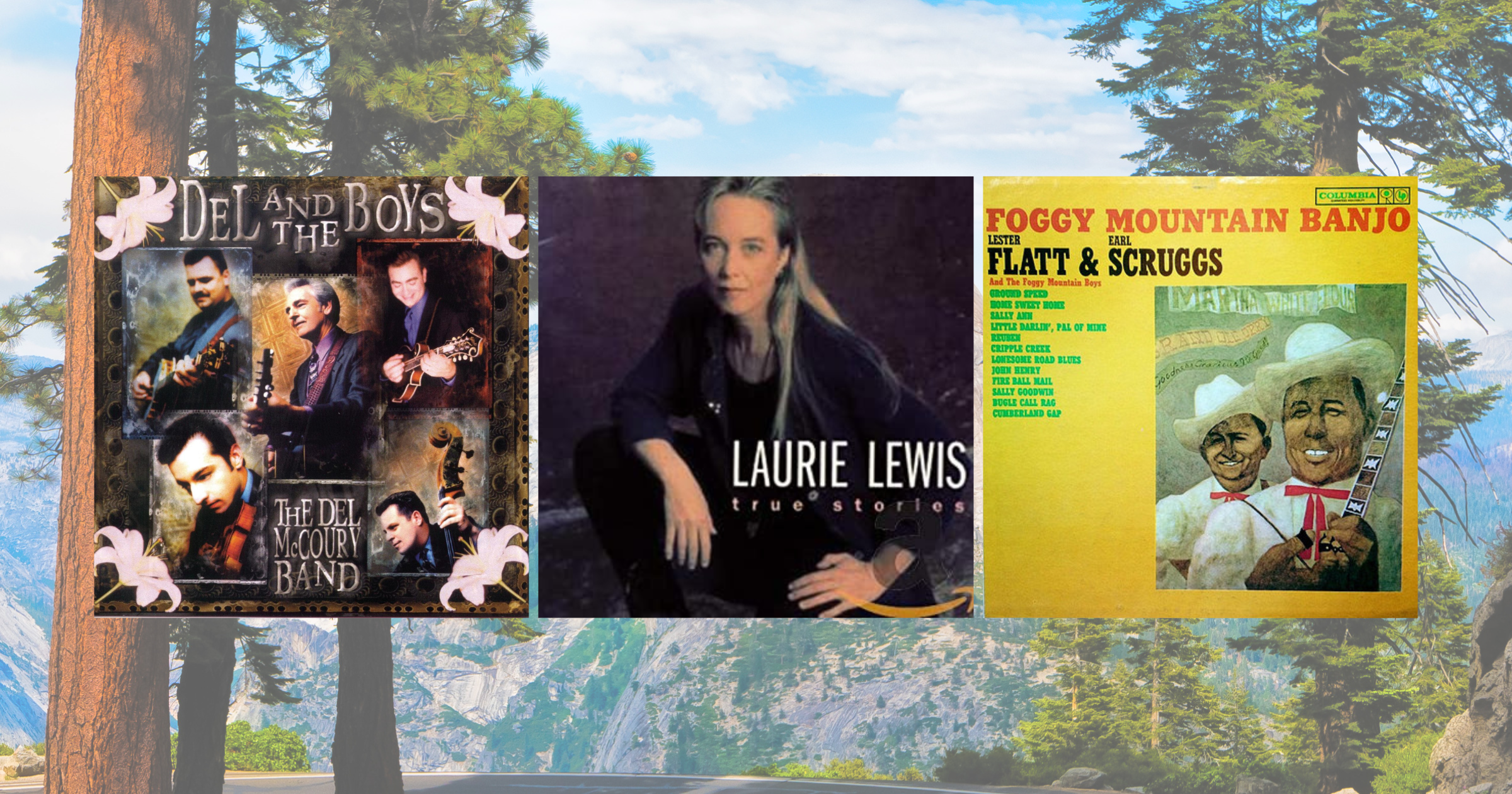
“1952 Vincent Black Lightning” – Del McCoury Band

Another track with a transatlantic story, this ever-popular, most-requested number covered by the Del McCoury Band is a road trip staple — whether you get in or on your vehicle to hit the highway. It would be a sin to make a bluegrass summer vacation playlist and not include “1952 Vincent Black Lightning!”


“Val’s Cabin” – Laurie Lewis

A rare example of a bluegrass song actually about summer vacations, this Laurie Lewis original, “Val’s Cabin,” begins as a simple retelling of childhood memories — nostalgia being a common rhetorical device (and when attempted by many other writers, a well-worn trope) in bluegrass. But Lewis, a veteran through-hiker, wilderness excursioner, and backpacker as well as a Grammy-nominated bluegrass singer and songwriter, tinges the story with melancholy and the existential questions raised by the ever-worsening climate crisis. The song is as evocative as it is gorgeous; though the singer can’t find the way to “Val’s Cabin” any longer, every listener can.


“Paddy on the Turnpike” – Vassar Clements

If you ever happen to find yourself Crossing the Catskills on a summery jaunt, “Paddy on the Turnpike” must be in your listening rotation. Avoid the tolls, but still go for a ride on the turnpike with Vassar Clements’ wild, unpredictable, jaw-dropping, wonky fiddling. “Paddy” is a blank canvas for Clements and a study in bluegrass’ unending affinity for flat seven chords.


“Don’t Give Your Heart to a Rambler” – Tony Rice

A hit in nearly every jam circle that ever circled, “Don’t Give Your Heart to a Rambler” is almost as if “Gentle on My Mind” had been written by a much less kind or compassionate protagonist. Tony’s solo vocal stylings are as iconic as his six-string licks, nearly obliterating any memory of this song ever having been sung by anyone else. What’s more, the titular advice of the track still stands. Just don’t.


“Highway 40 Blues” – Larry Cordle & Lonesome Standard Time

Because “Interstate 70 Blues” just doesn’t roll off the tongue. And that melodic hook should go down in history as one of the best country licks to ever lick! Cordle wrote one built for the long haul with “Highway 40 Blues.” It’ll keep you good company as you go wherever and back.


“Banjo Pickin’ Girl” – Annie Staninec

Is there any better reason to go around this world than being a banjo picker? There are never enough banjo pickin’ girls and this anthem, no matter how many times it’s picked up, studied, and retooled by another banjo pickin’ girl, always SLAPS. (Clawhammer pun intended.) Fiddler and multi-instrumentalist Annie Staninec, who’s traveled around the world making music quite a bit herself, gives an excellent old-time rendition of this favorite.


“A Crooked Road” – Darrell Scott

Darrell Scott turns a literary device pretty common in songwriting on its ear, with a tender eye for detail and emotion that he brings into all of his musicmaking. Life is, after all, about the journey — not the destination. Why not take the crooked, and thereby, the road less traveled? 

Plus, take this song as suggestion: The Crooked Road, Virginia’s Heritage Music Trail, is well worth a visit. Put this song on and take the Crooked Road.


“Up and Down the Mountain” – David Parmley & Continental Divide

Work life doesn’t suit you? Does “paradise” mean a fiddle and the open road? If so, “Up and Down the Mountain” is for you and your road trip playlist. Especially if you’re planning on trekking through the Rockies, Sierras, Ozarks, Applachians, or what-have-you. Turn off cruise control, watch for the runaway truck ramps, and go up and down those mountains! David Parmley & Continental Divide know something about geography and topography, after all…


“Roving Gambler” – The Country Gentlemen


Not sure why you’d be headed to Las Vegas during one of the hottest summers on record, but if you’ve got your sights set on a casino — wherever it may be — crank up “Roving Gambler” and hope your 2 a.m. slot machine binge or your evening “re-learning” blackjack ends more amiably than with gunfire. Speaking of which, perhaps “Blackjack” deserves a slot on this playlist…


“Travelin’ Prayer” – Dolly Parton

The kick-off of one of Dolly Parton’s masterpieces, her 1999 bluegrass album The Grass Is Blue, “Travelin’ Prayer” was actually written by Billy Joel. Yes, that Billy Joel. The original, from 1973’s Piano Man, featured banjo playing by Eric Weissberg and Fred Heilbrun. So of course the tune stands up to the bluegrass treatment and then some, between Stuart Duncan’s haunting fiddle cadenza to begin the track, the rip roarin’ tempo and train whistle harmonies, and the lonesome feeling of being away from your baby while he travels the world. We’re gonna assume Dolly’s blessed pen and ink added the lyric: “And keep him away from planes / cause my baby hates to fly!”


“Road to Columbus” – Kenny Baker

Growing up this writer frequented a bluegrass jam in Granville, Ohio, about 25 miles east of the state’s capital, Columbus. Like clockwork, every week as the jam wound down around noon on Wednesdays, Troy Herdman — a local bluegrass community stalwart, Doc Watson-style flatpicker, and mentor of many who lived in or around Columbus — would call this tune. Everyone would chuckle, and we’d play “Road to Columbus” as everyone, but especially Troy, hit the road to Columbus. 

Herdman passed away last week at the age of 91. I certainly wouldn’t be the musician I was today if it wasn’t for Troy, and I know quite a few others who would say the same. So no matter where I travel, I always keep “Road to Columbus” nearby. Especially when I’m headed home to Ohio.

Many pickers speculate over whether Kenny Baker and Bill Monroe were referencing Columbus, Ohio, or Columbus, Indiana. But, according to Roland White — who introduces the song with an anecdote from his time on the road with Monroe — it’s about Ohio. For this Ohioan, that’s confirmation enough!


“That’s How I Got to Memphis” – Tom T. Hall

His own recording of one of his most popular hits may sound more like straight up and down country than ‘grass, but even the most casual fan of Tom T. Hall knows that this Bluegrass Hall of Famer is bluegrass to his core. If you’re headed down I-40 from Nashville — or, really, towards Memphis from any direction, no matter how direct or circuitous, this song is a must-add for your road trip playlist.


“Where Rainbows Never Die” – The SteelDrivers

This song is about a decidedly different kind of journey, not often referred to as a “vacation,” but even so it’s a poignant, encouraging, and downright delicious song to background any journey. If you’re road weary — or life weary — “Where Rainbows Never Die” is a certified pick-me-up that doesn’t shy away from reality, like the grit and coarseness in Chris Stapleton’s lead vocal wrapping you in its warmth. There’s a comfort in life not being sugar-coated — and in knowing somewhere, west of where the sun sets, rainbows never die.


“Home Sweet Home” – Flatt & Scruggs

Home never feels so sweet as when you’ve just returned after a long, restful, relaxing vacation. So we’ll close our summer vacation playlist with Flatt & Scruggs’ rendition of this tune pulled directly from the American songbook, “Home Sweet Home.” We hope a banjo roll always greets you at your door, and if not, this playlist will at least cover that for you. Wherever you roam, there’s no place like home! And no music like bluegrass.


Editor’s Note: Check out our follow up playlist, Take the Journey: 17 Songs for a Sunny and Warm Summer Vacation

Tim O’Brien Recalls the Origins of Hot Rize… and That Other Band (Part 2 of 2)

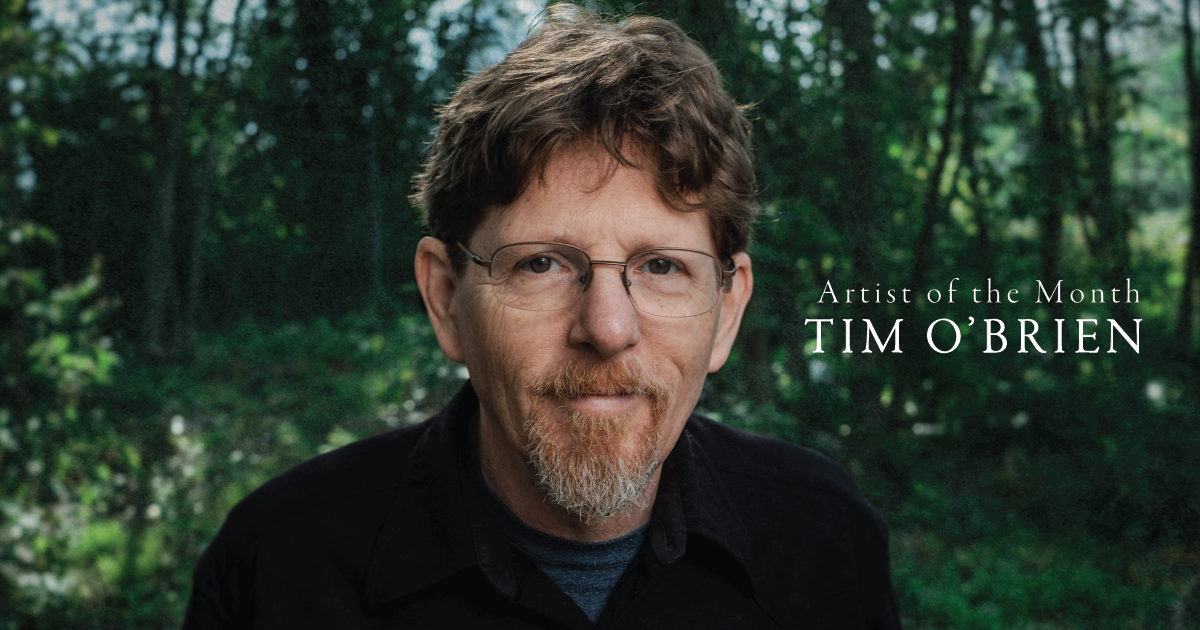
Tim O’Brien’s seemingly effortless tenor singing, musicianship, and songwriting have kept him in great esteem in the bluegrass community for more than four decades. One might say “seemingly effortless” is a fitting way to describe his career path, too. So much of it seems natural, as if each new thing was the obvious next step, whether it was creating a Western swing band alter ego within a bluegrass band, recording duet albums with his sister Mollie O’Brien, earning a Grammy nomination with an collection of Bob Dylan covers, or connecting lines between Appalachian music and traditional Irish music, tying back to his own heritage as a West Virginian of Irish descent.

Yet beneath his quiet demeanor is a thoughtful artist who brings a tremendous amount of intentionality to his work. We sat down with O’Brien, our BGS Artist of the Month for July, to ask him about how he got started and how some of these projects came to light.

(Editor’s Note: Read the first half of our interview with Tim O’Brien.)

BGS: When did you first start trying to play music professionally?

TO: In the fall of ‘73 I gave up on the idea of college and decided that maybe I could support myself playing guitar and a little bit of fiddle. I was just learning back then. I saved up for a car and I went to Jackson Hole and played shows in bars and whatever I could get. I had some friends that I had worked with as part of a summer camp out near there that were out there to spend the winter. Then, in the fall of ‘74, I ended up in Boulder and briefly played in a bluegrass band called Town and Country Revue with two guys who were affiliated with a music store that I worked for a short time. Then I met up with a guy that started a band called the Ophelia Swing Band and I joined them for about three years. Our front man was Dan Sadowsky, who later became known as “Pastor Mustard” at the Telluride Bluegrass Festival.

We did some bluegrass things, but we weren’t portraying ourselves as a bluegrass band. We had strings, but it was mostly a swing band. I had been playing guitar and fiddle at this point and ended up borrowing a mandolin for a while until I eventually got my Nugget in ‘76. We were into that Cab Calloway kind of a hepster swing and there was another violin player in the group named Linda Joseph so we’d play some twin fiddle parts in a Western swing style. We tried to make big band arrangements with a lot of call and response between the instruments. We were making it up as we went along, but very much enjoying it.

We made a record, [Swing Tunes of the 30’s & 40’s], for the same label that my solo record came out on, a Denver label called Biscuit City. That record came out in ‘77, but I quit the band right before the record came out. I briefly moved to Minneapolis but I went back and did a little run of gigs with them in the summertime. I went back and was trying to dig in in Minneapolis, and then Pete Wernick called and suggested that we should get a group together. My girlfriend at the time, shortly before we ended up getting married, was thinking that maybe we should move back to Colorado anyway. So we went back in January of ‘78 to start up Hot Rize.

Your description of the Ophelia Swing Band’s material reminds me a lot of Red Knuckles and The Trailblazers. I’ve always enjoyed the Trailblazers portion of Hot Rize shows because the music is so good but it’s almost hiding behind the facade of a well-presented comedy show. Sort of like Homer & Jethro. How did you end up presenting it in that way? Or playing that music in the first place?

What happened was, Pete said that we should get a bluegrass band together and promote these two records. I had just put out Guess Who’s in Town on Biscuit City and Pete had just released Dr. Banjo Steps Out. I said, “That sounds good, I’ll do it, but I’d like to venture out into some other kinds of music other than straight bluegrass” and I mentioned Hank Williams kind of stuff or Western Swing. I asked Pete if he’d ever play Dobro. He had never played Dobro, but he said he’d look into getting one (he ended up getting a lap steel) and said we could work some of that stuff in.

Our first guitar player was a brilliant instrumentalist named Mike Scapp [who also played with the Ophelia Swing Band]. He didn’t last very long though and when he quit, Charles Sawtelle had been playing bass, but switched to guitar. When Nick Forster came along we told him we were doing this country and western material and he said that he had a Charlie Christian Gibson [electric archtop] guitar and played that kind of stuff. So all of a sudden, we had electric guitar, steel guitar, acoustic guitar, and bass. (Charles would go back to the bass for that because he didn’t play that kind of music on guitar.) So, when we would play four sets at a bar or something, we’d feature some of that stuff on the third set just to break it up. We would say, “We’re going to bring another band up here,” but we would just stay on the stage and switch instruments. We’d make a joke about the name of the band — we had different silly names that we used — and it was just a stage patter and a bit of a different kind of music.

Then, about two years into the band, we had a formal concert at the City Park in Denver in a nice theater sponsored by the Denver Folklore Center. I’m not sure who said it but I think it was Charles who said, “Why don’t we do a quick change? We’ll wear cowboy outfits and actually be a different band.” So we worked out the basic formula in rehearsal where Pete would introduce us while three of the four change clothes and then we’d come on and he’d make his quick change and all of a sudden we were a different band. That night, we called ourselves Red Knuckles and the Trailblazers. Rather than this just being some bar, these were mostly bluegrass and folk music fans and Pete and Charles were well-known in that community at that time. So we changed clothes and played a part and never let on that we were the same people and everybody knew it, but they got into it. That seemed to work, so we kept doing it.

The following fall, we played in Louisville at the free bluegrass festival that was put on by Kentucky Fried Chicken. We were interviewed by a radio host there and she said, “Well, I want to interview Hot Rize, but who I really want to interview is Red Knuckles and the Trailblazers.” So we said, OK, and acted like the Trailblazers. When she asked us stuff about where we’re from, we were just making up these answers. All of that stuff about us being from Wyoming, Montana, which is on the border of Wyoming and Montana, and the Eat Cafe was all just jokes that we might have said while we were driving around in the car. But it became our story after that interview. After we’d finished we all looked at each other and said, “Well, I guess that’s our story. Now we have to remember it.” [Laughs]

That’s how it started. I had always wanted to play that music so I wanted to do the music justice, but the act was about not taking yourself seriously. It helped Hot Rize immeasurably to have that as a foil. Whenever we’d mention the name of that band we’d make a snide remark about them as if they were a different band and we were rivals. This helped create an understanding that this was a lighthearted event which helped a lot.

Yeah, I could imagine it helped a lot. Not only as a way to stand out with something different, but since you guys were from Colorado playing a progressive style of bluegrass I’m sure the Hot Rize material sounded even more like traditional bluegrass when juxtaposed against the Trailblazers.

That’s why we got Entertainer of the Year the first year that they awarded it at IBMA; we had a show. At that time you had bands starting like Doyle Lawson & Quicksilver, The Johnson Mountain Boys, and the Nashville Bluegrass Band. The Johnson Mountain Boys were also working on a show, but those other two bands were still standing by their individual microphones. I loved those bands a lot and still do but having a show was good for us because it took a little stress off the music and let our music just be what it could be. We weren’t measuring ourselves against those other bands quite as much as we might have been otherwise.

It took a while for the promoters to understand it. There were some traditional festivals that wouldn’t let us do that. Out in Grass Valley, California, at the CBA festival, they didn’t even really want electric bass there, but they’ve made an exception for Hot Rize. But they wouldn’t let us do the Trailblazers. The same thing happened at Doyle Lawson’s festival the first time we played there. Milton Harkey said, “Oh, don’t get me wrong, I love the harmonies,” which proved that he had never heard it since the Trailblazers didn’t really have a lot of harmony singing. But after we played his fans got to him and asked why they didn’t let us play that Trailblazers stuff and explained it to him and they started letting us.

For some of those festivals like the one in Grass Valley, I think they just have their rules about what is and isn’t bluegrass. But the other ones like Doyle Lawson’s festival, they just didn’t want a bunch of bikers coming in. They didn’t want hippies taking a lot of drugs with electric music because it might get out of control.

What was it like to play in these traditional, sometimes conservative spaces?

We were always the funny ones. Our hair was too big and too long and our ties were wrong. We wanted to fit in so we wore suits, but we never hid who we were. Bluegrass, since the ‘60s at least, has always had lots of different fans. They might be Northerners or city folks that didn’t grow up with the banjo but they love it and kind of poke fun at themselves for being involved in a way. I think that’s the thing that’s sort of wonderful about music; it’s a free pass. It’s whatever anybody thinks it is and anybody can like any kind of music and art. How you react to it is up for grabs and, in a way, all responses are valid. People all respond to music differently and people will change it to express themselves within it.

(Editor’s Note: Read the first half of our interview with Tim O’Brien.)


Photo credit: Scott Simontacchi