The Likely Culprits Issue an Arresting Debut

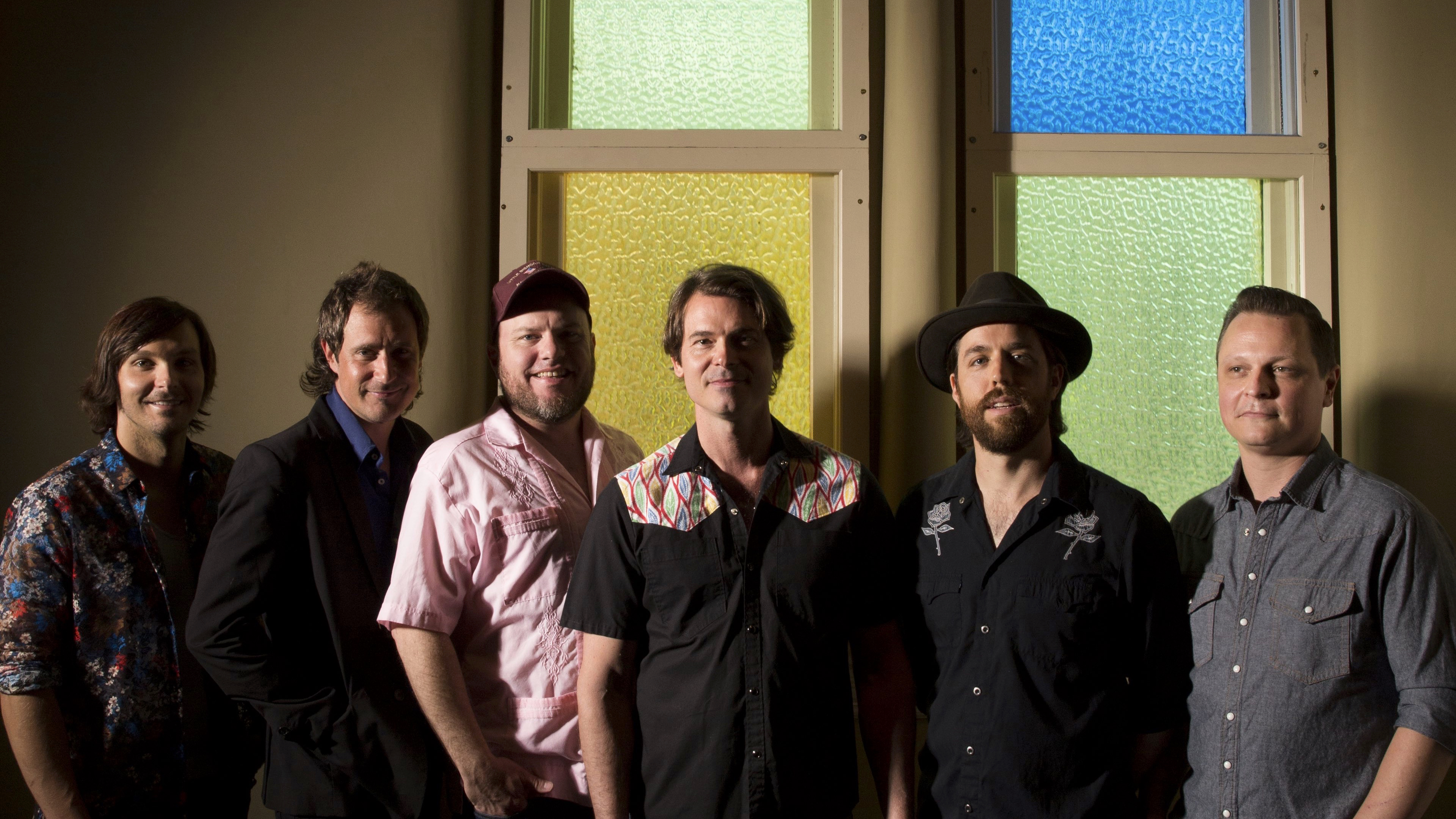
Most likely to succeed? That’s of no interest to the Likely Culprits, an easygoing group of bluegrass cut-ups who just released one of the most entertaining albums out of Nashville this year.

With four of the band’s members bantering inside a forgotten conference room at IBMA, they readily confess that their name derives from an ongoing conversation within the band: Who’s the most likely to end up behind bars? It’s currently a seven-way tie between Brandon Bostic, Ronnie and Garnet Bowman, Melonie Cannon, Ashby Frank, Deanie Richardson, and Austin Ward. The informal happy hour vibe of this conversation lends itself to proceed on a first-name basis.

“We’re all pretty rowdy,” Deanie says. “We’re all a bunch of hillbilly rebels and we were like, ‘Well, one of us probably get arrested eventually.’ And it was just, which one of us was going to go to jail, and who’s the likely culprit?”

Turns out, that unpredictability is the album’s greatest strength. When pulling together its dozen tracks, they wanted to ensure that all five of the band’s vocalists had a chance to sing, and that nobody’s favorite song was left out. The result is something like listening to a stereo with a seven-disc changer, but with a throughline of excellent musicianship and a high caliber of songwriting.

For example, Melonie unearthed album cuts from Bonnie Raitt, Lucinda Williams, Brandy Clark, and Matraca Berg, while Ashby reconfigured pop star Gavin DeGraw’s melodious “Where You Are.” After years of singing it at the band’s Station Inn shows, Garnet finally recorded “Tennessee Blues,” a deep cut from Keith Whitley. That tearjerker is immediately followed on the album by Brandon’s version of Dave Matthews Band’s “Gravedigger.” Listening to the self-titled album as a complete body of work, it somehow fits.

There might be a shorter version of how the Likely Culprits all met, but here’s one way to tell the story: Deanie and Melonie have been friends since childhood, and when Melonie married Deanie’s brother, they’d host guitar pulls with their mutual friends. Garnet would come to those parties, forging a bond among all three women that’s lasted 25 years. In the years ahead, she would marry Ronnie, who cultivated his bluegrass reputation in the ‘90s with the Lonesome River Band and as a solo artist. He also produced Melonie’s solo albums with her father, Buddy Cannon.

Meanwhile, Ashby met Garnet and Melonie when he was playing in Ronnie’s band. Later on, when Deanie and Ashby crossed paths a party, they recognized that they’d found kindred spirits in each other. Then, as happens in Nashville, they had an idea to form a band, admittedly with no real intentions of taking it on the road. Instead, the priority would be simply making good music. So, together they rounded up Melonie and Garnet, while Ashby recruited two of his friends, Brandon and Austin. And just as the band was hitting its stride, Ashby took a temporary job as a musician on a cruise ship.

“We were having so much fun, it was like, man, we don’t want to stop,’” Garnet recalls. That’s when Deanie asked Ronnie to take Ashby’s spot, not sure if he’d even want to.

Ronnie explains, “Not that I don’t enjoy being in the band now, but I enjoyed not being in the band back then, because I could actually go to a place where I wasn’t expected to play, and I could see these guys play. I mean, I loved them. And by the time Ashby left, I knew all the songs.”

“I knew he was having fun coming and hanging out, drinking a few beers without the pressure of getting up there,” Deanie says. “But he said he would do it and then it just felt amazing. It felt like it should. He’s one of my heroes and I love him to pieces. Just to get him on stage with us was a big dream of ours. So I’m honored he agreed to do it. Ashby eventually came back from the boat and we thought, ‘Well, let’s throw everybody in there.’ And we did. We played a few shows and said, ‘Let’s do a record, why not?’ So here we are with the record.”

So, what makes the Lonely Culprits click anyway? To borrow a title from the album, “Everybody’s Got Something They’re Good At.” Deanie is an exceptional fiddler, while Melonie and Garnet possess warm, instantly identifiable voices. Ronnie sings and plays guitar, and also serves as co-producer (with Buddy Cannon). Brandon provides vocal, acoustic guitar, and electric guitar, and Ashby sings and plays mandolin. Austin keeps the Likely Culprits moving along on upright bass.

Though it sounds like a long-lost Harlan Howard composition, “Everybody’s Got Something They’re Good At” happens to be a Ronnie Bowman/Dale Dodson original, with Garnet singing lead. (Lee Ann Womack recorded it first but her version never came out. Alison Krauss plays fiddle on this version.)

Just after that throwback country tune, Ronnie sings another of his compositions, “Won’t Do That No More,” with such poignancy that it’s no surprise at all that he’s won multiple IBMA male vocalist awards. He’s also an accomplished songwriter who has placed major hits with Brooks & Dunn, Kenny Chesney, and Chris Stapleton.

It’s worth mentioning, too, that Deanie earned an IBMA award this year as a member of Sister Sadie. She’s also toured, along with Brandon, in Patty Loveless’ band. Asked what it feels like to have a lead vocal that keeps changing, she immediately replies, “Oh my gosh, I love it because with Sister Sadie it’s bluegrass. With Patty Loveless, it’s country. But with these guys, it’s all of it.”

That bond has only strengthened since the band’s first show at Station Inn in 2012. It remains a special spot for the band, who listened to the album in its entirety for the first time over the club’s sound system. (Yes, they rang the bell.) They’ll also play an album release show there on November 15.

Thinking back to those days, Brandon recalls, “I moved to town and I didn’t know a single person. I took a job playing in a bluegrass band and moved up on a whim. I thought, ‘I’ve got to get out of the house, I’ve got to meet some people.’ So I started hanging out at the Station Inn and I found a group of people that are my family now. We’re all pretty much on the same page and we’re like-minded with music and what we like and what we don’t like. Playing with them, it’s like coming home all the time.”

One of the band’s biggest champions is Jamey Johnson, the country singer-songwriter who made it his mission to get the Likely Culprits’ new album into the world. He’s also invited them to open a series of shows this week in the Southeast, part of his ongoing effort to support female artists in country music.

While Jamey’s fans are devoted to his singular approach to songwriting, it’s just as likely that they’ll appreciate the perspective from these seven musicians, too. Because Melonie is already a familiar presence at his shows as a harmony vocalist – and because Jamey comes to all the band’s shows — there’s a certain comfort zone already in place for the Likely Culprits, one that doesn’t involve prison guards or enforced curfew.

“This is us sitting in a living room with somebody saying, ‘Ronnie, pick a song,” Deanie says. “Ronnie might pick one, and Garnet might pick ‘Tennessee Blues,’ and Brandon might pick ‘Gravedigger.’ It’s what we do, man. It’s great. I love these guys. I’d go all over the world with them.”

“I would too,” says Brandon, says as Ronnie chimes in with a “Yeah.”

“Same here,” Garnet concludes. “We all feel the same way.”


Photo courtesy of the artist
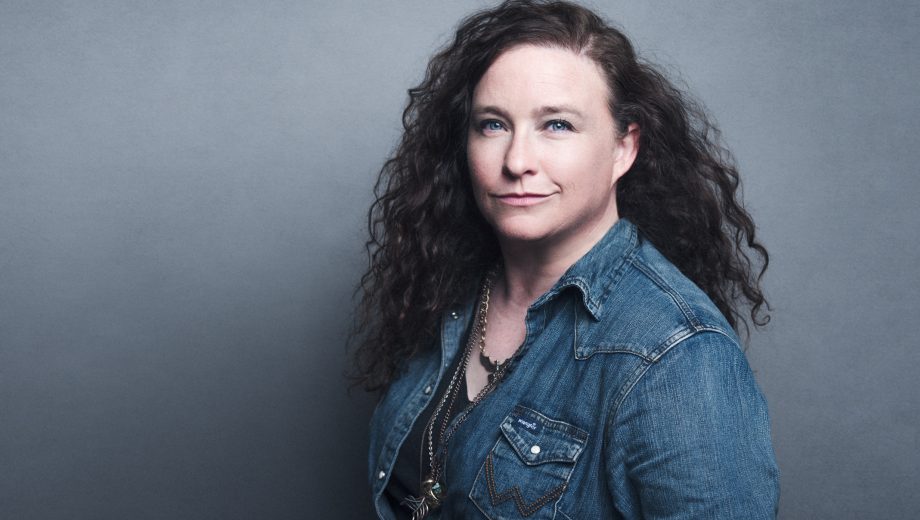
LISTEN: Libby Koch, “How Long”

Artist: Libby Koch
Hometown: Houston, Texas
Song: “How Long”
Album: Redemption 10: Live at Blue Rock
Release Date: October 18, 2019
Label: Berkalin Records

In Their Words: “This record definitely incorporates spiritual themes into love songs, and ‘How Long’ is a great example of that. I structured this song around the text of Psalm 40, with lines of each verse and the chorus tracking the Psalm: ‘I waited patiently for the Lord, and he turned to me and heard my cry. He brought me up out of a slimy pit, out of the miry clay, and set my feet upon a rock, and gave me a firm place to stand.’ This piece of scripture has been put into song and hymn many times, and I hope this song is a worthy addition to that tradition. When I originally cut this song 10 years ago, it was a more somber, stripped-down track… for the live anniversary cut, Patterson Barrett and I decided to pick up the tempo and give the song a bluegrassy feel, which I just love. It’s one of my favorite tracks on this live album.” — Libby Koch


Photo credit: Valerie Fremin

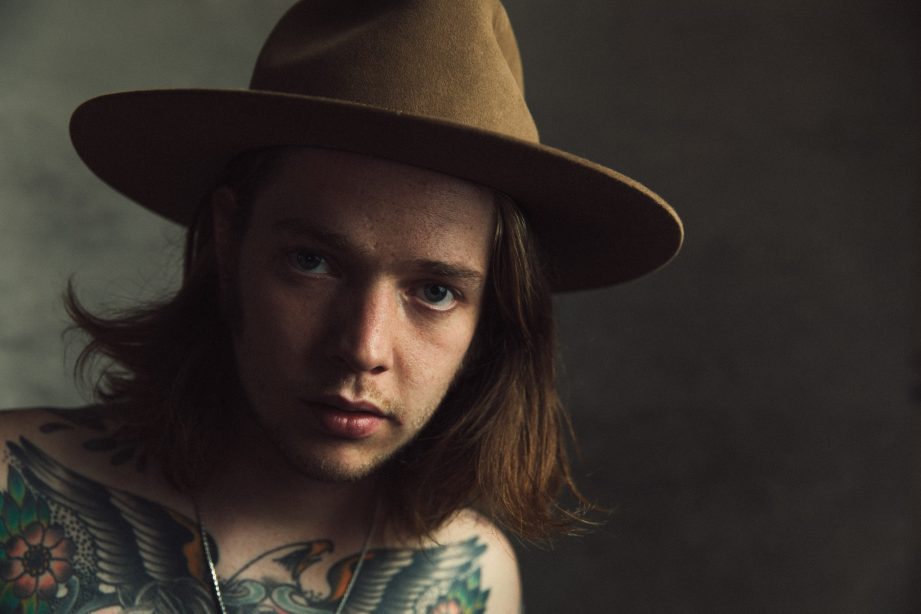
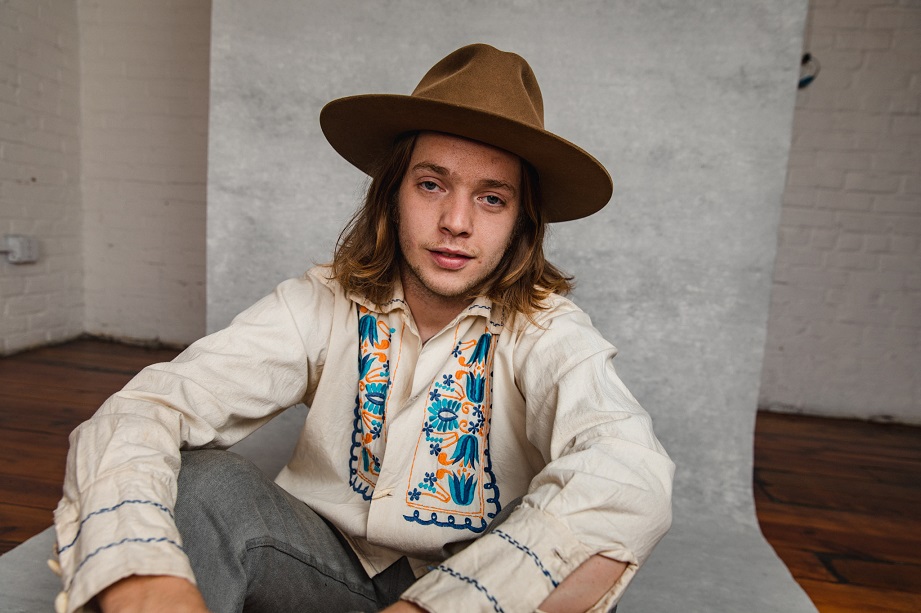
Despite Bleak Beginnings, Billy Strings Emerges as a Force in Bluegrass

Get Billy Strings on the phone, and the interaction will probably seem as much like a musical recital as a verbal conversation. He’ll most likely have a guitar in his hands, noodling around on scales or snatches of songs, sometimes as conversational punctuation marks. But mostly, it sounds like he’s thinking out loud with the instrument.

It’s a good time for Strings right now, who earned IBMA Awards last week for New Artist of the Year and Guitar Player of the Year. His very fine second album, Home, is out on Rounder Records. Checking at 50-plus minutes, Home is a wide-ranging album that showcases his remarkable, classic-bluegrass voice and even more remarkable six-string wizardry, confirming his status as one of the top young guns in the field. The album has 14 songs, pretty much every one of them a journey.

We caught up with Strings shortly before he hit the road on what will be a full season of touring across the U.S. this fall.

BGS: Is there ever a day when you DON’T play music?

Strings: Not usually. I do try to play all the time. Sometimes when I’m on the road playing every night, onstage more than two hours, I might feel like I want a little break: “When I get home, I’m not even going to touch it for a couple of days.” Never happens. It only takes about a day to get the itch and feel like I need to practice.

What form does practice usually take?

A little of everything. That right there is just doing some scales all over the neck in different keys. Metronome practice is good and I have not done enough of that lately. That will really whip your ass into shape. Playing along with records, too, or playing fiddle tunes, playing through songs I know and love. Coming up, I did not have these rigid practice regimens. I just played music.

But recently I’ve started getting into it more. I was inspired by the Rocky movies: “Man, he works out for months, running up and down stairs and training so hard for just one gig!” Every night I get in the ring, but I never train, never hit the bag. I need someone like Mickey yelling at me, “C’mon, kid, lemme see that major scale again! Now slip the G run!”

I saw a quote about how you learned to play with bluegrass, but learned to perform when you were in a metal band. What did you take away from your time playing metal?

I grew up watching bluegrass bands in suits and hats, singing and playing into the mic and standing very still. When I was playing in a metal band, we were all over the stage running into each other, spitting and headbanging. I remember I would start a show by running from the back of the stage into the audience, and they’d push me back onstage.

It was just this crazy energy and that was my first performing experience onstage in front of people. I do think bluegrass is more about music, listening to the notes. The metal band, we’d jump around so much it was difficult to play the correct notes. The music may have suffered, but we tried to put on one helluva show and I still sort of bring a little of that.

Your new album is called Home. Is there any significance to that as a title?

I would say there’s a lot. That came from a poem I wrote titled “Home” and turned into a song that was kind of obvious as the opus of the album once we recorded all the songs — the just kind of wild song of the bunch. So I figured we’d name it after that. I’m 26 years old, this is my second album and I’m sort of settling into life as a young adult. Up to now, not knowing what was happening kind of kept me alive.

Now I’m starting to feel a little bit like a grown-up. Also, on the road, we’re always dreaming about getting home. What does it mean to you? Home is something different for everybody — a place, a state of mind, a drink, a meal. When I get home, my friend’s grandpa grows some real good weed outdoors in Michigan soil. Smoking that is home right there. Home sweet home.

“Away From the Mire” is the longest song on the album and it seems like the centerpiece, a real journey. Did you know it was going to go that far when you started recording it?

It was spontaneous. We were recording, working on that one a couple of days and trying to figure out what to do with it. It felt like it needed a big guitar solo because I’m a fan of that. It’s a classic thing that always happened with ‘70s rock and roll bands: great song, verse, chorus, bridge and EPIC solo before it’s over.

A lot of times, me and the band will get into these moments and “Mire” was one of those we sort of landed on where I took my guitar and they followed along. It was not composed at all, just a jam. It did not take too many times through to get it. We were oiled up, had been in the studio a few days, and didn’t have to spend too much time on any of the songs. That whole jam in the middle, it’s all live.

Doc Watson seems like an obvious influence on your playing. Did you ever meet him?

Unfortunately, I never got the chance to meet Doc. I worshiped the man, you know? I started listening to his records and watching VHS tapes when I was 5 or 6 years old. Doc left a huge impression because his music was so alive with such heart and soul. I took my dad to see Doc once, the only time either of us got to see him. It was the Midland Theatre in Newark, Ohio, six hours away, the closest he was coming to us. So I got tickets for my dad, my mom, me and my friend Benji, who drove us there in his truck.

Seeing him in-person was incredible. He played “Shady Grove” and “Way Downtown,” and my mom and my dad and me were all crying because we could not believe that really was Doc right there. I enjoyed the hell out of it. That was in 2010, Doc with David Holt and T. Michael Coleman, and he forgot a lyric here and there but still picked something great. I’ll never forget it as long as I live and I’m so glad I brought my parents.

Growing up listening to Doc was something special, and a mutual love for Doc is a connection I share with my dad. We bond over Doc’s music, play it together and I think we do it justice, a little. He knows so many old Doc songs, the deepest cuts. He’ll pull out one he’s not played in years and remember all the words. He embodies the soul Doc put out there. We really worship Doc around my house. He was, is and always will be the best.

Were there other influential elders?

When I was little, my mom and dad took me to a couple of bluegrass festivals. Larry Sparks and Ralph Stanley made a huge impression. Those guys would walk through a crowd like a hot knife through butter, in their big hats and suits with banjo cases. That was the first time I heard bluegrass on a PA, loud. I’d heard it around the campfire all my life. But hearing Larry Sparks’ band up there with the fiddle and banjo and guitar and harmonies, I knew then what I had to do. I’d already been messing around on guitar. Seeing those dudes, I knew it was serious.

Have you ever thought about what else you might do if not for music?

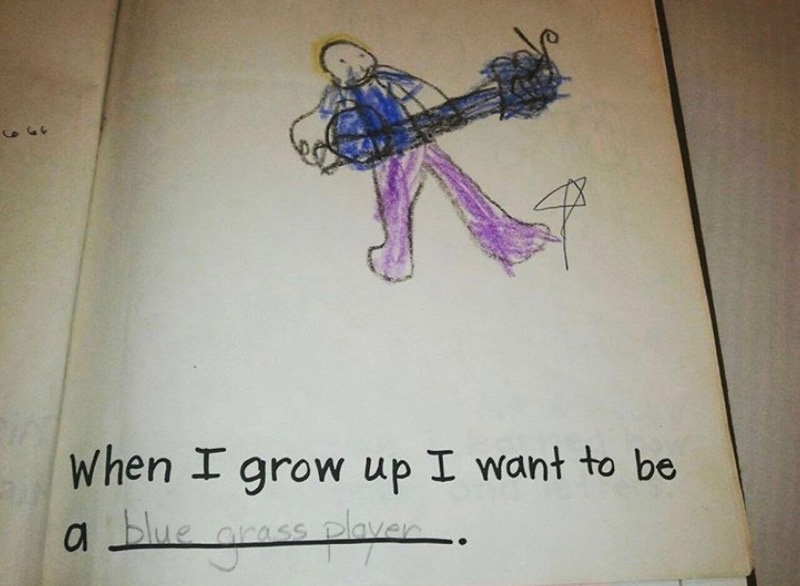
There was this picture I drew in kindergarten with a thing that said, “When I grow up I want to be a (blank).” I put “bluegrass player” and drew a picture of a guy with a banjo. So there it is. All I need now is the purple pants. I don’t know what else I’d do. I’m not a good mechanic or woodworker and I don’t like painting houses or carrying shingles up a ladder.

And I don’t like somebody wagging their finger in my face telling me what to do. I’m not good at dealing with authority figures. I’ve always had to do it my own way. I never thought music would even be possible as a career so I thought I’d always be a loser. But the last six or seven years have brought the incredible realization I can make it with music and not have to be a bum or drug addict.

Does that account for some of the heavy subjects on the record, like the song about drug overdoses (“Enough to Leave”)?

I always end up talking about this stuff, because it inspires a lot of my songwriting. When I reach down and look for what to write about, I always come up with things I’ve experienced in the past relating to substance abuse or loss or poverty. It’s sad how many people are struggling with all of that. I have a lot of friends who have gone in all sorts of directions, some good but some not. I’m lucky to have gotten out, and it haunts me. I still think about it a lot.

Maybe I’m looking in the rearview mirror too much when I should be looking out the windshield. But back there is what motivated me to get to where I’m at. It’s where I got my drive as a teenager, being around bums and meth-heads. I did not want to end up like that. It was either that, or keep running toward the light and working hard. I got a job in Traverse City, but I was playing gigs and realized, you can make a living that way even if you’re not a star. So that started to happen and I’ve been walking slowly upward ever since, reaching higher goals.

How much of a master plan do you have?

I know what I’m trying to go for, but at the same time I don’t. It’s a transparent vision where I know it’s something large and cool where I want to do good and be successful, but I don’t know what it looks like. I do feel like I’m moving toward dreams. More people are coming out to the shows, I’m able to explore more creatively and musically. That’s success and I feel good about it. I went from playing for tips to clubs and theaters, slowly working my way up. I remember renting minivans at Enterprise and having to sleep in parking lots because we could only afford one hotel room. I even got robbed once like that.

But I’ve always been willing to do whatever it takes to make the dream happen. If I have to stay up all night and drive 16 hours to play music, I’m willing to do it. The thing is, the more we grow as a band, we’re able to make those plans better so we don’t have to kill ourselves — play a few less gigs with a few less hours between them. It feels like it’s working, which I’m happy as hell about. I work hard but it’s so much fun it does not feel like work even though I’m physically exhausted. I’m sore and tired all the time but happy as shit, too. I’m lucky, man, really grateful.


Photo credit (live): Emily Butler; (portraits) Shane Timm

ANNOUNCING: WinterWonderGrass Returns to Colorado, California, and Vermont in 2020

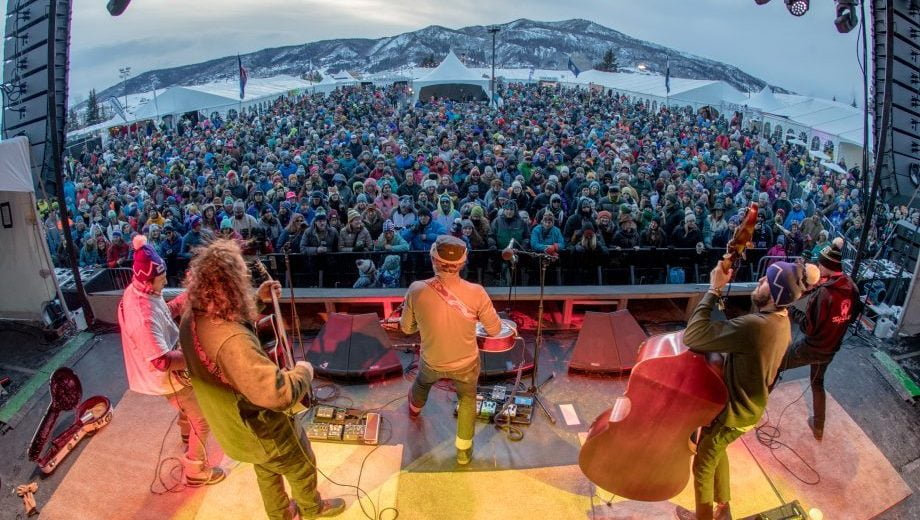
Today, the WinterWonderGrass Music & Brew Festival shares the 2020 lineup across all three of their flagship events. Taking place in Colorado from February 21-23, California from March 27-29, and Vermont from April 10-11, the traveling music festival will welcome performances from some of the hottest names currently thriving in today’s bluegrass and Americana scenes.

“It’s with a mountain of intention, huge hearts, humility, and a commitment to delivering the hottest and sweetest artists that we present to you the 2020 WinterWonderGrass landscape,” says festival founder Scotty Stoughton in a press release. “Each year, the hardest thing to do is not heed our desire to return to each and every band — and by virtue of that, friends to WWG — year in and year out. It is our sincere desire you’ll find new lifetime favorites on this lineup, have the chance to be reunited with old loves and step out of your comfort zone with open arms to new experiences.”

“WinterWonderGrass has become a home for artists, fans, staff, locals, businesses, skiers, riders, their families and all of the like,” adds festival Director of Marketing & Ticketing, Ariel Rosemberg. “We pride ourselves on creating a sustainable, safe and receptive environment, bound by the marriage of the best in bluegrass, folk and Americana, and the undefeated nature of American ski culture.”

BGS has partnered with WWG for the past two years and we are excited to once again join forces with WinterWonderGrass to create and share unforgettable experiences and world-class music across our communities and across the country.

Returning to Colorado for its eighth consecutive year, and its fourth year located in the pristine ski town of Steamboat Springs, Colorado, WinterWonderGrass presents headlining performances from Greensky Bluegrass, Billy Strings, and Margo Price over its three days this coming February.

Additional artists on the bill include: Keller & the Keels, Della Mae, Travelin’ McCourys, Nikki Lane, Molly Tuttle, Horseshoes & Hand Grenades, Bluegrass Generals (Chris Pandolfi & Andy Hall of The Infamous Stringdusters), ALO, Lindsay Lou, a collaborative set from the WinterWonderWomen, Pickin’ on the Dead, Che Apalache, Cris Jacobs, Twisted Pine, Jon Stickley Trio, Meadow Mountain, Jay Roemer Band, Buffalo Commons, and Bowregard, as well as special guests Andy Thorn, Jennifer Hartswick, Bridget Law, Pappy Biondo, and Will Mosheim.

Over March 27-29, WinterWonderGrass makes its way to the Tahoe region of California for its sixth consecutive year presenting three days of music at the base of Squaw Valley Ski Resort. Headliners for this festival stop include The Devil Makes Three, The Infamous Stringdusters, and two sets by Billy Strings.

Also joining the bill: Peter Rowan, Fruition, Keller and the Keels, The War and Treaty, The Lil Smokies, Brothers Comatose, Della Mae, Larry Keel Experience, Kitchen Dwellers, Andy Falco & Travis Book Perform Jerry Garcia, Cris Jacobs, Trout Steak Revival, Midnight North, Town Mountain, Pickin’ on the Dead, Pixie and the Partygrass Boys, Old Salt Union, TK & the Holy Know-Nothings, Rapidgrass, and Twisted Pine. As well as special guests Lindsay Lou, Bridget Law, Will Mosheim and a collaborative WinterWonderWomen set.

A Mountaintop Dinner with Keller Williams, co-presented by BGS, will kick off the festivities in both locations on Thursday, February 20, and Thursday, March 26, respectively. These events will include a ride up the gondola in Steamboat and the Tram at Squaw, a multi-course meal complete with locally-sourced ingredients from each respective region, wine and beer samplings, plus two sets by Williams during each event.

The Vermont stop of the festival takes place over April 10 and 11 at Stratton Mountain Resort in Stratton, Vermont. Previously held in December, this year’s festival stop in Vermont was scheduled to coincide with the ski resort’s closing weekend. Headliners for this iteration of the festival, billed as WonderGrass Presents: Sugar & Strings, include The Infamous Stringdusters, Cabinet, Della Mae, and Molly Tuttle.

Additional artists on the two-day lineup include: Kitchen Dwellers, Andy Falco & Travis Book Perform Jerry Garcia, Twisted Pine, Che Apalache, a special WinterWonderWomen collaboration, Saints and Liars, Dead Winter Carpenters and Damn Tall Buildings, as well as special guests Jennifer Hartswick, Bridget Law, Pappy Biondo, Will Mosheim and more.

Additionally, the Grass After Dark Series will return for post-festival programming with more details coming soon.

Tickets for all three festivals are on sale now: Colorado | California | Vermont.

Artist of the Month: Old Crow Medicine Show

From their earliest days of busking and playing to capacity crowds at the Station Inn, Old Crow Medicine Show has shown they know how to pull in a crowd. Now they’ve captured that raucous, captivating energy in their newest release, Live From the Ryman, recorded during the group’s numerous headlining performances at the landmark Nashville venue.

The band has seen its share of setbacks and lineup changes over the years, but their catalog is surprisingly limber. In other words, the songs from Eutaw and O.C.M.S. blend seamlessly with tracks from newer releases like Remedy and Volunteer.

It’s a testament to the vision of band founder Ketch Secor, who tells BGS, “If they had tried to stop us a long time ago, they probably would have been able to, but they never tried. We were never curtailed. We were asked to be quiet and to clean up, but nobody ever said ‘no’ enough times for us to pay attention.”

Look for a two-part interview with Old Crow Medicine Show coming up on BGS this month, and enjoy our Essentials playlist.

Photo credit: Crackerfarm; (L-R): Charlie Worsham, Cory Younts, Critter Fuqua, Ketch Secor, Joe Andrews, Morgan Jahnig

LISTEN: The Gina Furtado Project, “The First Pebble”

Artist: The Gina Furtado Project
Hometown: Front Royal, Virginia
Song: “The First Pebble”
Album: I Hope You Have a Good Life
Release Date: September 27, 2019
Label: Mountain Home Music Company

In Their Words:I Hope You Have a Good Life is full of experiences of my own life that, together, amount to my pursuit of and theories on how to achieve happiness. Isn’t that the end goal for us all? The songs are my attempt at packaging these theories within common, everyday experiences of tribulation and victory. ‘The First Pebble’ is about the stunning joy of reaching rock bottom only to discover one’s own resilience and strength. It has been so empowering to slowly begin to realize that the ‘worst case scenarios’ are always incredible resources for growth. I hope ‘The First Pebble’ will remind someone of that when they need it!” — Gina Furtado


Photo credit: Sandlin Gaither

WATCH: Carrie Rodriguez with Wood & Wire, “Edge of the Colorado”

Artist: Carrie Rodriguez with Wood & Wire
Hometown: Austin, Texas
Song: “Edge of the Colorado”
Label: The Next Waltz

In Their Words: “I love the idea of making something out of nothing. That’s the magic of songwriting. I came to Bruce [Robison] one morning with some phrases and melodies that had been bouncing around my head, and by the end of an hour we had written ‘Edge of the Colorado.’ It’s a song about a yearning for a bygone era; an era when personal connections ran deeper because we weren’t so damn CONNECTED every minute of the day!

“After listening to our demo a few times, the song seemed to be begging for some high lonesome harmony vocals and bluegrass instrumentation. I had recently seen the Grammy-nominated bluegrass band, Wood & Wire, perform at The Next Waltz SXSW party and was completely blown away. So Bruce called the guys up and before I knew it we were all in the bunker together recording the song live to tape. What a gift to get to see the creative process fully realized …from some words and melodies stuck in my head to this track which I’m thrilled to be sharing with you!” — Carrie Rodriguez


Photo provided by The Next Waltz

Hosts With the Most: Del McCoury, Jim Lauderdale Team Up for 2019 IBMA Awards

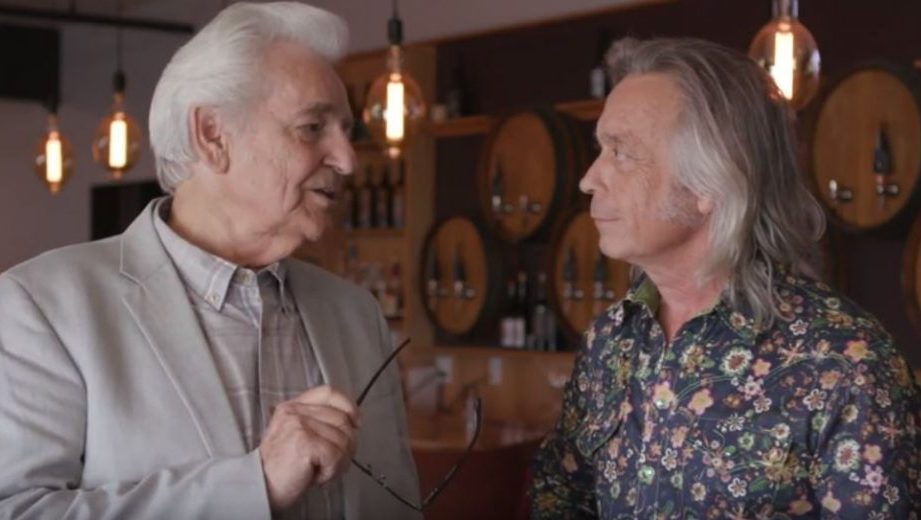
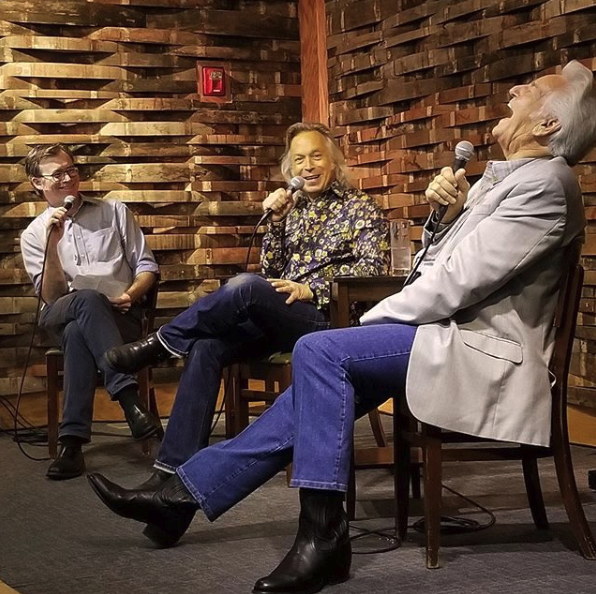
Loose and lovable Jim Lauderdale and Del McCoury will host the 30th annual IBMA Awards in Raleigh, North Carolina, coming up on September 26. McCoury is a nine-time winner of IBMA Entertainer of the Year — the most of any artist — while Lauderdale has won two Grammy Awards for his exceptional bluegrass work. These fan favorites don’t just bring a wealth of bluegrass experience to the stage; they’re seasoned masters of ceremonies as well. We got together at Nashville’s City Winery for a public conversation about the show.

BGS: As a 30th anniversary edition, I’m sure there will be quite a focus on the history of the music and of the awards over these 30 years. Del, what do you remember about the first IBMA Awards?

DM: It was so exciting, ’cause it was the first time that bluegrass music was really recognized. And there were still quite a few of the senior people there, you know, who started in the music years ago. We were fortunate that they were still there. Bill Monroe was even there, you know? But we’ve lost a lot of the great pioneers since that first one, and that’s probably the biggest difference, I would think.

BGS: When was your first one, Jim?

JL: I believe it was 1998, and I got to do a song with Ralph Stanley during the awards. Then I started going back and doing showcases. And I saw the move to Nashville and then the move to Raleigh, which I think has been really, really a great thing.

BGS: Do you guys ever surprise the jammers playing on some floor and stride in and go, “Hey, fellas, can I play a song?” And they go “Holy cow, that’s Jim Lauderdale and Del McCoury!”?

JL: Not quite like that! I go, “Hey everybody!” I like to be inclusive. But I do like to pop in if it calls for it.

DM: For me, I’m a little too old for that these days. But I remember the time when the festivals started when I would stay up all night and jam with people and go do a gospel show in the morning. And of course, I had a voice that would take that kind of punishment then, but I don’t have that voice anymore. So I do have to get my rest. But it’s a temptation, if you hear a jam session, to at least go listen to it.

JL: That’s the thing about bluegrass. Of course in any musical genre you can jam but you’ve got your acoustic instrument and you come across a group of folks that maybe you’ve never even met, but [you have] the bluegrass vocabulary or common language with these songs. It’s something that everybody can pick up.

BGS: Del, because of your 80th birthday and your longtime involvement in IBMA, I understand that they’ve just told you that on Saturday at the Wide Open Bluegrass festival, there will be a big “Del-ebration” for you. What do you know yet about this?

DM: I’m embarrassed! I had an inkling they were going to do something, you know? But I didn’t know who was going to be on that Saturday night show until me and Jim came here today. We’re going to have different folks from other genres of music come in, and me and Jim will do duets and sing all kinds of stuff.

JL: When we get together, you never know what’s going to happen. But I’ll tell you, in all seriousness, for as long as I’ve known Del, I’ve loved to make him laugh. …For several years I used to love to do this, when Del and the band was backstage somewhere. I’d walk up and say, “Hey you guys, what are y’all doing here?” And then I’d say to whoever is standing next to me, “It’s like these guys go to almost all of my shows! They’re from Canada, right? Anyway, good to see you guys!”

BGS: You guys have an interesting thing in common that people might not know, because you’re both guitar-playing frontmen. But you both started playing the banjo early on, right?

DM: Yeah, we did, didn’t we?

BGS: Del, in your case, the fellow who coaxed you away from the banjo into the lead guitar and the lead vocal was Mr. Bill Monroe, right? You hoped to play banjo, but he needed a guitar player. Is that the story?

DM: Yeah, myself and Bill Keith, you know, we auditioned together and he took Bill on banjo and wanted me to start playing guitar. I had played some guitar before that, but after I heard Bill Keith, I thought, yeah, that’s what Bill needs that guy. He needs that guy right now, cause it was a different thing. You know Bill called him Brad. He didn’t want to have two Bills in the band, so he called him Brad. He said what is your full name? And Keith said, William Bradford Keith. He said we’ll call you Brad. And he did from that time on.

BGS: And you never looked back. You were a singing guitar player from that point forward?

DM: Yeah, begrudgingly I was. Because I liked banjo. I’d heard Earl Scruggs when I was about 11, and Don Reno. They were our idols, those guys, so I learned to play. I did a date with Bill Monroe up in New York City. He took me up there, and he offered me a job, and I didn’t take him up on it. So maybe a month later, I did decide to come down here and when I did, Bill Keith was here, at the same hotel. He told us both to come to the Clarkston Hotel, which was on Seventh Avenue. You’d get a room about two dollars and 62 cents a night, from what I remember. Bathroom down the hall. No air conditioning. That’s the things I remember about it.

The next morning I walked into the lobby with my banjo and another guy walked in from somewhere else. About that time, Bill Monroe walked in and he said, “Come on, boys. Follow me.” We went next door to the Clarkston Hotel’s restaurant, I think. We sat down and he said, “Now go ahead and order something. I’m paying for it.” So we sit there, and Bill was not a man of many words. I didn’t know who this other guy was, and he didn’t know who I was, and Bill didn’t introduce us either.

So we got done eating, and he paid and we walk next door to the National Life building. That’s where they had the Friday Night Opry [and WSM’s studios.] We went into this room and I saw an old Gibson guitar case over in the corner. When we got in there, Bill said, “Del, you could take guitar there.” I thought, “What kind of deal’s this? I wasn’t lookin’ to play no guitar.”

So we tried out that way and Bill Keith told me later, only about 10 years ago, “You know, he tried me on the guitar, too.” [Monroe] tried us both ways and he wanted to see what’s gonna work best. And Keith said, “I was no guitar player.” And I said, “Well, when I heard you play banjo, I figured I was no banjo player either!” [Bill Keith] was really good. And so [Monroe] hooked us up that way and then I thought, “Well, I guess I was up for the challenge, I’ll try this job.” But I had to learn all the words his songs. That was the hardest part.

BGS: Jim, how did you make the journey from banjo to a guitar-playing songwriter?

JL: I was a pretty good banjo player, but I got to a certain point in my late teens where it’s like I’m just not as good as Earl, Ralph Stanley, Don Stover, or Bill Keith. Those were my go-to guys at that time. I was getting a little discouraged. But I did get a dobro. I was such a big Mike Auldridge fan and I was playing that a little on the side. I thought, I’ve reached my peak. I’m not going to get any better. So I start playing rhythm guitar and writing songs. When I did come to Nashville and did that record with Roland White, I thought, “OK, this is it.” You know, finally after 22 years this is my big break.

So I moved up to New York City because I wasn’t able to really make a living here in Nashville. New York City’s the most next logical choice! But I had some friends from college up there. And I got a country gig before I moved up there. But anyway, I sent this record with Roland out to the bluegrass labels that I knew of — sent a cassette — and every one of them wrote back and said we like the record, but you’re an unknown and you’re not on the circuit. But stay in touch. Keep us posted. And that discouraged me so much. I just thought the writing is on the wall. So I started doing more country stuff. But in New York I was in a couple of bluegrass bands too.

BGS: You’ve seen this music keep renewing itself and raising up younger artists and seeing them join the flow, and you’ve watched the audiences change and evolve over the years. What are your observations about this music? How healthy is it? Where do you think it may be going, and what do you hope for?

JL: It seems really healthy, and you’re absolutely right about that with the younger audiences and the younger players. It’s so cool to see these kids sometimes playing that are eight, nine, seven. I know at IBMA, they’ve got a program for youth. And at different festivals — Pete Wernick has a thing at Merlefest. There is a big outreach, and parents I think are so supportive of that to see their kids playing bluegrass, and kids love it. I’ve had this theory for a long time that if you start out playing bluegrass, you can play anything if you want to, because the ear training is just incredible.


Inset photo credit: Amy Beth Hale, IBMA
(L-R) Craig Havighurst, Jim Lauderdale, Del McCoury

LISTEN: John Bowman, “Silverthorn Mountain”

Artist: John Bowman
Hometown: Hendersonville, Tennessee
Song: “Silverthorn Mountain”
Album: The Hole
Release Date: September 27, 2019
Label: Mountain Home Music Company

In Their Words: “Last summer, some friends and I were rehearsing for a show at the Wilson County Fair. He said, ‘Let’s do “Silverthorn Mountain.”‘ I knew Merle Haggard had written it and it was a good song. I told my buddy that I was thinking about recording it, and I’m glad I did. I love this simple song about a man who has a checkered past and the piece of land that brings him so much joy and peace. The song also shows Haggard’s love of country and the fact that he received a second chance at life. This is the first ‘bluegrass’ song I’ve cut since the last CD I made with the Boxcars.” — John Bowman


Photo courtesy of Mountain Home Music Company

WATCH: Tyler Grant Plays “Greenville Trestle High”

Here’s a classic for your timeline: guitarist and vocalist Tyler Grant graces the camera with a bluegrass favorite, “Greenville Trestle High.” Formerly of the Emmitt-Nershi band, Grant is an accomplished guitarist with multiple national championships under his belt. The band he founded, Grant Farm, released the album Broke in Two this summer. If you’re a traditionalist when it comes to bluegrass, then you’ll want to watch Tyler Grant on Fretboard Journal.


Photo provided by the artist, courtesy of Grateful Web