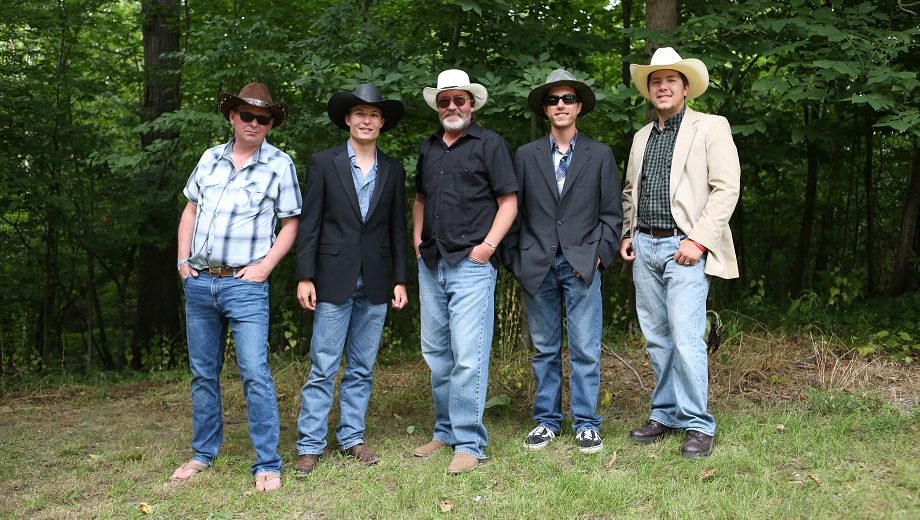
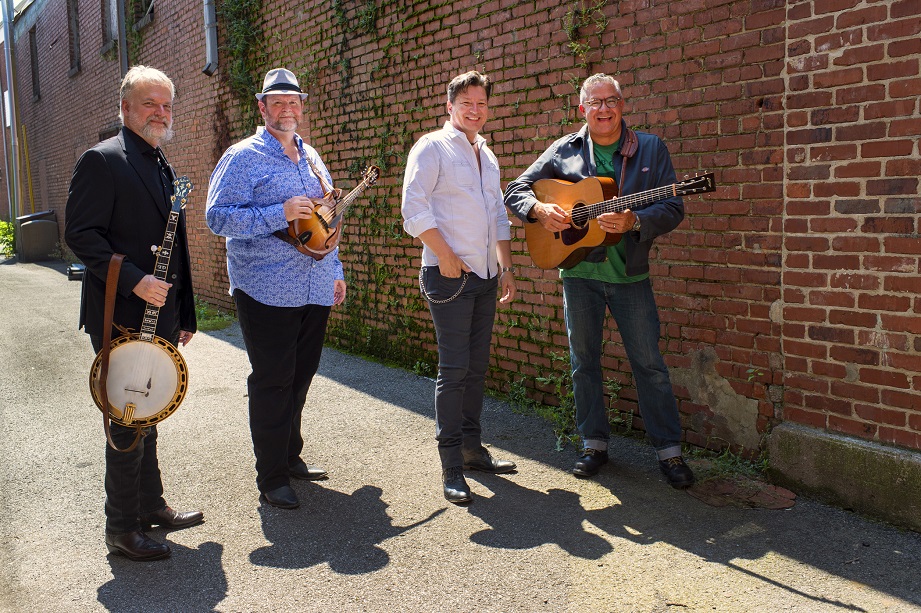
Artist:Nothin’ Fancy Hometown: Lexington, Virginia Song: “Leaving’s Up To You” Album:Undeniable Release Date: October 11, 2019 Label: Mountain Fever Records
In Their Words: “‘Leaving’s Up To You’ is one of the more traditional-style songs on this new album. When I penned this song a couple years ago I was trying to write a straightforward, cookie-cutter bluegrass song, and I believe I was able to achieve that. Lost love, cheating, leaving, and a traditional melody are the foundation for ‘Leaving’s Up to You.’ Hope you enjoy!” — Caleb Cox, Nothin’ Fancy
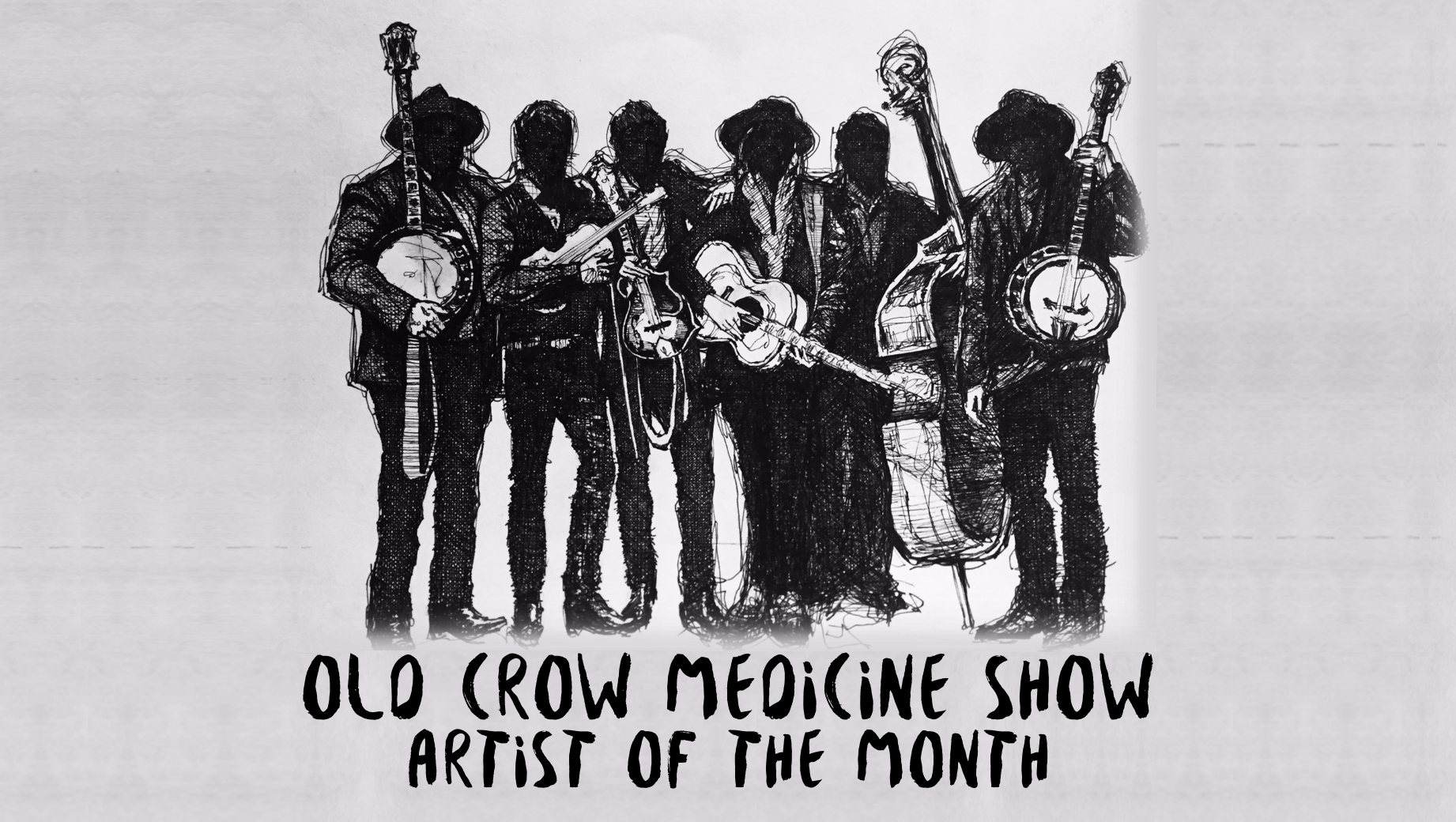
I can still remember the first time I saw Old Crow Medicine Show live. It was a sweltering summer night in Nashville around 2008 (back before the bachelorettes and Bird scooters) and they played from a massive barge moored at Riverfront Park. The thing was huge — far too big for six skinny street musicians to budge — but I swear it moved while they stomped and hollered, the Cumberland rolling by lazily behind them.
I was familiar with the band and already loved the unapologetic mix of tradition and edgy intensity, but that live show was revelatory. It gave me a new appreciation for the sense of community Old Crow was trying to forge, so it’s always surprised me that they didn’t record live albums. That has finally changed with this month’s release of Live at the Ryman.
Backstage at the Grand Ole Opry House on another hot summer night, front man Ketch Secor spoke with BGS about the project, why Old Crow is just now getting around to a live album, and what their style of music needs most right now.
BGS: Part of the idea of this album is that Old Crow has played the Ryman over 40 times. For a band that started out busking in the Northeast, how does it feel wrap your head around that?
Ketch Secor: Actually, I wish I had a real count because Lord knows I’ve played there more than 40 times. I think that’s how many times we’ve headlined, but if you add them all up I bet it’s a triple-digit number. We’ve been openers there for Dolly Parton back in 2002 for, like, a daytime show. We’ve done a lot of film and television there, all kinds of awards shows. It always felt like the place to shoot for — it’s the moon, the Ryman Auditorium, and we were always a shoot-for-the-moon kind of band because we figured “Well, we’re not supposed to be here anyway, so we might as well try and go as far with it as we can.”
You self-released one live album in 2001, and then nothing else until now. Why did it take 18 years to do another, since the live show has always been the foundation of what you guys do?
Oh, I think because we’ve always tried to put out a new studio record every couple of years, and here at the 21-year mark it’s probably time to start doing exactly what we feel like doing.
You haven’t been doing that the whole time?
Nah, not with those studio records. There’s a lot of stuff you’ve gotta do. Yeah, we always did it “our way” in the fact that we always played our own music. But just being in the music business means doing it everybody else’s way.
So you had to make a few compromises here and there?
Oh yeah, there was a lot of playing the game in ways that never seemed to pan out, but it never stopped us. That was just the way it was, and we were impressionable, so that’s what we did. We did it the way we were advised to do it.
Can you elaborate a little?
Like playing Napster. Doing shows for radio programmers in L.A. who never played us. Trying to make videos for CMT that were never in rotation, ever. …Opening up for Carrie Underwood at [Country Radio Seminar], it’s like, “What were we doing there?” Those guys, they might have liked it, but they were never gonna play it. And I don’t care if they like it, I want them to fucking play it, or I don’t want to play that show.
So now that you feel freed up to do it your way, what’s that look like?
Live at the Ryman. Here we are singing a Merle Travis song! Here we are singing our songs or selling popcorn and tickets and people brought their buck-dance shoes! I mean, we’ve set beer records at the Ryman. I’d rather sell beer at the Ryman than sell records! …I’d rather sell beer at the Ryman than digital streams! What’s the fun in that?
“Tell it to Me,” “Methamphetamine,” those are interesting songs to present because rural America has a new drug problem going on with opioids. Why is it important for you guys to sing songs like that, especially at the Ryman?
Well, “Tell It to Me” was recorded in Johnson City in 1928 I think. The band that brought that song to the studio had been an original backing band for Jimmie Rodgers… Anyway, I’m just saying this because if you like country music, you should probably know that drug songs have been part of the canon since recording studios first illuminated a red light bulb and said, “You’re on.”
I don’t think people do know that. We’re just now starting to get radio songs with pot references that people don’t flip out over.
Yeah, I mean it was blow in the ‘20s and now it’s pot in the 2010s. And then “Meth” is a really different kind of song because it’s more topical. We recorded it a long time ago but it seemed important to bring it back and revamp it, make it more intense, and Charlie Worsham plays some really great electric guitar on it. It just feels like it’s knocking on your door, like a hurricane.
Tell me about doing “Louisiana Woman, Mississippi Man” with Margo Price.
We were down in Oxford, Mississippi, doing a show with Margo. She was opening up for us down there near Ole Miss, and we were looking for a song that seemed to fit, so we tried that one. Our duo thing felt really good, and I feel like I’m a little bit in the Conway range — and she’s definitely in the Loretta range — so it worked out pretty good. We heard the playback we thought it sounded great so we wanted to put it out. I saw her at the grocery store the other day and she said she loved it.
Why did you include a song like “C.C. Rider,” which has Lee Oskar playing harmonica?
I really love his band War. We did “Lowrider” onstage at the Ryman, too, maybe that will come out on Volume 2. But what I really loved about that moment on the Ryman recording is that it has twin harps. You know the old guys don’t have their pictures up here [gestures at photos of Opry stars on the dressing room wall]. …But the story of the twin harp playing of the Crook Brothers — Herman and Louis Crook — lives a long time, because Herman and Louis lived, like, into their 90s. What they were great at was two harmonicas playing in unison.
That’s interesting. In your music you’re often looking to the past for inspiration, but what do you think is the future of string bean …. er, string band music, Americana?
You just answered it, man. We need a new Stringbean. Nobody’s acting like that and that’s what’s missing. Who’s gonna be the clown? What happened to the kind of entertainment that’s self-effacing? Everybody on this wall loves the clowns, but none of them are. They’re “the vocalists” and we’re supposed to take them seriously. I’d love to see this genre — whether it’s country or Americana or whatever — just not take itself so damn seriously. Let’s just have a grand ole time. Let’s poke some fun at each other, and especially at ourselves. I’d love to see that.
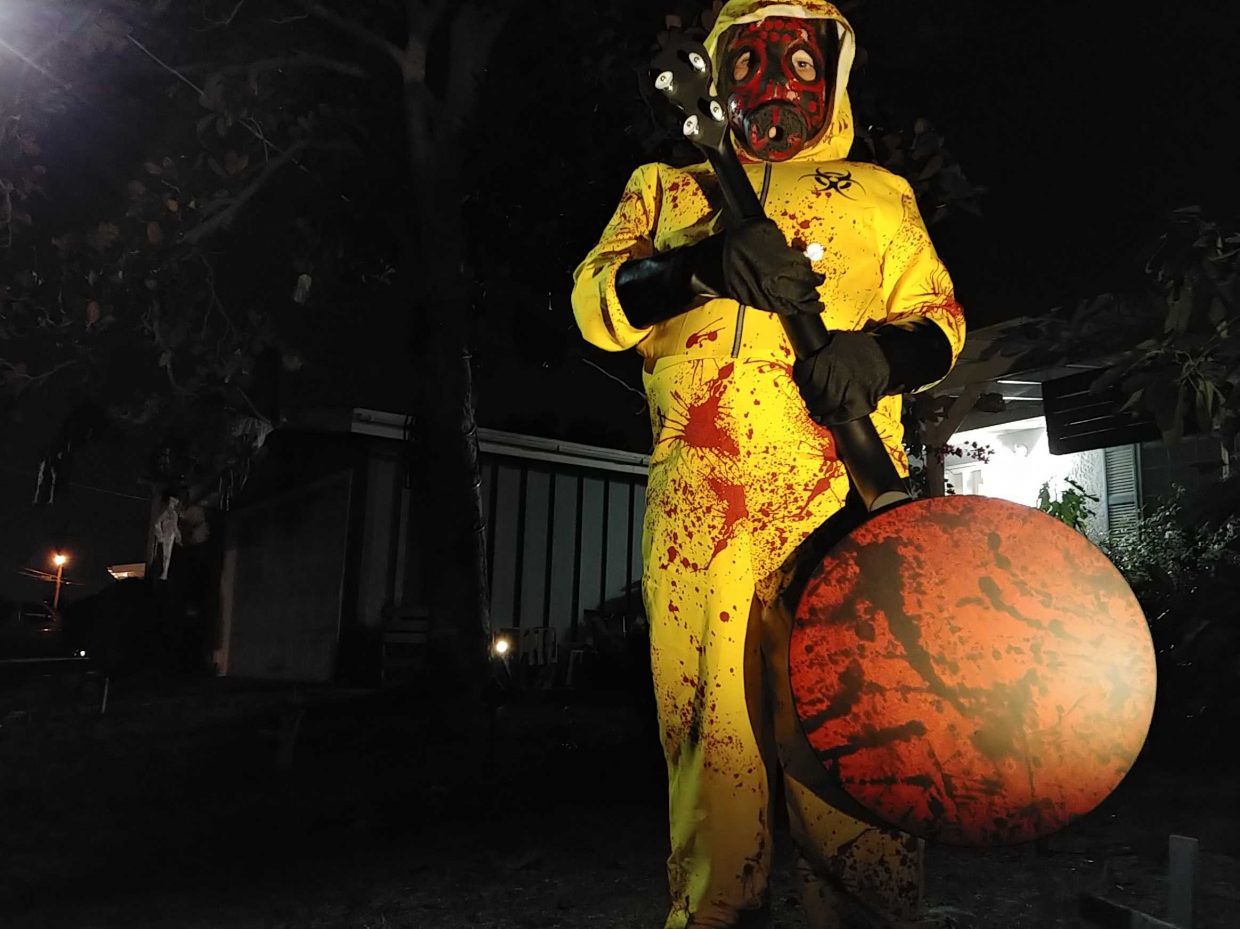
In gruesome celebration of the release of Zombieland: Double Tap and Deering Banjo Company’s second edition of their Goodtime Zombie Killer (available only until October 31!), we thought now would be the perfect time to ask Jamie Deering a few practical questions about how, why, and when a banjo can best be utilized to prevent zombie armageddon — and all sorts of other disasters.
This grotesque, ornate, and patently practical instrument is perfect for all manner of uses, from jamming on “Spooky Mountain Special” to “Over in the Zombieland” to bashing whatever monster may stand between you and your favorite brand of snack cakes.
Let’s go with the “chicken or the egg” paradigm to start us off. Did the films inspire these banjos, or has Deering been sitting on the confidential information that banjos are useful as part of zombie elimination strategies this whole time?
Jamie Deering: We wish we’d been the one to come up with the idea, but the hilariously creative minds of the Zombieland team get all the credit. As to why Deering took it to the next level, incarnating the Zombie Killer Banjo originally back in 2013, this is thanks to a few years of dads and scouts in [Deering Banjos founder] Greg Deering’s Boy Scout troop reminding him around the campfire that banjos kill zombies — based on the fateful Zombieland grocery store scene.
After hearing about it enough, Greg decided the rest of the world deserved to be prepared when the apocalypse happens, and no other banjo would do!
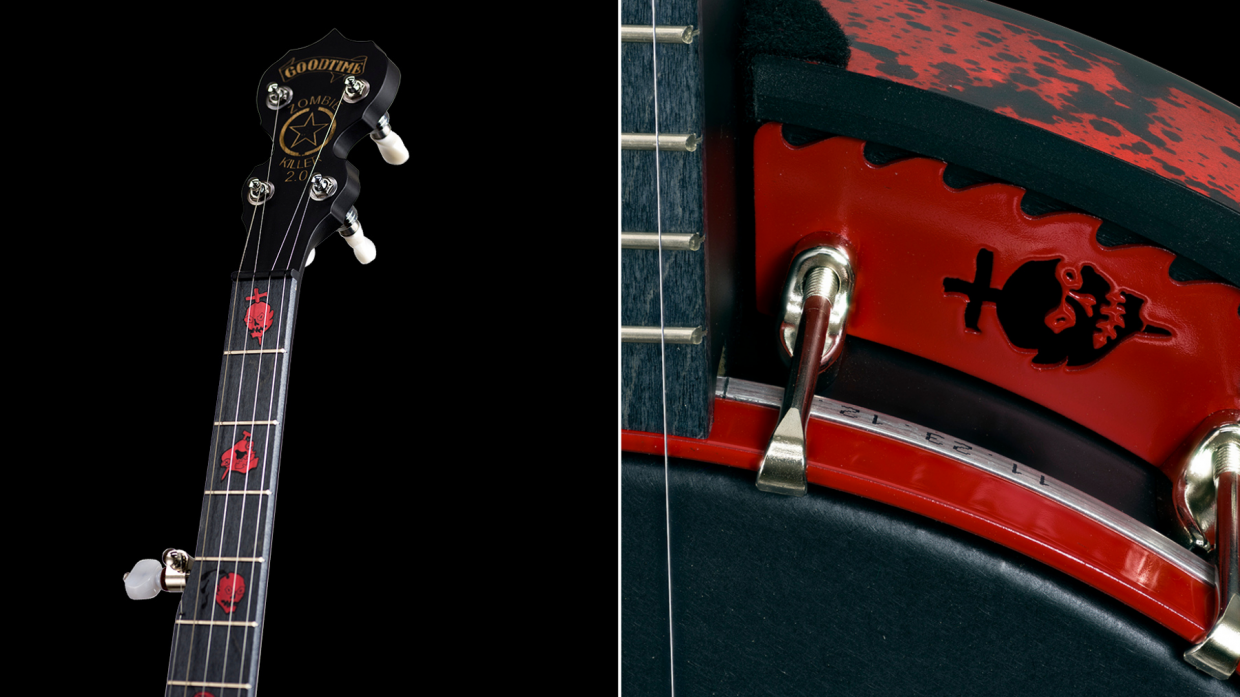
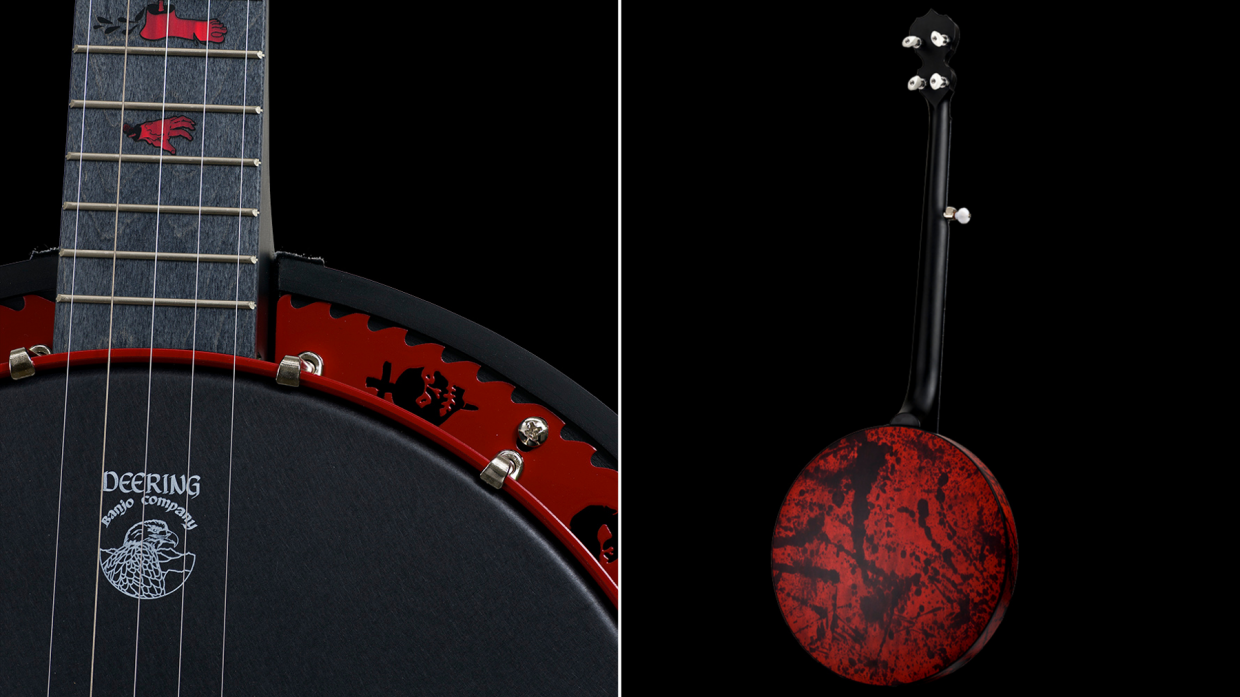
Deering is known for stunning detail work, and this banjo takes it to the next level! What inspired the inlays, the flange details, the resonator look, and all of the little intricacies that make this banjo so special?
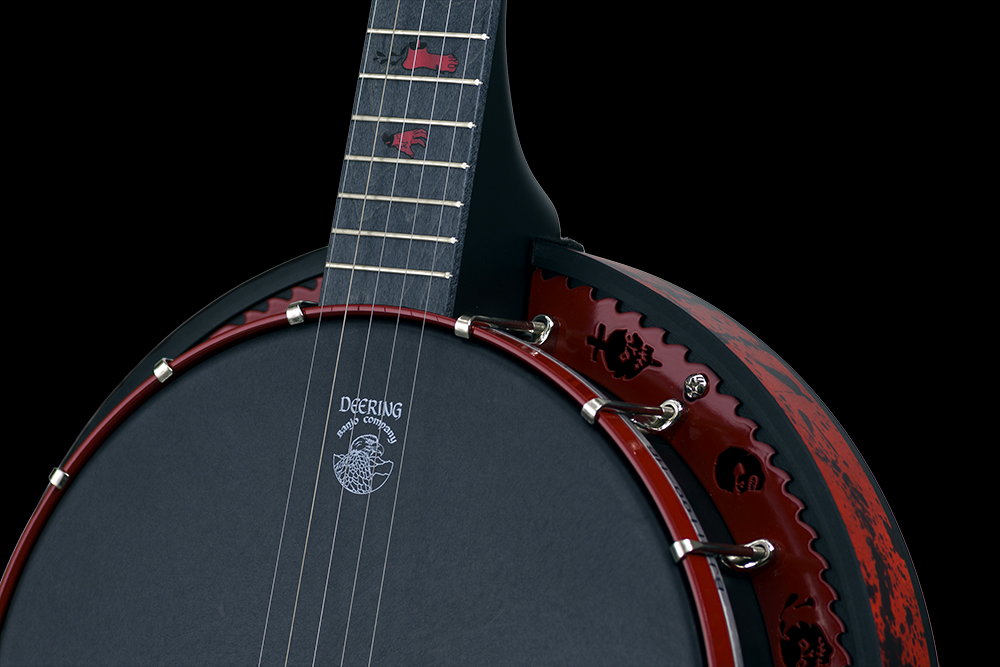
To be sure it was fully effective in subduing the living dead, Greg first changed the traditional smooth edge of the flange pieces to be serrated like a saw blade. As it is well documented, an effective way of ridding oneself of a zombie problem is decapitation.
The inlays and flange art serve as a sort of handbook of what it will take to deal with zombies and help one from getting too squeamish when faced with the bloody mess they are destined to confront while saving the world from the undead.
The pre-blood smattered resonator is a popular feature; if we made it beautiful, out of curly maple, any self-respecting banjo player would lose precious time debating whether their life or their banjo was more important when face to face with a zombie.
Banjos — and bluegrass, as a whole — have big moments in the spotlight, on screens large and small, every few years. Why do you think these moments have such broad reaching cultural impact?
It’s banjo and bluegrass! They have a liveliness and bright energy to them. From the beginning bluegrass has been musically sharing a vibrant feeling of life; it takes the good and the bad and celebrates them in ways that make it almost fun to remember when “great aunt Betty” poisoned “cheating uncle Willy.” When it gets in front of a larger audience there is a draw to it and a desire for that kind of music that makes one feel whole and alive.
The banjo also carries a cool factor that most instruments just can’t pull off. Whether it’s Zombieland or O Brother, Where Art Thou? or Kermit the frog, banjos have this natural tendency to pique viewers’ interest. They hear the sound and say, “Whoa, that’s cool!”
Except Deliverance… that scene is memorable for entirely different reasons.
Does Deering have any other exciting, unique, or slightly twisted concepts coming our way? Do you have any favorites from the past that follow in the vein of the Zombie Killers I & II?
We recently launched the Custom Goodtime Banjo Builder page. It is a brand new interactive page that allows one to create their own Custom Goodtime Banjo! Simply pick the model you want and have a ball customizing it. Choose your stain, hardware color, head type, and more. You can even personalize it with a name on the peghead. It has been a dream of ours for years to be able to offer this! We are stoked to have been able to launch it. It’s like a video game for banjo players while you are deciding on your perfect look. You see the colors change as you adjust it. We have found ourselves playing on it way more than is probably right!
Finally, we know these machines surround hate and force it to surrender, and just a few weeks ago a man used a banjo to smash the infamous Wall Street “Charging Bull” statue, what is it about the banjo that lends it to these uses of… direct action?
Surprisingly, we have given this topic some thought since that fateful day on Wall Street. Luckily for the banjo’s reputation with TSA, what the man wielded was not in fact a true banjo. It was a weapon made to symbolically resemble the shape of one.
That aside, the banjo is truly the people’s instrument. If you look into the history of the instrument, while it has some dark spots, since the early days it has been an instrument at the core of uniting people in communities no matter one’s background or status, bringing joyful moments and the feeling that things can get better. When one hears banjo music, even when it is a sad song, it uplifts and gives one a renewed sense of belonging and vitality.
As a result, it tends to show and evoke deep feelings in people when used in addressing social issues in protest songs, attacking bulls, and the like.
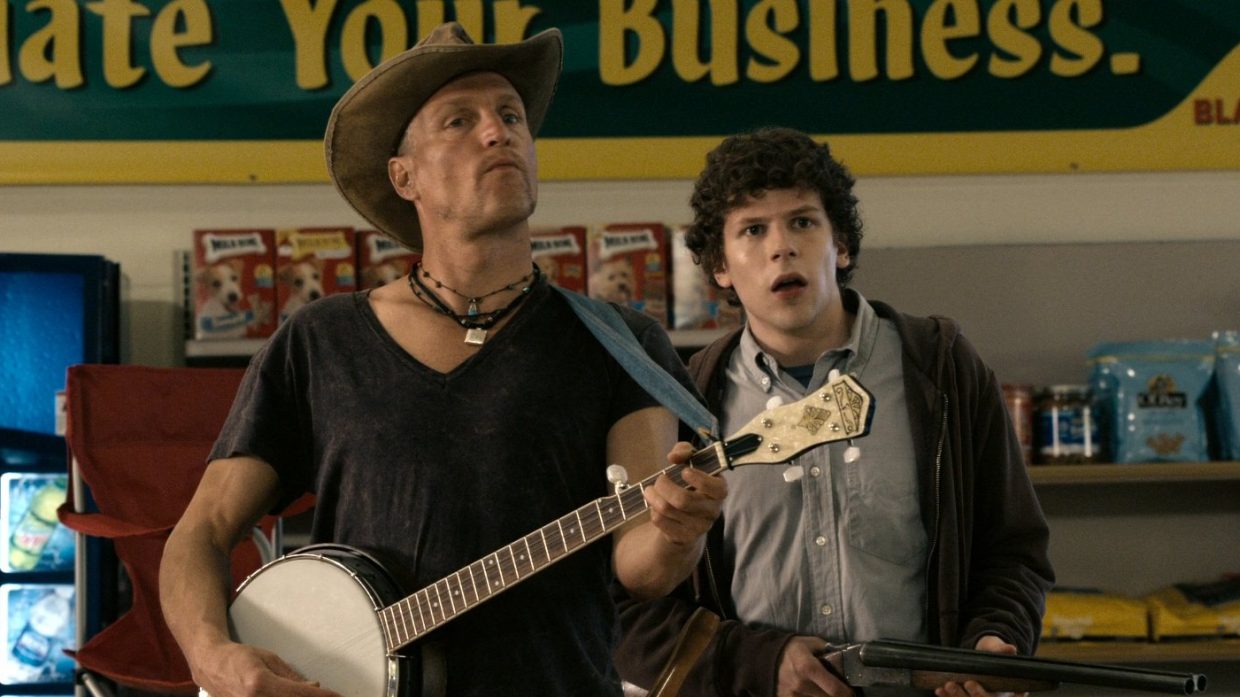
Woody Harrelson (L) and Jesse Eisenberg in Zombieland (2009).
What does Deering give out to trick-or-treaters on Halloween? I.e., should we all add Deering to our list of stops on beggar’s night!?
While all the Deering Banjo Elves head home by 5pm every weekday and have the weekends off, during the day on Halloween we will have a variety of sweet, as well as twangy, treats one can come forage. Ghouls and goblins of all kinds are welcome to haunt us that day.
For those causing mayhem year-round we do offer factory tourscontact usto schedule your drop in!
Photos of the Goodtime Zombie Killer II courtesy of Deering Banjos
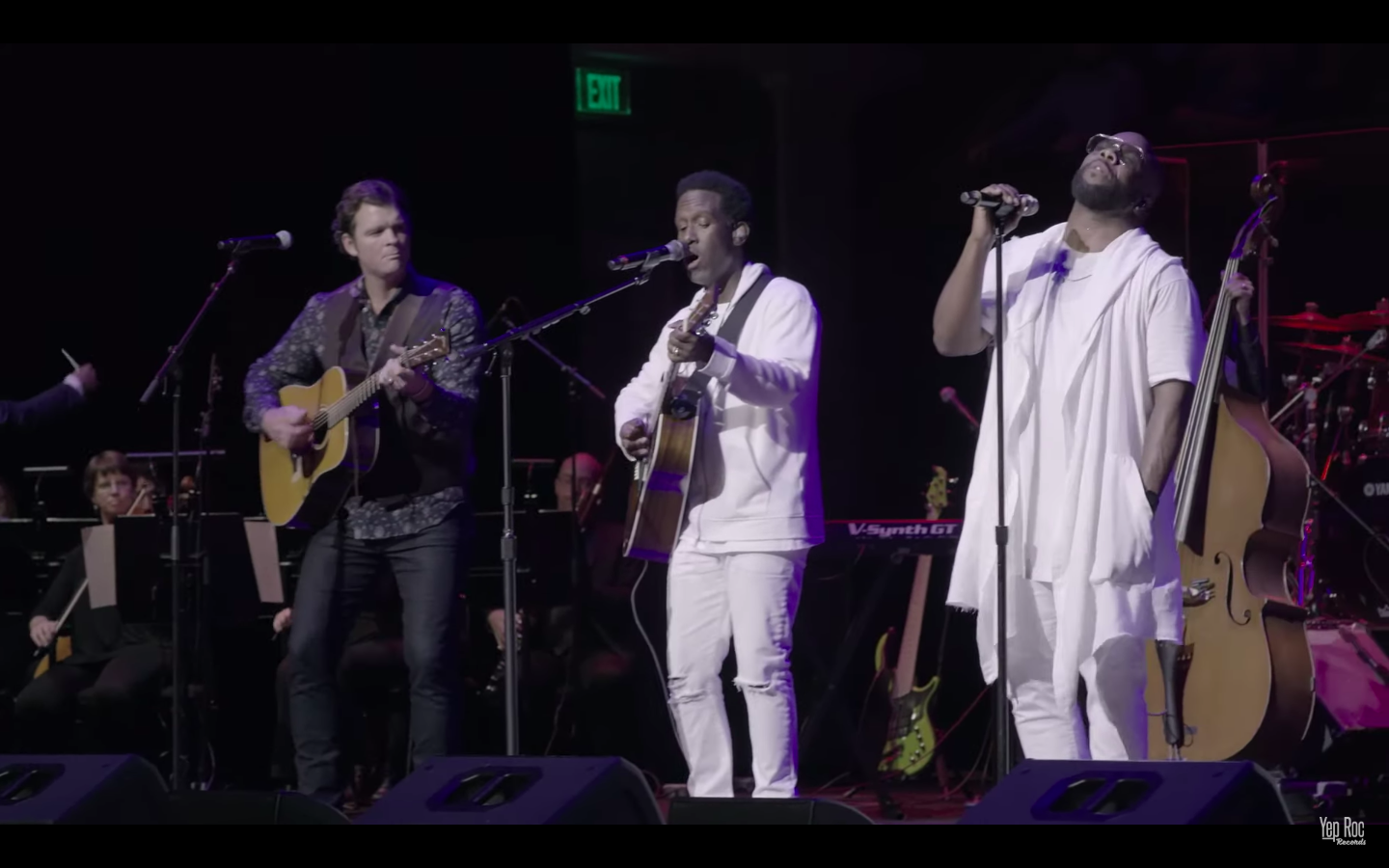
Boyz to bluegrass?! You read that right. R&B legends and vocal virtuosos Boyz II Men have collaborated with North Carolina’s Steep Canyon Rangers for this stunning reproduction of the bluegrass group’s 2007 song “Be Still Moses.” During a Boyz II Men performance at Nashville’s Schermerhorn Symphony Center, twelve members of the Asheville Symphony joined the Rangers for this video, capturing what may very well be a once-in-a-lifetime performance of the song.
Boyz II Men’s Nathan Morris remarks, “The other day someone said ‘Boyz II Men does bluegrass?’ We laugh cause it sounds crazy, but to us good music is good music no matter what genre.” Graham Sharp of the Steep Canyon Rangers adds, “I give credit to our producer Michael Selverne and to Michael Bearden for their vision of bringing together two very different musical worlds for a moment that transcends any genre designation.”
Watch as musical traditions collide and stars align in this illuminating performance.
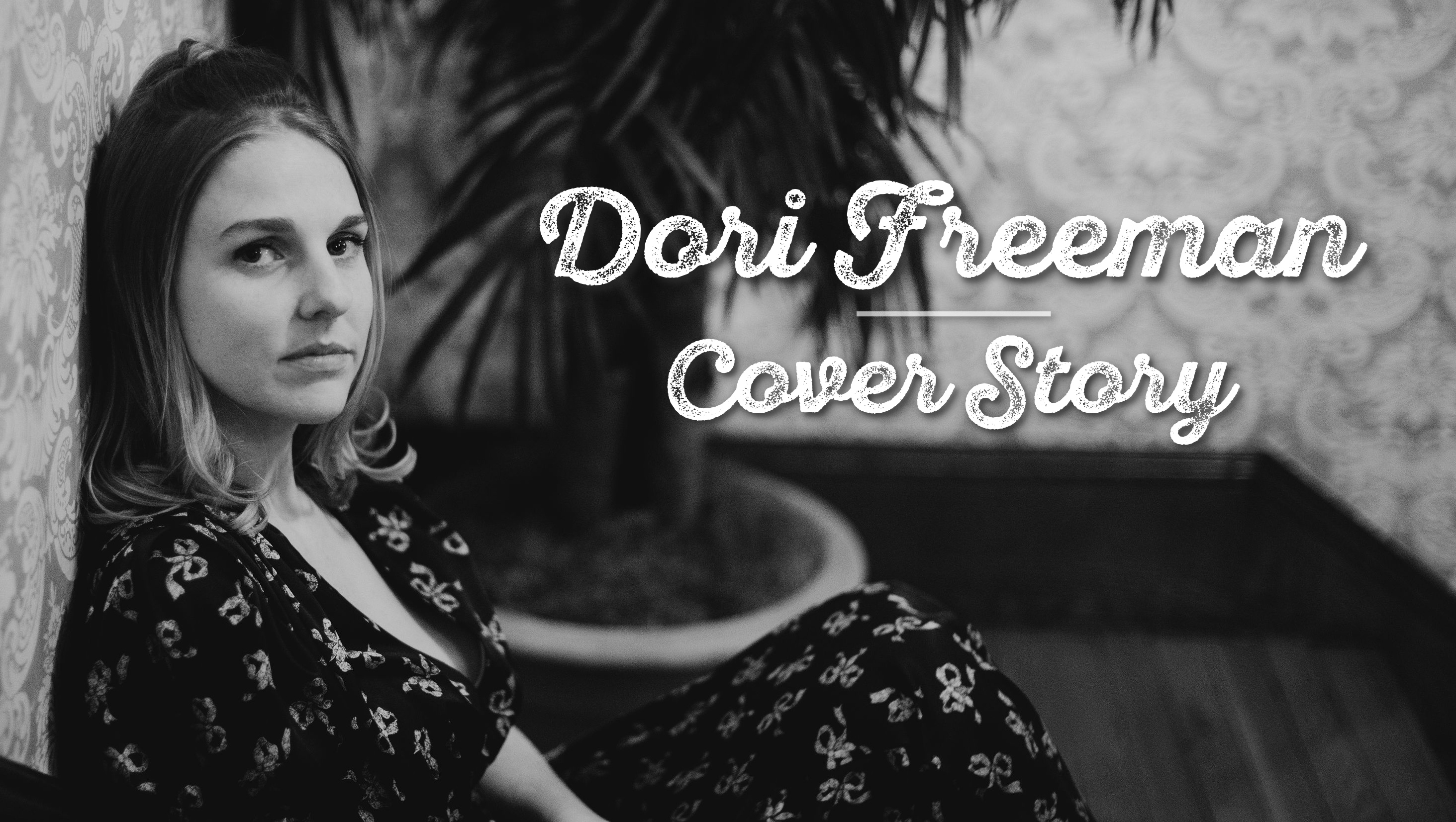
Dori Freeman has been hurt and felt torn. We know because she’s told us so, always with unblinking frankness in crisp pop songs with deep Appalachian roots. But even if we couldn’t understand her words, we’d hear the pain in her soprano, which rings out with melancholy strength only gained from living.
In her new album Every Single Star, the Galax, Virginia, native pushes her blend of familial mountain grit and mid-century-inspired polish even further into its own creative territory. Never one to shy away from truth, Freeman writes about motherhood, expectations, and relationships from a distinctly female perspective.
BGS: In the songs on Every Single Star we seem to hear real contentment. While there’s still some conflict, especially when it comes to having to be away from your daughters, there is peace, too. Was writing these songs a different experience than writing your first two albums?
Dori Freeman: Definitely. I had recently been married when I started writing a lot of the songs on this record. It was the first time I’d been in a happy, stable relationship, which obviously will have an effect on the themes in the songs you write. I was in a different headspace. For the previous two records, I was in different phases. Whether it was getting over a particularly difficult relationship or looking back on that and thinking what I didn’t want to have. With this one, I was with someone that I really love. So the songwriting was different.
I did a lot of imagining scenarios, which I didn’t do as much with the first two records. Those were based more on very direct experiences. On Every Single Star, the songs about my daughter are very direct and personal, but some of the other ones, like “Of Me and You” — that was a song that I wrote for a friend of mine who’d had a relationship that didn’t work out so well. I’ve had to look for different sources of inspiration this time around. When you’re happy, it definitely makes songwriting harder. [Laughs]
I’m happy you have that problem.
It’s a great problem to have. [Laughs]
Do you have a favorite memory of playing one of these new songs live over the past several months?
Nothing too specific stands out, but one of my favorite songs on the record is “All I Ever Wanted.” One of the things that’s nice about performing that song is almost every time I’ve done it, I’ve had women come up to me afterwards and say how much they enjoyed the song. That was the intention: to write a song fully from a woman’s perspective that other women could relate to. So it’s nice to have girls come up and tell me they liked it.
You’ve said you admire Peggy Lee and the mid-century aesthetic. What is it about the ’50s and ’60s sound that you like?
Peggy Lee is one of my favorite singers of all time. I don’t know what it is. I think for one thing, they still recorded in a more live situation, in a bigger room, so everything sounded a lot fuller on records back then. I also like the style people sang in in that era. My dad played a lot of that music for me growing up. Actually, he just made a record with mandolin, playing a bunch of swing tunes, so he’s really drawn to that music too. I think that it’s that I always listened to it, and I can’t help but have it influence what I do.
You grew up in such a musical family. When you were a kid, did y’all just sit around and play music together?
Yeah, definitely. I was always in choir in school. I didn’t really start to play guitar and sing in front of people by myself until I was about 15 or 16, but even when I was little, I would go jam at parties and festivals with my dad and grandpa, and then sit around and watch people play music.
As I got older, I started to perform with my dad and grandpa on stage. They used to have a little show on Friday nights at the frame shop that my family runs. So that’s one of the first places I really got some good practice performing in front of people. We still do shows together. We still play together as a trio with my husband as well, who plays drums with us now. So yeah, it’s still very much a family thing.
You’ve said that people don’t really talk about motherhood in the music industry. Are there specific experiences you’ve had or witnessed that made the great motherhood omission personally more evident to you?
Yeah, I can think of one in particular, when my daughter was not quite a baby, but not quite 2 years old — so she was still pretty little and motherhood was still a pretty new thing to me. It was also around the same time I was putting out my first record, so it was hard to manage all those things and to figure out how to balance them. I was at a music conference. I won’t say which one. They had this thing where they wanted a bunch of women to get together and talk about problems they faced in the industry as women. So people were raising their hands, going around, and sharing their experiences.
There was a lot we’d all been through, with sexism and dealing with men being inappropriate in a whole variety of ways. That is obviously a huge issue too. But I remember raising my hand and saying, “You know, it’s hard being a mom on tour, especially if there’s no green room, or you don’t have a babysitter to look after your child while you’re playing and then figuring out logistics — you can’t just stay anywhere after a show.”
I just remember crickets in the room. It got overlooked so quickly — everyone moved on. No one really seemed to care. And this was in a group of women. I think most of them, if not all of them, probably didn’t have children. I can understand why it didn’t seem important. But it was not a good feeling to share something personal and important to me and have it seemingly immediately overlooked and dismissed.
I can imagine. You’ve said it was cathartic to write songs about your daughter for this album. What kind of healing do you experience when you write songs about her?
I feel like she becomes more a part of what I’m doing, especially when she’s not physically present. If I can perform on stage and sing songs that are about her, I feel like she’s involved in some way. That makes me feel better because sometimes I’m on the road for four or five days at a time, which I know is not that long, but when you have a child — especially a young one — it starts to feel like a long time after a while.
It was really important for me with this record to write a couple of songs about her, and also to make sure that people knew when I was performing them on stage that they were about her. I always introduce the songs as being about my daughter. I want the audience to know she is an important part of my life. I want to feel like my daughter is involved, even when she’s not there. I guess it helps me feel better about missing her.
It helps you, but it also seems like talking about it openly — just saying, “This song is for my daughter” — could go a long way toward normalizing motherhood in music. Many women artists are also mothers.
Absolutely. I feel like in most industries, it’s hard to be a working mother, but being a musician brings a very specific set of challenges. One of the questions I get so often — and it’s one of my least favorite questions — is, “Do you travel with your daughter?” or “How come your daughter’s not with you?”
I just think, “Well, do you bring your daughter to a board meeting? Do you bring your child on your business trips?” I realize that music seems like fun and not a lot of work, but it is a lot of work. It’s a job, as much as I love it. So it doesn’t always make sense to have my child there, and I don’t think it’s fair to be judged for that.
You’ve stepped confidently into this tradition of strong Appalachian women — strong Appalachian women artists, in particular. Instead of me assigning a definition to what that means, how would you describe the particular strength of an Appalachian woman?
Oh gosh. That’s a tough one. I can give you one example: When I think of a strong, Appalachian woman, I think of my great grandmother. She was from eastern Kentucky and had seven or eight siblings that were younger than she was. She raised them from the time she was 13 on. When she was an adult, she went right into having her own children. She took care of everything. She did the housework. She raised the children. She killed the chickens to cook. It was classic, what you imagine when you think of Appalachia 70 years ago.
If her life had been different — if she’d grown up somewhere else or maybe with more opportunity or more money — she would have pursued music in some way. I know she really loved music. She loved to sing and play guitar. She taught my grandfather how to play guitar.
I feel like in a roundabout way, she has some part in my choice to be a musician. My grandfather has been such a big influence on me musically, and if it wasn’t for her passing on her love of music to him, then it wouldn’t have made its way to me. Even though she couldn’t pursue those things in her own life, she wanted to make sure she passed them on so that someone eventually could.
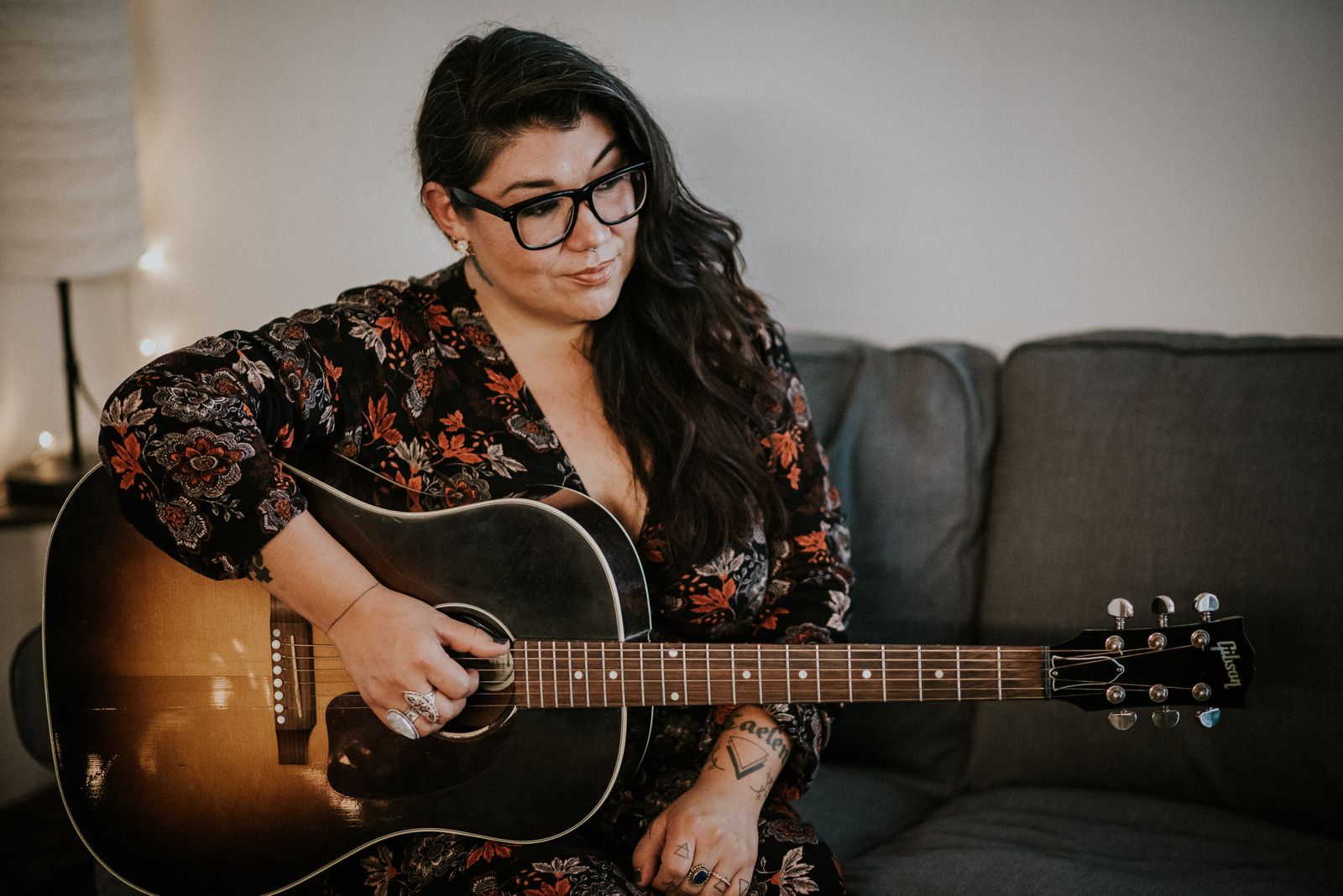
Artist:Band of Ruhks Hometown: Nashville, Tennessee / Kentucky Song: “My Ol’ Tattoo” Album:Authentic Release Date: October 18, 2019 Label: Rebel Records
In Their Words: “‘My Ol’ Tattoo’ is a song that I had tinkered with for several years. I thought I had it finished a few times but really didn’t. We were having a writing session at Ronnie Bowman’s place with the awesome up-and-coming writer Billy Droze and I pulled this one out. They both loved it and we retooled it, making several changes that really nailed it. I had a Cajun feel in mind when I initially came up with the song and then when we got together to finish it, it took on a life of its own. I really like this one and owe Billy and Ronnie a ton for making it what it is!” — Don Rigsby, Band of Ruhks
American roots music wouldn’t exist without Indigenous people. Full stop.
Just as Black voices and stories largely informed the creation of these genres of music — old-time, bluegrass, blues, Americana, folk, etc. — Indigenous voices and stories often informed those black creators as well as those of greater privilege and power. Erasure prevents many examples of these cross-pollinations and accurate attributions from being readily accessible today, but Indigenous people are still here. They continually carve out spaces for themselves in these circles and these communities that directly spawned from them, though they continue to exclude Natives today.
Even as conversations surrounding diversity, equity, and inclusion permeate the furthest reaches of roots music communities around the world, Indigenous identities and perspectives are still routinely left in the shadows.
We can do better.
Part of “doing better” is making a concerted effort, whenever we are able, to expand our perspectives to include as many Indigenous people and their vantage points as possible. So, let’s return to the idea that American roots music was created by Indigenous people. Such as it is, if one is a roots music fan, it’s quite easy to infuse one’s day-to-day with Indigenous folks, as evidenced by the following list of Indigenous artists, performers, instrumentalists, and musicians that you NEED to be listening to.
Cary Morin
An award-winning, renowned blues guitarist Cary Morin is a Crow tribal member who has performed around the globe. “…I could say that I’m really the only finger-style Crow guy on the entire planet,” he told BGS in a 2017 interview. “That’s unique. But we all can say that, to some degree. We all have unique things that make us who we are…” He counts David Bromberg, Norman Blake, Tony Rice, and Trey Anastasio among his influences, but his sound is truly uniquely his.
Lakota John
Lakota John (Locklear) opened his set at our 2019 iteration of Shout & Shine at IBMA with a land acknowledgment and a captivating piece on Native American flute. His music nimbly toggles between old-time blues, modern acoustic blues, folk, down home country and more, while remaining firmly rooted in and informed by his Lumbee and Lakota heritage. We interviewed Lakota John just last month, in anticipation of Shout & Shine.
R. Carlos Nakai
Possibly the world’s foremost performer on Native American flute, R. Carlos Nakai began his career in music trained in classical trumpet. He’s received eleven Grammy nominations and his iconic album, Canyon Trilogy, went platinum, becoming the first album by a solo Native American flutist to ever do so.
Lula Wiles
Folk trio Lula Wiles cover a lot of the same ground as their millennial-aged string band and Americana counterparts, but with the grounding, legitimizing force of Indigenous perspective, brought to the group by bassist Mali Obomsawin, a member of the Abenaki Nation. Obomsawin and bandmates Isa Burke and Ellie Buckland spoke to BGS about Indigenous rights and the group’s approach to writing socially conscious material earlier this year.
Celeigh Cardinal
Z. Lupetin, host of BGS podcast The Show On The Road, called Métis musician Celeigh Cardinal “the high priestess of Canadiana soul” in a February episode. Cardinal is also the first Indigenous radio personality on Alberta’s CKUA Radio Network. “The Devil is a Blue-Eyed Man” is the lead track off of her most recent album, Stories From a Downtown Apartment.
Jeremy Dutcher
A classically-trained, Canadian, Indigenous tenor, Jeremy Dutcher creates sweeping, cinematic art-folk with pop twinges, jazz undertones, and often lofty, operatic melodies. Perhaps the most striking aspect of Dutcher’s music, however, is his overt presentation of the fact that its intended audience is first and foremost his people, the Wolastoqiyik. His representations of queerness are firmly rooted in the traditions of his tribe and his language — he is one of only around 100 people who speak Wolastoq — which has no gendered pronouns.
Buffy Sainte-Marie
Academy Award-winning singer-songwriter Buffy Sainte-Marie has been touring and performing professionally since the early ’60s. Her accolades, awards, and accomplishments are vast and varied, touching almost every nook and cranny of this content in almost every medium — and as an activist, as well. In 2015 the Americana Music Association and the First Amendment Center awarded Sainte-Marie the Spirit of Americana Free Speech in Music Award.
Raye Zaragoza
Singer/songwriter Raye Zaragoza has a message to deliver through all of her music. “In the River” was written during the violence at the Standing Rock Sioux reservation protests over the Dakota Access Pipeline being constructed across Indigenous lands and sacred waters. Zaragoza explains in an interview with Billboard in 2018, “Being a young, brown girl who on one side of my family is immigrant (Mexican, Japanese, and Taiwanese), the other indigenous, I can help [but put] a voice and put words to the way so many people are feeling…”
Charly Lowry
In 2004 singer/songwriter Charly Lowry was a semi-finalist on American Idol, but over the past decade she rose to prominence with Dark Water Rising, a North Carolina-based, soulful blues band of Indigenous folks. Her solo music is entrancing and expansive, with an ethereal quality only matched by the conviction with which she sings. This performance of “Brownskin” is a perfect example.
Led Kaapana
Grammy nominee and Native Hawaiian Led Kaapana is one of the world’s foremost experts in slack key guitar, or Kī Hō’alu, for which a guitar’s strings are detuned (til “slack”) to an open chord. His playing reminds of Chet Atkins and Phil Keaggy and references blues, ragtime, and even bluegrass flatpicking at times, too — which makes sense considering he’s worked and collaborated with Chet Atkins himself, and folks like Dolly Parton, Jerry Douglas, and Alison Krauss, too.
To wrap up we should note, this is an infinitesimal, inherently myopic attempt at a cross-section of Indigenous artists in American roots music spaces. There are so so so so many more to discover. You should poke around the Native American Music Awards website for more ideas, and a historical/archival look, too.
Photo of Celeigh Cardinal: Megan Kemshead Photography
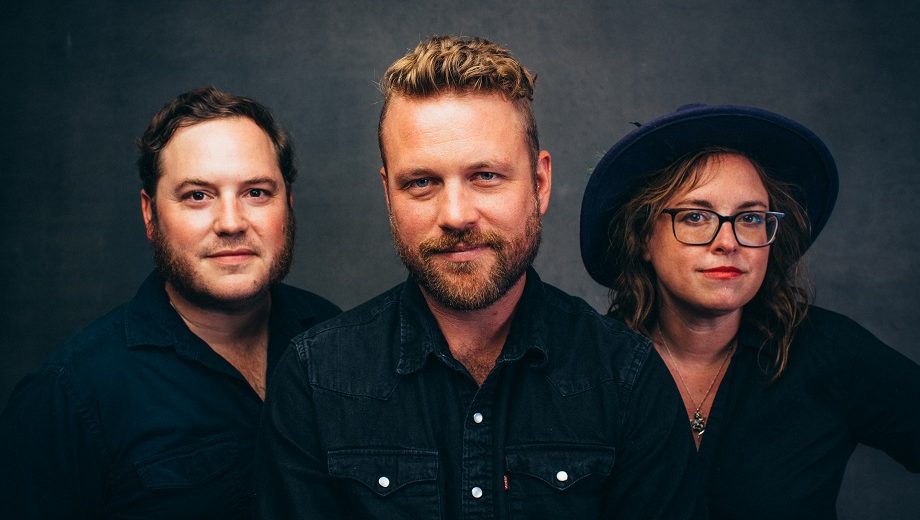
Artist:Jon Stickley Trio Hometown: Asheville, North Carolina Song: “Animate Object” Label: Organic Records
In Their Words: “‘Animate Object’ is the trio’s current theme song. At heart, it’s a little flatpicking tune to have fun with, but we’ve rhythmically turned it on its head like we like to do. This video was shot in three different locations with deep significance to us. The World Famous Station Inn represents our love and respect for our bluegrass roots. Spirit of the Suwannee is where our band was born, and where we thankfully return every year to connect with that spirit and experience rebirth under the live oaks. And finally, the [Caverns and] Bluegrass Underground symbolize the deep, introspective dive we’ve taken into ourselves in search of the meaning of our music and where it is coming from. This track is the next step in a never-ending evolutionary journey that is the Jon Stickley Trio.” — Jon Stickley
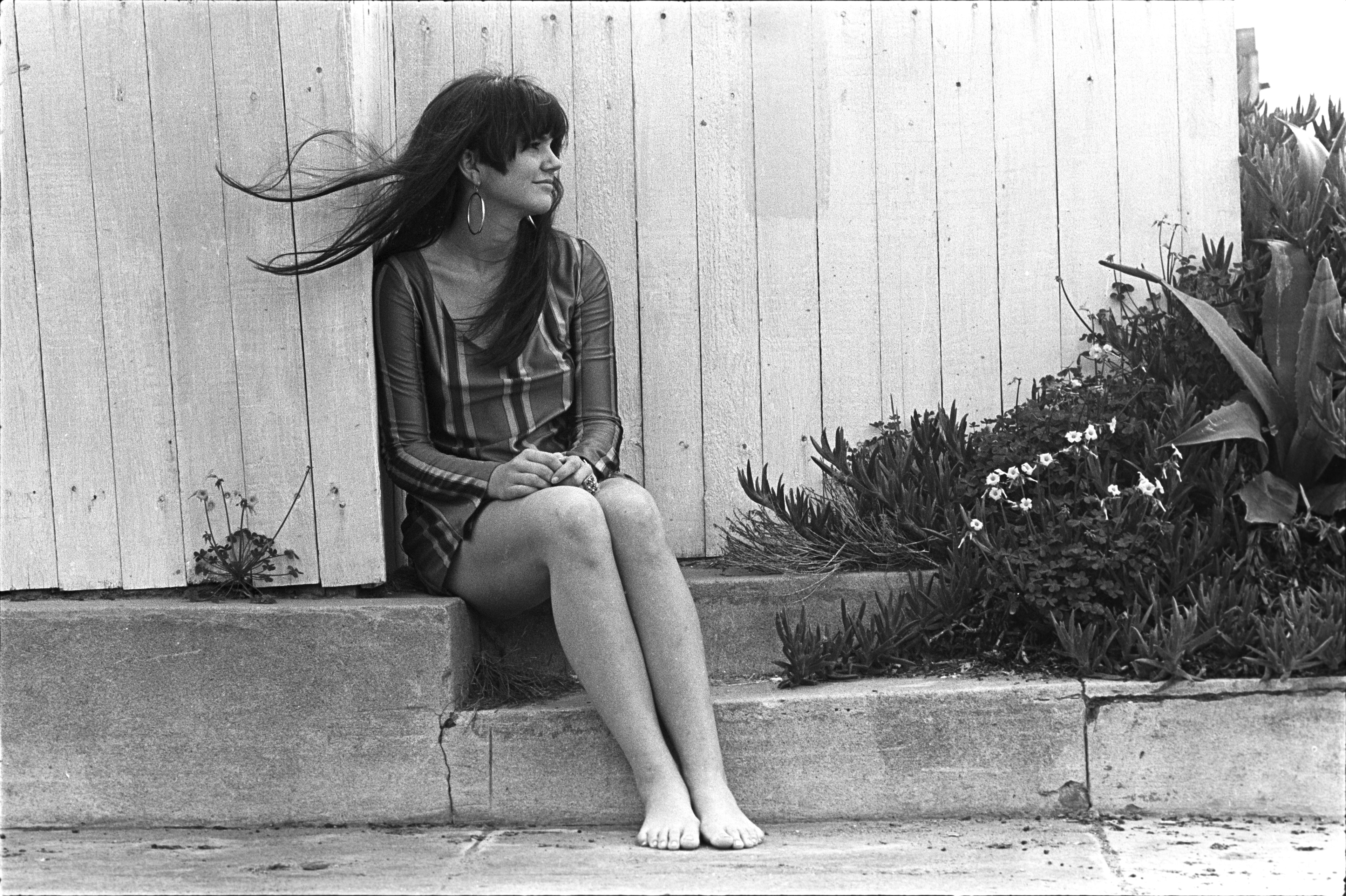
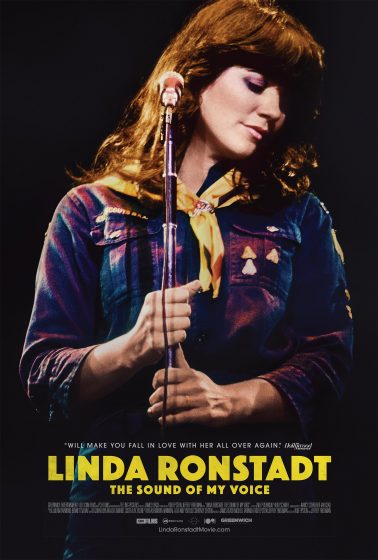
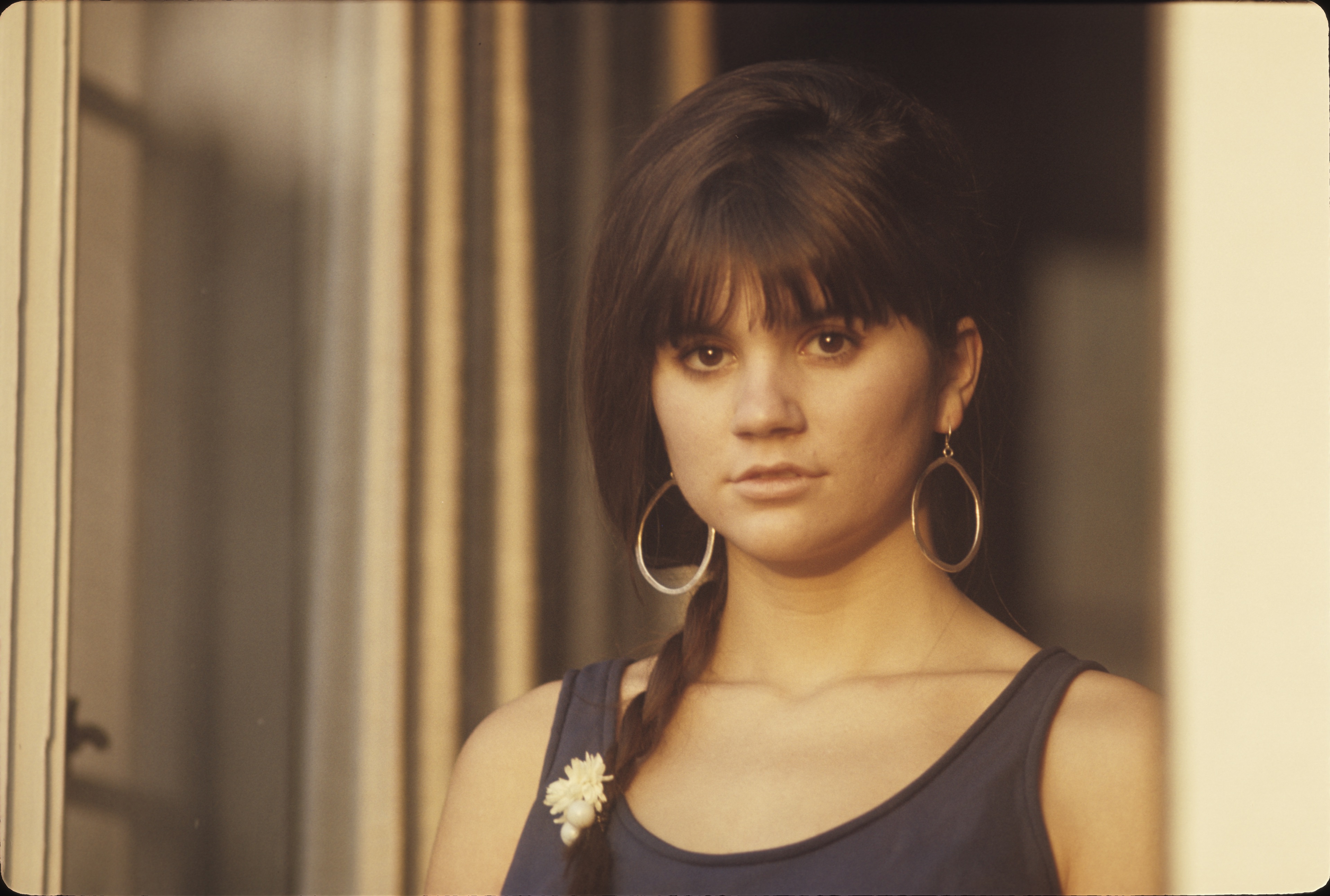
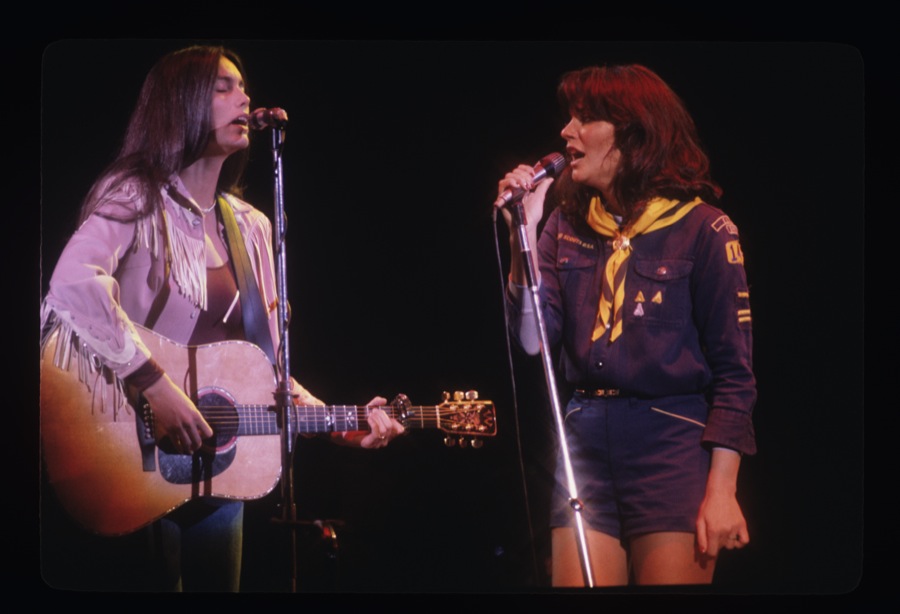
In honor of the new documentary film, Linda Ronstadt: The Sound of My Voice, and in appreciation of her connection to bluegrass — and in an attempt to shout it from the proverbial rooftops! — we’re reprinting Dan Mazer’s 1996 Bluegrass Unlimited interview with Ronstadt split into two parts, but in its entirety on BGS. Special thanks to the team at Bluegrass Unlimited for partnering with BGS to spotlight how bluegrass has touched one of the most important and truly iconic voices to ever grace this planet.
“Linda Ronstadt Talks Bluegrass” By Dan Mazer. Bluegrass Unlimited, June 1996
…Our conversation moved to a discussion of Alison Krauss’ musicianship. Krauss seems to have an incredible variety of influences, which come out when she wants them to. “And in an appropriate manner,” Ronstadt continued. “There seems to be a general agreement among all the people that I know – whose various subjectivities are very strict and very demanding – that Alison has the best taste of any of those people.
“Every fiddle player that I’ve ever worked with will be tempted to play sound(s) like donkeys braying; or just play too much – play ‘flash’ licks in an inappropriate manner. (I call it) ‘The Paganini Syndrome.’ And Alison never is.
“Her pitch is completely stunning! I’m a pitch nazi, and she’s even a little more strict than I am, in terms of pitch. And the thing that I like the very best about her playing is her rhythm. She’s got that great, easy, loping sense of the groove that bluegrass players generally don’t have. When it’s right, of course, it’s got a great swing to it. But bluegrass players have a tendency to get a little stiff and a little on top of the groove. And she never does! I don’t think she’s played with drummers that much, but we put her together with Jim Keltner, and it was just an amazing thing. She’s got the same sense of the groove that he does, and he has the effortless pocket. I consider her as good as any musician I’ve ever worked with. My cousin (David Lindley) said she was his favorite fiddle player ever. And I love her. And also, she owns Maria Callas’ bed! (Laughter) I don’t know why, or how she managed to get her hands on it, but she did. I was jealous. I wanted to be the one to get it. Emmylou Harris and I are both Maria Callas fans. Slobbering, drooling Maria Callas fans!”
When asked to comment on other bluegrass acts, Ronstadt confessed that she doesn’t listen to any modern music of any style. In fact, she was unfamiliar with many of the major country acts. Nor had she ever heard of the IBMA. “Honestly, the only ones I know (are) Ricky Skaggs, Alison, and (the) Seldom Scene,” she said. “But before that, it really was those original guys (Flatt and Scruggs and Monroe). I mean, it was such a short-lived era. And before that, the Blue Sky Boys, which wasn’t really bluegrass, but which really sorta fed right into it. I love those guys, and I listen to the Louvin Brothers a lot. So I listen to all the stuff that led right up to it.
“I know very little of any kind of contemporary music. I just don’t. I listen to NPR, and I listen to Maria Callas and them, and I listen to a lot of Mexican music, and that’s about it. And if it penetrates through that it’s usually because Emmy calls me up, or John Starling calls me up, or Quint Davis. Quint Davis is the guy that runs the New Orleans Jazz and Heritage Festival, and he put on that thing on the Mall for the inauguration. That’s where I saw Alison. I was just blown away by her!
“I don’t know modern stuff. I haven’t a clue. It seems like when we did the ‘Trio’ record, nobody was interested in traditional music. And then that record was pretty successful, and at that point, Ricky Skaggs was extremely successful, but all of a sudden, I don’t know. I don’t watch this type of stuff on television. I haven’t got the vaguest idea, and I don’t listen to the radio. I have a great respect for anything that anybody does. I mean, I think it’s just so hard to make a record – any record – that I don’t like to put myself in the position of, ‘This is good, and that’s not good,’ like a bean-counter. But I have to say that (modern country fails) to capture my interest.
“There’s always music in front of my face. If I was gonna sit and listen to Mozart, (and) someone said, ‘OK, this is gonna be it (you can only listen to Mozart) forever,’ I’d go, ‘OK.’ And if someone was playing me some Mexican traditional music, and they said, ‘This is gonna be it forever,’ I’d go, ‘OK.’ Because there’s enough in any of those things, to (keep me interested).
“Somebody came over to my house the other day with some musicians from Madagascar. They sit down in my kitchen and played this Malagassi music, and it just blew me through the wall! So, if they had said at that point, ‘Well, you’re gonna have to sing a little Malagassi now,’ I would’ve said, ‘Well, OK. Fine!’ I could’ve got right down and sung with them, and had no problem at all. But I can only concentrate on one thing at a time, and if that thin is interesting, I just don’t have any particular need to shift my attention.
“When John Starling comes out to visit me, he sits down at my kitchen table with his guitar, and we start singing. I get pried back to English. But I’d really rather sing in Spanish or Italian. Because all that stuff (bluegrass and country) is based on rural southern pronunciation. And in Spanish – if I’m singing a Latin jazz thing that’s a Caribbean base, I have to push myself from my northern Mexican rural accent into a Caribbean accent, which is painful for me. I find it an unpleasant way to pronounce the language, but I have to do it in order to get the rhythms right. So I do it. I really push myself into that other accent. But I prefer singing in my own accent – the accent of my family’s region. I can just get so much more sound out of my voice in that language.”
Over the course of a career, an artist makes many decisions based upon the age-old dilemma of commercialism versus artistic merit. What the public wants to buy is not always what the artists likes [sic] to paint, play, or sing. Ms. Ronstadt has lately recorded opera, Big Band and Mexican music, none of which usually sells platinum in today’s market. It seems that she has reached a point in which she doesn’t have to worry about selling a certain number of records; her musical decisions are now totally artistic. “Well, they were to start with, too. It’s just that I wasn’t as good at executing them!” She protested with a laugh. “And I find that now. I’m making my choices based on an artistic thing, but I am also finding that my choices were made for me when I was a baby. It’s getting harder, though. I do find that the record companies have a tendency to stick their oar in a lot more now. It’s very nervous-making. Although, the one person that I’ve allowed to submit material and give advice – I don’t always take it, but I always consider it – is (Asylum Records President) Kyle Lehning. He’s an amazing guy! He really, genuinely likes music, first of all, which is rare for a record person. Second of all, he’s extremely knowledgeable, and he has great taste in songs. And he seems dedicated to the idea of trying to save what he can that’s quality, and nurture it.
“(The latest project) started with several nagging phone calls from John Starling!” She laughed. “John Starling doesn’t get down behind traditional Mexican music! And then Emmy calling me, because Emmy and I are such fans of the McGarrigle Sisters. We were talking about doing some television stuff. We were just trying to think of how we could get in the living room together again with John Starling. So we started working on tunes, like the Carter Family songs that only Emmy and I would be interested in. And maybe John Starling or Claire Lynch, or somebody. John had, a long time ago, sent us Claire Lynch records, saying, ‘You really gotta sing with this girl. She’s real wonderful.’ So claire and Emmy and I have done some stuff together.
“And then, I’ve been working with Valerie Carter. She put a record out in the ‘70s. Everybody in Hollywood was after her. She’s an extraordinary singer, and she was exceptionally beautiful. She was about 19, I think, then. Lowell George and Mick Jagger and Jackson Browne and J.D. Souther and Danny Kortchmar – everybody wanted to work with her. Everybody tried to, and then George Massenberg, who is my production partner – who I met through John Starling – did produce a record from her, and so did Lowell George. I sang on it. Then she just had some problems, and she dropped out of sight for about 15 years, which was really a tragedy for us. ‘Cause she’s one of those girls that can sing as well as Whitney Houston. She’s got that kind of chops. But it doesn’t sound like her. It’s a very distinctive voice. But that kind of ability. It was too bad, ‘cause she was (a) really interesting singer. So she’s now been singing on the road with James Taylor a lot. I used her to sing a lot on my last record, that I put out. The blend between her and me and Emmy was just really magical! So we’ve done some stuff together, the three of us.
“But what Emmy and I wanted to do was just explore. See what we could go find out there. We wanted to push the limits a little bit, and see what we could find in terms of texture, combining styles, of things that we liked that don’t always fit in one little (category). Like the McGarrigle Sisters. Where do you put that? It’s not really traditional folk music, and it’s got traditional roots. It certainly isn’t bluegrass. And the sentiment is too unbridled for current pop, ‘cool’ standards. But it’s very intelligent music.
“There’s other stuff that is kind of like that; that’s kind of ‘out there.’ And there’s some stuff that’s just real, real traditional. So we’ve just been fooling around with various singers. And then I sang with Claire Lynch and my cousin John, who’s got a wonderful voice – on two songs.”
Although she maintains that after a project is finished she doesn’t care what happens, Ronstadt is intensely involved in its creation. “Oh, I mix everything! I do every single thing,” she declared. “I make the record, I do the arrangements, I do the harmony arrangements, I do a lot of the instrumental arrangements. Nothing is done on the record without me being there. But when it’s finished, I never listen to it again. You can take it and throw it off a cliff, for all I care. I’ve heard it and I’ve done it, and that’s the experience; and now I go on to something else. So at that point, I surrender it to the record company, and they do whatever. They can shoot it with a gun if they want to. I don’t care what they do. Long as they don’t shoot me.”
Returning to the topic of bluegrass, Ronstadt commented, “I understand what [the banjo] does, rhythmically. And I appreciate what it does – that syncopated thing; the difference in all those accents.
“I think of the banjo kinda like I think of the trumpet in mariachi, which is: trumpet was brought in about the same time that the resonator was added onto the back of the banjo. It was a ‘radio’ event, and a good one. It was a really good thing; it needed that high end to cut through. But if somebody came to bed and blew a trumpet in my ear, I’d get annoyed! If somebody came to bed with me and started plucking a banjo, I would probably jump right up to the ceiling! But it’s a great instrument in the orchestral blend. It’s really got a great place. And I don’t think the banjo will ever go out of style.
“Those other instruments are a lot more flexible. They can bear a lot more. I’ve really become a complete mandolin fan, ‘cause I’ve been working with David Grisman. I just think he’s a genius. I knew his playing. I knew he was considered a ‘hot chops’ player. I think he plays bluegrass sometimes, but he really predates and transcends all of that stuff completely. I mean, he can play like a classical player. I’ve never heard anybody with dynamics like that, and I’ve never played with anybody that could play with a vocalist; and play little internal harmonies. He just flits around like a little hummingbird – all around the vocal line – and plays a beautiful little harmony for a while, and then he goes off to a rhythm pattern, then he comes back. He has great ideas for voicings, and he has very, very good rhythm ideas. I just love to work with him. I think he’s brilliant.
“You know what I think is missing from bluegrass at this point? And from all that kind of traditional music? Dancing. That’s what I discovered with Mexican music, was that it is dance music. Period. I think, as is fiddle (music). As soon as you uncouple it from (dancing), the music changes. It’s the same way with pop music. As soon as it became recorded music – people started dancing in discos to recorded music – the music stopped being alive, and it stopped changing in a real vital way. Started changing in a more static, strange, mechanized way.
“So my suggestion, to the bluegrass world would be, one should never uncouple that music from dancing. There should always be dancers involved with bluegrass music.”
The author commented that singing is also something that’s been taken away from most people and given only to professionals. “Yeah, it’s an outrage! In Mexican culture, everyone sings,” she responded. “Everyone knows all the words, and they all sing. We sing at the dinner table. Whatever you’re doing, you sing. You sing in a funeral, you sing at a birthday, you sing at a wedding. You sing if you’re happy, you sing if you’re sad. It’s a thing you get to do to help you along with your life. Everyone should sing. It’s a biological necessity. Even little babies sing. I mean, even when they’re pre-verbal, you hear them kind of leaning into a sound.”
Barely three minutes into the brand new documentary, Linda Ronstadt: The Sound of My Voice, the viewer is already presented with none other than Dolly Parton, who exclaims, “Linda could literally sing anything.”
Over the course of her singular, era-defining career Ronstadt did sing almost anything — from The Pirates of Penzance to American standards to Mexican folk songs — but she’s rarely referenced in the same breath as bluegrass. The BGS x Linda Ronstadthistorynotwithstanding, it’s understanding that the twain rarely meet, in conversation and consideration. Of her most easily recognizable hits, among them “Willin’,” “You’re No Good,” and “Desperado,” perhaps “Blue Bayou” is the closest to bluegrass — and in its Ronstadt iteration, less so than in other covers of the languid ballad.
Scratch the surface, though, no matter how slightly, and her bluegrass cred runs deep. This should come as no surprise, given her immaculate performances alongside Dolly Parton and Emmylou Harris on Trio and Trio II — the first song the three sang together, informally, at Harris’s house in L.A. was “Bury Me Beneath the Willow.” The Sound of My Voice digs a little deeper still, reminding that Ronstadt’s very first hit, “Different Drum,” recorded with folk-rock trio the Stone Poneys, was discovered by Ronstadt, who first heard the song from a now almost-forgotten bluegrass band, the Greenbriar Boys.
Elsewhere in the film, Ronstadt mentions that during her early days in the city she frequented Los Angeles’ The Ash Grove, the foremost folk and bluegrass venue there in the ‘60s and ‘70s. She also made appearances and recorded with the Seldom Scene, and remained close friends and musical confidantes with John Starling. One of the last studio recordings Ronstadt ever released was a duet of the Hazel Dickens and Alice Gerrard classic, “Pretty Bird” with bluegrass legend Laurie Lewis. The track was released on Ronstadt’s Duets project as well as Lewis’s The Hazel and Alice Sessions and the pair worked together prior, as well, performing as “The Bluebirds” with Maria Muldaur at Wintergrass Music Festival in 2005.
The bluegrass tendrils are there, undeniably, woven alongside so many other influences and inspirations and impressions that informed Ronstadt’s art. Still, it was surprising to this writer to find that in June 1996 Bluegrass Unlimited, the foremost and longest-running print publication dedicated solely to bluegrass music, had featured a lengthy, in-depth interview with Linda Ronstadt herself. Even by author Dan Mazer’s own admission, “Ms. Ronstadt’s bluegrass/country connection is tenuous at best.” And yet, for nearly five thousand words, the article displays that Ronstadt isn’t just tangentially connected to bluegrass, it is a permanent part of her musical self.
In honor of the new documentary film, and in appreciation of this connection to bluegrass — and in an attempt to shout it from the proverbial rooftops! — we’re reprinting Dan Mazer’s interview with Ronstadt exactly how it appeared in 1996, split into two parts, but in its entirety on BGS. Special thanks to the team at Bluegrass Unlimited for partnering with BGS to spotlight how bluegrass has touched one of the most important and truly iconic voices to ever grace this planet. — Justin Hiltner, BGS Associate Editor
“Linda Ronstadt Talks Bluegrass” By Dan Mazer. Bluegrass Unlimited, June 1996
While preparing an article on the influence of bluegrass on today’s country music, I had the opportunity to interview several prominent country stars. During discussions with Bluegrass Unlimited’s editorial staff about artists to interview, the name Linda Ronstadt came up.
Linda Ronstadt? It seemed an odd choice at first. Ms. Ronstadt has had a long and varied career, and while her forays into bluegrass with the Seldom Scene have been recognized and celebrated within the bluegrass community, as an artist, she just didn’t seem to fit in with the likes of Marty Stuart, Hal Ketchum, and Patty Loveless. On the other hand, her classic recordings of “Blue Bayou,” “Silver Threads and Golden Needles” and “When Will I Be Loved?” are still copied by country music cover bands some 20 years after their release. Some of her work as also been covered by bluegrass artists.
Because Ms. Ronstadt’s bluegrass/country connection is tenuous at best (especially in recent years, when her recordings have featured opera, Big Band and Mexican music), it was with little hope that I sent an interview request to Ms. Ronstadt’s publicist. To my surprise and delight, the request as answered quickly with a call from the publicist to set an appointment for a telephone interview. Ms. Ronstadt called me from her home in Los Angeles, and graciously granted me a significantly longer interview than we had arranged – that was just because the conversation was so interesting and enjoyable! She is remarkably well-spoken, intelligent and passionate. In the end, we decided not to include Ms. Ronstadt’s remarks in the profile of country artists with bluegrass roots.
Ms. Ronstadt grew up in Tuscon, Ariz. Her family listened to a broad variety of music on the radio. Opera, country, rock ‘n’ roll, and jazz filled the house. Some radio shows also featured bluegrass. “We were right in the pat of XERF, Del Rio, Tex,” she said. “And we (had) the Louisiana Hayride. We were right there, where there was a lot of big transmitters, and not a lot of interference. So I heard (bluegrass) when I was little, growing up.
“When we were kids just listening to stuff on the radio, we tried to sing it. My brother and sister and I could always harmonize real early. So we used to sing the stuff we heard on the radio. We heard Bill Monroe, and we heard Flatt and Scruggs, we heard Homer and Jethro doing a sendup of ‘Don’t Let The Stars Get In Your Eyes.’ I had such a cross-section! And then, when I was in high school, I think it really intensified.
“I’ve always been interested in harmony. I’ve always been a harmony singer. When I was a real little child, I could sing harmony. I’m always surprised when children say, when they’re three, that they can’t. But all my brothers and sisters could, real early. I could hear strange harmonies, too. But I understood Mexican harmonies better, and they have a tendency to be very, very clear kind of parallel thirds.”
(Author’s Note: “Parallel thirds” refers to what, in bluegrass, corresponds to the lead and tenor part singing close harmony at the interval called a “third.” Brother duets also feature this harmony.)
As an artist, Ronstadt doesn’t feel authentically connected to bluegrass. “I feel that I would have had to live in the rural south, and grow up in the mountains,” she said. “There’s just such a difference between mountain South and plantation South. Culturally and musically.”
Since she grew up near the Mexican border, and her father is Mexican, Ronstadt mostly sang Mexican music as a child. “There’s a great deal of similarities (between bluegrass and Mexican music),” she noted. “One of them is that the three-part harmony stuff that we sang a lot is Mexican mountain music, and it’s country music. The music of an agrarian lifestyle is what I’ve always been most attracted to. I love it, and having grown up in a kind of isolated, rural setting, it was something that reflected what I was witnessing around me.
“I’ve always had an ear for any kind of a thrilling, wild, high tenor. And again, in Mexican music, there’s a loose parallel, especially up in the mountains, where they sing real high in this falsetto, in the huapango style.
“The language and the pronunciation of the language – whatever the rural accent is – influences the style of singing and the vocal intonation so profoundly! With bluegrass music it was those ways of pronouncing 16th Century English, probably, frozen in those mountains. But in Mexico, of course, it was the indigenous language of nahuatl, which was what was mostly spoken there, which gave the pronunciation and forced the tonality into that nasal thing.
“Also, having to communicate across long distances, you get a real high, ringing (tone). Men get a lot of power out of that high register; way more than women do, which is why – having absolutely nothing to do with sexism –I feel that bluegrass is very wonderful when it’s three male voices. Mariachi music, also (is an example), which is from a different region (Jalisco). But when all those male voices are singing up in the high register, it’s a different sound from a woman’s voice singing up in a more comfortable register. I can sing bluegrass tenor pretty well, but it doesn’t quite have the power that it will ever have from a man forcing himself up way high in that register. It just doesn’t have the same dynamic. It’s still good. I call it ‘pink grass.’”
Until recently, bluegrass has been almost entirely a male reserve. Ronstadt feels that there is good reason for that, although, as she pointed out, “There was old-time music before that, which of course, happily embraced women singers. But I still think it was just that thrilling sound of those male voices in two- and three-part harmony, pushed way, way up high, that really gave it a very distinctive characteristic. And it’s pretty hard to compromise that, regardless of your sexual politics, without making it into something different.
“There are women singers today that have what I think (are) very, very good, and very authentic-sounding bluegrass voices. I think Claire Lynch has a wonderful voice. I love her singing! And those girls that sing with Alison Krauss; the Cox Family. But it’s hard to say. Where do you draw the line? Is that bluegrass, or is that old-time? I think that’s a combination; both things.”
When thinking of acts that embrace and also expand bluegrass, the Seldom Scene immediately comes to mind. Many people argue with some justification that the inclusion of a banjo defines an act as a bluegrass band. Bill Monroe, Flatt and Scruggs, Reno and Smiley and the Stanley Brothers all performed certain songs (usually gospel numbers) without the banjo, but the Seldom Scene broke new ground with their unprecedented, mellow guitar-based sound. Furthermore, because Ben Eldridge’s banjo playing is unparalleled for taste and restraint, the Seldom Scene can be mellow even on tunes that include the banjo. They also distinguished themselves by using Linda Ronstadt as a backup vocalist on some of their earlier recordings. They remain her favorite bluegrass band.
“They really are an urban band with very, very strong rural influences,” she said. “They had all the benefit of a sophisticated, cosmopolitan atmosphere, which Washington, D.C., certainly is, and they were able to refine in any direction they wanted to. I really think they made an extraordinary synthesis. I love that band; I always have.
“Mike (Auldridge) is such a unique player. Nobody sounds like him. He’s got that real beautiful, lyrical, velvet thing that happens, but it’s still got plenty of strength and guts behind it. There are more famous Dobro [resonator guitar] players than that, but I like him the best and I always call him when I want a Dobro [resonator guitar] player.
“John Starling is an exceptional singer, and has a wonderful sense of the groove. He’s a very, very fine guitar player. Emmylou Harris and I both spent so many hours and hours and nights and nights and months and months with him, way on into the night, just grooving on that sound and exploring it! He’s given us a wealth of something. It’s hard to define. But just having that superb musicianship to lean on, and the focus of his sensibility, which is very keen and very well-developed in that direction.
“I remember getting snowed in at John Starling’s house with Lowell George, and Emmy, and Ricky Skaggs (in 1974 or 1975). Fayssoux Starling was there, who was a good singer. And we sang forever! I mean, we sang all night, and they were there for three days. I was sick, so i was there for a month, they were there for three days, and in that time, Ricky Skaggs taught me a whole lot about how to sing bluegrass harmony. I knew a little bit about it, but he really showed me how the suspensions worked, and it helped me to refine it a lot. I understood (the suspensions), but didn’t know quite how to really imply them. He Walked me through ‘em, and after that, I had ‘em.”
(Author’s Note: “Suspensions” is a musical term referring to creating tension in a chord by sounding a not that is not in the chord, and then releasing that tension by lowering the dissonant note. For example, a guitarist will sometimes play a “D” chord and add a high “G” note on the third fret of the first string for one measure, then release that fret, so that the “F#” note rings.)
Ronstadt is surprised that she is sometimes cited within country music. “I was never a country singer,” she stated. “I never thought of myself as a country singer. Always very surprised if anybody else did. I was a pop music singer, and I used various root forms that were acceptable to me, and that was one of the things that was readily acceptable to me.
“I’ve always had a little rule about my singing. If it wasn’t there in the living room by the time I was eight years old, it generally won’t be very successful if I take a swing at it, at least to my standards. But thanks to the radio, there was a lot of stuff in play by the time I was eight. And thanks to the fact that my family has very eclectic kind of taste, anyway.
“So, when I came into pop music, I played songs that I loved. I didn’t care whether they were written by George Gershwin or Hank Williams. A song that would really inspire me for one reason or another, I’d try to sing it. And I’d always try to put it into its appropriate setting. So if it (was) a bluegrass song, I’d try to put it in that kind of setting, and I knew enough about the mechanics of how it worked, so that I would do that. Then there were these singers and players that I really admired, and tried to emulate. But that thrilling high tenor sound, there’s just nothing like it.”
The closest Ronstadt has come to recording bluegrass in recent years was on the “Trio” album, which featured her along with Dolly Parton and Emmylou Harris. A follow-up recording was eagerly anticipated, but never materialized. “The ‘Trio’ record became so difficult, schedule-wise, that we all gave up,” she said. “But Emmy and I did quite a lot of singing together. We had a great time! See, Emmy and I started out with this idea to do a record together, where we would use some guest artists. And we sort of progressed down that road, but it never got to where everybody would agree on a release date. Everybody did agree at some point, but the people kept changin’ their minds.
“But Emmy and I really are kind of locked on to each other musically. Emmy and I have sung some stuff together that’s gonna be on my record; Emmy and I have sung some stuff together that’s gonna be on her record. And we also did some stuff with Valerie Carter, who’s just a great singer.”
Ronstadt’s bluegrass influence is definitely shown in her current release.
Photos courtesy of Shore Fire Media Article appears courtesy ofBluegrass Unlimited
This website uses cookies to improve your experience. We'll assume you're ok with this, but you can opt-out if you wish.AcceptRejectRead More
Privacy & Cookies Policy
Privacy Overview
This website uses cookies to improve your experience while you navigate through the website. Out of these, the cookies that are categorized as necessary are stored on your browser as they are essential for the working of basic functionalities of the website. We also use third-party cookies that help us analyze and understand how you use this website. These cookies will be stored in your browser only with your consent. You also have the option to opt-out of these cookies. But opting out of some of these cookies may affect your browsing experience.
Necessary cookies are absolutely essential for the website to function properly. This category only includes cookies that ensures basic functionalities and security features of the website. These cookies do not store any personal information.
Any cookies that may not be particularly necessary for the website to function and is used specifically to collect user personal data via analytics, ads, other embedded contents are termed as non-necessary cookies. It is mandatory to procure user consent prior to running these cookies on your website.