You Gotta Hear This: Steep Canyon Rangers, Jim Lauderdale, and More

Welcome to the conclusion of another week. With it, we’re once again sharing our weekly roundup of brand-new tracks, singles, videos, and more. You Gotta Hear This!

To start us off, Kentuckian singer-songwriter and instrumentalist Adam Chaffins shares a lyric video for “Sugarcoat It,” a new original song about the temptation and believability in misinformation these days. Chaffins and his collaborators leverage groove and catchy hooks for a meaningful and oh-so-timely message in the rockin’ Americana track. Also bringing a topical and cutting central thesis are Joe Troop & the Truth Machine, who have released a new live performance video for “Billionaires.” Bluegrass and old-time stemming from Southwest Virginia are the musical trappings for a funny, satirical song taking the 1% of the 1% to task. Troop and his queer cohort are well equipped to proffer their message with silliness, joy, and string band music.

From across the Atlantic, Spanish (via Amsterdam) singer-songwriter Liza Lo shares “Birdsong,” a tender and vibing alt-folk number zooming in on the present moment. “Life can get overwhelming and the simple things are quickly forgotten or overlooked,” she explains to BGS, using the song to remind all of us – and herself – not to lose sight of the beauty in the simplest of everyday things.

Bluegrassers Chris Jones & the Night Drivers have a new single out today. “Steal My Today” is the band’s first recording released with their latest member, Nelson Williams, playing the bass. Plus, Italian resonator guitarist Paolo Ercoli guests on the track, which also features banjoist Grace van’t Hof throwing some accordion into the mix. It’s also a song about the present moment, and not letting it be soiled by another. Meanwhile, perhaps the most prolific recording artist in roots music has announced a new project. Jim Lauderdale once again teams up with the Po’ Ramblin’ Boys, this time on his upcoming album The Birds Know – out in April. The lead single, “We Look At Things In Different Ways,” furthers our unofficial theme today of examining societal discourse, by pointing out you actually can love and care for another even with disparate points of view.

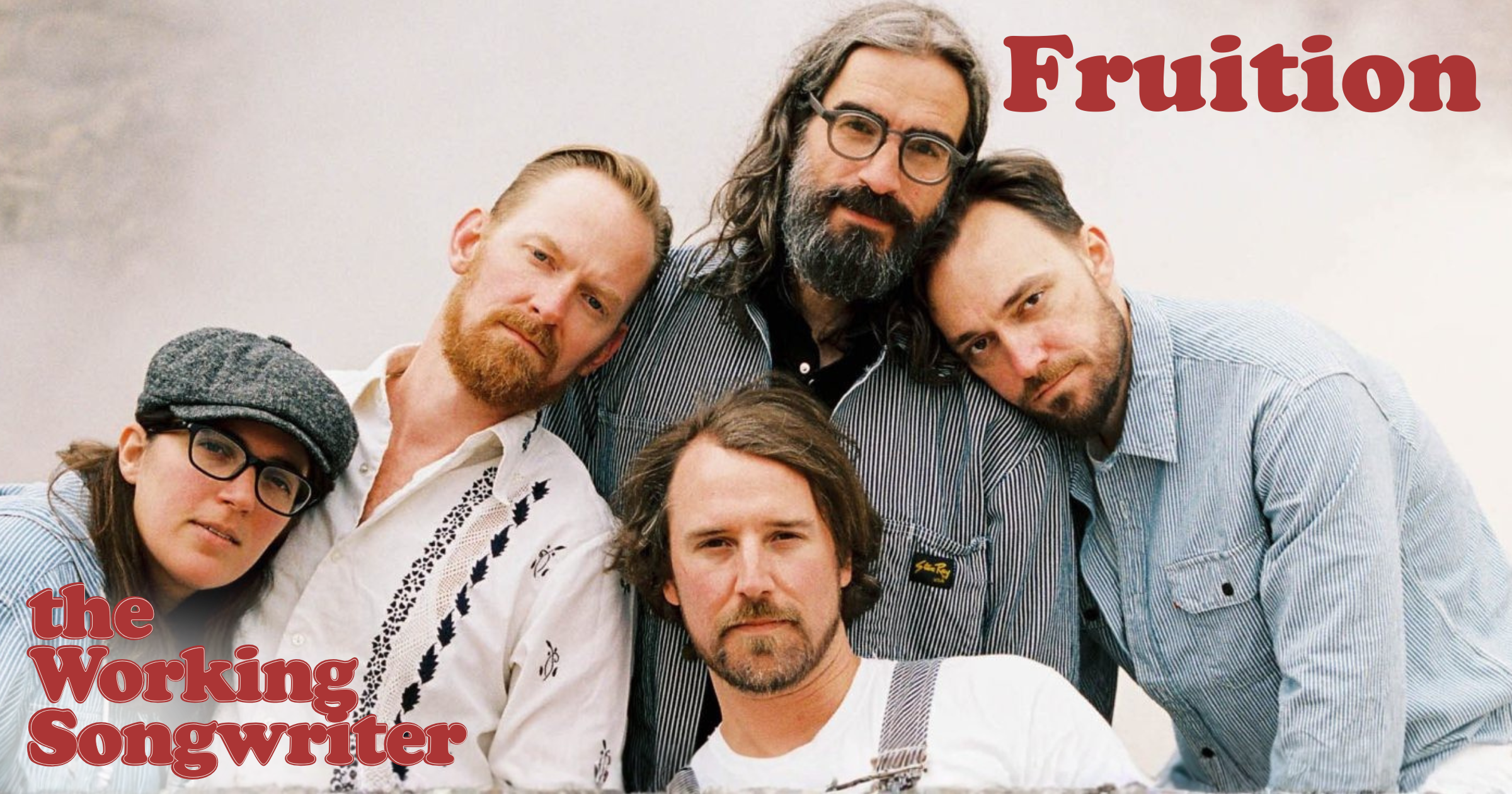
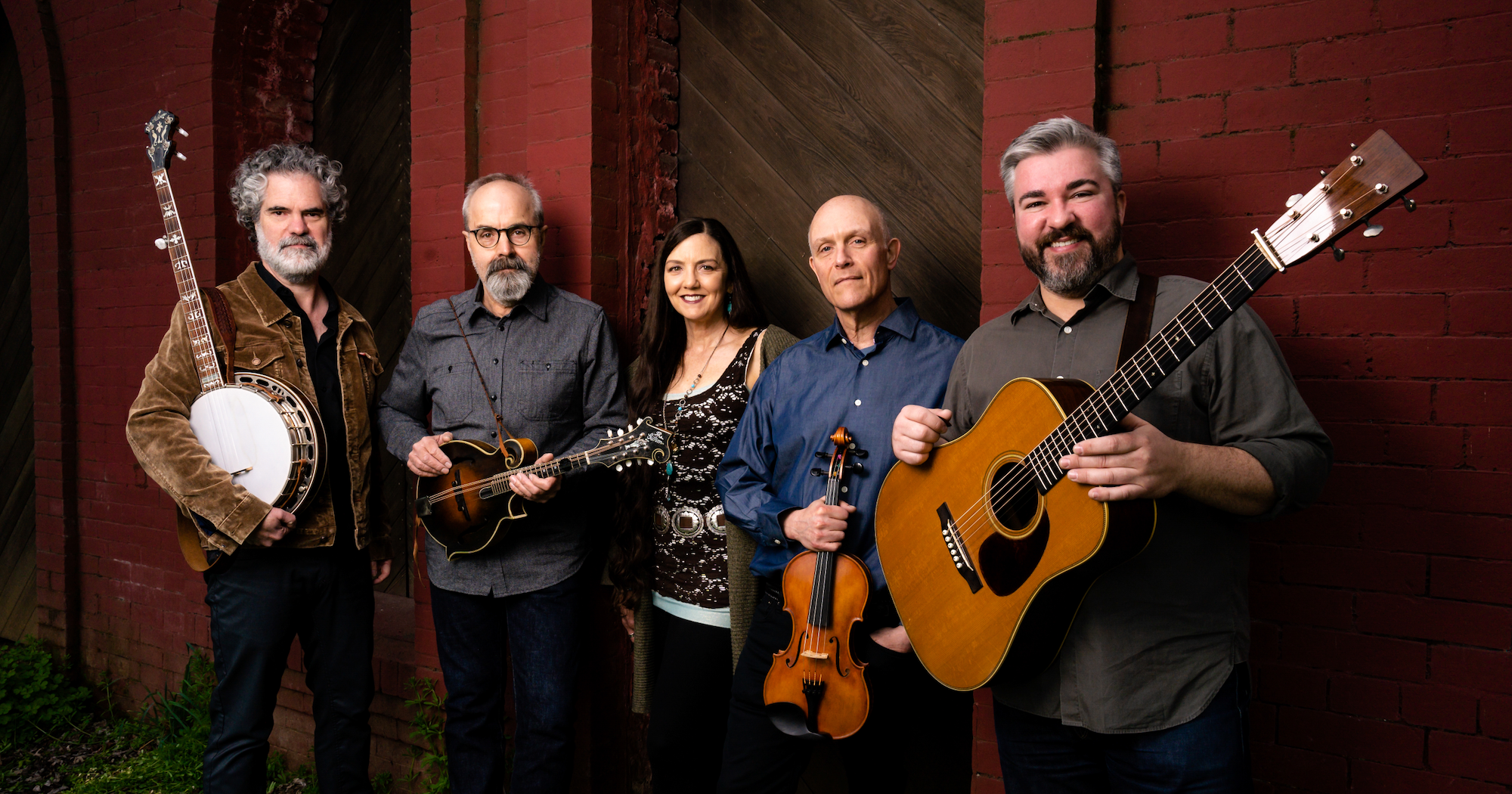
And, you won’t want to miss the latest from Western North Carolina’s bluegrass troubadours the Steep Canyon Rangers. Earlier this week they launched “Rumble Strips” a new single that will be included on their May Yep Roc Records release, Next Act. Written by Aaron Burdett, it’s a straight ahead bluegrass jam about getting back on track after you’ve wandered a bit from your lane and hit the rumble strips. But hope need not be lost, as Burdett points out, often you “maybe only need a little course correction to get back on the right path.”

Just in time for St. Patrick’s Day next week, country rockers Reckless Kelly share a reimagined, “evolved” acoustic version of “Seven Nights in Eire.” They originally released the song in 2005 on Wicked Twisted Road and it’s since become a fan favorite. This new edition of the track features mandolin, fiddle, pedal steel, and more combining country, Celtic, and string band in a pub-ready blend.

Check it all out below, right here on BGS. You Gotta Hear This!

Adam Chaffins, “Sugarcoat It”

Artist: Adam Chaffins
Hometown: Nashville, Tennessee, via Louisa, Kentucky
Song: “Sugarcoat It”
Release Date: March 13, 2026 (single)
Label: Spirit Nashville Recordings / Fluid Music Revolution

In Their Words: “Lately it just feels harder and harder to tell what’s real and what isn’t with so much information flying at us all the time. Sometimes, you hear something so outrageous you assume it can’t possibly be true – until you realize it is. That tension really shaped the song. It’s got sweet, sugary, sticky hooks and a groove you can’t help but move to, while shining a little light on how the truth can sometimes be deceiving. It was a lot of fun to track this playing upright bass. Along with Frank Rogers and the crew we really brought it to life. We’ve got a lot of new music on the way and we’re really excited to kick it off with this one.” – Adam Chaffins


Chris Jones & the Night Drivers, “Steal My Today”

Artist: Chris Jones & the Night Drivers
Hometown: Nashville, Tennessee
Song: “Steal My Today”
Release Date: March 13, 2026 (single)
Label: Mountain Home Music Company

In Their Words: “This song represents some firsts for us: it’s our first release to feature Nelson Williams on the bass (including some bowed bass). He’s the newest Night Driver, though he’s already been with us for over two years. It’s also our first time to feature Italian Dobro player Paolo Ercoli as a musical guest. He and I have been doing duo tours in Europe and in the U.S. for a few years now. Grace van’t Hof and I co-wrote the song, one about not letting the material loss of a breakup take away the joy of the present moment. Grace also played banjo and even added some accordion to the recording.” – Chris Jones

Track Credits:
Chris Jones – Acoustic guitar, lead vocal
Nelson Williams – Bass
Mark Stoffel – Mandolin, harmony vocal
Grace van’t Hof – Banjo, accordion, harmony vocal
Tony Creasman – Drums
Paolo Ercoli – Resonator guitar


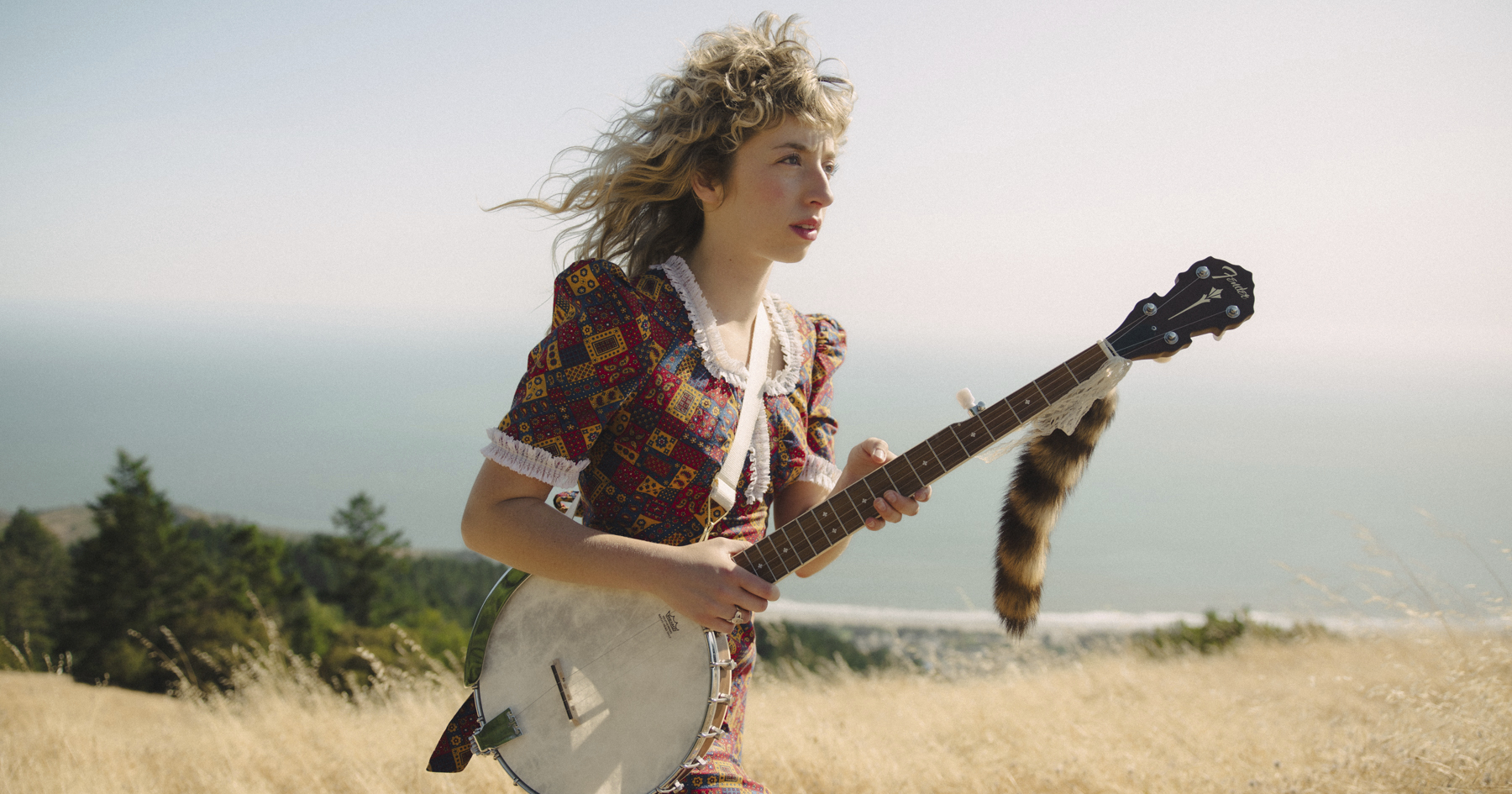
Jim Lauderdale, “We Look At Things In Different Ways”

Artist: Jim Lauderdale & the Po’ Ramblin’ Boys
Hometown: Troutman, North Carolina
Song: “We Look At Things In Different Ways”
Album: The Birds Know
Release Date: March 13, 2026 (single); April 24, 2026 (album)

In Their Words: “This song came through me to speak to these times of divisiveness in our world. It was an important message I wanted to get out: that you can still love somebody even though your views might differ.” – Jim Lauderdale


Liza Lo, “Birdsong”

Artist: Liza Lo
Hometown: Amsterdam, the Netherlands
Song: “Birdsong”
Release Date: March 18, 2026
Label: Gearbox Records

In Their Words: “‘Birdsong’ reminds me of a new love, a gentle morning walk, or a hug from a friend. Life can get overwhelming and the simple things are quickly forgotten or overlooked. First morning coffees, meeting someone new, real connection, holding hands, song of birds in the garden, the smell of spring air, sunlight on your face after a long period of rain and grey. ‘Birdsong’ is written to remember the beauty in the smallest of things life gives us, I hope it can be this reminder for you too.” – Liza Lo

Track Credits:
Sean Rogan – Acoustic guitar
Chris Rabbits – Double bass
Owen Spafford – Fiddle
Liza Lo Hoek – Vocals, acoustic guitar


Reckless Kelly, “Seven Nights In Eire (Alternate Routes)”

Artist: Reckless Kelly
Hometown: Austin, Texas
Song: “Seven Nights in Eire (Alternate Routes)”
Album: Alternate Routes
Release Date: March 13, 2026 (single)
Label: No Big Deal Records

In Their Words: “‘Seven Nights In Eire’ is a collection of stories based on trips taken to Ireland by myself, my dad Muzzie, and our old friend Pinto Bennett. We had all been there individually a time or two and had had some amazing experiences that we wanted to write about. We got together at Pinto’s house in Boise, Idaho, and after a couple hours and a few beers, we had the song down. We basically just sat around swapping stories and telling jokes and working them into the verses that became the song as you know it today.

“The original version was recorded for our 2005 release, Wicked Twisted Road. Over the years it’s become a fan favorite and one of our most popular songs, so we decided to include it in its new evolved version on Alternate Routes. We had our friend Kym Warner come play some mandolin on it and we did the version we’ve been playing live over the last several years. It’s a little different from the OG, but it’s one of those songs that has stood the test of time and will definitely continue to be a staple on the set list.” – Willy Braun


Steep Canyon Rangers, “Rumble Strips”

Artist: Steep Canyon Rangers
Hometown: Asheville, North Carolina
Song: “Rumble Strips”
Album: Next Act
Release Date: March 10, 2026 (single); May 22, 2026 (album)
Label: Yep Roc Records

In Their Words: “My friend Nate is fond of saying when a person has gotten off track a little bit and notices they’ve ‘hit the rumble strips’ and maybe only need a little course correction to get back on the right path. I took this imagery and applied it to a relationship. Some ongoing conversations between Graham [Sharp] and I filled this one out.” – Aaron Burdett, songwriter, guitarist, vocalist


Joe Troop & the Truth Machine, “Billionaires”

Artist: Joe Troop & the Truth Machine
Hometown: Winston-Salem, North Carolina
Song: “Billionaires”
Album: The Truth Machine (EP)
Release Date: March 13 2026 (video); April 3 2026 (EP)

In Their Words: “I formed this band with friends that I made at the Galax Fiddlers Convention many moons ago. This track has Southwest Virginia written all over it. It’s Southern bluegrass gospel with four-part vocal harmonies in the Stanley Brothers style.

“Lyrically, it’s unabashed political satire, a high lonesome roasting of MAGA and their principal talking points. But funnily enough, people often approach me after gigs to thank me for singing it without realizing it’s satire. Yikes! Is media literacy a problem in this country? On occasion, some folks have walked out on our show during this song. One couple told the presenter that they didn’t pay to be insulted – they work hard for their money! And while we aren’t ragging on anyone for accumulating wealth, to add some perspective: a million seconds is 11 days. A billion seconds is 32 years. Who needs that much money!? What could you possibly spend it on?! Election meddling, propagating divisive talking points? Beyond partisan politics, the wealth disparity in this country ought to alarm everyone. We plebs are not that different. Let’s rally together around music, laughter, and class justice in this billionaire-induced hellscape of a country. It’s time for a change!

“‘Billionaires’ is part The Truth Machine, a five-track EP that drops everywhere on April 3, 2026. It is available for preorder now on my website.” – Joe Troop

Track Credits:
Joe Troop – Banjo, vocals
Lu Furtado – Guitar, vocals
Malia Furtado – Fiddle
Olivia Fernandez – Mandolin, vocals
Jimmy Washington – Bass, vocals

Video Credits: 
Kayla L Oelhafen – Producer
Alexei Mejouev – Videographer
Andy Augustyn – Gaffer
Larry Vellani, Toni Murray – Location coordinators


Photo Credit: Steep Canyon Rangers by Jay Strausser; Jim Lauderdale by Jeff Fasano.

Magoo on Taking Chances and Giving Up Second Guessing

Magoo has been lighting up Colorado’s vibrant and crowded jamgrass scene since 2022. Their collision of string band music with danceable beats, jazzed up instrumental breaks, and anthemic lyrics rooted in rock has led guitarist Erik Hill to coin the phrase “bluegrass with lasers” to describe their sound and style.

After turning heads with two volumes of Magoo The EP in 2023 and 2024, the band – now comprised of Dylan Flynn (Dobro), Courtlyn Bills (mandolin), A. Denton Turner (bass), and Hill – have finally unleashed their full-length debut, What A Life. The 10-song compilation sees the upstart group of pickers contemplating everything from the sacrifices of a life lived on the road, the places that have transformed us, and how our stories are all connected.

Across 52 minutes of run time, the musicians rip their way through meandering jams that flow freely from one song to another as if it was a live show, an approach Hill says was intentional to keep the album from feeling sterile.

“Our live shows and recordings are very important to us, so it was imperative that this album not feel so copy and paste or cut and dry like studio projects often can be,” explains Hill. “I think we landed on a nice, organic feel that stretches the songs out, but not as much as we do when you see us live. In that sense, it serves as a good bridge between the two.”

During a free-flowing conversation with the band inside the green room at The Burl in Lexington, Kentucky, midway through their winter tour, Magoo spoke about the DIY approach to What A Life, Telluride’s significance to the group, near-death experiences, and more.

Why was now the right time to release your debut record?

Erik Hill: We had all the songs that we wanted to record. With the EPs we released previously, we basically recorded the couple originals that we had at the time along with a few covers. Eventually we started collecting a nice set of original music and figured it was time to do a full-length album.

Denton Turner: A big part of it is just having all the parts in place, from our management to booking people, so we can hit the road full speed. But in order to do that right it was important we have an album out to go with it – we needed a product to market. That was a big motivator for us this year, having an album to really kick in the door and make the most of our 100+ shows this year. Getting those other pieces in place on our team gave us ample time to focus on recording. When you’re trying to do everything it’s easy to half-ass it all, so having them by our side allows us to focus on and tackle what we love – the music – head on.

And with What A Life you opted to tackle it in your own DIY studio. Tell me about that experience?

Courtlyn Bills: I’ve made about 80 records in the past, but for this one everything was set up special just to make this album. I was moving and had my dad drive up a bunch of equipment from Texas, including my console he’d been holding in storage that was previously owned by Prince.

EH: Sessions were scattered throughout the month when we weren’t touring. Any time we were able we’d try getting over to Courtlyn’s to bang out a tune or two.

CB: There were a lot of 4 a.m. sessions. The coffee pots were flowing! The only big difference from one session to the next came on the jams, which we decided to use our pedal boards on and mic them up simultaneously. The only other thing is that I changed the action in my mandolin near the end of some tunes, which is why my mandolin sounds a bit thicker to close out three songs. There was a lot of us repeatedly asking each other, “How does your instrument sound?” Because there’s no turning back now, so no pressure. [Laughs]

DT: Even though we’re coming from touring and going straight into recording and back to touring – which seems hectic in a way – it’s nice for me doing [songs] one at a time. Being in a studio can be a grueling, tedious process, so having the luxury of being able to do it ourselves when it made sense for us was nice. We were able to just focus on one song or two songs at a time and give them all our attention. It didn’t feel like we were on the clock and paying by the hour with the pressure to get it all done quickly. Instead we were able to focus on banging out a song then hitting the road and discussing what next song we want to do and develop next before coming back being ready to give that song the attention it deserves, which was a lot of fun.

Courtlyn, you mentioned having a deep catalog of producer credits already. Has it always been a goal of yours to record your own band’s projects?

CB: I first started working in a studio when I was 15, mostly with younger artists that have less developed material, which I love. However, what I don’t love recording is my own music, which is why I never made a record for myself up to this point. But the cool thing about Magoo is, even though I write for and sing a lot with them, it feels like I’m working for a band and not myself. Knowing that removed a lot of the pressure of it being a make or break thing because I could trust my dudes. If they said something was good I wouldn’t question it, I’d just say, “Let’s move on!”

If I’m not mistaken, the only song you didn’t record at the DIY studio was “Angel Of Telluride,” which you flew to Nashville to knock out with its feature artist, Sam Bush. How’d that one come about?

CB: That connection came about through Jeff Fasano, an amazing photographer who used to shoot the rock band I was in prior to Magoo. Whenever we first met I had just started playing mandolin and I remember him telling me that he could see into my soul and could tell that playing it was my destiny, not rock music. I knew he was also close to Sam, so when I eventually wrote “Angel Of Telluride” I did it to be a Sam Bush song.

One day Jeff emailed Sam about the song and once he realized we were a real band and not full of shit he gave me a call and said he’d be honored to be a part of it. When we got to recording, I remember asking him if he wanted a producer credit on the song and he turned it down even though he was still effectively acting as a producer, because every freaking note, chord change, and tone shift he hit was spot on.

DT: Sam actually beat us to the studio the day we recorded. We wound up spending the entire day hanging out with him. It reminds me of a line in “What A Life” – “Buy the ticket, take the ride.” You only get one life, so don’t shy away from taking chances and shooting for the stars. Who knows, you might just wind up at a studio in Nashville recording with one of your heroes. Working with Sam never would’ve happened if we hadn’t taken the chance, and I’m so glad we did. I hope it inspires others to bet on themselves and their abilities too.

That song also holds a lot of significance given what the Telluride Bluegrass Festival has meant to the band, notably how you wound up bringing Courtlyn into the fold. Can you tell me about that?

Dylan Flynn: Erik, myself, and my Uncle Paul [Flynn] were the original Magoo and would regularly attend and pick around at festivals like Telluride, Rockygrass, and Tico Time. Then a few years ago Courtlyn, still new to bluegrass at the time, stumbled into our campsite. We ended up picking all week, through the night until 8 a.m. each day.

Then at one point when we were watching Greensky Bluegrass perform I remember him turning to me and saying, “I want to be in your band” and I responded, “I just met you like five minutes ago. Let me talk to the guys about it first.” [Laughs] But after spending all that time with him there and seeing not just how his brain works, but also how far along he was as someone still new to bluegrass, it was a no-brainer. In the weeks after Telluride it dawned on us that he was the missing piece we needed, not just as a player but as a person as well.

We rode with that lineup for about a year until my Uncle Paul decided he wanted to step away from music to travel the world – he’s actually rooting us on from Thailand right now. But when he departed, Denton was presented to us by a mutual friend. Similar to Courtlyn, after being introduced he tagged along to play several gigs before we formally asked him to join us long-term.

DT: I still remember them proposing to me and making it official with a Slim Jim ring. I still have mine and see it every day. It’s on the bus sitting on the butter tray in our fridge. [Laughs]

Sounds like you’re preserving it like one of those Big Macs you see in a museum that’s unchanged after 20 years!

Switching gears now – Courtlyn, what led to your move from the rock world into bluegrass?

CB: I was seeing the String Cheese Incident and going to festivals like Hulaween a lot, but I still didn’t quite love or understand bluegrass yet. I come from a really progressive and heavy world of jazz fusion, metal, and radio rock, but once I started hearing Cheese do more bluegrass-leaning songs I started falling in love and learning how to do them myself.

Then in 2019 – still prior to picking up a mandolin – I ingested DMT for the first time. When I did, I remember a friend who’d been telling me for years that even though I didn’t know it, that I was a mandolin player. [He] put a 1916 Gibson A[-style mandolin] into my hands and told me to shred. I don’t know how to explain it besides it being like “Dr. Strange,” but with numbers. It was that moment I became a mandolin player.

From there I formed a Celtic band and began plugging away with that, all the while realizing I had to get this bluegrass thing figured out. Bluegrass is one of the most prominent genres in the counterculture-ish scene that I loved being a part of, from String Cheese people to Deadheads and Spreadnecks and beyond. One day I sat myself down and said bluegrass is gonna have to be it – you are married to bluegrass now. Then I started going online and listening to pickers like Ricky Skaggs, Sierra Hull, Jarrod Walker, and David “Dawg” Grisman, slowing down YouTube videos to learn their breaks. That was about it. Once I learned what was going on in bluegrass musically, then it was obvious that these guys and gals are monsters. To be able to create such a back pocket with no drums on that mash grass stuff – there’s nothing like it.

You’re right, there is nothing like it! With that in mind, is that what your song “What A Life” is about – taking chances and being grateful to make a living making music?

CB: The melody and chorus for that song came together really quickly one day in my buddy’s living room. At that time in my life, the songs I was writing didn’t hold a lot of meaning or significance, so I wanted this one to be profound. The last verse really says it all: “What a life/ Is what I thought before I got swallowed by the tide/ Something felt amazing/ But I knew it wasn’t on the other side.”

I had a near-death experience when I was 19 and that is where I take a lot of the song’s inspiration from – although in the beginning I try to get cute talking about grandpas and other relatives and how their actions and memories have impacted the person you are in this very moment. Despite how insignificant those stories may seem to you right now, the fact that they were passed down and made it to you means they must’ve been pretty big moments in their and your family’s history.

So even though something like hopping into a stranger’s car and hauling ass to Telluride may not seem significant to anything other than the present moment, it’s so much more than that. We’re all connected in the climb and the work we put in together to build the memories we cherish. If none of us were here, what would be the point?

DF: …There’d be no life at all. That’s my favorite line in the entire song: “If none of us were here there’d be no life at all.” [Laughs]

A big part of the musical life and memories in your Colorado stomping grounds are its vibrant jamgrass community, a talented and tight-knit group that reminds me a lot of the Kentucky scene I’ve been fortunate to grow up in. What are your thoughts on the scene there and where Magoo fits into it all?

EH: We’re pretty lucky to call Colorado our home base. It’s certainly a breeding ground for a lot of great bands and even better music fans. People that love our type of music are everywhere in Colorado, no matter what town you’re in. From Denver to Boulder and up in the mountain towns, people want to hear that jam music, bluegrass, or a mix of both. It keeps us constantly busy and buzzing with new ideas to explore.

DF: We also have so many friends who are a part of great bands like Clay Street Unit, Tonewood String Band, and The Fretliners. I have more friends in my life now than ever before because of the community that we’re building. It’s also funny too – like one day I was driving home and saw [the Infamous Stringdusters’] Andy Hall in my neighborhood and am in awe, only to find out he lives half a mile down the road. My number one Dobro inspiration is Andy Hall, so having him so close by is a testament to just how unbelievable the music scene is in Colorado right now.

CB: There’s just something about being above 8,500 feet [elevation] that pushes people to their limits, whether it’s climbing a mountain or writing a song. The special thing about Colorado is the people here are making music for their friends. They’re making music for their little community to get together and have a good time. Someone like Vince Herman isn’t out there writing a song to have a number one hit. He’s writing a song so his family and his homies can get in front of the stage and throw down and feel comfortable and have the time of their lives, which is exactly what we’re getting to do now.

All: What a life!

What has bringing this album to life taught you about yourselves?

EH: Doing this album DIY style, we had to learn to trust ourselves and say, “Hey, this is really good.” You can sit here and nitpick each part and each take fucking forever, but at the end of the day what we have is really good, good enough to put out for people.

DT: For me, it’s in line with the phrase “what a life,” to take the chance and take the ride, call Sam Bush, whatever. I hope it inspires others the way it inspired me. When I met these guys, I lived three and a half hours away on a good day, but I saw what was going on and wanted to be a part of it. That meant getting in my car and driving to Denver multiple times a week to practice and learn the material. People thought I was crazy, but if you want something, you’ve got to go for it and give it your all. When you do that, amazing things can happen.

This whole experience has been a case in point of that, especially with the Sam Bush thing and making that call. We didn’t sit there and second guess ourselves about it and look at what happened. It’s always worth your time to give it a shot. You never know where the ride will take you. For me, that’s what this is all about.


Photo Credit: Jeff Fasano

Vince Gill Has Done It All (Part 2)

Poaching from Elvis, well over 50,000,000 Vince Gill fans can’t be wrong.

The longevity Gill discussed in Part 1 of this interview has taken him from bluegrass beginnings to a genre-inclusive 50 years as one of country’s most beloved and sought-after artists.

It’s not always been easy, however. No one, regardless of talent or fan loyalty, is immune from freedom of the keyboard and Gill is no stranger to the highs and lows of public opinion. Mostly it’s outpourings of gratitude from the millions whose lives his music touches. Sometimes it’s claptrap about his now decade-long tenure in the Eagles, or venomous spewing over songs like “March On, March On,” from Secondhand Smoke, the second in his series of retrospective EPs being released monthly.

In Part 2 of his conversation with Good Country, Gill discusses, among other things, the aforementioned decade-long tenure with the Eagles, bullying – with a few choice words for those who inflict it – his scrolling habits, and he indulges us in a rapid-fire round of closing questions.

In the arc of this 50-year project, it is not unnoticed that Hotel California turns 50 this year. Do you have memories of listening to that album as a young man, as you now find yourself onstage playing those songs?

Vince Gill: I had all the Eagles records. We did a lot of their songs in my bluegrass days, and it’s completely surreal. I’m starting my tenth year of being in that band and continuing that legacy of songs. What I value most about getting to play with these guys, what I’ve learned most, is how important songs are – all the notes, all the licks, all the riffs, all that stuff. Getting to relearn that at this stage of life has been pretty profound in the way that I’m trying to write songs. I’m patient in the way I write. I’m patient to wait for it to come – the right words, to not settle on anything, and really edit and work and edit and work and continue to try to be mindful of how important the song is.

What I’m mindful of with the Eagles is the tragedy. More important than the fact that I get to do it is that if Glenn had not passed away, I would not have gotten to do this and I’m grateful I’m the one they called. I met all those guys in, I think, 1980, when I was living [in California]. In a million years, would I have ever thought this would have happened? No. But I am careful of how I couch everything, because it came from something tragic and I am respectful of that.

Glenn was a really good friend of mine, actually, and his son Deacon is doing a great job up there of carrying on his dad’s tradition. I think I’m a great fit for them in the way I play guitar and sing, and sing harmony, and play all the instruments I do. I’m not saying I’m better than anybody else they could have gotten. I’m just saying what I do suits them really well.

Jedd Hughes described you as “one of the greatest band leaders I’ve ever worked with. He’s listening to everything and everyone, always, so you can read his cues pretty easily.” First part of the question: Where did you learn to lead?

Because I’m a musician, I think I come at it different and I operate under the mindset that every note is equal. You’re not more important because you’re the lead singer. You’re not more important because you play the lead solo in the song. I value every note the same. Spending my life in the studio like I have, knowing what you play and do has to sit well and play well with others, you have to listen to everybody else.

It’s amazing what you can accomplish if you don’t care who gets the credit. Sometimes people play only to be noticed and that doesn’t necessarily constitute the right thing for the song. They say in Nashville all the time, “Just serve the song.” That’s all I’ve ever tried to do. If someone’s playing something and doing something, don’t do something to distract it. Do something to enhance it, to support it.

Second part: How does that translate to arrangements and contributions from the musicians you work with?

Great players all listen to each other and you’re dealing with a caliber of musicians that already know what not to do, so you don’t have to waste time going, “Hey, don’t play that, that’s too much, that’s not necessary.” Every time I’m in there playing, I take every note, examine it, and make it move me, make it sit just right.

Once again, if you’re playing with that caliber of people, which I fortunately am – my band is usually made up of a lot of studio musicians and amazing players – they like playing with me because I’m a player, too. I’m not just someone up there singing the songs. So I think I have their respect, and that points you once again towards, “What’s the best thing for the song? What’s the best arrangement idea? What’s the best part to play? What’s the best part not to play?” That’s it in a nutshell.

I’m surrounded by musicians that can all play me under the table, straight up. That’s the truth. I’m grateful to have them, grateful to get to play with them, and it makes for a very democratic spirit. Even in the way we record, I’m not heavy-handed. I’m not telling people what to play. Oftentimes we’ll be in there and they’ll say, “Do you like this?” I go, “I don’t have any idea. I’ve never even heard this song before. I know I wrote it, but we’re in here trying to figure it out, so we’re just going to figure it out all together.”

It creates a great spirit in there if everybody feels like they’re all walking on equal ground, everybody has a right to an opinion, everybody has a right to try something, nobody gets shut down, nobody gets put off. It’s an amazing experience. I don’t ever do demos with my songs. I just write them and then I show them to the guys on the floor. I go, “This is how it goes. Let’s figure it out.” They naturally gravitate towards something great and you just follow them off the cliff! It’s wonderful to watch other people’s gifts.

Earlier you described yourself as “the happiest son of a bitch in the world” who just loves sad songs. In that happiness, however, you have experienced much grief. Your faith is strong. Have you ever lost or questioned it during times of loss?

When I think about faith, I don’t think of it so much [from] the religious point of view. I think faith in humanity – more than Baptist or Methodist, or heaven or hell, or any of that stuff. None of these questions have ever been answered, so to pretend you know the answers seems a little, I don’t know, pretentious almost. That might not be a good word. But, no. It all comes from loving deep. The people I love, I love them deeply. They matter to me.

Music is where I go to grieve. It’s where I go to get through loss. It’s where all those things are. I tell everybody it’s cheaper than therapy. I just write about it.

I never feel the need to fix everything in my life. My relationship with my dad, if it was funky or whatever, I said, “It’s not my place to change him. It’s my job to accept him.” Once I could do that, we had a great relationship. You don’t have to be like me for me to like you. You don’t have to think like I do for me to like you.

I’ve been told more often than not, “Why I like your songs is you are able to say what I wish I could say. You are able to express feelings I have that I don’t know how to.” Maya Angelou sought me out and asked me to come and meet her when she was in Nashville years ago. She told me, “‘Go Rest High’ was a lifesaver to me. It helped me get through the loss of my brother.” Those kinds of things make you go, “I’m going to try to find a way to be emotional about things and not only help myself, but help other people too.” I think if you can portray in a story what someone’s going through, you have a chance to make people feel better.

You can’t name-drop Maya Angelou and just go on to the next question! We need to back up a little bit.

She was speaking at Vanderbilt and wanted to meet. [My wife] Amy [Grant] and I went and afterward we got to go back and say hi. She said, “You mean a lot to me, because your song helped me get through one of the hardest times of my life.” It was a great visit.

You’ve released the fourth EP in your series. Which chapter is this and do you know what’s to follow?

It’s uptempo-y and groove-y, kind of like “Liza Jane” and “One More Last Chance” and some of those fun songs. Each record is, on purpose, similar-driven. The record after this fourth one will be a lot of real country-country stuff, real traditional stuff. The one after that is going to be more like “I Still Believe In You” and “Don’t Let Our Love Start Slippin’ Away,” from a more rocking side. I don’t want to say the word “pop,” but it is. It feels like an Eagles record or a Fleetwood Mac record at times. The inspirations are all in there.

The one after that is real bluesy R&B-ish. Are you hip to Lamont Landers? He’s a soul singer from Alabama. You look at him and go, “There’s no way this voice is coming out of that dude.” He does all these really cool things. I found him and I got him to come and sing on one of my songs that’s coming out later in the year. He’s just such a cool dude. I’ve been trying to turn people on to him.

How did you find him?

Scrolling.

You’re a scroller!

Oh, heavily guilty. I tell Amy it’s my TV now instead of channel surfing. Once in a while you’ll come upon a great young musician, or a great young singer, or a great comedian. There’s so many options, and if you stop on something, it’ll start giving you hundreds of things just like that.

The algorithm gets you.

Yeah, exactly. But it’s entertaining, and I found a couple of people to track down and
have them sing on my record because I like what they do.

What do you scroll?

YouTube, Facebook, Instagram. Most of the stuff is pointless, but there’s a nugget once in a while.

How do you handle the cruelty of social media? It can get to anyone, especially when it’s directed toward you.

It can, if you let it. That’s the life we live in now. You can’t go perform and not have everybody have a camera out and put it up and showing it and seeing it. You have a bad night and everybody’s going to rip you for it. It’s like, “How much negativity can you continue putting out there, saying negative things?” It’s never going to stop, you know that, but it’s still entertaining to read.

I read it to be informed and I don’t mind taking it. I’ve lived with critics being critical of everything I’ve ever done. It comes with the territory. If you’re brave enough to stand up there and speak through a microphone, you know you’re going to get judged to some degree. Once in a while, somebody will say something and I say, “That’s fair. That’s truthful.” Other people will say things and I go, “You don’t even know what the hell you’re talking about, but you have an opinion that’s inflammatory towards me, and you couldn’t be more wrong.” I know that, so it doesn’t have an impact.

Sadly, people have to get on there, the keyboard warriors. They think they finally have a voice. Being able to post and have an opinion, they think that gives them a voice. But in the grand scheme of things, it doesn’t. I know that, so I just take it with a grain of salt and move on.

Perhaps being 68 years old with experience and success makes that easier than for a young person just starting out.

People are still critical of me being in the Eagles. They say, “Now it’s a cover band and you shouldn’t be there,” blah, blah, blah. You know it’s coming, so press on. Say whatever you want. Say it to my face and see what happens to you!

I can’t control any of it. I can control me. I can control my heart, what my heart thinks, what my heart feels. If you hate what I do, that’s okay. A lot of people don’t like what I do. I’m used to that. You’re not going to stop me.

Earlier we talked about hope. I just hope people respond. I don’t mind if they respond negatively. You don’t want that, you’d rather not, but it’s funny how you can get a hundred good reviews on a record and one bad and you only remember the bad one. That’s human nature. It’s not a weakness. It just goes to show how being cruel and negative towards someone has an impact.

I think about the times I was in school and was talked to in a negative way, and how it lasted. I remembered it forever. There was a girl I was in a band with for a little bit. She sang in this choir at the school that was really well thought of, and the choir director told her, “You are wasting your time with that guy and his banjo and bluegrass. He’s a fool.” And I just want to go, “Na-na-na-na-na!” But you remember it. And an English teacher that kicked me out of the class for saying something she didn’t like and painted me a certain way. You remember it.

My own kids, one teacher said to my youngest daughter, “My dog has more manners than you.” Things like that … my hundred-year-old mother is still pissed off about that! She’s still, “I’d like to get my hands on that teacher!” We’ve got a good bit of redneck in us!

I watch my sweet wife take slings and arrows all the time and the way she handles it is so beautiful to watch and so inspiring. It’s helped me do the same thing.

Can you play everything you hear in your head?

Probably. I hope so! It’s funny you brought that up, because being a musician and a singer, people say, “How do you get inspired to sing?” or “How do you get inspired to play?” Well, before I play something, in my head, I’m saying, “How would you sing this?” And when I’m getting ready to sing something, I ask myself, “How would you play this? What kind of rhythm? What kind of phrasing?” All those things.

I think the real difference [between] a good singer and a great singer is the way they phrase. Ray Charles could phrase like nobody’s business. Jerry Lee Lewis, when he sang country songs, could phrase like nobody else. George Jones could phrase like nobody else. You go on and on and look at all the greatest singers, and they’re unique because more so the way they phrased than how many notes they sang.

What is the difference between playing guitar and being a guitarist?

Oh, man. I don’t know if there is. I think it’s the same thing. It all comes from the same heart. It all comes from the same ears. I just play what I think fits. I think that’s what being a great guitarist is – playing what fits.

I saw something the other day that said, “I refuse to name who I think the greatest guitar player is,” and it makes sense to me because there’s no such thing. Everybody goes at it in a different way and has a different spirit about it, has a different way they want to play and statement they want to make. Then it becomes a matter of your preference, of what you like best, that defines what the best guitar player is.

I just like people that are gifted, and people that are musical, and they play what’s in their hearts and what they feel. If you feel it like they do, game over. If you don’t, you move on. Not every great guitar player moves me. It might move you. I think we’re lucky that we can be subjective and not have to all feel the same way about the same things.

Let’s close with a lightning round. Anything goes, whatever comes to mind. An album you wish you had played on.

Hotel California.

A song you wish you had written.

’Till I Gain Control Again” by Rodney Crowell.

A session in which you wish you could have been a fly on the wall.

Together Again” by Buck Owens.

A concert you attended that made your head spin.

Paul McCartney.

A guitar solo you wish you could claim as your own.

Oh, gosh. I might have to go with a Chet Atkins solo, because he’s the first person I ever saw play live when I was a little boy.


Editor’s Note: Check out part one of our Good Country conversation with Vince Gill here.

Want more Good Country? Sign up to receive our monthly email newsletter – and much more music! – direct to your inbox.

Photo Credit: David McClister

BGS 5+5: Trey Hedrick

Artist: Trey Hedrick
Hometown: Wilkesville, Ohio
Latest Album: Sing, Appalachia (released February 20, 2026)

What other art forms – literature, film, dance, painting, etc. – inform your music?

Literature. It has probably helped my writing more than anything besides the act of writing itself. Wendell Berry has had a huge influence on me and he’s far and away my favorite writer. His prose is exceptional. There is a restraint and steadiness to it. He’s extremely prolific and consistent, which isn’t an easy thing to achieve. He says a great deal with very little and I learn from that every time I read a page.

There are many great writers I draw from in the same way: McCarthy, Kingsolver, McMurtry, Leopold, Abbey, Rooney, Hemingway, Faulkner, Burroughs – to name a few. I read widely, but tend to gravitate toward certain styles when I’m working on a project of my own. I’m always reading and if I’m not I make myself feel bad until I do. It’s a big part of the peace my wife and I have built into our days. When I’m in a creative season, I am a bit more intentional about my picks.

Which elements of nature do you spend the most time with and how do they impact your work?

I love the out of doors. I grew up on a cattle farm in Appalachia and was usually either outside or in trouble. I still spend as much time as I can fishing and hiking and – something that is likely unknown about me – I love rock climbing and have traveled the world climbing. I am also a geologist in my straight job, which especially early on kept me working outside.

Nature shows up in almost every one of my songs. It is not something I reach for. It is just part of how I see things. Being outside has always been another place I find peace. If things are bad, going outside almost always makes them better to a varying degree for me

Admittedly, I do get tired of winter and the blues that come with it. That makes its way into the songs, too.

Genre is dead (long live genre!), but how would you describe the genres and styles your music inhabits?

I don’t think much about genre. My songs usually start on an acoustic guitar, so there’s naturally some bluegrass and country in them. That’s the language I grew up around. But I’m not trying to recreate anything. I don’t read music or know much theory and I don’t really know what rules I might be breaking. I’ve always had a good ear and I let that guide me. I’m lucky to have close friends who are incredible musicians, and they’d dress me down if something was off.

If someone needs a label, Americana works fine. Beyond that, I try not to overthink it or limit myself.

What is a genre, album, artist, musician, or song that you adore that would surprise people?

I love hip-hop, R&B, neo-soul type music. I especially love ’90s early 2000s neo-soul. D’Angelo, Erykah Badu, Lauryn Hill, Tevin Campbell, Mario, etc.

I enjoy those genres as much if not more, at times, than bluegrass and country. It’s like reading, I put on the music I need in the moment and I don’t limit myself. I guess that would surprise people, but I think it comes across in my singing some and may present in future sonic choices as well. We’ll see.

Since food and music go so well together, what is your dream pairing of a meal and a musician?

Fried potatoes from a cast iron skillet, greasy beans from Mamaw’s garden, macaroni noodles with tomato sauce, and a chicken fried steak. I could think of a lot of musicians to share that meal with, but the one who keeps coming to mind is Jerry Reed. He was hilarious and super intelligent. A great singer with excellent tone, and he was even a writer for Elvis on a couple tracks.

There’s a story about Elvis asking for Jerry to play on “Guitar Man,” a song Jerry wrote. Folks on Elvis’s team had to go get Jerry from the river where he was fishing to come to the studio and play the guitar part. None of the other session musicians could get it quite right. Legend. He isn’t really revered in modern memory for how brilliant of a technical player he was. He’d be a fun person to share that meal with.


Photo Credit: Chris Heidl

Vince Gill Has Done It All (Part 1)

Vince Gill doesn’t give interviews; he gives conversations – lengthy, engaging conversations filled with the same reflection and storytelling that make his songwriting so relatable and successful. Factor in his enviable mastery of guitar and other instruments and the result is a well-rounded artist who has won 18 CMA awards, 22 GRAMMY awards, and eight Academy of Country Music Awards.

In 2025, he was presented with the CMA Willie Nelson Lifetime Achievement Award, and this year, on May 6, he will receive the Ken Burns American Heritage Prize. He’s been a member of the Grand Ole Opry since 1991 and in 2005 was entered into the Nashville Songwriters Hall of Fame. Two years later, he was inducted into the Country Music Hall of Fame.

Over the course of 21 albums his sales exceed thirty million with 45 chart singles. Coming up is a summer tour, which will wrap with a six-night residency at the Ryman Auditorium, while continuing his ongoing schedule with the Eagles. All of this is only a cursory glance at his many accolades.

Gill’s accomplishments, and the experiences that accompany them, are at the core of his latest project, 50 Years From Home, a yearlong series of monthly EPs marking the fiftieth anniversary of his leaving home to pursue a music career. Each collection features themed new songs and revisited classics, with photos of select guitars on the covers. The EPs are introduced via detailed conversations with friend and colleague Charlie Worsham – watch all episodes on Gill’s YouTube channel.

Down At The Borderline, released February 13, is the fourth and latest EP in the series, while the next installment, Lonely’s What I Do, already arrives this Friday, March 13. A few weeks prior to the release of Down At The Borderline, Gill made himself available for more interviews and conversations, including a talk with Good Country.

At this point, it’s difficult to imagine anything Vince Gill hasn’t done. In fact, there are two key things, neither of which he cares to pursue:

“I’ve never sent a text,” he says, “because I prefer talking to people. What you find out [with texts] is how many people really don’t want to talk to you!” And, “I’ve never posted anything on the internet,” although he does have a scrolling habit, which he gladly admitted to during this discussion.

As you move through endless interviews around these EPs, is there something you’ve always wanted to talk about but have never been asked? Now’s your chance to tell the world!

Vince Gill: I wouldn’t have a clue! I never was much of a planner. I think it’s a blessing that I just live in the moment. I don’t look ahead, I don’t look back much, and there’s not a lot of regrets in my life. I figure the mistakes I made were valuable to learn something. I never planned any of this. I didn’t sit down and have a diary that I’d go, “When I’m this age, I want to have done this and this.” I just answered the phone.

You should probably give classes on that, because this is an industry of nonstop worry: What’s going to happen? Will this work? Will this not work? To move from project to project, stage to stage of your career with that mindset is impressive.

I started out with absolutely not one dollar, so money has never been the reason for any of it. I bought a guitar when I was 18 years old and I moved away from home. It was an old pre-war Martin that was perfect for bluegrass. I spent every dime I had on it and I didn’t worry. I said, “My rent’s $15 a month, I’ll make a couple hundred bucks a week when we work, so I’ll be fine.”

Amazing.

Speaking of going from stage to stage of your career, the EPs are each a chapter told with collections of songs. Tell us more.

The majority of it is fairly new. From the time I started in 1975, there was no reason to have a publishing deal for a long time. Even after I had a record deal, I didn’t see the need because I had a place for my songs to land on my own records. I never partnered up with a publisher, to give away half the money, to give a monthly draw to help pay my rent or whatever. I was able to always pay the rent somehow – my house note, whatever it was – with playing and singing.

Three or four years ago, Jody Williams, who’s a lifelong publisher in Nashville and a friend of mine for 40-something years now, called me and said, “You’ve never had a publisher. Would you consider letting me manage your songwriting for a while? I think you still have a lot to say as a songwriter.” I said, “Yeah, I’ll try that out.”

He would call great songwriters and say, “Would you like to write a song with Vince?” I was never a very good self-promoter, so I would never do that on my own. I just let it unfold with people I would meet. So it started me down this path of writing a lot of music, and over the last three or four years I’ve written twice as many songs as I’ve recorded on this new 50 Years From Home project. I think I’m writing the best songs I’ve ever written. With time you should get better, and I think I have.

I don’t want to check out someday and have all these songs lost in a desk drawer somewhere, so I’ve started recording them all. It’s a different world now, a different way. If you want to release 75 songs, you can do it. You don’t have to have one album with 10 songs on it anymore. So I started thinking about what it would be. My first conception was to release two songs a week, like an A-side and B-side of a 45. “It’s Monday, it’s time for a couple new Vince songs.” The record company came up with the idea of, “Why don’t you do a series of EPs and have six or seven songs on each one?” I said, “That sounds cool. We’ll put one out a month.”

That’s where the whole thing started. I was trying to find a way to put all this out. I realize at this point in my life, I’m almost 69, I don’t have as much time left to be creative as I’ve had to this point, obviously. How much more it matters now is palpable. It really means something to me to be creative, and if I see myself improving, I want to nurture and foster that and continue, because it’s so dear to me, being musical, being creative, coming up with an idea, coming up with a story that could potentially move somebody, touch somebody. It’s unbelievable to be able to have that gift, to be able to do that. So I’m trying to take full advantage of it.

But 68 or 69 today is not the 68 or 69 of our parents’ years. When you’re a kid, your parents turn 50 and it seems ancient.

That’s true. My mom’s a hundred years old.

See? You have many more years to go, especially if you’re still 17 in your head, which happens in this business.

Yeah, and I am. I don’t feel any different than when I pulled out of the driveway and took off. I still have the same love and I’m so drawn to playing music. It’s such a huge part of me. I tell everybody, “My mom’s a hundred and I hope I’m really her son, so I have those genes! For all I know, she might have rented me out of a yard in southern Oklahoma somewhere!” But my dad checked out early. He died at 65 – and I was afraid of being 65. There’s so many instances of people passing at the same age as their parents and whatnot.

I’ve heard from others that it’s a strange feeling when you reach the age when a parent passed.

Absolutely. But my dad drank a lot, he smoked two packs a day, and he didn’t take very good care of himself. I don’t think I have too many of those qualities. I don’t smoke and I don’t drink. I eat bad, but that’s about it.

You’ve stated many times that your goal was always to be a recording musician. With reality shows and social media, do young players have that same goal, or is a lot of it about chasing clicks and stardom? Are you concerned about the future of musicianship?

No, because there are plenty of young kids out there that can play their brains out. There’s so many of them that you don’t worry about it. I tell people all the time, “If American Idol was on in 1948, Little Jimmy Dickens would’ve been on it.” I don’t really care for those shows – and not in a bad way, because a lot of talented people go on them – but sadly, you don’t see that really bear out with a lot of artists coming from those shows that have longevity. They have that moment, but we’re so ready to slide our thumb and move on to the next scrolling thing. It’s the same way with those shows: “The season’s over. Okay, who are the new ones?” And I never like seeing creativity be a contest.

But I don’t worry too much. You see someone like Sierra Hull, who can play better than anybody in the whole world, and Michael Cleveland, and so many that come along that can completely annihilate their instruments. It’s beautiful to watch. I don’t think that’ll ever go away.

Does AI-created “music” concern you?

Of course, but when I’m asked about it, I say, “The people who create it, deep down, they know they haven’t done anything. They know they’ve done nothing.”

As a recording and performing guitarist, singer, and songwriter over a lot of years, how has your approach changed? Your technique, your picking style, your ear, your tone?

It’s a combination of all of those things. I’ve spent the latter years realizing what I don’t need, what I don’t need to do, what I don’t need to play, what I don’t need to sing, what I don’t need to say in the lyrics. To me, the beauty of it is your willingness to try to say the most with the least.

I like my singing better now than I did when I had hits. I much prefer the way I sing and play my songs today. That’s motivation enough, that I feel like I’m better now than I ever was. My ears have never lied to me, and with that, if I feel like I’m making progress, that’s all the reason in the world to keep doing it. If I start wheezing like an old woman, I probably won’t wanna go out there and sing. But, thank God, that hasn’t happened yet,

With music, the more you do it, the more you learn. The point of it is not to impress, but to move people. If you can move people with what you play and sing and write, that’s the real gift. That’s when you really get something that matters out of it, rather than a big “Woo, that was incredible! That was impressive.” That’s fleeting in a way. I like the long haul.

I could have very easily stopped working on other people’s records and being a sideman and a harmony singer and guitar player and what have you. But I love doing that so much, because I always thought it was a harder job to complement somebody and what they’re doing, more so than doing what you want and having everybody follow you. It took more talent to do that – better ears, bigger ears, that kind of stuff. So I continue to do that. I’ve worked on over a thousand artists’ records in the last 50 years. The diversity of that, the willingness to go into any kind of world of music and try, and not just be shortsighted and only do this and only do that – I love all of it. I’ll find something good in any of it. If I can play a part in making something better that’s being done, then that’s a good feeling.

Can you draw a through line from your bluegrass roots to what you’ve done and what you do now?

“When I Call Your Name” wouldn’t have sounded like it did had I not played bluegrass. That high lonesome sound was totally taken out of my love and life of bluegrass. A song on one of my new records [Secondhand Smoke, EP 2] is called “Hill People,” with [harmony vocalist] John Meador – great singer, great player, it just blows my mind how good he is. That sounds the way it does, it was written the way it was, because of my history of bluegrass.

I was never one of those guys that [would say], “I can only play bluegrass and it has to be traditional.” I loved New Grass Revival. They were different than Bill Monroe and I loved it all. If you take whatever’s great about something and cast the rest aside, then you’ve done your job. I’m not critical of young people that don’t do it the way I did it, or the way my heroes did it. That doesn’t serve anybody any good, to be critical of stuff. I remember hearing Billy Strings talk about how he would go to jam sessions and felt unwelcomed, and that killed me. I felt so bad for him.

I experienced that once when I was 17. We were playing some bluegrass festival, a hardcore traditional-minded festival. We were up there playing “Rocky Road Blues,” which is a Bill Monroe song, but we were doing it real bluesy. The promoters kicked us out of the festival and said, “You can’t be playing that kind of music!”

As they were kicking us out, Jim & Jesse were playing Chuck Berry’s “Johnny B. Goode.” I said, “Now wait a minute. We’re playing a Bill Monroe song and we’re going to get kicked out, and they’re playing ‘Johnny B. Goode’ by Chuck Berry? What’s cool about that?” They go, “Their suits match. Get outta here!”

I’ve known Sam Bush for 50-something years. The story he tells about Monroe is that he said, “What is it you call that music you play?” Sam said, “We call it New Grass.” He goes, “Yeah, I hate that.” That kills me, but it didn’t impact Sam one bit. But that hardline thing – I don’t go for it.

You’ve said that the role of the artist is to speak for others. Are there songs that speak for you, or to you, in those moments?

I like the things that are the most honest, that are not trying to be something they’re not. I’m not a fan of singers that alter the sound of their voice to make it do something it doesn’t naturally do. I heard Merle Haggard say, “Man, just tell the truth.” That’s where I’m finding the biggest inspiration in songs is being truthful. I think the truth has always been the greatest thing you can lean on.

People talk about country music, and if you could point somebody to what you think country music is, I’d say Merle Haggard’s “Mama Tried.” How it starts– “I turned 21 in prison doing life without parole.” That’s pretty dark. That’s pretty sad. And then, “No one could steer me right, but Mama tried.” There’s your hope.

One thing they’ve never taken away from me is hope. Even though they quit playing my records on radio stations and I don’t have hits anymore, I’m always hopeful that something will slide through and move people. I had hope when I made my first record at 16 or 17 years old, and lo and behold, some radio station played it and I heard it in my pickup truck. That instilled a hope in me that’s never faded. They can pass on songs, they can not play them, they can do all that, but they have never dinged my hope in my heart for what it is that I want to try to do.

Where were you in your truck when you heard yourself on the radio for the first time?

I-40, Oklahoma City. I was driving and all of a sudden they started playing “July You’re a Woman.” It’s a John Stewart song and we’d done a bluegrass version of it. I was singing lead. I think some other bluegrassers had done that same song. I’m driving and all of a sudden they started playing it on the radio station and I get on the CB radio and start screaming, “You’re not going to believe it! They’re playing our record on the radio!” Truckers were coming back saying, “Hey, you sound good, kid! Hang in there.” Wow.

The first record I ever made, I heard on the radio. It put that dose of hope in me that has never faded.


Editor’s Note: Read part two of our Good Country conversation with Vince Gill here.

Want more Good Country? Sign up to receive our monthly email newsletter – and much more music! – direct to your inbox.

Photo Credit: David McClister

You Gotta Hear This: New Music From Brit Taylor, Trey Hensley, and More

Happy Friday! We have new music for you to enjoy and, as always, You Gotta Hear This.

To start us off, Chicago Farmer (singer-songwriter Cody Diekhoff), shares a nostalgic and stripped-down country song, “The Twenty Dollar Bill,” that pays tribute to his grandparents and the “family roots” that he takes with him wherever he goes. The track is from his brand new album, Homeaid, which is out today. Kentuckian country singer, songwriter, and artist Brit Taylor has a new album today as well, Land of the Forgotten. To celebrate, we’re sharing “Done Pretending,” a song from the project co-written by Taylor, Adam Wright, and Jon Decious that decries relationships that are all “take” and no “give.”

There’s plenty of excellent guitar picking included here, too. Bryan Sutton returns to the roundup, this time with blues guitarist Joe Bonamassa in tow. The pair duet on Bill Monroe’s “Blue Night,” acoustic and electric guitars in shred-tastic dialogue on the classic number. The track comes from Sutton’s upcoming duets album, From Roots to Branches. Then, bluegrass and Americana flatpicker Trey Hensley calls on his friend and fellow guitarist Molly Tuttle for his new single, “Going and Gone.” Hensley penned the song with Bobby Starnes and features the bluesy, breakneck picking for which he has become known.

To wrap up, we have a new music video featuring lush and groovin’ Americana from YARN, a genre blurring-and-blending outfit that has been performing and recording for more than 20 years. For a song considering existence, fate, and the rat race at large, “Might as Well Be King” has an exquisite, gritty vibe – an excellent harbinger for the group’s new album, Saturday Night Sermon, arriving in April.

Whether your tastes lean towards bluegrass, blues, country, or Americana – You Gotta Hear This!

Chicago Farmer, “The Twenty Dollar Bill”

Artist: Chicago Farmer
Hometown: Delavan, Illinois
Song: “The Twenty Dollar Bill”
Album: Homeaid
Release Date: March 6, 2026
Label: LoHi Records

In Their Words: “When I was in high school my grandma started giving me a $5 bill to keep in my shoe for emergencies. When I told her I was going to be a musician she upped it to a $10. When I told her I was moving to Chicago she said, ‘You’re going to need a $20.’

“My grandfather lived pretty much his whole life in the same farmhouse that he grew up in. He was a storyteller from a small town and sharp as a tack. Grandma was a city girl, she grew in Peoria, Illinois. The home of Richard Pryor. She rode the city bus and had street smarts. Together, there wasn’t much they didn’t know or couldn’t fix or remedy. Grandpa passed away a few years ago just shy of 102. Grandma will be 98 this summer. They’re farmers, they’re veterans, and they’re my family roots that I take with me wherever I go. In song and in my heart. This song is for them.” – Cody Diekhoff, Chicago Farmer


Trey Hensley, “Going and Gone” Featuring Molly Tuttle

Artist: Trey Hensley
Hometown: Jonesborough, Tennessee
Song: “Going and Gone” featuring Molly Tuttle
Album: Can’t Outrun The Blues
Release Date: March 6, 2026 (album)
Label: Pinecastle Records

In Their Words: “I wrote ‘Going and Gone’ with Bobby Starnes the same day that he and I wrote ‘Can’t Outrun the Blues.’ And I immediately loved both of those songs. It’s one of those story songs that just falls together and paints a picture without spelling out every detail. ‘Going and Gone’ was the first song we recorded for the project – and I was thrilled to get my friend and one of my favorite guitar players and singer-songwriters, Molly Tuttle, to join in on guitar and vocals. We had a blast getting to work together in the studio and I think that comes through in the final recording!” – Trey Hensley


Bryan Sutton, “Blue Night” with Joe Bonamassa

Artist: Bryan Sutton
Hometown: Nashville, Tennessee
Song: “Blue Night” with Joe Bonamassa
Album: From Roots to Branches
Release Date: March 6, 2026 (single)
Label: Mountain Home Music Company

In Their Words: “I couldn’t be more thrilled to have Joe Bonamassa on this duets project. I’ve been a fan of his for a long time. I wasn’t sure what he would play when we cut this song, because all of this was acoustic. I love that he played electric guitar. I love the fact that it’s a different kind of song for this record and being able to interpret an old Bill Monroe song like this was just really, really fun.” – Bryan Sutton

Track Credits:
Bryan Sutton – Acoustic guitar, vocal
Joe Bonamassa – Electric guitar


Brit Taylor, “Done Pretending”

Artist: Brit Taylor
Hometown: Hindman, Kentucky
Song: “Done Pretending”
Album: Land of the Forgotten
Release Date: March 6, 2026
Label: RidgeTone Records, distributed by Thirty Tigers

In Their Words: “I wrote this tune with Adam Wright and Jon Decious – two of the most clever humans I know.

“I don’t know if other women have ever felt this way, but I have been in more than a few relationships that were a whole lot of take and basically no give. Then I realized that once you’ve given all you can give and done all you can do, you reach a point where there’s nothing left. No sadness, no anger, no regret – you are just done. That’s where the character is at in this song. She’s basically emotionless about it. She’s just done and she’s at peace with it.” – Brit Taylor


YARN, “Might As Well Be King”

Artist: YARN
Hometown: New York City, New York
Song: “Might As Well Be King”
Album: Saturday Night Sermon
Release Date: March 6, 2026 (single); April 24, 2026 (album)
Label: 333 Entertainment

In Their Words: “Let the good times roll. We don’t know why we’re here or how any of this existence even works. Is it all fated? Is it all free will? So many folks in competition with each other fighting over some made up ‘green god,’ because they’re taught that is the way. But, it’s entirely up to us as individuals to define our own way. Nothing is law, there are no rules, this is whatever we make it. So the point of this song is nothing more than, don’t put too much stock in these ridiculous systems we’ve created. Have fun being human, embrace your human form and being able to do whatever you want with it; it doesn’t last long.” – Blake Christiana

Track Credits:
Blake Christiana – Lead vocals, guitar
Andy Thomas – Lead guitar, backing vocals
Rick Bugel – Bass
Robert Bonhomme – Drums
Damian Calcagne – Hammond B3


Photo Credit: Brit Taylor by Sammy Hearn; Trey Hensley by Cora Wagoner.

Max Allard Wrote a Banjo Concerto

The banjo, a sonic staple of folk and bluegrass, has often been left to its established devices in traditional circles or, more optimistically, among contemporary newgrass like Punch Brothers, the Infamous Stringdusters, and New Grass Revival, which included the genre-bending banjoist himself, Béla Fleck. Still, some musical spaces, like classical performance and composition, remain largely devoid of the banjo despite its lengthy and socially complex history, global presence, and tonal variety. Thankfully, between artists like Fleck, Noam Pikelny, John Bullard, and others, classical compositions have had a chance to shine on the instrument, paving the way for next-generation players to embrace and mix the traditions of classical writing with the distinct sound and musical capabilities of the banjo.

One such figure rising to the occasion is composer and artist Max Allard. A recent graduate of Oberlin College’s Conservatory of Music, the Chicago native is a champion of many cultures and genres in his work, which Allard describes as “an unclassifiable mix of bluegrass, jazz, new acoustic, classical, and pop.”

Allard has brought his stylistic openness to every facet of his artistry, including a duo with his brother Otto Allard; a bluegrass ensemble he co-founded, EZRA, that includes mandolinist Jacob Jolliff, guitarist and composer Jesse Jones, and bassist Craig Butterfield; and his touring support of Michigan-based bands Full Cord and Westbound Situation and Virginia-based band the Hackensaw Boys. Another instance finding him pushing banjo boundaries was his collaborative performance with fellow banjoists Bill Evans, BB Bowness, Cassidy Beentjes, and Matt Flinner in an adventurous arrangement of “In C,” the iconic composition by American minimalist composer Terry Riley, as part of a commissioned work series at the 2025 FreshGrass Festival.

Many of these ambitions grew alongside or after Allard’s studies, giving him several creative contexts in which to nurture his knowledge of classical forms and styles. One of the most impactful of these opportunities was part of Allard’s collegiate work itself: A Concerto for banjo and mixed ensemble. Encouraged by his EZRA bandmate and Oberlin professor Jesse Jones, Allard wrote his single movement work in 2023, giving the world premiere with the Oberlin Contemporary Music Ensemble under conductor Tim Weiss in December 2024. Though the piece has long since debuted, Allard’s vision for what the concerto would accomplish and what the experience of writing it revealed to him along the way remain ongoing sources of inspiration and guidance as Allard continues to write and perform for anyone who wants to listen. (Watch a video of Allard’s Concerto below.)

BGS recently spoke with Allard over the phone, discussing the many branches of his work as an artist and composer. We dive into how each stylistic space blends with his classical training, where he sees the banjo’s place in classical performance, his thoughts on cross-genre efforts by other artists, and more.

How would you describe the journey around your Banjo Concerto and its compositional process?

Max Allard: I had anticipated [the piece] for a while. I had gotten into Oberlin College as a composition major and part of the reason I chose Oberlin is because composition faculty member [Jesse Jones] comes from a background of playing bluegrass. He plays mandolin, some banjo, and guitar so I knew that I would have someone in the faculty on my side to help me, to know where I was coming from and to help guide the path forward in terms of a study and a pedagogy that I had not been taught before. So Jesse told me, “I think it would be great for your work here at Oberlin to culminate into a banjo concerto.”

I had the plan of approaching the banjo as a concert instrument – and as a concert instrument with the supporting ensemble. To do that, I had to get away a little bit from the folk aspects of the banjo in terms of a composition process, while still embracing those same aspects in terms of style.

[The concerto] sort of started as a banjo draft. And something I think is interesting to mention is that people have compared my banjo playing before to piano players and it’s a very valid comparison, because I take a lot of inspiration from piano players like Keith Jarrett, Chilly Gonzales, and many European classical composers like Sergei Rachmaninoff and Frédéric Chopin. I have long thought of the banjo as a very capable instrument to take solo composition very seriously on. I had to find ways to creatively think about which instruments to give various roles to. The nice thing was that I got to pick the makeup of the ensemble. I knew I wanted to have celesta. I wanted to have clarinet, flute with piccolo – there were certain sounds I knew I wanted to include.

I had very specific ideas about which instrument fulfills which role. It’s definitely a string-heavy piece and I’m a huge fan of writing for strings. So I had known that this piece would provide me the depths that the banjo doesn’t always have. I thought, “I can fill out these luscious piano-like chords that I usually like to write on the banjo, with the help of the supporting string section that has a much broader range than the banjo has by itself.” It was actually really liberating for me, because having an ensemble with a very diverse range – not just timbre-ly, but sonically and in terms of highs and lows – I had many options. It was a really great blank canvas for me to further explore creativity without some of the limitations of the banjo, be it physical or range related, or what have-you. I was able to basically apply my banjo knowledge and compositional tendencies to a blank slate, which presented a lot more opportunities.

What are your thoughts on the banjo’s “place” in classical music?

The banjo has a very checkered, problematic history and there’s a lot of moral debate that I’ve witnessed amongst people about what the banjo’s role is. It has had many different roles – a lot of it actually being erased. We talk about the problematic history of the banjo being used for minstrelsy but we actually forget about the banjo’s history of being used in parlor music. For a long time, the banjo actually had a role being played in parlors and social events, and even playing classical music.

I find it funny when people sort of criticize the banjo these days because the reputation has been ruined so much. People tend to think of the banjo with the film Deliverance. That film sort of ruined the reputation of the banjo as being this hillbilly folk instrument that’s not taken seriously. Unfortunately, that stereotype still exists, so people sort of scoff at banjo players who want to elevate the instrument into a certain concert environment.

I think all instruments can be used however people want. It’s like the artist has a final say in how they want to showcase their instrument. But for me, I think I’ll always still want to pay my respects to the traditions of the banjo. And as I said, the banjo has, throughout history, been used in a variety of different contexts. What I try to do is bridge the gap of pedagogic composition and folk music. If we’re talking about my banjo concerto, I want to write well-written concert music but [avoid creating] a totally contrived piece of music that just tries its best to fit the banjo in with an ensemble. I want to at least take my understanding of bluegrass, folk music, and old time music and still amalgamate it with concert music.

What do you find you learn most from other banjo players who have thrived in the classical space like Noam Pikelny, Béla Fleck, John Bullard, and others?

Broadly speaking, if [banjo players] want to put our instruments in the classical space, we need to do our best to understand the way the classic musicians think – really get in the minds of classical musicians. If one, as a banjo player, wants to pursue classical music, it behooves them to get at least a decent understanding of concert music. And I think most banjo players [like Fleck, Pikelny, Bullard] who have attempted that absolutely do have a different understanding. I just think the understanding of how deep it actually goes, what details go into really good concert music – it just takes a long, long time to master. And I am nowhere close to mastering it. But I at least have an understanding of how little I knew before attending [Oberlin].

Are there any aspects of Terry Riley’s “In C” that were especially challenging to capture with this banjo-centric arrangement?

I should give a shout out to Cassidy Beentjes, who did all this arranging – a really good pedagogue of the banjo. In terms of limitations though, the key [was one]. With the banjo’s natural key being G major, we took the piece down to a G-major tuning, so it makes much more sense to play the piece in G, especially since we want to achieve certain overtones. We could have played in C with a C tuning, but a lot of complexity would have arisen from playing in a foreign tuning. We were already uncomfortable in the first place, you know, with a piece of music like this, because banjo players don’t get the opportunity to do something like this very often, so we were careful.

What aspect of your musical identity does EZRA help you to fulfill that you don’t necessarily achieve in the same way with other pursuits?

I’d say it’s a good opportunity to write for a smaller acoustic ensemble where there’s a good understanding of not only folk and bluegrass, but also classical and jazz music.

It makes a big difference when you’re writing for people who you’re friends with – writing for people you know. You want to give people roles that you know they’re going to enjoy doing and that they do well. When I write for EZRA, it’s definitely much more stripped down and basic than if I were writing something like the banjo concerto. Because with the banjo concerto, I give very specific instructions, I supply a whole score with those specific instructions for everyone to read from. And when I’m writing for EZRA, usually I’m just writing lead sheets, just chords with the melody. In terms of arrangements, that can be discussed in the studio.

It’s funny though, because anytime we’ve recorded a record, we’ve had such limited studio time that we have to get our act together in just 72 hours or so and make our arrangements studio-ready. But again, that’s freeing for me, because I can write more vague ideas, stuff that I would not feel as intrepid writing with a big ensemble. When I’m with EZRA, I can just do whatever the heck I want and know that we can get away with it in some way. It’s also definitely a great opportunity for me to write contemporary folk music that is absolutely rooted in folk and bluegrass but also has all these other influences. A lot of Béla Fleck influence, a lot of classical music as influence – all kinds of stuff. It’s definitely a very special opportunity for me.

What’s the most unique aspect about the duo you perform in with your brother? How do you both approach playing together?

I guess the main thing that stands out is just the brotherly synergy. My brother is the easiest musician to play with because we know each other so darn well. Not much has to be planned – there’s almost never any stress. We’ve played plenty of gigs where we haven’t rehearsed at all beforehand and it goes pretty well just because we can glance at each other a certain way and know exactly what we mean musically. We’ve also played gigs where like a half hour has gone by and the whole thing is improvised. We just weave sounds together and it’s great.

It’s great to have a brother who plays music because it’s just that very intense, personal connection that one has with their sibling. You know each other so well that no communication really has to be done verbally. In general, playing with my brother is just very fun because we make crazy, spontaneous decisions and do ridiculous things that we would not do in any other setting.

Do you think the folk and bluegrass communities could better embrace the banjo being a genre-versatile instrument? And do you think that schools or community spaces are the best starting place to initiate that shift?

If I were talking to a banjo player who wants to get into classical music, I would say you can learn just as much by surrounding yourself with the right people. I think the most viable option is to try to meet some people who come from that background. And it can be any background. Like, say you want to get into a certain style – find musicians who can do that and try your best to talk to them, befriend them, whatever you can, and surround yourself with that. I think community is always important in the arts. Definitely, it’s very important to surround yourself with people – not even not necessarily like-minded people – but people who have very different experiences and very different backgrounds. Personally and musically in any way.

I think the bluegrass culture and scene could definitely benefit from opening themselves up a little bit. I think sometimes we forget that bluegrass has a very progressive foundation to it. Even Bill Monroe valued when he heard New Grass Revival. He was supportive of it, supportive of all those people who were taking bluegrass in a different direction. So I think it’s very progressive by nature. And music has always evolved and always will evolve and it has to sort of be accepted.

I think the banjo is actually in a very good place right now, because we’ve never had so many banjo players. It’s very good because the banjo is becoming popular for the right reasons – not necessarily gimmicky reasons, with banjos being used in pop music – but it’s being taken seriously amongst musicians from all different types of backgrounds. Broadly speaking, I don’t have too many complaints. I think it’s in good hands.


Photo Credit: Tanya Rosen-Jones

Obejváci’s Bluegrass of Czechia Playlist

Bluegrass in Czechia has unusual roots. It didn’t arrive as a passing trend, but as music people shared with one another – at festivals, in pubs, around campfires, and at home in the kitchen or living room. And that’s still how it’s played today, bringing lovers of this music together into an amazing community.

We even took our name from that living room spirit. Obejváci – something like “the ones from the living room” or “living room pickers.” A band that grew out of playing at home, we still hold onto that foundation. Rehearsals by the couch, more voices than cables, and songs that stand strong even without amplification.

We see our Mixtape of the bluegrass of Czechia as a small cross-section of a scene that is surprisingly vibrant and diverse. There are bands that keep the traditional sound alive and others that naturally bend it in their own direction. We’re sometimes surprised, ourselves – and very proud – of how many wonderful musicians in this genre our small country has.

A chapter of its own could be written about Czech bluegrass instrument makers: Krishot, Vláďa Ptáček, Průcha, Zdeněk Roh, Jaromír Jahoda, Čapek, Karel Začal, Stanislav Štol, Ondřej Holoubek… the list would probably be very long. Our guitarist and frontman Luboš Barchini took his love of bluegrass so far that just a short distance from that original living room he started building his own bluegrass guitars.

This year we released a new EP, Tisíc let. It’s our current chapter – a handful of new songs about time, relationships, and the landscape we know so well. We’re adding tracks from the EP to the playlist as a natural part of this theme. Because in our view, the best way to understand Czech bluegrass is by simply pressing play. – Obejváci

“Spring in the Old Country” – Slávek Hanzlík with Béla Fleck, Stuart Duncan, Mark Schatz

Slávek Hanzlík is one of the most prominent Czech acoustic guitarists and composers whose musical life has been closely connected with the bluegrass and instrumental scene both abroad and at home. Born in Prague, he spent many years in Canada and the United States, recorded several original albums with leading international players, and was shortlisted for the GRAMMYs twice in the Instrumental Album of the Year category. For us, though, Slávek is, above all, a good friend and a great inspiration. His approach to melody, his playing, and the way he connects tradition with his own experience have opened new horizons for us in how we think about acoustic music.

“Letní romance” (“Summer Romance”) – Robert Křesťan a Druhá Tráva

Deep lyrics, beautiful vocals, and masterful musicianship. Robert Křesťan and Druhá Tráva are among the most popular Czech bands and in recent years have been reaching far beyond the boundaries of bluegrass. They are definitely a Czech band worth knowing. This year, they are celebrating 35 years together with a special tour in the Czech Republic joined by Tim O’Brien.

“Ty víš” (“You Know”) – Obejváci

One of the songs from our new EP. We recorded it at SONO Records, one of the best recording studios in Europe. We recorded it live, almost the same way we play at home in our living room.

“Už se blíží svítání” (“Dawn Is Coming”) – Petr Kůs a Fámy

Songwriter, musician, and singer Petr Kůs has long been one of the leading figures of the Czech (not only) bluegrass scene. He has always surrounded himself with outstanding musicians and his songs are a must at any bluegrass jam session.

“Twin Peaks/ Happygrass Medley” – Radim Zenkl & Ondra Kozák

A duo of musicians with a strong cross-genre reach. In their program, they present original instrumental pieces and songs written by both players and complemented by bluegrass, Celtic, and world music traditional tunes in distinctive, personal arrangements. They began their collaboration in 2020 and have since performed a number of successful concerts around the world.

“Ještě ne” (“Not Yet”) – Pavlína Braunová & Minesengři

Minnesengři were a progressive folk band from České Budějovice, founded as early as 1968. They quickly became one of the most distinctive folk groups of their time. Their early recordings of South Bohemian folk songs, as well as their later original material, are still regarded as legends of Czech folk music. For anyone who knows Minnesengři, listening to their music carries a special meaning – not only because of the songs themselves, but also because of the mysterious disappearance of their singer Pavlína Braunová. Although the band disbanded in 1989, their legacy and the inspiration they drew from South Bohemia continue to live on.

“Tisíc let” (“A Thousand Years”) – Obejváci 

The song “A Thousand Years” captures a moment when a person pauses and tries to take a breath even in the middle of chaos. It speaks about closeness that can keep you afloat, yet also hurt, and about the hope that even after darkness, light can be found again.

“Signal Jammer” – New Aliquot

In our view, New Aliquot are currently at the very top of the Czech acoustic scene. Instrumentally, they are among the finest bands you can hear in the country. They play bluegrass, new acoustic, and folk music, combining original songs, instrumental pieces, and distinctive arrangements of roots music. The band was formed in 2016 on the foundations of the group Křeni and has since toured across the Czech Republic and Europe — from Germany to Sweden to France.

“If You Break My Heart” – Fragment

Fragment were one of the jewels of the Czechoslovak and later Czech bluegrass scene – a band that recorded numerous albums in the 1990s and toured across Europe and the United States. Their sound blended bluegrass with new acoustic influences, highlighted by strong instrumental passages and distinctive vocals, especially thanks to Jana Mougin Doláková. Although Fragment are no longer active, their legacy lives on in their recordings, in the memories of fans, and in the generations of musicians they inspired. Jana later moved to the United States, where she and her husband Stephen Mougin run a studio and label and continue to devote themselves to music.

“Osud nikdo nezmění” (“No One Can Change Fate”) – Monogram 

Monogram are a Prague-based bluegrass band active on the Czech and European scene for more than 30 years. Acoustic music fans associate them with quality and instrumental precision. Their repertoire consists mainly of original songs and instrumentals, which they regularly perform at festivals at home and abroad – from Porto to IBMA in Nashville.

“Balada pro čistou duši” (“Ballad for a Pure Soul”) – Obejváci 

This song is dedicated to a friend who chose to leave this world. It is not about tragedy, but about a quiet passage and the peace the soul finds. Images of nature – darkness, flowers, cold, snow – underline the fragility of life while also reminding us of its beauty. It is more a gentle celebration of life than a mourning elegy.

“America” – Milkeaters

Until recently, Milkeaters were one of the distinctive names on the Czech bluegrass scene. Formed in 2014, their common denominator was bluegrass, energy, and humor. They played both covers and original songs, always bringing drive and joy to the stage. For us, Milkeaters have an even more personal meaning – it was at their musicians’ camp that Obejváci first came together. The band ended its activity in 2024, but its members, songs, and spirit continue in new projects and in the people they inspired.

“Stokrát” (“A Hundred Times”) – COP 

COP are one of the most essential names in Czech bluegrass – and there is probably no bluegrass fan in the country who doesn’t know them. The band was founded in 1978 and despite the emigration of most members in the early 1980s, they found new life thanks to frontman Míša Leicht and continued on. Over time, they became festival mainstays; in 2023 they celebrated 45 years, still playing with their characteristic energy. For our guitarist Luboš, this band is an especially personal chapter – as a teenager, it was COP who led him to bluegrass and indirectly to today’s Obejváci.

“Až Uslyším Hvízdání” (“When I Hear the Whistle”) – Poutníci

The more banjo, the more happiness! Poutníci were founded in 1970 and their sound and approach influenced an entire generation of musicians. Their most distinctive era came between 1979 and 1991, when Robert Křesťan was a member along with banjo player Luboš Malina, considered one of the best Czech banjo players.

“Deeper than the Holler” – G-runs ‘n Roses 

The name G-runs ‘n Roses might suggest tough guys with tattoos and long hair. The reality is a bit different – but the energy is definitely there. They are a distinctive Czech bluegrass band built on a solid rhythm section, tight vocal harmonies, and expressive instrumental solos. They perform both original songs and covers, all in thoughtful arrangements with respect for traditional bluegrass.

“Traveling Shoes” – Loes van Schaijk

Originally from the Netherlands, van Schaijk has put down roots in Prague. She is a singer, songwriter, and instrumentalist appreciated on the European bluegrass and folk scene for her sincere vocals, natural sound, and sensitive playing on bass, guitar, and bodhrán. She performs in many different musical projects.

“Every Breath You Take” – The Jumper Cables

The Jumper Cables came together simply to make music. With their acoustic instruments, they create convincing and powerful arrangements of both original compositions and cover songs.


Photo Credit: Gwendoleena – Vendula Koloušková

You Gotta Hear This: New Music From Tenille Townes, Mac Cornish, and More

It’s Friday and it’s new music time! We’ve got a few things on the slate that you simply gotta hear.

Starting us off, quickly rising bluegrass up-and-comer 16-year-old Asher Brinson gives us a sneak preview of his upcoming single, “Midnight Hurricane,” the title track for an album the young songwriter and picker has set for release in early April. “Midnight Hurricane” features Sierra Hull on mandolin and Lindsay Lou on vocals – and Brinson more than holds his own among the talented roster on the track.

Also in bluegrass sounds, Jesse Smathers turns the clock and calendar back to the primordial musical ooze before bluegrass with his rendition of “Take A Drink On Me.” The track was inspired by Charlie Poole and the North Carolina Ramblers, with whom Smathers shares a hometown. As the artist and mandolinist puts it, “This tune is a prime example of early popular dance music” – the kinda stuff that inspired the earliest bluegrass artists like Bill Monroe, Earl Scruggs, and many others. In the hands of Smathers and his band, it’s a bluegrass song fit for any era.

There’s Good Country to enjoy below, as well. Mac Cornish unveils a new track, her cover of Ian & Sylvia’s “Trucker’s Cafe.” You can almost catch the glint of bright sunshine off a chromed truck stop diner listening to the tune, lush with pedal steel and honky-tonkin’ guitar. The boot scootin’ track was recorded in Nashville and produced by Andrija Tokic.

To round us out, Tenille Townes returns to the site with “The Acrobat,” a contemplative and resonant song featuring another of our favs, Lori McKenna. “When you’re barely hanging on it’s easy to let go,” Townes sings, her voice rich with emotion and conviction. The song is the title track for Townes’ upcoming album, set for release in April, and is a fitting nexus point for the LP. “After losing my way for a while,” Townes shares with BGS, “this song felt like such an important anchor for this album.” You can watch the brand new music video for “The Acrobat” below.

Take a scroll and enjoy your listen – You Gotta Hear This!

Asher Brinson, “Midnight Hurricane”

Artist: Asher Brinson
Hometown: Newport, North Carolina
Song: “Midnight Hurricane”
Album: Midnight Hurricane
Release Date: March 6, 2026 (single); April 3, 2026 (album)

In Their Words: “When Chris Henry and I got together to write, I told him I was having an ‘off’ day and he said to let it flow – say whatever was on my mind. Those thoughts became the first line of ‘Midnight Hurricane.’ Growing up on the North Carolina coast, hurricanes have always just been a part of my life. And it seemed like they always hit at night! Midnight is quiet, but your thoughts aren’t, and hurricanes are like that — all of your feelings hitting at once. It’s a love story wrapped in chaos and after the storm, there’s a calm that makes you appreciate what’s steady and real. With Sierra Hull on mandolin and Lindsay Lou on vocals, this song instantly became one of my favorites. I feel like they both added just the right touch. While hurricanes unfortunately bring destruction, they also have a way of bringing people and communities together… to uplift each other, support, and rebuild.” – Asher Brinson

Track Credits:
Asher Brinson – Guitar, lead vocal
Cory Walker – Banjo
Jason Carter – Fiddle
Christopher Henry – Bass, baritone vocal
Sierra Hull – Mandolin
Lindsay Lou – Tenor vocal


Mac Cornish, “Trucker’s Cafe”

Artist: Mac Cornish
Hometown: Currently Nashville, Tennessee, but grew up in the Bay Area, California
Song: “Trucker’s Cafe”
Release Date: February 27, 2026

In Their Words: “This single is a cover of the Ian & Sylvia song, ‘Trucker’s Cafe.’ The song is from their 1969 record, Great Speckled Bird, which they also used as the name of their newly formed band, including the likes of Buddy Cage and David Briggs. Ian and Sylvia are a huge influence on me because of their blending of folk, rock ‘n’ roll, and country – especially on this album and this song. The song is a subversive take on the trucking country fad of the 1960s and ’70s, taking the perspective of a heartbroken truck stop diner waitress. The vocals are distinctly folk with their vibrato and falsetto, but the instrumentation is all rockin’ country goodness with walking bass and ripping pedal steel. I’ve always said that the best year in music was 1969. This is one of the many songs I absolutely love from that year in music and it only felt right to record a cover and honor my influences. My cover was recorded in October of 2025 at the Bomb Shelter in Nashville, TN and was produced by Andrija Tokic.” – Mac Cornish

Track Credits:
Mac Cornish – Vocals, acoustic guitar
Charlie Fuerstch – Electric guitar
Jeff Taylor – Piano
Cooper Dickerson – Pedal steel
Jack Lawrence – Bass
Dave Racine – Drums


Jesse Smathers, “Take A Drink On Me”

Artist: Jesse Smathers
Hometown: Floyd, Virginia
Song: “Take A Drink On Me”
Release Date: February 27, 2026
Label: Mountain Home Music Company

In Their Words: “Though my familial roots are deeply planted in Western North Carolina, I was raised in Eden, NC – the home of Charlie Poole. I spent my youth picking and competing at the Charlie Poole Festival there. The festival was held at Morehead Park, on the same grounds where the cotton mill Poole used to work at once stood. I heard the music of Charlie Poole and the North Carolina Ramblers ringing throughout my childhood. He, along with his bandmates, were some of the most prominent precursors to bluegrass stylings that came nearly 20 years later. Tales of Poole, Posey Rorer, and Norman Woodlief are still being told today, as you would expect, with larger-than-life personalities and musicians.

“I often imagine this scene: walking down Morgan Road in Spray (one of three small communities that made up Eden) in 1926 as a bystander and hearing the centric bounce of Piedmont Mill music in the distance. As I approach, I witness the North Carolina Ramblers sitting on a stoop sharing tunes and a jug of the best white liquor that the area along the NC/VA line is so notorious for. That sight is exactly what came to mind when recording this tune and what comes to mind when I hear it back. This tune is a prime example of early popular dance music. Hunter Berry on fiddle masterfully captured the necessary musical essences all while integrating his own spontaneous and playful liveliness. The same can be said of Corbin Hayslett who mixed in popping Charlie Poole banjo techniques. Whether it’s a Coke, glass of tea, a beer, or a jar of Shooting Creek’s finest, all you rounders get ready to party and ‘Take A Drink On Me’!” – Jesse Smathers

Track Credits:
Jesse Smathers – Guitar, lead vocal
Hunter Berry – Fiddle
Corbin Hayslett – Banjo
Nick Goad – Mandolin, harmony vocal
Joe Hannabach – Upright bass
Patrick Robertson – Harmony vocal


Tenille Townes, “The Acrobat” featuring Lori McKenna

Artist: Tenille Townes
Hometown: Grande Prairie, Alberta, Canada
Song: “The Acrobat” featuring Lori McKenna
Album: The Acrobat
Release Date: February 27, 2026 (single); April 10, 2026 (album)

In Their Words: “There’s an underlying whisper in this song saying you don’t have to make yourself smaller anymore, and it is my greatest hope that someone hearing this could believe it’s true. I have been navigating a return to self season in my life and reclaiming the belief that I don’t have to contort myself to fit what anyone else needs. After losing my way for a while, this song felt like such an important anchor for this album. Writing this song through the lens of a character helped me to hold enough distance from myself to be able to write the truth, and name the quiet damage that comes from performing, instead of just being.

“Lori McKenna has been a compass influence for me and it’s an honor to have her singing on this song we wrote together. I love how she enters the recording on the line about the fortune teller with all her knowledge, because Lori has been that voice of wisdom for me for years through her songs. The honesty in her lyrics and the way her voice holds emotional tension has given me permission to explore that kind of vulnerability in my own writing. I’m grateful for our friendship, and for the opportunity to share a love for the craft of a song with someone I am still so inspired by.” – Tenille Townes


Photo Credit: Tenille Townes by Madison Rensing; Mac Cornish by Mandi Fountain.

Big Richard Takes Big Strides

Big Richard is blowing up the bluegrass scene. Their cheeky moniker is a fitting introduction to their mischievous spirit – think four women, leaps and bounds of talent, political acuity, and unrivaled vibrancy. Their magnetism has garnered a true energetic match from their fan base, who are occasionally known to attend live shows with inflatable male genitalia in tow. Everything about Big Richard is its own micro revolution.

Joy Adams (cello), Eve Panning (fiddle), Hazel Royer (bass), and Bonnie Sims (mandolin, guitar) make up the fearsome foursome. Each woman has cultivated a slew of experience in her own right, amalgamating into a supergroup of pulsating passion and prowess. February 6, 2026, saw the release of the group’s sophomore studio album, Pet, via Signature Sounds. A ripe combination of fiddle tunes, originals, and an astute cover or two, Pet was recorded live in an effort to encapsulate Big Richard’s dynamic chemistry. Raw power seeps through every track, their topical lyrics and fiery dispositions bulldozing over patriarchal expectations so often affiliated with the bluegrass legacy.

Big Richard is fierce, loving, and unstoppable. When BGS sat down to ask a few questions regarding their new release, their affinity for one another beamed radiantly through the grainy Zoom screen. Joining from an early morning in the middle of tour, Big Richard arrived to our call piled onto a single hotel bed á la the grandparents from Charlie and the Chocolate Factory.

Their banter electric and punctuated by spurts of laughter, bassist Hazel even delivered a sardonic recitation of a poem from her bedside book before launching into the interview. What followed was a curious exploration of the inspirations and aspirations to which the band meticulously attends.

Congrats on Pet! Can you tell us a little bit about the narrative of Big Richard and why you’re all in the same bed? What brought you here?

Bonnie Sims: We started a band because a festival needed more ladies on their lineup. They called old Eve Panning on the fiddle over there and said, “Hey, you probably know other women, right?” So she took a call, and she called us.

Joy Adams: We were just supposed to play one show, and I remember having a rehearsal and everyone peeing their pants from laughing so hard. We played our festival set and half of it got rained out. So we had all these songs we still needed to play and decided to book another show so we could play them. We also got some hate at that festival – some people were very offended by our name. We were also handing out penis paraphernalia, and we made these puff-paint T-shirts that had a dick with hairy balls playing banjo.

Hazel Royer: People got mad enough that we were like, “Oh, we have to do this again. This is so funny.”

BS: We were like, “Are we rage-baiting middle-aged boomers? Could this be any more fun?” I grew up as a bluegrass kid, and I always had an aversion to some elements of the culture socially, especially towards women. I felt very stifled by it with my personality, so I always said if I was going to be in a bluegrass band, I wanted to feel like I was power-sliding in on my knees with both middle fingers up. I feel like Big Richard does that very well energetically. We are doing that constantly on the scene, on stage, to audiences, to other musicians, to promoters – we try to bring an unexpected vibe.

What is unique about collaborating with an all-femme outfit?

JA: Well when I get my period, they all get their periods. We’ll be halfway through tour and someone will be like, “Okay, when is it coming?”

BS: And I like that you said outfit. It’s mostly about our outfits. We share clothes, we encourage dressing up, we share beds, we like to theme – the chemistry is deep!

JA: We theme all of our outfits. Like last night, we’re staying at a Best Western, so our theme was “Breast Western.”

Eve Panning: I actually showed up dressed just like the drummer in the opening band. But yeah, I guess we’ve all played in bands with men before, and all sorts of other lineups. I personally have loved all of those bands, loved making music with them, and learned a lot. But there is something really special about being in a group with all ladies. There’s just something that I feel like is kind of unspoken and understood.

BS: And I feel like the reception of us often still has some sort of stigma attached to it. Like at gas stations, at venues, people will be like, “Oh, girls, are you traveling alone?” “Ladies, are you sure you’re okay?” And I get to be like, “Yeah, we are! Yeah, that’s right.” I feel like being in this band has fortified my personal independence bone.

Has being politically forward also impacted your reception?

HR: Yeah, definitely. This band has been pretty politically forward since its inception, so we’ve also curated a fan base that understands what to expect. For the most part, people come to our shows because they know that. Last year we had a few shows where people left in anger, but it’s not common.

BS: Even just the name Big Richard is a pretty good litmus test for whether or not you’re able to take a joke. If you get the joke, and if you’re willing to laugh, that’s a really good precursor to deciding if you want to be a part of this party.

What context, interpersonally or globally, informed the particular creation of your album, Pet?

HR: We wanted to create an album. There was Live from Telluride [2022] before I joined the band and then we had Girl Dinner [2025], which was an album we made in the studio. For Girl Dinner, we were all separated sonically, isolated and in booths with headphones so that we could edit things and overdub stuff. I was very new to the band at that point. Our sound was very informed by coming together and creating this new thing.

But for this new album, Pet, we recorded every song live. We wanted to emulate the live sound that we have on stage with each other, because that’s where we feel most confident and powerful as a group. I think it is where we are the most successful musically. And we recorded all live to tape, so everything is analog, which has been awesome.

BS: Big Richard is definitely an energy. A large part of our alchemy together is the energy that the four of us create. And that requires being in the room together, having our voices actually, physically interacting and coming together into things. We wanted to tap into the stuff that feels real. And for us, we’re a live band. We perform shows all the time, and so we’re trying to bring that element into the studio.

What is your process of composing and arranging like?

EP: We’ve done some co-writes, which have been really fun, but a lot of the time someone will bring a song of their own with an idea of where they want it to end up, though our arrangements are also pretty collaborative. Each of us has a distinct flavor that they bring to the band.

What would you say is the most distinctive difference in your respective musicianships?

BS: Eve and Joy were classical kids growing up, and Hazel and I both had dads who played the banjo.

What is it like to bridge that gap?

BS: When Eve writes out her fiddle tunes, I take the music, I go home, and I write every note, and then I practice it. And Joy just somehow immediately has it down – so she bridges it really fast, and I have to build a bridge, piece by piece.

EP: And then when Bonnie or Joy or Hazel is singing a song, and they’re like, “Eve, can you sing the harmony part?” I have to be like, “Guys, how do I make it sound better? How do I sing good?” And then they try and help me out there.

JA: We use our skillsets to fill in the gaps for each other.

BS: And we don’t expect people to know what we know. That’s not a fair thing to put on other musicians. We all come from different backgrounds.

Lots of dynamic abundance!

What did y’all each have on repeat while you were recording Pet?

JA: I was listening to Twain a lot. “The Fox (Yup Yup Yup)” or “The Sorcerer” from Twain.

HR: I was listening to Christian Lee Hutson a lot. “Tiger” is so good.

BS: Probably scream-singing Chappell Roan in my car on the way home.

EP: I had a bit of a phase with The Weepies this summer, because I hadn’t listened much, but then Hazel was putting them on in the van a lot.

HR: They’re so good, too.

Always a good bet. Now, if y’all were in an alternative universe where you were still connected as a group, but you weren’t a band or a musical group, what would you be?

JA: Probably a truck-driving outfit.

BS: Yeah, we’re Ray Bitcher, we’re a truck-driving outfit. Or– can we be the Golden Girls, too? I want to be old ladies with y’all. Oh, and a third thing. We are also a punk band called Hateful Hazel.

Incredible. Is there anything you feel like you’ve learned about yourselves or playing together throughout the process of putting out this album?

BS: This is a collaboration and a democratic process of a band. Putting together Pet, and Big Richard as a whole, is constantly an opportunity to compromise. It’s not about my singular creative vision for any song or any record. It’s about coming together and listening to each other and then having everybody’s input. It ends up being this amalgamation of everybody’s creative juju. Incorporating somebody else’s ideas is a great learning opportunity for any creative.

HR: We also learned that this live recording style works really well with this band. We’d always had a hunch that if we just got in a room together and set up a mic that it’d be the best way to capture our sound. Turns out it’s pretty true.

BS: We learned that we liked dressing up as clowns. Artistically fitting.

JA: Apocalypse clowns, specifically.

Oh yeah, the album art is impeccable. Beyond the clownage, what are y’all each proudest of on this album?

JA: I think we’re just proud that it finally sounds like us on stage. Girl Dinner was very clean, but the live recording on Pet really worked for us.

BS: I do love “Make the World Go Away” as the ending of the record. It’s always such a potent moment in live shows, because a lot of times we’ll go into the crowd and sing it acoustic. The music becomes so tangible – we’re literally standing a foot from somebody, you know, and their face is right by our face, and we’re singing and we’re looking at them. I feel like we can miss music in that realm with performing.

The stage amplifies what we’re doing, but it’s also a barrier. Which, at times, is great because it wouldn’t be successful on the ground in a crowd of 3,000 people, but in a club with 250 or 300 people, you can stand in the middle of it and ask everybody to be quiet while you sing an acoustic song. Those moments are so connected. And I feel like this is how music can reach out and touch everyone. It’s not just for performing and money and clapping and being on a stage. It’s about feeling as humans together. Music is a tool for that.

Was that philosophy a big influence for Pet as a whole?

BS: We’re definitely trying to apply music as medicine. Humanity is missing out on something right now, and music is a tool to help us access our higher selves.


Photo courtesy of the artist.