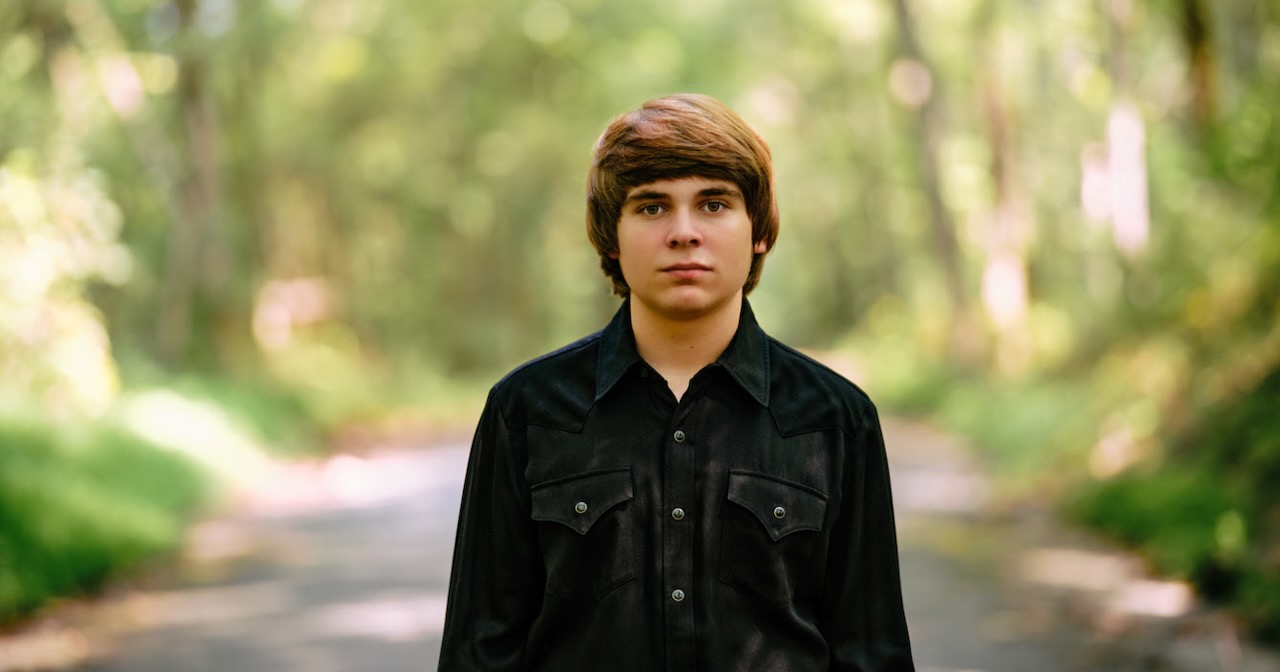
At only 14 years old, East Tennessee-based Wyatt Ellis is making waves in the bluegrass community. Having recently made his Grand Ole Opry debut and having worked with mandolin mentors like Sierra Hull and the late Bobby Osborne, the teen is now putting out his own original music and is constantly writing new tunes — sometimes as many as three a day.
During a phone interview with BGS, Ellis explained that he took virtual lessons with Osborne for two years — chuckling when mentioning Osborne’s background green screen and the iconic hat and hatband he kept on even while teaching. On Osborne’s last birthday, he taught Ellis his exact “Rocky Top” solo.
When he’s not outside fishing or playing sports, Wyatt Ellis plans to build on the support and encouragement from his heroes by continuing to release more original music. He has more than one exciting collaboration coming out later this year with icons of bluegrass, but is pretty satisfied now with the fact that his single “Grassy Cove,” a co-write with Hull, hit the bluegrass charts and was covered in national outlets like Billboard.
Let’s take it from the top. When did you start playing mandolin, and why?
Wyatt Ellis: I started playing when I was ten years old. I had heard “Rocky Top” living in the Knoxville area — Bobby Osborne playing the mandolin, singing that high tenor. That made me want to get a mandolin. A little while after that I heard Bill Monroe. That’s when I really got into it.
Would you say your career started out on social media?
WE: During the pandemic, everything was shut down. It really slowed me down going to festivals. But on social media, I was able to connect with so many people through Skype and Instagram. [I got a lot of] encouragement from some of my heroes on Instagram.
Do you have a musical family?
WE: I’m the only one.
How has your career changed over the last few years? You’ve been leveling up — talk about how you made that happen.
WE: The pandemic allowed so many more people to connect online, and that really helped me a lot. I had a lot of time to put in a lot of hard work during that. Just making connections online and some people started teaching, and that helped me when I was starting to really get into it
Which instruments do you play and how much do you practice?
WE: I play the mandolin, the guitar, the fiddle — and I started on piano. That laid a foundation for everything else. I wasn’t super serious, but I was serious enough to learn the basics of music. I play a lot when I want to, probably two or three hours a day, and I just enjoy it. I do it as much as I enjoy it.
How do you balance all this with school?
WE: I’m homeschooled, so it’s pretty easy to be able to go to festivals and still be completely doing school.
Talk about working with Sierra Hull — how did that mentorship come to be?
WE: So, I had met Sierra briefly after a concert. She was going to do an apprenticeship through the Tennessee Folk Like program, and she was looking for a child to mentor. I was chosen for that. I got to know Sierra, and we wrote a tune and it’s out now. It was really special. This is my first single in general. We co-wrote that one. I came up with a little bit of the tune, started the chords and melody, and she helped me add a few parts and finish it up.
Can you talk about another single “Get Lost?” What was the big surprise with Michael Cleveland?
WE: Justin Moses, who produced it, he coordinated everything for Michael to be there and play on the track. I was sitting in the control room and Justin walks in and says, “Your fiddle player’s here.” I wondered who — I was confused. I walked out and saw Michael. We jammed a little bit, played some mandolin tunes.
What was it like being on the Opry for the first time?
WE: When I got the message from Darrin Vincent, it was just through Instagram. I saw it and I was shocked. I was on a Zoom [call] with Bobby Osborne when I got the message. I told him, and he says, “[You] wouldn’t want to pass that up.” I had never had much contact with them before that; they’d just seen my videos. It was pretty cool, and it was even cooler that [we played] “Rawhide.” The second night, I went out and you have to play when the curtain rises. It’s really special and I don’t even know how I was ready for that one.
What are your biggest musical goals?
WE: I would have to say to keep writing music and creating new stuff.
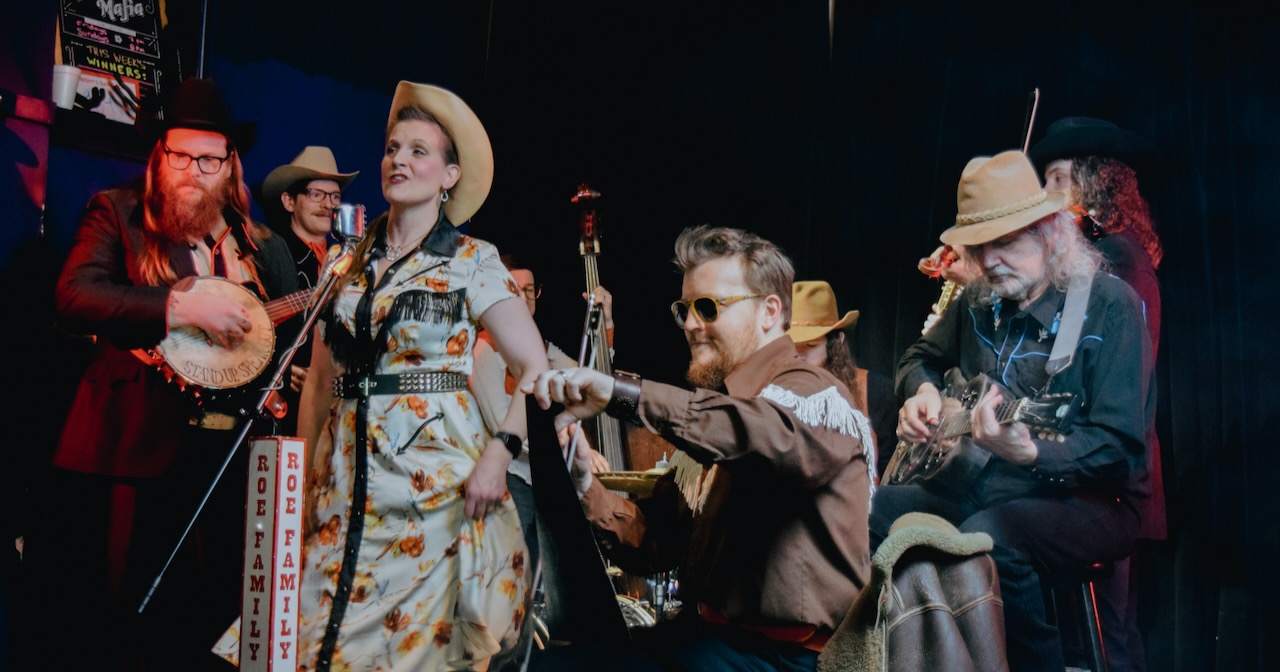
Artist:The Roe Family Singers Hometown: Minneapolis, Minnesota Song: “Loretta Lynn Blues” Album:Sisters And Brothers Label: Bonfire Music Group
In Their Words: “‘Loretta Lynn Blues’ is a tribute to both Loretta Lynn herself and the songs she wrote. There was a time when country music was made by real people, speaking about real, everyday issues. Folks like Loretta Lynn, Dolly Parton, and Hazel Dickens had everybody singing along and, more importantly, gave a voice to folks who didn’t have one before.
“Today’s country music is dominated by manufactured pop stars who, at best, sing about nothing and, at worst, use their gigantic platforms to amplify their messages of racism and misogyny.
“We wanted to write a song that gets back to the roots of what country music was and what it still could be. All while honoring one of the greatest there ever was: Loretta Lynn.
“The title is a reflection of how we thought Ms. Lynn would feel about today’s country music: after spending so much of her career singing songs like ‘One’s On the Way,’ ‘Rated X,’ and ‘The Pill,’ we figured she’d feel kind of down to hear modern country music singing about beers, my best girl, beaches, dogs, and pickup trucks.” – The Roe Family Singers
Track Credits:
Dan Gaarder – guitar Dave Gustafson – mandolin Noah Levy – drums Eric Paulson – bass Kim Roe – vocals Quillan Roe – banjo Rich Rue – steel guitar Annie Savage – fiddle & back-up vocals
Stage Band:
Erik Brandt – accordion Dave Gustafson – mandolin Jake Johnson – fiddle Brody Kucera – drums David F. Robinson – guitar Kim Roe – vocals Quillan Roe – banjo Rina Rossi – bass Rich Rue – steel guitar Adam Wirtzfeld – musical saw
Photo Credit: Katie Viles Video Credits: Ryder Seeler – director, editor; Adam Olson – director of photography; Leah, Seth, and Tristan – film crew
Artist:Matt the Electrician Hometown: Austin, Texas Song: “Do You Believe In Love” Album:Do You Believe In Love/Walking on a Thin Line Release Date: October 6, 2023
In Their Words: “Growing up in Sonoma County in the early ’80s, Huey Lewis & The News were a really big deal, they were hometown heroes. And though the album Sports contains the bulk of their hits, and was much beloved to be sure, the first hit from the album Picture This was huge! ‘Do You Believe in Love.’
“It popped back into my head a few months back, and I couldn’t get it out. I became obsessed like I was 11 years old again. And I wanted it to be covered. And I wanted it to be a covered by a bluegrass band. But I couldn’t convince anyone I knew to do it. So I just had to do it myself. And so, purely for the fun of it, I enlisted the help of some of my favorite pickers here in Austin, Texas: Tony Kamel (guitar, vox), Trevor Smith (banjo), Noah Jeffries (fiddle), and Andrew Pressman (bass), and I went into the studio, and recorded both ‘Do You Believe In Love’ – and a version of ‘Walking on a Thin Line’ from Sports as a B side for the ‘digital 45.'” – Matt the Electrician
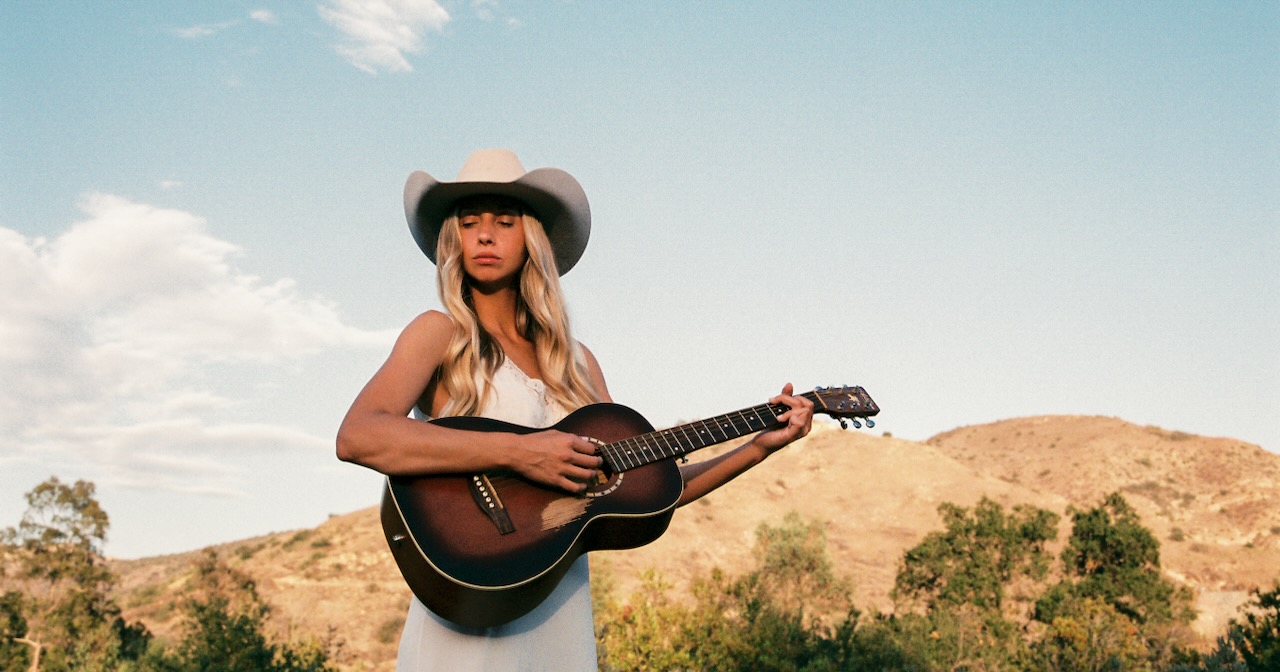
Artist:Victoria Bailey Hometown: Orange County, California Album:A Cowgirl Rides On Release Date: October 6, 2023 Label: Rock Ridge Music
In Their Words: “A Cowgirl Rides On is my most vulnerable and honest piece todate. I am so proud of this record and of everyone who brought it to life. It started with a few heartbreak songs and a few gospel songs and it turned into an intertwined piece of those two things exactly: An unexpected breakup and what I grasped onto to get me through, my faith and the Gospel. I wanted this record to feel as raw as the songs felt to write, so we went into the studio and recorded live with a string band, all in one room together, and everyone poured a lot of love into each recording. You can hear it so clearly listening to the record. It’s perfect-imperfections, and just some good ol’ classic country storytelling. I can‘t even envision this project coming to life without my good friend and producer of the record, Brian Whelan (also a co-writer on a few of the tracks). I hope this record takes listeners to a good–feeling place – some sort of western, bluegrass dream – and brings them comfort even in the slightest way. Enjoy.” – Victoria Bailey
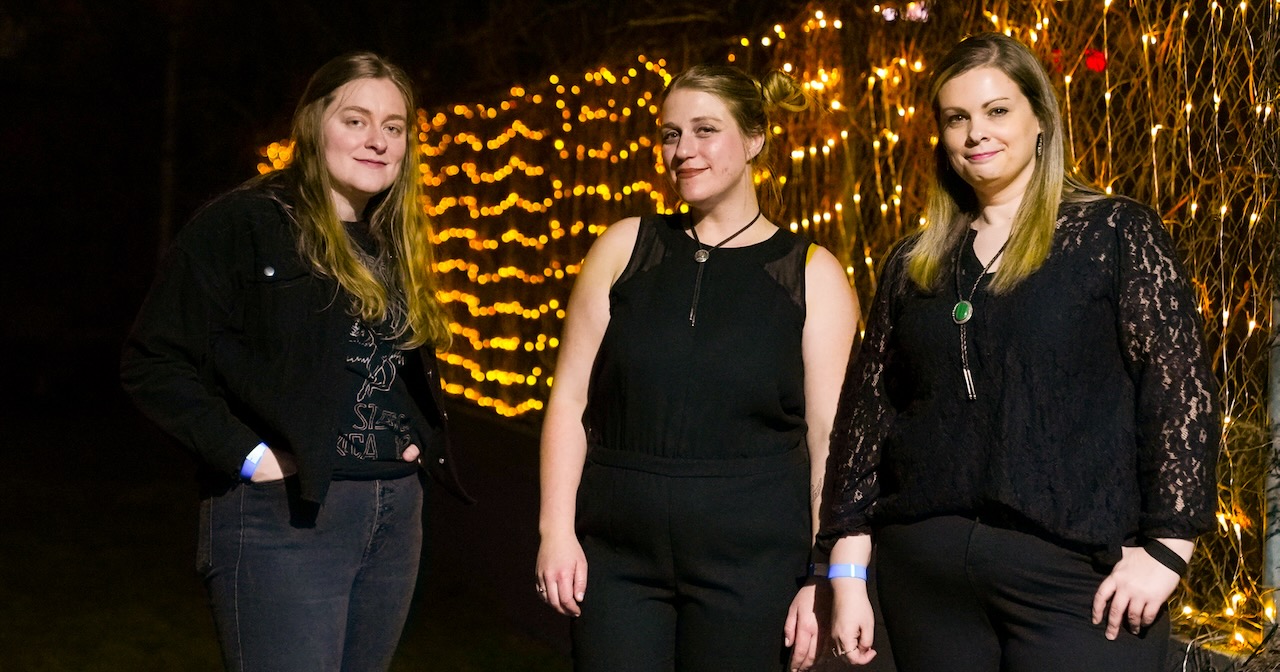
Artist:Thunder and Rain Hometown: Nashville, Tennesse Song: “Wendigos Wanderin'” Album:Storybook Sessions Release Date: October 20, 2023
In Their Words: “This song was inspired by a TikTok rabbit hole I went down last year that revealed the world of wendigos, also called skinwalkers. I got addicted to watching these terrible quality videos of deer with odd head shapes and dogs walking on hind legs with weird looks in their eyes. One of the TikToks said, ‘In Appalachia, if you hear your name in the woods, no you didn’t.’ I loved this concept that people know these terrifying creatures exist, but they don’t want to talk about it.
“One day while walking through Peeler Park in Madison outside of Nashville, I had an eerie feeling that something was following me. In my mind I sang the chorus of this song to the beat of my footsteps. I got home and wrote the song, then brought it to the band where we had a ton of fun arranging the harmony parts and spooky interludes. Our goal was to make people in the audience feel unsettled but still have fun, like a good horror movie.” – Erinn Peet Lukes
Track Credits:
Erinn Peet Lukes – Guitar/vocals
Laura Ray – Banjo/vocals
Amelia Ransom – Fiddle/vocals
Katie Blomarz-Kimball – Bass
Photo Credit: Jake Byrne Video Credits: Videographer – Andrew Hutton Audio Engineer – Tim Miller Recorded at Laughing Heart Studio in East Nashville, TN
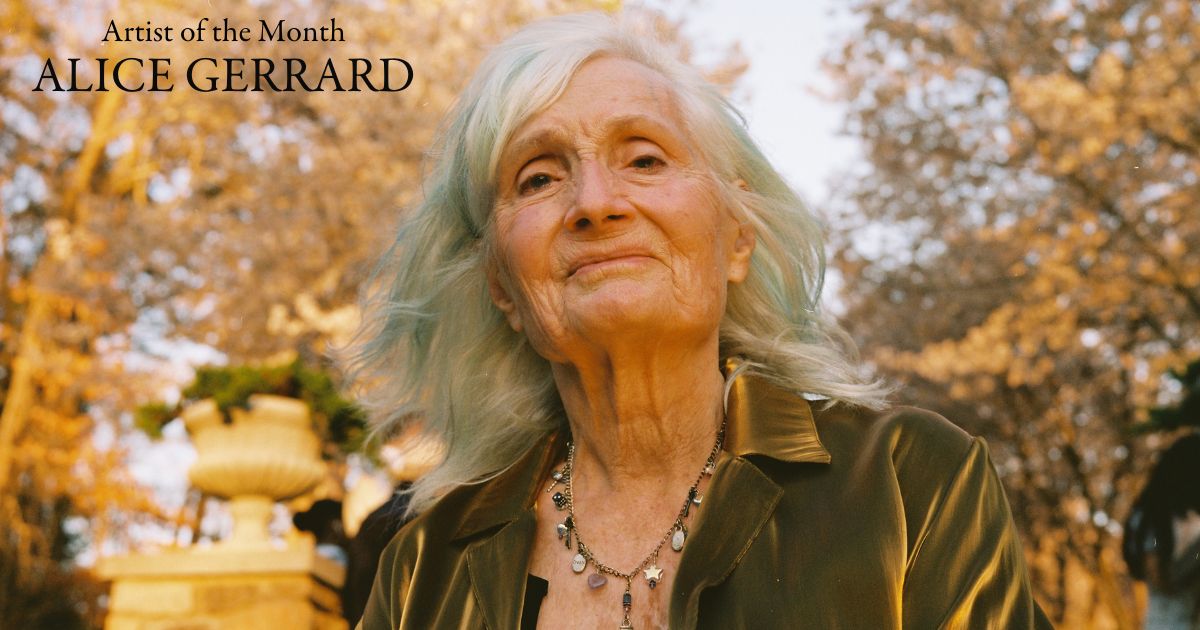
At 89 years old, old-time music community leader, Grammy nominee, and Bluegrass Music Hall of Fame inductee Alice Gerrard continues to place her music making and creativity decidedly in the present. While every lyric she utters and every note she picks feels effortlessly timeless, storied, and burnished – by her lived experiences and by days, weeks, and months of toil – her songs are ultimately forward-looking, leaning into the future with intention and wisdom. They also feel paradoxically light and joyous while at the same time they stand at the nexus of “what used to be” and “what will come.” Gerrard holds this position with equal power, agency, and insight.
Her latest album, the upcoming self-produced Sun to Sun, out October 20 on Sleepy Cat Records, captures the ineffable of the particular center-of-the-Venn-diagram that she inhabits, as a song collector, a knowledge bearer, and a folk music synthesizer of the world’s woes and struggles for justice. As witness to more than a handful of iterations of the modern movement for equal rights and racial, gender, and economic justice, Gerrard is able to challenge the systems and powers that be in grounded, measured, and realistic ways – ways that never limit possibilities for the future. (A remarkable trait in a creative who uses “old-timey” media and formats as her primary form of expression.)
“Remember Us,” the album’s stunning lead single, is – as Gerrard says via press release – an ode to “all the departed whose shoulders we stand on, whose work and lives we benefit from, who came or were transported against their will to this land.” Sung in stark a capella by Gerrard, Tatiana Hargreaves, and Reed Stutz, the track feels pulled directly from the gospel singing traditions of the American South that each stem from Black and formerly enslaved musical traditions. It speaks into community spaces the names, lives, and souls of so many Black, Brown, and Indigenous folks who lost their lives at the hands of empire and the police state.
“Old Jim Crow” makes the apropos point that segregation and racial apartheid in our country were not that long ago nor that far away, calling the partisan gerrymandering, political divisiveness, and waves of hatred befalling the U.S. exactly what they are: a new kind of the Old Jim Crow. “Keep It Off the Seat,” a Gerrard-penned modern classic, was inspired by the North Carolina General Assembly’s transphobic HB2 measure from 2016 – that also inspired our showcase, Shout & Shine, at IBMA in Raleigh and eventually saw Gerrard singing “Keep It Off the Seat” from the Shout & Shine stage in 2017 with Cathy Fink, Marcy Marxer, Hargreaves, and more. At her live shows, she encourages her audience to sing along during the rousing chorus: “Who cares where you pee? Just keep it off the seat!”
These themes and through lines would be notable in any bluegrass and old-time forebear’s catalog, but here, among Gerrard’s lifelong discography, they are certainly not outliers but continuations of a career that has always been committed to telling untold stories, singing unsung songs, spotlighting and amplifying invisible voices. Gerrard’s age, her position as a roots music elder, reinforces the importance of these subjects, and leaves subtle, existential fingerprints over the entire album. We know Gerrard’s commitment to singing and standing in truth, but in these songs and in this collection, we feel that commitment more than see it, we sense it just as strongly as we view it.
Sun to Sun was tracked in Durham, North Carolina – Gerrard’s home turf for decades, now – with a collection of collaborators and musicians pulled directly from her immediate community. Hargreaves, one of the most prominent fiddlers in the old-time and bluegrass scenes of late, has worked for Gerrard for a number of years as an archivist and assistant of sorts and features heavily on the album; Stutz, an in-demand multi instrumentalist who also straddles the fences between folk, bluegrass, old-time, and Americana, plays guitar and banjo. Other credits include first-rate sacred steel player DaShawn Hickman, Hasee Ciaccio on bass, Marcy Marxer guesting on guitar and cello banjo, Gail Gillespie, Nick Falk, and soulful songwriter, singer, producer, etc. Phil Cook – who collaborated with Gerrard on her 2014 album, Follow the Music – as well.
It makes perfect sense that a community builder such as Gerrard, who has always prioritized the most human aspects of roots music in her creative output, would be able to construct a collection of songs that feels pointed and convicting, but also organic and natural. Sun to Sun approaches heavy topics with ease, as a pair of good friends over a cup of tea on the porch can seemingly solve all of the world’s problems with passion, joy, and unbridled care for the forgotten and invisible among us. Gerrard calls on her folks, her musical and personal communities as well as her listeners and fans, to join with her in the journey she has begun and that we must continue, from sun to sun to sun to sun.
To celebrate Alice Gerrard’s selection as our October Artist of the Month, we’ll be diving back into our archive of Sitch Sessions, interviews, posts, and stories that highlight her incredible music – and her exemplary activism through that music and across the decades. In the meantime, enjoy our Essential Alice Gerrard playlist below, plus two of our BGS favorite Sitch Sessions of all time that feature Gerrard (viewable above), and watch for our Artist of the Month feature to come later in October.
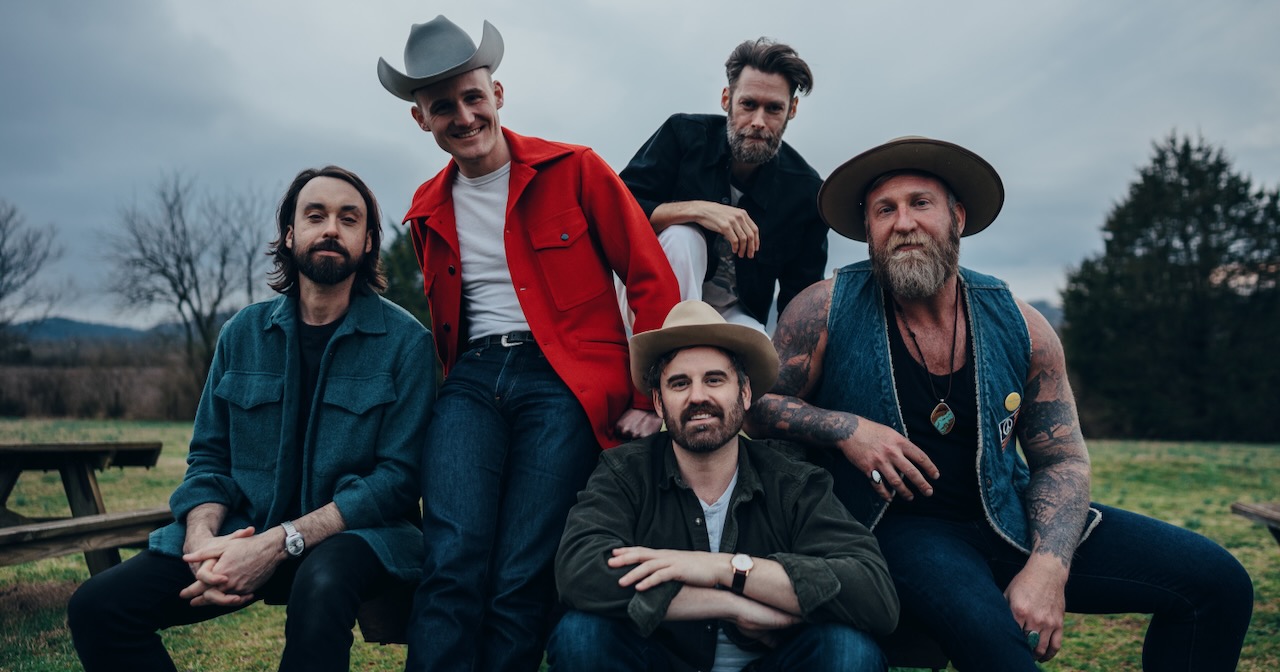
Artist:Hogslop String Band Hometown: Nashville, Tennessee Song: “Mississippi Queen” Release Date: October 6, 2023 Label: Tone Tree Music
In Their Words: “‘Mississippi Queen’ is a story about an escaped inmate during the construction of the Richmond-Danville railroad. I wrote it years ago, and we have occasionally worked on it over the years, but we recently came up with a new arrangement of it that felt really good. The main character escapes on foot, follows the Tennessee River south, then across Alabama to find his family in North Mississippi. Ultimately, it’s a story about being separated from loved ones and doing whatever it takes to make it back home, which I think a lot of people can relate to.” – Daniel Binkley, banjo
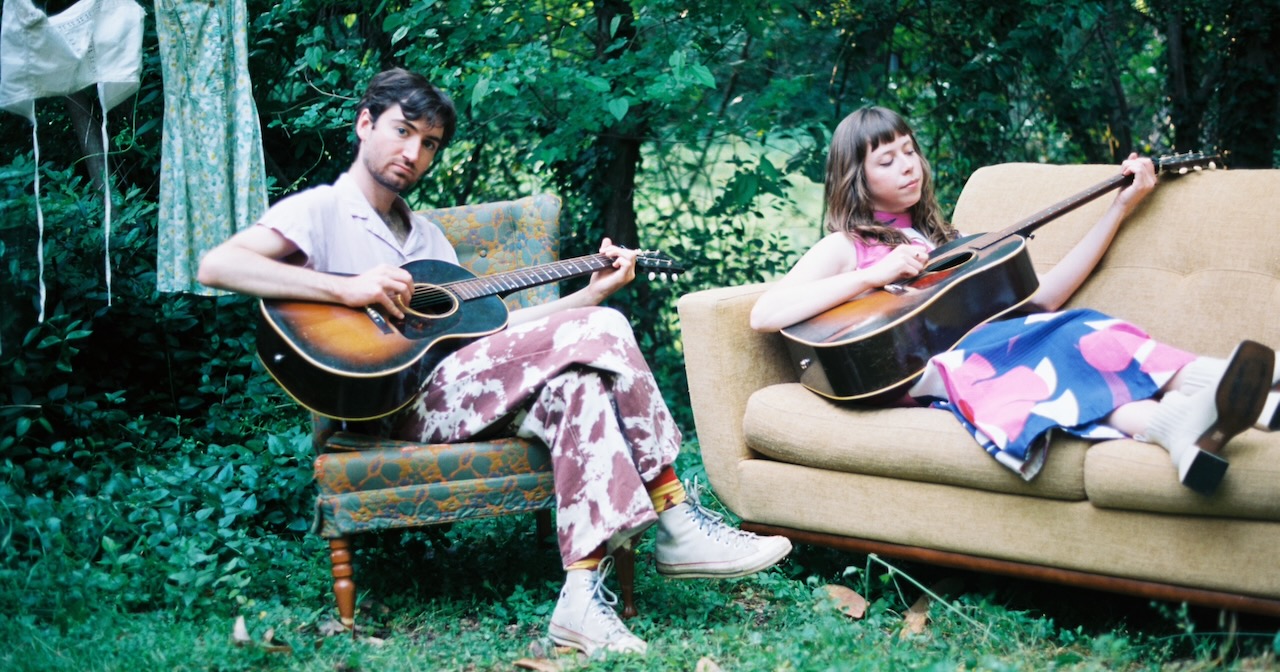
Comprised of singer-songwriters and instrumentalists Vivian Leva and Riley Calcagno, Viv & Riley are an up-and-coming musical duo that defy definition. Their new album, Imaginary People, is a masterful blend that weaves together their shared reverence for traditional Appalachian music alongside indie-folk, pop-leaning adornments. The result is an emotionally potent 10-track album that covers a vibrant range of personal and universal truths — from the bittersweet nostalgia of visiting a beloved childhood hideaway decades later, to the poignant curiosities that accompany reckoning with climate grief.
Based out of the dynamic music scene in Durham, North Carolina, this duo is currently on tour across North America. With their insightful explorations of the past and creative probings of the future, Viv & Riley uncover rich and complicated explorations of what it means to be alive in this precise moment.
So how did the two of you first start making music together?
Vivian Leva: Well, we first started making music together when we first met in 2016, the summer after we both graduated high school. I grew up in Lexington, Virginia, and Riley grew up in Seattle, Washington, and we just happened to meet at a camp in Port Townsend, Washington. It’s one of those camps that has weeks back to back — there was a vocal week that I was teaching with my mom, and then Riley came to teach fiddle the following week. We happened to overlap by a few days, and Riley was there with his band The Onlies. The first night we met, we played music together all night! After that, I joined the band, and we also started playing together as a duo and writing songs.
Riley Calcagno: The origin of our sort of band, our duo, came later that year, in the fall. We had been communicating and texting some music back and forth, and then Viv invited me down to Asheville to play a gig with her and her dad. I was a fan of her dad, James Leva, for his fiddle and singing, so we did that gig. But we thought it’d be also fun to try out some duo material while we were down in the same place, even though we had never played songs just the two of us. We emailed a venue in Asheville called Isis Music Hall, which was a prominent venue there at the time. Somehow they slotted us in, on a Wednesday night, into this big hall that they had — 200-person capacity, maybe bigger. We had never played music together going into that, but we put together some material and we enlisted some friends to play with us. It was a bold move! Talk about faking it until you make it. Only about 15 people came out to the show, and I’m sure it sounded terrible. But it was fun!
That sounds amazing. So how would you describe your musical chemistry? What is it like playing together?
VL: Well, I think our initial musical chemistry initially came from our shared background in old time music and traditional music. That first night that we met, we played a lot of fiddle tunes, old music, and traditional songs. So it kind of began from a place of excitement about being exactly the same age, having never before met, and somehow both being raised around this same music that we have a shared respect and love for. So that was the initial spark of actually finding another young person who’s into the same niche genre and community. But since then it’s totally stretched into other realms. We are both so open to other kinds of music, and we have very similar tastes and aesthetics. It’s very easy to create music together because we come to it from a similar place.
RC: One of our dynamics in making music together has also been sharing our individual strengths with the other person. When we first started playing together, I couldn’t really sing harmony or find a harmony part. Vivian was very patient with me and helped me learn, and I still feel like I’m getting better all the time. That’s exciting!
VL: I just play guitar, and Riley plays every other instrument. He’s a great fiddler, guitar player, banjo player, mandolin player— instrumentally he brings so much to the table. And I feel I bring a lot of singing and songwriting-focused material to the table. We stretch each other, fill in the gaps for each other, and learn from each other.
What a beautiful thing! So what do you each feel like the biggest difference in your respective musicianships is?
RC: Viv is a very natural musician. She grew up traveling around with her parents as they toured, sitting in on harmonica at her dad’s gigs when she was only three or four. I also was born and raised around music, but it was a bit more formalized, whereas Viv’s music just comes very naturally and it’s not forced in any way. She does what she does super well and consistently and steadily, and I’m a bit more erratic. I take chances and get obsessed with things and take big leaps that sometimes fall flat. Every time she steps on stage, Viv can knock out a great performance, and I feel more streaky.
VL: But he tries lots of different things! And like he mentioned, Riley has a more formal background in music. He took lessons, he learned how to read music, he knows music theory, he did classical violin. So I think a big difference is that he technically knows what’s going on, whereas I don’t have the language or skills that he has. I’m definitely more intuition based than technically based.
You really balance each other out! So your new album, Imaginary People, just came out on September 15, and I’m wondering how your songwriting, as it appears on this album, has shifted since you first began as a duo.
RC: Well, in the past, before we started writing music for this record, we were living in different places so it was a lot of collaboration from afar. A lot of the songs on our last record came from texting voice memos back and forth. And you know, it’s not utterly different to work on them in person, but some of these new songs came out playing them together in the moment.
VL: Another big difference is Riley has started writing way more. So I think there’s more of an equal voicing on this record than in the past. There’s more of his perspective in it. And I think now that we’re living in the same place it’s also allowed us to write about a more diverse range of things. We’ve written a lot of intense emotional, romantic songs in the past, but in this recent past couple of years, we’re more interested in other things, like our shared experiences about other parts of life.
RC: And it’s also partly stylistic. Our last record was pretty much a country record. During that time, I was listening to a lot of classic country music, and this time we were listening to a wider range of things. Having a broader array of influences definitely helped us push the narrative forward.
What are you each proudest of on the album?
VL: I think what I am most proud of isn’t a specific track or anything — mostly it’s this feeling that I unlocked something. I think I let go of some fears in the process of making this record. I felt more free to just say yes to trying new things and became less concerned with things like what genre it was going to be considered, or if the people who liked our last record would like this record… and so on. I stopped worrying about categories like, “This doesn’t sound traditional enough,” or “This isn’t country enough,” or “That’s too rocker or indie.” Instead, I was able to adopt the mentality of “Hmm, that sounds interesting, let’s try and just do what feels fun!” I think I’m most proud that I was able to do that. It felt amazing to take things a little lighter and to roll with ideas that felt a little outside of the mold.
RC: When you start making music, being young musicians, you get immediately labeled. It’s not something that I think either of us necessarily anticipated, but when that first record got classified, people said it was Appalachian and classic country. And then the next one was classic country and Americana. Like “Hits-the-Spot Americana,” whatever that means. And I think there’s an urge for musicians, when you get labeled as something, to keep reproducing it. There’s this toothlessness to the modern Americana music label— it’s the creation of music that is literally meant to sound like other music under a category. I don’t have a problem with genre or specifications, I think it’s oftentimes useful, but it’s [useful] when you’re trying to reproduce sounds so that you can cater to an audience, it’s like you’re trying to sell something in a market that’s already been created. I think that can be the “dampification” of art. And while I think there’s been so many amazing things created within the Americana industry, I also think it often leads to less creativity and less interesting music.
Coming out of our last record, we had some buzz in the Americana world, and it would have been easy for us to make another “Hits-the-Spot Americana” record. But I don’t think that we did that, and I feel proud of that. Like Viv was saying, we didn’t just do what we were supposed to do. You know, there’s synthesizers, but there’s also a fiddle track, and personally, I think it all works together. So maybe if you’re an Americana devotee, you’re not going to love this album, but that’s okay with me. I think there’s a power in making an album that the machine doesn’t really know what to do with. The machine can make up albums and spit them out, but I feel proud that this one isn’t something that can just be spit out because of how we combine traditional and non-traditional music. For example, there were super organic moments where we all stood around one mic and sang together, coupled with other moments where we had things locked in, produced, and added synths because a particular song called for it. Making those two things coexist in the same ecosystem was definitely a challenge, but listening to the record, I think it all makes sense together.
It’s an album full of teeth! Now, before we wrap up, I have to ask: you’re our One to Watch, but who are you watching right now? Any creatives, musical artists, or otherwise that are inspiring you right now?
RC: One is our neighbor in Durham, North Carolina, Alice Gerrard. She’s almost 90, and she’s putting out a record on this indie label from the area called Sleepy Cat. She’s collaborating with a bunch of young people and their art for the record, like making these amazing videos. It’s a really cool thing! People around here are really conscious and thoughtful about aesthetics and sound and ethos. Everything is done with integrity, so it’s a cool scene around here in that way. Alice makes amazing music, I’m really excited for her upcoming record — I think we’ll all be glued to it once it comes out. Another one is our friend who we wrote two songs with on our previous record, “Love and Chains” and “Time Is Everything”— often people’s favorite songs of ours. I just had the honor of producing his upcoming record under his band’s name, Preacher & Daisy. I love the music, so I definitely want to give them a bump! The fun thing is that all this music is sourced locally from the Durham, North Carolina area, where we’re based.
VL: Some folks I’m enjoying listening to right now, not that they’re not already being watched, are: KC Jones, Canary Room, Dori Freeman, Alexa Rose.
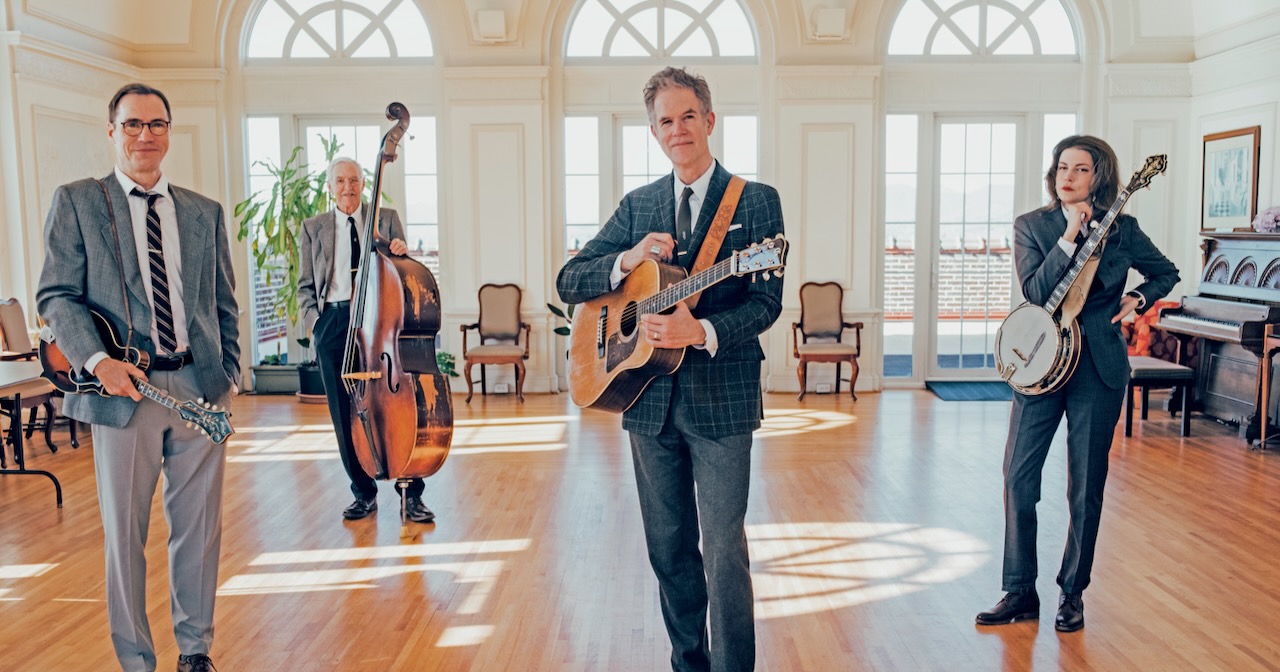
Artist:Chris Jones & The Night Drivers Hometown: Nashville, Tennessee Song: “Step Out in the Sunshine” Album:Pages In Your Hand Release Date: October 6, 2023 Label: Mountain Home Music Company
In Their Words: “Ralph Stanley’s early 1970s Clinch Mountain Boys lineup of Roy Lee Centers, Jack Cooke, Curly Ray Cline, Keith Whitley, and Ricky Skaggs was a golden era for his band, in my opinion, and in my mid-teens their music was a major influence on me as I was just getting serious about playing music. The gospel album they did, Cry From the Cross, was and remains my favorite bluegrass gospel album of all time. It inspired my lead singing and guitar playing, and without consciously trying to do it, I learned to sing the baritone harmony part from Jack Cooke.
“I still have and cherish the original LP that I bought when I was around 15, though the jacket is a little battered and my name is written in brown magic marker on the back — because, you know, other kids in high school were likely to try to steal my Ralph Stanley records. I wanted to record a song from the album that I hadn’t heard anyone else do and that hadn’t become a Ralph Stanley standard, and so I was drawn to ‘Step Out in the Sunshine.’ We rearranged it slightly to fit our sound but it remains a tribute to the Stanley original.” – Chris Jones
Track Credits: Chris Jones – acoustic guitar, lead vocal Marshall Wilborn – bass Mark Stoffel – mandolin, harmony vocal Grace van’t Hof – banjo, harmony vocal
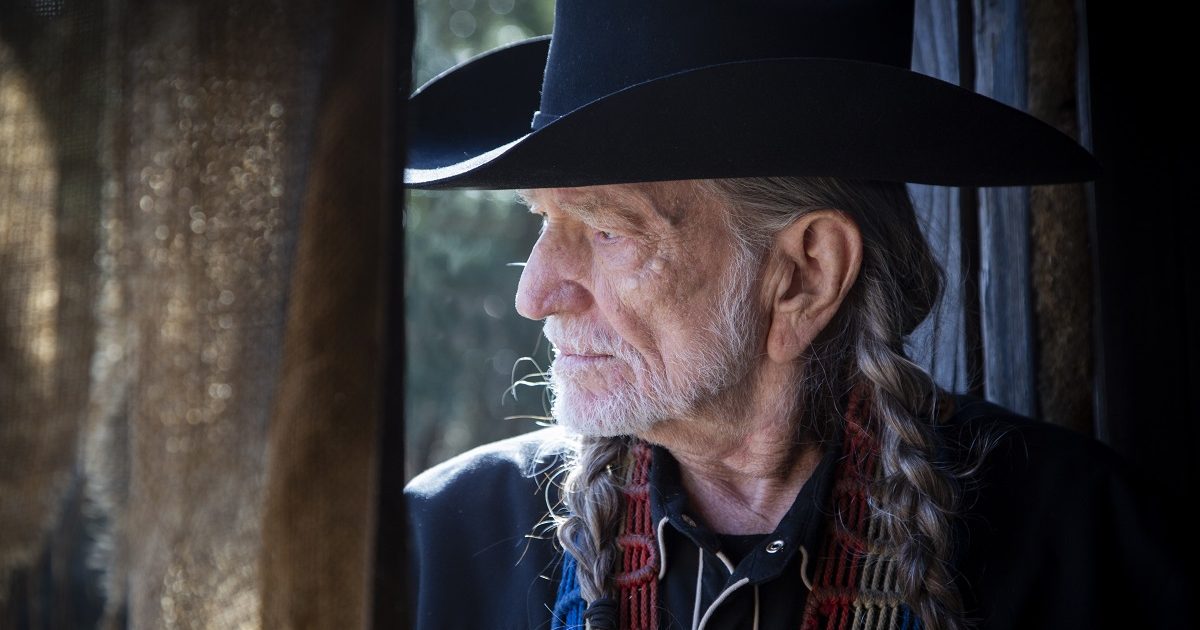
“He was exceedingly cool and easy,” long-time Bill Monroe bassist Mark Hembree remembers about Willie Nelson’s presence at a 1983 recording session where Nelson sang and played with Monroe. “I never had a say in Bill’s mixes, but they had Willie’s guitar way up and as we listened to playback he mentioned it, then turned and asked what I thought,” Hembree wrote in a recent exchange of messages. “I agreed, a little surprised he would ask me.”
People who hear about Willie Nelson’s latest album, Bluegrass, before hearing the music might ask, “Wait, what? What does Willie Nelson have to do with bluegrass music?”
Upon listening, at least two answers come to mind: 1) Much more than you might think. 2) Don’t worry so much.
With tunes by Nelson, one of the best American songwriters, played by notable pickers, the record contains strong music that should sound welcome to fans of Nelson, of bluegrass, and of the field with the loose label, “Americana.”
It’s a given that in more than 60 years of major-label recording, Nelson, 90, has been better known for presenting his own songs, enduring tunes such as “Crazy,” “Hello Walls,” and “On the Road Again,” the last of which is heard here in a new version. But he’s also made his name with notable covers – like “Blue Eyes Crying in the Rain,” “Seven Spanish Angels,” “Blue Skies,” and others – in a welter of styles, including blues, pop standards, and even reggae. Nelson’s core music enfolds ‘40s and ‘50s country, traditional fiddle tunes, four-square gospel, ragtime, some swing flavorings, and definitely a heap of blues. The mix also includes more contemporary pop. Subtract some of that last bit of material, throw in some lonesome mountain banjo and ballads, and you’ll find, in different proportions, foundational bluegrass as designed by chief architects like Bill Monroe and Earl Scruggs.
Legacy Records, the Sony division putting out Nelson’s Bluegrass disc, says the style “was given a name by Kentucky songwriter/performer/recording artist Bill Monroe and the Blue Grass Boys, whose post-war recordings profoundly influenced Willie’s songwriting sensibilities and the direction of American country music in general.” They go on to say, “Willie chose songs combining the kind of strong melodies, memorable storylines and tight ensemble-interplay found in traditional bluegrass interpretations of the roots (from European melodies to African rhythms) of American folk songs.”
And it’s pretty much on target. But what else speaks to Nelson’s involvement with bluegrass?
Let’s return to the early ‘70s, when he famously abandoned a Nashville scene where he had achieved songwriting fame and a recording career. But Music Row had flagged in creativity and opportunity, he and others thought. And yes, at the end of 1969, his house had burned down. By 1972, Nelson’s persona was changing as his new approach revisited his Texas roots. The year saw new-breed stars like Kris Kristofferson showing up at the first Dripping Springs Reunion, a Texas country music festival. The show, which was to morph int0 a string of outdoor throwdowns known as Willie’s Fourth of July Picnic, presented a bluegrass contingent led by Monroe, with foundational figures Earl Scruggs and Lester Flatt leading their post-breakup bands, as well as additional notables including Jimmy Martin.
Jo Walker, executive director of the Country Music Association, told the Austin-American Statesman that the trade group was delighted to hear about the Dripping Springs Reunion. “So many of the rock festivals and similar events have reflected so unfavorably on the music industry that we are particularly happy that your reunion will be a Country Music show.” But with Nelson embracing a new, youth-driven fan base and a long-haired, bandana-ed look, what did country music even mean?
There was a growing correlation, it seemed, between the increased popularity of bluegrass and the emergent outlaw (read: long hair, free-thinking, whiskey-drinking, dope smoking, etc.) movement in country music, led by Nelson and Waylon Jennings. Its bluegrass surge was sparked in part by the Earl Scruggs Revue’s broad acceptance in non-traditional venues like college campuses and hot sales for the Nitty Gritty Dirt Band’s Will the Circle Be Unbroken. Back in Nashville, in 1973, wider acceptance of bluegrass also meant that Monroe, his former Blue Grass Boy Flatt, the brilliant wildman Jimmy Martin, and the great brother team of Jim & Jesse McReynolds would join Nelson amid the crowd of stars at CMA’s second annual Fan Fair celebration.
In 1974, both Scruggs and Monroe, as well as Grand Ole Opry stars Ernest Tubb, Jeanne Pruitt, and Roy Acuff appeared on stage singing with another wildman, country-blues rocker Leon Russell. That’s documented in a photograph of this period, likely from a Willie’s Picnic. Quite a lineup.
A version of the picture found on the web says the shot is from A Poem is a Naked Person, a documentary on Russell by esteemed filmmaker Les Blank shot between 1972 and 1974, but not released until 2015. Nelson appears in the movie to sing “Good Hearted Woman” – also on this new album – playing guitar bass runs that would work fine in bluegrass. He also backs up fiddler Mary Egan, of the Austin “progressive-country” band Greezy Wheels, on an energetic version of the bluegrass-country perennial “Orange Blossom Special.”
In 1974, Nelson went to work in the soul-music capital of Muscle Shoal, Alabama, to record a milestone disc on his road to making records his own way. The album, Phases and Stages, which won over both fans and critics, contains prominent five-string played Scruggs-style on the hit “Bloody Mary Morning,” which also returns on Bluegrass.
The 1983 Bill Monroe session referenced above came after a last minute February 22 phone call from Nelson to let Monroe know he was available to appear on the in-progress Bill Monroe and Friends album for MCA Records. That’s according to a passage in the indispensable book, The Music of Bill Monroe, by bluegrass scholars Neil Rosenberg and Charles Wolfe.
“[Engineer, Vic) Gabany recalls that on February, 22, 1983, Monroe called the studio and asked if it was free that afternoon,” Rosenberg and Wolfe write. “Willie Nelson was in town, and he wanted to rush in and cut the duet with him. Fortunately, it was. Moreover, the Blue Grass Boys were all available, and Haynes was able to round up studio musicians Charlie Collins and Buddy Spicher.”
Monroe’s original tune with Nelson, “The Sunset Trail,” shows the impact of another style, cowboy music, that both men favored. Nelson reaches into his upper range to sing below Monroe, who’s going way up there, as was his wont. “It’s a thrill of my life to be here with you,” Monroe says as he and Nelson exchange praise in the track’s introduction.
In 1990, Monroe accepted Nelson’s invitation to perform at the April 7 Farm Aid IV concert in Indianapolis. “We’re glad to be here with Willie Nelson!” he said to kick off a set marked by powerful singing, crisp mandolin picking, and a little crowd-pleasing buck dancing. The show placed Monroe, 79, in a lineup that included stars such as Elton John and Lou Reid. The Indianapolis Star estimated the crowd at 45,000.
During Monroe’s last years — he died in 1996 — he often spoke to Nelson on the phone, according to a person who didn’t want to be identified, but often spent time at Monroe’s home on the farm outside Nashville during that period. “He valued their friendship immensely,” the person said.
Bluegrass‘s 12 songs contain several Nelson compositions that became standards of his repertoire, along with less familiar tunes that also fit in the recording approach overseen by Music Row’s Buddy Cannon. A songwriter and producer, Cannon is known for delivering big songs, like “Set ‘Em Up Joe” for Vern Gosdin, and chart hits for more recent mainstream acts such as Kenny Chesney, John Michael Montgomery, and Reba McEntire. A frequent Nelson collaborator, Cannon assembled a list of Nashville co-conspirators: Union Station members Barry Bales, on bass, and Ron Block, on banjo; former Union Station member and current rising star Dan Tyminski on mandolin; fiddler Aubrey Haynie; Dobro man Rob Ickes; Seth Taylor also on mandolin; as well as harmonica player Mickey Raphael, who’s worked for decades in Nelson’s band.
The music mostly doesn’t come off as hard-core bluegrass in the mode of, say, the Stanley Brothers. But it leans on the elements that Nelson has in common with the style — lonesome melodies, classic country, swing and blues.
The mournful “You Left Me a Long, Long Time Ago,” from 1964, reflects the straight-country songwriting to which Nelson and others brought a terse, modern beauty in the late ‘50s and early ‘60s. It was a time when bluegrass enjoyed a closer co-existence with mainstream country, as opposed to straining against the tight format borders that limit today’s music business. Among the many artists who crossed back and forth freely were guitarist-songwriter, Carl Butler, fiddler Tommy Jackson, and Cajun star Doug Kershaw. They all worked with Monroe.
A new version of “Sad Songs and Waltzes” mourns in tones not too different from Monroe favorites ranging from “Kentucky Waltz” to “Sitting Alone in the Moonlight.” The song also recalls the 3/4 time Lone Star tunes that Nelson might have heard at the Texas Fiddlers Contest and Reunion.
That show got going in 1934 in Athens, Texas, just one year before Nelson arrived on the scene in Abbott, less than 90 miles away.
The fiddle contests that influenced so much of Texas music beginning in the 19th century, had parallels in the 18th century Southeast, where contests featured both the fiddle and the banjo, with its African roots. This music went around, and it still comes around.
The sock-rhythm backing of “Ain’t No Love Around” recalls early Blue Grass Boys recordings such as “Heavy Traffic Ahead,” recorded September 16, 1946, and featuring Earl Scruggs’ first recorded banjo solo. Elsewhere, the laidback favorite, “On the Road Again,” gets a more intense reading from Nelson, with some vocal and instrumental improvisation to spice it up. The mystical “Still is Still Moving to Me” leaves plenty of room for pickers to range far and wide on banjo, mandolin, fiddle and Dobro.
“You give the appearance of one widely traveled,” Nelson sings in “Yesterday’s Wine.” He’s singing from a faraway spot in time, in myth, in history. It’s a stance that’s earned a place on bluegrass playlists for more recent songwriters such as Guy Clark, David Olney, and Gillian Welch.
“Bloody Mary Morning,” from Phases and Stages gets the most recent of several revivals from Nelson, who led a jam-grassy version in the 1980 film Honeysuckle Rose and later sang it in a duet with Wynonna Judd. The song’s forthright tale of fighting the blues by having a highball on a plane seems somehow classier than the constant tales of beer and pickups that populate country radio.
In the end it seems clear that for decades, both Willie Nelson and bluegrass music have served, in different ways, as a conscience of country music. Just as the Solemn Old Judge, WSM radio announcer George D. Hay, commanded, they “Keep her close to the ground, boys,” although their paths have diverged, at times.
In any case, this new collection brings Nelson together with bluegrass pickers for music that might even work to serve that same worthy purpose.
Photo Credit: Pamela Springsteen
This website uses cookies to improve your experience. We'll assume you're ok with this, but you can opt-out if you wish.AcceptRejectRead More
Privacy & Cookies Policy
Privacy Overview
This website uses cookies to improve your experience while you navigate through the website. Out of these, the cookies that are categorized as necessary are stored on your browser as they are essential for the working of basic functionalities of the website. We also use third-party cookies that help us analyze and understand how you use this website. These cookies will be stored in your browser only with your consent. You also have the option to opt-out of these cookies. But opting out of some of these cookies may affect your browsing experience.
Necessary cookies are absolutely essential for the website to function properly. This category only includes cookies that ensures basic functionalities and security features of the website. These cookies do not store any personal information.
Any cookies that may not be particularly necessary for the website to function and is used specifically to collect user personal data via analytics, ads, other embedded contents are termed as non-necessary cookies. It is mandatory to procure user consent prior to running these cookies on your website.