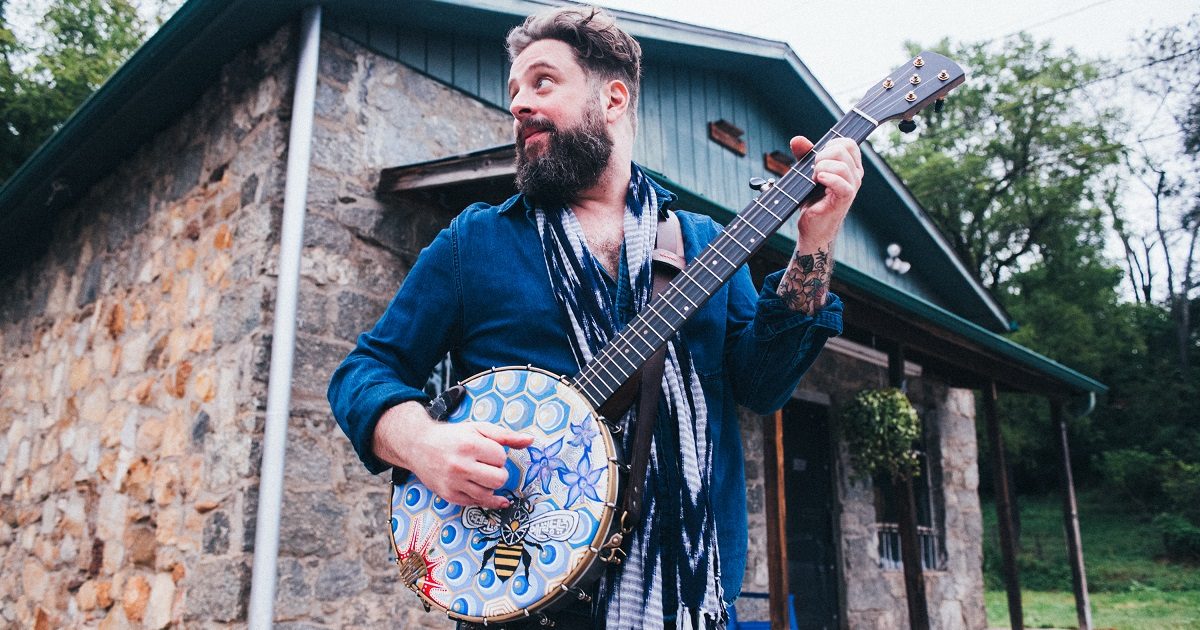
Aaron Jonah Lewis, “A Banjo Frolic”

Ask ten banjo players this question: “Who is the Mozart of the banjo?”

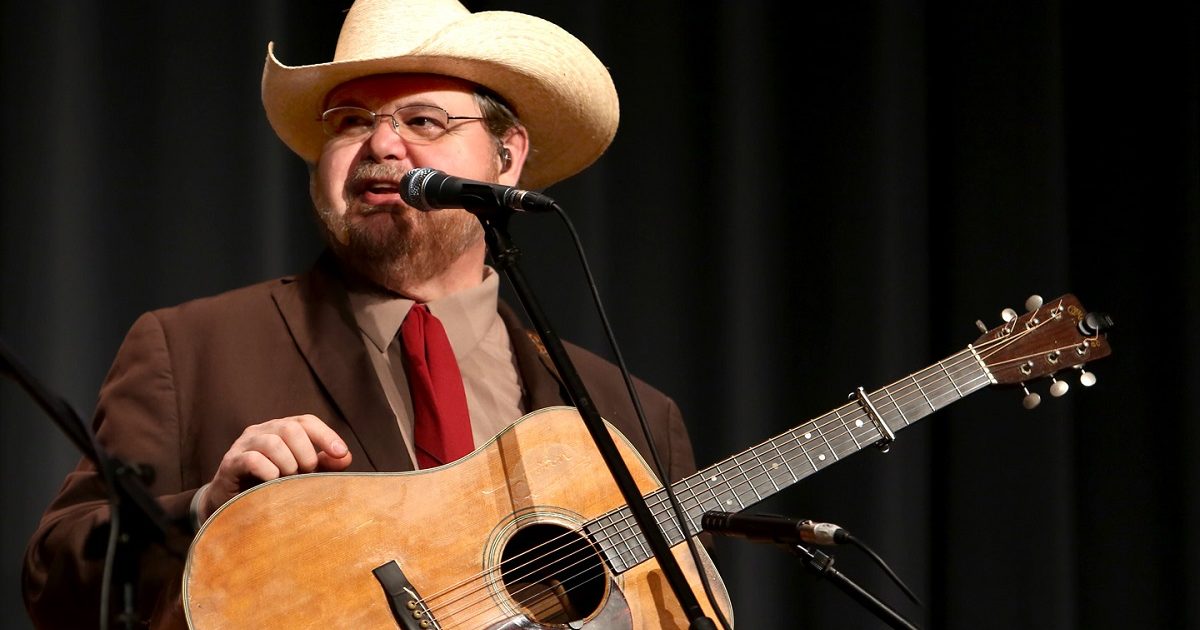
You’ll probably get ten different answers. If any were to double up, perhaps one would be Béla Fleck (a banjo player more than most will remember has conquered many a classical composition on the instrument) and perhaps another would be Earl Scruggs (given that “Mozart of” could easily morph into “a style-originator of” to others.) Fiddle champion and banjo virtuoso Aaron Jonah Lewis posits a much more pragmatic — and almost actually analogous — candidate on his new album, Mozart of the Banjo, tributing a banjo player a step closer to Mozart in more than a few ways, but chiefly in that he did not perform bluegrass.

Joe Morley was a “classic fingerstyle” banjo player, composer, performer, and instruction book author who lived and made music at the turn of the 19th to 20th centuries, at which time banjos were central to popular music in Britain and the United States. “A Banjo Frolic,” one of twelve Morley pieces performed by Lewis on the album, demonstrates this “golden age” sound, oozing ragtime and musical theatre and Vaudeville and minstrelsy. While Morley’s compositions weren’t technically “classical” music, Lewis explains in the project’s in-depth liner notes, “…[It] did occupy an interesting space in that it appealed to royalty, the upper and middle classes and the lower classes of society as well.” A truly banjo notion. Morley also paralleled Mozart in that they were both child prodigies, both left enormous bodies of work, and both died poor and were buried in unmarked graves.

We may be enjoying a current renaissance of the banjo, where more and more players, fans, and even casual passers-by of the instrument understand its important role in American history and its folkways and art forms. Still, it’s fascinating that so many forgotten or overlooked facets of the instrument’s past and its legacy remain excluded from that greater, better-understood narrative. Mozart of the Banjo: The Joe Morley Project and Aaron Jonah Lewis are attempting to tell more of the banjo’s full history, and purposefully connect it to its Black and African inputs, as well as its extant forms in the U.S. and around the world, reminding all of us banjo fans — and at such an apropos time, as well — that none of our favorite forms of music, banjo-y or otherwise, exist in a vacuum.

Junior Sisk Hitches His Wagon to the Stars of Traditional Bluegrass

Junior Sisk is on a mission. Although he’s been a fan of traditional bluegrass since childhood, he’s now fully focused on keeping that history alive. That passion for tradition is evident in Load the Wagon, the award-winning vocalist’s first release since disbanding Ramblers Choice.

“The Stanley Brothers, Flatt & Scruggs, Jim & Jesse, and all of them had big hits, but they also had hidden treasures on all those LPs. A lot of them that were never played and they’re not a jam tune. That’s what I’m looking for,” Sisk says. “It’s going to be like new tunes to a lot of folks. That’s what I’m after – to still pay tribute to the founding fathers of traditional bluegrass music, but in the Junior Sisk style.”

The Virginia musician’s recovery mission has unearthed a number of gems on Load the Wagon, like Flatt & Scruggs’ little-known “Lonesome and Blue” and the heartfelt “Lover’s Farewell,” a Carter Family gem suggested by his new bandmates Heather Berry-Mabe (guitar, vocals) and Tony Mabe (banjo, guitar, vocals). Jonathan Dillon (his mandolin player from Ramblers Choice), Gary Creed (bass, vocals), and Douglas Bartlett (fiddle, vocals) round out the lineup.

Sisk also re-cut the song that remains his most requested number, “He Died a Rounder at 21,” from his time with Wyatt Rice & Santa Cruz in the mid-‘90s. Leading up to a show at Station Inn, he invited BGS on the bus for a chat.

BGS: The first song on this album, “Get in Line, Buddy,” will be a familiar tune for fans of the Country Gentlemen. What made you want to record it here?

Sisk: Me and Bill Yates got to be good friends there for a long time right toward the end, and every time we’d play together at a festival, I’d always get together with him and ask him to do “Living on the Hallelujah Side” that he’d done with the Country Gentlemen, and this one right here — “Get in Line, Buddy.” Those are a couple that he sang solo on. It was just great, great singing.

It’s like what I’m trying to do right now. I’m in line with Flatt & Scruggs, the Stanley Brothers, and all that. I’m way down the line, but I’m in line anyway. And it still rings true today when you come to Nashville. When you walk the streets, you see them on the streets. You see them in all the clubs and everything. Everyone’s standing in line. I feel like I’m still standing in line for traditional bluegrass music.

With “Get in Line, Buddy” and “Best Female Actress,” there’s a sad story there, but you find a way to put humor into those songs. It’s not an easy thing to pull off. How do you approach that?

Well, when I go into the studio and start to record, I’ve always done a lot of tongue-in-cheek songs. I’m noted for that, but I sing with a lot of emotion. I sing with a lot of feelings. That’s why a lot of times I’ll lose my voice, to tell you the truth, because I’m singing so hard and with as much feeling as I can.

I love to look out in the crowd and see them either crying, if I’m singing a pitiful song, and if I’m singing a tongue-in-cheek song, I like to see them laugh and carry on. It just makes for a good show, I think. And Charlie Moore has been one of my favorites. He’s one of the most underrated bluegrass artists ever. He’s a great singer.

You also have some songs on here, like “Just Load the Wagon,” which are plain-and-simple funny. I’m curious, where did you get your sense of humor? Was there someone in your family where you picked that up?

Yeah, my dad. He’s a songwriter. He’s probably got a thousand songs at the house for me to choose from. But every song he writes, at the top of the page he writes the date he wrote it, and he writes, “Sing in the key of D and sing like Carter Stanley.” [Laughs] I said, “Dad, you can’t sing ‘em all like Carter Stanley and they can’t all be in D!” But if he had his druthers, that’s what it would be. That’s pretty much me, too. I was raised, born and bred, on the Stanley Brothers’ music.

This one here, I thought the folks would really enjoy, and now that I’ve gotten rid of the Rambler’s Choice name and went to the Junior Sisk Band, I’m trying to pay tribute to traditional bluegrass music, so we brought back the old-style banjo, the mountain-style banjo-playing with the clawhammer on this one. And it’s turning out to be one of my favorite tunes that we’re playing now. It’s a lot of fun and the crowd can react to it. It’s a toe-tapping tune.

You mentioned that the Ramblers Choice name is gone. Why was that an important move for you to shift to Junior Sisk Band?

Well, Jason Davis, Kameron Keller, and a couple of guys left. My dad always says when wintertime comes around and things start getting slow, somebody blows a whistle and everybody switches. It’s pretty much like that. If you don’t have any work, I’m going where the work is. But I was actually straying away from my heart – I was straying away from traditional bluegrass music a little bit. I just did not want to do that. I finally came to the conclusion that what I’m going to do until the end of my career is pay tribute to traditional bluegrass music, and try to keep it alive as long as I can. That’s what we’re trying to do today, is keep it straight-ahead bluegrass, right in the middle of the road, and turn the younger fans onto traditional bluegrass music.

Why is it important for you to carry that torch for traditional bluegrass?

I’m just tickled to death to see the young’uns out here today that come to our shows, or to see them out jamming at festivals and playing the old-style music. You don’t see that a lot anymore. It seems that the younger generations is trying to play every note they know. …When I hear somebody with real emotion, and real feeling, who’s a traditional young’un coming up, I love it. Because we’ve lost so many — Ralph Stanley, James King, and a lot of traditional artists here lately. I think I’m a torch holder and that’s what I hope to be until the end of my career. As long as I’m able to breathe and sing, I’m going to keep their music alive.

It hurt to lose James King, didn’t it?

Oh, it was hard. I was there holding his hand on the day he died, in the hospital. I was on one side and Dudley Connell was on the other. And we told him we would keep his music alive. I’m getting chills now, but it meant the world to me, just to be there. He was a torch holder as well.

You re-recorded “He Died a Rounder at 21” from your days with Wyatt Rice & Santa Cruz. What’s it like to sing about that guy now, 24 years later? Does it bring out a different emotion in the song for you?

It’s still the same. The story in that song is awesome. I’ve grown up with a lot of folks in the bluegrass industry and I’ve seen a lot of ‘em pass away from alcoholism and just the hard life, the bluegrass life. People around home say, “Wow, you’ve got it made. You go on stage and play 45 minutes…” They don’t know about the 15 hours you travel to get there. It’s a hard life. You don’t eat right. You don’t take care of yourself. And I can understand where this guy came from. He only lived 21 years – but 21 years was like a thousand years in his time. I understand that, and that’s why I put everything I got in that song. Because it rings true.

Was there a pivotal moment for you when you decided to go into bluegrass full-time?

In my early teens, I lived and breathed it. I sat at the end of the bed in my mom and dad’s room with an old LP player and played Dave Evans, Larry Sparks, the Stanley Brothers, just trying to learn everything George Shuffler ever did on guitar. I was in it hot and heavy, and eat up with it.

In the early ‘80s, I moved up around the DC area and that’s when the Johnson Mountain Boys came on the scene. I followed them everywhere they went. They brought me back to life, and still today if I get to feeling sad, or get down about the music, I can put a Johnson Mountain Boys DVD in, and it will bring me right back. There was so much excitement and energy, they just tore me all to pieces. That’s what it’s all about.


Photo credit: Susie Neel

The String – Leftover Salmon

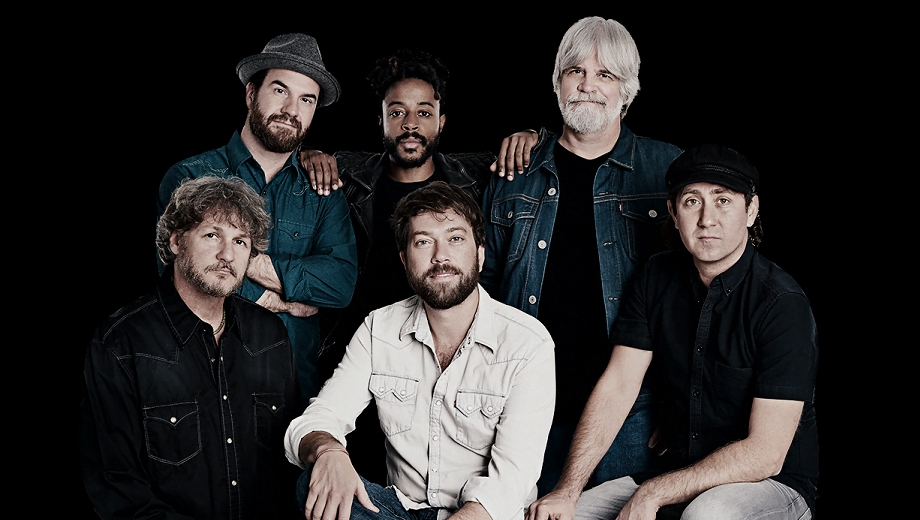
Vince Herman and Drew Emmitt met in 1985 on Vince’s first night in Boulder, CO and formed a lifelong musical bond. With banjo player Mark Vann they merged two bands into one and became Leftover Salmon at the dawn of 1990.

LISTEN: APPLE PODCASTS

In the 30 years since, they’ve earned the respect and partnership of the highest levels of the bluegrass and acoustic worlds while playing music that’s as adventuresome as it is laid back. Herman and Emmitt marked the anniversary with a duo acoustic tour. The String’s host Craig Havighurst caught up with the pair at Nashville’s City Winery for a wide ranging talk about their years together.

New Singer, Same Edge: The SteelDrivers Deliver on ‘Bad For You’

The SteelDrivers’ new lead singer, Kelvin Damrell, already grasps the driving force behind the band, which is marking its 12th year with a brand new album, Bad For You.

“You couldn’t play our songs if you weren’t passionate about what you were doing,” the Berea, Kentucky, native believes. “It wouldn’t sound right at all, in any position in the band. From the mid-range harmony part to the hardest-playing guitar riffs, to the hardest-playing fiddle, it wouldn’t sound nearly as good as it does if you didn’t love what you were doing, and playing with as much passion as you could.”

On Bad For You, Damrell steps into a role once filled by Gary Nichols and Chris Stapleton for the group’s first album since winning a Grammy with 2015’s The Muscle Shoals Recordings. All five of the SteelDrivers — Richard Bailey, Damrell, Mike Fleming, Tammy Rogers (whose daughter discovered Damrell on YouTube), and Brent Truitt — invited BGS over for a chat.

Kelvin, how long had you been in the band by the time you went into the studio?

Kelvin: Goodness, how long has it been now? I joined in October 2017. I was just so looking forward to the release date of the album that I’d forgotten when we went in.

Mike: He had to go to boot camp first. [Laughs] Bluegrass boot camp! We had to take him out of Kentucky. He had his first airplane flight. You saw the ocean for the first time, right? You left a lot of things laying around. [All laugh] You went through airports with knives when you shouldn’t have. But listen, it was good! We all got comfortable with each other, and we needed some time just to feel that, and it got to that point.

Kelvin: When I joined the band, I was really unsure about what was going on, about my position. I had made the cut as far as getting to be in the band, but Brent kept telling me we needed a couple of months to see how we jibe together. I thought that was just him saying that, but it was the truth. We switched vehicles pretty regularly and I rode with different people. We really saw how we jibed together before we made a full decision on whether we were going to keep me, or if I was going to go back to sweeping chimneys.

The song “Bad For You” has such a cool groove. You sent it out as your first single and you named the album after it. What is it about that song that is special to you?

Brent: To me it was the perfect fit for this band. It was the song that hit me right out of the chute. It encapsulates the sound. It’s really edgy, and we’re a little bit on the edgy side of bluegrass.

Mike: It was one of the strongest songs, as far as that kind of feel. It’s like a “Here we are!” kind of song. You know, “Look out!” The way Kelvin sang it, Tammy told him, “Sing it like a rock ‘n’ roll singer.”

Kelvin: I almost got emotional when we played it for the very first time. I really did, that’s the truth. The first night we debuted it, after we hit that last big note, I almost did get a little emotional because it’s like something is finally coming to fruition with my position in the band. I’d done all this other stuff that vocally belonged to Gary and vocally belonged to Chris, and now this one vocally belongs with me at the lead. And man, that three-part harmony! Everything about it was good, and it really did make me emotional.

I’m glad you mentioned harmony because that’s a really important component of this band that doesn’t get talked about enough — how well you can stack those voices.

Tammy: Thank you. But you’re exactly right, I think that’s always been a really strong facet of the band. It’s this rock ‘n’ roll lead singer with this really strong three-part harmony coming in on the chorus. From a writer’s perspective on this album, I thought about that a lot, and how that was still a big part of the sound, and to keep that consistent because I think that does set us apart.

Brent: In our live set, I’m thinking of one or two songs that end with the vocal trio by itself, doing the swell and bending into a note, and the crowd loves it every time. It’s a big part of bluegrass, period, but it’s a big part of our music too.

Brent, how would you describe the SteelDrivers’ sound?

Brent: For me, personally? It’s gritty, grind-y bluegrass. With a lot of soul.

Tammy: Think about the Rolling Stones if they were to play with bluegrass instruments. That’s us.

Mike: With a blues/rock ‘n’ roll singer. … It’s intense! I’m tired after our set. It’s a workout. We keep the emotion and the intensity going quite a bit, but we let up occasionally and do a nice song.

On this record, you do have that slower moment on “I Choose You,” which brings out another side of the band.

Tammy: Yeah, we’ve always had a song or two like that. On the first record, “Heaven Sent” has always been one of our most-requested and popular songs, and it has that great, easy, rolling feel to it. We call it the hippie dance. And when Thomm Jutz and I wrote “I Choose You,” that was definitely musically where I wanted to go with that, to have that feel to it. But it’s still a very serious lyric, even though it has a positive message, in a way. It has a lot of depth and meaning to it.

Richard, do you have a favorite track on this album?

Richard: Umm… “Forgive.”

What do you like about that one?

Richard: I like what I played on it. [All laugh]

Tammy: See, it’s all about the banjo! We joke about it but people love the banjo!

Mike: It’s got a great groove.

Brent: It’s one of my favorite songs too.

Kelvin: It’s funky. It’s like “Bad For You” is rock ‘n’ roll and “Forgive” is funky!

Kelvin, what were you listening to about three years ago, before joining the band?

Kelvin: Three years ago I was on a really big Cinderella kick. [All laugh] I’m still on the kick. I still listen to mainly rock ‘n’ roll when it’s just me in my truck, driving for hours on end.

Did the band prepare you for the honesty of bluegrass fans, and how they’ll tell you what they think?

Kelvin: I was ready for it before I started! I knew how much of a following they had. I know how much people loved Gary. I know how much people loved Chris. And I was ready for it – I prepared myself for people saying, “This guy sucks. You need to get somebody else.” [I’ve heard that] twice, I think, the whole time I’ve been with the band. It’s been great — because I was expecting it at every show!

Tammy, do you have young women coming up and telling how cool it is to see a woman on stage?

Tammy: Yeah, it’s really awesome and I appreciate it a lot. Because when I was growing up there were very few women playing, and the ones that did were usually bass players. Mama might be back there thumping on the bass or whatever. There were very few women role models for me, of that generation. There were a couple — I remember Lynn Morris was playing and Laurie Lewis was playing a few years ahead of me in those circles. Not many in the country world. I was a huge Mother Maybelle fan and part of that was because she played the guitar. That was fascinating for me as a kid.

And now in the generation after me, there’s just unbelievably talented women – not just singers, but instrumentalists. It’s phenomenal, the jump from mine and Alison Brown’s ages, to Sierra Hull, who is a genius on the mandolin, and Kimber Ludiker and all the Della Mae girls we love, and Molly Tuttle is absolutely slaying it on guitar. Sara Watkins, I’m With Her, Sarah Jarosz … it’s just on and on and on. If I in any way influenced any of those players, I am deeply honored.

What would you want bluegrass fans to know about this new record?

Tammy: We’re excited this year to get out and we’ll be playing a lot of different kinds of venues. We don’t play that many traditional bluegrass festivals anymore, but it’s my hope that people hear the music and still see the thread that’s in there. The subject matter that we choose to sing about is not as cleaned up as some other stuff, but to me it’s just another facet of the music, and I think we’re hopefully carrying it forward and carrying a torch.


Photo credit: Anthony Scarlatti

Possessed by Paul James: The Texas Schoolteacher Who Goes Wandering

Long before Konrad Wert took the stage name Possessed by Paul James, he was a kid living in what sounds like a fable. Wert grew up amidst the marshes and palmettos of Immokalee, Florida, watchful of “gators” but delighting in a monkey that swung from a mangrove tree near his home. Alongside his sister and the children of Mexican and Haitian immigrants, he attended the small Mennonite chapel his parents founded, worshipping and harmonizing on sturdy, simple hymns at least three times a week.

As a young adult Wert left Southwest Florida and his conservative, religious past. Free to listen to whatever he pleased, he was drawn to punk and the blues. But he set his love of music aside to pursue a teaching career. And for the last 20 years he has devoted his life to teaching special education and advocating for students and teachers.

Several years ago, with two young kids and a meager teaching salary, music became a way of supplementing his teaching income. His energetic, multi-instrumental shows quickly gained popularity and soon Possessed by Paul James (a nod to Wert’s father and grandfather) was born.

It’s been six years since Wert’s last album, There Will Be Nights When I’m Lonely. In that time, he has undergone two vocal surgeries, losing “two whole steps or three half-steps in terms of range,” he says. His latest album, As We Go Wandering, took nearly five years to complete. He would hum his compositions in school hallways, scribble lyrics on scratch paper or napkins and travel two hours northeast from his home in Kerrville, Texas, to Austin to record.

Finding common ground between the instrumental traditions of old-time music and a contemporary call to social action, As We Go Wandering is the collective work of 20 musicians. While Wert stayed consistent on banjo, fiddle, guitar and clogging, he wanted his friends and “picking pals” to add texture and feel on the record by contributing harmonies, mandolin, percussion and guitar.

He explains, “The greatest contribution to the participating musicians were the harmonies and choral effect such as in ‘Be at Rest,’ ‘As We Go Wandering,’ and ‘I’m So Good at Absolutely Nothing.’ … Their contributions added to the texture and feel tremendously. At the end of the day we’re all Possessed by Paul James. I like it like that. It’s not about the ‘me,’ it’s all about the ‘we.'”

BGS: Can you talk a little about the making of As We Go Wandering?

Wert: Our albums are very reflective of where we are in life. As We Go Wandering is really reflective of where we are as a family. My boys are 11 and 9. The kids are healthy, our relationship [with my wife] is strong, but where do we keep going?

I notice you say “we” and “our” when talking about the making of your music. Are you talking about your wife? The musicians you play with?

Yes. I’m a firm believer that the pronoun “we” is far more powerful than “I.” It’s never meant as the third person or some strange pretentious way of thinking. [Laughs] Rather, I can talk about how my family impacts the writing, how our friendships impact the writing, how life impacts the writing. I like to say, “We are Possessed by Paul James,” not “I am Possessed by Paul James.”

In the song “When It Breaks” you seem to be saying that when we hit our breaking points, we need to keep plugging away. What’s the story behind this song?

When I write, I’ll put songs on the shelf, and I’ll let it collect some dust until it feels ready to record it. We originally recorded this track on the album Feed the Family, and it was [recorded] just with me. It was very raw.

The sentiment when I wrote it then, and how we have reinvented it with this composition, has so much to do with, number one, my work as a schoolteacher. I had to take a year off in 2015 just for my mental health. It was starting to beat me down, that [feeling of] we’re not able to help these young people in the way that we want to help them. For me, some of these songs are reflective of, what am I going to do when I can’t take it anymore? What are teachers going to do when we can’t take it any longer? I get emotional about it.

Your performances always appear so cathartic, like you’re really just letting it all out. It sounds like your lyrics are a way of releasing emotions and inner struggles as well?

Oh, yeah. Maybe to a fault. Being raised a Mennonite, you were raised to recognize your weaknesses and your faults. You know the phrase would always be: Remember you’re broken and then you can have healing. Some people say, “When we come to your shows it feels like church.” Well, it’s meant to have people gather around and have a good time, share our burdens and talk with one another.

Many songs on this album feel nostalgic. Is that a reflection on where you are in life?

Yes. I understand how people sort of lose their footing in their mid-40s. There’s the adventures and excitement of your roaring 20s and then you’re balancing out in your 30s and quote-unquote growing up. Then in your 40s, the waters are calm and you’re thinking: What’s next? Am I just counting the minutes before I croak? I think there’s a lot of pondering, wandering in the album. I know I also wanted to slow things down. My wife is like, “Hey, can you have an album without cussing?” We wanted a more folk-y element, along with that theme of advocacy and hopefulness.

Some artists who have to have a day job to survive might compartmentalize those two things. You blend your job and your art together quite a bit.

Absolutely. I truly feel you can’t do one without the other. When I was [teaching] in elementary school, music was always in my classroom. I teach high school now, but on my wall there’s a picture of me teaching, my second-year teaching, with these little guys in school with a guitar. And there’s a little guy with a tambourine in his hand, a kid with Down syndrome, a sweet kid. So, music has always been in the class.

The song “Be at Rest” has been described as a social justice anthem related to education in this country. Is this a song you could’ve written in any other phase of your life?

No. I think with the rise of school shootings, when those tragedies occur, as a schoolteacher or counselor or any kind of educator, you’re literally walking in the same shoes of those that were injured or killed. It takes such a toll on you. You start thinking, whoa, look at this environment we are working in and this is truly now part of our job. This is truly part of our professional development and training — how to handle if someone comes into the school with a firearm. That’s profound when it’s an educational setting and we’re trying to help people learn and grow. The song was a response that came out in a cathartic manner.

My intent is to remind myself to be at rest. To remind myself that I can persevere. Is it specifically about someone coming into my school with a firearm? Yes and no. There are a lot of conflicts right now in public education that we have to focus our energy on. And I think by singing about that — there are battles in these classrooms, there are battles in these hearts — it might just be a reminder. It’s preachy, possibly. But not too preachy. I feel like if I get too preachy I lose the listener. But you have to live your convictions without losing your audience. That’s the balance.


Photo credit: George Blosser

BGS 5+5 Cup O’Joe

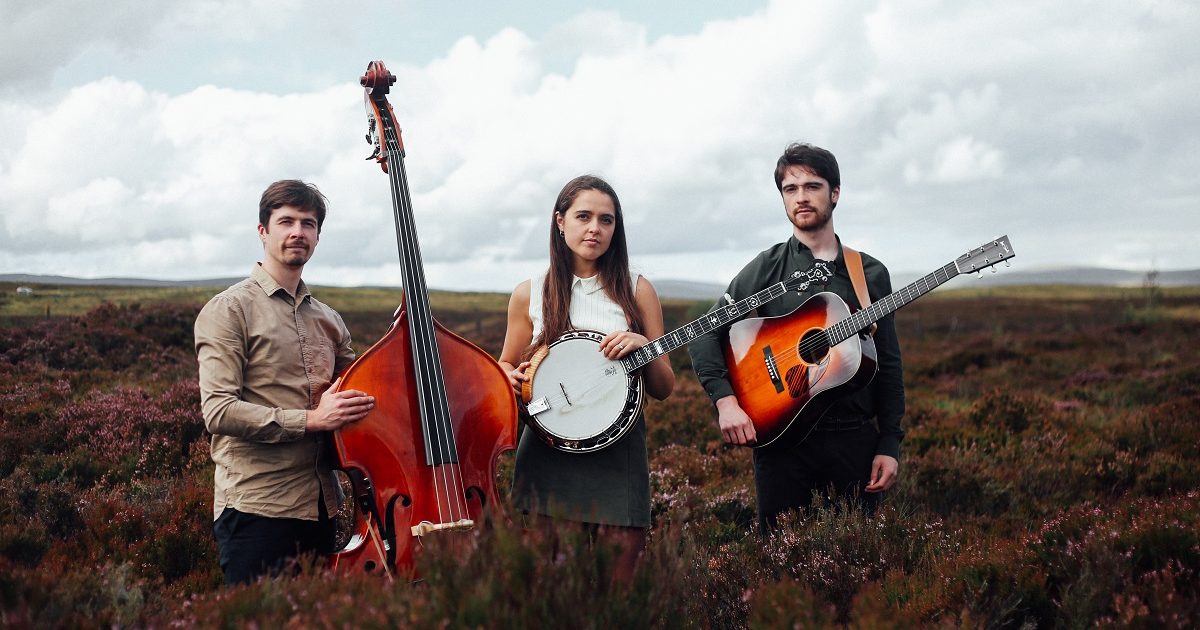
Artist: Cup O’Joe
Hometown: County Armagh in Northern Ireland
Latest album: In the Parting
Personal nicknames (or rejected band names): Mug O’Tay

Answers provided by Tabitha Agnew

Which artist has influenced you the most … and how?

I would have to say that it would be Alison Krauss! Her solo recordings and recordings with Union Station have been some of the most impactful recordings for me. The first introduction to bluegrass music that I remember hearing was “Every Time You Say Goodbye” from Now That I’ve Found You: A Collection. Her releases have swayed within the bluegrass/country/gospel realms and I’ve been enjoying her music for years.

What’s your favorite memory from being on stage?

One of my favourite moments being on stage with COJ was probably getting to play at IBMA in North Carolina back in 2017 in a lineup with our good friend Niall Murphy on fiddle. It was a hoot! Glancing around on the workshop stage representing the international scene and trying to not get too nervous when we saw legends and some other top pickers walking by!

What rituals do you have, either in the studio or before a show?

I try to have had at least one cup of sharp black coffee before a show and lots of water! (Both are definitely needed!) Yep, I know it sounds like a cliché, but I definitely run on coffee!

Which elements of nature do you spend the most time with and how do those impact your work?

This question has really made me stop and think, but I think I can safely say that trees are a big source of inspiration that impact our songwriting. Two songs off the new album refer to the concept of change happening as quickly as the changing of the leaves on the trees in each new season. Currently living in the countryside of County Armagh is a big source of inspiration in general, with rolling green hills and plenty of apple trees (County Armagh is “orchard county”).

Since food and music go so well together, what is your dream pairing of a meal and a musician?

Oooh! What a tough tough question! After getting to know Mr. Ron Block, I would have to say that I would pair him with a Scottish Cheese board (with Rough Scottish Oatcakes). I think that’s a pretty 10/10 combo in my opinion and I think he would totally be okay with that!


Photo credit: Katie Loughrin Photography

Aubrie Sellers Lets Her Music Breathe in ‘Far From Home’

With her new album Far From Home, Aubrie Sellers is living up to its title. Raised in Nashville as the daughter of musicians (Jason Sellers and Lee Ann Womack) and now living in Los Angeles, she absorbed bluegrass and country while still exploring genres with a harder edge. That spectrum of influences is apparent in her new music, which ranges from the softer sounds of the title track to the electrified vibe of “My Love Will Not Change,” a duet with Steve Earle.

Adding another meaning to “Far From Home,” Sellers wrote much of the album in Texas, and she’ll launch her national tour by opening for Tanya Tucker in New York City. BGS caught up with her just before she hit the road.

BGS: You recorded Far From Home at Sonic Ranch in Texas. What made you interested in working there?

Sellers: I was listening to a lot of what I call “desert music.” Tarantino soundtracks and The Ventures and stuff like that. I had taken my camper out to Marfa, Texas, and wrote some of the songs on this record there. I was very inspired by that vibe. My whole family is from Texas, so that kind of feels like my home.

Also I wanted to get outside of Nashville and I loved that idea that the whole band stays there while you’re recording. You immerse yourself in the making of the music. It’s really important for me to focus on making a record and having a cohesive experience. I feel like all that stuff tied together.

Why did you feel like you needed to get out of Nashville, do you think?

It’s nice to have no distractions. It’s nice to have a new environment. Your environment affects what you’re doing and I felt like it was important to have that vibe, since that’s what was in my brain already. It’s just nice to escape and make sure that you’re really focusing on making the record, and focusing on the music, and doing something different.

Is that the reason you moved to L.A. as well?

Yeah, I grew up in Nashville and I’ve been around that scene my whole life. It felt important for me to get out of there and experience some new things, and surround myself with a totally fresh energy. Also I went to acting school growing up and I’ve always wanted to do that. I find the film industry here really inspiring. I tried to come here when I was younger and I wasn’t quite ready, so this time it stuck.

You draw on a lot of influences and genres in your sound, but where do you think country music comes into your musical vision?

For sure I think my songwriting is country. I think it’s a little of that personal touch — and you don’t find that as much in other genres. There’s a simplicity to it, in a good way hopefully! And then sonically, steel guitar is one of my favorite instruments. I don’t want to make a record without steel guitar on it.

I listen to a lot of traditional country but I also really love that era of country with Steve Earle and Dwight Yoakam and Lucinda Williams. I love Buddy Miller — he’s kind of on the fringe of country. Buddy and Julie Miller have been a huge influence on me. All of those, and of course, classic country like George Jones and Merle Haggard. Those were my biggest country influences.

Are you a fan of bluegrass?

Yeah, I play the banjo! I thought for a while when I was in high school that that’s what I was going to do. I love bluegrass. Ralph Stanley is my favorite singer. My dad grew up playing with Ricky Skaggs so I was around it a lot. I’m really inspired by bluegrass. On this record, I did “My Love Will Not Change,” which was written by Shawn Camp, but I knew the Del McCoury version. For me, there’s just a similarity in the intensity and the drive behind some bluegrass and rock and blues music. It’s got a simple, emotional feel to it, to me. All of those things connect in my brain and my heart. I love bluegrass.

What was your entrance point to Ralph Stanley? That’s a big catalog to navigate.

I guess just listening to old Stanley Brothers records. Fortunately I grew up in an era where I could explore all music on the internet, you know? So I would go into a bluegrass rabbit hole and listen to that. And then of course, I love the banjo. I think it’s like the electric guitar of bluegrass.

You co-produced this record, too [with Frank Liddell]. What kind of textures did you hope to capture?

I don’t bring in references or anything like that when I’m making music. I think it’s more important to have a vision in your head and make sure you’re bringing in the right players, putting them in the right environment, and having the right songs. Let it evolve, take your time, and let it breathe.

It’s the same with writing and choosing songs. I try not to make it like a factory. I try to let it happen organically. I think it’s making sure you’re putting together the right people in the right environment. You know, I had four guitar players on this record! Sometime it’s about having someone sit out for a song. Letting everything have room to breathe is my philosophy.


Photo credit: Chloé Aktas

The Show On The Road – Che Apalache

This week we feature a border-breaking bluegrass band who came all the way from Buenos Aires to celebrate their Best Folk Album Grammy nomination. Before Che Apalache hit the red carpet, they stopped by host Z. Lupetin’s LA living room studio to talk about their unlikely founding and how they’ve created their intoxicating brew of traditional North American and often overlooked South American string band sounds.

LISTEN: APPLE PODCASTS • MP3

Lead by a trilingual world traveler, fleet-bowed fiddler, spitfire vocalist, and sonic scholar Joe Troop, Che Apalache formed almost accidentally when Joe began teaching curious local Buenos Aires pickers his own North Carolina folk traditions. Amongst his talented students he found three kindred spirits in Argentinians Franco Martino on guitar and Martin Bobrik on mandolin, and Pau Barjau on banjo, who is originally from Mexico. The result has been one of the most unexpected and have-to-hear-this-to-believe-it stories in modern roots music, culminating in their brilliant second record, Rearrange My Heart, which was produced by fan of the band (and a guy pretty good on the banjo), Béla Fleck. Lucky for all us, Che Apalache play several songs during the episode!

BGS 5+5: Tall Tall Trees

Artist: Tall Tall Trees
Hometown: Asheville, North Carolina
Latest album: A Wave of Golden Things
Release Date: January 31, 2020
Personal nicknames (or rejected band names): TTT, Trips T

What was the first moment that you knew you wanted to be a musician?

In sixth grade band our music teacher Mr. Hangley, who was the sweetest, most enthusiastic, rosy-cheeked band leader, switched me from alto to baritone saxophone. One day we were playing one of his favorite John Philip Sousa marches, and at the very end, I improvised a little bass riff and everyone including Mr. Hangley turned around in surprise. Something immediately clicked in my brain and I was totally hooked. Thank you public school music teachers everywhere.

What’s the toughest time you ever had writing a song?

The song “A Wave of Golden Things,” which ended up being the title track, is the oldest song on my new record. It was written on an out-of-tune piano in my Harlem apartment back in 2012 on the afternoon of the Sandy Hook school shooting. I was so overcome with profound sadness, the song just came pouring out of me. I made a quick recording of it on my old tape machine and couldn’t bring myself to listen to it for a long time. I was scared of it for some reason. After all the years, and so many school shootings later, I felt it was time to let it go, and it became the underlying spiritual theme for this album.

Which elements of nature do you spend the most time with and how do those impact your work?

Growing up in the suburbs of NYC, I always dreamed of living in “the city,” with all its excitement and electric energy. Moving there in my early twenties was the best decision I could have made. It’s impossible to not be inspired there, with its never-ending parade of random insanity and so much high-level art and music. I was involved in so many different projects during the fifteen years I lived there, and really got to understand what moved me, and what didn’t. New York City shaped who I am today artistically.

Still, while living there, I began fantasizing about nature and a quieter life, and after some extended retreats in the South, I landed in the Blue Ridge Mountains of Asheville, North Carolina. It’s an incredible place, steeped in banjo music and history and I’m really just getting my feet wet in the scene. I love being only an hour away from the towns where Earl Scruggs and Doc Watson came up. I have found myself unplugging my banjo more (haha, I know weird) and spending more time working it out on the porch. Living in the mountains has definitely had a positive effect on my psyche and the music of A Wave of Golden Things.

What’s your favorite memory from being on stage?

I have spent so many of the best nights of my life on stage, it’s pretty impossible to have a favorite. One particular night does comes to mind. I was touring solo through Europe, just me, a manual VW hatchback, and an intermittent GPS. I was scheduled to play an early evening set at a music festival in Austria and had a seven-hour drive, which magically turned into ten hours. I arrived minutes before my show, set up on this beautiful lakeside stage and started to play.

Three songs in, the sky opened up and sheets of rain sent the entire audience running for shelter, with many ending up on stage under the tent huddled around me. The wind knocked out the stage lighting and I finished out my set in the dark, lit up only by the LEDs in my banjo. The people were soaked, dancing and having so much fun. Such a magic moment for me. Afterwards, I smoked a j with Nada Surf. Pretty damn good time.

What other art forms — literature, film, dance, painting, etc — inform your music?

I have been obsessed with books, art, and music for my entire life. Everything else has pretty much been secondary. In recent years, I’ve discovered graphic novels and I’ve been blazing through everything by Neil Gaiman, especially the infinitely brilliant Sandman series, and also the work of super genius wizard Alan Moore. I am in total awe of the worlds they create and the stories they bring to life within those worlds. I so want to write music that does that.

I am also very deep into spiritual thinkers, people like Alan Watts, Terence McKenna, and the recently-passed Ram Dass. I have spent countless hours of my life listening to, or reading, their teachings and can’t help but assume they have informed my writing and worldview.


Photo credit: Sandlin Gaither

Eight Great Cuts of “Eighth of January”

It’s one of bluegrass and old-time’s favorite days of the year! The “Eighth of January” can be heard from every jam, every folk club, every radio tuned to the bluegrass airwaves – well, it ought to be like that.

To do our part, we’ve collected eight great versions of “Eighth of January,” that is, “The Eighth of January,” or “Jackson’s Victory,” or “Gulf of Mexico” to mark this auspicious day. At the end, we hope you’ve found a new lick to add to your own versions of the tune and we hope “eighth” doesn’t look like a word to you anymore, too!

Tui

Let’s start with a decidedly old-time take from fiddle/banjo duo Tui, AKA Libby Weitnauer and Jake Blount. Here’s hoping you make a stank face when they ever-so-slightly pass over the b7 — if you recall your last music theory course, see also: “the subtonic” — in the B part. (If the parts have been counted wrong, this writer begs your forgiveness.) The frailing rakes by Blount on the banjo, the pair’s playful deviations from each other, only to return, totally enmeshed a moment later… it’s delicious.


Charlie Walden

The old-time fiddler of Missouri, if Charlie Walden doesn’t come up in the first round of results when you search the internet for “Eighth of January” something is very wrong. His command of raw, timeless (and seemingly effortless) fiddling stems from a wealth of talent combined with his insatiable appetite for tunes — he’s collected countless melodies, stories, and songs from fiddlers all across his home state.


Tony Rice

An old-time fiddle tune fully assimilated into the bluegrass canon? This right here is how. That’s Darol Anger and David Grisman on the tasty twin parts, Todd Phillips on bass, and the one and only Tony Rice holding it down and shredding it up all at once. Every time they slightly push, syncopating the tail-end of a random melodic phrase here and there, a shiver should go down your spine.


Jeremy Stephens

No one alive plays Don Reno-style banjo better than Jeremy Stephens. Full stop. Now, if you’ve already hit play and have listened through to his first solo, you should know this: He recorded Scarlet Banjo at the ripe old age of 16. You know him now thanks to his quintessential sound with High Fidelity, but Stephens has been burning a torch for unencumbered, fully-realized traditional bluegrass for a long time. And it’s always been this good!


Scotty Stoneman with the Kentucky Colonels

The Kentucky Colonels were inducted into the Bluegrass Music Hall of Fame in 2019 and though Stoneman was not an original member, he left an indelible mark on the band’s legacy, which manifests chiefly through his “hot” fiddling on the band’s essential live recordings. Though fans may be most familiar with hearing the Colonels hold on for dear life in the wake of his bow at truly incomparable tempos, Stoneman is relatively subdued in his captivating improvisations over “Eighth of January.”


Eric Weissberg

Deliverance reverberates throughout the ages for all of the wrong reasons. If you forgot this was on the original soundtrack to the infamous film, we don’t blame you. That’s why we’re here to remind. Weissberg’s banjo playing — especially his fantastic melodic approach, heard here — certainly deserves more recognition than simply being regarded as the originator of “Dueling Banjos” in its modern form.


Johnny Cash, “The Battle Of New Orleans”

We may have neglected to mention earlier that this tune is named “Eighth of January,” commemorating the day of “Jackson’s Victory,” because (cruel, genocidal) President Jackson won “The Battle of New Orleans” that very day in 1815. Yes, this tune has a lot of titles — and lyrics, to boot! Here’s the Man in Black lending the dusky patina of his baritone to our song du jour.


Allison de Groot & Tatiana Hargreaves

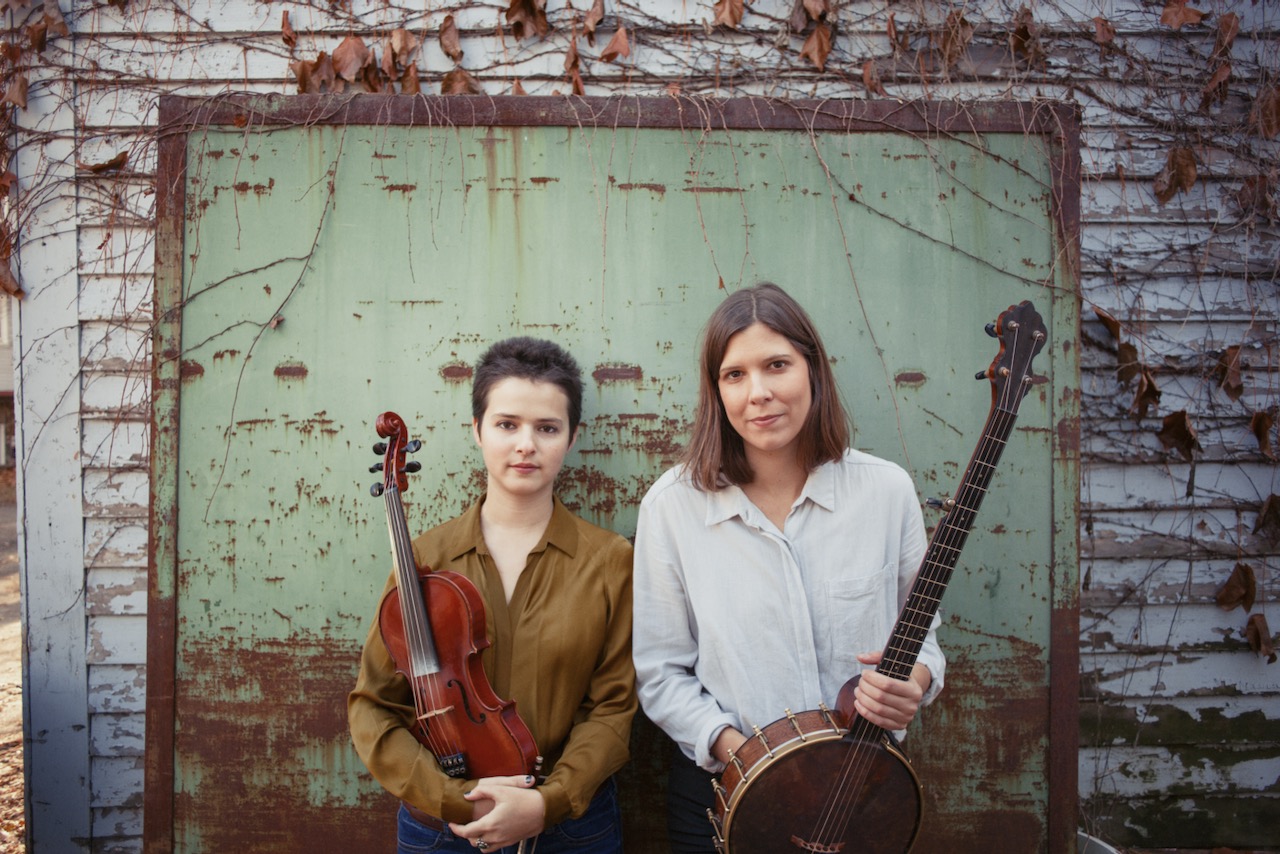
This particular variation on “Eighth of January” was found in recordings of African American musicians Nathan Frazier and Frank Patterson, who were first recorded in Nashville in the 1940s, so you’ll notice de Groot and Hargreaves stray from the melodic phenotype of the others on this list. It’s a gentle reminder that the way these tunes travel — from picker to picker, across generations, across counties and countries — is just as important to the history of string band music as the tunes themselves. Just about a year ago (hmm, how is that so easy to remember?) we featured this track in an edition of Tunesday Tuesday, solidifying this BGS tradition.


Photo of Tatiana Hargreaves (L) and Allison de Groot: Louise Bichan