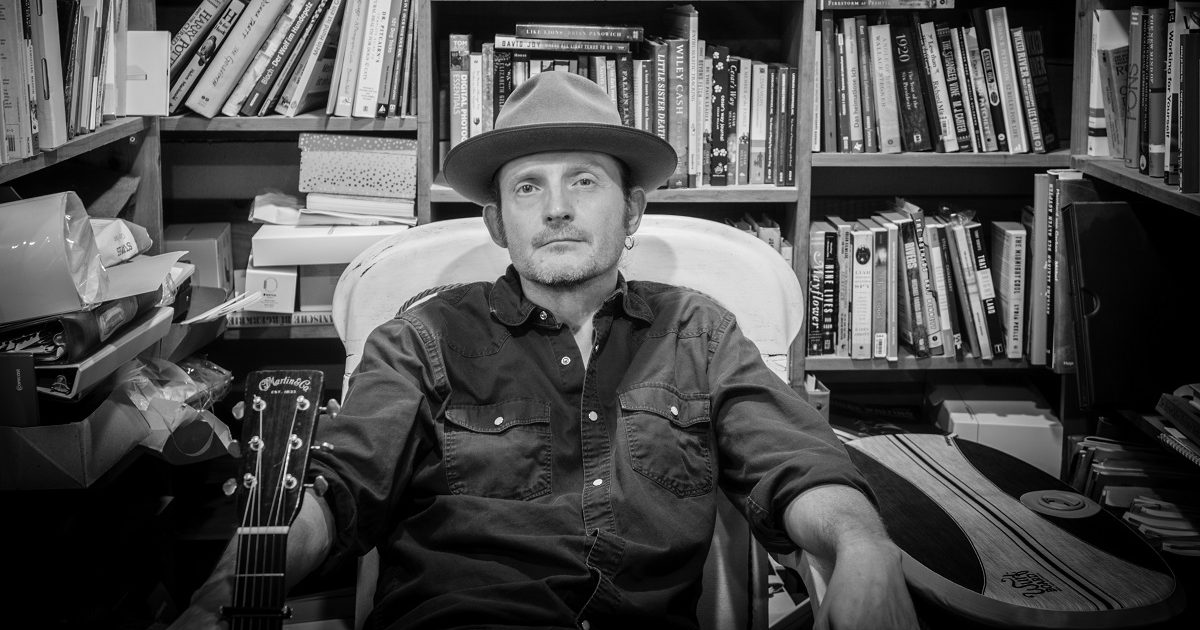
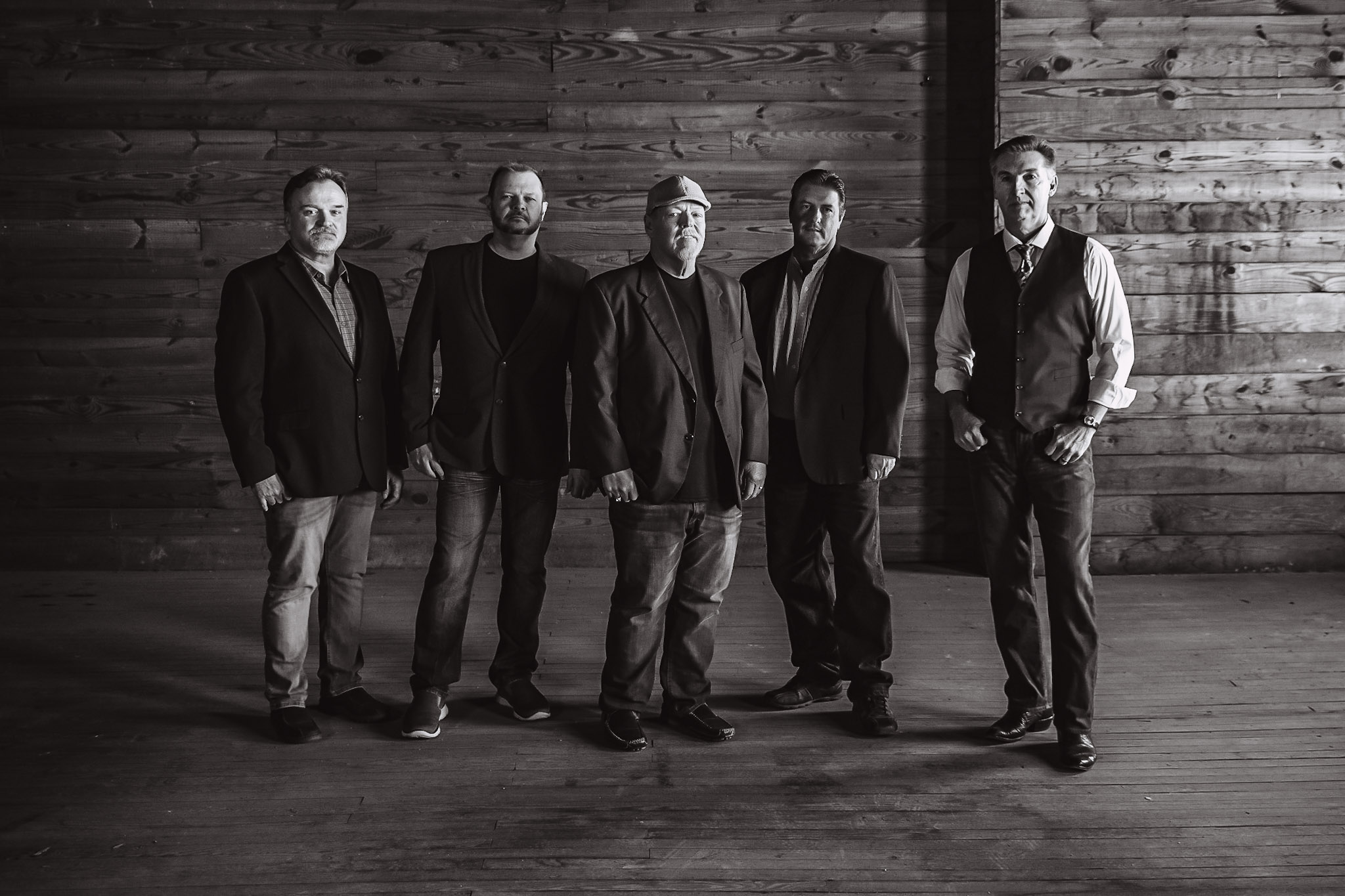
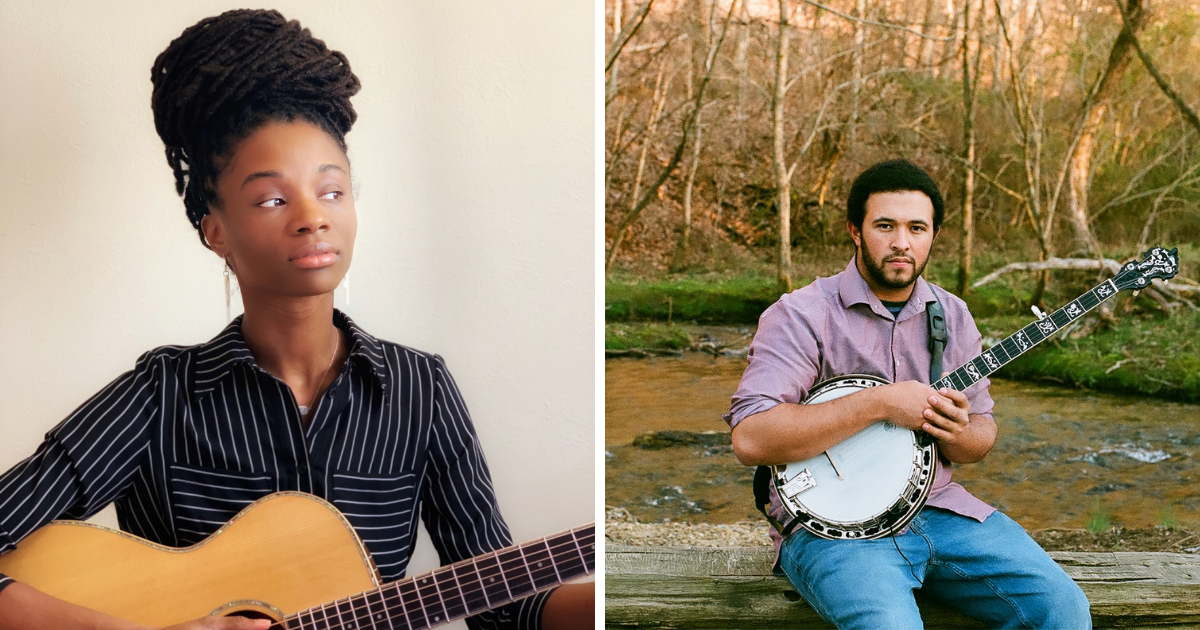
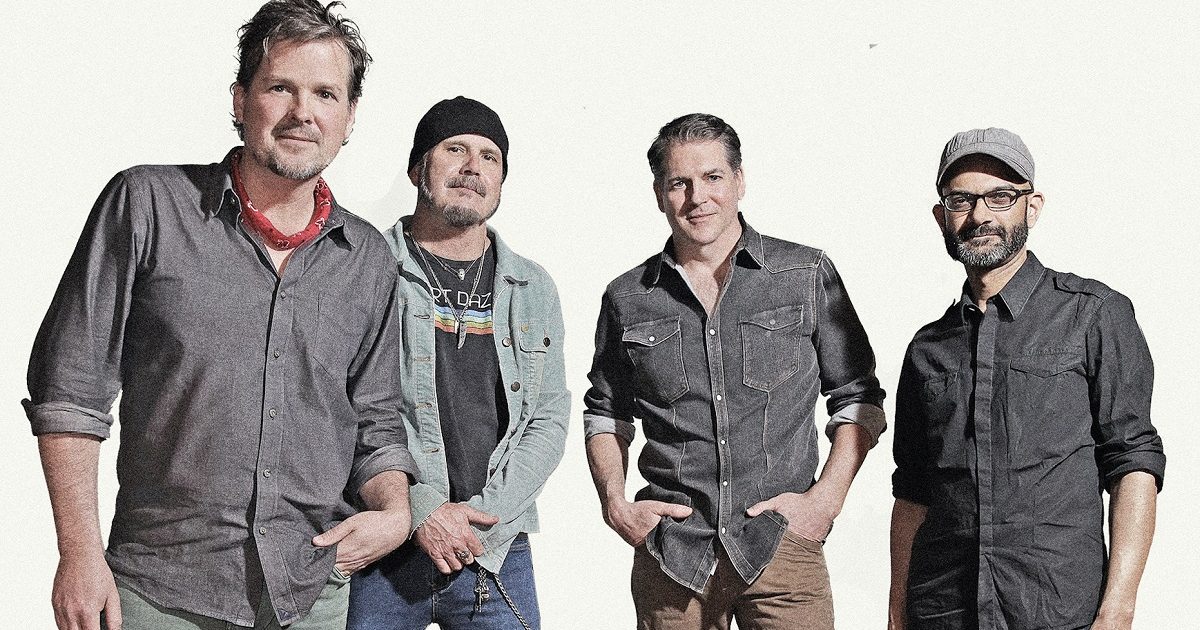
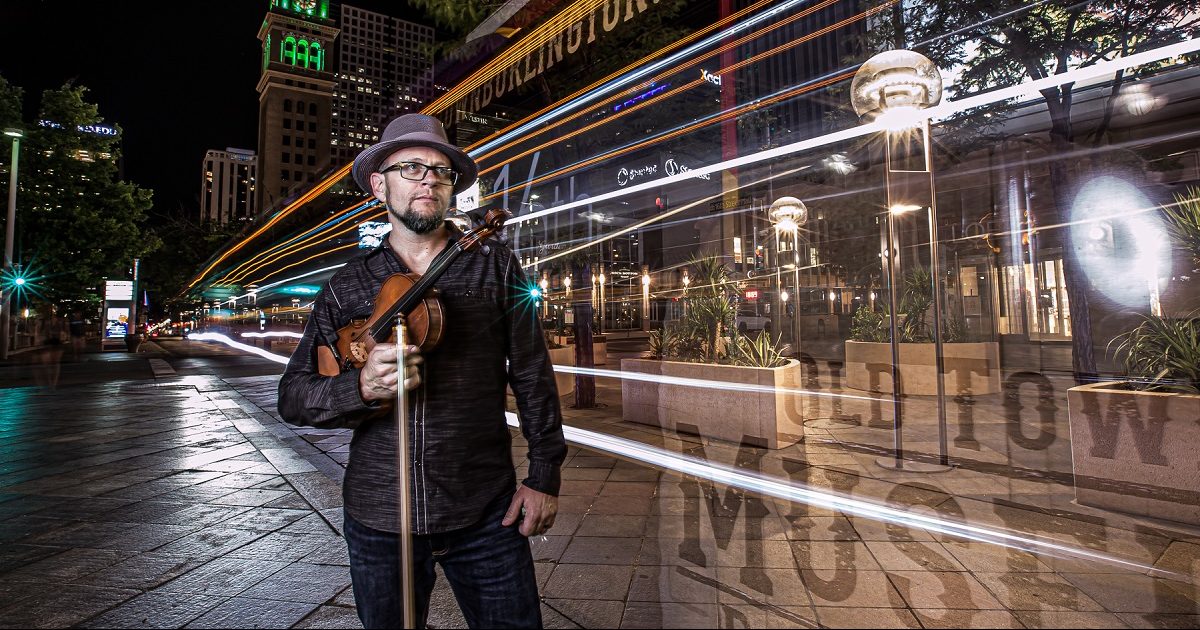
LISTEN: Jeremy Garrett, “The World Keeps Turning Around”

Artist: Jeremy Garrett
Hometown: Loveland, Colorado
Song: “The World Keeps Turning Around”
Release Date: October 9, 2020
Label: Organic Records

In Their Words: “These days it just seems like we are going around in circles with many of the conversations we are having — especially online. Someone has a good idea for good change, and then the barrage of disagreements on how to achieve that fires up. When we look at the big picture though, are we all just beating our heads against a brick wall, so to speak? Never realizing how powerful all of us truly loving one another could be? Maybe that message is too simple and naive, but perhaps we need to break it all down, go back to the basics and realize that we are one country, one world. We can’t ever escape that, and when we learn from each other, we would never want to. So the goal of this song for us was to simply ask that question: are we going to keep heading down a path of division over and over and over again? Or can we ask ourselves what we can do to break this cycle?” — Jeremy Garrett


Photo credit: J.Mimna Photography

IBMA Awards 2020: See the Full List of Winners

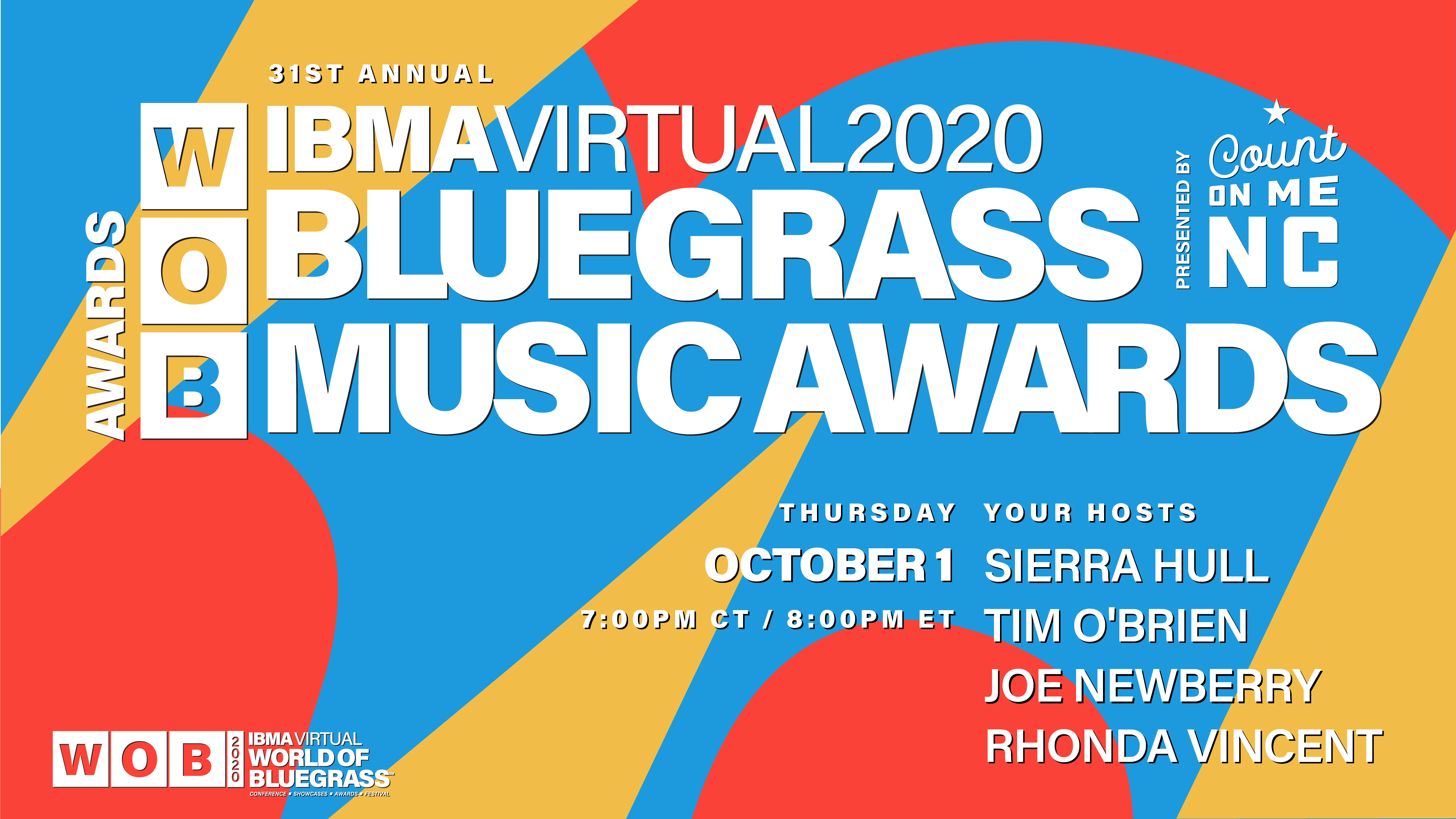
The winners of the 31st annual IBMA Bluegrass Music Awards were announced Thursday night via video awards show, hosted by Sierra Hull, Tim O’Brien, Joe Newberry, and Rhonda Vincent.

The “biggest night in bluegrass” was well-adapted to its virtual setting and boasted three Hall of Fame inductions, guitar and banjo tributes to Doc Watson and J.D. Crowe, a continent-spanning collaboration by Rob Ickes & Trey Hensley and Taj Mahal, and celebrations of the 20th anniversary of O Brother, Where Art Thou? and the 75th anniversary of the birth of bluegrass. Marking the occasion, Del, Ronnie, and Rob McCoury opened the evening from an empty Ryman Auditorium, regarded as the birthplace of bluegrass and a former home for the show.

Special performances were shot live at home, in studios, and at various small venues — as well as the Station Inn and the Ryman. Billy Strings paid tribute to Hall of Famer and Male Vocalist of the Year nominee, Larry Sparks, with a cover of “John Deere Tractor” — with double pickguards, to boot. In the Doc Watson tribute, each of the five Guitar Player of the Year nominees (Trey Hensley, Billy Strings, Bryan Sutton, Molly Tuttle, and Jake Workman) took their turn virtually swapping solos on “Black Mountain Rag,” with T Michael Coleman, Watson’s longtime friend and bandmate, holding them all together through the webcams and headphones. Many other unique collaborations, tributes, and performances were peppered throughout the award announcements. The most stunning performances, though — like Vocal Group of the Year and Entertainer of the Year winner Sister Sadie’s “900 Miles” — were from the mother-church setting of the Ryman, where in a pandemic twist, the bands each performed not facing an audience, but with the auditorium’s empty pews as a background.

As IBMA Executive Director Paul Schiminger put it in his speech from the Ryman stage, in a virtual conference year and a pandemic, returning to the birthplace of the genre was “an unexpected gift through it all.” 75 years of bluegrass were poignantly brought together beneath the rafters of the hallowed, though empty, Ryman Auditorium.

Here are the winners of the 2020 IBMA Bluegrass Music Awards, in the order they were announced:

New Artist of the Year

Mile Twelve

Instrumental Group of the Year

Michael Cleveland & Flamekeeper

Gospel Recording of the Year

“Gonna Rise and Shine”
Artist: Alan Bibey & Grasstowne
Label: Mountain Fever Records
Producer: Mark Hodges

Banjo Player of the Year

Scott Vestal

Resophonic Guitar Player of the Year

Justin Moses

Fiddle Player of the Year

Deanie Richardson

Bass Player of the Year

Missy Raines

Mandolin Player of the Year

Alan Bibey

Guitar Player of the Year 

Jake Workman

Collaborative Recording of the Year

“The Barber’s Fiddle”
Artists: Becky Buller with Shawn Camp, Jason Carter, Laurie Lewis, Kati Penn, Sam Bush, Michael Cleveland, Johnny Warren, Stuart Duncan, Deanie Richardson, Bronwyn Keith-Hynes, Jason Barie, Fred Carpenter, Tyler Andal, Nate Lee, Dan Boner, Brian Christianson, and Laura Orshaw
Label: Dark Shadow Recording
Producer: Stephen Mougin

Instrumental Recording of the Year

“Tall Fiddler”
Artist: Michael Cleveland with Tommy Emmanuel
Label: Compass Records
Producers: Jeff White, Michael Cleveland, and Sean Sullivan

Vocal Group of the Year

Sister Sadie

Song of the Year

“Chicago Barn Dance”
Artist: Special Consensus with Michael Cleveland & Becky Buller
Writers: Becky Buller, Missy Raines, Alison Brown
Label: Compass Records
Producer: Alison Brown

Album of the Year

Live in Prague, Czech Republic
Artist: Doyle Lawson & Quicksilver
Label: Billy Blue Records
Producers: Doyle Lawson and Rosta Capek

Female Vocalist of the Year

Brooke Aldridge

Male Vocalist of the Year

Danny Paisley

Entertainer of the Year

Sister Sadie


Also honored during the broadcast were three inductees into the Bluegrass Music Hall of Fame: owner of the Station Inn, J.T. Gray, The Johnson Mountain Boys, and New Grass Revival.

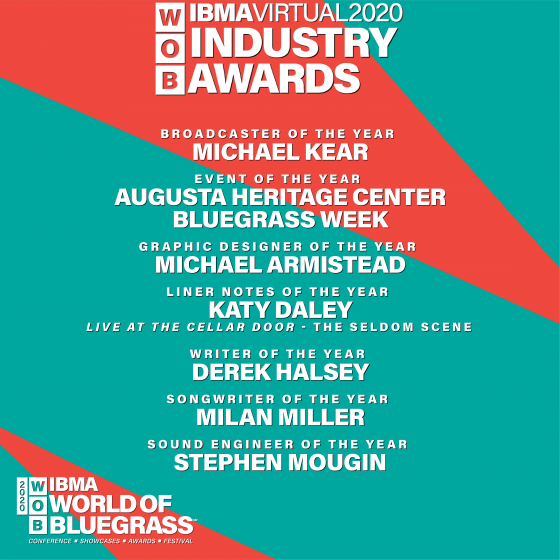
The Industry Awards were held on Wednesday, September 30. Hosted this year wittily and absurdly in video format by Béla Fleck and Abigail Washburn, the Industry Awards recognize outstanding professional work within the many arms and branches of the bluegrass industry at large. 

The Industry Awards recipients:

Broadcaster of the Year

Michael Kear

Event of the Year

Augusta Heritage Center Bluegrass Week, Elkins, WV

Graphic Designer of the Year

Michael Armistead

Liner Notes of the Year

Katy Daley, Live at the Cellar Door – The Seldom Scene

Writer of the Year

Derek Halsey

Sound Engineer of the Year

Stephen Mougin 

Songwriter of the Year

Milan Miller

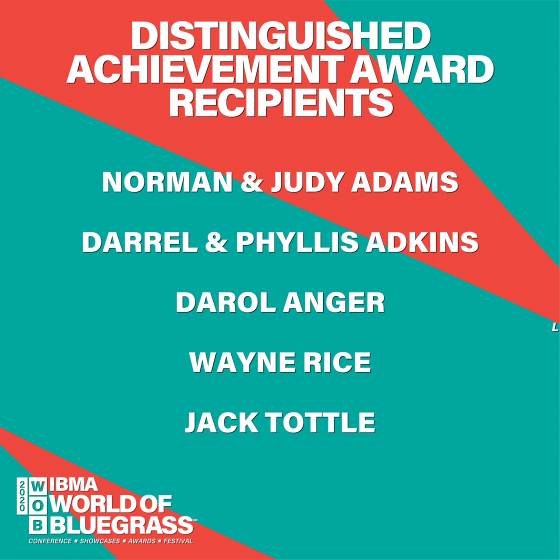
The recipients of the Distinguished Achievement Awards, honoring lifelong contributions by forerunners and ambassadors for bluegrass music, were honored with presentations on Wednesday as well: 

Norman & Judy Adams, Adams Bluegrass Festivals

Darrel & Phyllis Adkins, Musicians Against Childhood Cancer

Darol Anger, fiddler/educator

Wayne Rice,  San Diego’s KSON “Bluegrass Special” host

and Jack Tottle, band leader and educator at East Tennessee State University.

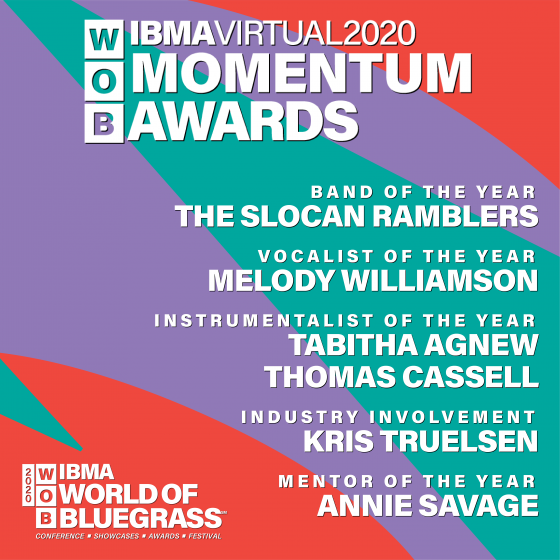
The Momentum Awards, handed out via video ceremony on Tuesday, September 29, focus on artists and industry professionals who are in the early stages of their bluegrass careers and the mentors who have helped them reach their young success.

The Momentum Awards recipients:

Industry Involvement

Kris Truelsen

Mentor

Annie Savage

Instrumentalist (2 recipients in this category)

Thomas Cassell

Tabitha Agnew

Vocalist

Melody Williamson 

Band

The Slocan Ramblers


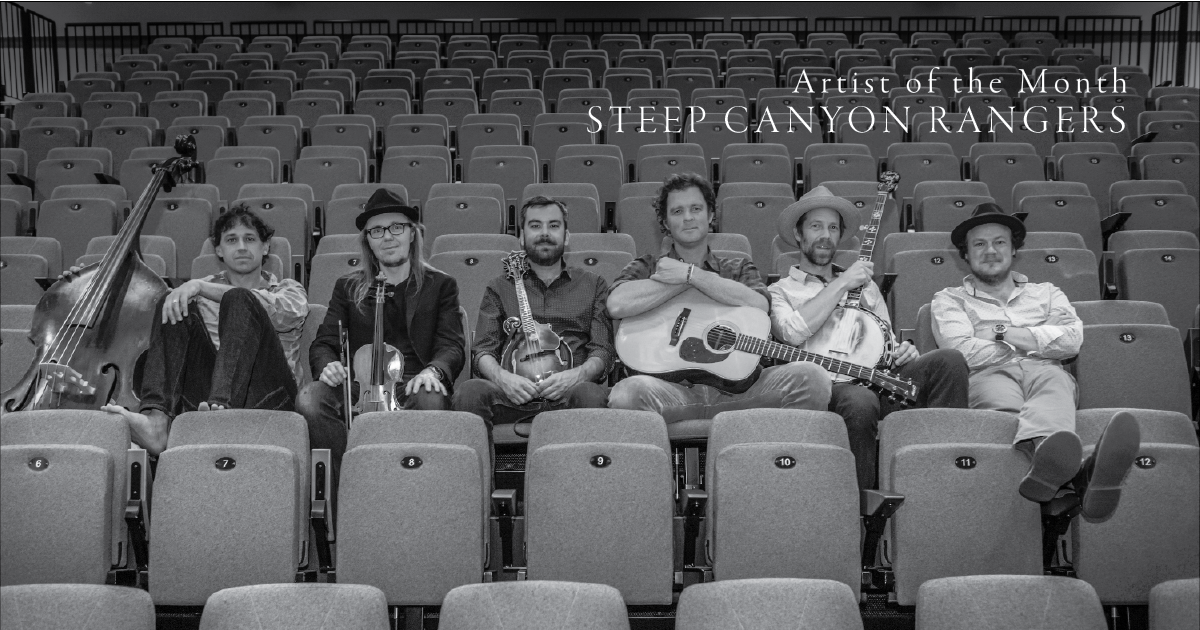
Artist of the Month: Steep Canyon Rangers

In a state with no shortage of bluegrass bands, North Carolina’s Steep Canyon Rangers have always set themselves apart with compelling songwriting and a camaraderie that feels authentic, whether they’re up on stage headlining Merlefest or at a performing arts center supporting Steve Martin. (The band shared IBMA Entertainer off the Year honors with Martin in 2011.) These guys have integrity, sure, but they also have an adventurous spirit, a subtle sense of humor, and a keen perspective that reflects where they are in life.

On their upcoming album, Arm in Arm, bluegrass fans will find a lot to like, but so will those listeners who pay attention to songwriting. It happens to be the first time they’ve recorded an album outside of North Carolina, opting to work at Southern Ground studio in Nashville, and to produce the album with Brandon Bell. Some of the sonic textures may sound different, but the emotions in their music remain intact.

“We’re not trying to sound like a style or genre,” says Graham Sharp, the band’s banjo player, frequent songwriter, and occasional lead singer. “We’re not trying to fit into a certain mold. For a long time, we were a traditional bluegrass band, and that meant the themes would have to fit into that mold: work songs, heartbreak songs, train songs. But we’ve evolved to play any groove, any style, and it has opened us up to so many more possibilities.”

BGS will spotlight Steep Canyon Rangers as our Artist of the Month with back-to-back interviews with two of its founding band members, Woody Platt and Graham Sharp, conducted by noted North Carolina author and journalist David Menconi. (Read part one with Woody Platt here. Read part two with Graham Sharp here.) Arm in Arm arrives on October 16, but we’ve include a few of its early tracks below in our BGS Essentials Playlist for Steep Canyon Rangers.


Photo credit: David Simchock

‘Color Me Country’ Host Rissi Palmer Finds a Musical Home in North Carolina

Between caring for her two kids and hosting her brand new show, Color Me Country, on Apple Music Country, singer/songwriter and creator Rissi Palmer has had plenty to keep her busy since the touring industry shut down due to coronavirus. 

This week, Palmer will take part in our fifth annual Shout & Shine Online as part of IBMA’s World of Bluegrass conference and festival, performing a song from her most recent album, Revival. BGS jumped on the phone with Palmer to talk about the showcase, the musical heritage of North Carolina (her home for the past ten years), her musical community, Color Me Country, and more. 

(Editor’s note: Watch Shout & Shine Online here on October 3 at 2pm ET)

BGS: The production end of things has felt really different this year, putting Shout & Shine Online together virtually rather than in-person, like the last four years. But I bet being a performer feels pretty different to you in a pandemic right now as well? 

Rissi Palmer: The performance part of it is extremely strange. I’ll be perfectly honest, I don’t like doing livestreams. [Laughs] I do them, because that’s what we have to do, but yeah. Not a big fan. 

As far as the other [aspects], though, I have to say the time at home has been good for getting projects done. I’ll be honest with you, Color Me Country, I had been thinking about doing it for at least a year, but I didn’t have time, ’cause I was out on the road and doing all this stuff. Once we got to be home, once quarantine was happening, I had a little time — not a lot, because I have two children — to start working on it and actually sitting down and focusing. At the same time, with everything that’s going on I found it really hard to write. I’m flooded with a lot of different emotions right now, so I want to be creative, but the easiest thing for me has been channeling a lot of my feelings and frustrations into my show, not so much the music. I hate it, but I’m not being as musically creative as I’d like to be. It’s hard, I’m having a hard time. 

I did want to talk about Color Me Country, because Shout & Shine was created to literally provide a space for othered folks, marginalized folks, to exist within these genre formats and communities that have — whether stereotypically or traditionally or both — been white spaces for so long, and straight spaces for so long, and male spaces for so long. Shout & Shine is a space that’s not owned by any of the above, where we can celebrate the marginalized and underrepresented folks who have always been in these musics. I see you doing the same thing with Color Me Country. 

That’s exactly what Color Me Country is. That’s what I wanted to do. I feel like so many times, as an artist of color in a genre that is predominately white, you’re mostly talking to white journalists. You’re mostly talking to white outlets. A lot of times you are othered. I don’t think people do it to be mean, I don’t think it’s done in malice or anything like that. It just ends up being one of the more interesting parts of the interview, it’s more interesting to ask an interviewee [about identity or race]. For me, in my experience — and I can’t speak for everybody else — I spent most of my interviews when my album first came out in 2007 talking about being Black, not really talking about my art. That starts to wear on you after a while! 

When you’re in a situation where you know that you’re a part of “the system” and you don’t necessarily want to bite the hand that feeds you, you can’t be as honest as you want to be. You don’t want people to be immediately turned off. That’s how I felt as a new artist in a lot of ways. Now that I’m on my own and I’m older, I feel differently about the world and I have lots of opinions. [Laughs] I recognize the power in my platform that I didn’t recognize thirteen years ago. [With Color Me Country] I was just like, there has to be somewhere people can just talk. And not just talk about race, but about music and being a musician. A space free from worrying about alienating anybody or offending anyone. It’s just being honest.

Outside of the fact that I’m Black, outside of the fact that I’m a woman, I’m also a musician. I’ve been in a lot of the same rooms that these other artists have been in. I’ve had a lot of the experiences that they’ve had. So [on the show] we’re speaking to each other as peers. It’s an easier situation, I find. I end up getting stories or confessions or thoughts that people wouldn’t normally share. I think that’s good! I sometimes end up revealing things about myself in these conversations, because we’re being honest with each other. That’s what I wanted, because I didn’t feel like I had an outlet like that. Not that people weren’t kind to me or any of that, I just never felt that safe. 

The local connection of Shout & Shine has been a really important part of our mission, in years where we’ve held the showcase during IBMA’s conference in Raleigh in-person, connecting the show to the legacy of North Carolina’s roots music has been a part every year. The stories of bluegrass and country are tied so tightly to North Carolina, so I wanted to ask you about your connection to the state and what about its musical history and community that resonates with you?

First of all, I have been a North Carolinian for ten years now. I absolutely love it here. I live in Durham and specifically in our community — and I’ve lived in Los Angeles, I’ve lived in Nashville, I’ve lived in New York and Atlanta — I have to say this particular music community is my favorite. I say that because there are so many types of music here! There are so many really ridiculously talented people. I think that has something to do with the fact there are so many colleges here — or there’s something in the water! Really, nationally important music is being made here. Everyone is so open and so giving. It’s one of the few music communities that actually feels like a community. I know for me, being here has made me a better artist.

Being in Nashville, being in New York and being a part of the rat race, you tend to think in terms of commerciality and sales and that sort of thing, monetizing your creativity. Whereas here, mind you we want to make money, I’m always looking for ways to make money, but here it’s more like, “How can you use your art to help your community? How can you use your art to collaborate with these people for this cause?” Everywhere I turn there’s a way to use my platform, my voice, my art to elevate something. That’s really awesome and for me, that’s made my art more global. 

Just look at the art that comes out of here! Everything is extremely conscious, it’s thoughtful; I think that whatever is happening with the artists here, it resonates. Showing people what’s going on here and exposing it [to the world] is really important, because there’s so much good stuff here. 

Speaking of collaborations, your Shout & Shine Online performance includes Omar Ruiz-Lopez on a song you wrote called “You Were Here.” The performance is excellent and exquisite and we won’t give it away entirely, but tell us a bit about working with Omar and the song? 

First of all, I’m super excited to be a part of it! I was so excited when I got the email. Omar and Lizzy [Ross] of Violet Bell are two of my favorite people in the world. I think the world of them. They’re so ridiculously stupid talented. It’s not even funny. 

In 2018 I was a part of an artist in residency for like a week and we were all put in a house, the Oyster House, out on the coast. It was myself, Violet Bell, XOXOK — Keenan Jenkins, he’s local he’s amazing as well. We were there with a couple of playwrights, some artists, and we were in this house for a week. We got along really well, we’d jam at night, that sort of a thing. We all formed such tight relationships between us musicians, so any time we can perform together we try to make it happen. Omar actually played on the record of the song I did for the performance and so when I got the email and knew I was going to do this I knew I had to call Omar. Not only that, I was just chomping at the bit to have another musician in the shot with me!! I’m so sick of playing things by myself! [Laughs] I wanted to make it big and beautiful.

Another thing I just thought of while we’re talking, the song I’m doing is called “You Were Here.” It’s from my new album, Revival, and it’s about a miscarriage that I had in 2018. I had just met Lizzy and Omar and had just found out I was pregnant when we did the residency. The day that everything started happening I was actually in the studio with them — I didn’t even think about that, I was recording on their record. There was no one else I could do this with. 

Omar plays emotionally and that’s what this song needed. I remember when I called him to track on it, he did it in about two takes. We were sitting in the studio just bawling while we were recording it. He did an excellent job. I couldn’t imagine sharing this moment with anybody else. 


Photo courtesy of the artist.

BGS 5+5: Thomm Jutz

Artist: Thomm Jutz
Hometown: born in Neusatz/Germany, living in Nashville, TN
Latest album: To Live in Two Worlds Vol.2
Personal nicknames: TJ

Which artist has influenced you the most … and how?

At this point in my life, I’d have to say that Norman Blake has influenced me the most. Not just as an instrumentalist, but also as a songwriter. When he started writing original material in the early ’70s he came out of the shoot with a distinctive songwriter’s voice. Unlike Kristofferson, Hartford, and Dylan, all of whom he had worked with, Blake’s focus was not on his inner world but on the old rural America that he’d grown up in. He applied his huge knowledge of railroad history to his writing. His songs were based on local characters that he’d grown up with or places that were meaningful to him. I like to write about historic events or characters from the past and I owe the inspiration for that to a large part to the great Norman Blake.

What other art forms — literature, film, dance, painting, etc — inform your music?

Literature has a great influence on my music. I read all the time. I try to keep something historical, a story and something philosophical or inspirational going at all times. The more I read, the more I write. Sometimes images from books come to me after years and I start writing about them. I also love to read cookbooks. In recent years I’ve really been into the novels of North Carolina writers Ron Rash and John Ehle.

What was the first moment that you knew you wanted to be a musician?

When I was eleven years old I saw Bobby Bare on TV. He hit me square between the eyes with his singing, the way he held the guitar and his cooler than cool attitude. My soul connected with the archetype of the wandering minstrel at that moment and has not let me go since. I never felt like I wanted to do anything but a musician and songwriter. I got to work with Bare a couple of times. He was every bit as great as I wanted him to be.

What’s the toughest time you ever had writing a song?

I can’t say that I struggle too much with songwriting. I believe that if you have a good idea and put in the time and co-write with the right people, your craft should make it possible for you to at the very least come up with something decent every time. One song idea that I had and didn’t know how to approach for over a year was for a song called “Help Me to Hold On” that I co-wrote with Milan Miller and that was recorded by Balsam Range. Every morning when I walked with my dog that idea was in my head, but I couldn’t some up with an angle to approach it. I still remember where I was out here by Percy Priest Lake when all the pieces came together. We wrote it the following Saturday and it didn’t take more than an hour to get it done.

Since food and music go so well together, what is your dream pairing of a meal and a musician?

I listen to a whole lot of Norman Blake’s music when I’m cooking dinner with my wife every night. Another really good pairing is when my friend and fellow songwriter Jefferson Ross comes to visit from Atlanta. We stand around the kitchen or the grill with a beer, cook together and talk about books, music and vintage guitars.


Photo credit: Jefferson Ross

BGS Presents IBMA Awards Pre-Show Hosted by Sean & Sara Watkins

BGS is excited to announce the IBMA Bluegrass Music Awards Pre-Show, produced and presented in partnership with IBMA and highlighting this year’s Emerging Artist Award nominees. WATCH HERE.

The half-hour-long special will be hosted by Sean & Sara Watkins (winners of the Emerging Artist award as part of Nickel Creek in 2000) and features performances from all five 2020 nominees: Appalachian Road Show, Carolina Blue, High Fidelity, Mile Twelve, and Merle Monroe.

“In a year of firsts, we’re excited to launch a new collaborative tradition for BGS and IBMA,” says Amy Reitnouer Jacobs, BGS co-founder and Executive Director. “The Pre-Show is an opportunity to kick off the biggest night in bluegrass and highlight the future of the genre.”

The IBMA Bluegrass Music Awards Pre-Show starts at 7:30pm ET/4:30pm PT on Thursday, October 1 — just before the IBMA Bluegrass Music Awards — and will air on our YouTube channel as well as IBMA’s conference and festival platform, Swapcard. (Free music pass registration is available here.) Immediately following the event, viewers can click through to Swapcard, or IBMA’s Facebook page, to stream the full awards show.  The Pre-Show is presented in partnership with BGS sponsor, Preston Thompson Guitars.

IBMA World of Bluegrass 2020 is a virtual music homecoming and convention, taking place September 28-October 3; the event includes the IBMA Business Conference; IBMA Bluegrass Ramble presented by Count On Me NC, an innovative series of band showcases; the 31st Annual IBMA Bluegrass Music Awards presented by Count On Me NC, and IBMA Bluegrass Live! powered by PNC.

Watch the IBMA Bluegrass Music Awards Pre-Show here.


(Editor’s note: A previous version of this announcement listed the air time for the show as 7pm ET / 4pm PT. The correct airtime is 7:30pm ET / 4:30pm PT.)

Despite Challenges, Phil Leadbetter Finds Motivation in the All Stars of Bluegrass

There aren’t many people in bluegrass as adored as “Uncle” Phil Leadbetter. From performing for Gerald Ford with the Knoxville Newgrass Boys in 1975 to his work with J.D. Crowe, the formation of bands like Grasstowne, or beating cancer — not once, but five times — Leadbetter has earned his position as one of the most respected and beloved musicians in this familial genre.

His new project, Swing For the Fences, by Phil Leadbetter and the All Stars of Bluegrass, comes out September 25 on Pinecastle Records. While the band lost bassist, vocalist, and songwriter Steve Gulley to cancer between recording and release — as well as their touring schedule, slashed by COVID — Leadbetter is humble proof that we can keep pushing forward and doing what we love.

BGS sat down with Leadbetter to talk about the new release, working with old bandmates, and the dearly-departed Steve Gulley.

BGS: What’s something that ties these all stars of bluegrass together? What qualities were you looking for?

Leadbetter: I put this band together for a show one time, and we had Claire Lynch and Dale Ann Bradley. I was a founder or cofounder of several bands. I founded a band called Wildfire, I was a co-founder of Grasstowne with Steve [Gulley] and Alan [Bibey], which is Alan’s band now, and I was a cofounder of Flashback. With each band, a lot of times people just change directions. Each time I’ve lost the name, so that’s why I put my name out front with the All Stars of Bluegrass. I still kinda scratch my heels a little on it, but as the CD was coming out I had to make a decision. I told the guys, “my name’s out front, but every one of you still has 20% voice.”

On one of these all star shows, I just thought, “man I’m just gonna call ‘em all back together.” I had the chance to put together a show for a radio station, and I called on Alan and called on Steve. I decided that I wanted to do a record. Jason Burleson with Blue Highway, he was automatic. We had Claire Lynch, but she moved to Canada and couldn’t do it anymore. So I go back to Wildfire and I get Robert Hale.

One of our guests, Steve Wariner, he’s a good friend of mine I met during my cancer trip. When I came out of my third remission, he called me and said “listen to your voicemail.” He had written a song about me, my illness, about me and my wife. The song is too personal to record, but maybe one day. I said when Steve Gulley died I probably wouldn’t play again, but I found out I’ve gotta move on and Steve would want me to. With my illness I thought I would be gone first, and I told Steve that if I did, they should keep this band going. I just never expected him to go as quick as he did, like he did.

Steve Gulley, who so sadly passed away last month after a short battle with pancreatic cancer, has worked with you for years. So much in fact that he and his wife Debbie sing a duet (“Yesterday’s Gone”) on the new record. 

We were down to needing one more song. Steve had sung a song on some of his — he and Debbie had a country music show that they would do up in their town of Cumberland Gap — and Steve sung this song a few times. It was a Vern Gosdin tune, and I used to play with Vern a little bit, did a couple of trips with him. Anyway, we were down to one song and I told Steve, “you need to sing this one.” So he sang it, and he did it in one take. 

So anyway, we’re driving home and we’re throwing around names of people we need to call. Claire Lynch, she was with us before Robert Hale came in. So our first thought was to call Claire, but I told Steve I had an idea, “why don’t we get Debbie to sing?” They sent me the tracks and I just got blown away, how good it was. When Steve passed everything just made sense, I called the record company and told them we needed to get this out. 

You’ve been incredibly open with your cancer battles and victories over the last few years, even noting that “5-time cancer survivor” is your greatest achievement, beyond music or awards.

If I was to get twenty IBMA awards, that would still be my greatest achievement. Cause, you can’t get any awards if you’re dead. The very first one was so special because I had my wife and son there. I was pretty sick in 2014, then I got sick again and got well again. Then I got another one in 2019. You know, I just remember all of these so well, because I remember exactly where I was in my health when I got each one of them.

There’s so many good players right now, truthfully I hope the whole ballot will eventually be full with new players. There’s some of these guys out there right now that have moved really far ahead of what I’ve ever done, and so many other players, that it’s time to get some new blood on there, and keep people energized. I’ve had three, and one would have been enough if it meant seeing someone else get the next one.

So many things I would imagine have changed since the recording of this record. What are your thoughts when you listen back to it today?

It means a lot that I got to record with Steve again, and our last thing has been my favorite thing. I’ve done a lot of records, but this went easier than anything I’ve ever played on. I think a lot of it was that me and Alan, we already felt like brothers. And Steve, you add that in and it’s like three brothers. Jason comes in, and Robert Hale I’d worked with in Wildfire and with J.D. Crowe. It was just easy, like working with family. Our plan right now is to announce a new player at some point.

I’m looking forward to the next [record], but not having Steve there will be hard. With our concerts, I’ve made a promise to myself that every show we play will include a Steve Gulley song. So that way we never replace him, we just find somebody for the space.


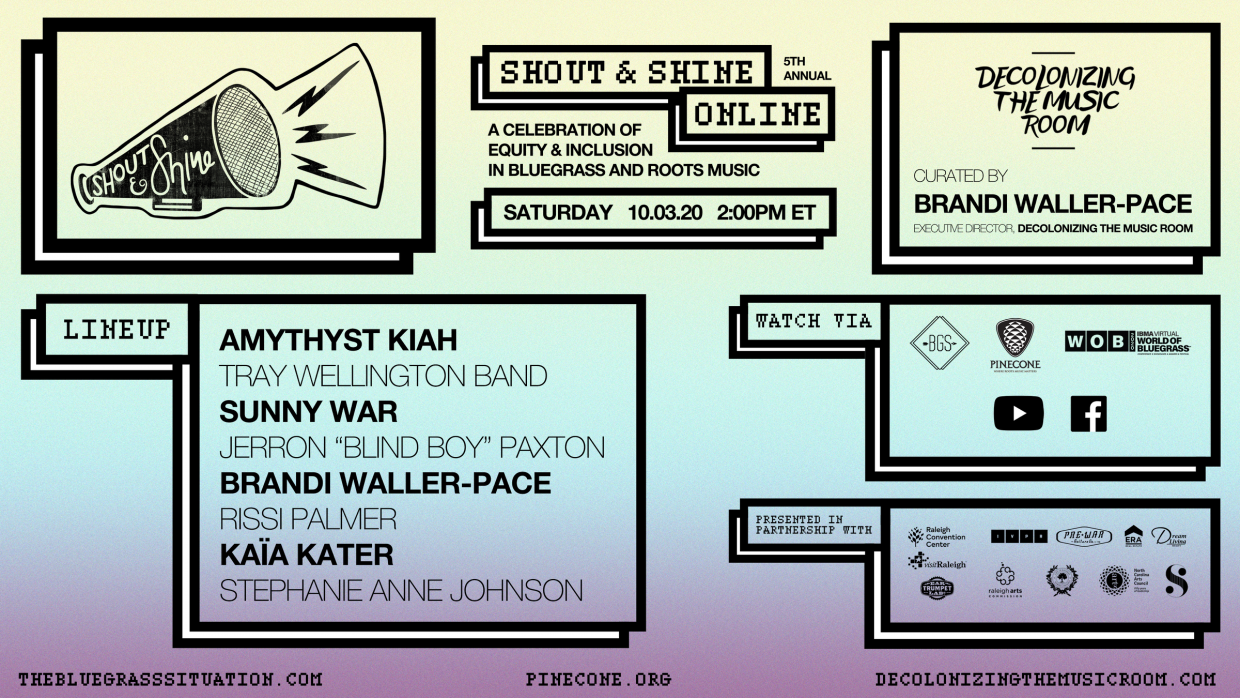
Meet the Full Lineup of Shout & Shine Online

The entire BGS team is pretty stoked for our fifth year of Shout & Shine performances! In 2016 we partnered with PineCone Piedmont Council of Traditional Music in Raleigh, NC to showcase diversity in bluegrass and roots music at IBMA’s World of Bluegrass business conference and festival. In doing so, a wonderful platform has been provided to artists so often overlooked, as well as those just starting their journeys in the music industry.

Things are a bit different this go ‘round, and we’ll be celebrating equity and inclusion in a more pandemic-suited way this year with Shout & Shine Online! The showcase will take place Saturday, October 3rd at 2pm ET — viewers can tune in right here on BGS, or on our Facebook page or YouTube channel, as well as via PineCone’s channels, and IBMA’s conference platform, Swapcard (free music pass registration available here).


In celebration, we’ve put together a preview of what you can look forward to during Shout & Shine Online.

Brandi Waller-Pace

BGS joined hands with Decolonizing the Music Room’s founder Brandi Waller-Pace to curate 2020’s lineup. “The mission of Decolonizing the Music Room is to center Black, Brown, Indigenous, and Asian voices, knowledge, and experiences within the field of music education,” says Waller-Pace. “In addition to that, it is part of DTMR’s core values that we are an openly LGBTQ+ affirming non-profit organization. I am honored to have served as curator for this year’s Shout & Shine and to have had this opportunity to partner with BGS and PineCone on work that highlights a convergence of our values.”

Here you can see Waller-Pace along with Caitlin Hearn playing an old-time standard, “Five Miles From Town.” Waller-Pace’s music is dripping with that sweet, old-timey-ness.


Rissi Palmer

The IBMA isn’t the only thing we love in Raleigh — there’s also Rissi Palmer. In 2007 she released “Country Girl,” making her the first African American woman on the country charts in over 20 years. She’s been releasing consistently powerful music since, leading all the way up to her most recent album, Revival. On top of all of this, Palmer hosts the new Apple Music Country radio show, Color Me Countrya conversation between herself and various Black and Brown women in country/Americana/roots music. We can’t wait to have her right here on BGS!


Sunny War

You may have already seen our friend Sunny War’s episode 2 of our monthly Shout & Shine series. In our interview that came out earlier this month, War speaks about her current outlook on the music scene and how it feels to be surrounded by new “activist” musicians who weren’t doing it before, as well as her incredibly unique guitar style.


Kaïa Kater

Kaïa Kater is no stranger at BGS. She has been featuring in a Cover Story, she’s written an op-ed, and she’s had some important conversations with other musicians. Needless to stay, we’re ecstatic to have this Afro-Caribbean-Canadian songwriter and Appalachian musician back for Shout & Shine Online!


Stephanie Anne Johnson

While Stephanie Anne Johnson’s music is often rooted in America’s painful past, it’s always got down home roots. Maybe that’s why they’ve got the “American Blues.” A veteran of NBC’s The Voice, Johnson is the leader of Tacoma-based band The Hidogs, whose most recent album is entitled Take This Love.


Jerron “Blind Boy” Paxton

Blind Boy Paxton’s music is something of a journey back in time. But his songs and stories aren’t from dusty old books or archives — they are the soundtrack of his growing up in south-central Los Angeles, among the largest Creole and Cajun population outside of Louisiana. Our friend Paxton has been featured in our Shout & Shine column before, but Shout & Shine Online is his appearance on the showcase. We couldn’t be more excited!


Tray Wellington Band

North Carolina’s Tray Wellington is an acclaimed progressive banjo player — and he’s only 21. From his 2019 IBMA awards — one for Momentum Instrumentalist of the Year and another for Momentum Band of the Year with his former group Cane Mill Road — it’s easy to tell what a bright future he’s got in the world of bluegrass and beyond. He’ll be joining us with his whole band!


Amythyst Kiah

You may know her from Our Native Daughters, or our BGS Class of 2019  — either way, Amythyst Kiah is one of the most powerful, raw, and soulful singers and songwriters the roots music scene has today. We’re beyond thrilled that she’ll be joining us to anchor the Shout & Shine Online lineup!


Photos courtesy of the artists
Poster design by Grant Prettyman, Belhum

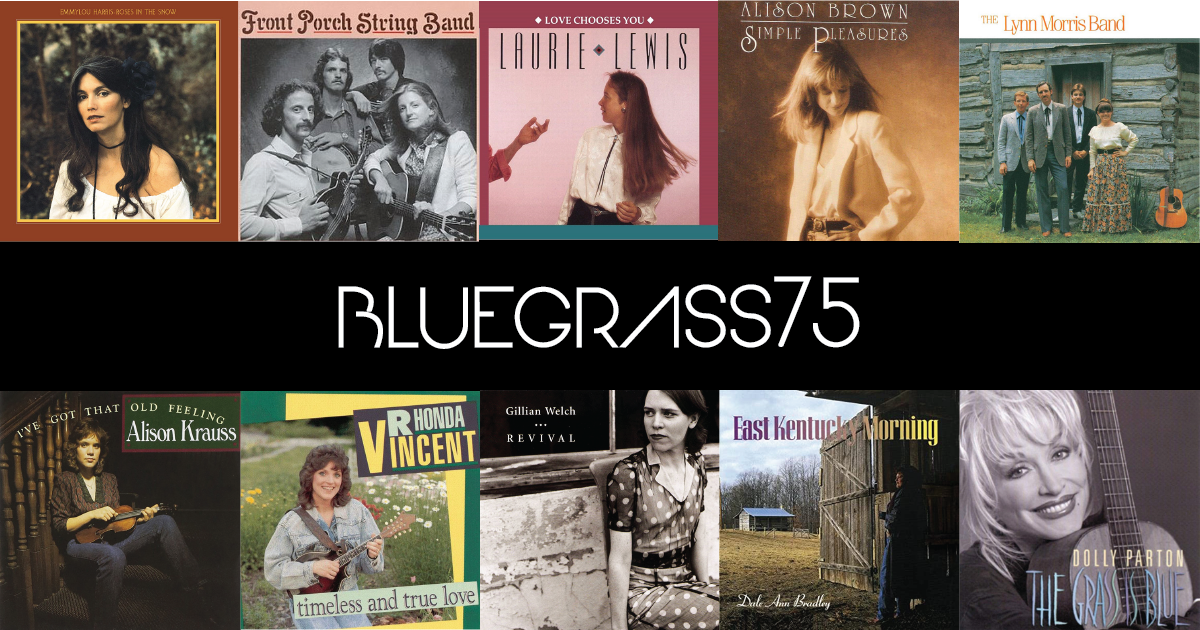
In the ’80s and ’90s, These 10 Women Made Bluegrass Better

With this year marking the 75th anniversary of bluegrass, it’s remarkable to note that women emerged as a creative force at roughly the halfway point between then and now. Of course, female musicians have been part of the fabric of bluegrass from the start, with Mother Maybelle Carter, Sally Ann Forrester, and Hazel & Alice among those serving as inspirations through the decades.

However, the role of women as bandleaders, rather than in a supporting role, began to change in the ’80s and flourished in the ’90s. As part of our Bluegrass 75 series, BGS commends these 10 women who carried bluegrass forward with a combination of undeniable talent, strong material, and a refreshing new perspective.

Emmylou Harris

One of the most visible country artists of the ’70s turned her attention to bluegrass, with a support team she deserves (Ricky Skaggs, Jerry Douglas, Dolly Parton, etc.) Her material ranges from the Louvin Brothers to Paul Simon, though that exquisite voice makes the album seamless. It’s one of her finest albums in a brilliant catalog.


Claire Lynch

With a crystalline soprano, Claire Lynch first gained notice as a lead vocalist and guitarist with Front Porch String Band, which released an indie album in 1980 that was picked up by Rebel Records in 1983. The poignant track, “Hills of Alabam,” which she co-wrote, shows her gift for melody and her ability to sing with sincerity.


Laurie Lewis

A key figure of the West Coast bluegrass scene, Laurie Lewis can fiddle with the traditionalists, then hush a crowd with a beautiful acoustic ballad like “Love Chooses You.” As the acolyte of a generation before her, Lewis actively takes an interest in the bluegrass scene’s rising talent, as evidenced on her latest work, an album of duets entitled and Laurie Lewis.


Alison Brown

As a picker, Alison Brown has made her mark on countless recordings and won the 1991 IBMA Award for Banjo Player of the Year. She’s also a co-founder of Compass Records, a producer, and a Grammy-winning artist. At times blazing, and other times mellow, Brown consistently finds just the right tone on her albums’ instrumentals.


Lynn Morris

Blessed with a sweet but persuasive voice, Lynn Morris knew how to get the storyline across, whether she’s reminiscing about “Mama’s Hand” or laying down the law in “You’ll Get No More of Me.” As a banjo player, she had incredible chops, and her grace on stage (and off) has made her one of the bluegrass family’s most beloved figures.


Alison Krauss

A gifted vocalist, bandleader, and fiddler, Alison Krauss kept her early career focused on bluegrass, though her material would soon find its way to millions of country listeners, too. Being a former child prodigy herself, she served as a role model for a generation of younger pickers, while showing traditionalists that bluegrass is indeed in good hands.


Rhonda Vincent

Coming up in a family band, singer and mandolin picker Rhonda Vincent has been working in bluegrass for decades, though she’s always finding ways to keep things fresh. Still, her early albums remain some of her most satisfying work. As a bandleader, she keeps the energy up on stage, and her outgoing personality makes her a true entertainer.


Gillian Welch

While few would consider her albums to be bluegrass proper, Gillian Welch has exerted tremendous influence on its community. A 1993 winner of Merlefest’s Chris Austin Songwriting Contest, Welch has seen originals like “By the Mark” and “Caleb Meyer” become standards, and though she didn’t grow up in Appalachia, her songs somehow embody its heritage.


Dale Ann Bradley

A sterling discovery from the New Coon Creek Girls lineup, Dale Ann Bradley launched her solo career by selecting relatable material along with a surprise or two (including a U2 cover). It’s a template that still serves her well. The title track of East Kentucky Morning captures the mood and melancholy that she continues to convey so well.


Dolly Parton

It’s hard to imagine now, but Dolly Parton had dropped off the mainstream radar in the mid ’90s. Then her first bluegrass album proved what her fans knew all along — she represents her mountain people well. A wonderful mix of familiar favorites and new material, The Grass Is Blue solidified her reputation as one of music’s most important voices.

(Editor’s note: Explore more of our Bluegrass 75 Artist of the Month coverage.)


WATCH: Two Bird Stone, “Hands and Knees” (Feat. Sarah Siskind)

Artist: Two Bird Stone
Hometown: Hickory, NC (Liam Thomas Bailey); Nashville (Judd Fuller); New York City (Chad Kelly & Rohin Khemani)
Song: “Hands and Knees” (featuring Sarah Siskind)
Album: Hands & Knees
Release Date: September 11, 2020
Label: Soundly Music

In Their Words: “Featuring guest vocalist Sarah Siskind, this track was written in the spirit of an old-time Appalachian duet and sung entirely in two-part harmony. The song is a declaration between two individuals in a committed relationship attempting to explain their mutual resistance to a necessary compromise between their individual needs and the needs of the other. Originally intended to sound lighter and more humorous, Sarah’s involvement took the song to a deeper place. Sarah and I met at the Station Inn in Nashville in about 2009; I had recognized her face from an article and acknowledged that we had some friends in common. Ten years later, after an embarrassingly tenacious campaign to get her attention, I met her in Asheville, North Carolina, for the second time and I taught her ‘Hands and Knees’ in the control booth before we sang the song live to some basic tracks the band had laid down only minutes before her arrival.

“We cut the song in less than 30 minutes and what I thought might be a bouncy bit of flirty snark between a reluctant couple struggling to commit became a sober promise between two flawed individuals who knew they needed to be together. I expected the booming, laser-focused mountain sound from her voice that I had heard in so many songs (i.e., ‘In the Mountains’), but she sang so softly that I felt the need to find her where she was. I let go of my expectations and stared into her eyes through the studio glass as she watched my mouth for timing cues. Coincidentally, I had to ‘surrender’ to her influence in order for the song to carry its own meaning and become what it needed to be. That is EXACTLY what the song suggests is required by a healthy, dynamic relationship. Most likely, she does not remember this, but it was a very big day for me!” — Liam Thomas Bailey, Two Bird Stone


Photo courtesy of Two Bird Stone