Friends New and Old

Editor’s Note: Each issue of Good Country, our co-founder Ed Helms shares a handful of good country artists, albums, and songs direct from his own earphones in Ed’s Picks.

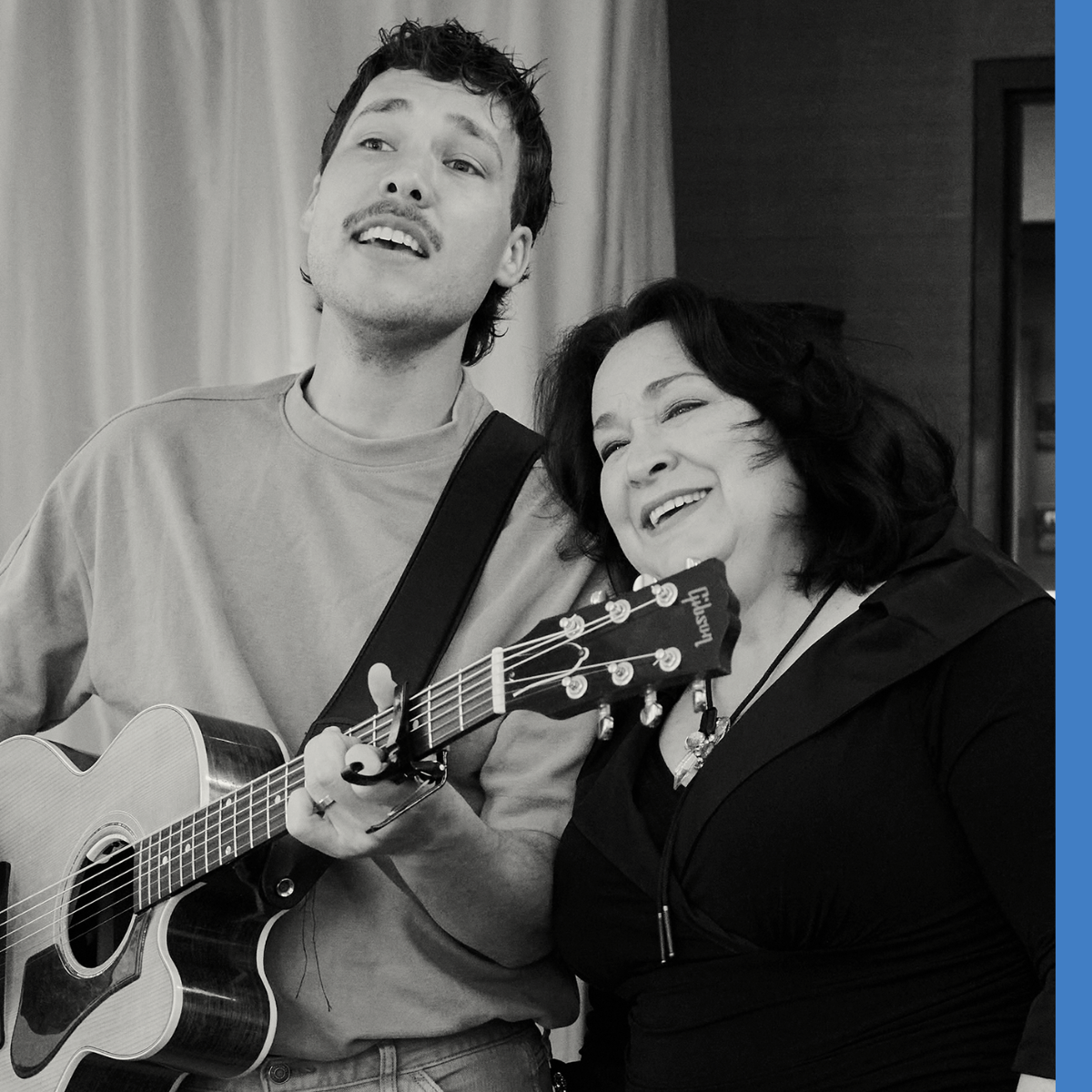
Suzanne Cox & Brandon Ratcliff

Suzanne Cox (of the GRAMMY-winning bluegrass band the Cox Family) and her son, country singer-songwriter Brandon Ratcliff, are taking the internet by storm with their lovely and tender familial harmonies. Their duets have racked up millions of views and likes on social media, leading to a new EP, Mother/Son Volume 1, and a recent appearance on the Grand Ole Opry. Those voices!


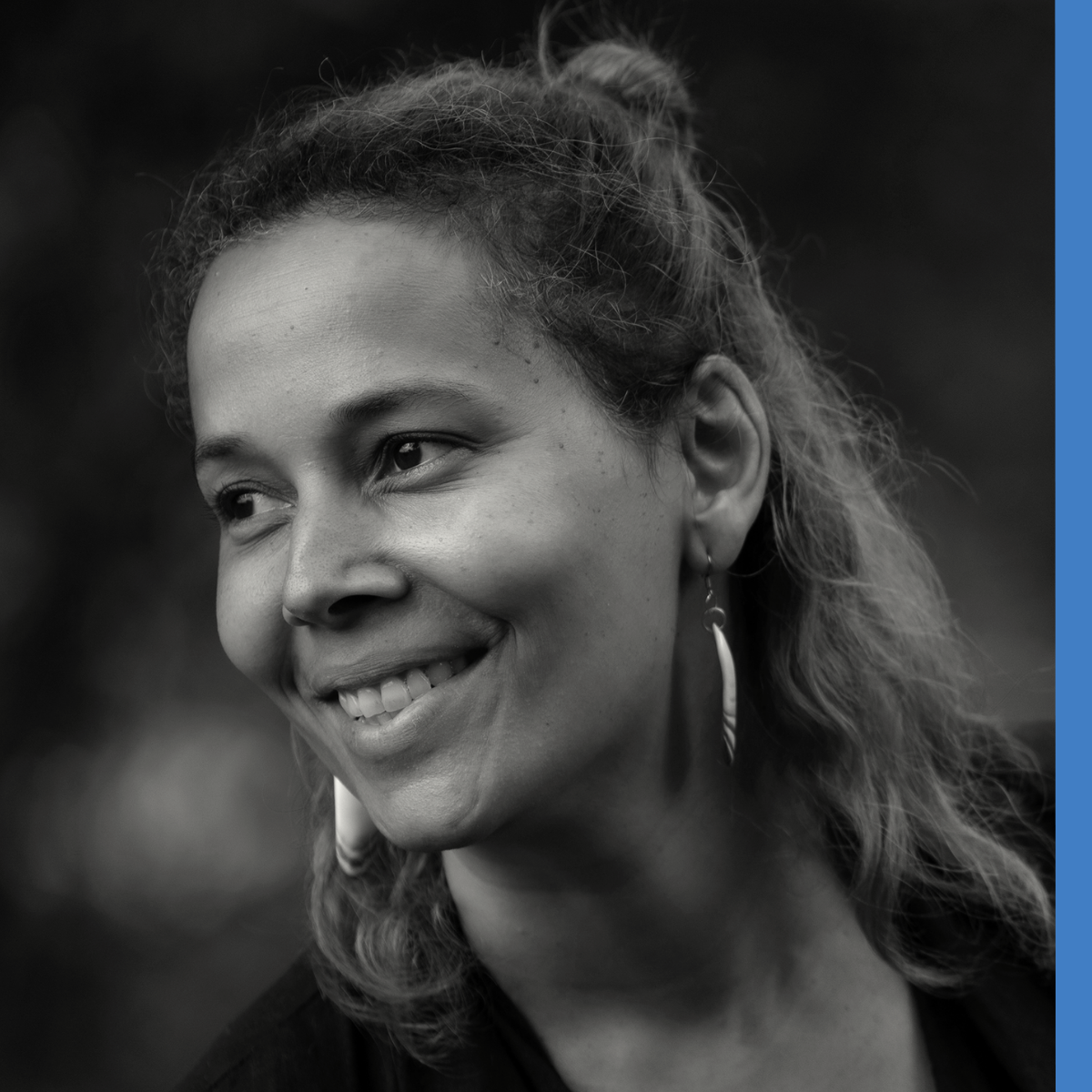
Rhiannon Giddens
Rhiannon Giddens

You may have seen, I’ve had the good fortune of getting to spend a lot of quality time making a film – and doing plenty of banjo pickin’! – with Rhiannon Giddens recently. Since shooting An Ode to Mary Jo together, I keep going back to Rhiannon’s catalog of recordings and cannot get enough. This duet with fiddler Justin Robinson is from her most recent release, 2025’s What Did the Blackbird Say to the Crow. Fantastic old-fashioned, down-home fiddle and banjo music drawn from North Carolina.


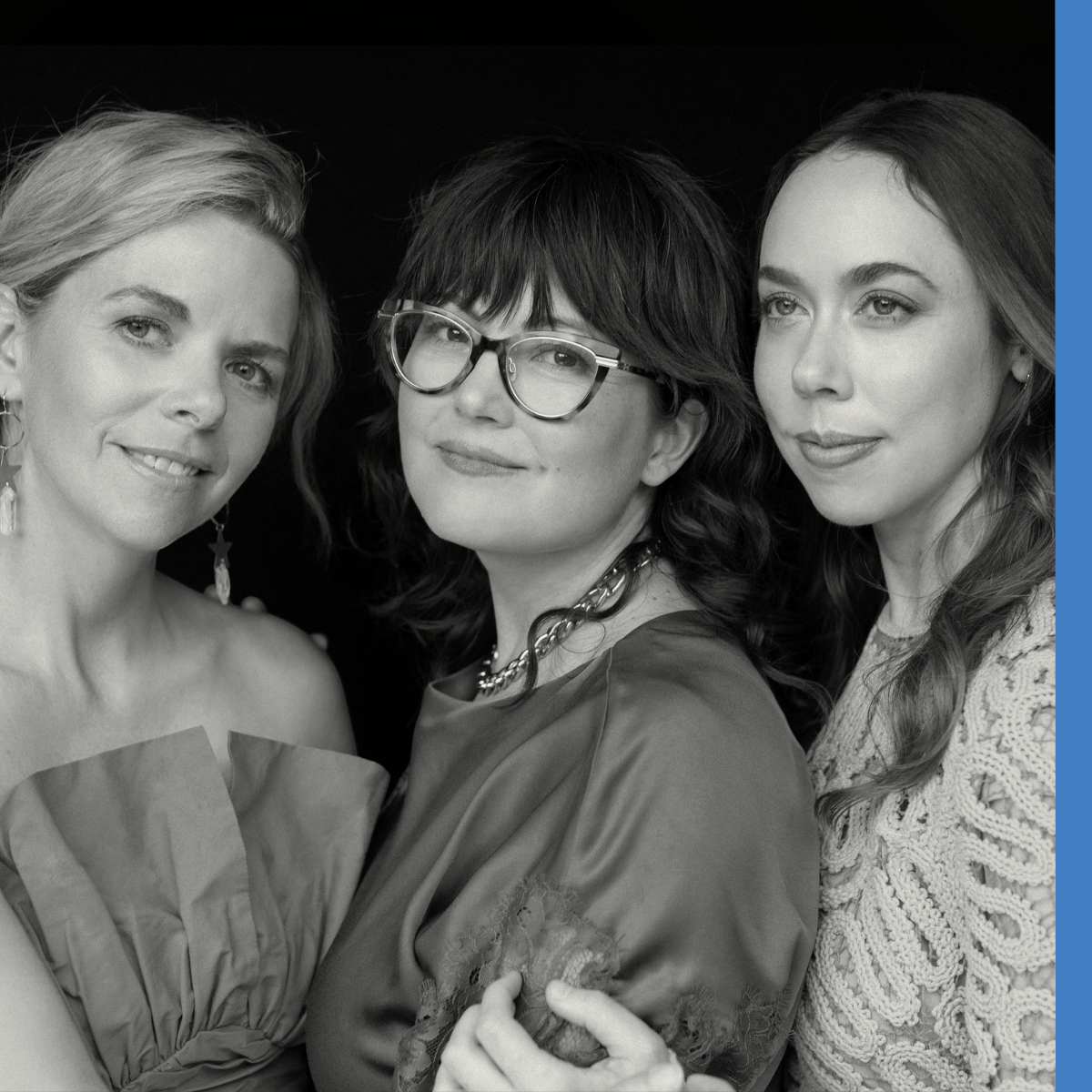
I'm With Her
I'm With Her

I’m with I’m With Her, too. One of our favorite trios in Americana and bluegrass released a brand new live album today, Sing Me Alive, packed with 20 tracks captured at performances across the country and in Canada. Many familiar favorites can be found alongside cover songs and tracks they’ve never released before. Here, they’re joined by Ye Vagabonds in Rocky Mount, Virginia, on “Rhododendron” in November of 2025.


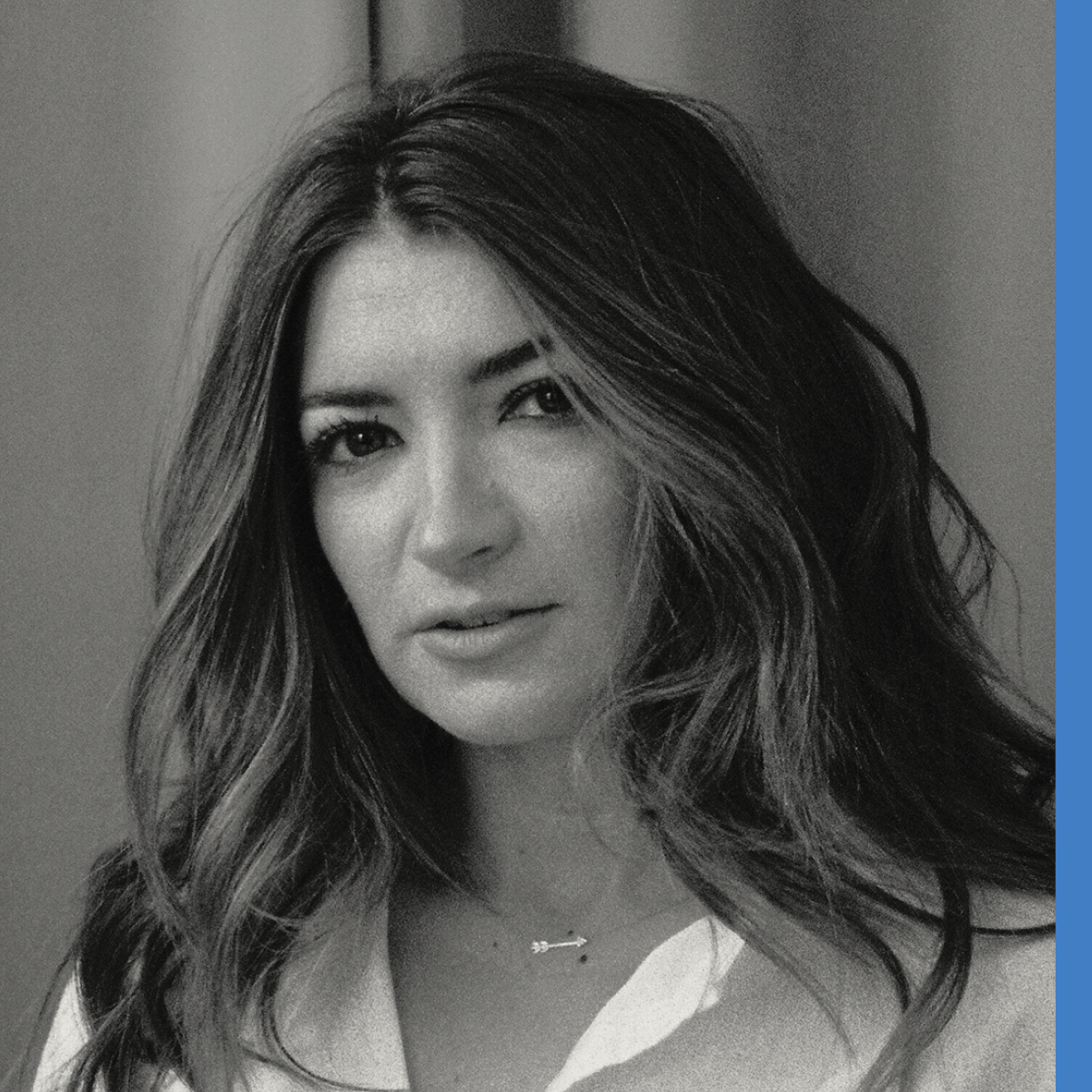
Tenille Townes
Tenille Townes

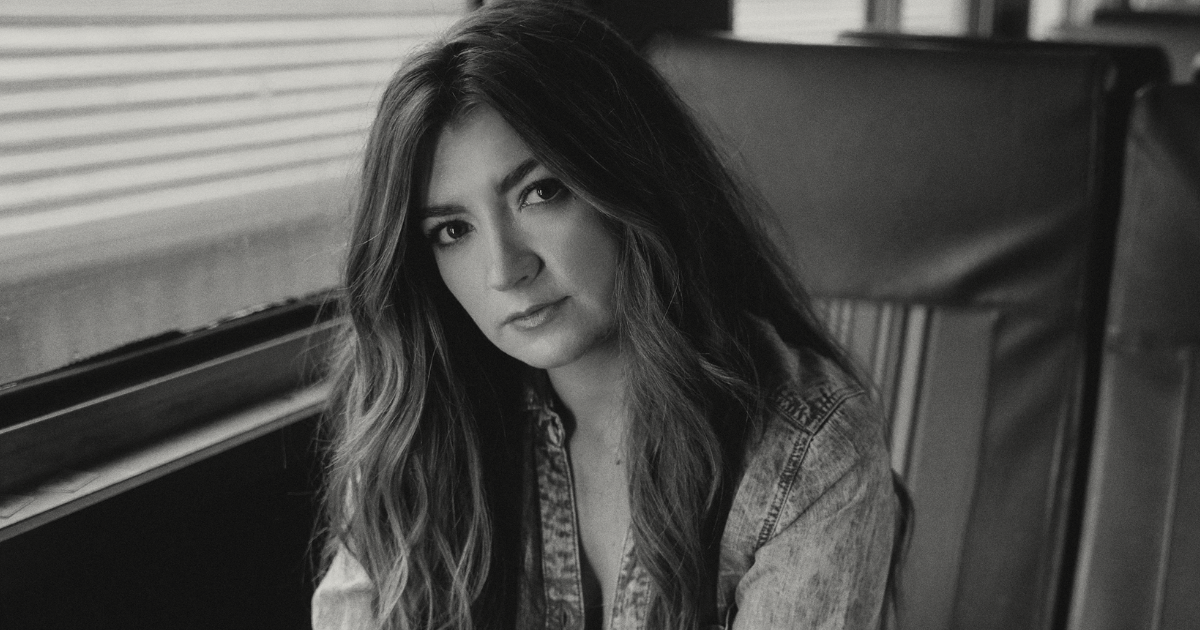
Our Good Country and BGS Artist of the Month, Tenille Townes, released the first full-length album of her independent era last week. As she describes in our exclusive Artist of the Month interview, she took a much different approach to recording this music, doing most of the tracking herself, alone. The songs are deep, meaningful, and cathartic – and damn good. But it’s not an entirely solo album, as I’m With Her (how perfect) and Lori McKenna both feature on tracks. Hear McKenna join Townes on the title track, “the acrobat.”


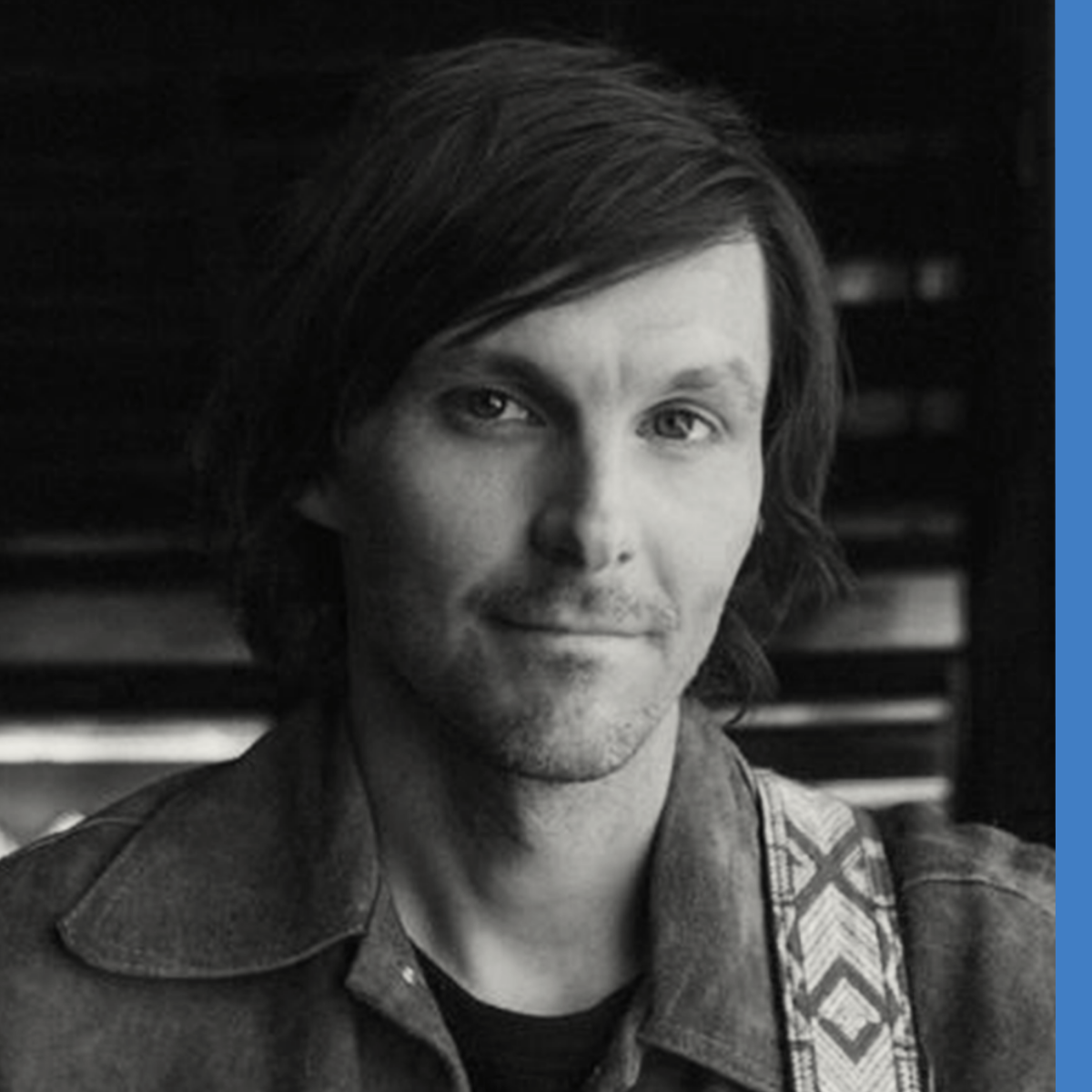
Charlie Worsham
Charlie Worsham

Our old pal Charlie Worsham is back at it – though he truly never stops. A sideman, radio and podcast host, session player, songwriter, and artist, Charlie does it all. He’s got new music of his own out and the GC team can’t wait for more. As he usually does, he’s once again calling on his superlative cohort of friends in Music City. On his most recent single, “They Never Do,” it’s Lainey Wilson joining in. From some teases on social media, though, we’re expecting many more special guests on Charlie’s outings in the future!


Listen to this issue of Ed’s Picks in one YouTube playlist here.

Listen to the full Ed’s Picks archive playlist here.


Want more Good Country? Sign up to receive our monthly email newsletter – and much more music! – direct to your inbox.

Photo Credits: Suzanne Cox & Brandon Ratcliff by Chase Hentges; Rhiannon Giddens by Karen Cox; I’m With Her by Alysse Gafkjen; Tenille Townes by Madison Rensing; Charlie Worsham courtesy of the artist.

12 Fantastic Merle Haggard Covers

April 6 would have been Merle Haggard’s 89th birthday – and was also the tenth anniversary of his death. So, before these anniversaries get too far in the rearview mirror, I wanted to take a moment to remember one of country music’s all-time legends – and one of the great singer-songwriters in all American popular music.

One lesson of Haggard’s career is that you best honor your musical heroes, not only by playing their records at home or talking up their influence in interviews, but by continuing to perform their songs – on stage and in the studio. Merle released tribute albums to Jimmie Rodgers, Bob Wills, and Elvis Presley, and across his catalog cut at least an album’s worth of Lefty Frizzell songs.

Since his death, it’s been nice to see how often Merle’s musical contemporaries and descendants have taken Haggard’s model to heart, recording his songs and even releasing entire Merle Haggard tribute albums.

In recognition of his ongoing legacy, I’ve chosen 12 of my favorite cover versions of songs by Merle Haggard. I shared a kind of companion piece to this list last week, at No Fences Review, pulling choices from the 20th century only. Now, for Good Country, I’m focusing my dozen picks on Hag covers from this century.

I could assemble similarly strong lists every week for months without running out of possibilities. But these dozen Hag covers are among the very favorites.

“You Don’t Have Far to Go” – Candi Staton (from His Hands, 2006)

Co-written with trucker-song specialist Red Simpson, “You Don’t Have Very Far to Go” was the earliest of Merle’s songs to have legs. Recorded more than a couple dozen times through the years (including three versions from Hag himself), it’s proven a special favorite of first-name-basis country women. Bonnie and Connie, Rosanne and Lucinda, and others all seem to sing the song directly to some toxic asshole: “If I’m not crying, you’re not satisfied.”

My favorite reading of the song in that way is by Candi Staton. She became renowned for her disco and gospel recordings, but when first establishing herself as an R&B star circa 1970, it was with striking country soul takes on hits by Tammy Wynette and Patsy Cline. Decades later, she deploys Merle’s old song to deliver a master class in soulful, thought-by-thought phrasing. Staton sounds fragile and beaten down yet, by the end, her tone hints she may finally have had enough.

“Hungry Eyes” – Leona Williams (from Leona Williams Sings Merle Haggard, 2008)

Leona Williams may be best known as Haggard’s third wife, but she’s a tremendous artist in her own right, a country music lifer who played bass behind Loretta Lynn in the 1960s, enjoyed a solo career worth tracking down, and wrote or co-wrote chart toppers “You Take Me for Granted” and “Someday When Things Are Good” for Merle in the early ‘80s.

Leona’s version of “Hungry Eyes,” from her superb 2008 Haggard tribute, always stops me in my tracks. In the verses, she sounds haunted by her parents’ long-ago struggles. At each chorus, she gulps and springs to the top of her range, once again meeting her mother’s dissatisfied gaze. “She only wanted things she really needed!”

“The Running Kind” – Marty Stuart & His Fabulous Superlatives (from The Marty Stuart Show, c. 2009 or 2010)

“The Running Kind” is both one of country music’s great declarations of independence and, for Haggard, a great self-own: Merle boasts that he’s always on the run from one thing or the other even though, “I know running’s not the answer” to anything. The sentiment can serve as a kind of thesis statement for the Hag’s own restless life and career, so it’s ironic that my favorite version of the song isn’t Merle’s but this live cut from Marty Stuart. From an episode of the singer’s television series, Stuart and his Superlatives rage noisily and headlong, while staying absolutely controlled, through Merle’s tune. The solos from Kenny Vaughan and Stuart are my idea of Telecaster heaven.

“Ramblin’ Fever” – Tanya Tucker (from My Turn, 2009)

My pick for the best-ever “Ramblin’ Fever” is this version by Tanya Tucker. Riding an outlaw thump spiked by country disco high-hat, Tucker honors a musical hero, a former paramour, and a kindred rambling spirit. To that end, she loves it when some good-lookin’ fella rubs her back, but what really turns her on comes in the a.m. when she can drink a cup of coffee before leaving. The series of guitar solos that play out the final 1:20 here sound like she’s already out the door.

“How Did You Find Me Here?” – k.d. lang (from Sweet Relief III: Pennies from Heaven, 2013)

“How Did You Find Me Here?” was among Merle’s finest new songs of this century. From 2010’s I Am What I Am, Merle sings the number like a grim but grateful gospel ballad – his savior has come for him in his grave. “Thank you, Lord,” he prays at the close.

k.d. lang’s spare, ethereal reading feels less straightforwardly religious but, if anything, more spiritual. She’s desperately alone, at her nadir, but now someone – a lover or friend, her sponsor or her community – has seen her for who she is, taken her in. Lang’s contralto sounds bleary-eyed and dumbfounded, but she gains strength as she goes, ready to move on up.

“I Think I’ll Just Stay Here and Drink” – Suzy Bogguss (from Lucky, 2014)

Back in 1989, one of Suzy Bogguss’ earliest charting singles was a cover of “Somewhere Between,” still my favorite version of that great Haggard ballad. So my expectations were unreasonably high for Lucky, a full-length Merle Haggard tribute that she released in 2014. But the album’s a gem straight through, and I especially recommend her take on “I Think I’ll Just Stay Here and Drink.”

Most versions of Merle’s boozy romantic complaint have been done by rowdy dudes who sound like they’re slamming shots while ordering their fourth pitcher ahead of passing out. Bogguss, by contrast, comes off country-jazz cool, sipping a good bourbon and commiserating with herself in some dark corner. Don’t wait up. She’s going to be here awhile.

“Shelly’s Winter Love” – Lonesome River Band (from Turn on a Dime, 2014)

Merle’s most haunting song is about depression: Shelly’s depression each winter, the narrator’s the rest of the year round when the sunshine’s lured her back to town. This Lonesome River Band rendition from 2014 is the most haunting I know. Brandon Rickman sings beautifully but frighteningly too, and LRB’s pacing, like seasonal affective disorder set to a melody, reflects the long, slow days of a long dark winter. Midway through, Sammy Shelor’s banjo plunks a drip, drip, drip, that quickly gathers to a stream. A thaw’s coming; spring is on the way. It won’t be long now…

“A Working Man Can’t Get Nowhere Today” – Rob Ickes & Trey Hensley (from Before the Sun Goes Down, 2015)

This was a savvy cover choice by Rob Ickes, 15-time winner of the IBMA’s Resophonic Guitar Player of the Year award, and Trey Hensley, the association’s pick for Guitar Player of the Year in 2023. For one thing, the song is an underappreciated gem of the Haggard songbook, recorded maybe not even half a dozen times since Merle had a hit with it in 1977. More importantly, this Hag number lets Ickes and Hensley trade elegantly exhausted solos while tapping into a perpetually frustrating and common condition: Working your ass off every day to to put food on the table yet still coming up short. Hensley moans, “I’ll still be deep in debt the day that I fall dead.”

“Some of Us Fly” – Bonnie “Prince” Billy (from Best Troubador, 2017)

Merle’s “Some of Us Fly” served as the concluding track to his underrated release Chicago Wind, from 2005, and featured a guest vocal from Toby Keith. Because both men had already experienced such heights in their career, the message of each chorus – “Some of us fly but all of us fall” – comes off a little like superstars performing their humility. But where Haggard and Keith share hard-won wisdom, Bonnie “Prince” Billy casts a spell. With his duet partner, Irish singer/flutist Nuala Kennedy, he surrenders to a mystery.

On the remarkable 2017 Haggard tribute album, Best Troubador, Billy (AKA indie songster Will Oldham) and Kennedy whisper their way through Merle’s song in cautious harmony, their hands clutched tightly. The whole performance feels so fragile a strong wind might blow it way.

“Today I Started Loving You Again” – Eli “Paperboy” Reed (from Down Every Road, 2022)

Eli Reed specializes in making over all manner of roots-adjacent material into cool, committed soul music. Down Every Road does that for the Haggard songbook with thrilling results straight through. (A duet between Eli and Sabine McCalla on Merle’s most covered song, “Today I Started Loving You Again,” was inspired by a famous, but officially unreleased, 1969 version by Buck Owens and soul singer Bettye Swann.)

I especially appreciate Reed’s take on Merle’s celebratory kiss-off “I’m Bringing Home Good News,” which he relocates from Merle’s dusty, country-rocking San Joaquin all the way down to Louisiana for some funky Tony Joe White-styled swamp.

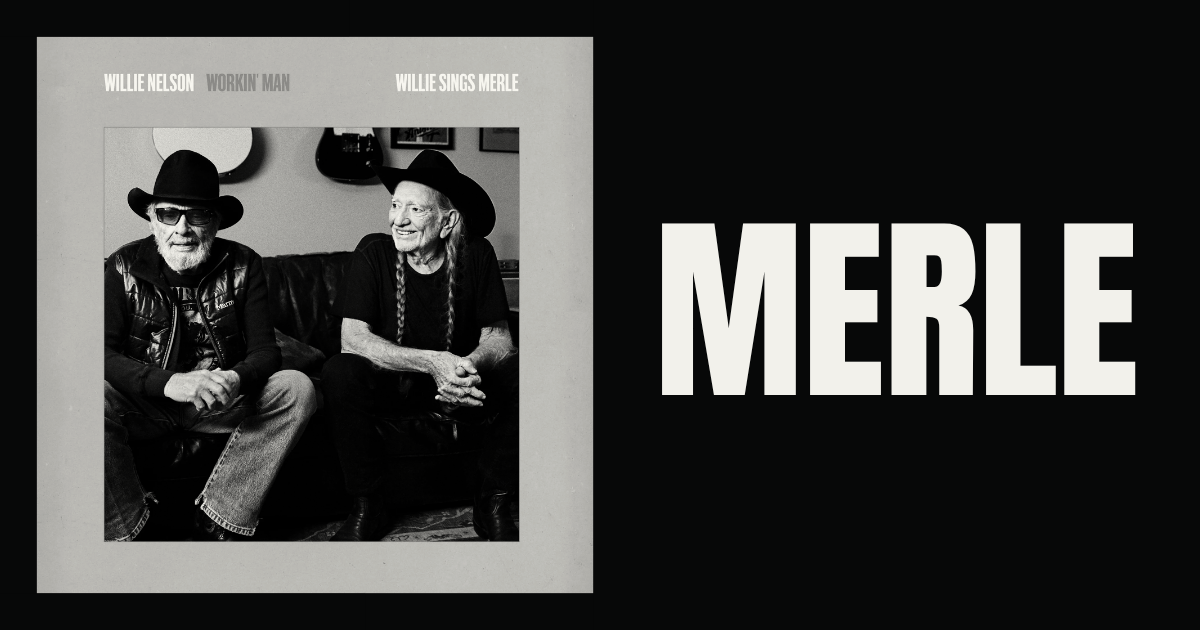
“Workin’ Man Blues” – Willie Nelson (from Workin’ Man: Willie Sings Merle, 2025)

One of Hag’s signature hits, “Workin’ Man Blues,” is usually framed as a purely blue-collar anthem, but it’s good to remember he identified the song as a blues. Having to work to survive while hoping your body holds out as long as you’ll need it is something to be cursed more than celebrated.

From last year’s Workin’ Man: Willie Sings Merle, a 92-year-old Nelson delivers his friend’s lines with a bit of a slur, weary and resigned but also grateful still to be working, to be on the road again until he runs out of road. Similarly, Willie’s arrangement sheds Merle’s Elvis-y fanfare for some hard, use-it-or-lose-it swing. “Play it, little sister,” he says, introducing one of the hot-jazziest solos in the career of the late Family band pianist Bobbie Nelson. Willie’s solos up top and midway through, meanwhile, are things of singular beauty, guitar work that sounds like play but refuses to hide the callouses and the miles. “As long as my two hands are fit to use…”

“Daddy Tried” – Jade Jackson (single, 2026)

Merle’s “Mama Tried” has been covered well over 100 times since he wrote it for the Killers Three soundtrack in 1968. But the song’s indelible ascending chorus and its universal theme – Merle sings it as if he’s as proud of defying his mom as he is remorseful for disappointing her – have encouraged people to use the song in all kinds of ways. Country comic Don Bowman parodied it as “Pappa Tried” as early as 1969 and more recently Angeleena Presley was clearly in conversation with Merle’s classic when she released “Mama I Tried” in 2017. As was Keith Urban when he sampled its lick for “Coming Home” in 2023.

Jade Jackson grew up in a small Cali town between Bakersfield and the Pacific, and her updated, gender-flipped take on Merle’s tale sounds just like that: Her voice feels a little dusty and a little sunny. Switching out Merle’s locale from “prison” to “Nashville” is funny because those two aren’t at all alike, but also because maybe they’re a little alike. For sure the ache in her voice reveals her as another singer-songwriter in a long line of kindred spirits to Merle; she’s going to go her own way, no matter her dad’s good advice.


David Cantwell is the author of The Running Kind: Listening to Merle Haggard, the co-author of Heartaches by the Number: Country Music’s 500 Greatest Singles and the co-creator of No Fences Review. His byline has appeared at Rolling Stone Country, The New Yorker, Slate, and No Depression, among other publications.

Photo Credit: Workin’ Man: Willie Sings Merle on Legacy Recordings

You Gotta Hear This: New Music From Don Williams, Victoria Bailey, and More

This week it’s absolutely packed in our weekly roundup of new roots music! You Gotta Hear This…

From the Blue Ridge Mountains of Western North Carolina, the Asheville Mountain Boys kick us off with a new performance video for “Don’t Take Me Back Again.” It’s a track from their debut self-titled album, which was just released in February. It’s straight-ahead bluegrass that will transport you right back to their beautiful home turf in Southern Appalachia. Also in bluegrass, from just down the ridge from NC in Boiling Springs, South Carolina, husband-and-wife duo Benson (Wayne and Kristin Scott Benson) have a new single out today, “Maybe It’s You.” Featuring their friend Heath Williams on the lead vocal, it’s a clean and crisp example of modern bluegrass with traditional bones.

You’ll also get to hear a lovely bluegrass-gospel-western rendition of a Randy Travis cut, “He’s My Rock, My Sword, My Shield” below, brought to us by Southern California singer-songwriter and roots artist Victoria Bailey. She effortlessly combines bluegrass, classic country, country & western, and gospel with her version of the familiar tune. The loping, cowgirl feel is just perfect. Plus, impeccable fiddler and multi-instrumentalist Andy Leftwich has a new album out today, Aced. To celebrate, we’re sharing “Crossville” from that collection, a tune from the catalog of Ricky Skaggs – Leftwich’s former boss, who’s a friend and a mentor – that has a transatlantic and somewhat Celtic feel. It features Leftwich on both fiddle and mandolin.

From further territory on the roots genre map, Paula Boggs Band calls on both Blind Boys of Alabama and Valerie June as special guests on their recording of “Ain’t Gonna Let Nobody Turn Me ‘Round.” Soulful string band folk is a perfect backdrop for the languid, marching track – one that remains all too timely and applicable in 2026. Watch a new lyric video for the song below and join the sing-along party, and the struggle for justice, too. Don’t miss Serafima and the Shakedowns’ paean to Seattle, the Queen of the Pacific Northwest. “Shivers” is a chill and vibing Americana track with lush guitars backing gentle ruminations on friendship, community, and place. Whether you have or haven’t felt the “shivers” in a while, this song will be there for you when you do again.

Keep scrolling, as there’s more gold to find. For instance, Gregory Alan Isakov and Sylvan Esso released a track together earlier this week, “Fade Into You.” It’s a lovely cover song of the cult favorite ’80s and ’90s alt-rock band Mazzy Star. For a while, Isakov wasn’t sure the track was finished – that is, until he called upon Amelia Meath of Sylvan Esso to complete the number with her vocals. Like Isakov, we love how it turned out. Finally, a legend of country music returns, posthumously, with a new album on May 29. Don Williams passed away in 2017, but his powerful legacy lives on. We spoke to his son, Tim Williams, about the latest single from Epilogue: The Cellar Tapes, a collection of found recordings made by Don himself dating back to the ’70s. The new single is an alternate version of a favorite track, “I’m The One,” that puts a magical focus on Williams’ vocals. You won’t want to miss it.

So much to love and enjoy is waiting for you below – You Gotta Hear This!

The Asheville Mountain Boys, “Don’t Take Me Back Again”

Artist: The Asheville Mountain Boys
Hometown: Asheville, North Carolina
Song: “Don’t Take Me Back Again”
Album: The Asheville Mountain Boys
Release Date: February 12, 2026 (album)

In Their Words: “‘Don’t Take Me Back Again’ is an original song written by our guitar player, Marshall Brown, and is featured on our new self-titled LP. Marshall brought the song to the group about a year ago and we had so much fun working it up into an early ’50s-style bluegrass song. Zeb and I wrote exchanging mandolin and banjo riffs for the song instead of normal solos; we felt that was an homage to how early Jimmy Martin songs would have more melody-based riffs than conventional solos. We shot the video at Asheville Guitar Pedals in West Asheville as sort of a tongue in cheek reference to our motto: ‘No Plugs No Pedals Only Bluegrass.’ We loved working with Rebecca Jones (video) and Carter Giegerich (audio) on this in-person, fully live take of the song. “ – John Duncan

Track Credits:
Marshall Brown – Lead vocal, guitar
Jacob Brewer – Tenor vocal, bass
John Duncan – Banjo, baritone vocal
Zeb Gambill – Mandolin

Video Credit: Videography by Rebecca Branson Jones, audio by Carter Giegerich. 


Victoria Bailey, “He’s My Rock, My Sword, My Shield”

Artist: Victoria Bailey
Hometown: Huntington Beach, California
Song: “He’s My Rock, My Sword, My Shield”
Release Date: April 24, 2026

In Their Words: “My cover of this Randy’s Travis gospel song, ‘He’s My Rock, My Sword, My Shield,’ truly sets the tone for where I am in music and with my faith. It’s been a few years since my album release (A Cowgirl Rides On) and I continue to grow a deep love for bluegrass and gospel. It only made sense to go in and record one of my all-time favorites by Randy Travis before I dive into my next record.

“This song was recorded live in studio with my bluegrass band at Station House Studio in Los Angeles, produced by my good friend Brian Whelan. It was a sweet reunion being back in that room and to honor such a beautiful, spiritual song. I often describe my sound as ‘a little bit gospel, a little bit bluegrass, and everything in between.’ This next single is a perfect recipe of all those things and I’m looking forward to more of it this year!” – Victoria Bailey

Track Credits:
Victoria Bailey – Vocals
Brian Whelan – Producer, lead guitar, BGVs
Ted Russell Kamp – Bass
Luke Adams – Drums
Philip Glenn – Fiddle
Leeann Skoda – BGVs


Benson, “Maybe It’s You”

Artist: Benson
Hometown: Boiling Springs, South Carolina
Song: “Maybe It’s You”
Release Date: April 17, 2026
Label: Mountain Home Music Company

In Their Words: “We love the tried-and-true themes of classic bluegrass songs. Cabins, farms, and mountains were relevant to the writers then. In fact, if you can find a new song that is reminiscent of those standards, it’s a real find. I think ‘Maybe It’s You’ is a nice representation of a modern bluegrass song, lyrically. Troubled relationships are timeless, but this is a contemporary take on that same theme.” – Kristin Scott Benson

“Heath Williams sang lead on ‘Maybe It’s You’ and we are so lucky to work with him. He has been a huge part of many Benson songs, like ‘Oh Me of Little Faith’ and ‘Lay ‘Em Down.’ He’s not from a bluegrass background, but is perfectly suited for it and has a really fresh, special take. In fact, Terry Herd, one of the co-writers, specifically mentioned him because Terry thought his approach would be ideal. After years of going to church with Heath and playing with him on occasion, it’s a joy to be recording with him now.” – Wayne Benson

Track Credits:
Heath Williams – Lead vocal
Wayne Benson – Mandolin
Kristin Scott Benson – Banjo
Cody Kilby – Acoustic
Kevin McKinnon – Bass
Zack Arnold – Harmony vocals


Paula Boggs Band, “Ain’t Gonna Let Nobody Turn Me ‘Round”

Artist: Paula Boggs Band
Hometown: Seattle, Washington
Song: “Ain’t Gonna Let Nobody Turn Me ‘Round” featuring Blind Boys of Alabama and Valerie June
Album: Sumatra
Release Date: March 27, 2026 (album)
Label: Boggs Media LLC

In Their Words: “Our cover of the civil rights anthem, ‘Ain’t Gonna Let Nobody Turn Me ‘Round,’ feels more relevant today than when we recorded it. To highlight its American roots heritage, we incorporated bluegrass instruments like banjo and fiddle. The featured artists, Blind Boys of Alabama and Valerie June, further enhance the song’s messages of hope and determination. The lyric video grounds the song in present times.” – Paula Boggs

Track Credits:
Paula Boggs – Lead vocals
Tor Dietrichson – Percussion
Jacob Evans – Drums, percussion
Darren Loucas – Acoustic guitar, Dobro, banjo, ukulele
Paul Matthew Moore – Acoustic piano, percussion
David Salonen – Upright bass, fiddle
Blind Boys of Alabama (Ricky McKinnie, Sterling Glass, J.W. Smith, Joey Williams) – Co-lead vocals
Valerie June – Co-lead vocals


Gregory Alan Isakov and Sylvan Esso, “Fade Into You”

Artist: Gregory Alan Isakov and Sylvan Esso
Hometown: Gregory Alan Isakov: Born in Johannesburg, South Africa; grew up in Philadelphia, Pennsylvania. Sylvan Esso: Durham, North Carolina
Song: “Fade Into You”
Release Date: April 16, 2026
Label: Dualtone

In Their Words: “I grew up listening to Mazzy Star and sort of sketched this song out one afternoon. I had read an article about Hope Sandoval (the singer of Mazzy Star) the week before and there was this paragraph about how she played a few shows at the Sydney Opera House in almost complete darkness. Some of the crowd was super disgruntled about it and walked out. I remember thinking, ‘Wow, what a hero.’ I sat on the recording I made for a long time, thinking it wasn’t quite finished, and reached out to Amelia of Sylvan Esso. She has one of my favorite voices of all time. Once I heard her on it, it felt ready. I really love how it came out.” – Gregory Alan Isakov


Andy Leftwich, “Crossville”

Artist: Andy Leftwich
Hometown: Carthage, Tennessee
Song: “Crossville”
Album: Aced
Release Date: April 17, 2026
Label: Mountain Home Music Company

In Their Words: “One of the greatest joys of playing music with Ricky Skaggs was getting a chance to jam on his original instrumentals! They all have great melodies and are structured in a way that gives you an opportunity to stretch out and push yourself. This song is certainly that. Ricky has always inspired me with his creativity and heart behind each note that he plays and I always looked forward to playing this one with him each night! It’s one of my favorites! I thought I’d pay homage to my friend and former boss by recording one of his wonderful compositions, ‘Crossville.'” – Andy Leftwich

Track Credits:
Andy Leftwich – Fiddle, mandolin
Byron House – Upright bass
Cody Kilby – Acoustic guitar
Matt Menefee – Banjo


Serafima and the Shakedowns, “Shivers”

Artist: Serafima and The Shakedowns
Hometown: Seattle, Washington
Song: “Shivers”
Album: Ride Easy
Release Date: April 14, 2026 (single); May 1, 2026 (album)
Label: BWGiBWGAN

In Their Words: “‘Shivers’ is an ode to Seattle, Queen of the Pacific Northwest – a cloud-soaked rumination that finds the song’s lonely voice wondering, is there anyone out there? My friends have left the city and I’ve heard I’m supposed to have a guardian angel – but where is she? Maybe she’s hiding behind the marine layer.

“This is a song about the city I grew up in, missing all your friends that have moved far away, feeling like they lied to you about stuff like having a guardian angel, and wondering if heaven is a real place – either up there or down here.” – Serafima Healy

Track Credits:
Serafima Healy – Vocals, guitar
Sam Burrows – Guitar
Joe McPhee – Bass
Jules Tennyson – Drums
Finn O’Hea – Trumpet
Aaron Khawaja – Piano
Jay Kardong – Pedal steel

Video Credits: Hand animations by Serafima Healy.


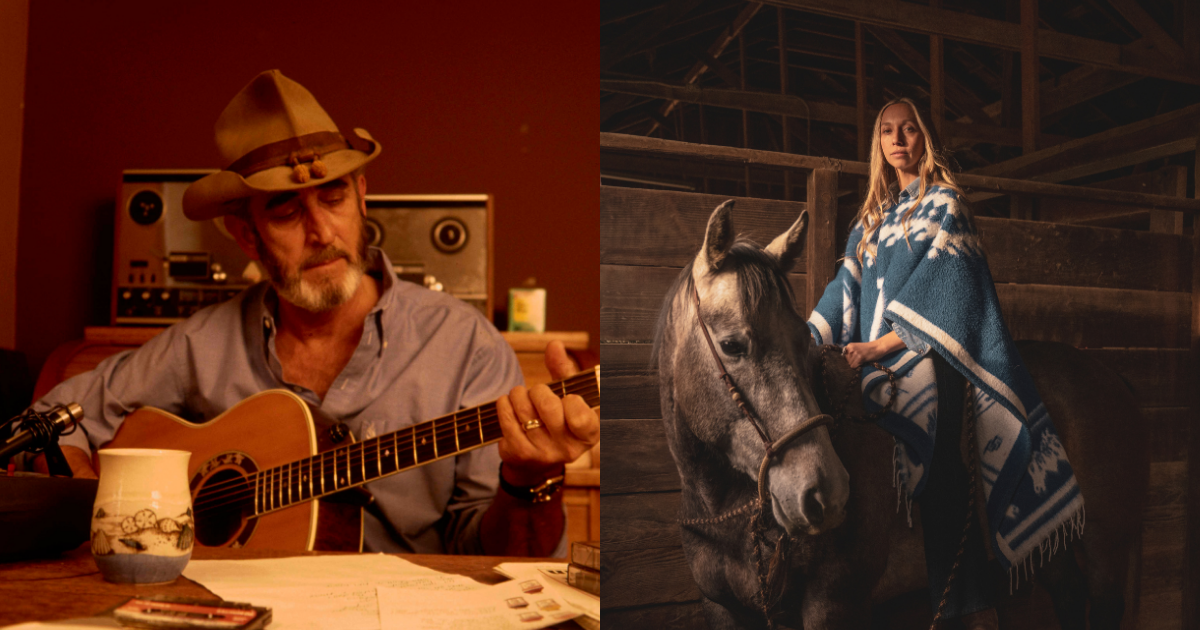
Don Williams, “I’m The One (Alternate Version)”

Artist: Don Williams
Hometown: Nashville, Tennessee
Song: “I’m The One (Alternate Version)”
Album: Epilogue: The Cellar Tapes
Release Date: April 17, 2026 (single); May 29, 2026 (album)
Label: Craft Recordings

In Their Words: “I remember this song very well from when I was 13-14 years old. I always loved the song. Obviously, Daddy did too, or there would not have been strings on it. Strings are always about the last thing before mixing (sometimes percussion). When I realized that it was one of the songs on the tapes in the cellar, I was excited. I did, though, want to take a crack at stripping it down a bit or making a little more room for Dad’s vocal, which was my intention and the approach I took. The original version is definitely cool and pretty complicated, actually, but I wanted a version that would be a platform from which maybe there’d be a little more focus on the vocals.” – Tim Williams, son of Don Williams


Photo Credit: Don Williams by Jim McGuire via the Grand Ole Opry Archives; Victoria Bailey by Dylan Gordon.

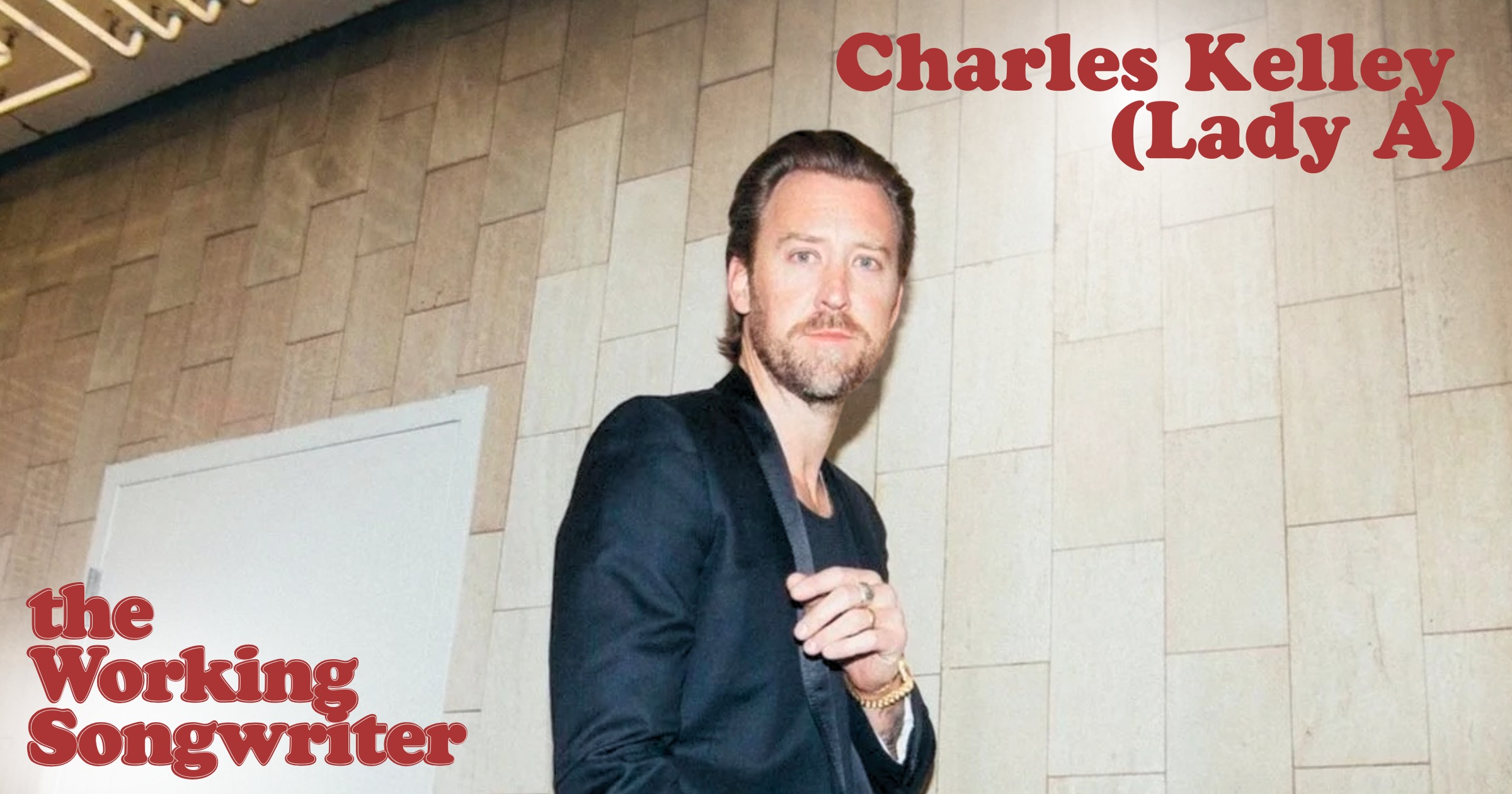
The Working Songwriter: Charles Kelley (Lady A)

Our guest on the Working Songwriter this week hails from Augusta, Georgia, but has made his professional bones in Music City USA. Charles Kelley was one of the founding members of Lady Antebellum – now known as Lady A – and is one of the group’s principal songwriters. Their crossover hit, “Need You Now,” became one of the defining songs of the 2010s.

LISTEN: APPLE • SPOTIFYREDCIRCLE • MP3

Lady A have sold over 18 million albums, won 7 GRAMMY awards, and their songs have been streamed over 5 billion times. Along the way Charles has also released a pair of solo albums, including last year’s Songs for a New Moon. He’s recorded for Capitol Records Nashville and Big Machine and he’s toured with Luke Bryan, Tim McGraw, Keith Urban and many others. He’s also appeared on The Tonight Show and The Late Show with David Letterman.

Rolling Stone has said that Lady A’s “vocal harmonies helped redefine country radio in the 2010s” and Billboard calls them “one of Nashville’s most successful songwriting teams.” I got a chance to catch up with Charles a few months ago to hear about his musical journey so far.


Photo courtesy of the artist.

Tenille Townes:
In Her Own Words

Editor’s Note: Earlier this month, we shared our exclusive Artist of the Month interview with Tenille Townes exploring the many factors and creative processes that brought about her excellent new album, The Acrobat.

That interview, with BGS contributor Alison Richter, included many more golden moments and special tidbits that ended up cut for length, so we’re excited to share portions of those edits here as a bonus follow-up to our feature conversation. Below, enjoy Townes’ insight, wisdom, and feelings about her songwriting methods, collaborating with Lori McKenna, trusting herself at the helm of her new album, and more.

And, continue exploring all of our Artist of the Month coverage of Tenille Townes – and our Essentials Playlist – right here, on Good Country and BGS.

Songwriting

I have a notes thing on my phone that I’m always picking at. I also have random voice notes in my phone from airplane windows. There’s something about the perspective of zooming out. I think about songs differently up there, so there’s plenty of voice memos of me singing into the window seat with the hum of the engine.

Songwriting is so interesting because it calls you to be present in the moment. When I’m more present, I notice songs around me anywhere. It’s the gift of paying attention. I push myself to keep working on that, striving to notice what’s happening around me and how I feel about it. That’s what inspires me to keep writing.

Working with Lori McKenna

I love Lori so much. Talk about somebody with lived experience, and also she has this way of completely disarming any sort of fear. Obviously she’s a legend. She’s a hero to me. She’s been that forever. When I first moved to Nashville, I saw her play a round at the Bluebird [Cafe] and I was like, “I want to write songs like that someday.” I dove into her whole catalog and learned so much from studying her work. There’s such vulnerability to her writing and there’s so much she isn’t afraid to say. She’s paved the way for so many writers. We’ve all learned from her.

I’ll never forget when we got to write for the first time. I was so nervous, but she made me feel at home and listened to and valued all the things. I had the best day. A lot of times people will say, “Be careful about meeting your heroes.” That could be the farthest thing from the truth about Lori. She’s over and beyond what you would expect. From that, we struck up a friendship and have gotten to write a ton of songs through the years.

She invited me to Boston and I got to spend a few days with her, writing in her music room. I loved every second of that trip. A lot of the songs on this record came from that time with the two of us together. She was always so encouraging about my work tapes. She was like, “You should really make a record of that someday.” So it’s full circle to me to have some of our songs together on this project.

It made sense to extend the invitation, in case she was up for singing on “the acrobat,” and she ever so graciously said yes. It was such a great experience getting to work on that with her. She starts singing as the fortune teller in the song. She enters around that line, which is such a timely entrance because she’s got this perspective of wisdom that comes from lived experience and from somebody who’s a complete master of the craft. I respect her so much, and I’m so glad to call her a friend.

The Work Tapes Were the Album

@tenilletownes anybody else feel this with me? This song is gonna be yours on Friday… thanks for pre-saving!! #newmusic #indiemusic #theacrobat #canadiancountrymusic #folkmusic ♬ original sound – Tenille Townes

I was maybe four or five songs in. Honestly, if I’d sat down at the beginning of it and gone, “I’m gonna produce a record,” I’m not sure I’d have ever started. I had so much fear and anxiety at that time – that plan never would have worked. But it’s like this record guided me along its way.

I got a few songs done and sent it to a producer friend I’ve worked with in the past. I was like, “This is something I’m excited about. Who should I get to mix this or would you want to maybe guide the rest?” He was like, “I don’t think you need anybody. You should see this through. This sounds wonderful. Just follow your gut and enjoy the ride.” That was so encouraging to hear in that pivotal moment. I kept going and I really enjoyed the process beyond that point.

I think I’m hardwired … in my family system and everything I was always the peacekeeper, and it’s in my nature to make sure everybody else is okay. It was really strengthening to not have to check on anybody else in this process and to trust my own compass again. I’m glad I gave myself permission to do that, but it was never the initial plan.

The Challenges of Self-Producing

Once I decided I was doing it, I had reached the part in my healing, my mental health journey, where I was starting to recognize that the imperfections of this project were actually where the magic was. I think the music guiding me [toward] that was a little bit of a spiritual letting go. That’s the practice.

One of the themes in this record is letting go. Even making it was a practice of that and going, “I could do that fifty more times and get it perfect, or I could accept that I think it sounds beautiful and human just like that,” and that’s what I did.

“she plays the piano”

This song is so special to me and it’s been a special one to me for years. I wrote it with Lori McKenna, Alex Stacey, and Amy Wadge over Zoom during the pandemic. I remember finishing it and going, “This song is so special. I don’t know when its moment is going to be,” because it wasn’t quite in the vibe of what I was releasing at that time. But I knew the song would tell me when it was time and I’m so glad the time is now.

The idea came from visiting my great-grandmother at her nursing home. She was there for close to 10 years and was on the Alzheimer’s and dementia ward. It was so tough, especially watching my grandmother. She went all the time, and watching her with her mom in that space was devastating. The fact that she didn’t recognize any of us or know where she was, that she was always time traveling, that was heartbreaking to have a front row seat to.

We went to visit and have lunch one day and there was this woman, this other patient, in the cafeteria. They had a keyboard, and at lunchtime she would sit and play this polka over and over. This sweet woman couldn’t tell us her name, she had no idea where she was, but she could play that polka like nobody’s business. She’d play the song and then glance around her shoulder and wait for us to clap. We’d cheer every time. It was like she played Carnegie Hall or something. We would applaud her and then she’d turn and face the piano and start the song over again.

I sat there, as a teenager, thinking how music can remember who we are even more than our mind can sometimes. That’s such a powerful thing. I’ll never forget witnessing that. I’ve wanted to write that song for a lot of years, so I’m glad it’s a part of this project. I think of that sweet woman and my great-grandmother every time I play it.


Want more? Dive into our Artist of the Month coverage of Tenille Townes here.

Photo Credit: Robert Chavers

Check Out Lucinda’s, a Bustlin’ NYC Honky Tonk

(Editor’s Note: Enjoy our tour of New York City honky-tonk, juke joint, and cocktail lounge Lucinda’s as a special postlogue to our Artist of the Month coverage of Lucinda Williams during March 2026.)

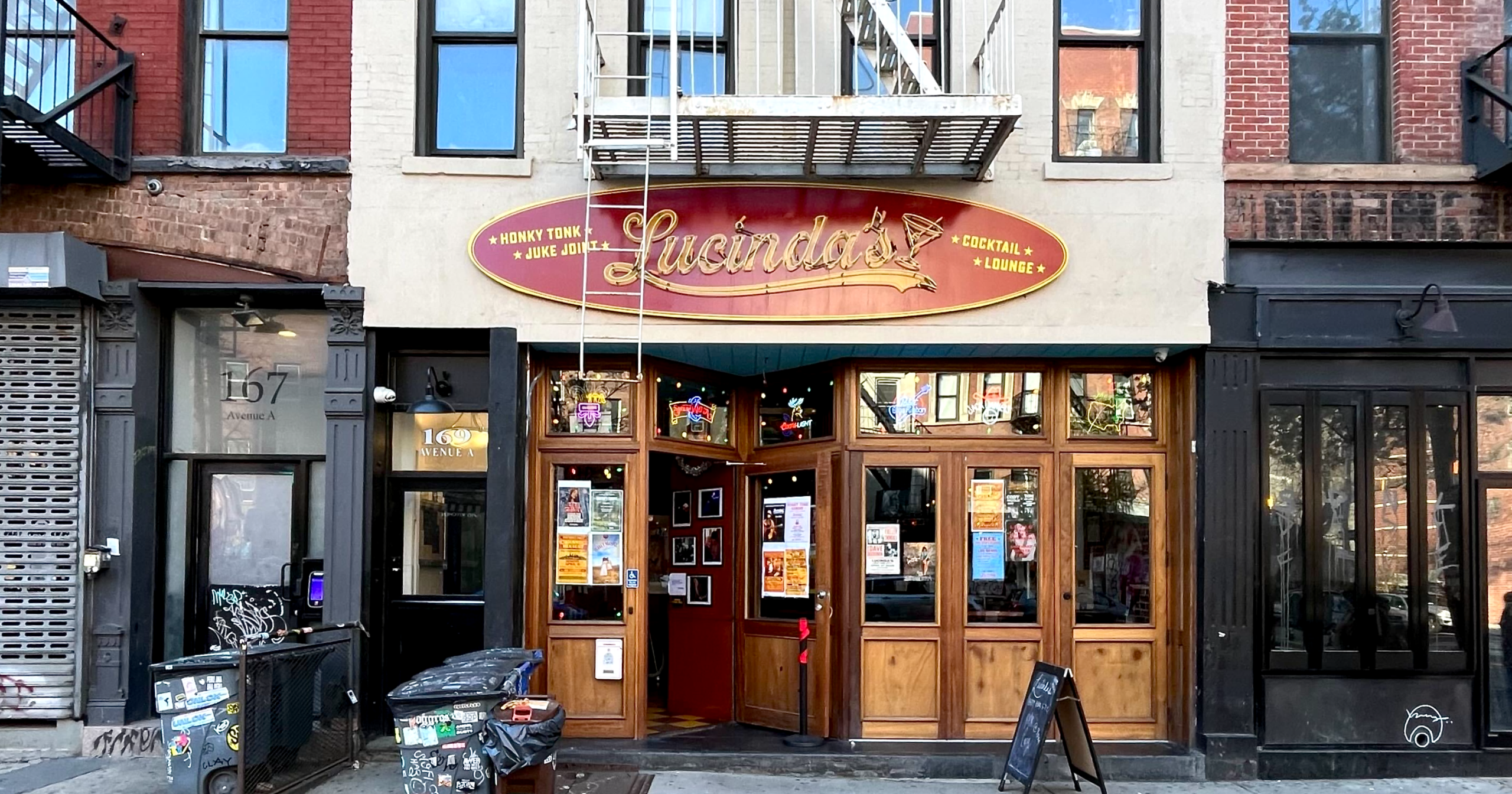
It’s the first springtime Sunday in Manhattan and after a bitter winter, the East Village is humming with human activity. Around the corner from the throng of Tompkins Square Park, where Girl Scouts hawk cookies and roller hockey players clatter their sticks and skates, tumbles of acoustic guitar spill from a storefront, attracting curious passers-by. Some folks pause and lean toward the open windows, and a few cross the threshold to meet wafts of fresh popcorn. Welcome to Lucinda’s.

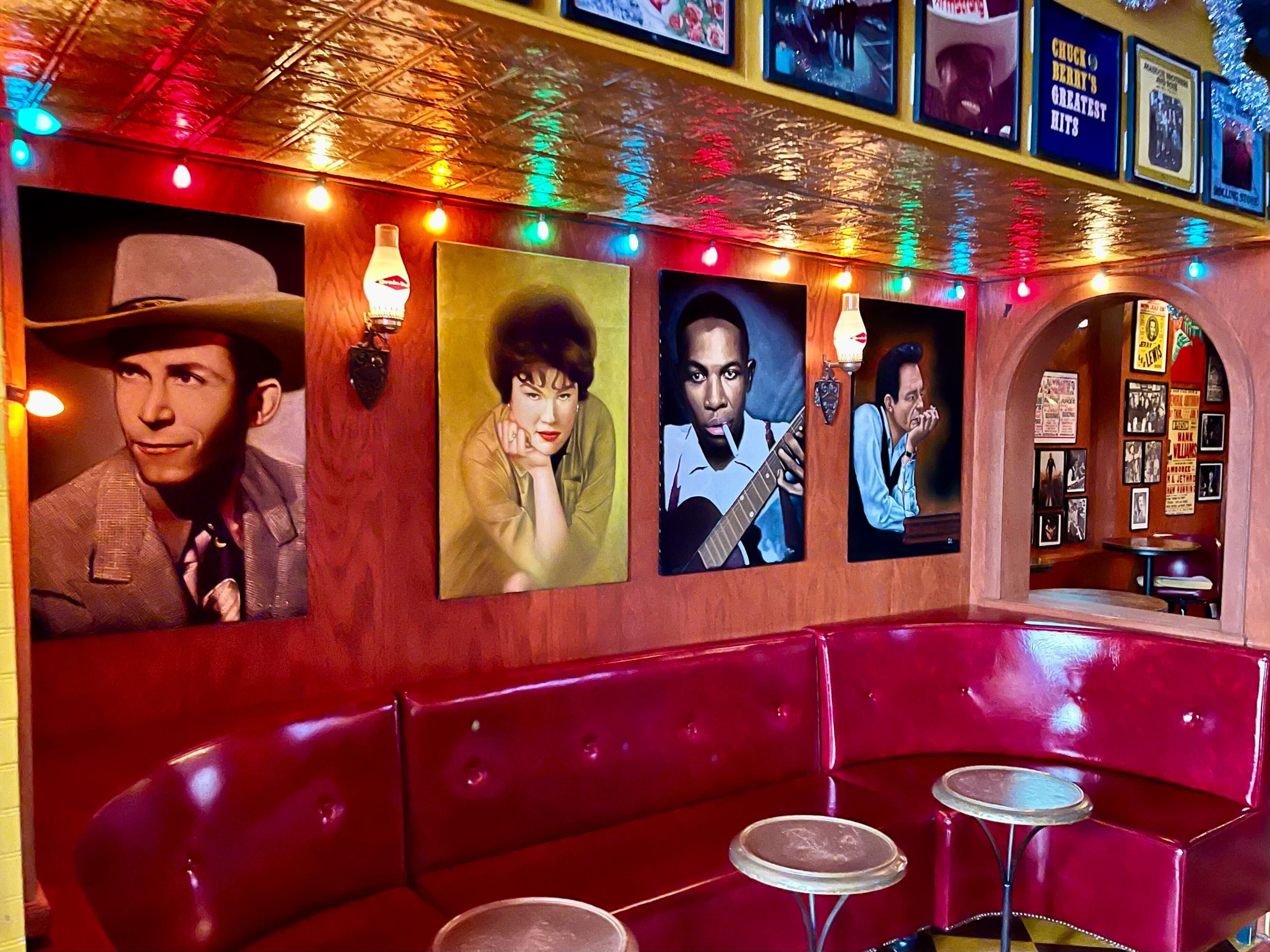
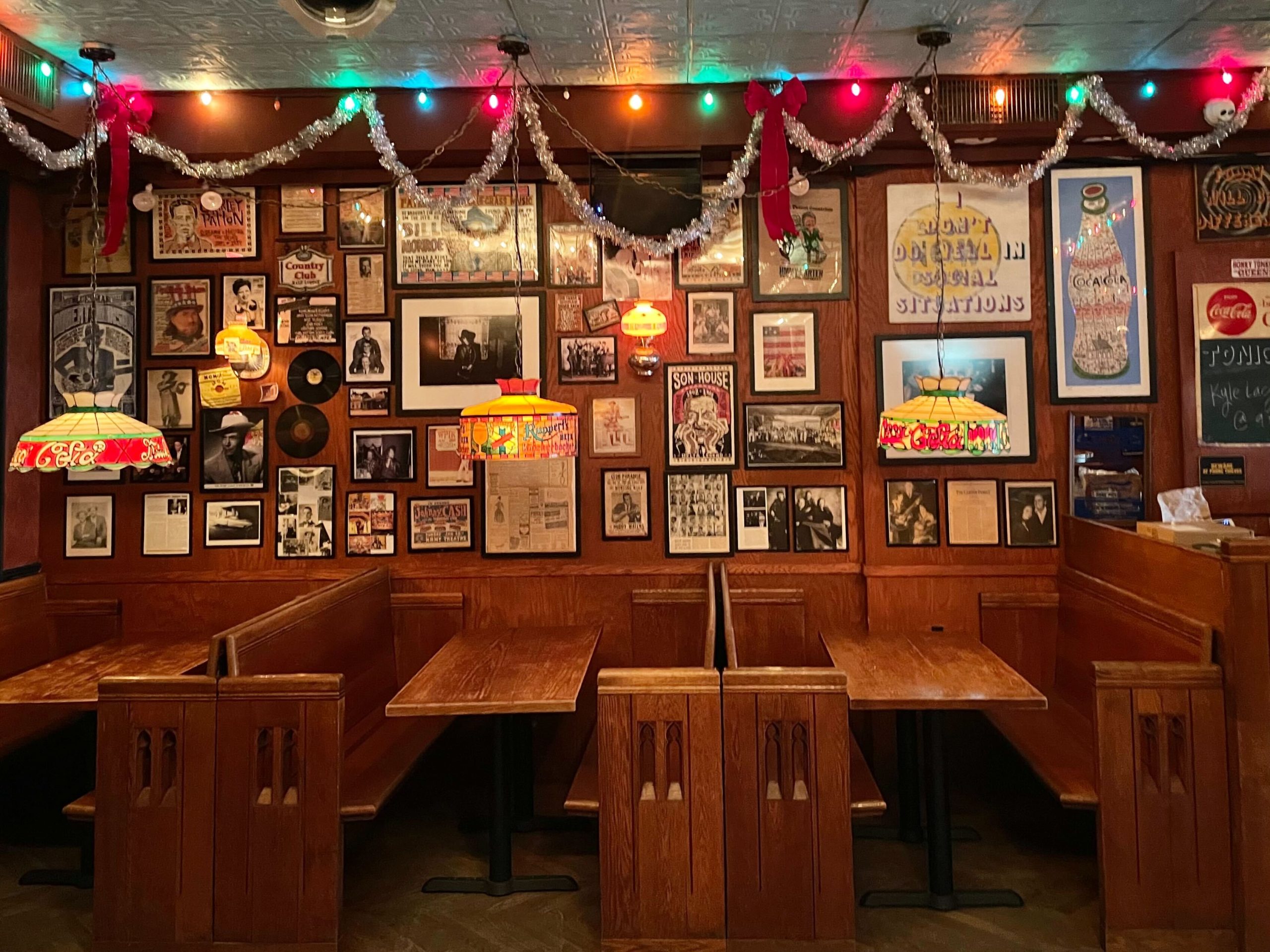
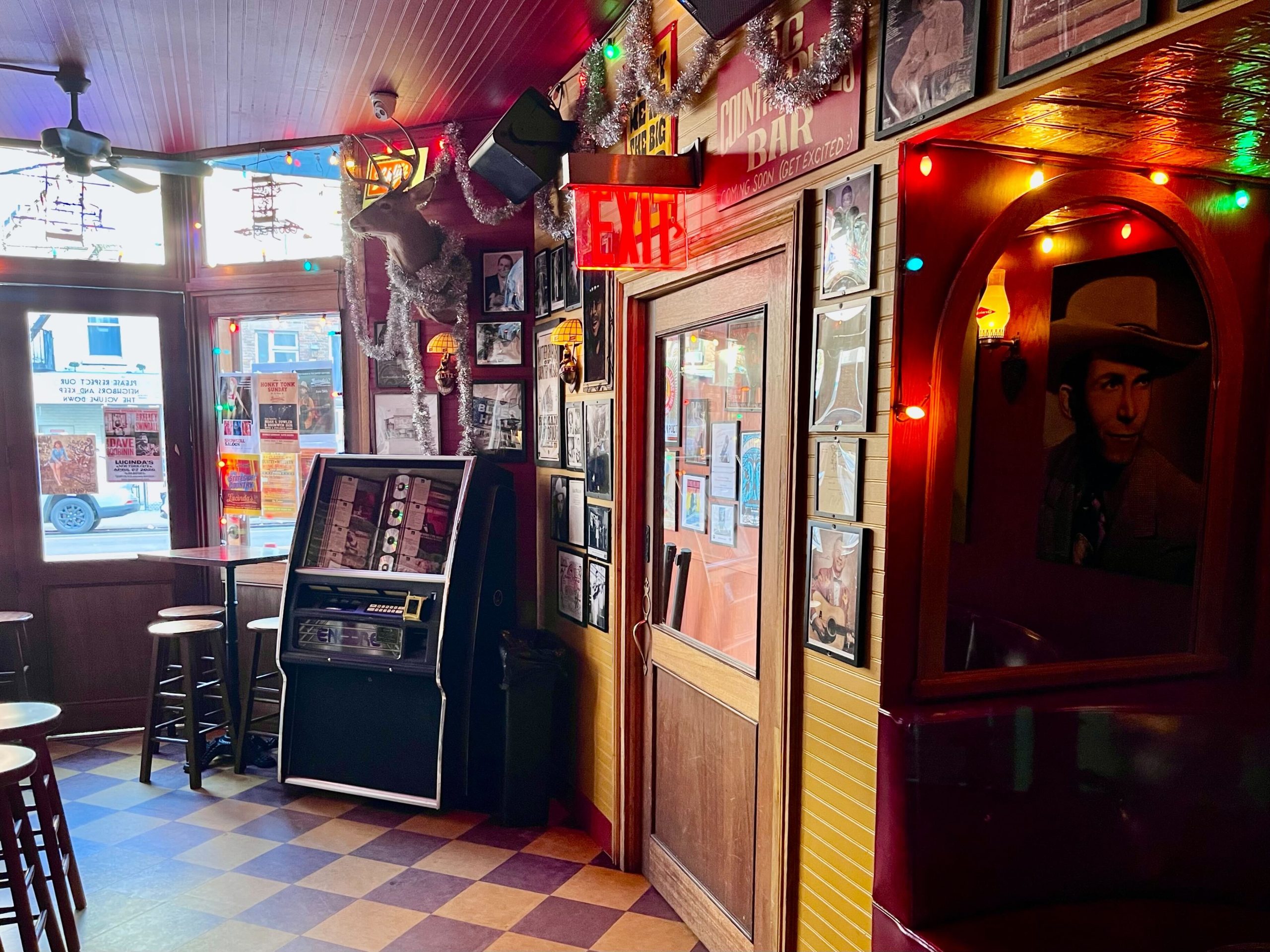
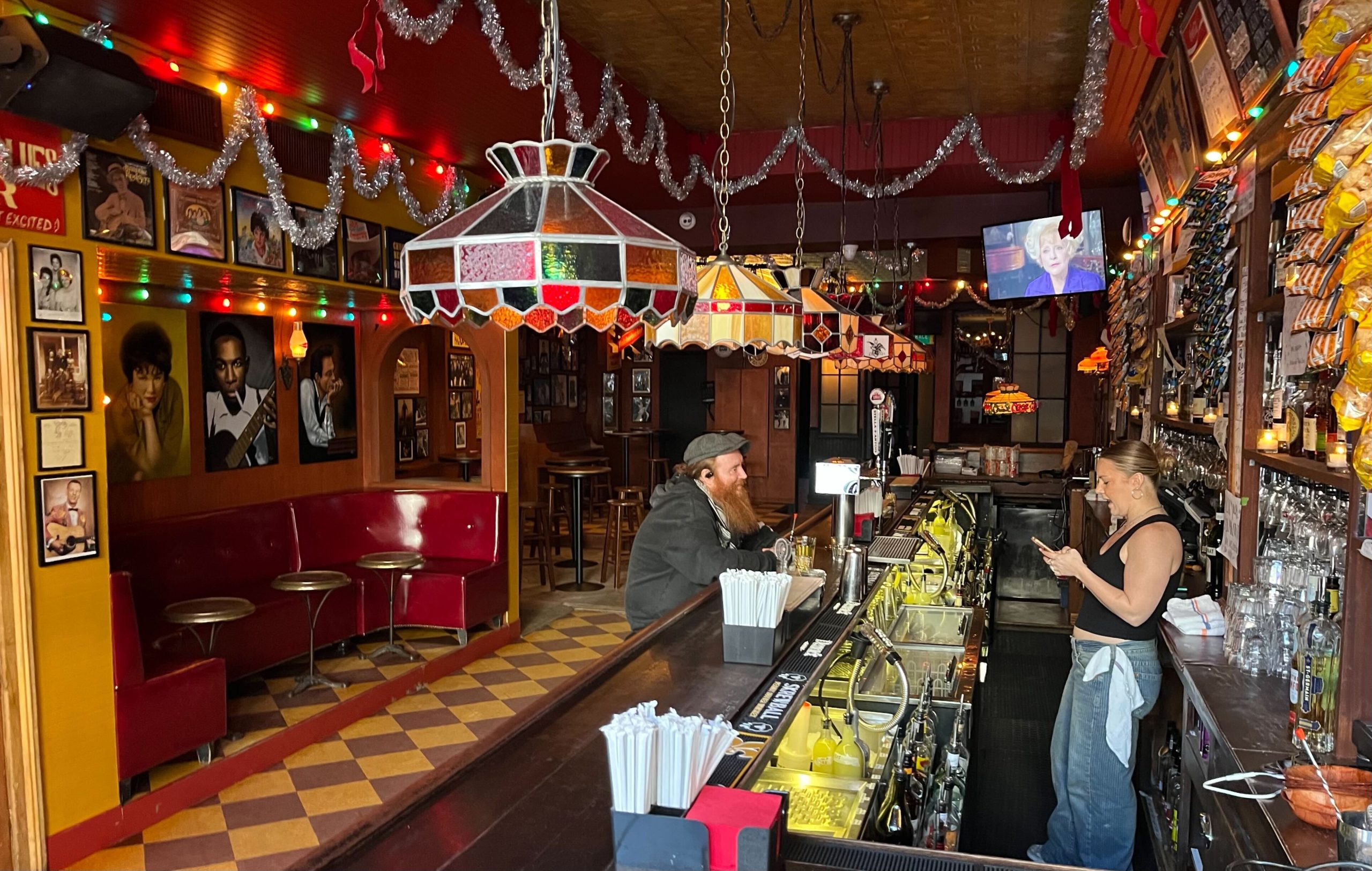
The bar’s tin ceiling interior is catnip to music history aficionados and Americana-kitsch collectors alike, the walls hung with poster prints, vintage memorabilia, and velvet paintings (among them Kitty Wells, Robert Johnson, and Elvis Presley shaking hands with Jesus Christ). There’s a jukebox ready to sling beloved feels-good-to-feel-bad hits, and peanut figurines with Jimmy Carter grinning and holding court over the liquor. These accoutrements all play second fiddle to the spot’s main attraction: live music meant for casual socializing every day of the week.

This robust programming – along with some of the bar’s most prized decorative items – is the work of Kelley Swindall, a musician and New Yorker of 20 years who grew up in Stone Mountain, Georgia. She takes pride in a large round aluminum Coca-Cola sign, an item on “permanent loan” from her family and one of several wall-hung nods to Georgia’s most lucrative liquid export. She’s more proud of filling a void in New York City nightlife. “There’s a lot of Southern people in the city that went to SEC schools that want to have some Southern culture again, like college football, or listening to music that they love and don’t normally hear in New York,” Swindall says.

Though the city has a handful of country-themed, sometimes Western-leaning bars – Williamsburg’s hootin-hollerin Skinny Dennis, the self-explanatory Honky Tonkin’ in Queens, the West Village’s Tex-Mex-y Cowgirl – Swindall wanted to develop a place to celebrate the early country, blues, folk, and other vernacular music that shaped generations of American song. She yearned for the sort of places she knew growing up and got to know as a touring musician, rooms where casual live music fosters socializing instead of hampering it. “That’s what the juke joints and honky-tonks were back in the day – it was live music as the soundtrack of the evening, but you were hanging out, drinking, dancing, and socializing,” Swindall says.

Swindall found a business partner in Laura McCarthy, who has a storied history of her own at 169 Avenue A running prior venues Brownies and Coney Island Baby. The pair found a namesake and patron saint of sorts in Lucinda Williams, with whom they connected through mutual friends. Williams agreed to endorse the place, her multi-stranded artistry anchoring the team’s vision for honoring the deep musical roots of the American South. She christened the stage with a set as part of the bar’s opening-night festivities last July.

On a Saturday night, Lucinda’s is rollicking, packed front to back with revelers before some New Yorkers have even gone to dinner. There’s college basketball on one TV, and The Best Little Whorehouse in Texas on the other. I want to mill around and make conversation, but the bar is thick with boisterous, overlapping shouts converging with mid-1990s Tim McGraw and Shania Twain songs that radiate in my bones.

The mission of Lucinda’s is evidently working. With my elbows pinned to my sides, I chat with Emily from Texas and two girls who rolled up for one of several birthday gatherings in progress. After his friend paws at my unattended leftover garlic knots, Gavin, an Irish ex-pat and country music fan, tells me it’s his first time at Lucinda’s after hearing about it on TikTok. “We were in the neighborhood, and we wanted to come in. We already had plans somewhere else, and we made it our business to come back here,” he says, enthralled with the room’s unique decor. I don’t get a chance to ask his thoughts on the Dolly Parton or Johnny Cash bathrooms before he peels off with drinks in each hand.

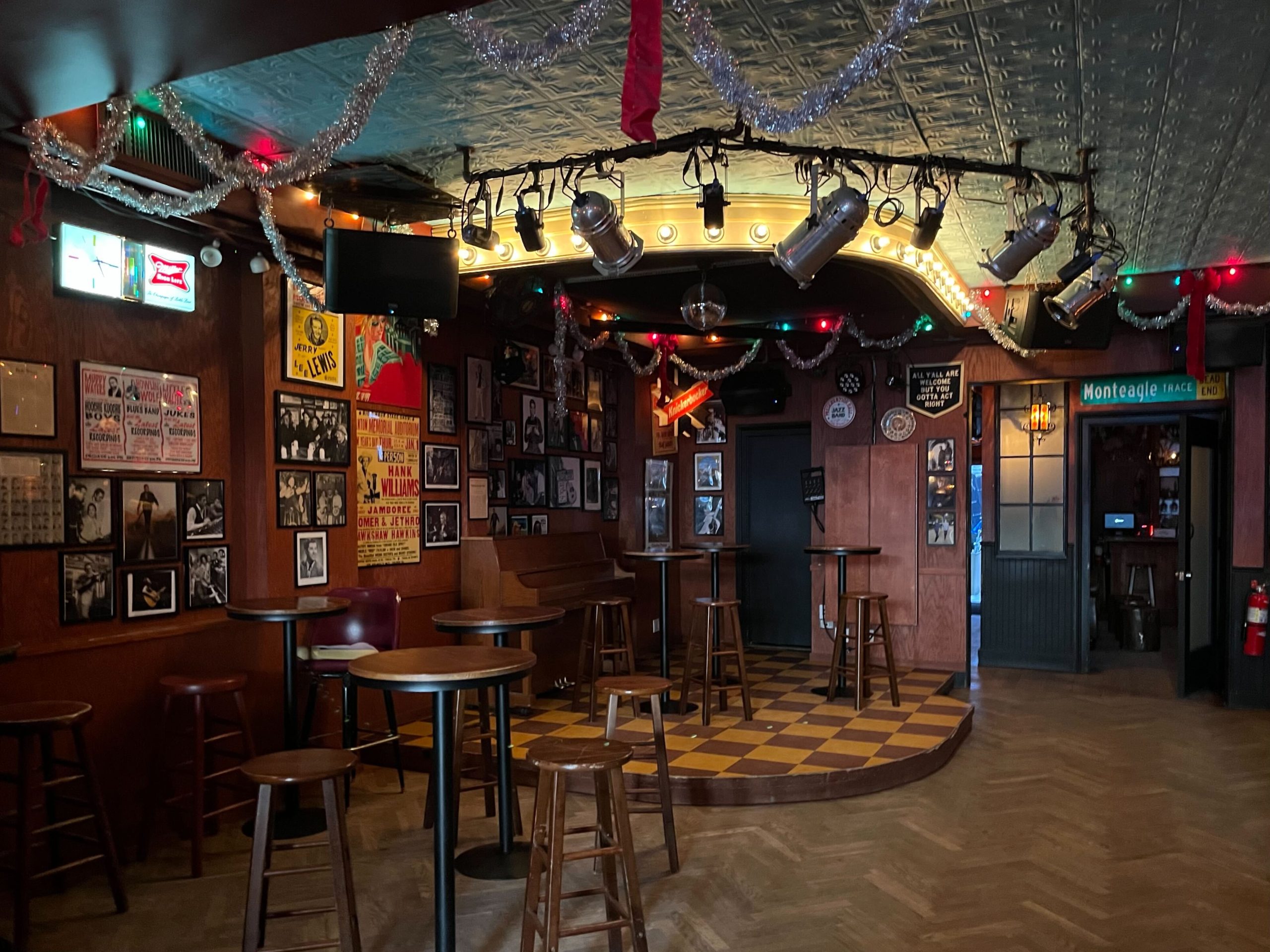
Spirits are high, but by Lucinda’s standards, the fun has barely started: a few musicians are shouldering their way through to the corner stage. Nightly music programming is a staple at Lucinda’s, which Swindall accomplishes with standing residencies and open mics alongside other ticketed events. There’s a loose structure week to week; weekends are for the big sing-along bands, Sunday evenings are for classic country, and bluegrass and some old-time are on Tuesdays. “I was an artist first, and I still am, so I wanted to focus on the kind of music that I’m into,” Swindall says, adding that Thursday night is for two-stepping.

The Sunday open mics are a binding force to Lucinda’s operating concepts. Sign-ups start at 1 p.m. every Sunday, running through the afternoon until another outfit takes the stage for the evening. There are some gentle guidelines (no covers, no backing tracks), aimed toward bringing a pleasant and equitable atmosphere to the gatherings. Swindall prioritizes the artists’ experiences at these weekly forays, remembering open mics as essential to her relationship-building and development as a young musician.

“It’s more important to have people able to come in and play their songs, everyone listen, rather than have a thriving bar culture that day,” she says. Drawing further on her artist’s perspective, Swindall fosters the open mic knowing the challenges of getting a foothold in bigger booking circuits. “A lot of places, they don’t want to book you unless you can bring a crowd or you can show them live footage. It’s really great to give people an avenue to get comfortable on stage and get feedback for their songs,” Swindall says.

Moreover, the shindigs help Swindall expand her pool for her month-to-month bookings, strengthening the network of relationships that are essential to the arts-forward community that McCarthy and Swindall hope to nourish.

Almost a full year in, Swindall is eyeing a steady growth pattern. She worked her way up to music every night of the week and now sometimes has two shows a night; she’s starting to entertain ideas for a small festival. “From a bar point of view, there’s so much to do,” she says.

The space isn’t zoned for a kitchen, but Swindall wants to figure out some kind of food element; in the meantime, patrons can bring in takeout or ask a bartender nicely for a Moon Pie, a bag of Zapp’s chips, or a bowl of popcorn. Swindall will stay busy as she aims to make Lucinda’s even more of a place for the “all” in “y’all.”

Stop in, sit down, shake loose. Connect with a song, or maybe a stranger.


All photos by BGS Staff.

Explore our Artist of the Month coverage of Lucinda Williams here.

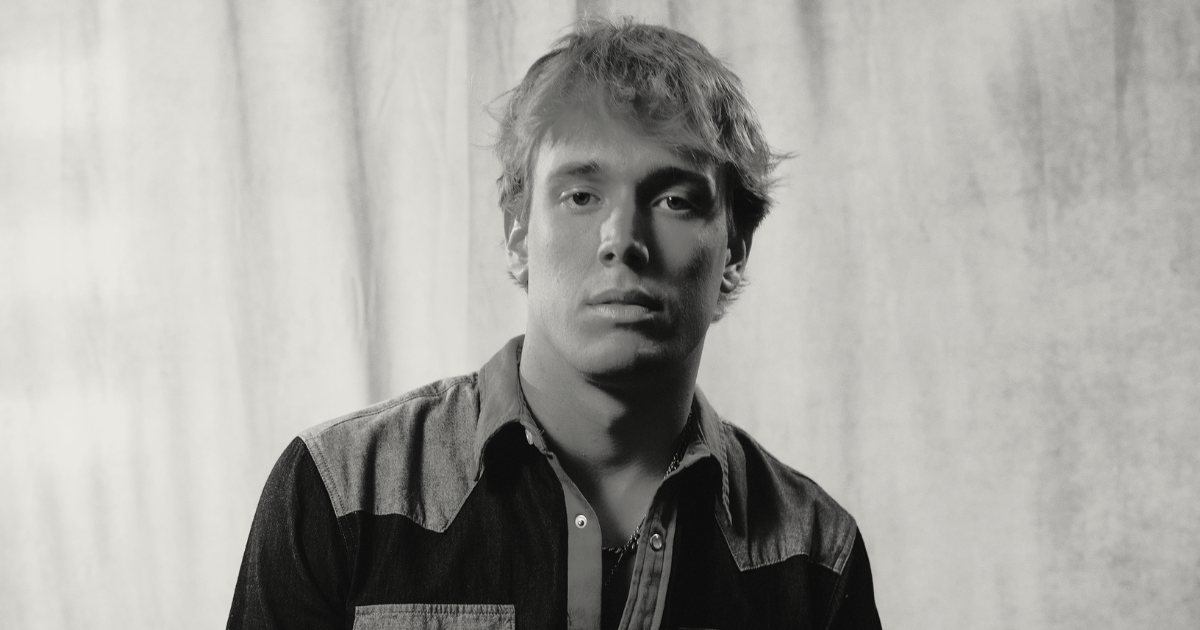
Hudson Westbrook Is Ready for What’s Next

It was not so long ago that Hudson Westbrook was in college at Texas Tech. But today, he’s one of the most promising and hard-to-pin-down young acts in country, helping pull Texan artistic independence into the mainstream.

Joining trailblazing stars like Cody Johnson and Parker McCollum, Westbrook celebrated his first Number One in February after finding a home for “House Again” on the Mediabase country radio chart. Also certified Platinum by the RIAA, it’s more evidence of a shift away from cookie-cutter tailgate anthems: an emotionally complex ballad rooted in the experience of a kid watching the fallout of their parents’ divorce.

Westbrook paired raw lyrical nerve with a soulful, tender touch, helping the newcomer tally one billion streams in 18 months, with an exponential growing profile – and then he switched things up.

His recently released Exclusive EP features five tracks awash in rootsy R&B, proving the 21-year-old won’t be held to a narrow interpretation of Red Dirt musicality. But he’s not satisfied there, either. His new radio single “Painted You Pretty” (from the debut album Texas Forever) matches country simplicity with an earnest romantic hook, and this summer he’ll tour arenas and stadiums with Bailey Zimmerman, Morgan Wallen, and one of his heroes, George Strait.

Speaking with Good Country at an East Nashville coffeeshop – just one day after meeting a pig on the podcast of his other hero, Tracy Lawrence – the fresh-faced star looks ahead to new music and shares his impression on what’s driving the Texas-and-traditional country resurgence. Barely two years into a rocket ride of a professional career, he’s still learning the ropes, and sometimes, the lingo. But Hudson Westbrook has all the artistic confidence he’ll ever need.

We last talked in 2024 and at the time you were just out of college. The only thing you had released was “Take It Slow,” and then “House Again” came out. How have things changed?

Yeah, I was working at that feed store and it wasn’t that long ago. I’d written “House Again” and then I just remember I was so confused as to what was going on. Now I look up and I’m like, “I was blowing up the whole time.” I didn’t realize how big it was getting. It’s hard to feel it. I’d be like “Hey y’all, is 5,000 tickets good here?” And they’re like, “Do you realize what you just did?” And I’m always like “… No.” [Laughs]

I’m getting bigger and bigger and bigger and bigger. I want to keep getting bigger, but I want to keep it small. So [lately] it’s just really been focusing on doing that. Not losing yourself. Focusing on grounding myself right now, making sure I’m calling my family and whatever it might be. And then also it’s celebrating it, too.

You just had the Number One [with “House Again”]. What’d you do to celebrate?

We were in Hawaii, so we drank – I don’t know – 15 margaritas? [Laughs] The coolest part about that song is it was my second co-write and I was like, “Yo, I don’t know what I’m doing.” [Co-writers Dan Alley and Neil Medley] said, “Well, what’s your hook?” I said, “What’s a hook?” And they started laughing. I’m like, “Bro, I don’t know what the hell that is, but I had this idea.” …

So it just blew up. And I was so scared, just because it’s saying goodbye to a lot of stuff, honestly. It all happened so fast. If anyone had to have someone explain to them how to deal with a fast moment, I’d say if their songs are working, slow down.

Really? What do you mean?

Because that was a song that was for me. I was like, “I’m writing these songs I love and they’re ready by the time that we need them, so throw them out there.” And, “I’m already in Nashville, so let’s film the music video.” We never really planned on dropping anything, which is kind of crazy. I wish I would’ve slowed down a little bit and then realized what was happening so I could soak it in. It’s still happening. It’s still great. But I would just tell people, maybe slow down if it’s happening that fast. I feel like a lot of times I didn’t know who Hudson Westbrook was when I put songs out. And now I’ve sat down and we recorded four songs on Monday and I’m like, “This is the vibe. This is what we’re doing.” It’s so refreshing.

You’re going to be sharing a stadium stage with George Strait [at Jones AT&T Stadium in Lubbock, Texas on April 25]. That’s a homecoming show and I know he means a lot to you, so how does that make you feel?

That’s where I went to college. I sat on the 50-yard line since I was 7 years old, watched every single football game at [Texas] Tech, watched every single concert, listened to George Strait since I was in the womb. It was “Check Yes or No.” It was “Troubadour.” It was “The Fireman.” All that was in my house from an early age. So I don’t know, it’s just crazy. It’s a little nerve-wracking, like who knows what’s going to happen? I’ve also never played a stadium yet. All my friends are going to be there. It’s just going to be weird.

I would say there are some similarities between you and George Strait and maybe that’s just because of your background. You’ve been traveling around, have you noticed a difference in country music depending on where you are?

I go to Florida and [the fans are] screaming the most Texas country song I have. And Texas country just means that production. It’s a view of writing and it’s a perspective. I use real drums. The biggest country music artists in the world don’t use real drums right now. That changes everything. And so now we got to be like, “How can we be different than everything else?” I think that’s by being natural, in a sense.

There’s definitely a moment happening for Texas country, bluegrass, and traditional roots, with Zach Top and some more of your peers. Is it just perfect timing for you?

I think we’re pushing it into that direction because I think we’re trying to get back what we wanted to hear. I know if I talk to Zach, he’d be like, “Yeah, dude, I want acoustic and drums and a shaker and I want it all to be in there.” I feel like we make country music and it sounds like the show. You could literally put a band on stage and play it with no auto tune, no tracks. And that’s what makes it unique for us, because it’s like no one’s ever going to play the same thing twice.

What’s coming next, though? The Exclusive EP is out now and it’s definitely different than Texas Forever.

To be honest, I was like, “I want to try a bigger sound, something more mainstream.” And so I chased it – but I did not give up on the songwriting. My songwriting was very intentional and it was very love story-based [on Exclusive].

I love them, but I’m going back to my Texas country sound. We just recorded a song called “Hey Dallas,” which is really cool. Then we did a song called “Backwards,” which is really cool. And then I don’t know, I’m leaning in to John Mayer production a bit – but no crazy guitar solo. [Laughs] I was like, I ain’t doing none of that.

I can say, definitely some more soul and a bit of R&B in there, for sure. It’s electric guitars driving the whole thing – and I love electrics and baritones. I want that to drive all my stuff from now on. My voice just sounds better with it to me.

So it’s going to be like a whole new fresh album?

Totally new. I have like 120 songs and a lot of them are pretty good. I’m not saying they’re all for me, but I finally did what I should have done and that was sit back, find my key, find the way I like to write, really be intentional about what I’m writing. I wrote a song called “Nowhere Bound” that is probably one of my favorite songs. It’s like, I never stop in any city and don’t ever slow down.

When are you all going to be sharing new stuff?

Next month. I’m dropping “Slow Hand” by Conway Twitty [on Gavin Adcock’s Country Never Dies project, March 13]. His voice is incredible. I ain’t going to lie. It was not easy to cover that shit. [Laughs] He’s got just some weird things and then you’re like holding this note out for 10 minutes. [Laughs]

To be honest, dude, even if none of that stuff [I wrote] is usable, my goal this year is to do something that no one’s ever done and create a freaking path so far into my own lane that’s nothing like anybody else that … it’s undeniable, because I’m going to do what I want.

I feel like right now I’m growing and I’m learning and I’m doing whatever, but now it’s like, “How do I take it to the next level?” I think the way you take it to the next level is just getting deeper into yourself and telling [the fans] more.


Photo Credit: Peyton Dollar

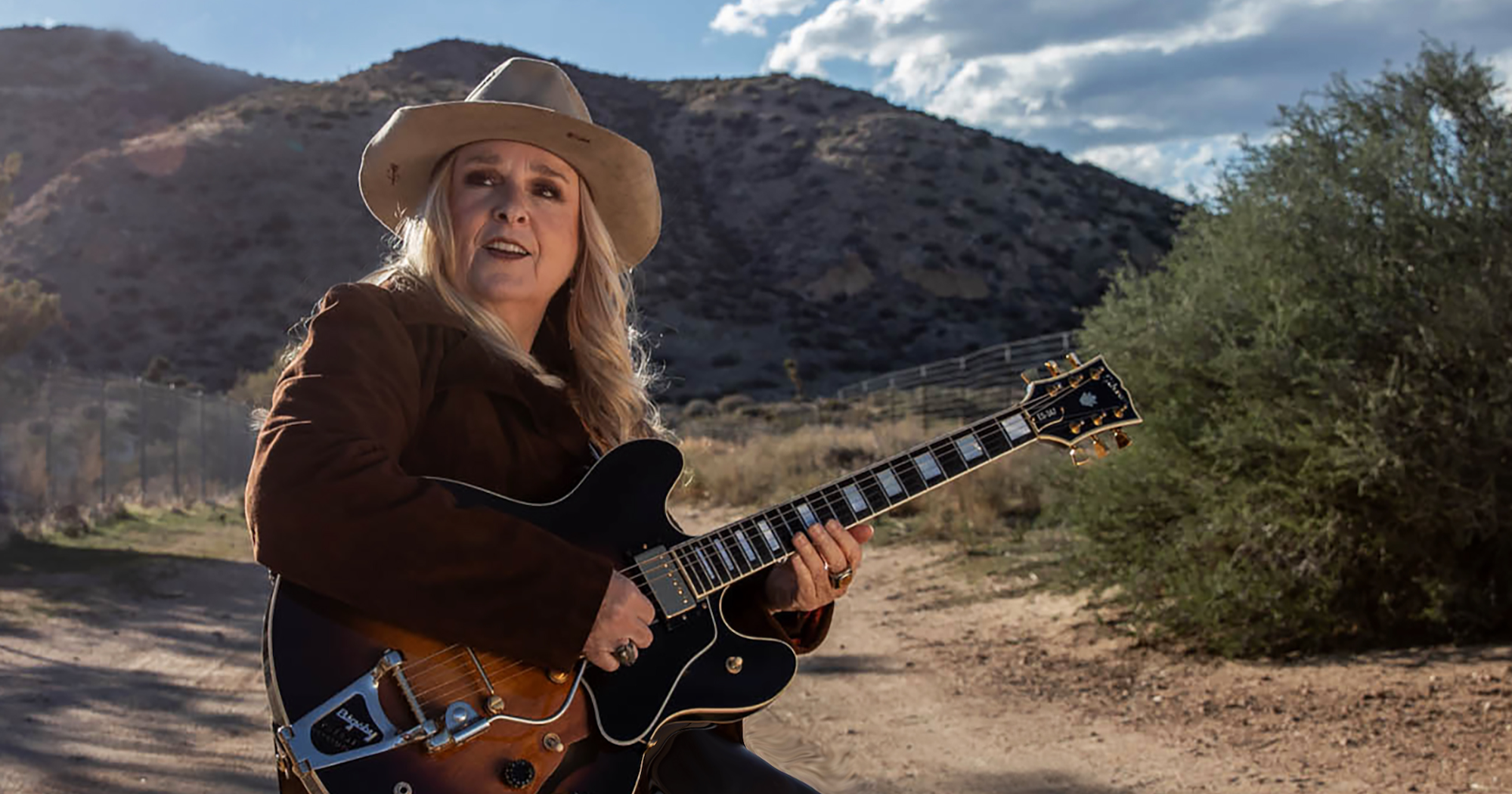
Melissa Etheridge: Rock and Roll and Resilience

Few people have experienced the highs and lows of the music business to the degree that Melissa Etheridge has. Since releasing her self-titled debut in 1988, she has won two GRAMMYs (and been nominated for many others); been hailed as the second coming of Janis Joplin; won the Gibson Award for Best Female Rock Guitarist; become a mom several times over; been a social activist both for the LGBTQ+ community and for people addicted to opioids; written a memoir; and performed a one woman show on Broadway. Not bad for a kid from Leavenworth, Kansas.

That said, Etheridge has also suffered more than her share of setbacks. She has weathered a couple of high-profile divorces, battled breast cancer – who can forget her duet with Joss Stone at the 2005 GRAMMYs when she took the stage bald after undergoing chemotherapy – and, in 2020, lost her son Beckett to addiction.

The one constant throughout all these ups and downs has been her music, a brand of heartland rock that manages to be personal and universal at the same time. Etheridge is nearly as popular with blue-collar men as she is with lesbians, owing to her raspy vocals, formidable guitar chops, and unpretentious persona. And she’s racked up an impressive list of hits over the years including “Come To My Window,” “If I Wanted To,” “Ain’t It Heavy,” “Similar Features,” “I Want To Come Over,” “Bring Me Some Water,” and “I’m the Only One.”

2026 is shaping up to be a big year for Etheridge. She returned on March 27 with Rise, her first studio album in five years. On the eve of its release, she and her band kicked off a six-week tour in Detroit. And for the first time, Etheridge was nominated for induction into the Rock & Roll Hall of Fame this year.

Rise was recorded in Los Angeles with co-producer Shooter Jennings and includes 11 songs. While they’re diverse musically, the album as a whole feels like a complete statement. It’s a testimony to resilience, to sticking with life through all its ups and downs.

The title track and “Bein’ Alive” (which opens the disc) are both life-affirming rockers. “The Other Side of Blue” is a contemplative duet with Chris Stapleton. The playful “If You Ever Leave Me” puts an Americana spin on Mental As Anything’s ‘80s hit, “If You Leave Me (Can I Come Too).”

The shuffling, midtempo “Matches” was inspired by Johnny Cash’s 1970 concert at the U.S. penitentiary in Etheridge’s hometown. But the two final songs on Rise are also its most personal and poignant. “Call You” is a moving tribute to her son Beckett, while “More Love” was written for her daughter Bailey when she got engaged.

BGS recently had the pleasure of catching up with Melissa Etheridge for a Cover Story interview.

Let’s start with Rise. This is your first new album in five years, which is a significant amount of time. But you’ve been very busy in the last five years; I read your book and saw your show on Broadway. So it’s not like you’ve been sitting around! What do you get out of recording an album that you might not get from doing theater or writing a book?

Melissa Etheridge: Even though I haven’t had an album out in five years, the [last] album I put out, One Way Out, was a previous recording that I’d done seven years before that. So it’s really nine years since I’ve written. And I’ve lived so much of life – from loss to the pandemic to just growth. That’s the part about making a record. I knew that I could create a collection of songs that would make an album.

I love the art form of an album. You know, 45 minutes to be with the listener and take them through an emotional journey. That’s my favorite part; the real crafting of it was the writing. And it was about a year’s worth of pulling things together and then writing [in] December of ’24 and January and February. Then going in the studio [last] March. Going in, it’s so much fun with the road band that I have. It’s like putting on a favorite pair of jeans. Then getting Shooter Jennings to produce it! His studio, Sunset Sound, is so amazing. So it was a pleasure recording there.

It really does flow as an album, but it touches on a lot of different moods. Listening to it as one piece, I felt a sense of renewal and also resilience.

Yeah, that’s something I wanted to get across. There’s so much I experienced through the loss of my son five years ago. That’s about the most devastating thing you can go through. Having gone through that loss, [I] decided that I wasn’t going to drown myself in guilt and shame, I wasn’t going to die – that I was going to experience this, heal with my family, keep loving ourselves, knowing that everyone makes their own choices. I could not save him, he had to make the choices for that. And then making art from that – you know, loving yourself enough to be able to say, “God, I love being alive.”

Writing those songs – especially in this day and age when I find such negativity – if you start believing that, then that’s what you’re gonna see. So I wanted to put [out] positivity without being patronizing or [using] platitudes. You know, lifting people up. Going, “Yeah, you’re gonna fall sometimes. You’re gonna taste the dirt. You’re gonna rise.”

[“Rise”] came after the LA fires. That was something I went through with my family. We had to evacuate. It came right up to our neighborhood. I gotta tell you, LA firefighters are heroes. Every single one of ‘em. They were able to keep it from our neighborhood. But there was a moment, when we were watching the fire reports, where it was like, “Okay. There’s a good possibility that we might lose everything.” I was in a hotel with people who were losing everything. To experience that and then say, “They’re just things. We’ve got our health, our family, our pets.” You know, you’re gonna still rise. There are gonna be these things that knock you down, but man! You’re gonna be stronger and better for it. It’s hard to hear but it’s so true.

I was gonna ask you why “Rise” was the title track but you kind of just told me!

The second to last song on the album is “Call You,” which is really moving and I know you wrote about your son. I don’t have children, but two months ago I lost two of my best friends, one to suicide and one to early onset Alzheimer’s. So I’ve been struggling the last couple of months with a lot of existential stuff and wanting to call my friend Mark – and I can’t. So that song really resonated with me. I guess I wanted to share that with you.

Yeah. Life is full of loss. It really is. You’re not living if you don’t have some loss. And the older you get, the more you’re gonna see it. That’s when the existential stuff [comes in]. I am more than just my body, I am a separate soul here experiencing it. The greater part of me is that non-physical place that I’m connected to – that source that everyone is [connected to].

In “Call You,” I tried to simplify that. Because to me, the times when I miss him the most are the times when it’s like, “I wanna call you!” Even my father who died 30 years ago, you know? When I was nominated for the Rock Hall, I was like “Oh, I just wanna call my dad!”

[“Call You”] was actually the first song I wrote for the album. I knew I had to get that emotional experience down. I had to write that song first.

I also wanted to ask you about “Matches.” When I spoke to you last, you told me about Johnny Cash playing in Kansas when you were just a kid and how one of your thoughts was, “Prisons must be the place where you find entertainers.”

[Melissa laughs]

Tell me more about that and maybe your thoughts about The Man in Black.

Well, growing up in a small town, Leavenworth, we have no places for big artists. Kansas City is 45 minutes away. But our town, in the ‘60s, that just wasn’t a thing. All of a sudden, in 1969, he came to the prison. He came to our town! “Oh my god!” Someone who I’d only seen on his television show or [heard] on the radio and was such a cultural icon – he’s in the same space as me! That really kind of said to me, “Whoa. Maybe I could do that.” It felt close to me. [Cash] always made a big impression on me. I always loved his music, his individuality.

“Matches” was supposed to be a scratch pad song for me. I had just come from the I’m Not Broken [docuseries]. I did a concert in 2023 at the Kansas Women’s Penitentiary. So I was still sort of playing off of that and singing. Scratch songs for me are songs [where] I’m writing for fun and it starts the juices flowing. I kept writing these verses and I played a little bit for my wife, [Linda]. And she said, “You have to put that on! What do you mean that’s a scratch song?”

Can you tell me some wonderful things about Linda?

[Laughs] Yes, I can! That’s easy. For 12 years we’ve been married. We were together four years before that. And before that, we were best friends for 10 years! I married my best friend.

She is… everything I needed or wanted or dreamt about. The only way you really get someone like that in your life is to understand your needs and wants. And to have the love for yourself that you are looking for in other people. The minute I really got in contact with myself and understood what I wanted and loved, I was able to see the best kind of love for me. And she was it.

There’s just a constant partnership that is astounding – a love and desire that never goes away. And it’s because I’m not looking for her to fix me or make everything great. I’m looking for her to be by my side as we both make our choices and walk through this world together.

Tell me a little about “The Other Side of Blue” and what it was like duetting with Chris Stapleton.

Ah! Chris Stapleton is just a national treasure. His soul and his talent and his mind and his heart are so beautiful and so rare. He’s such a unique talent and an incredible man.

I really didn’t know him at all, I just was a big fan. And I didn’t really want to do a duet on this album. But I remember telling my manager, “If I ever did do a duet, I would love it to be with Chris Stapleton. Maybe ask him if he wants to write a song together.” So my manager sent out the request. He said yeah, and that made me so happy. I went down and we wrote the song.

We were writing in RCA Studio A in Nashville, which is where Chet Atkins [recorded]. A massive, huge, historic studio! I just walked in and, “Hello, hello.” We sat down and had guitars in hand. We were just talking and five minutes go by and he asked me about my kids. I said, “Well, I had four but I lost one.” He said, “Oh, I’m sorry.” And I said, “No, no. He was my greatest teacher.” He looked at me and he goes, “You talk in song.”

That was the first line: “Sometimes, I listen when she talks in song.” We were writing within 15 minutes of showing up. It just appeared – every line. It took us maybe an hour and a half to write that song.

You mentioned being nominated for the Rock Hall. Tell me how that feels after all this time.

Well, I was eligible for about 12 years. [Laughs] I was like, “Don’t think about it! It’s not a comment on your music.” I didn’t make my music so that I would be in the Rock & Roll Hall of Fame, that’s not what it’s about. It is lovely and feels really good to be recognized by your peers – by a group of people in the music business who say, “Your contribution to rock and roll has meant something.”

I’ve been on the voting body for exactly 10 years now. Obviously, certain things are subjective, but I thought this year there were a lot of good nominees. More diverse than last year’s group.

Yeah, I love Sade. I love Pink. Lauryn Hill I think is a good one. And then Iron Maiden, come on! It’s time, guys!

I always like to ask you about one older song. My favorite, which I’ve already asked you about, is “Ain’t It Heavy.” Is it okay to ask you about one of the really popular ones? I try not to ask the same things everyone asks. But I am curious about “Bring Me Some Water.”

Oh, that’s good! At least it wasn’t “Come To My Window.” No, “Bring Me Some Water” – that’s fun, that’s an older song.

I’d been playing women’s bars in Los Angeles for five years and a lot of record companies came and turned me down. But Chris Blackwell [finally] comes in and signs me right on the spot, for Island Records. Bam! I’d never made a record and I had no idea [what to do]. So my manager gets this producer, Jim Gaines, from San Francisco. This is 1986. It’s the middle of the ‘80s sound – that sort of Steve Miller, Journey [thing]. We made this record and I play it for Chris Blackwell and he hates it! Because it doesn’t sound like the girl he saw at the bar. It sounds overblown – lots and lots of keyboards and my voice way at the top. He hates it and I’m like, “Oh my God, he hates my album.”

I convinced him to give me four days to try it again in the studio. But in between the time that I finished the first album and went into record again – which became the debut – I wrote “Bring Me Some Water” about this relationship I had with a lovely woman named Kathleen. We lived together and we had this open relationship – which is just a mindfuck! [Laughs] I wouldn’t advise anyone to do that.

This is her being gone and me sitting at home in the middle of September, in Los Angeles. I’m living on Melrose and it’s hot. It’s so hot! So I sit down and I’m like, “Okay. I gotta get back to traditional blues stuff.” I’m just playing [the riff], it’s old Muddy Waters but it’s speeded up. I’m singing about, you know, the foul air. I’m just hot and uncomfortable and I’m mad. So, I wrote this song and Chris Blackwell loved it.


Photo Credit: Candice Lawler
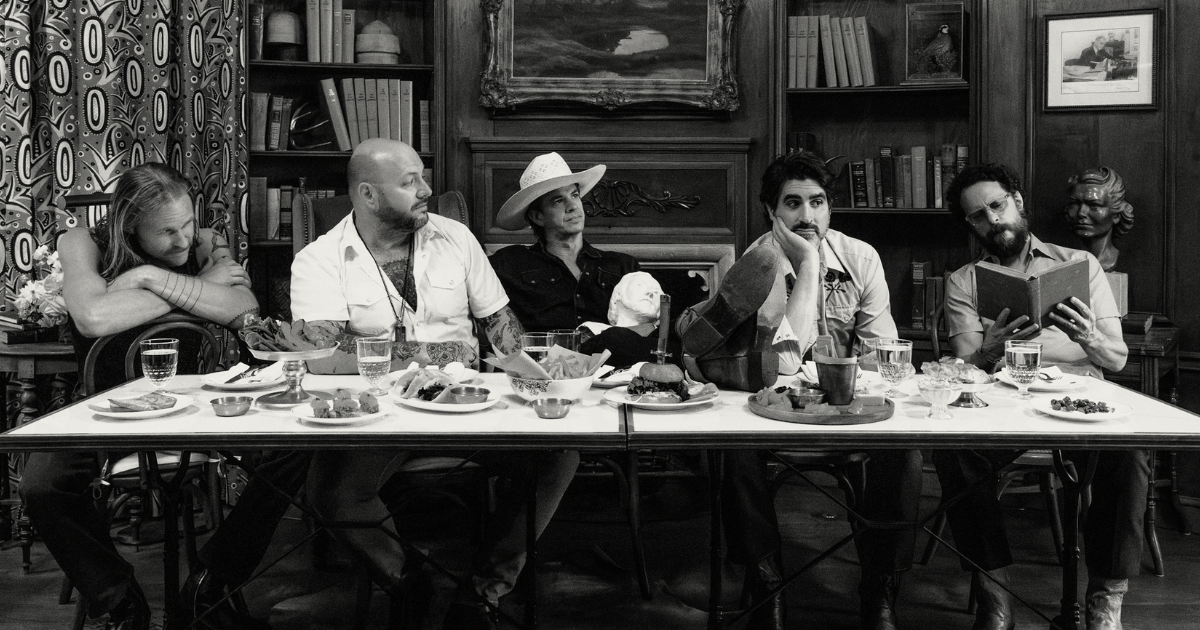
The Band of Heathens Leave Nothing on the Table

Don’t be fooled by their name, as the Band of Heathens actually give us something to believe in.

Coinciding with their 20th anniversary as a band, their new project Country Sides is equally feel-good and philosophical. The band’s co-founders and songwriters Gordy Quist and Ed Jurdi called in to Good Country from their homes in Austin and Asheville, respectively, to talk through their inspirations for the album, their writing (and rewriting) process, and how banjo fits into their house of music.

Just a few weeks after our visit, Country Sides and the single “Take the Cake” topped the Americana Music Association’s album and singles airplay charts simultaneously, a new feat for the well-established group.

“We have been really fortunate as an independent band,” Quist says. “We’ve never been on a label or been a part of the machine, and we just have a lot of gratitude for the 20 years we’ve had together as a band.

“This record is like a message of gratitude for all that we do have. And as much as we love making records, the live show is certainly my favorite part of this career. That’s what’s special about this band. When we get on stage, I feel lucky to be a part of this thing that really is fun live, so I would encourage people to check out a live show if you haven’t done it.”

As I was listening to the album, I was picking up a lot of messages of encouragement. It feels like a positive record to me. Is that a fair statement, do you think?

Ed Jurdi: Yeah, I think so. It’s like the musical retrospective of the band, in a way, sort of our history as an entity. Maybe in the background, with the realization that we’re making it 20 years at this point, there’s a little bit of a celebratory nature. I don’t know about Gordy, but in my writing process, I tend to almost have the opposite reaction to everything going on around me, outside in the world. If everything’s really negative, and the messaging is really negative, and there’s a lack of hope – maybe it’s a form of escapism for me, but I tend to lean into that [opposite reaction] a little bit more in my messaging.

And insofar as sharing music with people, it’s almost like the internal pep talk that I’m having with myself turns itself into the art and into the lyrics and something to share as a message with other people. We’ve never really been ones for beating people over the head with the message, but things are pretty wild and wooly – and not in a good way out there, in a lot of ways. So, I think some messages of community and togetherness and rallying around a common good – we could certainly use more of that.

Did you have a certain sound in mind as you made this record?

Gordy Quist: I think we talked about trying to make a country soul record. We were listening to some of the early Dobie Gray records and thought, “OK, what if we took a mix of soul music and country music melodies and textured it…” We put more pedal steel on this record than we probably ever have on any record. And that was intentional. From the beginning we knew we wanted to do that. I guess it was intentional to try to make a country soul record. Whether we did that or not, I’m not sure. But that’s how we arrived at whatever we did.

I like the spirit of fellowship in the song “High on Our Own Supply” and there’s a lyric in there about hearing the banjo playing soft and slow, like a stereo. This being the Bluegrass Situation (and Good Country), I’m curious, do you often reach for the banjo?

EJ: I do. I’m a terrible banjo player. You know, my buddy Graham Sharp in Steep Canyon Rangers is an amazing banjo player. So if I need a banjo on a record, I’d probably call him.

I think writing “High on Our Own Supply,” it was almost like we’re building a house of music. You know, if you were to go into any room in that house, there might be this different scene going on. You open the door and there’s someone in there playing the banjo, and it’s so good, it sounds like it’s just coming out of the stereo.

The song “Pleasing People” reminded me of soul music from the ‘70s and I wondered about that soul influence. How does that show up in your music?

GQ: I guess there’s two elements. I think the rhythm section is the foundation of soul music and the groove. That was something on this record we really tried to dig into. The band right now – Clint Simmons on the drums and Nick Jay on bass – are a deep and heavy rhythm section, so that lends itself to a style of American roots music that leans into soul music. But also, simplicity. Lyrics that sound conversational and simple but have some depth to them. It’s hard to do that well. That’s part of what makes soul music great – that it’s simple but it’s good.

It takes skill to make it look easy or sound simple. What’s your editing process and your rewriting process like for you?

EJ: It never really ends. Even after we record these songs, I definitely change lyrics to songs as we play them live. The cool thing about these songs, especially making a recording, it’s a snapshot in time. But songs, I think of all the artistic mediums, they kind of move with you through time in a really special way. What a song means to you at 16 can mean something completely different to you at 40. You’ve piled up life experiences and you view the world in a little bit of a different way. So that’s always fun, but editing is constant.

I would say Gordy and I both are doing a lot of lyrical editing and we’re doing a lot of musical editing, too. When we get together and make records, it looks something like Tuesday morning, 10 o’clock: “Hey, Gordy, what do you got?” You know, Gordy grabs an acoustic guitar, sits in the middle of the room… And I’ve [already] heard these songs we’ve worked on, the two of us, but that’s the first time that Trevor Nealon (our keyboard player) and Nick and Clint have heard the songs.

So it’s like, “Hey, OK, first impressions? Go!” and then we start filling the canvas up, taking stuff away, adding stuff, changing colors, all these different things, until we’re at a point where we feel like we’ve edited something down to a nice, presentable format. So, it’s a work in progress, always. To your point, the more you can tolerate the editing, the better things become. It certainly is the most challenging part of the job, but it can also be the most rewarding.

“Take the Cake” has a great vibe. I’m sort of a workaholic, so it’s a nice message to hear, to hit pause and go do something fun. What were you hoping to convey in that song?

GQ: I think I was playing with the idea of giving versus taking, in life. I’ve been working on that song and editing that song for a couple of years actually. I’ve had it for a while. You know, there’s a weird juxtaposition of giving and taking. If you are always taking, in theory you should have lots of things because you’re receiving them. But in reality, you usually end up empty, whether it be friendships or whatever.

The opposite is true also. If you’re always giving and generosity leads, in theory the fear side of you thinks you’re going to run out of stuff. But the opposite actually is true. And that’s kind of what I was playing with, just the idea of letting go of that consumerism or just the [mentality of] “I need to keep what’s mine.” And being cool with letting go of that and letting generosity be the leading force.

As you mentioned earlier, this album is like a 20th anniversary celebration of the band. Are you enjoying this period of your life? You still have a lot of years ahead, but you’ve got 20 years of experience behind you too.

EJ: Yeah, I think it’s a good vantage point. I’ve heard Gordy describe it as standing at almost the peak of a hill. We’re all dads, so we can look down and look at our kids and remember being their age. Looking the other way on the hill, we see our parents, and we remember our grandparents being that age. So, it’s kind of a trip to be in this middle age of life. We still have the energy of young people. I think the fire is still there. There’s no lack of commitment or of energy or passion to what we’re doing. But we’ve assimilated a little bit more wisdom, and we have a few more tricks up our sleeve, a few more shortcuts. It’s fun exploring those things and trying to share them with people.

GQ: Talking about this phase of life that we’re in, I have this feeling like, when we were young, making our first records, we would put everything into it and the goal always was, “I hope this is good enough that we get to keep making records and make another record.” At the end of every record we’ve made I felt like, “Man, that’s the best thing we’ve ever done and I don’t know how we’re ever going to top that.” Whether it is truly the best thing we’ve ever done or not each time, that’s not for us to decide, but it feels that way to us.

EJ: We’ve always left nothing on the table when we’ve made a record. Now we’re just a little bit more conscious of our surroundings and what our intentions are. Again, I don’t think there’s ever been a lack of effort, but now there’s maybe a realization like, “Hey, every time we get on stage, every time we sing, every time we make a record, it might be the last time we do, so let’s make sure we’re doing it with everything we got. Let’s leave it all out there, because at the end of the day, that’s all you got.” You can feel good about that in the rearview mirror.


Photos courtesy of the artist.

You Gotta Hear This: New Music From Jarrod Walker, Dailey & Vincent, and More

Welcome to another edition of our weekly round-up of new roots music! You Gotta Hear This…

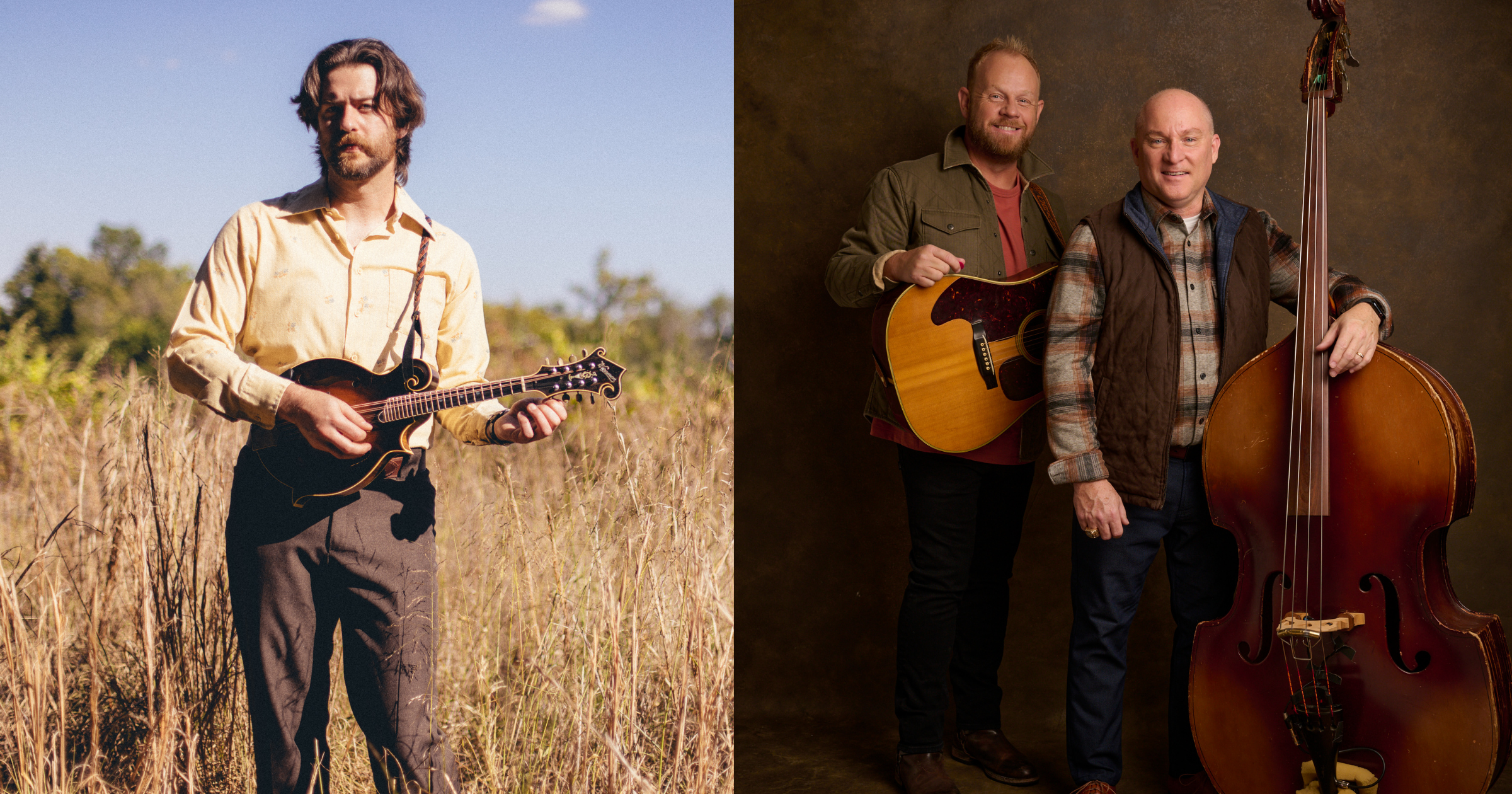
To get us started this week, Dailey & Vincent continue to tease tracks from their upcoming album, A Beautiful Life, which will arrive on June 12. In the meantime, they’re sharing a music video for “Moon Shines on the Still,” another delightfully bluegrassy number for the country-and-gospel-and-bluegrass powerhouse duo. The fresh single’s breakneck tempo doesn’t stymie any of the fine pickers who shred throughout the feisty song about moonshine running and that good ol’ mountain dew. For another bluegrass duo, check out fiddlers Deanie Richardson & Kimber Ludiker launching their new track, “Rutland’s Reel.” It’s an acrobatic and challenging tune by Howdy Forrester with several complicated parts, but these two turned it into a stellar twin fiddle number anyway. What, like it’s hard?

From Asheville, North Carolina, Appalachian string band TANASI infuse their songs and tunes with influences from around the world. “Give Me Love (Give Me Peace On Earth)” is their timely rendition of a George Harrison song, on which Dobroist and multi-instrumentalist Billy Cardine plays a chaturangui, a slide instrument that draws from Indian classical music traditions. Watch a performance video for their cover below. Singer-songwriter Maisy Owen has shared a new music video today, too. “Dark On A Sunny Day” is lush indie folk wrapped in a sonic dreamscape, with a slightly dark and gritty tinge to pair perfecdtly with her evocative lyrics. The beat pulses forward, pushing and pulling the track ahead.

Plus, mandolinist Jarrod Walker – who you may know from Billy Strings’ band – just this week announced an upcoming solo album, Nighthawk, his first release as an artist in his own right. Prior to the album announcement Wednesday, Walker unveiled an upcoming tour in May. Now the lead single/title track from his debut LP is available everywhere, and we’re sharing the lyric video visualizer for the remarkably straight-ahead bluegrass number below. Nighthawk arrives in full on May 8.

Bluegrass, folk, and indie; mandolins, fiddles, and banjos; moonshine, darkness, and emotions – there’s something for everyone to enjoy. You Gotta Hear This:

Dailey & Vincent, “Moon Shines on the Still”

Artist: Dailey & Vincent
Hometown: Nashville, Tennessee
Song: “Moon Shines on the Still”
Album: A Beautiful Life
Release Date: April 10, 2026 (single); June 12, 2026 (album)
Label: Pillar Stone Records

In Their Words: “‘Moon Shines on the Still’ is a fun, up-tempo song with a lot of personality. It’s the kind of record that makes you want to roll the windows down and enjoy the ride.” – Jamie Dailey

“We had a blast recording this one. ‘Moon Shines on the Still’ has energy, heart, and a sound that feels both fresh and true to who we are.” – Darrin Vincent


Maisy Owen, “Dark On A Sunny Day”

Artist: Maisy Owen
Hometown: Nashville, Tennessee
Song: “Dark On A Sunny Day”
Album: Dark On A Sunny Day
Release Date: April 10, 2026 (single); May 1, 2026 (album)
Label: Tompkins Square

In Their Words: “There was a period of time two years ago in the summer when I was writing almost every night. ‘Dark On A Sunny Day’ was one of the first songs I kept. There’s a kind of honesty that comes with someone’s early work, something I always look for when I deep dive into a new musical obsession. Something early is something pure. This is the only song on the album with a full band arrangement. The instrumentation is dark and unceasing. There is no metaphor or veil regarding the lyrics, they are candid.” – Maisy Owen


Deanie Richardson & Kimber Ludiker, “Rutland’s Reel”

Artist: Deanie Richardson & Kimber Ludiker
Song: “Rutland’s Reel”
Release Date: April 10, 2026
Label: Mountain Home Music Company

In Their Words: “‘Rutland’s Reel’ was written by one of my ultimate fiddle heroes, Howdy Forrester. In typical Howdy fashion, it’s got several parts and is challenging to play. It was a lot to take this one on as a twin fiddle piece and Kimber took on the challenge of learning the harmony part. She nailed it! I’m so proud to have this tune on our record honoring the great Howdy Forrester.” – Deanie Richardson

Track Credits:
Deanie Richardson – Fiddle
Kimber Ludiker – Fiddle
Cody Kilby – Acoustic guitar
Hasee Ciaccio – Upright bass
Tristan Scroggins – Mandolin
Kristin Scott Benson – Banjo


TANASI, “Give Me Love (Give Me Peace On Earth)”

Artist: TANASI
Hometown: Asheville, North Carolina
Song: “Give Me Love (Give Me Peace On Earth)”
Album: TANASI
Release Date: April 9, 2026 (single); May 8, 2026 (album)

In Their Words: “This song by George Harrison feels especially relevant right now – we need as many songs about peace and love as possible in difficult times. It echoes both backward and forward, carrying layers of meaning that resonate personally and globally. In addition to honoring the song itself, we wanted to pay tribute to Harrison’s influence – particularly his role in bringing classical Indian instruments like the sitar into popular music. Alongside his signature Dobro, Billy Cardine plays the chaturangui, a slide instrument developed by his teacher in India, Debashish Bhattacharya. With its 22 strings, it creates a rich, shimmering tone reminiscent of the textures heard in many of Harrison’s recordings. Mary Lucey and Anya Hinkle share the lead throughout, trading lines and weaving their voices together in sister-like harmony.” – TANASI

Track Credits:
Billy Cardine – Dobro, chaturangui
Mary Lucey – Bass, vocals
Anya Hinkle – Guitar, vocals


Jarrod Walker, “Nighthawk”

Artist: Jarrod Walker
Hometown: Lithia, Florida
Song: Nighthawk
Album: Nighthawk
Release Date: April 8, 2026 (single); May 8, 2026 (album)

In Their Words: “A few years back, I stumbled upon the word ‘Nighthawk’ in The Dictionary of Obscure Sorrows, a collection of definitions for newly invented words that describe unnamed emotions, feelings, and experiences. Initially, ‘Nighthawk’ began as a moody, vibey track, but Christian Ward and I soon realized it worked better as a straight up bluegrass song. Once we committed to that approach we were able to lock down a couple verses, a chorus, and everything started to take shape. One of the trickest parts of songwriting is revisiting an unfinished song, returning to that headspace to add final touches Eventually we added a third verse which tied it all together with a big ribbon and bow. Now I couldn’t imagine it without it. I find that with trad bluegrass it’s best to keep things close to home or else you risk losing the essence of the song. I say that now, but ask me how I feel next year. The band knocked this one out in a few takes and later Billy [Strings] added a killer tenor harmony. Ultimately, ‘Nighthawk’ wound up being by far one of the grassiest tracks on the record.” – Jarrod Walker

Track Credits:
Jarrod Walker – Vocals, mandolin
Cory Walker – Banjo
Jamie Dick – Drums
Christian Ward – Fiddle
Jake Stargel – Guitar
Royal Masat – Upright bass
Billy Strings – Background vocals


Photo Credit: Jarrod Walker by Jesse Faatz; Dailey & Vincent by Gregg Roth.