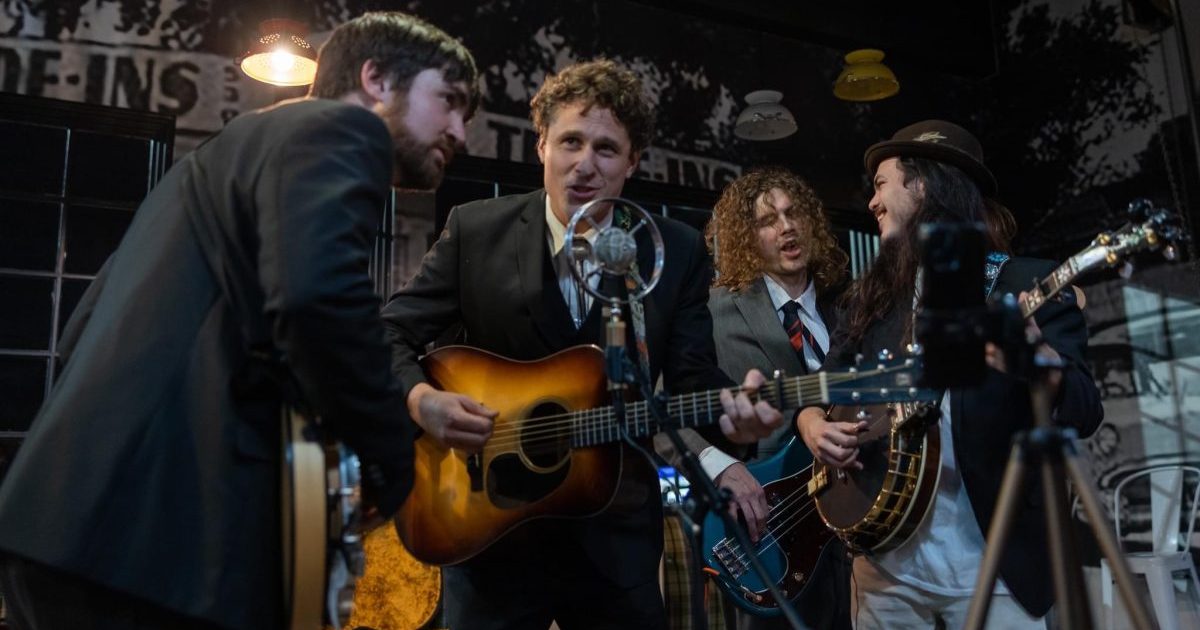
Artist:Water Tower Hometown: Los Angeles, California Song: “My Little Girl in Tennessee” Album:Live From Los Angeles Label: Water Tower Records
In Their Words: “We love traditional bluegrass with all of our heart. That is part of the reason we chose to release this Lester Flatt/Earl Scruggs song. When we met our second banjo player Jesse Blue Eads (we have two on stage with us usually; Tommy Drinkard plays the other banjo) we were busking and this was a tune that we all knew. We recorded this version in one take after a 55-date tour. On the way to the Palomino Recording Studio our van broke down, so we got the car towed. Then when we arrived at the studio, the bridge on the bass had fallen off and cracked. It was ‘one of those days.’ This all contributed to the raw feeling in the room as we recorded.” — Kenny Feinstein, Water Tower
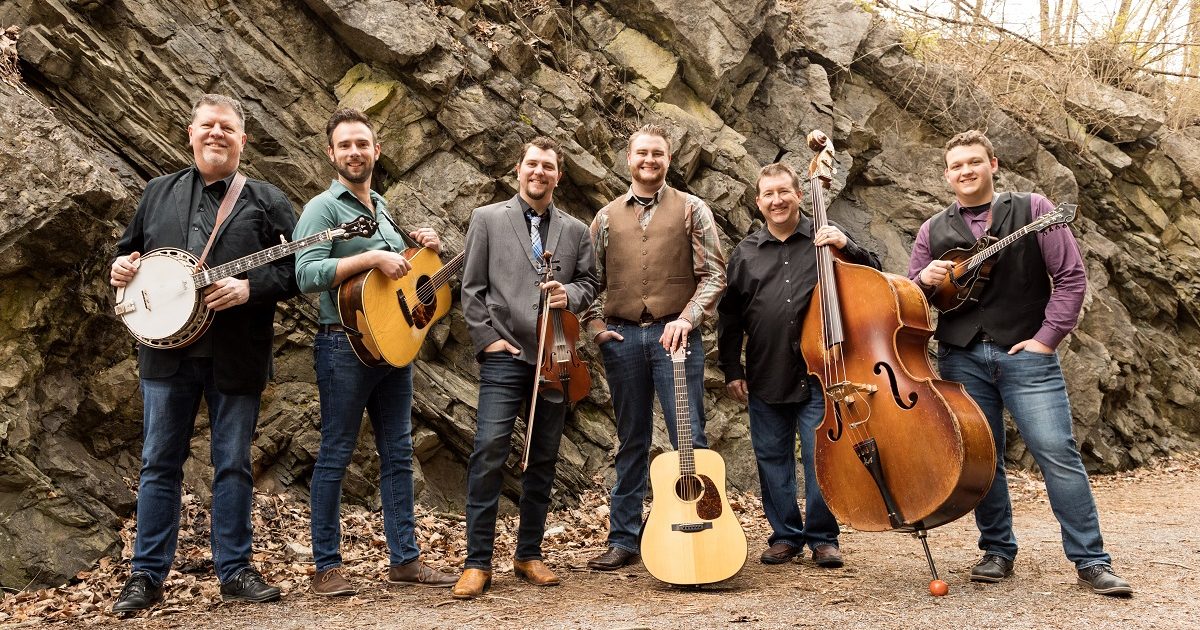
Artist:The Infamous Stringdusters Song: “I’d Rather Be Alone” Album:A Tribute to Flatt & Scruggs Release Date: April 21, 2023 Label: Americana Vibes
In Their Words: “The concept of paying tribute to the grandfathers or originators of bluegrass is one we bounced around for a while and after Bill Monroe, the most logical, I think any bluegrass musician would agree, is Flatt & Scruggs. They’re legendary and without Earl’s banjo, bluegrass just doesn’t exist the way we know it today. For the album, each of us brought a song to the table that we wanted to sing and that had meaning to us. I reached out to my friend Jon Weisberger and asked him if he’d suggest a song that he thought hadn’t been overdone and would suit my voice. I was thrilled when he suggested ‘I’d Rather Be Alone’ because I was familiar with it but hadn’t really played it much or learned the lyrics and it was a perfect fit. It’s a lament and it’s a sad song but it’s so beautiful. The way the melody hangs the line out there — ‘You say you’re sorry that you went awaaaaay’ — it’s just classic Flatt & Scruggs!” — Travis Book, The Infamous Stringdusters
The image of bluegrass is mountain music played and heard at high altitudes and towns like Deep Gap and remote mountain hollers across the Appalachians. But the earliest form of the music originated at lower elevations, in textile towns across the North Carolina Piedmont. As far back as the 1920s, old-time string bands like Charlie Poole’s North Carolina Ramblers were playing an early form of the music in textile towns, like Gastonia, Spray, and Shelby – in Cleveland County west of Charlotte.
In this second episode of Carolina Calling, a podcast exploring the history of North Carolina through its music and the musicians who made it, we visit the small town of Shelby: a seemingly quiet place, like most small Southern towns one might pass by in their travels. Until you see the signs for the likes of the Don Gibson Theatre and the Earl Scruggs Center, you wouldn’t guess that it was the town that raised two of the most influential musicians and songwriters in bluegrass and country music: Earl Scruggs, one of the most important musicians in the birth of bluegrass, whose banjo playing was so innovative that it still bears his name, “Scruggs style,” and Don Gibson, one of the greatest songwriters in the pop & country pantheon, who wrote “I Can’t Stop Loving You,” “Sweet Dreams,” and other songs you know by heart. For both Don Gibson and Earl Scruggs, Shelby is where it all began.
Subscribe to Carolina Calling on any and all podcast platforms to follow along as we journey across the Old North State, visiting towns like Greensboro, Durham, Wilmington, Asheville, and more.
Music featured in this episode:
Charlie Poole & The North Carolina Ramblers – “Take a Drink On Me” Flatt & Scruggs – “Ground Speed” Don Gibson – “I Can’t Stop Loving You” Andrew Marlin – “Erie Fiddler” (Carolina Calling Theme) Hedy West – “Cotton Mill Girl” Blind Boy Fuller – “Rag Mama, Rag” Don Gibson – “Sea Of Heartbreak” Patsy Cline – “Sweet Dreams ” Ray Charles – “I Can’t Stop Loving You” Ronnie Milsap – “(I’d Be) A Legend In My Time” Elvis Presley – “Crying In The Chapel” Hank Snow – “Oh Lonesome Me” Don Gibson – “Sweet Dreams” Don Gibson – “Oh Lonesome Me” Chet Atkins – “Oh Lonesome Me” Johnny Cash – “Oh, Lonesome Me” The Everly Brothers – “Oh Lonesome Me” Neil Young – “Oh Lonesome Me” Flatt & Scruggs – “Foggy Mountain Breakdown” Bill Preston – “Holy, Holy, Holy” Flat & Scruggs – “We’ll Meet Again Sweetheart” Snuffy Jenkins – “Careless Love” Bill Monroe – “Uncle Pen” Bill Monroe – “It’s Mighty Dark To Travel” The Earl Scruggs Revue – “I Shall Be Released” The Band – “I Shall Be Released” Nitty Gritty Dirt Band – “Will The Circle Be Unbroken” The Country Gentlemen – “Fox On The Run” Sonny Terry – “Whoopin’ The Blues” Sonny Terry & Brownie McGee – “Born With The Blues (Live)” Nina Simone – “I Wish I Knew How It Would Feel To Be Free”
BGS is proud to produce Carolina Calling in partnership with Come Hear NC, a campaign from the North Carolina Department of Natural & Cultural Resources designed to celebrate North Carolinians’ contribution to the canon of American music.
Carly Pearce and Sonya Isaacs can both trace their musical roots back to bluegrass, even as their individual careers have introduced them to fans beyond that genre. A rising country star, Pearce is a native of Taylor Mill, Kentucky, who just released her third album, 29: Written in Stone. She cites Isaacs — a sterling vocalist and instrumentalist in the gospel group The Isaacs — as one of her biggest vocal influences. Meanwhile, the Isaacs salute some of their own favorite songs with The American Face, a new album blending new material and well-chosen covers. These artists’ professional paths converged this fall when Pearce and, later, The Isaacs, were welcomed into the cast of the Grand Ole Opry.
Calling in to BGS, Carly Pearce and Sonya Isaacs converse about their formative years as musicians, their education in bluegrass harmony, and their immediate response to “Easy Going,” a cool collaborative cut on 29: Written in Stone.
BGS: Let’s start by talking about “Easy Going.” Carly, what was it about the song that made you want to bring in Sonya and Ben Isaacs to sing with you?
Pearce: When I was writing this song, I could hear the harmony. I grew up loving music and harmony and all of those things. As soon as we finished writing it and knew that we wanted it to be on the project I just heard The Isaacs. I grew up loving them and loving their harmonies. Nobody sings harmony better than the Isaacs family, so I asked Sonya.
Sonya, what did you think when you first heard the song?
Isaacs: I love Carly’s voice, too, and I was like, “Well, I’m sure anything that she wants us to sing on will be amazing. And knowing how she loves harmony singing, I thought, “This is gonna be really fun.” Of course, she’s one of the most incredible female vocalists of all time, I think. So, when she played us the song, I flipped out over it. I absolutely loved the song, and I was like, “I can’t wait to get in the studio!” … It was a good a vocal exercise, a good stretch! [Laughs] And it was a challenge because she’s so good, but that’s my favorite kind of session. We had a blast and I love the song.
I like the arrangement because you’re giving the musicians a chance to step out and do what they do best. It feels like a band record in some ways.
Pearce: Yeah! They were all so inspired in the studio by the song and I remember telling Shane McAnally and Josh Osborne, my producers, “Hang on, hang on, and let them do their thing.” I love instrumental bluegrass music, so I wanted to have that element and that feel in the song.
I do want to explore the bluegrass background that you both have. Sonya, can you kind of tell me how bluegrass fits into your overall musical direction?
Isaacs: Yeah. Our dad has been playing bluegrass all of his life. He’s 74 now and he grew up loving bluegrass. The Stanley Brothers, Bill Monroe, all of the legends of bluegrass. Dad loved it first, and when Carter Stanley passed away, my dad actually filled in for him with Ralph for a while and sang Carter’s part. He really fit that style. Dad always instilled a love for bluegrass music, especially traditional bluegrass music, into us kids. He taught us how to play our instruments. He was very key in teaching us the first things we ever learned. Over the years, with our own writing and different influences and artists that we’ve discovered along the way that had a little more of a contemporary sound, our style morphed and changed a little bit away from the more traditional bluegrass sound, but it’s always been the root of everything that we’ve ever loved.
Let’s talk about your dad a bit because the Isaacs just won an IBMA Award for a recording of “Garden Tomb,” which he wrote. I’m curious how that song came back into the forefront.
Isaacs: Dad moved to Kentucky about 20 years ago after he and Mom divorced. He hasn’t really traveled with us or been in the recording part of what we do for all those years. But, of course, he made pop-up appearances when we were around. So, Joe Mullins reached out to us — we love Joe Mullins and the whole Mullins family — because he was doing this project called Industrial Strength Bluegrass and wanted the Isaacs to be a part of it. [The project was named IBMA Album of the Year in September.] Joe has always loved the song “Garden Tomb” that my dad wrote many, many years ago. It was one of our earlier hits that we had many years ago. So, we thought it would be a good idea to do that song.
Our dad is, to me, one of the most underrated legends of bluegrass music. Mainly I think because he chose to do gospel instead of mainstream bluegrass, he was overlooked a lot. So we said, “We’ve got to get Dad in here to sing on this.” And then we decided to add the Oak Ridge Boys, to give it even more of an inclusive feeling. They agreed to come in and they were so proud of it. And my dad felt so honored that it was his song that was on this project. We’re very proud of this whole album — and to be from Ohio. This whole album is artists that are from Ohio or lived in Southern Ohio. It was a full-circle thing for us.
Pearce: I did, yeah. I sang in a bluegrass gospel band. That’s how I got my start on stage, outside of the childhood talent shows and things like that. I fell in love with it and feel like I understood what it meant to really be able to sing. I learned a lot of things in those years I was in that band, traveling around and watching bands like the Isaacs. There is no faking that harmony in that music! I think it made me a better singer today because of it.
You’re both known now for singing with other people. Carly, you’ve had a couple of hit duets, and Sonya, you’ve been singing with your family for a long time. Did bluegrass help you build that foundation, in terms of being able to blend your voice with another voice?
Isaacs: Absolutely. Anybody that can sing the third part with the Louvin Brothers, or with Ralph and Carter Stanley, it really teaches you to sing harmony and to find the part. You can listen to a Ralph Stanley song and hear all his vocal licks, and you can compare it to a Mariah Carey vocal lick. Even though they’re completely different styles, they’re both working their vocal cords and it takes a great skill and talent to be able to do the runs and licks that they do. So, absolutely, growing up singing along with those old records and finding that third part was very instrumental in me learning to sing harmony.
Pearce: For sure. The joy, for me, of singing is sometimes getting to collaborate with other vocalists and people that I love and adore. I’m such a fan of their voices. Sonya knows this, but so much of what I feel like people know my voice could be — kind of the flip into my head voice — is because I was trying to emulate Sonya’s voice when I was growing up, going to watch her sing. That’s why singing with her is so special for me.
Isaacs: Aww. It’s crazy because… how old are you Carly?
Pearce: I’m 31.
Isaacs: So, I’m 16 years older than her. It’s so funny for me to hear her say that she grew up listening to the Isaacs, and emulating me, because I don’t feel like I’m that much older, but I am. I’m just in denial, I guess, but I am so honored that she would say that! [Laughs]
Speaking of influences, Carly, you have Patty Loveless on your record, singing with you on “Dear Miss Loretta.” What was going through your mind when you heard her voice come in on that song?
Pearce: Oh, I sat in my car and bawled my eyes out. Patty and Sonya are two of my biggest influences and to have them be so gracious to be a part of my album, it’s something you dream of.
And it’s a song about Loretta Lynn no less. You really went for it, making Kentucky proud. Growing up, were you pretty well aware of the bluegrass history in Kentucky?
Pearce: Oh, for sure. My grandpa played clawhammer banjo and I grew up listening to Flatt & Scruggs and Bill Monroe and Ralph Stanley. I definitely understood how many people come out of the state of Kentucky, like the Judds. I think that’s where I really started to fall in love with music — by listening to people who came from Kentucky.
Sonya, on The American Face record, you have six songs from the past and an equal number of new songs. Are there any of those that you’d want a bluegrass fan to check out?
Isaacs: The instrumentation on this record, and that we’ve always done, leans toward that contemporary acoustic sound with the addition of a few extra instruments like piano. But our roots are always going to be that acoustic sound, and that’s how we are live. But I think “We Can Work It Out” — the Beatles cover that we did — is very acoustic and fun. We have a song “More Than Words” that was originally recorded 30 years ago by a rock ‘n’ roll group called Extreme. We did that stripped down with just upright bass, some snaps and vocals. I guess it’s not really considered a bluegrass song but the vocals are definitely influenced by that. There are quite a few songs on here that the bluegrass fans would really, really like.
It feels like you’re both having this moment, where you received an invitation to join the Grand Ole Opry and you’re winning industry awards. People are really noticing both of you right now. What are you enjoying the most about this time in your career?
Pearce: I’m sure that Sonya would say the same thing, but moments like becoming a member of the Grand Ole Opry — that’s something that I wanted and dreamed of and hoped for my whole entire life. And now to say that I am a part of that family is so surreal for me. All of these things, the childhood dreams, are coming true. You hope that when you’re writing music and singing and doing all of these things that it’s impactful and that people are going to care. And the fact that I feel like people care is so special.
Isaacs: Ditto to that. That’s a great answer. Again, it goes back to growing up. Dad instilled a great love for bluegrass music but hand-in-hand with that is that old classic country sound. I think nowadays, the classic country would fall more into a bluegrass category than even current country, because it’s changed and evolved so much since those days. Dad always instilled in us in love for the Grand Ole Opry as well, so it was full-circle again to be inducted and to be an Opry sister with Carly. We’ve known her for years and we’ve written together and we go way back. It is a really neat time to get to share these moments.
Artist:Sideline Hometown: Raleigh, North Carolina Latest Album:Ups, Downs and No Name Towns
What was the first moment that you knew you wanted to be a band?
It wasn’t really a realization of “wanted to” as much as a realization that we “should be” a band. We had been playing a small handful of shows for a couple of years while still with other groups (hence the name “Sideline”). We started to see a style developing, as well as a demand from certain areas. We came to the realization that we were starting to develop a following, and we had to either commit to the new endeavor or back off. In mid-2013 we made the decision to go for it. We’ve been a full-time group ever since.
Which artist has influenced you the most … and how?
We appreciate music from many different artists, spanning a wide variety of genres. Bluegrass standards like Flatt & Scruggs, The Bluegrass Album Band, and The Johnson Mountain Boys, as well as great artists like Journey, Ronnie Milsap, and Stevie Ray Vaughan. All having great talent and musical approach to learn from, and all having great success stories to be inspired by.
What other art forms — literature, film, dance, painting, etc. — inform your music?
What we do relies heavily on us being a solid unit or “team” of players. While some may not call it an art form, I would say that the art of teamwork would be the biggest influence on our music and our lifestyle. Taking time as a group to attend concerts, live sporting events, or any recreational activity as a group, really adds to morale and team spirit, which then carries over into our musical creativity and stage performance.
What rituals do you have, either in the studio or before a show?
We have recorded three separate projects, along with a few compilation projects for the Mountain Home Music Group out of Arden, North Carolina. Every time we have a session scheduled at Crossroads Studio we always come in the night before and go to the Wild Wing Cafe. It’s tradition, a great way to bond before we head into the session, and blesses the session with good luck!
If you had to write a mission statement for your career, what would it be?
Sideline was founded on the idea of having fun every time we step out on stage. As many musicians will agree, 2020 showed us all how much we took full-time musician status for granted. Now more than ever, we reach back to why we started and why we do this: To be entertaining, leave everyone with a smile, and kick as much musical butt as possible with every show.
It’s summer, our second in the “after times,” where road trips, national parks, and scenic byways are king. As you head off on your COVID-aware vacations this summer, don’t leave all the driving music to indie, easy listening, country & western, or rock ‘n’ roll. The chop of the mandolin, thump of the doghouse bass, and rapid-fire roll of the five-string banjo are just as suited to soundtrack your sunny forays. To prove that point, here are 16 bluegrass songs perfect for inclusion on your summer vacation playlists. (Listen to the full playlist on Spotify below.)
“Highway” – Claire Lynch
Bluegrass being an itinerant livelihood and a nomadic community, traveling songs are just as expected a feature as murder ballads, train tunes (a form of travel song unto themselves!), and moonshine running tales. This modern classic via Claire Lynch — written by Lynch and Irene Kelley — is a perfect example of the form, more ‘90s country offered by a string band than a traditional, four-on-the-F-style grassy track. It’s delightful — and perfectly winsome and longing when you find yourself listening while traveling down the highway.
“Handsome Molly” – Tim O’Brien
Our July 2021 Artist of the Month Tim O’Brien’s rendition of this bluegrass classic is a far cry from, say, a Flatt & Scruggs’ cut. O’Brien’s has a slight transatlantic bent — with a distinct island detour, perhaps through the sunny Caribbean. If you’ve found a craving to set your foot on a steamboat and sail the ocean ‘round deep inside your soul, this one’s for you.
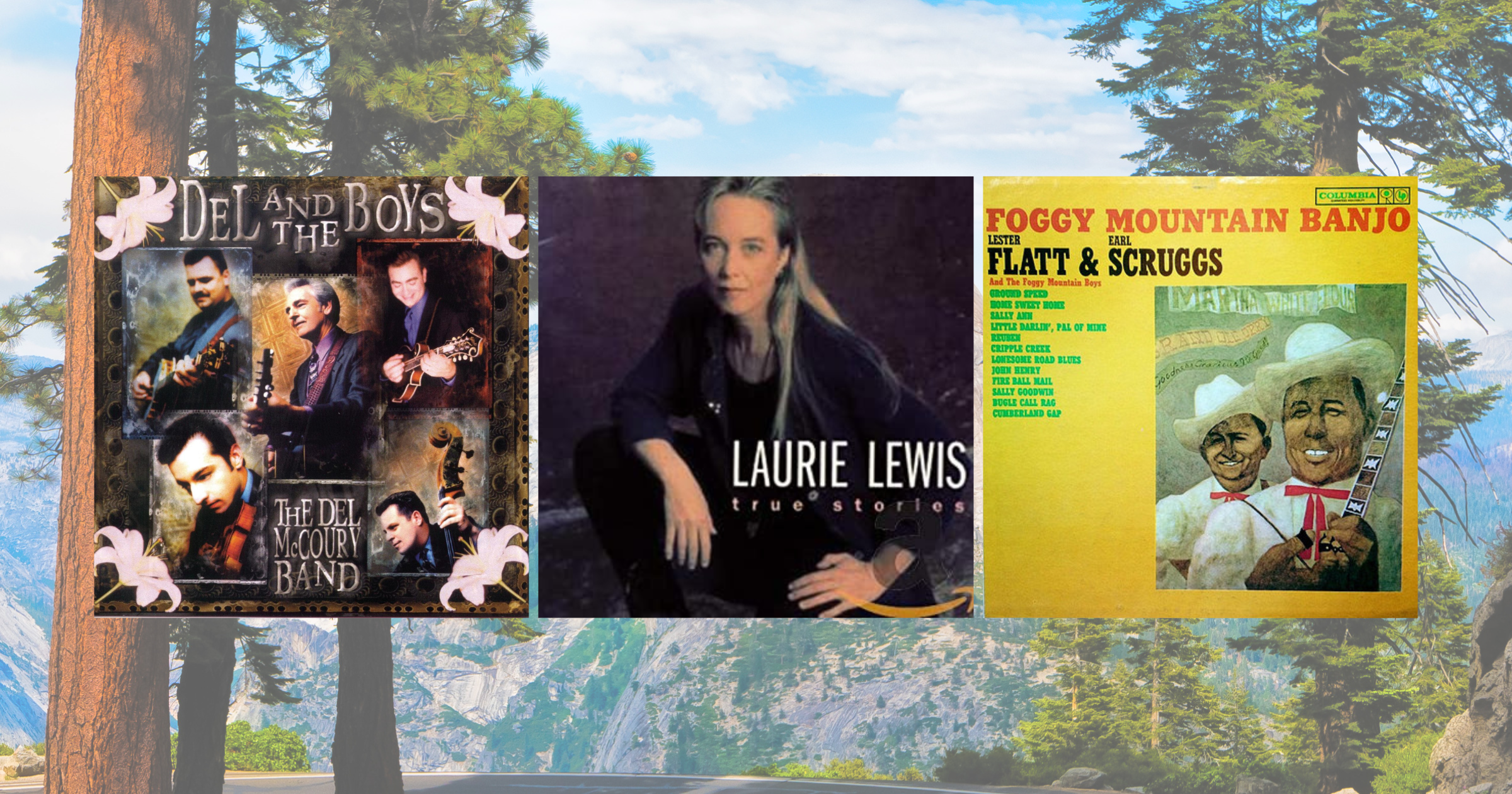
“1952 Vincent Black Lightning” – Del McCoury Band
Another track with a transatlantic story, this ever-popular, most-requested number covered by the Del McCoury Band is a road trip staple — whether you get in or on your vehicle to hit the highway. It would be a sin to make a bluegrass summer vacation playlist and not include “1952 Vincent Black Lightning!”
“Val’s Cabin” – Laurie Lewis
A rare example of a bluegrass song actually about summer vacations, this Laurie Lewis original, “Val’s Cabin,” begins as a simple retelling of childhood memories — nostalgia being a common rhetorical device (and when attempted by many other writers, a well-worn trope) in bluegrass. But Lewis, a veteran through-hiker, wilderness excursioner, and backpacker as well as a Grammy-nominated bluegrass singer and songwriter, tinges the story with melancholy and the existential questions raised by the ever-worsening climate crisis. The song is as evocative as it is gorgeous; though the singer can’t find the way to “Val’s Cabin” any longer, every listener can.
“Paddy on the Turnpike” – Vassar Clements
If you ever happen to find yourself Crossing the Catskills on a summery jaunt, “Paddy on the Turnpike” must be in your listening rotation. Avoid the tolls, but still go for a ride on the turnpike with Vassar Clements’ wild, unpredictable, jaw-dropping, wonky fiddling. “Paddy” is a blank canvas for Clements and a study in bluegrass’ unending affinity for flat seven chords.
“Don’t Give Your Heart to a Rambler” – Tony Rice
A hit in nearly every jam circle that ever circled, “Don’t Give Your Heart to a Rambler” is almost as if “Gentle on My Mind” had been written by a much less kind or compassionate protagonist. Tony’s solo vocal stylings are as iconic as his six-string licks, nearly obliterating any memory of this song ever having been sung by anyone else. What’s more, the titular advice of the track still stands. Just don’t.
“Highway 40 Blues” – Larry Cordle & Lonesome Standard Time
Because “Interstate 70 Blues” just doesn’t roll off the tongue. And that melodic hook should go down in history as one of the best country licks to ever lick! Cordle wrote one built for the long haul with “Highway 40 Blues.” It’ll keep you good company as you go wherever and back.
“Banjo Pickin’ Girl” – Annie Staninec
Is there any better reason to go around this world than being a banjo picker? There are never enough banjo pickin’ girls and this anthem, no matter how many times it’s picked up, studied, and retooled by another banjo pickin’ girl, always SLAPS. (Clawhammer pun intended.) Fiddler and multi-instrumentalist Annie Staninec, who’s traveled around the world making music quite a bit herself, gives an excellent old-time rendition of this favorite.
“A Crooked Road” – Darrell Scott
Darrell Scott turns a literary device pretty common in songwriting on its ear, with a tender eye for detail and emotion that he brings into all of his musicmaking. Life is, after all, about the journey — not the destination. Why not take the crooked, and thereby, the road less traveled?
“Up and Down the Mountain” – David Parmley & Continental Divide
Work life doesn’t suit you? Does “paradise” mean a fiddle and the open road? If so, “Up and Down the Mountain” is for you and your road trip playlist. Especially if you’re planning on trekking through the Rockies, Sierras, Ozarks, Applachians, or what-have-you. Turn off cruise control, watch for the runaway truck ramps, and go up and down those mountains! David Parmley & Continental Divide know something about geography and topography, after all…
“Roving Gambler” – The Country Gentlemen
Not sure why you’d be headed to Las Vegas during one of the hottest summers on record, but if you’ve got your sights set on a casino — wherever it may be — crank up “Roving Gambler” and hope your 2 a.m. slot machine binge or your evening “re-learning” blackjack ends more amiably than with gunfire. Speaking of which, perhaps “Blackjack” deserves a slot on this playlist…
“Travelin’ Prayer” – Dolly Parton
The kick-off of one of Dolly Parton’s masterpieces, her 1999 bluegrass album The Grass Is Blue, “Travelin’ Prayer” was actually written by Billy Joel. Yes, that Billy Joel. The original, from 1973’s Piano Man, featured banjo playing by Eric Weissberg and Fred Heilbrun. So of course the tune stands up to the bluegrass treatment and then some, between Stuart Duncan’s haunting fiddle cadenza to begin the track, the rip roarin’ tempo and train whistle harmonies, and the lonesome feeling of being away from your baby while he travels the world. We’re gonna assume Dolly’s blessed pen and ink added the lyric: “And keep him away from planes / cause my baby hates to fly!”
“Road to Columbus” – Kenny Baker
Growing up this writer frequented a bluegrass jam in Granville, Ohio, about 25 miles east of the state’s capital, Columbus. Like clockwork, every week as the jam wound down around noon on Wednesdays, Troy Herdman — a local bluegrass community stalwart, Doc Watson-style flatpicker, and mentor of many who lived in or around Columbus — would call this tune. Everyone would chuckle, and we’d play “Road to Columbus” as everyone, but especially Troy, hit the road to Columbus.
Herdman passed away last week at the age of 91. I certainly wouldn’t be the musician I was today if it wasn’t for Troy, and I know quite a few others who would say the same. So no matter where I travel, I always keep “Road to Columbus” nearby. Especially when I’m headed home to Ohio.
Many pickers speculate over whether Kenny Baker and Bill Monroe were referencing Columbus, Ohio, or Columbus, Indiana. But, according to Roland White — who introduces the song with an anecdote from his time on the road with Monroe — it’s about Ohio. For this Ohioan, that’s confirmation enough!
“That’s How I Got to Memphis” – Tom T. Hall
His own recording of one of his most popular hits may sound more like straight up and down country than ‘grass, but even the most casual fan of Tom T. Hall knows that this Bluegrass Hall of Famer is bluegrass to his core. If you’re headed down I-40 from Nashville — or, really, towards Memphis from any direction, no matter how direct or circuitous, this song is a must-add for your road trip playlist.
“Where Rainbows Never Die” – The SteelDrivers
This song is about a decidedly different kind of journey, not often referred to as a “vacation,” but even so it’s a poignant, encouraging, and downright delicious song to background any journey. If you’re road weary — or life weary — “Where Rainbows Never Die” is a certified pick-me-up that doesn’t shy away from reality, like the grit and coarseness in Chris Stapleton’s lead vocal wrapping you in its warmth. There’s a comfort in life not being sugar-coated — and in knowing somewhere, west of where the sun sets, rainbows never die.
“Home Sweet Home” – Flatt & Scruggs
Home never feels so sweet as when you’ve just returned after a long, restful, relaxing vacation. So we’ll close our summer vacation playlist with Flatt & Scruggs’ rendition of this tune pulled directly from the American songbook, “Home Sweet Home.” We hope a banjo roll always greets you at your door, and if not, this playlist will at least cover that for you. Wherever you roam, there’s no place like home! And no music like bluegrass.
We hope, wherever you’re reading this from, that snow, frost, and the cold are truly retreating, giving way to longer days, warmer weather, and the gorgeous, humid, cicada-soundtracked days of summer. But, before we get to full-blown bluegrass season – and, hopefully, our first live music forays since COVID-19 shut the industry down in early 2020 – let’s take a moment to intentionally enjoy spring with these 12 bluegrass songs perfect for collecting a wildflower bouquet, romping and frolicking in the meadow, and pickin’ on the back porch while the evenings are still cool.
“Wild Mountain Flowers for Mary” – Lost & Found
A classic via Lost & Found, bluegrass certainly does not lack metaphors and analogies for love built around spring and the flowers re-emerging – see “Your Love is Like a Flower” below – but this somewhat melancholy track is an exceptional example of the form. And that banjo solo by Lost & Found founding member Gene Parker will stop you dead in your tracks.
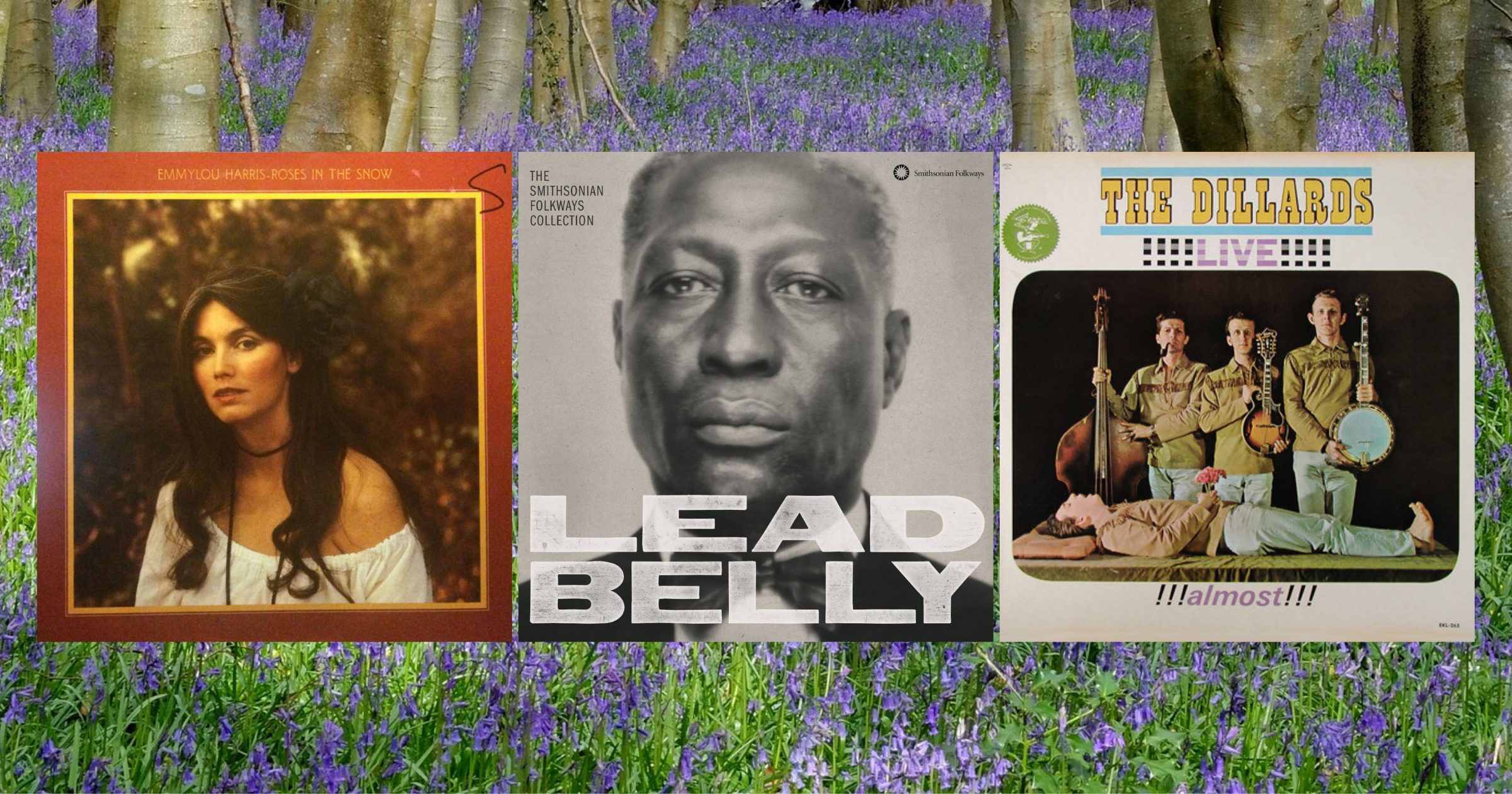
“There Is a Time” – The Dillards
Famous for the rendition sung by Charlene Darling of the ever-popular Darling family on The Andy Griffith Show, this haunting, seemingly timeless folky melody from The Dillards – who also played members of the Darling clan – cautions, “…Do your roaming in the springtime/ And you’ll find your love in the summer sun.” The suspensions in the banjo roll linger on the minor chord, echoing this sentiment and categorizing spring not by its own, shining qualities, but by the darkness in winter and fall. A true classic.
A staple of impromptu pickin’ parties and jam circles, “Little Annie” is properly ensconced within the bluegrass canon, but is infused with new life in this application by Tuttle’s lead vocal, a slight queering of the lyric that’s perfectly at home in the hands of this veritable supergroup, assembled by D’Addario at Folk Alliance International’s conference in 2018.
“Texas Bluebonnets” – Laurie Lewis
Laurie Lewis is effortlessly, archetypically bluegrass even, if not especially, in applications that infuse other genres into the music, like this Tex-Mex flavored, twin fiddle arrangement of “Texas Bluebonnets” that truly never gets old. Yes, that’s Peter Rowan and Sally Van Meter guesting, and Tom Rozum jumping onto lead during the choruses so Lewis can utter the tastiest tenor harmony vocal. Stick around for the Texas double-fiddle break and do yourself a favor and bookmark the track for easy reference. You’ll be returning to it often, as this writer does.
“The First Whippoorwill” –Bill Monroe
The birds returning in spring are a sure sign of the seasons changing and the warm weather returning, though the whippoorwill’s role in folk music has always been as a bittersweet harbinger, never quite viewed without at least some semblance of suspicion, perhaps an acknowledgement of the whippoorwill’s mournful tendency of singing long into the dead of night. This recording of “The First Whippoorwill” is a tasty example of Monroe’s iconic high lonesome sound, with acrobatic breaks into entrancing falsetto woven into the harmonies.
“Sitting on Top of the World” – Carolina Chocolate Drops
Whether you know this common blues, old-time, and bluegrass number from the Mississippi Sheiks, Doc Watson, John Oates, the Carolina Chocolate Drops, or any other of its many, many sources the fact still stands: Don’t like peaches? Don’t shake the tree. Demonstrably a song for spring, summer, and beyond.
“Roses in the Snow” – Emmylou Harris
Though BGS calls sunny southern California home – and BGS South is relatively temperate and mild in Nashville, TN – we know there are climes across this continent where spring promises snow as reliably as thaw. Emmylou Harris released her iconic bluegrass album in 1980 and its title track is another homage to love bringing warmth, newness, and growth even in the cold: “Our love was like a burning ember/ It warmed us as a golden glow/ We had sunshine in December/ And grew our roses in the snow…”
“Each Season Changes You” – The Osborne Brothers
Love is as fickle as the breeze! There’s a small irony in the song’s central conflict, that the singer’s love changes their mind as often as the seasons change – which, when taken whole, seems like a much more stable, predictable love than most? Even so, and done in so many different iterations, the central metaphor still holds, forever baked into the vernacular of these folk musics.
“One Morning in May” – Jeff Scroggins & Colorado
If you’ve been a bluegrass fan over the past five to ten years and you don’t immediately hear Greg Blake’s voice singing “One Morning in May” whenever it pops into your head, something must be awry. During Blake’s stint with Jeff Scroggins & Colorado, this spring-centered track was a highlight of their live show, a clean, modern rendering of what’s a properly ancient folk lyric. Lost love, war, nightingales, and yes, springtime – it has everything!
“Your Love is Like a Flower” – Flatt & Scruggs
Perhaps the song that defines the form. Flatt’s languid, lazy phrasing seems to underline the leisure of spring that grows into the laziness of summer. The rhythm of love, tied to the seasons and the budding blooms. Another timeless sentiment, distilled into a favorite, stand-by bluegrass number.
“Springtime in the Rockies” – Lead Belly
You know the film and the country hit, but have you heard Lead Belly himself tell the story of hearing the tune from “Gene” coming by and playing him some music? Worth a listen and worth inclusion on this list, which would suffer if it didn’t include “When It’s Springtime in the Rockies” in one form or another!
“Spring Will Bring Flowers” – Balsam Range
Processing grief and loss through the ever- and unchanging seasons is a common thread through rootsy songs about spring. This more recent recording from powerful North Carolina bluegrass vocal group Balsam Range hearkens back to springy, ‘grassy numbers from across the ages – its intermittent banjo licks a call back to Jimmy Martin’s “world filled with flowers” in “Ocean of Diamonds.”
After nearly 50 years in bluegrass, Danny Paisley has reached something of a breakout moment. He won Male Vocalist of the Year honors at the 2020 IBMA Bluegrass Music Awards — his second time in the past five years and his third IBMA trophy overall.
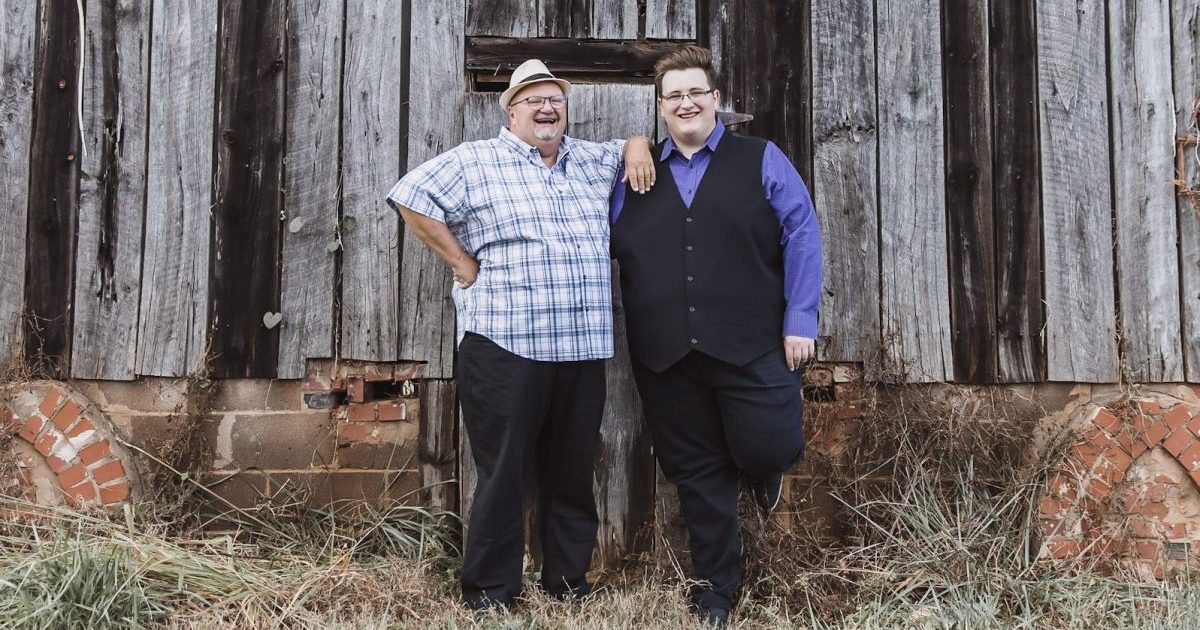
Paisley started performing bluegrass music as a teenager when he joined the Southern Mountain Boys, a band his father Bob co-founded with Ted Lundy. Lundy’s sons, TJ and Bobby, played in that group too, and now are in Southern Grass, the band Danny now leads. The lineup also features his son, Ryan, giving this traditional bluegrass group a unique two-family, three-generation legacy. Earlier this month, the band released Bluegrass Troubadour, their first album for Pinecastle Records. They recorded it last fall with producer Wes Easter, whom Paisley praises for his good ideas and good vibes, sharing that “after every session we were just happy and couldn’t wait to go back the next day.”
Speaking to BGS from his home in Landenberg, the southeastern Pennsylvania town where the singer-guitarist grew up, Paisley talks about how his not-strictly-traditional sound was shaped by that area’s rich musical history and how the new generation is rethinkng bluegrass.
BGS: You’ve been a bluegrass professional almost your entire life. When did you join your father’s band?
Paisley: I started playing with my father and traveling the rooms around 1974-75. Ted Lundy and my dad had a band for years. Ted’s sons, TJ and Bobby, started playing and I started playing, so we became a family group within the two families. Totally like a big family. Their mom is like my mom. And they call my mom “mom.” We grew up together. Basically all our lives we’ve been playing music together. That pretty much carried all the way through, because the Lundy brothers are back playing with me.
How was it being in a band where your dad was the boss?
Sometimes I would say to my dad, “I have this great idea.” Ever patient as he was, he always knew how to handle every situation. He’d always look at you and go: “That’s great, that’s great, when you get your own band you can try that.” To this day, I laugh about that. And I use that, too, on my son.
Now you have a similar situation with your son Ryan in Southern Grass. Does he bring a different generational perspective?
He wants to do more things [with technology], where I’m still old school and like to do things my way. He has good ideas and it makes me have to rethink… Young minds are sometimes way better than old minds. It’s hard for the younger generation today — for the third generation of bluegrassers to relate to the “Blue Ridge Cabin Home on the Hill.” They love the song, but not that theme of the cabin on the hill and things like that from the old days. I have heard of that from my grandparents. Now with the next generation, it is washed down even more.
The area where you grew up seems to have been a great musical influence.
I was very lucky. I grew up in a place here where there was a country music park, Sunset Park. On Sundays, they would have a major country or bluegrass artist… Bill Monroe, Mac Wiseman, Osborne Brothers… I got to see all of my heroes within five miles of my house. Down the road about 15-20 miles was another park called New River Ranch. It had the Stanley Brothers, Jim & Jesse, Reno & Smiley. Any given Sunday within 20 miles, you could go somewhere and hear some incredible music.
When I was very young, Flatt & Scruggs came and everyone was there to see Earl Scruggs. He was god to every banjo player and rightfully so. I remember that day leaving with this impression of Lester Flatt — just how calm he was and how he talked from the stage. He was in control of the whole thing so easily. … Del McCoury lived the next county over from me, so we often played shows with him. I loved his rhythm guitar playing and his voice. He could play that rhythm guitar and keep that band in time – he’d drive that band with that guitar. There was nothing like hearing him live.
Your music has been associated with “Baltimore Barroom Bluegrass” What was that scene like?
When I got older, there were all these bars and clubs in Baltimore, which is about 30 miles from home. I ended up playing in these clubs, four or five nights a week… you’d played from 9 p.m. to 2 a.m., sometimes four or five sets. You got your chops in. You had a broad repertoire and you were playing to people who knew the music because Baltimore became a hub for Southerners who moved up from Virginia, West Virginia, and Kentucky for work. They were hard-living, hard-drinking, and hard-driving bluegrass fans. There’d be fights. There’d be carrying on, but boy you could have fun!
And another regional musical influence on you was the Galax sound, right?
Galax is a town in southern Virginia, on the state line of North Carolina and Virginia, and the Old Fiddlers Convention there draws thousands from all over the world. The Galax sound features a lot of fiddle — maybe not your standard bluegrass fiddle tunes, but a lot of different fiddle tunes that made their way into bluegrass music. …
Their banjo players had a certain sound to their playing. Ted Lundy had it. He came from Galax and my dad’s family came from over the state line in Ashe County, North Carolina. So naturally they would be drawn together when they got up here. Ola Belle Reed, who wrote “High on a Mountain,” lived a few miles from where I’m at here. She was from that same region. The driving banjo — there is a certain style in their hands and in their noting. You can tell they are from the Galax area. I play [guitar] with a thumb pick where a lot of the bluegrass guys play with a flat pick. That was from my dad also.
So Southern Grass’ driving rhythms are like a handed-down legacy?
Yes, of that area and of our fathers. We keep the rhythm sort of pumping, but you’ve got to play to each song. We’ll work the song. As the singer eases off singing, the rhythm will pull back, too, and then you can build back up. We do a lot of stuff like that dynamic. That’s what I like about my style of music, knowing and feeling the song.
Bobby Lundy used to play the banjo in the band and decided he needed some time off. When he said he was able to play, I needed a bass player. I call him my utility man of bluegrass, like he could play any position on a baseball team — he’s that talented. Because he has known me for so long, he knows what I am going to do on a guitar. He knows what I am going to do singing. He can walk me right into the singing with his bass. He can lead me right into the voice. He can just push the band and keep that timing from not going too fast or too slow. He can just keep it rock steady.
How did you pick songs for your new album?
Two of them [“He Can’t Own Them” and “I Never Was Too Much”] were written by Eric Gibson of the Gibson Brothers. He’s always one of my favorite writers. He sent a gang of songs he had not recorded. Every one of them was a great song. Those were the two that fit my style. Brink Brinkman — another excellent bluegrass songwriter — told me, “I have a song that I’d like you to hear.” As soon as I heard it [“Date With an Angel”], I wrote back: “I want it!”
“May I Sleep in Your Barn, Mister,” I learned from a guy named Cullen Galyean, a banjo picker and a great mountain singer from down in the Galax, Virginia, area. “Eat at the Welcome Table” is an old-timey spiritual song. When my dad moved up here to Pennsylvania, his neighbors were an African-American farming family. They had an old-timey string band and played gospel songs. They would sing that song. We put our own spin on it.
The album has an interesting mix of songs that come from different styles and influences.
That’s how music generally works for me. I love it all, and then I make it my own. My band is rooted in traditional music and traditional ways, but that shouldn’t hamper or restrict you. So, I keep my ears open to all kinds of things. You can sometimes take an idea from a non-bluegrass artist and use it in bluegrass.
It’s that way with my singing. I listen to everything from George Jones, Jerry Lee Lewis and Vince Gill to opera singers like Pavarotti – these guys all amaze me. How they control their voice and present it with such tone. For me that was lacking in my singing and I had to work at that… I learned to sing a little different as I got older – to take the edge off the high tenor part a bit. Things like that, and I noticed that people were responding better.
Congratulations on winning your second IBMA Male Vocalist of the Year win. Was the victory sweeter the second time around?
The first time I was so shocked. Any category when you are up there with Russell Moore, Del McCoury — all these guys that I enjoy. You’re shocked that people would appreciate what you do. The second time, it was like, “Oh my goodness.” It didn’t really set in until the next day or so. I love to go out and play to make people happy. I never thought of being something like Male Vocalist of the Year. It’s always the dream for everybody. It’s always a dream to play the Grand Ole Opry, but you’ve got to keep it realistic. A life lesson early on that I got from my dad: never get to where you think you’re better than anybody else. Because as soon as you do that, you’ll realize that you’re not.
Photo of Danny Paisley and Ryan Paisley courtesy of Pinecastle Records.
On October 3, 2020, during IBMA’s Virtual World of Bluegrass, I watched the Bluegrass Situation‘s presentation of Shout & Shine Online, the fifth annual showcasecelebrating equity and inclusion in bluegrass and roots music. This year it featured Black performers, including Jerron “Blind Boy” Paxton, the blues, folk, bluegrass, and jazz multi-instrumentalist and vocalist from South Los Angeles. Not only do I enjoy his music, I also relish his asides and introductions. He knows a lot about musical sources, histories and meanings.
Introducing his music, Paxton explained that “ragtime” was the word people in his home community used to describe what others might call “old-time” or “traditional” — music that rekindled a shared past. At neighborhood and family social gatherings, he said, people would ask for his music by saying, “Play some of that ragtime music!”
For many people ragtime evokes the aural image of a piano played in the style of early 20th century composer Scott Joplin, an African American whose “Maple Leaf Rag” starred in the soundtrack of the 1973 hit film The Sting. (Paxton performed an arrangement of “Maple Leaf Rag” on five-string banjo for his Shout & Shine Online set.) The basic structure of this solo piano music involves the left hand keeping the rhythm often with large leaps in the bass register — often referred to as “stride” — while the right hand plays syncopated melody on the upper register.
In this form, ragtime is thought of as an urban phenomenon, straddling the border between popular and classical, and as the musical precursor of jazz. Joplin, for instance, composed an opera in 1911, and Julliard piano professor Joshua Rifkin’s 1971 LP of Joplin’s works earned a Grammy nomination. Pioneer jazz pianists like Jelly Roll Morton included ragtime in their repertoires.
Ragtime had another manifestation in the southeast, where Black musicians adapted it to the guitar in a fingerpicking style. Here, the right hand did all the work: the thumb picking the rhythm on the bass strings while the index and middle fingers ragged the tune on the higher strings.
The guitar was more affordable and portable than the piano. Ragtime guitar was featured by early 20th century itinerant musicians like Arnold Shultz in western Kentucky and Blind Boy Fuller in North Carolina. But it was not just the music of popular entertainment, it was also, as Paxton explained, social community music, performed for friends and neighbors.
In 1957, ragtime fingerpicking was a “new thing” within the folk music world that I was becoming acquainted with as a college student. I switched from nylon- to steel-string guitar and started wearing picks on my right hand. One of the recordings popular with us at Oberlin College was a track Peggy Seeger fingerpicked and sang on her 1955 Folkways LP, Songs of Courting and Complaint: “Freight Train.” She’d learned the song and its guitar accompaniment from the Black woman who worked as her family’s maid, North Carolinian Elizabeth “Libba” Cotten, its composer.
In 1958 Peggy’s brother Mike Seeger produced Cotten’s first album for Folkways. “Freight Train,” already her best-known song, was on it:
Another tune we were trying to fingerpick in our dorm rooms and dining hall jam sessions was “Railroad Bill.” That song had been recorded by Virginia multi-instrumentalist and virtuoso Hobart Smith back in the ’40s.
“Discovered” at the White Top (Virginia) folk festival in 1936, Smith and his sister, singer Texas Gladden, subsequently performed at the White House and were recorded for the Library of Congress by Alan Lomax in 1942. In 1946, Lomax introduced Hobart to New York record company owner Moses Asch. One of Asch’s new Disc label 78s launched Smith’s version of “Railroad Bill” into aural tradition among ’50s fingerpickers. Lomax recorded Smith again in 1959:
Smith had studied and learned fiddle and banjo with African American musician neighbors at a time when the realities of segregation forced him and his friends to visit them surreptitiously. He was inspired to take up the guitar when he saw an itinerant Black bluesman, whom he identified as Blind Lemon Jefferson.
“Railroad Bill” was a well-known song in the southeast. Another song with a similar melody was “The Cannon Ball,” which Maybelle Carter of the famous Carter Family learned from Burnsville, North Carolina, native Lesley Riddle. In the late twenties and early thirties Riddle, an African American, accompanied A.P. Carter on song collecting trips and taught the family several songs they later recorded. Here’s a 1936 radio transcription of Maybelle singing and picking “The Cannon Ball”:
Mike Seeger recorded Riddle several times between 1965 and 1978; in 1993 Rounder issued a CD with 14 performances, including “The Cannon Ball”:
Riddle’s version, with its C to E chord change, is even closer to “Railroad Bill” than Maybelle’s. But in the mid-’50s, when I first became interested in this tune, no LP recordings of it were available.
That changed in 1956, when a new version of “Railroad Bill” was released on an album, Instrumental Music of the Southern Appalachians. The first piece on the “B” side, it was fingerpicked by Mrs. Etta Baker:
By the time I arrived at Oberlin College in 1957 it was an underground favorite; the hip older students spoke about trying to play like Mrs. Etta Baker. Copies of the album were passed around.
This album was on the new folk music label Tradition. Based in New York, Tradition hit the ground running in 1956 with at least 14 albums representing Greenwich Village trends in the mid-’50s folk revival: lots of ballads, plenty of Irish and English singers, popular radio performers, folklore collectors, flamenco artists, new concert sensations, and two albums of field recordings in the style of Folkways — one from Ireland, and this one from Appalachia. The recordings for Instrumental Music of the Southern Appalachians were made by Tradition owner Diane Hamilton along with Liam Clancy and Paul Clayton in the summer of 1956.
Diane Hamilton was the pseudonym of Diane Guggenheim (1924–1991), an American mining heiress with a lifelong interest in traditional music, particularly Irish. At the time of the recording, Liam Clancy, soon to become part of the famous Clancy Brothers and Tommy Makem, had just arrived in New York, following an attachment with Hamilton. His brother Paddy was president of her new company.
New Englander Paul Clayton had studied folklore at the University of Virginia while pursuing a career as a folksinger. He recorded many albums from the mid-’50s until his troubled life ended in 1967 at the age of 36. Today he’s perhaps best known as a songwriter. His “Gotta Travel On” was a country hit in 1958, and his friend Bob Dylan borrowed from one of his songs to compose “Don’t Think Twice.” In 1956 Tradition had just released Paul’s album, Whaling and Sailing Songs from the Days of Moby Dick.
In his notes for Instrumental Music of the Southern Appalachians, Clayton described the album as “the result of a folk-song collecting trip during the Summer of 1956.” Hamilton and Clancy had recently arrived in New York from Ireland; Clancy was keen on collecting southern folk songs, and Clayton, who’d done a lot of that, was the obvious choice for expert guide.
The three met in Chapel Hill, North Carolina, and headed west for a collecting trip to Appalachia. Their exact itinerary is unknown, but they went as far west as Beech Mountain, the highest point in the eastern U.S., well-known for its folk traditions. There they recorded folktale collector and performer Richard Chase doing three old-time dance tunes on the harmonica. In nearby Banner Elk, Mrs. Edd Presnell played three old-time tunes on her Appalachian dulcimer — an instrument then rarely heard on recordings that Clayton had studied and used in his performances.
The trio also visited Hobart Smith in his Saltville, Virginia, home, seventy miles north of Beech Mountain, recording four fiddle tunes and one banjo piece.
Their travel also took them to Blowing Rock, about a 25 mile drive from Beech Mountain, where they stopped in at the Moses H. Cone Mansion (also known as Flat Top Manor) a popular regional park on the Blue Ridge Parkway.
Etta Baker, her father Boone Reid, and other family members were vacationing in the area, visiting the mansion. Reid, a musician himself, noticed Clayton was toting a guitar. He told Clayton of Baker’s musical talent and asked him to listen to Etta play her signature, “One Dime Blues.” According to Baker, “Paul was amazed. He got directions to our home and he was over the next day with his tape-recorder along with Liam Clancy and Diane Hamilton.”
They recorded five pieces. “Later,” says Clayton, “We met more of… a very talented family living in Morganton or Gamewell,” and they recorded two banjo pieces each by Boone Reid, then 79 years old, and Etta’s brother-in-law, her sister Cora Phillips’ husband Lacey.
Clayton’s notes indicate that they recorded “considerable instrumental material,” from which they chose “typical and best-performed” examples. This considerable material subsequently disappeared, leaving us today with only the album’s 20 tracks.
These include many familiar pieces from the local old-time repertoire. By following Harry Smith’s precedent in not identifying the color of performers’ skin, Clayton made the point that these musical traditions were regional, not racial. Perhaps since dulcimer player Mrs. Presnell’s first name was not given, all of the musicians were identified on the album notes as “Mr.” or “Mrs.” This lent an air of respect to the names of people often described elsewhere as “informants.”
Because of her fine guitar playing Mrs. Etta Baker was, for us, the most memorable performer on the album. A word of explanation — Mr. Hobart Smith was a fine fiddler, but in 1956 the fiddle hadn’t caught on in the folk revival. That wouldn’t start to happen until a few years later when the New Lost City Ramblers appeared.
With the exception of Smith, who led a string band for a while, the folks on this album made music as part of their social life, playing for their own enjoyment and that of family and friends. Sometimes they provided music for dancing — square dancing, and solo step dancing.
Here’s a good example of ragtime guitar used for solo step dancing: Earl Scruggs playing “Georgia Buck” live in 1961.
Another version was released in 1964 on the The Fabulous Sound of Flatt & Scruggs (Col CL 2255/CS 9055). The album notes say: “Georgia Buck, played by Scruggs on the guitar, represents the rhythmic beat of the old-time buck dancers.”
According to NCPedia, “buck dancing is a folk dance that originated among African Americans during the era of slavery. It was largely associated with the North Carolina Piedmont and, later, with the blues. The original buck dance, or ‘buck and wing,’ referred to a specific step performed by solo dancers, usually men; today the term encompasses a broad variety of improvisational dance steps.”
The Traditional Tune Archive describes “Georgia Buck” as “a black Southern banjo song,” so it’s interesting that Earl played it on the guitar in a style resembling that of Baker, Smith, Riddle and Carter. Where did he learn it that way? We don’t know, but Lester makes a point of describing his music as “hot” during the video and other musicians can be heard saying the same thing off-camera, seemingly endorsing the idea that this is good ragtime.
There are many stories of young white southern musicians learning from older black musicians in their hometown. One example: In 1972-73, Kenny Baker, then playing fiddle with Bill Monroe, did two albums with Buck Graves of guitar fingerpicking he’d learned from his brother, who’d taken lessons from “Earnest Johnson, a blind, black guitarist who sold peanuts in Jenkins, Kentucky during the thirties.” Rebel reissued them in 1989 as The Puritan Sessions (CD 1108).
Listening to Etta Baker on Instrumental Music of the Southern Appalachians was as close to taking lessons in that style of guitar as most of us undergrad folkies got. After the release of the album, she was not heard again on records for many years. Like Libba Cotten, Baker was a working woman with little time for making music. By the time she retired in 1973 from the Skyland Textile mill in Morganton, North Carolina, she’d endured family tragedies — the deaths of her husband and a son. After retirement she began accepting requests to perform and her music career developed. More about that next time…
When it comes to bluegrass and classic country music, North Carolina offers a talent pool that rivals any other state. It’s also red hot on the modern country scene, with stars like Eric Church, Luke Combs, and Scotty McCreery hailing from the Tarheel State. Some would say these contemporary musicians are following in the footsteps of these 10 North Carolina-born artists who made a mark in country music history.
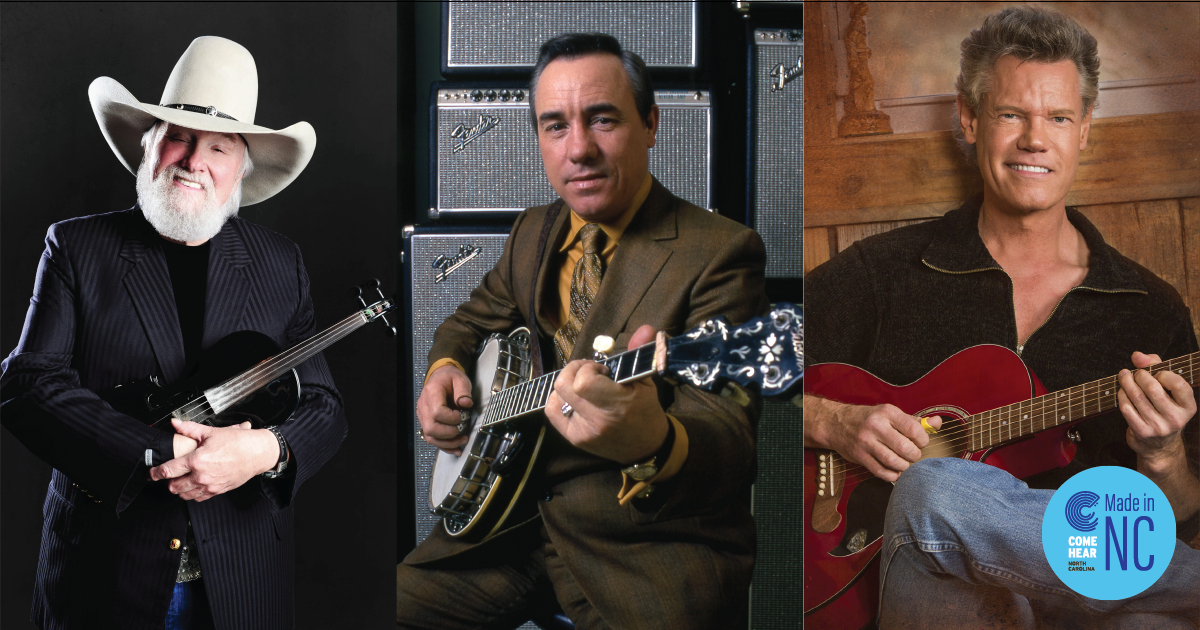
Earl Scruggs b. 1924 in Flint Hill, N.C.
Without the banjo innovations of Earl Scruggs in Bill Monroe’s band, would we even have bluegrass? “The Ballad of Jed Clampett” and “Foggy Mountain Breakdown” are obvious Flatt & Scruggs classics, though his catalog runs deep — and his creativity blossomed further in the ’70s with the Earl Scruggs Revue. The city of Shelby has renovated its courthouse into the interactive Earl Scruggs Center.
Don Gibson b. 1928 in Shelby, N.C.
This soft-spoken artist is arguably country music’s first triple threat — a commanding presence as a vocalist, songwriter and guitarist. Born poor, he persisted through every bad break until finally exploding in 1958 with “Oh Lonesome Me” and an Opry membership. He remained active on the charts for two more decades. Shelby has honored him, as well, with a live music venue, the Don Gibson Theater.
Fred Foster b. 1931 in Rutherford County, N.C.
Behind the scenes, it’s hard to fathom just how well-connected Fred Foster was. He founded Monument Records in 1958 and produced all of Roy Orbison’s early hits on that label, gave Dolly Parton a publishing and label deal when she first moved to town, and landed a co-writing credit on Kris Kristofferson’s iconic “Me and Bobby McGee.” He was inducted into the Country Music Hall of Fame in 2016.
Stonewall Jackson b. 1932 in Emerson, N.C.
After an impressive audition but no track record, Stonewall Jackson was invited to join the Grand Ole Opry cast in 1956. For the next 10 years, he charged the country chart with “Life to Go” (written by George Jones), “Waterloo” (a five-week No. 1 in 1959), and “B.J. the DJ” (No. 1 in 1964). He sued Opry for age discrimination in 2006, then after a settlement, resumed appearances on the long-running show.
George Hamilton IV b. 1937 in Winston-Salem, N.C.
From North Carolina to the world, George Hamilton IV may be the top international ambassador of his generation. His stardom began as a teenager with an unexpected million-selling pop hit, 1956’s “A Rose and a Baby Ruth.” He signed to RCA and the Opry in 1960, setting the foundation for a decade of radio success with “Abilene” (a four-week No. 1 classic), “Break My Mind,” “Early Morning Rain,” and more.
Del Reeves b. 1932 in Sparta, N.C.
A 1965 novelty smash, “Girl on the Billboard” finally established Del Reeves as a likable country star (after four other record deals didn’t pan out). He’d go on to issue Top 10 singles through 1971, often singing for truckers on tracks like “The Belles of Southern Bell” and “Looking at the World Through a Windshield.” Known for his big personality, he joined the Grand Ole Opry cast in 1966.
Donna Fargo b. 1945 in Mount Airy, N.C.
A leading artist of the 1970s, Donna Fargo won a Grammy, an ACM Award and a CMA Award for her 1972 breakout hit, “Happiest Girl in the Whole USA.” The feel-good release reached No. 1, as did her next three singles — and she wrote them all. Fargo taught high school English courses before exploring songwriting. By 1979, she’d notched 16 Top 10 country hits and landed her own syndicated variety show.
Ronnie Milsap b. 1943 in Robbinsville, N.C.
Easily one of the most identifiable voices in country music, Ronnie Milsap dazzled listeners with charisma, musical talent, and an impeccable ear for hearing a hit. Inspired by R&B and country music alike, the entertainer shared his soul with fans for decades, with an astonishing 49 Top 10 country singles on RCA. One of the best, “Smoky Mountain Rain,” topped the chart in December 1980.
Charlie Daniels b. 1936 in Wilmington, N.C.
Four decades later, Charlie Daniels Band is synonymous with “The Devil Went Down to Georgia.” Arguably the most famous fiddling song in the country music canon, the single won a Grammy and led to a guest spot in the era-defining film, Urban Cowboy. A member of the Opry and the Country Music Hall of Fame, Daniels remained a highly visible entertainer, especially eager to support causes for veterans and children.
Randy Travis b. 1959 in Marshville, N.C.
In the mid ’80s, Randy Travis was transformed from a dish-washing hopeful to a country music sensation. Plucked from the kitchen of the Nashville Palace onto the TNN airwaves, Travis was then reportedly rejected by every label in Nashville until finally signing to Warner Bros. And then “1982” changed everything. His resonant voice, though largely silenced now, will live on forever and ever, amen.
Photo of Charlie Daniels courtesy of Charlie Daniels Band, Inc.; Photo of Earl Scruggs by Al Clayton, provided by Sony Music; Photo of Randy Travis provided by 117 Entertainment Group.
Discover more about the North Carolina music scene and #NCMusicMonth through Come Hear North Carolina’s website and on Instagram at @comehearnc.
This website uses cookies to improve your experience. We'll assume you're ok with this, but you can opt-out if you wish.AcceptRejectRead More
Privacy & Cookies Policy
Privacy Overview
This website uses cookies to improve your experience while you navigate through the website. Out of these, the cookies that are categorized as necessary are stored on your browser as they are essential for the working of basic functionalities of the website. We also use third-party cookies that help us analyze and understand how you use this website. These cookies will be stored in your browser only with your consent. You also have the option to opt-out of these cookies. But opting out of some of these cookies may affect your browsing experience.
Necessary cookies are absolutely essential for the website to function properly. This category only includes cookies that ensures basic functionalities and security features of the website. These cookies do not store any personal information.
Any cookies that may not be particularly necessary for the website to function and is used specifically to collect user personal data via analytics, ads, other embedded contents are termed as non-necessary cookies. It is mandatory to procure user consent prior to running these cookies on your website.