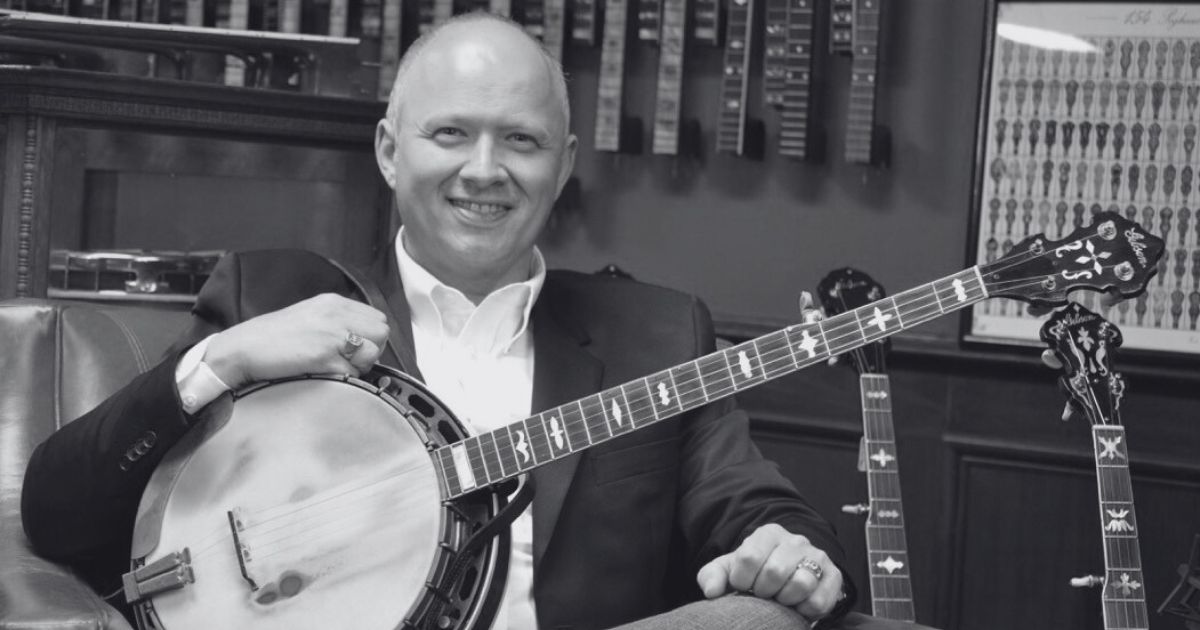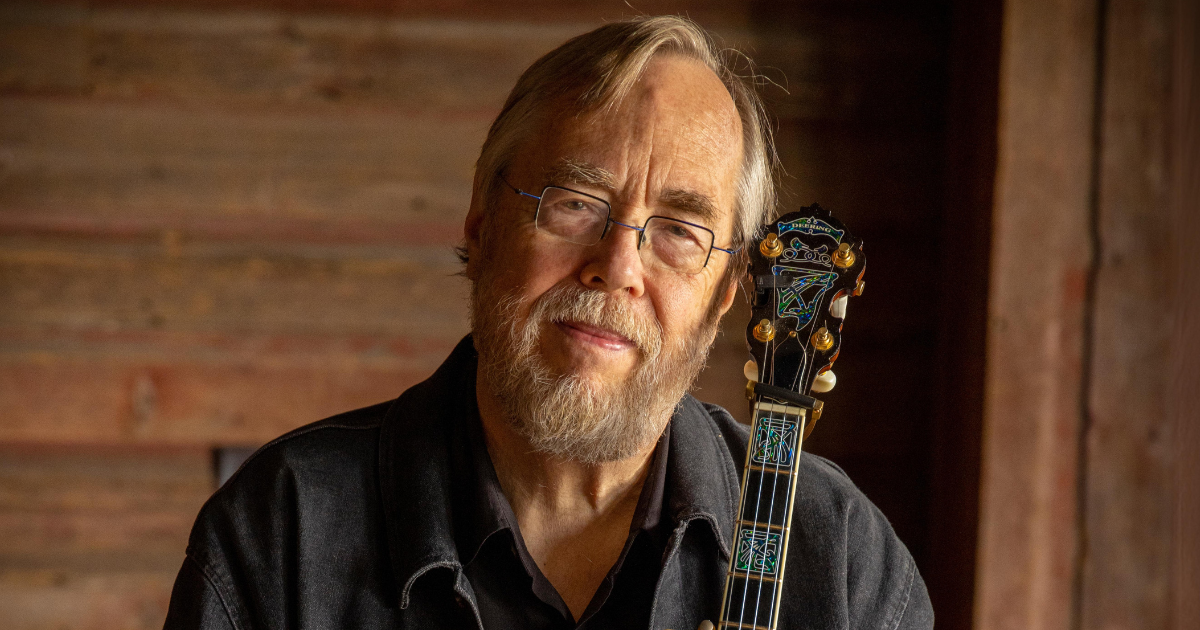
(Editor’s Note: Below, Grammy award and IBMA award winner, guitarist, songwriter, and author Tim Staffordpays tribute to his friend, collaborator, and one-of-a-kind banjo picker and historian, Jim Mills, who passed away at the age of 57 on May 3.)
I started out as a banjo player, but switched to guitar early on; our little group got a better banjo player. But I’ve always loved the banjo, especially pile-driving, inventive players like Earl Scruggs, J.D. Crowe, Paul Silvius, Ron Stewart, Ron Block, Sammy Shelor, Jason Burleson, so many others. I especially like playing rhythm guitar with a great banjo player – it’s like a bluegrass drum track. I’ve not enjoyed that feeling any more than when I got to play with Jim Mills.
Jim was a force of nature on the banjo. He was such a fluid, powerful player and he could be very aggressive on the instrument, which stood in strict opposition to his demeanor – they didn’t call him “Smiling Jimmy Mills” by accident. He played things on record that I had to continually rewind. How did the banjo survive that?
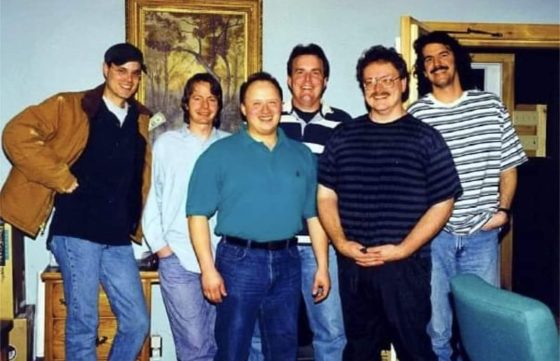
(L-R:) Barry Bales, Stuart Duncan, Jim Mills, Adam Steffey, Tim Stafford, and Brent Truitt, Nashville, TN 1998. Photo by Mike Kelly.
Once in the studio, I remember Jim breaking a string on the intro to “Bear Tracks,” a pretty hilarious outtake. It sounded like the world had exploded in the headphones. Jim just said, “What the ?!??!?” and Barry Bales let out a huge laugh – we had never heard anything like it.
It amazed me how eloquently Jim could talk in quiet rapid stretches and at length about everything related to old, Gibson flathead banjos. Like most vintage instrument topics, it’s a field of deep arcana, and the club sometimes seems too exclusive even if you truly love the sound of the things. But Jim never made it seem like anything but pure joy when he spoke, always returning to that million dollar smile. He was sharp, his collection of instruments was unrivaled, and he turned the basement of his house into a showroom.
And boy, did he know Earl Scruggs and his playing – inside out, all his instruments, all the bootleg recordings, even ephemera related to Flatt & Scruggs. He collected it and treasured it all, because it had never really gotten any better than Earl as far as Jim was concerned. The fact that Jim’s “desert island banjo” was Mack Crowe’s 1940 gold-plated RB-75 was validated for him by the fact that Scruggs himself mentioned Crowe as an influence on his playing in his 1968 book Earl Scruggs and the Five-String Banjo. Of course, Jim wrote his own definitive book, Gibson Mastertone: Flathead Five-String Banjos of the 1930s and 1940s.
Extremely intelligent, driven people are usually good at whatever they put their minds to. Tony Rice’s passion was restoring and repairing Bulova Accutron watches, and he was considered an authority in that area of expertise by people who had no idea he even played guitar. Ricky Skaggs told me that Mills was very involved in buying and trading antique shotguns as well as banjos and was just as well known in that arena.
It was all part of one cloth for Jim, though. A third-generation banjoist, a native son of North Carolina – the homeplace of the bluegrass banjo and a place so many great players still call home. When he joined Ricky Skaggs’s Kentucky Thunder, it was on one condition — he was staying in North Carolina.
We first met in the early ’90s when he was playing with Doyle Lawson and I was part of Alison Krauss and Union Station. He, Barry Bales, Adam Steffey, and I jammed for hours one day in Tulsa, Oklahoma as I recall. One of the songs he wanted to do repeatedly was “John Henry Blues.”
A few years later, the three of us played on Jim’s first solo record, Bound to Ride, for Barry Poss and Sugar Hill records. We tracked it at Brent Truitt’s Le Garage studio along with Stuart Duncan. Later Jerry Douglas overdubbed and Ricky Skaggs, Alan O’Bryant and Don Rigsby came in for guest vocals. And I sang “John Henry Blues.” It was such an honor to be on this record. Later on he did an instructional DVD for John Lawless and Acutab and I ended up backing him up on some tunes there.
I also played on a few records with Jim during this time, including Alan Bibey’s In the Blue Room. Near the end of a Patrick McDougal song called “County Fool,” after the last chorus, I knew Jim was going to come roaring in, taking us out to the end of the song. In anticipation, I hit a G-run that ended on the downbeat, on the bottom root note, a very unusual place for a G-run. I was sure engineer Tim Austin and producer Ronnie Bowman would want me to do it over, but they liked it so it stayed. Today I listen to that track and I’m the one who’s smiling – Jim could make you do things like that.
Jim wasn’t just a banjo player – he was a fine all-around musician and singer. His lead, fingerpicked guitar playing was superb and he was a fine songwriter. One year he came up to me at IBMA and said he had a demo of a song he’d written that he was sure Blue Highway could do. The demo was just him playing all the instruments and singing and it knocked my socks off. He had pitched it to Skaggs, but the boss man passed. The tune was based on a documentary Jim had seen and was called “Pikeville Flood.” We cut it on the Midnight Storm record and it remains one of our most popular live songs.
It was always a pleasure to see Jim and just get to hang out with him. Can’t believe I won’t get the chance to do that again. RIP buddy.
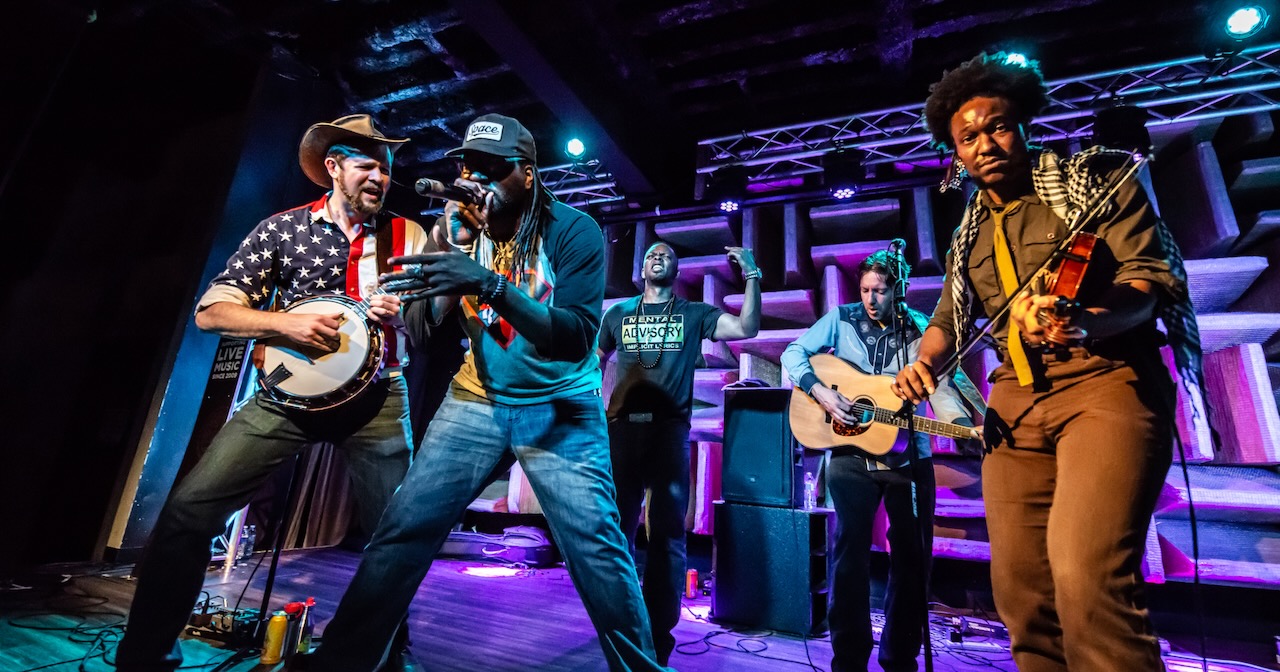
Artist:Gangstagrass Hometown: All over the USA! Rench: Brooklyn with Oklahoma roots; Dolio the Sleuth: Pensacola, Florida; R-SON the Voice of Reason: Philly; Danjo: Washington, D.C.; Farrow: Omaha; Sleevs: Baltimore. Song: “The Only Way Out Is Through” Release Date: February 7, 2024 (video); February 2, 2024 (single) Label: Rench Audio
In Their Words: “I’m really into how much we played with tension and energy to craft this track, the dynamics came out so powerfully. Especially with the horns! (Provided by Lowdown Brass Band.) We were stunned by the quick ‘yes’ from the one and only Jerry Douglas, who put in a blisteringly intense Dobro solo. I dare you to tell me you’ve heard anything like this before. I feel like this will be a great song for psyching yourself up to kick ass at whatever you are about to do.” – Rench
“When you ask Jerry Douglas to collaborate with you and he says yes, it says something about him and it says something about you. Jerry is the quintessential progressive bluegrass musician, with one foot permanently rooted in a genuine love of musical tradition and the other foot continually stretching forward and in every direction, looking for ways to bring traditional music into new places. ‘The Only Way Out Is Through’ makes the case, fearlessly, that what we do is in the true spirit of bluegrass: innovative, collaborative, awesome.” – Danjo
“‘The Only Way Out Is Through’ was a lotta fun to make: a bumping, triumphant track where we get to spit fire bars, a mantra of a hook, plus Jerry Douglas going BANANAS on the Dobro!” – Dolio the Sleuth
“Making Gangstagrass music is always dope. Adding some Lowdown Brass Band to the mix and a LEGEND like Jerry Douglas is even mo’ dope!” – R-SON the Voice of Reason
Track Credits:
Rench – beats, vocals Dolio the Sleuth – MC, vocals R-SON the Voice of Reason – MC Jerry Douglas – Dobro Dan “Danjo” Whitener – banjo, guitar, mandolin, vocals B.E. Farrow – fiddle, vocals Lowdown Brass Band – horns Sleevs – management / behind-the-scenes
Photo Credit: Melodie Yvonne Video Credit: Directed by TOUGH DUMPLIN & MZ.ICAR; Post-Production by Someplace Called Brooklyn.
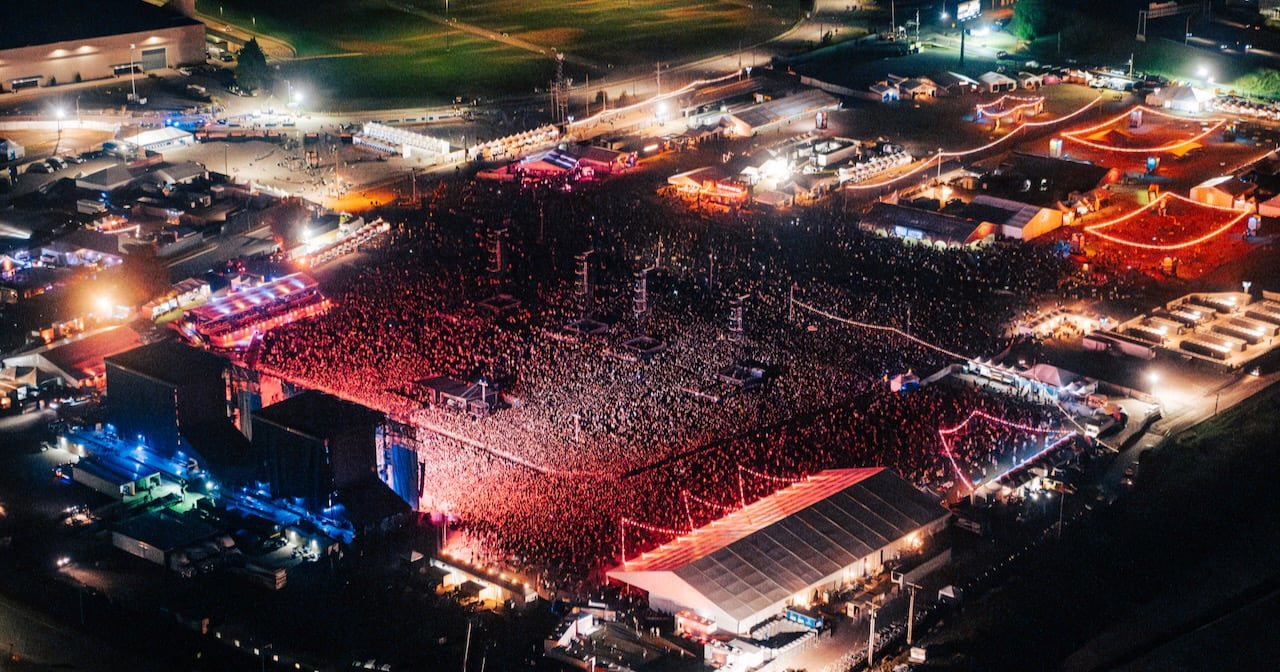
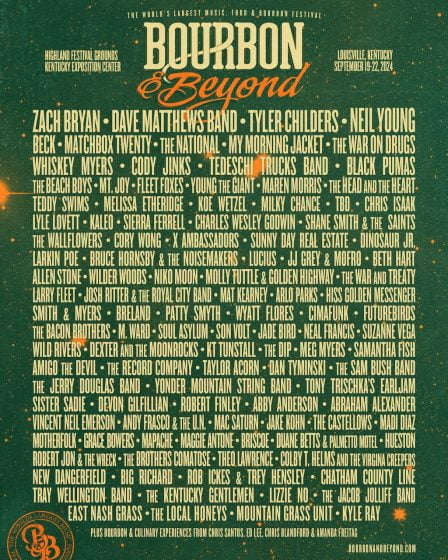
Today, Bourbon & Beyond, the world’s largest music and bourbon festival, announced its lineup for their 2024 event, to be held in Louisville at the Kentucky Expo Center September 19 through 22, 2024. With headliners such as Neil Young, Zach Bryan, Tyler Childers, and many more, the festival promises a roster filled-to-bursting with the best acts from country, Americana, bluegrass, and beyond.
BGS will return to the festival for ours and the festival’s sixth consecutive year, once again curating the musicians and bands that will grace the Bluegrass Situation Stage. Housed in the Kroger Big Bourbon Bar, the BGS stage will feature bluegrass, line dancing, and as much bourbon as you can drink from dozens of distilleries. Each day of the festival our stage will culminate with performances by Sam Bush Band, the Jerry Douglas Band, Yonder Mountain String Band, and Tony Trischka’s Earl Jam. Plus, don’t miss exciting acts like IBMA Entertainer of the Year winners Sister Sadie, newly-minted Black string band New Dangerfield, and KY neighbors the Local Honeys and the Kentucky Gentlemen. See the full list of performers for the Bluegrass Situation Stage below.
Kentucky Governor Andy Beshear, via press release, had this to say about the festival: “The Commonwealth of Kentucky is honored to be hosting Bourbon & Beyond in Louisville this September,” he said. “The festival brings in fans from all over the world and showcases the best of Kentucky; highlighting our rich culture of bourbon, the best in local culinary, and a top tier musical lineup. We can’t wait to welcome fans once again for this great tradition that we all in Kentucky are proud to call our own.”
First-rate bands and artists from across the American roots music community can be found throughout Bourbon & Beyond’s lineup, not only at the Bluegrass Situation Stage. This year, Bourbon & Beyond adds two new secondary stages, as well as the usual BGS Stage and the Oak and Barrel main stages. From Tedeschi Trucks Band and Black Pumas to Melissa Etheridge and Molly Tuttle & Golden Highway, there’s truly something for everyone. Don’t miss sets by Larkin Poe, Josh Ritter, Jade Bird, Lyle Lovett, Sierra Ferrell, Devon Gilfillian, Vincent Neil Emerson, Robert Finley, Hiss Golden Messenger, and so many more.
Another highlight of Bourbon & Beyond each year are the bourbon and culinary events, workshops, and activations that feature celebrity chefs and food-and-drink experts such as Chris Blandford, Amanda Freitag, Ed Lee, Chris Santos, and more. All in all, Bourbon & Beyond promises to yet again be your complete music, bourbon, and food festival in beautiful Kentucky. Tickets are on sale now – we hope you’ll join us in Louisville for another year of Bourbon & Beyond!
The Bluegrass Situation Stage Lineup
Sam Bush Band The Jerry Douglas Band Yonder Mountain String Band Tony Trischka’s Earl Jam: A Tribute to Earl Scruggs Sister Sadie New Dangerfield Big Richard Rob Ickes & Trey Hensley The Brothers Comatose The Local Honeys Tray Wellington Band Chatham County Line The Kentucky Gentlemen East Nash Grass Mountain Grass Unit Jacob Jolliff Band …and more to be announced!
Photo Credit: Nathan Zucker, courtesy of Bourbon & Beyond.
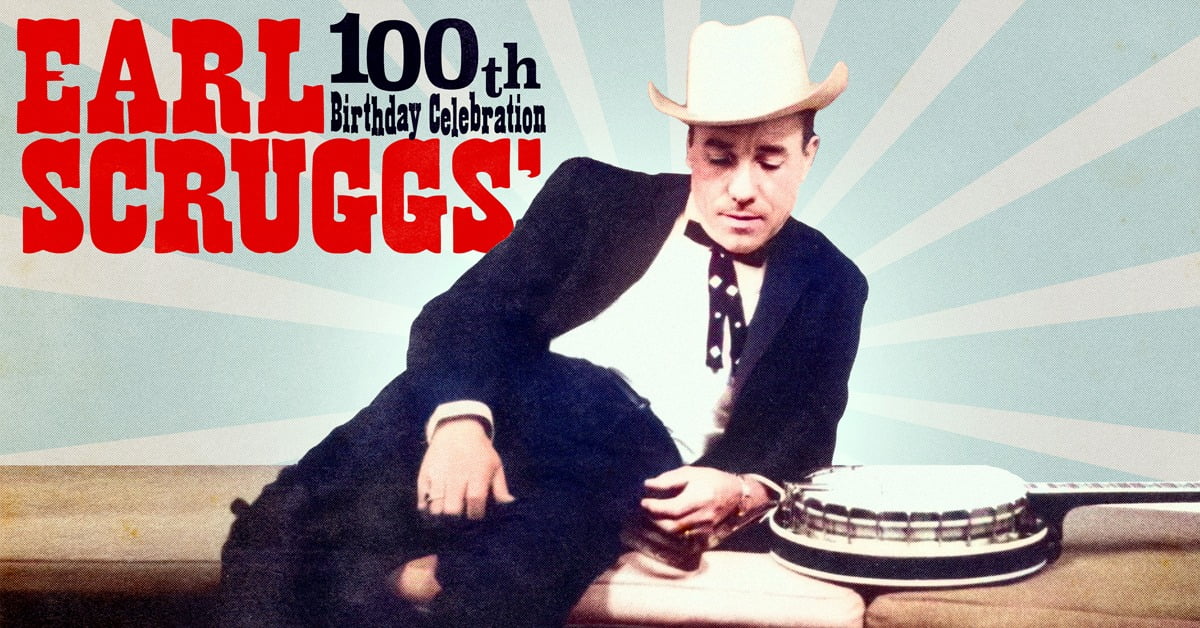
On January 6, bluegrass luminaries gathered at the Mother Church itself – the Ryman Auditorium in Nashville – to celebrate what would’ve been the 100th birthday of a man whose name is synonymous with the genre. On that day just over a week ago, banjo legend Earl Scruggs would have celebrated his centennial, and bluegrass celebs like Sam Bush, Béla Fleck, Sierra Hull, Bronwyn Keith-Hynes and many more gave a tribute concert streamed live on Veeps. While the live show might have come to an end, many are sharing pics and memories of Scruggs, keeping his special celebration going.
We’ll be highlighting the pioneer’s 100th all year long, so we’re also collecting some of the best social posts – in no particular order – that you might have missed.
Ryman Auditorium
Oh, what a 1️⃣0️⃣0️⃣th birthday celebration it was for Earl Scruggs with some of the biggest names in bluegrass! 🤠
With such a star-studded tribute concert, of course we should kick our list off with the Mother Church’s post about their live concert celebrating Scruggs – which benefitted the Earl Scruggs Center in Earl’s hometown of Shelby, North Carolina. The Ryman itself is located in the heart of downtown Music City, a fitting venue for this show.
Béla Fleck
Béla Fleck is just one of many modern banjo pickers inspired by Scruggs’ iconic three-finger style. We recently featured a single from his upcoming album in our #BGSClassof2024 playlist. His Facebook post recalling memories of working with his banjo hero is a touching accompaniment.
“Rhapsody in Blue(grass),” from Fleck’s upcoming album Rhapsody in Blue, is a perfect commemoration of the 100th birthday of Scruggs. Fleck is joined by his My Bluegrass Heart band, picking alongside Michael Cleveland, Sierra Hull, Justin Moses, Mark Schatz and Bryan Sutton.
Sam Bush
It’s hard to imagine historic movements and bands like New Grass Revival existing without the ability to build on the foundation that Earl Scruggs and others laid for the generations that followed. It’s no surprise, then, that Sam Bush paid tribute to Earl in a Facebook post following the Ryman show.
Gena Britt
IBMA Award winner and Grammy-nominated Sister Sadie banjo player Gena Britt has posted several photos and reels on her Facebook page from the Scruggs bash, where she was just one of many banjo players in attendance.
Tony Trischka
Tony Trischka’s upcoming album, Earl Jam, is a tribute to his musical mentor and inspiration, Scruggs, and will be released later this spring by Down the Road Records. Trischka just released the official music video for “Brown’s Ferry Blues,” featuring Billy Strings, right after Scruggs’ birthday.
Earl Jam will be a special collection of Trischka playing Scruggs transcriptions note-for-note that he gleaned from jam session recordings taken by John Hartford at Earl’s house in the ’80s and ’90s.
Earl Scruggs Music Festival
To mark their namesake’s birthday, the Earl Scruggs Music Festival posted one of the most iconic photos of the banjo player in music history. If you haven’t made it to this North Carolina event yet, check out our coverage from last year’s festival. We’re very much looking forward to Earl Scruggs Music Festival 2024!
John McEuen
For his own tribute, John McEuen – a founding member of the Nitty Gritty Dirt Band – shared some incredible footage of the first time he met Earl Scruggs back in October of 1970.
“This meeting right here is what led to the Will The Circle Be Unbroken album,” he shared.
Jerry Douglas
Jerry Douglas, iconic Dobro player and member of the Earls of Leicester, posted a wonderful collection of photos from the Ryman show!
Kyle Tuttle
Kyle Tuttle, member of Molly Tuttle’s Golden Highway band, posted a clip of his own three-finger work inspired by Scruggs.
“Who knows where the banjo would be had this man not come along and shown us how it works,” Tuttle mused.
International Bluegrass Music Association
The IBMA marked Scruggs’ centennial by posting an abbreviated history of his life and career.
“From his home state of North Carolina, Earl took the sound of the banjo and revolutionized it across the world,” the post reads. “Not only did he pioneer the three-finger banjo, but he played it to standards of taste and technique unmatched by thousands of disciples over seven decades.”
Thorn, banjoist for Leftover Salmon, posted a clip of himself on Instagram playing what is perhaps the most iconic banjo tune of all time, making it a fitting end to our list of social media tributes. Check out Thorn’s take on “Foggy Mountain Breakdown!”
We’ll continue to celebrate Earl Scruggs’ 100th all year long, so keep checking back for more on BGS!
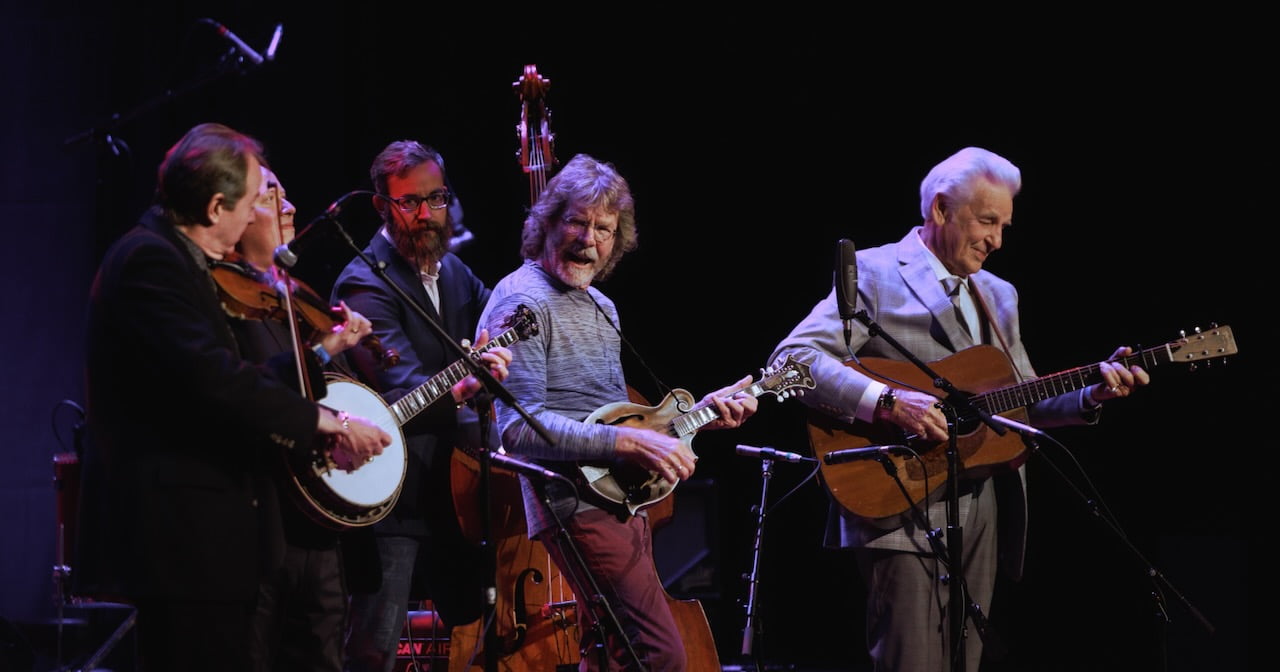
Lead photo by Eric Ahlgrim courtesy of the Ryman Auditorium. Pictured: Stuart Duncan, Jim Mills, Alan Bartram, Sam Bush, and Del McCoury perform for Earl Scruggs’ 100th Birthday Celebration at the Ryman on January 6, 2024.
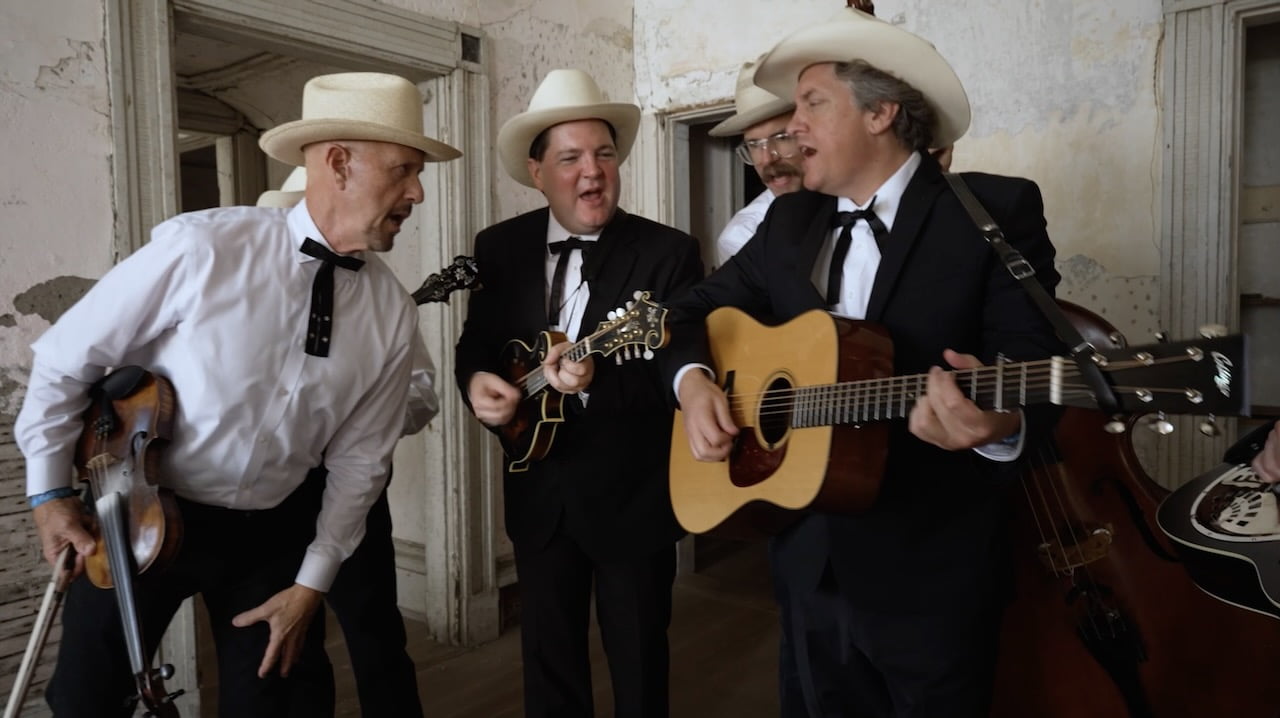
(Editor’s Note: Enjoy this exclusive video premiere from the team at Newport Folk Festival and their Behind the Walls series, featuring a performance of Flatt & Scruggs’ version of “Rollin’ in My Sweet Baby’s Arms” by award-winning Flatt & Scruggs bluegrass tribute band, the Earls of Leicester.)
Artist:The Earls of Leicester Hometown: Nashville, Tennessee Song: “Rollin’ in My Sweet Baby’s Arms”
In Their Words: “The song ‘Rollin’ in My Sweet Baby’s Arms’ has long been a staple in the bluegrass canon. It’s a good, hard driving song about traveling and returning home to the one you love. Down to the details of some of the family members’ occupations. Also there is a slight Romeo and Juliet effect in the line, “I know your parents don’t like me.” Flatt & Scruggs probably had the best version, but it’s a crowd pleaser and works in any situation.” – Jerry Douglas
“The Earls Of Leicester are living embodiments of the traditions of bluegrass that have graced our stages for over 60 years. We’re grateful that they recorded a backstage Behind The Walls session with us at last year’s Newport Folk Festival. And big thanks to The Bluegrass Situation for sharing it far and wide.” – Christopher Capotosto, producer, Newport Folk Festival
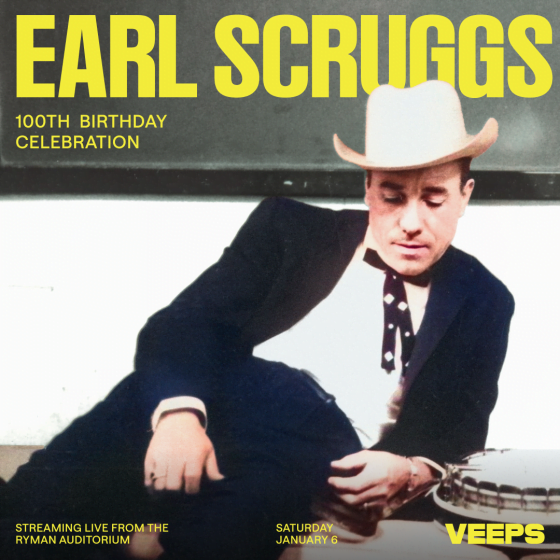
January 6, 2024 would be the 100th birthday of Earl Scruggs, a musician and artist who helped create bluegrass music and who was and is perhaps the most prominent and well known banjo player to have ever lived. Scruggs passed away in 2012, but this posthumous celebration – to be held at Nashville’s Ryman Auditorium – speaks to his undying musical legacy. The performance will benefit the Earl Scruggs Center, a museum in Shelby, North Carolina that’s dedicated to Scruggs, the local community, and its residents, and inhabits the former courthouse just up the highway from unincorporated Flint Hill, where he was raised.
The show, with musical director Jerry Douglas, will feature performances by bluegrass and roots music luminaries such as The Earls of Leicester, The Del McCoury Band, Gena Britt, Alison Brown, Sam Bush, Michael Cleveland, Stuart Duncan, Jimmie Fadden, Béla Fleck, Jeff Hanna, Sierra Hull, Bronwyn Keith-Hynes, Jim Mill, Justin Moses, Jerry Pentecost, Todd Phillips, Harry Stinson, Bryan Sutton, Tony Trischka, Abigail Washburn, Pete Wernick, and more. Limited tickets are still available and, for those who may not be able to attend in person, the entire show will be livestreamed via Veeps.com for $14.99.
It promises to be a quintessential Nashville evening, a star-studded lineup with endless appearances, special guests, and with certainly plenty of heartfelt remembrances and tributes in store. Livestream viewers will get a rare chance to be invited “flys on the wall” for a magical and one-of-a-kind concert.
Earl Scruggs’ legacy will certainly live on – for another hundred years and, we hope, beyond. BGS and many other roots music and bluegrass communities and organizations will continue to celebrate Scruggs’ centenary throughout the year, so keep an eye out for upcoming content that celebrates Earl Scruggs and his three-finger style.
Lead image courtesy of the Ryman Auditorium; inset graphic courtesy of Veeps.
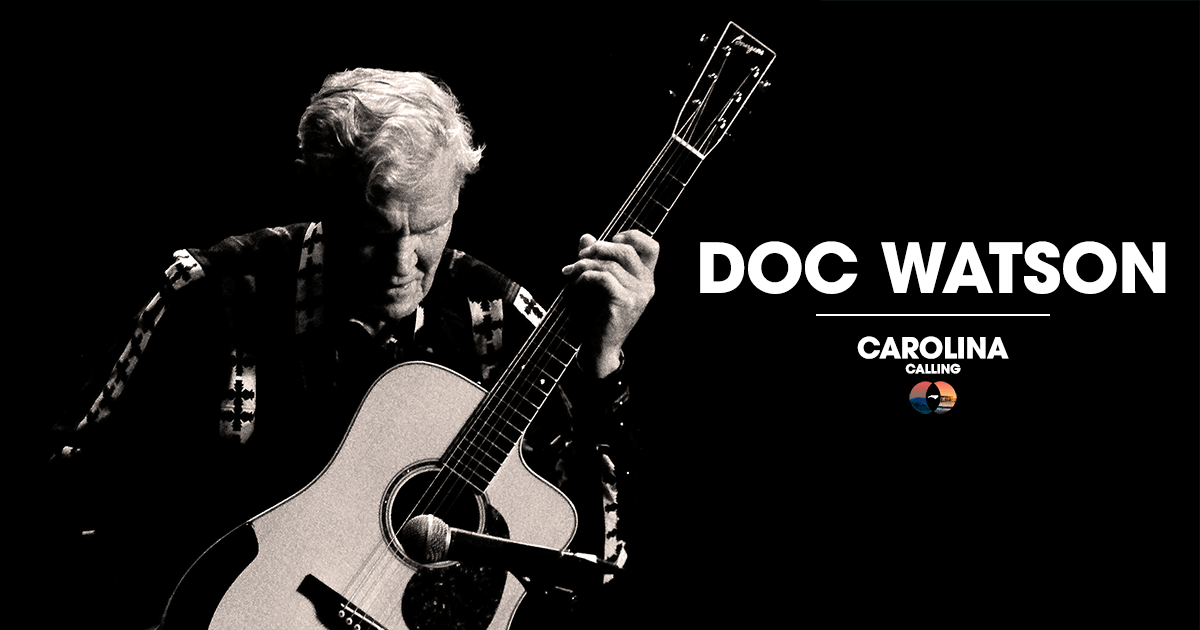
Doc Watson has been gone for more than a decade, and yet his music and legacy remain more alive and relevant than ever. And thanks to the ongoing MerleFest, which brings a wide-ranging cast from the Americana world to Doc’s North Carolina stomping grounds every April, that’s not going to change anytime soon. We consider the enduring impact of Doc through conversations with some of those who bear his stamp, including Gillian Welch and Jerry Douglas, in this special episode of Carolina Calling.
Subscribe to Carolina Calling on any and all podcast platforms to follow along as we journey across the Old North State, visiting towns like Durham, Asheville, Shelby, Greensboro, and more.
Music featured in this episode:
Doc Watson – “Sittin’ on Top of the World” Doc & Merle Watson – “Jimmy’s Texas Blues” Gillian Welch – “Everything Is Free” Andrew Marlin – “Erie Fidler” Doc Watson – “Tom Dooley” Doc & Merle Watson – “Sheeps In The Meadow / Stoney Fork” Doc & Merle Watson – “Poor Boy Blues” Doc Watson – “And Am I Born to Die” Doc Watson – “My Home’s Across the Blue Ridge Mountains” Jerry Douglas – “A New Day Medley” Doc Watson – “The Last Thing On My Mind”
My name is Bertolf Lentink, I was born in 1980 and I’m from the Netherlands. I was spoon-fed bluegrass music by my father, who endlessly played his records by the likes of Doc Watson, Tony Rice, and Tim O’Brien in my parental home. At a young age, I learned to play both from and with him.
I have released six albums here in the Netherlands and they were more in the singer-songwriter/pop style. But for my seventh album, I decided to return to my roots and my first love: bluegrass. I had the chance to record an album of my own material with some of my favorite musicians of all time, such as Jerry Douglas, Stuart Duncan, and Mark Schatz – guys I’ve been listening to and admiring since I was like 6 years old. The band was completed by two fantastic instrumentalists of the younger generation: Wes Corbett and David Benedict. The album was recorded and mixed by David Sinko in the Sound Emporium Studio in Nashville. I really had the best week of my life recording it; it was everything I hoped for and more.
The album is called Bluefinger because residents of Zwolle, the city I live in, are called Bluefingers. But it’s also a reference to bluegrass and getting blue fingers from studying so hard on the guitar trying to be good enough to record with my heroes.
Bluegrass music has surely travelled all around the world. It even made its way to the Netherlands and continues to inspire young people here. This is a mixtape of the stuff that inspired me and that’s going on in the blue- and newgrass department here right now. Dutch Grass! – Bertolf
“Before The Storm” – Bertolf featuring Ilse DeLange
It was quite a surreal experience to record with my heroes, but at the same time it felt really familiar when I heard those guys’ instruments coming through my headphones. Like I was coming home somewhere I’d never been before.
“Uncle Pen” – Bill Monroe
Bill Monroe learned to play from his Uncle Pen. Full name: Pendleton Vandiver. Uncle Pen’s great-great grandfather was Bill Vandiver, an immigrant from the Netherlands. Vandiver is actually derived from the Dutch Name “van de Veer.” So if Bill Monroe is the Father of Bluegrass and Uncle Pen is the uncle of bluegrass, then Bill van de Veer is the great-great uncle of bluegrass. So there’s the Dutch connection with bluegrass for ya!
“Keep on Pushing” – Country Gazette
My love of bluegrass music is entirely my father’s fault. In 1972, when he was 16 years old, he heard a song on the radio: “Keep on Pushing,” by Country Gazette. That song was actually on the Dutch pop charts at that time! My father was completely blown away and it was the start of his love of this kind of music. And when I grew up, he played nothing else but bluegrass, so I couldn’t help but to fall in love with it, too. (The original ’70s recording of “Keep on Pushing” is not on Spotify, so here is the ’90s remake.)
“Amsterdam” – Douwe Bob
Douwe Bob is a famous artist here in the Netherlands. I wrote this song with him and we thought it was nice to try and write a bluegrass song not about the hills of Kentucky or something, or to once again pretend to be American, but to write a bluegrass song about the city we know, Amsterdam.
“Crying Shame” – Blue Grass Boogiemen & Tim Knol
Blue Grass Boogiemen are a great high-energy bluegrass band from the Netherlands who have been on the scene for a long time now. Here’s a song from an album they made with the great singer-songwriter Tim Knol (who happens to sing a nice harmony vocal on my album Bluefinger as well)
“Fallin’” – Nathalíe
Here in the Netherlands, I’m playing live with a great band of musicians who also happen to have their own bluegrass bands. This song is from the band Nathalíe, that feature my band members Nathalie Schaap on vocals and double bass, Jos van Ringen on banjo, and Janos Koolen on mandolin. I really love what they’re doing.
“The Bipolar Bear” – The Charivari Trio with Janos Koolen
Janos Koolen is the mandolin player in my band. He’s a fantastic multi-instrumentalist and composer as well. Here’s his beautiful composition, “The Bipolar Bear,” with the Charivari Trio.
“Tapdancing on the Highwire” – Ilse DeLange
My career in music started by playing in Ilse DeLange’s band. She’s a big country/pop star here in the Netherlands, and she’s very fond of bluegrass music as well. Here’s one of her songs that I really love from a live album we did back in 2007.
“One Tear” – 4 Wheel Drive
4 Wheel Drive is probably my favorite Dutch bluegrass band. The band also features Joost van Es on fiddle, who’s playing live with me right now. I went to see them live a lot as a kid, and I was always left really impressed and wanting to learn to play, too. I also need to mention the bands The Country Ramblers and Groundspeed, who were from the city of Kampen (which was jokingly called the “Nashville by the Ijssel”), but sadly their albums are not on Spotify.
“Deeper Than the Holler” – G-runs ‘n Roses.
G-runs ‘n Roses is a band from the Czech Republic, with two Dutch guys playing in it: Ralph Schut on guitar, banjo, and vocals and his brother Christopher Schut on bass.
“Till I Found Someone” – The Bluebirds
The Bluebirds are a band that do great and heartfelt three-part harmony. Here’s a song that I wrote with them, with J.B Meijers on dobro.
“Team Hoover” – Bertolf
I’d like to end this mixtape with an instrumental that I’m really proud of, once again from my album, Bluefinger.
I hope you enjoy it and thanks for listening! Cheers from The Netherlands.
With the September release of her album Queen of Time, Nashville artist Lindsay Lou takes listeners beyond a creative journey – it’s more like a long, strange, and satisfying trip, where her “radical truth” conquers all.
A former bluegrass songsmith with roots in groups like her former backing band, the Flatbellys, and Sweet Water Warblers, Lou’s Queen of Time marks the start of another new solo chapter and follows a rough time in her life filled with earthquakes of change. She both lost a grandmother who was pivotal to her development and experienced the end of a marriage – all while her career picked up steam. But, through those endings came a new beginning. One where she better understood her place in the universe, both spiritually and musically.
On Queen of Time, Lou welcomes herself to that new identity (and all who care to follow), doing so with a fresh sound and some old friends. Featuring Billy Strings and Jerry Douglas, 11 thought-provoking tracks infuse her bluegrass roots with atmospheric folk, back-porch psychedelia, and more, as lyrics and voice weave together into something like a sonic dreamcatcher – snatching ethereal truths from the cosmos and translating them in ways the mind can just begin to process.
Recently, Lou spoke with BGS about this heady transformation, working with her friends, and how her “teacher-turned-Rainbow-Gathering-healer” of a grandma helped shape her radical spirituality.
BGS: Tell me how you’re feeling about music making these days? I know this album comes after a lot of change in your life, personally and professionally. Has the way you feel about making music changed, too?
Lindsay Lou: It felt like the most freeing recording endeavor that I have ever set out on. Working with [producer] Dave O’Donnell was really great. He held a ton of space for me creatively and emotionally and just in all the ways. So it was really nice. I brought in all of my friends, and what drew me to music to begin with was jams that my family would have, so feeling among my chosen family, being able to bring in the people who I’ve been jamming with in living rooms and on stages for the last several years, was really, really sweet.
Honestly, I’m feeling really inspired and just really happy about music. All of the tours have felt like they were in really good flow, and spiritually, it just feels very open and satisfying. I sort of blew up my life a few years ago, and the last three years or so I’ve been gestating and rebuilding my path. It was rebuilding on the foundation I had laid down with the Flatbellys and the Warblers, so it wasn’t out of nowhere, but it felt like there was a lot of unknown – and there were times where I felt there’s just some fear that goes into it. But now I’m on the cusp of watching all of this be born and come to life, and it feels so good. It’s like everything that I could have hoped for.
Seeing the record in the hands of people and hearing all the stories they send me about how it’s touched their lives has been very, very fulfilling. And I’m watching the album chart and watching different things on the horizon, different gigs and stuff – it’s just really inspiring, and I feel really excited to follow this new path that I’ve laid out for myself.
You don’t always get that payoff when your life blows up, so congrats! Tell me a little bit about the imagery behind the Queen of Time theme. You’re asking the listener if they know who they really are – did that come from an epiphany you had?
It definitely came from an epiphany and the ongoing question and journey of self-discovery, because it’s something you never achieve. It’s just a journey you’re always on. The imagery [for the song “Queen of Time”] was definitely from Absolem, the caterpillar from Alice in Wonderland. He challenges Alice, “Who are you?” And it was less about who she was and more about who she identified as, because we contain multitudes. So this is a broad and complex question, and as I’ve been playing it, the song has sort of come to life and revealed itself to me in new and unexpected ways. I always love that with songs.
You start the album off with this refrain saying, “I don’t need the world to hear me / I’m singing and nothing else matters.” What’s the significance of that to you?
I guess it’s just acknowledging the personal relationship. I always say that the voice is a window to the soul, but a lot of people have this horrible trauma that they carry with them – that they’re not a good singer and that they don’t have a good voice, and so they don’t ever sing. I feel so much grief thinking about people not even singing to themselves. In my darkest hour, the most soothing thing that I have found to do is to sing to myself. And it’s not because I think that I have the greatest voice, it’s because singing actually releases endorphins in your mind. It’s like a physiological truth that the experience of singing is medicinal and it’s a form of meditation.
The obvious interpretation of that is that as career musicians, you’re always wanting more people to hear you and wanting your fan base to expand. But at the end of the day, the reason that I sing and I think the reason anyone sings, is because it is a magical and medicinal way of expressing your soul, your spirit, your inner truth. So just remembering that value that I don’t need to be anywhere to let my voice ring and to connect with my own soul in that way, that’s really the most powerful thing.
I know your grandmother had a big part in influencing the record. But on top of everything else she was to you, did she also help you get into music?
I guess in a roundabout way, she did. Her greatest influence on me was spiritually. She was a preacher woman, and she lived her life the best that she could in the literal footstep of Jesus. So she took everyone in and she welcomed everyone. She was always preaching that [unless] you have not sinned, don’t cast the first stone and really strongly believed that no one will be left behind. Like if God said the greatest commandment was to love God and to love your brother, then she spent her whole life practicing that. Now, I call myself a praying atheist. I don’t necessarily connect with any institution of religion, but I do connect with the practice of spirituality and of love. Even Christianity says that God is love. So in my mind it’s like, “Well, then let’s just get right to the heart of the matter and call it love!” If we’re living in love and if we’re thinking critically and we’re following our radical truth, then we’re doing it right.
Was music a part of your childhood?
[My grandmother] had 12 children and she surrounded herself with hippies and counterculture. And her husband – the father of her 12 children – was a musician. He played the trumpet and he sang, so they always sang to their children, and the songs that she sang to them, they sang to their children. So I heard all the gospel songs that she sang to my mom, because my mom sang them to me, and there’s been various forms of family bands throughout the generations of all of her children. The older kids had a rock band, and they would get together and sing gospel songs in harmony and Beatles songs and folk songs, and the younger kids formed bands with the older cousins. There was just always music around, so I think she just held space for music.
She sounds like an amazing person. Is that her voice in the phone conversations you put on “Love Calls”?
Yeah. I played that song for a couple of my friends before she was in it. There was this long expansive jam and my girlfriends listening to it were like, “We want more Lou here.” I thought, “Well, what version of Lou makes sense to go there?” And it dawned on me that it was the version of Lou that interviewed grandma. I interviewed my grandma on the one hand to sort of preserve her radical life story for posterity. And on the other hand, as a way of knowing myself. I’ve collected about 27 hours of her telling me her life story and how she came to believe what she believes. It’s a little bit foggy now, but I had an idea of what story I wanted to put there, and once that conversation was in there, the song had the context that it was calling for.
What was the context?
The song is about someone being a guide of love for someone else. And the conversation is her telling me the story of meeting someone at a rainbow gathering who she had a conversation with, and later found out that that conversation talked them out of suicide. Many parts of this record came together in the context of me witnessing suicides in my music community, and addiction and mental health struggles. And pretty much all of my music goes back to that in some way, because of where I came from and the world that I see around me.
Other songs have that through line to it too, right? Like “Nothing’s Working”? I know you worked with Billy Strings on that one, how did it come together?
He and I get together every once in a while to write and we had gotten together and started that song. He had just been hanging out with Bryan Sutton and had this open B shape thing in his head that he started to play along with, and he was talking to me about Ionia – the town that he grew up in. He had just seen so many people get a job and try to make all the right decisions and try to always do the right thing, and just end up with nothing to show for it, because they’re stuck in a system that doesn’t support them and wasn’t built for them, or a scene that really wasn’t good for them.
We wrote the first verse, and kind of left it at that, and it sat in my voice memos for a couple years. Then I was on a plane on my way to the Jeff Austin tribute concert benefit [late member of Yonder Mountain String Band, who died in 2019], and I was just thinking about things. I think I finished it on my way home, but during that same week, I attended my cousin Emily’s funeral. She died in her 20s and was struggling with opiate addiction. I don’t mention either of them in the song necessarily, but it really got me into the headspace of thinking about people I know who are still alive, who are struggling with similar challenges. The song is about telling their story, and telling their story with compassion and honesty.
I noticed a lot of hard bluegrass influence on tracks like “Rules,” and along with Billy you have a collab with Jerry Douglas. Do you still feel like you can be creative in the bluegrass form these days? Or is it harder to do that as you grow as an artist?
Bluegrass gave me a lot of tools and a home. It gave me a place to belong and an opportunity to hone my craft, just in terms of tightening up rhythm and getting better at playing the guitar – and having an entire world of people I can get together with anytime, anywhere, and play any one of the many songs in the bluegrass canon and sing three-part harmony, like we’ve been a band our whole lives. It gave me so much, but I didn’t grow up in a family or a community that played bluegrass music. It was something I found in my early 20s. I’ve never been like people like Billy and Molly [Tuttle] – [bluegrass] is not just a part of their history, it’s like their earliest memories.
I grew up doing acoustic music, so there’s always going to be some element of that in my music. And I’m so grateful to have bluegrass now as a tool of expressing myself. But I don’t think I find it harder as I get older. I just find it easier to connect more authentically with my own voice, and bluegrass is a tool of doing that – but it’s not the only tool.
Artist:Bronwyn Keith-Hynes Hometown: Nashville, Tennessee Song: “Can’t Live Without Love” (Featuring Molly Tuttle, Sam Bush, Bryan Sutton, Jerry Douglas, and more) Release Date: October 13, 2023 (single); October 17, 2023 (video) Label: Sugar Petunia Records
In Their Words: “I’m so happy to share a behind the scenes studio video from the recording of my debut vocal single, ‘Can’t Live Without Love’ featuring Molly Tuttle and Sam Bush. This song is the first track I’ve released from my upcoming album, out in Spring 2024. We tracked it last fall in Nashville, at Brent Truitt’s studio, ‘The Cave,’ and it was actually the first song of the first day of recording the album, so it’s kind of fitting it should also be the first song to be released.
“I’m joined by some of my absolute favorite musicians: Jerry Douglas, Bryan Sutton, Dominick Leslie, Wesley Corbett and Jeff Picker. They all brought so much joy and magic to this track! And it was such an honor to get to sing with Molly Tuttle and Sam Bush, both of whom inspire me so much on a musical and personal level. This song by Jamie Hartford is a beautiful meditation on what we can and can’t live without in this life and how we can overcome challenges by focusing on what’s important.” – Bronwyn Keith-Hynes
Track Credits: Written by Jamie Hartford
Co-produced by Brent Truitt and Bronwyn Keith-Hynes Recorded by Brent Truitt. The Cave, Nashville, TN Mastered by Alex McCollough. True East Mastering, Nashville, TN
Bronwyn Keith-Hynes – lead vocal, fiddle Molly Tuttle – harmony vocal Sam Bush – harmony vocal Jerry Douglas – Dobro Bryan Sutton – guitar Dominick Leslie – mandolin Wesley Corbett – banjo Jeff Picker – bass
Photo Credit: Alexa King Stone Video Credits: Shot at The Cave in Nashville, TN; produced by Steve Voss of Solar Cabin.
This website uses cookies to improve your experience. We'll assume you're ok with this, but you can opt-out if you wish.AcceptRejectRead More
Privacy & Cookies Policy
Privacy Overview
This website uses cookies to improve your experience while you navigate through the website. Out of these, the cookies that are categorized as necessary are stored on your browser as they are essential for the working of basic functionalities of the website. We also use third-party cookies that help us analyze and understand how you use this website. These cookies will be stored in your browser only with your consent. You also have the option to opt-out of these cookies. But opting out of some of these cookies may affect your browsing experience.
Necessary cookies are absolutely essential for the website to function properly. This category only includes cookies that ensures basic functionalities and security features of the website. These cookies do not store any personal information.
Any cookies that may not be particularly necessary for the website to function and is used specifically to collect user personal data via analytics, ads, other embedded contents are termed as non-necessary cookies. It is mandatory to procure user consent prior to running these cookies on your website.